Work-life balance is not a “nice to have” anymore. For many people choosing a new career in South Florida, it is the deciding factor.
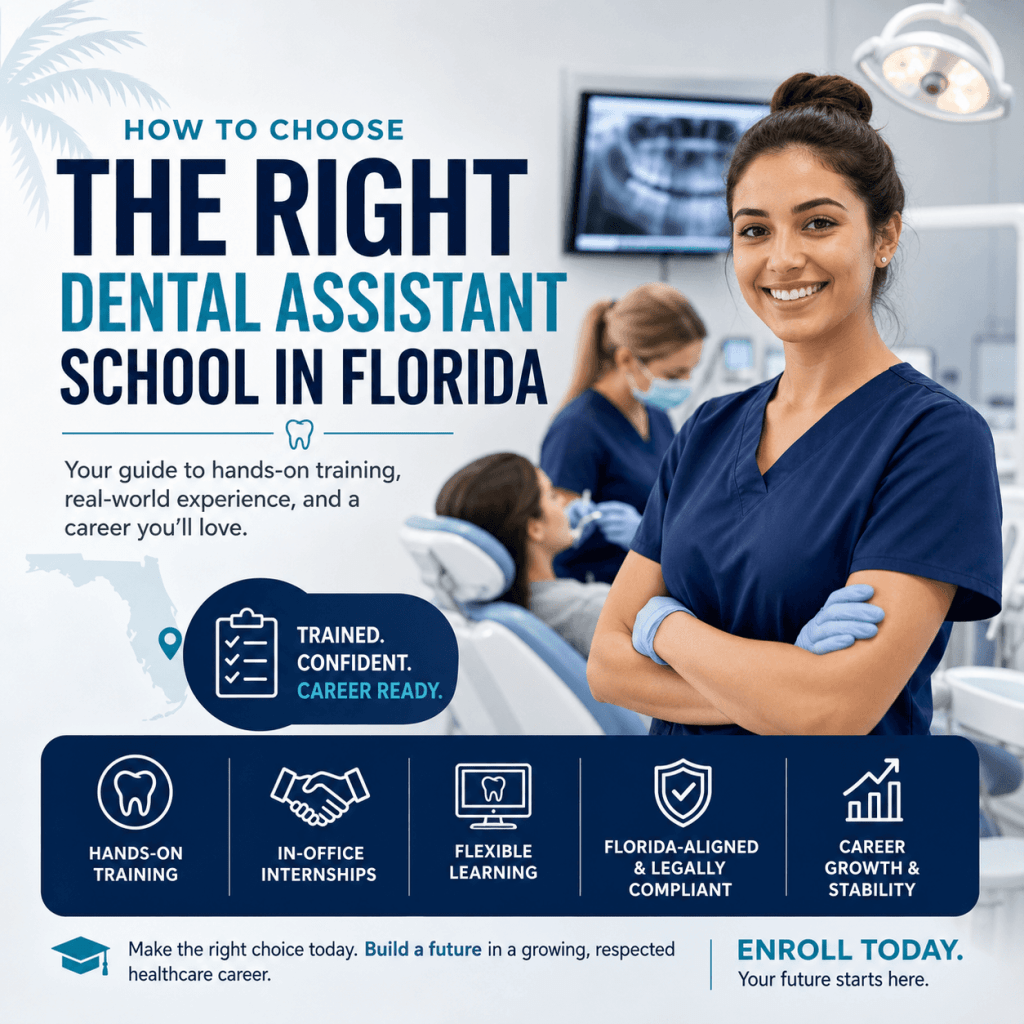
Dental assisting, a field that offers more predictable hours and fewer overnight shifts, is often appealing. The schedule is easier to plan a life around compared to retail, hospitality, and many hospital roles. However, this does not mean every day is easy. What it does mean is that the structure is usually clearer, the hours are often more consistent, and the career can support a stable routine.
Why work-life balance is one of the biggest reasons people choose dental assisting
When people talk about “dental assistant work life balance & schedule flexibility,” they are usually describing a few real-world benefits:
- Predictable office hours in many general dentistry practices
- Little to no overnight work, since most dental offices are not open 24/7
- Planned time off that can be requested in advance
- More consistent weekly routines than jobs with rotating shifts
This is one reason dental assisting works well for:
- Career-changers who want healthcare stability without a hospital schedule. Successfully changing careers into dental assisting can provide that stability.
- Parents who need school-friendly hours or reliable childcare windows
- Students balancing classes and a part-time job
- People leaving retail or hospitality who are tired of late nights, weekend-heavy schedules, and last-minute changes
- Anyone coming from hospital shift work who wants fewer nights, fewer holidays, and more routine
It is also important to set expectations. Dental offices can be busy. Patients run late. Same-day emergencies happen. A packed schedule can feel intense.
Still, many dental assistant roles offer more structure than other healthcare jobs, with fewer unpredictable overnight demands and less after-hours documentation.
In South Florida, another factor supports flexibility: demand. Growing practices across Broward, Miami-Dade, and Palm Beach need reliable, trained assistants. This creates more job options and practice types to choose from, often resulting in more schedule variety.
For those interested in pursuing this fulfilling career path, Broward Dental Academy offers comprehensive training programs tailored for aspiring dental professionals. They provide specialized courses like Endodontics and Hygienists Level 03, ensuring you receive the best education possible to thrive in your new role.
A realistic look at a dental assistant’s schedule (what most weeks actually feel like)
A dental assistant schedule is typically built around patient blocks. In many general dentistry offices, a “normal” day has a steady rhythm.
Here is what that rhythm often looks like:
- Morning prep and huddle: reviewing the schedule, confirming lab cases, prepping rooms, and discussing special situations
- Patient blocks: assisting for exams, restorative procedures, impressions, extractions, or hygiene checks depending on the office
- Room turnover: cleaning, disinfecting, setting up trays, and resetting for the next patient
- Sterilization flow: instrument processing that continues throughout the day
- Charting and notes: documenting materials used, procedure details, and patient instructions
Common start and end times vary by office, but you will often see windows like:
- Start: 7:30 a.m. to 9:00 a.m.
- End: 4:30 p.m. to 6:00 p.m.
Whether you leave “on time” depends on a few practical realities:
- How close the last appointment ends to closing time
- Whether instruments still need to be processed
- Whether notes and treatment setups are finished
- Whether the team is short-staffed that day
Lunch breaks also vary. Many offices schedule a true lunch block, and some days you will have small gaps between patients that allow quick resets, hydration, or chart updates.
Seasonality matters in South Florida, too. Many practices feel busier during:
- Back-to-school months
- Holiday rush periods when patients try to use benefits before year-end
- Snowbird season, when population shifts can increase appointment volume in certain areas
One of the biggest quality-of-life differences for many assistants is what “work follows you home” means. In dental assisting, after-hours charting is often less common than in roles where documentation is completed off the clock. Most of the work is done in the office, during office hours.
For those considering entering this field, obtaining relevant certifications can significantly enhance job prospects. Various certifications are available that can help aspiring dental assistants gain an edge in their careers.
Where schedule flexibility comes from in dental assisting
Flexibility in dental assisting largely stems from the type of practice, the team size, and how the office is run.
Practice setting matters:
- Private practice often has stable hours and a consistent team culture, with schedules set months in advance.
- Corporate groups may offer more locations, more staffing depth, and sometimes easier coverage options. For example, Broward Dental Academy operates multiple locations which can provide such benefits.
- Specialty offices like orthodontics or oral surgery can have different hours and procedure types that influence daily flow.
Office size and staffing levels also play a major role. A practice with multiple assistants and more operatories may allow:
- easier shift swapping
- better coverage for planned time off
- less stress when someone is out sick
You will also see different employment types:
- Full-time: consistency and benefits, with a steady weekly rhythm
- Part-time: a better fit for students or parents needing specific days
- Per-diem or temporary assisting: variety and control, often best for experienced assistants who can jump into different offices confidently
Evening and weekend availability can be a plus in certain offices, especially those catering to working patients. But many general dental practices still operate primarily Monday through Friday.
Finally, there is a factor people overlook: competence builds flexibility. When you are clinically confident and legally compliant, dentists and office managers can trust you with more responsibility. In many offices, trust leads to better shifts, more autonomy, and more predictable weeks.
Common schedule types you’ll see in South Florida dental offices
South Florida has a wide mix of practices, from small private offices to multi-location groups. That creates a range of schedule types.
Standard weekday schedule (Mon–Fri)
This is the classic option many assistants like most because it is predictable. It is easier to plan family time, school pickup, appointments, and weekends.
4-day workweek setups
Some offices run four longer days. You might work earlier mornings or later afternoons, but you get an extra day off. For many people, that extra weekday is a major lifestyle upgrade.
Split schedules and rotating days
Some practices rotate an early shift and a late shift, or they alternate Saturdays. This can be workable, but it is something you want clearly defined.
In interviews, ask what “rotating” actually means and how far ahead the schedule is posted.
Seasonal schedules and coverage needs
In Broward, Miami-Dade, and Palm Beach, some offices adjust staffing based on demand. That might mean additional hours in busy seasons, or more emphasis on coverage when team members travel.
Commute considerations
Work-life balance is not only about hours. It is also about geography. In South Florida, commuting time can quietly become the biggest stressor in your week.
Choosing an office closer to home, or picking a location with a manageable drive at the hours you will travel, can protect your schedule more than almost any perk.
The hidden factors that make or break work-life balance (beyond the posted hours)
Two jobs can post the same schedule and feel completely different.
Here are the factors that usually determine whether your day feels manageable or draining:
Team culture
Respectful communication reduces stress. When the team helps with turnover, shares sterilization flow, and communicates clearly, the day runs smoother and the end-of-day workload is lighter.
Doctor pace and scheduling style
Some doctors prefer tight schedules and double-booking. Others build realistic appointment blocks. That choice affects how often you run behind and how often you stay late.
Role clarity
If you are hired as a dental assistant but constantly pulled into front desk duties, insurance calls, or reception coverage without support, burnout can rise quickly. Clear roles usually lead to better balance.
Ergonomics and physical strain
Assisting is physical work. Posture, repetitive motion, and positioning matter. Offices that prioritize proper ergonomics, good equipment, and solid technique reduce fatigue and improve longevity.
Emotional energy
Patient anxiety is real. Pediatric behavior can be challenging. Difficult conversations happen. Experienced teams share the load, support each other, and keep the environment steady.
How expanded functions can increase both income stability and flexibility
Expanded functions vary by state and employer, but the concept is consistent: the more skilled you are, the more value you bring to the clinical workflow.
Expanded skills can improve work-life balance in a practical way:
- Faster, smoother procedures reduce bottlenecks and late-running days
- More efficient room turnover means fewer end-of-day backlogs
- Fewer last-minute problems because you can anticipate steps and prevent errors
- More trust from the doctor, which often leads to steadier schedules and preferred shifts
Practices value assistants who can step in confidently. That often translates to stronger income stability and better scheduling options.
Over time, expanded skills can also support career mobility, including paths like:
- Lead assistant
- Specialty assisting (ortho, pediatrics, oral surgery, endo, perio)
- Clinical educator or trainer within a practice group
- Office support roles that blend clinical and operational responsibilities
Dental is widely viewed as one of the fastest-growing areas in healthcare, and demand for skilled professionals continues to rise. For many assistants, building skills is not just about pay. It is about creating options.
Best questions to ask about hours, time off, and flexibility before you accept a job
A job posting rarely tells the whole story. The interview is where you protect your future schedule.
Here are practical questions that can prevent surprises:
Weekly schedule basics
- What days are required?
- What are the exact start and end times?
- How often does overtime happen, and why?
- If the office runs behind, how is that handled?
Time-off policies
- How does PTO accrue?
- Are there blackout dates during busy seasons?
- What holidays is the office closed?
- How far in advance are schedules posted?
Coverage expectations
- Do you stay late for emergencies? How often?
- Are there same-day add-ons built into the schedule?
- Will you assist multiple doctors, and how is that staffed?
Breaks and workload
- How long is lunch, and is it protected?
- How many patients per day is typical?
- Who is responsible for sterilization, and is there a dedicated sterilization role?
Training and onboarding
- What does the first 30 to 90 days look like?
- Who trains you, and how is performance measured?
- How long until you are expected to run independently?
The goal is not to sound demanding. The goal is to confirm that the office’s version of “flexible” matches yours.
For more insights on these topics, including frequently asked questions related to dental training and work expectations, consider exploring additional resources.
Practical habits dental assistants use to protect their work-life balance
Work-life balance is partly about the job and partly about the systems you bring to it.
Here are habits that experienced assistants rely on:
Time management in the operatory
- Build consistent setups and tray organization
- Restock in small batches, not all at the end of the day
- Anticipate the next step so the procedure stays on pace
- Keep notes organized to reduce end-of-day charting stress
Boundary setting with professionalism
Last-minute add-ons happen. When they do, clear communication helps. Many assistants protect balance by confirming what must be done today versus what can be scheduled properly.
Stress recovery routines that fit the job
- Hydration and nutrition that work with a busy schedule
- Short posture resets and stretching between rooms
- Micro-breaks when there is a gap, even if it is two minutes
- A simple post-shift decompression routine so work does not spill into the evening
Preventing compassion fatigue
Patient emotions can be heavy. Simple scripts, teamwork, and knowing when to ask for help protect your energy over time.
Financial stability as part of balance
Consistent income matters. When budgeting is under control, you are less pressured to overwork, pick up extra shifts, or stay in a job that is not sustainable.
How the right training can make the job feel easier (and your schedule more predictable)
Training is not only about getting hired. It directly affects your day-to-day life.
When you are trained well, you make fewer mistakes, need fewer re-dos, and avoid the stress that comes from second-guessing yourself. That helps the schedule stay on track, and it makes your workdays feel more predictable.
Modern dental practices are actively looking for professionals who are:
- thoroughly trained
- legally compliant
- clinically confident
Broward Dental Academy is built around that expectation. The goal is not just to help students pass an exam. It is to prepare them to thrive in a modern, high-performance dental practice with the professionalism, critical thinking, and ethical decision-making offices want.
A major advantage is the blended learning approach, with immediate immersion in online and clinical settings. Students are supported with updated eLearning lesson plans for remote training, while also building real hands-on skill in clinical environments.
In-office internships also matter. They build real-world speed, communication, and workflow awareness. Those are key ingredients in schedule predictability because they help you keep procedures moving smoothly, reduce end-of-day pileups, and function confidently as part of a team.
Dental assisting as a long-term lifestyle career (not just a first job in healthcare)
Dental assisting is often seen as a starting point, but for many people it becomes a long-term lifestyle career.
One reason is that flexibility can improve over time. As your skills grow, you may gain access to:
- more stable offices
- better hours
- specialty settings that fit your lifestyle
- roles with more autonomy and leadership responsibilities
Lifestyle-friendly directions can include orthodontics, pediatric dentistry, periodontics, and other specialty offices where the pace, appointment type, and daily schedule may be more consistent.
Another advantage is resilience. Demand for skilled dental professionals continues to rise, especially in a large and growing region like South Florida. If one office is not the right fit, you are not stuck. You have options.
For many assistants, the best part is the combination of respect and purpose. You are part of a healthcare team helping real patients, while still protecting time for family, education, and personal goals.
Next steps: build a career with flexibility in South Florida with Broward Dental Academy
If work-life balance and schedule flexibility are important to you, the path you choose matters. Strong preparation can shape the kind of jobs you qualify for and how confident you feel once you are hired.
Broward Dental Academy offers a wide range of dental courses including Dental Assistant Level 01 and Dental Assistant Level 02, designed to help students become well-rounded professionals. Programs are built for modern students, with structured training, blended learning, and flexible financing options that make it more accessible to start.
If you want a career path that supports stability, growth, and a schedule you can build your life around, choose training that prepares you to thrive in a real dental practice.
Don’t delay, enroll today – you will be glad that you did!
FAQs (Frequently Asked Questions)
Why is work-life balance a key reason people choose dental assisting in South Florida?
Work-life balance is crucial for many choosing a career in South Florida, and dental assisting offers predictable office hours, little to no overnight work, planned time off, and consistent weekly routines. This structure supports a stable routine and makes it easier to plan life around work compared to retail, hospitality, or hospital roles.
What types of people find dental assisting schedules particularly appealing?
Dental assisting schedules appeal to career-changers seeking healthcare stability without hospital shifts, parents needing school-friendly hours, students balancing classes with part-time jobs, individuals leaving retail or hospitality due to irregular hours, and those transitioning from hospital shift work desiring fewer nights and holidays.
What does a typical dental assistant’s daily schedule look like?
A typical day includes morning prep and huddle to review the schedule and prep rooms; patient blocks assisting with exams, restorative procedures, or hygiene checks; room turnover involving cleaning and resetting; ongoing sterilization of instruments; and charting/documentation. Start times generally range from 7:30 a.m. to 9:00 a.m., ending between 4:30 p.m. and 6:00 p.m.
How does seasonality affect dental assistant workloads in South Florida?
Seasonality impacts workload with busier periods during back-to-school months, holiday rushes when patients use year-end benefits, and snowbird season when population increases lead to higher appointment volumes in certain areas.
Does dental assisting require after-hours work or documentation at home?
Dental assisting typically involves completing most charting and documentation during office hours. After-hours charting is less common than in other healthcare roles where documentation often continues off the clock, supporting better work-life balance.
How does the type of dental practice influence schedule flexibility for assistants?
Schedule flexibility depends on practice type: private practices usually offer stable hours with schedules set months ahead and consistent team culture; corporate groups may provide multiple locations and greater staffing depth, allowing easier coverage options. This variety supports more schedule choices for dental assistants.