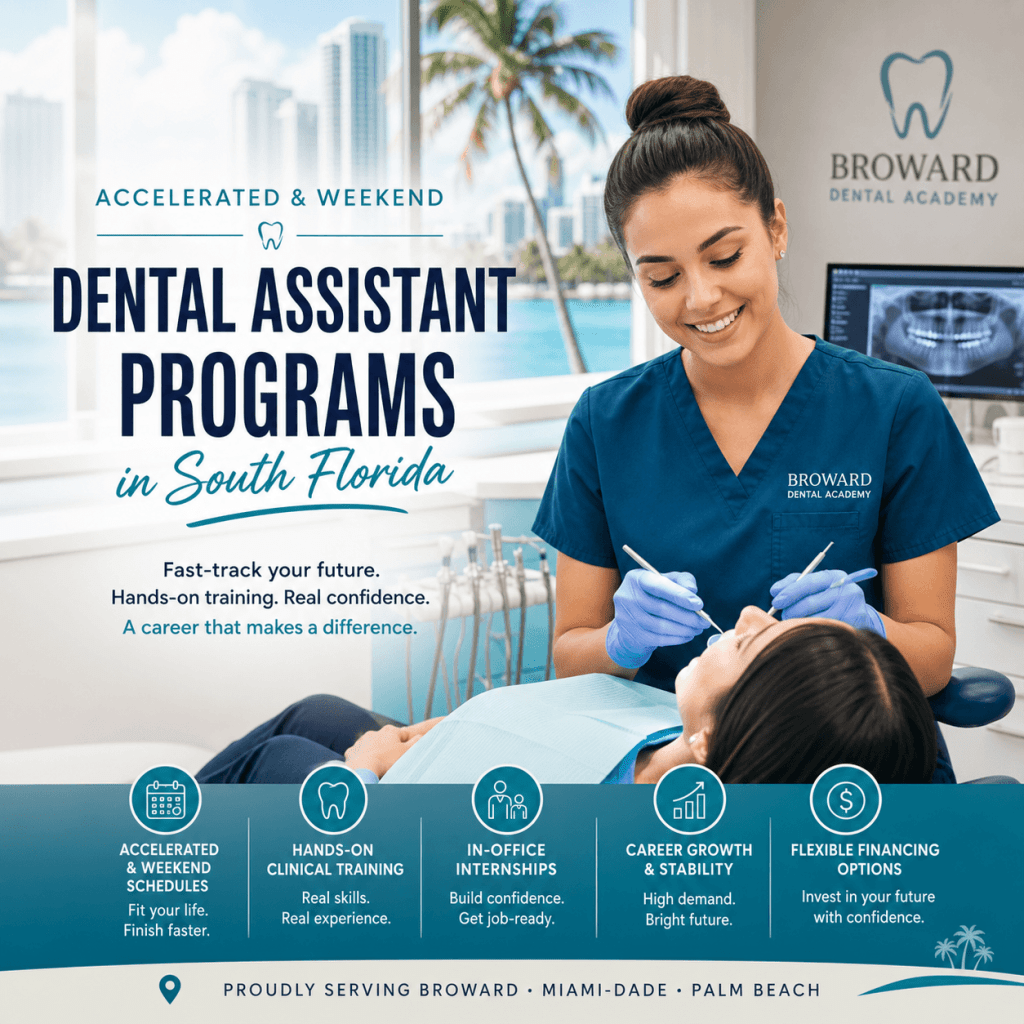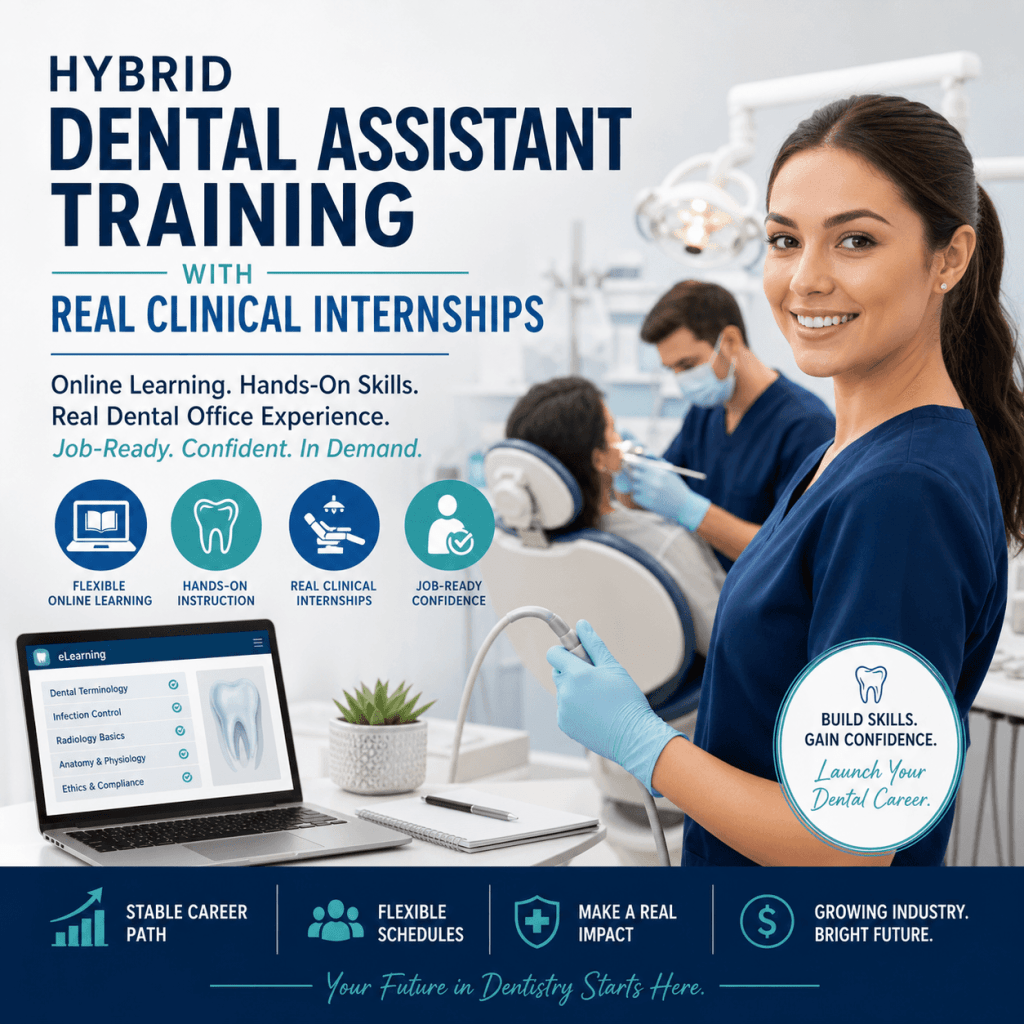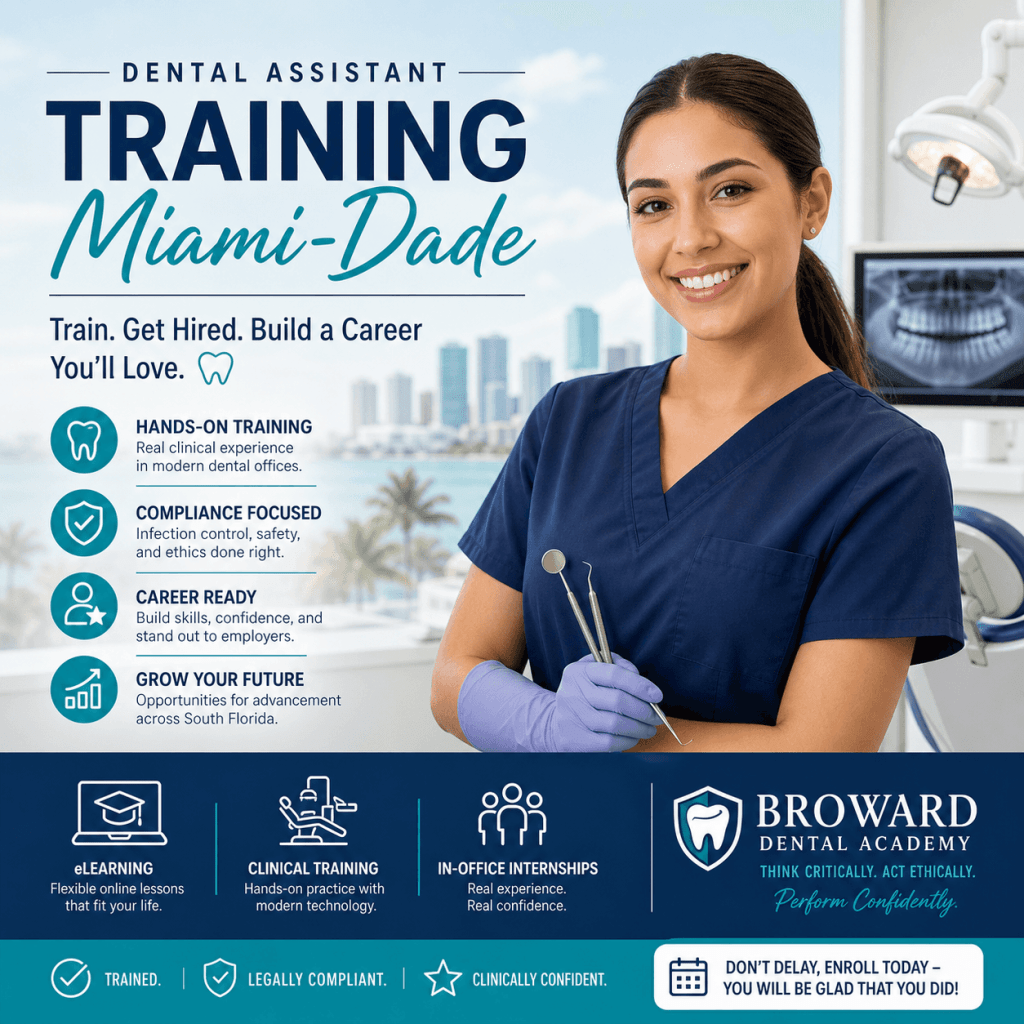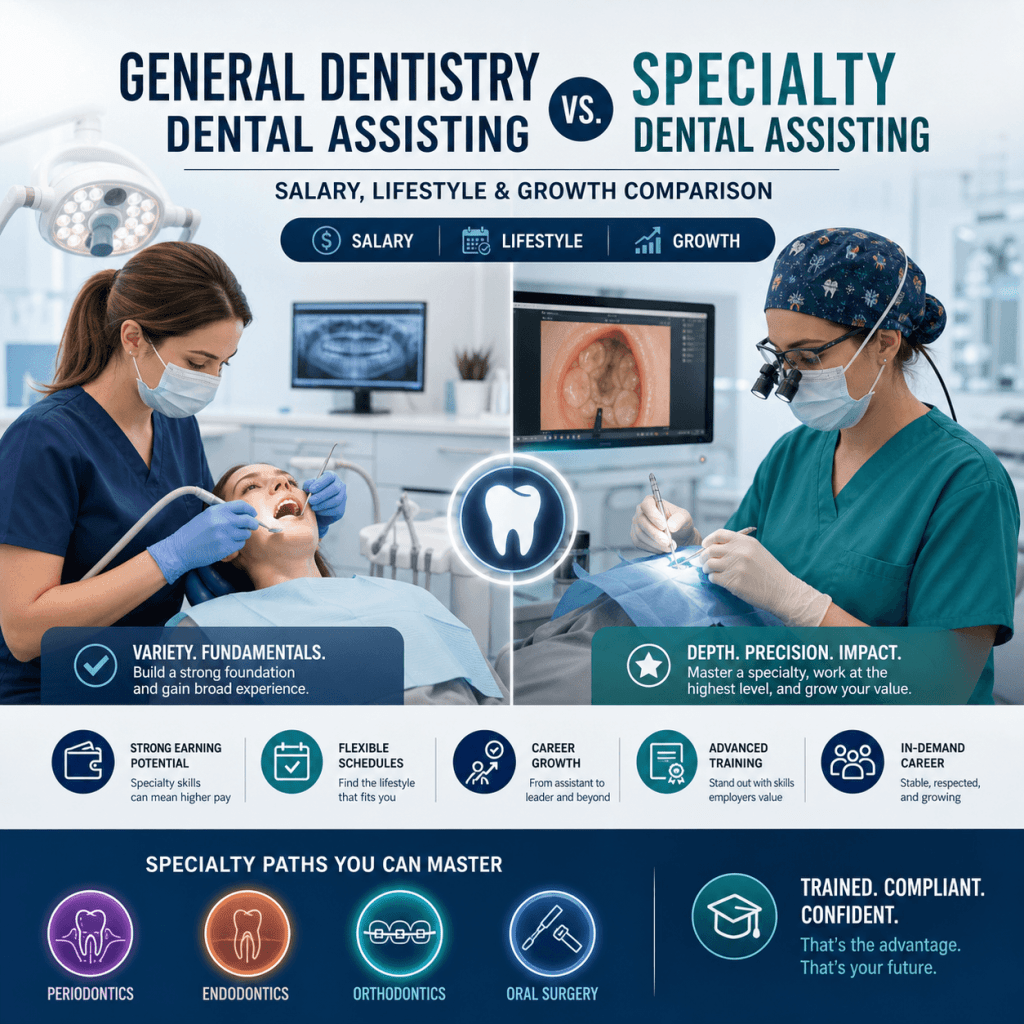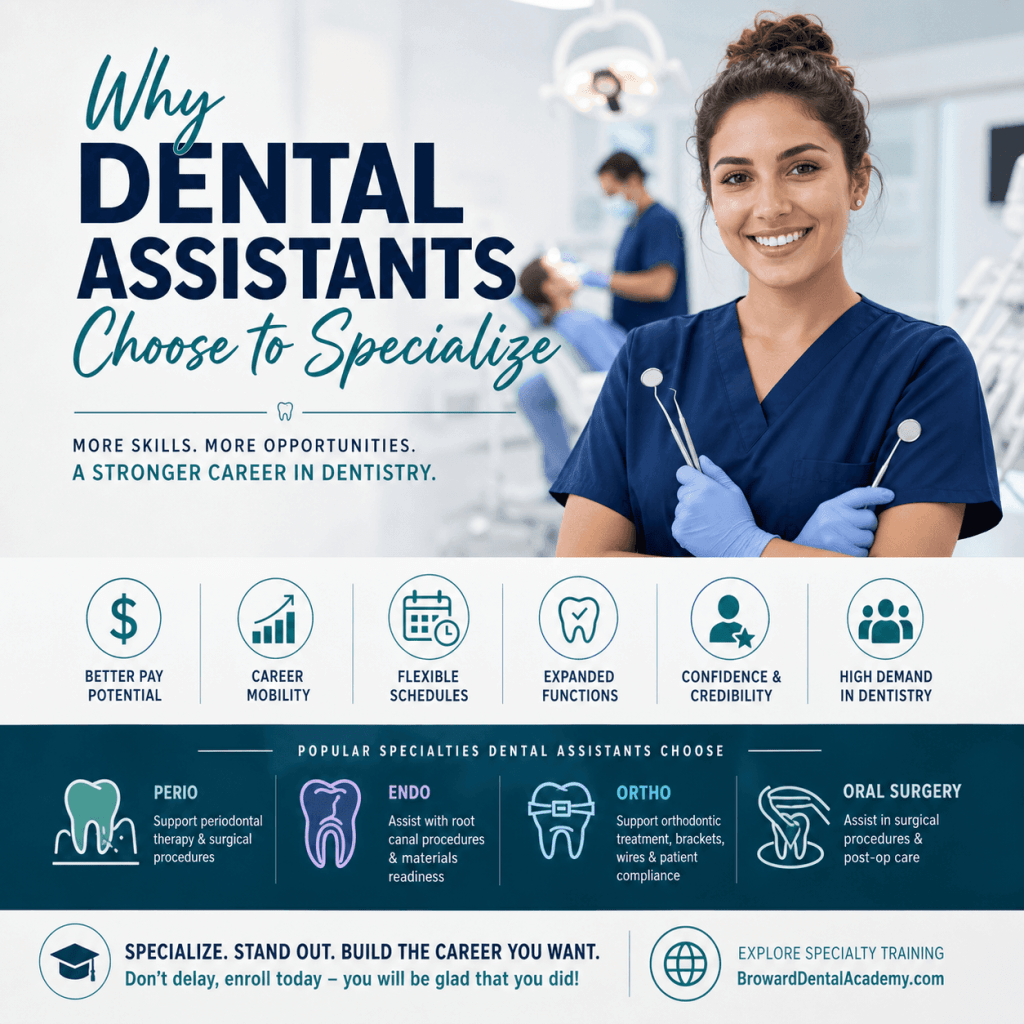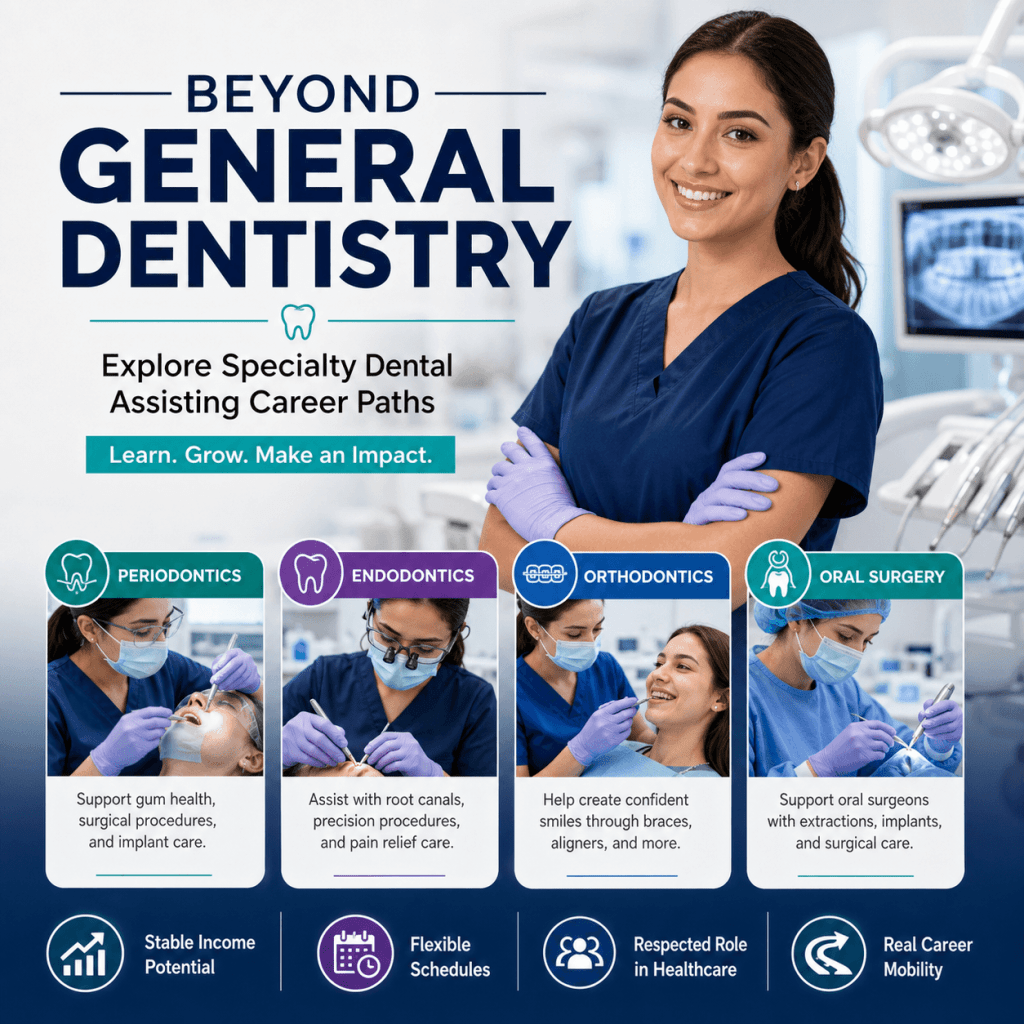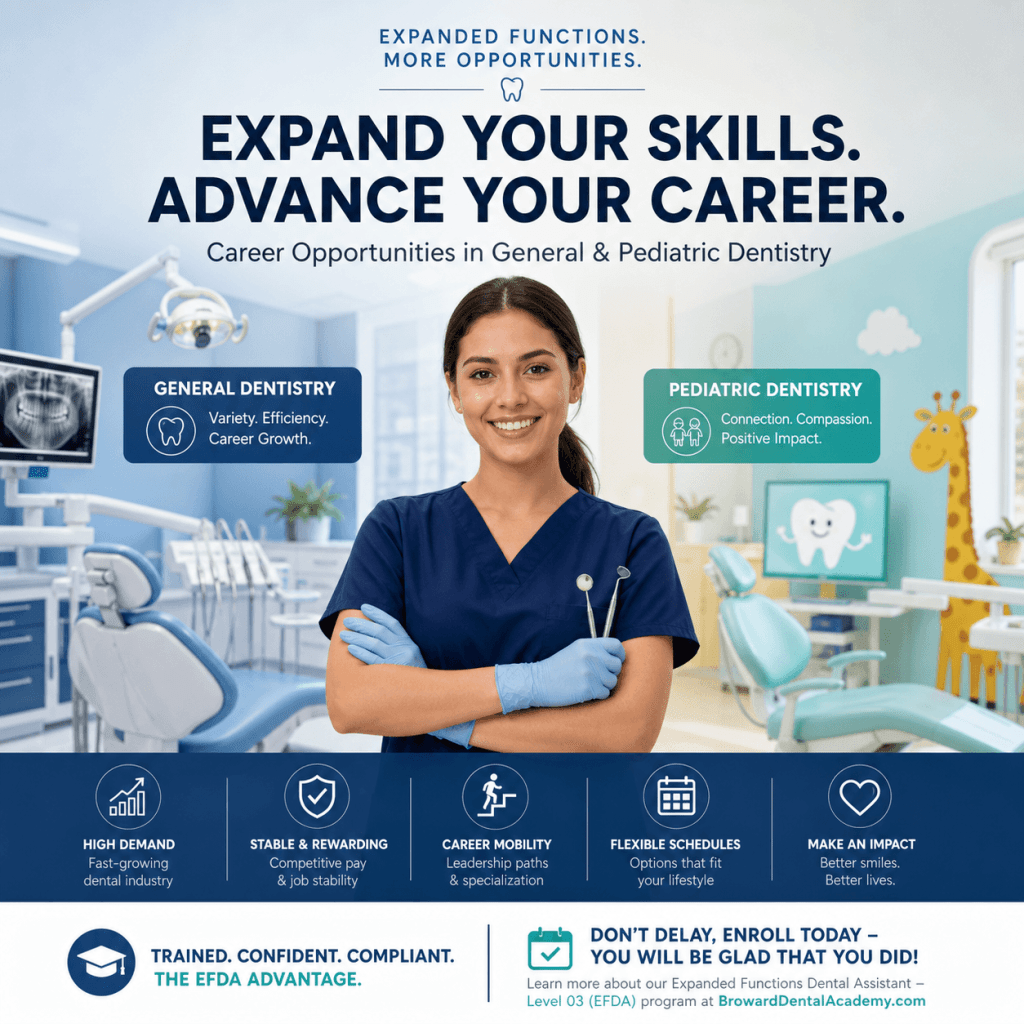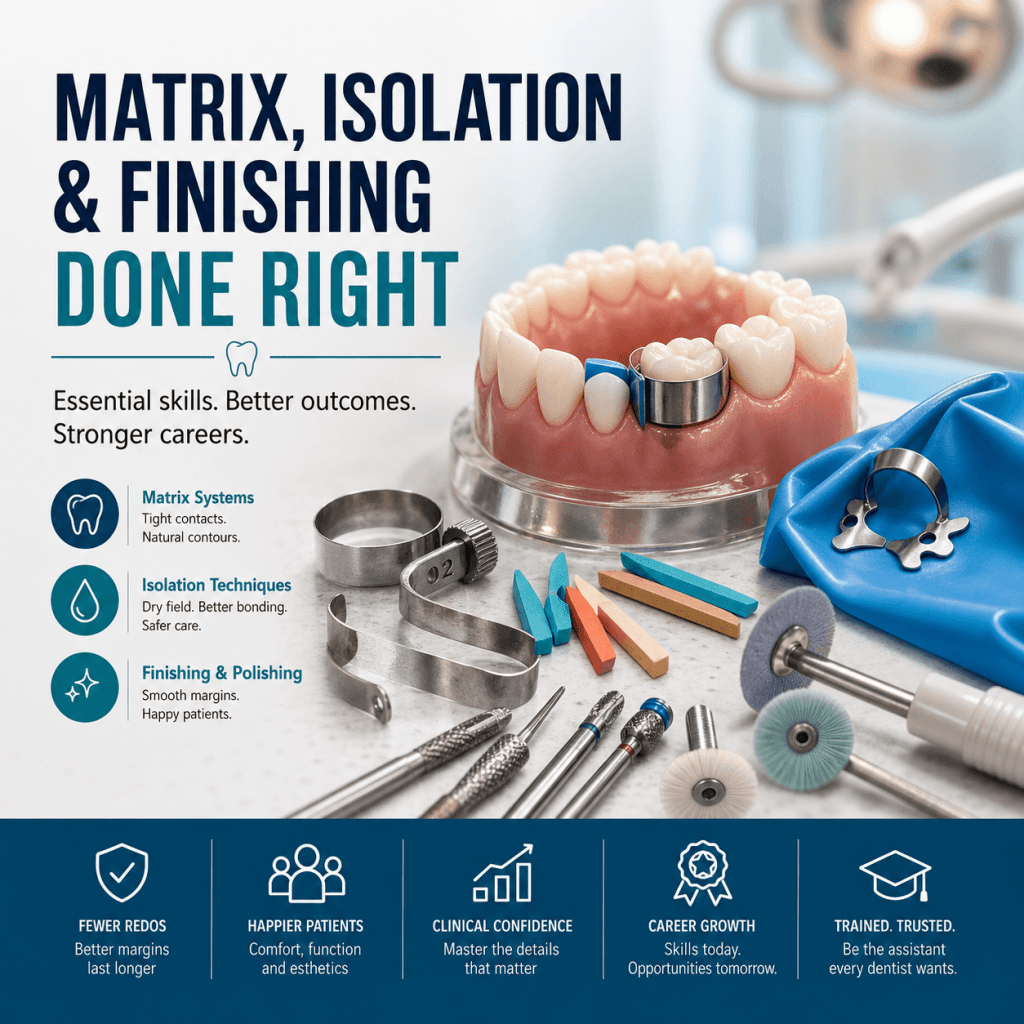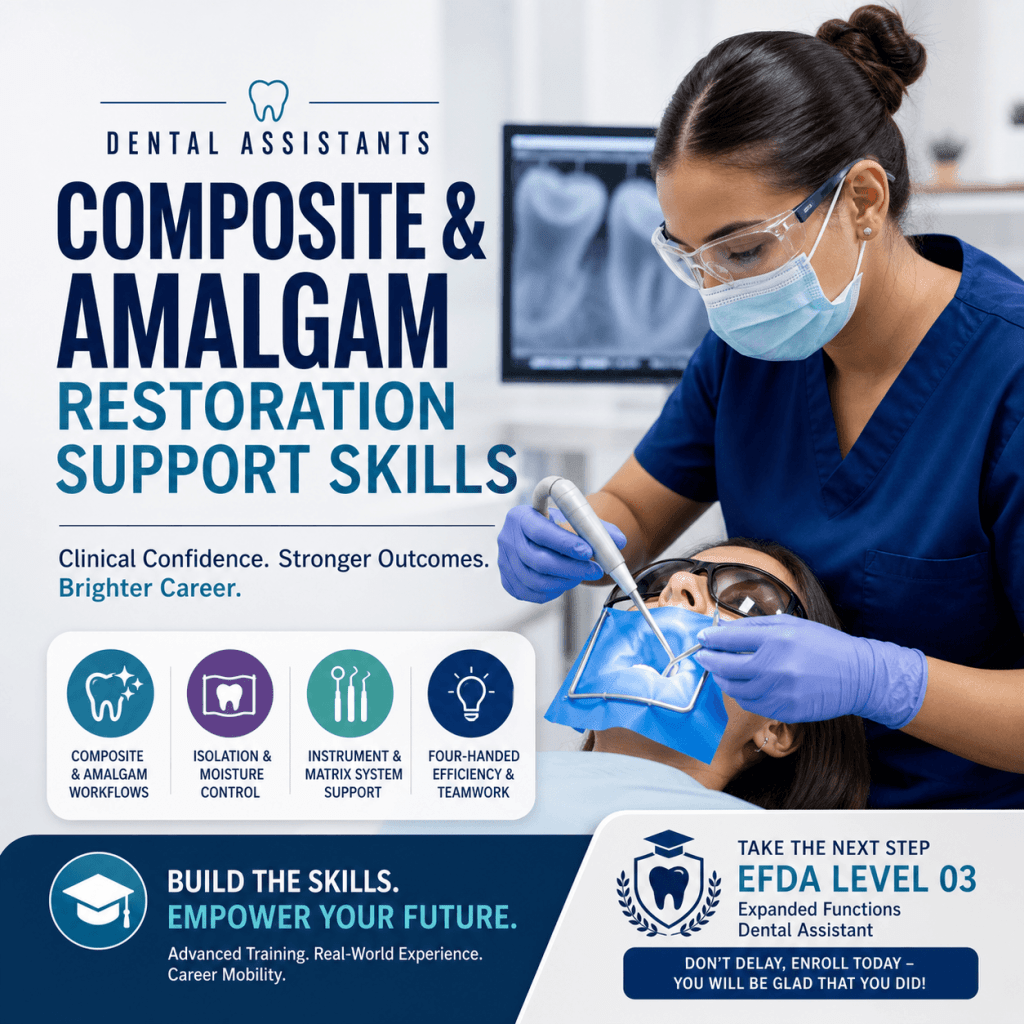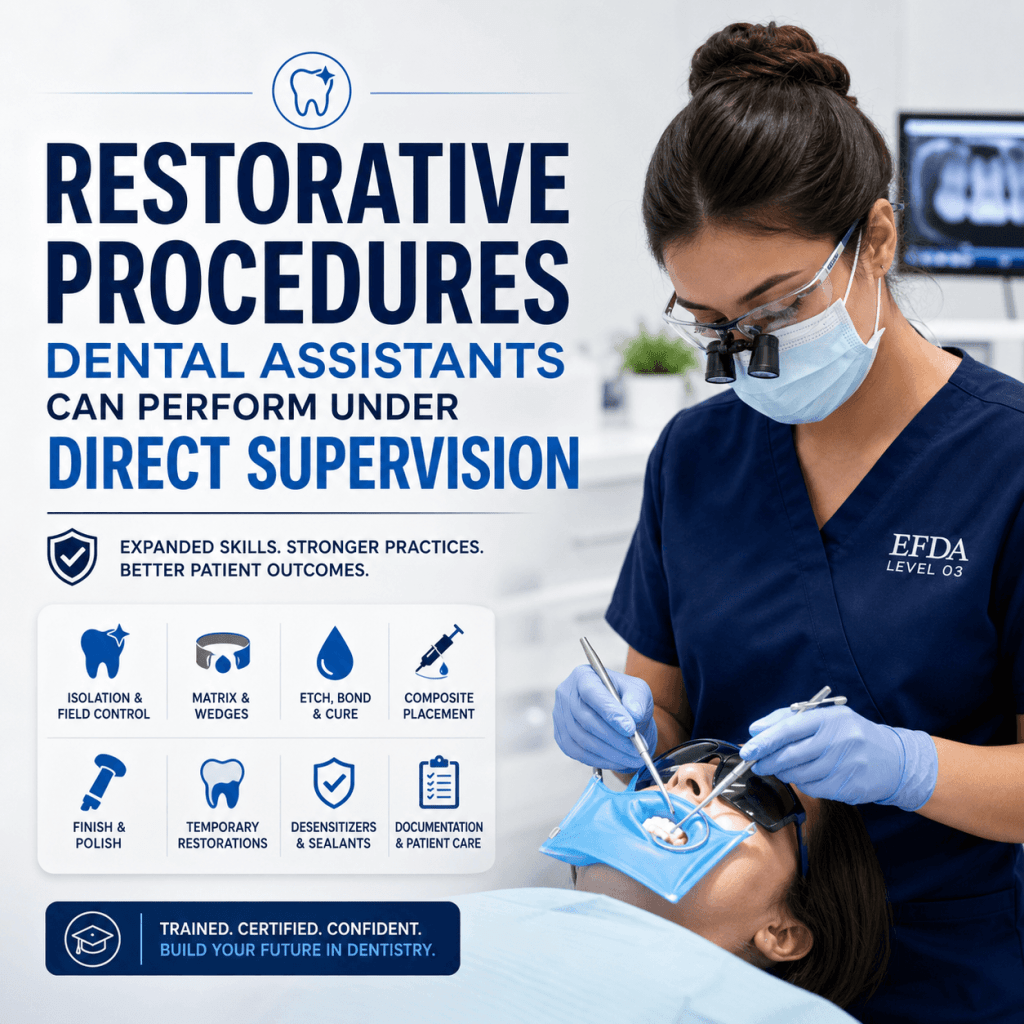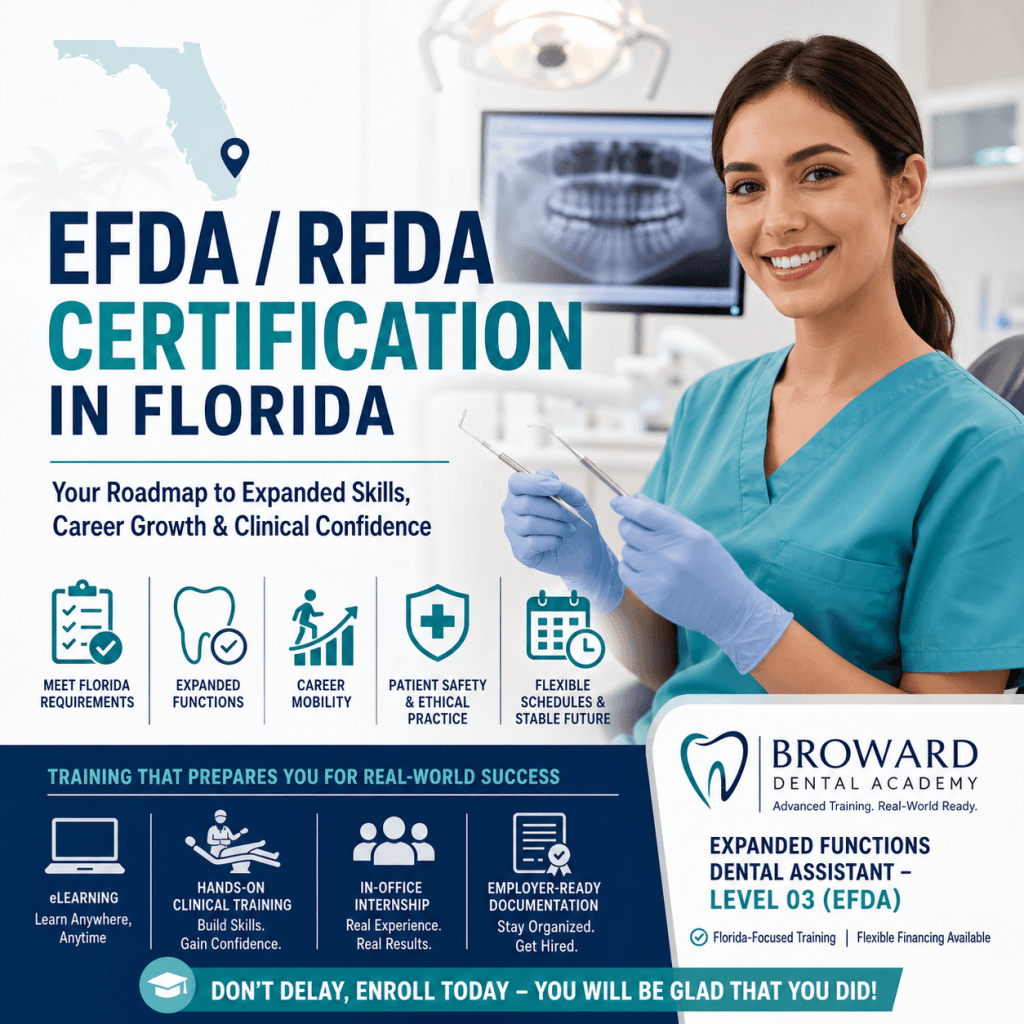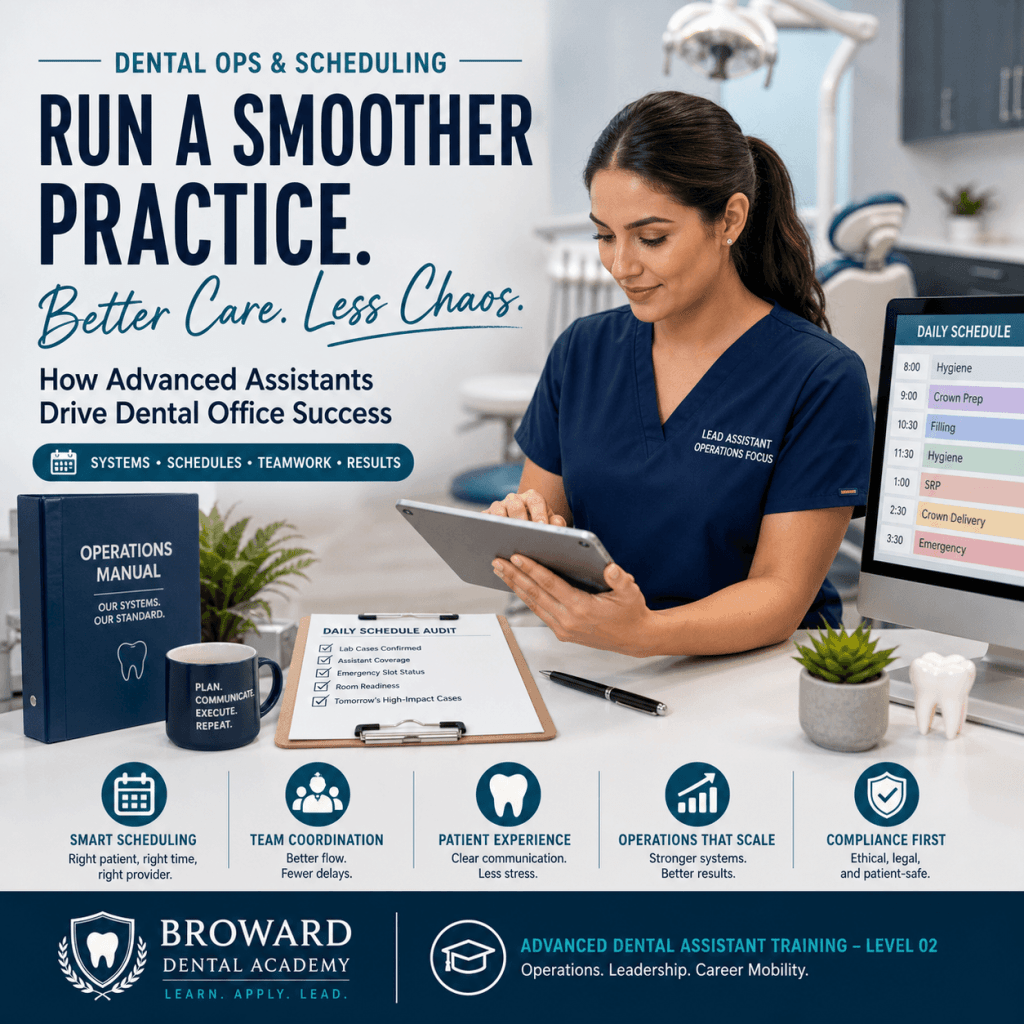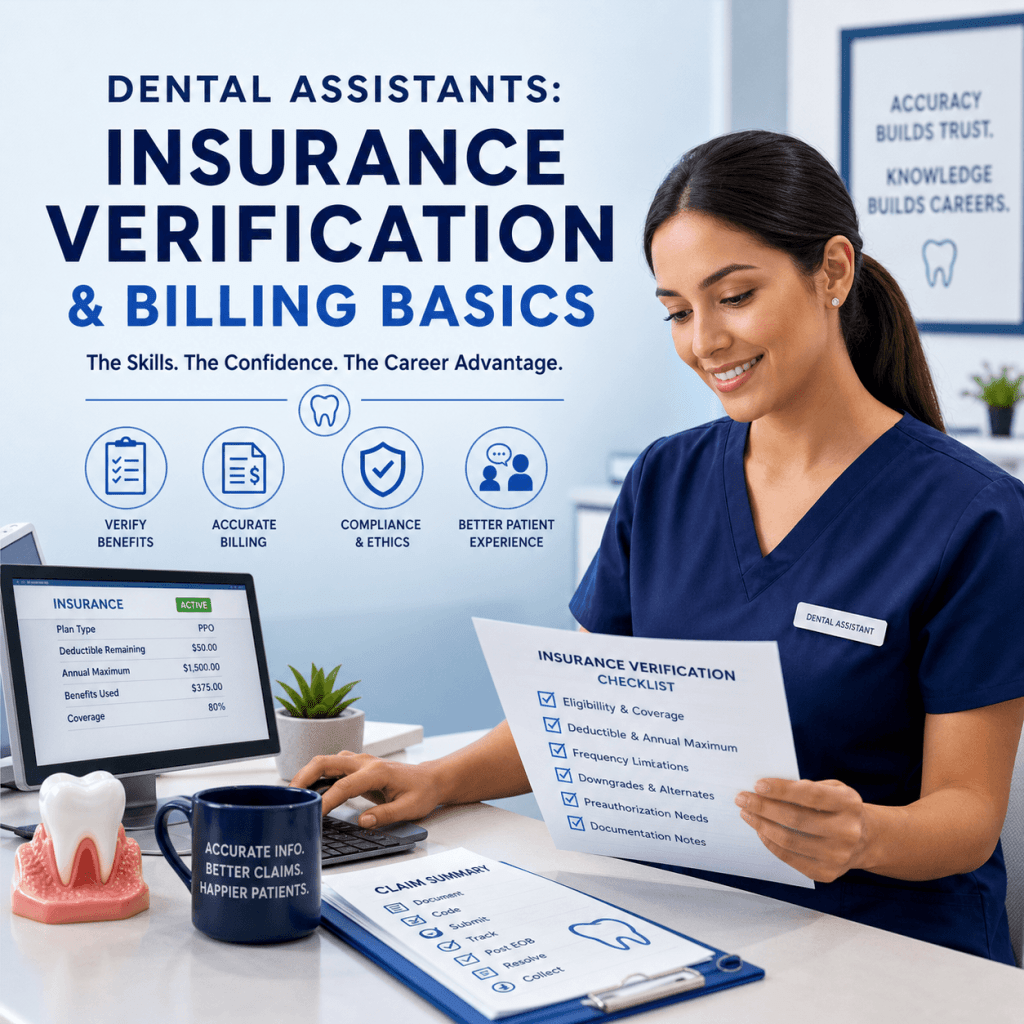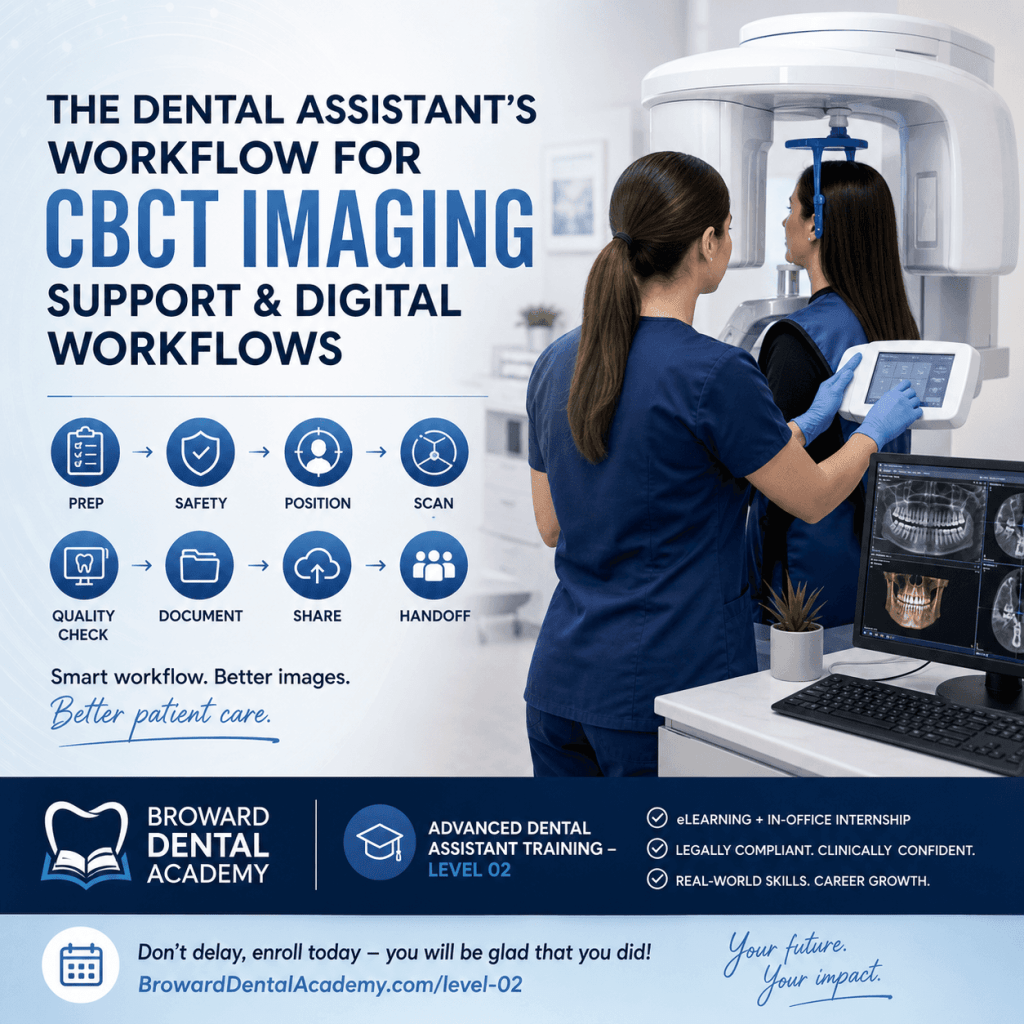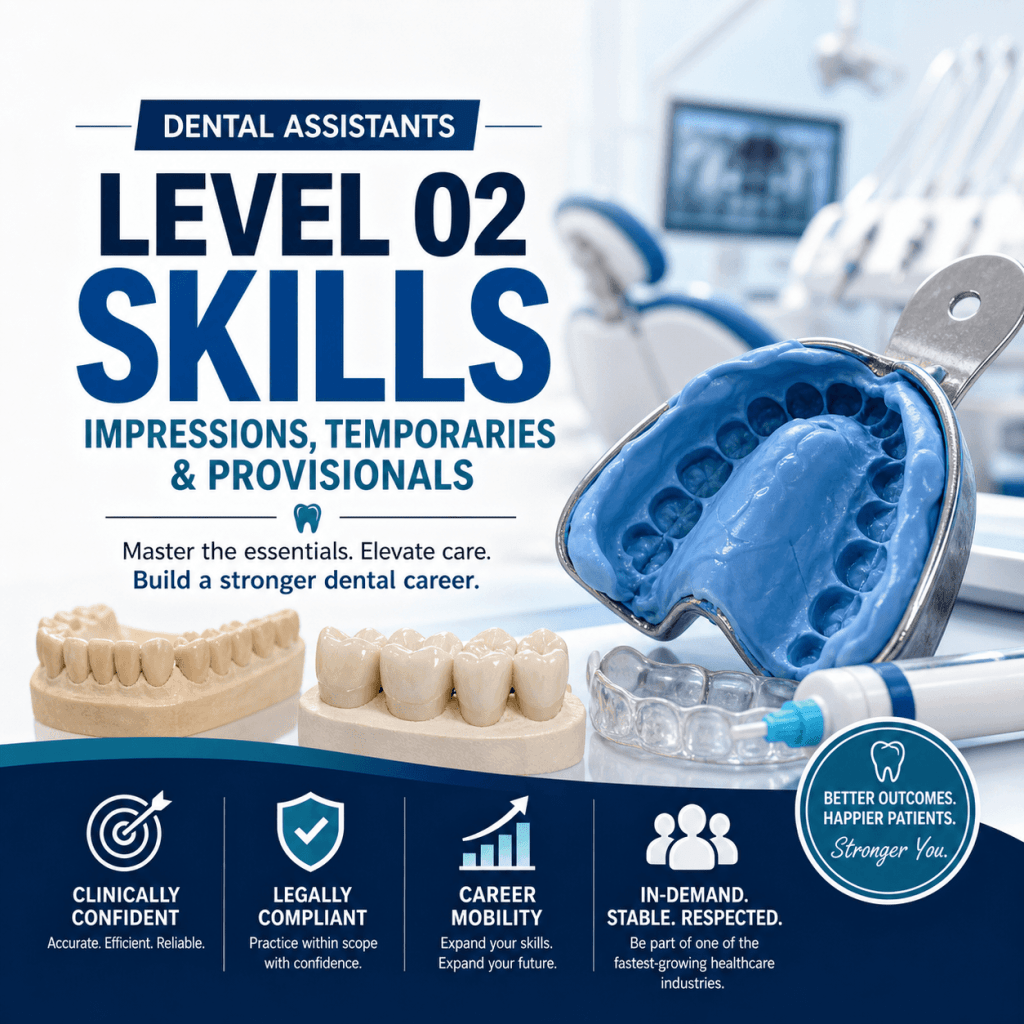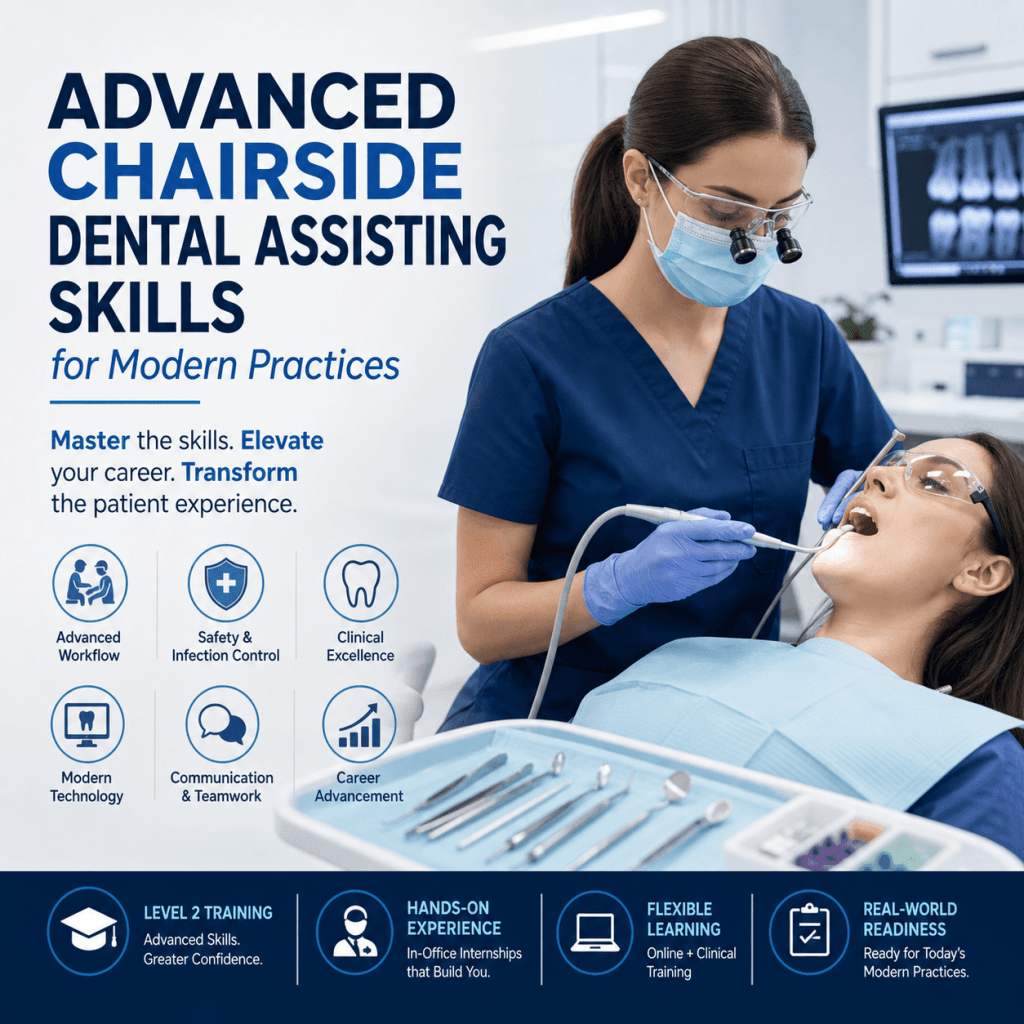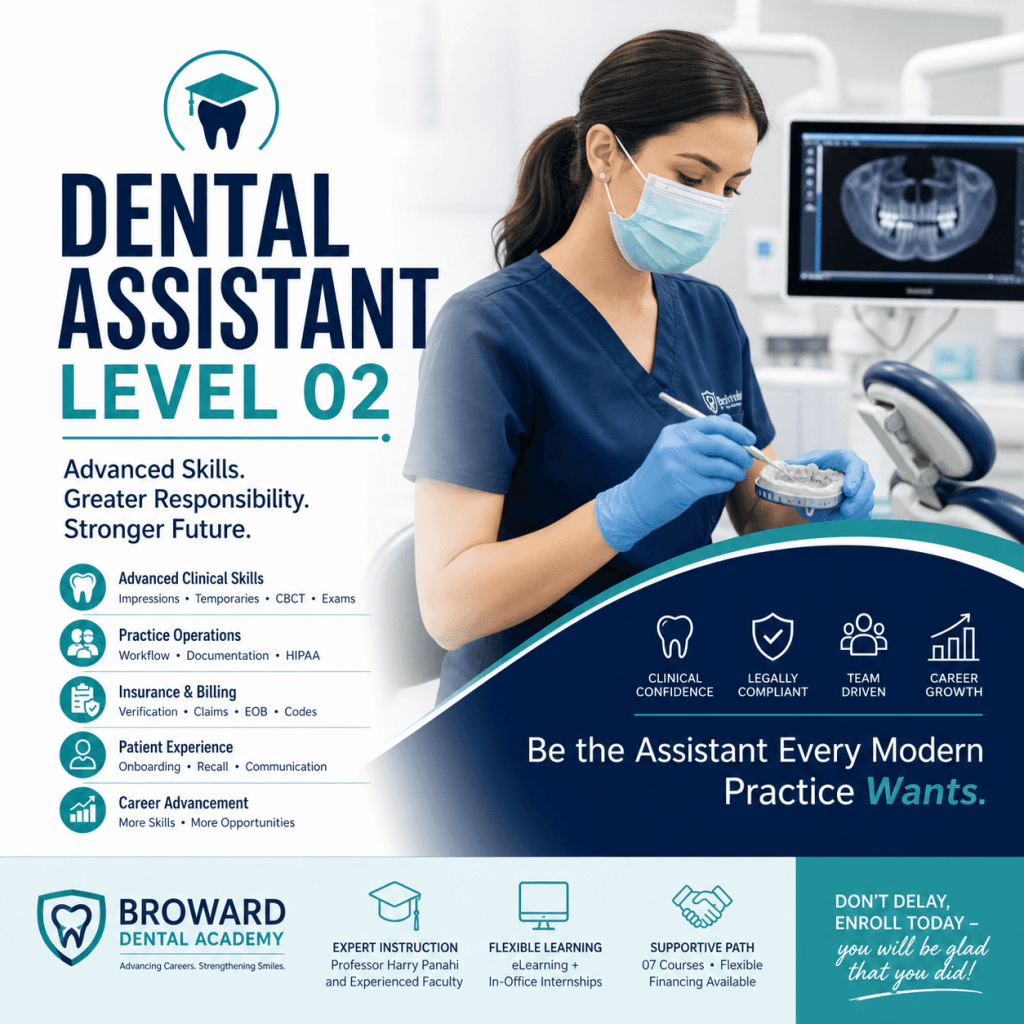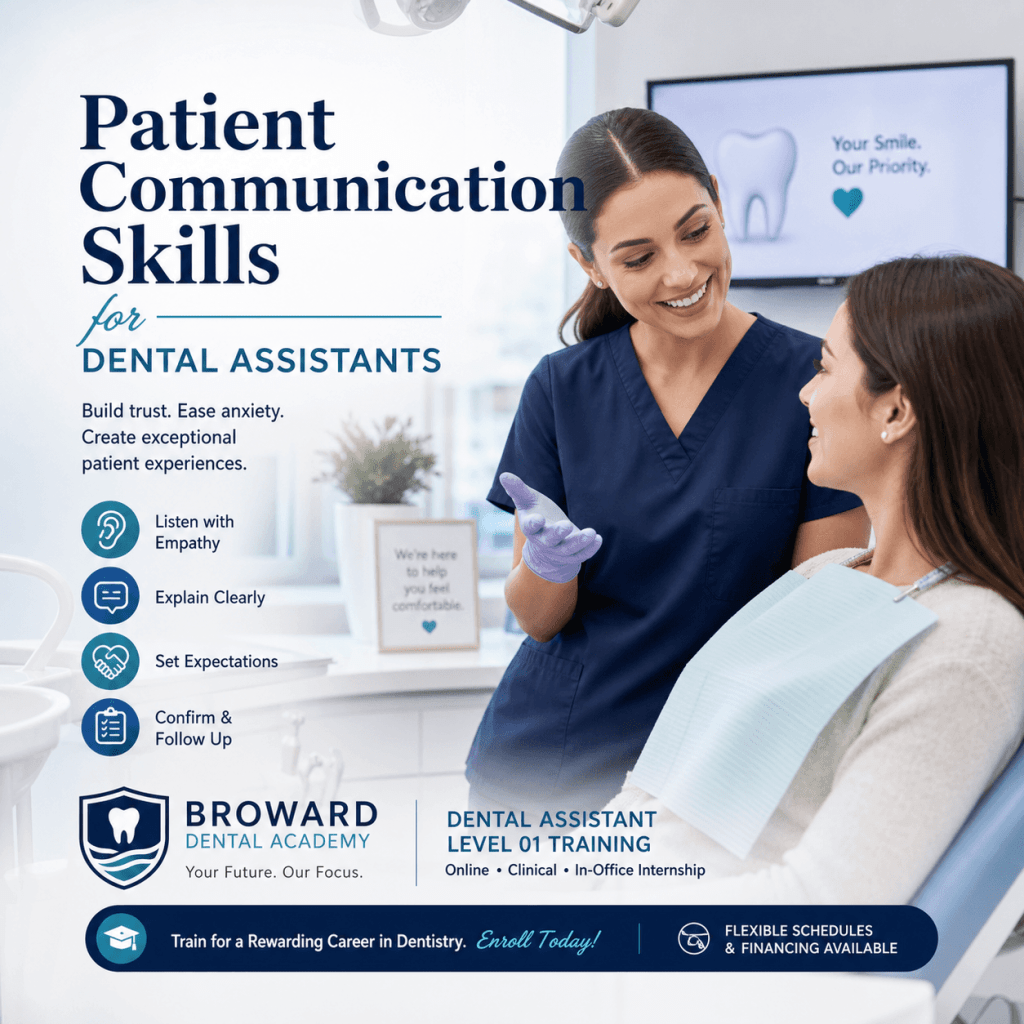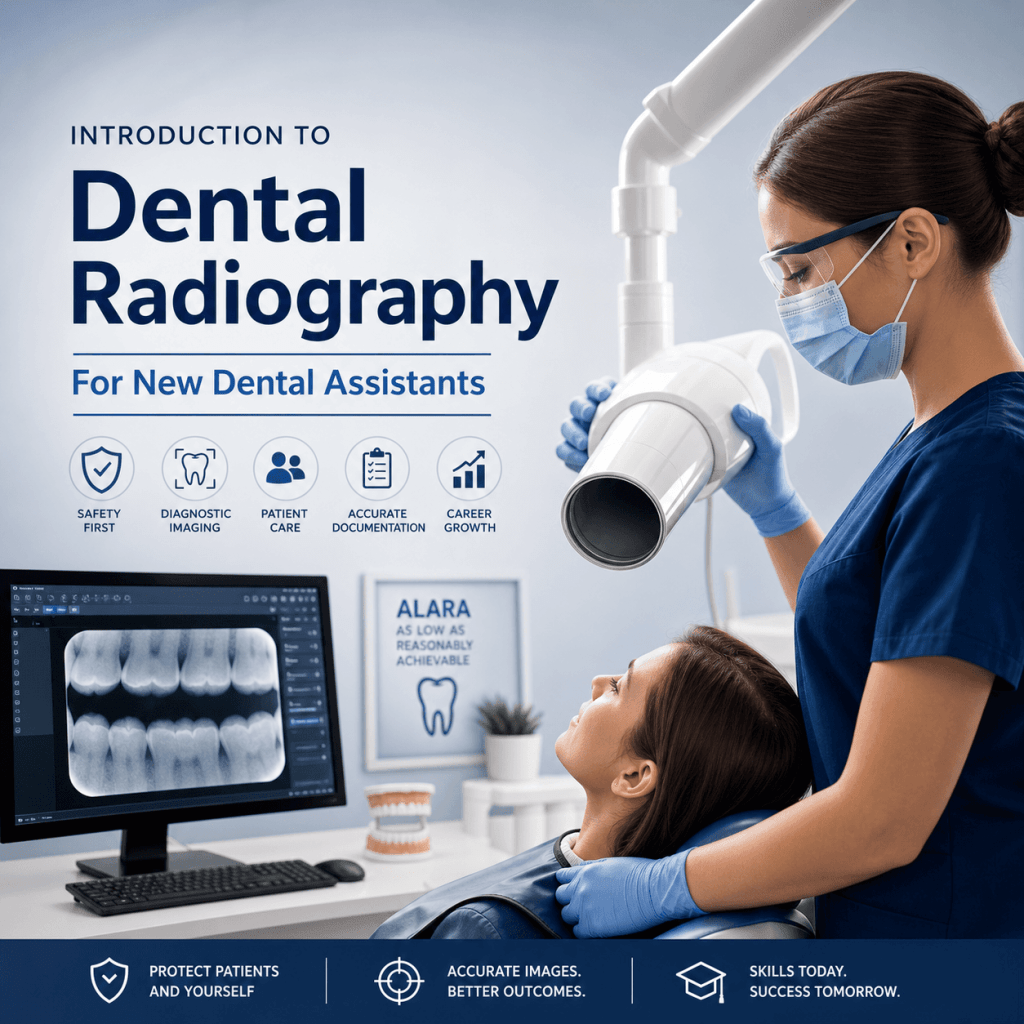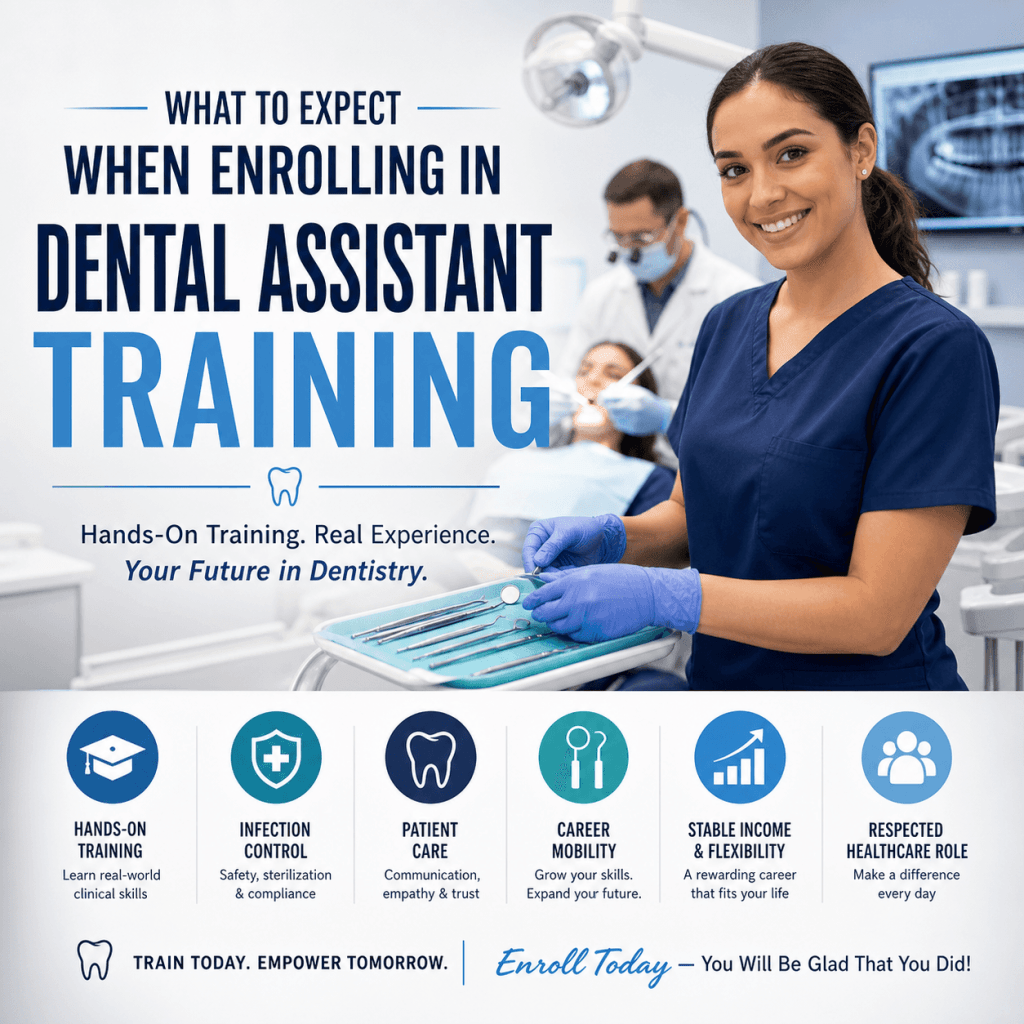
If you’re considering dental assistant training in South Florida, here’s what you can realistically expect, from the first week of class to the moment you step into a real dental practice.
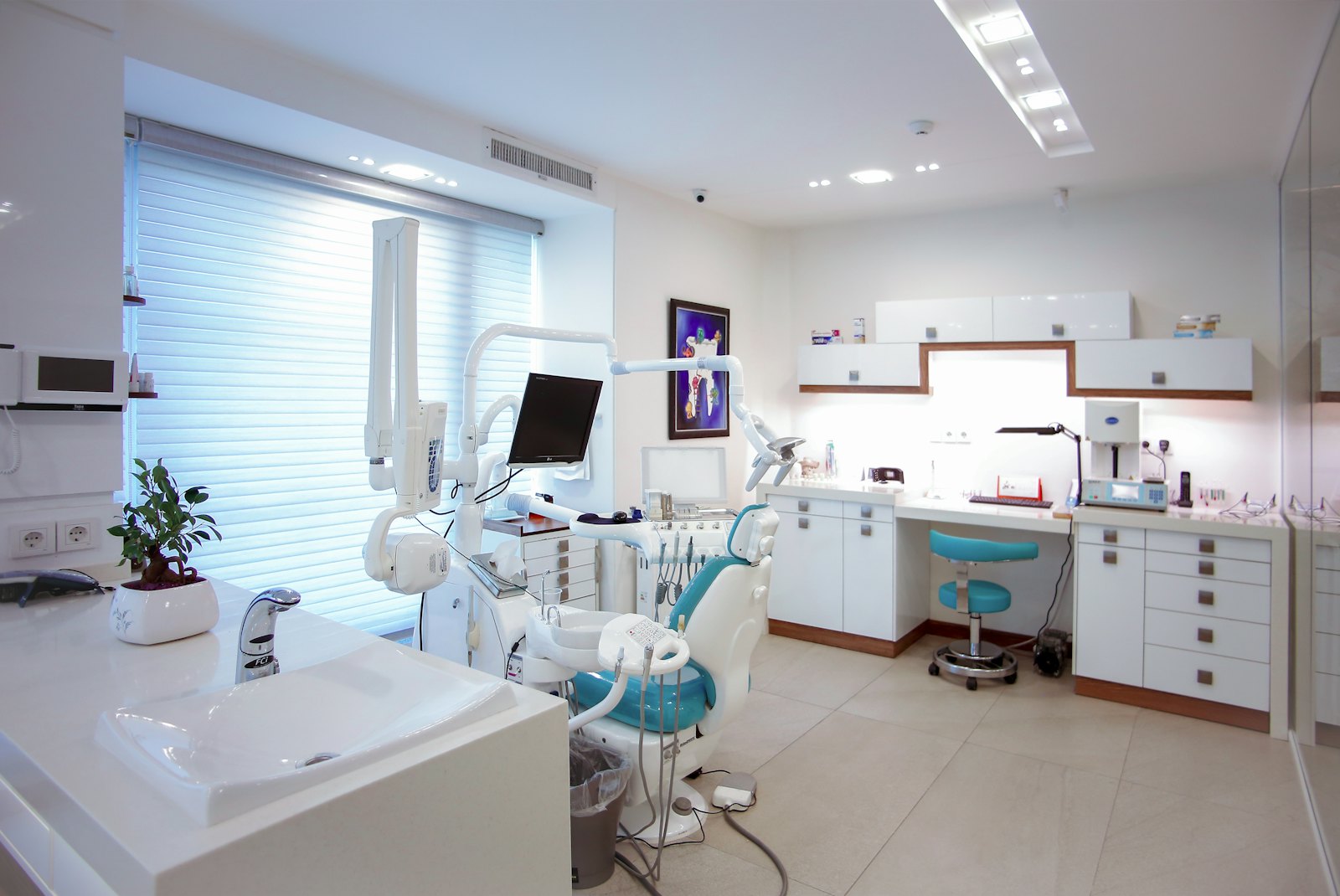
Why dental assistant training is worth it right now
Dental is one of the fastest-growing areas in healthcare, and the demand for skilled dental professionals keeps rising. Practices are busy, patient expectations are higher than ever, and dentists need team members they can rely on from day one.
That demand is exactly why training matters. A strong program is not casual or purely academic. It’s hands-on, detail-heavy, patient-facing, and built around:
- Safety and infection control
- Compliance and professionalism
- Speed with accuracy
- Consistent clinical workflow
And the outcomes most students care about are very real in this field:
- Stable income potential
- Flexible schedules (once you are working)
- A respected position in healthcare
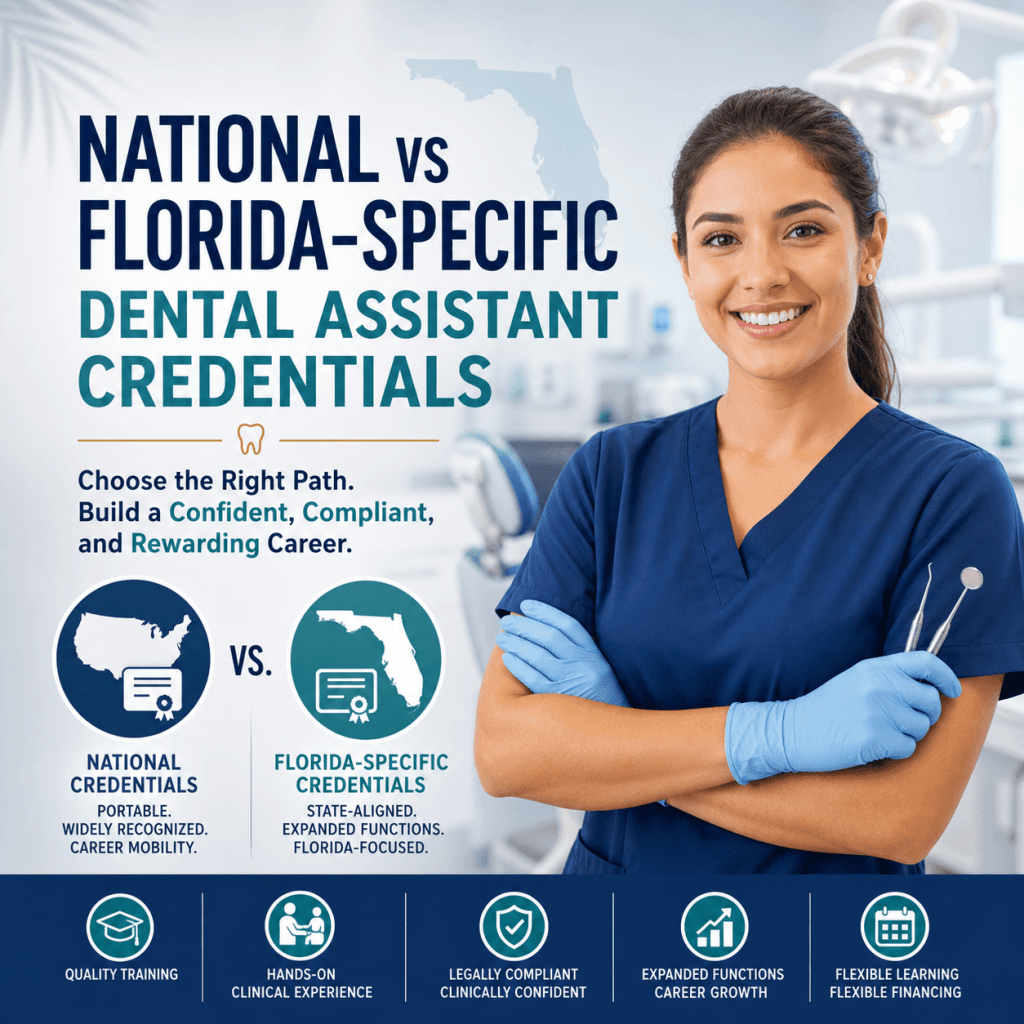
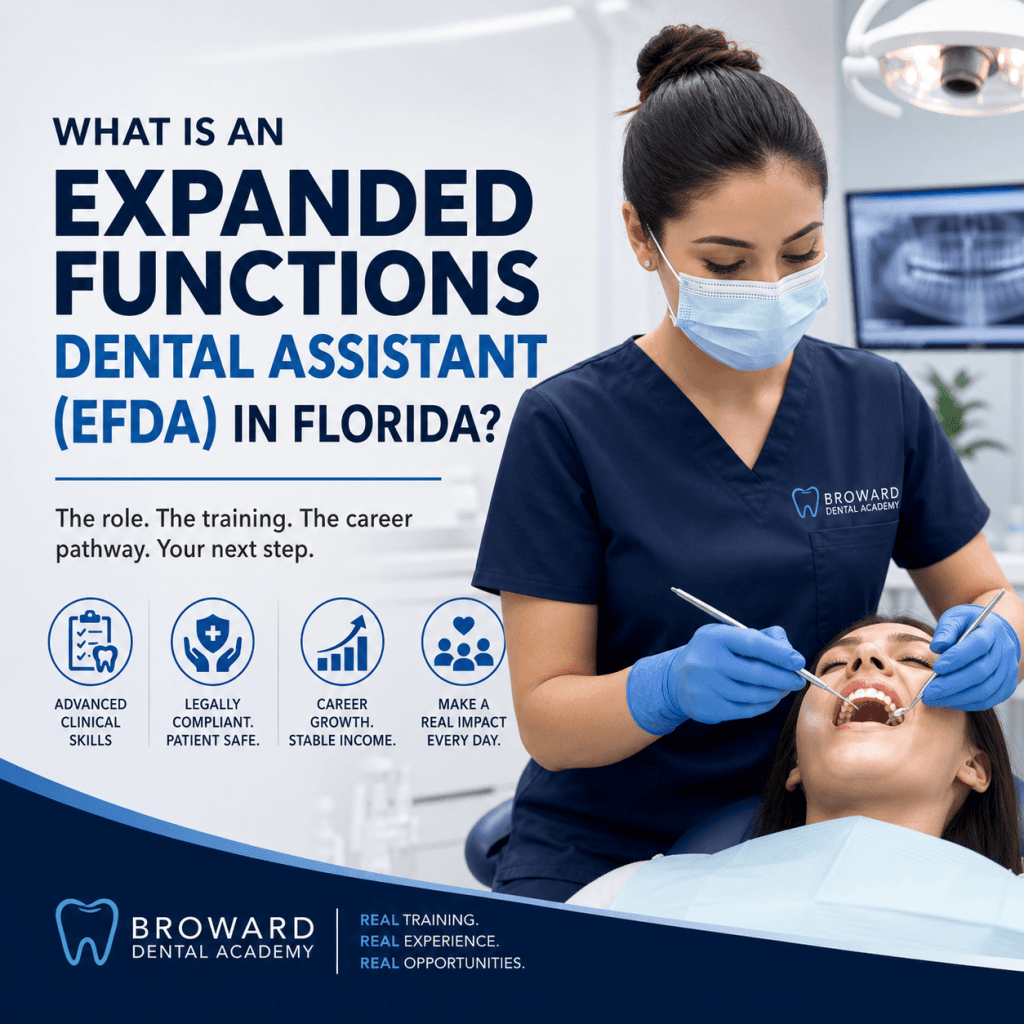
- Clear career mobility, including expanded functions where allowed
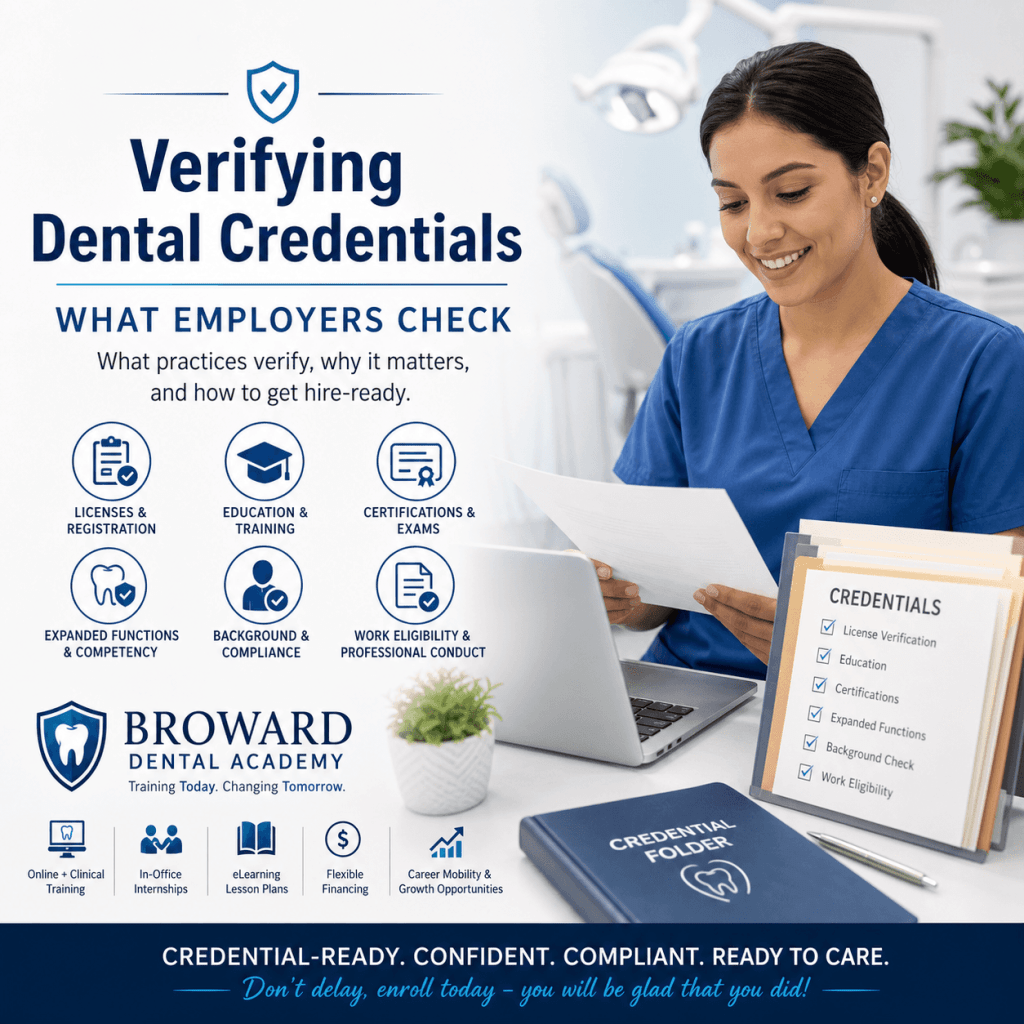
In short, dental practices want professionals who are thoroughly trained, legally compliant, and clinically confident. Good programs focus on producing exactly that.
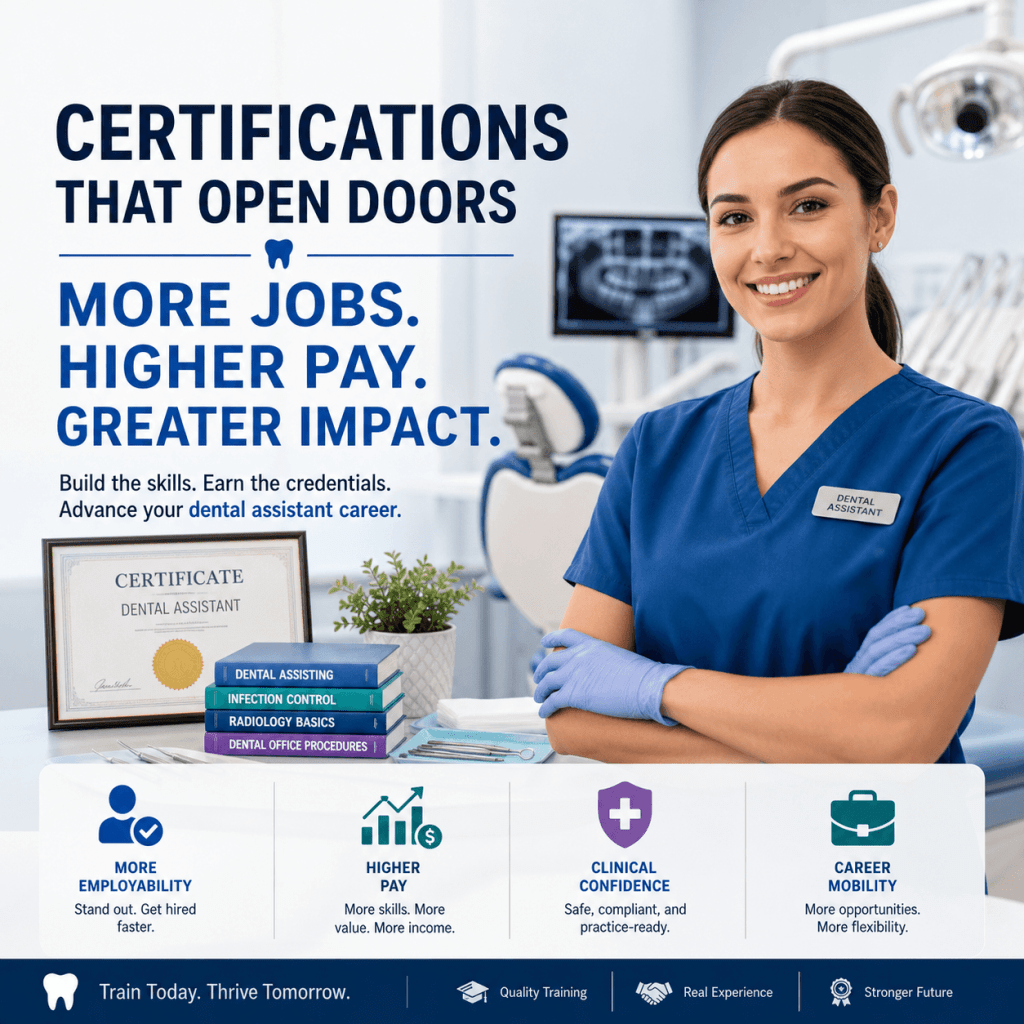
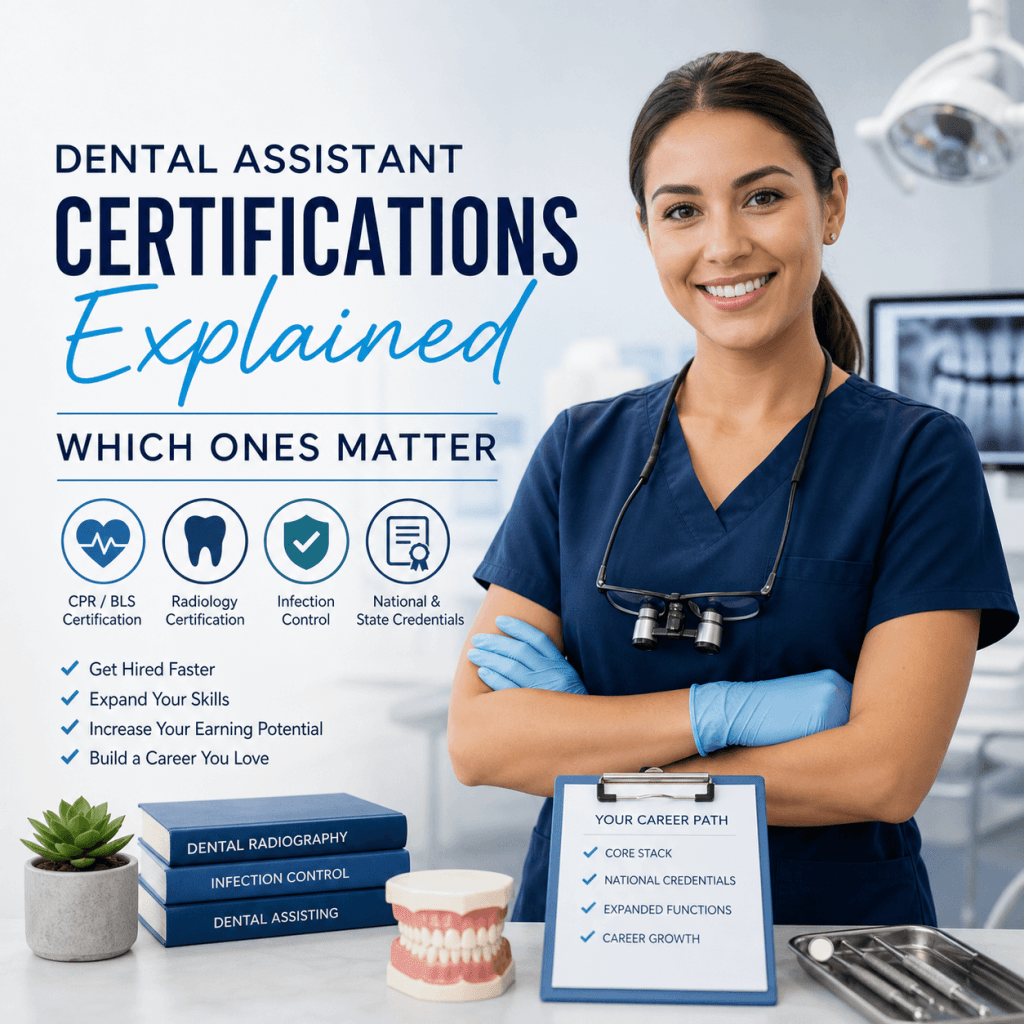
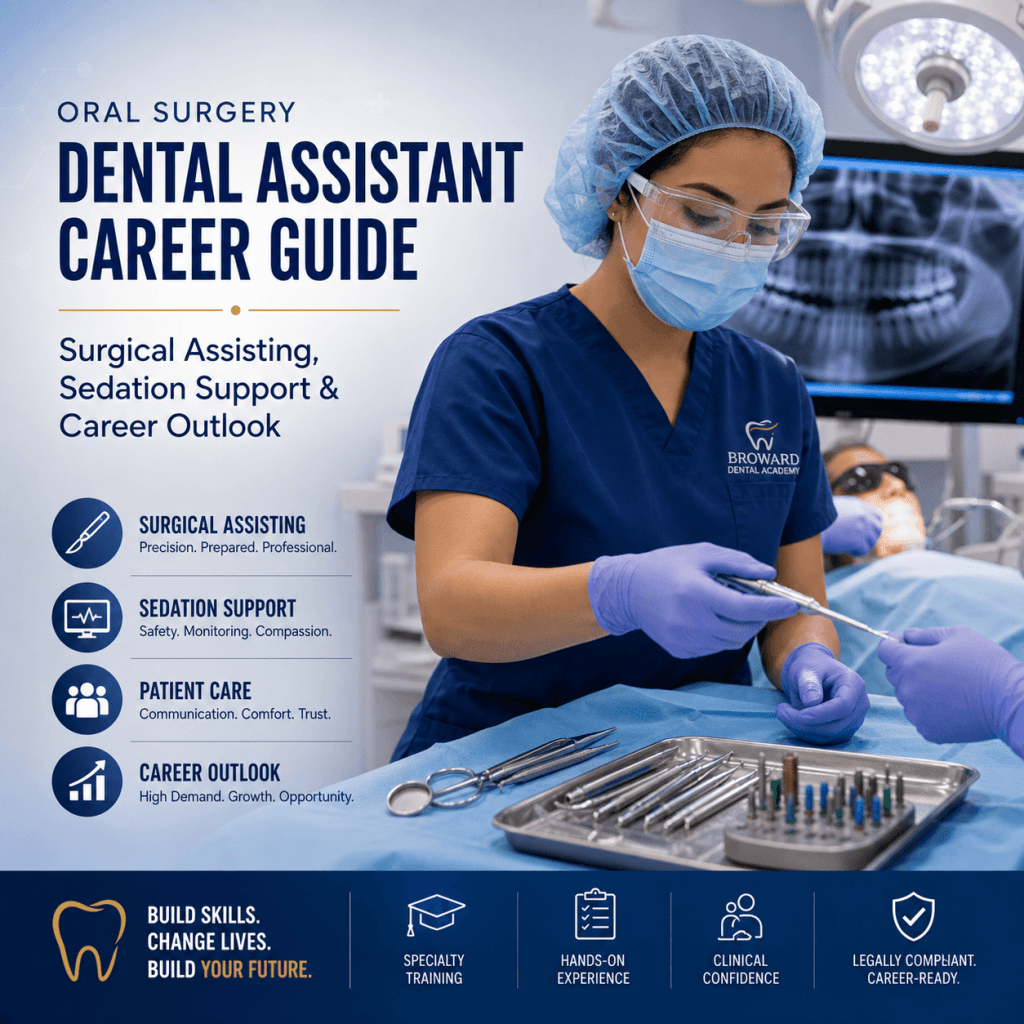
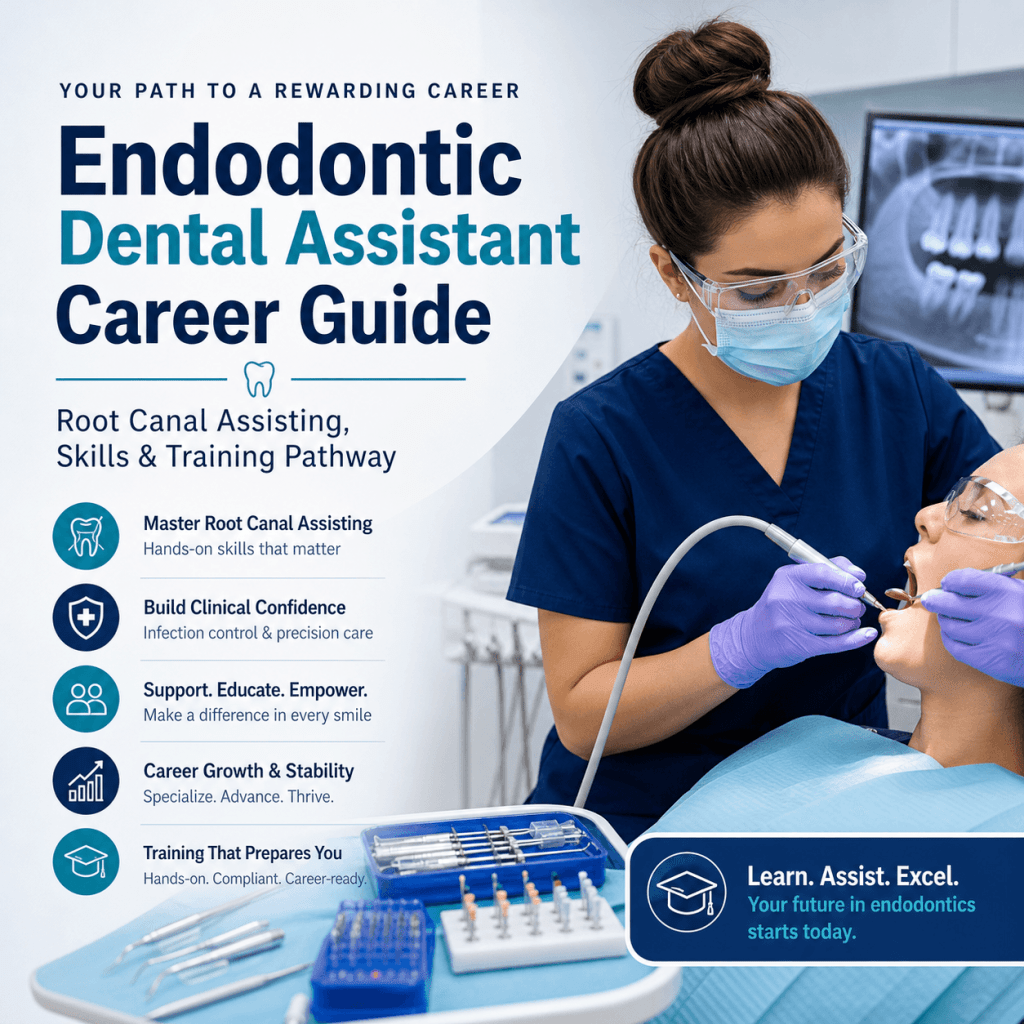
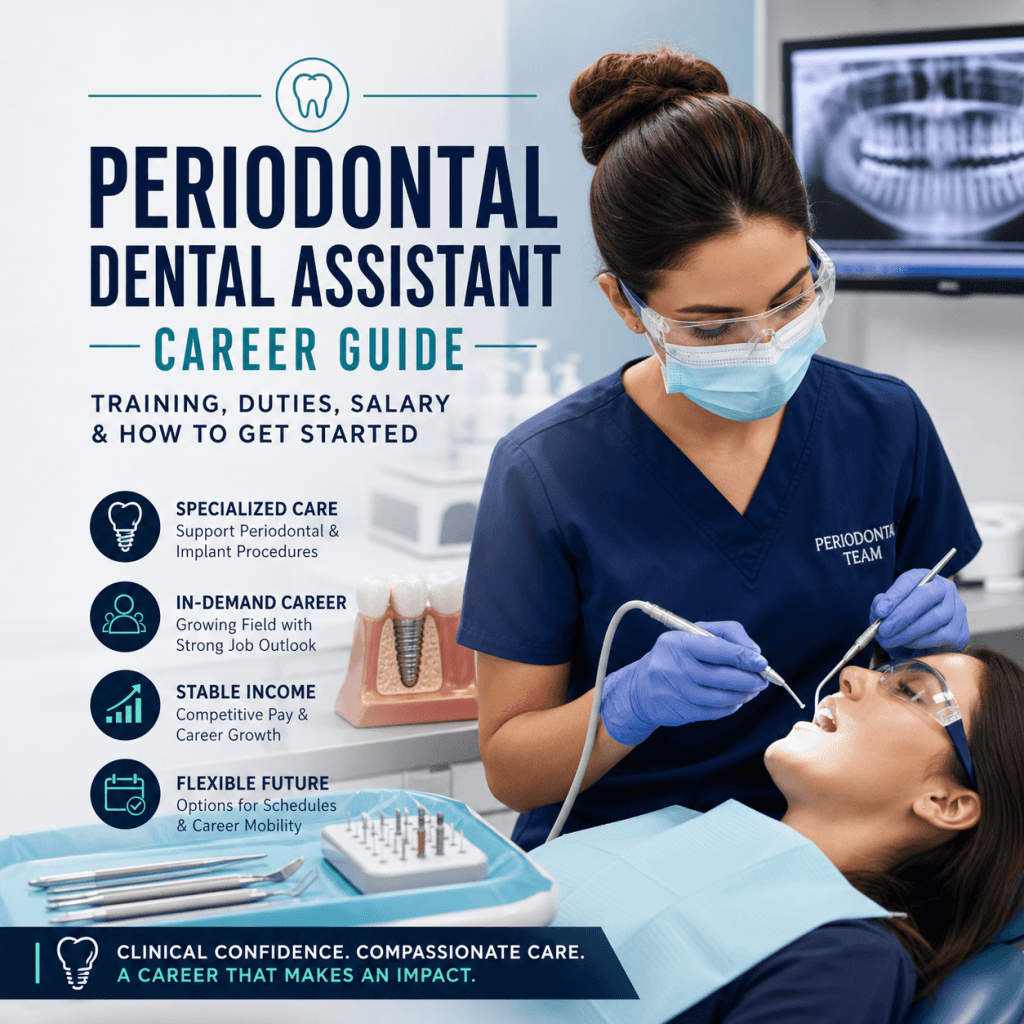
For instance, at Broward Dental Academy, we offer comprehensive training programs that cover various aspects of dental assisting including [endodontics](https://browarddentalacademy.com/endodontics/) and periodontics. Additionally, we provide valuable certifications that enhance your qualifications and job prospects.
What you’ll learn during dental assistant training (the real day-to-day skills)
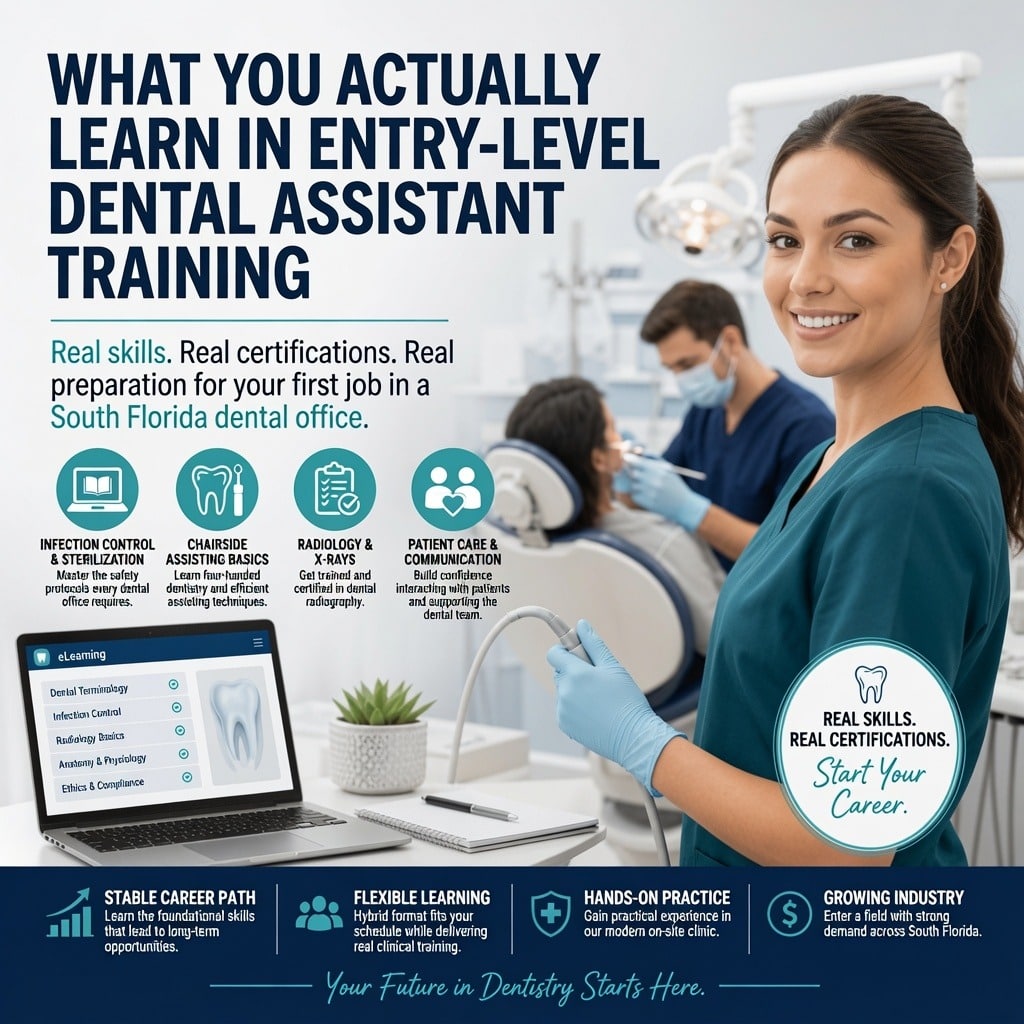
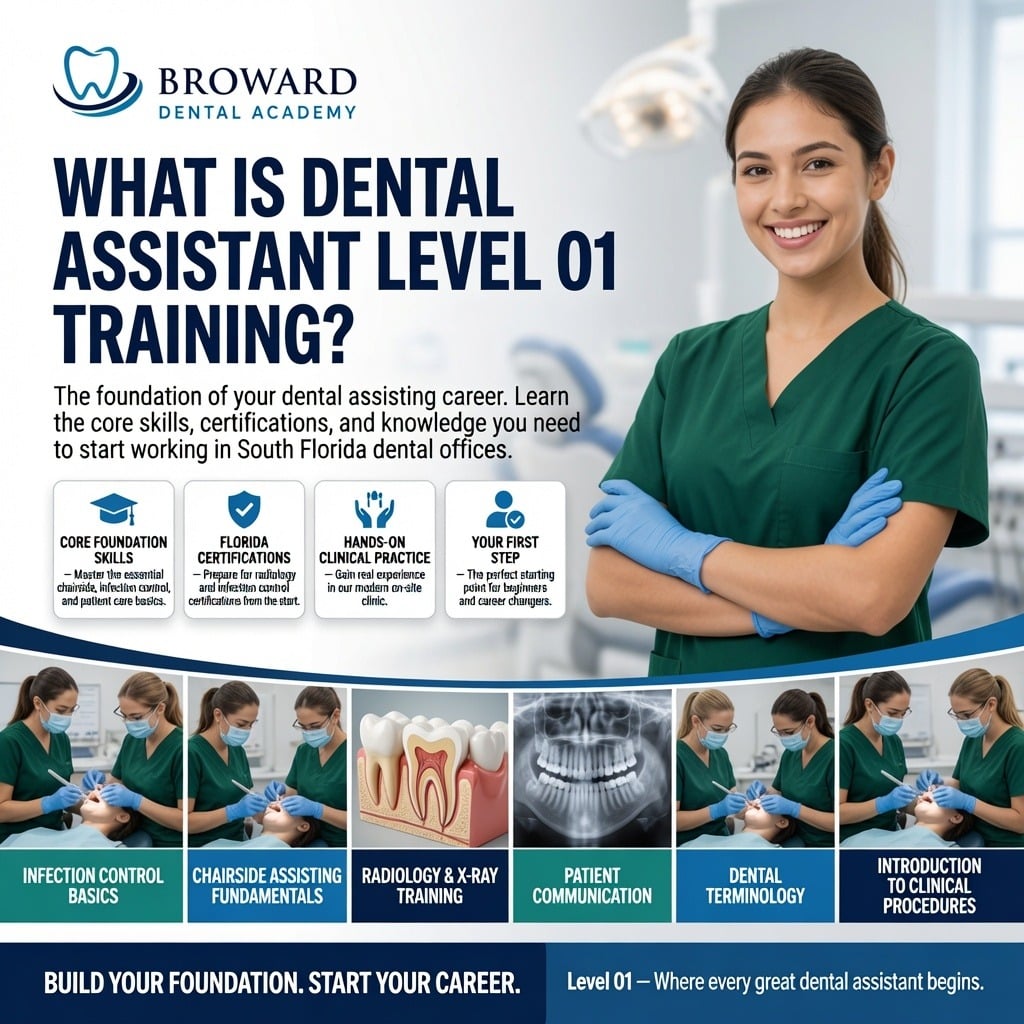
Dental assistant training is practical by design. You are learning skills you will use every day in a real operatory, often under time pressure, with patients watching. Here is what that typically includes.
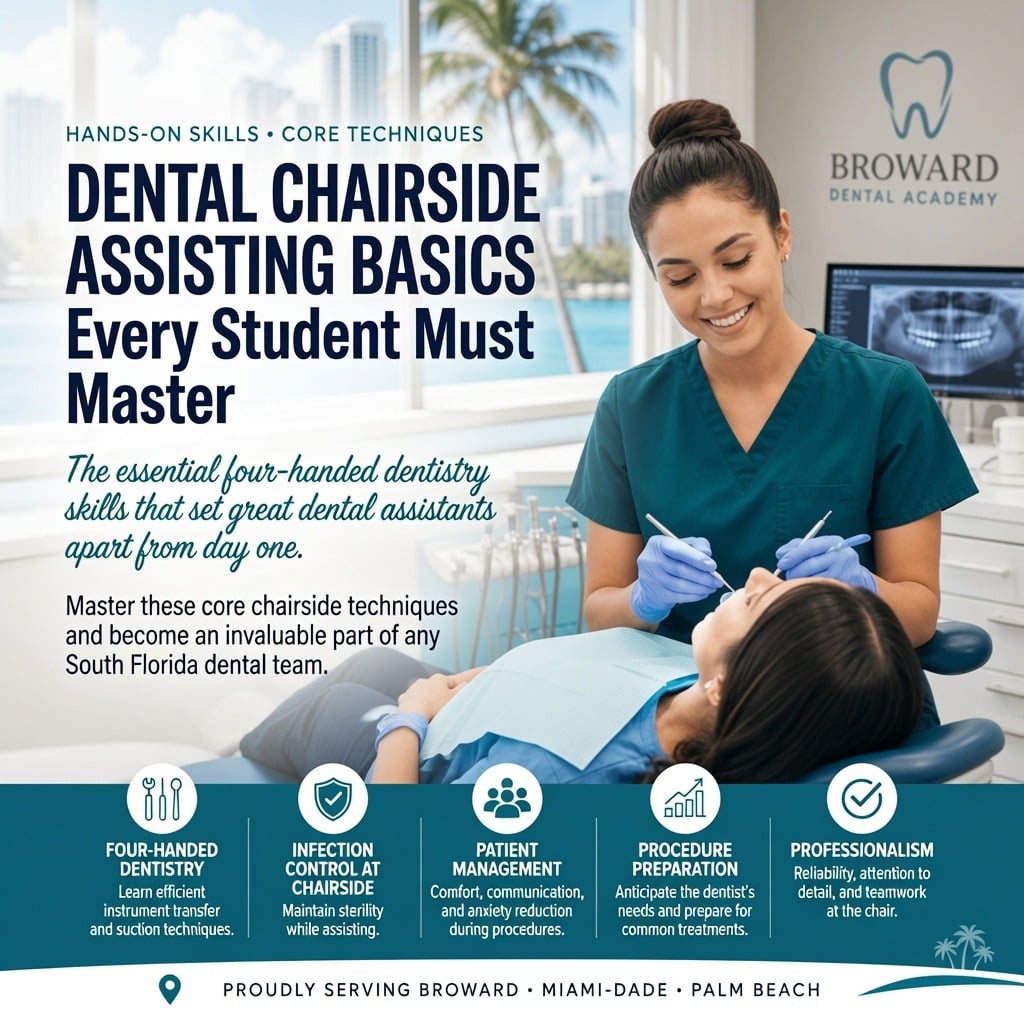
Clinical assisting fundamentals
This is the core of chairside assisting and the “flow” of a dental appointment. Expect to learn:
- Operatory setup and breakdown
- Four-handed dentistry basics (positioning, transfers, efficient movement)
- How to support common procedures by anticipating what the dentist needs next
- Room turnover so the next patient is not waiting
This is where training starts to feel like a real job, because small details matter.
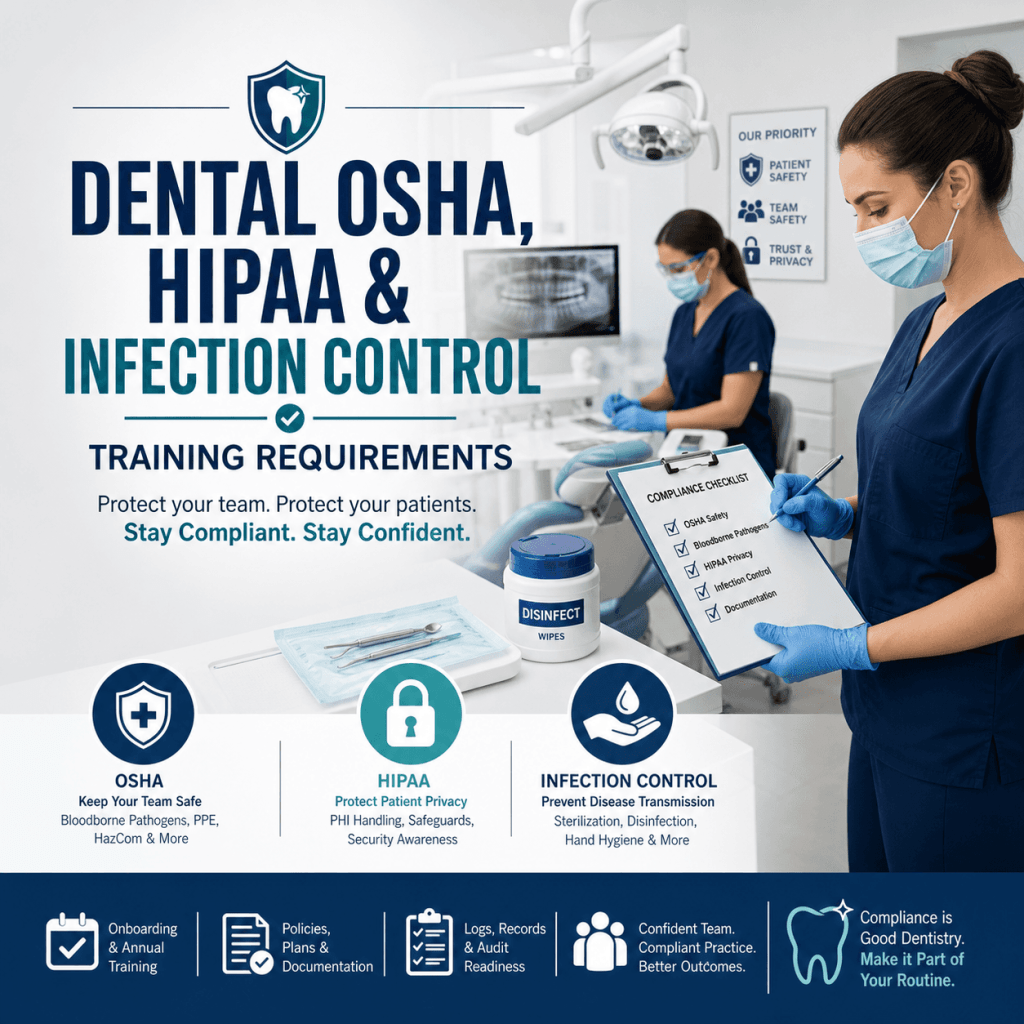
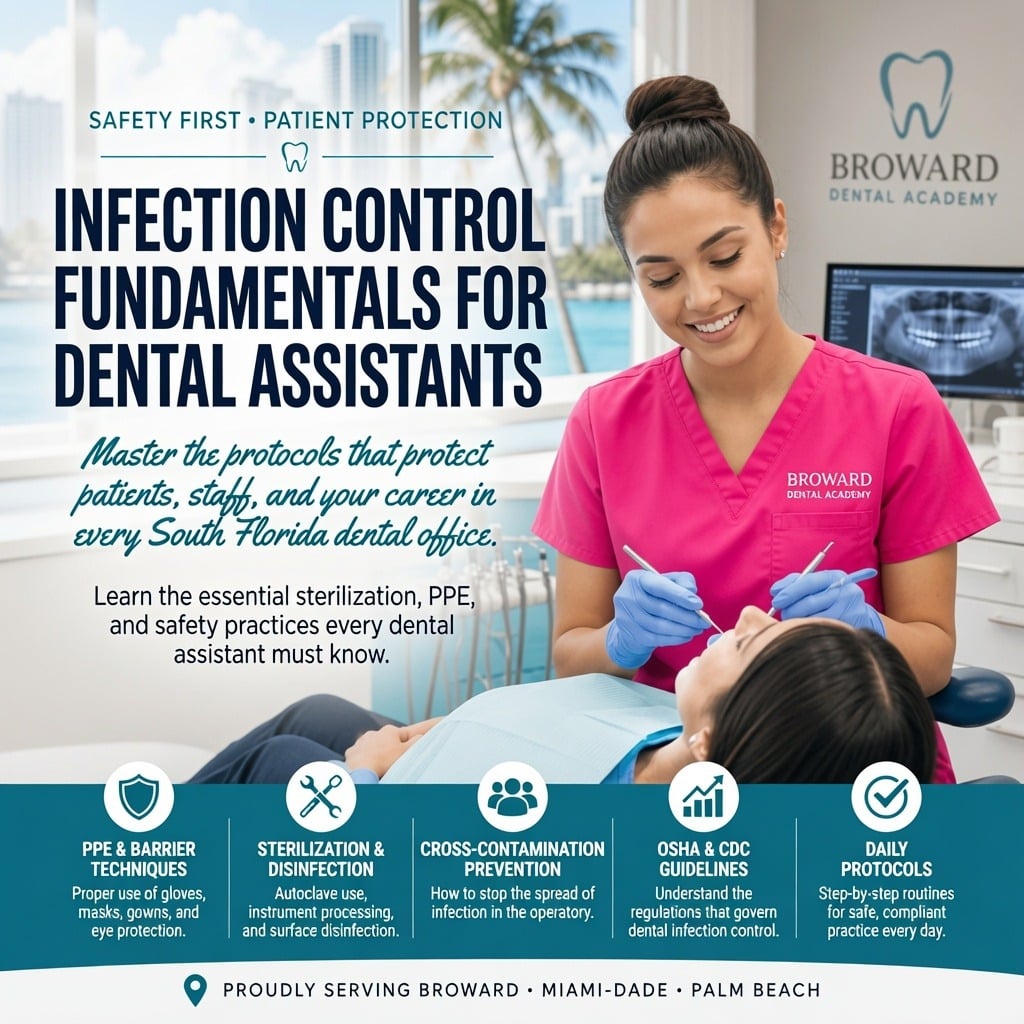
Infection control and safety
Infection control is not a single lesson. It becomes a mindset. Programs train you to prevent cross-contamination through consistent habits, including:
- Sterilization steps and instrument processing flow
- Proper use of PPE
- Safe handling of sharps
- Disinfection and surface barriers
- Documentation habits that support compliance and accountability
Think of this as one of the biggest reasons practices prefer trained assistants over “learn as you go.”
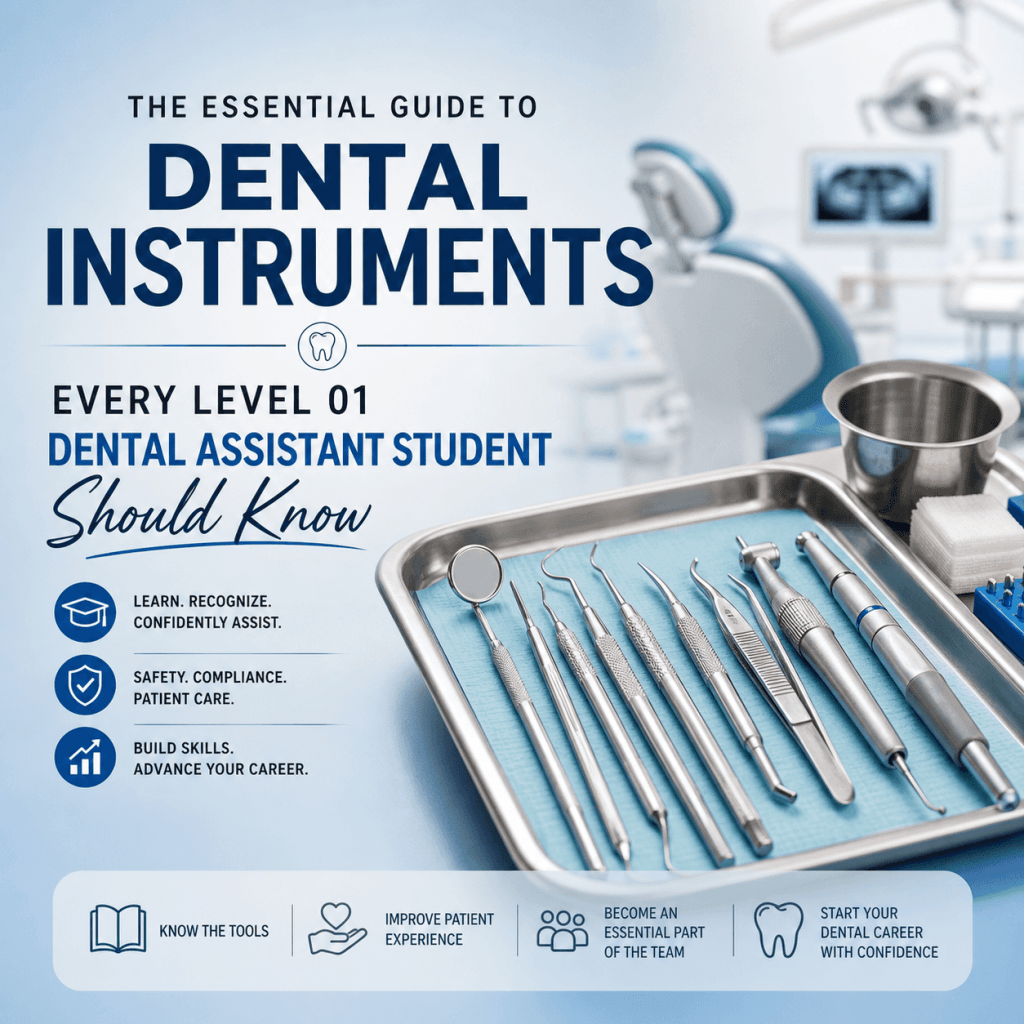
Instruments and materials
At first, instruments can look like an overwhelming metal puzzle. With repetition, they become familiar. Training often covers:
- Identifying instruments and understanding what they are used for
- Tray setups for procedures
- Suction and isolation techniques
- Mixing and handling common dental materials
- Impressions where applicable in your role and local rules
You will also build speed. Knowing an instrument is one thing. Grabbing the right one instantly, without breaking sterile technique, is where confidence shows.
If you’re interested in pursuing this rewarding career path, consider enrolling in some of the courses offered at Broward Dental Academy. With locations available across different areas as outlined on their website, it’s easier than ever to start your journey towards becoming a skilled dental assistant.
Patient care skills
Dental assistants work close to patients, often when they are nervous, embarrassed, or in pain. Your communication matters. Expect training around:
- Professional chairside communication
- Helping anxious patients feel safe
- Privacy and discretion
- How to be calm, clear, and respectful while moving quickly
This is also where you learn how to “read the room,” including when to speak up for patient comfort.
Practice efficiency
Great assisting is not just clinical skill. It is also how well you manage time and pressure. Programs typically reinforce:
- Staying organized during fast procedures
- Multitasking without missing infection control steps
- Building routines that prevent mistakes
- Remaining calm when the schedule is tight
These are the skills that make you valuable in a modern, high-performance dental practice.
How the training format usually works: classroom, online learning, and clinical immersion
Most dental assistant programs use a blended structure so students can learn theory and apply it quickly.
Common program structures
You will typically see one of these setups:
- In-person training: classroom plus skills labs
- Hybrid programs: online theory plus in-person lab and clinical components
- Online learning with in-person checkoffs: modules, quizzes, and required hands-on evaluations
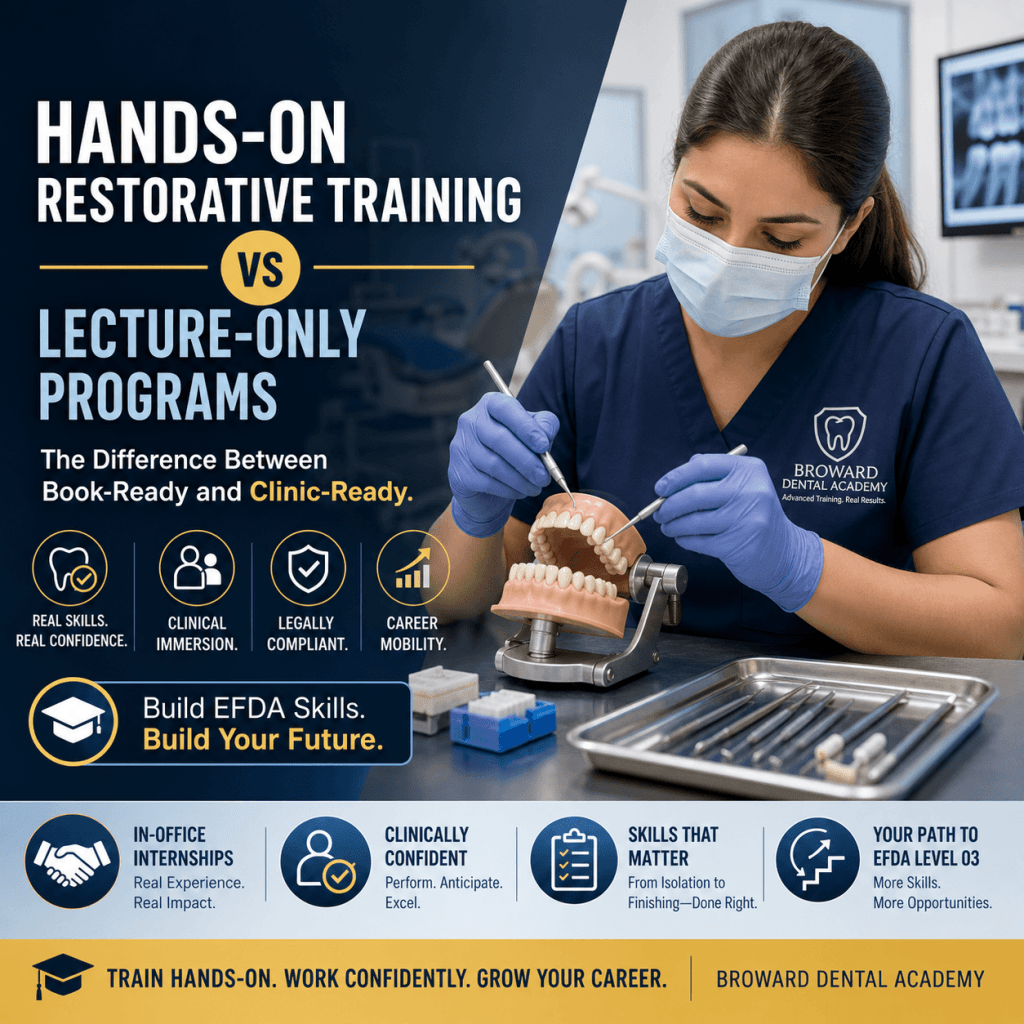
At Broward Dental Academy, students experience immediate immersion in online and clinical settings, using modern eLearning lesson plans alongside hands-on training.
What “immediate immersion” looks like
Instead of spending months only reading about dentistry, you learn a concept and then practice it. That can mean:
- Watching a technique demonstration
- Practicing it in a skills lab
- Completing a competency checkoff
- Getting feedback and repeating until it is consistent
A typical weekly rhythm
While every program is different, many follow a pattern like:
- Theory study and quizzes
- Lab practice (instrument transfer, setup, infection control routines)
- Competency evaluations
- Instructor feedback and corrections
- Continued repetition to build muscle memory
Repetition is not busywork. It is how you build reliable habits for setups, transfers, sterilization, and patient flow.
What your schedule and workload will feel like
Dental assistant training moves quickly, and most students feel it right away.
Time commitment
Plan for more than just class time. Your week often includes:
- Attendance and skills labs
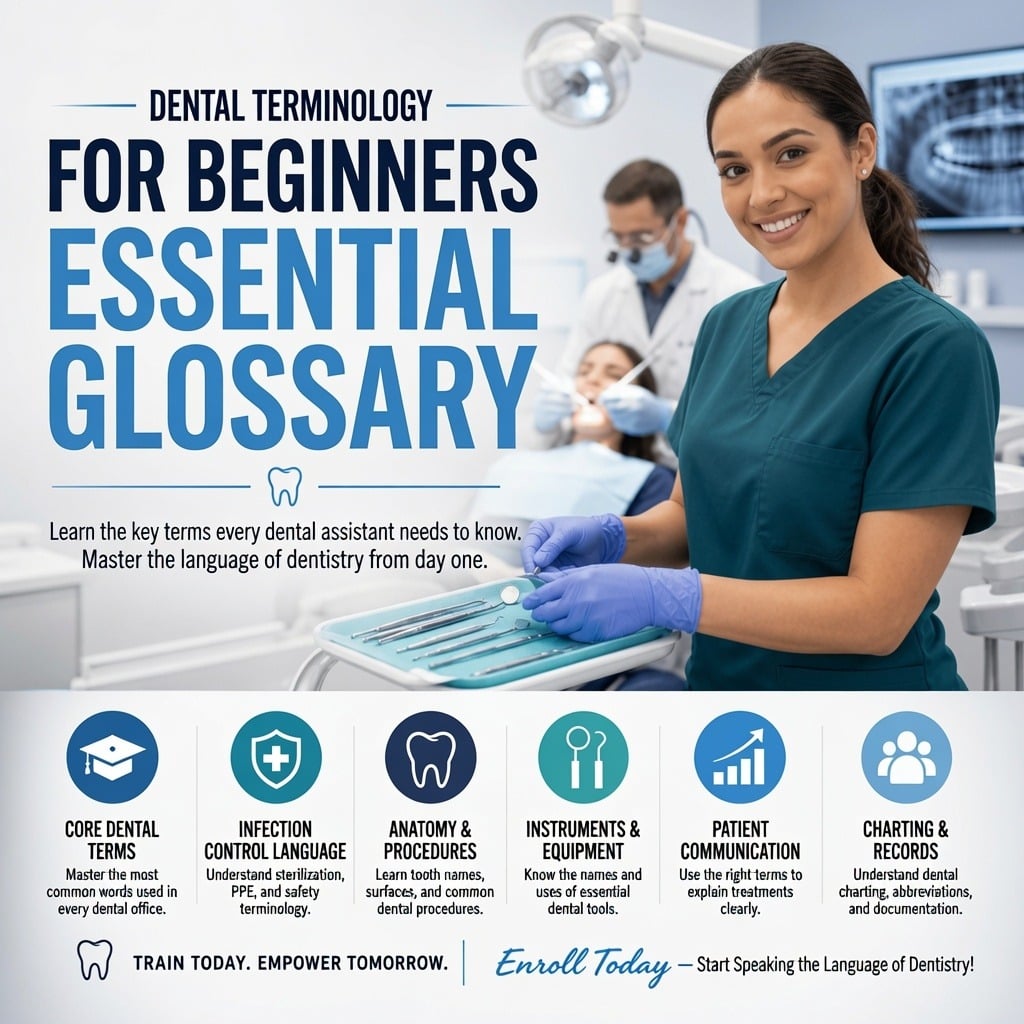
- Studying terminology and dental anatomy
- Instrument recognition practice
- Reviewing procedures and steps so you can perform smoothly in lab
Simple tools like flashcards and short daily review sessions can make a big difference.
Physical demands
Dental assisting is active work. Training prepares you for:
- Standing for long periods
- Maintaining good posture and ergonomics
- Fine motor skills and steady hands
- Moving quickly without looking rushed
Mental demands
The mental load surprises some students. You will practice:
- Multitasking while following protocols
- Prioritizing patient safety over speed
- Staying focused through repetition and correction
- Learning to accept feedback and improve fast
How to stay on track
A realistic routine helps:
- 10 minutes a day reviewing terminology
- A few instrument “speed rounds” during the week
- Asking for feedback early rather than waiting until checkoffs
- Practicing infection control steps until they feel automatic
Flexible schedules are one of the benefits of working in dental later, but training itself requires consistency upfront.
The professional standards you’ll be held to (and why employers care)
Employers care about one thing more than almost anything else: whether they can trust you in a real operatory.
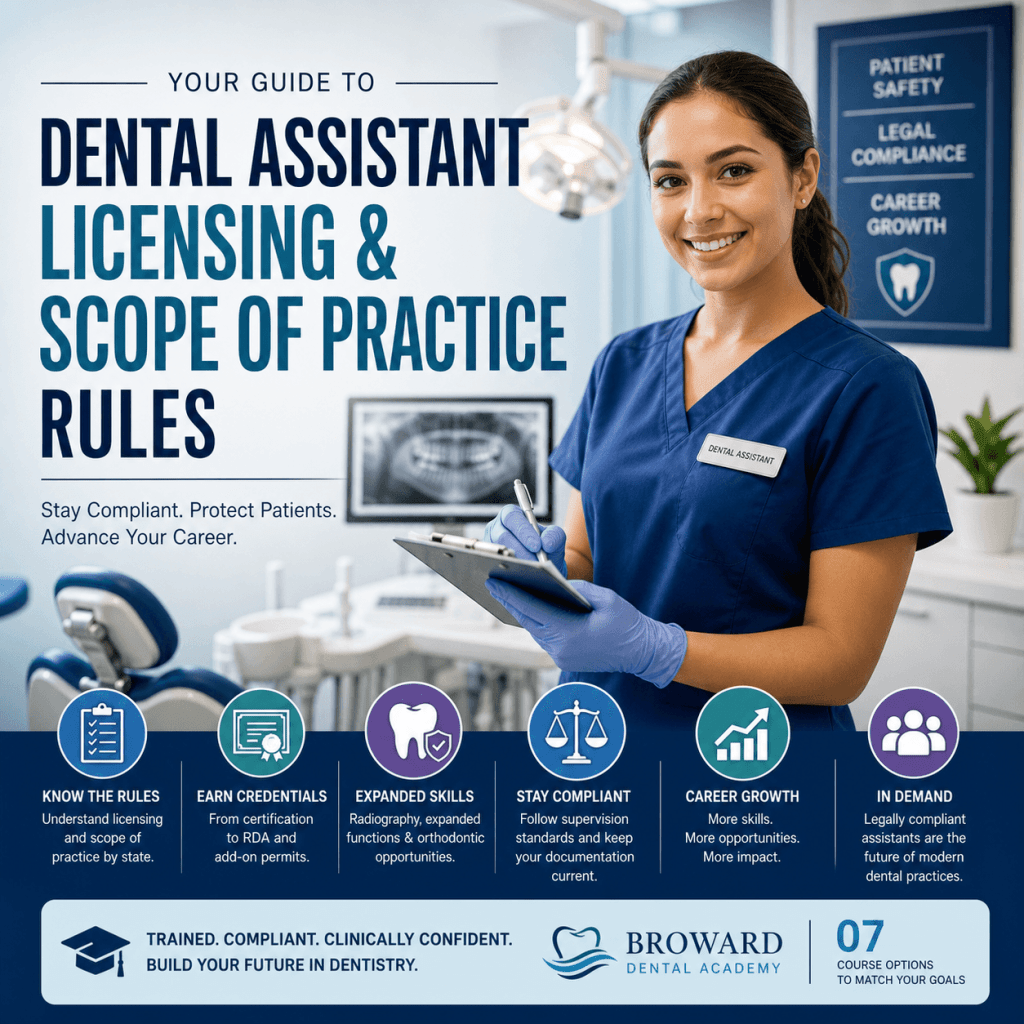
Legal and ethical expectations
Training includes professional standards such as:
- Understanding scope of practice and what you can and cannot do
- Supporting informed consent by reinforcing clarity and professionalism
- Patient privacy expectations
- Proper documentation and communication
Clinical confidence built the right way
Confidence is not hype. It comes from repetition, supervised practice, and real-world scenarios that teach you what “right” feels like.
Why legally compliant matters
Dental practices must follow protocols consistently. A single weak habit can create risk for the patient and the practice. Programs that emphasize compliance help you enter a job ready to contribute safely.
Critical thinking in the operatory
You are not just following steps. You are learning to notice problems early, such as:
- Setup errors before the procedure starts
- Contamination risks
- Patient discomfort that needs attention
- Missing materials that could delay care
Being able to speak up professionally is part of being a strong assistant.
Soft skills that separate great assistants
Employers often hire for attitude and train for preference. The traits that stand out include:
- Reliability and punctuality
- Coachability
- Clear communication
- Calm, steady energy with patients
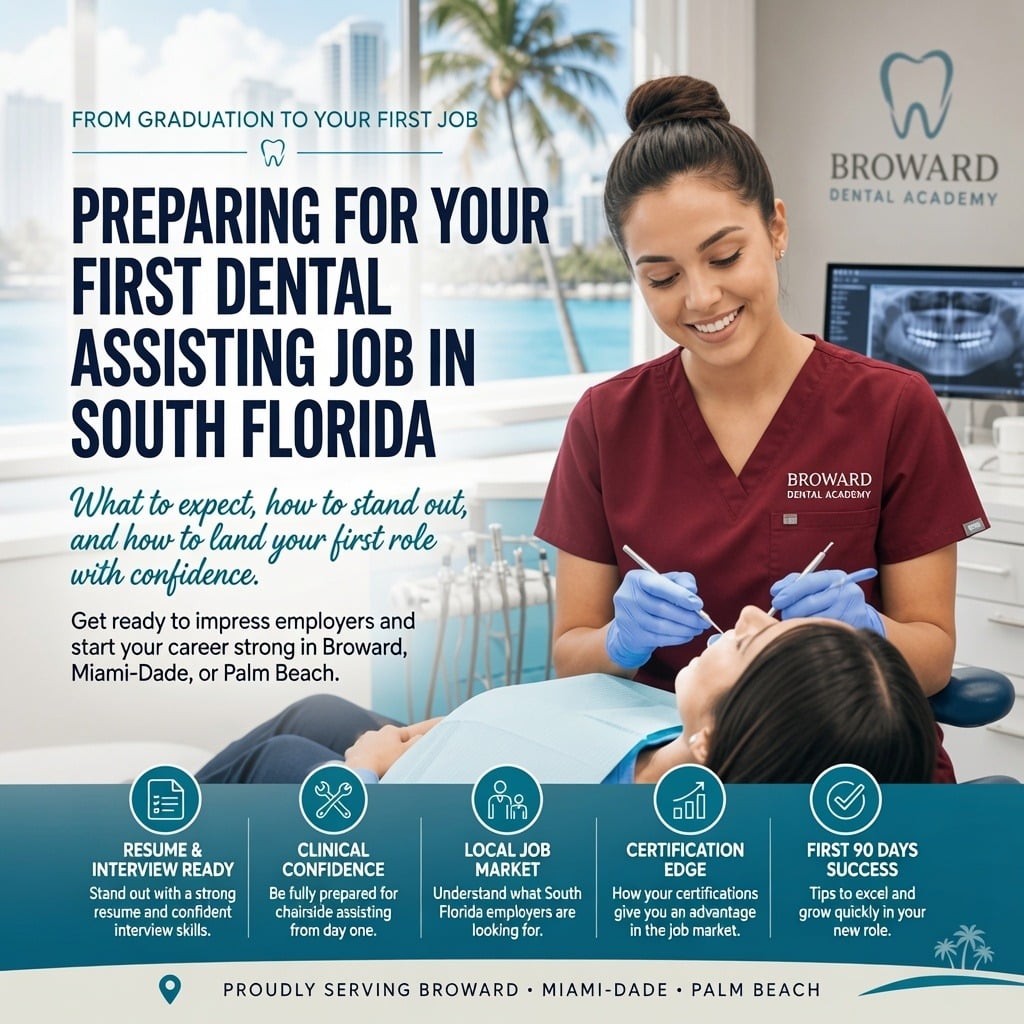
Externships and in-office internships: what to expect in a real dental practice
This is where training becomes real, fast.
What an internship or externship typically includes
In a dental office setting, you may rotate through tasks like:
- Shadowing and assisting under supervision
- Sterilization and instrument processing
- Room setup, breakdown, and turnover
- Patient intake support and chairside communication
- Observing how the schedule flows and how the team coordinates
How performance is evaluated
Offices tend to evaluate students on practical, everyday standards:
- Punctuality and professionalism
- Speed with accuracy
- Ability to take direction and adapt to feedback
- Infection control consistency
- Teamwork and communication
What students commonly find challenging
Many students report similar challenges at first:
- The pace is faster than a lab
- Different dentists have different preferences
- Practice culture varies, and you need to adapt quickly
How internships help with hiring
Internships build what employers want to see:
- Real references
- Real experience
- Confidence in a clinical environment
- Stronger resume credibility
Programs that include in-office internships can make the transition into a high-performance dental practice much smoother.
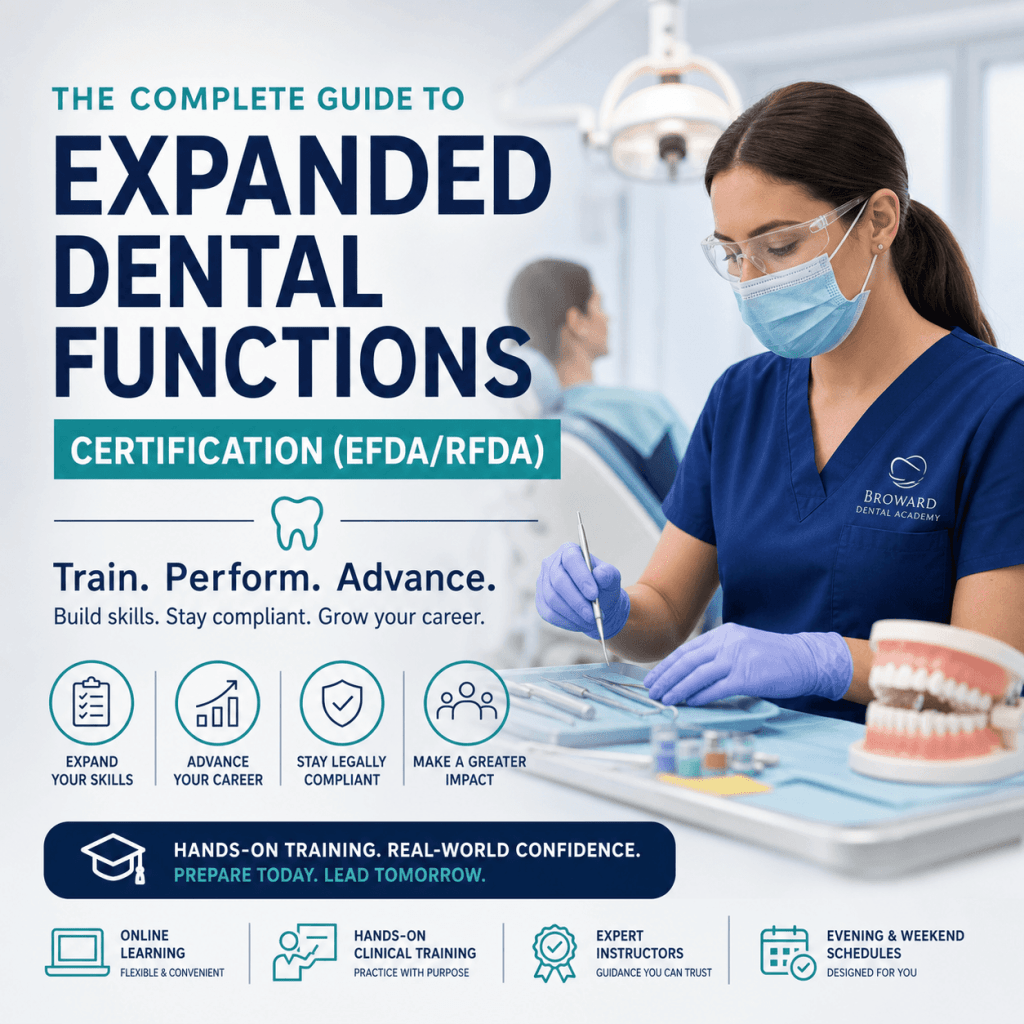
Expanded functions and career mobility: where dental assisting can lead
Dental assisting is not a dead-end role. Many assistants build a long-term career by stacking skills over time.
What “expanded functions” means in plain language
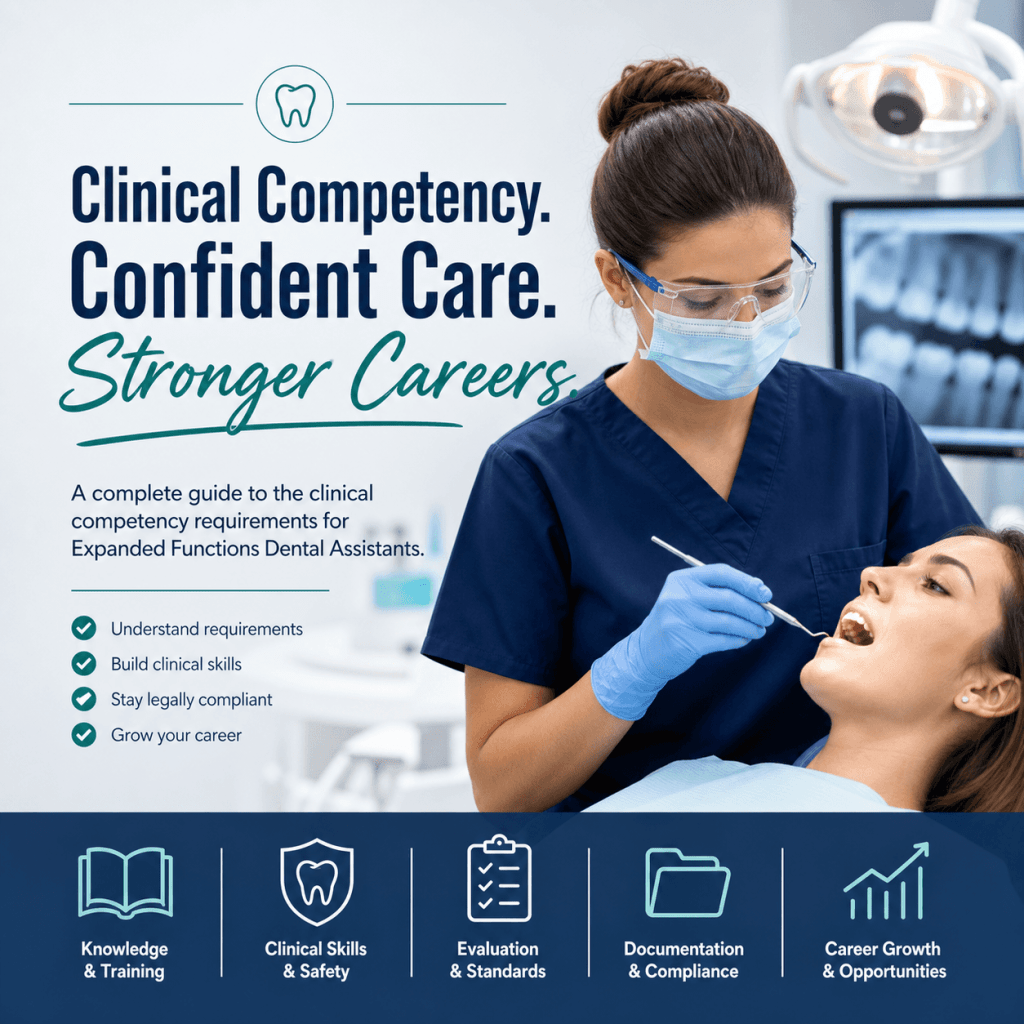
Expanded functions generally refer to additional clinical duties that may be allowed when you are properly trained and when your local regulations permit. It is a way to increase responsibility and value in a practice.
Career paths to consider
With experience and additional training, assistants often move into:
- Lead dental assistant roles
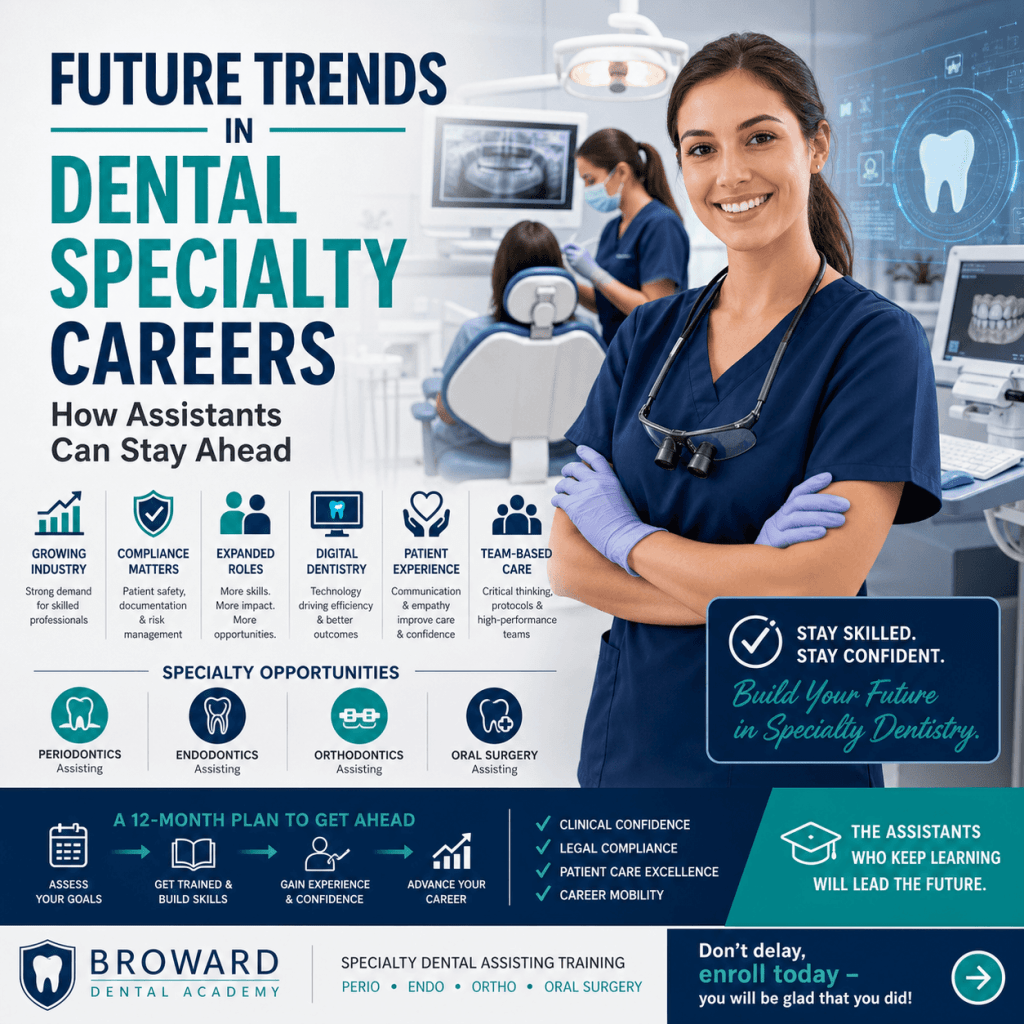
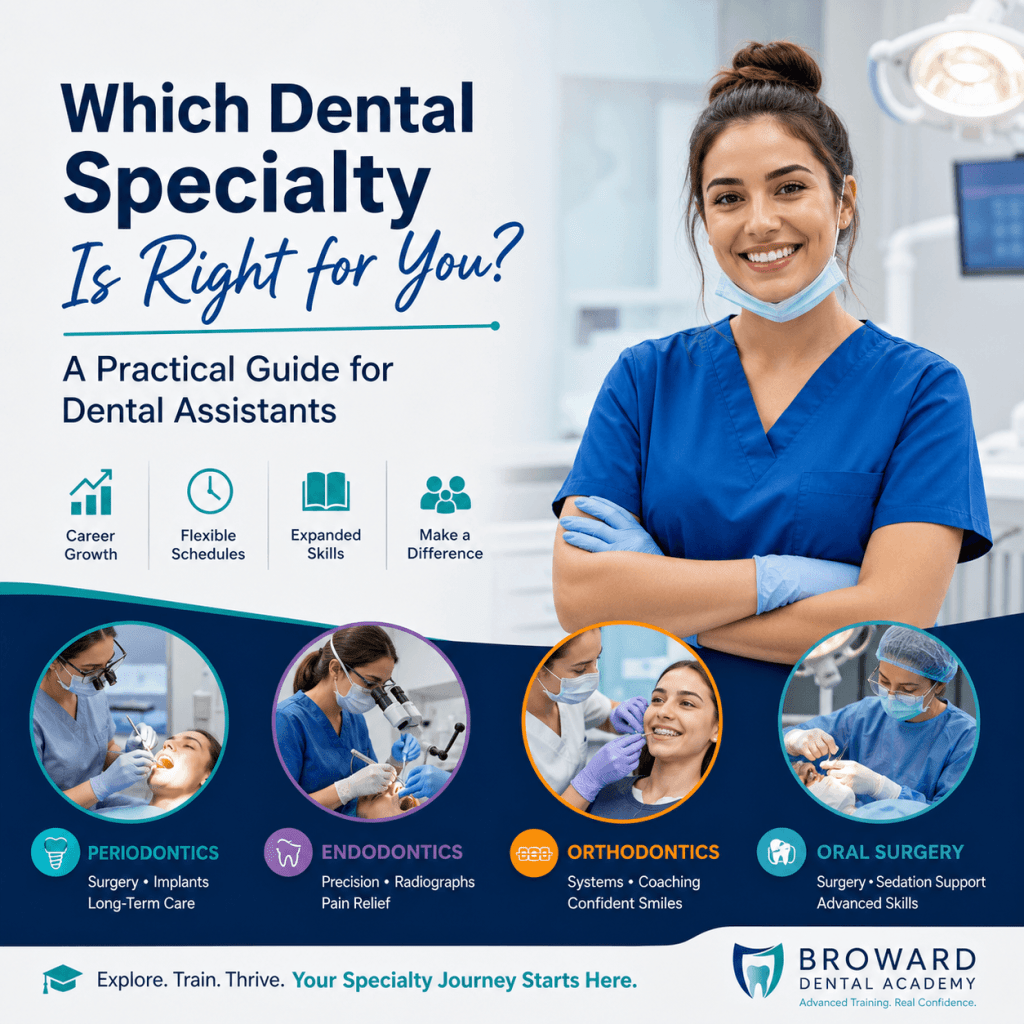
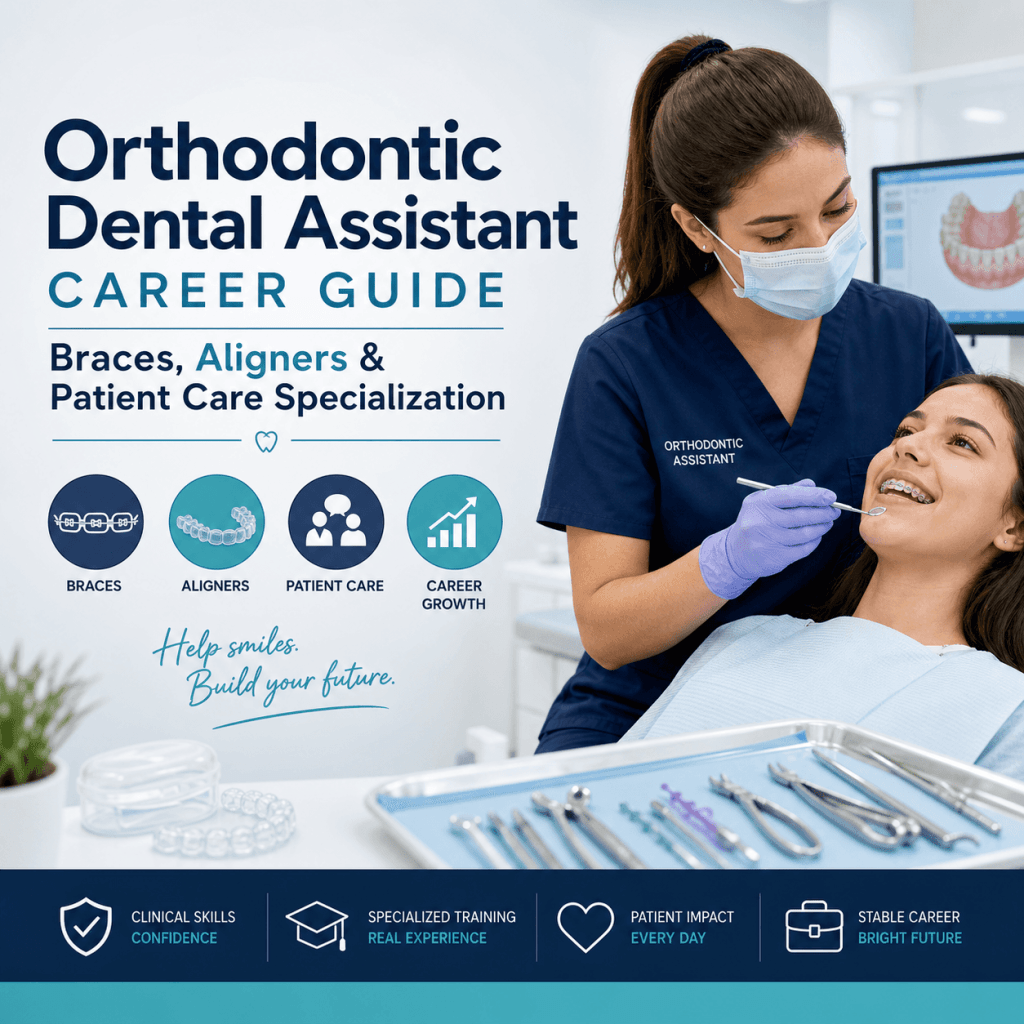
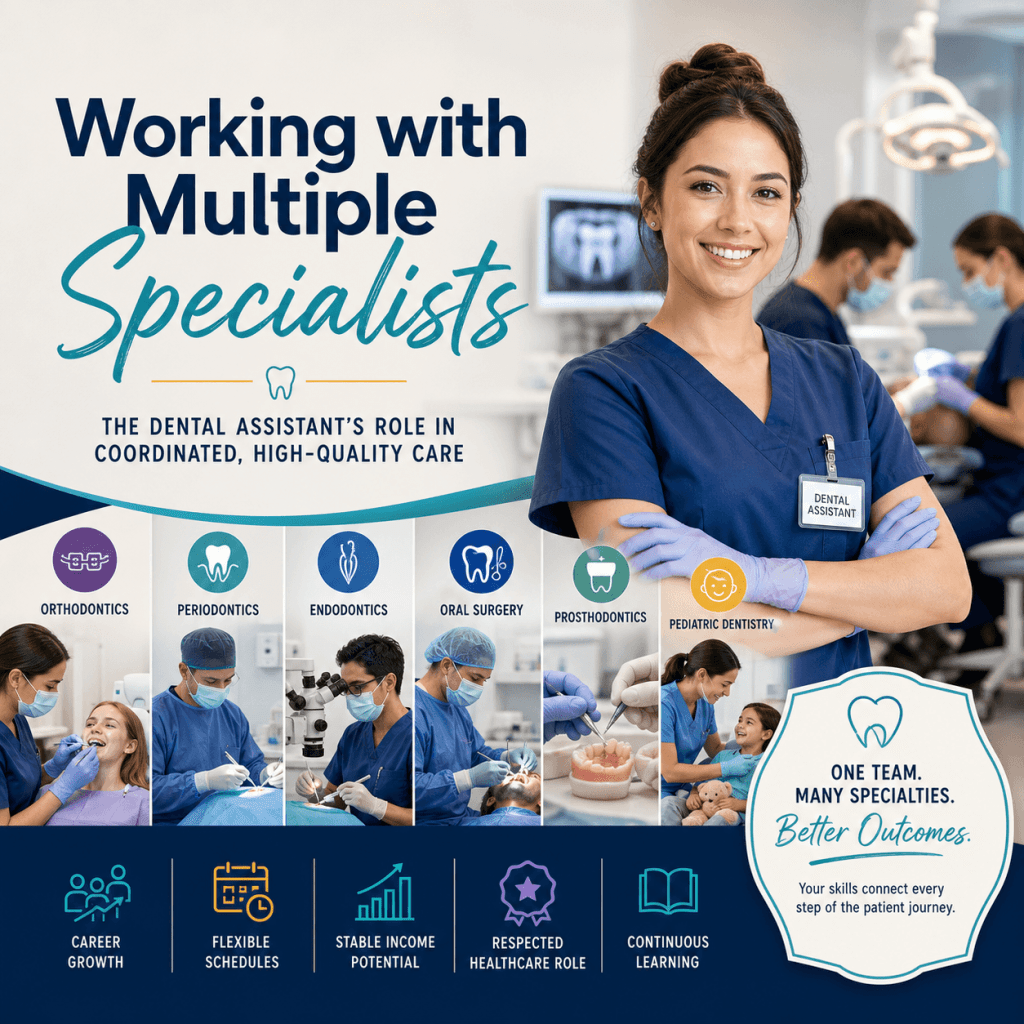
- Specialty offices like [orthodontics](https://browarddentalacademy.com/orthodontics/), pediatrics, or oral surgery
- Front office crossover (scheduling, treatment coordination, insurance support)
- Longer-term paths in dental, including prerequisites toward dental hygiene for some students
Why mobility is realistic
Demand for skilled dental professionals continues to rise, and practices value cross-trained team members who can keep the day running smoothly.
How advanced training stacks
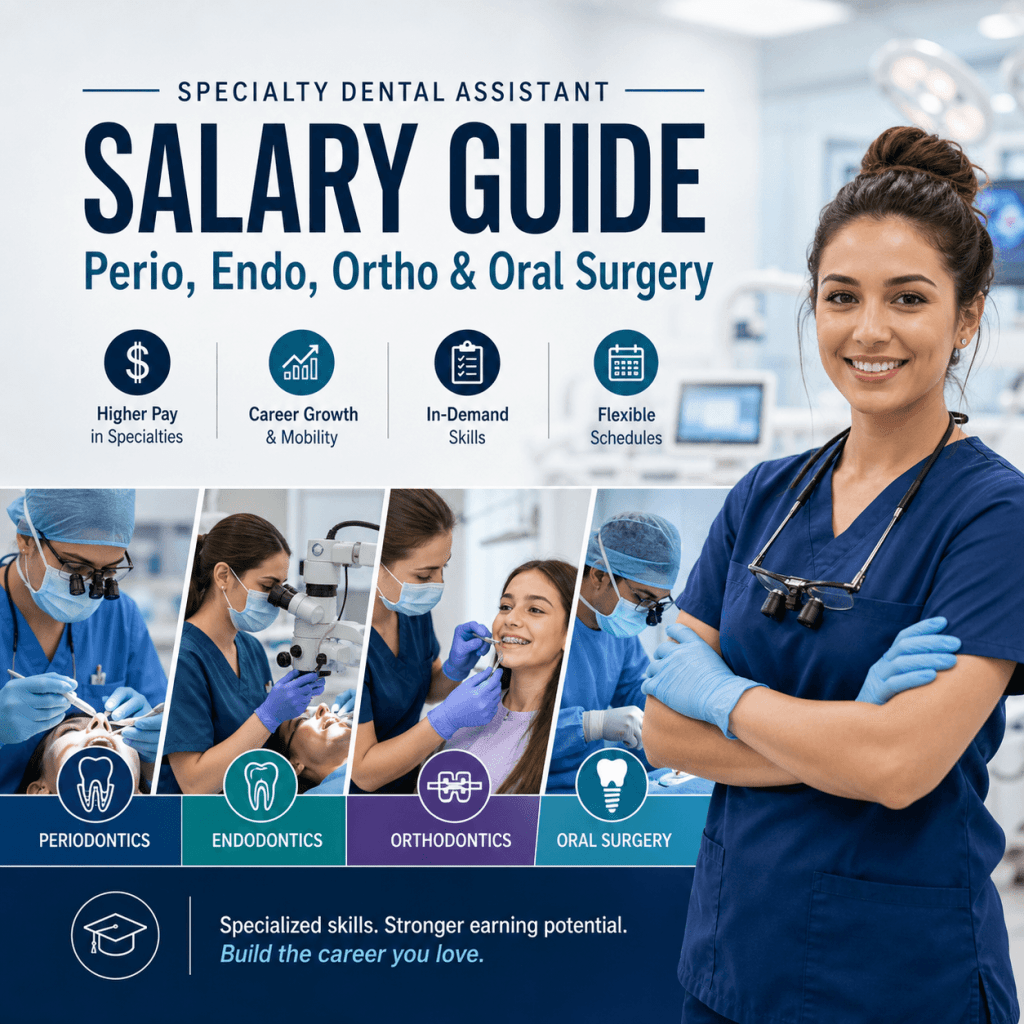
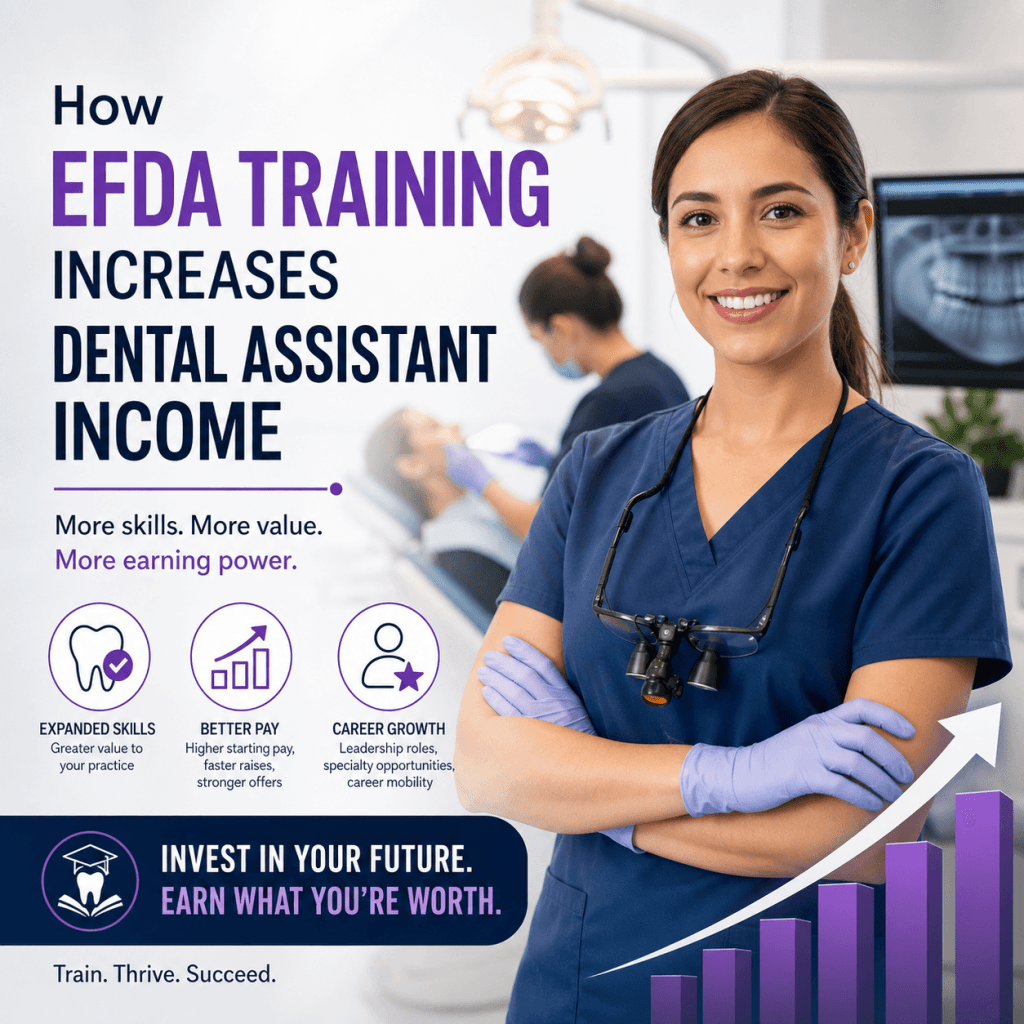
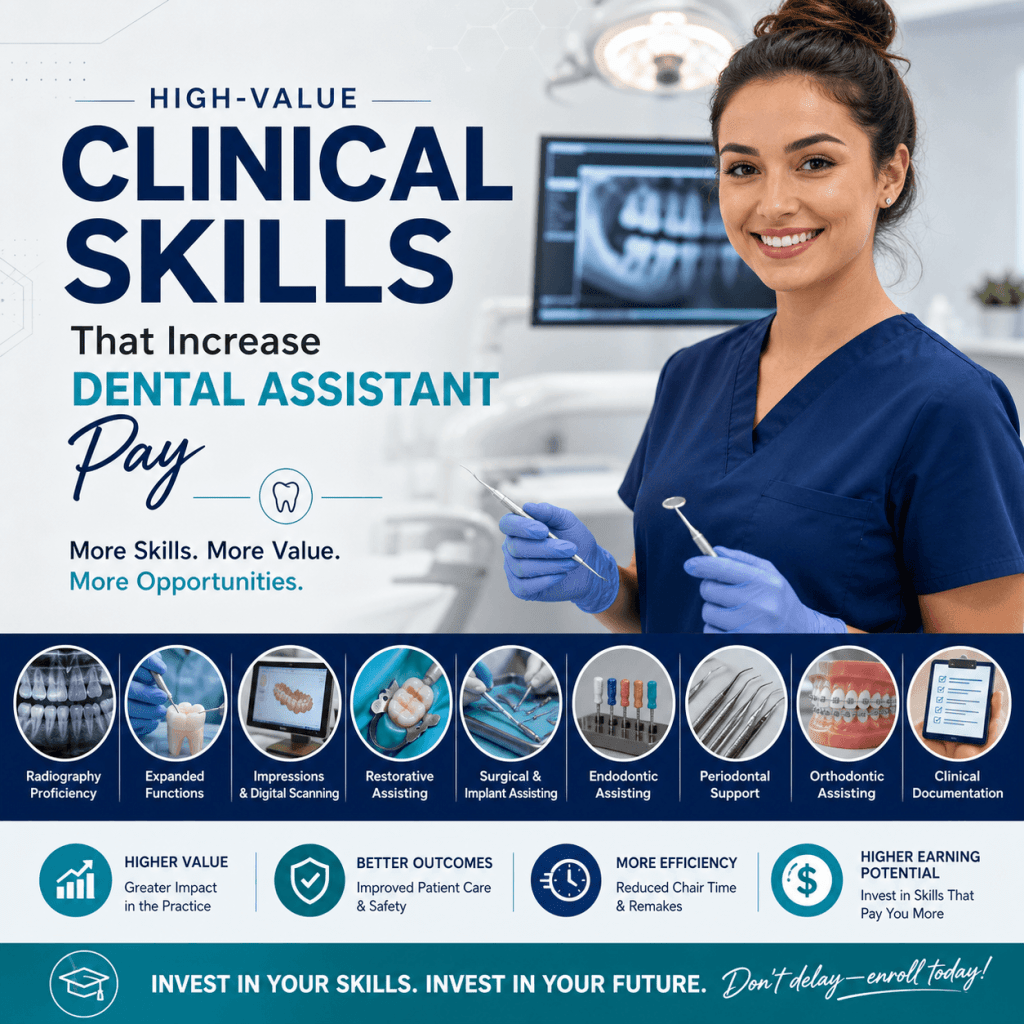
Dental is a profession where adding certifications and skills can directly increase responsibility, confidence, and income potential over time.
Why students choose Broward Dental Academy (and what your experience looks like)
Broward Dental Academy is committed to serving the dental community by developing well-rounded professionals through various dental training programs.
Students choose Broward Dental Academy because the training is designed for the real world:
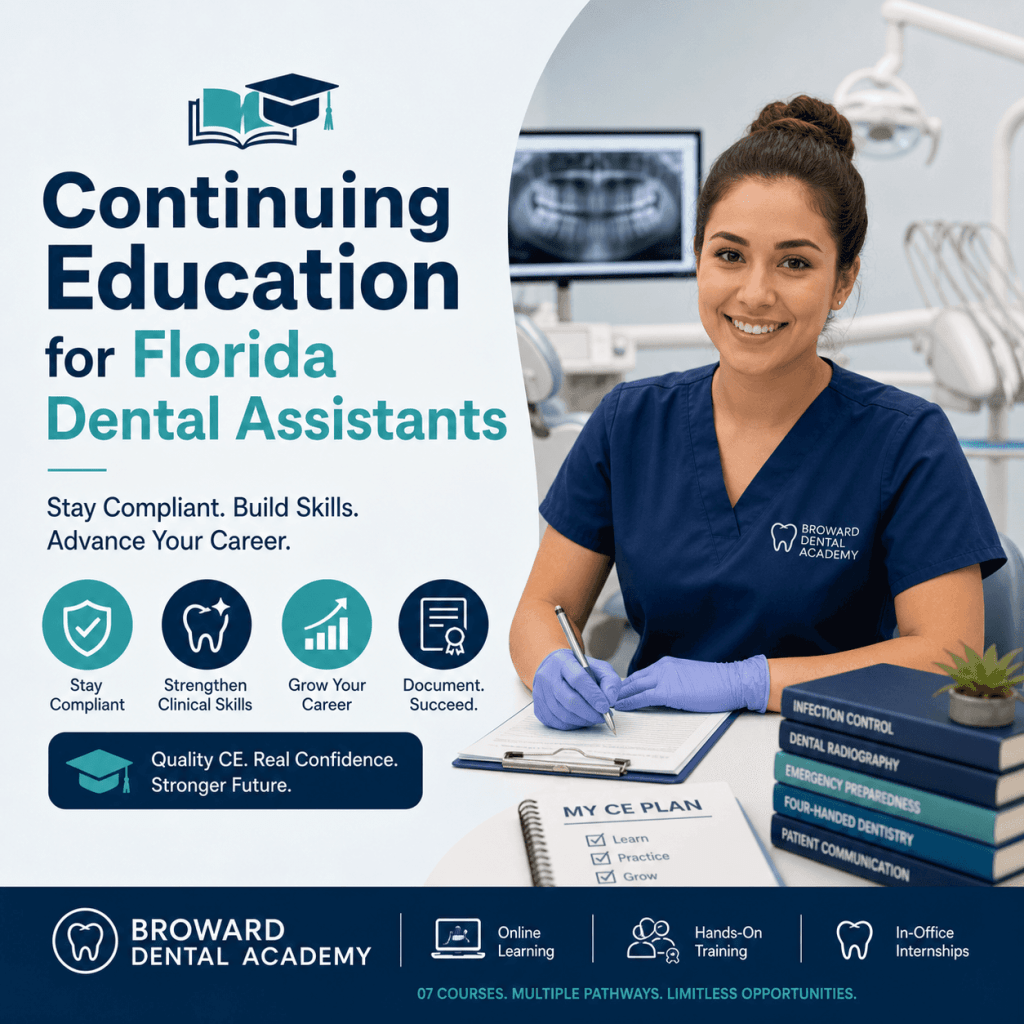
- A wide range of dental courses and advanced dental training, with 07 courses available including Dental Assistant Level 02
- A job-readiness focus that goes beyond passing an exam
- Immediate immersion in online and clinical settings
- Modern eLearning lesson plans incorporated for remote training
- Training that emphasizes critical thinking, ethical standards, and confident clinical performance
- In-office internships that help students transition into real practice expectations
The goal is simple: graduate as someone dental practices want to hire because you are thoroughly trained, legally compliant, and clinically confident.
Cost, financing, and practical logistics to plan before you enroll
Planning ahead reduces stress and helps you start strong.
What costs can include
Depending on the program, you may need to budget for:
- Tuition
- Supplies and scrubs
- Books or digital access
- Immunizations or other requirements where applicable
- Transportation and commuting to clinical sites
Questions to ask any program
Before enrolling in a dental assistant training program, it is smart to ask:
- What schedule options are available?
- How many clinical hours are included?
- Is internship placement included, and how does it work?
- What is included in tuition versus paid separately?
- What are the attendance, make-up, and refund policies?
For detailed answers to such queries, it’s beneficial to refer to the frequently asked questions section of your chosen academy’s website.
Financing support
Broward Dental Academy offers flexible financing options, which can reduce barriers to getting started and make planning more manageable.
How to prepare at home
A few practical steps help:
- Set a basic weekly study plan
- Arrange childcare and work scheduling early
- Confirm reliable transportation
- Create a dedicated practice and study space
How to know you’re ready, and what to do next
You are likely ready for dental assistant training if you:
- Like hands-on work
- Can follow protocols carefully
- Enjoy helping people
- Are open to feedback and fast learning
Success in week one often looks like:
- Showing up prepared and on time
- Learning terminology every day
- Asking questions when you are unsure
- Practicing infection control routines until they feel natural
Dental assisting offers stability, flexibility, and a respected role in healthcare, but training is the gateway to doing it confidently. Don’t delay your dreams of becoming a dental assistant. Enroll today at Broward Dental Academy. You will be glad that you did!
If you’re ready for the next step in your career journey, consider exploring the Best Dental Assistant Training in South Florida.
FAQs (Frequently Asked Questions)
Why is dental assistant training in South Florida a worthwhile career investment right now?
Dental assistant training in South Florida is a valuable investment because the dental field is one of the fastest-growing areas in healthcare. There is rising demand for skilled dental professionals who can meet busy practice schedules and high patient expectations. Comprehensive training ensures you become legally compliant, clinically confident, and ready to support dental teams from day one, leading to stable income potential, flexible schedules, and respected healthcare positions.
What practical skills will I learn during dental assistant training?
During dental assistant training, you’ll acquire hands-on skills essential for daily clinical work. This includes operatory setup and breakdown, four-handed dentistry techniques, supporting common procedures efficiently, infection control practices like sterilization and PPE use, instrument identification and handling, patient communication skills to ease anxiety, and strategies for maintaining practice efficiency under time pressure.
How does infection control factor into dental assistant training?
Infection control is a critical focus throughout dental assistant training. It becomes a consistent mindset involving proper sterilization steps, safe instrument processing, correct use of personal protective equipment (PPE), safe handling of sharps, disinfection protocols, surface barriers application, and thorough documentation to ensure compliance and prevent cross-contamination in the dental setting.
What patient care skills are emphasized in dental assistant programs?
Dental assistant programs emphasize professional chairside communication skills that help manage patients who may be nervous or in pain. Training covers how to help anxious patients feel safe, maintain privacy and discretion, communicate calmly and clearly while working efficiently, and recognize when to advocate for patient comfort during procedures.
What does the typical format of dental assistant training include?
Most dental assistant programs use a blended learning format combining classroom instruction, online learning modules, and clinical immersion experiences. This structure allows students to learn theoretical knowledge while applying practical skills in real or simulated clinical settings to prepare them thoroughly for their roles.
Are there specialized certifications or advanced topics covered in dental assistant training at Broward Dental Academy?
Yes, Broward Dental Academy offers comprehensive training that includes advanced topics such as endodontics and periodontics. They also provide valuable certifications that enhance your qualifications and job prospects by equipping you with expanded knowledge and skills relevant to specialized areas within dental assisting.