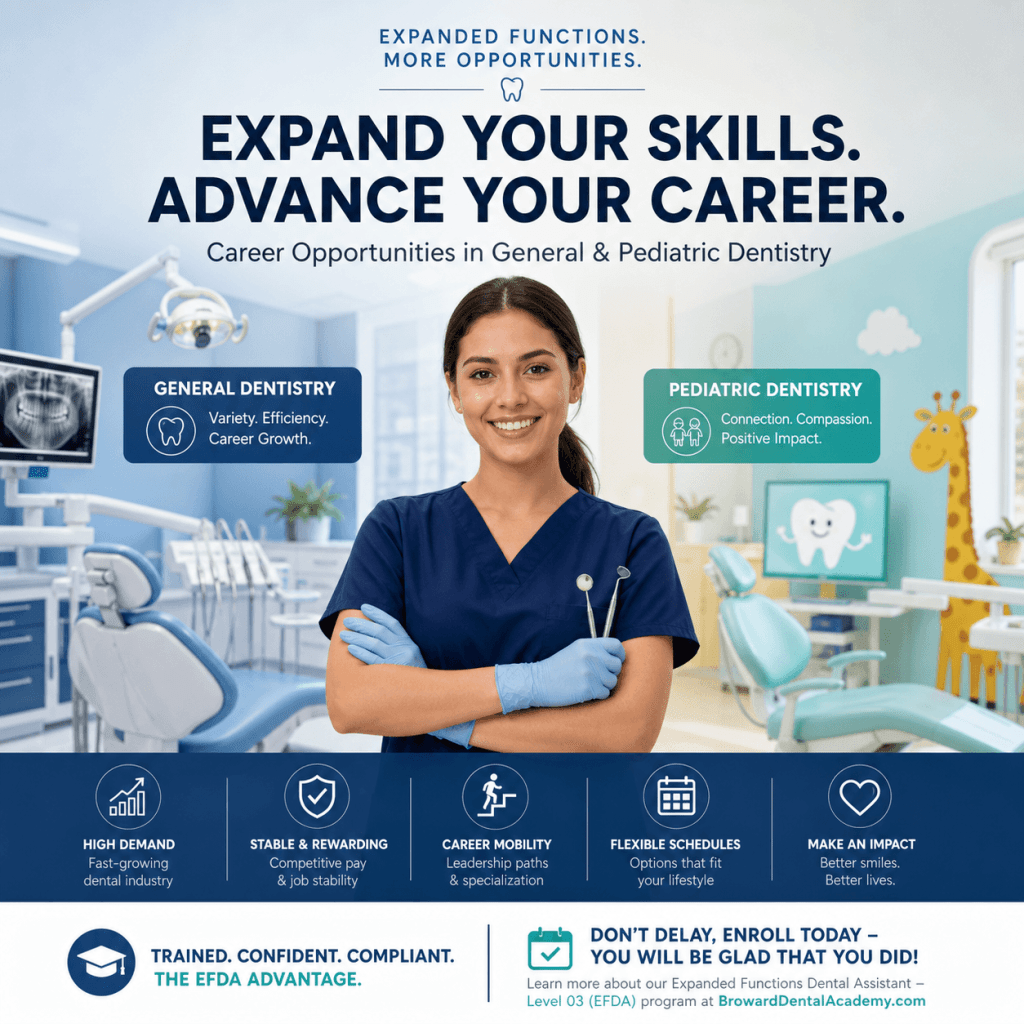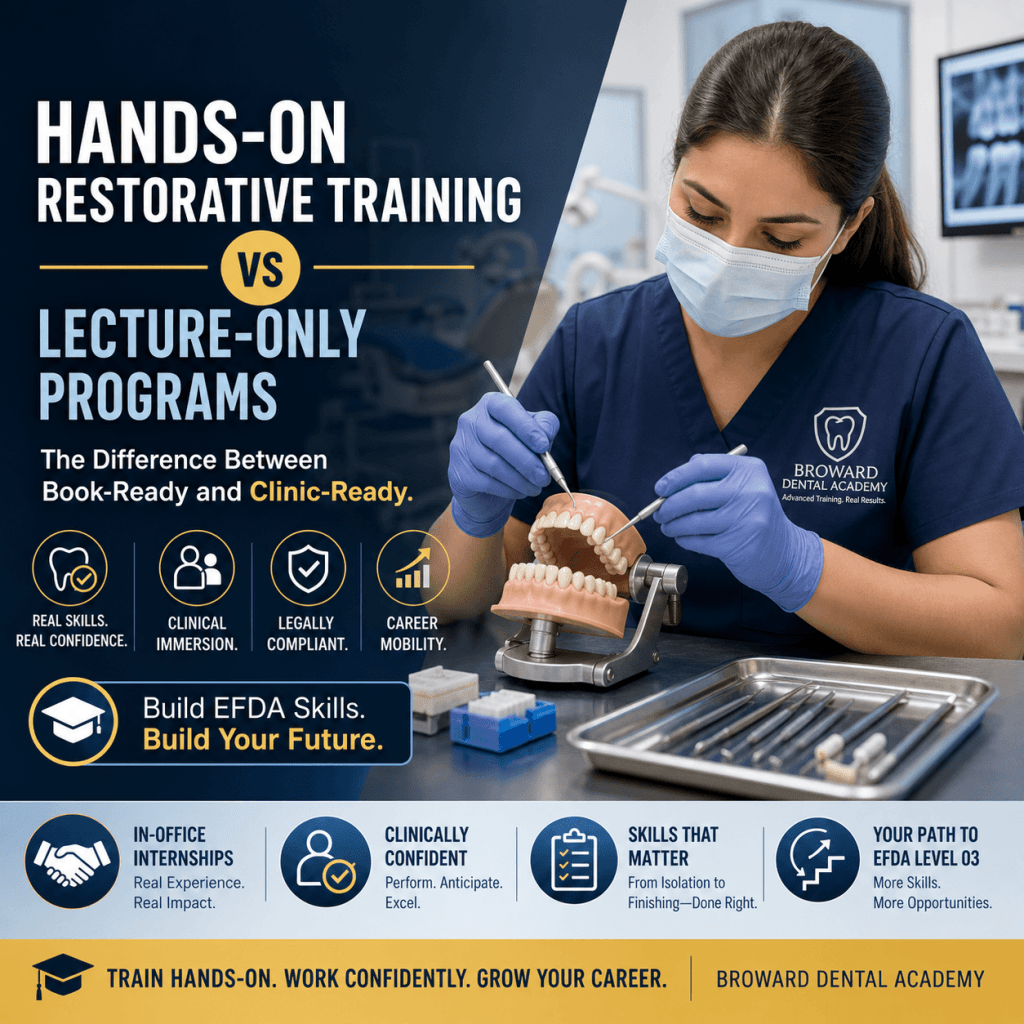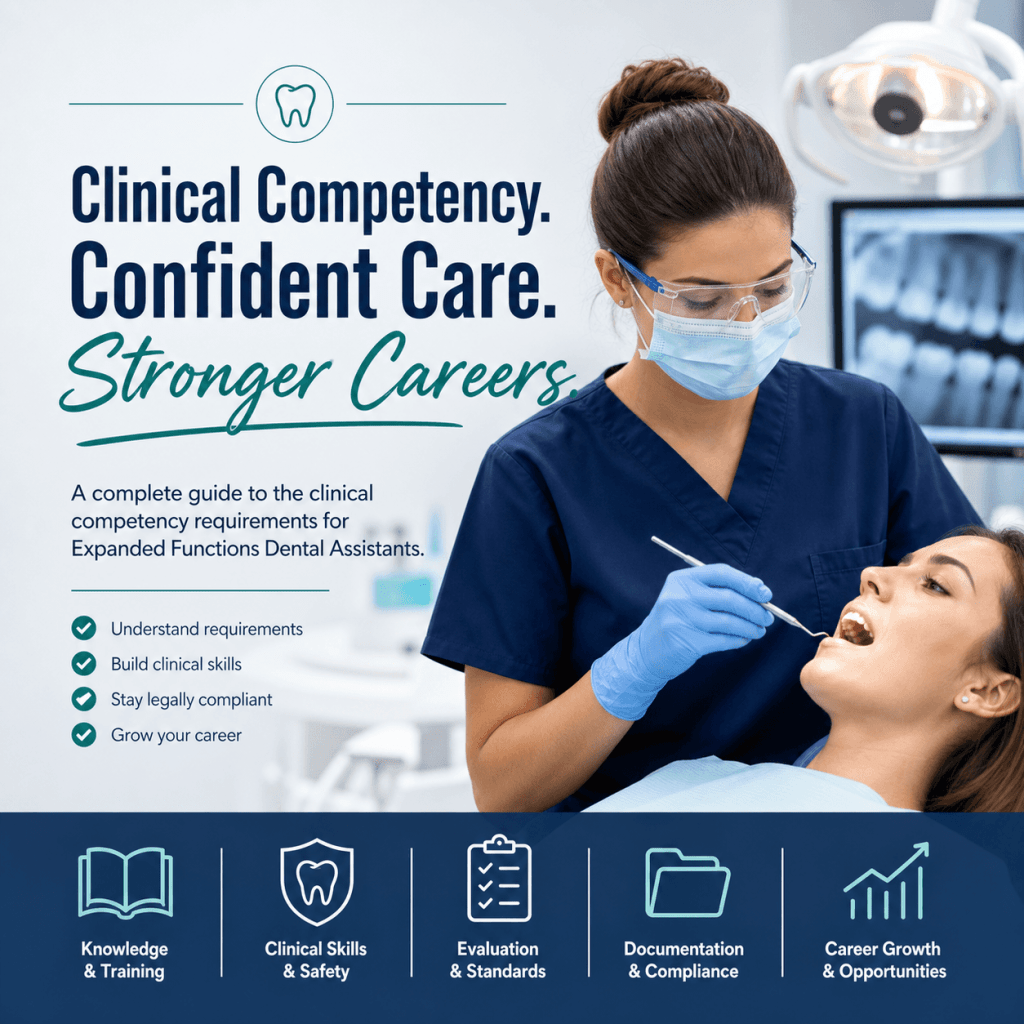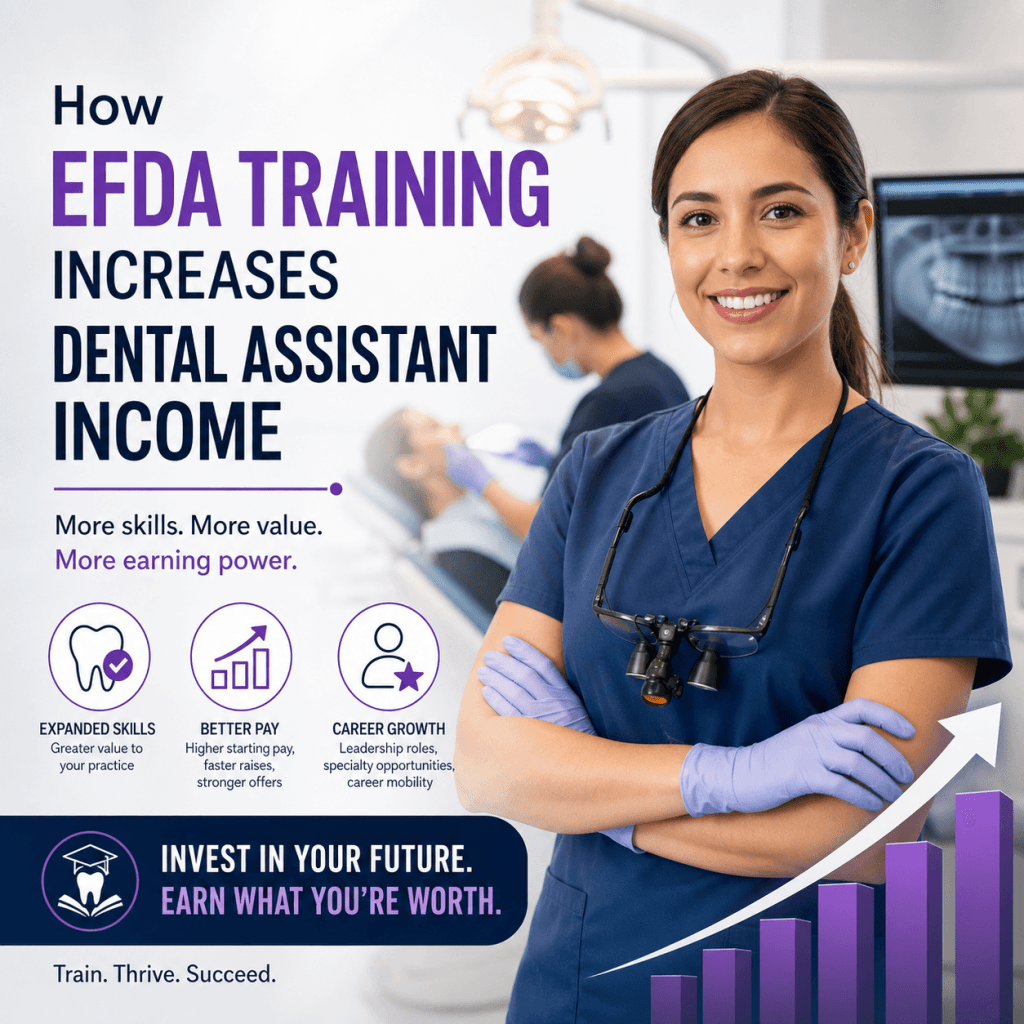
Below is a practical guide to what the job actually looks like, what you will work with every day, and how to get trained the right way.
What an Orthodontic Dental Assistant Does (and Why It’s a Growing Specialty)
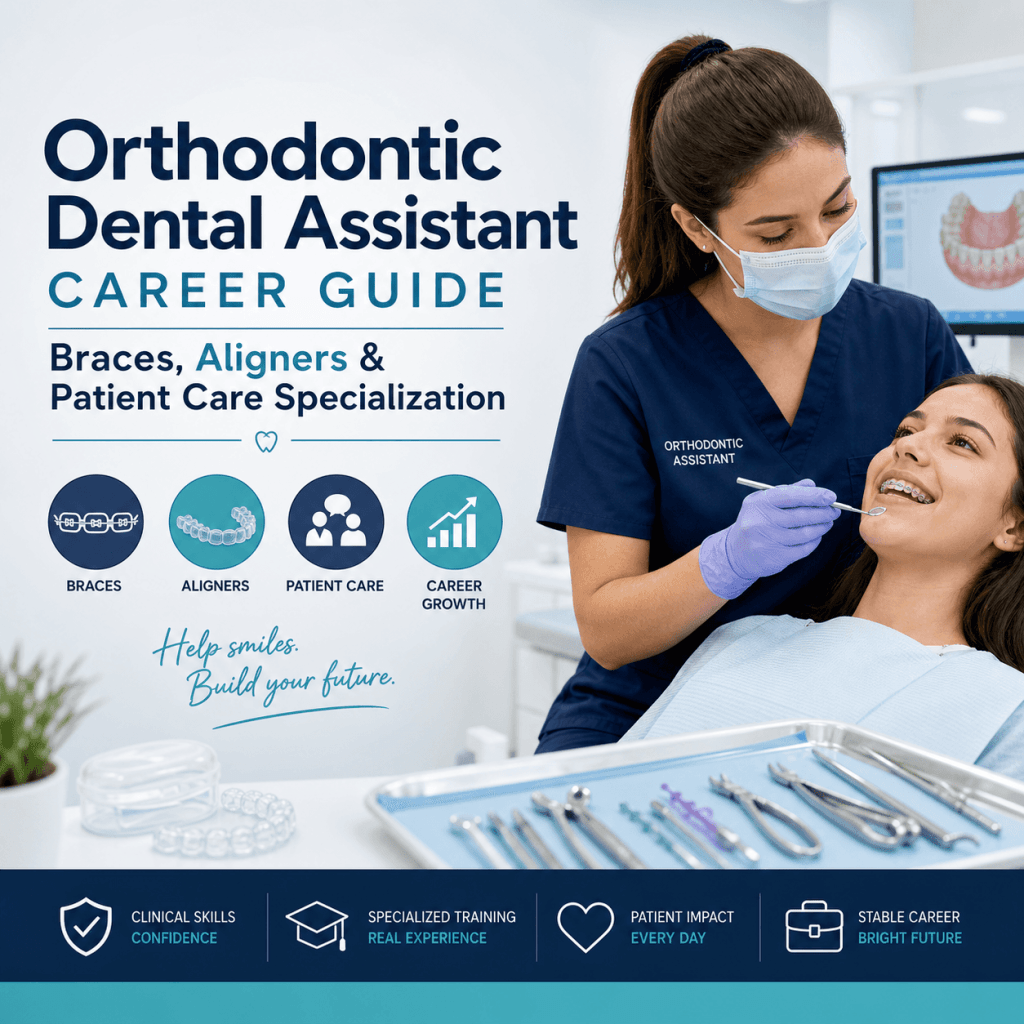
An orthodontic dental assistant is a dental assistant who specializes in supporting orthodontic care, mainly braces and clear aligner treatment, from the first records appointment to the final retainer delivery.
While general dentistry often focuses on preventive care and restorative procedures, orthodontics is different in a few key ways:
- Longer treatment timelines: Patients return regularly over many months, sometimes years.
- Frequent adjustment visits: Short appointments with high volume and fast turnover.
- Appliance-specific skills: Brackets, wires, elastics, aligner attachments, retainers, and more.
Demand for orthodontic-trained assistants keeps rising because many orthodontic practices run busy schedules with multiple chairs. More patients are seeking orthodontic treatment for both cosmetic reasons and functional health including bite correction, airway concerns, and long-term oral health.
This role is a strong fit if you like:
- A fast-paced clinical flow
- Precision-based work where small details matter
- Heavy patient communication, especially with teens, parents, and anxious patients
If you’re interested in pursuing this career path, it may be beneficial to explore various dental assistant programs that offer specialized training. Such training could also open doors to other areas of dentistry such as endodontics or periodontics, given that these fields also require strong patient interaction and precision-based work. Furthermore, understanding the broader scope of dental care by considering courses on other specialties offered could enhance your skills as an orthodontic dental assistant.
Braces vs. Aligners: The Basics You’ll Work With Every Day
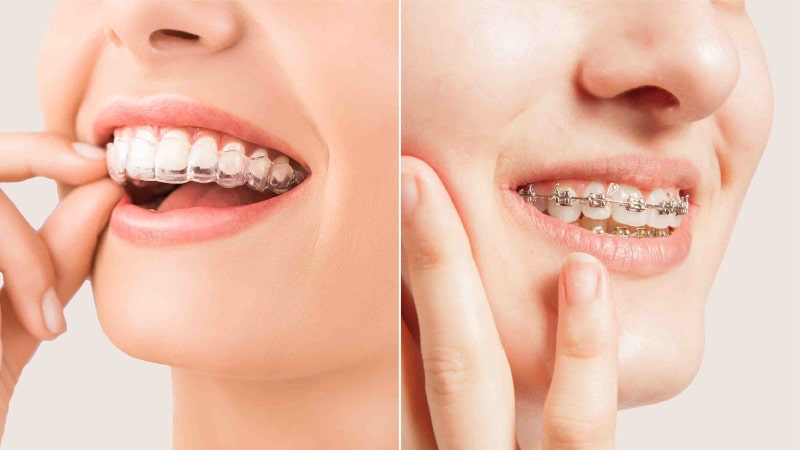
Orthodontic offices, like those found in the Broward Dental Academy, typically treat patients with a mix of fixed appliances (braces) and removable systems (aligners). As an assistant, your daily work often depends on which type of treatment the patient is in.
Common orthodontic appliance types
In a modern ortho practice, you may see:
- Traditional metal braces
- Ceramic braces (more discreet)
- Self-ligating braces (bracket system designed for quicker wire changes)
- Retainers (clear or wire, removable or fixed)
- Expanders (often for growth and arch development)
- Clear aligners (tray-based treatment)
What assistants commonly help with (braces and aligners)
Across both systems, assistants often support:
- Operatory setup and tray prep
- Instrument transfer, suction, and retraction
- Materials setup (bonding materials, modules, wires, attachments)
- Documentation and charting
- Patient instructions and follow-up guidance
Workflow differences you should expect
Braces appointments commonly include:
- Wire changes
- Ligature or module changes
- Managing bracket or wire issues
- Elastics education and re-education
Aligner appointments commonly include:
- Scanning and records workflows
- Attachment checks (and support during placement/removal where permitted)
- Coaching for wear time and routine
- Support for IPR workflows where allowed under supervision and state rules
Ultimately, patient outcomes are tied closely to what happens between visits. Comfort, oral hygiene, diet choices, and following instructions can speed up progress or cause setbacks. Orthodontic assisting sits right in the middle of that reality.
Core Clinical Skills for Orthodontic Assisting
Orthodontic assistants need strong fundamentals plus specialty-specific skills. Some tasks vary by office and by state rules, but the core expectations are consistent.
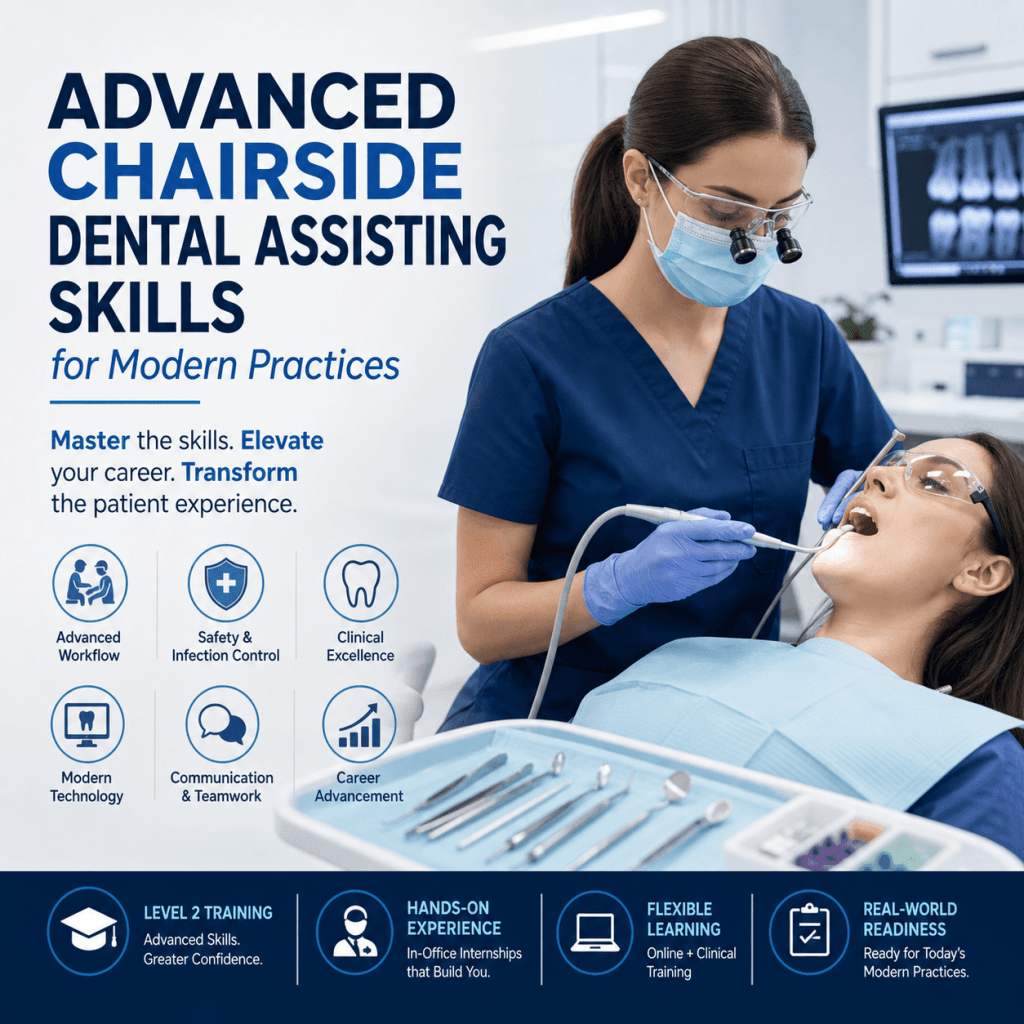
Chairside assisting essentials
You will build confidence in:
- Operatory setup and breakdown
- Asepsis and infection control
- Tray preparation and materials readiness
- Isolation and retraction for visibility and dryness
- Efficient four-handed dentistry so the orthodontist can move quickly
Orthodontic-specific tasks you may learn
Depending on training, office protocols, and legal scope:
- Band fitting support
- Bracket placement assistance and bonding support
- Debond support and cleanup workflows
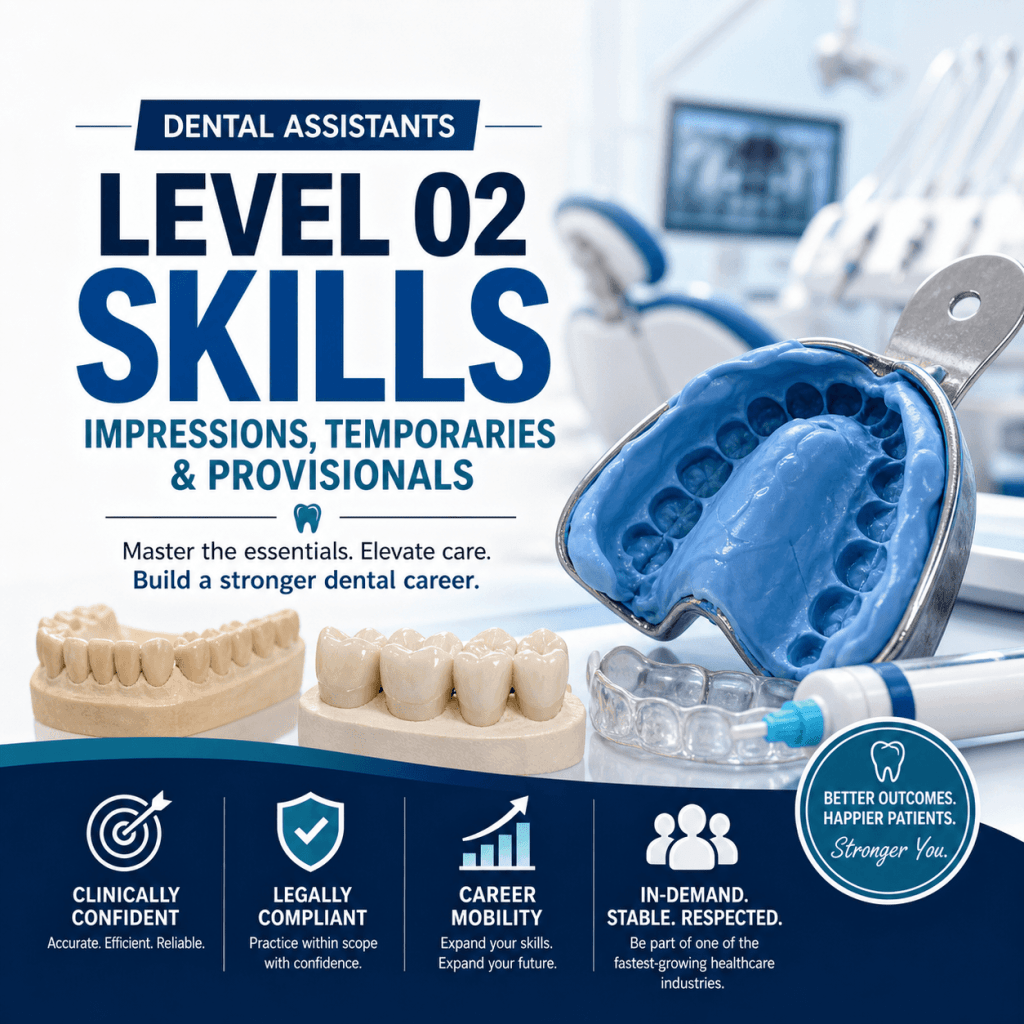
- Impressions and model work (where still used)
- Digital scanning support for aligners and retainers
Elastics and appliance education
A big part of the job is explaining and demonstrating:
- How to wear elastics correctly
- Retainer care and wear schedule
- Aligner insertion, removal, and cleaning routines
- What to do if a bracket breaks or a wire pokes
Documentation and accuracy
Ortho is detail-driven. Assistants help keep records accurate, such as:
- Chart notes that reflect what was done and what was instructed
- Tracking aligner stages and patient compliance concerns
- Taking intraoral photos if trained and permitted
- Noting patient discomfort, breakage patterns, or recurring issues
Comfort-focused care
You also become the calm, steady presence in the room. Skills that matter more than people realize include:
- Helping reduce gag reflex during scans or impressions
- Using simple, non-threatening explanations
- Recognizing anxiety and responding with reassurance and clarity
- Knowing when patient discomfort is expected versus when it should be escalated
Patient Care Specialization: Communication That Keeps Treatment on Track
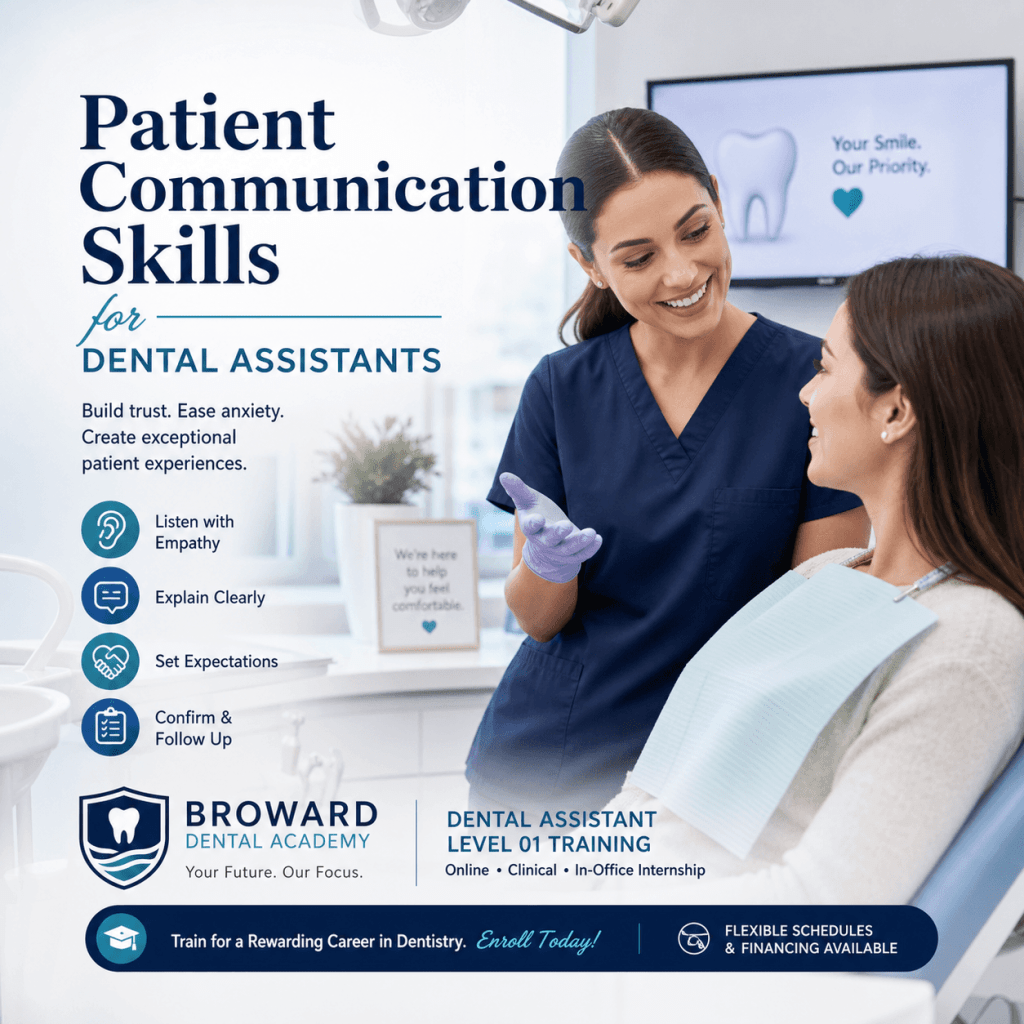
In orthodontics, great assisting is not only clinical. It is also coaching. Treatment success depends heavily on what patients do at home.
The “coaching” role in orthodontics
Ortho treatment often depends on:
- Wearing elastics as prescribed
- Wearing aligners for the recommended daily hours
- Keeping excellent oral hygiene
- Avoiding foods that break appliances
- Showing up on time and following instructions
An orthodontic assistant reinforces these behaviors at every visit, without sounding repetitive or judgmental.
Communicating with different patient types
You will adapt your approach depending on who is in the chair:
- Teens: Keep instructions short, clear, and visual. Confirm understanding.
- Parents/guardians: Explain what they can monitor at home and what is normal.
- Adult aligner patients: Focus on compliance strategies that fit work and social schedules.
Common questions you will hear
Expect to handle questions like:
- “Is this soreness normal?”
- “What if my bracket broke?”
- “My wire is poking. What do I do?”
- “I lost an aligner tray. Now what?”
- “I have a mouth ulcer from rubbing. How can I help it heal?”
- “What can I eat with braces?”
You will not diagnose, but you can reassure, give office-approved guidance, and escalate to the orthodontist when needed. For more detailed information on common queries, refer to this frequently asked questions resource.
Oral hygiene and diet guidance
Assistants commonly teach:
- Avoiding hard or sticky foods that break brackets and bands
- Brushing and flossing with braces (and using helpful tools like floss threaders or water flossers)
- Aligner cleaning routines and what to avoid (heat, harsh chemicals, staining drinks without removing trays)
Professional empathy
A strong orthodontic assistant reassures without overpromising. You learn to say things like:
- “Soreness is common after adjustments, but let us know if it feels sharp or worsening.”
- “We can help you quickly if something breaks. Don’t try to bend wires at home.”
That balance builds trust and keeps patients engaged for the long treatment timeline.
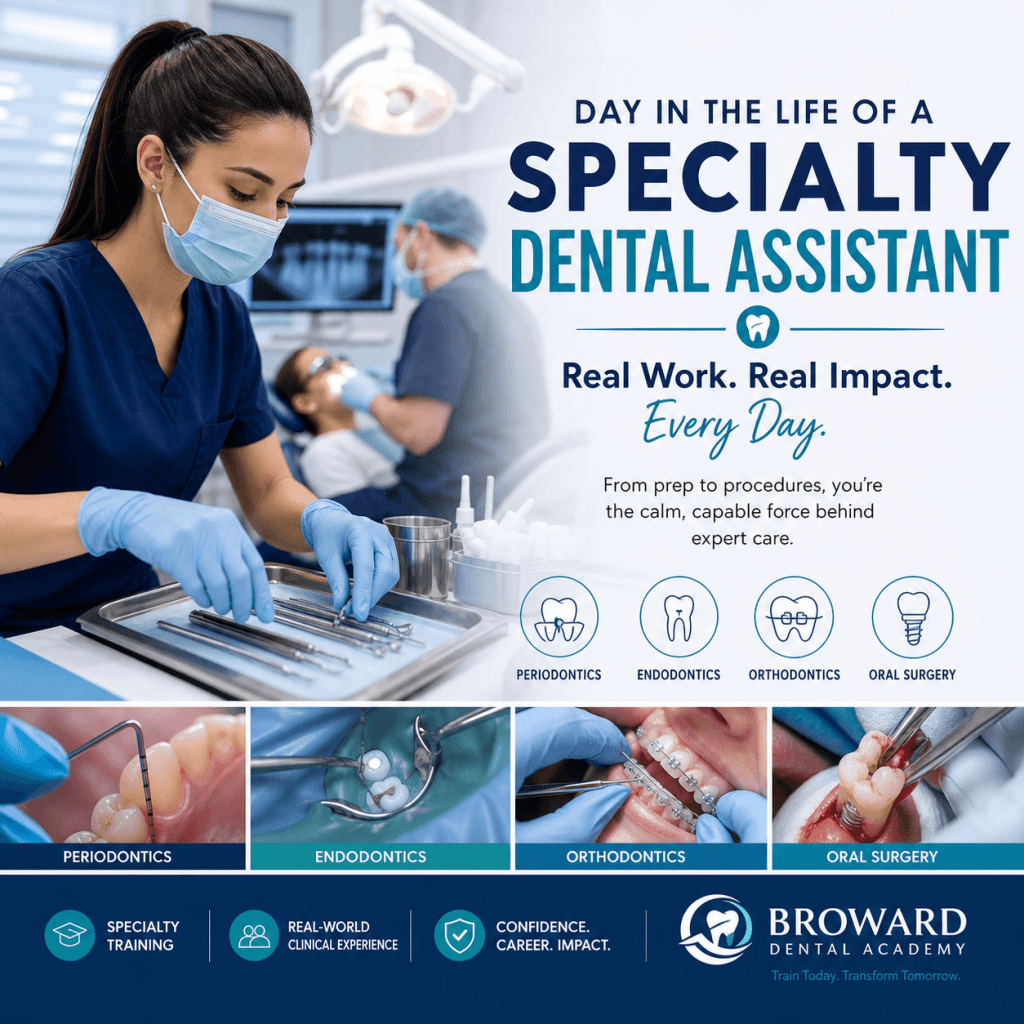
A Day-in-the-Life in an Orthodontic Office
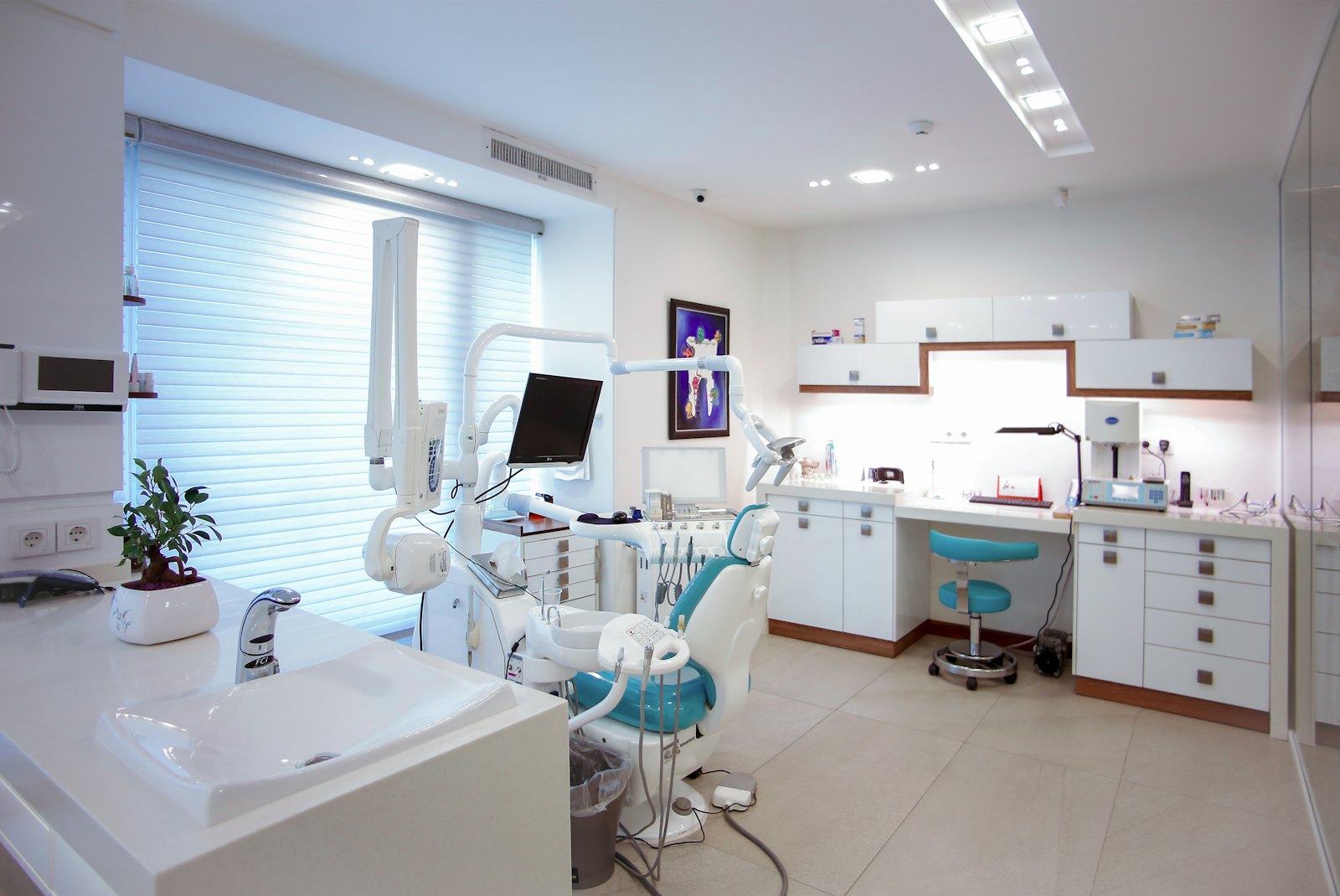
Orthodontic schedules are structured, repetitive, and busy. That can be a big advantage if you like predictable workflows and clear routines.
Typical appointment types
A normal day may include:
- New patient records (photos, scans/impressions, x-rays if applicable)
- Bonding appointments (placing braces)
- Adjustment visits (short, frequent check-ins)
- Emergency visits (broken bracket, poking wire, loose band)
- Debonding (removing braces)
- Retainer delivery and retainer checks
- Aligner checks and progress tracking
Team workflow and handoffs
Orthodontic offices rely on clean handoffs between:
- Orthodontist
- Orthodontic assistants
- Treatment coordinator and front office
A smooth day depends on everyone staying organized, documenting clearly, and setting the next step correctly before the patient leaves.
Pace, efficiency, and consistency
Ortho offices may run multiple chairs at once. That means:
- Quick room turnover
- Organized instrument processing
- Restocking and prep that prevents delays
Small mistakes can cause real setbacks, like a wrong wire selection, an unclear note, or instructions that the patient misunderstands. The best assistants build habits that protect quality even on busy days.
Training, Certification, and Legal Compliance: What You Need Before You Work
Orthodontic assisting is regulated like the rest of dental assisting. What you can do legally depends on your state and the level of supervision required.
Requirements vary by state
Each state dental board sets rules about what dental assistants may do, including tasks that may require:
- Formal training
- Registration or certification
- Radiography credentials
- Expanded functions credentials (where applicable)
Even within orthodontics, job expectations can differ from one office to another based on those rules.
Common pathways into orthodontic assisting
Many assistants enter ortho through:
- Entry-level dental assisting training, then orthodontic-focused training
- On-the-job training in an orthodontic practice (varies widely by quality and scope)
- Structured programs that blend didactic learning with real clinical repetition
Why legal compliance matters
Compliance is not just paperwork. It affects:
- Patient safety
- Practice liability
- Your employability in high-performance offices
Orthodontic employers consistently look for assistants who can step in with confidence, follow protocol, document accurately, and stay within legal scope.
A smart next step is to review your state board rules and compare them to the requirements listed in real job postings in your area.
Tools and Technology You’ll Use (From Hand Instruments to Digital Ortho)
Orthodontic assisting is tactile. You work with specialized hand instruments and increasingly digital workflows.
Core orthodontic instruments
Common instruments include:
- Ligature cutters
- Distal end cutters
- Mathieu pliers
- Weingart pliers
- Band seaters
- Cheek retractors and mirrors
Materials you’ll handle
You may set up and assist with:
- Etch
- Bonding agents
- Composite
- Separators
- Archwires
- Modules and ligatures
- Power chains
Digital workflow exposure
Many orthodontic offices use:
- Intraoral scanners
- Digital photography for records and progress
- Aligner tracking tools and basic software systems
You do not have to be “techy” to succeed, but you do need to be comfortable learning systems and following digital protocols precisely.
Sterilization and inventory
Ortho relies on instrument readiness. Assistants often help maintain:
- Sharp, functional instruments
- Correct instrument sets for each appointment type
- Inventory levels that prevent cancellations and delays
Career Path, Salary Factors, and Growth Opportunities in Orthodontic Assisting
Orthodontic assisting can be a stable, long-term career, especially for people who enjoy a specialty environment and want to keep building skills.
Why this specialty supports stability
Dentistry continues to be one of the fastest-growing areas in healthcare, and orthodontics remains in demand for both health and aesthetics. Practices value assistants who can keep a busy clinic running smoothly and deliver a consistent patient experience.
Salary factors
Pay varies based on factors like:
- Location and local demand
- Experience and speed in a high-volume environment
- Certifications and radiography credentials, which can be obtained through specialized programs such as those offered by the Broward Dental Academy
- Expanded functions (where permitted)
- The pace and volume of the practice
Schedule and lifestyle
Many orthodontic offices maintain predictable clinic hours compared with some other dental settings, which can support work-life balance.
Career mobility
Orthodontic assisting can lead to roles such as:
- Lead orthodontic assistant
- Clinical trainer
- Treatment coordinator
- Practice management track
The more skills you can legally and confidently perform, the more value you bring to a modern practice.
How to Choose the Right Orthodontic Assistant Program (What to Look For)
Not all training is equal. The best programs produce assistants who are job-ready, not just test-ready.
Prioritize hands-on readiness
Look for training that includes:
- Real clinical tasks
- Repetition until confident
- Direct feedback and structured competencies
Orthodontics is skill-based. You learn by doing, then doing it again with guidance.
Modern learning options matter
Strong programs often combine:
- Online lessons for flexible learning
- In-person clinical immersion for real-world readiness
Internships and externships
In-office experience builds confidence quickly. It also strengthens your resume and helps you understand pace, communication flow, and daily expectations.
Quality indicators
Consider programs with:
- Instructors with current clinical experience
- Clear professionalism standards
- A focus on infection control and legal compliance
If you’re considering a career in orthodontics, it’s crucial to choose a program that will equip you with the necessary skills. Programs like the one offered by Broward Dental Academy are known for their rigorous training that prepares students for real-world challenges in orthodontic assisting.
Financing and Scheduling Realities
For many students, flexibility matters. Programs that offer scheduling support and flexible financing can make training achievable without putting life on hold.
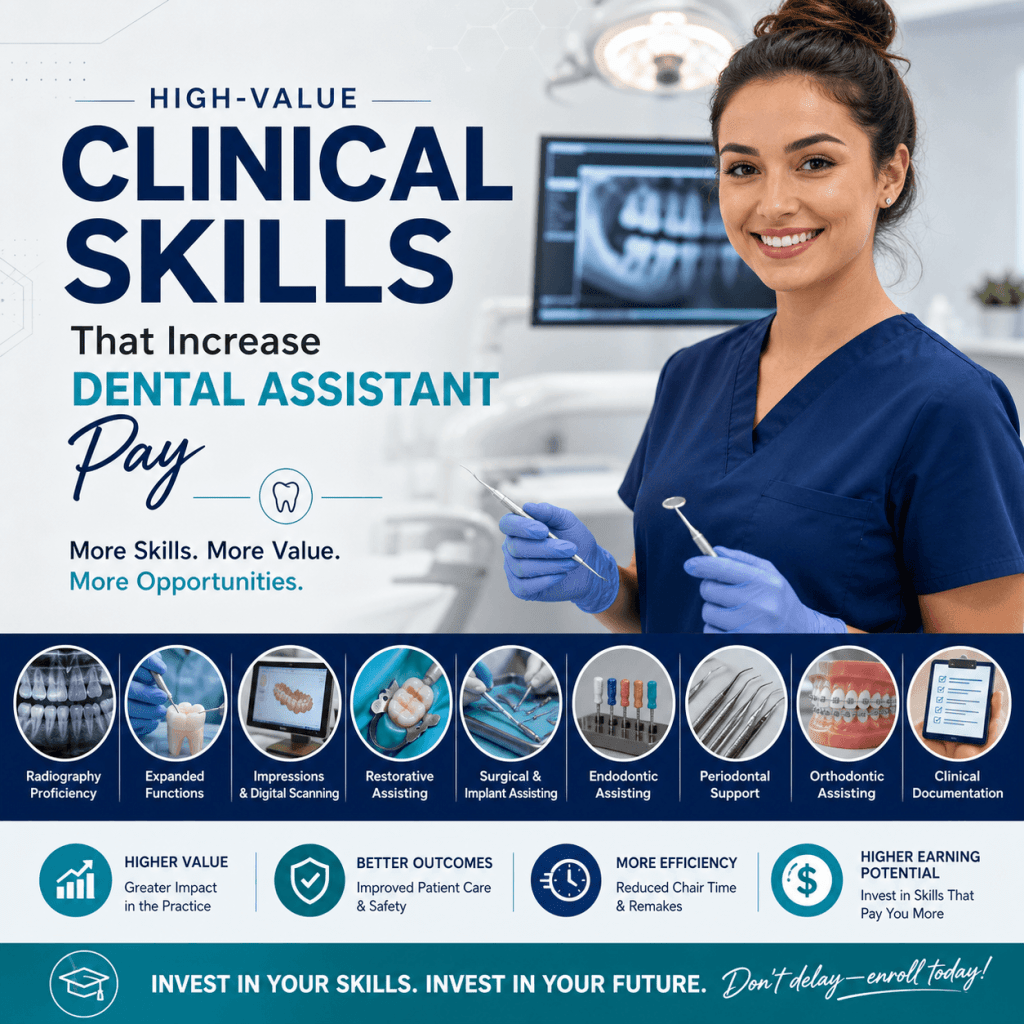
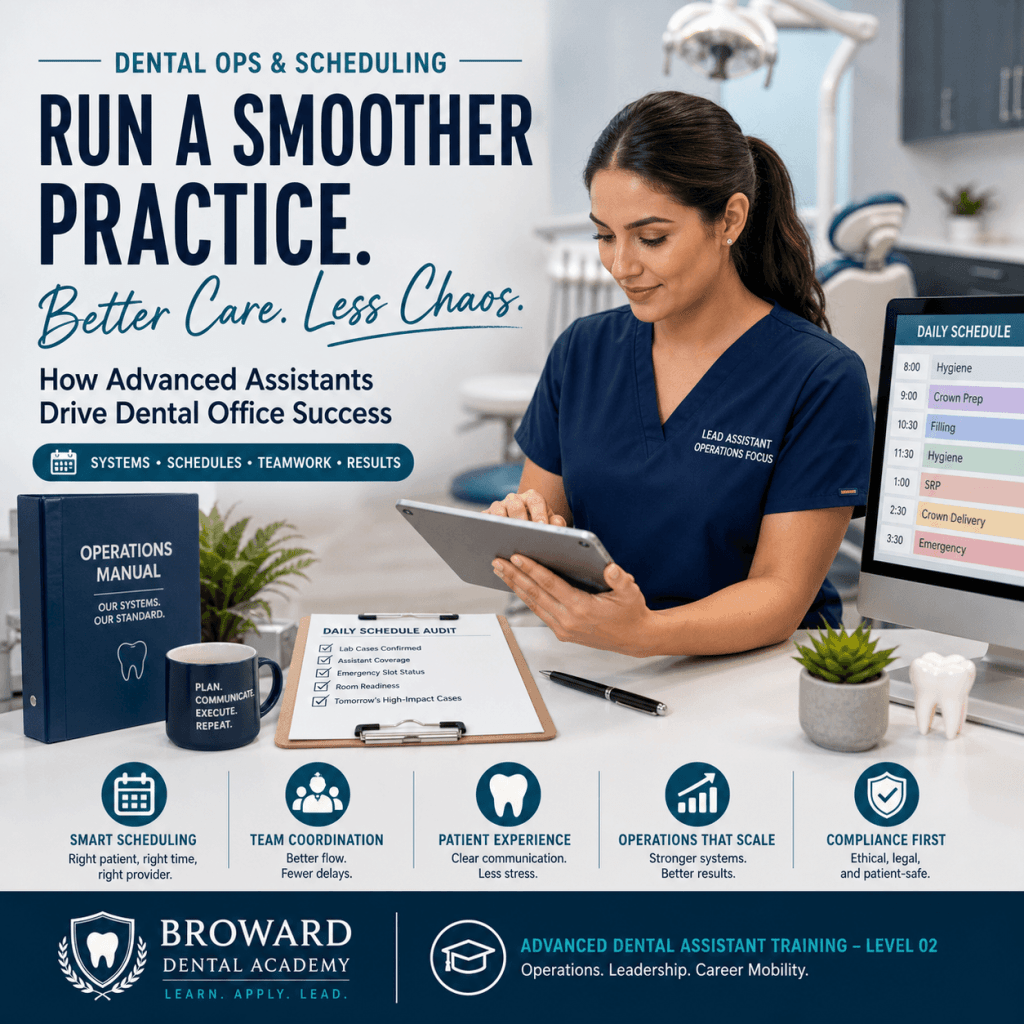
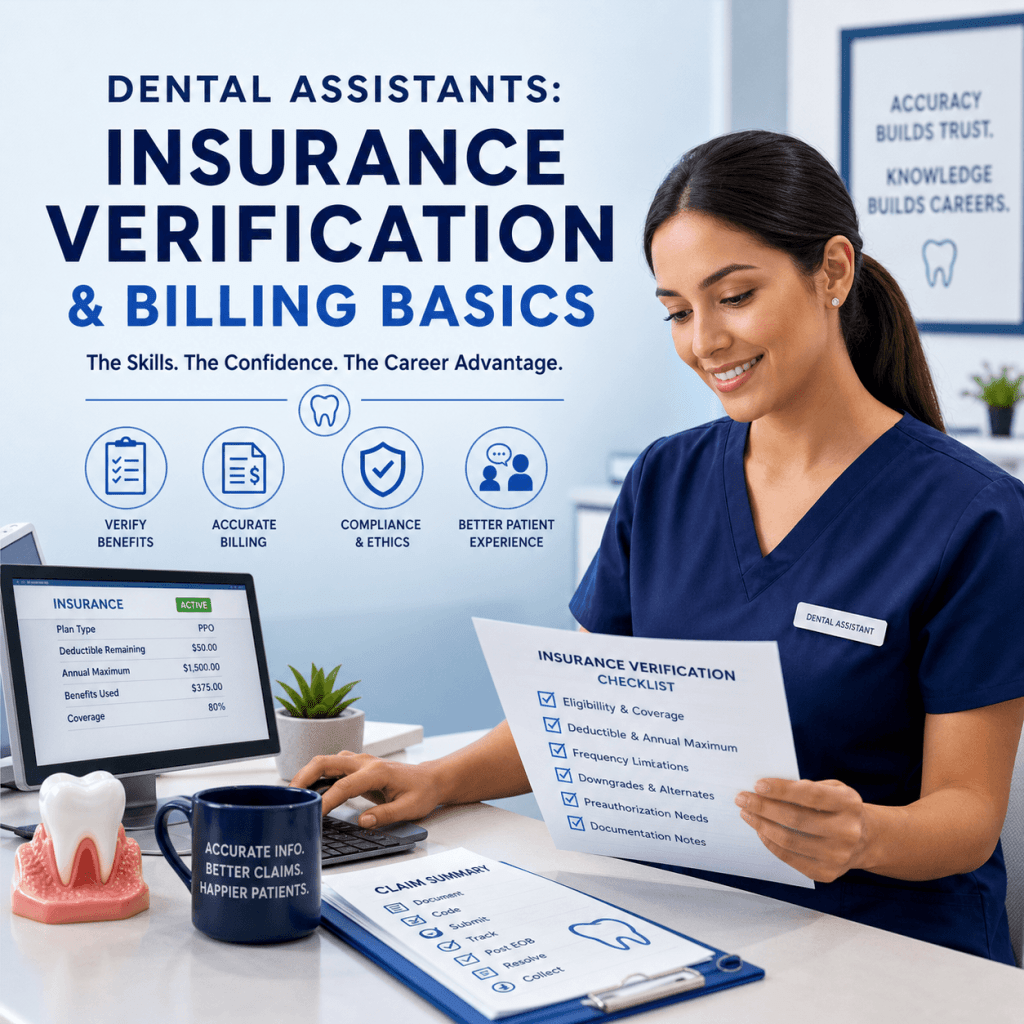
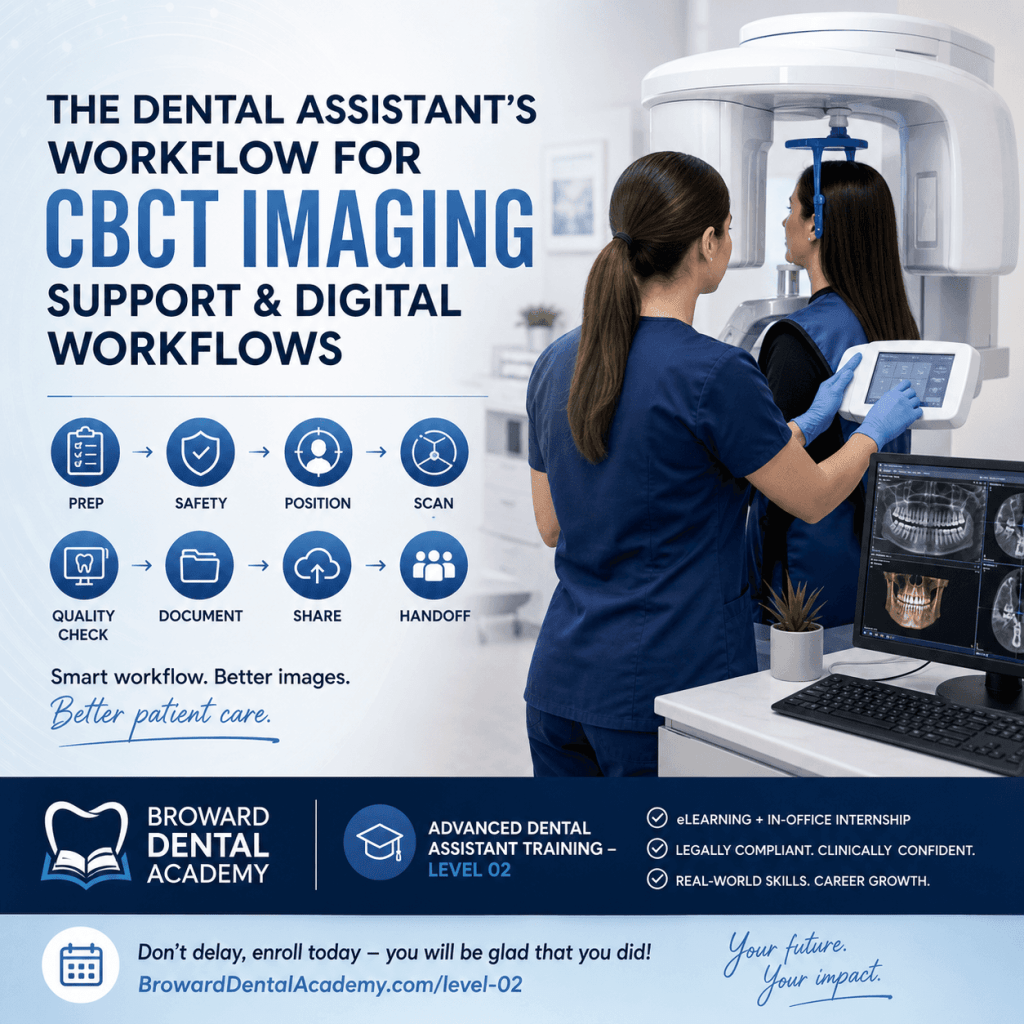
Specialty Dental Assisting Training at Broward Dental Academy (Ortho Track and Beyond)
If you are exploring orthodontic assisting as part of a bigger career plan, specialization can make you more employable and more confident in clinical settings.
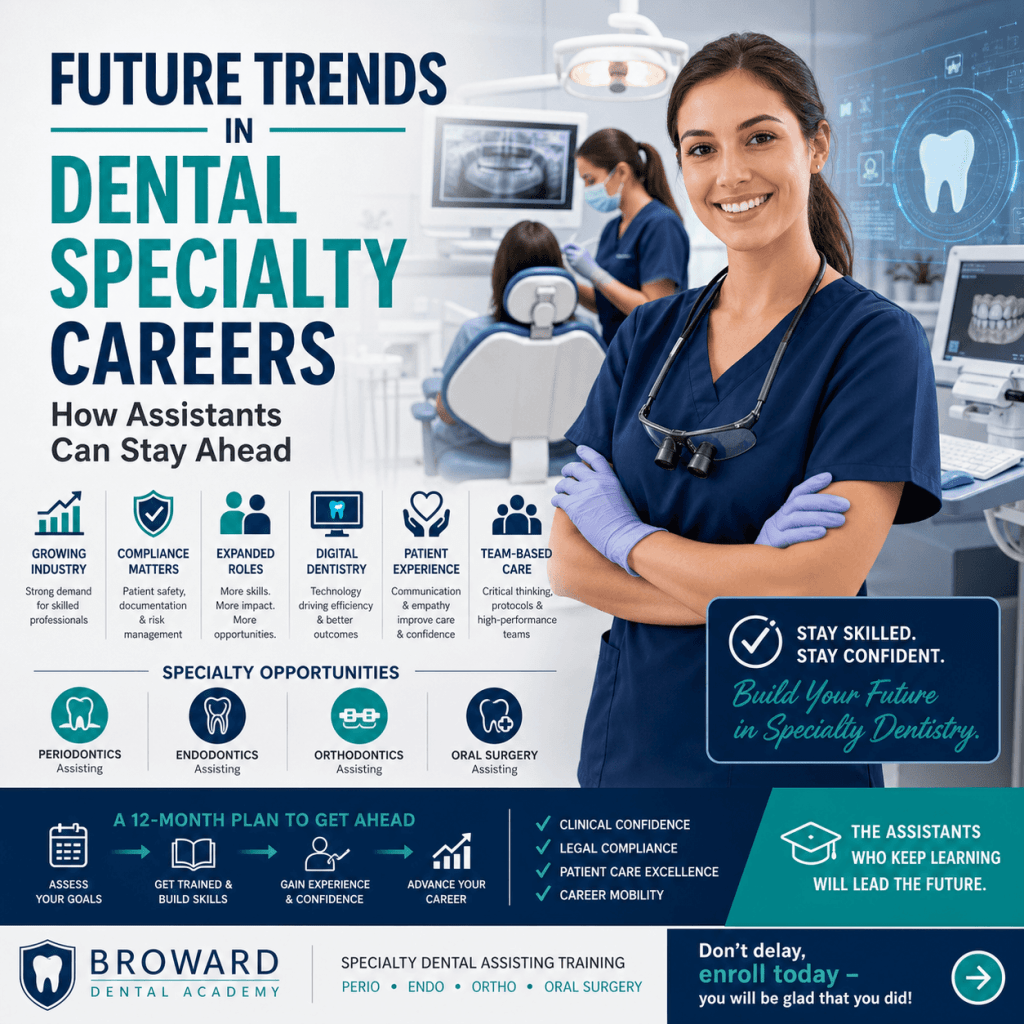
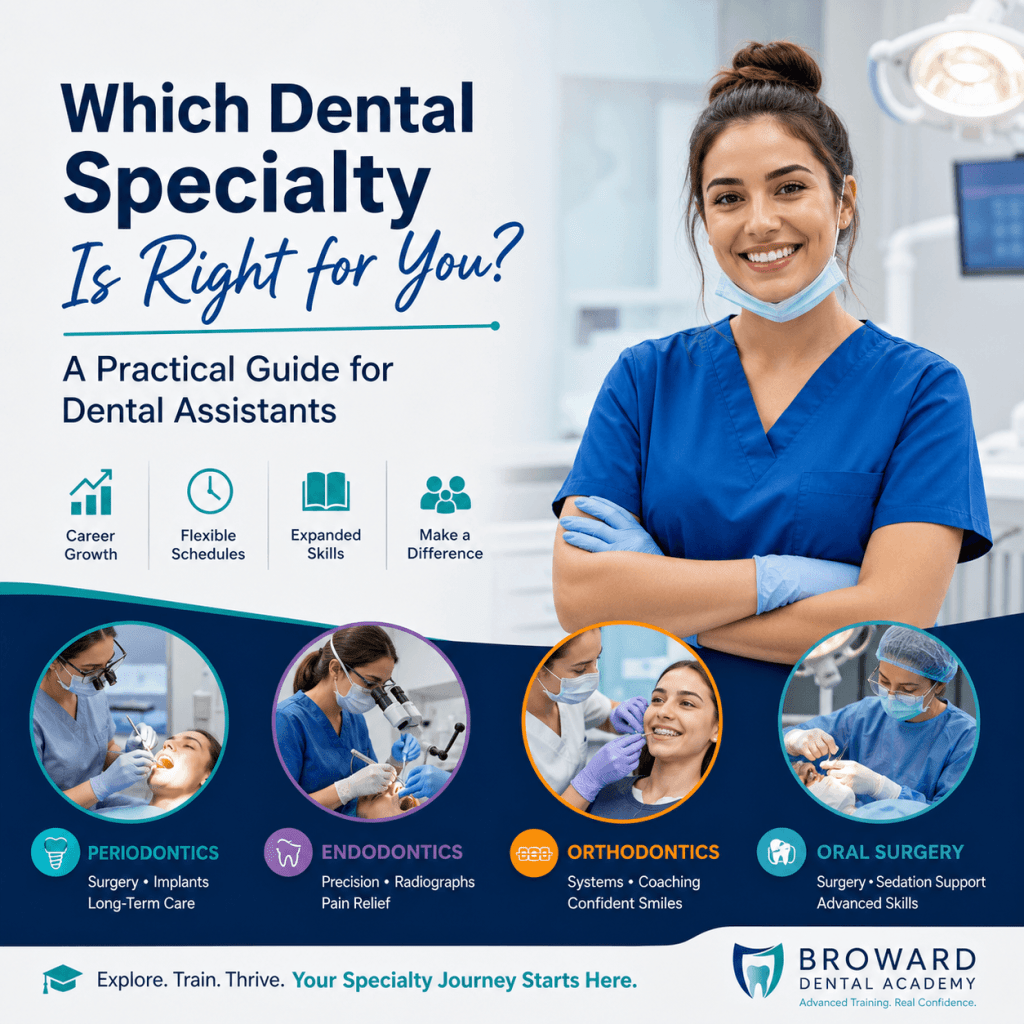
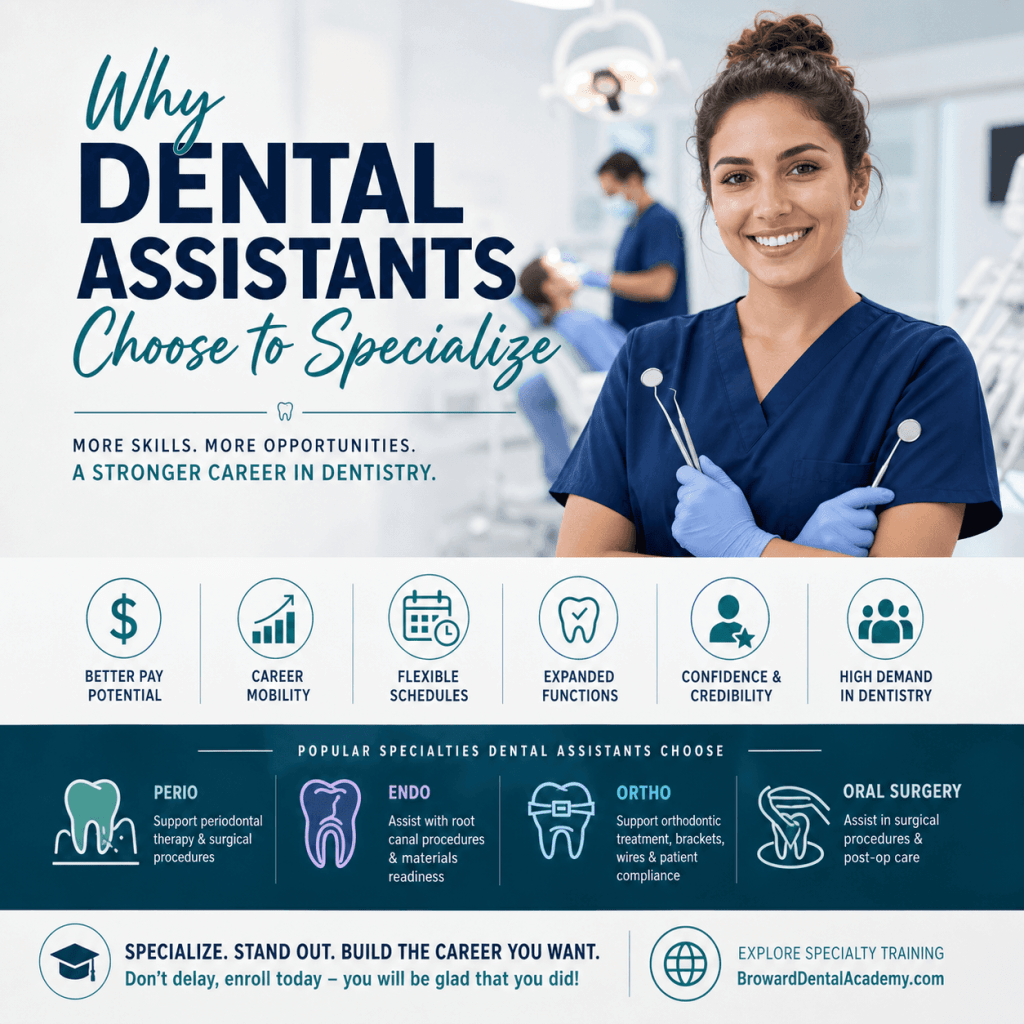
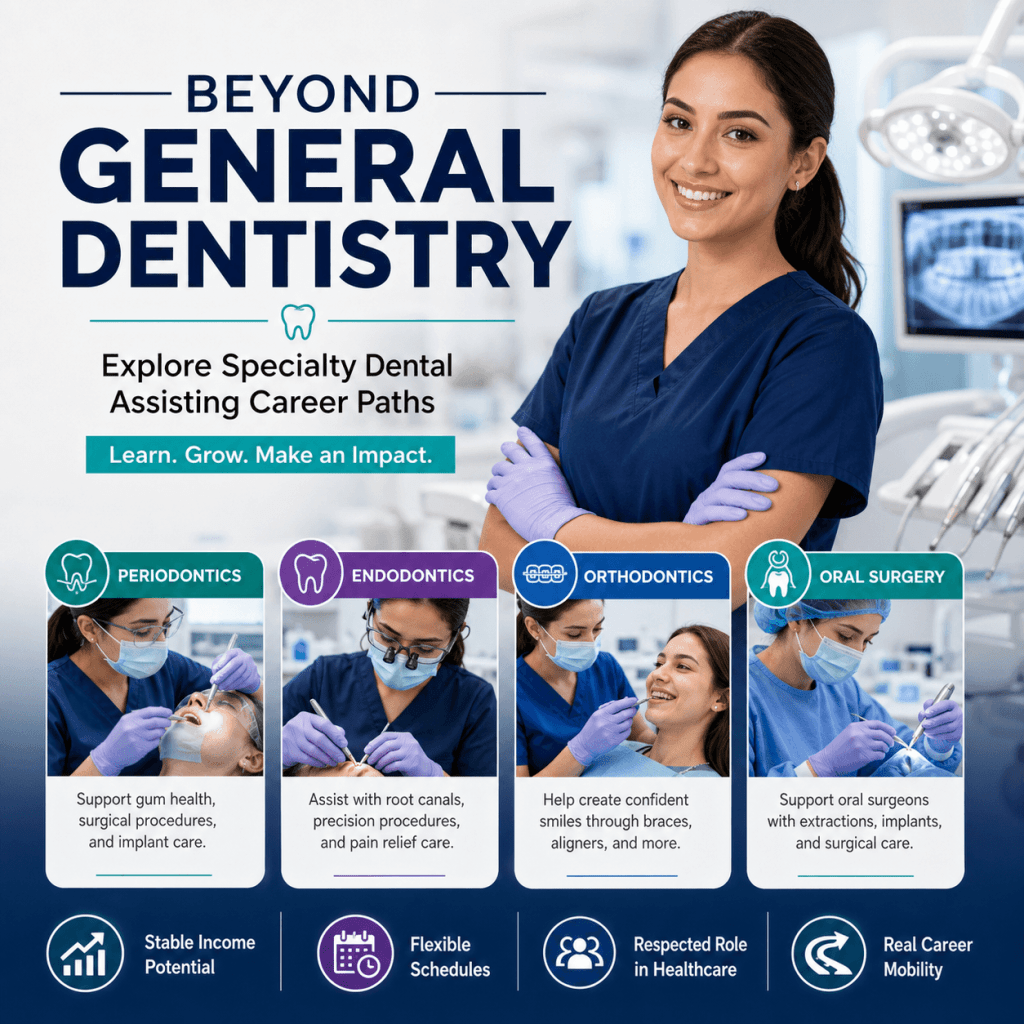
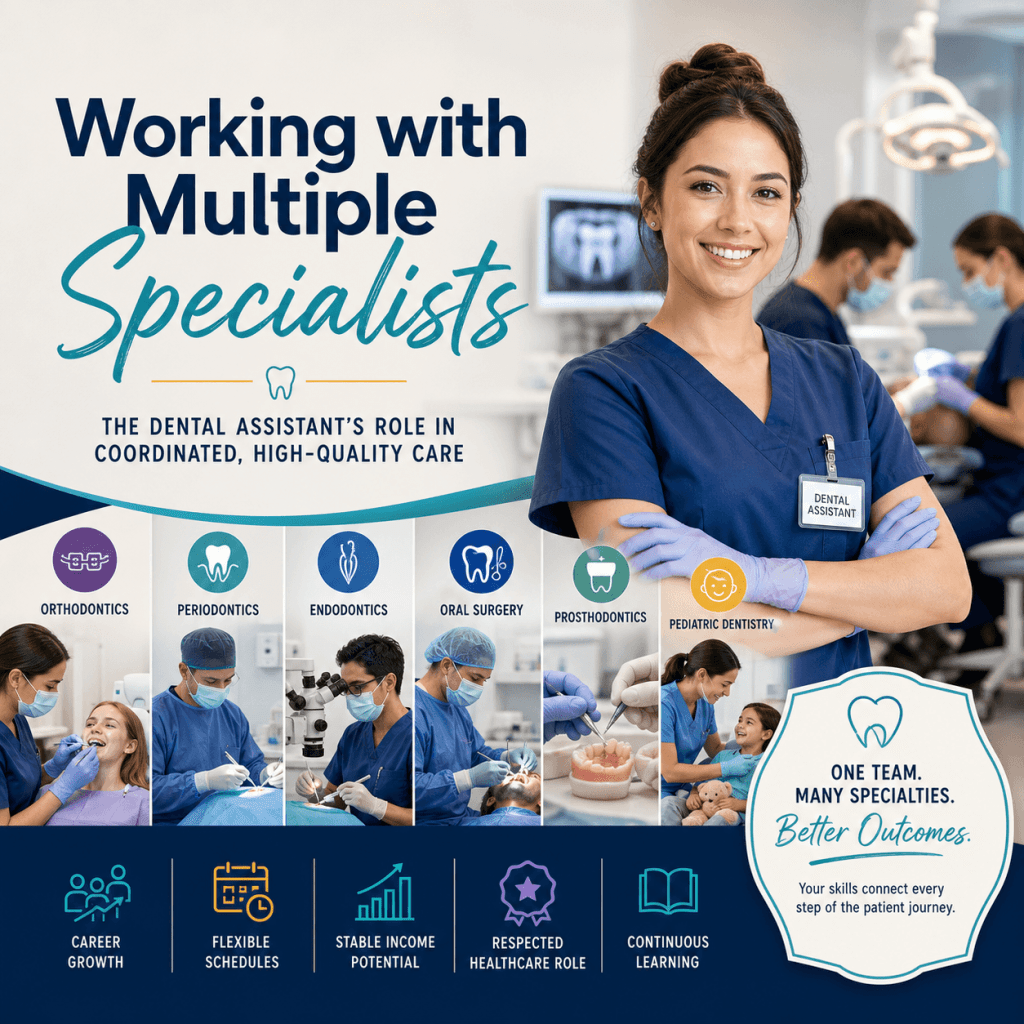
Broward Dental Academy’s specialty training approach is built for the real world, supporting multiple advanced paths, including orthodontics alongside other specialties such as perio, endo, and oral surgery.
What sets Broward Dental Academy apart is a focus on developing professionals who are:
- Thoroughly trained
- Legally compliant
- Clinically confident
Training is designed to help students thrive in a modern, high-performance dental practice, with an emphasis on critical thinking, ethical standards, and consistent clinical execution.
Students benefit from:
- Immediate immersion in online and clinical settings
- Updated eLearning lesson plans for remote learning
- In-office internships that build real confidence
- A polished training environment aligned to today’s dental workplace
Broward Dental Academy offers 7 courses, which supports long-term career mobility and expanded functions over time. Flexible financing is also available.
To explore the broader specialty training pillar such as periodontics, endodontics, or general dental assisting, visit:
https://browarddentalacademy.com/specialty-dental-assisting-training-perio-endo-ortho-oral-surgery/
Next Steps: How to Start Your Orthodontic Dental Assistant Career
Here is a simple roadmap you can follow:
- Confirm your local requirements (state dental board rules and typical employer expectations)
- Choose a reputable training program with hands-on clinical readiness and legal compliance built in, like those offered by Broward Dental Academy
- Build a resume that shows competencies, not just course names
- Apply to orthodontic practices (and general offices that offer orthodontic services)
Portfolio ideas that help you stand out
To make your application memorable, present evidence of your readiness, such as:
- A clear list of hands-on skills you’ve trained on
- Internship hours and responsibilities
- Software or scanning familiarity
- Patient education strengths (elastics, aligner wear, hygiene coaching)
Interview readiness
Orthodontic offices look for assistants who communicate well, stay organized, respect infection control, and learn quickly. Be ready to speak confidently about how you support patient comfort, documentation accuracy, and clinical flow.
If you are ready to take the next step, explore Broward Dental Academy programs, ask about flexible financing, and enroll when it fits your timeline. Don’t delay enrolling in these valuable programs; you’ll be glad that you did!
FAQs (Frequently Asked Questions)
What does an orthodontic dental assistant do?
An orthodontic dental assistant specializes in supporting orthodontic care such as braces and clear aligner treatments from initial records to final retainer delivery. They assist with appliance-specific tasks, patient communication, operatory setup, and help guide patients through their treatment journey.
Why is orthodontic dental assisting considered a growing specialty?
Orthodontic dental assisting is growing due to increased demand for orthodontic treatments addressing cosmetic reasons, bite correction, airway concerns, and long-term oral health. Busy orthodontic practices require skilled assistants to manage fast-paced clinical workflows and frequent patient visits.
What types of orthodontic appliances will I work with as an assistant?
You will commonly work with traditional metal braces, ceramic braces, self-ligating braces, retainers (clear or wire), expanders for arch development, and clear aligners. Your daily tasks will vary depending on whether the patient uses fixed appliances or removable systems.
What are the key differences between assisting with braces versus aligners?
Braces appointments typically involve wire changes, ligature replacements, managing bracket issues, and elastics education. Aligner appointments focus on scanning and records workflows, attachment checks, coaching on wear time and cleaning routines, and supporting interproximal reduction (IPR) when permitted.
What core clinical skills are essential for an orthodontic dental assistant?
Essential skills include operatory setup and breakdown, asepsis and infection control, tray preparation, isolation and retraction techniques for visibility and dryness, efficient four-handed dentistry support to enable quick orthodontist workflow, and accurate documentation.
How important is patient education in orthodontic assisting?
Patient education is crucial; assistants demonstrate how to properly wear elastics, care for retainers, insert and clean aligners, and guide patients on managing broken brackets or poking wires. Effective communication helps improve comfort, oral hygiene compliance, diet choices, and overall treatment outcomes.