

Dental Training Resources
Dental training resources are the study guides, courses, hands-on practice tools, and career references that take you from curious beginner to working dental professional. But here is the part most people miss: the goal of dental training resources is not just to pass an exam. The real goal is to become clinically confident, legally compliant, and practice-ready in a modern dental office.
This guide serves as a practical map of what to use, what to avoid, and what employers in South Florida actually look for. This includes online learning, hands-on clinical training, internships, and course pathways.
Modern practices want thoroughly trained, ethical, critical-thinking team members who can perform under supervision, follow regulations, communicate well, and keep patients safe.
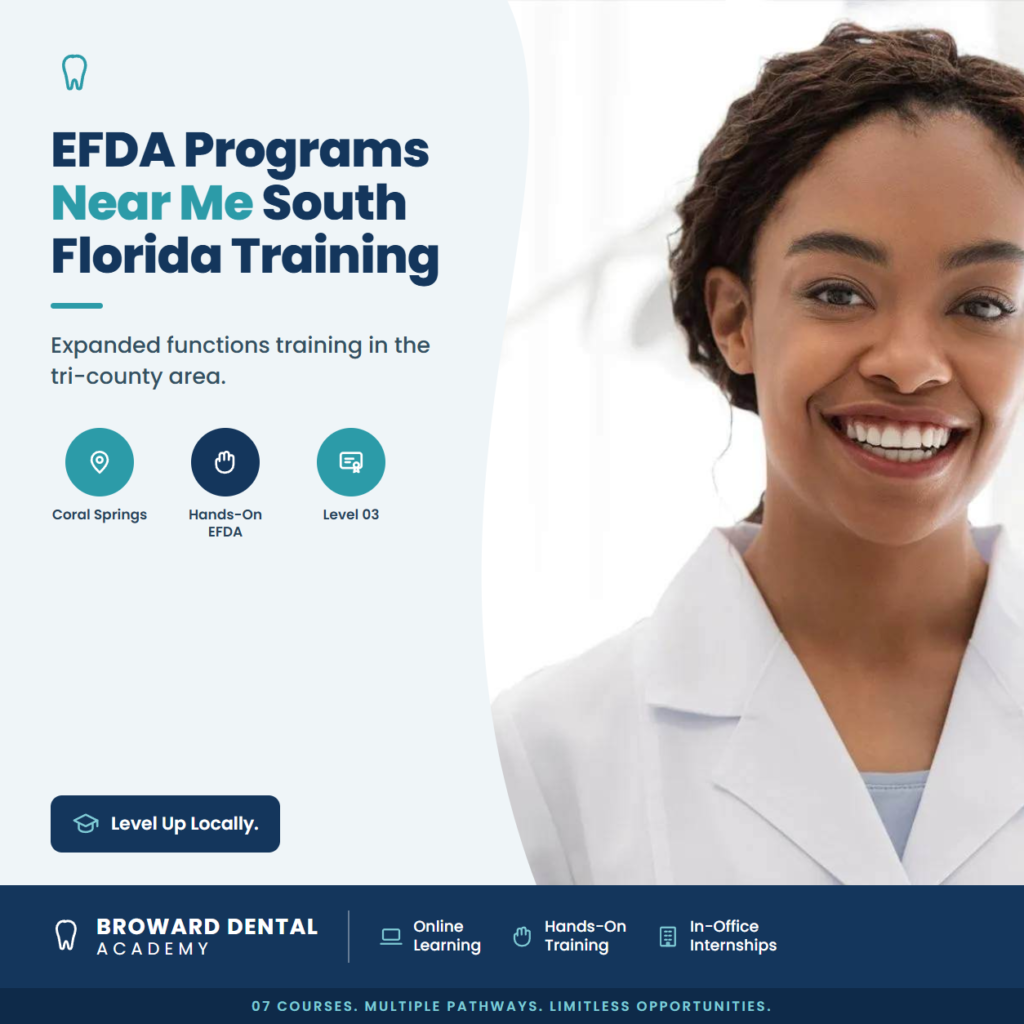
EFDA Programs Near Me: Expanded Functions Training in South Florida
Searching for “EFDA programs near me” in South Florida? you are looking for Board-approved expanded functions training that combines coursework with demonstrated hands-on competency. Broward Dental Academy runs Level 03 expanded functions training from Coral Springs, serving Broward, Miami-Dade, and
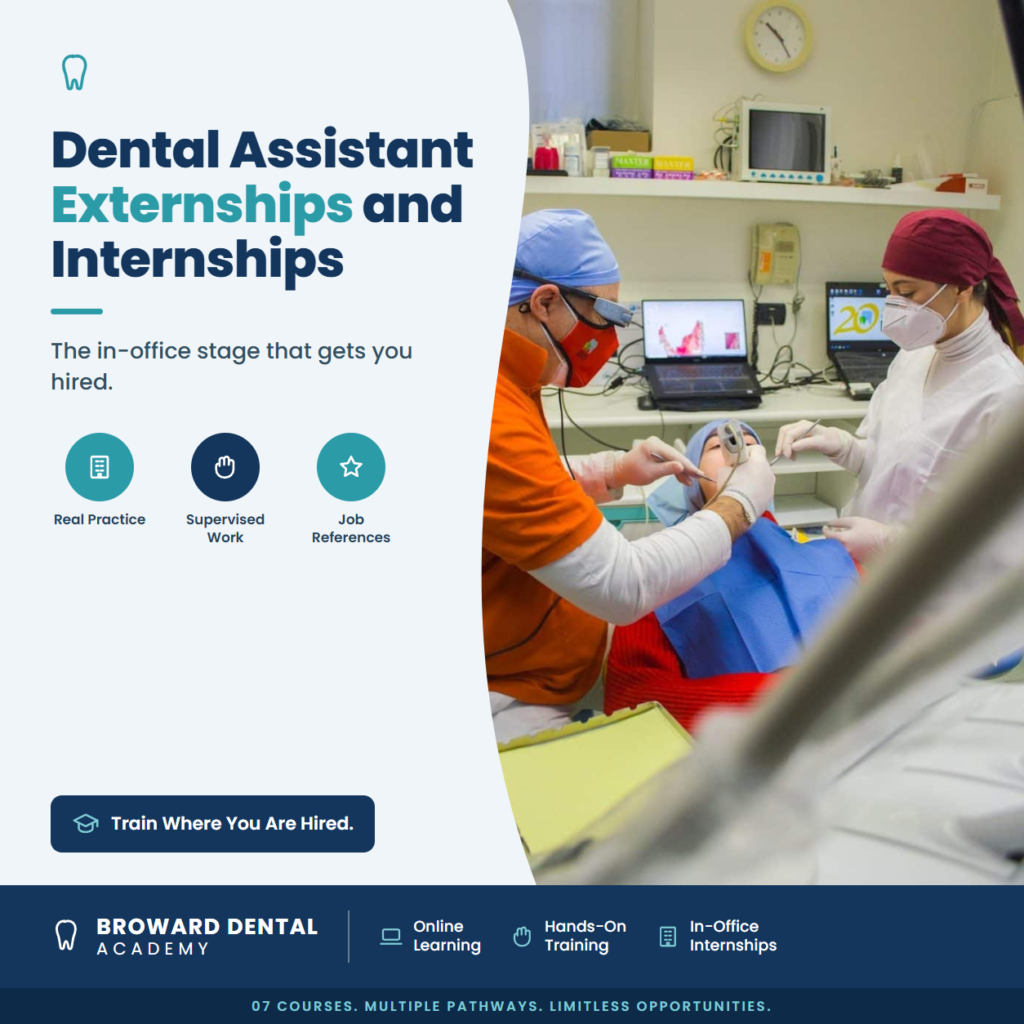
Dental Assistant Externships and Internships: How the In-Office Stage Works
A dental assistant externship or internship is the supervised in-office stage of training: you work inside a real dental practice, applying classroom and clinical-lab skills on real patients under supervision. It is the bridge between “trained” and “hireable,” and for
Dental Radiology Certification Course: What to Expect
A dental radiology certification course prepares a dental assistant to expose x-rays legally and safely. In Florida that means a Board-approved course combining radiation safety and theory with supervised technique practice: positioning, exposure, and infection control around imaging. Here is
Dental Charting for Assistants: Symbols, Numbering, and Workflow
Dental charting is the standardized way a practice records the condition of every tooth: which teeth exist, what surfaces are affected, what work exists already, and what treatment is planned. Assistants chart as the dentist calls out findings, so fluency
What Do Dental Assistants Do? A Day in the Role
What do dental assistants do? They keep the clinical side of a dental practice running: they prepare treatment rooms, assist the dentist chairside during procedures, sterilize instruments, help patients feel at ease, and handle records and scheduling support. With additional
Dental Assistant Programs in Florida: The Statewide Guide
Dental assistant programs in Florida range from short intensive courses to college certificates and degrees, and because Florida does not license entry-level assistants, no single program type is mandatory. What the state does regulate is specific duties: radiography and expanded
Accelerated Dental Assistant Programs in Florida: Fast Without Cutting Corners
Accelerated dental assistant programs compress the fundamentals into a short, intensive format, often advertised as 6-week or 10-week courses. Going fast is legitimate: Florida has no entry-level license requirement, so what matters is whether the program still delivers real supervised
Online Dental Assistant Classes: What You Can and Cannot Learn Remotely
Online dental assistant classes work well for theory: terminology, anatomy basics, infection control principles, radiography concepts, and office workflow. What they cannot do is make you clinically competent, because chairside skills, instrument handling, and patient care require supervised in-person practice.
How Much Does Dental Assistant School Cost in Florida?
Dental assistant school costs range widely: short single-skill courses can run a few hundred dollars, structured career programs commonly run into the low thousands, and college certificate or degree routes cost more. The price depends mostly on program length, how
How Long Does It Take to Become a Dental Assistant in Florida?
How long does it take to become a dental assistant? Most people can become an entry-level dental assistant in a few weeks to a few months, and comprehensive certificate programs commonly run about nine months to a year. In Florida
Why Students Choose Broward Dental Academy
See why students pick Broward Dental Academy for hands-on, legally compliant dental assistant training that employers want.
What to Expect When Enrolling in Dental Assistant Training
Hands-on, fast-paced, patient-facing. See the day-to-day skills, workload, schedule, and what good programs expect before you enroll.
Accelerated & Weekend Dental Assistant Programs in South Florida
Accelerated & weekend dental assistant training in South Florida, what “fast” really means, what you’ll learn, and how to pick a legit program.
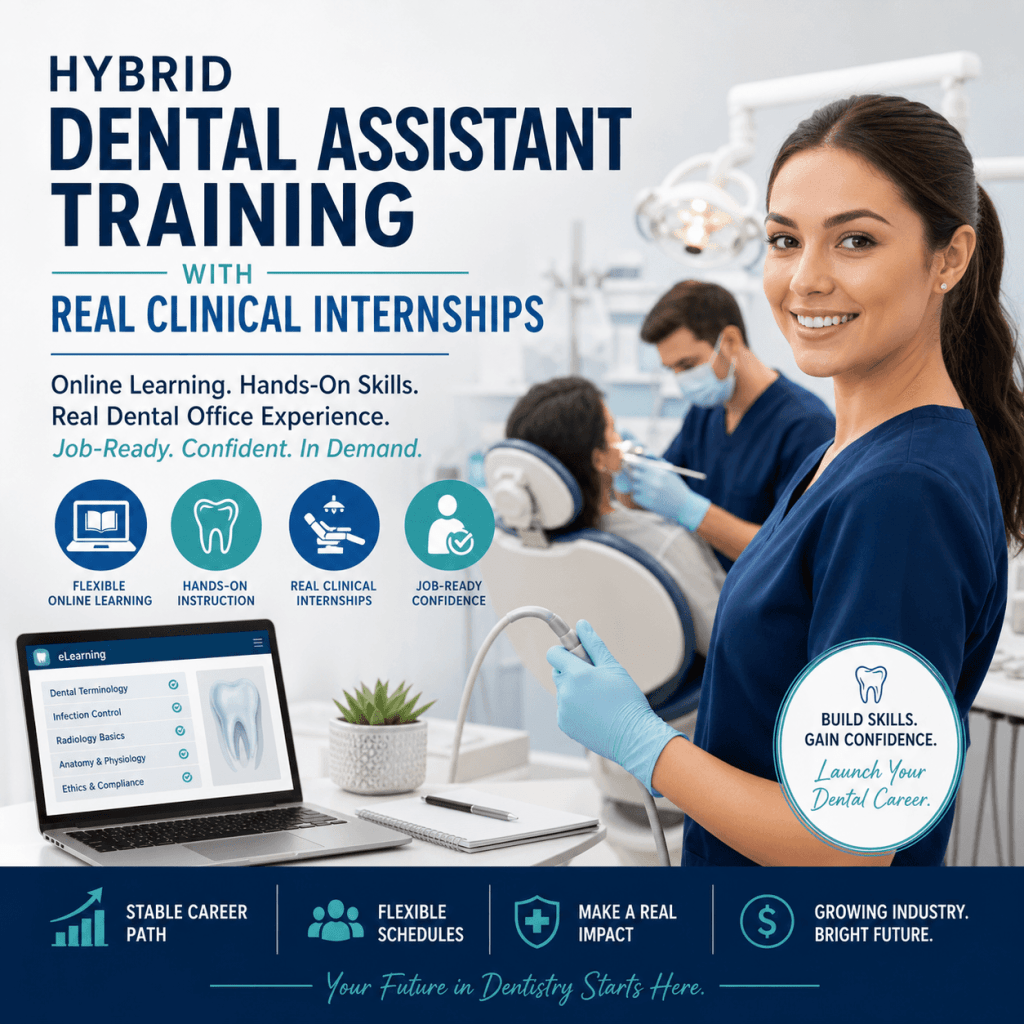
Hybrid Dental Assistant Training with Real Clinical Internships
Skip “online-only.” Learn theory online, train hands-on, then intern in a real dental office, so you’re job-ready from day one in South Florida.
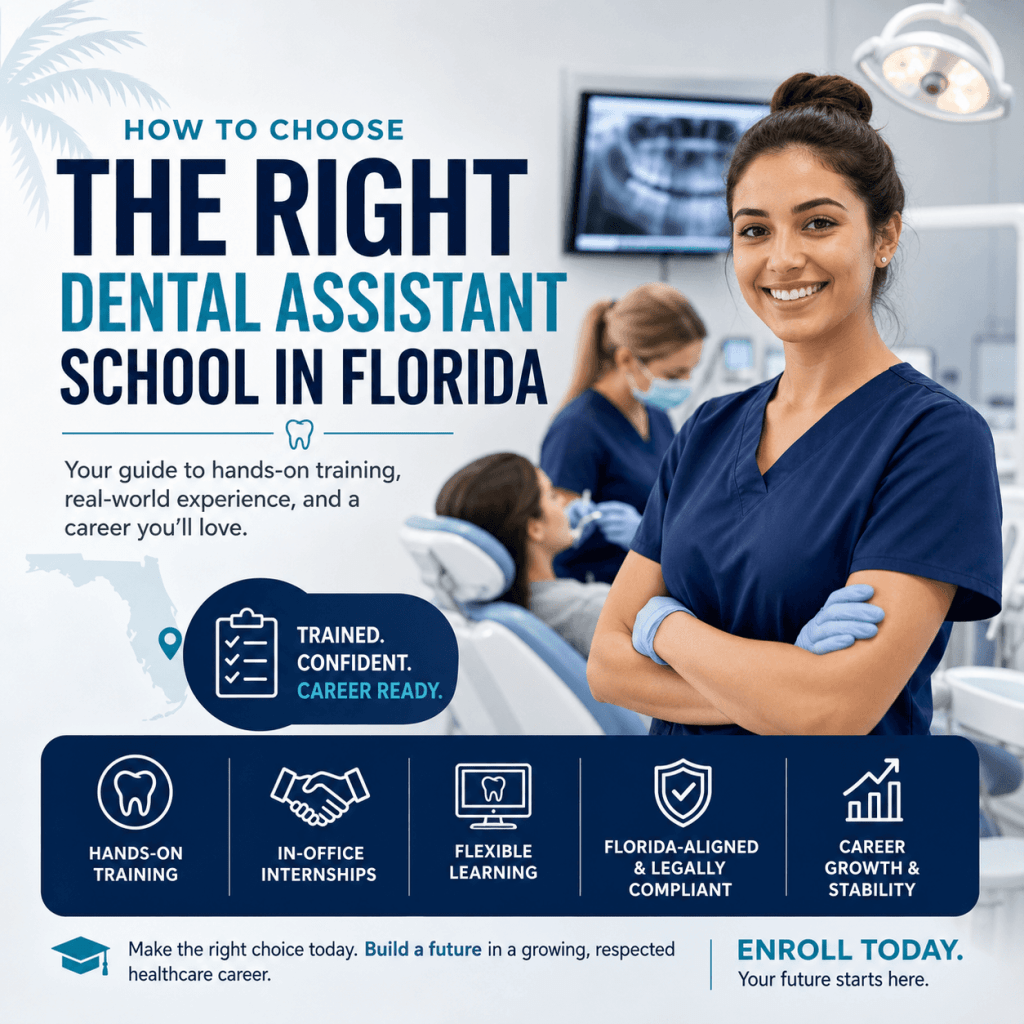
How to Choose the Right Dental Assistant School in Florida
Dental Assistant School:. Florida-specific checklist: legal requirements, hands-on clinical hours, externships, and what employers actually want.
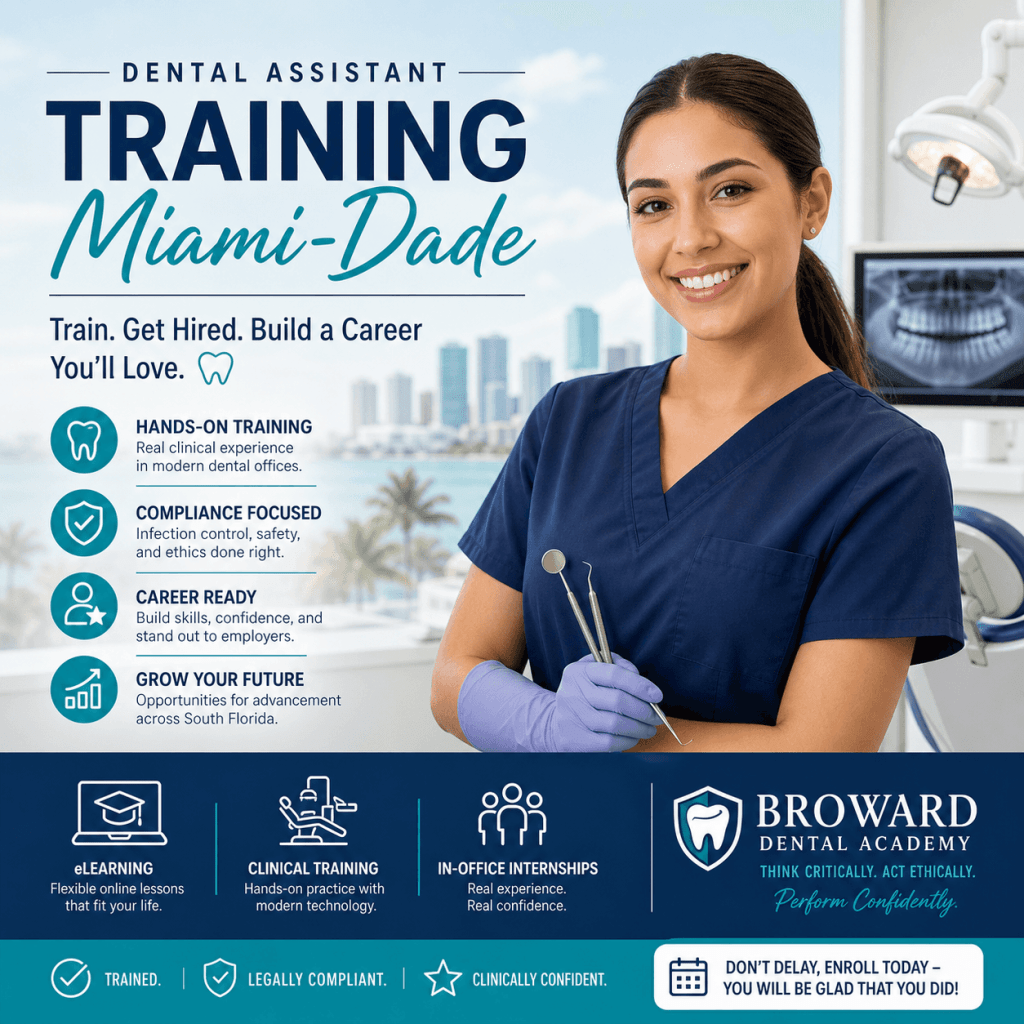
Dental Assistant Training Miami-Dade
Miami-Dade dental assistant courses vary wildly. Here’s what real training includes, timelines, and how to pick a job-ready program.
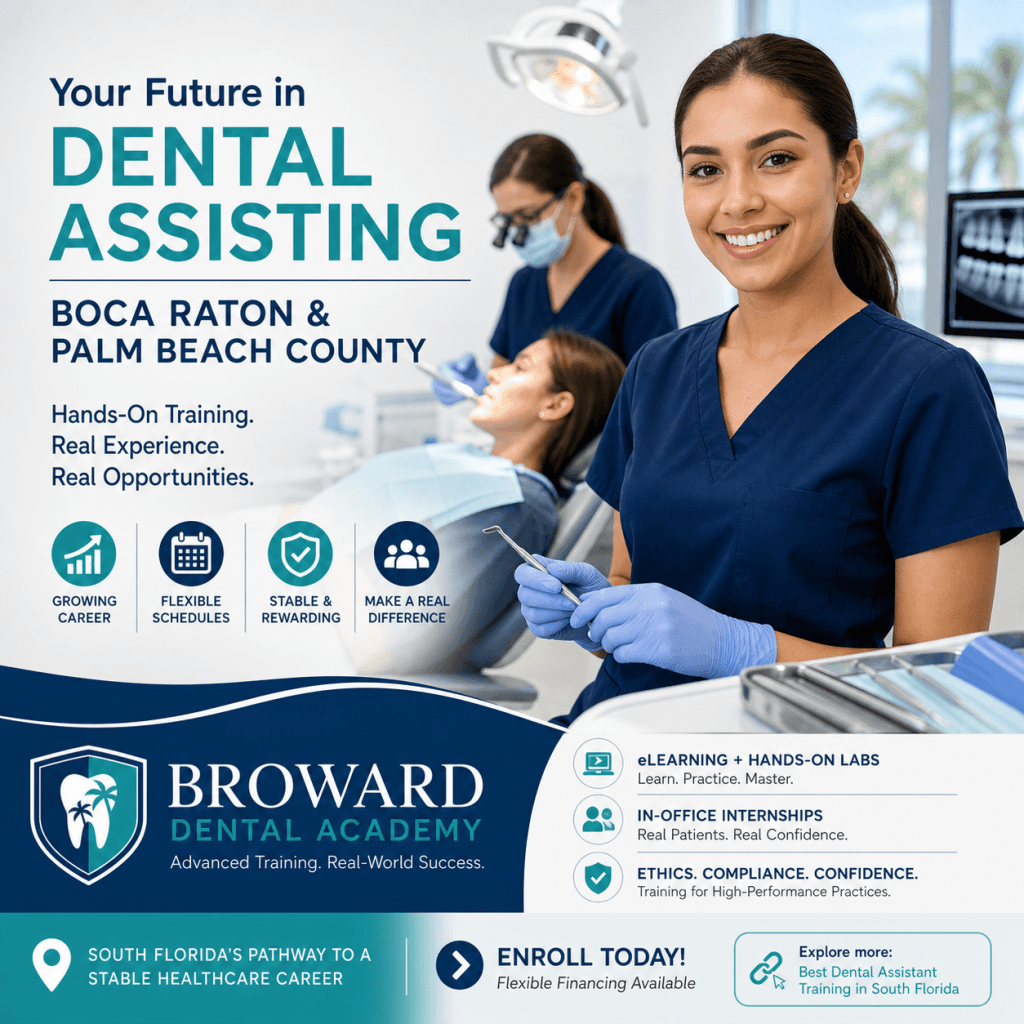
Dental Assistant Training Boca Raton & Palm Beach County
Skip the confusion. See how Florida training really works, what Boca/Palm Beach employers want, and what to look for in a program.
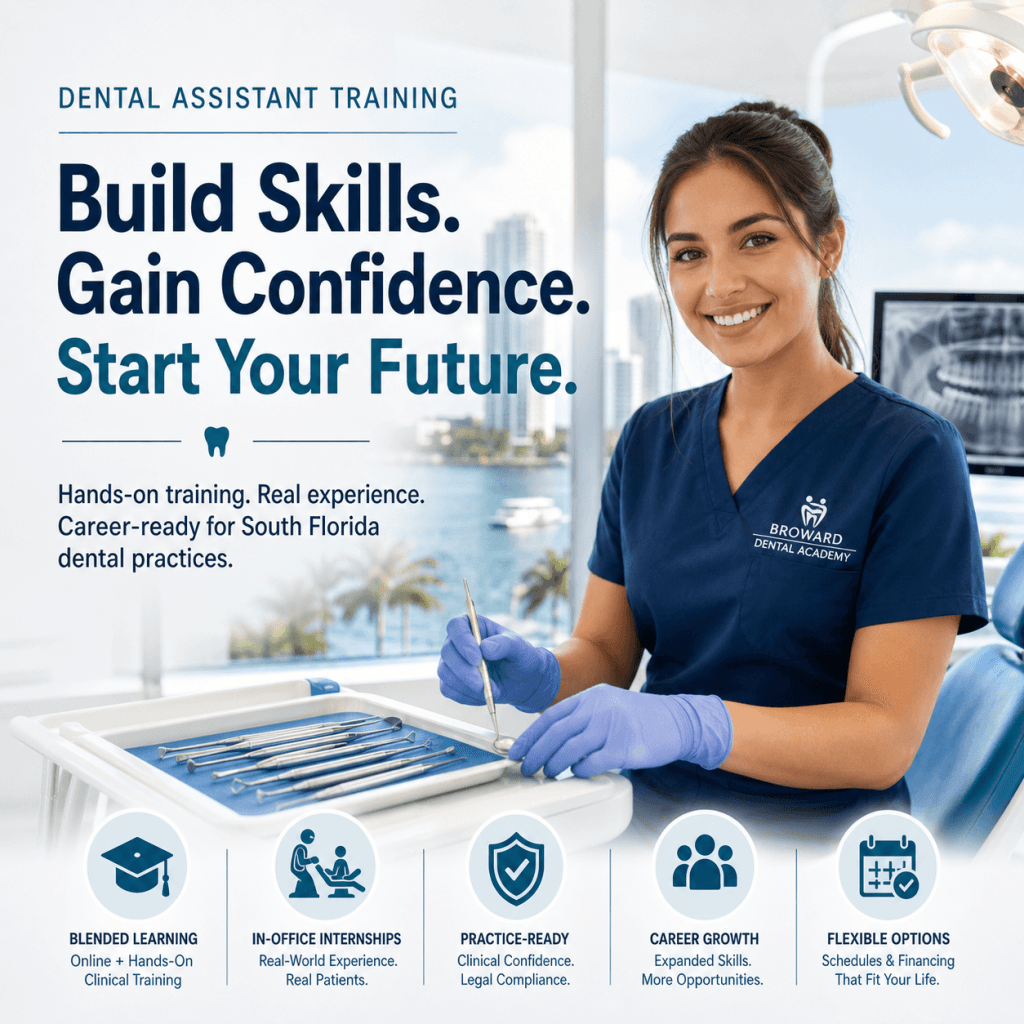
Dental Assistant Training Fort Lauderdale
Fort Lauderdale dental offices want practice-ready assistants not just certificates. What training includes, timeline, skills, externships & how to choose.
Key takeaways
- What counts as a dental training resource?
Anything that builds chairside competence: structured courses, clinical skill checkoffs, safety and compliance material, patient-experience coaching and career-readiness support — not video libraries alone. - How do you choose one?
Judge it on supervised hands-on time, Florida compliance alignment, instructor access and whether it ends with an internship an employer can call about. - What should it cover?
Clinical fundamentals, safety and compliance, patient experience and career readiness — the four areas practices actually hire against. - What is the pathway?
Career clarity, then Level 01 foundations, Level 02 speed and accuracy, Level 03 expanded functions, specialty training, and stacked certifications.
What Counts as a “Dental Training Resource”? (The Complete Menu)
When people hear “training resources,” they often think of videos or a test prep booklet. In dentistry, the menu is bigger, and each category serves a different purpose.
What are the main categories of dental training resources?
- Career guides and planning resources (job expectations, local demand, career ladder)
- Prerequisite learning (basic terminology, anatomy, infection control concepts)
- Exam prep (helpful but not enough on its own)
- Clinical skills labs (hands-on repetition with supervision)
- In-office internships (real workflow exposure in a working practice)
- Continuing education and certifications (compliance, employability, professionalism)
- Specialty training (perio, endo, ortho, oral surgery workflows)
- Compliance training (OSHA concepts, HIPAA awareness, sterilization discipline)
For those looking to specialize further in their dental careers, endodontics, periodontics, and orthodontics are excellent options that offer unique opportunities and challenges in the field.
What is the difference between concepts and chairside performance?
There is a significant difference between:
- Learning dentistry concepts: you understand what the assistant should do.
- Practicing chairside skills: you can actually do it smoothly in real time.
For busy adult learners, the most effective model is almost always blended learning, which combines:
- eLearning for structure and consistency
- hands-on clinical training for skill building
- internship exposure for real-world polish
Choosing resources also depends on your target role (basic dental assistant vs. expanded functions), Florida rules, and what local employers expect.
How do you choose the right dental training resources?
The fastest way to waste time in dental training is to pick resources that are easy to start but hard to translate into real performance.
Which decision factors matter most?
- Your starting point: brand new vs. already assisting
- Timeline: how quickly you need to be employable
- Budget and financing: upfront cost vs. flexible options
- Schedule flexibility: evenings, weekends, hybrid structure
- Desired scope: foundational assisting vs. expanded functions goals
What should you check before you enroll?
Look for resources or programs that clearly include:
- A structured curriculum (not random videos)
- Updated lesson plans that reflect modern practice
- Supervised clinical practice (not just demonstrations)
- Internship opportunities for real office exposure
- Clear outcomes and performance standards
- Strong emphasis on ethical and legal compliance
If you’re unsure about where to start, Broward Dental Academy offers a variety of resources and courses tailored to different needs and roles in the dental field. With multiple locations across Florida, they give a convenient option for aspiring dental professionals.
What does practice-ready actually mean to employers?
Most hiring managers care less about what you watched and more about what you can do under supervision, including:
- Infection control and operatory discipline
- Chairside setup and assisting rhythm
- Radiography basics (when applicable)
- Professional communication with patients and the team
- Documentation habits and reliability
Prioritize training that builds critical thinking and clinical confidence, not just test answers. It’s essential to focus on developing skills that enhance patient care, as most employers value practical skills over theoretical knowledge.
Which core skill areas should every dental assistant resource cover?
If a program or resource skips these, you will feel it later in interviews, working interviews, and your first weeks in a practice.
1- Clinical fundamentals
- Operatory setup and breakdown
- Instrument transfer and assisting ergonomics
- Suctioning and isolation basics
- Assisting workflows (anticipation, sequencing, time awareness)
- Impressions and temporaries as permitted within scope and training
2- Safety and compliance fundamentals
- Infection control concepts and habits
- OSHA-related safety awareness
- HIPAA awareness and professional discretion
- Sterilization workflow discipline and chain-of-custody mindset
- Documentation habits that reduce mistakes
3- Patient experience skills
- Clear communication and professionalism
- Basic anxiety management awareness
- Comfort cues and respectful chairside presence
- Team coordination in fast-paced rooms
4- Career readiness
- Interviewing and working interview expectations
- Resume basics for dental roles
- Understanding roles inside a practice (clinical and admin boundaries)
- What high-performance practices expect day one
What do the seven dental training resource pillars cover?
Broward Dental Academy serves the dental community by developing well-rounded professionals through a wide range of dental training programs. The model is designed to help students become thoroughly trained, legally compliant, and clinically confident, not just “test-ready.”
Students experience immediate immersion through:
- Online learning with updated eLearning lesson plans
- Hands-on clinical training
- In-office internships that build real-world readiness
Broward Dental Academy also offers flexible scheduling and flexible financing options, making it easier to train without putting life on hold.
Below are the 7 pillars. If you are not sure where to begin, start with Pillar 1 or Pillar 2, then choose your level based on your goals and timeline.
Pillar 1: Dental Assistant Careers in South Florida (Career and Planning Resource)
If you want clarity before committing to a course level, this is the best starting point. It helps you understand what dental assisting jobs look like locally, typical responsibilities, and growth potential.
It also connects directly to why so many people choose this path: stable income potential, flexible schedules, career mobility, and growing demand for skilled professionals.
Pillar 2: How to Become a Dental Assistant in Florida (Step-by-Step Resource)
Florida has specific expectations, and dental employers care about legal compliance and practice readiness. This pillar breaks down the process so you understand the pathway and what to look for in a quality program.
Use it as your roadmap before selecting Level 01, Level 02, or EFDA.
Pillar 3: Dental Assistant Level 01 Training (Foundational Clinical Skills)
Level 01 is your foundation. It focuses on core chairside workflows, operatory readiness, sterilization fundamentals, and professional habits that make you useful in a real practice.
The learning structure is designed to build confidence early through blended online learning plus clinical immersion. The outcome is not just knowledge, but readiness for real practice expectations.
Pillar 4: Advanced Dental Assistant Training: Level 02 (Build Speed, Accuracy, Confidence)
Level 02 is advanced training designed for higher-performance assisting. It strengthens clinical repetition, workflow efficiency, and your ability to take on elevated responsibility under supervision.
Modern practices value assistants who can keep up, stay calm under pressure, and keep compliance while moving fast.
Pillar 5: Expanded Functions Dental Assistant: Level 03 (EFDA) (Career Expansion Resource)
EFDA training is a major career mobility step for qualified assistants. Expanded functions can increase your value to a practice, add variety to your daily work, and support long-term flexibility.
Because expanded duties need strong training and careful legal compliance, Level 03 is best approached after a solid foundation.
Pillar 6: Specialty Dental Assisting Training (Perio • Endo • Ortho • Oral Surgery)
Specialty training is one of the fastest ways to differentiate yourself. You learn specialty workflows, instruments, and the patient flow expectations that come with more complex procedures.
Examples include:
- Perio: maintenance flow support and procedure setup expectations
- Endo: isolation support and sequence awareness
- Ortho: setup support and appointment rhythm
- Oral surgery: prep and assisting basics as allowed within scope. For detailed training on this aspect, consider our Oral Surgery program.
Practices value assistants who can support specialty procedures confidently and ethically.
Pillar 7: Dental Certifications (Credential and Compliance Resources)
Certifications are ongoing training resources that strengthen employability, support compliance, and signal professionalism. They also reflect the mindset that employers trust most: continuing education, staying current, and taking patient safety seriously.
This pillar is “stackable” alongside Levels 01 to 03 and specialty training so you stay competitive as dentistry evolves.
Why do blended learning and in-office internships beat video-only training?
Video learning can be useful, but it has a clear limit. Watching a procedure is not the same as performing it in real time with real constraints like time pressure, patient comfort, team coordination, and documentation expectations.
Blended training with in-office internships closes that gap. Broward Dental Academy’s approach (online + clinical settings + internship exposure) helps students become polished and ready to contribute in a modern practice.
What do employers notice after internship-based training?
- Better chairside communication and professionalism
- Smoother assisting rhythm and anticipation
- Fewer compliance mistakes
- More confidence under supervision
- Faster adaptation to the pace of a real office
Ultimately, this ties back to the real goal: thriving in a high-performance dental practice environment.
What training pathway takes you from beginner to expanded functions?
If you want a clean progression that keeps you moving forward without guessing, use this pathway:
Step 1: Start with career clarity and local expectations
Step 2: Build your foundation
Step 3: Level up for speed, accuracy, and confidence
Step 4: Expand your career scope (when ready)
Step 5: Differentiate with specialty training
Step 6: Stack certifications to stay competitive
- Dental Certifications
Decision note: If you are already assisting, you may be able to place into advanced or specialty training depending on your skill level and goals. This could include pursuing an Expanded Functions Dental Assistant certification which would further enhance your career prospects.
Which training resources make you confident, compliant and hireable?
The best dental training resources do three things well: they build clinical confidence, reinforce legal compliance, and shape an ethical, practice-ready mindset.
That is what employers actually care about. And it is also why the dental industry continues to be such a strong career choice, with growing demand, stable income potential, flexible schedules, and respected healthcare roles.
Use the pillar links above to pick your best starting point, then choose the course level that fits your goals and schedule.
Don’t delay, enroll today, you will be glad that you did!
Frequently Asked Questions
What are the main types of dental training resources available?
Dental training resources include career guides and planning resources, prerequisite learning on basic terminology and concepts, exam preparation materials, clinical skills labs for hands-on practice, in-office internships for real workflow exposure, continuing education and certifications for compliance and professionalism, specialty training in areas like periodontics or orthodontics, and compliance training covering OSHA, HIPAA, and sterilization protocols.
Why is it important to become clinically confident and practice-ready rather than just passing dental exams?
The goal of dental training is not only to pass exams but to become clinically confident, legally compliant, and ready to perform effectively in a modern dental office. Employers prioritize team members who can perform chairside skills smoothly under supervision, follow regulations rigorously, communicate well with patients and staff, and keep patient safety.
What factors should I consider when choosing the right dental training program?
Key decision factors include your current experience level (brand new or already assisting), how quickly you need to be employable, your budget and financing options, schedule flexibility (such as evening or weekend classes), and your desired scope of practice (basic assisting versus expanded functions). Also, ensure the program offers a structured curriculum with supervised clinical practice and internship opportunities.
What does ‘practice-ready’ mean from an employer’s perspective in the dental field?
‘Practice-ready’ means being able to perform essential tasks under supervision such as infection control, operatory setup and breakdown, chairside assisting rhythms, radiography basics when applicable, professional communication with patients and the team, as well as accurate documentation habits. Employers value critical thinking and clinical confidence over theoretical knowledge alone.
How does blended learning benefit dental assistant students?
Blended learning combines eLearning for structured knowledge acquisition with hands-on clinical training for skill development and internships for real-world experience. This model is highly effective for busy adult learners as it ensures consistency in learning while building practical skills needed to excel chairside in a modern dental practice.
Which core skill areas should every quality dental assistant training program cover?
Every comprehensive dental assistant program should cover clinical fundamentals such as operatory setup and breakdown procedures, instrument transfer techniques with proper ergonomics, suctioning and isolation basics, efficient assisting workflows including anticipation and sequencing of tasks, time management awareness during procedures, as well as skills related to impressions and temporaries.