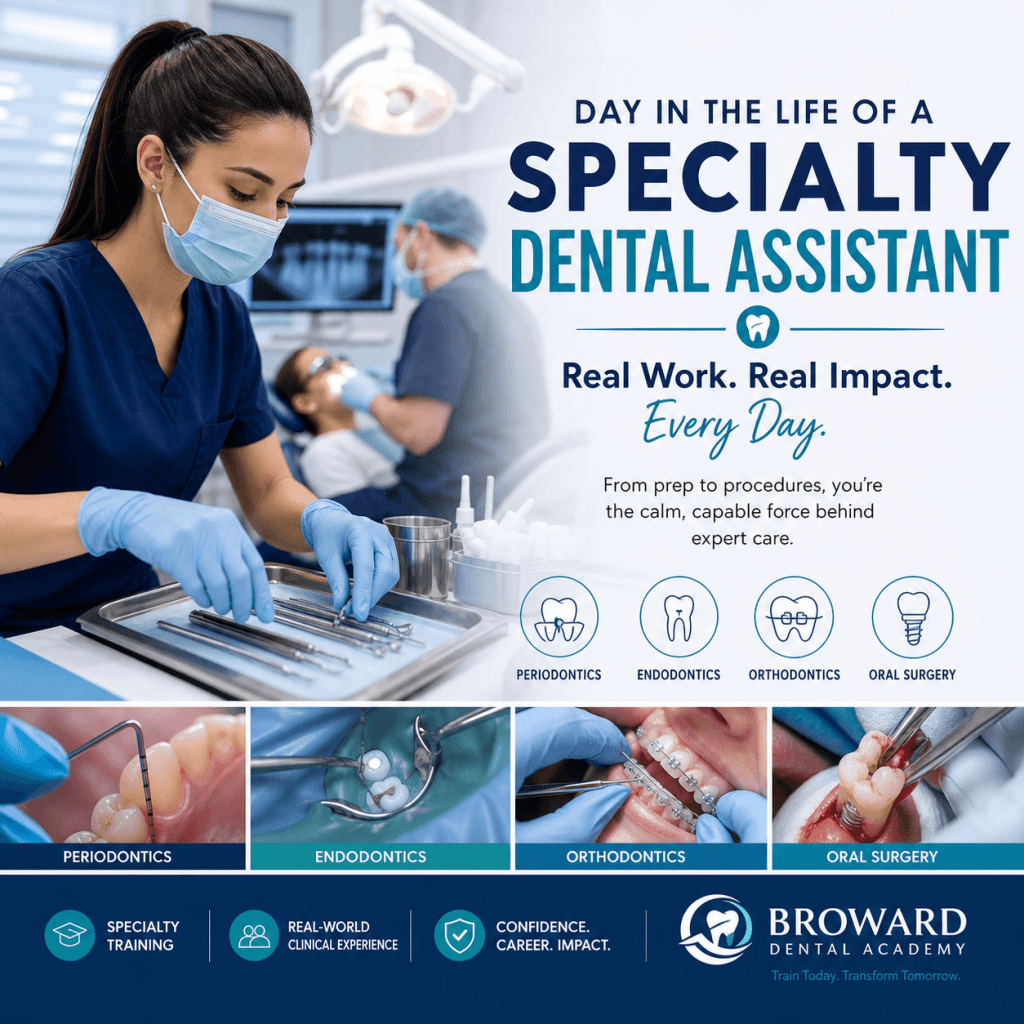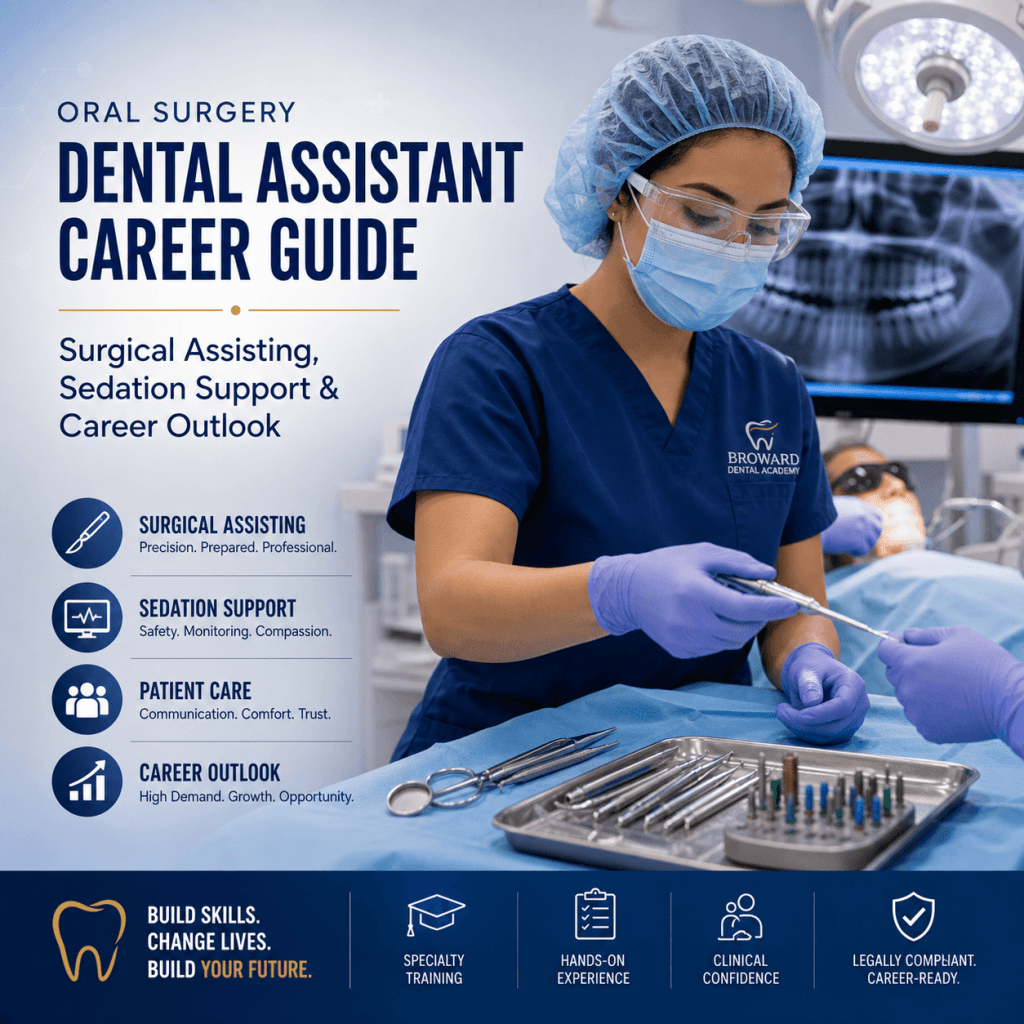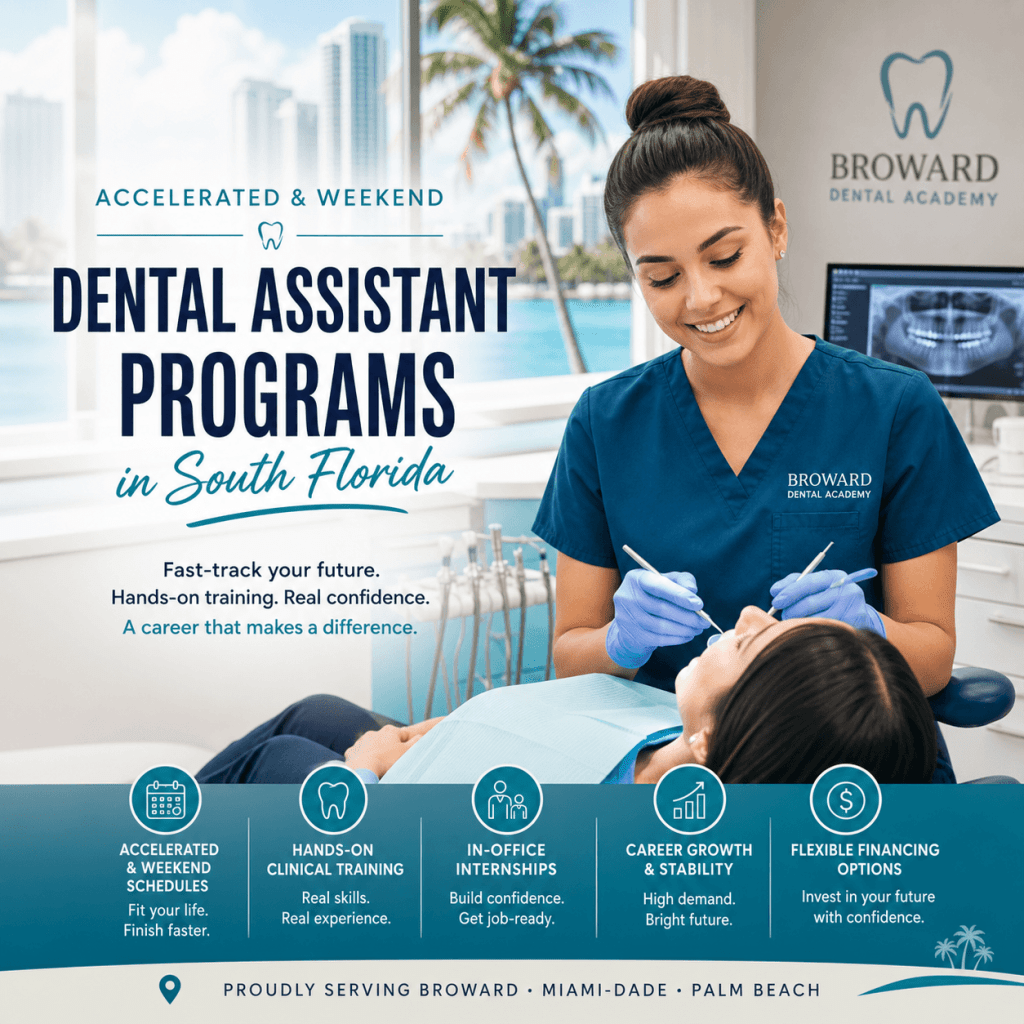
This guide breaks down what accelerated and weekend formats really look like, who they’re best for, what you should expect to learn, and how to choose a program that makes you truly job-ready.
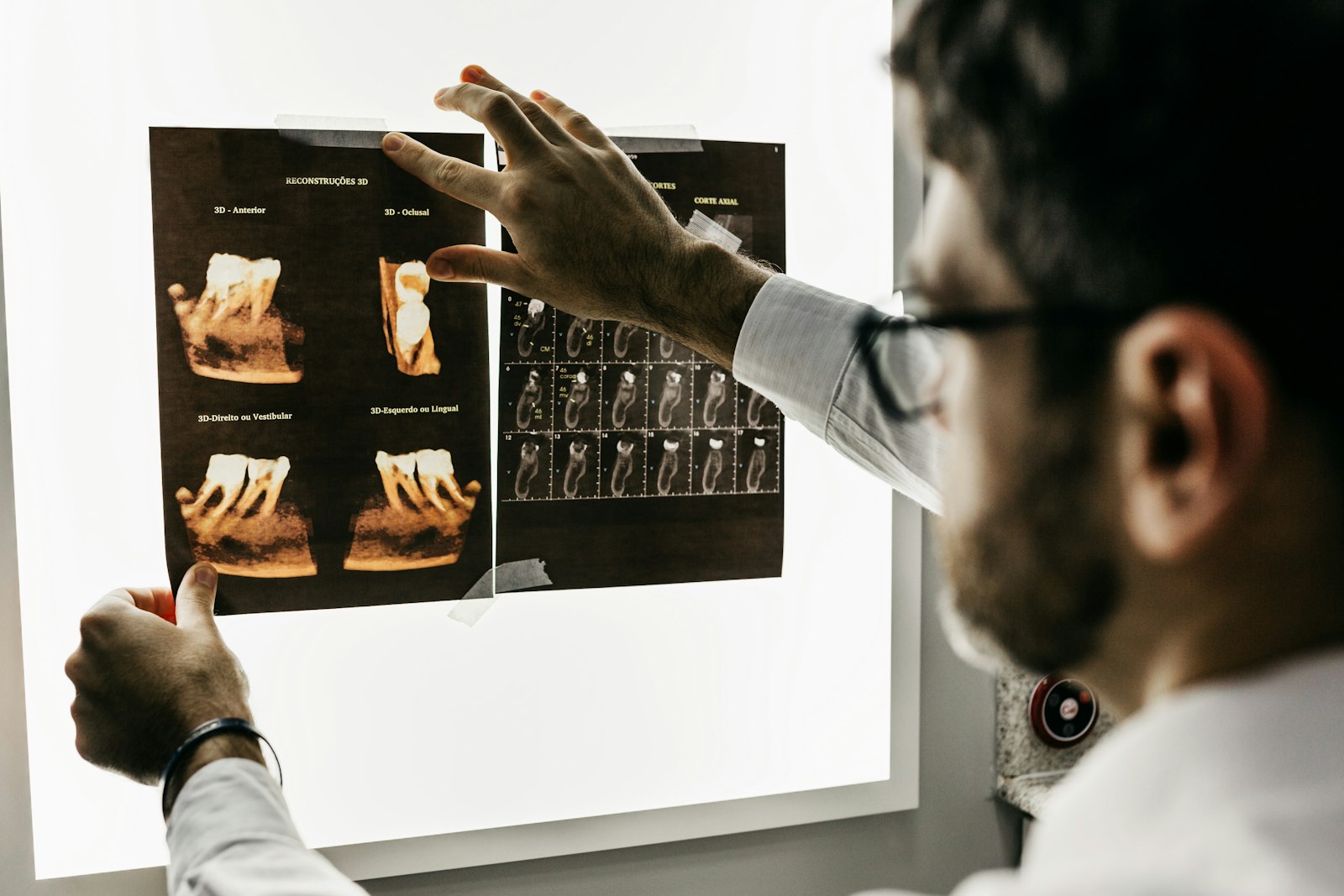
Why accelerated and weekend dental assistant programs are booming in South Florida
“Accelerated” and “weekend” formats usually mean the same goal with different schedules: get you trained faster without sacrificing hands-on skills.
Here’s what those terms typically mean in real life:
- Accelerated programs compress training into a shorter calendar timeline by using a condensed schedule, often with intensive weekday blocks.
- Weekend programs place classes and labs on Saturdays and Sundays (sometimes with evenings) so students can keep weekday responsibilities.
In South Florida, demand is not abstract. It’s local and visible.
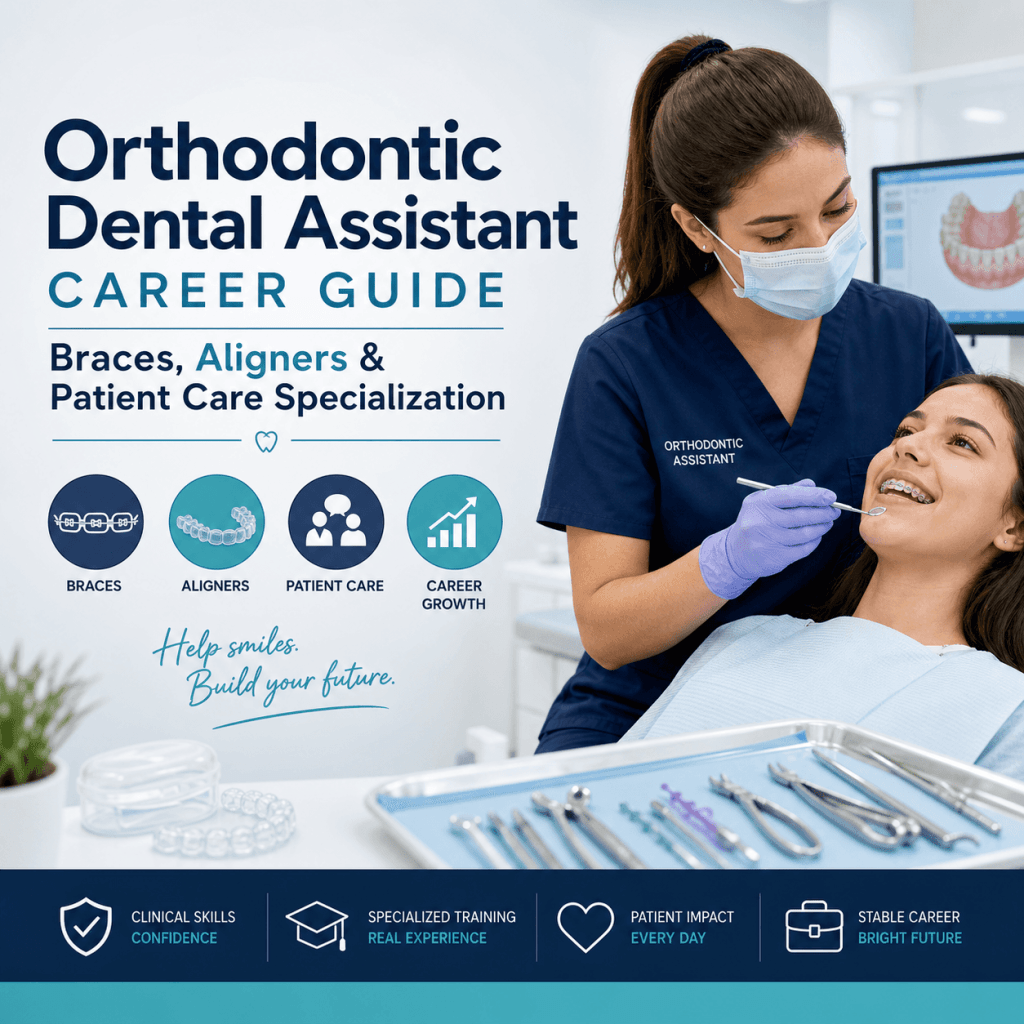
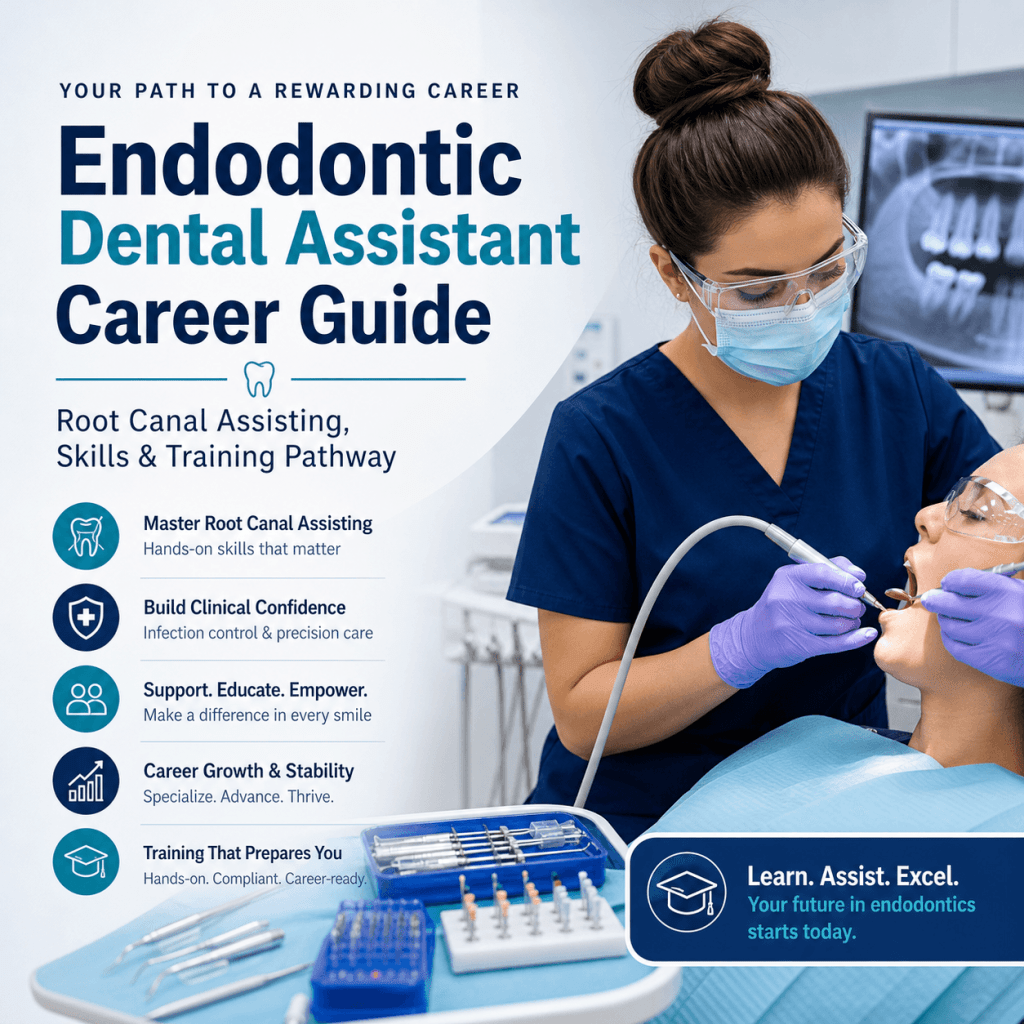
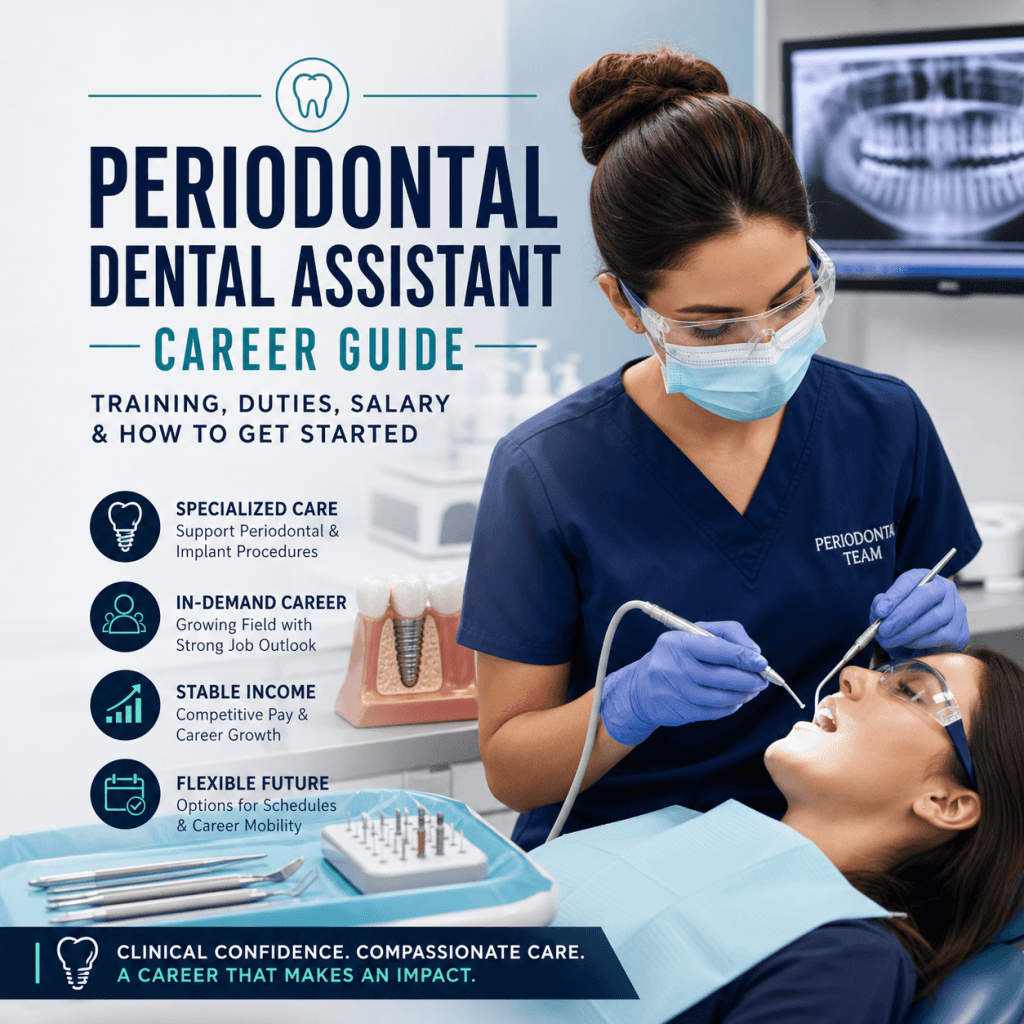
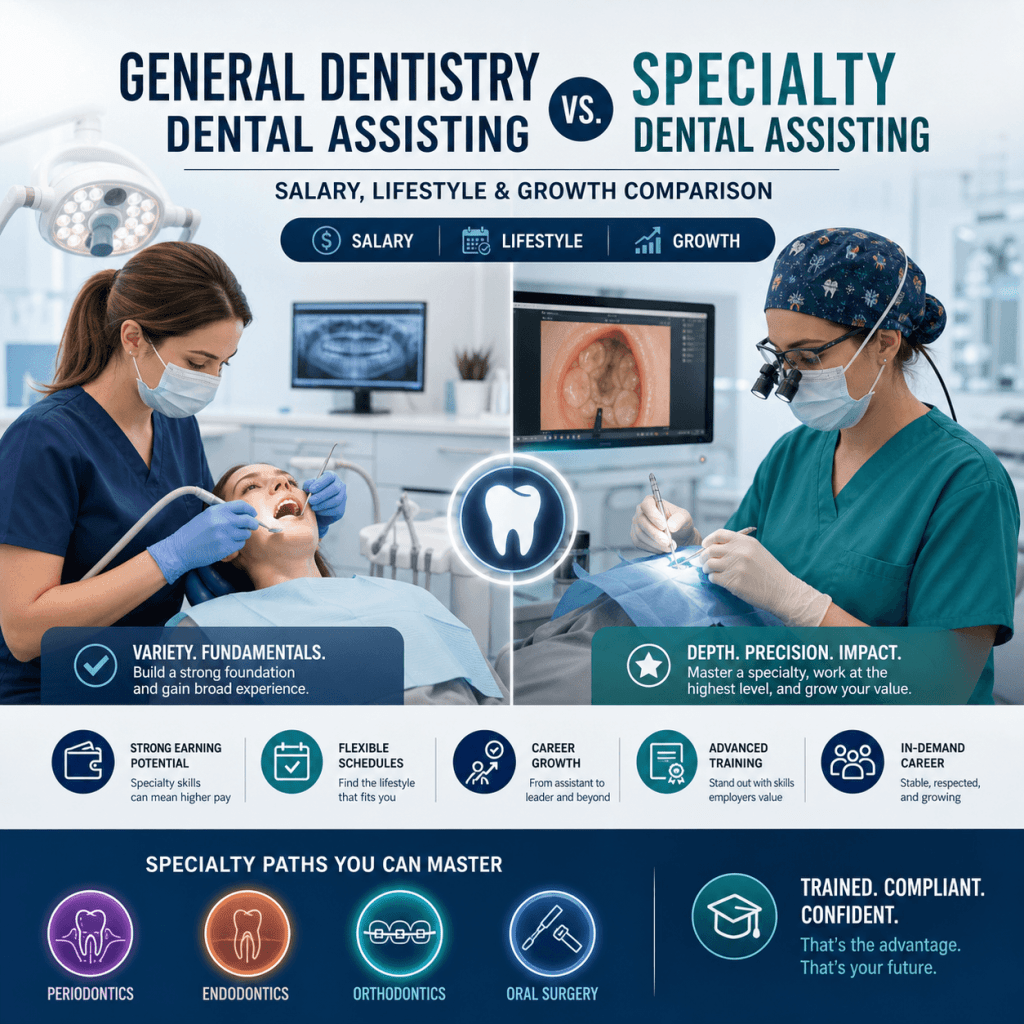
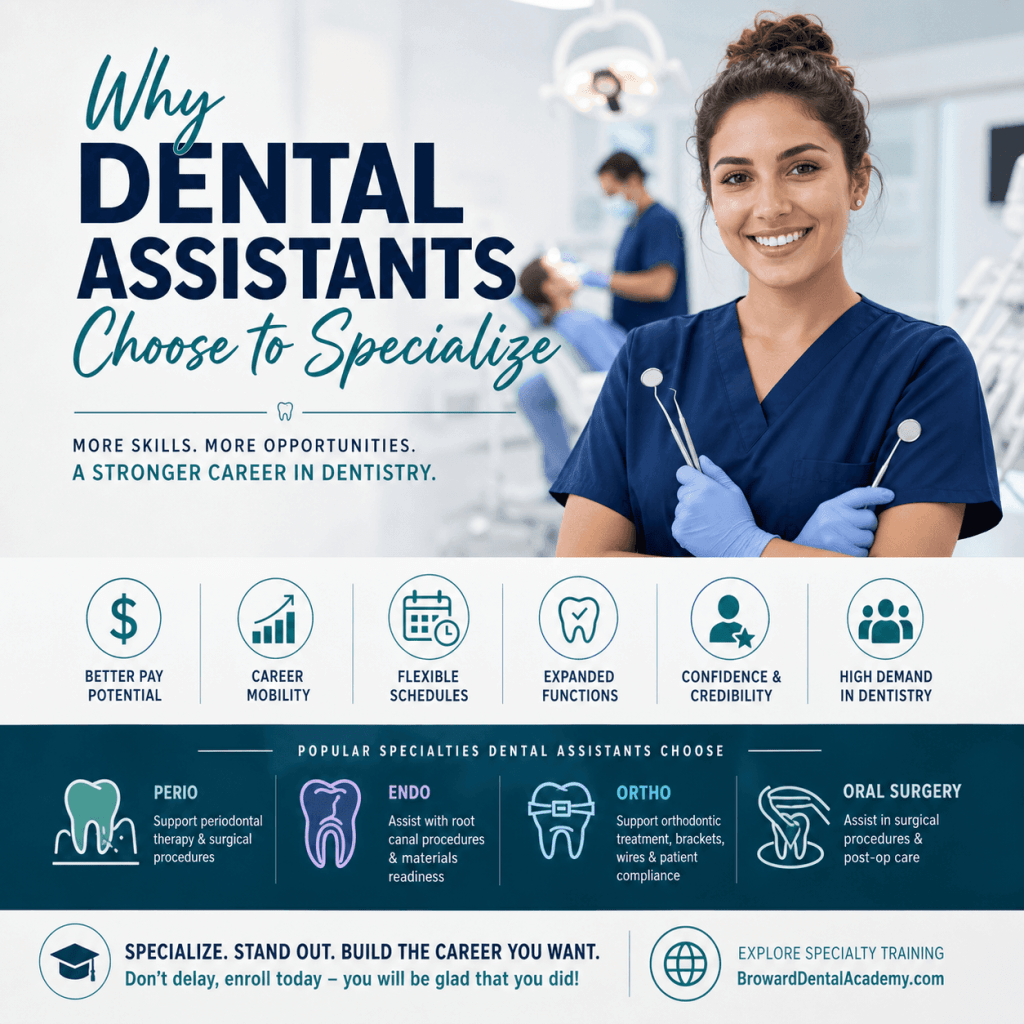
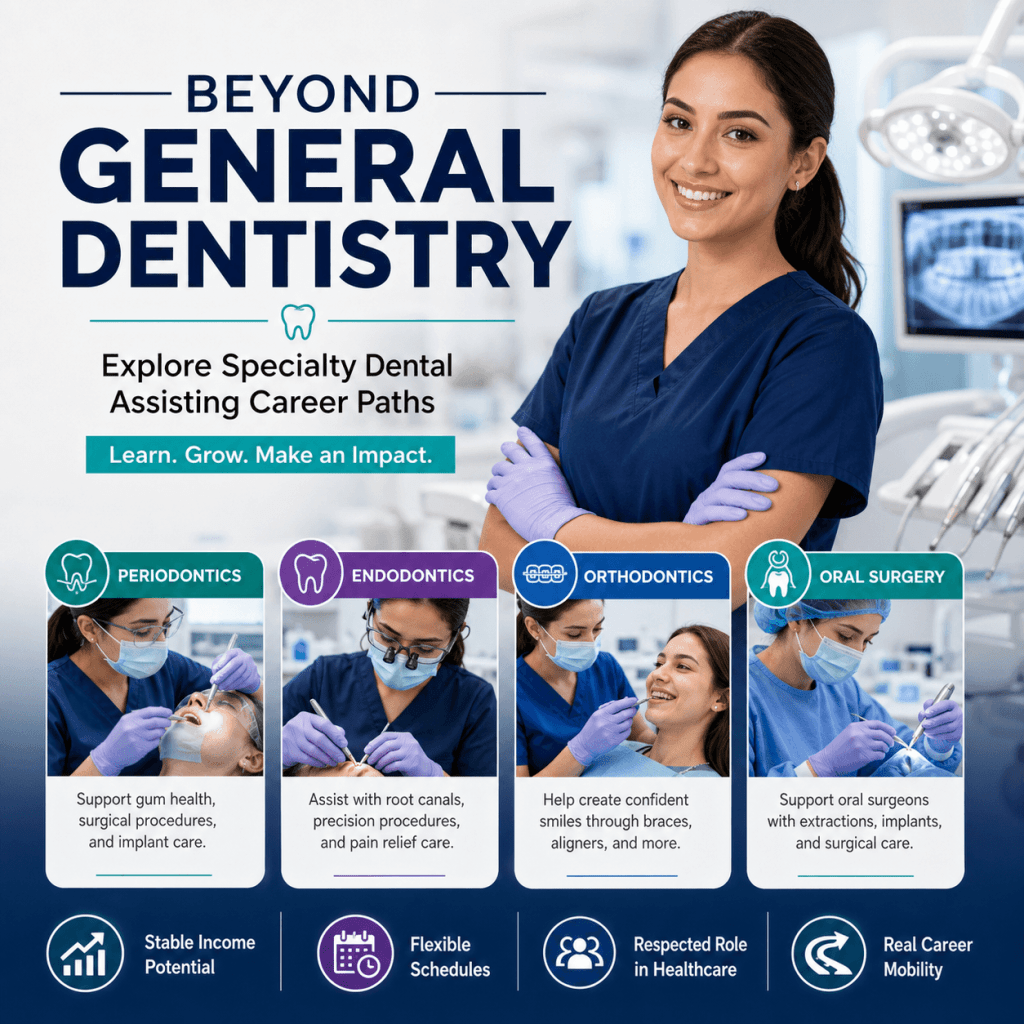
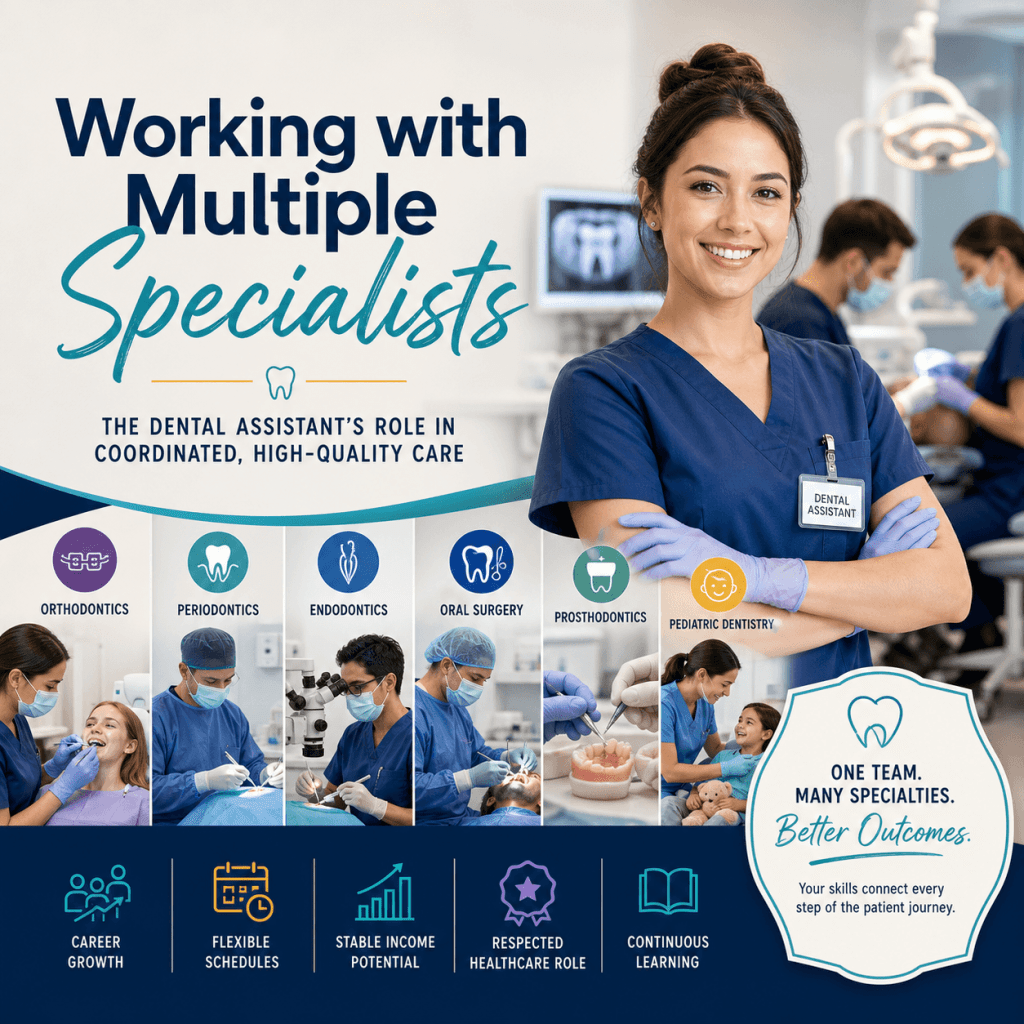
- Dental offices stay busy. Between family dentistry, cosmetic dentistry, orthodontics such as these, endodontics like these, periodontics including these, and specialty practices, many clinics run at a high pace and need assistants who can keep up.
- The population keeps growing and shifting. More residents means more patients, and more patients means more demand for reliable dental teams.
- Students want faster entry into the workforce. Many people searching “fast track dental assistant programs” are prioritizing speed, affordability, and a clear path to a real job.
At the same time, it’s important to set expectations early: fast does not mean easy. A legitimate dental assistant program still requires:
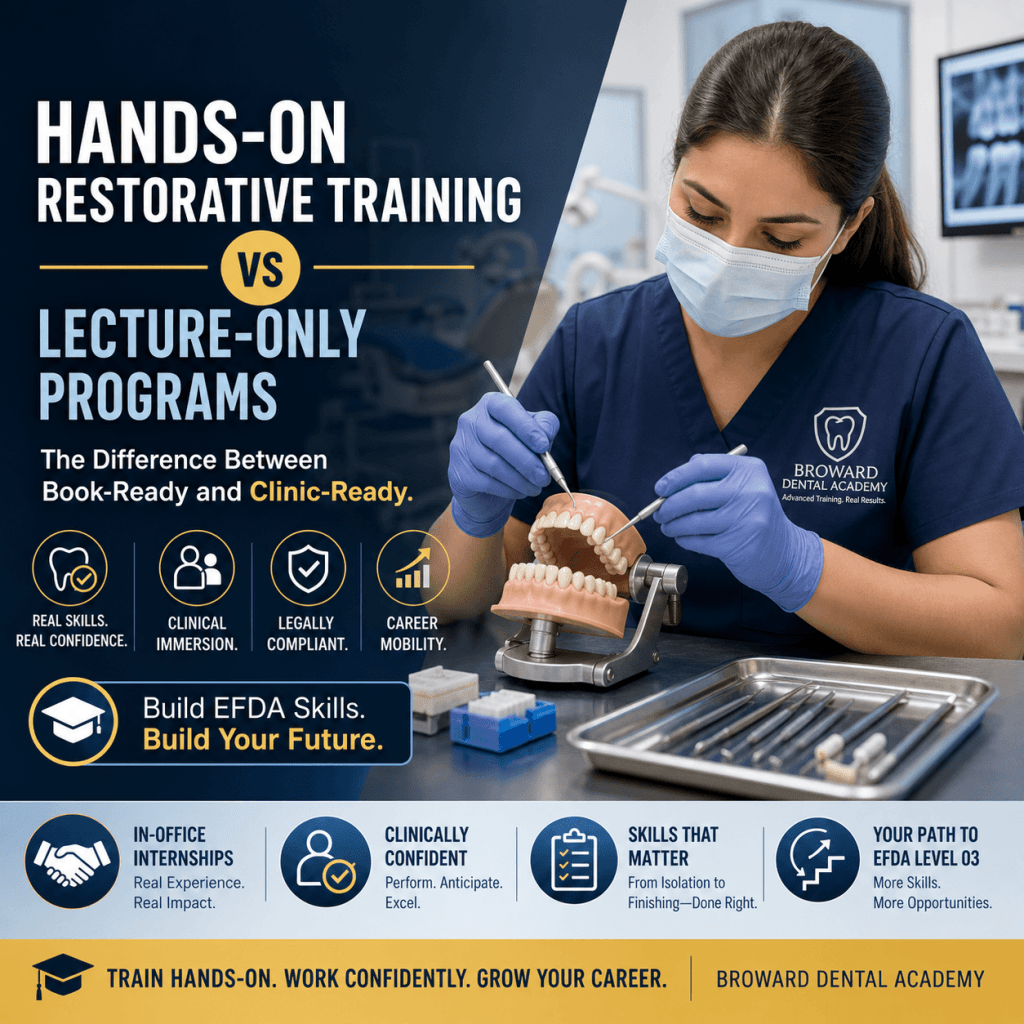
- hands-on clinical training
- real workflow practice, not just theory
- compliance with professional standards and regulations
- the confidence to support patient care in a busy office
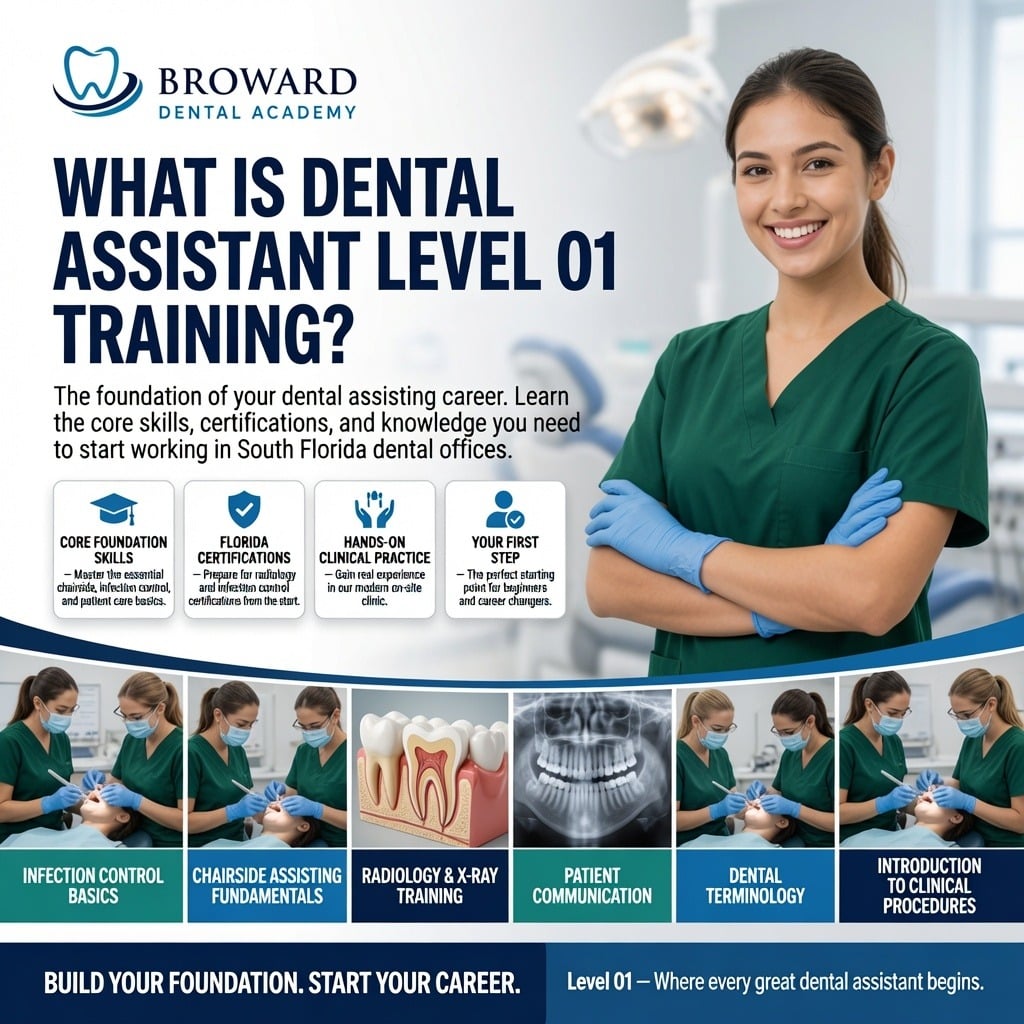
A good accelerated or weekend program is designed to be efficient, not superficial. For instance, the Level 01 Dental Assistant course offered by Broward Dental Academy is an example of such an efficient program. If you’re interested in exploring various options available in dental education, you might want to check out the courses offered by Broward Dental Academy.
Is an accelerated or weekend program right for you?
The right schedule depends less on motivation and more on your real weekly life.
These programs often attract:
- career changers looking for a stable healthcare role
- working adults who cannot pause income for school
- parents balancing childcare and family responsibilities
- recent grads who want skills that lead to quick employment
- students who thrive with structure and a clear timeline
When weekend programs make the most sense
Weekend tracks are usually the best fit if you:
- need to keep a weekday job
- cannot take significant time off work
- need weekday flexibility for childcare
- prefer spreading learning over weekends while still moving forward quickly
When accelerated weekday formats are better
Accelerated weekday formats can be ideal if you:
- can commit to a more intensive schedule
- want the fastest completion timeline
- learn best with frequent repetition and immersion
- have reliable transportation and availability for daytime labs and training
A quick self-check before you enroll
Ask yourself:
- Can I realistically keep up with a faster pace and still study outside class?
- Do I have a dependable commute plan for labs and externship days?
- Am I comfortable in clinical environments where patients and infection control standards are real?
- Do I want entry-level skills now, or a pathway toward expanded responsibilities later?
A strong program should help you enter the workforce as an entry-level dental assistant, and also give you a foundation to pursue additional training and expanded functions where applicable.
What to look for in a fast-track dental assistant program (so you don’t waste time)
Not all “fast” programs are built the same. Some are designed around real clinical readiness. Others are built around shortcuts.
Here’s what matters most.
1) Hands-on, clinic-focused training
Dental offices need assistants who can do the work, not just talk about it. Look for programs that emphasize:
- chairside assisting practice
- operatory setup and breakdown
- instrument transfer and suction technique
- sterilization workflows
- real-world pace and professionalism
If a program feels like “mostly slides” with minimal lab time, it may not prepare you for a modern dental office.
2) Legal and ethical compliance
In dental assisting, “close enough” is not acceptable. A quality program reinforces:
- infection control standards
- privacy and professional conduct
- patient communication and documentation habits
- doing things the right way, even under pressure
Offices want professionals who are trained well and take compliance seriously.
3) Externship or internship opportunities
An externship can be the difference between knowing the steps and being able to perform them smoothly in a real clinic. The best programs include in-office internships so you build confidence with:
- real patients
- real schedules
- real team expectations
4) Learning format quality (online + in-person)
Blended learning can work well when it’s structured correctly. Online lessons can support the “why,” but in-person labs must cover the “how.” Look for a program where:
- online modules are organized and current
- in-person labs are frequent and skill-focused
- instructors actively correct technique, not just grade quizzes
5) Support and professionalism training
Ask about the teaching team and student support. You want instructors with real clinical experience who can coach you on:
- workplace communication
- patient-facing professionalism
- speed, accuracy, and teamwork
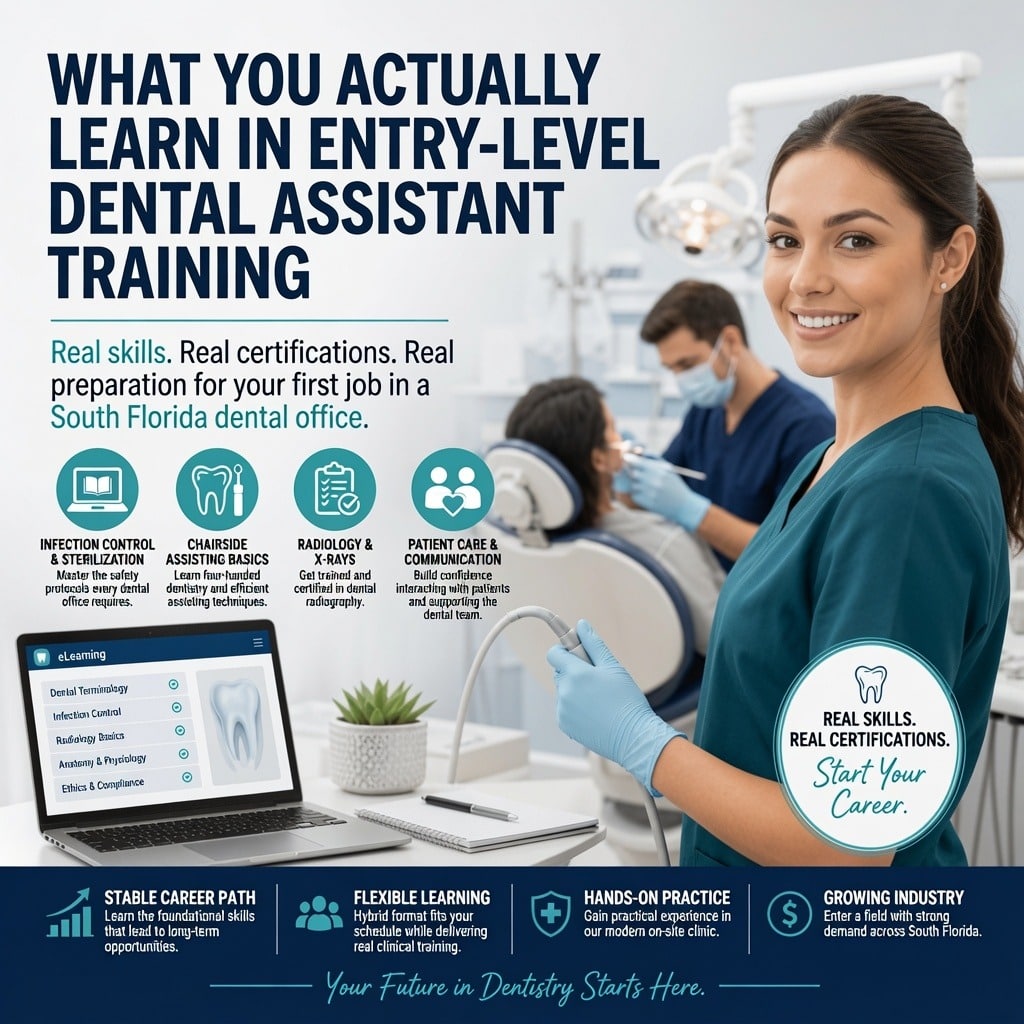
What you’ll actually learn in an accelerated dental assisting academy-style curriculum
A strong fast-track curriculum focuses on practical skills that translate directly into daily work.
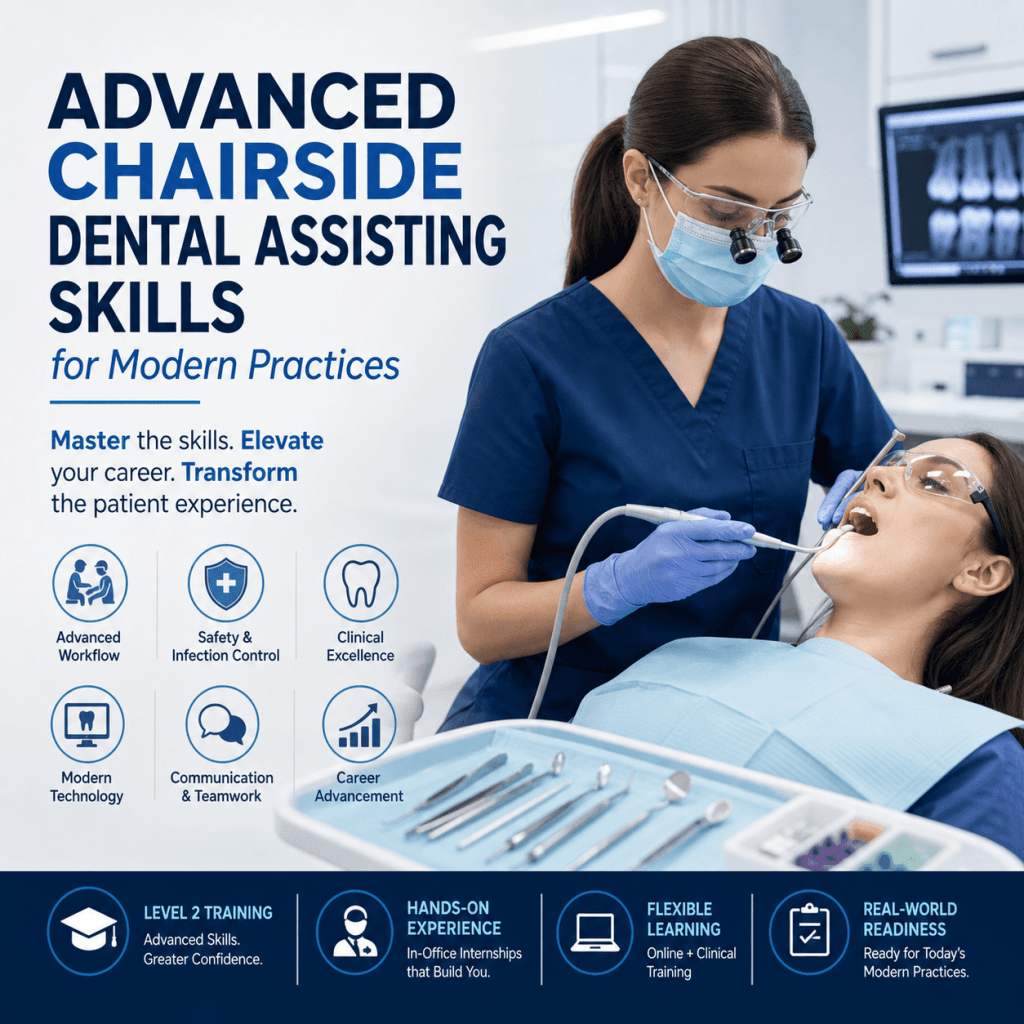
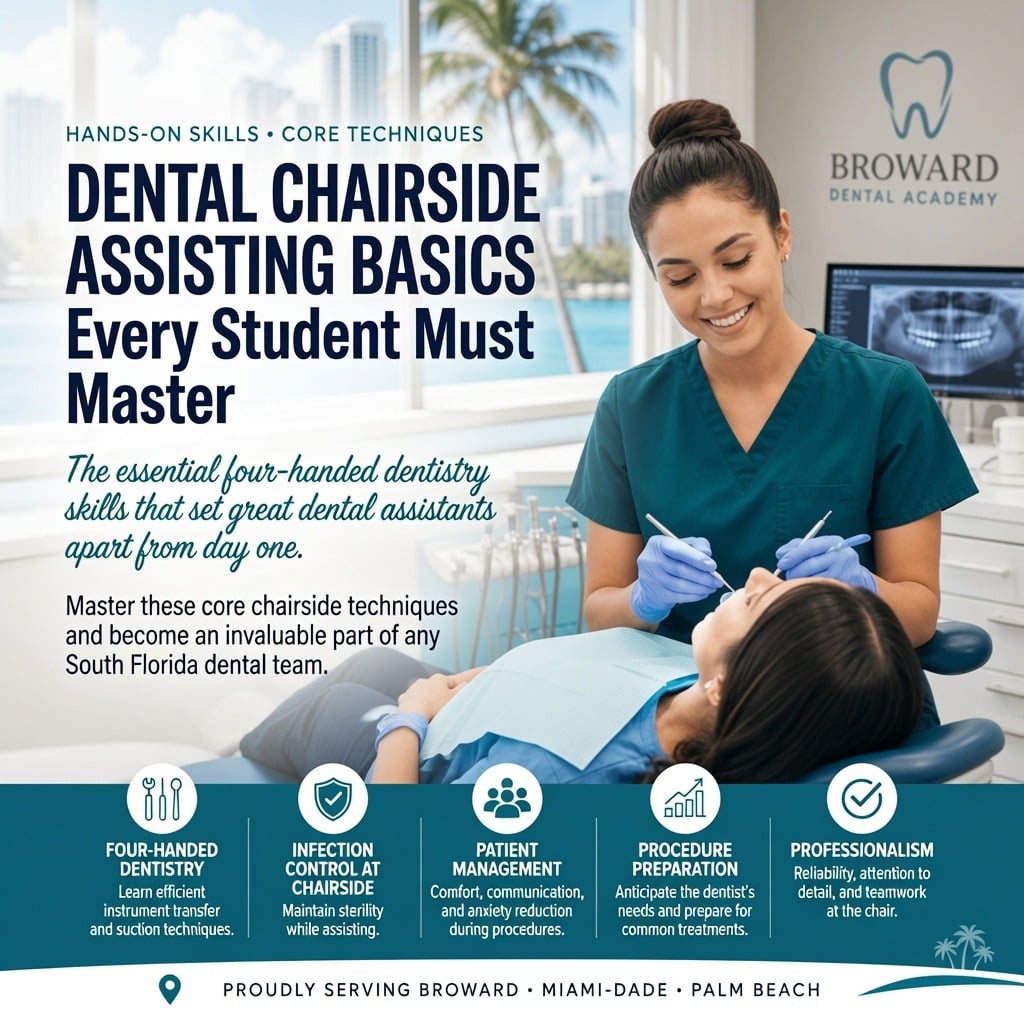
Chairside fundamentals
You should expect to train on:
- assisting during procedures
- suctioning and isolation
- anticipating the dentist’s needs
- operatory setup, breakdown, and turnover
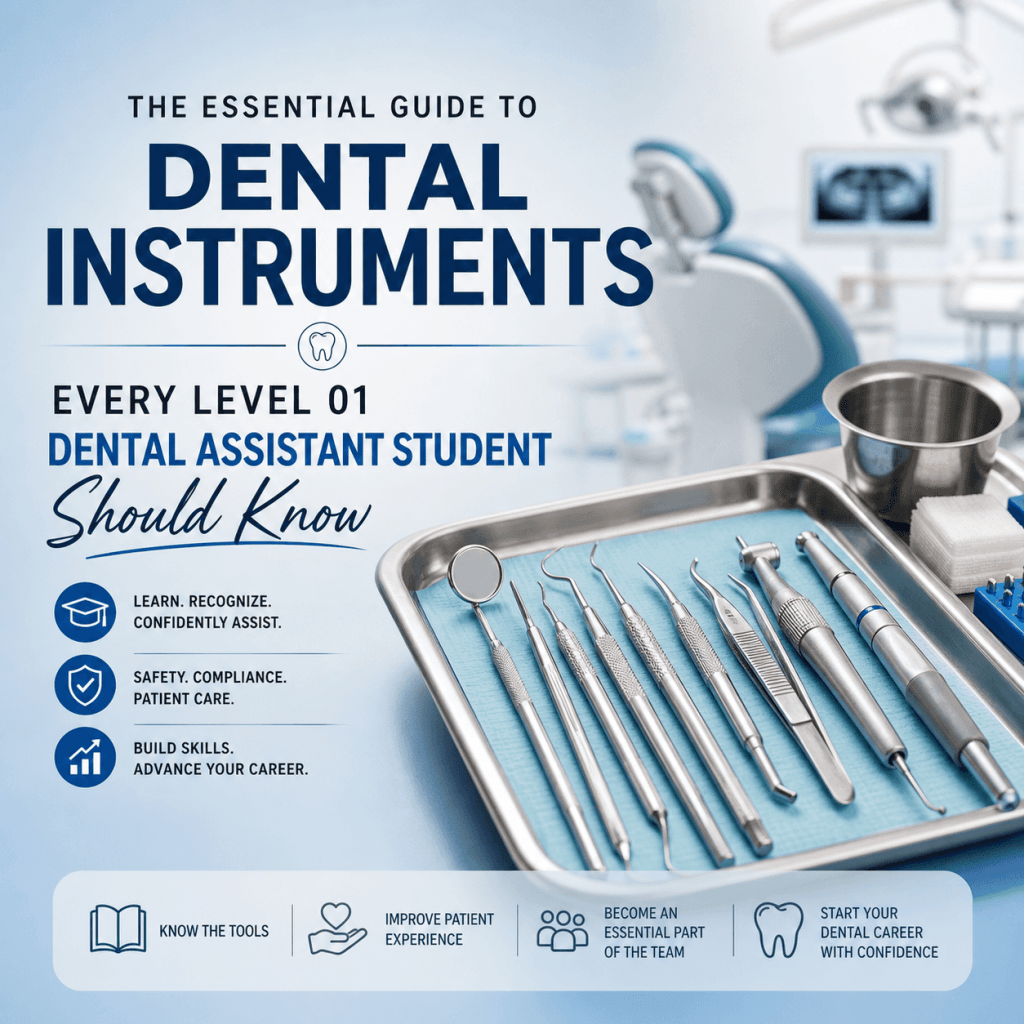
- instrument identification and chairside workflow
Infection control and sterilization
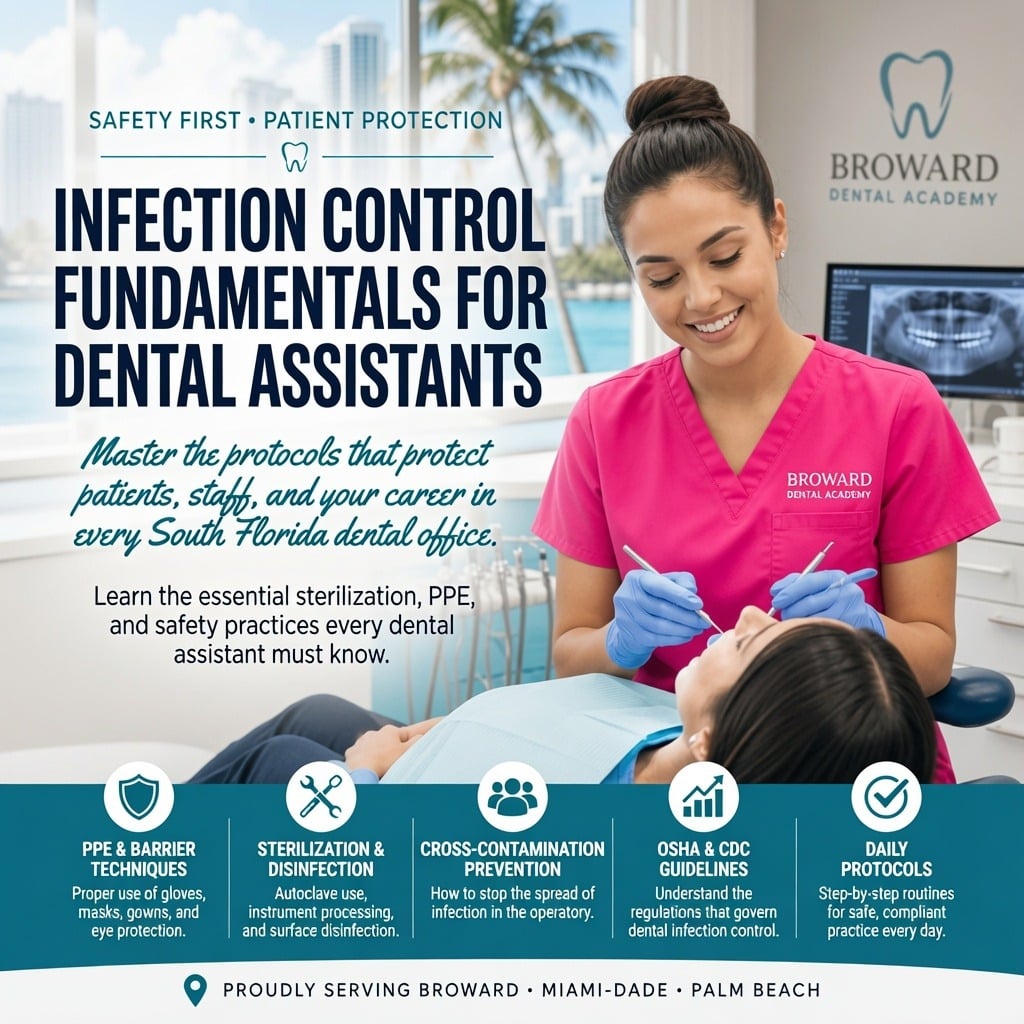
This is core to being employable and trusted. Training typically includes:
- instrument processing and sterilization flow
- treatment room disinfection standards
- proper use of PPE
- safety mindset and consistency
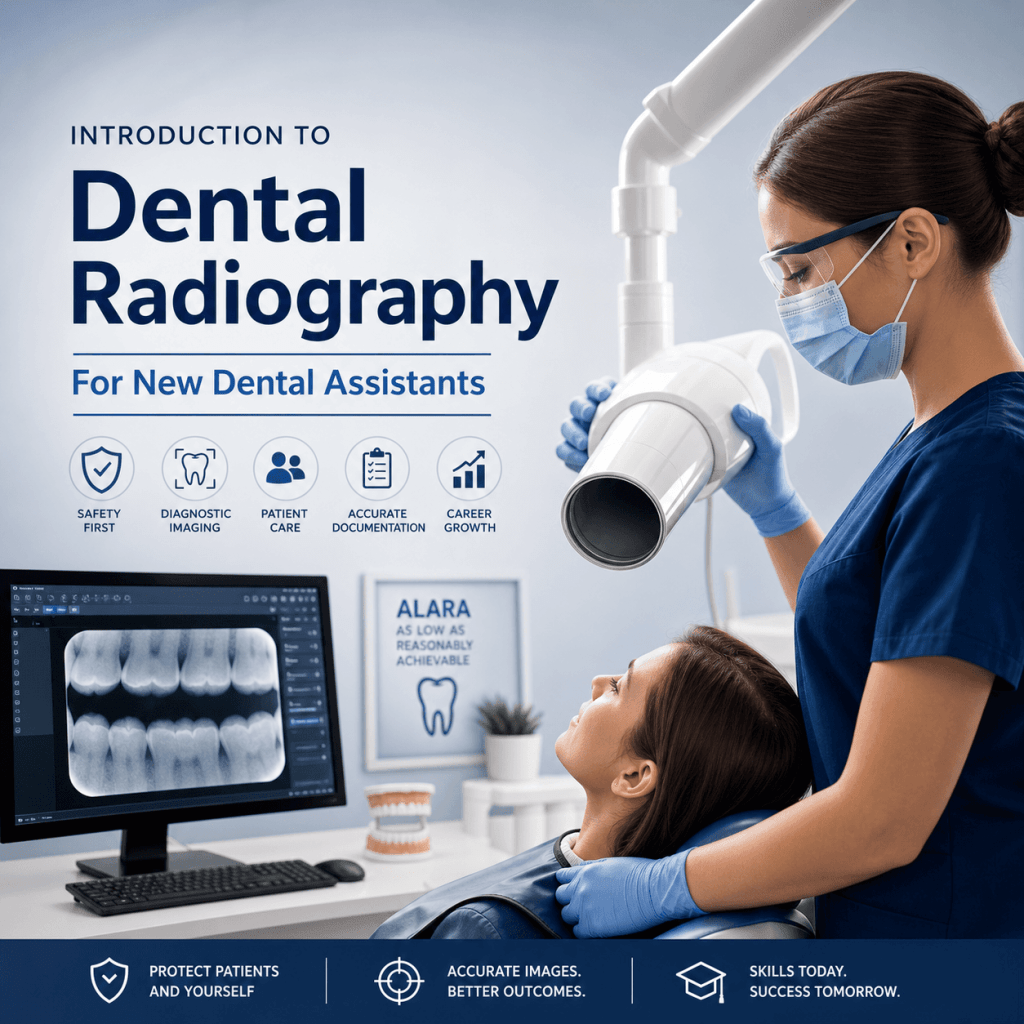
Radiography basics (when included/required)
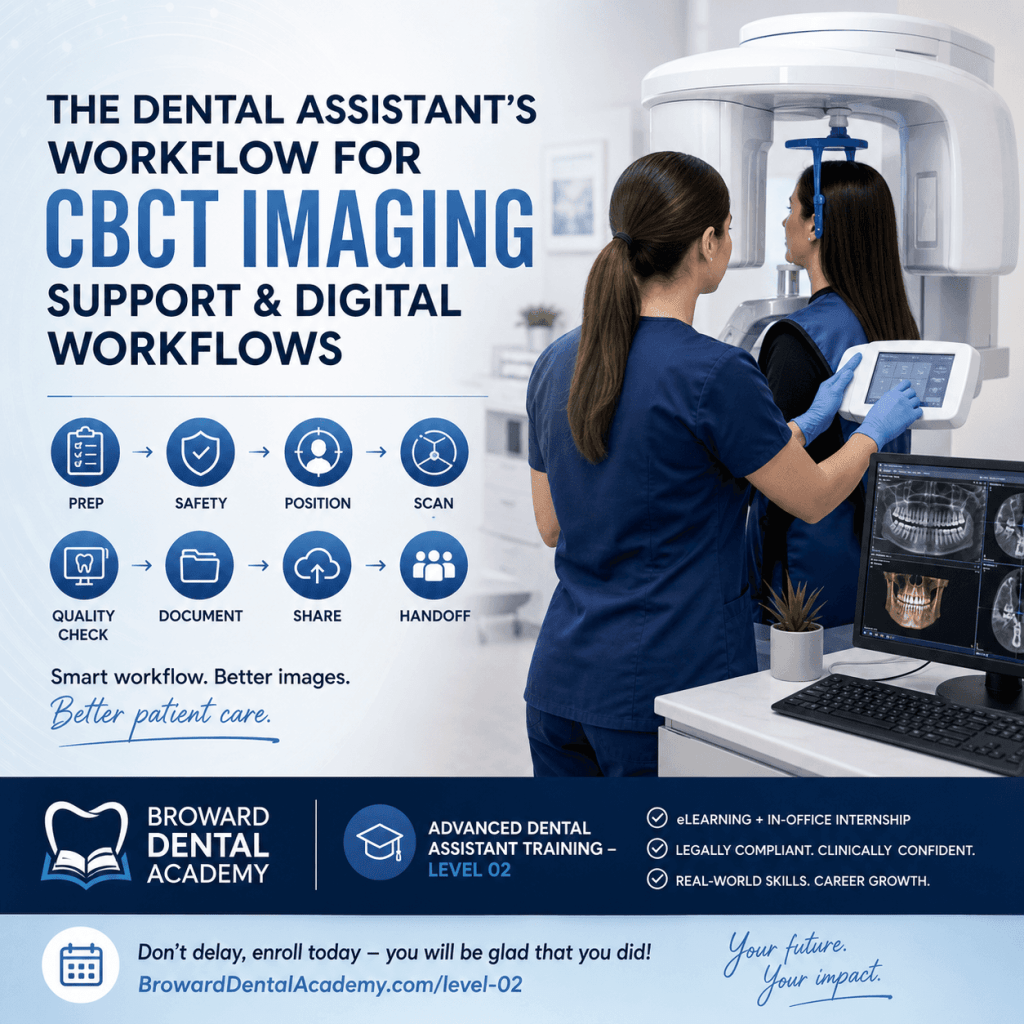
Many programs include radiography fundamentals, such as:
- safety principles
- positioning basics
- documentation and image handling
- understanding state-specific requirements and what your role includes
Front office and patient flow essentials
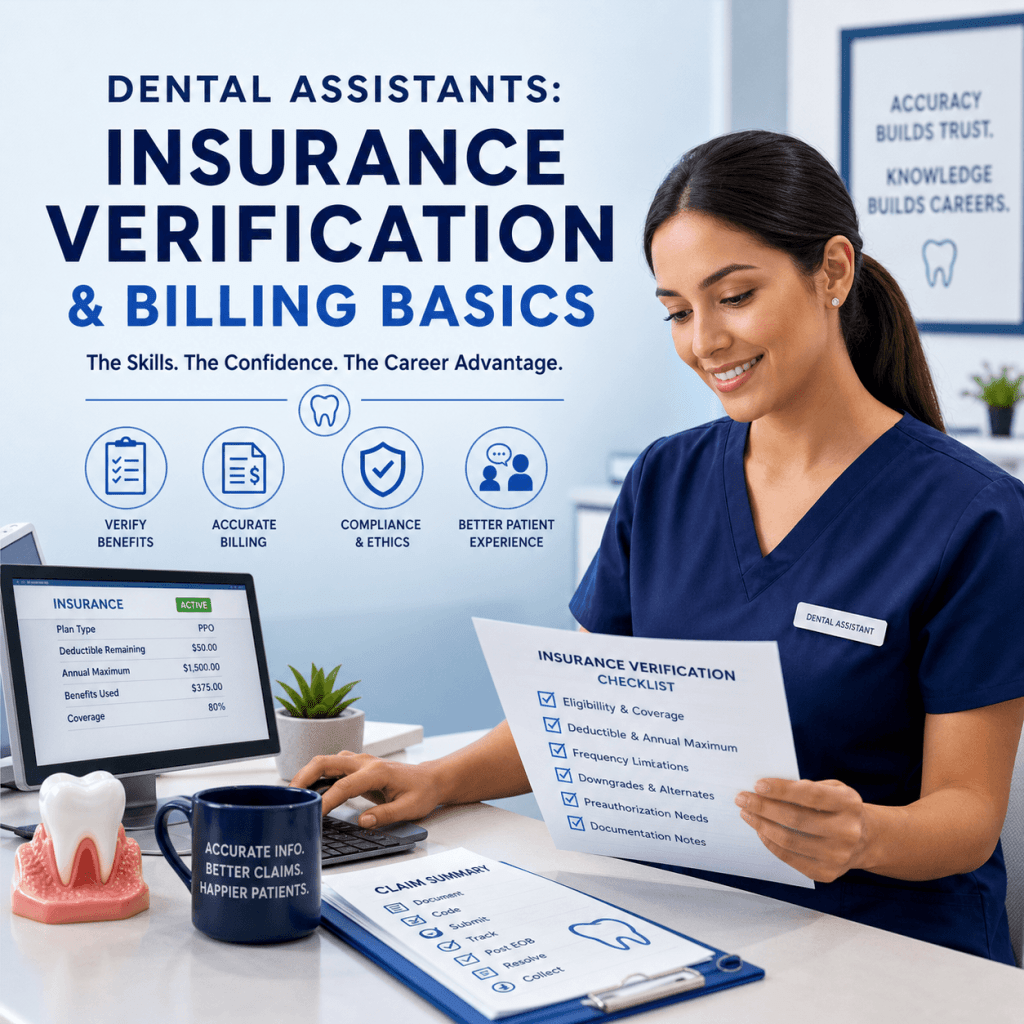
Even if you plan to be primarily chairside, offices value assistants who understand:
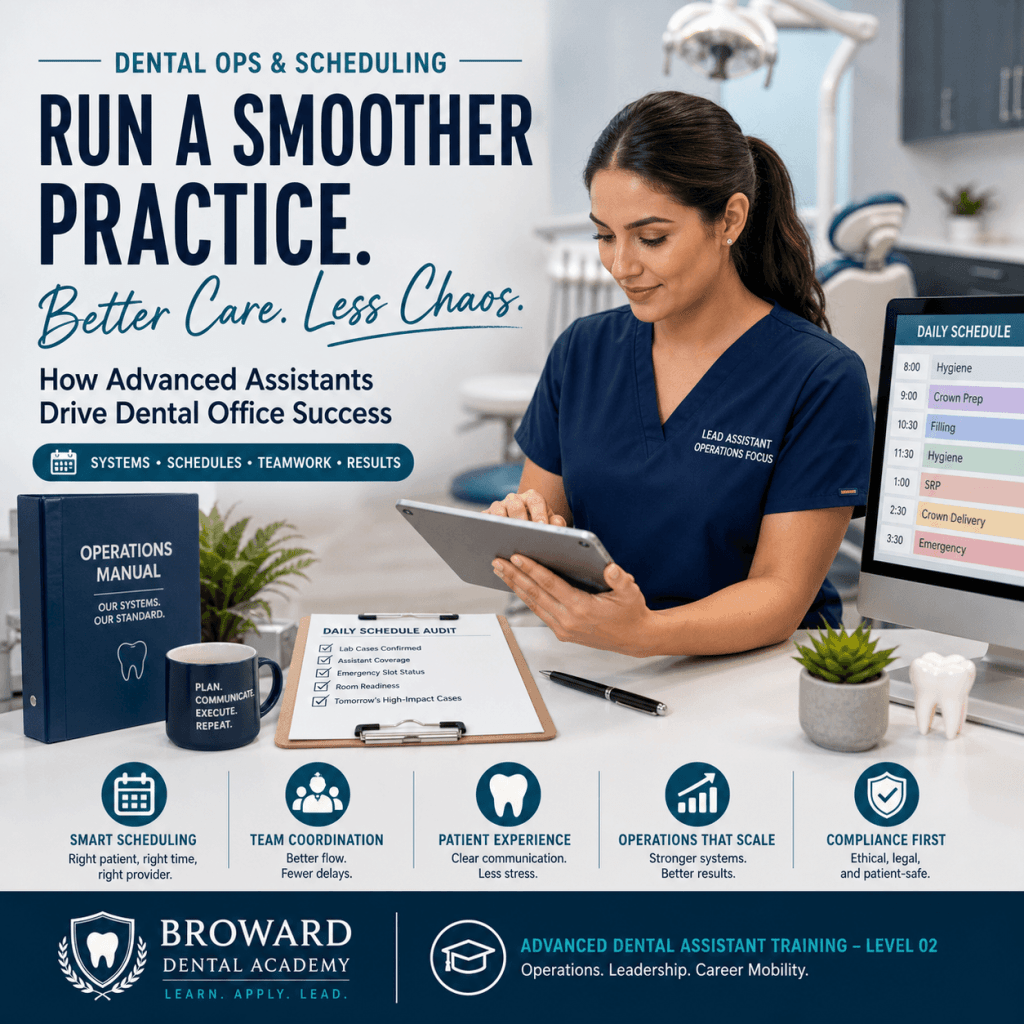
- scheduling basics and patient flow
- professional phone and front-desk communication
- teamwork between clinical and administrative sides of the practice
Critical thinking and ethics
The best programs do not just teach tasks. They teach judgment. That includes learning how to:
- stay calm and accurate under time pressure
- handle sensitive patient situations professionally
- follow ethical standards and protect patient trust
- communicate clearly with the dental team
How long does it take? Typical timelines for accelerated and weekend tracks
Timelines vary by program, schedule intensity, lab requirements, and whether an externship is included.
In South Florida, many accelerated options are shorter because training hours are delivered in a condensed format. Weekend tracks may take a bit longer on the calendar, but still move faster than traditional semester-based pathways.
Common schedule styles you’ll see
- Weekend-only formats: ideal for working adults, often with labs on weekends
- Evening + weekend blends: extra flexibility while keeping progress steady
- Intensive weekday blocks: fastest completion, best for students who can commit fully
What affects program length the most
Before enrolling, confirm what is included and required:
- number of hands-on lab hours
- clinical skill sign-offs and competency checks
- externship or internship placement details and hours
- attendance rules and make-up lab options
- any required prep for certifications or credentials, if applicable to the program like those offered at Broward Dental Academy
A practical tip: ask for a sample schedule, including labs, not just classroom time. That’s where real readiness is built.
Career benefits: why dental assisting is a smart move in 2026 and beyond
Dental assisting continues to stand out as a practical healthcare career because it combines stability with flexibility.
Here’s why many students choose it now and plan to stay in the field.
The industry keeps growing
Dentistry is part of one of the fastest-growing areas of healthcare, and demand for skilled dental professionals continues to rise. In day-to-day terms, that means more opportunities across:
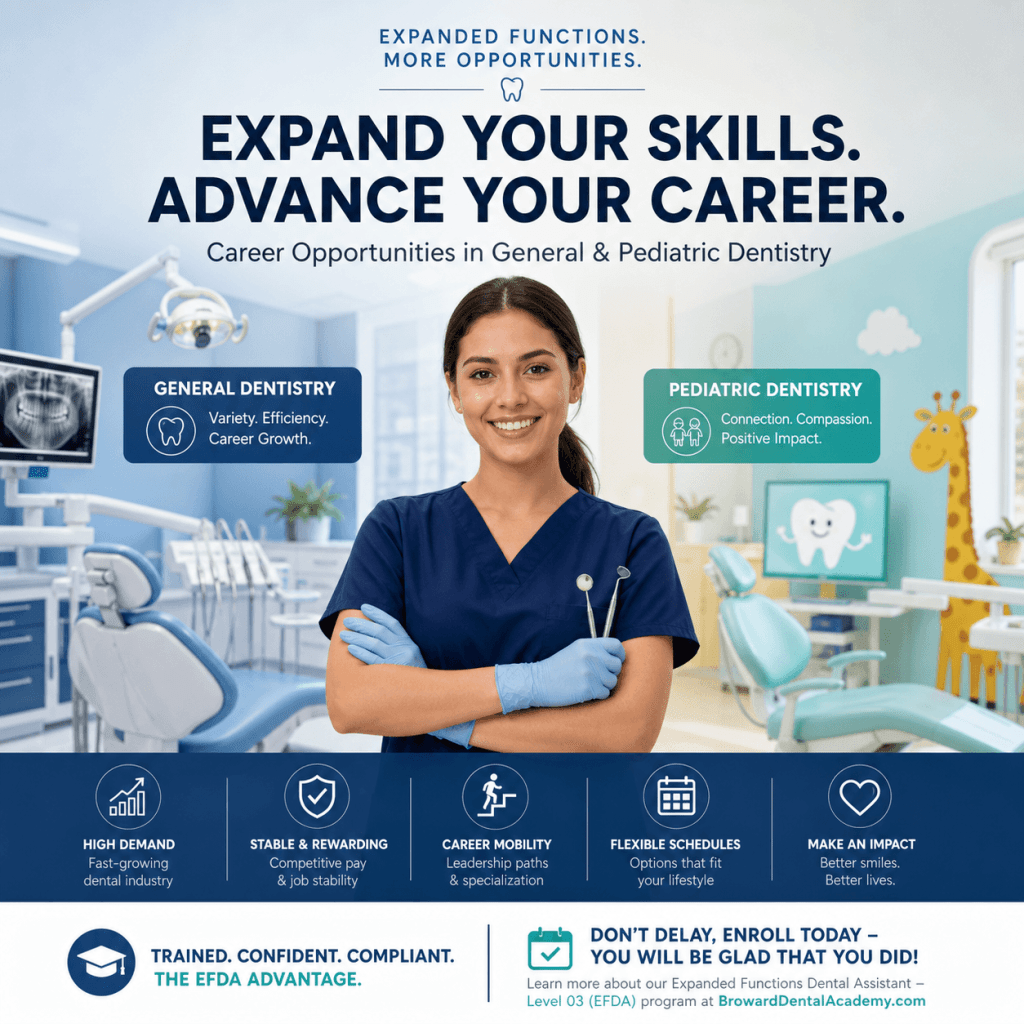
- general dentistry
- pediatric dentistry
- orthodontics
- oral surgery and specialty practices,
- cosmetic dentistry
Benefits people actually care about
For many South Florida students, dental assisting offers:
- stable income potential without a multi-year degree path
- flexible schedules, depending on the practice and role
- a respected position in healthcare with real patient impact
Long-term upside and mobility
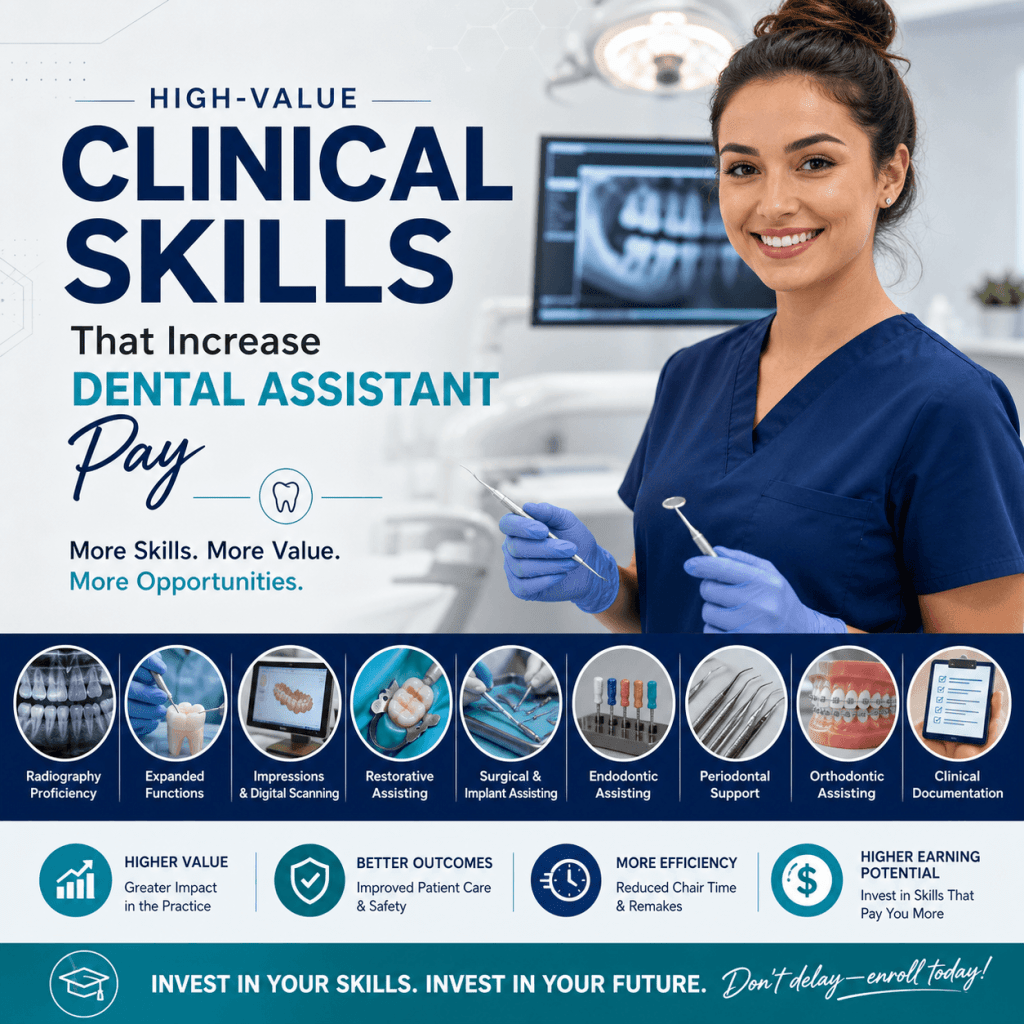
Dental assisting can also be a strategic stepping stone. With experience and additional training, some assistants pursue:
- expanded responsibilities where permitted
- specialty offices and higher-skill environments
- long-term pathways into broader dental roles
Most importantly, hiring managers often focus on one thing: readiness. Practices want assistants who are thoroughly trained, legally compliant, and clinically confident, especially in high-performance offices.
South Florida location fit: what “near me” should mean when choosing a program
When students search for “accelerated dental assistant programs near me,” distance is only one part of the decision.
A smarter definition of “near me” includes:
- commute reliability during traffic-heavy hours
- parking availability and cost
- public transit access
- weekend access and building entry if you’re in a weekend track
- proximity to externship sites and where you want to work later
Think about the counties you want to work in
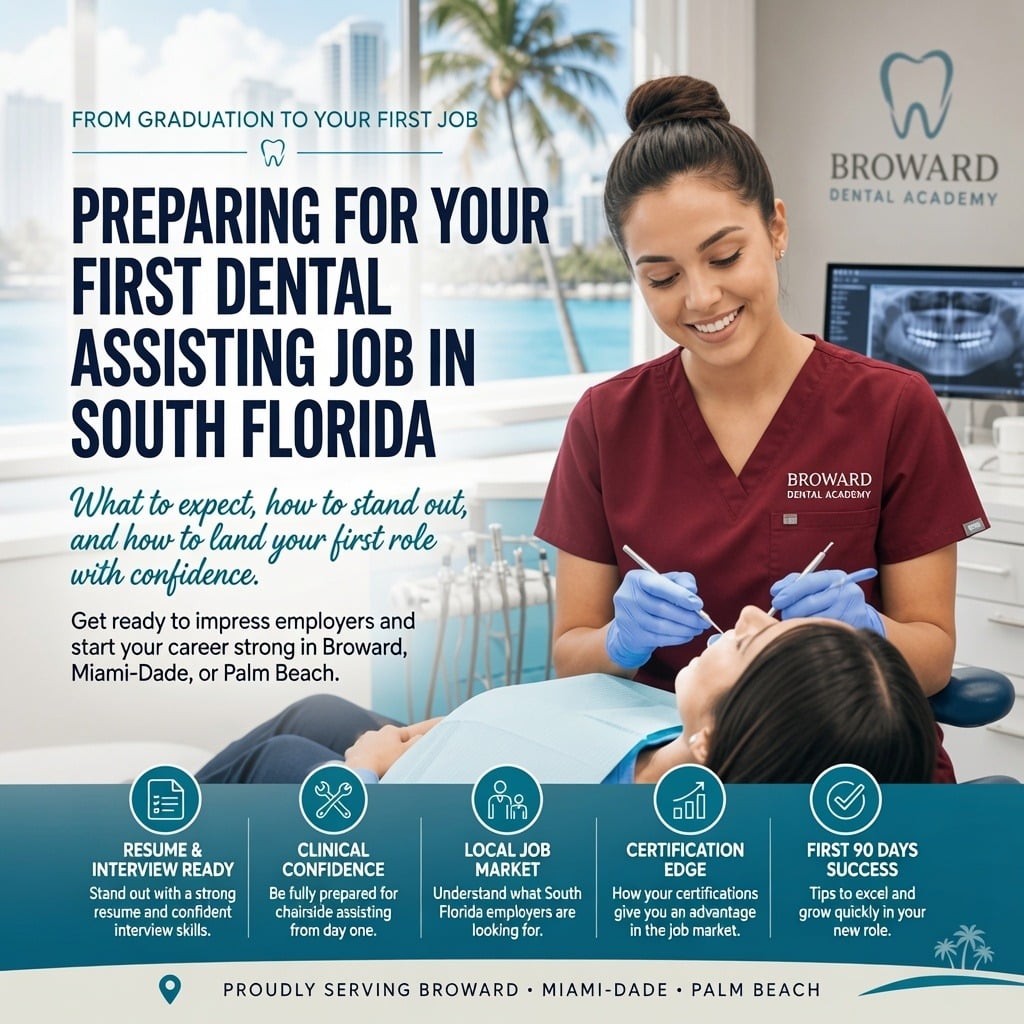
If you plan to work in Broward, Miami-Dade, or Palm Beach, choose a program that has strong clinical connections in those areas. Programs with local partnerships can make externships smoother and help you build familiarity with the local dental community.
If possible, tour the school and observe a lab. You learn a lot by seeing how students are coached, how equipment is set up, and how seriously clinical workflows are treated.
Spotlight: accelerated and weekend training at Broward Dental Academy
For students looking for accelerated and weekend dental assistant training in South Florida, Broward Dental Academy is a local option built around real clinical readiness. The academy offers a wide range of dental courses and advanced dental training designed to immerse students quickly in both online and clinical settings. eLearning lesson plans support the classroom portion, while hands-on training is built to prepare students for modern, high-performance dental practice expectations.
Key points that set the approach apart:
- Not just exam prep: the focus is on preparing students to thrive in real dental offices, not simply pass a test.
- Hands-on readiness: training includes in-office internships to build real clinical confidence and workplace rhythm.
- Professional formation: students are trained to think critically, act ethically, and perform confidently.
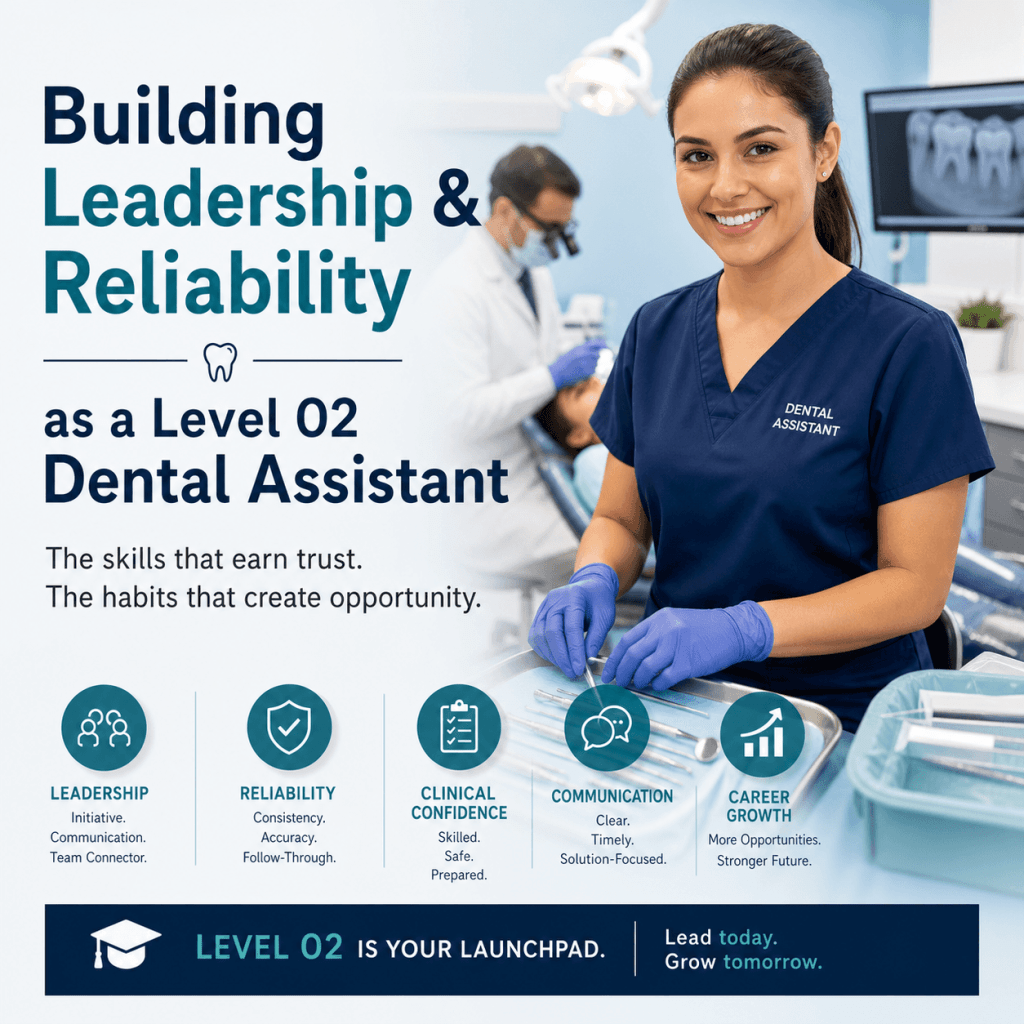
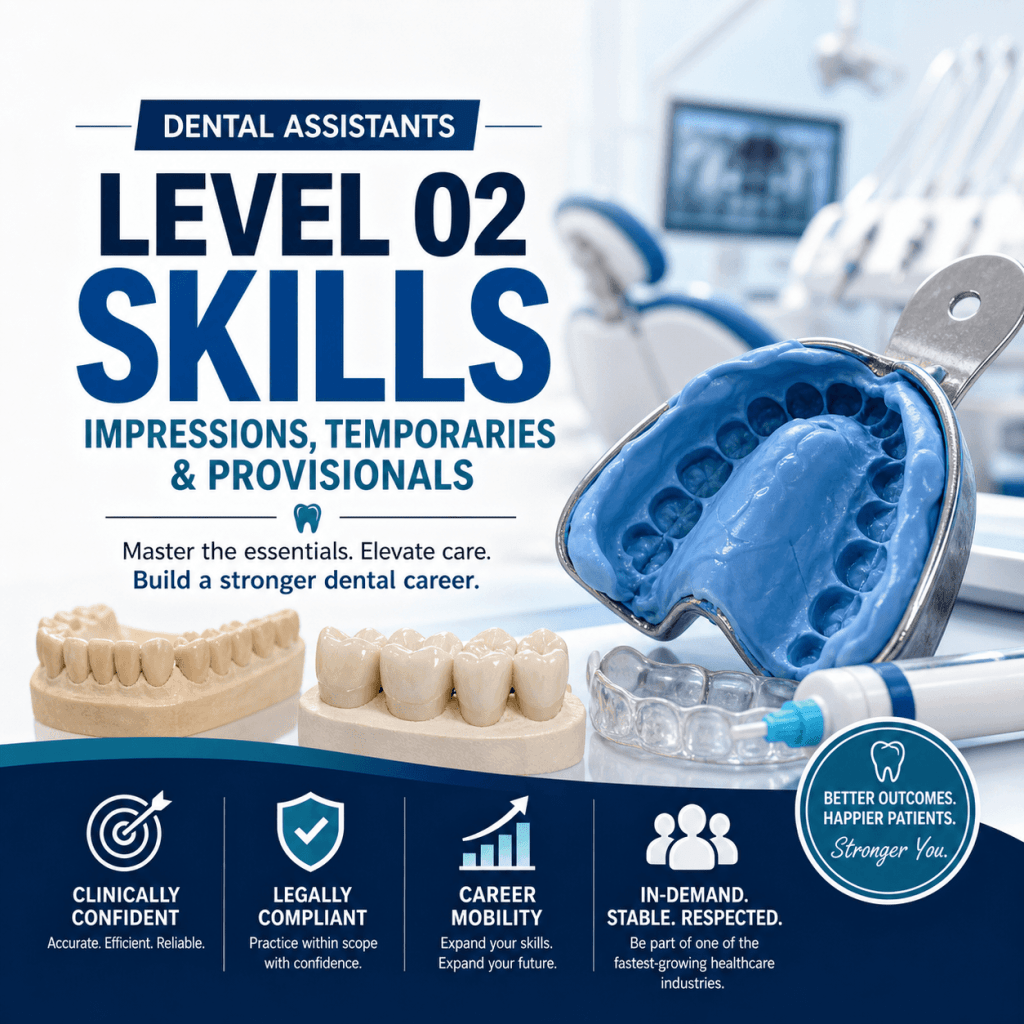
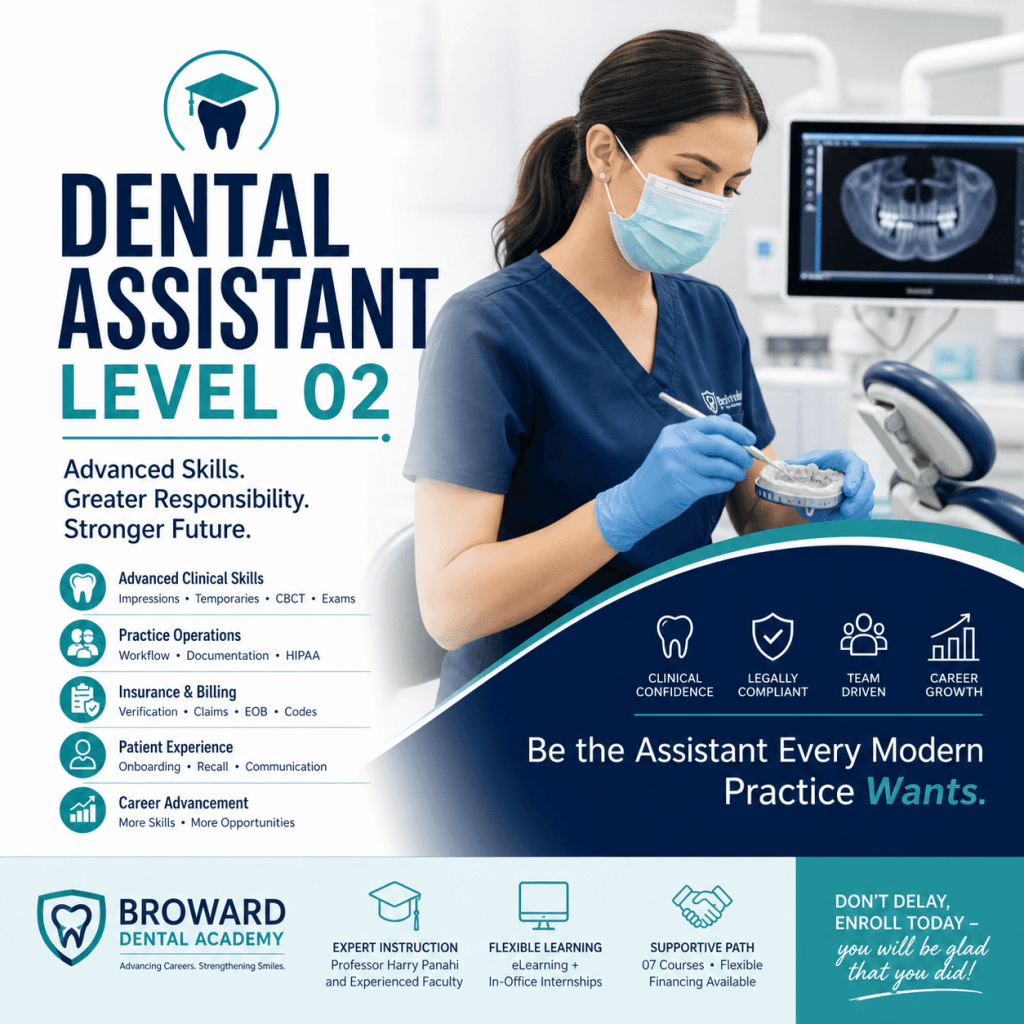
- Program variety: Broward Dental Academy offers various programs including Dental Assistant Level 02, Dental Assistant Hygienists Level 03 among others allowing students to map training to their goals over time.
- Community commitment: the mission emphasizes developing well-rounded professionals committed to serving the dental community.
For a broader overview of training options at Broward Dental Academy, visit their website.
Financing and scheduling: how students make accelerated programs work
Cost and time are the two biggest concerns for most applicants. The good news is that accelerated and weekend formats can be financially practical when they help you reduce time out of work and enter the job market sooner.
Financing
Broward Dental Academy offers flexible financing. The simplest next step is to speak with admissions about current options and what is available for your start date.
Practical planning that actually helps
Students who succeed in weekend or accelerated formats usually plan for:
- a consistent weekly commute plan
- fixed study blocks (even short ones)
- childcare coverage mapped to lab and externship days
- required materials ready early (scrubs, shoes, notebooks, whatever your program specifies)
What to ask before enrolling
Before you commit, get clear answers on:
- total cost and payment options
- enrollment steps and deadlines
- required materials and dress code
- attendance expectations
- make-up lab policies
- internship details, including typical scheduling and locations
How to choose between schools: a quick comparison checklist (without the fluff)
Use this checklist when comparing programs side by side:
- Curriculum depth: Does it cover real clinical skills, not just theory?
- Hands-on proof: How much lab time is included, and what skills are practiced repeatedly?
- Real workflow training: Are you trained for operatory turnover, sterilization flow, and chairside pace?
- Instructor credibility: Are instructors experienced clinicians who actively coach technique?
- Student support: Do you get feedback, professionalism coaching, and guidance toward readiness?
- Schedule fit: Weekend vs accelerated weekday, start dates, and realistic weekly time commitment
- Policies: Attendance rules, make-up labs, and how missed time is handled
- Externship/internship: Is it included, and how is placement supported?
When choosing between community college and university programs, it’s essential to consider which option aligns better with your career goals. Choose the program that helps you become the kind of assistant dental offices want to hire: trained, compliant, and confident.
Next steps: enrolling in an accelerated or weekend dental assistant program in South Florida
If you’re ready to move forward, keep it simple and intentional:
- Shortlist 2 to 3 programs that match your schedule.
- Tour the campus and observe a lab if possible.
- Confirm the schedule in writing, including labs and any externship days.
- Ask specific questions about internship placement and clinical coaching.
- Review financing options such as those available for graduate or post-baccalaureate aid here and choose a realistic start date.
For Broward Dental Academy’s current accelerated and weekend options and course availability, contact the admissions team directly, and visit the program overview here: Best Dental Assistant Training in South Florida. If you have any questions regarding the enrollment process or the programs offered, you might find answers to some common queries in our frequently asked questions section.
Don’t delay, enroll today – you will be glad that you did!
FAQs (Frequently Asked Questions)
What are accelerated and weekend dental assistant programs, and how do they differ?
Accelerated dental assistant programs compress training into a shorter calendar timeline using intensive weekday blocks, allowing faster completion. Weekend programs schedule classes and labs on Saturdays and Sundays (sometimes evenings) to accommodate students who need to keep weekday responsibilities. Both formats aim to train students quickly without sacrificing hands-on skills.
Who is best suited for accelerated or weekend dental assistant programs in South Florida?
These programs are ideal for career changers seeking stable healthcare roles, working adults who cannot pause income for school, parents balancing childcare, recent graduates wanting quick employment skills, and students who thrive with structured timelines. Weekend programs suit those needing weekday flexibility, while accelerated weekday formats fit those who can commit to intensive schedules.
What should I expect to learn in an accelerated or weekend dental assistant program?
You should expect hands-on clinical training including chairside assisting practice, operatory setup and breakdown, instrument transfer and suction techniques, sterilization workflows, real workflow practice at a modern dental office pace, legal and ethical compliance, and preparation to confidently support patient care in busy environments.
How do I choose a fast-track dental assistant program that truly prepares me for the workforce?
Look for programs emphasizing hands-on, clinic-focused training rather than theory-heavy lectures. Ensure the curriculum covers practical skills like chairside assisting, instrument handling, sterilization protocols, and real-world professionalism. Additionally, confirm the program adheres to professional standards and regulations to ensure legal and ethical compliance.
Can I keep my current job while attending a dental assistant program?
Yes. Weekend dental assistant programs are designed specifically for students who need to maintain weekday jobs or have childcare responsibilities. These programs place classes on weekends so you can continue working during the week while progressing toward your career goal efficiently.
Is completing a fast-track dental assistant program easy since it’s accelerated?
No. Fast-track does not mean easy. Legitimate accelerated or weekend programs require dedication to keep up with a faster pace, study outside of class hours, manage clinical environment expectations including infection control standards, and commit to hands-on training that builds confidence for real patient care.