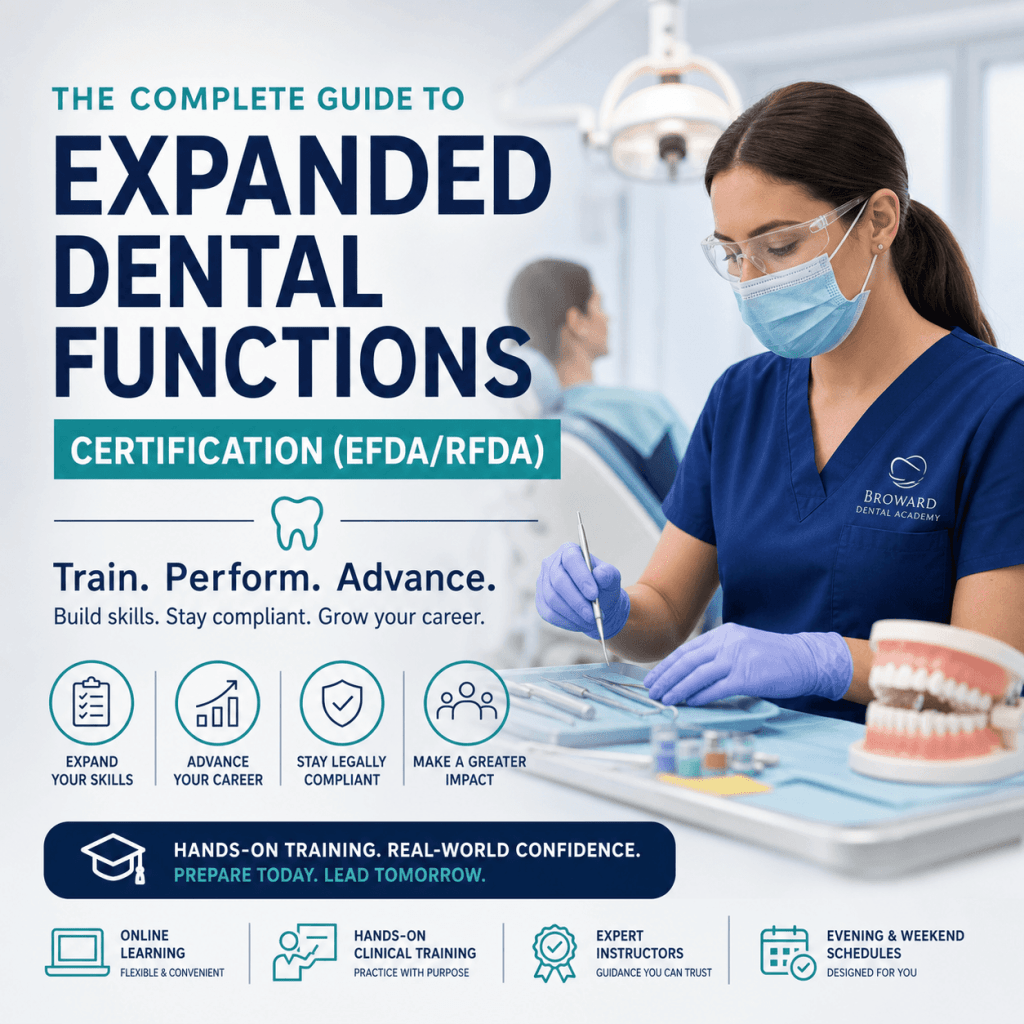
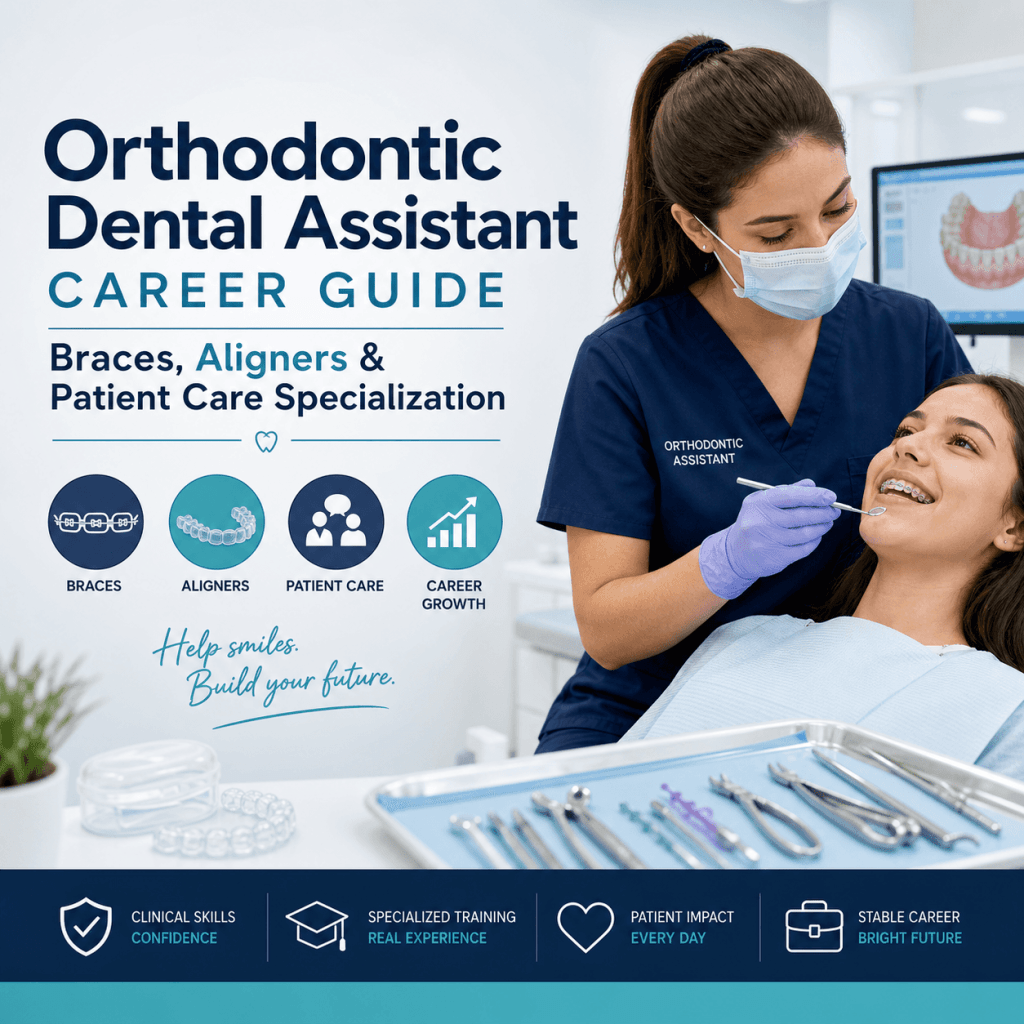
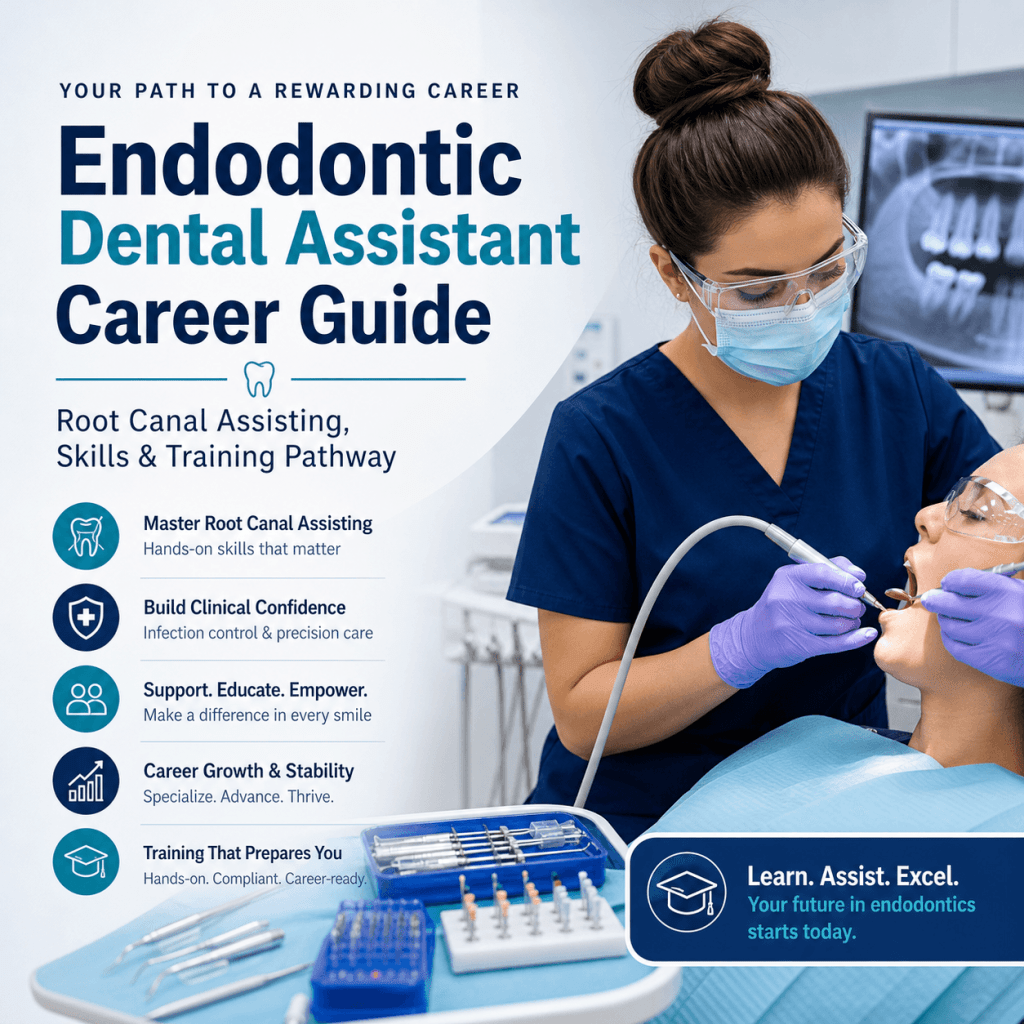
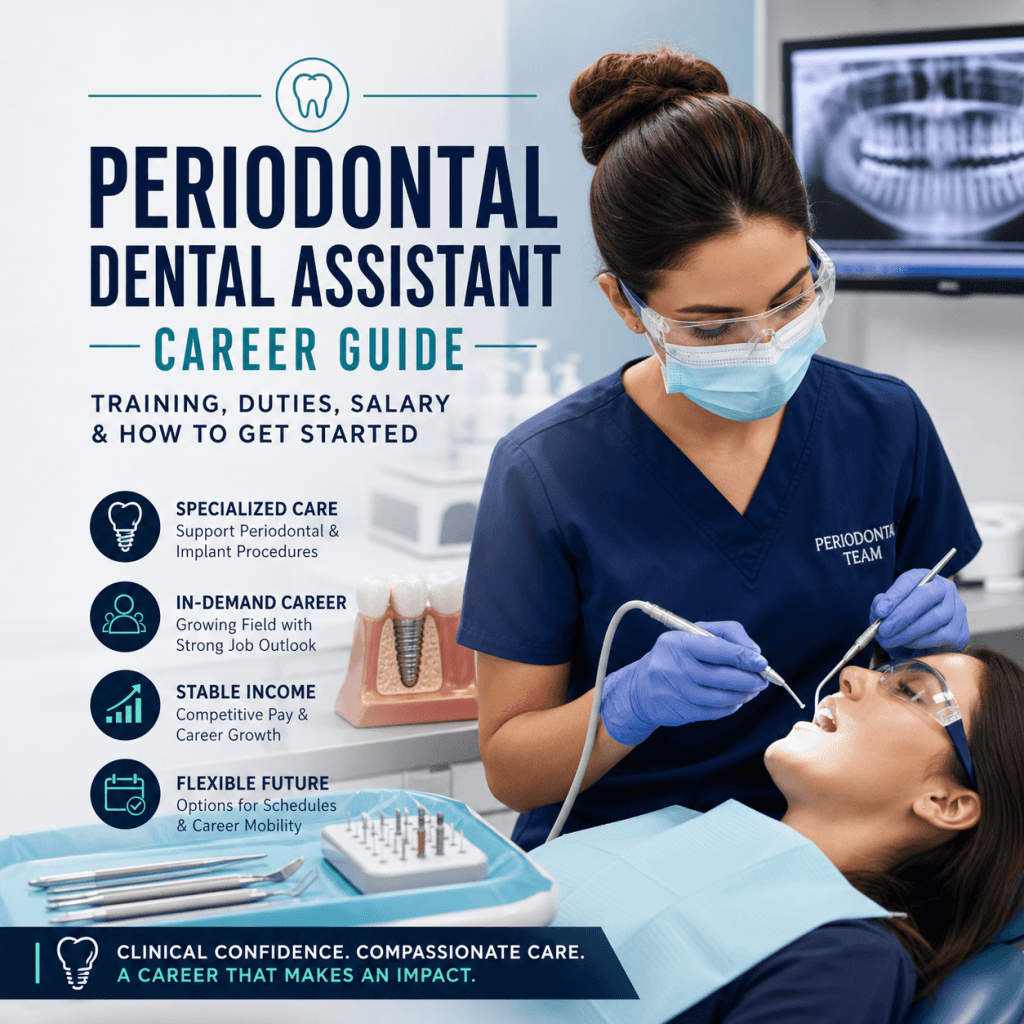
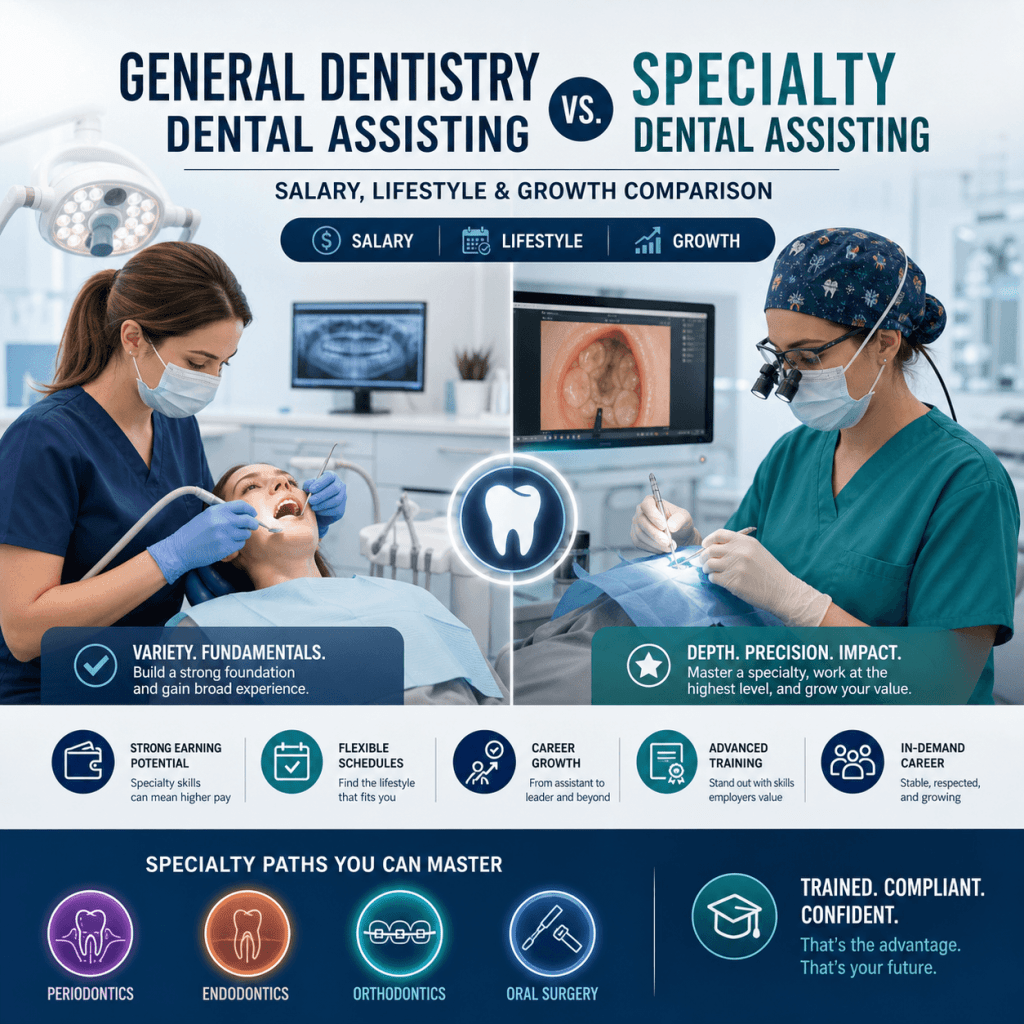
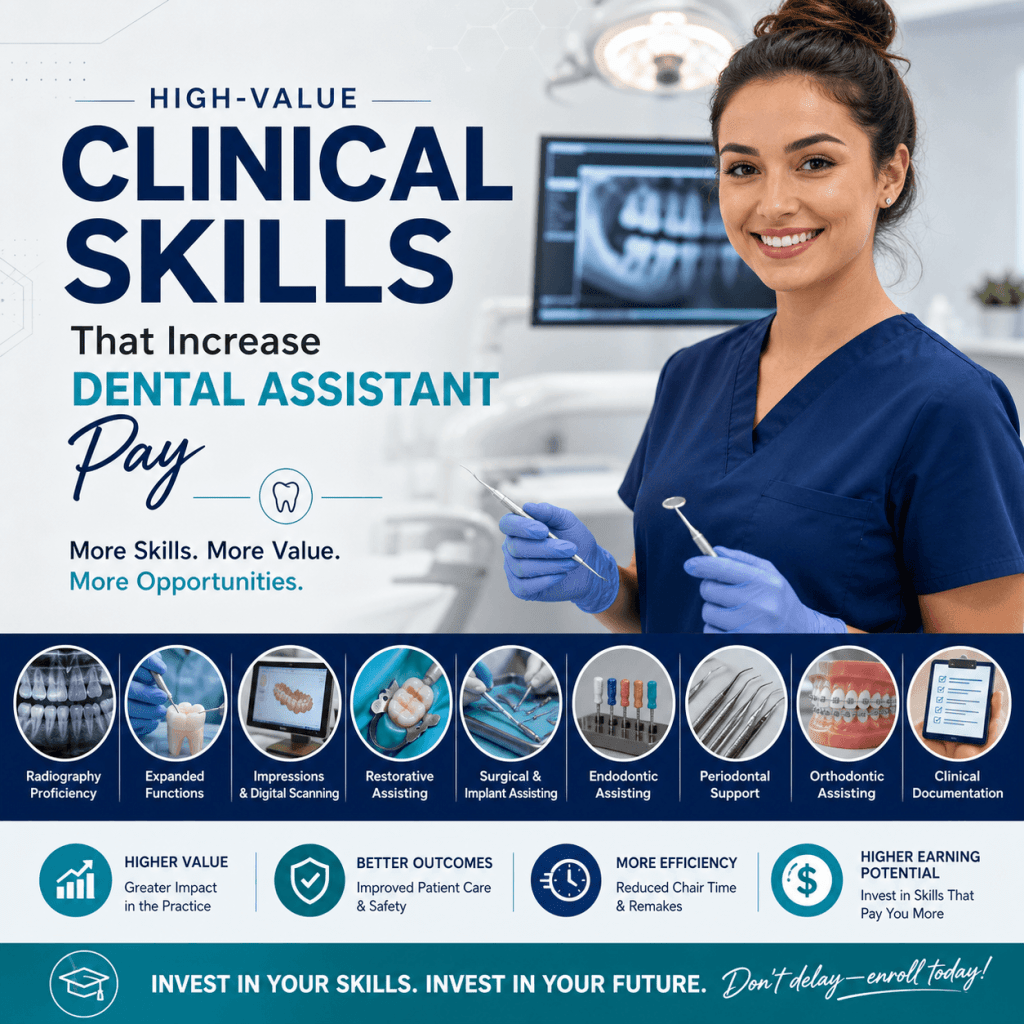
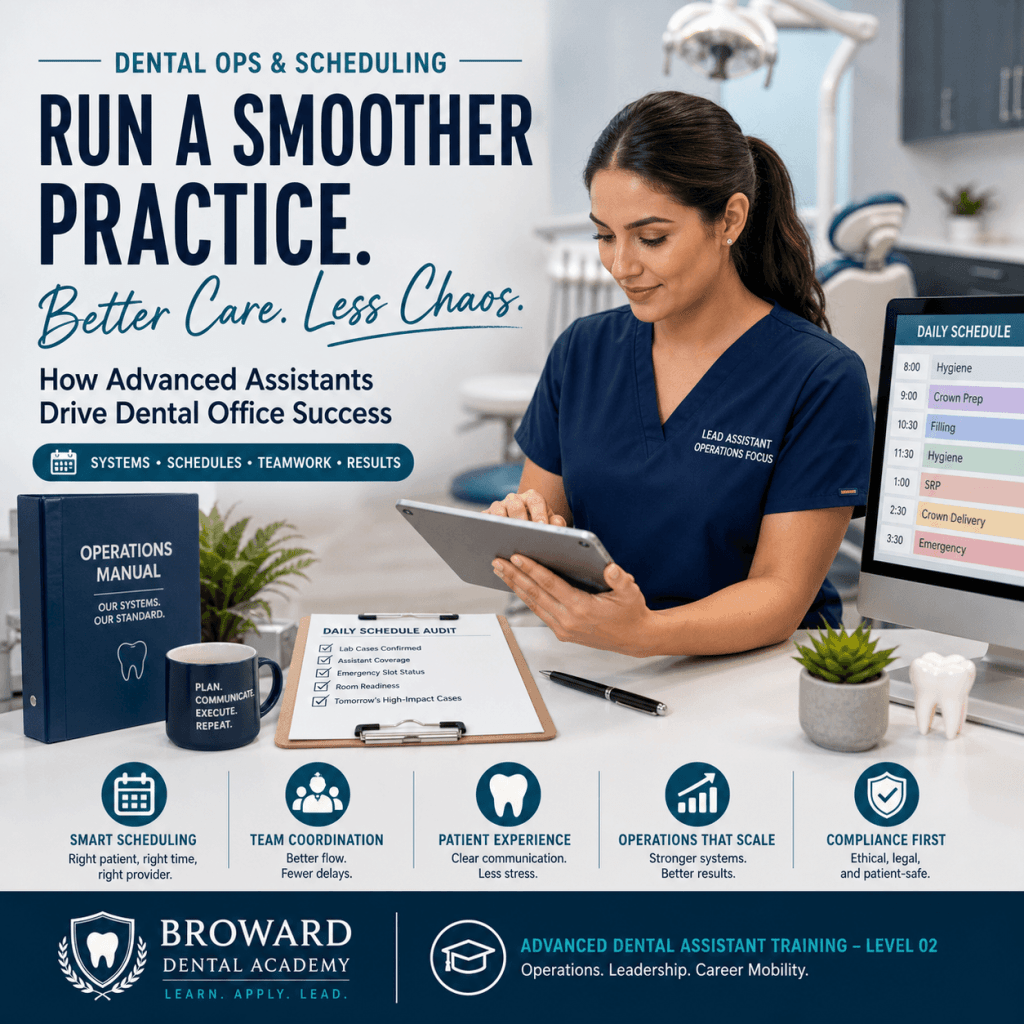
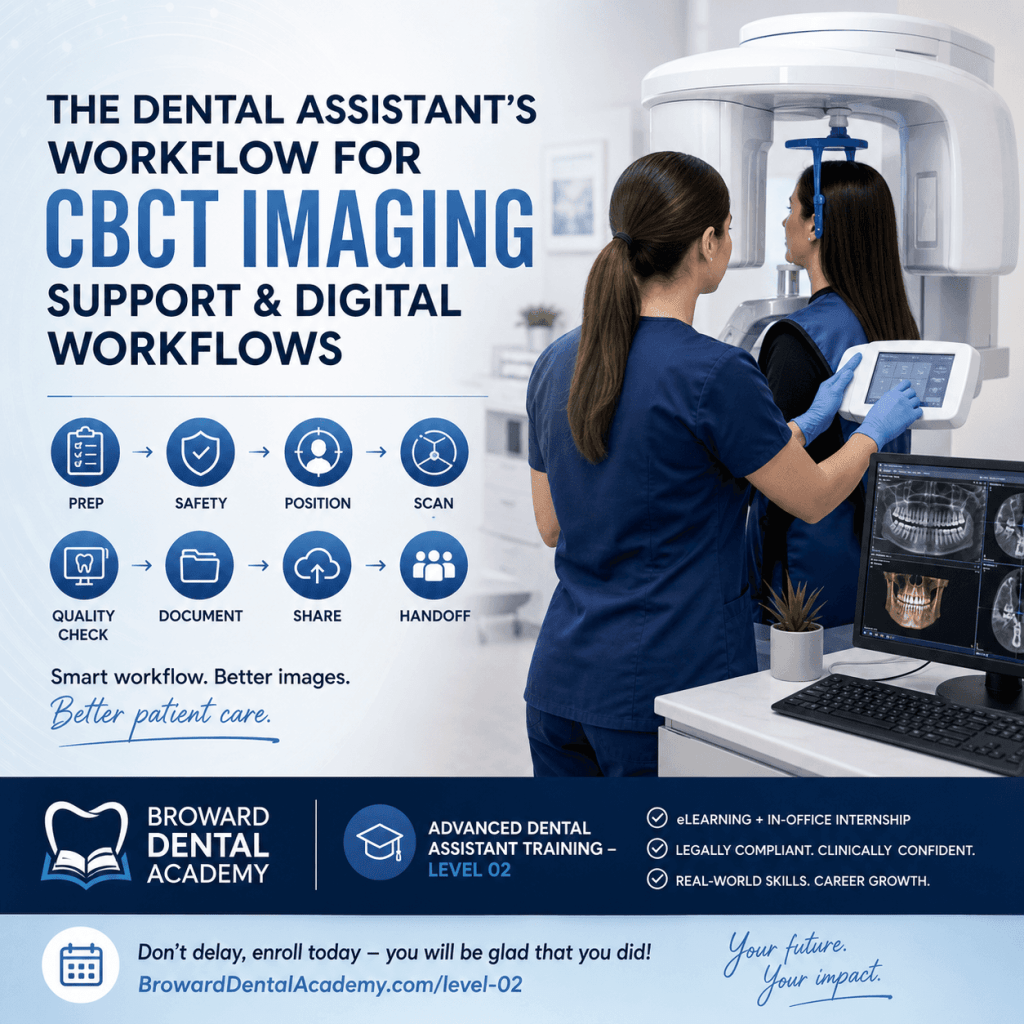
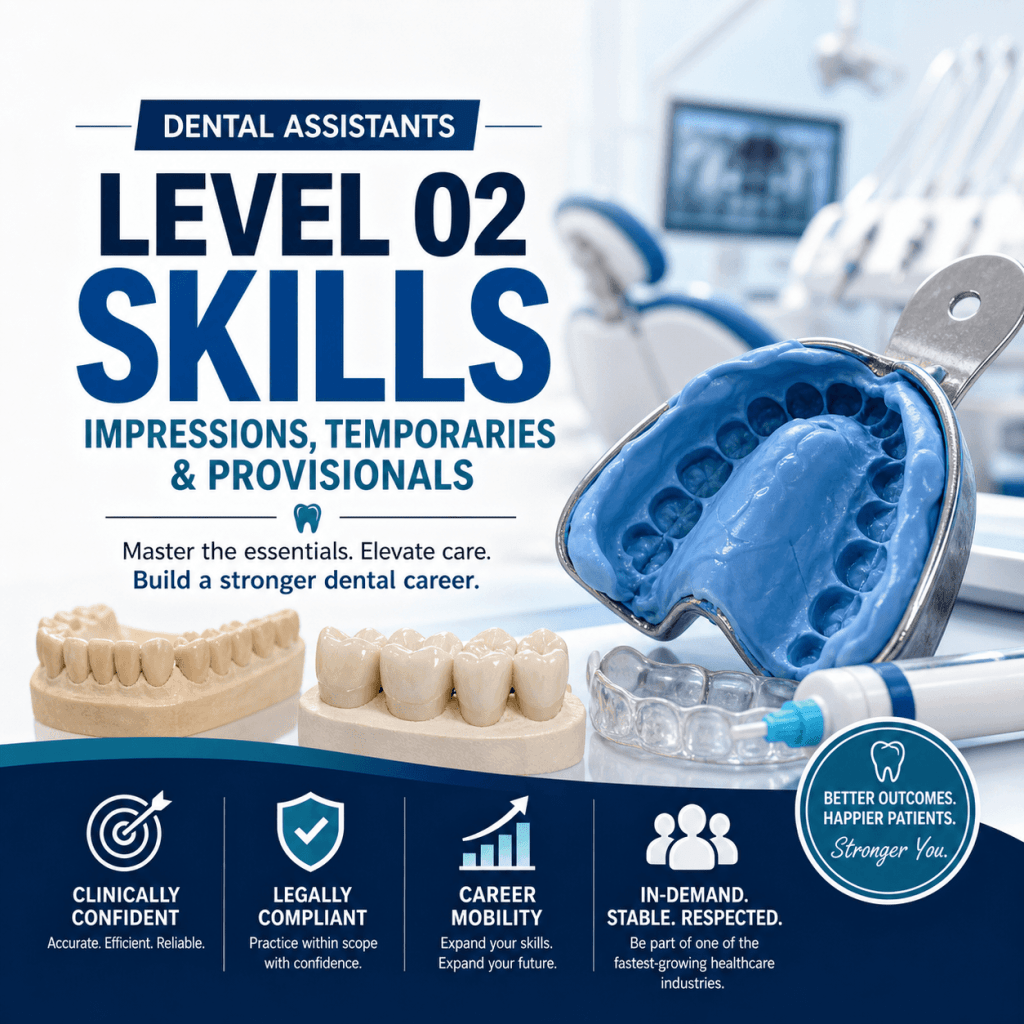
This guide breaks it all down in plain English, including what an EFDA can do, how training works in Florida, and how to decide if the path fits your goals.
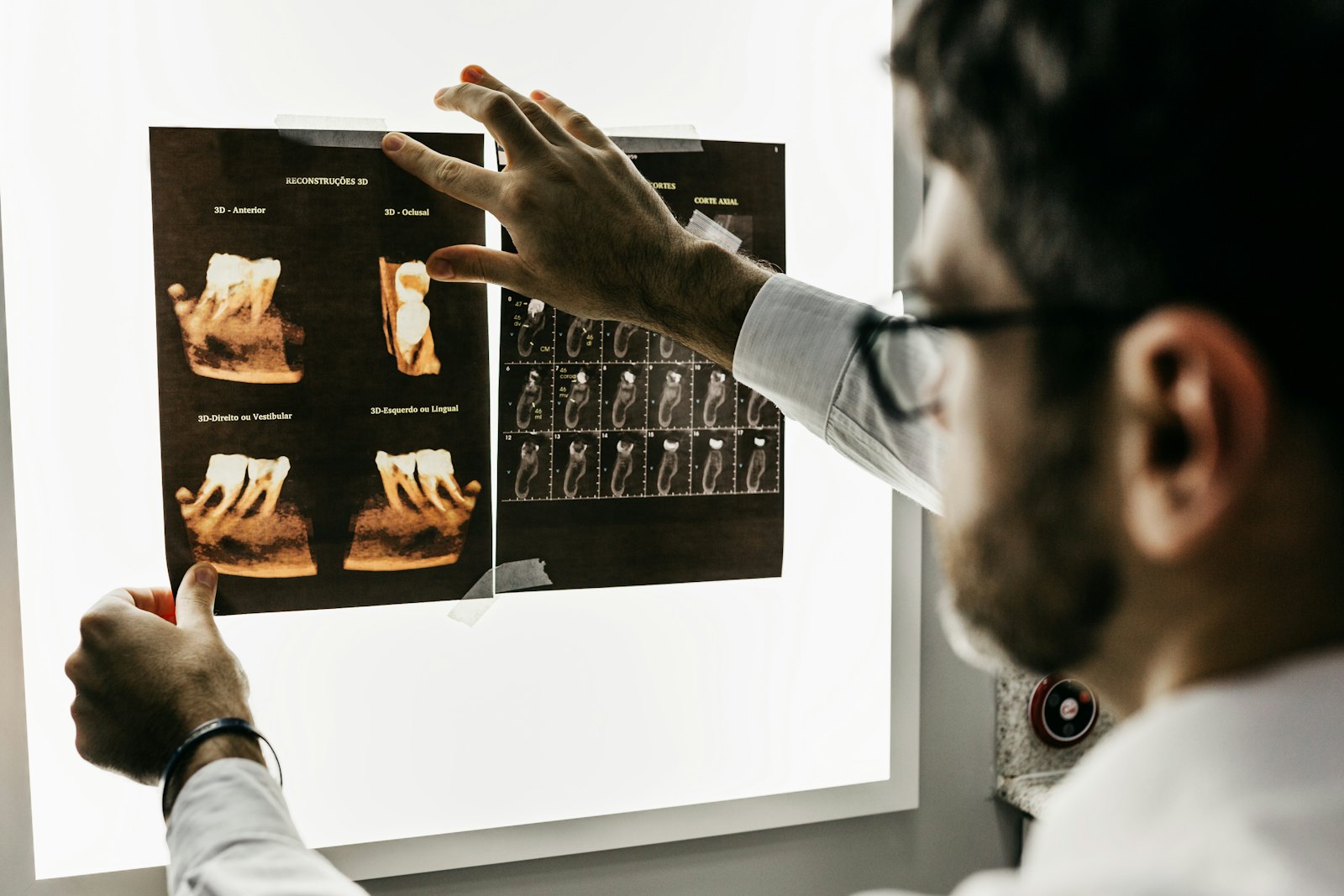
Expanded Functions Dental Assistant (EFDA) in Florida: the simple definition
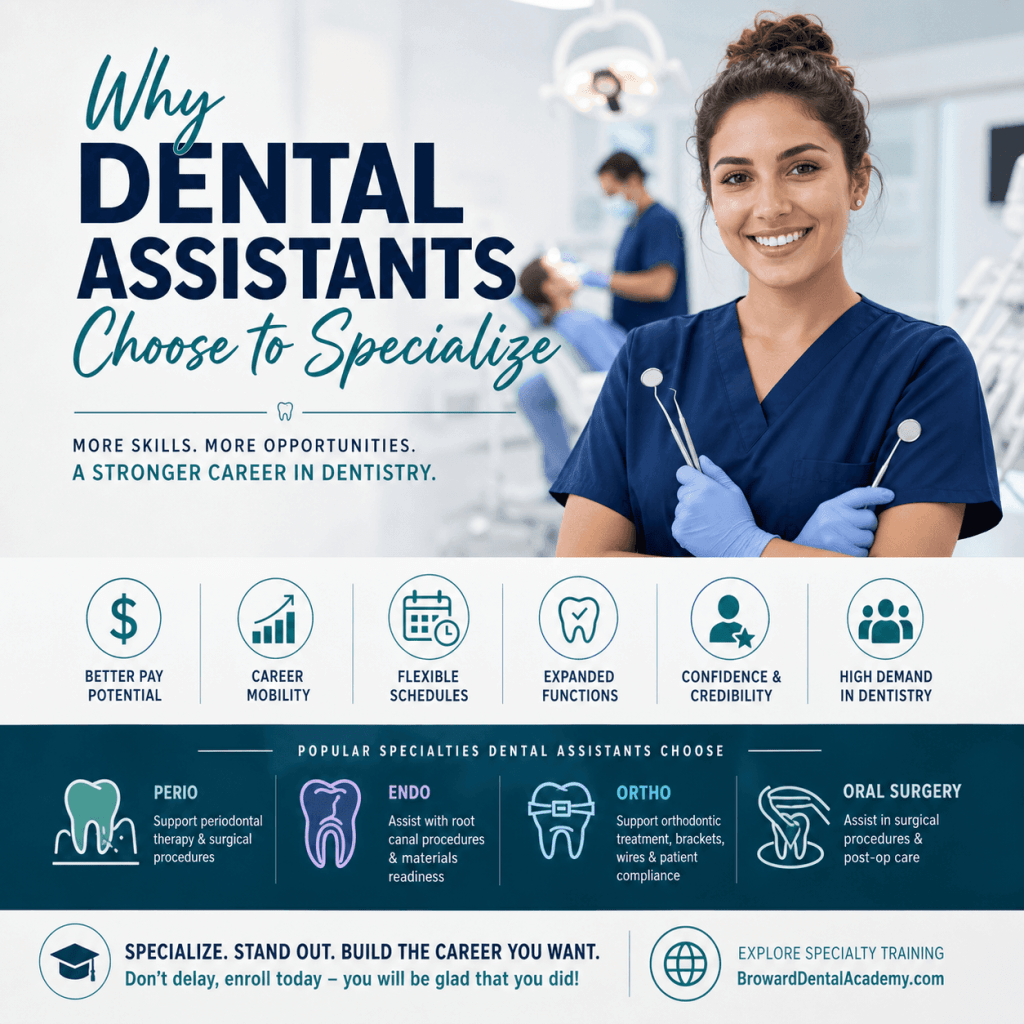
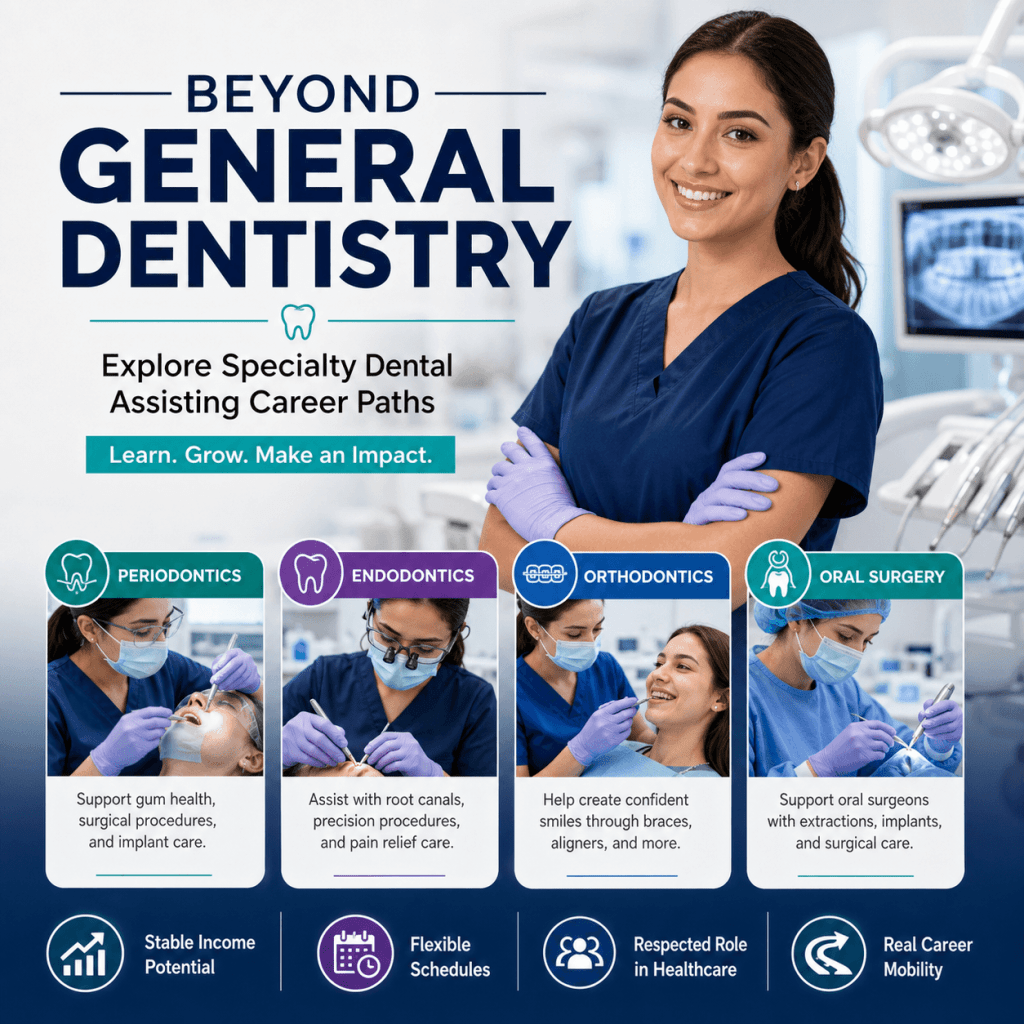
An Expanded Functions Dental Assistant (EFDA) is a dental assistant who has been trained to perform advanced clinical duties that are legally allowed under a dentist’s supervision. This advanced training can include oral surgery, endodontics, or periodontics, among other specialties.
People search for the role using different wording, including:
- EFDA
- Expanded duty dental assistant
- Expanded functions dental assistant
In casual conversation, these are often used interchangeably. In the real world, what matters in Florida is state rules, permitted delegation, and documented training. In other words, the title alone is not the point. The assistant’s education, competencies, and what the dentist can legally delegate are what determine the actual job duties.
A quick reason this role exists: modern dental practices need team members who can deliver efficient, high-quality care without cutting corners. Patients expect a smooth experience. Dentists need reliable support. Expanded functions training helps bridge that gap.
If you’re interested in pursuing this career path, it’s essential to understand the specific training requirements and responsibilities associated with the EFDA role. For instance, if you’re considering specializing in areas such as oral surgery, endodontics, or periodontics, it’s important to seek out relevant training programs that offer such specialized courses.
What does EFDA stand for (and what it means in dentistry)
EFDA stands for Expanded Functions Dental Assistant.
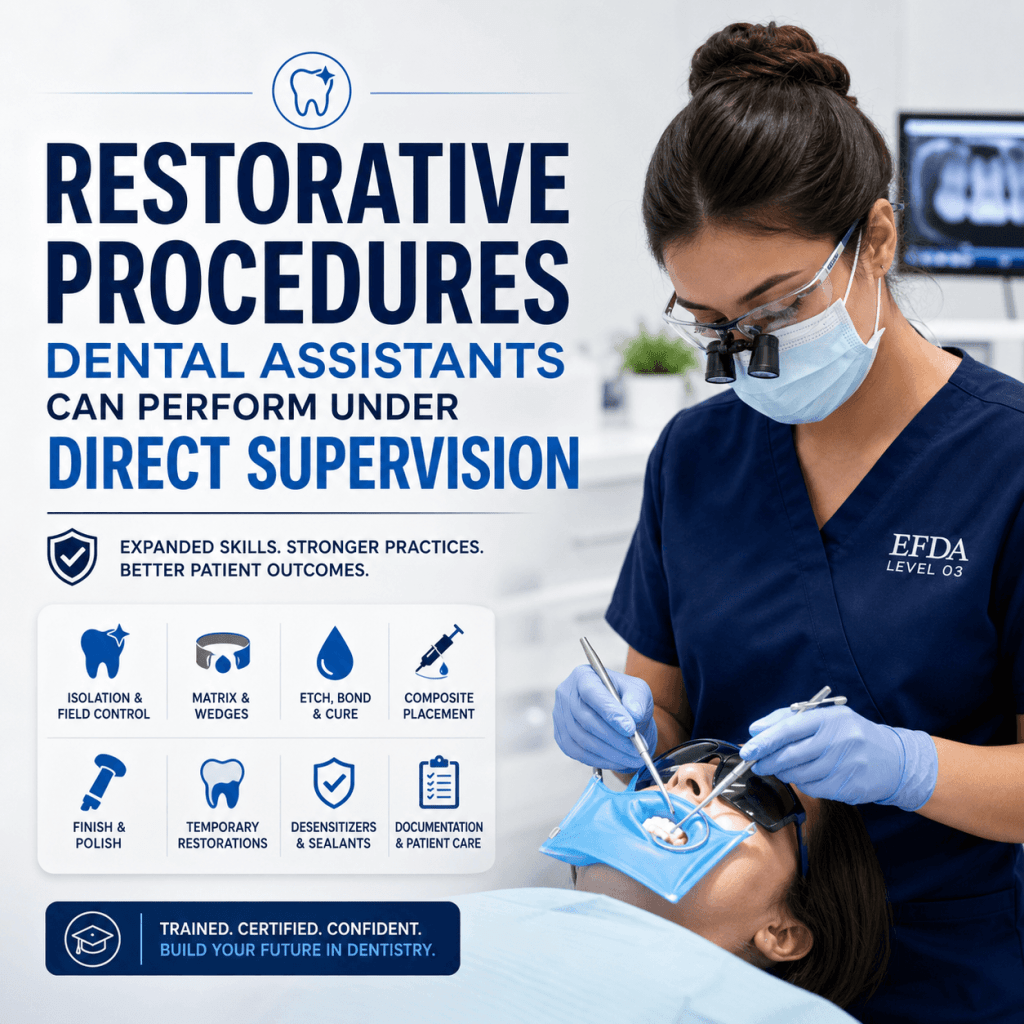
In dentistry, “expanded functions” means the assistant can be trained for more hands-on clinical procedures than a basic chairside assisting role. Instead of only passing instruments, suctioning, taking notes, and setting up rooms, expanded functions typically support the clinical workflow more directly, especially during restorative procedures.
One reason the phrase confuses people is that “What is the EFDA?” can mean three different things:
- The job role in a dental office
- The training level (what you have been taught and checked off on)
- A credential or certificate (proof of completing approved coursework)
This article focuses on the Florida pathway and real responsibilities, so you understand what employers are actually asking for.
Why EFDA matters in Florida dental practices right now
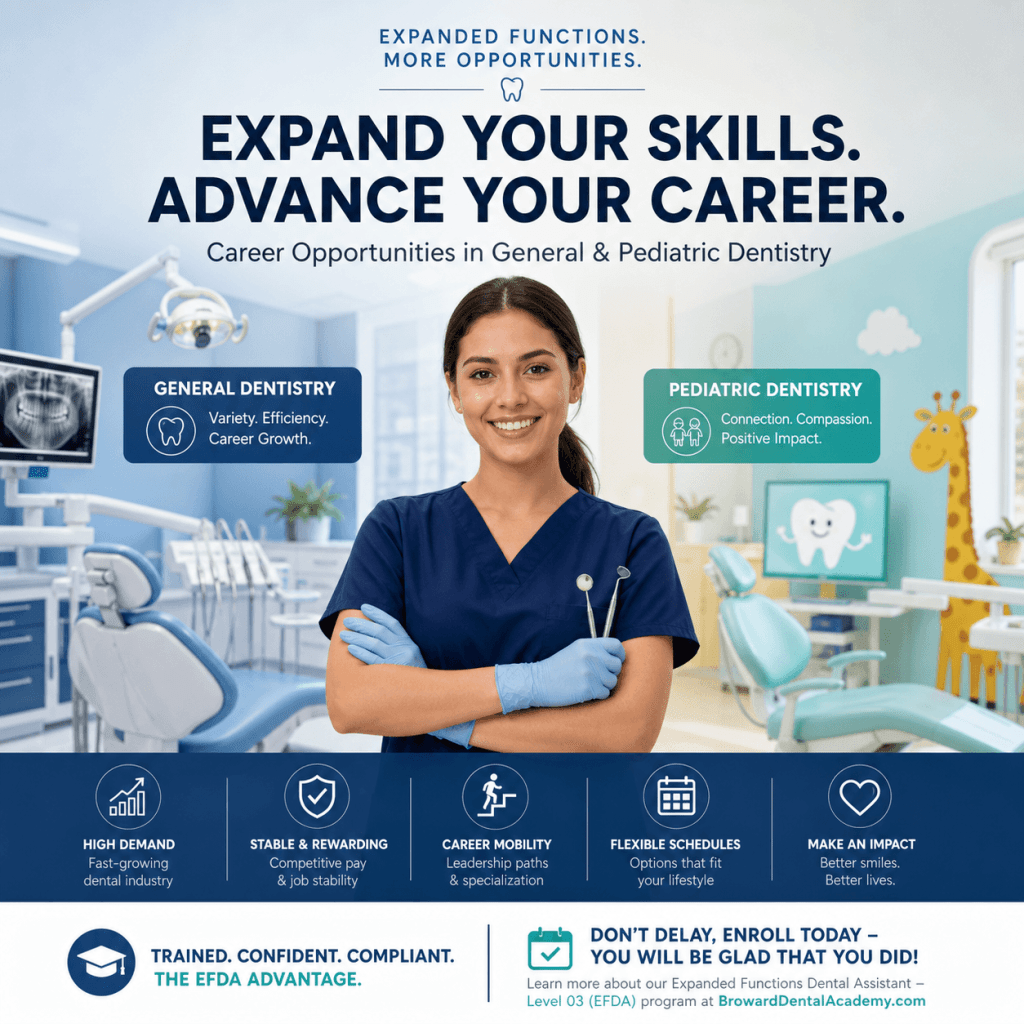
Dentistry continues to be one of the fastest-growing healthcare industries, and Florida practices are actively looking for professionals who can contribute quickly and safely.
What many offices want today is simple:
- Thoroughly trained team members
- Legally compliant delegation and documentation
- Clinically confident assistants who can keep procedures moving
For assistants, EFDA-ready training from institutions like Broward Dental Academy can translate into real benefits:
- Stable income potential
- Flexible schedules
- Career mobility, including lead roles and specialty opportunities
- Room to expand functions over time as skills grow
Here is a quick “real office” snapshot. On a busy restorative day, bottlenecks often happen at:
- Room turnover and setup
- Materials mixing and tray organization
- Keeping the procedure flowing efficiently
- Documentation and patient communication between steps
An EFDA-trained assistant helps reduce those bottlenecks, while still staying within Florida’s legal limits and the dentist’s delegation style.
EFDA vs dental assistant vs dental hygienist: what’s the difference?
These roles work together, but they are not the same.
Dental assistant (foundational support)
A dental assistant typically focuses on:
- Operatory setup and turnover
- Chairside assisting and patient flow
- Infection control and sterilization
- Documentation support and basic clinical tasks as delegated
The role of a dental assistant can be further divided into levels based on the training and responsibilities. For instance, a Level 01 dental assistant may handle more foundational tasks, while a Level 02 assistant could take on additional responsibilities. A Level 03 dental assistant might even have some overlap with the roles of a dental hygienist.
EFDA (advanced assisting and expanded clinical functions)
An EFDA is still a dental assistant, but with additional training that supports more advanced clinical workflow. The exact duties depend on Florida’s rules, the dentist’s delegation, and what the assistant has completed and documented in training.
Dental hygienist (preventive periodontal care focus)
A dental hygienist has a distinct licensure pathway and scope. Their work commonly focuses on preventive and periodontal care, patient education, and procedures specific to hygiene practice.
Supervision and scope matter: EFDAs perform delegated functions under the direction of a dentist, while hygienists operate under their own professional scope and licensure structure.
If you are trying to choose a direction:
- Choose EFDA if you enjoy restorative workflow, hands-on assisting, fast-paced clinical support, and being deeply involved in procedures.
- Choose hygiene if you are drawn to preventive care, periodontal focus, and a different kind of patient relationship and clinical routine.
What does an EFDA do in Florida? (Typical duties and real-world workflow)
An EFDA’s day often looks like a high-performance version of dental assisting, with more responsibility for precision, timing, and clinical support.
A typical workflow may include:
- Setting up operatories with correct instruments and materials
- Infection control and sterilization with consistent systems
- Chairside assisting during restorative and other procedures
- Patient communication: explaining what happens next, helping reduce anxiety, and keeping visits on track
- Documentation support: charting assistance and recording details as required by the office
- Assisting with restorative steps and materials handling within training and allowed scope
“Expanded functions” means the assistant may take on additional clinical tasks after completing approved training and demonstrating competency, always under Florida’s permitted delegation and supervision requirements.
Also, duties vary by practice type:
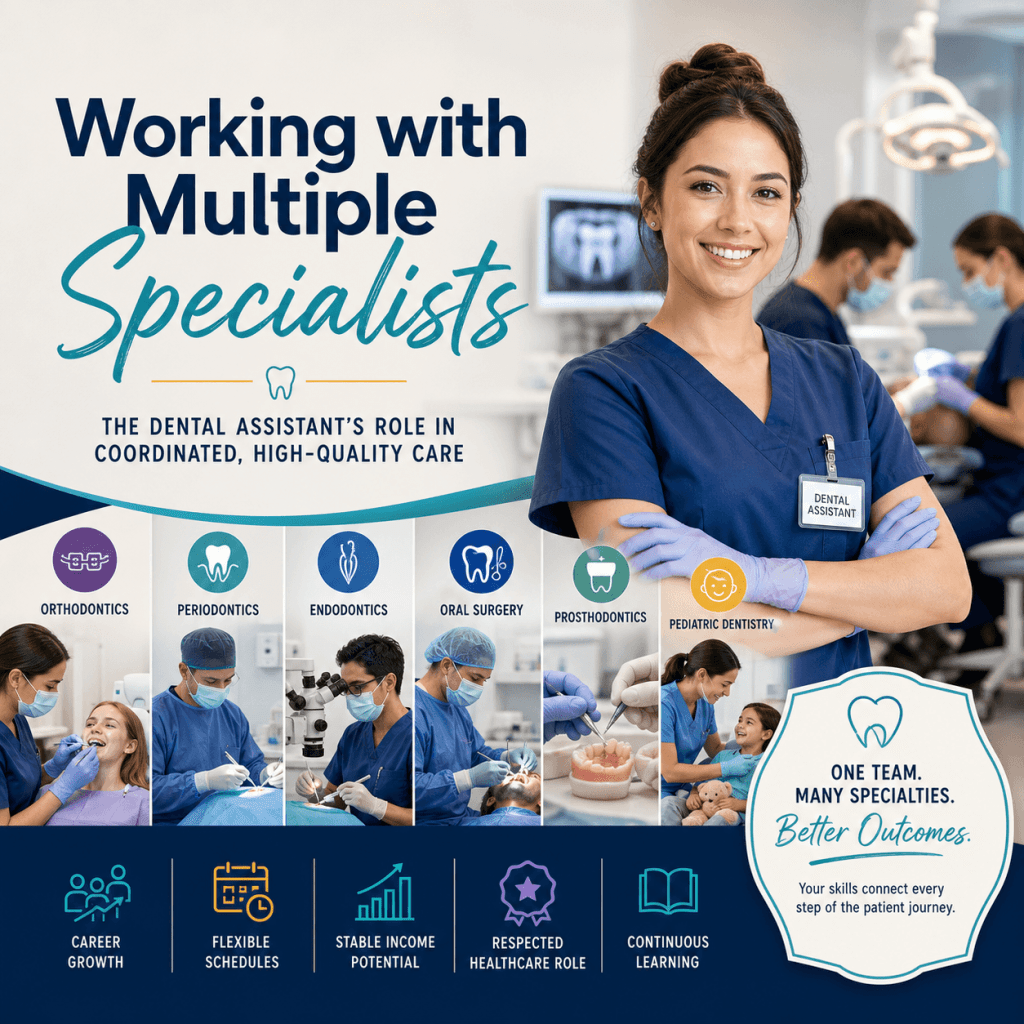
- General dentistry may focus heavily on restorative flow.
- Pediatric dentistry may require faster turnarounds and strong behavior guidance support.
- Orthodontics may have different clinical routines and delegation patterns.
No matter the setting, the best EFDAs are known for professionalism: critical thinking, ethics, patient safety, consistent quality
What an EFDA is allowed to do in Florida (scope of practice basics)
Florida defines what can be delegated to dental assistants, including expanded functions, and under what level of supervision. That means every EFDA should build the habit of verifying:
- Current Florida Board of Dentistry rules
- The dentist’s delegation protocols
- The office’s written policies and training documentation
Because the law and the practice must match. If an assistant performs a function outside allowable scope, it can put the patient, the dentist, and the assistant’s career at risk.
A helpful way to think about scope is in three buckets.
1) Tasks commonly delegated in many offices
These are the core duties that support daily patient flow, such as operatory setup, chairside assisting, infection control, and communication and documentation support.
2) Tasks that require specific training and documented competency
Expanded functions fall here. These are tasks that are not “automatic” just because someone is a dental assistant. Employers often want proof of training and skill verification before delegating expanded steps.
3) Tasks typically reserved for licensed clinicians
Some procedures and decisions remain in the domain of licensed providers due to complexity, diagnosis, and legal requirements.
The key theme is documentation and compliance. Being able to show training completion, skill check-offs, and a clear understanding of delegation rules is part of being a true professional in Florida dentistry.
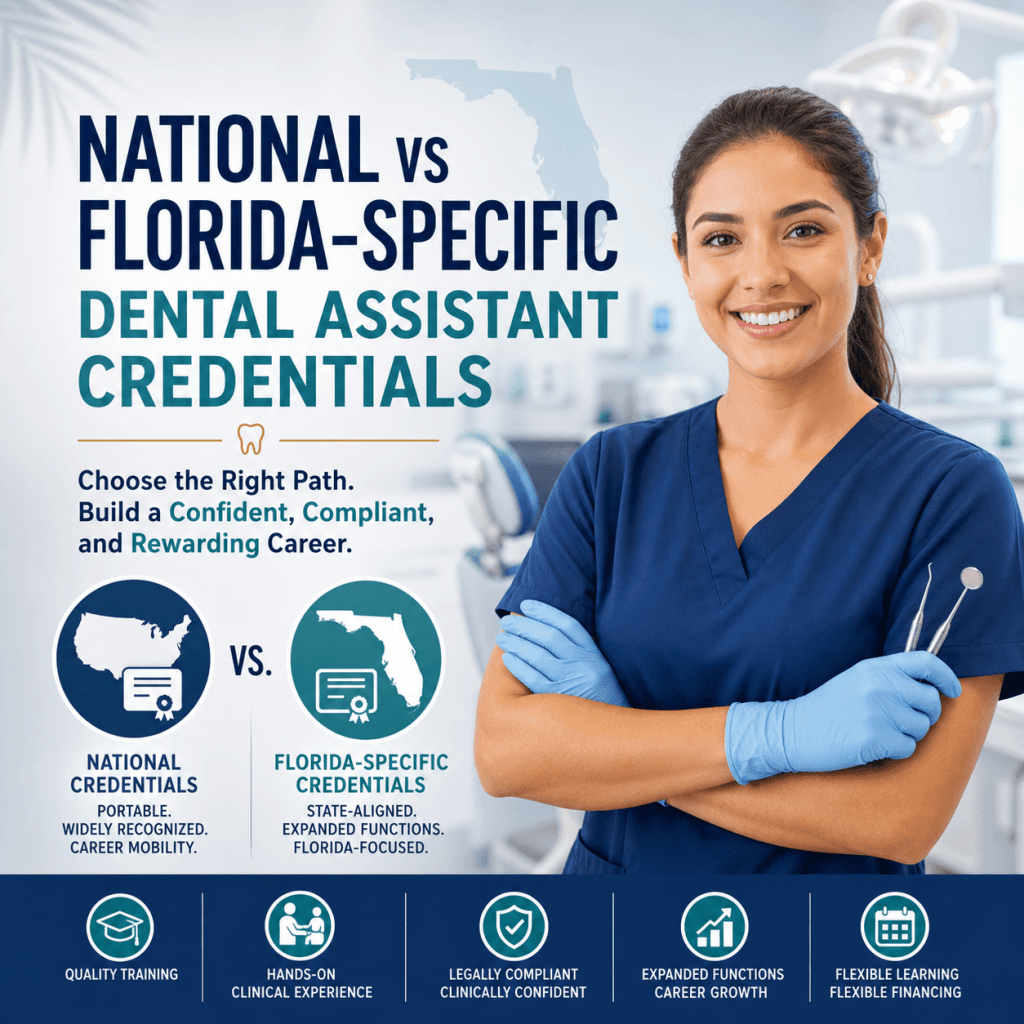
What is EFDA certification in Florida? (Credentials, training, and what employers expect)
When people say “EFDA certification,” they usually mean:
- Completing an approved expanded functions program or courses
- Demonstrating competency through hands-on training and evaluation
- Maintaining proof of training that an employer can verify
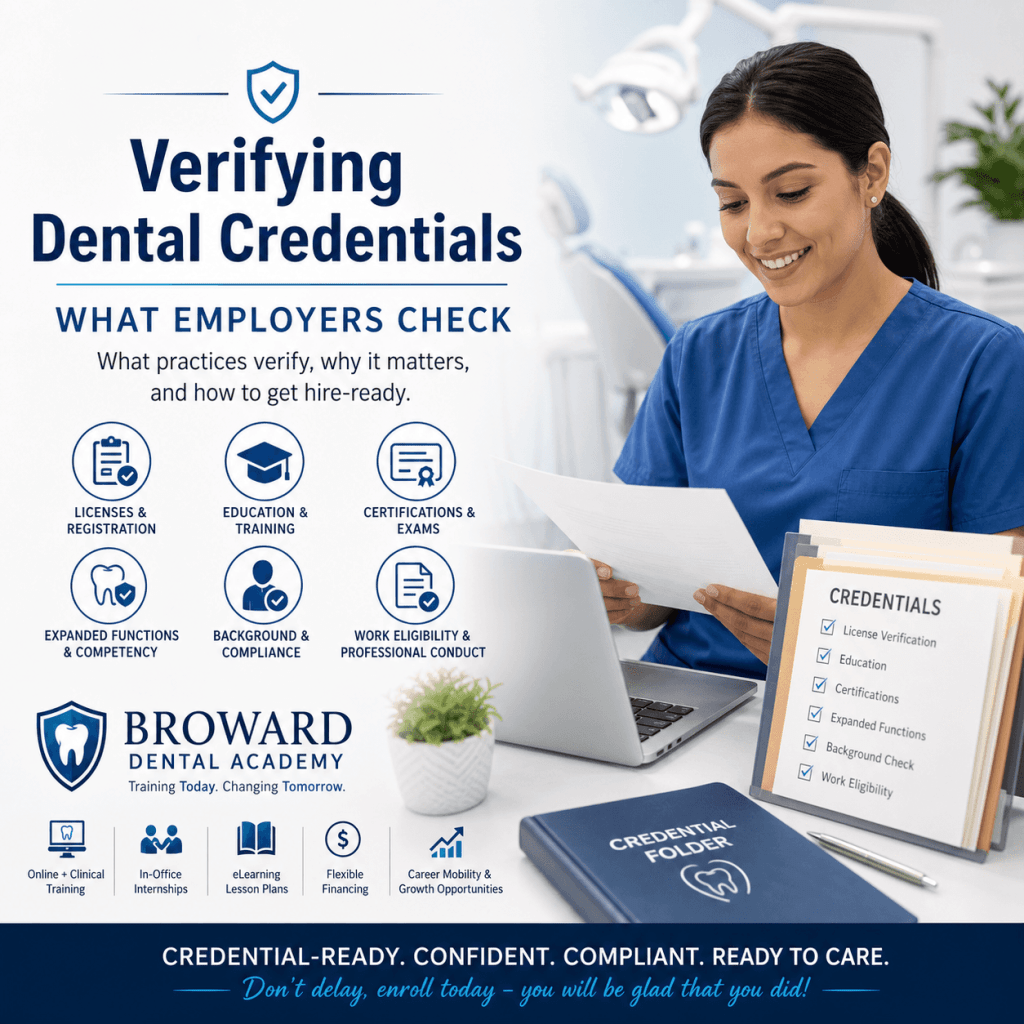
Employers commonly look for:
- Certificates of completion and course records
- Verified competencies and skills checklists
- Understanding of Florida delegation and supervision requirements
- Calm, confident performance in real clinical settings
One important clarification: some job listings use “EFDA” as a convenient title, but the office may still require very specific coursework before they delegate expanded functions. That is why structured training matters. The goal is not just to “have a title.” The goal is to be ready to perform in a fast-paced practice with consistency and legal compliance.
How to become an EFDA in Florida: a step-by-step pathway
There are different starting points, but most EFDA paths in Florida follow a practical progression.
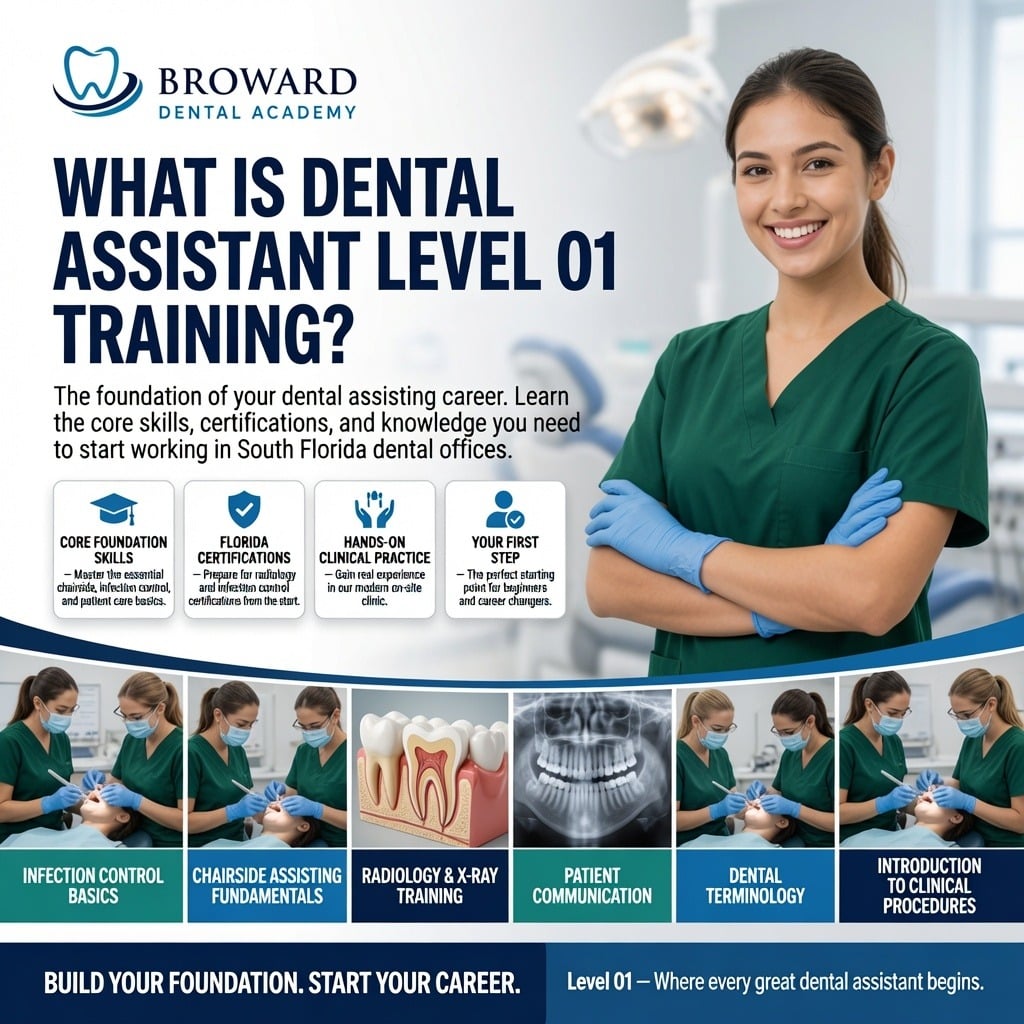
Step 1: Start with foundational dental assisting training or experience
Some learners are brand new. Others are already assisting and want to level up. Either way, you need a solid base in chairside fundamentals.
Step 2: Complete key prerequisite topics
Before expanded functions training feels “safe” and natural, you need strong habits in areas like:
- Infection control fundamentals
- Patient safety and professionalism
- Chairside assisting workflow
- Radiography concepts if applicable to your role and training pathway
Step 3: Complete expanded functions coursework and skill training
This is where you build the advanced clinical skills and learn the boundaries of what is allowed and how delegation works in Florida.
Step 4: Get hands-on clinical practice
A strong pathway includes:
- Simulation practice first
- Guided repetition and evaluation
- Real-patient or in-office exposure where appropriate
This is where speed and confidence come from, not from rushing.
Step 5: Build a portfolio of competency and compliance
Do not rely on memory. Keep:
- Certificates
- Skills checklists
- Any documented competencies
- Training records you can bring to interviews
Timelines vary, but it helps to plan for learning, practice, and confidence-building. The assistants who thrive are the ones who take training seriously and build real consistency before stepping into expanded responsibilities.
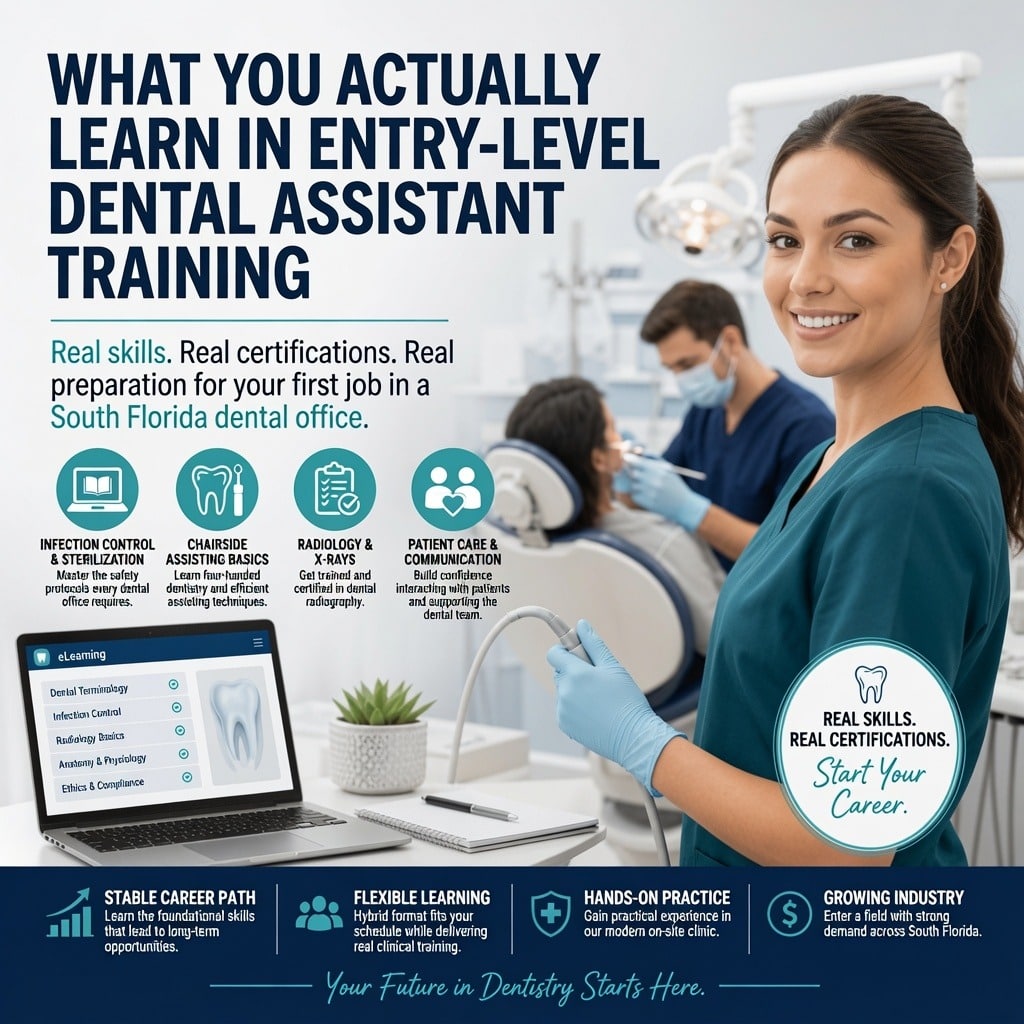
What you learn in a strong EFDA program (skills that actually make you hireable)
A strong EFDA-ready program should prepare you for what real offices demand: quality, speed with accuracy, and excellent judgment.
Clinical skill-building
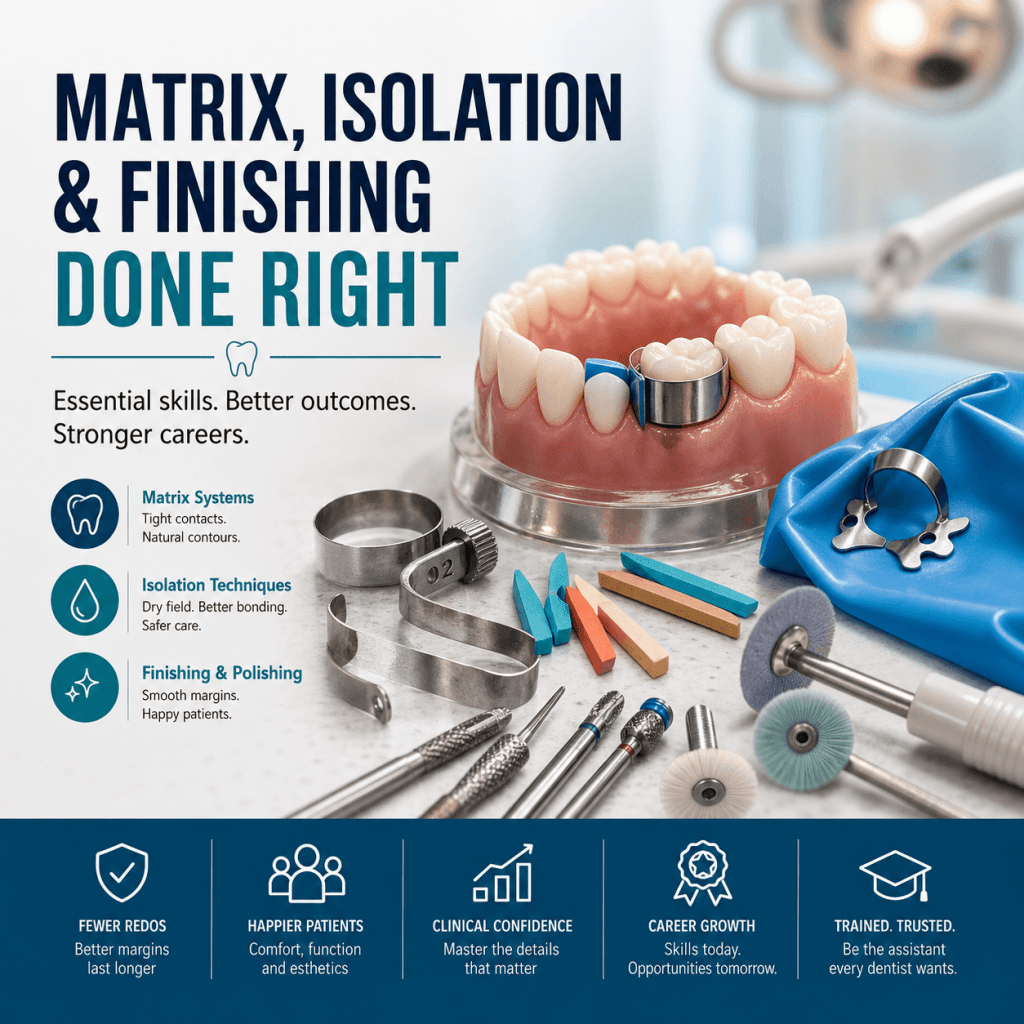
You build the kind of skills that help dentists trust you, including restorative support, procedural workflows, materials handling, and precision-focused tasks, always within Florida rules.
Patient-centered communication
Great assistants do not just “work on teeth.” They support people. Training should cover:
- Explaining next steps clearly
- Helping reduce anxiety
- Chairside professionalism and tone
- Cultural sensitivity and respect
Safety and quality mindset
Employers value assistants who protect the practice and patients every day through:
- Infection control best practices
- Documentation habits
- Risk reduction and consistency
Critical thinking in dentistry
This is a major separator. You learn to:
- Anticipate what the dentist needs next
- Recognize when something is outside your scope
- Pause and escalate questions appropriately
Practice readiness
Real practices reward assistants who can keep procedures on track through:
- Instrument management
- Efficient operatory turnover
- Consistent performance under pressure
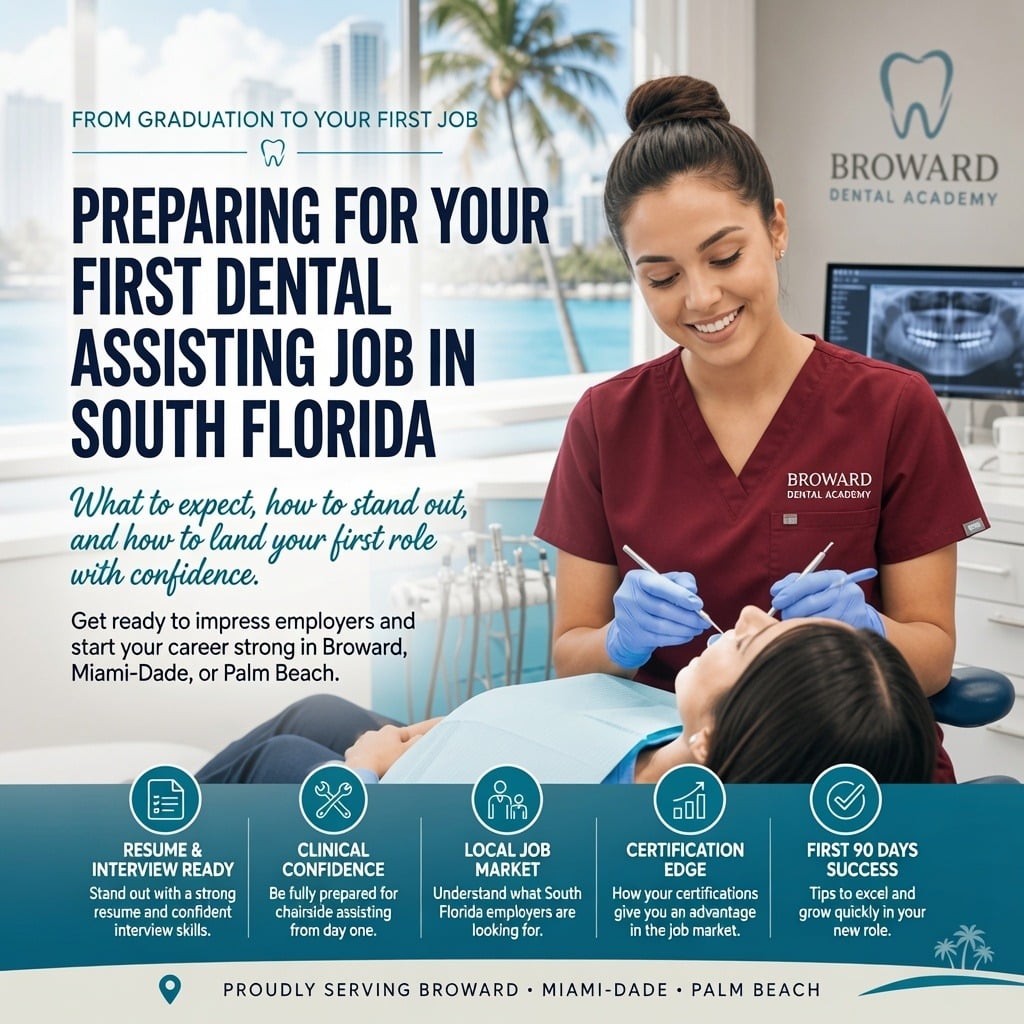
Career outlook: pay potential, schedule flexibility, and advancement options
A dental assisting career in Florida can be appealing because it often offers:
- Stable income potential
- Flexible schedules
- Long-term career mobility for motivated assistants
“Career mobility” can look like:
- Moving from entry-level assisting to expanded functions
- Becoming a lead assistant
- Transitioning into specialty practices
- Building toward administrative or office management pathways
Demand for skilled dental professionals continues to rise, and many practices prefer assistants who are trained, compliant, and confident from day one. This is where the importance of critical thinking in dentistry comes into play.
A practical tip when reviewing Florida job postings: read them closely and ask directly in interviews what they mean by “EFDA,” what expanded functions they expect, and what documentation they require before delegation. For more information about EFDA in Florida, including common questions asked about the process, you might find this resource helpful.
Common mistakes to avoid when pursuing EFDA in Florida
A few avoidable mistakes can slow your progress.
Assuming EFDA means the same thing in every state
Florida-specific rules matter. Always verify what is permitted and what supervision is required.
Focusing only on tests and skipping hands-on repetition
Confidence comes from supervised practice and repetition, not from memorizing terms.
Not keeping documentation
Do not make employers guess. Keep certificates, checklists, and proof of training organized.
Overstepping scope due to pressure or unclear delegation
If something feels unclear, pause and ask. Protecting your career starts with protecting the patient and staying compliant.
Choosing training without real clinical immersion
Programs that lack clinical exposure or internship pathways can leave graduates feeling unprepared in real operatories.
How Broward Dental Academy supports EFDA-ready training (and why it’s built for real offices)
Broward Dental Academy is a career-focused training option for students who want more than basic instruction. The academy offers a wide range of dental courses and advanced dental training designed to develop well-rounded professionals. You can explore the courses offered by Broward Dental Academy which include comprehensive training programs tailored for various dental professions.
Students benefit from a learning experience built for modern dentistry, including:
- Immediate immersion in online and clinical settings
- Latest eLearning lesson plans for remote training where applicable
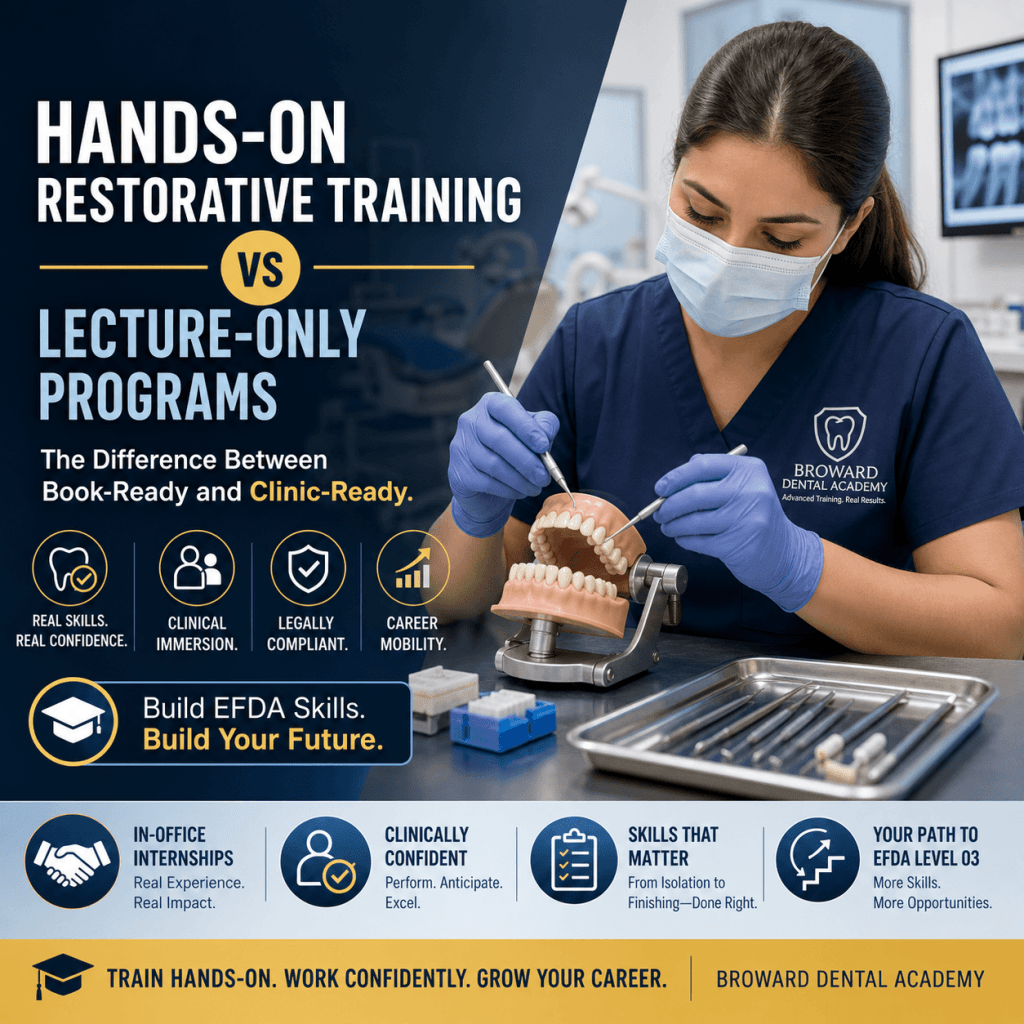
- Hands-on preparation, including in-office internships to bridge training to real-practice expectations
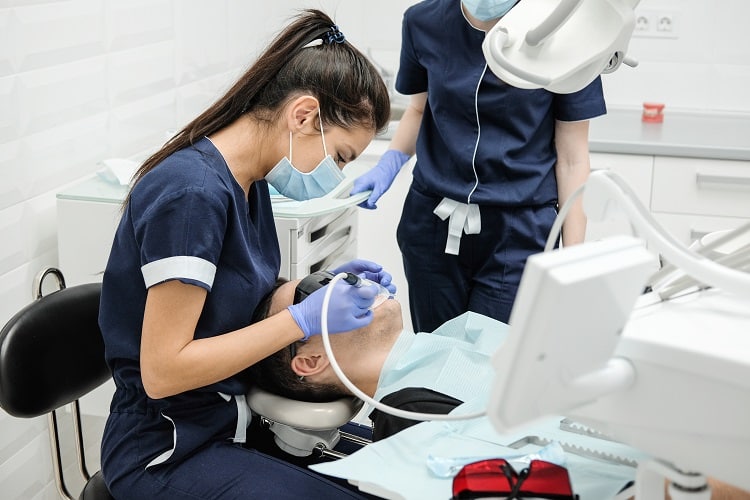
The goal is straightforward: prepare students to become thoroughly trained, legally compliant, and clinically confident professionals. Broward Dental Academy does not just teach students how to pass an exam. It prepares them to thrive in a modern, high-performance dental practice, with an emphasis on critical thinking, ethics, and confident execution.
Broward Dental Academy offers 07 courses, flexible financing options, and guidance for students who want to grow into expanded functions and long-term career mobility.
Next steps: decide if EFDA is right for you and take action
The Expanded Functions Dental Assistant (EFDA) program tends to be a great fit for people who are:
- Detail-oriented
- Calm under pressure
- Interested in hands-on clinical work
- Committed to compliance and patient safety
Your next step depends on where you are starting:
- If you are new to dentistry, start by building strong assisting fundamentals.
- If you already assist, map the exact expanded skills you want and pursue structured training with hands-on practice.
To explore more about the program details and enrollment information, visit the Broward Dental Academy.
Don’t delay, enroll today – you will be glad that you did!
FAQs (Frequently Asked Questions)
What does EFDA stand for and what does it mean in dentistry?
EFDA stands for Expanded Functions Dental Assistant. In dentistry, it refers to a dental assistant who has received advanced training to perform more hands-on clinical procedures beyond basic chairside assisting, such as supporting restorative procedures under a dentist’s supervision.
What are the key responsibilities of an EFDA in Florida dental practices?
In Florida, an EFDA performs legally permitted advanced clinical duties including tasks related to oral surgery, endodontics, and periodontics under dentist supervision. They help improve workflow efficiency by handling room setup, materials preparation, and assisting directly during restorative procedures while ensuring compliance with state rules.
How does an EFDA differ from a standard dental assistant or dental hygienist?
A standard dental assistant focuses on operatory setup, chairside assisting, infection control, and basic delegated clinical tasks. An EFDA has additional training for expanded clinical functions and can perform more advanced procedures. A dental hygienist primarily provides preventive care like cleanings and patient education, which differs from both assistant roles.
Why is EFDA training important for dental assistants in Florida?
EFDA training equips dental assistants with advanced skills that meet modern dental practice demands for efficient, high-quality patient care. It enables assistants to legally perform expanded functions, leading to better career mobility, stable income potential, flexible schedules, and the ability to support dentists in specialized procedures.
What types of advanced clinical duties can an EFDA perform?
An EFDA can be trained to assist with advanced clinical duties such as oral surgery assistance, endodontic procedures (root canals), periodontic treatments (gum therapies), restorative work including materials mixing and tray organization—all within the legal scope defined by Florida regulations.
How can someone become an EFDA in Florida?
To become an EFDA in Florida, one must complete approved expanded functions training programs that cover advanced clinical skills relevant to specialties like oral surgery or endodontics. After completing coursework and demonstrating competencies per state guidelines, the assistant receives certification allowing them to perform expanded duties under dentist supervision.