South Florida dental offices are busy, patient-focused, and often fast-moving. This dynamic environment is precisely why dental assistant careers are gaining traction here. If you’re considering this career path, it’s beneficial to understand the day-to-day reality of the job, the expectations of employers, and how the right training can equip you with the confidence to step into your first role.
Dental assistant careers in South Florida: what the job is really like
Dental assisting is hands-on healthcare work. You are not “just helping.” You are part of the clinical engine that keeps the schedule running, keeps patients comfortable, and supports safe, efficient dentistry.
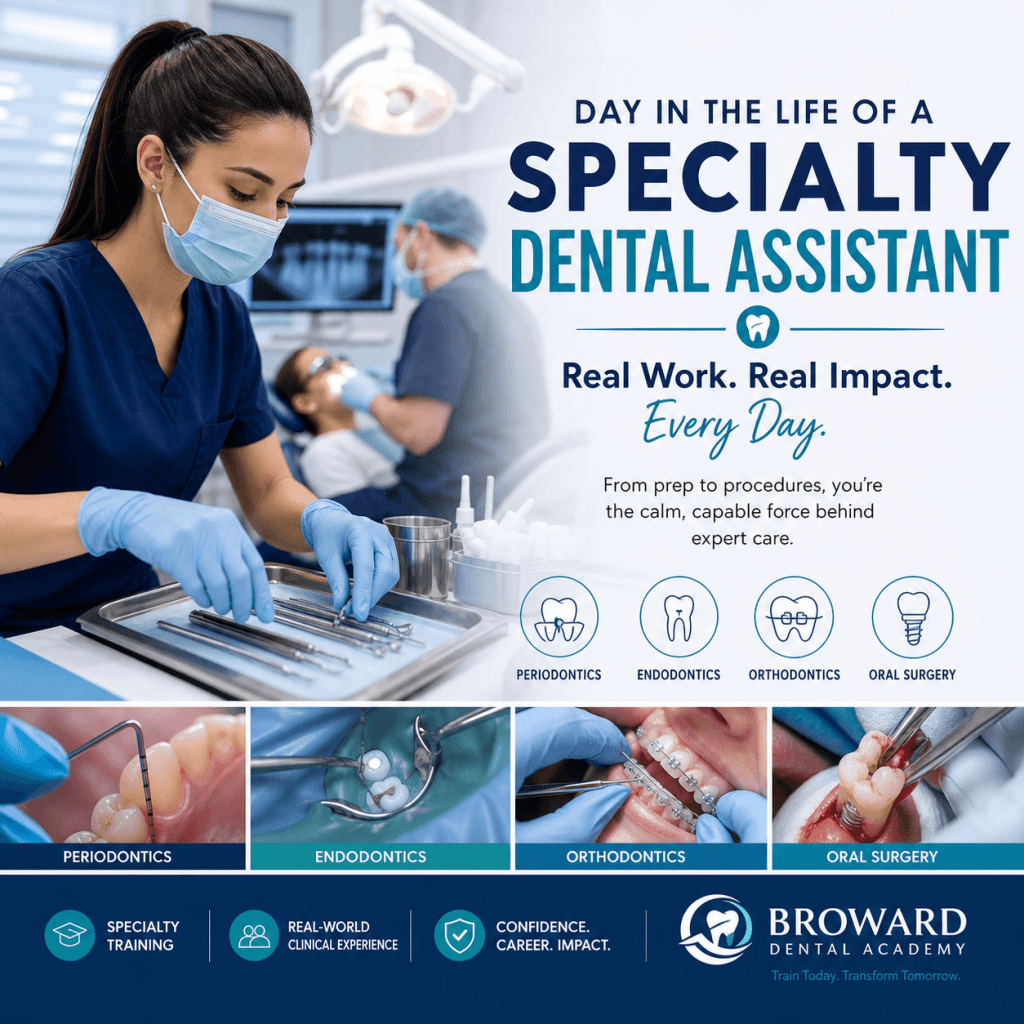
In real practices across South Florida, a typical day can include:
- Preparing operatories and patients: seating patients, reviewing basic information, setting up trays, and making sure the room is ready before the dentist enters.
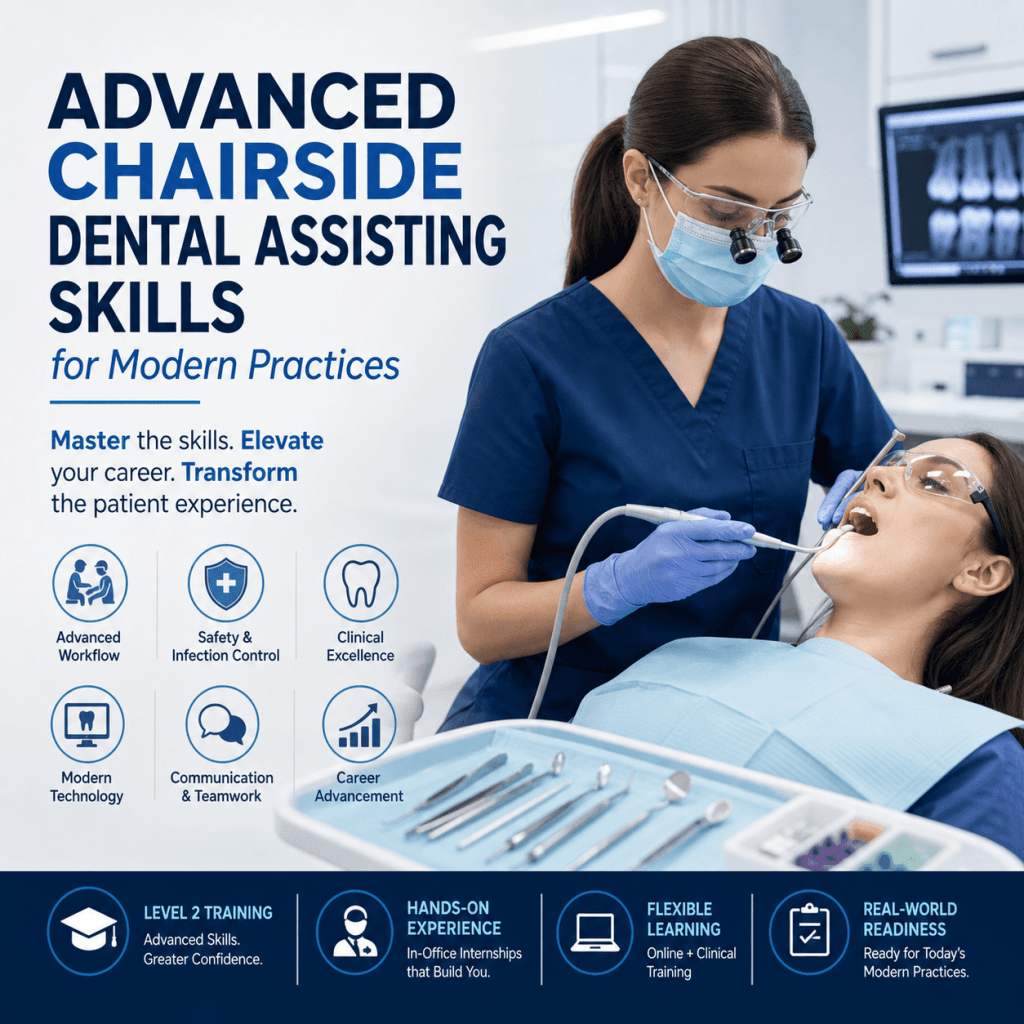
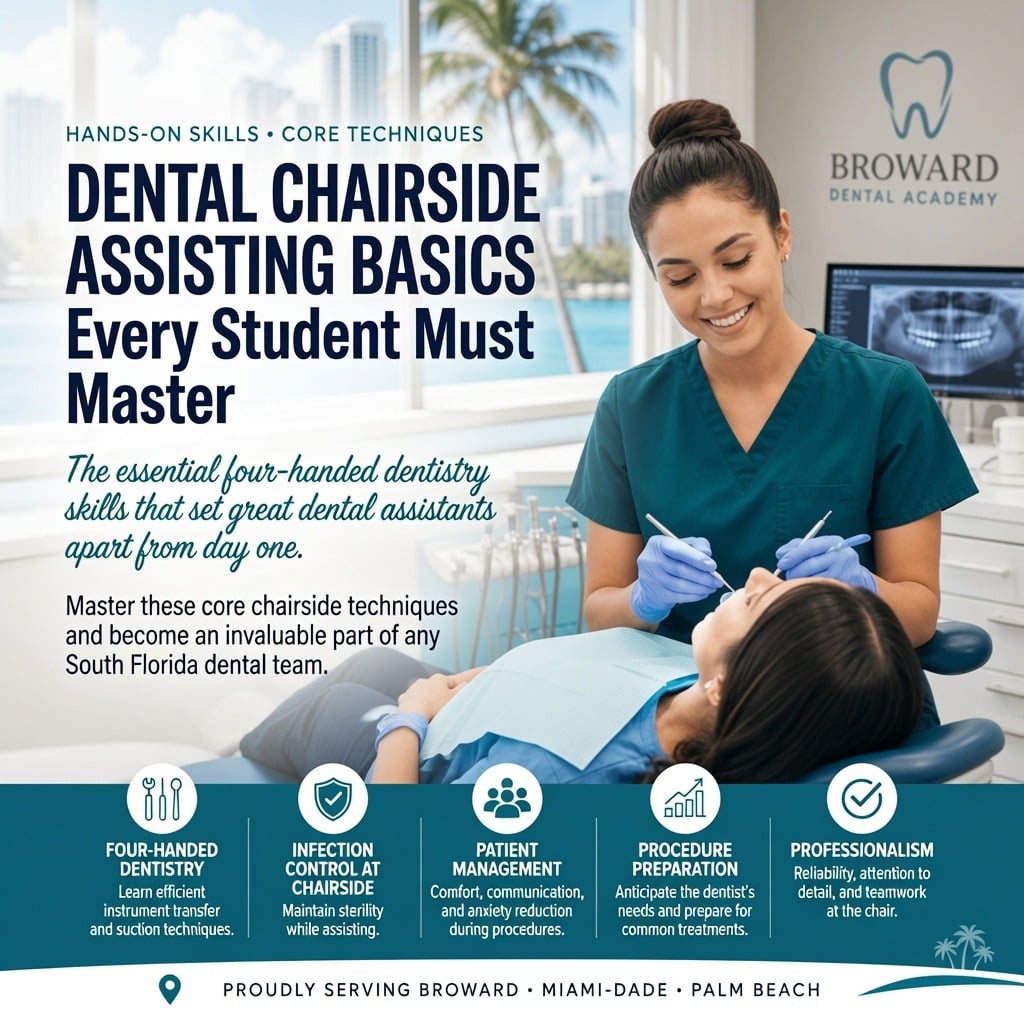
- Chairside assisting (four-handed dentistry): passing instruments, managing suction and retraction, anticipating what the provider needs next, and helping procedures move smoothly.
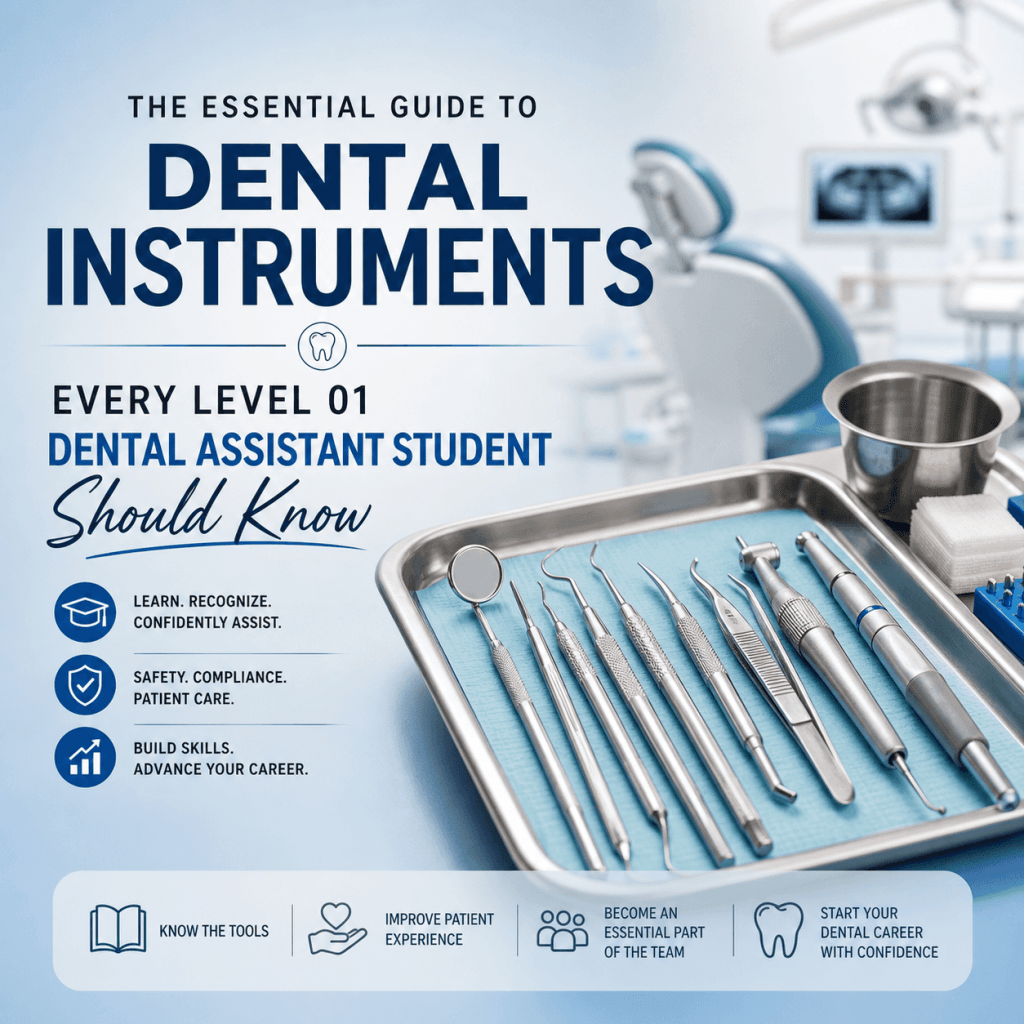
- Instrument and supply management: knowing where everything is, keeping setups consistent, and restocking without slowing down the flow of the day.
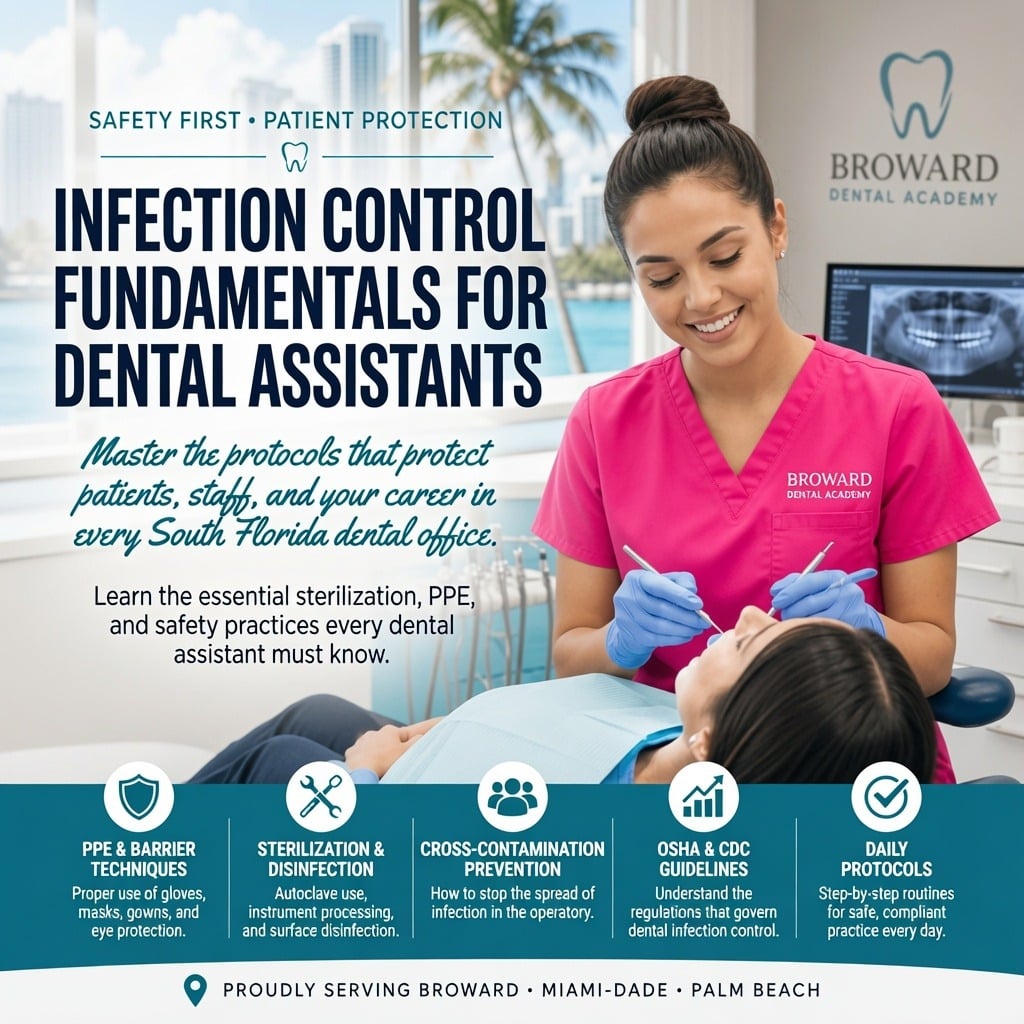
- Infection control and sterilization: cleaning and disinfecting rooms, running sterilization cycles, packaging instruments properly, and maintaining clean-to-dirty workflow.
- Charting and documentation support: assisting with notes, treatment documentation, and basic chart updates depending on office systems and role.
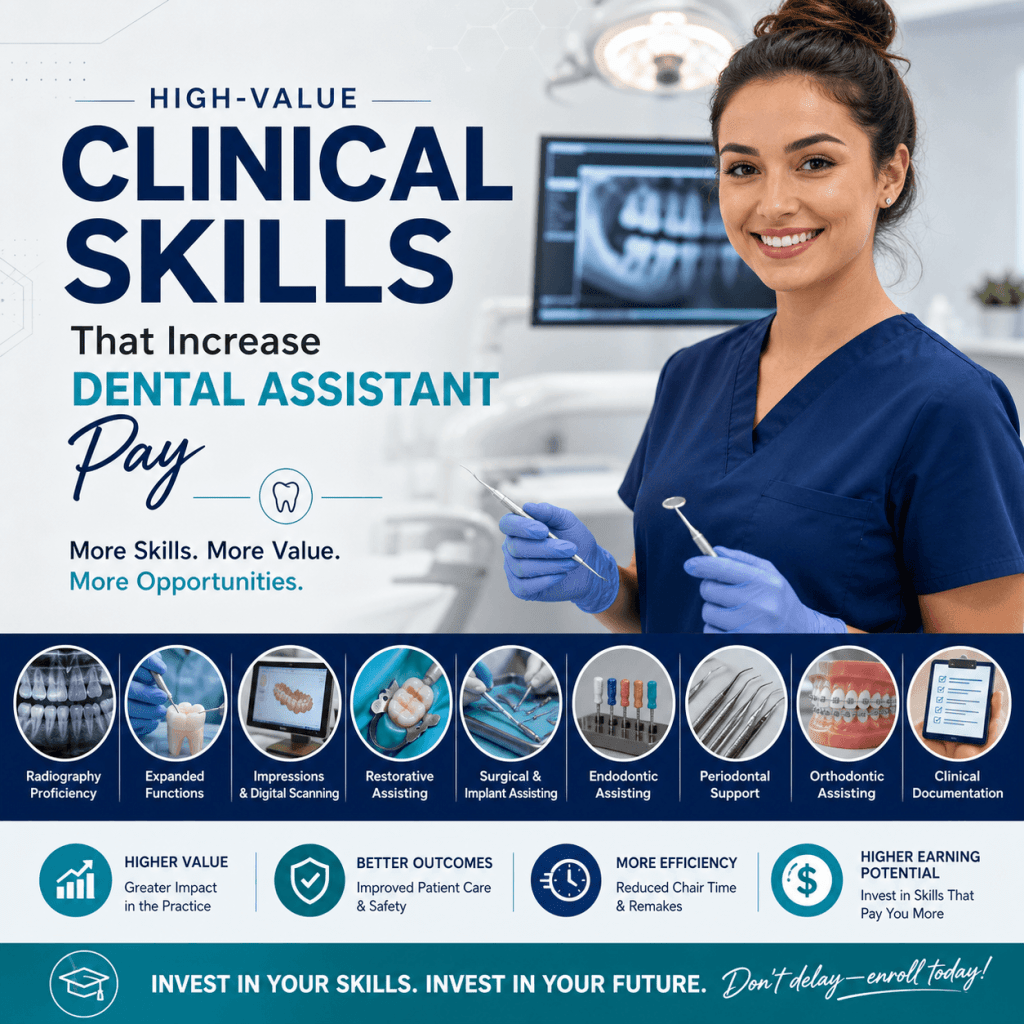
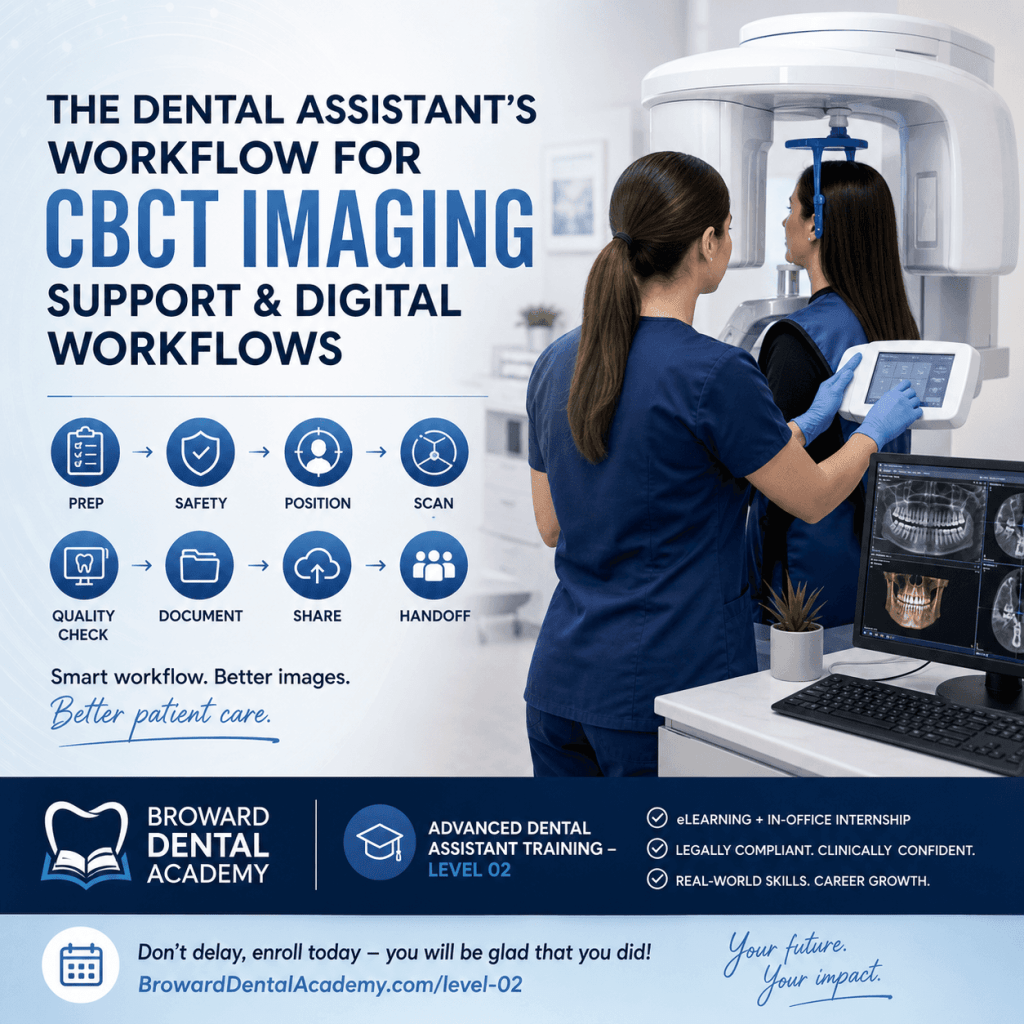
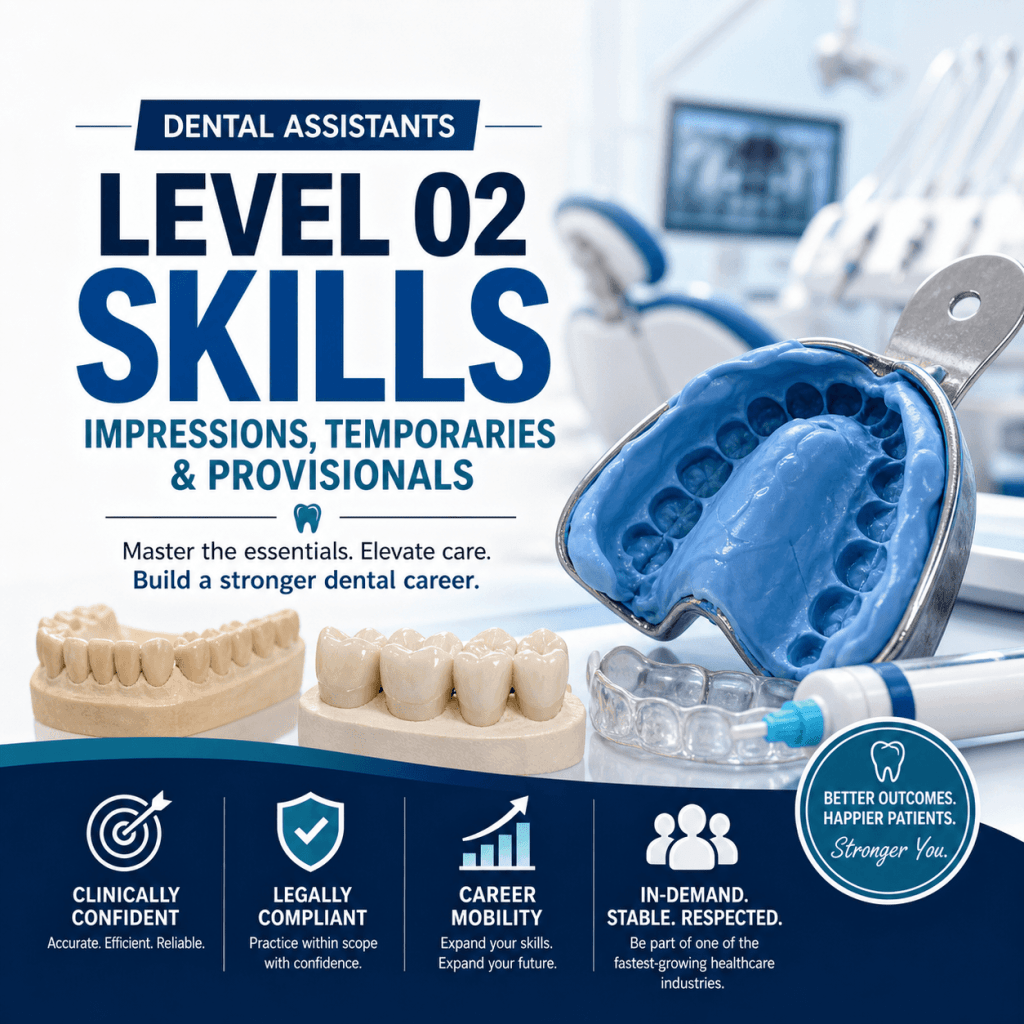
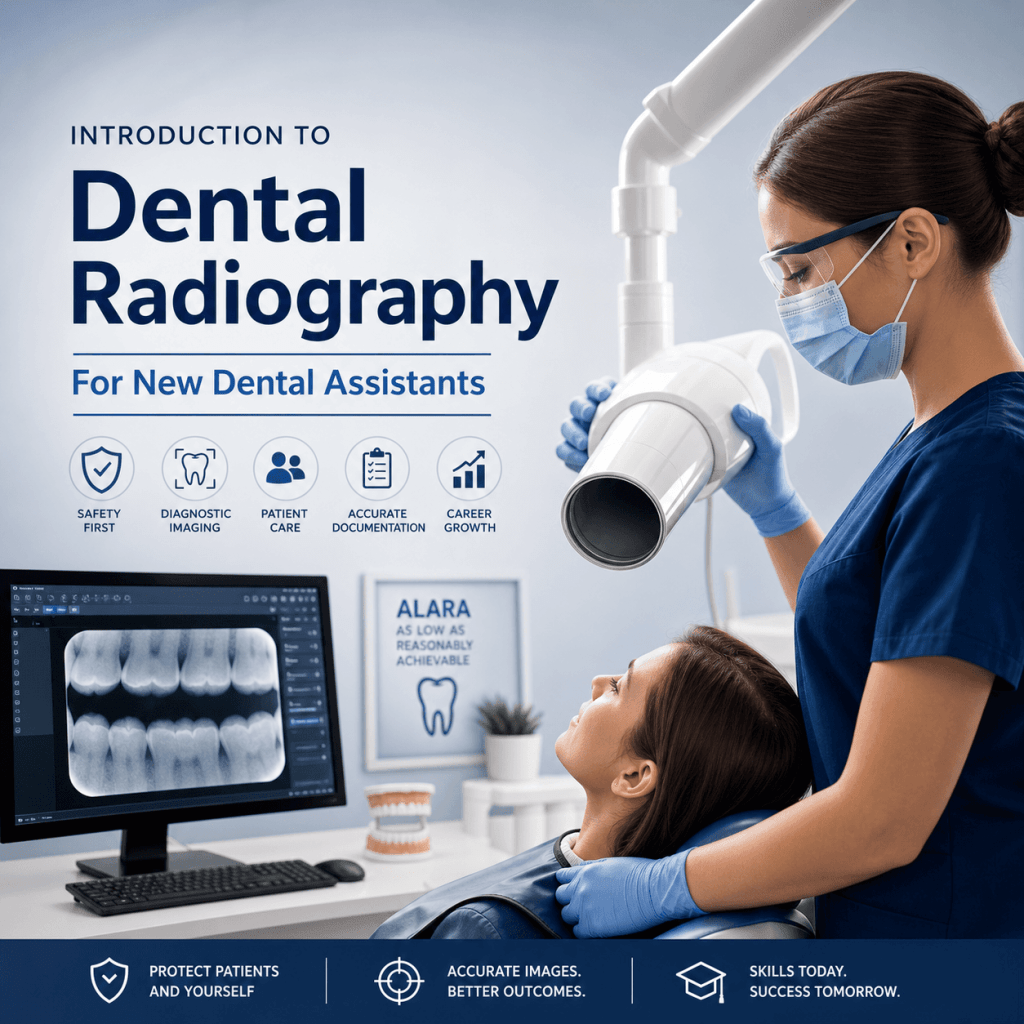
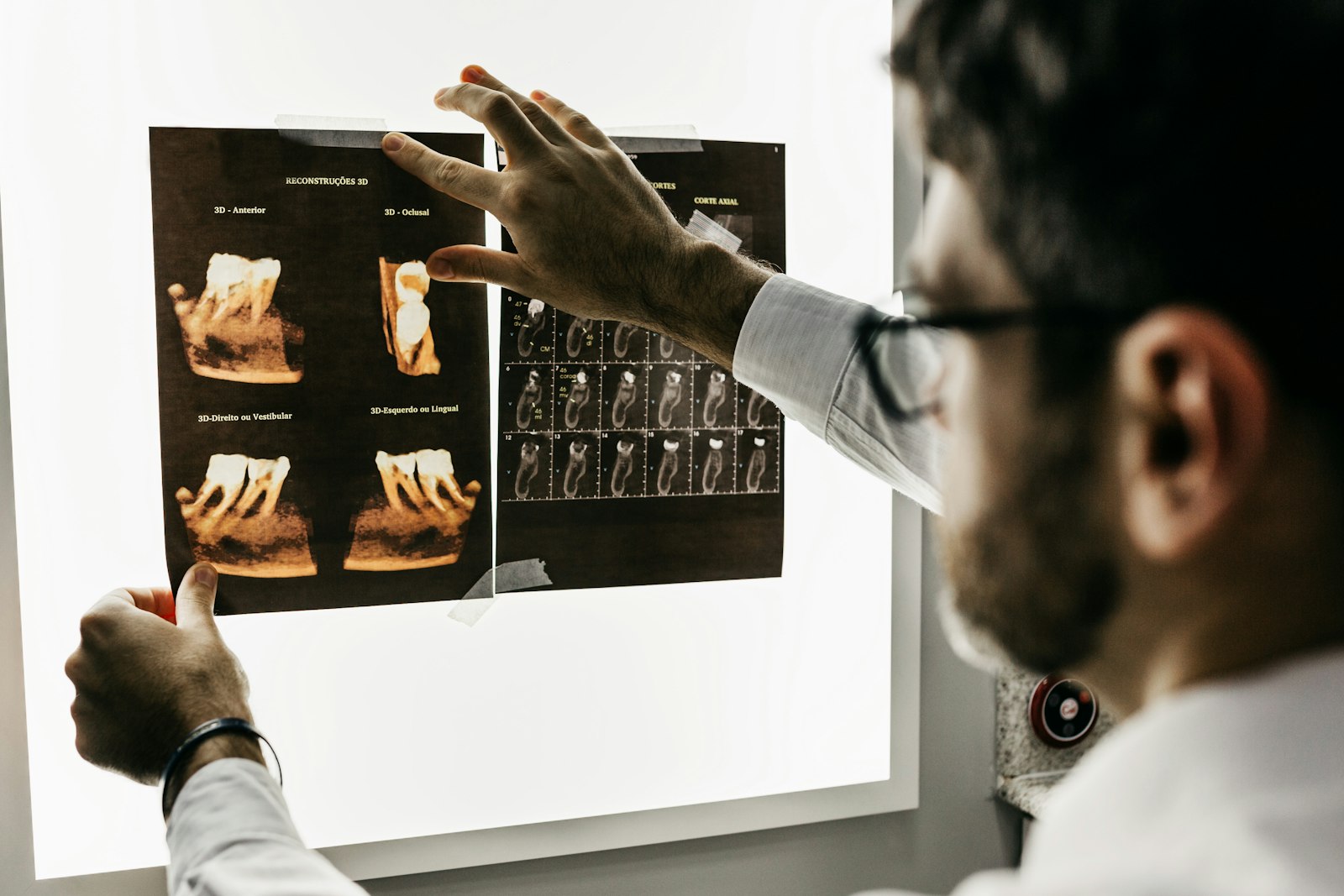
- Impressions, scans, and radiographs where permitted: many offices want assistants who are comfortable supporting diagnostic and restorative workflows within Florida rules and office protocols.
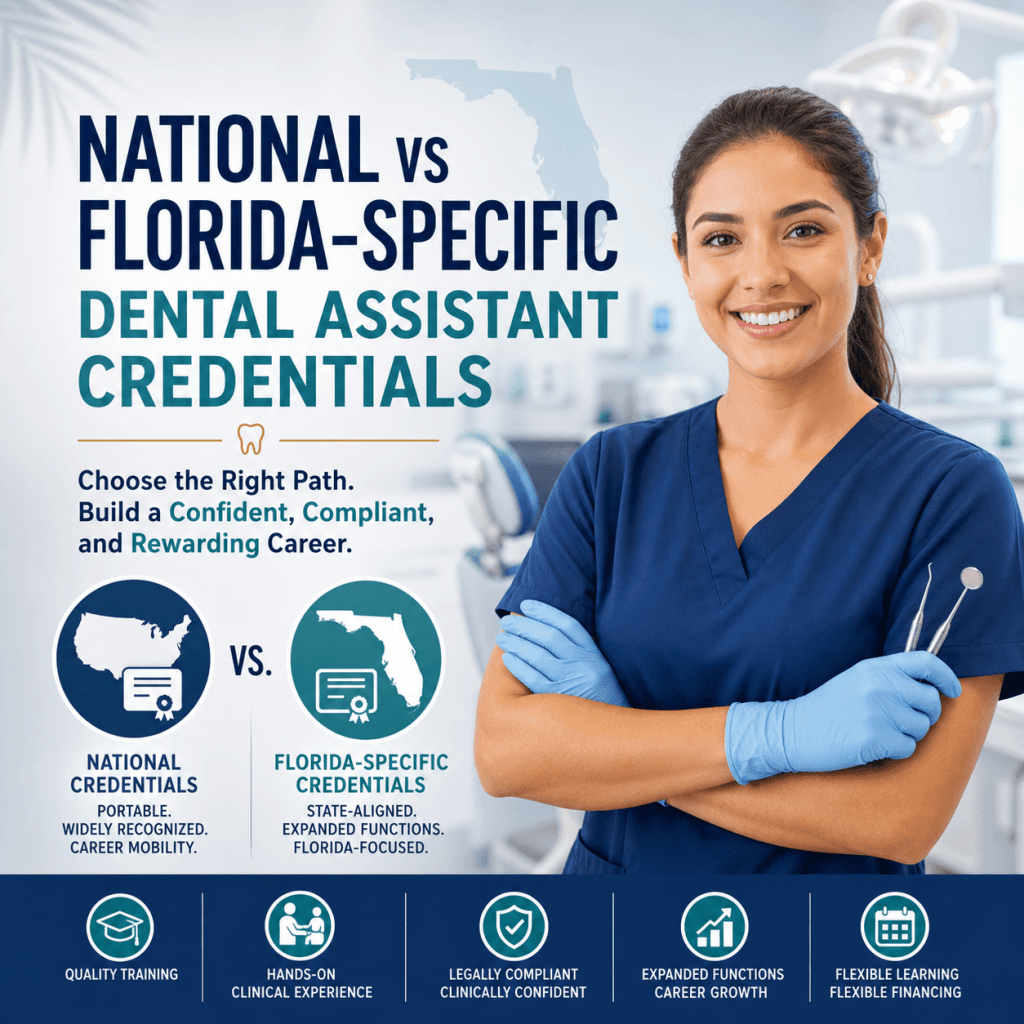
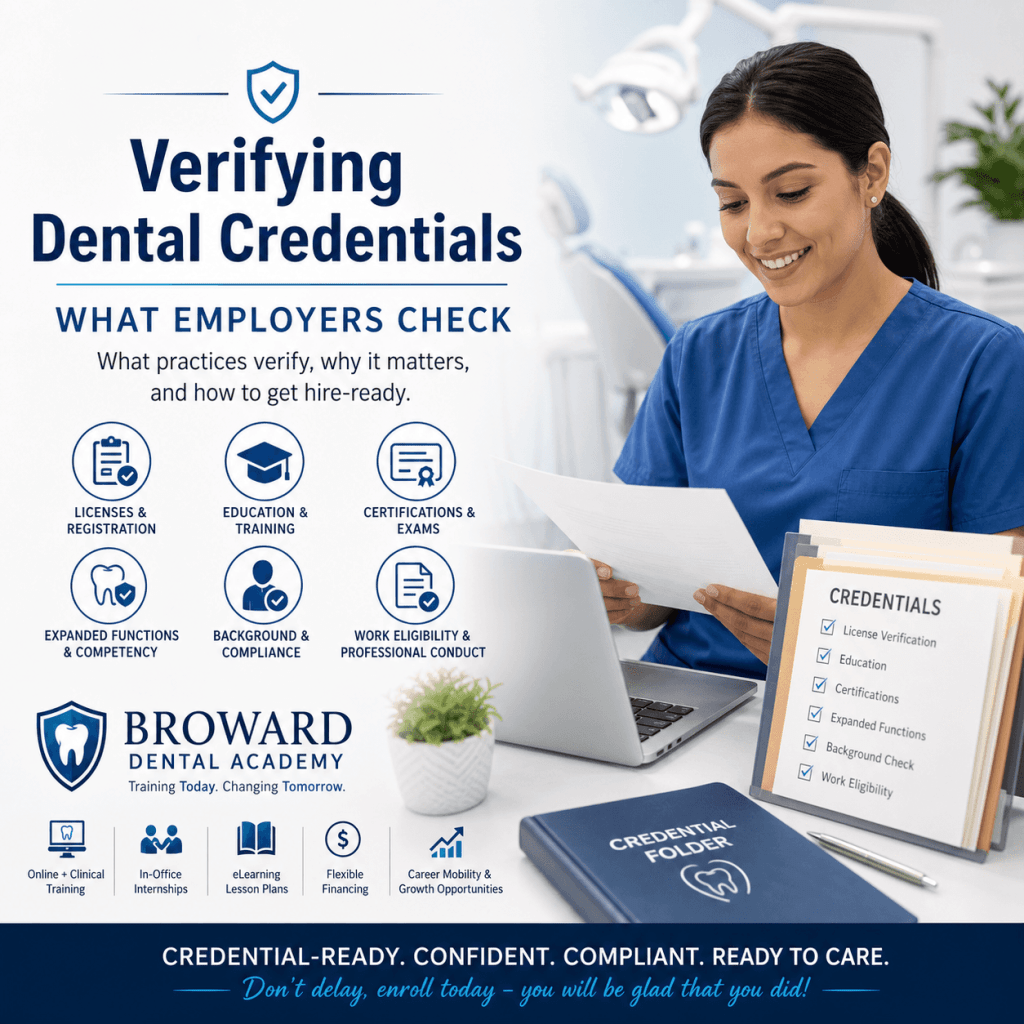
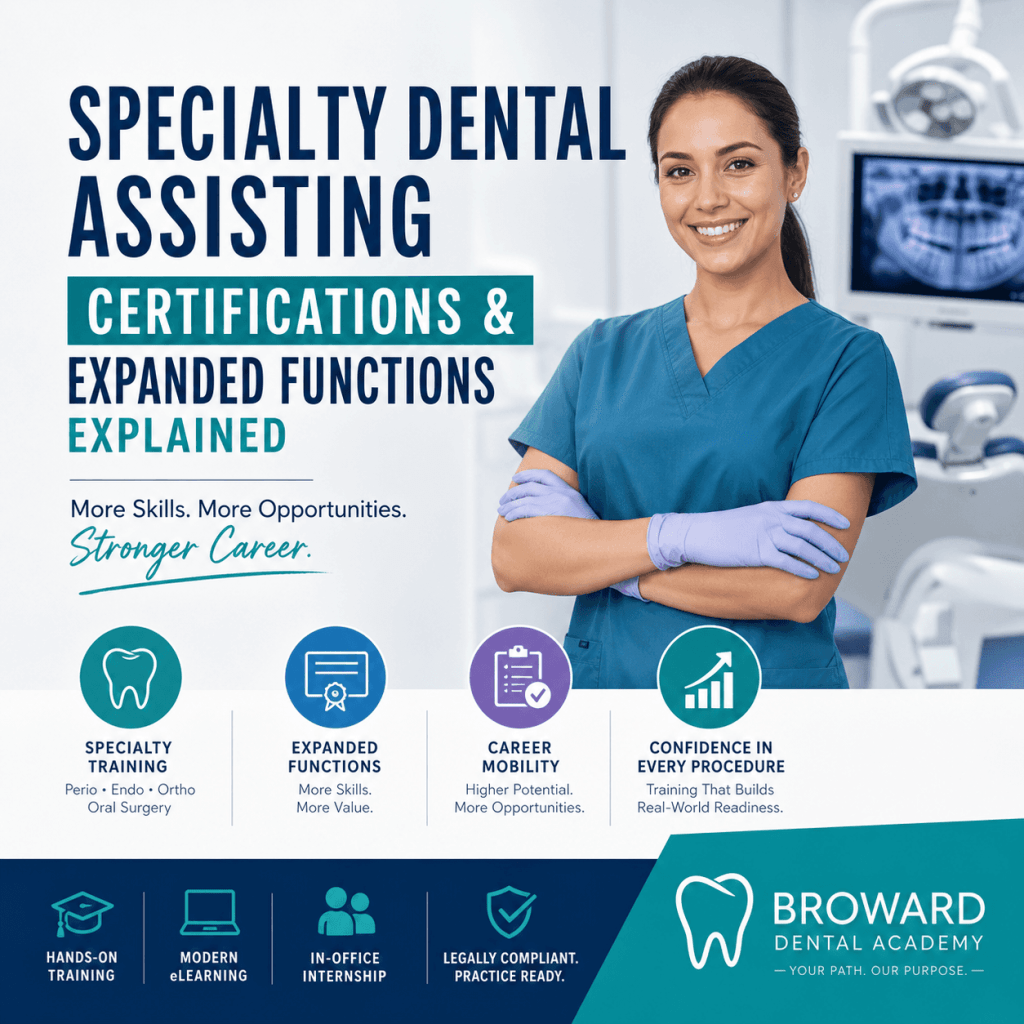
To embark on this rewarding journey as a dental assistant in South Florida, it’s crucial to obtain the necessary certifications which can significantly enhance your employability. For more information about these certifications or any other frequently asked questions, consider exploring resources from reputable institutions like Broward Dental Academy. They also provide valuable insights into various locations where you can pursue your dental training.
Where dental assistants work in South Florida
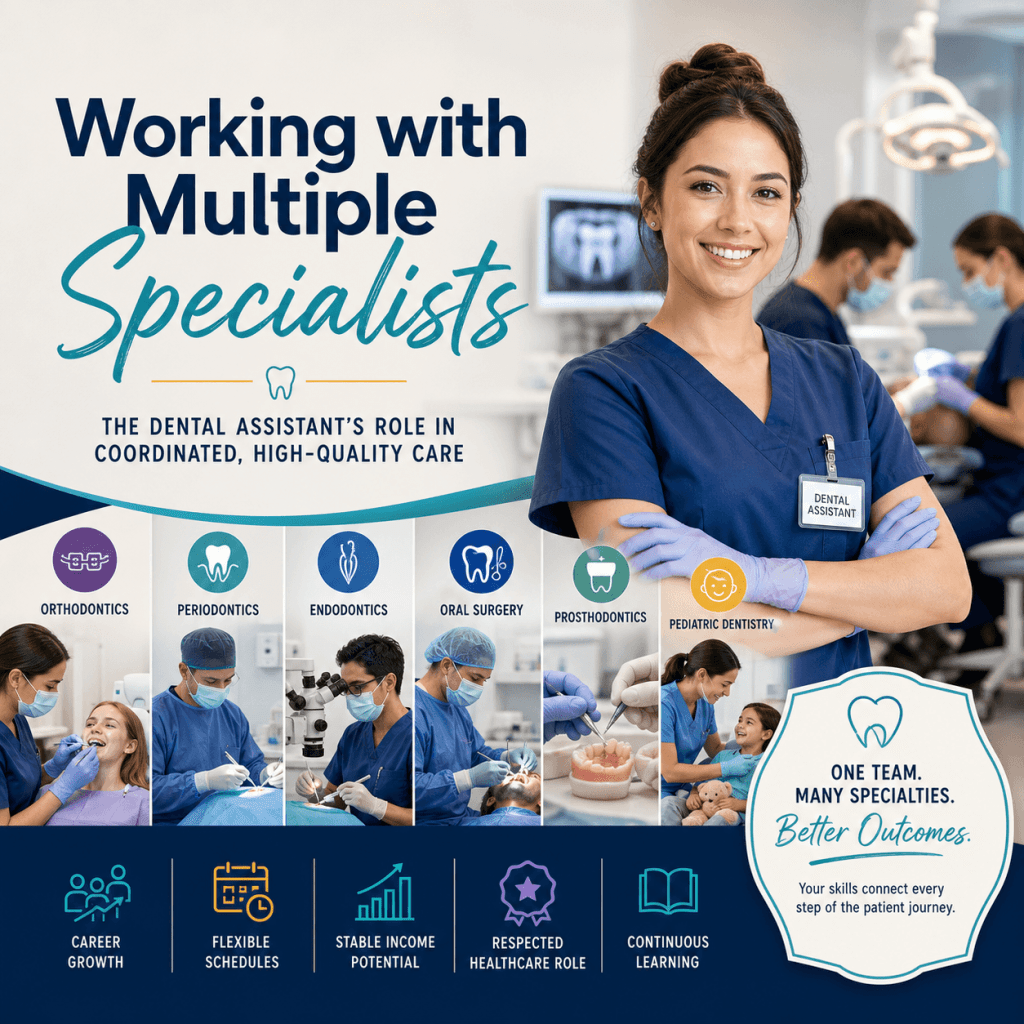
You will see dental assistant jobs across a range of settings, including:
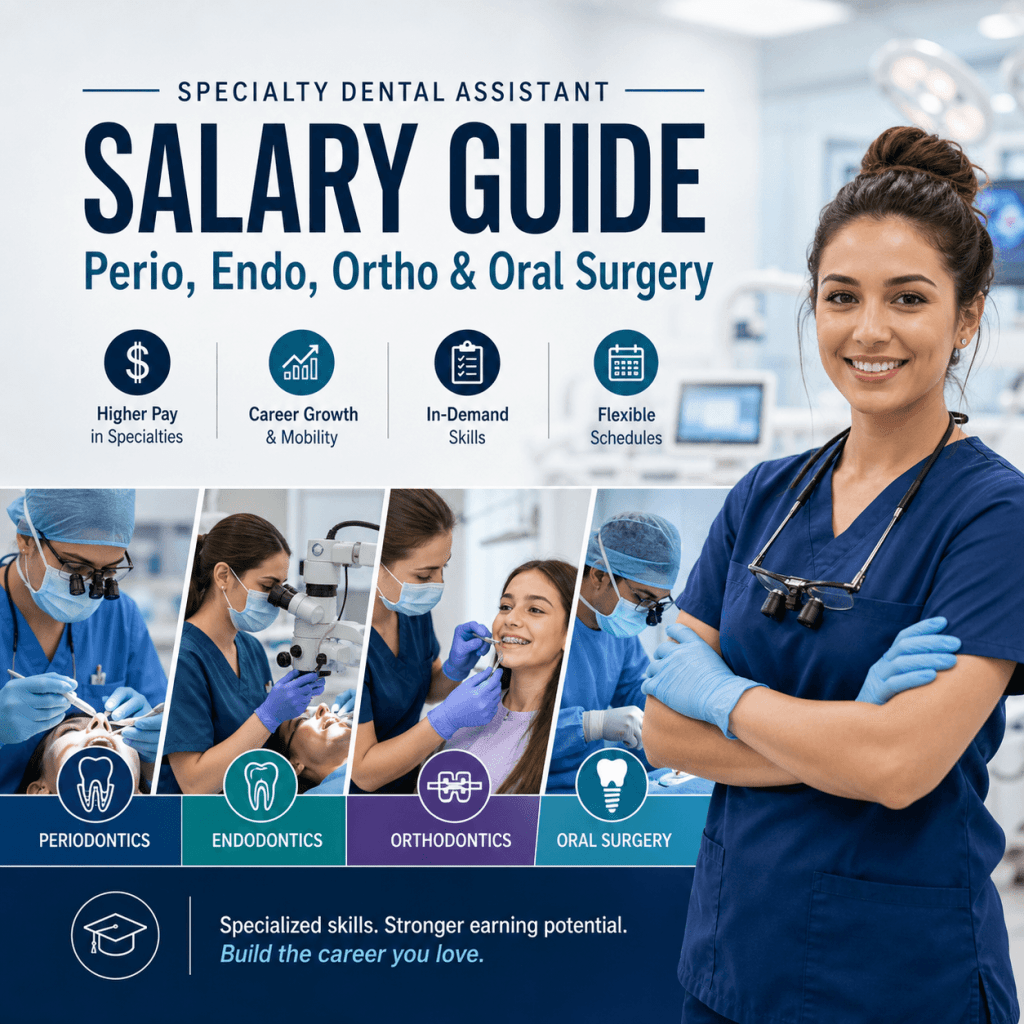
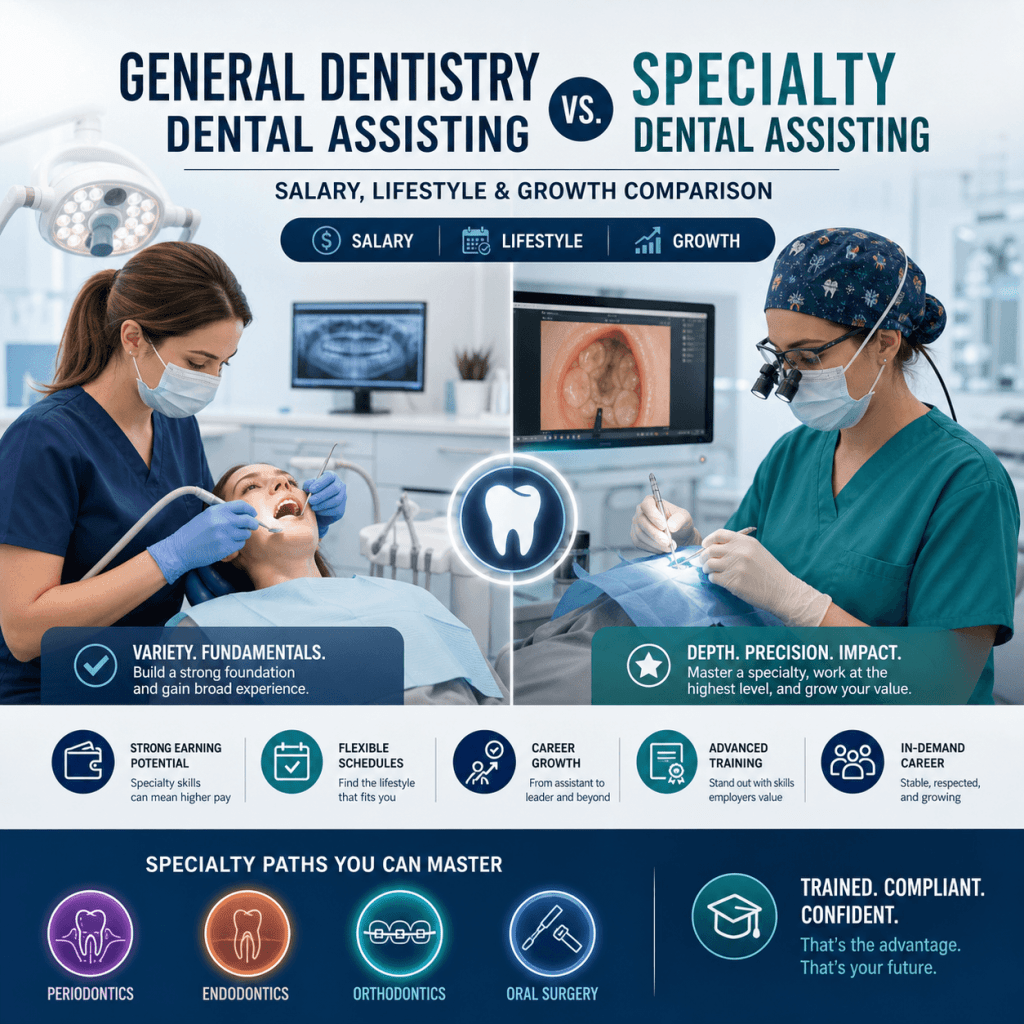
- General dentistry (fillings, crowns, hygiene support, emergencies)
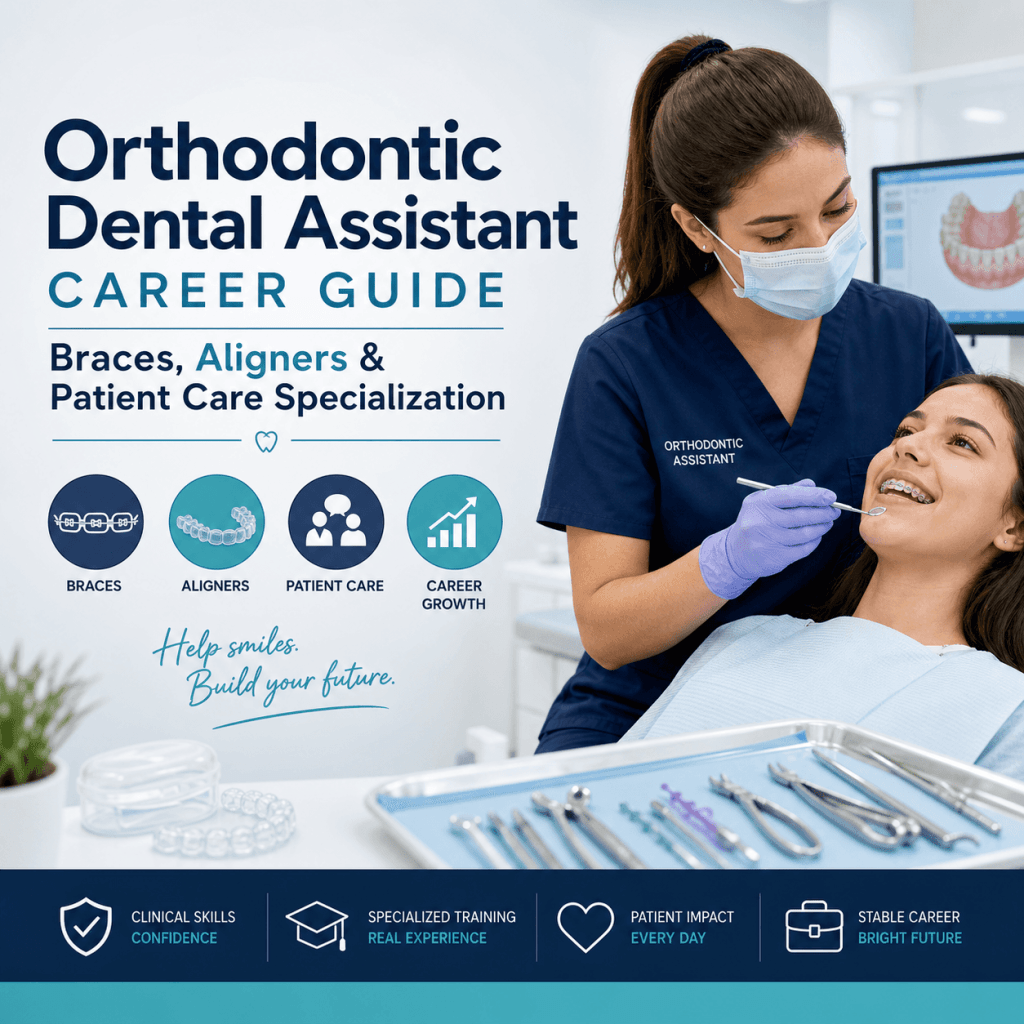
- Orthodontics (braces, aligners, high-volume patient flow)
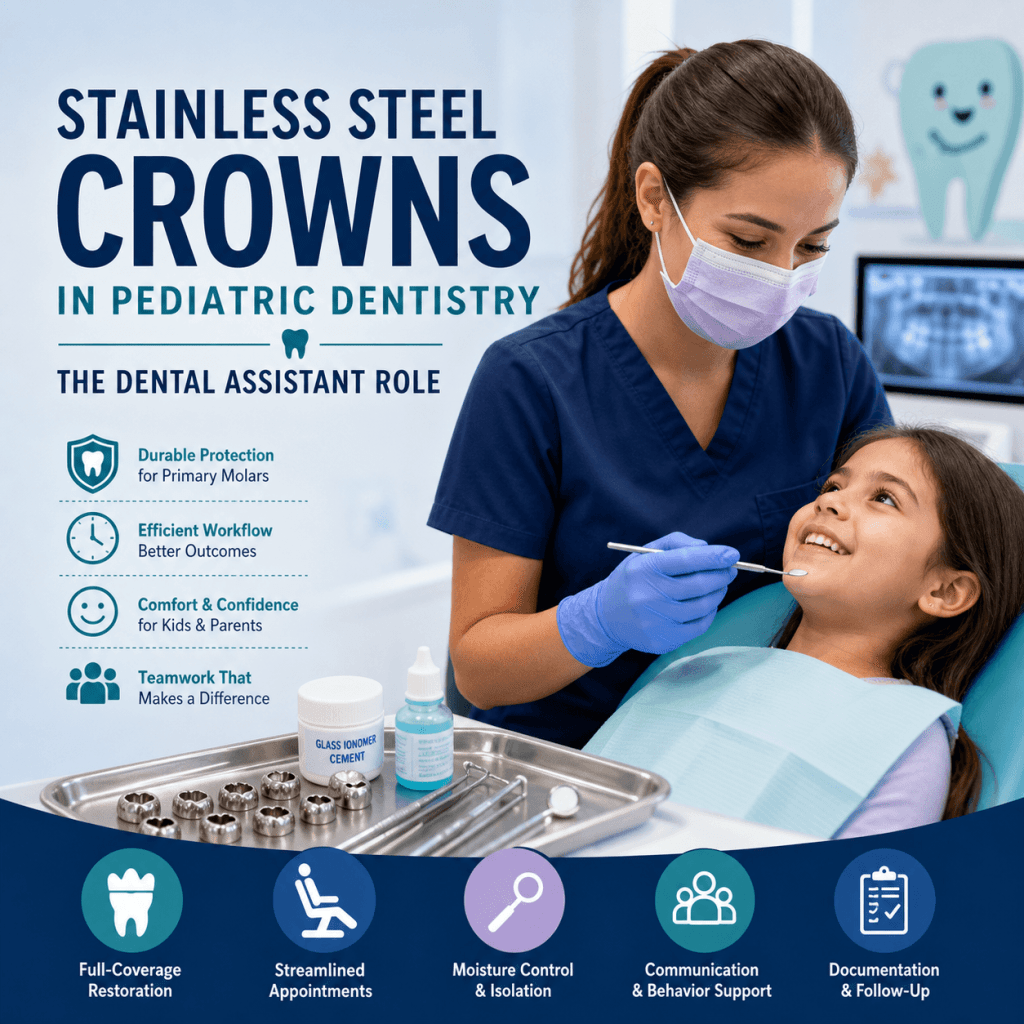
- Pediatric dentistry (child-focused communication, comfort skills)
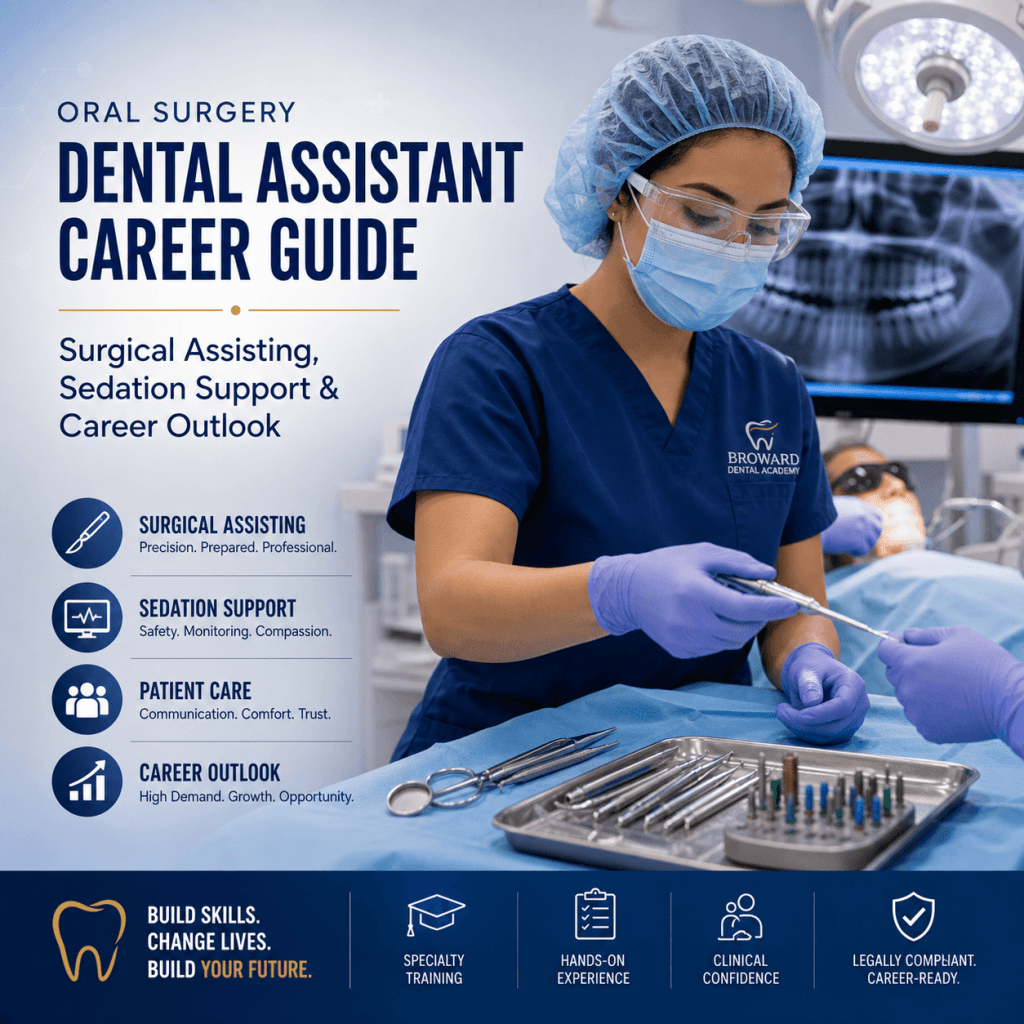
- Oral surgery (procedural intensity, strong setup and turnover)
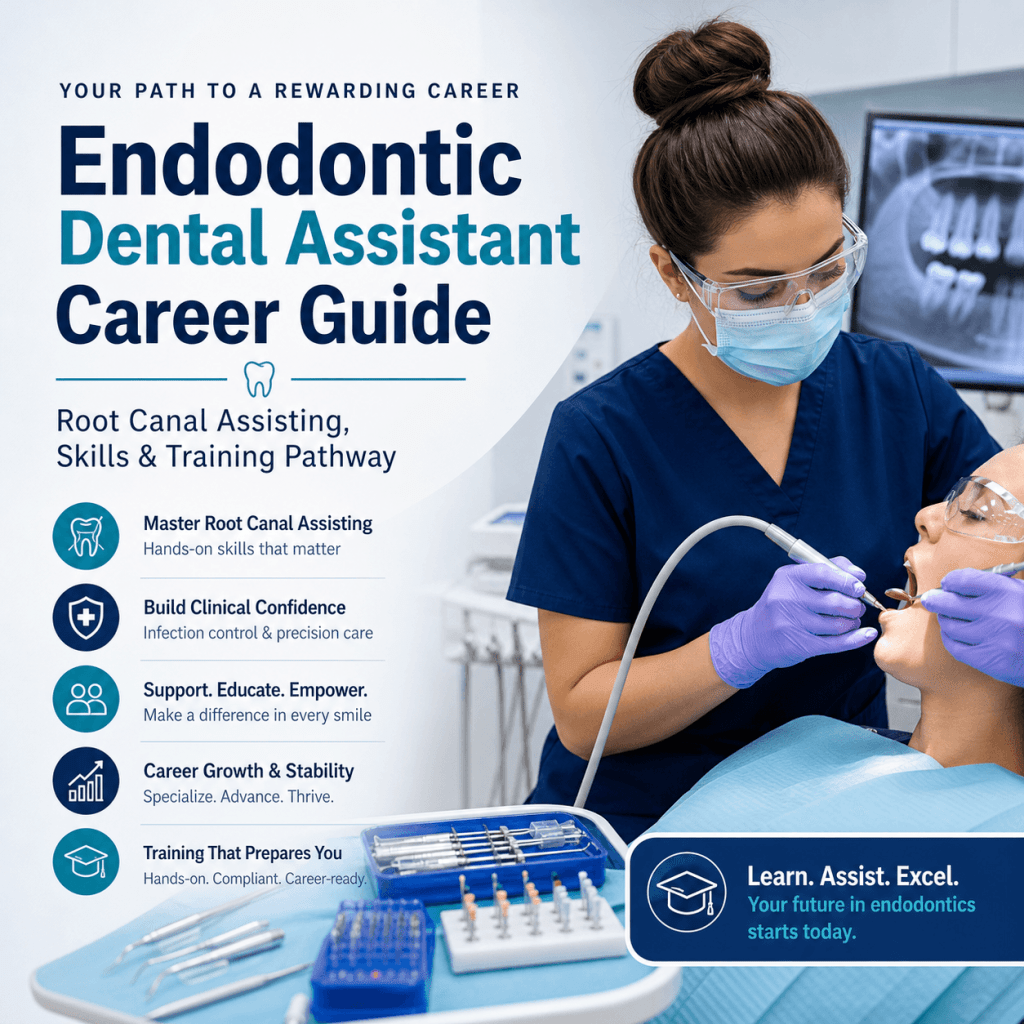
- Specialty practices like endodontics or periodontics
- DSOs (multi-location groups) vs private practices: DSOs can be more system-driven and fast-paced, while private offices may offer a smaller-team environment and more variety in daily duties.
The real expectations: pace, teamwork, and professionalism
Most South Florida practices run tight schedules. That means dental assistants are expected to be:
- Punctual and consistent
- Professional with patients and coworkers
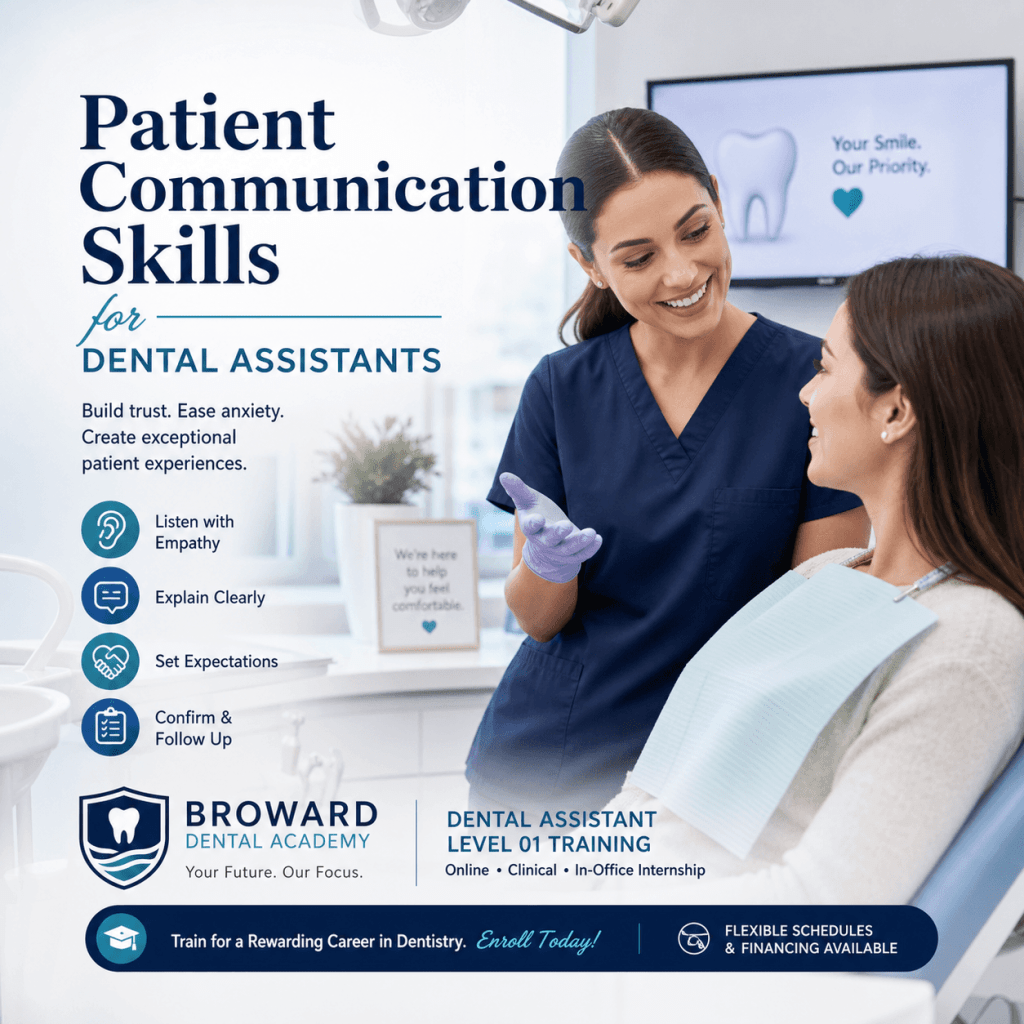
- Clear communicators
- Calm under pressure
- Comfort-focused with patients who may be anxious, in pain, or sensitive about treatment
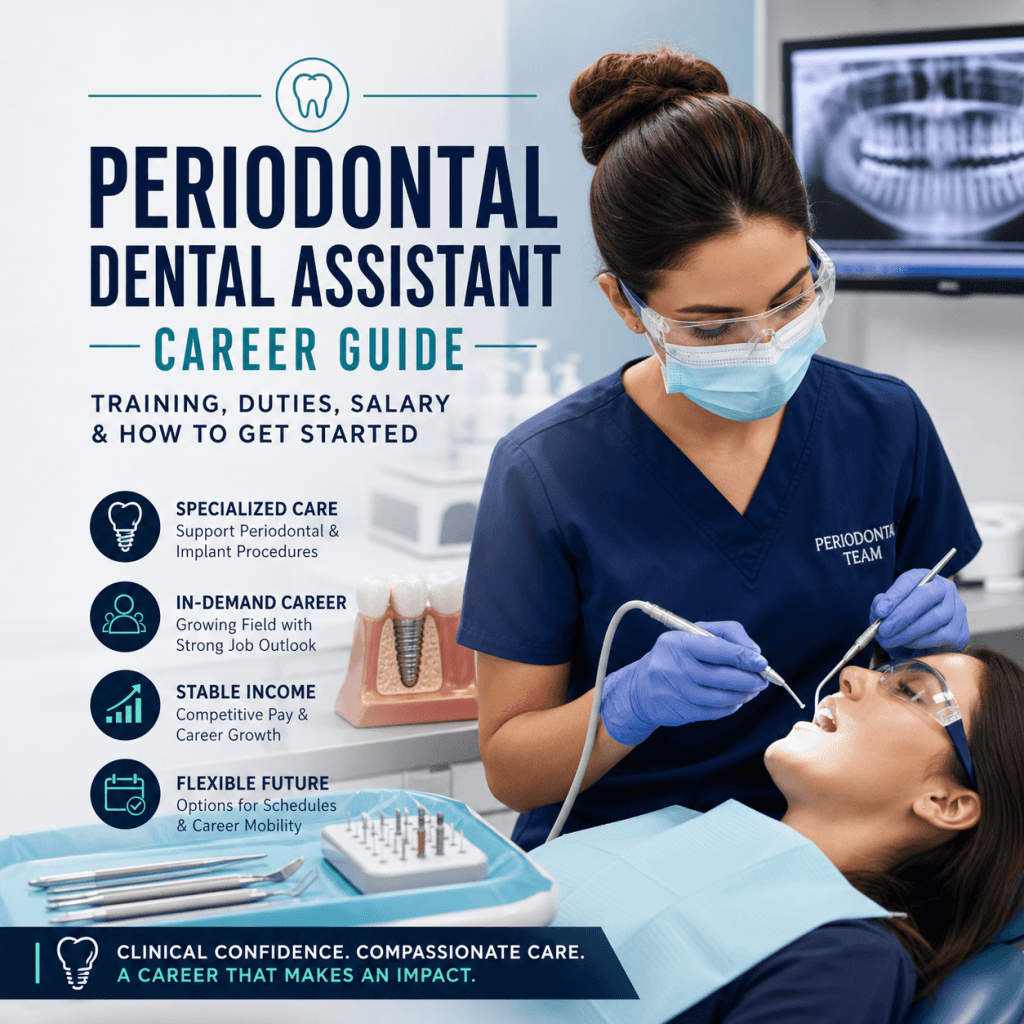
This is also why the career is drawing attention locally. The dental industry continues to grow, and dental assisting offers a respected healthcare role, stable income potential, flexible schedules in many offices, and real career mobility. The strongest advantage you can bring into this market is being thoroughly trained, legally compliant, and clinically confident, because modern practices want job-ready assistants who can keep up from day one.
Why South Florida is a strong market for dental assistant jobs
South Florida has year-round patient volume and a steady demand for dental care. Practices do not just fill up during a “season.” Many offices are busy every month of the year, and new practices and multi-location groups continue to expand.
At a high level, demand is supported by:
- Population growth and ongoing migration
- Cosmetic dentistry interest (smile makeovers, whitening, veneers)
- Strong orthodontic demand (teens, adults, aligner growth)
- Busy general dentistry schedules driven by families and working professionals
- Expanding group practices that hire for multiple locations
What employers commonly want
In job postings, a pattern emerges. South Florida employers commonly look for:
- Reliability and strong attendance
- Hands-on chairside skills
- Confident patient communication
- Speed and accuracy with sterilization and operatory turnover
- Comfort with modern practice expectations, including digital workflows
If you’ve ever searched for “dental assistant jobs near me”, you might have noticed the urgency in many listings. Offices are often hiring because they need someone who can step in quickly, follow systems, and support production without a long ramp-up.
Some practices do consider applicants searching for “dental assistant jobs no experience”, but this is where training, lab time, and an externship or internship can make the difference between “interested” and “hireable”.
Common dental assistant roles you’ll see in job postings
Dental assistant job titles vary by office type and responsibilities. In South Florida, common postings include:
- Dental Assistant
- Chairside Assistant
- Sterilization Technician (often a pathway into chairside)
- Orthodontic Assistant
- Registered Dental Assistant (where applicable in postings and internal office terminology)
How orthodontic assistant jobs differ
Orthodontic assistant jobs are typically more fast-paced and repetitive in the best way. You may focus on:
- Assisting with bracket and band appointments
- Supporting scans or impressions
- Delivering patient instructions (elastic wear, aligner compliance, hygiene)
- Turning over rooms quickly and keeping instruments moving
Ortho offices often value speed, consistency, and patient coaching skills. For those looking to advance their careers in this field, specialized training such as the Dental Assistant Hygienists Level 03 could be beneficial.
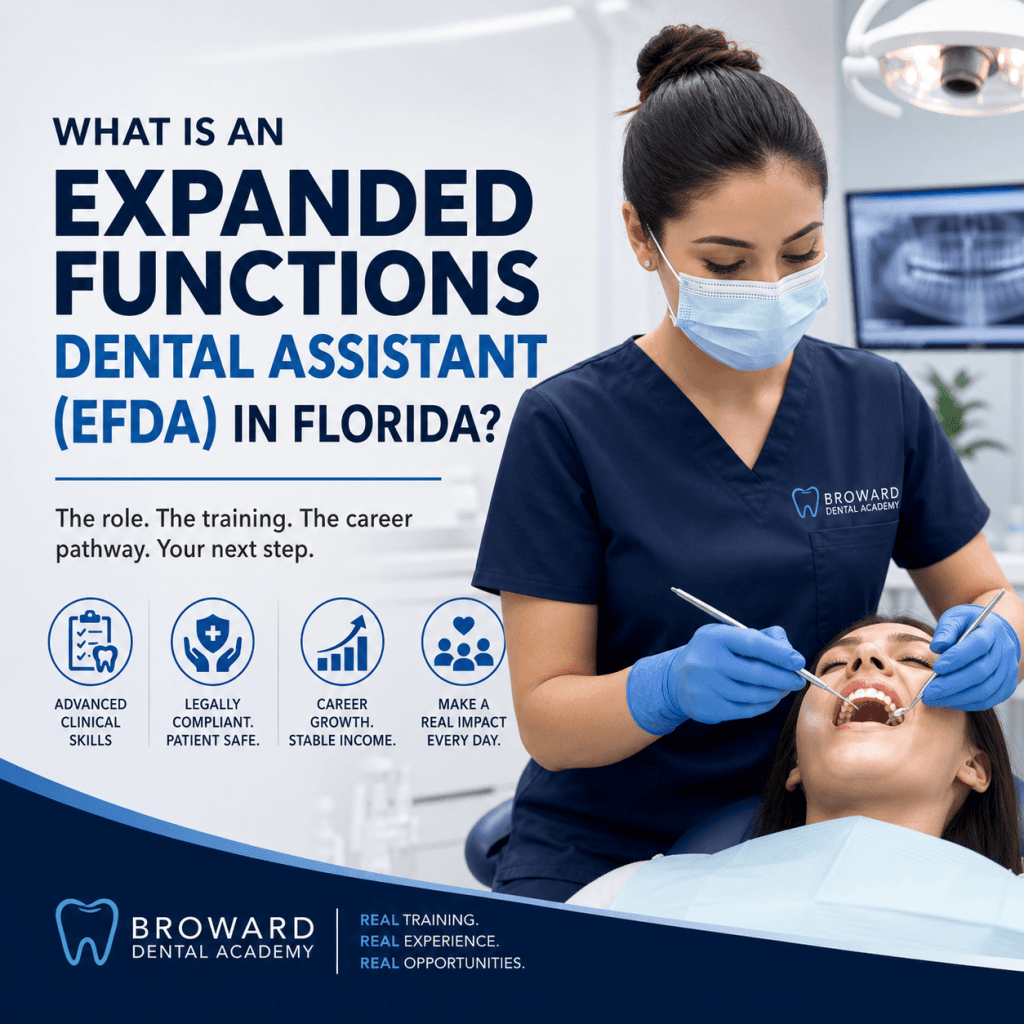
Expanded functions in plain language
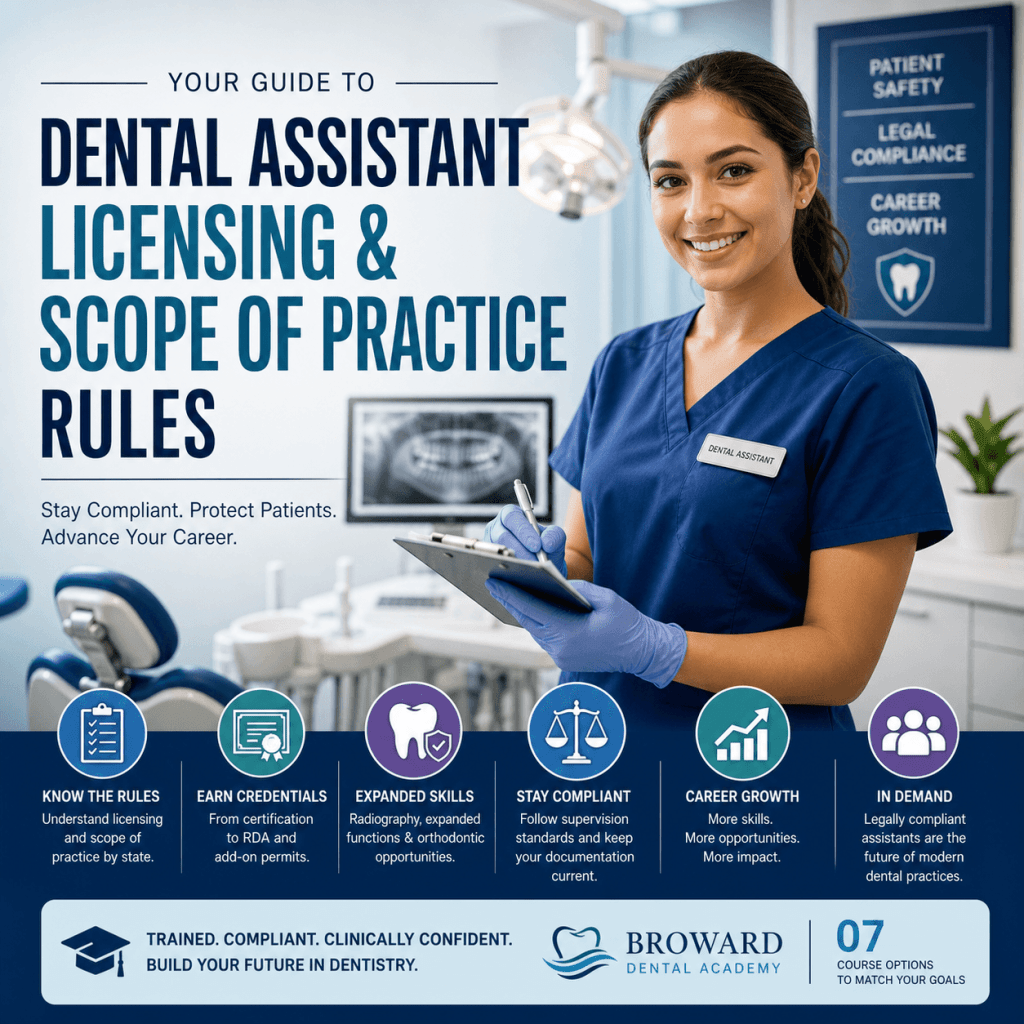
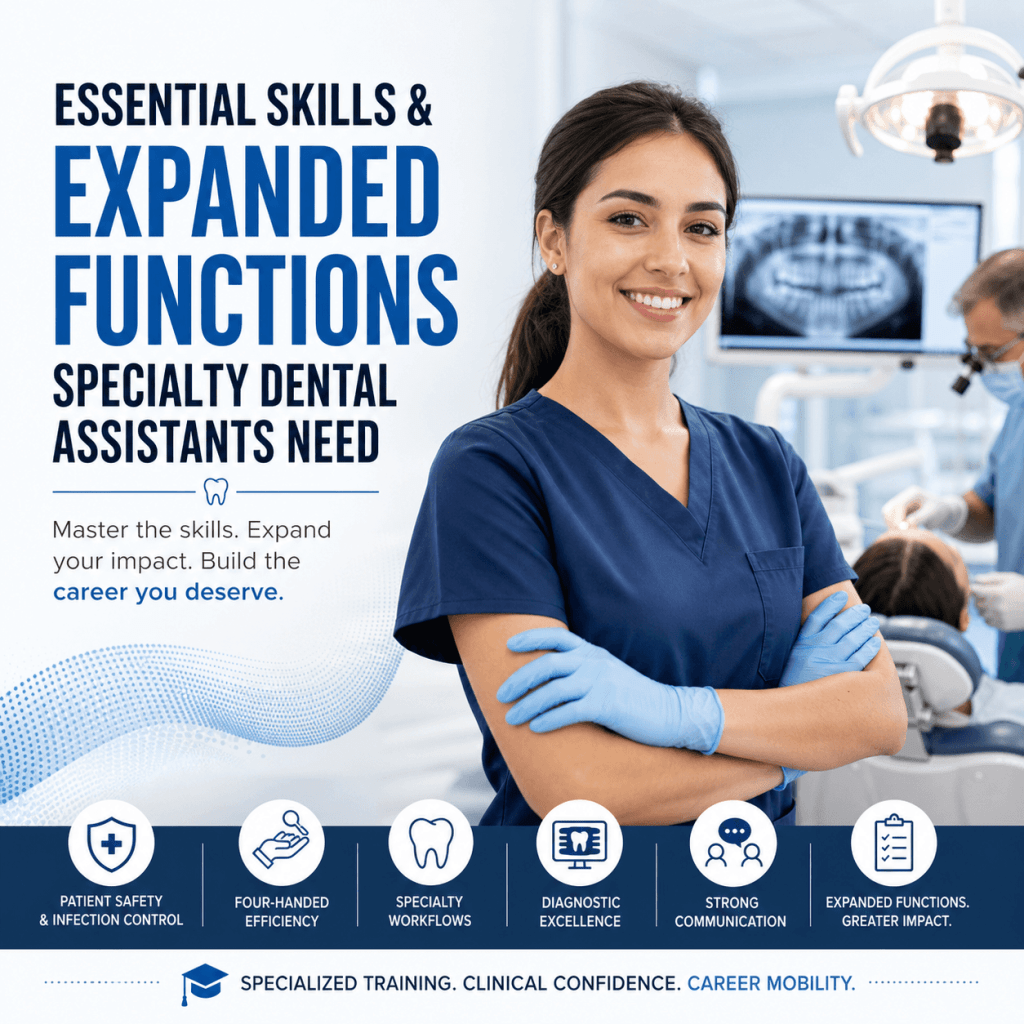
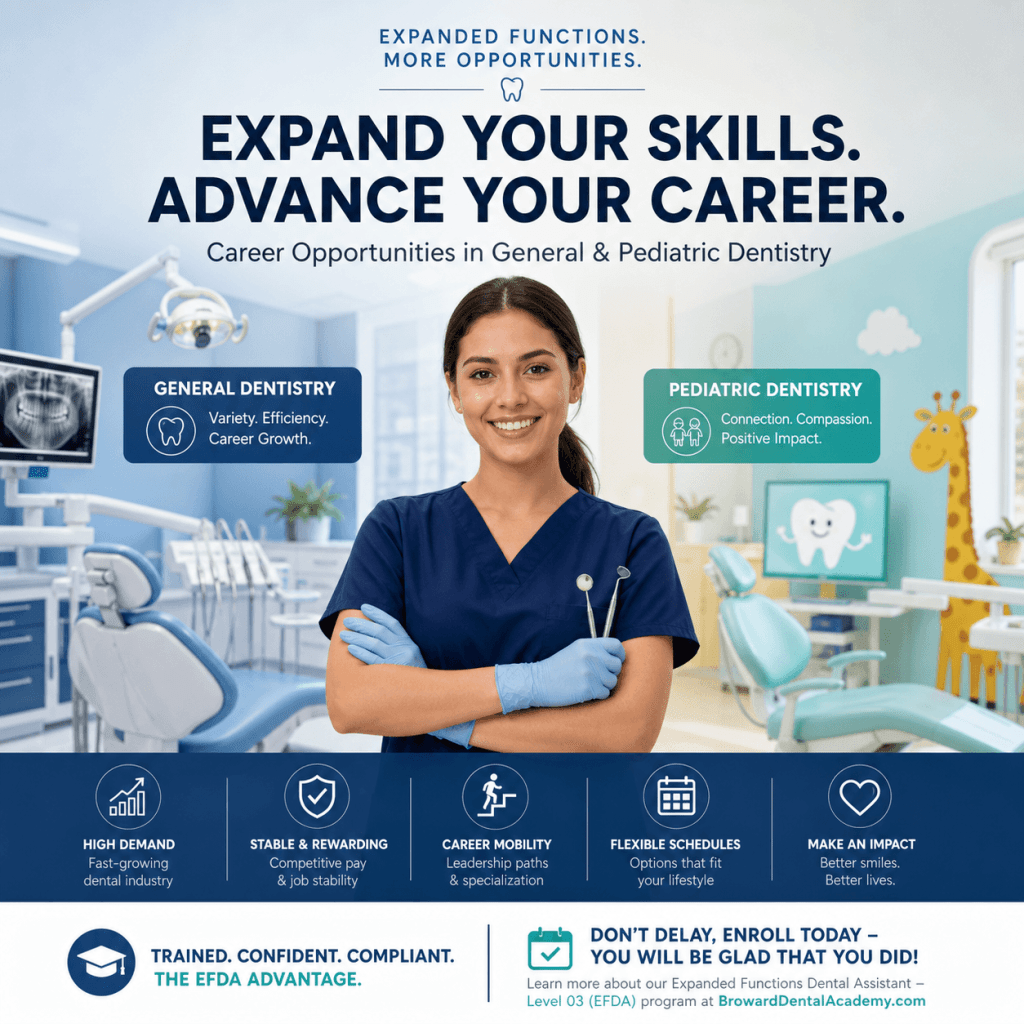
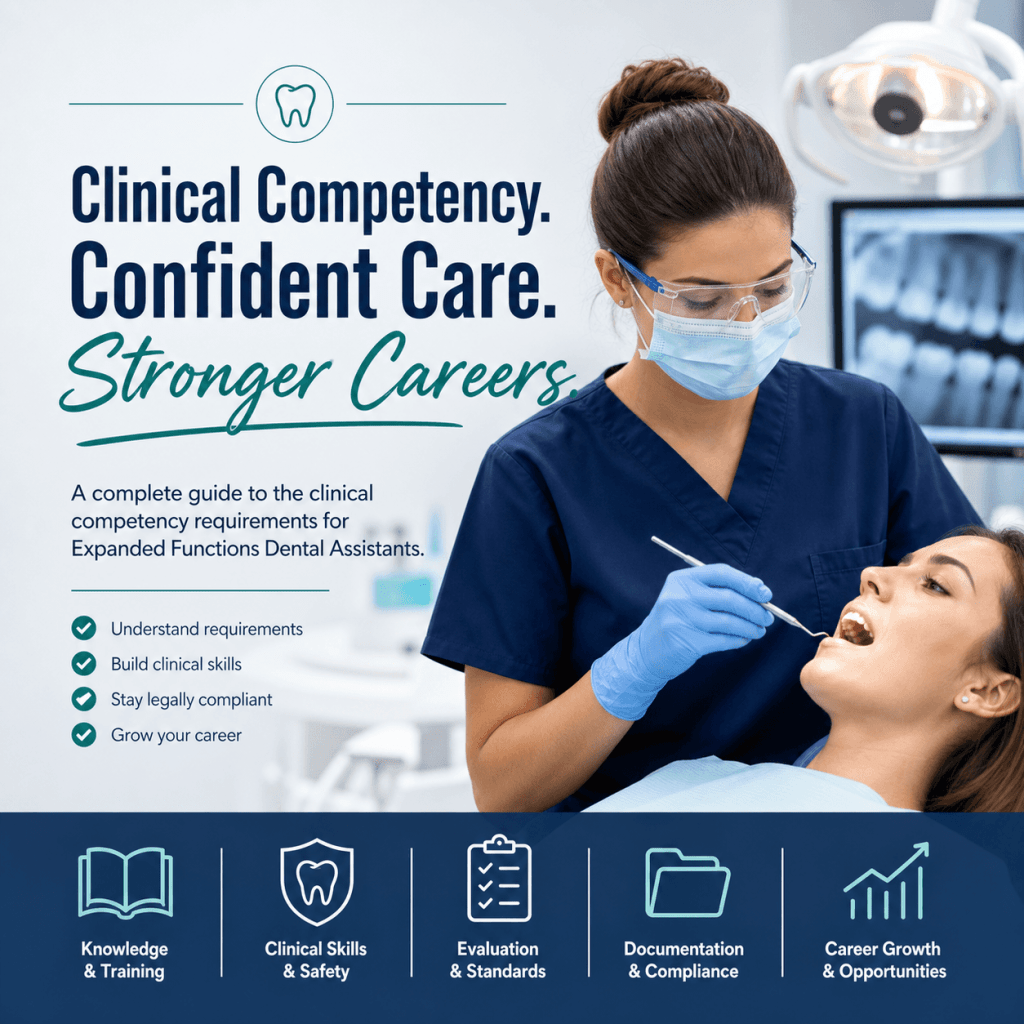
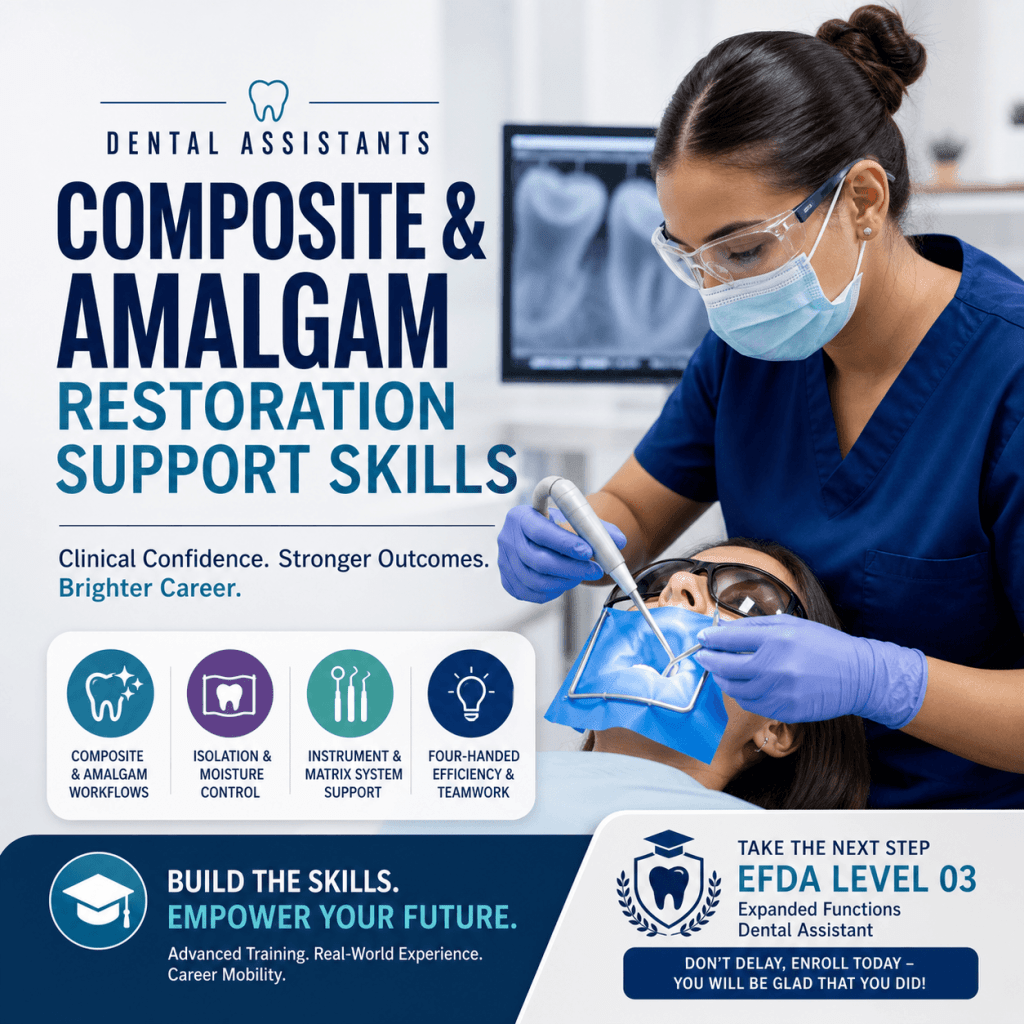
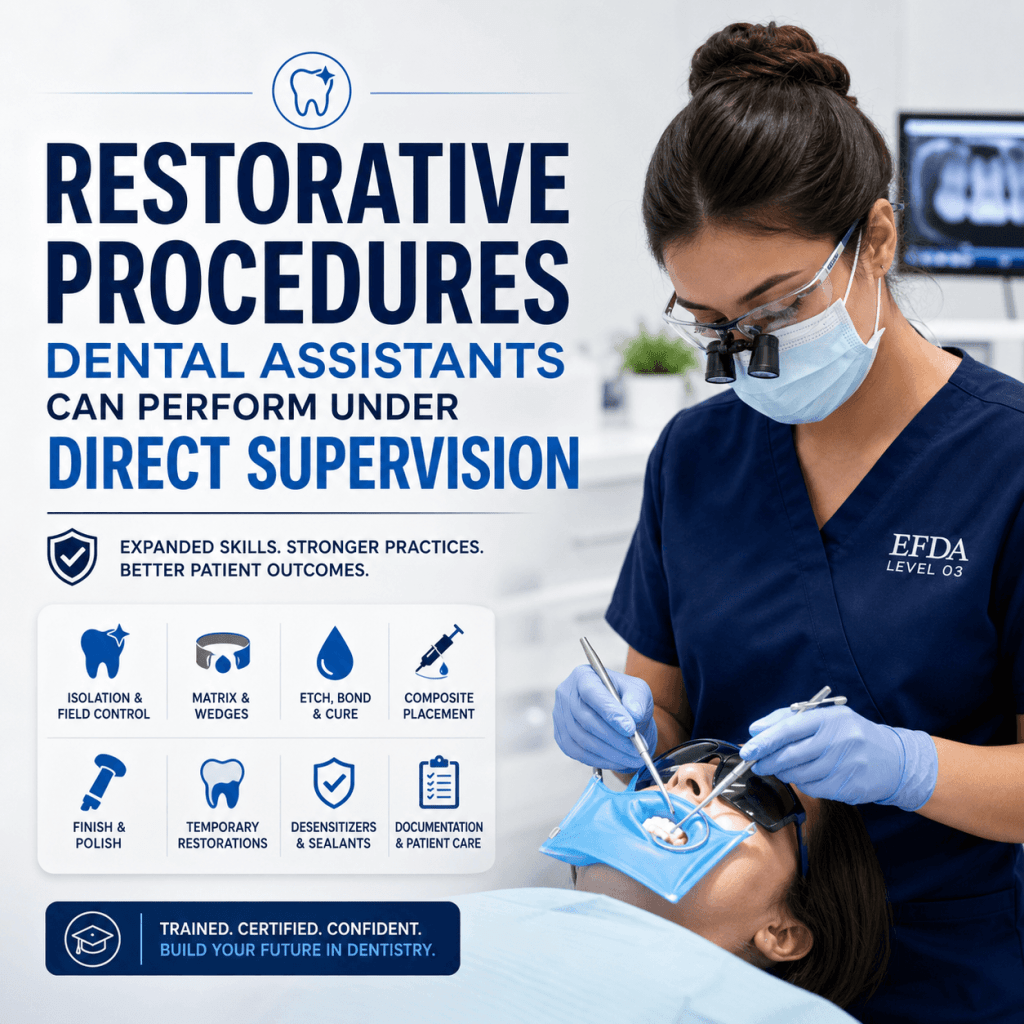
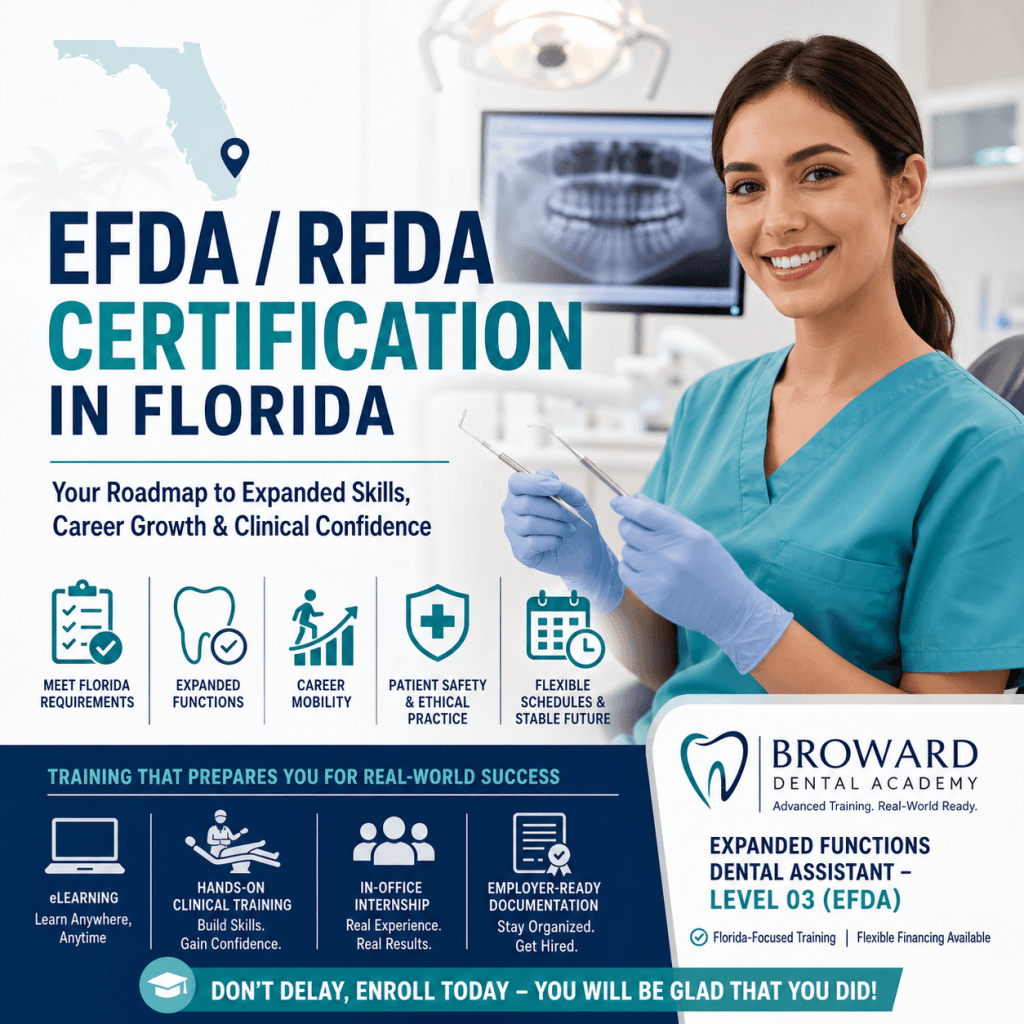
You will also see the term expanded functions. In simple terms, that means an assistant is trained for additional clinical duties beyond basic assisting, based on training and legal compliance. Rules vary, and offices follow specific protocols, so it is important to train properly and understand what is permitted.
Schedule realities
Many roles are full-time, but part-time exists, too. Some offices offer:
- Evening hours
- Occasional weekends
- Four-day schedules in certain practices
Flexibility is often available for the right candidate, especially someone who is dependable and clinically strong.
Dental assistant qualifications: what you need before you apply
Most employers are hiring for two things at once: skills and professionalism. Even entry-level listings often include baseline expectations like:
- Strong communication and a friendly, professional tone
- Manual dexterity and comfort working with small instruments
- Ability to multi-task and stay organized during busy hours
- Basic familiarity with dental terminology
- Willingness to learn, take feedback, and work as part of a team
Training pathways: program vs on-the-job
You may hear two common paths:
- Formal dental assistant training program
- On-the-job training
On-the-job training exists, but structured education usually speeds up employability because you build core skills in a safer learning environment before stepping into a production schedule. For many students, training plus an internship is what bridges the gap between interest and confidence.
In addition to these qualifications, having certain skills that are beneficial for a dental hygienist can also enhance your profile as a dental assistant.
Compliance and safety matter
Dental offices are strict about safety and patient privacy. Employers want assistants who have an OSHA mindset, understand infection control standards, and take HIPAA seriously. This is not just policy. It is patient protection, team protection, and practice protection.
What “clinically confident” looks like to an employer
Confidence is not being loud. It is being prepared. In a working office, clinically confident assistants tend to:
- Set up and break down operatories efficiently
- Transfer instruments correctly and safely
- Maintain calm, comforting patient interaction
- Follow sterilization workflow consistently
- Anticipate what is next and stay one step ahead
Choosing the right dental assisting program in South Florida (what to look for)
When people search “dental assisting programs near me,” they usually want one thing: a program that leads to real employment. The best way to evaluate programs is to look beyond the sales pitch and focus on outcomes and hands-on training.
Here is what to look for.
Curriculum coverage that matches real offices
A strong program should cover:
- Infection control and sterilization systems
- Chairside fundamentals and instrument transfer
- Radiography concepts and technique where permitted
- Charting and clinical documentation support
- Patient communication, professionalism, and ethics
- Exposure to modern workflows, including digital tools used in many practices
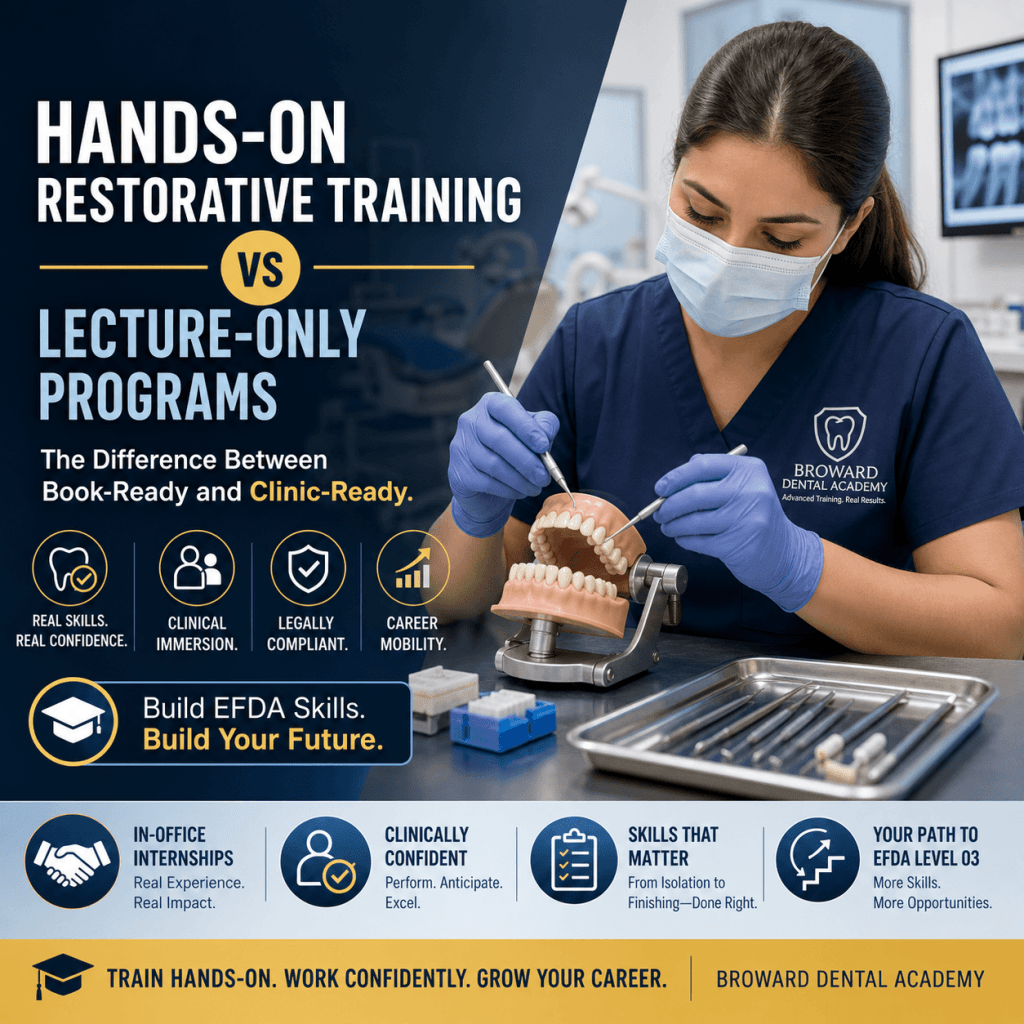
Hands-on labs and clinical requirements
Dental assisting is a physical and fast-paced field that requires a lot of repetition. It’s essential to ask how much time you’ll spend practicing skills rather than just learning theory. Programs like the one offered at IWCC’s Dental Assistant Diploma provide ample hands-on experience.
Internship or externship support
An in-office internship or externship is often where students build speed, confidence, and professional habits. It’s important to inquire about how these placements are supported, what a typical internship experience looks like, and what competencies you are expected to perform before completion.
Schedule options and financing
Many students are working adults or parents. Therefore, schedule flexibility and financing options can be crucial, especially if you’re eager to start your career sooner.
CODA accreditation: when it matters
You will also hear about CODA accredited dental assisting programs. Accreditation can be significant depending on your long-term goals and the pathway you want to follow. Not every student needs the same track, but it’s important to understand how your program choice connects to your career plan.
Match the program to the job you want
If your goal is orthodontics, look for training that supports orthodontic workflows. If you want broader opportunities, choose a program that prepares you for modern general practice expectations, plus long-term growth into advanced training.
Red flags to watch for
Be cautious if a program is mostly theoretical with minimal clinical time, vague about externship or internship placement, using outdated content that does not match today’s offices, or unclear about legal compliance and real clinical expectations.
Online vs in-person: can you learn dental assisting online?
While online education has its benefits, dental assisting cannot be learned fully online. The job is too hands-on.
What online dental assisting can cover well
Online components can be excellent for:
- Dental terminology
- Infection control concepts
- HIPAA and OSHA foundations
- Basic administrative knowledge
- Study structure and test prep support
What requires hands-on practice
In-person training is essential for:
- Chairside skills and four-handed dentistry
- Instrument transfer and tray setups
- Radiography technique and positioning where permitted
- Real-time patient interaction and communication
- Building speed with operatory turnover and sterilization flow
The blended model many students prefer
A blended approach can work well for South Florida students who need flexibility. It combines eLearning lesson plans for remote training with clinical immersion to build real skills and confidence. If you are considering a program with online components, ask how often you will be in a lab or clinical environment, and how skills are evaluated before internship placement.
Accelerated dental assisting: who it’s best for (and who should avoid it)
Accelerated dental assisting usually means a shorter timeline with an intensive schedule. It can be a strong option, especially if the program includes real clinical repetition and a meaningful internship experience. To understand more about what such programs entail, you might find this course on accelerated dental assisting useful.
The tradeoff: speed vs repetition
Speed is valuable, but the job requires muscle memory and consistency. If an accelerated path cuts too much hands-on time, graduates can feel unprepared in a busy office.
Who typically thrives in an accelerated program
Accelerated programs can be a great fit for:
- Motivated career-changers who want to enter healthcare quickly
- Students with clear goals who can commit time for practice
- People who learn best with structure, deadlines, and immersion
Who should consider a slower pace
You may want a more flexible timeline if you:
- Have limited time for clinical practice
- Need more repetition to reduce anxiety and build comfort
- Prefer a schedule that spreads training over a longer period
Many people search “accelerated dental assisting academy.” If that is you, focus your decision on the clinical training hours, lab repetition, and internship quality, not just the number of weeks to completion.
What makes a dental assistant “job-ready” in a modern South Florida practice
There is a difference between completing coursework and thriving in a working practice. In South Florida, job-ready assistants are the ones who can keep up with patient flow while still being safe, professional, and calm.
The real gap: exam readiness vs office readiness
Offices care about consistency. They need someone who can:
- Turn rooms over quickly without missing steps
- Follow sterilization systems correctly every time
- Support the dentist smoothly during procedures
- Communicate with patients in a comforting, confident way
- Document and relay information accurately
Critical skills practices look for
Many high-performance offices prioritize:
- Sterilization systems and clean-to-dirty workflow
- Operatory turnover speed
- Tray setups by procedure type
- Suction, retraction, and isolation basics
- Four-handed dentistry foundations
- Charting and documentation support where appropriate
The mindset that gets you hired and promoted
Skills matter, but so does attitude. Practices value assistants who show:
- Critical thinking and good judgment
- Ethical behavior and respect for patient dignity
- Coachability and willingness to learn
- Calm under pressure
This is why being thoroughly trained, legally compliant, and clinically confident is not a slogan. It is what employers are actively looking for.
Training in South Florida: how Broward Dental Academy supports dental assistant career goals
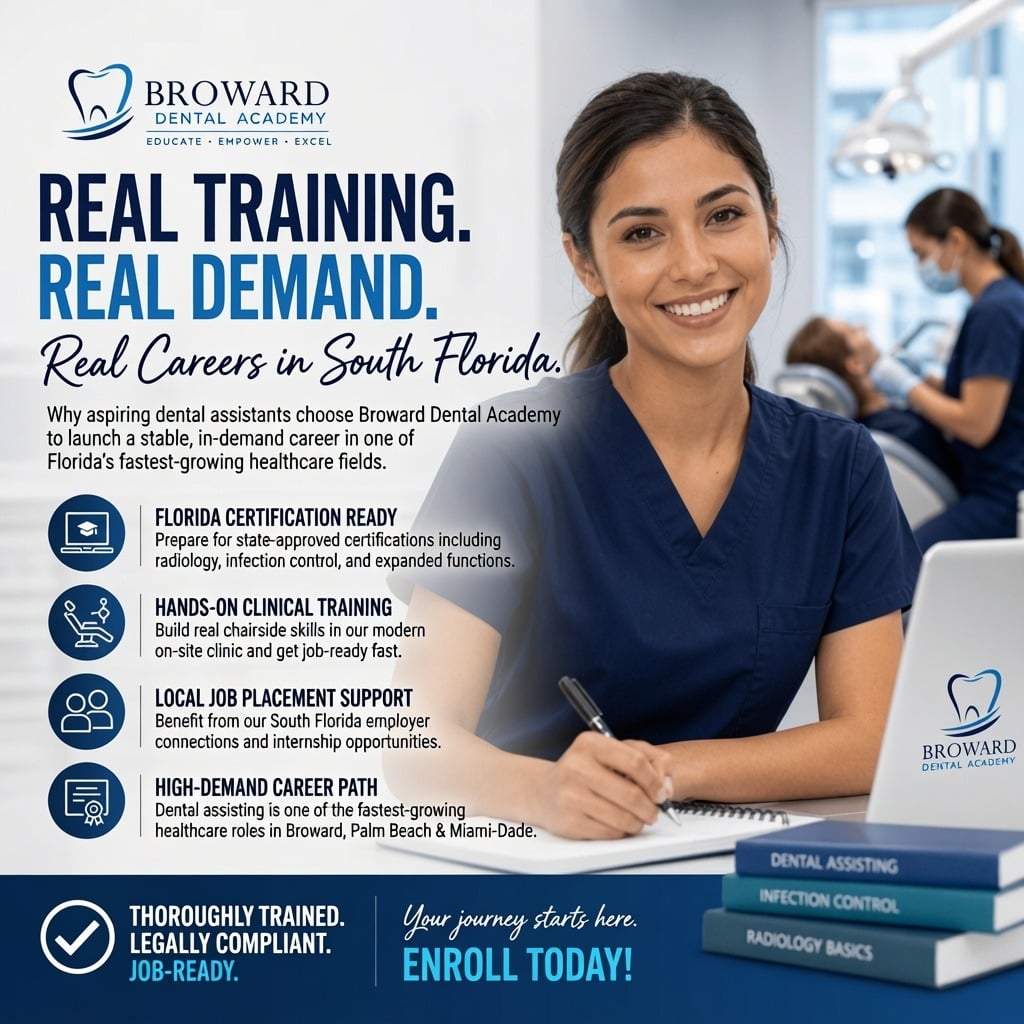
Broward Dental Academy is a community-focused training option designed to develop well-rounded professionals for the dental community. The focus is not only on passing an exam, but on preparing students to thrive in a modern, high-performance dental practice.
Broward Dental Academy supports career goals through:
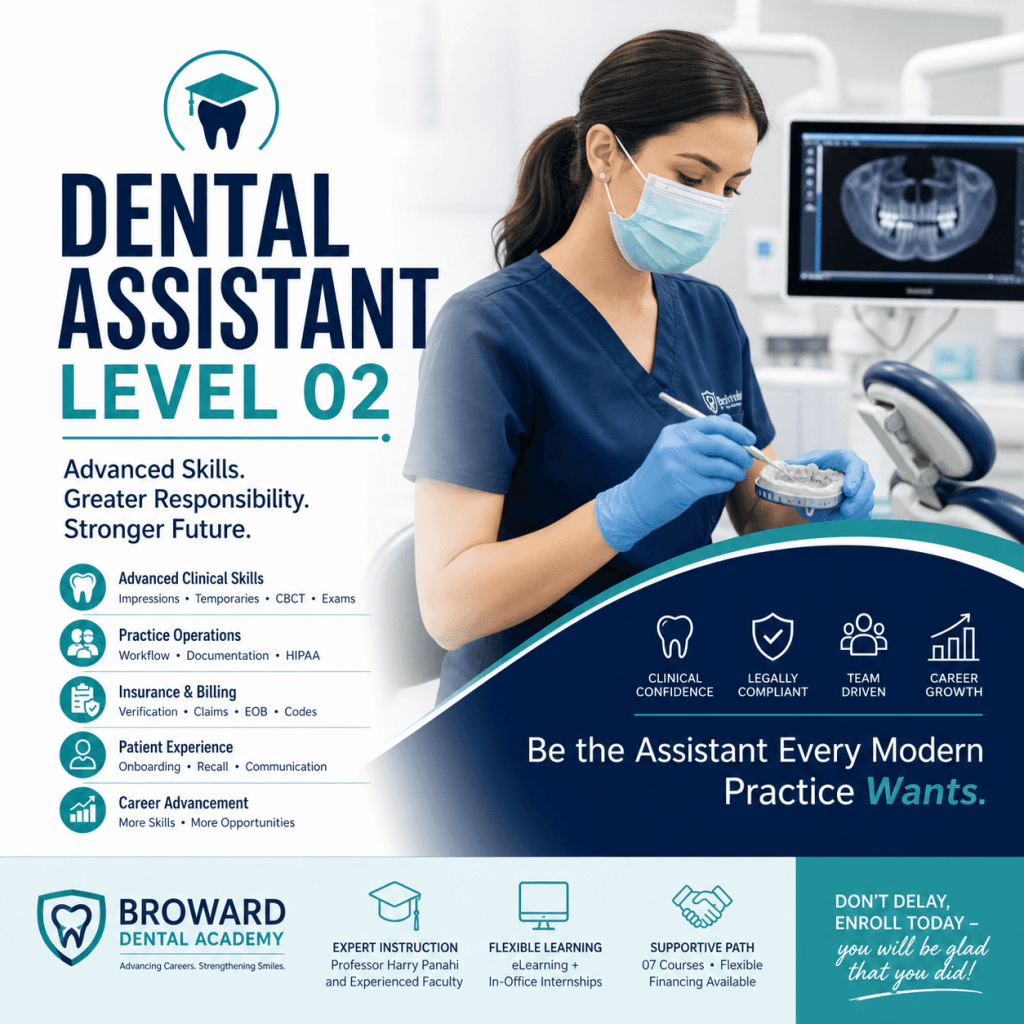
- Breadth of training: a wide range of dental courses and advanced dental training opportunities, with 07 courses offered.
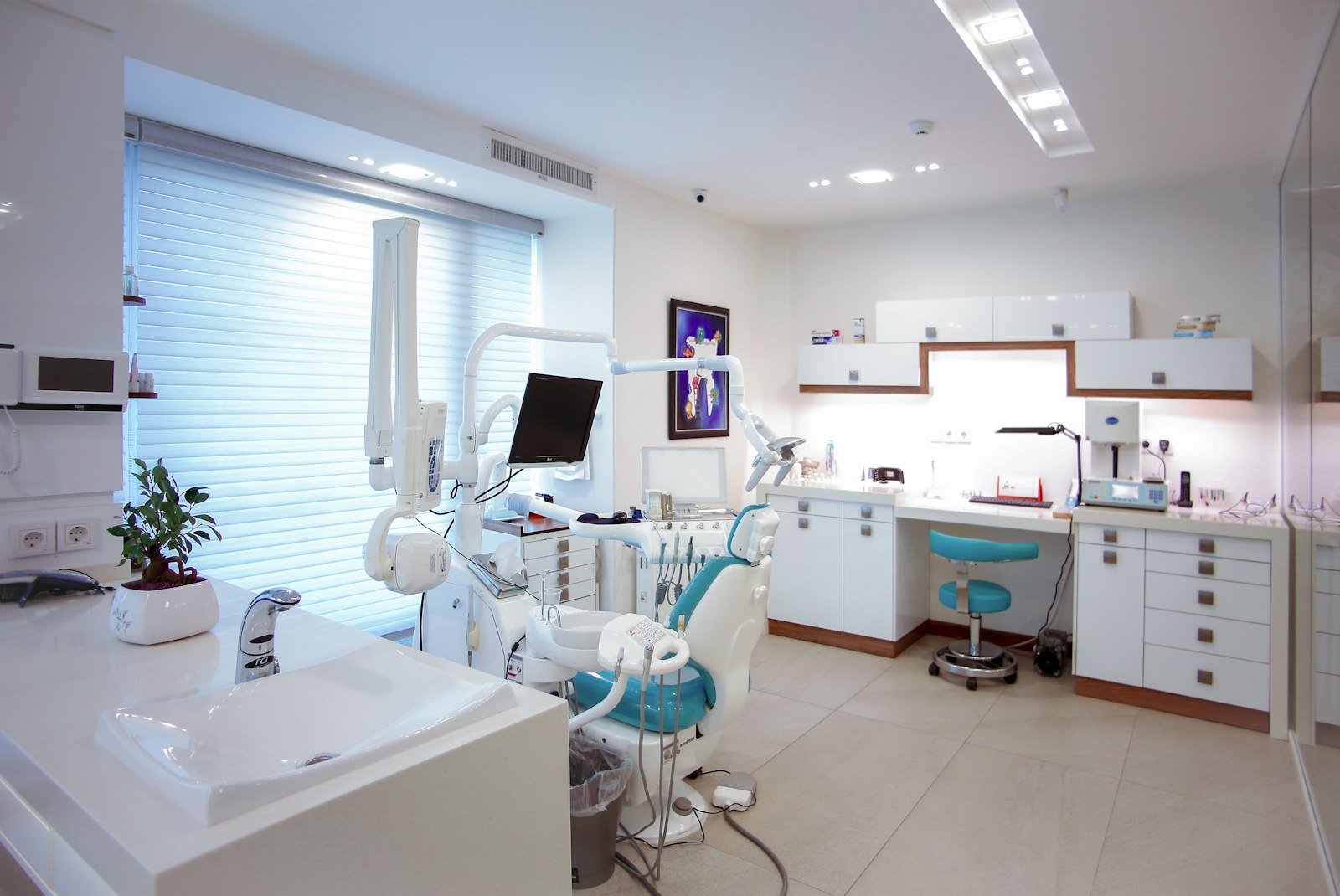
- Real-world exposure: training includes in-office internships to build confidence, professionalism, and practical workflow experience.
- A blended learning experience: students are immersed in online and clinical settings, with the latest eLearning lesson plans incorporated for remote training.
- Outcomes-focused preparation: emphasis on legal compliance, clinical confidence, ethical standards, and critical thinking, so students can function effectively in real practices.
- Accessibility: flexible financing options that can help students start sooner.
If your goal is to become the kind of assistant South Florida practices want to hire, the training experience should mirror what offices expect: real systems, real pace, and real accountability.
How to find dental assistant jobs near you in South Florida (and stand out)
Once you are trained, the next step is getting in front of hiring offices quickly, with a simple, professional presentation.
Where to look
Strong job search channels include:
- Local job boards and major platforms
- Dental-specific job sites
- Google searches for “dental assistant jobs near me”
- Staffing agencies that place dental professionals
- Direct outreach to offices you would like to work for
- School internship pipelines and referrals
How to stand out fast
Hiring managers are busy. Make it easy for them to say yes:
- A clean, one-page resume
- A skills section aligned with the posting
- A short, professional cover note in the email or application message
- References from internship or externship settings if available
Simple portfolio ideas that help in interviews
Consider bringing:
- A checklist of competencies you have performed
- Internship hours and a summary of duties
- Letters of recommendation
- Proof of training completion
Interview readiness that actually works
In many interviews, offices want specifics. Be ready to:
- Walk through your sterilization workflow step by step
- Explain operatory setup and turnover
- Describe how you calm an anxious patient
- Share how you handle feedback and prioritize tasks during a rush
If you are applying for dental assistant jobs no experience, position your training and internship as experience. Highlight reliability, willingness to learn, and the hands-on competencies you gained.
Career growth: where dental assisting can take you next
Dental assisting can be a long-term career with multiple growth paths, especially in a market like South Florida where practices range from general dentistry to high-volume orthodontics and specialty care.
Common next steps include:
- Lead assistant responsibilities
- Orthodontic assistant specialization
- Expanded functions opportunities where applicable through proper training
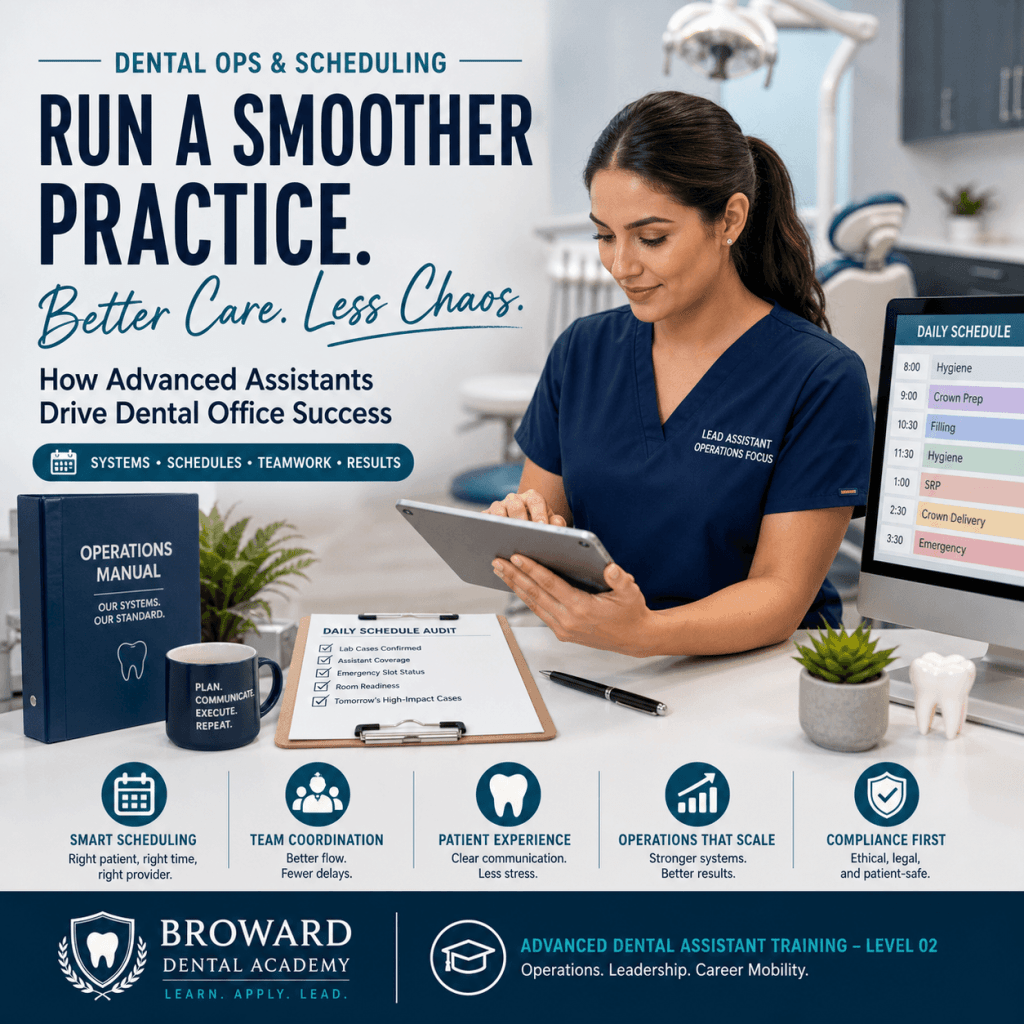
- Administrative crossover into scheduling, treatment coordination, or office management
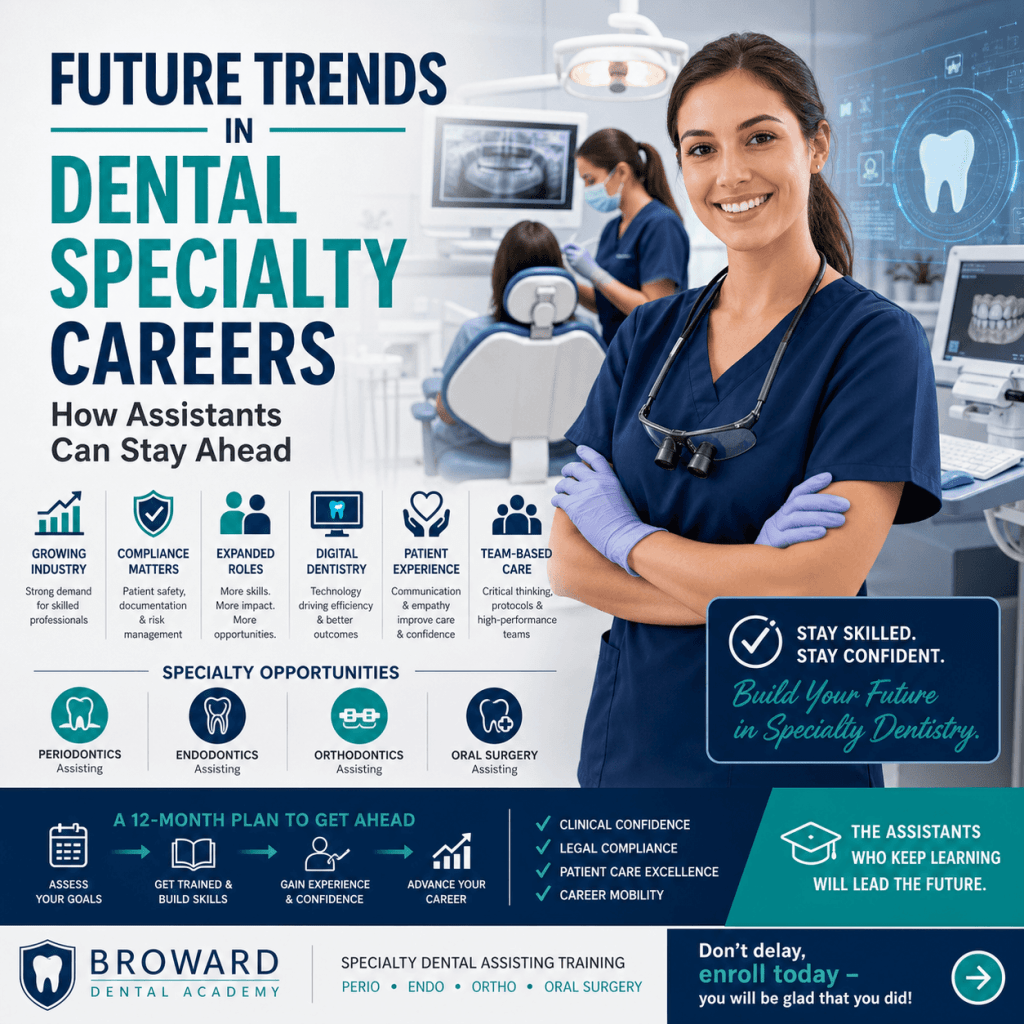
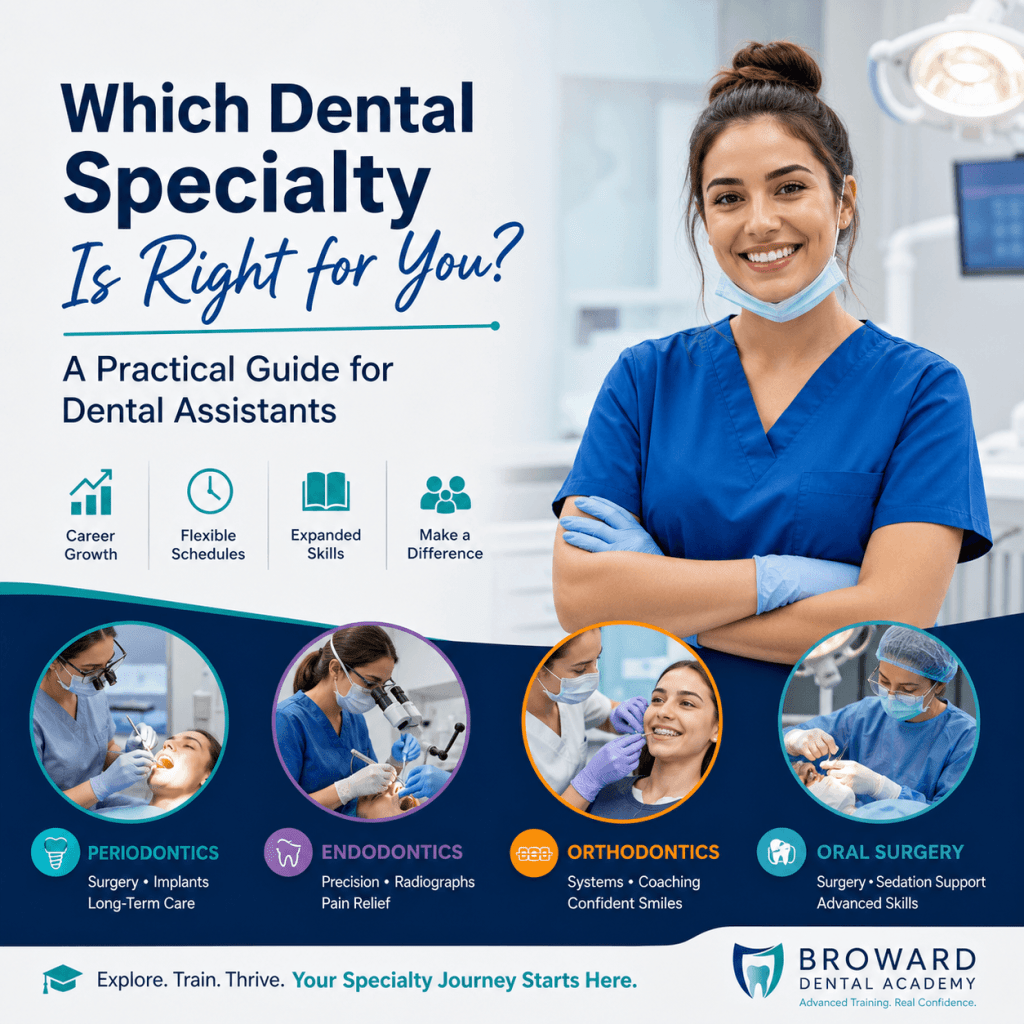
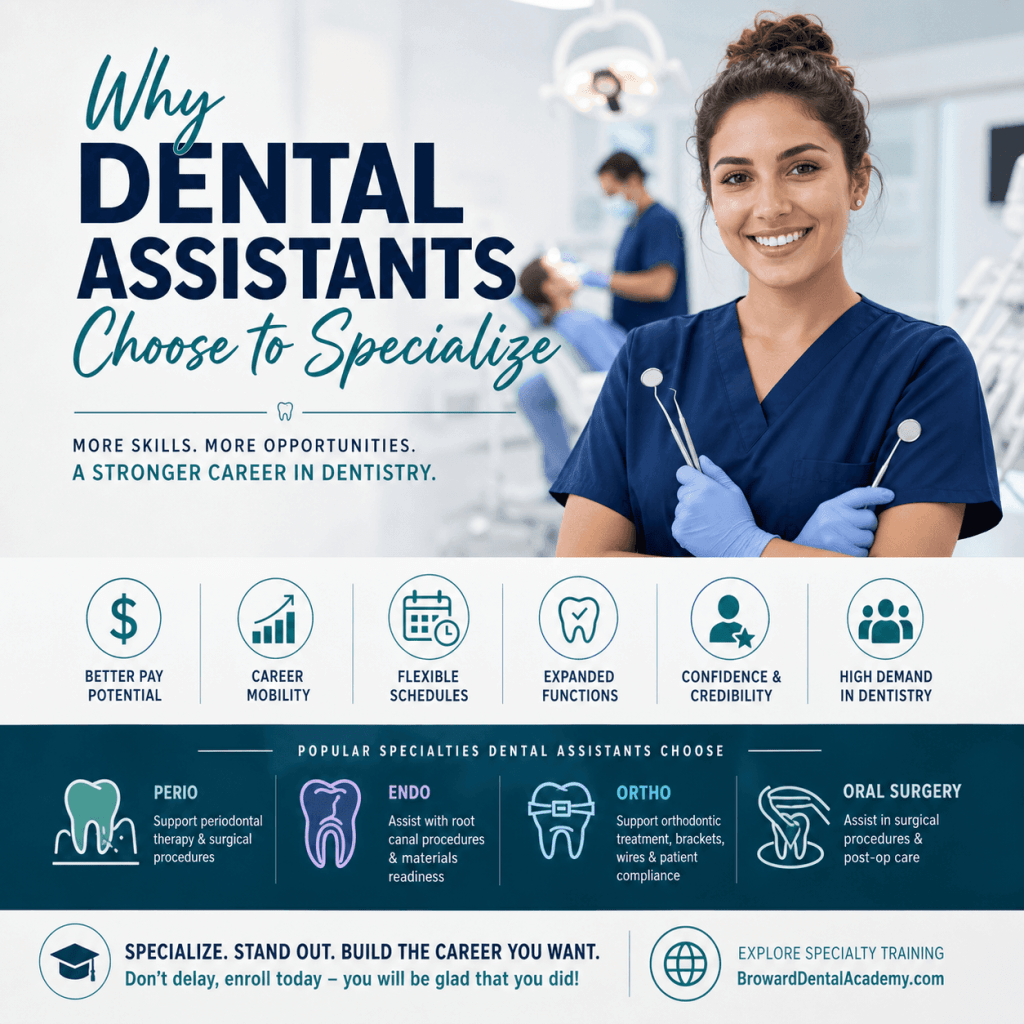
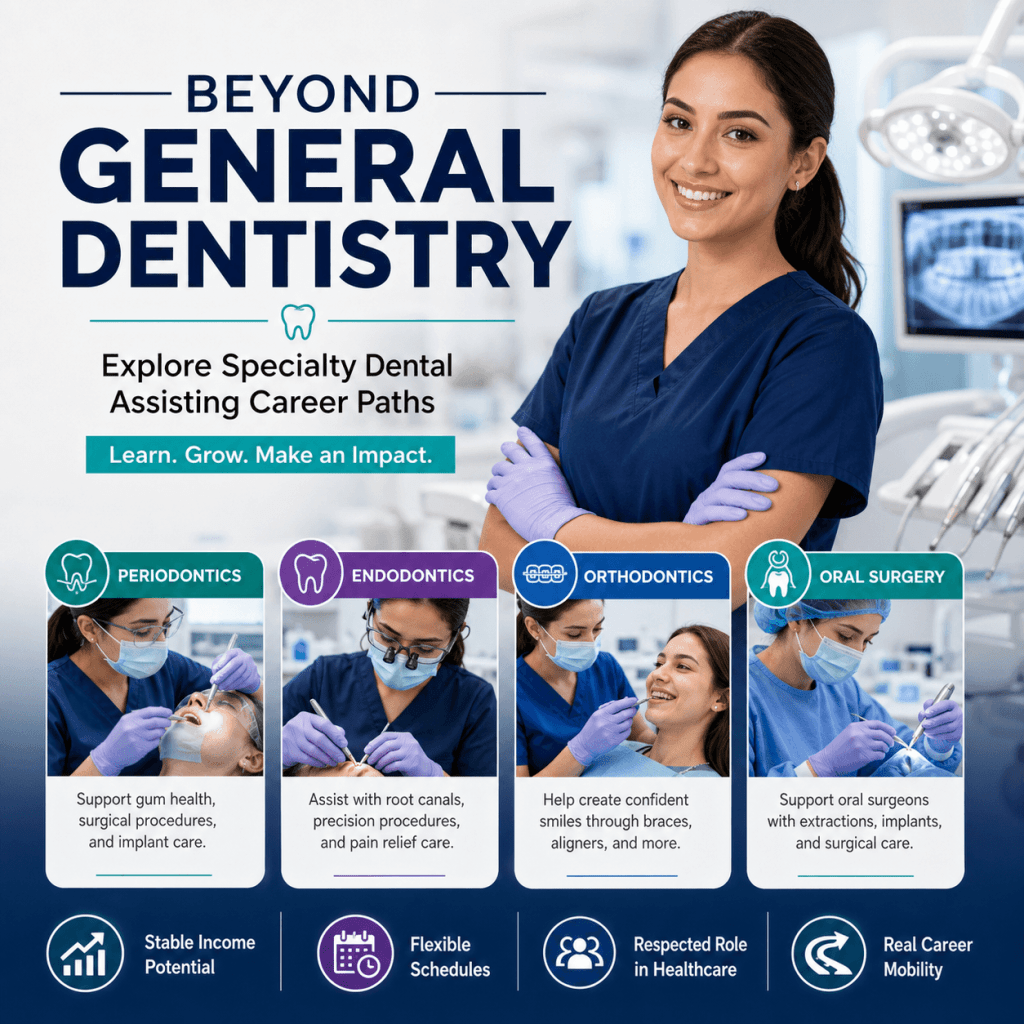
- Specialty assisting in pediatrics, oral surgery, endodontics, or periodontics
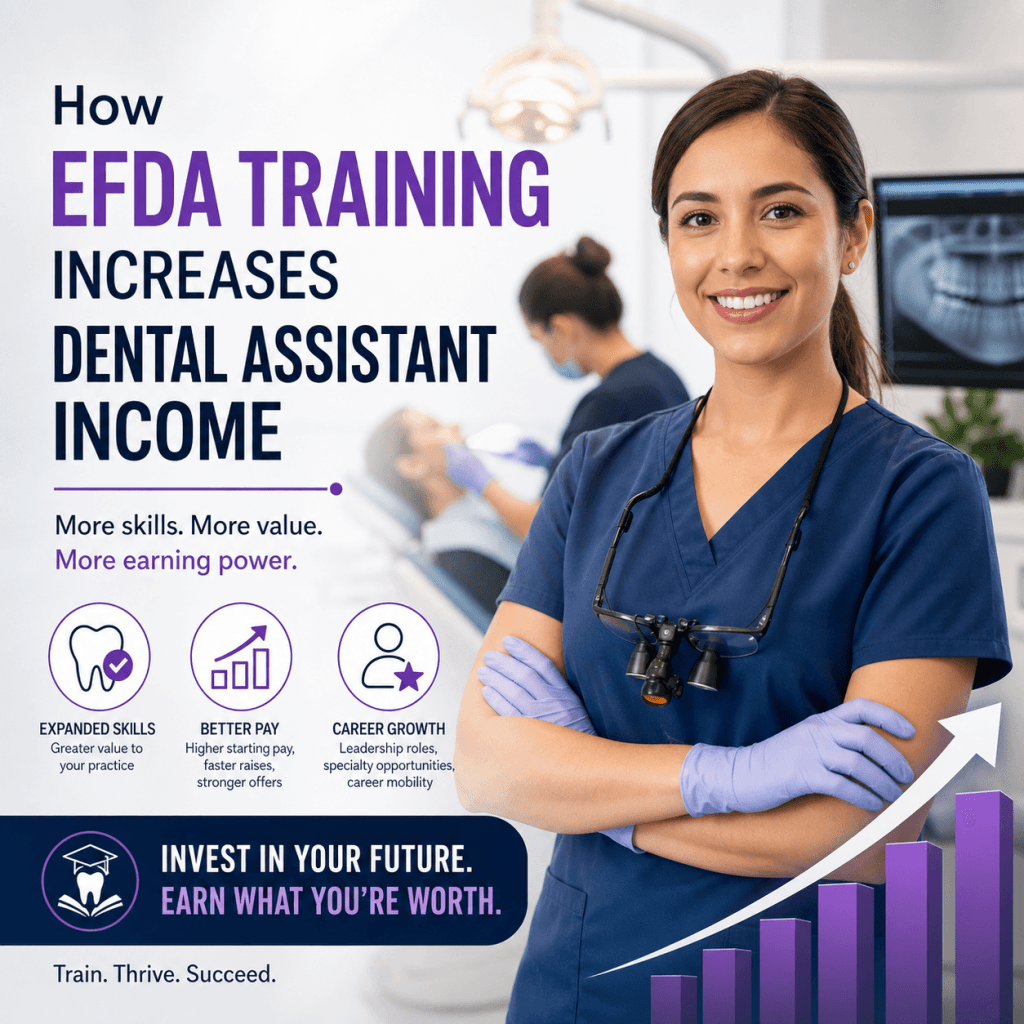
Continuing education and advanced dental training support career mobility and can lead to higher responsibility. For many professionals, the real-life benefits are practical: stable income potential, flexible schedules in many offices, and a respected role in healthcare that can grow with you.
Your next step: start training, get confident, and apply
If you are serious about dental assistant careers in South Florida, choose a program that blends online learning with hands-on clinical training and an in-office internship. Employers are looking for assistants who are thoroughly trained, legally compliant, and clinically confident, and who can thrive in a modern practice.
If you would like to explore training options, Broward Dental Academy offers courses, scheduling, and flexible financing to help you move forward.
Don’t delay, enroll today – you will be glad that you did!
FAQs (Frequently Asked Questions)
What does a typical day look like for a dental assistant in South Florida?
A typical day for a dental assistant in South Florida involves preparing operatories and patients, chairside assisting during procedures, managing instruments and supplies, performing infection control and sterilization, supporting charting and documentation, and assisting with impressions, scans, and radiographs where permitted. This hands-on role is essential to keeping dental practices running smoothly and patients comfortable.
Where can dental assistants find job opportunities in South Florida?
Dental assistants in South Florida can find jobs across various settings including general dentistry, orthodontics, pediatric dentistry, oral surgery, specialty practices like endodontics or periodontics, as well as in Dental Support Organizations (DSOs) and private practices. Each setting offers unique experiences ranging from high-volume workflows to smaller team environments.
What skills and qualities do South Florida dental employers look for in dental assistants?
Employers commonly seek dental assistants who are reliable with strong attendance, proficient in hands-on chairside skills, confident in patient communication, efficient with sterilization and operatory turnover, and comfortable with modern digital workflows. Professionalism, punctuality, clear communication, calmness under pressure, and patient comfort focus are also highly valued.
Why is South Florida a strong market for dental assistant careers?
South Florida’s strong market for dental assistants is driven by year-round patient demand fueled by population growth and migration. High interest in cosmetic dentistry and orthodontics, busy general dentistry schedules among families and professionals, plus expanding group practices create steady employment opportunities throughout the year.
How can proper training impact my career as a dental assistant in South Florida?
Proper training equips you with the clinical confidence, legal compliance, and practical skills that modern South Florida dental practices require. Being thoroughly trained helps you become job-ready from day one, increasing your employability and enabling you to keep pace with fast-moving schedules while delivering quality patient care.
What certifications are important for dental assistants working in South Florida?
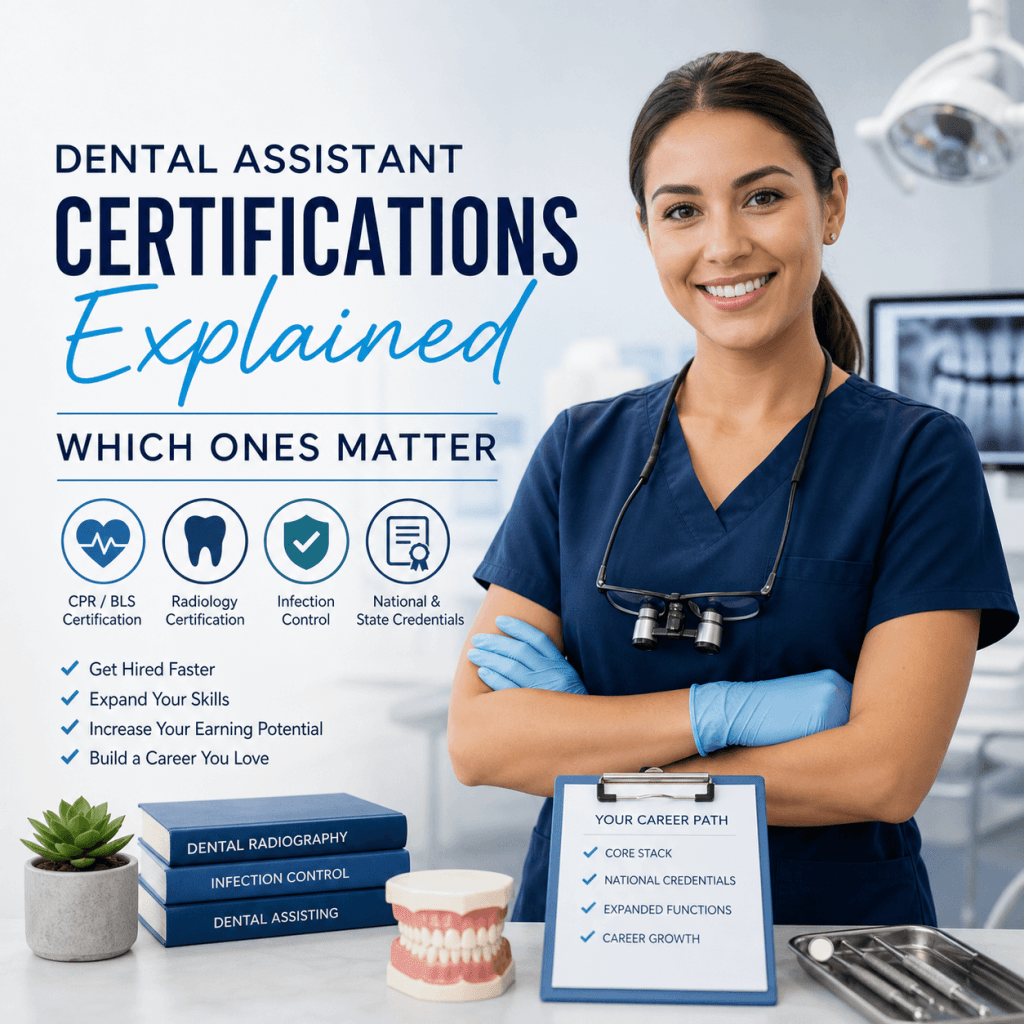
Obtaining relevant certifications enhances your employability as a dental assistant in South Florida. Certifications validate your knowledge of infection control, radiography (where permitted), four-handed dentistry techniques, and other clinical competencies. Institutions like Broward Dental Academy offer certification programs tailored to meet employer expectations in the region.