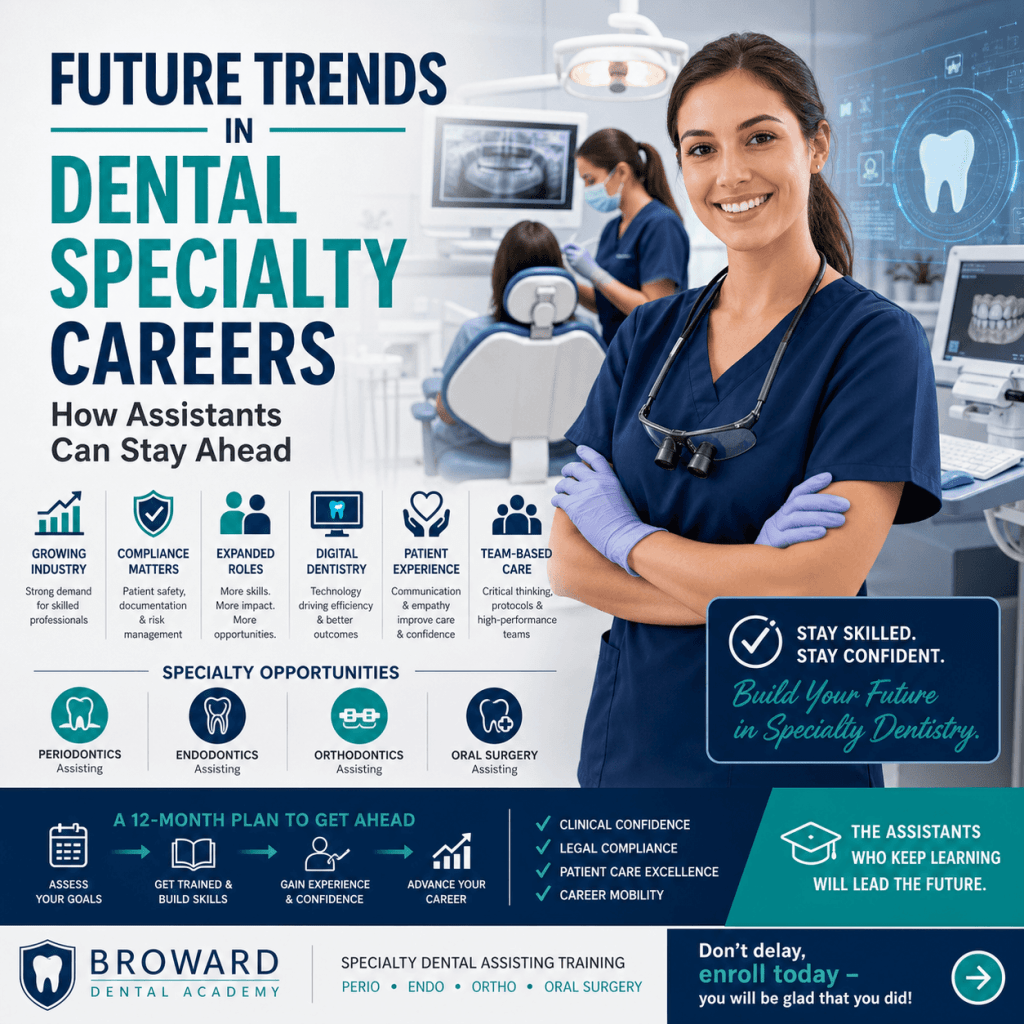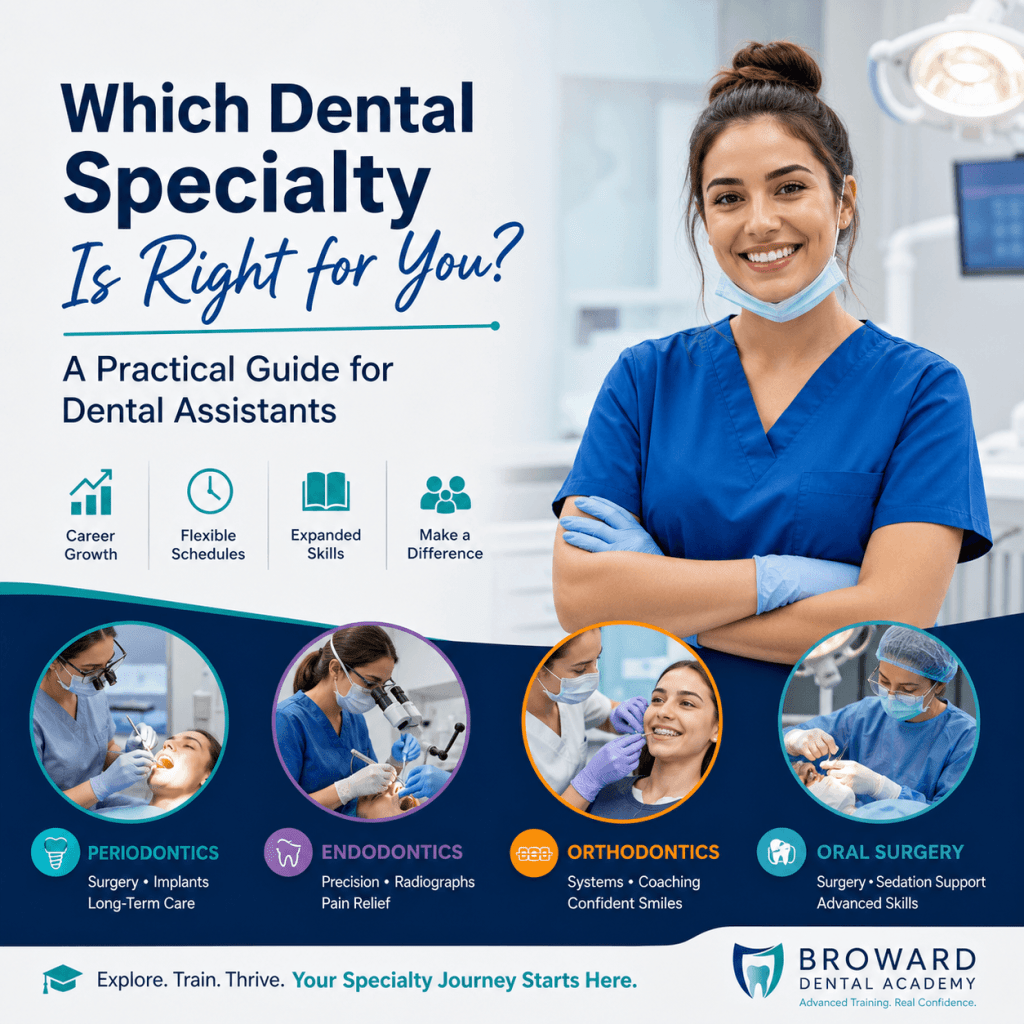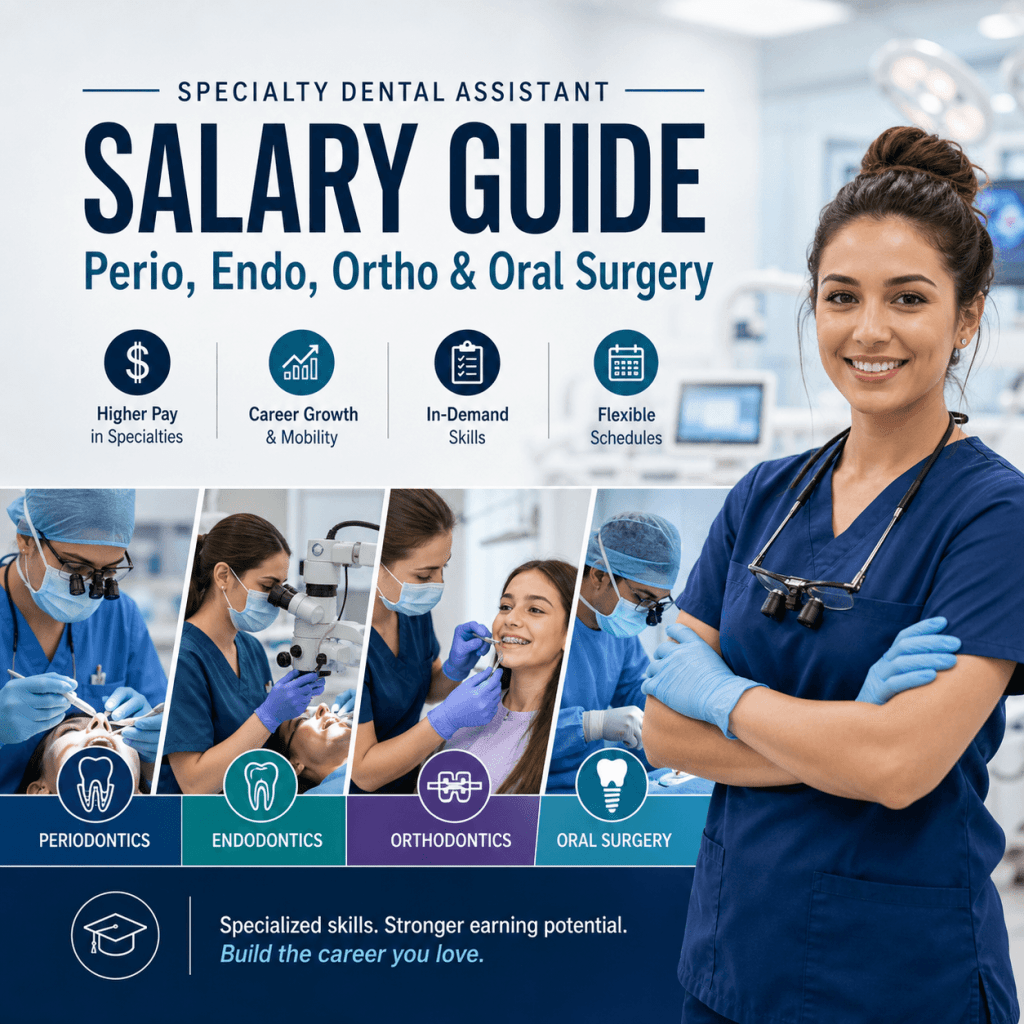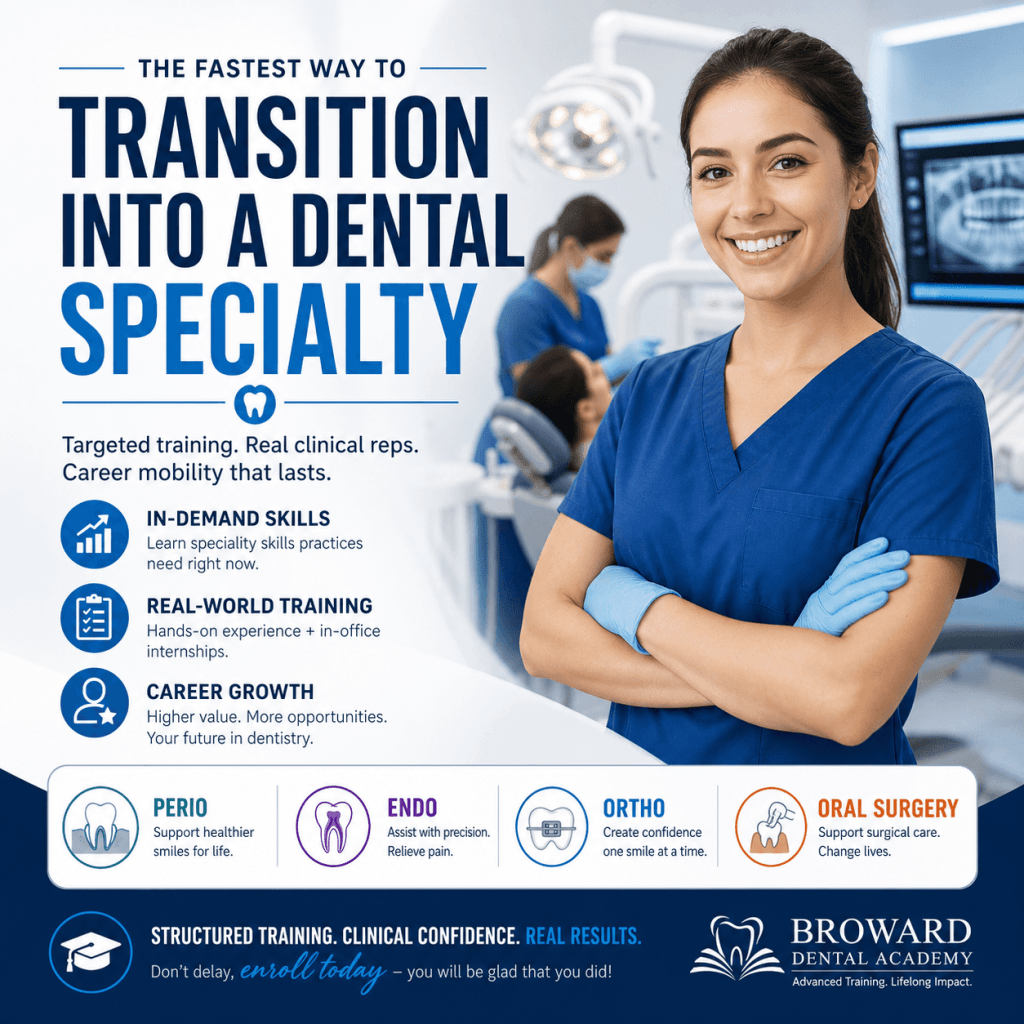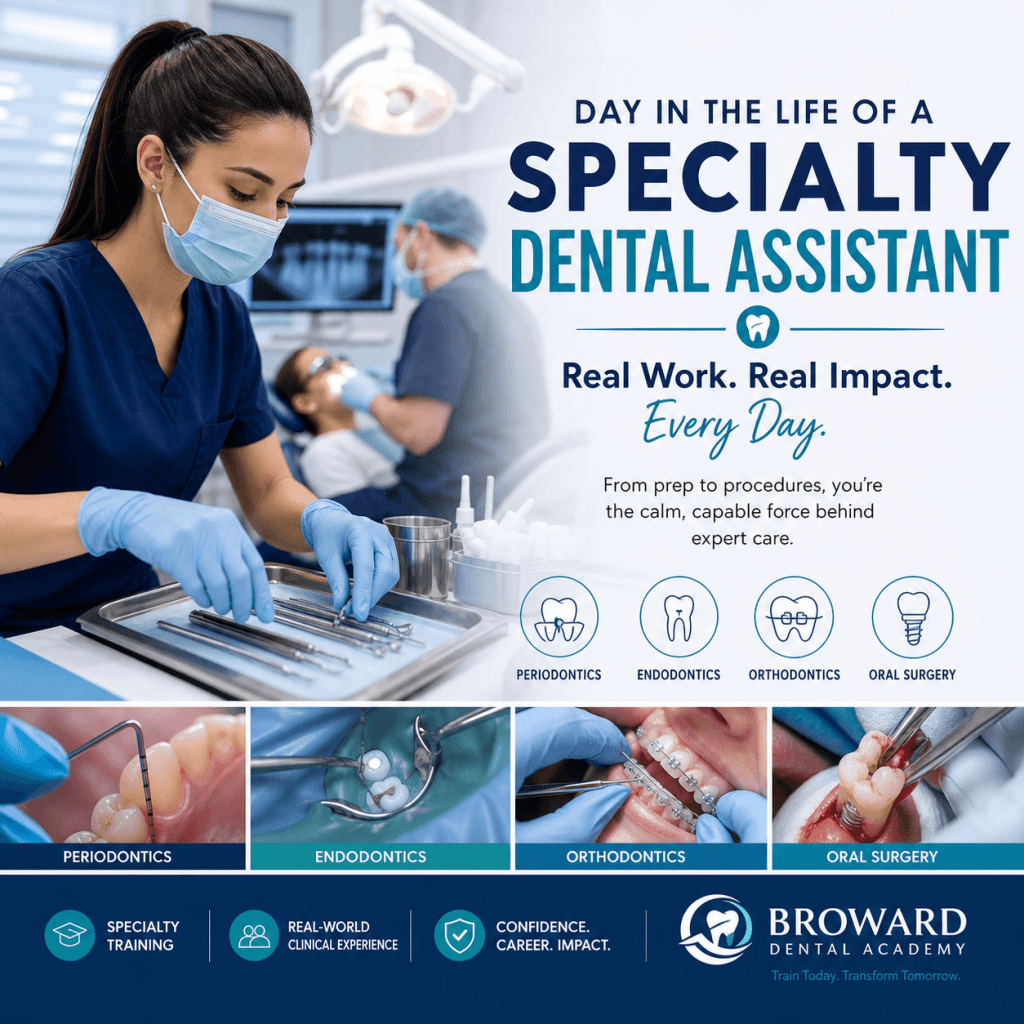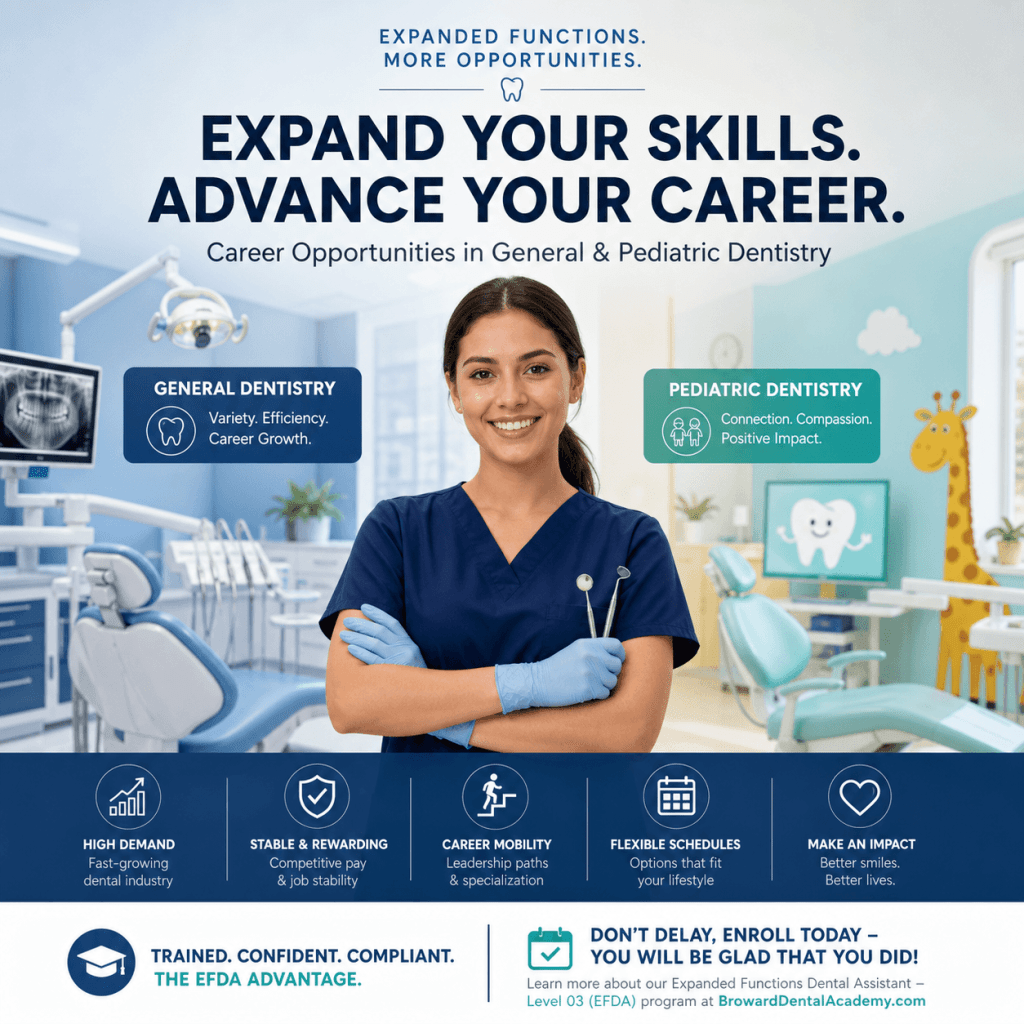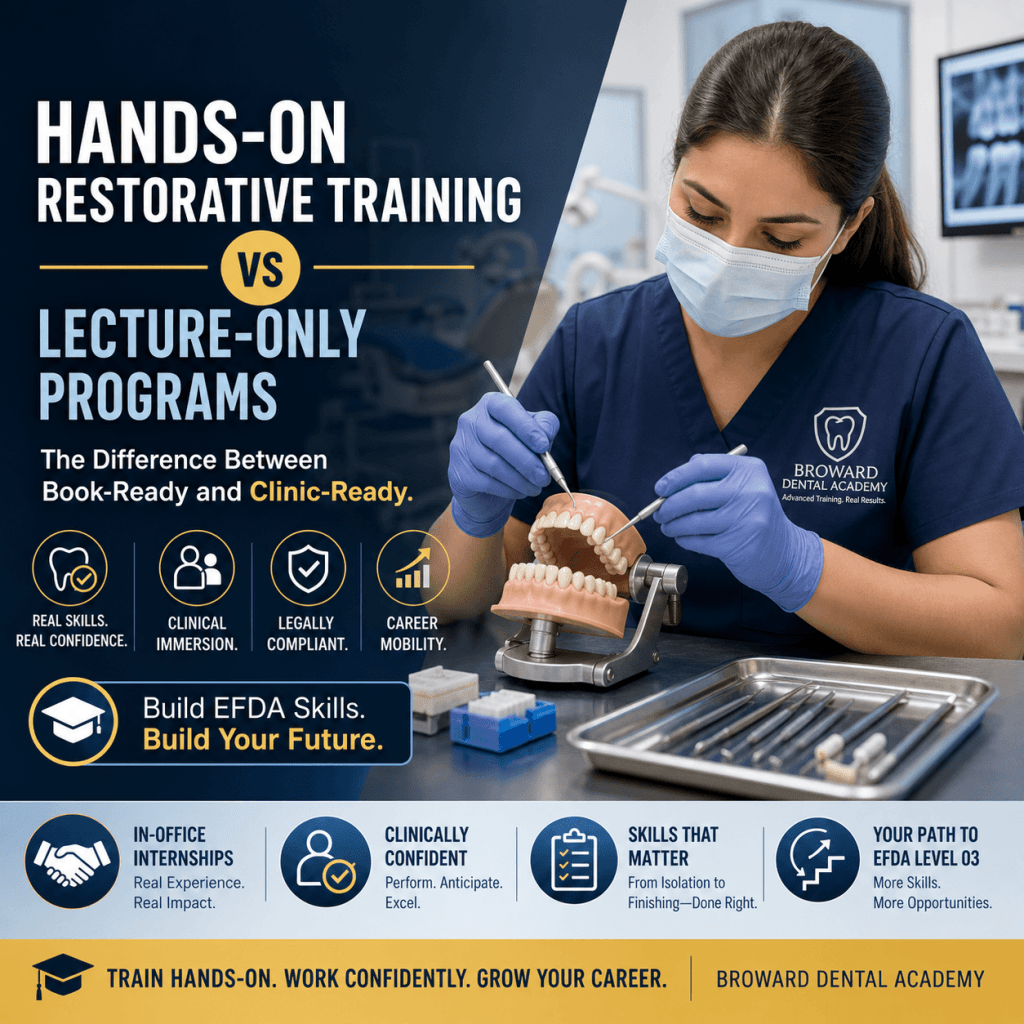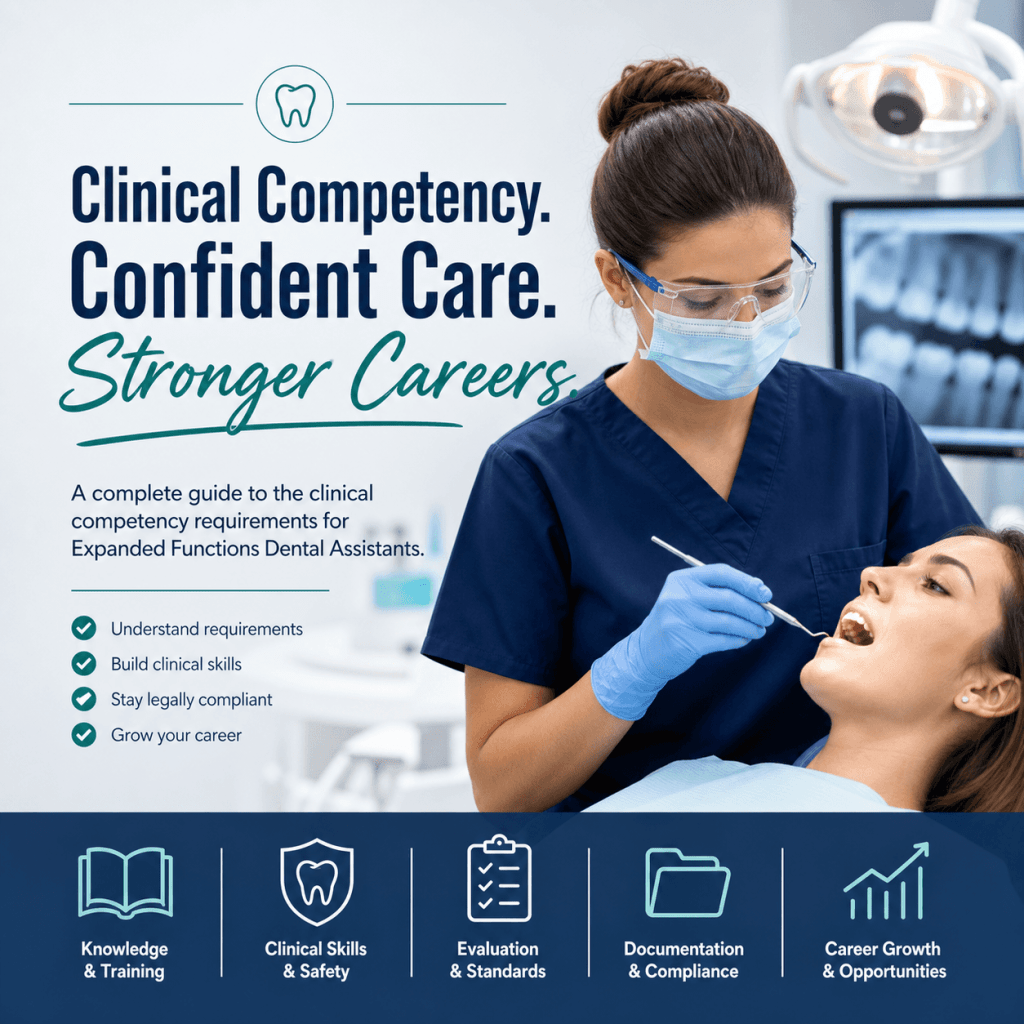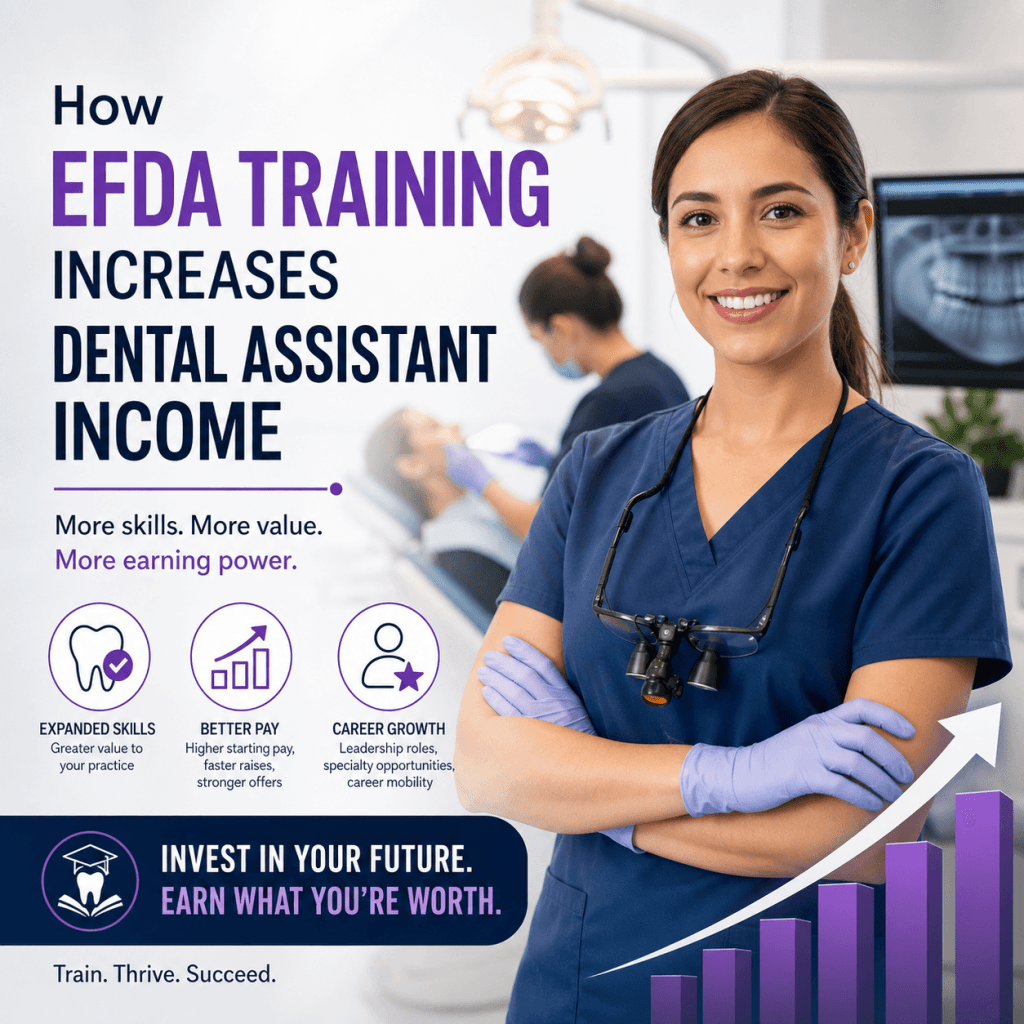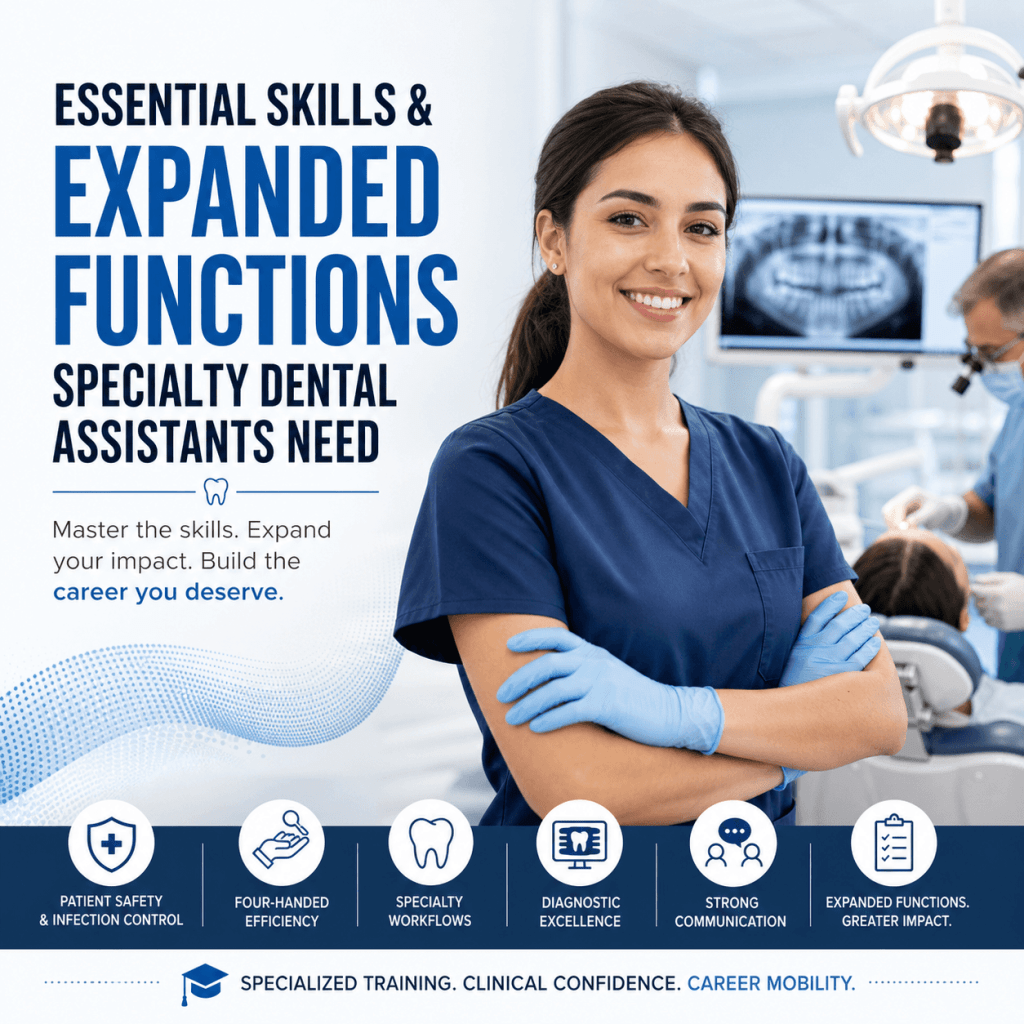
That is exactly why specialty dental assistants are in demand right now.
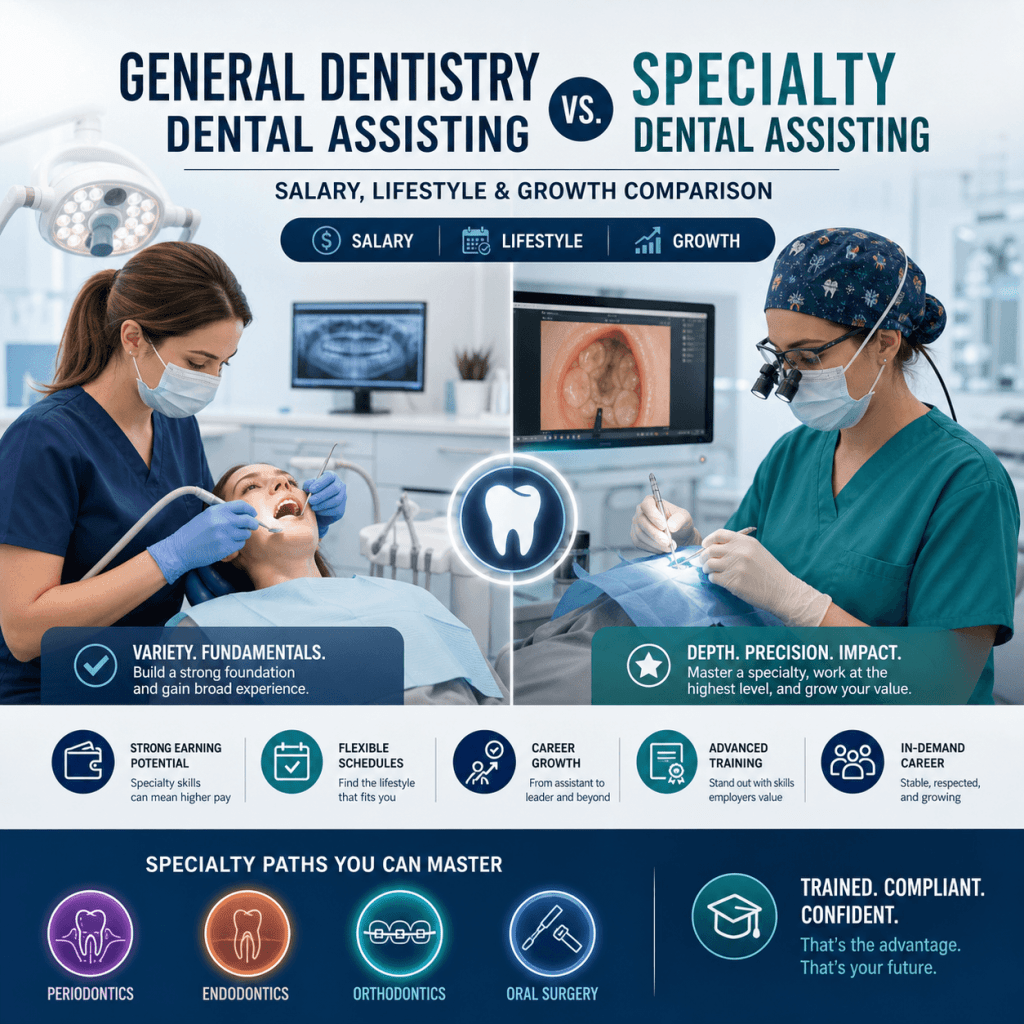
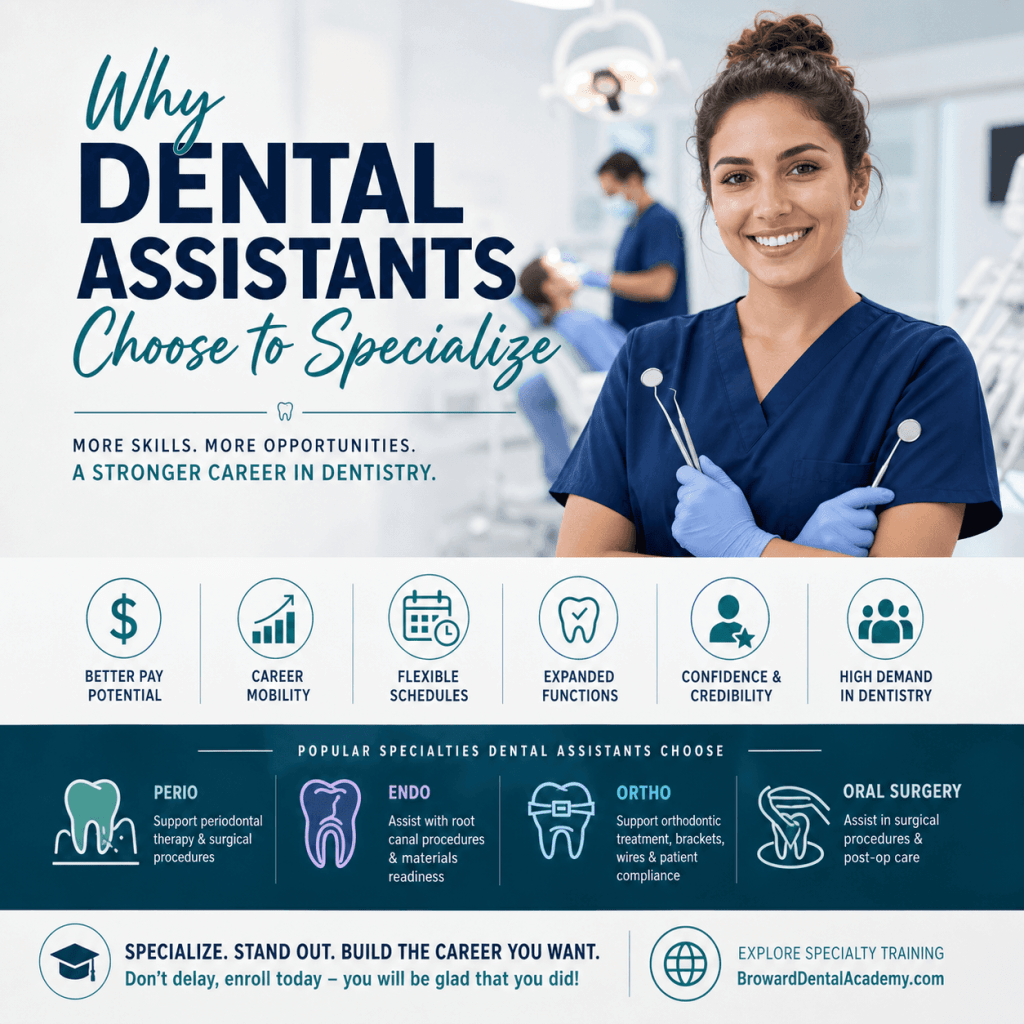
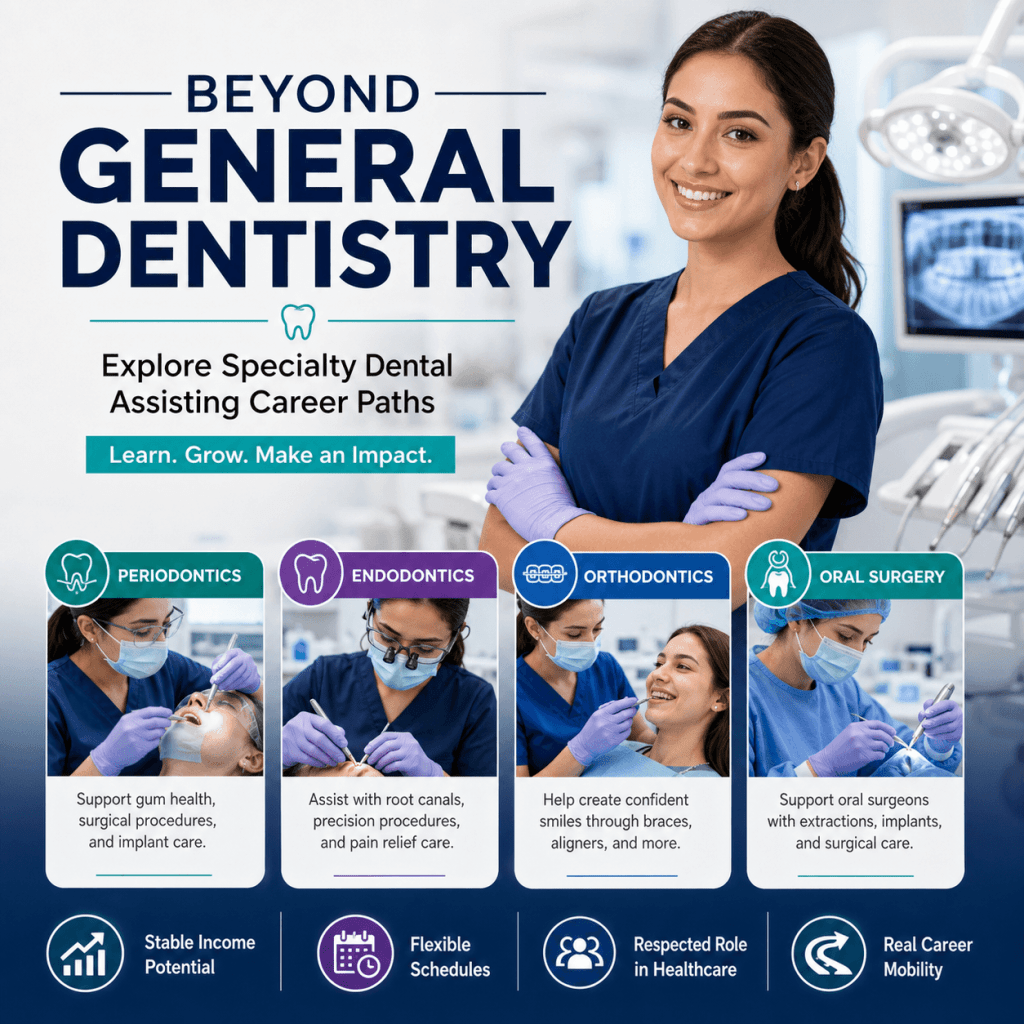
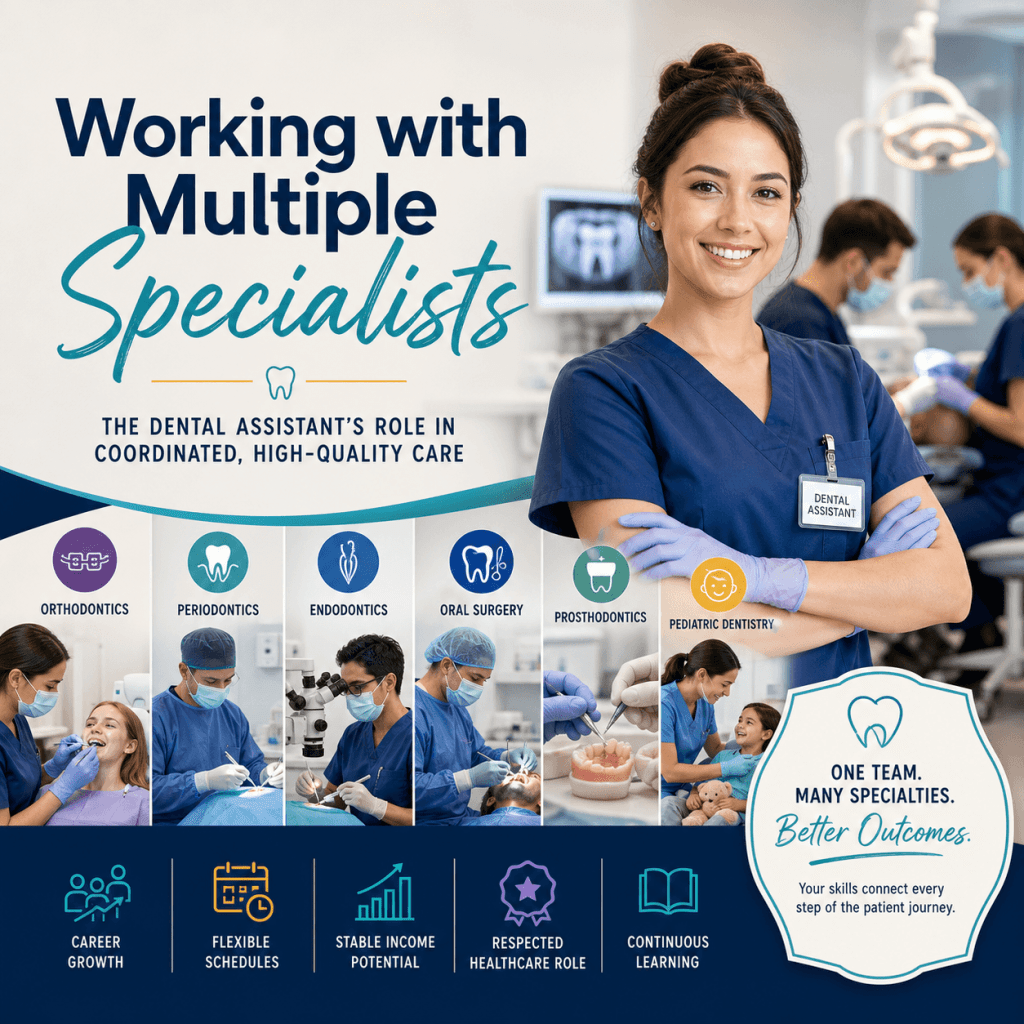
A “specialty dental assistant” typically supports providers in areas like Periodontics (Perio), Endodontics (Endo), Orthodontics (Ortho), and Oral Surgery. These settings move fast, involve advanced workflows, and often require a higher level of chairside confidence than general dentistry alone.
For dental assistants, specialty training can create real career upside: stable income, flexible schedules, a respected healthcare role, and stronger career mobility as you stack skills across offices and specialties.
This guide breaks down the essential skills and the expanded functions that high-performing specialty assistants often use on the job, plus how to build confidence while staying legally compliant.
Why specialty dental assistants are in demand right now
Specialty practices are built around efficiency and outcomes. Many offices are handling:
- More patients per day
- More procedures that require surgical-level setup and precision
- More documentation and regulatory oversight
- More technology, including digital imaging and scanning
At the same time, dentists need clinical teams who can maintain calm chairside flow, keep rooms turning over safely, and support advanced procedures without constant re-direction.
That is where specialty dental assistants stand out. With the right training, you become the person who helps the provider move faster without cutting corners, keeps the patient comfortable, and protects the practice through strong compliance habits.
What “expanded functions” means (and why it’s not the same everywhere)
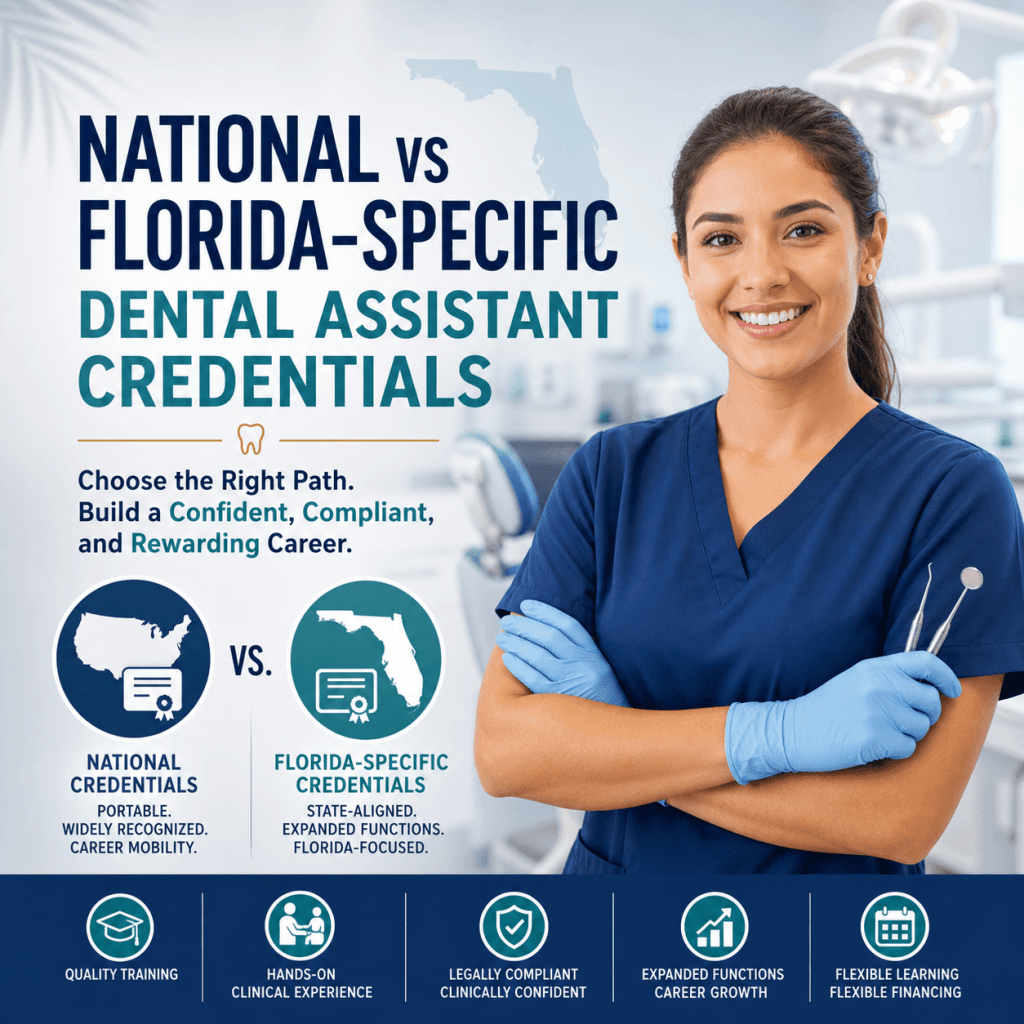
In plain language, expanded functions are additional clinical duties that may be allowed beyond basic dental assisting. What you can legally do depends on:
- Your state’s dental board rules
- Your training and credentials
- The dentist’s delegation
- Required supervision levels
- Proper documentation
This is why compliance matters. Scope-of-practice rules are not optional, and specialty settings tend to be less forgiving because procedures carry higher risk and documentation is more detailed.
Your best next step is simple: confirm the requirements for your state and your employer, then choose training that matches real-world practice expectations. For instance, you might consider pursuing some certifications that align with your career goals.
When practices hire, they often prefer assistants who can step in confidently with specialty procedures and advanced workflows, while staying clearly inside legal boundaries.
The core skills every specialty dental assistant must master
These are the non-negotiables that carry across Perio, Endo, Ortho, and Oral Surgery. Speed matters, but in specialty dentistry, accuracy, safety, and calm chairside flow come first.
Advanced training accelerates mastery because you get real repetition, coaching, and feedback in clinical conditions. If you’re looking for such advanced training programs, it’s worth exploring options available at local dental academies.
1) Advanced infection control and sterile technique under pressure
Specialty environments expose patients and teams to higher risk. You need strong habits that hold up during fast turnover and demanding procedures.
Key competencies include:
- Understanding surgical asepsis vs. clean technique
- Disciplined tray setup and field awareness
- Avoiding contamination during instrument passes, suctioning, and room resets
- Knowing how to correct issues when a sterile field is compromised
A reliable instrument processing flow matters just as much:
- Safe transport
- Ultrasonic/washer protocols
- Packaging
- Autoclave use
- Monitoring (biologic indicators, chemical indicators, logs)
Strong infection control protects patients, supports team safety, and helps the practice stay ready for audits and inspections. In specialty settings, consistency is the difference between “good intentions” and true clinical readiness.
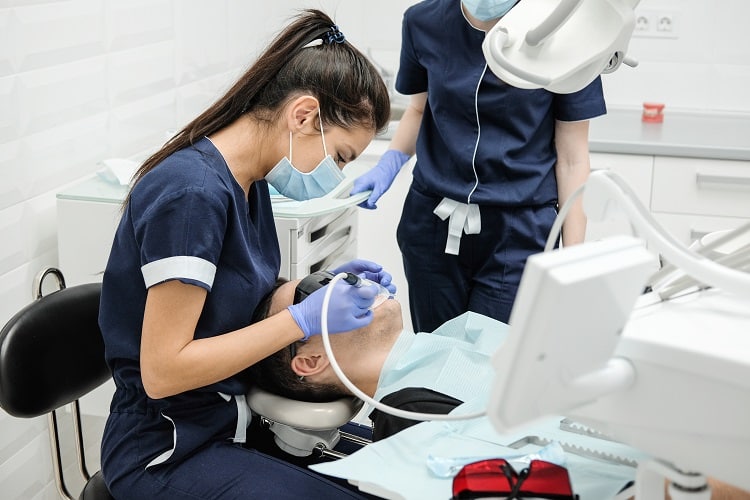
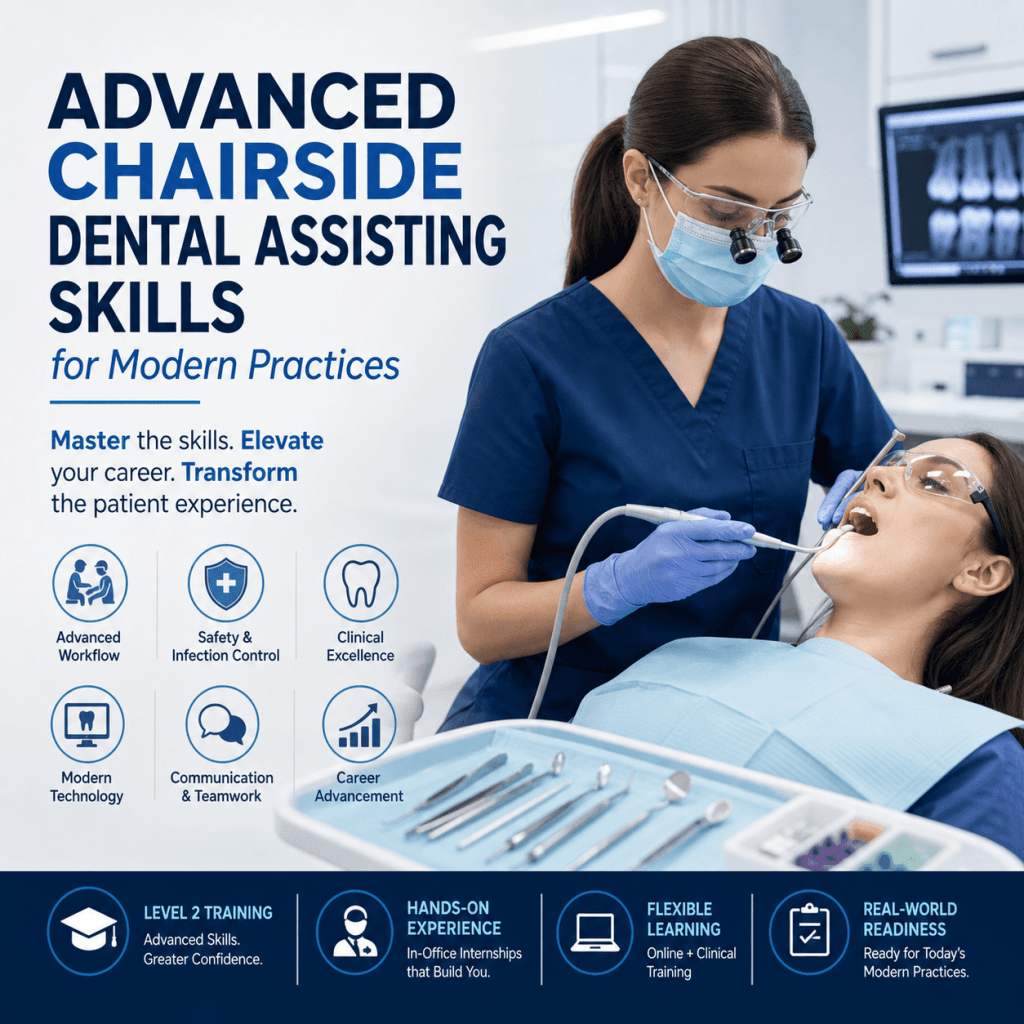
2) Chairside efficiency: four-handed dentistry and anticipation
In specialty dentistry, your value is often measured by how well you support flow.
“Anticipation” means you can read the provider’s next step and stay ready with:
- Instrument passing
- Retraction and visibility control
- Suctioning that keeps the field clear without disrupting tissue
- A clean, organized working zone
Efficiency also includes procedure-based setups. A great assistant prepares the room for that specific appointment, not a generic version of it.
Habits that separate average from excellent include:
- Fast, consistent operatory resets
- Stocking and supply readiness before the schedule starts
- Knowing where everything is without looking away from the field
- Minimizing interruptions that break patient comfort and provider focus
Efficiency improves patient experience and practice productivity, and it can be done without rushing or skipping steps.
3) Specialty-level dental materials and impression competence
Materials errors create remakes, delays, and patient frustration. Specialty assistants need working knowledge of common materials and how they behave in real conditions.
Depending on the office, you may encounter:
- Etchants, bonding agents, composites
- Temporary materials
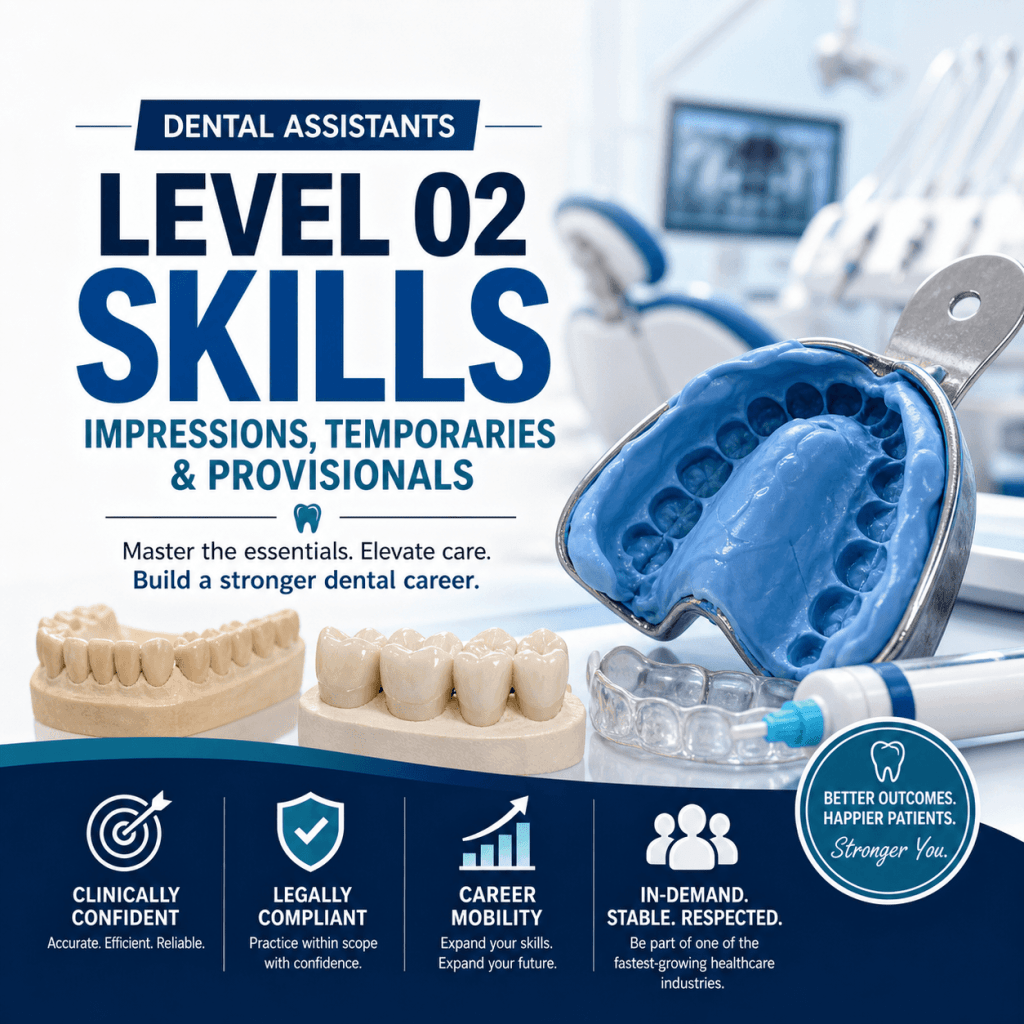
- Impression materials and bite registrations
- Digital scan workflows and scan-body handling in some settings
Common issues to prevent:
- Moisture contamination
- Incorrect timing or set time assumptions
- Wrong mixing ratios
- Poor tray selection
- Distortion during removal or handling
You also need strong lab communication and documentation habits, such as recording shade details, notes, and photos when the practice uses them.
When you are confident with materials, providers trust your hands, and the entire office avoids costly rework. This confidence often stems from a solid understanding of dental materials, which can significantly reduce errors in procedures.
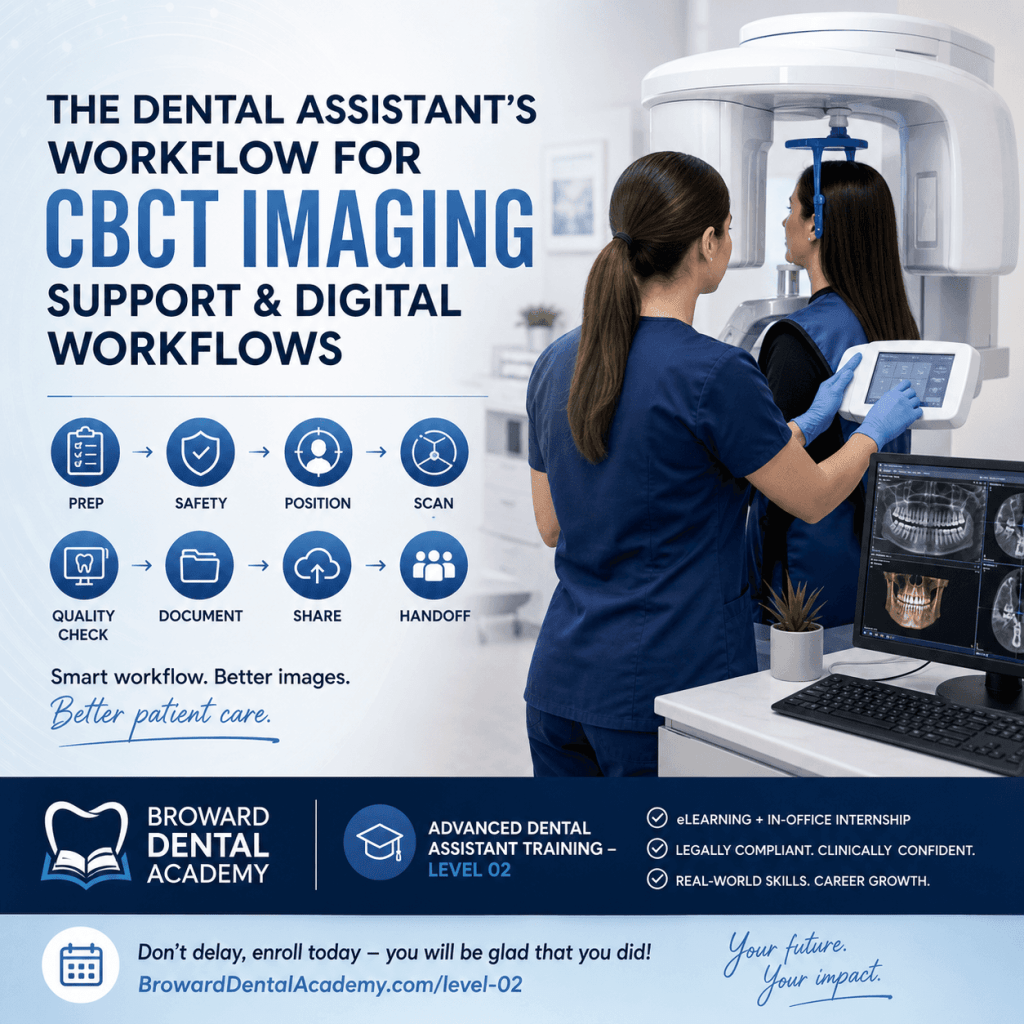
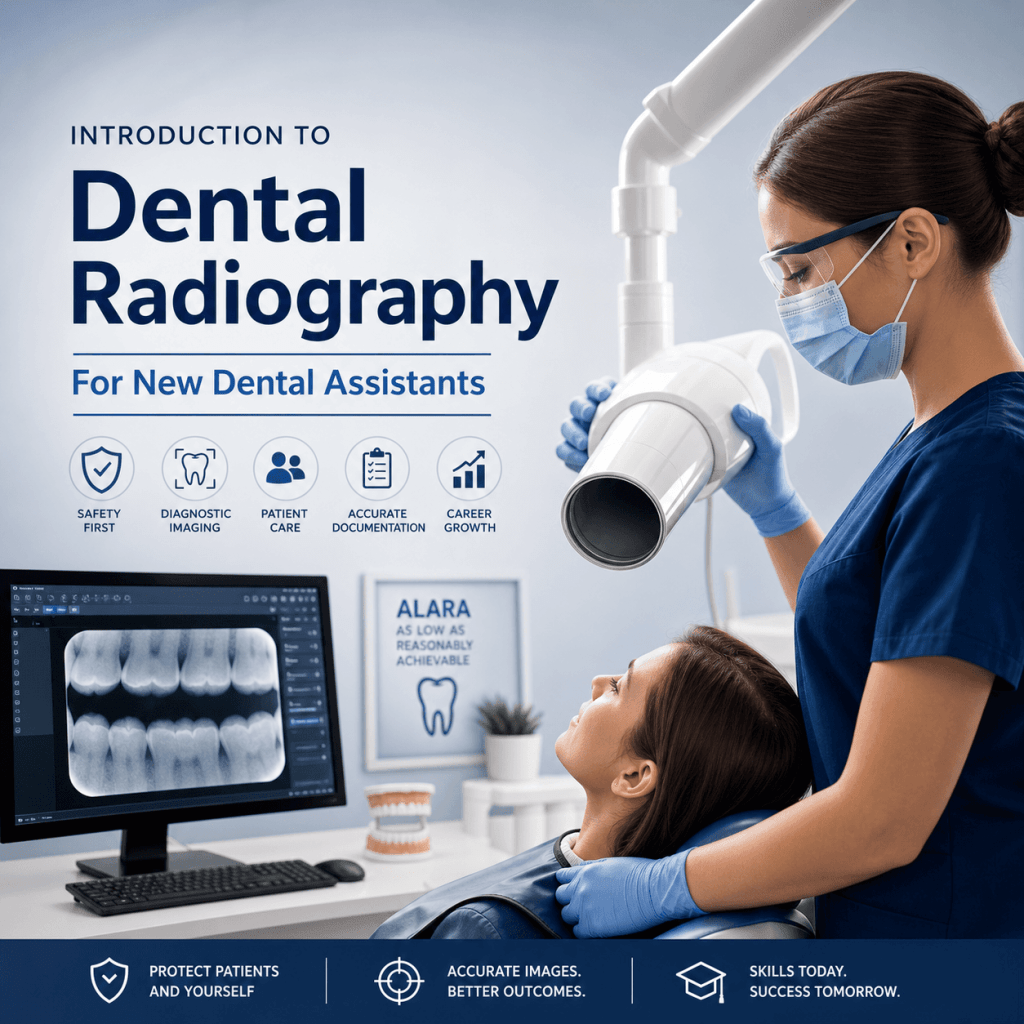
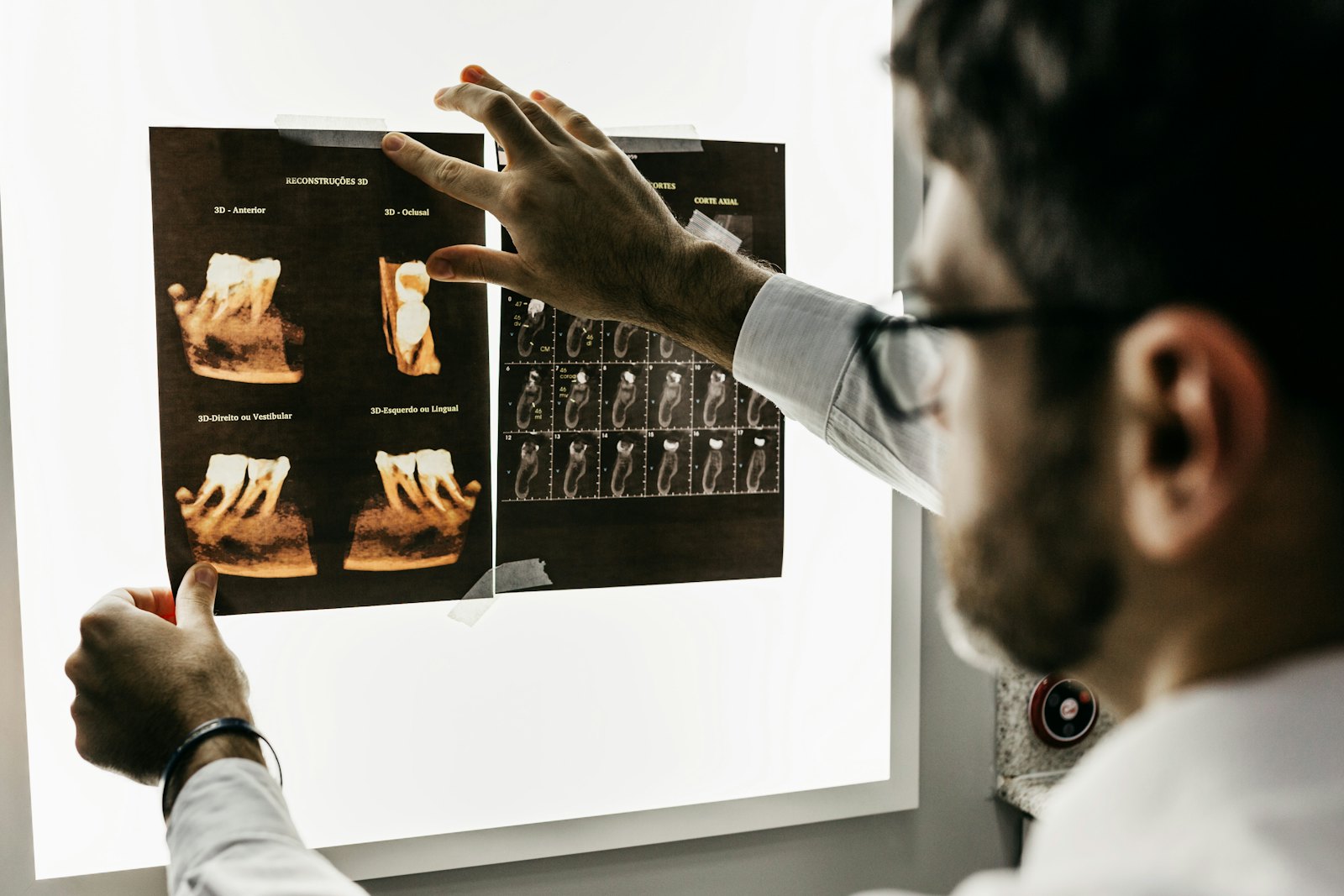
4) Radiography and diagnostic support that helps the dentist move faster
Specialty practices rely on imaging accuracy. Retakes waste time, increase patient frustration, and slow down diagnosis.
Core skills include:
- Accurate intraoral positioning and angulation
- Reducing retakes through technique and patient coaching
- Managing comfort, especially for gag reflex or limited opening
Specialty scenarios often include:
- Endo working-length or master cone images
- Ortho progress records
- Surgical pre-op and post-op images
High-performing assistants understand what the clinician is trying to confirm and capture images that are clinically useful on the first attempt. Pair that with clean documentation and consistent image quality standards, and you become a major efficiency multiplier.
5) Communication and behavioral skills (patients, providers, and the team)
Specialty appointments can be intimidating for patients. Your chairside communication matters more than people realize.
This includes:
- Calming nervous patients and setting expectations
- Explaining steps in simple language without overstepping scope
- Supporting informed consent by reinforcing what the provider has already reviewed
- Using closed-loop communication during procedures so instructions are confirmed clearly
Professionalism under stress is a real skill. When schedules run behind, patients get anxious, and the team feels pressure, your ability to stay calm, empathetic, and organized keeps the day from unraveling. Strong communication reduces cancellations, improves reviews, and supports better clinical outcomes.
6) Critical thinking and ethical decision-making in real clinics
Specialty assistants are trusted with more complexity. That requires judgment.
You need to recognize red flags such as:
- A broken sterile field
- Missing documentation
- Allergy or medication concerns
- Unusual patient reactions, discomfort, or distress
Knowing when to pause and ask a question is not weakness. It is patient safety.
Ethics basics show up every day:
- Confidentiality
- Respectful care
- Accurate charting
- Clear boundaries with patients
Employers value assistants who “think like a clinician” while staying in role, because it protects the patient and the practice.
Expanded functions specialty dental assistants may perform (depending on training and state rules)
Think of this section as a practical overview of what many high-performance practices look for. Exact duties always depend on legality, credentialing, and employer protocols.
Expanded functions can increase your value because they allow broader delegation, smoother scheduling, and better patient flow. The best training builds competence and compliance together, so you are confident and employable.
Expanded functions that commonly show up in high-performance practices
Depending on state rules, training, and supervision, expanded functions may include:
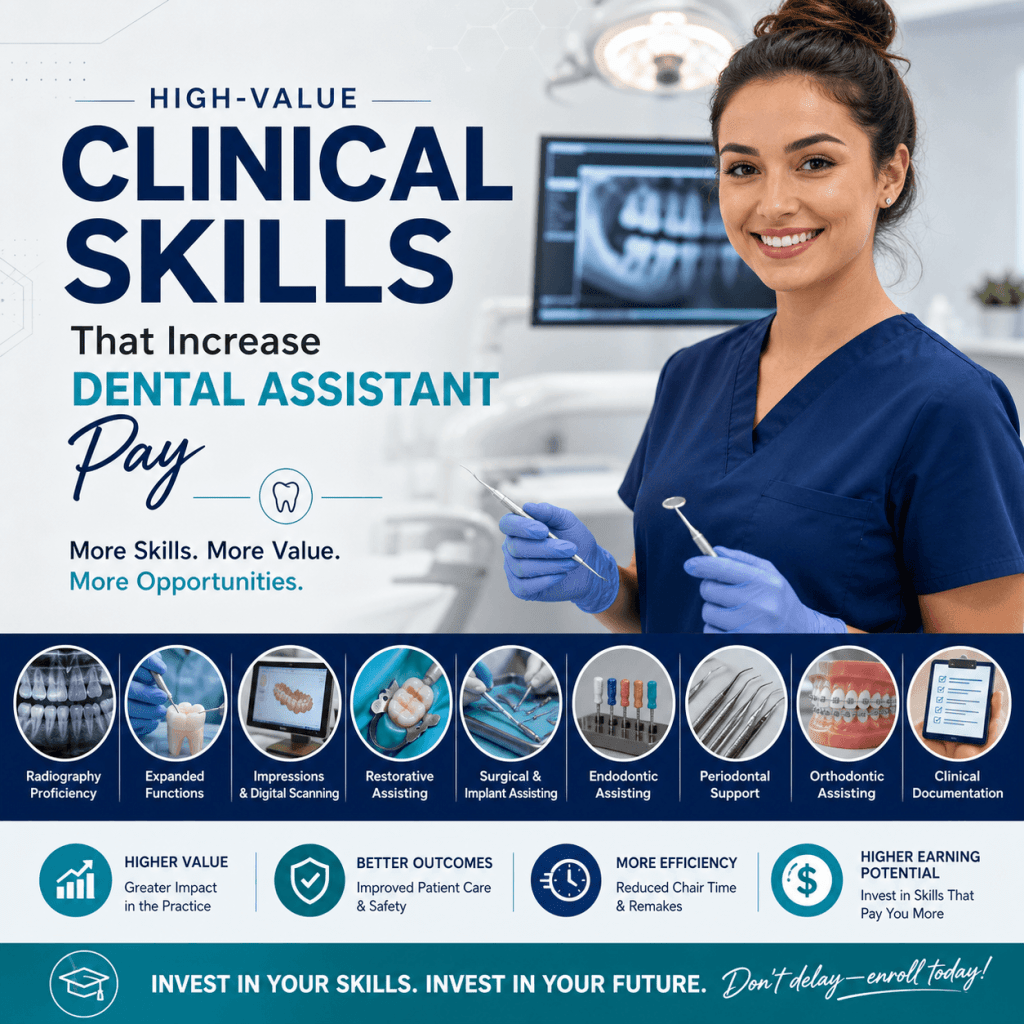
- Coronal polishing (where allowed)
- Sealants and fluoride application protocols
- Placing or removing retraction cord (where permitted)
- Temporary restorations
- Assisting with digital impressions/scans
- Suture removal and post-op support tasks seen in Perio/Oral Surgery settings (per regulations)
- Clear aligner and orthodontic support: progress documentation, tray delivery support, and other duties that vary by state and practice
The takeaway is simple: duties vary, but training should map to local rules and the workflows specialty practices actually use.
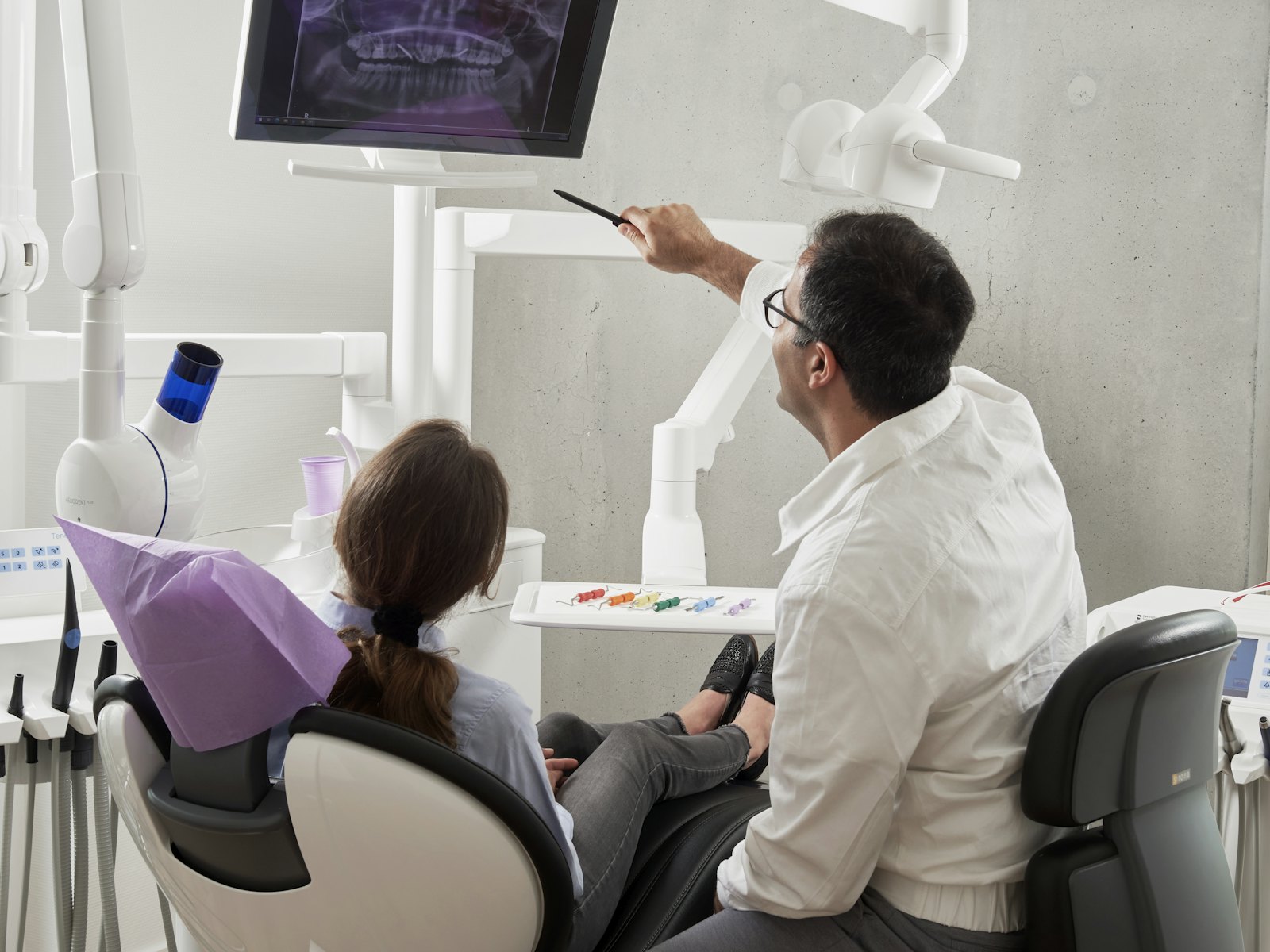
Documentation, charting, and compliance as an “expanded function” employers quietly prioritize
Even when an office is hiring for clinical skills, employers often quietly prioritize assistants who can document cleanly and consistently.
That may include supporting:
- Perio charting and measurement entry
- Endo documentation assistance
- Ortho progress notes structure
- Surgical post-op instruction documentation
Strong documentation protects the practice medically and legally. It also improves continuity between providers, assistants, and the front office.
If you want “lead assistant” potential, this is one of the fastest ways to stand out: templates, checklists, accurate notes, and clean handoffs.
Specialty-by-specialty: the skills that matter most in Perio, Endo, Ortho, and Oral Surgery
You do not need to master everything on day one. What you do need is a clear map of what each specialty demands and what skills to build first.
Specialty training reduces the learning curve and makes you more hireable across offices.
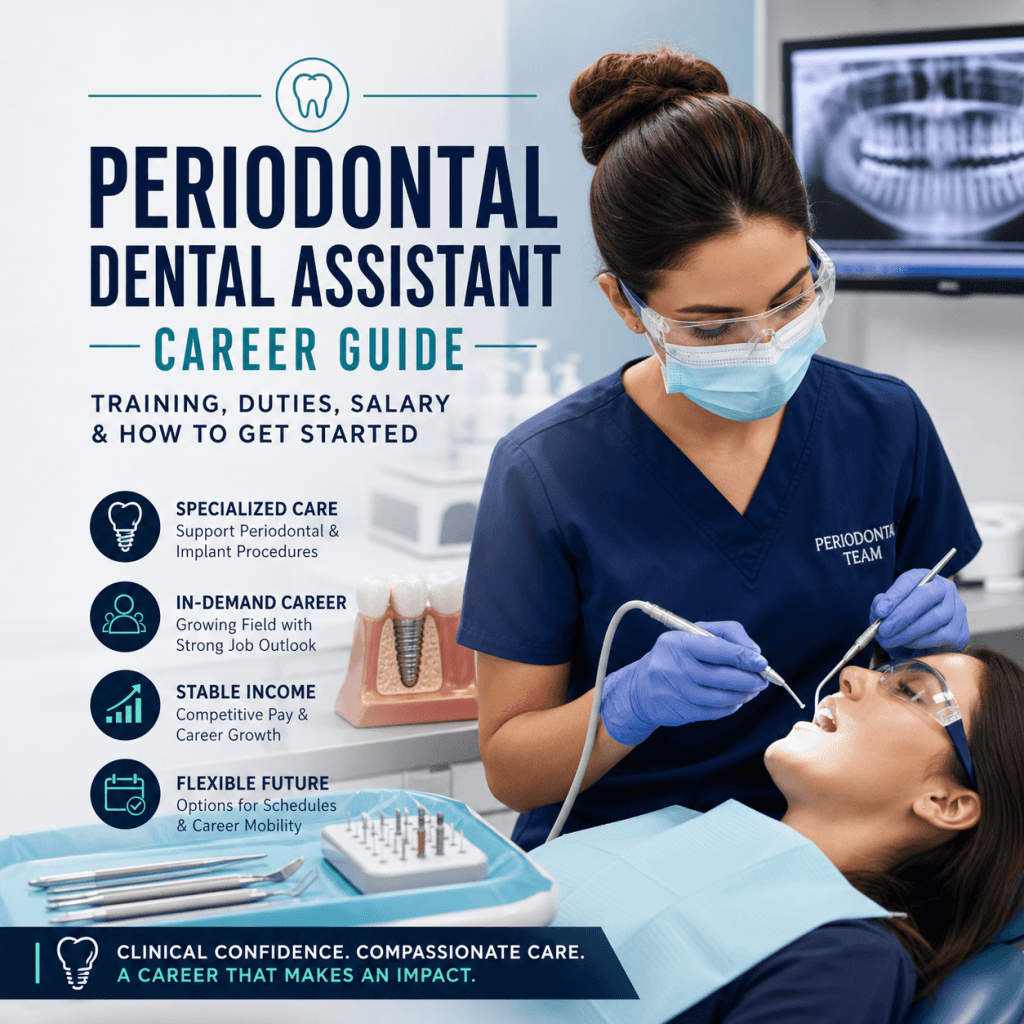
Periodontics (Perio): soft-tissue focus, charting precision, and surgical readiness
Perio is detail-heavy and tissue-sensitive. Skills that matter most include:
- Perio charting fundamentals: probe handling, documenting bleeding points, recession, mobility, and furcations
- Surgical tray setup discipline and sterile readiness
- Suction and retraction that protects delicate tissue and preserves visibility
- Patient education support: home care instructions, post-op expectations, and maintenance visit flow
Perio assistants are often valued for gentleness, organization, and calm pacing, especially during grafting or implant-related procedures.
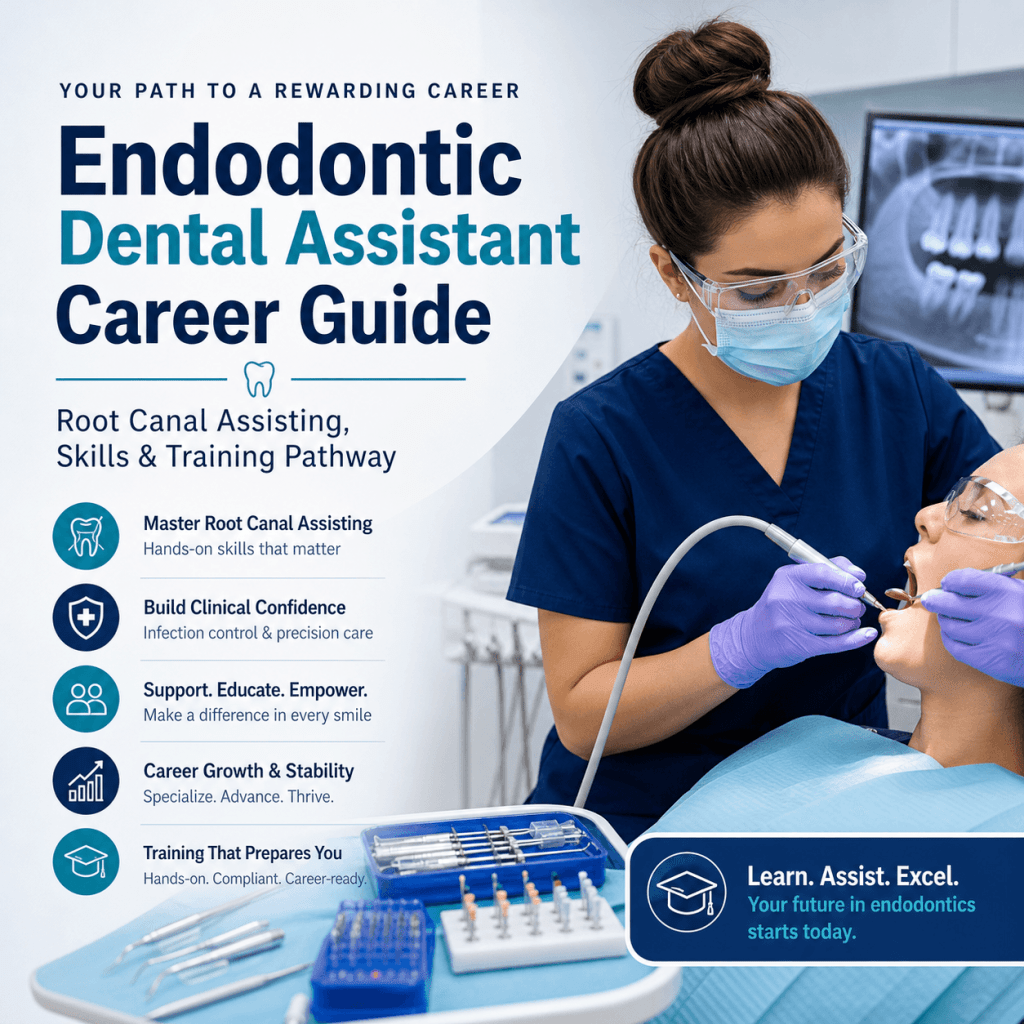
Endodontics (Endo): rubber dam mastery, procedure flow, and imaging support
Endo is about isolation, precision, and staying organized through a predictable but exacting sequence.
Key competencies include:
- Rubber dam setup and assistance, with a clear understanding of why isolation matters
- Moisture control and field organization
- File sequence awareness and safe handling
- Irrigation safety mindset and clean, controlled delivery support
- Radiograph timing that supports working length and master cone checks
Endo appointments can be long. Patient comfort skills matter: clear explanations, reassurance, and proactive breaks when the provider approves them.
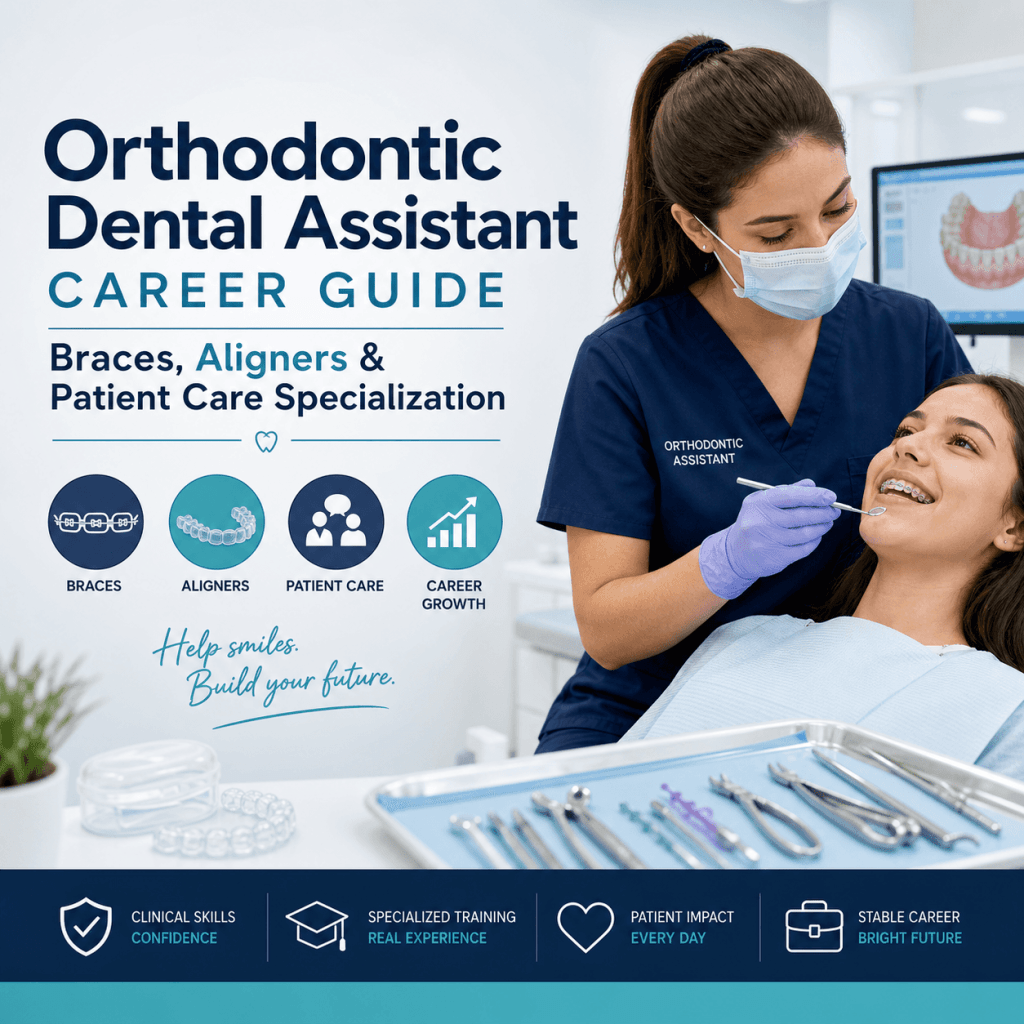
Orthodontics (Ortho): records, appointments that run on time, and patient coaching
Ortho clinics often run on speed, systems, and patient compliance.
Common priorities include:
- Ortho records: photos, impressions or scans, bite registrations, and consistent progress notes
- Appointment flow support for bracket or band procedures and debond support
- Retainer delivery support where permitted
- Patient education: hygiene with braces or aligners, elastics compliance, and what to do when something breaks
Ortho assistants often thrive when they are disciplined with time, clear with instructions, and confident managing a fast-paced rhythm.
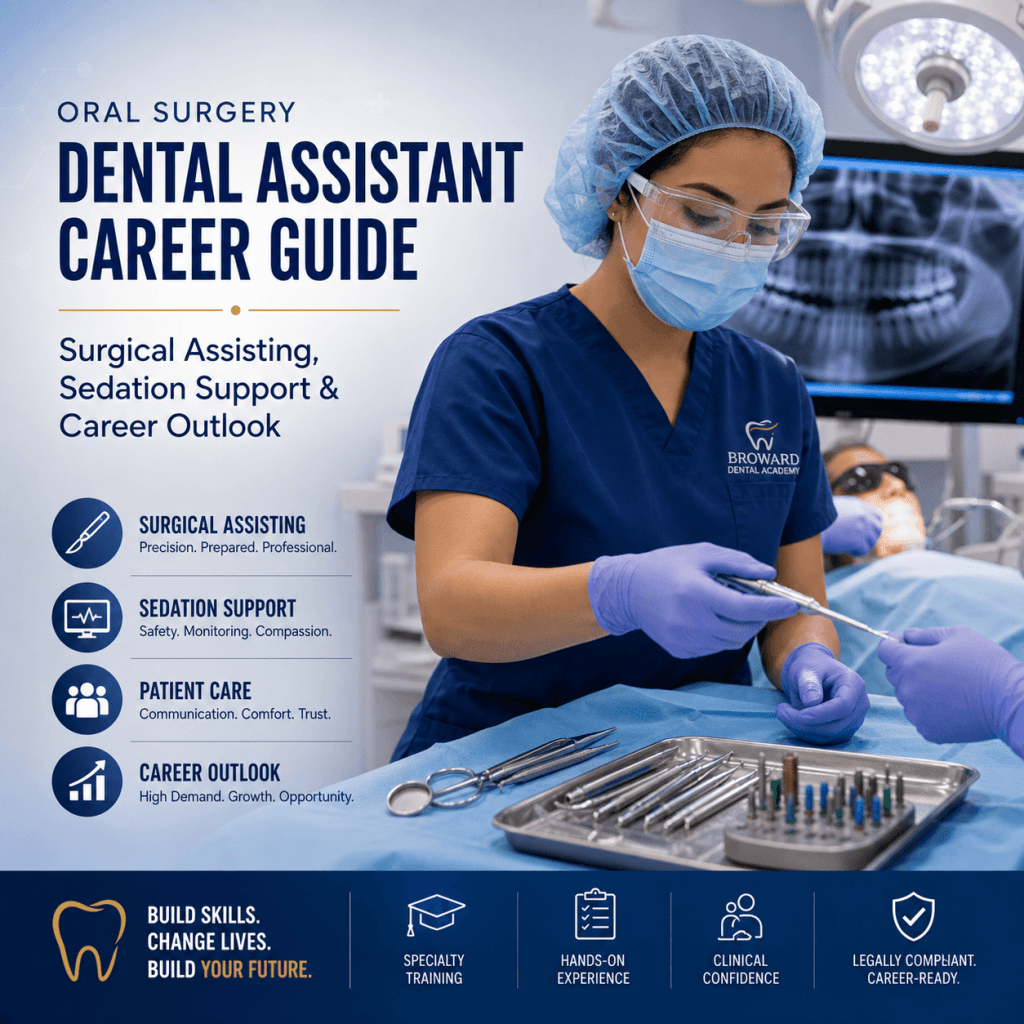
Oral Surgery: surgical asepsis, sedation awareness, and confident post-op support
Oral Surgery demands strong infection control, calm chairside presence, and readiness for complications.
Skills that matter include:
- Surgical setups and sterile field maintenance
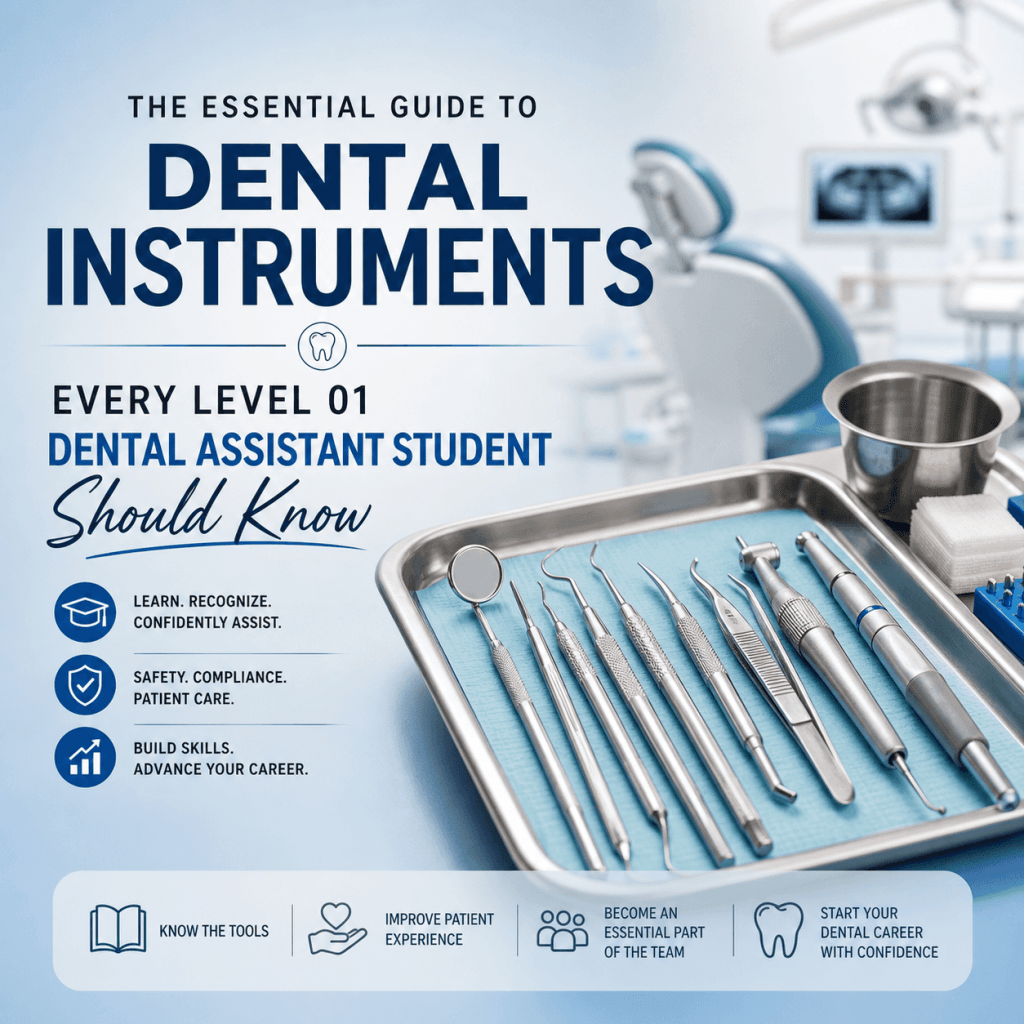
- Instrument identification and confident passes
- Suctioning with visibility control in high-fluid environments
- Sedation and monitoring awareness within role, plus emergency readiness and documentation support
Post-op support is also a major part of the patient experience. You may reinforce instructions on bleeding control, swelling management, diet, and medication reminders as directed by the provider.
Calm professionalism is not optional here. Patients are often anxious, and your steadiness helps the entire appointment run safely.
How to build these skills faster: what to look for in specialty dental assisting training
There is a real gap between knowing the steps and performing confidently in a live operatory.
High-quality training typically includes:
- Hands-on clinical practice, not just lectures
- Repetition until tasks feel natural under time pressure
- Feedback that corrects small mistakes before they become habits
- Exposure through internships so you understand real schedules, real patients, and real workflow
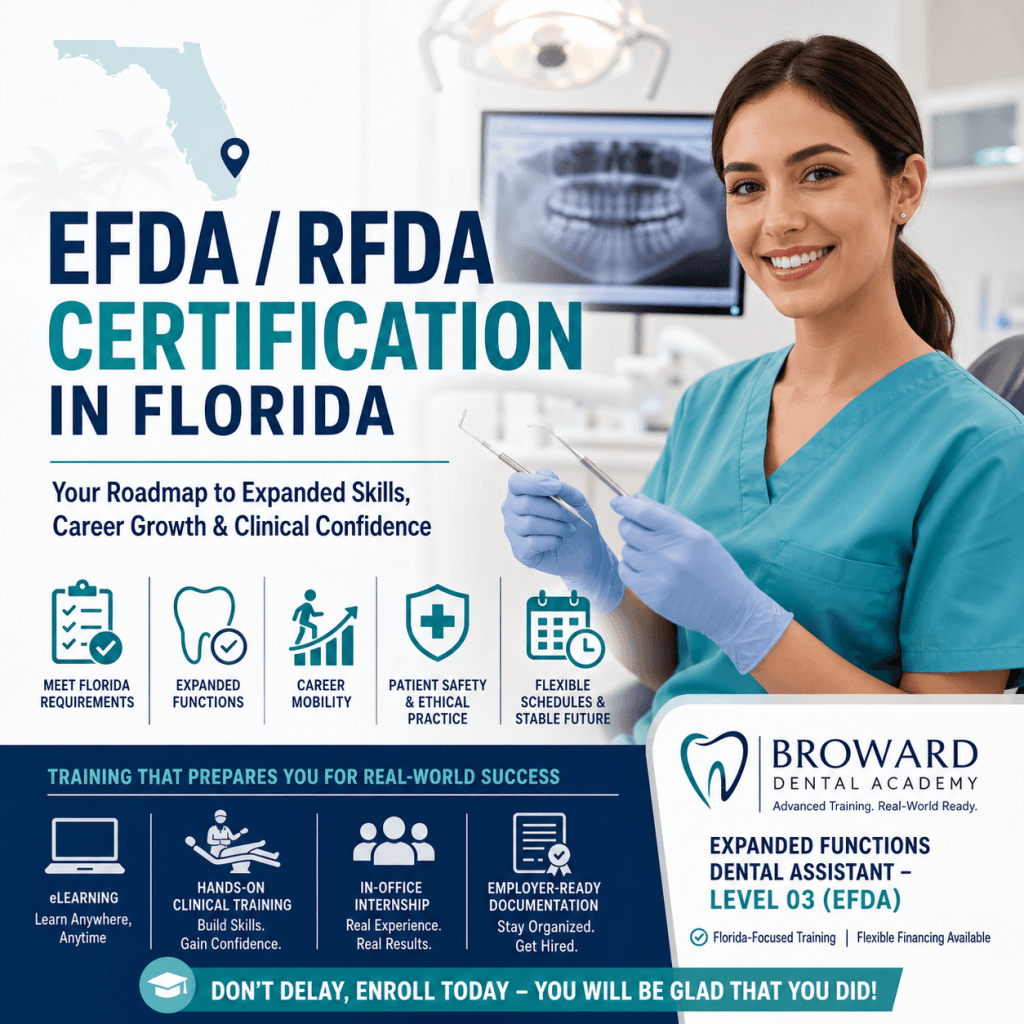
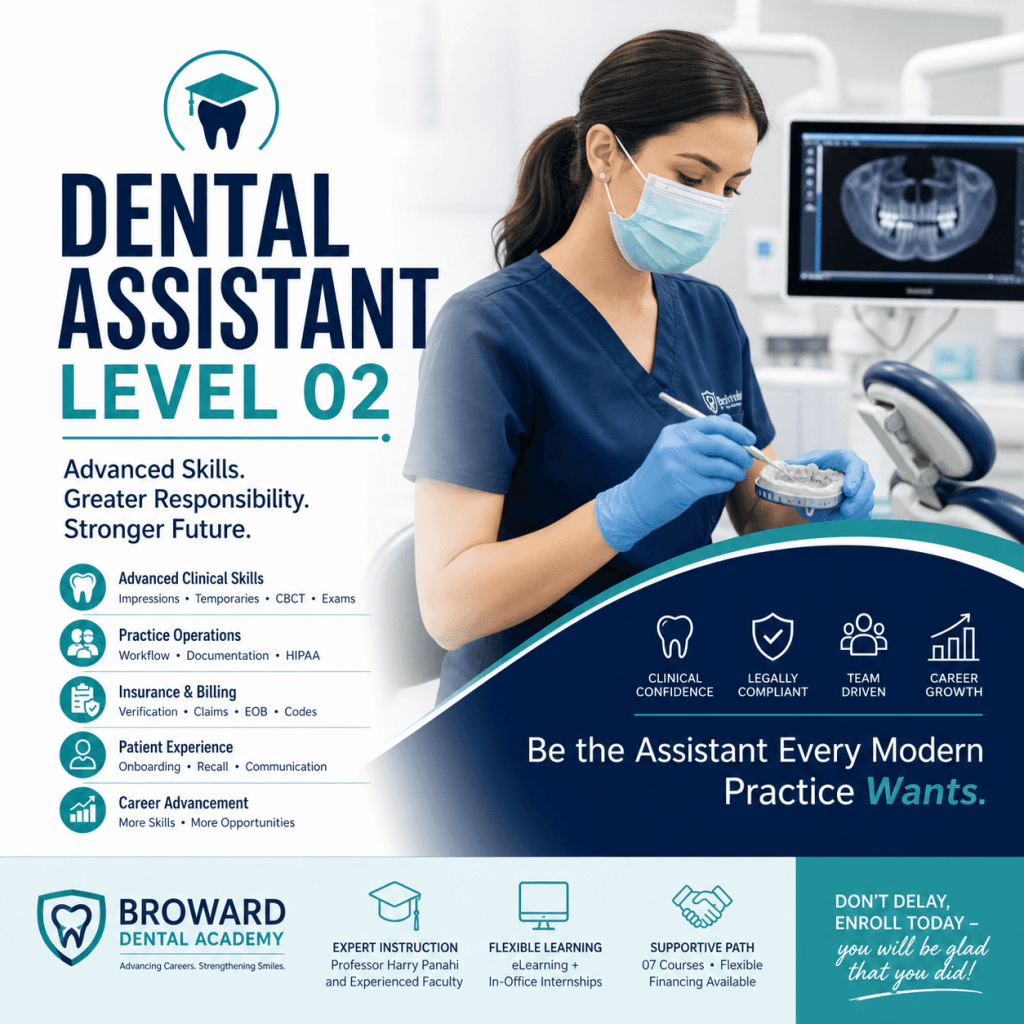
For those seeking comprehensive training in these areas, Broward Dental Academy offers a wide range of dental courses designed to support expanded functions and specialty workflows. Students experience a complex educational approach through immediate immersion in online and clinical settings, including updated eLearning lesson plans for remote training and in-office internships.
Why Broward Dental Academy is built for modern specialty practices
The Broward Dental Academy is not just another educational institution; it’s a career-focused academy designed to prepare students for success in modern, high-performance dental practices. The curriculum goes beyond merely teaching students how to pass exams. Instead, it aims to equip them with the skills and confidence they need to thrive in their careers.
At Broward Dental Academy, students are trained to become:
- Thoroughly trained
- Legally compliant
- Clinically confident
Just as importantly, the training emphasizes professional development so graduates learn to think critically, act ethically, and perform confidently in real clinical environments. With 07 courses offered and flexible financing options available, Broward Dental Academy helps students build a practical path into specialty dental assisting.
If you are exploring specialty pathways, you can learn more about the Specialty Dental Assisting Training which includes Perio, Endo, Ortho, and Oral Surgery.
Career outcomes: how expanded functions can increase your opportunities and income stability
Expanded functions and specialty skills gained from Broward Dental Academy’s comprehensive training can open doors quickly:
- More responsibilities and more provider trust
- Broader job options across Perio, Endo, Ortho, and Oral Surgery
- Better chances of schedule stability and flexibility
- A stronger resume that stands out during hiring
The dental industry continues to grow, and demand for skilled dental professionals keeps rising. Practices are increasingly looking for assistants who are trained for real production environments, not just basic familiarity.
A smart approach is to pick one specialty to start with—be it through our Dental Assistant Level 01, Level 02, or Level 03 courses—and then stack skills over time. This strategy is how many assistants build long-term career mobility without starting over every time they change offices.
Next steps: start your specialty path with Broward Dental Academy
If you are ready to move toward specialty dental assisting, keep it simple:
- Decide which specialty interests you most: Perio, Endo, Ortho, or Oral Surgery
- Identify your current skill gaps, especially infection control, chairside flow, imaging, and documentation
- Choose training that includes real clinical practice and internship exposure, aligned with your state and employer expectations
Broward Dental Academy is committed to serving the dental community by developing well-rounded professionals through comprehensive training programs, flexible learning formats, and flexible financing.
Don’t delay, enroll today, you will be glad that you did.
FAQs (Frequently Asked Questions)
Why are specialty dental assistants in high demand in modern dental practices?
Specialty dental assistants are in high demand because modern dental practices handle more patients per day, perform specialized procedures requiring surgical-level precision, face tighter compliance and documentation requirements, and utilize advanced technology like digital imaging. These factors create a need for skilled assistants who can maintain efficient chairside flow, support complex procedures confidently, and ensure strong infection control and legal compliance.
What does ‘expanded functions’ mean for specialty dental assistants, and how does it vary?
‘Expanded functions’ refer to additional clinical duties beyond basic dental assisting that specialty dental assistants may perform. The scope of these functions depends on state dental board rules, the assistant’s training and credentials, dentist delegation, required supervision levels, and proper documentation. Because regulations vary by state and employer, assistants must confirm local requirements and pursue training that aligns with real-world practice expectations to stay legally compliant.
What core skills must every specialty dental assistant master across specialties like Periodontics, Endodontics, Orthodontics, and Oral Surgery?
Every specialty dental assistant must master advanced infection control and sterile technique under pressure, chairside efficiency including four-handed dentistry and anticipation of provider needs, accurate instrument handling with safe processing protocols, calm management of fast-paced workflows without sacrificing safety or accuracy, and strong documentation habits to support compliance.
How important is advanced infection control in specialty dental assisting, and what does it involve?
Advanced infection control is critical in specialty settings due to higher patient risk and complex procedures. It involves understanding surgical asepsis versus clean technique, disciplined tray setup with field awareness to avoid contamination during instrument passes or suctioning, correcting breaches in sterile fields promptly, and following rigorous instrument processing steps including safe transport, ultrasonic cleaning, packaging, autoclaving with monitoring through biologic and chemical indicators. Consistency in these practices protects patients and ensures readiness for audits.
What does chairside efficiency entail for a specialty dental assistant?
Chairside efficiency means supporting the provider smoothly through four-handed dentistry by anticipating their next steps. This includes timely instrument passing, managing retraction and visibility without disrupting tissue, effective suctioning to keep the field clear, maintaining a clean organized work zone, and preparing procedure-specific setups. Such anticipation helps maintain calm flow during fast-paced specialty procedures.
How can specialty dental assistants build confidence while staying legally compliant on the job?
Specialty dental assistants can build confidence by pursuing advanced training programs that provide real clinical repetition, coaching, and feedback aligned with state regulations. They should confirm their state’s scope-of-practice rules and employer expectations before performing expanded functions. Obtaining relevant certifications enhances skills credibility. Maintaining strong habits in infection control, documentation accuracy, delegation understanding, and supervision adherence ensures they operate safely within legal boundaries while supporting advanced procedures effectively.