In plain terms:
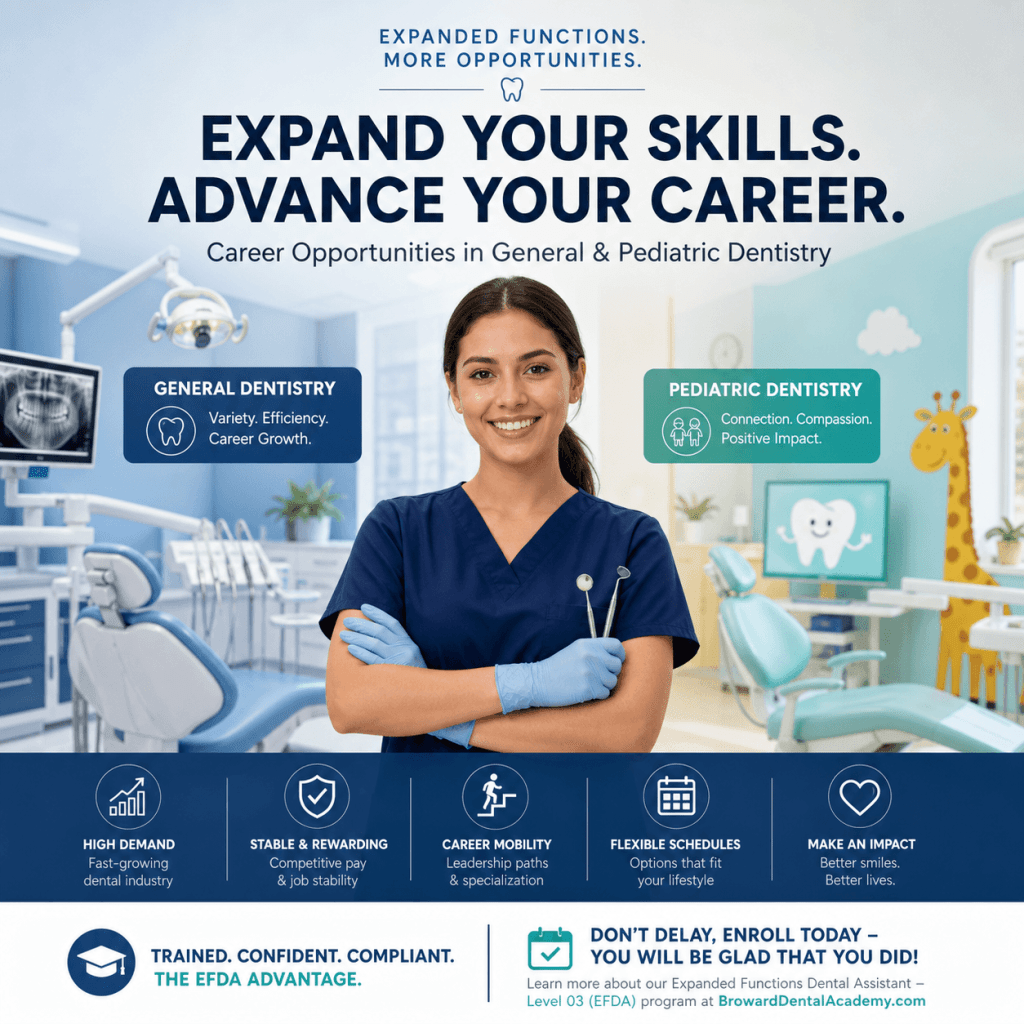
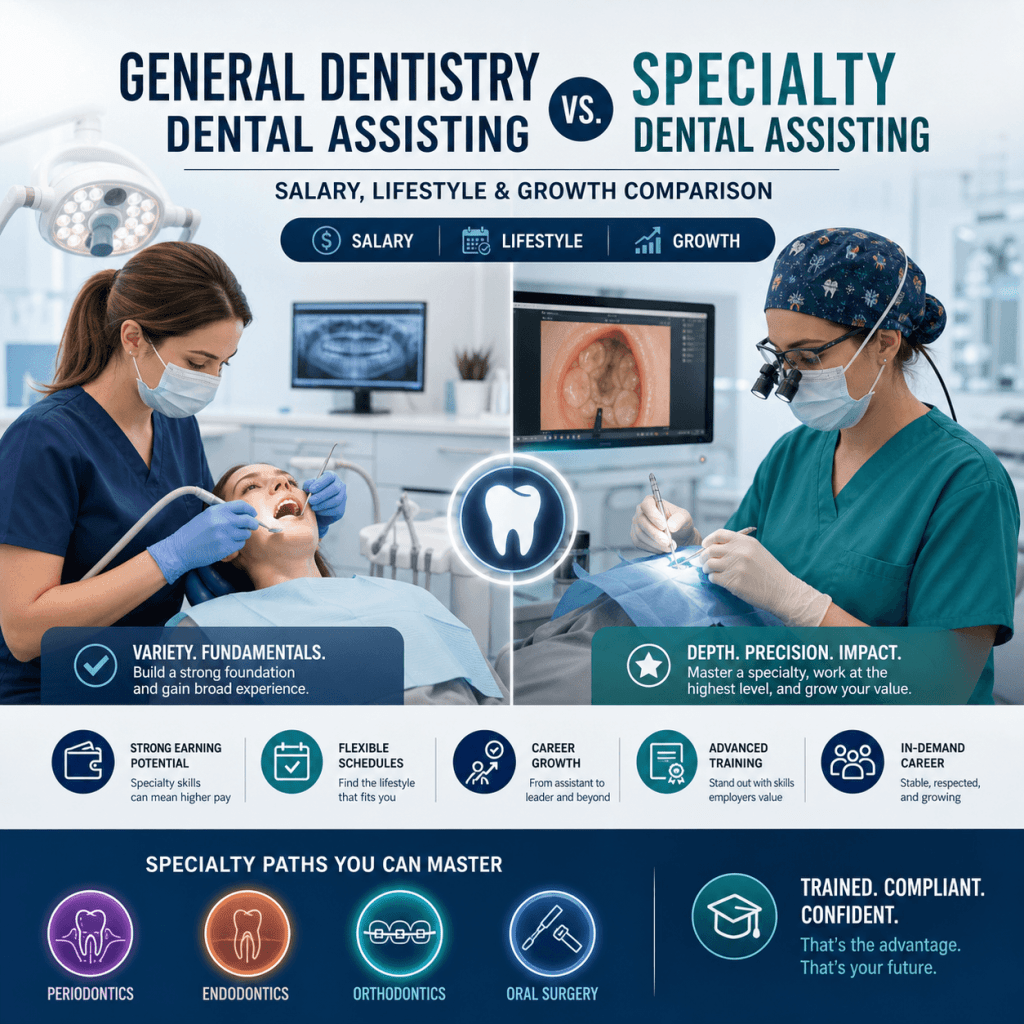
- General dental assisting means supporting a general dentist in a typical family practice. You help with routine care and a wide mix of procedures.
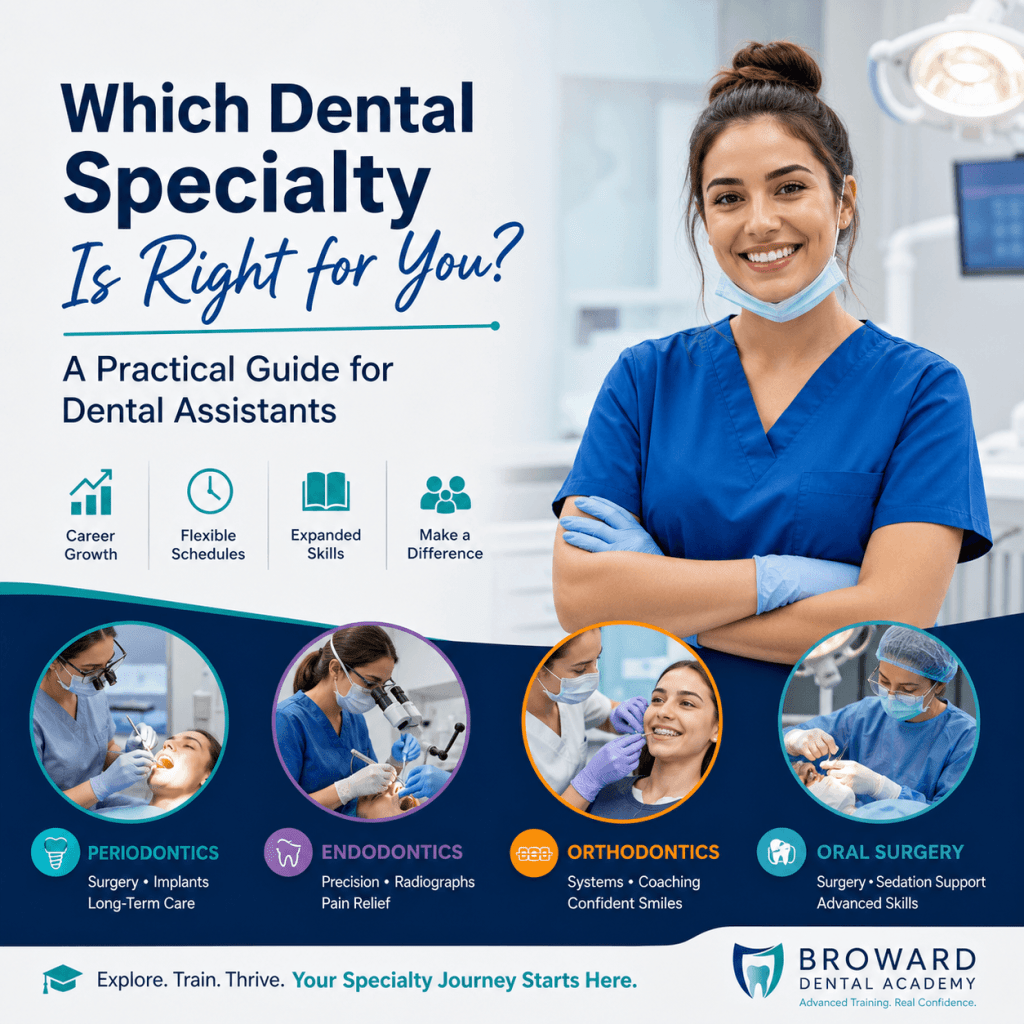
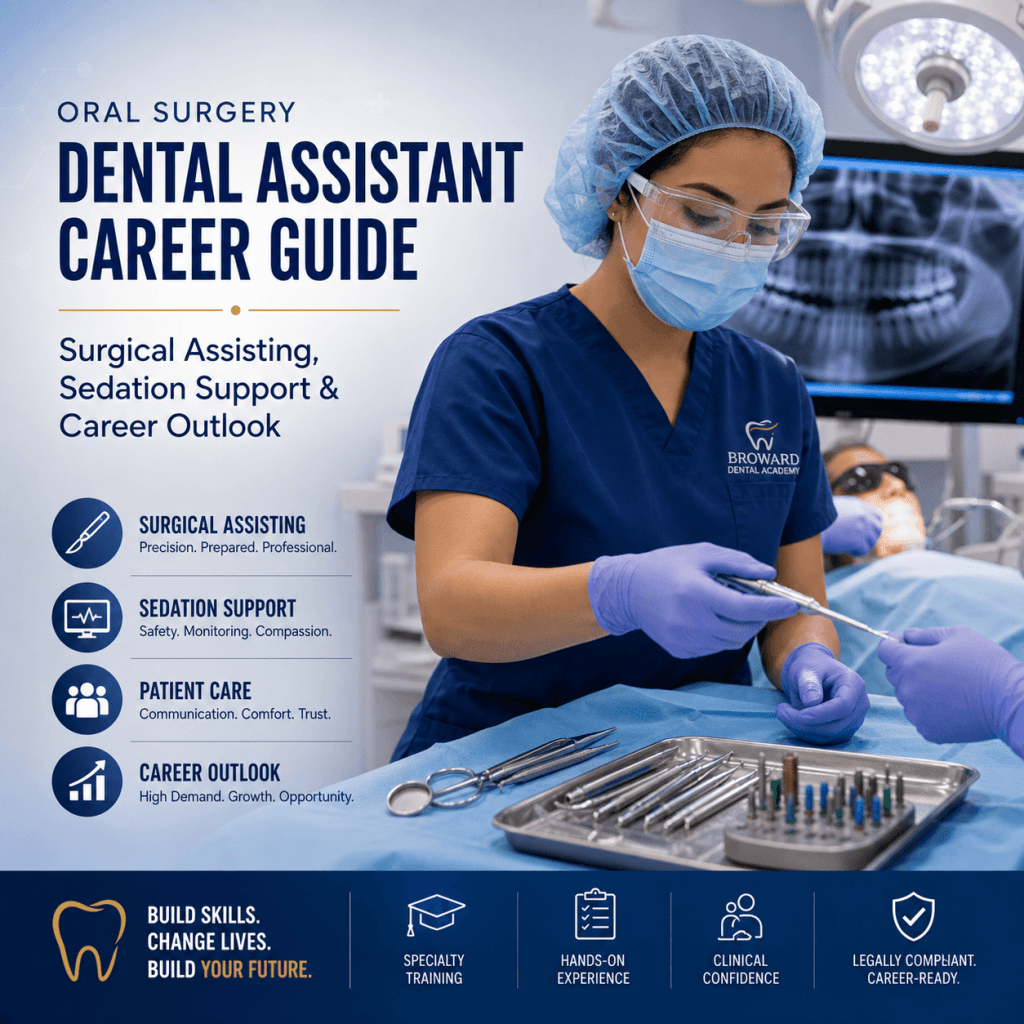
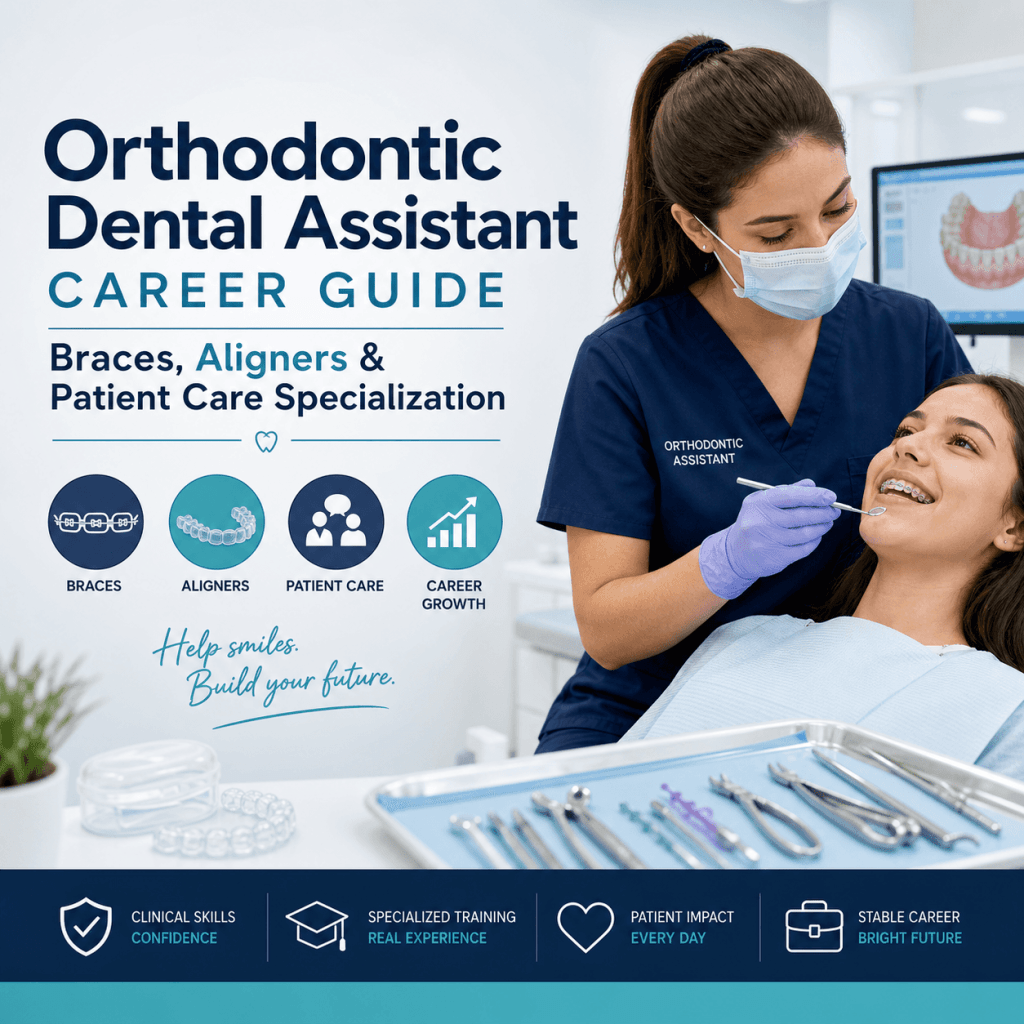
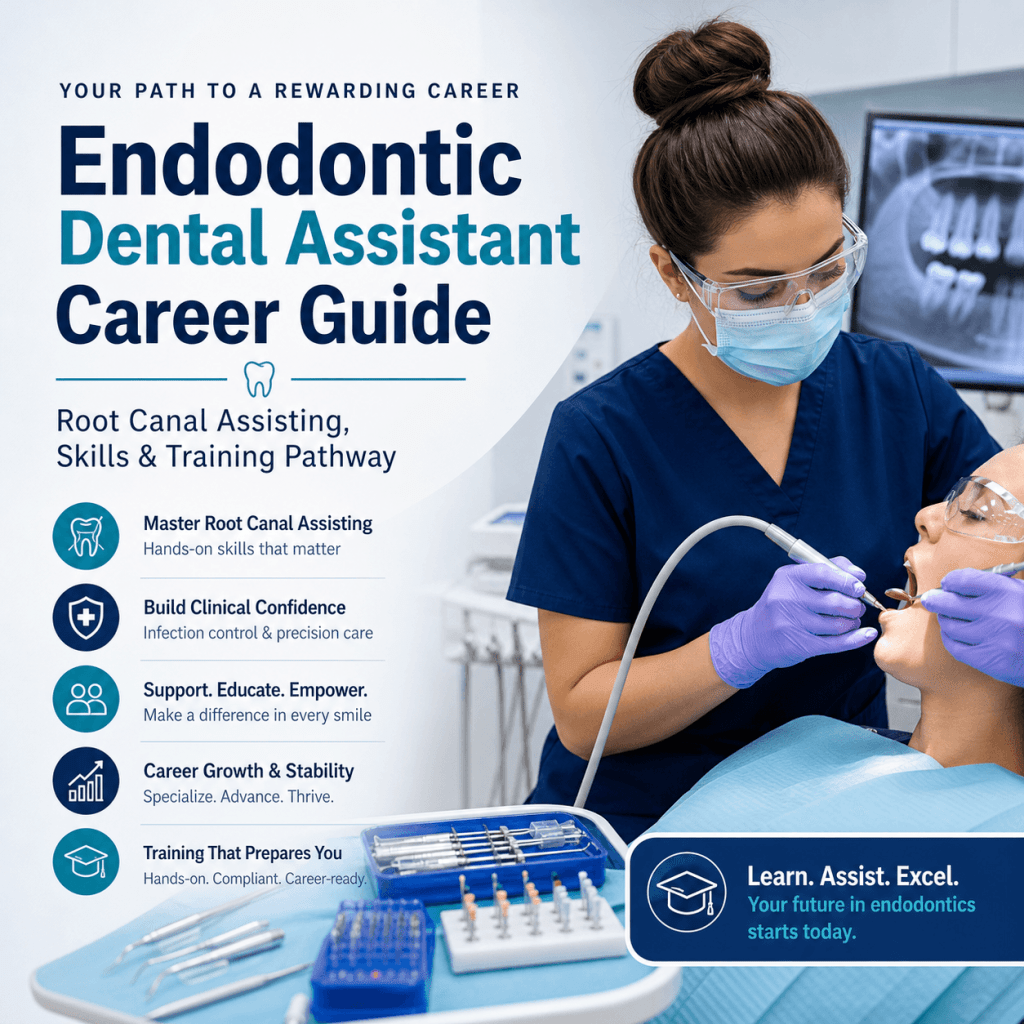
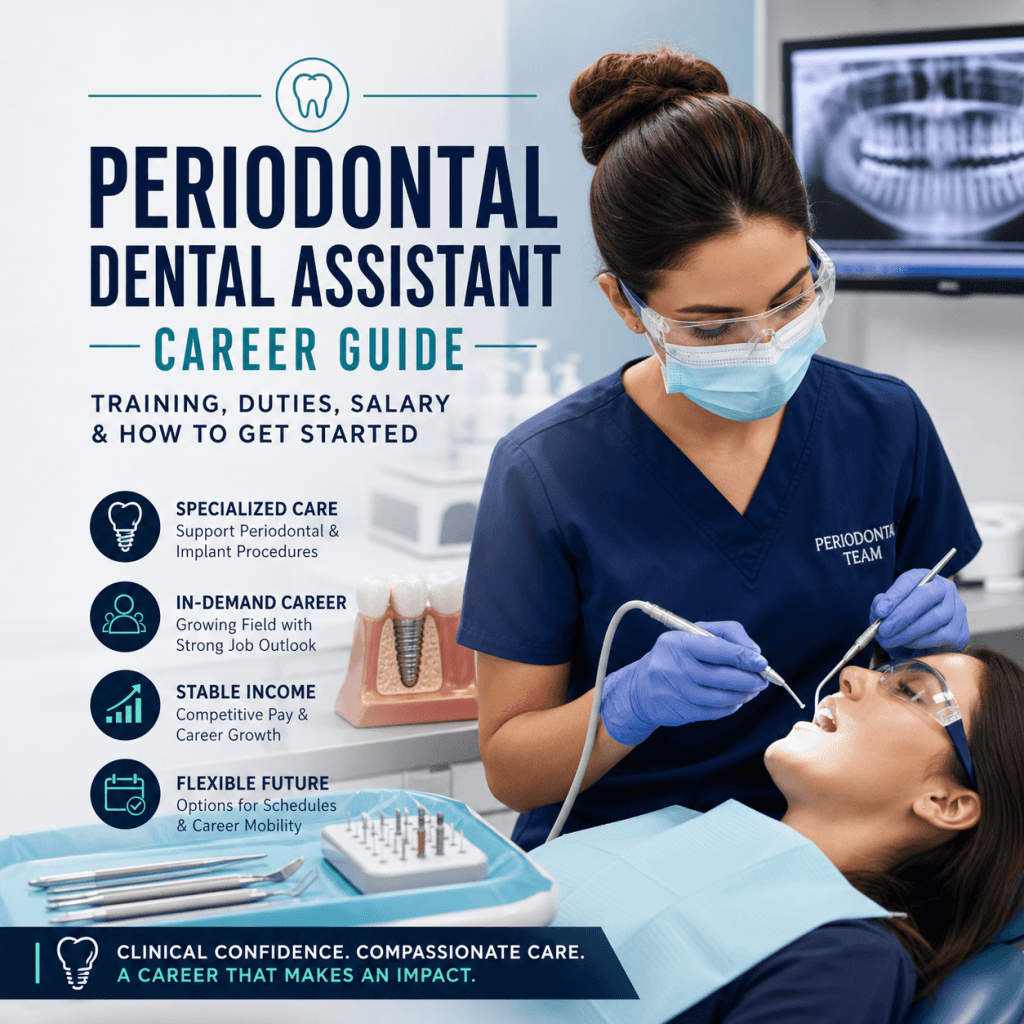
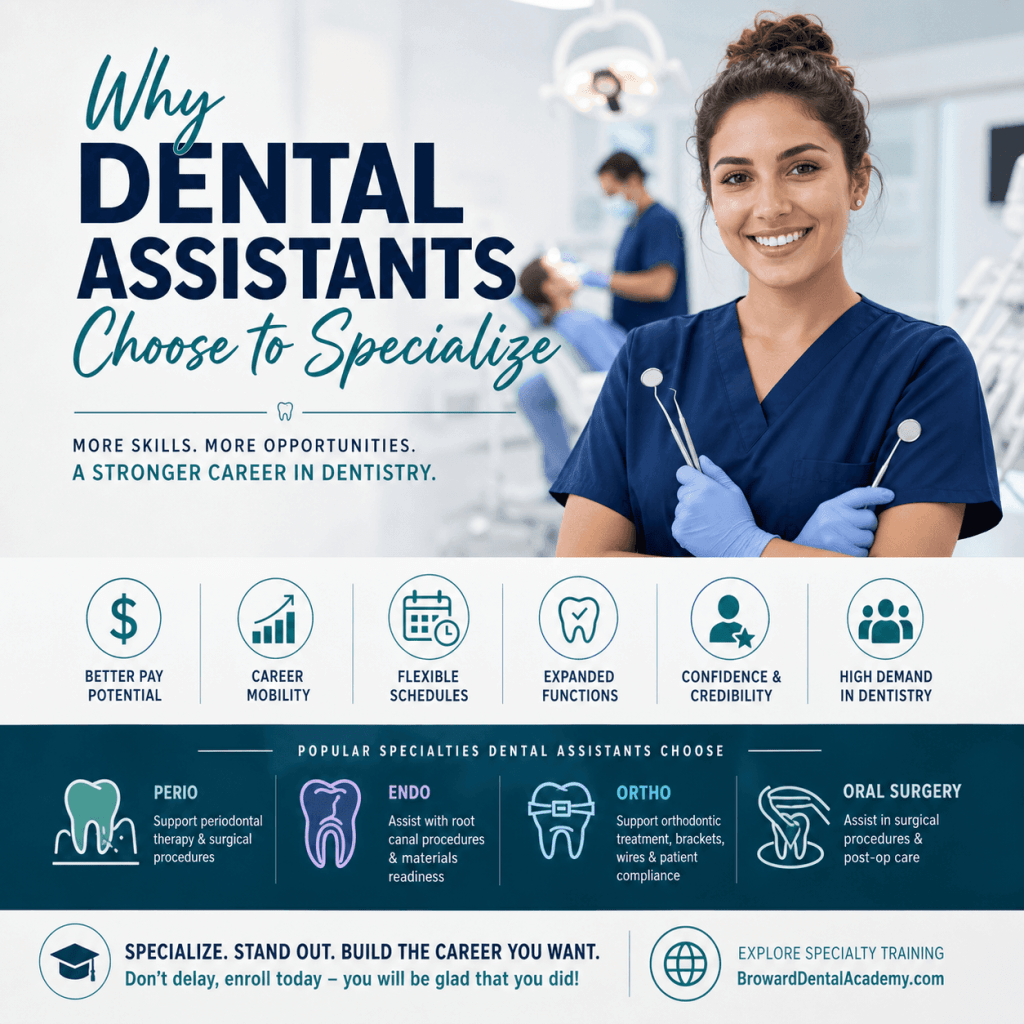
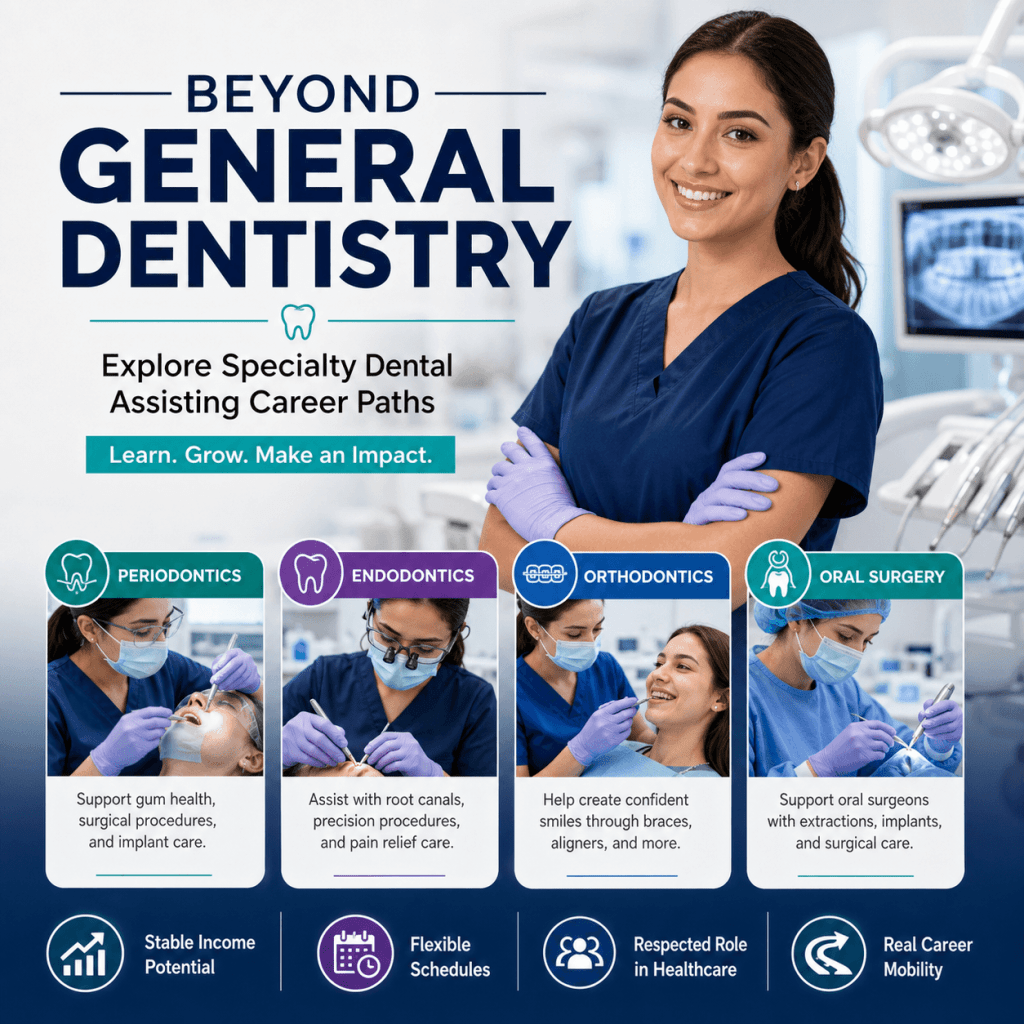
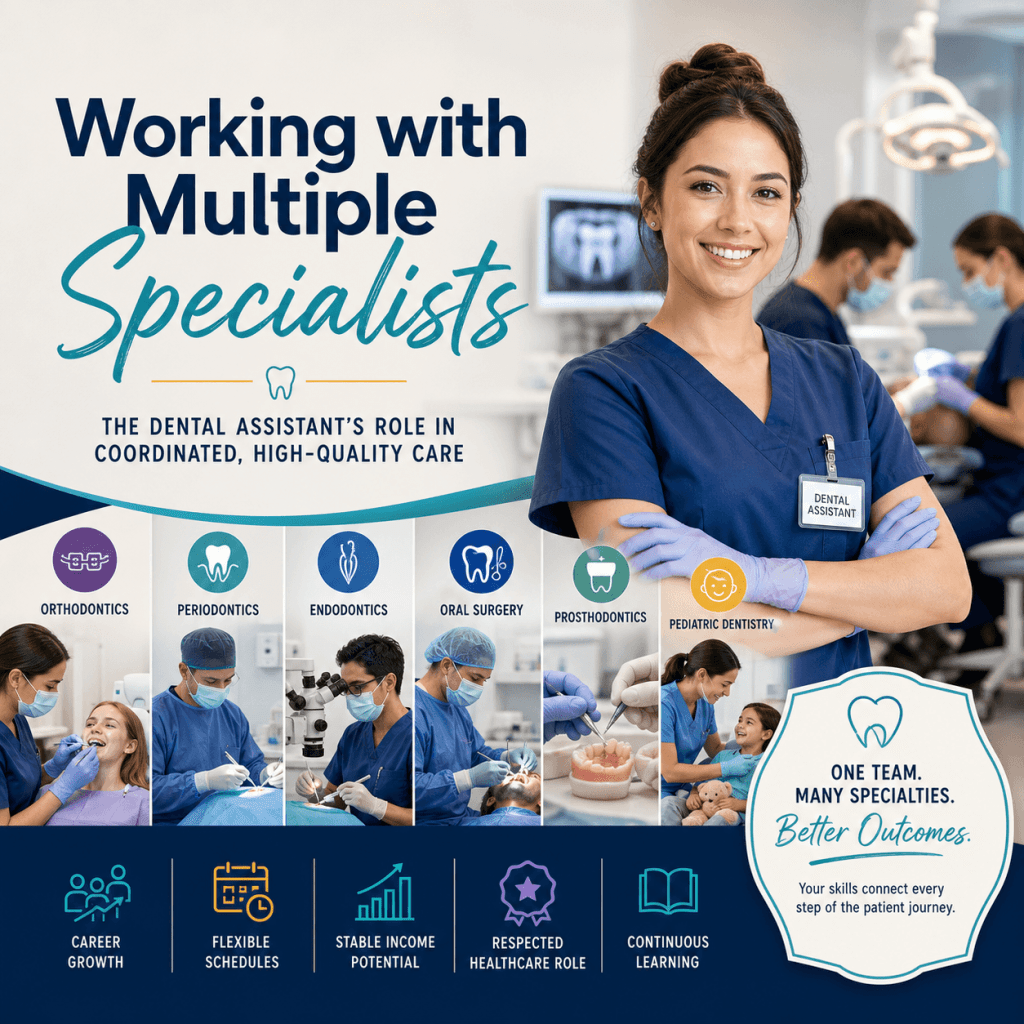
- Specialty dental assisting means supporting a focused discipline like periodontics, endodontics, orthodontics, or oral surgery. The procedure mix is narrower, but the technical expectations are often higher.
Most people care about the same decision factors:
- Pay potential
- Schedule and lifestyle
- Day-to-day stress
- Training time and cost
- Long-term growth and mobility
- How quickly you can feel confident in a modern, high-performance practice
One important expectation: salary and lifestyle vary by state, office type, experience, and whether you are trained for expanded functions and specialty workflows. Two assistants with the same “title” can have very different outcomes depending on their training and the practice.
What does not vary much is demand. Dental practices increasingly want assistants who are thoroughly trained, legally compliant, and clinically confident, especially in specialty settings where pace and precision matter. Knowing the distinctions in general dentistry vs specialty dental assisting is crucial for aspiring professionals.
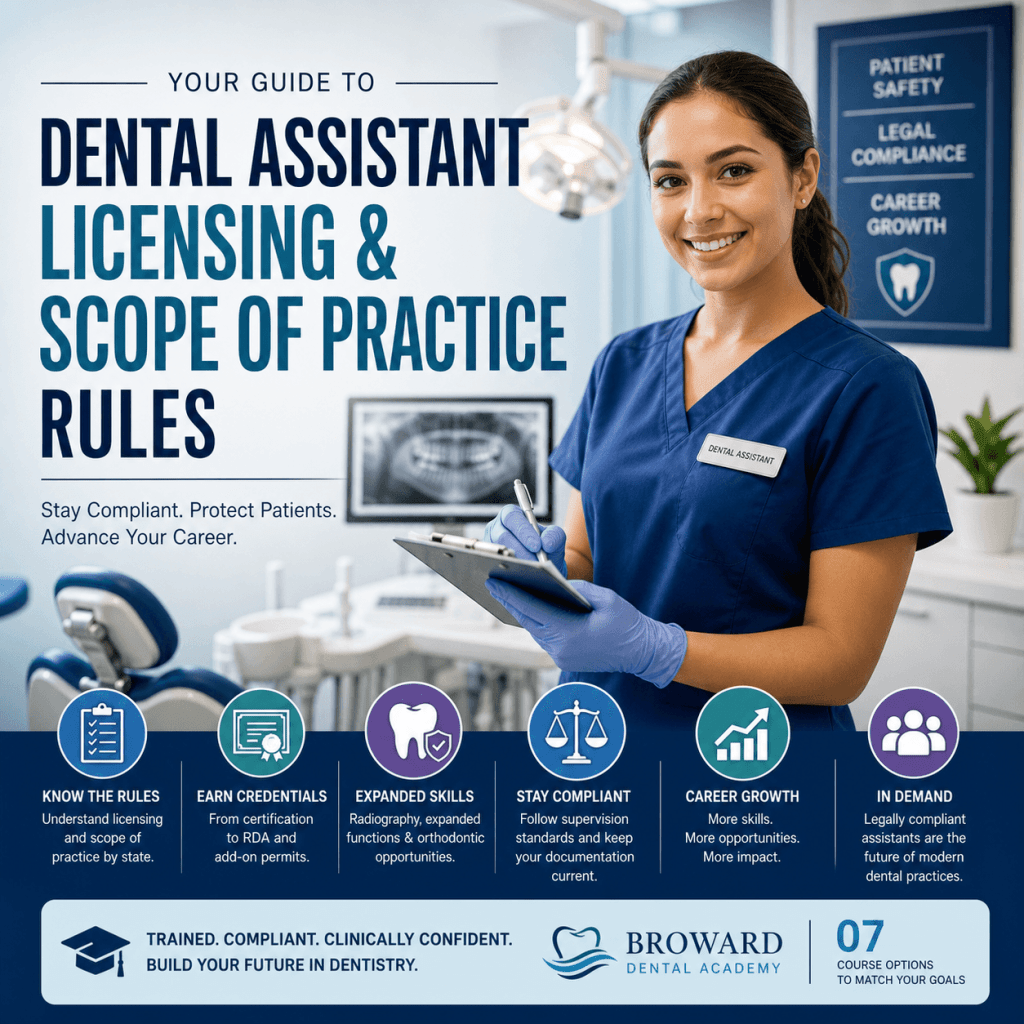
If you’re considering entering this rewarding field, it’s worth exploring options such as those offered by Broward Dental Academy, which provides comprehensive training programs tailored to your career goals. With multiple locations available, they make it easier for aspiring dental assistants to receive quality education close to home.
Understanding the nuances of general dentistry vs specialty dental assisting can lead to a more fulfilling career in the dental field.

Ultimately, your decision regarding general dentistry vs specialty dental assisting will significantly influence your professional trajectory.
Quick snapshot: the biggest differences at a glance
Here is the simplest way to see what changes when you go from general assisting to specialty assisting.
|
Category |
General Dentistry Dental Assistant |
Specialty Dental Assistant (Perio, Endo, Ortho, Oral Surgery) |
|
Procedures supported |
Exams, fillings, crowns, bridges, simple extractions, impressions/scans, temporaries, patient education |
Narrower set, deeper repetition: surgical perio and maintenance, endo root canals, ortho appliances, oral surgery and sedation workflows |
|
Patient types |
All ages, routine care, recurring hygiene and restorative |
Higher-acuity or more focused needs; long-term ortho patients; anxious/pain patients common in endo and oral surgery |
|
Pace |
Fast switching between different appointment types |
Often fast but more patterned; can include longer procedures requiring sustained focus |
|
Tools and setups |
Broad instrument variety; frequent room turnover |
Specialty trays, specialty materials, stricter setup flow; stronger “anticipatory” assisting expected |
|
Documentation demands |
Standard charting, notes, radiographs, treatment coordination |
Often tighter protocols, consents, surgical notes, anesthesia or specialty-specific documentation (as applicable) |
|
Typical schedule patterns |
Mixed days, sometimes early or late blocks |
Ortho often predictable; endo and oral surgery can have urgent cases; surgical days can run long |
|
Growth pathways |
Great foundation; can move into EFDA paths, lead assistant, trainer, treatment coordinator |
Builds a “niche” resume; can command higher leverage with specialty competence and experience |
The distinction between general dentistry vs specialty dental assisting can also impact salary expectations and job satisfaction.
General assisting builds broad fundamentals. Specialty assisting often adds depth, higher complexity, and more responsibility. In many specialty environments such as oral surgery, training is more structured and there is a stronger emphasis on compliance (radiography rules, infection control, documentation, specialty chairside protocols).
Understanding the differences between general dentistry vs specialty dental assisting is crucial for aspiring professionals considering their career paths in dental assisting.
Professionals in the field must weigh the merits of general dentistry vs specialty dental assisting to see which aligns better with their career aspirations.
Day-to-day work: what your shift looks like in each role
Understanding the differences between general dentistry vs specialty dental assisting can help you make informed decisions about your career path.
The varying responsibilities in general dentistry vs specialty dental assisting highlight the importance of specialized training and expertise.
General dentistry day-to-day
In a general practice, your day is about variety and flow. Common responsibilities include:
- Setting up rooms and turning operatories over quickly
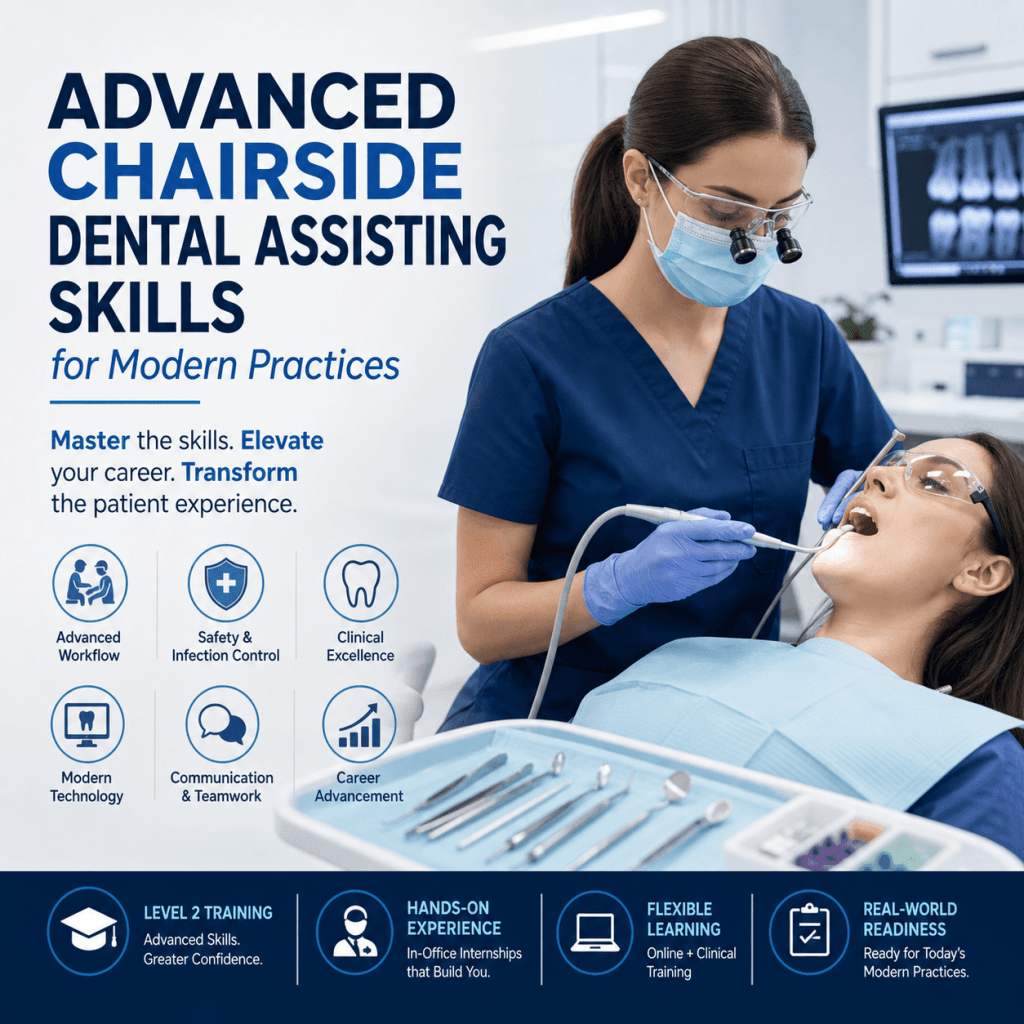
- Assisting with exams, fillings, crowns, and bridges
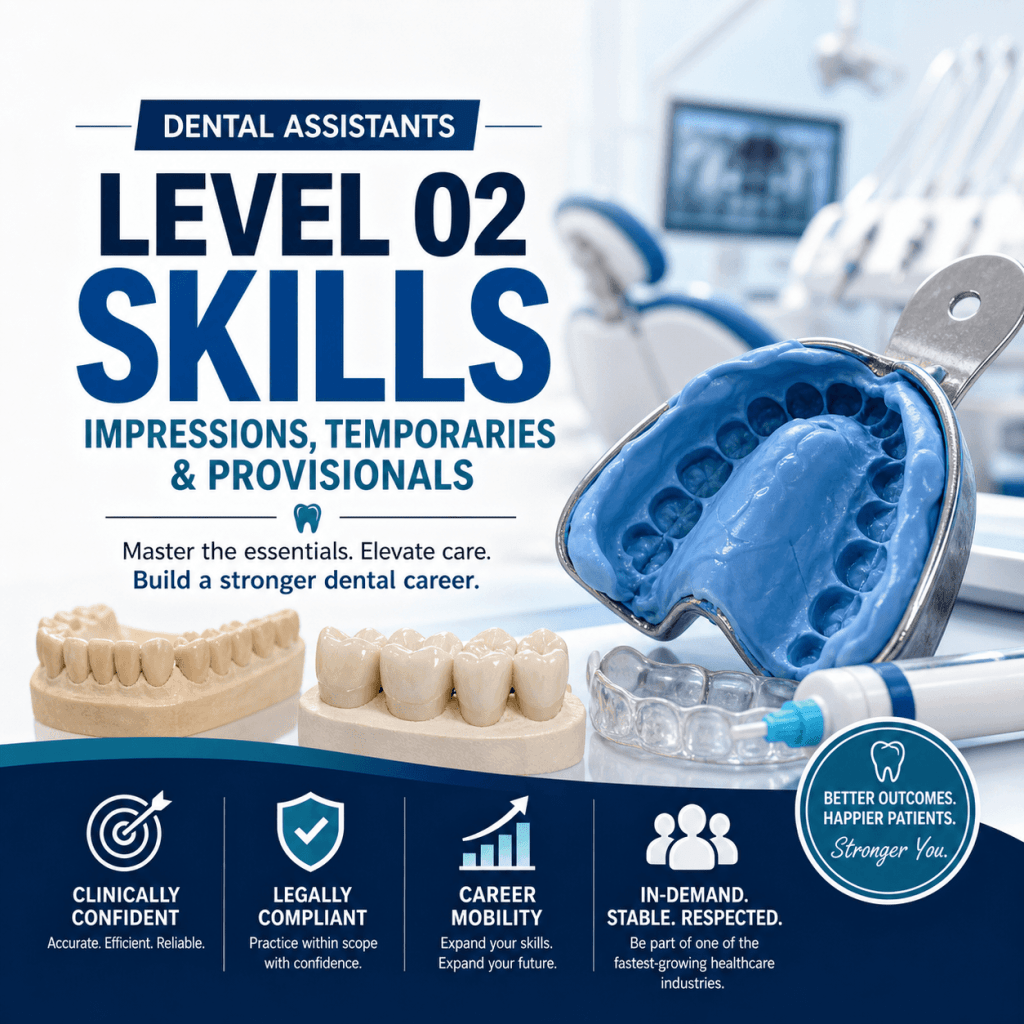
- Taking impressions or supporting digital scans (depending on the office)
- Suction, retraction, and clean instrument transfer
- Sterilization, infection control, and supply stocking
- Patient education and post-op instructions
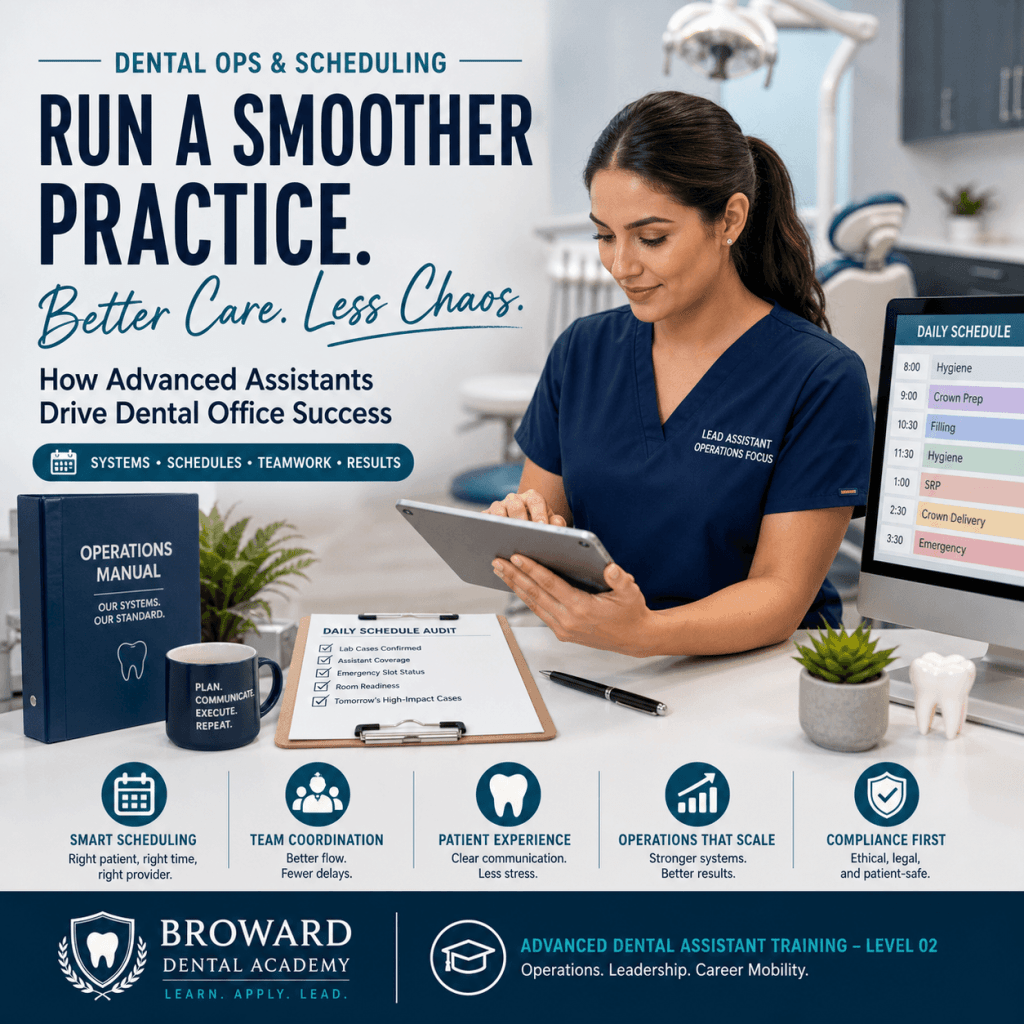
- Coordinating with front office and hygiene to keep the schedule moving
You may be moving between hygiene checks, restorative, and emergencies. That variety is great training, but it also means you are constantly switching gears.
Specialty dentistry day-to-day
In a specialty office, the procedure set is narrower, but you do it often, which creates repetition and technical nuance. A strong specialty assistant is known for anticipatory assisting, meaning you are not reacting to what the doctor asks for. You are already ready for the next step because you know the flow.
Deciding between general dentistry vs specialty dental assisting can shape your professional journey and future opportunities in the field.
Patient communication can change a lot by specialty:
- Oral surgery and endodontics: more first-time anxious patients, pain-driven visits, urgent scheduling
- Orthodontics: longer relationships, frequent visits, lots of education and reassurance
- Periodontics: surgical visits plus ongoing maintenance cycles, strong emphasis on patient compliance
It’s essential to weigh the pros and cons of general dentistry vs specialty dental assisting before making a commitment to your career.
In high-performance practices, expectations are consistent across both paths: speed plus accuracy, clean operatory flow, confident instrument transfer, and consistent documentation.

The choice of general dentistry vs specialty dental assisting should align with your personal goals and the lifestyle you envision.
Inside a general practice: variety and fundamentals
Pros
- Variety keeps the day moving and helps you learn fast
- Strong foundation for new assistants
- Skills transfer easily across many offices
Challenges
- Multitasking across many procedure types
- Frequent room turnovers and time pressure
- Juggling restorative, hygiene support, and patient flow
Best fit
- You like variety, learning broadly, and steady routines without an intense specialty focus.
Inside specialty practices: depth, pace, and precision
Pros
- Deeper mastery and clearer procedure patterns
- Strong team rhythm once you learn the flow
- Often stronger pay potential when you are truly specialty-competent
Challenges
- Higher clinical intensity (especially endo and oral surgery)
- Greater need for accuracy and protocol consistency
- Sometimes higher emotional load with anxious or pain patients
Best fit
Whether you prefer general dentistry vs specialty dental assisting can influence your training, responsibilities, and daily tasks significantly.
- You like mastering a niche, working with advanced techniques, and building a specialty reputation.
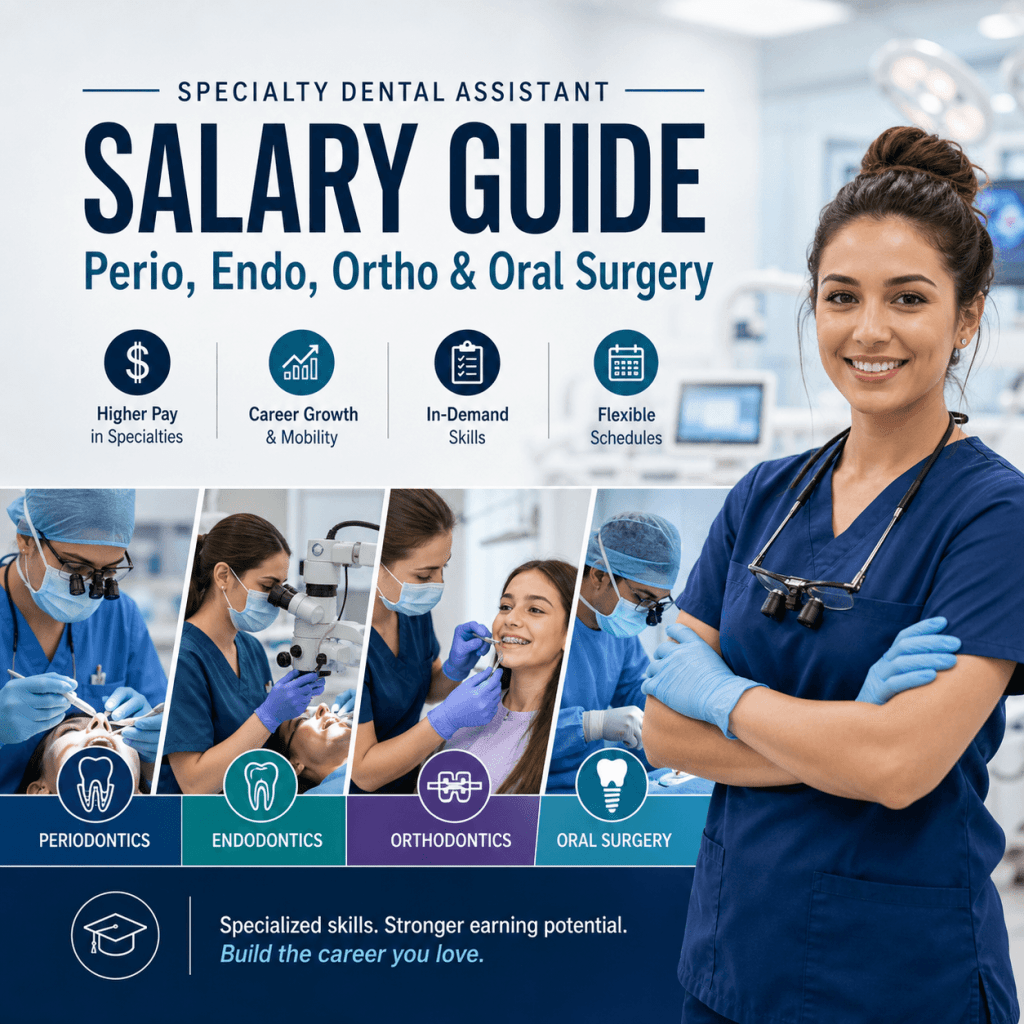
Salary comparison: general dentistry vs. specialty dental assisting
Dental assisting pay is real, stable income in a fast-growing healthcare industry, but it is not one-size-fits-all. Your pay depends on:
- Location and local demand
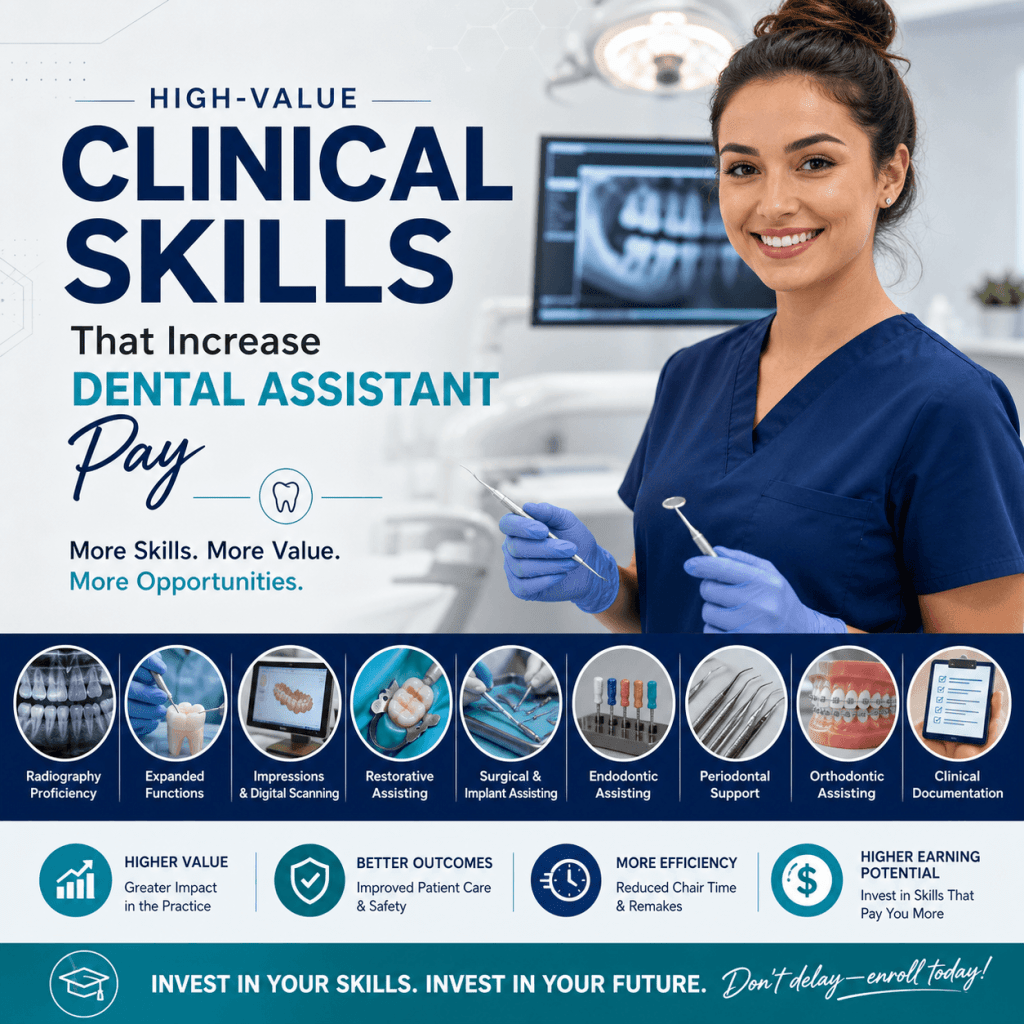
- Certifications and eligibility (radiography requirements, expanded functions where applicable) – these can be explored further here
- Years of experience and speed
- Office type (private practice vs. high-volume group)
- Specialty and complexity of procedures
- How quickly you can be productive with minimal supervision
Why specialty roles can pay more: there are often fewer trained candidates, procedures are more complex, production per visit can be higher, and the assistant carries more responsibility while following stricter protocols.
Here is what drives value in common specialties:
- Endodontics: high-acuity visits, speed and precision, clean field control, confident assisting under pressure
- Periodontics: surgical and maintenance mix, instrument setup discipline, infection control, patient compliance coaching
- Oral surgery: surgical and sedation workflows, sterility readiness, post-op communication, higher stress but sometimes higher pay potential
A practical way to think about it: specialty pay tends to follow difficulty, speed expectations, and how rare the skill set is in your local market.
Which specialties tend to pay more (and why)
This varies by region, but these patterns show up often:
- Oral surgery: higher intensity, surgical workflows, possible anesthesia protocols, strong sterility and patient management requirements
- Endodontics: urgent, time-sensitive cases with demanding procedure flow
- Periodontics: surgical competence plus maintenance cycles, consistent protocol execution
- Orthodontics: can be very efficient with steady patient flow; some offices add performance incentives tied to productivity and smooth turnover
Orthodontics is worth calling out because it can offer a strong blend of stability and growth. Even when starting pay is similar to general assisting in some areas, predictable hours and a clear workflow can make it an excellent long-term fit.
Lifestyle and schedule: flexibility, stress level, and work-life balance
Lifestyle is where the choice becomes personal.
Typical scheduling patterns
- General dentistry: mixed days, sometimes early mornings or late blocks, hygiene checks and restorative woven together
- Orthodontics: often predictable hours with a consistent patient rhythm
- Endodontics: urgent cases and pain patients can shift the day; appointments can be intense and time-sensitive
- Oral surgery: longer procedures, surgical days that may run long, and a higher “focus demand”
- Periodontics: blend of surgery and maintenance; can be steady once the practice flow is familiar
Physical and mental load
Both paths can be physically demanding: standing, turning rooms over, and repetitive motion. The mental load changes based on procedure intensity and patient emotions.
- If you prefer predictable hours, orthodontics is often a strong match.
- If you are calm under pressure and like procedures, endo, oral surgery, and perio can be rewarding.
- If you like building patient relationships over time, orthodontics and perio maintenance cycles often deliver that.
- In terms of pediatric dentistry, this specialty requires a unique skill set including the ability to manage anxiety in young patients which could involve using techniques such as pediatric sedation for certain procedures.
Best fit by personality (quick self-check)
- Variety + broad skills: general dentistry
- Repetition + mastery: specialty assisting
- Predictable hours: often orthodontics
- Calm under pressure + procedure-focused: endo, oral surgery, perio
- Long-term patient relationships: ortho, perio maintenance
The insights gained from understanding general dentistry vs specialty dental assisting can guide your educational choices.
Career growth: mobility, expanded functions, and long-term opportunity
Career mobility in dental assisting is real. Many assistants move between offices, specialties, and roles as they build competence and trust. Obtaining a dental assistant certification can significantly enhance your career prospects.
Deciding between general dentistry vs specialty dental assisting can determine your daily responsibilities and career trajectory.
Common growth paths include:
- Lead dental assistant
- Clinical trainer for new assistants
- Sterilization and infection control lead
- Compliance and documentation lead
- Treatment coordinator (in practices that promote from within)
- Expanded functions pathways (where allowed and trained)
Specialty experience can create a strong “niche” resume. A general assistant with strong fundamentals is valuable everywhere. A specialty assistant who can step into a fast-paced endo or oral surgery day with confidence can be hard to replace.
Long-term, what matters most is your ability to deliver:
- Clinical confidence: anticipating steps, correct setups, clean passes, calm patient communication
- Legal compliance: infection control, documentation, radiography rules, consent workflows (as applicable), safety protocols
- Team fit: reliability, ethical conduct, critical thinking, and learning new systems quickly
What employers look for in 2026: confidence + compliance + speed
Dental offices want assistants who can contribute quickly without cutting corners. In practice, this often means:
- You can run a room with clean flow and minimal reminders
- You understand boundaries and protocols, and you follow them consistently
- You chart and document accurately, even when the schedule is packed
- You communicate clearly with patients, especially anxious patients
- You stay composed and professional when things run behind
That combination is exactly what separates “helpful” from “highly hireable.”
For those looking to enter this rewarding field or advance their career further into specialized areas such as dental hygienists or specialty assisting, understanding these dynamics becomes crucial.
In addition to these factors, it’s essential to familiarize yourself with the DA Student handbook which provides valuable resources for navigating through your studies and career in dental assisting.
Many assistants choose to specialize after gaining experience in general dentistry vs specialty dental assisting to enhance their skills and career opportunities.
Training path: how to move from general assisting to specialty assisting
Many assistants start in general dentistry, then specialize once they know what they enjoy. Others choose specialty earlier, especially if they have structured training and hands-on exposure.
A realistic progression looks like this:
- Master fundamentals (chairside assisting, sterilization, imaging basics where applicable, patient communication)
- Choose a specialty based on lifestyle fit and interest
- Add specialty-specific clinical training (setups, instrument ID, materials, protocols, documentation)
- Internship or externship in a real office environment
- Build a specialty portfolio that proves competence (skills list, procedure familiarity, references)
Specialty training helps because it reduces onboarding time, improves confidence, and signals to specialty practices that you are ready for their pace.
A practical 90-day plan
Weeks 1–2: Get clear on what you want
- Decide your priorities (income, schedule, intensity tolerance, growth goals)
- Research local specialty offices and note common requirements in job postings
- Identify which specialty environments you actually want to be in
Weeks 3–6: Build the specialty base
- Enroll in targeted coursework aligned with the specialty
- Practice setups and instrument identification until it is automatic
- Review compliance basics (infection control, documentation expectations, radiography rules where applicable)
Weeks 7–10: Train for real-world flow
- Do clinical skills intensives and mock procedure flow
- Practice patient communication scripts, especially for anxious or post-op patients
- Focus on speed with accuracy, not speed alone
Weeks 11–12: Get in-office experience
- Complete an internship or externship
- Ask for direct feedback and fix weak spots quickly
- Update your resume with specialty competencies and procedure familiarity
Where Broward Dental Academy fits (and how it supports both paths)
Broward Dental Academy is designed for students who aspire to excel in modern dental practices, not just pass an exam.
Their approach caters to both general and specialty tracks by emphasizing what dental offices consistently seek: assistants who are thoroughly trained, legally compliant, and clinically confident.
Key advantages that students value include:
- A complex educational experience with immediate immersion in online and clinical settings
- Latest eLearning lesson plans incorporated for remote training
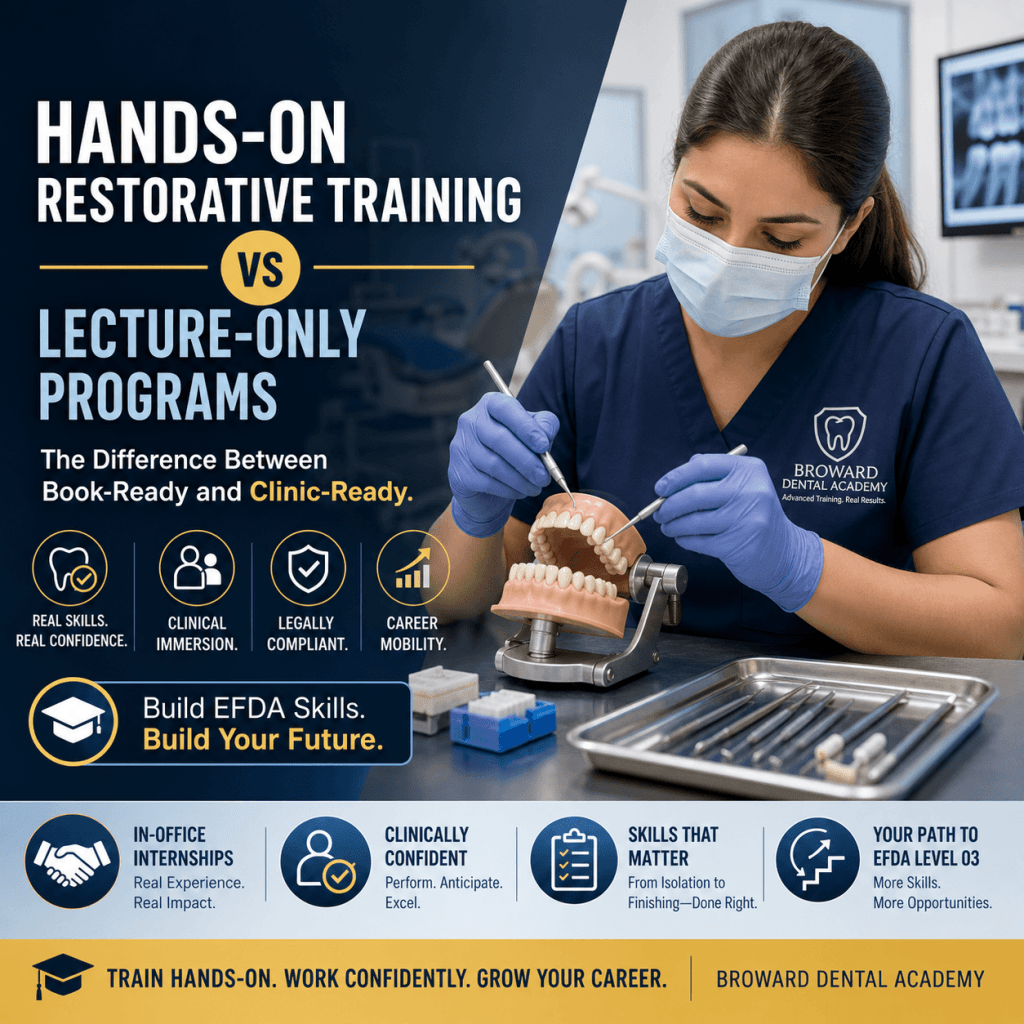
- In-office internships so skills translate to real operatories and real pace
- Training that develops professionals who think critically, act ethically, and perform confidently
- A wide range of dental courses and advanced dental training across 7 courses, supporting career mobility and expanded functions goals
- Flexible financing options to reduce barriers to upskilling
For those aiming for specialty assisting, structured training and real clinical exposure can be the difference between feeling unsure for months and showing up ready to contribute.
How to choose your best path right now (decision checklist)
Use this checklist to make a decision you will feel confident about six months from now:
- What income range are you targeting in your local area?
- Do you want predictable hours, or are you okay with longer procedures and occasional urgency?
- What is your tolerance for surgical intensity and anxious patients?
- Do you enjoy mastering a niche, or do you prefer variety?
- Do you learn best by repetition and protocols, or by seeing many different procedures?
- What is your long-term goal: lead assistant, expanded functions, specialty niche, or treatment coordination?
Before you commit, take two simple reality-check steps: shadow a general office and a specialty office (even a few hours helps), and ask the staff direct questions about the role.
Questions to ask when shadowing
- What does a typical week look like here?
- What are the busiest procedures?
- How do you train new assistants?
- How is pay structured (hourly, incentives, reviews)?
With so many variables at play, understanding general dentistry vs specialty dental assisting becomes vital for future success.
Choosing general first is completely fine, and it is common. Moving into specialty later is also common. Specialty-first can work too, especially with the right training and internship support.
The bigger picture is strong: dental is one of the fastest-growing healthcare industries, with stable income, flexible schedules, respected roles, and rising demand for skilled professionals.
Wrap-up: a smarter next step (without guessing)
General assisting gives you a broad foundation and variety. Specialty assisting gives you deeper mastery and often stronger pay potential. Lifestyle depends less on the word “specialty” and more on the specific specialty and office culture.
What is consistent is this: demand is rising, and practices want assistants who are well-trained, compliant, and confident.
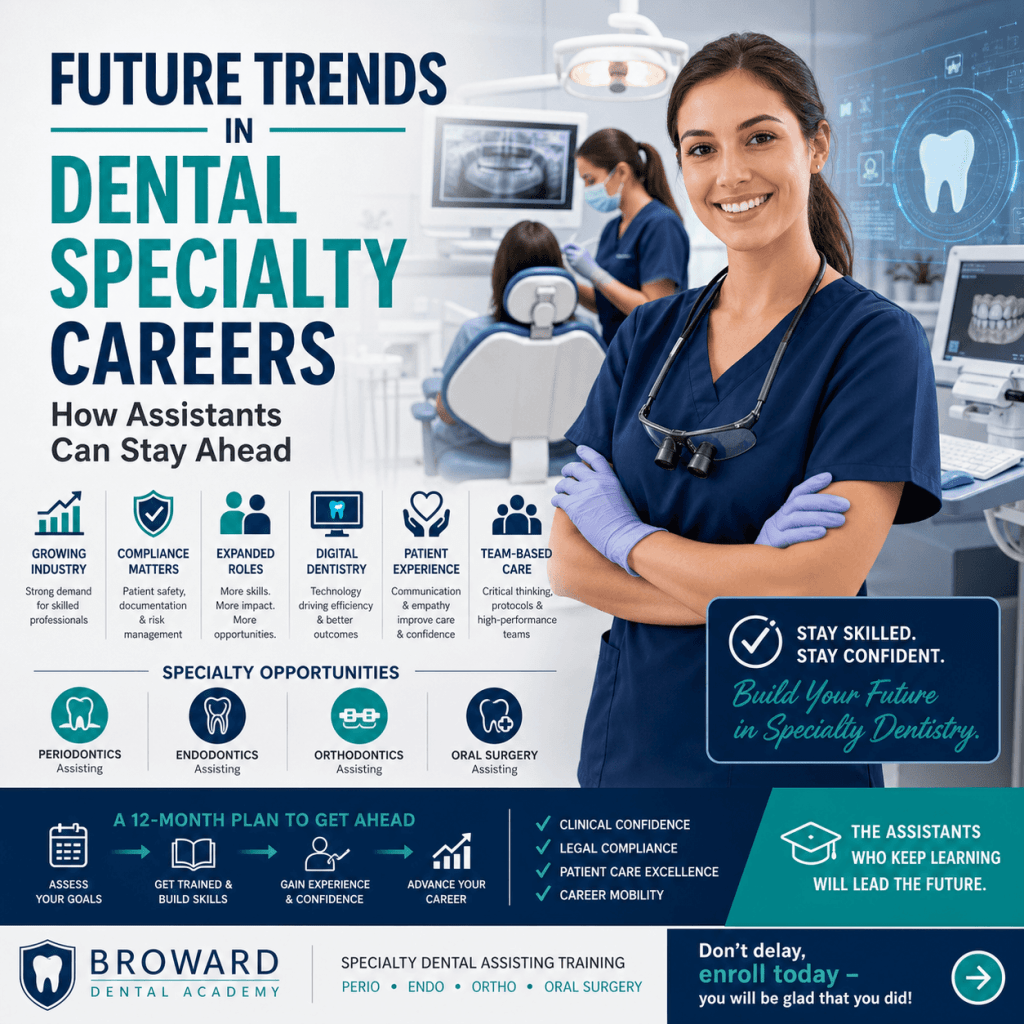
If you are leaning toward the specialty track, the next step is here: Specialty Dental Assisting Training (Perio • Endo • Ortho • Oral Surgery) offered by Broward Dental Academy.
Don’t delay, enroll today, you will be glad that you did.
FAQs (Frequently Asked Questions)
What are the main differences between general dental assisting and specialty dental assisting?
As you progress, the choice of general dentistry vs specialty dental assisting will shape your professional identity and expertise.
General dental assisting involves supporting a general dentist in a family practice with a wide variety of routine procedures like exams, fillings, crowns, and bridges. Specialty dental assisting focuses on specific disciplines such as periodontics, endodontics, orthodontics, or oral surgery, involving a narrower set of procedures but with higher technical expectations and more specialized skills.
Recognizing the distinctions of general dentistry vs specialty dental assisting is crucial for effective career planning.
How do pay potential and career growth compare between general and specialty dental assisting?
Pay potential can vary based on state, office type, experience, and training for expanded functions or specialty workflows. Specialty dental assistants often command higher leverage due to their focused expertise. General assisting builds broad fundamentals and offers pathways into roles like lead assistant or treatment coordinator, while specialty assisting builds a niche resume with opportunities for advanced responsibility and growth within that specialty.
In conclusion, the distinctions between general dentistry vs specialty dental assisting play a critical role in shaping your career path.
What does a typical day look like for a general dental assistant versus a specialty dental assistant?
A general dental assistant experiences variety and flow throughout the day, assisting with multiple procedure types such as exams, fillings, crowns, impressions, sterilization, patient education, and schedule coordination. Specialty dental assistants focus on repetitive procedures within their discipline, emphasizing anticipatory assisting with stricter protocols and patient communication tailored to specialties like oral surgery or orthodontics.
How do training time and costs differ between general dentistry and specialty dental assisting?
General dental assisting programs provide broad foundational training suitable for various procedures in family practices. Specialty dental assisting requires additional structured training focused on specific disciplines such as oral surgery or endodontics, often including compliance with stricter protocols. Training time and cost may be higher for specialty programs due to the depth of knowledge and technical skills required.
What factors should I consider when choosing between general and specialty dental assisting careers?
Consider pay potential, schedule flexibility and lifestyle preferences, day-to-day stress levels, training time and costs, long-term growth opportunities, and how quickly you want to build confidence in a high-performance practice. Also factor in state regulations, office type differences, experience level, and whether you plan to train for expanded functions or specialty workflows.
Are there resources available for comprehensive training in both general and specialty dental assisting?
Yes. Institutions like Broward Dental Academy offer comprehensive training programs tailored to career goals in both general dentistry and specialized disciplines such as periodontics, endodontics, orthodontics, and oral surgery. They provide multiple locations to facilitate access to quality education close to home.
The contrast between general dentistry vs specialty dental assisting can provide valuable insights for your career decision-making process.
Choosing between general dentistry vs specialty dental assisting can significantly impact your career satisfaction and growth.
Understanding the differences in practice environments between general dentistry vs specialty dental assisting is essential for your career development.
As you consider your options, keep in mind the ongoing relevance of general dentistry vs specialty dental assisting in your career choices.
Ultimately, clarity regarding general dentistry vs specialty dental assisting will empower you to make informed choices.
Understanding and evaluating general dentistry vs specialty dental assisting is key to a successful and rewarding career.
Finding your niche within general dentistry vs specialty dental assisting can yield a rewarding professional future.
The decision you make between general dentistry vs specialty dental assisting can lead to differing professional experiences and satisfaction.
Ultimately, the nuances of general dentistry vs specialty dental assisting highlight the diversity within the dental profession.