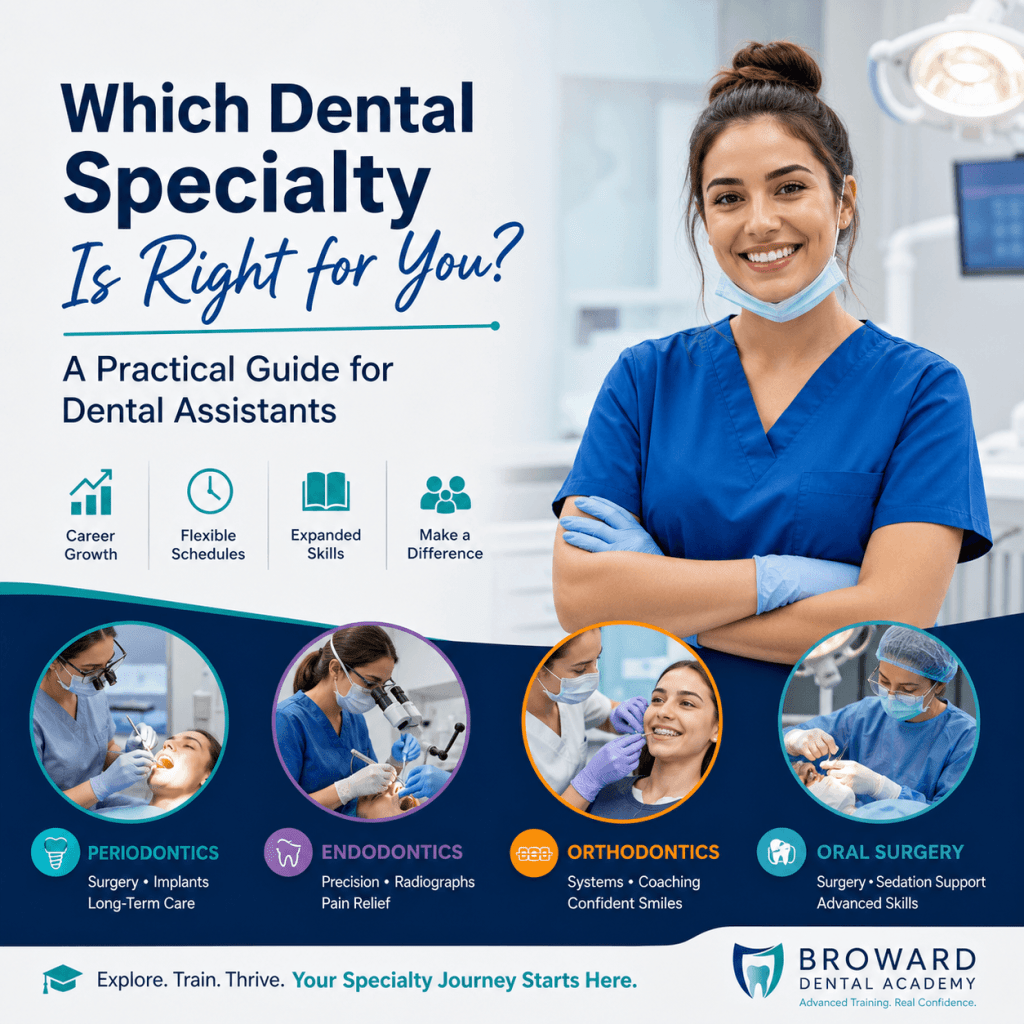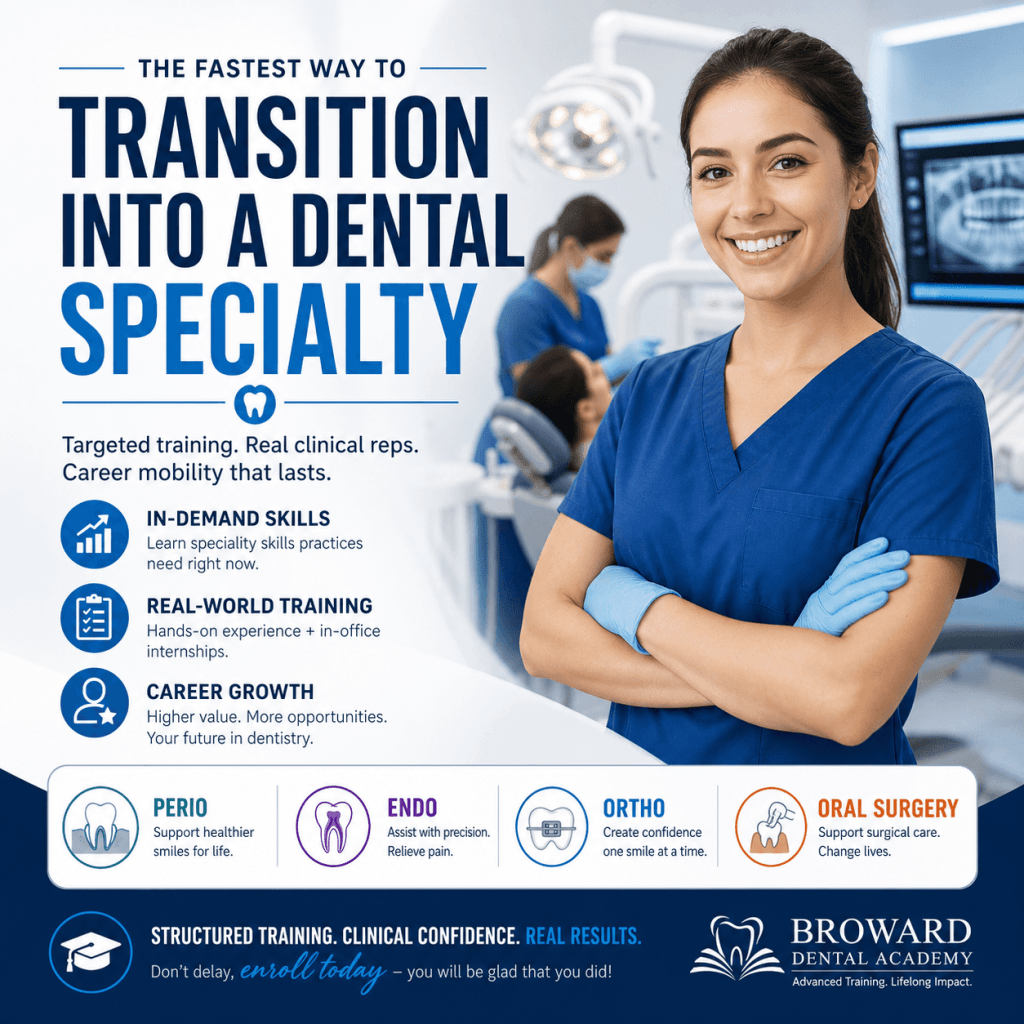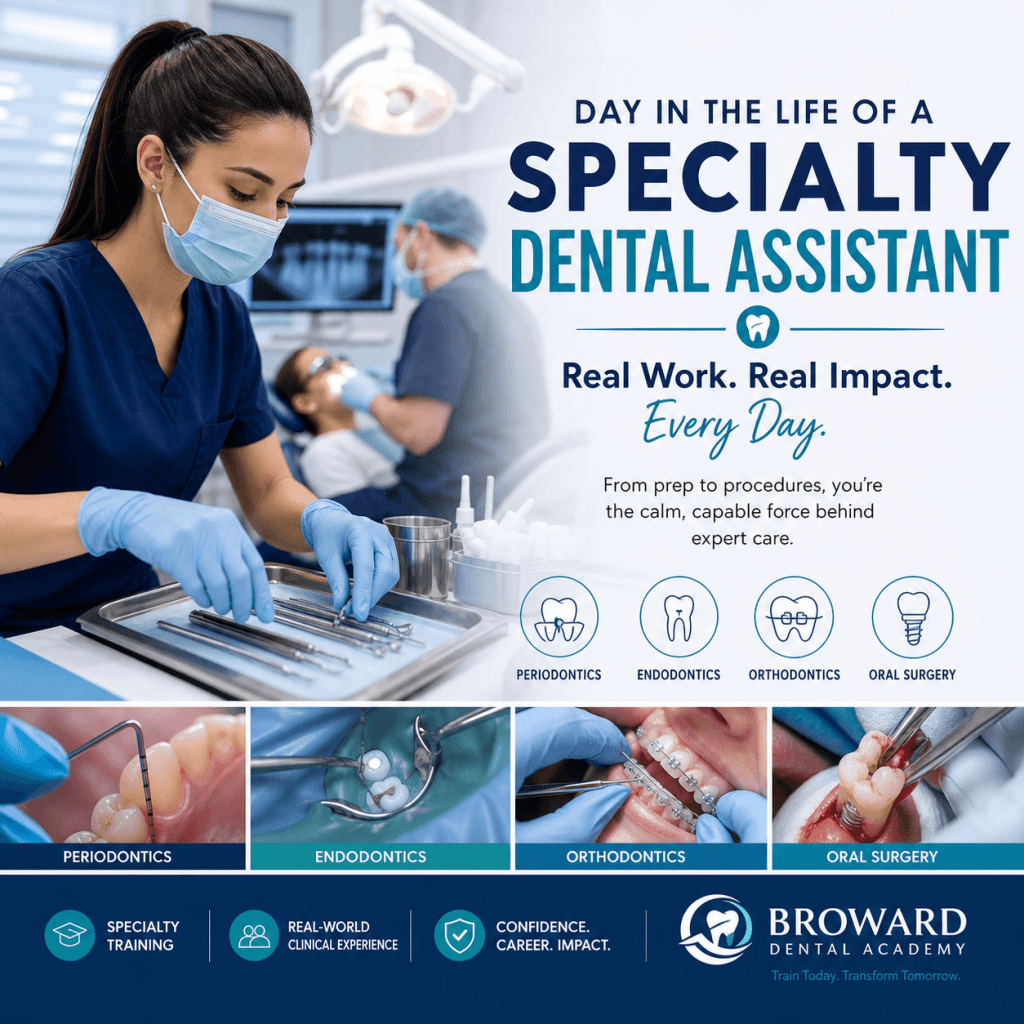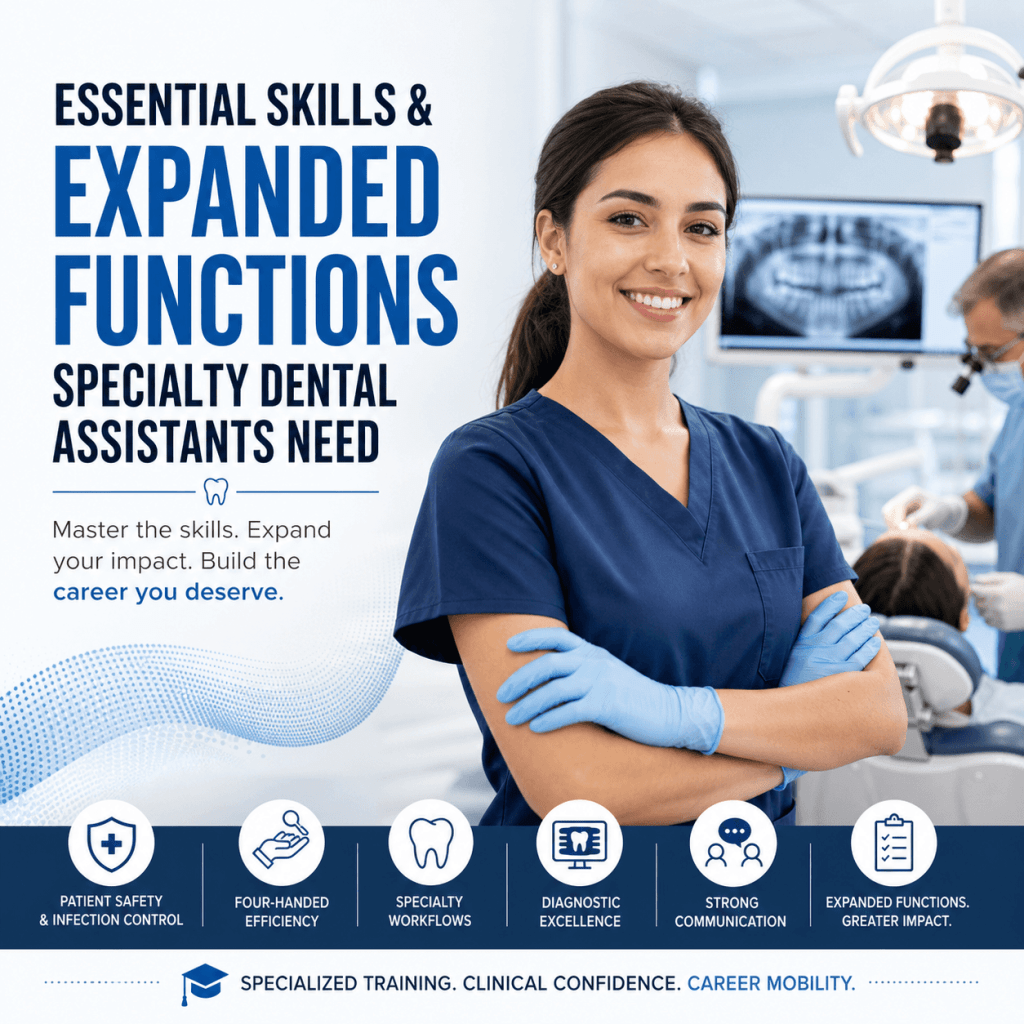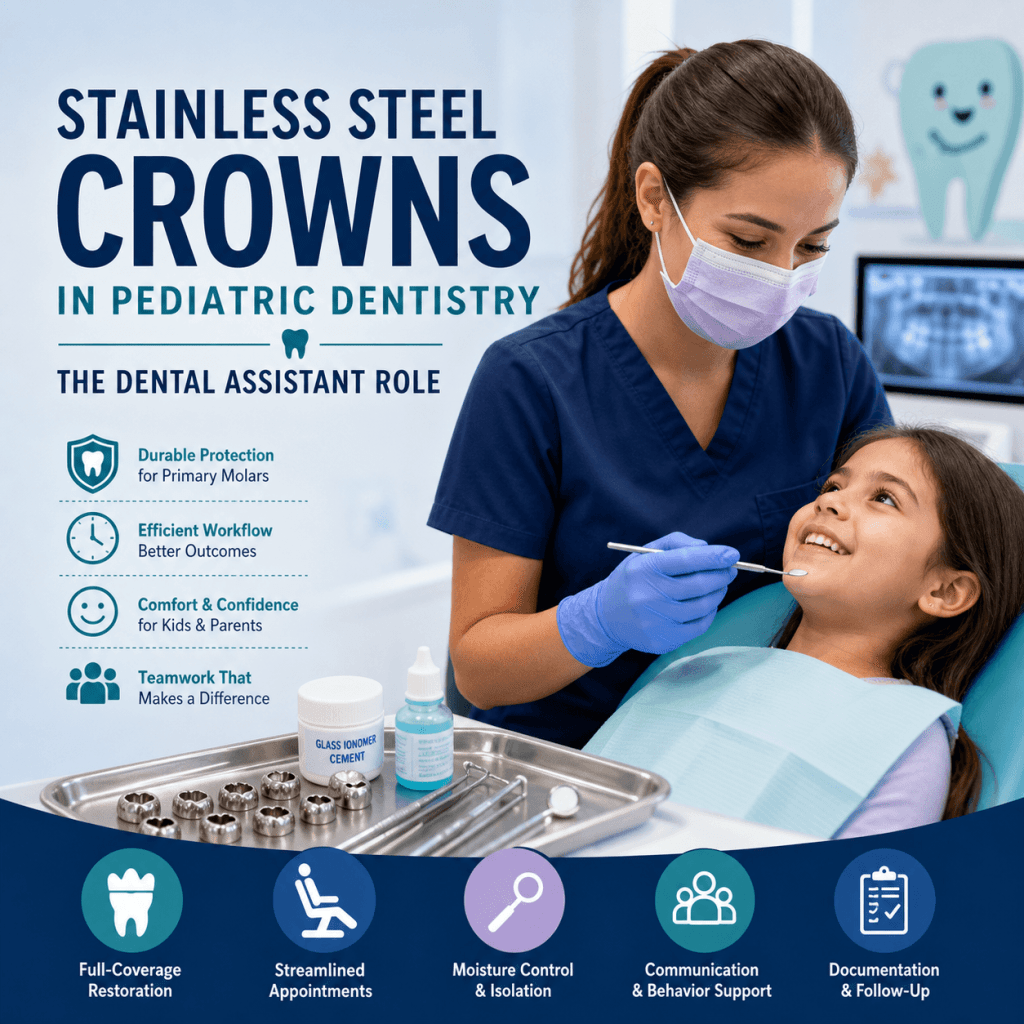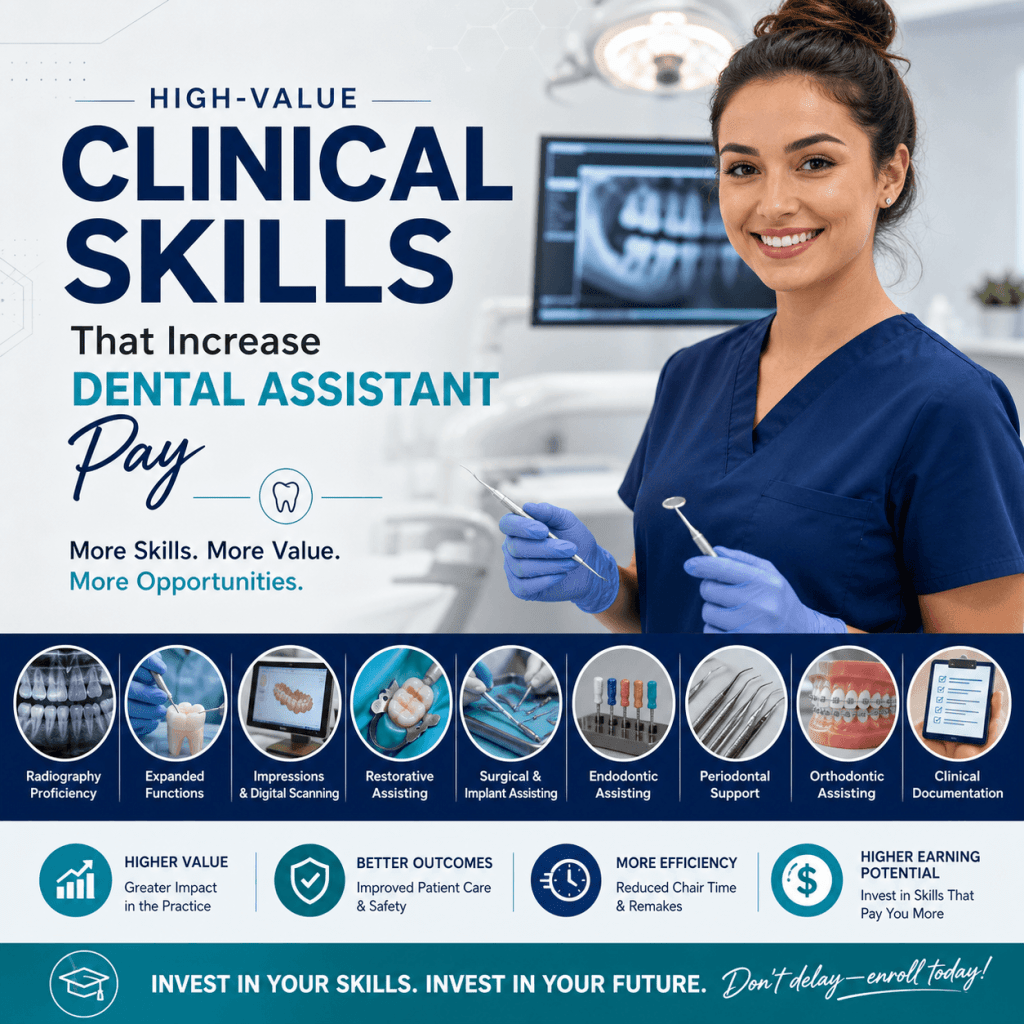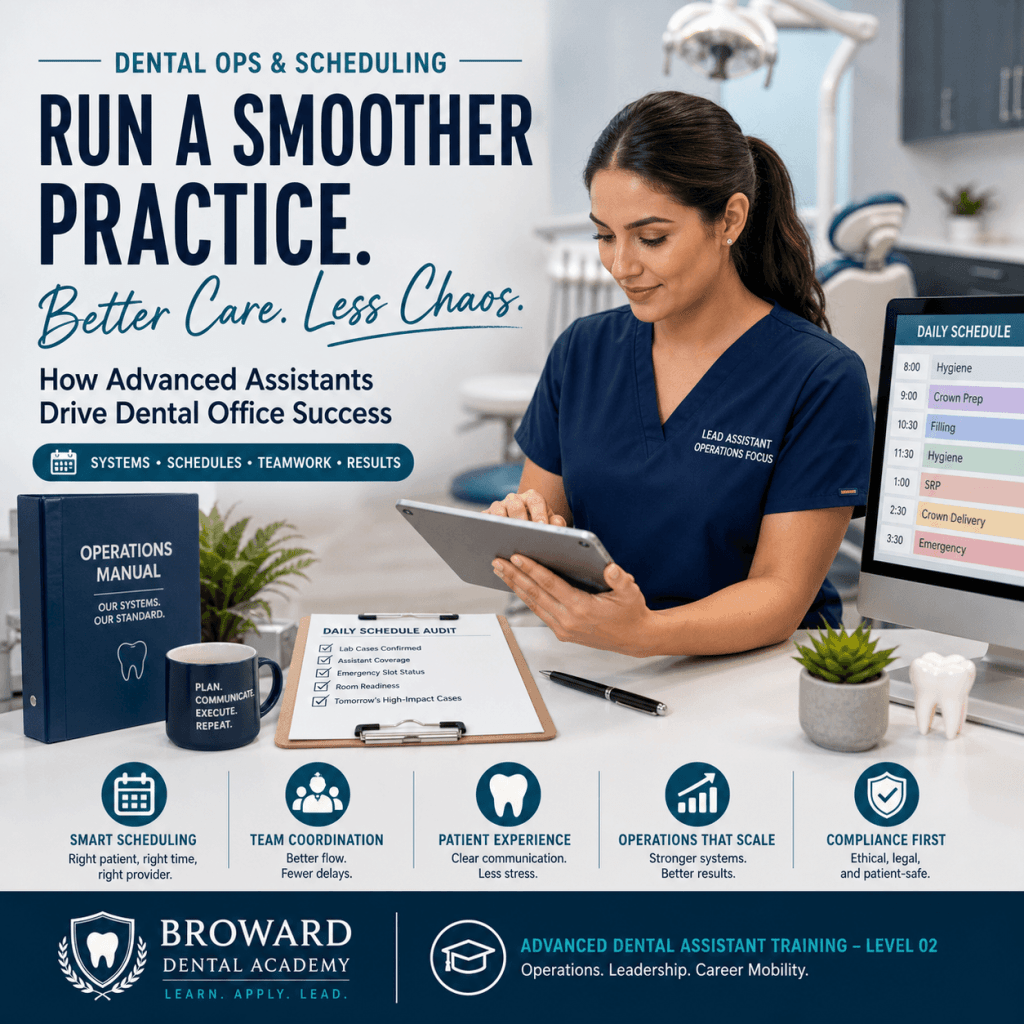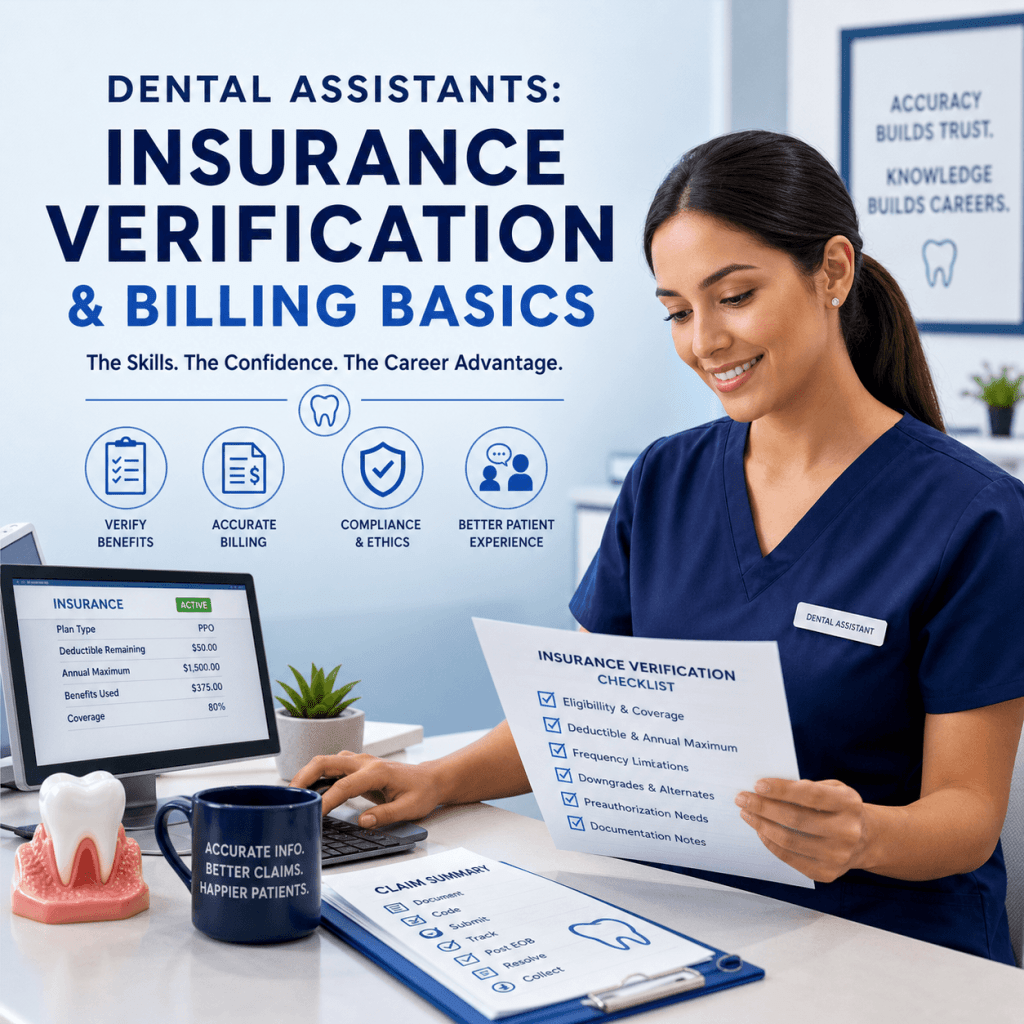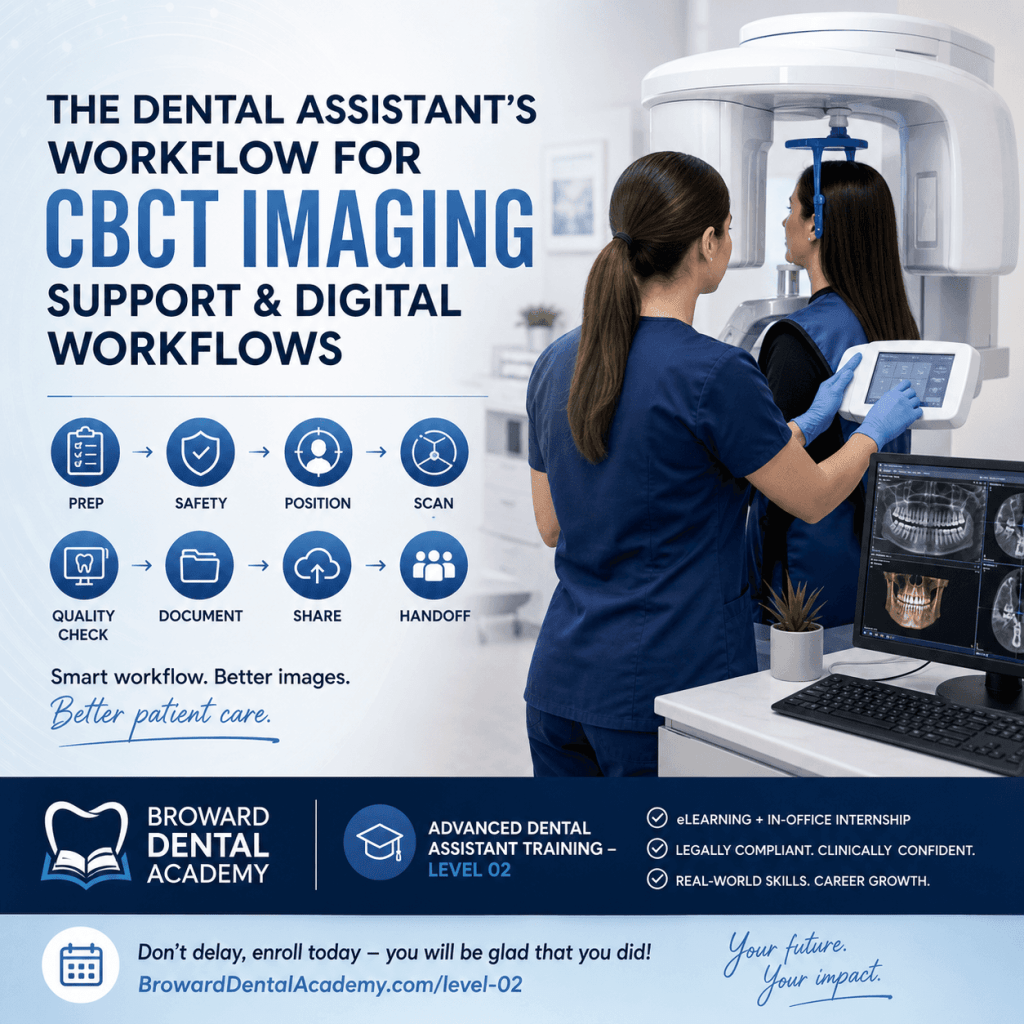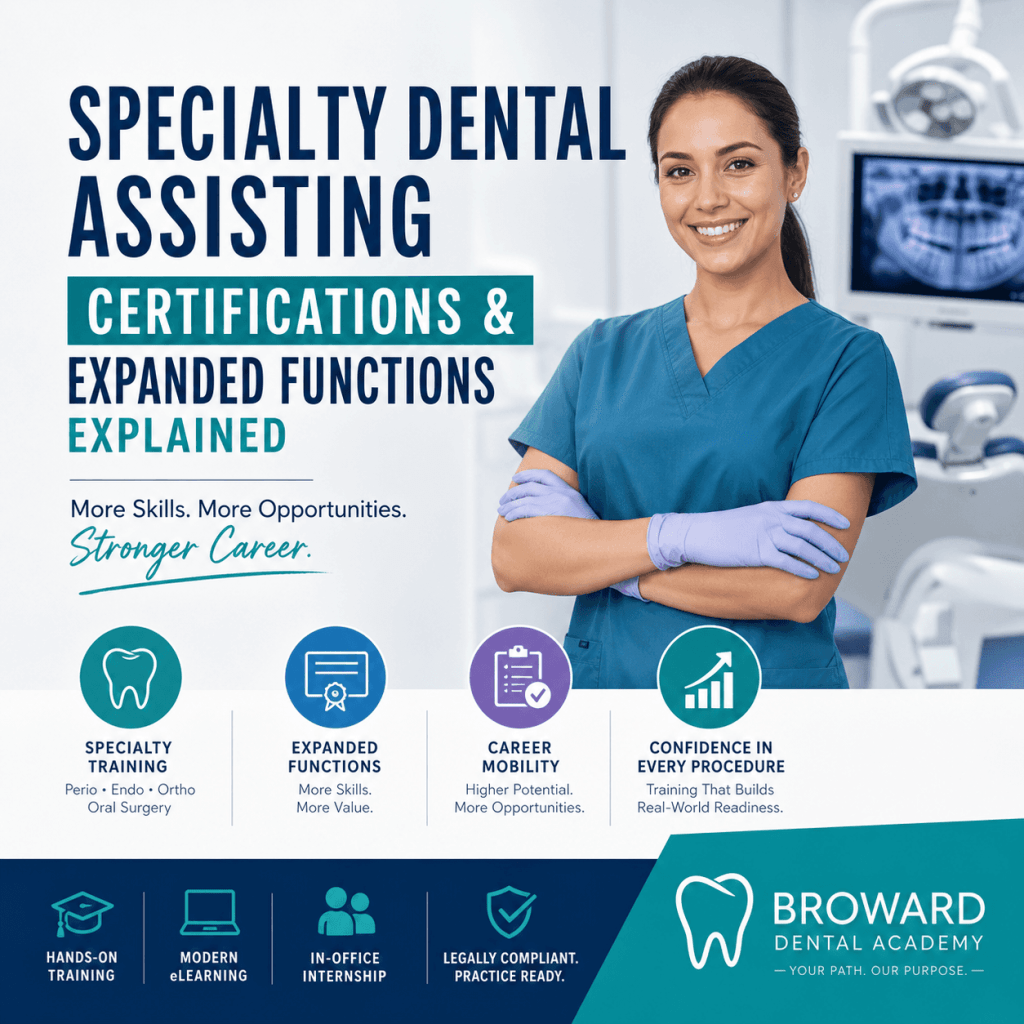
If you have been searching for specialty dental assisting certifications or wondering what expanded functions really means, you are in the right place. These credentials can influence what you are legally allowed to do, how competitive you are in the hiring process, how quickly you get promoted, and often how much you can earn.
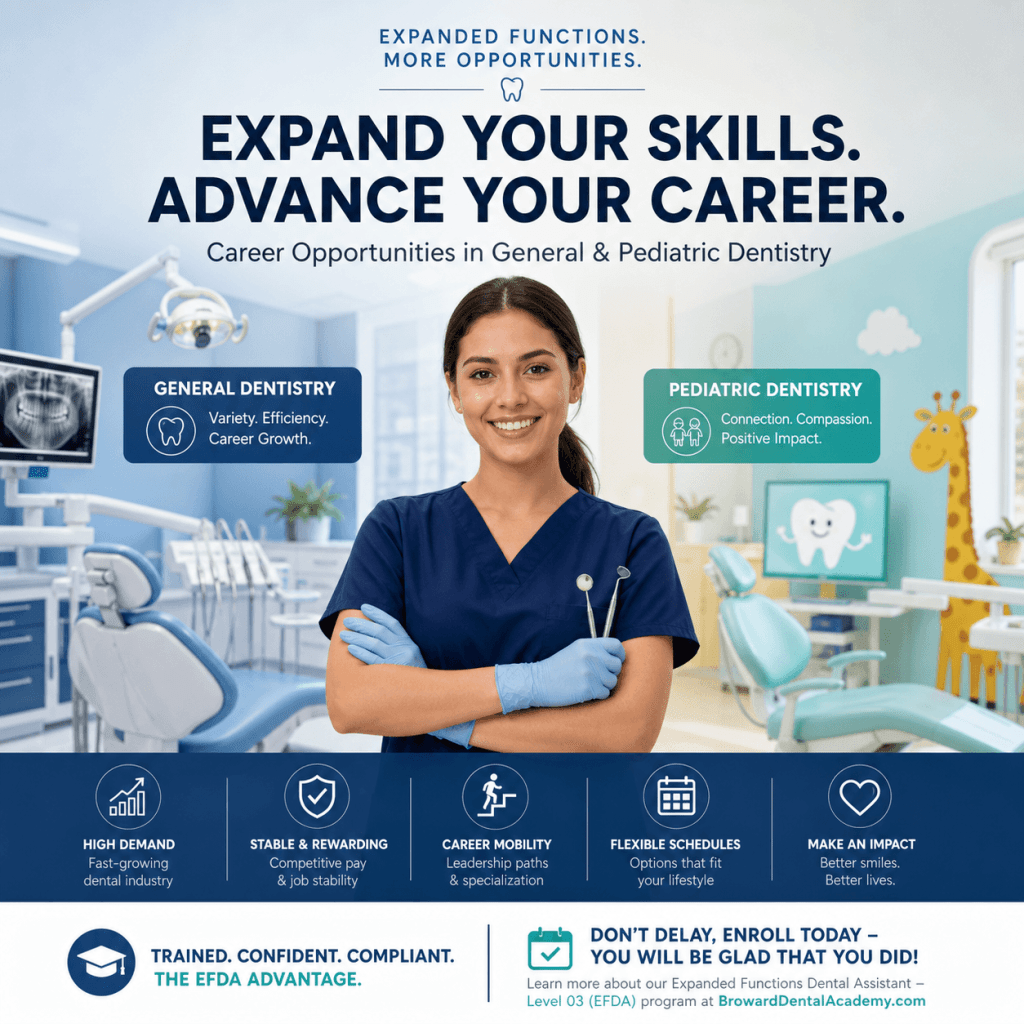
The dental industry also continues to be one of the fastest-growing healthcare fields, offering stable income potential, flexible schedules, and long-term career mobility. Specialty training and expanded functions are two of the most practical ways to level up within that momentum.
In this guide, you will learn:
- The main categories of dental assisting credentials and why terms vary by state
- What expanded functions are and why practices value them
- Common expanded functions and advanced clinical skills you may train for
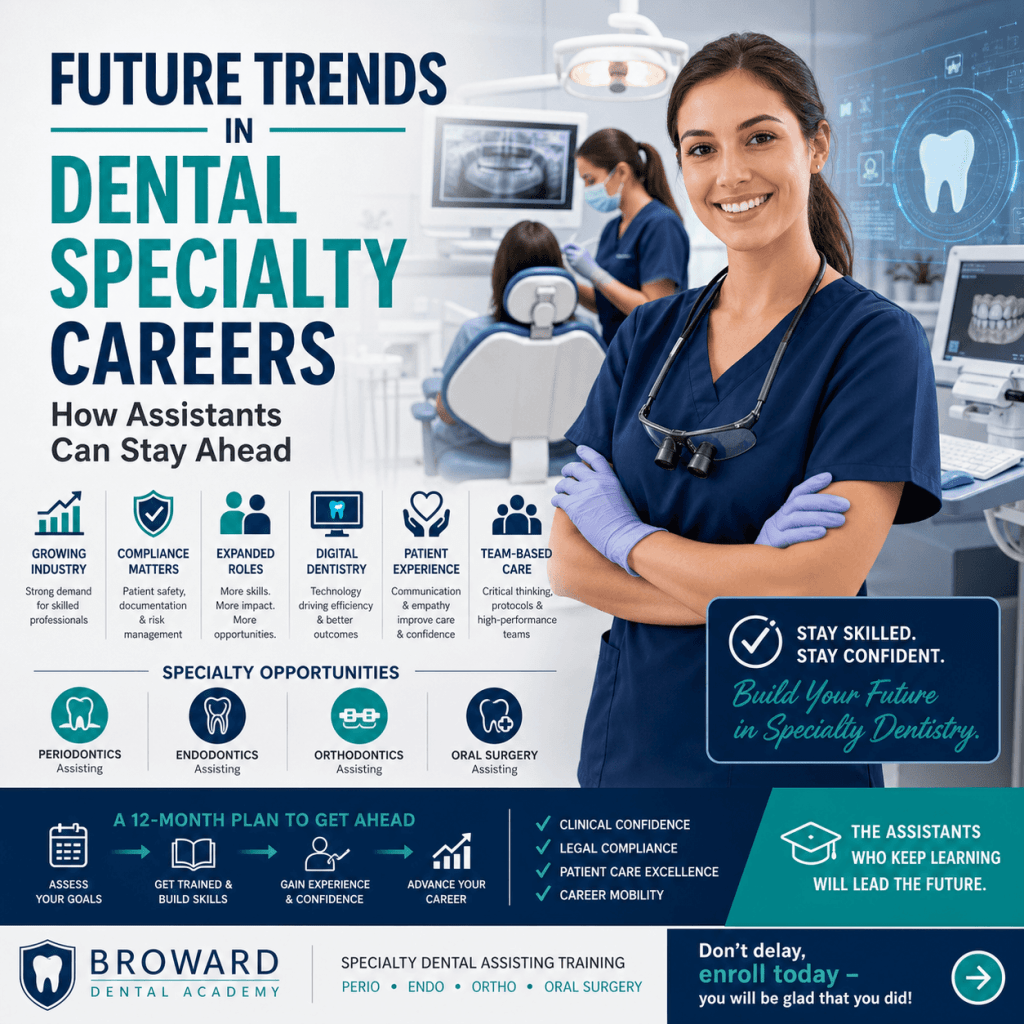
- What specialty dental assisting usually refers to (Perio, Endo, Ortho, Oral Surgery)
- How to choose the right path and stay legally compliant
- What strong training looks like, and how Broward Dental Academy supports career-ready growth
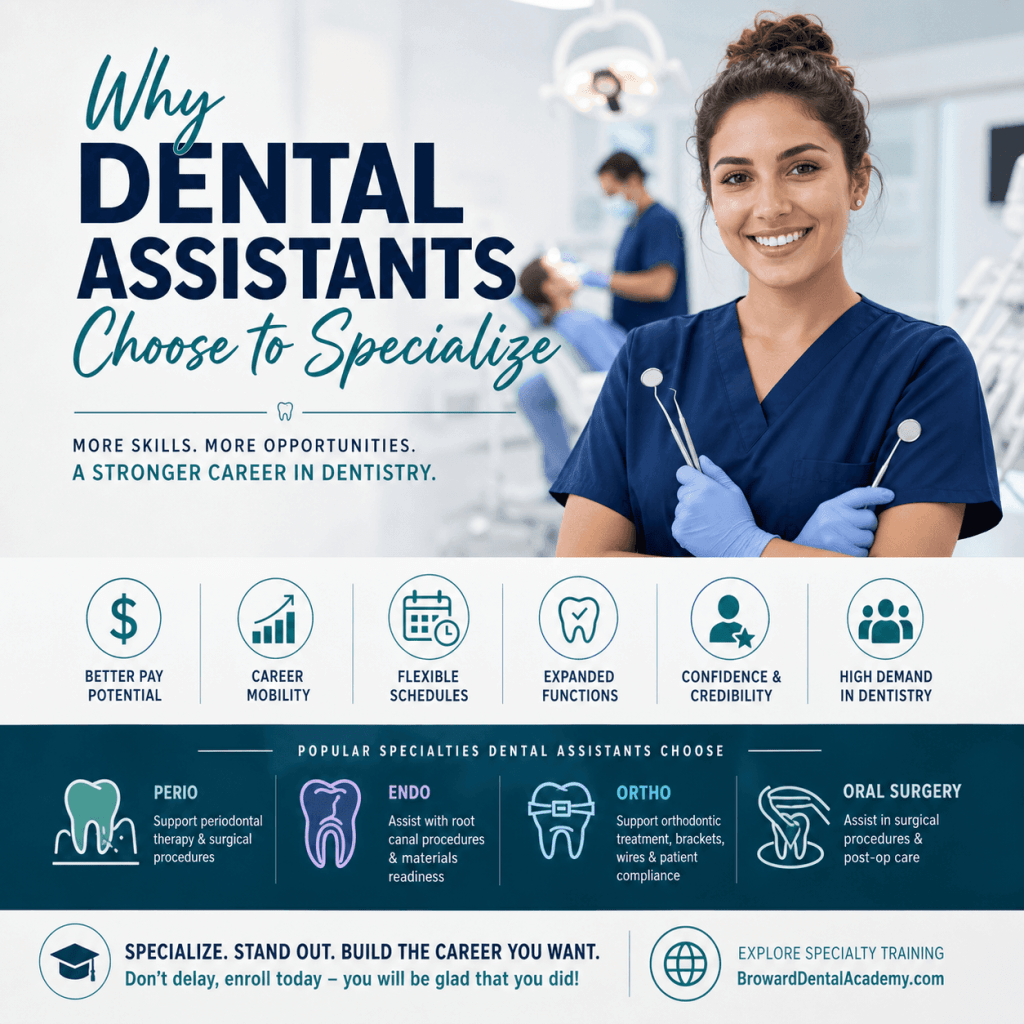
Why specialty certifications and expanded functions matter for dental assistants today
Dental assisting has changed. Many practices are expanding services, adding technology, and focusing on efficient delegation so dentists and hygienists can stay focused on what only they can do.
That shift makes two ideas especially important:
- Specialty dental assisting certifications/training: focused preparation for specific departments or procedure types like periodontics, endodontics, orthodontics, and oral surgery.
- Expanded functions: additional clinical duties beyond basic chairside assisting that may be allowed if you complete specific training and meet your state’s requirements.
Both can affect your day-to-day responsibilities, your confidence in the operatory, and your marketability to employers. They can also help you grow into roles that offer greater responsibility and, in many cases, higher pay.
This article will break down what these terms typically mean, what is commonly trained for, and what you must verify for legal compliance so you become practice-ready in the right way.
Dental assisting credentials 101: certificates, national certifications, and state approvals
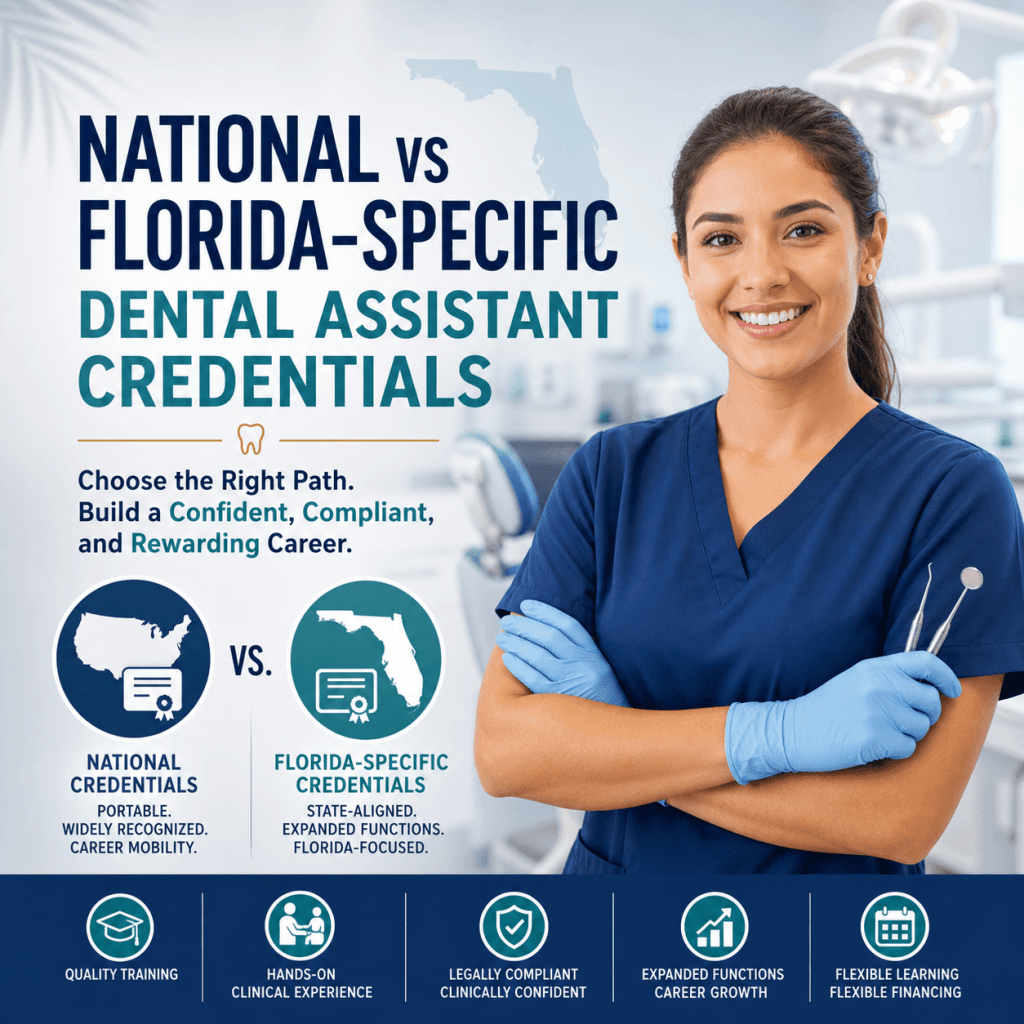
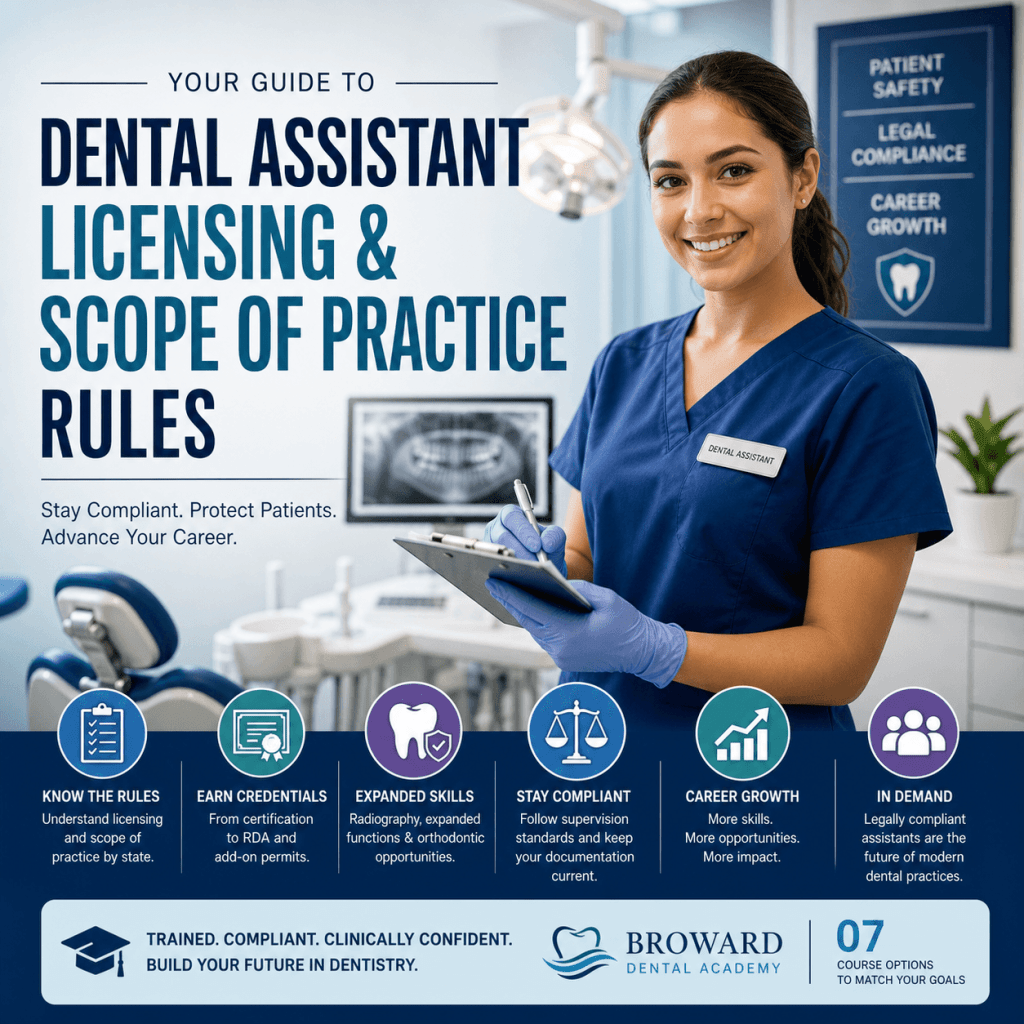
One reason dental assisting career paths feel confusing is that credentials are not standardized nationwide. What counts as “certified” in one state may not mean the same thing in another. For example, the requirements for dental assistants in Oregon may differ significantly from those in other states.
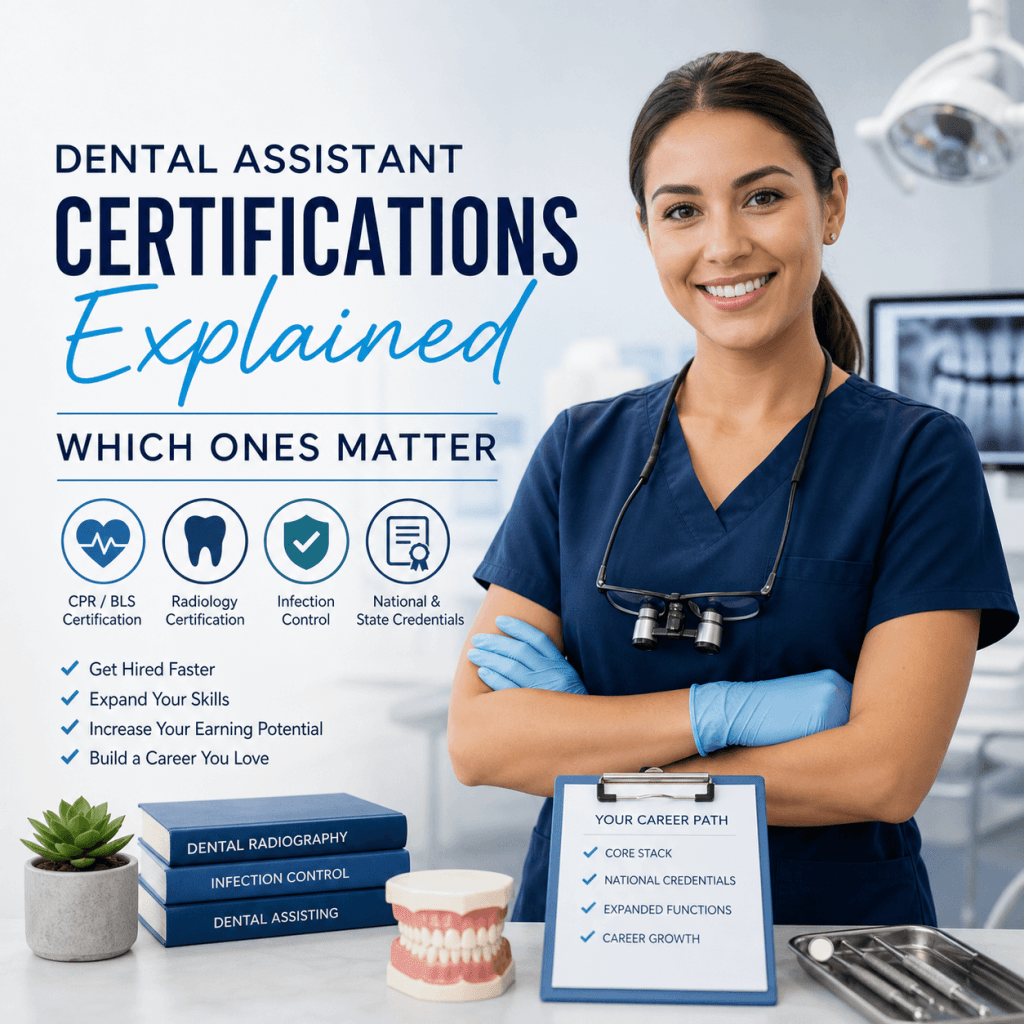
Here are the most common credential types you will see:
School completion certificates
These are awarded after completing a dental assisting program or specific course. They show you completed training, often including hands-on skills, safety, infection control, and clinical workflows.
National certifications
National certifications are typically earned by meeting eligibility requirements and passing an exam through a recognized credentialing organization. These can strengthen your resume and may be required or preferred by some employers.
State permits, registrations, or approvals
Many states have their own requirements for duties like radiography, coronal polishing, sealants, or restorative functions. You may need a state-issued permit, registration, board approval, or documented competency before performing certain tasks.
Why terminology gets confusing
You may hear terms like:
- Certified dental assistant
- Registered dental assistant
- Expanded functions dental assistant
- Expanded duties
- Specialty assisting
Those labels can be job-title language, state regulatory language, or employer preference. The most important point is this: your scope of practice is defined by your state dental board and dental practice act, not by what a job posting casually says.
How credentials often stack
A practical way to think about it is a progression:
- Foundational dental assisting training
- Specialty training (Perio, Endo, Ortho, Oral Surgery)
- Expanded function eligibility (where your state permits it)
This stacking approach helps you build real competence while staying compliant.
What “expanded functions” means (and why it’s a big deal)
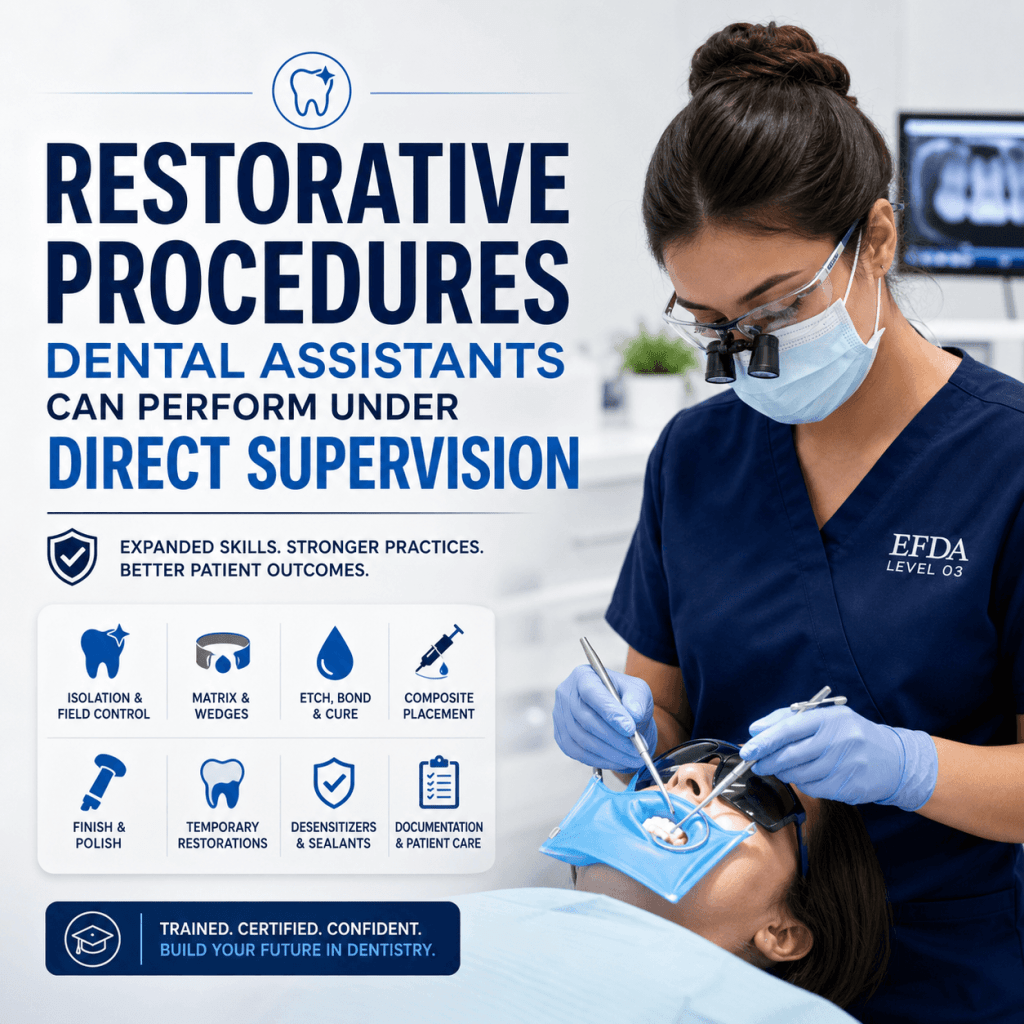
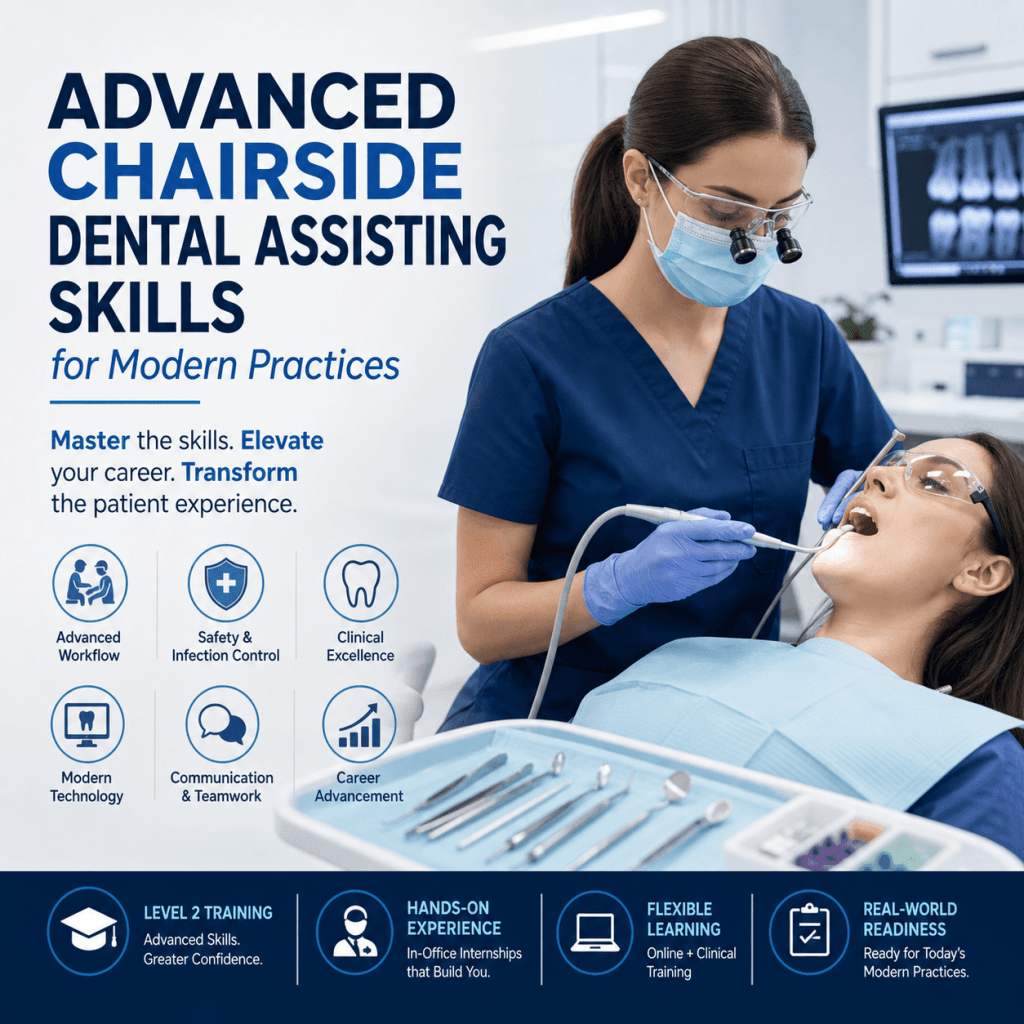
Expanded functions are additional clinical duties beyond basic chairside assisting that may be delegated to a dental assistant when certain conditions are met. Those conditions usually include formal training, documented competency, and the correct supervision level.
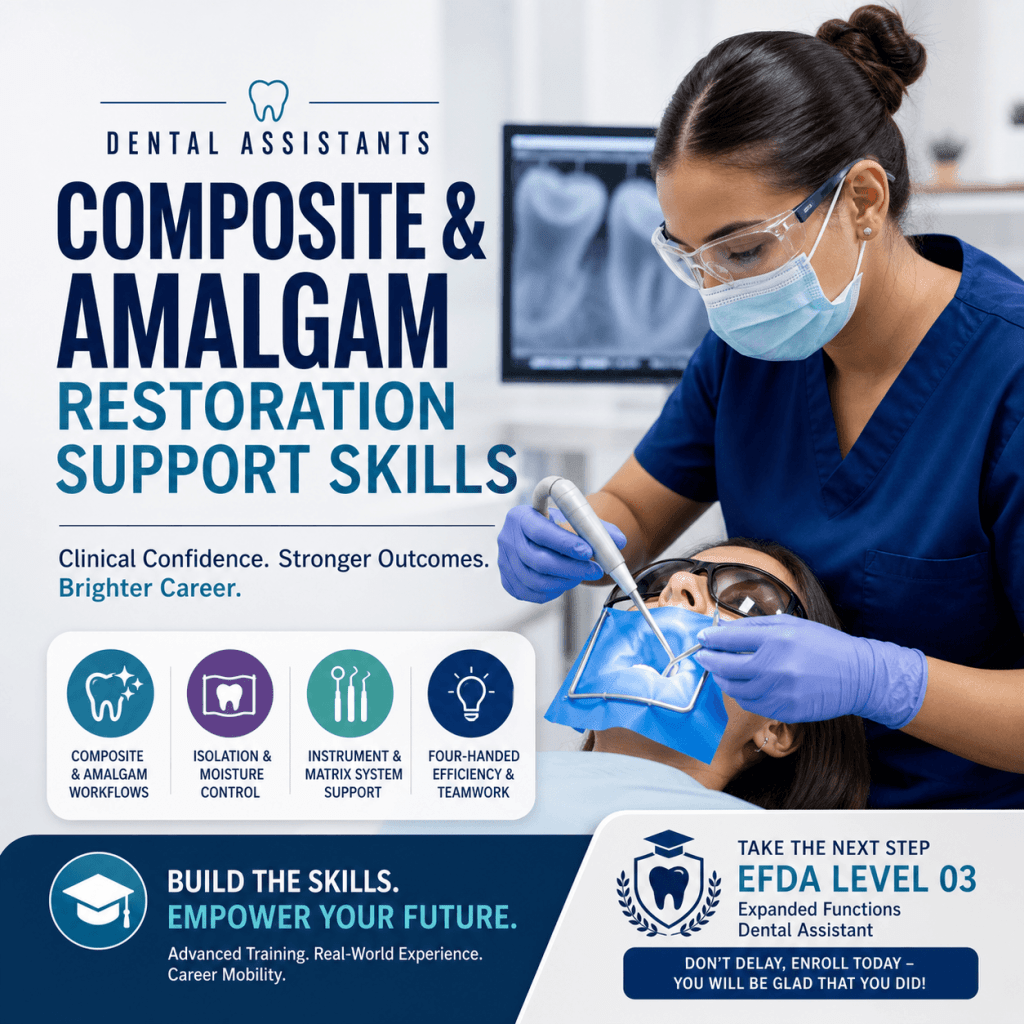
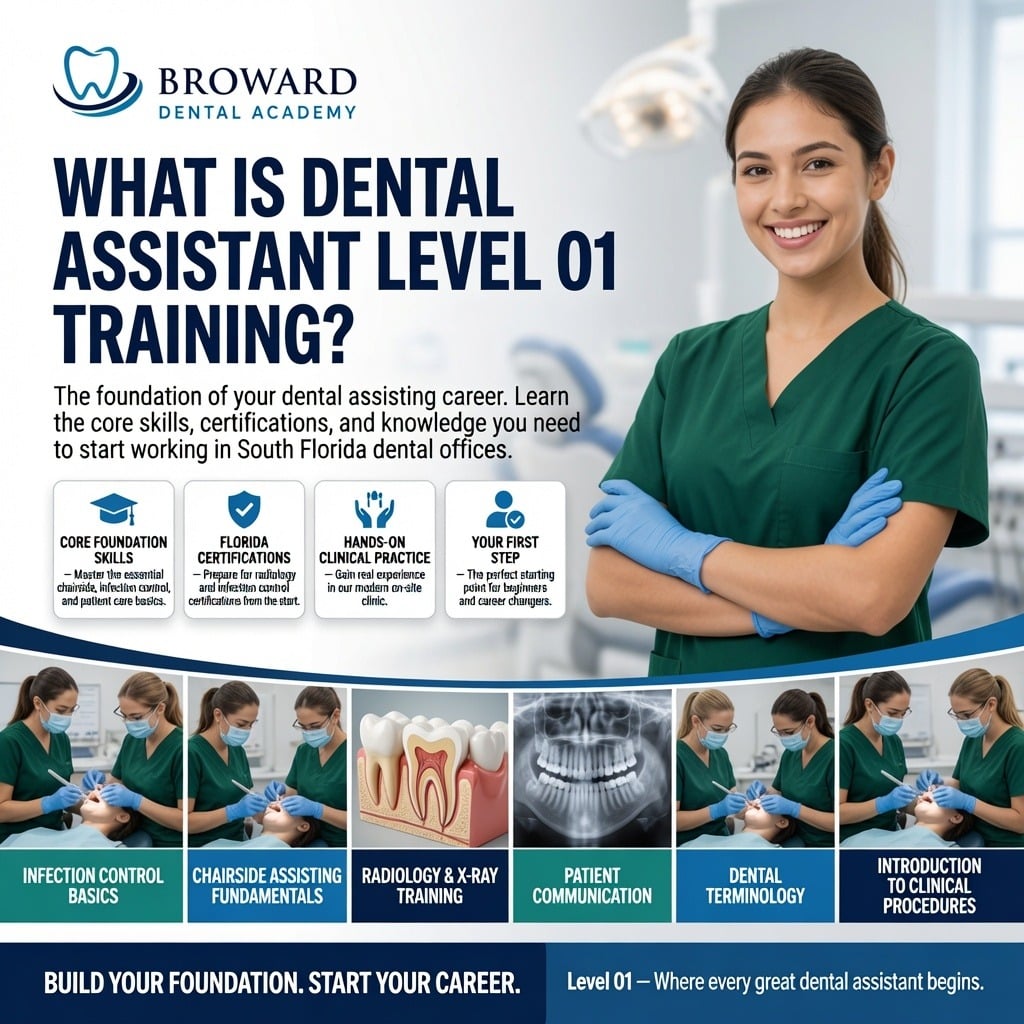
To achieve these expanded functions, one must first complete foundational dental assisting training such as those offered in Level 01, followed by Level 02 and then Level 03, which includes specialty training and prepares for expanded function eligibility where permitted by the state.
Why practices care
Expanded functions can help practices:
- Improve efficiency and appointment flow
- Delegate appropriate tasks under supervision
- Reduce bottlenecks during restorative and high-volume days
- Provide a smoother patient experience
Why assistants care
For dental assistants, expanded functions can mean:
- A stronger resume and more leverage in interviews
- More responsibility and clinical involvement
- More job options across offices and specialties
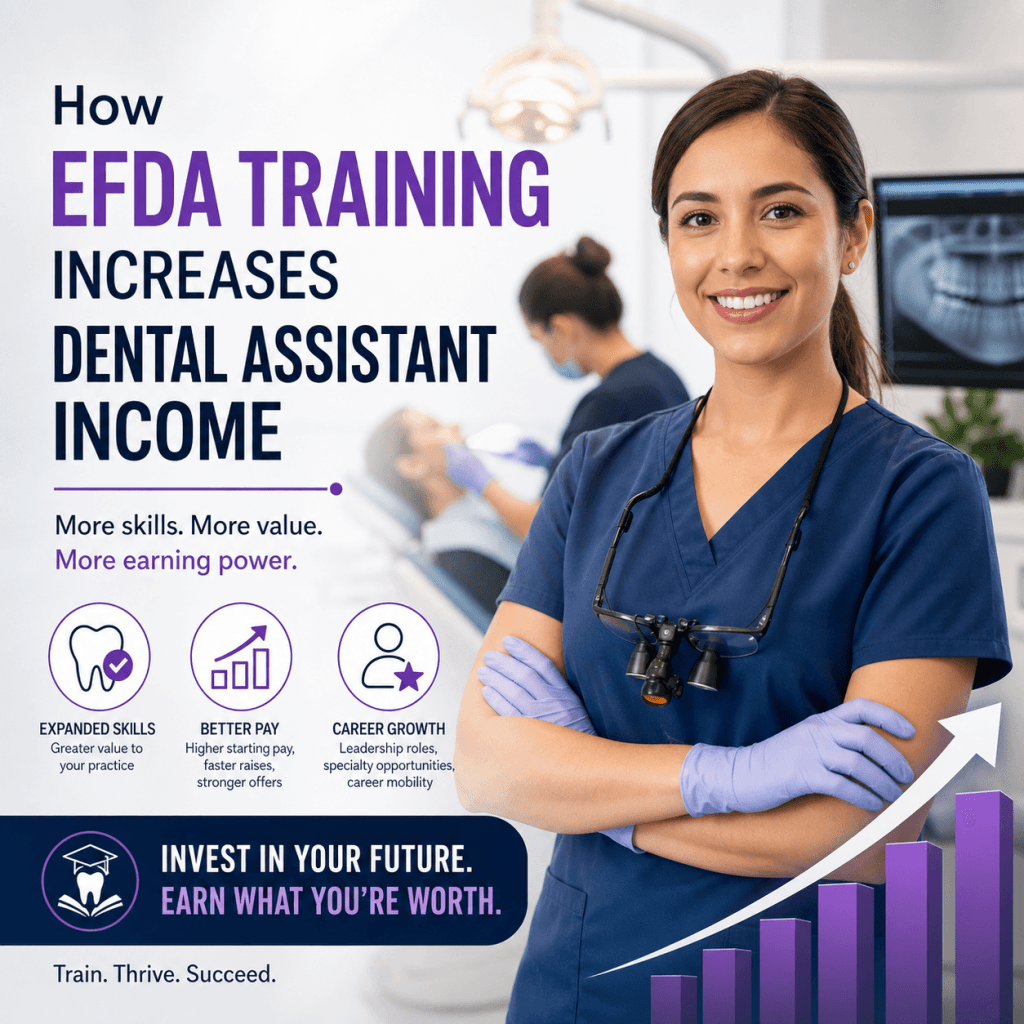
- Potential for higher pay, depending on market and role
In fact, the skills acquired through training for expanded functions can significantly enhance a dental assistant’s career prospects.
The guardrails you must respect
Expanded functions are not “do more because you can.” They are regulated.
What varies by state includes:
- Which duties are allowed
- The training and documentation required
- Supervision levels (direct, indirect, general)
- Whether the dentist must be physically present
- What records the practice must maintain
When in doubt, verify first. Compliance protects patients, the dentist, the practice, and your career.
Common expanded functions and advanced clinical skills (what you may train for)
Expanded functions and advanced assisting skills typically fall into a few buckets. The exact list depends on your state, but these are common areas assistants train for.
Restorative-related functions (state-dependent)
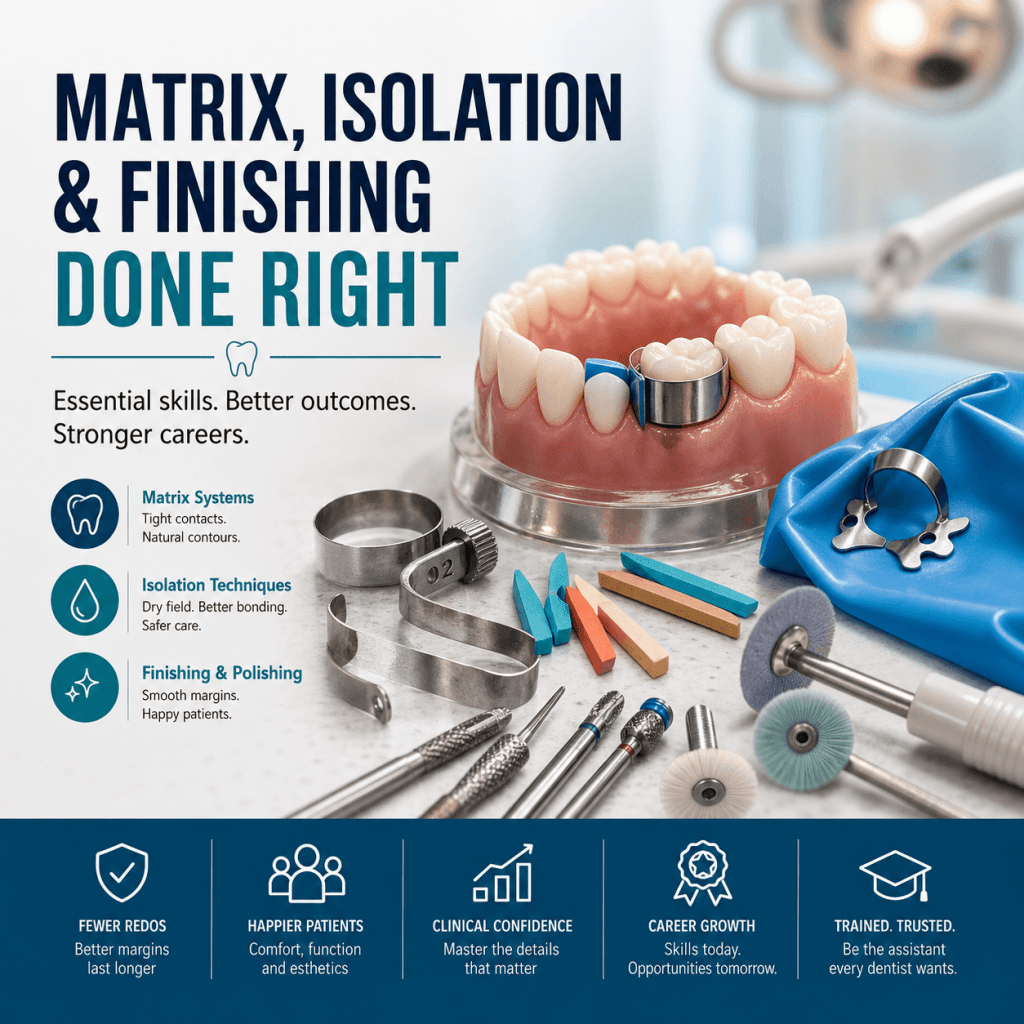
These may include tasks such as placing and removing matrices and wedges or assisting with rubber dam placement. For more details on restorative-related functions, you can refer to this manual.
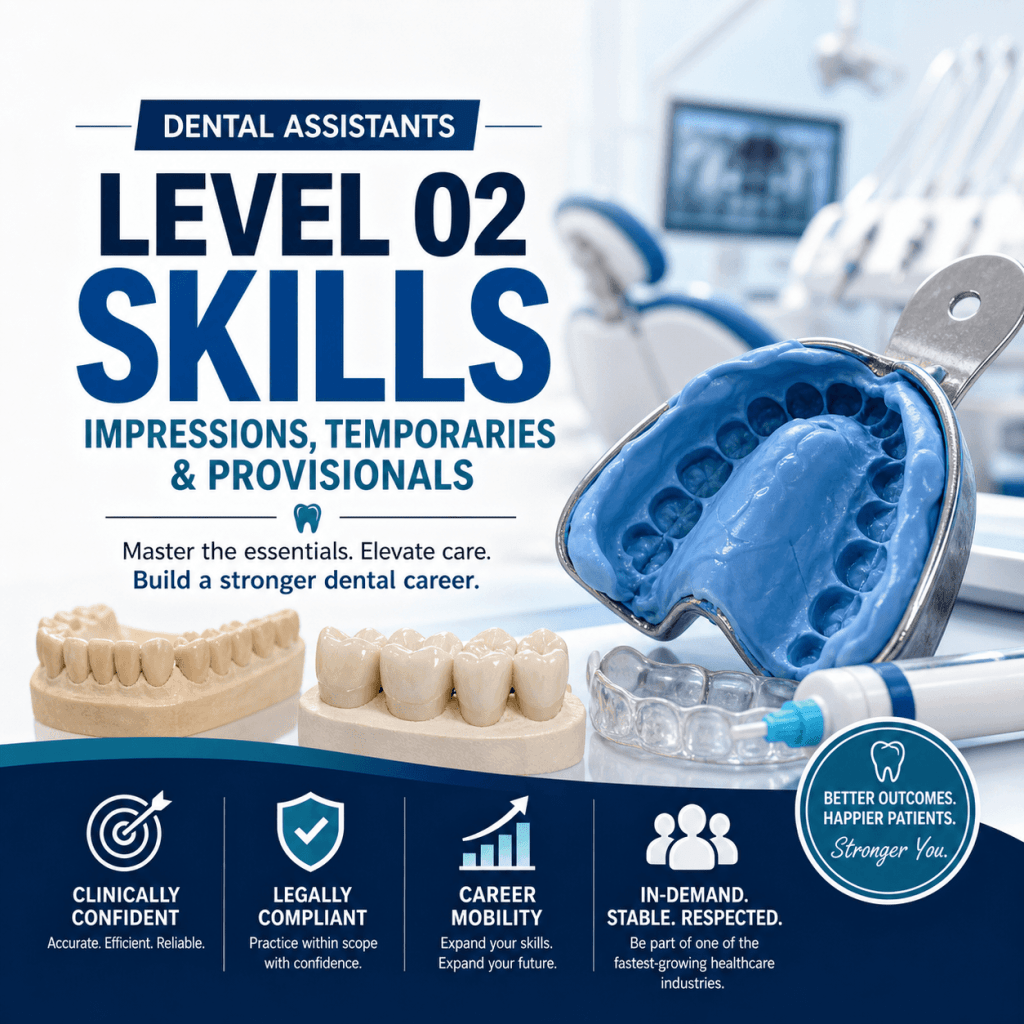
Impressions and digital workflows
Training might also cover areas like:
- Alginate impressions and pour-up support
- PVS impressions and bite registrations
- Digital scanning support and intraoral scanner workflows
- Case organization for labs and aligner systems
Patient care and clinical support
- Coronal polishing (where allowed)
- Sealants and fluoride application support (where allowed)
- Surgical assisting setup, sterile field support, and asepsis
- Monitoring support and documentation in sedation environments (role varies by setting and training)
High-quality training matters because these are not just “tasks.” They are skills that require speed, accuracy, and safety, and they directly affect patient comfort and clinical outcomes.
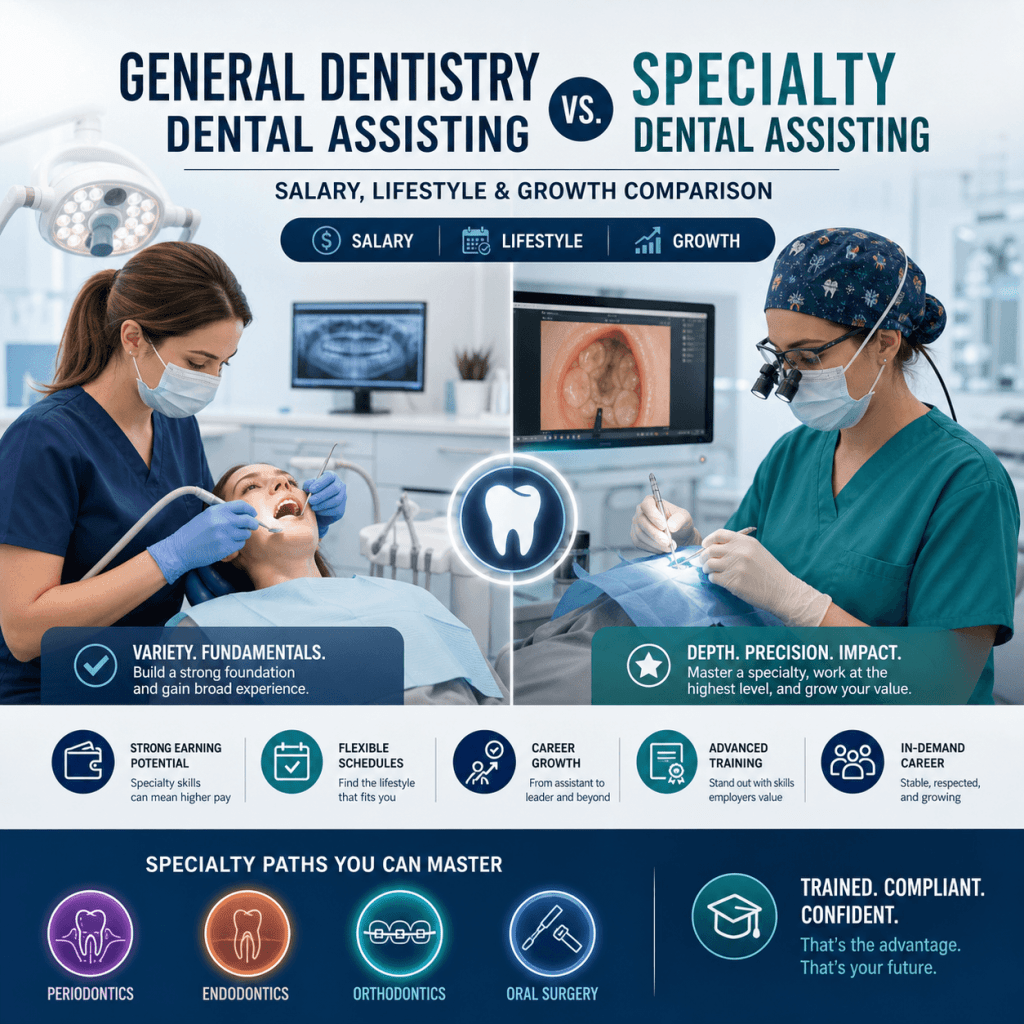
Specialty dental assisting certifications: what “specialty” usually refers to
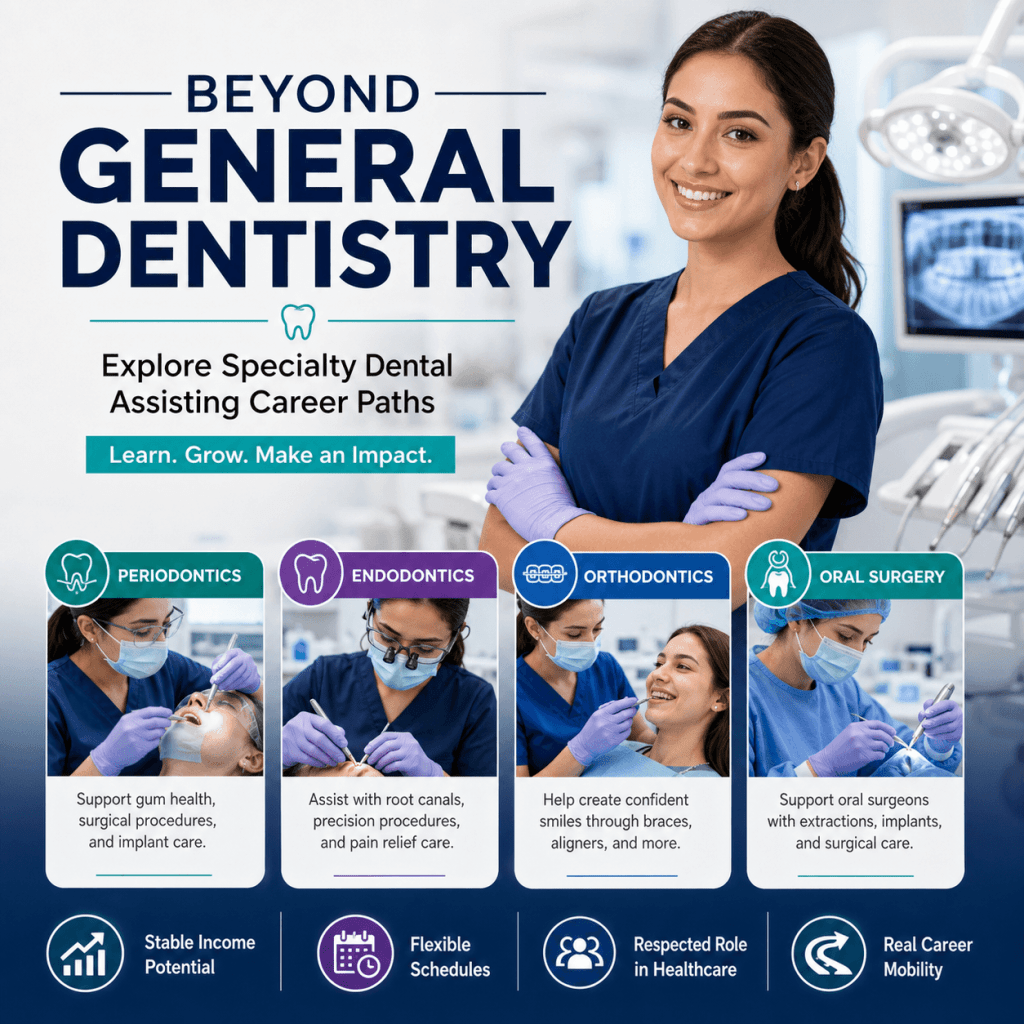
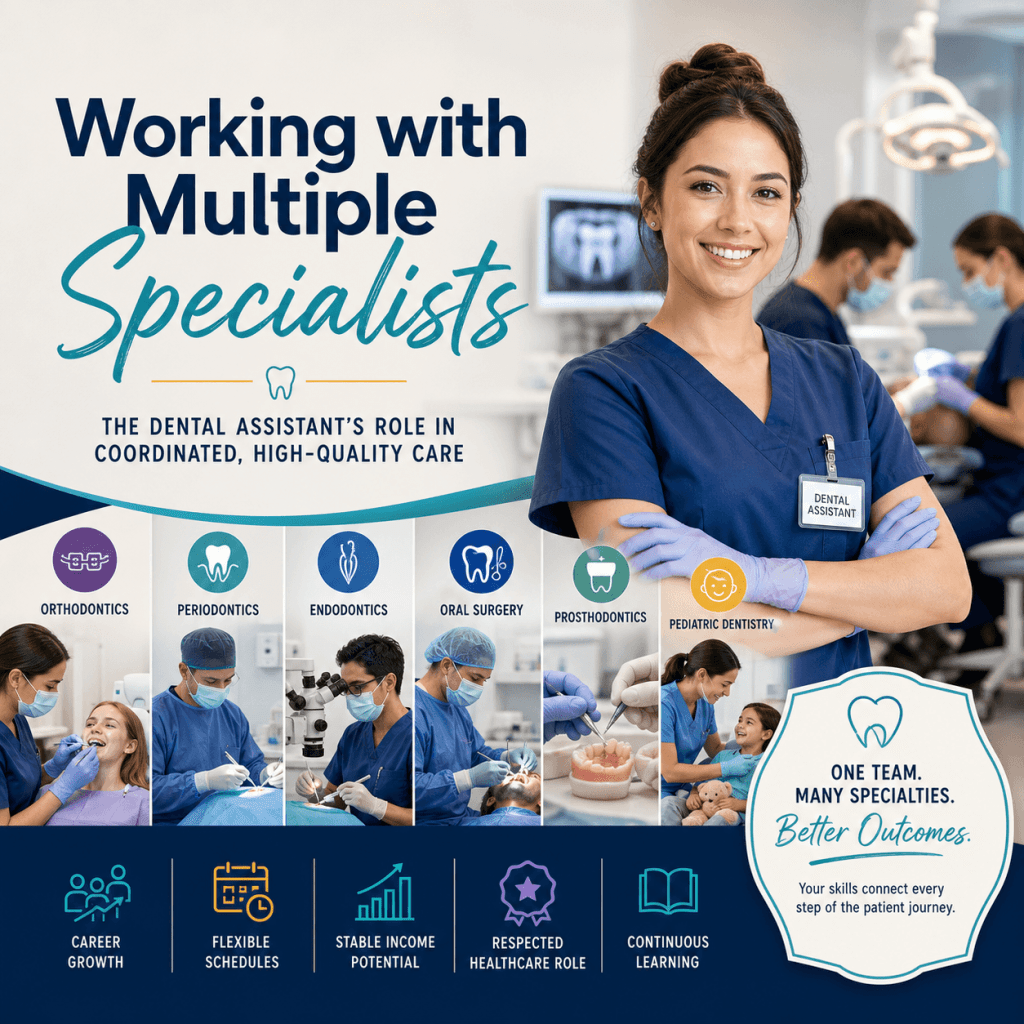
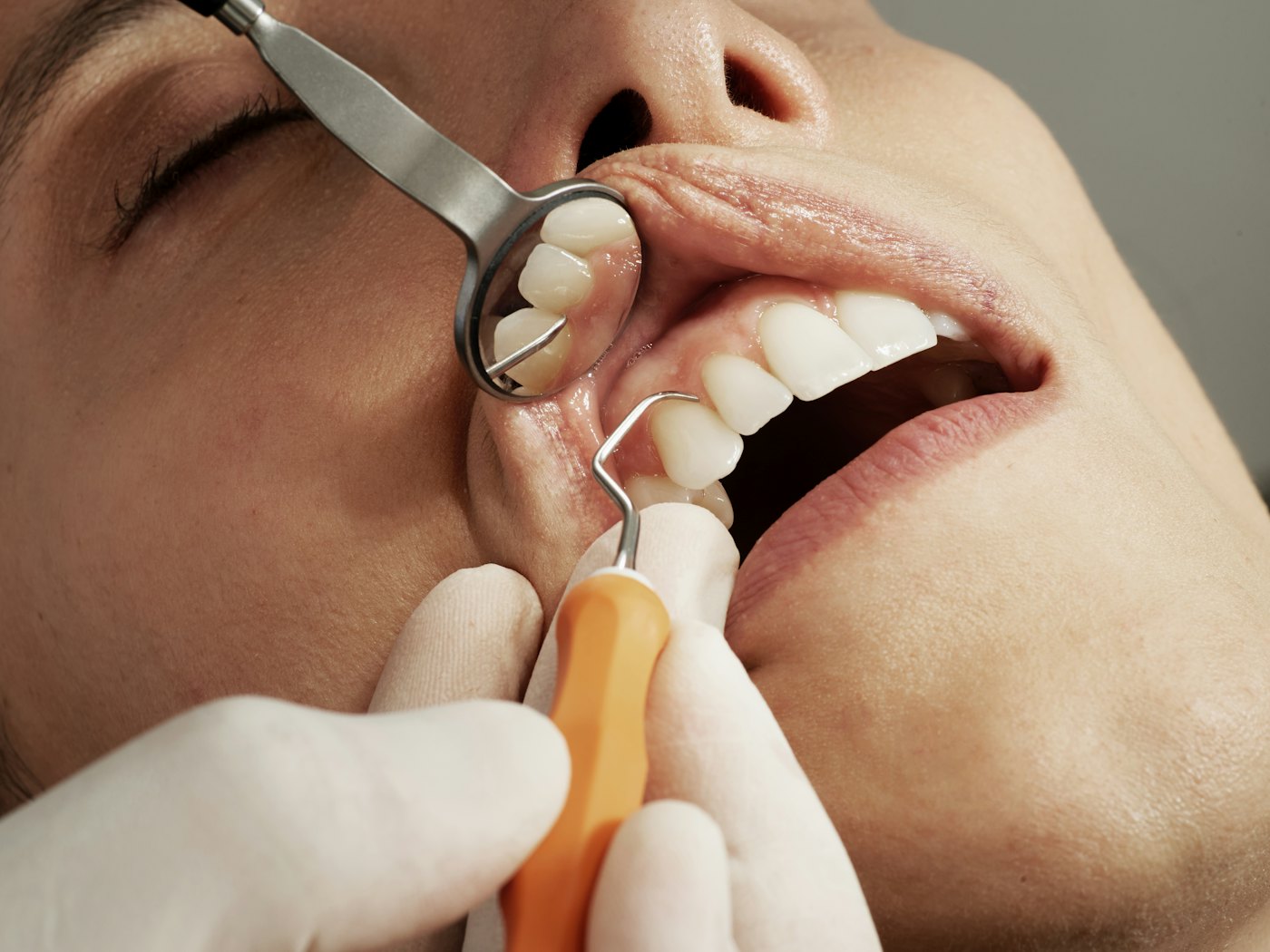
In dental assisting, “specialty” typically refers to focused training for specific departments or procedure types, such as:
- Periodontics (Perio)
- Endodontics (Endo)
- Orthodontics (Ortho)
- Oral Surgery
Specialty training differs from general assisting because each specialty has:
- Its own instrument sets and tray setups
- Distinct chairside workflows and procedure sequencing
- Specialty materials and equipment
- Patient communication patterns and expectations
- Unique safety and infection control priorities
Specialty assisting can be a career accelerator because it shortens onboarding time and helps you become useful quickly in high-performance practices. In many cases, specialty training pairs well with expanded functions where permitted, making you more versatile across departments and office types.
For a deeper overview of specialty pathways, see the pillar guide here: Specialty Dental Assisting Training (Perio • Endo • Ortho • Oral Surgery).
If you’re interested in pursuing a career in this field, consider exploring the comprehensive resources available at Broward Dental Academy, which offers a wealth of information on dental assisting training.
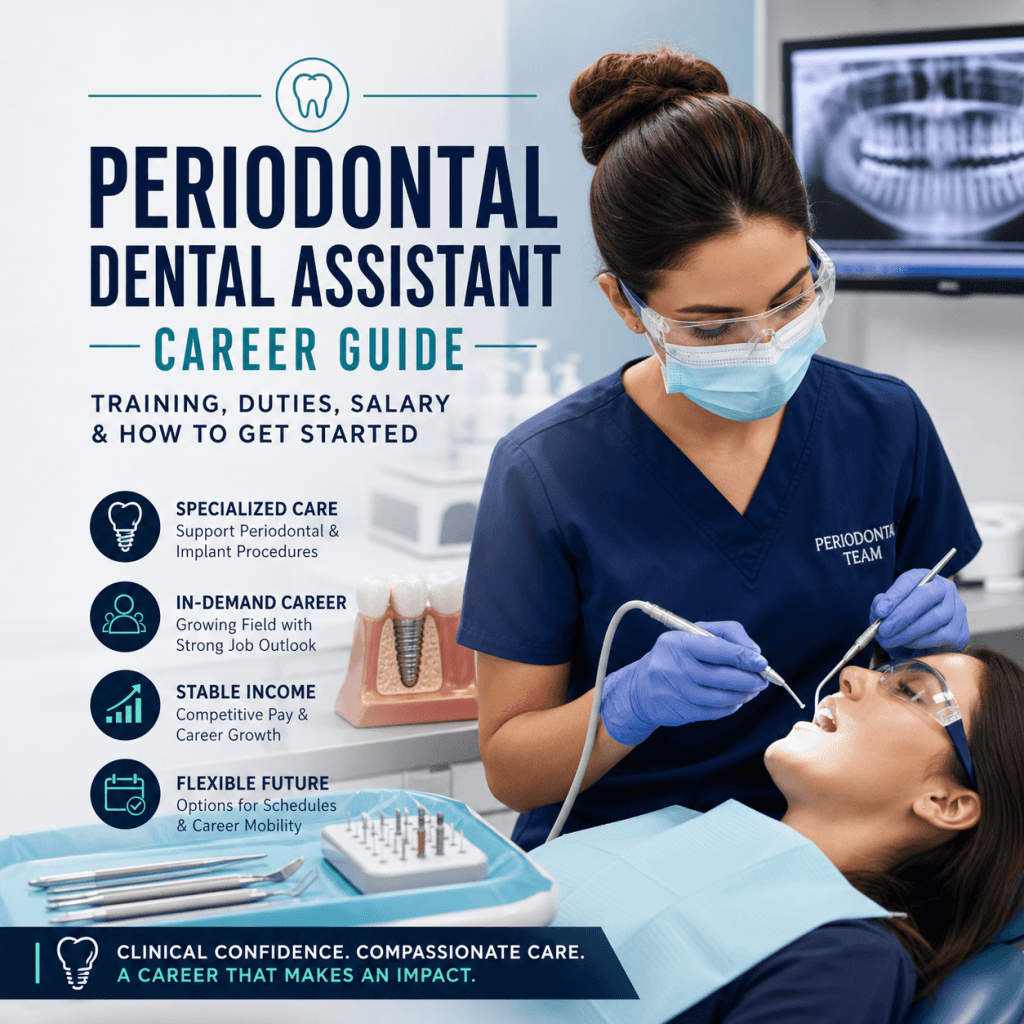
Periodontics assisting: skills that make you valuable in a Perio-focused practice
Periodontics is detail-heavy and often surgical. Assistants who can maintain a clean field, anticipate steps, and support sterile technique become essential quickly.
Core Perio workflow skills
- Periodontal charting support and efficient documentation flow
- Tissue management basics and retraction awareness
- Irrigation and suction efficiency
- Surgical tray setup and operatory readiness
Common procedures you may assist with
- Scaling and root planing support
- Periodontal maintenance visits
- Flap procedures support
- Grafting support (as permitted in your role)
- Implant surgery assisting support and post-op flow
Infection control emphasis
Perio requires strong surgical asepsis habits. Employers value assistants who can protect the sterile field, manage instruments correctly, and maintain calm, organized setups.
Patient communication
You will often support:
- Post-op instructions and expectations for healing
- Anxiety management and reassurance
- Clear explanations of what to do at home and when to call
Expanded function readiness may intersect in implant-related workflows, especially when temporary or restorative-adjacent steps are involved, depending on state rules.
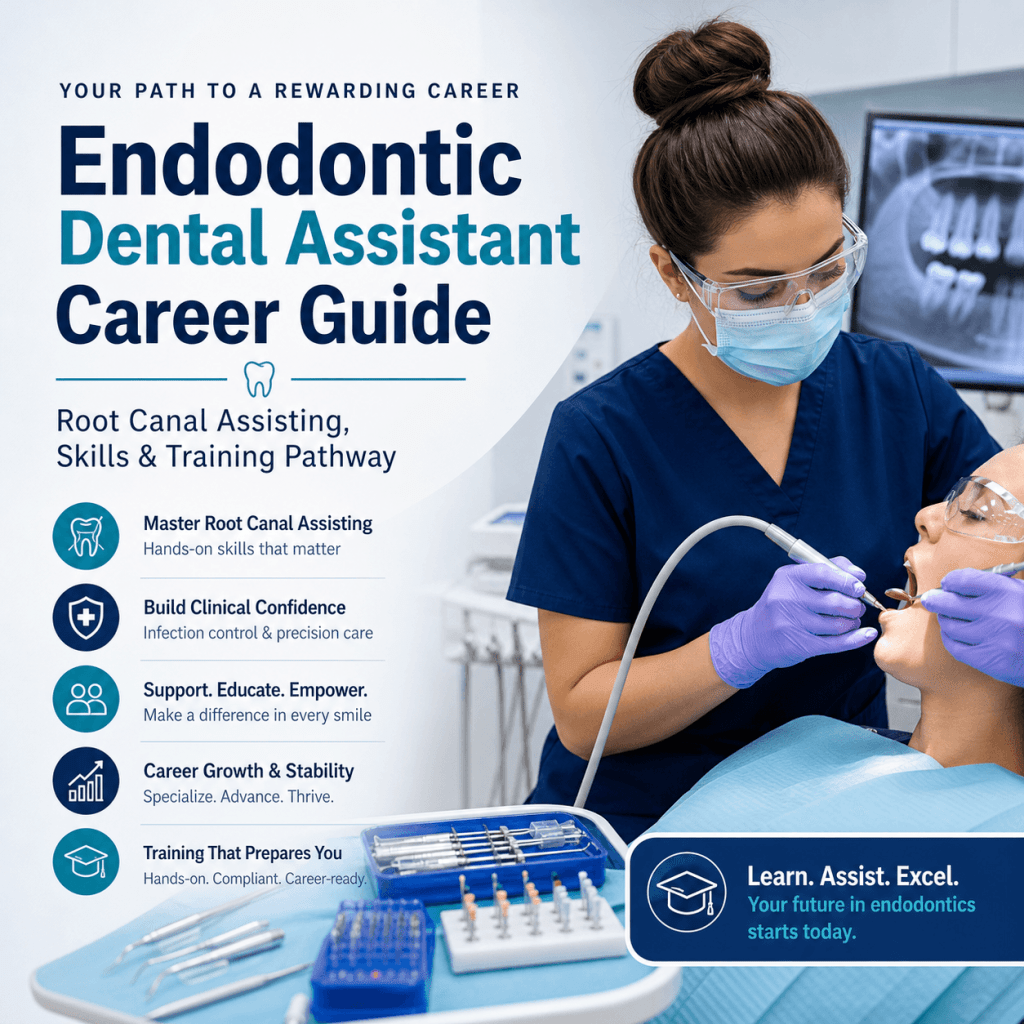
Endodontics assisting: faster setups, cleaner fields, smoother root canals
Endodontics is about timing, isolation, and precision. A great endo assistant reduces friction in the operatory and helps the provider move smoothly through each phase.
Endo operatory flow priorities
- Isolation and visibility (clean, dry field)
- Efficient instrument organization and sequencing
- Fast radiography workflow and minimal delays
Skills and topics often covered
- Rubber dam setup support (where allowed)
- File organization, counting, and workflow habits
- Irrigation protocol support and safety awareness
- Apex locator and imaging flow support
- Temporization support and material handling
Patient management
Endo patients are often anxious or in pain. Assistants who can explain what is normal versus what requires follow-up help the entire appointment run better.
Expanded functions may apply in some states for temporary restorations or polishing steps associated with treatment phases.
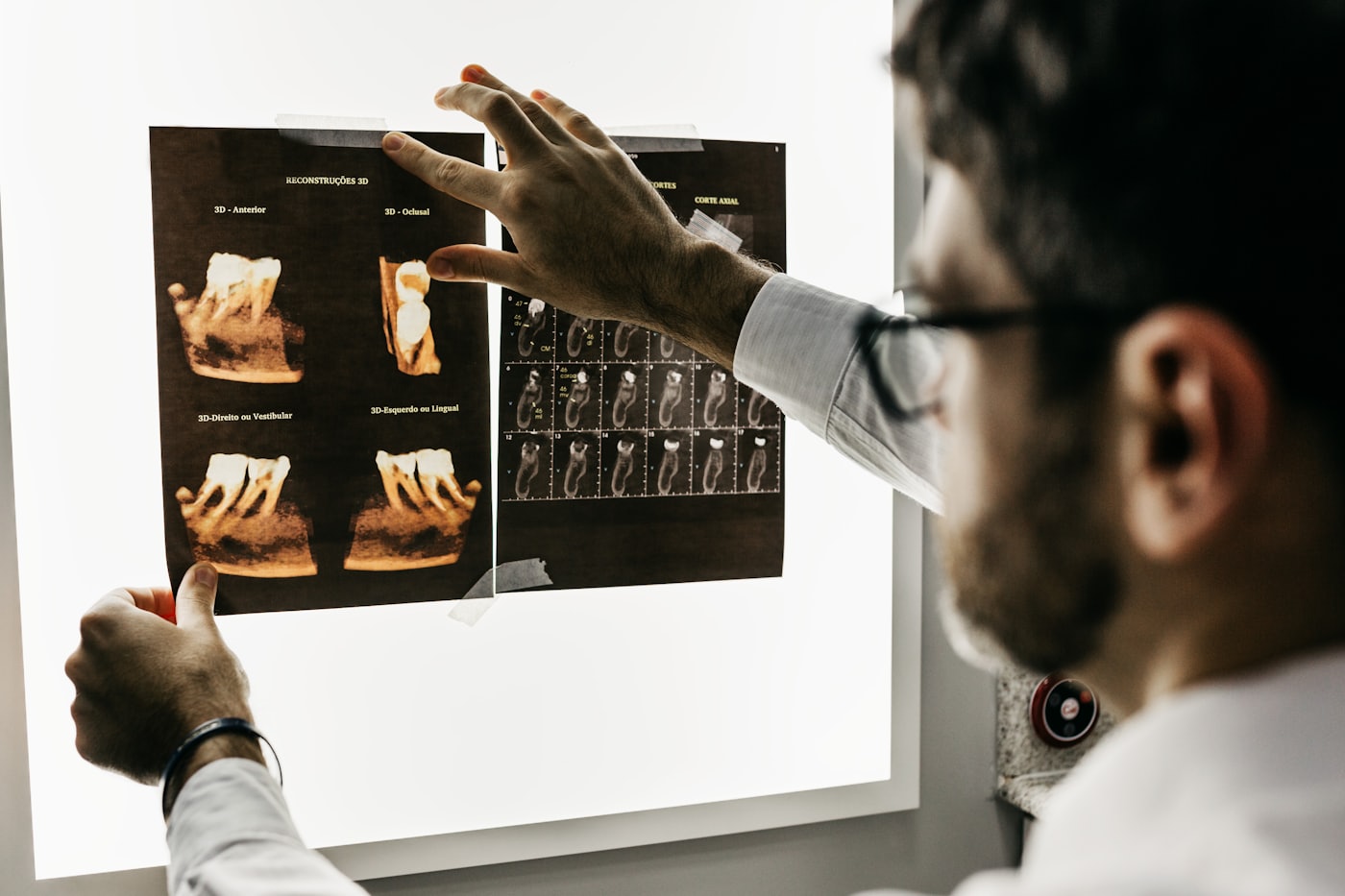
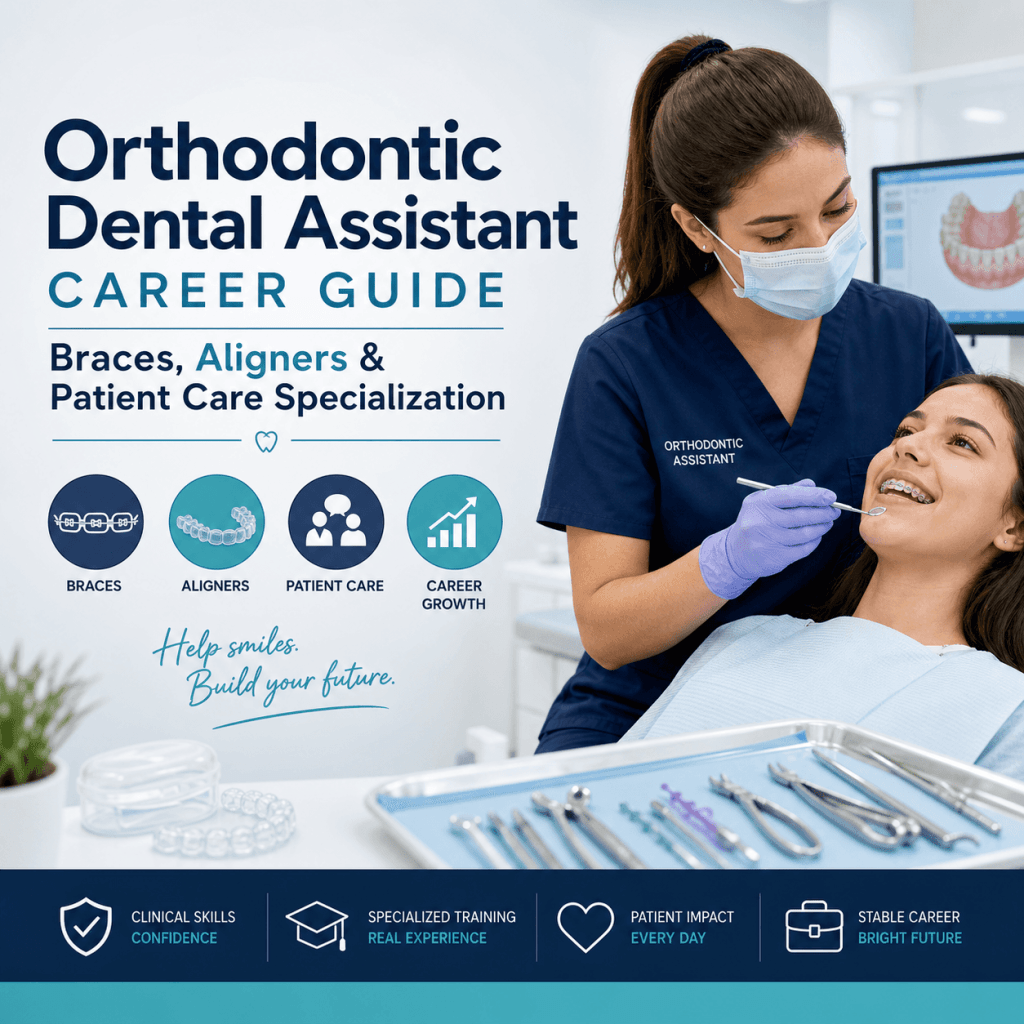
Orthodontic assisting: high-volume systems, appliance handling, and patient education
Orthodontics is often high-volume and systems-driven. Consistency matters because small errors compound across a full day of bonding, adjustments, and patient education.
Skills and topics in ortho assisting
- Bracket and band support
- Archwire handling and organized instrument flow
- Elastics instruction and compliance coaching
- Impression or scan support for retainers and aligners
- Retainer delivery support (as permitted)
- Fast turnover infection control between patients
Communication is a major part of the job
Ortho assistants often spend significant time:
- Motivating compliance and answering soreness questions
- Teaching home care around appliances
- Communicating clearly with teens and parents
- Setting expectations for what changes to expect next
Expanded-function tie-ins often show up in impressions and digital scanning workflows, and those skills can also translate well into general practice.
For more information about the role of dental assistants in these processes, including frequently asked questions, feel free to explore further.
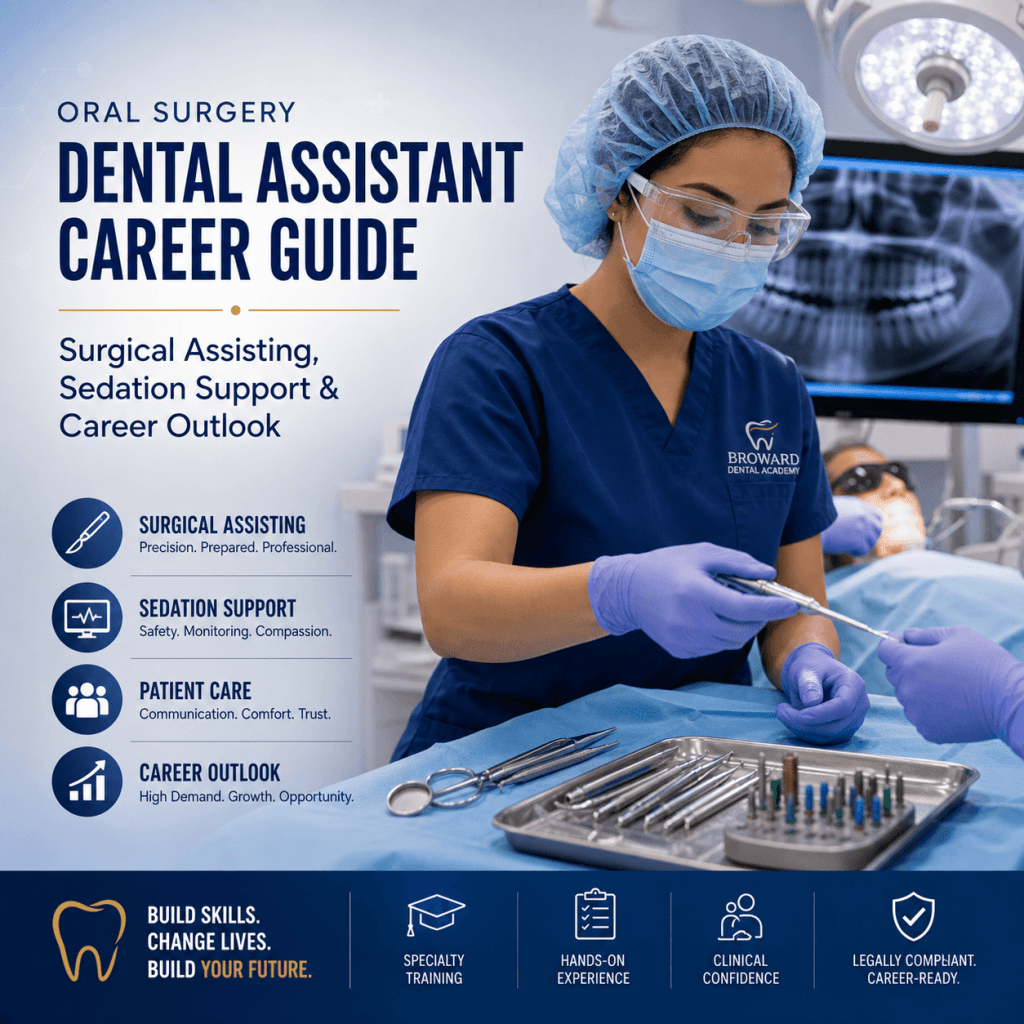
Oral surgery assisting: safety, sedation awareness, and surgical chairside confidence
In the realm of oral surgery, the environment demands focused communication, efficient instrument transfer, and the ability to remain calm under pressure. This is why training is invaluable; the stakes are higher and risk management becomes crucial.
Skills commonly emphasized
- Surgical tray setup and sterile technique support
- Suction and retraction mastery for visibility and safety
- Hemostasis support and efficient instrument transfer
- Post-op instruction flow and patient discharge readiness
- Emergency readiness basics and team communication
Sedation awareness and documentation
In many surgery environments, assistants play a vital role in supporting monitoring and documentation in defined ways, depending on facility protocols and state rules. Structured training is essential here because safety is the priority and roles must be clearly defined.
Employers value oral surgery training because it reduces risk, supports smoother procedures, and improves the patient experience during high-stress appointments.
How to choose the right specialty or expanded-function path (based on your goals)
If you are at a crossroads in your career decision-making process, consider using a simple framework.
If you like procedures and surgery
You might want to consider pursuing a path in Perio or Oral Surgery, especially if you have a preference for surgical workflows, sterile technique, and procedure intensity.
If you want broader employability
Combining specialty training plus expanded-function eligibility where permitted could be a strategic move. Versatility is highly valued in general practices that also place implants, conduct endo, or manage clear aligner workflows.
Match your path to your lifestyle and strengths
It’s important to take into account:
- Schedule preferences (general clinic hours vs surgery days)
- Comfort with blood and surgical environments
- Whether you enjoy patient education and long-term relationships (often strong in ortho)
- Your interest in precision and isolation-focused workflows (often strong in endo)
A practical tip is to review local job postings and highlight the specialties and expanded functions that appear repeatedly. That often serves as the most direct signal of what employers need in your area.
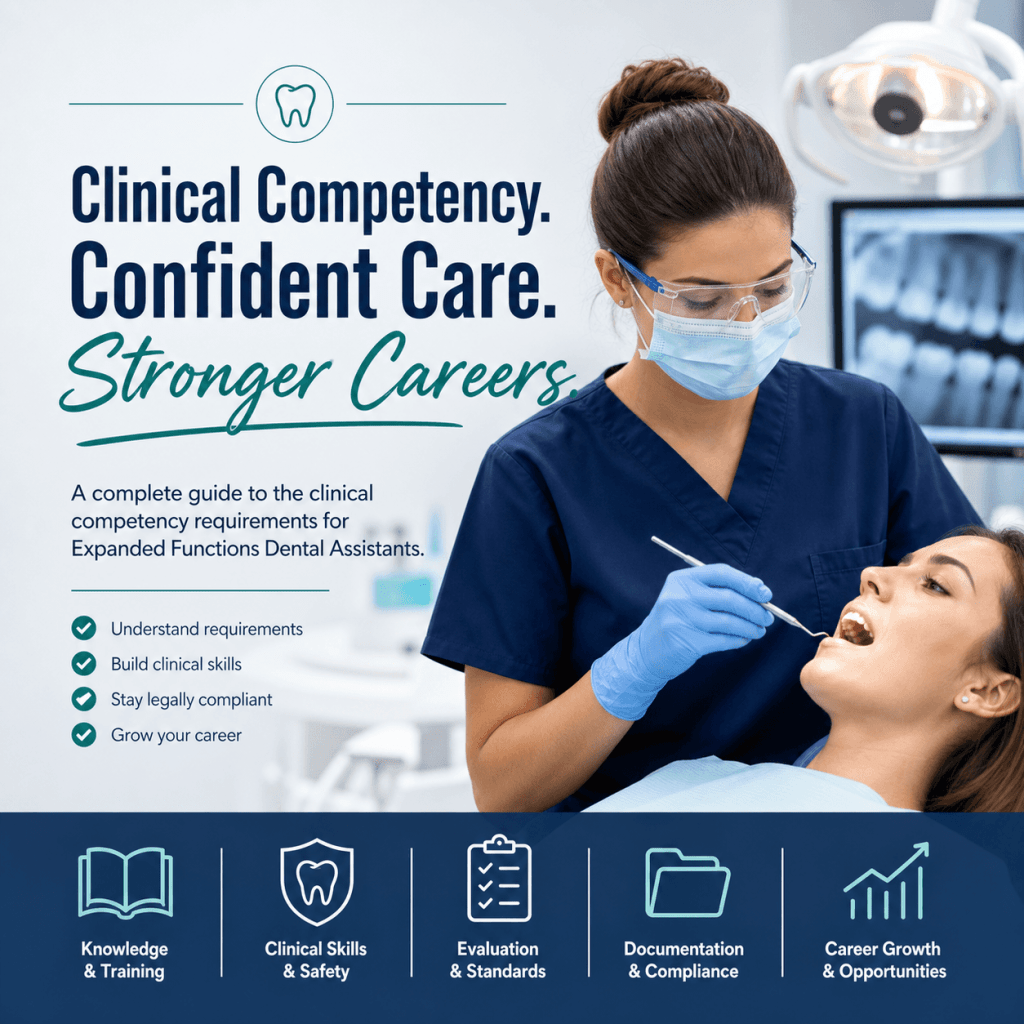
Legal compliance: what you must verify before performing expanded functions
Legal compliance is not optional in dentistry. Before you perform any expanded function, confirm what your state requires.
What to verify
- Your state dental practice act and dental board rules
- Which duties are allowed for dental assistants in your category
- Supervision requirements for each duty
- Training requirements and accepted course types
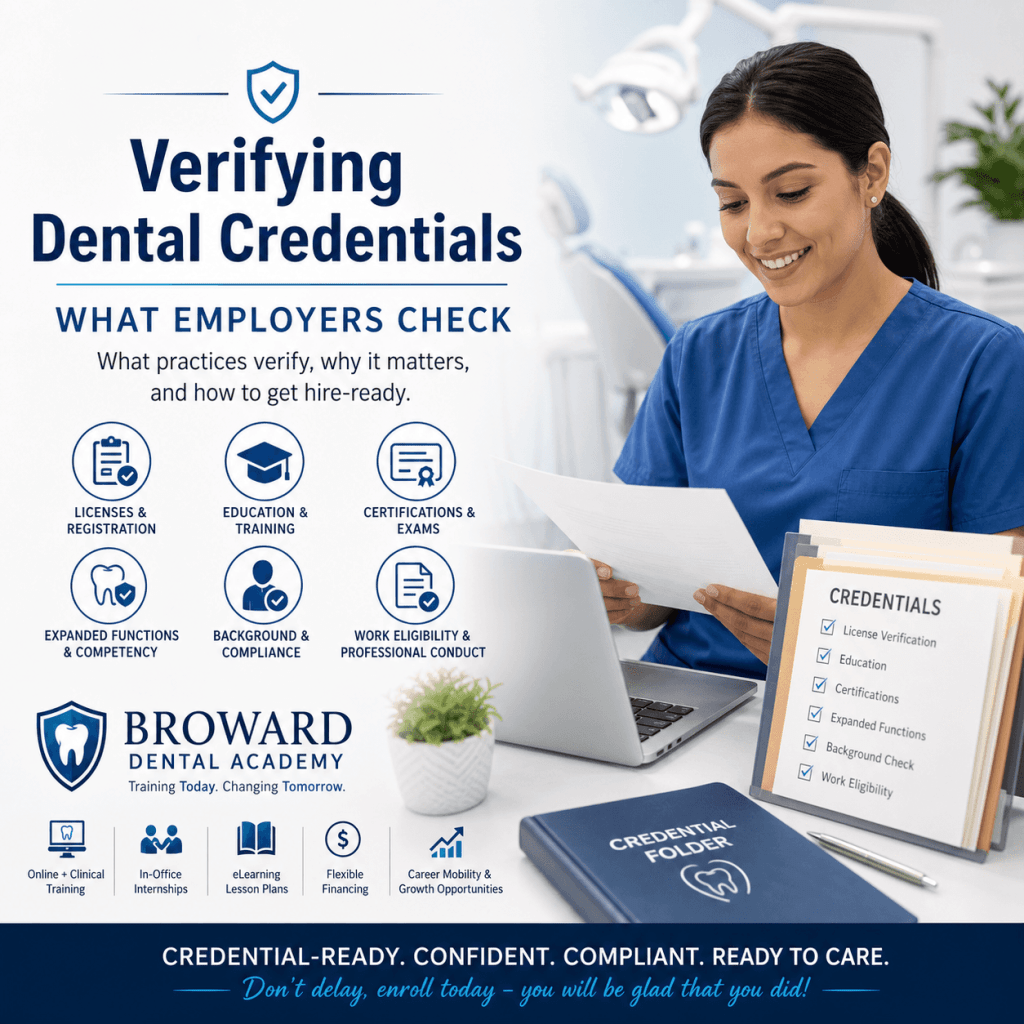
What practices typically keep on file
- Proof of training and course completion certificates
- Radiography credentials (when applicable)
- Skills checklists and competency sign-offs
- Permits or state approvals if required
Why “on-the-job training only” can be risky
Some duties can be learned on the job under appropriate supervision. Others require formal training and documented competency. If you perform restricted duties without the right credentials, it can create liability for you and the provider.
A compliance mindset protects patients and preserves your professional future.
What strong training looks like (so you’re confident on day one)
Strong dental assisting training is not just memorizing for a test. It builds judgment, hands-on confidence, and real workflow habits.
Look for training that develops:
- Critical thinking and ethical decision-making
- Clean, repeatable clinical systems
- Speed with accuracy, especially with setups and turnarounds
- Communication skills that reduce patient stress
- Documentation habits and awareness of legal scope
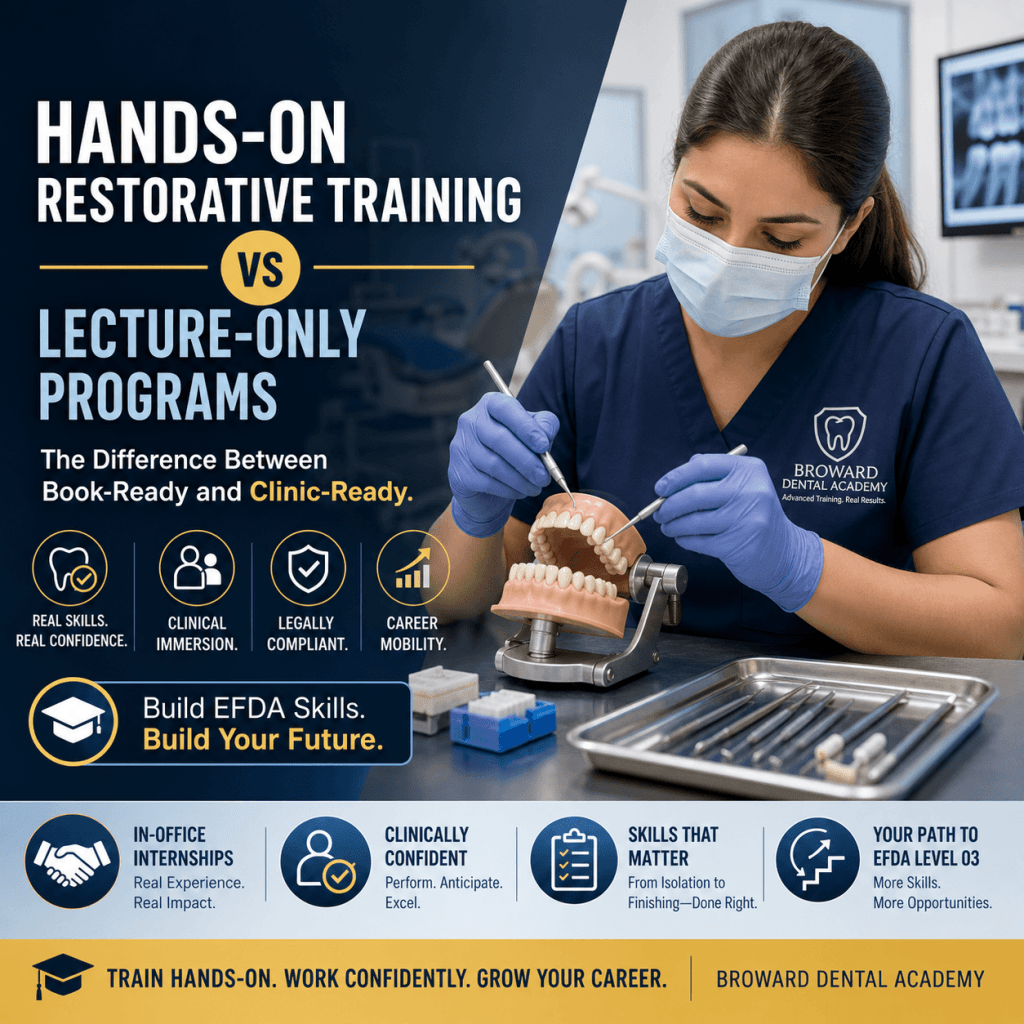
Blended learning can be especially effective. Online lessons build understanding and repetition, while hands-on clinical immersion builds muscle memory, confidence, and professional pace. Internship or in-office exposure is often the difference between “trained” and truly “practice-ready.”
For those seeking quality dental assistant training that encompasses all these elements, consider exploring options like those offered by Broward Dental Academy.
How Broward Dental Academy supports specialty training and expanded-function readiness
Broward Dental Academy is built around what modern practices actually need: professionals who are thoroughly trained, legally compliant, and clinically confident.
Instead of focusing only on passing an exam, Broward Dental Academy prepares students to thrive in a real, high-performance dental practice by training them to think critically, act ethically, and perform confidently.
Key advantages include:
- A wide range of dental courses and advanced dental training options, such as these 7 courses, that support career mobility
- Immediate immersion in online and clinical settings for a complete educational experience
- Latest eLearning lesson plans incorporated for remote training
- In-office internships designed to build real-world readiness and professional pace
- Flexible financing options to help students start sooner
As demand rises for skilled dental professionals, training that aligns with employer expectations becomes a real competitive edge.
What to do next: map your plan from beginner to specialty + expanded functions
Use this step-by-step path to build momentum without guessing.
- Confirm your state requirements and the roles you are targeting (general, Perio, Endo, Ortho, Oral Surgery).
- Complete foundational training that builds real chairside confidence and safe clinical habits.
- Add specialty training based on the setting you want to work in and the procedures you enjoy.
- Build a portfolio: completion certificates, skills checklists, internship hours, and references.
- Apply strategically to practices that match your training, and highlight your specialty readiness and documented competencies during interviews.
If you are ready to take the next step toward specialty training and expanded-function readiness, Broward Dental Academy can help you train for the realities of today’s dental offices.
Don’t delay, enroll today – you will be glad that you did!
FAQs (Frequently Asked Questions)
What are specialty dental assisting certifications and why are they important?
Specialty dental assisting certifications focus on specific departments or procedure types such as periodontics, endodontics, orthodontics, and oral surgery. These certifications prepare dental assistants to support advanced procedures safely and efficiently, making them more competitive in the job market, eligible for promotions, and often leading to higher earnings.
What does ‘expanded functions’ mean in dental assisting?
Expanded functions refer to additional clinical duties beyond basic chairside assisting that a dental assistant may perform after completing specific training and meeting state requirements. These functions allow assistants to take on greater responsibility, support advanced procedures, and enhance their value to dental practices.
How do dental assisting credentials vary by state?
Dental assisting credentials are not standardized nationwide. Requirements for certifications, permits, and allowed duties differ significantly from state to state. For example, what qualifies as a certified or registered dental assistant in one state may differ in another. It’s essential to check your state’s dental board and practice act for legal compliance.
What types of credentials exist for dental assistants?
Common credential types include school completion certificates awarded after finishing a dental assisting program; national certifications earned by passing recognized exams; and state-issued permits or registrations required for specific duties like radiography or coronal polishing. These credentials often stack progressively from foundational training to specialty and expanded function eligibility.
Why do terms like ‘Certified Dental Assistant’ and ‘Expanded Functions Dental Assistant’ cause confusion?
These terms can represent job titles, state regulatory language, or employer preferences and may vary in meaning depending on the context. The key point is that a dental assistant’s scope of practice is defined by their state’s dental board regulations and practice act rather than job postings or casual usage of these terms.
How can specialty training and expanded functions impact a dental assistant’s career?
Specialty training and expanded functions enable dental assistants to handle more complex clinical tasks confidently, increasing their marketability to employers. These qualifications can lead to greater responsibilities in the operatory, faster promotions, higher pay, flexible schedules, stable income potential, and long-term career mobility within the rapidly growing dental industry.