Periodontal dental assistant career: what the role really looks like (and why it’s in demand)
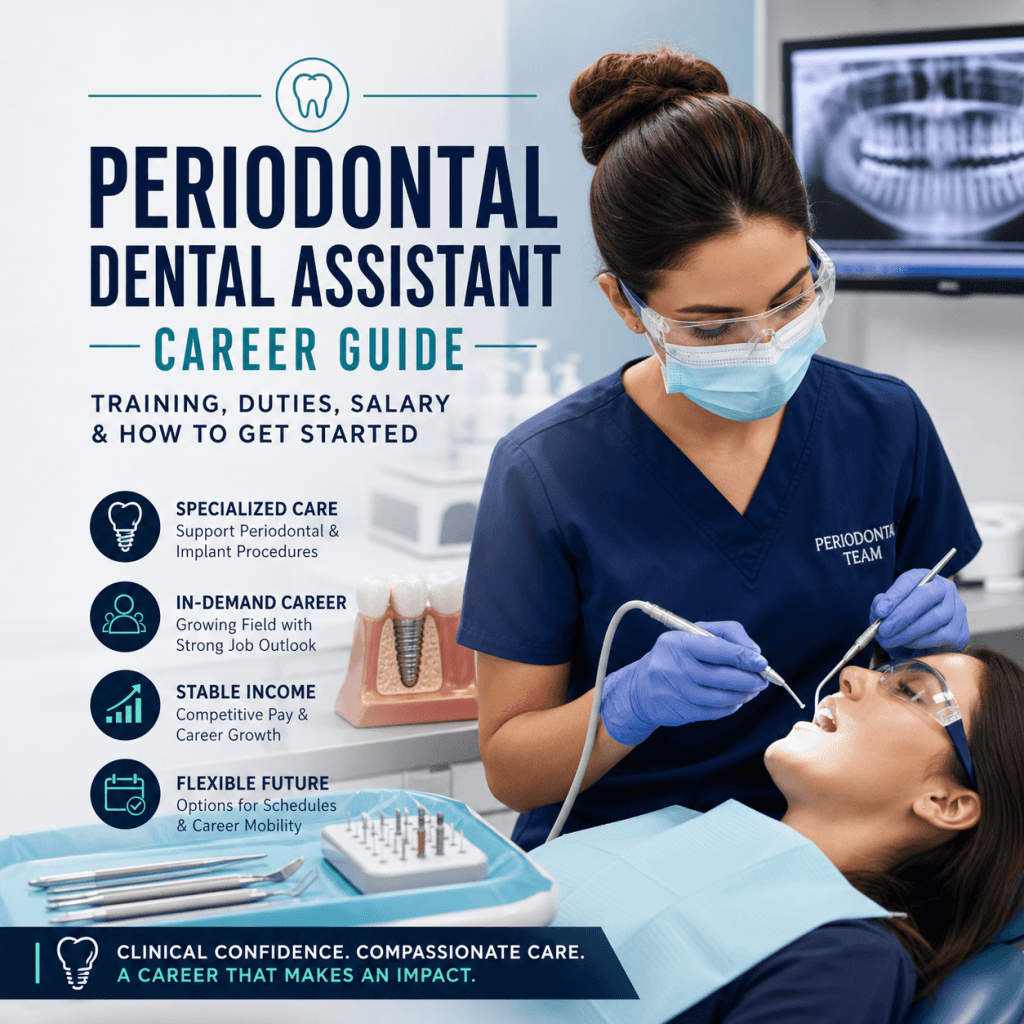
A periodontal dental assistant supports a periodontist and the periodontal team. Periodontics focuses on gum health, bone support around teeth, implants, and periodontal surgery. In plain terms, you help care for patients with gum disease, bone loss, recession, and those who need surgical treatment or implants.
Here is what to expect in real life:
- A faster pace than many general offices. Periodontal practices often run procedure blocks and tight schedules.
- A mix of surgical assisting and patient education. You might go from setting up a sterile surgical field to calmly explaining post-op care a few minutes later.
- High standards for infection control and documentation. Specialty practices tend to be meticulous, especially during surgical and implant workflows.
Why this career path is growing
Dentistry continues to be one of the fastest-growing healthcare fields, and periodontal practices in particular rely on skilled support for surgical care, implant procedures, and ongoing maintenance. As patient demand rises, employers look for professionals who are trained, compliant, and confident so the office can operate safely and efficiently.
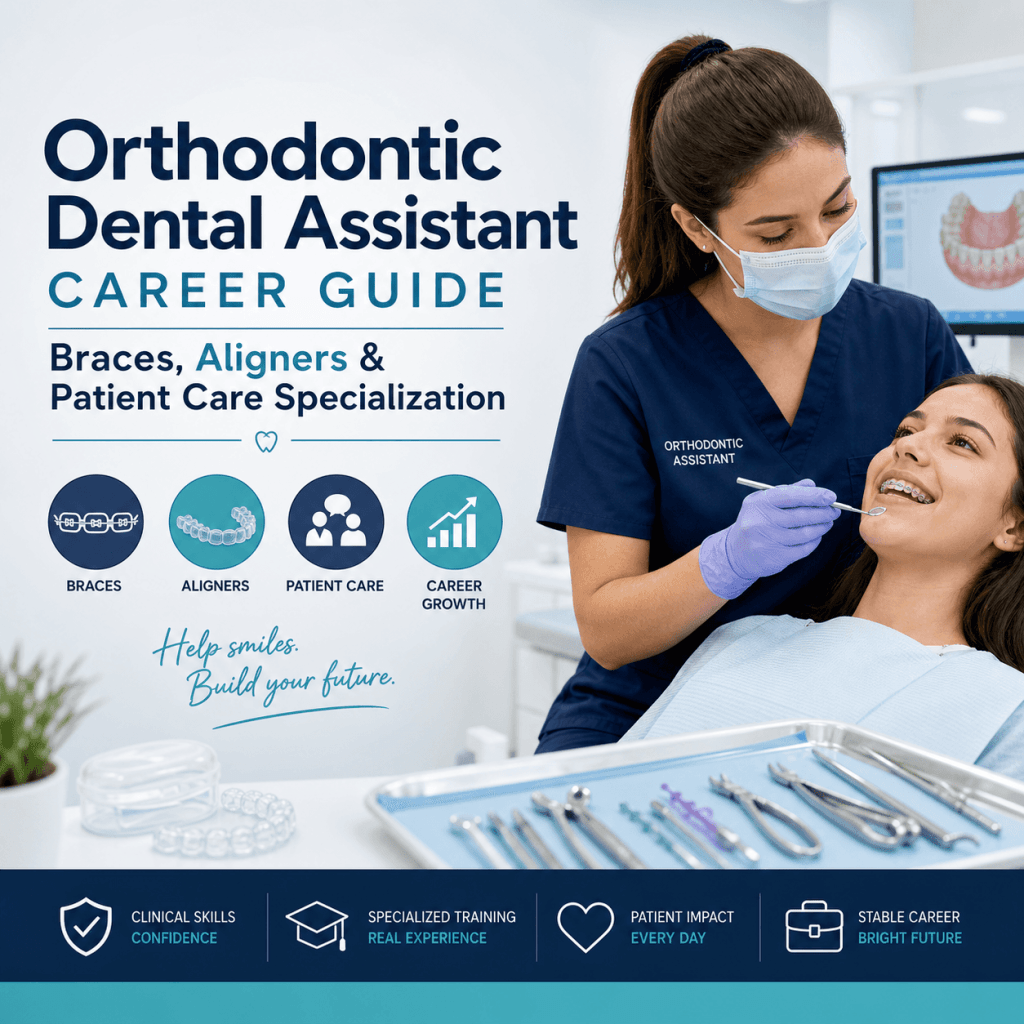
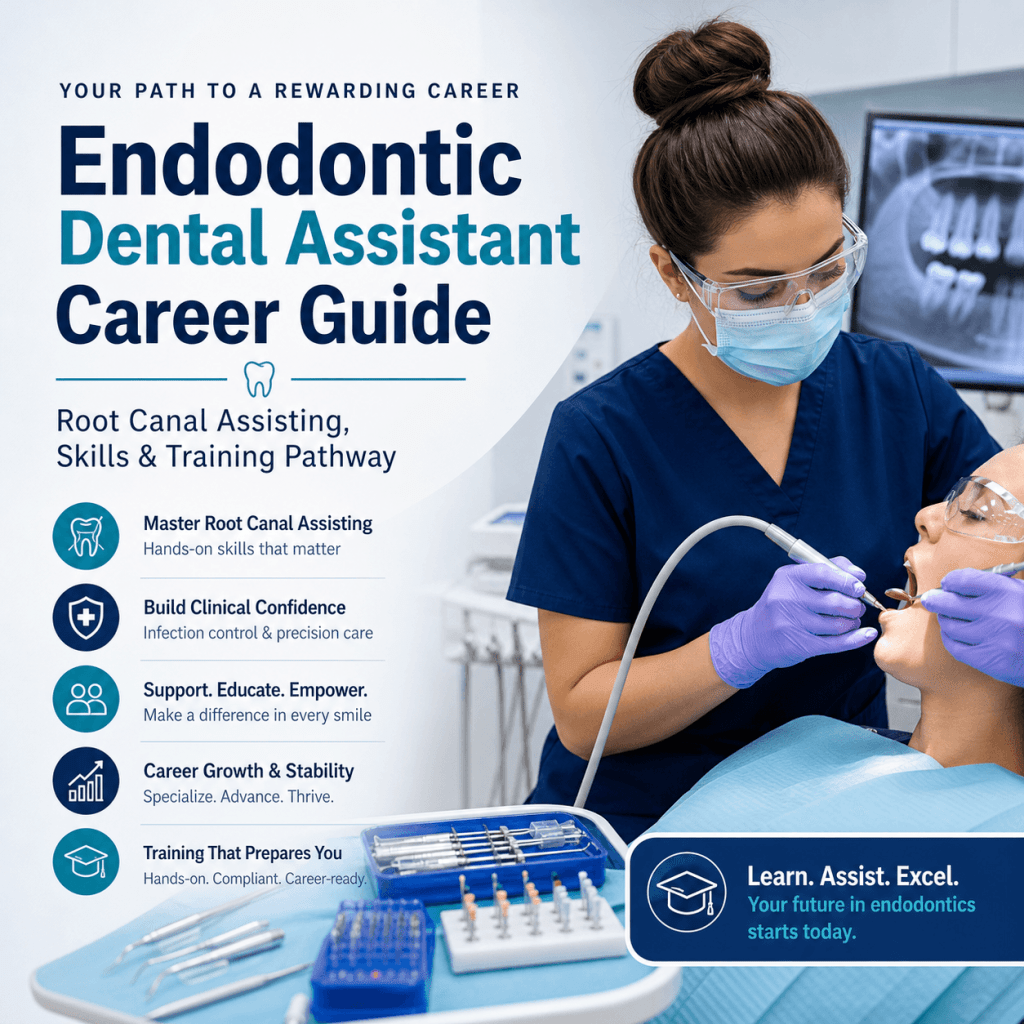
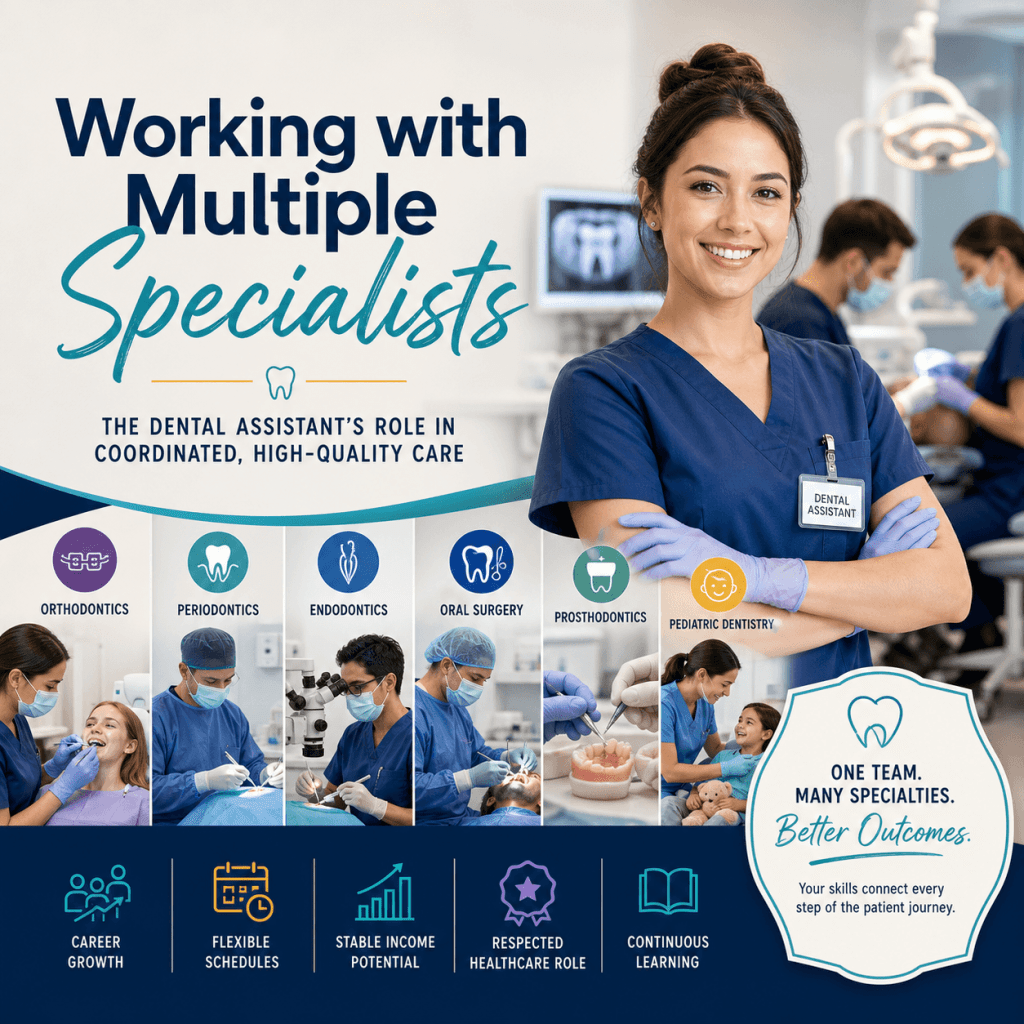
If you’re interested in exploring other areas in dentistry such as orthodontics or endodontics, there are various courses offered that can help you transition into these fields.
Who this guide is for
This career guide is designed for:
- Beginners exploring dental assisting
- Current dental assistants who want specialty mobility
- Career changers who want stable income and flexible schedules in a respected healthcare role
Where a periodontal dental assistant career can take you (and what a typical day includes)
Most periodontal dental assistants work in:
- Periodontal specialty practices
- Multi-specialty dental offices with perio and implant services
- Implant-focused clinics
For those interested in pursuing a career in this field, you might have some questions. You can find answers to frequently asked questions that could help clarify your doubts.
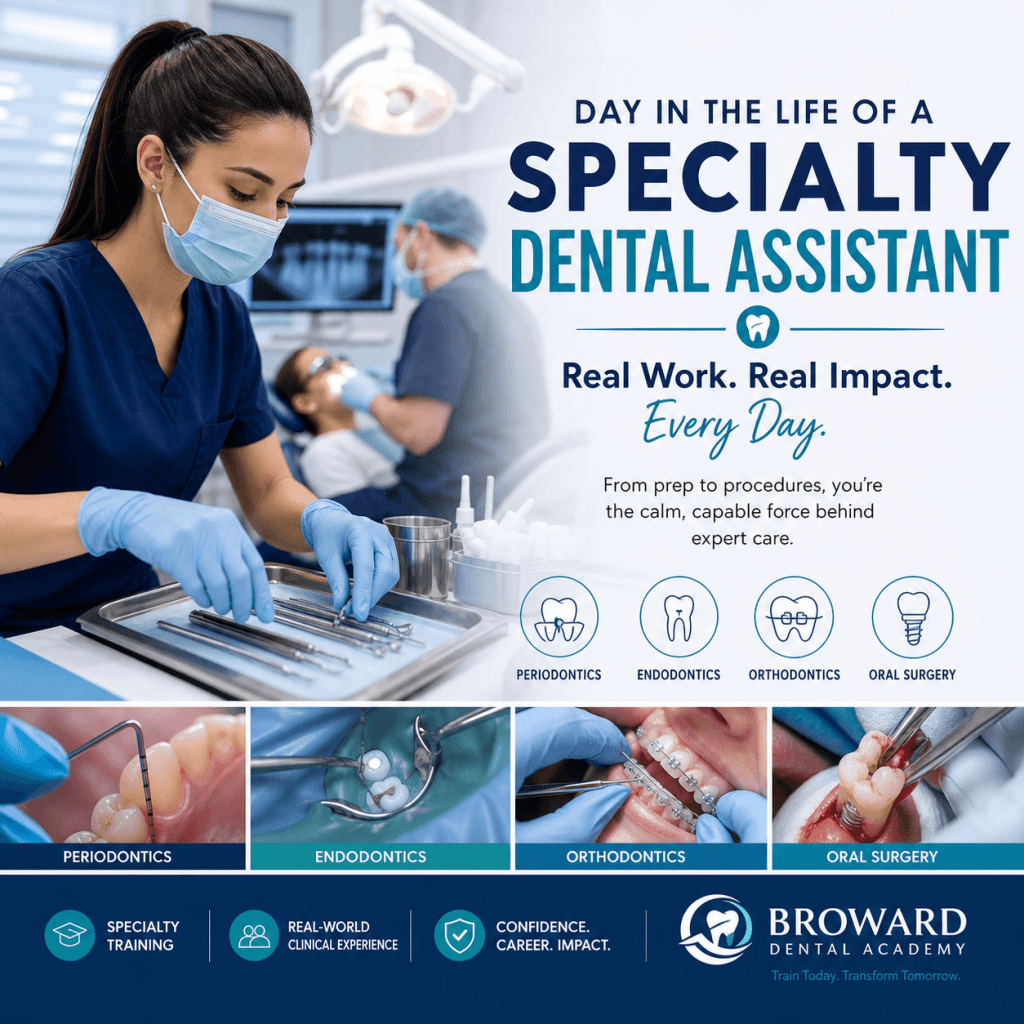
A typical day varies by office, but a realistic flow often looks like this:
A realistic day in a periodontal office
- Morning huddle: schedule review, special medical considerations, supply checks
- Operatory and sterile setup: trays, materials, barriers, PPE, sterilization status
- Surgical blocks: perio surgery, grafting, implant placement workflows
- Maintenance and non-surgical visits: perio maintenance support, scaling and root planing support depending on the office model
- Sterilization cycles and turnover: continuous instrument processing, spore testing routines, room resets
- Charting and follow-ups: procedure notes, post-op instructions, check-in calls, documentation support
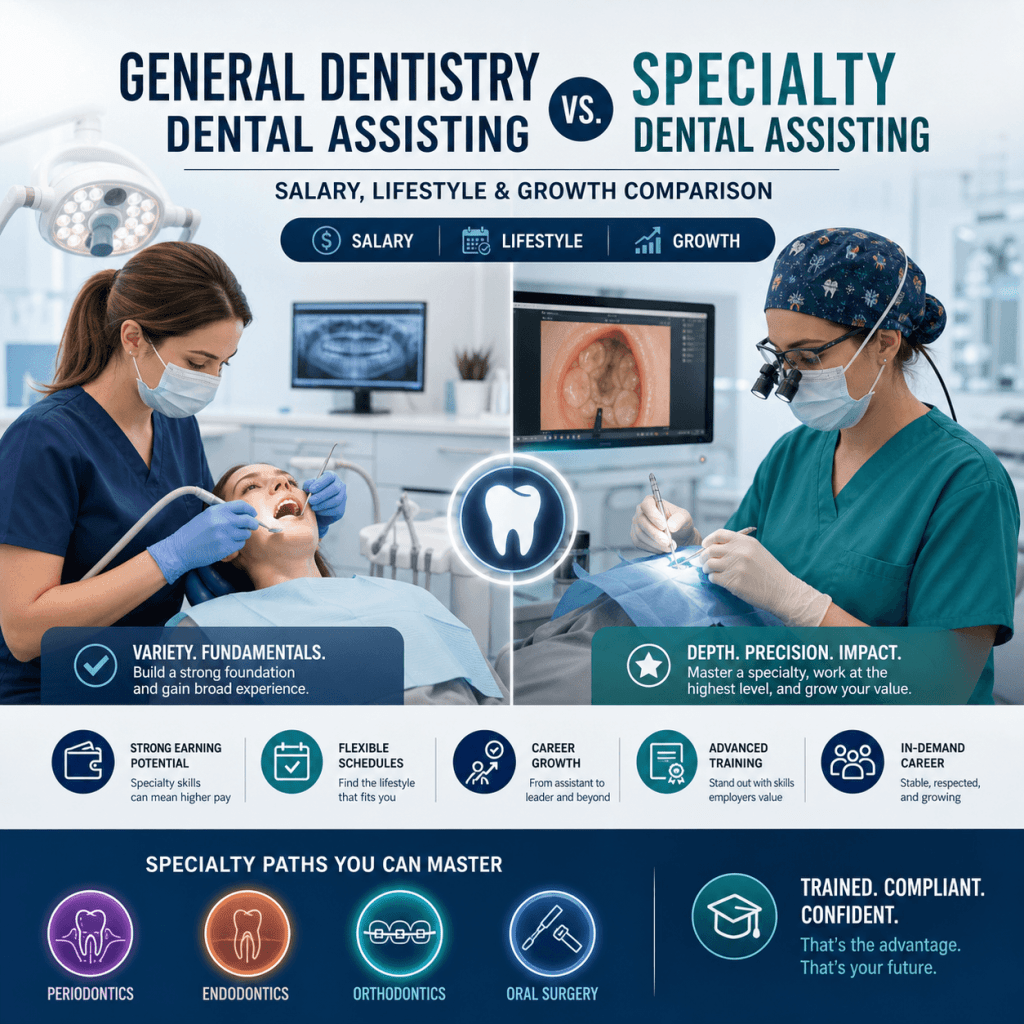
How perio differs from general assisting
Compared with general dentistry, periodontal assisting typically involves:
- More surgical tray setups and sterile technique
- More local anesthetic support and monitoring assistance (within state scope and office protocols)
- More detailed post-op instructions and documentation
- Frequent coordination for implant components, graft materials, and surgical inventory
If you’re considering a career change or seeking new opportunities within the dental field, it’s worth noting that there are various locations where you can find employment as a periodontal dental assistant.
Teamwork is a big part of the job
You coordinate not just with the periodontist, but also:
- Hygienists and clinical teammates
- Front desk and treatment coordination
- Labs and vendors (especially for implant parts)
- Referring general dentists and specialists
Periodontal assistant duties: core clinical, surgical, and patient-care responsibilities
While exact duties depend on your state rules and the practice, periodontal assistants are typically responsible for five core areas: pre-op prep, chairside assisting, patient communication, sterilization and compliance, and supplies.
Pre-op responsibilities
Before the provider enters, many periodontal assistants help with:
The periodontal dental assistant career is rewarding and offers numerous opportunities for advancement in the dental field.
- Medical history review support and alerting the team to red flags
- Taking vitals as allowed by state rules and office policy
- Patient prep and comfort measures (bib, eyewear, positioning)
- Operatory setup, including barriers and suction setup
- Establishing sterile field basics for surgical appointments
- Tray setups for common periodontal and implant procedures
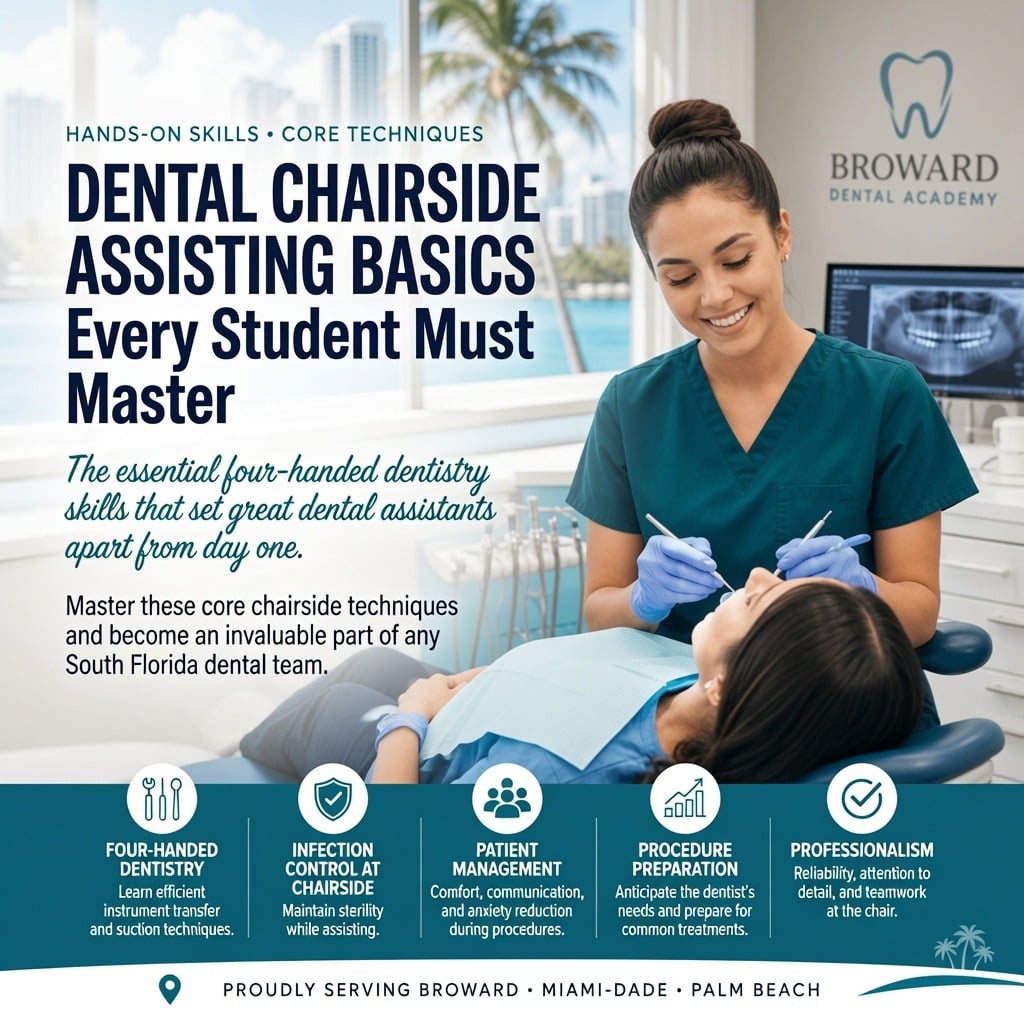
Chairside assisting
Periodontal chairside support often includes:
- Four-handed dentistry and efficient instrument transfer
- High-volume evacuation and maintaining a clear field
- Retraction and tissue management assistance as appropriate
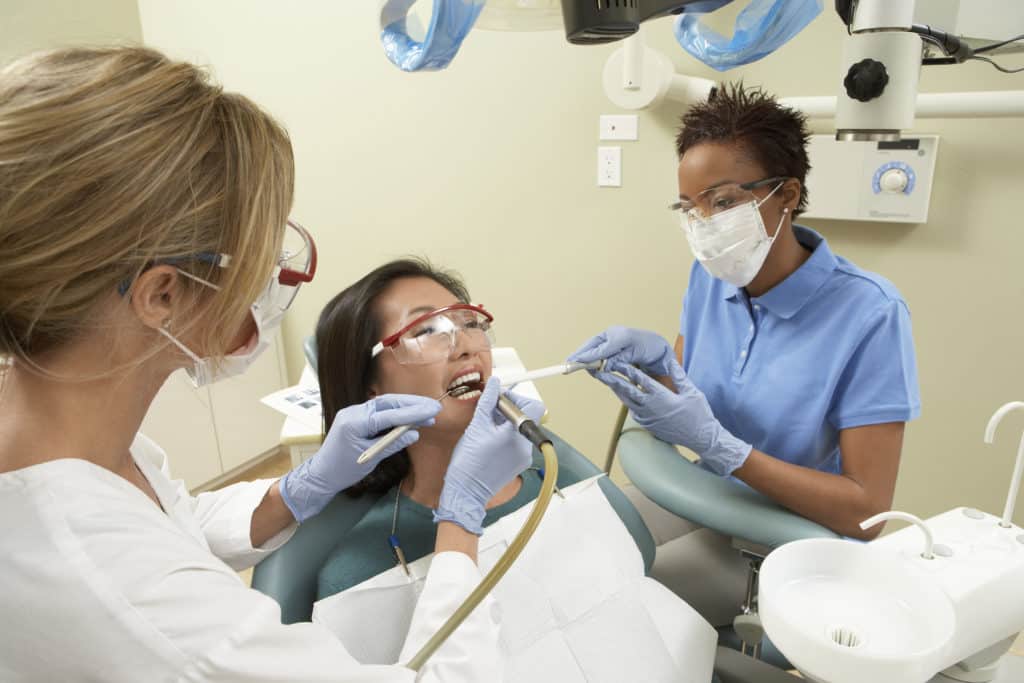
- Supporting procedures like scaling and root planing and surgical treatment by keeping the workflow smooth and organized
Patient communication
A great periodontal assistant is also a steady presence for the patient:
- Explaining what to expect in simple, non-scary language
- Reinforcing home-care instructions (brushing, interdental cleaning, rinses)
- Delivering post-op instructions clearly and confirming understanding
- Helping manage anxiety with a calm, professional chairside manner
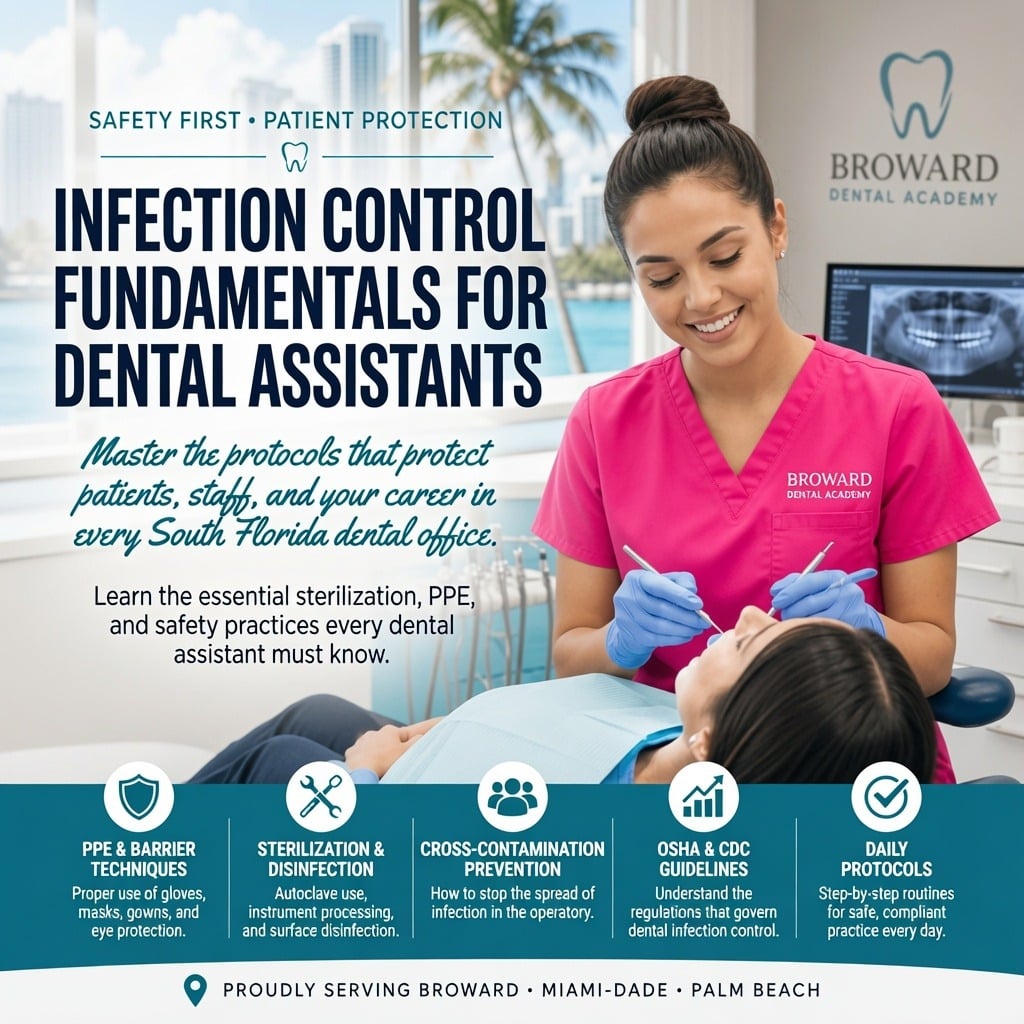
Sterilization and compliance
Perio offices depend on assistants who can run tight, consistent systems:
- Instrument processing and packaging
- Spore testing routines and documentation
- Operatory turnover and surface disinfection
- PPE protocols and basic OSHA and HIPAA compliance
- Keeping sterile and non-sterile items separated during surgical care
Supplies and inventory
Perio and implant workflows can involve specialized supplies. Depending on the office, you may help track:
- Sutures and surgical blades
- Membranes and graft materials
- Implant components and healing abutments
- Localized antimicrobial products
- Ordering, storage, and expiration checks
Common periodontal procedures you’ll assist with (so you know what to prepare for)
You do not need to be “a surgical person” on day one, but it helps to know what the specialty commonly includes so you can picture the pace and the setups.
Non-surgical periodontal therapy support
In many practices, you will support appointments such as:
- Scaling and root planing workflows (setup, suction, patient support)
- Localized antimicrobials (helping the provider stay organized, charting support per office protocol)
Periodontal surgery basics
You may assist with surgical days that involve:
- Flap procedures and soft-tissue management support within your scope
- Surgical setup and breakdown
- Sterile field maintenance and efficient material handling
Implant-related workflows
Implants are a frequent part of modern periodontal care. Assistants often support:
- Implant placement appointments (setup, component organization, sterile workflow)
- Impression or digital scan support where applicable
- Post-op and implant maintenance education
Bone grafting and regeneration support
Grafting and regeneration cases require extra attention to:
- Passing materials and keeping timing on track
- Maintaining sterile technique consistently
- Tracking materials and lot numbers when required by the practice
The importance of bone grafting in periodontal procedures cannot be overstated. It is crucial for the success of grafting and regeneration cases.
Emergency readiness
Even in a well-run specialty office, patients call with urgent concerns. Assistants help by:
- Triaging swelling or bleeding questions
- Reinforcing post-op instructions
- Knowing when to escalate immediately to the provider
Skills that make you stand out in a periodontal office (beyond “being a good assistant”)
Specialty practices notice certain skills fast, and they are often what separates a new hire who struggles from one who becomes essential.
Clinical confidence and anticipation
The best perio assistants do not just react. They anticipate:
- The next instrument
- When suction needs to change position
- When the provider will need a specific material opened and ready
- How to keep the tray layout consistent so the whole team moves faster
Sterile technique and consistency
You do not need perfection, but you do need consistency. Surgical days are not the time to guess. Calm, precise habits matter.
Detail-oriented documentation
Perio and implant workflows can require accurate notes, including:
- Materials used
- Lot numbers as required
- Post-op instructions documented clearly
- Follow-up timelines and patient communication notes
Understanding the nuances of periodontal surgery can greatly enhance the quality of patient care provided in these situations.
Professionalism and ethics
Specialty offices run on trust:
- Protect patient privacy
- Follow consent workflows
- Know your scope-of-practice boundaries and respect them
Growth mindset
Perio is a strong specialty for people who want career mobility. Offices value assistants who want to train, earn credentials, and master advanced workflows over time.
Training requirements: what you need before working as a periodontal dental assistant
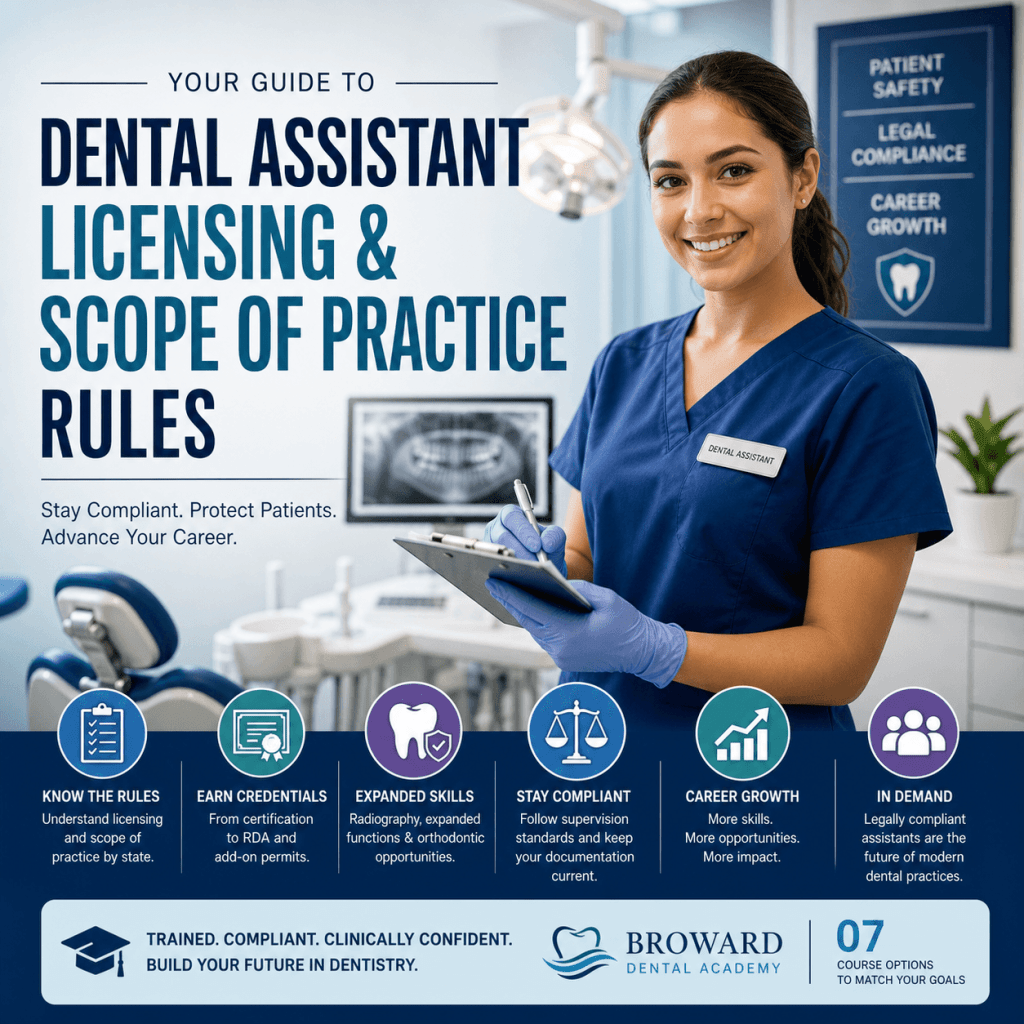
Dental assisting requirements vary widely by state. Some states allow on-the-job training for entry-level roles, while others require formal education, radiography credentials, permits, or expanded functions training.
Baseline requirements vary by state
Start by checking your state dental board and job listings in your area. Look for requirements related to:
- Dental assisting education
- Radiography certification or permits
- Infection control credentials
- Expanded functions allowances or restrictions
A typical pathway into periodontal assisting
Many assistants enter perio by following this progression:
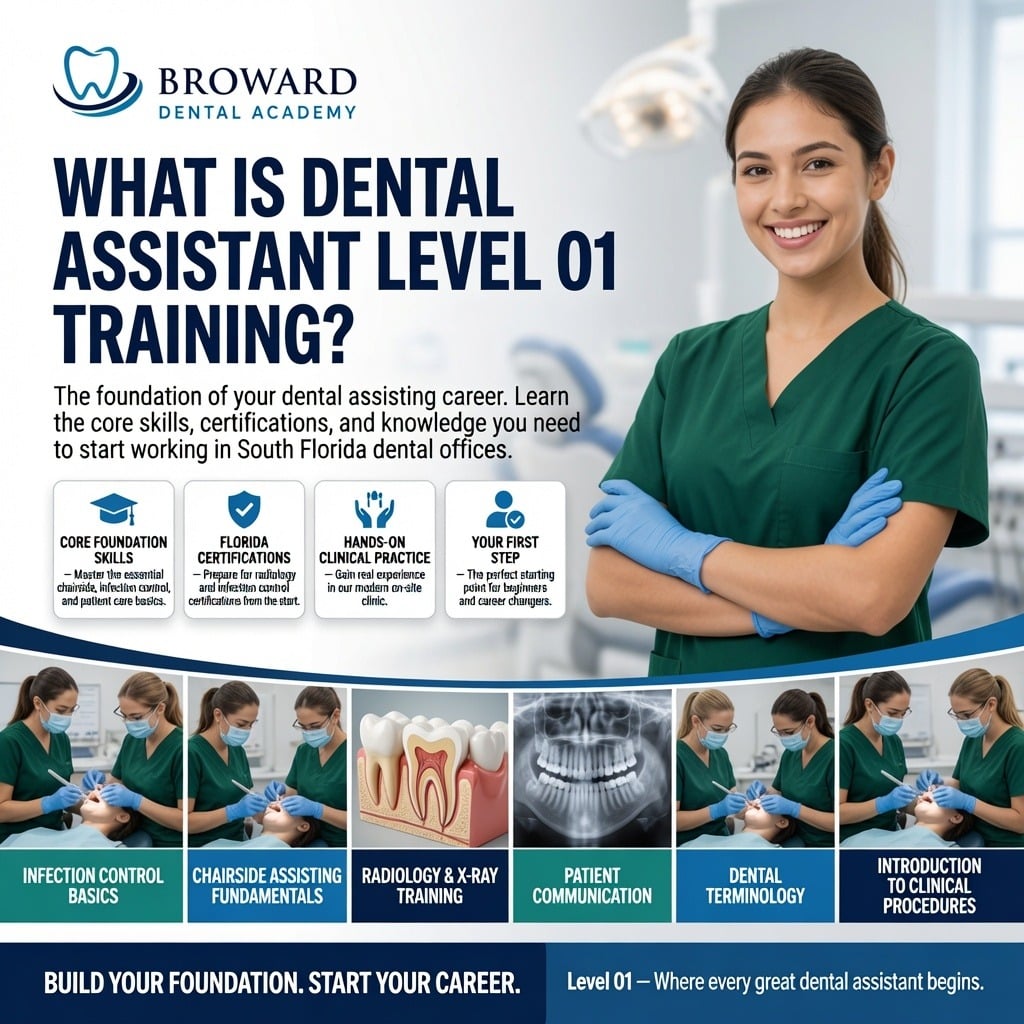
- Entry-level dental assisting education such as the Dental Assistant Level 01
- Hands-on clinical training and chairside reps
- Externship or internship experience
- First job in general dentistry or a specialty office
- Specialty exposure and additional training for perio and surgical workflows
Why hands-on matters in perio
Periodontics rewards assistants who have real clinical experience because you need:
- Speed and organization during surgical setups
- Consistent sterility and turnover habits
- Real patient communication skills, especially post-op education
What employers look for now
Many modern practices want assistants who are:
- Thoroughly trained and legally compliant
- Confident with sterilization systems and documentation
- Comfortable in a high-performance environment
Certifications that may apply
Common requirements and preferences include:
- CPR/BLS
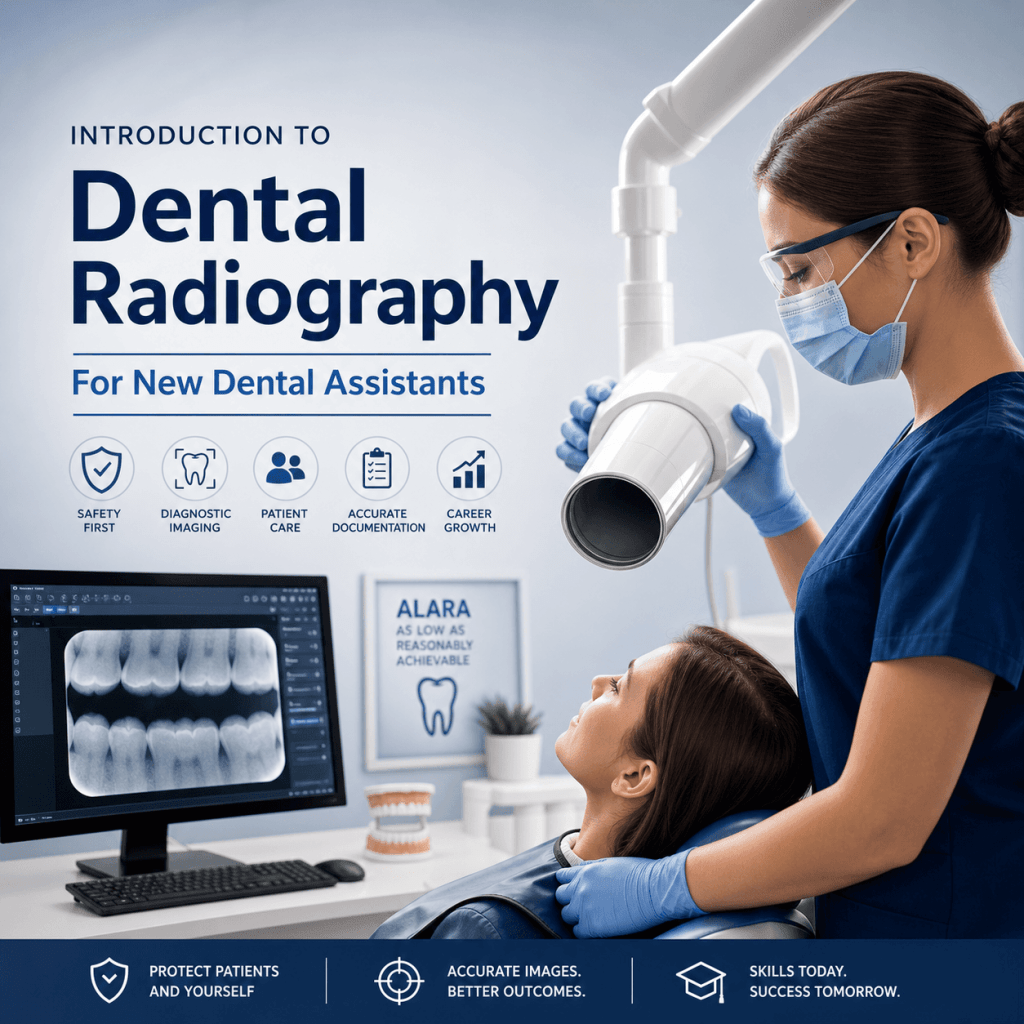
- Radiography credentials (state-dependent)
- Infection control training
- Any state-required permits for specific duties
How to get started (step-by-step) if you’re new to dental assisting
If you are starting from scratch, keep it simple and follow a clean sequence.
Step 1: Confirm your state’s requirements
Check your state dental board and local employer listings for the exact combination of:
- education
- radiology credentialing
- CPR/BLS
- any permits tied to expanded functions
Step 2: Choose a training program with online plus in-person clinical immersion
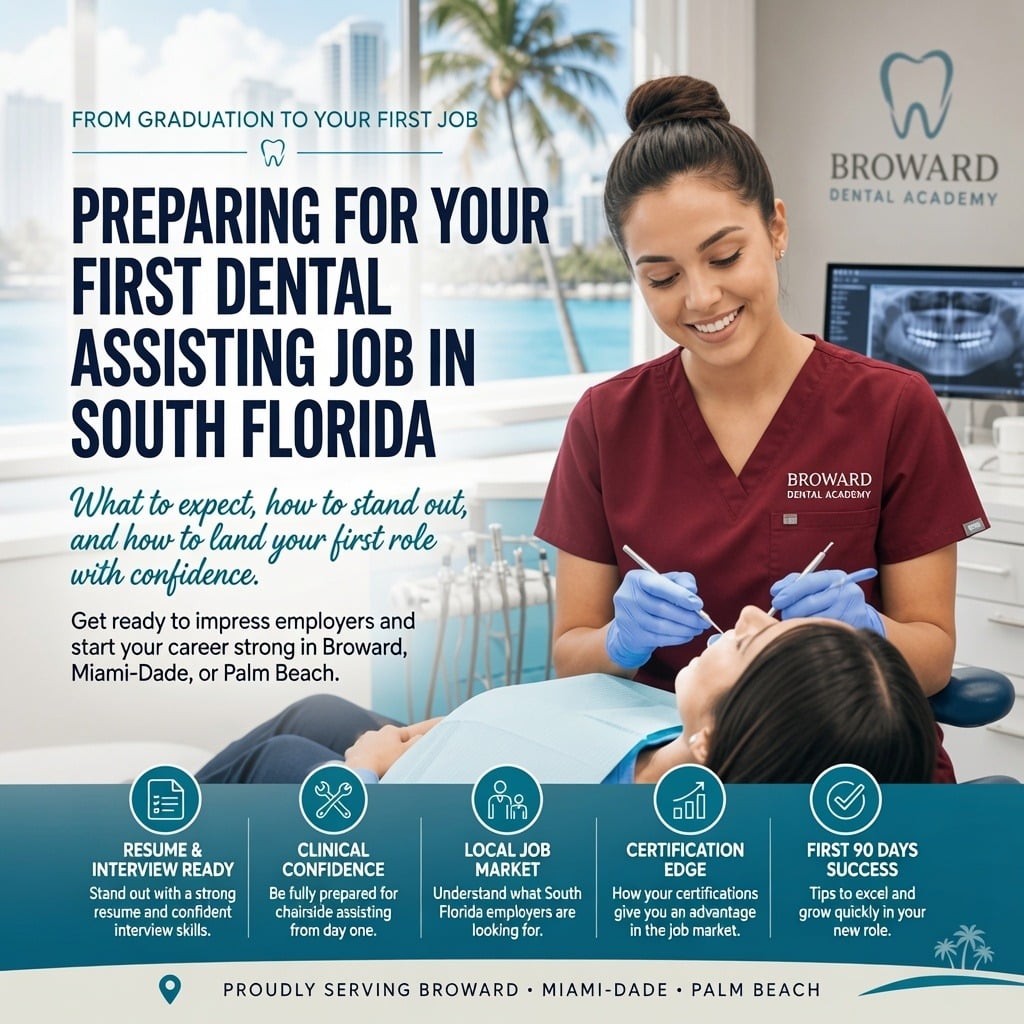
You want a program that combines modern eLearning with real clinical training so you graduate ready to work, not just ready to test. Consider checking out Broward Dental Academy’s offerings for a suitable program.
Step 3: Build your core skills first
Before you specialize, focus on fundamentals:
- infection control and sterilization systems
- operatory setup and turnover
- chairside assisting basics
- charting and documentation
- patient communication
Step 4: Get exposure to periodontal workflows early
Ask to observe or assist on:
- surgical setups
- implant-related appointments
- post-op instruction delivery
- inventory systems for specialty materials
Step 5: Get real practice experience through internships or externships
This is where speed and confidence are built. Repetition matters, and working in a real office environment helps you learn how high-performance practices operate.
Step 6: Tailor your resume for perio
Even if you are new, emphasize what periodontal offices care about:
- sterile technique and infection control
- comfort in procedure-driven schedules
- documentation accuracy
- calm patient-care presence
Step 7: Interview like a specialty assistant
Be ready to speak clearly about:
- how you handle fast workflows and surgical days
- your approach to compliance and patient privacy
- how you help anxious patients feel safe and informed
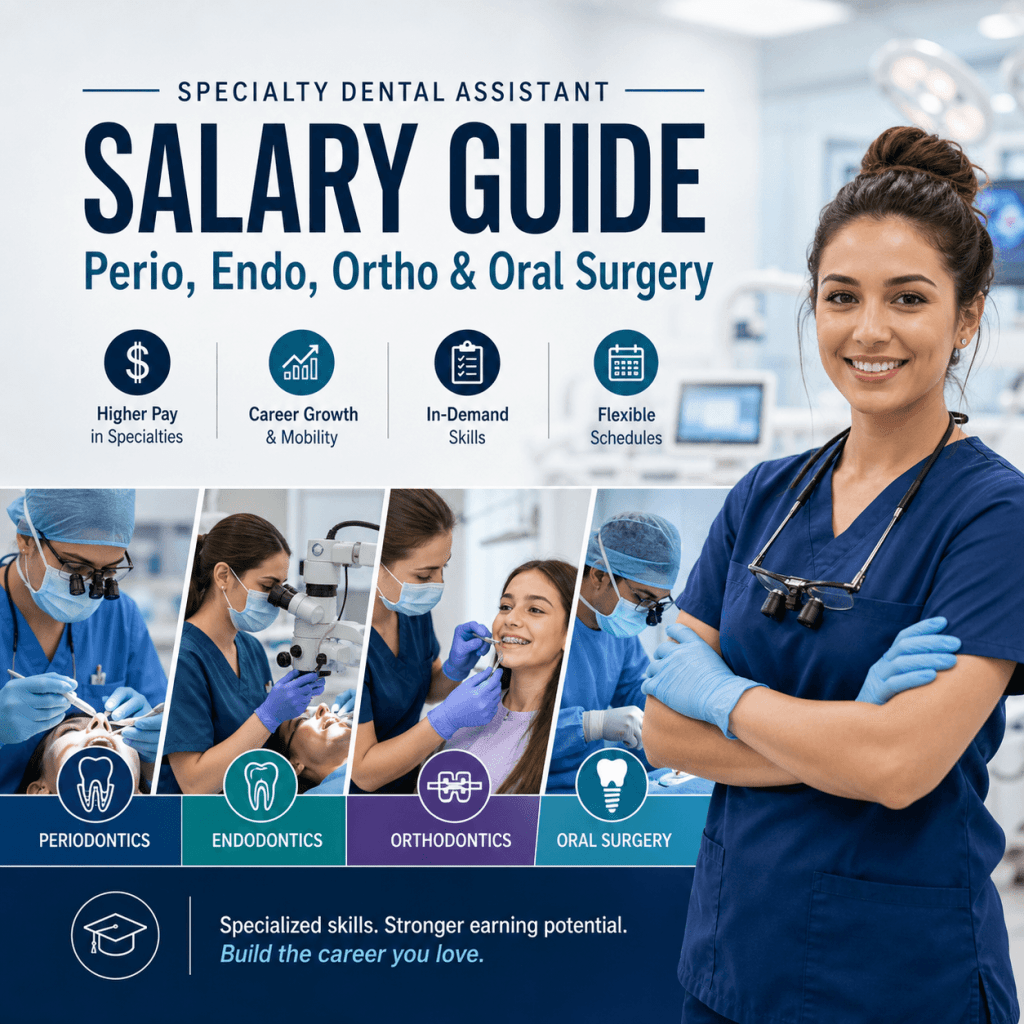
Salary and career outlook: what periodontal dental assistants can earn (and what affects pay)
Pay varies based on:
- location and cost of living
- experience level
- certifications and state credentials
- expanded functions eligibility
- the office’s surgical and implant procedure mix
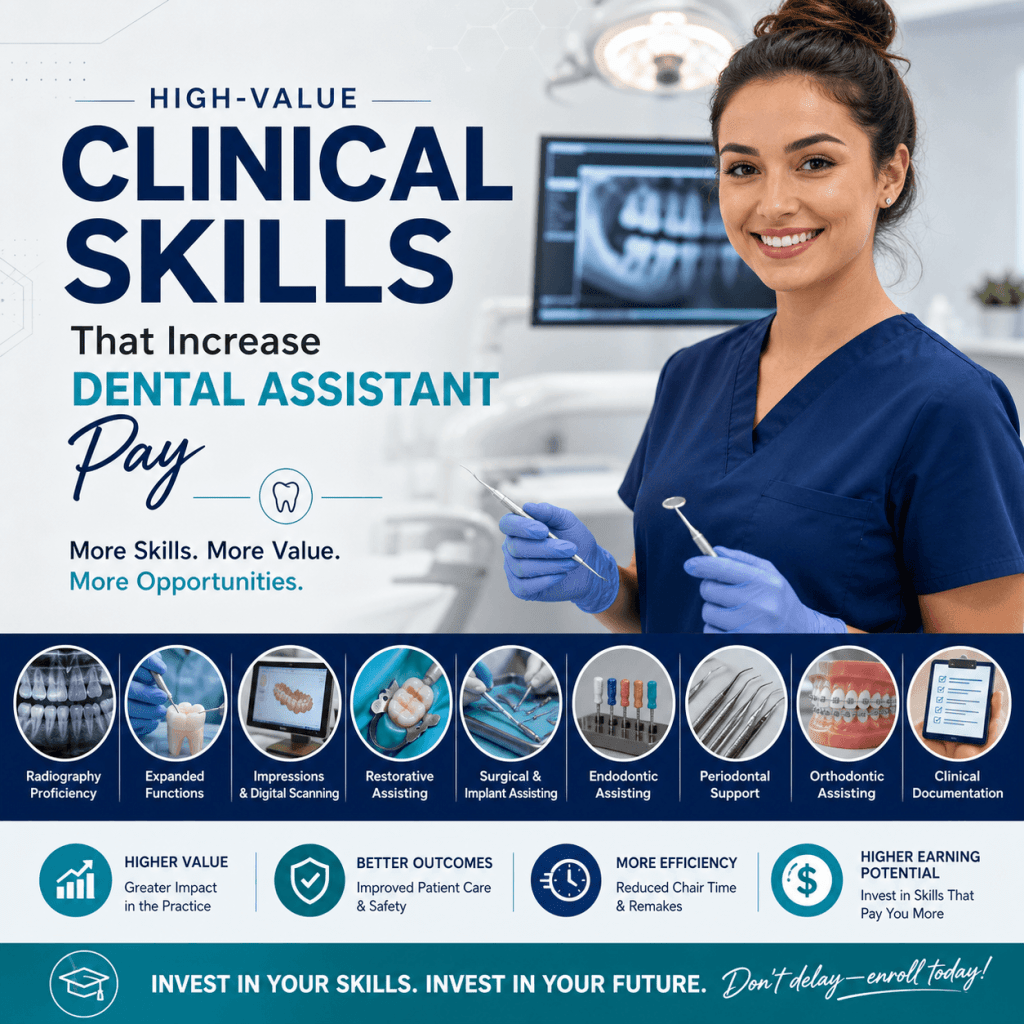
In many markets, specialty skills can raise your earning potential because surgical and implant workflows require a higher level of preparation, documentation, and compliance.
Other compensation factors to consider
A job offer is more than hourly pay. Look at:
- schedule stability and flexibility
- benefits (health, PTO, retirement options)
- paid training and continuing education support
- performance bonuses and growth pathways
Career stability and long-term demand
Dentistry is a stable healthcare career path, and demand for skilled dental professionals continues to rise. Offices increasingly value assistants who can step into a modern clinic and contribute immediately.
How to grow your income over time
Income growth often follows skill growth:
- specialty training and cross-training
- added credentials and expanded functions where allowed
- leadership roles such as lead assistant
- pathways into treatment coordination
Career mobility: where this role can take you next
Periodontal assisting can open doors if you approach it as a specialty track.
Short-term growth
- Become the go-to surgical and perio assistant
- Improve procedure efficiency and patient experience
- Strengthen sterilization systems and documentation habits
Mid-term options
- Expanded functions (where allowed)
- Implant workflow support or implant coordination assistance
- Clinical lead roles
Long-term pathways
- Office management support
- Specialty treatment coordination
- Educator roles
- Transitioning into other specialties such as endo, ortho, or oral surgery
Why specialty training matters in modern periodontal practices
Modern perio and implant practices often expect assistants to perform confidently from day one, especially during surgery days.
Specialty training supports:
- Risk reduction: better infection control, safer workflows, stronger documentation and consent support
- Better patient experience: confident assistants reduce anxiety and improve post-op compliance
- Efficiency: prepared setups keep procedures on time and reduce waste
- High-performance expectations: speed, precision, communication, and consistency
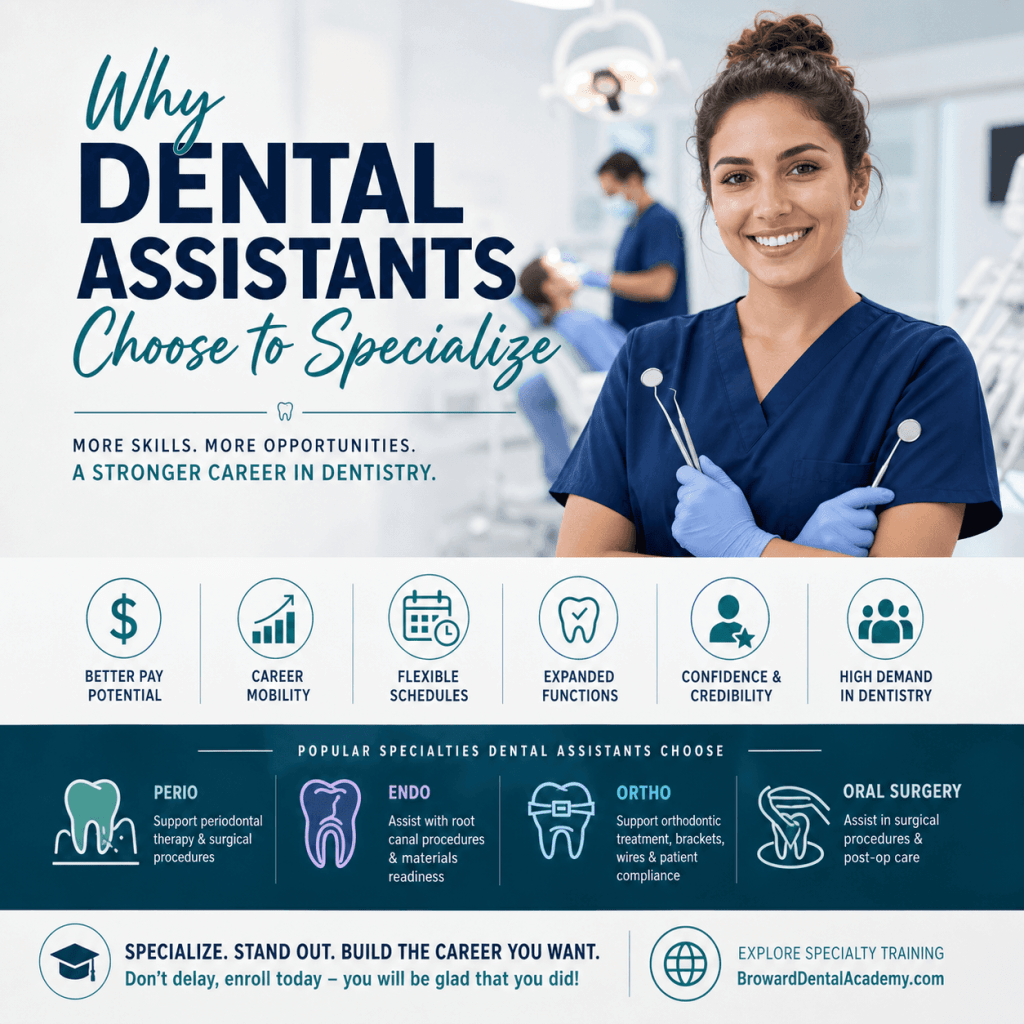
Specialty Dental Assisting Training at Broward Dental Academy
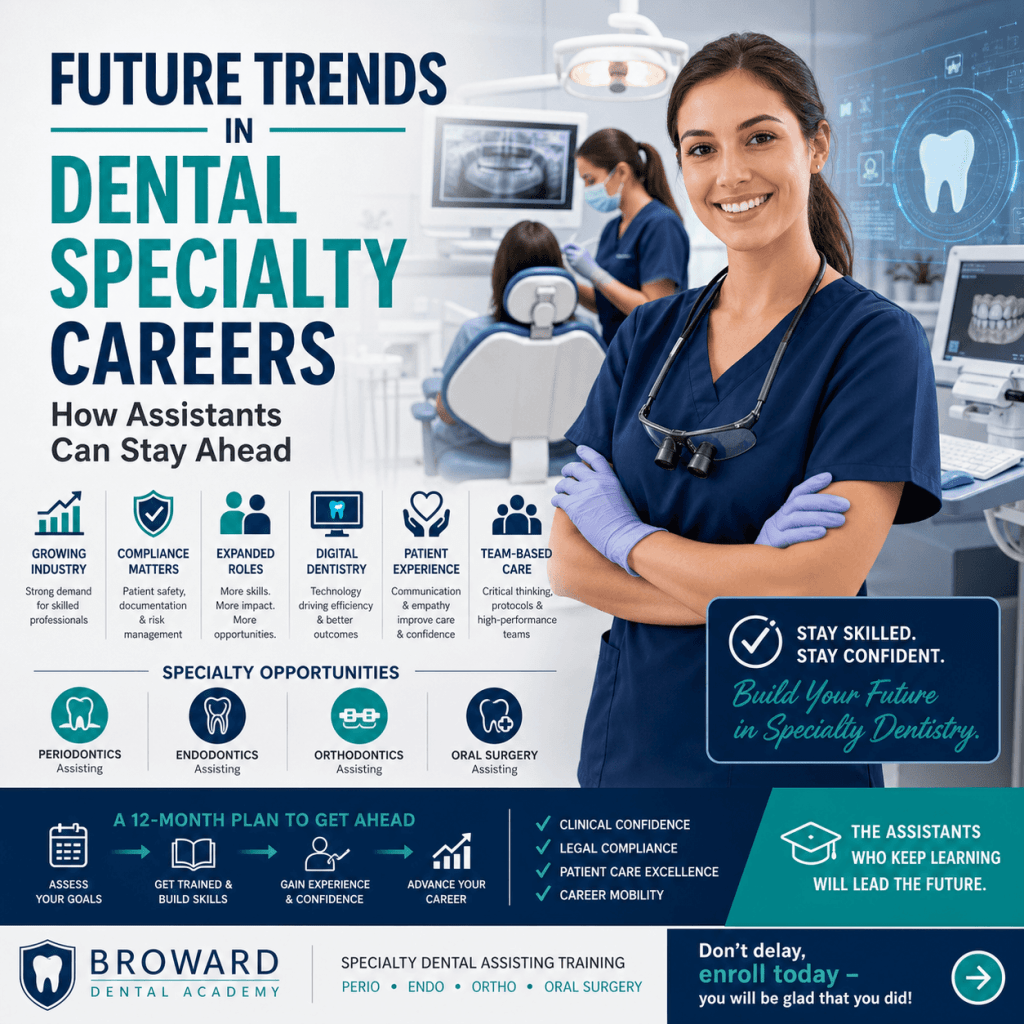
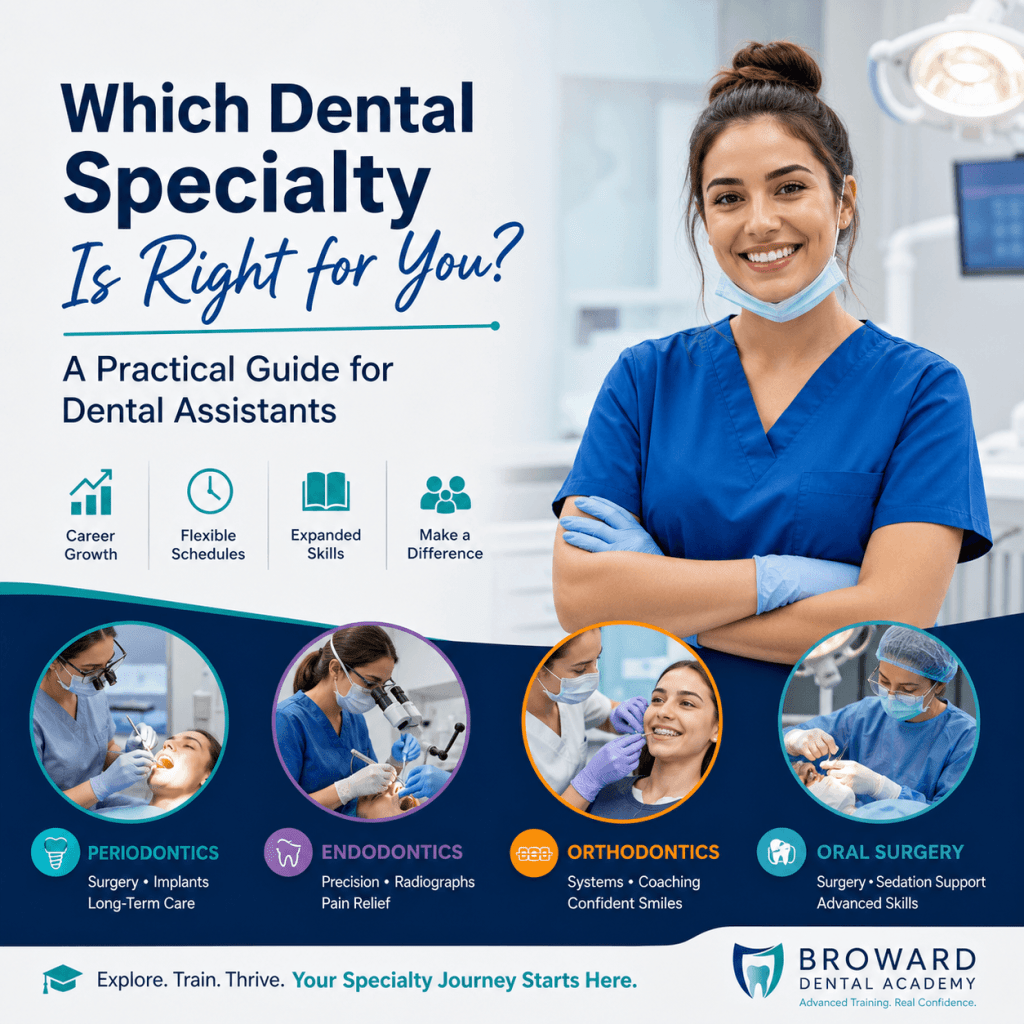
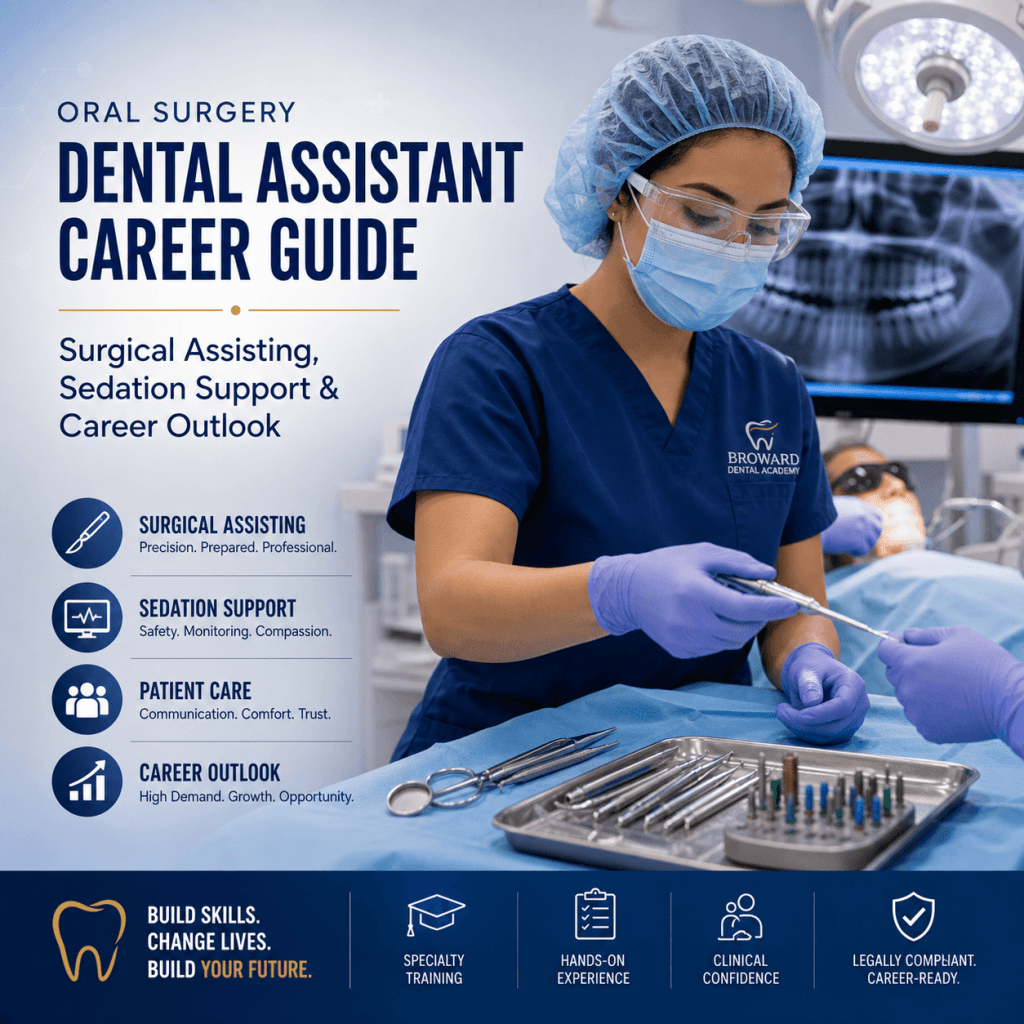
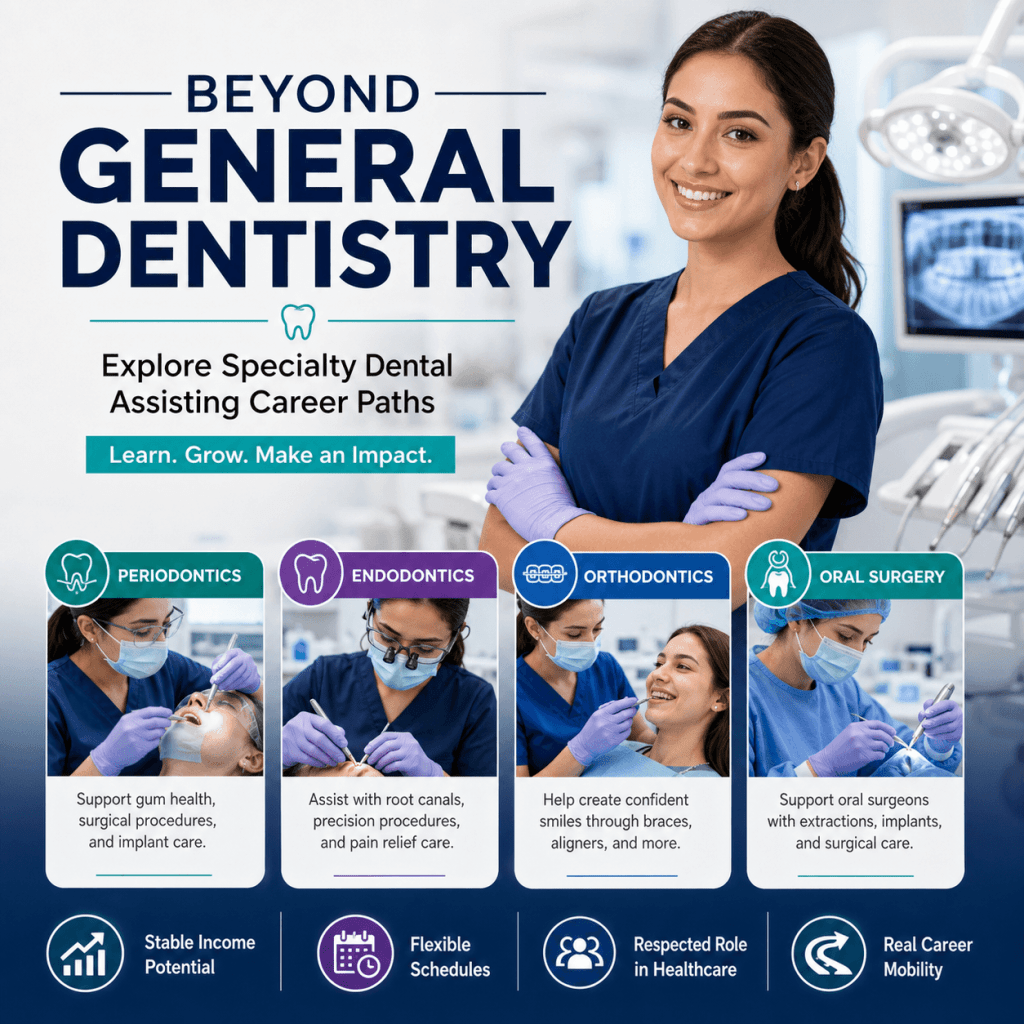
If you want to move into periodontics or other dental specialties like oral surgery, the training path matters. Broward Dental Academy supports the dental community by developing well-rounded professionals through a wide range of dental courses and advanced dental training.
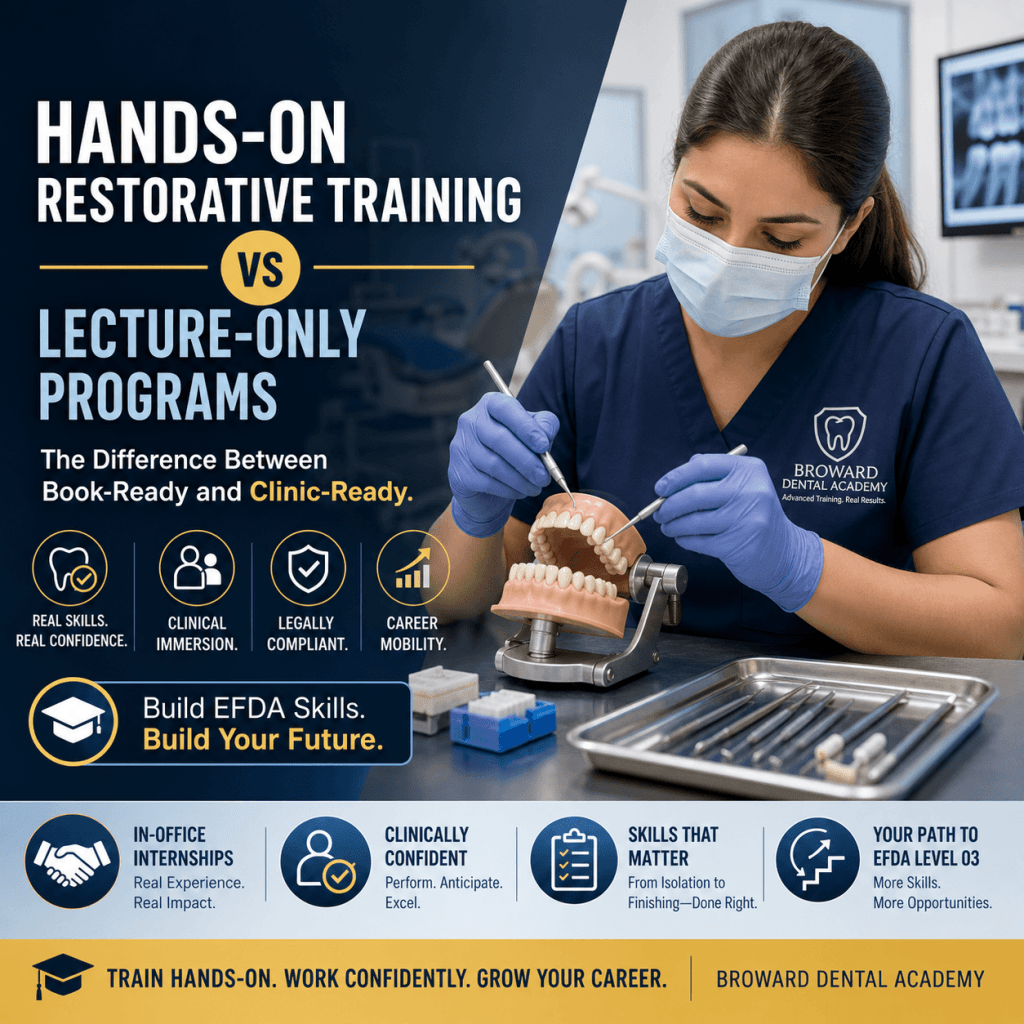
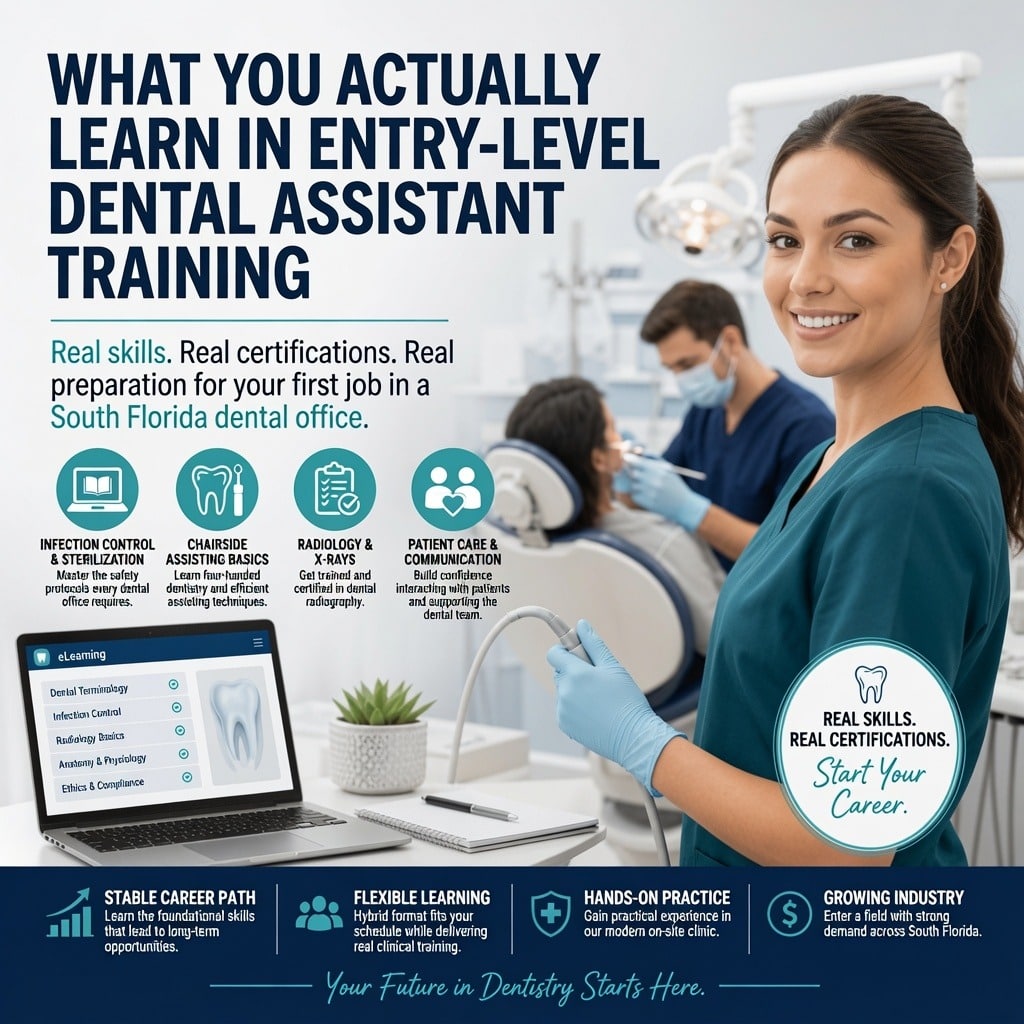
Broward Dental Academy focuses on more than passing an exam. Students are trained to think critically, act ethically, and perform confidently in a modern, high-performance dental practice. Training includes immediate immersion in online and clinical settings, updated eLearning lesson plans for remote learning, and in-office internships that help students build real-world speed and confidence.
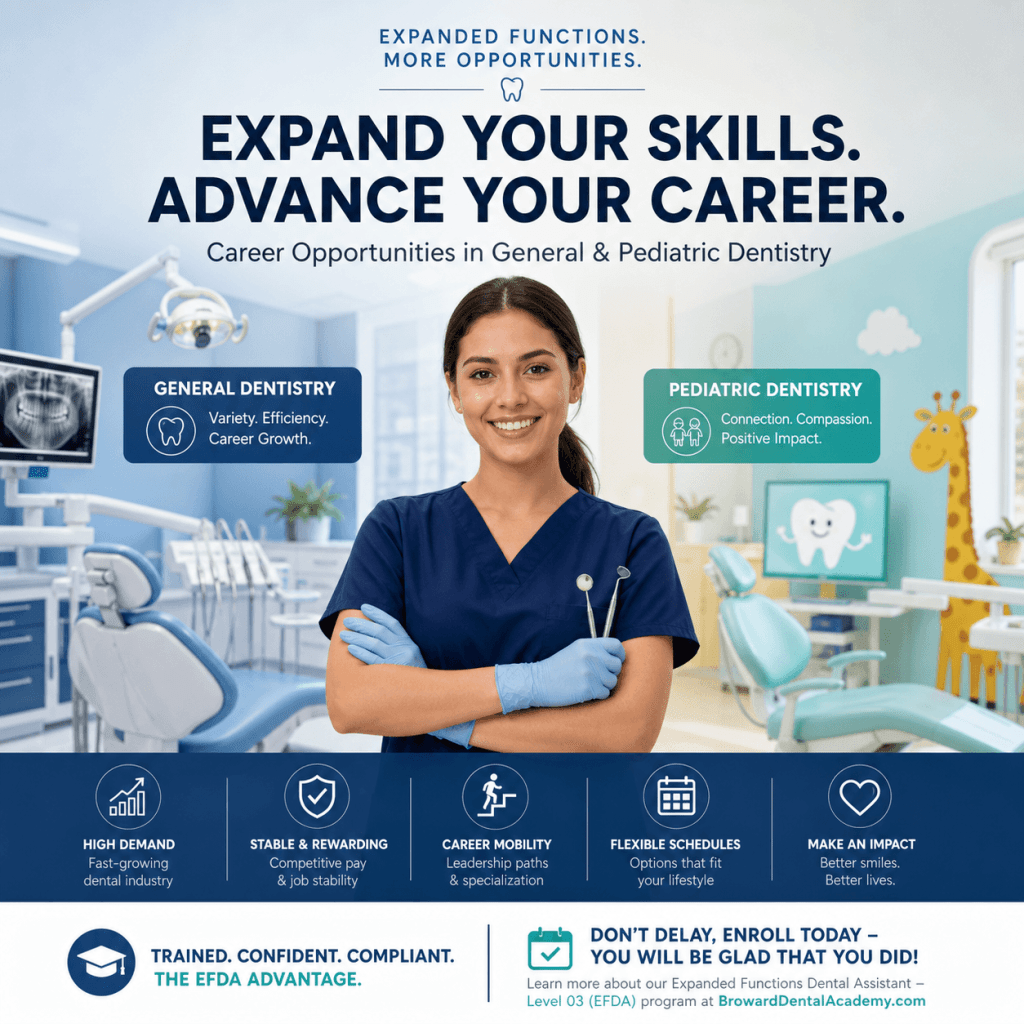
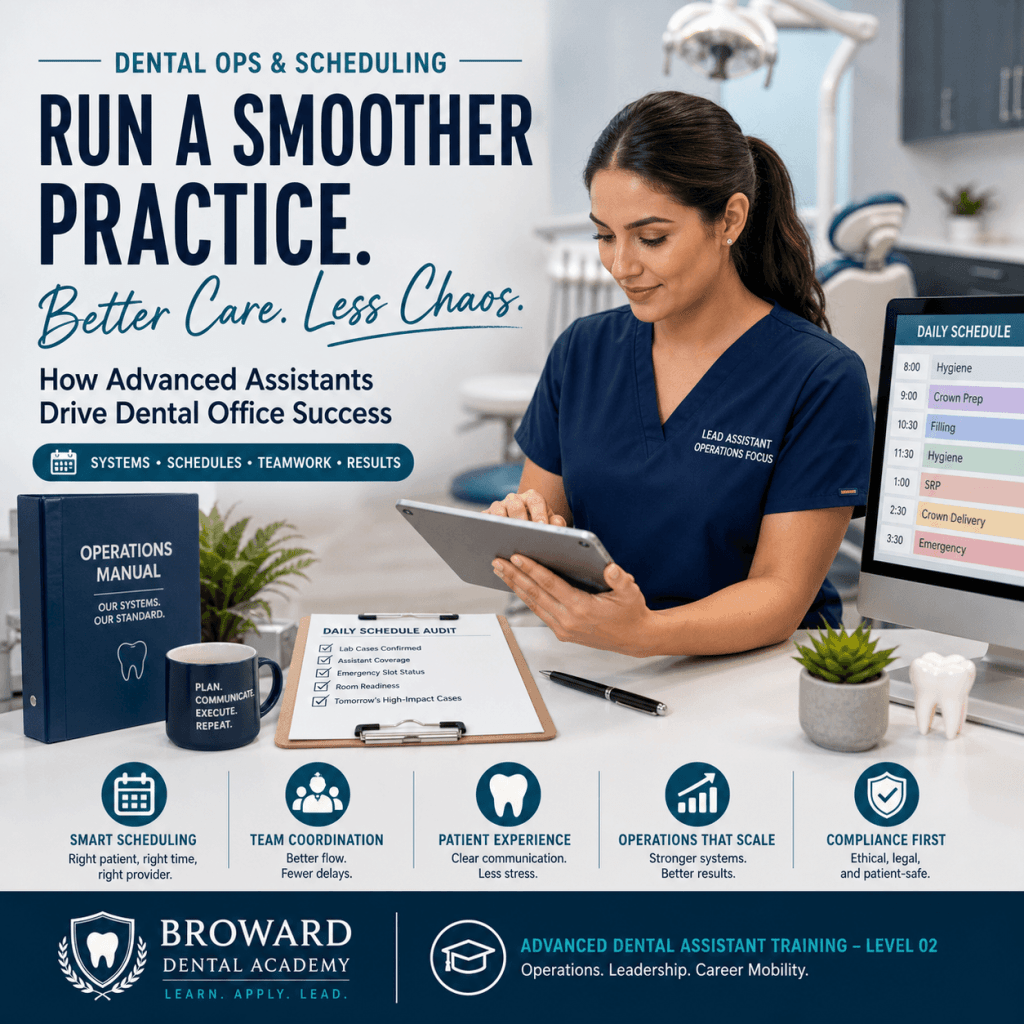
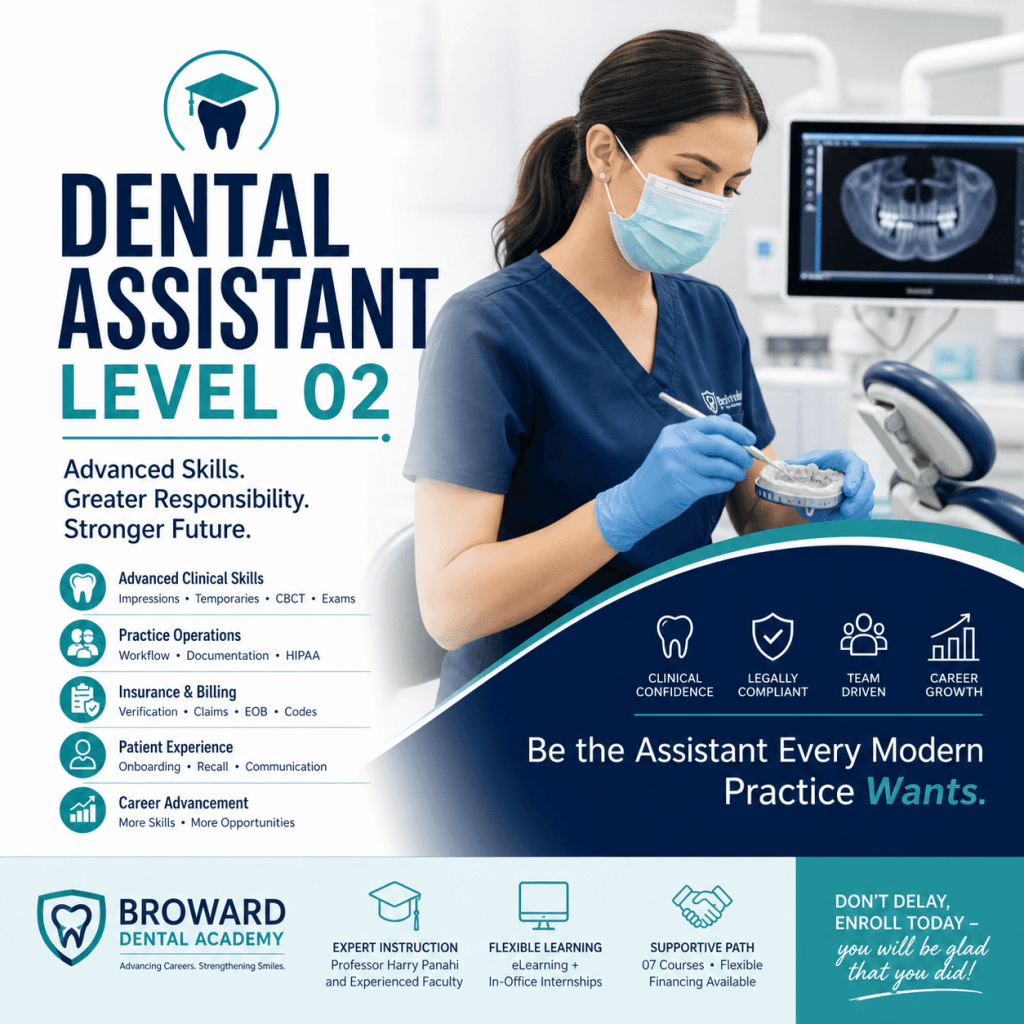
Broward Dental Academy offers specialized courses designed to support career mobility and expanded functions over time. For instance, their Dental Assistant Level 02 course is tailored for those looking to enhance their skills further. Additionally, flexible financing options are available.
To explore the specialty track which includes paths for Perio, Endo, Ortho, or Oral Surgery, visit the pillar page here:
Specialty Dental Assisting Training (Perio • Endo • Ortho • Oral Surgery)
Don’t delay, enroll today – you will be glad that you did!
Choosing the right program: a quick checklist before you enroll
Before you commit, use this checklist to compare programs.
Curriculum coverage
Look for training that covers:
- infection control and sterilization standards
- surgical setups and clinical workflow readiness
- radiography (if applicable in your state)
- charting and documentation systems
- patient communication and post-op education
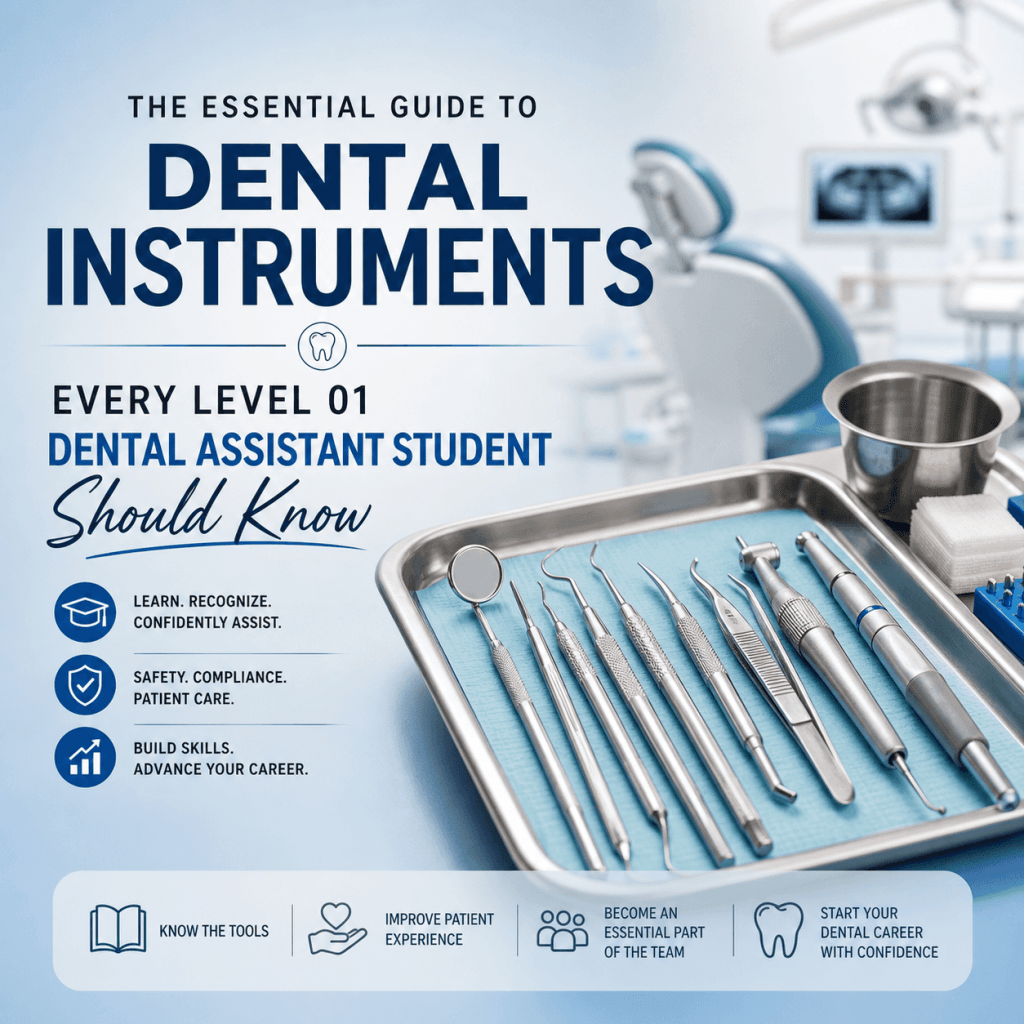
- periodontal procedure familiarity and instrument basics
Clinical hours and real patient exposure
Ask about:
- chairside repetitions
- internships or externships
- mentorship and supervised clinical training
Compliance focus
Confirm the program includes:
- OSHA and HIPAA basics
- sterilization and spore testing routines
- scope-of-practice awareness and professionalism
Outcomes that matter
Choose training that prioritizes:
- job readiness
- confidence under pressure
- professionalism and ethical habits
- support for long-term mobility
Practical questions
Make sure the program fits your life:
- schedule flexibility
- financing options
- program length
- how quickly you can start
Wrap-up: your next step toward becoming a periodontal dental assistant
A periodontal dental assistant supports specialized gum, bone, and implant care through surgical-ready setups, confident chairside assisting, strong patient communication, and compliance-driven systems. For the right person, it offers stable income potential, flexible schedules, a respected healthcare role, and long-term career mobility.
Your next step is straightforward: confirm your state requirements, choose a hands-on training path, and pursue specialty exposure early.
When you are ready to explore specialty training options, start here:
Specialty Dental Assisting Training (Perio • Endo • Ortho • Oral Surgery)
Don’t delay, enroll today – you will be glad that you did!
FAQs (Frequently Asked Questions)
What does a periodontal dental assistant do?
A periodontal dental assistant supports periodontists and their teams by assisting in gum health care, bone support around teeth, implants, and periodontal surgery. Their duties include surgical tray setup, patient education, infection control, documentation, and coordinating implant procedures.
How is periodontal dental assisting different from general dental assisting?
Periodontal dental assisting involves more surgical tray setups and sterile techniques, greater local anesthetic support and monitoring, detailed post-operative instructions and documentation, and frequent coordination for implant components and graft materials compared to general dental assisting.
Where do periodontal dental assistants typically work?
They commonly work in periodontal specialty practices, multi-specialty dental offices offering perio and implant services, and implant-focused clinics.
What does a typical day look like for a periodontal dental assistant?
A typical day includes morning huddles for schedule review, operatory and sterile setup, assisting during surgical blocks such as perio surgery and implant placement, supporting maintenance visits like scaling and root planing, managing sterilization cycles, and handling charting and patient follow-ups.
Why is the career path of a periodontal dental assistant growing?
Dentistry is one of the fastest-growing healthcare fields. Periodontal practices especially rely on skilled support for surgical care, implants, and maintenance. Rising patient demand means employers seek trained, compliant, and confident professionals to ensure safe and efficient office operations.
Who is suited for a career as a periodontal dental assistant?
This career is ideal for beginners exploring dental assisting, current assistants seeking specialty mobility, or career changers looking for stable income with flexible schedules in a respected healthcare role that involves hands-on clinical work in a structured environment.