Why dental assistant credentials matter (especially in Florida)
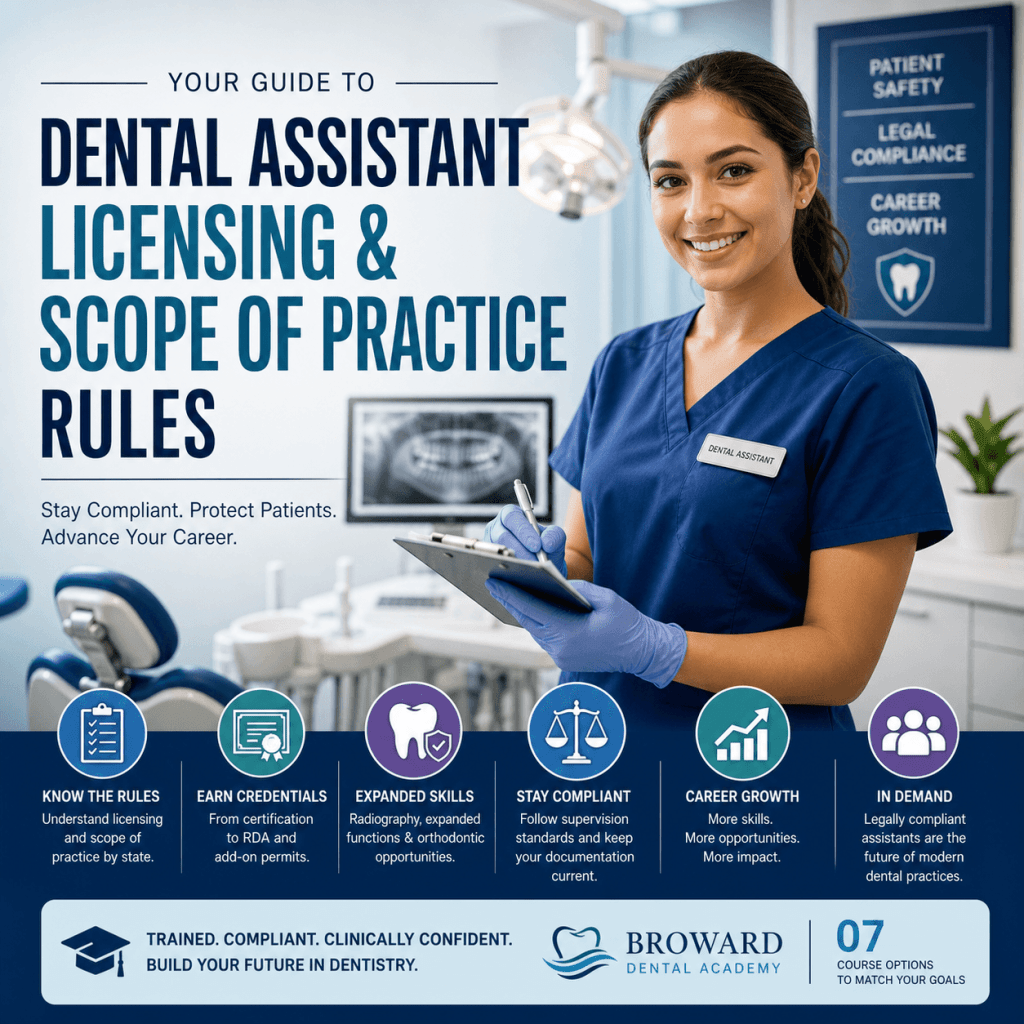
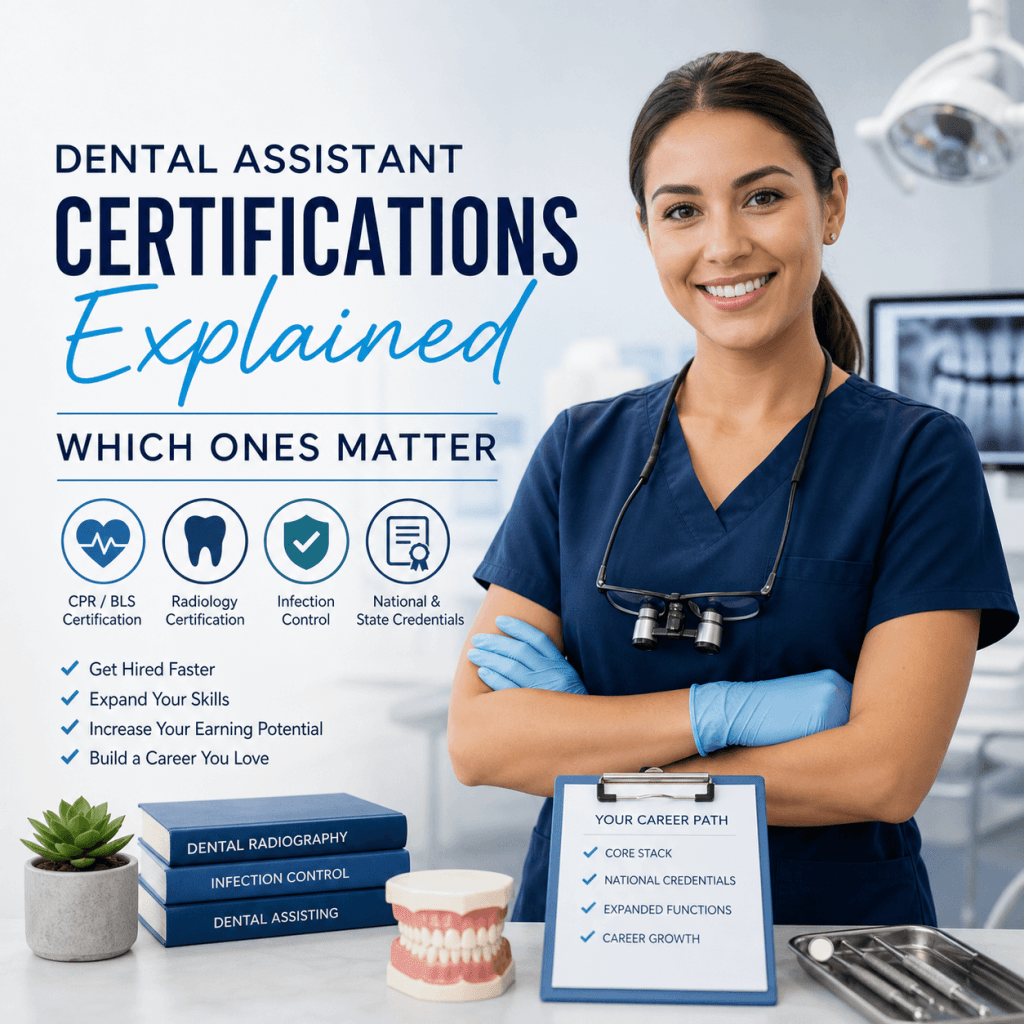
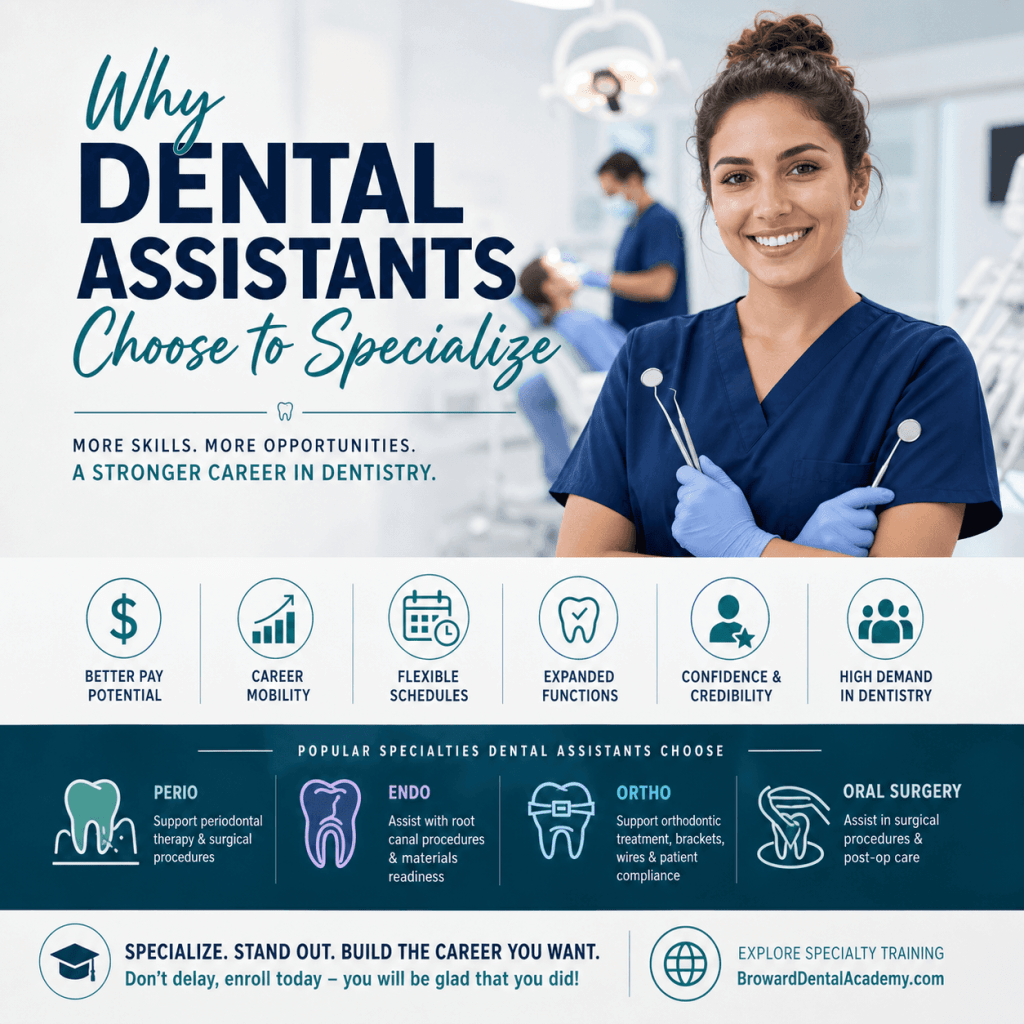
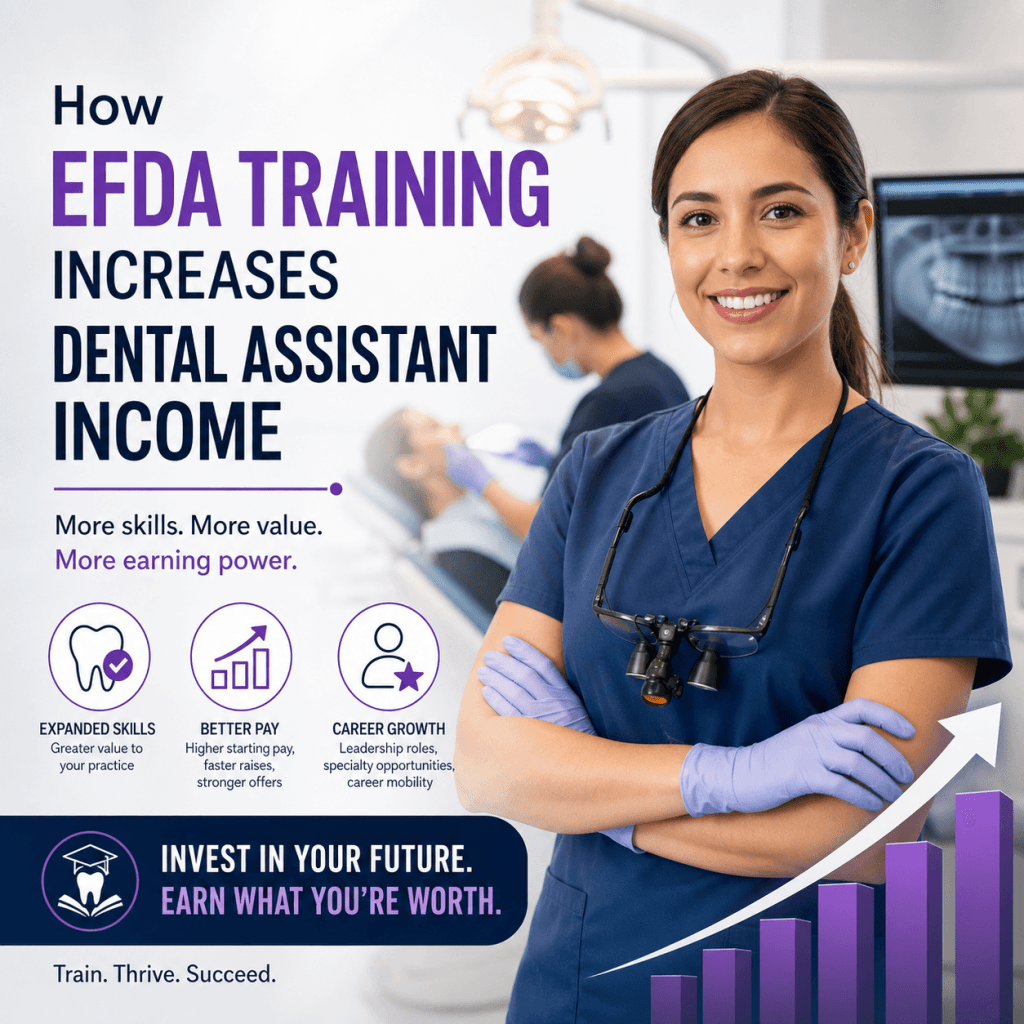
Dental assistant credentials are not just “nice to have.” In Florida, dental assistant credentials directly affect what you are legally allowed to do, how quickly you can get hired, and how much responsibility you can take on once you are in a dental office. Having proper dental assistant credentials can set you apart in a competitive job market. From an employer’s perspective, dental assistant credentials reduce risk. Dental practices want team members who are thoroughly trained, legally compliant, and clinically confident. When an office is busy, the dentist and team need to trust that you understand infection control, patient safety, documentation basics, and what tasks you can and cannot perform under Florida rules regarding dental assistant credentials. For you, the upside is career momentum. Dentistry is one of the fastest-growing healthcare fields, and it offers stable income potential, flexible schedules, respected roles in patient care, and real career mobility through expanded functions supported by your dental assistant credentials. The right credential path can help you start sooner, grow faster, and stay compliant while you advance. This article compares national vs florida dental assistant credentials in a practical way, so you can choose the smartest path for your goals.
Quick definitions: “national credential” vs “Florida-specific credential”
Understanding dental assistant credentials is essential for both aspiring professionals and employers in the dental field. Getting the right dental assistant credentials can significantly impact your career trajectory.
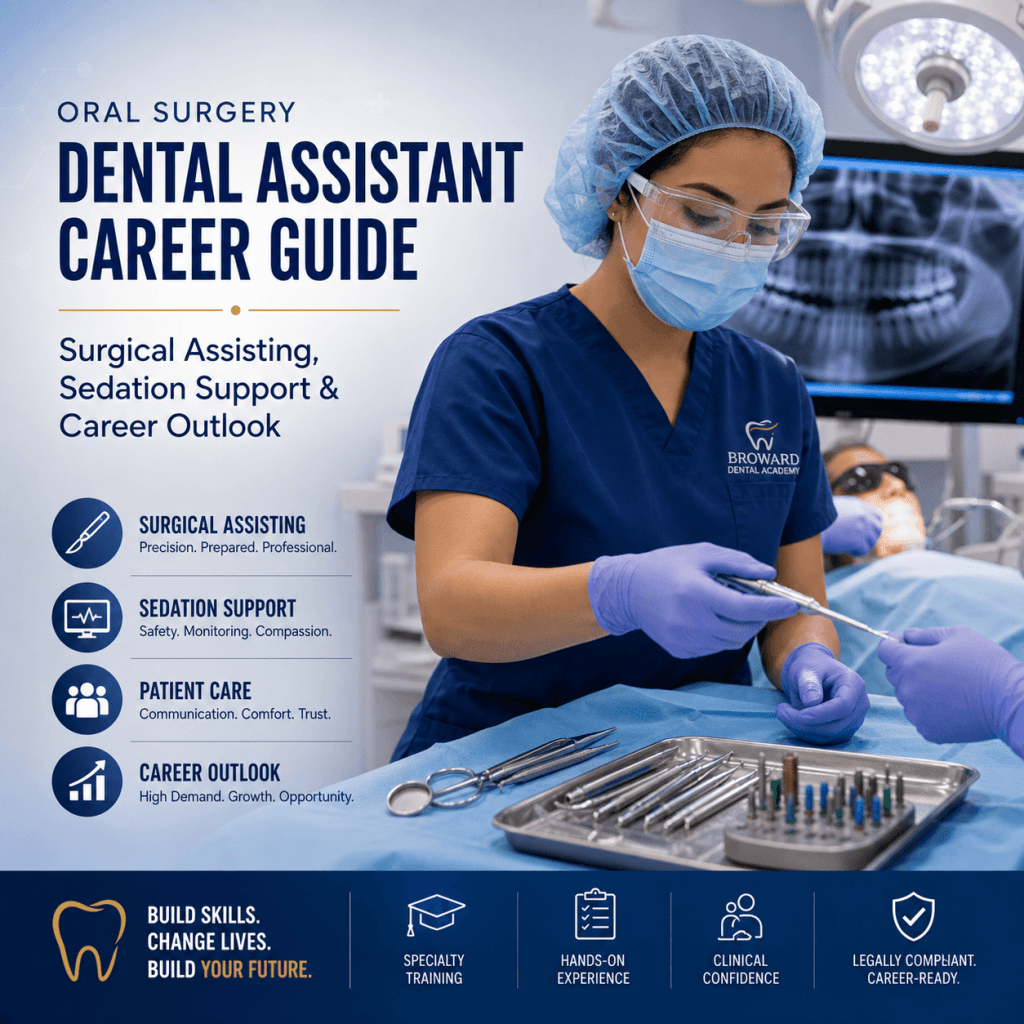
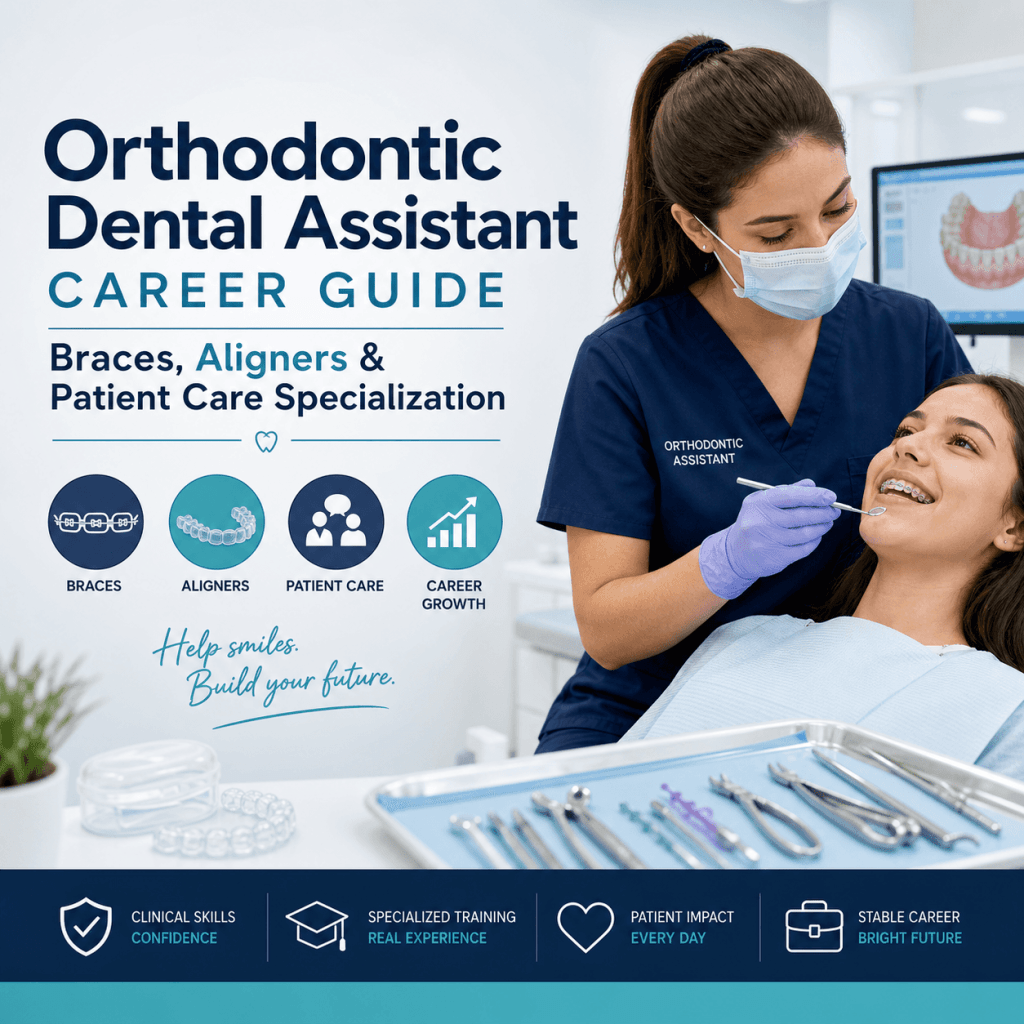
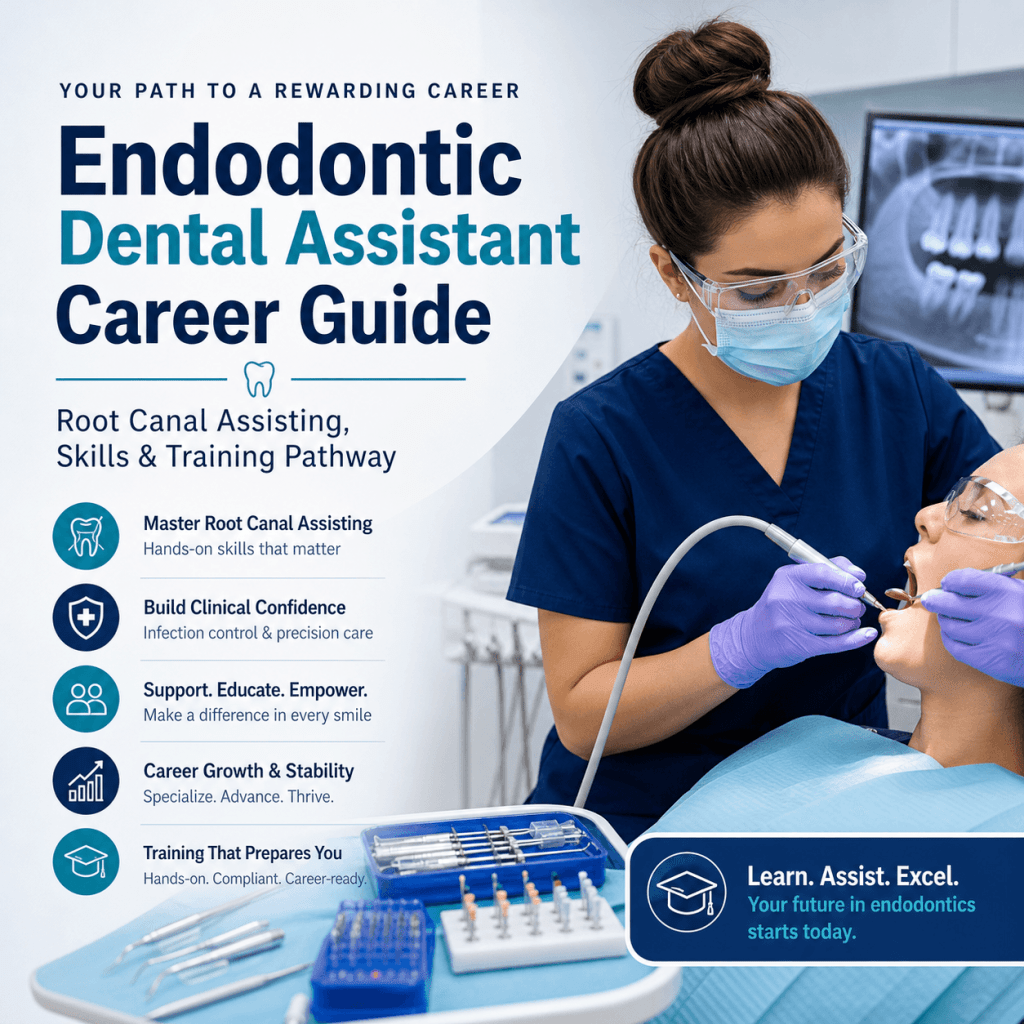
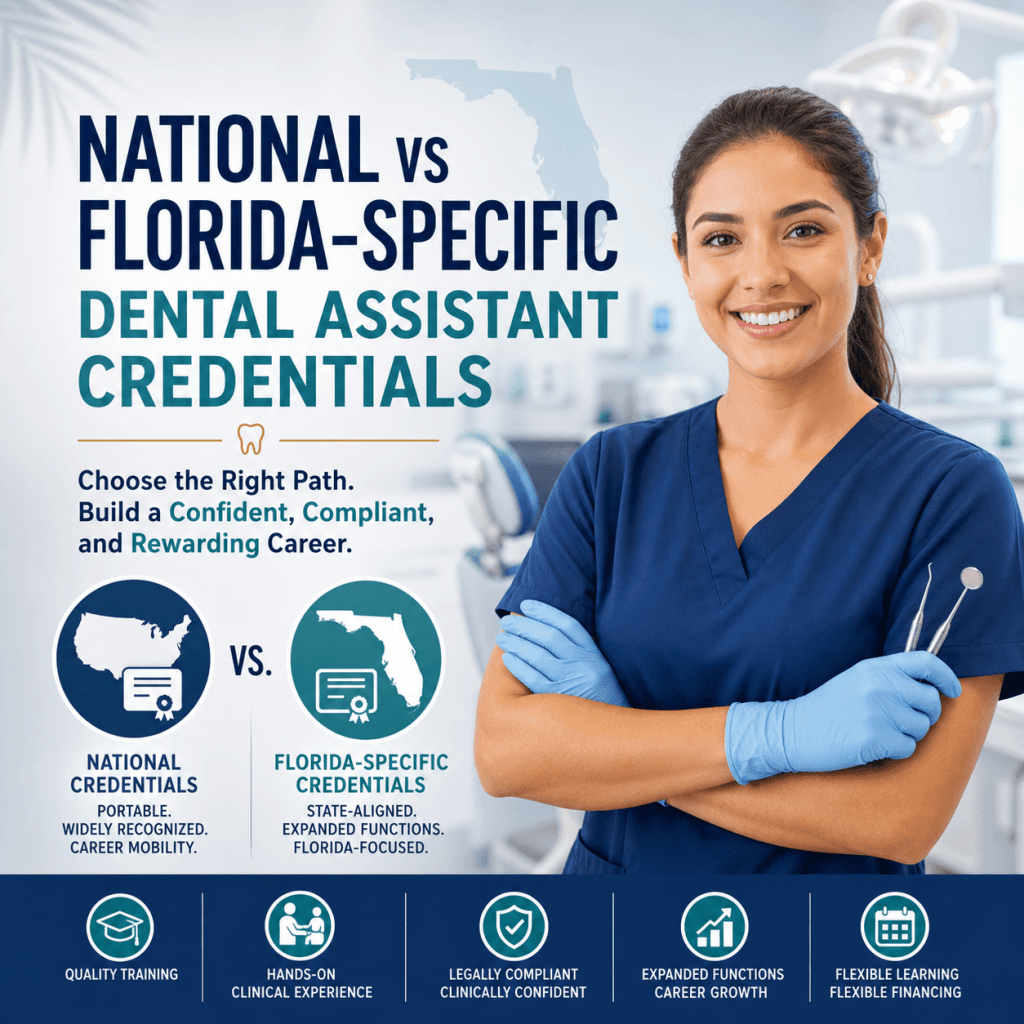
National credential (plain English): A certification earned through a nationally recognized organization or exam that many employers across the U.S. understand. It is designed to signal standardized knowledge and baseline competency across states. Florida-specific credential (plain English): A Florida-approved training pathway tied to Florida laws and rules that determine what duties you can legally perform in a Florida dental practice, especially when it comes to expanded functions like orthodontics, oral surgery, or endodontics. Why the difference exists: Each state has its own dental practice act and rules. That means allowable duties vary. Florida draws clear lines around what a dental assistant can do without additional training, and what requires specific Florida-aligned education. How this shows up in real life: Two assistants may both be “certified” somewhere, but chairside responsibilities can still differ. One might be cleared for certain expanded duties in Florida because they completed Florida-approved training such as obtaining specific certifications, while another may need additional Florida-specific coursework, even if they hold a national credential.
The career question most people are really asking
If you are planning to work in Florida, you are probably asking: Do I need a national credential, a Florida credential, or both? The best choice depends on your goals:
- Immediate Florida employment: prioritize Florida alignment and job readiness.
- Long-term portability: consider a national credential strategy, especially if you may move.
- Expanded functions and advancement: follow Florida-specific pathways that match Florida requirements.
To make this simple, the rest of this guide uses a straightforward decision framework:
- Where you plan to work (Florida-only vs multi-state)
- The duties you want to perform (entry-level vs expanded functions)
- Your timeline to get hired
- Your budget and financing options
- Your learning style (online plus hands-on clinical training)
What Florida expects from dental assistants: roles, duties, and compliance basics
Most Florida dental practices operate with a few common “levels” of dental assisting responsibility:
- Entry-level chairside support: assisting with room setup, instrument transfer, suctioning support, patient flow, sterilization workflow, basic chart support, and teamwork in a fast-paced schedule.
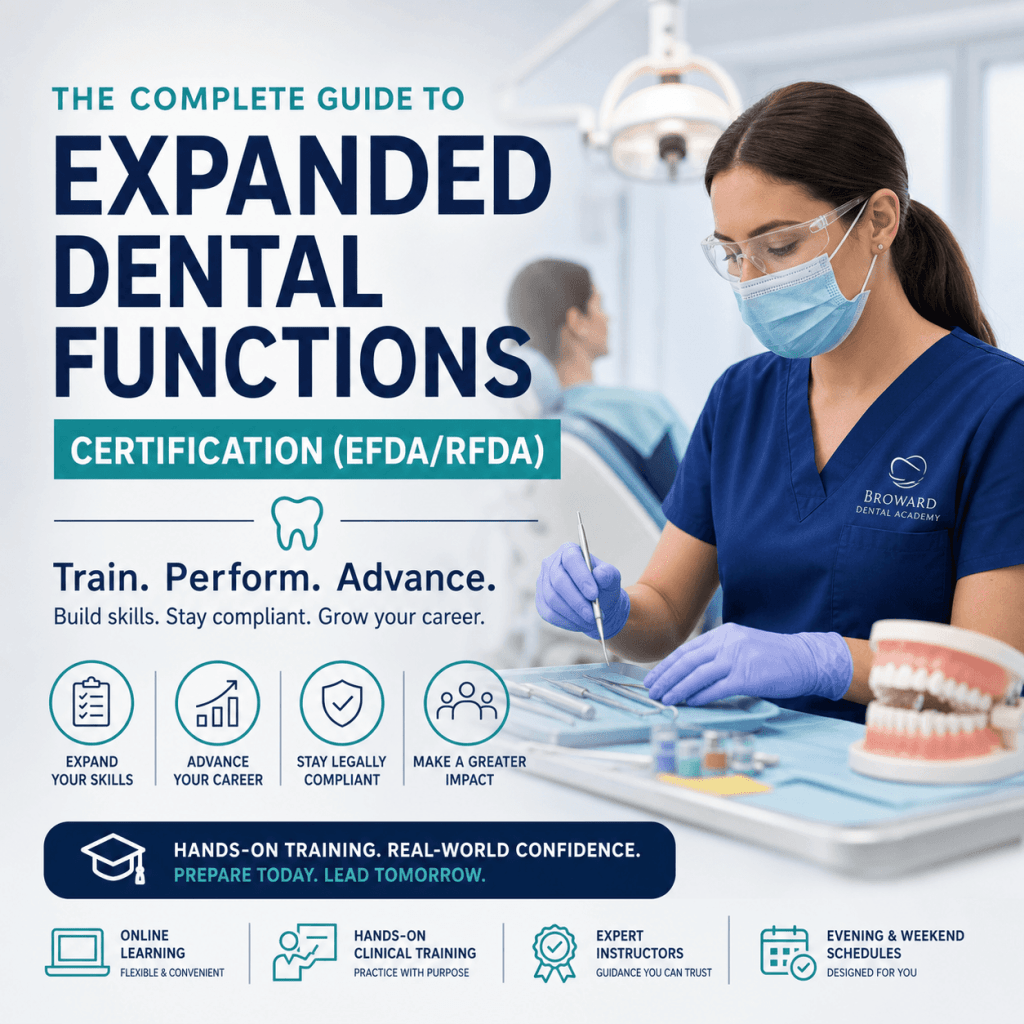
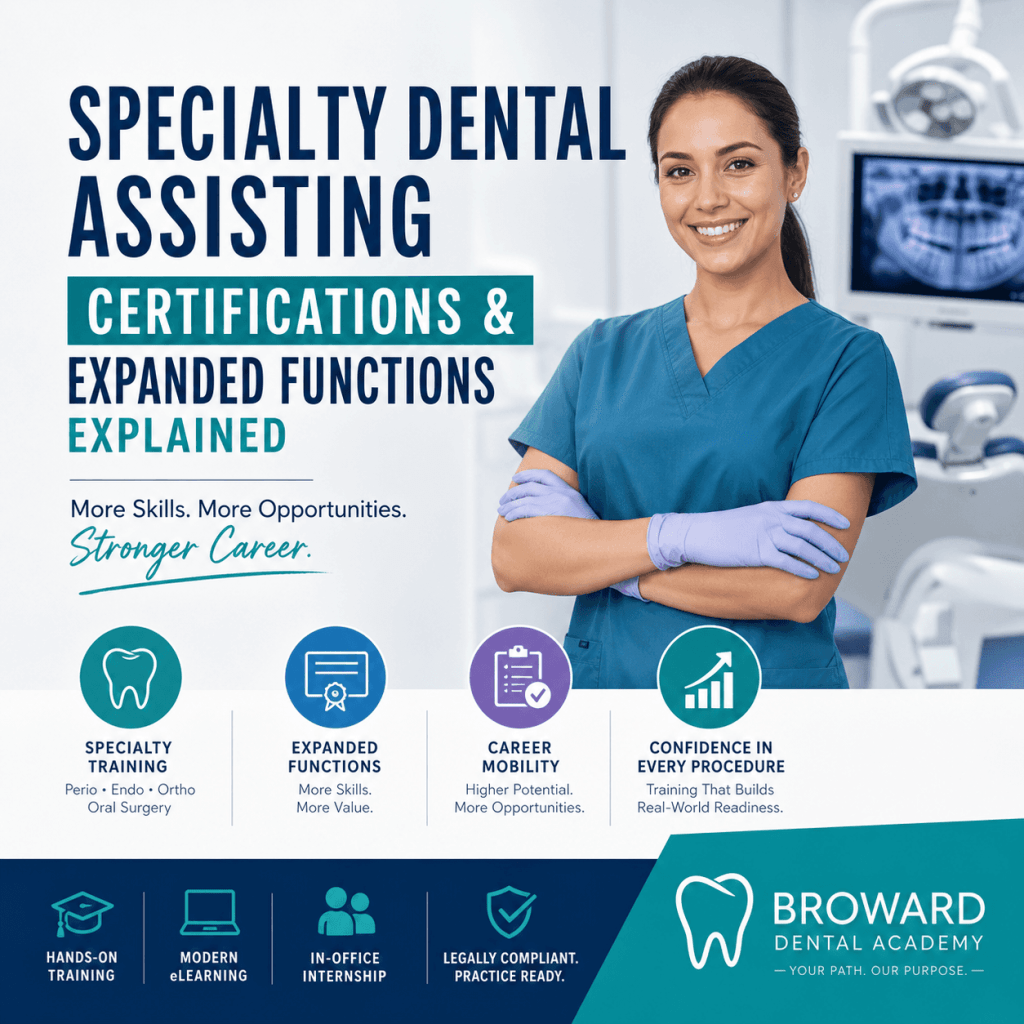
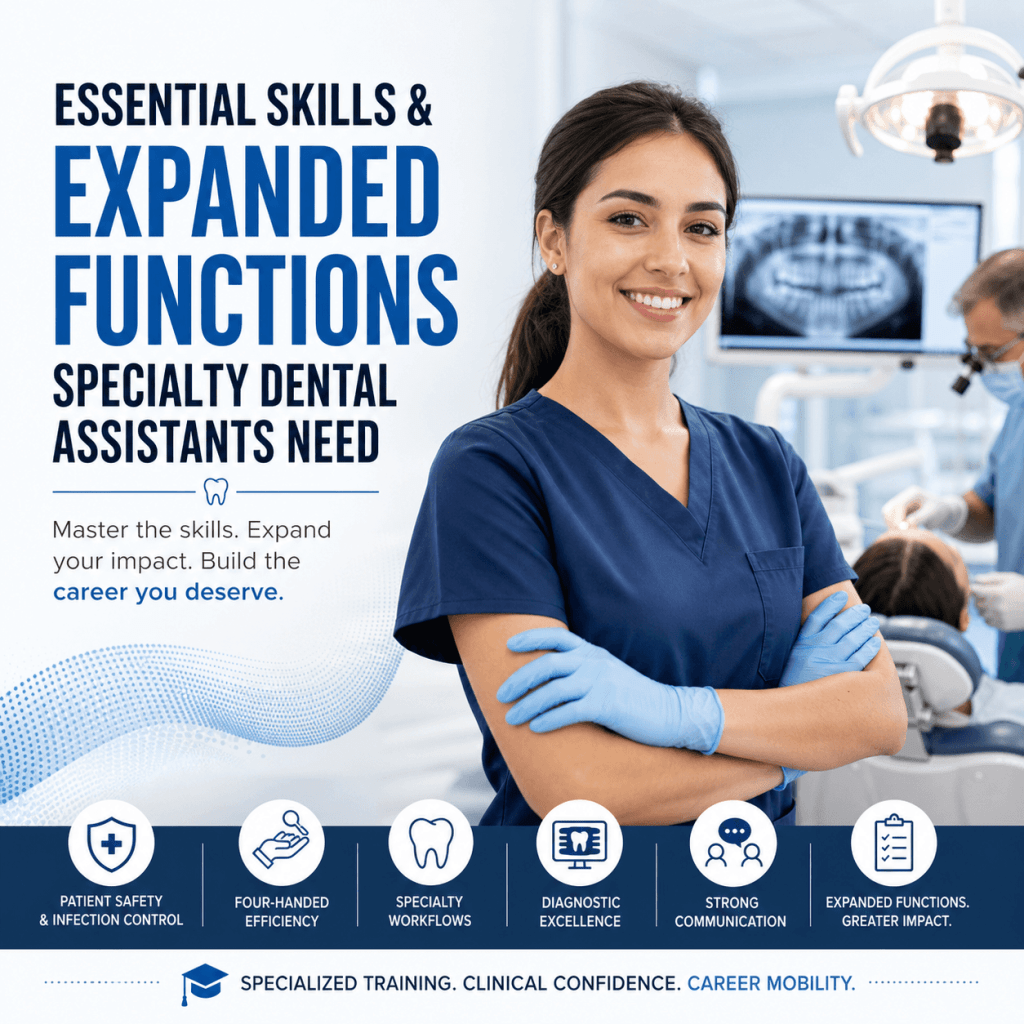
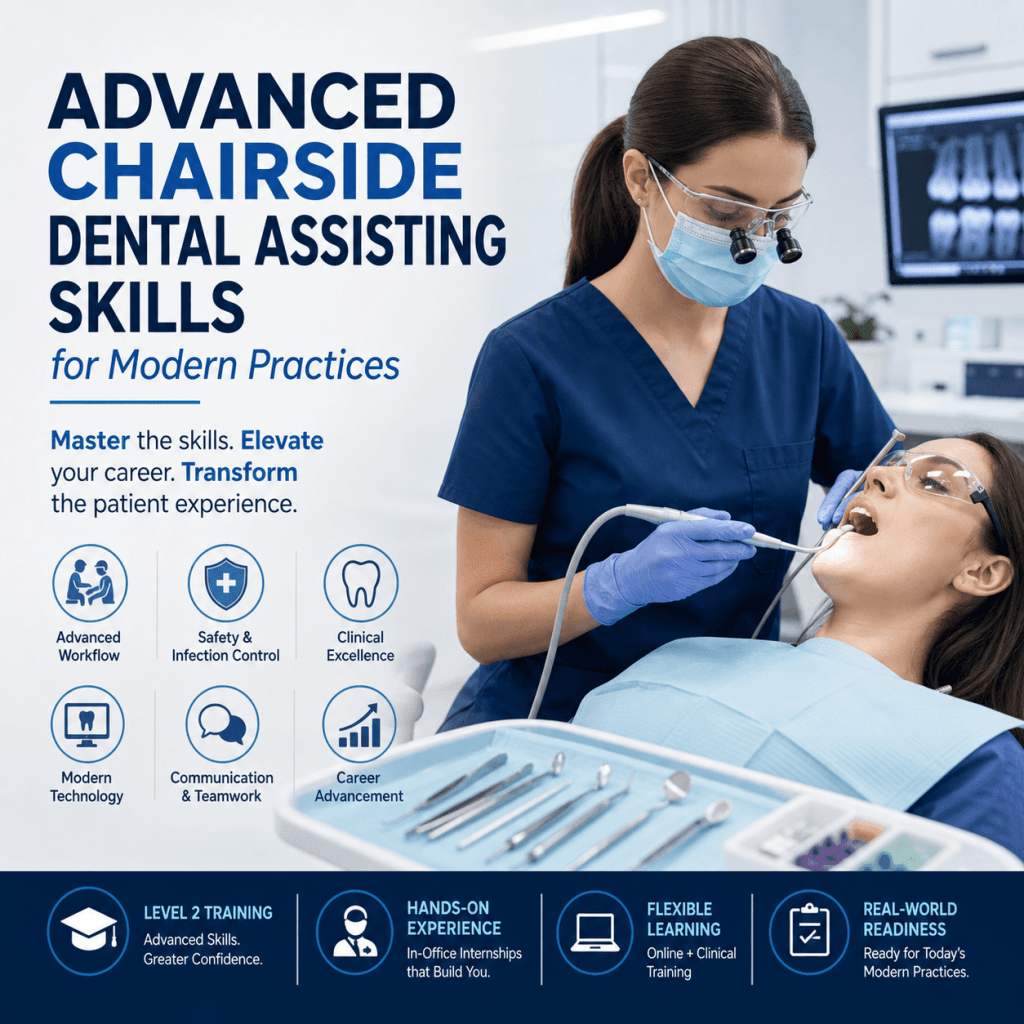
- Expanded functions support: higher-responsibility duties that typically require additional Florida-specific training and documented competency.
When evaluating your options for dental assistant credentials, think about how these credentials can open doors to various roles and enhance your employability in Florida’s dental landscape.
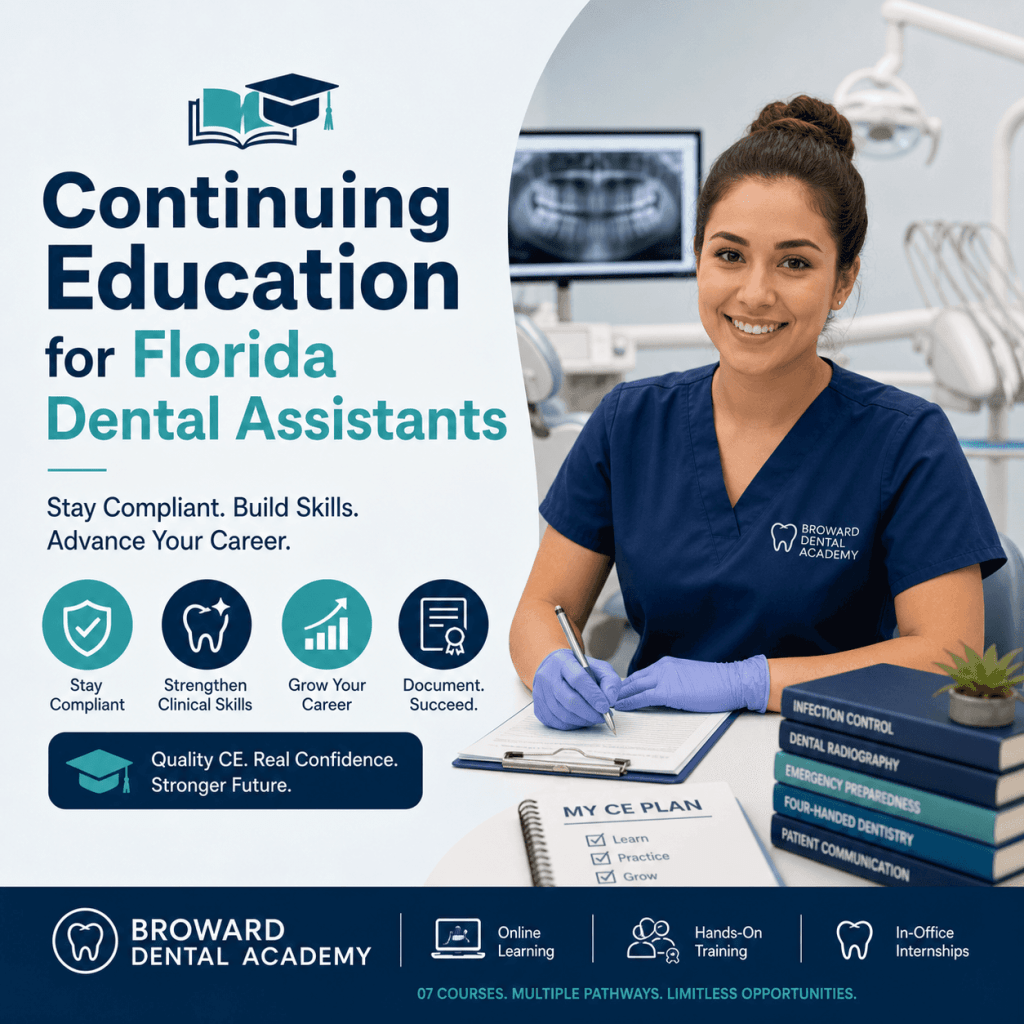
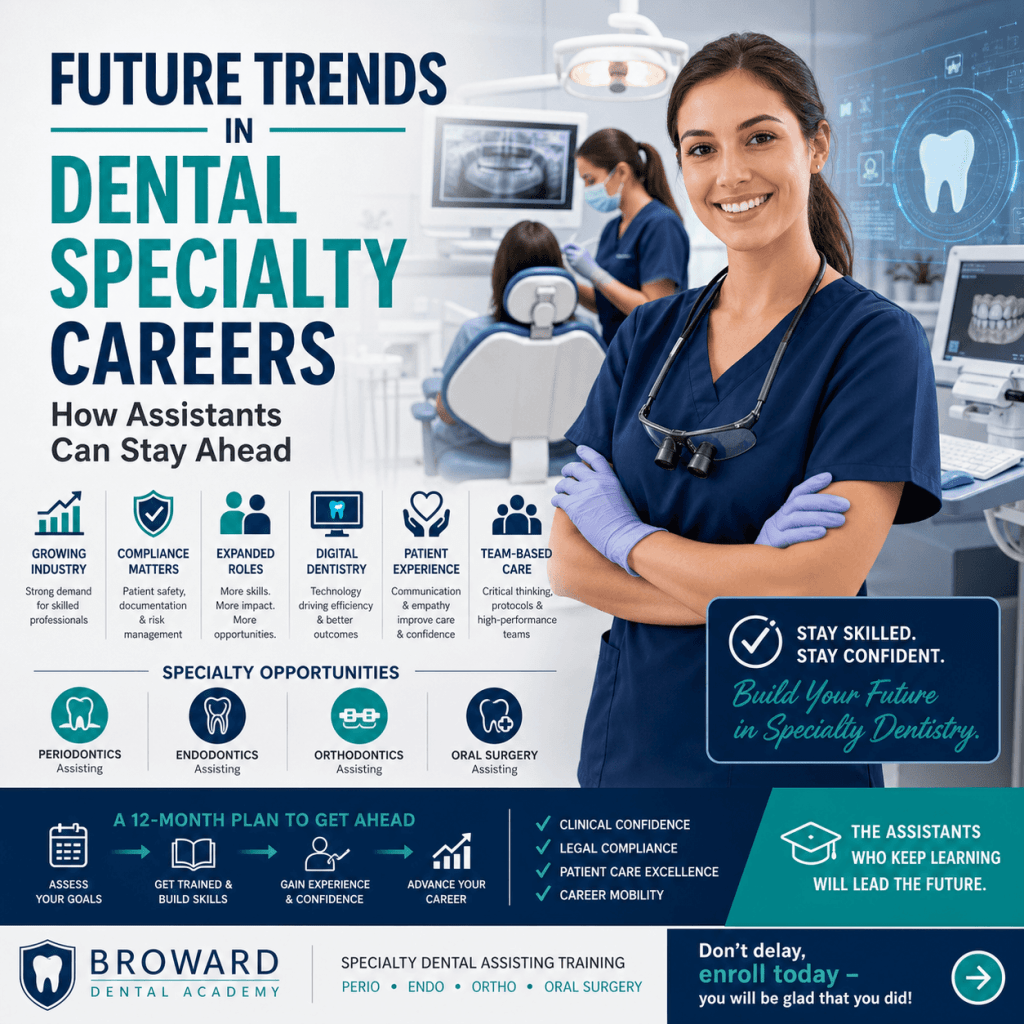
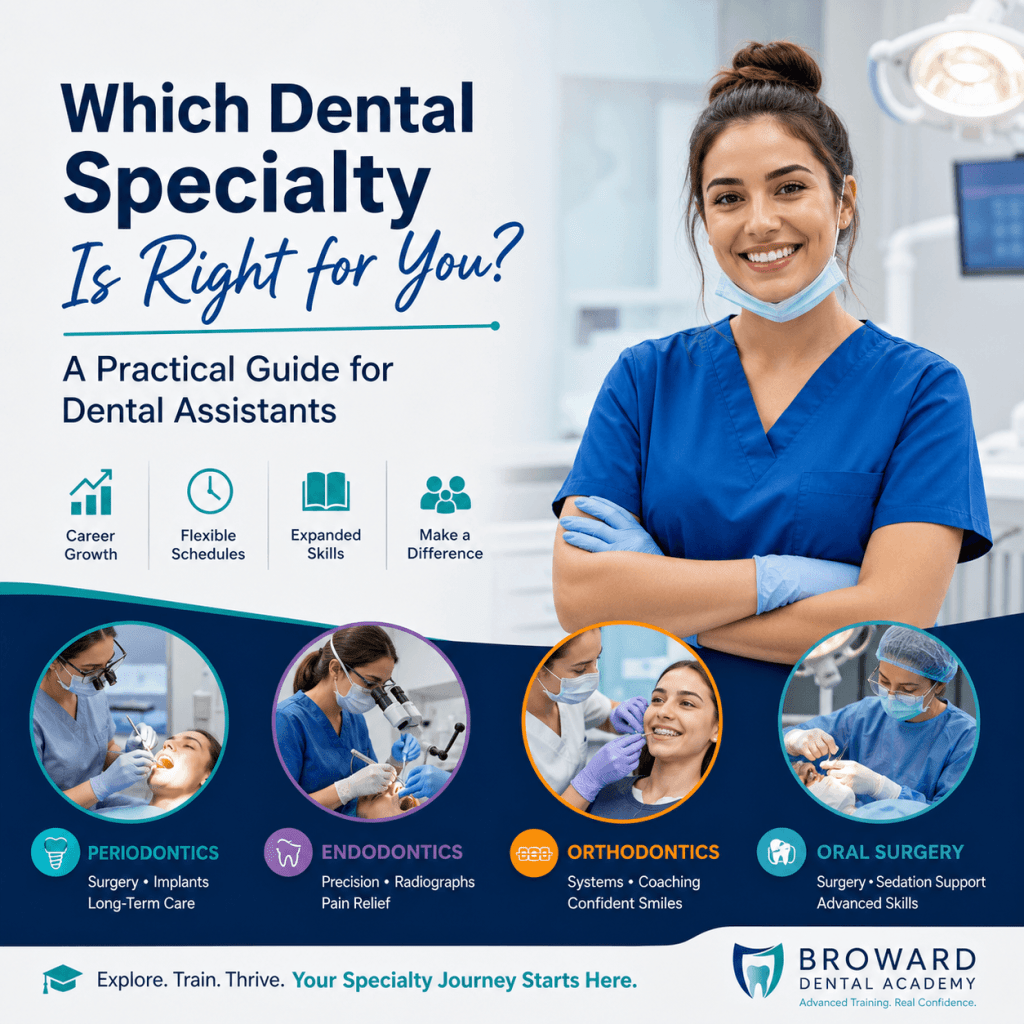
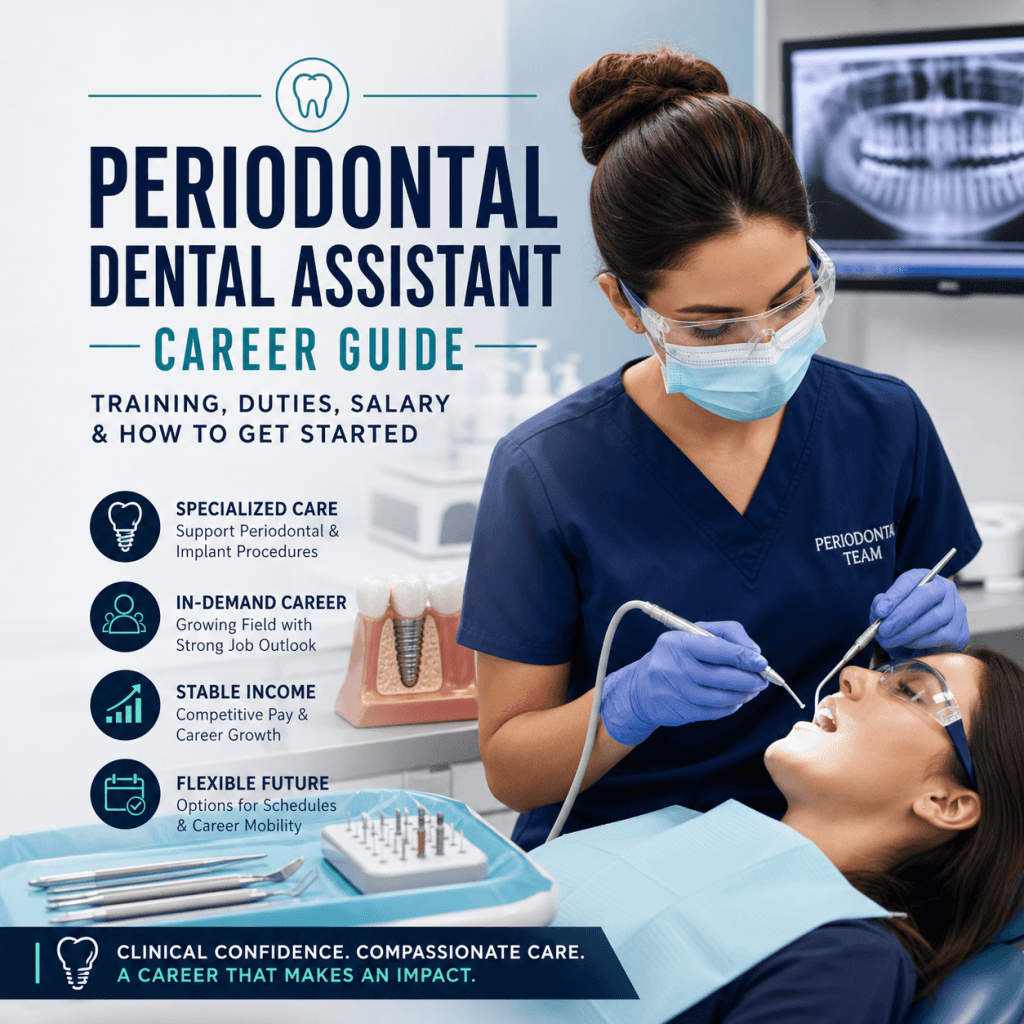
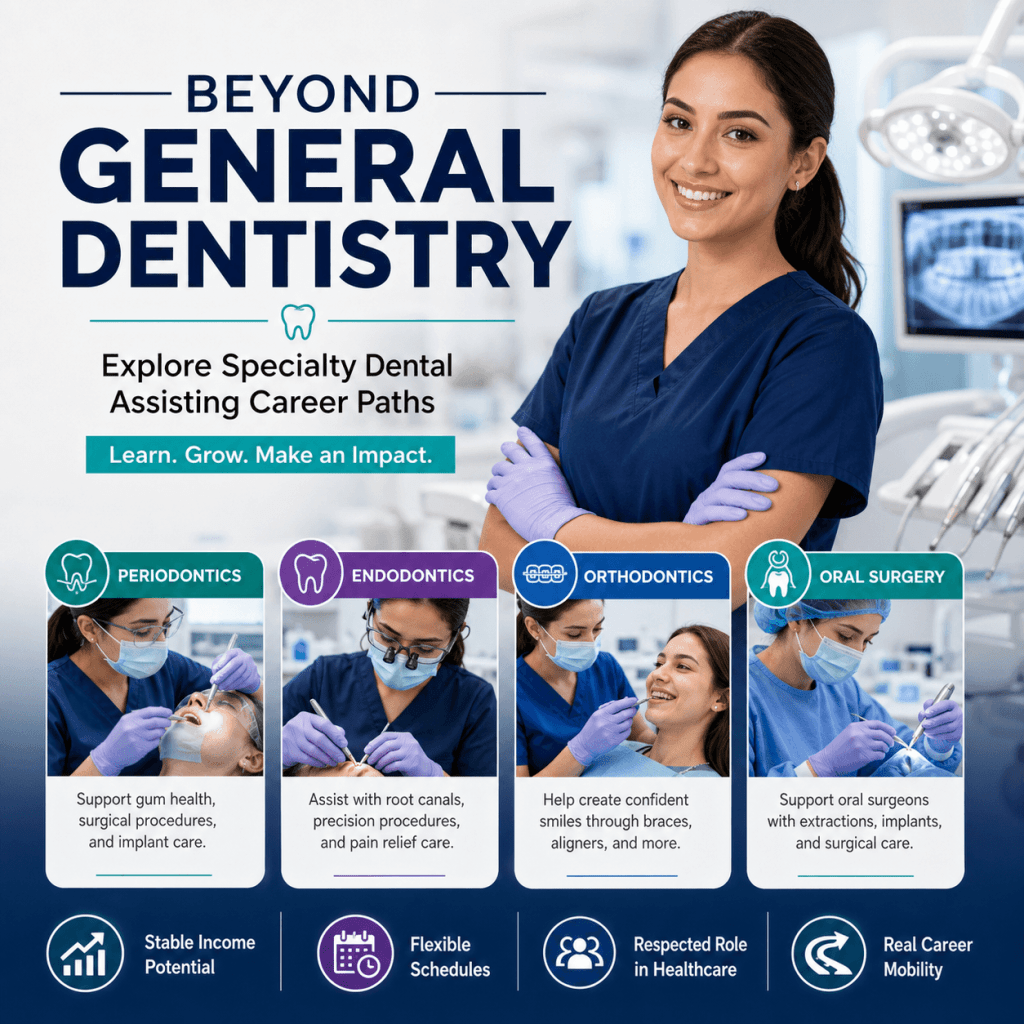
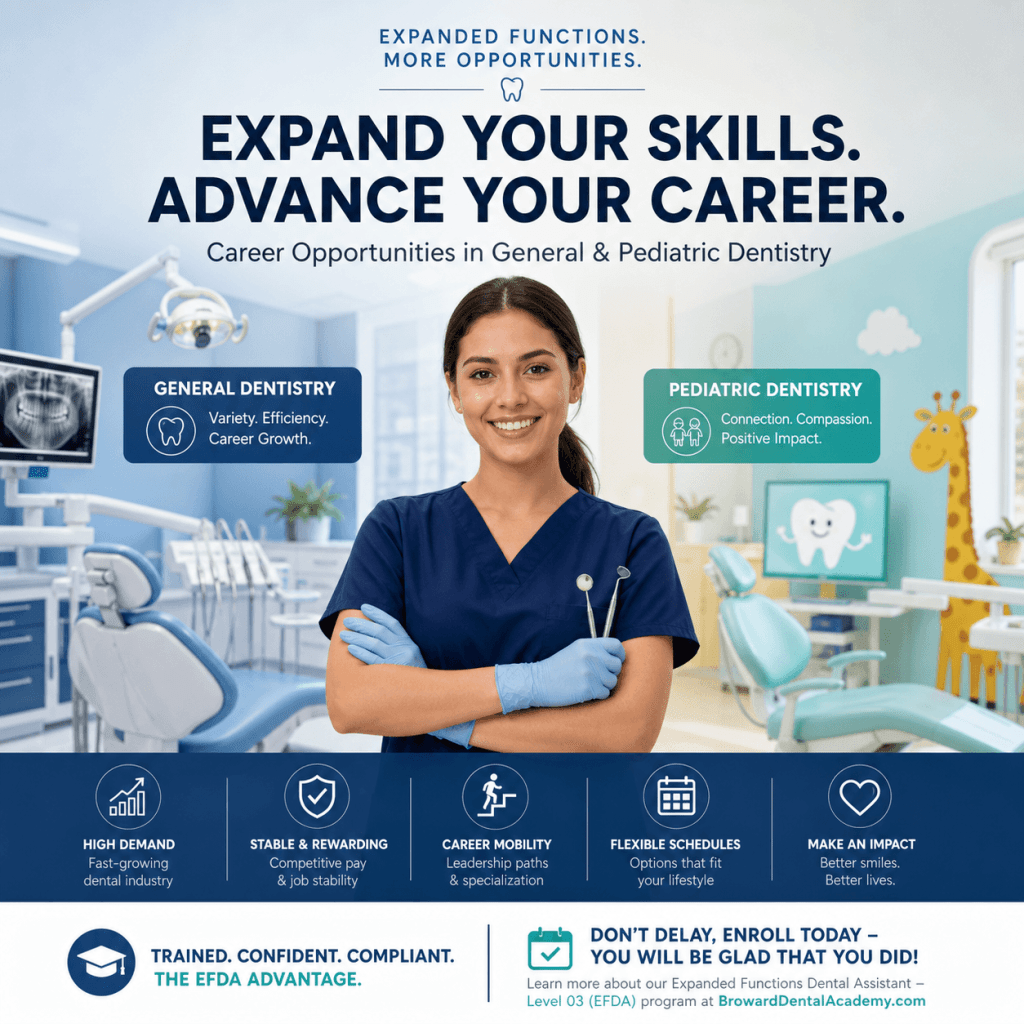
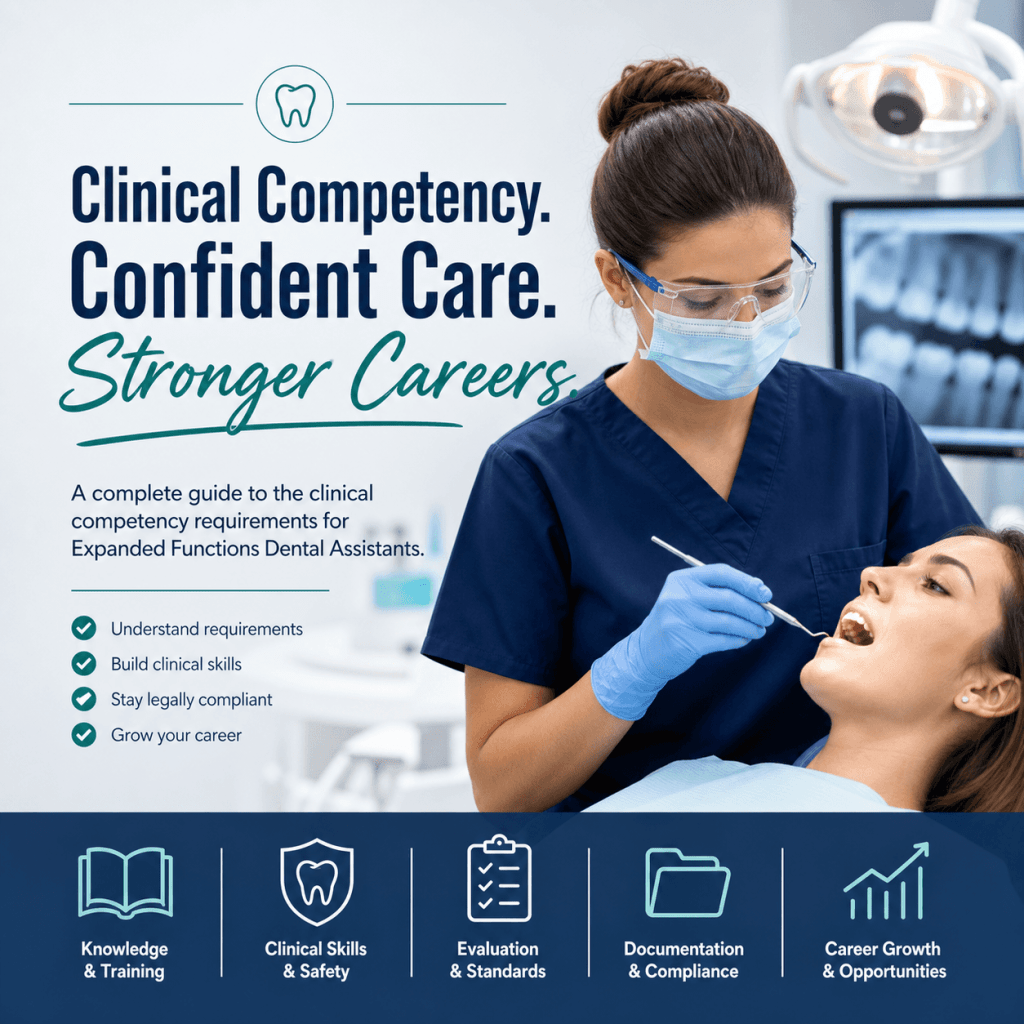
For those looking to expand their skills into areas such as periodontics, understanding the compliance and training required is crucial. You can find more information about expanded functions for dental auxiliary here. Florida employers care about compliance because it protects patients, the practice, and your career. A practice does not want to hire someone who is unsure about protocols, uncertain about allowed duties, or unprepared for real clinical pace. The best training does more than help you memorize content. Strong programs build clinical confidence, critical thinking, ethical decision-making, and reliable performance under pressure. In a market where demand for skilled dental professionals continues to rise, assistants who are compliant and confident have a measurable advantage. If you’re interested in pursuing further education or expanding your skill set with courses offered by reputable institutions, it’s important to choose one that aligns with your career goals.
National dental assistant credentials: what they’re best for
In summary, securing dental assistant credentials is a vital step for anyone looking to thrive in the dental profession in Florida.
A national credential is most valuable for three reasons:
- Portability: It can support career movement across state lines.
- Employer recognition: Many hiring managers recognize national credentials as a standardized signal.
- Standardized knowledge: National exams typically reflect broad dental assisting competencies.
Ultimately, the right dental assistant credentials can set you on a path toward a fulfilling and successful career in the dental field.
When national credentials help most
National credentials tend to be especially useful if you:
- Think you may move out of Florida later.
- Want to apply to multi-location practices or larger organizations that use standardized hiring filters.
- Are competing in a market where a national credential helps you stand out on paper.
Limitations to understand
A national credential does not automatically grant Florida expanded functions. Even if an employer values it, Florida-specific rules can still require additional training for certain duties.
How to choose a national track wisely
Think long-term. If your goal is portability, choose a path that aligns with the types of practices you want to work in and the states you may relocate to. Then plan for any Florida-specific requirements separately so you can work confidently and legally while you are here.
Florida-specific dental assistant credentials: what they’re best for
Florida-specific credential pathways are designed to align directly with what Florida dental offices need and what Florida law allows.
Why Florida-specific training can speed up readiness
When training is built for Florida workflows, it tends to be:
- More compliance-focused for Florida practices
- More chairside-relevant for day-one performance
- More hands-on, so you are not learning everything for the first time on the job
Expanded functions advantage
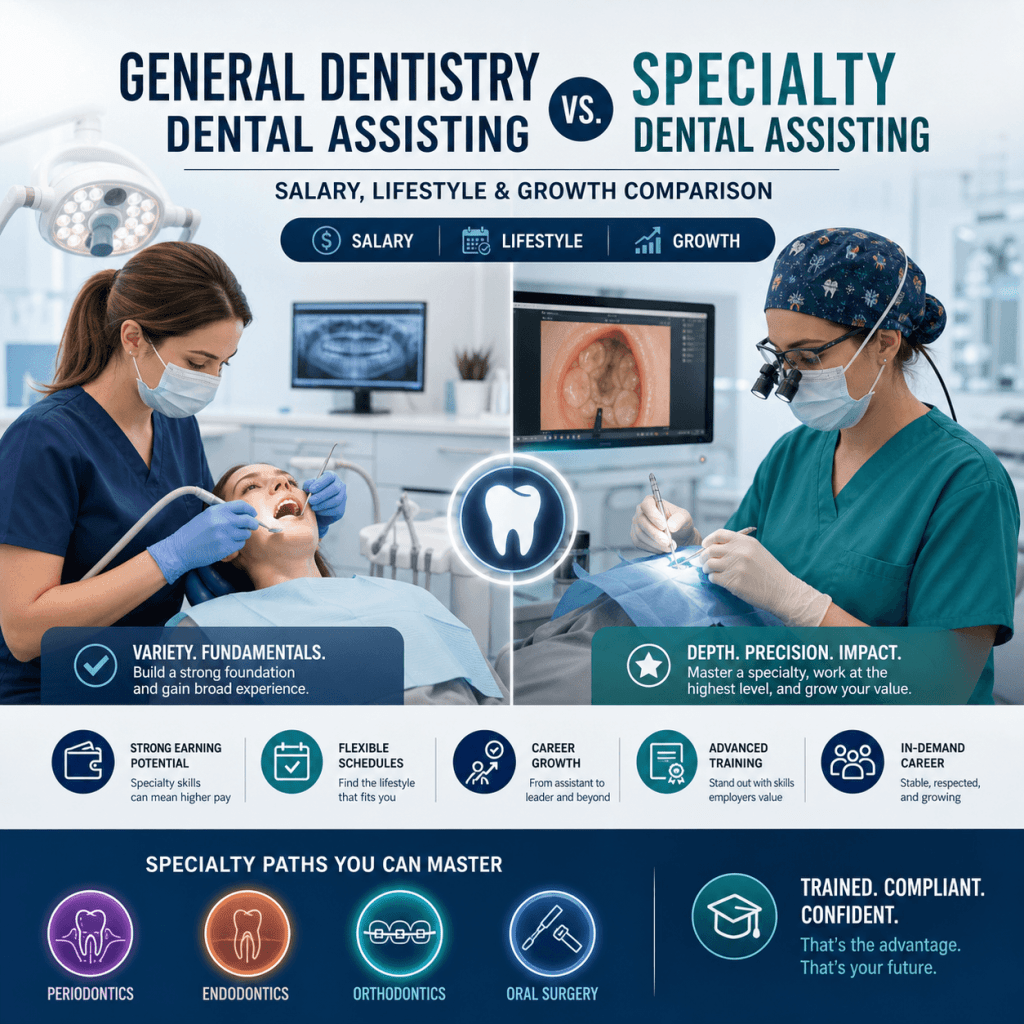
If your goal is to grow beyond entry-level assisting in Florida, Florida-aligned education is often the cleanest route. Expanded functions can unlock higher responsibility, greater trust in the operatory, and stronger career progression within the state.
Limitations to understand
Florida-specific credentials may be less recognized outside Florida without additional steps. If you think relocation is likely, it is smart to plan early for how you will build broader recognition later.
Side-by-side comparison: national vs Florida-specific (what changes in real life)
Here is what typically changes in day-to-day outcomes.
Getting hired quickly in Florida
- Florida-specific: Often aligns most directly with Florida compliance expectations and practical readiness.
- National: Can still help, but it may not answer Florida-specific duty questions on its own.
Maximizing job options nationally
- National: Stronger advantage for multi-state recognition.
- Florida-specific: May require additional steps when you cross state lines.
Unlocking expanded duties
- Florida-specific: Usually the most direct route for Florida expanded functions.
- National: May not automatically translate to expanded duties in Florida.
Training focus (and why blending matters)
- National programs can feel more exam-centered and broad.
- Florida-aligned programs tend to emphasize state compliance and clinical workflow.
In reality, the best outcomes come from training that blends strong knowledge with hands-on clinical readiness, so you are not only qualified on paper but also confident chairside.
Time and cost considerations
Your timeline and cost depend on what you are trying to unlock:
- Fast employability can be achieved with job-ready training and clinical exposure.
- Expanded functions may add time and tuition, but can also add long-term mobility within the practice.
- Budgeting matters, and flexible financing can help you start sooner without waiting for “perfect timing.”
Confidence and performance
Dental practices value assistants who can:
- Work efficiently without constant correction
- Communicate professionally with patients and teammates
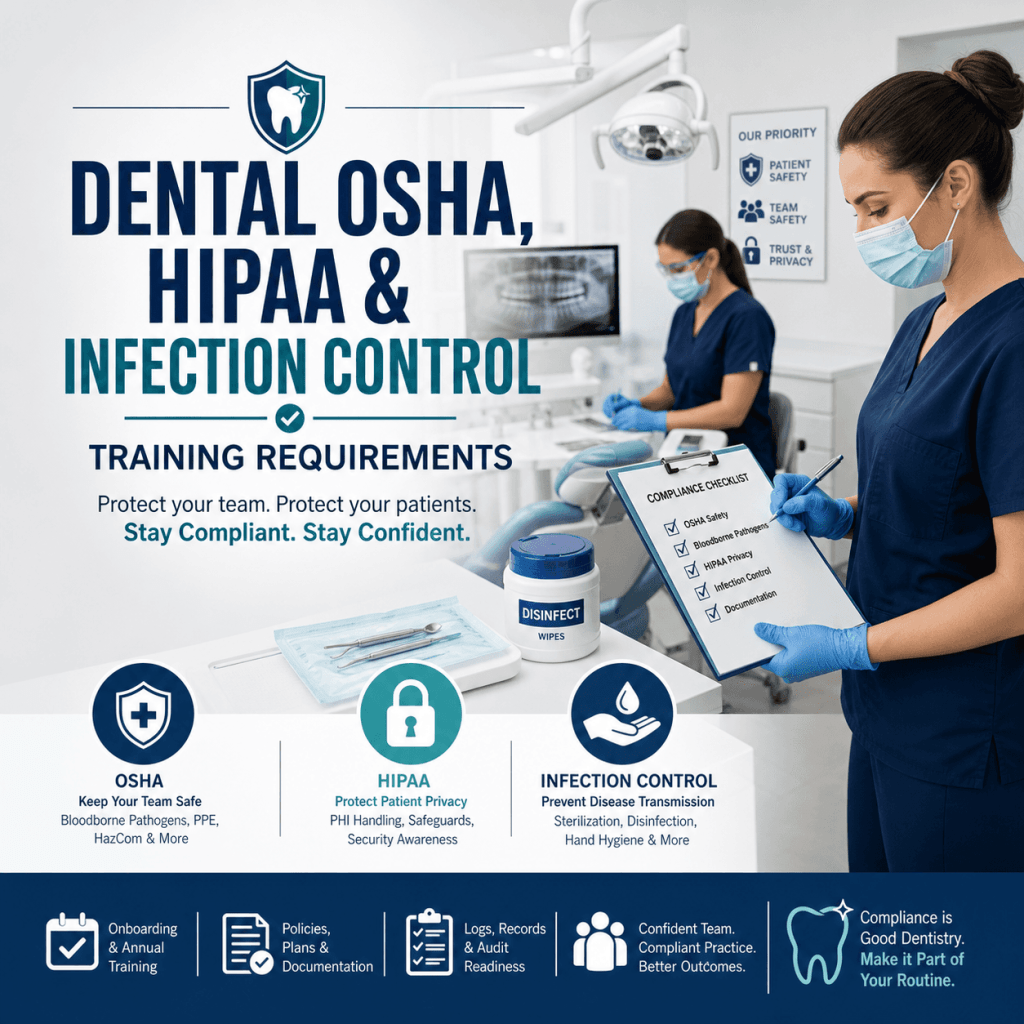
- Follow infection control and safety protocols consistently
- Understand role boundaries and compliance requirements
Credentials help open the door. Confidence and performance help you keep growing once you are inside.
Common scenarios (and the credential path that usually makes sense)
Scenario 1: “I live in Florida and plan to stay here.”
A Florida-specific path is often the most practical choice. It aligns with Florida rules and can position you for expanded functions and long-term growth inside Florida practices.
Scenario 2: “I’m in Florida now, but might move later.”
Consider a blended strategy: become job-ready and compliant for Florida now, then build toward a national credential for portability. This approach avoids delaying your start while still keeping doors open.
Scenario 3: “I want the fastest path into a dental office.”
Focus on training that emphasizes:
- Real clinical workflows
- Compliance basics
- Hands-on skill development
- Internship or externship experience
Speed is not only about finishing a course. It is also about being employable with confidence.
Scenario 4: “I want to do more than entry-level assisting.”
Look for Florida-aligned expanded functions training and advanced coursework that supports higher responsibility. If your goal is career mobility, plan your credential steps with progression in mind, not just the quickest entry.
Scenario 5: “I’m switching careers and need flexibility.”
A program that blends remote learning with in-person clinical immersion is often the best fit. Online learning supports schedule flexibility, while hands-on training builds the confidence you will need in a real operatory.
What dental practices look for when hiring (beyond the credential name)
Credentials matter, but hiring decisions are rarely based on a credential name alone. Practices are looking for someone who can contribute safely and efficiently. Common qualities offices want include:
- Infection control awareness and consistent protocol habits
- Chairside efficiency (anticipation, setup, transfer, clean breakdown)
- Professional communication with patients and the clinical team
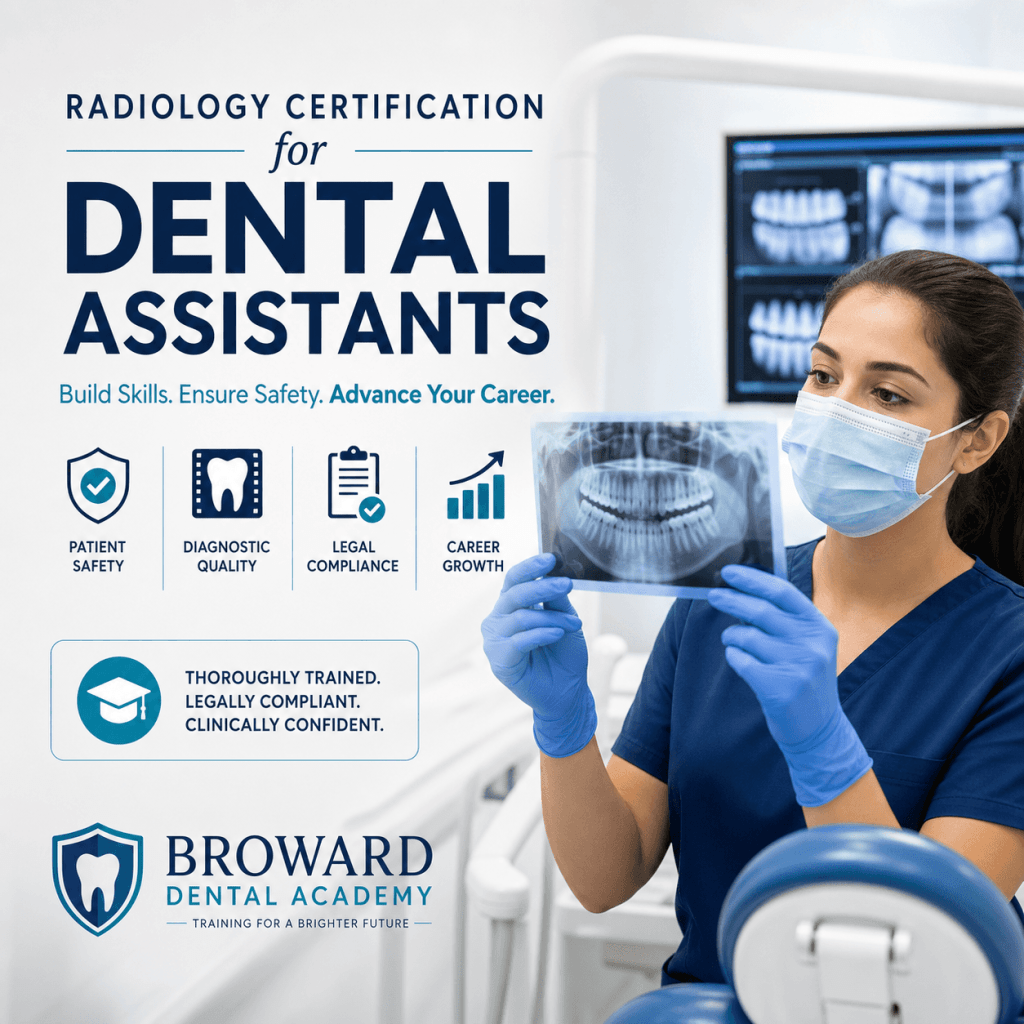
- Radiography familiarity when applicable to the role and training
- Ethical judgment and respect for scope-of-practice boundaries
- Coachability and calm performance in a fast schedule
Two traits stand out in high-performance practices:
- Legally compliant
- Clinically confident
Internships and externships matter because they reduce risk for the employer. A candidate who has already experienced real patient flow, real time pressure, and real team expectations usually transitions faster and requires less remediation. For those aiming to enhance their chairside assisting skills, seeking further education or specialized training can open doors to more advanced roles within the dental field.
How Broward Dental Academy helps you choose and prepare for the right credential route
Broward Dental Academy (BDA) supports students who want to enter and advance in one of healthcare’s fastest-growing industries with training that is built for modern dental practice expectations. BDA offers a wide range of dental courses and advanced dental training designed to help students become:
- Thoroughly trained
- Legally compliant
- Clinically confident
Students are not only prepared to pass an exam. They are prepared to thrive in a high-performance dental office by learning how to think critically, act ethically, and perform confidently.
A learning model built for real-world readiness
BDA programs deliver a complete educational experience through:
- Immediate immersion in online and clinical settings
- Modern eLearning lesson plans for remote training
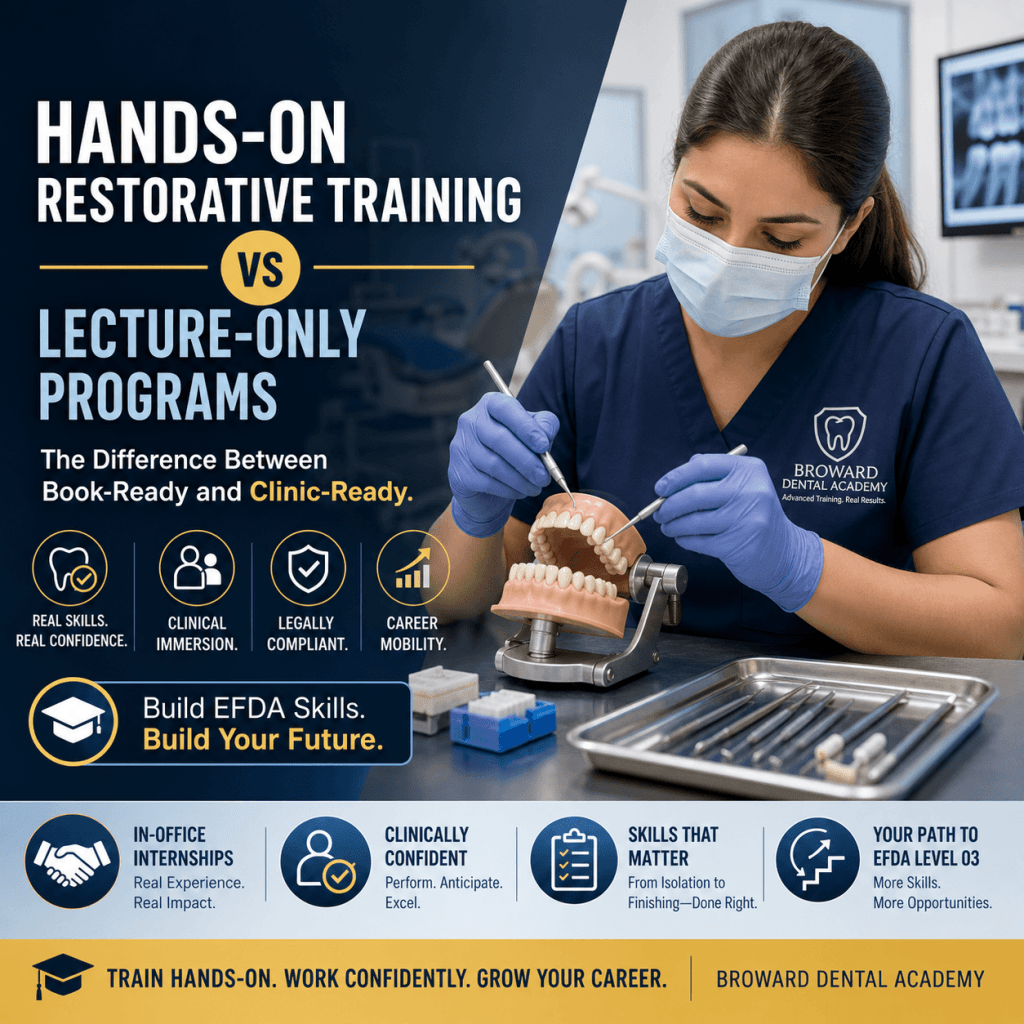
- Hands-on clinical experience to develop chairside skills
- In-office internships to build polish, speed, and confidence in live practice environments
BDA also offers flexible financing options to help students start sooner, which is important when you are ready to move into a stable, respected healthcare role without unnecessary delays. To explore the broader credential and compliance landscape, you can also visit the pillar resource: Dental Certifications, Licensing & Compliance.
A simple step-by-step plan to decide your credential path
Step 1: Confirm where you plan to work
- Florida only for the foreseeable future
- Florida now, possibly other states later
Step 2: Choose your desired dental career path
Whether you choose national or Florida-specific dental assistant credentials, ensure that you are prepared to meet the expectations of the role.
Depending on your career aspirations, BDA provides specialized courses tailored for various roles within the dental field. For instance:
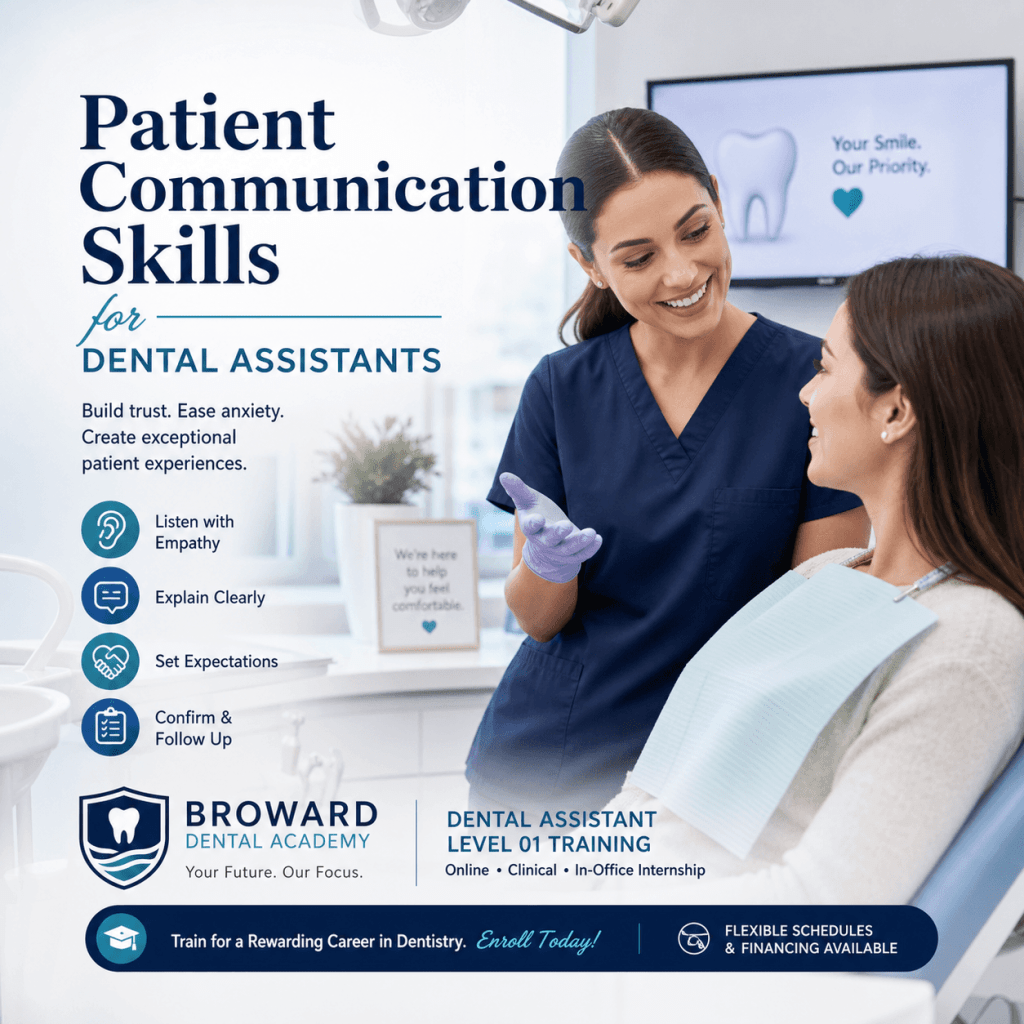
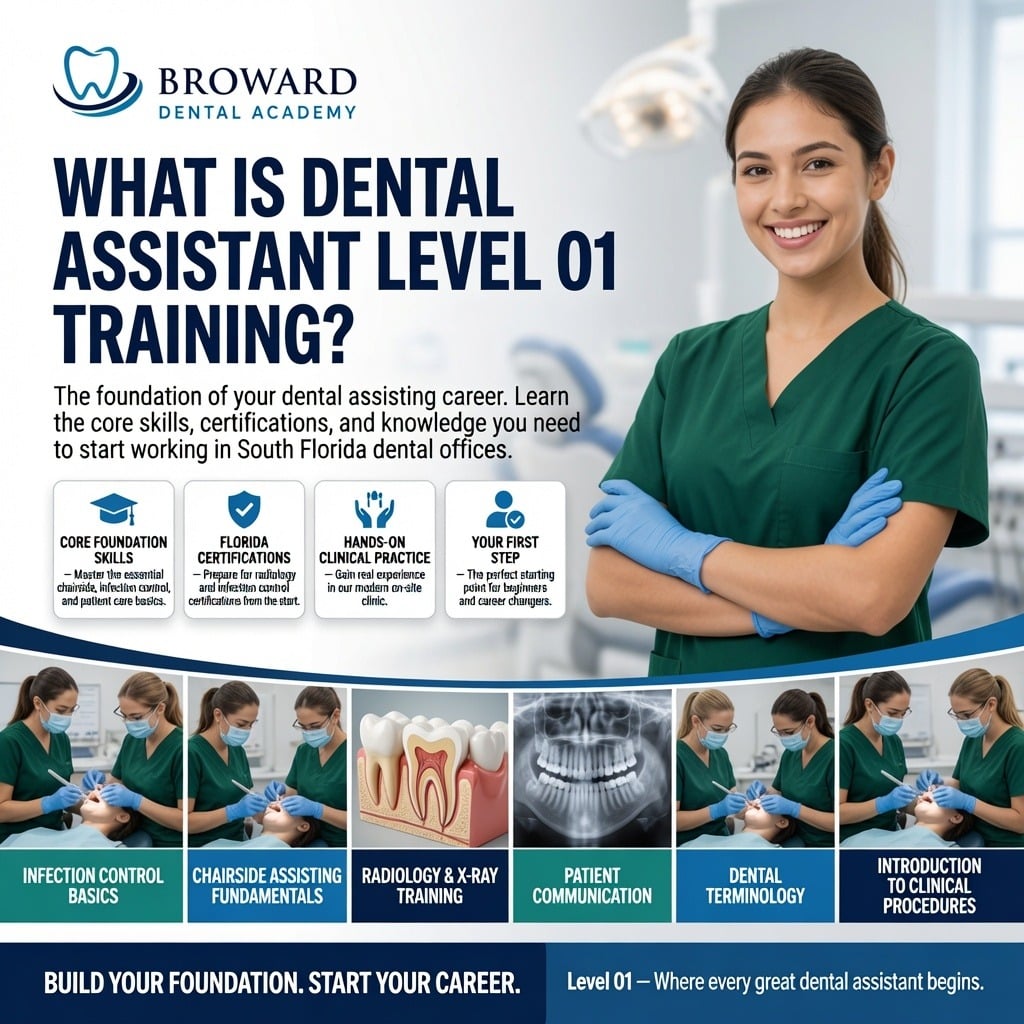
- If you’re aspiring to be a Dental Assistant Level 01, BDA has a comprehensive program that covers all foundational aspects.
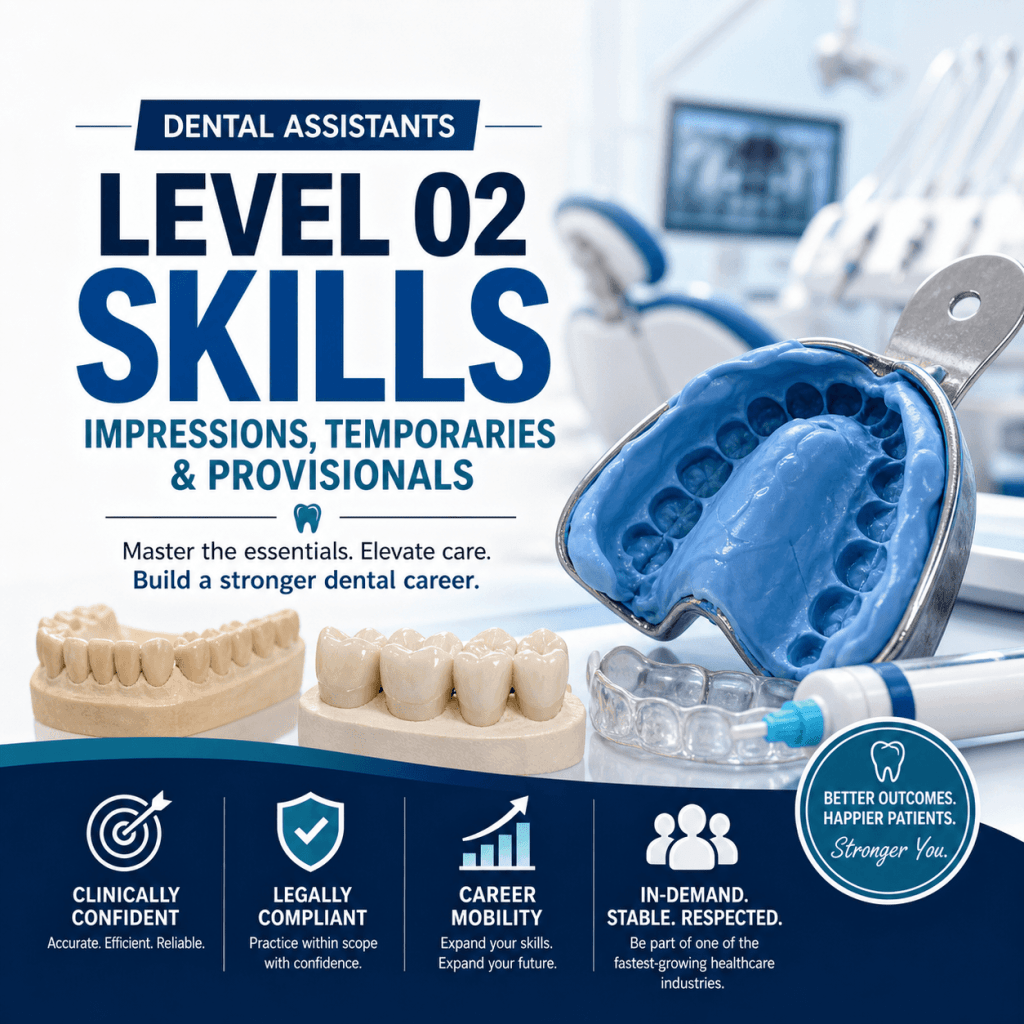
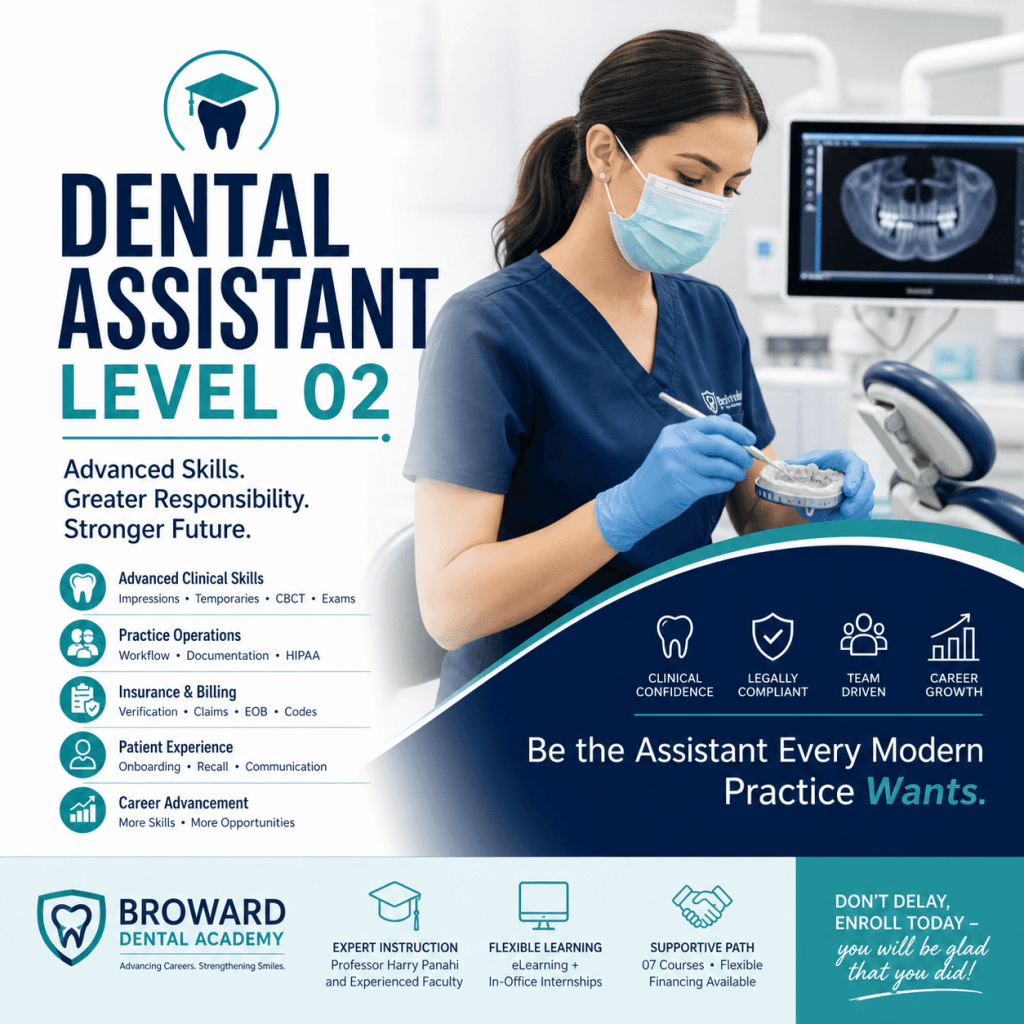
- For those looking to advance their skills further, the Dental Assistant Level 02 course is an ideal choice.
- If your goal is to specialize as a Dental Assistant Hygienist Level 03, BDA offers advanced training that equips you with the necessary skills and knowledge.
Step 2: Decide your target role
- Entry-level chairside assisting
- Expanded functions and advanced responsibilities
Step 3: Match credentials to allowed duties
Choose a route that aligns with what you want to do in the operatory, not just what looks good on a resume.
Step 4: Choose a program built for compliance and real workflow exposure
Prioritize training that includes hands-on clinical skill-building and internship experience, so you are prepared for the pace and expectations of a real office.
Step 5: Set a timeline and budget
Be realistic about how fast you want to start. If budget is the main blocker, consider flexible financing so you can build momentum.
Step 6: Enroll and start building experience
Momentum matters in a growing industry. The earlier you begin structured training and clinical exposure, the faster you can move from “interested” to “employable.”
Wrap-up: the best credential is the one that matches your Florida goals (and keeps doors open)
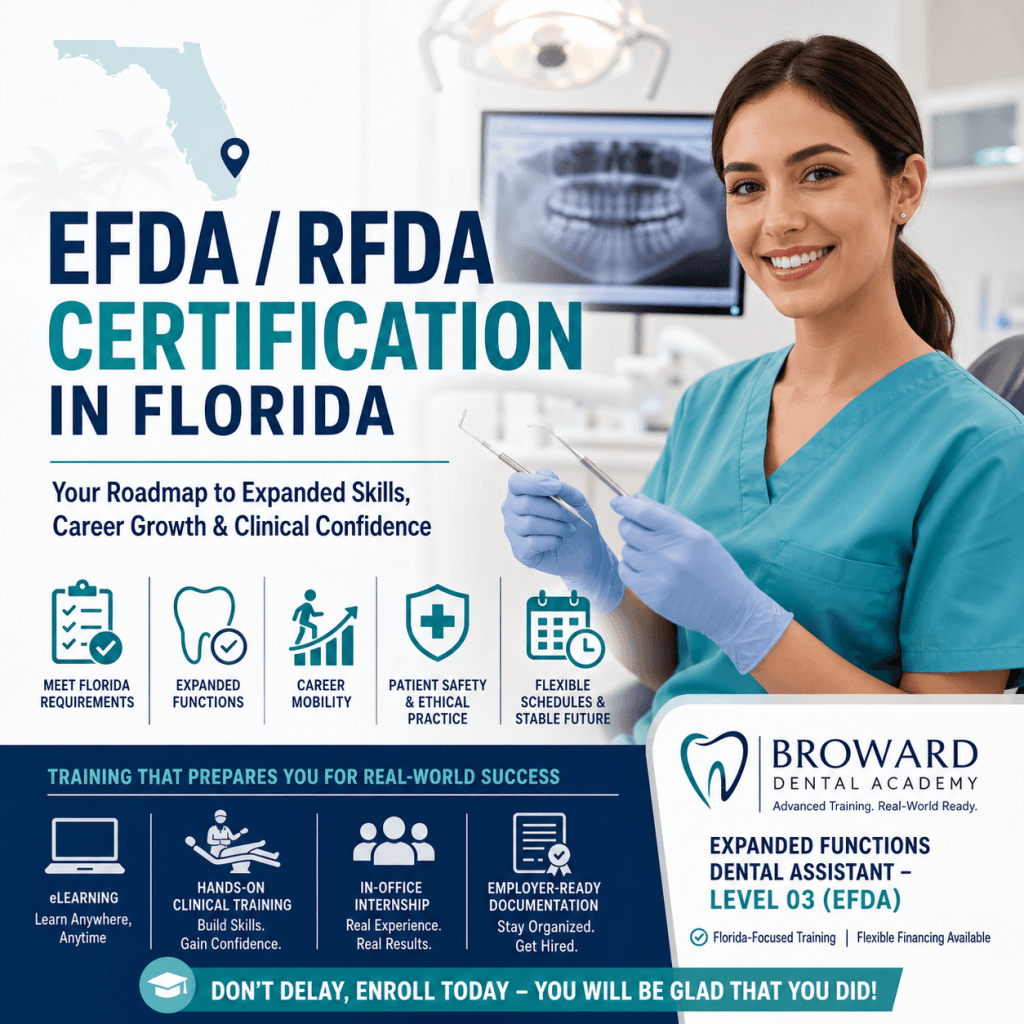
Florida-specific credentials are often the most direct way to stay compliant and job-ready in Florida, especially if you want expanded functions and long-term growth in Florida practices. National credentials are valuable for portability and broader recognition, especially if you may move or want multi-state flexibility. The right choice depends on your real goals: where you will work, what you want to do in the office, and how quickly you want to start. Dentistry offers stable income potential, flexible schedules, a respected role in healthcare, and real career mobility through expanded functions. If you are ready to move forward, do not delay. Don’t delay, enroll today. You will be glad that you did. Broward Dental Academy can help you become thoroughly trained, legally compliant, and clinically confident.
FAQs (Frequently Asked Questions)
Why are dental assistant credentials especially important in Florida?
In Florida, dental assistant credentials directly affect your legal scope of practice, hiring speed, and level of responsibility in a dental office. Credentials ensure you are thoroughly trained, legally compliant, and clinically confident, which reduces risk for employers and supports patient safety and infection control.
What is the difference between a national dental assistant credential and a Florida-specific credential?
A national credential is earned through a nationally recognized exam or organization signaling standardized knowledge across states. A Florida-specific credential is tied to Florida laws and training pathways that define what duties you can legally perform in Florida dental practices, especially for expanded functions like orthodontics or oral surgery.
Do I need a national credential, a Florida credential, or both to work as a dental assistant in Florida?
It depends on your goals: prioritize Florida-specific credentials for immediate employment and expanded functions within Florida; consider national credentials if you want career portability across states; some may benefit from obtaining both to maximize opportunities and compliance.
What types of duties do Florida dental assistants typically perform at different responsibility levels?
Entry-level duties include chairside support like room setup, instrument transfer, suctioning support, sterilization workflow, and basic charting. Expanded functions require additional Florida-specific training for tasks such as periodontics or orthodontics, involving higher responsibility and documented competency.
How do dental assistant credentials impact career growth and job readiness in Florida?
Credentials aligned with Florida regulations build clinical confidence, critical thinking, ethical decision-making, and reliable performance under pressure. This compliance advantage helps assistants gain employment faster, take on expanded roles safely, and advance their careers in a growing healthcare field.
What factors should I consider when choosing the best credential path as a dental assistant in Florida?
Consider where you plan to work (Florida-only vs multi-state), the duties you want to perform (entry-level vs expanded functions), your timeline to get hired, budget and financing options, and your preferred learning style (online plus hands-on clinical training) to select the smartest credential pathway aligned with your career goals.
In conclusion, investing in the right dental assistant credentials will pave the way for your future success in the dental field.