What an Oral Surgery Dental Assistant Really Does (Day-to-Day)
An oral surgery dental assistant (also called an oral surgery assistant or oral surgical assistant) supports oral and maxillofacial surgeons before, during, and after surgical procedures. Compared with general dentistry assisting, an oral surgery dental assistant career is typically more surgical in nature, more focused on sterile workflow, and often involves sedation or recovery support depending on the practice and state rules.
Typical procedures you may assist with
In many oral surgery settings, your week can include a high volume of:
- Simple extractions and surgical extractions
- Wisdom teeth removal (third molar surgery)
- Dental implants (single units to full-arch protocols depending on the practice)
- Bone grafting and ridge preservation
- Biopsies and lesion evaluation support
- Exposure and bonding (often in coordination with orthodontic treatment)
- Suture removal and post-op checks
What your day can include
Most oral surgery assistants quickly become experts at flow. A typical day can involve:
- Room turnover and rapid operatory resets
- Sterile setup and opening surgical packs correctly
- Patient intake, health history confirmation, and chairside support
- Taking and documenting vitals (office protocol and training dependent)
- Chairside charting and procedure documentation
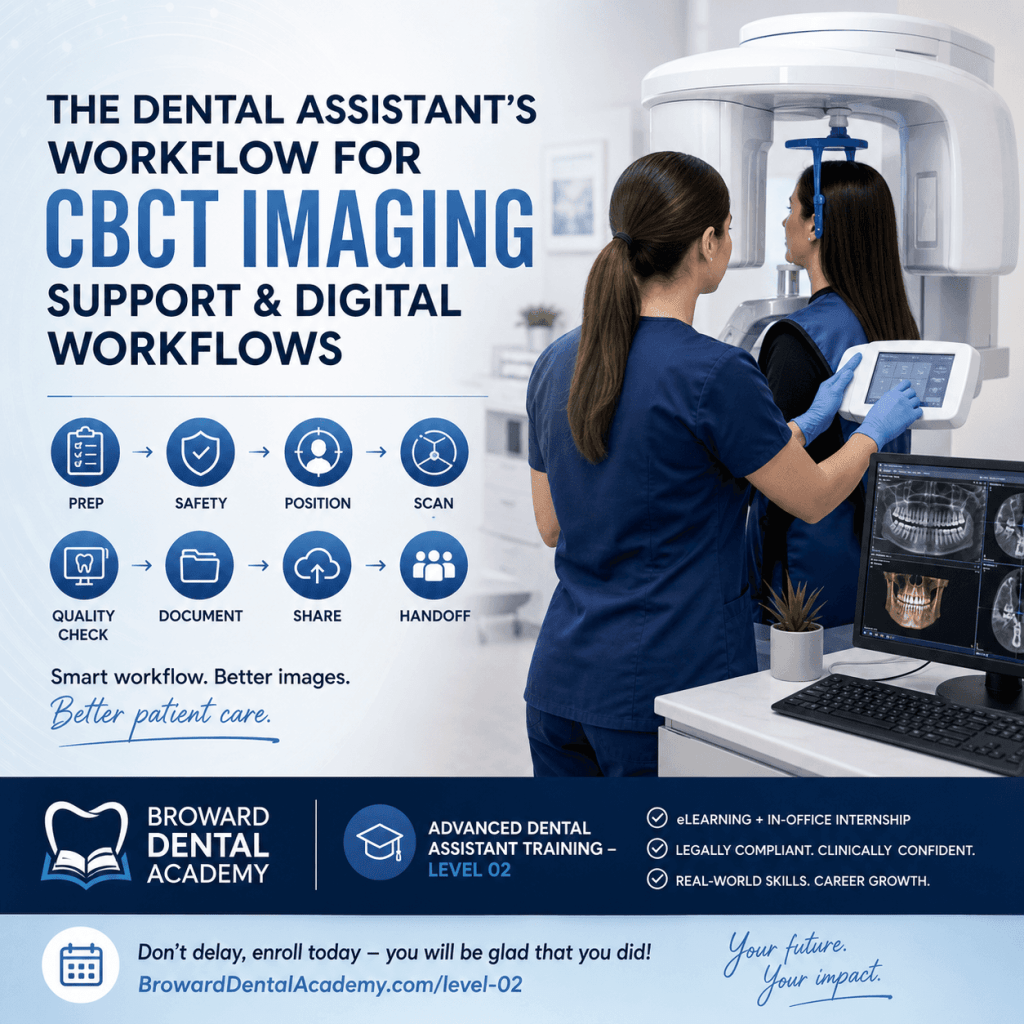
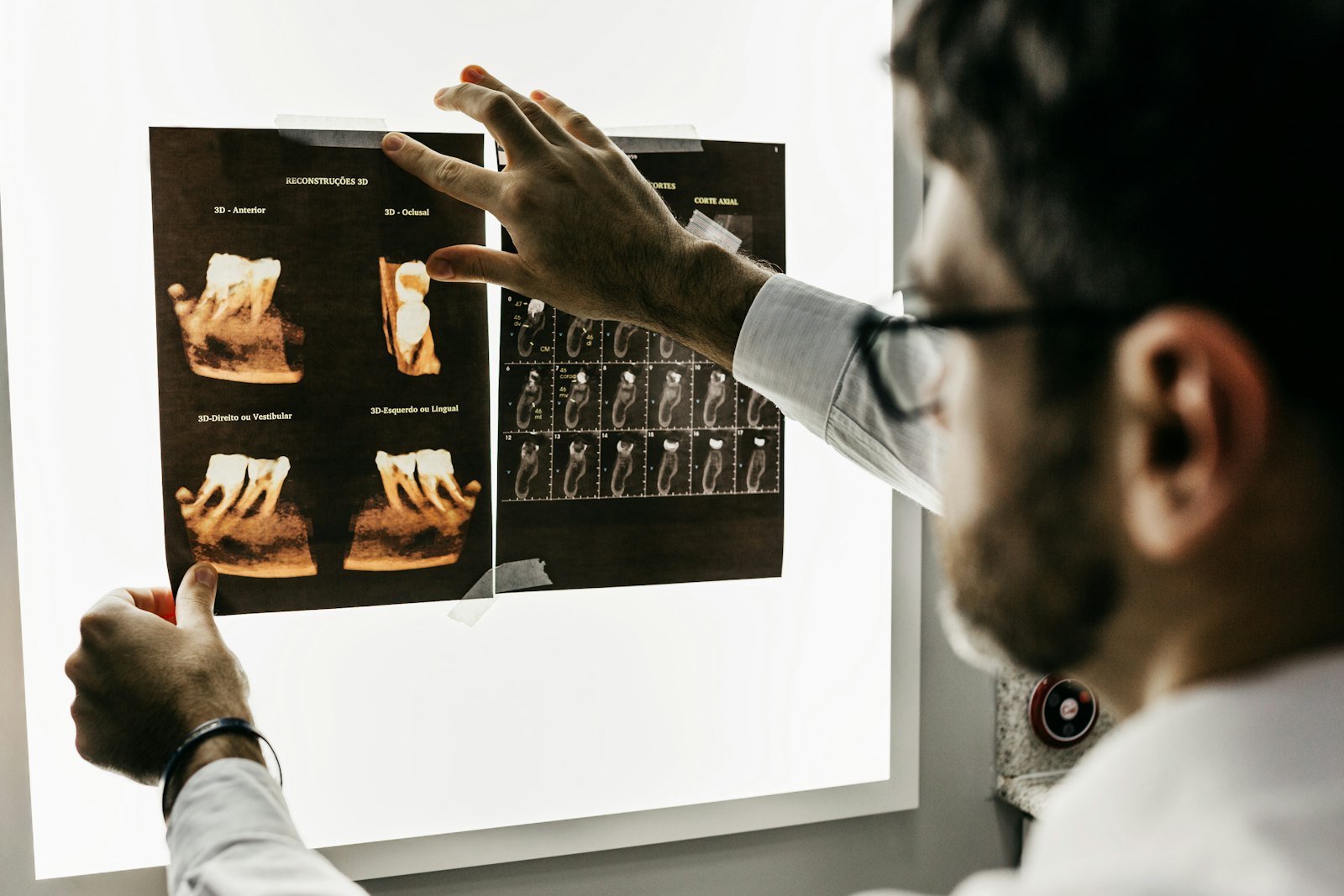
- Imaging support (for example, panoramic imaging or CBCT workflow depending on the practice)
- Efficient instrument transfer, suction, irrigation, and retraction
- Post-op instructions, medication reminders, and follow-up scheduling
- Supply tracking and ordering to keep surgical days running smoothly
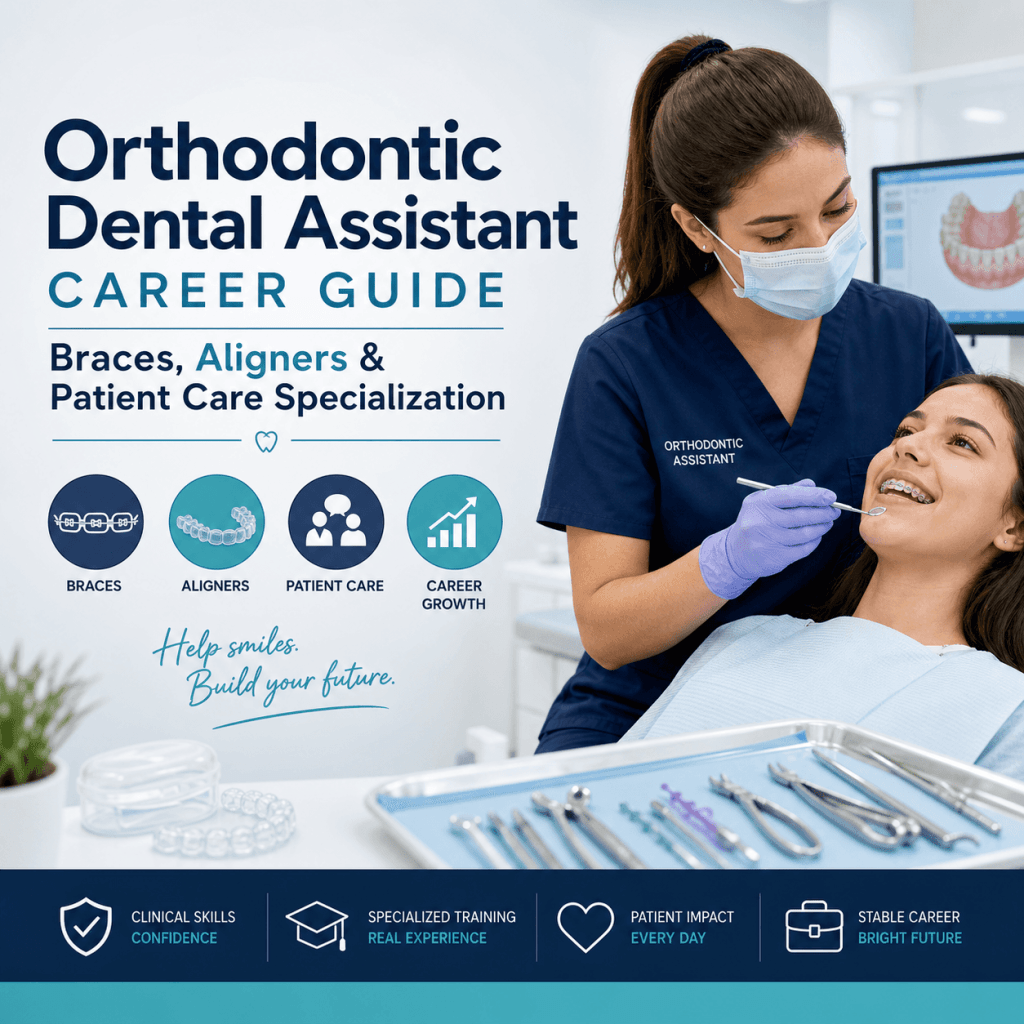
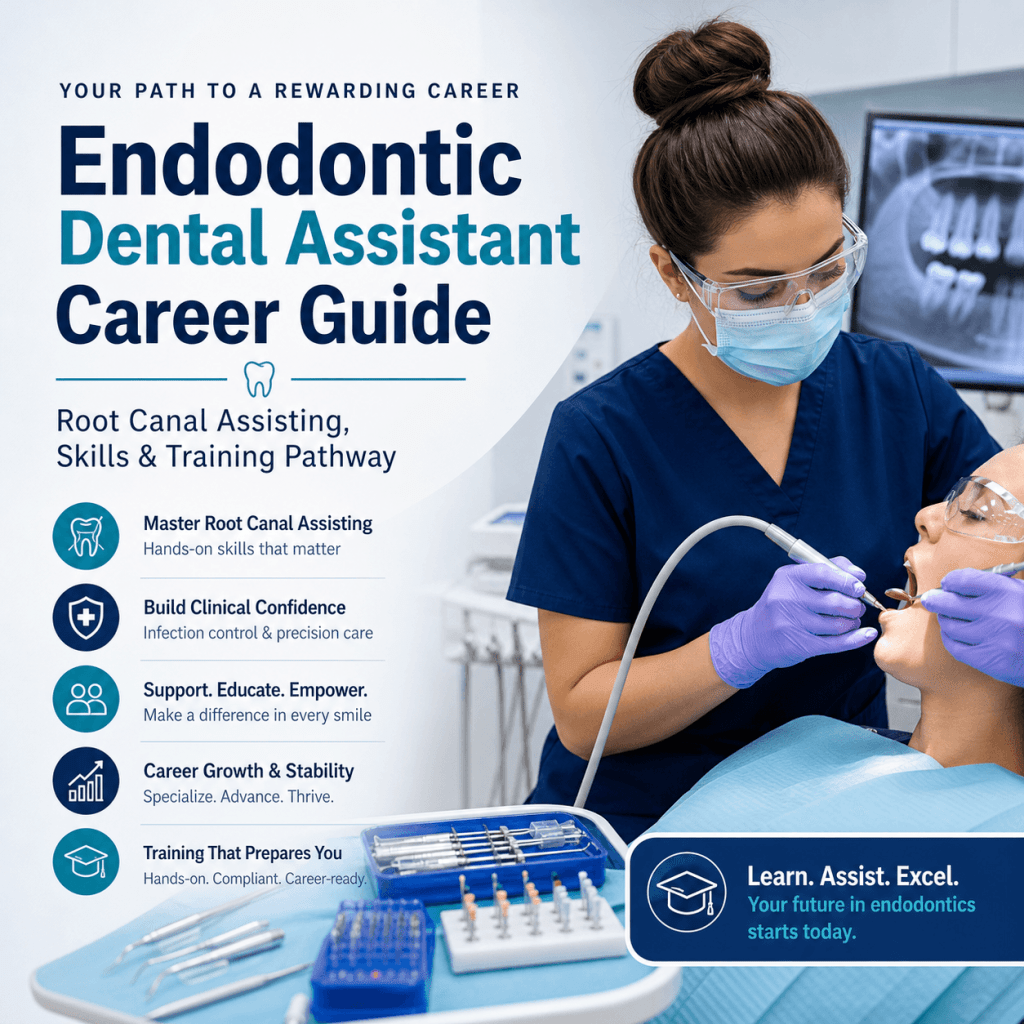
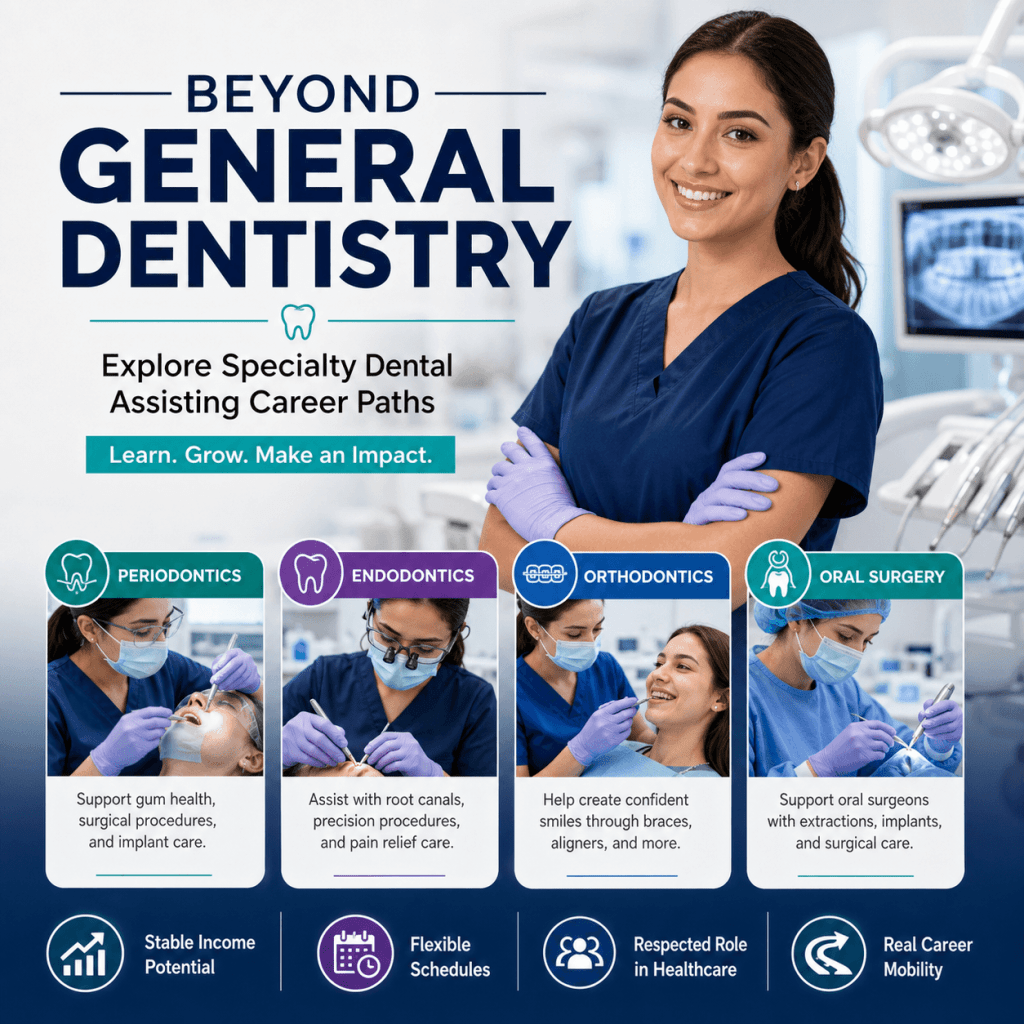
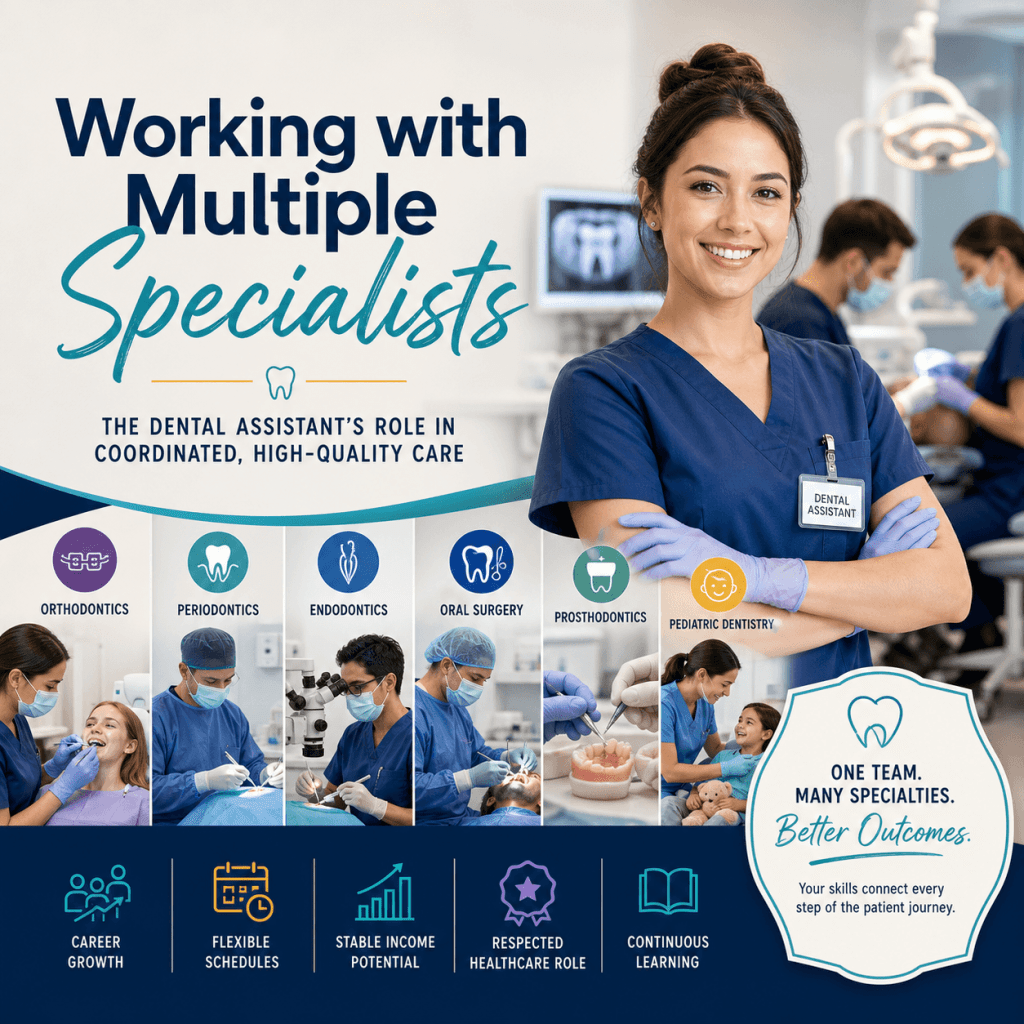
The role of an oral surgery dental assistant is quite diverse as it also intersects with other areas of dentistry such as endodontics which deals with tooth pulp diseases or orthodontics which focuses on teeth alignment.
Where you work
Oral surgery assistants commonly work in:
- Oral and maxillofacial surgery offices
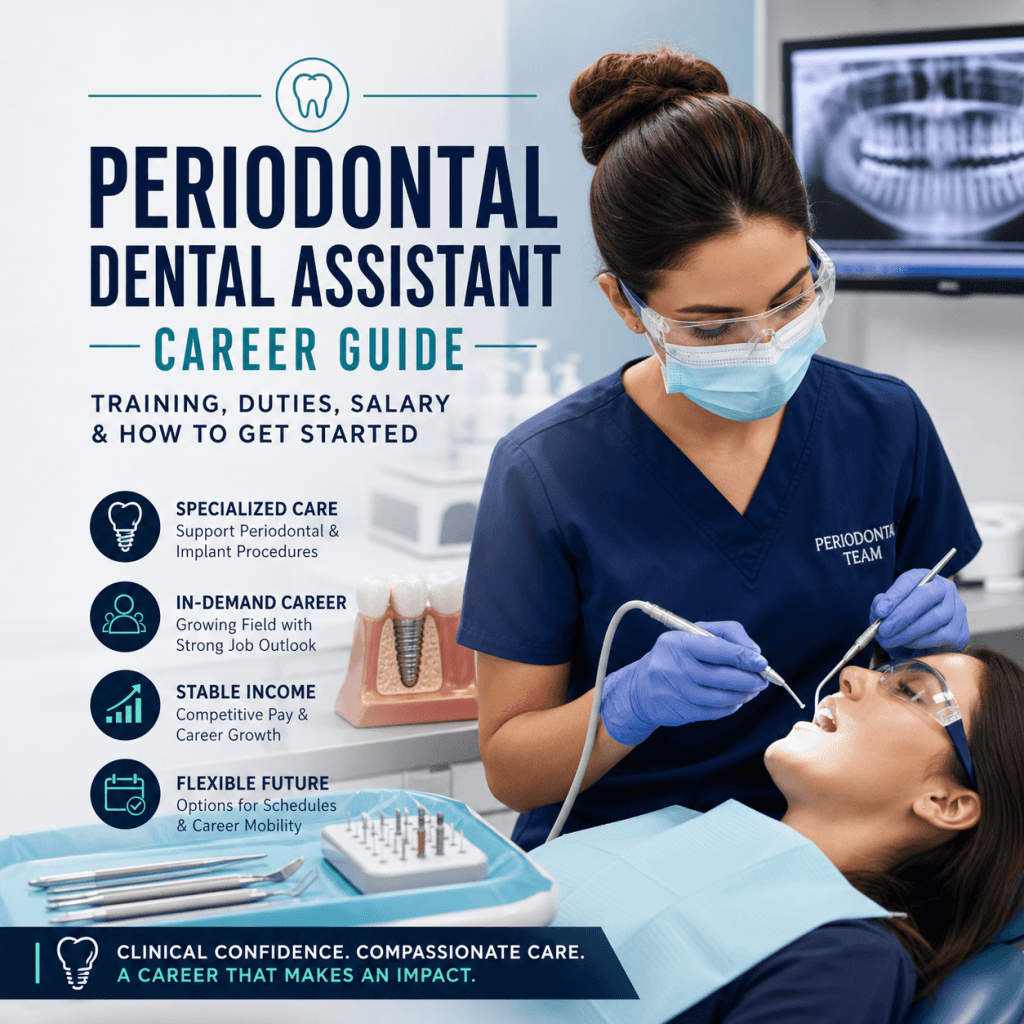
- Multi-specialty dental practices with surgical departments, including periodontics
- Implant-focused clinics and surgical centers
It is often a fast-paced, procedure-heavy environment, especially in offices that schedule high surgical volume.
This guide outlines the essentials of an oral surgery dental assistant career, including daily responsibilities and workplace settings.
Why this specialty appeals to many assistants
Many assistants choose oral surgery because it offers:
- A high skill ceiling and constant learning
- Variety in procedures and patient needs
- Strong demand for capable, dependable surgical assistants
- A respected role within healthcare teams
- Career mobility into lead roles, specialties, and expanded functions where permitted

Surgical Assisting Skills You’ll Use in Oral Surgery
Oral surgery assisting is about being steady, precise, and proactive. The best assistants do not just “help.” They keep procedures moving safely and smoothly.
Core surgical assisting flow
You will build skills such as:
- Anticipating procedural steps and instrument needs
- Maintaining a clean, organized field
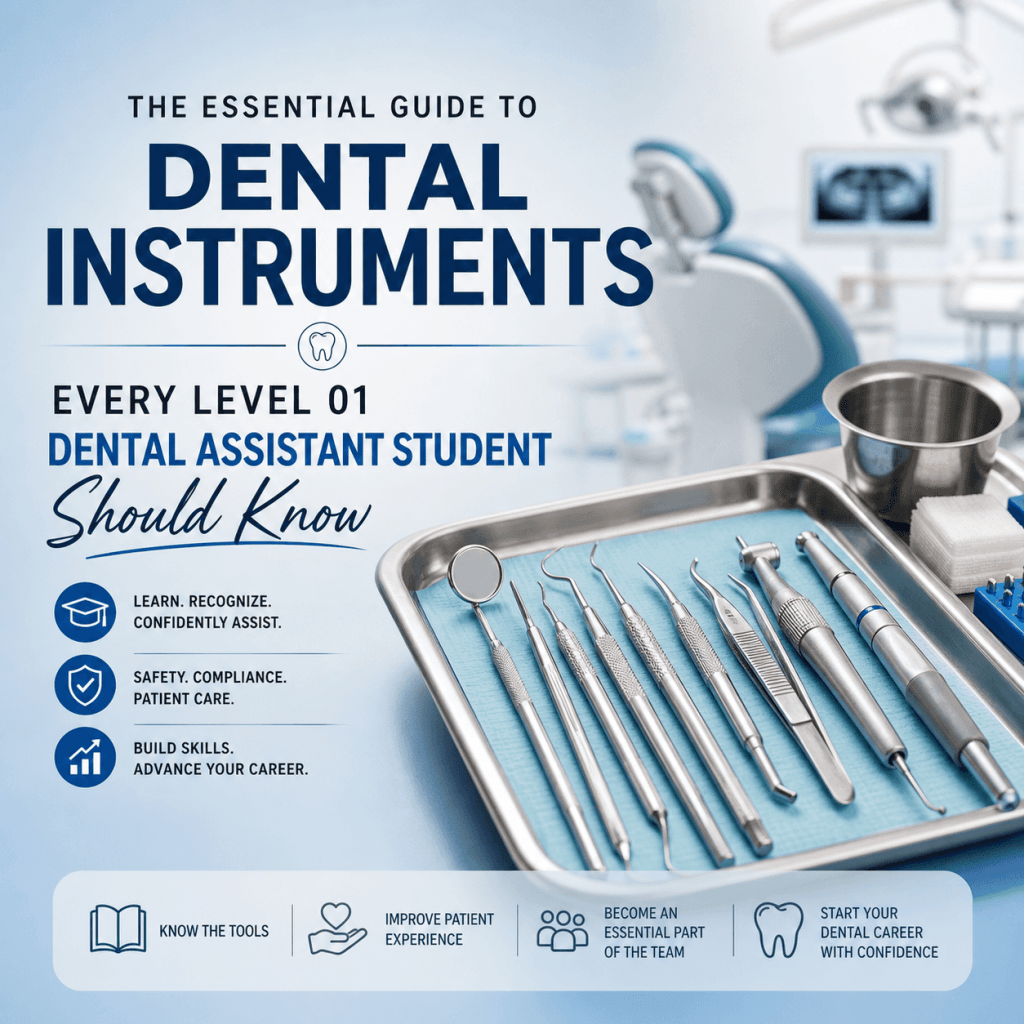
- Efficient instrument transfer and tray management
- Retraction, suction, and irrigation support
- Supporting hemostasis (within your role) and keeping visibility clear
- Managing small details that reduce procedure time and stress
Sterilization and infection control at a surgical standard
Oral surgery offices often run with strict protocols. You will commonly support:
- Instrument processing and correct packaging
- Sterile packs and maintaining sterility during setup
- Surface barriers and operatory disinfection
- Aseptic technique basics (opening sterile items, minimizing contamination, clean-to-dirty workflow)
To ensure the highest standards of sterilization and infection control, these practices must be strictly adhered to.
Locations of Practice
The demand for oral surgery assistants is not limited to one area. These professionals can find opportunities in various locations. For instance, there are several locations across the country where such practices are thriving.
Patient communication during surgery
Oral surgery patients can be anxious, embarrassed, or fearful. Assistants often become the calm voice in the room by:
- Explaining what sensations are normal (pressure, vibration, sounds)
- Coaching breathing and relaxation when appropriate
- Reinforcing post-op expectations for pain and swelling
- Clarifying when to call the office if symptoms change
Post-op workflow that protects patients and the practice
Post-op support is a major part of the job. Depending on office protocol, you may reinforce:
- Gauze placement and bleeding control basics
- Diet guidance and activity restrictions
- Medication reminders and safe timing
- Follow-up scheduling and suture check appointments
- Red-flag symptoms that require contacting the office
Team coordination
Oral surgery runs best when the whole team is synchronized. You will coordinate closely with:
- The surgeon
- The anesthesia provider (if applicable)
- Other assistants and sterilization support
- Front office team for scheduling, instructions, and follow-ups
Sedation Support: What Assistants Do (and What Training Matters)
Sedation is common in oral surgery because it supports patient comfort, helps manage anxiety, and enables longer or more complex procedures.
Common sedation types you’ll encounter
What you see day-to-day depends on the practice model, provider credentials, and state regulations:
- Local anesthesia
- Nitrous oxide
- Oral sedation
- IV sedation (scope and assisting expectations vary by office and state rules)
The safety mindset matters
Even if you are not administering sedation, oral surgery assistants are often part of a safety-first environment. That includes:
- Basic airway awareness and positioning concepts (as trained and permitted)
- Recognizing early signs of distress and promptly alerting the clinical lead
- Emergency readiness and knowing where items are stored
- Documentation accuracy and clear communication during handoffs
Sedation support is not the place for guesswork. Being thoroughly trained, legally compliant, and clinically confident protects patients and strengthens your value in a high-performance practice.
Why structured training and real exposure matter
Sedation workflows have details that are easy to miss until you see them repeatedly in real clinical settings. The right training and supervised clinical exposure can:
- Reduce avoidable mistakes
- Build calm, consistent habits under pressure
- Help you learn how strong teams run surgical days efficiently
Traits That Make You a Great Oral Surgery Assistant
Oral surgery is not “harder” than other specialties, but it is less forgiving of disorganization. These traits tend to stand out.
- Comfort with fast-paced procedures and learning step-by-step surgical sequences
- Attention to detail, especially sterility, documentation, and post-op accuracy
- Strong communication and ethics, including privacy and professional boundaries
- Physical stamina and ergonomics, since procedures can involve long periods standing
- Coachability and critical thinking, anticipating needs, prioritizing tasks, and troubleshooting equipment quickly
Education Pathways: How to Become an Oral Surgery Dental Assistant
There are a few common routes into oral surgery assisting, and your best path depends on your background and how quickly you want to specialize.
Common entry routes
Many oral surgery assistants start by:
- Completing a dental assisting program, then specializing
- Entering through on-the-job training (varies by office and state)
- Transitioning from general dentistry into oral surgery once fundamentals are strong
What employers look for now
More practices are looking for assistants who can contribute quickly and safely. Common expectations include:
- Hands-on clinical readiness and comfort in procedure rooms
- Strong compliance habits and consistent infection control
- Familiarity with surgical setups and turnover speed
- Confidence supporting patient flow and post-op instructions
- Comfort around sedation workflows, within legal scope
How specialty dental assisting training can shorten the learning curve
Oral surgery has a rhythm and a setup logic that can take months to learn if you are only learning it “as you go.” Specialty-focused training can help you build:
- Repeatable setup habits
- Better procedural anticipation
- Confidence in surgical room flow
What “immediate immersion” training looks like
Programs that blend online learning with clinical settings can help you connect concepts to real patient care, faster. This style of training supports modern practice readiness because you are not learning in isolation.
Why internships matter
Internships help you build:
- Speed with sterile setup and room turnover
- Confidence with real patients and real schedules
- Professional references in a surgical environment
- A clearer sense of whether oral surgery is your long-term fit
What You’ll Learn in Oral Surgery Specialty Training (What Employers Expect)
Oral surgery offices rely on repeatable systems. Training that mirrors real practice expectations can make you noticeably more hire-ready.
Procedure setup mastery
Depending on office protocols and your role, training can include:
- Building surgical trays and knowing what belongs where
- Surgical handpiece basics and common burs (as applicable)
- Implant kit organization and setup flow
- Sterile field setup and maintaining sterility
- Suturing materials familiarity and follow-up workflow support
Sedation and recovery workflows
Within your permitted scope and office protocol, you may learn:
- How vitals and documentation are handled in surgical settings
- Typical recovery flow and discharge steps (practice-specific)
- Patient escort, instructions review, and post-op readiness checks
Patient experience skills
Strong oral surgery assistants do not just focus on instruments. They support the whole patient experience by reinforcing:
- Pre-op education and what to expect
- Anxiety reduction and calm chairside communication
- Clear post-op guidance and follow-through
Compliance and risk reduction
Oral surgery practices value assistants who naturally work with a compliance mindset:
- Infection control consistency
- Documentation accuracy
- OSHA and HIPAA habits built into daily workflow
Comprehensive training should prepare you to thrive in real practices by building judgment, ethics, and confidence, not just helping you pass an exam.
Career Outlook: Demand, Stability, and Growth in Dental Assisting
Dental is widely viewed as one of the fastest-growing areas in healthcare, and that matters if you are choosing a career for stability and long-term opportunity.
Why oral surgery skills are valued
Oral surgery offices often run high procedure volume. Assistants who can support surgical turnover, sterile workflow, and sedation support (where applicable) are valuable because they help the practice:
- Maintain schedule efficiency
- Deliver consistent patient experience
- Reduce risk through better compliance and documentation
Career mobility
Oral surgery experience can open doors to:
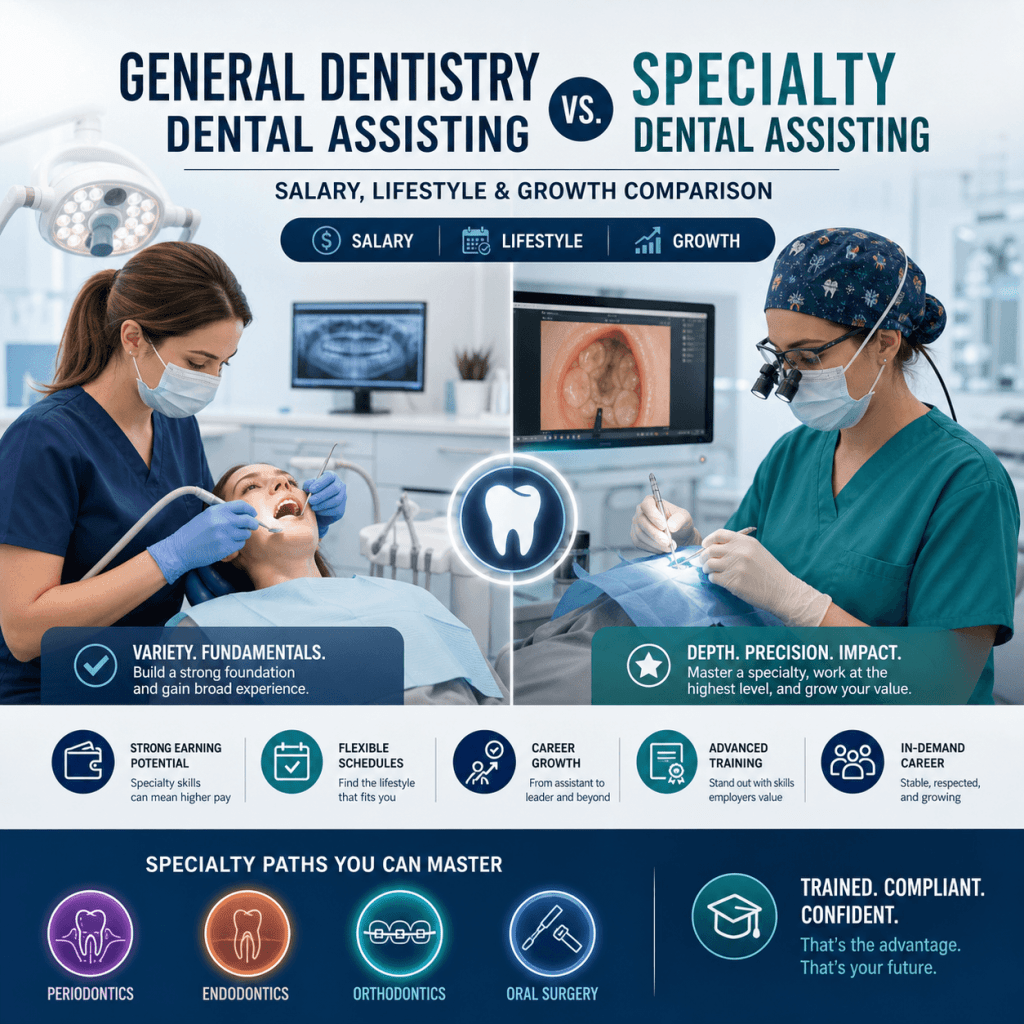
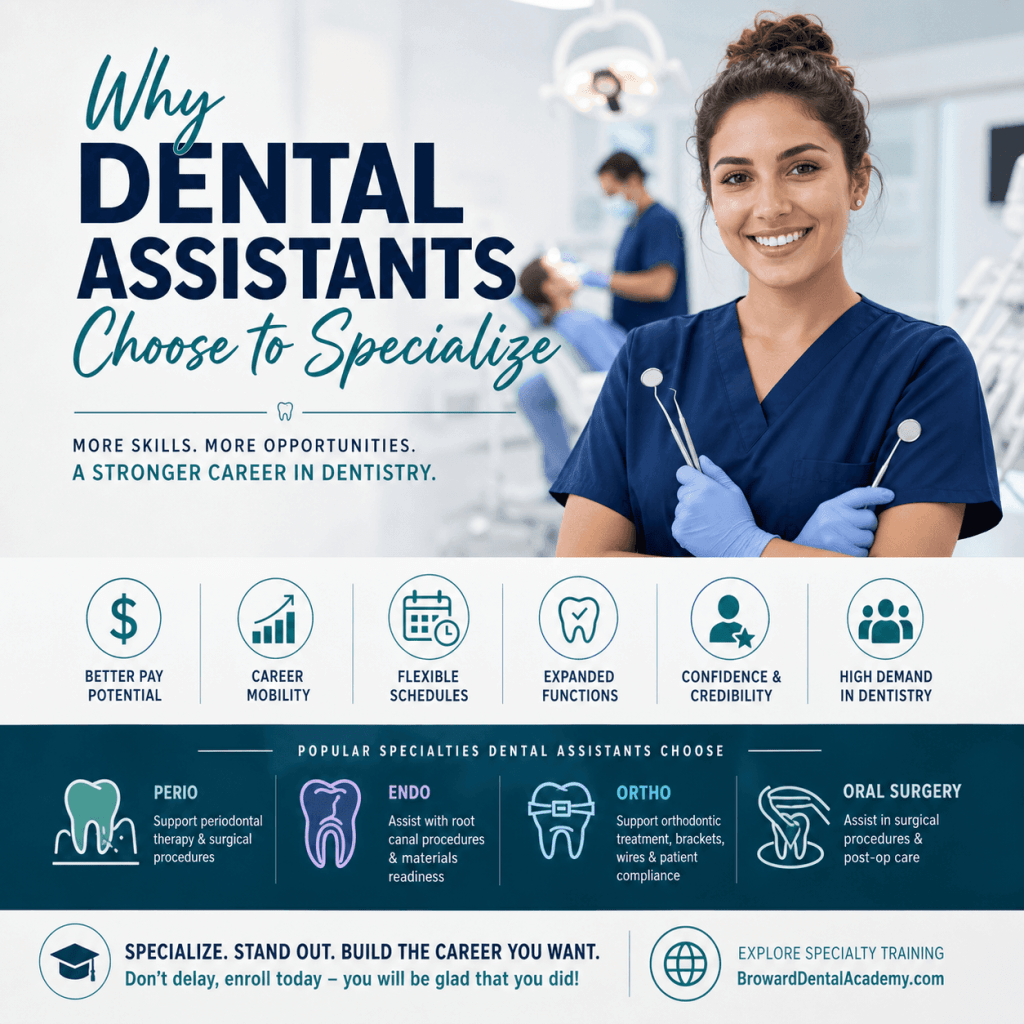
- Specialty transitions (perio, endo, ortho, oral surgery)
- Lead assistant roles and training responsibilities
- Expanded functions where permitted by state rules and credentials
Opportunities to stand out
Assistants who become “the go-to” person for implant setups, surgical flow, or sedation room readiness often earn higher trust and more responsibility. Contributing to smoother operations also strengthens your long-term career value.
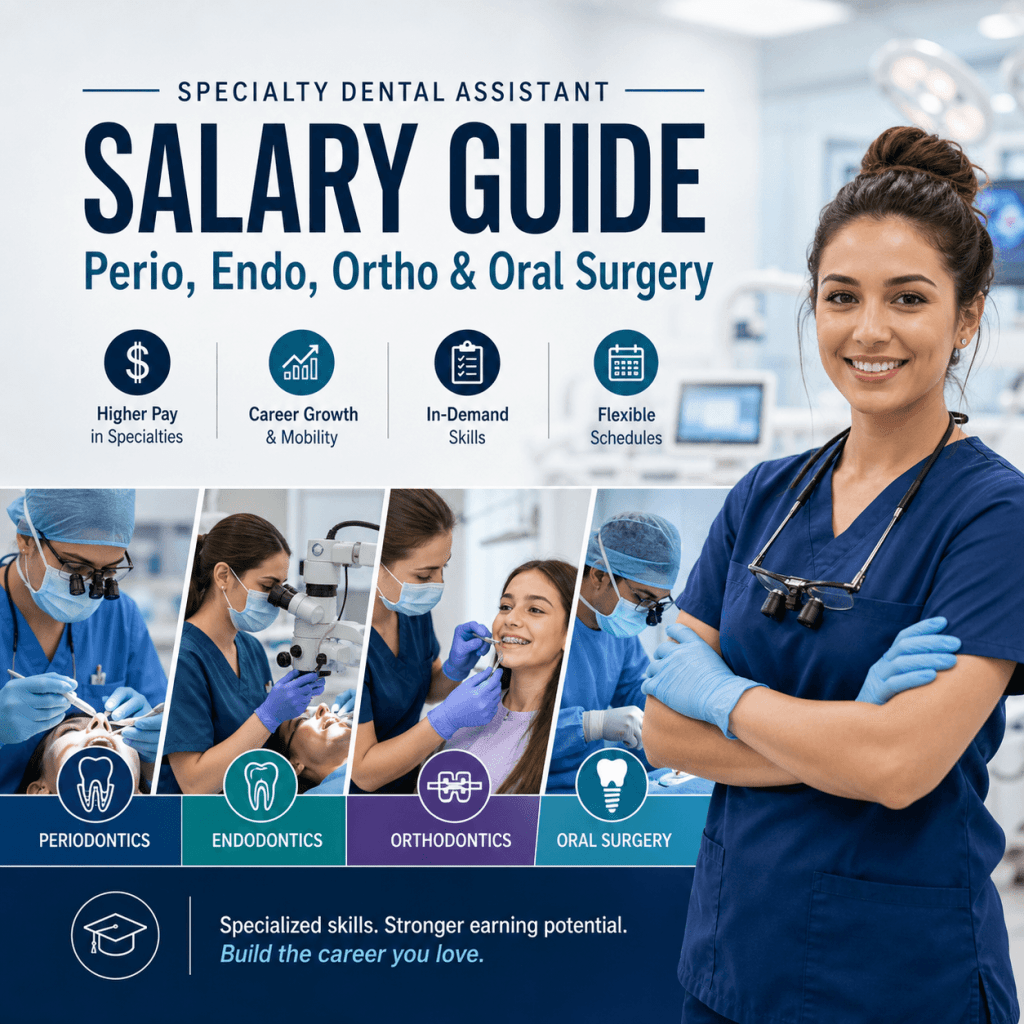
Oral Surgery Dental Assistant Salary: What Affects Pay
Many people search for oral surgery assistant salary or surgical dental assistant salary because pay varies widely based on skill, location, and practice model.
Why salary ranges vary
Key factors that influence pay include:
- Geographic location and local cost of living
- Years of dental assisting and oral surgery experience
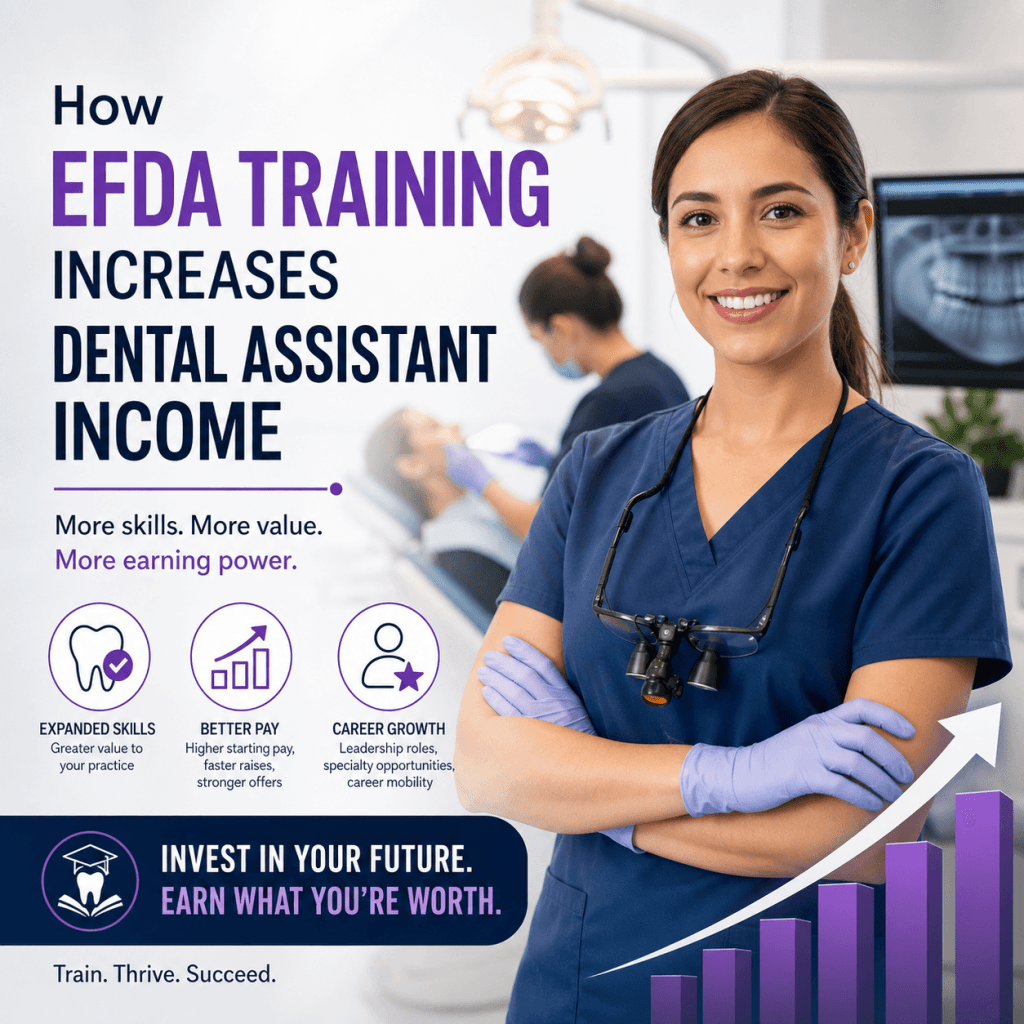
- Certifications and documented competencies, which can significantly enhance earning potential
- Sedation experience and comfort in procedure-heavy schedules
- Procedure complexity (implant-heavy offices may differ from extraction-focused offices)
- Office volume, pace, and scheduling model
How specialty skills can influence earnings
Specialty skill tends to show up in performance. Assistants who can:
- Turn rooms efficiently without cutting corners
- Support strong sedation and recovery flow within protocol
- Reduce surgeon downtime by anticipating needs
- Train newer staff and standardize setups
often become more valuable to the practice over time.
Benefits beyond hourly pay
Compensation is not just an hourly number. Many roles also include:
- Paid time off
- Continuing education support
- Predictable schedules (varies by office)
- Long-term stability in a growing field
How to discuss compensation in interviews
Instead of only stating years of experience, highlight competencies such as:
- Surgical setups and sterile workflow
- Instrument processing and consistency
- Vitals and recovery support (where permitted)
- Patient communication and post-op instruction accuracy
- Measurable impact on efficiency and patient experience
A Realistic “First 90 Days” Roadmap in an Oral Surgery Office
Oral surgery has a learning curve. A simple roadmap can help you judge your progress realistically.
Weeks 1–2: Learn the environment and the surgeon’s rhythm
Expect to focus on:
- Instrument names, tray layouts, and room flow
- Sterile setup steps and opening sterile items correctly
- Charting preferences and documentation style
- The surgeon’s routine and common procedure sequences
Weeks 3–6: Own setup and teardown, build confidence chairside
This is where many assistants start to gain momentum:
- Taking ownership of setups and room turnover
- Assisting confidently in common extractions and wisdom teeth cases
- Improving speed while keeping sterility and safety consistent
Common challenges (and why they are normal)
- The pace can feel intense at first
- Nervous patients require calm, steady communication
- Protocols can be strict, and details matter
Training plus repetition is what builds confidence. The goal is not perfection in week one. The goal is consistent improvement without compromising safety.
What supervisors notice
Strong teams look for:
- Reliability and punctuality
- Accuracy with sterile technique and documentation
- Calm energy and professionalism with patients
- Teamwork, coachability, and willingness to learn
Clinical exposure and internships can make this ramp-up significantly easier because fewer things feel “new” on day one.
How Broward Dental Academy Helps You Prepare for Oral Surgery Assisting
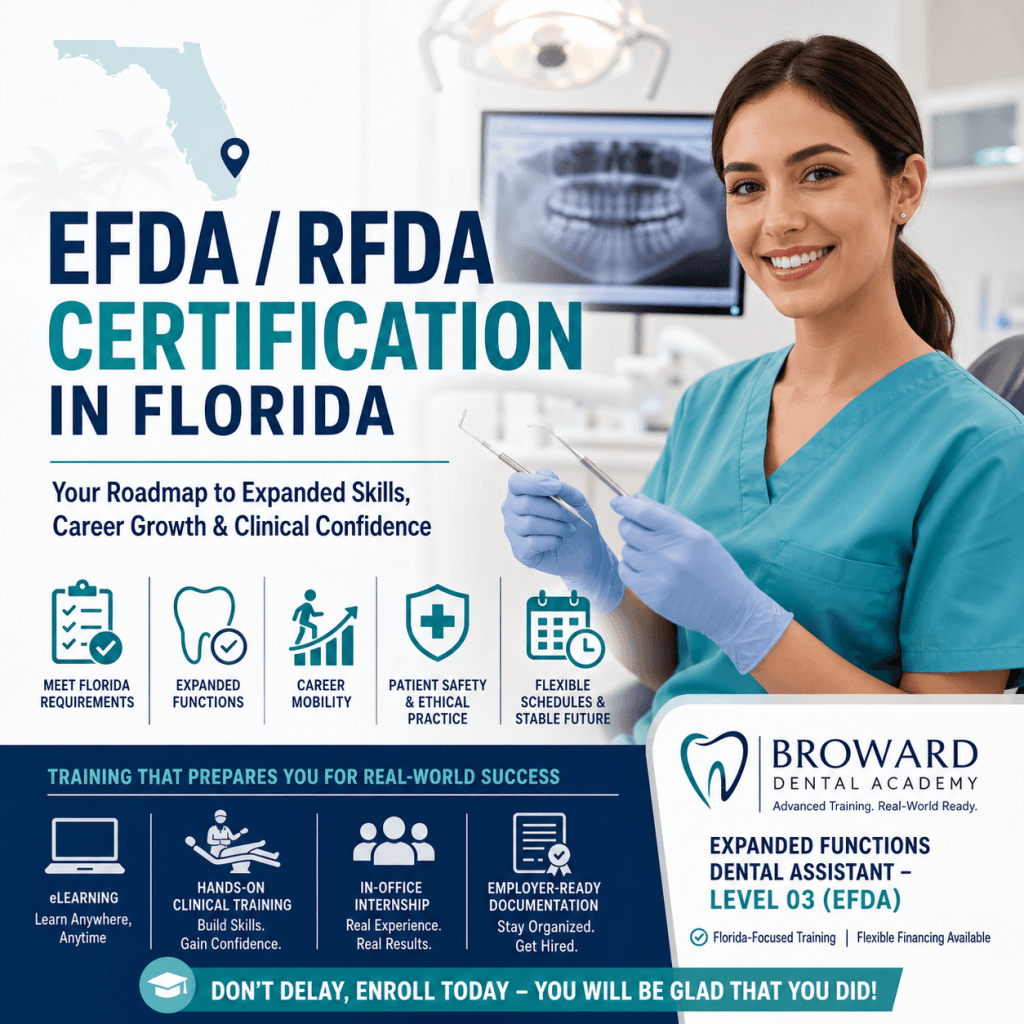
Broward Dental Academy helps prepare students to become well-rounded professionals for modern, high-performance dental practices, including specialty environments like oral surgery.
The focus is not just passing an exam. Students are trained to think critically, act ethically, and perform confidently, with the goal of becoming thoroughly trained, legally compliant, and clinically confident.
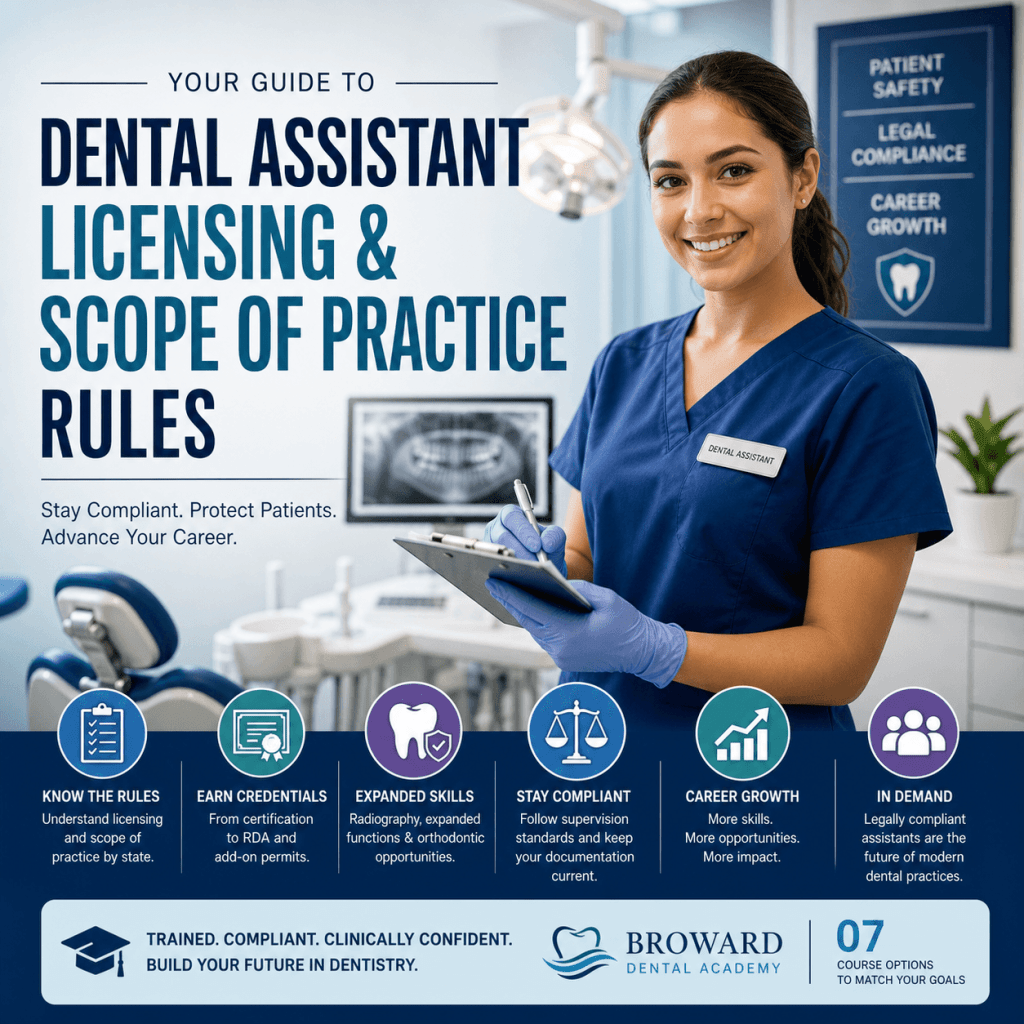
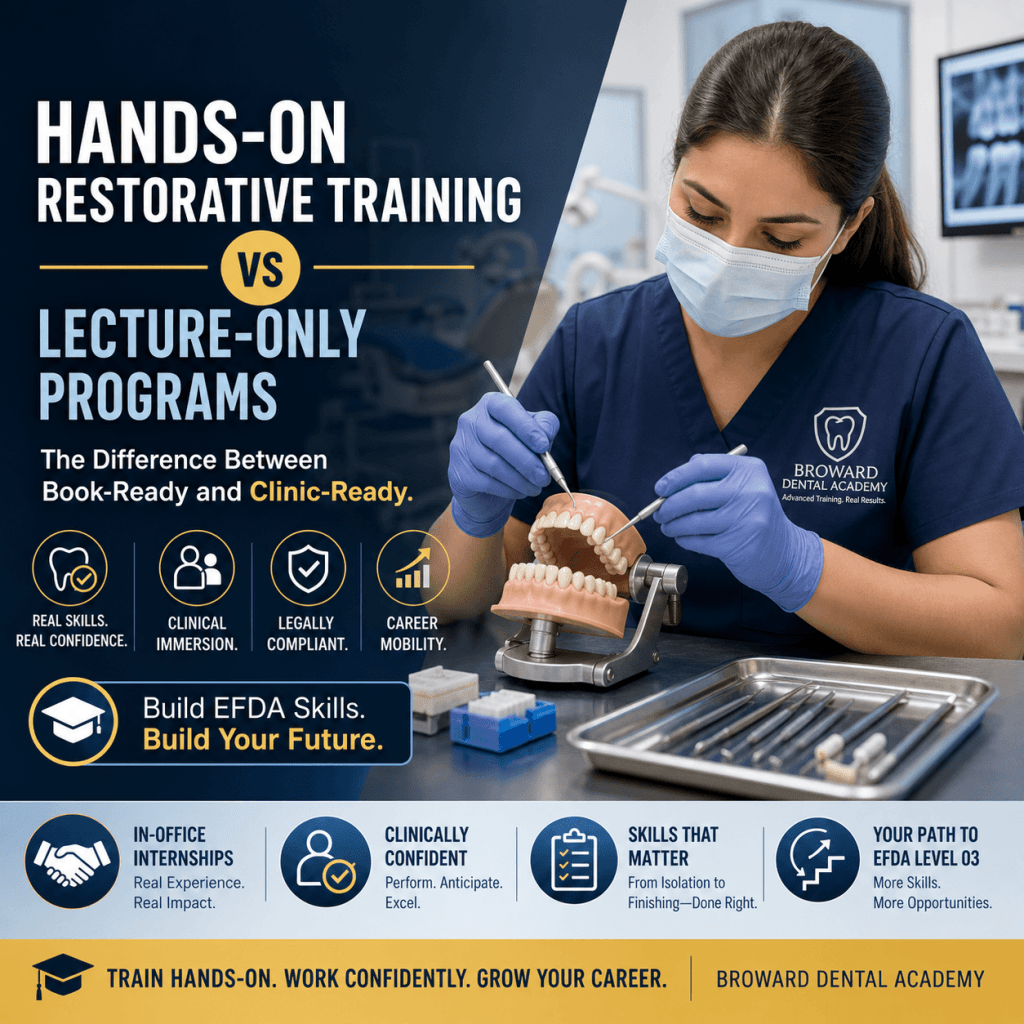
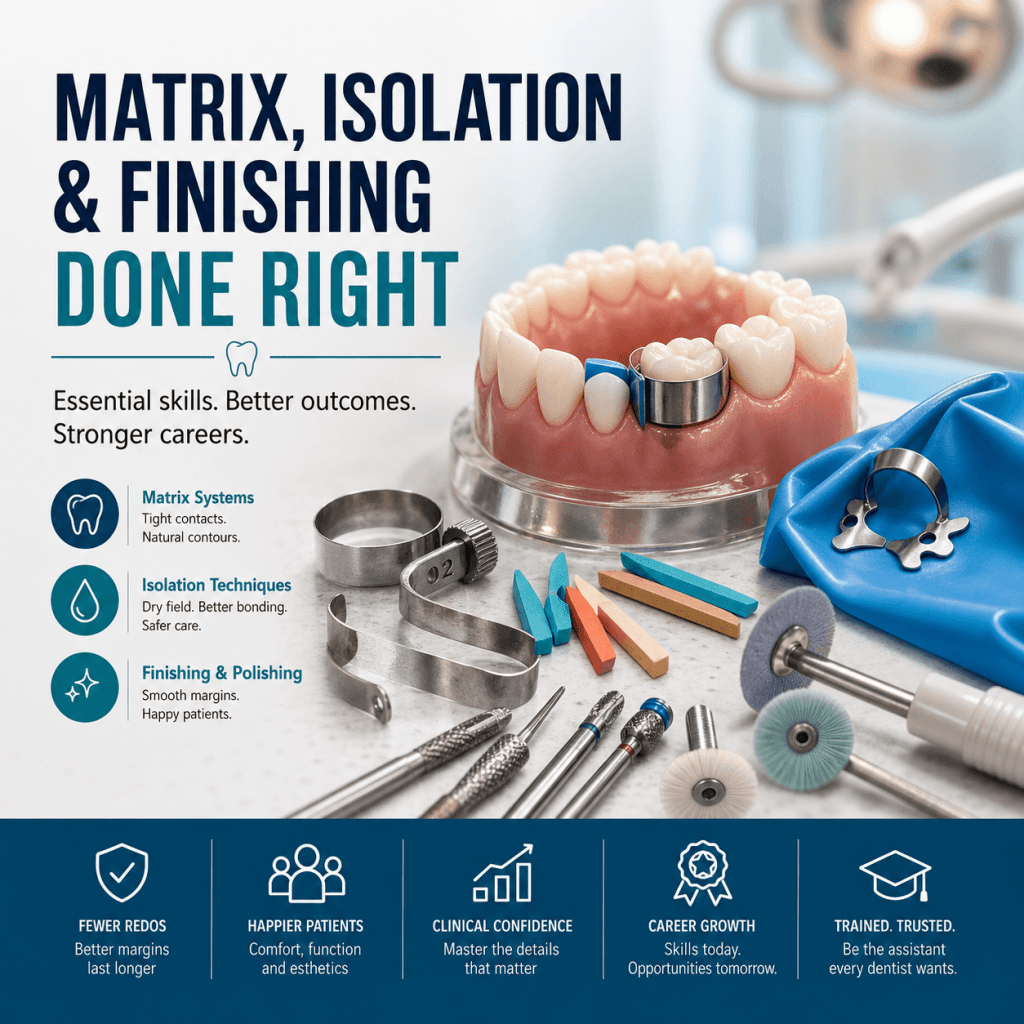
Broward Dental Academy programs are designed to provide a complex educational experience through immediate immersion in online and clinical settings. This includes incorporating modern eLearning lesson plans, such as those offered in their Sterile Instrument Processing Certificate program, which equips students with essential skills for maintaining sterility in a surgical environment.
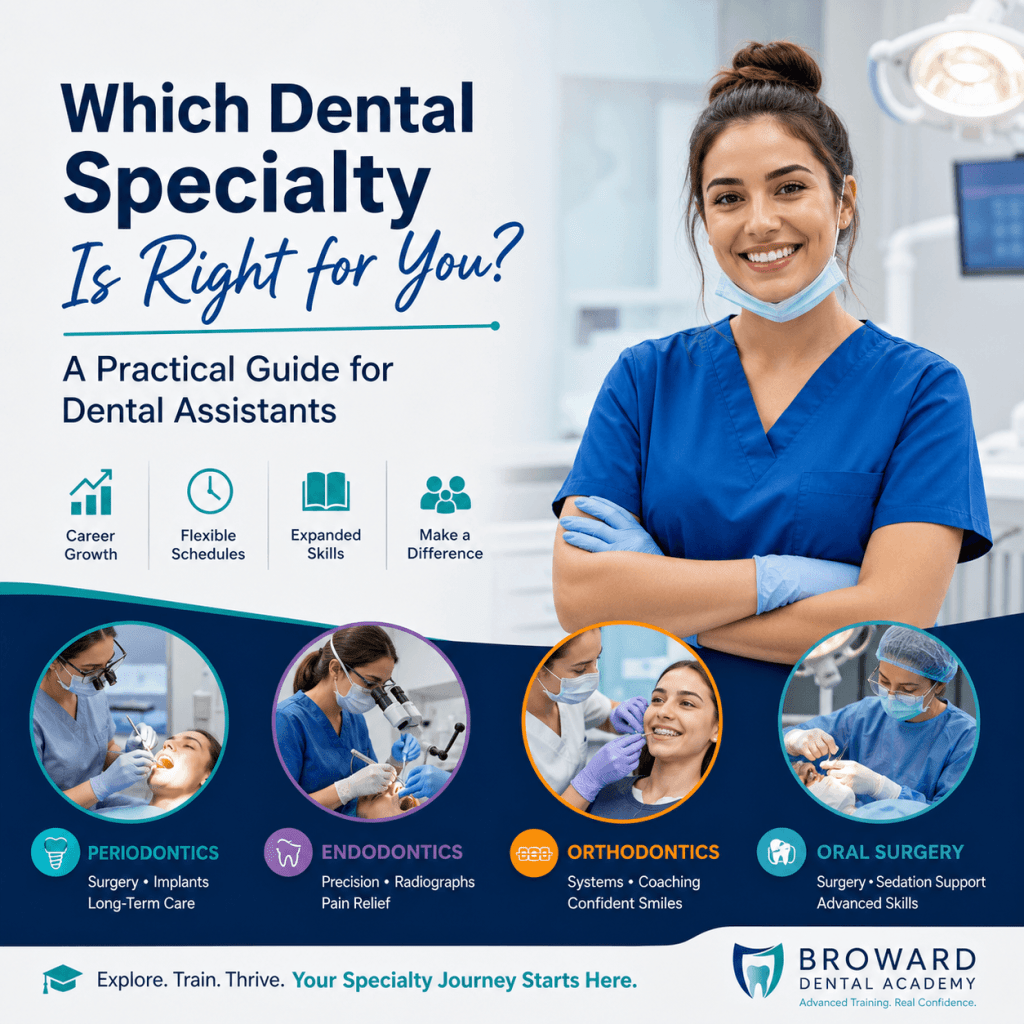
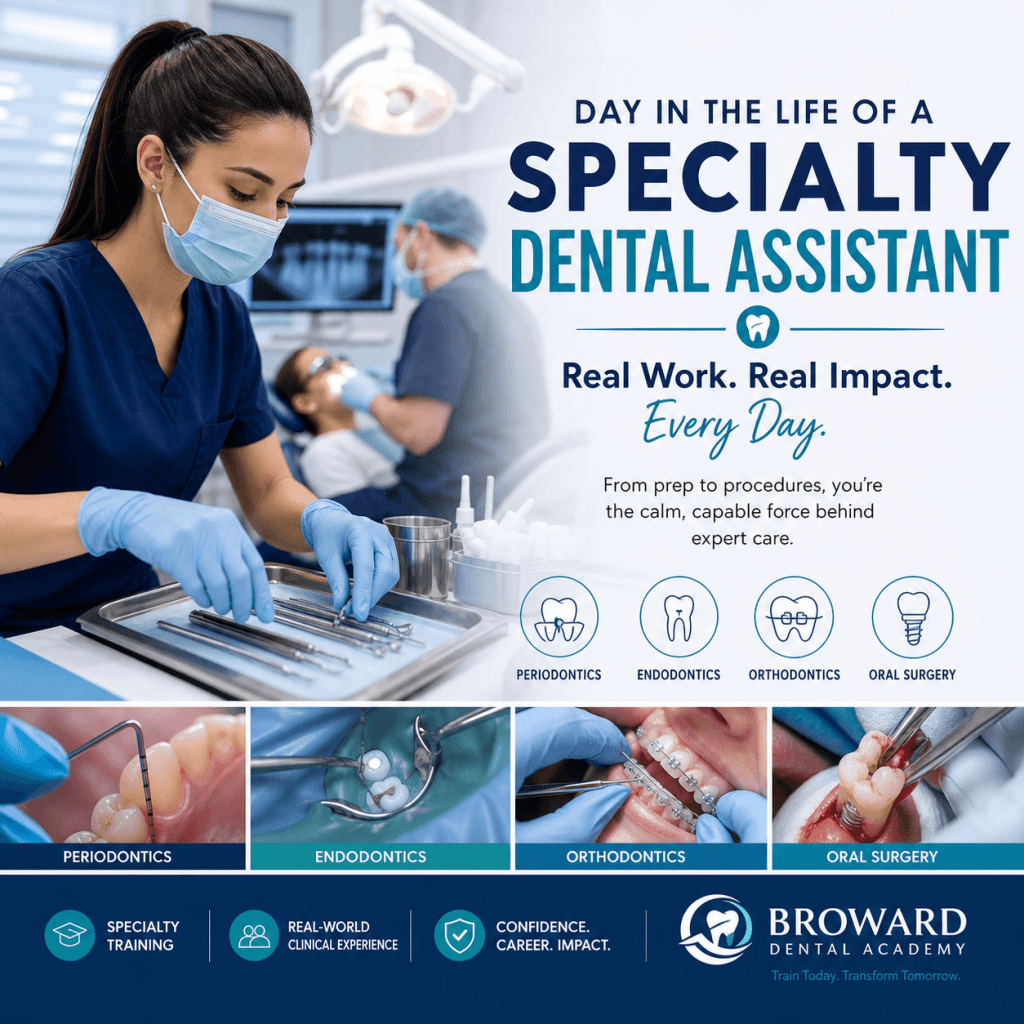
If you want to explore the broader specialty track, see the pillar page here: Specialty Dental Assisting Training (Perio • Endo • Ortho • Oral Surgery).
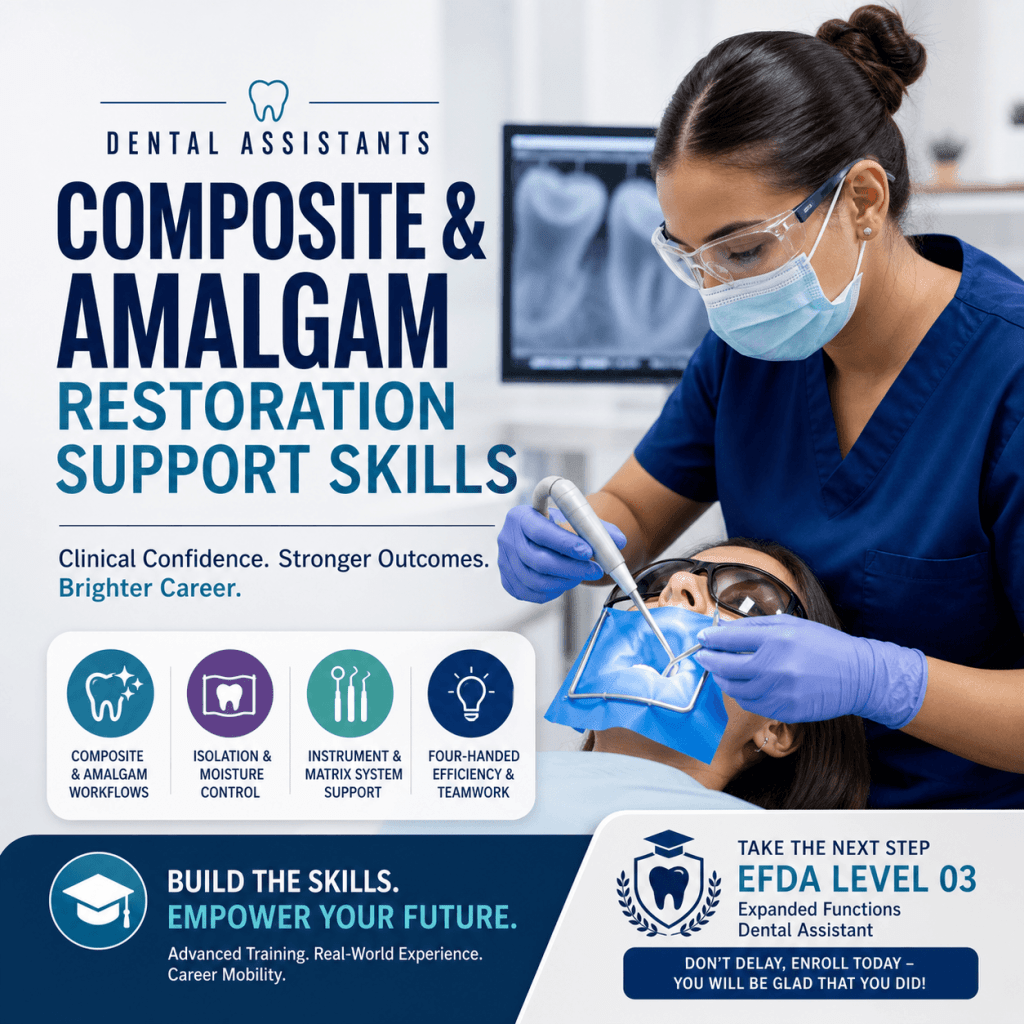
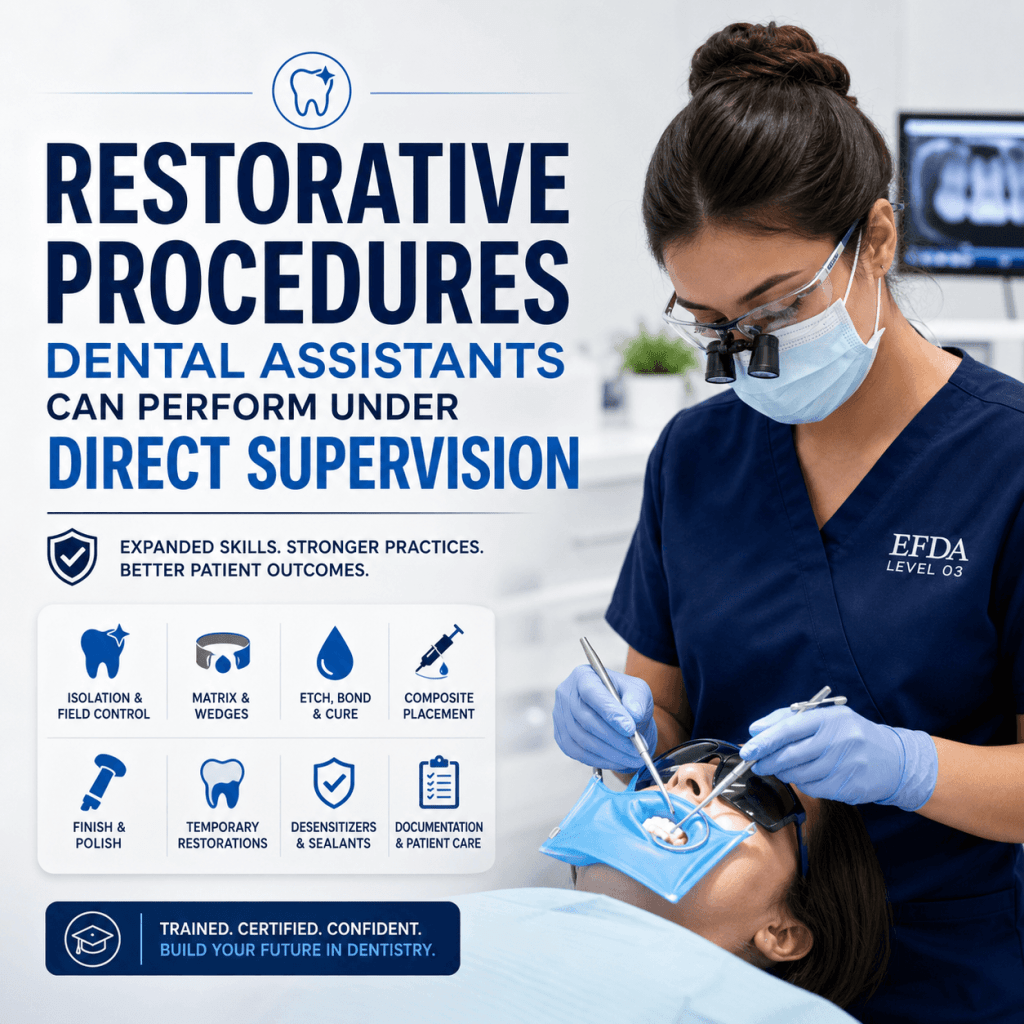
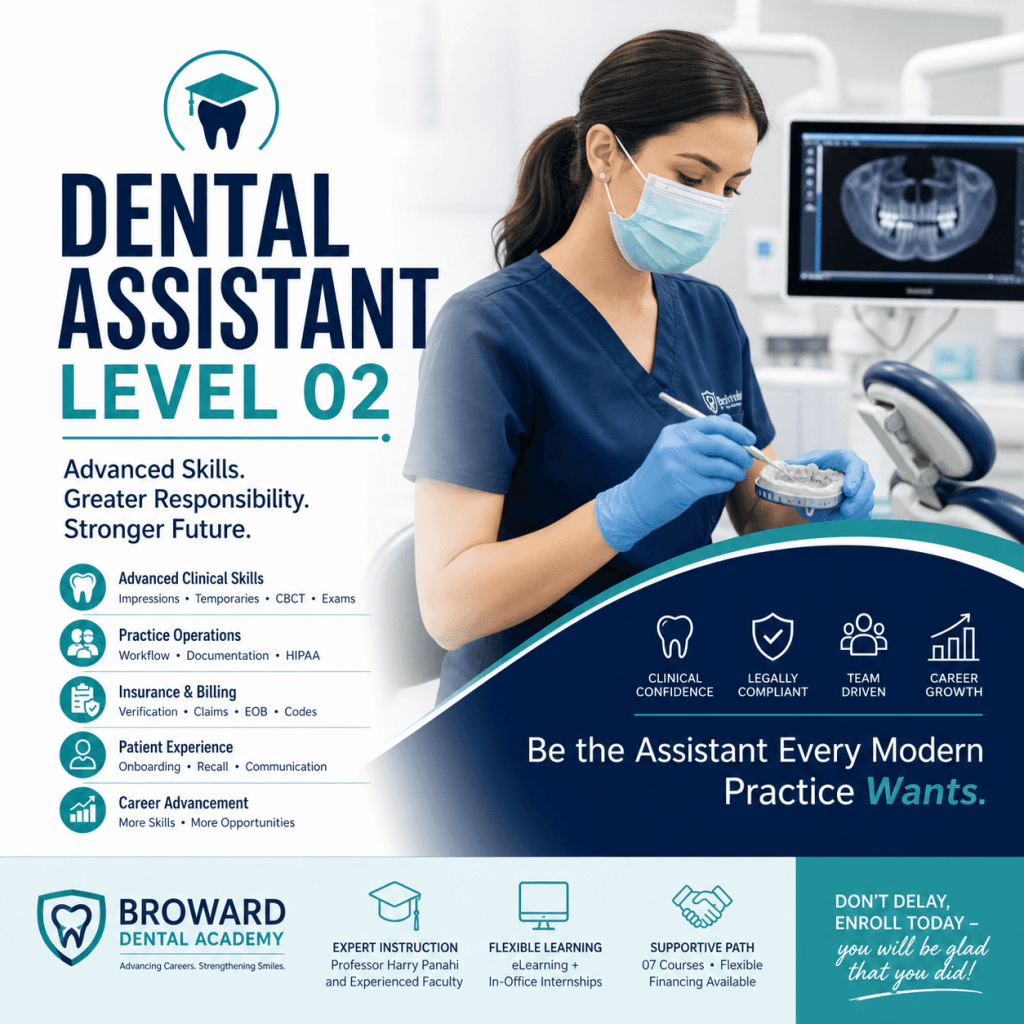
Additionally, Broward Dental Academy offers various levels of Dental Assistant training, Dental Assistant Hygienists training, and Dental Assistant Level 02 training to cater to different career aspirations in the dental field.
Broward Dental Academy also offers flexible financing and a supportive enrollment process to help students take
Next Steps: How to Get Started in This Career
If you are considering oral surgery assisting, start with a quick self-check:
- Do you enjoy procedures and hands-on clinical work?
- Are you comfortable in a fast-paced environment?
- Do you like learning step-by-step systems and improving your speed over time?
Decide your path
You can start in dental assisting and then specialize, or pursue specialty-focused training sooner if you want a faster ramp into surgical assisting expectations.
What to ask employers during interviews
A few practical questions can save you surprises later:
- What is the typical procedure mix (extractions, wisdom teeth, implants, grafting)?
- What sedation types are used in the office?
- What does the training period look like for a new assistant?
- What are schedule expectations and peak days?
- How is pay structured, and what skills lead to raises?
If you are ready to train for real practice expectations and build confidence for a high-performance dental environment, explore the courses offered by Broward Dental Academy, which include specialty options. They also provide valuable insights through their frequently asked questions section that can help you understand more about the training process.
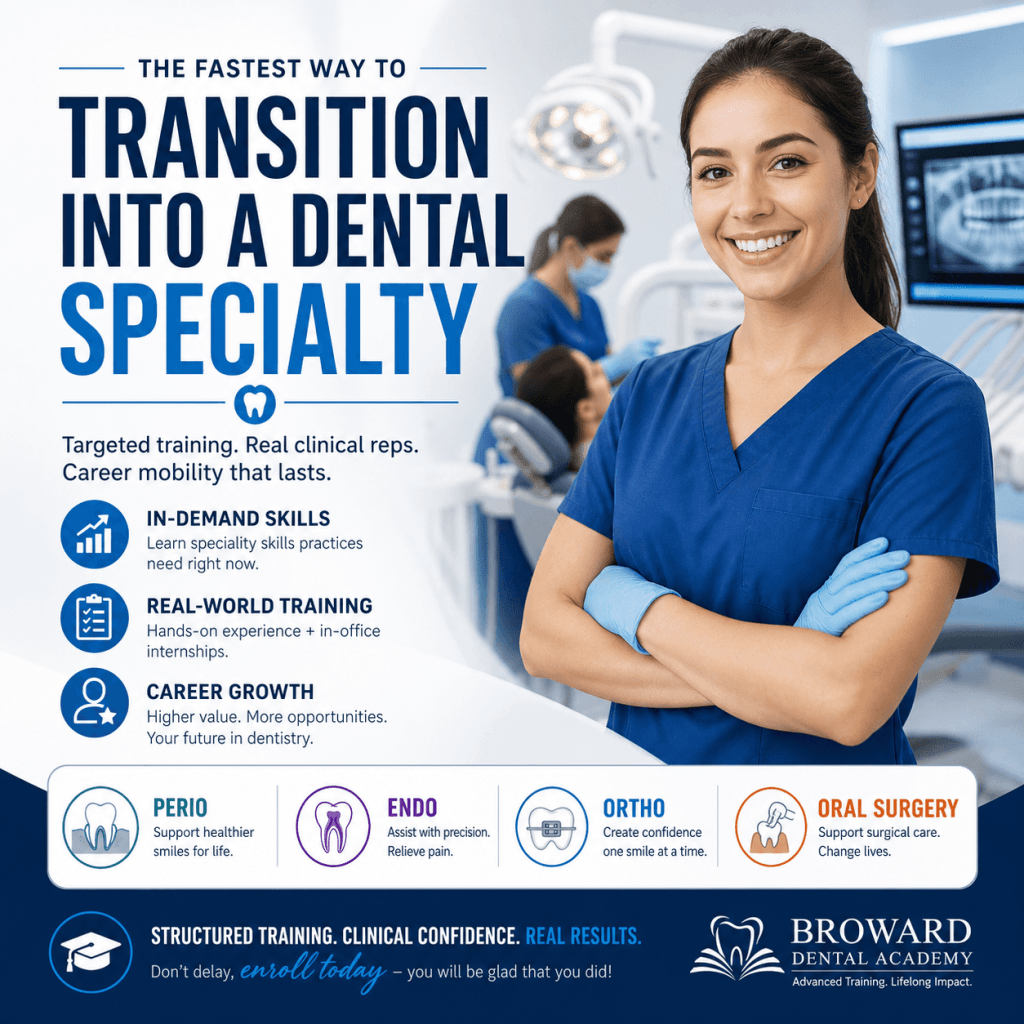
Don’t delay, enroll today – you will be glad that you did!
FAQs (Frequently Asked Questions)
What does an oral surgery dental assistant do on a daily basis?
An oral surgery dental assistant supports oral and maxillofacial surgeons before, during, and after surgical procedures. Their day typically includes room turnover, sterile setup, patient intake and health history confirmation, chairside support, taking vitals, procedure documentation, imaging assistance, efficient instrument transfer, suction and irrigation, post-op instructions, medication reminders, follow-up scheduling, and supply tracking.
What types of procedures do oral surgery assistants commonly assist with?
Oral surgery assistants often assist with simple and surgical extractions, wisdom teeth removal (third molar surgery), dental implants ranging from single units to full-arch protocols, bone grafting and ridge preservation, biopsies and lesion evaluation support, exposure and bonding in coordination with orthodontic treatment, as well as suture removal and post-operative checks.
Where do oral surgery dental assistants typically work?
They commonly work in oral and maxillofacial surgery offices, multi-specialty dental practices with surgical departments including periodontics, implant-focused clinics, and surgical centers. These environments are usually fast-paced with a high volume of surgical procedures.
What surgical assisting skills are essential for an oral surgery dental assistant?
Key skills include anticipating procedural steps and instrument needs, maintaining a clean and organized field, efficient instrument transfer and tray management, retraction, suction and irrigation support, aiding hemostasis within their role to keep visibility clear, and managing small details that reduce procedure time and stress.
How important is sterilization and infection control in oral surgery assisting?
Sterilization and infection control are critical in oral surgery. Assistants must support strict protocols such as proper instrument processing and packaging, maintaining sterile packs during setup, using surface barriers for operatory disinfection, practicing aseptic techniques including opening sterile items correctly to minimize contamination following clean-to-dirty workflow standards.
How do oral surgery assistants help manage patient anxiety during procedures?
Assistants often serve as the calm voice by explaining normal sensations like pressure or vibration during surgery, coaching patients on breathing and relaxation techniques when appropriate, reinforcing post-operative expectations regarding pain or swelling, and clarifying when patients should contact the office if symptoms change to ensure comfort and confidence throughout the process.