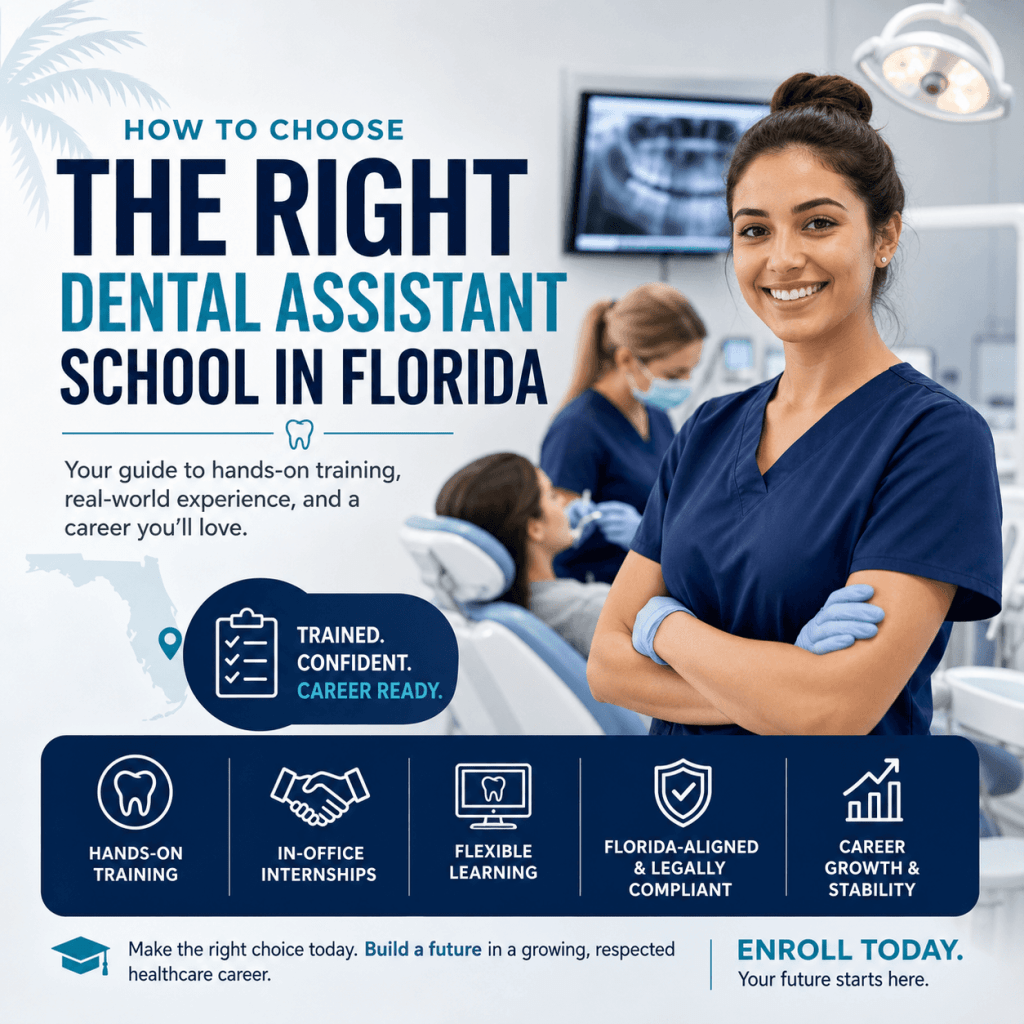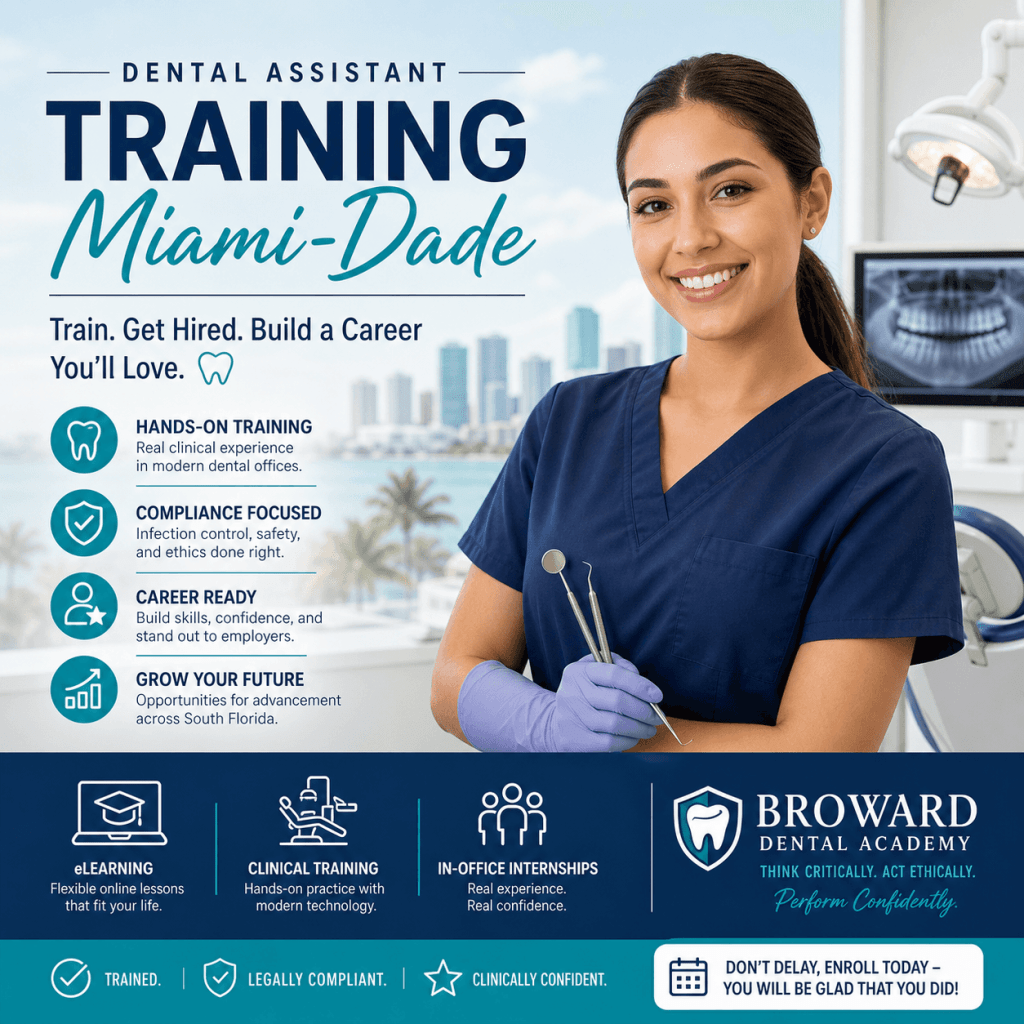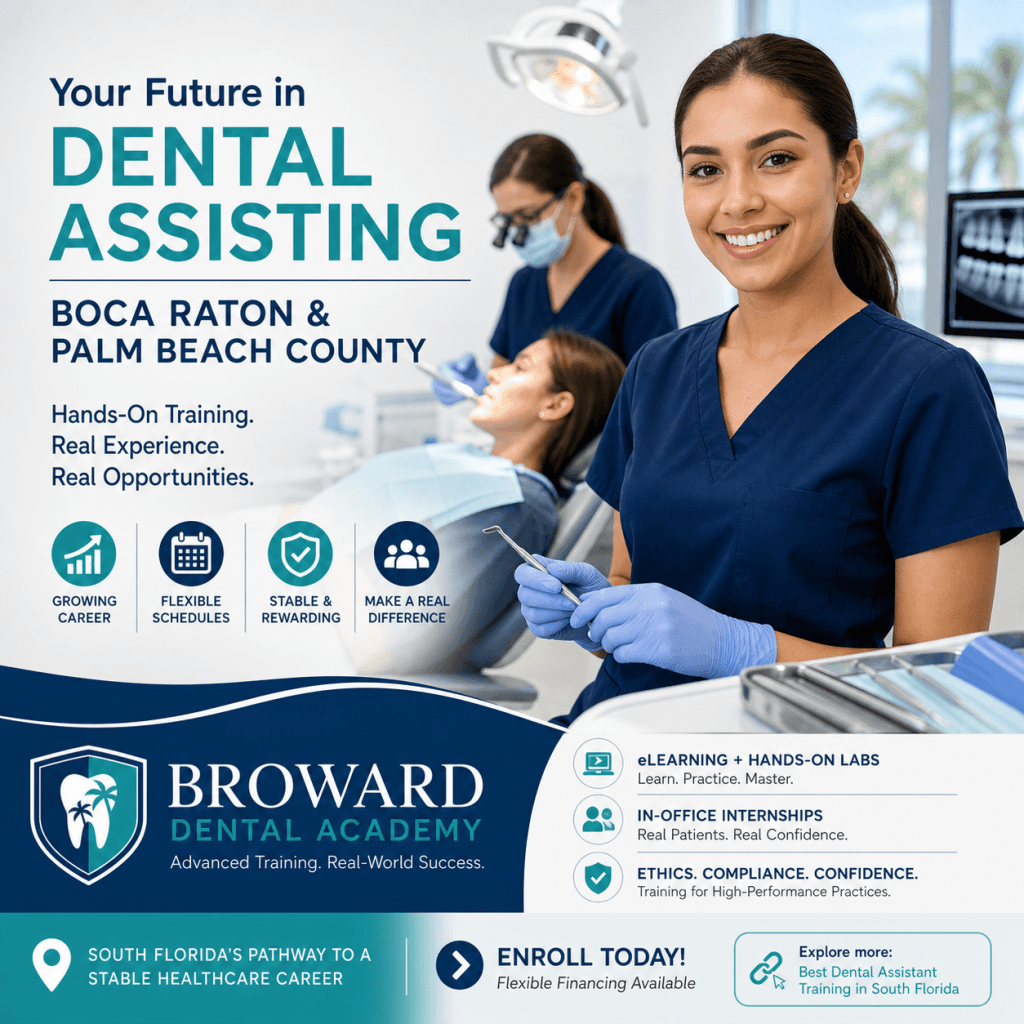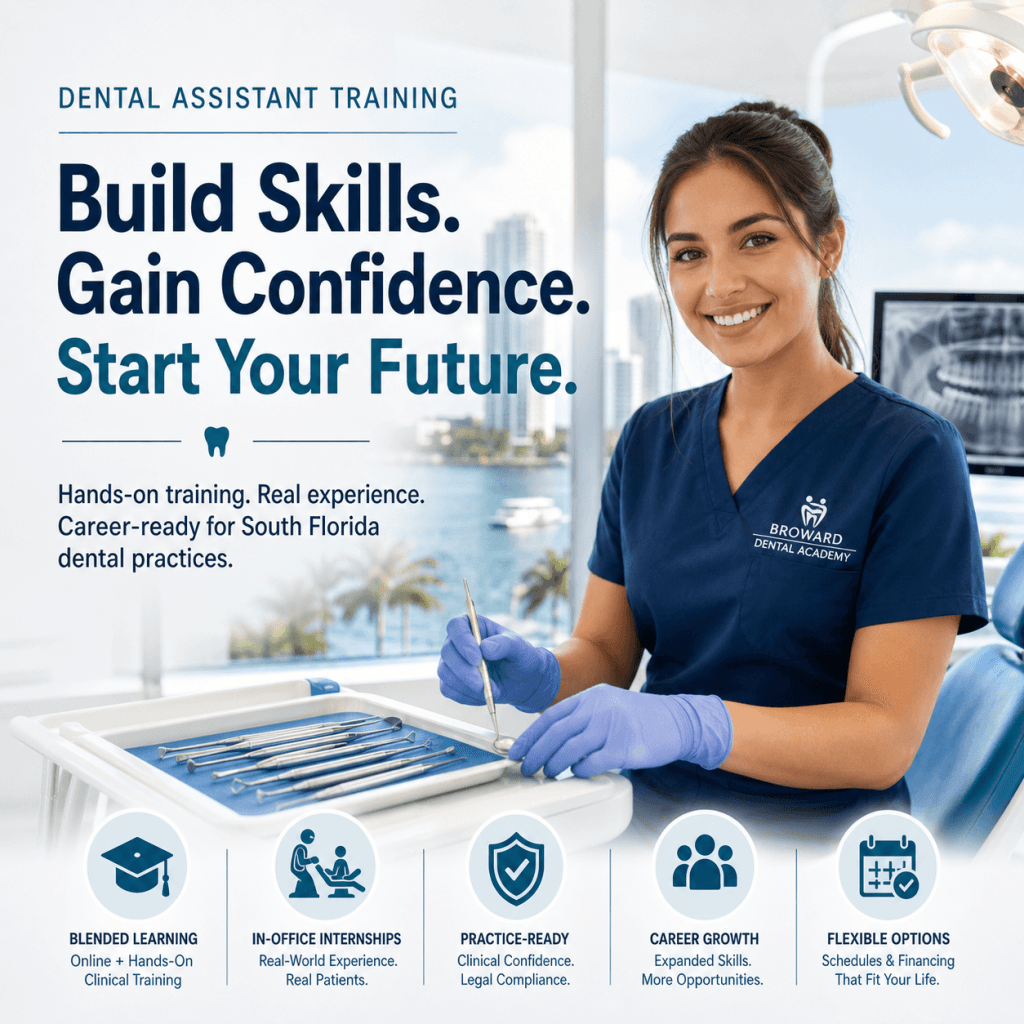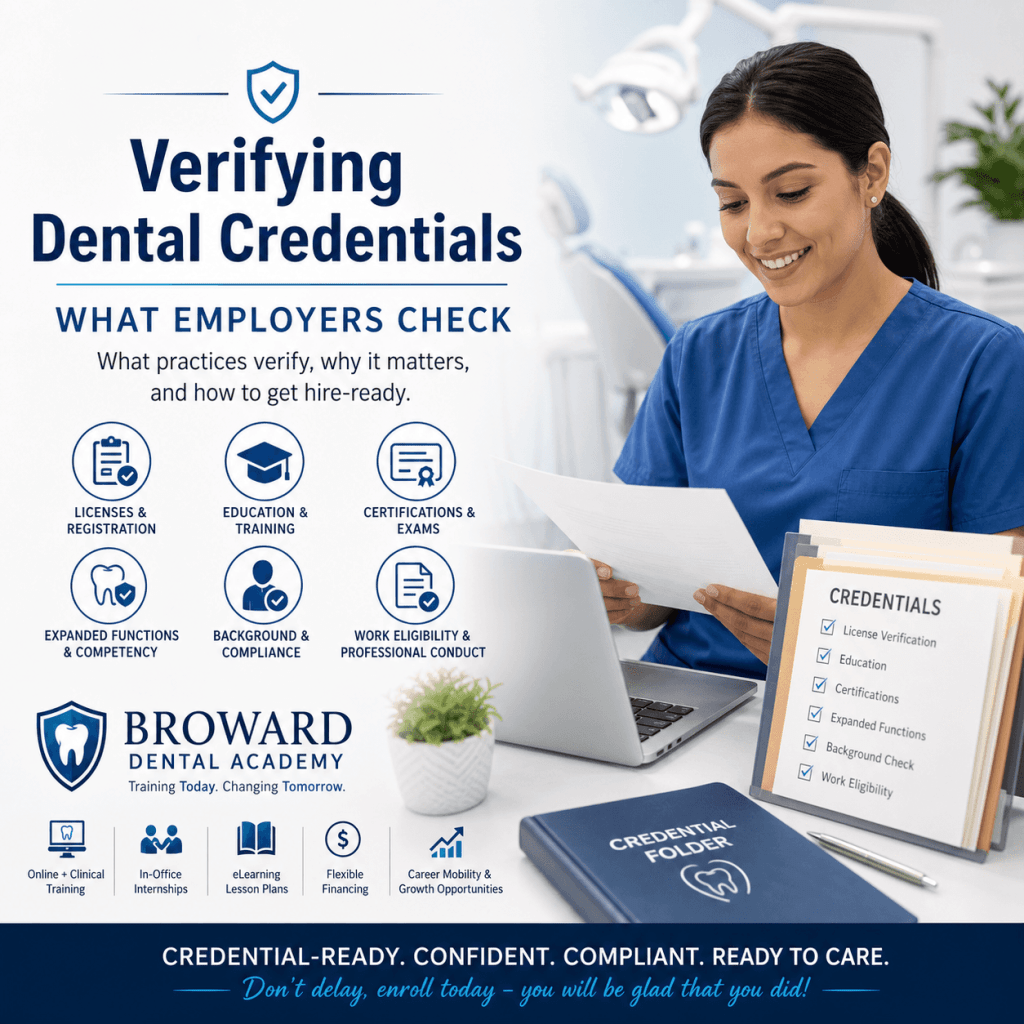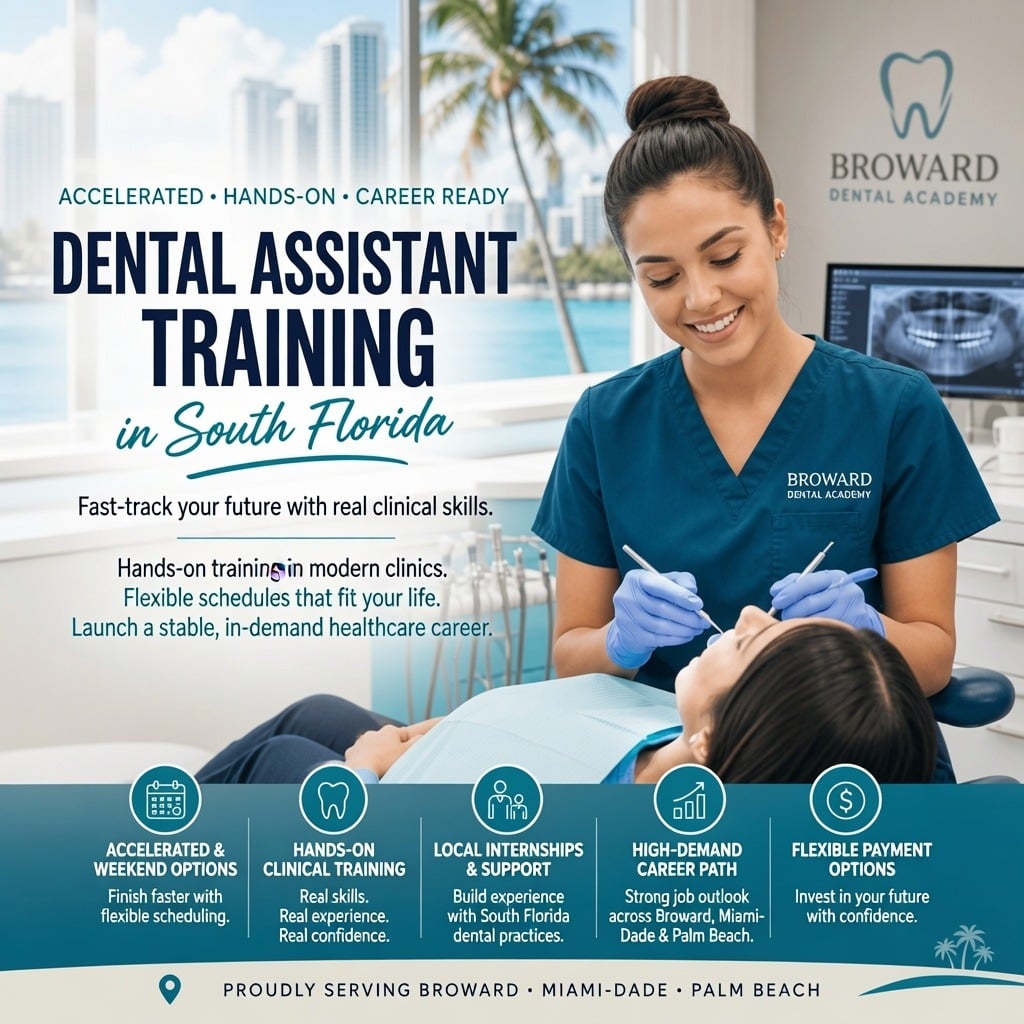
If you’ve been looking for a healthcare career that you can enter quickly, build real skills in, and grow over time, dental assisting is one of the strongest options in South Florida right now. Practices across Broward County, Miami-Dade, and Palm Beach are busy, patient expectations are higher than ever, and offices want dental assistants who can step in confidently from day one. To ensure your success, consider enrolling in the best dental assistant training in south florida.
The key is simple: your results depend heavily on the quality of your training. For instance, Broward Dental Academy, a leading institution in South Florida, offers comprehensive training programs that equip aspiring dental assistants with the necessary skills to excel in their roles.
Why dental assisting is one of the smartest healthcare careers in South Florida right now
Dental assisting appeals to a lot of people for practical reasons.
First, it’s one of the faster on-ramps into healthcare. You do not need years of schooling to begin working in a real clinical environment, supporting patient care every day.
Second, the demand is real. South Florida continues to grow, and so does the need for dental care. That demand shows up in the hiring market: practices need reliable, skilled assistants who can keep pace with a modern schedule.
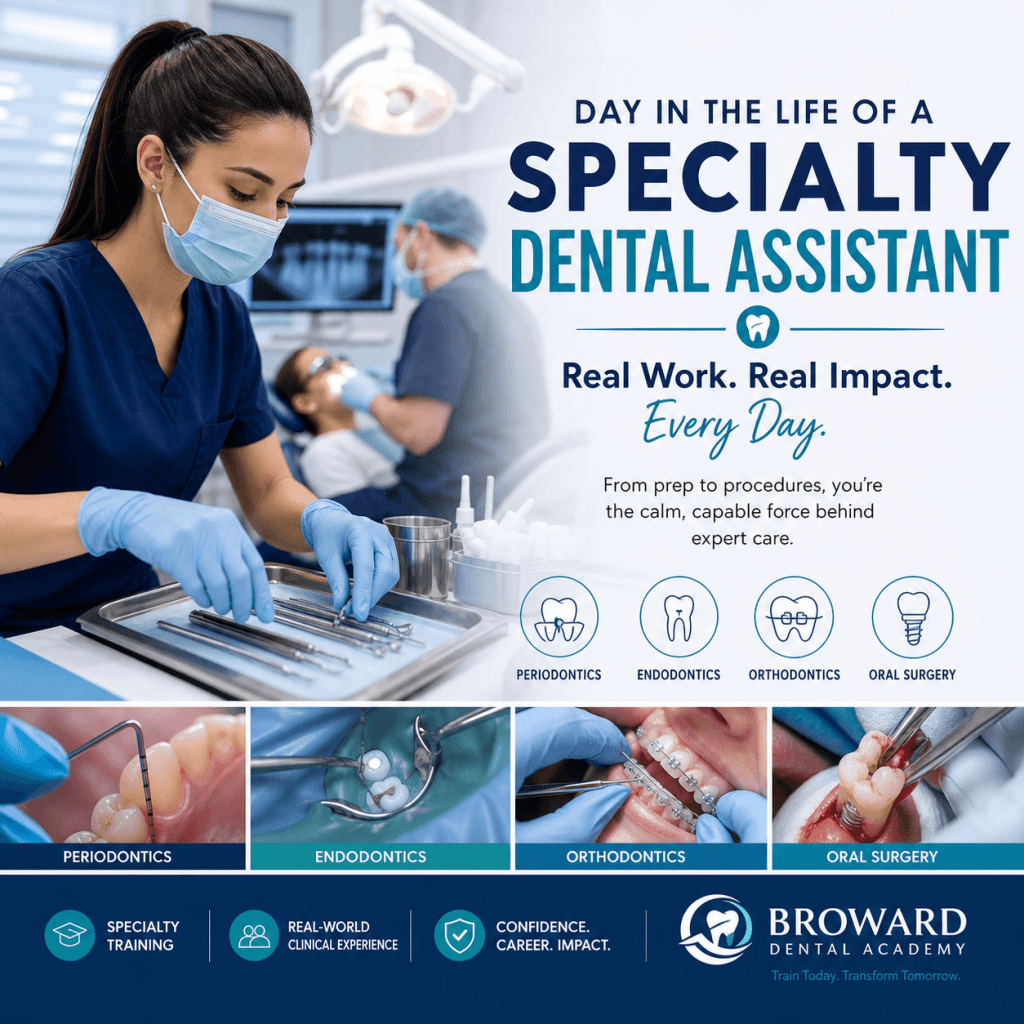
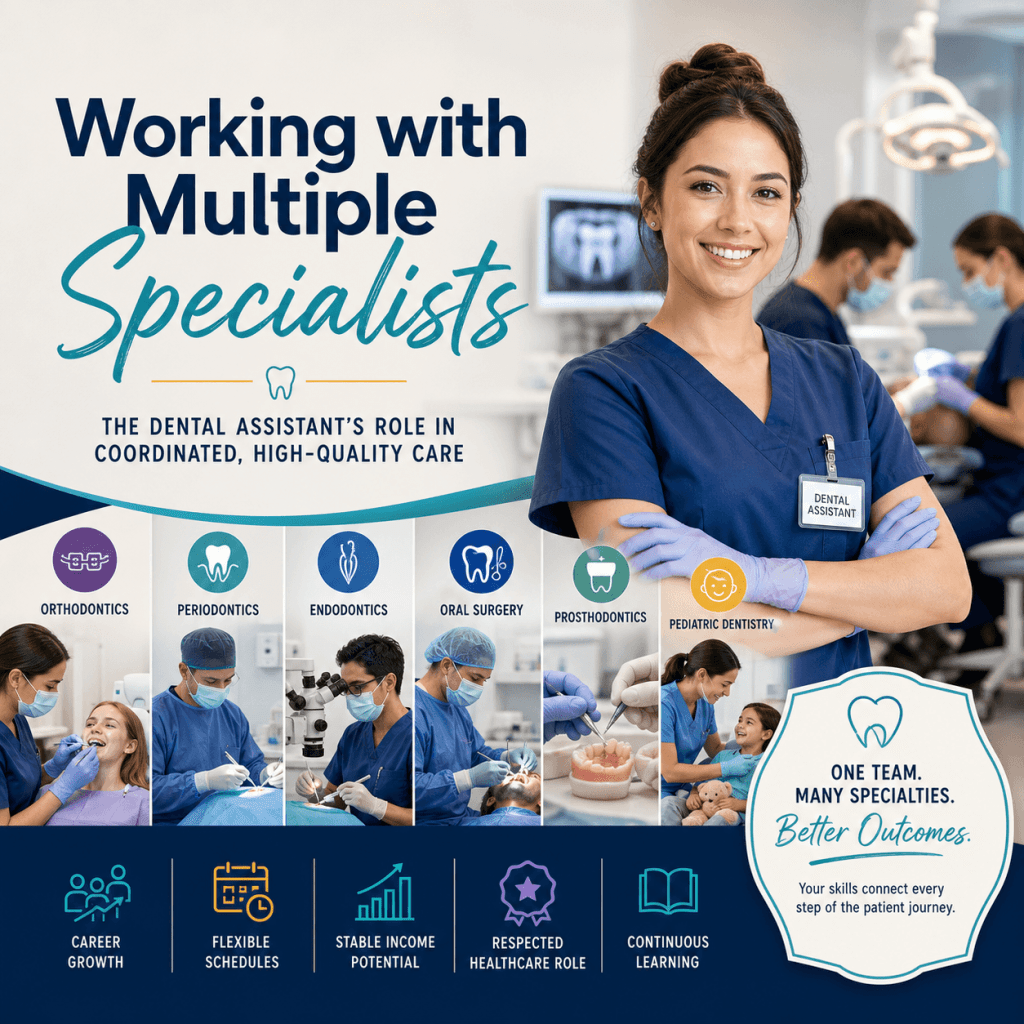
Third, the day-to-day role is clear. Dental assistants are the backbone of clinical flow. In a typical office, that means:
- Preparing operatories and instruments
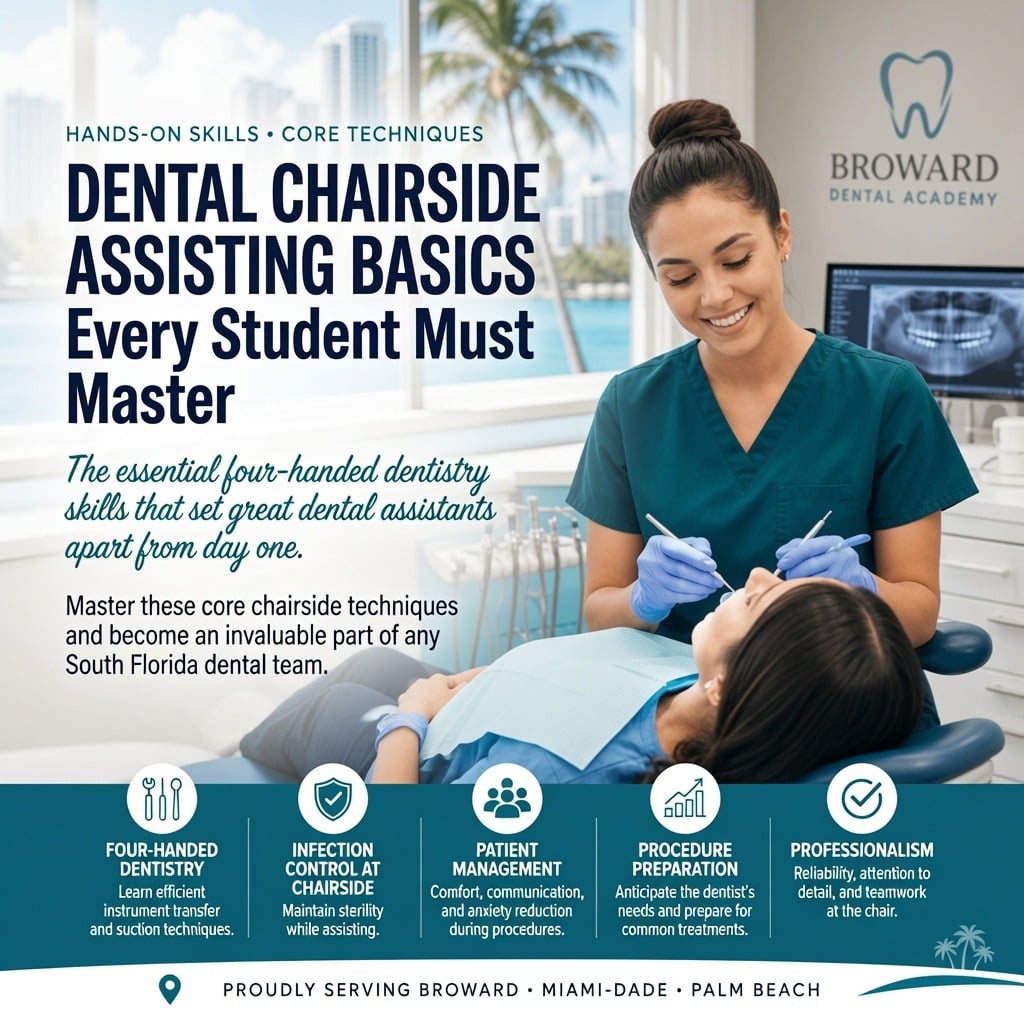
- Supporting the dentist chairside during procedures
- Helping patients feel calm, informed, and comfortable
- Following strict infection control and safety protocols
- Keeping treatment moving efficiently with good communication and documentation habits
And these are the benefits many people specifically search for:
- Stable income potential
- Flexible schedules, including full-time and part-time pathways depending on the practice
- Long-term career mobility, especially for assistants who continue building skills and credentials
A simple career ladder often looks like this:
Entry-level dental assistant → additional certifications/expanded functions (where applicable) → lead assistant and office growth pathways
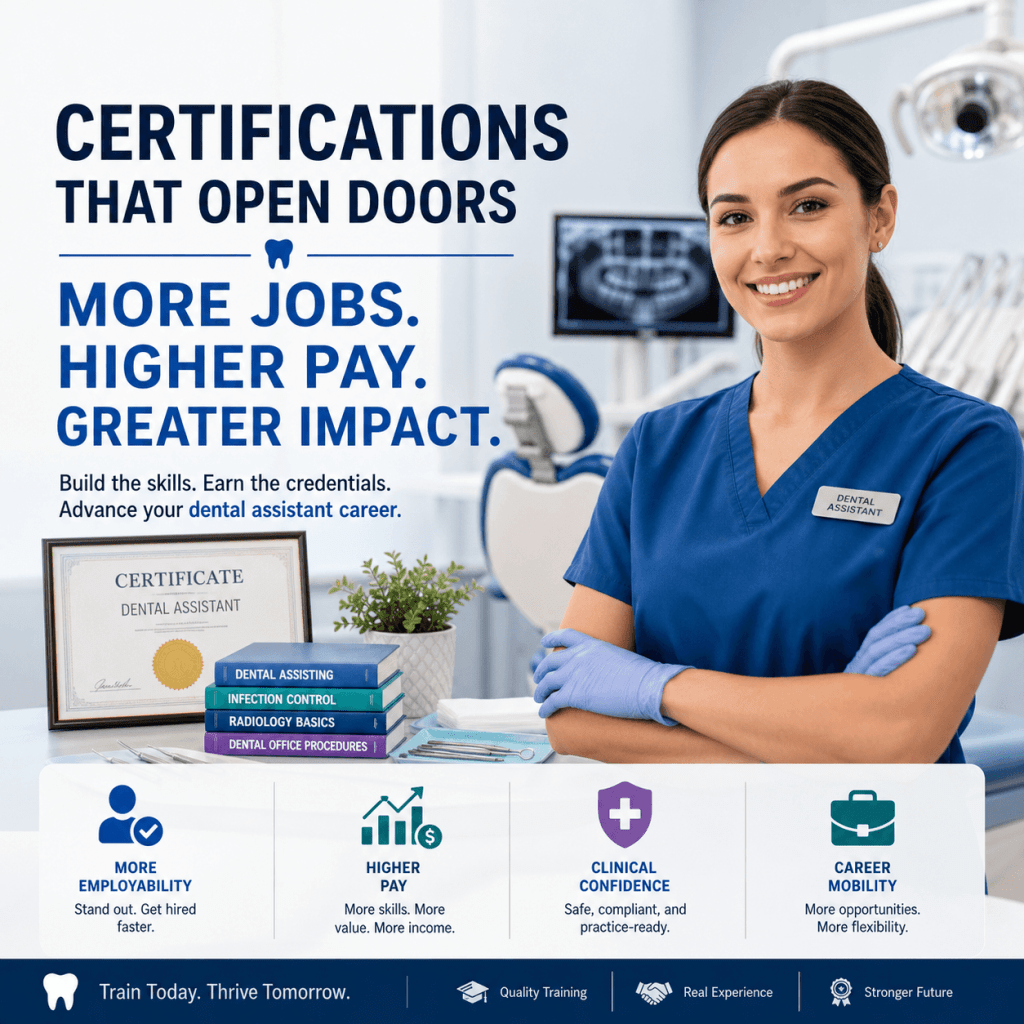
One important expectation to set up front: training quality matters. South Florida practices are looking for team members who are clinically confident, legally compliant, and ready to contribute on day one, not someone who needs months of re-training after being hired.
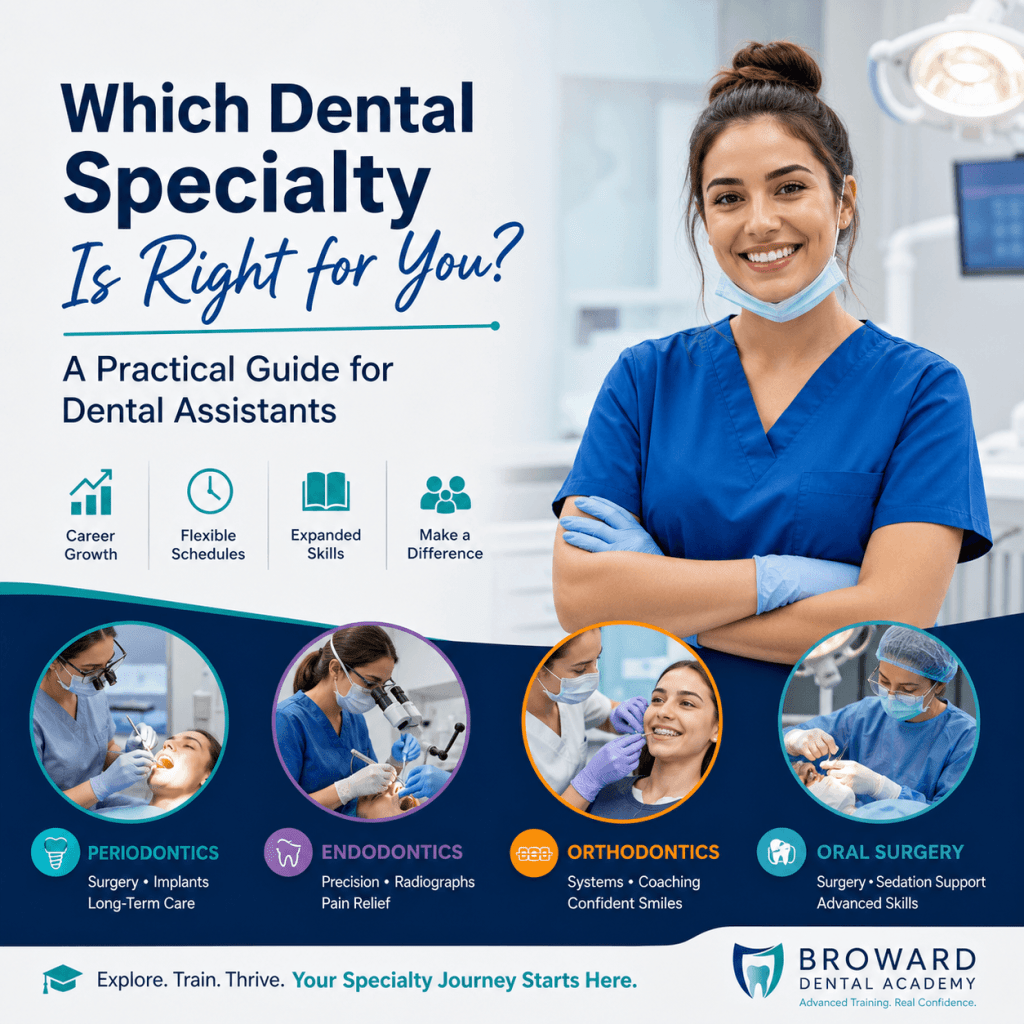
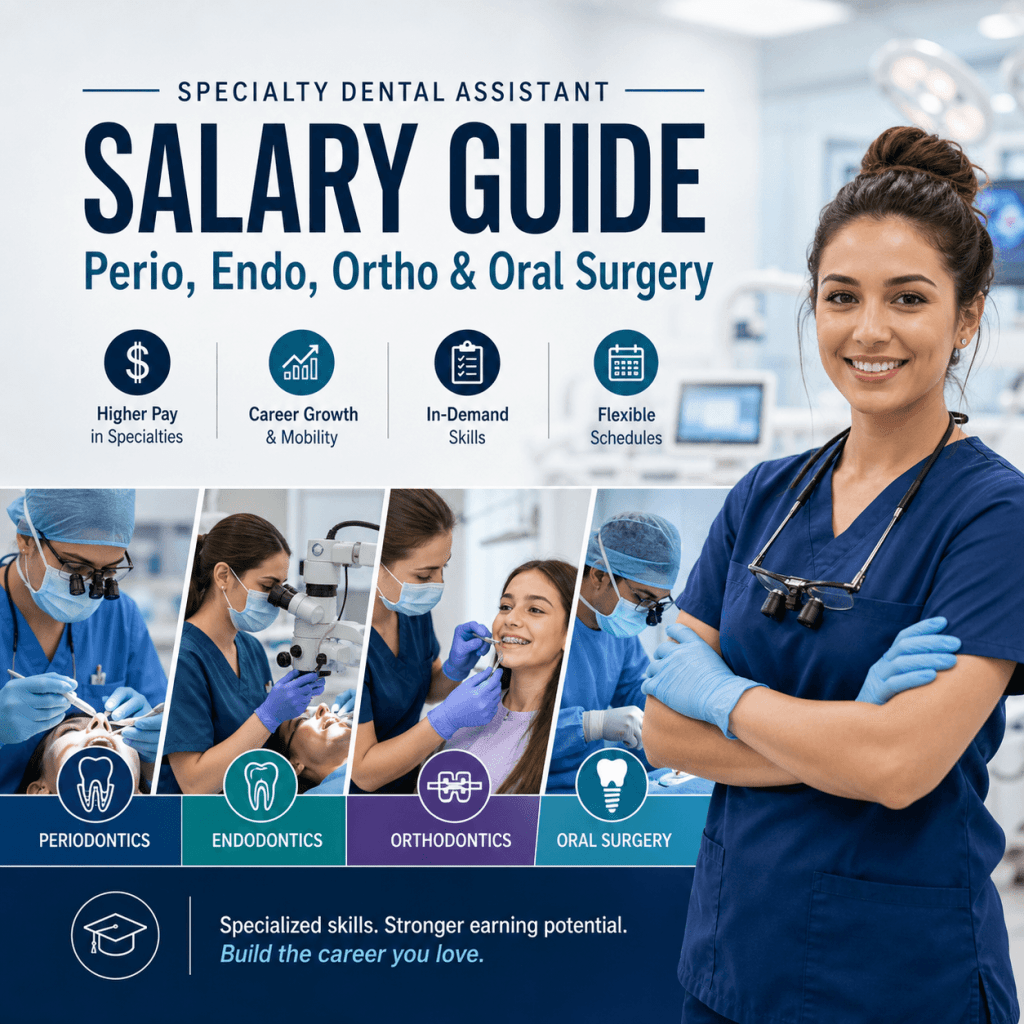
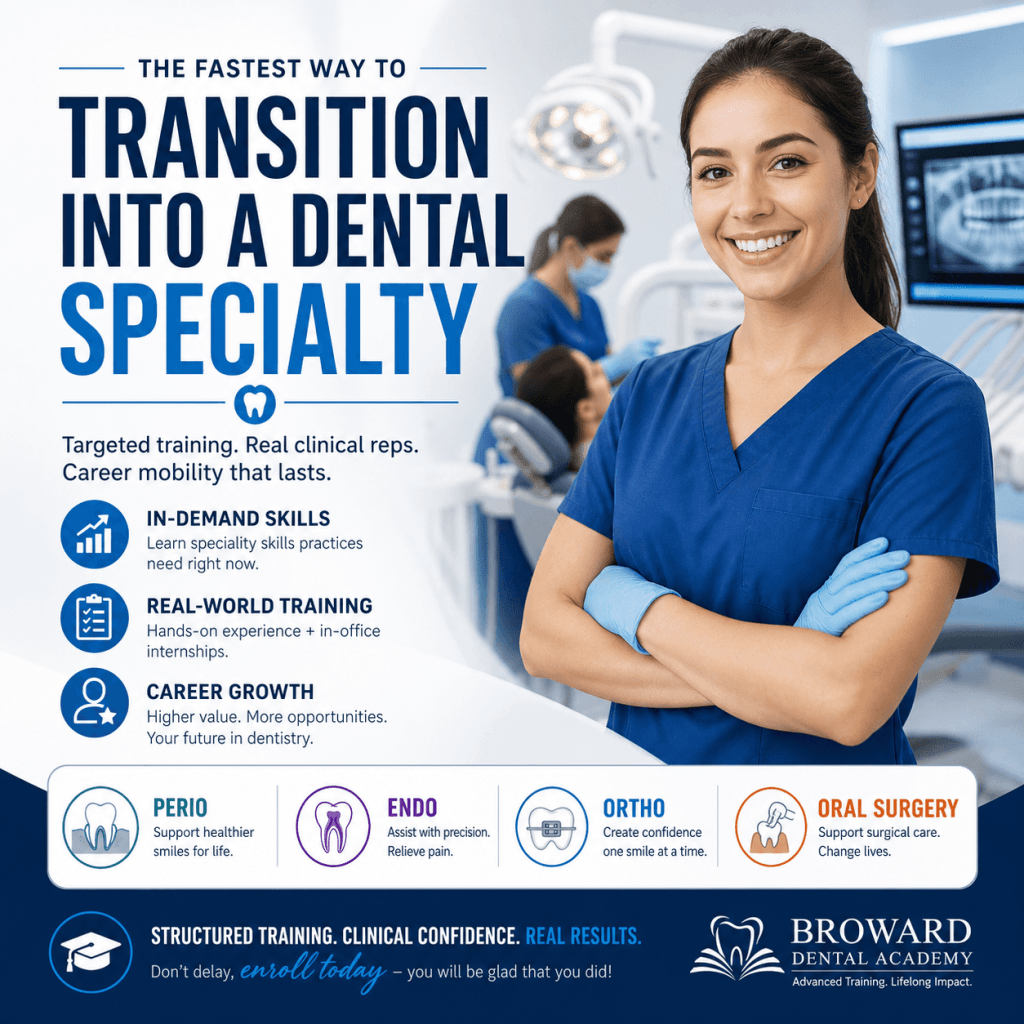
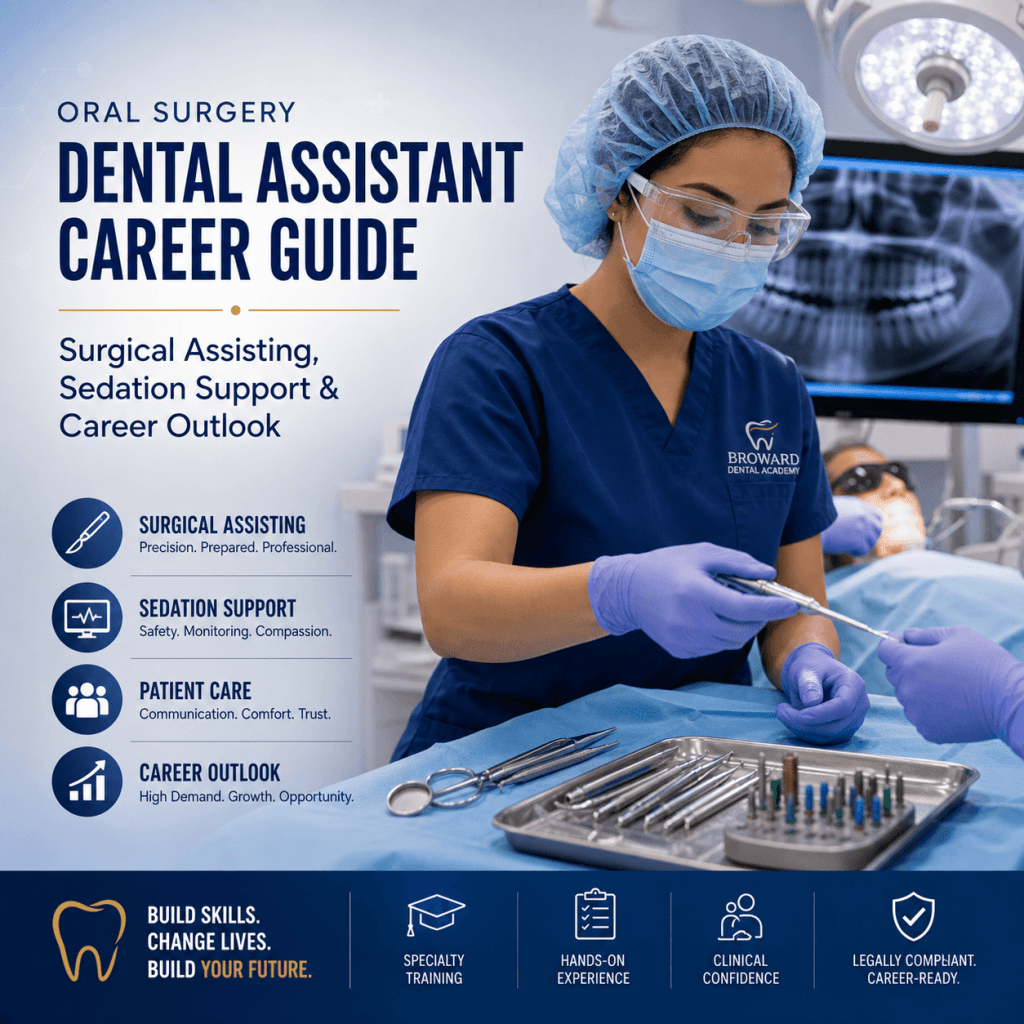
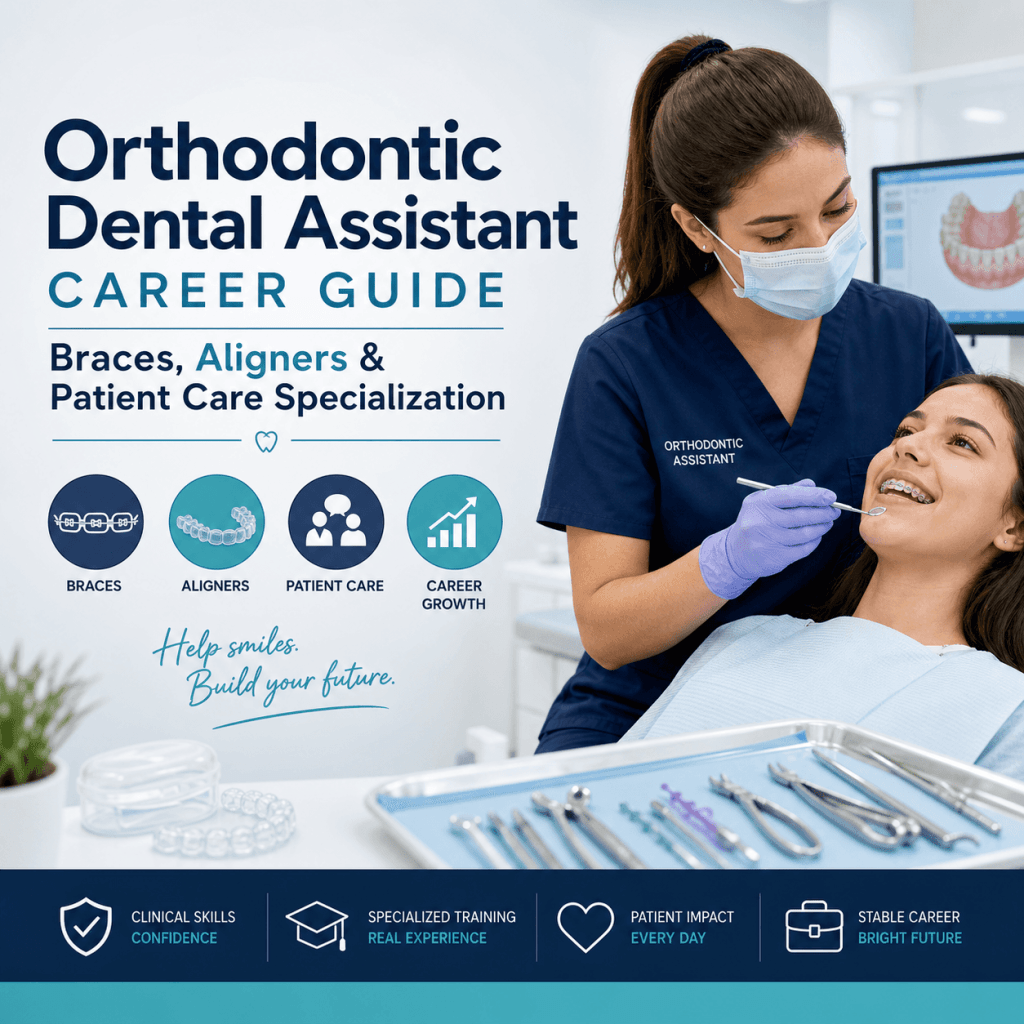
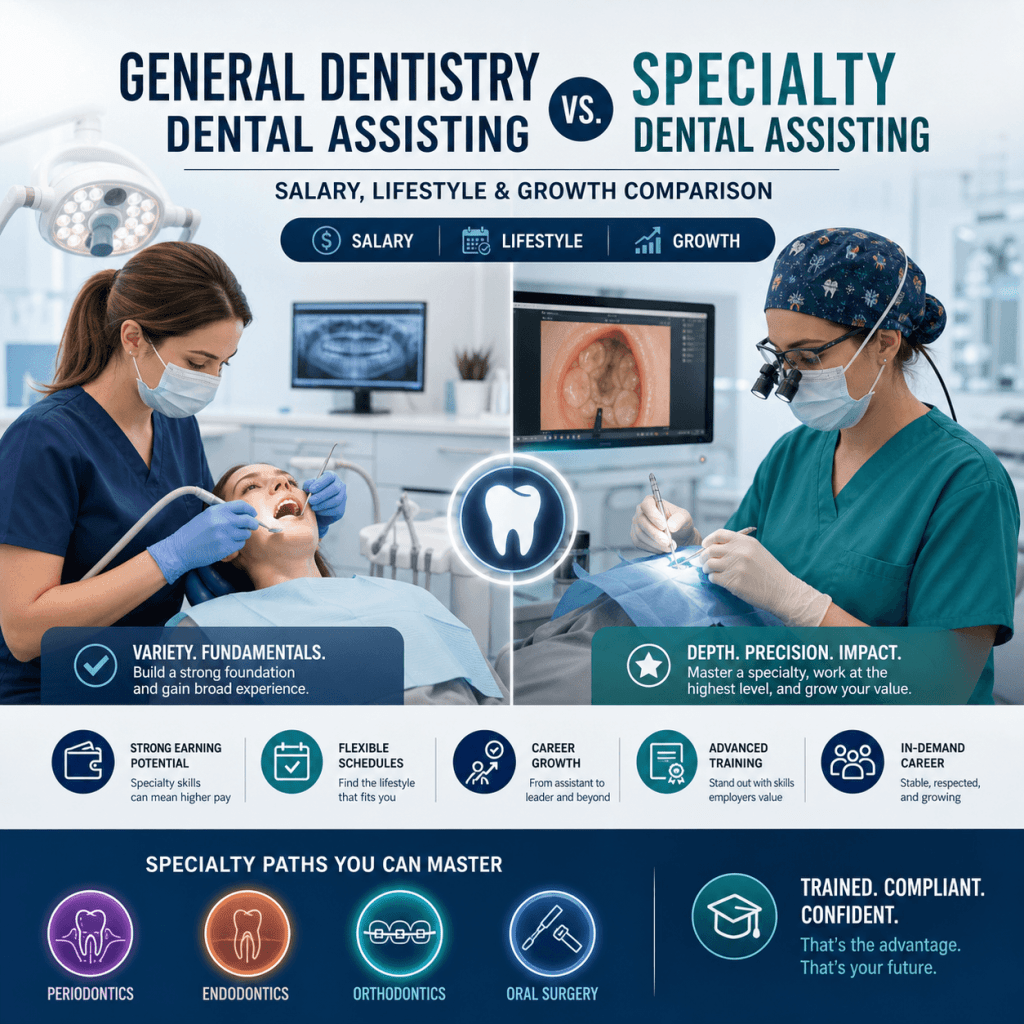
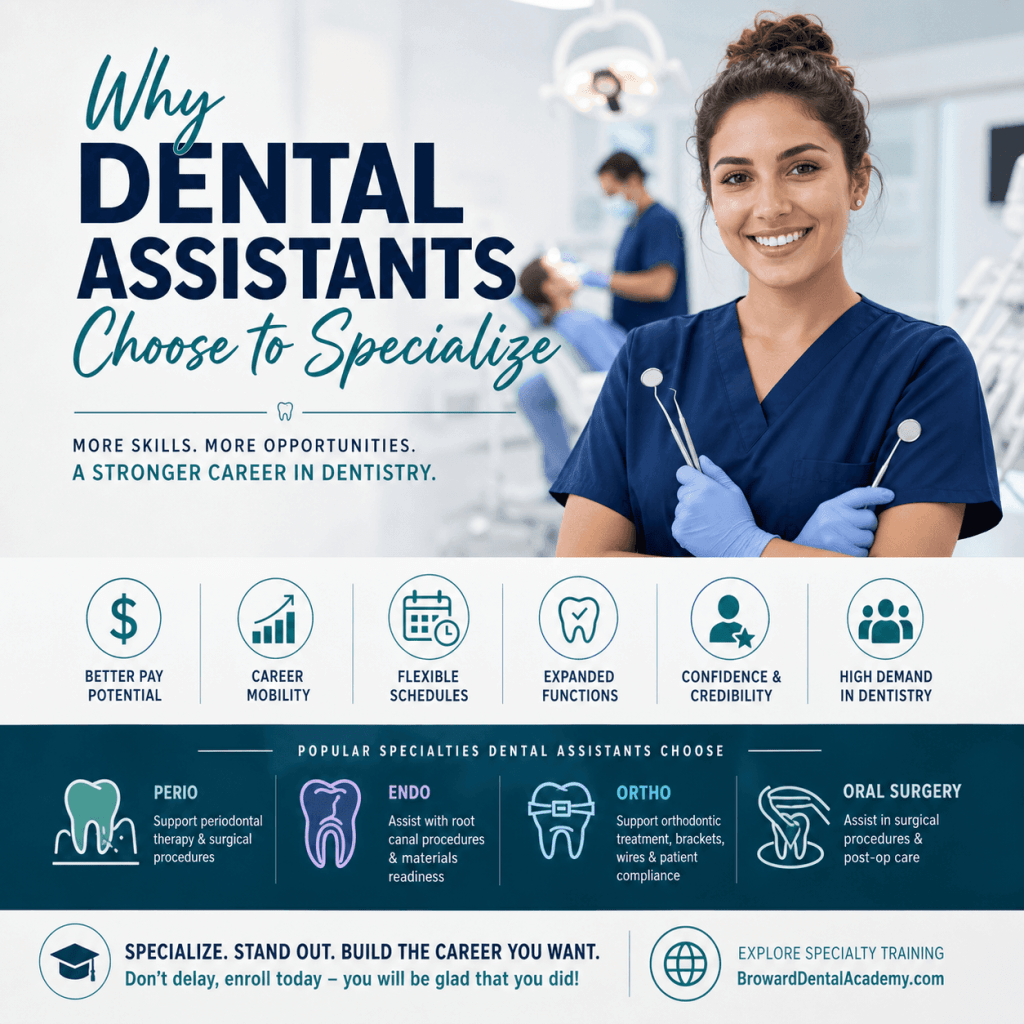
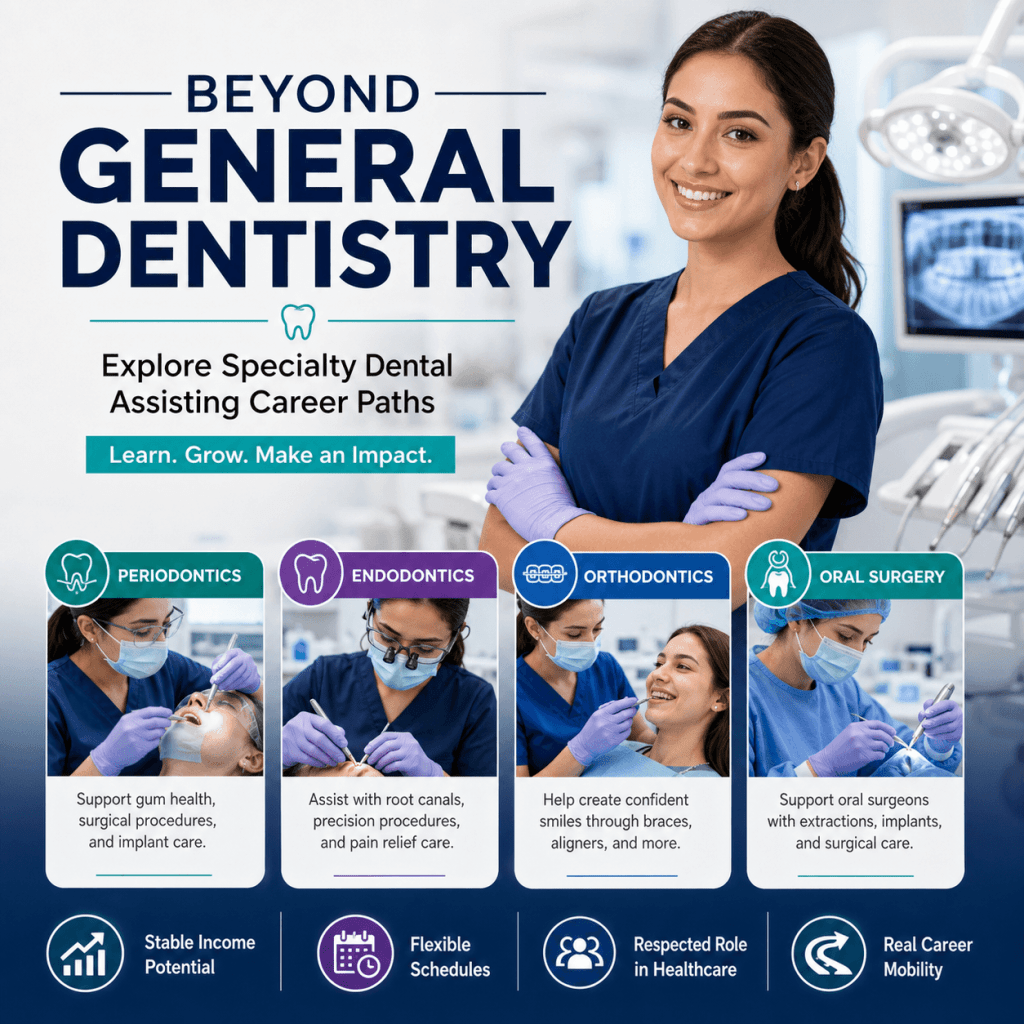
For those interested in specializing further down the line, there are opportunities to explore areas such as oral surgery or orthodontics, which can significantly enhance your career prospects.
What “best dental assistant training” actually means (and how to spot it quickly)
“Best” should not mean “fastest” or “cheapest.” It should mean job-ready.
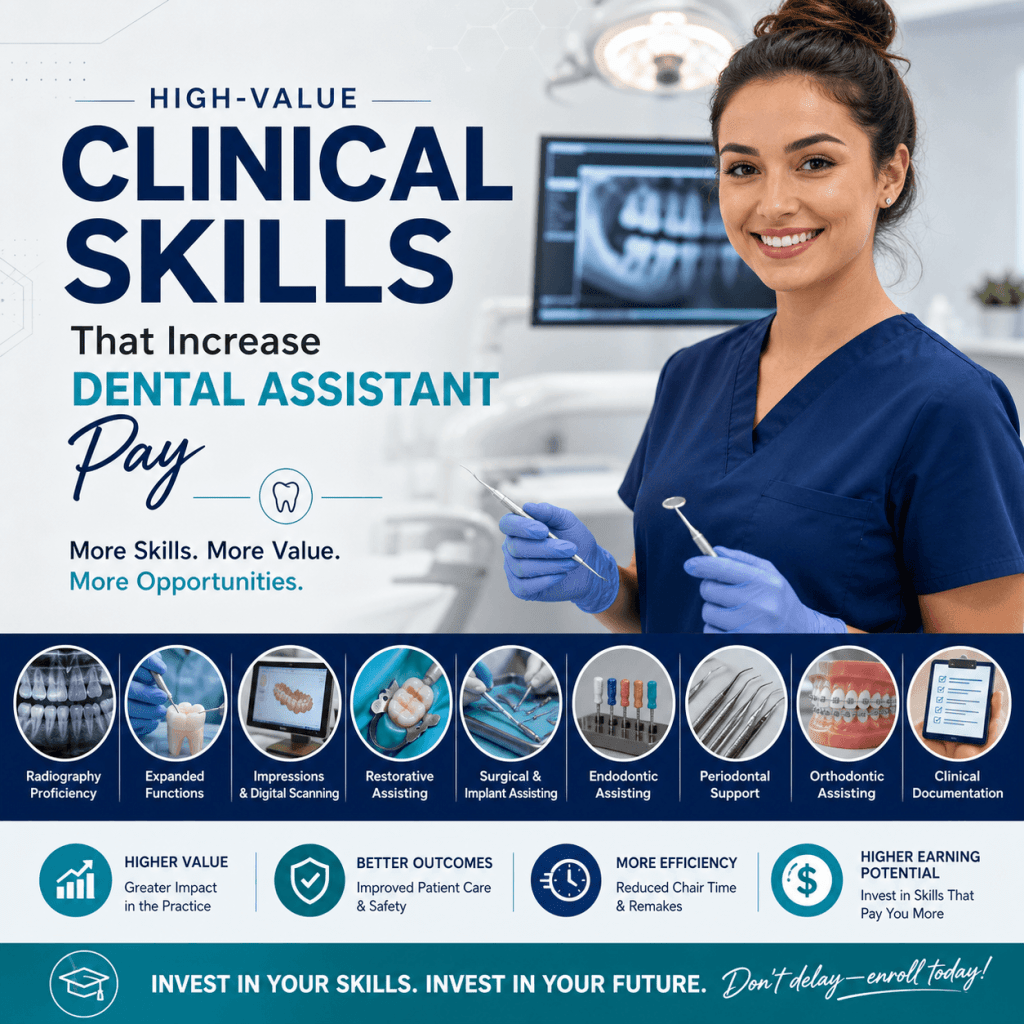
A strong dental assistant training experience includes:
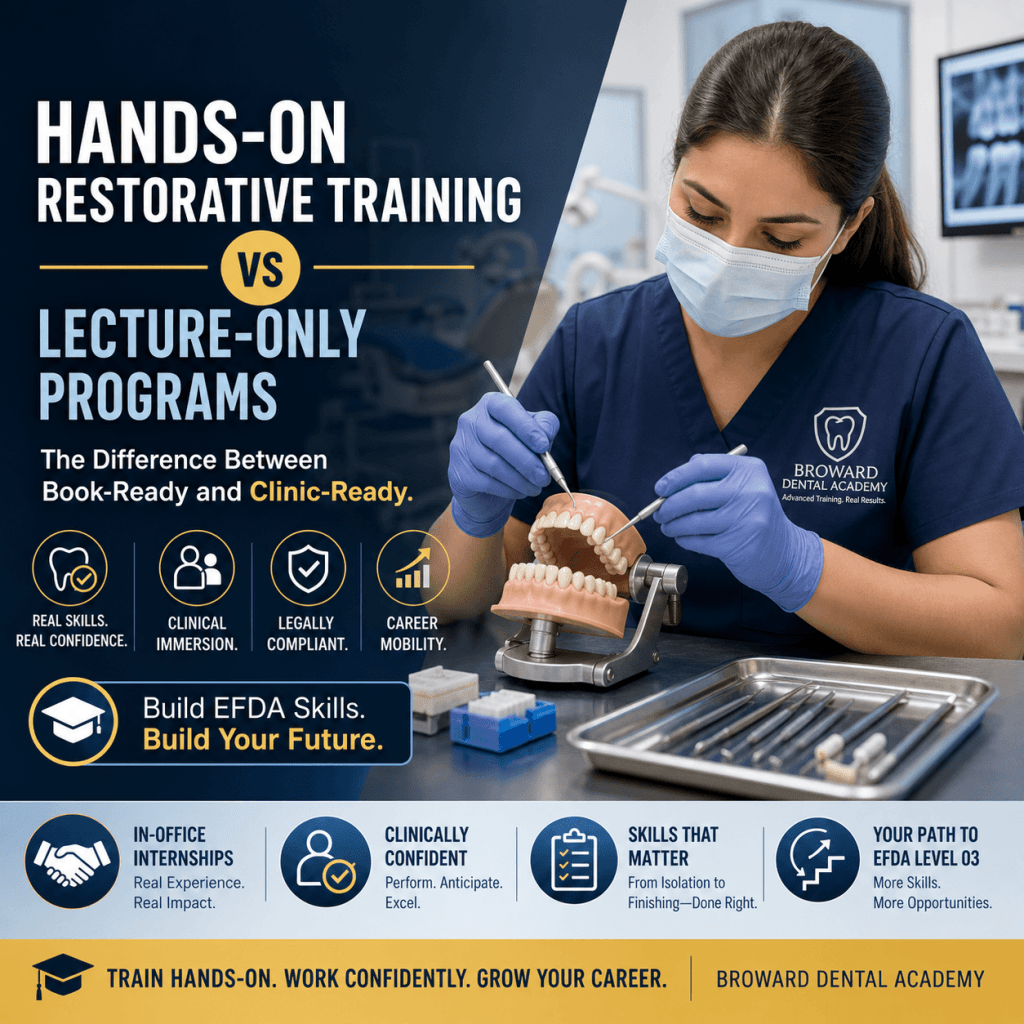
- Hands-on clinical skill-building, not just lectures
- Real dental office workflows, so students understand pace, priorities, and teamwork
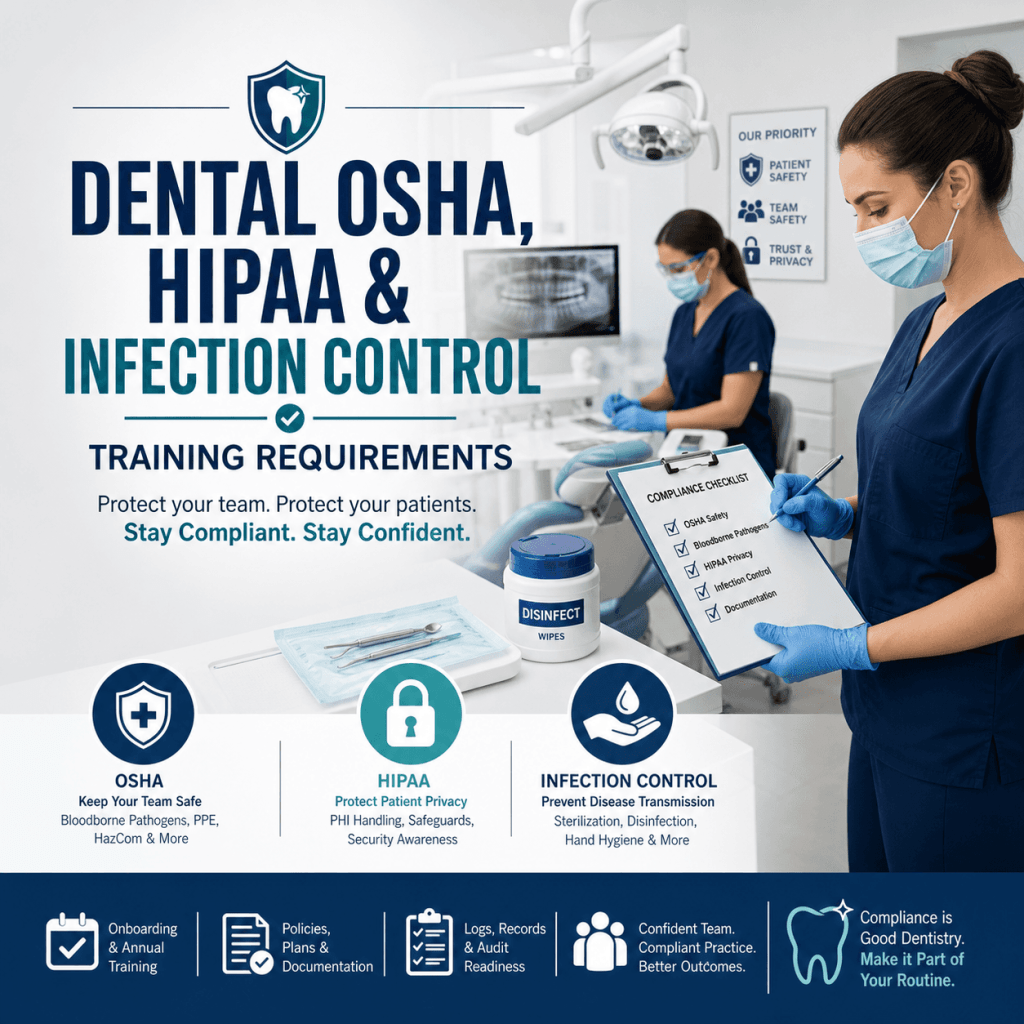
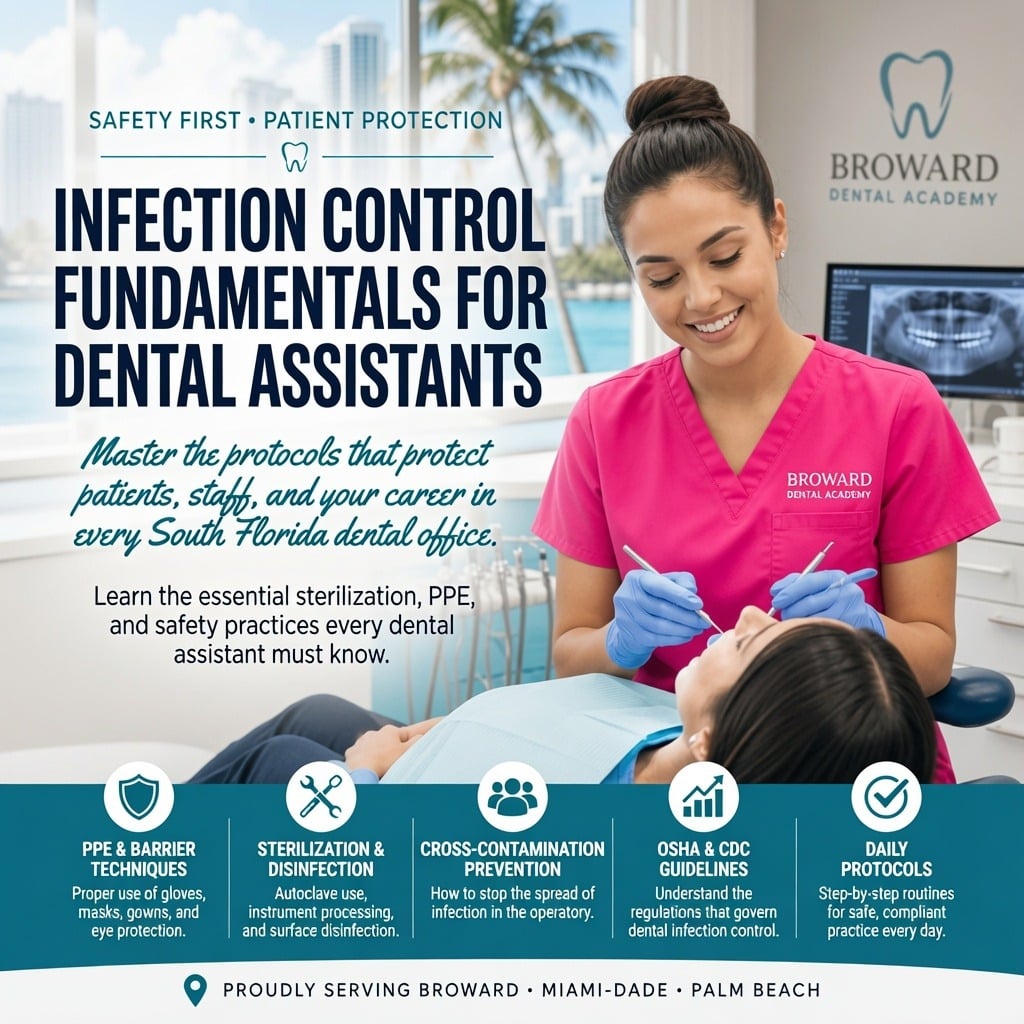
- Safety, infection control, taught as daily habits. This includes understanding infection control and sterilization workflow discipline, which is a crucial part of the job.
- Job readiness, including communication, confidence, and consistency
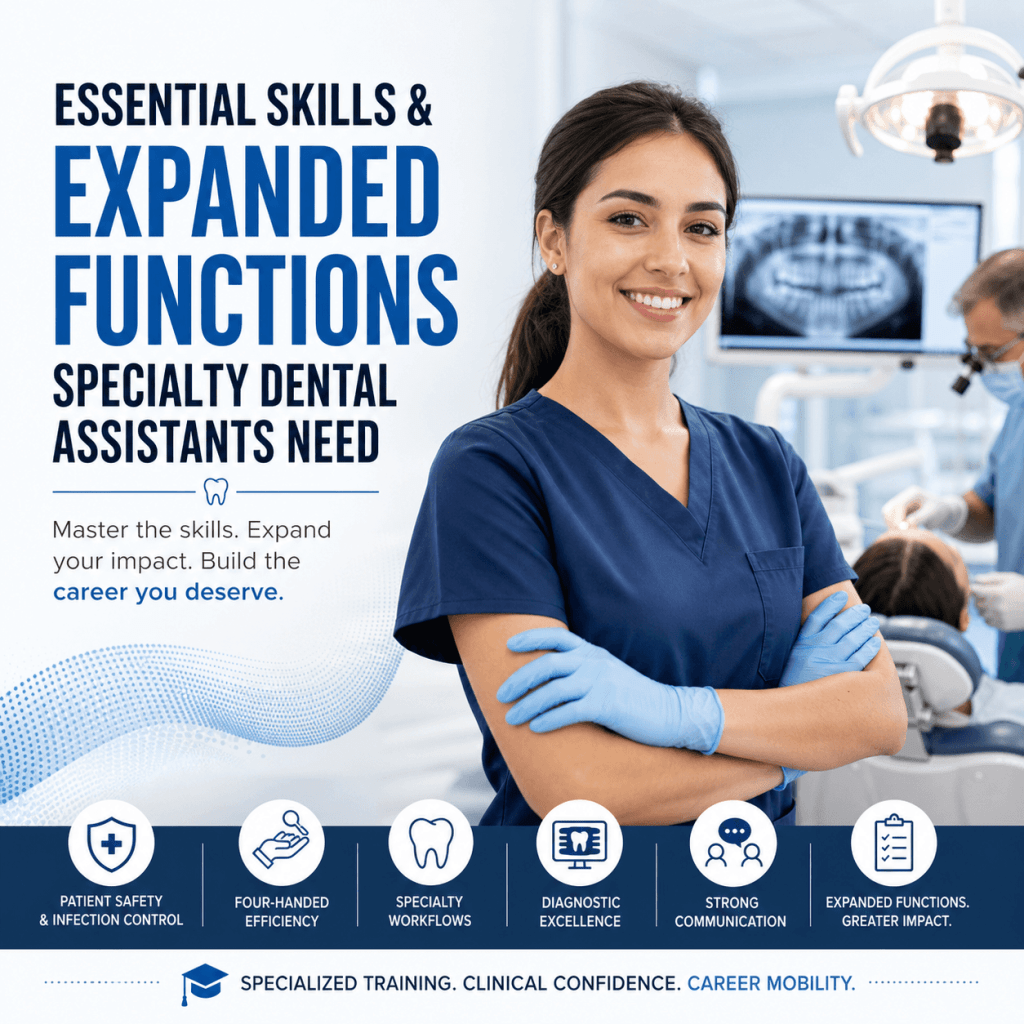
Employer expectations matter because dentists and office managers do not hire based on enthusiasm alone. They look for assistants who can show professionalism and perform the fundamentals well, including:
- Chairside efficiency and smooth instrument transfer
- Patient communication and confidentiality
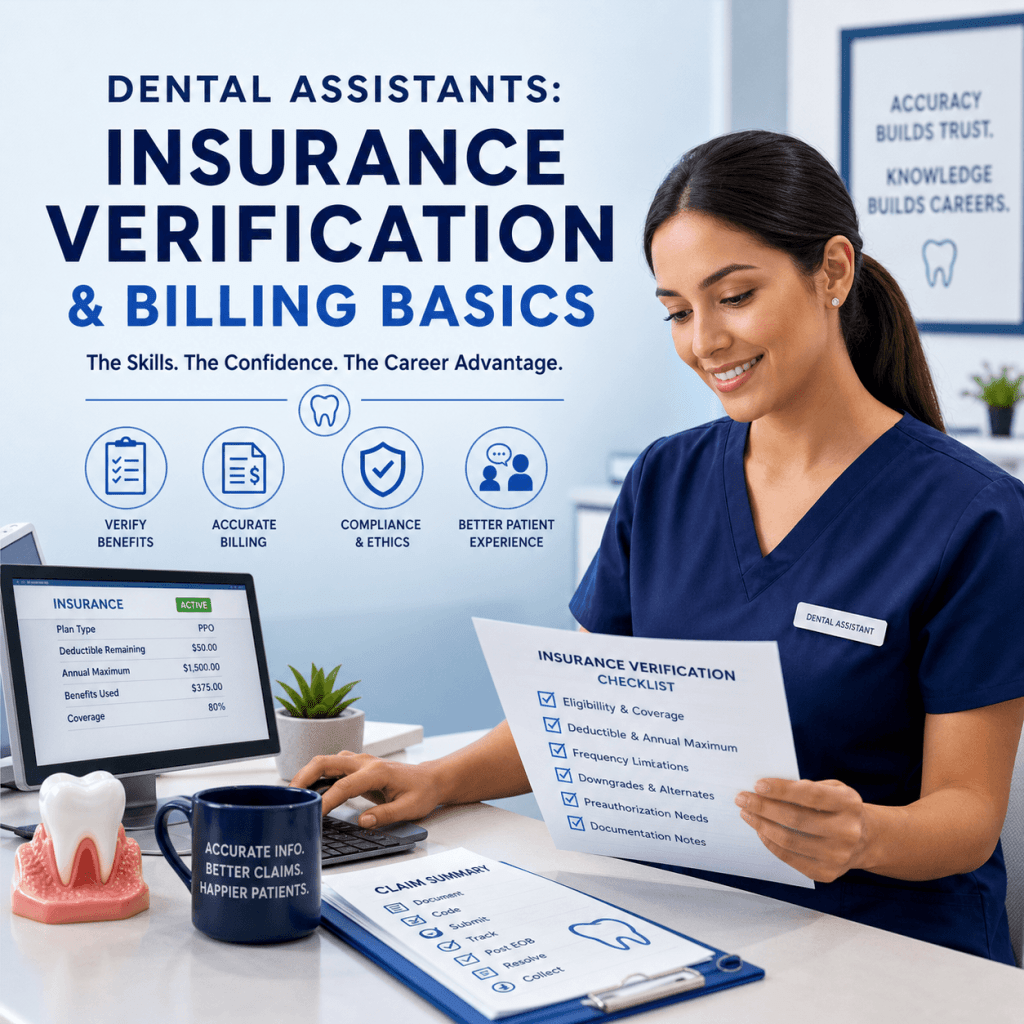
- Legal compliance and good documentation habits
A quick non-negotiables checklist for comparing programs
Use this checklist when you’re evaluating dental assisting schools and courses in South Florida:
- Curriculum depth: Does it teach real clinical assisting, not only theory?
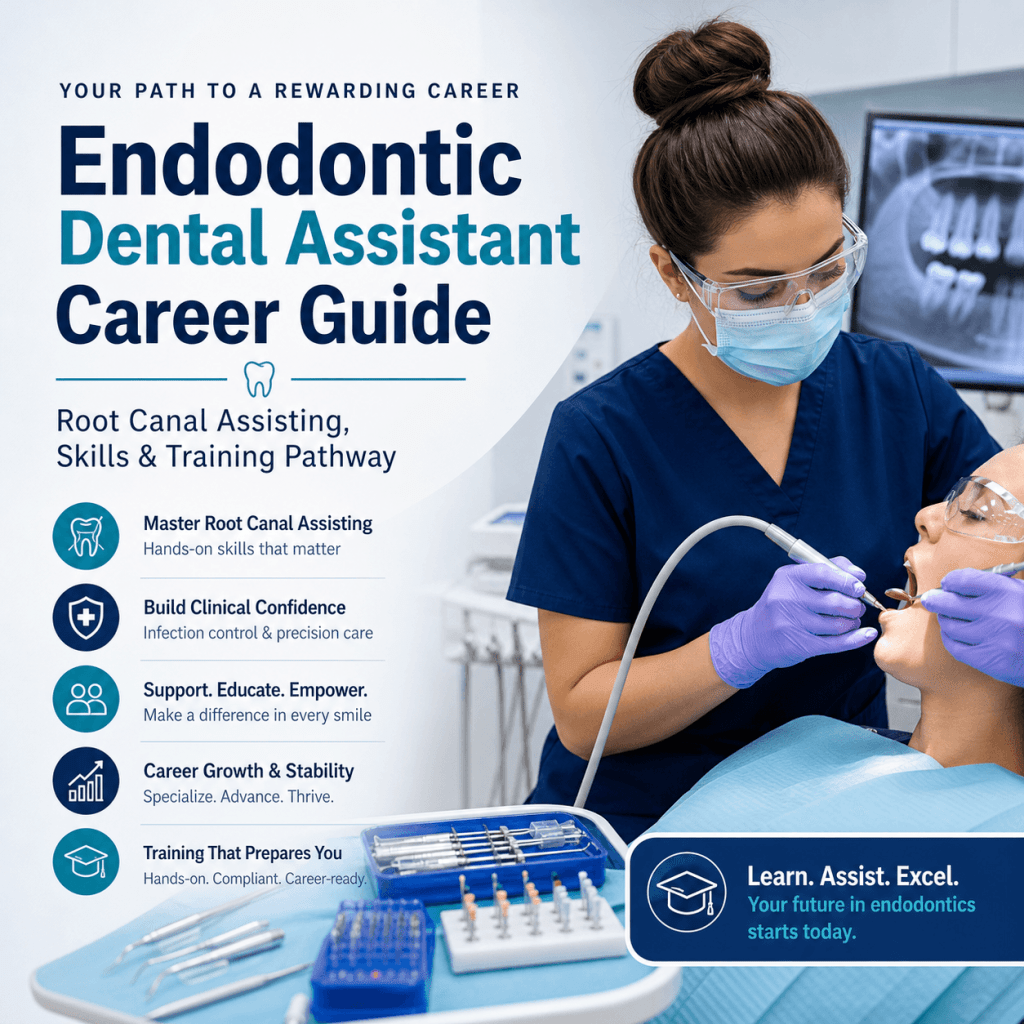
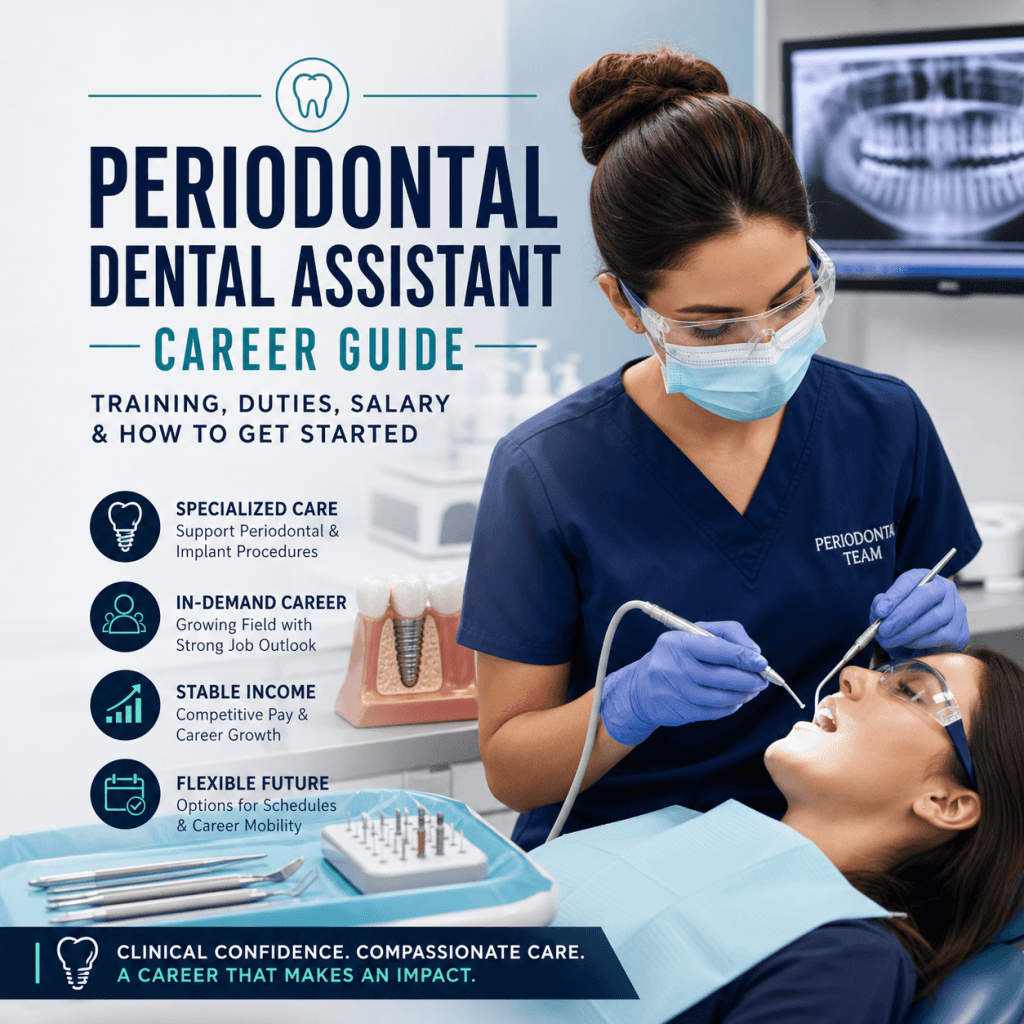
- For instance, a program that offers endodontics or periodontics as part of their curriculum can provide a deeper understanding of these specialized areas.
- Clinical hours and lab time: How much hands-on training will you get?
- Look for programs that offer extensive clinical hours to ensure you gain practical experience.
- Instructor quality: Are instructors experienced and actively connected to the field?
- The best programs have instructors who are not only qualified but also have real-world experience.
- Externship or internship: Is there real office exposure before graduation?
- This is crucial for gaining real office exposure which can significantly boost your confidence.
- Student support: Coaching, mentoring, skill feedback, career readiness help
- Outcomes: Are graduates prepared to work confidently and safely?
Choosing the best dental assistant training in south florida is crucial for your career development.
Also, be clear about what you’re enrolling in. There’s a real difference between a short class and a complete training program.
- Short classes can be helpful for targeted skills or refreshers.
- Such as those offered in various certifications that focus on specific areas.
- Complete dental assistant training programs are best for people who want a structured path to clinical confidence, consistency, and employability.
It’s important to note that aspects such as safety should also be integrated into the daily routines of aspiring dental assistants.
Common paths: school-based training vs. on-the-job training (and which one South Florida employers prefer)
Most people enter dental assisting through one of two paths:
1) School-based dental assistant training
This option typically delivers structure and standardization. Students practice core workflows repeatedly, receive feedback, and build confidence in a controlled clinical setting before stepping into a busy schedule.
2) Dental assistant on-the-job training
Some offices will hire a candidate with little experience and train them internally. This can work, but it often depends on the office’s time, staffing, and willingness to coach consistently.
Here’s the tradeoff: on-the-job training can be faster to start, but school-based training tends to create more consistent skill development.
Risks of learning only on the job
- Skills can be uneven, depending on who trains you and how busy the office is
- Gaps in infection control and compliance can develop if training is rushed
- Limited exposure to procedures means slower growth
- Productivity can take longer, which can affect confidence and job stability
Why structured programs help you interview better
A quality program helps you show up with:
- A verified foundation of clinical skills
- Familiarity with dental workflows and expectations
- A more professional presence because you have practiced the role, not just read about it
A simple decision guide
Choose school now if you want a clear pathway, hands-on practice, and a stronger shot at feeling confident quickly in interviews and on the job.
On-the-job training may make sense if you already have a guaranteed opportunity in a supportive office, and you have a plan to fill gaps through additional training, especially around safety, compliance, and core clinical workflows.
What you’ll learn in a quality dental assistant course (skills that make offices want to hire you)
A great program builds both clinical ability and professional habits, because that combination is what practices rely on.
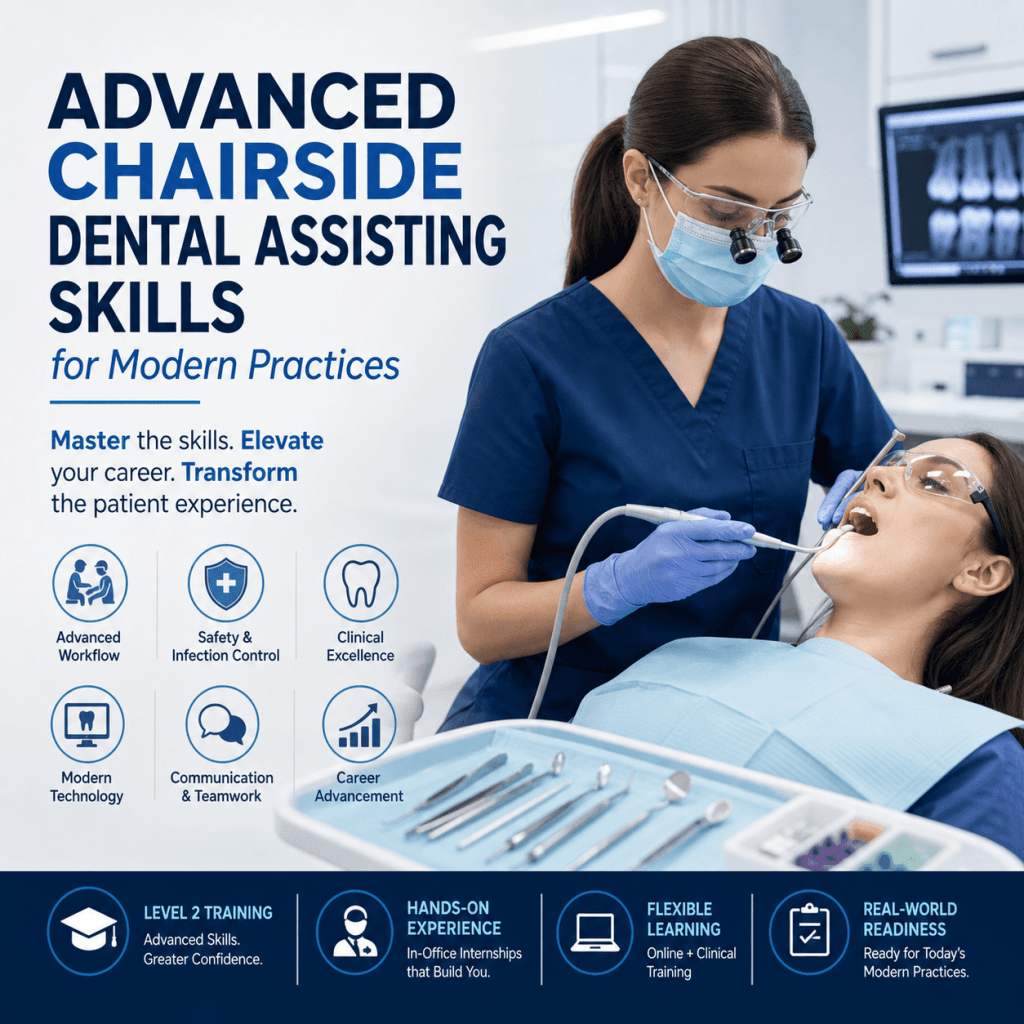
Chairside fundamentals
- Operatory setup and breakdown
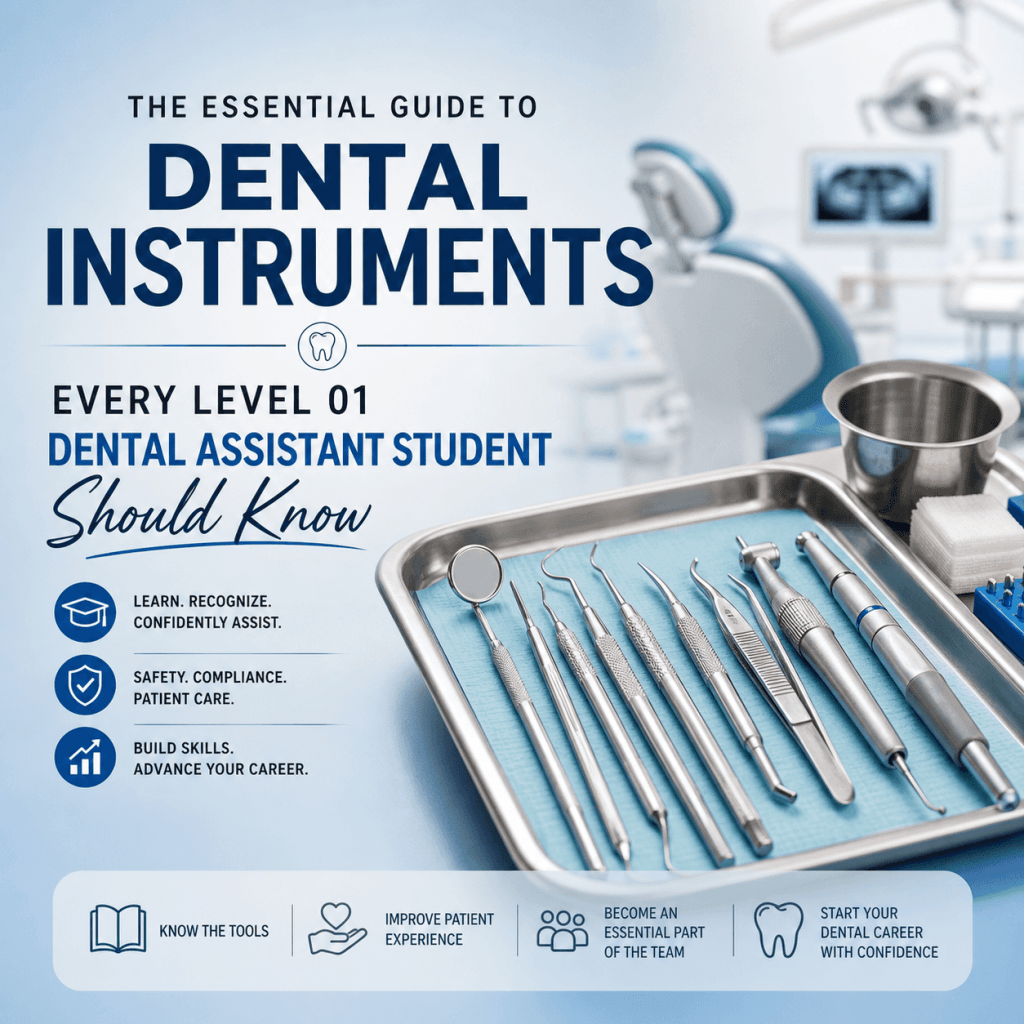
- Instrument identification and transfer
- Assisting in common procedures
- Patient positioning, comfort, and clear chairside communication
Infection control and safety
- Sterilization workflows and operatory disinfection
- Proper use of PPE
- Sharps safety
- Clean documentation habits and consistent routines
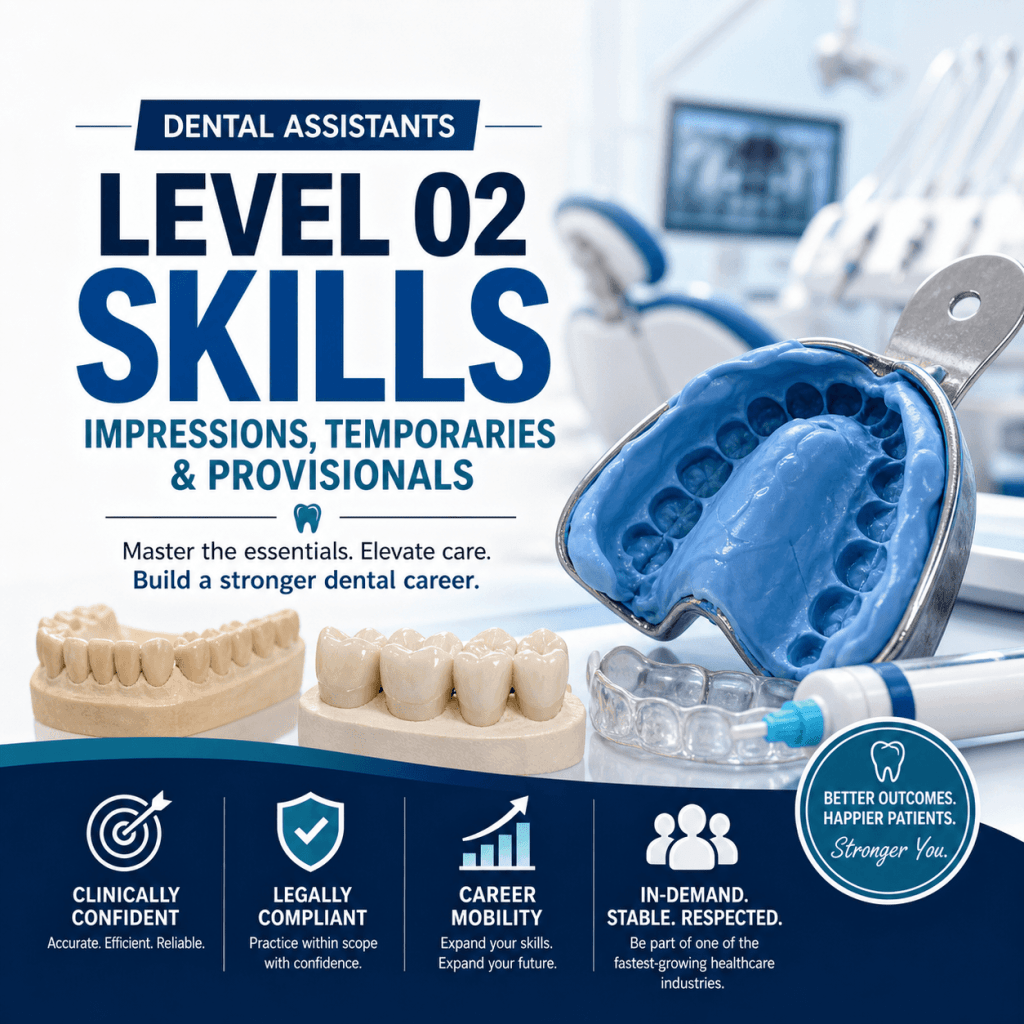
Dental materials and impressions basics
- Basic mixing and handling principles
- Tray setup and bite registrations (as applicable to training scope)
- Awareness of temporary materials and chairside support tasks
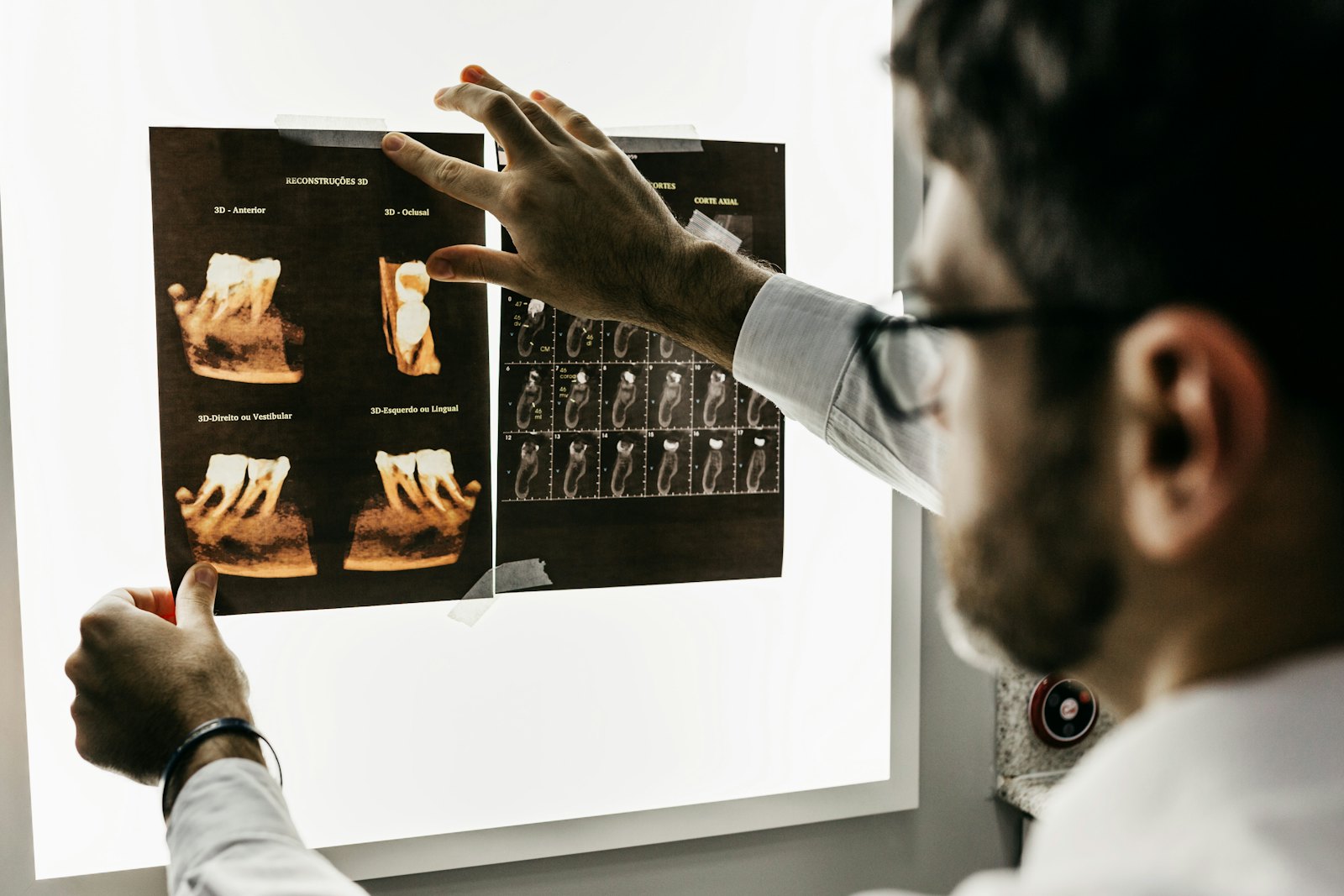
Dental radiography overview (where applicable)
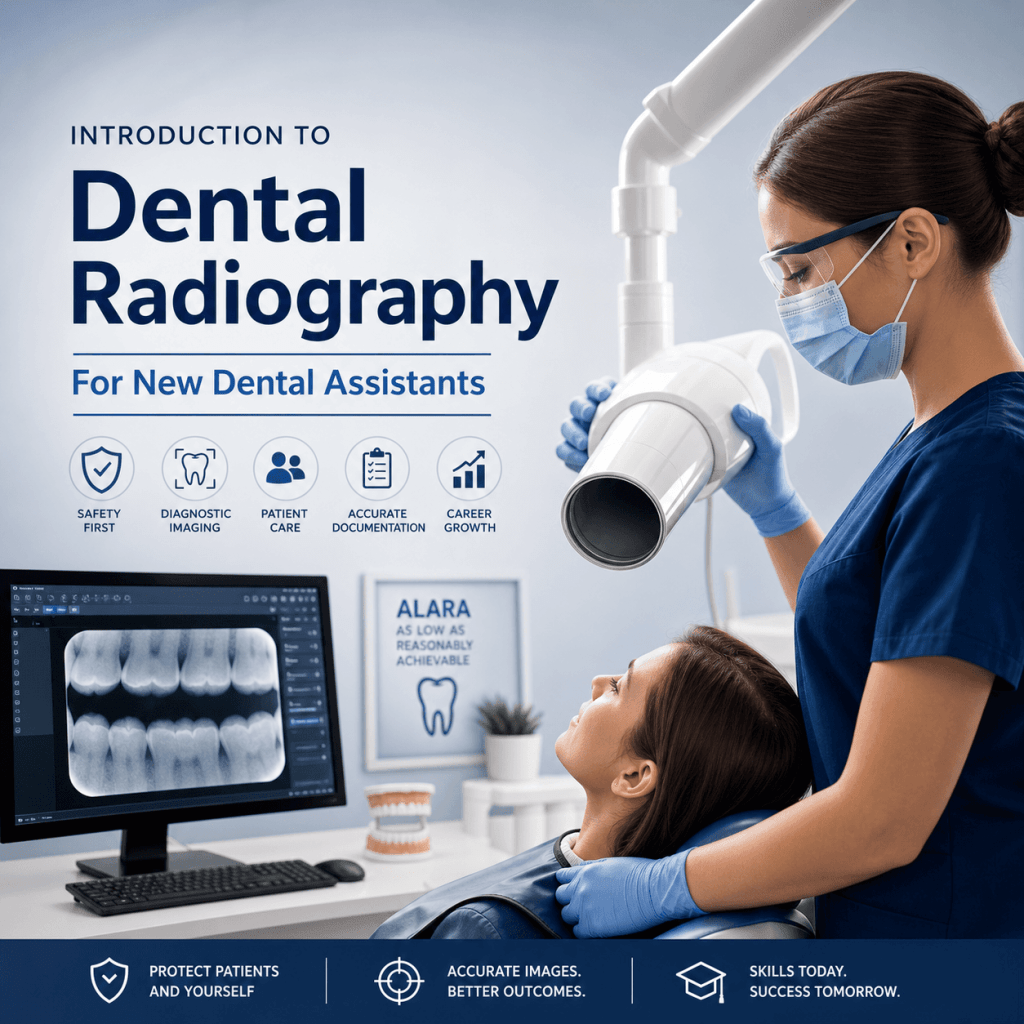
Radiography training varies by program and pathway, but strong dental assisting education typically covers terminology, safety concepts, and how radiography supports efficient clinical workflow.
Soft skills that matter
The best assistants are not only “good with instruments.” They are reliable and calm under pressure. Quality programs should build:
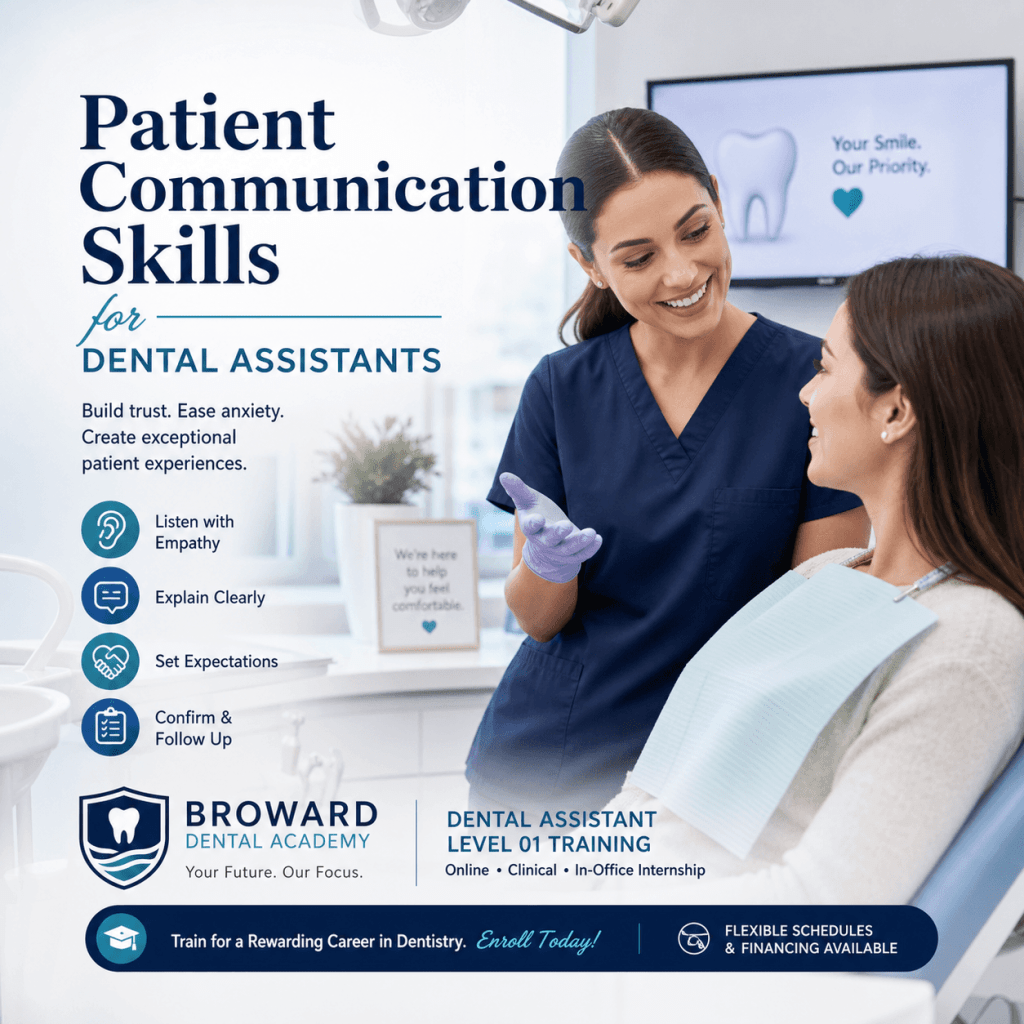
- Patient communication skills
- Ethics and professionalism
- Time management in a busy practice
- Critical thinking and team awareness
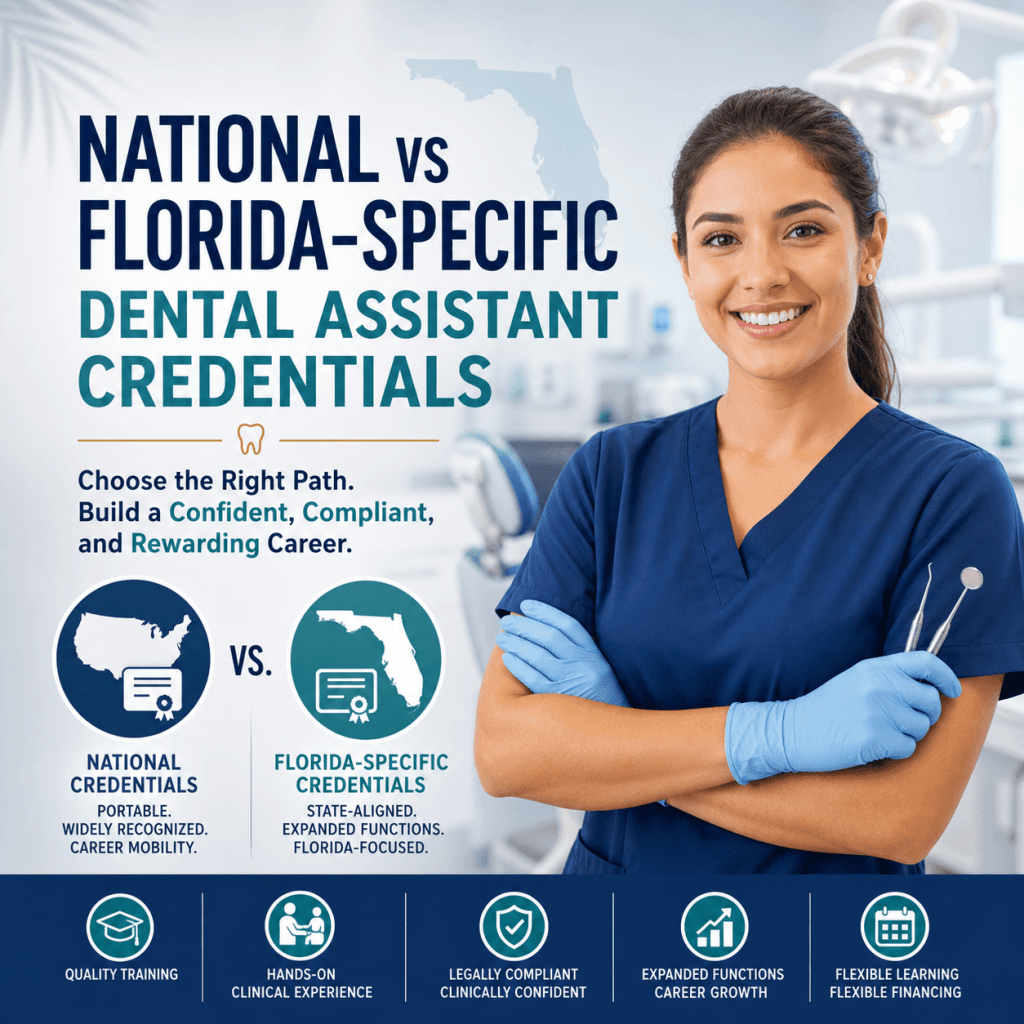
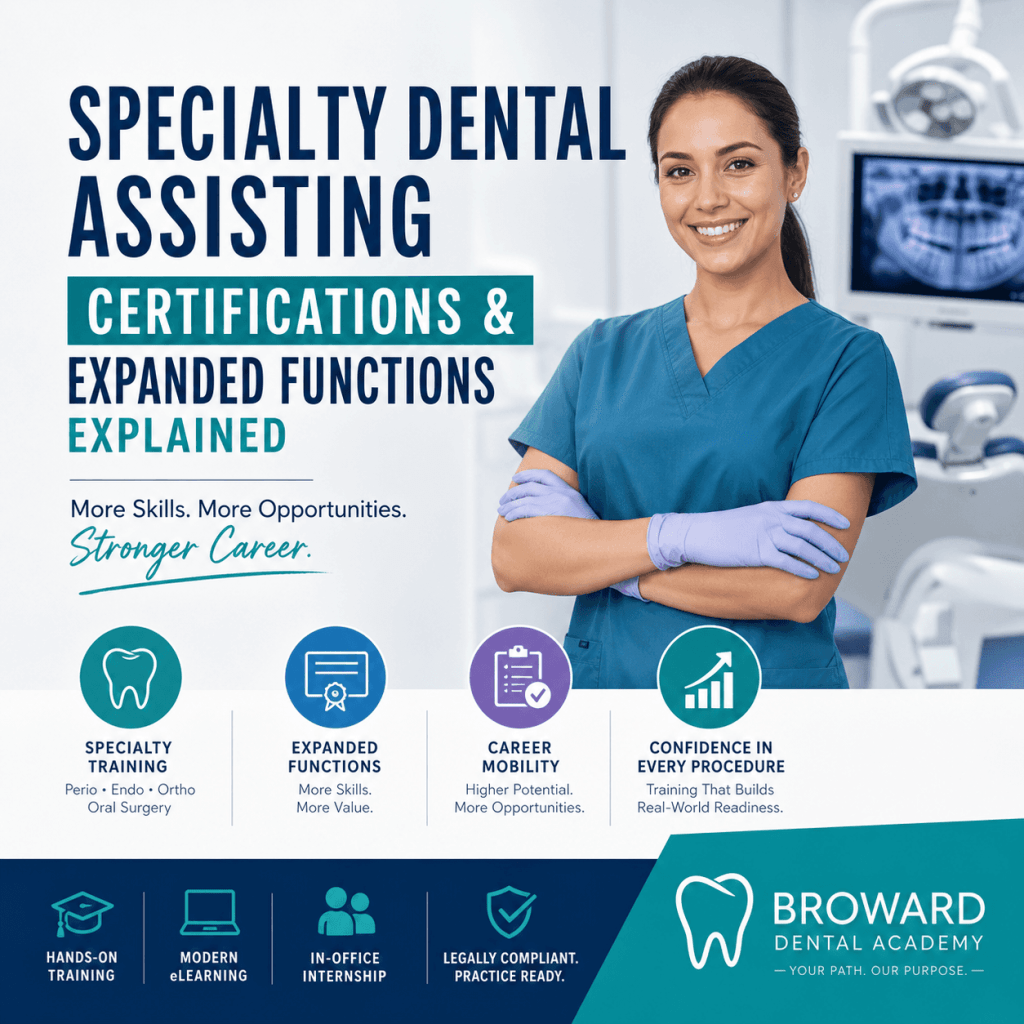
Certification and expanded functions in Florida: how to think about it without getting overwhelmed
People often search for “dental assistant certification” because they want clarity and confidence. In the real world, certification and additional credentials can support employability, but they should be approached with a plan, not panic.
Start with this mindset:
- Strong fundamentals come first
- Expanded skills come next, once you are consistent and confident
It’s important to note that these expanded functions should not be seen as overwhelming but rather as an opportunity for growth in your dental assisting career.
Expanded functions in plain language
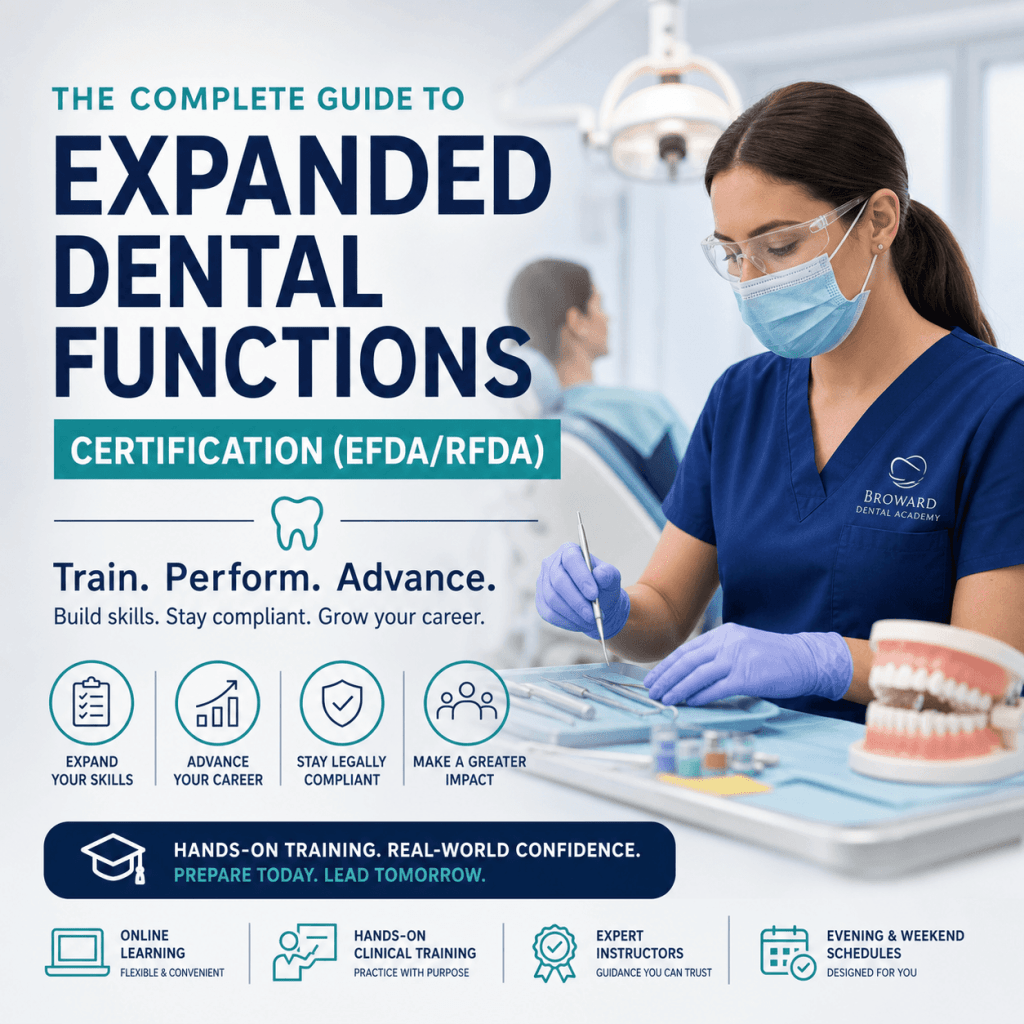
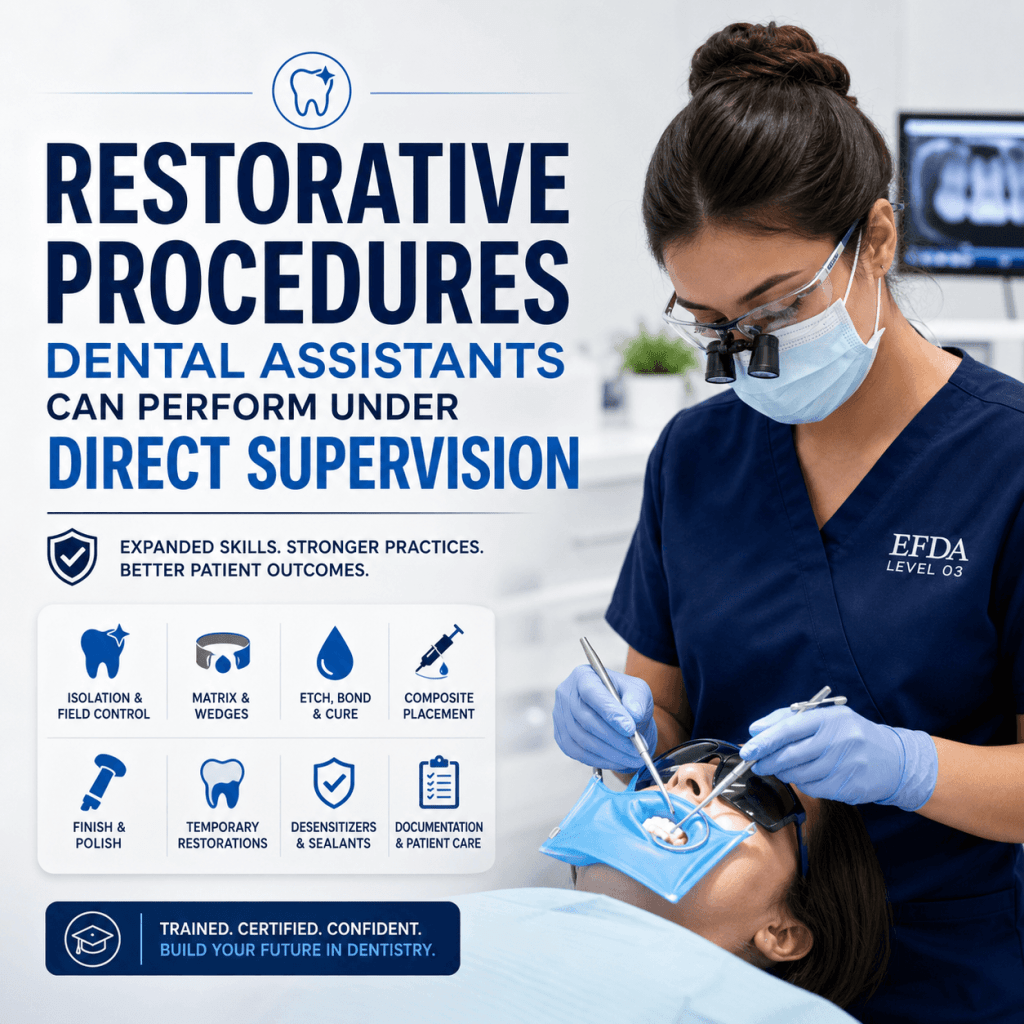
“Expanded functions” generally refers to additional clinical duties an assistant may be trained and authorized to perform, depending on the state’s rules and the supervising dentist’s protocols. These skills can increase career mobility, but only when taught correctly, with compliance and patient safety as the foundation.
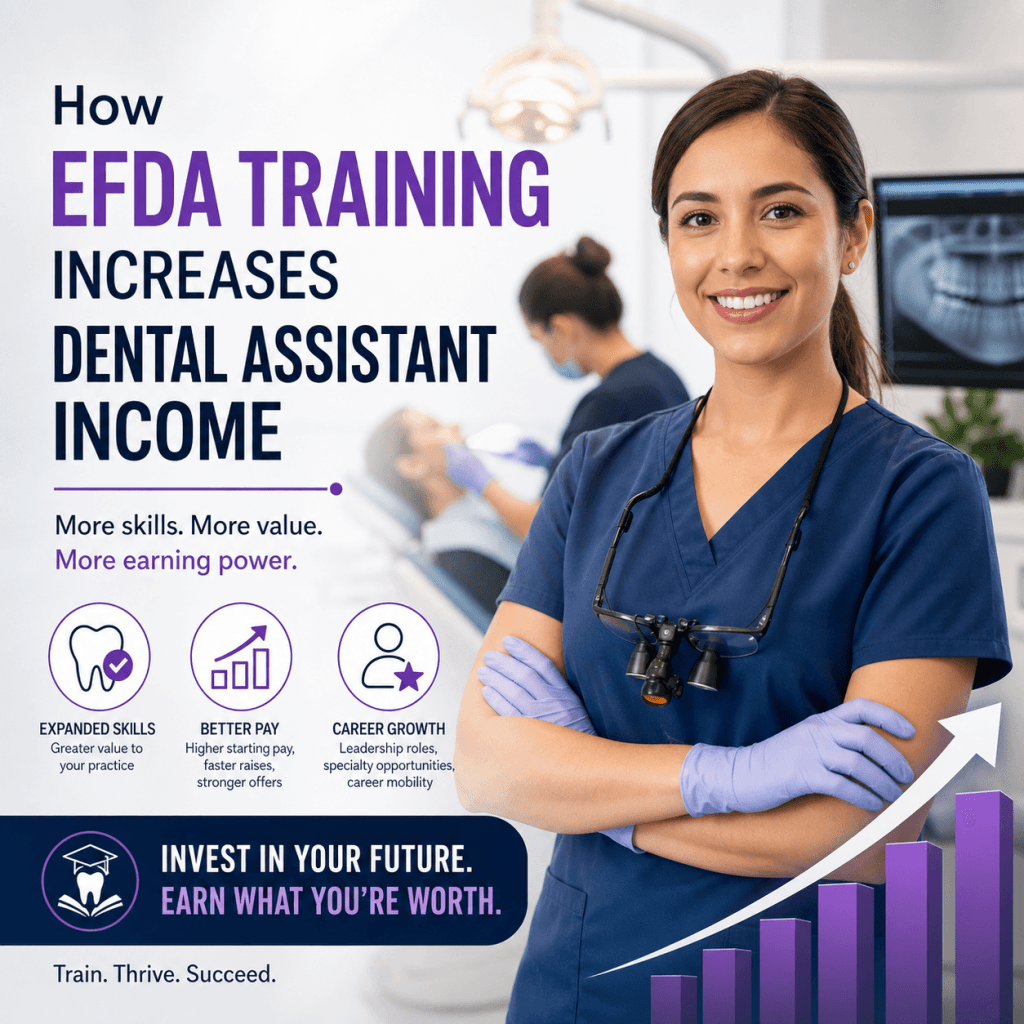
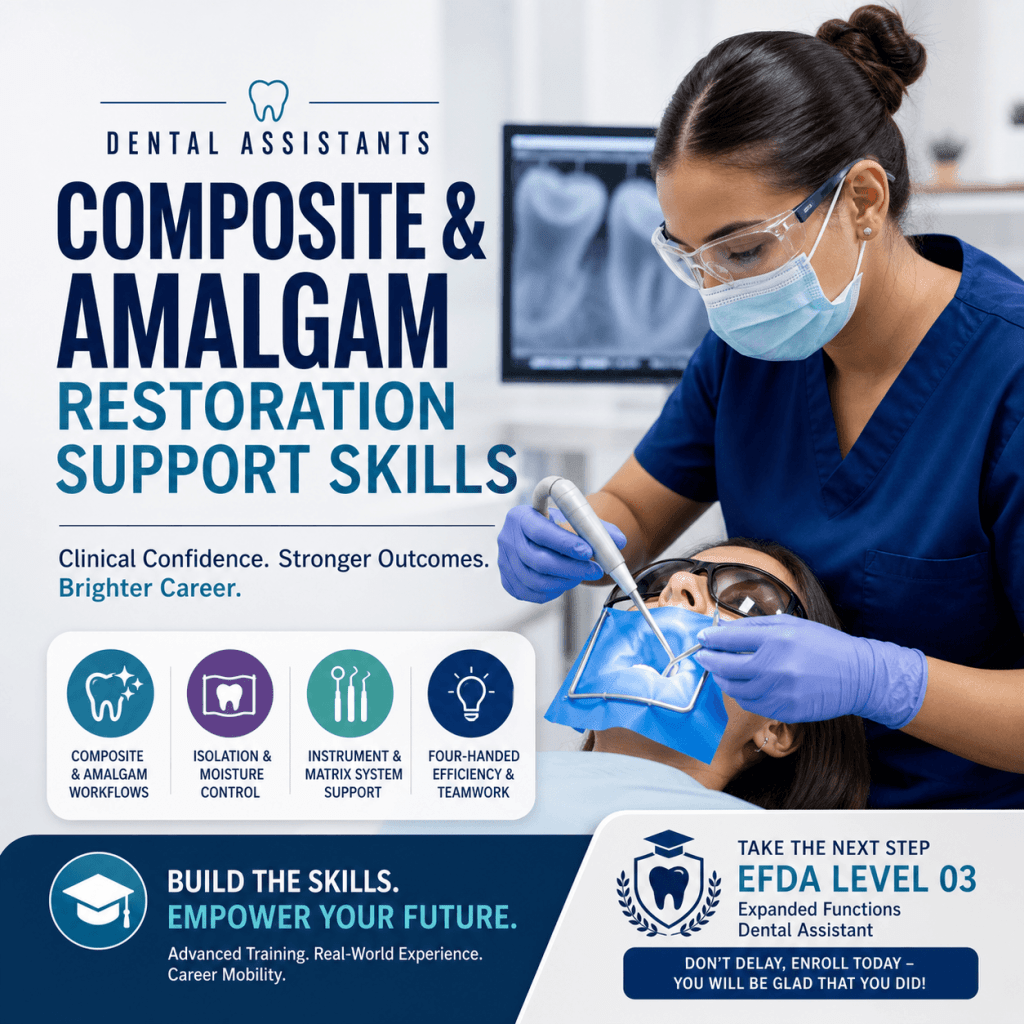
You’ll also see “EFDA” as a popular search term. Requirements and definitions vary by state and pathway, so if you are planning your long-term growth, confirm the right route for Florida and your specific goals.
And if you’ve searched terms like “cert 3 dental assisting” (often associated with other regions), treat that as a signal that you want a recognized training pathway. The best next step is choosing a South Florida program that builds real clinical confidence and aligns with local expectations.
Online vs. in-person dental assistant classes: what works best for real clinical confidence
Online learning can be genuinely helpful for:
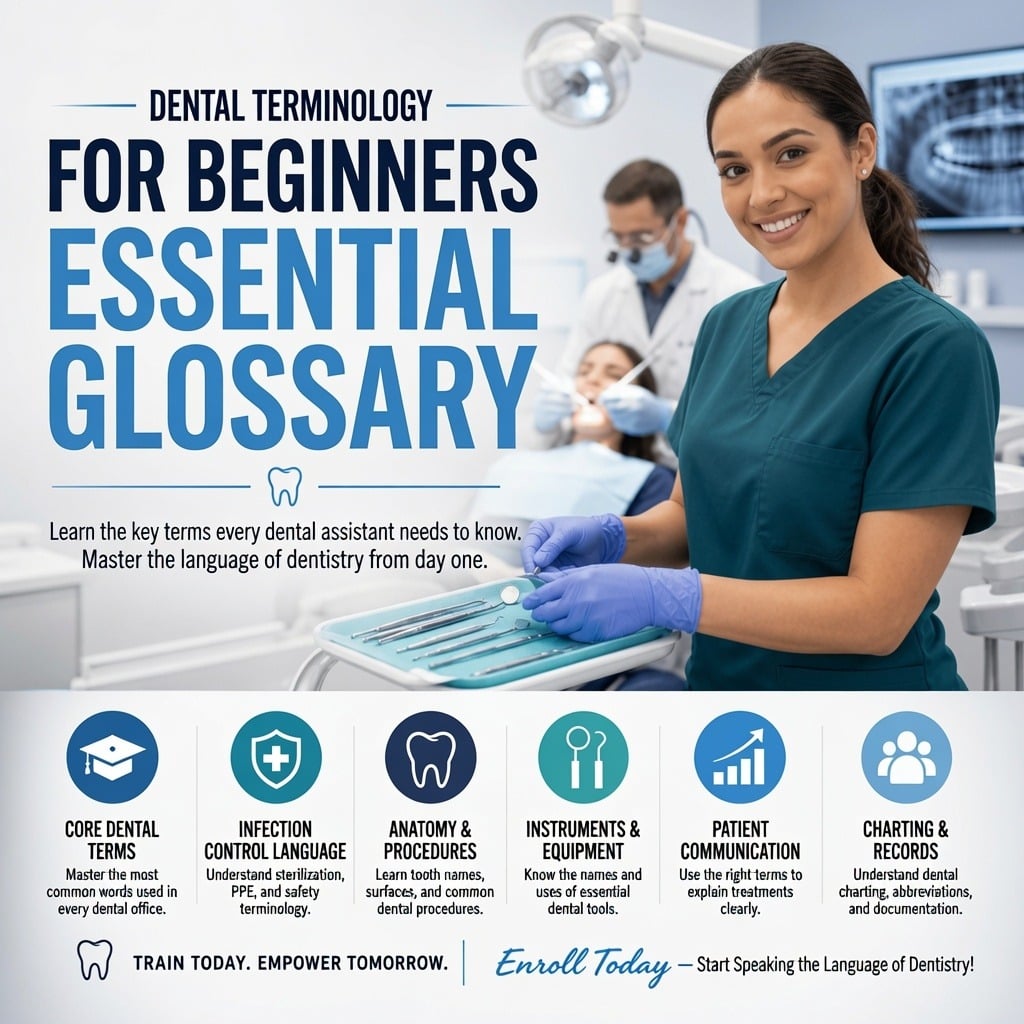
- Terminology and dental anatomy basics
- Professional standards, ethics, and safety concepts
- Learning the “why” behind workflows
But clinical confidence requires hands-on practice. Chairside assisting, instrument transfer, operatory setup, and real-time workflow are physical skills. You learn them through repetition, correction, and speed-building.
The best-of-both model
For many students, the strongest format is:
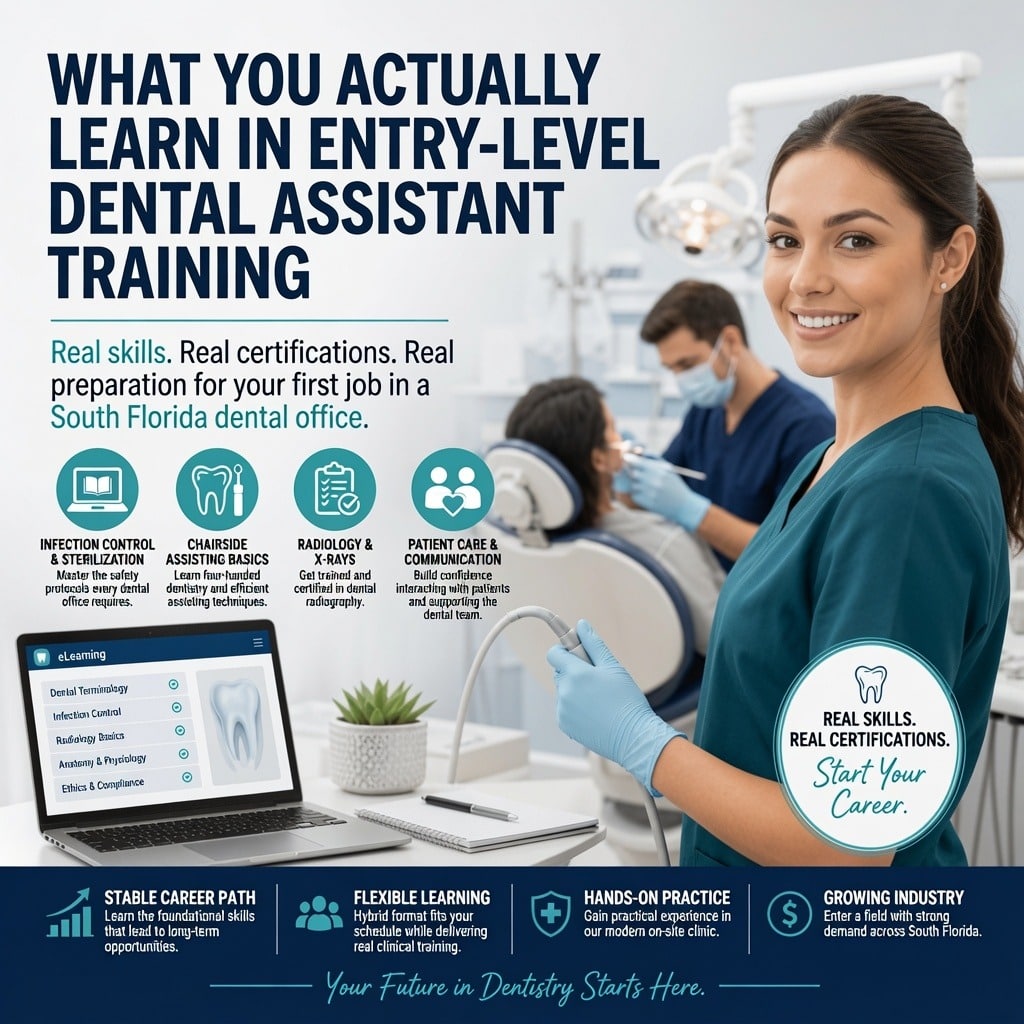
- eLearning lesson plans for flexibility and consistent study
- In-person clinical labs to build muscle memory, pace, and confidence
If you are searching for “dental assistant classes online” or “dental assistant online course,” make sure the program still includes meaningful clinical immersion and a clear pathway to real office exposure. The goal is not just finishing modules. The goal is graduating polished and ready for modern practices.
How to choose the best dental assisting school near you in South Florida (a practical checklist)
When people search “dental assistant training near me,” they are usually trying to solve two problems: convenience and consistency. In dental training, that matters more than most people expect.
Location and commute
Choose a program you can attend reliably, especially for clinical sessions. South Florida traffic is real, and missed lab time can slow down skill-building. Consider what’s practical for you across Broward, Miami-Dade, and Palm Beach depending on where you live and work. For instance, if you’re considering a school like Broward Dental Academy, it’s essential to factor in your commute.
Clinical exposure
Ask direct questions:
- How much clinical lab time is included?
- Do students practice real workflows, not just observe?
- Is there an externship or internship component?
Instructor credibility and mentoring
Your instructor should be more than a lecturer. Ask:
- What is their real-world dental experience?
- How do they correct technique and build speed?
- How do they support students who need extra reps?
Career readiness support
Dental offices hire professionalism. Ask what the school does to help with:
- Interview preparation
- Professional communication standards
- Post-graduation guidance
Financing
“Flexible financing” can mean different things. Before you enroll, ask:
- What payment options exist?
- What does the financing cover?
- Are there deadlines or requirements?
Spotlight: Broward Dental Academy — dental assistant training built for modern, high-performance practices
Broward Dental Academy serves the Dental Community by developing well-rounded professionals through multiple dental training programs. That positioning matters because dentistry has changed. Practices are faster, more patient-experience focused, and more compliance-driven than ever.
The difference is not simply teaching you to pass an exam. Broward Dental Academy focuses on preparing students to thrive in a modern, high-performance dental practice.
Students train in an environment designed to produce professionals who are thoroughly trained, legally compliant, and clinically confident.
Just as important, students are trained to think critically, act ethically, and perform confidently, which is exactly what dental teams expect when they bring a new assistant into a busy schedule.
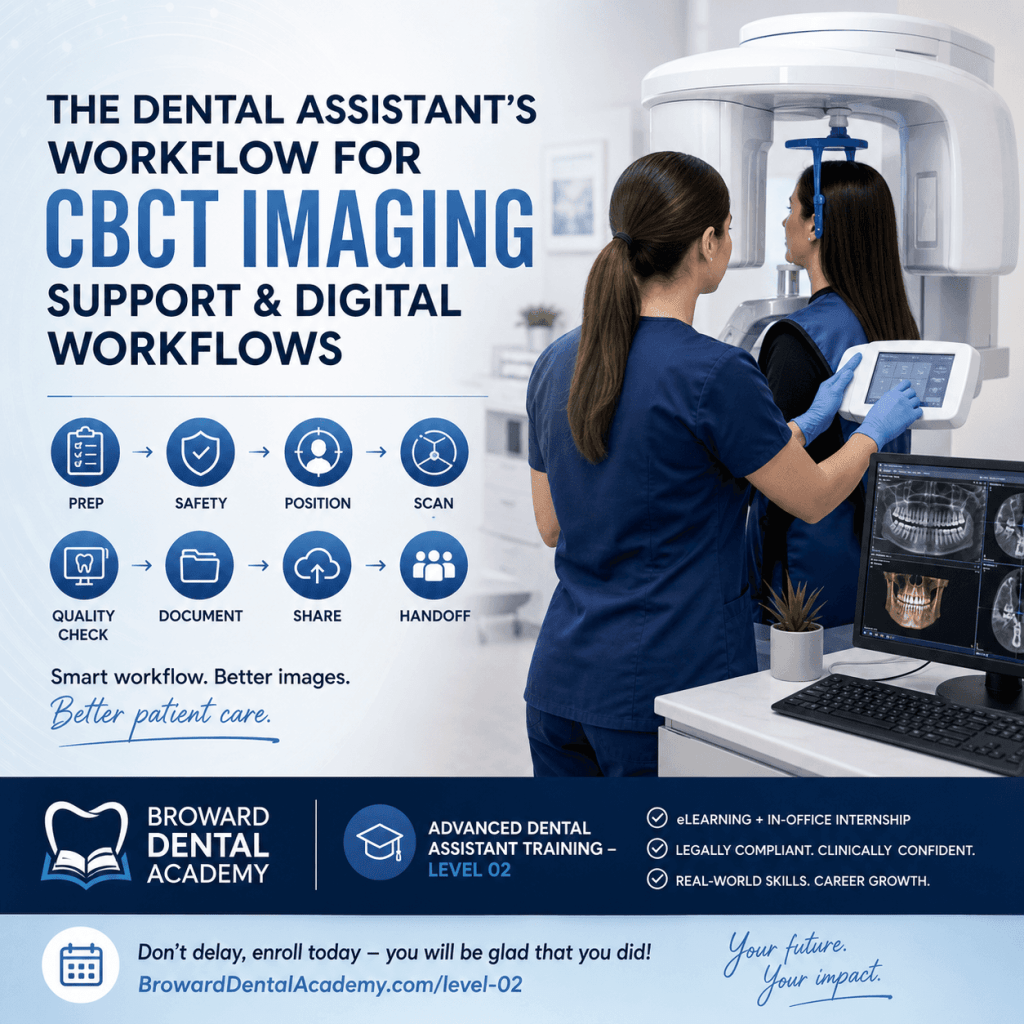
Broward Dental Academy incorporates latest eLearning lesson plans for remote training and pairs that with clinical training so students stay engaged, skills-focused, and ready for real practice demands.
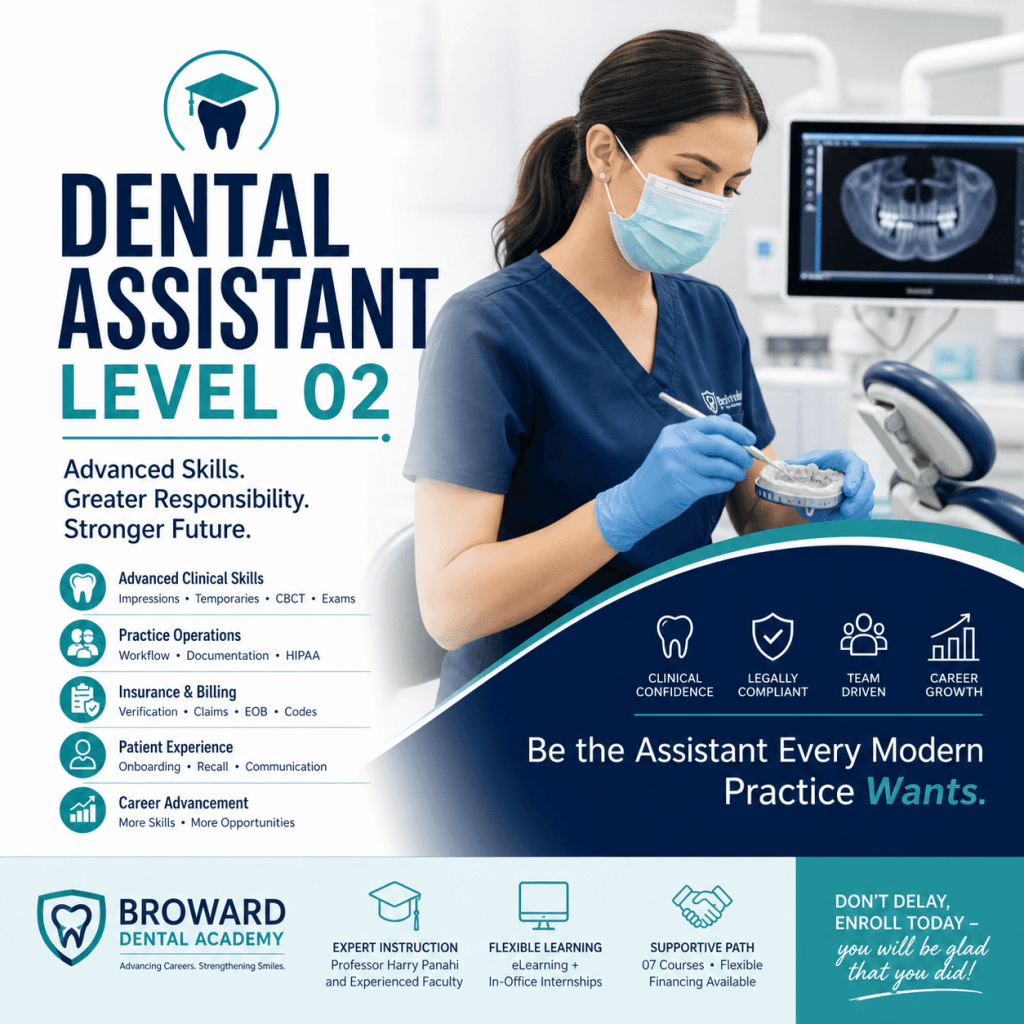
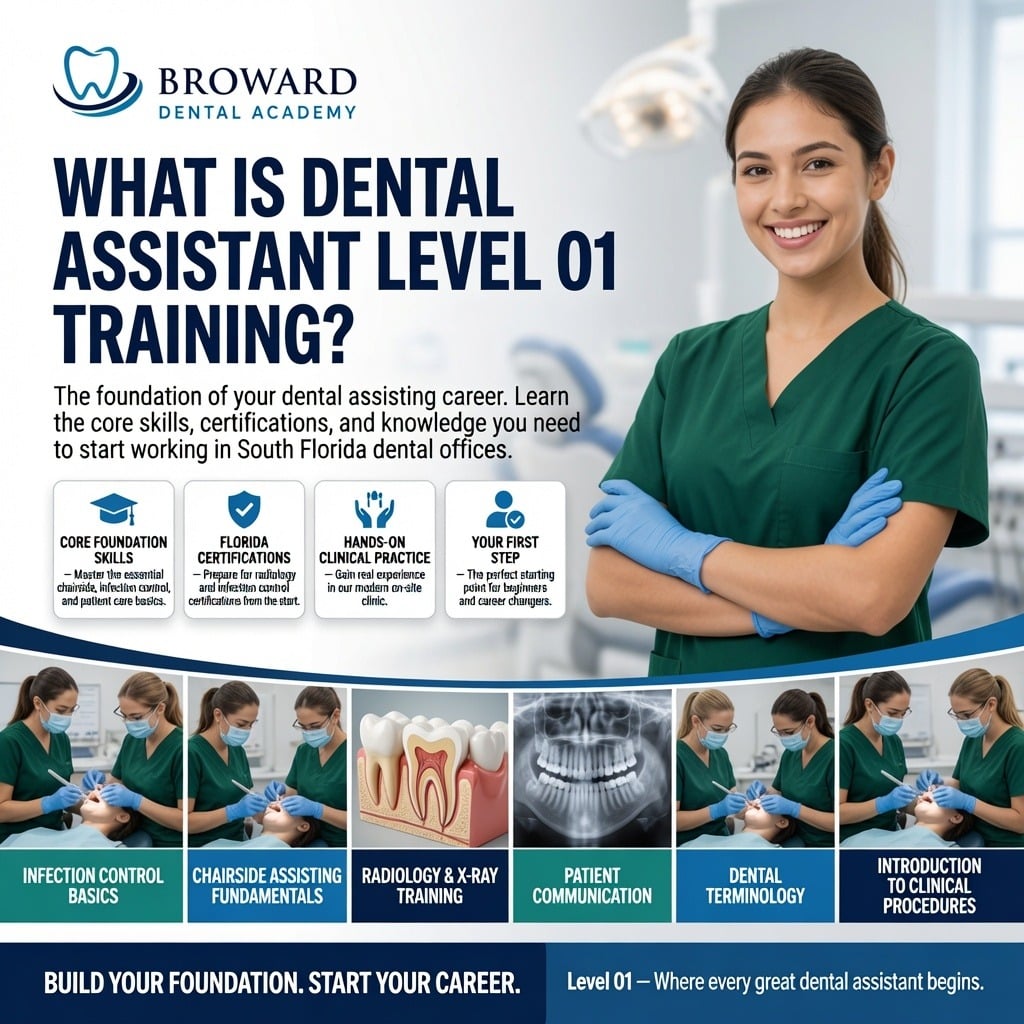
The academy offers 7 courses, including Dental Assistant Level 01, Dental Assistant Level 02, and Dental Assistant Hygienists Level 03, which creates growth pathways for students who want to build beyond entry-level skills over time through continued dental training.
What training looks like week-to-week: from eLearning to clinical skills to in-office internships
Many students feel more confident once they understand what training actually looks like in real life. A strong week-to-week flow often follows this progression:
- Foundational concepts online — Students learn terminology, safety principles, procedure basics, and the “why” behind daily routines.
- Hands-on clinical sessions — This is where skills become real. Students practice operatory setup, infection control workflows, instrument transfer, and chairside assisting fundamentals.
- Competency building through repetition and feedback — Speed and confidence come from reps. Instructors correct small details that make a big difference in a working office, like clean setup habits, consistent transfer technique, and staying two steps ahead during procedures.
- In-office internship or externship — This is where training connects to the pace of a real practice.
What students experience during their internship
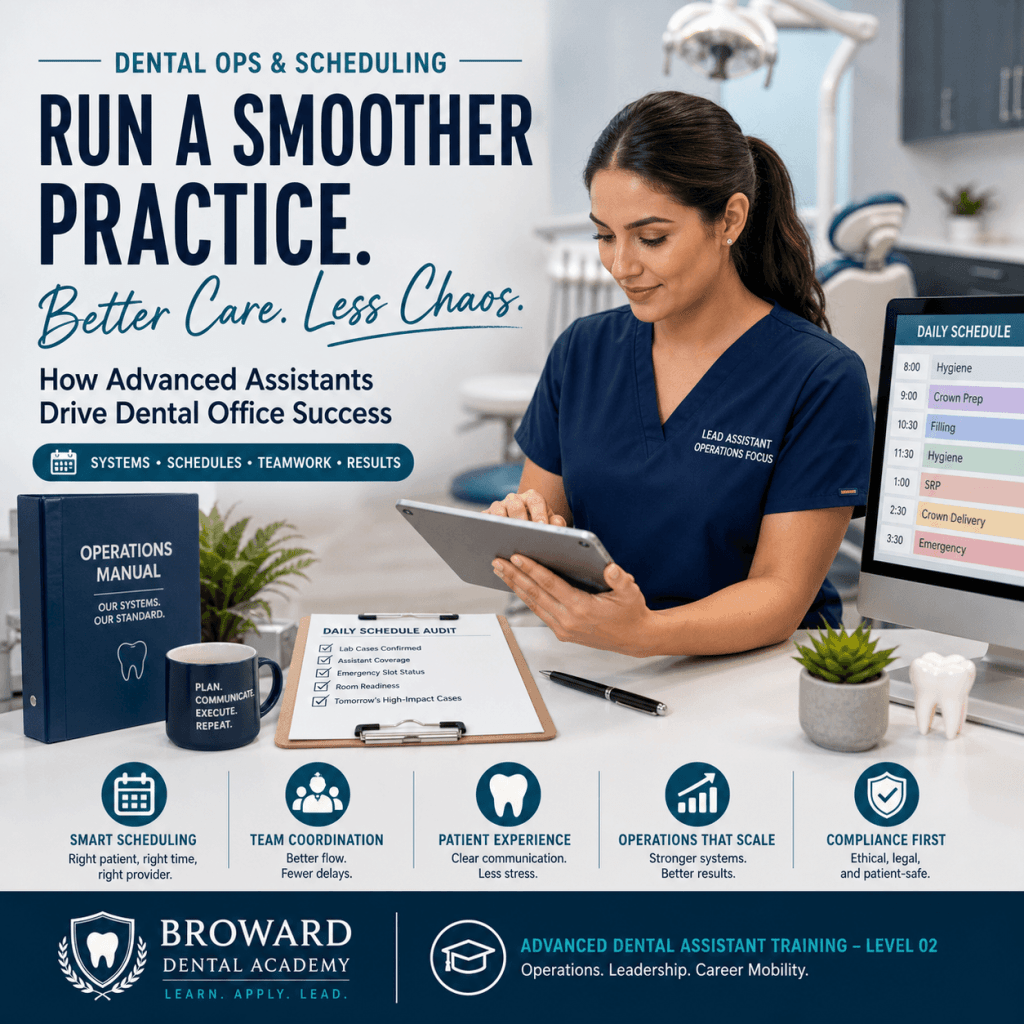
- Real scheduling flow and time pressure
- Team dynamics and communication patterns
- Patient interaction and service standards
- Documentation habits and daily accountability
Internships matter because employers love candidates who already understand the environment. It signals that you are more likely to contribute quickly and safely.
Who this dental assistant training is best for (and how to know you’re ready)
Dental assisting attracts people from different life stages, and the right program should support that.
Career changers
If you want a faster path into healthcare with respected, patient-facing work, dental assisting can be a strong move.
Recent grads
If you want a structured pathway with clear expectations, measurable skill-building, and professional standards, training helps you start strong.
Parents and working adults
Blended learning and flexible schedule options can make training more realistic while managing work and family responsibilities.
People aiming for expanded functions
If your goal includes expanded skills over time, start with strong fundamentals. Advanced growth is easier when your chairside basics, safety habits, and professionalism are already solid.
A quick self-check
You do not need prior dental experience, but you should be ready for:
- Hands-on clinical learning
- Working closely with patients and a dental team
- Learning in a fast-paced environment
- Taking safety and compliance seriously
What happens after graduation: getting hired in South Florida (and growing your career)
After graduation, hiring decisions often come down to a few clear signals:
- Can you follow chairside workflow confidently?
- Are you professional, reliable, and coachable?
- Do you show strong infection control habits without being reminded?
- Can you communicate calmly with patients and the team?
Practical ways graduates stand out
- Internship experience that translates into real examples during interviews
- A clear, organized skills list and comfort describing what you can do
- Strong references and a professional attitude
- Readiness to learn the office’s systems quickly without needing basic re-training
Long-term growth
In South Florida, dental assisting can open doors to:
- Specialty practices
- Lead assisting responsibilities
- Expanded functions pathways (where applicable)
- Continued advanced dental training as your goals evolve
The bigger picture is encouraging: dentistry continues to grow, and practices need skilled, well-trained professionals who can keep standards high and patients comfortable.
How to enroll at Broward Dental Academy (next steps)
If you’ve been searching for dental assistant training near you in South Florida, the next step is to speak with admissions, confirm schedule options, and choose the right course path for your goals.
Broward Dental Academy also offers flexible financing, which you can explore during the enrollment process.
If you’re ready to build real clinical confidence and train for the expectations of modern dental offices in Broward County and nearby South Florida areas, don’t delay, enroll today. You will be glad that you did.
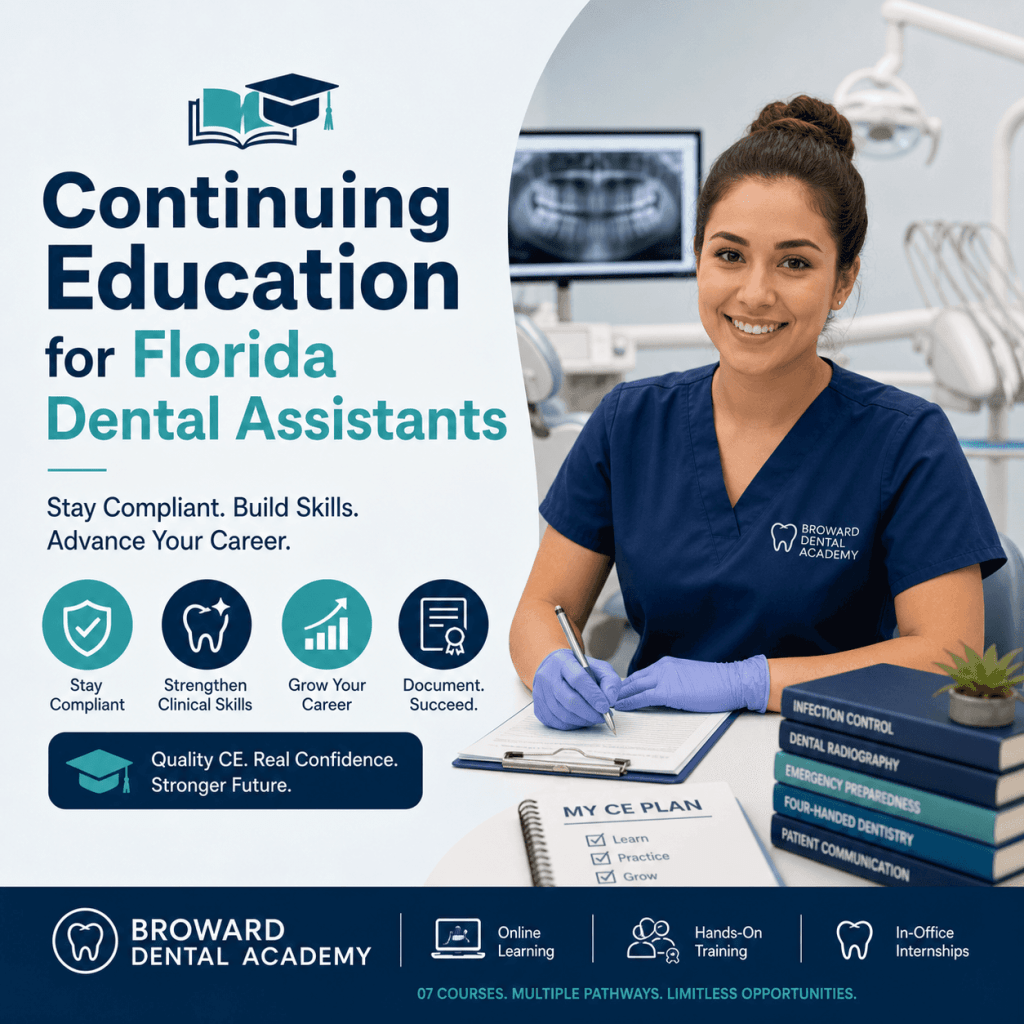
Additionally, if you’re considering furthering your education beyond the initial training, there are various continuing education courses available that can help you acquire advanced skills and knowledge in the field.
FAQs (Frequently Asked Questions)
Why is dental assisting considered one of the smartest healthcare careers in South Florida right now?
Dental assisting is a fast on-ramp into healthcare that doesn’t require years of schooling. With South Florida’s growing population, the demand for dental care and skilled dental assistants is high. The role offers clear day-to-day responsibilities, stable income potential, flexible schedules, and long-term career mobility through additional certifications and leadership opportunities.
What are the key components of the best dental assistant training programs in South Florida?
The best training programs focus on job readiness with hands-on clinical skill-building, real dental office workflows, strict safety and infection control habits, and effective communication skills. They include comprehensive curricula covering specialized areas like endodontics and periodontics, extensive clinical hours, experienced instructors, externships or internships for real office exposure, and strong student support for career readiness.
How can I evaluate if a dental assistant training program is high quality?
Use a checklist that includes curriculum depth with real clinical assisting content; sufficient clinical hours and lab time; qualified instructors with real-world experience; availability of externships or internships; student support like coaching and mentoring; and proven graduate outcomes demonstrating confidence and safety in professional roles. Also distinguish between short classes for specific skills versus complete training programs designed for full job readiness.
What are the typical daily responsibilities of a dental assistant in South Florida practices?
Dental assistants prepare operatories and instruments, support dentists chairside during procedures, help patients feel calm and informed, follow strict infection control and safety protocols, maintain efficient treatment flow through good communication and documentation habits, ensuring smooth clinical operations.
What career advancement opportunities exist for dental assistants in South Florida?
Dental assistants can progress from entry-level roles to obtaining additional certifications or expanded functions where applicable. This can lead to positions as lead assistants or roles involving office growth pathways. Specializing further in areas such as oral surgery or orthodontics can significantly enhance career prospects and mobility within the field.
Why do South Florida dental practices prefer trained dental assistants over on-the-job trainees?
Employers seek team members who are clinically confident, legally compliant, and ready to contribute from day one without needing months of retraining. Quality training ensures dental assistants possess professionalism, chairside efficiency, patient communication skills, legal compliance, and good documentation habits essential to meet modern practice demands effectively.