Key takeaways: how to choose the right dental assistant school
- What comes first?
Your end goal: entry-level chairside, expanded functions, or a specialty track, because it changes which program fits. - What is non-negotiable?
Hands-on clinical training and an in-office internship; without both, graduates arrive unready and hiring stalls. - What should you ask?
Supervised clinical hours, equipment used, instructor experience, internship placement and how outcomes are measured. - Is cheapest a good filter?
No. The cost that matters is the time between finishing and being hired, which weak programs lengthen. - What is the shortest way to choose the right dental assistant school?
To choose the right dental assistant school, compare supervised clinical hours, internship placement and the duties the program qualifies you to perform in Florida.
The dental industry is among the fastest-growing sectors in healthcare, with an increasing demand for trained, legally compliant, and clinically confident dental assistants. Employers in Florida often seek individuals who can seamlessly integrate into a busy schedule and make immediate contributions. They look for strong hands-on skills, professional communication, consistent infection control habits, and familiarity with modern workflows.
A well-structured training program can lead to numerous lifestyle benefits. Dental assisting not only offers stable income potential and flexible schedules but also provides a respected role in healthcare and career mobility into expanded functions.
What kind of dental assistant do you want to become?
Before comparing schools, it’s crucial to define your desired outcome. In Florida, many students begin their journey with entry-level dental assisting before progressing towards expanded functions such as orthodontics, oral surgery, or endodontics. Therefore, the right school is one that prepares you for more than just your first job.
Here are some practical day-to-day skills you should aim to graduate with:
- Chairside assisting and proper instrument transfer
- Sterilization and operatory setup/breakdown
- Impressions (with an understanding of materials and technique)
- X-rays or radiography basics (if applicable in your training path)
- Patient communication, professionalism, and chairside manner
- Charting and documentation
- Teamwork in a fast-paced clinical environment
A useful exercise is to write a short “ideal job” description. This should include the type of office you envision working in (general, pediatric, orthodontic, specialty), your preferred commute, schedule, and pace. Then evaluate each program against this real-world target instead of solely focusing on tuition costs or completion timelines. For instance, if you’re interested in specializing in areas such as oral surgery or orthodontics, it’s essential to choose a program that offers training in these fields.
Moreover, it’s essential that the training provided by these programs aligns with current industry standards and practices. Incorporating evidence-based practices into the curriculum can greatly enhance the quality of education received by students. A study published in the Journal of Dental Education highlights the importance of integrating scientific research into dental education to better prepare students for their roles as dental professionals1.
Does the program align with Florida requirements and hiring?
The term “Florida-specific” is not just marketing jargon. Dental rules, expectations, and workflows can vary significantly by state. Therefore, it’s crucial to receive training that aligns with Florida dental settings and the types of practices hiring in your area.
When speaking with any dental school, confirm these essentials:
- What topics are covered in the curriculum, and how they align with Florida dental offices
- How much clinical time you get, including lab practice and any supervised clinical skill checkoffs
- Whether there is an externship or internship component, and how it is managed
- How the program helps students stay legally compliant and professional in real offices
Also inquire about how the school keeps training current as standards, technology, and employer expectations change. The goal is not only to “finish a program.” It is to thrive in a modern, high-performance dental practice.
For instance, if you’re interested in specializing in areas like periodontics, ensure that the program offers comprehensive training in that field.
Does it include real hands-on clinical training?
The biggest difference between graduates who feel confident and those who feel overwhelmed is repetition in clinical settings.
Watching videos and taking quizzes can help you understand concepts, but confidence comes from doing the work: setting up trays, passing instruments, following infection control steps until they are automatic, and learning how to stay calm when the schedule gets busy.
“Good” hands-on training usually includes:
- Simulated practice in a lab setting before you touch real workflows
- Supervised skill checkoffs so you know where you stand, skill by skill
- Exposure to real patient flow so you learn timing, pace, and priorities
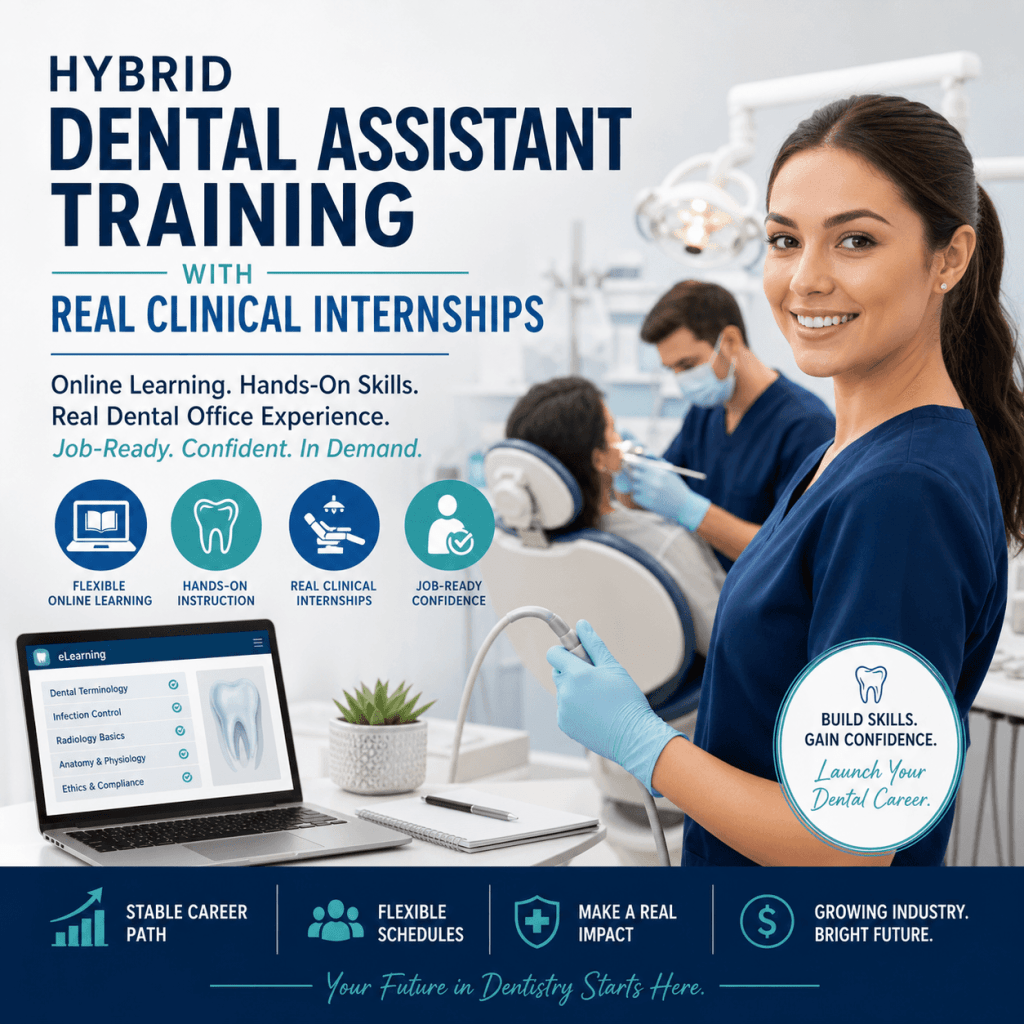
Some programs combine eLearning with immediate clinical application. That can accelerate skill-building when it is structured and supported, and when clinical sessions are consistent and well-run.
Red flags to take seriously:
- Limited lab time that is not clearly defined
- Vague promises like “plenty of hands-on” with no numbers or schedule
- A heavy reliance on “you’ll learn on the job” as the main plan
It’s also important to ensure that the program provides opportunities for obtaining necessary [certifications](dental assistant certifications in Florida) which are essential for career advancement in the dental field.
Does it include an in-office internship?
An in-office internship or externship is where many students finally connect the dots.
It teaches you speed, teamwork, professional communication, and how a real schedule runs. You also learn the “soft skills” that get people hired and keep them employed: showing up prepared, anticipating needs, staying organized, and fitting into the culture of a practice.
When you evaluate schools, ask:
- Where do internships happen (which types of offices, which locations)?
- How are placements arranged, and what support does the school provide?
- How many hours are required?
- What skills are you expected to perform during the placement?
- How do you receive feedback, and who evaluates your performance?
Internships improve hiring odds because practices prefer assistants who already understand real workflows and professionalism. Strong programs make expectations clear, coach students throughout the process, and help you leave the internship polished and employable.
Does the curriculum cover today’s dental office?
Dental offices have changed. Technology has changed. Patient expectations have changed. Your curriculum should reflect that.
Core topics to look for include:
- Infection control and sterilization protocols
- Chairside procedures and assisting fundamentals
- Dental materials and how to use them correctly
- Radiography basics (if offered)
- Impressions and temporary restoration basics
- Dental anatomy and terminology
- Ethics, professionalism, and patient privacy
Beyond the topics, pay attention to whether the program builds critical thinking. In a real office, you need to prioritize tasks, handle pressure, anticipate what the dentist needs next, and maintain quality while moving fast.
Ask if the program teaches modern standards such as digital charting, patient experience, efficiency, and quality control. Ethical practice is not optional. It is part of being employable, trusted, and safe.
For those seeking comprehensive training that covers all these essential aspects of modern dentistry, consider exploring the courses offered by Broward Dental Academy. Their programs are designed to equip students with relevant skills and knowledge for today’s dental practices. Additionally, understanding the geographical scope of internship opportunities can be crucial in making an informed decision about your education. Broward Dental Academy provides valuable insights into the locations where their internships take place, helping potential students understand their future prospects better.
Who are the instructors, and what standards do they hold?
Instructors shape your habits, and your habits become your reputation.
Look for instructors with current or recent clinical experience and a clear system for teaching skills step by step. Strong standards matter because employers want assistants who do things correctly, safely, and consistently, even when the schedule is packed.
How to assess quickly:
- Ask to sit in on a class or tour the lab during practice time
- Ask how feedback is given and how competencies are evaluated
- Ask what happens when a student struggles: is there coaching, extra practice, and a plan?
You want a culture that produces confident performance, not shortcuts.
Does the format fit your real life?
Many dental assisting students are balancing work, family, and real responsibilities. Flexible scheduling can be the difference between finishing strong and dropping out.
“Good flexibility” usually means:
- Clear schedule options that are realistic for working students
- Reliable communication from staff and instructors
- Structured online modules with checkpoints, not just reading assignments
- On-time, well-run clinical sessions you can count on
Quality eLearning should feel guided, updated, and connected to what you do in the lab and internship. Flexibility should never mean “less clinical.” Hands-on time is still essential.
How does the school measure outcomes?
Some schools talk about outcomes. Better schools measure them.
When comparing programs, ask what they track and what they consider “job-ready,” such as:
- Competency checklists (skills you must demonstrate consistently)
- Internship completion and performance expectations
- Employer relationships and how offices give feedback about graduates
- Job-search support, interview prep, and professionalism coaching
If a school shares completion rates or placement-related information, that can help, but even without formal stats you can learn a lot by asking how they define readiness and how they verify skills.
When you read reviews, use a filter. Look for consistent comments about hands-on training, professionalism, support, and how confident graduates felt in real offices.
What should you notice on a campus tour?
A short tour can reveal what a brochure will not.
Physical signs of quality:
- Clean lab areas and clear sterilization protocols
- Organized operatories and modern equipment
- Visible safety rules and professional standards
People signs:
- Staff responsiveness and clarity in their answers
- How instructors talk about students and expectations
- Whether the program sounds structured or vague
Ask to see a typical week schedule so you understand pacing and workload. If possible, speak to current students about how much clinical practice time they get and how internships work in reality.
How should you think about tuition?
It is smart to compare tuition, but do not choose based on price alone.
The cheapest program can become expensive if you graduate unprepared, struggle in your first job, or need extra training to meet employer expectations.
Request a full breakdown:
- Tuition, fees, supplies, and uniforms
- Any added costs tied to clinical requirements or internship placement
- Tools or materials you keep versus materials you must buy later
Also ask about financing considerations: payment plans, flexible financing options, and whether you need to budget for time off work during clinical or internship requirements.
Compare value, not just cost. Hands-on hours, internship quality, instructor access, and career support are often what make the difference.
Which questions should you ask every school?
When you’re considering a dental assistant school, it’s important to gather as much information as possible. Bring these questions to every tour or phone call and write down the answers:
- How much hands-on clinical training do students get, and how is competency checked off?
- Do you offer in-office internships/externships? Where, how long, and what skills will I do?
- What support do students get if they fall behind?
- What are your program start dates and time-to-completion?
- What financing options are available?
For more specific inquiries, you might want to refer to the frequently asked questions section of a dental academy’s website.
How do you compare schools objectively?
If you tour multiple schools, the details blur together fast. A simple rubric keeps your decision clear.
Score each category from 1 to 5:
- Florida-aligned training and compliance focus
- Hands-on clinical hours and skill checkoffs
- Internship or externship quality and support
- Instructor experience, standards, and coaching style
- Schedule flexibility and quality of eLearning support
- Outcomes and job-readiness support
- Total cost and overall value
How to use it:
- Do a tour or phone call.
- Fill out the rubric immediately afterward while it is fresh.
- Compare your top 2 to 3 programs side by side.
Decision rule: choose the program that best prepares you to thrive in a modern dental practice, not the one that simply helps you “finish fast.”
If you’re also considering expanding your healthcare skills beyond dental assistance, you might want to explore options like the Basic Nurse Assistant Training Program which could provide valuable additional qualifications.
What does the right fit look like?
If you are evaluating dental assistant schools in South Florida, Broward Dental Academy is one option to consider.
Their training approach is designed to prepare students to become thoroughly trained, legally compliant, and clinically confident, with an emphasis on real-world readiness rather than only passing an exam. Students get immediate immersion through online and clinical learning environments, with updated eLearning lesson plans that support remote training and in-person skill-building.
A key highlight is in-office internship experience, which helps students build polish, professionalism, and comfort inside real dental workflows. Broward Dental Academy also offers a wide range of dental courses and advanced dental training, including Dental Assistant Level 01, Dental Assistant Level 02, and Dental Assistant Hygienists Level 03. With 7 courses available in total, these can support longer-term career mobility.
Flexible financing is also available, which can make it easier to start without putting your life on hold.
How do you make the final decision?
If you want to choose the right dental assistant school in Florida, focus on the factors that actually affect your employability and confidence:
- Florida-aligned training and legal compliance
- Strong hands-on clinical training
- In-office internship or externship experience
- A modern, practical curriculum
- Experienced instructors with clear standards and coaching
- A schedule format you can realistically complete
- Outcomes that reflect real job readiness
- Total value, not just the cheapest tuition
Your next steps can be simple:
- Shortlist 2 to 3 schools.
- Tour or call each one.
- Use the checklist questions above.
- Score them with the rubric.
- Commit and start training.
If you want a broader overview of options in the region, visit the pillar guide: Best Dental Assistant Training in South Florida.
Don’t delay, enroll today at Broward Dental Academy, you will be glad that you did.
Footnotes
- Source ↩
FAQs (Frequently Asked Questions)
Why is choosing the right dental assistant school in Florida important beyond just obtaining a certificate?
Selecting the right dental assistant program in Florida significantly impacts your readiness for real-world dental office environments, your employability, and your ability to take on expanded duties over time. A well-structured program equips you with hands-on skills, professional communication, infection control habits, and familiarity with modern workflows essential for success.
What should I consider when defining my end goal before choosing a dental assistant school in Florida?
Start by envisioning the type of dental assistant you want to become, whether entry-level or specializing in areas like orthodontics, oral surgery, or endodontics. Consider the type of office you’d like to work in (general, pediatric, specialty), preferred commute, schedule, and pace. Evaluate programs based on how well they prepare you for these specific career goals rather than just tuition costs or completion times.
How can I ensure a dental assistant program aligns with Florida-specific requirements and real-world hiring practices?
Confirm that the curriculum covers topics relevant to Florida dental offices and includes sufficient clinical time with lab practice and supervised skill checkoffs. Inquire about externship or internship components and how the program helps students stay legally compliant and professional. Ensure training stays current with evolving standards, technology, and employer expectations specific to Florida.
Why is hands-on clinical training crucial in a dental assistant program?
Hands-on clinical training builds confidence through repetition in real or simulated clinical settings. It involves setting up trays, passing instruments, following infection control protocols until automatic, and managing workflow under pressure. Effective programs provide lab simulations before patient interaction, supervised skill assessments, and exposure to actual patient flow to develop timing and priorities.
What are red flags to watch out for when evaluating hands-on training in dental assistant schools?
Be cautious of programs with limited or undefined lab time, vague claims of ‘plenty of hands-on’ without specifics, or those relying heavily on ‘learning on the job’ as the main training method. These may indicate insufficient practical experience that could leave graduates unprepared for workplace demands.
How does completing a comprehensive dental assistant program benefit my career and lifestyle in Florida?
A comprehensive program leads to stable income potential, flexible schedules, respected healthcare roles, and career mobility into expanded functions like orthodontics or oral surgery. Graduates gain essential skills that meet employer expectations in Florida’s fast-growing dental industry, positioning them for immediate contributions and long-term professional growth.