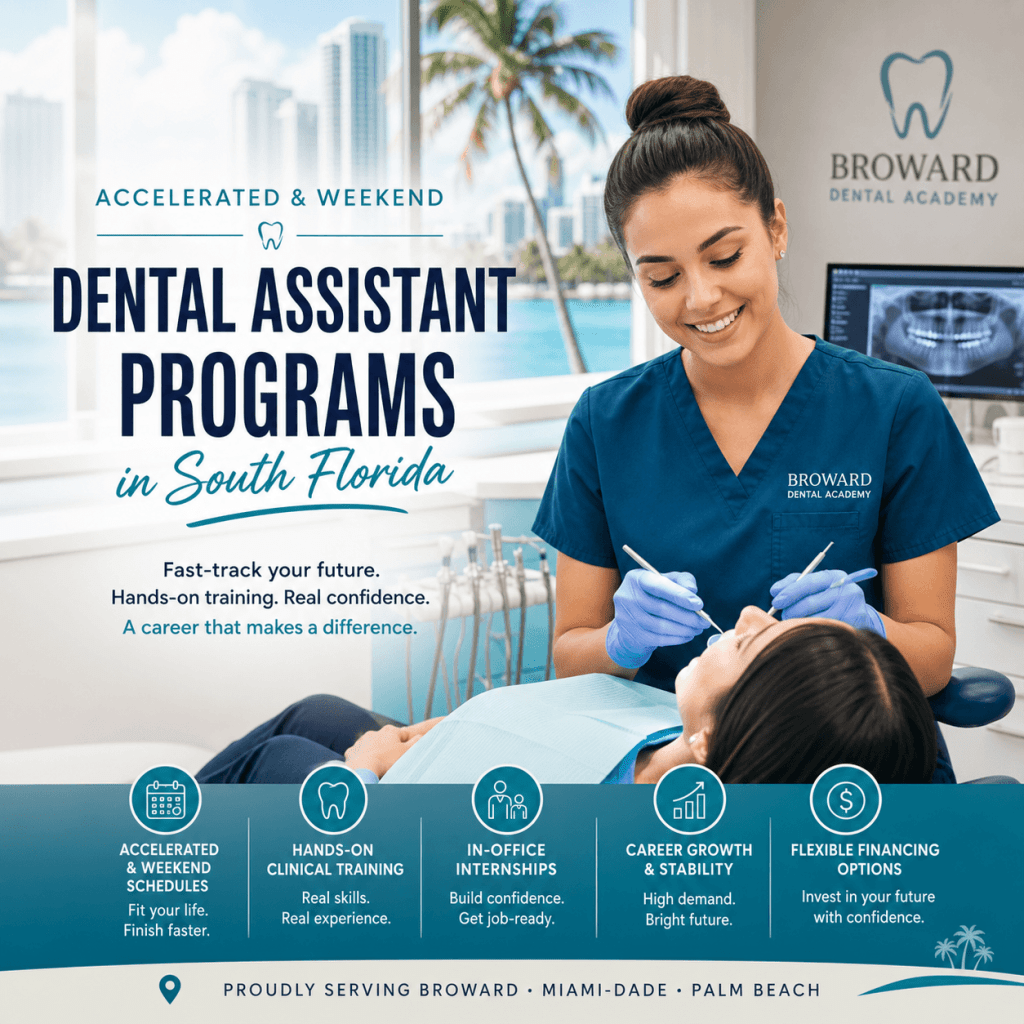
Accelerated dental assistant programs compress the fundamentals into a short, intensive format, often advertised as 6-week or 10-week courses. Going fast is legitimate: Florida has no entry-level license requirement, so what matters is whether the program still delivers real supervised hands-on practice. Speed is fine; skipping clinical competence is not.
Key takeaways
- What is accelerated?
The same competencies on a compressed or weekend schedule, not a shorter list of skills. - What is the warning sign?
Clinical hours cut to hit a deadline, or an internship treated as optional. - What cannot be rushed?
Repetition: chairside speed comes from reps under supervision, and there is no substitute for them. - How do you speed things up safely?
Finish one level at a time, and run the clinical stage straight into the internship.
Weekend formats are one way to accelerate while working; see our guide to accelerated weekend dental assistant programs in South Florida.
What makes a program accelerated?
Three levers: concentrating class hours into more days per week or longer sessions, moving theory online so contact hours focus on skills, and trimming content that is not essential for entry-level work. The first two preserve quality. The third is where good and bad fast programs part ways: fundamentals like infection control and chairside protocol cannot be trimmed without producing a graduate who looks trained on paper and lost at the chair.

What can a fast program genuinely deliver?
Entry-level readiness: terminology, instrument knowledge, infection control discipline, basic chairside support, and professional habits. With a strong hands-on component, a focused student can be interview-ready in weeks rather than months. That is enough to start working and earning while you stack further credentials on the job, including voluntary national certification through DANB.

What can no fast program deliver?
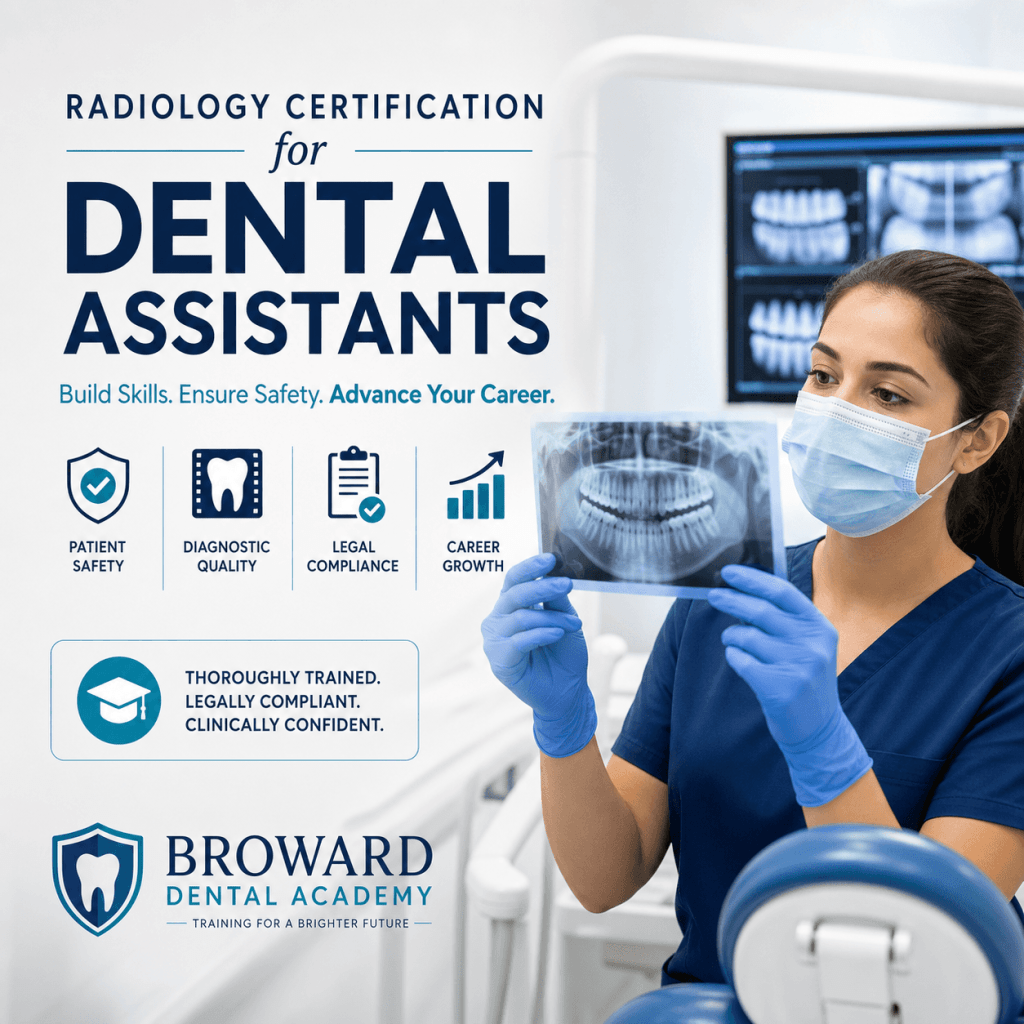
Regulated capabilities and deep experience. In Florida, the Board of Dentistry requires Board-approved training before exposing dental radiographs and Board-approved formal coursework for expanded functions; both sit outside a basic accelerated curriculum. Our radiology certification guide and EFDA certification guide cover those add-ons. And no course, fast or slow, replaces the judgment you build in your first months of real work.
Which red flags should you watch for?
Zero or token hands-on hours. No skills assessment before completion. No internship, externship, or working-interview preparation. Vague answers about what is included versus extra. A price that looks attractive precisely because the expensive part, supervised practice, has been quietly removed. If a program cannot tell you how many hours you will spend with instruments in your hands, keep looking.
How do you go fast the smart way?
Broward Dental Academy’s blended structure is built for speed without corner-cutting: theory through eLearning on your schedule, clinical immersion in person, then an in-office internship in a working practice. The result is a fast route that still ends with demonstrated skills and a reference from a real dental office. Review the courses offered, check realistic timelines, and apply online when you are ready.

What does compression actually change?
A well-built accelerated program compresses the calendar, not the competencies. Knowing what is being compressed is how you tell one from the other.
- Compressed safely: class scheduling, study pacing, and how many days per week you attend.
- Compressed unsafely: supervised clinical hours, repetition on instruments and isolation, and internship time.
- Not compressible: the repetitions it takes for chairside work to become automatic, and the radiography training Florida requires for that task.
How do you move quickly without losing readiness?
- Pick one level and finish it, rather than sampling several courses at once. Start with Level 01 training.
- Take the clinical stage and the internship back to back so skills stay fresh.
- Include radiography in the same enrollment where possible, per radiology certification in Florida.
- Ask, before enrolling, how many hands-on hours the fast track keeps compared with the standard track.
- Apply for roles during the internship rather than after it, using preparing for your first job.
Weekend and evening options are compared in accelerated and weekend programs.
FAQs (Frequently Asked Questions)
Are accelerated dental assistant programs legitimate?
Yes, when they compress schedule rather than cut clinical practice. Florida has no entry-level license requirement, so employers judge you on demonstrated skills. A fast program with real supervised hands-on hours is a legitimate route in.
How short can a dental assistant program be?
Advertised formats commonly run 6 to 10 weeks for the fundamentals. Shorter is possible for single topics, but a complete entry-level curriculum needs enough contact time for skills practice and assessment.
What is the catch with very cheap fast programs?
The expensive part of training is supervised hands-on practice. Programs that are both very fast and very cheap have usually removed it, which produces a certificate without competence. Ask for the hands-on hour count before paying.
Can an accelerated program include x-ray certification?
Radiography in Florida requires Board-approved training, which is typically separate from a basic accelerated curriculum. Plan for it as an add-on soon after you start working.
Can I do an accelerated program while working full time?
Blended formats make this realistic: theory happens online on your schedule, and in-person sessions are concentrated. Weekend-format accelerated programs exist for exactly this situation.