A dental assistant externship or internship is the supervised in-office stage of training: you work inside a real dental practice, applying classroom and clinical-lab skills on real patients under supervision. It is the bridge between “trained” and “hireable,” and for many students it doubles as a working audition with a future employer.
Key takeaways
- Are the terms the same?
Broadly yes in dental assisting: all three mean supervised time in a working practice, with the details set by the program. - What do you do there?
Real chairside work under supervision: setups, sterilization, assisting procedures, imaging support where trained, and documentation. - Why does it matter so much?
It is the only evidence an employer has that you can perform at production pace rather than in a classroom. - How do you make it count?
Anticipate, document, ask for feedback, learn the practice’s systems, and ask directly about a role before it ends.
Preparing for the job search too? Read preparing for your first dental assistant job next.
Externship, internship or practicum: what is the difference?
Schools use the words loosely, and the differences matter less than the substance. Whatever the label, the questions that matter are the same: is it inside a genuinely working practice, is it supervised with feedback, how many hours do you get, and are you doing real assistant work rather than observing from a corner? A strong in-office stage answers yes, yes, enough, and yes.

What do you actually do during the in-office stage?
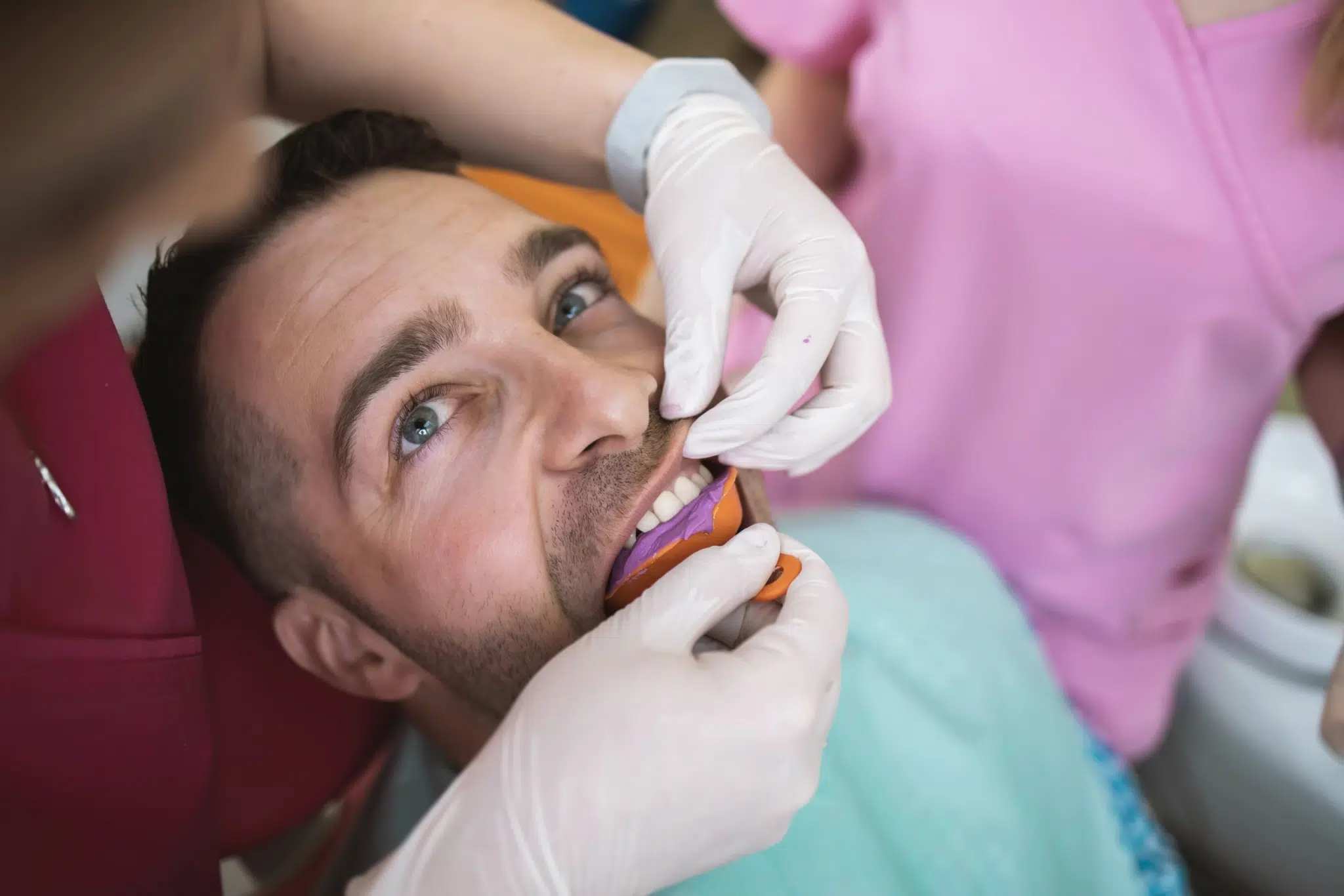
Everything the job involves, at supervised speed: room setup and turnover, sterilization workflow, chairside assisting on live procedures, patient hand-offs and communication, and charting support. The office’s rhythm becomes your rhythm: mornings with the schedule, procedures back to back, the discipline of protocol when the day gets busy. This is where classroom knowledge either becomes reflex or reveals its gaps, and both outcomes are valuable while an instructor and an employer can still coach you.
Why do employers weigh this stage so heavily?
Hiring managers trust demonstrated work over certificates. A candidate who has functioned inside a real practice arrives with proof: references who watched them work, familiarity with real pace and real patients, and the professional habits that only form on site. Many practices treat interns as extended-interview candidates, and offers to strong interns are common. Even when the training office is not hiring, its reference letter and its network usually matter more than anything else on an entry-level resume. The American Dental Association‘s career pages are a good backdrop for how practices hire.

How does the internship fit the Broward Dental Academy model?
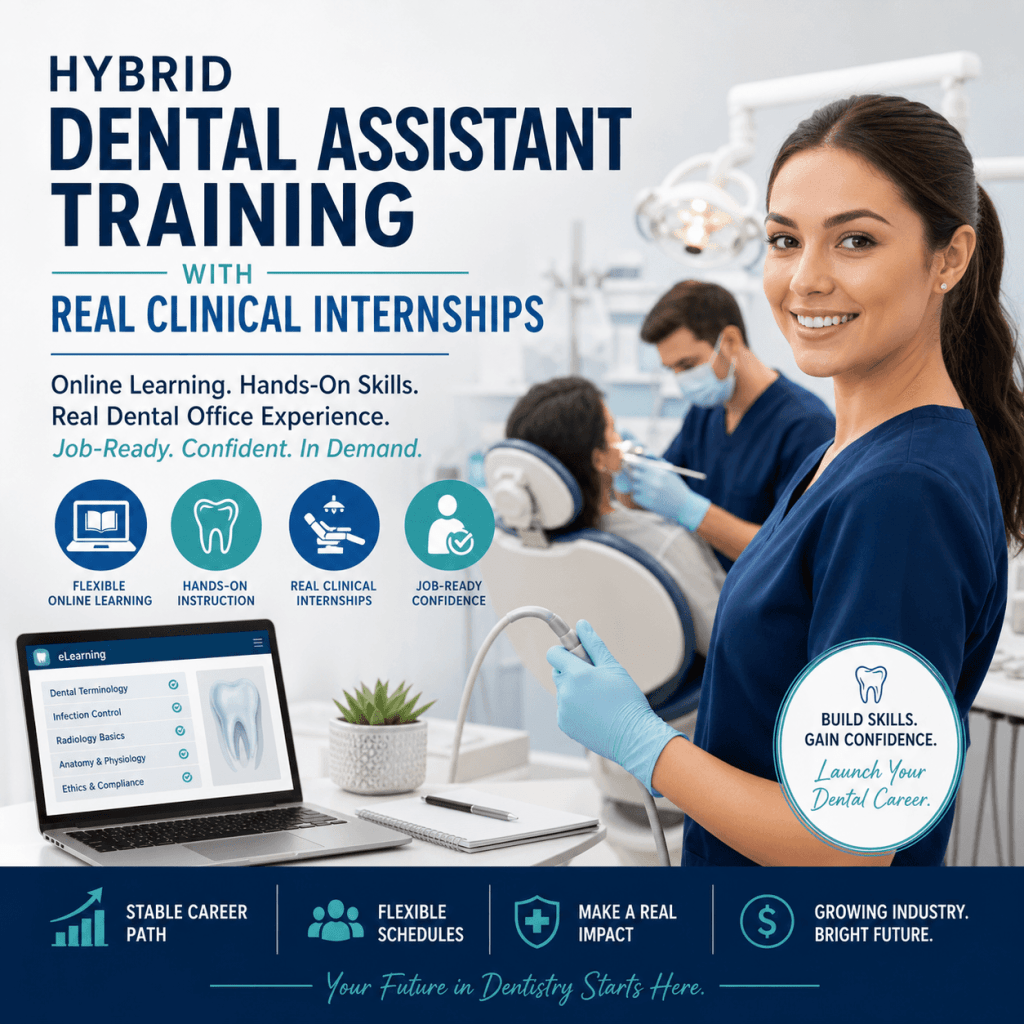
Our training runs in three connected stages: eLearning lessons for theory you study remotely, clinical immersion in a training environment for hands-on competencies, and an in-office internship in a working dental practice. The internship is the third stage on purpose: by the time you reach a real office you have already passed skills check-offs, so your internship hours go into speed, judgment, and confidence rather than first attempts. The hybrid training and clinical internships guide explains the structure in depth.
Which five habits make an externship count?
Arrive early and prepared every single day; treat every task, including sterilization runs, as audition material; ask questions at the right moments rather than mid-procedure; keep a log of procedures you assisted on, which becomes interview material; and before the stage ends, ask your supervisor for direct feedback and a reference. Students who do these five things convert internships into offers at a visibly higher rate.
Planning credentials beyond the internship? National certification through DANB is voluntary in Florida but valued by many employers.
How do you get to this stage?
The in-office stage comes as part of a complete program. Review the courses offered, see how long the full path takes, and apply online when you are ready to start.

What does a practice actually watch during your in-office stage?
Supervisors are forming a hiring opinion from the first week, and it is rarely based on textbook knowledge.
- Whether sterilization and setup happen without being asked twice.
- Whether you anticipate the next instrument rather than waiting to be told.
- How you speak to a nervous patient when the operator is busy.
- Whether you ask questions at the right moment rather than during a critical step.
- Whether documentation is accurate and finished before the patient leaves.
How do you convert an externship into a job offer?
- Arrive early enough to check the schedule and pre-set the first rooms.
- Keep a note of every procedure you assisted and what you did in it.
- Ask for one piece of feedback each week and act on it visibly.
- Learn the practice’s software and abbreviations quickly, using the basics in Level 01 training.
- Say plainly, before the placement ends, that you would like to be considered for a role.
- Follow the application approach in preparing for your first job for other offices in parallel.
FAQs (Frequently Asked Questions)
What is a dental assistant externship?
The supervised in-office stage of training, where you work inside a real dental practice applying your skills on real patients. Schools may call it an externship, internship, or practicum; the substance is supervised real work with feedback.
Are dental assistant externships paid?
Training-stage placements are typically part of the program rather than paid employment, though practices sometimes hire strong interns afterward. Treat the stage as a working audition regardless of pay.
How long does the in-office stage last?
It varies by program. More important than the calendar length is the hour count of genuine supervised assisting, so ask any program how many in-office hours you will actually work.
Do externships lead to jobs?
Frequently. Employers trust what they have watched you do, and many treat interns as extended-interview candidates. Even without an offer from the training office, its reference and network carry real weight.
What should I do to stand out during an externship?
Show up early and prepared, treat every task as audition material, ask questions at appropriate moments, log the procedures you assist on, and request direct feedback and a reference before the stage ends.