Online dental assistant classes work well for theory: terminology, anatomy basics, infection control principles, radiography concepts, and office workflow. What they cannot do is make you clinically competent, because chairside skills, instrument handling, and patient care require supervised in-person practice. The strongest programs are blended: theory online, skills in person.
Key takeaways
- What can online cover?
Terminology, anatomy, charting systems, infection control theory, radiation safety principles and documentation. - What cannot?
Instrument handling, isolation, imaging placement and the timing of a real operatory, all of which need supervision. - How do employers treat online-only?
With caution for clinical roles, because there is no evidence of demonstrated competency at the chair. - What is the fix?
A blended program with documented clinical hours and an internship in a working practice.
Comparing formats more broadly? See our guide to dental assistant training formats.
What can online dental assistant classes genuinely teach?
A surprising amount. Dental terminology and tooth numbering, the names and purposes of instruments, the science behind infection control and sterilization, radiography theory and safety principles, scheduling and office operations, and the professionalism that employers consistently rank near the top. Delivered as structured eLearning, this knowledge sticks better than cramming between shifts, and you can complete it on your own schedule. Career resources from the American Dental Association make a useful companion to any program’s materials.

What can never be learned from a screen?
Four-handed chairside assisting, mixing and handling materials, instrument transfers, positioning, moisture control, sterilization workflow under time pressure, and reading a real patient’s comfort level. These are motor skills and judgment built through repetition with an instructor watching and correcting you. Any program that claims to make you job-ready with zero in-person hours is selling a certificate, not a capability. Employers know the difference in the first hour of a working interview.

How do fully-online certificates play out in hiring?
A fully-online certificate can still be useful as proof that you studied the theory, especially if you are already working in an office that trains you hands-on. But for a first job, most practices weigh demonstrated clinical skills and references far more heavily than a theory-only credential. If your plan is fully online, plan equally hard for how you will get supervised practice.

How does the blended model split the work?
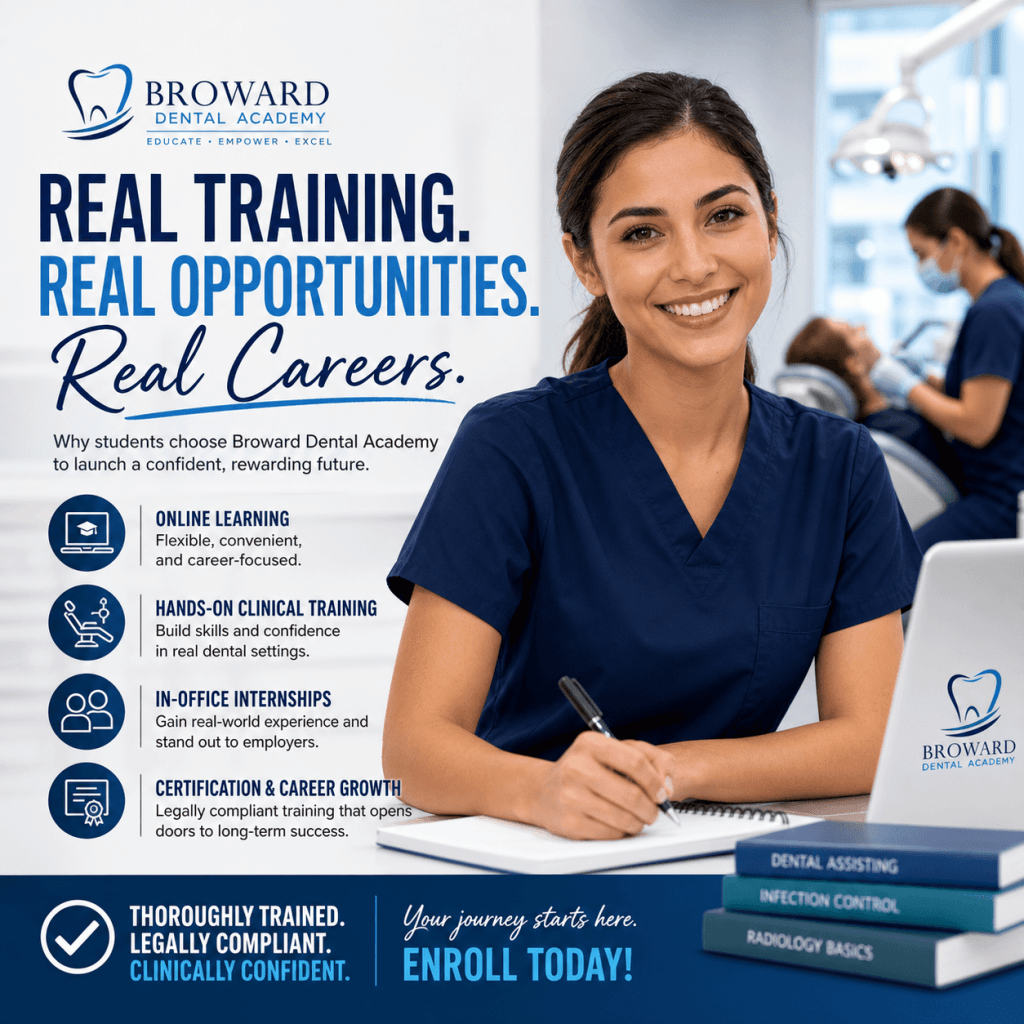
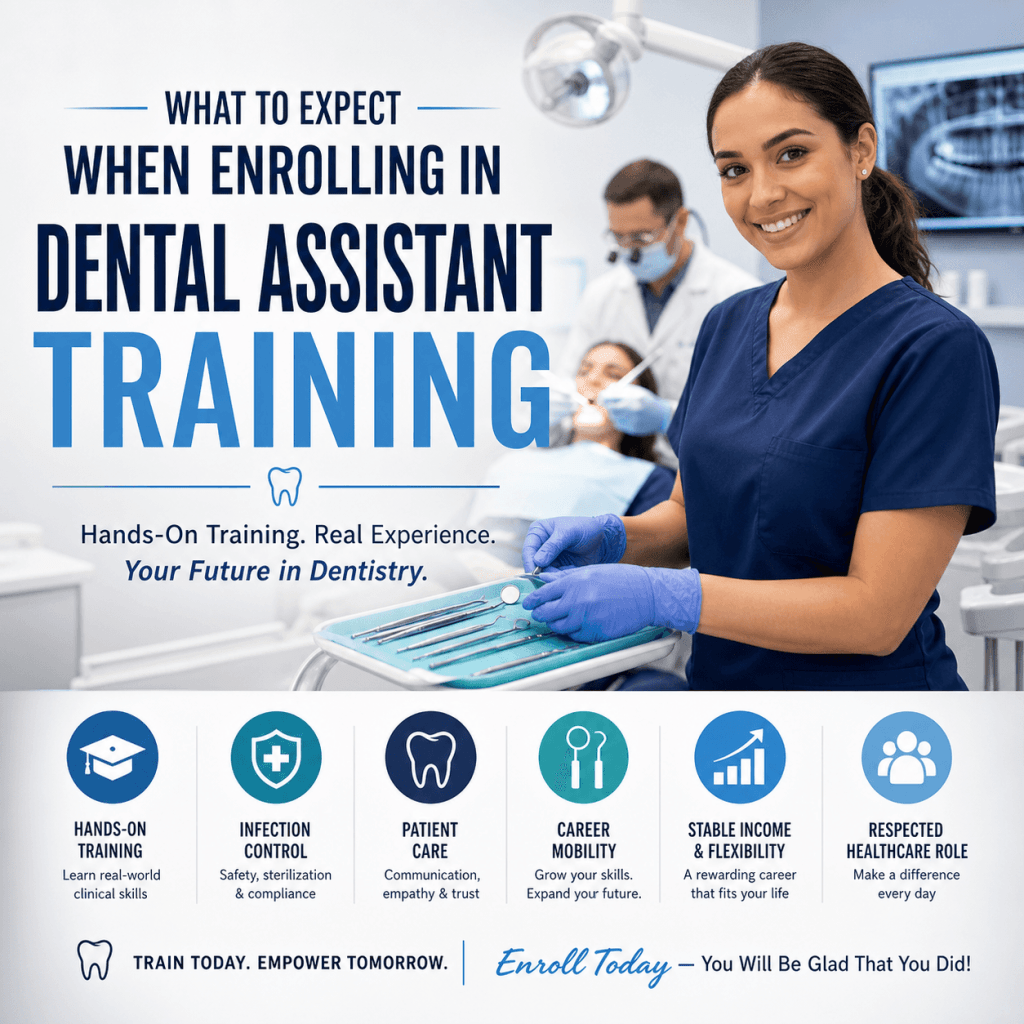
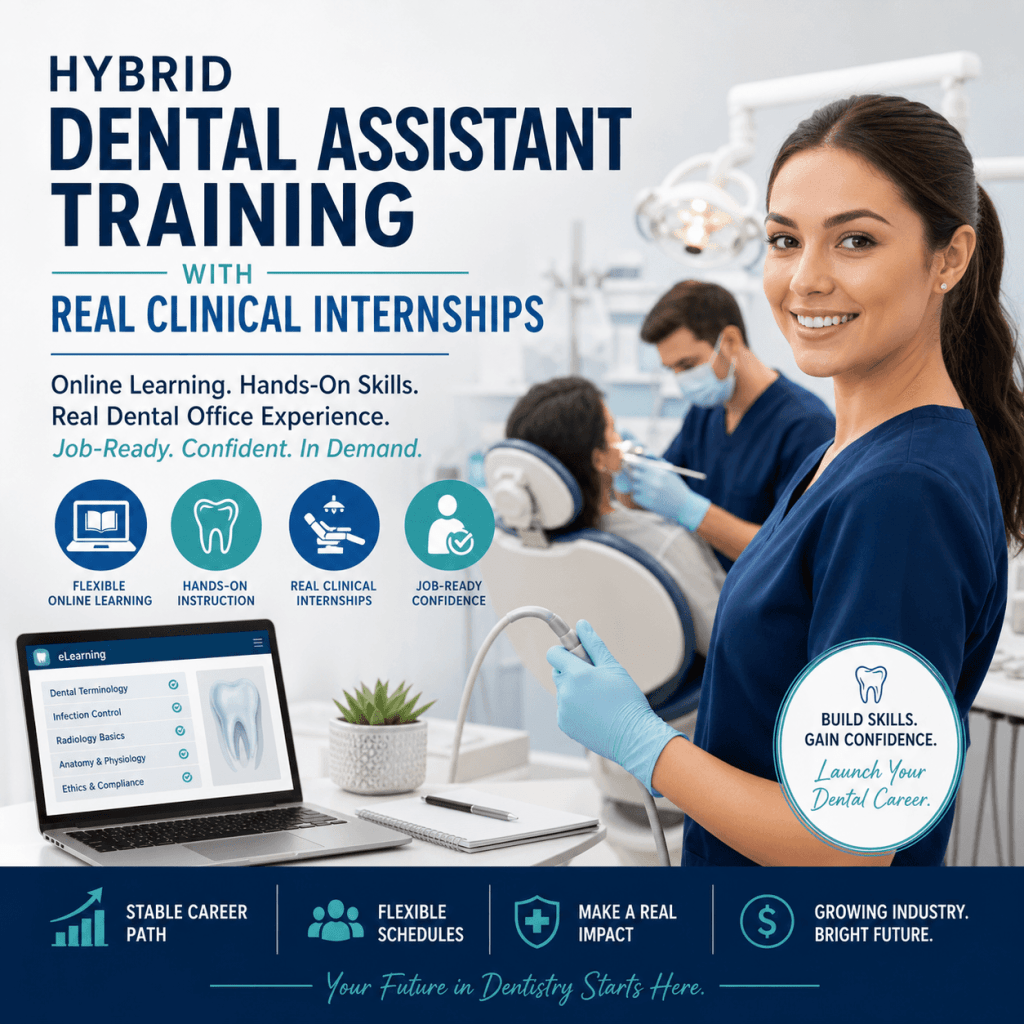
Broward Dental Academy delivers theory through eLearning lessons you study remotely, then builds clinical competencies through in-person immersion in a training environment, and finishes with an in-office internship in a working dental practice. You can complete the theory portion online; clinical competencies, skills check-offs, and the internship must be done in person. That split is deliberate: it keeps your schedule flexible where flexibility is harmless and demands your presence where presence is everything.
Which questions should you ask about an online program?
Which topics are online and which are in person? How many supervised hands-on hours are included, and where? Is there an internship in a real practice? How are clinical skills actually assessed? And does the program prepare you for Florida-regulated add-ons, such as the radiography course the Florida Board of Dentistry requires, covered in our radiology certification guide?
How do you get started?
If a blended format fits your life, review the courses offered, then apply online and confirm your schedule with our team. If you are still weighing the career itself, start with whether dental assisting is a good career.
Which parts of the job are online-friendly, and which are not?
Splitting the curriculum honestly is what makes a blended program work rather than a compromise.
- Works online: terminology, tooth anatomy and charting systems, infection control theory, radiation safety principles, documentation and HIPAA basics.
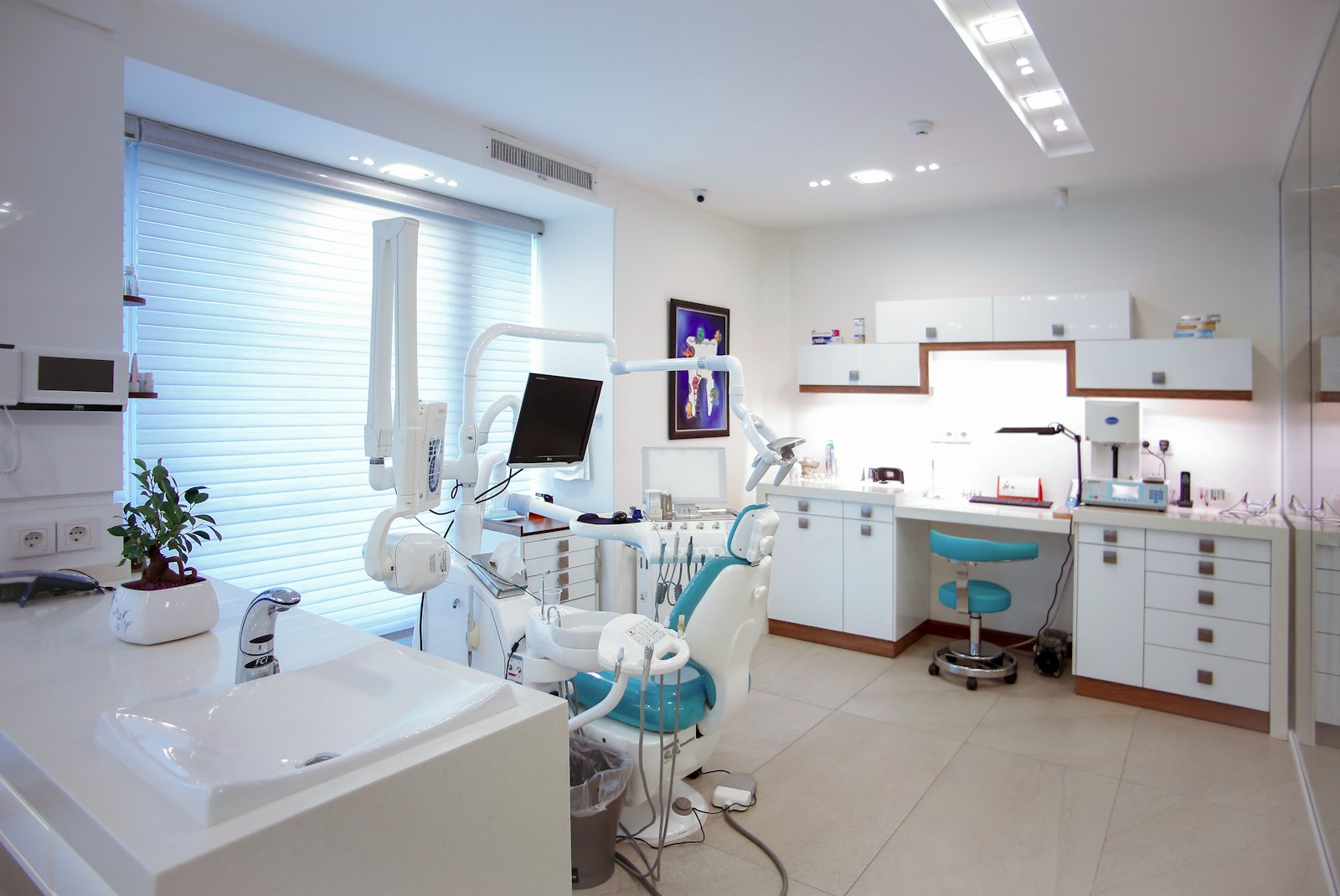
- Needs a chair: instrument transfer, suction and isolation, moisture control, impression handling, receptor placement, and working at a booked schedule’s pace.
- Needs a practice: patient communication under real conditions and the turnover rhythm between appointments, which is what the internship supplies.
How do you check an online program before you enroll?
- Ask how many supervised in-person clinical hours are included, and where they happen.
- Ask whether radiography training meets what Florida requires, per the Florida Board of Dentistry.
- Ask whether an in-office internship is arranged, and with which type of practice.
- Ask what happens if you need to repeat a clinical competency.
- Compare the answers against training formats compared before paying anything.
Once the fundamentals are done, Level 01 training and Level 02 advanced training show what the next stages add.
FAQs (Frequently Asked Questions)
Can you become a dental assistant online?
You can learn the theory online, including terminology, infection control principles, and radiography concepts. You cannot become clinically competent online, because chairside skills require supervised in-person practice. Blended programs combine both.
Are online dental assisting certificates worth anything?
As proof of theoretical knowledge, yes, especially if you are already getting hands-on training at work. As a standalone route to a first job, they are weak, because employers hire demonstrated clinical skill over theory-only credentials.
What part of dental assistant training must be in person?
Clinical competencies, skills check-offs, instrument handling, chairside assisting practice, and internships must be done in person. At Broward Dental Academy these stages happen in a training environment and then in a working dental practice.
Can I get x-ray certified online in Florida?
Florida requires Board-approved training before a dental assistant exposes radiographs, and that training includes components that cannot be reduced to online-only study. See the Florida radiology certification guide for the current pathway.
Is blended training as respected as classroom training?
Employers care about what you can do at the chair. A blended program that ends with real supervised practice and an in-office internship gives you exactly the evidence hiring managers look for, regardless of where the theory was studied.