Most people search “dental assistant training near me,” pick the closest option, and enroll. Then a few weeks in, they realize something important: the format of your training is not a minor detail. It directly affects how quickly you build real skills, how confident you feel in clinical settings, and how ready you are when a dental office puts you in front of patients.
Modern dental practices are not looking for someone who can simply recite terminology. They want dental assistants who are clinically confident, legally compliant, and prepared to keep up in a high-performance office.
Dental is also one of the fastest-growing healthcare fields, with stable income potential, flexible schedules, and career mobility. The right training format can help you get to that outcome faster, with fewer gaps to fix later.
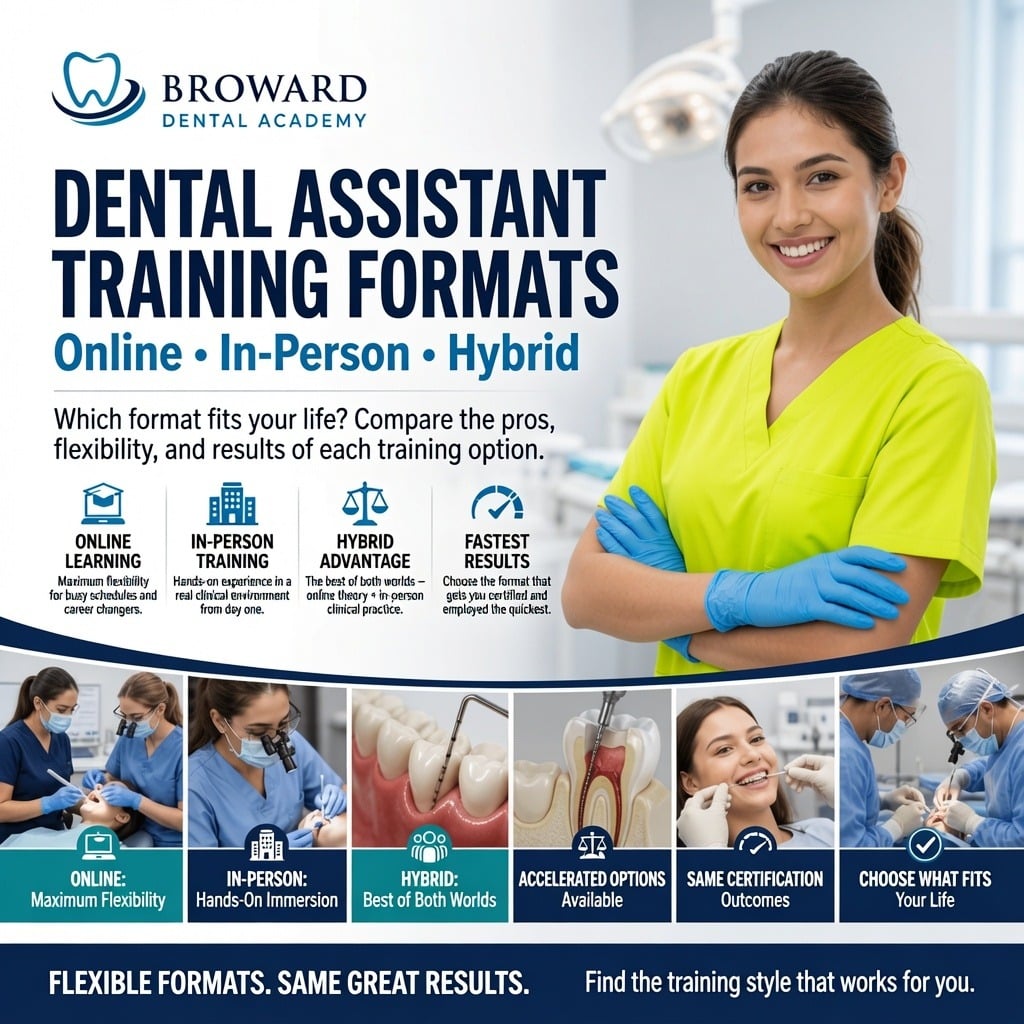
In this guide, you will get a clear comparison of online, in-person, and hybrid dental assistant training formats, plus who each option fits best: Dental Assistant Training Formats.
Why your dental assistant training format matters (more than most people think)
When students struggle after graduating, it is rarely because they “didn’t study enough.” More often, it is because their training format did not match what the job demands.
Here is how the format can change your outcome:
- Skill development: You can understand suction and isolation on video, but doing it smoothly with a real patient is different.
- Licensing and compliance readiness: In healthcare, being “mostly right” is not good enough. You need strong habits around safety, documentation, and professionalism.
- Hiring confidence: Employers often ask about hands-on experience, externships, and what you have actually practiced in a clinical workflow.
- Speed to employability: Some formats get you started quickly, but leave you with big practical gaps. Others take longer up front but shorten the adjustment period once hired.
This comparison will help you choose between online, in-person, and hybrid dental assistant training based on what matters most: real readiness for a dental practice.
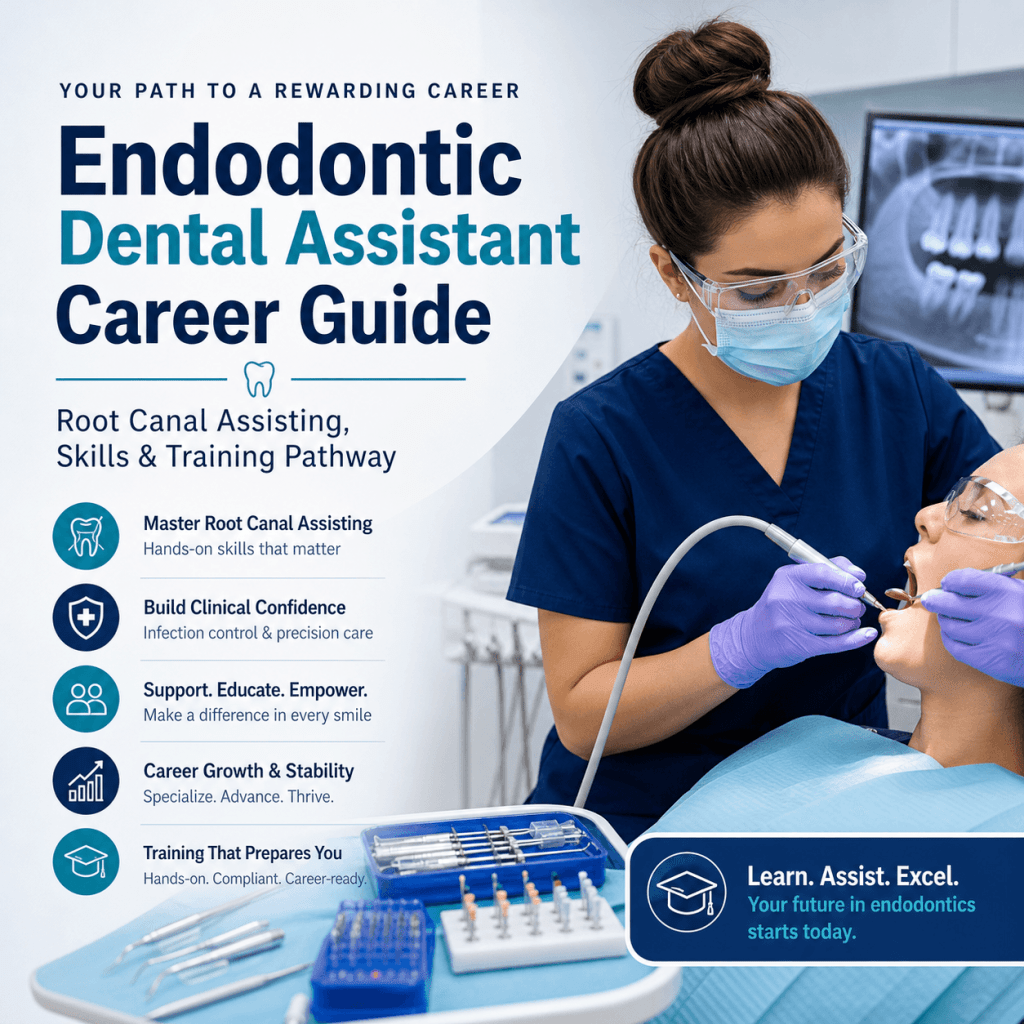
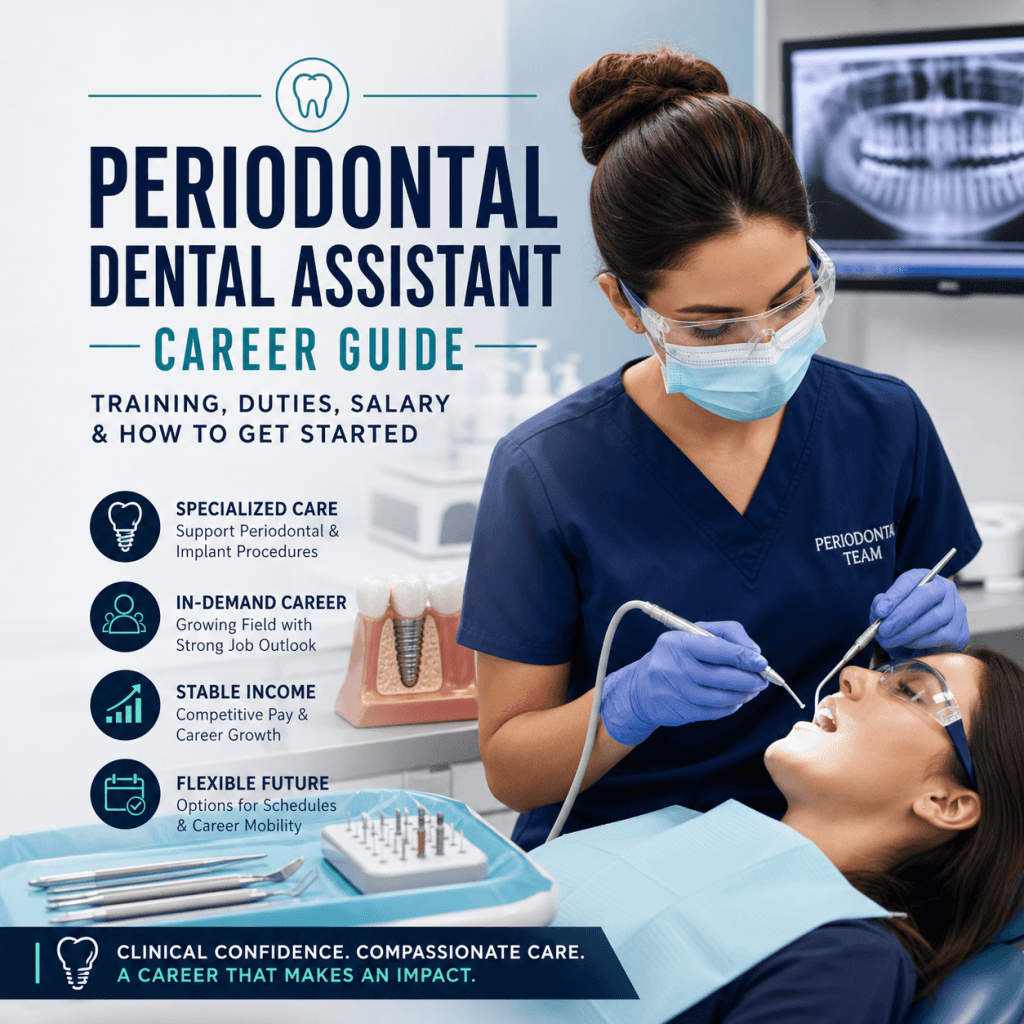
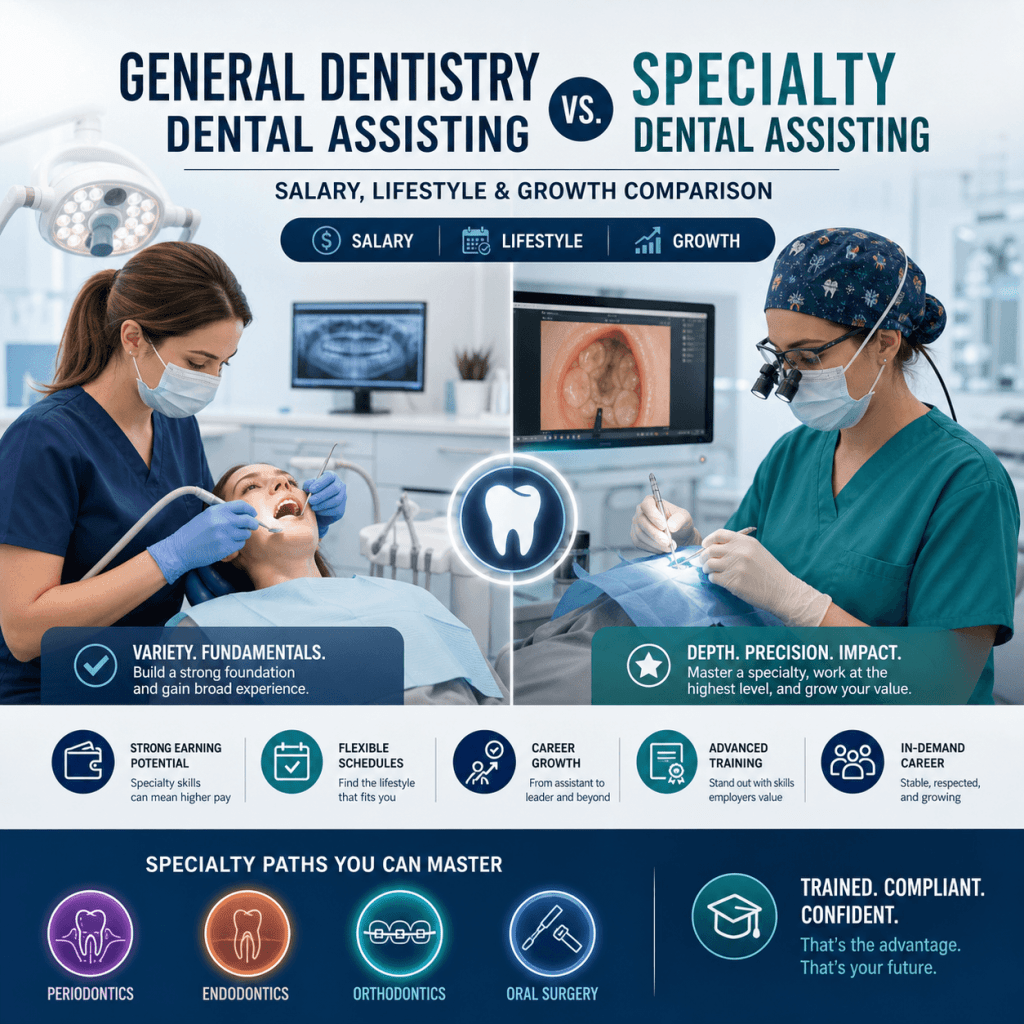
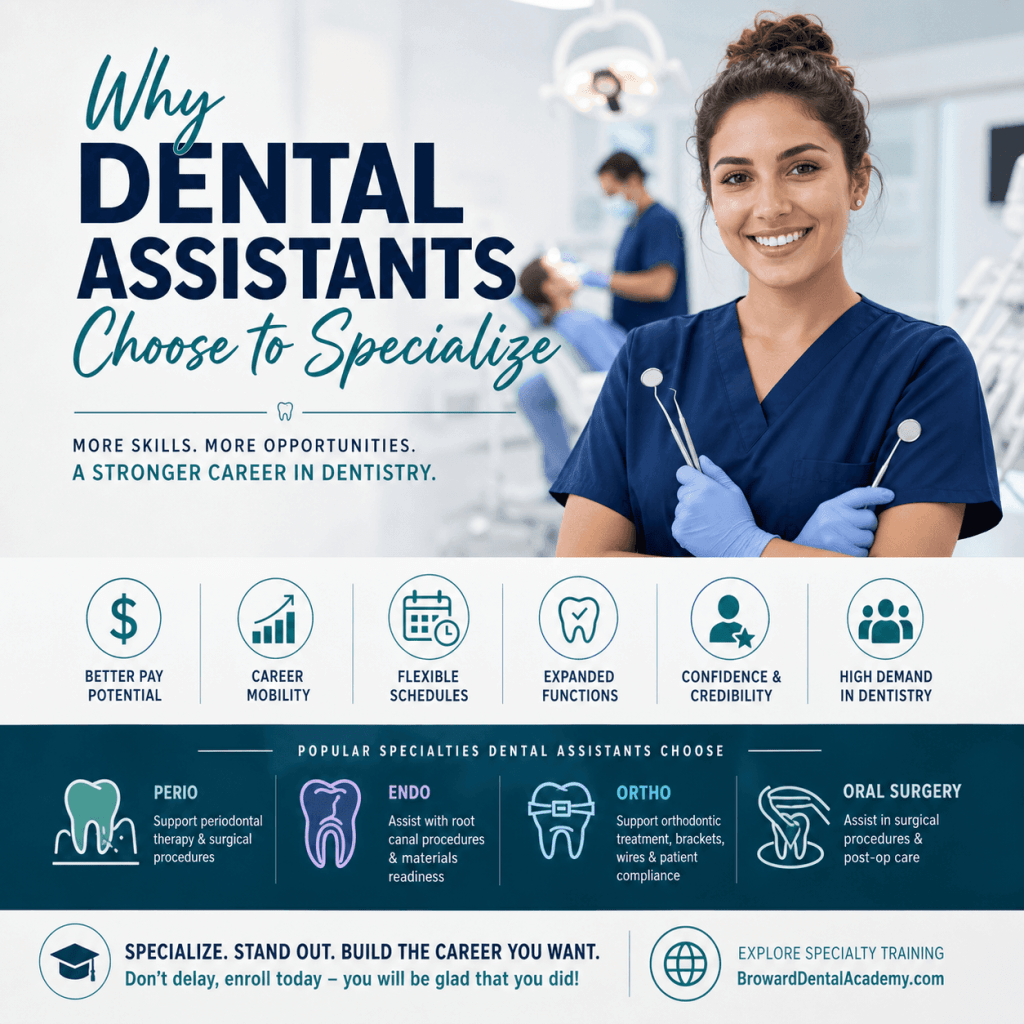
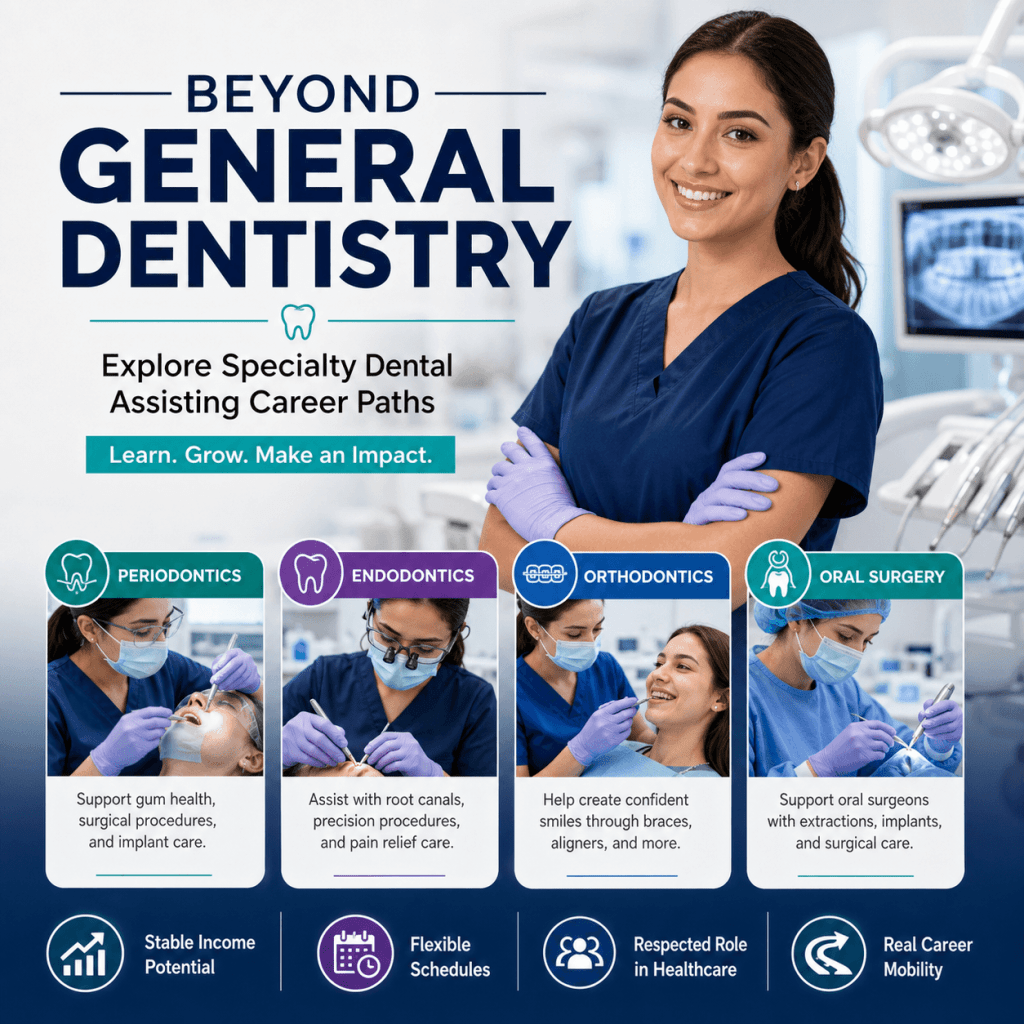
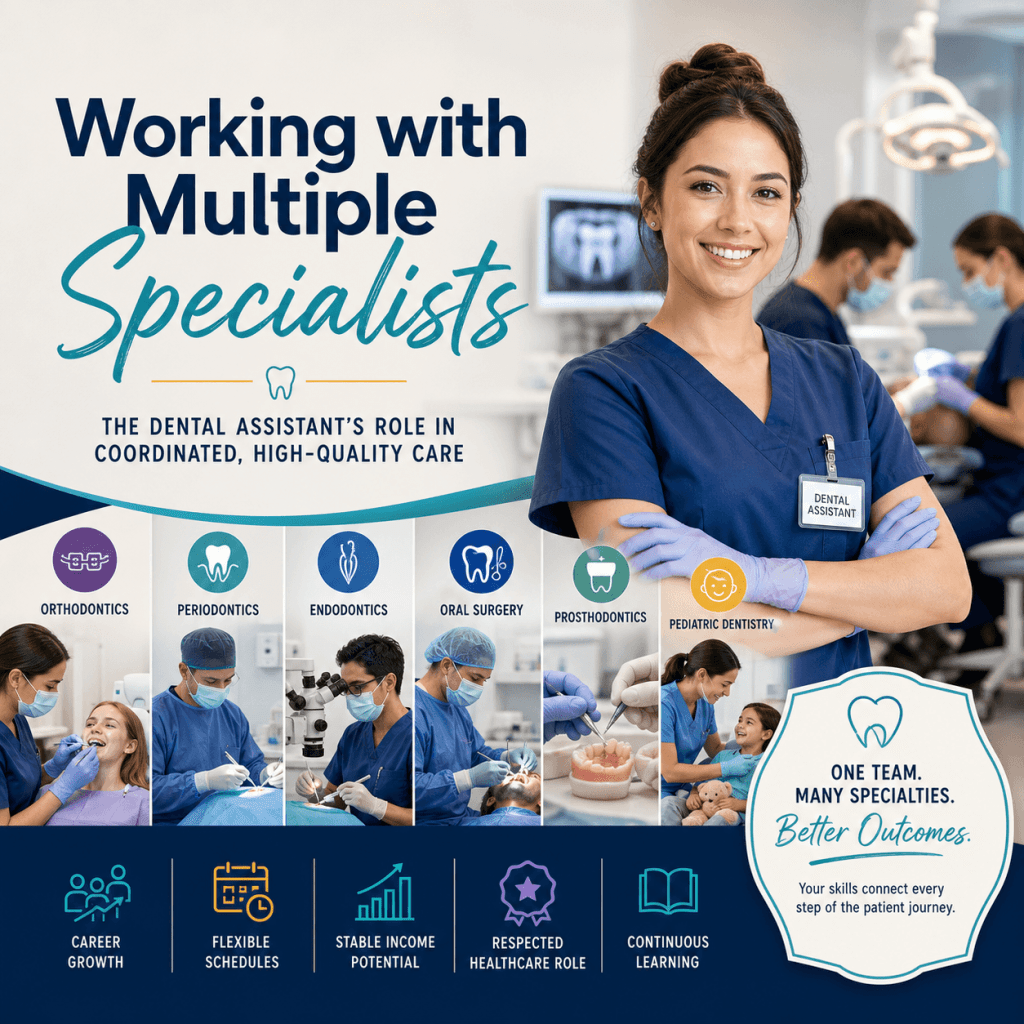
For instance, if you’re considering specializing in areas like oral surgery, orthodontics, endodontics, or periodontics, these factors become even more critical. Each specialization has unique skill sets and knowledge requirements that may be better suited to certain training formats.
First, a quick reality check: what dental assistant school actually needs to teach you
Before you compare formats, you need to know what the program must cover. A strong dental assistant school is not just about “content.” It is training that produces reliable clinical performance.
Core classroom knowledge (the foundation)
A quality program should cover topics such as:
- Infection control fundamentals
- Chairside assisting principles
- Dental materials and basics of procedures
- Radiology basics
- Anatomy and dental terminology
- Ethics, professionalism, and patient care standards
For those starting at the beginning of their journey, a Dental Assistant Level 01 program would be ideal. This foundational course covers all the essential theoretical knowledge required.
Hands-on competencies employers notice immediately
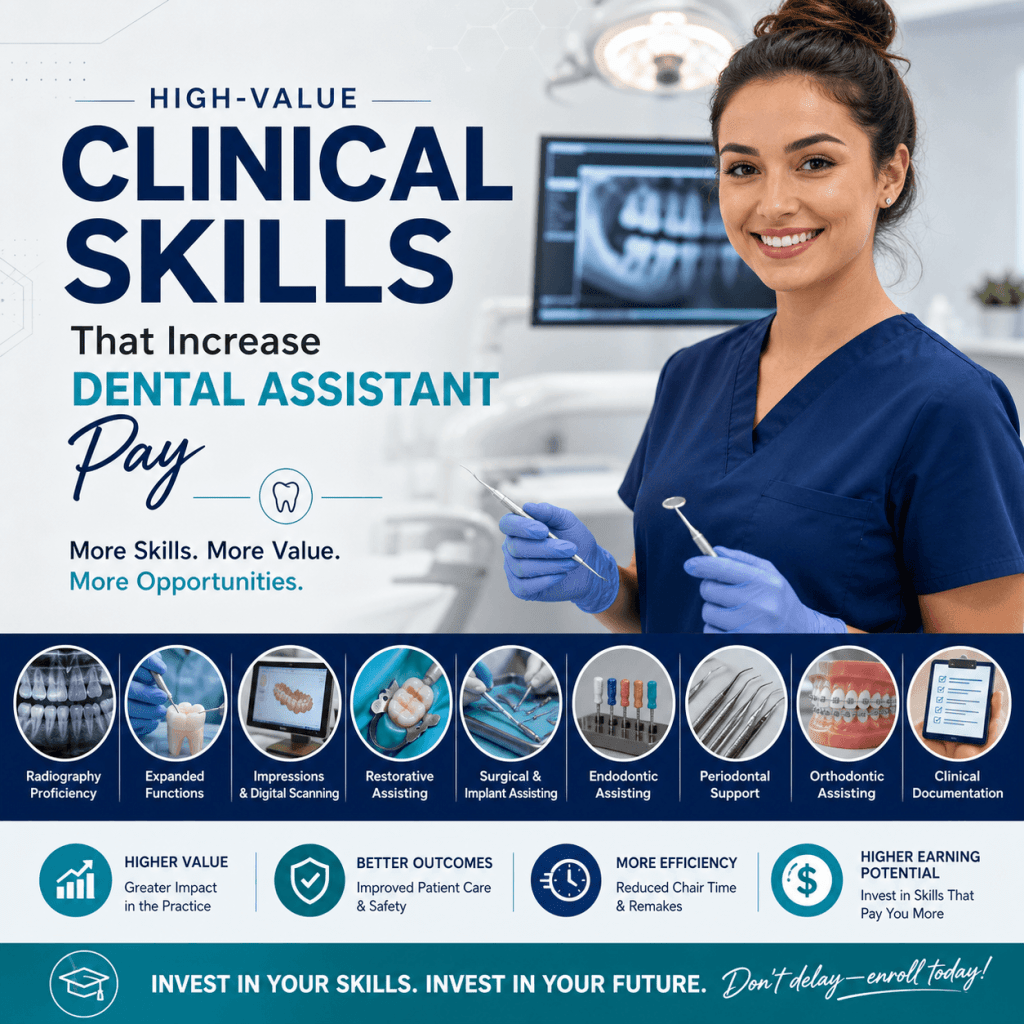
Dental offices care about how you perform in motion, not just what you know. Skills that often make or break a new assistant include:
- Instrument transfer (smooth, safe, efficient)
- Suction and isolation
- Tray setup and procedure prep
- Sterilization workflow and operatory turnover
- Supporting impressions and basic lab tasks (as applicable)
- Clear patient communication and calm chairside presence
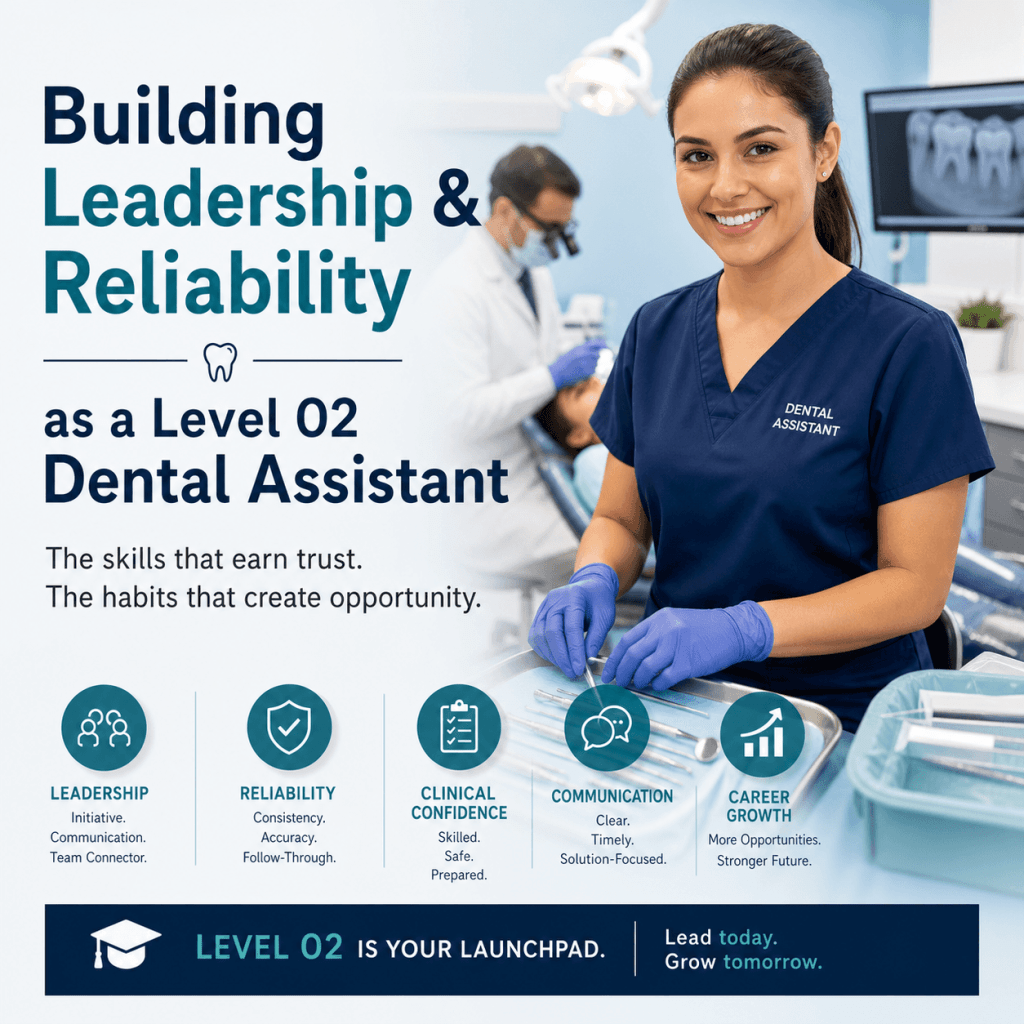
To gain these practical skills, one might consider enrolling in a Dental Assistant Level 02 program. This course focuses on hands-on training that enhances your clinical performance.
Compliance and safety are not optional
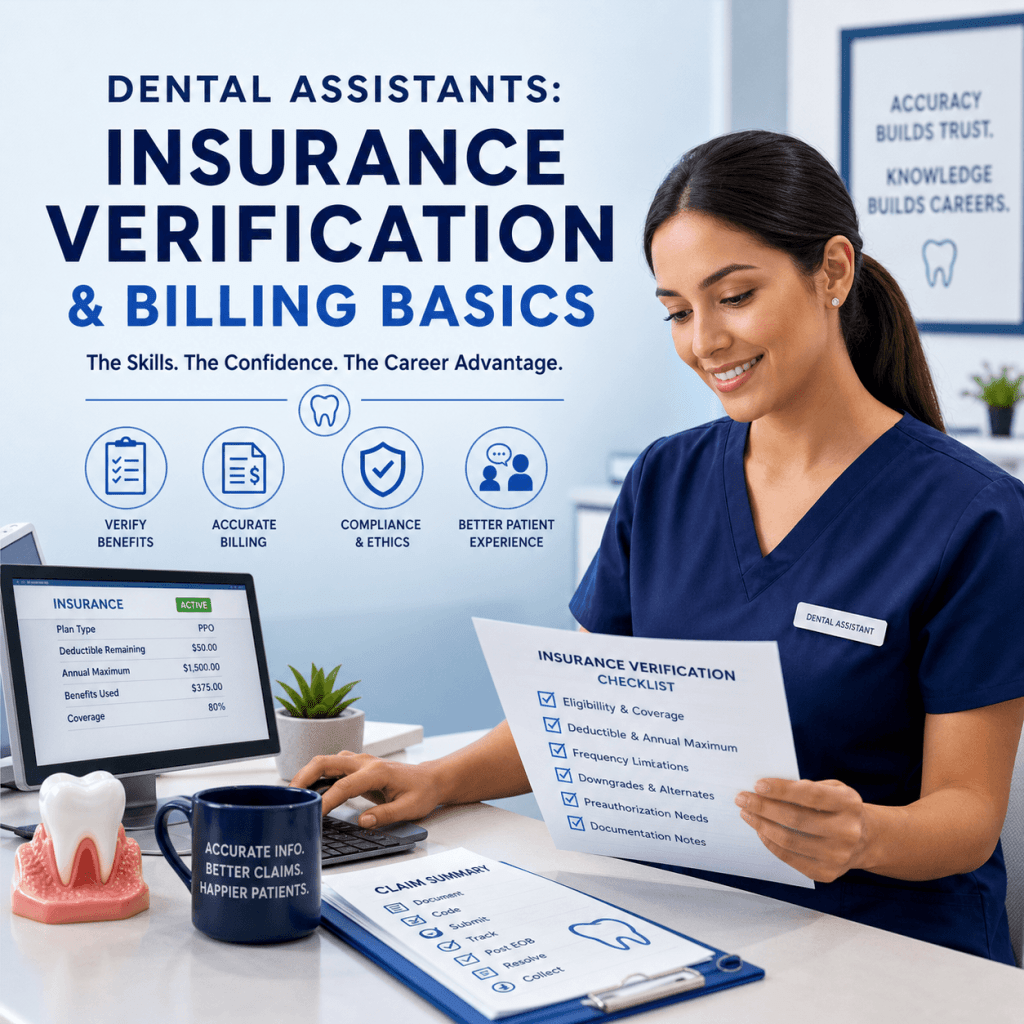
Dental assistants work in a regulated healthcare environment. Even entry-level roles require you to understand and follow:
- HIPAA concepts and privacy-minded communication
- OSHA-style safety principles and exposure prevention
- Documentation habits that protect patients and the practice
- Professionalism and ethics that show maturity and reliability
Being “legally compliant” is not marketing language. It is what keeps patients safe and keeps the practice protected. In fact, understanding the intricacies of compliance is so crucial that resources like this comprehensive guide can provide valuable insights into the subject.
Career mobility starts with your foundation
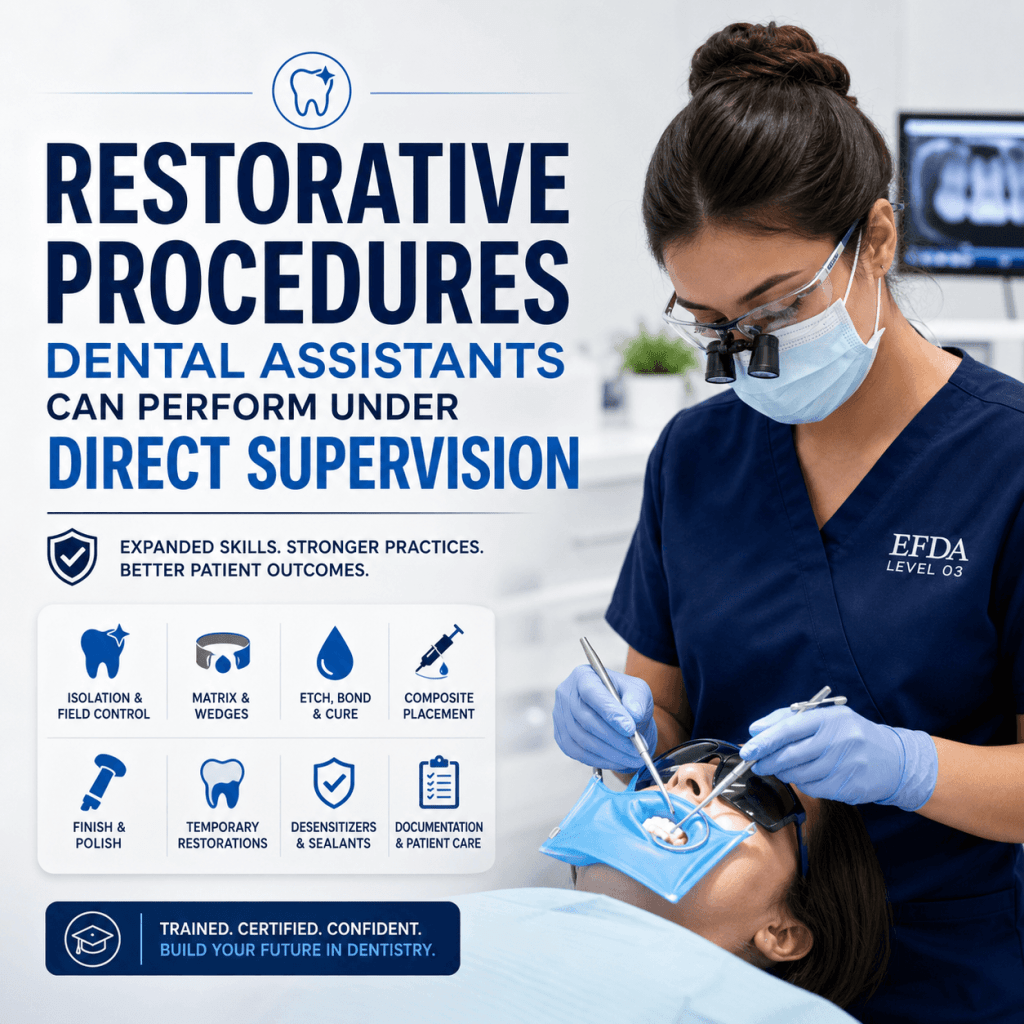
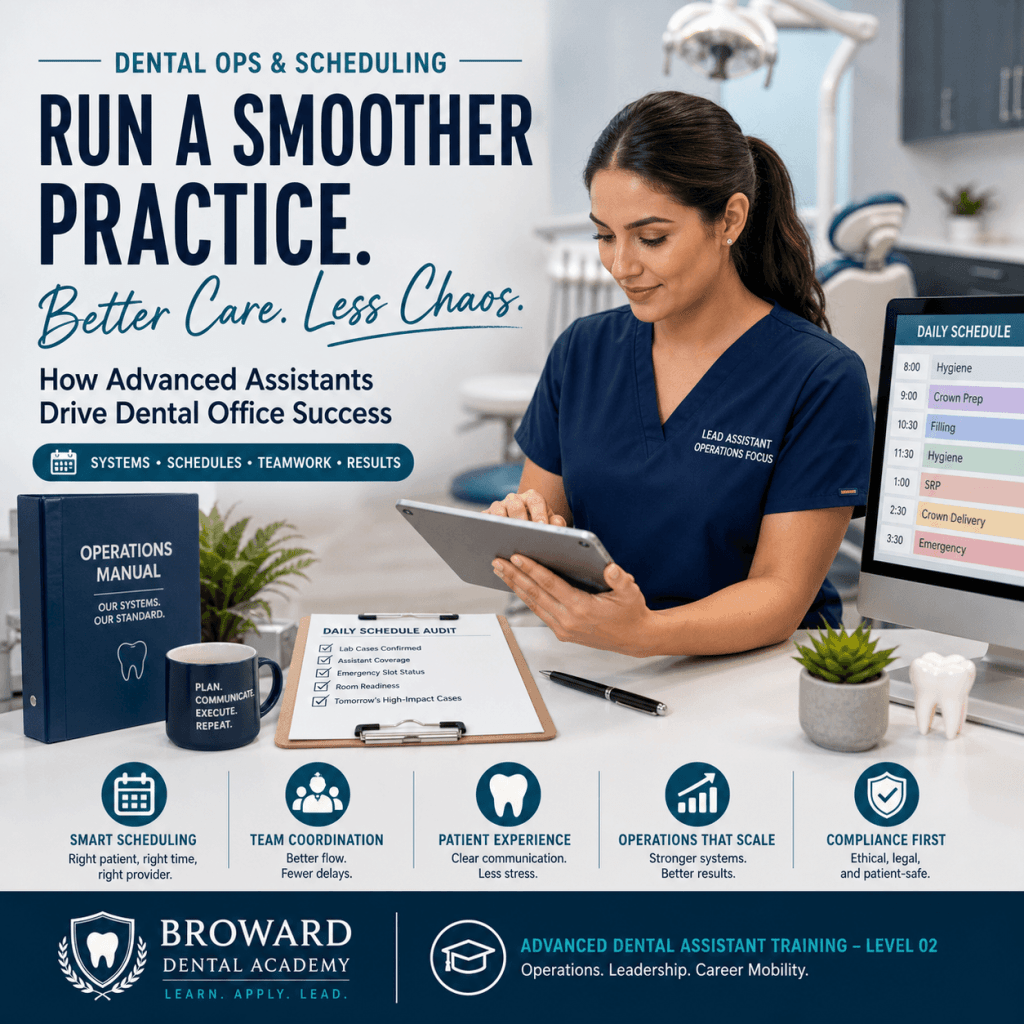
Many dental assistants later aim for expanded functions where permitted, or they grow into lead assistant roles. That growth is easier if your initial training builds strong clinical habits, not shortcuts. For those looking to advance their careers further into specialized areas like hygiene, pursuing a Dental Assistant Hygienists Level 03 certification could be beneficial. Additionally, obtaining various certifications can significantly enhance your career prospects in this field.
Ultimately, the choice of school also matters. It’s essential to choose a school with multiple locations for convenience. You can find more information about the locations offered by Broward Dental Academy here.
Passing a test is not the same as being ready
You can memorize definitions and still struggle in a real operatory. The best programs train you to:
- work within a real-time workflow,
- anticipate the dentist’s next step,
- stay organized under pressure,
- and communicate professionally with patients and the team.

Online dental assistant classes: what you get, what you don’t
Online dental assistant training can be a smart option, especially for students who need flexibility. But it is important to understand what online programs typically include, and what you will need to plan for.
What “online dental assistant training” usually includes
Most online programs focus on theory and structured learning tools like:
- Video lessons and demonstrations
- Quizzes, readings, and assignments
- Discussion boards or guided participation
- Instructor feedback on coursework
- Module-based progression you can complete on a schedule
Online learning is often strong for knowledge-based topics like terminology, basic infection control concepts, and understanding procedure steps.
Best-fit student profiles
Online dental assistant classes tend to work best if you are:
- Self-motivated and consistent without external accountability
- Balancing work, childcare, or unpredictable schedules
- Comfortable learning from videos and reading
- Able to create a quiet routine for study time
However, it’s essential to remember that passing a test does not necessarily mean you are fully prepared for the challenges of a real-world dental environment.
Limitations to plan for (the big one: hands-on skill)
The biggest challenge with online-only training becomes evident once you step into a real clinic. You may not get enough practice with:
- Real instruments and chairside positioning
- Operatory setup and turnover timing
- Ergonomics and safe instrument transfer
- Real-time correction from an instructor in a lab setting
- The pace and pressure of live patient flow
You can watch a perfect demo ten times and still feel unprepared when you are expected to do it smoothly at speed.
Clinical requirements: externships and why they matter
Some online programs address the hands-on gap by including or requiring:
- Externships
- Internships
- In-person skill check-offs
This is crucial because employers often ask questions like:
- “How many hours did you practice in a lab?”
- “Did you complete an externship in a dental office?”
- “What procedures have you assisted with?”
If an online program cannot clearly explain how you get real clinical exposure, you are taking on risk. For more insights into the common questions regarding online dental programs, visit Broward Dental Academy’s FAQ section.
Common pitfalls students run into
Online programs can work, but watch for these issues:
- Enrolling without a clear clinical pathway (no real externship plan)
- Underestimating time management and falling behind
- Limited networking with local dental offices
- Finishing coursework but feeling unsure in interviews when asked about hands-on skills
Online can be convenient. Your job, however, will not be convenient. Make sure the program bridges that gap.
In-person dental assistant training: the traditional path (and why it still works)
In-person dental assistant school is still the most straightforward way to build clinical confidence quickly because it naturally includes structured lab practice.
What in-person training typically looks like
Most in-person programs include:
- Scheduled classroom lectures
- Regular lab sessions using dental equipment and instruments
- Live demonstrations and practice
- Skills check-offs with instructor observation
- Often, externships or clinical partnerships
Strengths that translate directly to job readiness
In-person training shines because you get:
- Immediate hands-on repetition
- Instructor corrections in real time (small errors get fixed early)
- Realistic lab setups for sterilization, chairside positioning, and ergonomics
- Peer learning, where you practice together and build confidence
For many students, that repetition is what turns knowledge into muscle memory.
Better for students who want structure
In-person learning can be ideal if you want:
- Set days and times
- Accountability and fewer at-home distractions
- A clear rhythm that keeps you progressing
Tradeoffs to consider
The same structure that helps some students can be a challenge for others:
- Commute time and transportation logistics
- Fixed schedules that may conflict with work
- Potential waitlists or limited start dates
- Harder coordination if you need nights or weekends
How to evaluate an in-person dental assistant school
When comparing programs, ask specifically about:
- Lab time per week: How many hours are true hands-on practice?
- Instructor-to-student ratio: Can you get real feedback?
- Clinical partnerships: Do they have relationships with dental offices?
- Internship/externship availability: Is it included, supported, or optional?
If you are paying for in-person training, you should be getting consistent access to equipment, supervision, and skill development.
In this context, it’s worth considering other practical training options that might complement your dental assistant education. For instance, engaging in a knot tying school could provide useful skills that enhance your overall dexterity and precision—qualities that are invaluable in the dental field.
Hybrid dental assistant training: the “best of both” when it’s done right
Hybrid training can be one of the most practical options today, but only if it is designed intentionally.
What hybrid actually means
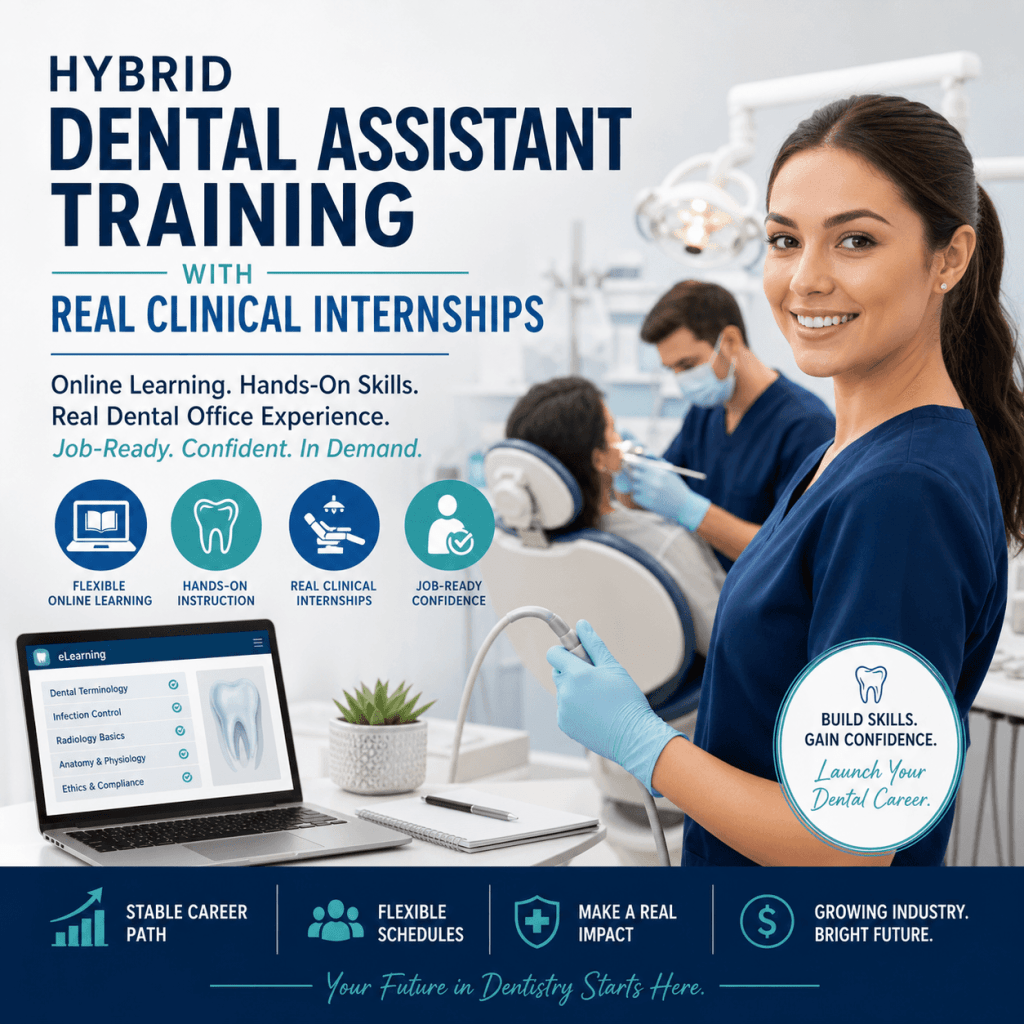
A real hybrid dental assistant program typically includes:
- Online coursework for theory and knowledge building
- In-person labs/clinical sessions for hands-on skills
Hybrid should not mean “mostly online with minimal practice.” It should mean your hands-on learning is built into the schedule and treated as a core requirement.
Why hybrid is popular
Hybrid programs have become popular because they can:
- Keep your schedule flexible for work and life
- Reduce commuting compared to fully in-person formats
- Still deliver the hands-on repetition needed for clinical confidence
- Help you progress steadily without putting your life on pause
For many students, it is the most realistic way to train consistently.
What to look for in a strong hybrid program
Not all hybrid programs are equal. Look for:
- A clear calendar for lab days and clinical sessions
- A required competencies checklist (what you must be able to do before completion)
- Modern eLearning lesson plans for remote learning, not outdated videos
- Consistent instructor feedback and skills check-offs
Clinical readiness: why hybrid can align with what offices want
Dental practices want assistants who can step into real workflows. A well-built hybrid model can produce graduates who are:
- clinically capable,
- compliance-minded,
- and confident under supervision.
Where internships fit (and why they are a differentiator)
Internships and externships can be the bridge between “student” and “hireable.” When hybrid programs include in-office experience, you gain:
- exposure to real pace and patient communication,
- familiarity with team-based workflow,
- and proof of hands-on readiness that employers respect.

Side-by-side comparison: online vs in-person vs hybrid (the decision factors that actually matter)
Here is what most students think matters: price and distance.
Here is what actually matters once you are in the program and heading into interviews: skill development, hands-on time, completion timeline, and support.
Learning effectiveness: theory retention vs skill mastery
- Online: Often strong for theory if you are disciplined and consistent.
- In-person: Strong for skill mastery because practice is built in.
- Hybrid: Strong when the online theory and in-person labs are clearly connected and paced well.
Hands-on time: how much do you realistically need?
Most new assistants do not lack knowledge. They lack repetition.
Ask each program:
- How many hours are hands-on labs?
- How many skills check-offs are required?
- Do you practice full operatory flow, or just isolated tasks?
If you want to feel confident at interviews and on day one, you need enough hands-on practice to make core tasks feel automatic.
Speed to completion: what affects timelines
“Fast” programs sound appealing, but real timelines depend on:
- start dates and seat availability,
- lab scheduling and instructor availability,
- externship placement timing.
Sometimes an online program allows for immediate start, but you may have to wait later for clinical placement. Conversely, an in-person or hybrid program might have a fixed timeline that moves you through steadily.
Job readiness and hiring confidence
Employers may interpret formats differently. Many will ask about:
- Your hands-on training hours
- Externship or internship experience
- What procedures you have assisted with
- Comfort with sterilization workflow and turnover
- Professionalism and communication
A strong program, in any format, prepares you to answer those questions clearly.
Support and accountability
Consider what you will have when motivation dips:
- Online: Can be limited unless the program is very interactive.
- In-person: Strong built-in support and accountability.
- Hybrid: Often good balance, especially with consistent lab coaching and instructor access.
How to choose the right format for you (quick self-check)
If you’re searching “dental assistant training near me,” start with location, but do not stop there. Narrow down by the format that fits your life and learning style.
Questions to ask yourself
- Do I learn best by watching and reading, or by doing?
- How many hours per week can I realistically commit?
- Do I need nights or weekends?
- Do I have a quiet space to study if coursework is online?
- How comfortable am I walking into a clinical environment with limited practice?
When considering your comfort in a clinical environment, it’s crucial to understand the importance of cleaning procedures. This knowledge can significantly enhance your confidence during practical experiences.
Align the format with your career goals
If your goal is entry-level chairside assisting as soon as possible, prioritize hands-on reps and a clear pathway to clinical exposure.
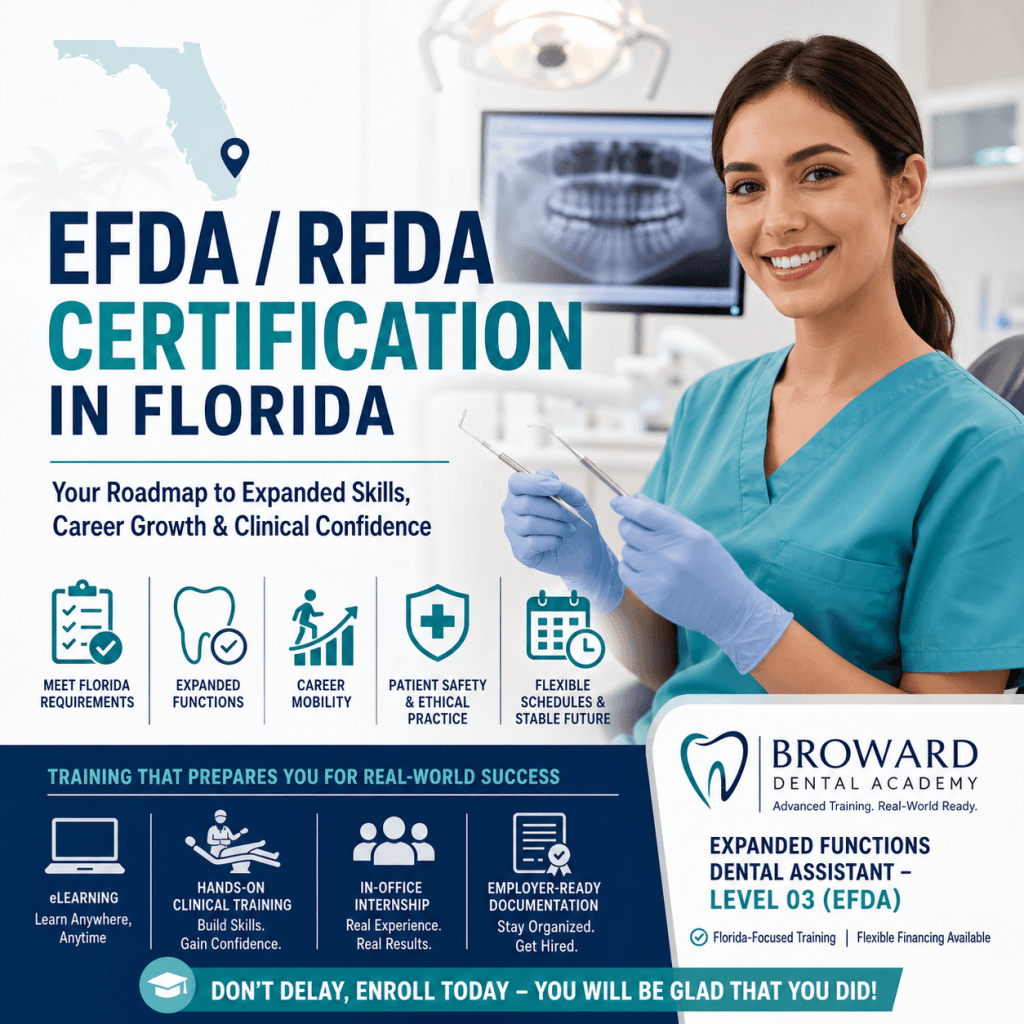
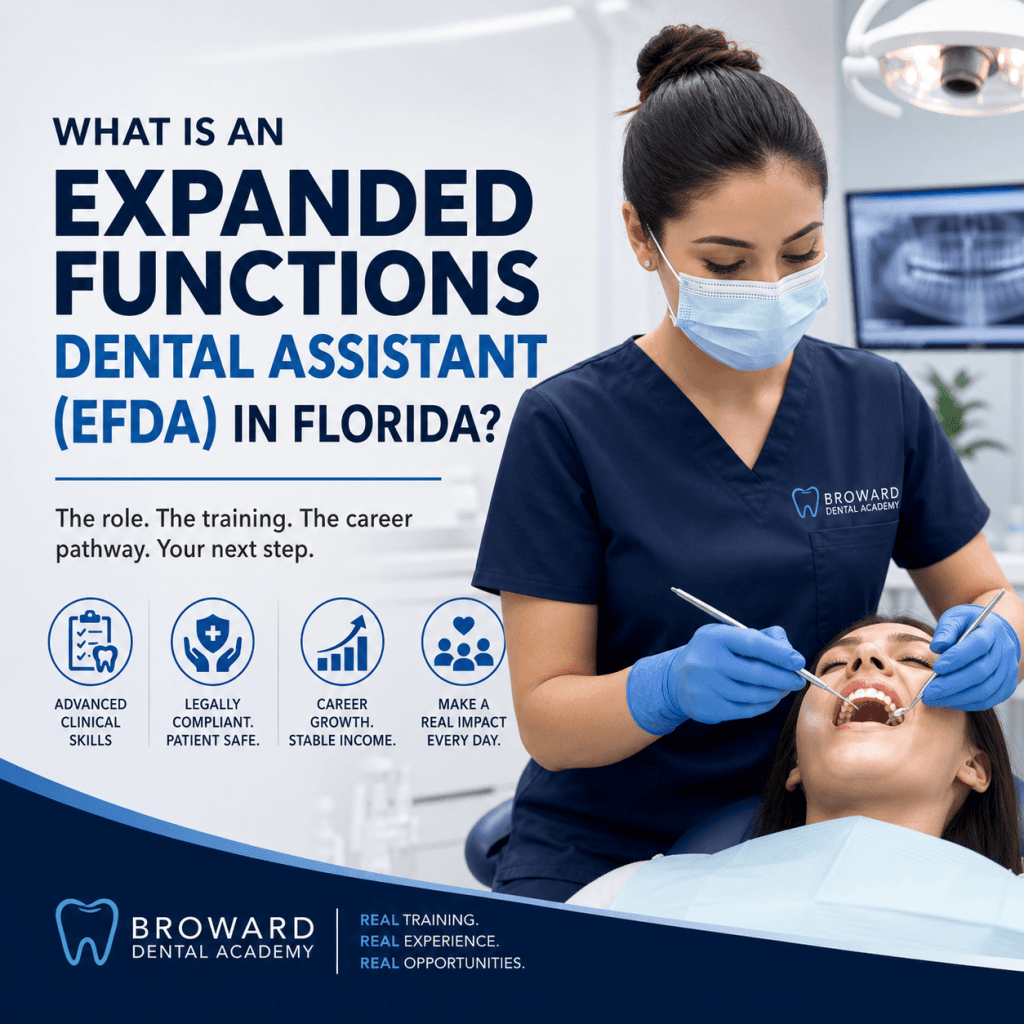
If you also want long-term mobility, including expanded functions where permitted, choose a program that builds a strong clinical base and compliance mindset.
Risk management: confirm the clinical pathway
If you pick online-heavy training, confirm these details before enrolling:
- Where and how will I get hands-on experience?
- Is an internship/externship included, required, or optional?
- Who arranges placement, and what happens if placement is delayed?
The confidence test
Choose the option that will make you comfortable walking into a modern dental practice and performing under supervision, not just completing modules.
What Florida students should pay attention to when picking a dental assistant training program
Florida students often compare options quickly, but the better move is to compare outcomes.
Local expectations: what employers value
Many dental offices value assistants who can step into real workflows such as:
- sterilization and instrument processing,
- operatory turnover,
- chairside assisting fundamentals,
- professional patient communication.
If your training format does not give you realistic reps, you will feel that gap immediately.
Compliance focus matters
Ethical conduct, safety, and doing things correctly is part of your professional reputation. A strong program should emphasize:
- consistent infection control habits,
- privacy-aware communication,
- documentation and professionalism.
Clinical exposure bridges the classroom-to-job gap
Internships and externships can make a major difference for first-job performance. They help you understand:
- pace,
- teamwork,
- real patient interaction,
- and what “a normal day” in a dental office looks like.
Evaluate programs based on outcomes
When comparing dental assistant school options in Florida, ask about:
- skills checklists and hands-on assessments,
- lab hours,
- clinical requirements,
- and employability support (such as interview readiness, if offered).
What to ask when comparing “dental assistant school near me”
Bring these questions to every program you shortlist:
- How much of the program is hands-on lab time?
- What specific skills will I be checked off on?
- Is an internship/externship included, and how is placement handled?
- What is the weekly schedule like, including lab days?
- What is the total cost breakdown, including supplies and fees?
How Broward Dental Academy approaches online, clinical, and hybrid learning
Broward Dental Academy is committed to serving the Dental Community by developing well-rounded professionals through various dental training programs.
Their approach is designed around a simple idea: dental practices are looking for professionals who are thoroughly trained, legally compliant, and clinically confident, and training should reflect that standard.
Not just teaching to pass an exam
Broward Dental Academy focuses on preparing students to thrive in a modern, high-performance dental practice. That means students are trained to:
- think critically,
- act ethically,
- and perform confidently.
A learning experience that blends remote and clinical immersion
Programs provide a complex educational experience through immediate immersion in online and clinical settings, with the latest eLearning lesson plans incorporated for remote training.
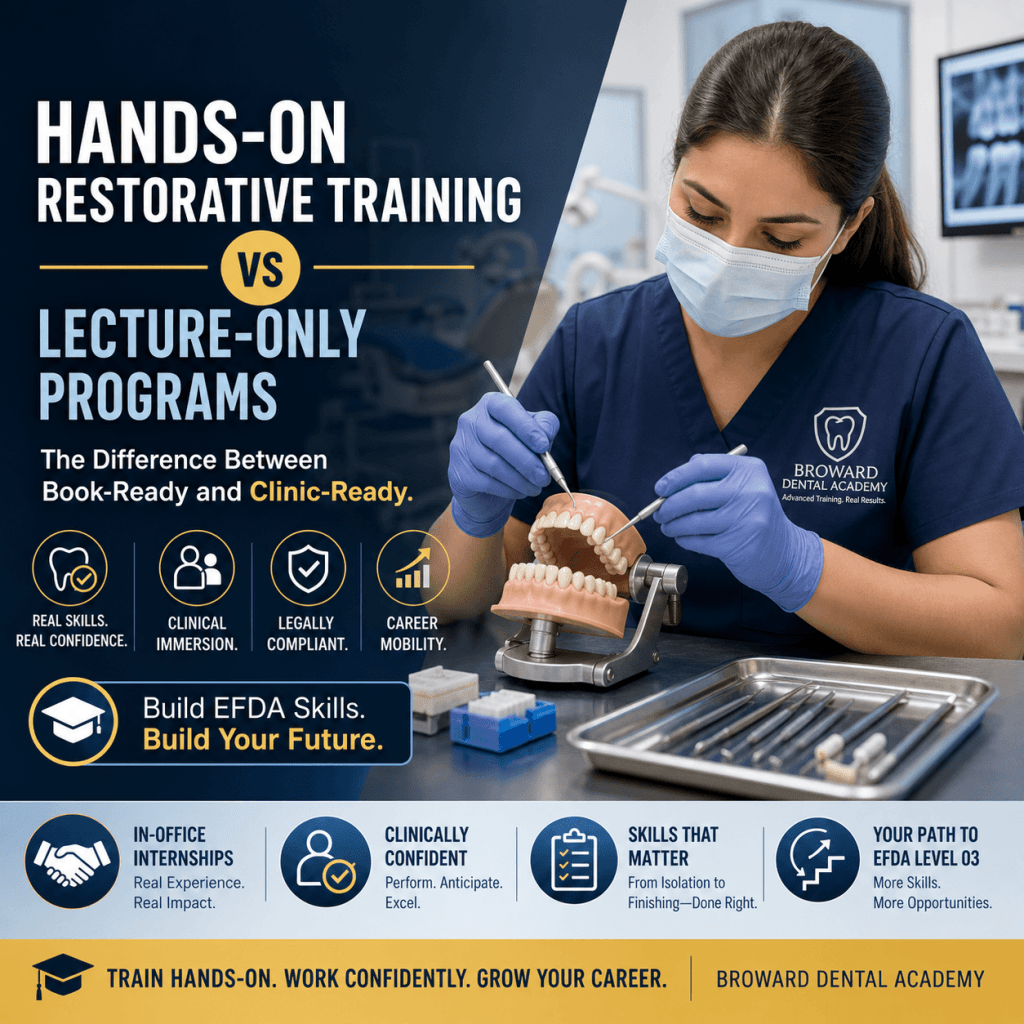
Hands-on readiness is strengthened through clinical experiences, including in-office internships, so students can connect what they learn to real dental office workflows.
Breadth and career mobility
Broward Dental Academy offers a variety of courses supporting career mobility and advanced dental training opportunities as students grow.
Accessibility through flexible financing
For many students, the decision is not just about format. It is also about affordability and timing. Flexible financing can make it easier to choose a program that fits your life while still building real clinical confidence.
To learn more about the broader path and requirements, you can also visit:
How to Become a Dental Assistant in Florida
A simple next step if you’re comparing dental assistant courses near you
Shortlist 2 to 3 programs and compare them using factors that impact job readiness:
- Training format (online, in-person, hybrid)
- Hands-on lab hours and required competencies
- Internship/externship placement details
- Schedule flexibility (including nights/weekends if needed)
- Instructor access, feedback, and support
Before you enroll, request:
- a program outline,
- a weekly schedule,
- clinical requirements and skill checklists,
- internship details,
- and a total cost breakdown.
The “best” format is the one that fits your life while still giving you enough hands-on training to be employable and confident.
If you are ready to take the next step, explore Broward Dental Academy’s training options, course offerings, and financing.
Don’t delay, enroll today, you will be glad that you did!
FAQs (Frequently Asked Questions)
Why does the format of dental assistant training matter for my career?
The format of your dental assistant training directly influences how quickly you develop real clinical skills, your confidence in patient care settings, and your readiness to perform effectively in a dental office. Employers seek assistants who are clinically confident, legally compliant, and prepared for high-performance environments, which depends heavily on the training format.
What are the key differences between online, in-person, and hybrid dental assistant training programs?
Online programs offer flexibility but may lack hands-on experience; in-person programs provide direct clinical practice essential for skill development; hybrid programs combine both approaches to balance theory and practical training. Choosing the right format depends on your learning style and career goals to ensure real readiness for dental practice.
What core knowledge should a quality dental assistant program cover?
A strong program should teach infection control fundamentals, chairside assisting principles, dental materials and procedure basics, radiology basics, anatomy and dental terminology, as well as ethics, professionalism, and patient care standards. This foundational knowledge is critical for effective clinical performance.
Which practical skills are essential for new dental assistants to succeed in a clinical setting?
Key hands-on competencies include smooth instrument transfer, effective suction and isolation techniques, tray setup and procedure preparation, sterilization workflows, supporting impressions and lab tasks when applicable, along with clear patient communication and maintaining a calm chairside presence.
How important is compliance and safety training in dental assistant education?
Compliance with healthcare regulations like HIPAA privacy rules, OSHA safety standards, proper documentation habits, and professional ethics is crucial. These elements protect patients and practices alike. Being legally compliant is essential for maintaining safety and professionalism in any dental office environment.
How can choosing the right training format impact my career mobility as a dental assistant?
Selecting a training format that builds strong clinical habits rather than shortcuts lays the foundation for career advancement into expanded functions or lead roles. Proper initial training also facilitates specialization opportunities such as oral surgery or orthodontics and supports further certifications like Dental Assistant Hygienists Level 03.