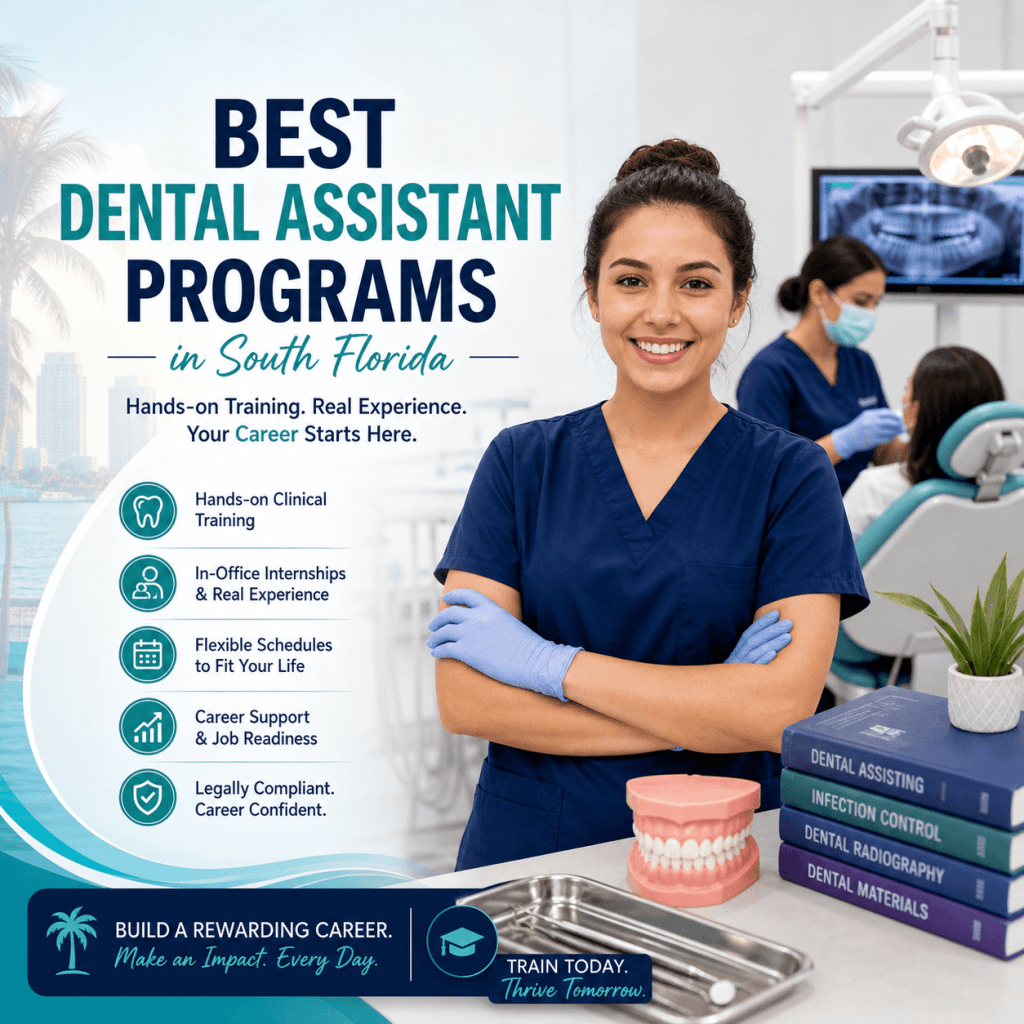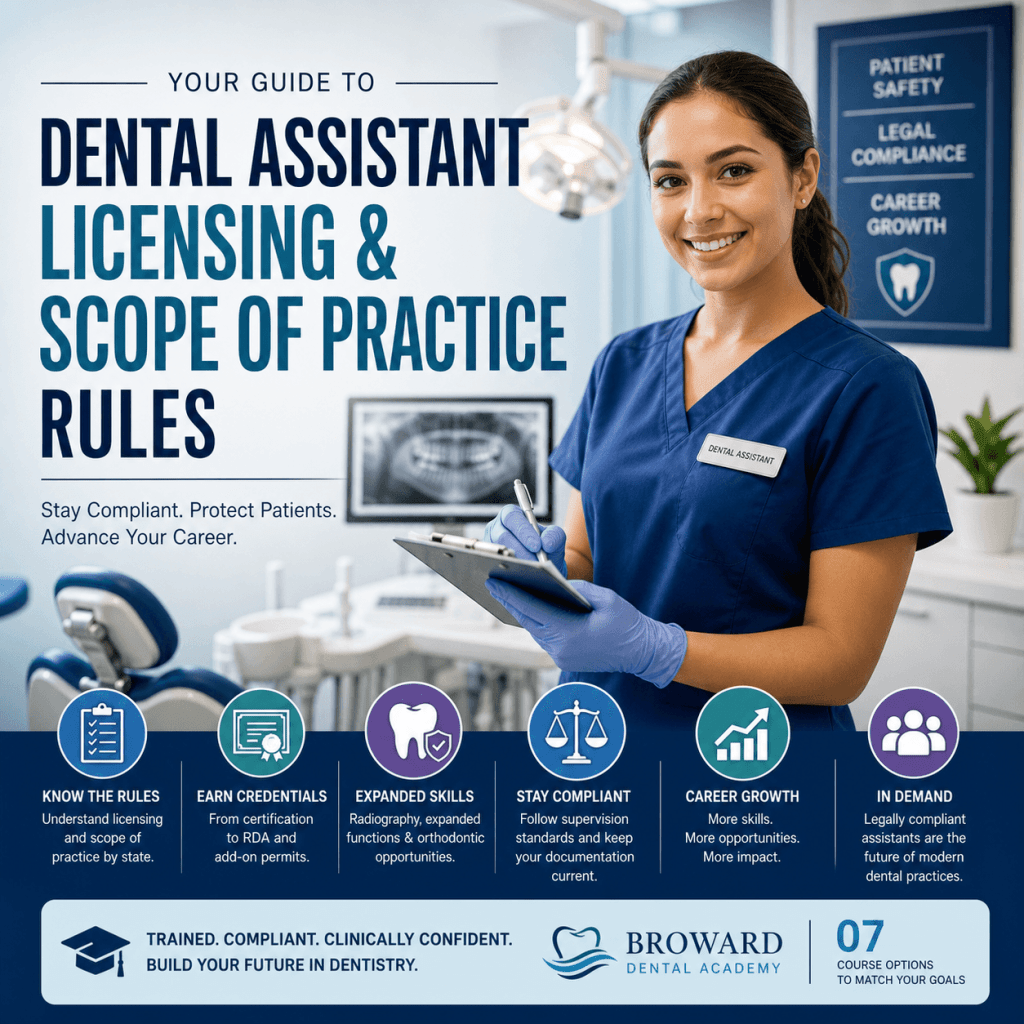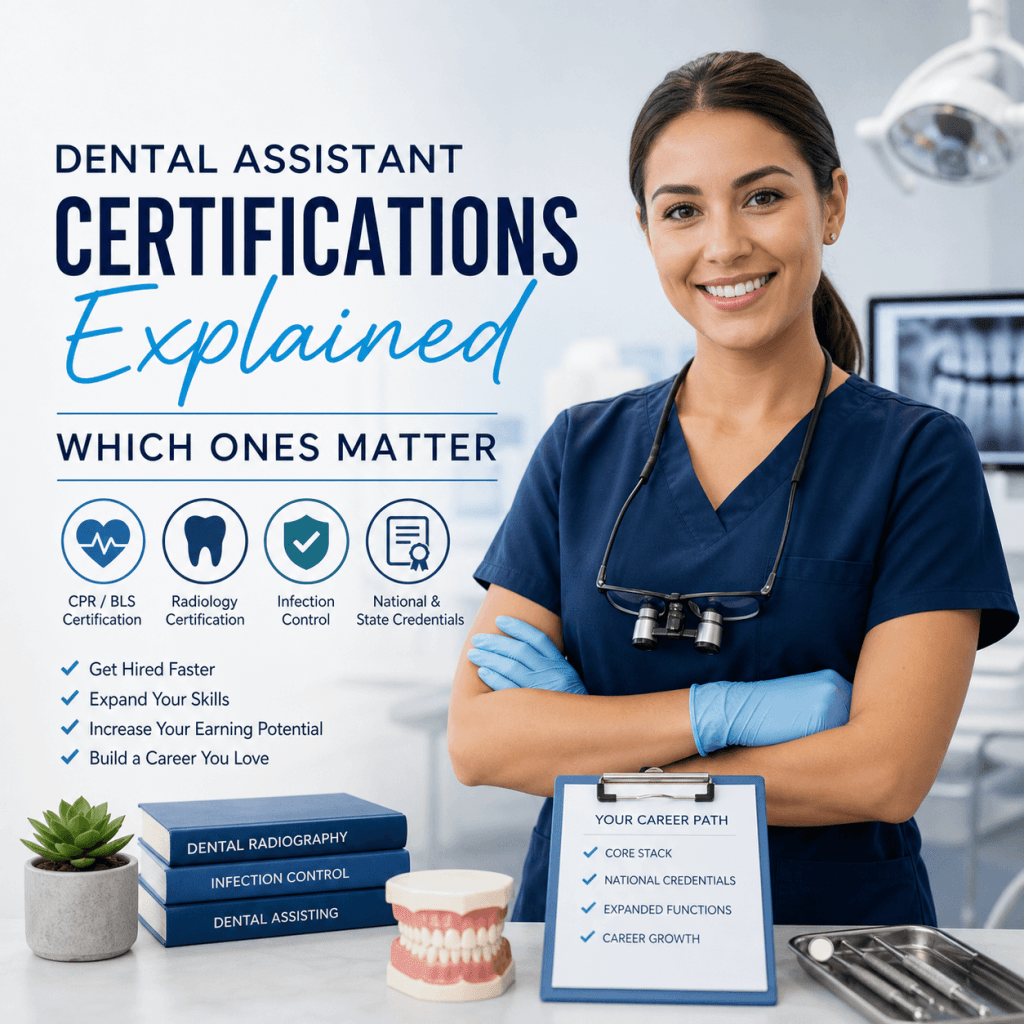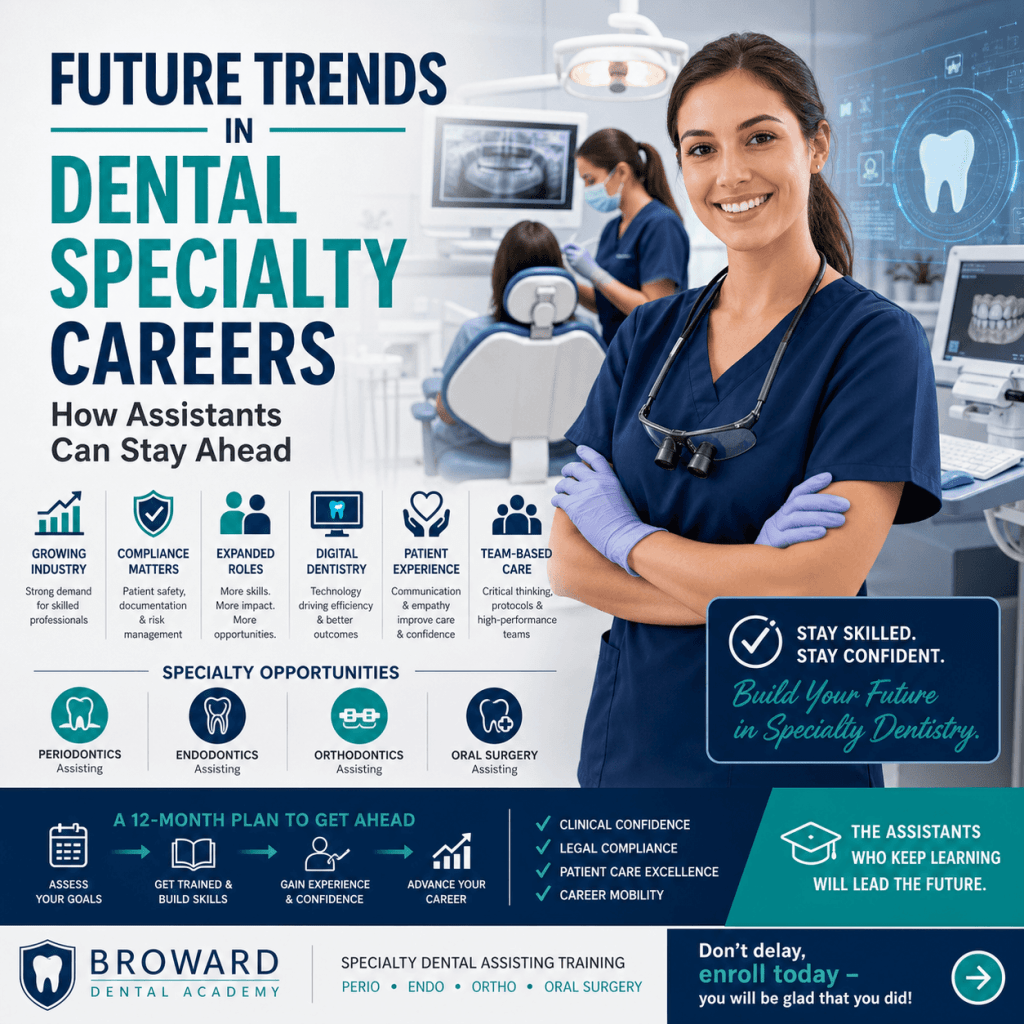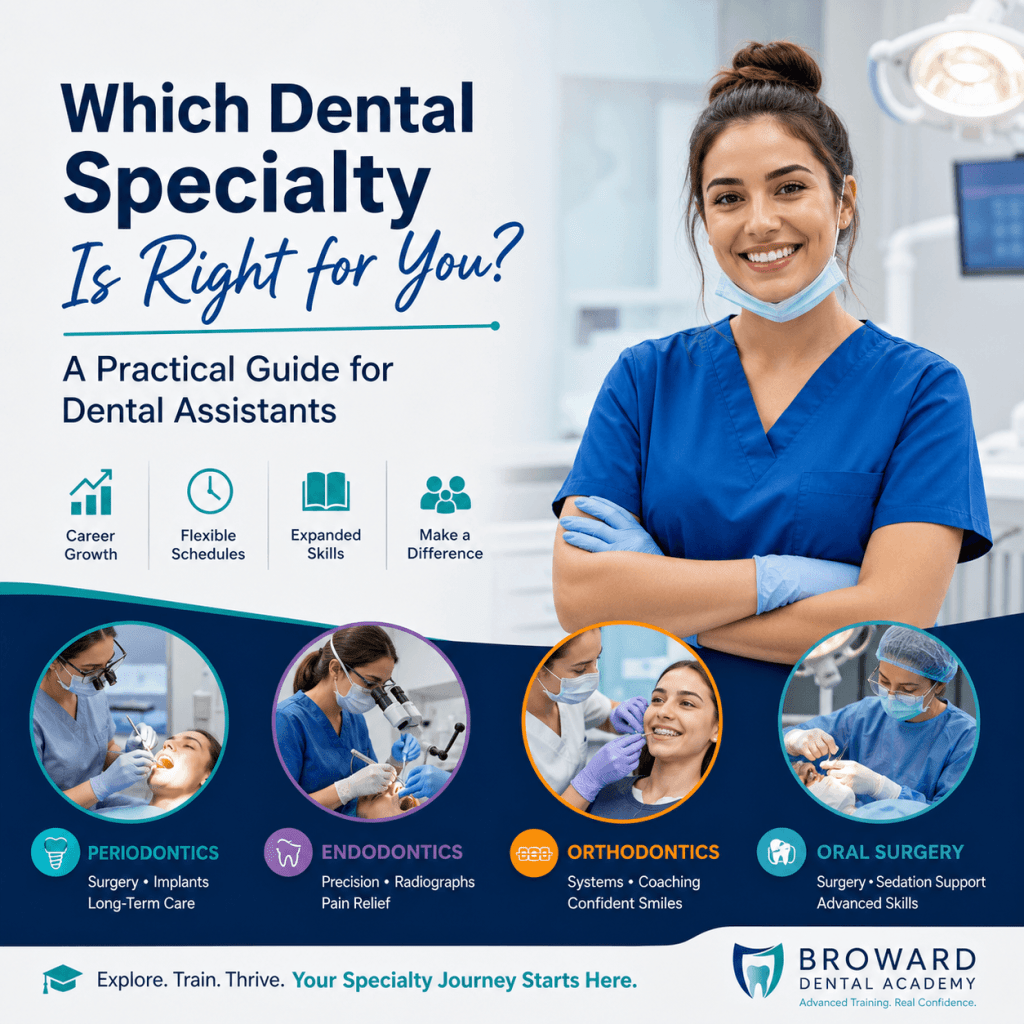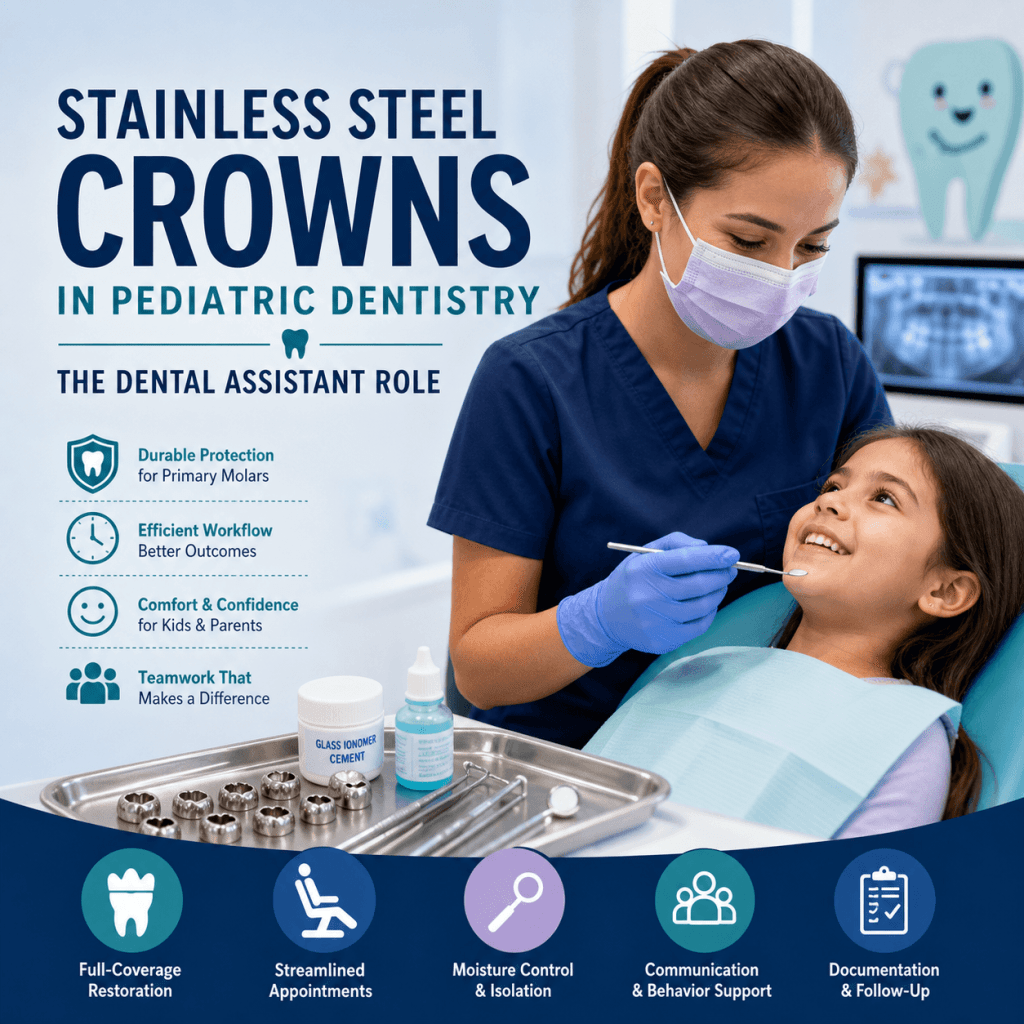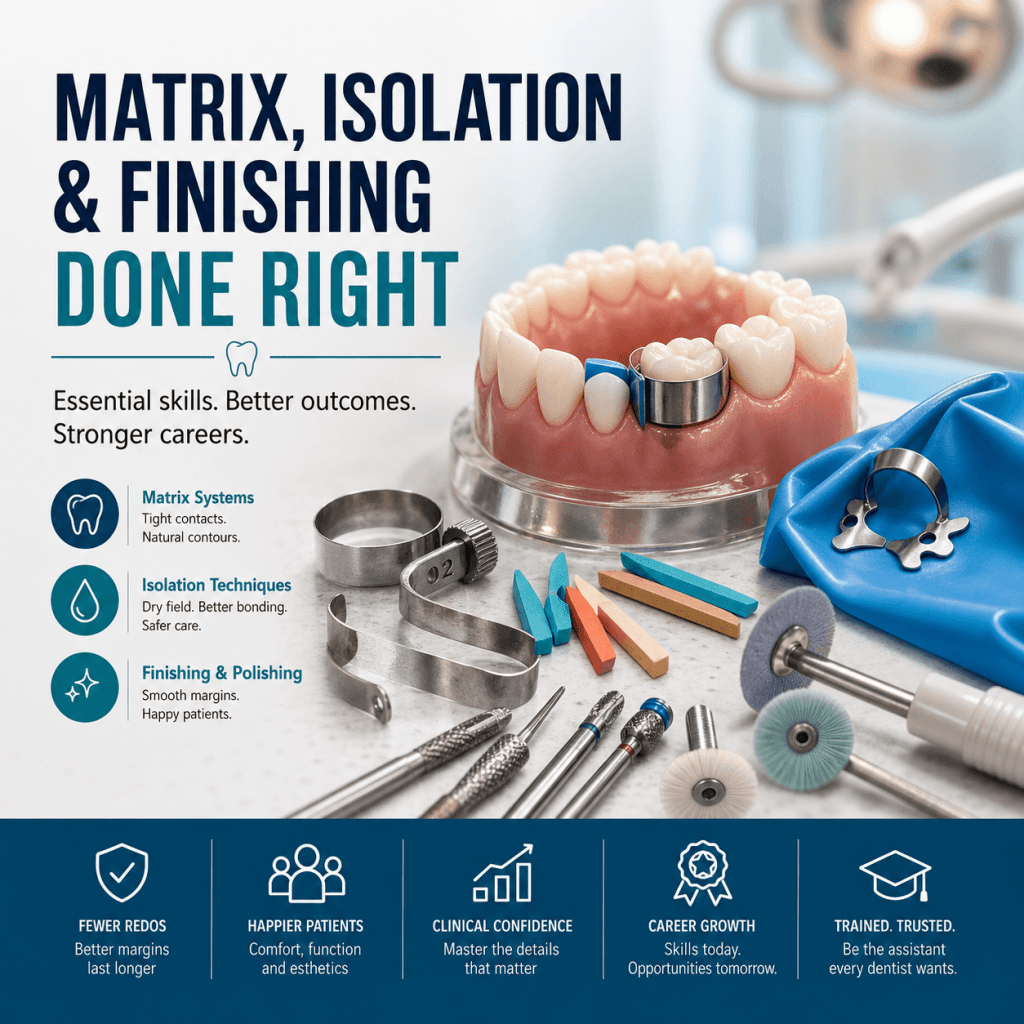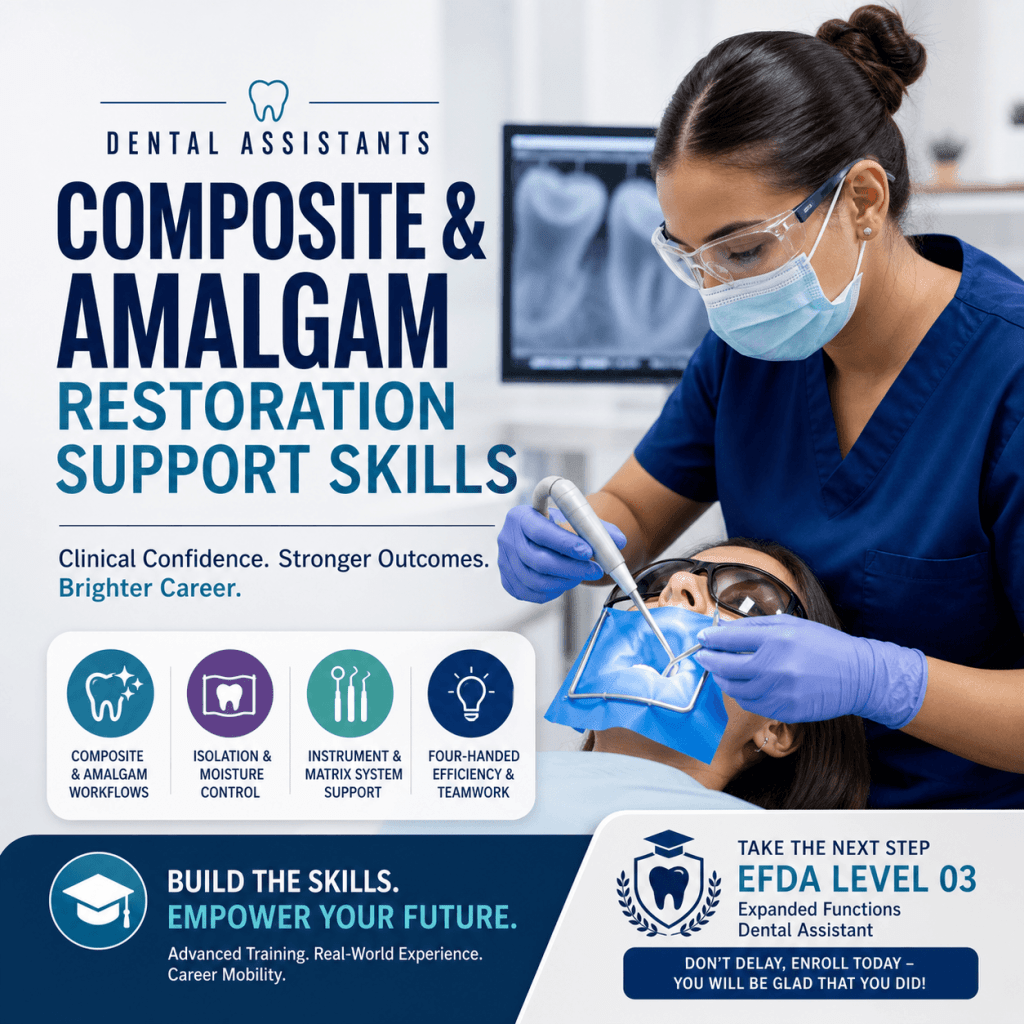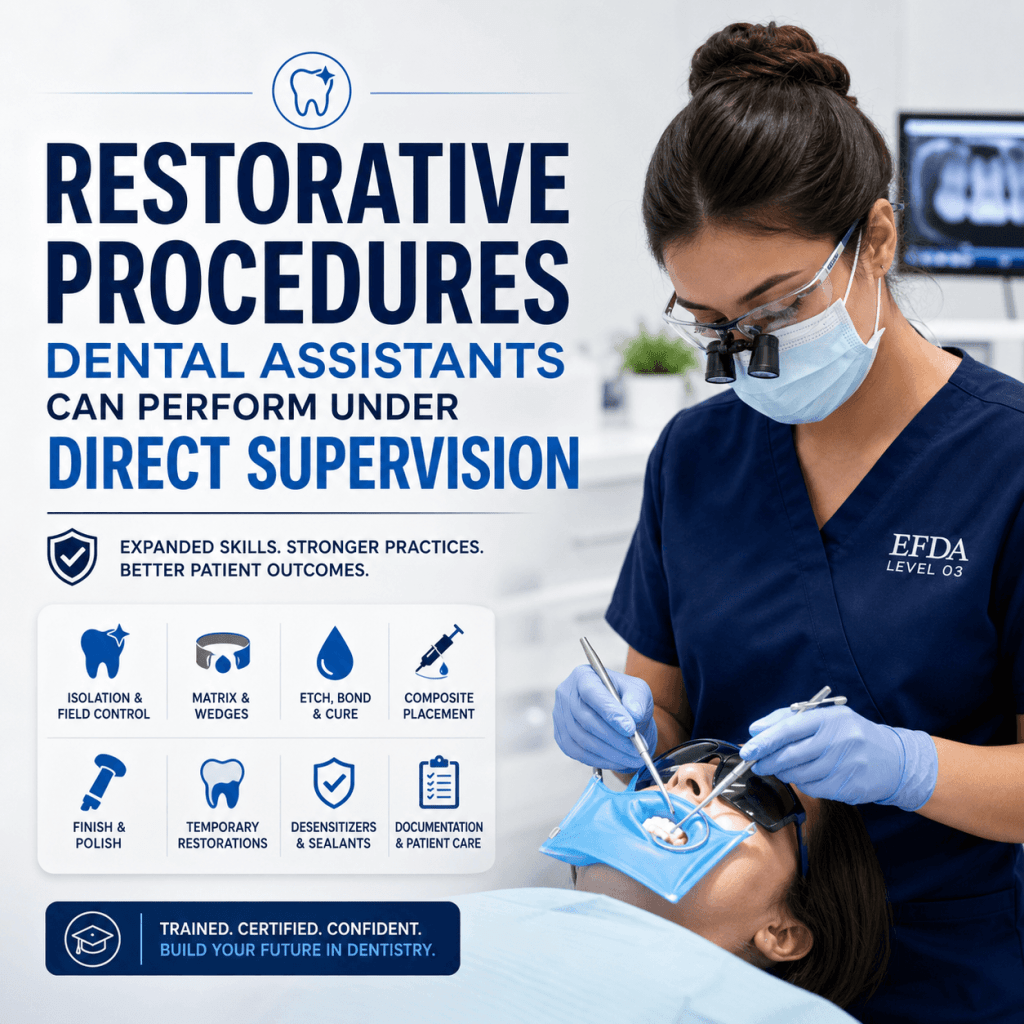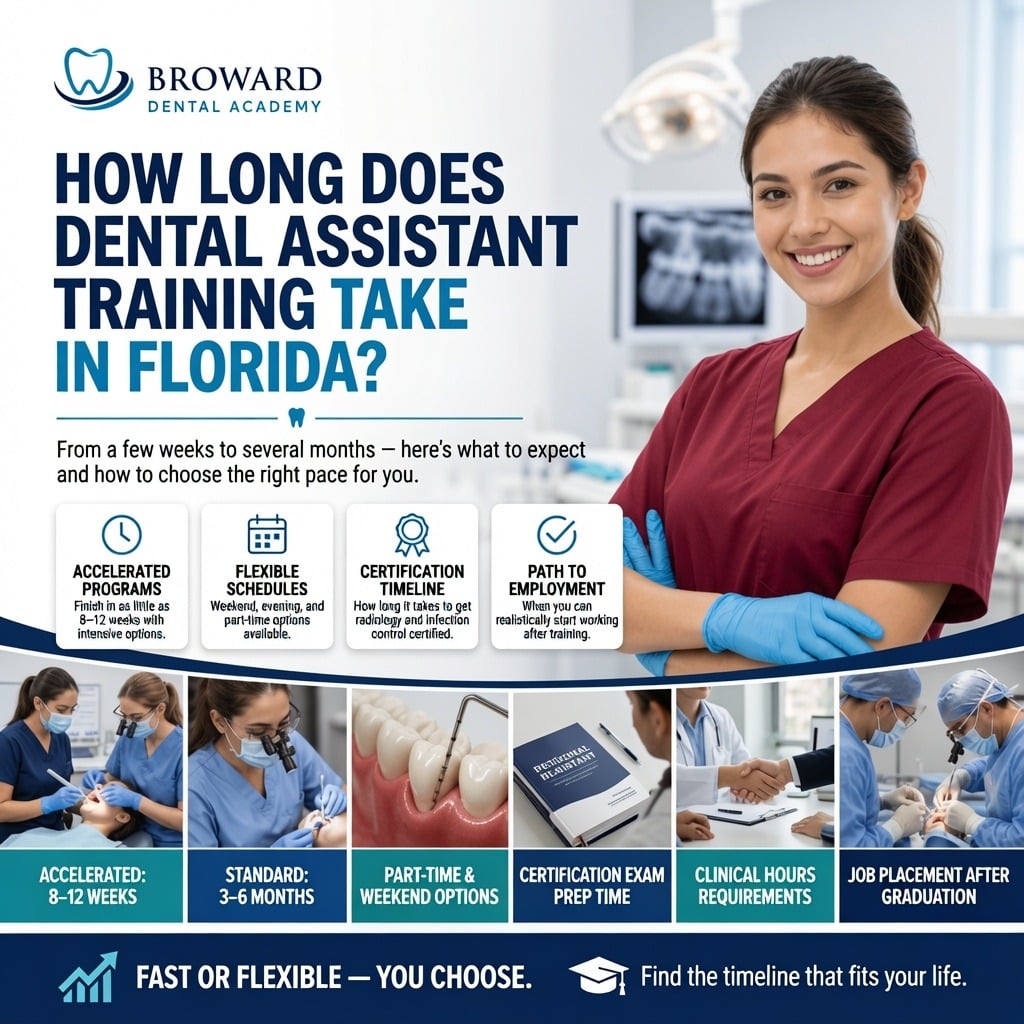
Most people who ask, “How long does dental assistant training take in Florida?” are really asking a more practical question: How long until I can become a dental assistant and start working?
The honest answer is that it depends on the path you choose. In Florida, training timelines can vary based on:
- Program type (short certificate, standard diploma, or longer college-based track)
- Your schedule (full-time vs part-time evenings/weekends)
- How much hands-on training is built in (labs, clinical practice, externship)
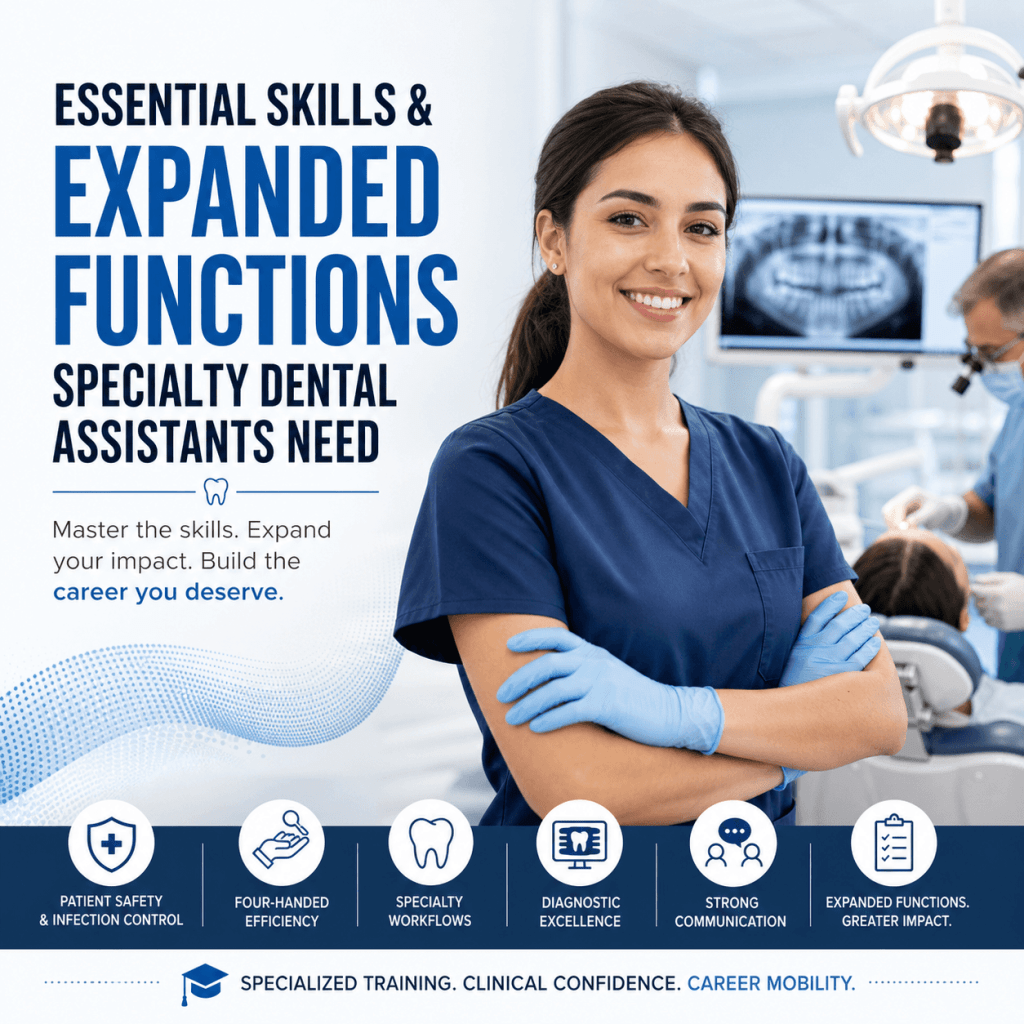
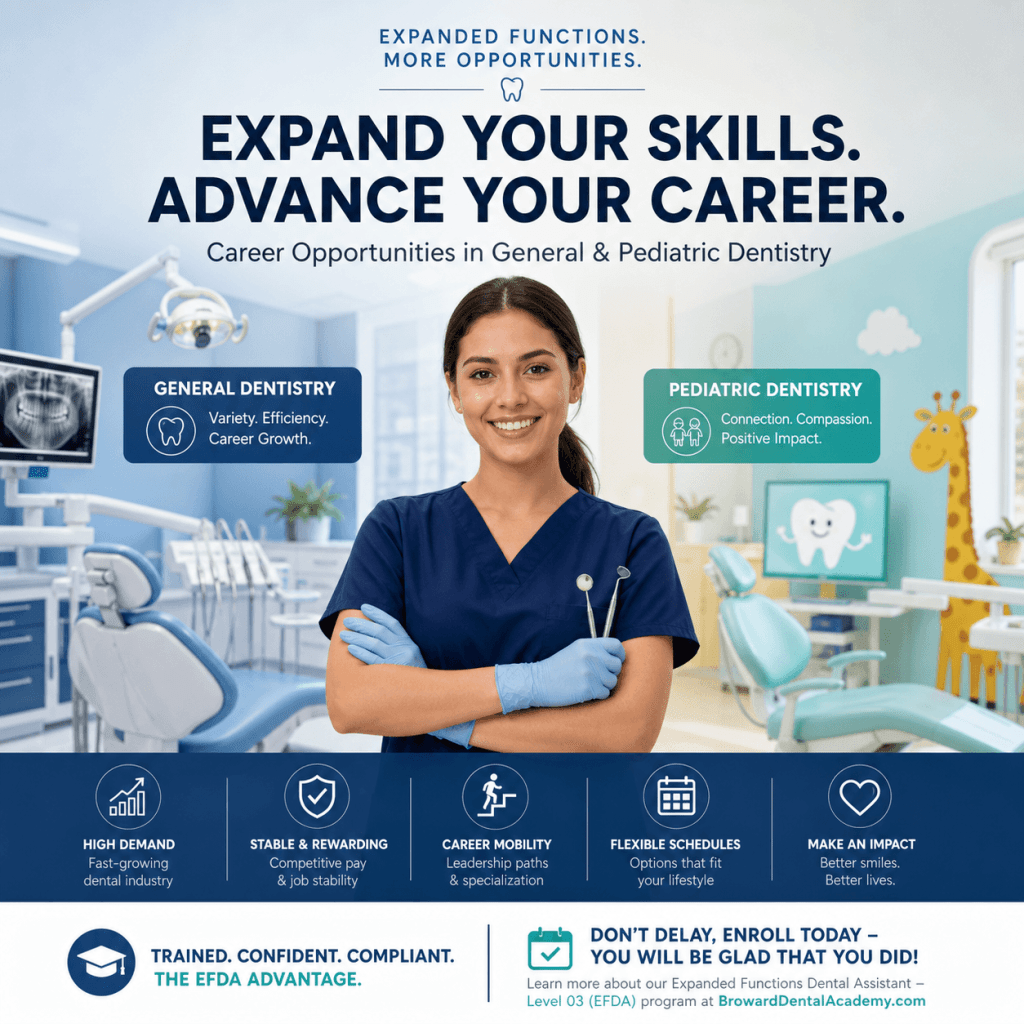
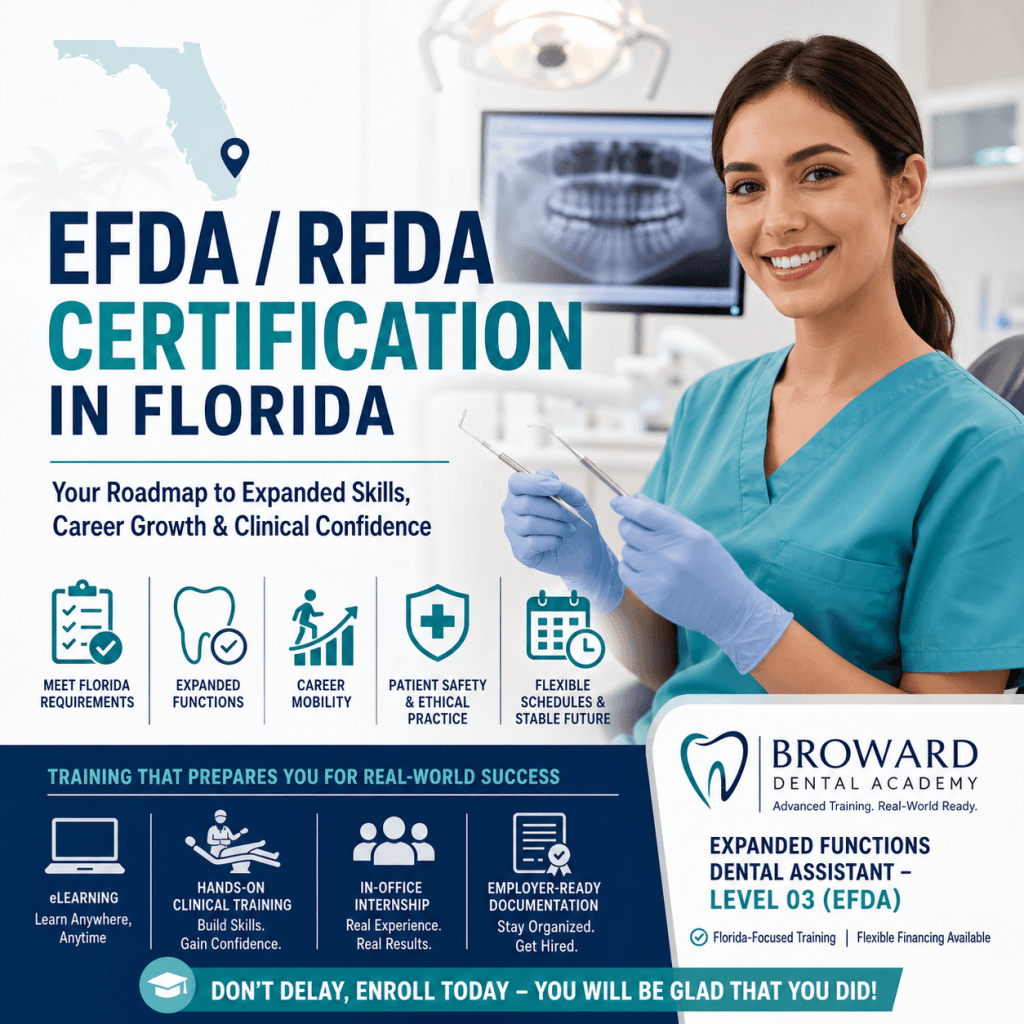
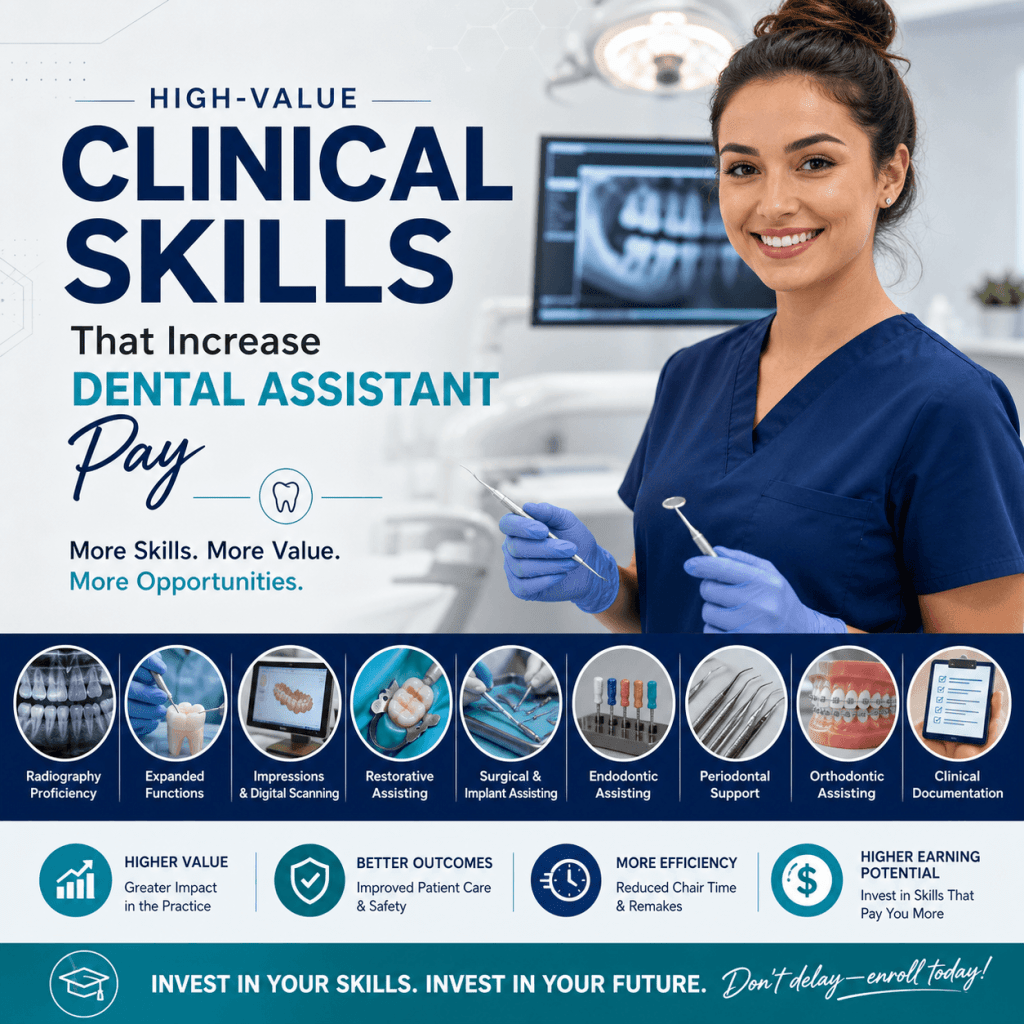
- Whether you pursue expanded functions (additional skills that can increase responsibility and career mobility)
In this guide, I’ll walk you through clear time ranges, what’s actually included in the training timeline, Florida-specific considerations, and how to choose a program that gets you job-ready, not just “done.”
Why “How long does dental assistant training take in Florida?” depends on the path you choose
Florida has multiple ways to train for dental assisting, and the length is driven by what the program includes.
A short, accelerated option may get you through the material quickly, but a strong program still needs to build real clinical confidence. A longer program may include more repetition, broader education, and more time in hands-on environments.
Over the next sections, you’ll see:
- Typical time ranges for the most common program formats
- What students actually do during training (online lessons, labs, clinical skills, and externships)
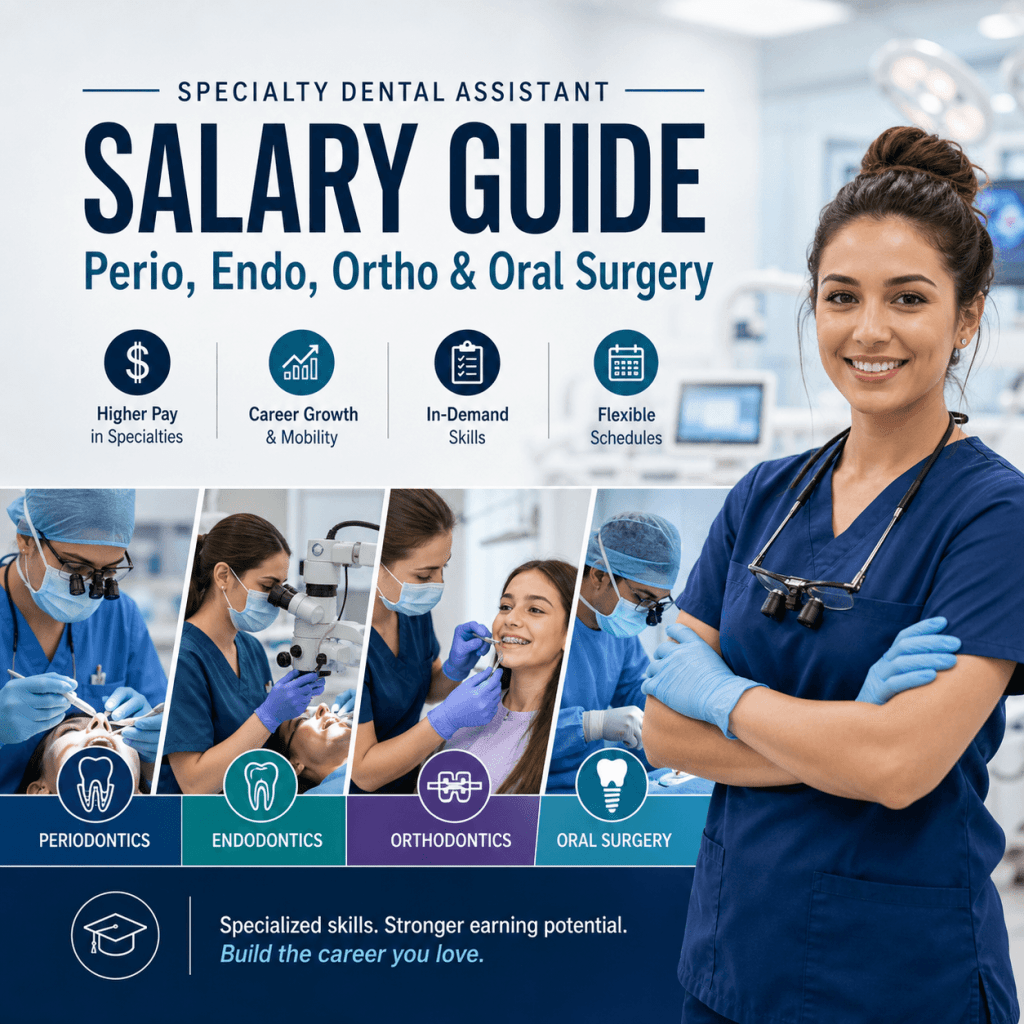
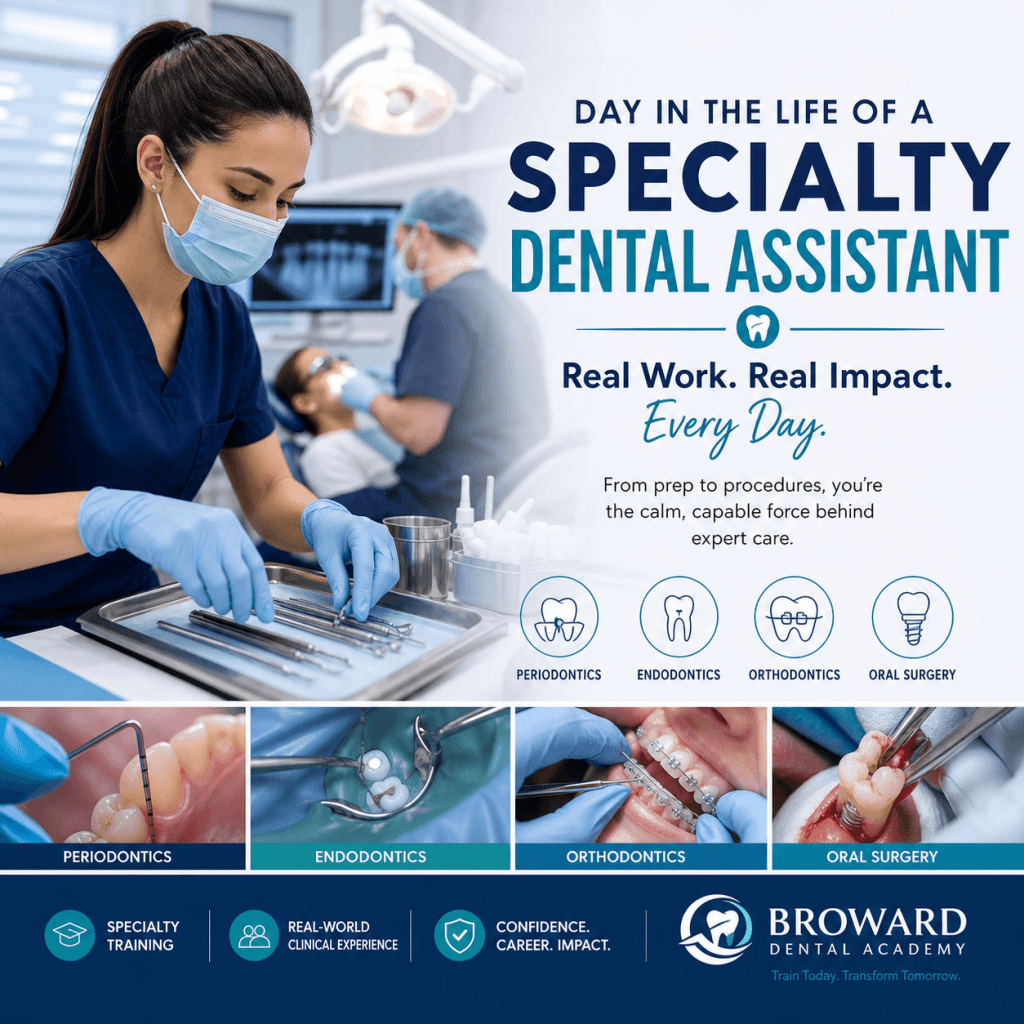
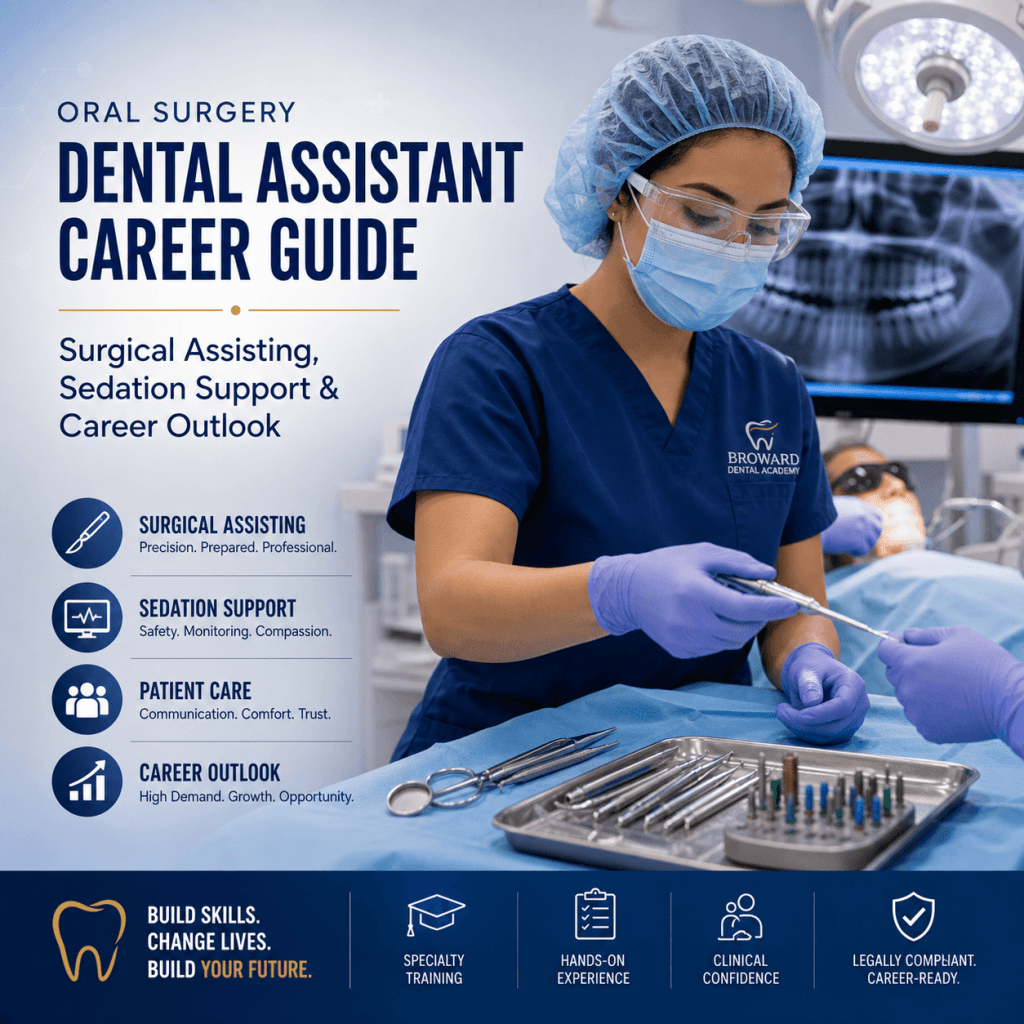
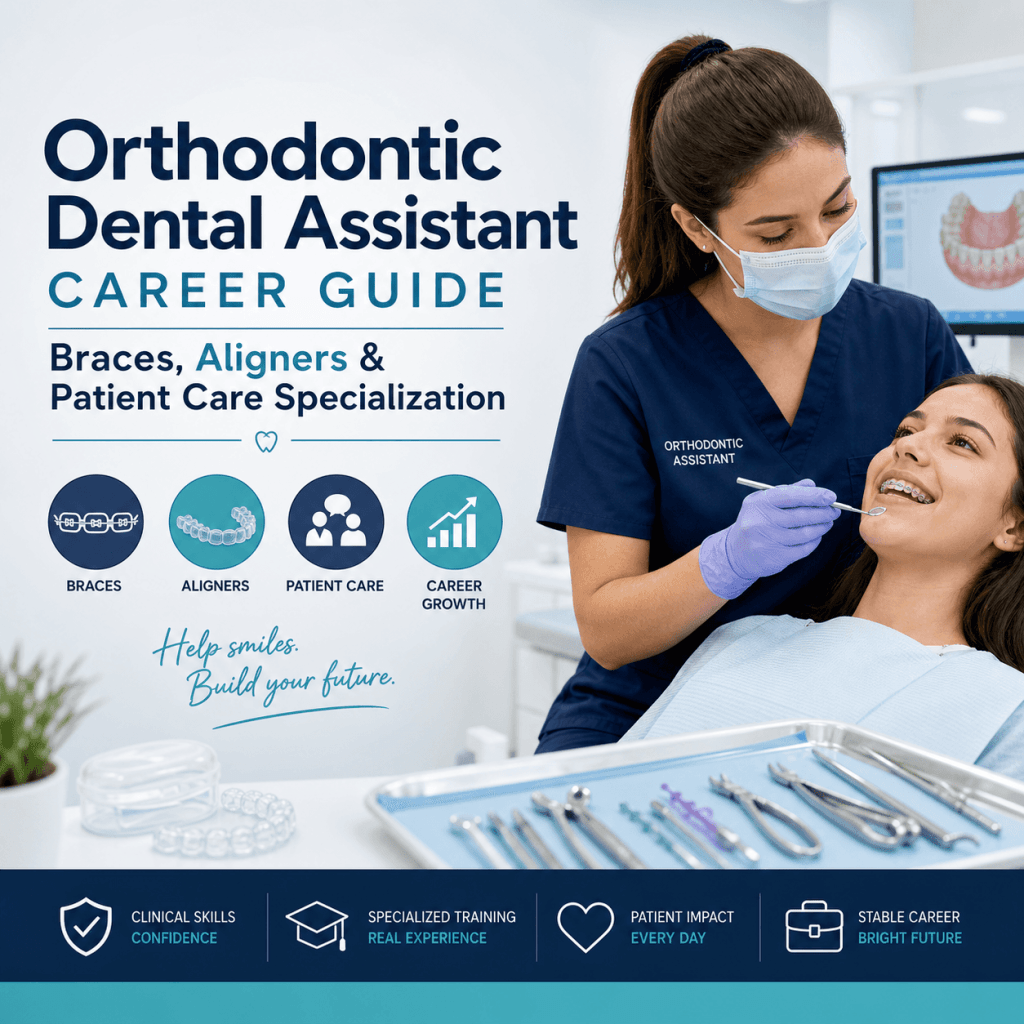
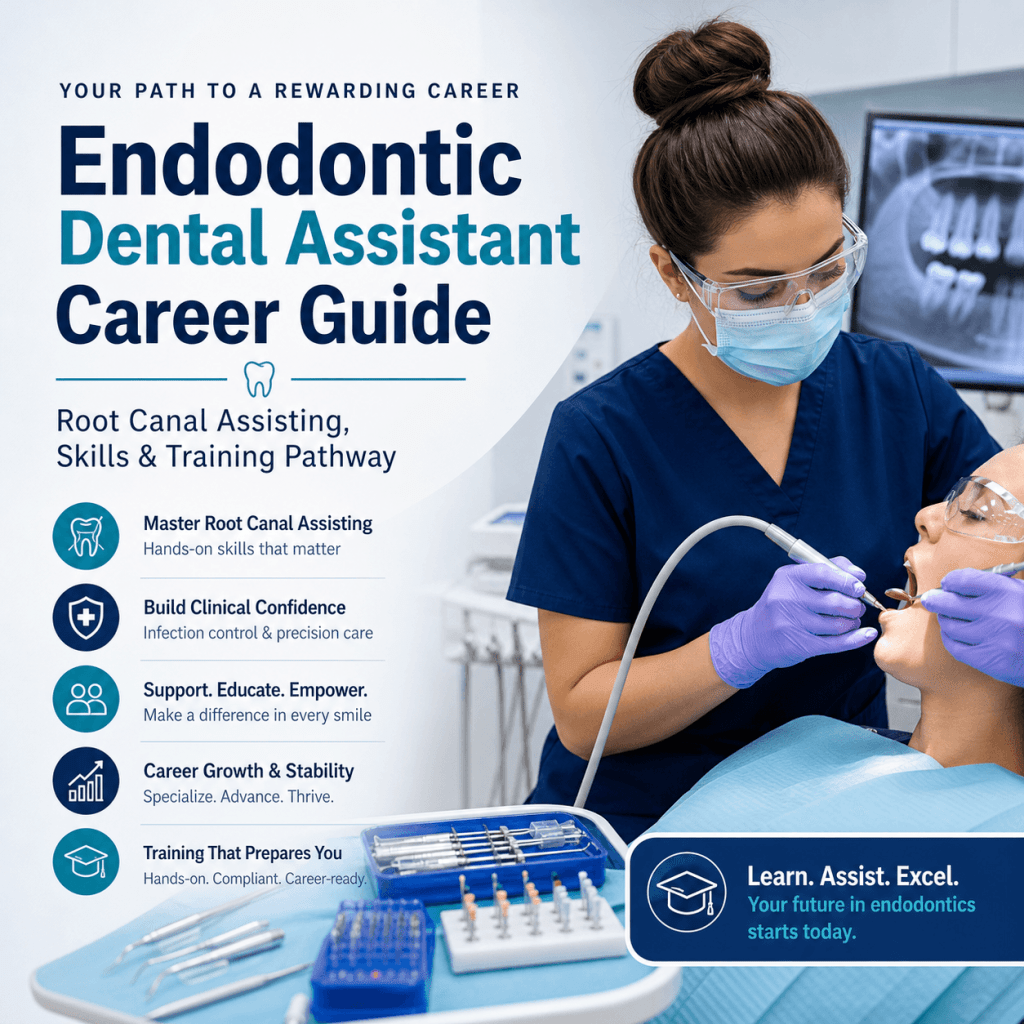
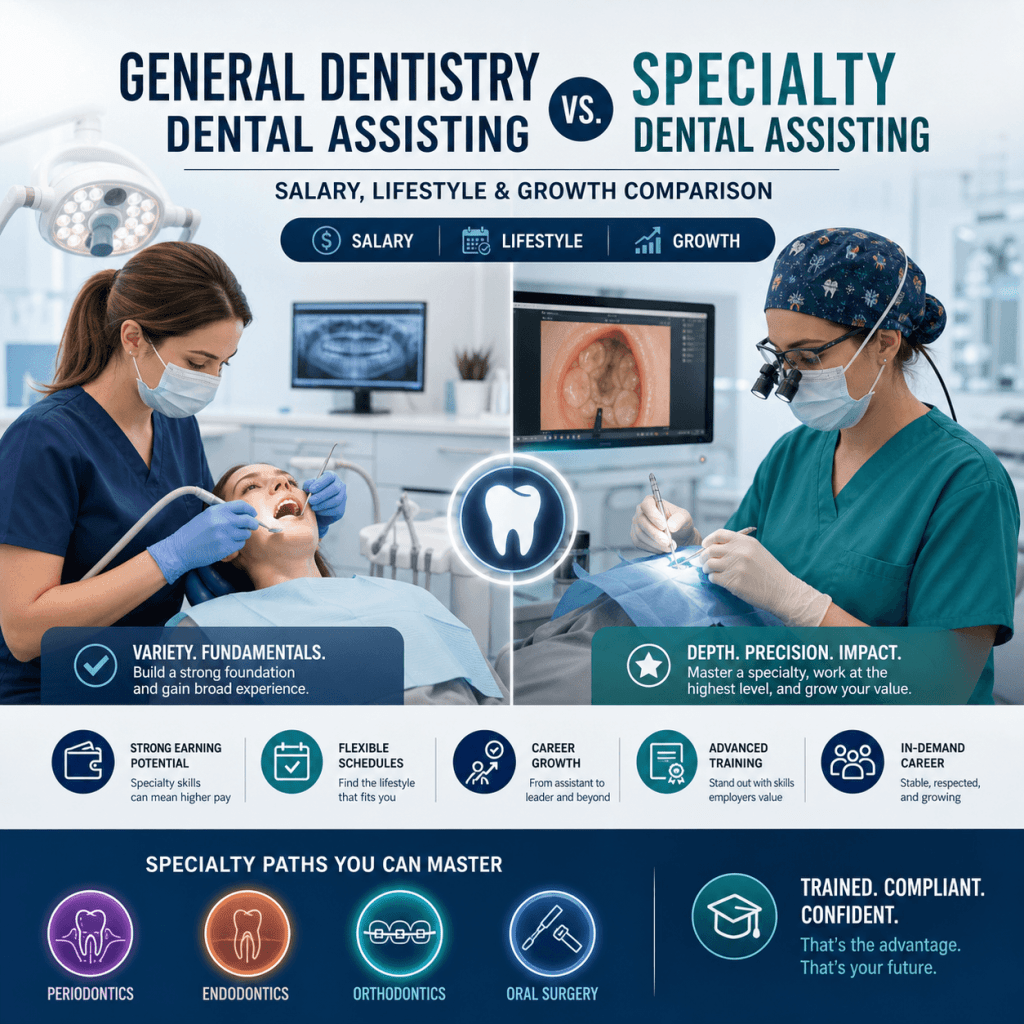
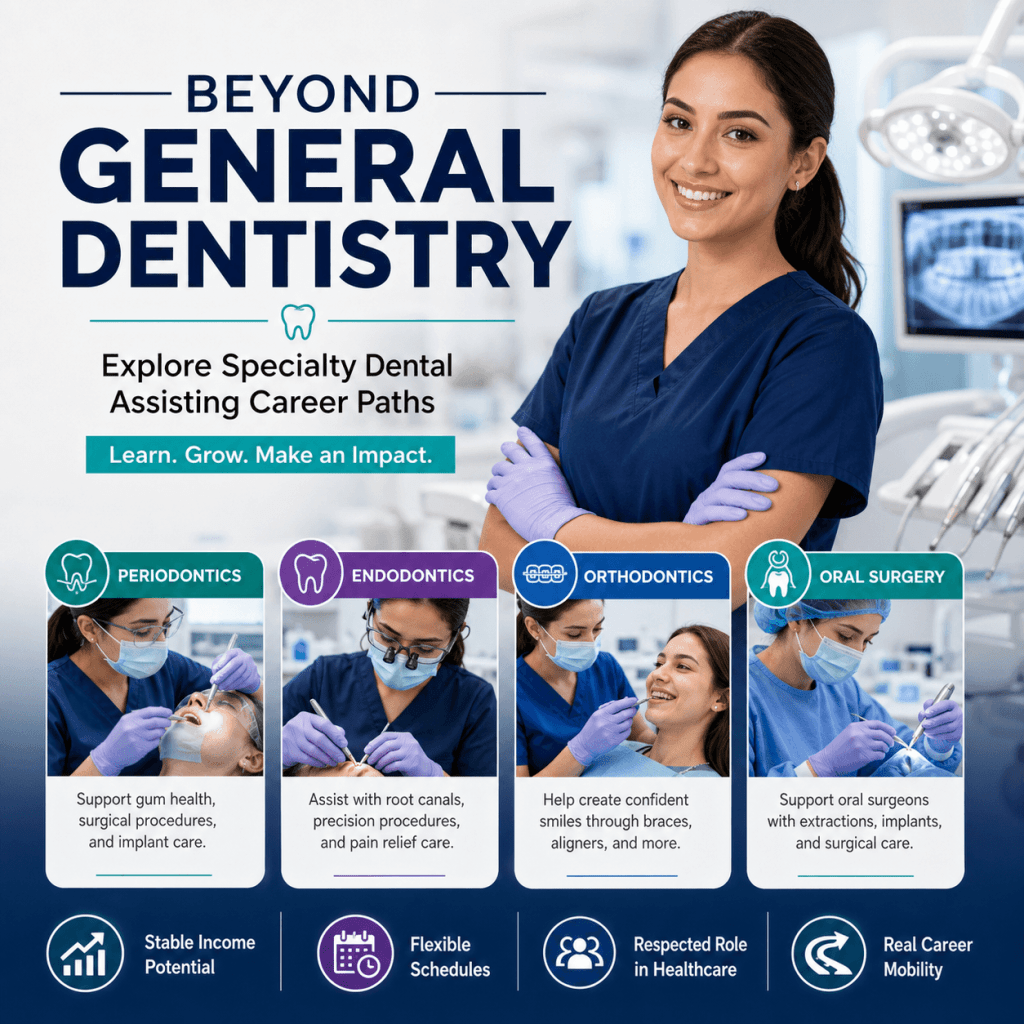
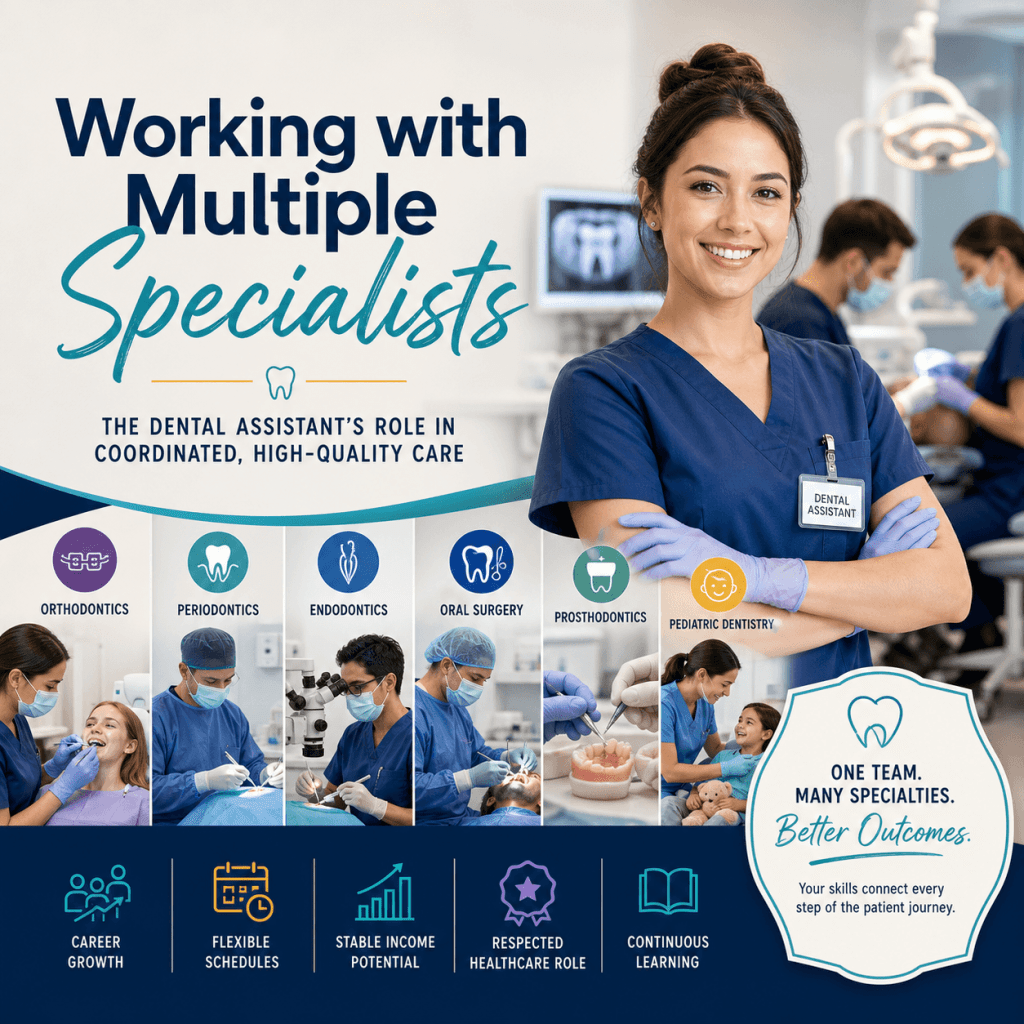
- When extra training is worth it, especially for expanded functions like orthodontics, oral surgery, or endodontics
- Real-world scenarios so you can estimate your own timeline
If you’re considering a career as a dental assistant in Florida, it’s essential to understand the various training programs available and how they can affect your journey into the dental field.
The typical timeline: how long does a dental assistant course take in Florida?
For most students, dental assistant training in Florida can take anywhere from a few weeks to around a year, depending on the program structure and schedule.
Here is the simplest way to think about it:
- Accelerated programs: often weeks to a few months
- Standard certificate/diploma programs: commonly a few months to about a year
- College-based options: often closer to a year or longer, depending on the track
The tradeoff is usually this:
A shorter timeline can get you into the field faster, but the best “fast” programs still include structured labs and clinical exposure. Longer timelines often include more built-in practice time, externships, and broader education.
Accelerated career training (fastest route)
Accelerated programs are typically best for:
- Career changers who want to enter the dental field quickly
- People who are motivated to learn at a faster pace
- Students who want to start working sooner and build experience on the job
The key is making sure “fast” does not mean “thin.”
When you evaluate an accelerated program in Florida, look for:
- Structured lab time, not just classroom theory
- Real clinical exposure, with supervised skill-building
- Compliance-focused instruction, especially around infection control and patient safety
Dental practices want candidates who are thoroughly trained, legally compliant, and clinically confident. Speed matters, but it should still produce the outcomes that employers care about most.
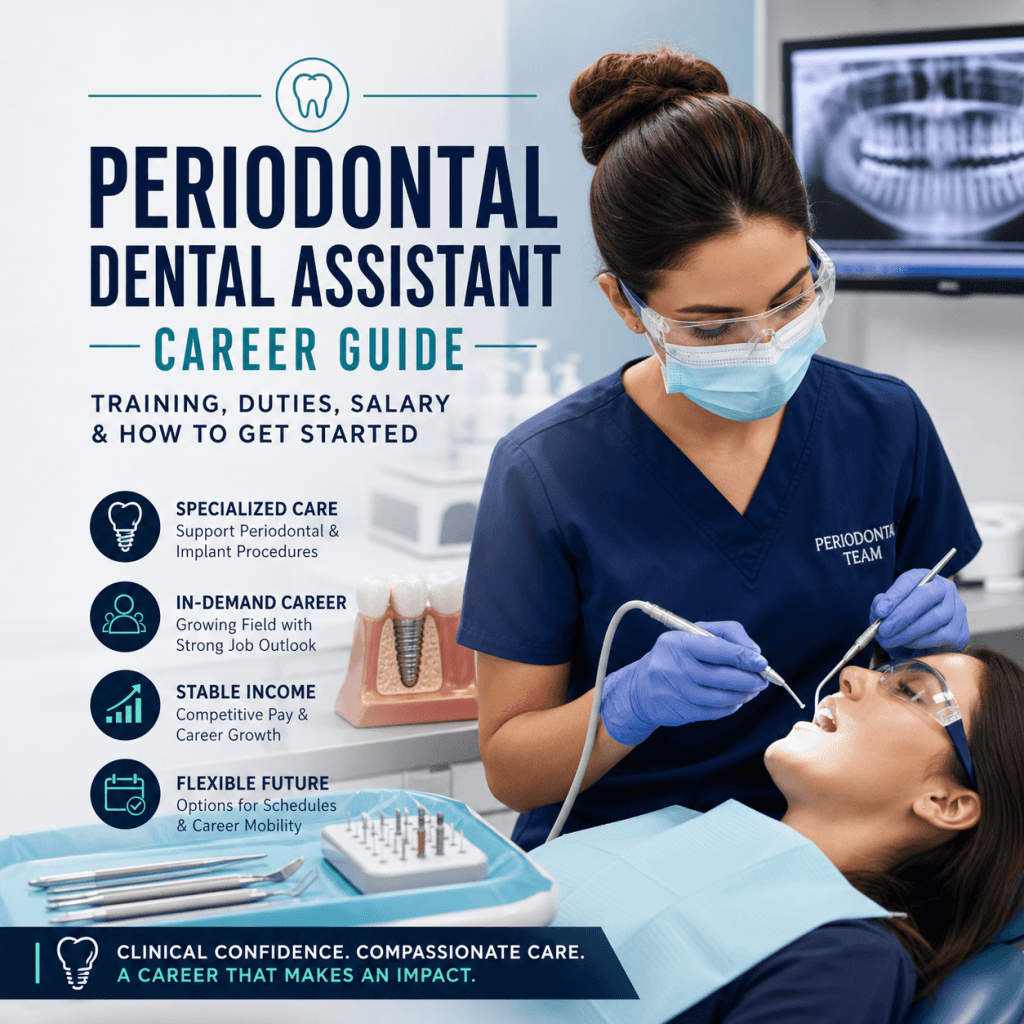
If you’re considering entering specialized fields such as periodontics, it’s essential to explore certifications that can enhance your qualifications. Institutions like Broward Dental Academy offer various certifications known for their comprehensive training programs.
For those who have questions regarding dental assistant courses or their structure in Florida, you might find answers in their frequently asked questions section.
Additionally, if you’re looking for specific locations offering these courses, browsing through the locations page could provide valuable information.
It’s also worth mentioning that while pursuing these courses, understanding certain aspects of medical knowledge can be beneficial. For instance, gaining insights into the role of oral health in overall health could significantly enhance your expertise as a dental assistant.
Standard certificate/diploma programs (most common route)
This is the route many students choose because it balances speed with depth.
A standard certificate or diploma program often includes:
- More repetition of core clinical skills
- A steadier pace for learning dental materials, procedures, and chairside assisting
- More consistency for students who want time to build confidence
These programs may offer day, evening, or weekend schedules, which can extend the calendar but make training accessible for working adults. If you are someone who prefers a bit more time to practice and review, this path often feels more comfortable than rushing through content.
College-based options (longer but broader)
Some students choose a college-based pathway because they want:
- A broader academic foundation
- Additional credentials that may support long-term mobility
- A more traditional school setting
These tracks can be helpful, but they are not the only way to become employable as a dental assistant in Florida. Many excellent dental assistants start through career training programs that focus intensely on real-world dental practice skills. For instance, Broward Dental Academy offers various levels of dental assistant training which are designed to provide intensive real-world skills.
The best choice is the one that matches your career goals and timeline, not just what sounds most “official.”
What’s actually inside the timeline (and why it matters to employers)
When students compare programs, they often compare the total number of weeks or months. Employers tend to care more about what you can actually do on day one.
A typical dental assistant training timeline is made up of four parts:
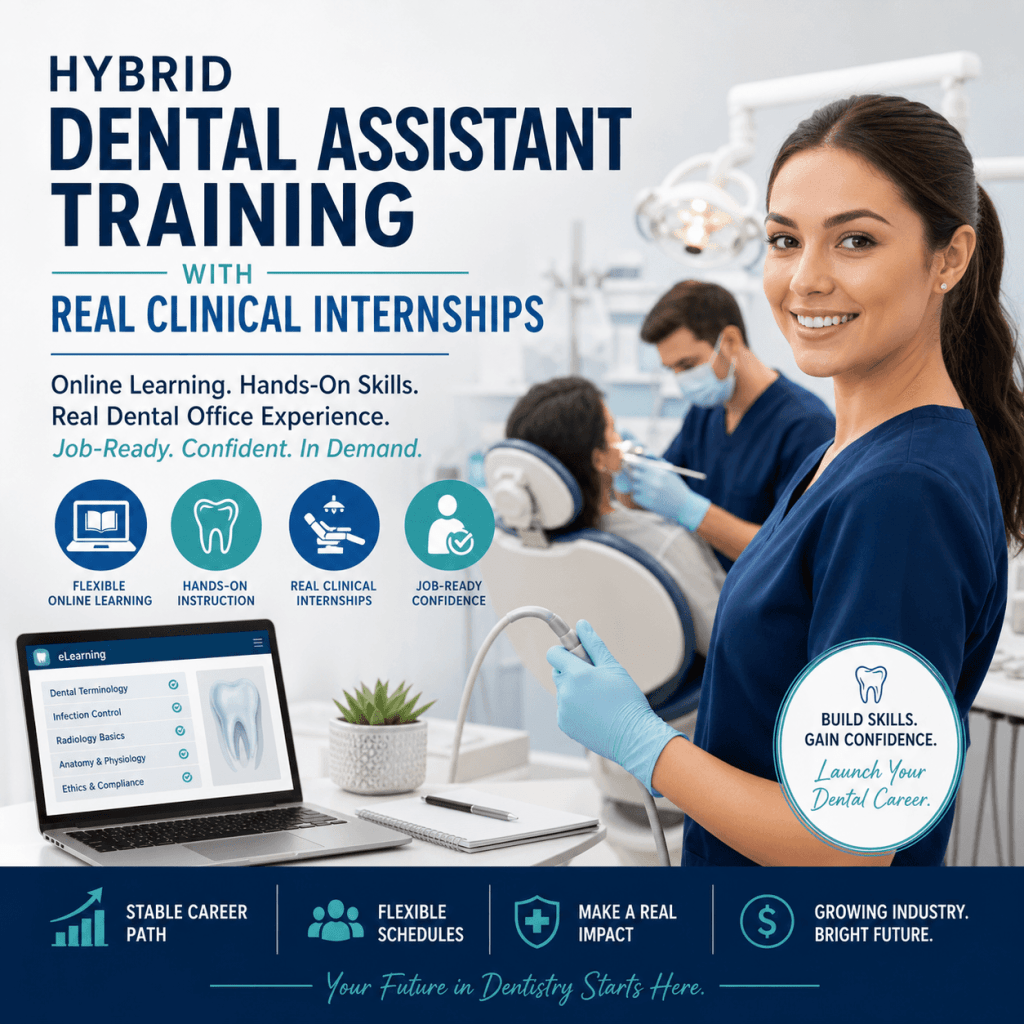
- Online learning or eLearning lessons
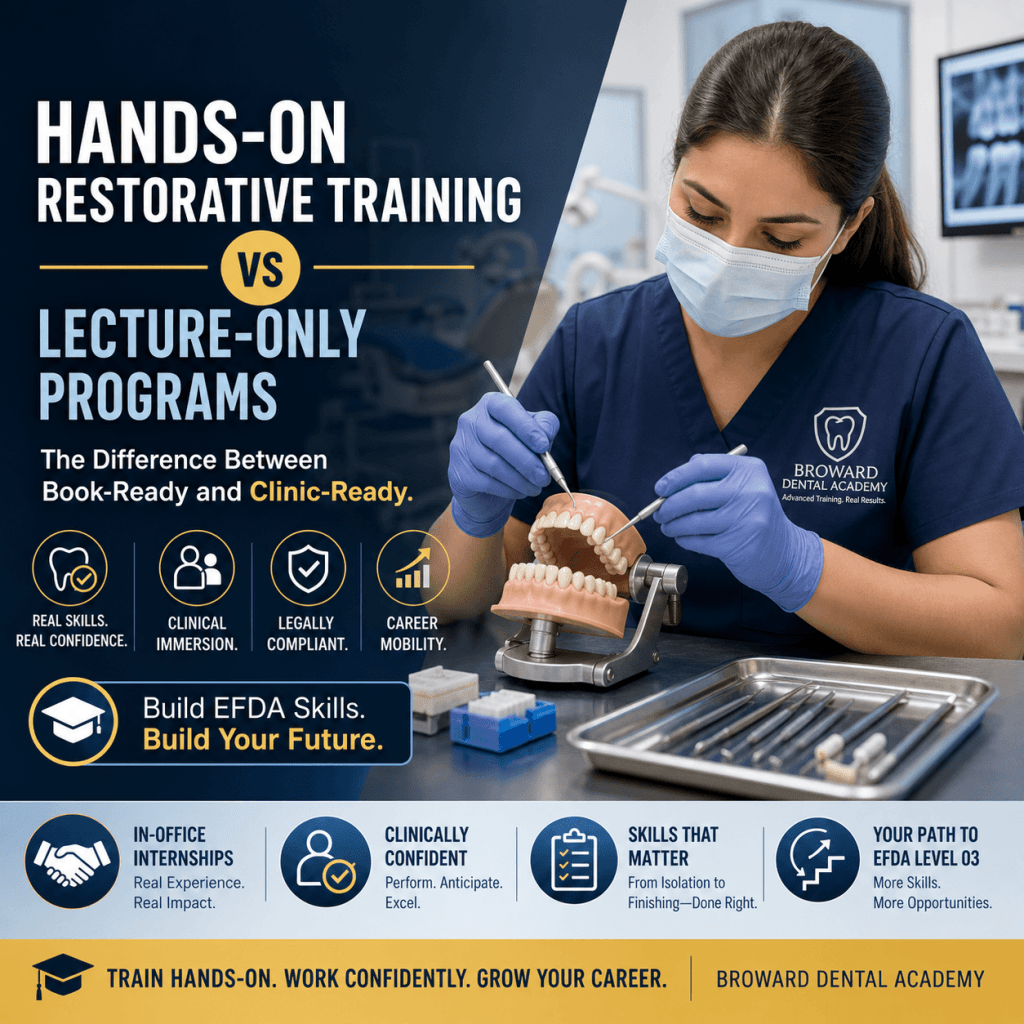
- In-person clinical lab training
- Hands-on clinical skills development
- An internship or externship in a real dental office
Modern dental practices value job readiness in areas like:
- Chairside assisting and operatory flow
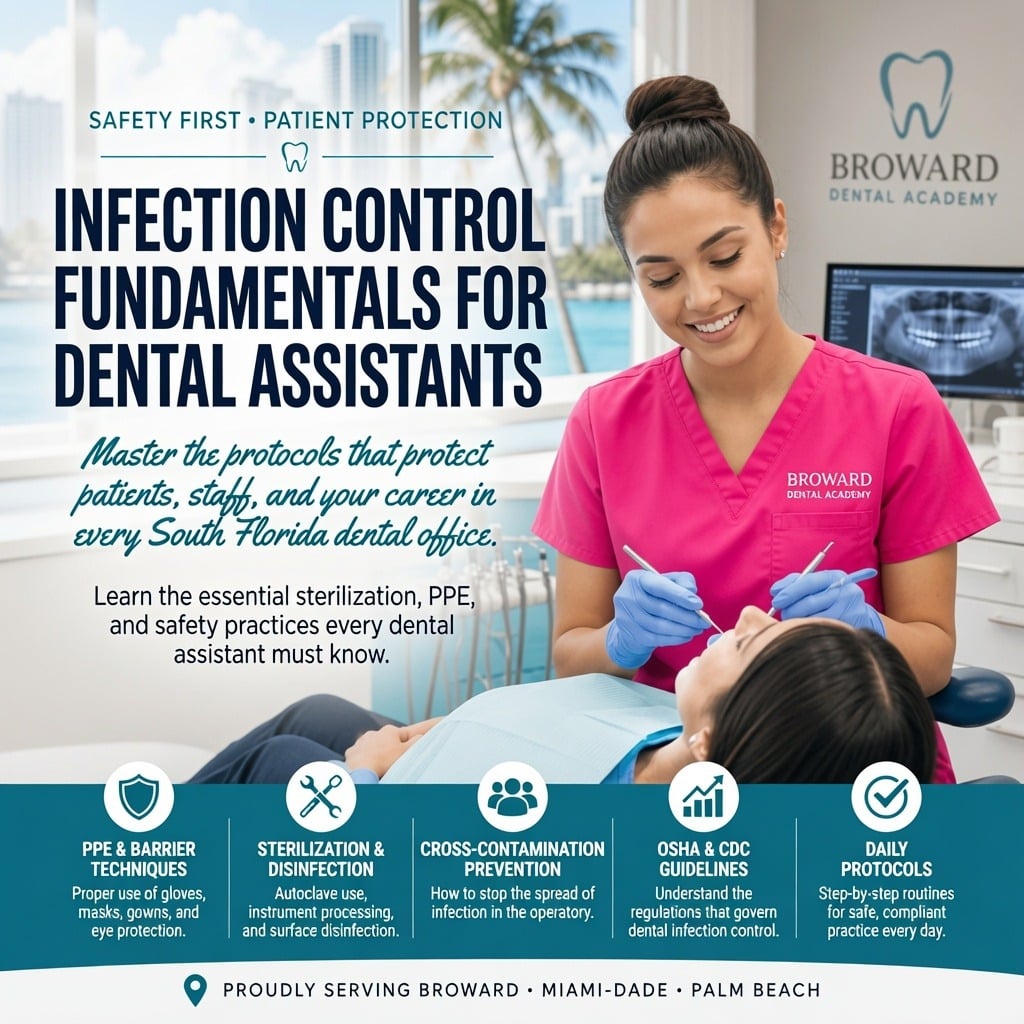
- Infection control and sterilization workflows
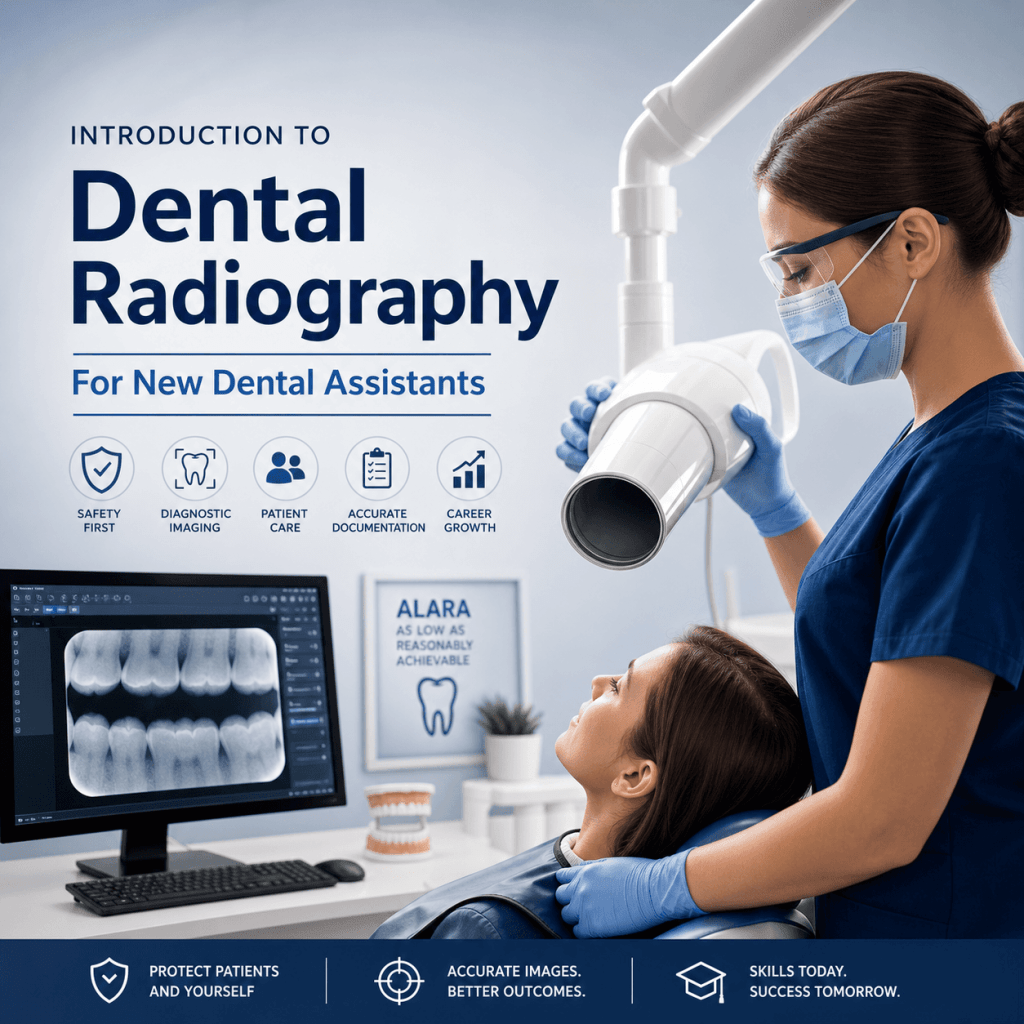
- Radiography basics (where applicable)
- Patient communication and professionalism
- Safety, compliance, and ethical behavior
The goal is not just finishing a program. The goal is thriving in a fast-moving, high-performance dental practice.
Online coursework + eLearning lessons (remote learning portion)
Many Florida programs include a remote learning component.
Online lessons can help you:
- Learn concepts faster between in-person training days
- Review procedures and terminology on your own schedule
- Follow structured lesson plans that keep you on track
That said, online learning is only one piece of the puzzle. Dental assisting is hands-on. Skills still need to be practiced in labs and clinical settings to build speed, confidence, and safe technique.
Clinical lab training (where confidence is built)
Clinical lab time is where students turn knowledge into performance.
In lab training, dental assistant students often practice:
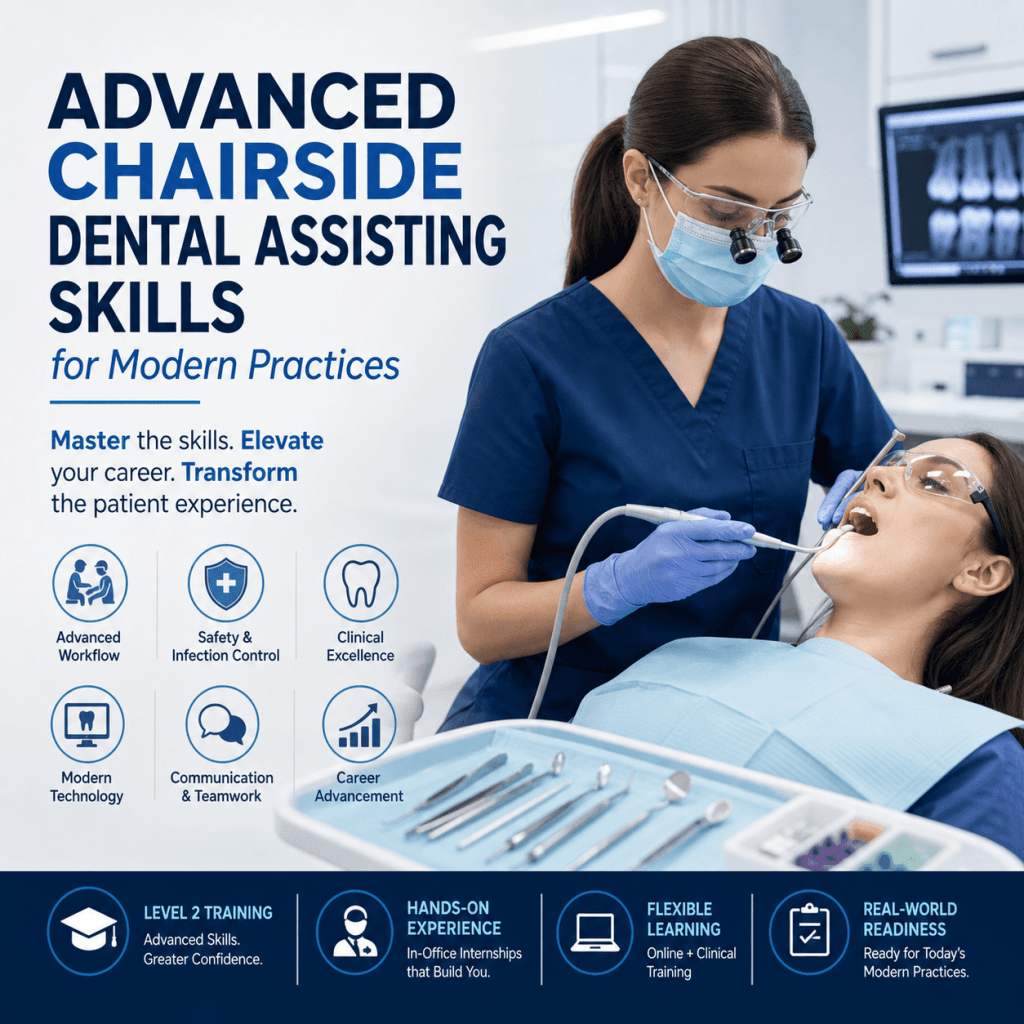
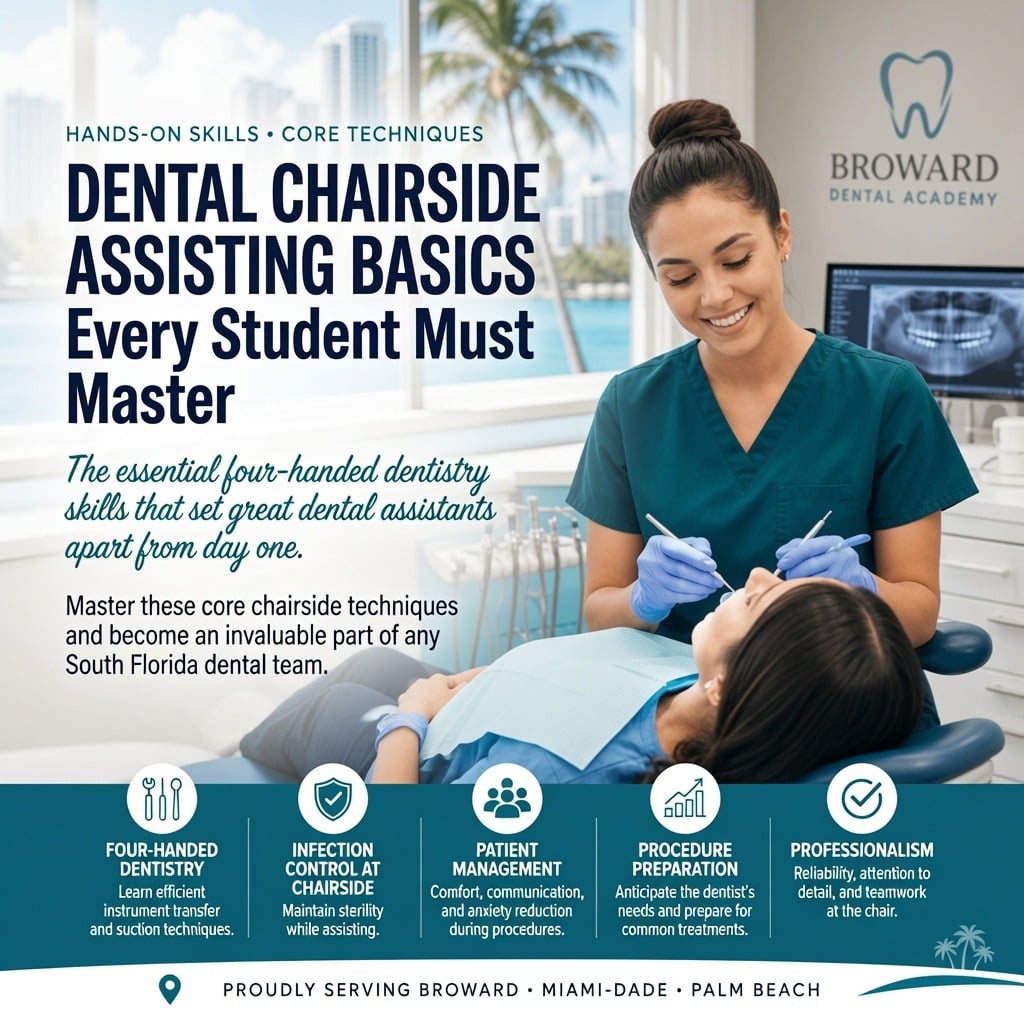
- Instrument transfer and four-handed dentistry basics
- Suction and isolation techniques
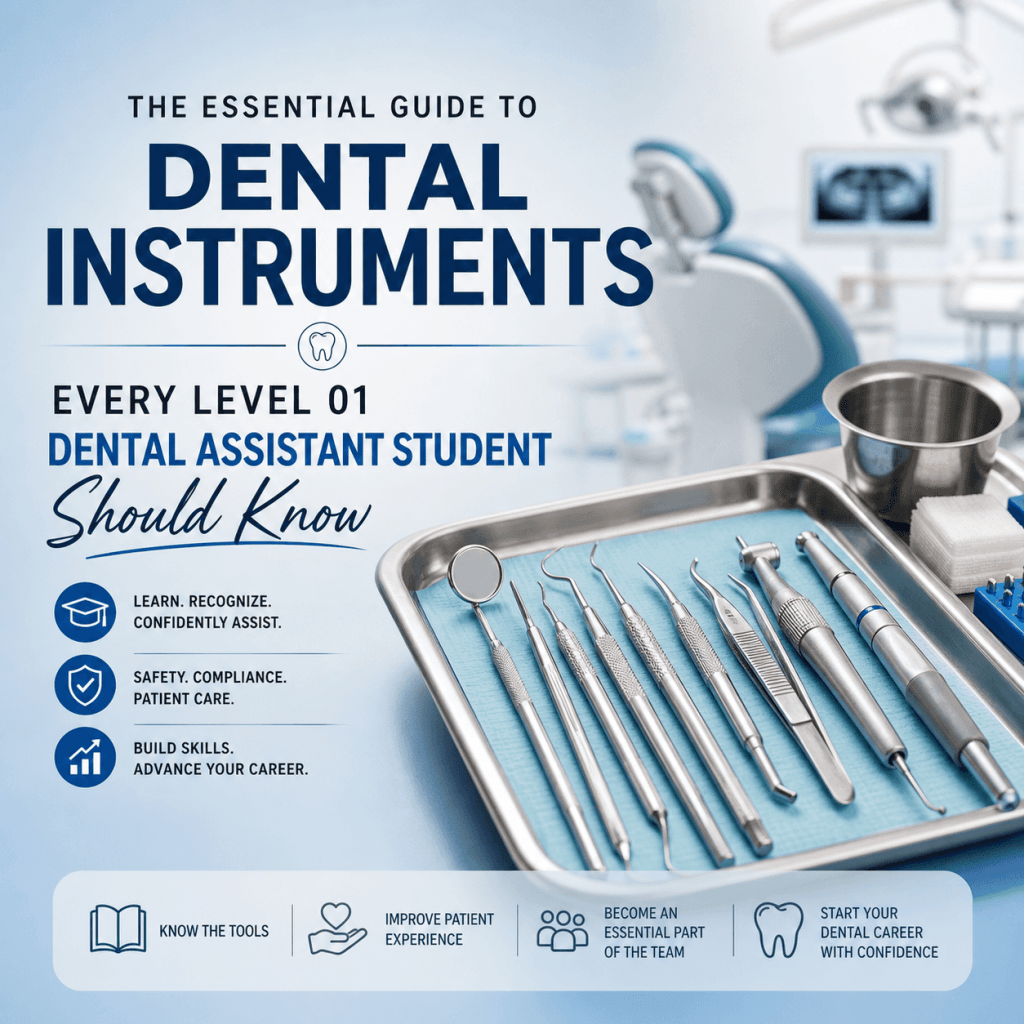
- Tray setup and operatory preparation
- Sterilization, disinfection, and instrument processing workflows
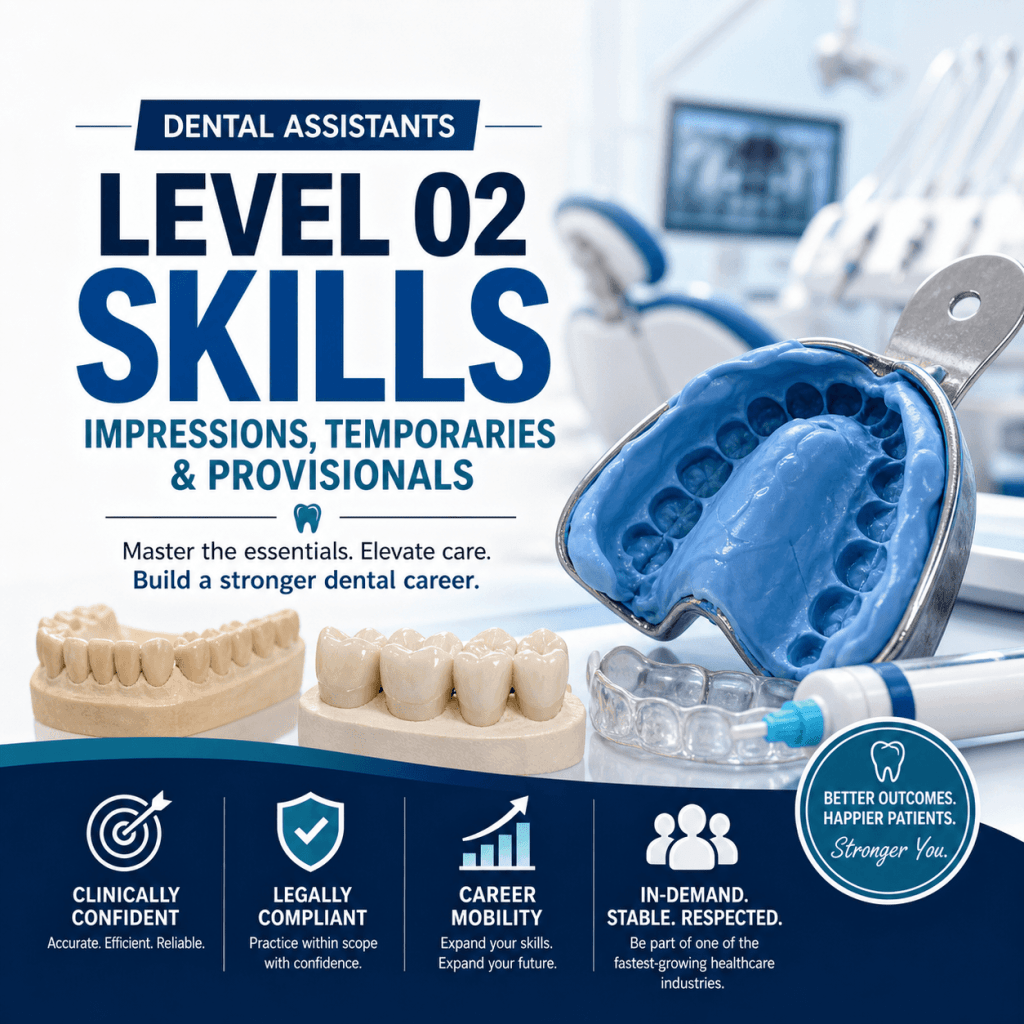
- Impression basics and dental materials handling (as included by the program)
- Chairside support and procedure anticipation
Repetition and coaching are what accelerate competence. Practices want assistants who can step in, stay calm, and perform safely with consistency.
In-office internship/externship (often the bridge to employment)
An internship or externship is often what makes training feel “real.”
It can add time to the overall timeline, but it is usually worth it because it exposes you to:
- Real patient interactions
- Real practice pace and scheduling
- Team communication and professionalism in action
- Daily workflows that employers expect you to understand
Externship hours and placement timing can vary, and that can affect how long dental assistant training takes in Florida.
More importantly, internships help students become accomplished and polished dental professionals by working in real practice environments, not just simulated ones.
Florida-specific considerations that can change how long it takes
Florida requirements and employer expectations can differ from other states. That is why training should be built with compliance in mind from the beginning.
Two Florida-specific factors commonly change the timeline:
- The depth of compliance training (infection control, safety, professional standards)
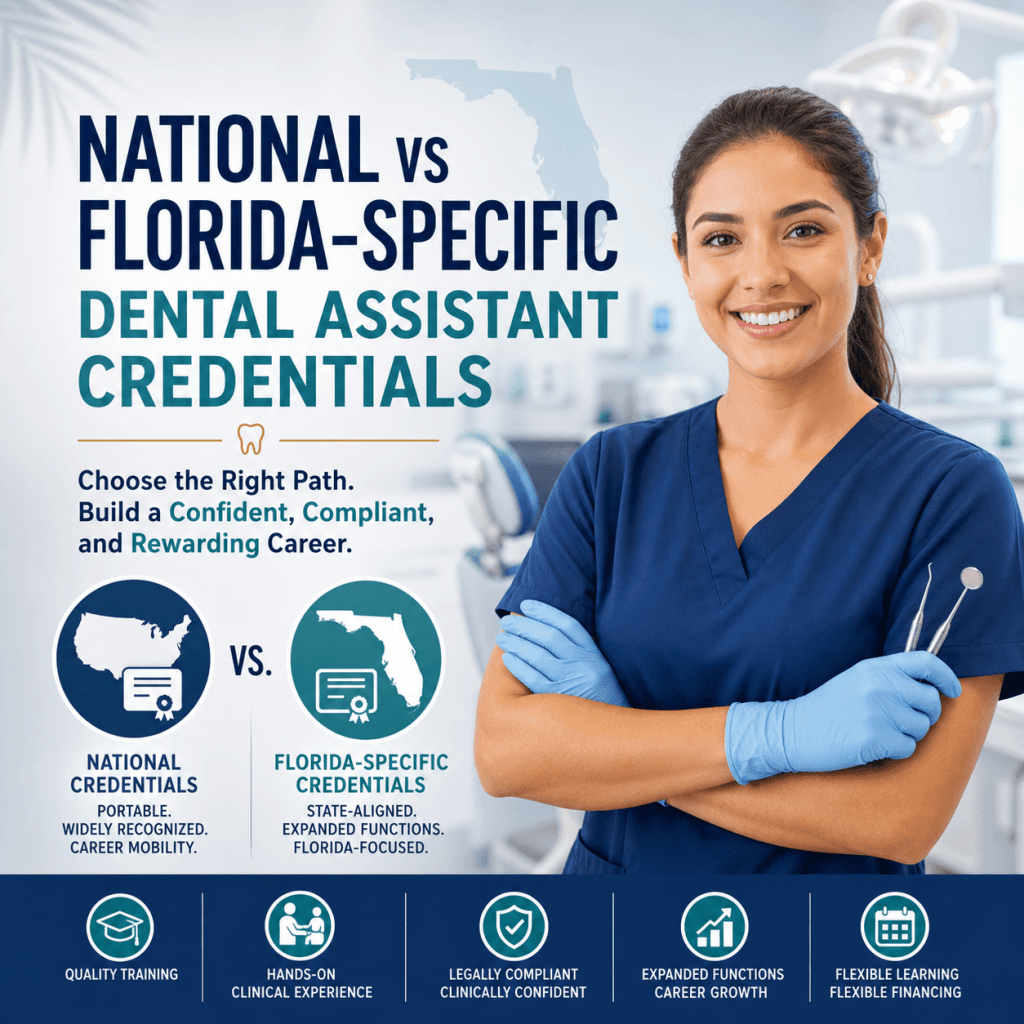
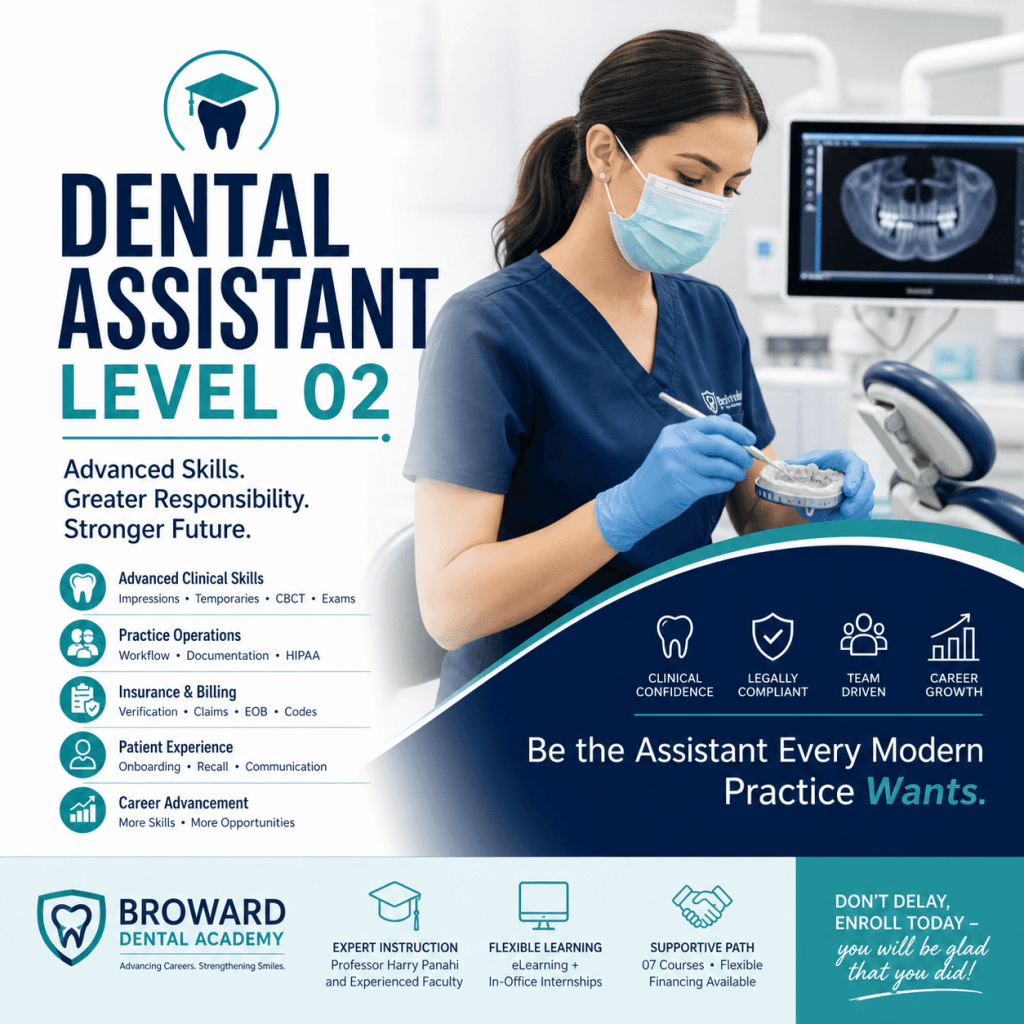
- Whether you pursue expanded functions or additional certificates
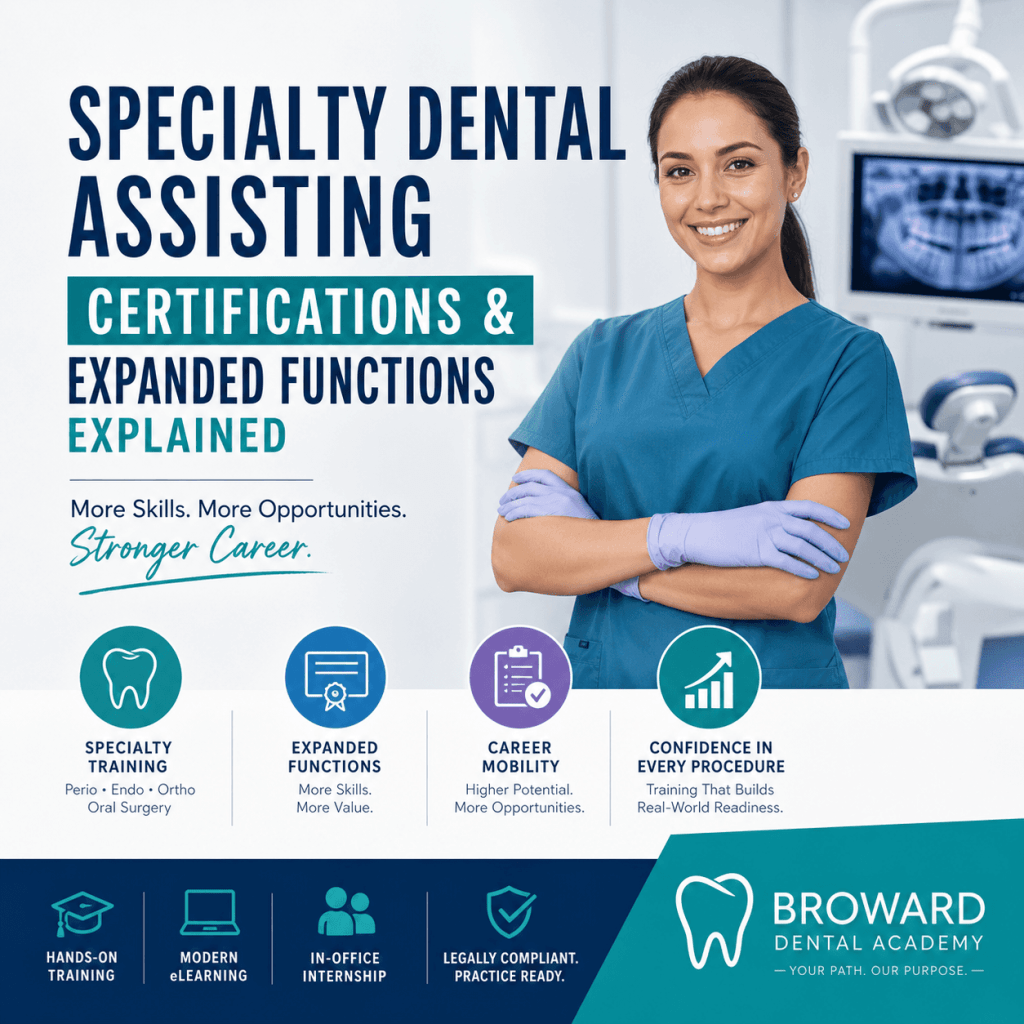
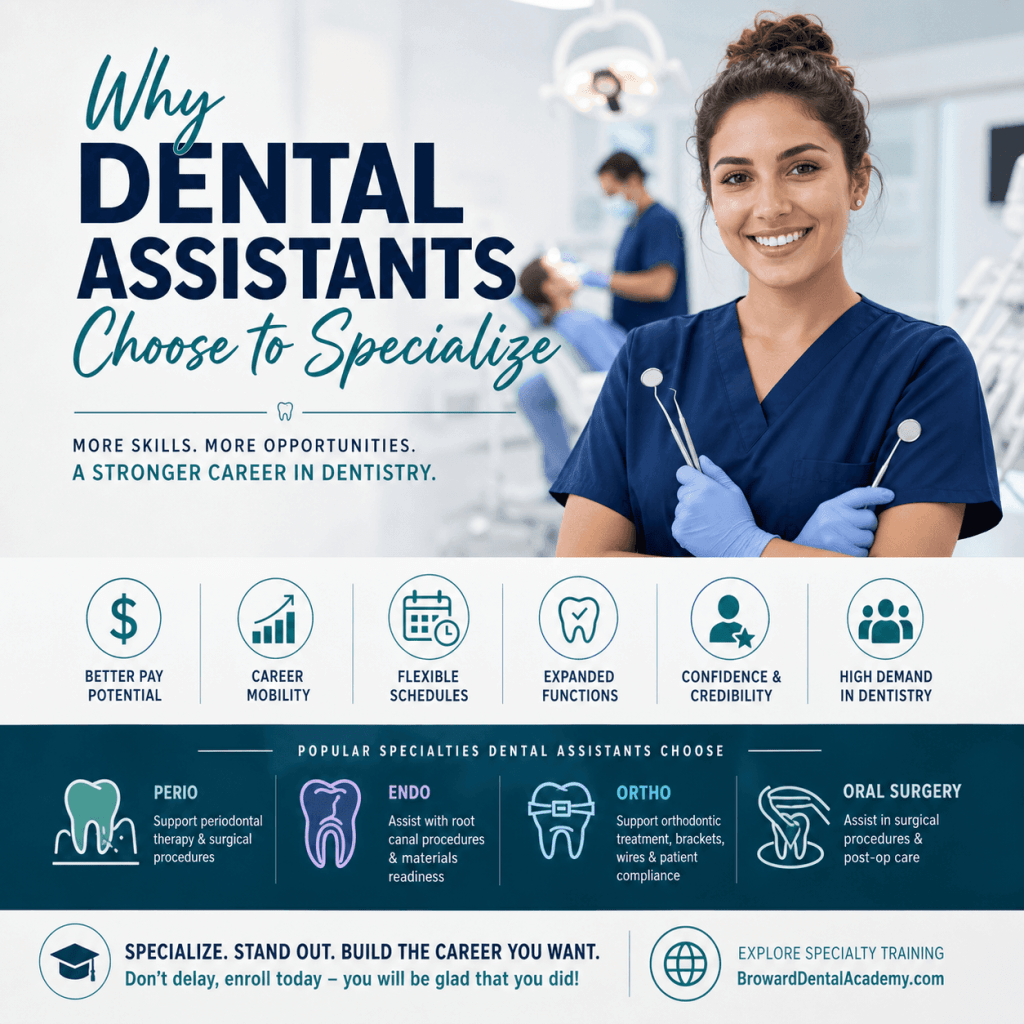
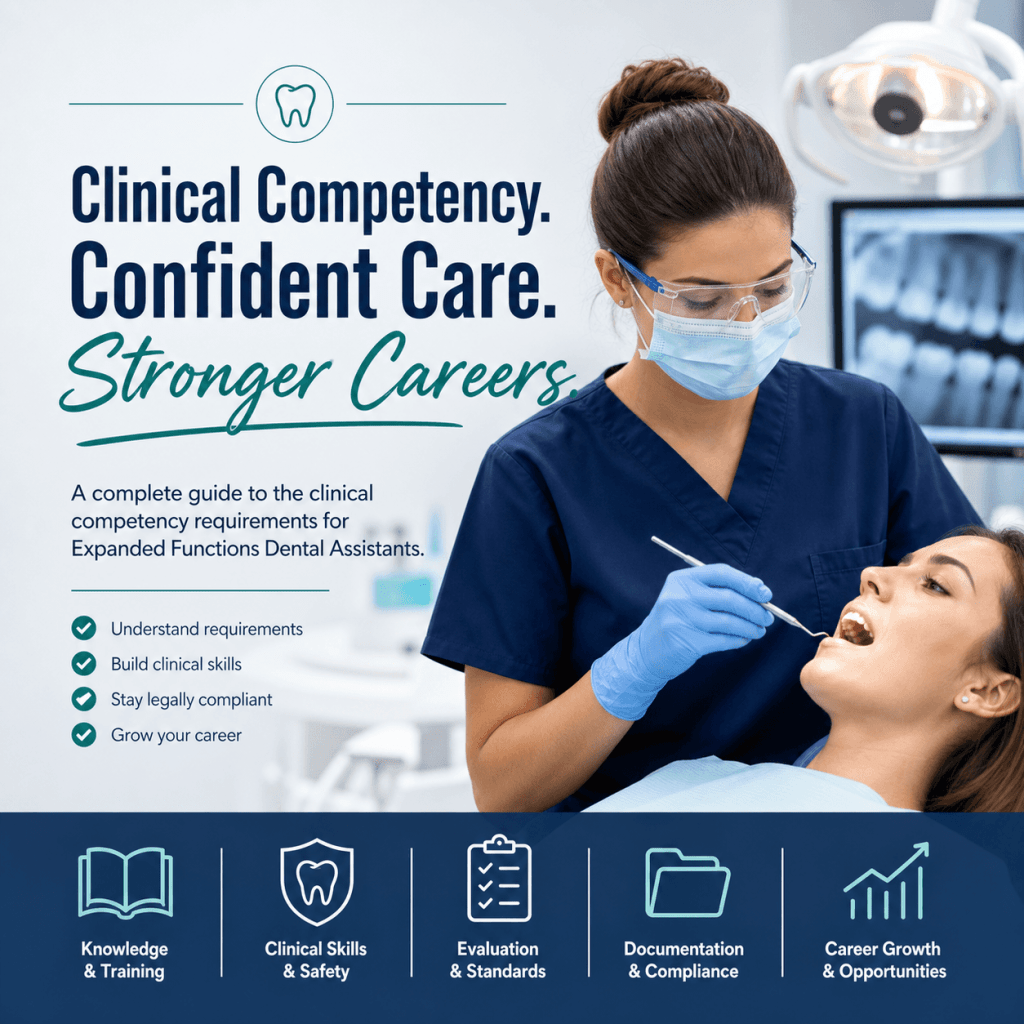
Expanded functions are additional clinical responsibilities that trained dental assistants may qualify for, depending on the specific training and requirements. Students pursue them because they can lead to:
- Greater responsibility within the office
- Stronger long-term career mobility
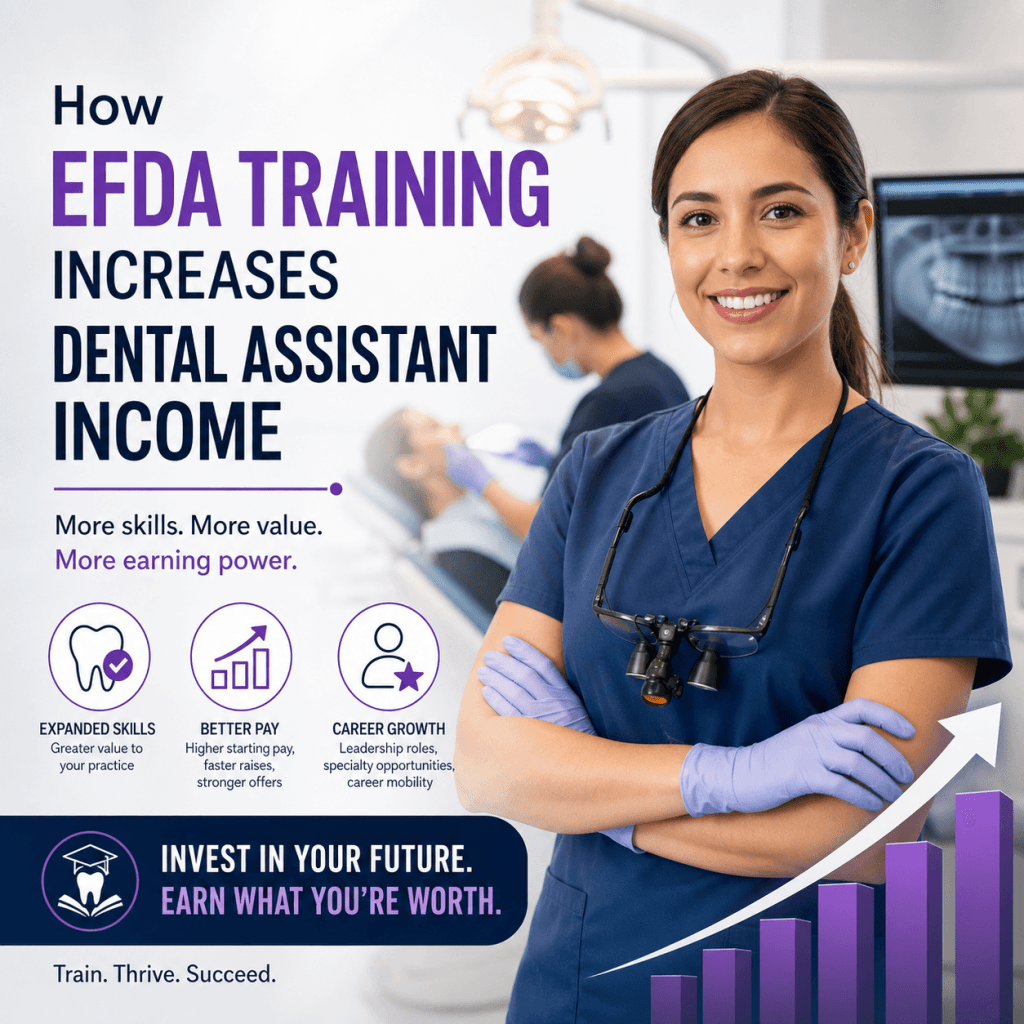
- Increased income potential over time
- A more respected, stable role in healthcare
Expanded functions: when extra training adds time (and value)
Expanded functions, in plain language, means learning to do more.
Adding these competencies can require extra coursework, clinical practice, and sign-offs. That typically adds weeks to months, depending on:
- Your starting program
- The specific expanded-function training you pursue
- How quickly clinical requirements can be completed
For many students, this is a smart investment. Dental practices consistently look for professionals who are not only trained, but also legally compliant and clinically confident, with the ability to grow with the office.
How long to become a dental assistant in Florida if you start from zero? (Real-world scenarios)
Here are a few realistic timelines to help you self-identify the best path.
Scenario A: Full-time student who wants the fastest job-ready path
Estimated timeline: often weeks to a few months, depending on the program.
A structured accelerated route can work very well if it includes strong clinical immersion. Students who do best here typically:
- Stay consistent with attendance
- Keep up with online lessons immediately
- Take lab time seriously and practice skills repeatedly
If your goal is to be employable fast, prioritize programs with built-in internship support, since externship experience often becomes your bridge to hiring. Programs like the Master of Engineering in Biomedical Engineering could be an excellent fit.
Scenario B: Working adult choosing evenings/weekends
Estimated timeline: often several months to about a year, depending on how the schedule is set up.
Part-time scheduling stretches the calendar, but it makes training possible without quitting your job. Many students find this pace more sustainable.
One important tip: even with flexible scheduling, you want consistent hands-on clinical practice. Skills build faster when you practice regularly, even if you are only on campus a few days per week.
Scenario C: Student who needs financing and flexible scheduling
Estimated timeline: similar to Scenario B, but start date and pace may depend on logistics.
Sometimes, the biggest delay is not coursework. It is waiting to start.
If financing and scheduling are part of your decision, look for programs that offer:
- Flexible financing options
- Clear start dates
- A structured plan that keeps you moving from training to internship without long gaps
Starting sooner often matters more than shaving off a week or two later.
Scenario D: Student focused on long-term growth (expanded functions + mobility)
Estimated timeline: often longer than a basic program, because you are stacking additional training.
This path can extend the calendar, but it can also open more doors. Practices want thoroughly trained, legally compliant professionals who can grow into greater responsibility.
If you already know you want expanded functions, it is usually better to plan for it upfront, rather than finishing a basic program and trying to add pieces later.
What to look for in a Florida dental assistant program (so your time actually pays off)
A shorter program is only a win if it produces confident graduates.
Here is a practical checklist to use when comparing Florida dental assistant programs:
- Hands-on clinical training time (not just lecture)
- In-office internship/externship partnerships
- Compliance-focused curriculum (infection control, safety, professionalism)
- Supportive instructors who coach, correct, and build confidence
- Modern training tools and up-to-date workflows
- Job-readiness focus, including chairside flow and communication
The hidden cost of a “quick” program that lacks hands-on training is real. Graduates can feel unprepared, experience more stress on the job, and may need retraining before a practice fully trusts them chairside.
Signs a program is designed for modern dental practices
Look for signs that the program is built like a real practice environment, including:
- Immediate immersion, where online and clinical learning run in parallel
- Structured skill-building that mirrors high-performance practice workflow
- A clear pathway from training to internship to employment readiness
These details often matter more than the exact number of weeks printed on a brochure.
However, it’s not just about the duration or structure of the program. The quality of education plays a crucial role as well. A comprehensive study highlights how certain educational factors significantly contribute to the effectiveness of training programs in producing competent dental assistants.
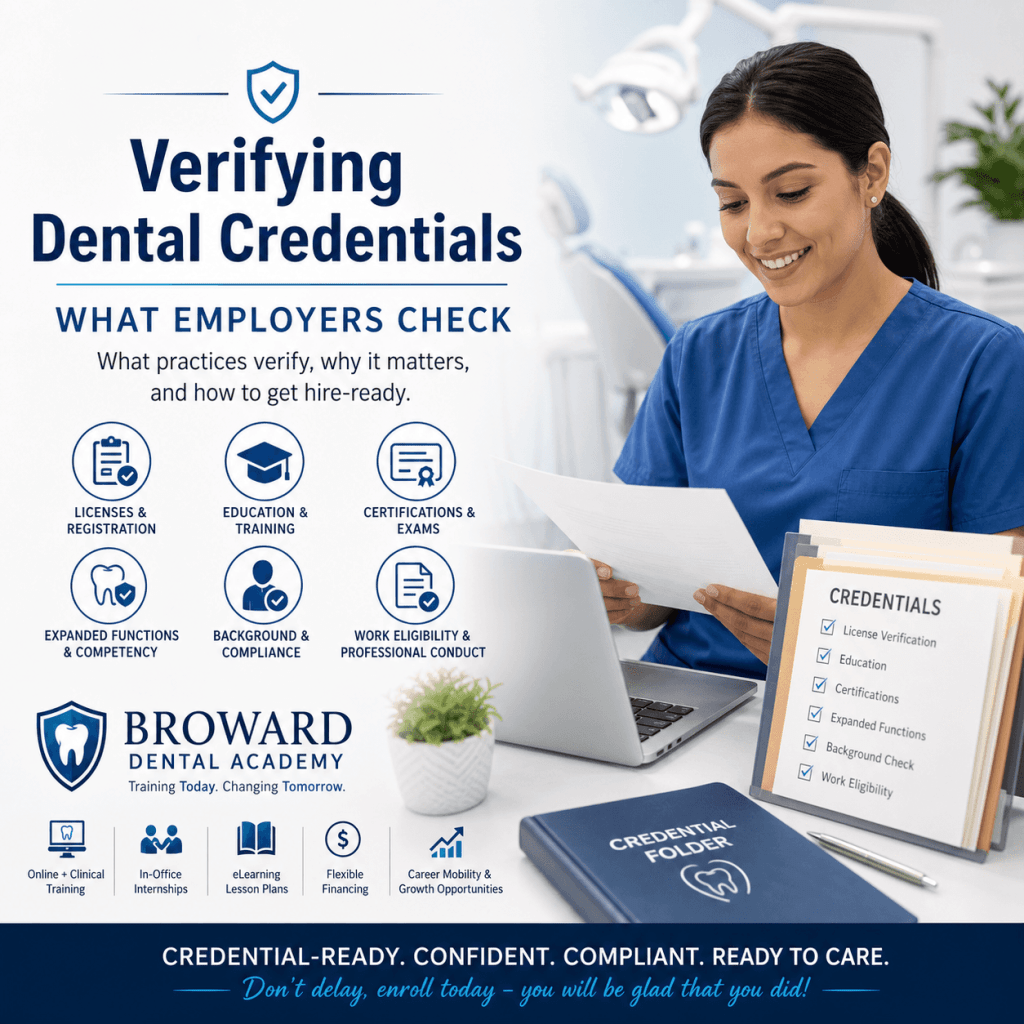
How Broward Dental Academy fits into the timeline (and why students choose it)
Broward Dental Academy is a Florida training-focused option designed to produce professionals who are thoroughly trained, legally compliant, and clinically confident.
Instead of teaching students to simply “get through” a course, Broward Dental Academy focuses on helping students thrive in a modern, high-performance dental practice. Students are trained to think critically, act ethically, and perform confidently.
Here is what stands out in the training approach:
- A complex educational experience through immediate immersion in online and clinical settings
- Latest eLearning lesson plans incorporated for remote training and structured learning
- In-office internships that help students become accomplished and polished dental professionals in real practice environments
- A wide range of offerings, including a variety of courses such as those that lead to a Dental Assistant Certification and advanced dental training for continued growth
- Flexible financing, which can help students start sooner instead of waiting
If your priority is to become job-ready, the combination of structured learning, clinical confidence-building, and internship experience is often what shortens the real timeline to employment.
Career outlook: why becoming a dental assistant is worth the time
Dental assisting is not just a quick credential. It is a respected healthcare role with real upside.
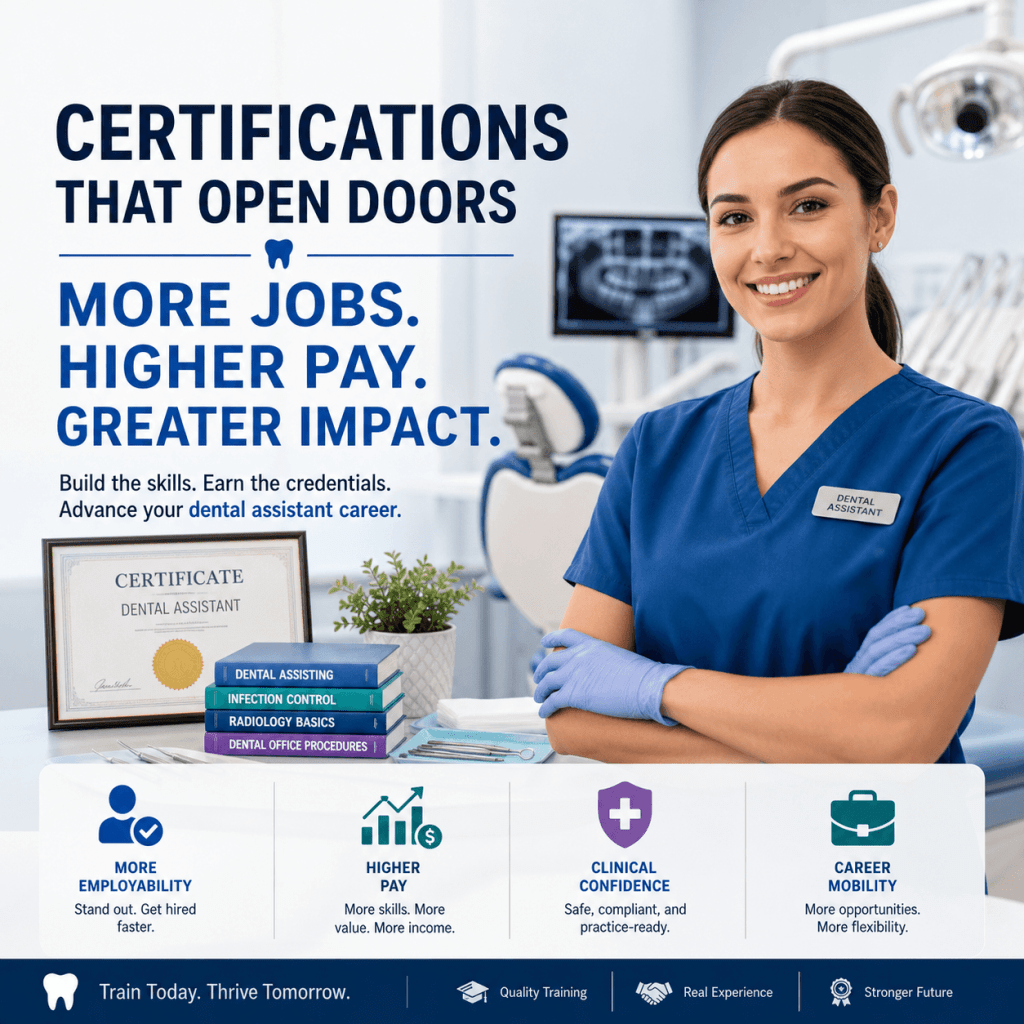
The dental industry is one of the fastest-growing healthcare industries, and demand for skilled dental professionals continues to rise. For many people, this career is worth the training time because it can offer:
- Stable income potential
- Flexible schedules
- Career mobility within dentistry
- Opportunities to pursue expanded functions and increase responsibility
- A meaningful role supporting patient care every day
Just as important, employers increasingly prioritize assistants who are trained the right way. Quality training protects patients and protects your career.
Next step: choose your start date and get enrolled
So, how long does dental assistant training take in Florida?
It depends on your schedule and goals, but a structured program that includes online learning, hands-on clinical training, and an in-office internship can get you job-ready faster than you might think.
If you want the full step-by-step pathway, visit: How to Become a Dental Assistant in Florida
When you’re ready to move forward, don’t overthink it. Confirm the schedule options, internship details, and financing availability at Broward Dental Academy, then pick your start date.
Don’t delay, enroll today – you will be glad that you did!
FAQs (Frequently Asked Questions)
How long does dental assistant training typically take in Florida?
Dental assistant training in Florida can range from a few weeks to about a year, depending on the program type and schedule. Accelerated programs may take weeks to a few months, standard certificate or diploma programs usually last a few months up to a year, and college-based options often take closer to a year or longer.
What factors influence the length of dental assistant training programs in Florida?
The duration of dental assistant training in Florida depends on several factors including the type of program (accelerated certificate, standard diploma, or college-based track), whether you study full-time or part-time (evenings/weekends), the amount of hands-on clinical practice included (labs, externships), and if you pursue expanded functions that add additional skills.
What should I look for in an accelerated dental assistant program in Florida?
When choosing an accelerated program, ensure it includes structured lab time, real clinical exposure with supervised skill-building, and compliance-focused instruction emphasizing infection control and patient safety. This ensures you gain thorough training and clinical confidence despite the shorter timeline.
Why might someone choose a standard certificate or diploma program for dental assisting in Florida?
Standard certificate or diploma programs offer a balanced approach with more repetition of core clinical skills at a steadier pace. They provide flexibility with day, evening, or weekend schedules making them suitable for working adults who want enough time to build confidence without rushing through content.
Are there opportunities for specialized dental assistant training in Florida?
Yes. Many programs offer expanded function certifications allowing dental assistants to gain additional skills in areas like orthodontics, oral surgery, endodontics, and periodontics. These certifications can enhance your qualifications and career mobility within specialized fields.
Where can I find reputable dental assistant training programs and resources in Florida?
Institutions like Broward Dental Academy offer comprehensive dental assistant training with various certification options. Their website provides detailed information on course structure, frequently asked questions, locations across Florida, and additional resources such as the role of oral health in overall health to support your education journey.