Dental Assistant Level 02 Training (In Plain English)
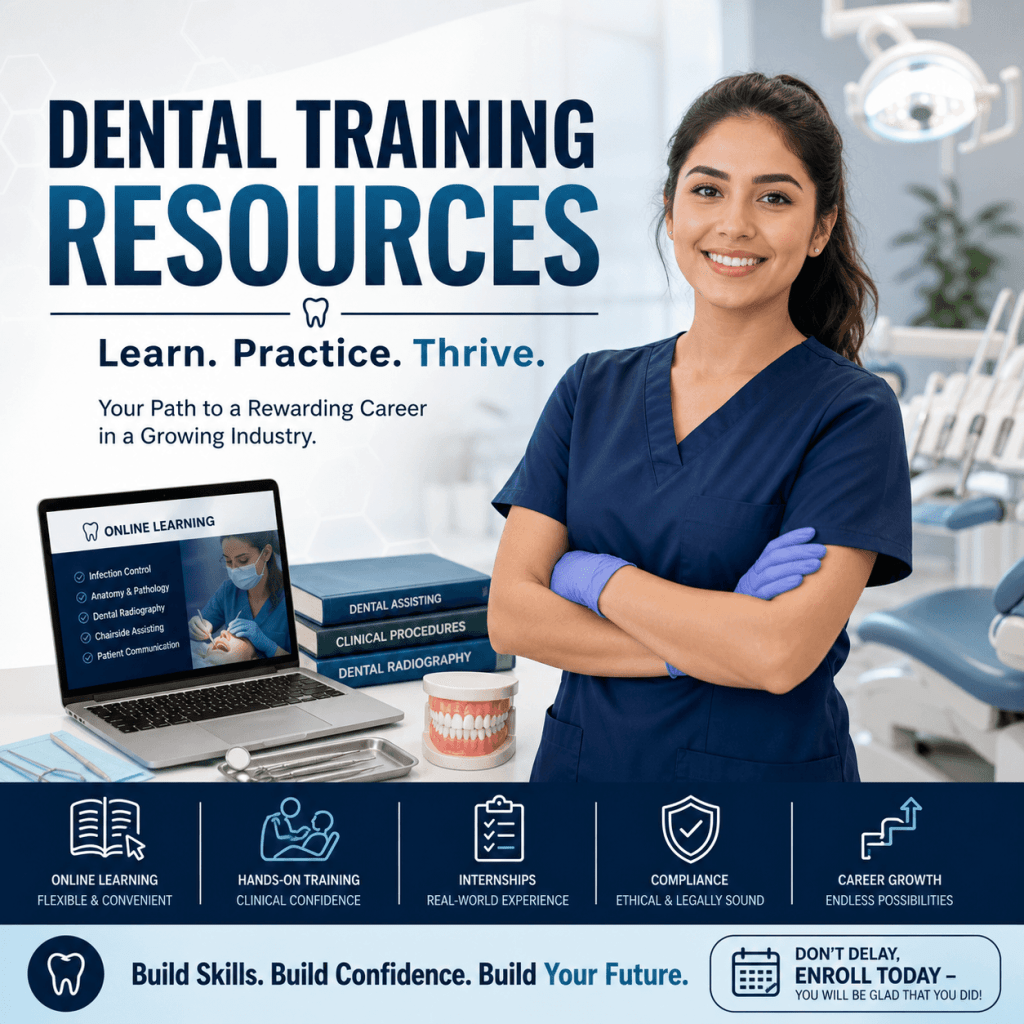
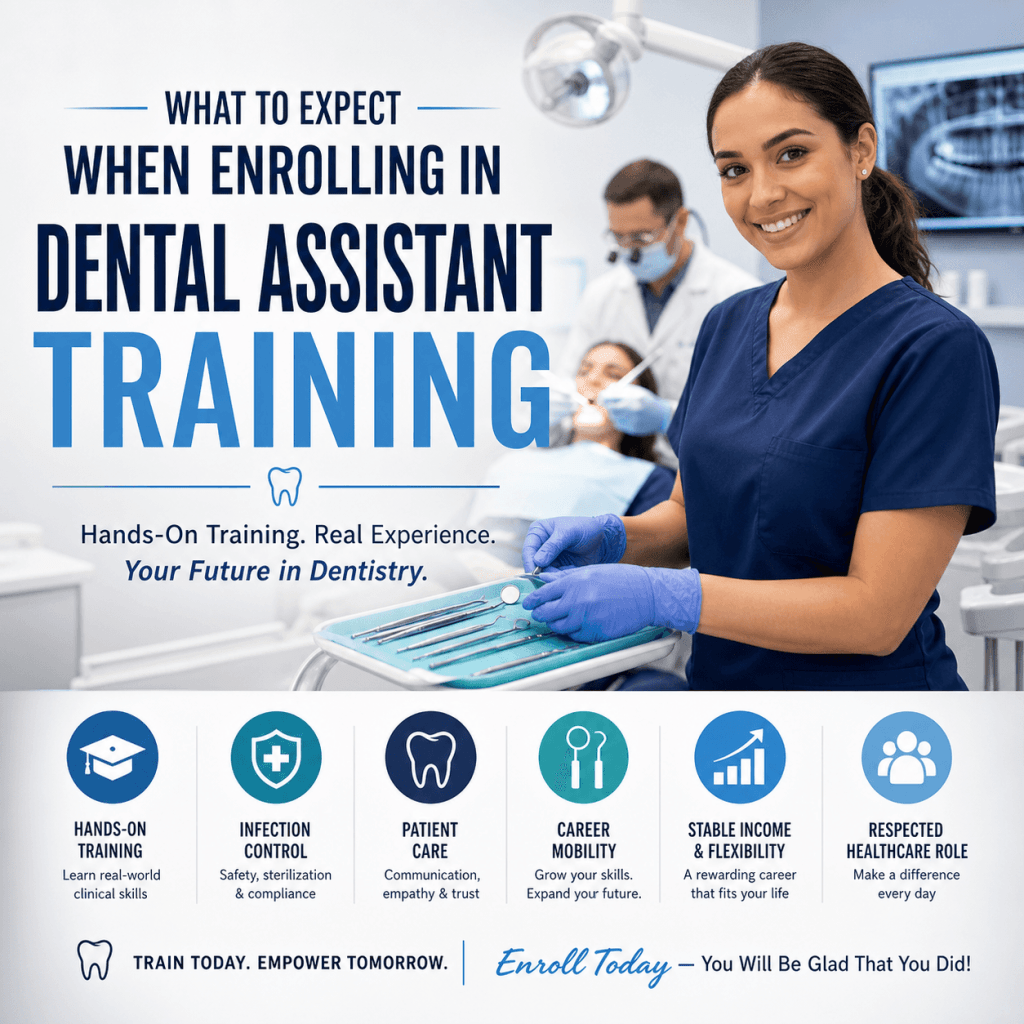
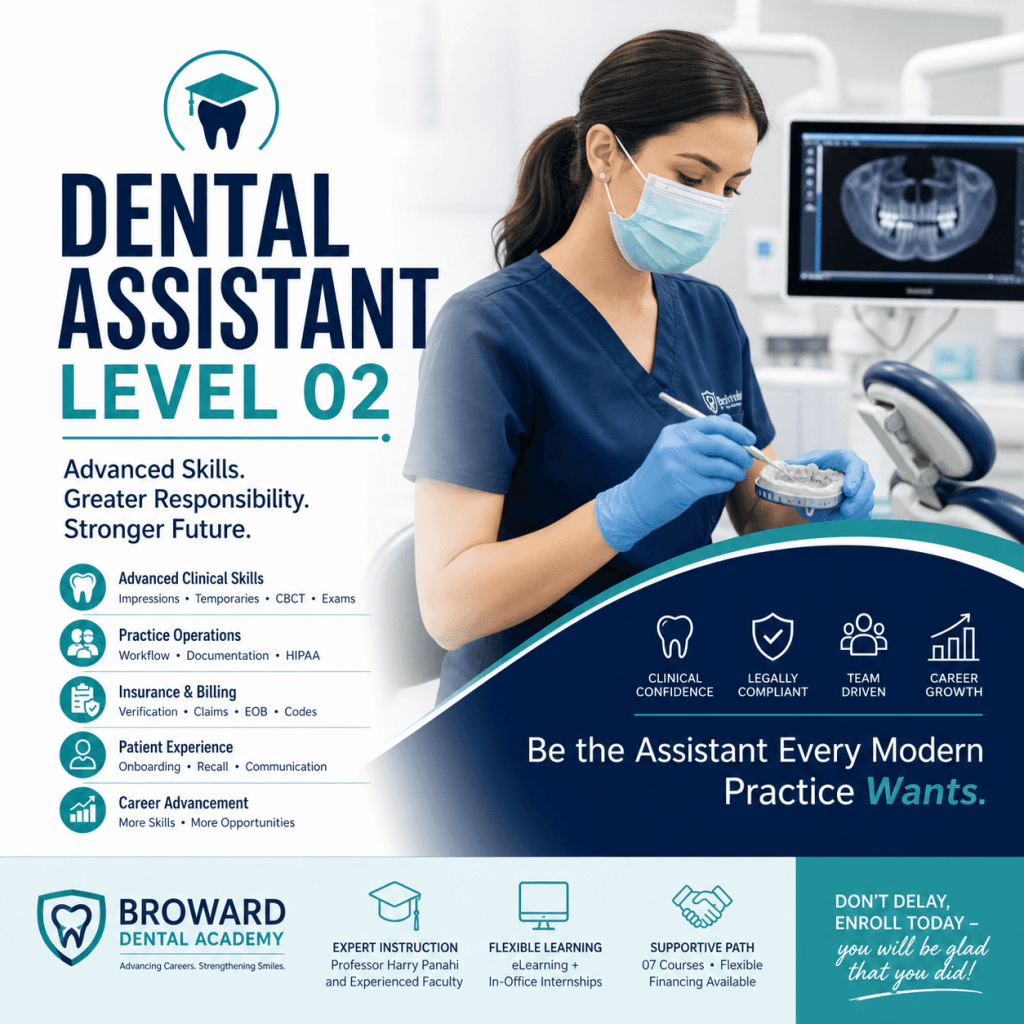
The Dental Assistant Level 02 training, an expanded-responsibility program, builds advanced clinical skills and stronger practice-operations competence. This enables you to work with more confidence, speed, and legal compliance in a modern dental office.
While Level 01 focuses on learning the fundamentals of chairside assisting, Level 02 is about becoming the assistant a practice can truly rely on during higher-skill procedures and busier workflows.
This type of training is typically well-suited for:
- Graduates of Dental Assistant Level 01 (or an equivalent foundational program)
- Current dental assistants who want expanded functions and more responsibility
- Career changers who desire faster mobility in a stable healthcare career path
In this article, you will discover what Level 02 usually covers on the clinical side (like impressions, temporary crowns, CBCT basics, and exam support) and what it covers beyond the chair (HIPAA, scheduling, billing fundamentals, recall systems), plus why employers value it.
Dentistry is one of the faster-growing areas of healthcare, offering stable income potential, flexible schedules in many settings, respected roles, and strong demand for well-trained assistants who can keep up with today’s technology and patient expectations.
Level 02 vs. Level 01: What Actually Changes?
Level 01 training serves as the foundation. It typically focuses on core chairside assisting, infection control, operatory setup and breakdown, instrument transfer, and the essential rhythms of a dental appointment.
However, Level 02 is where you step into expanded functions and advanced workflows. That usually means:
- More hands-on clinical skills that directly support restorative and diagnostic procedures
- More exposure to technology and imaging, including 3D concepts in practices that use CBCT
- More confidence supporting examinations and documentation
- More operational and administrative competence, ensuring the day runs smoothly for patients and the team
This matters because practices do not just want “help.” They seek modern practice readiness: speed without sloppiness, accuracy without drama, complete documentation, and patient experiences that feel organized and professional.
From an employer’s perspective, achieving Level 02 signals you are working toward being clinically confident, ethically grounded, and consistent with compliance expectations. That combination makes you easier to train, easier to trust, and more valuable in a busy schedule.
What You Learn: Advanced Clinical Skills in Level 02
The clinical core of Level 02 is designed to support the procedures and workflows you see every day in real practices, including restorative dentistry, prosthodontics, orthodontics, surgical support, and diagnostic processes.
A key theme is precision with patient comfort. You are not just learning steps. You are learning how to perform them cleanly, safely, and predictably while communicating clearly with the dentist and hygienist.
Dental Impressions: Techniques, Materials, and Real-World Use
Dental impressions are essentially the blueprint for many types of dental work. If the blueprint is off, the final result can be off. That can show up as poor fit, discomfort, bite issues, or remakes that waste time and frustrate patients.
Common impression use cases include:
- Crowns and bridges
- Dentures and partials
- Orthodontic appliances and aligners
- Implant planning workflows and restorative coordination
Level 02 training typically teaches impression techniques with an emphasis on material handling, timing, accuracy, and error prevention. You will usually learn how and when common material categories are used, including:
- Hydrocolloid materials: often used for speed and convenience in certain impressions; require good timing and moisture awareness
- Elastomeric materials: generally known for higher detail reproduction and dimensional stability, often used when accuracy is critical
Even without going overly technical, assistants are expected to understand how to set up the impression workflow correctly. That commonly includes:
- Tray selection and fit
- Proper mixing and loading technique
- Moisture control and patient management during the set
- Pour-up considerations (or lab handoff considerations) and labeling
- Recognizing common errors like voids, pulls, distortion, or improper seating, and preventing them
In real hiring situations, strong impression skills are often a differentiator. Many practices need an assistant who can execute impressions confidently and consistently because it impacts lab communication, remake rates, scheduling efficiency, and patient satisfaction.
Additionally, acquiring certifications related to these advanced clinical skills can further enhance your employability. For those interested in pursuing this path or have any queries regarding the same, a wealth of information is available in the frequently asked questions section. Moreover, if you’re considering where to undertake this training, various locations offer such programs.
Temporary Crowns & Provisional Restorations
Temporary crowns, also called provisional restorations, protect a prepared tooth while the final restoration is being fabricated. They also help maintain aesthetics and function, support tissue health, and reduce sensitivity.
Level 02 training commonly develops competency in fabricating and adjusting provisionals, with attention to details that make or break a patient’s comfort:
- Occlusion basics (so the bite feels right)
- Margins, contours, and contacts
- Trimming, finishing, and polishing
- Patient instructions for care, eating habits, and what to do if a temporary comes off
You will also typically learn the basics of assisting with temporary cementation workflows, such as:
- Temporary cement selection concepts
- Isolation and cleanliness
- Cleanup steps and checking the bite
In daily practice, this skill improves turnaround time, reduces emergency calls from uncomfortable temps, and makes the entire restorative process feel smoother for everyone.
CBCT & 3D Imaging: What a Level 02 Assistant Needs to Know
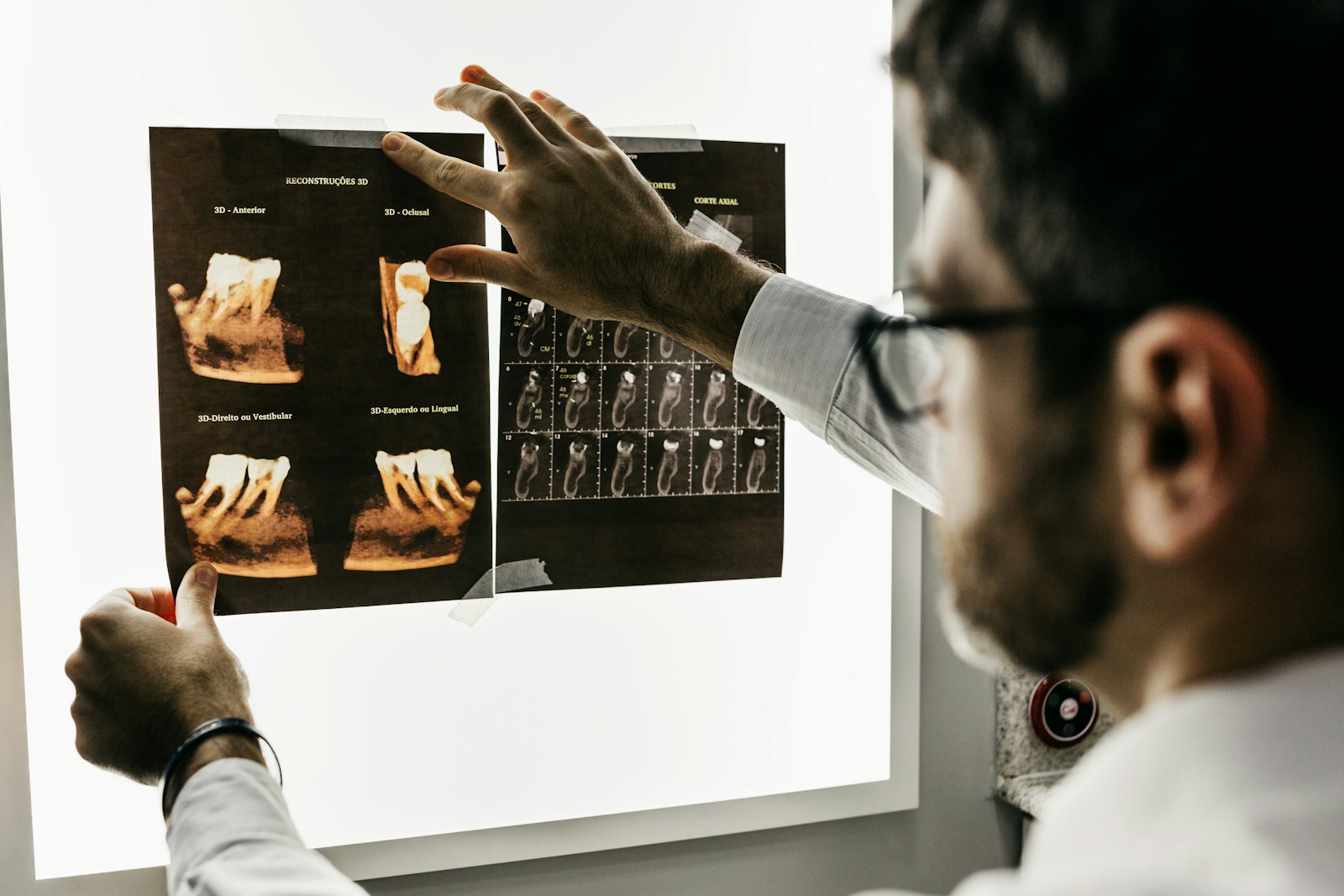
CBCT stands for Cone Beam Computed Tomography. Unlike standard 2D dental imaging, CBCT provides 3D information that can support more precise planning and decision-making.
In Level 02 training, the assistant’s focus is usually practical and workflow-based, including:
- Patient preparation and positioning protocols
- Supporting the scanning workflow in a calm, step-by-step way
- Basic image handling and file organization as directed by the clinical team
- Communicating clearly with the dentist and team about what was captured and any retakes needed
Radiation safety fundamentals are also part of the mindset. You will often hear the principle of keeping exposure “as low as reasonably achievable,” and you will learn habits that support compliance and patient safety without making the process feel complicated.
CBCT is increasingly used for:
- Implant planning
- Endodontics decision-making
- Oral surgery planning and evaluation
As more practices modernize, assistants who understand CBCT workflow basics can be especially valuable.
Intraoral Examination Assisting (Exams That Feel Smooth, Not Chaotic)
A smooth exam does not happen by accident. It happens when the assistant sets the room up correctly, anticipates what is needed, and supports documentation so the dentist can focus on diagnosis and patient communication.
During intraoral examinations, assistants commonly help with:
- Setup and room readiness
- Patient history prompts and updates
- Instrument transfer and isolation support
- Documentation support, including charting assistance based on the provider’s findings
Many Level 02 programs also include intraoral camera workflows, such as:
- Capturing clear images
- Basic file labeling and organization
- Supporting patient understanding by helping the dentist show and explain findings in a calm, respectful way
Assistants often support different evaluation types, including periodontal evaluations and restorative evaluations. Accurate documentation matters here. It protects patients, supports continuity of care, and protects the practice by keeping records consistent and complete.
What You Learn Beyond the Chair: Practice Operations & Administration
Level 02 training often includes practice operations because top assistants do not just assist. They help the practice run predictably.
When operations are strong, patient flow improves, errors drop, documentation is cleaner, and the entire office feels more professional. These are also the skills that often support growth into lead assistant, treatment coordinator support, or hybrid front-and-back office roles.
Clinical Team Communication & Workflow Mastery
Level 02 training typically strengthens how you communicate across the office, including handoffs between:
- Front desk and clinical team
- Assistants and hygienists
- Assistants and dentists
- Clinical team and labs or referral offices
Practical workflow mastery can look like:
- Prepping for procedures with the right materials ready at the right time
- Confirming what is next before the room feels rushed
- Communicating delays early and respectfully
- Closing the loop on labs, referrals, and follow-ups so nothing slips
Many programs also emphasize consistency in record management systems, including clean charts, standardized notes, and follow-ups that are documented correctly.
Scheduling, Documentation, and HIPAA Compliance
Scheduling is not just filling boxes on a calendar. It is matching the right length of time, the right provider, and the right room setup to protect both patient experience and the day’s productivity.
Level 02 training often reinforces scheduling habits such as:
- Booking with procedure length in mind
- Avoiding bottlenecks that cascade into long waits
- Coordinating clinical needs like lab timing, imaging, or room turnover
HIPAA compliance is also part of daily professional standards. That includes:
- Protecting patient privacy in conversations and in the operatory
- Limiting access to only what is necessary
- Using secure communication methods
- Building documentation habits that support privacy and accuracy
For employers, legal compliance is not a bonus feature. It is a requirement.
Importance of Effective Communication in Healthcare Settings
Effective communication in healthcare settings is crucial for ensuring patient safety and satisfaction. Studies have shown that poor communication can lead to medication errors, misunderstandings about treatment plans, and overall dissatisfaction with care received. Therefore, mastering communication skills within clinical teams is not just beneficial but essential for providing high-quality healthcare.
Incorporating evidence-based strategies into your communication practices can significantly enhance their effectiveness. For instance, research suggests that using clear language, active listening techniques, and confirming understanding can drastically reduce miscommunication incidents.
Insurance Verification & Dental Billing (So Claims Don’t Become Chaos)
Even if you are not a full-time front desk team member, understanding the basics of insurance verification and billing can make you far more effective. It reduces friction, prevents surprises, and improves patient trust.
Level 02 training often covers concepts like:
- How insurance verification works in practice
- PPO vs. HMO basics
- Eligibility checks and what they confirm
- What pre-authorizations are and why they matter
You may also learn high-level claim submission basics, such as what information is typically needed and what errors commonly cause delays. You will usually be introduced to reading an Explanation of Benefits (EOB) so you can understand what the plan processed, what it paid, and what remains patient responsibility.
Coding is typically introduced at a high level, with an emphasis on accuracy, documentation alignment, and coordination.
New Patient Onboarding & Patient Recall Systems
Great new patient onboarding sets the tone for everything that follows. It creates trust, reduces confusion, and increases the likelihood a patient will accept recommended treatment.
Level 02 operations training often includes onboarding workflows such as:
- Forms and intake organization
- Medical history review protocols
- Setting expectations for the visit and next steps
- Supporting treatment presentation and follow-up
Recall systems matter for continuity of care and practice stability. Many offices depend on predictable recall to keep patients healthy and keep the schedule steady.
A simple recall workflow often includes:
- Reminder systems and approved communication methods
- Reactivation lists for overdue patients
- Documentation of contact attempts and outcomes
- Follow-up calls or texts where allowed and appropriate
Why Employers Value Level 02 (And What It Does for Your Career)
The Dental Assistant Level 02 certification is highly valued by employers. It signals a broader, more job-ready skill set, suggesting you are prepared for more responsibility, advanced procedures, and complex workflows.
For your career, Level 02 can support:
- Expanded function readiness (depending on your state rules and the role)
- Higher trust from doctors and clinical teams
- Stronger leverage when discussing pay and responsibilities
- Pathways toward leadership roles and increased autonomy
For a practice, the benefits are tangible: better diagnostic and imaging support, fewer remakes from preventable errors, smoother patient flow, and a stronger compliance culture. High-performance dental practices want assistants who think critically, act ethically, and perform confidently.
How Broward Dental Academy Prepares You for Level 02 Work (Not Just the Classroom)
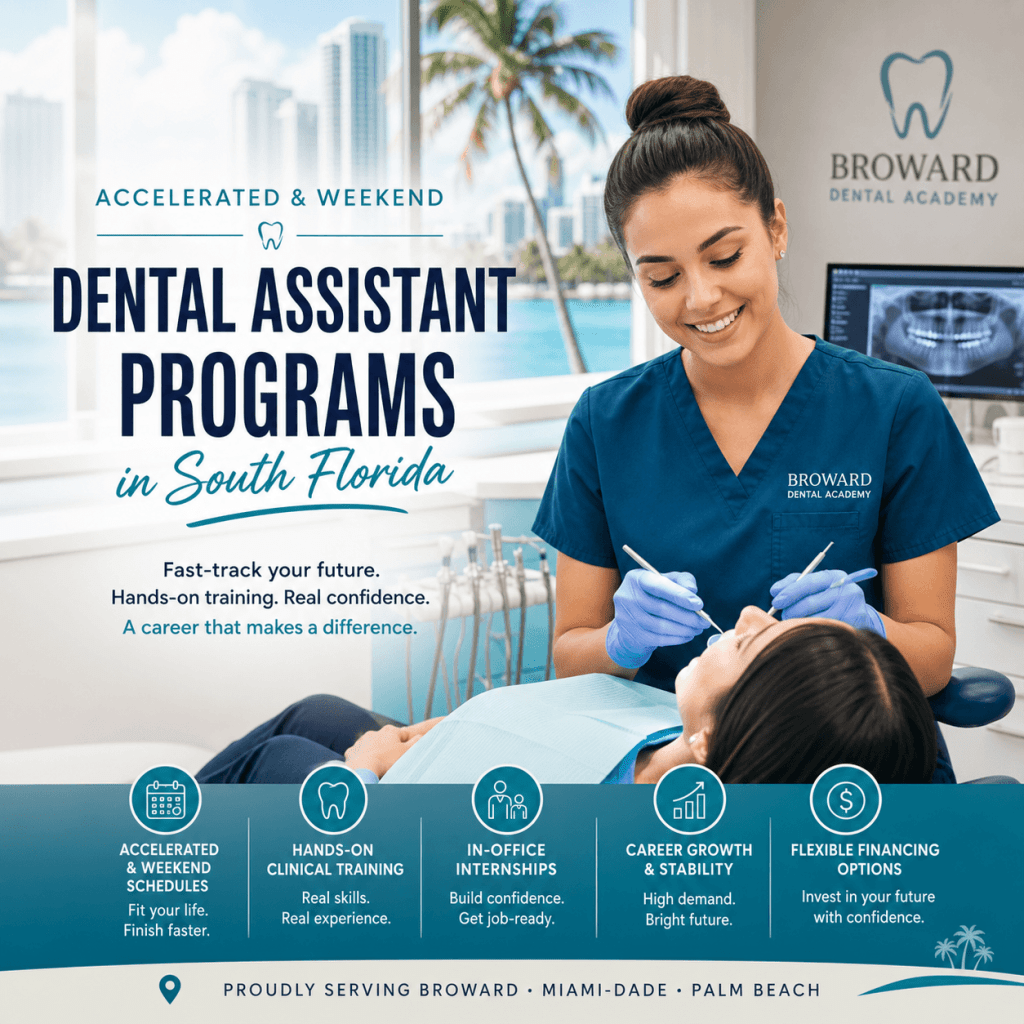
Broward Dental Academy serves the dental community with well-rounded programs and advanced dental training designed to help students become thoroughly trained, legally compliant, clinically confident professionals.
The Dental Assistant Level 02 program at Broward Dental Academy is designed for students ready to move beyond basic chairside assisting. While Level 01 builds your foundation, Level 02 builds your authority.
The training approach emphasizes real-world readiness through:
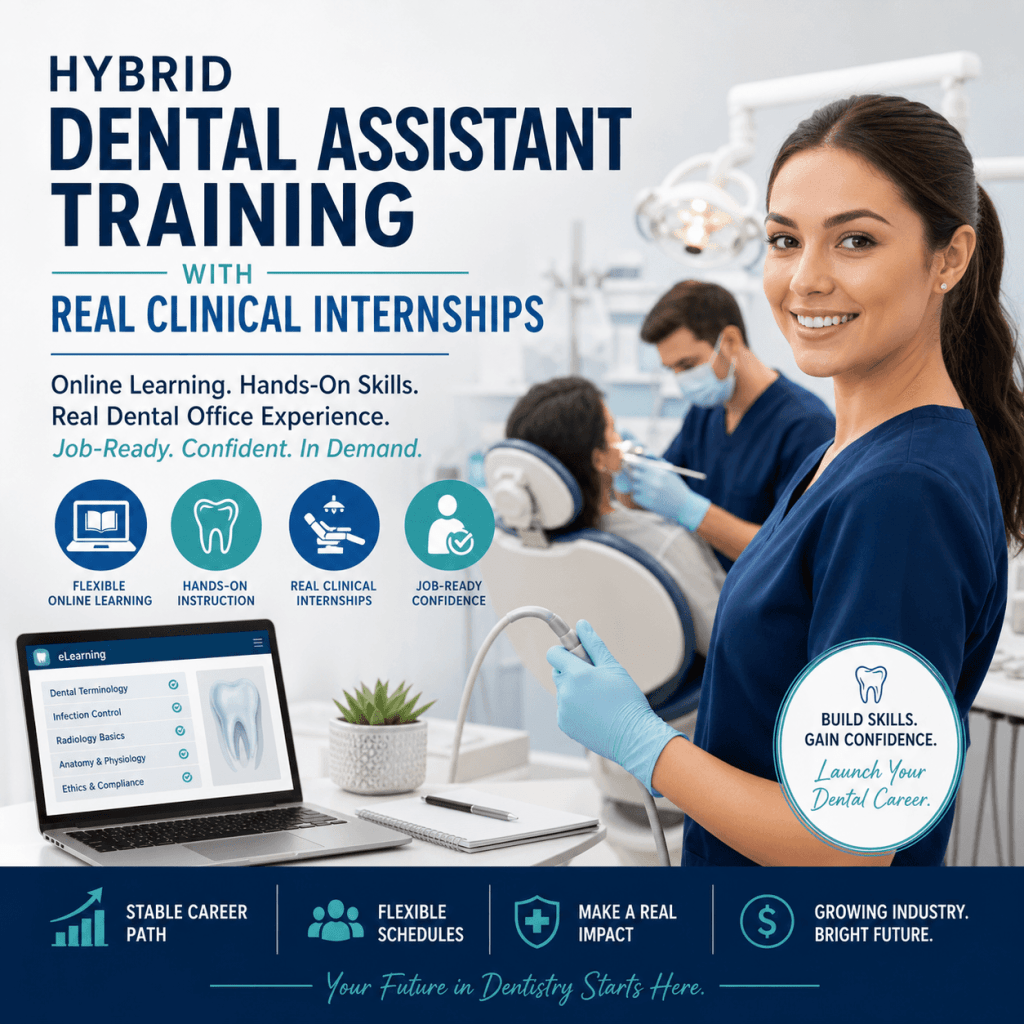
- Immediate immersion in online and clinical settings
- Updated eLearning lesson plans that support remote training
- In-office internships so students can apply skills in real practice environments
Instruction is supported by experienced educators, including Professor Harry Panahi, as part of the academy’s commitment to professional training and practical outcomes.
In addition to Broward Dental Academy’s offerings, other institutions like Kaskaskia College also provide comprehensive dental assistant programs that can further enhance your career prospects. These programs typically include various courses (seven total), flexible financing options, and a supportive pathway for career mobility so motivated students can keep progressing.
Is Level 02 Training Right for You? A Quick Self-Check
Level 02 is often a strong fit if:
- You enjoy hands-on clinical work and want more responsibility
- You want to learn impressions, temporaries, CBCT basics, and smoother exam support
- You want stronger confidence with scheduling, HIPAA, and documentation
- You are aiming for upward mobility in a dental career path
It also helps to be realistic about the effort involved. Level 02 skill-building takes repetition, attention to detail, and professional standards in communication, accuracy, and ethics.
If you are unsure whether you have the prerequisites, start with Level 01 or confirm equivalent training, then move into Level 02 when you are ready for expanded skills.
Next Steps: Enroll and Start Building Level 02 Skills
If you want to explore curriculum, structure, and enrollment details for the Advanced Dental Assistant Training – Level 02, visit the Broward Dental Academy pillar page.
Dental assisting can be a stable, flexible, and respected career path, and demand continues to rise for assistants who are trained for modern workflows, technology, and compliance.
Don’t delay, enroll today – you will be glad that you did!
FAQs (Frequently Asked Questions)
What is the Dental Assistant Level 02 training and who is it suitable for?
The Dental Assistant Level 02 training is an expanded-responsibility program that builds advanced clinical skills and stronger practice-operations competence. It is designed for graduates of Dental Assistant Level 01 or equivalent foundational programs, current dental assistants seeking expanded functions and more responsibility, and career changers aiming for faster mobility in a stable healthcare career path.
How does Level 02 training differ from Level 01 in dental assisting?
Level 01 training focuses on foundational chairside assisting skills such as infection control, operatory setup, instrument transfer, and basic appointment rhythms. In contrast, Level 02 training involves advanced clinical skills supporting restorative and diagnostic procedures, exposure to technology like CBCT imaging, confidence in examination support and documentation, and enhanced operational and administrative competence to ensure smooth practice workflows.
What advanced clinical skills are taught in Dental Assistant Level 02 training?
Level 02 training covers advanced clinical skills including dental impressions using hydrocolloid and elastomeric materials with emphasis on accuracy and error prevention, temporary crowns and provisional restorations, surgical support, orthodontics, prosthodontics, CBCT basics, and exam assistance. The program emphasizes precision with patient comfort and effective communication with dentists and hygienists.
Why are dental impression skills important in Level 02 training?
Dental impressions serve as critical blueprints for crowns, bridges, dentures, orthodontic appliances, and implant planning. Accurate impressions prevent poor fit, discomfort, bite issues, remakes, scheduling delays, and patient dissatisfaction. Level 02 training teaches proper tray selection, mixing techniques, moisture control, error recognition like voids or distortion, and lab handoff protocols to ensure high-quality impressions.
What operational and administrative competencies are included in Level 02 dental assistant training?
Beyond clinical skills, Level 02 includes training in HIPAA compliance, scheduling management, billing fundamentals, recall systems management, complete documentation practices, and ensuring organized patient experiences. These competencies help dental assistants contribute effectively to practice efficiency and legal compliance.
How does achieving Dental Assistant Level 02 certification benefit employment prospects?
Employers value Level 02 certification because it signals clinical confidence, ethical grounding, consistency with compliance expectations, and readiness to handle complex procedures efficiently. Certified assistants are easier to train and trust within busy schedules. Additionally, acquiring certifications related to advanced clinical skills enhances employability by demonstrating competence in modern dental technologies and workflows.