Key takeaways
- Who changes careers into it?
People from retail, hospitality and caregiving work who want clinical healthcare without years of schooling first. - What do the stories share?
Hands-on training before the first job, an internship that led to hiring, and a deliberate next credential after settling in. - Does it suit parents?
Often yes, because the day is built on booked patient blocks and many South Florida practices run four-day or part-time schedules. - What about nerves?
Supervised practice is what converts nerves into competence, which is why classroom-only programs leave graduates feeling unready.
Why does South Florida need dental assistants right now?
Walk into a dental office in South Florida on a Monday morning and you will feel it immediately: phones ringing, full schedules, patients coming in back-to-back, and a clinical team moving fast with purpose.
Behind that pace are real people who decided to step into dental assisting and change their lives, not in a vague, inspirational way, but in a practical one. Better hours than their last job. A respected role in healthcare. A clear path to grow.
This post shares real dental assistant success stories from South Florida, including career changers, first-time healthcare workers, and parents returning to work. They are not celebrities or influencers. They are locals who needed something stable and chose a field that is hiring.
Why now? The dental industry continues to grow, and practices are looking for team members who can step in trained, compliant, and confident. In Broward County, Miami-Dade, and Palm Beach, that demand comes with local realities: commutes that matter, schedules that need to work, bilingual workplaces, and high patient volume that rewards assistants who can keep up.
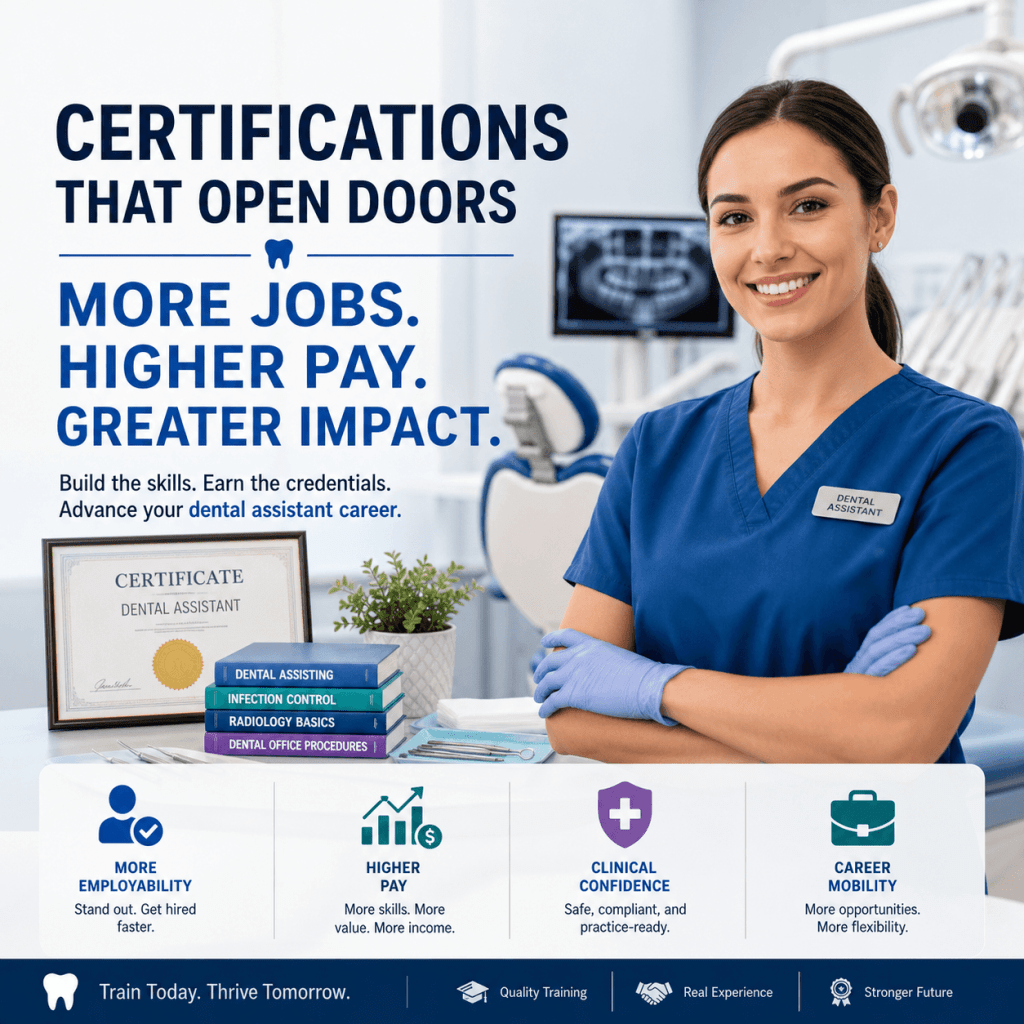
What these success stories have in common is not luck. It is preparation, professionalism, and the decision to treat dental assisting like a real career. If you are considering the same path, you might want to explore specialized training programs such as those offered by Broward Dental Academy, which provide comprehensive education in various areas of dental care.
With such training under your belt, you could find yourself assisting in various fields like oral surgery, orthodontics, or even endodontics, all of which are in high demand right now. And if you’re interested in expanding your skill set further down the line, there are numerous opportunities for advancement within the field.
What does a dental assistant success story look like?
Success in dental assisting can mean a paycheck, yes, but most people who stay in the field define it more broadly:
- Stable income you can plan around
- More predictable schedules than many service jobs
- Career mobility inside dentistry and healthcare
- A respected clinical role with real responsibility
- Confidence at work, especially in fast-paced offices
Dental assisting also fits different life stages. For some, it is a first step after school into healthcare without years of additional schooling. For others, it is a career switch that builds on existing strengths like communication, organization, and customer service. And for many parents, it is a return-to-work option that can offer structure without night shifts.
As assistants gain experience, many also look toward expanded functions, learning additional skills and responsibilities over time (based on training requirements and compliance). That growth is a big part of what makes the career feel like a path, not a dead end.
A realistic note: South Florida offices move quickly. Success usually comes to the assistants who are clinically prepared, professional, reliable, and ready to keep learning once they are hired.
How does someone move from retail to chairside?
A Broward County resident spent years in retail and customer service. They were good at it, but the schedule was unpredictable and the growth felt limited. Weekends were rarely free. Income depended on hours that changed. And after a while, the question became simple: “What am I building toward?”
Dental assisting stood out because it felt like a real healthcare career without needing to start from scratch. The dental industry is fast-growing, offices stay busy year-round, and there is a steady demand for team members who can work chairside and keep the day moving.
The turning point came with a decision: choose training that would make them useful in a real practice, not just “certified on paper.” This led them to explore various certifications that would enhance their skills.
The confidence moment happened on day one in a busy South Florida office. Patients were moving quickly, the dentist needed instruments at the right time, and the room had to stay organized and clean. Instead of panicking, they recognized the rhythm: how to anticipate what the doctor would ask for, how to communicate calmly with patients, and how to stay composed even when the schedule was packed.
The outcome: a chairside role with better hours than retail, a clearer career path with potential for career mobility, and real pride in being part of patient care.
Takeaway for readers: If you are switching careers, you do not need to “become a different person” to succeed. But you do need training that builds clinical confidence and professionalism so you can walk into a busy practice ready to contribute.
Can the schedule work for a parent returning to work?
A parent re-entering the workforce had a clear non-negotiable: the schedule had to work. Not “sometimes.” Not “if someone can babysit.” It had to be predictable enough to build a routine.
Dental assisting fit because many offices operate primarily on day shifts. While every practice is different, the structure can be more family-friendly than many service or hospitality roles. And beyond the schedule, it is also a respected position. This was not about “just getting a job,” it was about returning to work with dignity and purpose.
A key piece of the transition was internship experience. It is one thing to say you are ready. It is another to walk into an interview and confidently say, “I have done this in a real office. I understand patient flow. I know sterilization protocols. I can support chairside care.”
That “I’ve done this before” feeling matters in South Florida, where busy practices often want to hire someone who can step in smoothly.
The outcome: stable income, a structured routine, and a role that feels meaningful because you help patients every day, sometimes when they are nervous and need reassurance.
Takeaway: Flexible schedules are real, but they are usually earned and kept by being practice-ready, reliable, and professional.
How does a nervous beginner become clinically confident?
Not everyone starts out fearless.
One student described feeling intimidated by healthcare in general. They worried about making mistakes, doing something out of order, or freezing in a fast-paced clinical environment. And in South Florida, that fear is understandable. Many practices do not have time to teach from scratch after you are hired. They need assistants who can keep up, follow protocols, and protect patient safety from day one.
What changed everything was hands-on repetition and real feedback in clinical settings. Confidence was built skill by skill:
- Understanding chairside workflow and how procedures typically run
- Learning sterilization protocols and why compliance matters
- Practicing patient communication that keeps people calm and informed
- Building strong teamwork habits, including how to ask questions the right way
- Developing consistency so you are steady even on the busiest days
Over time, that student became the kind of assistant doctors and hygienists trust. Not because they were perfect, but because they were prepared, coachable, and dependable.
The outcome: a calm, compliant, consistent assistant who can handle busy schedules without losing focus.
Takeaway: Confidence is a skill. It is built through repetition, feedback, and real clinical exposure, not wishful thinking.
How far can career mobility go from a dental assistant start?
Some students are looking for more than a job. They want a path.
One ambitious student started with a clear mindset: “I want to get into dentistry, learn the workflow, and keep leveling up.” Dental assisting became the smart first step because it puts you inside the clinical environment early, where you can learn how modern practices operate and what high performance really looks like. The journey began with Dental Assistant Level 01, which laid the groundwork for understanding the basics of dental practice.
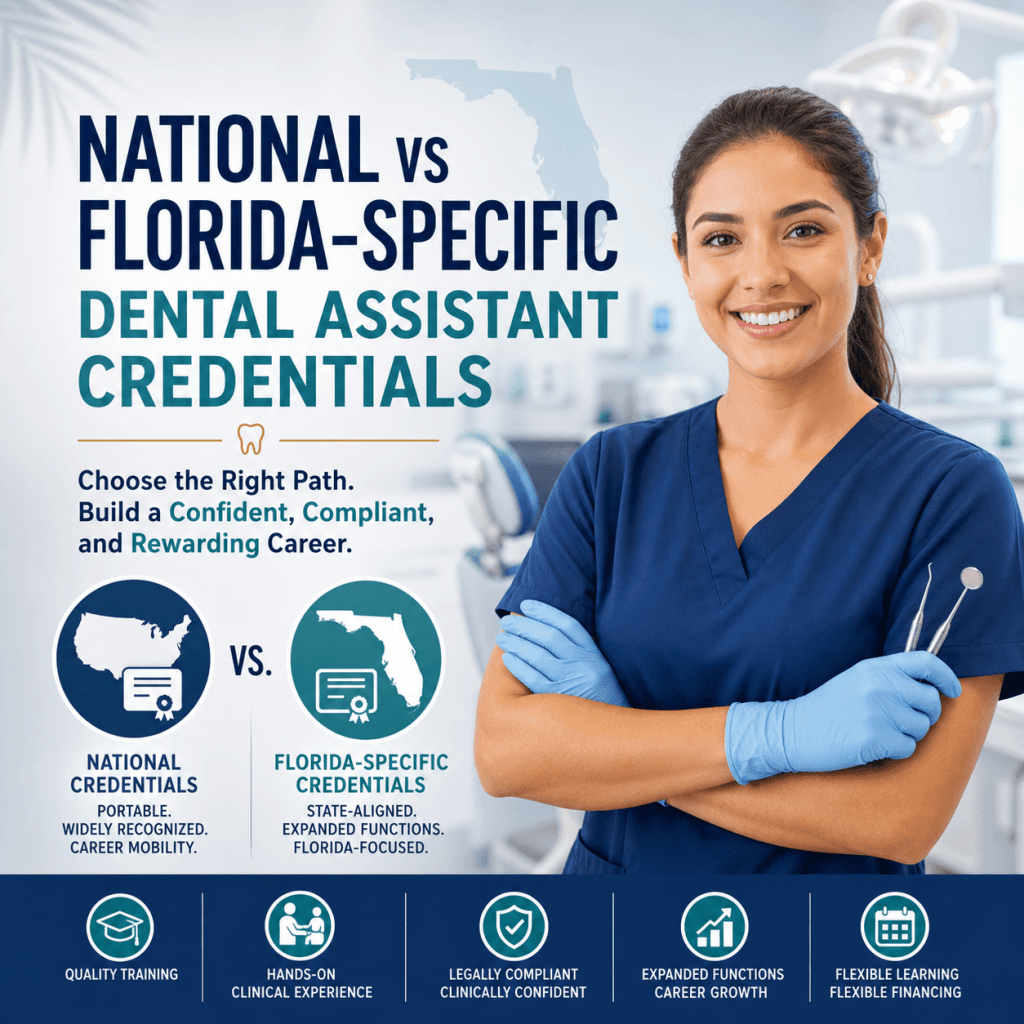
Mobility in dentistry can include moving toward expanded functions like those learned in Dental Assistant Level 02, growing into higher-trust responsibilities, and sharpening skills that make you a go-to team member. Many assistants also choose additional courses or advanced training over time to support growth in both clinical ability and professionalism such as those offered in Dental Assistant Level 03.
The outcome: moving from entry-level tasks into more responsibility, becoming someone the team relies on, and planning next steps with clarity because they understand the field from the inside.
Takeaway: Choose training that prepares you to thrive in a modern dental practice, not just pass an exam and hope for the best. For more information on common queries regarding this career path, check out our frequently asked questions.
What do these South Florida success stories have in common?
Different backgrounds. Similar results. Here is what showed up in every story:
- They chose a field with real demand. Dental practices continue to hire skilled dental professionals across South Florida.
- They trained for real practice expectations. Speed, sterilization, patient flow, professionalism, and teamwork are not optional in busy offices.
- They focused on compliance and ethics. Doing things the right way builds trust and protects patients and the practice.
- They built confidence through immersion. Combining online learning with clinical experience and internships made the learning stick.
- They treated dental assisting as a profession. They showed up prepared, coachable, and consistent, even when they were new.
How does Broward Dental Academy help students build their own story?
Broward Dental Academy serves the Dental Community by developing well-rounded professionals through multiple dental training programs. These programs include a variety of courses offered that cater to different aspects of dental training.
Students are not just trained to pass an exam. They are prepared to become thoroughly trained, legally compliant, and clinically confident in a modern, high-performance dental practice. The training culture emphasizes critical thinking, ethical decision-making, and confident clinical performance, so graduates can step into busy South Florida offices with professionalism.
Programs provide a complex educational experience through immediate immersion in online and clinical settings, with updated eLearning lesson plans for remote training and in-office internships that help students build real-world confidence.
Broward Dental Academy also offers advanced dental training options that support growth over time, plus flexible financing to help students start without unnecessary delay.
Is dental assisting right for you?
You will likely enjoy dental assisting if you like hands-on work, working with people, and staying busy as part of a team.
You will do well if you can:
- Follow protocols and take compliance seriously
- Communicate clearly with patients and coworkers
- Stay calm under time pressure
- Learn by doing, not just by reading
Be honest about the realities too. You may be standing for long periods. Details matter. Professionalism matters. And the best assistants keep learning.
If you are a beginner, you can still succeed, especially with the right training and consistent practice.
How do you start your own South Florida success story?
These stories all point to the same truth: stability, flexibility, growth, and pride are achievable in dental assisting when you prepare the right way.
If you’re looking for a comprehensive resource on starting your journey in this field, consider exploring Broward Dental Academy. They provide valuable insights into the dental assistant career landscape in South Florida.
And if you are ready to take action, ask about program details, the 07 course options, internships, schedules, and flexible financing.
Don’t delay, enroll today, you will be glad that you did!
FAQs (Frequently Asked Questions)
Why is there a high demand for dental assistants in South Florida right now?
South Florida is experiencing a high demand for dental assistants due to the growing dental industry, busy practices with high patient volumes, and the need for trained, compliant, and confident team members who can keep up with fast-paced office environments in areas like Broward County, Miami-Dade, and Palm Beach.
What are the benefits of pursuing a career as a dental assistant in South Florida?
A career as a dental assistant in South Florida offers stable income, more predictable schedules compared to many service jobs, respected clinical roles with real responsibility, career mobility within dentistry and healthcare, and opportunities for continuous learning and advancement.
Who can benefit from becoming a dental assistant according to the success stories shared?
Dental assisting suits various life stages including first-time healthcare workers entering after school without extensive additional education, career changers leveraging skills like communication and organization, and parents returning to work seeking structured hours without night shifts.
What kind of training is recommended for someone interested in becoming a dental assistant in South Florida?
Specialized training programs such as those offered by Broward Dental Academy are recommended. These programs provide comprehensive education in various dental care areas including oral surgery, orthodontics, endodontics, and periodontics to prepare candidates for real practice demands.
How do dental assistants find success beyond just earning a paycheck?
Success for dental assistants includes stable income they can plan around, predictable schedules, career growth opportunities, respected clinical responsibilities, confidence in fast-paced work environments, and the ability to treat their role as a real career path rather than just a job.
What advice is given to those considering switching careers into dental assisting?
The advice is to choose training that builds clinical confidence and professionalism so you can walk into busy practices ready to contribute effectively. You don’t need to become a different person but must be prepared through proper education to succeed in demanding dental office environments.