Key takeaways: how to become a dental assistant
- What is the short answer on how to become a dental assistant?
Complete hands-on training with radiology support and an in-office internship. Florida ties requirements to tasks, so documented training — not classroom hours alone — is what lets you perform them. - What does Florida require?
Requirements follow the tasks: radiography and expanded functions need documented training, while general chairside duties do not. - How long does it take?
Months rather than years, depending on the level you choose and how quickly you finish the clinical stage. - What should a program include?
Hands-on clinical practice, radiology training and an in-office internship, not classroom hours alone. - Where does it lead?
Advanced and expanded-functions levels, then specialty assisting or practice-side roles.
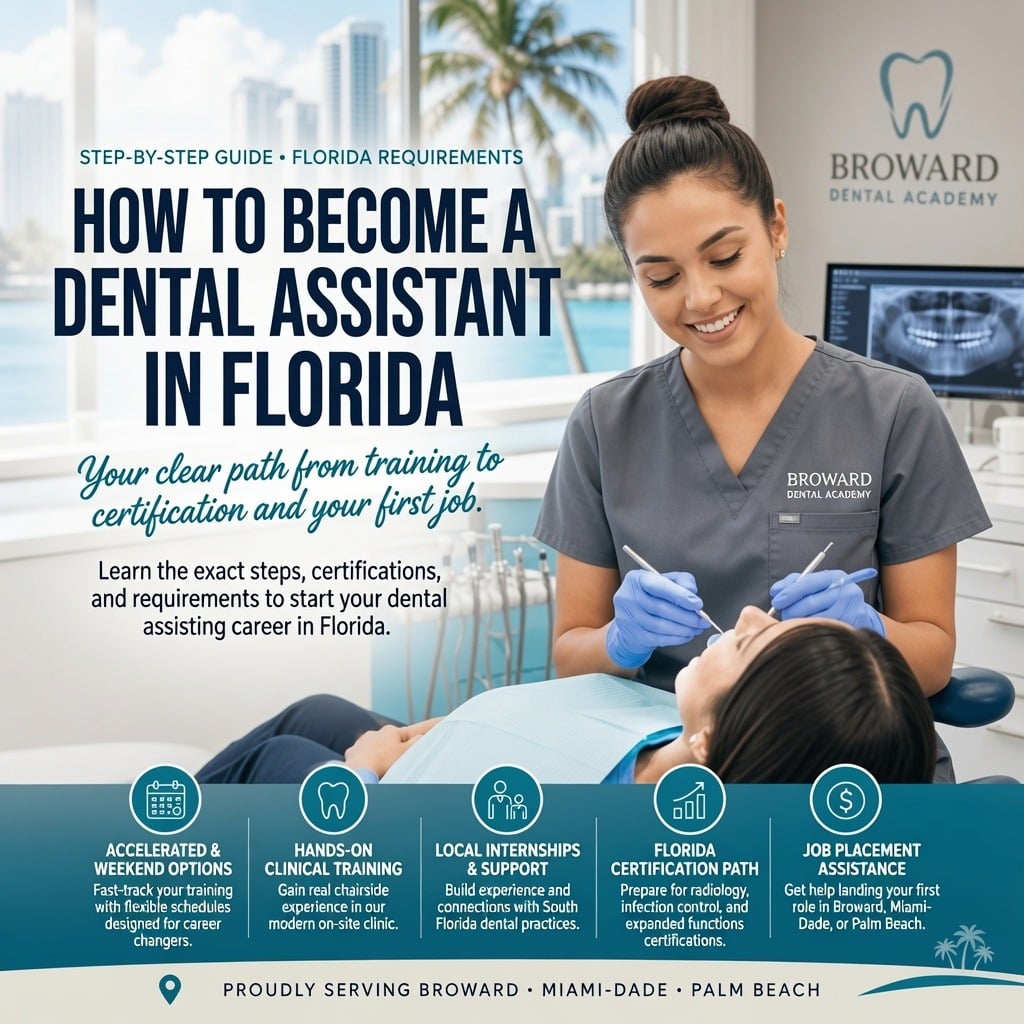
Florida has many busy dental offices that need dependable, well-trained support staff. If you want a hands-on healthcare job that gets you working in a clinic quickly, dental assisting is a practical career choice.
If you’re interested in learning how to become a dental assistant, specifically how to become a dental assistant in Florida, this guide will help you navigate the process.
Here’s a simple guide to what dental assistants do, what Florida employers expect, and how to get the right training to be ready for work.
Understanding how to become a dental assistant is crucial for anyone looking to enter the field.
Why is dental assisting a great career in Florida?
Dental assistants are essential in modern dental offices. A typical day might include:
- Setting up rooms and tools for procedures
- Following sterilization and infection control rules
- Helping the dentist during treatments
- Getting patients ready, explaining basics, and making them comfortable
- Assisting with record-keeping
- Taking X-rays when allowed
- Keeping things running smoothly so dentists and hygienists can focus
Florida’s dental field is growing as more people seek care, offices update their equipment, and practices look for skilled team members who can keep up.
The job offers real benefits like:
- Steady income in healthcare
- Flexible hours with many shift options
- A respected role that directly helps patients
- Opportunities to grow into specialized areas like endodontics or periodontics
It’s important to know that dental offices want someone who is not just eligible but fully trained, follows the law, and feels confident in clinical work. The best training prepares you to step into a busy office and contribute right away. Consider enrolling at Broward Dental Academy for thorough training that meets these needs to learn how to become a dental assistant.
What does Florida require to work as a dental assistant?
In Florida, what you need depends on the tasks you’ll actually do and what the hiring dentist assigns. That’s why job listings for the same title may have different requirements.
Usually, employers want a mix of:
To truly grasp how to become a dental assistant, it is essential to explore the various pathways available.
When learning how to become a dental assistant, one must also consider the job benefits and opportunities.
- Hands-on clinical skills, not just book knowledge
- Good infection control habits
- Professional behavior and clear patient communication
- Speed and accuracy in a busy work setting
- Comfort working with a team and handling feedback quickly
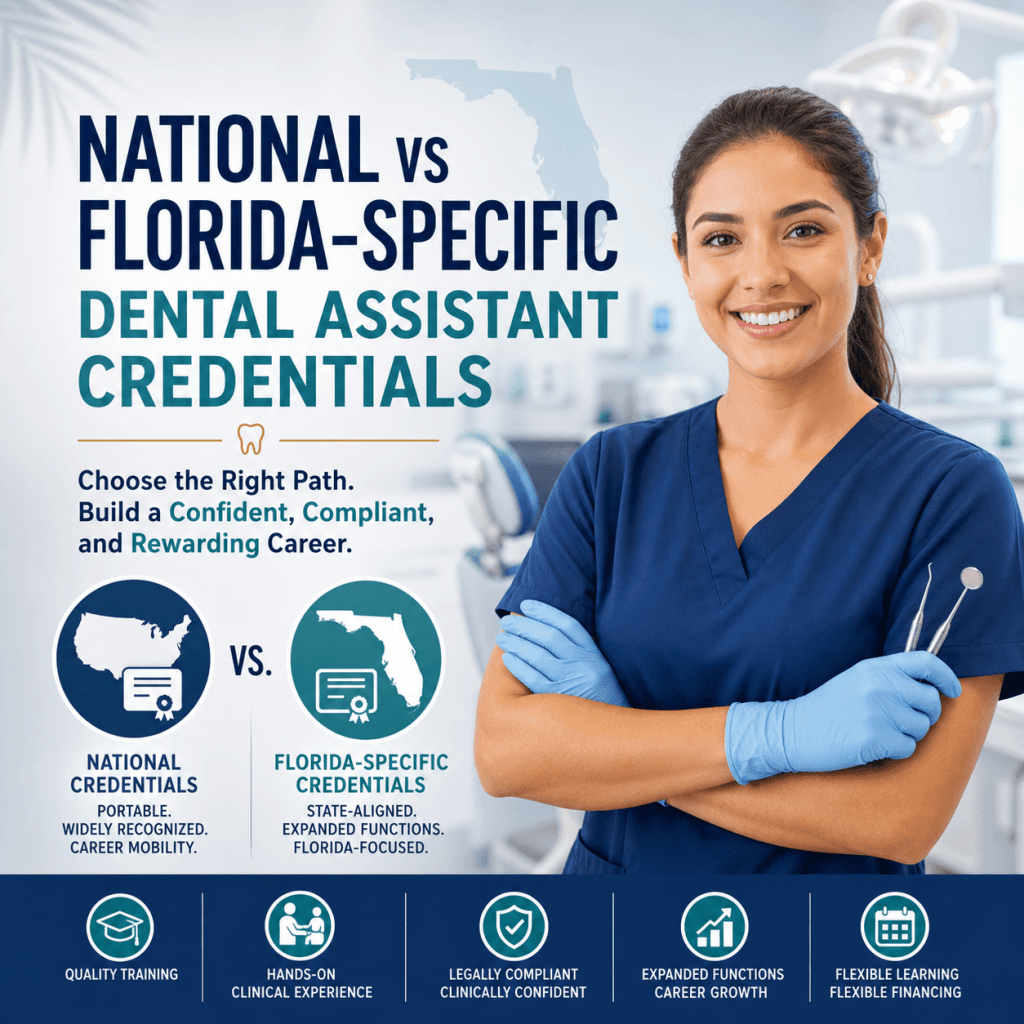
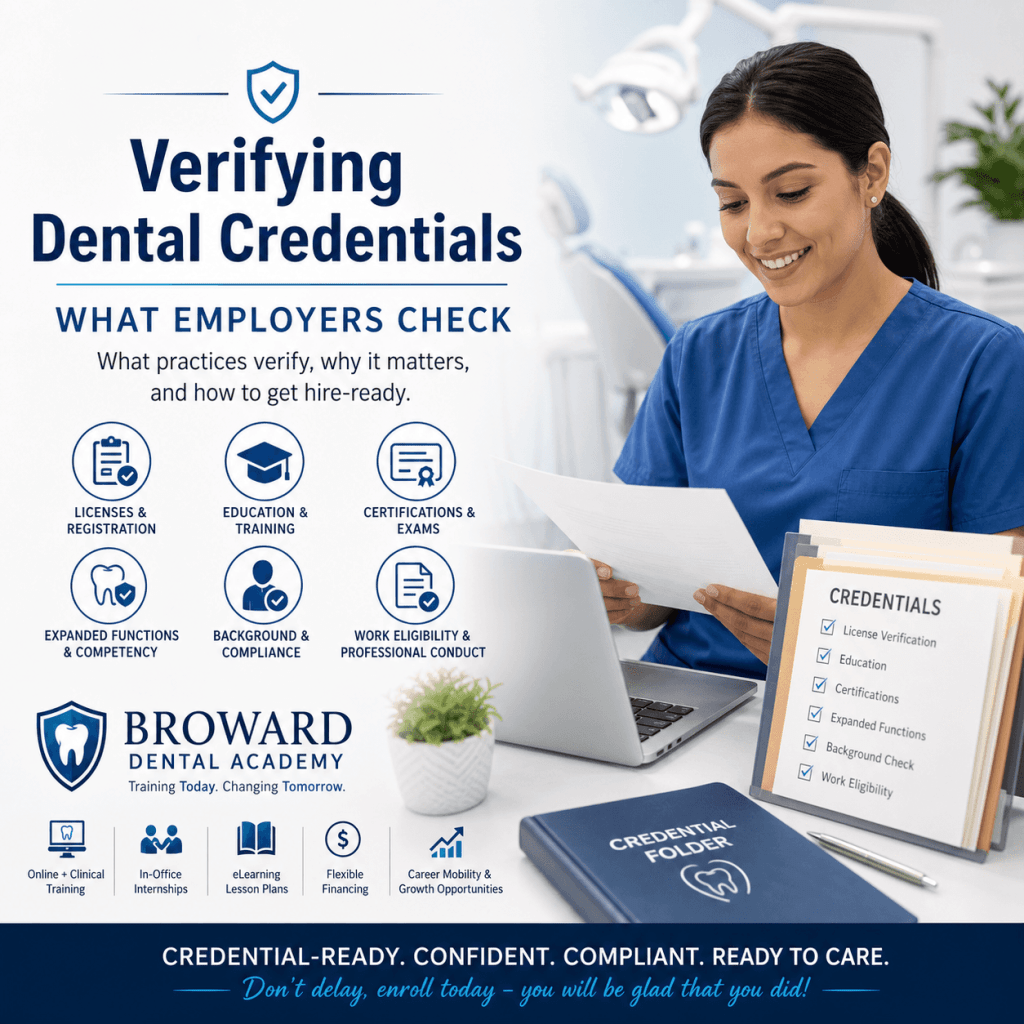
Many dental assistant jobs in Florida also require certain certifications. For example, having the Dental Assisting National Board (DANB) Certified Dental Assistant (CDA) credential can improve your chances and prove your skills. Some offices might ask for an Expanded Functions Dental Assistant (EFDA) certificate if they need assistants to do more advanced tasks.
It’s important to know the rules from the Florida Board of Dentistry and the Florida Administrative Code (F.A.C.), which explain what dental assistants are allowed to do. Also, attending programs approved by the Commission on Dental Accreditation (CODA) is important because these programs meet national training standards needed for certificates like CDA and EFDA.
Some offices may also require a Dental Radiology Certification if you’ll be taking X-rays.
Many aspiring professionals wonder how to become a dental assistant while balancing work and studies.
Ultimately, understanding how to become a dental assistant allows you to build a successful career.
You can think of “readiness” in two main levels:
- Entry-level readiness: basic chairside skills, sterilizing tools, setting up the room, preparing patients, and helping the dental team. This is usually covered in a Dental Assistant Level 01 program.
- Expanded functions support: extra duties that need more training and proof of skill depending on the office’s needs and what’s allowed. This might mean getting further training like Dental Assistant Level 02 or Dental Assistant Hygienists Level 03.
A common question is how to become a dental assistant without previous experience.
Each step in the training process reveals how to become a dental assistant effectively.
The main point is: be ready to work, not just have a good résumé. When your training includes hands-on practice and real clinical experience, you’ll feel confident instead of guessing on the job.
As you progress, you will see how to become a dental assistant is about continuous learning.
How do you become a dental assistant in Florida?
By understanding how to become a dental assistant, you can ensure you meet the expectations of employers in Florida.
Here’s an easy plan that works for most students in Florida.
Step 1: Choose Your Goal
Think about what you want to achieve in the next 6 to 12 months:
- Want to start working as an entry-level dental assistant quickly? Then look into a Dental Assistant Level 01 program. Check the dental assistant program requirements Florida to make sure you qualify.
- Want a path that lets you take on more responsibilities later? Explore certifications for higher roles like Dental Assistant Level 02 or Dental Assistant Hygienists Level 03. Look at the application rules for dental programs in Florida when choosing your path.
Picking a clear goal helps you find the right training, schedule, and hands-on experience. For more details on programs and locations, visit our locations page.
Step 2: Pick a Program That Mixes Online Learning with Hands-On Practice
Many students need flexible options, but dental assisting is hands-on work. Good programs usually include:
- Online lessons for basic knowledge and organized study
- In-person labs to practice using tools and working in the dental chair
- Training focused on building real skills and confidence, not just memorizing facts
Also, check the GPA requirements for dental assisting programs in Florida before applying.
Following this guide on how to become a dental assistant can lead to a fruitful career.
Step 3: Start Practicing Real Clinical Skills Early
The sooner you practice actual skills (with guidance), the faster you’ll gain confidence. Look for programs that let you try:
- Infection control procedures
- Chairside assistance and suctioning
- Setting up and cleaning treatment areas
- Positioning patients comfortably
As you get better, think about preparing for the dental assisting certification exam to prove your skills and improve your job chances.
Step 4: Gain real work experience through an internship or externship
This is where many students stand out. Working in an office teaches you:
- How a real workday moves
- How teams talk and work under pressure
- How to predict the next steps in procedures
- How to stay accurate when things get busy
In Florida, dental assisting internships or externships usually require:
- Proof of COVID-19 vaccination
- A current flu shot
- Passing a drug test before starting clinical work
Step 5: Get ready for job hunting like a pro
A strong dental assistant candidate can clearly explain their training. Focus on:
- A clear résumé that highlights your skills
- Being prepared for interviews, including handling feedback and stress
- Dressing and speaking professionally
- Explaining your clinical hours and what you practiced
Step 6: Keep improving as your career grows
Dental assisting rewards those who keep learning. As you gain experience, you can take more dental courses and advanced training that fit your goals.
What will you learn in a good program?
A good program prepares you for the real daily work in a modern dental office, not just classroom tests.
Basic skills that apply to everyday work
You can expect training on:
- Infection control and proper sterilization
- Setting up and cleaning operatories and trays
- Basic chairside assisting, like passing instruments
- Using suction tools effectively
- Positioning patients comfortably and communicating well
These are the skills offices look for when deciding if you’re ready to work.
Dental office workflow
Dental assisting involves coordination. A good program will help you learn:
- How scheduling works and how the clinical day flows
- How to support documentation and charting
- How to communicate with the dentist, hygienist, and front desk
- How to talk professionally with patients, including those who are nervous
Materials and procedure support
Depending on your training, you may also learn how to help with procedures by:
- Knowing common instruments and materials
- Assisting with impressions and temporary dental work (if applicable)
- Understanding basic support for restorative procedures
Professional standards that protect patients and your career
Good training shapes how you act in clinical settings, including:
- Ethics and professionalism
- Thinking critically and being aware of your surroundings
- Staying calm, accurate, and open to learning during busy times
Why immediate practice matters
Students usually learn faster when they start practicing early and often. The more you repeat tasks and get feedback in supervised settings, the easier the job feels once you start working.
Online or hands-on clinical training: what should you look for?
It’s normal to want flexible learning if you’re balancing work, family, or commuting. Online courses are great for:
- Learning anatomy, terms, and basics
- Understanding step-by-step procedures
- Following structured lessons and reviews
But some parts of dental assisting need hands-on practice for you to feel confident from day one.
What must be hands-on
Choose a program that offers supervised practice in areas like:
- Identifying and handling instruments
- Setting up and cleaning the operatory (treatment room)
- Assisting chairside during procedures
- Proper infection control habits every time
- Interacting with real patients and communicating in real time
The best training model
The most effective way for many students is:
- Online lessons for remote learning
- Organized in-person labs to practice skills
- Internships in offices to experience real work pace and flow
How to choose a program before enrolling
Ask clear questions like:
- How many supervised clinical hours are included?
- How are skills tested, and what does “competent” mean?
- Is help provided to find internships?
- Who oversees the hands-on training?
- What can graduates confidently do on their first day?
Good programs focus on skills mastered, not just finishing the course.
For more information about dental assistant programs, including frequently asked questions, check out Broward Dental Academy’s resources.
How do internships help you get hired faster?
Dental offices want candidates who know how a real work setting operates. An internship isn’t just a requirement, it shows you can work well in a team.
What employers look for
Internships show you understand:
- Infection control and keeping things sterile in real situations
- Setting up and cleaning up quickly under pressure
- Team communication and professional behavior
- How procedures flow and how to keep patients comfortable
How internships build confidence
Confidence grows through practice and feedback:
- You perform the skill
- You get corrections
- You repeat it until you do it well every time
This helps you become faster, calmer, and more accurate when you start paid work.
Questions to ask before enrolling
Before picking a program, ask:
- Where do internships take place?
- How are internship hours scheduled?
- What skills will you need to do during the internship?
- Who supervises and approves your skills?
How to turn an internship into a job
Many students get hired where they intern or through contacts made there. The habits that help most are:
- Being reliable and on time
- Willingness to learn and stay positive
- Communicating professionally
- Keeping track of what you practiced and what you can do well
For more detailed strategies on turning your internship into a full-time job, consider exploring resources that provide comprehensive guidance.
What career growth is available in Florida?
Dental assisting is appealing because it offers room to grow. In Florida, career growth can include:
- Moving from basic assisting to expanded function roles (if available)
- Becoming a lead assistant who trains others
- Working in special areas like orthodontics, oral surgery, or pediatrics
- Building a long-term career in different types of dental practices across Florida
The dental field offers steady work because there’s always demand and many types of practices, from small offices to large groups.
Advanced training can lead to more responsibility and higher pay, especially when it helps you add more value to patient care. The best way to grow is to start with solid basics, then add new skills as you gain confidence.
How does Broward Dental Academy prepare you?
Broward Dental Academy is dedicated to helping dental professionals grow through hands-on training programs.
What sets us apart is our focus on getting you ready for real jobs. It’s not just about passing tests, it’s about preparing you to succeed in a busy dental office where being consistent, following rules, and feeling confident are important every day.
Our Training Includes:
- A mix of online and in-person learning using up-to-date eLearning courses
- Starting practical work early with online and clinical practice
- Hands-on internships at places like Woodstock Schools to give real-world experience
- Coaching to help you become a skilled and professional dental worker
We offer many dental courses, including 07 different options, so you can choose what fits your goals, whether you’re new or want to advance your skills.
For adult learners, we provide flexible payment plans to make starting easier. If you’re joining dental assistant programs in Florida, you may also qualify for financial help like federal Pell Grants or state scholarships such as the Florida Student Assistance Grant (FSAG), which can lower costs and make education more affordable.
How long does it take, and what does it cost?
Since time and costs vary, it’s best to plan carefully instead of guessing.
How long it takes
The length of the program depends on:
- Whether it’s part-time, full-time, or a mix of both
- How fast you complete online lessons
- The number of required supervised clinical hours
- When internships are scheduled and available
To get a clear idea of your timeline, ask the program for details on online classes, in-person labs, and internship hours.
What to budget for
When comparing programs, consider all costs, including:
- Tuition fees
- Supplies, textbooks, and materials (if needed)
- Scrubs and clinical shoes
- Transportation and travel costs
- Any exam or certification fees related to your goals
- Possible lost income if your schedule changes
Flexible schedules and payment options can help, especially if you have family or work commitments.
Look at the overall value of a program, not just the price. In dental assisting, value comes from quality hands-on practice, internship experience, and how prepared you feel for your first job interview.
Students can earn an Applied Technology Diploma (ATD) or Associate of Science Degree in Dental Assisting at schools like Broward College or Nova Southeastern University College of Dental Medicine.
What are the next steps?
Here’s a simple plan to get started:
- Choose the role you want (entry-level now, growth later)
- Pick a training program with hands-on practice and a real internship
- Build skills through practice, supervision, and feedback
- Apply confidently with a professional résumé and clear explanation of your training
Dental assisting is great for people who want healthcare work with hands-on tasks, flexible hours, and a respected role on a dental team.
If you’re ready to move forward, check out Broward Dental Academy’s programs. Ask about their training style and internship opportunities. Find an enrollment time that works for you.
Don’t wait, enroll today! You’ll be glad you did!
FAQs (Frequently Asked Questions)
Why is dental assisting a good career choice in Florida?
Dental assisting is a solid and rewarding career in Florida because the dental field is growing. It offers steady pay, flexible hours, a respected role that helps patients directly, and chances to advance into specialized areas like root canals or gum care.
What do dental assistants usually do in Florida?
Dental assistants in Florida set up equipment for procedures, follow cleaning and safety rules, help dentists during appointments, prepare and comfort patients, assist with record-keeping, take X-rays if allowed, and keep things running smoothly for dentists and hygienists.
What skills or qualifications do you need to work as a dental assistant in Florida?
Skills needed depend on the tasks but usually include hands-on clinical ability, knowing infection control, being professional, communicating well with patients, working quickly and accurately, and being comfortable working with a team. Basic readiness often comes from completing a Dental Assistant Level 01 program; more advanced roles may need extra certifications like Level 02 or Hygienist Level 03.
How can I become ready for a dental assistant job in Florida?
To be ready for work, you should complete training that offers real practice and clinical experience. Joining programs like Dental Assistant Level 01 teaches hands-on skills such as helping chairside, sterilizing tools, setting up treatment rooms, and preparing patients so you can confidently work in busy dental offices.
How do I start a career as a dental assistant in Florida?
First, decide if you want an entry-level job or a role with more duties. Then pick a training program that mixes online lessons for basic knowledge with in-person labs to practice skills. Learning real hands-on skills early helps you feel ready and confident to start working quickly.
Where can I find good dental assistant training programs in Florida?
Broward Dental Academy offers complete training programs that meet Florida’s requirements for dental assistants. Their courses include online classes, hands-on labs, and clinical practice to help students get jobs quickly and grow their careers in dentistry.
More questions about becoming a dental assistant in Florida
What are the primary duties of a dental assistant in Florida?
Dental assistants in Florida perform essential tasks such as setting up operatories and trays for procedures, following sterilization and infection control protocols based on CDC guidelines, assisting chairside during restorative, surgical, or emergency visits, preparing patients and ensuring their comfort, supporting charting and documentation, taking radiographs when delegated, and maintaining workflow to enable dentists and hygienists to focus on patient care.
What qualifications and skills do Florida dental employers typically seek in dental assistant candidates?
Employers in Florida look for dental assistants who are well-trained, legally compliant, and clinically confident. Key skills include hands-on clinical abilities beyond theoretical knowledge, strong infection control habits, professionalism, effective patient communication, speed and accuracy in busy operatory environments, comfort with teamwork and feedback, and the ability to maintain fast-paced workflows.
How can I become a job-ready dental assistant in Florida?
To become job-ready in Florida’s dental field, candidates should choose appropriate training programs that blend online learning with hands-on skill-building. Early supervised practice is crucial to build real clinical skills such as infection control routines, chairside techniques, operatory setups, patient positioning, and comfort. Completing internships or externships provides valuable real-world experience. Preparing a professional résumé and interview readiness further enhance hiring prospects.
What are the levels of dental assistant training available in Florida?
Florida offers multiple levels of dental assistant training: Entry-level readiness (Dental Assistant Level 01) focusing on chairside fundamentals; Expanded functions support requiring additional training (Dental Assistant Level 02); and advanced roles like Dental Assistant Hygienists Level 03. These pathways allow for career growth depending on individual goals and desired responsibilities within dental practices.
Why is the demand for dental assistants strong in Florida?
The demand for dental assistants in Florida remains strong due to expanding dentistry services across the state, increased need for ongoing patient care, and modernization efforts by dental offices seeking high-performance team members. This dynamic market offers stable income potential, flexible schedules, respected roles with direct patient impact, and opportunities for career mobility into specialty practices.
What should a quality dental assistant training program include to prepare students effectively?
A quality dental assistant training program should prepare students for the realities of modern dental practices by combining online core concept lessons with in-person labs focused on instrument handling and operatory skills. Training emphasizes competence over memorization and includes infection control protocols aligned with CDC standards, operatory setup/breakdown procedures, chairside assisting basics like passing instruments and suction techniques, patient positioning and communication skills, workflow coordination including scheduling and documentation support, understanding common materials/procedures as applicable, and fostering professional ethics and behavior.