Why licensing and scope-of-practice rules matter for dental assistants
Dental assisting is one of the fastest-growing corners of healthcare, and it is easy to see why. It offers stable income, flexible schedules, real career mobility, and multiple pathways to specialize, such as in orthodontics or oral surgery. But there is one part of the job that never changes, no matter how busy the schedule gets: you must stay compliant with your state’s licensing and scope-of-practice rules.
Here is what is truly at stake:
- Patient safety: Dental teams work in a clinical environment where infection control, radiography safety, and procedural boundaries matter.
- Legal compliance: State dental boards set rules for what an assistant can do, what training is required, and what level of supervision is necessary.
- Employer trust: Practices want assistants who reduce risk, not add to it. Documentation and clear credentials make hiring easier.
- Career mobility: If you move, change offices, or step into expanded functions, your ability to prove compliance becomes a career advantage.
Scope of practice simply means: what tasks you are legally allowed to perform, under what type of supervision, and what training, exams, permits, or certification you must have before you do them.
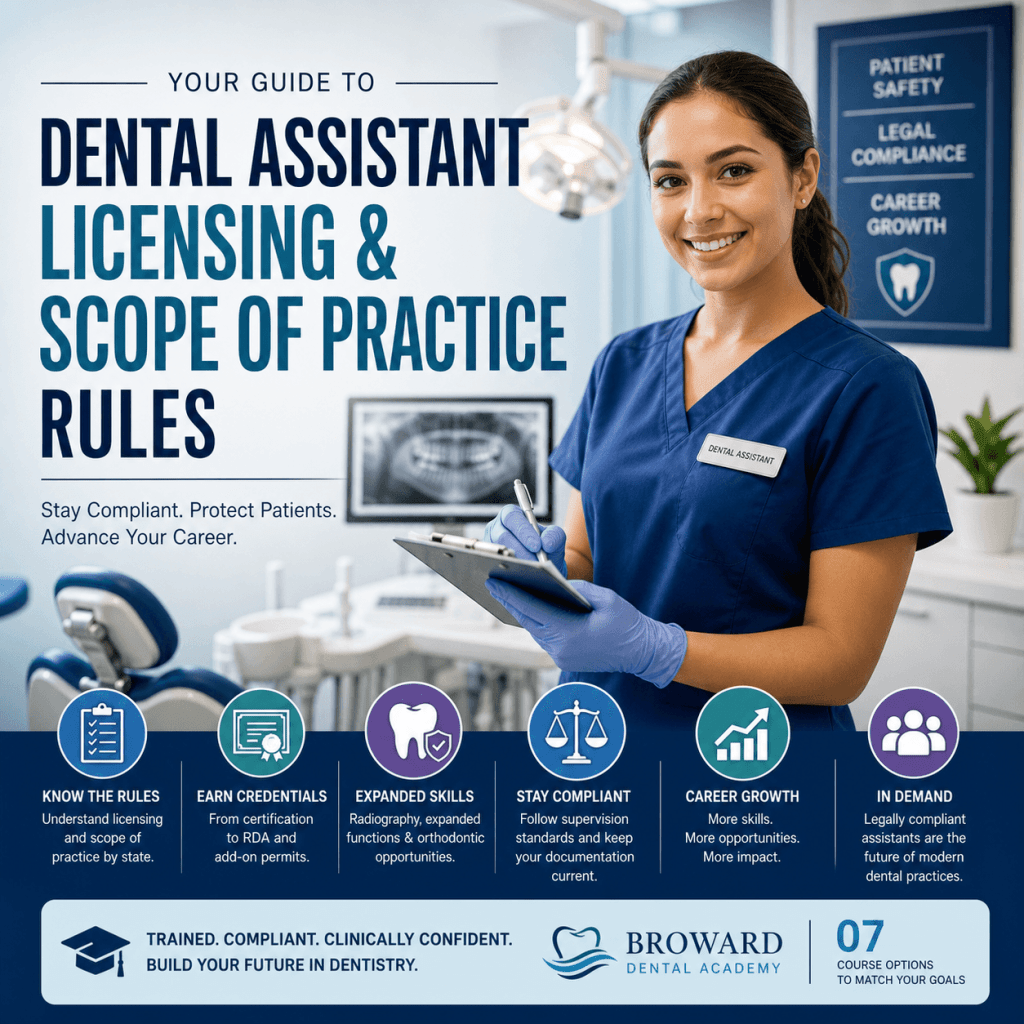
A key reality to understand is that scope-of-practice rules vary by state, sometimes significantly. This guide will help you understand the overall framework, the most common requirements, and how to stay compliant so you can work confidently and build a career that travels well.
If you’re considering entering this field or looking to further your education in dental assisting, institutions like Broward Dental Academy offer valuable resources and training programs. They provide comprehensive courses that cover various aspects of dental assisting including specialized areas such as orthodontics and oral surgery, which can greatly enhance your career prospects.
Dental assistant roles explained: unlicensed, certified, and registered pathways
If you have been searching for dental assistant jobs or training programs, you have probably seen role titles that sound similar but mean different things depending on the state.
Here are the common pathways and what they usually signal:
- Dental Assistant (DA) (entry-level): Often used as a general job title. In some states, you can start in an entry role with on-the-job training for basic supportive duties. This could include tasks typically associated with dental assistant level 02.
- Certified Dental Assistant (CDA): Typically refers to a national certification (often through a third-party credentialing body). This is not the same thing as state licensing, though some states accept national exams as part of their requirements. Achieving a certification could open up more opportunities for you.
- Registered Dental Assistant (RDA): Usually refers to a state-controlled registration. Many states use “registration” to indicate a higher, verified level of training and legal accountability.
- Expanded Functions Dental Assistant (EFDA) or similar: In some states, expanded functions is a separate credential level that allows more advanced supportive clinical duties once additional training and approvals are completed.
Certification vs licensing, in plain language
- Certification is often national and can help you stand out, qualify for certain duties, or meet employer preferences.
- Licensing or registration is state-controlled and determines what you can legally do in that state.
One of the biggest points of confusion is the term “Registered Dental Assistant.” In one state, “RDA” may be the standard credential for working clinically. In another, the state may not use “RDA” at all, or it may mean something more advanced.
For instance, if you’re aiming for a career in specialties like endodontics or periodontics, understanding these roles and their requirements becomes even more crucial. Additionally, pursuing further education such as Dental Assistant Hygienists level 03 could significantly enhance your skill set and job prospects.
Specialty pathways you may hear about
Many assistants also ask about orthodontic assisting, add-on permits, or expanded function credentials. These can be excellent career moves, but they must be pursued within your state’s rules, and sometimes within your employer’s written protocols too.
The building blocks of dental assistant compliance (what most states look for)
Even though the details vary, most states evaluate compliance using the same building blocks.
Education and training documentation
States commonly look for proof of:
- Completion of an approved program or qualifying training pathway
- Required clock hours, if applicable
- Clinical competencies and skills verification
- Documentation such as transcripts, completion certificates, and course outlines
If you ever change jobs or apply for a permit, having clean documentation can save weeks of delay.
Background checks and eligibility
Many states require some combination of:
- Criminal background screening
- Minimum age requirements
- CPR/BLS training (often required or strongly expected by employers)
- Additional health or safety requirements depending on the setting
Exams and credentials
Depending on the state and the duties you want, you may need:
- A state jurisprudence exam (rules and law)
- A clinical or written competency assessment
- National exams accepted by the state for certain credentials
- Additional course completion and verification for expanded functions
Supervision standards (this changes everything)
Supervision rules determine what you can do and when you can do it. Common categories include:
- Direct supervision: The dentist is present and actively oversees the procedure.
- Indirect supervision: The dentist authorizes the procedure and is in the office, but may not be chairside.
- General supervision: The dentist authorizes the procedure, and specific presence requirements vary by state.
The same task can be legal under one supervision level and not legal under another. Always confirm the supervision standard that applies to the duty you are performing. If you’re considering pursuing a career in dental assisting in Florida, exploring options such as Broward Dental Academy could provide valuable insights into local training programs available.
Recordkeeping and compliance habits
Strong assistants keep a personal compliance folder with:
- Program completion documents
- CPR/BLS card
- Radiography certificates or permits
- Expanded functions permits
- CE logs and renewal confirmations
This is helpful for audits, renewals, and job changes, and it signals professionalism during hiring.
Scope of practice basics: what dental assistants typically can do (and what they can’t)
Dental assisting includes a wide range of tasks, but the legal boundary lines matter.
Commonly allowed administrative and patient-care tasks
In many states, dental assistants can perform duties such as:
- Scheduling and front-office support
- Updating patient records and intake paperwork (within office policy)
- Infection control and sterilization workflows
- Treatment room setup and breakdown
- Chairside assisting, instrument transfer, and retraction
- Patient instructions and education that align with the dentist’s diagnosis and plan
Supportive clinical tasks often allowed with training and supervision
State rules may allow, with the right training and supervision:
- Suctioning and evacuation
- Taking impressions or digital scans (state-dependent)
- Placing and removing rubber dam (state-dependent)
- Applying fluoride or sealants (state-dependent and often credential-dependent)
- Assisting in restorative procedures in supportive ways as defined by the state
Common hard boundaries
While details vary, dental assistants are commonly restricted from:
- Diagnosing conditions
- Creating treatment plans
- Performing irreversible procedures without the proper expanded credential
- Tasks such as final cementation, occlusal adjustments, or procedures legally reserved for licensed providers, unless the state explicitly allows them under a defined expanded function credential
How expanded functions change what you can do
Expanded functions typically add higher-level supportive procedures to your scope, but only after you complete the required training and authorization. The most important rule is simple: never perform an expanded duty unless you are properly credentialed to do it in your state.
When in doubt, confirm duties with:
- Your state dental board rules
- Your dentist’s written protocols
- Your training documentation and permits
Dental radiography: X-ray certification, dental X-ray license, and safety rules
Radiography is one of the most searched and most misunderstood compliance topics for dental assistants, and it is treated as a special category for a reason: radiation safety and patient protection require stricter oversight.
Common terms you will see (and why they vary)
Depending on the state, you might see:
- “X ray certification dental”
- “Dental xray license”
- “Radiography permit”
- “Dental radiology certification”
- “Dental radiography certification”
They often describe the same concept: authorization to legally take dental radiographs under the state’s rules.
Typical steps to become radiography-eligible
While requirements vary, a common pattern is:
- Complete approved radiography training
- Pass an exam and/or skills competency verification
- Submit a state application for a permit or authorization, if required
Common limitations and compliance expectations
States and offices may limit or define:
- The types of images an assistant may take
- Required supervision levels
- Documentation standards for the patient chart
- Safety steps such as shielding, exposure protocols, and equipment use
Why radiography eligibility boosts employability
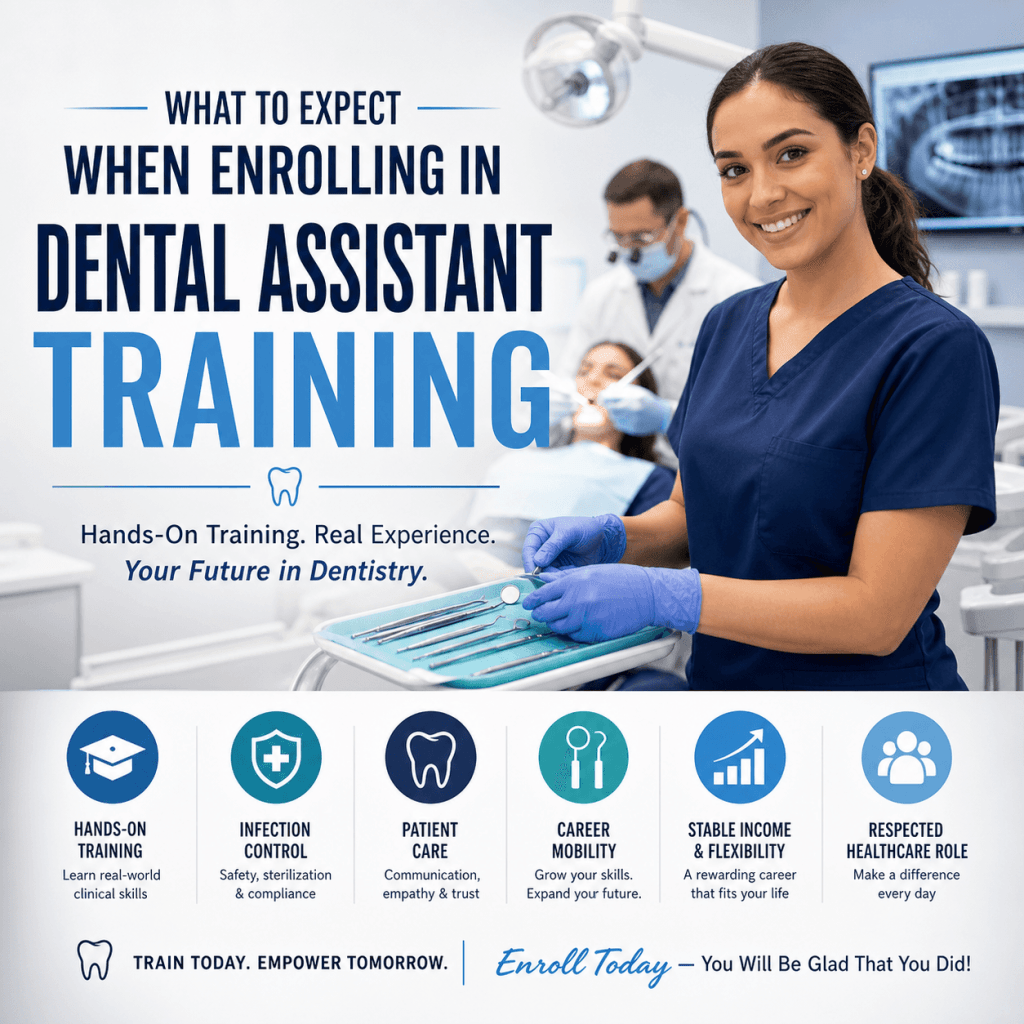
Many dental offices prioritize assistants who are already radiography-eligible because it expands scheduling flexibility and reduces onboarding time. If you want to be more competitive in hiring, radiography is often one of the most valuable early credentials.
Registered Dental Assistant (RDA): what it usually means and how to qualify
RDA status generally exists to create a more standardized level of competency and legal accountability. Even in states that use different terminology, the purpose is similar: confirm that an assistant has met defined requirements and can safely perform a wider scope of supportive duties.
A “typical” RDA pathway (state-dependent)
Many states follow a general sequence like this:
- Complete a qualifying dental assisting program or approved training pathway
- Meet required eligibility items (background screening, CPR/BLS, and other state conditions)
- Pass required exams (state, national, or both depending on the state)
- Submit an application, documentation, and fees
- Maintain the credential through renewal and continuing education
Common credential language people search
You will see searches like:
- “RDA certification”
- “RDA license” or “RDA licence”
- “Dental assistant licence”
- “Registered dental assistant requirements”
The right term depends on the state. The practical focus should be: what title does your state recognize, what is required to earn it, and what duties it unlocks.
RDAs and expanded functions
In many states, RDA status is a gateway to:
- Radiography authorization
- Expanded functions courses and permits, such as those offered by institutions like the Broward Dental Academy
- Additional specialty permissions, depending on the state
Renewals and continuing education
Renewals and CE are not just administrative. They protect your career. If you let a permit lapse, you can lose the legal ability to perform key duties, and that can affect your job options quickly.
Expanded functions and add-on permits: how assistants legally do more
Expanded functions exists for a practical reason: it helps practices run efficiently while maintaining safety standards. When assistants are trained and authorized to take on additional supportive duties, dentists can delegate appropriately, patient flow improves, and the whole team becomes more effective.
Examples of add-on permits (state-dependent)
Depending on your state, add-on credentials may include:
- Coronal polishing
- Sealants
- Nitrous oxide monitoring
- Orthodontic assisting tasks
- Radiography authorization
- Other expanded restorative function permissions defined by the board
The typical pattern for earning expanded functions
In many states, it looks like:
DA or RDA role → approved course and clinical competency → exam or verification → permit or authorization
For more information about the common queries related to these processes, you can refer to the frequently asked questions section of Broward Dental Academy’s website.
The career upside
Expanded functions can improve:
- Income potential
- Schedule flexibility
- Mobility between offices and specialties
- Long-term career growth without leaving the clinical setting
A critical warning
Performing expanded duties without proper authorization can risk:
- Patient safety
- The dentist’s license
- The assistant’s employability and future credentialing
If you are asked to do something outside your scope, pause and verify. The best practices respect scope and protect their teams.
Orthodontic assistant: license or permit questions and common requirements
Orthodontic assisting can be a strong career path, but requirements vary widely.
- Some states treat orthodontic assisting under general dental assisting rules.
- Others require a specific permit for defined orthodontic functions.
Common ortho tasks affected by scope (state-dependent)
Orthodontic assistants may be involved in:
- Sterilization and operatory setup
- Taking impressions or scans (if allowed)
- Assisting with bracket placement workflows
- Changing ligatures or ties (if permitted)
- Patient instructions for elastics, hygiene, and retainer care
What matters is not what an office has “always done,” but what your state allows and what you have been trained and authorized to do.
What to look for in your state rules
When reviewing orthodontic duties, check whether the state specifies:
- Which ortho tasks require a permit
- Supervision level requirements
- Course and documentation standards for authorization
Why specialized training helps
Orthodontic practices move fast. Specialized hands-on education and in-office internship experience can significantly improve readiness, speed, and confidence in real workflows. Institutions like those offering dental hygiene programs often provide such specialized training.
How to find your state’s official rules (and avoid bad advice online)
The most reliable source is always your state dental board and the official statutes and regulations it enforces.
Where to look
- Your state dental board website
- Official statutes and administrative rules
- Board guidance documents and FAQs
- Published scope-of-practice charts (when available)
A simple verification checklist
When you are checking a requirement, confirm:
- The title you are pursuing (DA, RDA, EFDA, permits)
- The allowed duties for that title
- Required training and exams
- Application steps, fees, and processing times
- Renewal and CE rules, including deadlines
Red flags to avoid
Be cautious with:
- Old blog posts that do not cite current board rules
- Forum advice that varies by personal experience
- Office “traditions” that conflict with written regulations
Document everything
Save PDFs, take screenshots of current board pages, keep a credential folder, and track expiration dates. When you can prove compliance quickly, you become easier to hire and easier to promote.
What dental practices expect today (and how licensing affects hiring)
Modern dental practices prioritize compliance because it impacts:
- Risk management and patient safety
- Insurance and documentation standards
- Patient trust and reputation
- Efficient delegation across the team
What makes a candidate stand out
Hiring teams often look for:
- Radiography eligibility (or a clear plan to obtain it)
- Organized documentation of certificates and permits
- Professional communication and strong ethics
- Clinical confidence and familiarity with real workflows
How licensing impacts day-to-day work
When an assistant is properly credentialed:
- Onboarding is faster
- More tasks can be delegated legally
- Scheduling is more flexible
- The practice can operate more efficiently
Demand for skilled dental professionals continues to rise, and assistants with clear, compliant credentials are often the easiest to place.
Training that prepares you to thrive (not just pass): what to look for in a program
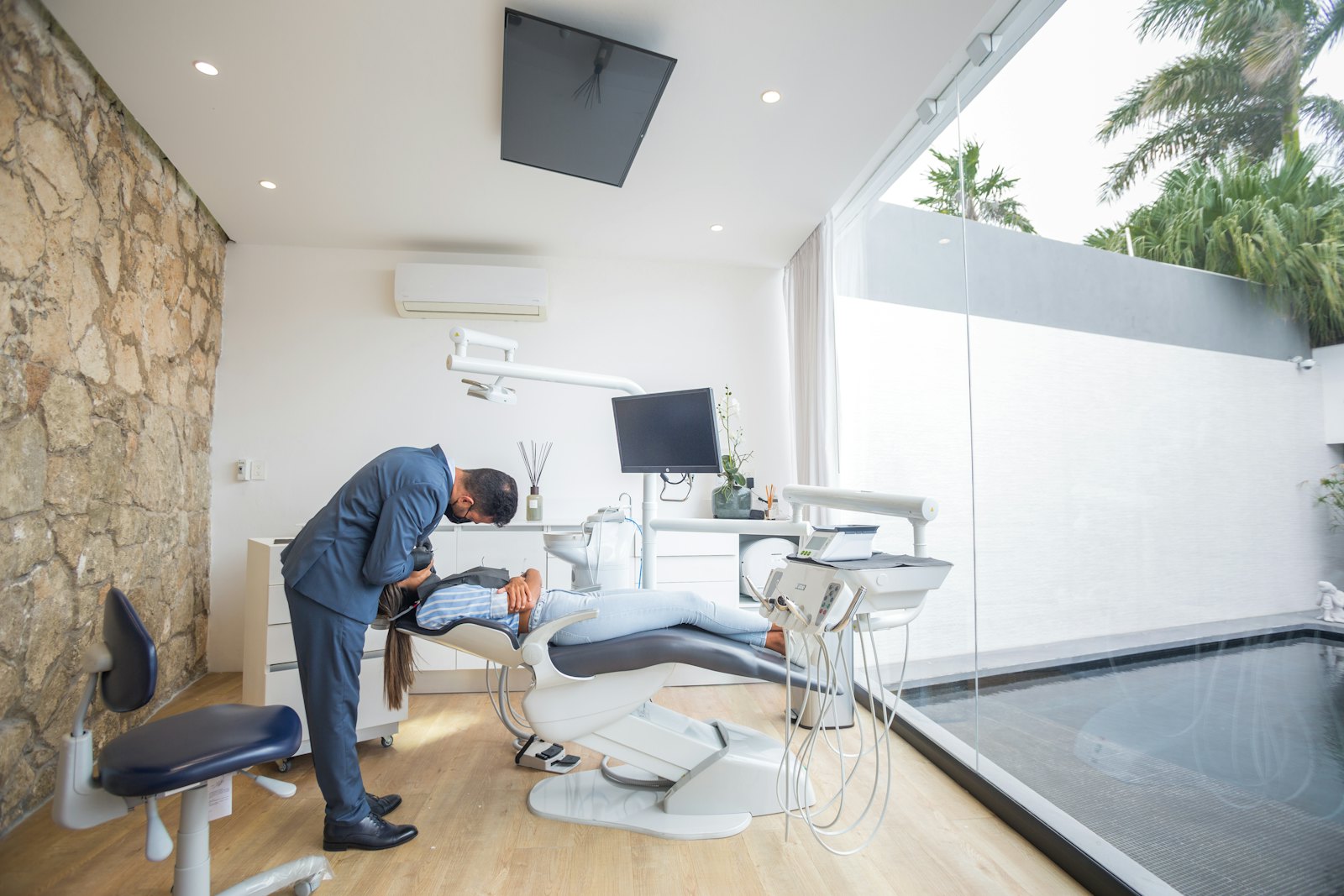
A strong program does more than help you check boxes. It should prepare you to function in a modern, high-performance practice with confidence and professionalism.
Qualities of strong training
Look for training that emphasizes:
- Critical thinking, not memorization
- Ethics, professionalism, and patient communication
- Infection control and clinical safety habits
- Legal awareness of scope-of-practice boundaries
- Real-world workflows that match what offices do today
The value of blended learning
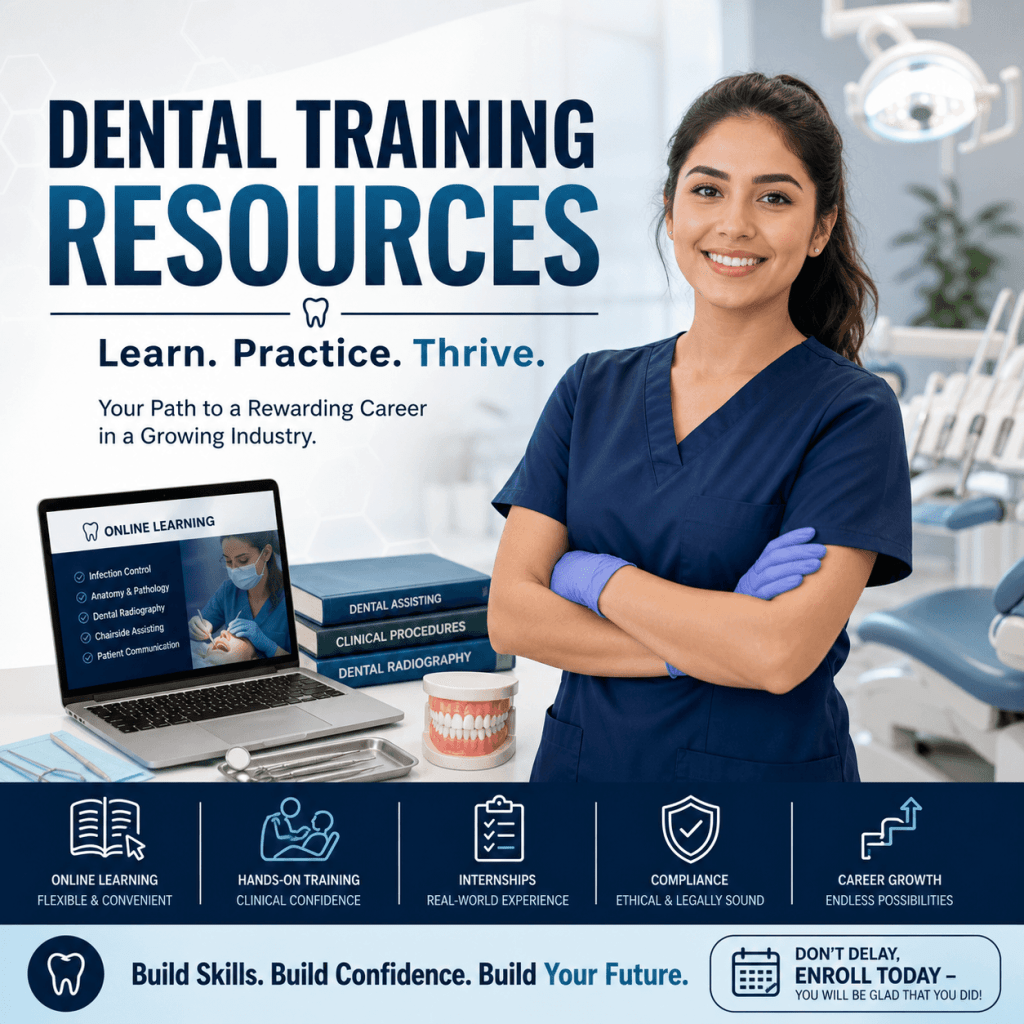
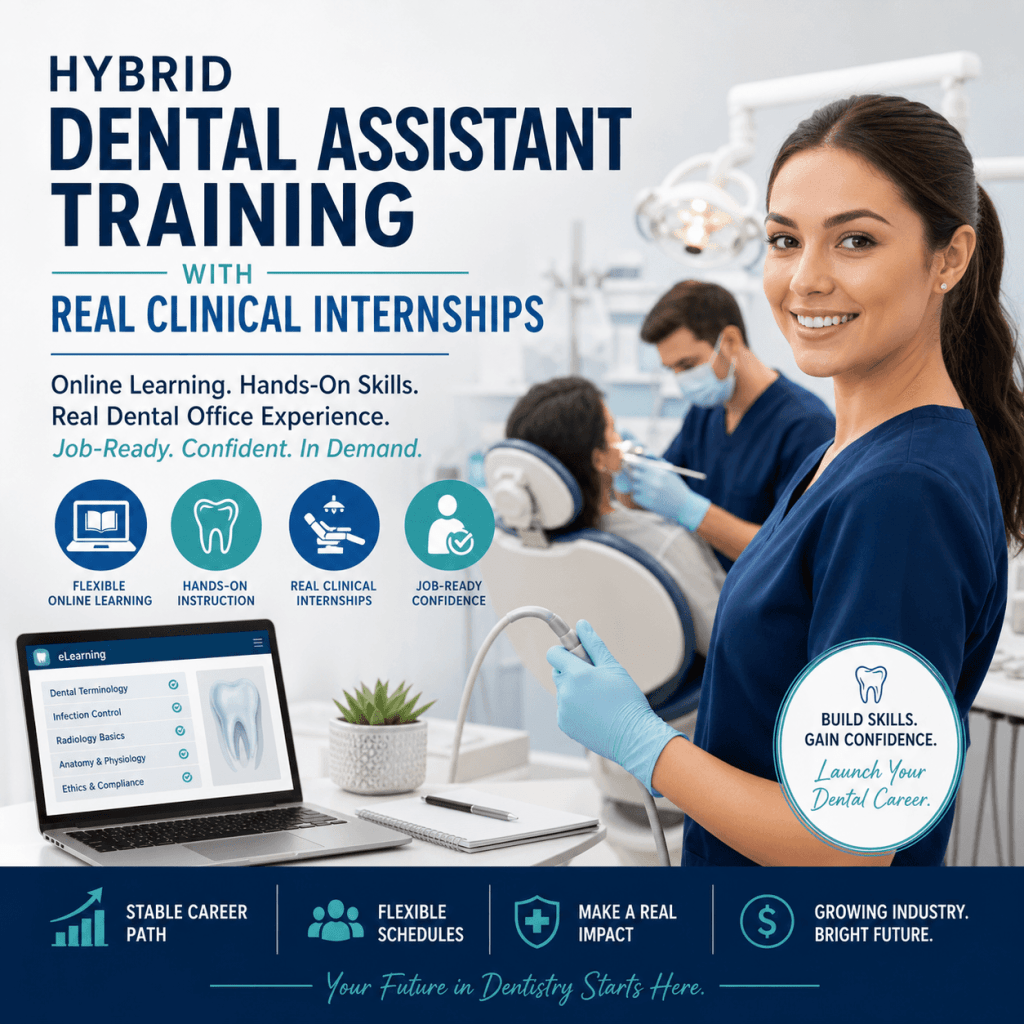
Blended learning can make training more practical and accessible. Modern eLearning lesson plans help you learn concepts efficiently, while in-person clinical skill-building ensures you can perform confidently in real settings.
Why internships and externships matter
In-office internships help you build:
- Speed and flow
- Chairside confidence
- Professional communication
- Practical understanding of what a busy practice expects
A pathway at Broward Dental Academy
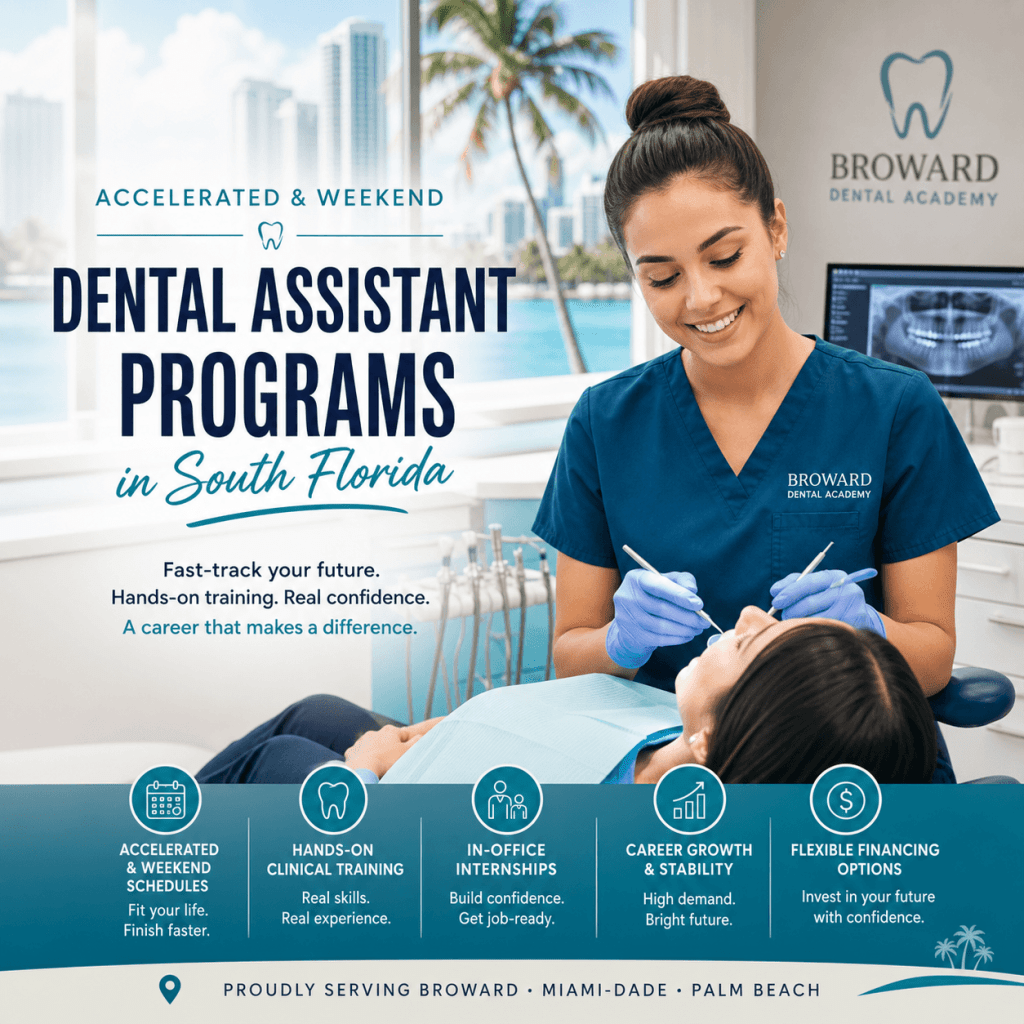
Broward Dental Academy is committed to serving the dental community by developing well-rounded professionals through a wide range of dental training programs. Students experience immediate immersion in online and clinical settings, with up-to-date eLearning lesson plans, hands-on skill building, and in-office internship opportunities.
Broward Dental Academy offers 07 courses, with flexible schedules and flexible financing available, helping students upskill while balancing work and life.
A practical roadmap: from new student to licensed or registered, scope-ready assistant
If you want a simple way to think about your next steps, use this roadmap as a planning tool. Always verify your state’s specific rules.
Step-by-step journey (state-dependent)
- Choose your role goal: entry-level DA, RDA track, radiography eligibility, expanded functions, or orthodontic pathway
- Enroll in a reputable program that teaches both clinical skills and compliance awareness
- Complete clinical competencies and keep your documentation organized
- Pursue required exams and permits (radiography, RDA registration, expanded functions)
- Apply, renew, and track CE so your credentials remain active and usable
Build a personal compliance portfolio
Keep digital and printed copies of:
- Program certificates and transcripts
- Radiography documentation and permits
- CPR/BLS card
- Background check confirmations (if applicable)
- Vaccination status if required by an employer or setting
- CE logs and renewal receipts
- Links or PDFs to your state board requirements
How to talk about scope-of-practice in interviews
Be clear and direct:
- What you are authorized to do today
- What you are currently pursuing next (with a timeline)
- What documentation you can provide immediately
That level of clarity builds trust quickly.
Next step: get on the right track
If you want training that helps you become thoroughly trained, legally compliant, and clinically confident, explore the course options at Broward Dental Academy for guidance on the best path for your goals.
For those considering the Clinical Fellowship route in speech-language pathology or needing clarification on scope of practice within the nursing field, these resources can provide valuable insights.
Don’t delay, enroll today; you will be glad that you did.
FAQs (Frequently Asked Questions)
Why are licensing and scope-of-practice rules important for dental assistants?
Licensing and scope-of-practice rules ensure patient safety, legal compliance, employer trust, and career mobility. They define what tasks dental assistants can legally perform, under what supervision, and what training or certification is required. Staying compliant protects patients in clinical environments and supports your professional growth.
What does ‘scope of practice’ mean for dental assistants?
Scope of practice refers to the specific tasks a dental assistant is legally allowed to perform, the type of supervision required, and the necessary training, exams, permits, or certifications needed before performing those tasks. These rules vary by state and dictate your daily responsibilities in a dental setting.
What are the differences between unlicensed Dental Assistants (DA), Certified Dental Assistants (CDA), Registered Dental Assistants (RDA), and Expanded Functions Dental Assistants (EFDA)?
An entry-level Dental Assistant (DA) often starts with on-the-job training for basic duties. A Certified Dental Assistant (CDA) holds a national certification that may enhance job opportunities but is separate from state licensing. A Registered Dental Assistant (RDA) has state-controlled registration indicating verified training and legal accountability. Expanded Functions Dental Assistants (EFDA) have additional credentials allowing them to perform advanced clinical duties after further training.
How do certification and licensing differ for dental assistants?
Certification is typically a national credential that helps you stand out professionally and may qualify you for certain duties or employer preferences. Licensing or registration is controlled by individual states and legally determines what you can do within that state. Understanding both is crucial since terms like ‘Registered Dental Assistant’ can vary in meaning depending on the state.
What educational documentation is generally required for dental assistant compliance?
Most states require proof of completion of an approved dental assisting program or qualifying training pathway, documentation of required clock hours if applicable, verification of clinical competencies and skills, as well as transcripts, completion certificates, and course outlines to demonstrate your qualifications.
Are background checks and other eligibility criteria necessary for dental assistant licensure?
Yes, many states require criminal background screenings, minimum age requirements, and CPR/BLS training as part of the eligibility criteria for licensure or registration. These measures help ensure patient safety and maintain professional standards within the dental assisting field.