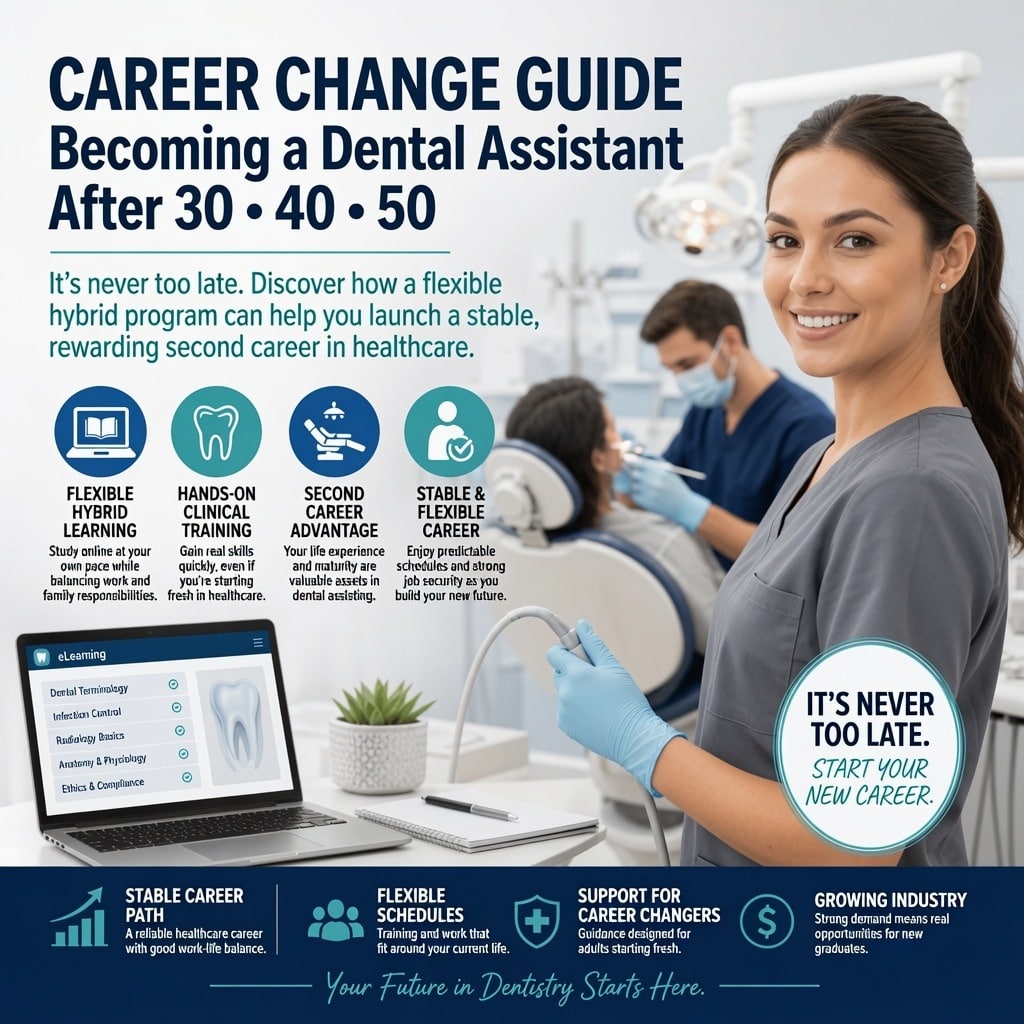
Changing careers in your 30s, 40s, or 50s is not merely “starting over.” It is about choosing a path that aligns with your current life circumstances, featuring clearer priorities and improved standards. This guide provides insights into making such a transition.
Key takeaways: become a dental assistant
- Is it too late to become a dental assistant after 40?
No. Adult career changers bring the patient communication and reliability practices hire for, and the training runs in months rather than years, ending with an in-office internship. - Is 40 too late?
No. Adult career changers bring patient communication and reliability that practices value, and the training runs in months rather than years. - What is the real work?
Clinical support at the chair, sterilization, imaging support where trained, charting and keeping the appointment schedule moving. - How long until hireable?
Most adult learners are hireable after completing hands-on training and an in-office internship, not after coursework alone. - Does prior work count?
Yes. Customer-facing and caregiving experience transfers directly to patient management, which is half of what a practice hires for.
One of the most viable healthcare pivots for adults is dental assisting. This role is hands-on, respected, and often quicker to train for compared to many other clinical positions. Importantly, you do not need a prior healthcare background to excel as a dental assistant. What you require is the right training, practical experience in real clinical skills, and a strategic plan for securing employment.
In South Florida, dental practices are actively seeking team members who can quickly adapt with strong chairside basics, solid infection control habits, and confidence while interacting with patients. This guide will detail what the job entails, how the training process works, associated costs, duration of training, and tips for landing your first role.
Why is dental assisting a smart career change at 30, 40 or 50?
A successful career change involves three key elements: stability, a realistic timeline, and a clear route to employment.
Dental assisting fulfills all these criteria.
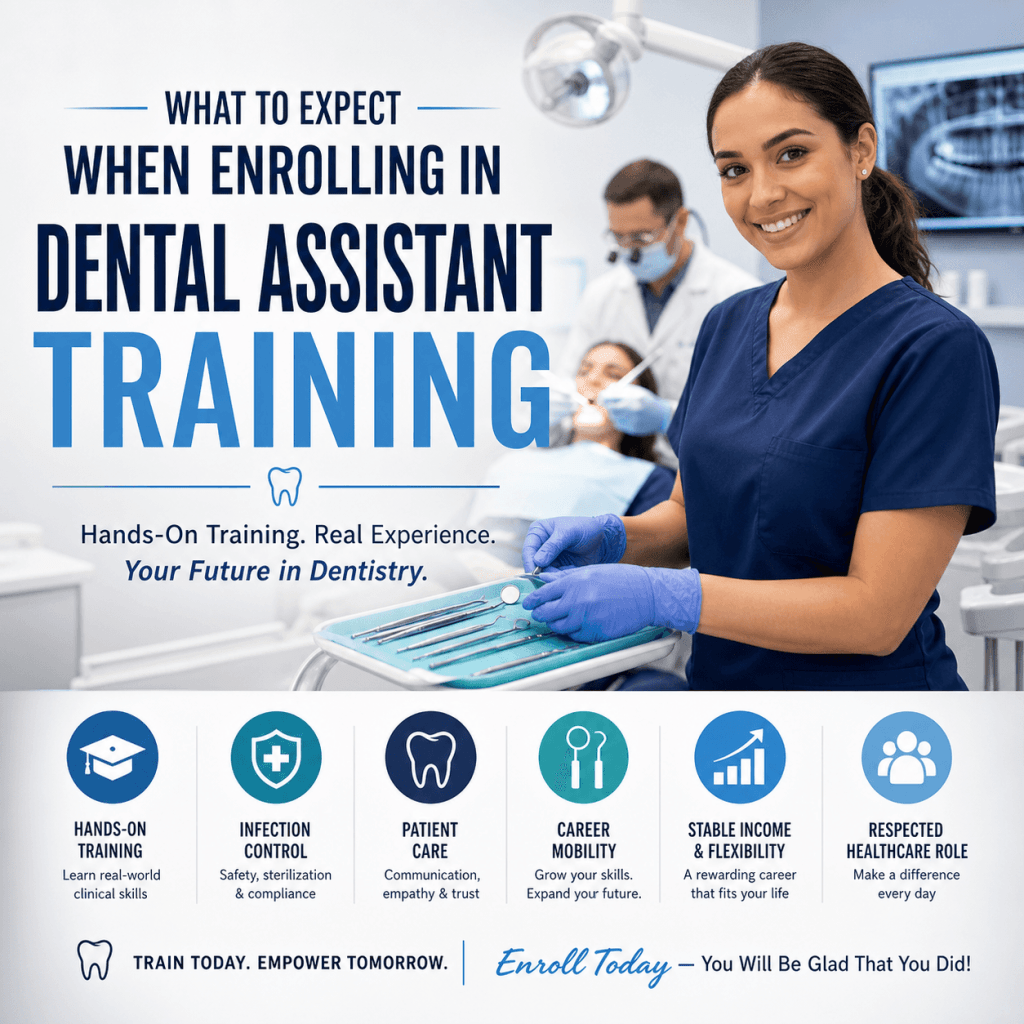
- Stable income and consistent demand: The dentistry sector is expanding within the healthcare industry and practices require dependable clinical support to maintain smooth operations.
- A respected role in healthcare: As a dental assistant, you play an active part in patient care rather than being sidelined.
- Flexible schedules: Many dental offices provide predictable weekday schedules. Some even offer part-time roles which can be beneficial during your transition.
- Clear growth pathways: Once established in this role, you can advance into specialty assisting such as Endodontics, lead roles, treatment coordination, and more.
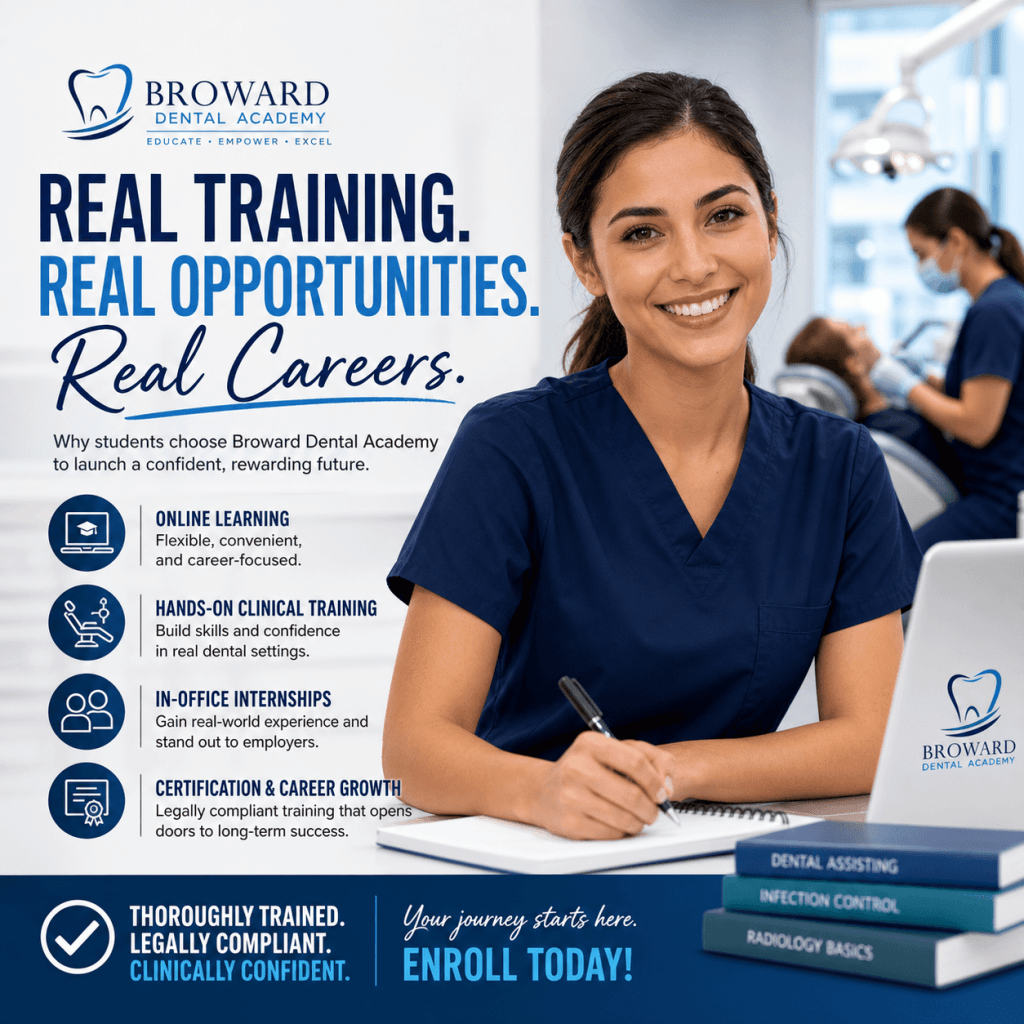
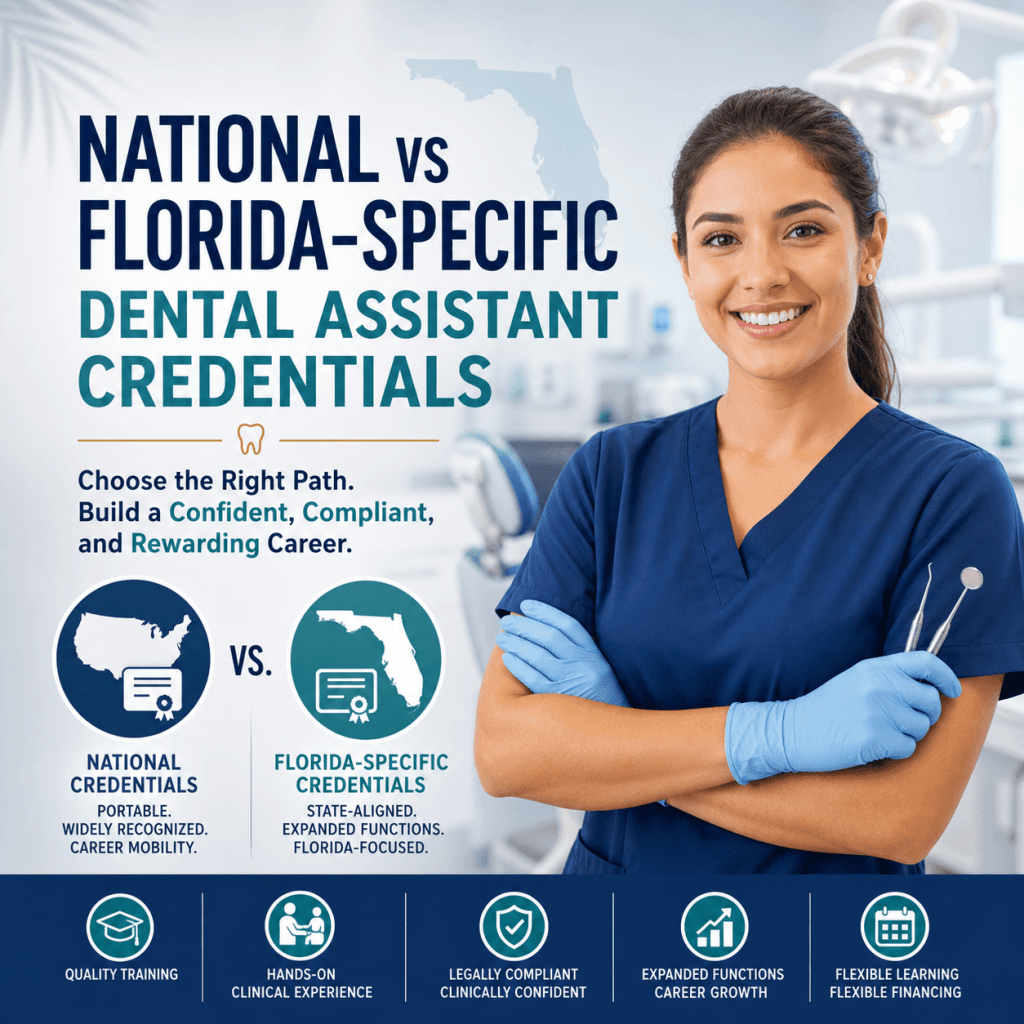
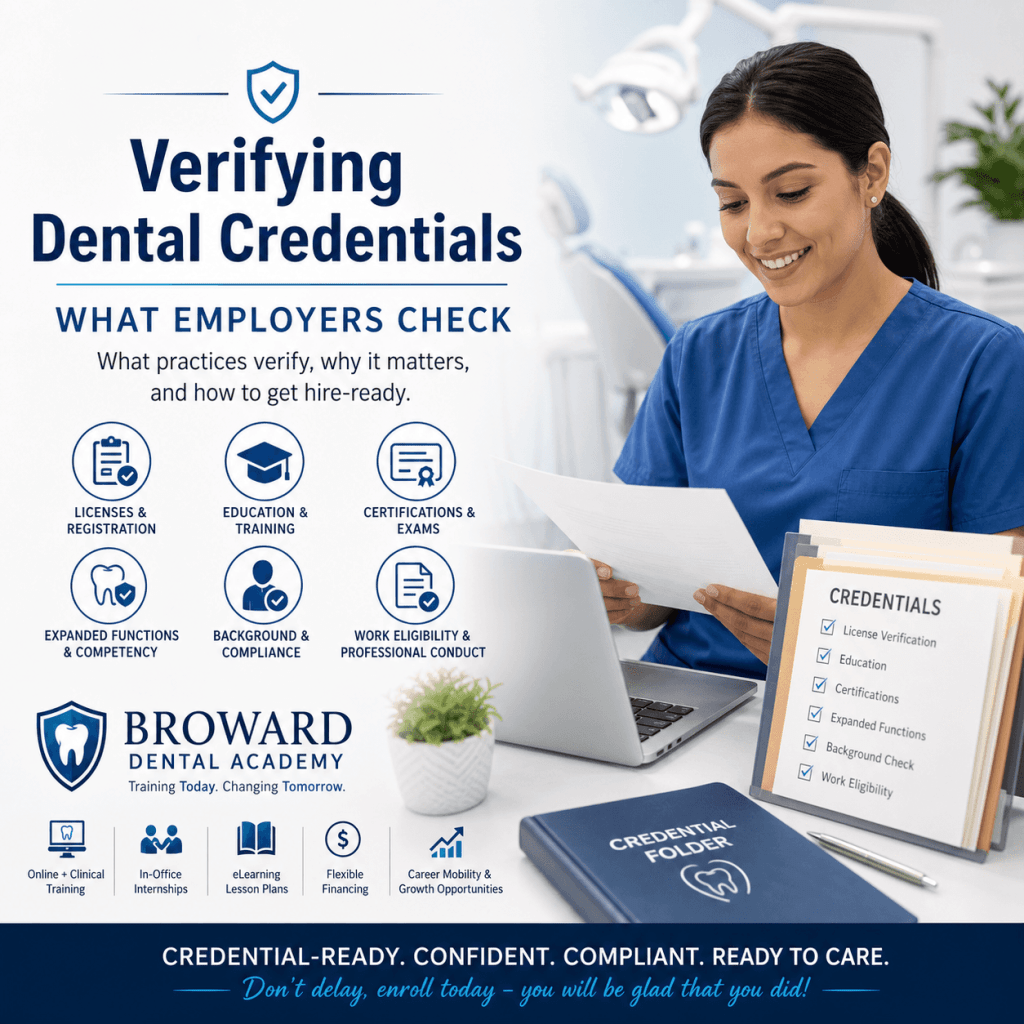
In South Florida’s job market for dental assisting, employers primarily focus on one aspect: can you make an immediate contribution while adhering to compliance and safety regulations? Dental offices prefer trained professionals who are thoroughly trained, legally compliant (a requirement that can be fulfilled through appropriate certifications), and clinically confident especially regarding chairside flow and infection control.
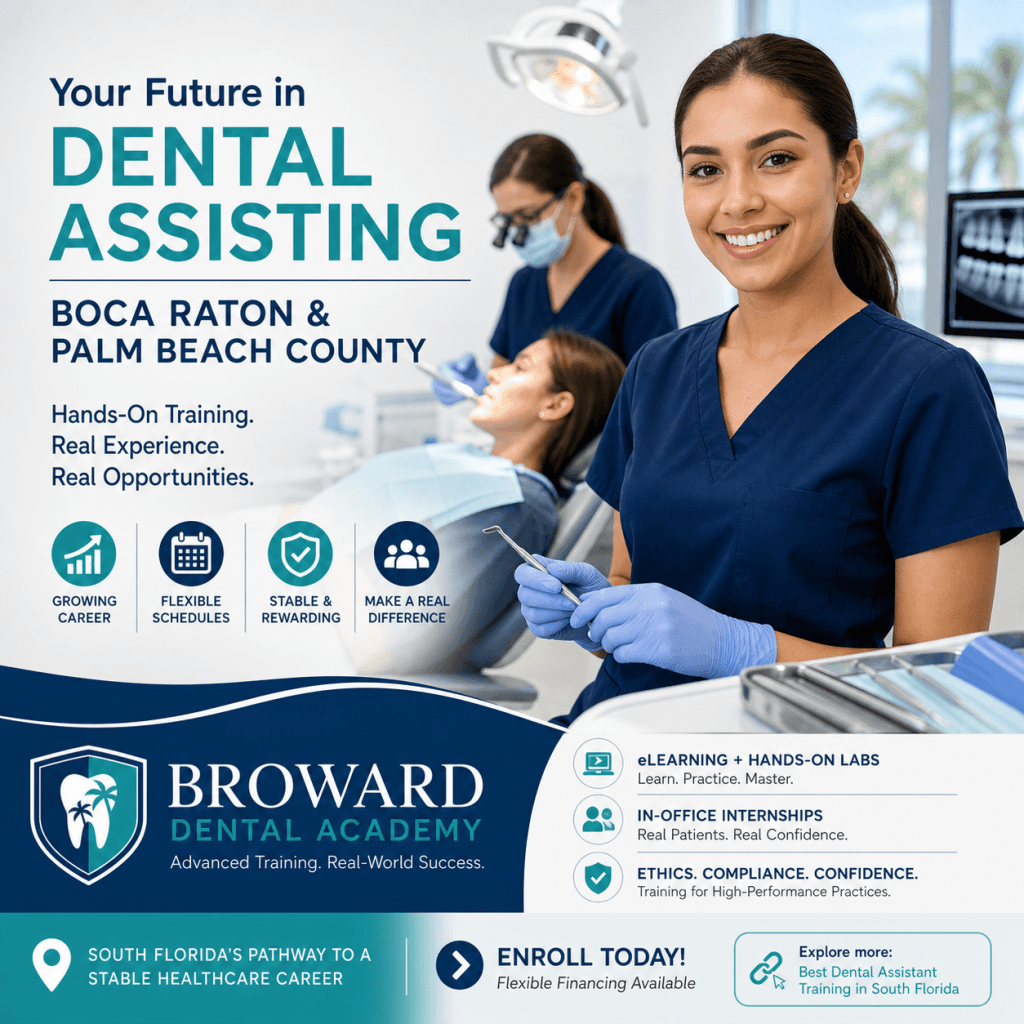
To successfully navigate this rewarding career shift into dental assisting, finding the right training program is essential. The Broward Dental Academy offers extensive courses aimed at equipping you with the necessary skills for success in this field. Their programs not only provide hands-on experience but also cover all vital aspects of dental assisting. If you’re ready to embark on this exciting career transition and wish to learn more about the training process or schedule a visit to their facility for further inquiries or testimonials, feel free to reach out!
What do dental assistants actually do?
Most people think dental assistants “hand tools to the dentist.” That is part of it, but modern assisting is much broader.
Core day-to-day responsibilities
Depending on the office, your responsibilities may include:
- Chairside assisting: Preparing the operatory, assisting during procedures, anticipating needs, and maintaining a smooth workflow
- Instrument transfer: Safe, efficient passing with proper positioning and visibility
- Infection control and sterilization: Cleaning, packaging, and sterilizing instruments, plus room turnover protocols
- Patient preparation and support: Seating, bib placement, explaining what will happen next, keeping patients calm
- Charting and documentation: Notes, procedure entries, materials used, and basic clinical records
- Impressions and temporaries (where permitted): Some tasks depend on training and what is allowed in your setting
- Radiology tasks (with proper training/requirements): X-rays are not “learn it on the job” in a casual way. You need appropriate education and compliance for your area and role.
Front-office crossover (common in real life)
Especially in smaller practices like those found in locations such as Broward, assistants often help with:
- Scheduling and confirmations
- Patient communication and follow-ups
- Basic insurance and billing coordination support
Being versatile can make you more hireable, particularly as a career changer. Reliability plus flexibility is a strong combination.
Don’t confuse these roles
- Dental assistant: Works directly with the dentist and patients, supports procedures, sterilization, chairside flow
- Dental hygienist: A different license track with longer schooling and a different scope focused on preventive care
- Dental office manager: Operations, scheduling systems, payroll, HR, insurance management, team coordination (often built after time in the field)
Modern practices move fast and are heavily focused on safety and compliance. That is why strong training matters. It is not just about knowing what something is. It is about being able to do it correctly, repeatedly, under real pace.
Is it harder to start after 30, 40 or 50?
There are real fears that come up for adult learners:
- “Am I too old to be hired?”
- “Can I learn instruments and procedures quickly?”
- “Will I be competing with younger applicants?”
- “How do I balance work, kids, and life while training?”
The honest answer: it can feel harder at first, mainly because you have more responsibilities outside the classroom. But you also bring advantages that many offices value immediately.
What older career changers often do better
- Professionalism and communication: Patients notice it. Dentists rely on it.
- Reliability and work ethic: Showing up consistently is a big deal in a busy practice.
- Calm under pressure: Dentistry runs on time. Staying steady helps the whole team.
- Patient empathy: If you have been through life, you know how to talk to people who are nervous.
Physical considerations
Dental assisting can involve standing, repetitive motions, and quick room turnover. You can manage this with:
- Good footwear and posture habits
- Proper operatory setup and instrument positioning
- A practice environment that supports teamwork, not burnout
The mindset shift
Being “new” again is uncomfortable. The fastest way through that discomfort is hands-on repetition. When you practice setups, sterile technique, and chairside flow enough times, confidence stops being a personality trait and becomes a skill you earned.
Are you a good fit for dental assisting?
You do not have to be fearless to be a dental assistant. You do need to be coachable and willing to work in a clinical environment.
You will likely do well if you are:
- Detail-oriented
- People-focused and calm with nervous patients
- Comfortable working on a team
- Able to move with a fast pace and changing priorities
Situational fit questions
- Do you want mostly consistent weekday hours, or are you open to occasional evenings/weekends?
- Are you okay being around saliva, blood, and sharp instruments in a controlled clinical setting?
- Do you like work that is active rather than sitting all day?
Skills you can learn in training
- Dental terminology and procedure steps
- Instruments and tray setups
- Charting basics
- Infection control and sterilization workflow
- Chairside positioning and “next step” anticipation
Mini-scenarios (quick translation)
- If you like helping customers feel comfortable in your current job, you will likely enjoy calming anxious patients before injections or impressions.
- If you like fast-paced operations (restaurant, retail, logistics), you will likely appreciate the room turnover and procedure flow in dental assisting.
- If you like organization and accuracy (admin, bookkeeping), you will likely enjoy managing sterilization systems and setup consistency.
What is the fastest path from new to hireable?
Many offices are willing to train personality. They are less willing to train basics that should already be solid. Employers consistently prefer candidates who are:
- Thoroughly trained
- Legally compliant
- Clinically confident enough to support real procedures without constant rescue
To understand more about the common queries related to dental assisting training, check out this comprehensive resource on frequently asked questions. Additionally, gaining familiarity with various aspects of clinical dental assisting can significantly enhance your confidence and competence in this field.
What “clinically confident” looks like
It means you can:
- Set up trays and operatories correctly
- Maintain sterile technique and follow protocols consistently
- Assist common procedures with efficient instrument transfer
- Communicate clearly with patients and the dentist
- Keep pace without cutting corners
What to look for in a program
Prioritize programs that offer:
- A structured mix of learning and hands-on clinical practice
- Skills checkoffs that ensure you can actually perform key tasks
- Real-world pacing, not slow “demo-only” training
- Internship exposure so you understand how offices run day to day
Broward Dental Academy is built around readiness, not just passing an exam. The focus is developing professionals who can think critically, act ethically, and perform confidently in a modern, high-performance dental practice.
What is the step-by-step roadmap for a later-career start?
Use this as a practical roadmap you can follow without guessing.
Step 1: Choose your target role
Decide what you are aiming for first:
- Chairside-focused assistant
- Assistant with front-office crossover
- Long-term path toward expanded functions and specialty assisting
Step 2: Verify local expectations and scope
In South Florida, offices often expect entry-level assistants to understand:
- Infection control and sterilization workflow
- Basic chairside assisting and setup
- Professional patient communication
- Compliance and safety habits
Step 3: Choose a training program that includes hands-on practice
Look for immediate immersion and a structure that builds real clinical repetition.
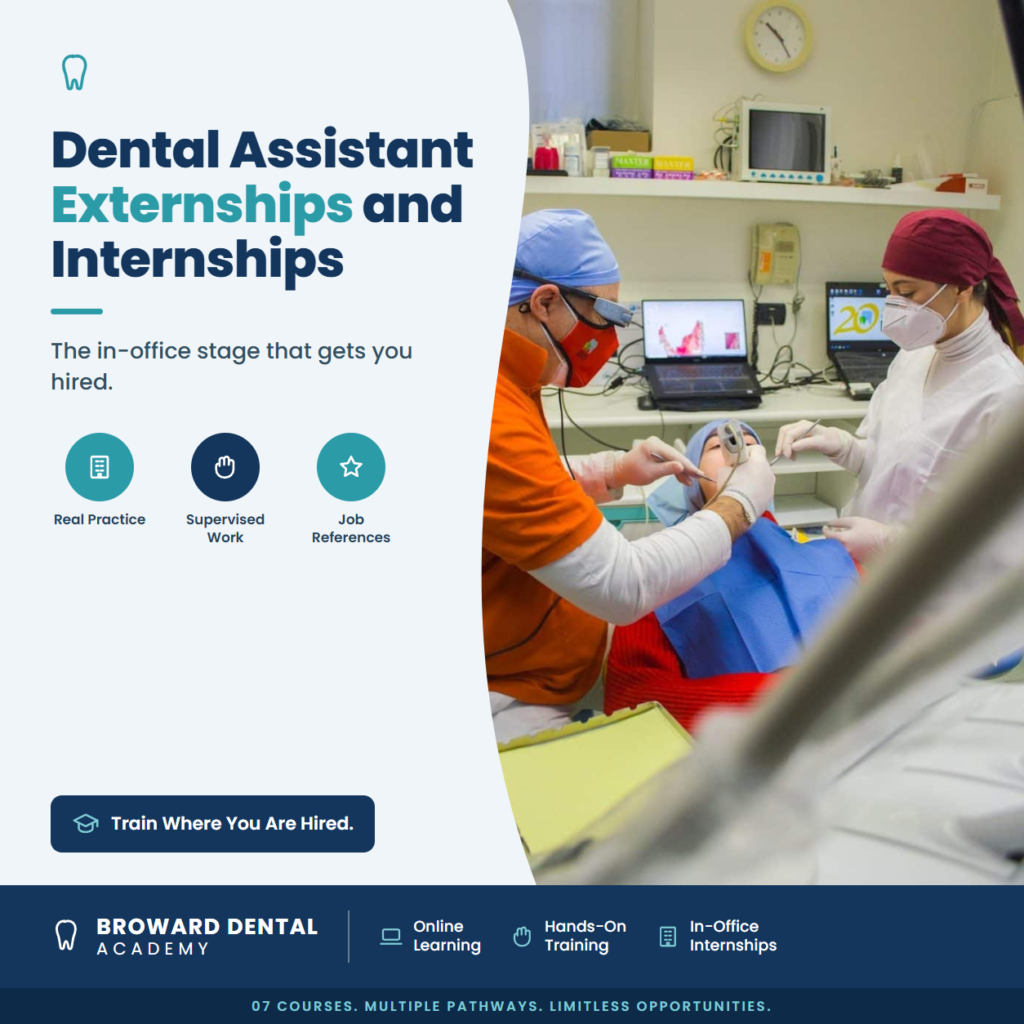
Step 4: Complete internship exposure (if available)
Internship experience shortens your learning curve dramatically because you see pace, teamwork, and real patient flow.
Step 5: Build a job-ready resume
Lead with transferable skills and add clinical competencies as soon as you have them (examples below).
Step 6: Apply strategically and prepare for working interviews
Apply across general dentistry and specialties. If an office requests a working interview, treat it like a skills day:
- Show punctuality
- Follow instructions closely
- Ask smart questions when unsure
- Never guess on sterilization steps
Step 7: Plan your first 90 days
Your goal is not perfection. Your goal is consistent progress in:
- Speed with setups and room turnover
- Communication with the dentist and patients
- Sterile technique habits that never slip
How long does it take, and how do you plan around work and family?
Most adult learners do best with a clear calendar plan, not motivation alone.
Typical timeline components
- Training and skills development
- Internship or externship (if included)
- Job search and interviews
Focused adult learners often move efficiently because they take training seriously and practice consistently.
Scheduling strategies that actually work
- Block 2 to 4 study sessions per week and protect them like appointments
- Plan childcare early for clinical days
- Batch errands and commute days so your week stays predictable
- Use short daily review sessions for terminology and instruments
A simple planning template
Current obligations → available hours → training format → internship window → target start date
Write it out. If it is not on paper, it will drift.
What should career changers consider about cost and return?
When adults compare programs, the biggest mistake is looking at tuition alone.
Typical costs to plan for
- Tuition
- Supplies (scrubs, basic kits)
- Immunizations or health requirements (if applicable)
- Transportation and parking
- Potential time off work for clinical days
Thinking about ROI the right way
Your return comes from:
- Speed to employment
- Stability and demand
- Ability to increase earnings with added responsibilities and expanded functions over time
Broward Dental Academy offers flexible financing, which can help career changers start sooner instead of waiting until the “perfect time.”
When comparing programs, weigh hands-on hours, internship quality, and job readiness, not price alone.
What do South Florida dental offices want right now?
Practices are busy. They want people who can contribute quickly without creating risk.
Top traits hiring teams notice fast
- Punctuality and professionalism
- Patient-centered communication
- Strong infection control habits
- Coachability and calm energy
- Willingness to help wherever needed
How to stand out as a career changer
- Show consistency in work history or explain your pivot clearly
- Highlight customer service and operations strengths
- Emphasize that you are trained and ready to learn their specific systems
Where to apply
- General dentistry
- Pediatric dentistry
- Orthodontics
- Periodontics
- Oral surgery
Specialties differ in pace and tasks. General dentistry is often the broadest starting point. Orthodontics can be more routine and system-driven. Oral surgery can be more intense and detail-heavy. Choose what fits your temperament and goals.
How do you rewrite your resume for this career change?
Your resume should make the pivot feel logical, not random.
1) Add a strong Summary
Example:
Career-changing professional transitioning into dental assisting with hands-on clinical training and a patient-first communication style. Known for reliability, fast learning, and calm performance in high-volume environments. Seeking a chairside dental assistant role in a modern practice.
2) Map transferable skills
- Hospitality/retail → patient experience, pace, service recovery
- Admin/office work → scheduling, documentation accuracy, communication
- Caregiving → empathy, composure, trust-building
3) Add a Clinical Skills section (once trained)
Include only what you can do confidently, such as:
- Infection control and sterilization workflow
- Chairside assisting and instrument transfer
- Tray setups and operatory turnover
- Charting basics
- Radiology basics (as applicable to your training and role)
4) Keep measurable wins from past jobs
Examples:
- Maintained 99% documentation accuracy in a high-volume office setting
- Managed 40+ customer interactions daily while maintaining high satisfaction
- Trained new hires and improved team onboarding speed
5) Cover letter angle (simple and effective)
Answer three questions:
- Why dentistry?
- Why now?
- Why will you be a dependable long-term hire?
How do you build confidence in your first 30 days?
The first month is about building trust.
What to prioritize first
- Sterile technique consistency, every single time
- Learning procedure setups for the most common appointments
- Anticipating dentist preferences (without guessing)
- Patient comfort scripting so you sound natural, not rehearsed
How to ask for feedback without looking insecure
- Ask for a quick daily check-in: “Anything you want me to adjust tomorrow?”
- Keep a simple skill checklist and update it weekly
- Take short notes after procedures: setup used, materials, what surprised you
Common early mistakes to avoid
- Rushing sterilization steps
- Forgetting to label items or misplacing instruments
- Staying silent when unsure
- Slow room turnover because the setup process is not systemized
Maturity is an advantage here. Be the steady hand in the room: calm voice, clear communication, consistent habits.
Where can this role take you once you are in?
Dental assisting is not a dead-end job. It is a foundation.
Common growth paths include:
- Lead dental assistant
- Specialty assisting (ortho, pediatric, perio, oral surgery)
- Treatment coordinator
- Office manager track
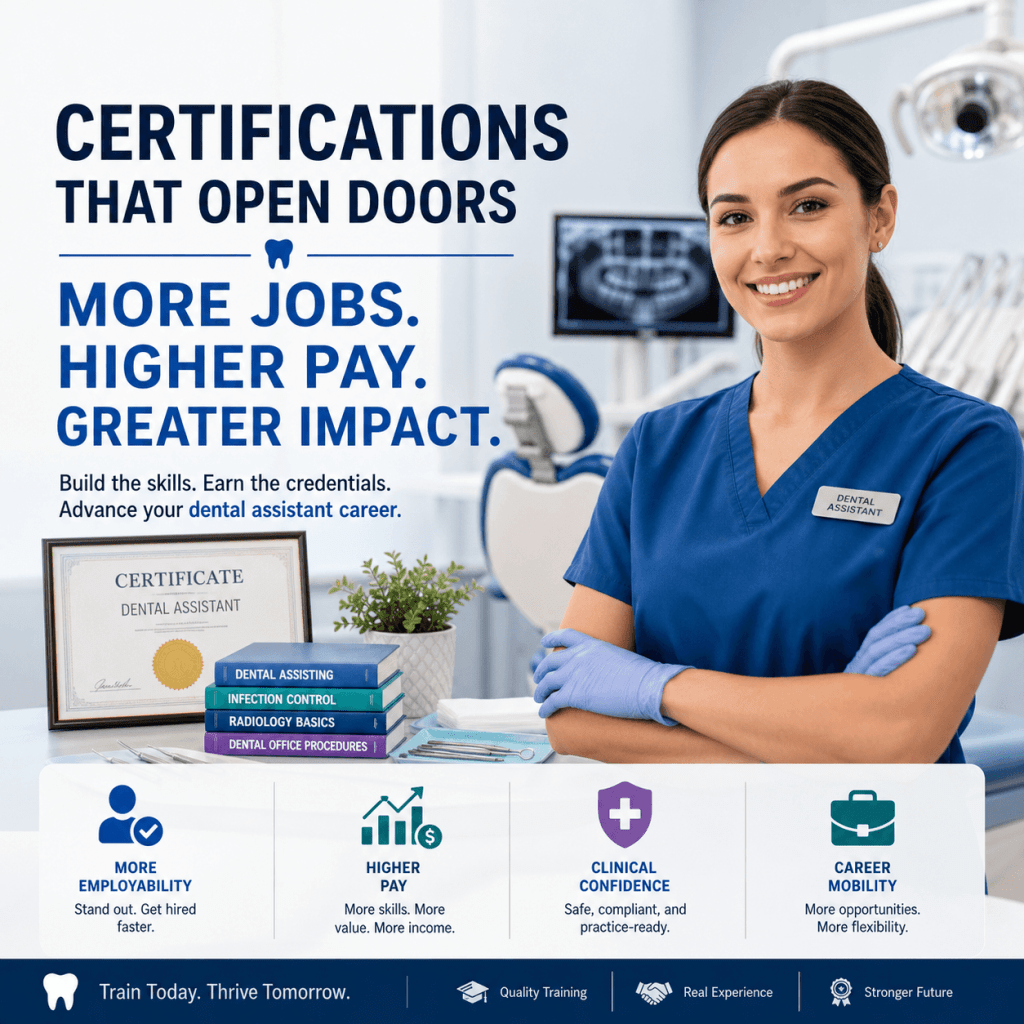
Expanded functions can increase responsibility and earning power, especially when paired with strong chairside fundamentals. Long-term stability is a big reason many adults choose dentistry. Practices value well-rounded professionals who can keep patients comfortable while maintaining speed, accuracy, and compliance.
Why does Broward Dental Academy fit adult career changers?
Broward Dental Academy serves the Dental Community by developing well-rounded professionals through multiple dental training programs.
Adult learners tend to do best in a model that is structured, practical, and confidence-building. At Broward Dental Academy, students experience:
- Immediate immersion in online and clinical settings
- Latest eLearning lesson plans for remote training paired with hands-on practice
- In-office internships that help translate skills into real practice flow
- Training that emphasizes critical thinking, ethics, and clinical confidence, not just exam prep
- A breadth of options, including 7 courses such as Dental Assistant Level 01, Dental Assistant Level 02, and Dental Assistant Level 03, alongside advanced dental training for continued growth
The outcome employers care about is simple: dental assistants who are thoroughly trained, legally compliant, and clinically confident, ready to contribute in a high-performance dental practice.

What is the final takeaway for a change after 30, 40 or 50?
If you want a realistic career change with stability, flexibility, and room to grow, dental assisting is a strong move, especially in South Florida.
Choose a training path that builds real clinical confidence and includes internship exposure, so you are not just “certified,” you are ready.
Don’t delay, enroll today at Broward Dental Academy. With flexible financing and career-ready training like the various courses offered including Dental Assistant Level 01, Dental Assistant Level 02, and Dental Assistant Level 03, you can start now. You will be glad that you did.
FAQs (Frequently Asked Questions)
Why is dental assisting a smart career change for people in their 30s, 40s, or 50s?
Dental assisting offers stability with a consistent demand in the expanding dentistry sector, provides a respected role within healthcare by involving active patient care, features flexible schedules often with predictable weekday hours, and presents clear growth pathways into specialties like Endodontics or lead roles. These factors make it an ideal career pivot aligned with clearer priorities and improved standards for adults.
Do I need prior healthcare experience to become a dental assistant?
No prior healthcare background is required to excel as a dental assistant. What you need is the right training, practical clinical experience, and a strategic plan for securing employment. Programs like those offered by Broward Dental Academy provide comprehensive hands-on courses covering all vital aspects of dental assisting.
What are the main responsibilities of a dental assistant beyond handing tools to the dentist?
Dental assistants perform chairside assisting by preparing the operatory and supporting procedures, manage instrument transfer safely, handle infection control and sterilization protocols, prepare and support patients during visits, document clinical records accurately, and may perform impressions or radiology tasks if properly trained. They often assist with front-office duties such as scheduling and insurance coordination in smaller practices.
How important is proper training and certification for dental assistants in South Florida?
Proper training and legal compliance through certifications are crucial in South Florida’s job market. Employers prioritize candidates who can contribute immediately while adhering to safety regulations, infection control habits, and chairside workflow protocols. Thoroughly trained professionals ensure patient safety and smooth practice operations.
Is it harder to change careers into dental assisting after age 30, 40, or 50?
While adult learners may have concerns about age or balancing life commitments during training, changing careers into dental assisting at these ages is very achievable. Many practices value reliability and flexibility that mature students bring. With focused training and support from programs tailored for adult learners, you can learn clinical skills efficiently and compete effectively in the job market.
What career advancement opportunities exist after becoming a dental assistant?
After establishing yourself as a dental assistant, you can pursue specialty assisting roles such as Endodontics, take on lead positions within the team, move into treatment coordination roles, or even advance toward office management over time. The clear growth pathways allow for professional development aligned with your evolving career goals.