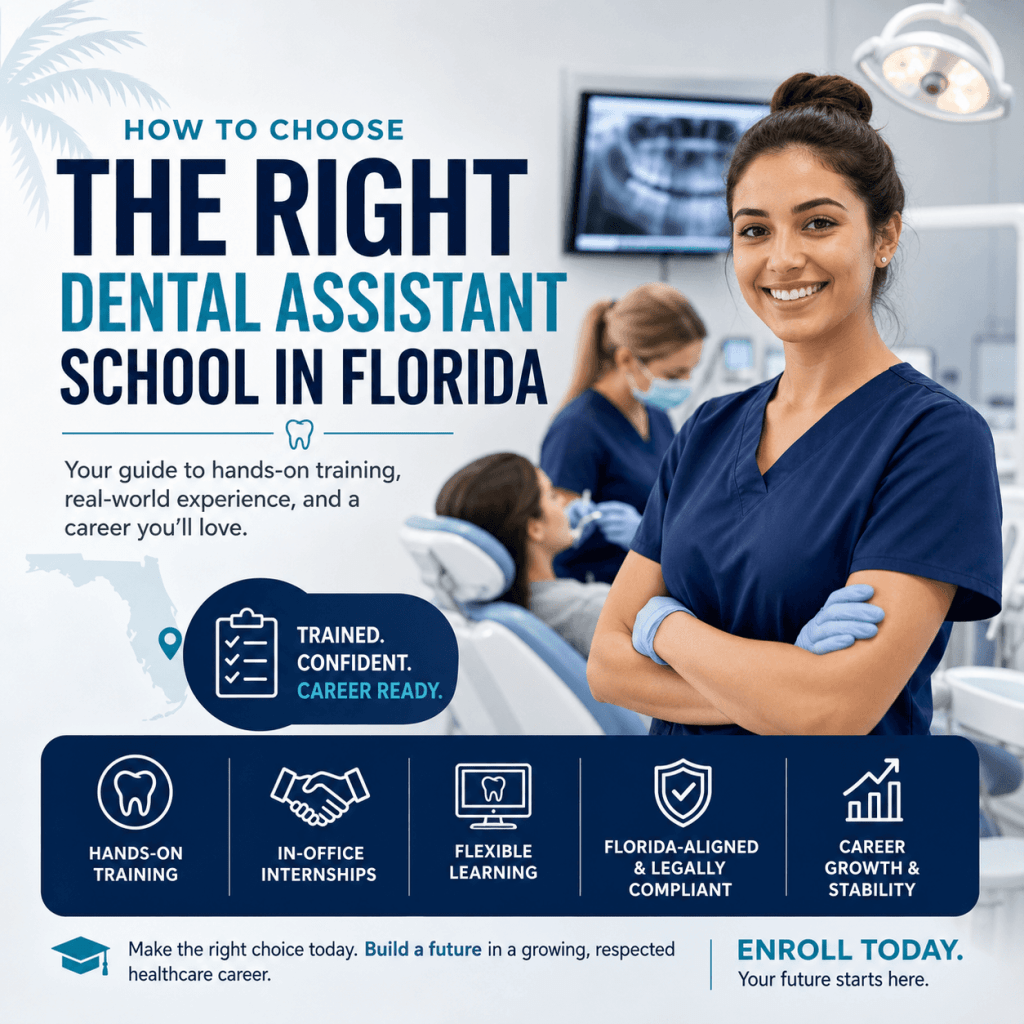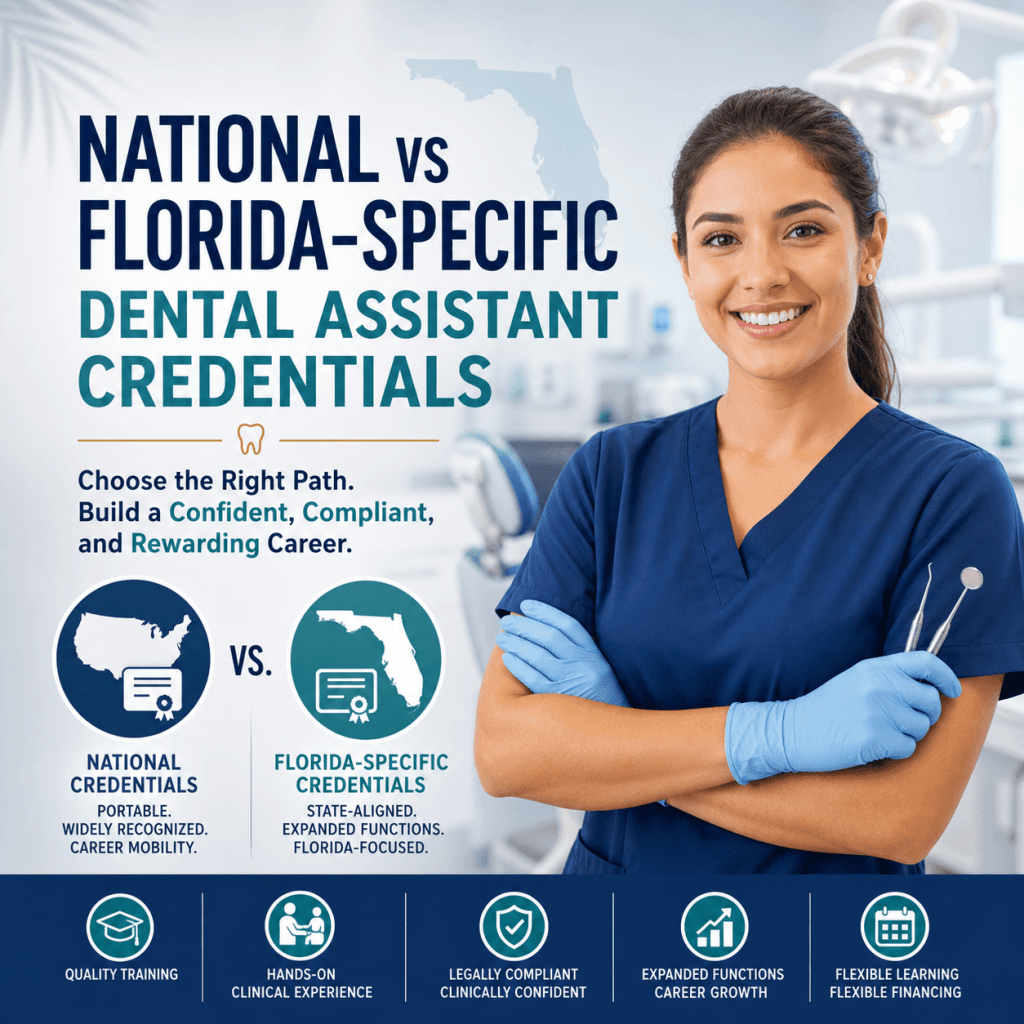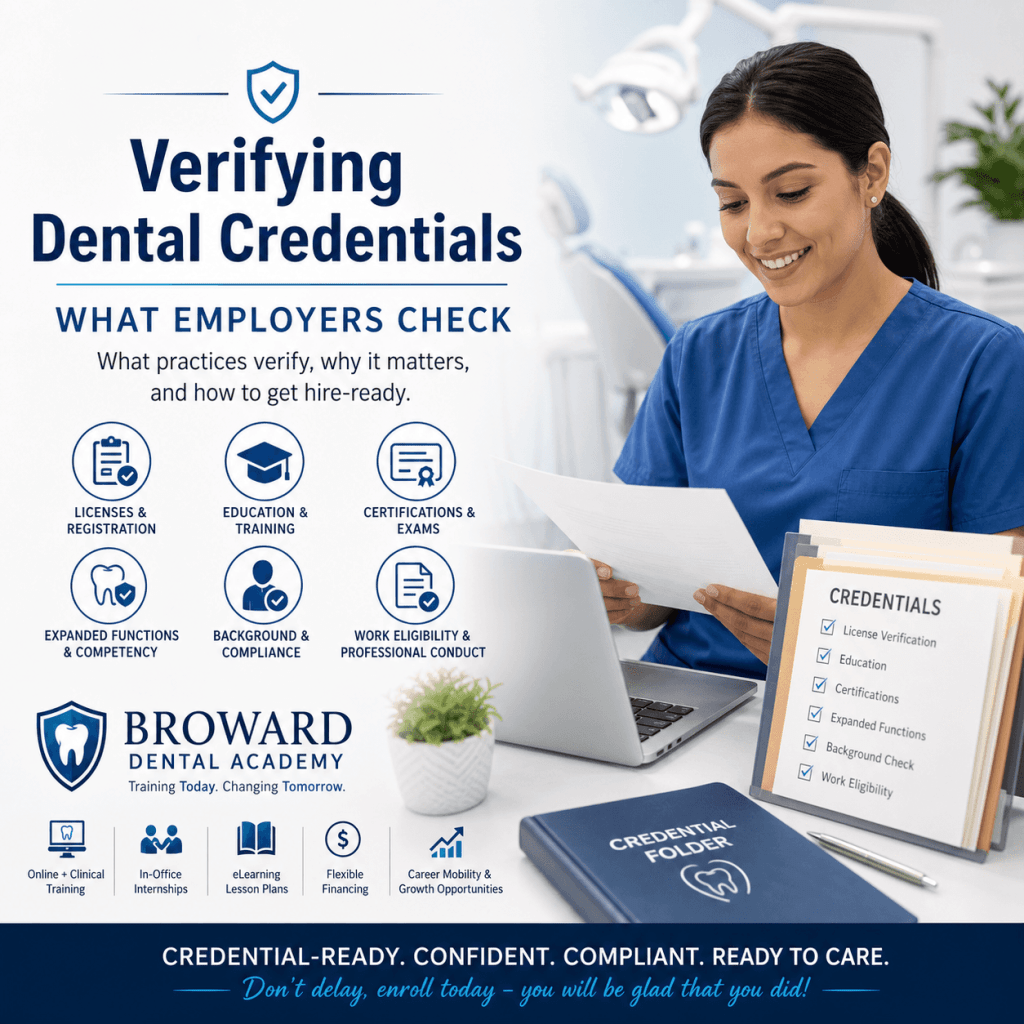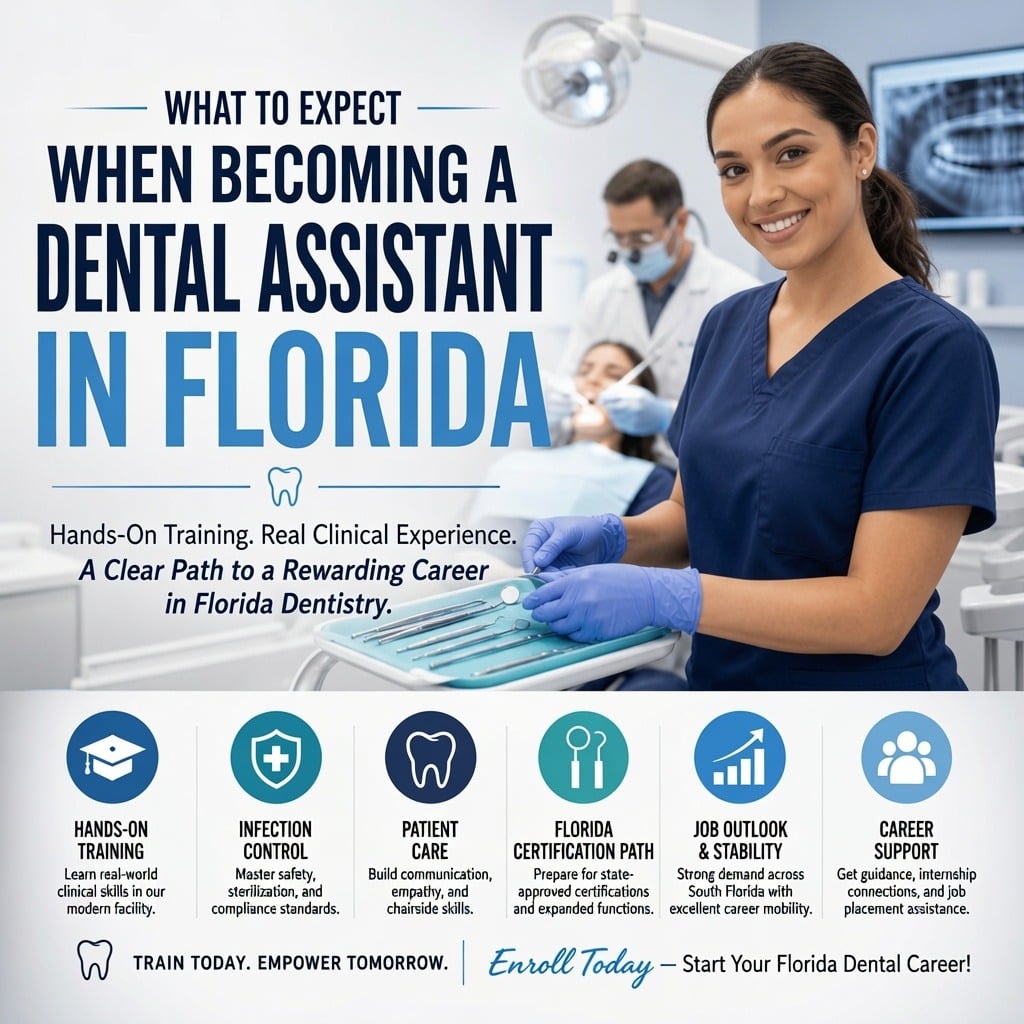
If you want a healthcare job with real stability without spending years in school, dental assisting is one of the most direct paths you can take in Florida to become dental assistant. You can get into a real clinical environment quickly, build a respected skill set, and move up over time if you decide you want more responsibility.
Florida dental offices are busy. Patients expect modern, efficient care. That means practices want team members who are thoroughly trained, legally compliant, and clinically confident, especially in fast-paced offices where the schedule does not slow down to “teach basics.”
This guide walks you through what dental assistants do, the different paths in Florida, how long it takes, what it costs, and how to stand out when you apply.
Why dental assisting is a smart career move in Florida right now
Dental assisting checks a box that a lot of people care about: a stable healthcare role you can realistically enter without a four-year degree.
Here is what makes the field especially attractive in Florida:
- Stable income potential: Dentistry is a consistent need. People move to Florida every day, families grow, and dental care stays essential.
- Flexible schedules: Many offices offer full-time and part-time roles. Some assistants prefer a four-day schedule, which is common in dental.
- A respected role in healthcare: You are part of direct patient care, supporting procedures, safety, and comfort.
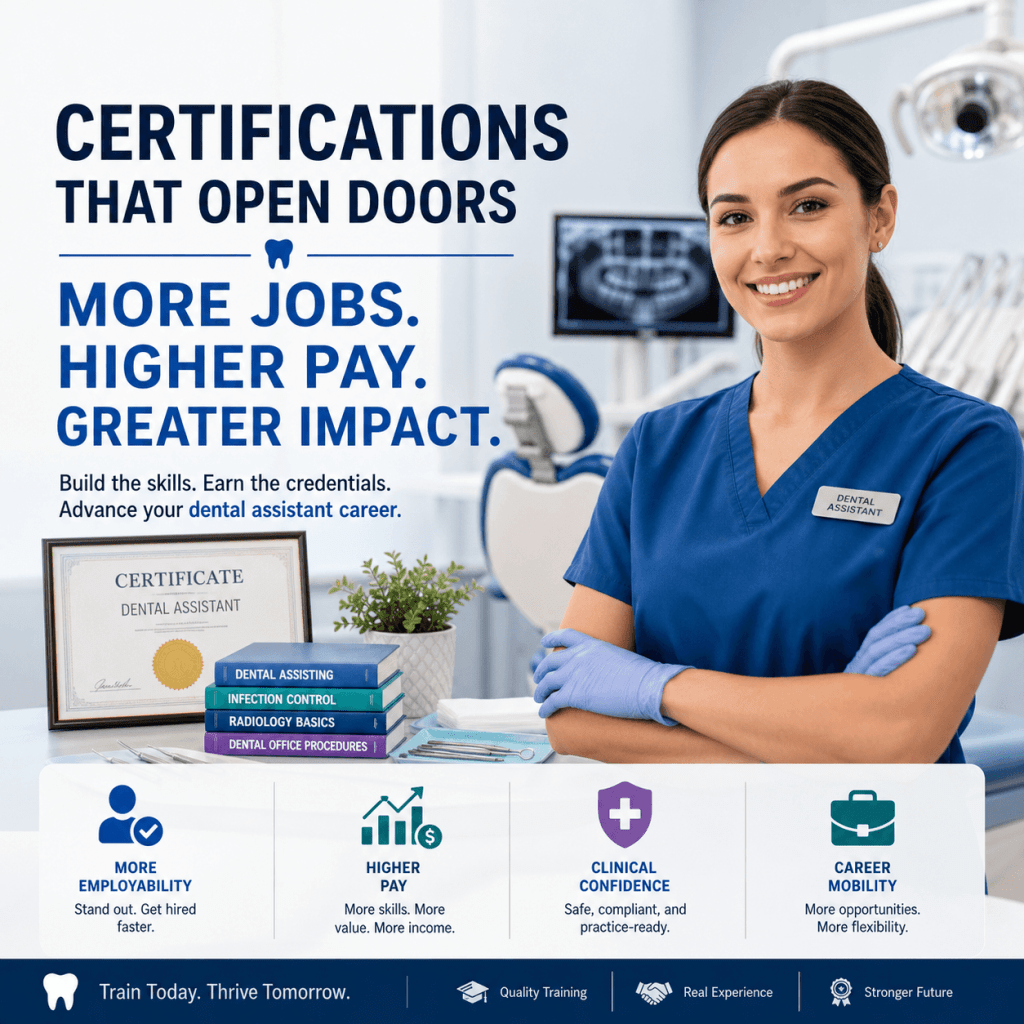
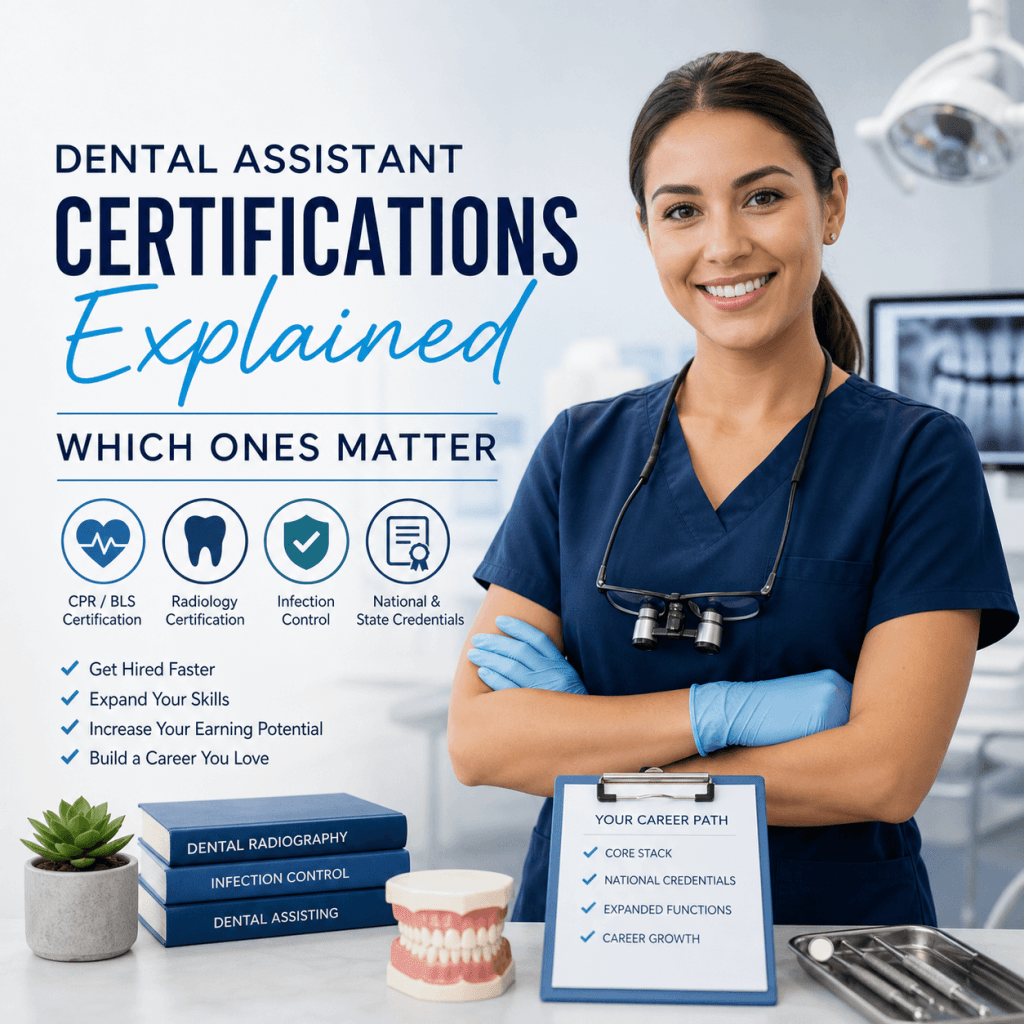
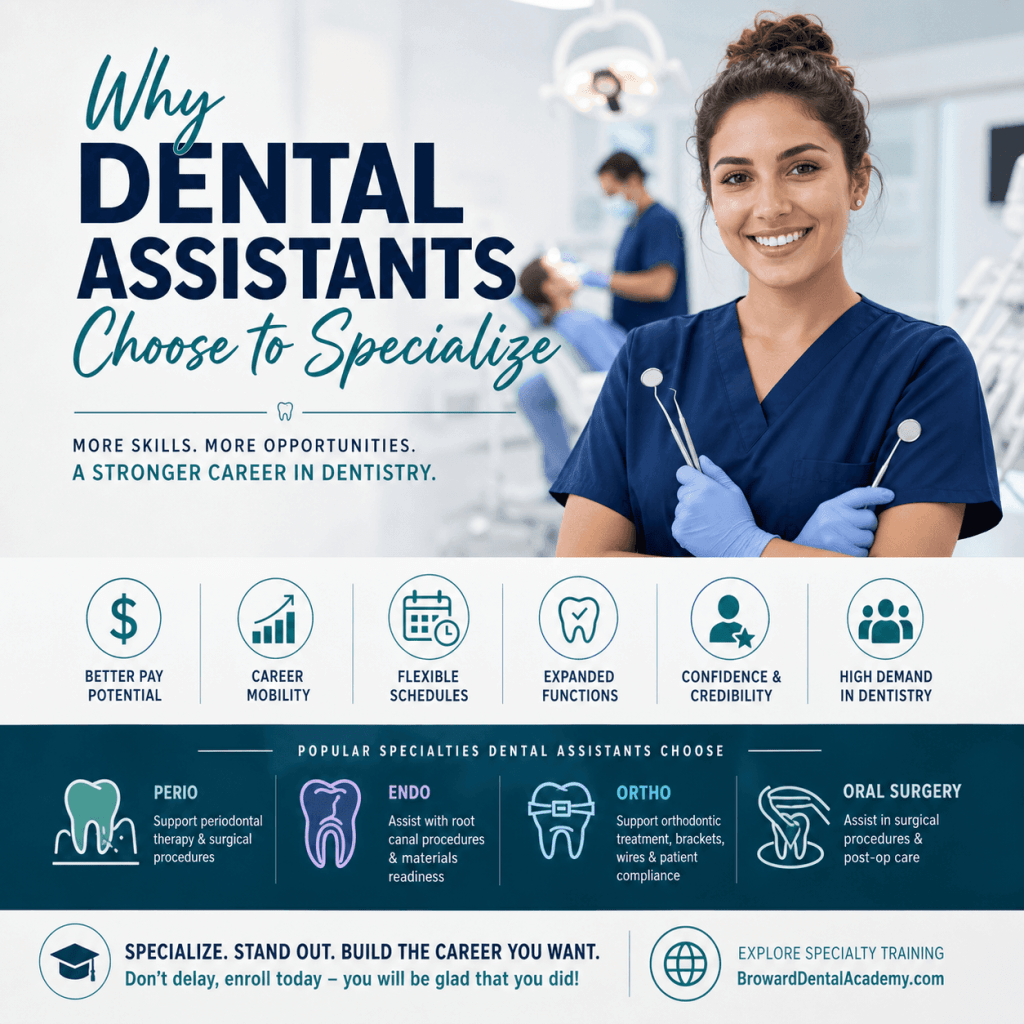
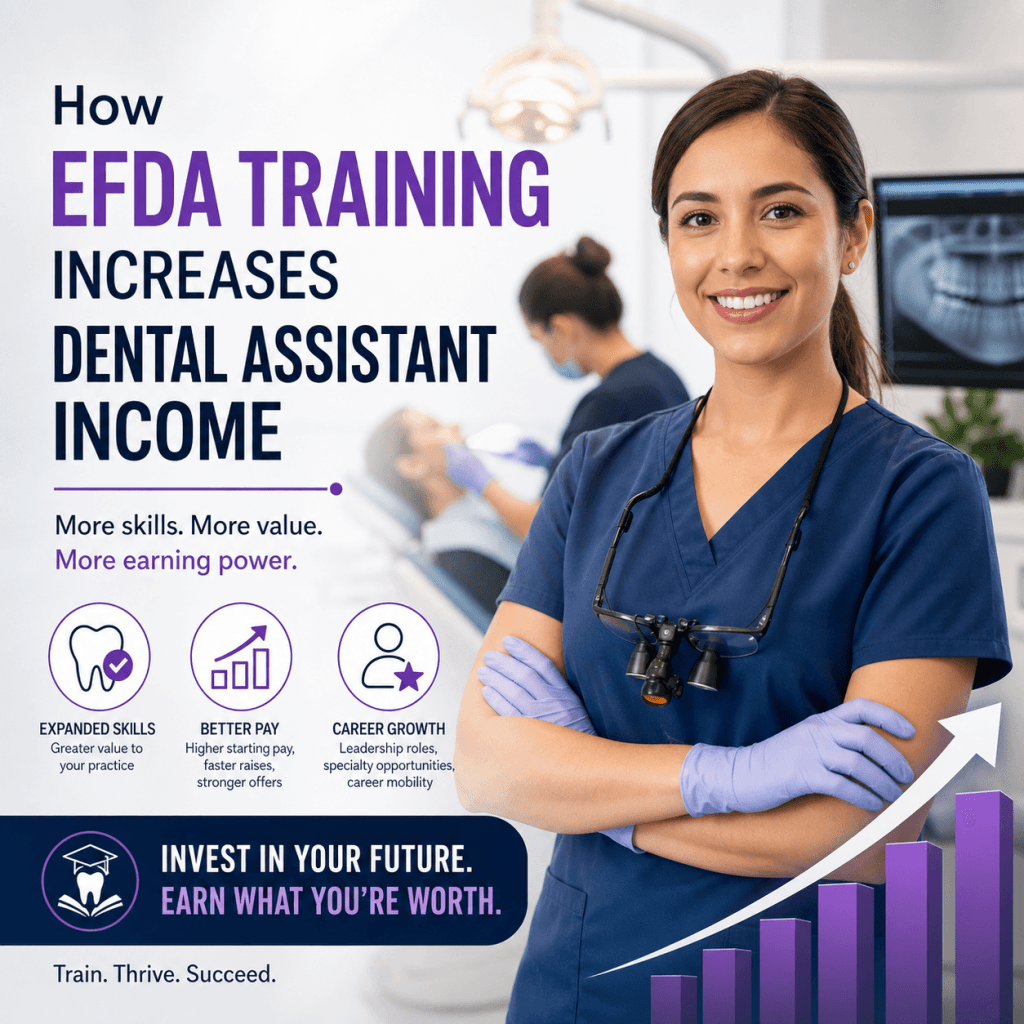
- Long-term career mobility: You can build skills by pursuing certifications , add credentials, and move into expanded functions like endodontics, leadership, or specialty offices.
Most importantly, Florida practices do not just want “help.” They want assistants who can jump in, maintain safety standards, communicate professionally, and keep the day flowing. If you’re looking for a comprehensive training program to prepare for this role, consider checking out Broward Dental Academy, which offers extensive resources and training for aspiring dental professionals.
What a dental assistant actually does (and what most people don’t realize)
A dental assistant is the clinical engine that helps the dentist and hygienist stay on time while keeping patients comfortable and safe.
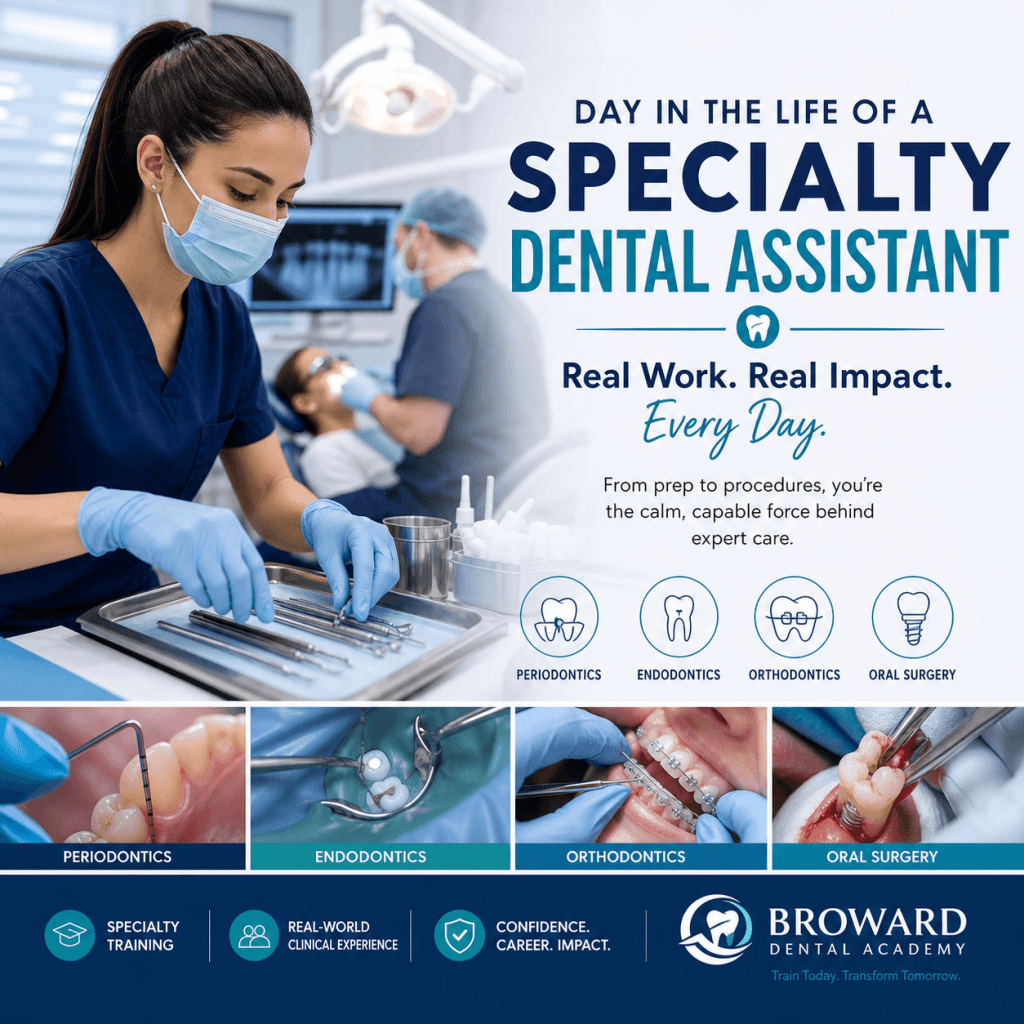
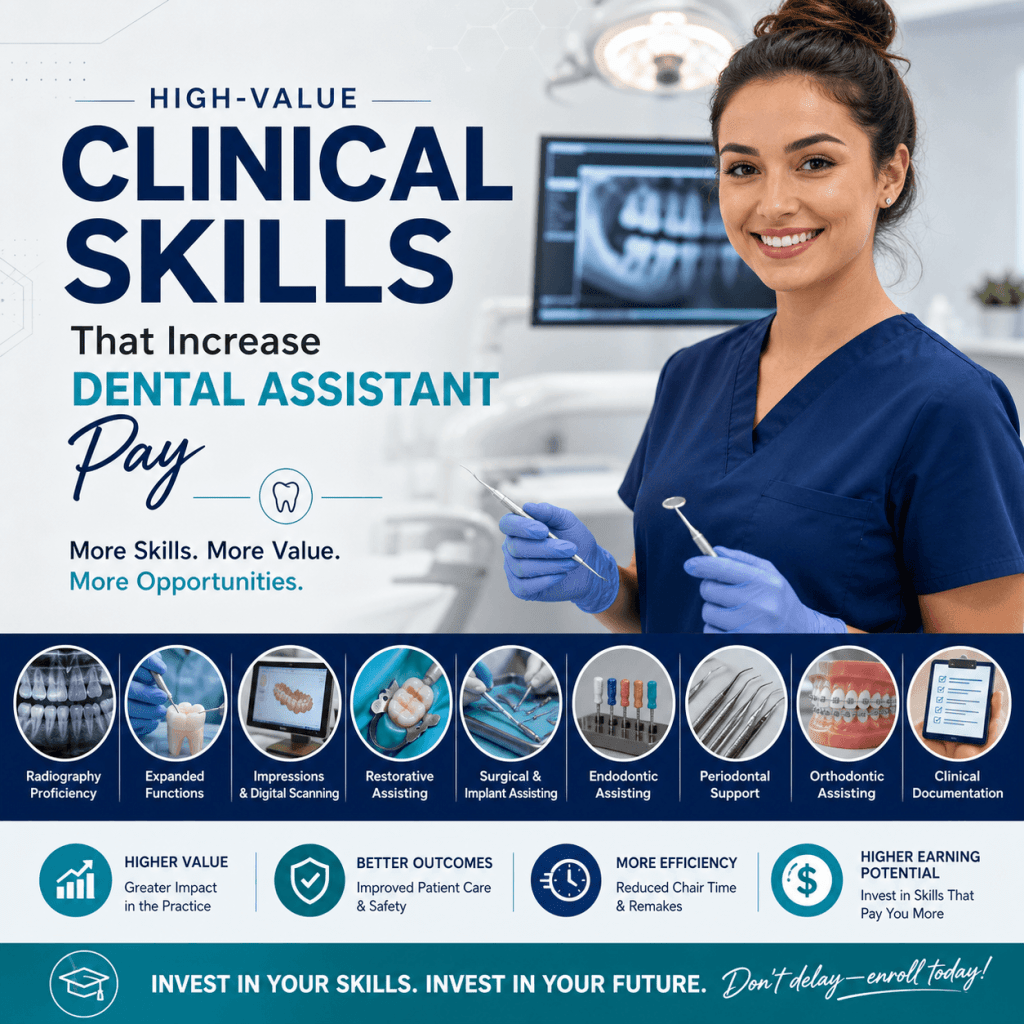
Typical day-to-day responsibilities can include:
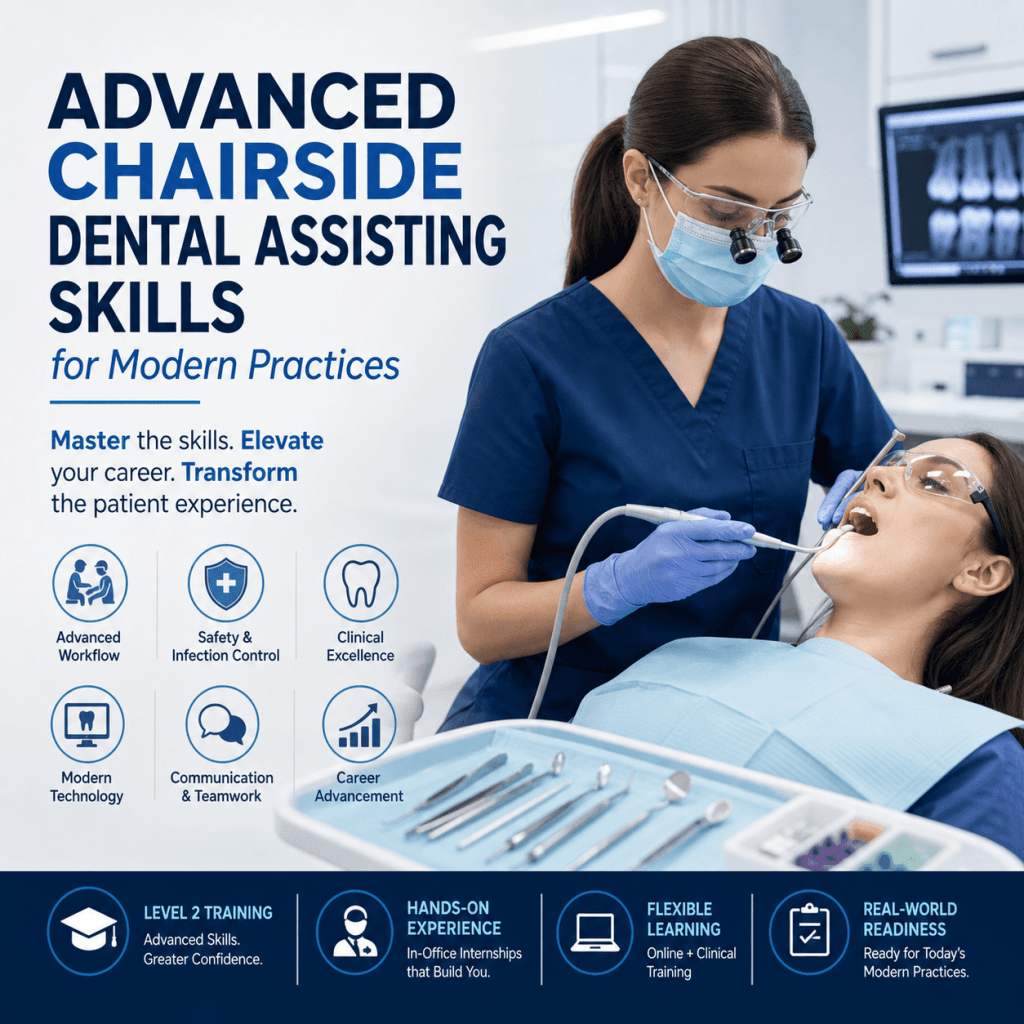
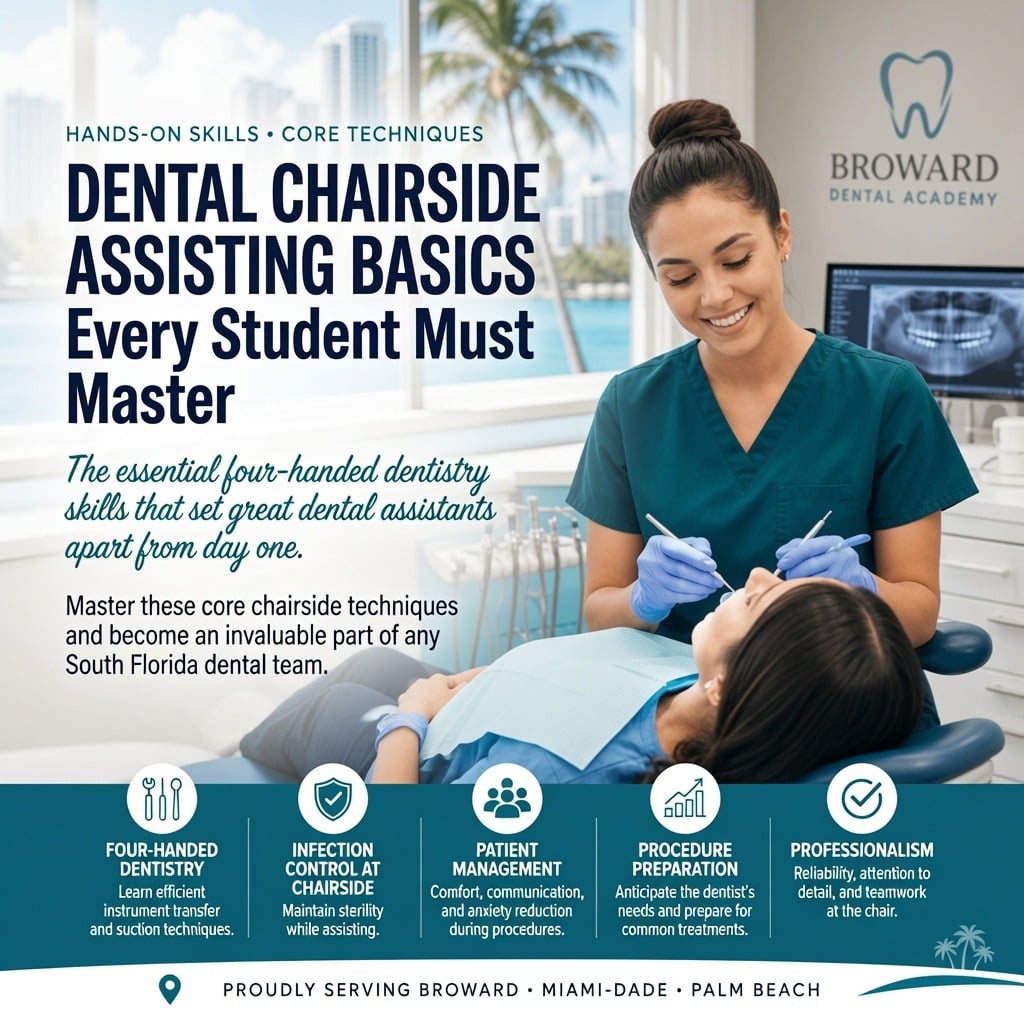
- Chairside assisting during exams and procedures
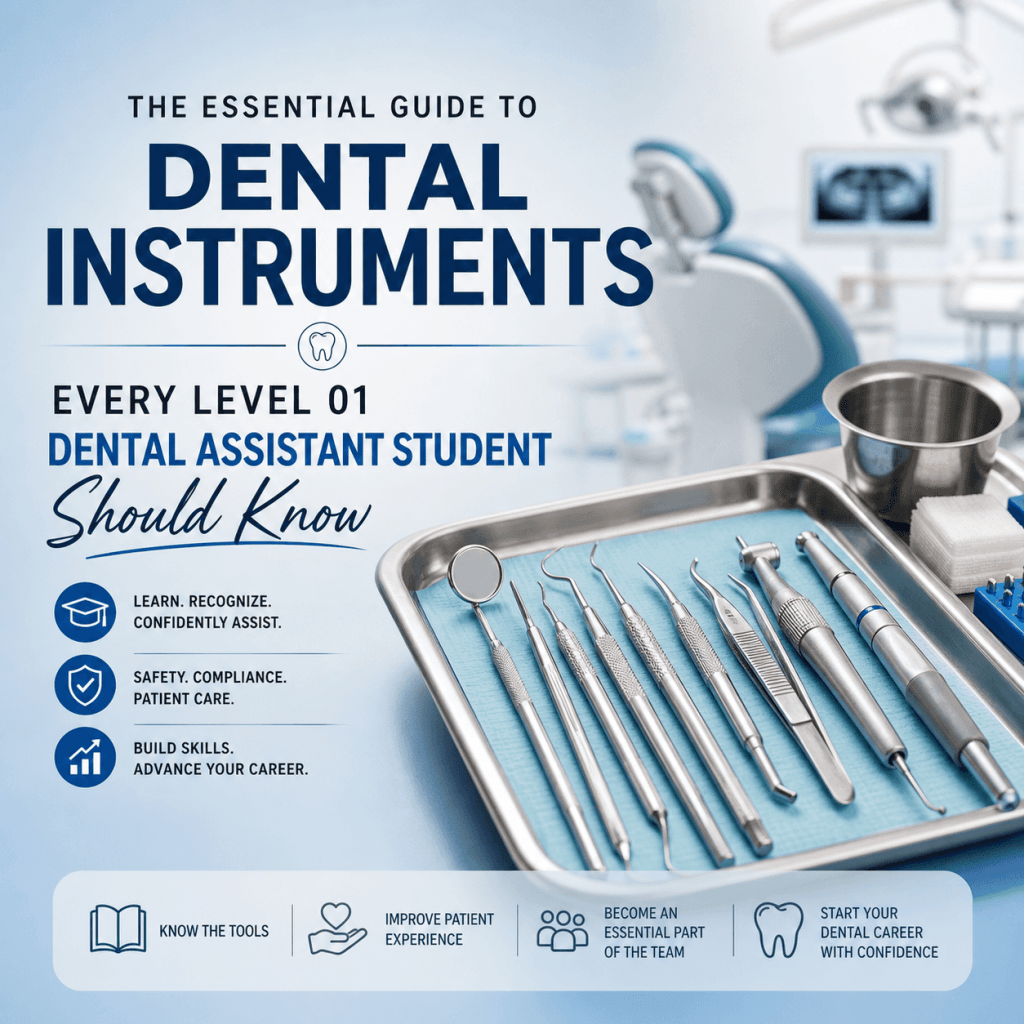
- Preparing treatment rooms and setting up trays and materials
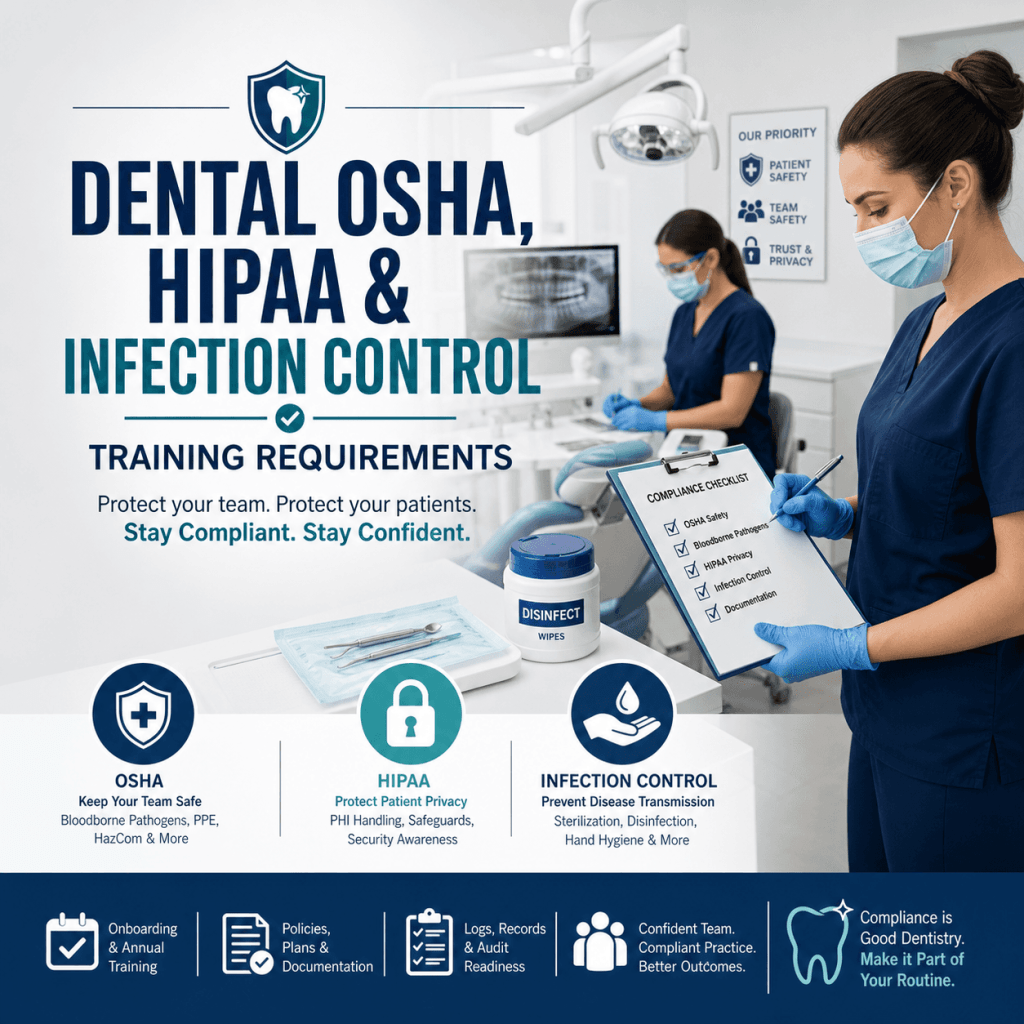
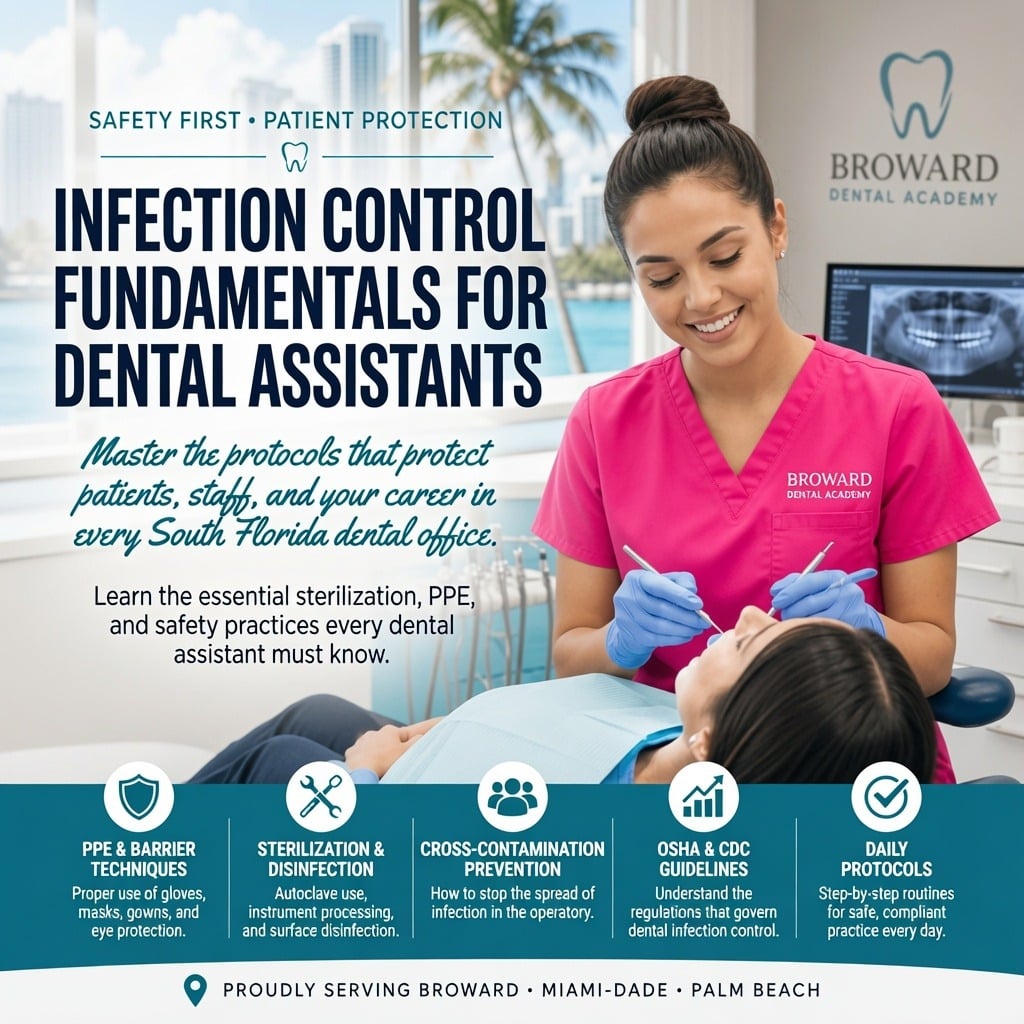
- Sterilization and infection control (instrument processing, operatory turnover, and protocol compliance)
- Charting and documentation
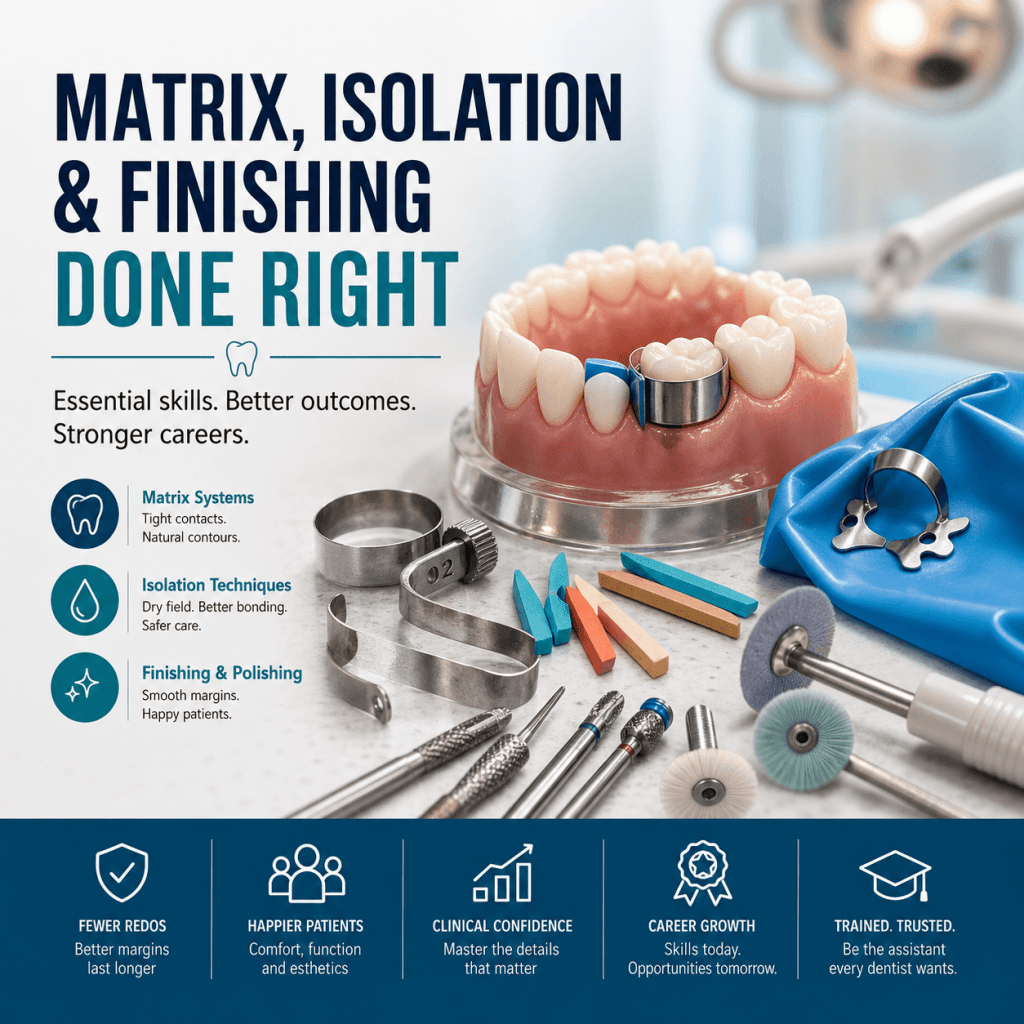
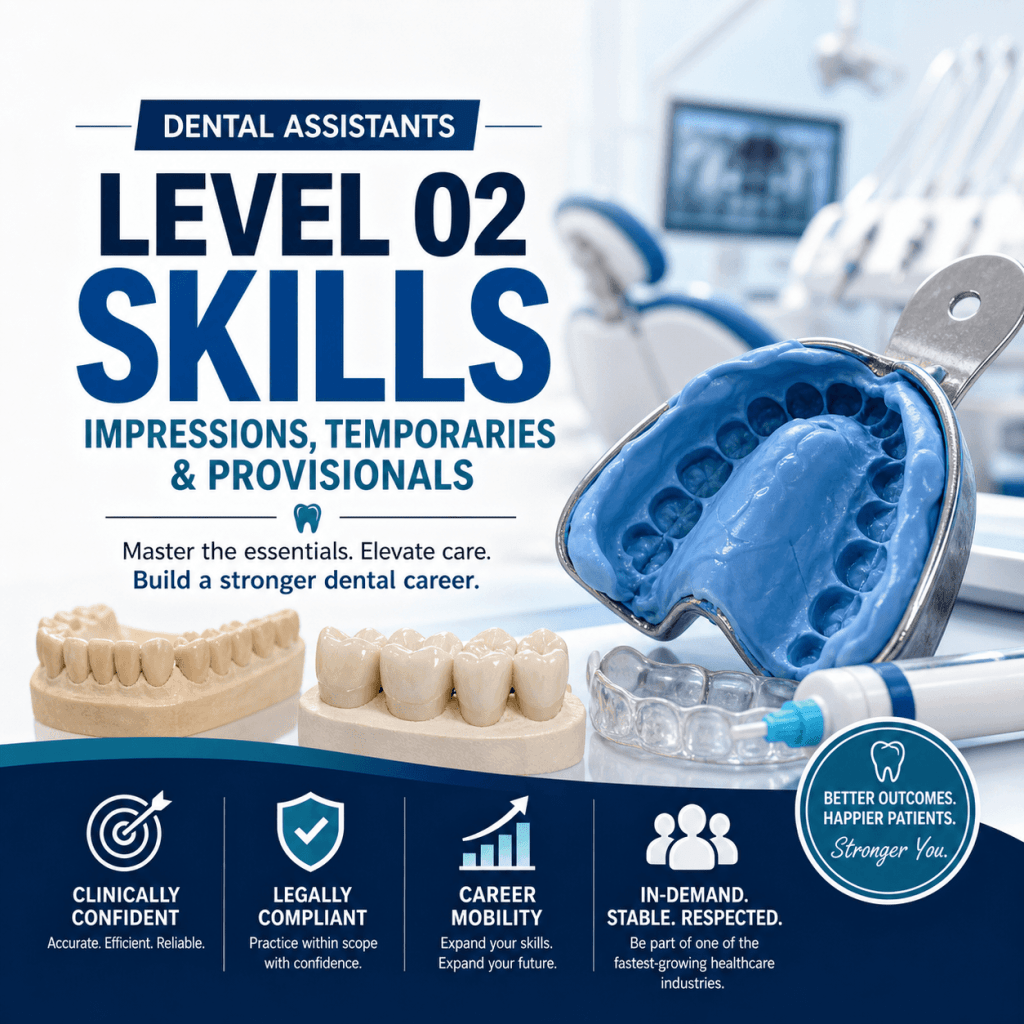
- Taking impressions and supporting dental materials (where allowed and trained)
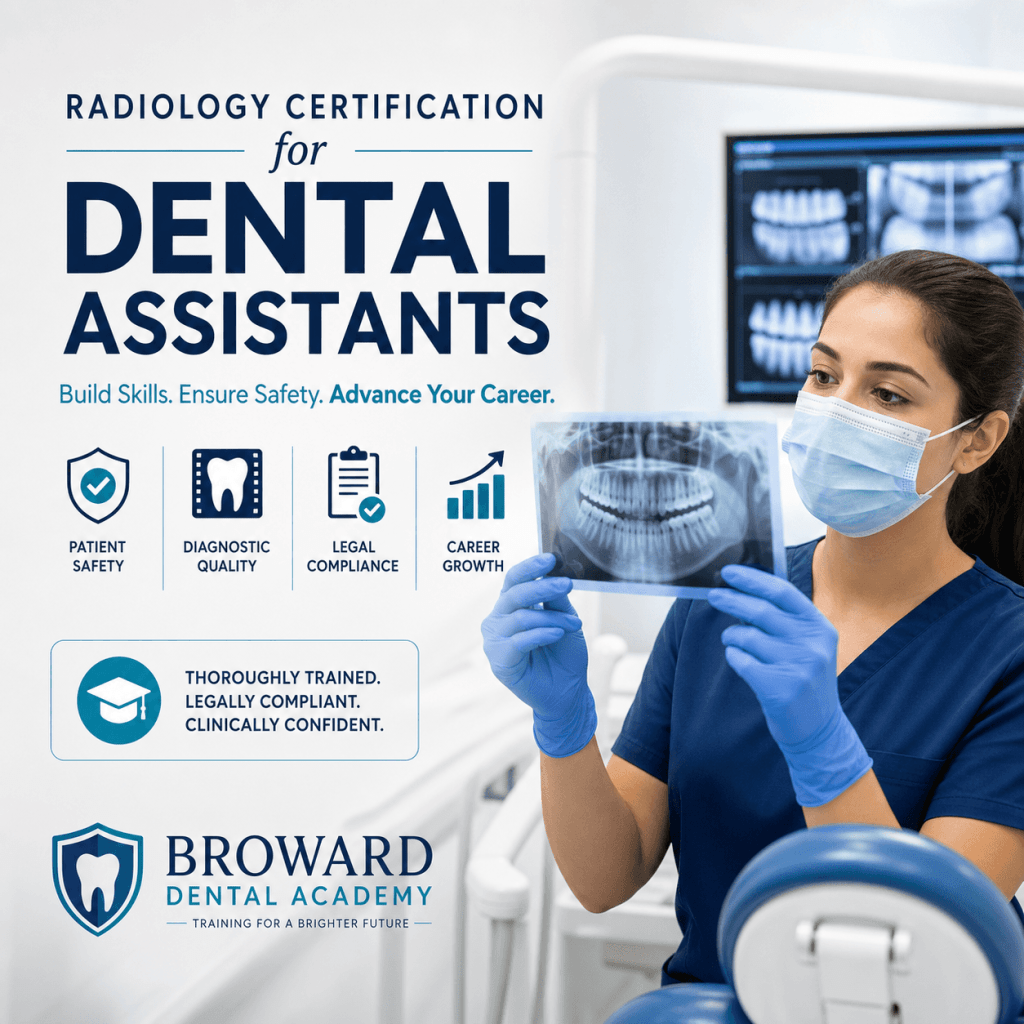
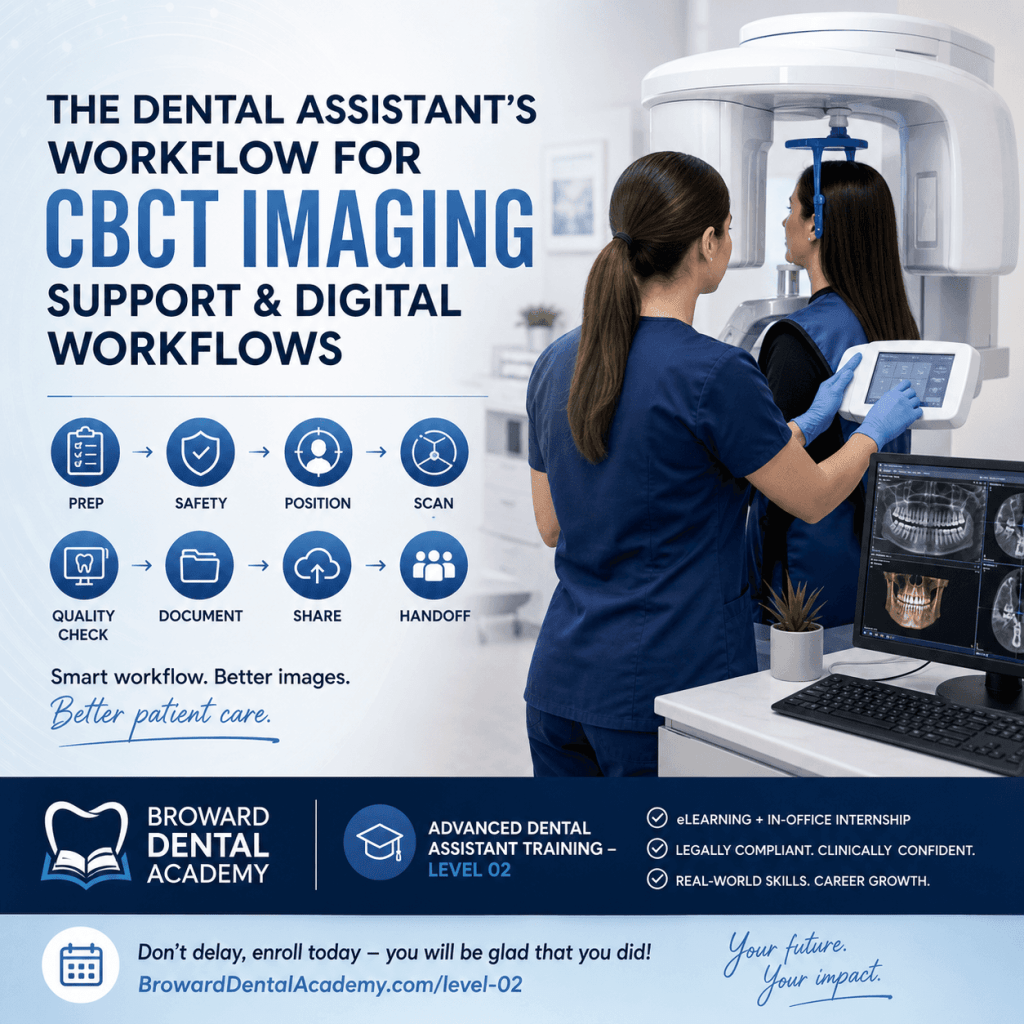
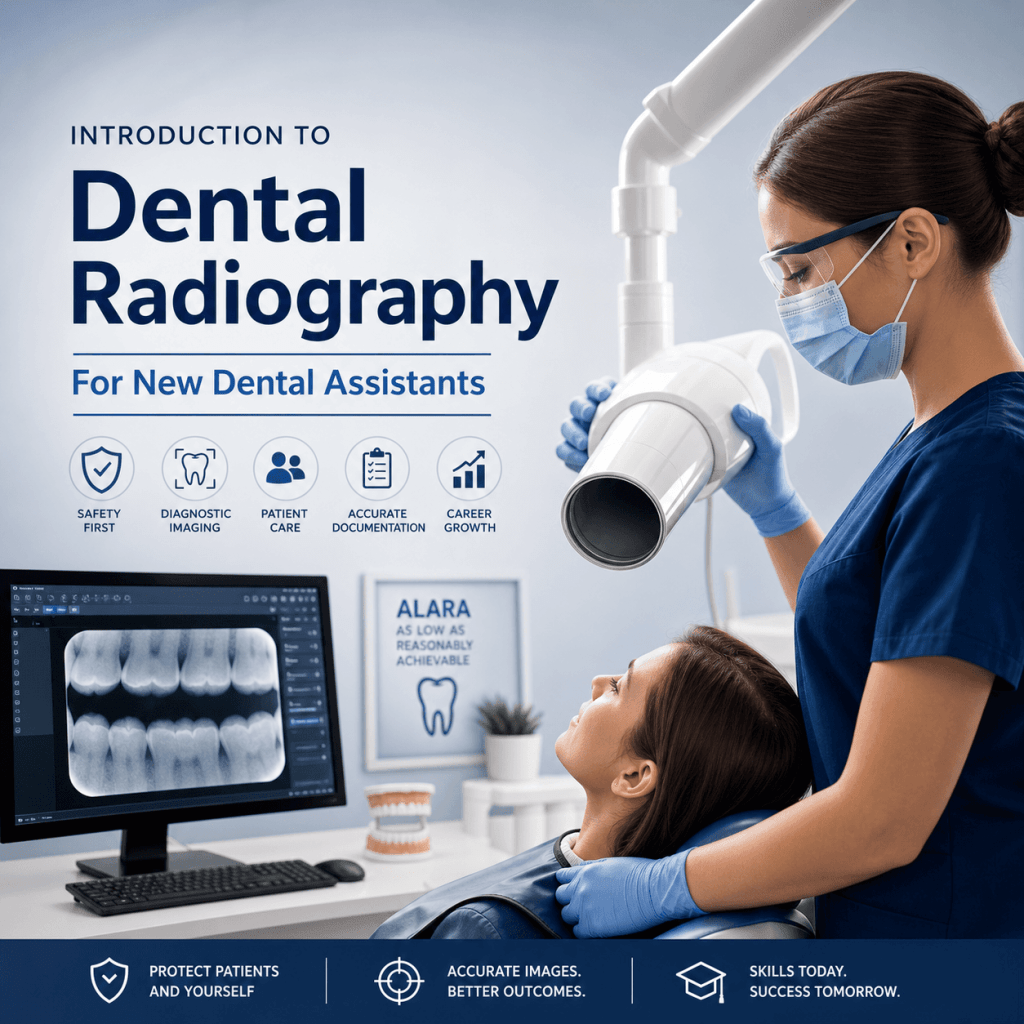
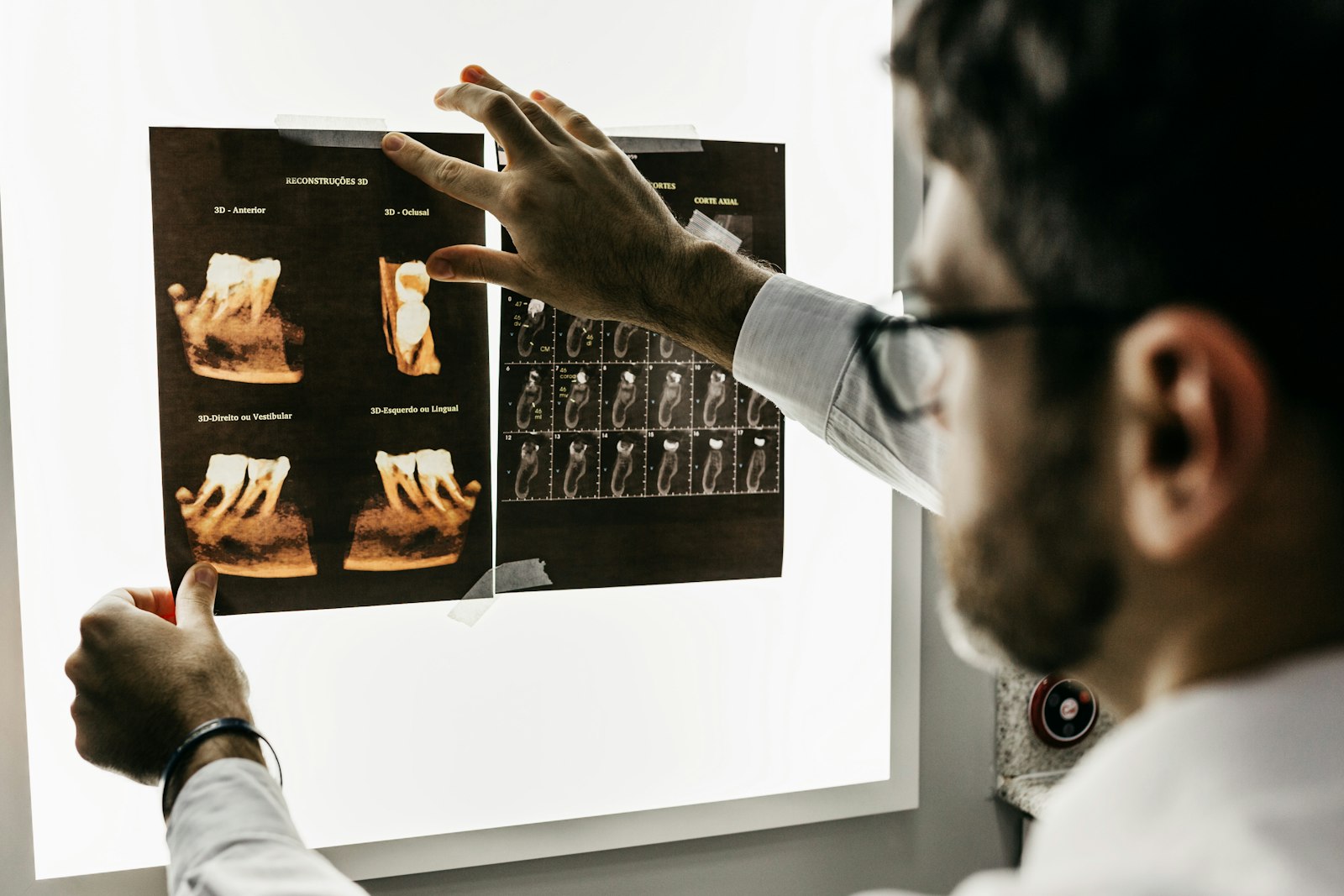
- Dental radiographs (X-rays) when properly trained/qualified
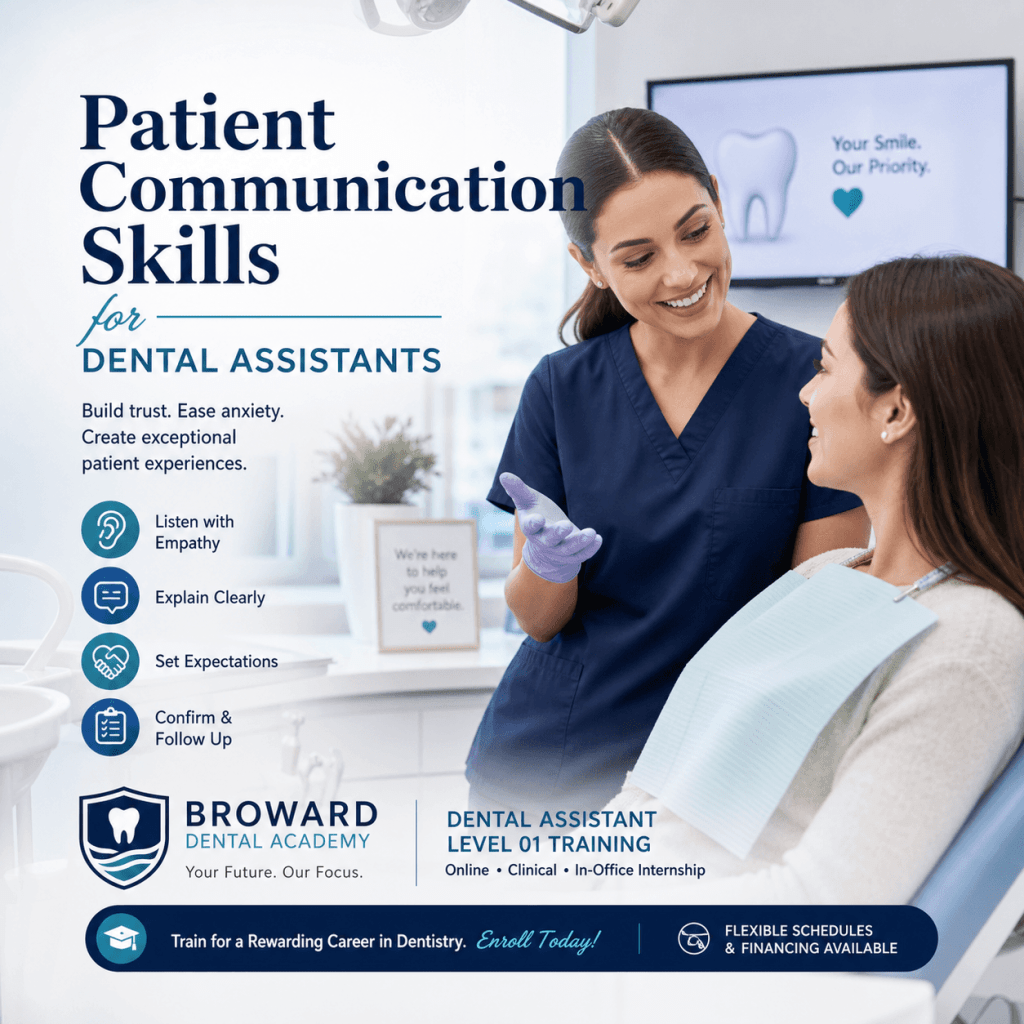
- Patient communication: explaining what happens next, calming anxious patients, post-op basics as directed
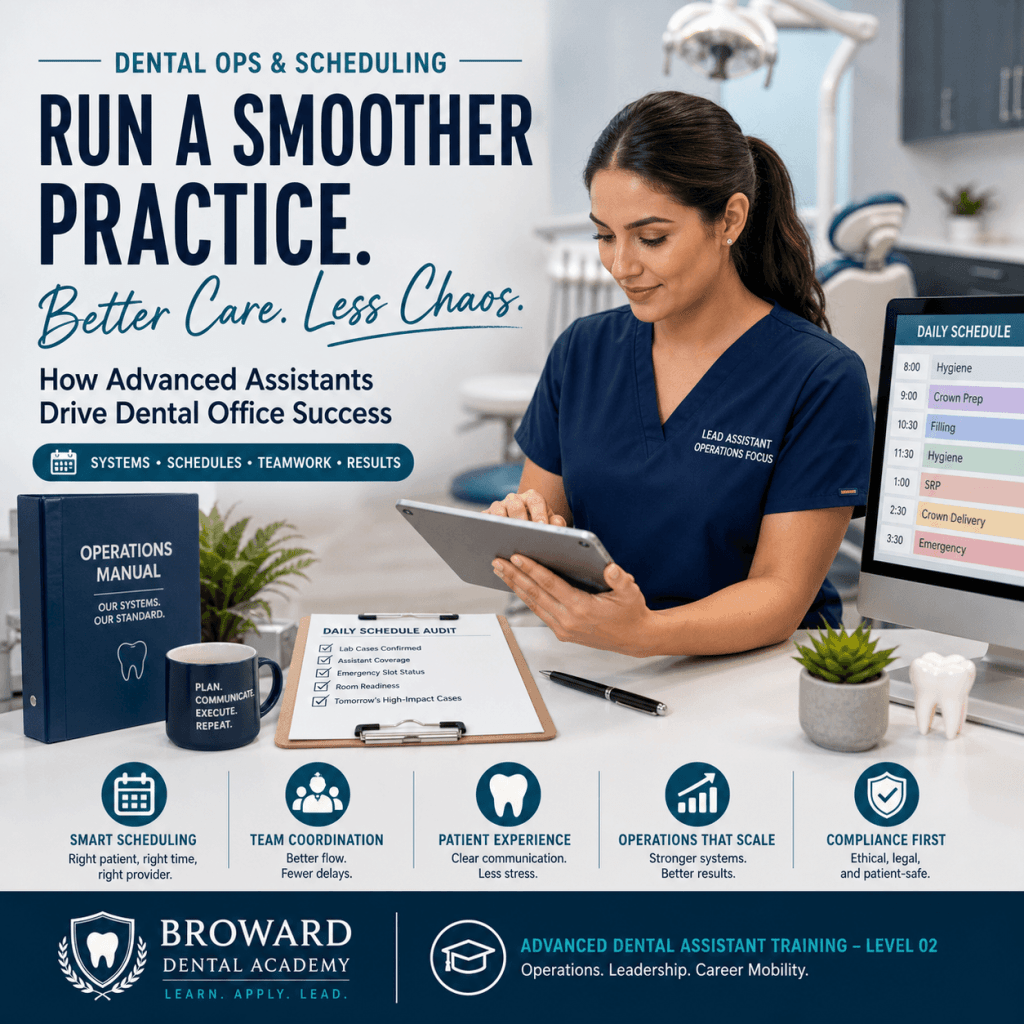
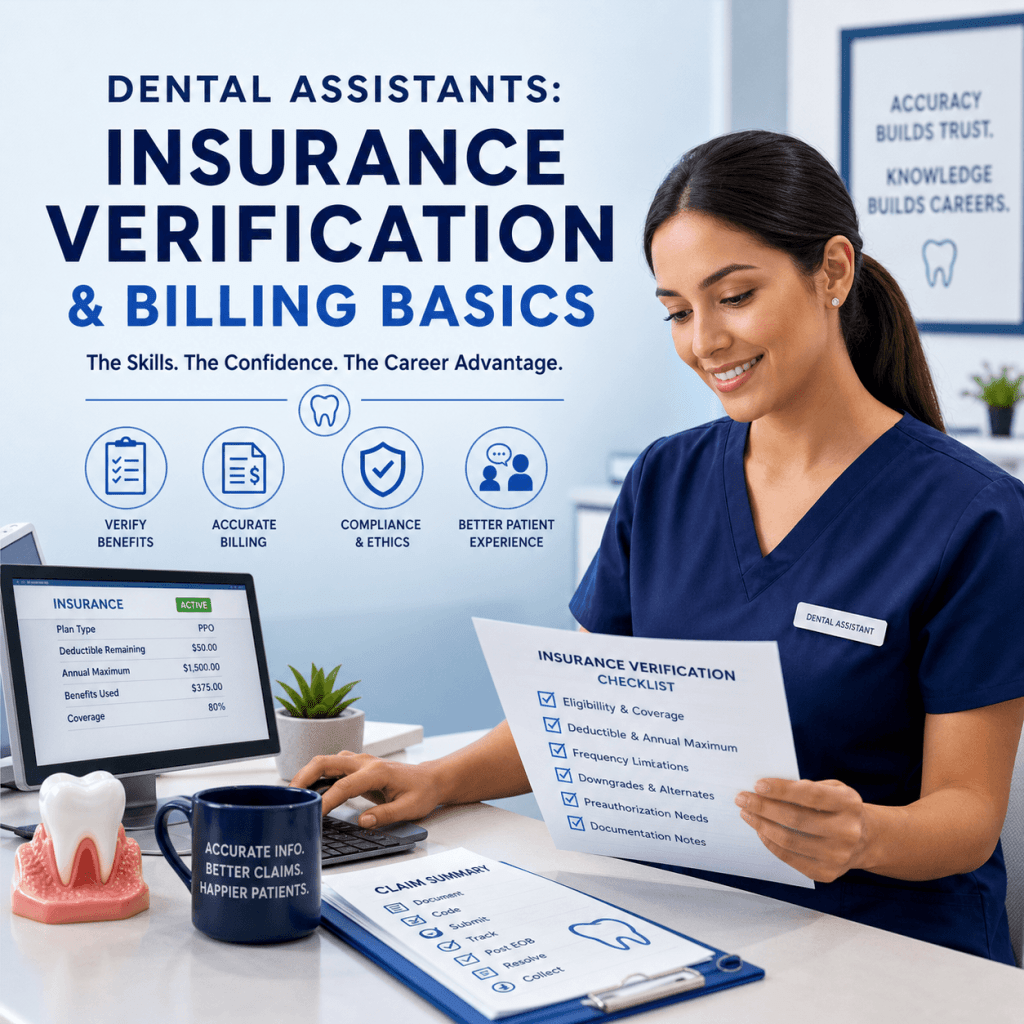
- Scheduling and insurance support in some offices (especially smaller practices)
If you’re interested in how to become dental assistant, it’s important to understand the training and certification requirements as well as the career opportunities available.
most people do not realize is the difference between “helping” and being clinically useful in a high-performance practice.
Strong dental assistants are valued because they:
- anticipate what is next
- pass instruments efficiently
- protect the field and patient comfort
- follow safety steps automatically
- communicate clearly with the team
Where dental assistants work in Florida
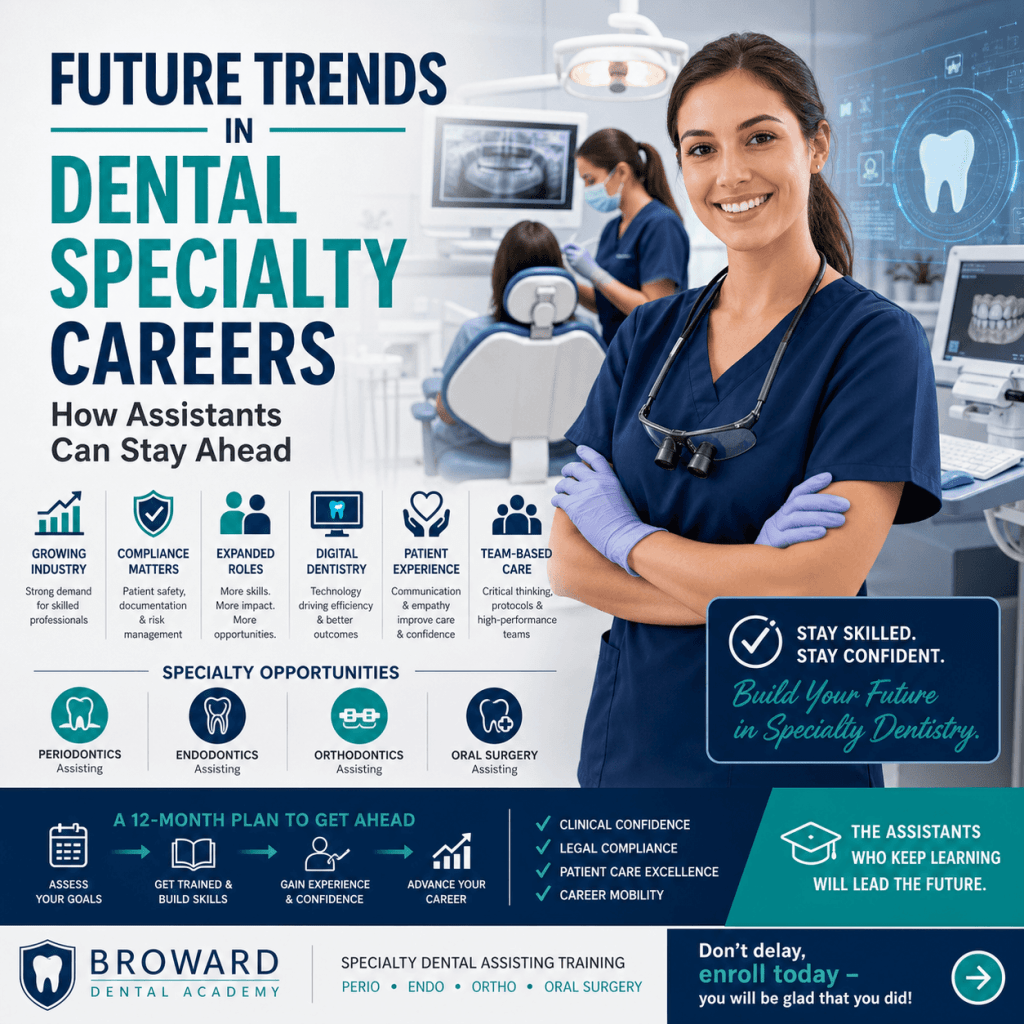
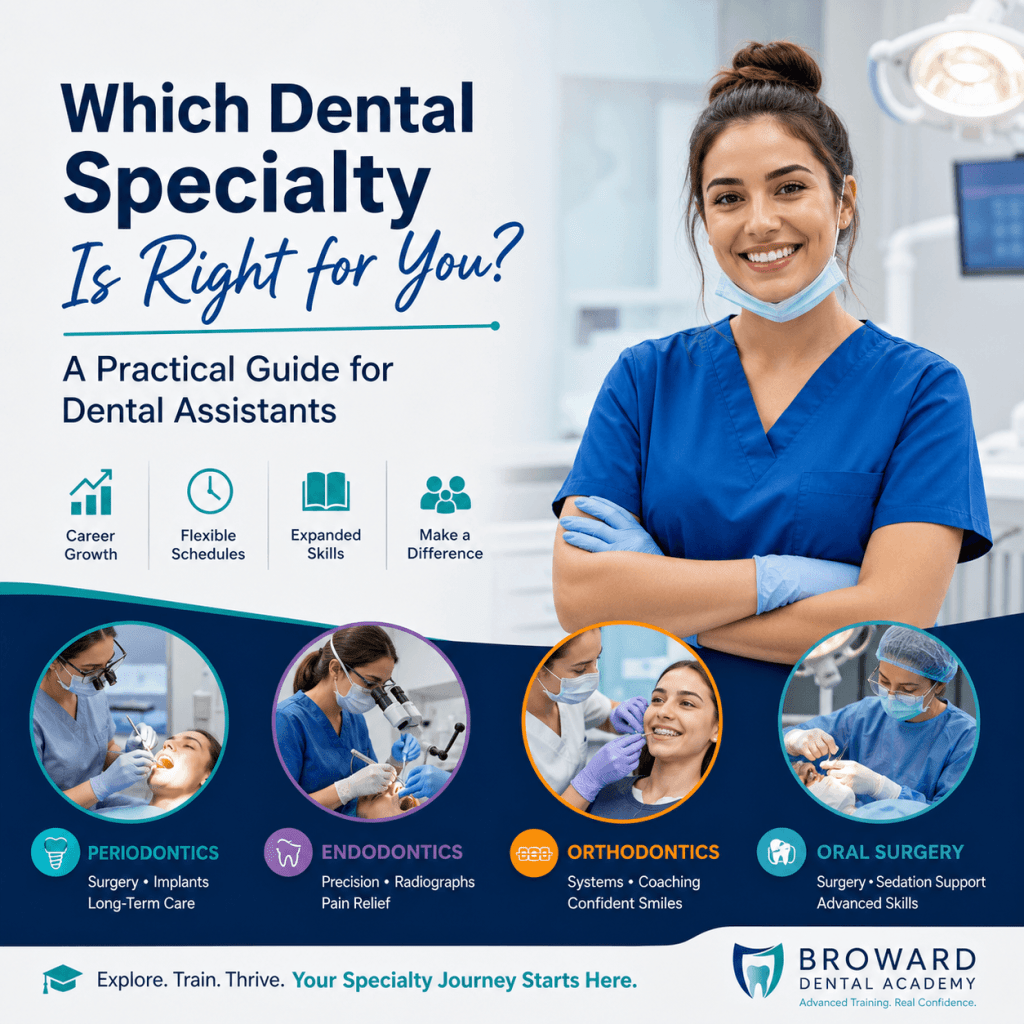
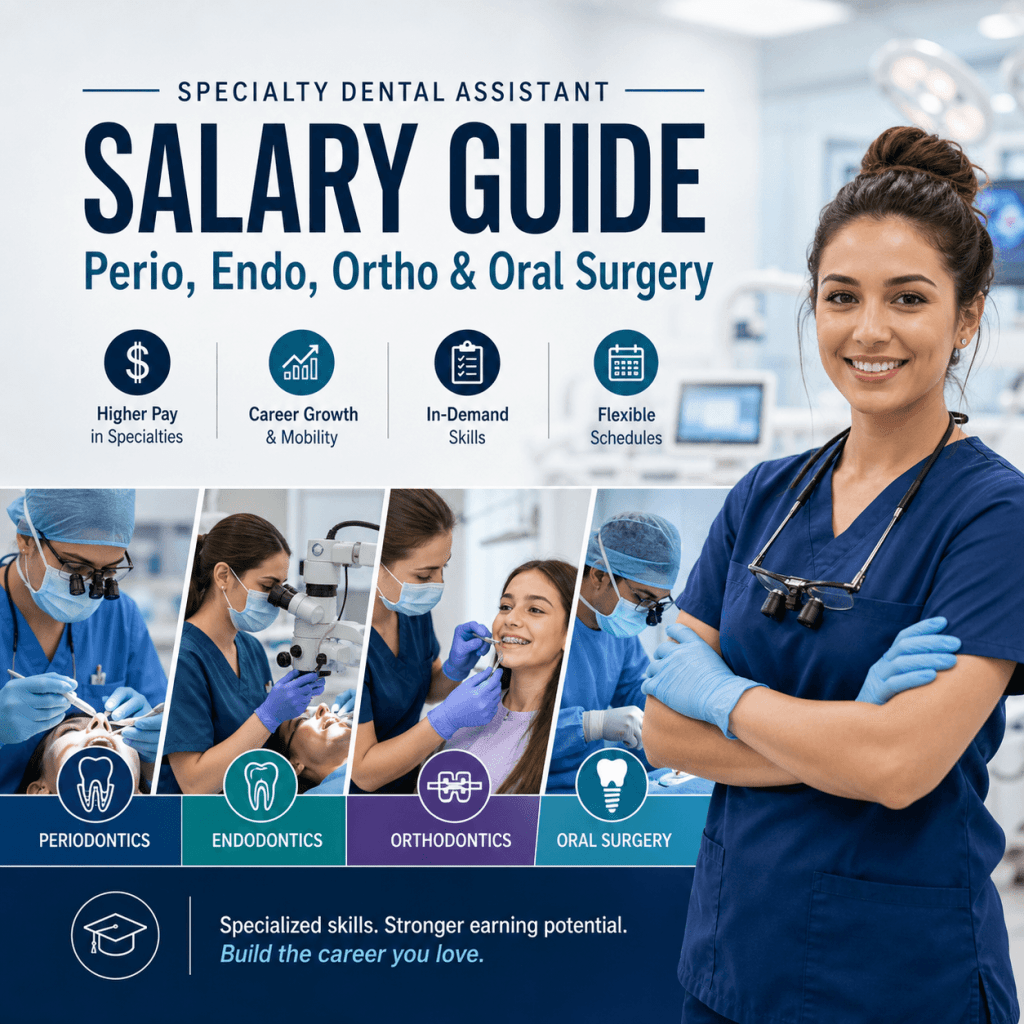
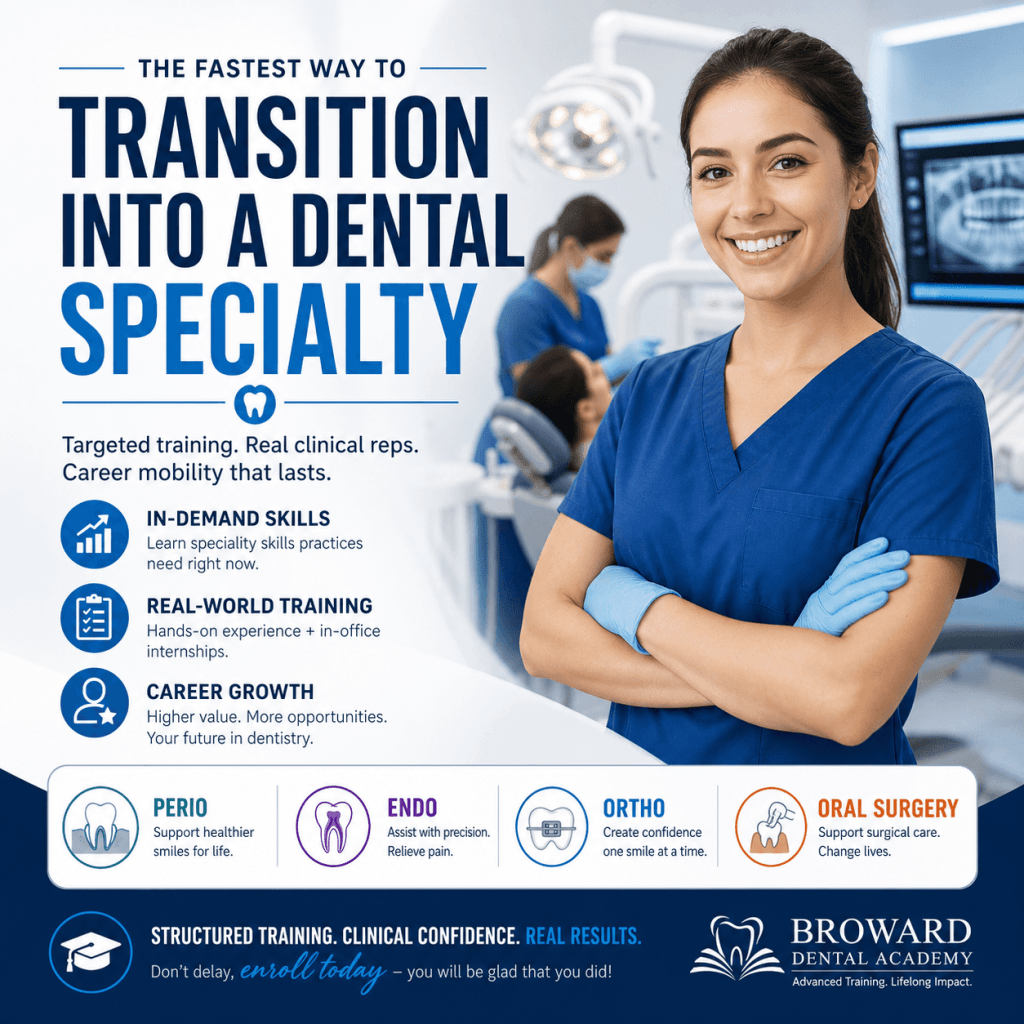
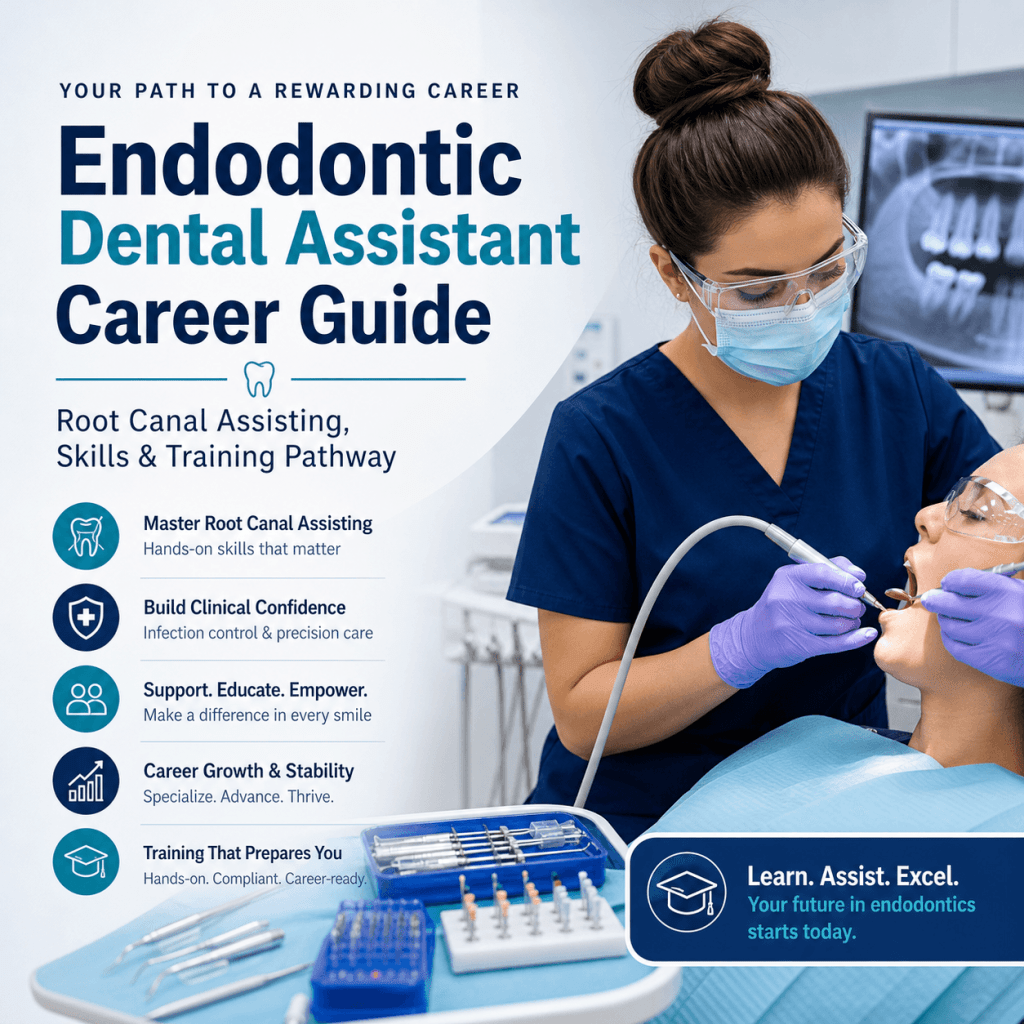
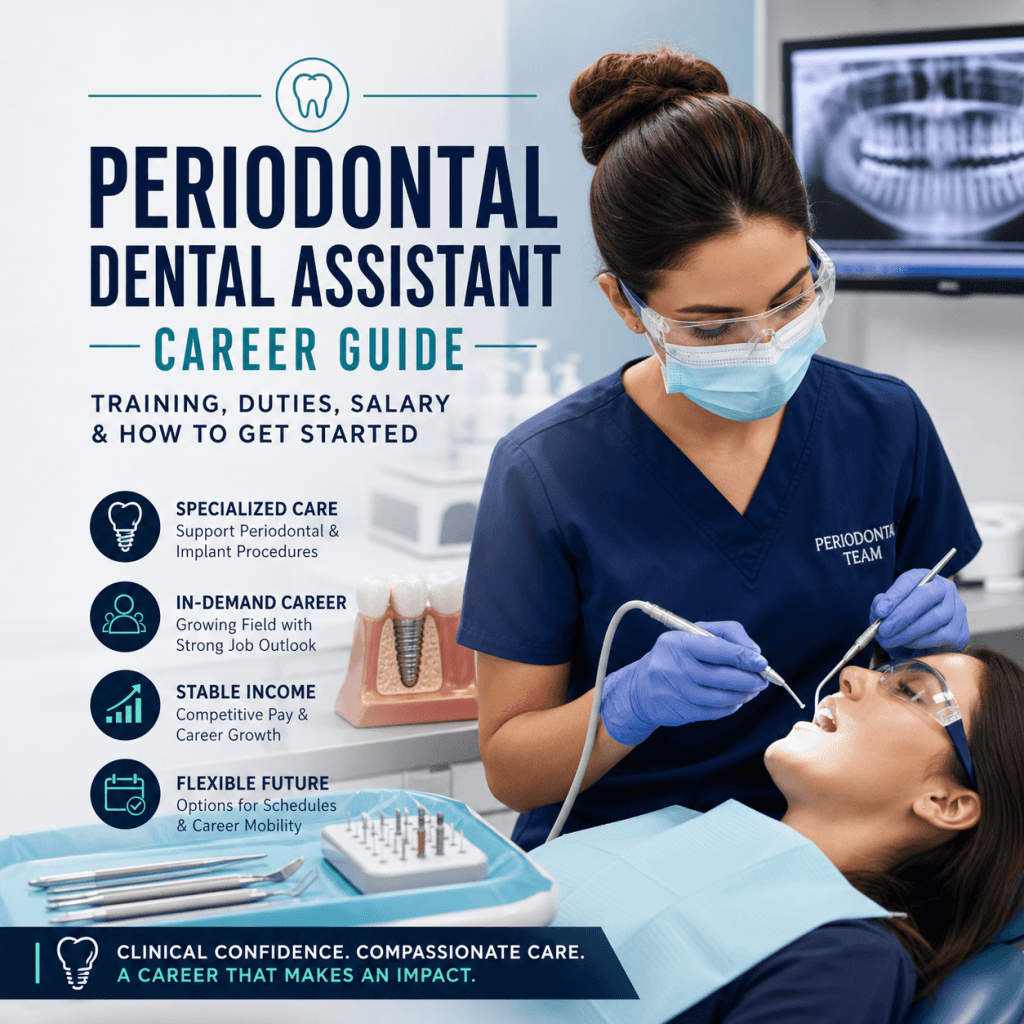
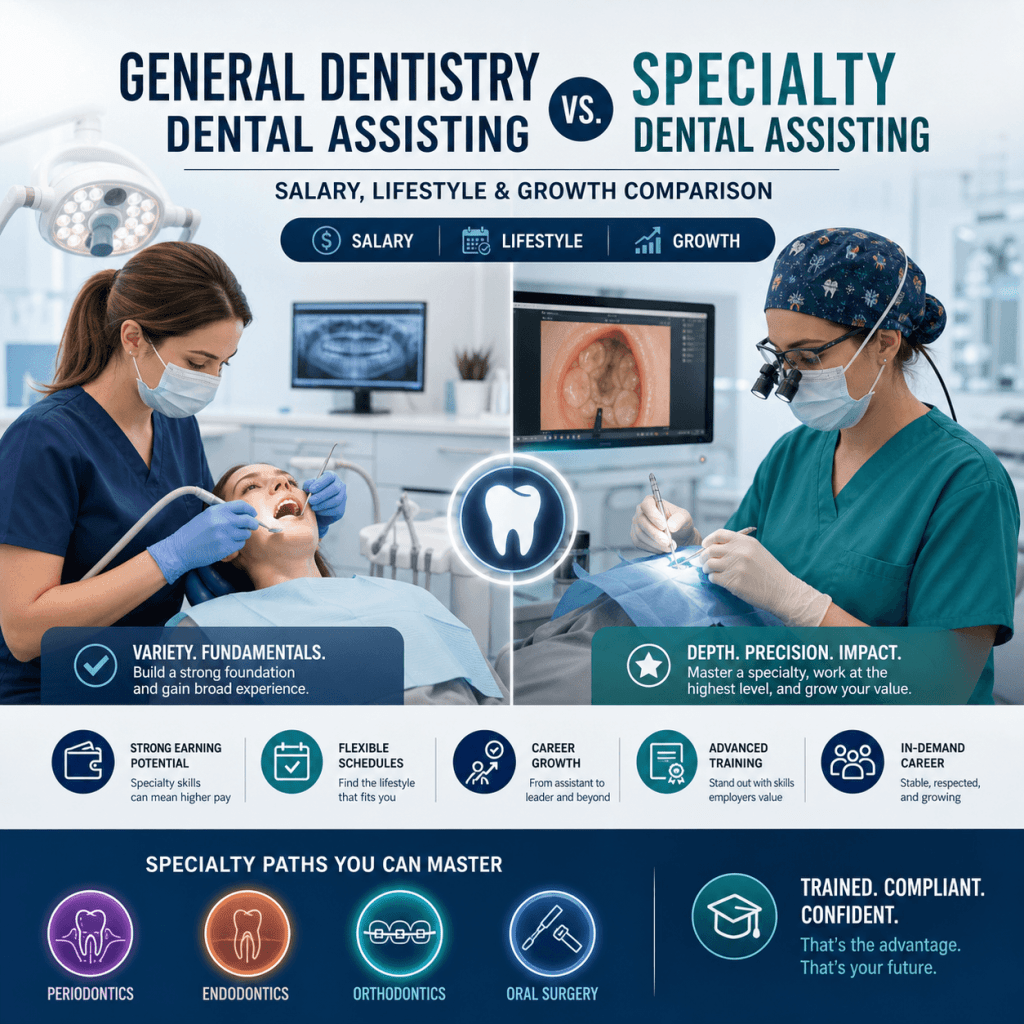
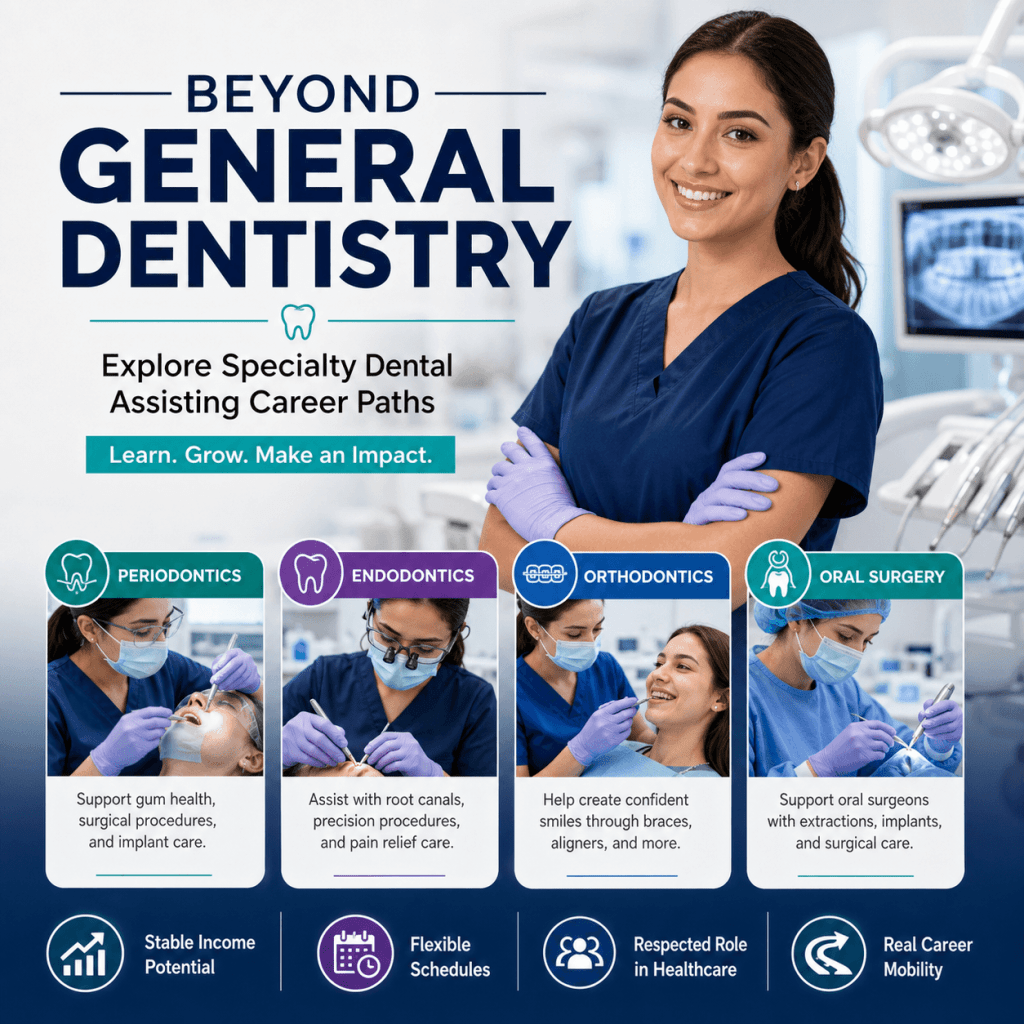
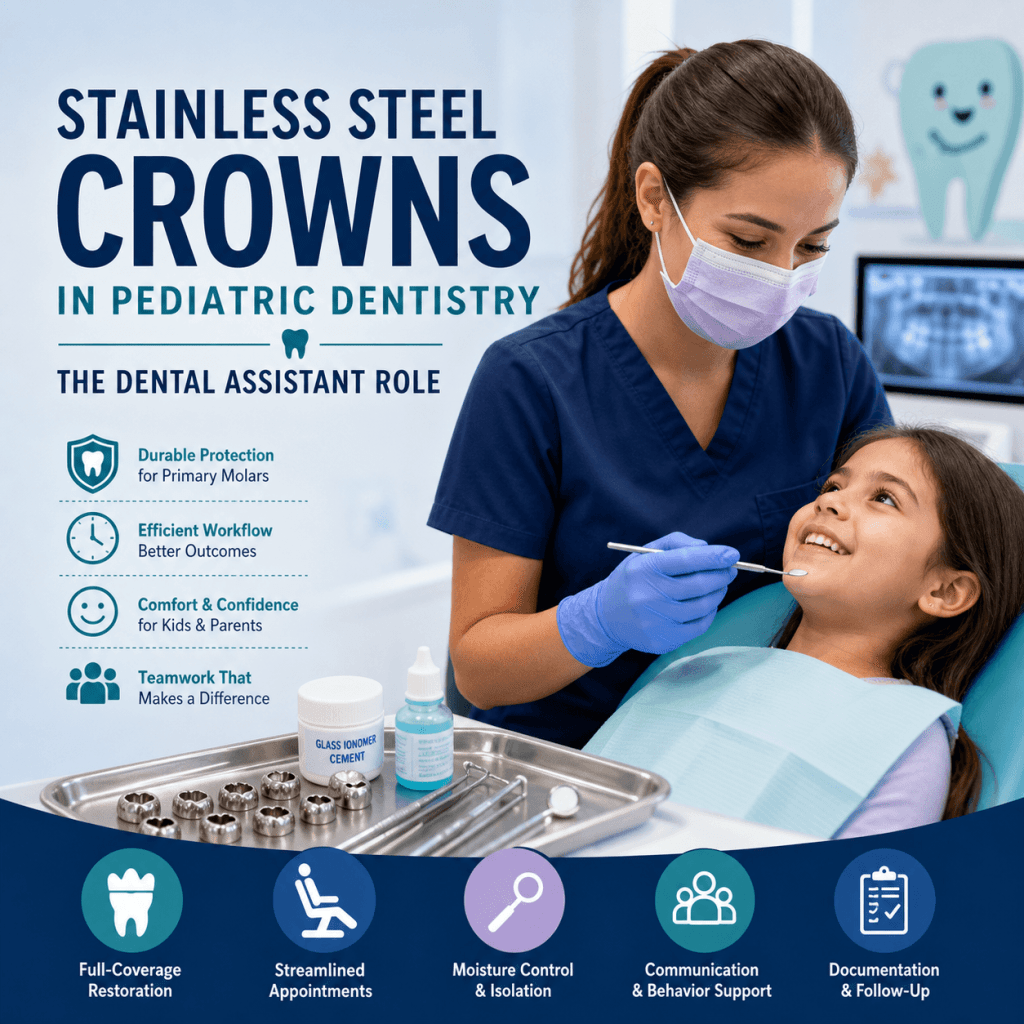
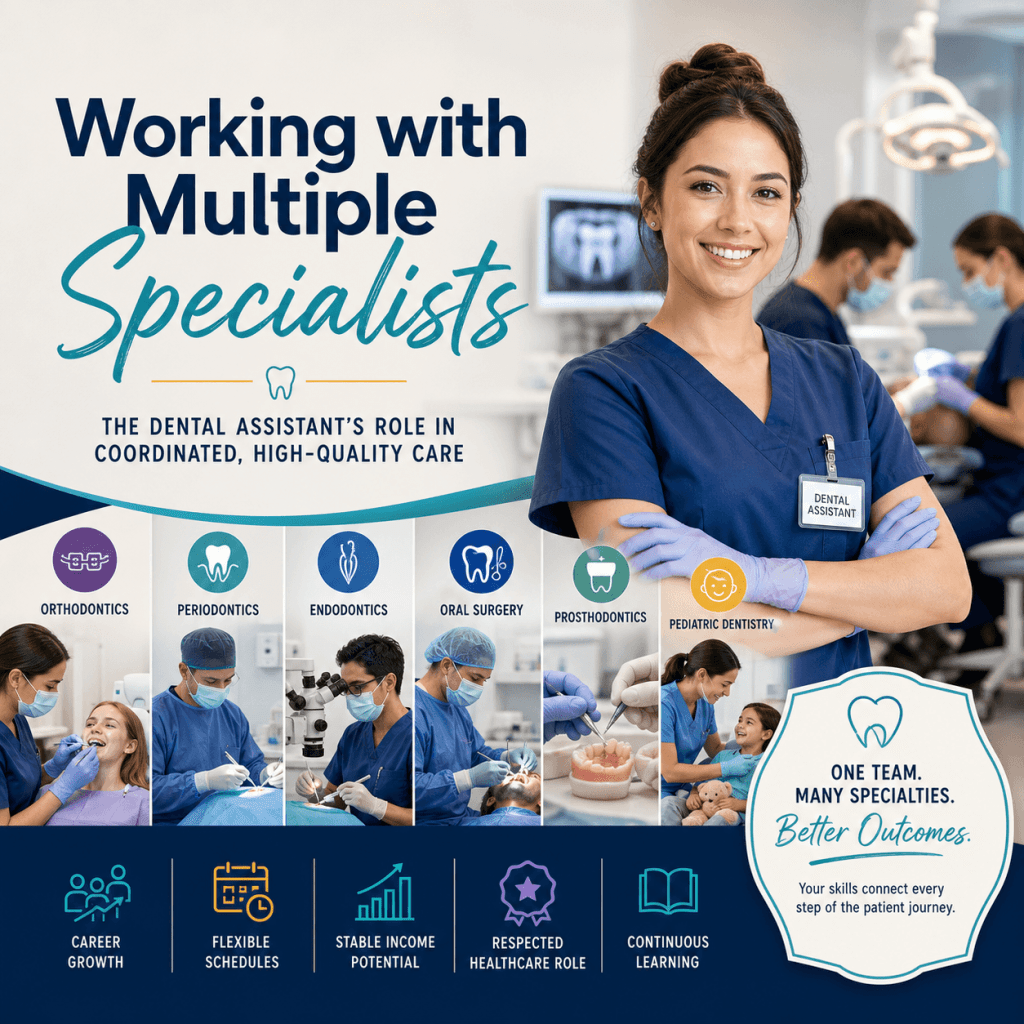
You can find dental assistants in various specialties such as General dentistry, Pediatric dentistry, Orthodontics, Oral surgery, Periodontics, Prosthodontics, and even in multi-location group practices (DSOs).
Training quality matters because offices prefer assistants who can step in confidently, understand boundaries, and protect patients from day one.
Florida dental assistant types and career paths (so you pick the right track)
Florida offers multiple pathways to enter the dental assisting field. The right track for you will depend on several factors: how quickly you want to start, how confident you want to feel clinically, and whether you’re aiming for expanded functions.
A simple way to think about dental assisting “levels” is:
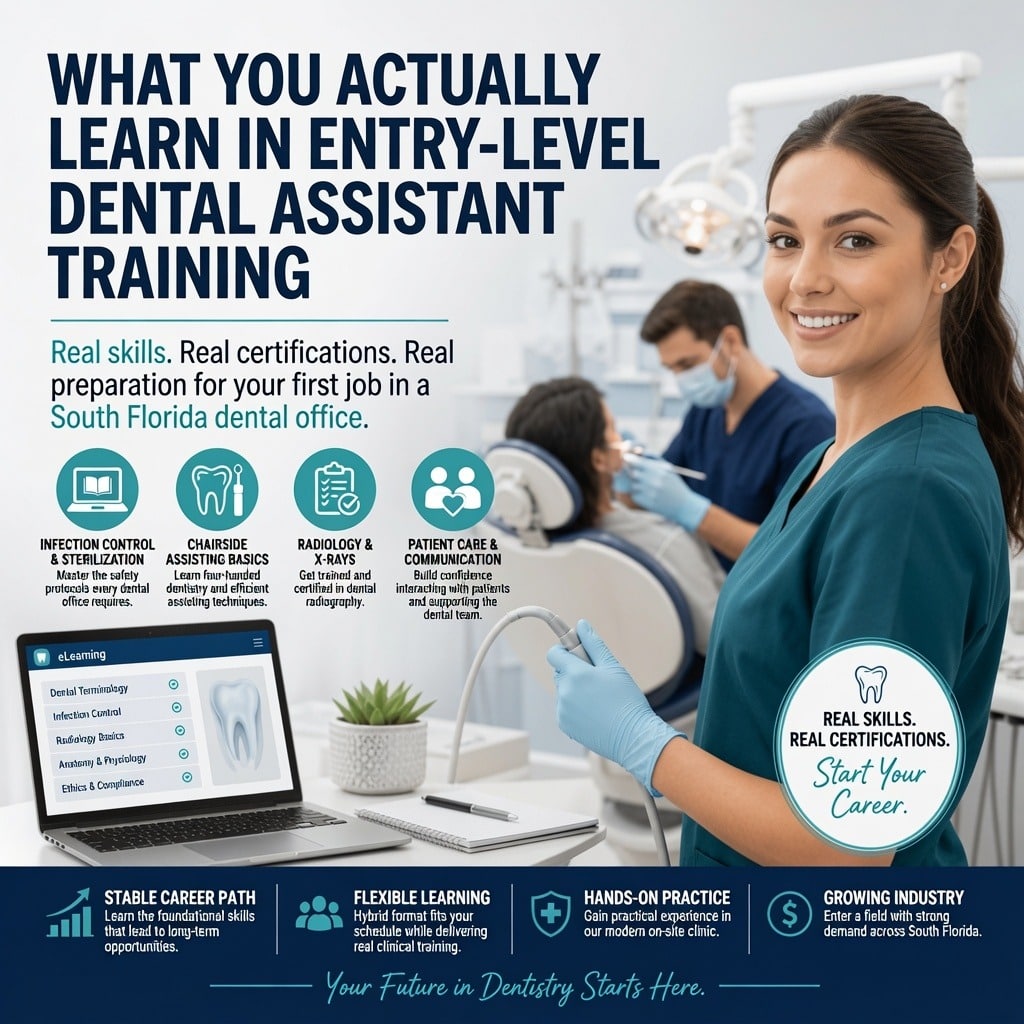
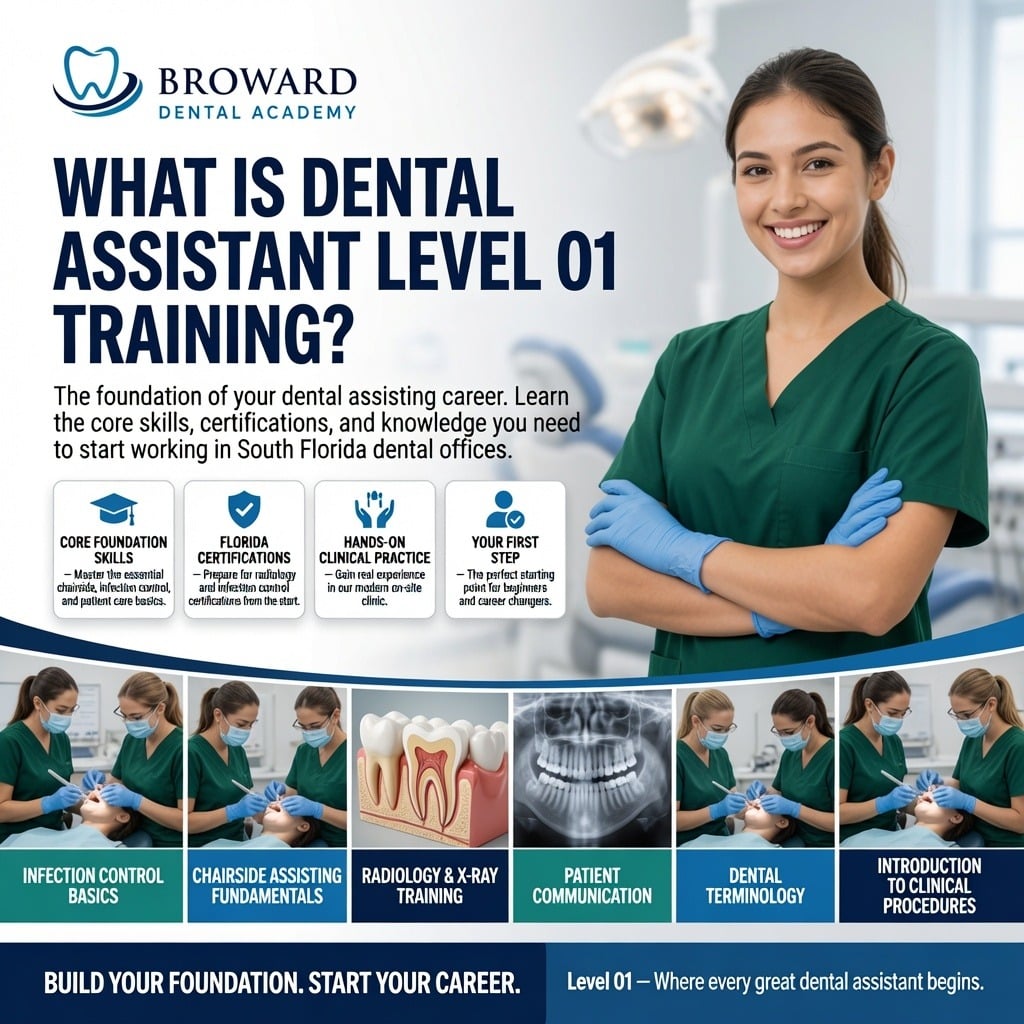
- Entry-level assistant (often trained on the job): This is where you learn in a real office, usually starting with sterilization, setup, and basic chairside support. You can find more about this here.
- Dental assistant with radiology skills: Being able to take quality X-rays (when qualified) can make you far more useful to the clinical workflow. More information on this level can be found here.
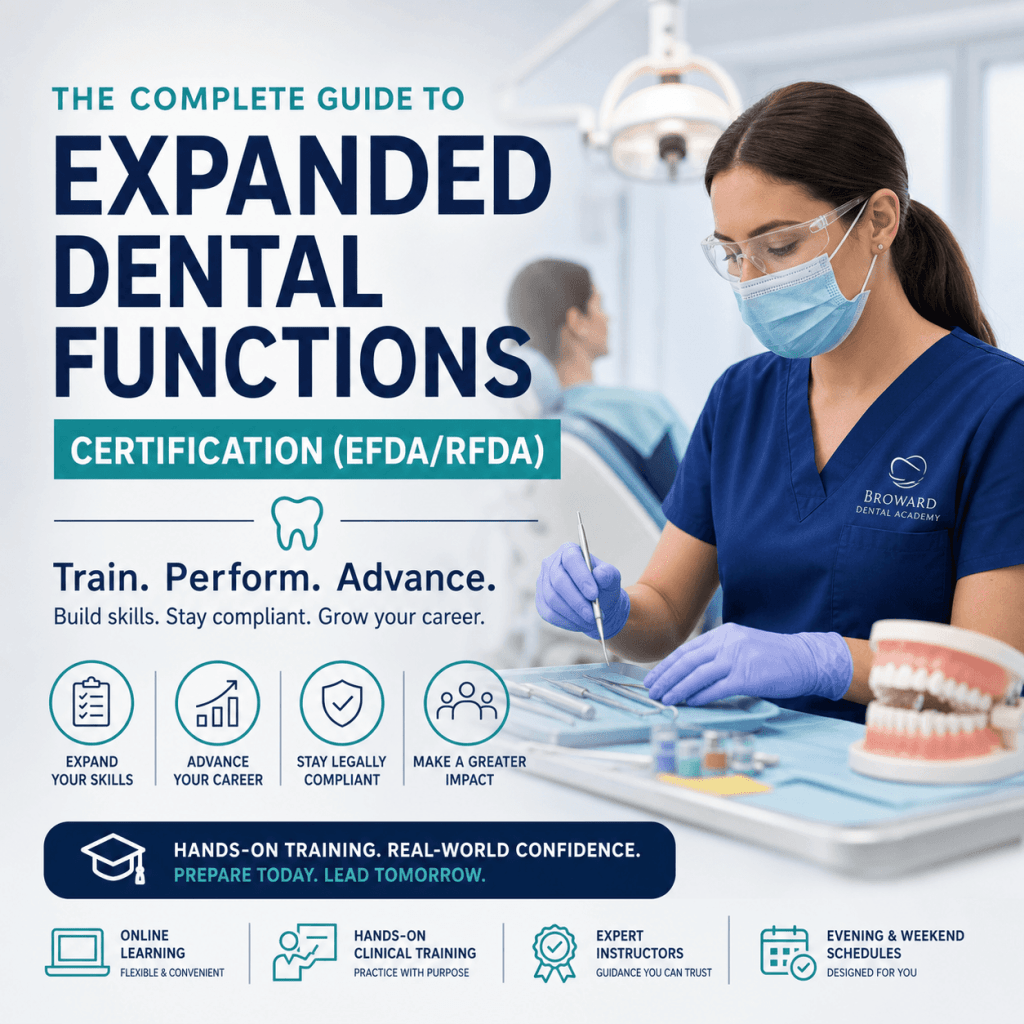
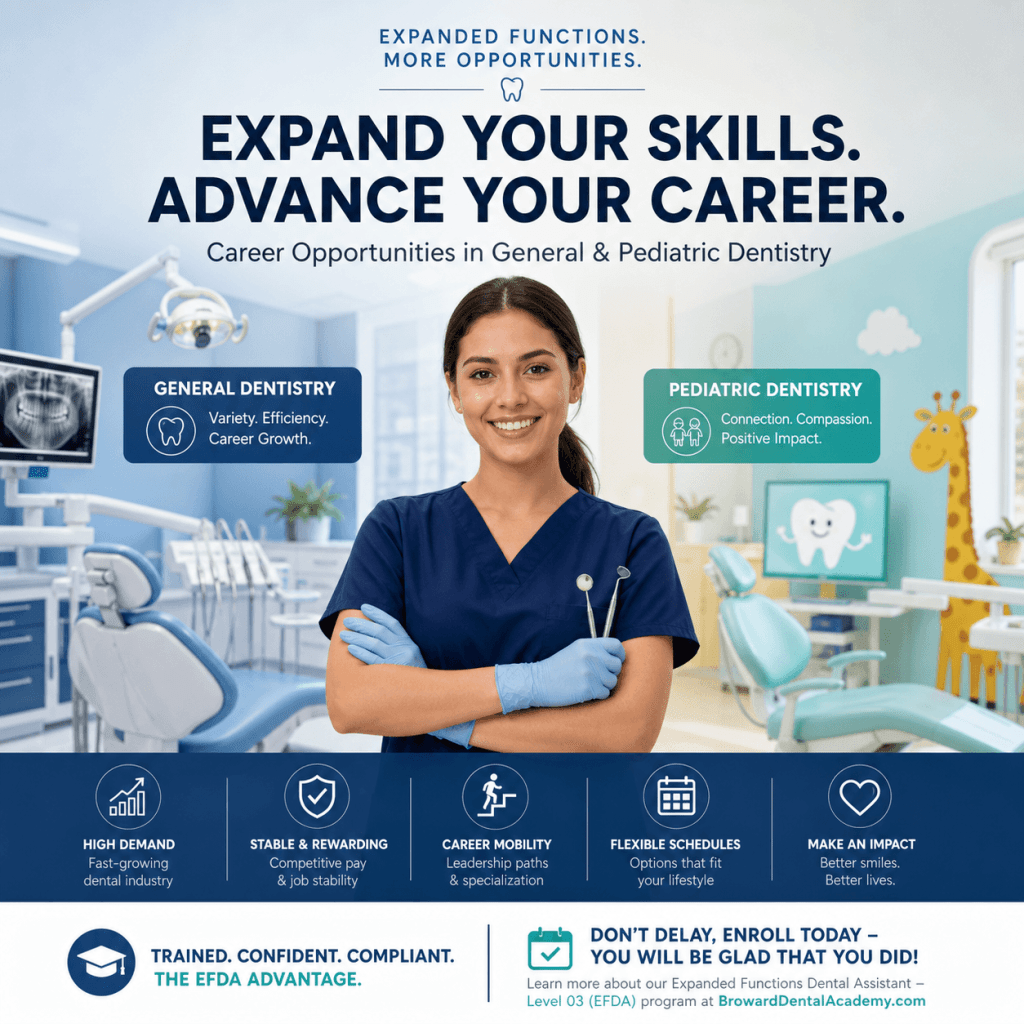
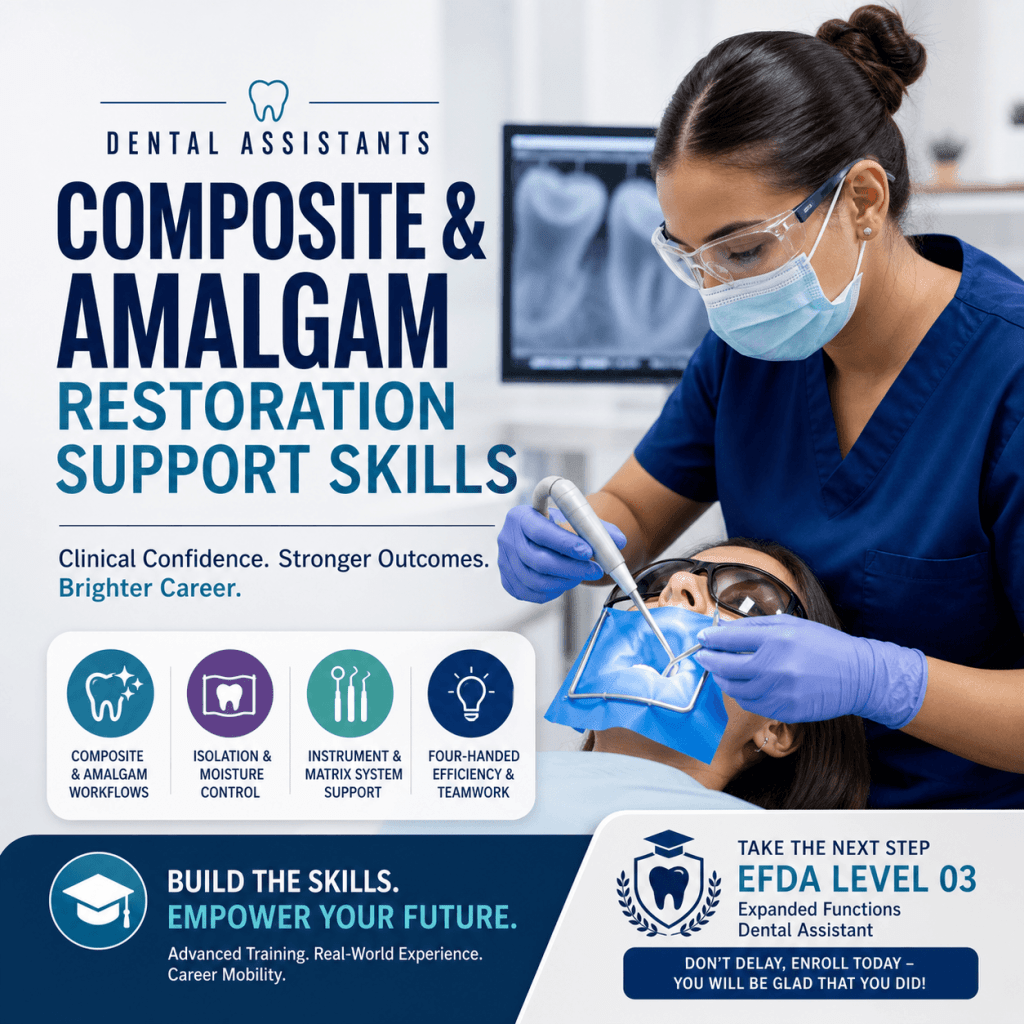
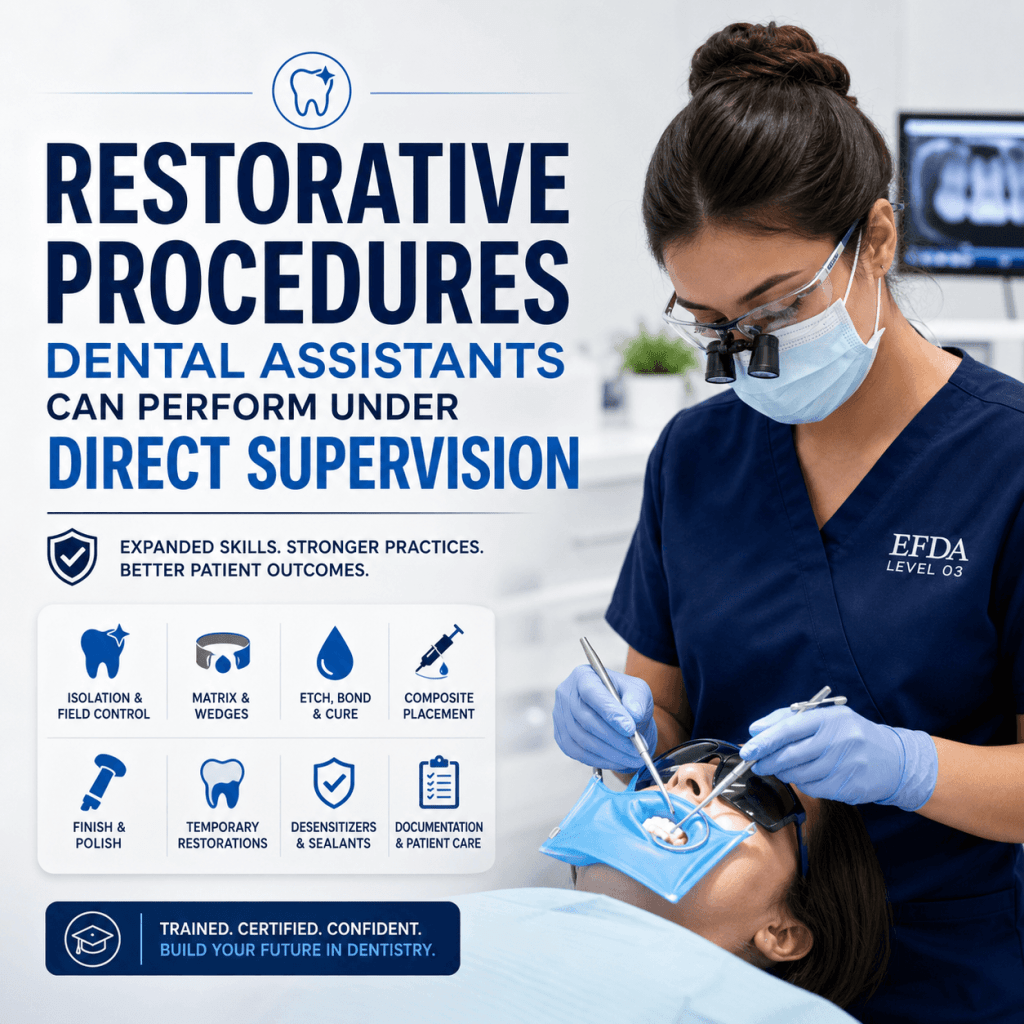
- Expanded functions and advanced training: Adding skills can increase responsibility and open more doors over time, depending on the office and Florida rules. Learn more about this level here.
A realistic career ladder example
Many assistants grow like this:
Dental Assistant → DA with radiology → Expanded Functions/advanced skills → Lead Assistant → Specialty assisting or Office Manager pathway
You do not need to decide your entire future on day one. The key is starting with a foundation that gives you mobility. With solid training and documentation, it is easier to move between offices and specialties.
Step-by-step: How to become a dental assistant in Florida
Step 1: Decide your timeline and your goal
Ask yourself one question:
Do you want the quickest entry possible, or do you want to be highly employable from day one?
The fastest route is often on-the-job training, but the strongest long-term route usually includes structured training that builds clinical confidence and compliance.
Step 2: Choose a training route
Most students choose one of these paths:
- Program-based training: Structured learning, skills labs, and clinical exposure. This tends to produce more consistent results, especially for people new to dentistry.
- On-the-job learning only: You get paid sooner in some cases, but training quality depends entirely on the office, their time, and their systems.
If you want to feel prepared, many employers respect candidates who have completed a program that includes hands-on skills and real clinical reps.
Step 3: Build strong fundamentals (the skills offices notice)
Before you worry about advanced skills, focus on:
- infection control and sterilization workflow
- chairside assisting basics and instrument transfer
- dental materials and tray setup
- patient communication and professionalism
- understanding your role and scope
Step 4: Consider radiology early
Radiology is one of the most common “level up” skills because it supports diagnosis workflow and keeps appointments moving.
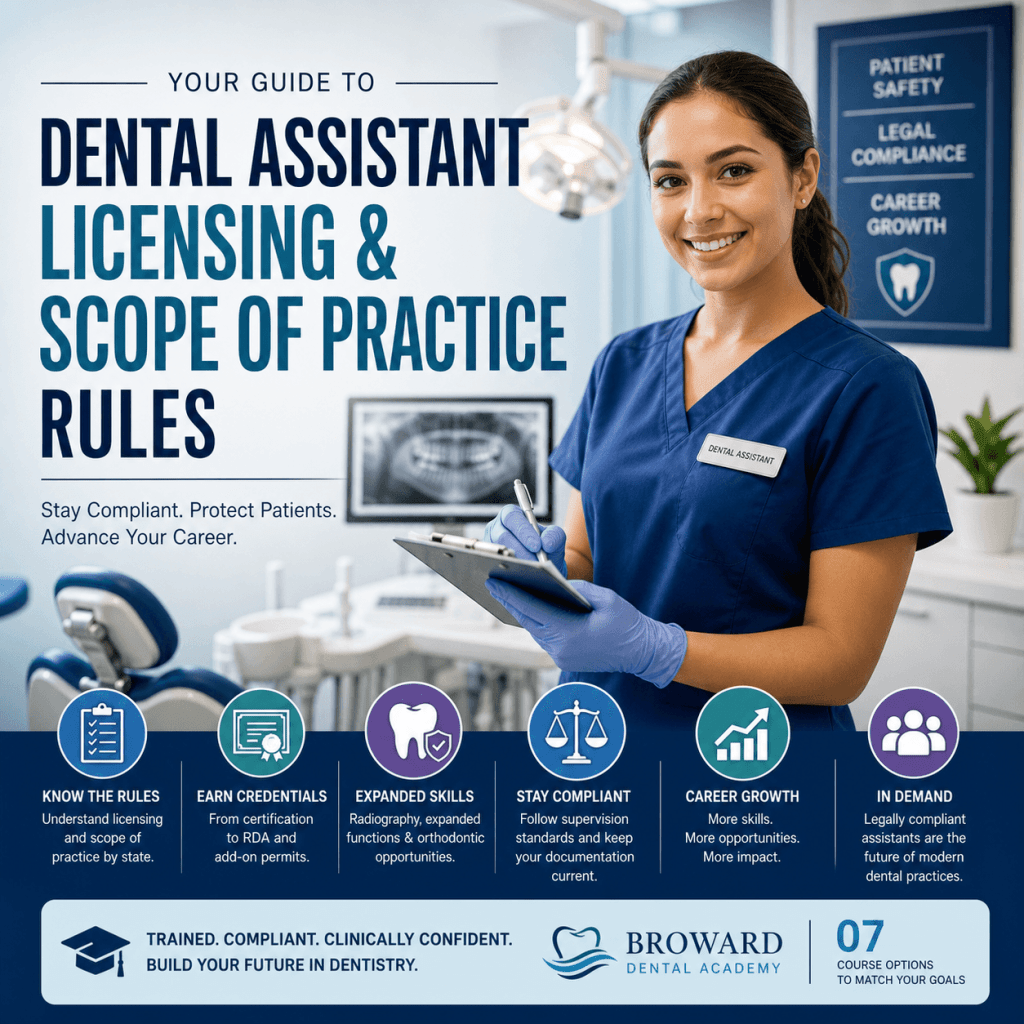
Rules and requirements can change, and duties vary by setting, so always follow Florida regulations and employer policy. A quality program will teach you the correct pathway and documentation for your situation.
Step 5: Get hands-on experience (this is where confidence comes from)
Externships, internships, and in-office clinical training matter because dentistry is fast. You need repetition to build muscle memory.
Real experience teaches:
- pace and time management
- how to communicate with a dentist who is focused on the procedure
- how to work smoothly with front desk and hygiene
- how to keep patients calm and informed
Step 6: Prepare job materials and interview readiness
Keep your resume simple and skill-forward:
- clinical hours and hands-on competencies
- sterilization and infection control experience
- radiology training (if applicable)
- externship or internship details
- soft skills: reliability, coachability, communication
In interviews, be ready to speak clearly about:
- safety habits
- teamwork and anticipating needs
- how you handle anxious patients
- what you do when you do not know something (ask, learn, and follow protocol)
Step 7: Apply strategically
For many new assistants, the best first job is a strong general dental office where you can build reps.
Consider:
- Private practices: often more personal mentorship, varies by office
- DSOs (group practices): often structured systems and higher pace, good exposure to modern workflow
- Specialty offices: great long-term, but easier once your fundamentals are solid
Training that employers respect: what to look for in a Florida dental assisting program
A strong program is not just “information.” It is clinical readiness.
Look for training that includes:
- Modern infection control and sterilization protocols
- Chairside assisting systems and real operatory flow
- Radiology foundations (and clear guidance on legal compliance)
- Impressions and dental materials basics
- Professionalism, ethics, and patient communication
- Hands-on clinical practice, not just videos
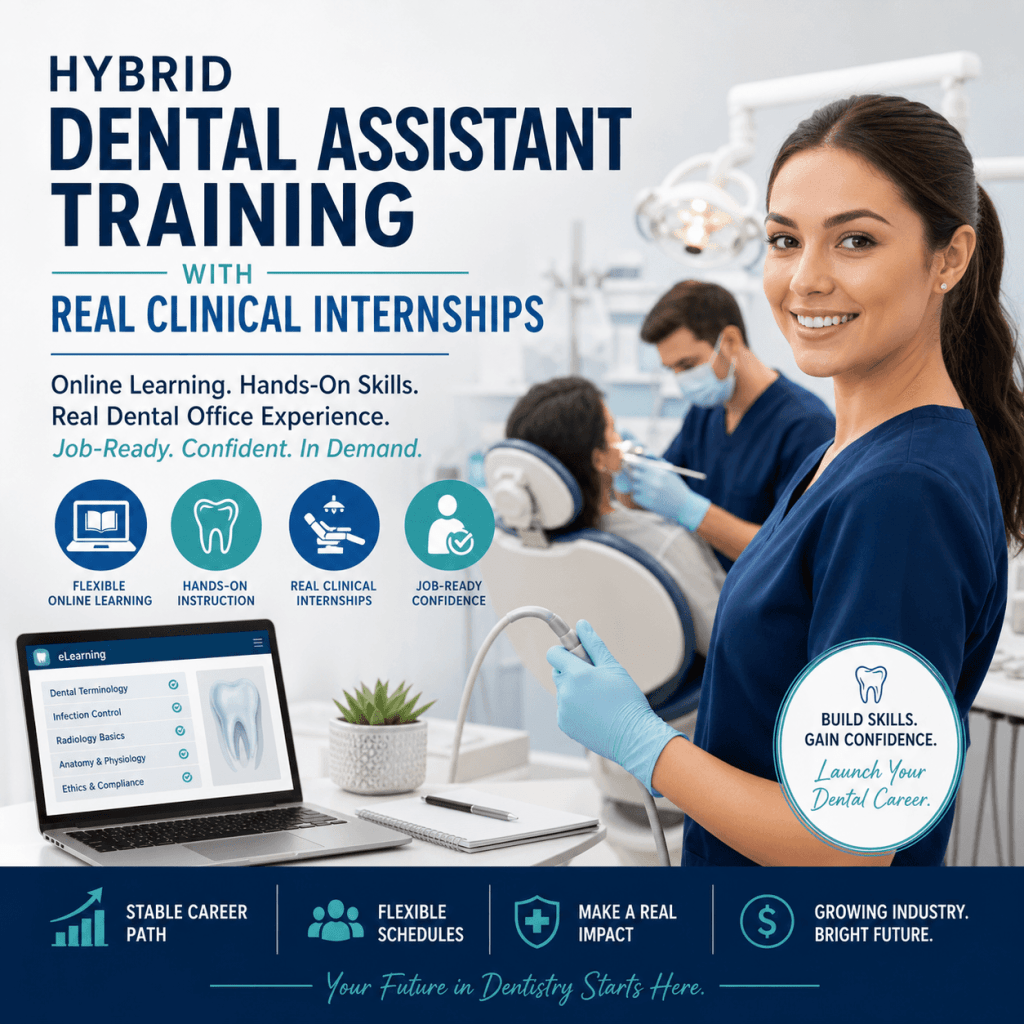
A blended approach often works best: online learning for theory plus in-person clinical training for confidence and muscle memory.
Why internships matter
Internships teach what classrooms cannot fully simulate:
- real schedule pressure
- team dynamics and handoffs
- patient variety
- the rhythm of a working dental day
Practical checklist when comparing schools
When you are evaluating options, ask:
- How many hands-on clinical hours are included?
- What is the instructor’s real office experience?
- Are lesson plans updated and supported with eLearning?
- Is internship placement included or supported?
- Are there schedule options (evenings/weekends)?
- What are total costs: tuition, supplies, uniforms?
- Do graduates leave ready for real practice, not just tests?
Radiology, expanded functions, and “leveling up” in Florida
Radiology is a big deal because it directly affects workflow. When an assistant can support imaging efficiently (when properly credentialed), the dentist can diagnose faster and appointments stay on track.
Expanded functions and advanced skills can also increase your value, responsibility, and long-term options. What you are allowed to do depends on Florida regulations, training, and your employer’s policies, so treat compliance as part of being a professional.
A practical plan that works for many students is:
- Build strong fundamentals
- Add radiology credentials when appropriate
- Pursue expanded functions like those offered in the EFDA program and advanced courses to broaden opportunities
For instance, you might want to explore the various courses offered by dental academies in Florida that could help you achieve these goals.
How long it takes (and what it typically costs) to become a dental assistant in Florida
Timelines and costs vary because Florida has multiple entry routes and not every student chooses the same “level up” path right away.
What affects how long it takes
- whether you start with no experience or have healthcare exposure
- program schedule and format (full-time vs part-time)
- clinical requirements and internship hours
- whether you add radiology or advanced skills early
What affects cost
- tuition
- books, supplies, and instruments (if required)
- scrubs/uniforms and shoes
- exam or credential fees (as applicable)
- commute and parking
- opportunity cost if you delay entering the workforce
Many students use flexible financing to start sooner, then let the career pay back the investment over time. It is worth viewing this as an ROI decision: strong training can improve employability, reduce “first job stress,” and support faster upward mobility.
Getting hired: what Florida dental offices look for (and how to stand out fast)
Most dental offices hire with one mindset: protect patients, follow protocols, and keep up with a modern schedule.
What to highlight on your resume
- hands-on clinical skills (be specific)
- externship/internship experience
- infection control competence
- communication and professionalism
- reliability and coachability
Interview talking points that stand out
Be ready to explain, in your own words:
- how you support anxious patients
- your sterilization and operatory turnover steps
- how you organize a tray and anticipate the next instrument
- how you handle feedback and improve quickly
- how you work as part of a team under time pressure
First-job strategy
Pick an office where you will get mentorship and real reps. In the beginning, it is often smarter to choose a place that will train you well than a place that only needs “a warm body.”
Start in general dentistry if needed, then specialize once your fundamentals are strong.
Why Broward Dental Academy is built for real-world readiness (not just classroom learning)
Broward Dental Academy prepares students to become thoroughly trained, legally compliant, and clinically confident dental professionals.
The training model is built around immediate immersion through a blended experience:
- Latest eLearning lesson plans for remote learning and strong theory
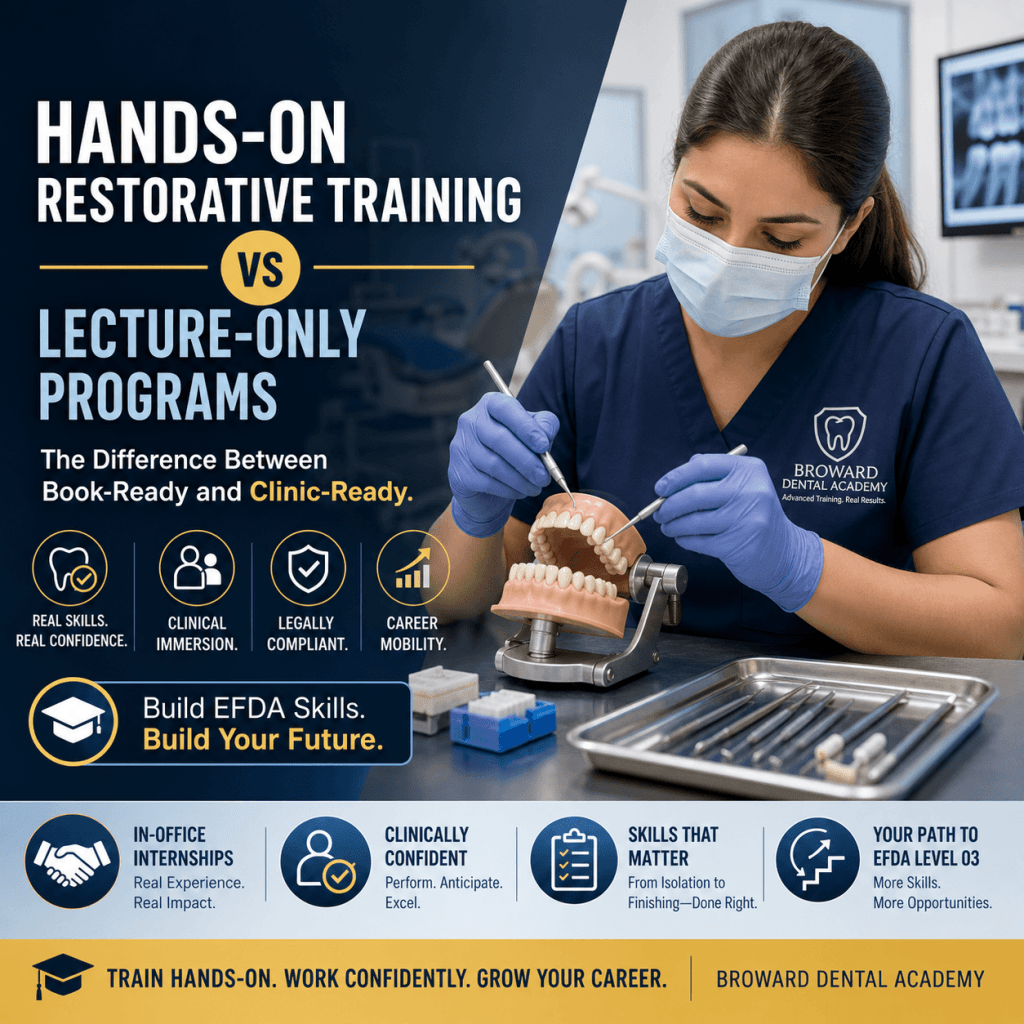
- Hands-on clinical skill building to develop real confidence and speed
- In-office internships so students learn real workflow, communication, and pace
Students are trained to think critically, act ethically, and perform confidently, which is exactly what modern practices want.
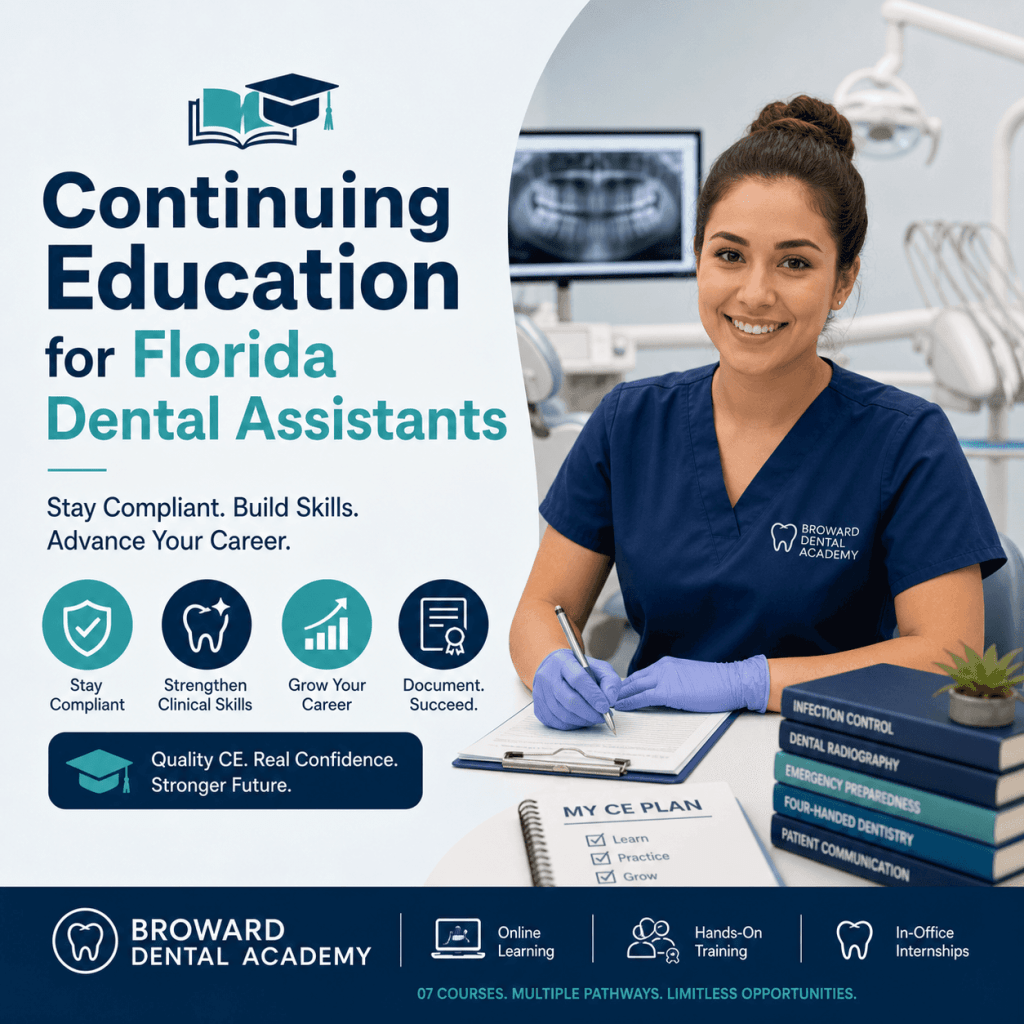
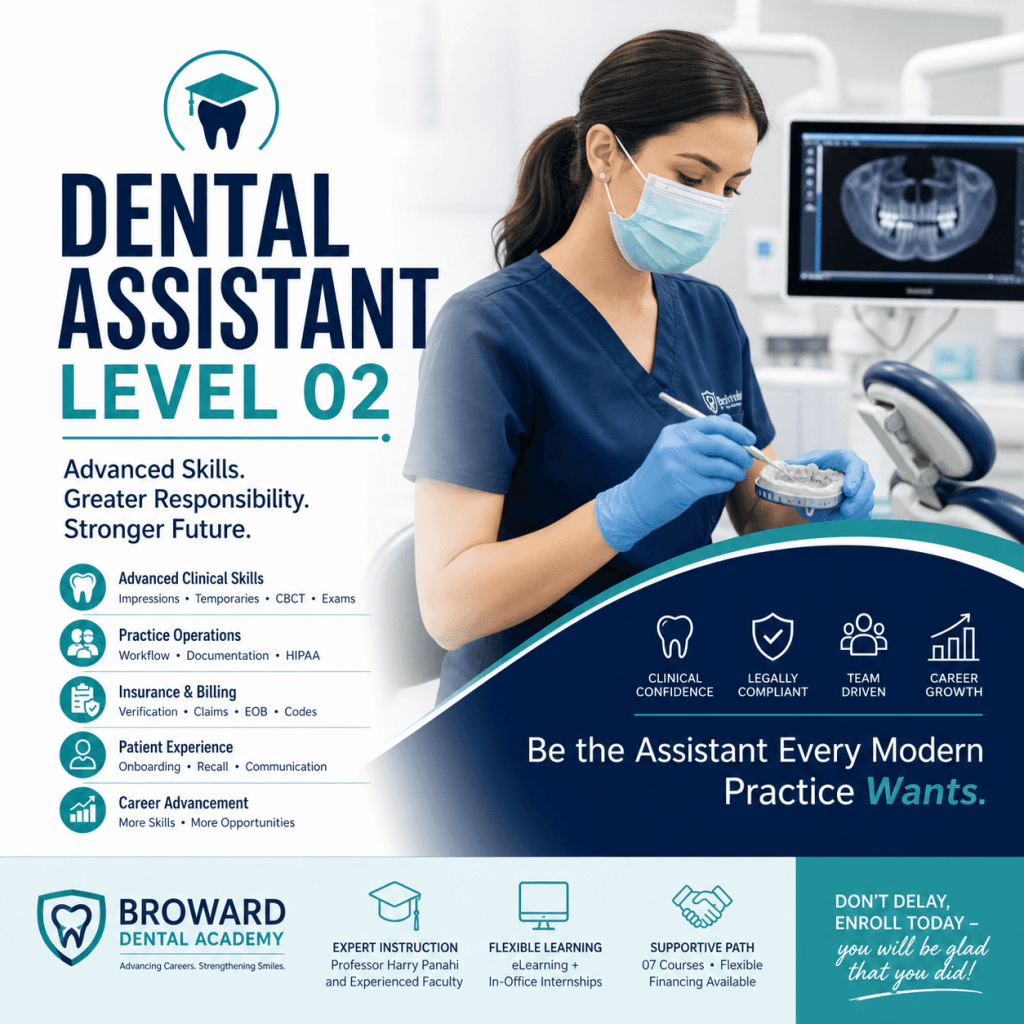
Broward Dental Academy also offers 7 courses and advanced dental training options for continued growth, plus flexible financing to help students start sooner.
A simple next step: choose your path and start your training
Here is the clean sequence that works for most people:
- Pick your timeline
- Get solid training
- Get hands-on experience
- Add radiology and advanced skills
- Apply with confidence
You do not need a perfect background to start. Consistency, professionalism, and quality training matter most.
Don’t delay, enroll today – you will be glad that you did!
FAQs (Frequently Asked Questions)
Why is dental assisting considered a smart career move in Florida right now?
Dental assisting offers a stable healthcare role that you can enter without a four-year degree. In Florida, the demand for dental care remains consistent due to population growth and ongoing dental needs. The field provides stable income potential, flexible schedules including part-time and four-day work weeks, a respected role in direct patient care, and long-term career mobility through certifications and expanded functions.
What are the typical day-to-day responsibilities of a dental assistant in Florida?
A dental assistant in Florida supports dentists and hygienists by chairside assisting during exams and procedures, preparing treatment rooms, sterilizing instruments, managing infection control, charting and documentation, taking impressions, performing dental radiographs when qualified, communicating with patients to explain procedures and calm anxiety, and sometimes handling scheduling and insurance support.
What skills make a dental assistant valuable in high-performance Florida dental practices?
Valued dental assistants anticipate the next steps during procedures, pass instruments efficiently, protect the treatment field and ensure patient comfort, follow safety protocols automatically, and communicate clearly with the dental team. These skills help maintain efficient clinical workflows in busy offices where there is little time for basic teaching.
What types of dental offices employ dental assistants in Florida?
Dental assistants work across various specialties including general dentistry, pediatric dentistry, orthodontics, oral surgery, periodontics, prosthodontics, as well as multi-location group practices known as Dental Service Organizations (DSOs). This diversity allows assistants to find roles that match their interests and skill levels.
What are the different career paths or levels for dental assistants in Florida?
Florida offers multiple pathways: entry-level assistants often trained on the job focusing on sterilization and basic chairside support; dental assistants with radiology skills who can take quality X-rays when properly qualified; and those pursuing certifications for expanded functions like endodontics or leadership roles. Your choice depends on how quickly you want to start and your desired clinical confidence level.
How can I stand out when applying for a dental assistant position in Florida?
To stand out, obtain comprehensive training from reputable programs like Broward Dental Academy that prepare you thoroughly for clinical duties. Develop certifications such as radiology qualifications to increase your usefulness. Demonstrate professionalism by showing you can maintain safety standards, communicate effectively with patients and team members, and work efficiently in fast-paced environments without needing basic instruction.