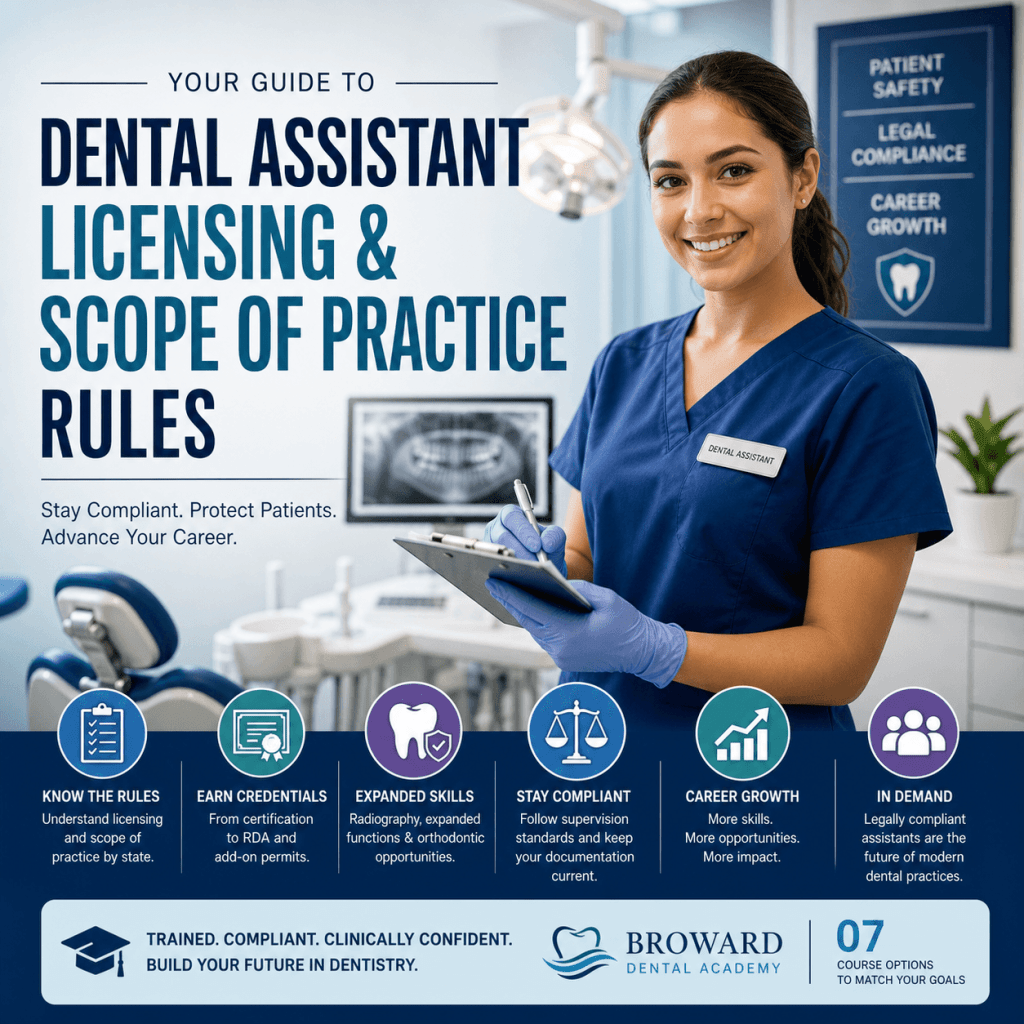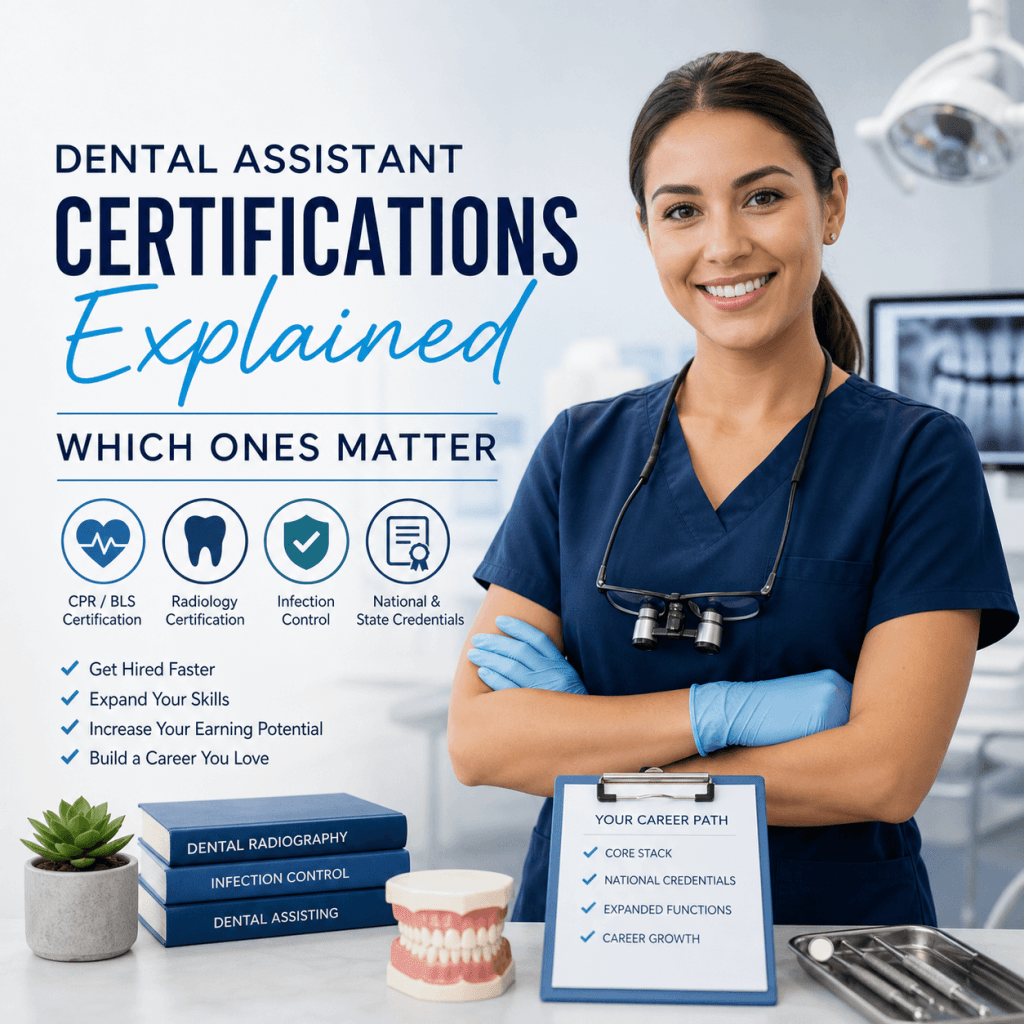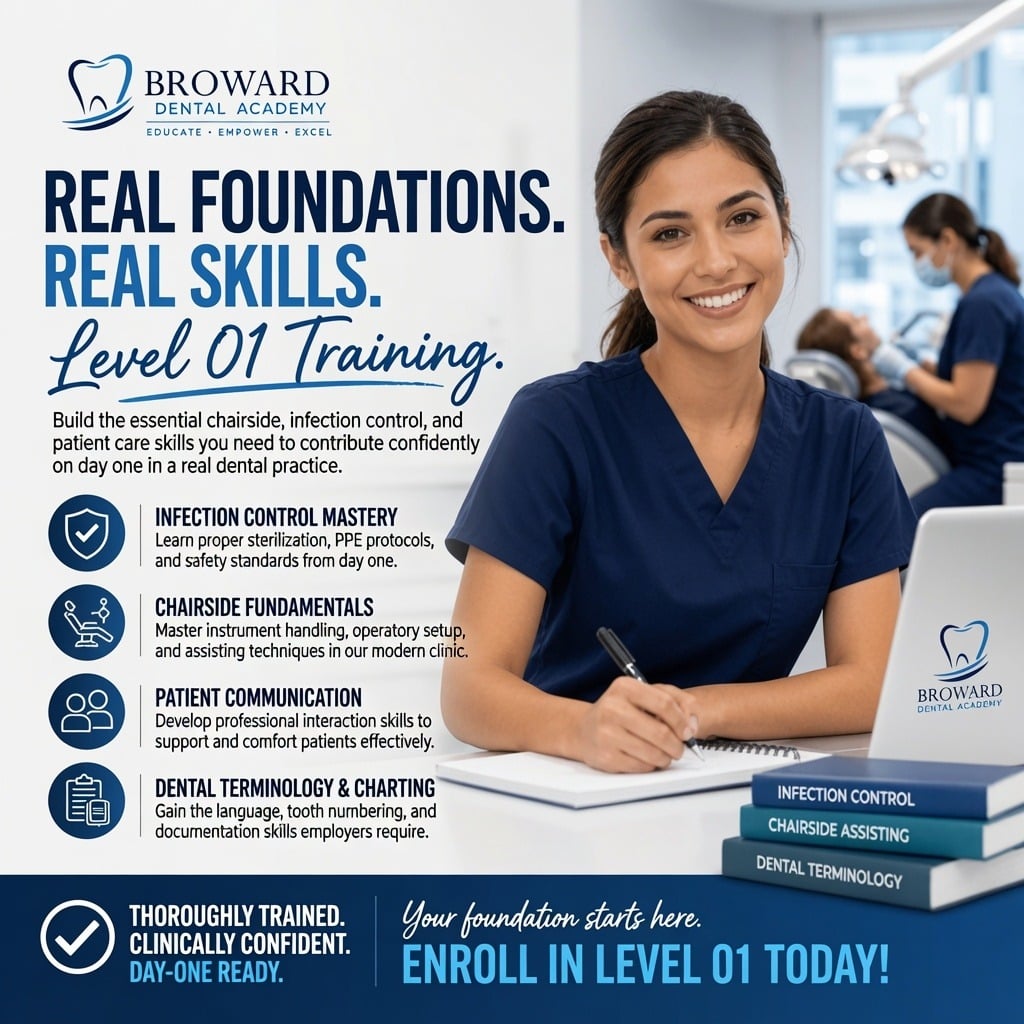
If you are looking for a stable healthcare career that you can enter without spending years in school, dental assisting is one of the most practical paths available. It is hands-on, patient-focused, and in demand, especially for people who show up prepared, professional, and ready to support a fast-moving dental team.
The Dental Assistant Level 01 Training is where that preparation starts.
Dental Assistant Level 01 Training: What It Is (and Who It’s For)
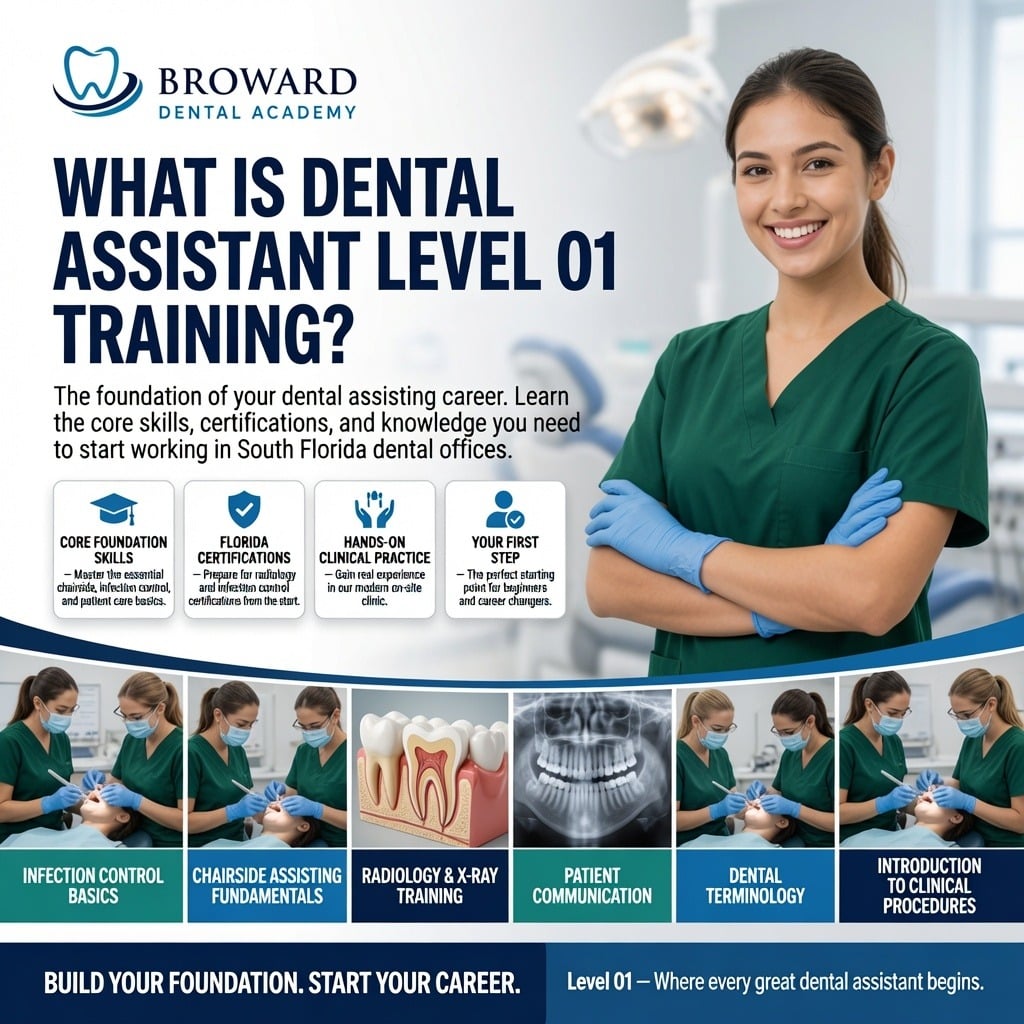
Dental Assistant Level 01 Training is an entry-level training path designed to teach the essential, day-one skills needed to work in a modern dental office. In plain English, it is the foundation. You learn how a dental practice actually runs, how to assist chairside, how to follow infection control protocols, and how to communicate with patients in a calm, professional way.
It is ideal for:
- Career changers who want a faster route into healthcare
- Recent grads who want a skill-based career with real job demand
- Returning-to-work adults who want stability and a clear schedule
- People who prefer hands-on work over desk jobs
- Anyone looking for a respected role in a clinical setting without a long degree program
What to expect
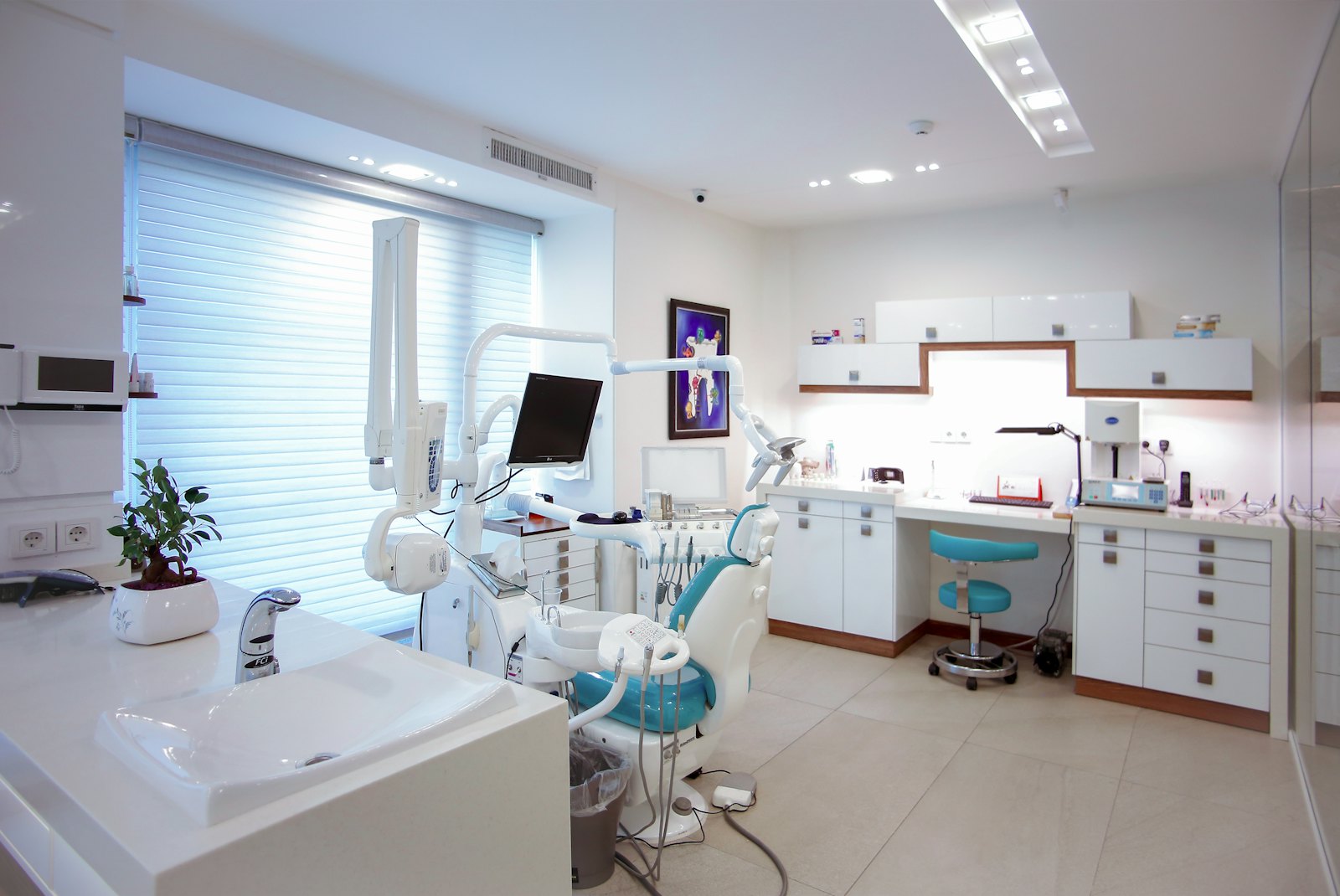
Level 01 training typically focuses on core skills you can use immediately, including clinical workflow, operatory setup, basic chairside assisting routines, and safety practices. Program lengths vary by school and format, but the goal is consistent: by the end, you should be able to step into an entry-level dental assisting role and contribute confidently.
After completion, you should be able to:
- Set up and break down rooms efficiently
- Follow core infection control routines consistently
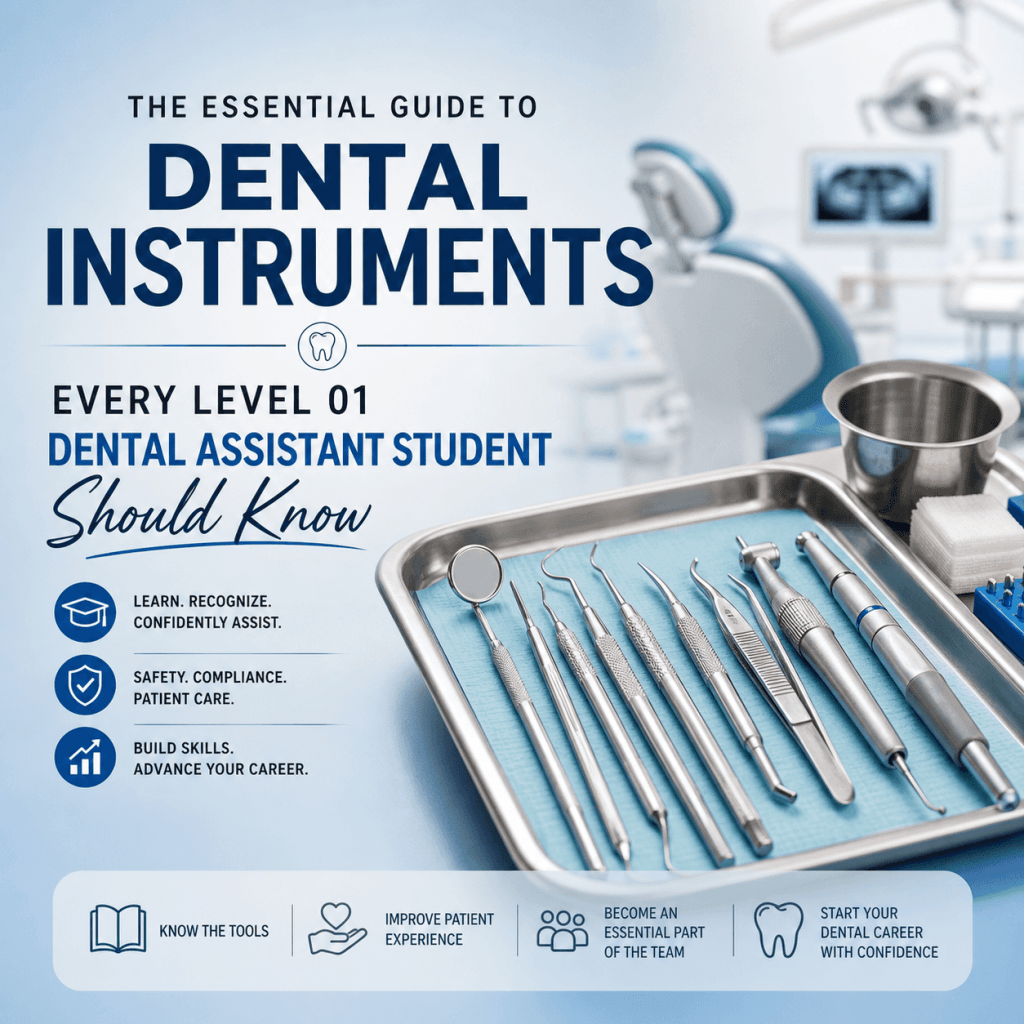
- Identify and pass common instruments correctly
- Support patient flow and chairside procedures
- Communicate professionally with patients and the clinical team
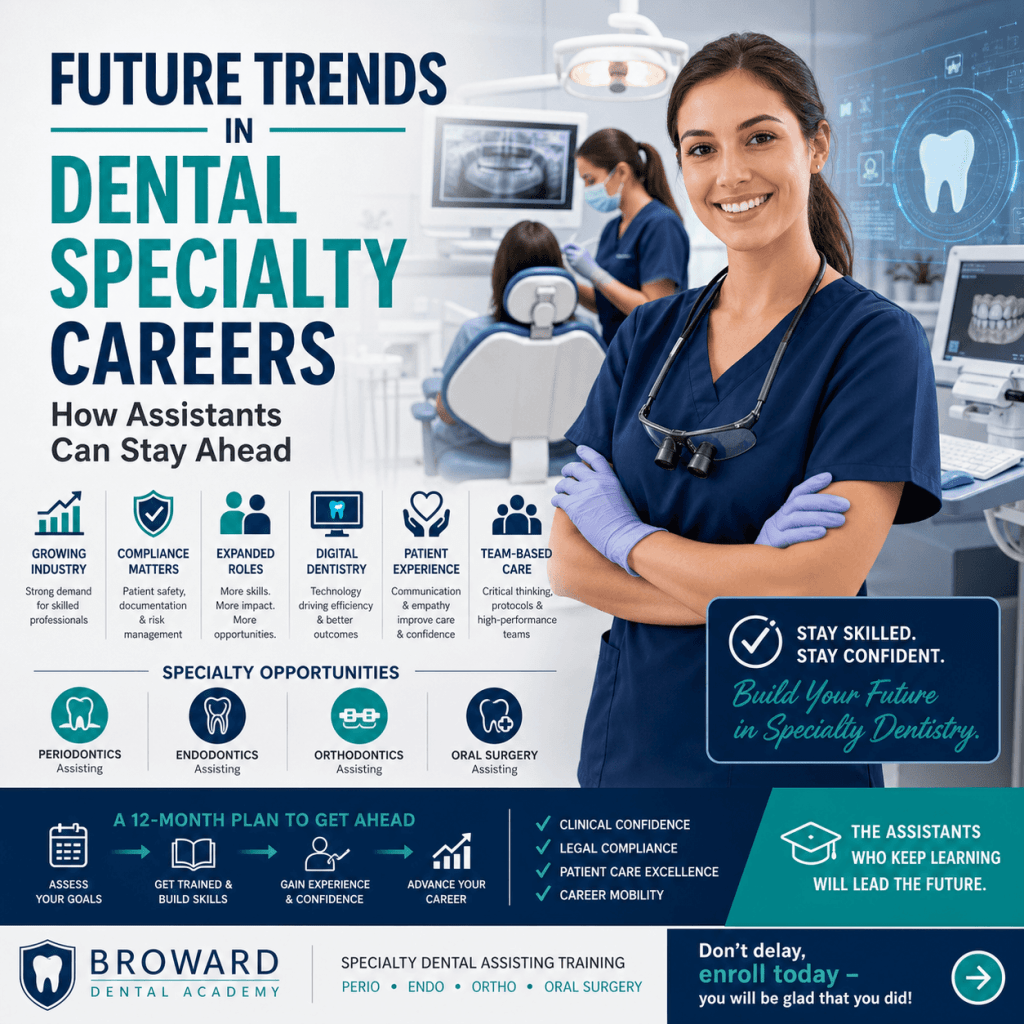
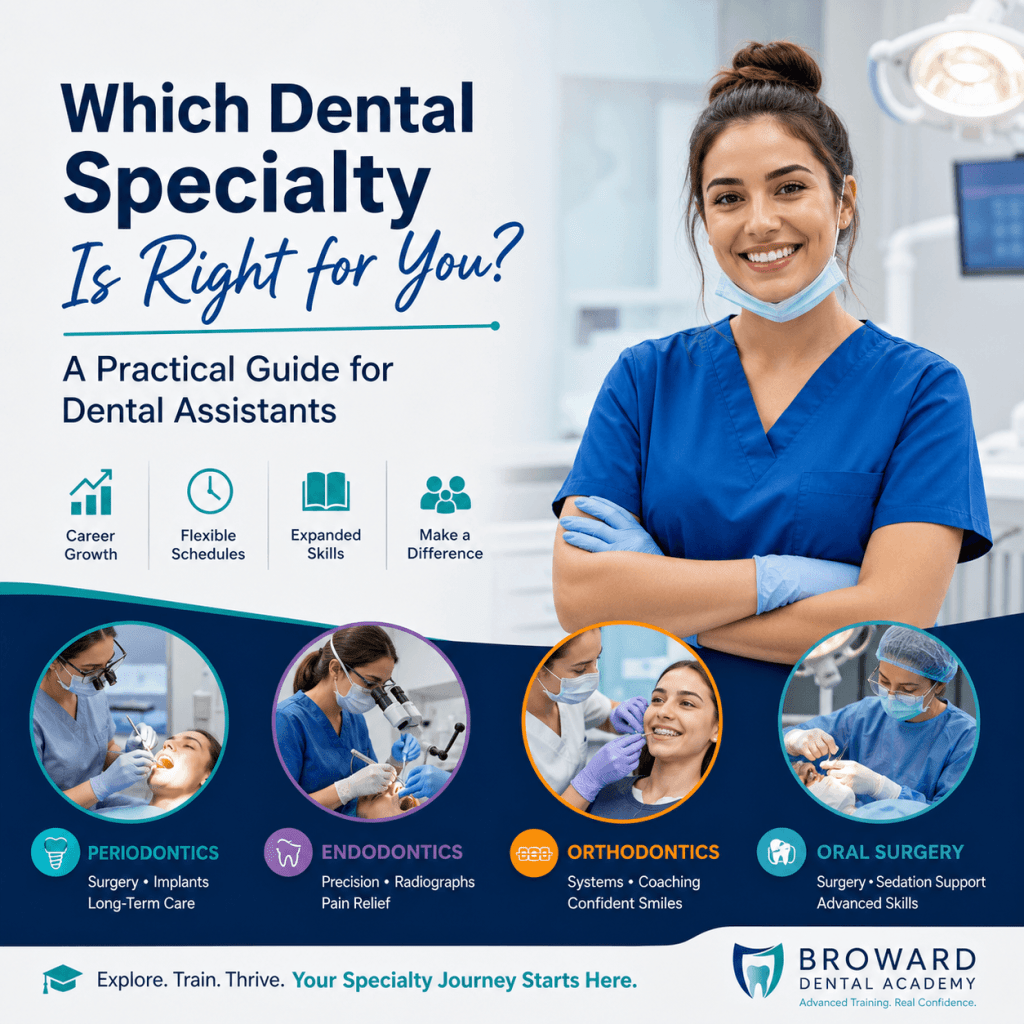
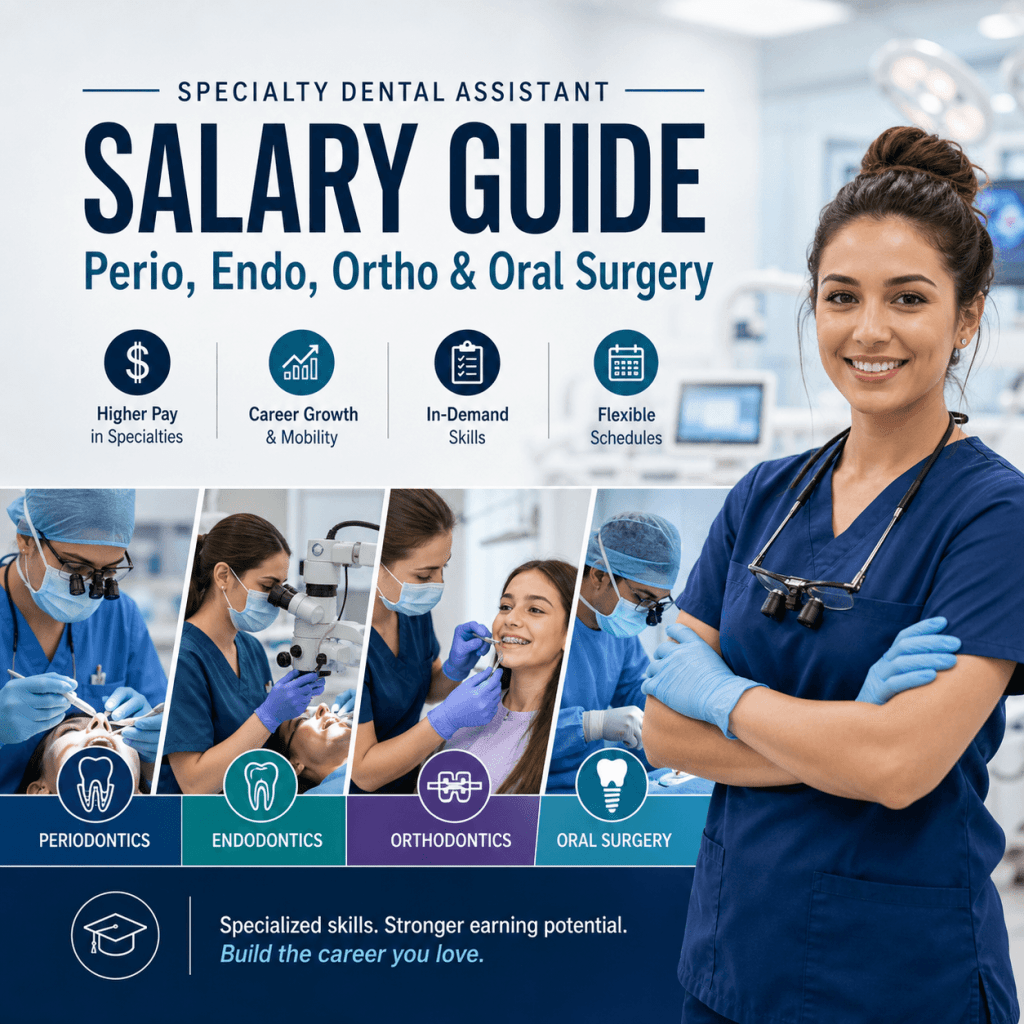
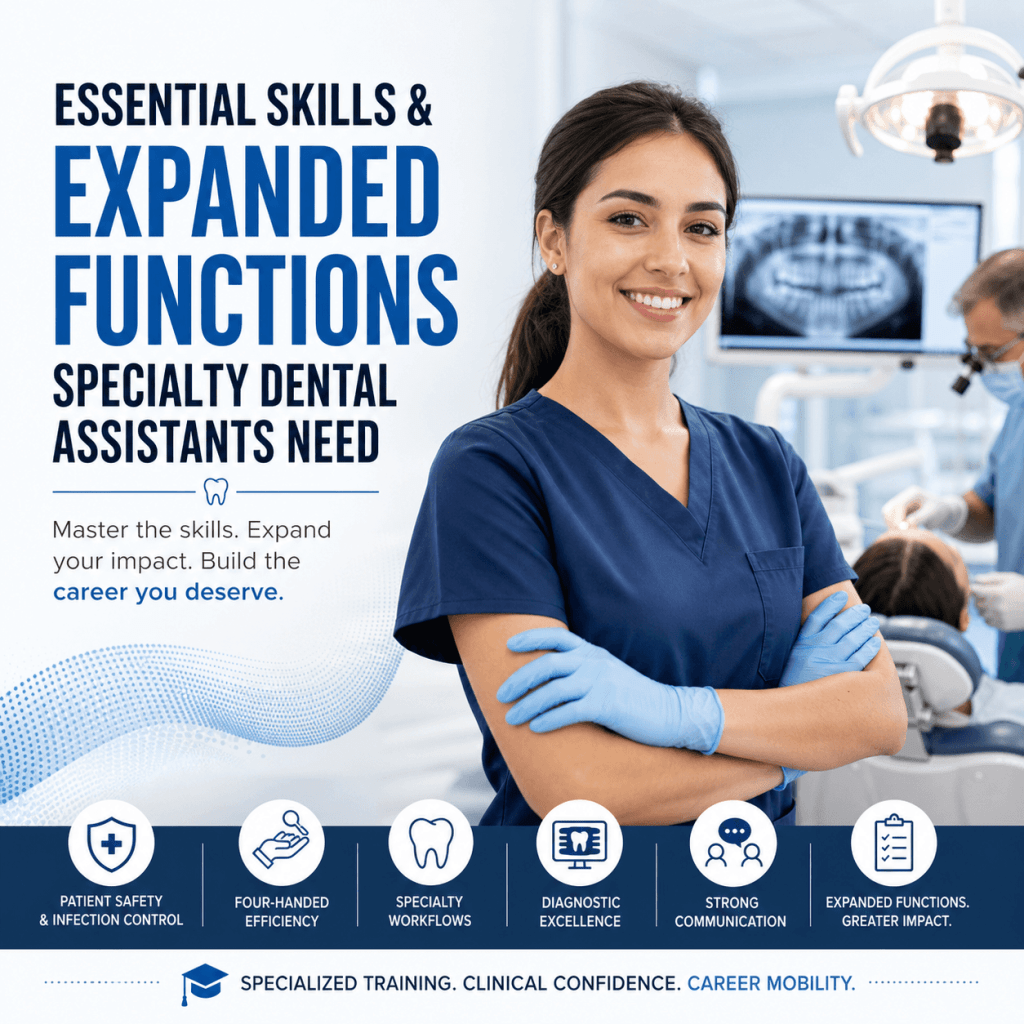
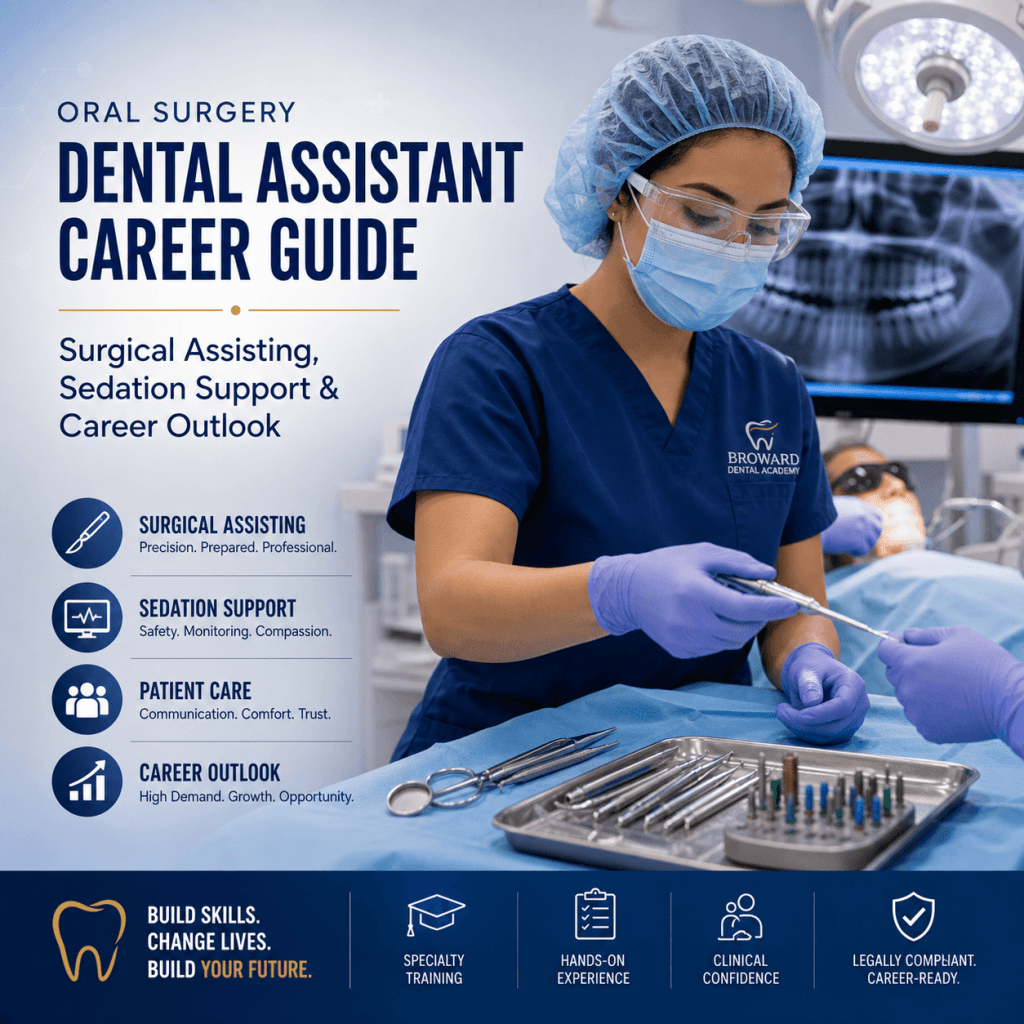
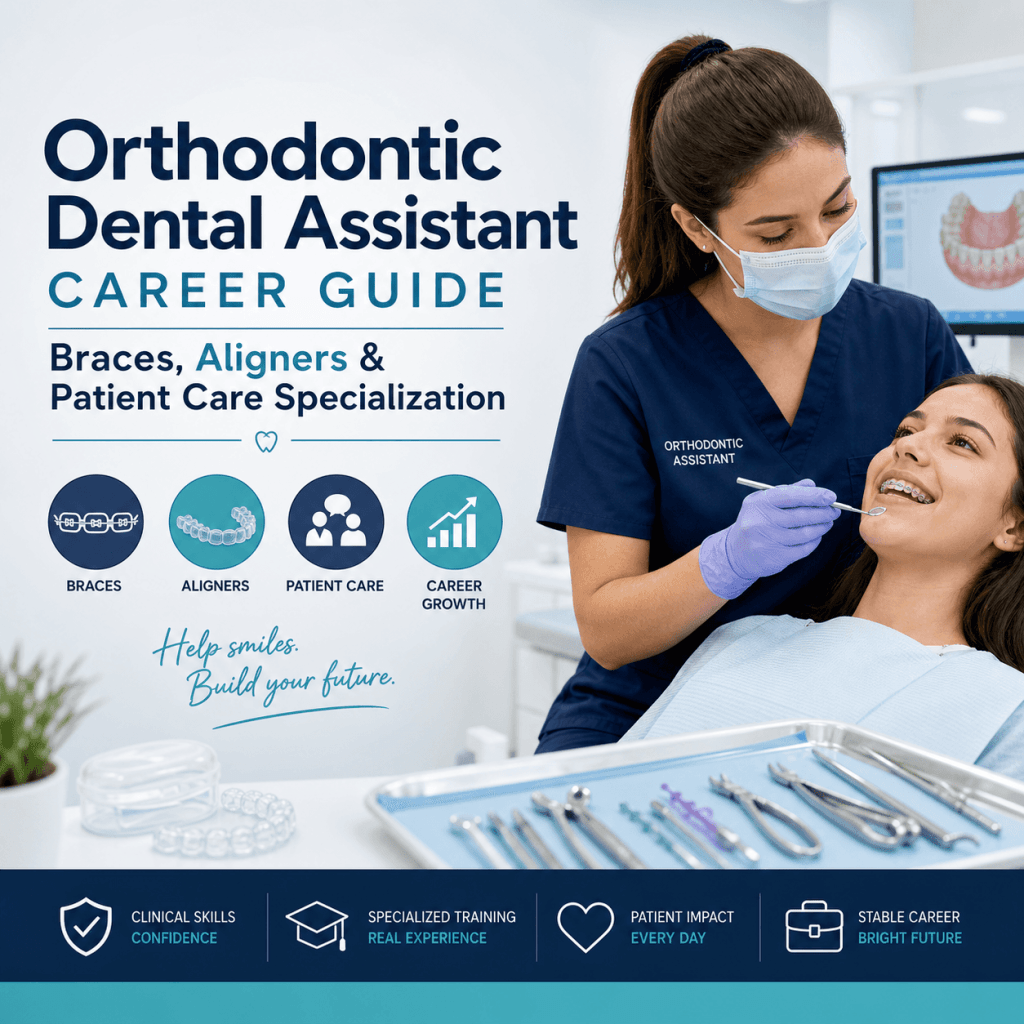
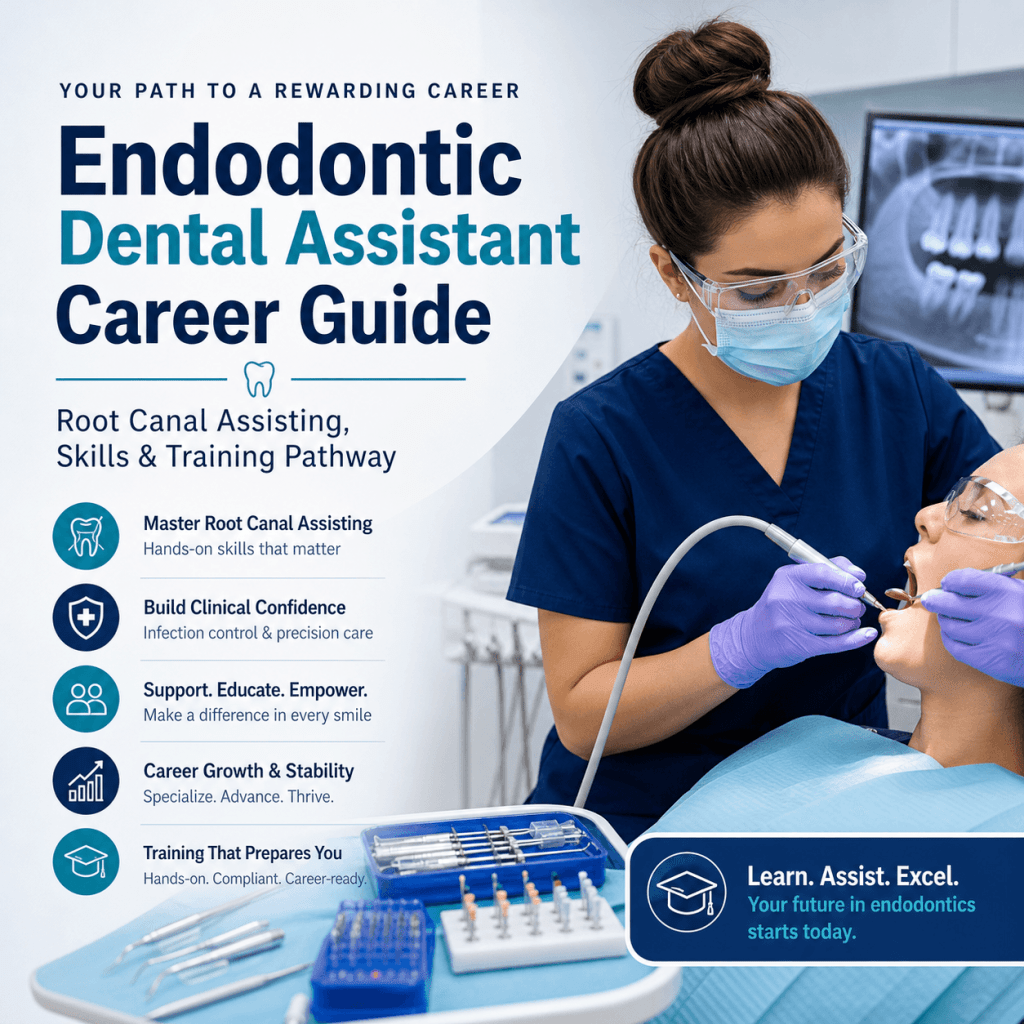
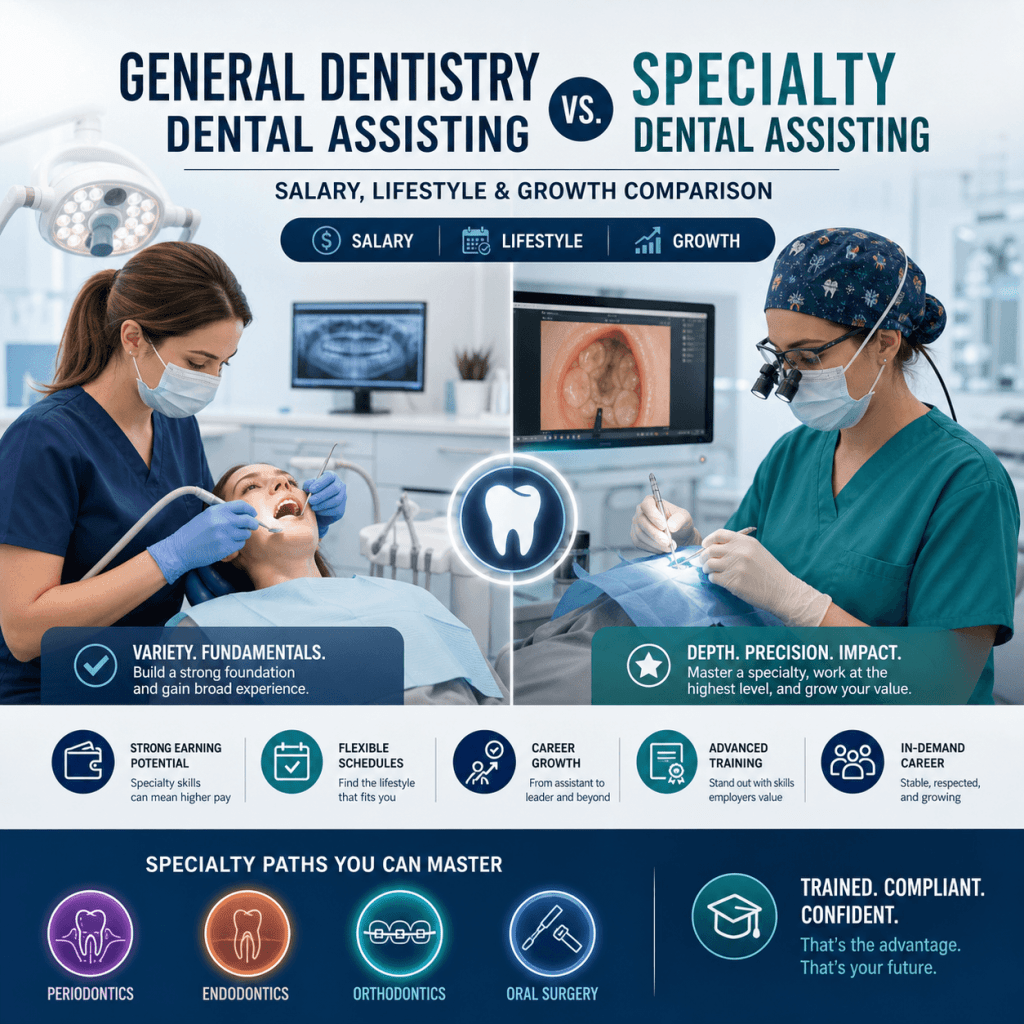
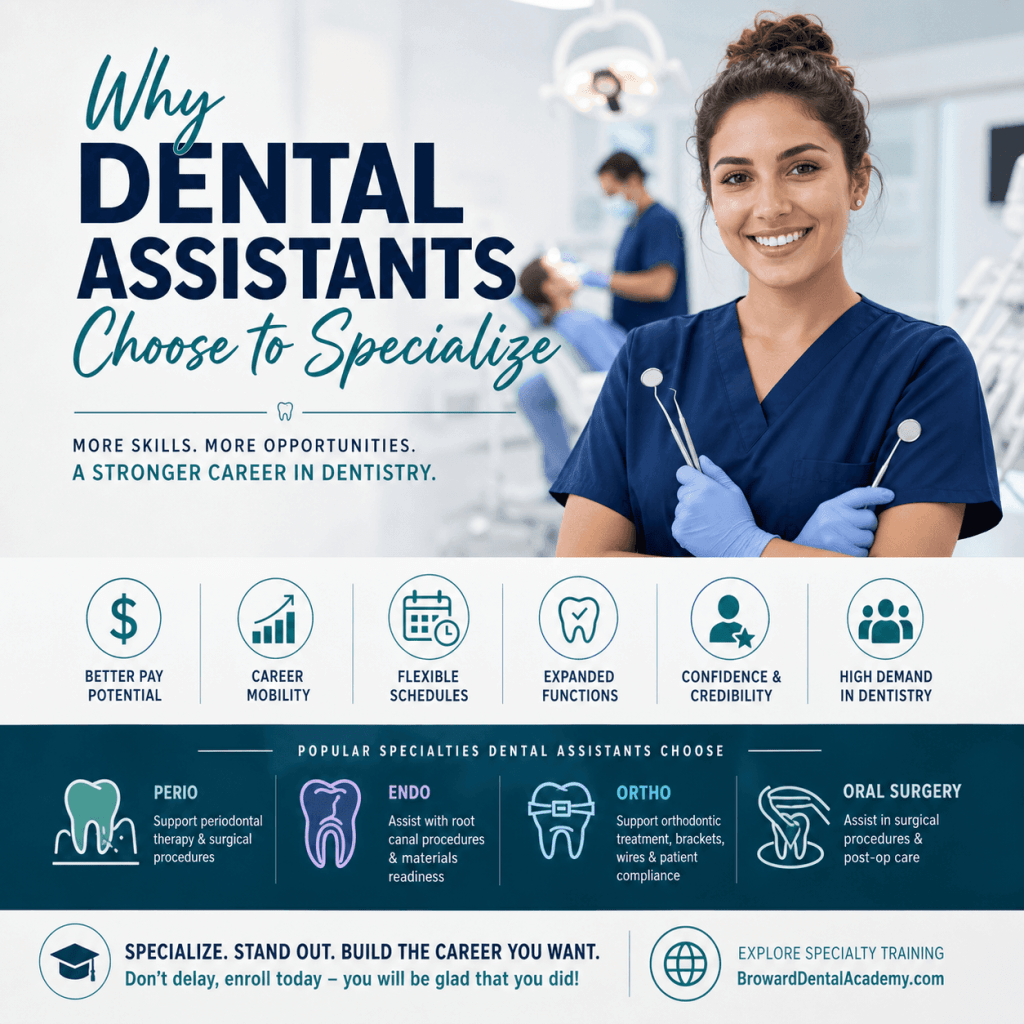
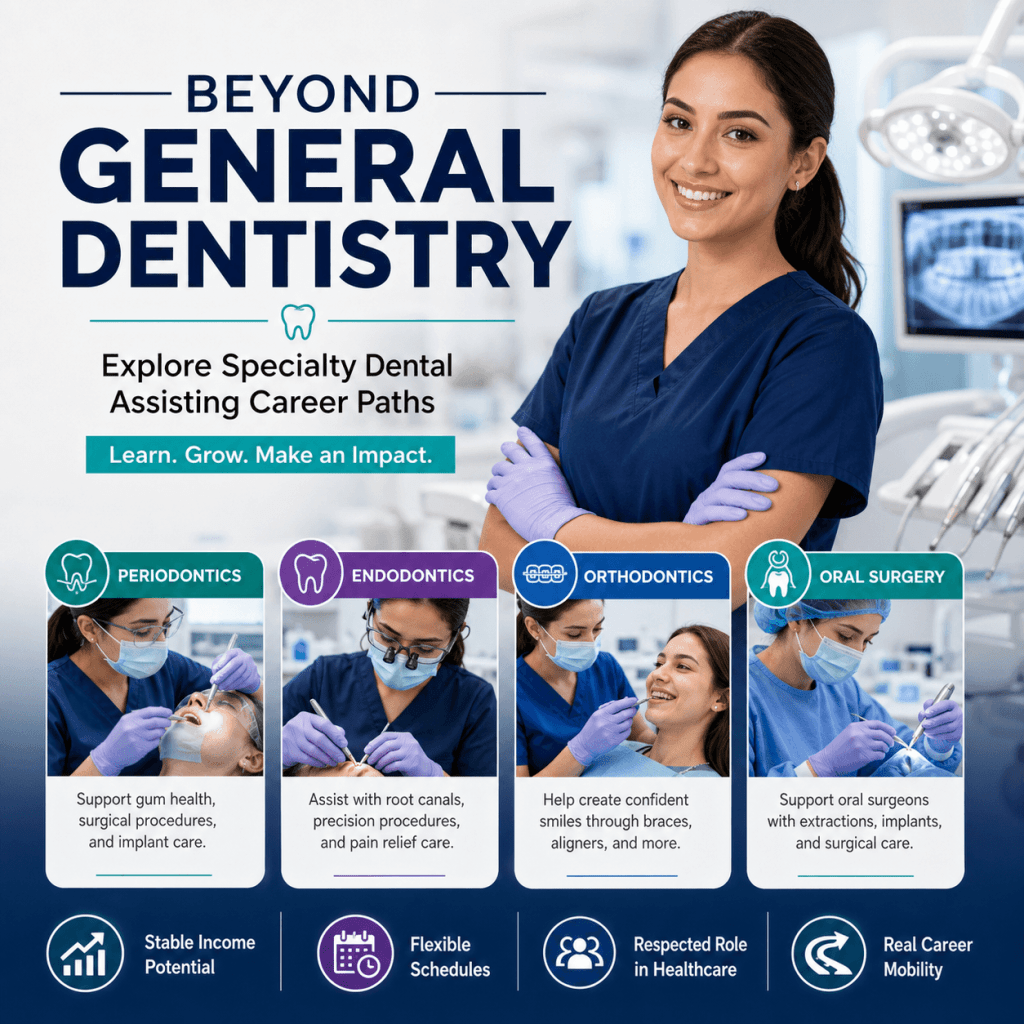
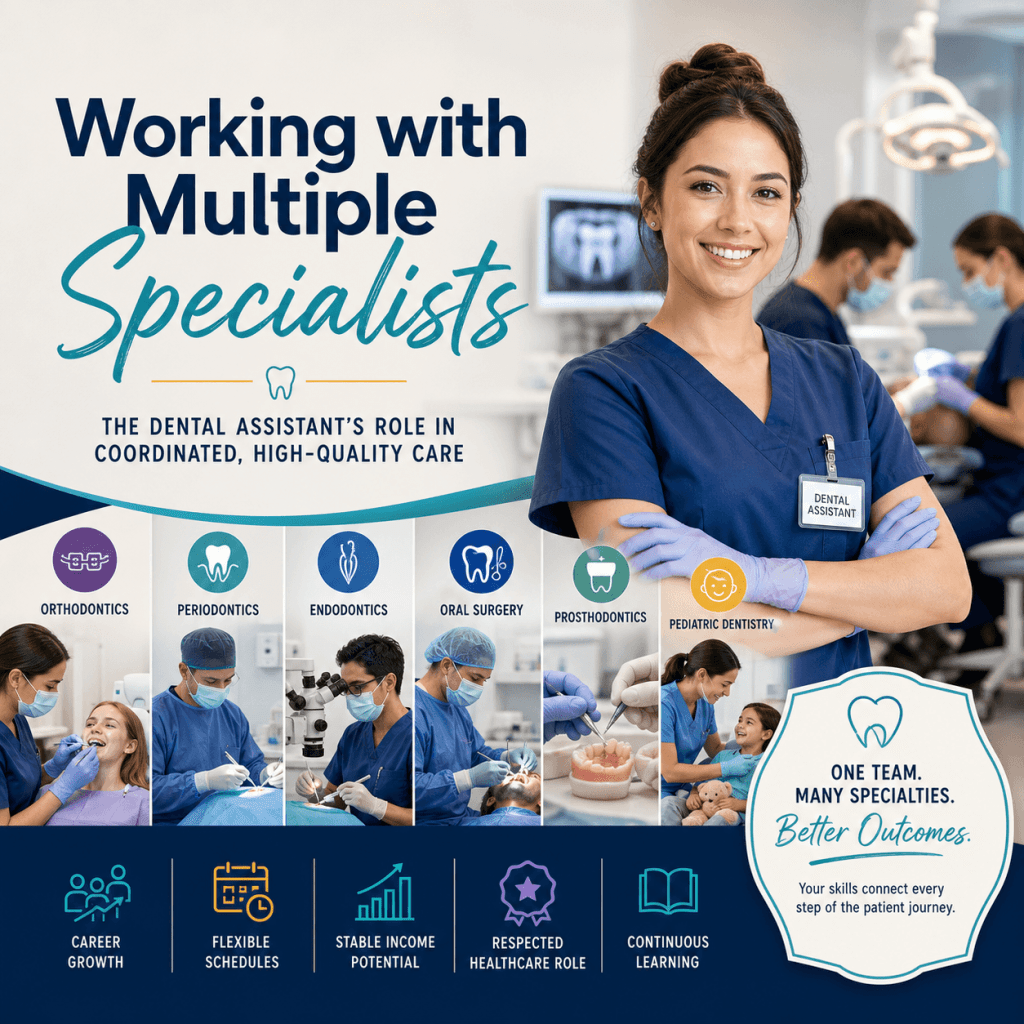
This foundational training also opens doors to specialized fields within dentistry such as oral surgery, orthodontics, or endodontics, allowing you to further your career in areas that interest you.
Quick snapshot of the career upside
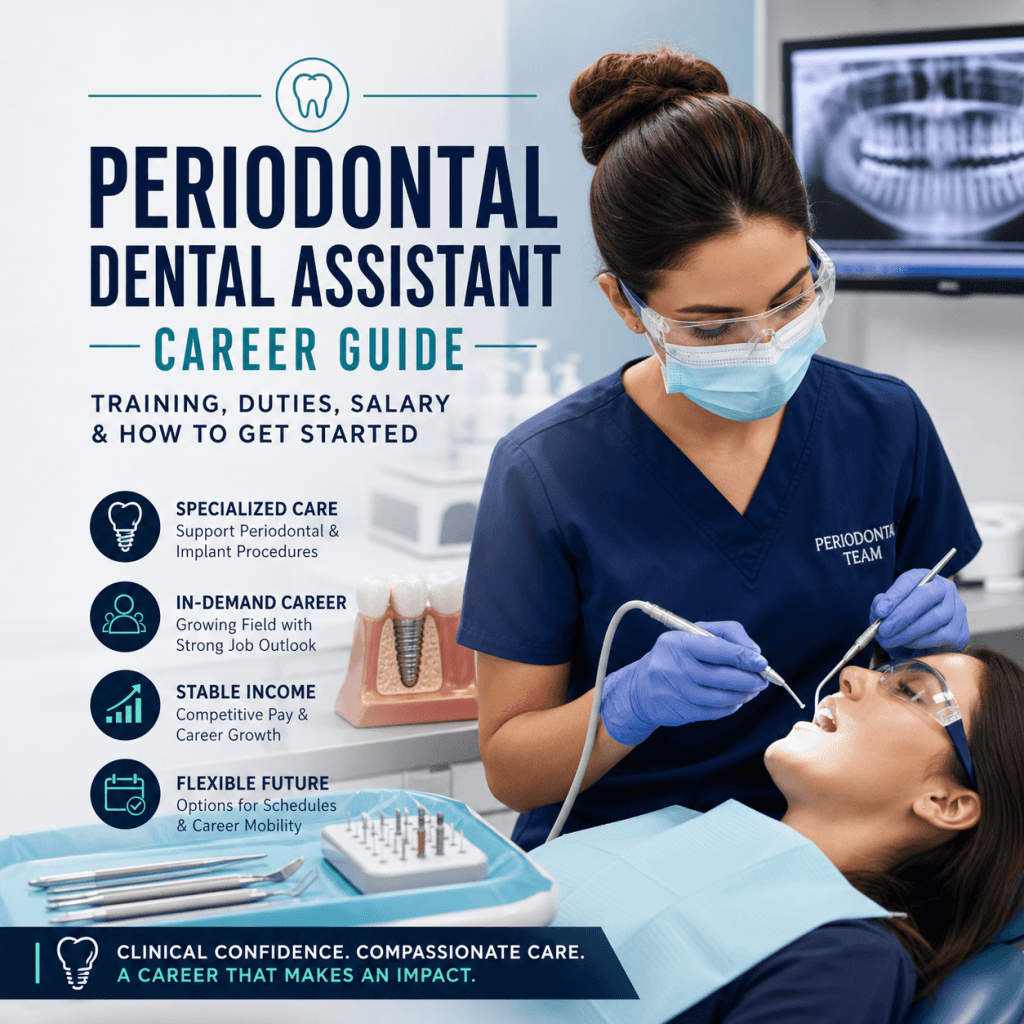
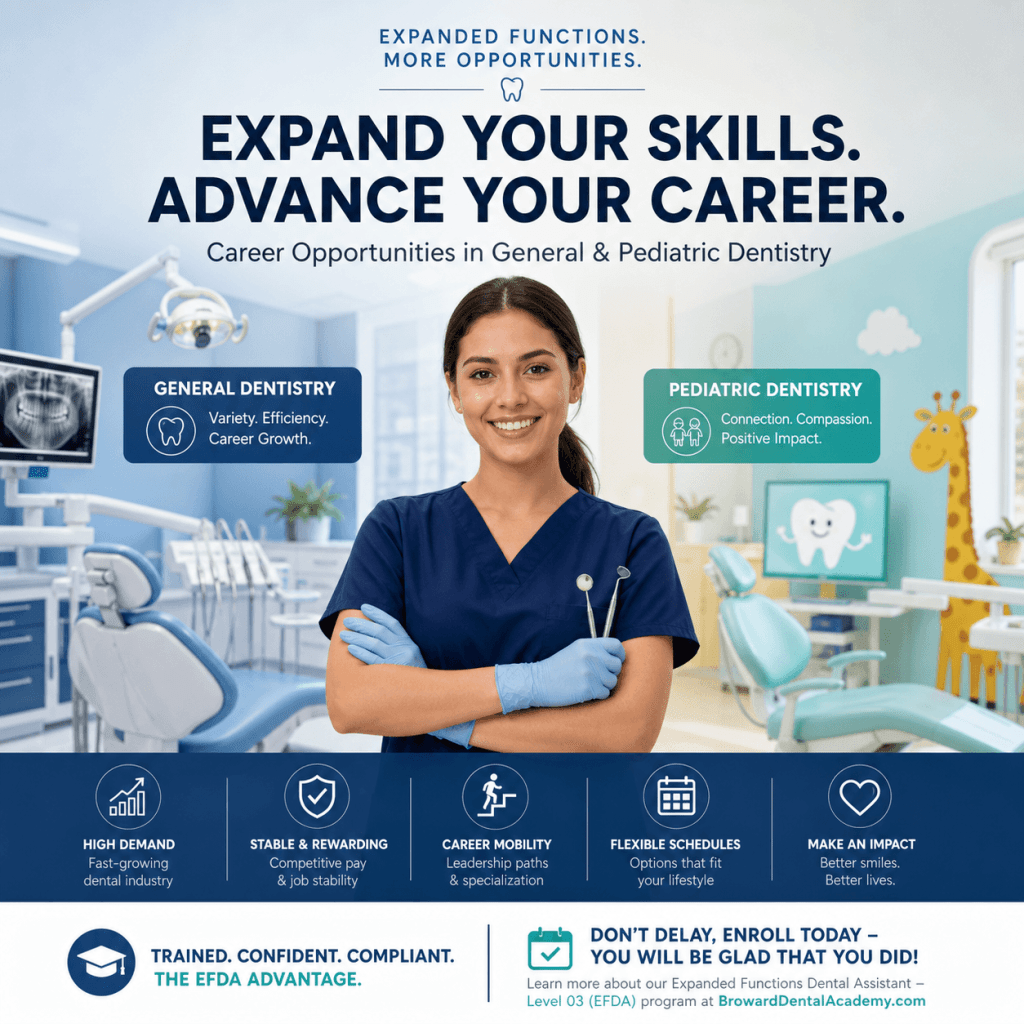
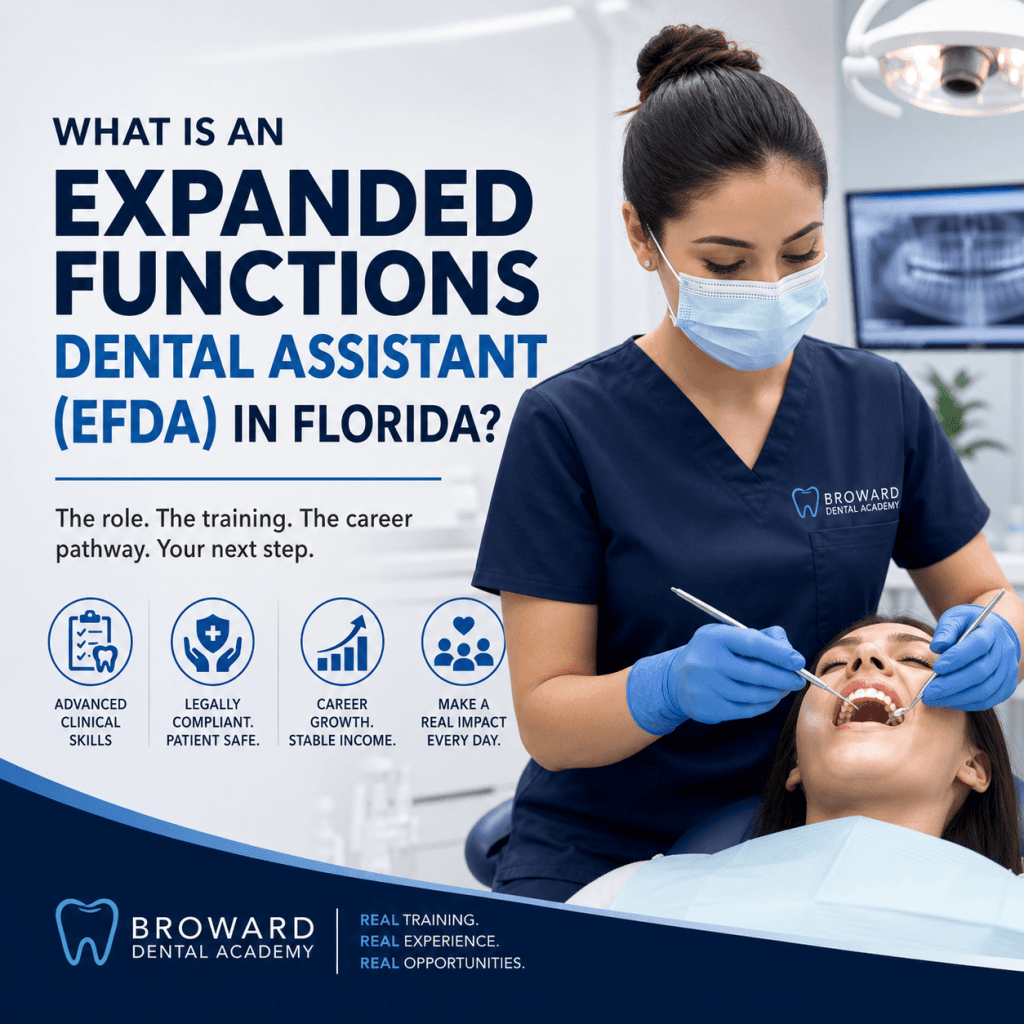
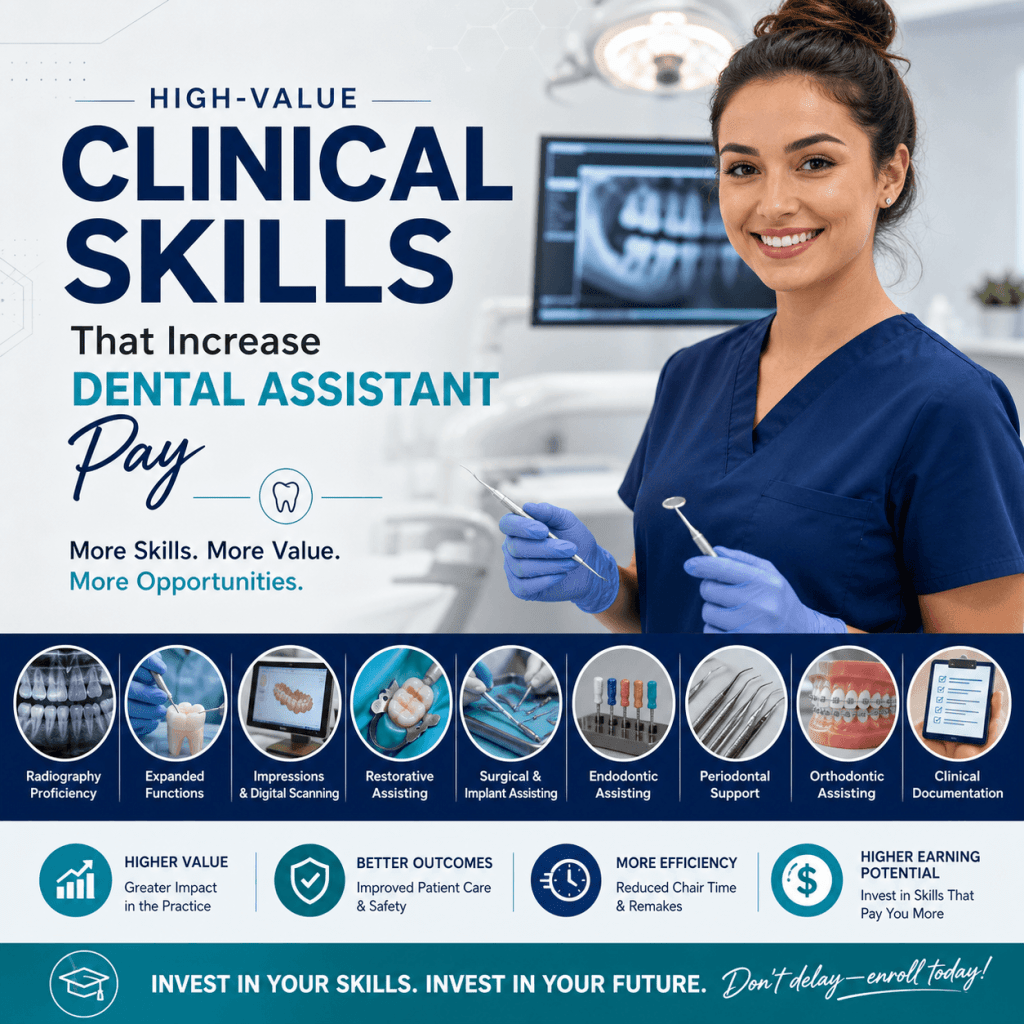
Dental assisting is part of one of the fastest-growing healthcare industries. It offers stable income potential, flexible schedules (depending on the office), and clear career mobility. Many assistants begin at Level 01, then grow into expanded functions, specialty roles such as periodontics, or advanced training over time.
Why Dental Assisting Is a Smart Career Move Right Now
Dental practices do not just need “help.” They need trained, legally compliant, clinically confident team members who can support patient care without slowing the schedule down.
Demand stays strong because dental care is ongoing. Cleanings, exams, restorations, emergencies, and cosmetic procedures keep practices busy year-round. That demand translates into real career stability.
What career stability looks like in real life
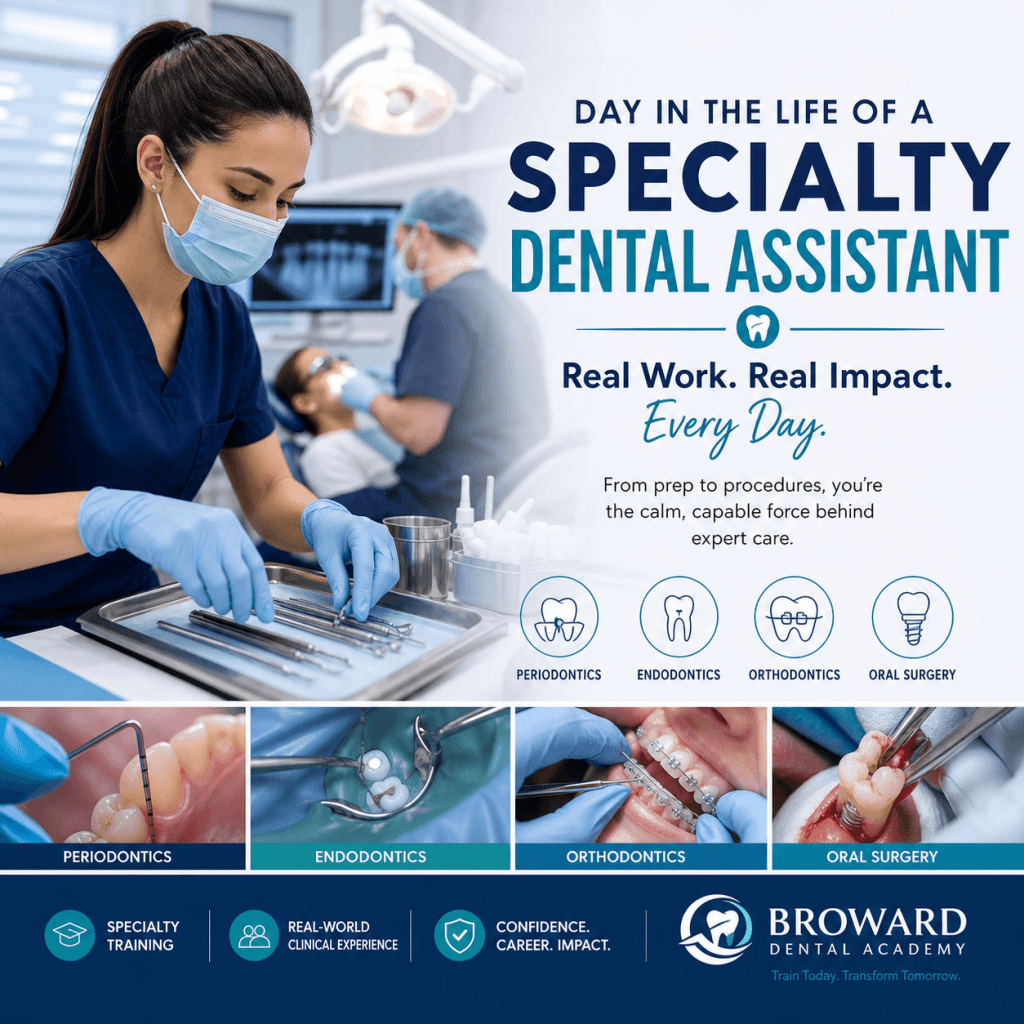
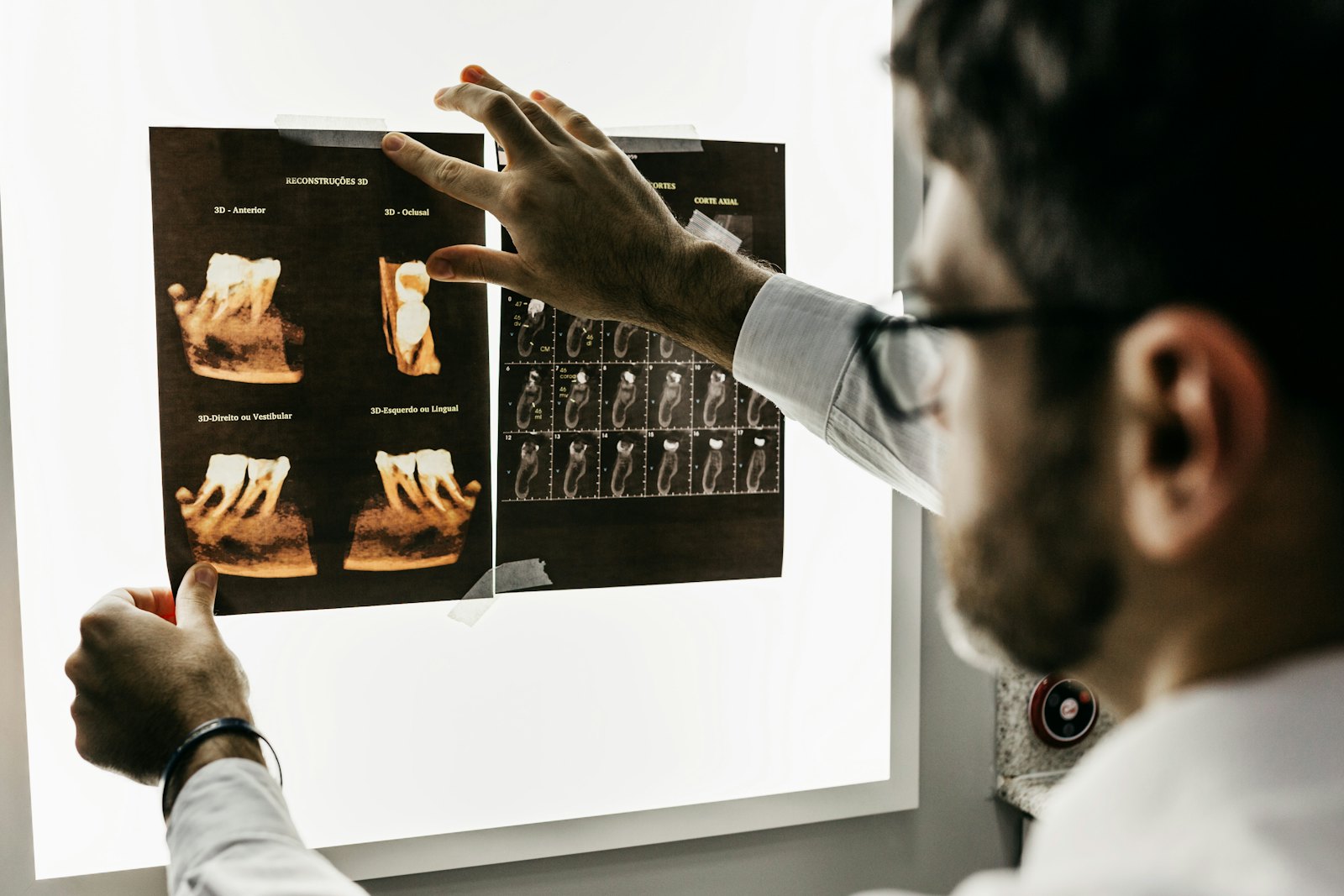
In many offices, the day has a predictable rhythm: morning setup, patient flow, procedure support, sterilization cycles, chart notes, room turnover, and end-of-day closing. When you are trained well, you become part of that rhythm, and being reliable is valuable.
Flexibility (full-time and part-time)
Some dental assistants work full-time with benefits. Others prefer part-time hours, family-friendly schedules, or a multi-office week. Schedule options depend on the office and local market, but dental assisting is one of the healthcare roles where flexibility is often possible.
Mobility and advancement
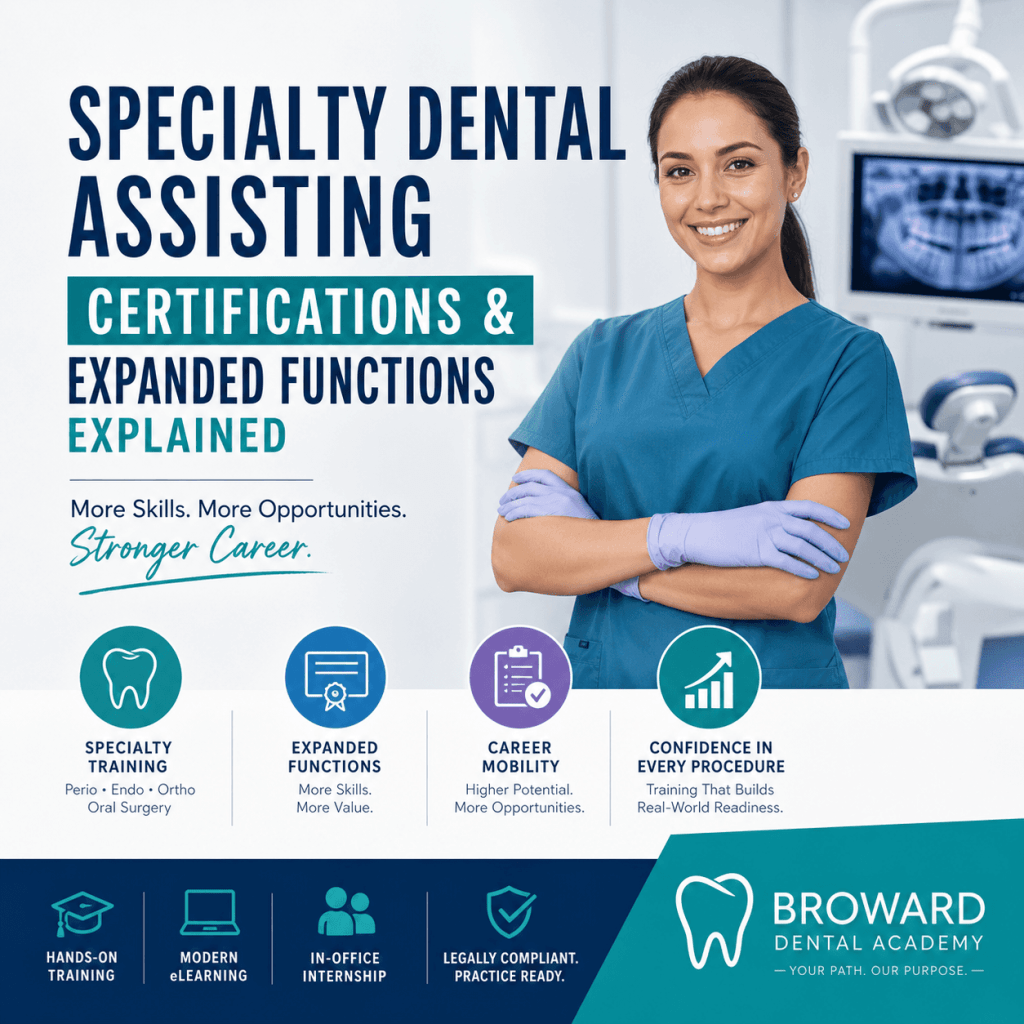
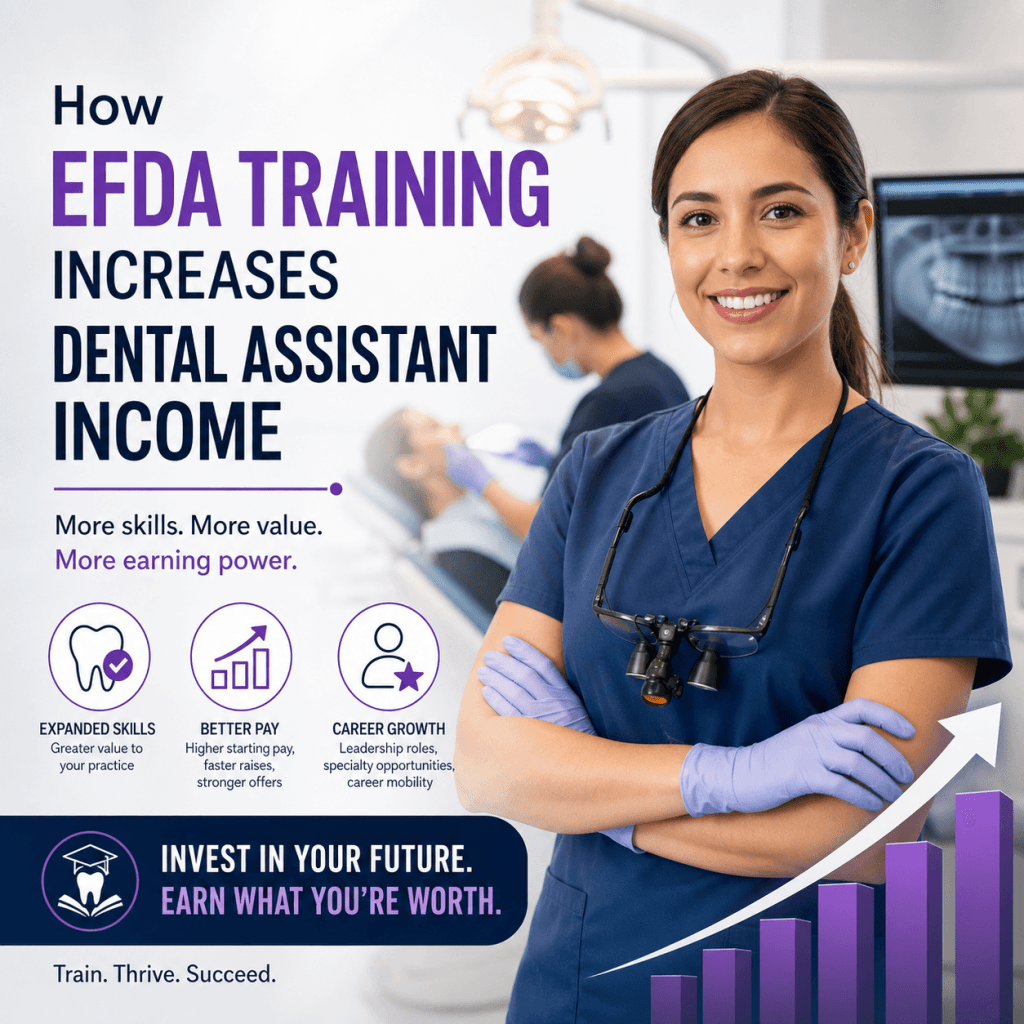
Starting with Level 01 training does not lock you into a single lane. It is the beginning of a professional pathway. With experience and additional training through various courses offered by institutions like Broward Dental Academy or pursuing certifications that increase responsibility and earning potential.
Professionalism matters as much as clinical skill
The strongest dental assistants are not only quick with instruments. They are trustworthy with privacy, respectful with patients, steady under pressure, and dependable as teammates. Good training builds those habits early.
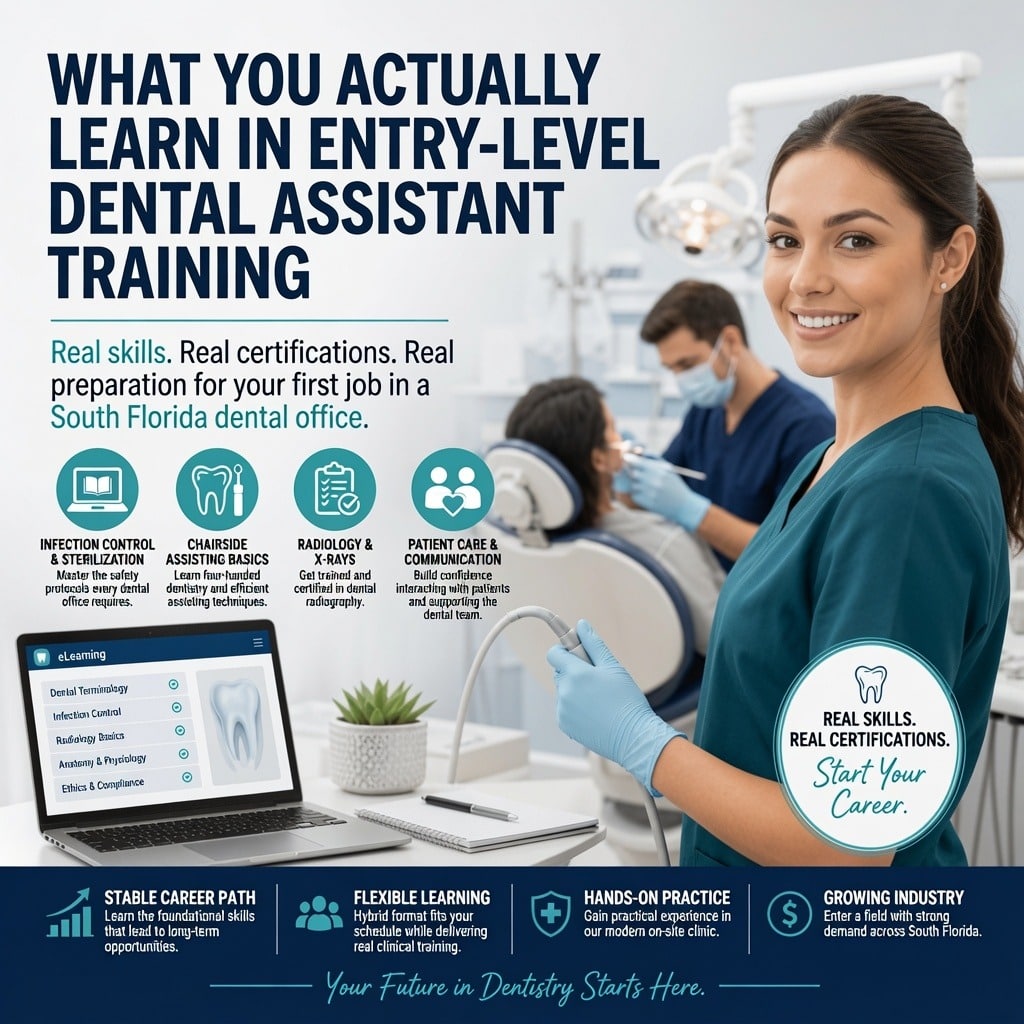
What You Learn in Dental Assistant Level 01 Training (Core Skills)
A strong Level 01 program teaches the practical skills that make a new assistant useful in a real dental practice, not just familiar with vocabulary.
Clinical foundations
This is where you build the “hands” of the job:
- Operatory set-up and breakdown
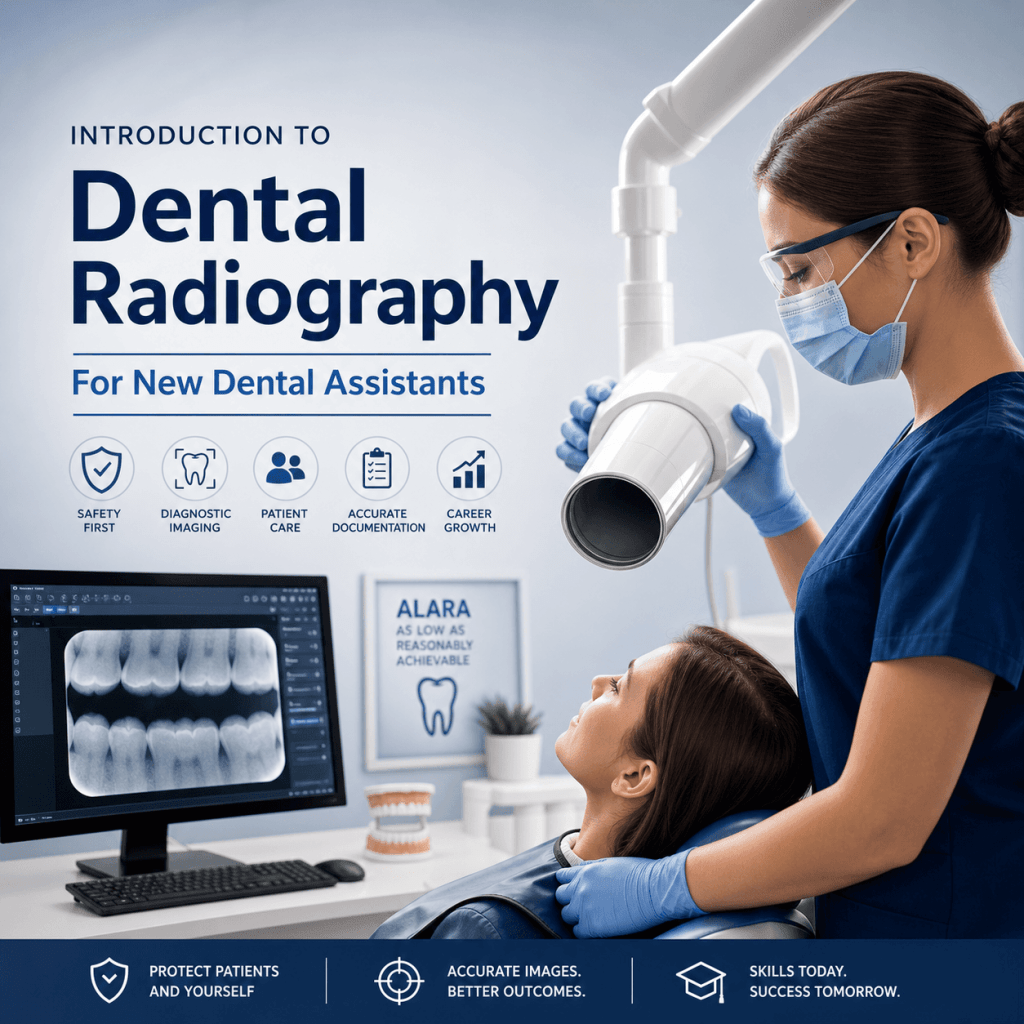
- Instrument identification and safe handling
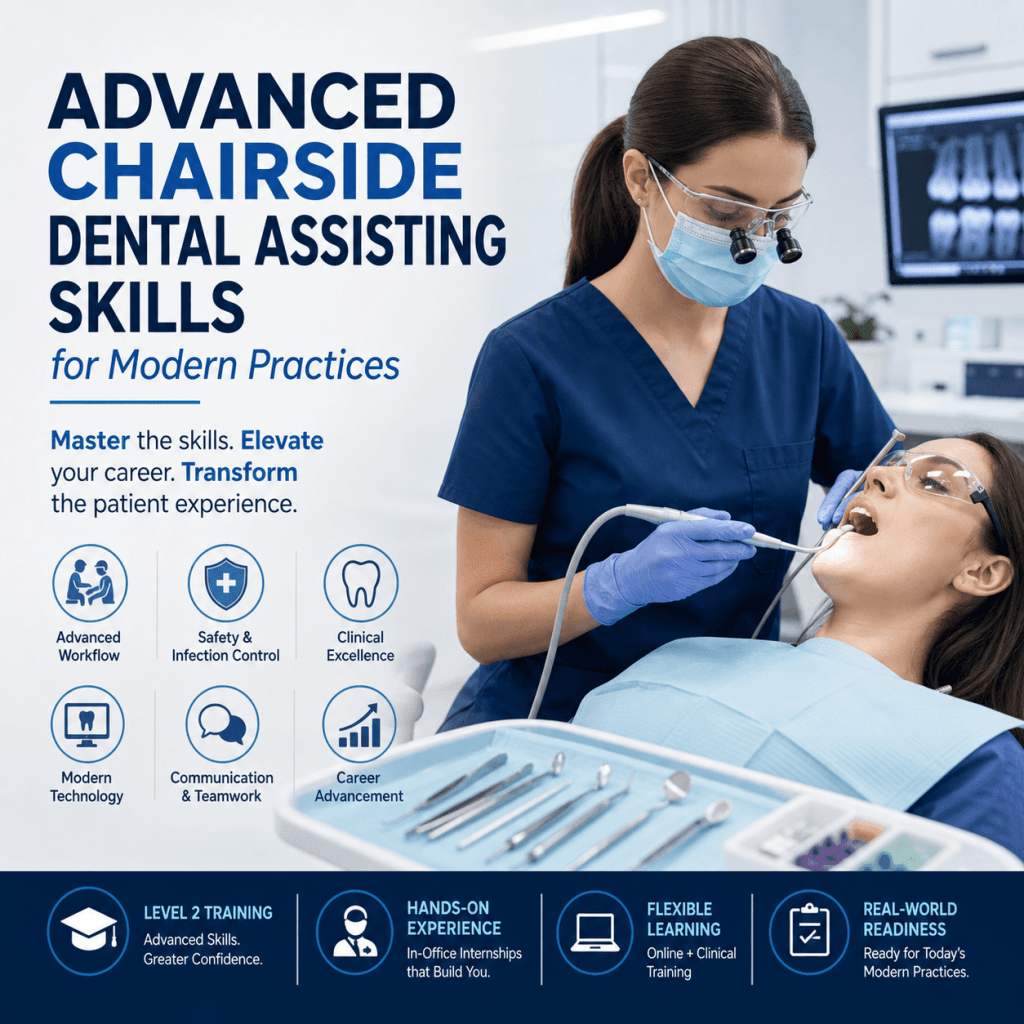
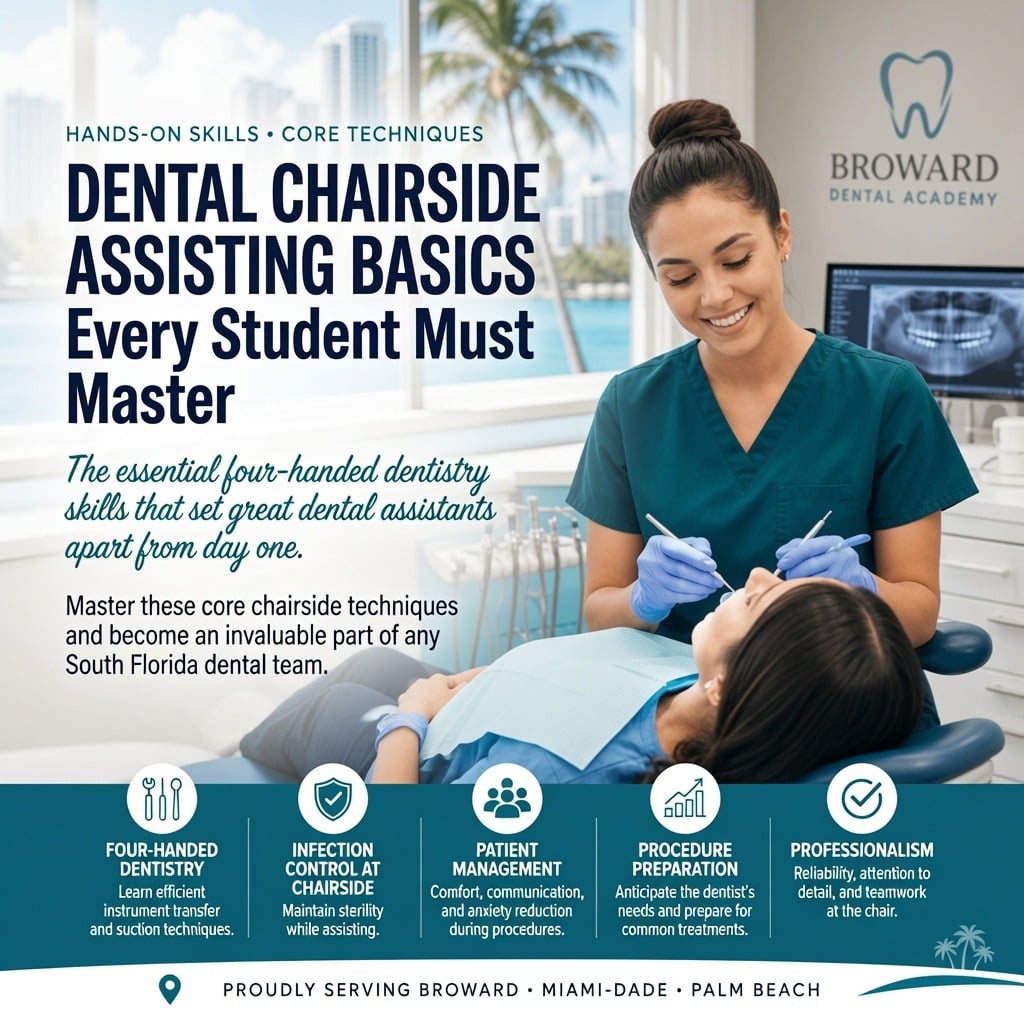
- Chairside assisting fundamentals
- Proper instrument transfer techniques
- Basic workflow support during common procedures
- Sterilization room routines and clean-to-dirty flow concepts
Infection control basics
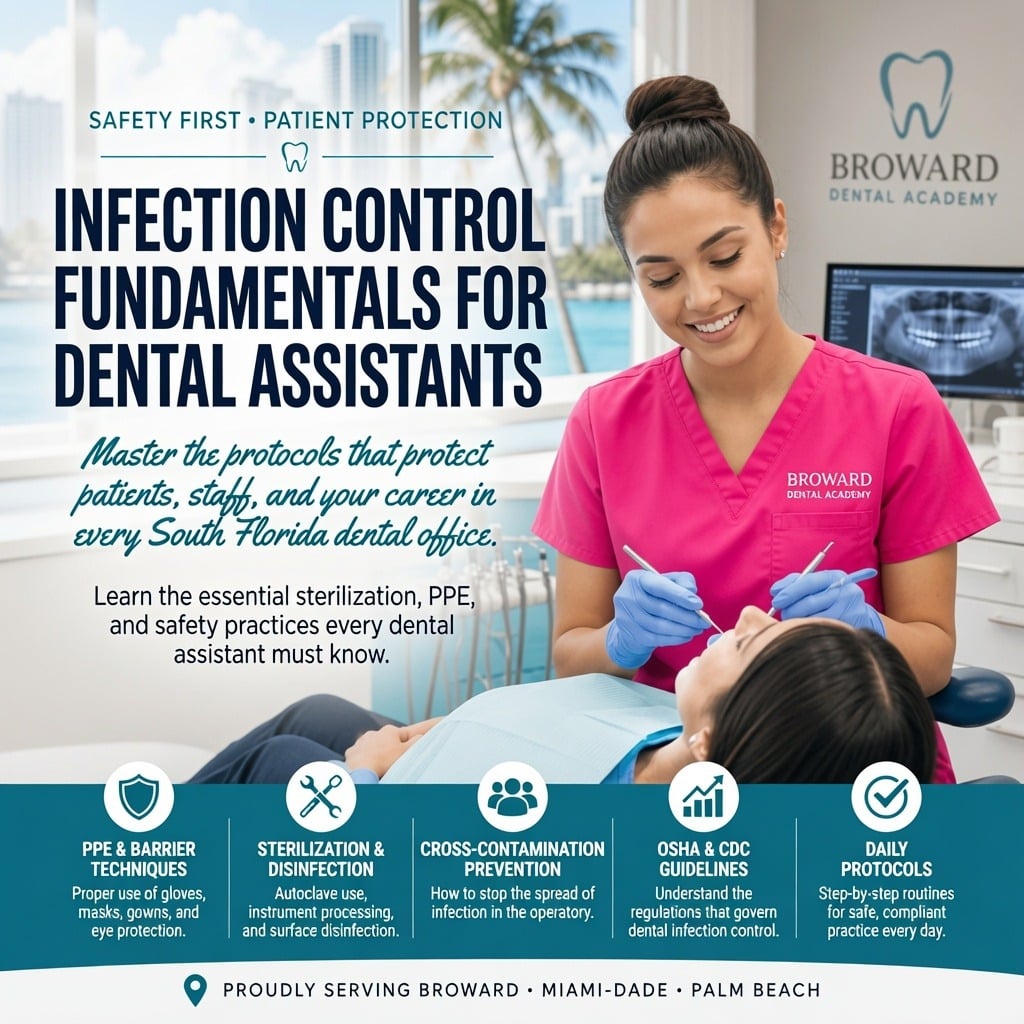
Dental offices are strict about infection control because patients and staff depend on it. Training typically covers core concepts such as:
- Proper hand hygiene and PPE habits
- Surface disinfection routines
- Sharps safety awareness
- Sterilization fundamentals and best practices
- Building consistency so you do it correctly even when the office gets busy
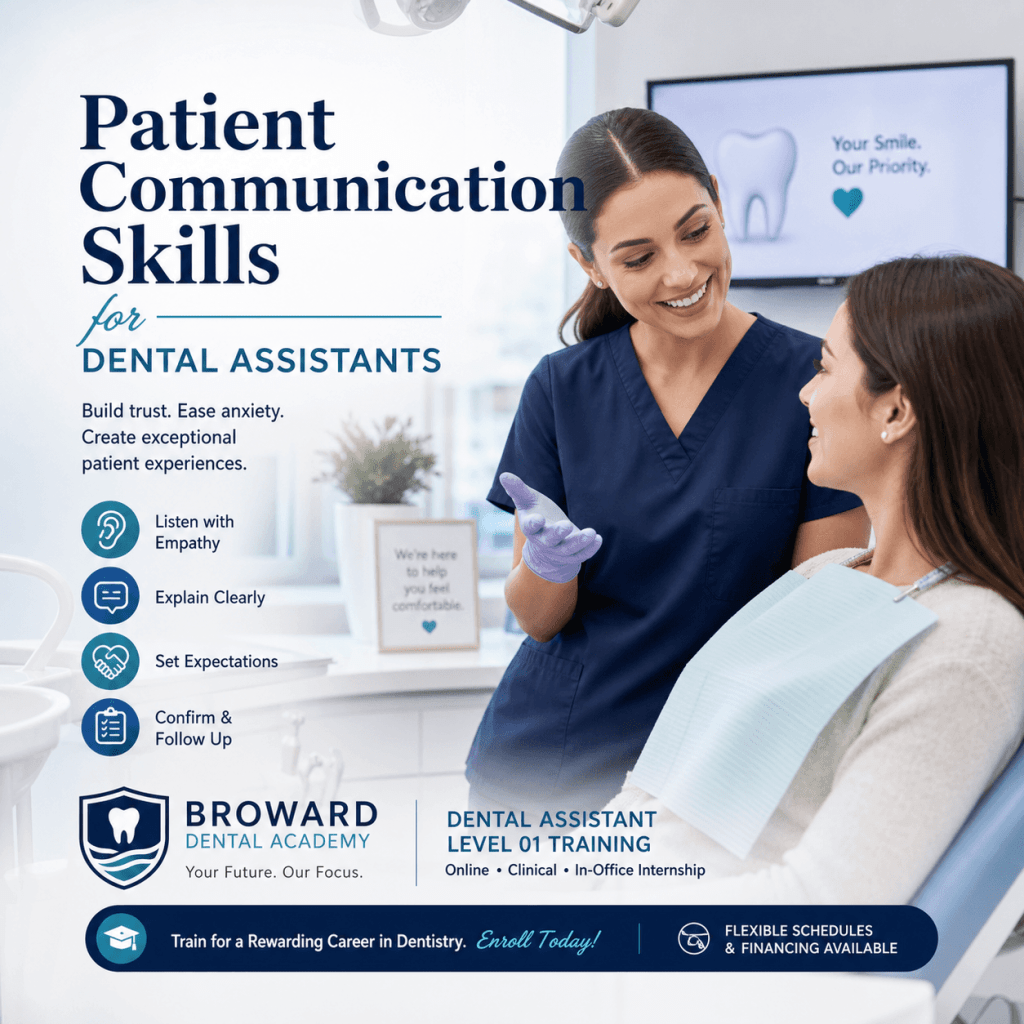
Patient care and communication
You will work with patients who are nervous, uncomfortable, or embarrassed. Being clinically helpful is important, but so is being human.
Training often includes:
- Patient flow from greeting to seating to dismissal
- Comfort techniques and calm chairside presence
- Professional language and tone
- Privacy awareness and respectful communication
- Handling anxiety with empathy and confidence
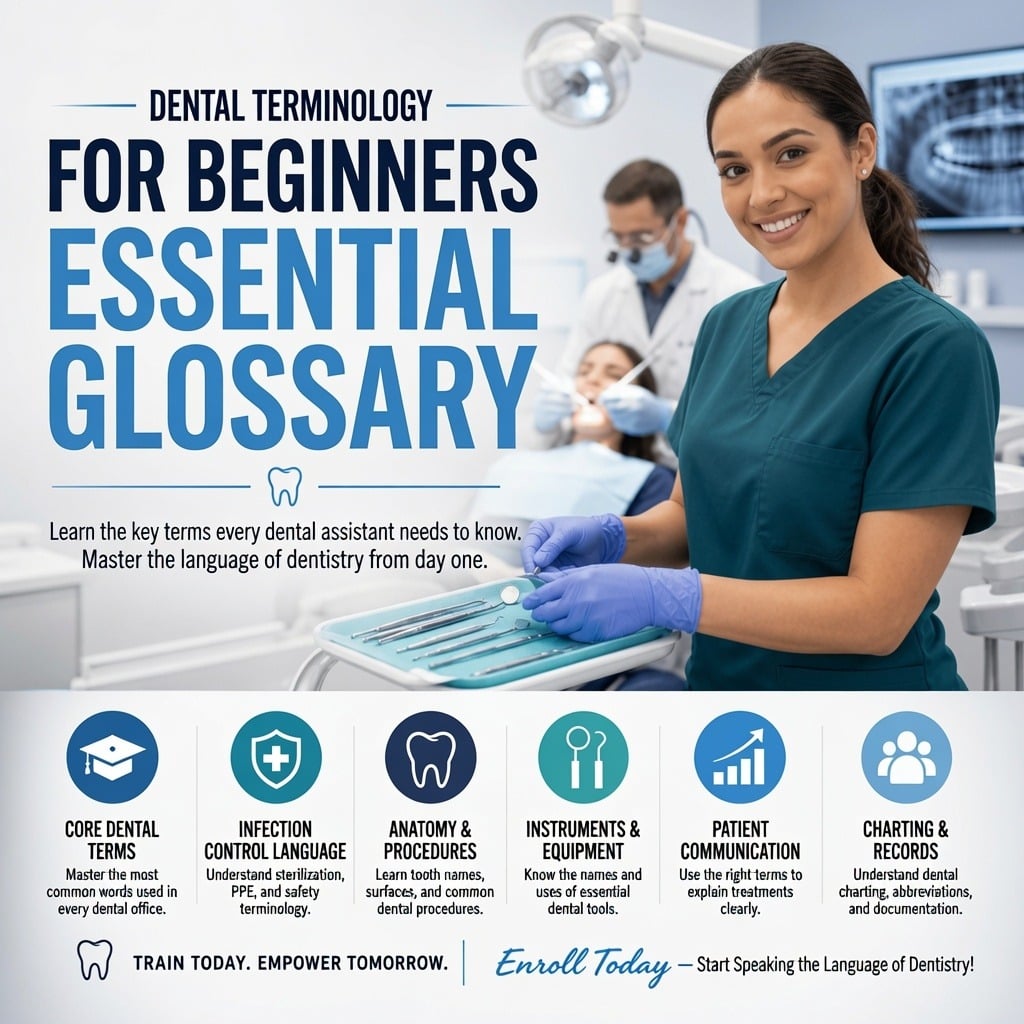
Dental terminology and charting basics
You do not need to sound like a dentist, but you do need to understand what the team is saying and document clearly.
Common topics include:
- Tooth numbering basics
- Common procedure names and abbreviations
- Charting habits and accurate documentation routines
- Understanding why “small details” matter in clinical notes
Safety and compliance mindset
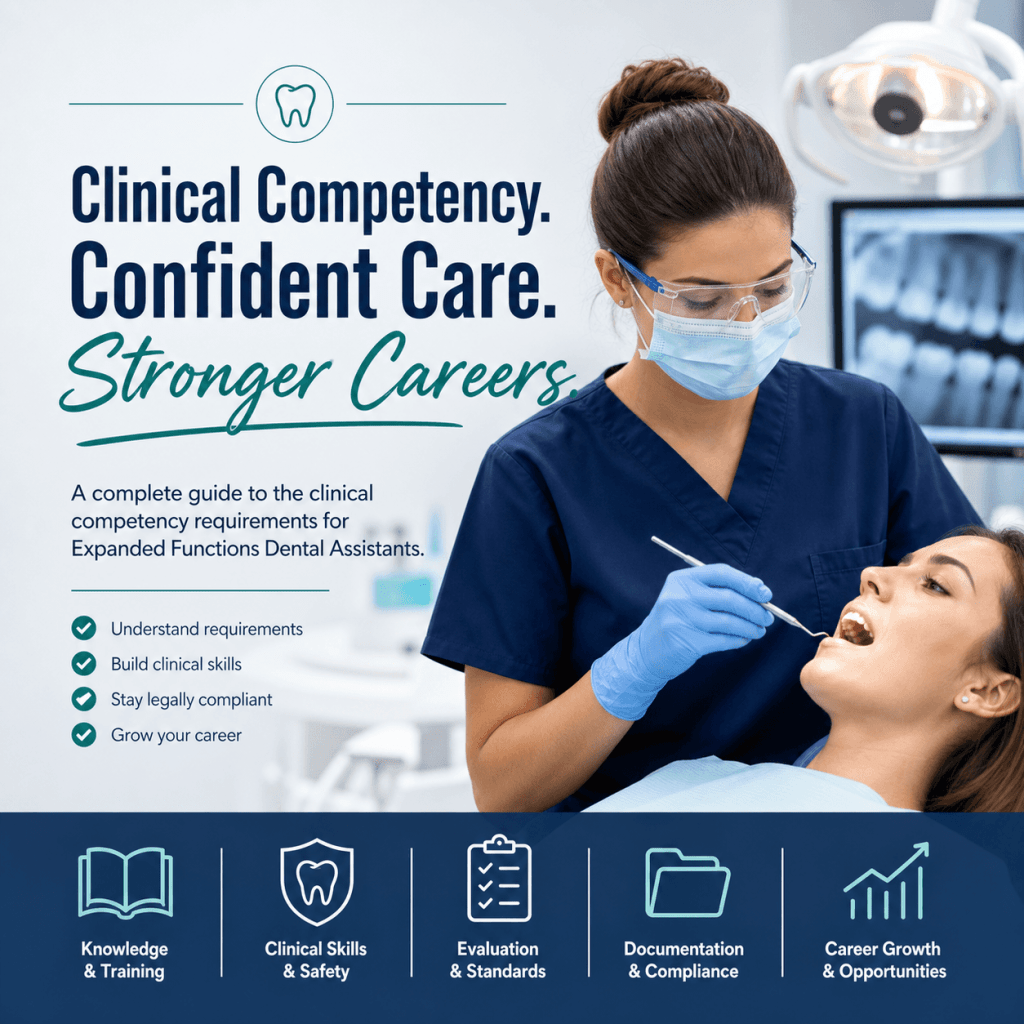
Dental offices prioritize training that supports consistent standards. You learn why protocols exist, what best practices look like, and how to avoid the shortcuts that can create problems later.
Workplace readiness (the skills that get you hired and keep you hired)
A busy practice rewards assistants who can think ahead.
Level 01 training should strengthen:
- Time management and room turnover speed
- Critical thinking and prioritization
- Ethical decision-making and professionalism
- “What should I do next?” instincts when the schedule is full
Online vs In-Person vs Hybrid: Choosing the Right Dental Assistant Training Format
Training format matters because dental assisting is a hands-on job. You can learn concepts online, but confidence comes from repetition and practice.
In-person training
In-person programs typically include structured lab time, simulated procedures, and direct instructor feedback. This format is especially helpful for beginners who want hands-on coaching from day one.
Pros: strong skill-building, faster confidence, immediate feedback
Cons: fixed schedule, commuting, less flexibility
Online dental assistant courses
Online learning can be effective for terminology, theory, and structured lessons, especially for working adults. Much like the approach taken in learning languages online, which offers flexibility and the ability to learn at your own pace.
Pros: flexibility, learn at your pace, easier scheduling
Cons: you still need real clinical skill-building to be job-ready
Hybrid training
Hybrid programs combine online lessons with in-person labs or clinical sessions. For many students, this is the most practical balance.
Pros: flexible learning plus hands-on skill development
Cons: requires planning and commitment to both components
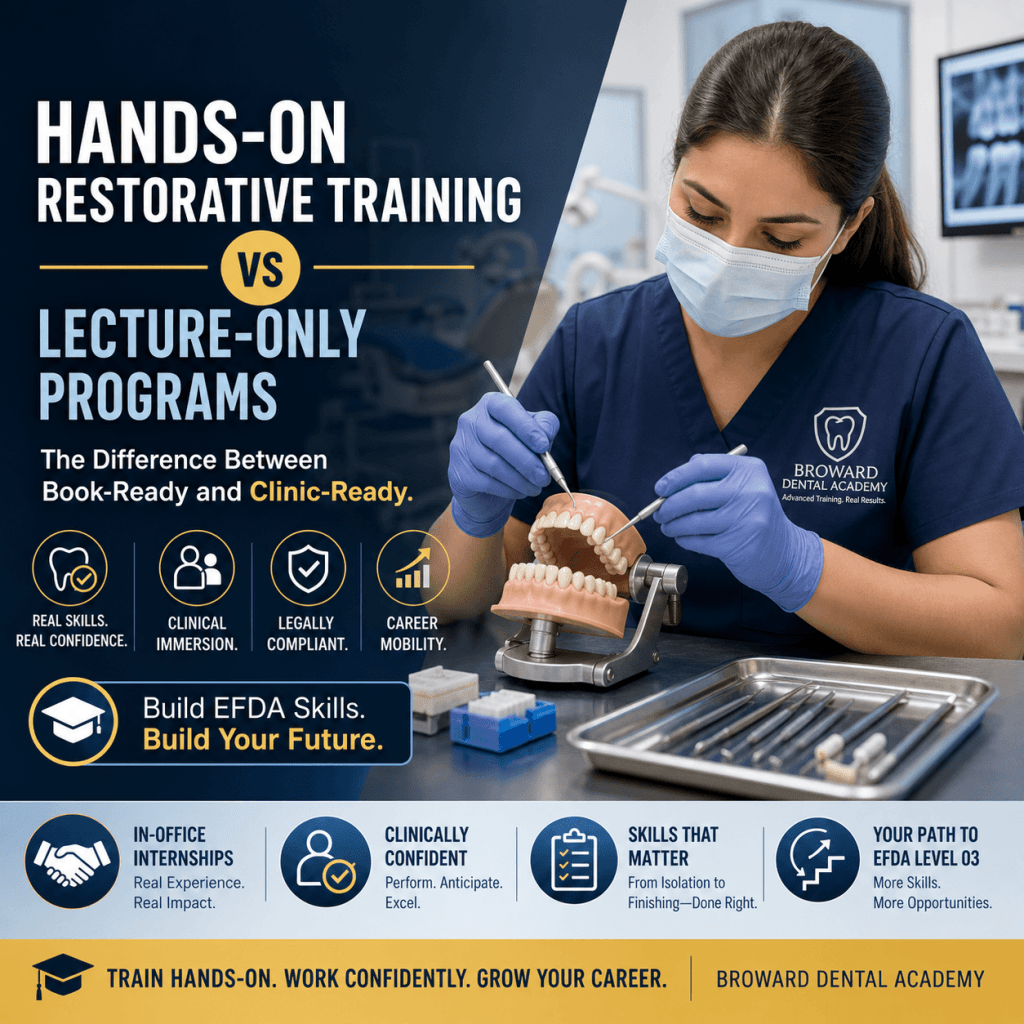
Why clinical immersion matters
Beginners often underestimate how fast a real appointment moves. Clinical immersion teaches you pace, positioning, teamwork, and how to recover calmly when you make a mistake. That experience is what turns knowledge into confidence.
What to look for in online dental assistant schools
If you are considering online options, look for:
- A clear, structured lesson plan
- Instructor support and feedback
- A real-world practice component (labs, clinical sessions, or externship)
- Training that reflects how modern dental offices operate
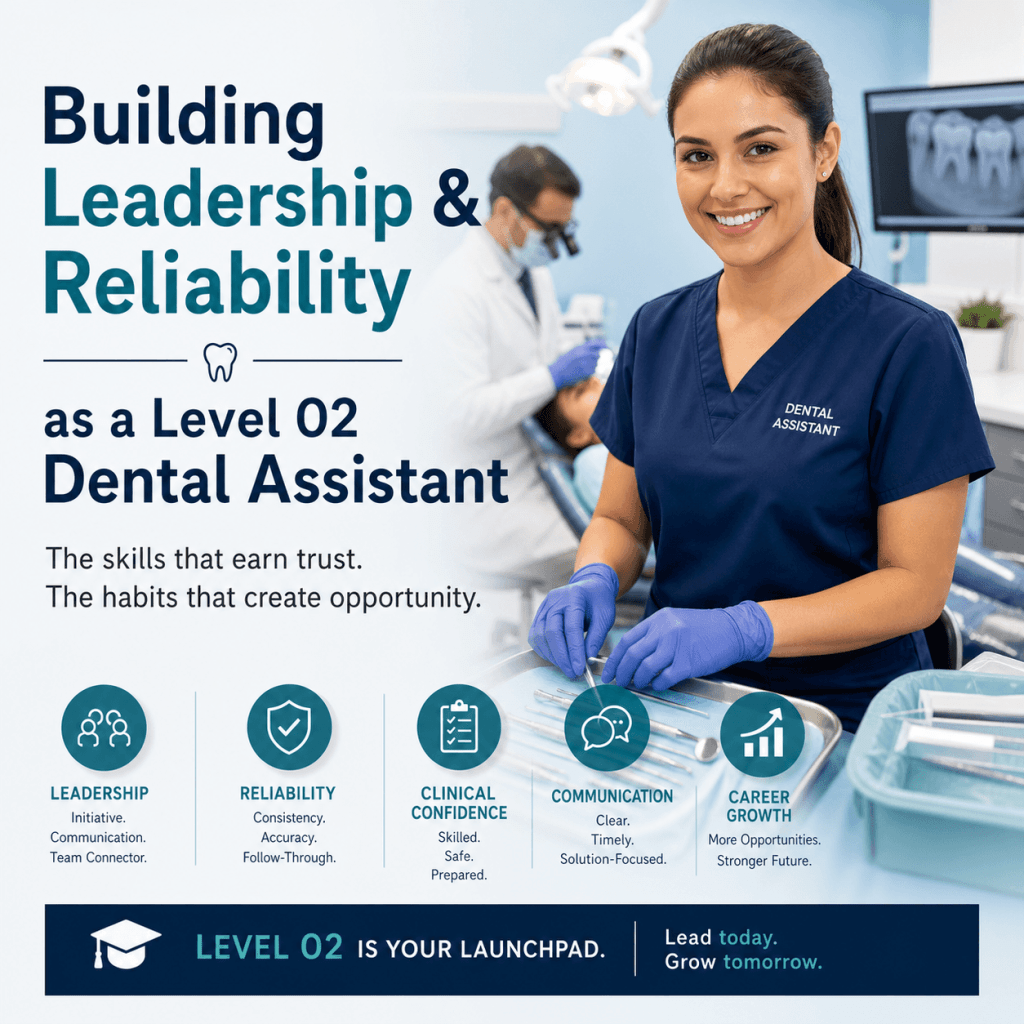
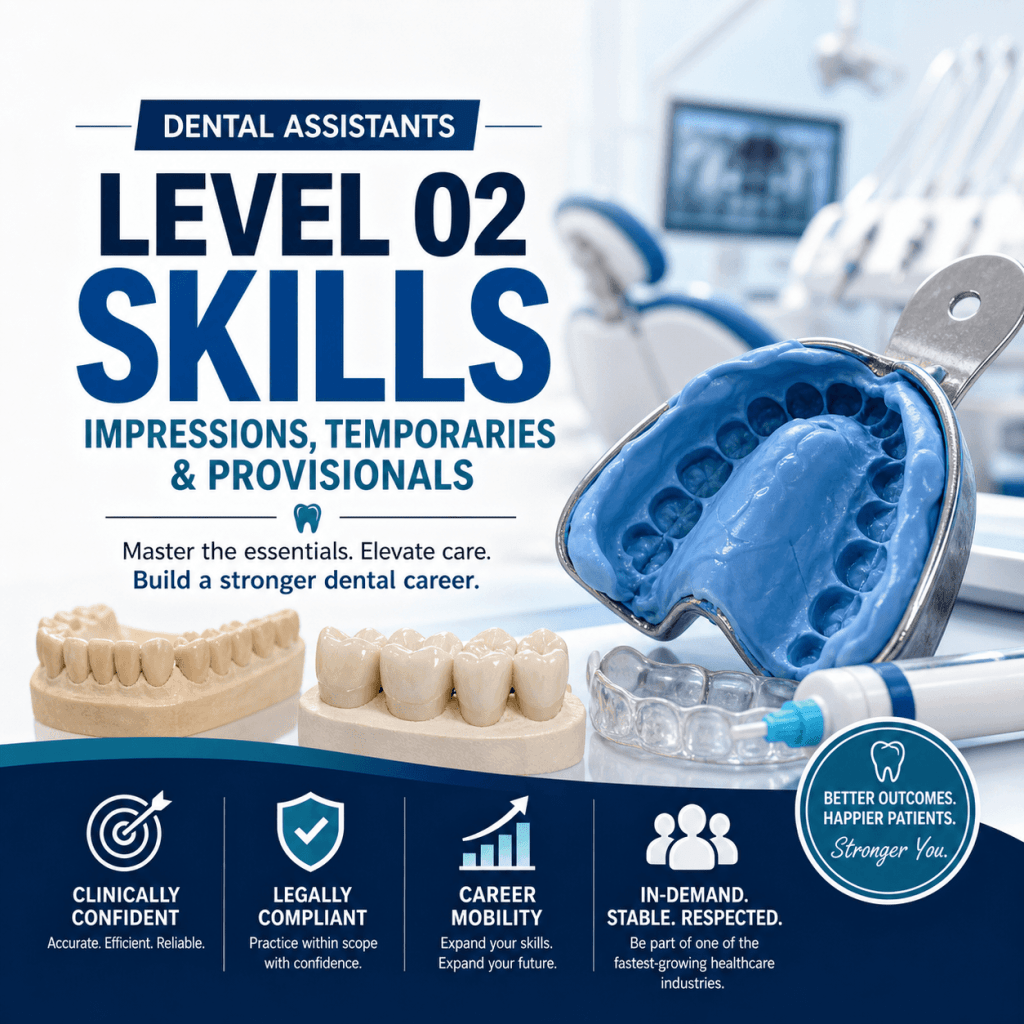
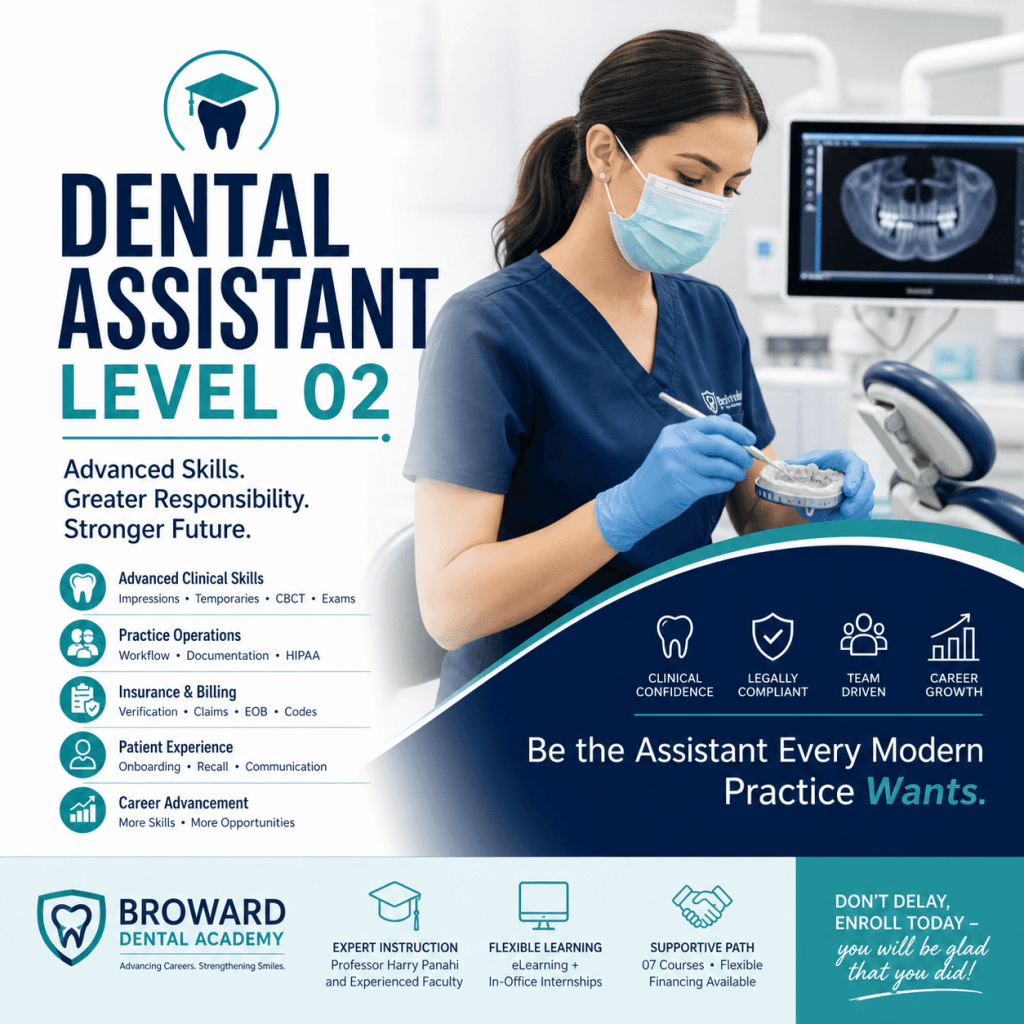
Broward Dental Academy’s approach includes immediate immersion in online and clinical settings. Their Dental Assistant Level 02 course incorporates the latest eLearning lesson plans for remote training. This blend helps students stay engaged while building the hands-on ability dental offices expect. Additionally, their Dental Assistant Hygienists Level 03 program offers an advanced level of training that further prepares students for the demands of the job.
School, Course, or On-the-Job Training: What’s the Best Path to Become a Dental Assistant?
People often search for three options: a dental assistant school, a short dental assistant course, or dental assistant on-the-job training. The best path depends on your timeline, your learning style, and how prepared you want to be on day one.
Dental assistant school (structured program)
A structured program typically offers consistent instruction, practical labs, and a curriculum designed to build skills in the right order.
Why many offices prefer this route:
- More consistency in skill level
- Better compliance habits
- Faster ramp-up once hired
- Less stress for the team training you
Dental assistant course (focused training)
Some programs are course-based and still include hands-on training. A good course can be a strong option if it includes real clinical practice, not just lectures.
On-the-job training (learn while working)
Some offices will train new hires, but it is not always the easiest way to become confident.
Risks of purely on-the-job training:
- Gaps in infection control and documentation habits
- Inconsistent coaching based on who is working that day
- Pressure to “keep up” without learning fundamentals
- Lower confidence when the schedule gets busy
When it can work well: On-the-job training can be effective in a supportive office with real mentorship, limited duties at the start, and a plan to formalize skills through additional training.
Bottom line
For most beginners, the fastest path to job readiness is a structured program with hands-on experience and internship exposure. It reduces uncertainty and helps you walk into interviews with real, practical confidence.
Certification, CPR, and Readiness: What You May Need Before Working
It is common to hear “certified dental assistant,” but employers often use that term in different ways. There is a difference between completing training and meeting an employer’s preferred qualifications.
Training completion vs certification
- Training completion means you finished a program and learned the core skills.
- Certification can refer to additional credentials that some employers prefer or require depending on role and location.
Because requirements vary by employer and region, confirm expectations early when you start applying.
CPR certification
Many dental offices require CPR certification because dental teams must be prepared for medical emergencies. If you do not have it yet, plan for it as part of your timeline.
What employers look for beyond certificates
A resume matters, but hiring decisions often come down to:
- Professionalism and communication
- Consistent infection control habits
- Reliability and punctuality
- Coachability and calm under pressure
- Teamwork in a fast-paced clinical setting
Level 01 training builds employability by developing core chairside workflow skills and a compliance mindset that offices trust. For instance, Dental Assistant Level 01 Training is specifically designed to equip candidates with these essential skills.
How to Find “Dental Assistant Level 01 Training Near Me” (Without Wasting Time)
When people search locally, they usually start with:
- dental assistant training near me
- dental assistant school near me
- dental assistant courses near me
- dental assistant classes near me
That search can bring up dozens of options, so it helps to evaluate programs quickly and clearly.
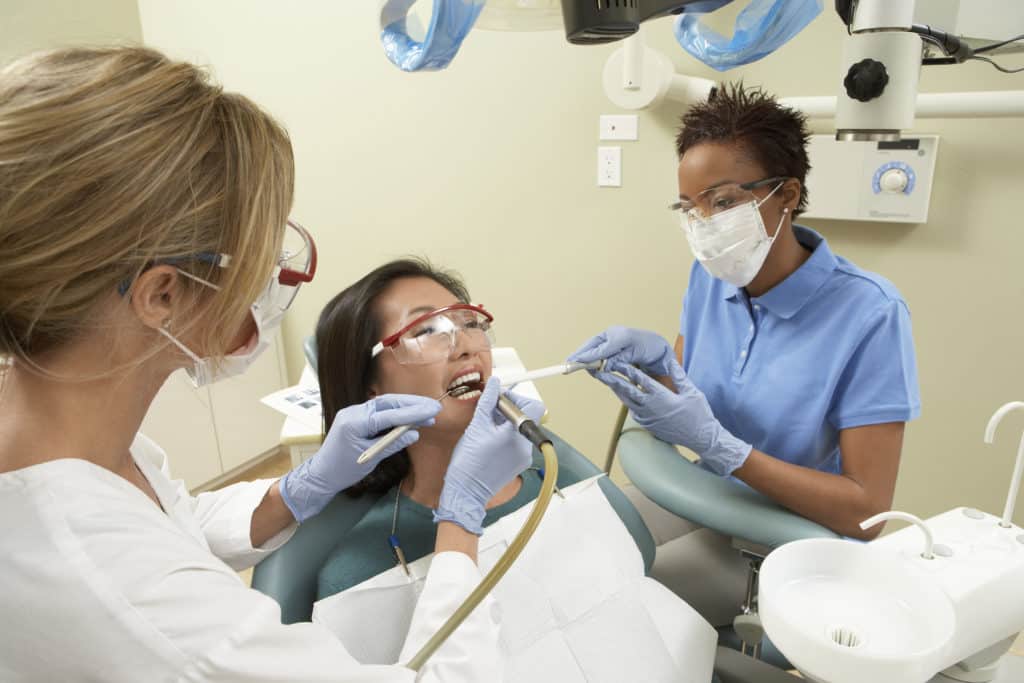
A short checklist to evaluate programs
When evaluating dental assistant programs, consider the following:
- Clear hands-on training hours (not vague promises)
- Clinical or internship/externship options
- Instructors with real dental office experience
- A modern curriculum aligned with current practice expectations
- Schedule flexibility for working adults
Questions to ask admissions
It’s essential to gather specific information from admissions. Here are some direct questions to ask:
- What is the class size?
- How much lab access do students get?
- Are there makeup policies for missed labs?
- How does the internship or externship work?
- What support is available after graduation? You can find more about the support offered post-graduation on the Broward Dental Academy FAQ page.
Red flags to watch for
Be cautious if you encounter:
- Vague curriculum descriptions
- No plan for hands-on practice
- Unrealistic promises about instant jobs or “no effort” outcomes
- No guidance around compliance, professionalism, or real office workflow
Broward Dental Academy focuses on outcomes that dental practices care about: thoroughly trained, legally compliant, clinically confident assistants who are prepared for a modern, high-performance dental practice.
Cost and Financing: What Dental Assistant Level 01 Training Typically Costs
Dental assistant class costs vary based on location, training format, program length, and how much hands-on training is included. When comparing programs, focus on value, not just tuition.
What tuition may include
Depending on the program, your total cost may cover:
- Online learning modules and structured lesson plans
- Lab supplies and training materials
- CPR guidance or scheduling support
- Clinical or internship coordination
- Student support resources and skill evaluations
How to compare value (quick and practical)
When assessing the value of a dental training program, consider the following questions:
- How many hours of hands-on training do I get?
- Will I practice the real chairside flow I will face at work?
- Is there an internship that exposes me to real pace and teamwork?
- Will I graduate confident, or just “finished”?
To ensure you get the most out of your investment, it’s crucial to compare different programs based on these factors.
Flexible financing
For working adults, financing often makes the difference between “someday” and starting now. Broward Dental Academy offers flexible financing options to make enrollment realistic.
Before you commit anywhere, request a detailed breakdown of what is included so you can compare programs fairly.
What Makes Broward Dental Academy’s Level 01 Training Different
Some programs teach to pass a test. Broward Dental Academy focuses on preparing students to thrive inside a modern dental practice, where speed, professionalism, compliance, and confidence all matter at the same time.
A modern training philosophy
Students are trained to:
- Think critically
- Act ethically
- Perform confidently
That combination is what helps new assistants earn trust quickly in a real office.
Immediate immersion, not delayed practice
Broward Dental Academy provides a complex educational experience through immediate immersion in online and clinical settings. With the latest eLearning lesson plans incorporated for remote training, students stay engaged while building practical skills that translate to chairside readiness.
Real-world exposure through internships
In-office internships help students understand how a real schedule moves, what the team expects, and how to stay composed when the pace picks up. Such internship experiences are often what separates “trained” from “job-ready.”
A starting point with room to grow
Broward Dental Academy offers 07 courses, which means Level 01 can be your entry point into a larger career pathway. Many students start with core assisting skills and later return for advanced dental training as they grow.
A Realistic Week-by-Week Experience: What Training Often Feels Like
Every program is structured differently, but for most students, the learning curve follows a predictable pattern.
Early phase: building comfort with the basics
This stage is about getting oriented:
- Dental terminology and basic procedure understanding
- Infection control routines that become second nature
- Instrument familiarity and operatory setup habits
- Learning how to move efficiently without rushing
At first, it can feel like a lot. That is normal. The goal is repetition until it starts to click.
Middle phase: chairside flow and communication
This is where you start thinking like a dental assistant:
- Anticipating what the dentist needs next
- Understanding procedure steps and timing
- Developing confident patient communication
- Building charting and documentation habits
- Practicing calm professionalism under pressure
Clinical or internship phase: applying skills in real appointments
This phase is where confidence grows quickly because the work becomes real:
- Supporting live patient care with supervision
- Handling time pressure while staying accurate
- Learning teamwork, positioning, and pace
- Getting feedback that improves your performance fast
How students improve the fastest
The students who progress quickly usually do four things well:
- Repeat skills until they become automatic
- Ask specific questions (not just “Is this right?”)
- Accept feedback without getting defensive
- Reflect on mistakes and fix the process, not just the moment
The outcome you want
By the end, you want to feel polished and employable. Not perfect, but prepared. Not just done with class, but ready to contribute in a real dental office.
Next Steps: Enroll and Start Your Dental Assisting Career
Dental Assistant Level 01 Training is a practical starting point for people who want stability, flexibility, and real career mobility in healthcare. It is especially valuable if you want to enter the dental field with skills that dental practices trust.
Dental offices are looking for assistants who are thoroughly trained, legally compliant, and clinically confident. The right Level 01 training program builds that foundation.
Here is a simple action path:
- Choose your preferred format (online, in-person, or hybrid)
- Confirm local and employer expectations, including CPR
- Review total cost, what is included, and financing options
- Enroll and commit to repetition, feedback, and real skill-building
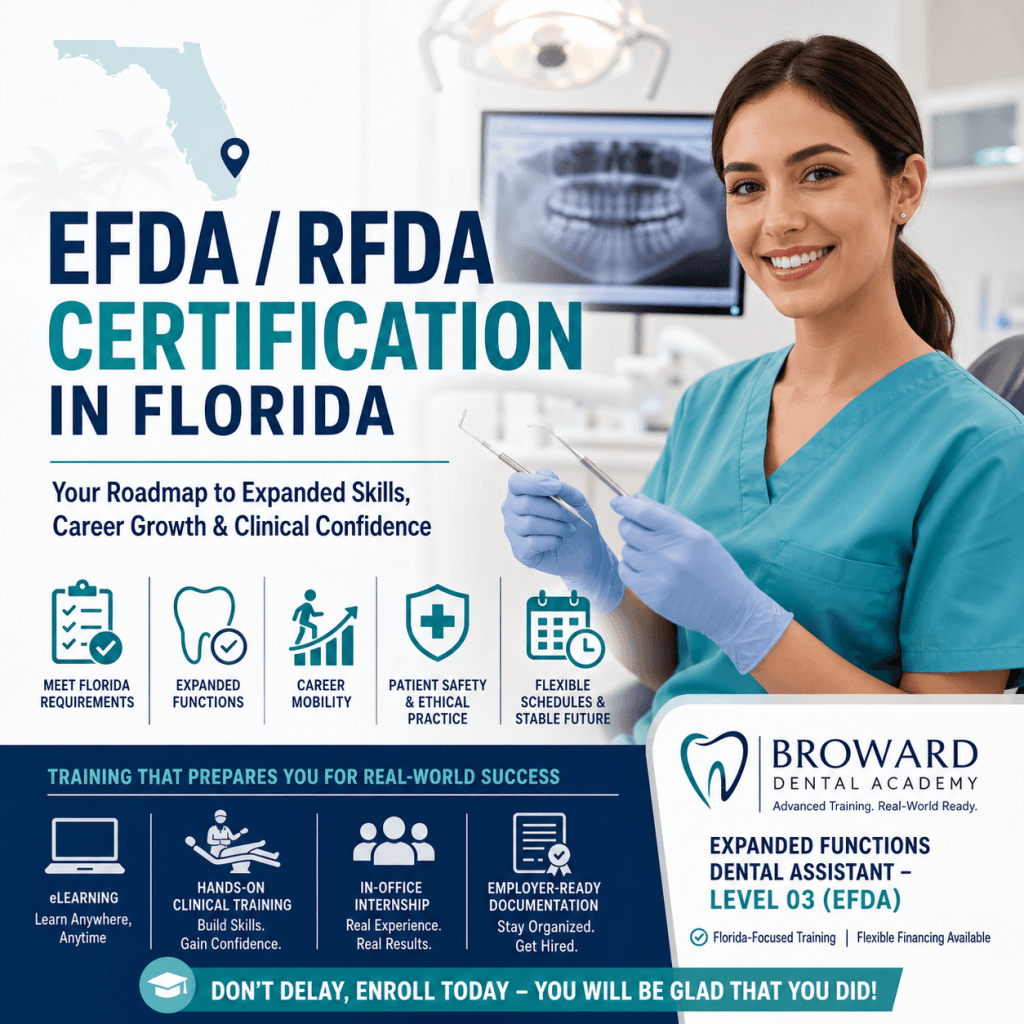
If you are ready to take the next step, connect with Broward Dental Academy to explore schedule options, financing, and course guidance.
Don’t delay, enroll today – you will be glad that you did!
FAQs (Frequently Asked Questions)
What is Dental Assistant Level 01 Training and who is it designed for?
Dental Assistant Level 01 Training is an entry-level program that teaches essential day-one skills to work effectively in a modern dental office. It covers clinical workflow, operatory setup, chairside assisting, infection control protocols, and professional patient communication. This training is ideal for career changers seeking a faster route into healthcare, recent graduates wanting a skill-based career with real job demand, adults returning to work looking for stability and clear schedules, individuals preferring hands-on roles over desk jobs, and anyone aiming for a respected clinical role without a lengthy degree.
What core skills will I learn in Dental Assistant Level 01 Training?
In Level 01 training, you’ll acquire practical skills including efficient operatory setup and breakdown, consistent infection control routines, identification and safe handling of common dental instruments, support of patient flow and chairside procedures, and professional communication with patients and the dental team. The program emphasizes hands-on learning to prepare you for immediate contribution in an entry-level dental assisting role.
How does Dental Assistant Level 01 Training contribute to career advancement?
Completing Level 01 training lays the foundation for further specialization within dentistry. It opens doors to advanced fields such as oral surgery, orthodontics, endodontics, and periodontics. With additional certifications and experience gained through courses offered by institutions like Broward Dental Academy, dental assistants can increase their responsibilities and earning potential while advancing their careers.
Why is dental assisting considered a smart career move right now?
Dental assisting is part of one of the fastest-growing healthcare sectors with strong ongoing demand due to routine cleanings, exams, restorations, emergencies, and cosmetic procedures. The role offers stable income potential, flexible scheduling options including full-time or part-time work, clear career mobility pathways, and the opportunity to be a vital part of a fast-paced dental team that values professionalism and clinical confidence.
What does career stability look like for dental assistants in daily practice?
Career stability in dental assisting involves becoming an integral part of the predictable daily rhythm of a dental office—handling morning setups, managing patient flow efficiently during procedures, performing sterilization cycles properly, documenting chart notes accurately, turning over rooms quickly between patients, and completing end-of-day closing tasks. Being reliable and well-trained ensures you contribute effectively without slowing down the schedule.
How important is professionalism compared to clinical skills in dental assisting?
Professionalism is equally crucial as clinical skills in dental assisting. Successful assistants are not only adept with instruments but also trustworthy with patient privacy, respectful toward patients and colleagues, steady under pressure during busy schedules, and dependable teammates. Strong training programs emphasize building these professional habits early alongside technical competencies to prepare you for success in the clinical setting.