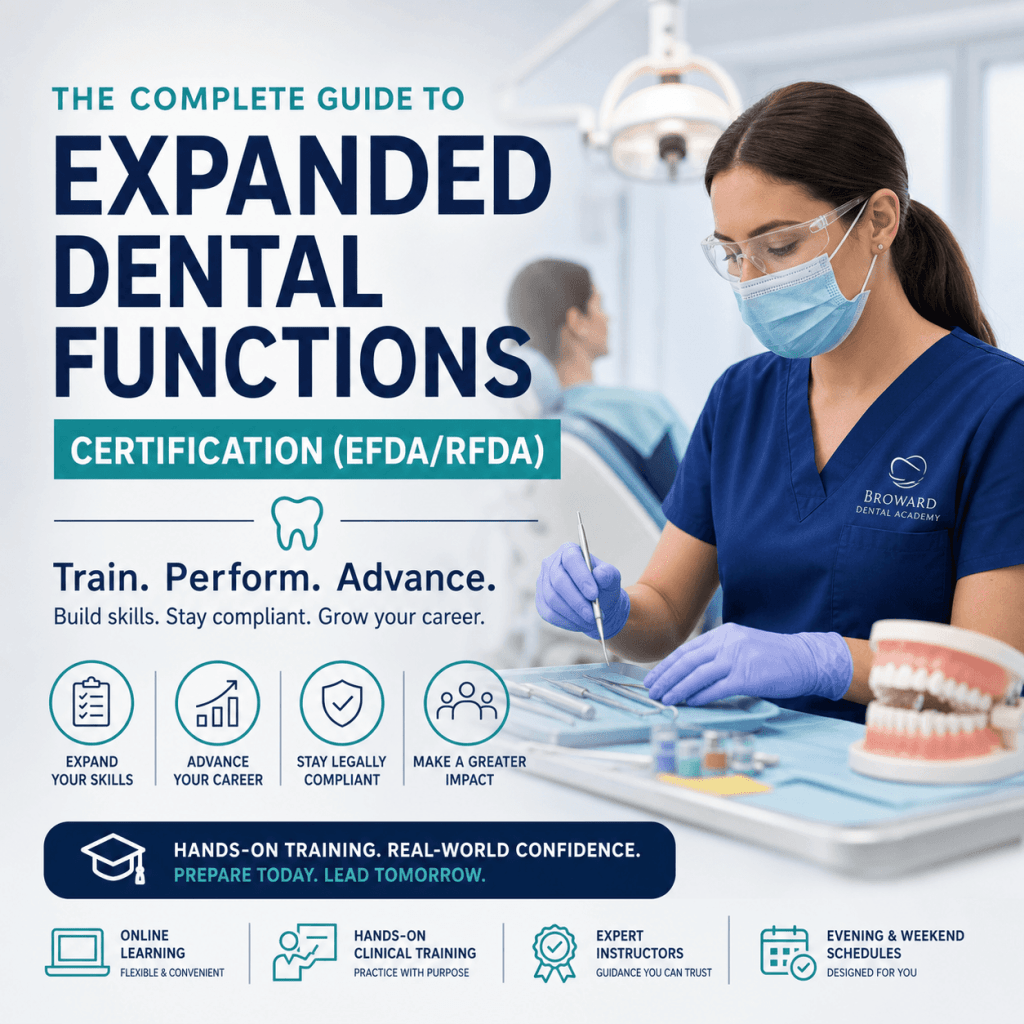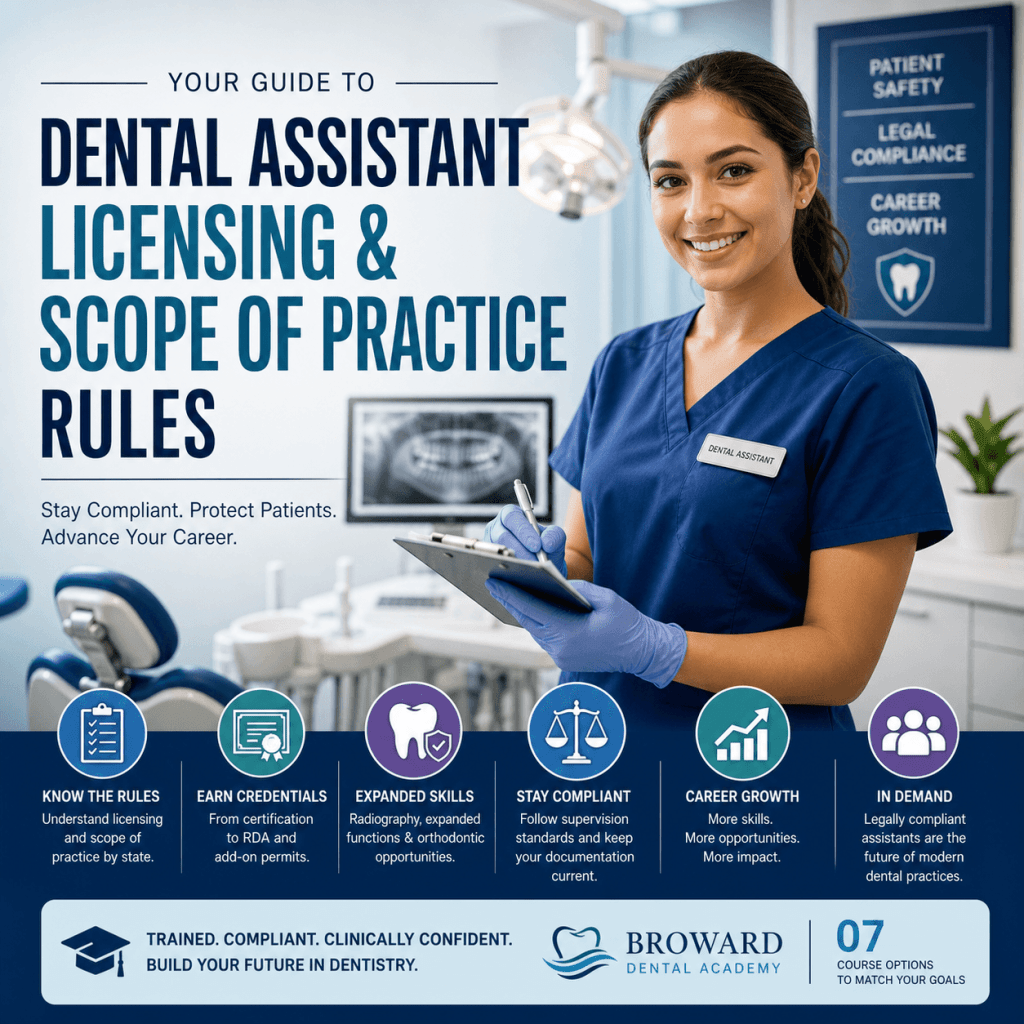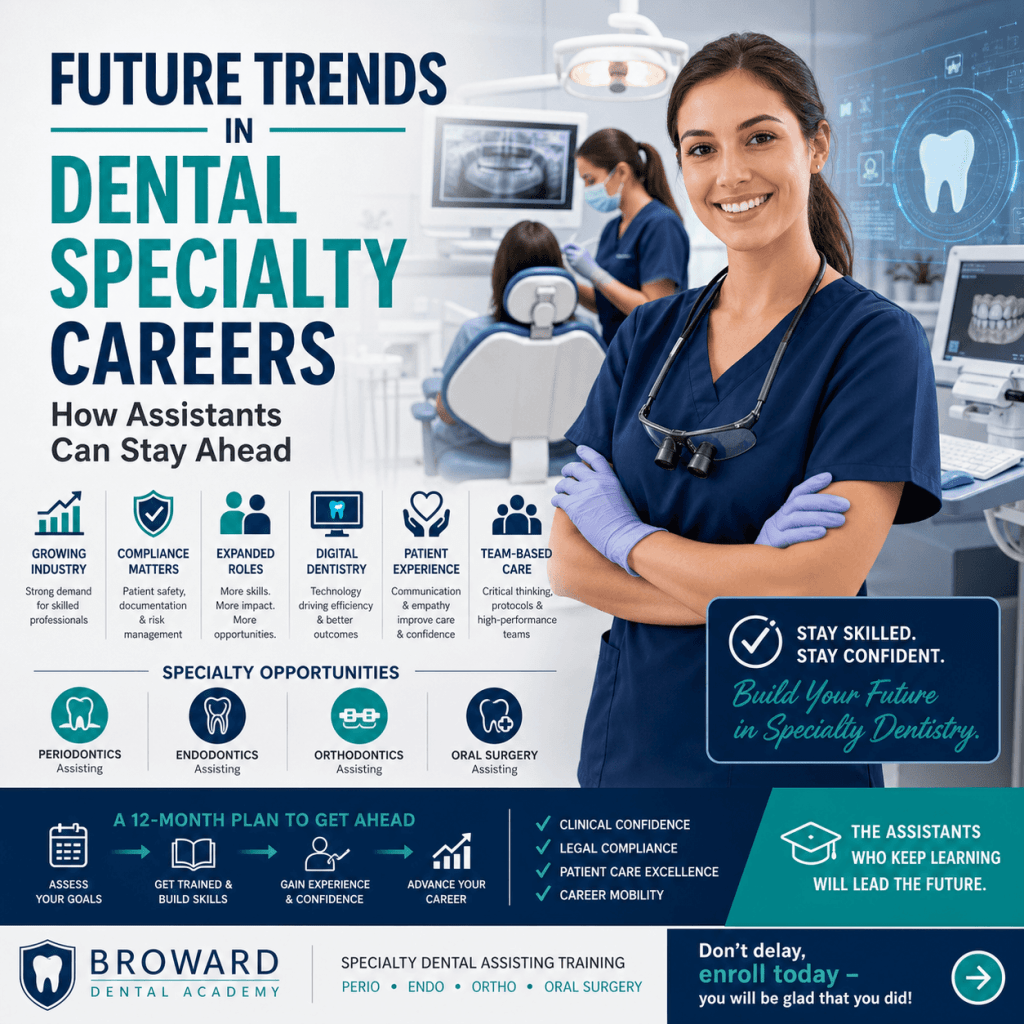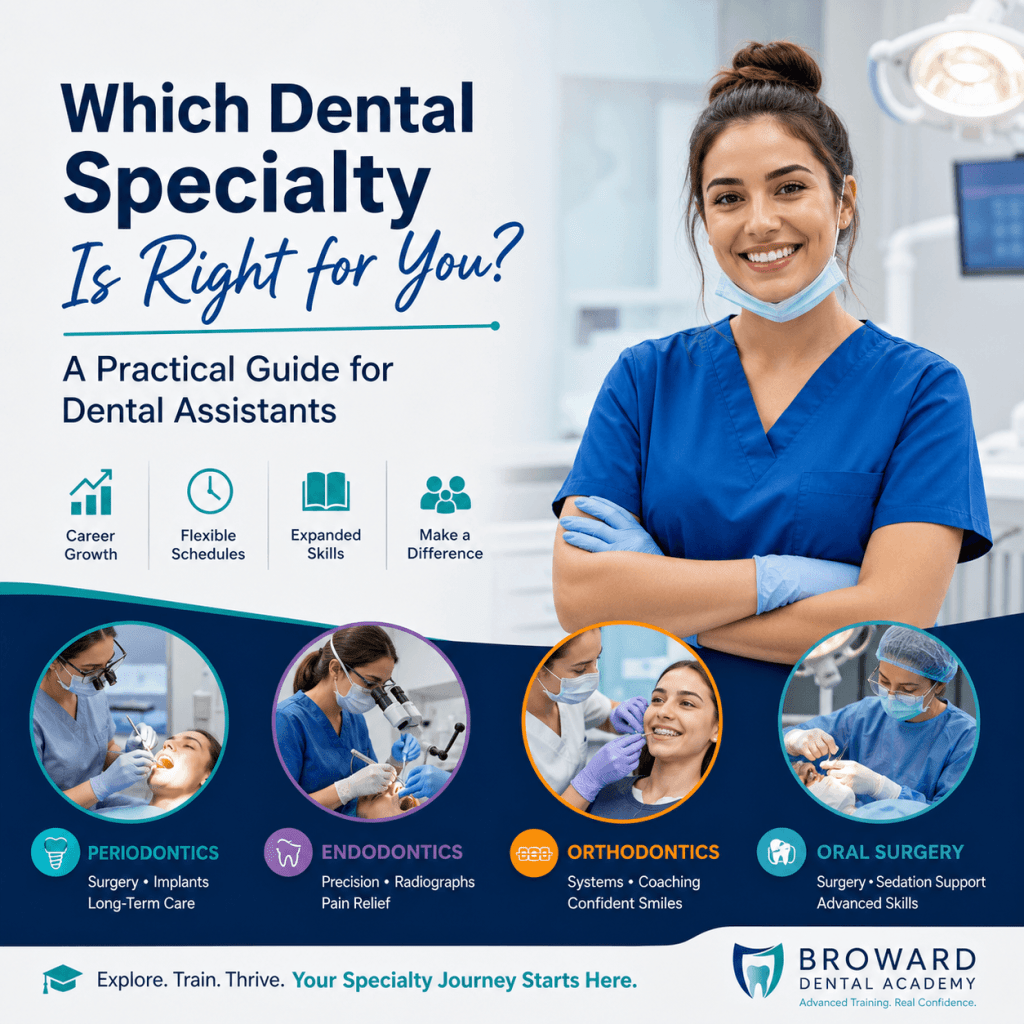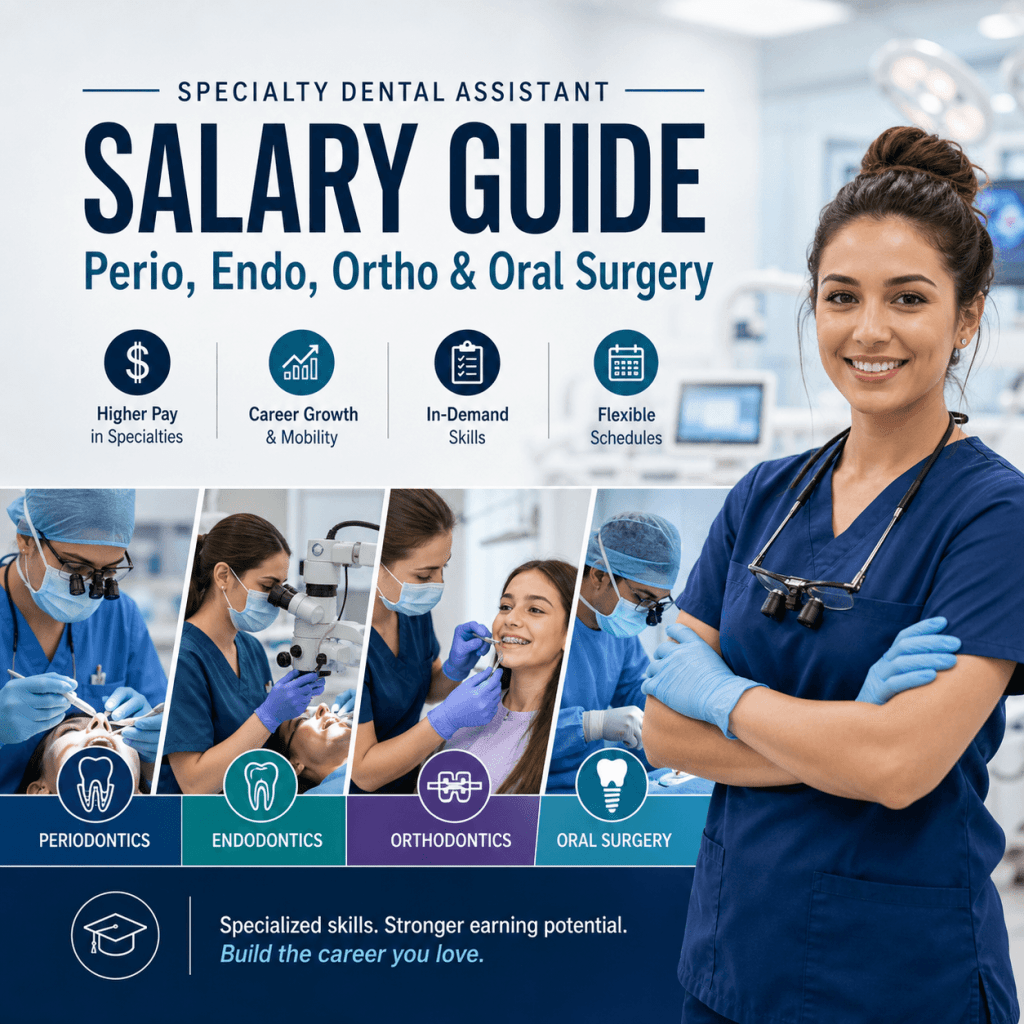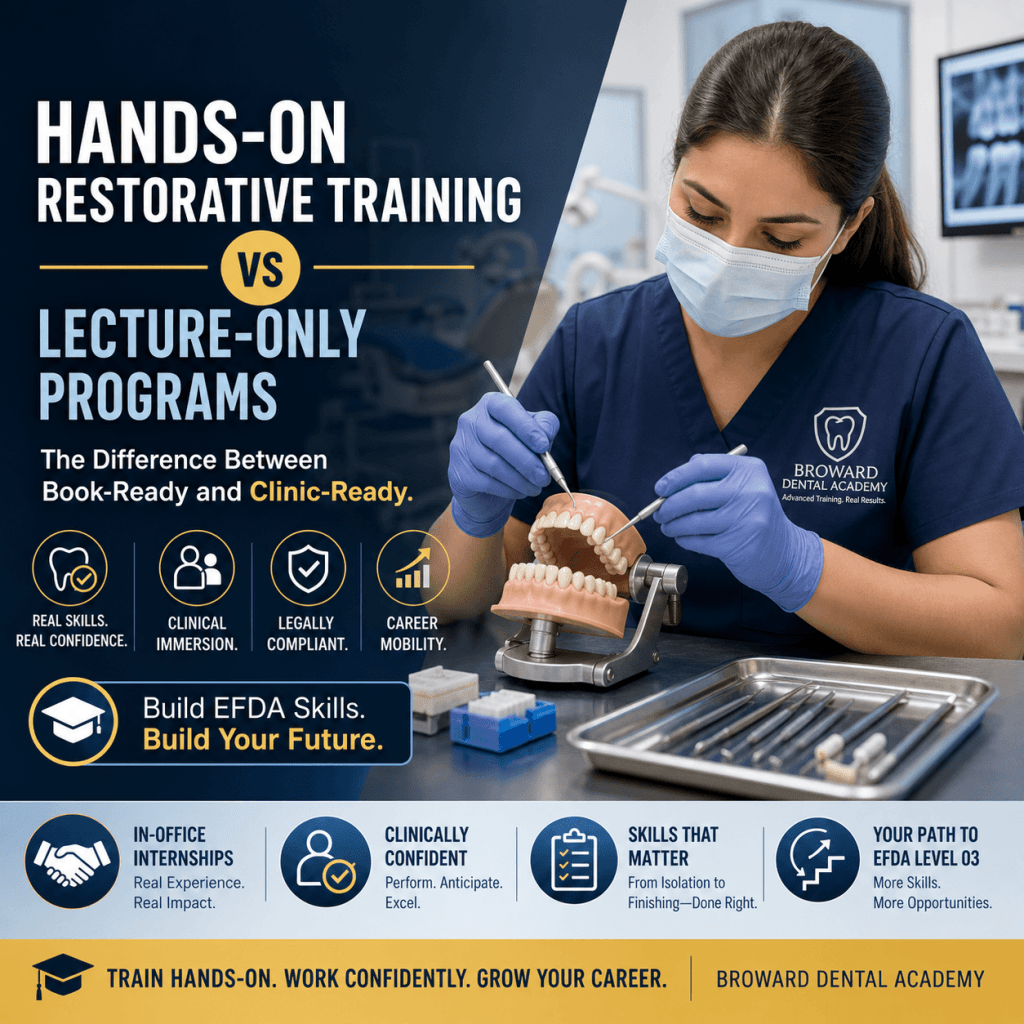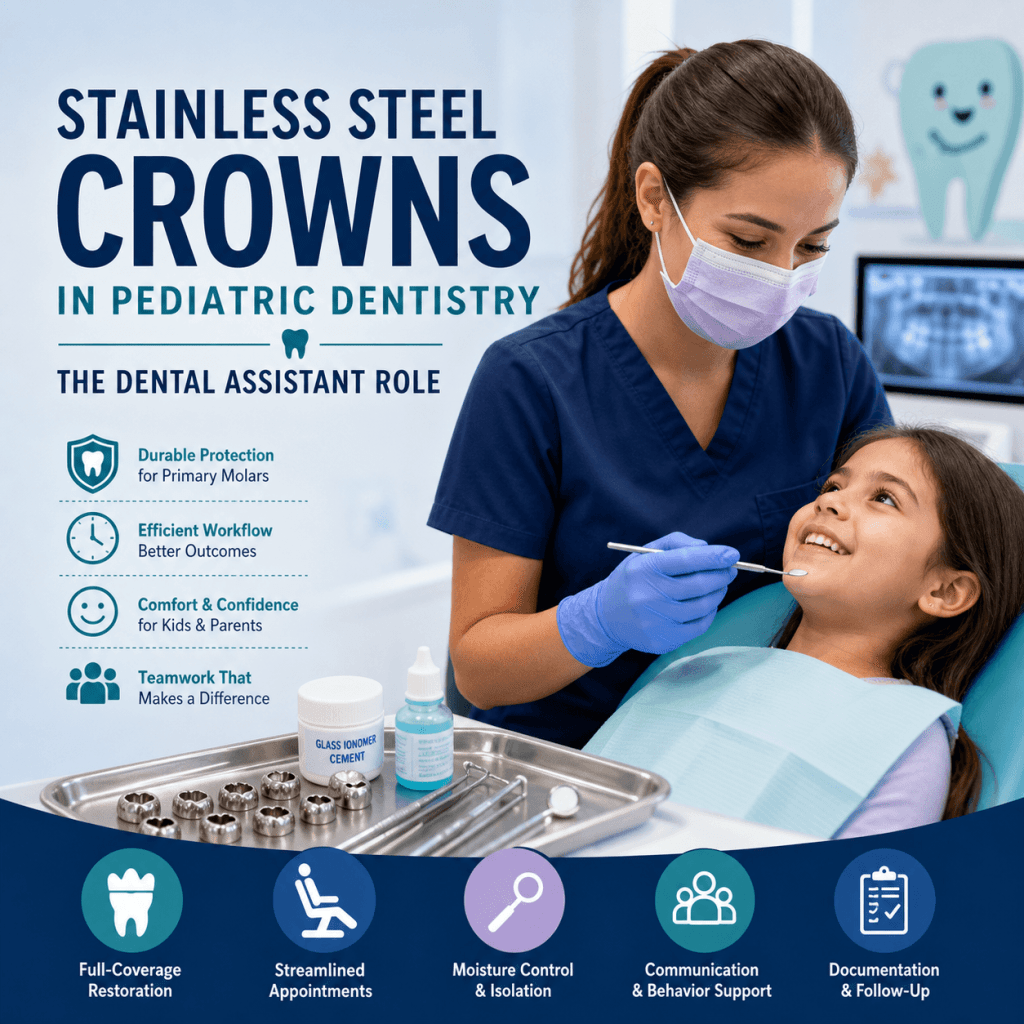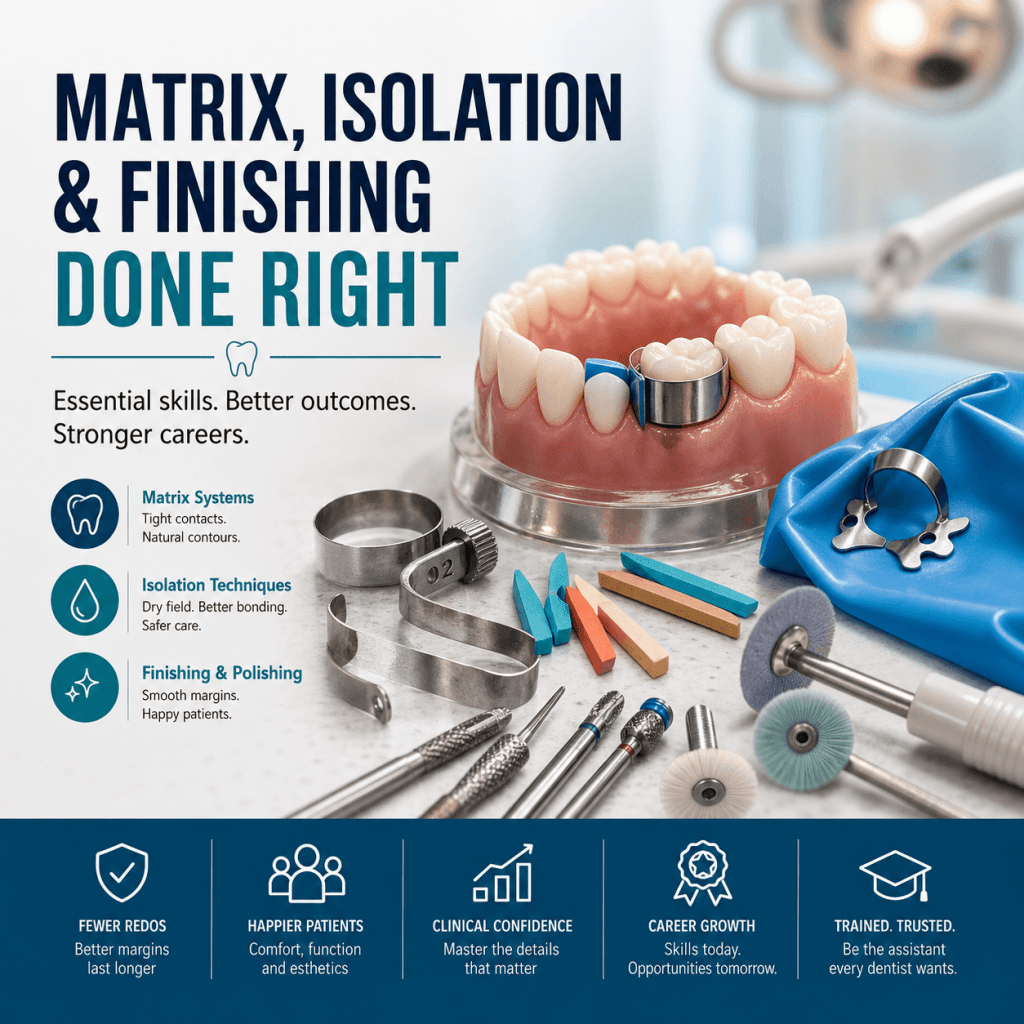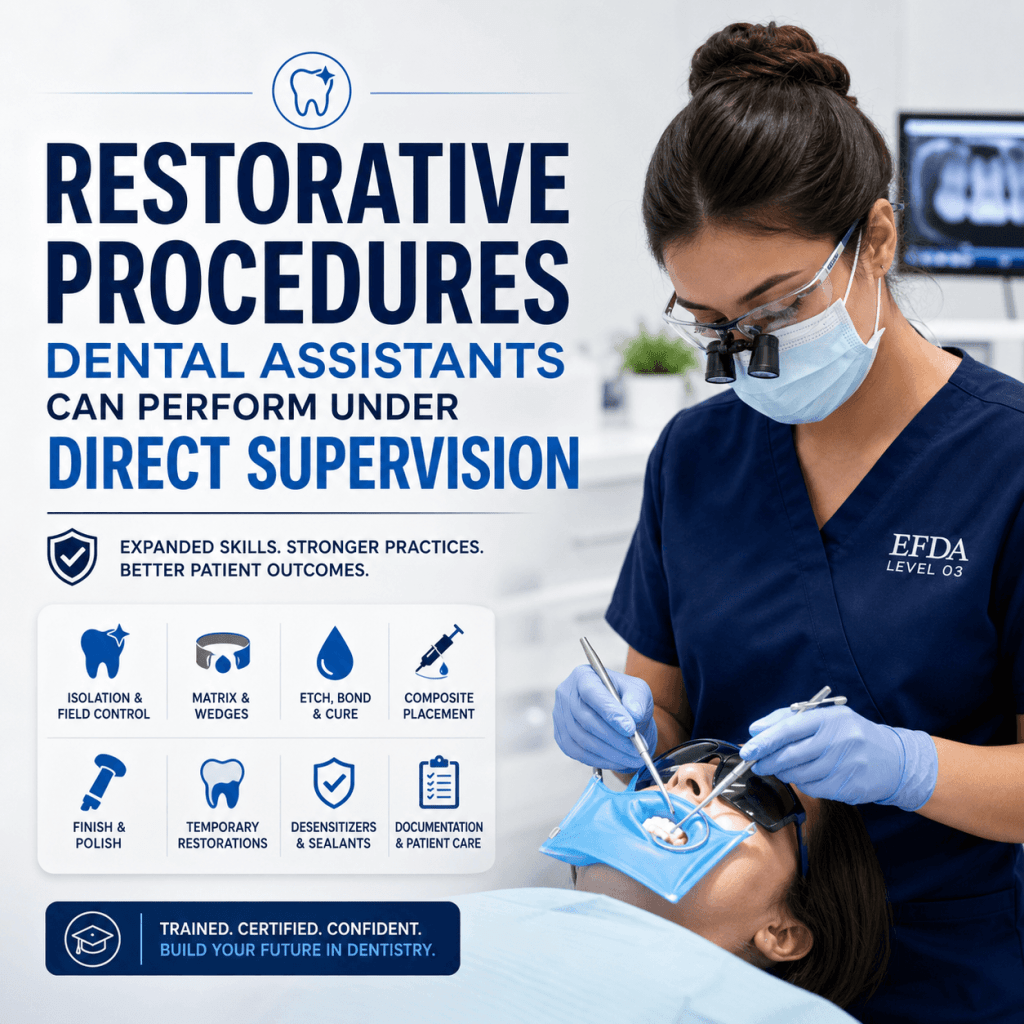
If you are looking at dental assisting in Florida and keep seeing “EFDA Level 03,” you are not alone. Florida dental offices use this language because they need team members who can support faster, more restorative focused schedules while staying within the legal scope of practice.
This guide breaks down what EFDA Level 03 means, who it is for, what you will do in a real practice, how training typically works, and how Broward Dental Academy helps you become the kind of assistant dental offices actually want to hire.
Expanded Functions Dental Assistant (EFDA) Level 03: what it is (and why Florida dental offices care)
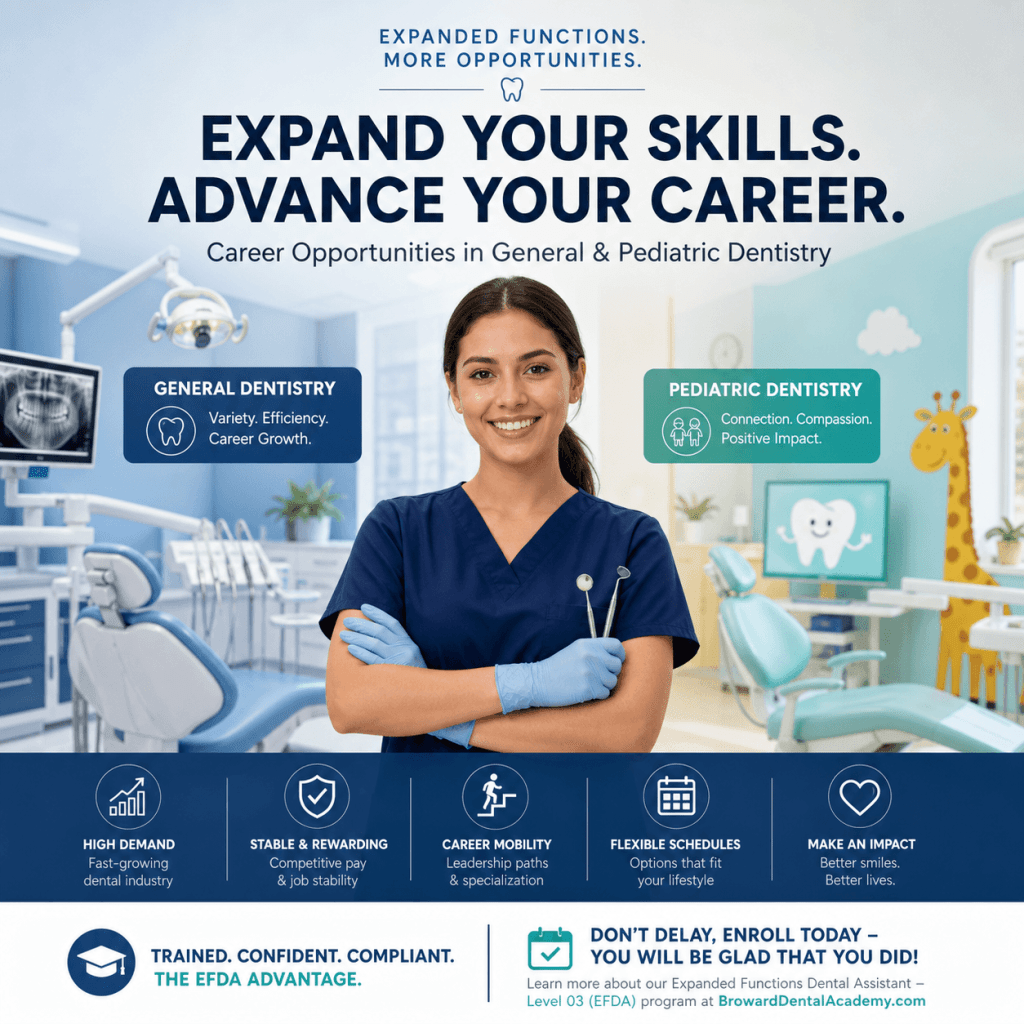
An Expanded Functions Dental Assistant (EFDA), sometimes called an expanded duty dental assistant, is a dental assistant who has completed additional training that prepares them to support more advanced clinical and restorative workflows than an entry level assistant.
In plain English, EFDA training helps you move from “helping chairside” to “helping deliver dentistry” in a bigger way. You are still working under the supervision of a dentist, but your skills can allow the practice to run smoother, stay on schedule, and deliver more consistent appointments.
What does “Level 03” mean in Florida?
In Florida, “Level 03” is commonly used to refer to expanded functions training in a Florida context. Schools, employers, and offices may use slightly different wording, but the intent is the same: training that prepares you for a more restorative involved role and a higher level of clinical readiness.
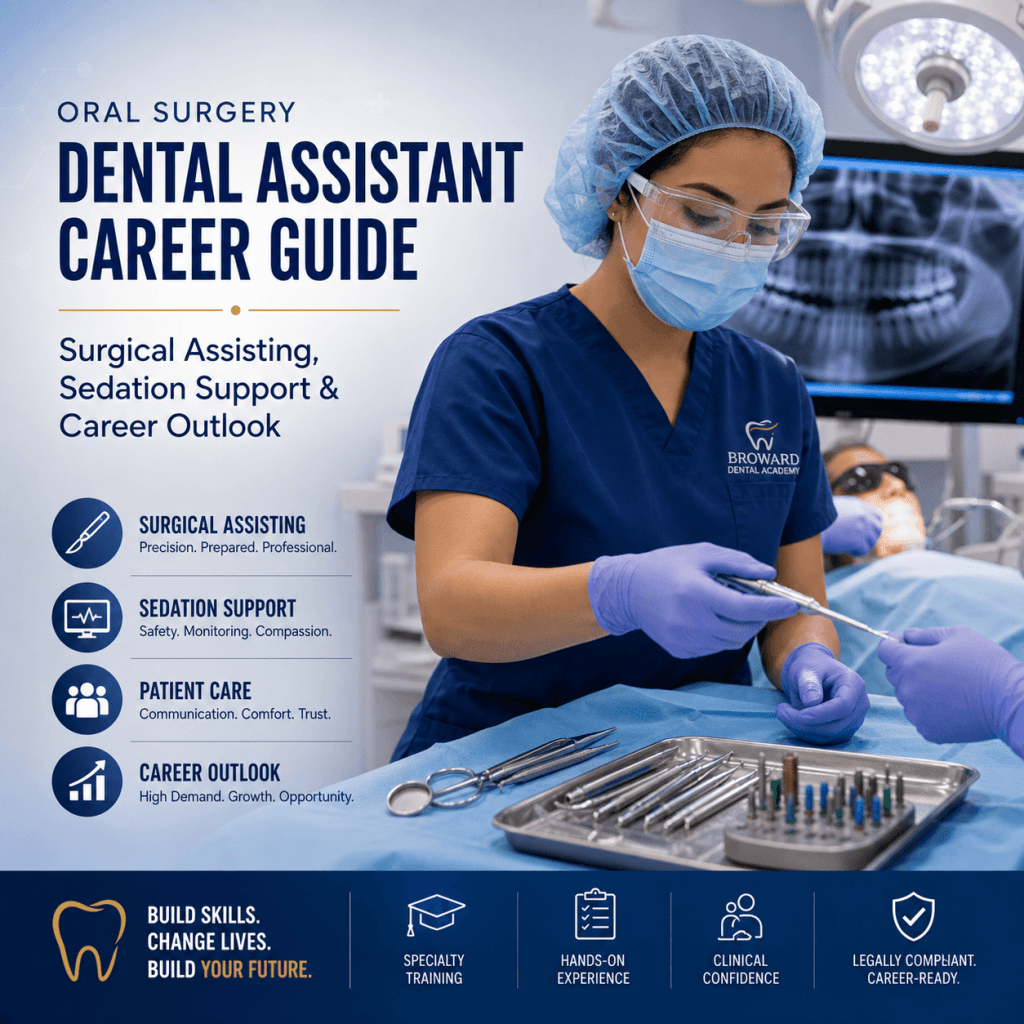
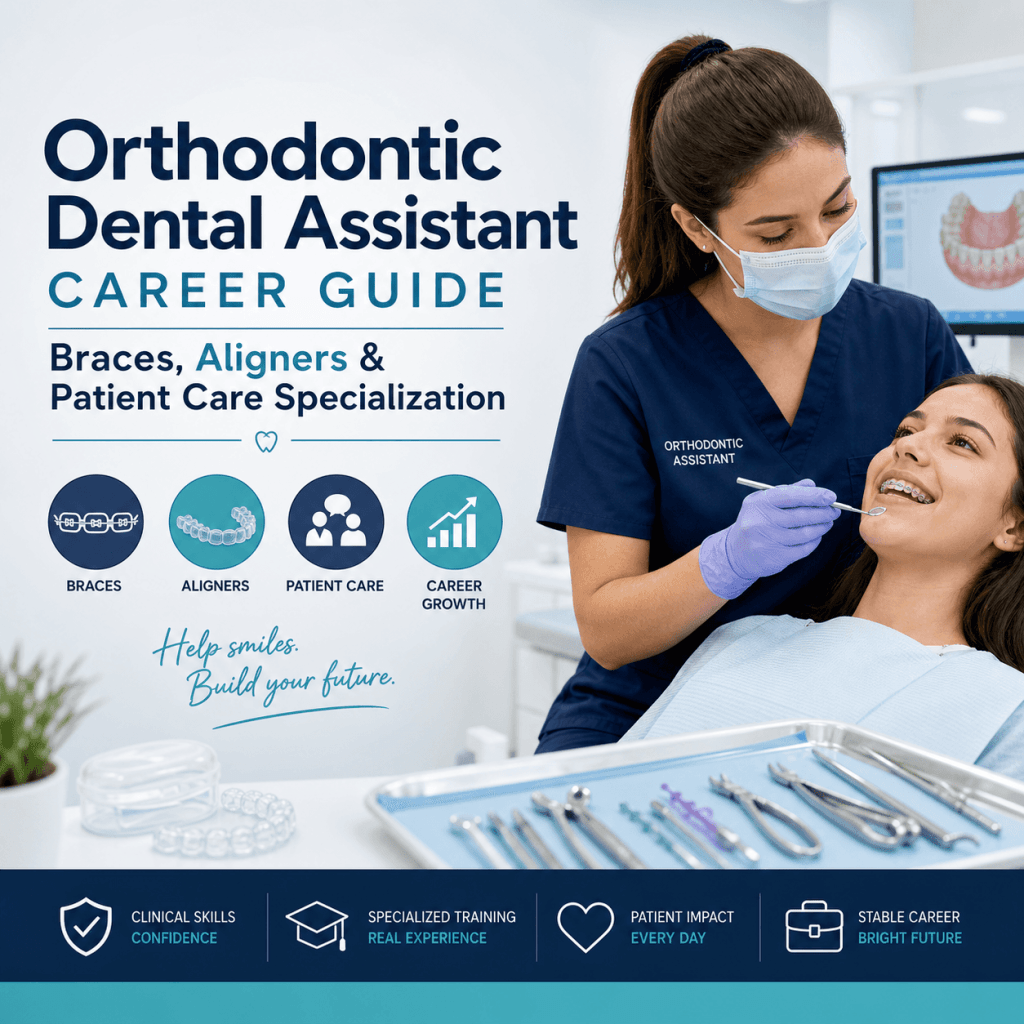
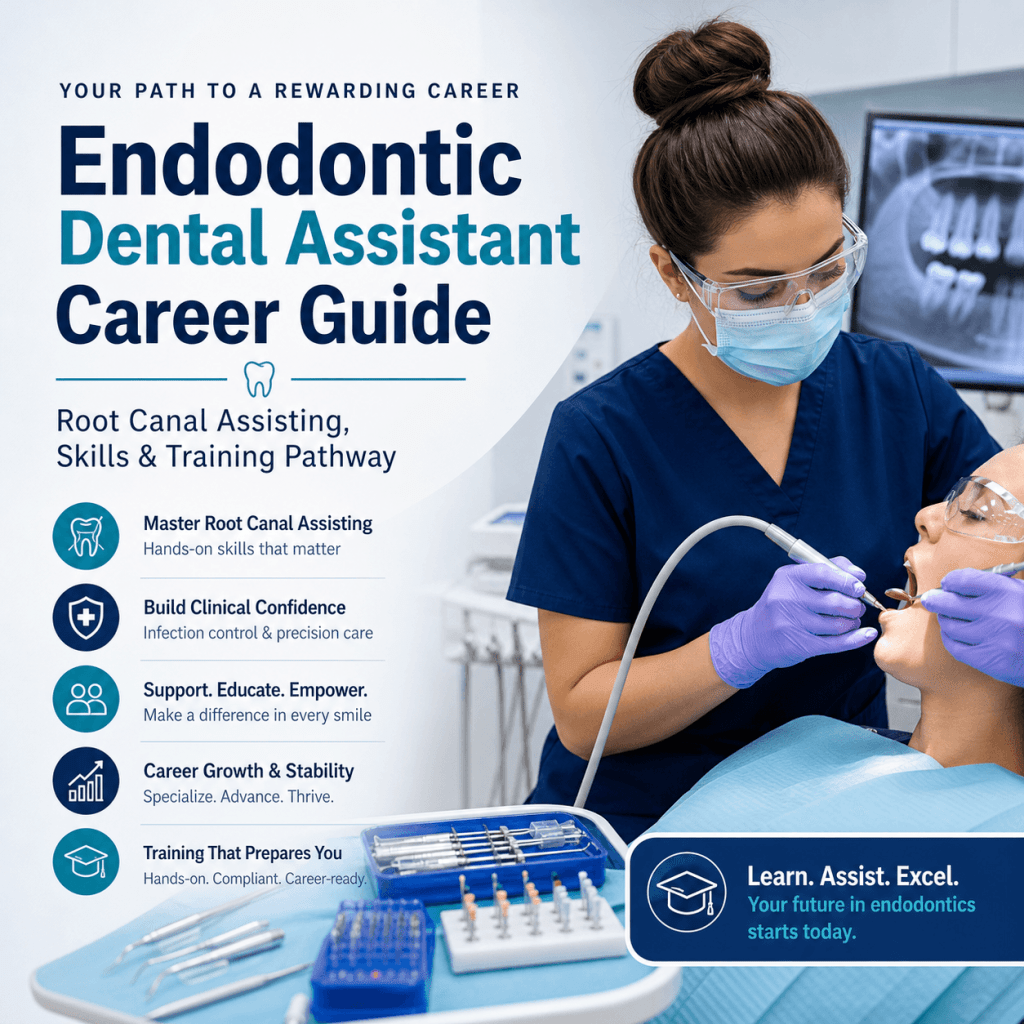
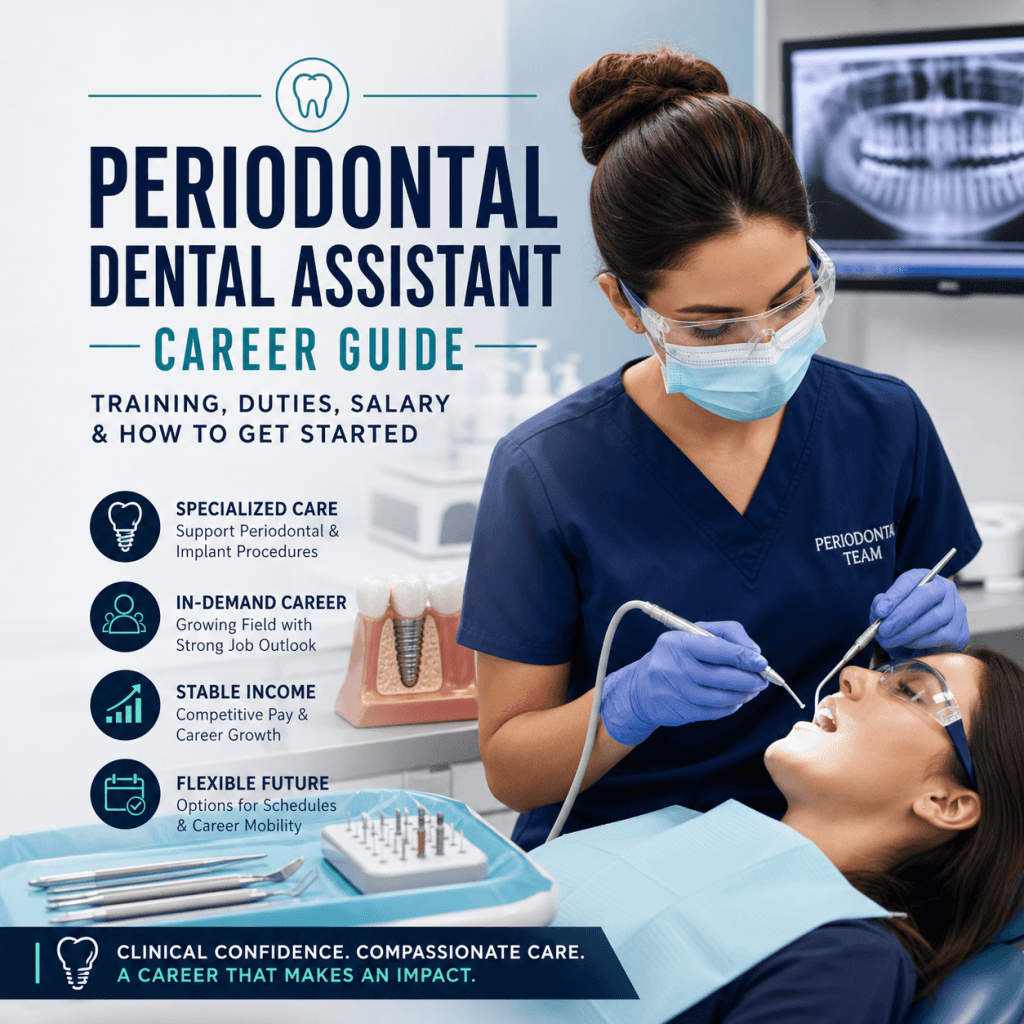
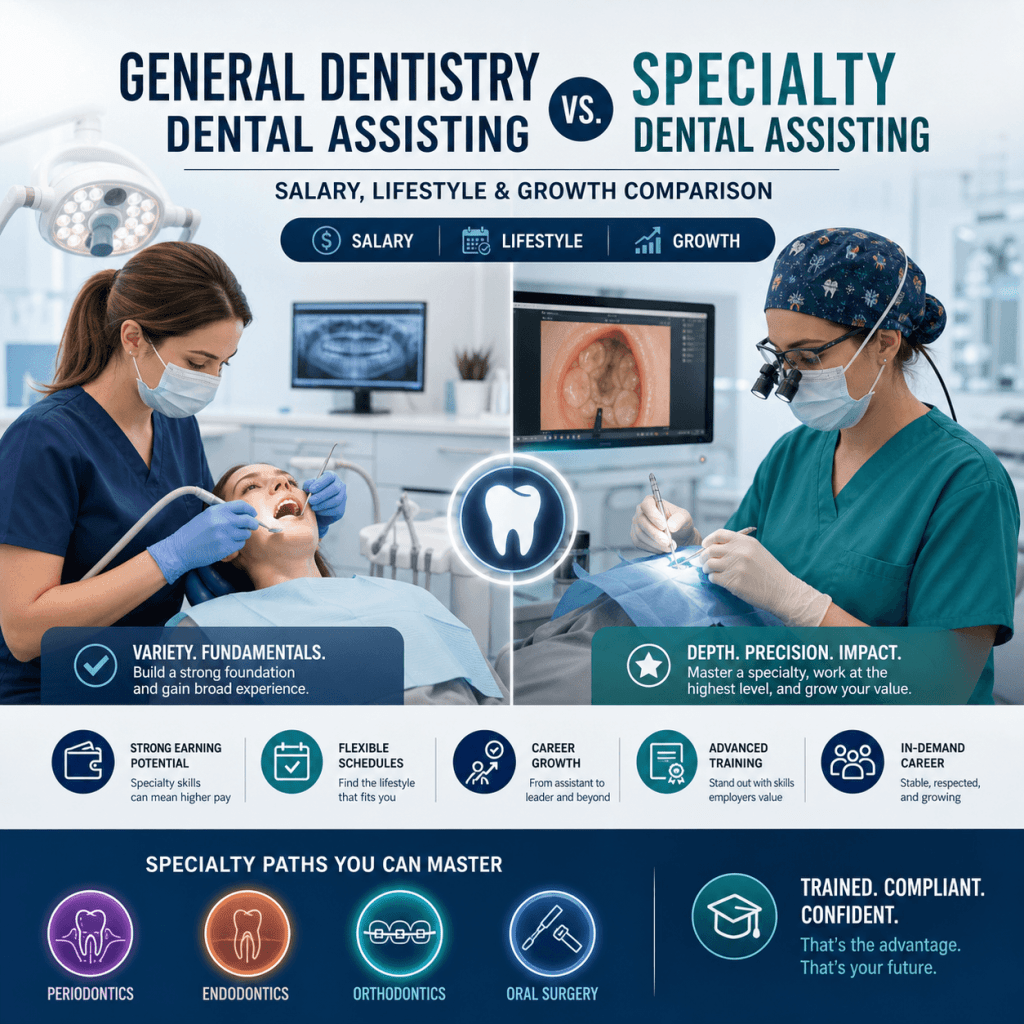
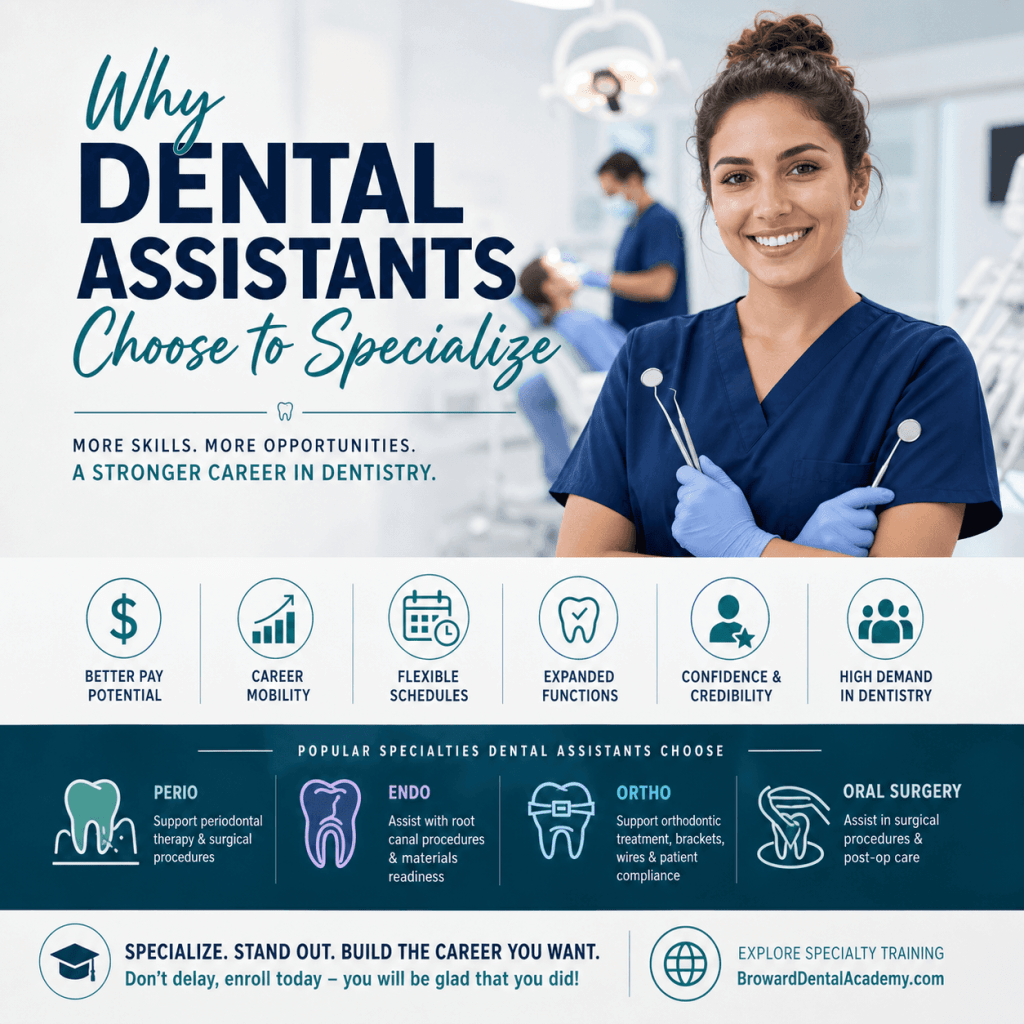
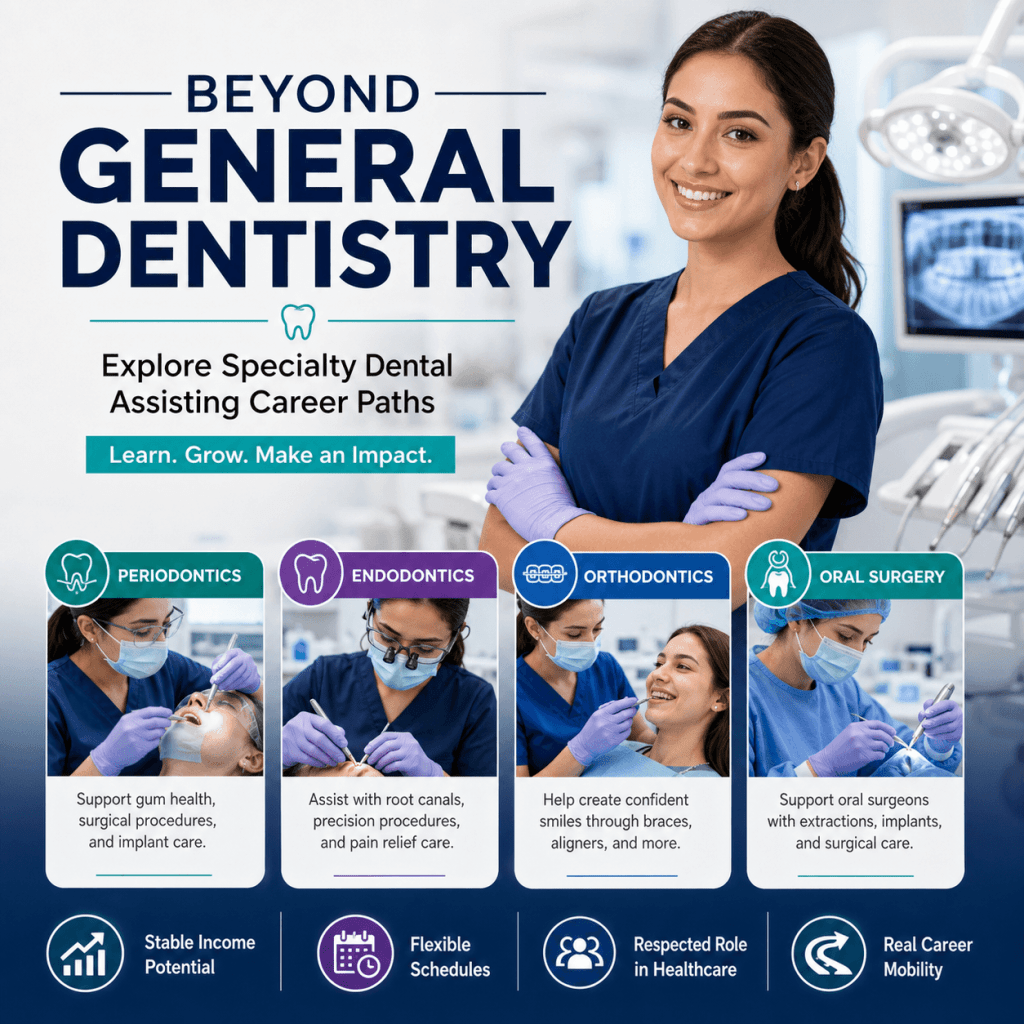
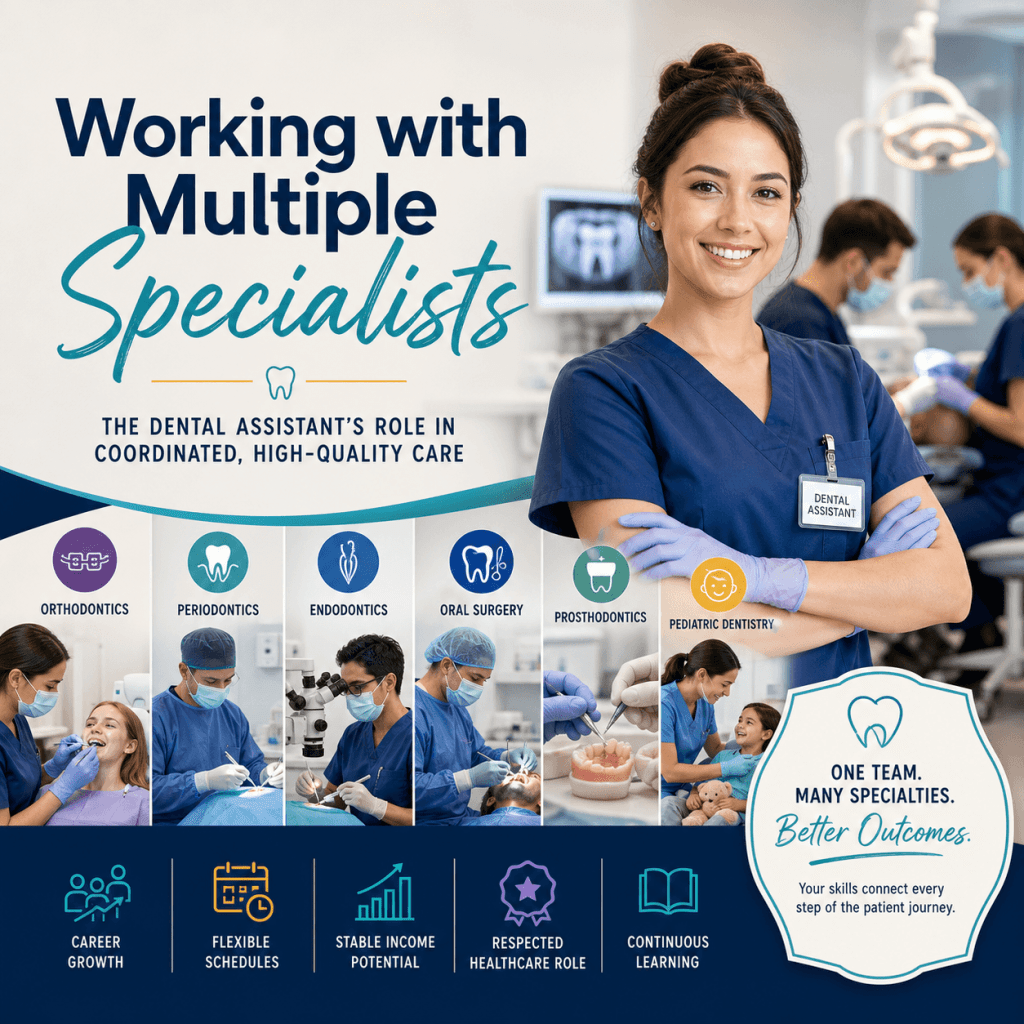
At Broward Dental Academy, we offer specialized training programs that prepare you for various advanced roles such as oral surgery, orthodontics, and endodontics.
Where EFDA fits on the dental team
A modern dental team usually includes:
- Dentist: diagnoses, treatment plans, performs procedures, and supervises clinical care.
- Dental hygienist: focuses on preventive care and periodontal maintenance within their scope.
- Dental assistant: supports chairside care, room setup, patient flow, infection control, and documentation.
- Expanded functions trained dental assistant (EFDA / expanded duties): supports restorative and higher complexity workflows more directly, depending on state rules and office protocols.
Some states use terms like RDA or RDA EF, and requirements vary widely. That is why Florida focused students should always confirm what a specific credential allows and what a local employer expects.
Why demand is rising
Florida dental offices care because dentistry is busy. Patient expectations are higher, schedules are fuller, and practices want teams that can perform efficiently without cutting corners.
When a practice hires an expanded functions trained assistant, it often means:
- More procedures can be completed per day
- Appointments feel smoother and better organized
- The dentist can stay focused on dentist only tasks
- Compliance, documentation, and infection control stay consistent even during high volume days
What patients notice
Patients rarely ask whether someone is “EFDA Level 03,” but they do notice the results:
- Shorter waits and faster room turnover
- Clearer communication and smoother handoffs
- A calmer appointment, even when the schedule is tight
- More consistent quality from visit to visit
In the rest of this article, you will learn about duties, requirements, training structure (including various certifications), clinical experience, career outcomes in Florida, and how Broward Dental Academy supports the full journey.
Who EFDA Level 03 is for (and who should choose a different path first)
EFDA Level 03 can be a strong fit, but it is not automatically the right first step for everyone.
Best fit profiles
EFDA Level 03 tends to be a great match for:
- New dental assistants who want faster career mobility and a more advanced skill set early
- Working dental assistants who are ready to expand responsibilities and become more valuable in restorative workflows
- Career changers who want stable income potential, flexible schedules, and a respected role in healthcare
Mindset and skills that matter
Expanded functions training rewards people who are:
- Detail oriented and consistent
- Comfortable working with their hands in a small operating field
- Calm under time pressure
- Strong communicators with patients and teammates
- Focused on ethics, safety, and doing things the right way every time
When to pause and build foundations first
You may want to start with basic dental assisting training first if you:
- Have zero chairside exposure and want to confirm dentistry is the right fit
- Feel uncertain about instruments, terminology, or dental anatomy basics
- Need a stronger foundation in infection control and clinical professionalism before adding expanded responsibilities
A quick way to decide
Ask yourself: Do I want to support restorative focused procedures and be trusted with higher level clinical workflow responsibilities? If yes, EFDA Level 03 is likely aligned with your goals.
What an EFDA can do in a modern dental practice (real world responsibilities)
An EFDA is still a dental assistant, but with training that supports more advanced clinical workflow, especially in restorative care. Exact duties vary by state rules and by the dentist’s delegation style, so it is important to keep the scope Florida appropriate and employer specific.
Expanded functions duties vs traditional assistant duties
A traditional dental assistant commonly focuses on:
- Room setup and breakdown
- Instrument transfer and chairside support
- Suction and isolation support
- Infection control and sterilization
- X rays if qualified, plus charting support and patient prep
Expanded functions training builds on that foundation so you can contribute more directly to restorative efficiency and consistency.
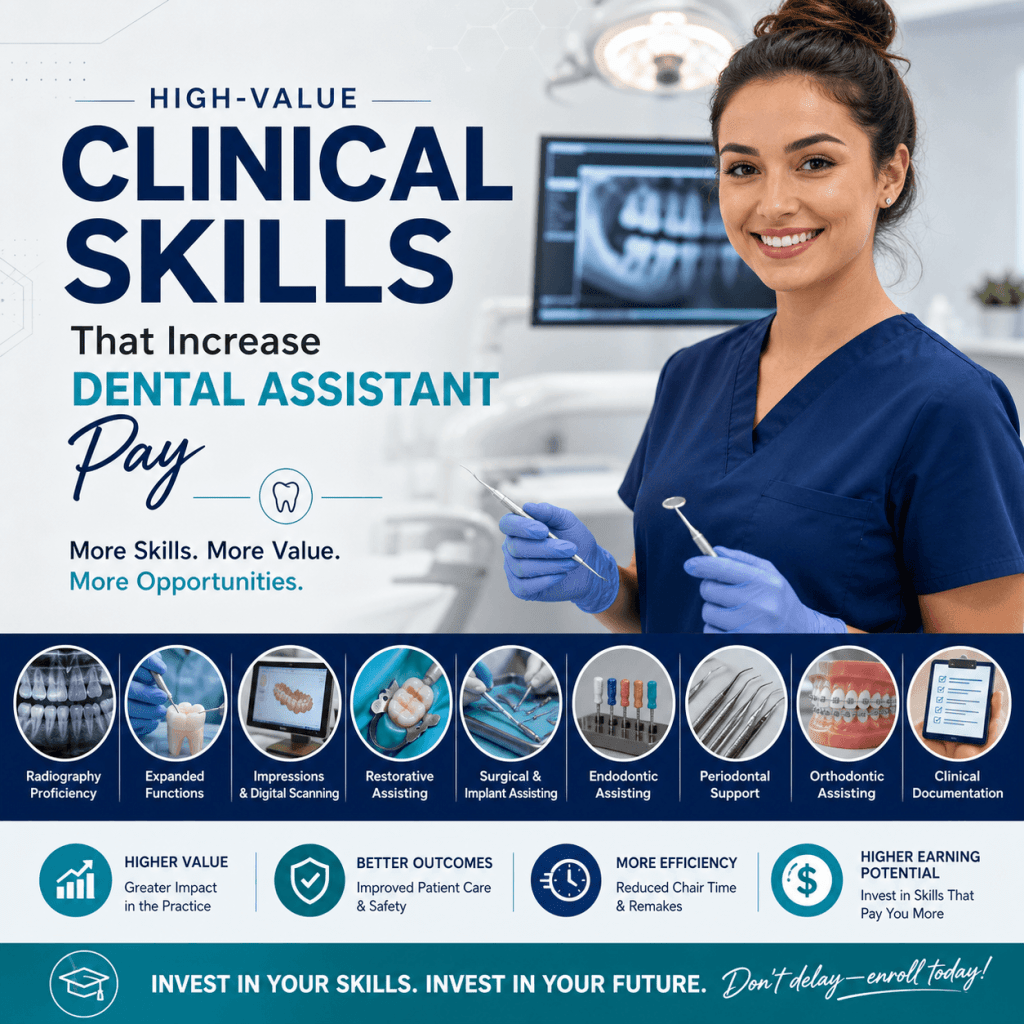
Common restorative and clinical support tasks EFDA training prepares you for
Depending on Florida allowances, office protocols, and dentist supervision, EFDA Level 03 training commonly supports skills such as:
- Supporting restorative workflows with better timing, setup, and material readiness
- Dental materials handling and preparation support
- Isolation techniques and field control for predictable procedures
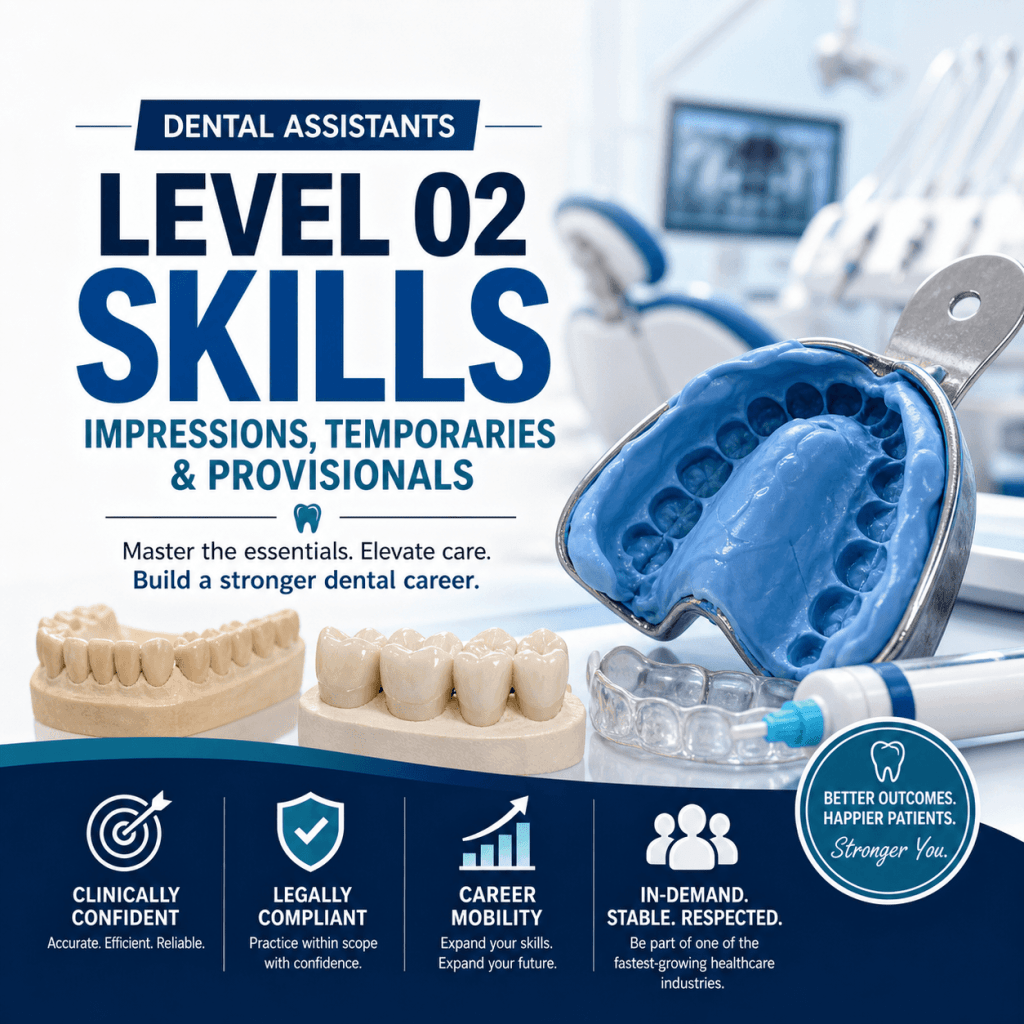
- Impressions and model related support, as allowed and trained
- Temporary restoration workflow support under supervision
- Polishing and finishing support where permitted
- Stronger documentation habits and infection control excellence
The big shift is this: you become a person the dentist can rely on for restorative pace, preparation, and precision.
How expanded functions improve practice efficiency
Dental offices care about predictable systems. Expanded functions training helps create:
- Faster, more consistent room turnover
- Tighter procedure timing
- Better delegation without sacrificing patient safety
- Fewer workflow interruptions because materials and steps are anticipated
Soft skills that raise your value
In high performance practices, soft skills are not “nice to have.” They are what make the day run.
High value EFDAs are known for:
- Making patients feel calm and informed
- Clear handoffs between front desk, assistant, and provider
- Anticipating the dentist’s next step
- Communicating well with hygienists and other assistants
- Protecting the practice by staying compliant and consistent
Employers want professionals who are thoroughly trained, legally compliant, and clinically confident, not assistants who guess.

EFDA Level 03 vs other dental assistant credentials (so you don’t enroll in the wrong thing)
Dental assisting credentials can feel confusing because wording changes across states, schools, and job posts.
Entry level dental assistant vs EFDA
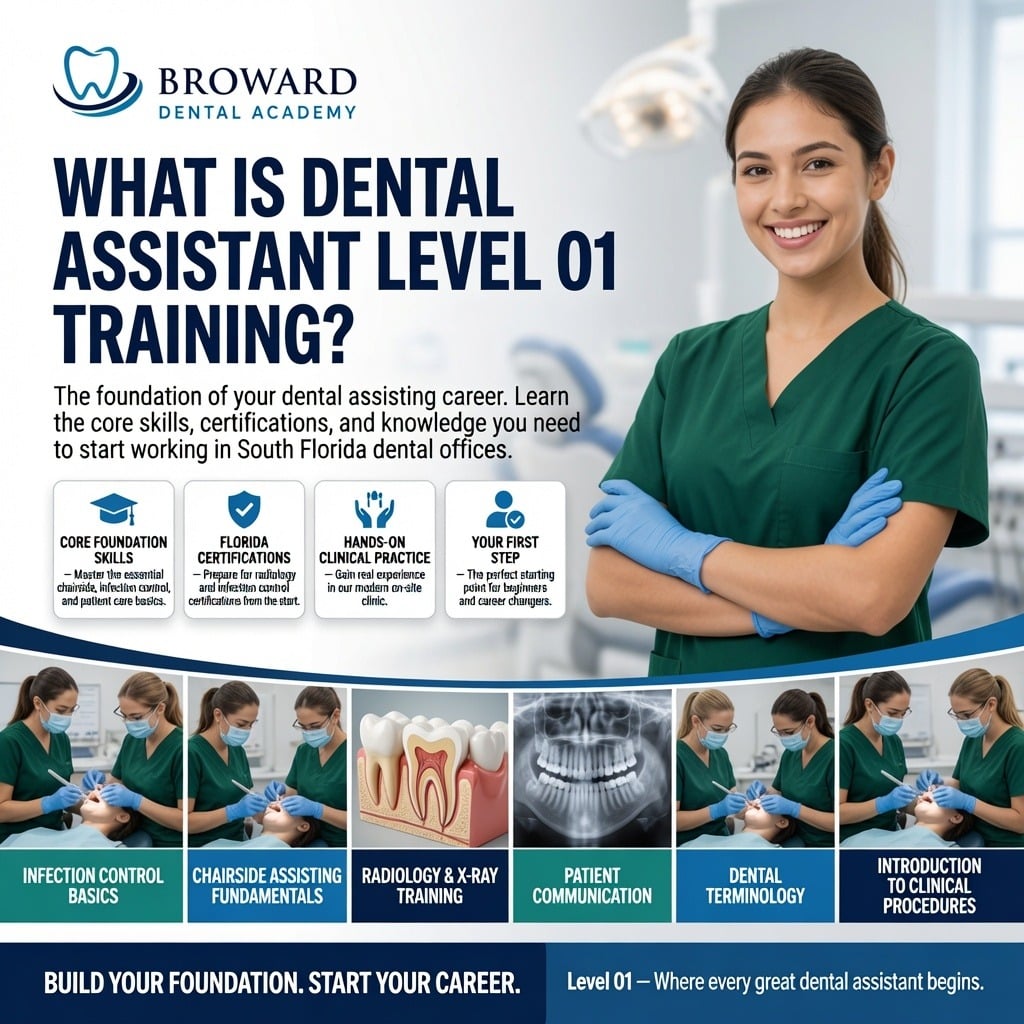
- Entry level dental assistant: focuses on chairside fundamentals, infection control, basic clinical support, and practice workflow. This is typically covered in Dental Assistant Level 01.
- EFDA (expanded functions): adds training that supports more advanced restorative and clinical workflow responsibilities. This is detailed in Dental Assistant Level 03.
“Expanded duty” vs “expanded functions”
You may see:
- Expanded duty dental assistant certification
- Expanded functions dental assistant certification
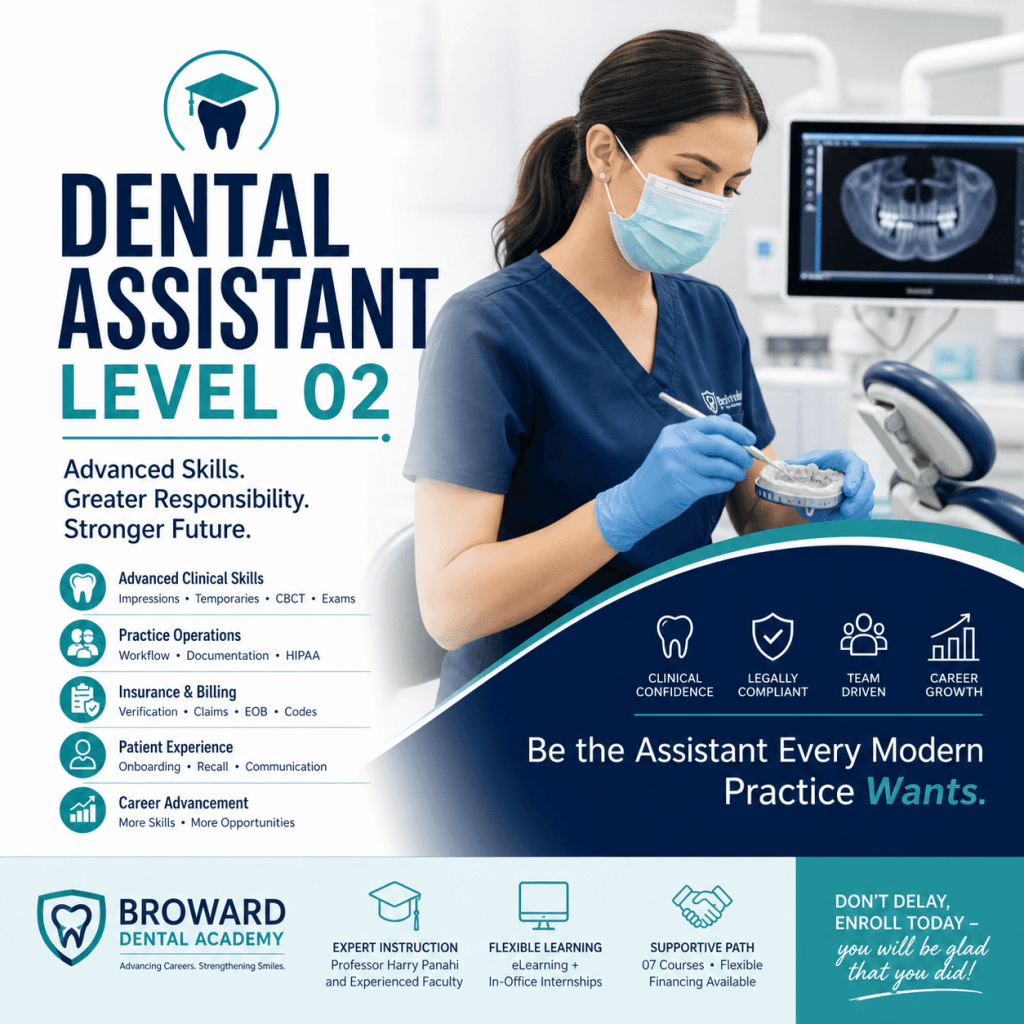
In many cases, these are used interchangeably in casual conversation. The key is not the label. The key is what the program teaches, how competencies are evaluated, and what Florida employers recognize. For those looking to advance their skills further, Dental Assistant Level 02 might be a suitable option as it offers more advanced training.
Where “restorative functions” fits
Some employers describe the role as a restorative focused dental assistant or a restorative functions assistant because the day to day value often shows up in restorative procedure flow.
How to interpret job posts
If you see keywords like:
- “EFDA”
- “Expanded functions”
- “Expanded duties”
- “Restorative functions”
- “RDA EF” (more common in certain states)
It typically signals the office wants someone who can contribute beyond basic chairside assisting. For Florida, make sure your training aligns with Florida expectations and what the practice is actually delegating.
Practical takeaway
Before you enroll, match your training choice to:
- The jobs you want
- The duties those jobs list
- The duties permitted and expected in Florida practices
EFDA requirements in Florida: what to confirm before you start
Requirements vary by state, and even within Florida, employer expectations can differ by specialty and pace. Before you start, confirm eligibility, prerequisites, and scope with your training provider.
Typical readiness areas include:
- Baseline dental assisting knowledge and terminology
- Infection control fundamentals and professionalism
- Comfort working chairside and following clinical systems
- Readiness for hands on training and skills evaluation
Why “legally compliant” training matters
Expanded functions are not just about doing more. They are about doing more correctly. That means:
- Proper documentation habits
- Patient safety and standards
- Knowing what is permitted and what requires dentist involvement
- Reducing risk for the patient and the practice
What employers often look for
Hiring managers commonly want to see:
- Proof of training completion
- Competency based evaluation, not just attendance
- Real clinical exposure through internship or externship experience
A good next step is to map your current status (new vs working assistant) to the right course level and timeline.
Inside an EFDA Level 03 program: what you’ll learn (and what you’ll practice)
A strong EFDA Level 03 program typically combines four parts: theory, simulation or lab practice, clinical application, and professionalism and compliance.
1) Theory (what you need to understand)
You can expect education that supports:
- Dental anatomy and terminology
- Restorative workflow concepts
- Materials knowledge and sequencing
- Patient management and communication basics
- Infection control standards and documentation expectations
2) Simulation or lab (where skills are built safely)
Skills are developed through:
- Step by step instruction
- Repetition and guided correction
- Performance standards you must meet consistently
- Confidence building before clinical exposure
3) Clinical application (where skills become real)
Your confidence grows when you apply skills in a supervised setting with real workflow, real time constraints, and real patient communication expectations.
4) Professionalism and compliance (what protects your career)
Being expanded functions trained also means being trusted. Programs that take this seriously will reinforce:
- Ethical decision making
- Scope awareness
- Team communication and professionalism
- Documentation and consistency under pressure
Why hands on matters
You cannot build real clinical confidence from videos alone. A modern program should produce assistants who are ready to contribute on day one, not assistants who still need basic coaching on workflow fundamentals.
Online EFDA programs vs in person training: what actually works (and for who)
Many students ask if they can do EFDA training online. The realistic answer is: some learning can be online, but clinical skills require hands on evaluation.
Who benefits from online learning components
Online and remote learning can work well for:
- Working adults balancing job schedules
- Parents managing childcare
- Students who commute and need flexibility
- Learners who do well with structured lesson plans they can review
Risks of “online only” promises
If a program claims you can become fully skilled without hands on check offs, common issues show up later:
- Skill gaps that appear in real procedures
- Less confidence under time pressure
- Employer skepticism if training lacks clinical evaluation
- A harder transition into fast paced offices
Best of both model
The most effective route for many students is blended learning:
- Remote eLearning lesson plans for didactic content
- In person labs for hands on skill building
- Real practice exposure through clinical components
Decision checklist
Before enrolling, confirm:
- How much is online vs in person
- How and where hands on skills are evaluated
- Whether clinical hours, internship, or externship support is included
- How accessible instructors are when you need help
How Broward Dental Academy prepares EFDA ready professionals (not just test takers)
Broward Dental Academy serves the Dental Community by developing well-rounded professionals through various dental training programs. The goal is not just to help students complete a course, but to build professionals who can thrive in a modern, high-performance dental practice.
That is why the focus stays on producing graduates who are:
- Thoroughly trained
- Legally compliant
- Clinically confident
Modern learning, built for real retention
Broward Dental Academy incorporates modern eLearning lesson plans for remote training, helping students retain core knowledge while balancing work and life.
Hands-on readiness
Training is designed to produce polished dental professionals, not observers. Students are fully engaged in an environment that supports real skill development and professional habits that employers value. With a variety of courses offered such as the EFDA program, Broward Dental Academy supports career progression for students who want to keep building their path in dentistry.
Clinical experience and internships: where confidence is built
Expanded functions responsibility requires more than classroom knowledge. Confidence is built in real offices, with real pace and real expectations. This is where the importance of internships and externships comes into play.
Why internships and externships matter
In-office experience helps you develop:
- Speed and workflow awareness
- Comfort with patient flow and time management
- Stronger team communication habits
- Consistency with standards and documentation
How clinical experience translates into job readiness
Graduates with clinical exposure often interview better and onboard faster because they already understand:
- Common restorative setups
- Charting rhythm and procedure pacing
- How to communicate with dentists and hygienists
- How to stay calm and productive during busy blocks
Such clinical experiences not only enhance practical skills but also significantly boost confidence levels, making graduates more appealing to potential employers.
What to ask a program about placement support
Before enrolling, ask:
- How clinical placements are supported
- Who supervises and evaluates skills
- What expectations you will be held to
- How performance feedback is documented
Hiring managers prefer candidates who have already performed skills in real settings because it reduces training time and risk for the practice.
Career outcomes: EFDA job roles, pay stability, and growth paths in Florida
Dentistry is one of the fastest growing healthcare segments, and demand for skilled dental professionals continues to rise. EFDA Level 03 training can strengthen employability by aligning your skills with what busy practices need.
Typical workplaces in Florida
EFDAs commonly work in:
- General dentistry practices
- Pediatric offices
- Prosthodontic or restorative focused practices
- High volume offices where efficiency matters every hour
What EFDA adds to your employability
Expanded functions training can help you stand out because it signals:
- Stronger restorative workflow contribution
- Better procedure support and preparation
- More reliable delegation readiness
- A higher level of clinical confidence
Searching “EFDA jobs near me” smarter
When job hunting in Florida, search using combinations like:
- EFDA dental assistant
- Expanded functions dental assistant
- Expanded duties dental assistant
- Restorative dental assistant
- Dental assistant restorative
Then read the post carefully and tailor your resume to match the duties listed, especially anything related to restorative workflow, documentation, infection control, and clinical efficiency.
Growth paths
Over time, expanded functions training can support career mobility into roles such as:
- Lead dental assistant
- Restorative focused assistant
- Expanded functions specialist within a multi provider practice
Across the industry, many assistants value dentistry for stable income potential, flexible schedules, and a respected position in healthcare.
How to choose the right EFDA program near you (a practical checklist)
Not all programs are built the same. Use this checklist to choose a program that supports real job readiness.
Credibility signals
Look for programs with:
- A clear curriculum and training outcomes
- Competency based assessments
- A serious compliance and patient safety focus
- Instructor support and structured feedback
- Hands on labs and clinical components, not only lectures
Questions to ask before enrolling
When considering an EFDA program, it’s crucial to ask the right questions. Here are some important ones:
- How many hours are online vs hands on?
- How are skills evaluated and signed off?
- What will I be prepared to do after training in Florida settings?
- Are internships or externships available?
- What job readiness support is included?
For more specific questions about Broward Dental Academy’s EFDA program, you might find answers in their frequently asked questions.
Red flags
Be cautious if you hear:
- Vague promises about scope without clear evaluation
- No hands on skills check offs
- No pathway to supervised clinical experience
- No clear explanation of what employers will recognize
Local convenience factors
Also consider:
- Class schedules that fit your life
- Commute and lab access
- Start dates and enrollment timelines
- Student support and communication responsiveness
Broward Dental Academy’s approach emphasizes modern lesson plans, immersion, internship experience, and preparation to thrive in high performance dental practices.
Cost, scheduling, and financing: planning your EFDA Level 03 training realistically
Most students balance real constraints. Planning upfront makes the process far less stressful.
Common considerations include:
- Tuition and supplies
- Work schedule and time off
- Childcare planning
- Transportation and commute time
- Weekly study time plus lab and clinical time
Flexible schedules for working students
If you are working, look for a program that helps you build a realistic weekly routine, not one that assumes you can drop everything for school.
Financing support
Broward Dental Academy offers flexible financing. The simplest next step is to contact the team to discuss current options, schedule formats, and what plan fits your timeline.
ROI without unrealistic promises
Expanded skills can improve your job options and long term growth potential. Focus on employability, stability, and career mobility, not shortcuts or guarantees.
Your next step: enroll and move toward EFDA ready confidence
EFDA Level 03 training can help you become more useful in restorative workflows, more employable in Florida dental offices, and more confident in the skills that matter day to day.
Broward Dental Academy’s mission is to develop well rounded, ethically grounded, high performance dental professionals through modern training that supports real clinical readiness.
If you are ready to discuss eligibility, schedule, format (online learning plus clinical training), and the internship pathway, contact Broward Dental Academy.
Don’t delay, enroll today – you will be glad that you did!
FAQs (Frequently Asked Questions)
What does EFDA Level 03 mean in the context of dental assisting in Florida?
EFDA Level 03 refers to Expanded Functions Dental Assistant training in Florida, which prepares dental assistants for more advanced clinical and restorative roles beyond entry-level duties, allowing them to support faster and more restorative-focused dental schedules within legal scope.
Who is an ideal candidate for EFDA Level 03 training in Florida?
Ideal candidates include new dental assistants seeking faster career growth, working assistants aiming to expand responsibilities in restorative workflows, and career changers desiring stable income, flexible schedules, and a respected healthcare role.
How does an EFDA Level 03 trained assistant fit into the dental team?
An EFDA Level 03 assistant supports restorative and higher complexity workflows under dentist supervision, enhancing practice efficiency by handling advanced clinical tasks that help maintain smooth schedules and consistent patient care.
Why is there rising demand for EFDA Level 03 trained dental assistants in Florida?
Demand is rising because busy dental practices need team members who can perform expanded functions efficiently, enabling more procedures per day, smoother appointments, focused dentists on specialized tasks, and consistent compliance even during high volume days.
What are the typical duties of an EFDA Level 03 dental assistant in a real practice?
Duties include supporting restorative procedures such as oral surgery, orthodontics, endodontics; managing infection control; assisting chairside with advanced tasks; ensuring documentation accuracy; and facilitating efficient patient flow under dentist supervision.
When should someone consider basic dental assisting training before pursuing EFDA Level 03?
Individuals with zero chairside experience, unfamiliarity with instruments or dental terminology, or those needing a stronger foundation in infection control and dental anatomy basics should start with basic dental assisting training before advancing to EFDA Level 03.