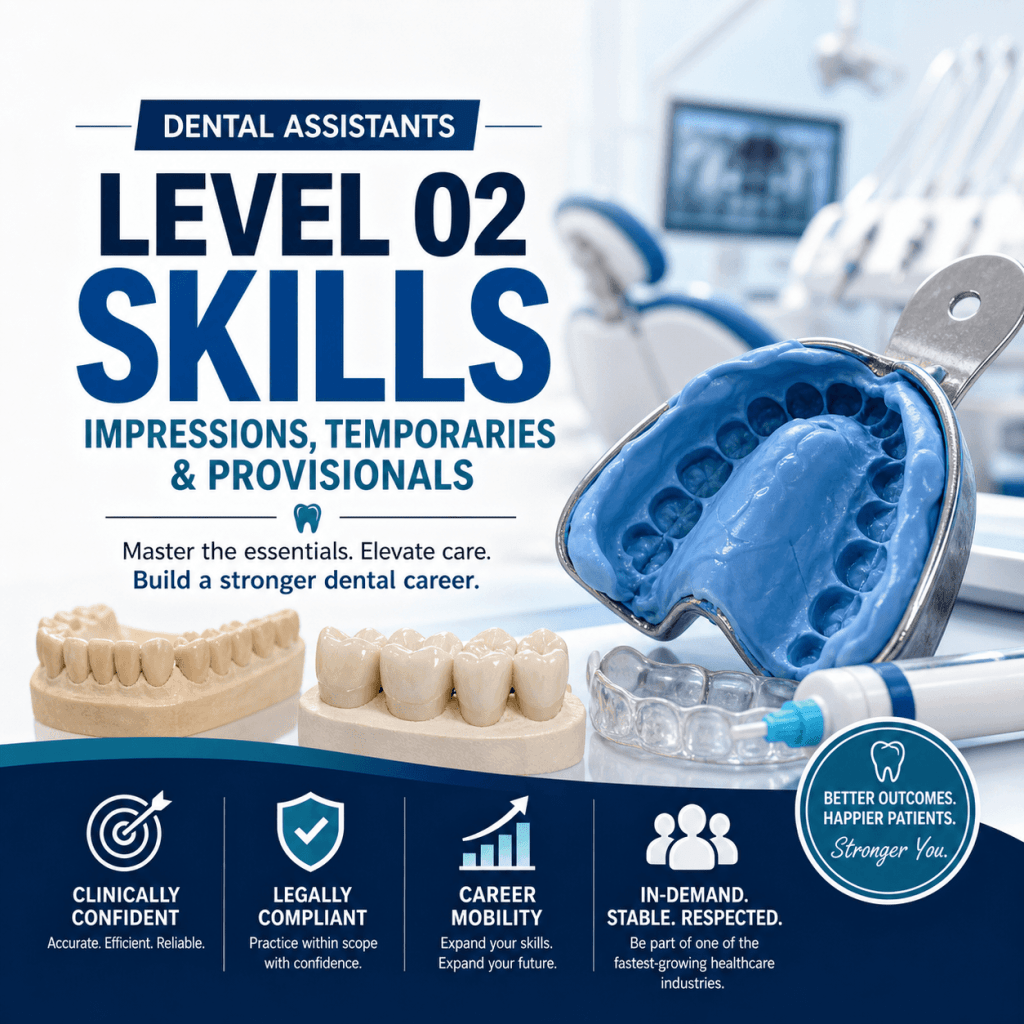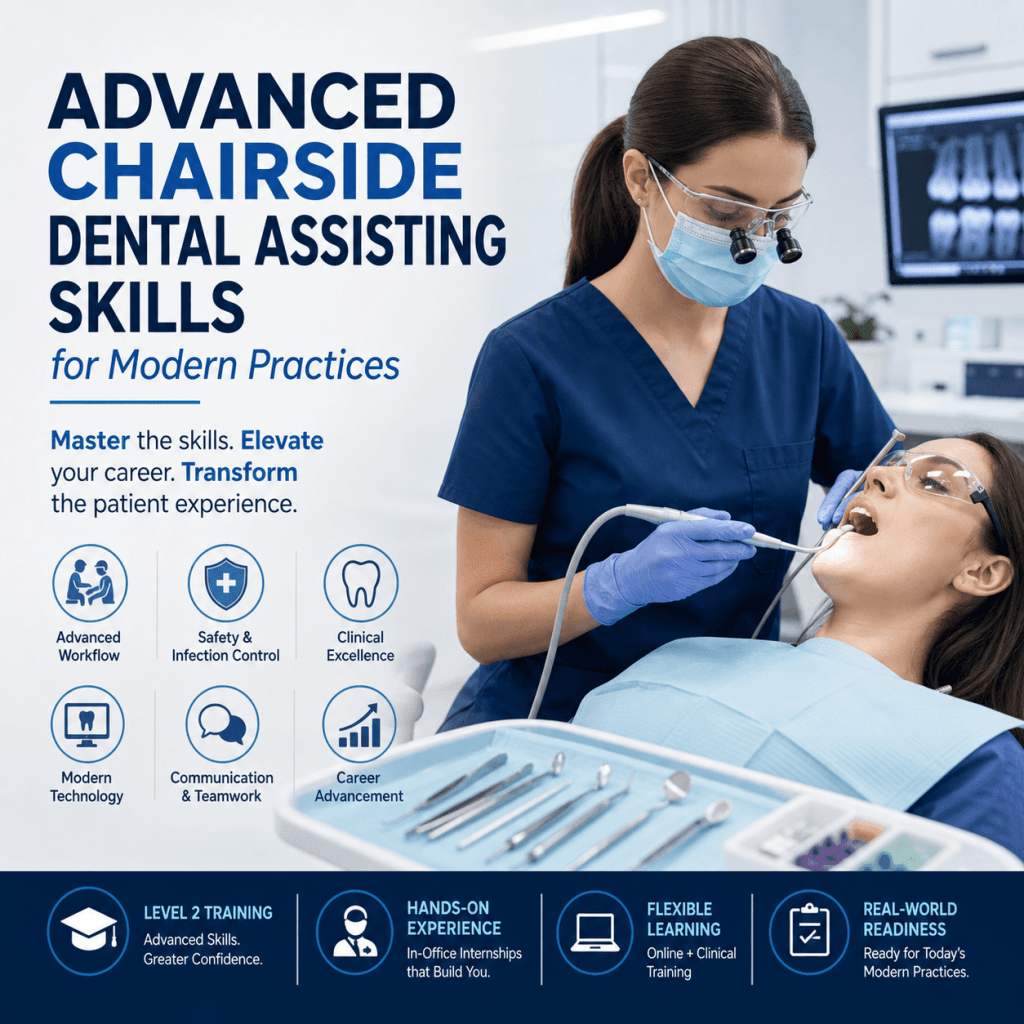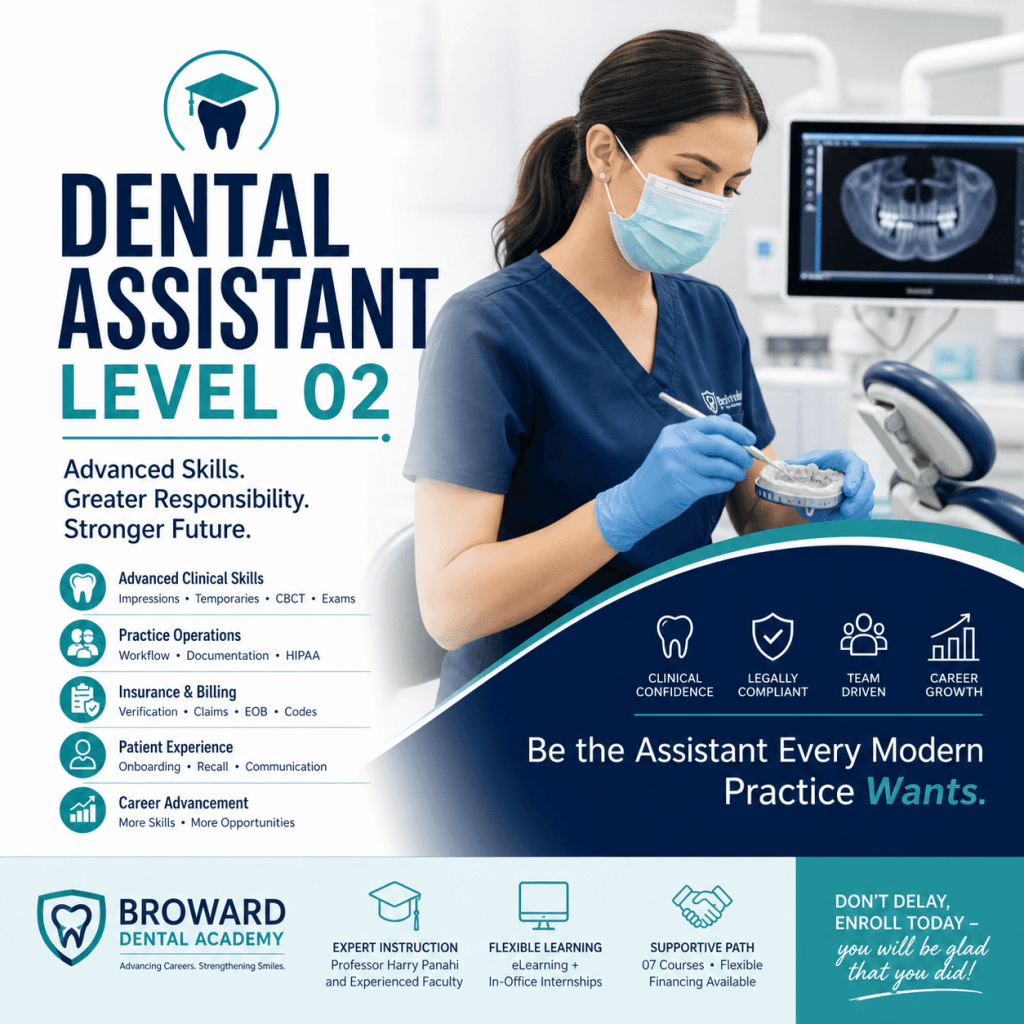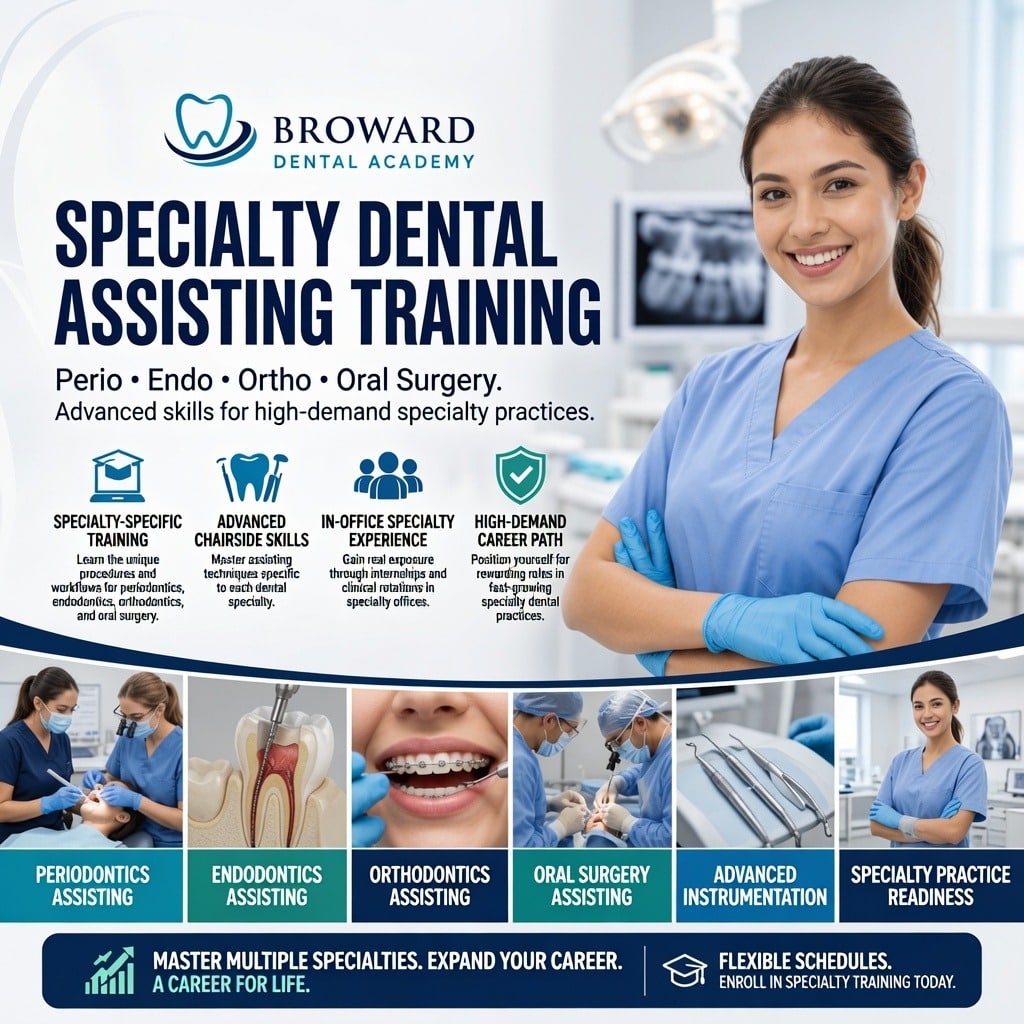
Modern dental practices are evolving rapidly. Higher patient volume, more advanced procedures, stricter compliance expectations, and tighter schedules have changed what “being ready” actually means for a dental assistant.
In many offices, general chairside experience serves as a decent foundation, but it is often insufficient to confidently step into a specialty setting on day one. Periodontics, endodontics, orthodontics, and oral surgery each have their own pace, instrument systems, documentation habits, and patient communication needs. Specialty offices rely on assistants who already understand the flow of procedures, not assistants who are still trying to figure out which setup goes with which case.
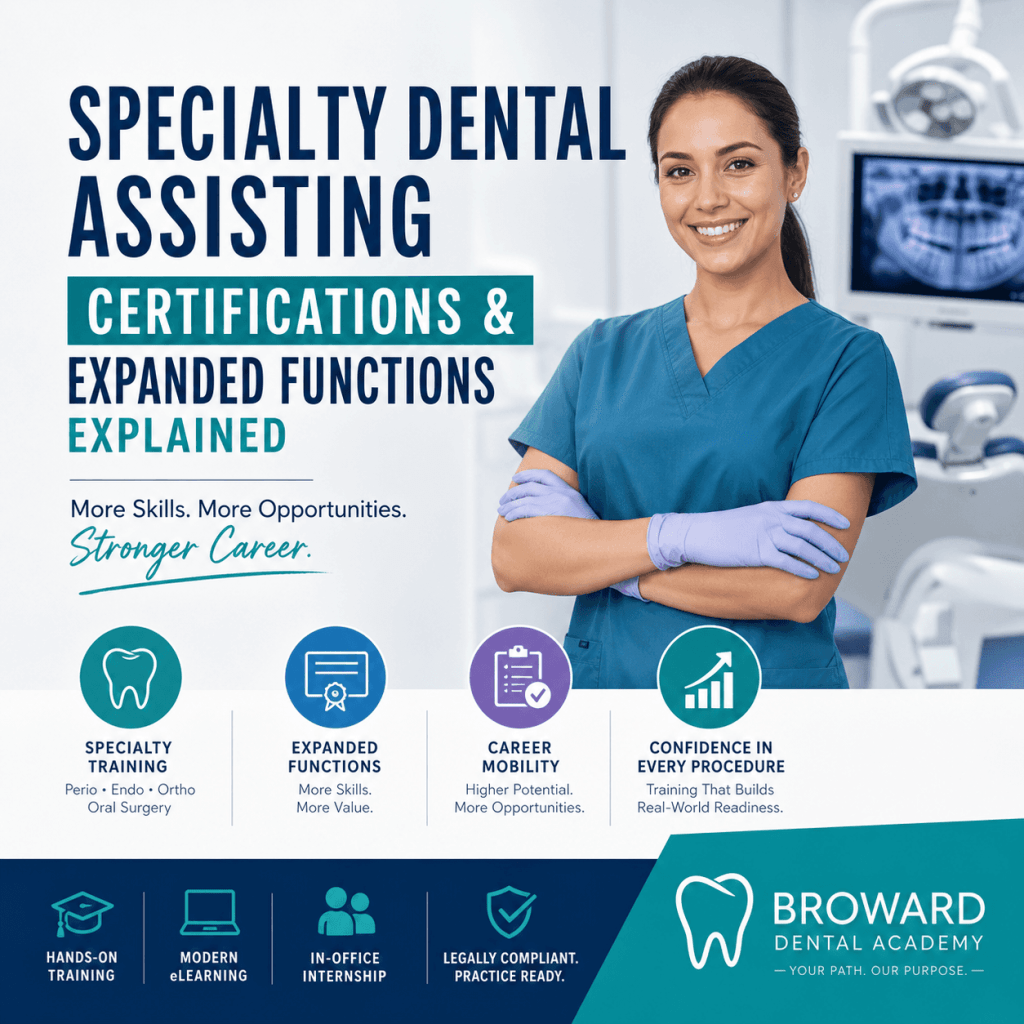
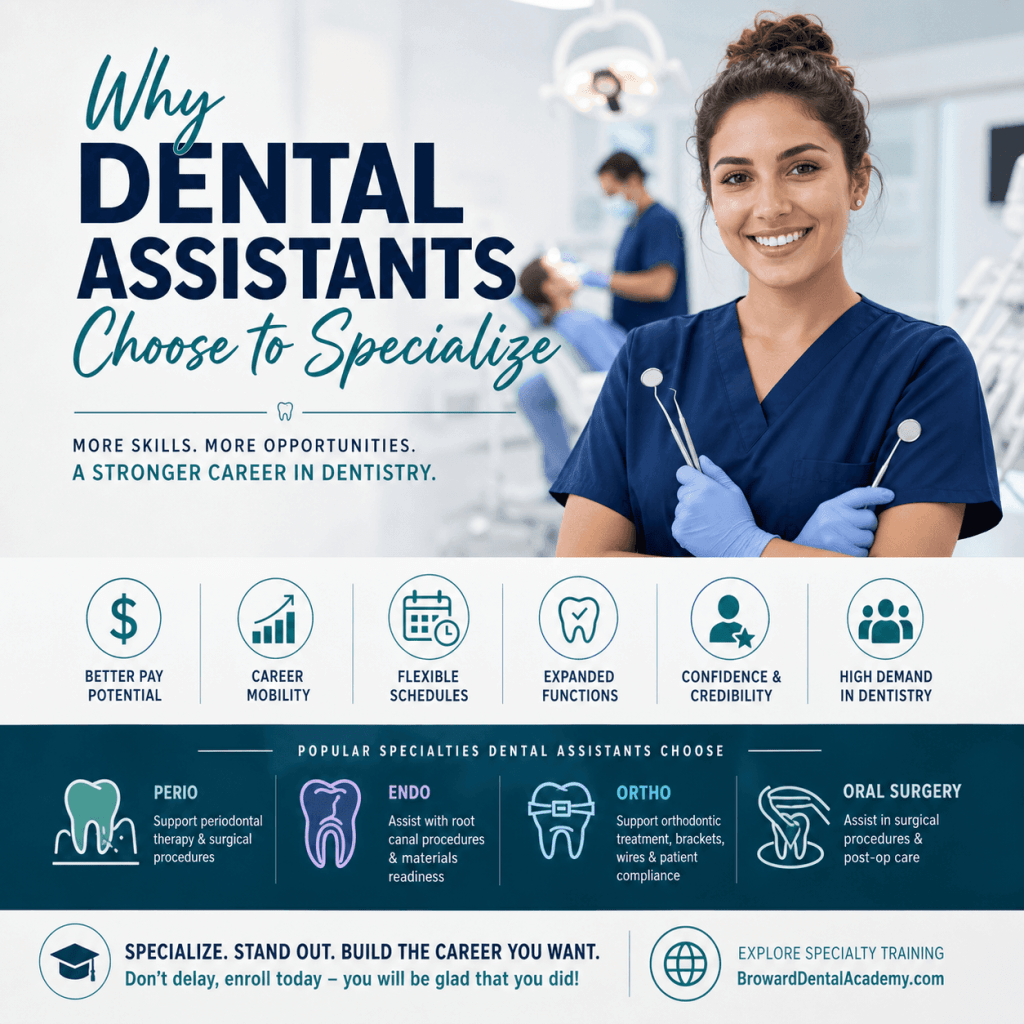
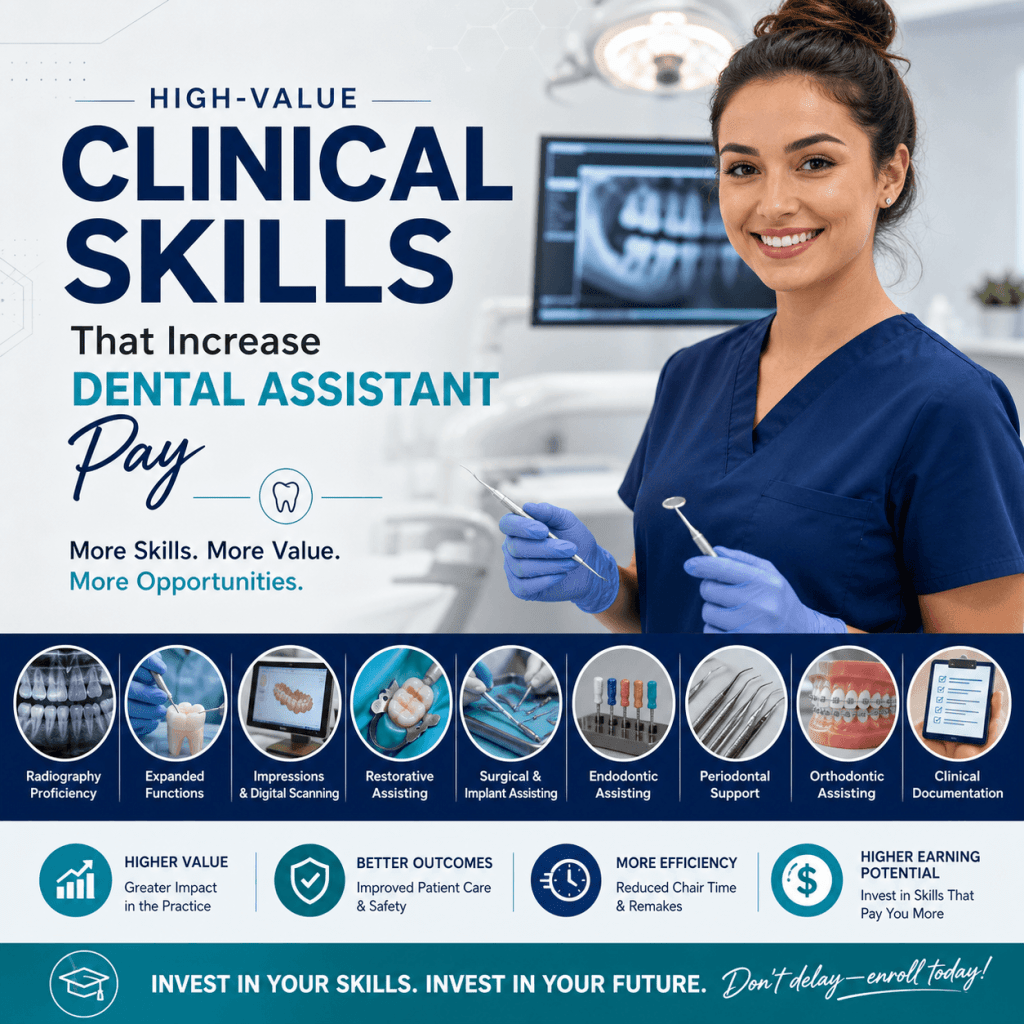
This is where specialty dental assisting training comes into play. It has become a smart career move as dentistry remains one of the fastest growing healthcare industries. With stable income potential, flexible schedules in many practices, a respected clinical role, and clear career mobility, it’s an appealing field. With the right training from institutions like Broward Dental Academy, assistants can become the kind of teammate specialist offices want: thorough, legally compliant, and clinically confident.
This guide breaks down what each specialty involves, what assistants actually do chairside, what training typically looks like (like those offered at Broward Dental Academy), and how to choose a program that builds real clinical confidence.
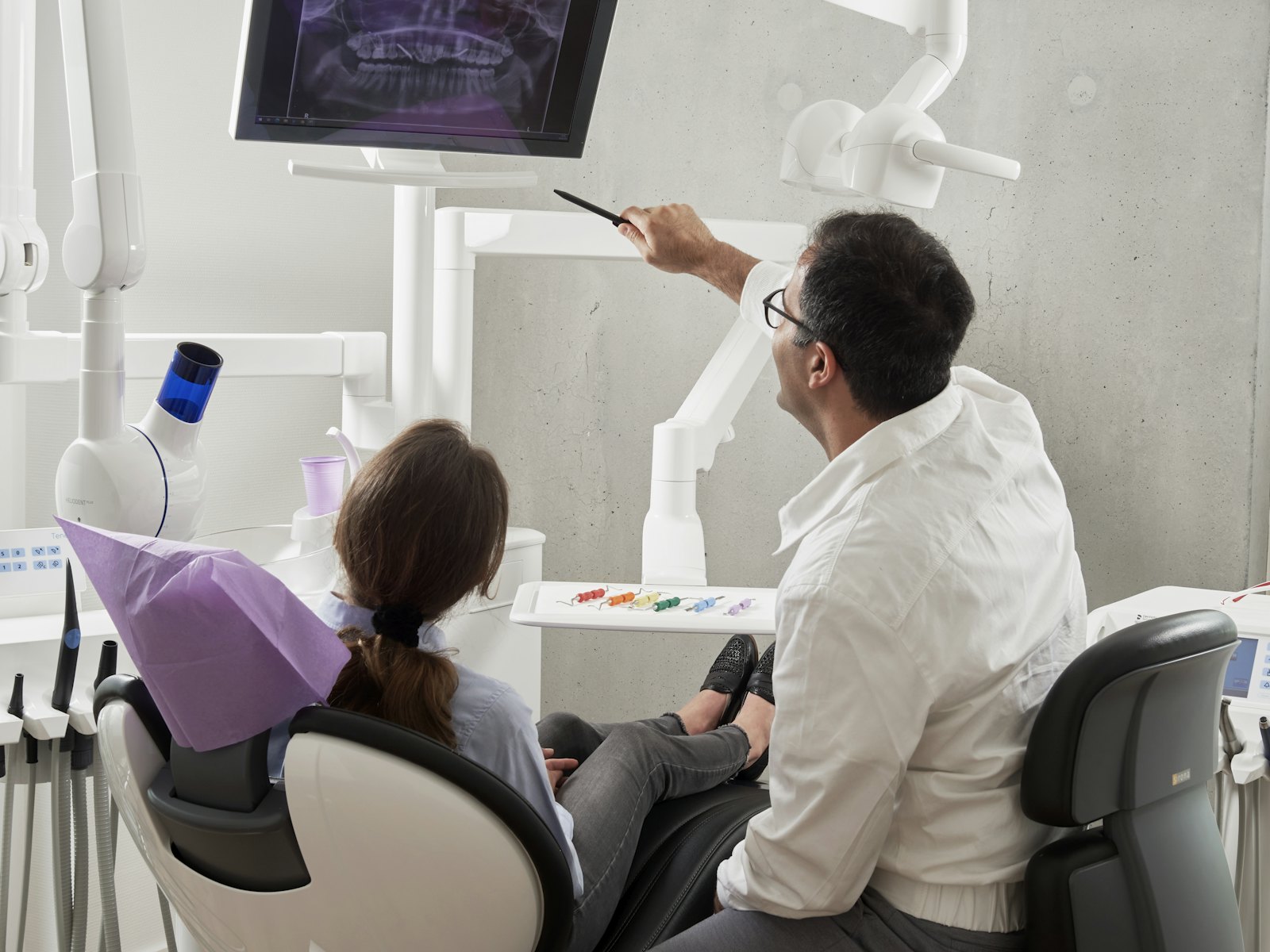
Why specialty dental assisting training matters now (and why general experience isn’t enough)
Specialty practices tend to be high-performance environments. Procedures are more complex, appointments are often stacked tightly, and patient expectations are high. In that setting, “I can learn as I go” usually turns into stress for the assistant, bottlenecks for the team, and inconsistent patient care.
Specialty training matters because it helps you:
- Match the provider’s workflow quickly. Specialists often follow consistent, repeatable sequences. Assistants who know those sequences make the day smoother.
- Handle specialty instruments and materials confidently. From surgical cassettes and irrigants to endo systems and orthodontic bonding materials, familiarity reduces errors and delays.
- Support compliance without slowing down production. Sterilization, documentation, OSHA and infection control habits, and patient safety checks have to be correct every time.
- Communicate clearly with specialty patients. A perio patient recovering from grafting needs different guidance than an anxious endo emergency or a teen starting elastics.
In short, specialty training is not about memorizing terminology. It is about learning clinical systems so you can contribute immediately and safely.
If you’re interested in pursuing this rewarding career path or want to know more about the courses offered by institutions like Broward Dental Academy or their locations, don’t hesitate to reach out!
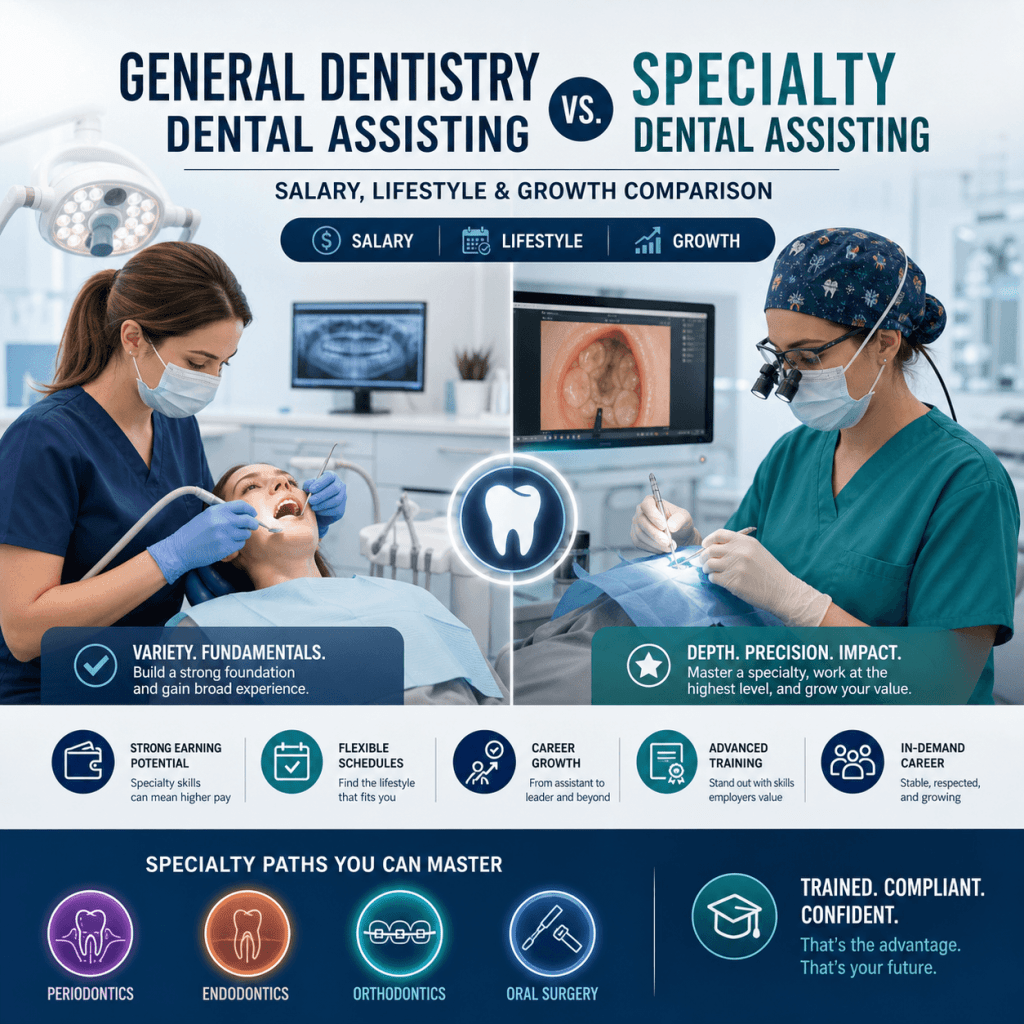
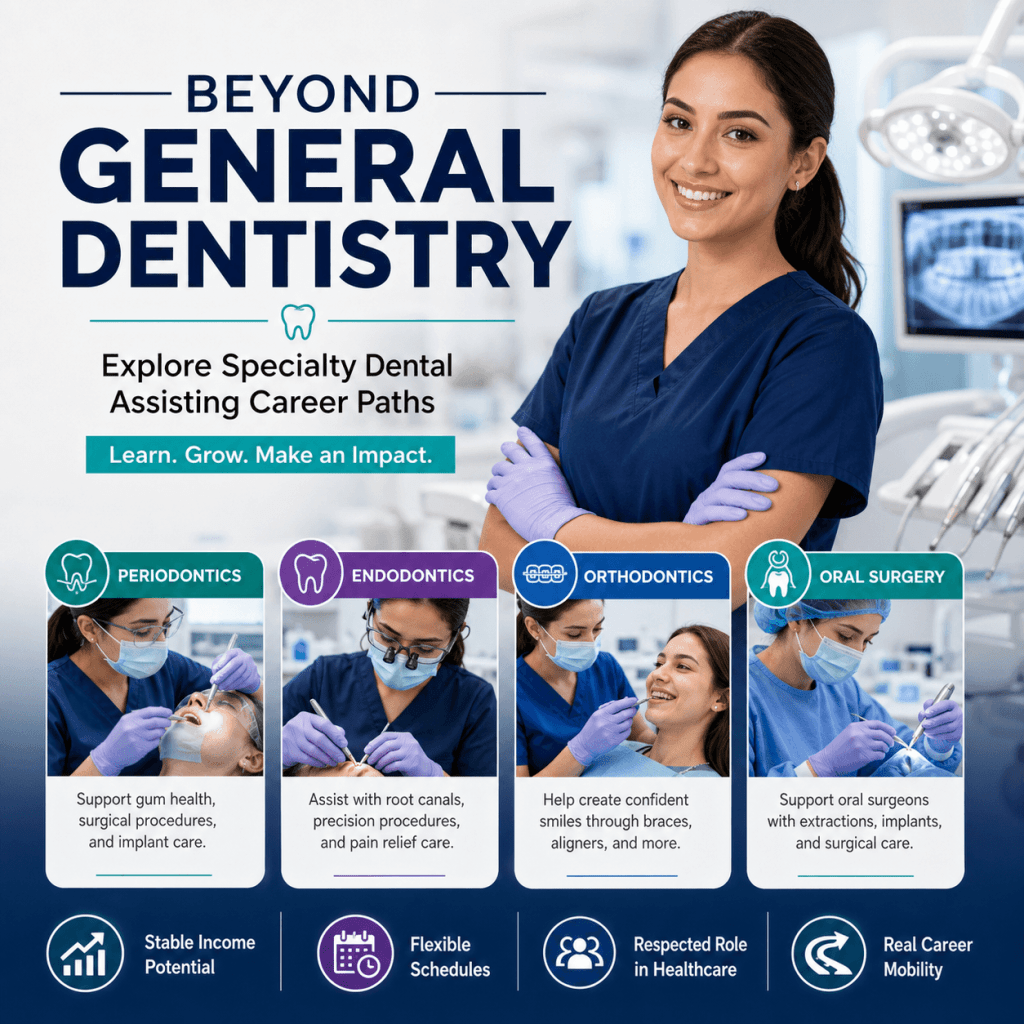
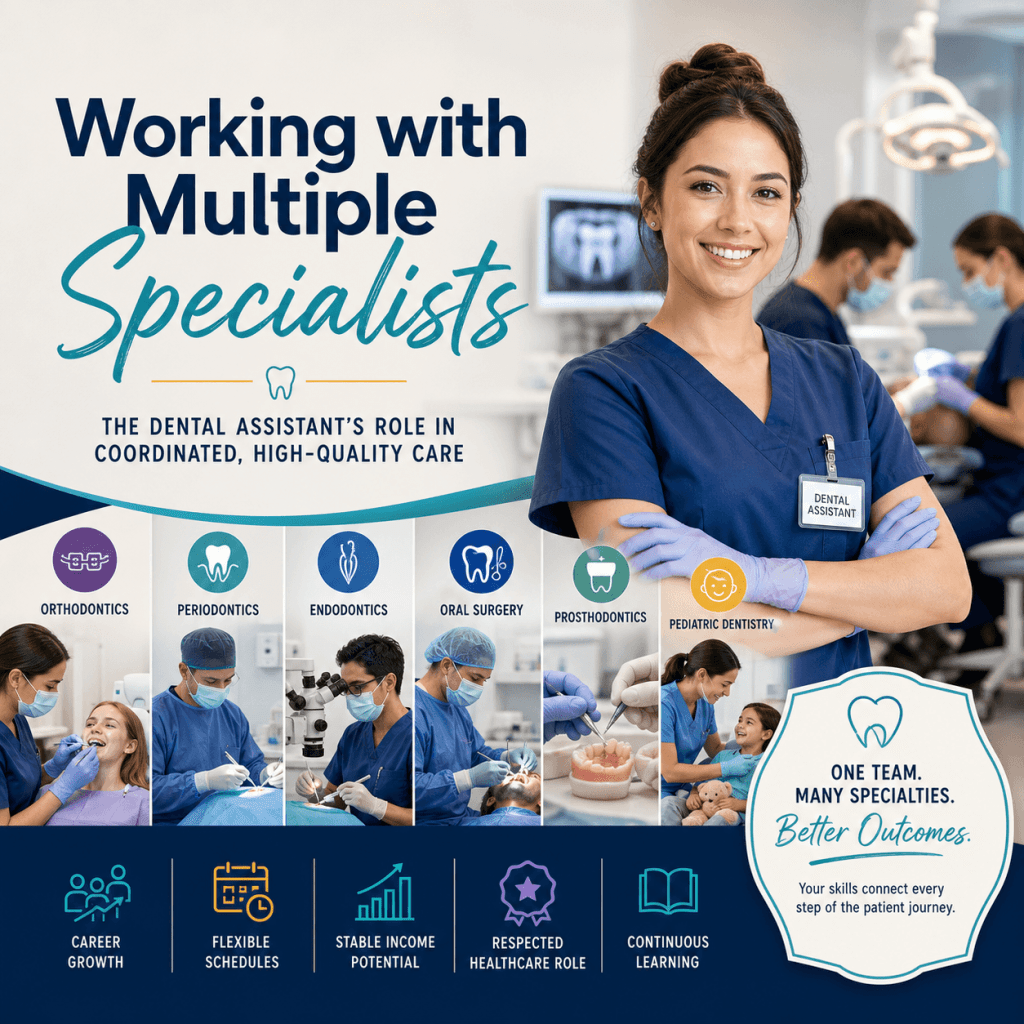
What “specialty dental assisting” means (Perio vs Endo vs Ortho vs Oral Surgery)
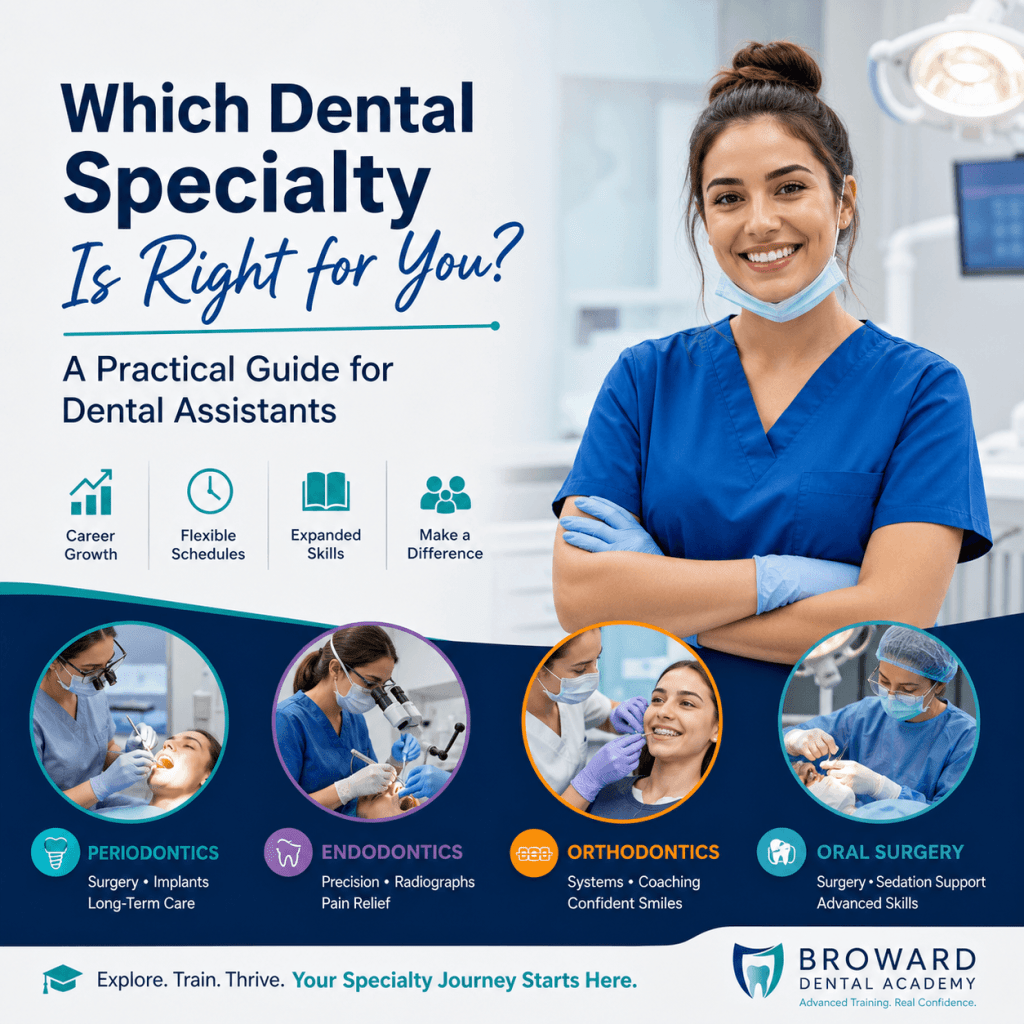
Specialty dental assisting is focused training beyond general chairside assisting. It is built around a specialist’s procedures, operatory flow, instruments, patient needs, and documentation requirements.
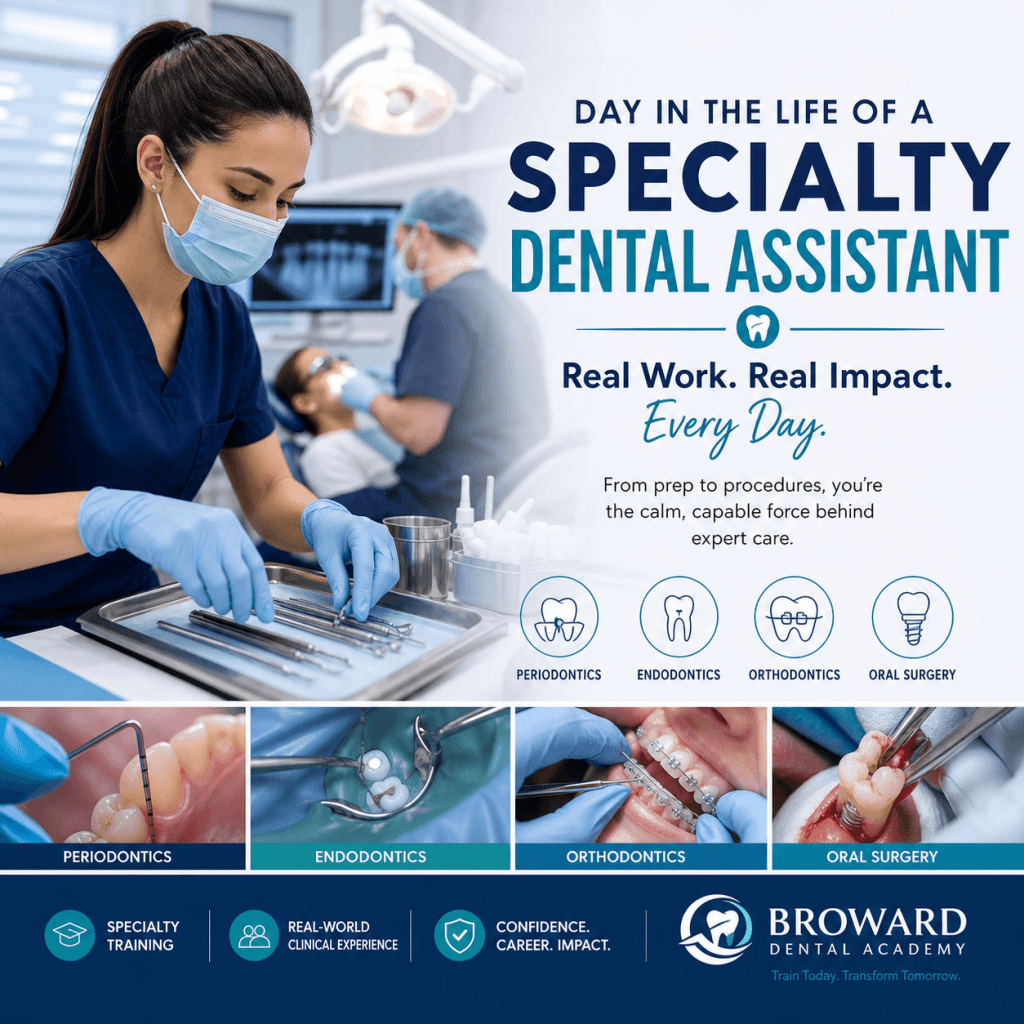
Here is the day-to-day environment at a glance:
- Periodontics (Perio): Surgical and tissue focused care, gum disease therapy, grafting, and implants. Procedure-heavy visits with strong emphasis on sterile technique and post-op education. For more information about the specifics of periodontics, click the link.
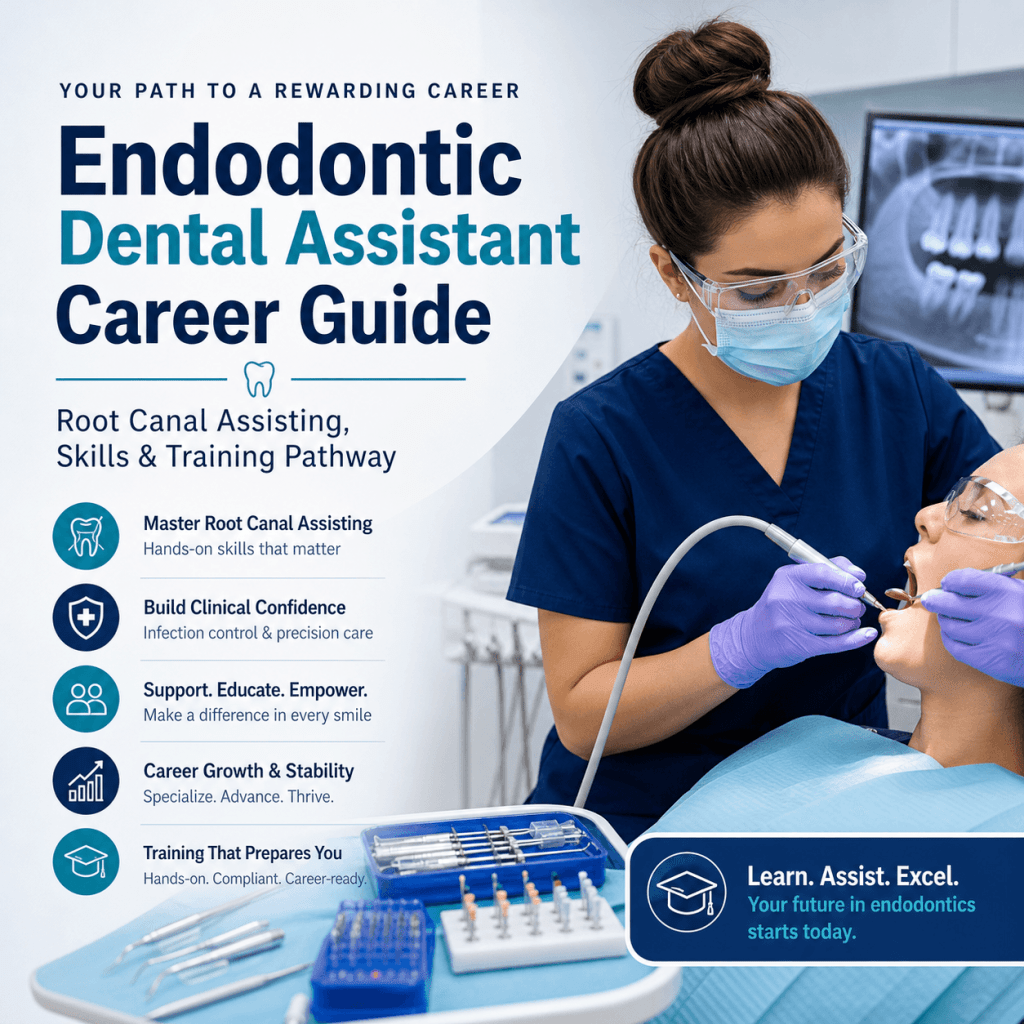
- Endodontics (Endo): Diagnosis and treatment of tooth pain, root canal therapy, and same-day emergencies. Fast pace with imaging, documentation, and calming anxious patients.
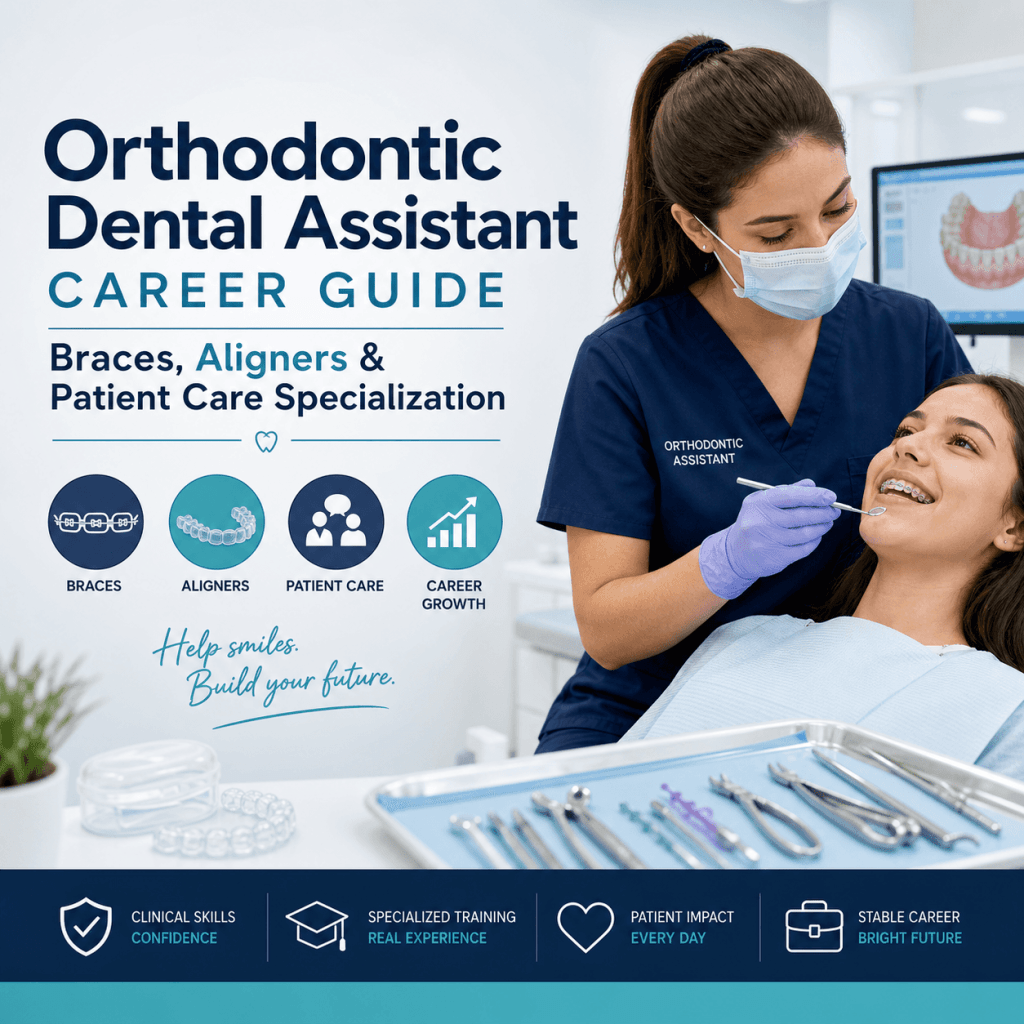
- Orthodontics (Ortho): Appliance-driven care, braces and aligners, high volume recall visits, and long-term patient relationships. Production speed and consistency matter.
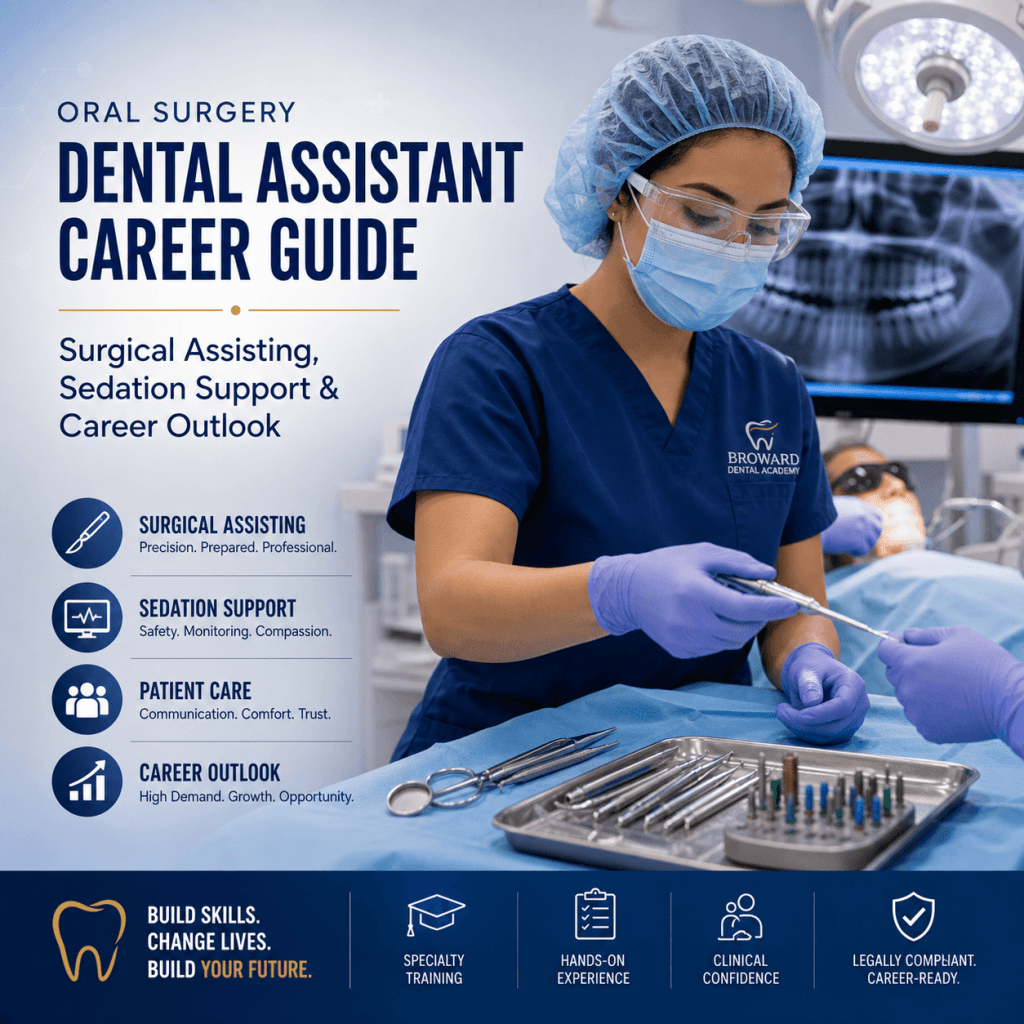
- Oral Surgery: Extractions, wisdom teeth, implants, biopsies, and often IV sedation. Higher clinical risk with strict safety protocols, surgical setups, and clear post-op instructions.
Many assistants move from general dental assistant to specialty dental assistant after building chairside fundamentals. Others choose a niche earlier because they know what environment fits their personality. Either path can work, but specialty experience often increases employability and can open doors to higher-responsibility roles in busy practices.
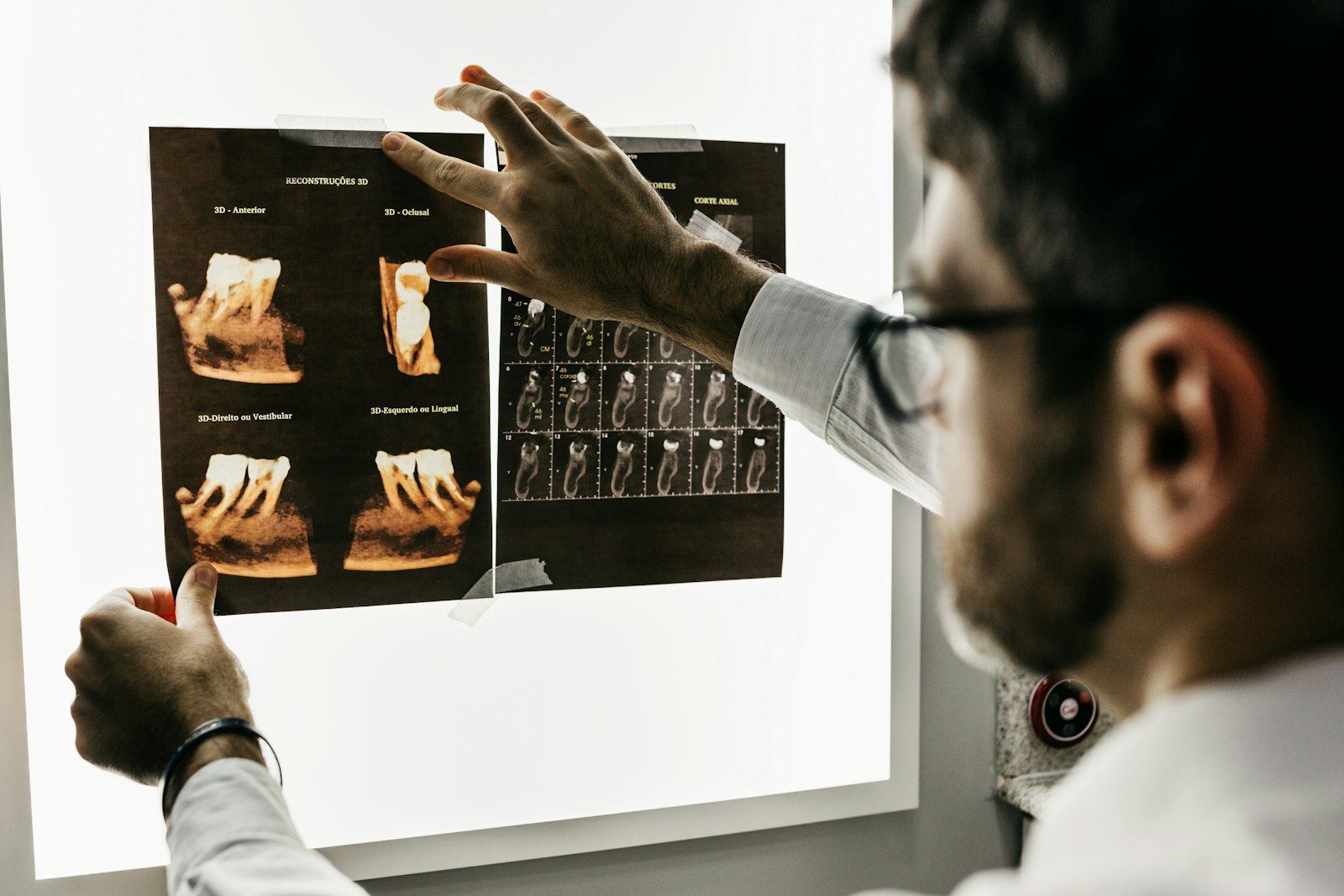
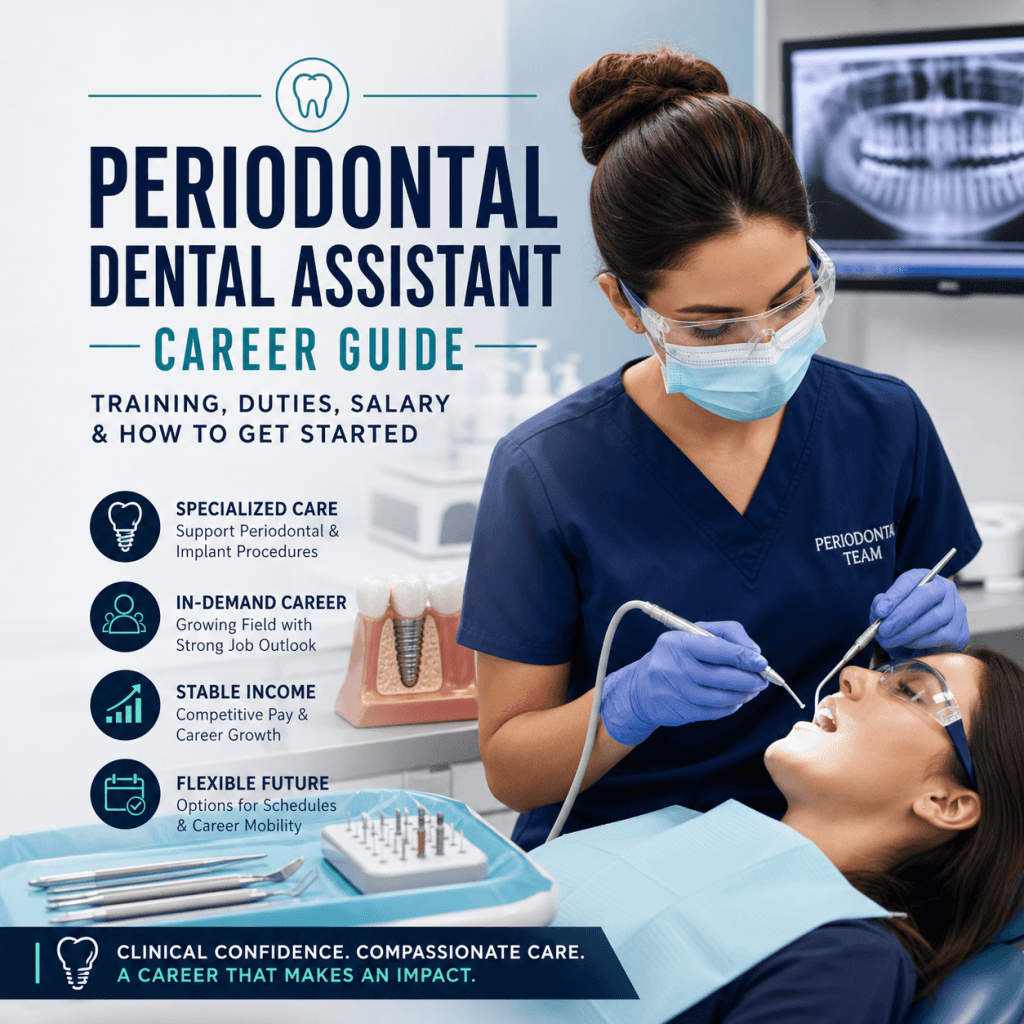
Periodontics: training for the periodontal dental assistant career (Perio)
Periodontists treat conditions involving the gums and supporting bone. That includes periodontal disease (gum disease), bone loss, soft tissue grafting, guided tissue regeneration, implant placement, and maintenance care that can be both clinical and surgical.
Perio visits can be procedure-heavy, and that changes what the assistant is responsible for. The periodontal dental assistant supports:
- Surgical setup and sterile technique support
- High-quality suction and retraction for visibility
- Irrigant handling and safe passing of instruments
- Accurate charting and documentation
- Patient education, especially post-op care and hygiene reinforcement
In many perio practices, efficiency is closely tied to tray organization. A clean, predictable setup helps the provider maintain focus and move through steps without stopping to request instruments one at a time.
Patient communication is also a major part of the job. Perio patients may be nervous about bleeding, swelling, sutures, or discomfort. When assistants explain expectations calmly and clearly, patients feel safer and are more likely to follow home care instructions.
Hands-on skills perio offices expect you to already know
Perio offices typically want assistants who can handle fundamentals without reminders, including:
- Surgical room turnover and sterilization workflows done correctly every time, without rushed shortcuts
- Efficient tray setups for perio procedures with instruments sequenced for the procedure flow
- Clear post-op communication such as managing expectations around bleeding, swelling, sensitivity, diet, and home care basics
- Strong charting and documentation habits that support both compliance and speed, including notes that help the periodontist stay focused chairside
When your training includes realistic perio scenarios and repetition, you build the kind of confidence that shows up in your hands, not just on a written test.
Endodontics: what an endo assistant actually does
Endodontics is focused on diagnosing tooth pain and saving teeth through procedures like root canal therapy. Endo practices also manage emergencies, which means the day can shift quickly based on pain patients and urgent referrals.
You may see job listings using terms like endodontic assistant, endo assistant, endo dental assistant, or dental assistant endodontics. While each office is different, the core needs are similar: keep the provider focused on treatment while you manage flow, setup, and patient experience.
Endo assistants commonly support:
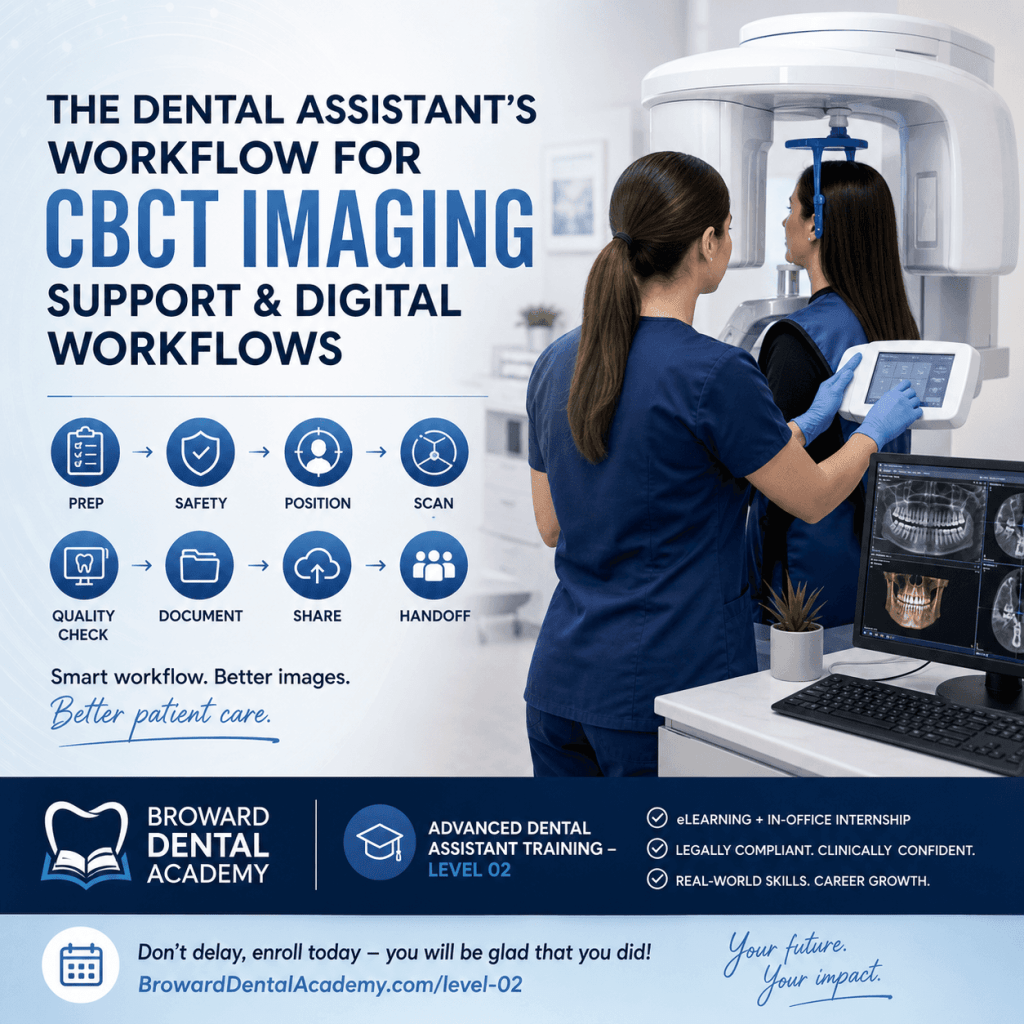
- Imaging flow and documentation
- Fast, consistent room readiness
- Calm patient communication for fearful or painful cases
- Post-treatment guidance so patients know what is normal and what needs a call back
In endodontics, patient anxiety is part of the environment. People often arrive in pain, and many are afraid of root canals because of outdated stories. A steady assistant who communicates clearly can change the entire tone of the visit.
For those looking to break into this field or enhance their skills in either perio or endodontics, practical training with a focus on real-world scenarios can be invaluable.
Endodontic assistant job description: the “day-in, day-out” reality
In practical terms, endo assisting usually looks like this:
- Managing fast turnovers and keeping the operatory endo-ready: stocked, organized, and predictable
- Supporting imaging flow and documentation so the provider can stay focused and avoid interruptions
- Helping patients through fear and pain with calm, simple explanations and reassurance
- Knowing post-treatment expectations and spotting when symptoms sound outside the normal range, so patients feel cared for and supported
A strong endo assistant is often the person who prevents small delays from turning into a backed-up schedule.
Orthodontics: training for an orthodontic assistant (Ortho)
Orthodontics focuses on alignment and bite correction using braces and clear aligners. Compared to surgical specialties, ortho is often high volume with repeat visits, and it can become relationship-driven in a way other specialties do not. You see the same patients for months or years, and you build trust with both patients and parents.
You will also see role titles like orthodontist assistant, orthodontic dental assistant, ortho dental assistant, and orthodontic clinical assistant.
Ortho assistants commonly contribute by:
- Supporting appliance visits efficiently so the schedule stays on time
- Communicating instructions that patients actually follow (elastics, hygiene, aligner compliance)
- Helping create a calm, positive experience for kids, teens, and busy parents
- Documenting consistently so progress is clear over time
A key skill in orthodontics is explaining the “why” in a way that sticks. Patients who understand how elastics affect bite correction or why hygiene matters around brackets are more likely to comply.
What makes ortho different: patient relationships and production speed
Orthodontic assistants often manage multiple rooms and need strong time management. The work is repetitive in a good way, but consistency is everything.
Training helps prevent common early mistakes, such as:
- Slowing down instrument flow during bonding or adjustments
- Giving inconsistent instructions, which leads to poor compliance and longer treatment times
- Messy or incomplete documentation that makes it harder to track progress and plan next steps
When ortho training is done well, it teaches you how to keep speed without feeling rushed, and how to keep patient communication consistent even on busy days.

Oral surgery: the path to becoming a surgical dental assistant
Oral and maxillofacial surgery can include extractions, wisdom teeth removal, implants, biopsies, and sedation cases such as IV sedation. The clinical risk is higher, so protocols are strict and the assistant’s role is critical.
You might see terms such as surgical dental assistant, surgery dental assistant, surgical assistant dental, oral surgery assistant, oral surgical assistant, oral surgery dental assistant, dental assistant surgeon, and oral surgery technician.
Oral surgery assistants are expected to be precise about:
- Cleanliness and sterile processes
- Safety checks and procedural consistency
- Instrument familiarity and anticipation
- Post-op communication that reduces complications
For those interested in this field, more information about becoming a surgical dental assistant can be beneficial. Oral surgery is also a specialty where assistants need to stay calm under pressure. Patients may be anxious, procedures can be fast-paced, and sedated cases require extra attention to protocols and teamwork.
Traits oral surgery offices look for (and training should build)
Oral surgery offices commonly prioritize assistants who demonstrate:
- Calm, clear communication, especially during extractions and sedated cases
- Obsessive attention to cleanliness, sterilization, and safety checks
- Confidence with surgical instruments and the ability to anticipate the surgeon’s next step
- Strong post-op instructions delivery, so patients follow directions and call appropriately if issues arise
A good oral surgery training environment reinforces these traits through repetition, realistic setups, and clear standards.
How to choose the right specialty dental assisting training program
Specialty training should not feel like a stack of notes. The best programs build clinical confidence through systems and repetition.
When you evaluate a program, look for a structure that includes:
- Curriculum by specialty (not generic “one-size-fits-all” content)
- Supervised hands-on exposure and realistic simulations, not only theory
- Strong fundamentals in infection control, operatory flow, and documentation
- Instructor experience that matches real specialty workflows
- Compliance emphasis so you learn correct habits early
- Patient communication training for post-op guidance, anxious patients, and family conversations
- Measurable competencies so you know what you can do, not just what you have heard
Internships and in-office exposure are also important because they teach pace, teamwork, and real-world standards that cannot be fully replicated in a classroom. You learn how a good practice thinks, not just how it functions.
Finally, match training to your goals:
- Choose perio or endo if you enjoy procedure intensity and precision.
- Choose ortho if you want long-term patient relationships and a rhythm-driven schedule.
- Choose oral surgery if you want a surgical environment with strict protocols and strong teamwork.
What specialty training can do for your career (income, flexibility, mobility)
Specialty skills can significantly enhance your employability because specialist offices prefer assistants who can reduce training time and increase efficiency. When you contribute quickly, you become a valuable part of production and patient experience.
Specialty experience can also support career mobility, such as:
- Moving toward expanded functions where permitted
- Becoming a lead assistant in a high-performance practice
- Working in multi-specialty practices
- Building long-term stability in a respected healthcare role
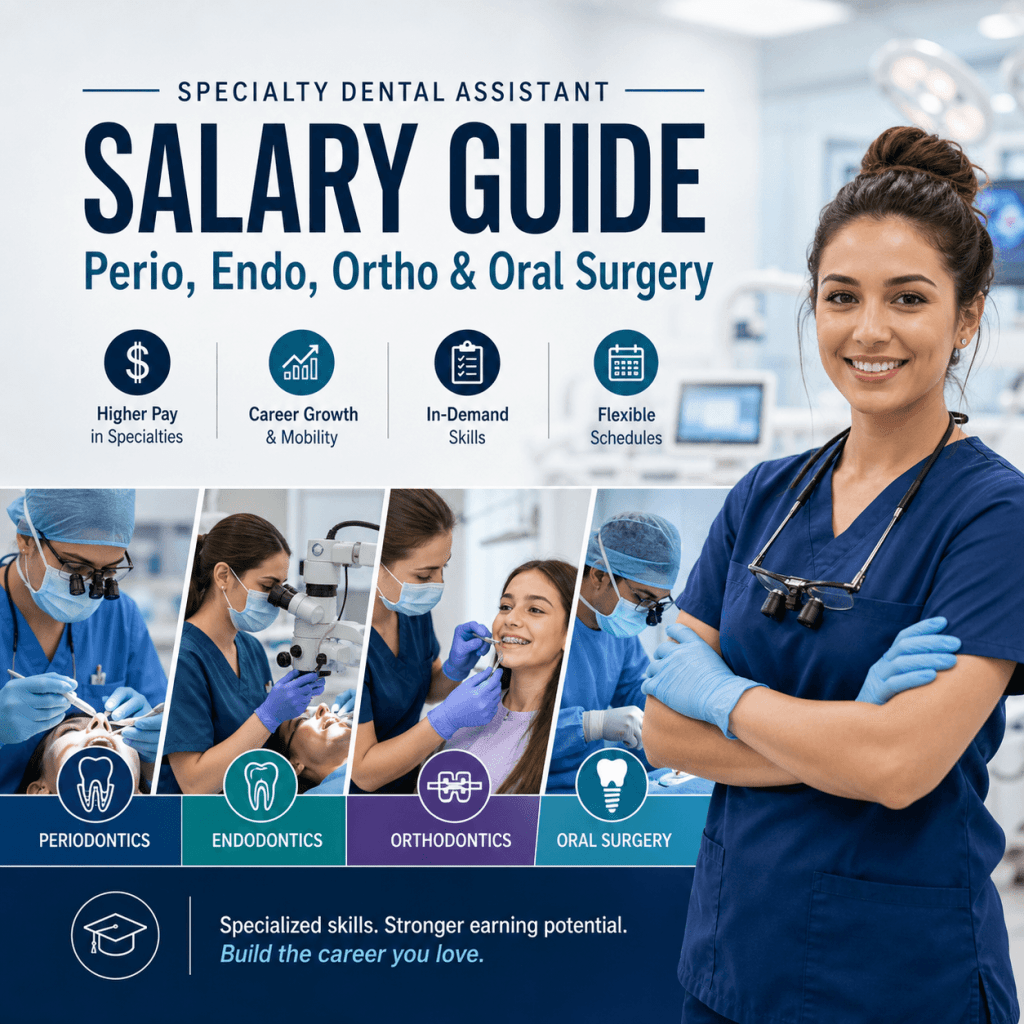
Compensation varies widely by location, certifications, and experience. While no program can promise a specific salary, it is realistic to say that specialty experience can influence earning potential over time. This is why people often research topics like periodontal assistant salary or periodontist assistant salary when considering their next move.
Lifestyle is another advantage. Some specialty settings offer predictable schedules and strong demand, which can be a better fit for assistants who want stability with room to grow.
Specialty dental assisting training at Broward Dental Academy: how the learning is structured
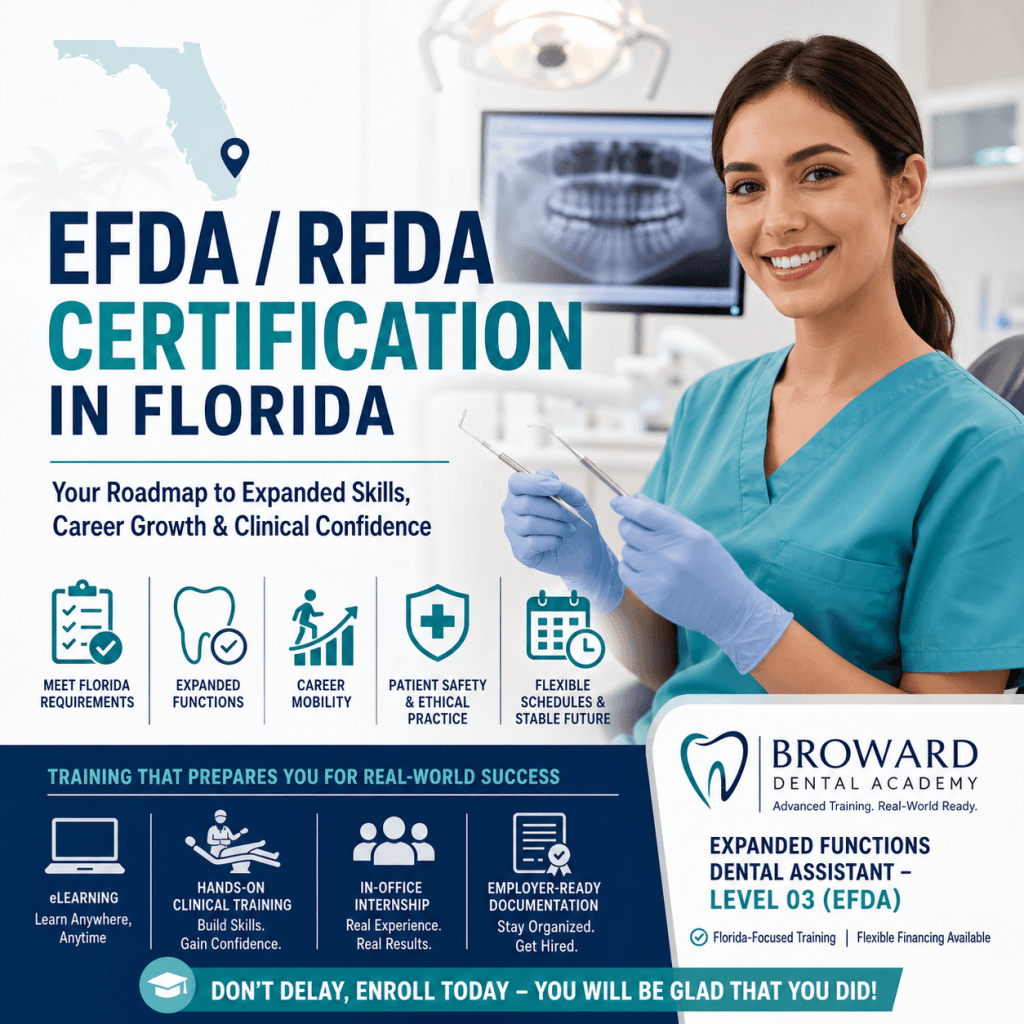
Broward Dental Academy offers a wide range of dental courses and advanced dental training. With 07 courses designed to support both new students and working dental professionals who want to level up their skills, the academy is a prime choice for those seeking specialty training.
The training approach at Broward Dental Academy is built for modern dentistry:
- Immediate immersion in online and clinical settings, so learning is not delayed
- Latest eLearning lesson plans incorporated for remote training, supporting flexible scheduling
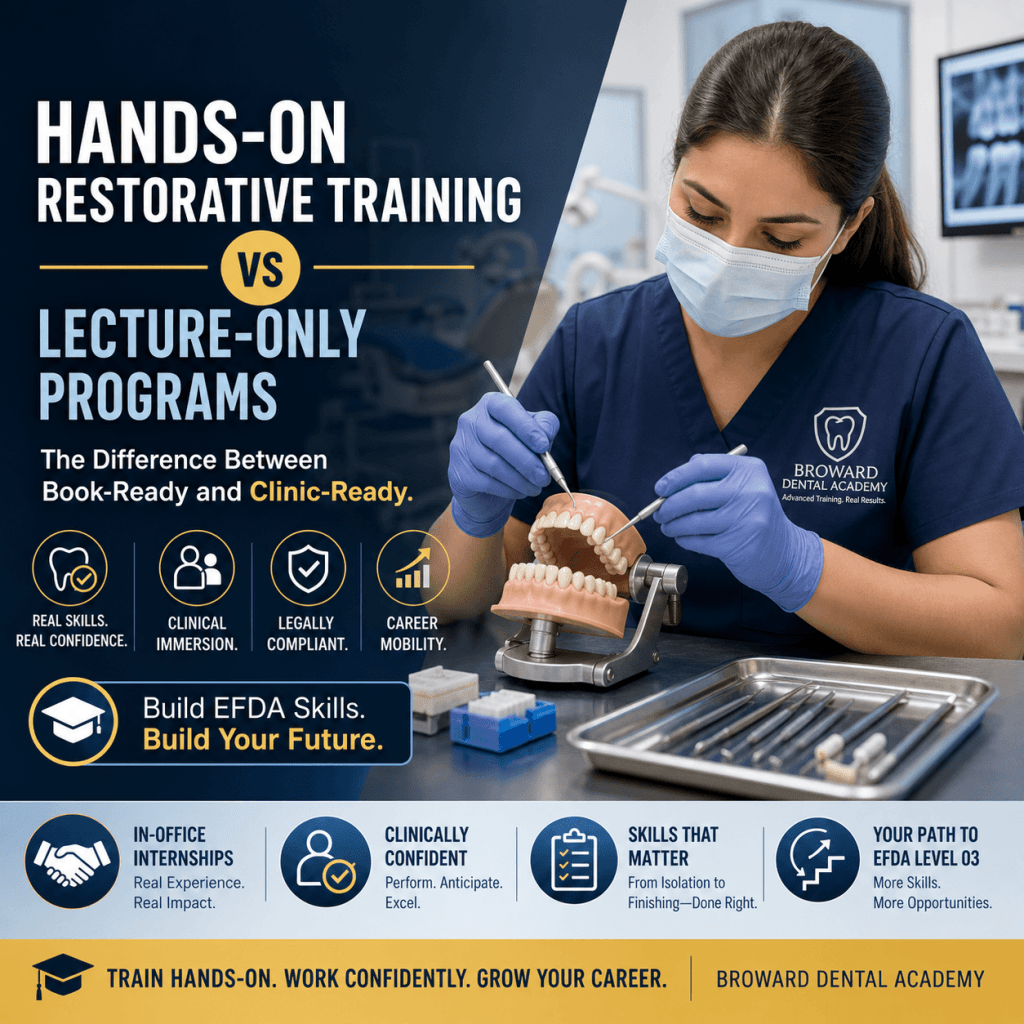
- Hands-on clinical structure focused on real practice readiness
- In-office internships, giving students exposure to pace, teamwork, and real-world expectations
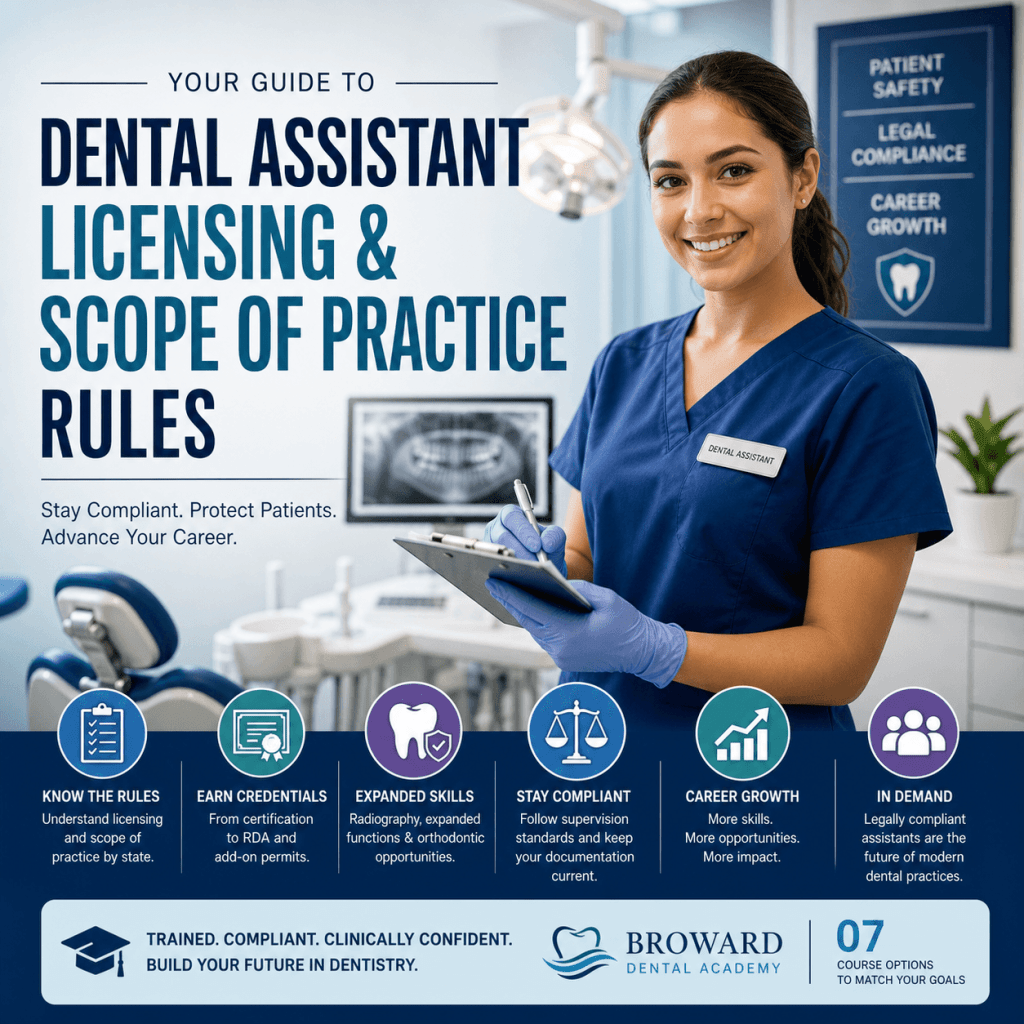
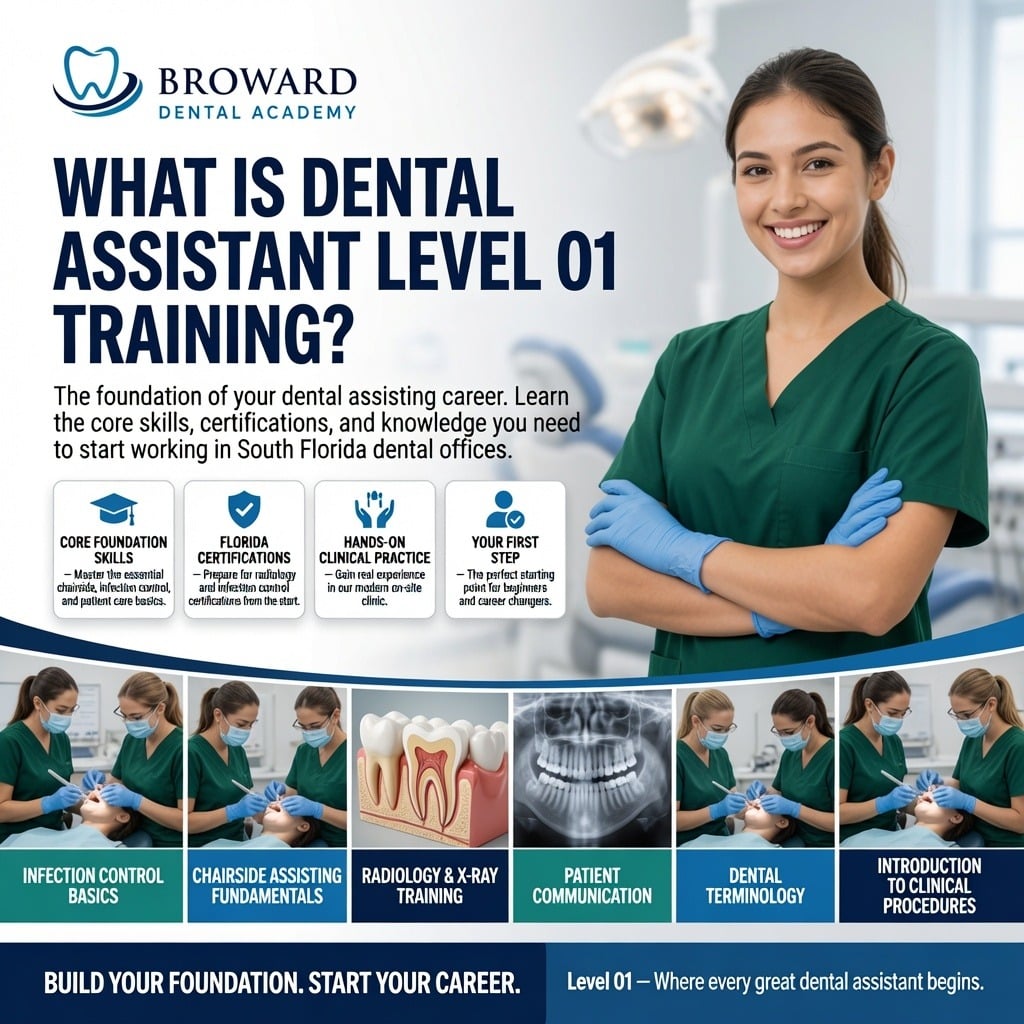
Students can choose from various levels of dental assistant training such as Level 01, Level 02, and Level 03 which are tailored to meet their specific needs.
Broward Dental Academy prepares students to become thoroughly trained, legally compliant, and clinically confident professionals. The focus is not just passing an exam but building the mindset and skill level to thrive in a modern, high-performance dental practice. Students are trained to think critically, act ethically, and perform confidently.
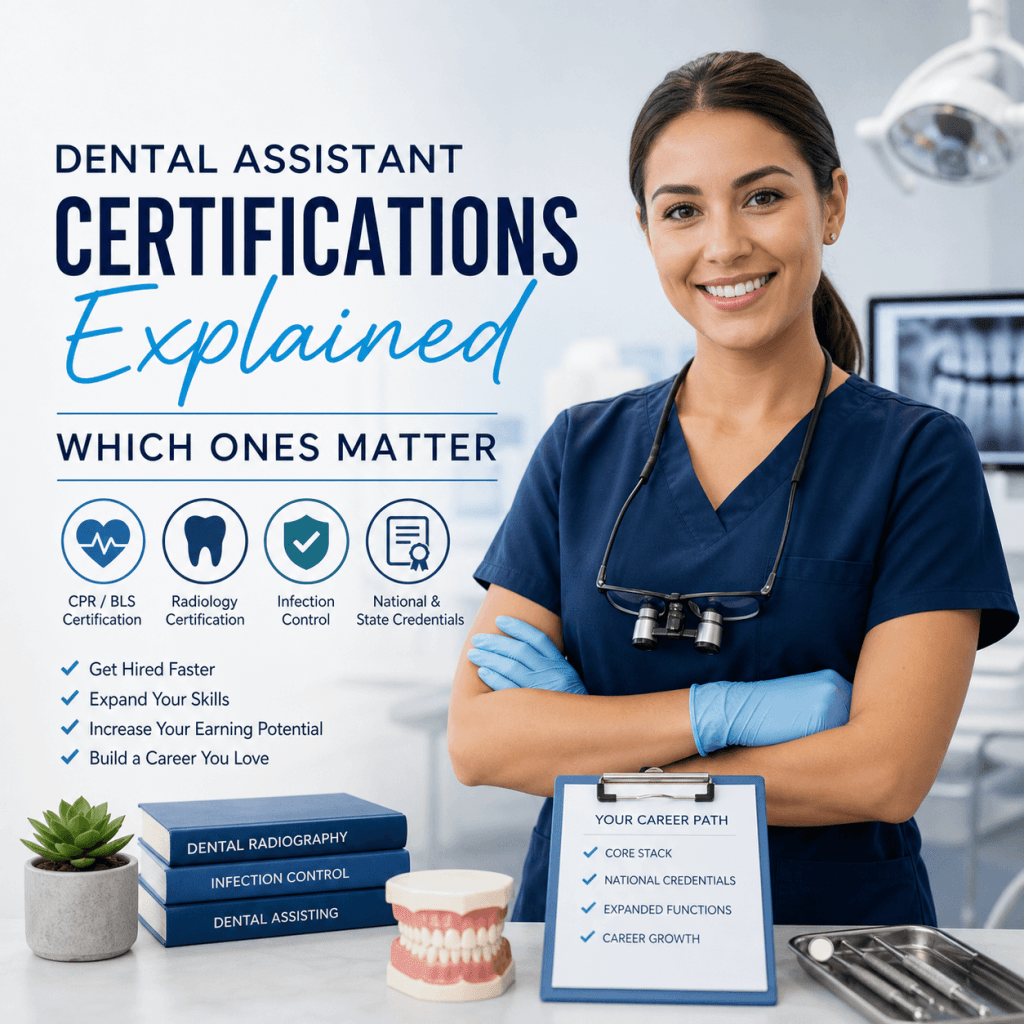
Flexible financing options are also available which can make it easier to start training without putting your life on pause. Additionally, obtaining certain certifications through the academy can further enhance job prospects and earning potential.
Who this training is a good fit for
This type of specialty-focused training is a strong fit for:
- New dental assisting students who want a clearer specialty path early
- Working assistants who want to transition into perio, endo, ortho, or oral surgery settings
- Career changers looking for stable healthcare roles with growth potential
- People who want structured training that builds confidence through real clinical systems, not memorization
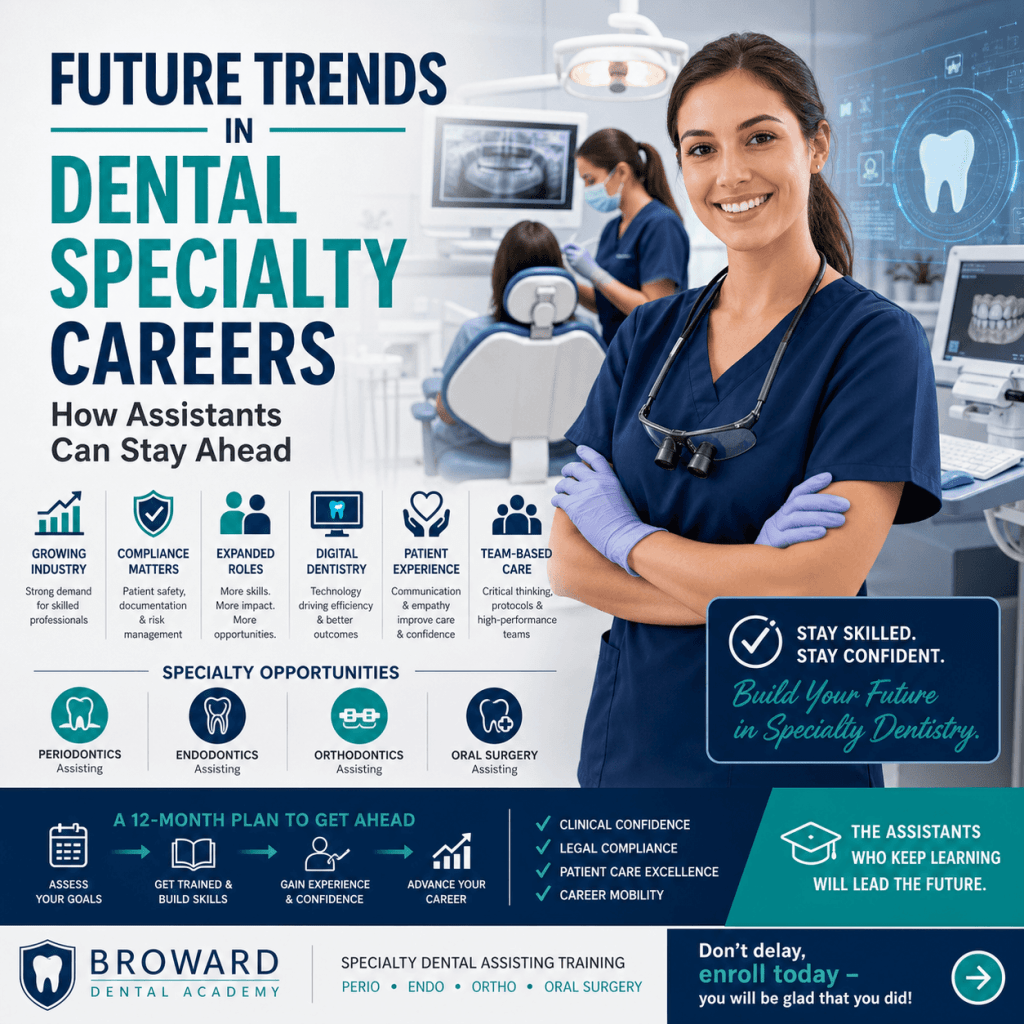
Next steps: pick a specialty path and start building real clinical confidence
If you are deciding where to focus, start with what genuinely energizes you:
- If you like tissue, grafting, and implants, consider periodontics.
- If you like precision and helping pain patients, consider endodontics.
- If you like relationships, routine, and fast-paced visits, consider orthodontics.
- If you like surgical intensity and strict protocols, consider oral surgery.
As you explore programs, ask directly about hands-on training, clinical components, internships, compliance standards, scheduling, and financing options. Specialty success comes from preparation that matches the real operatory, not just the classroom.
Don’t delay, enroll today – you will be glad that you did!
FAQs (Frequently Asked Questions)
Why is specialty dental assisting training important compared to general chairside experience?
Specialty dental assisting training is crucial because specialty practices involve more complex procedures, tighter schedules, and higher patient expectations. Unlike general experience, specialty training prepares assistants to match the provider’s workflow quickly, handle specialized instruments confidently, support strict compliance without slowing production, and communicate effectively with patients based on their specific needs.
What are the main dental specialties requiring specialized assistant training?
The primary dental specialties requiring focused assistant training include Periodontics (Perio), Endodontics (Endo), Orthodontics (Ortho), and Oral Surgery. Each specialty has unique procedures, instrument systems, documentation habits, and patient communication requirements that assistants must master for effective chairside support.
How does specialty dental assisting training enhance career opportunities?
Specialty dental assisting training enhances career opportunities by equipping assistants with advanced clinical skills and legal compliance knowledge that specialist offices demand. This training increases employability, opens doors to higher-responsibility roles in busy practices, offers stable income potential, flexible schedules, and a respected clinical role within one of the fastest-growing healthcare industries.
What specific skills are developed through periodontics dental assistant training?
Periodontics dental assistant training develops skills in managing surgical and tissue-focused care such as gum disease therapy, grafting, and implants. It emphasizes strict sterile techniques, handling surgical instruments and materials proficiently, supporting post-operative patient education, and ensuring compliance with infection control standards.
How do specialty dental assistants contribute to patient care in different specialties?
Specialty dental assistants contribute by understanding the distinct procedural flows and patient needs of each specialty. For example, they provide post-op guidance for perio patients recovering from grafting, calm anxious patients during endodontic emergencies, manage high-volume appliance adjustments in orthodontics, and assist with surgical setups and safety protocols in oral surgery—ensuring smooth procedures and enhanced patient experiences.
What should I consider when choosing a specialty dental assisting training program?
When selecting a specialty dental assisting program, consider factors such as comprehensive curriculum covering clinical systems of various specialties (Perio, Endo, Ortho, Oral Surgery), hands-on instrument handling practice, emphasis on legal compliance like OSHA and infection control standards, experienced instructors from specialist backgrounds, flexible scheduling options, and positive outcomes like job placement rates. Institutions like Broward Dental Academy offer such tailored programs designed to build real clinical confidence.