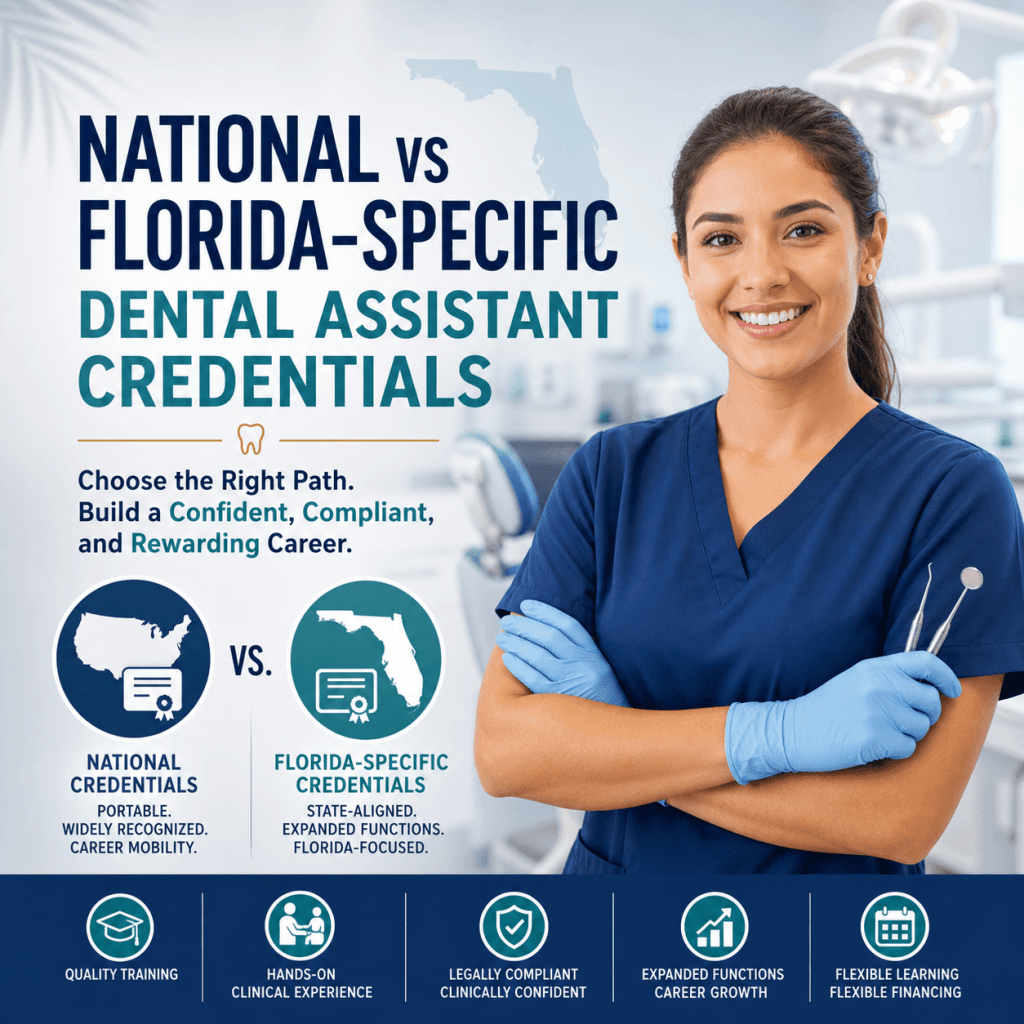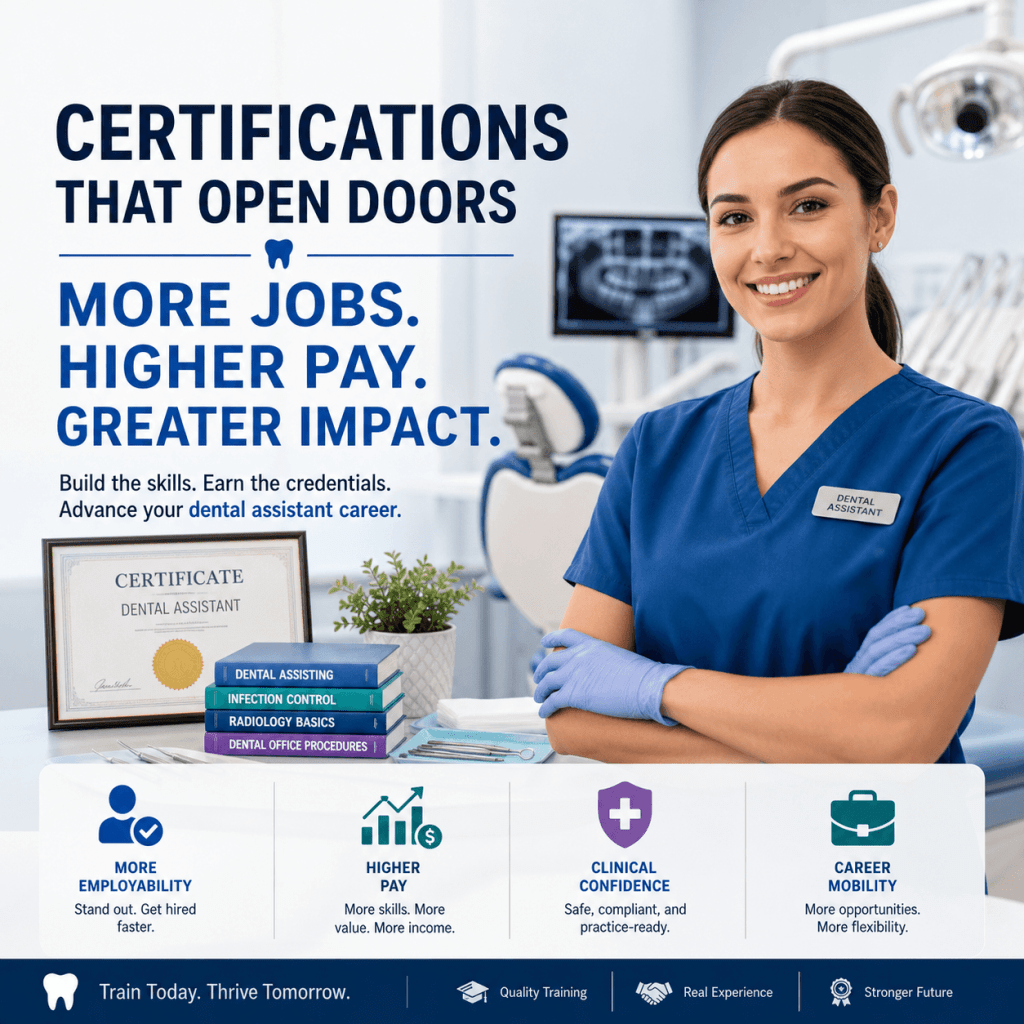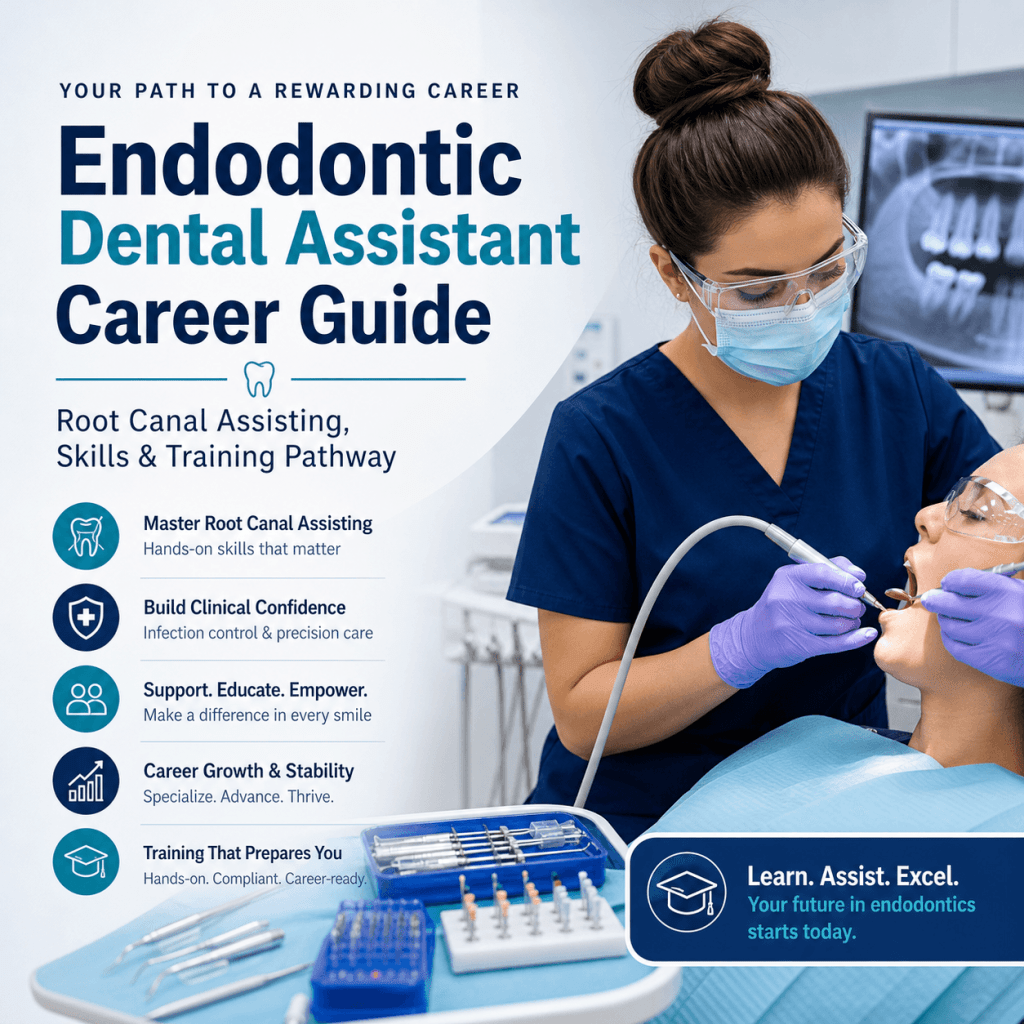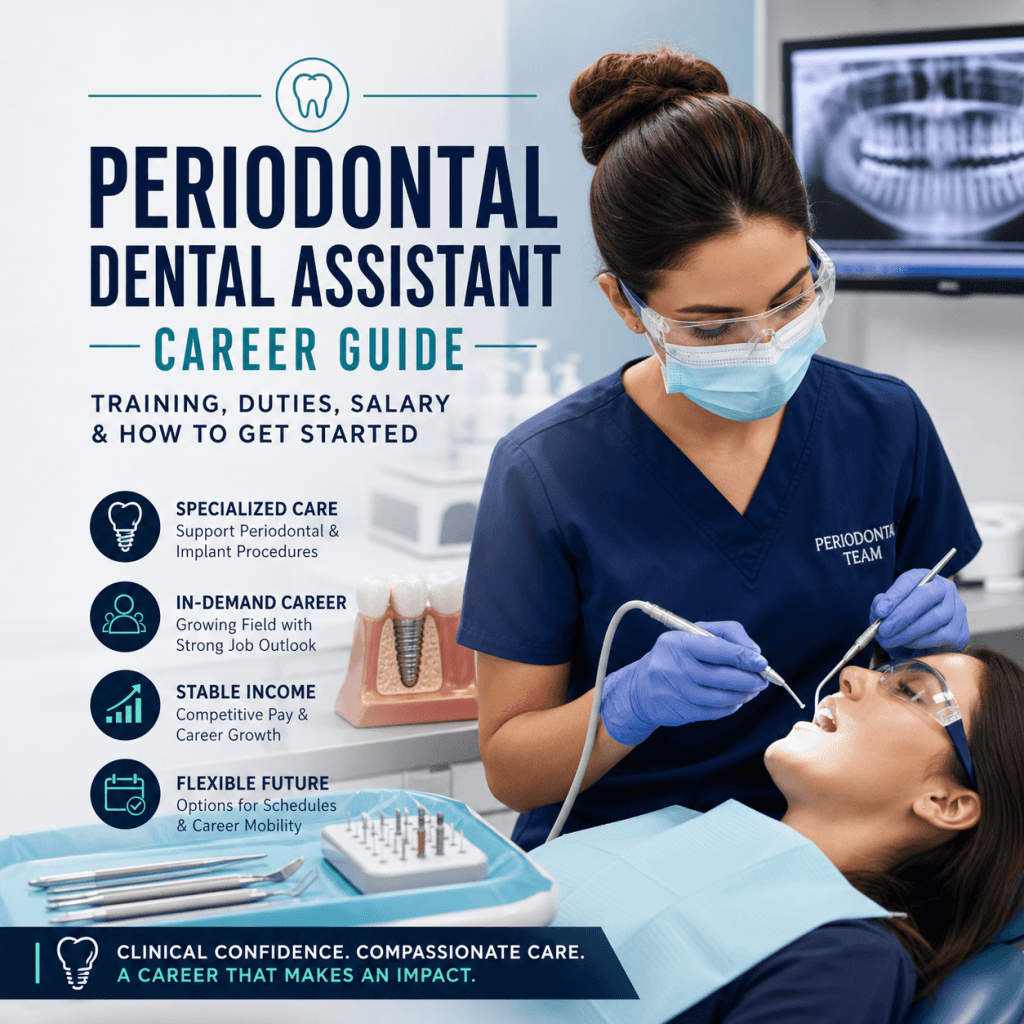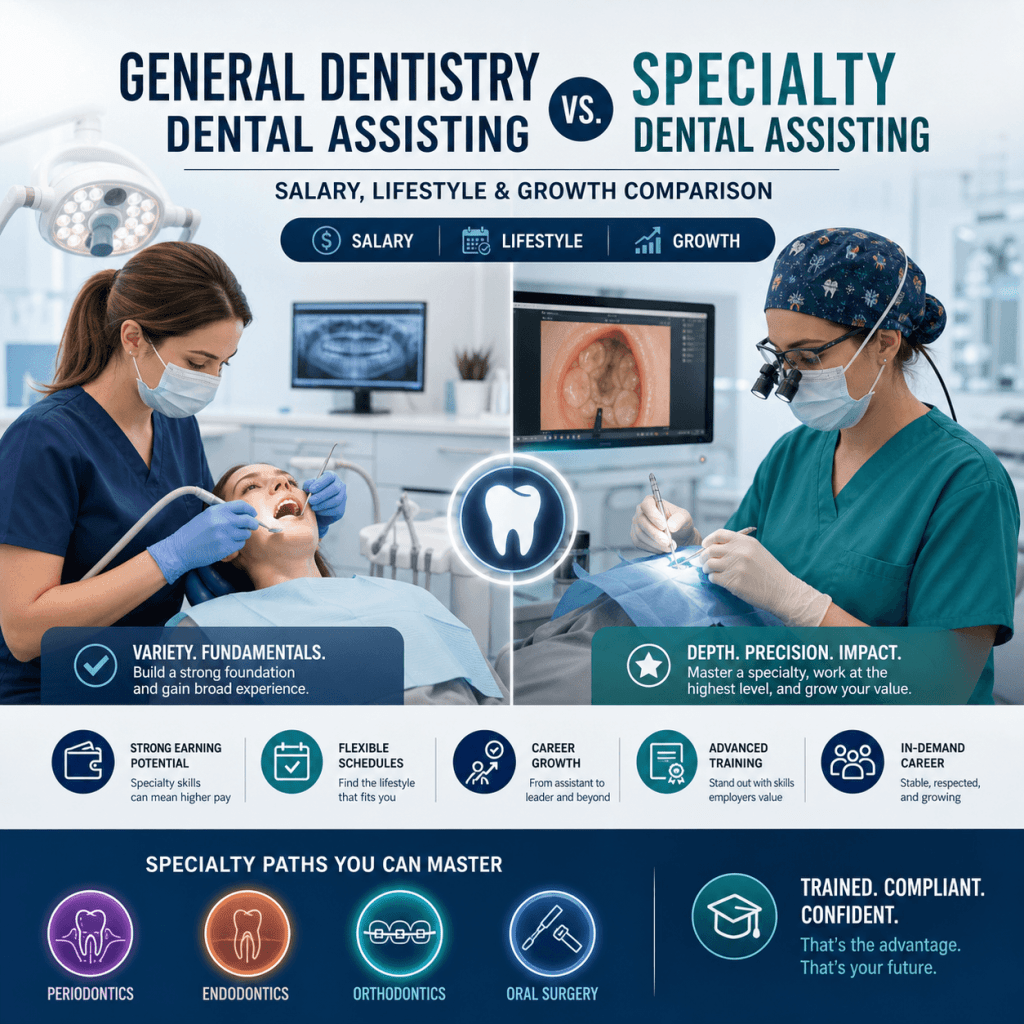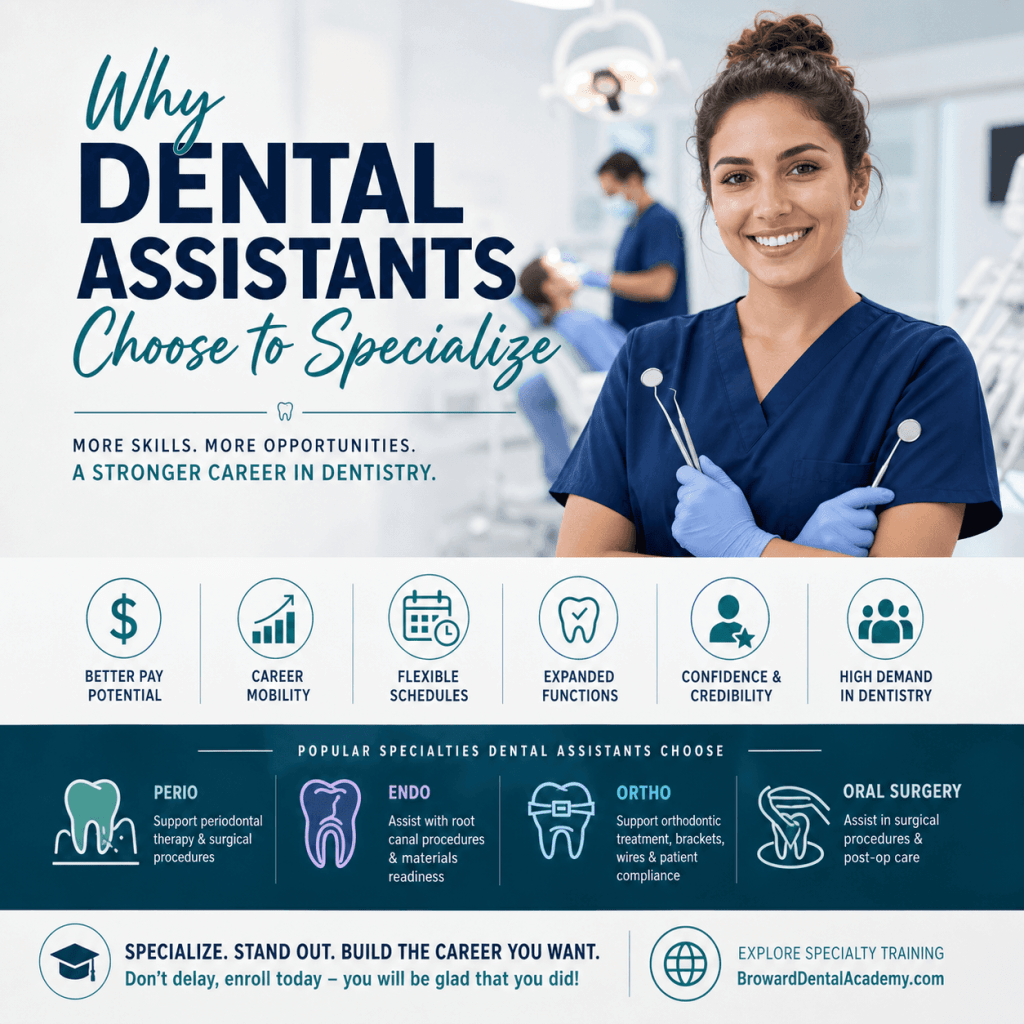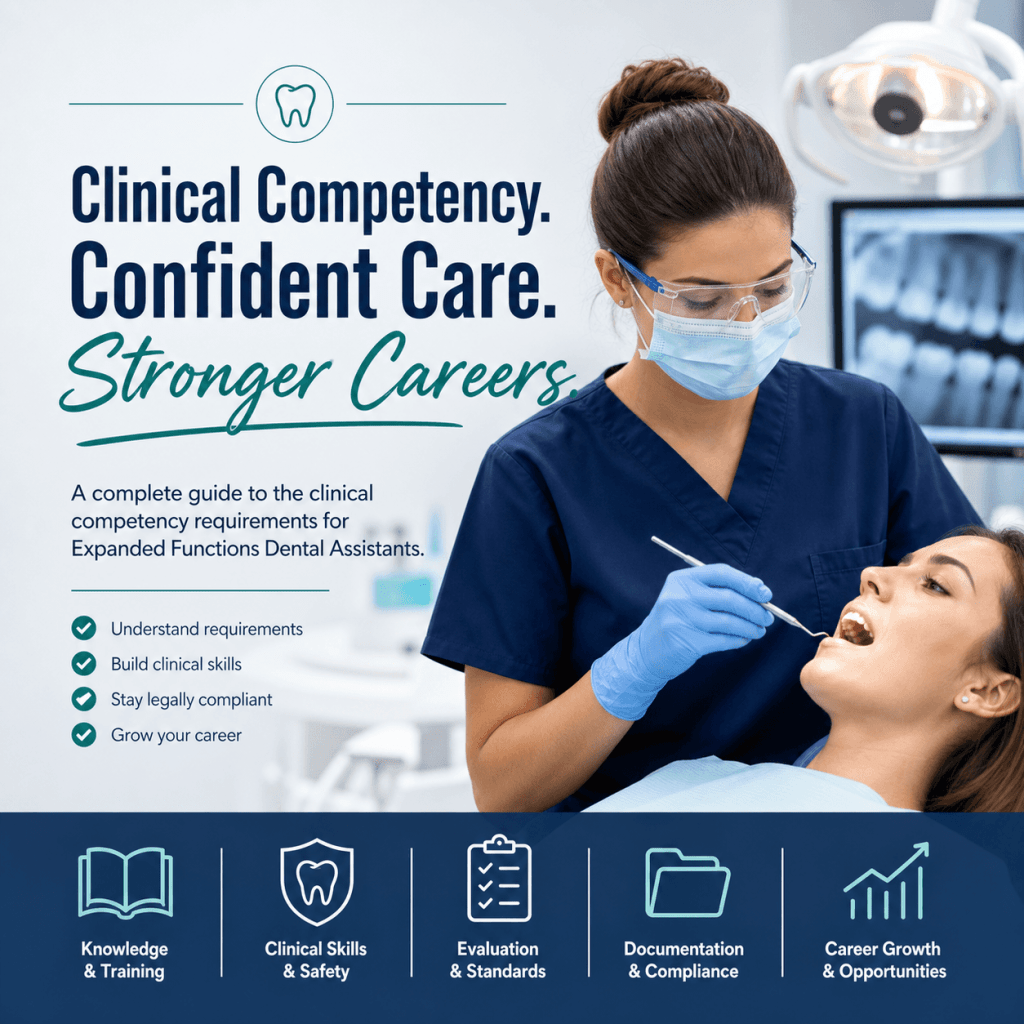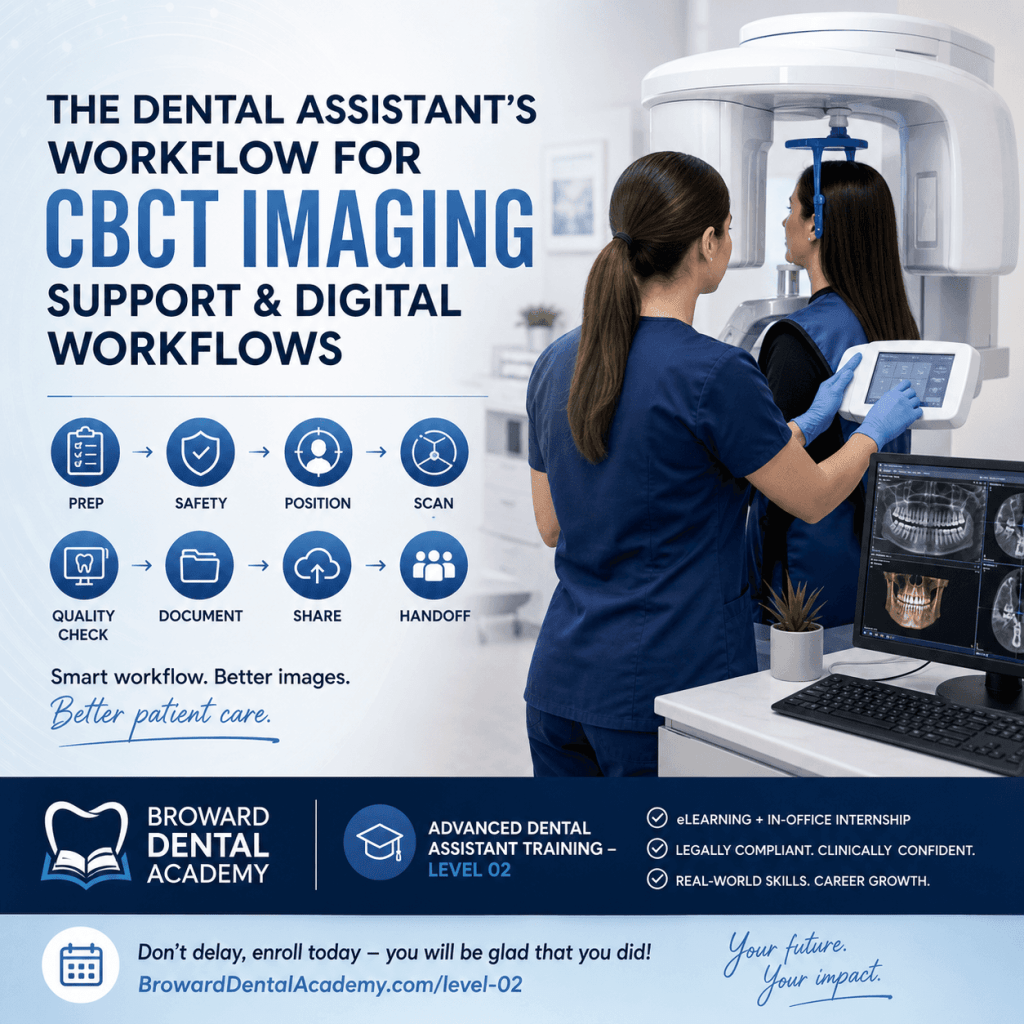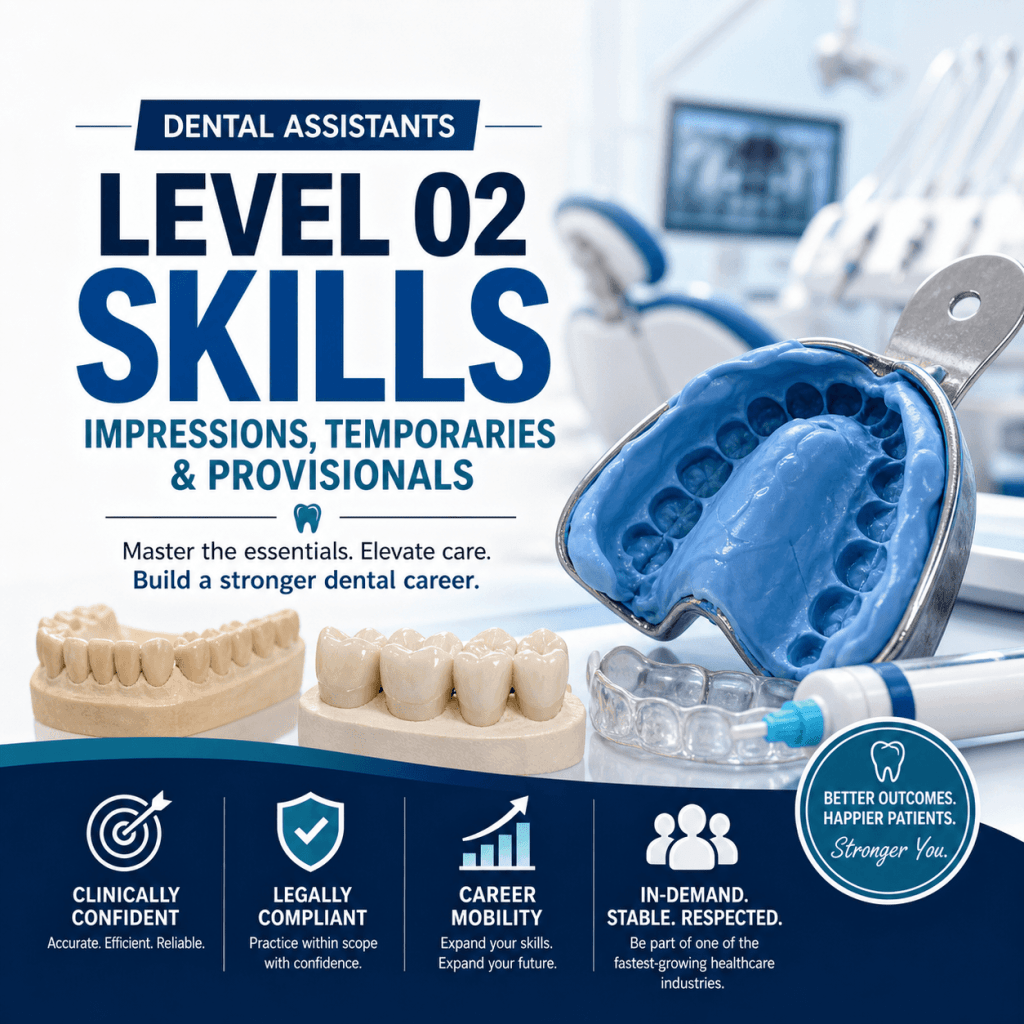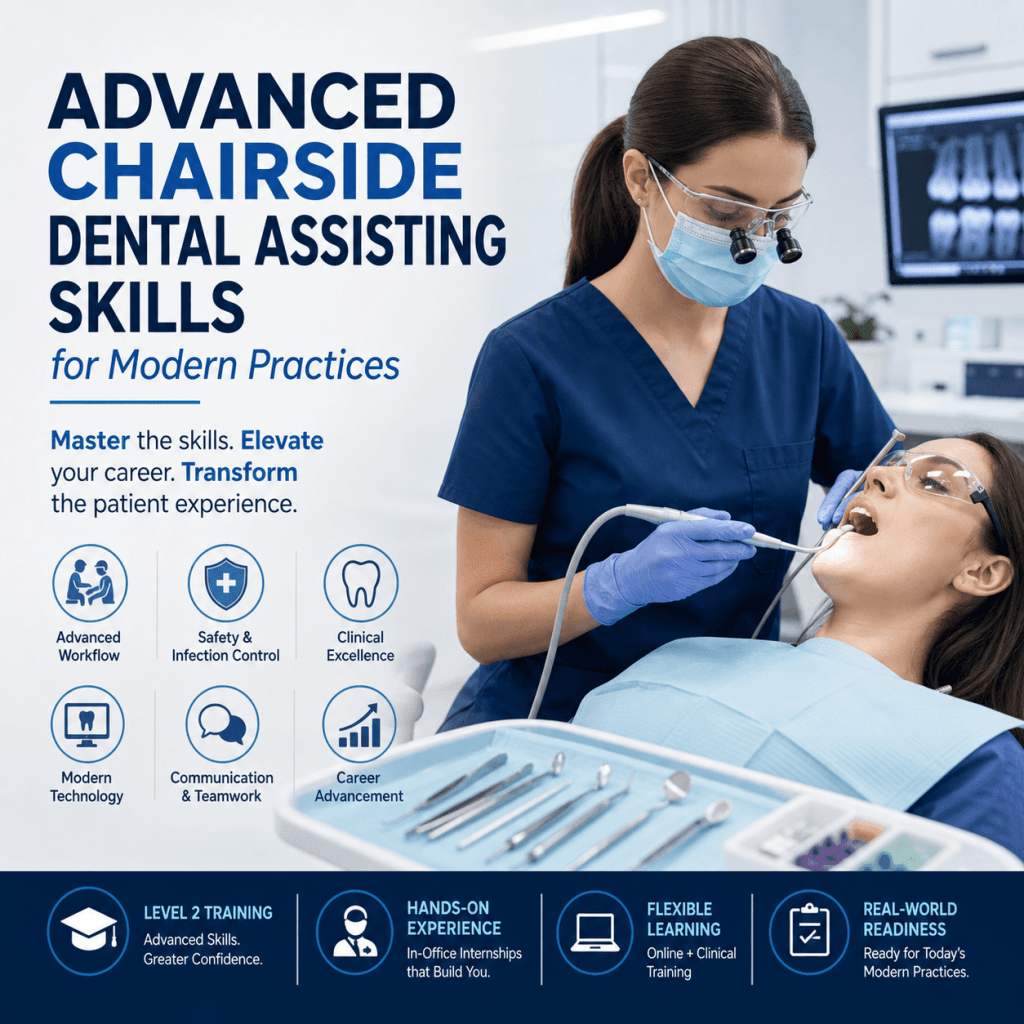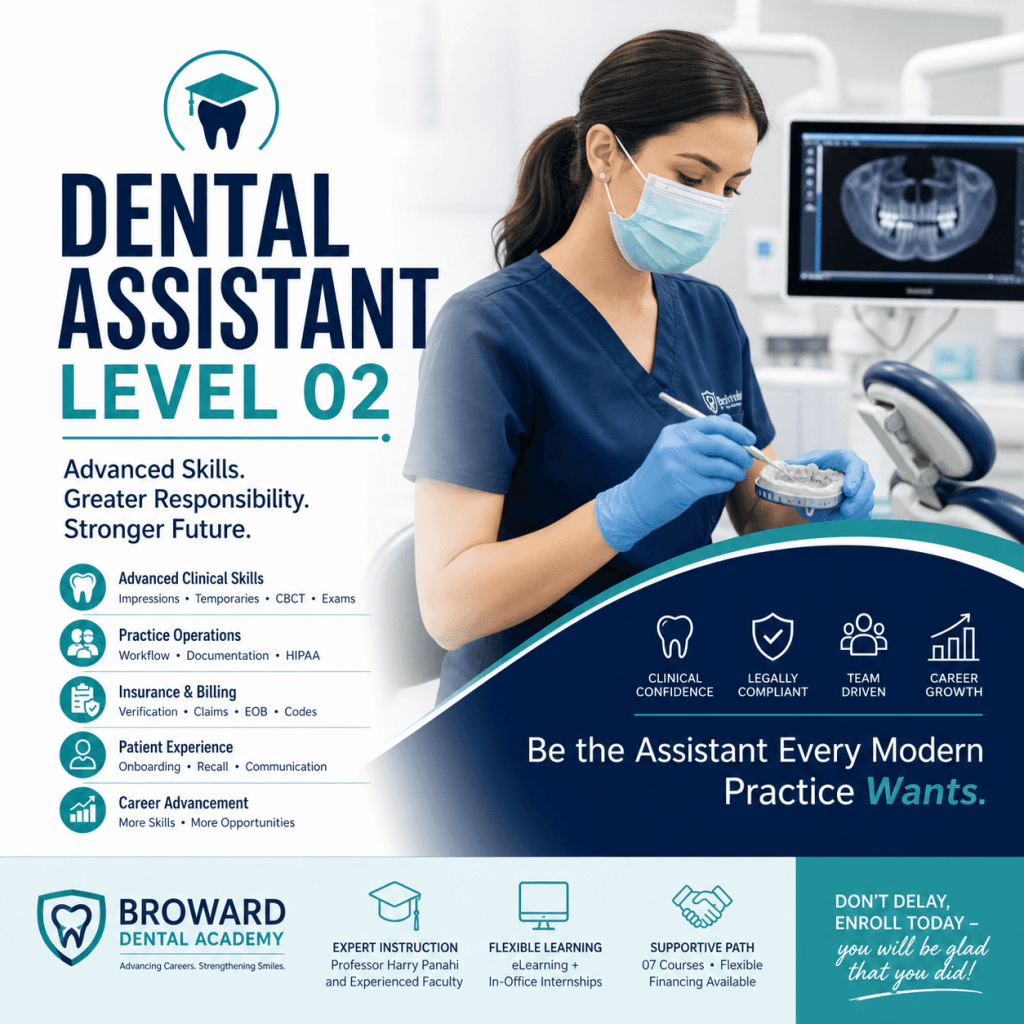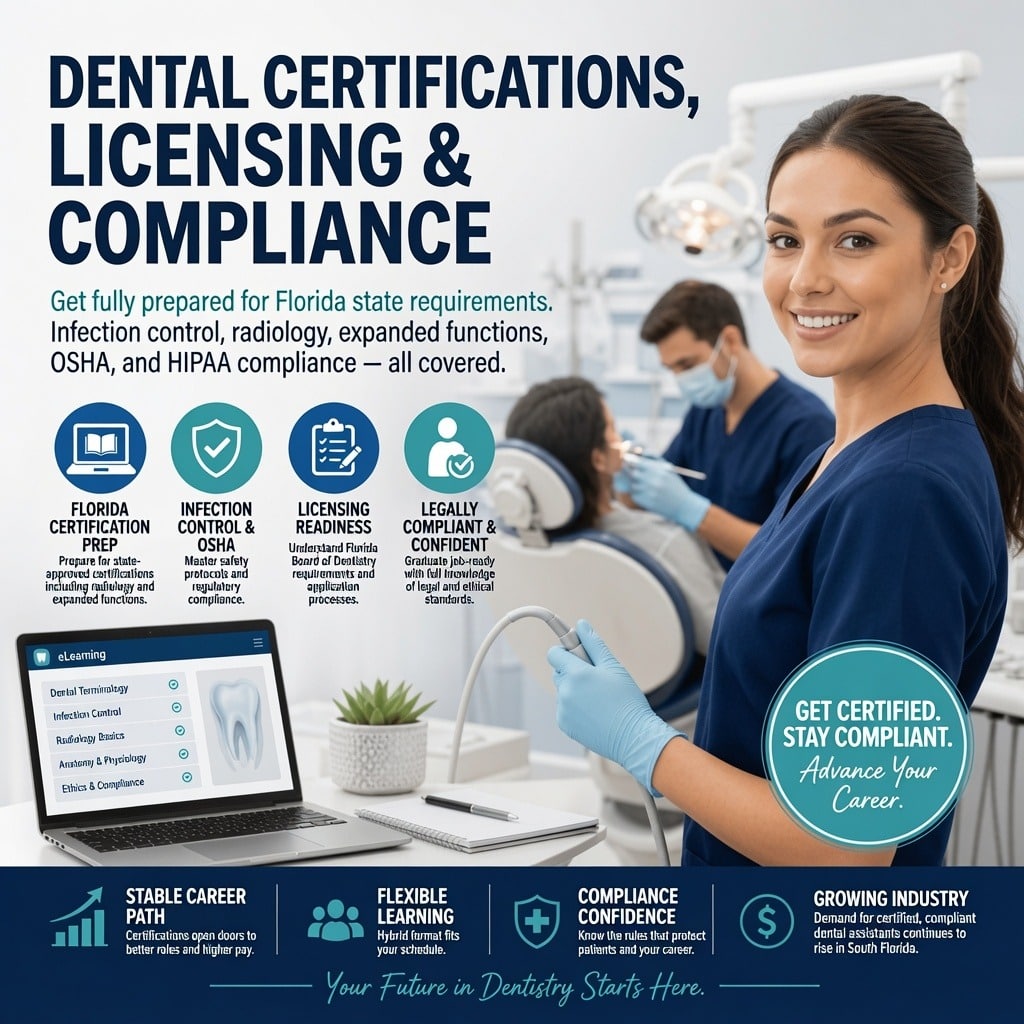
Dentistry is a regulated healthcare field. This means certifications, licensing, and compliance are not just “nice-to-haves.” They directly impact your employability, what you are legally allowed to do in a practice, and how well you safeguard your future in the profession.
Simultaneously, the dental industry continues to expand, with a rising demand for skilled dental professionals. Practices are bustling. Standards are more stringent. Documentation is taken more seriously. Patients are better informed. Employers are prioritizing hires who are trained, legally compliant, and clinically confident.
This guide provides insight into:
- Common dental career paths and the credentials tied to them
- How dental certifications and licensing typically work
- What “compliance” really looks like on a day-to-day basis
- How to verify what your state (or country) requires so you stay protected
Requirements vary by role, state or country, and even employer. Use this as a practical roadmap, then confirm details with your state dental board (or local regulator) and the job posting you are targeting.
Why certifications and compliance matter more than ever in dentistry
If you work in a dental office, you are part of a healthcare delivery team. That comes with three realities:
- Patient safety is non-negotiable. Infection control, radiography safety, privacy rules, and clinical protocols are not optional.
- Your scope of practice is defined by law. Even if a task feels routine, you may not be authorized to do it without the right training, permit, or supervision level.
- Compliance protects your license, your job, and the practice. Audits, complaints, and incidents often come down to “Was the team trained, authorized, documented?”
Employers know this. In 2026, many practices are not just looking for someone “willing to learn.” They want someone who can step in with strong fundamentals, follow protocols such as those outlined by the CDC for infection control, communicate professionally, and perform consistently under real-world pace.
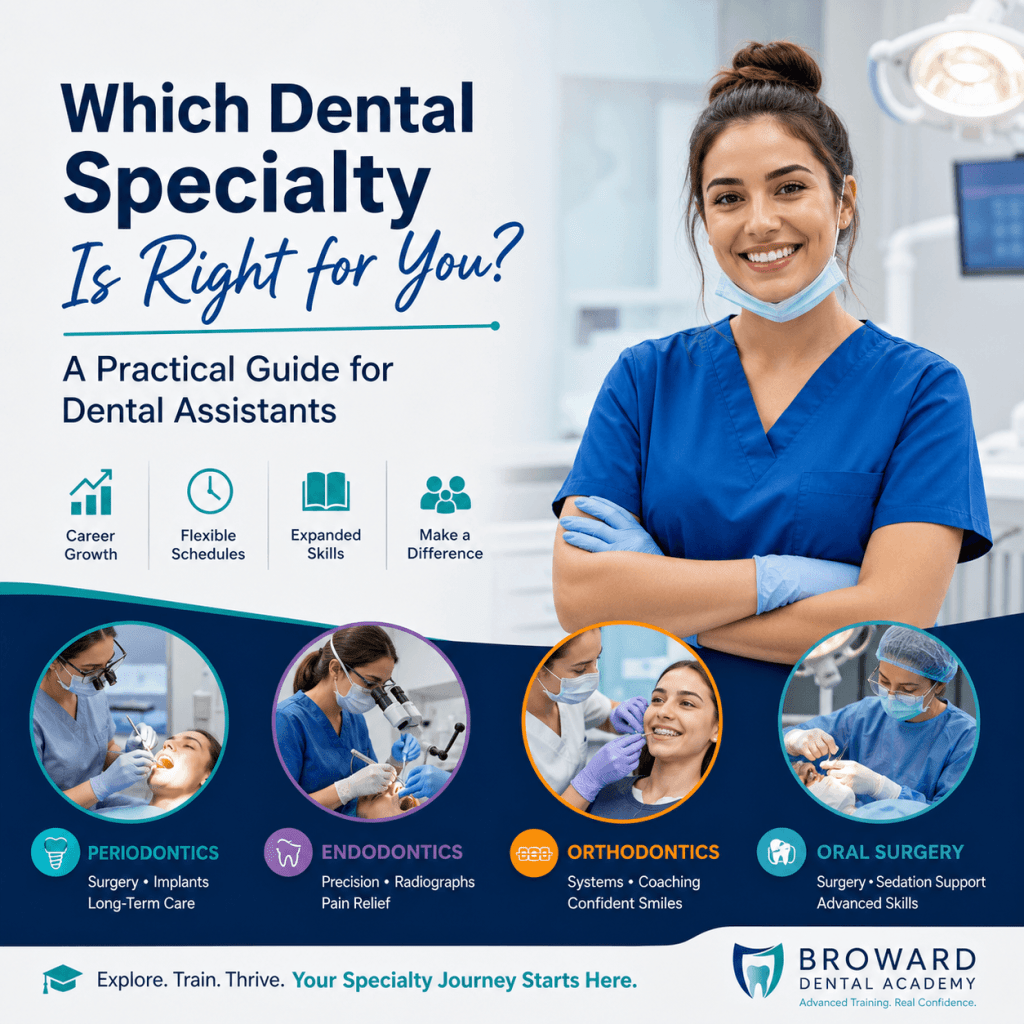
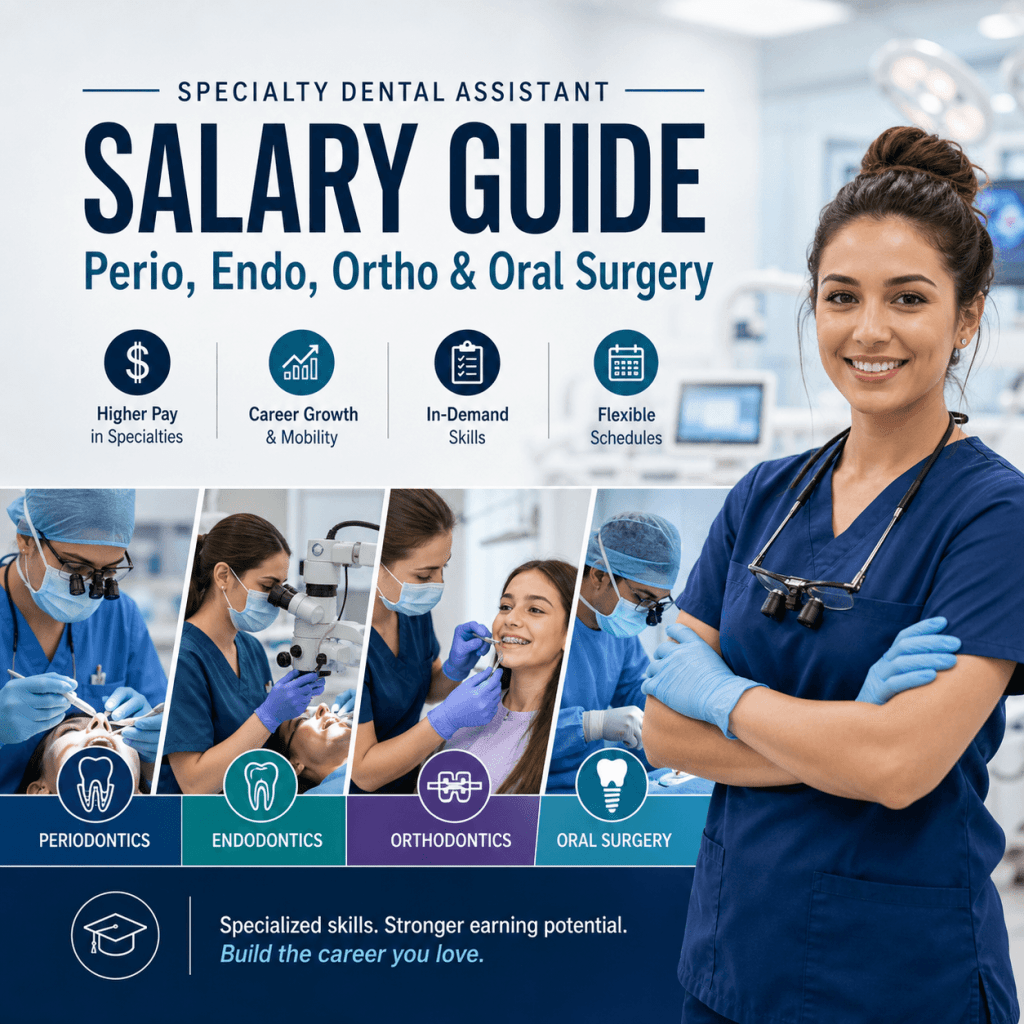
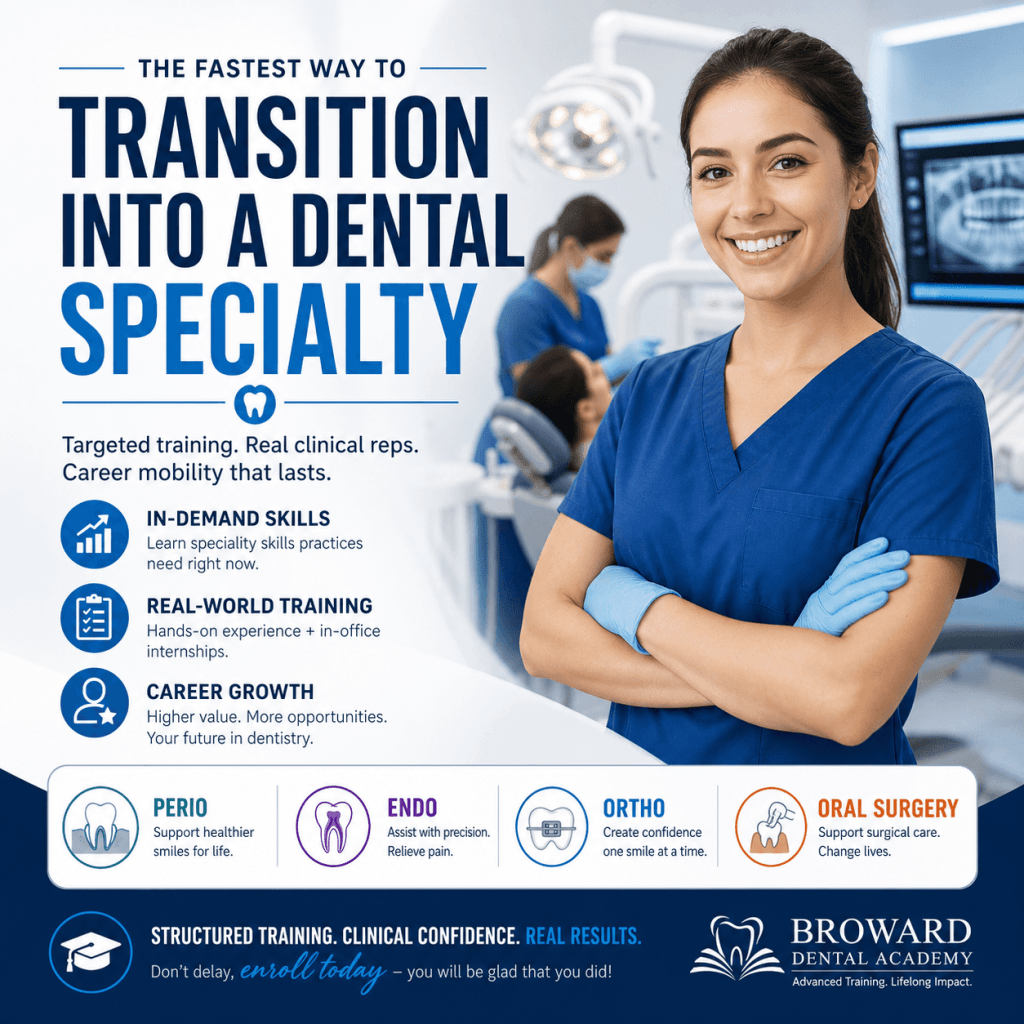
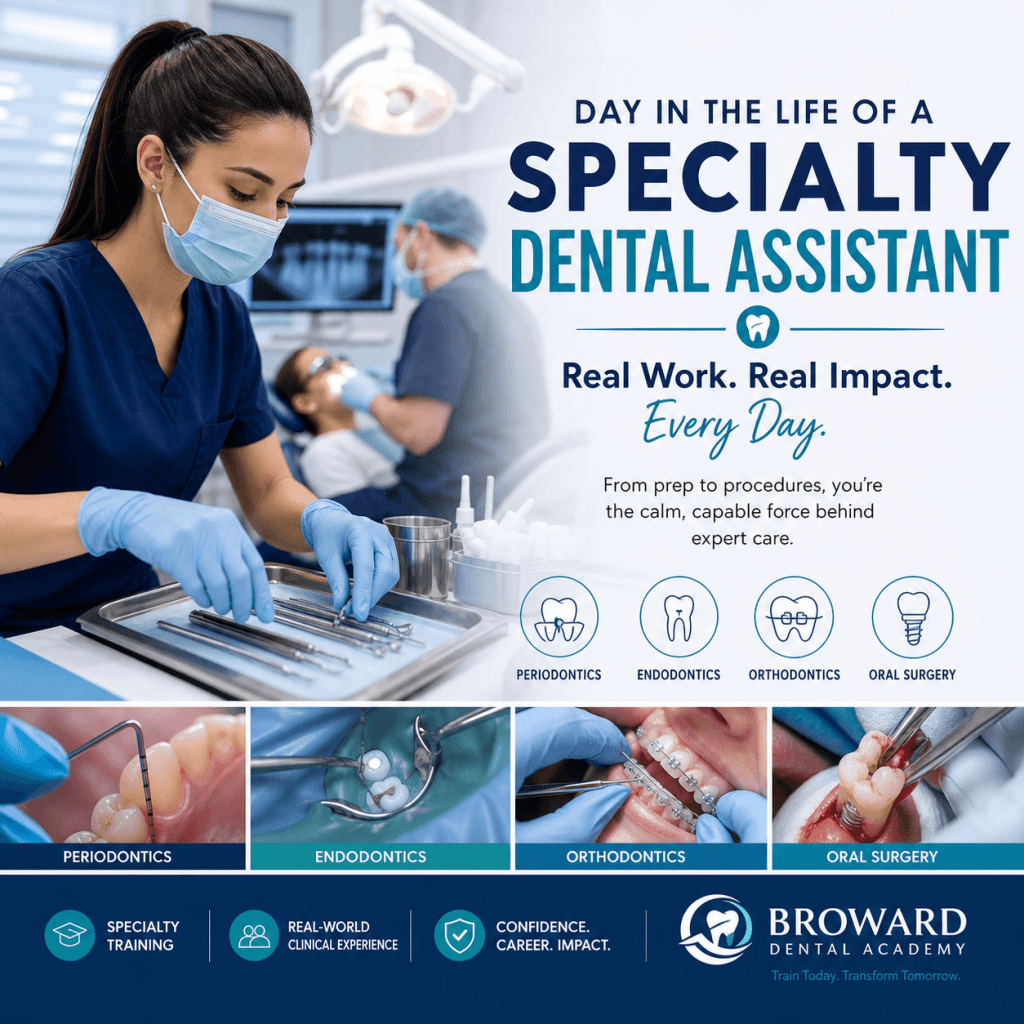
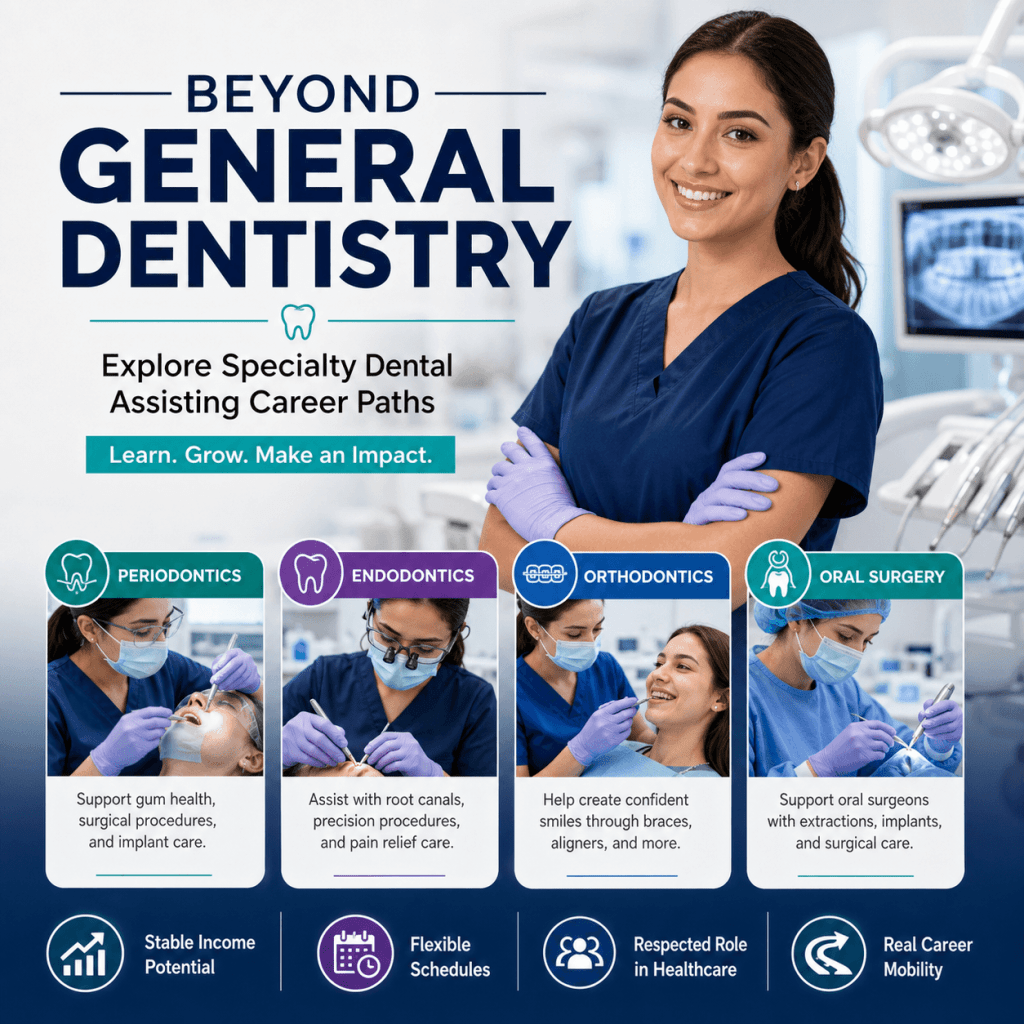
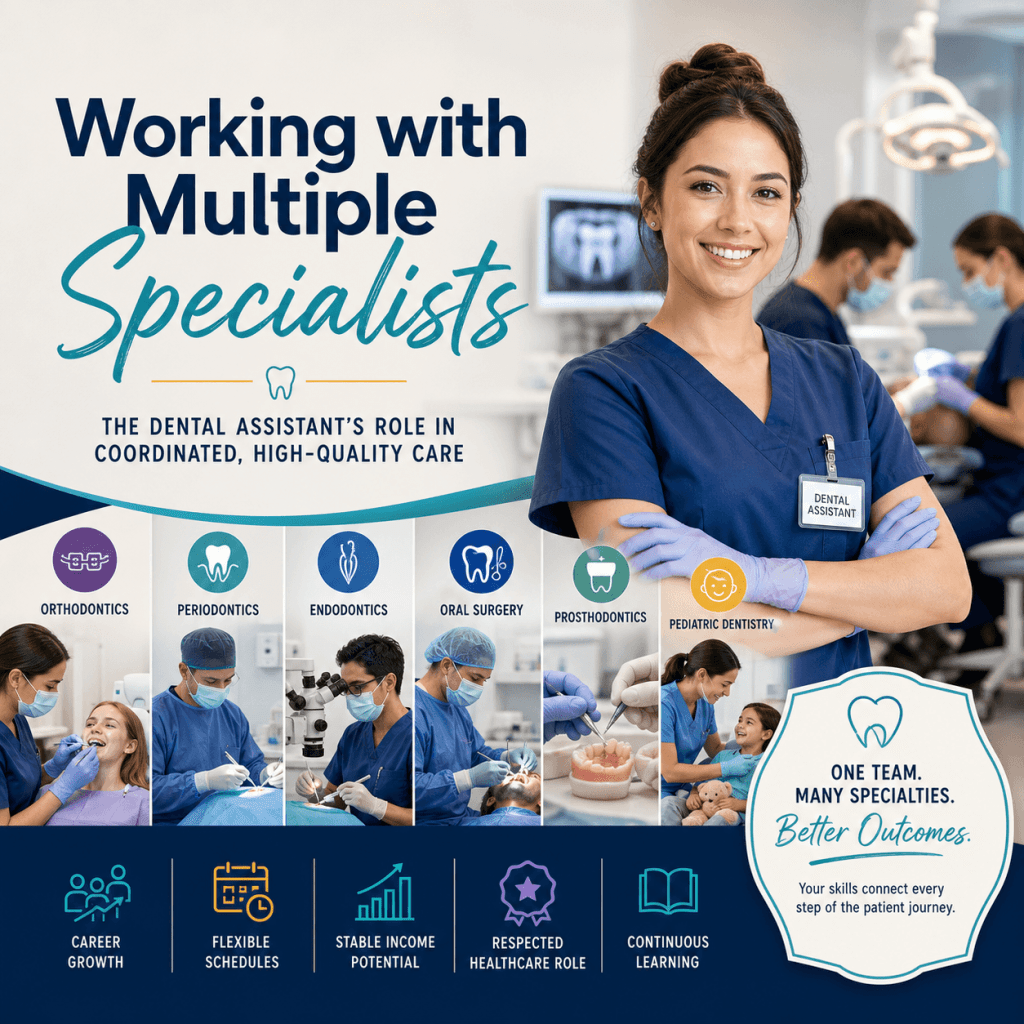
To gain such strong fundamentals in various aspects of dentistry like oral surgery, orthodontics, or endodontics, consider pursuing specialized certifications from reputable institutions such as Broward Dental Academy.
Quick terminology: certification vs license vs registration (and why people mix them up)
People mix these terms up because job posts often use them loosely. Here is a clean way to think about each one.
Certification
A certification is a credential that shows you completed training and/or passed an exam. It is often offered by a third party (a certifying body) or a training provider, such as those offering courses in specialized fields like periodontics.
What it usually signals to employers:
- Standardized knowledge
- A baseline of clinical readiness
- Commitment to professionalism
Certification may be optional in some places, but it still helps with hiring, pay, and mobility.
License
A license is legal permission issued by a government or regulatory board to perform certain duties. Licenses typically involve:
- Eligibility requirements (education, exams, background checks)
- Defined scope of practice
- Renewal timelines and continuing education rules
- Disciplinary oversight
If a role is licensed, working without that license (or outside its boundaries) can carry serious legal consequences.
Registration, permit, or authorization
A registration or permit is often tied to specific functions. In dentistry, this frequently comes up with:
- Radiography permissions
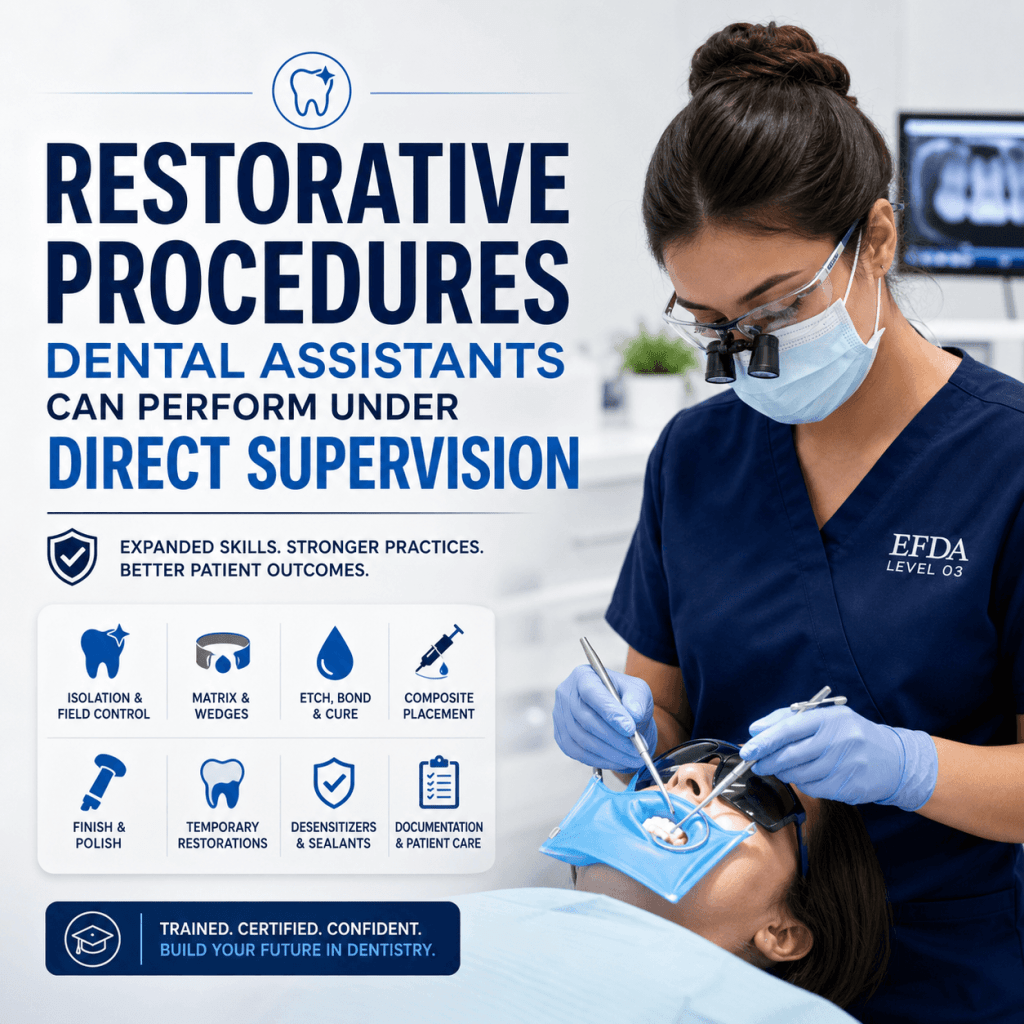
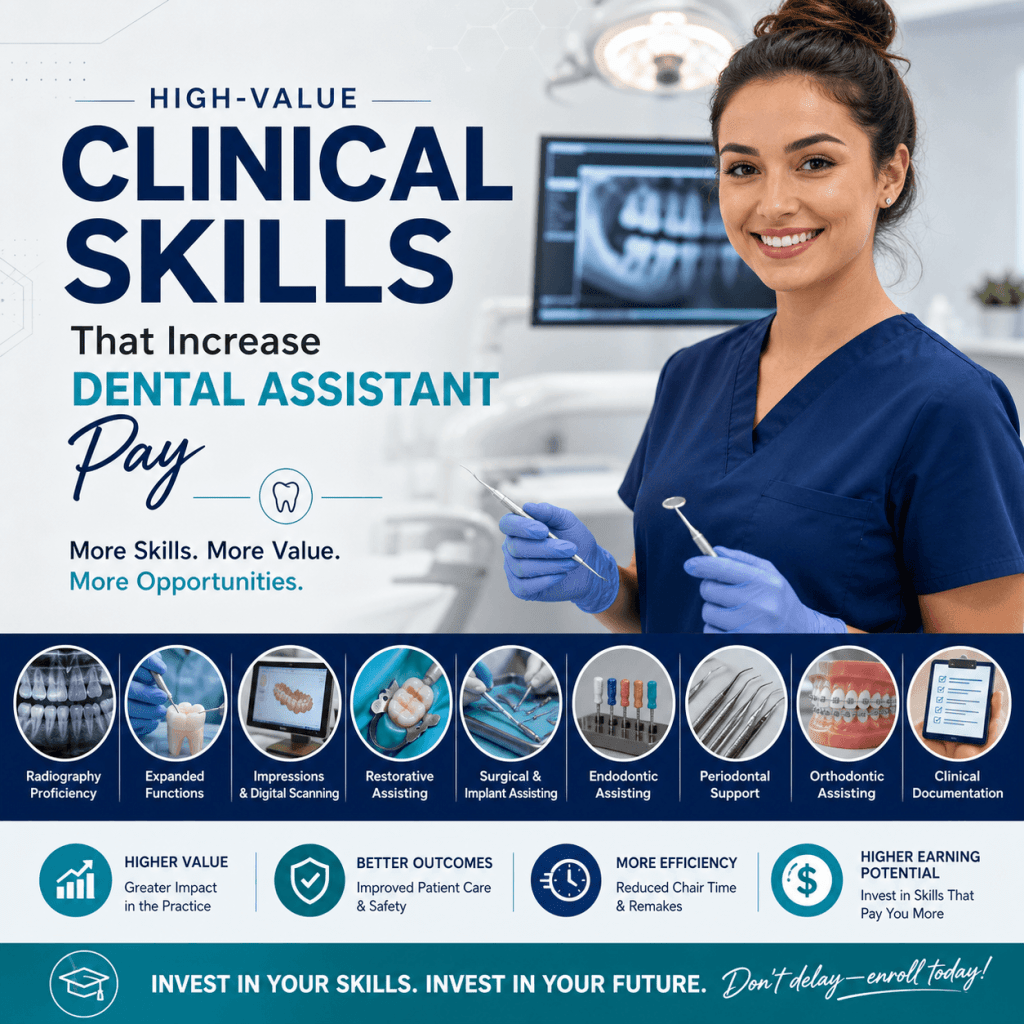
- Expanded functions
- Local anesthesia or sedation-related duties (role-dependent)
For instance, after completing certain courses offered in a dental program, you might need to obtain a registration for expanded functions.
How to interpret job posts
You may see phrases like:
- “Certified dental assistant”
- “Licensed dental assistant”
- “Registered dental assistant”
- “Radiology certified”
When you see this, do not guess. Read the post carefully, then cross-check with your state board’s definitions. Employers may be using a shorthand, but you need to meet the legal requirement behind the words.
For example, if you’re looking for a dental assistant role in Broward County, it’s useful to know the locations where such opportunities are available.
Common dental team roles and what credentials they typically need
Most dental practices include a mix of clinical and administrative roles. Credential needs vary widely by location, but the patterns below are common.
Dental assistant
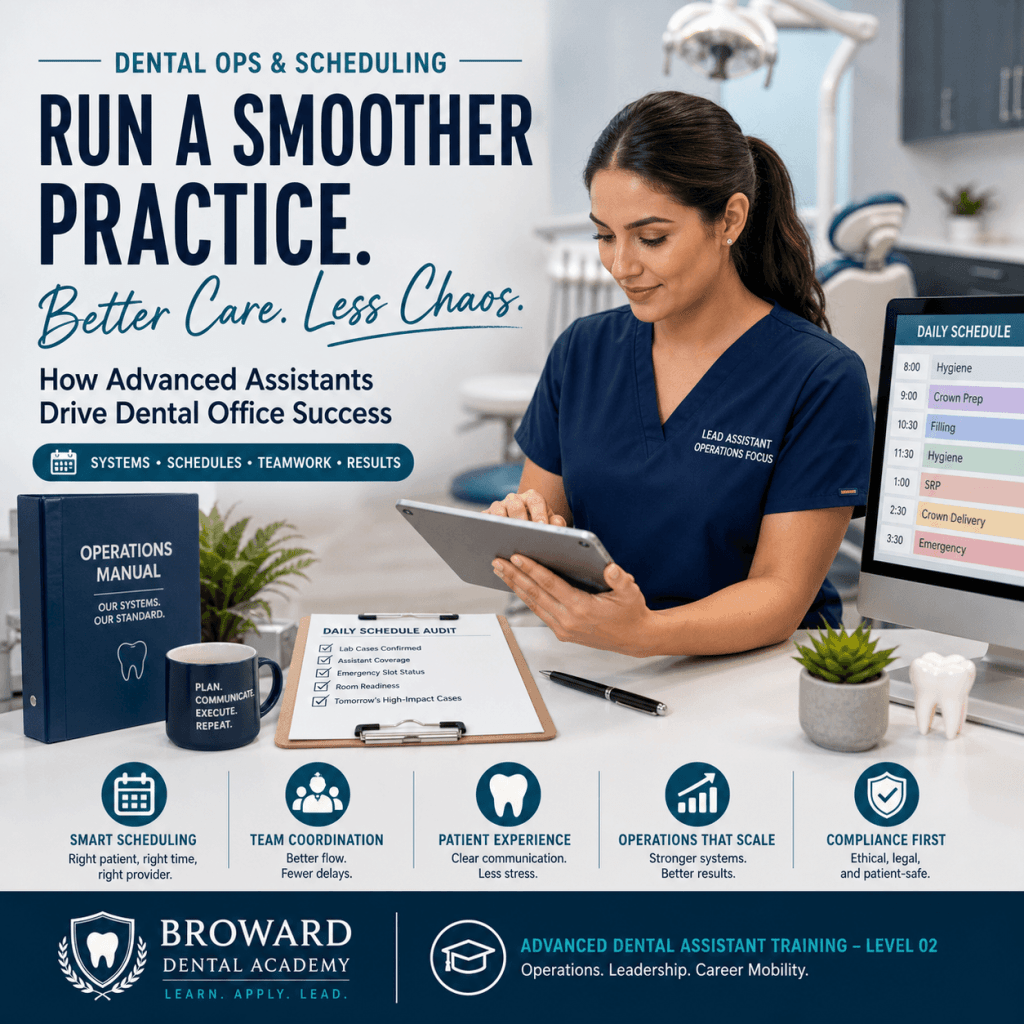
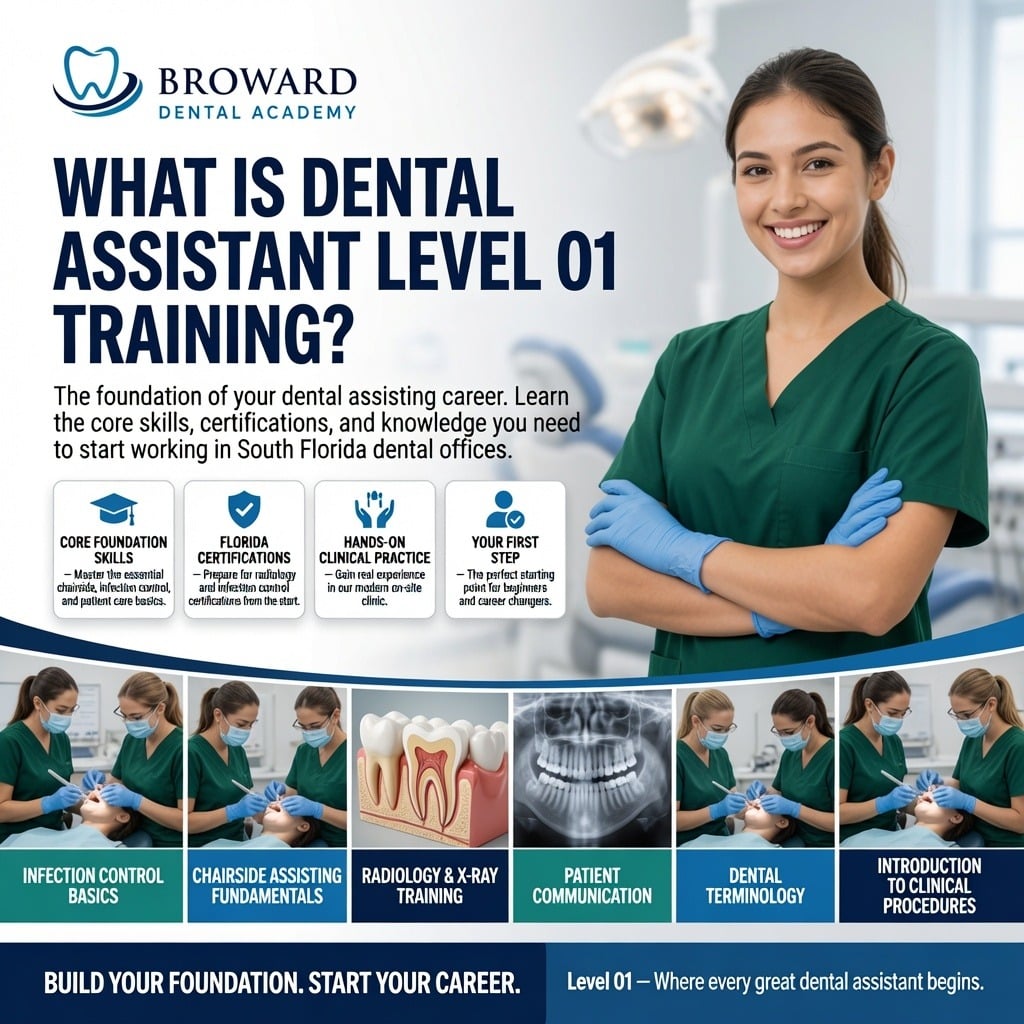
Dental assistants support chairside procedures, operatory turnover, instrument processing, documentation support, and patient flow. There are multiple pathways to become a dental assistant, with some jurisdictions allowing on-the-job training for entry-level assisting, while others require formal education, exams, permits, or specific coursework for key duties like radiography.
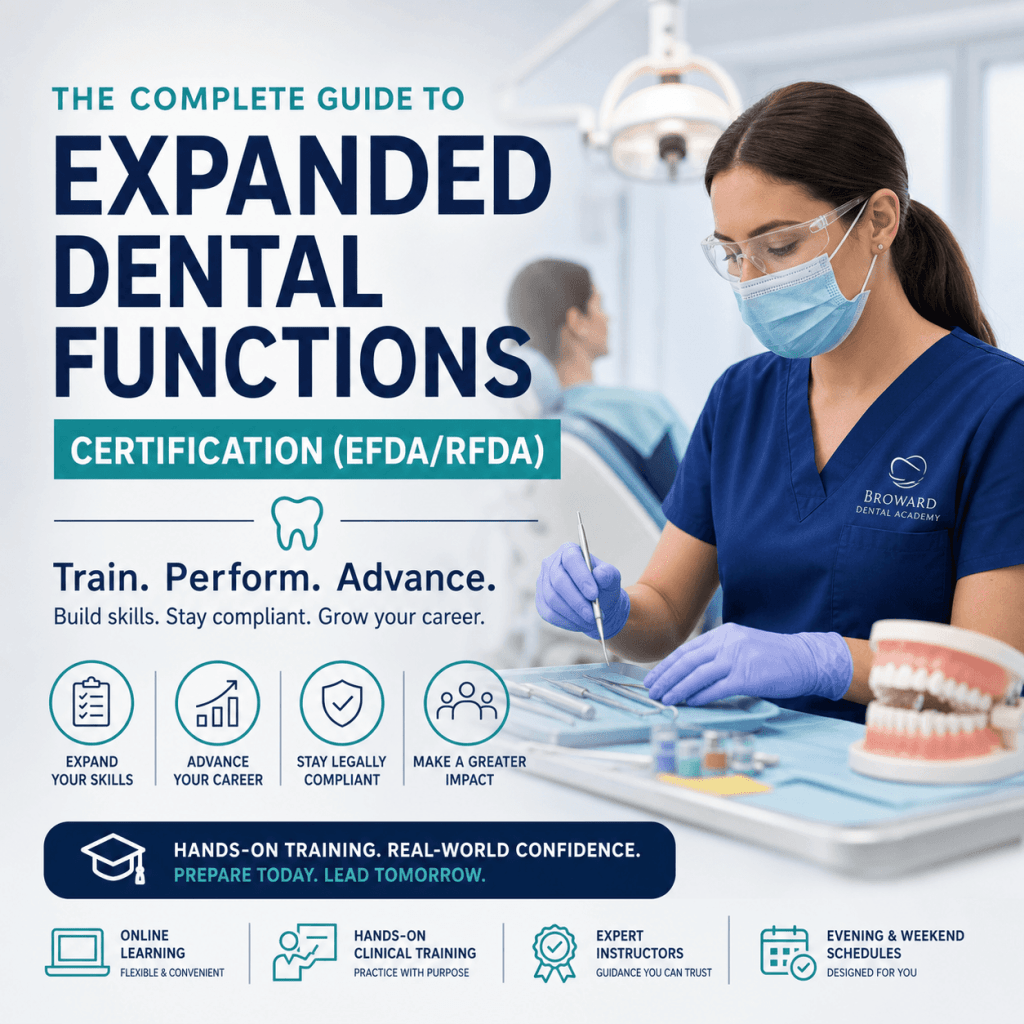
Expanded Functions Dental Assistant (EFDA) or expanded functions assistant
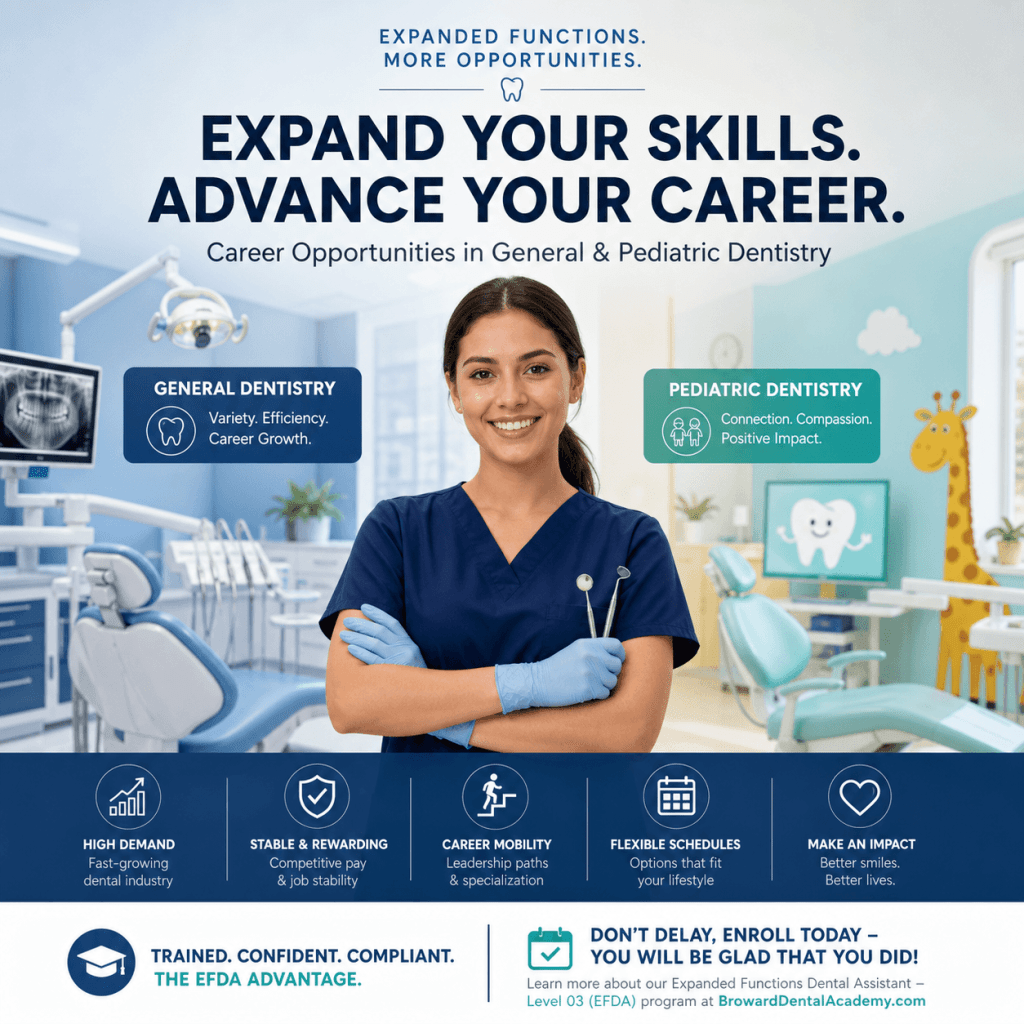
Expanded functions roles typically allow additional clinical duties beyond basic assisting, depending on jurisdiction. This is where compliance gets stricter with more training requirements, more competency verification, and tighter supervision and documentation expectations. Those interested in this path may consider pursuing an Expanded Functions Dental Assistant (EFDA).
Dental hygienist
Dental hygienists are usually licensed professionals with formal education and board exams. Their scope is defined by law, and renewal requirements are common. For those aspiring to this role, it’s worth exploring hygienist-level certifications.
Dental laboratory roles
Lab roles (like dental technician pathways) may require formal education, on-the-job training, or certifications depending on specialization and employer. They are not typically “chairside regulated” in the same way, but quality systems and privacy rules still matter.
Administrative roles (front office)
Front office team members may not need clinical credentials, but they often need strong competency in:
- HIPAA/privacy handling
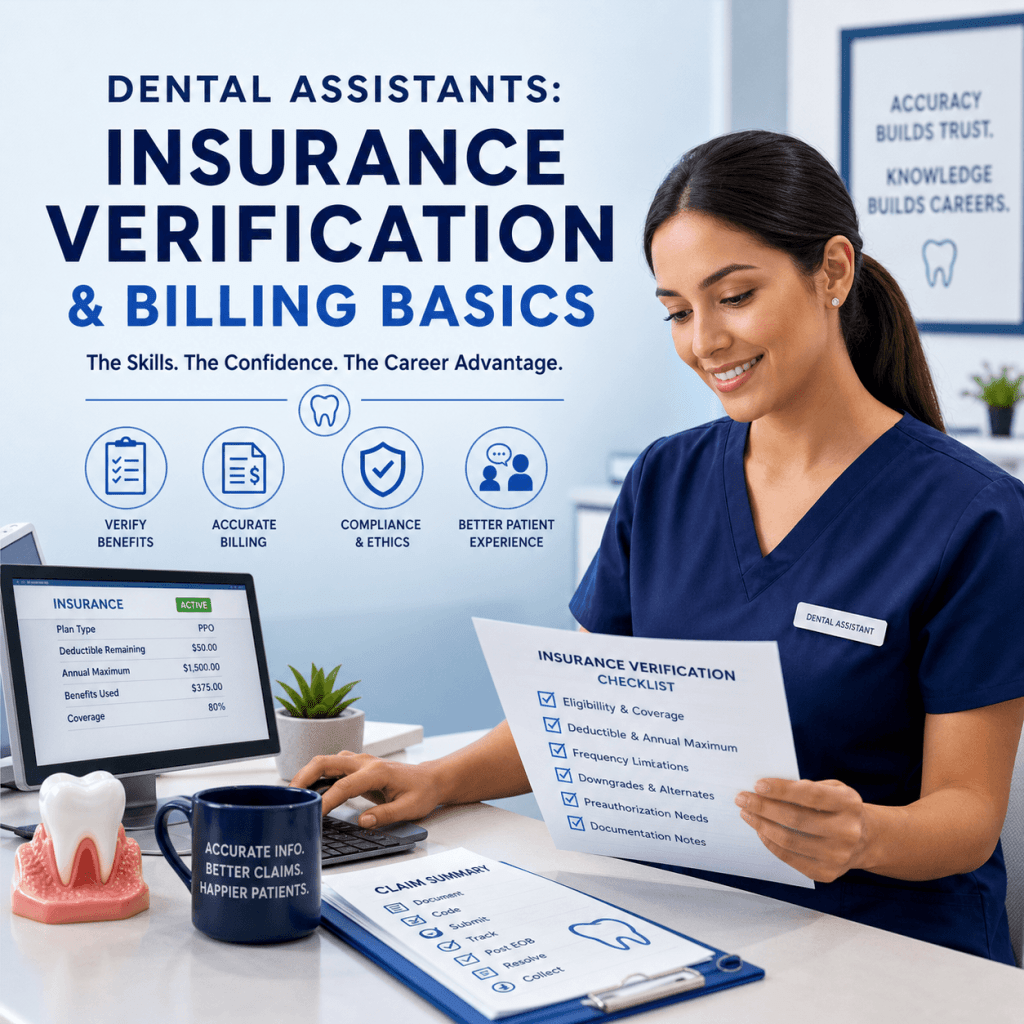
- Insurance and billing systems
- Professional communication and documentation
What employers look for across roles
Regardless of title, most high-performing practices value:
- Verifiable training
- Infection control knowledge and habits
- Radiography competency (where applicable)
- Professionalism and patient communication
- Accurate documentation and privacy awareness
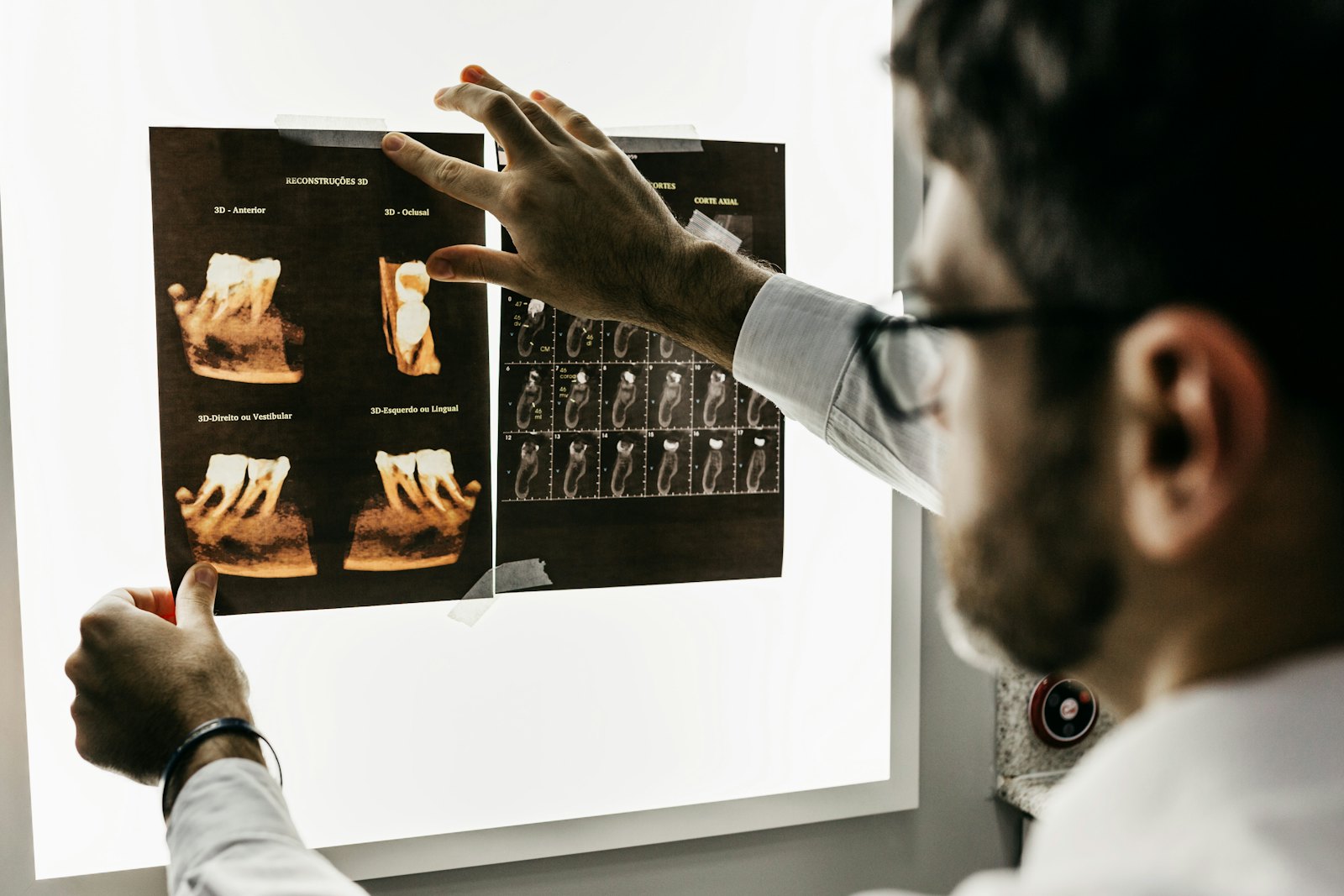
For those seeking to enhance their qualifications further or explore different specializations within the dental field, there are many certifications available that can provide the necessary credentials.
Dental assistant certification: what it is, what it proves, and when you need it
“Dental assistant certification” can mean different things depending on where you live and which credential is being referenced. In general, it signals that you completed structured training and met a standardized benchmark.
Even when certification is not legally required, it can still matter because it shows:
- You took the role seriously enough to train properly
- You have baseline knowledge you can apply under pressure
- You are more likely to onboard quickly and safely
What dental assistant certification typically covers
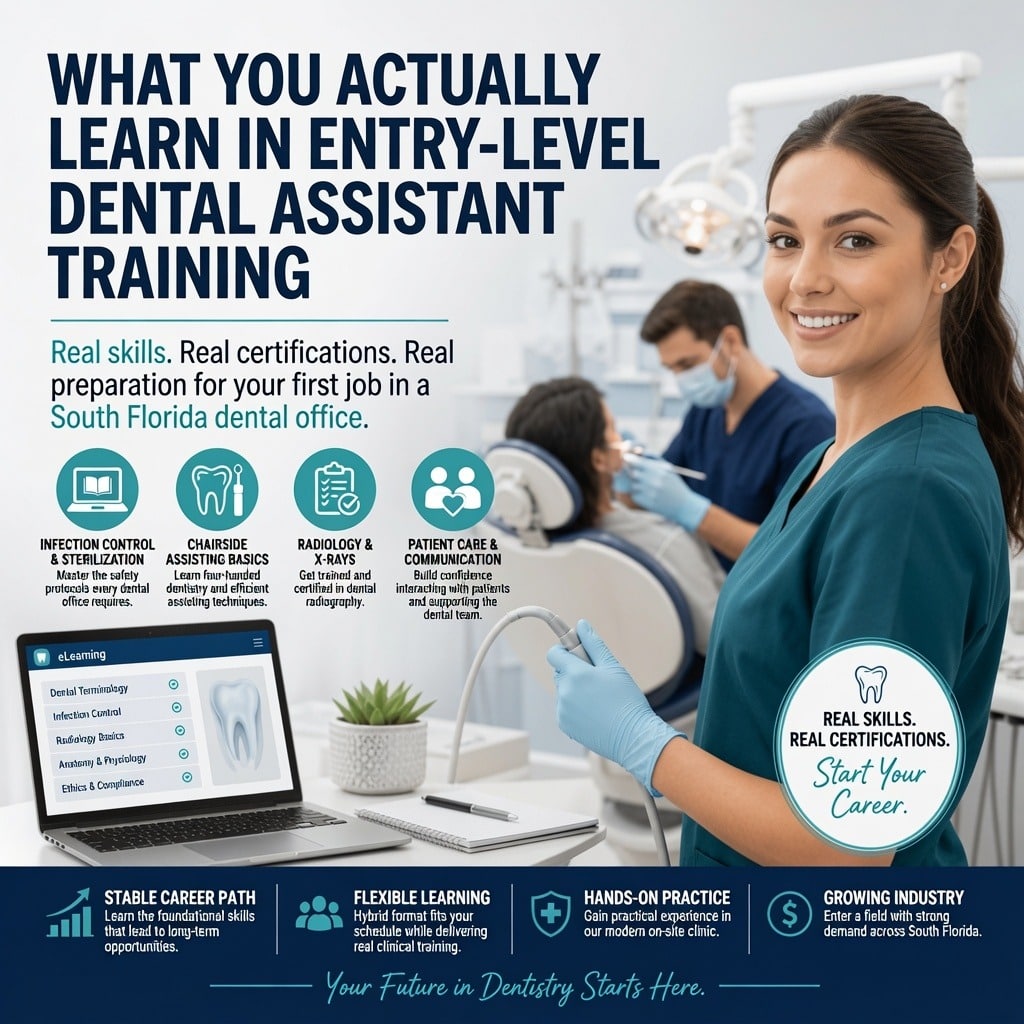
Most structured training includes topics like:
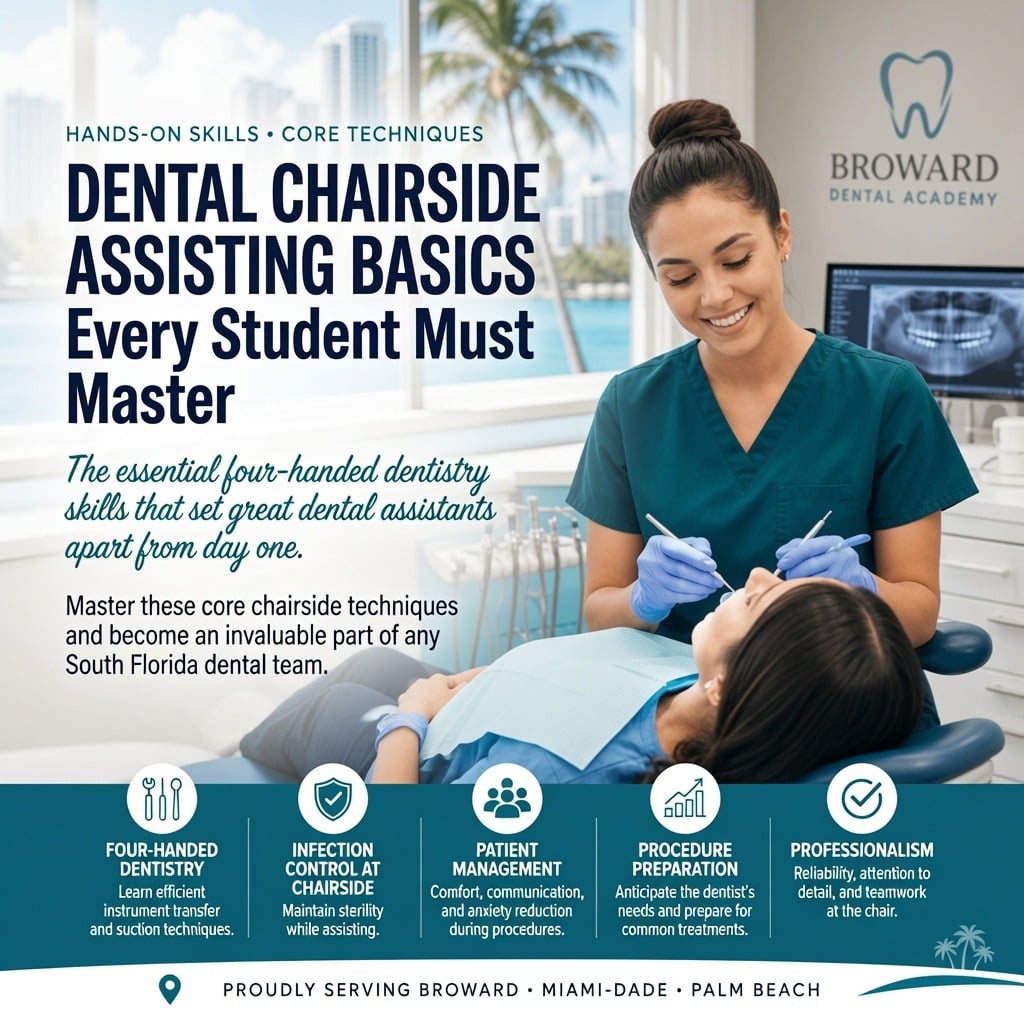
- Chairside assisting fundamentals and clinical workflow
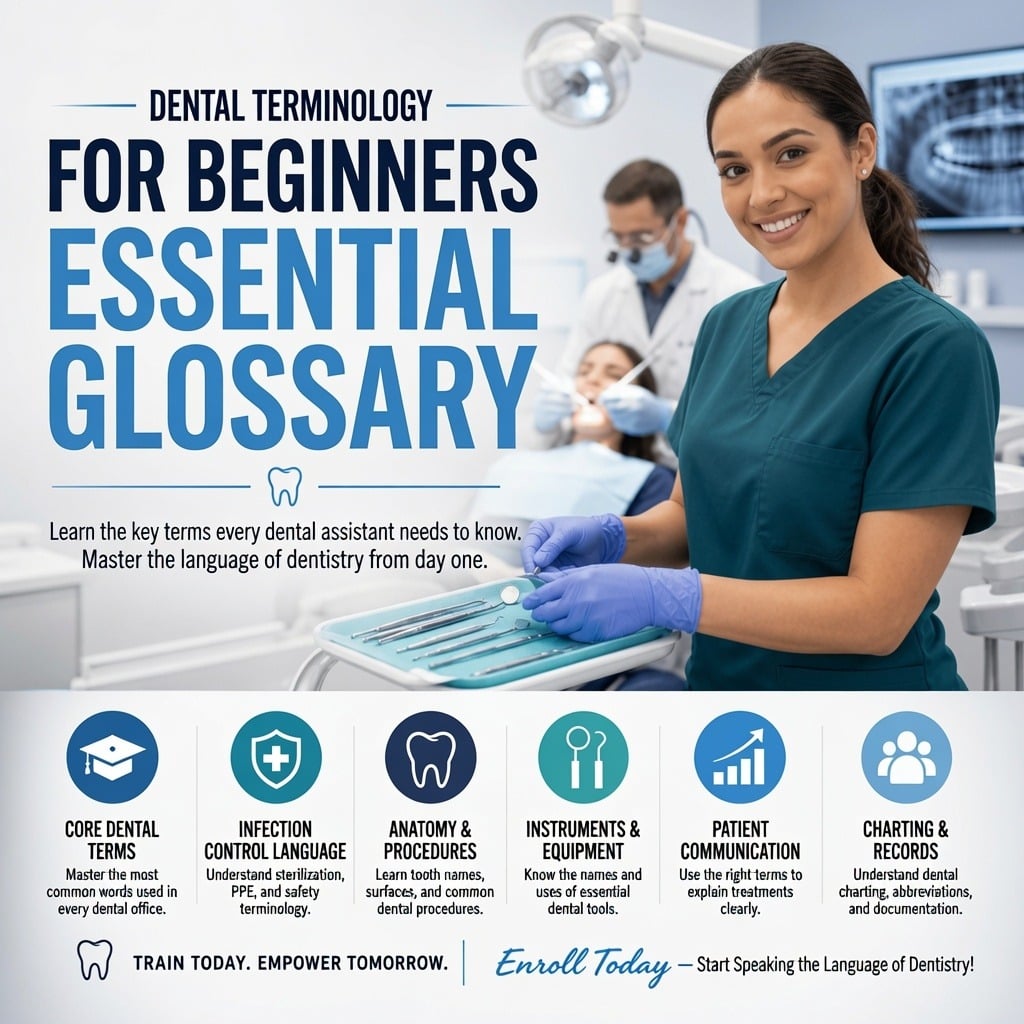
- Dental anatomy, terminology, and common procedures
- Instruments, materials, and operatory setup
- Radiography basics and safety concepts (jurisdiction-dependent)
- Infection control principles and sterilization workflow
- HIPAA/privacy awareness and documentation basics
- CPR/BLS expectations (role and employer dependent)
What “immediate immersion” can look like
The fastest way to build real readiness is usually a combination of:
- Structured eLearning for the knowledge foundation
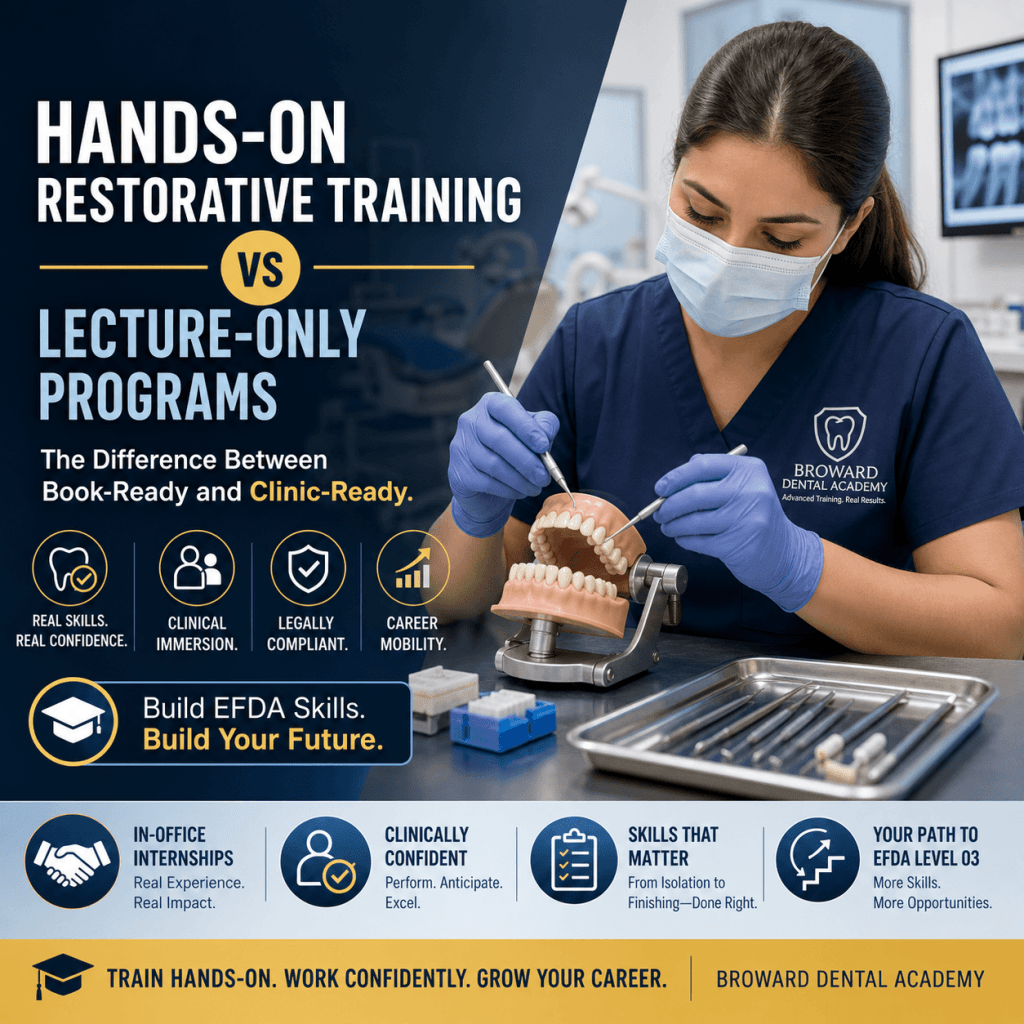
- Hands-on skill-building so the work feels natural
- In-office exposure so you understand pace, teamwork, and real patients
How to choose a program (practical decision criteria)
When comparing options for your dental assistant certification, focus on:
- Schedule flexibility that fits your life
- Hands-on clinical skill requirements, not just theory
- Internship or externship support
- Instructor access and feedback speed
- Financing options
- Employer recognition and local alignment
Online learning can be excellent for theory. Clinical confidence, however, comes from repetition, correction, and supervised practice. For those interested in pursuing this career path, consider exploring structured programs such as those offered by Wake Technical Community College, which provide comprehensive training in dental assisting.
Online vs in-person vs hybrid dental assistant programs: choosing the right format
Online:
Great for flexibility and theory, but you still need a plan for hands-on competencies.
In-person:
Strong for labs and direct feedback, but may be harder to fit around work or family schedules.
Hybrid (often ideal for many students):
Combines online lesson plans with in-person clinical skill-building and an internship or externship bridge into real practice.
When you are evaluating a program, ask a direct question: Where do students practice the skills that employers expect on day one? If the answer is unclear, keep looking.
EFDA certification and expanded functions: what changes when your scope expands
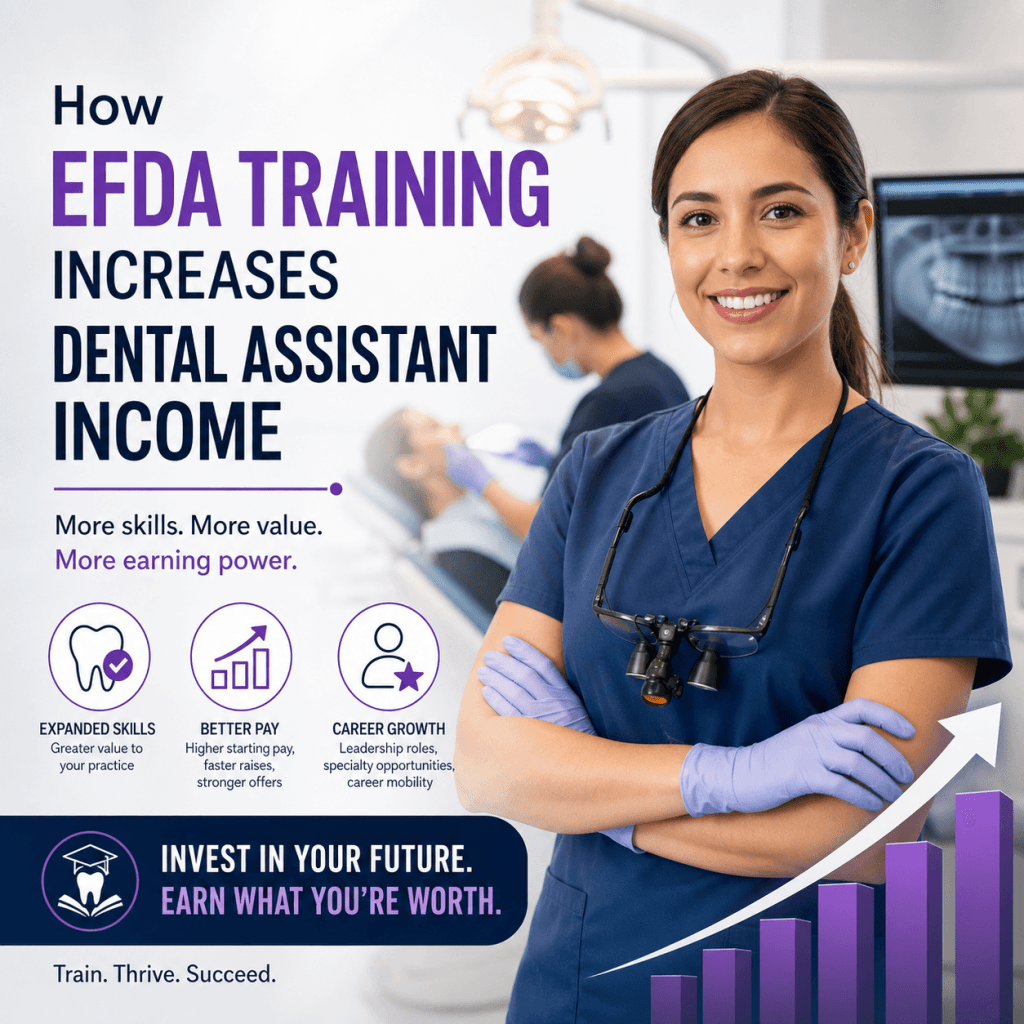
Expanded functions credentials are valuable because they help practices run more efficiently, and they often allow you to contribute at a higher clinical level (within legal limits). That can translate into stronger income potential and improved career mobility.
But expanded functions also raise the stakes:
- You must be precise about what you are allowed to do
- Supervision rules matter more
- Documentation matters more
- Competency verification becomes more important
Common expanded-function areas (general, jurisdiction-dependent)
Expanded functions vary widely, but may include areas such as:
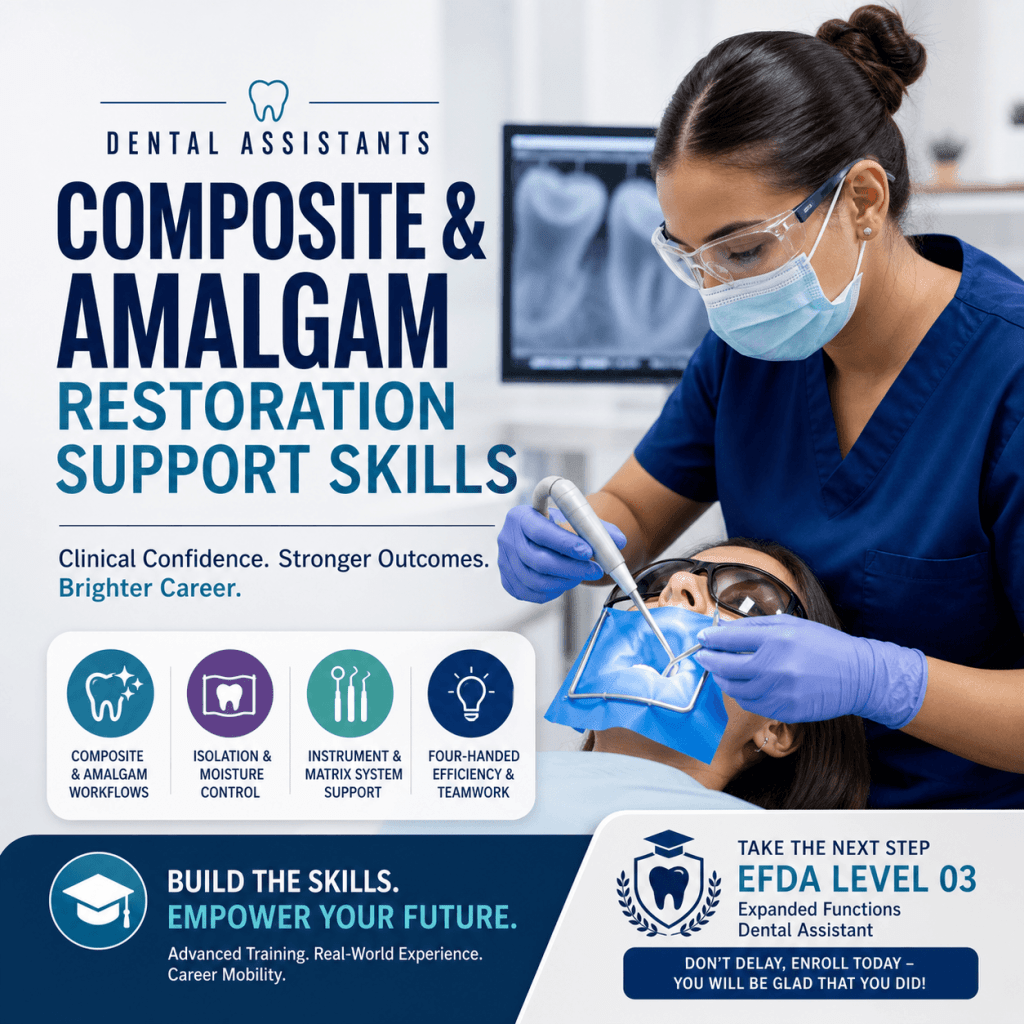
- Restorative support tasks
- Impressions (where permitted)
- Temporary restorations (where permitted)
- Radiography functions if authorized
Always tie these duties back to your jurisdiction’s rules. A task that is normal in one state may be restricted in another.
Usual steps to move into expanded functions
A common pathway looks like this:
- Build a baseline dental assisting foundation
- Complete expanded-function coursework
- Demonstrate competency through clinical verification or sign-off
- Obtain any required state permit, registration, or credential
- Stay within scope with the correct supervision level and documentation
Licensing and legal requirements: how to verify what your state (or country) actually requires
The safest approach is to verify requirements yourself. Do not rely solely on social media, hearsay, or how one office does it.
Here is a simple process that works:
- Identify your target role (dental assistant, EFDA, hygienist, etc.)
- Go to your state dental board website (or your country’s regulator)
- Find the Dental Practice Act and rules for your role
- Confirm requirements for education, exams, permits, and supervision
- Check renewal and continuing education rules if the credential requires it
- Match your training plan to those requirements
Requirements often differ the most in areas like:
- Radiography authorization
- Infection control training expectations
- Anesthesia and sedation-related tasks
- Expanded functions categories and supervision levels
Why practices care (employer-side risk)
Practices must protect patients, meet OSHA and HIPAA standards, and pass audits. If a team member performs a restricted duty without the right authorization, the practice may face penalties, liability exposure, and reputational damage. That is why many employers prefer candidates with clear training records and standardized preparation.
What dental practices expect during onboarding (even when the law is vague)
Even if your local rules leave room for interpretation, employers often have their own standards. Common onboarding checks include:
- Verification of education or training completion
- CPR/BLS status (as required by the practice or role)
- HIPAA training completion
- Infection control and sterilization protocols
- Radiography competency documentation if you will take X-rays
- Reference checks and professionalism screening
The more structured your training, the easier onboarding becomes. You can focus on learning that office’s systems, instead of scrambling to learn basic clinical workflow.
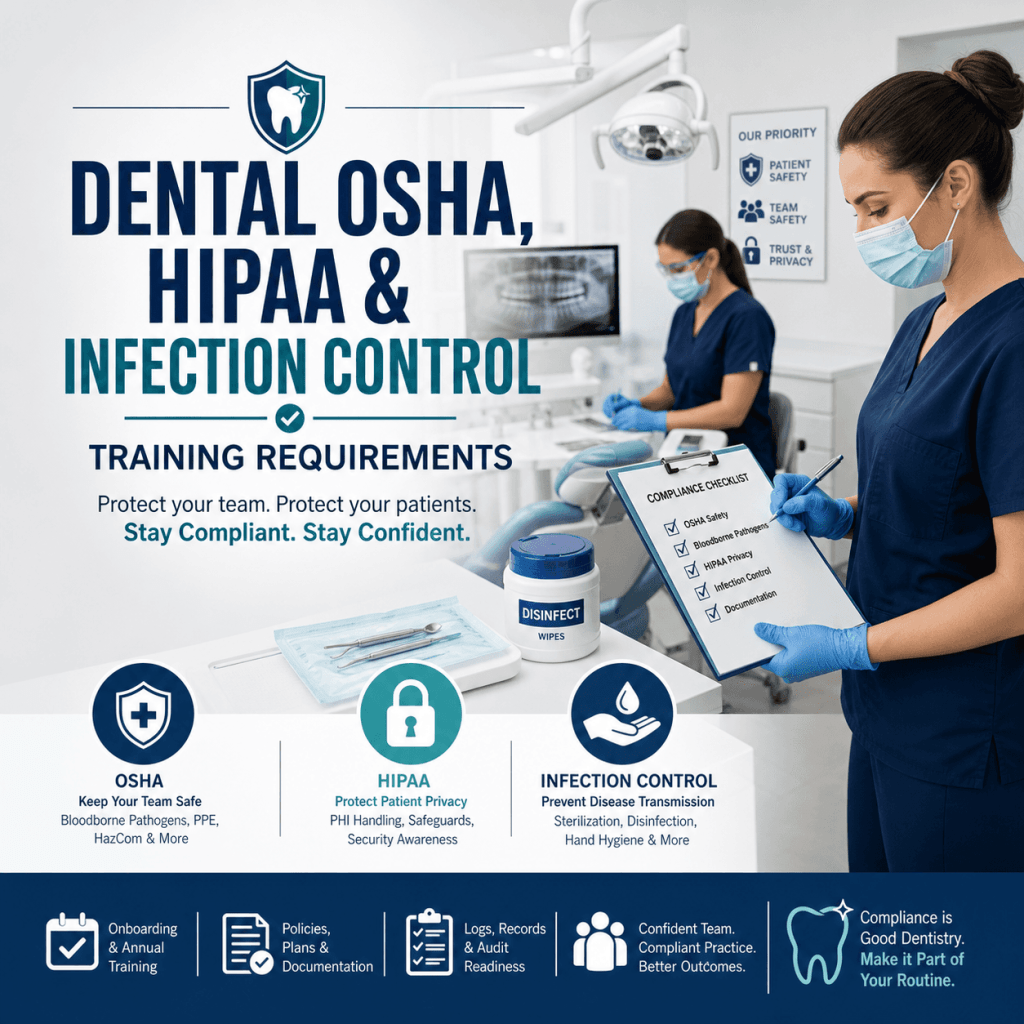
Compliance basics every dental assistant should know (and use daily)
Compliance is not just paperwork. It is daily habits that reduce risk for patients, the practice, and you.
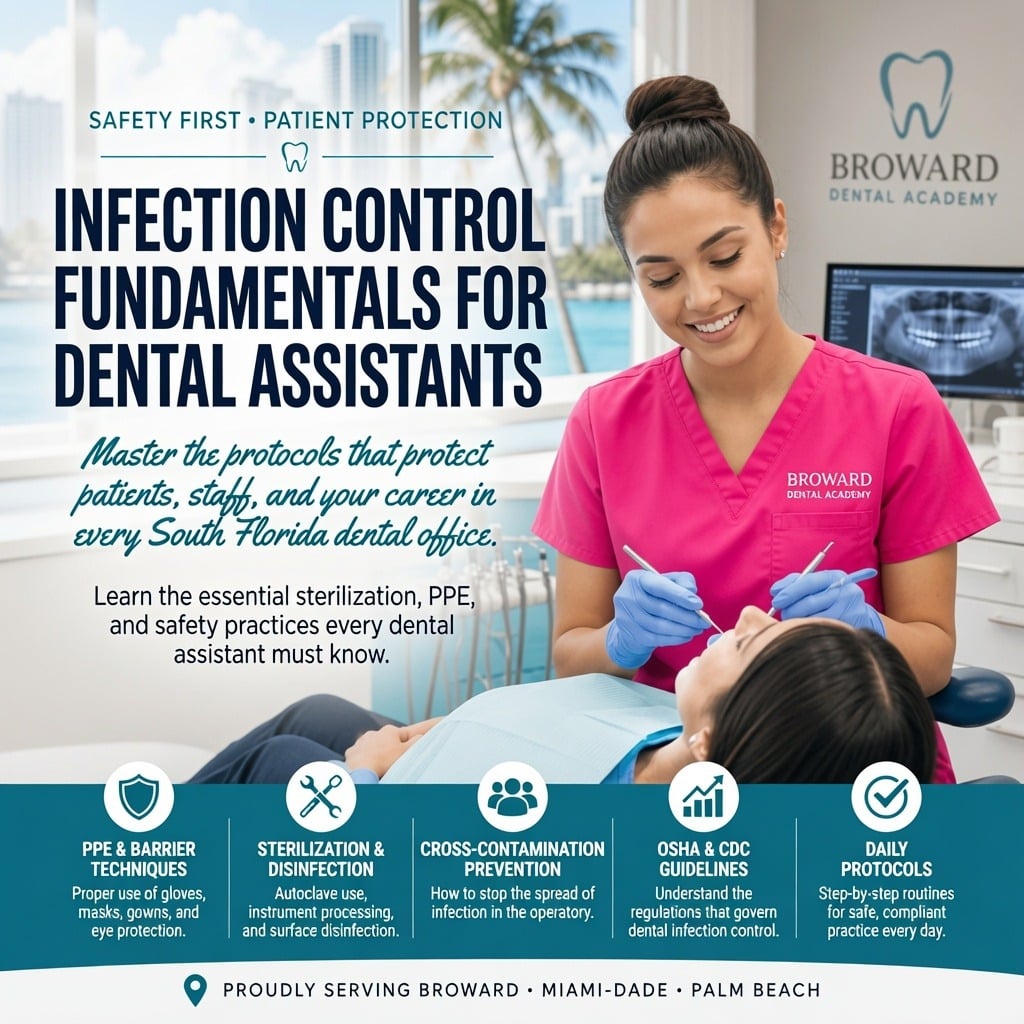
Infection control (daily fundamentals)
- Hand hygiene before and after patient contact
- Proper PPE selection and correct donning/doffing
- Sterilization flow that prevents cross-contamination
- Operatory turnover protocols that are consistent, not rushed
- Sharps safety and correct disposal
- Clear separation of clean vs contaminated zones
How scope mistakes happen in real life
Most scope and compliance issues are not malicious. They happen because of:
- Rushed schedules
- Unclear delegation
- Gaps in training
- “We’ve always done it this way” culture
A simple decision rule that protects you
If you are not trained and authorized, and it is not documented, pause and confirm. Ask the dentist, lead assistant, office manager, or compliance lead. A professional practice will respect you for protecting the patient and the office.
Compliance is also ethical. Patients trust the team. Staying in scope is part of being a professional.
Staying in scope: the simplest way to protect your job and your future
Your scope of practice is the set of duties you are legally allowed to do, under the required supervision level, in your jurisdiction.
A practical way to think about it:
- Some tasks are appropriate for trained assistants
- Some tasks require an expanded function credential or permit
- Some tasks are reserved for licensed clinicians
When the day gets hectic, it can be tempting to help “just this once.” But scope issues tend to show up after something goes wrong. Protect yourself by confirming what is permitted, getting the right training, and keeping your documentation clean.
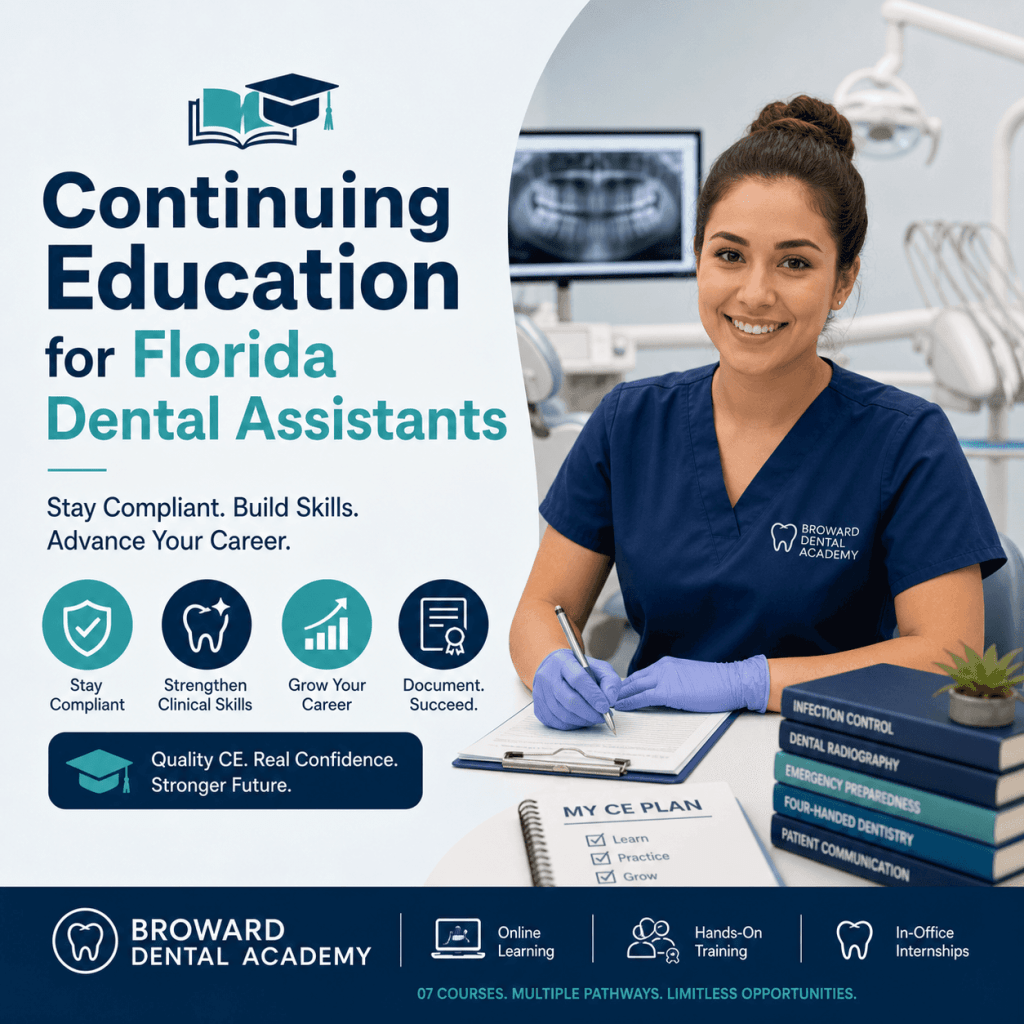
Continuing education, renewals, and keeping your credentials current
Many credentials require periodic renewal and continuing education, and CPR/BLS often has its own renewal cycle.
A simple system makes this easy:
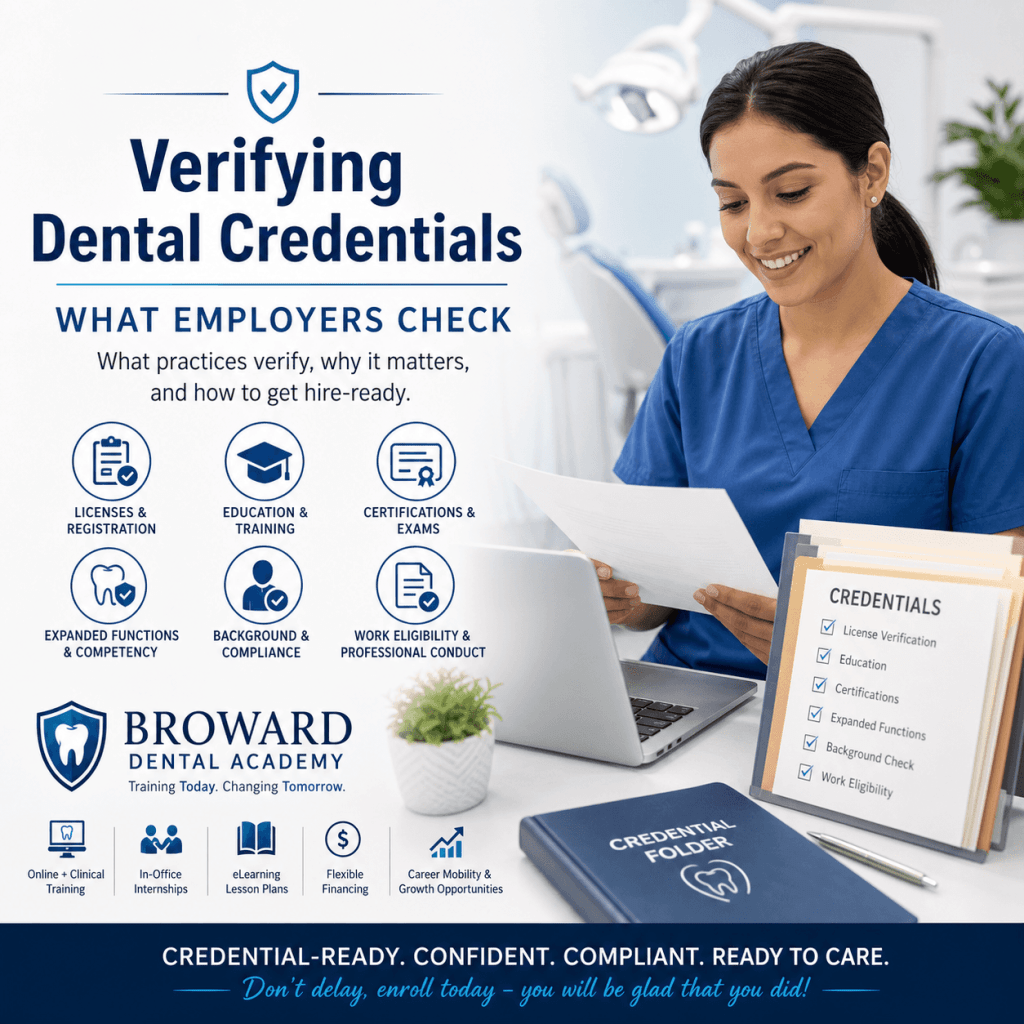
- Keep a digital folder for certificates, permits, and training records
- Save every CE certificate immediately (do not “do it later”)
- Set calendar reminders 60 to 90 days before renewal deadlines
- Track CE hours in a running document or spreadsheet
- Keep screenshots or PDFs of confirmation pages if anything is submitted online
Continuing education is not just about staying eligible. It is one of the cleanest ways to grow into expanded functions, qualify for better roles, and show employers you take quality seriously.
What employers look for in 2026: “trained, compliant, and ready on day one”
When practices hire, they are looking for signals that you will be safe, consistent, and effective in a fast-moving environment.
The strongest signals include:
- Structured education and verifiable training
- Hands-on competence, not just book knowledge
- Strong infection control and safety habits
- Professional communication with patients and teammates
- Accurate documentation and privacy awareness
“Clinically confident” matters because it improves:
- Chairside efficiency
- Patient comfort and trust
- Teamwork and predictability
- Error reduction and smoother days
Soft skills also support compliance more than people realize:
- Attention to detail
- Integrity, especially when nobody is watching
- Calm under pressure
- Willingness to ask questions before making assumptions
Dentistry can offer stable income, flexible schedules, and real career mobility, especially for assistants who invest in training and credentials.
How Broward Dental Academy helps students build real-world credentials and compliance confidence
Broward Dental Academy is built around career preparation, not just test preparation. The goal is to help students become thoroughly trained, legally compliant, and clinically confident so they can thrive in a modern, high-performance dental practice.
Students train through a model that emphasizes:
- eLearning lesson plans for remote training
- Clinical skill-building that supports real chairside readiness
- In-office internships that provide real exposure to the pace and expectations of practice
Broward Dental Academy also serves the dental community by developing well-rounded professionals who learn to think critically, act ethically, and perform confidently.
If you’re curious about the specific dental courses offered or have any other inquiries regarding the program such as financing options or support during completion, you might find the frequently asked questions section helpful.
If you are planning a longer-term path in dentistry which may include advanced roles such as dental hygiene, ask how your program supports progression into advanced dental training and expanded functions.
For readers comparing programs: a simple checklist to use before enrolling
Use this checklist to compare any dental assistant program side by side:
- Confirm your target role and local requirements (state board or regulator)
- Ask how clinical skills are taught and assessed (labs, competencies, internship)
- Ask if the program supports expanded functions or EFDA progression
- Ask about schedule options and how quickly you can complete
- Ask about financing and what is included in tuition
- Ask how OSHA, HIPAA, infection control, and radiation safety are built into daily training
- Ask what documentation you will graduate with (completion records, competency forms, internship verification)
Your next steps: pick a path, verify requirements, and start training
Most people succeed faster when they choose one of these paths intentionally:
- Start as a dental assistant with foundational training to build immediate employability
- Plan for EFDA or expanded functions once your fundamentals are strong
- Upskill for long-term mobility through advanced dental training and ongoing education
Whatever path you choose, verify local rules first, then match your training to the requirements and the type of practice you want to work in.
If you are ready to train for a stable, respected healthcare role with real career mobility, Broward Dental Academy can help you build the credentials and compliance confidence employers are looking for.
Don’t delay, enroll today, you will be glad that you did.
FAQs (Frequently Asked Questions)
Why are certifications and compliance crucial in the dental profession?
Certifications and compliance in dentistry are essential because they ensure patient safety, define your legal scope of practice, and protect your license, job, and the dental practice. Adhering to standards like infection control, radiography safety, and clinical protocols is non-negotiable to maintain trust and professionalism in healthcare delivery.
What is the difference between certification, license, and registration in dentistry?
A certification demonstrates completion of training or exams and signals clinical readiness but may be optional. A license is a legal permission issued by regulatory boards defining your authorized duties with eligibility requirements and oversight. Registration or permits often relate to specific functions like radiography or expanded duties after completing certain courses.
How can I verify the certification and licensing requirements for dental roles in my state or country?
You should consult your state dental board or local regulatory authority to confirm specific certification, licensing, and compliance requirements. Additionally, carefully review job postings as employers may use terms like ‘certified,’ ‘licensed,’ or ‘registered’ loosely; verifying ensures you meet all legal obligations.
What are common credential requirements for dental assistants?
Dental assistants typically need varying credentials depending on jurisdiction—ranging from on-the-job training for entry-level roles to formal education, exams, permits, or specific certifications. These credentials enable them to support chairside procedures, instrument processing, documentation, and patient flow effectively while complying with legal standards.
How does maintaining compliance impact employability in the expanding dental industry?
With rising demand for skilled dental professionals and more stringent standards, employers prioritize hires who are trained, legally compliant, clinically confident, and able to follow protocols such as CDC infection control guidelines. Compliance demonstrates professionalism and readiness to perform consistently in busy practices.
Where can I pursue specialized dental certifications to enhance my career prospects?
Consider enrolling in reputable institutions like Broward Dental Academy that offer specialized certifications in areas such as oral surgery, orthodontics, endodontics, periodontics, and more. These certifications help build strong fundamentals recognized by employers and support career advancement within dentistry.