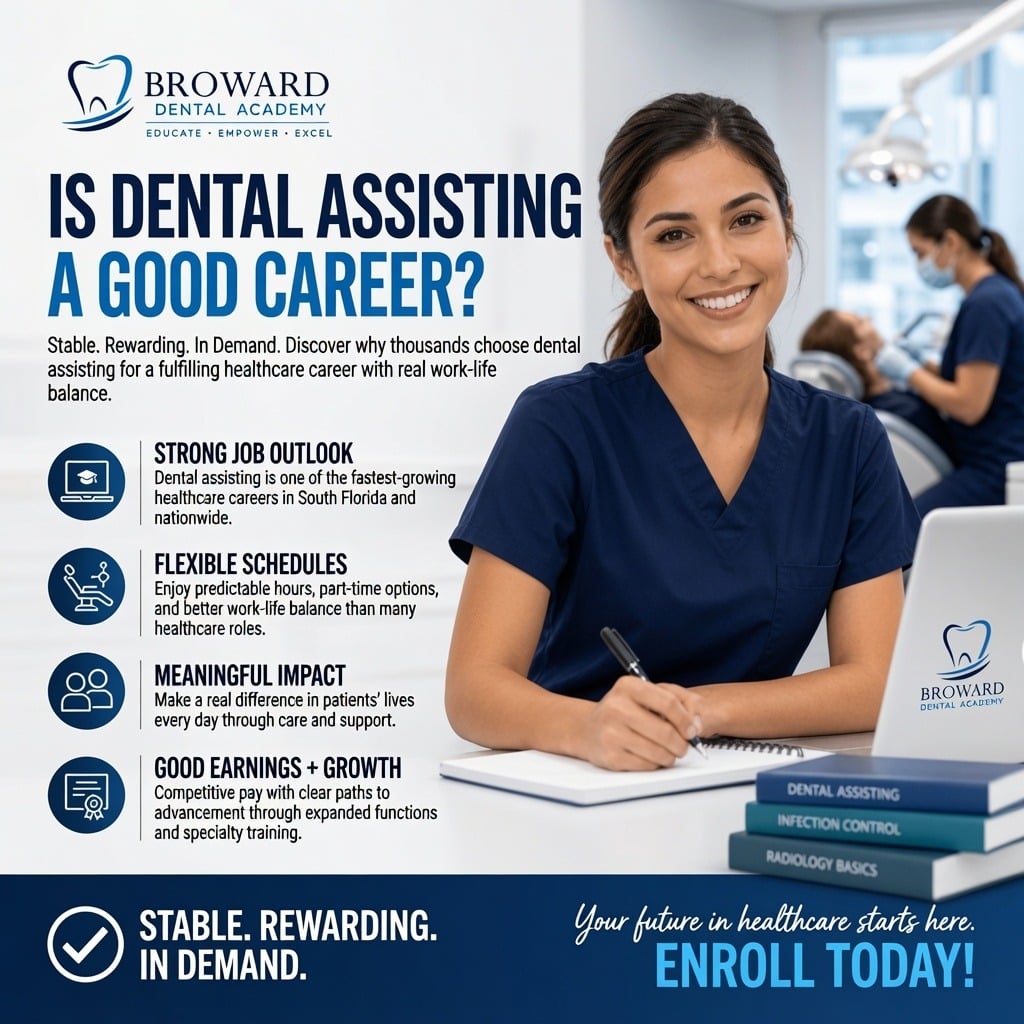
Is dental assisting a good career? (Quick, honest answer)
Dental assisting can be a very good career if you want a hands-on healthcare role with steady demand, real patient interaction, and clear paths to grow. Your days are active, your work matters, and you are a key part of the clinical team that keeps a dental practice running smoothly.
It’s best for people who want to enter healthcare relatively quickly, enjoy teamwork, and prefer variety over sitting at a desk all day. It’s also a strong fit if you like learning practical skills and you want a role where professionalism, communication, and consistency are valued.
You should think twice if you dislike standing for long periods, working in close contact with patients, or staying focused through a busy appointment schedule. Dental offices move fast, and assistants are often at the center of that pace.
In this guide, I’ll break down what the job actually looks like, what affects pay, the schedule reality, training options (online and in-person), advancement paths, and how to get started in South Florida.
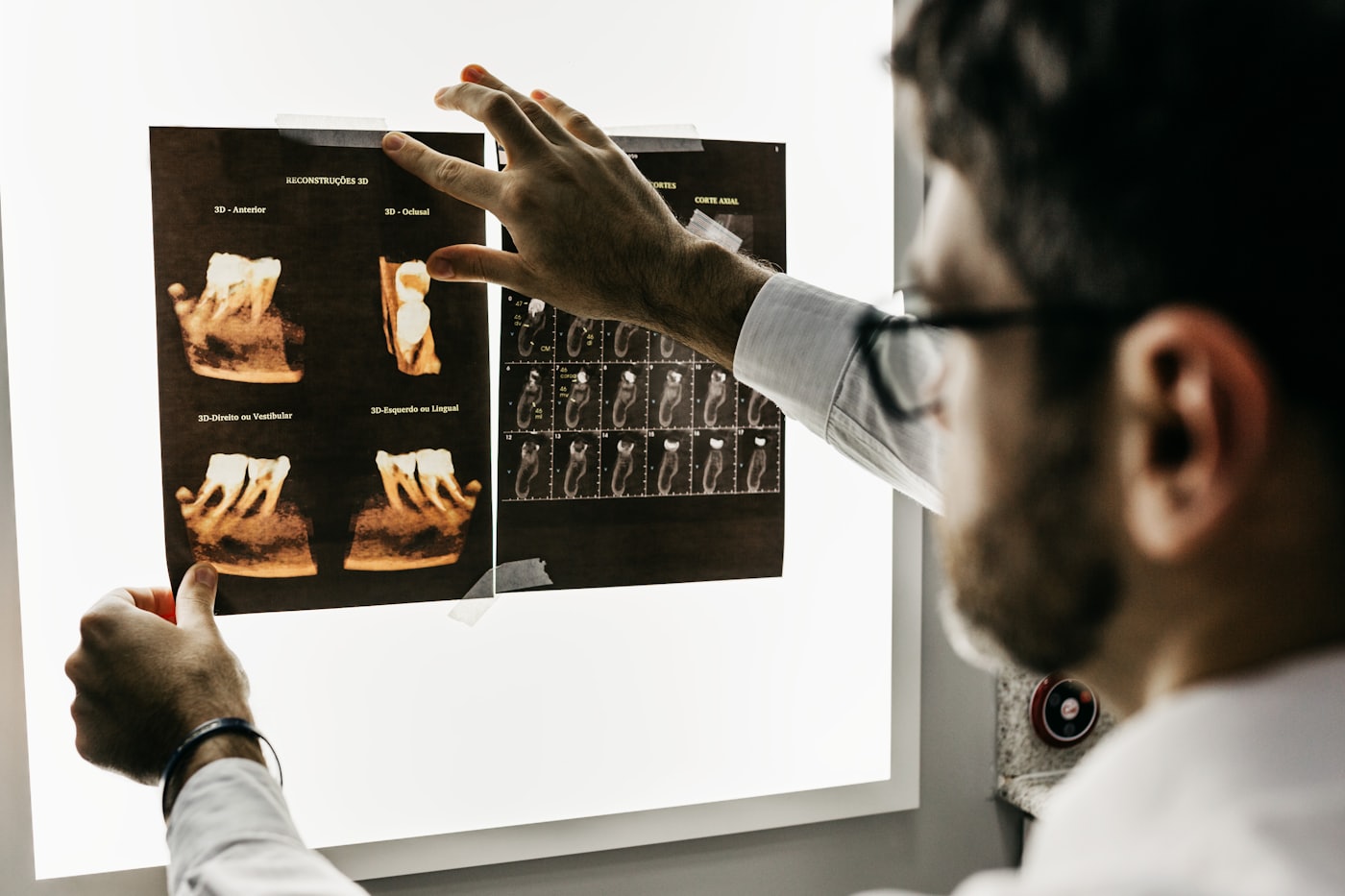
What dental assistants actually do (so you know what you’re signing up for)
Dental assisting is not just “helping the dentist.” It is clinical support, patient care, and workflow management happening at the same time.
Core daily duties you can expect
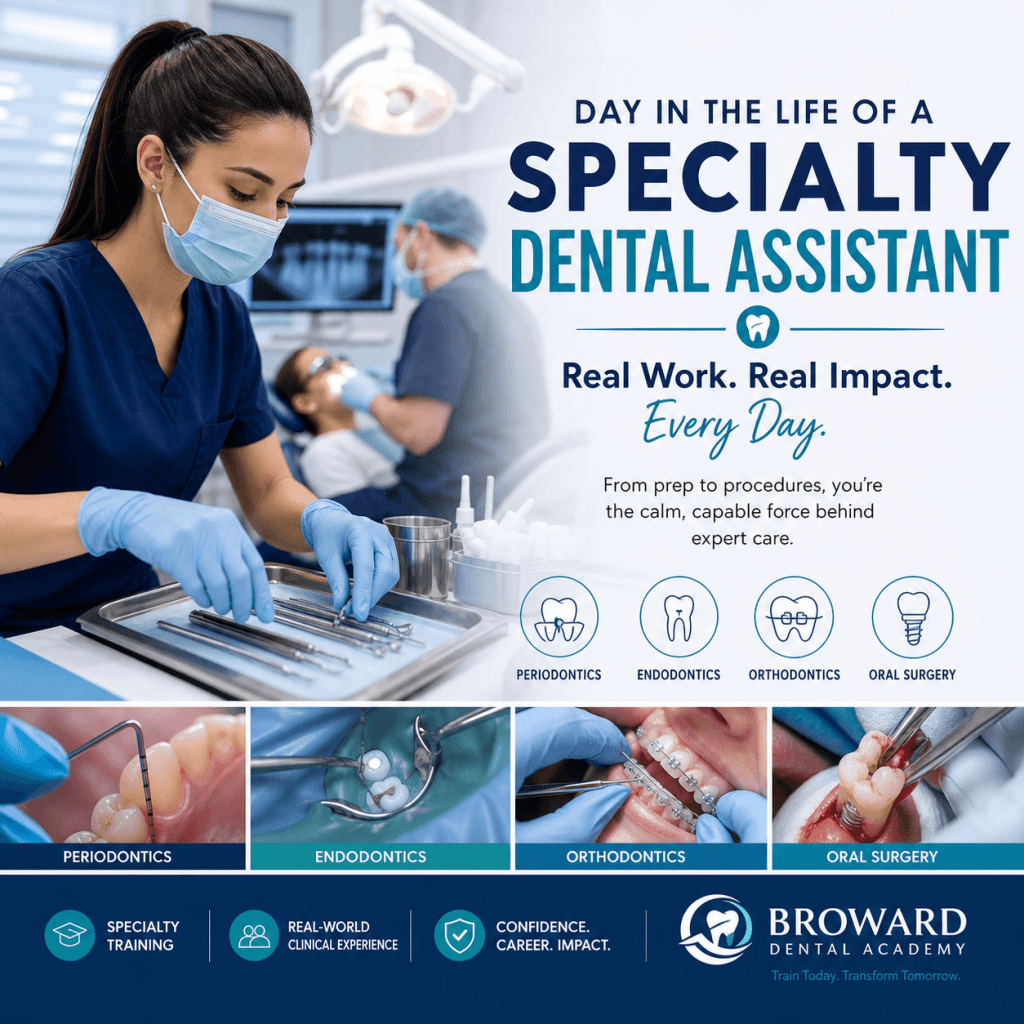
Most dental assistants rotate through a set of essential responsibilities that keep the day on track:
- Chairside assisting during exams and procedures
- Setting up instruments and materials before the patient sits down
- Suction and retraction to maintain visibility and comfort
- Patient prep, including reviewing what’s planned and helping them feel ready
- Sterilization, infection control, and instrument processing
- Room turnover between appointments, including disinfecting surfaces and resetting trays
- Charting and documentation support, depending on the office’s systems and your role
- Supporting the dentist’s workflow so procedures stay efficient and safe
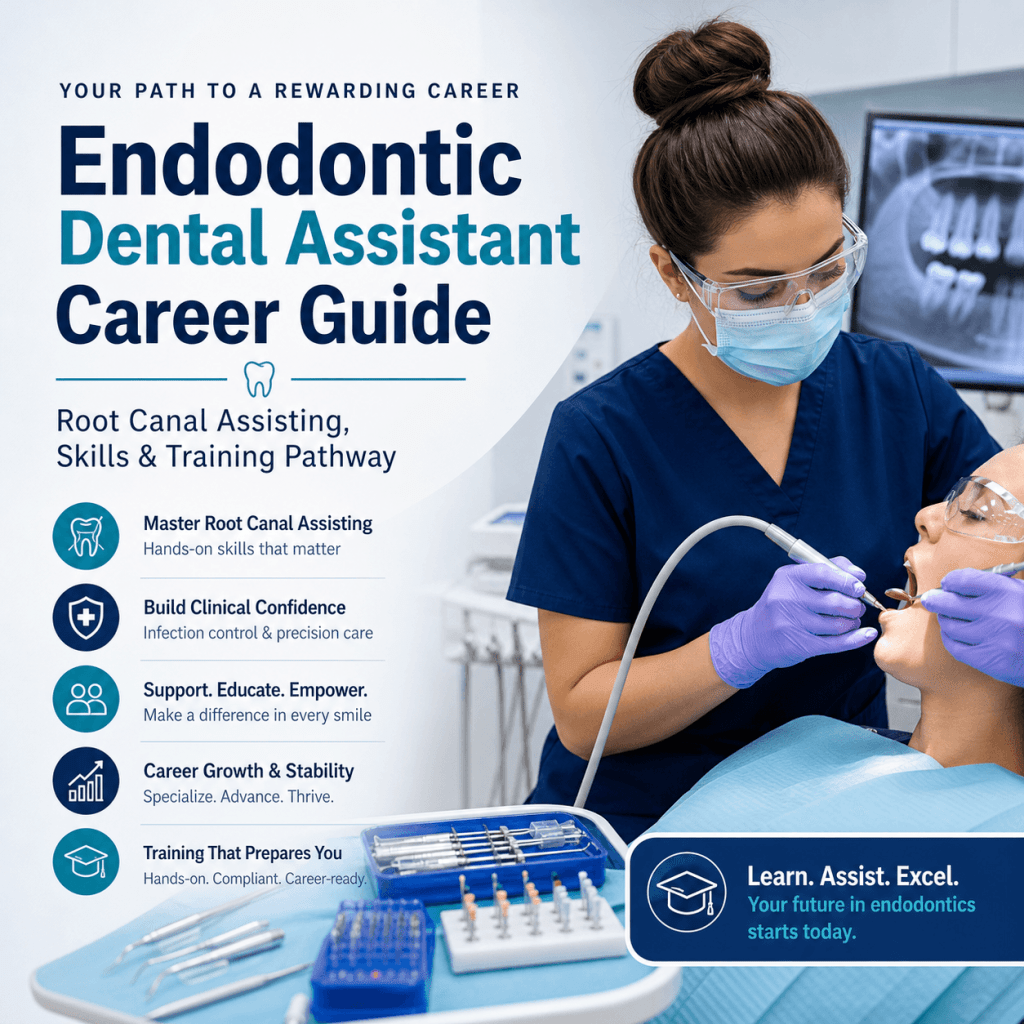
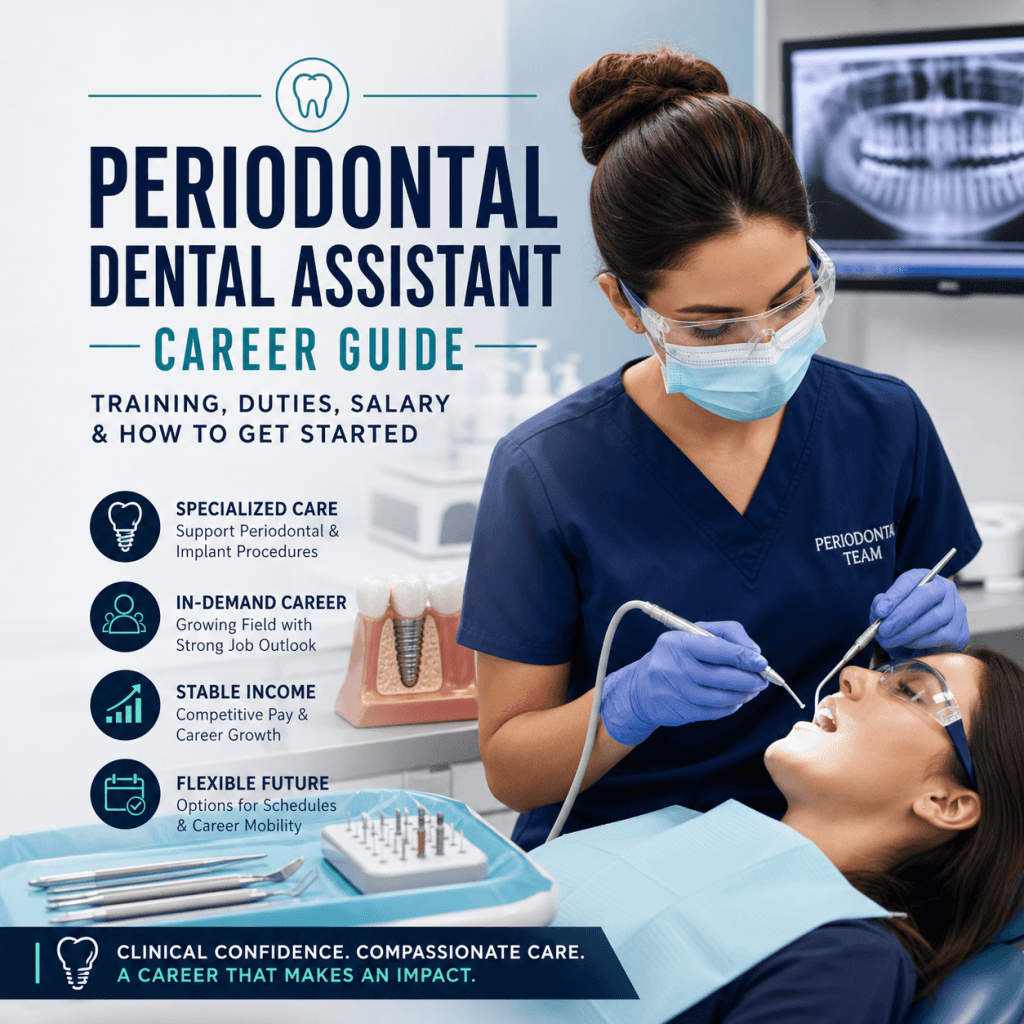
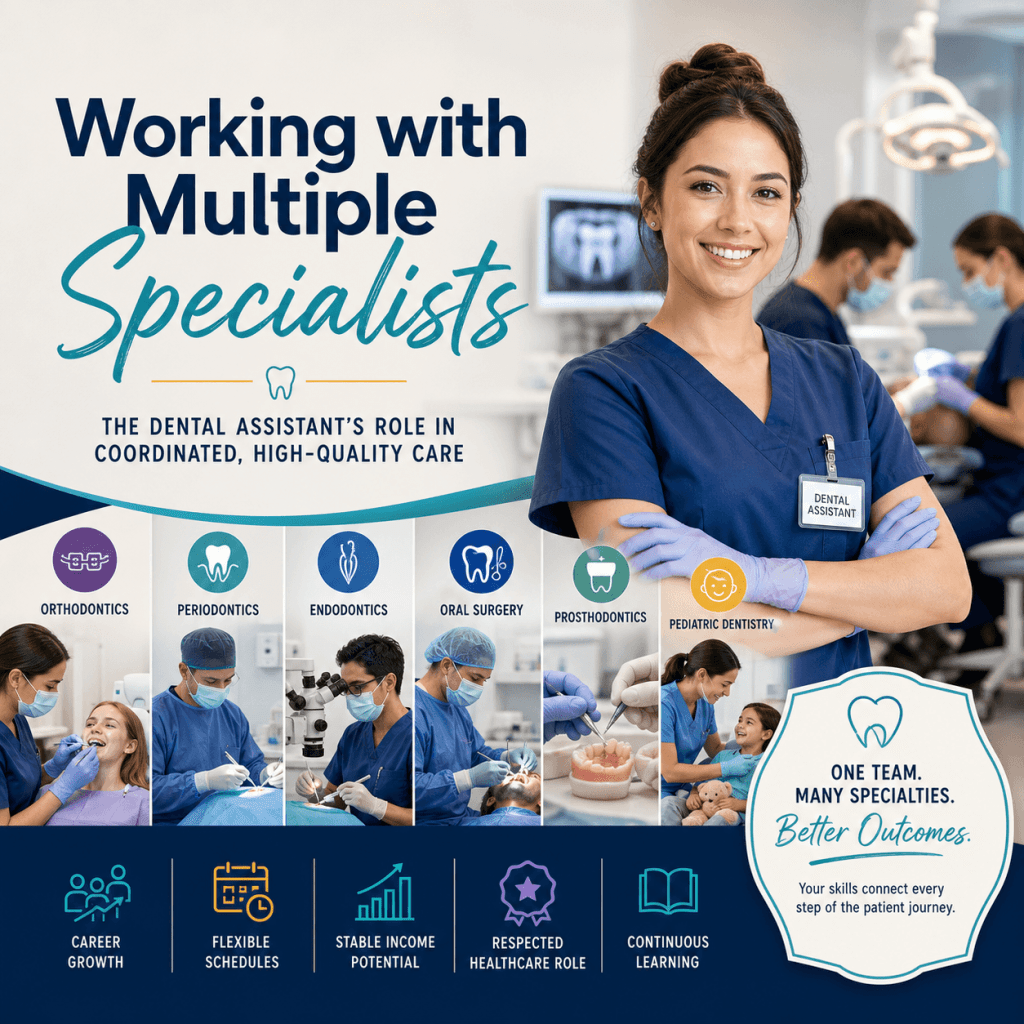
In a well-run practice, a great assistant can be the difference between a smooth day and a stressful one. This could involve [endodontics](https://browarddentalacademy.com/endodontics/) or [periodontics](https://browarddentalacademy.com/periodontics/), depending on the needs of the patient.
If you’re considering pursuing this career path in South Florida, there are numerous courses offered that can help you gain the necessary skills. The locations of these training facilities are conveniently spread across the region.
The patient-facing side matters more than people expect
In dental practice, you’ll frequently interact with nervous patients, busy parents, and individuals who have avoided the dentist for years. A calm, confident assistant can lower anxiety quickly.
You may also find yourself in the position of explaining “what happens next,” sharing post-op instructions, and helping patients understand how to care for themselves after treatment. Professionalism, privacy, and clear communication are part of the job, not optional extras. It’s essential to remember that while dental procedures can be intimidating, understanding the process can significantly reduce patient anxiety.
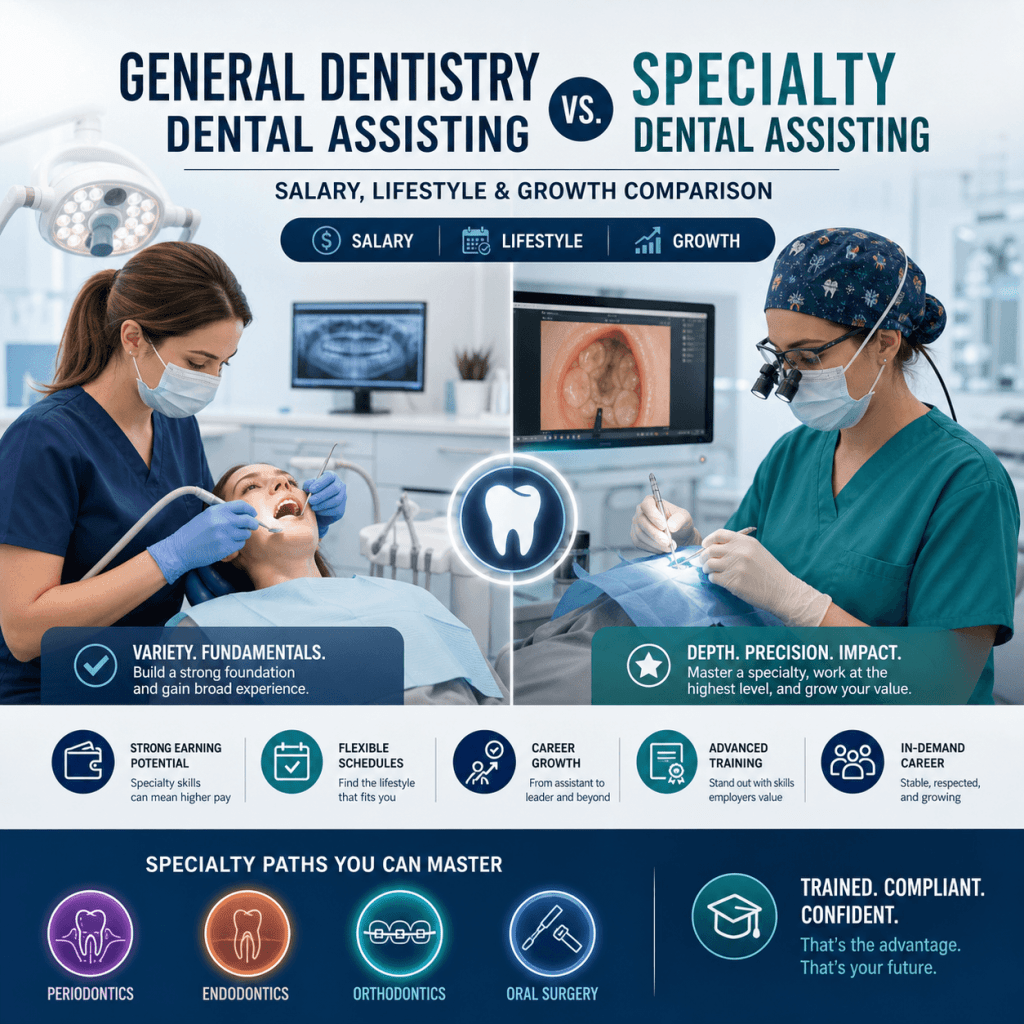
General dentistry vs orthodontics (and why it changes the feel of the day)
The setting affects your pace and tasks.
General dentistry often includes a mix of exams, fillings, crowns, extractions, and hygiene checks, so your day can shift quickly.
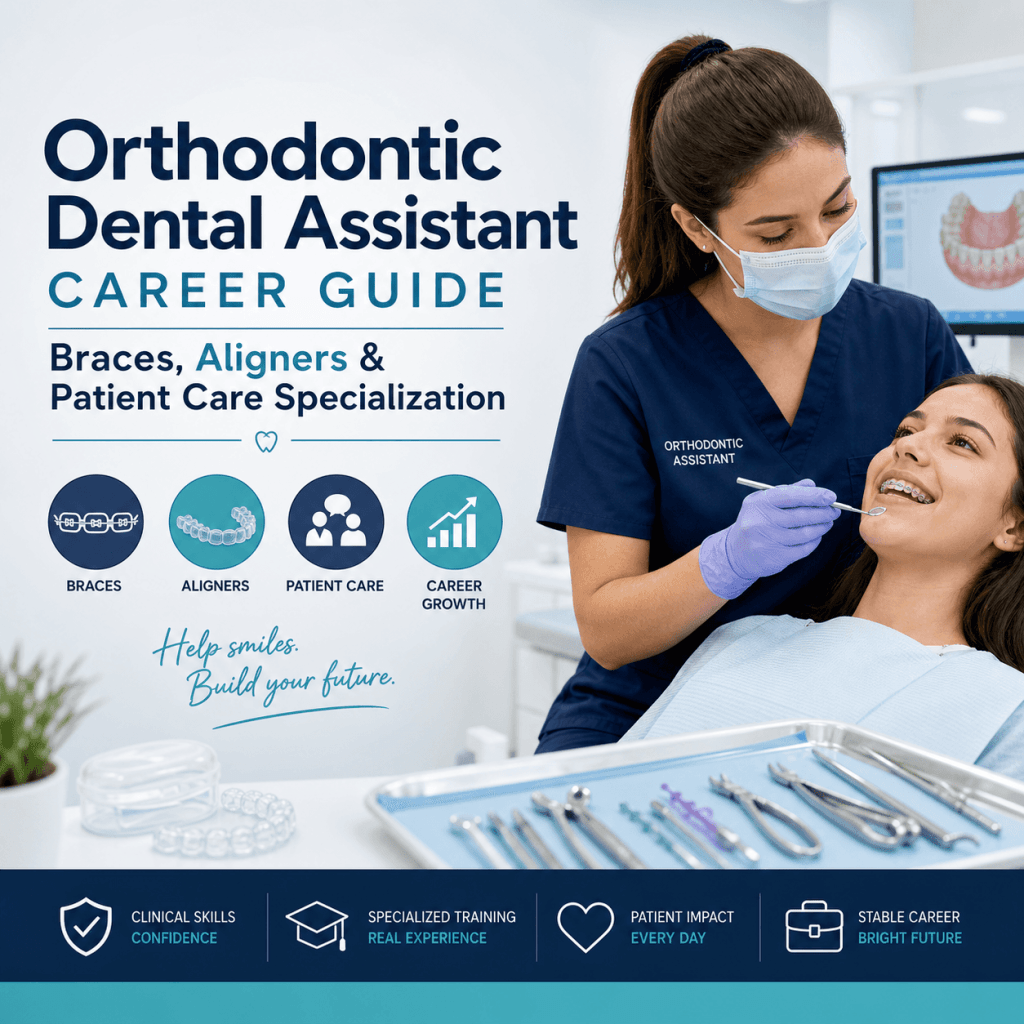
On the other hand, orthodontics tends to be more routine and schedule-driven, with frequent adjustment appointments and a steady flow of patients. The pace can be fast, and efficiency matters a lot.
Career mobility starts early
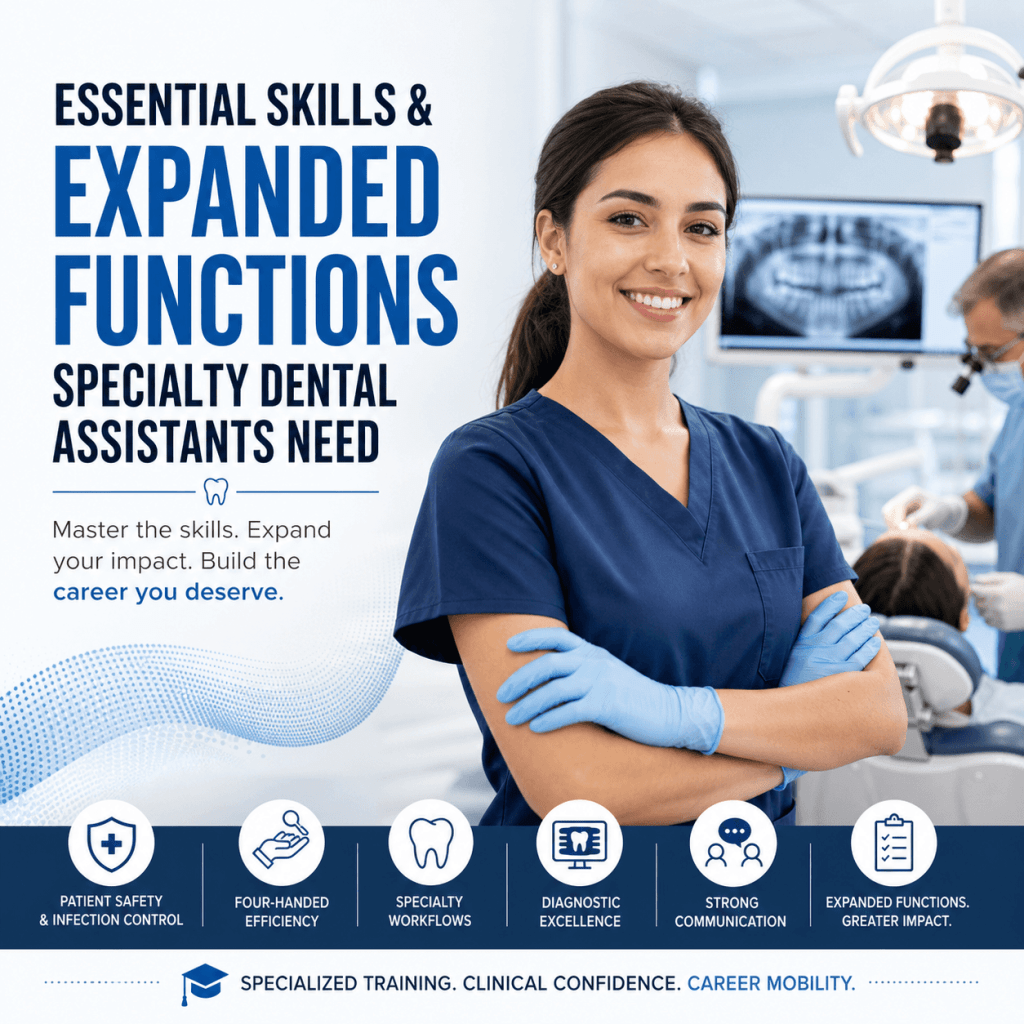
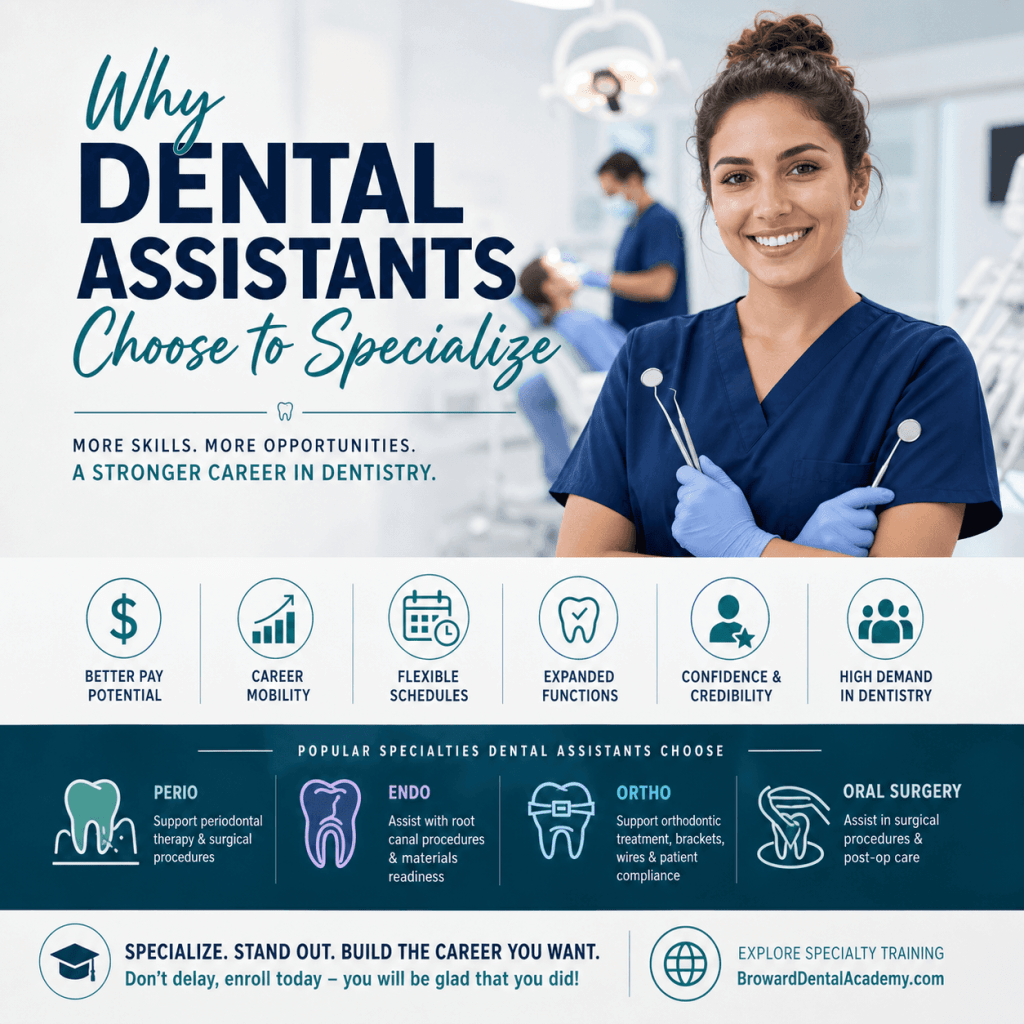
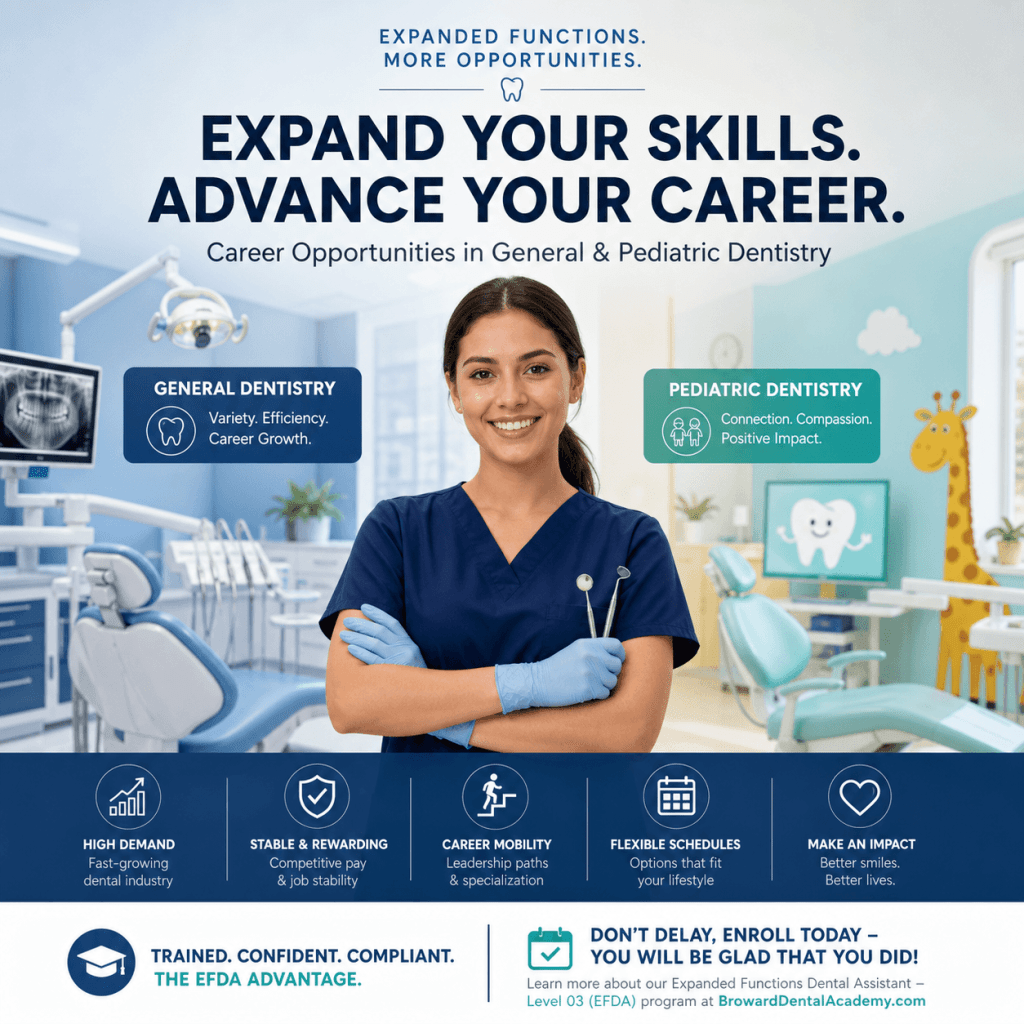
Many people begin as entry-level assistants and grow into expanded functions (where allowed), orthodontics, lead assistant roles, or broader office responsibilities over time. The exact pathway depends on the state, the practice, and your training, but the overall idea is simple: the more competent and reliable you become, the more doors open.

Why dental assisting can be a great career choice
Dental assisting appeals to people who want stability and purpose without spending years in school before they can start working. It’s also worth noting that as you navigate your career path in this field, you’ll likely encounter several frequently asked questions that can help clarify aspects of your role and responsibilities.
A fast-growing healthcare lane
Dentistry continues to need skilled support staff as patient demand rises. Practices do not just look for “extra hands.” They look for assistants who understand infection control, clinical workflow, and patient safety, and who can keep up in a modern environment.
Stable income potential (and what drives it)
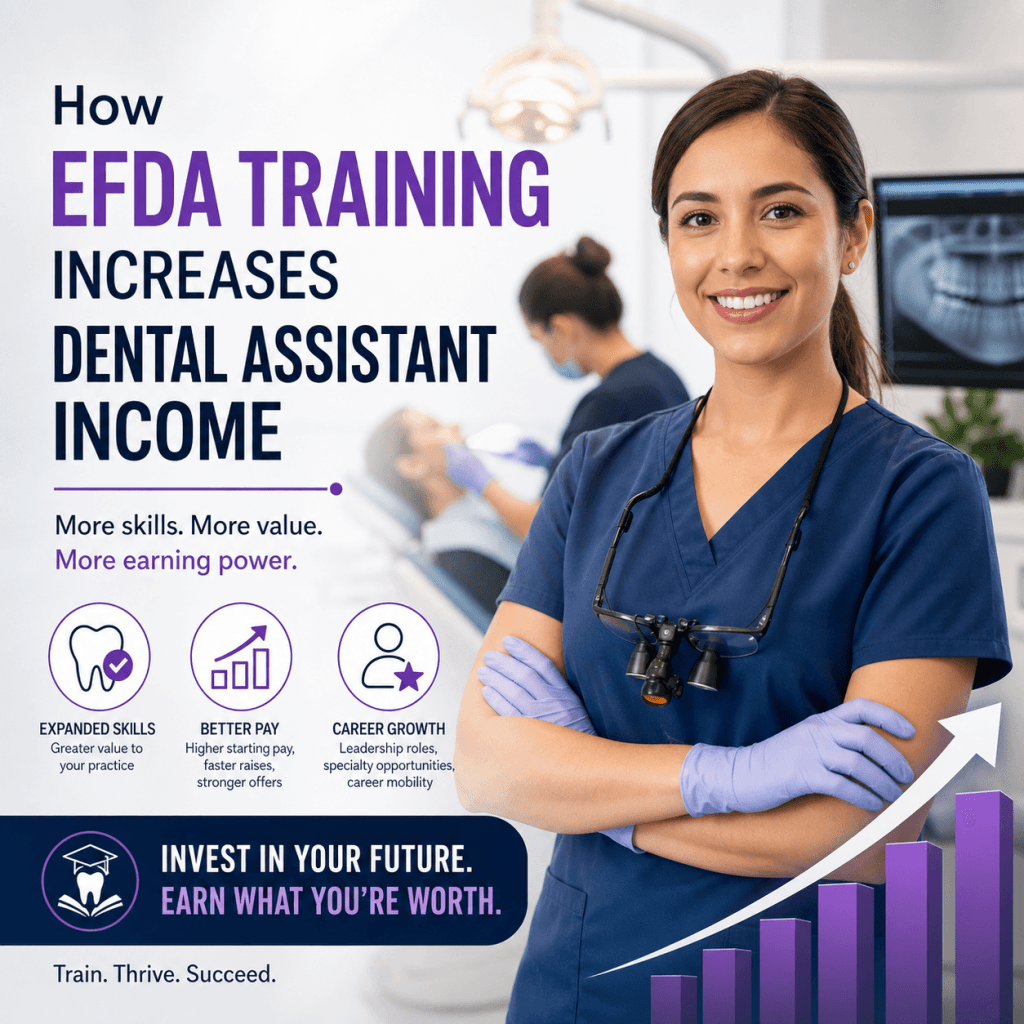
Dental assisting income varies, but there are clear factors that tend to increase earning potential:
- Experience and consistency in real clinical settings
- Strong chairside skills and speed with room turnover
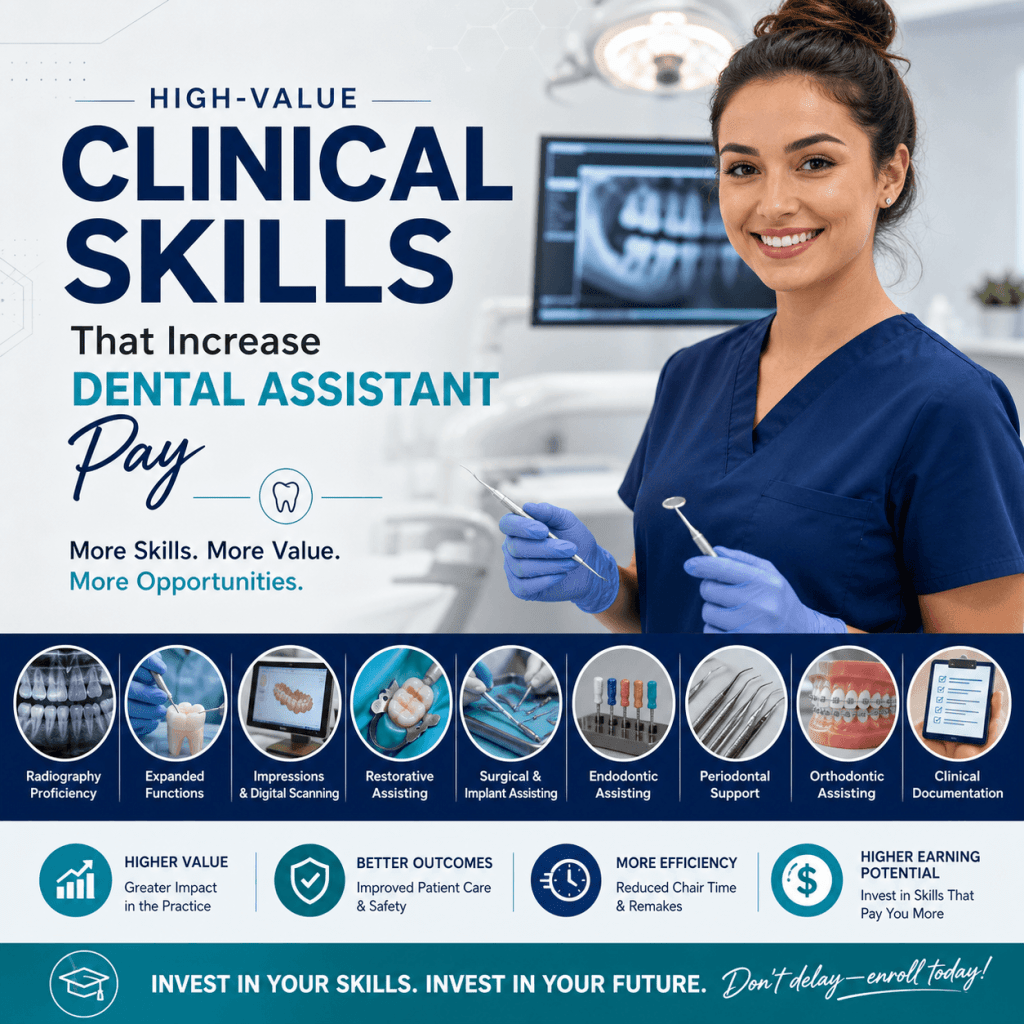
- Additional certifications and expanded functions (where applicable)
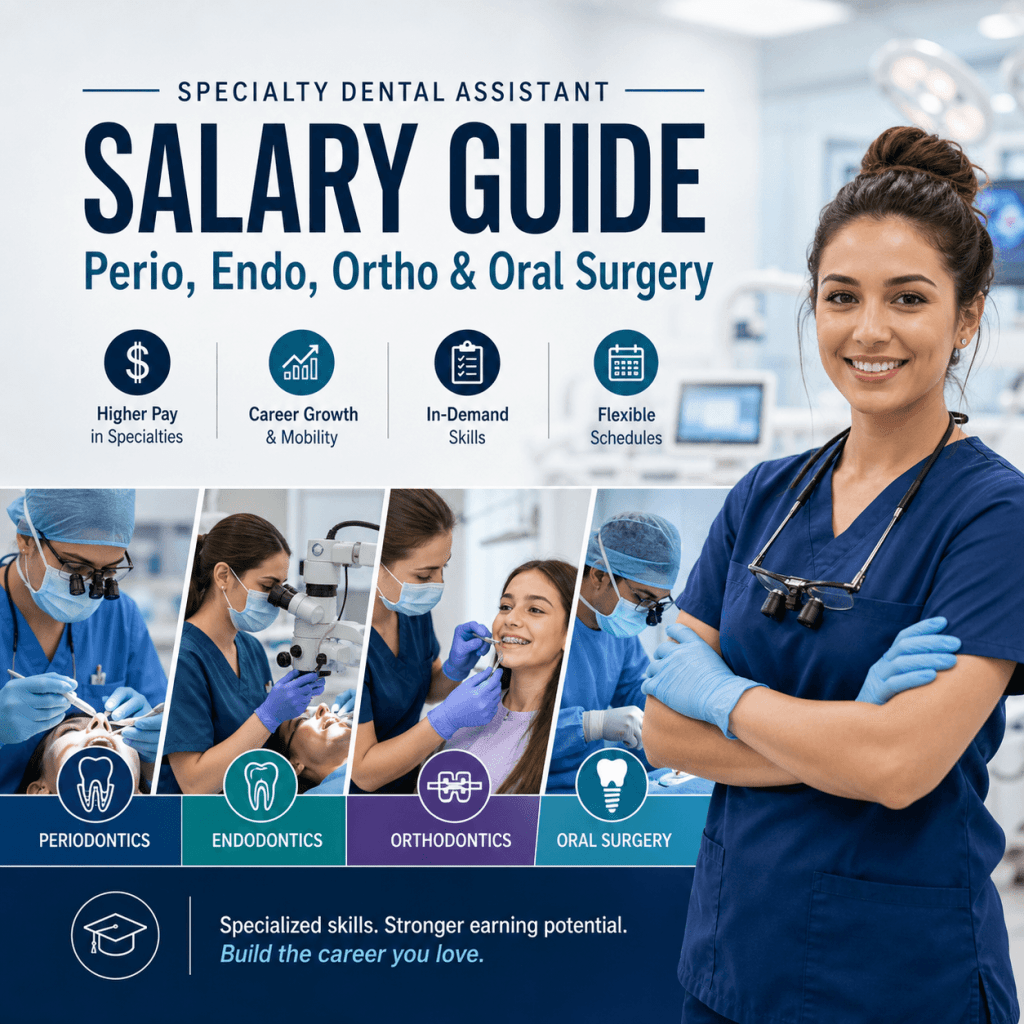
- Specialty offices like orthodontics or oral surgery
- Professionalism, reliability, and the ability to support a high-performing team
In other words, the more value you can confidently bring to the operatory, the more leverage you usually have.
Flexible schedules compared to many healthcare roles
Many dental offices offer predictable hours, often with 4 to 5 day workweeks and daytime schedules. While some practices have evenings or weekends, dentistry is typically more structured than hospital-based roles.
If you value a consistent routine and you want your evenings to feel like your own, dental assisting can be a smart choice.
A respected clinical role
Dental assistants are part of infection control, patient protection, and quality care. Good practices treat assistants as essential clinical professionals because the job directly impacts outcomes, safety, and patient experience.
Transferable skills you can take anywhere
Even if you later move into a different role, dental assisting builds real-world skills that employers respect:
- Communication and patient interaction
- Time management under pressure
- Clinical workflow and documentation habits
- Professional standards and privacy
- Team coordination in a healthcare setting
The real challenges (and how to decide if you’ll still like it)
Every career has trade-offs. Dental assisting is rewarding, but it is not “easy money,” and it is not a sit-down job.
Physical demands are real
Expect standing for long periods, working with your hands constantly, and assisting in tight spaces. Repetitive motion can add up over time, which is why ergonomics, posture, and proper technique matter from day one.
If you like being active, this can feel energizing. If you need frequent breaks or you dislike physical work, it can feel exhausting.
Emotional demands show up on busy days
Dental anxiety is common. You will see patients who are tense, sensitive, or frustrated. You may also have days where the schedule is packed and you need to stay calm while moving quickly.
A steady attitude, emotional control, and strong people skills are just as important as clinical skills.
There is a learning curve
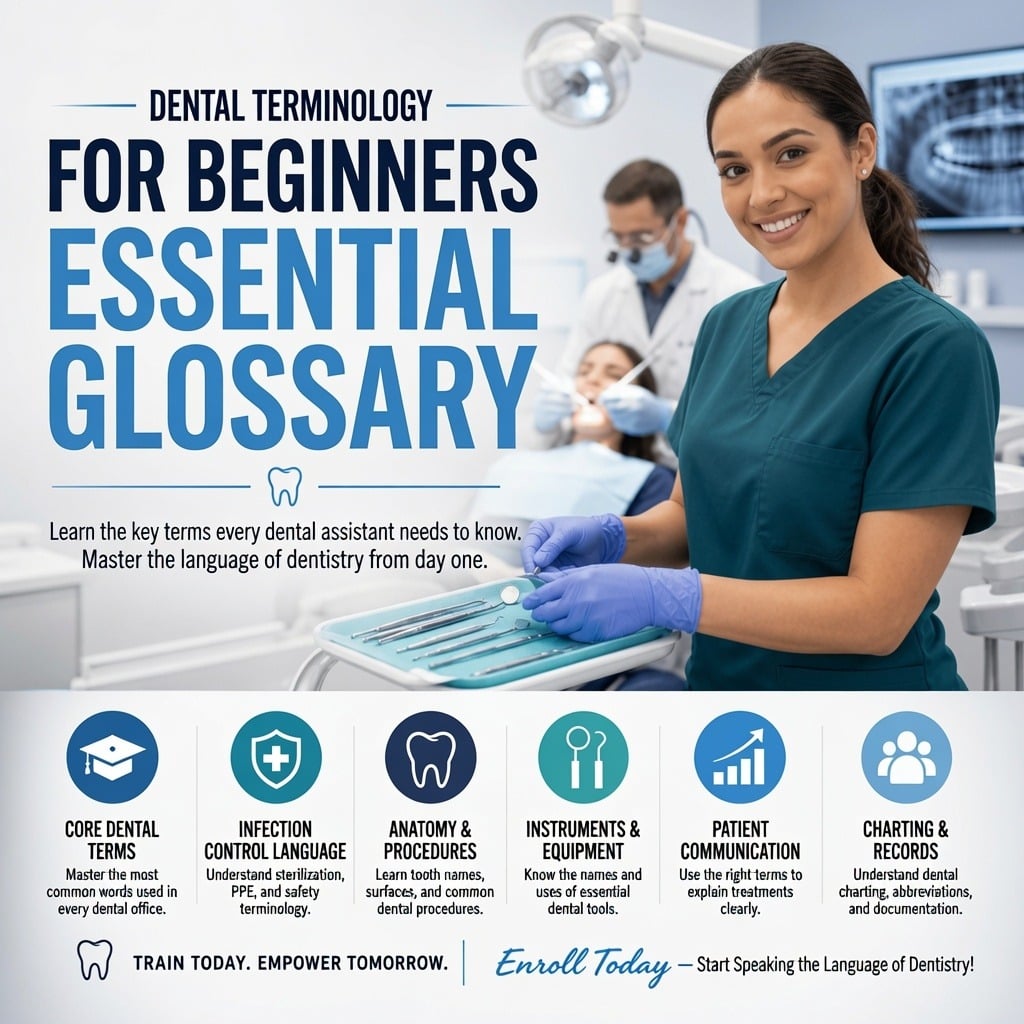
You will need to learn instruments, dental terminology, charting systems, infection control procedures, and often radiology basics depending on your role and training.
The good news is that most people improve quickly with repetition and strong instruction. The key is getting enough hands-on practice, not just theory.
Team dynamics can make or break the experience
Dental assisting is a teamwork career. Your success depends on communication, timing, and reliability. Dentists and hygienists rely on assistants who are prepared, organized, and consistent.
If you enjoy teamwork and taking pride in being dependable, you will likely thrive.
A simple decision framework
You are a strong match for dental assisting if you value hands-on work, helping people, steady routines, and being part of a clinical team that gets results.
Dental assisting career paths and advancement options
Dental assisting has more growth potential than many people realize, especially when you keep building skills after you get hired.
Common growth steps
A typical progression looks like this:
- Entry-level dental assistant
- Expanded functions (where allowed by the state and supported by training)
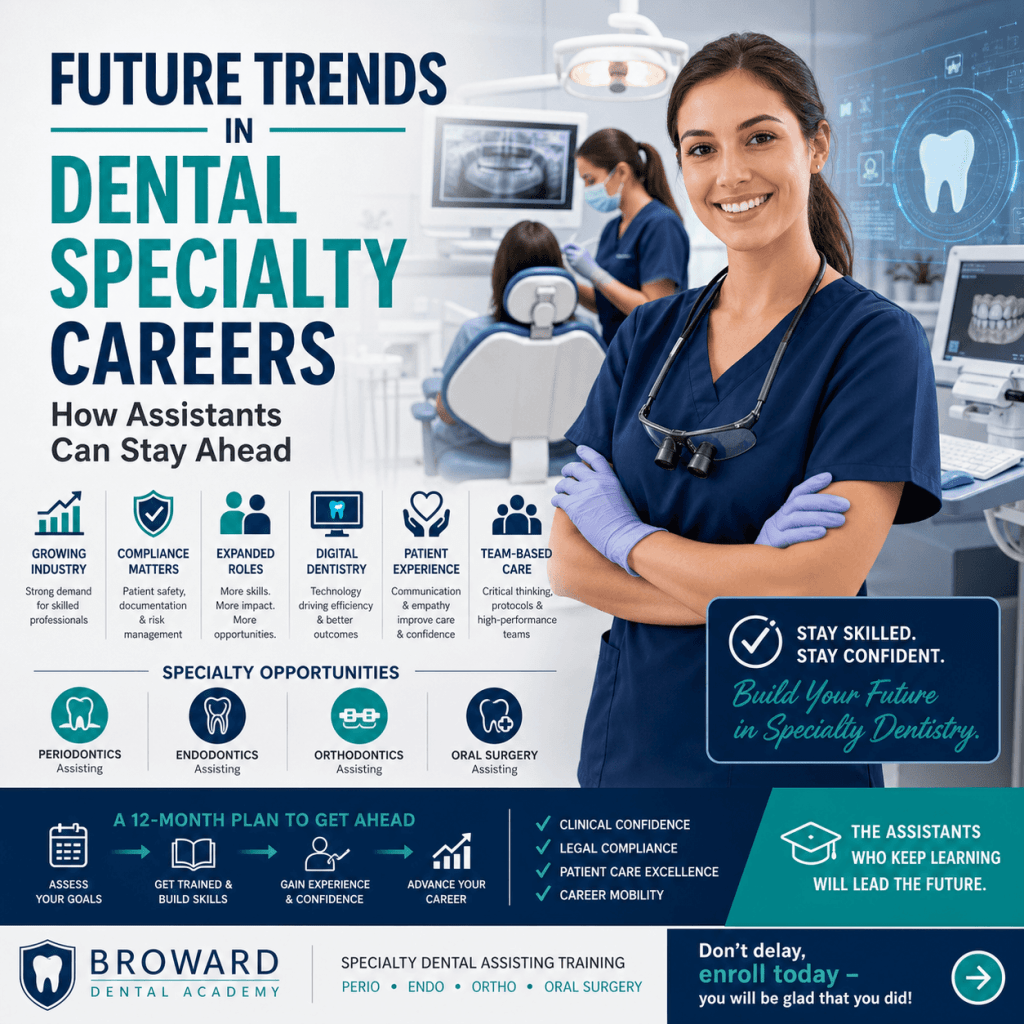
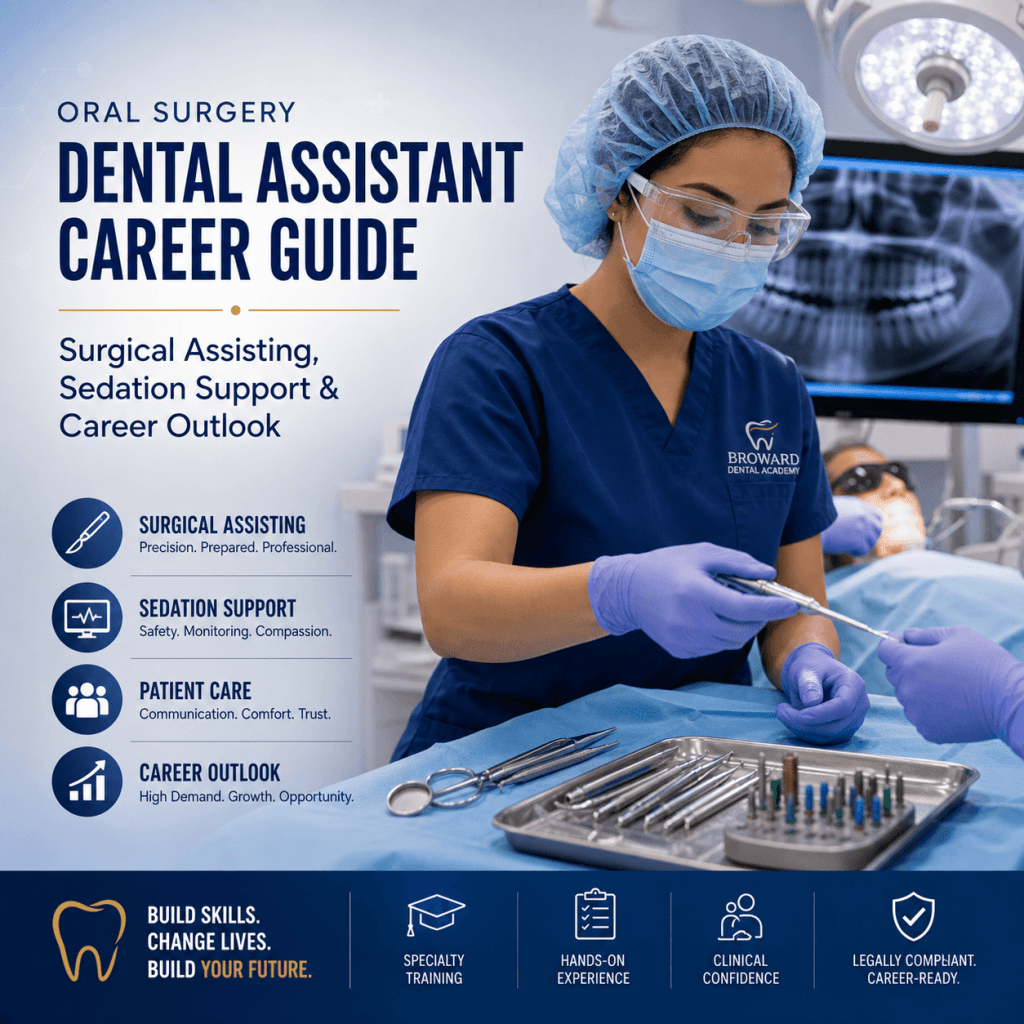
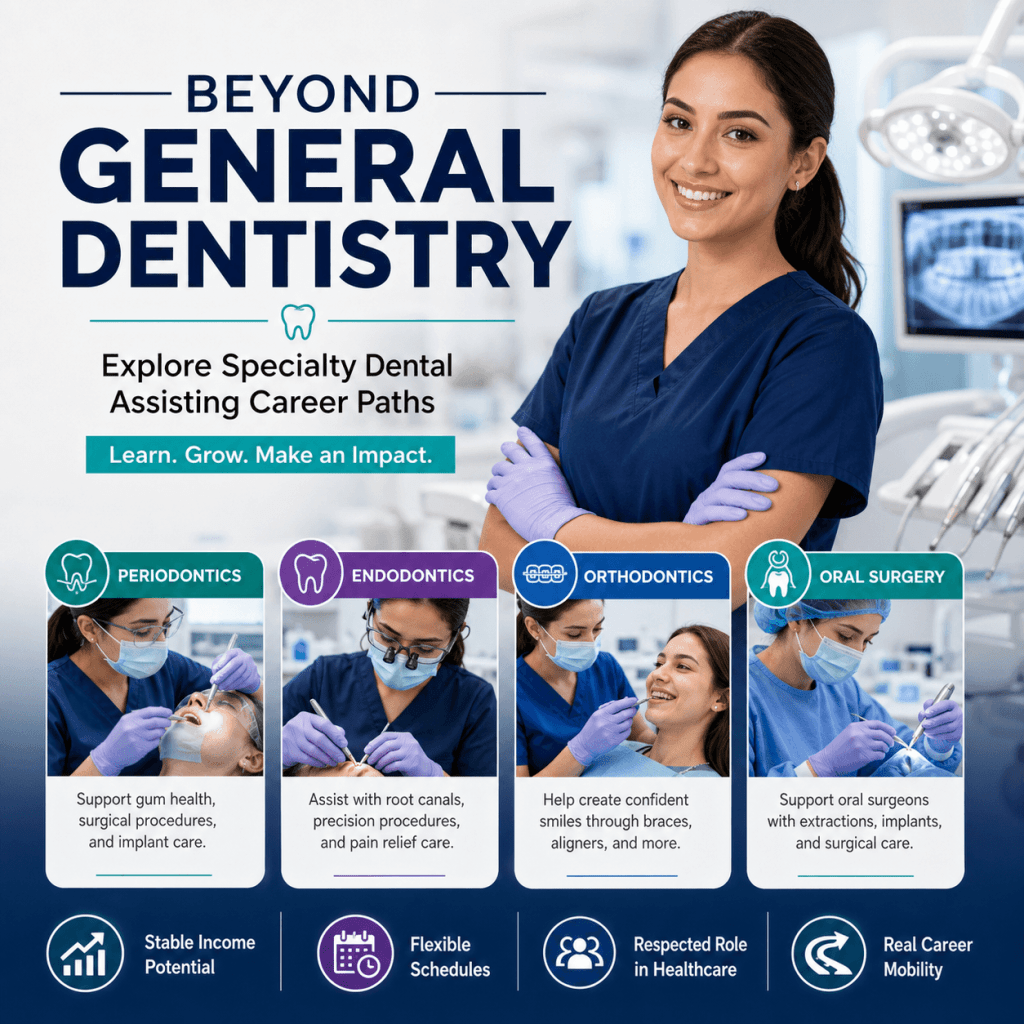
- Specialty assisting (orthodontics, oral surgery, pediatric dentistry, etc.)
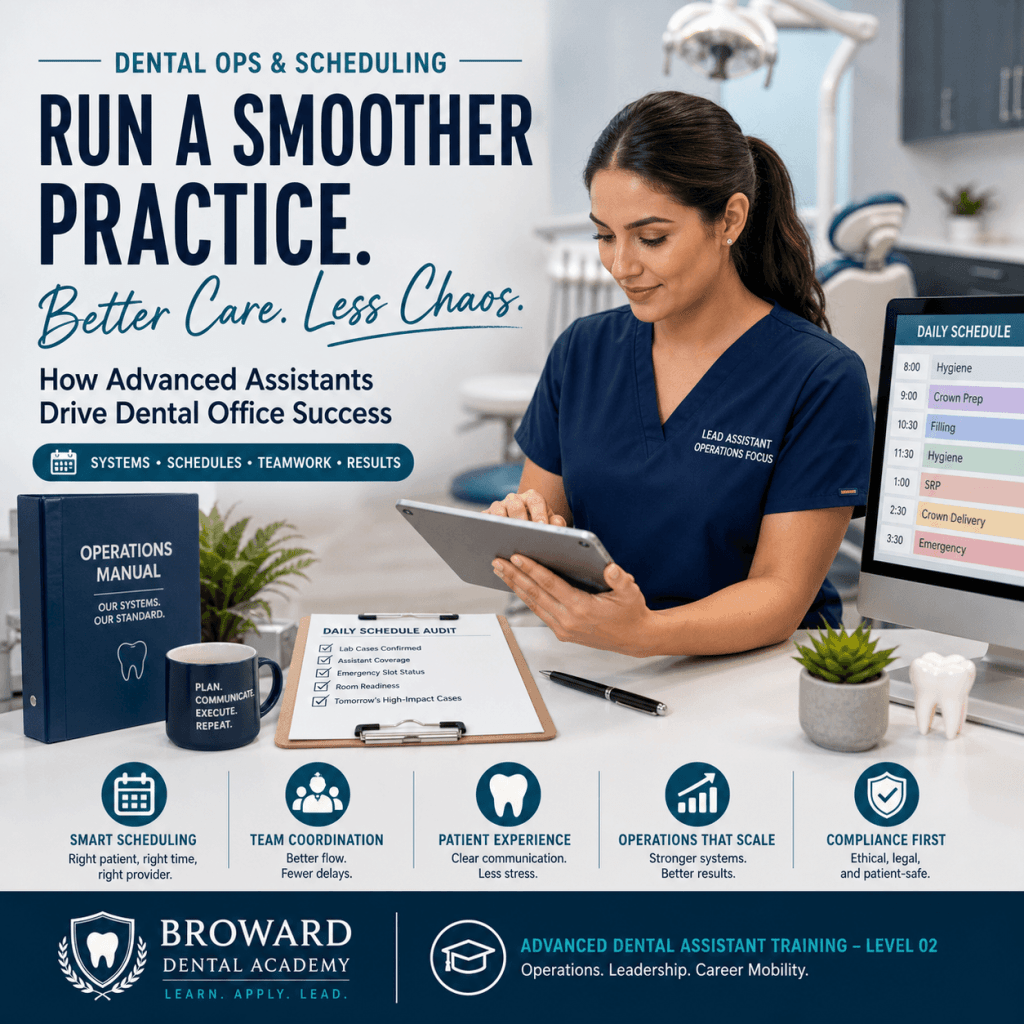
- Lead assistant, clinical coordinator, or trainer/mentor role
What “expanded functions” means (and why it matters)
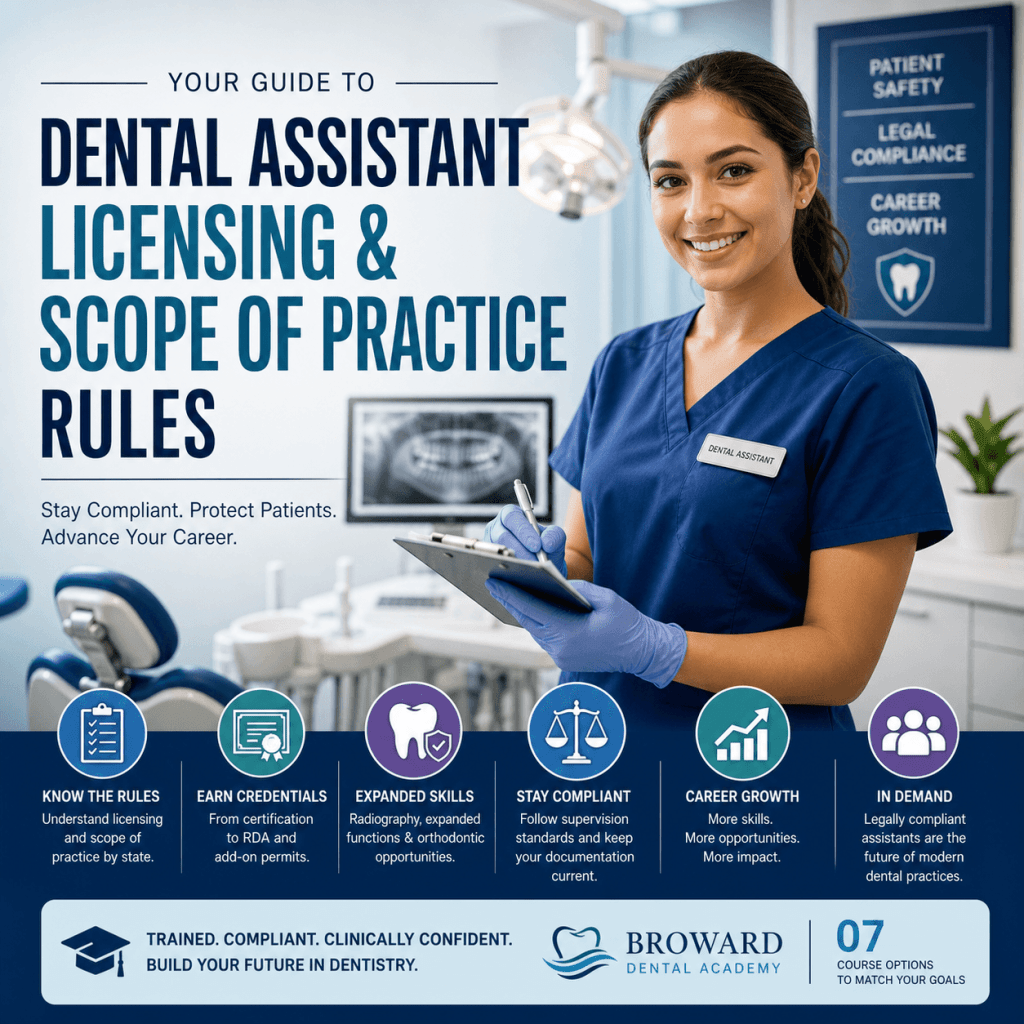
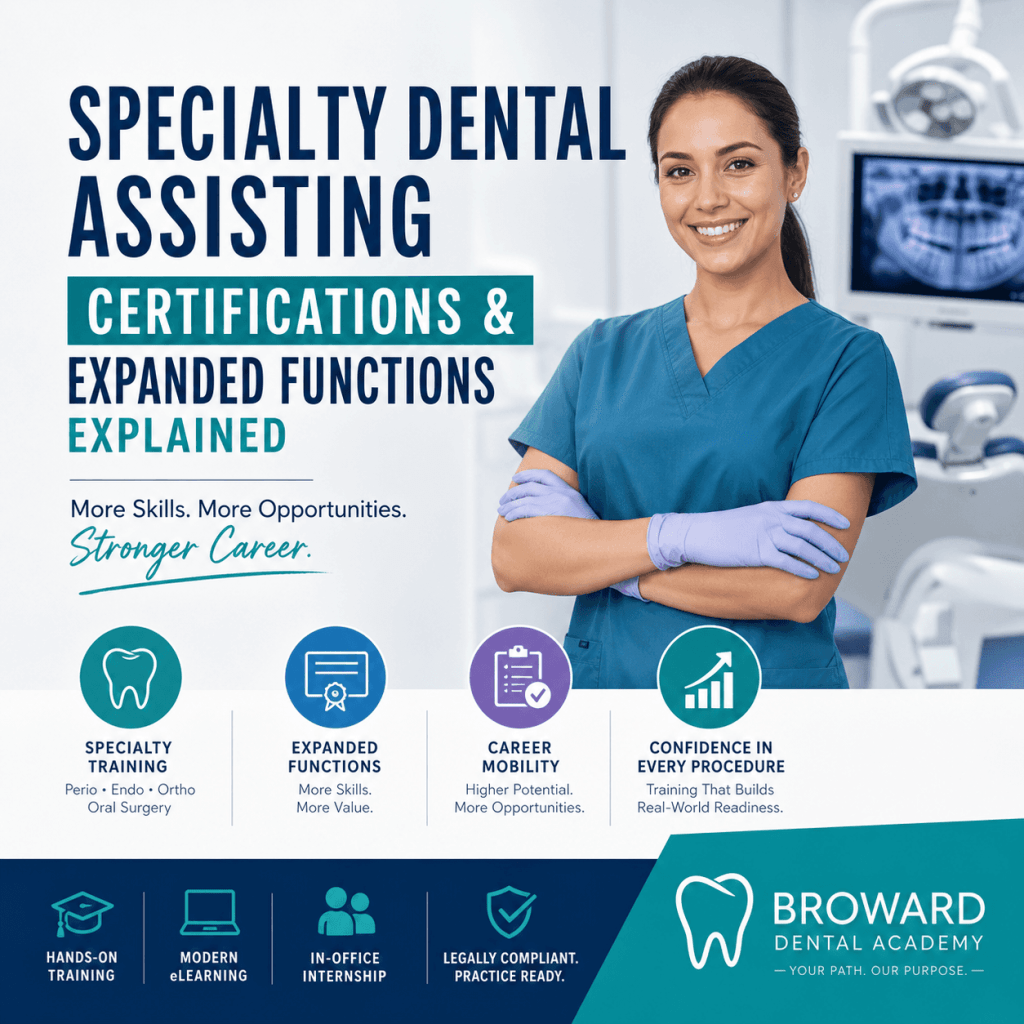
Expanded functions generally refer to additional clinical duties that go beyond basic chairside assisting, depending on state rules and office policies. Employers value expanded skills because they increase efficiency and allow the clinical team to deliver care smoothly.
Even when the exact duties vary, the principle stays the same: expanded capability often increases responsibility and can support better pay over time.
Long-term options beyond assisting
Many people use dental assisting as a stepping stone into:
- Dental hygiene (with additional schooling)
- Office management or front-office leadership
- Dental product sales, training, or support roles
- Other healthcare administration paths
If you are the type of person who keeps learning, dental assisting can be the start of a longer healthcare career.
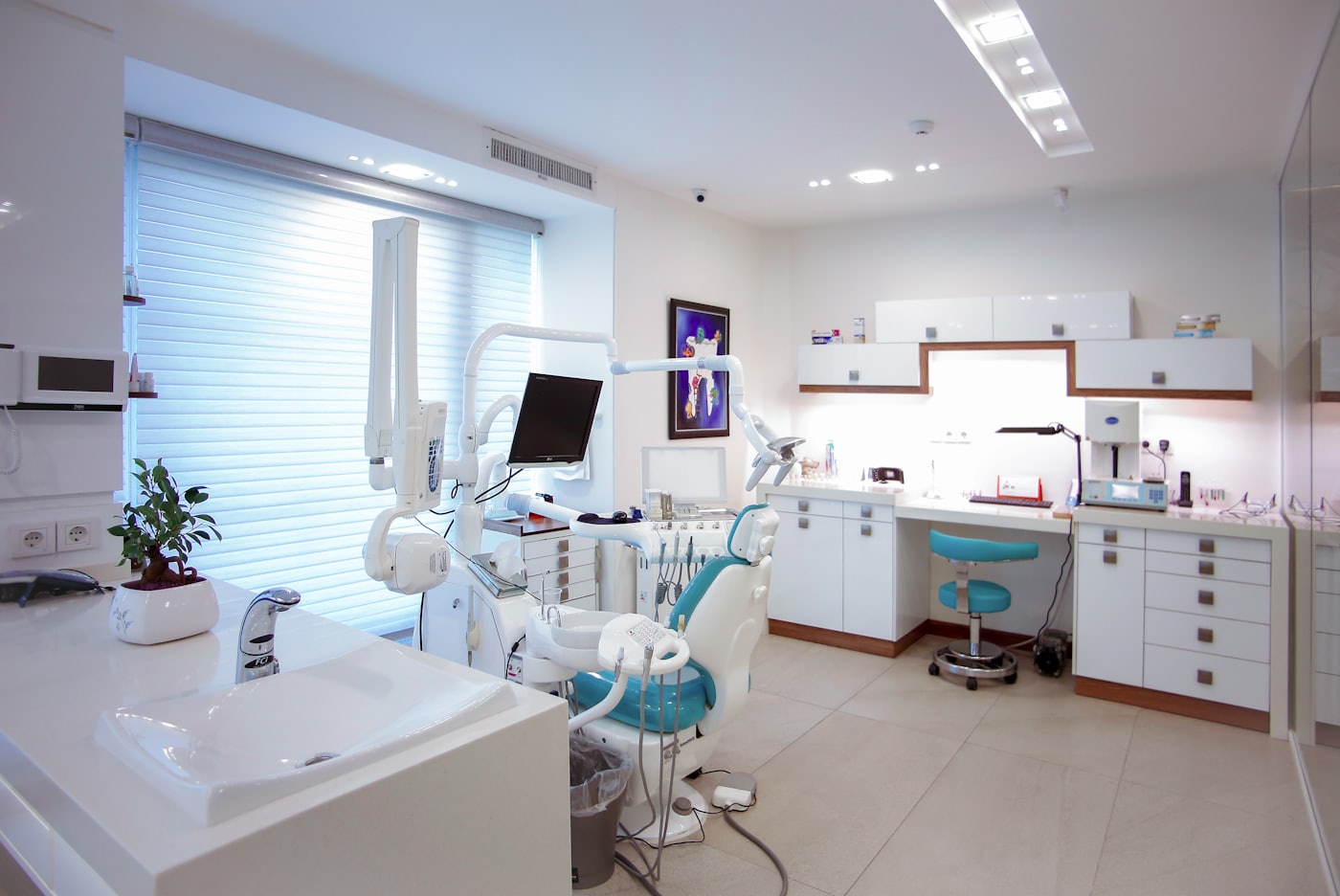
Training options: what to look for in dental assisting programs
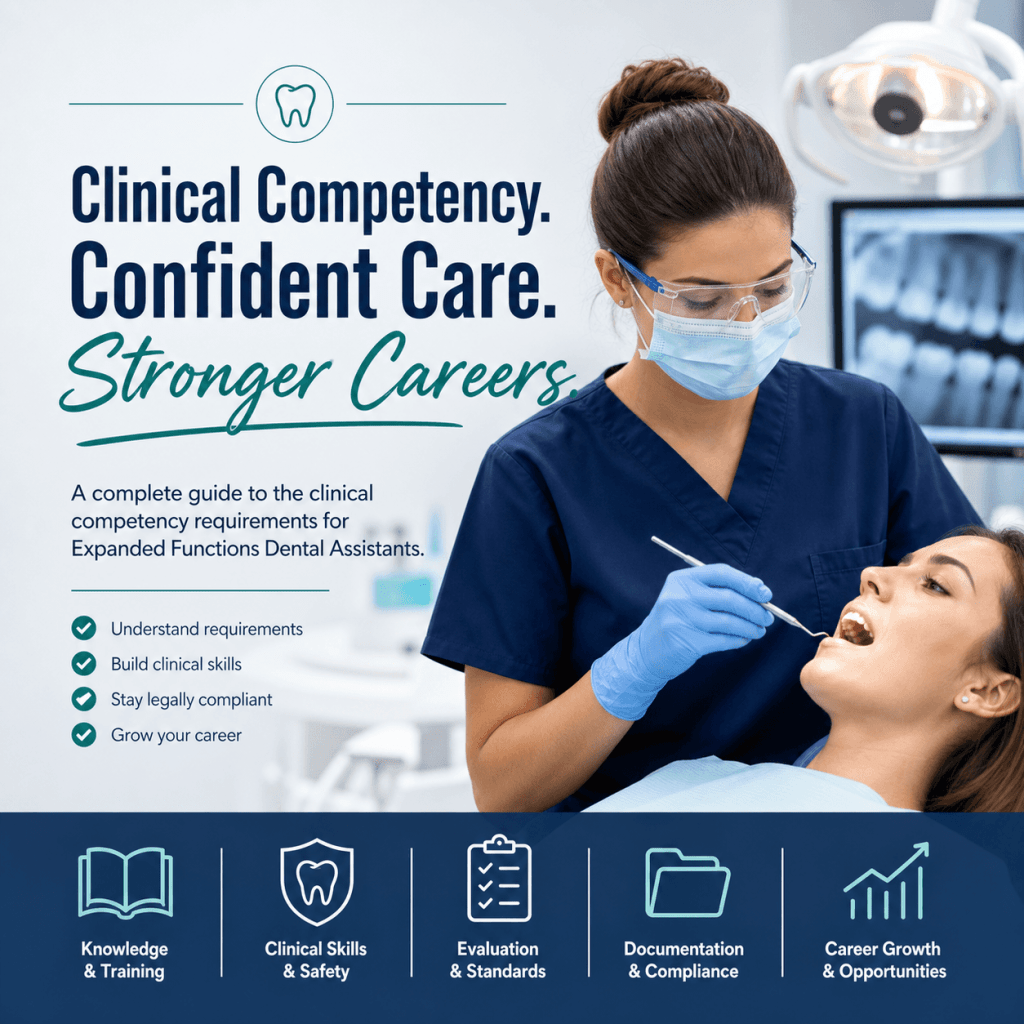
A quality program is not just about finishing quickly. It is about becoming thoroughly trained, legally compliant, and clinically confident so you can walk into a real office and perform.
What good training should include
Look for a program that blends:
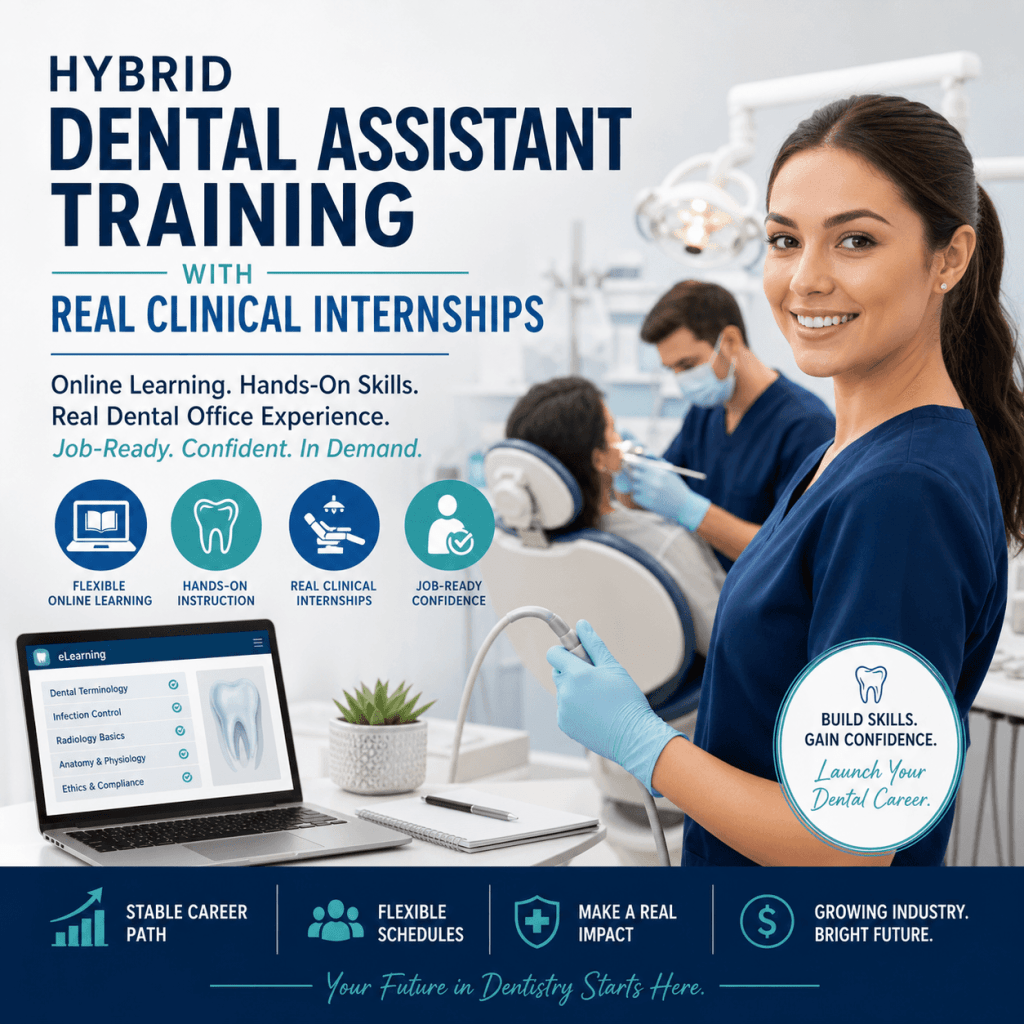
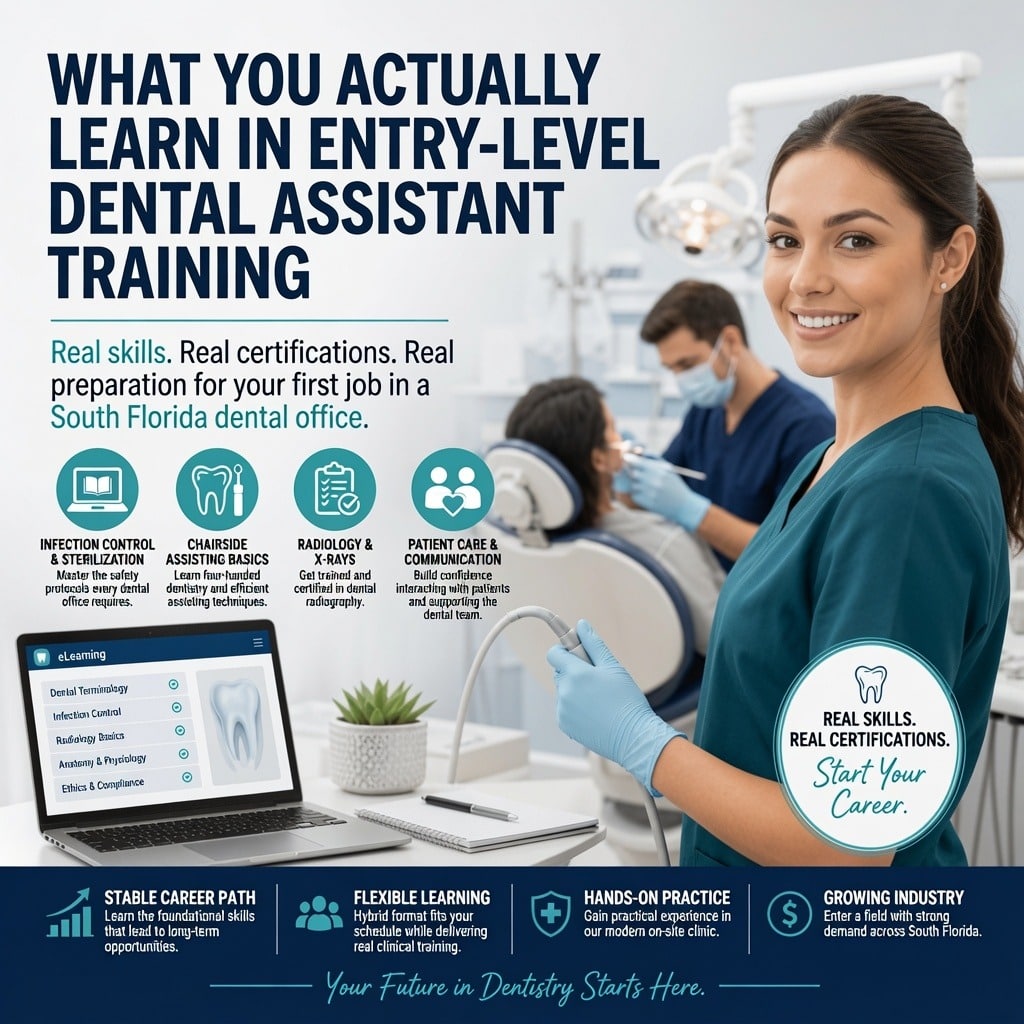
- Online learning for theory (so you can study efficiently)
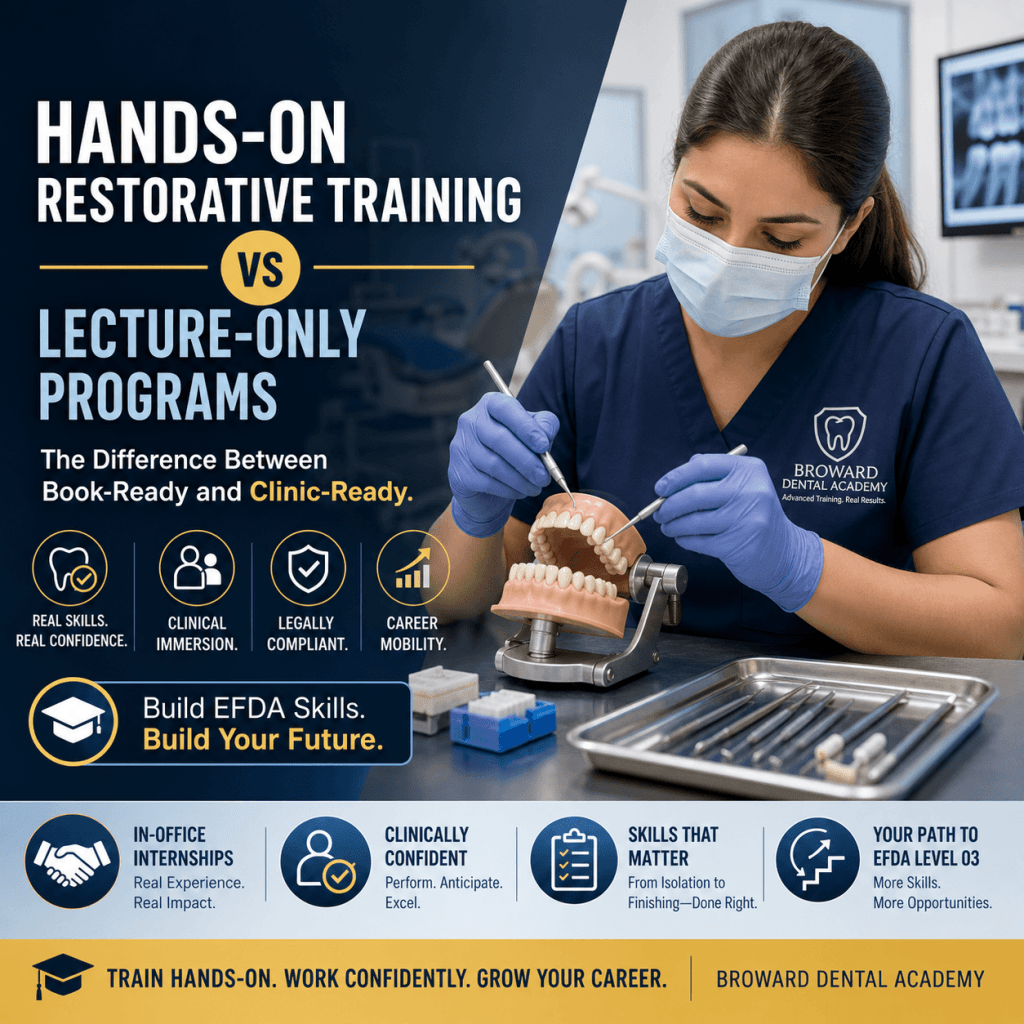
- Hands-on clinical training for real skill building
- Real office exposure so you understand pace, professionalism, and expectations
Why “clinically confident” matters to employers
Dental practices want assistants who can contribute without constant hand-holding. That does not mean you need to know everything on day one, but it does mean you should understand safety, infection control, basic assisting flow, and how to behave in a clinical environment.
Internships and externships make a big difference
In-office internships help you translate classroom knowledge into real performance. You learn how a practice actually moves, how teams communicate, and how to handle the pace of a schedule.
If a program does not offer meaningful clinical exposure, you may graduate with a certificate and still feel unprepared at interviews.
A quick program fit checklist
Before you enroll in any dental assisting program such as the ones offered at Broward Dental Academy, consider:
- Schedule and length (and whether it realistically fits your life)
- Hands-on lab and clinical hours
- Instructor access and feedback
- Internship placement support
- Financing options and transparency
- Job readiness focus, not just test prep
Online vs in-person: can you do dental assisting online?
You can complete parts of dental assisting online, but you cannot become job-ready without hands-on training.
The reality
Online coursework can cover important theory, terminology, and foundational knowledge. But skills like chairside assisting, instrument transfer, infection control workflow, and real operatory readiness require supervised practice.
The best-of-both model
The most effective setup for many students is:
- eLearning lesson plans for remote learning
- In-person labs for hands-on skill building
- In-office internships so you learn in the environment employers expect
Who online components help most
Online coursework is especially helpful for:
- Working adults who need flexibility
- Parents balancing school with family responsibilities
- Career changers who want to move into healthcare without putting life on pause
How to evaluate “dental assisting certificate online” offers
Be cautious of programs that are mostly online with minimal clinical training. Look for clear, supervised, hands-on requirements and real pathways to job readiness. A certificate matters, but competence matters more.
Accelerated programs: who they’re for (and who should avoid them)
Accelerated dental assisting programs can be a great choice, but only if the structure supports real clinical repetition.
What “accelerated” usually means
Accelerated programs typically compress training into a shorter timeline. That means a higher weekly workload and less room for falling behind.
A good fit for motivated learners
Accelerated training can work well if you:
- Want to enter the workforce quickly
- Learn best by doing and practicing often
- Can commit to showing up consistently and staying focused
The risk if it’s rushed
If clinical repetition is limited, students may finish fast but feel unsure in the operatory. Confidence comes from doing the work enough times with feedback, not just watching demonstrations.
What to ask before enrolling
If you are considering an accelerated dental assisting academy, ask about:
- Hands-on clinical time and how it is supervised
- Instructor support and feedback
- Internship placement and real office exposure
- How the program measures job readiness
How to become a dental assistant in South Florida (step-by-step)
If you are in South Florida and want a clear path forward, this is a practical way to approach it.
Step 1: Choose your target workplace and schedule needs
Start by deciding what environment fits you best:
- General dentistry for variety and a mix of procedures
- Orthodontics for a steady, schedule-driven pace
Also consider your availability. Some students need evening options, while others prefer daytime training.
Step 2: Enroll in a reputable dental assisting course with hands-on training
Look for a program that combines theory with clinical immersion and includes internship options. In South Florida, that mix can shorten the path from student to hire-ready candidate.
Step 3: Build core competencies that offices care about
Focus on becoming strong in the areas that matter immediately in a practice:
- Infection control and sterilization workflow
- Chairside assisting fundamentals
- Professionalism, privacy, and communication
- Patient comfort and clear instructions
Step 4: Prepare for interviews like a professional
Dental practices commonly look for:
- Reliability and punctuality
- Clinical confidence and willingness to learn
- Legal compliance and infection control awareness
- A teamwork mindset and calm communication
Your goal is to show that you will make the team’s day easier, not harder.
Step 5: Keep growing after you get hired
Once you’re working, keep building value. Seek additional skills, specialty exposure, and expanded functions opportunities where appropriate. The assistants who grow the most are usually the ones who stay curious and consistent.
What makes Broward Dental Academy different for dental assisting training
Broward Dental Academy is committed to serving the Dental Community by developing well-rounded professionals through multiple dental training programs. The focus is not only on finishing a course. It is on preparing students to thrive in a modern, high-performance dental practice.
Training built around real job readiness
Dental practices are looking for professionals who are thoroughly trained, legally compliant, and clinically confident. Broward Dental Academy prepares students to meet that expectation with a training approach that emphasizes ethical standards, critical thinking, and confident clinical performance.
A delivery model designed for today’s students
Students benefit from immediate immersion in online and clinical settings. The Academy incorporates the latest eLearning lesson plans for remote training, paired with hands-on instruction so students can build true clinical ability, not just theoretical knowledge.
In-office internships that bridge the gap
In-office internships help students practice in real dental environments, with the pace and expectations employers recognize. That experience helps students feel more prepared, more polished, and more comfortable stepping into a working practice.
Practical benefits for students in South Florida
Broward Dental Academy offers flexible financing, along with multiple course options across its seven courses, so students can choose a path that fits their goals and timeline while staying connected to the broader dental training ecosystem.
Choosing the right dental assisting classes near you: a quick checklist
When you compare dental assisting classes in South Florida, use this checklist to stay focused on what will actually help you get hired and succeed.
- Clinical confidence: Hands-on training should be substantial and structured, not optional.
- Legal and ethical readiness: Infection control, professionalism, privacy, and documentation habits should be built into training.
- Career support: Look for internship connections, interview prep, and resume guidance.
- Schedule and format: A smart blend of online coursework and in-person clinical instruction is often the most realistic option.
- Cost and financing: Tuition should be transparent, with clear payment options and a clear list of what is included.
Bottom line: is being a dental assistant a good career?
Dental assisting is a good career for people who want stable healthcare work, flexible scheduling options, and a role with real patient impact. The demand for skilled dental professionals continues to rise, and practices increasingly want assistants who are thoroughly trained, legally compliant, and clinically confident.
If you are in South Florida, choosing a training program that blends online learning with hands-on clinical immersion and in-office internships can shorten the path to employment while helping you feel truly prepared.
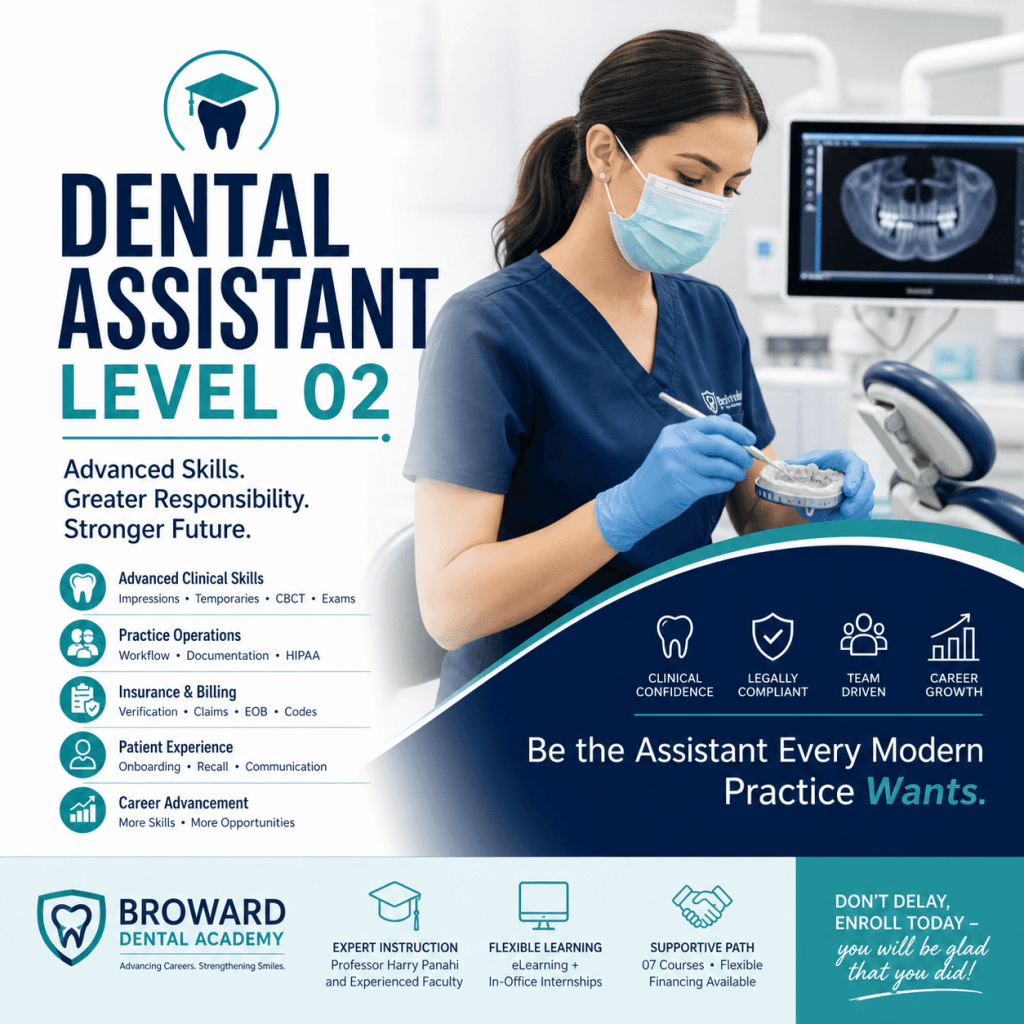
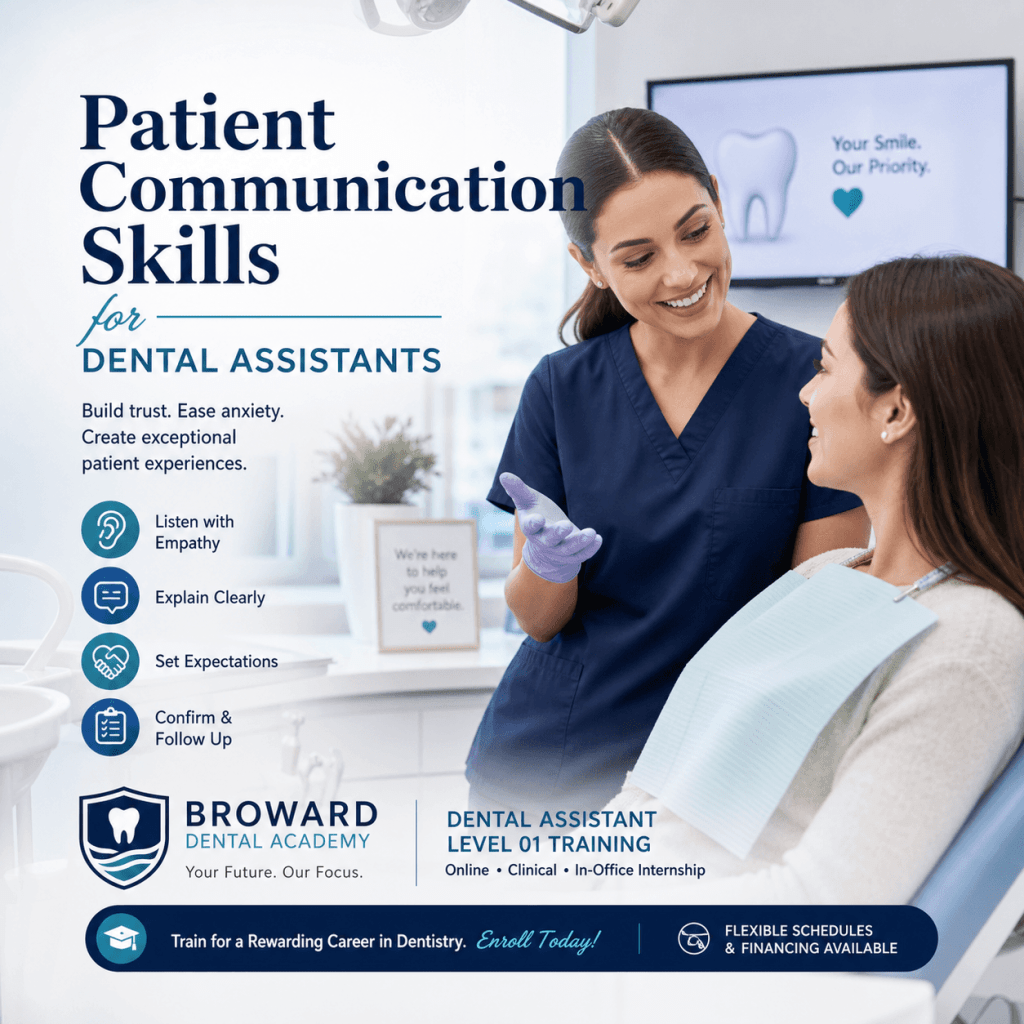
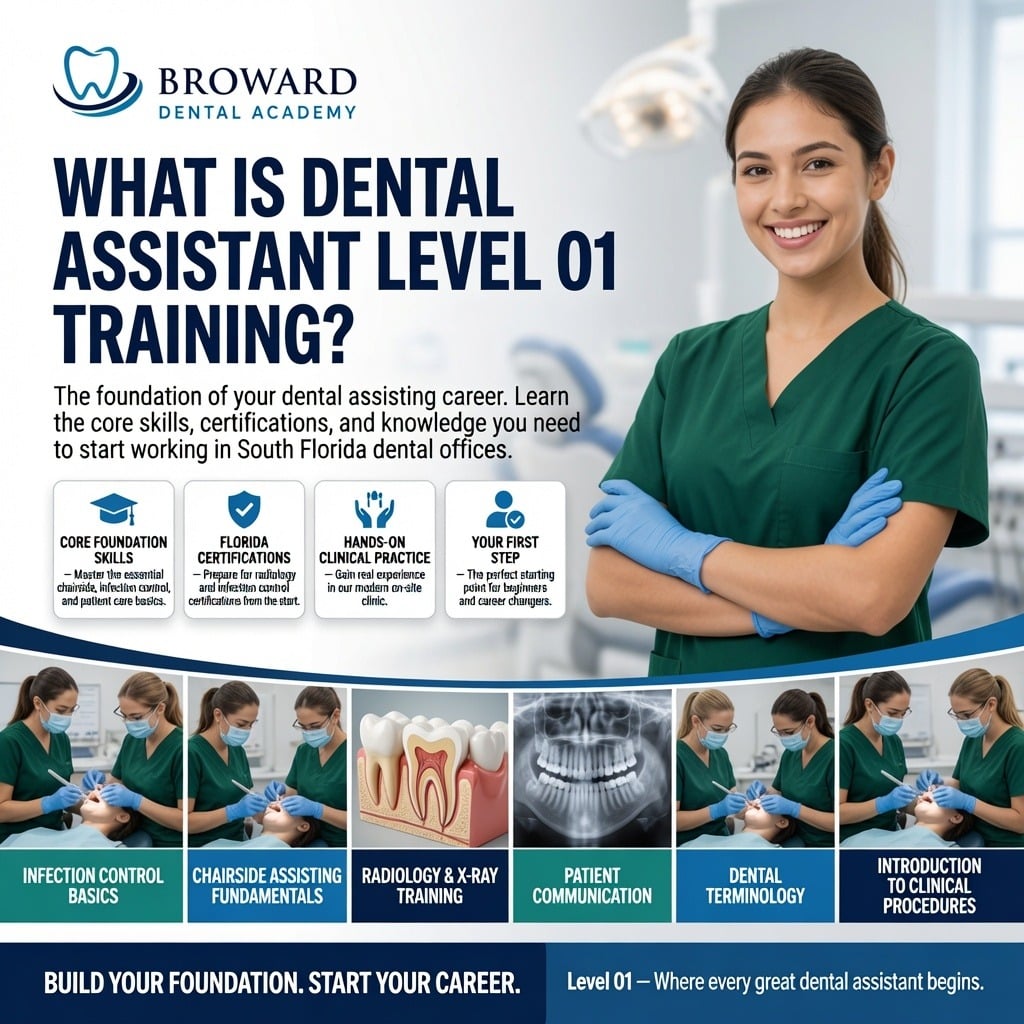
For those interested in pursuing this rewarding career path, Broward Dental Academy offers various programs including Dental Assistant Level 01, Dental Assistant Level 02, and Dental Assistant Hygienists Level 03, each designed to equip students with the necessary skills and knowledge.
If you’re ready to take the next step into your future as a dental assistant, explore these programs at Broward Dental Academy today. Your future self will thank you!
FAQs (Frequently Asked Questions)
Is dental assisting a good career choice?
Yes, dental assisting is a great career for those seeking a hands-on healthcare role with steady demand, real patient interaction, and clear opportunities for growth. It suits individuals who enjoy teamwork, learning practical skills, and working in an active environment rather than sitting at a desk all day.
What are the core daily duties of a dental assistant?
Dental assistants perform chairside assisting during exams and procedures, set up instruments and materials, manage suction and retraction, prepare patients by reviewing treatment plans, handle sterilization and infection control, turnover treatment rooms between appointments, assist with charting and documentation, and support the dentist’s workflow to ensure efficiency and safety.
How does working in general dentistry differ from orthodontics for dental assistants?
In general dentistry, dental assistants experience a varied pace with exams, fillings, crowns, extractions, and hygiene checks that can shift quickly throughout the day. Orthodontics tends to be more routine and schedule-driven with frequent adjustment appointments and a steady flow of patients, requiring efficiency to maintain a fast-paced environment.
What personal qualities are important for success as a dental assistant?
Successful dental assistants should be comfortable standing for long periods, enjoy working closely with patients, stay focused during busy appointment schedules, communicate clearly and professionally, maintain patient privacy, and help reduce patient anxiety through calm and confident interactions.
What career advancement opportunities exist in dental assisting?
Dental assistants can advance by gaining expanded functions where allowed by state law, specializing in areas like orthodontics or endodontics, taking on lead assistant roles, or moving into broader office responsibilities. Career mobility depends on competence, reliability, training level, and the specific practice setting.
How can I get started with dental assisting training in South Florida?
South Florida offers numerous courses for aspiring dental assistants through various training facilities conveniently located across the region. These programs provide essential skills needed for clinical support roles. Interested individuals can explore local course offerings to begin their path toward becoming certified dental assistants.