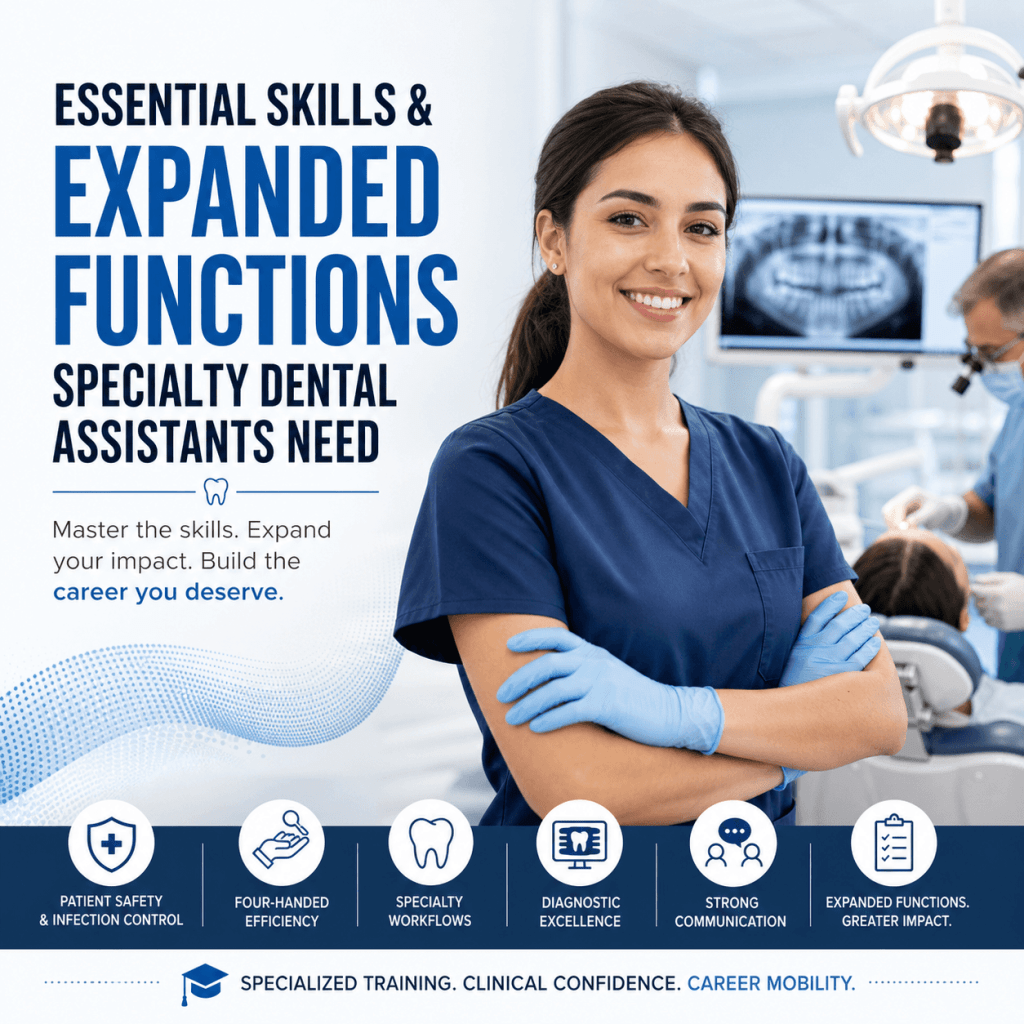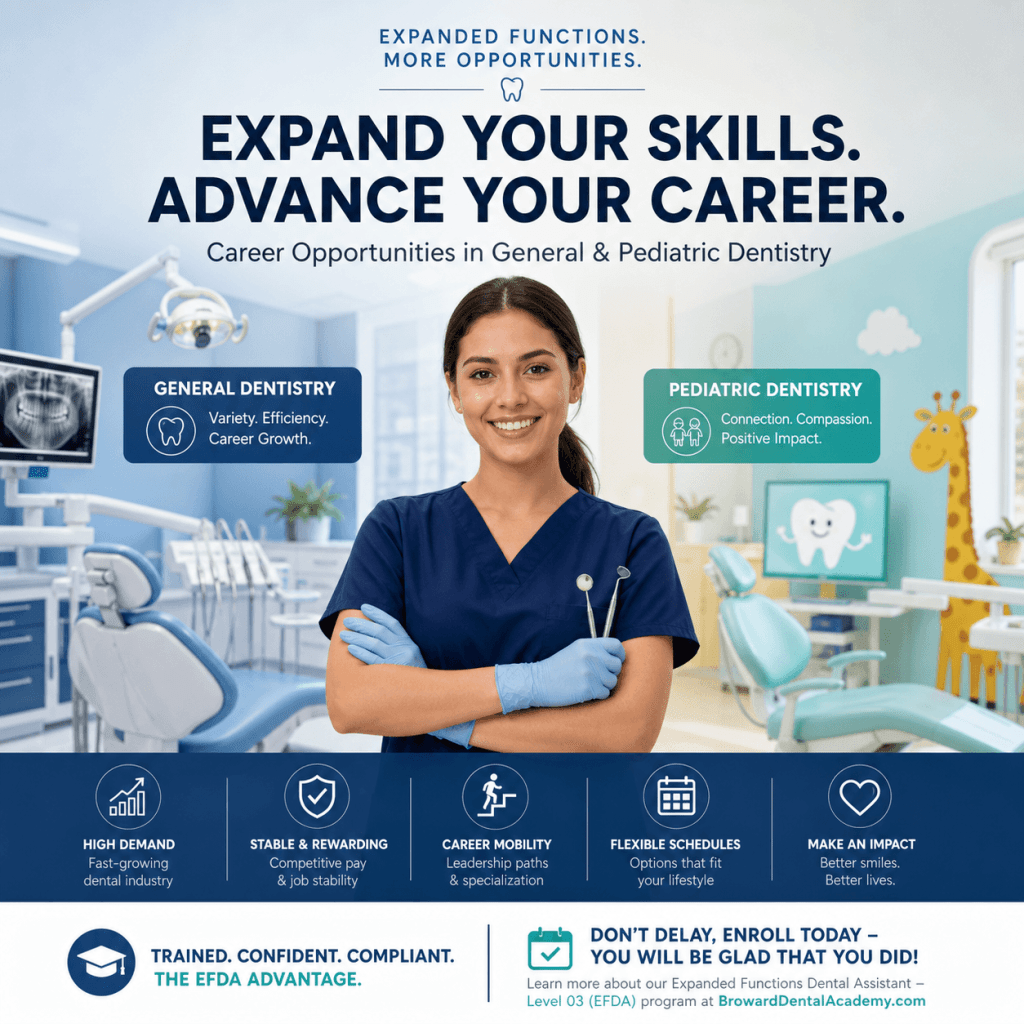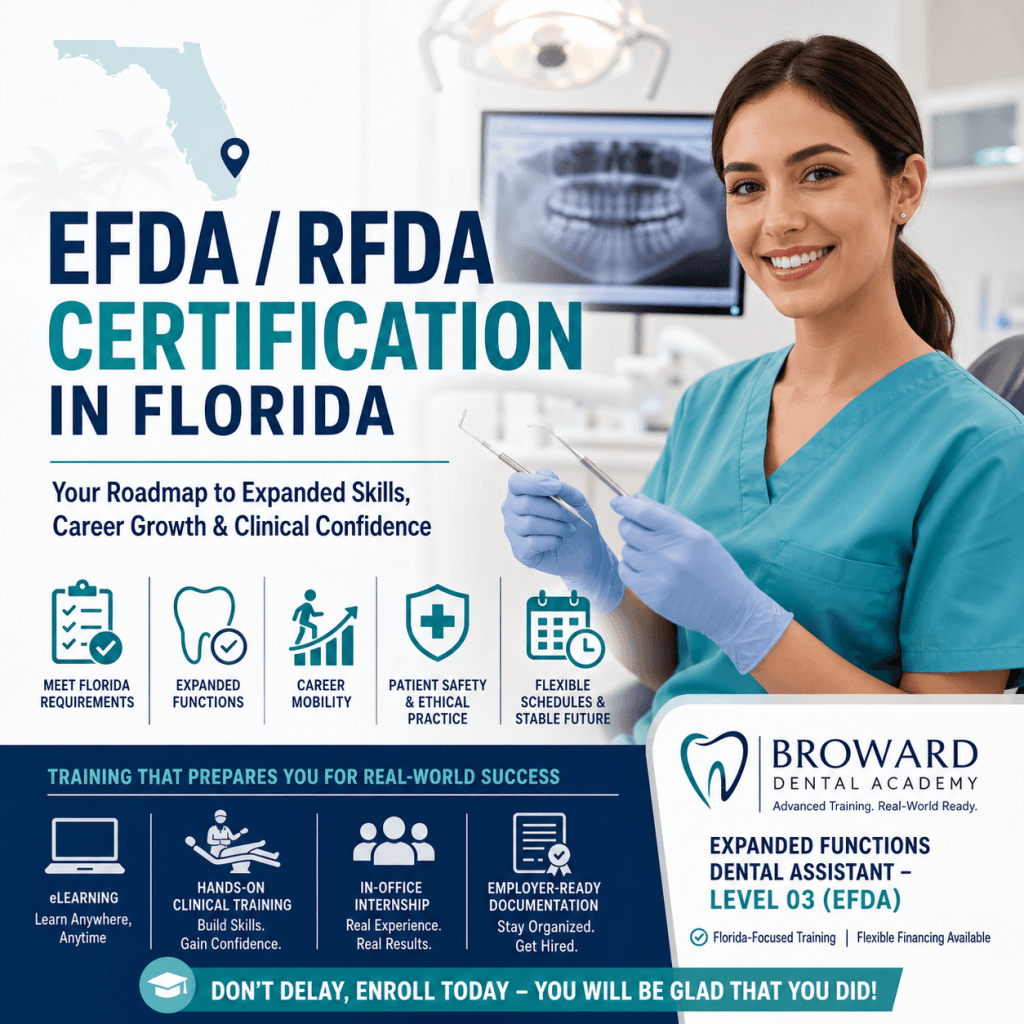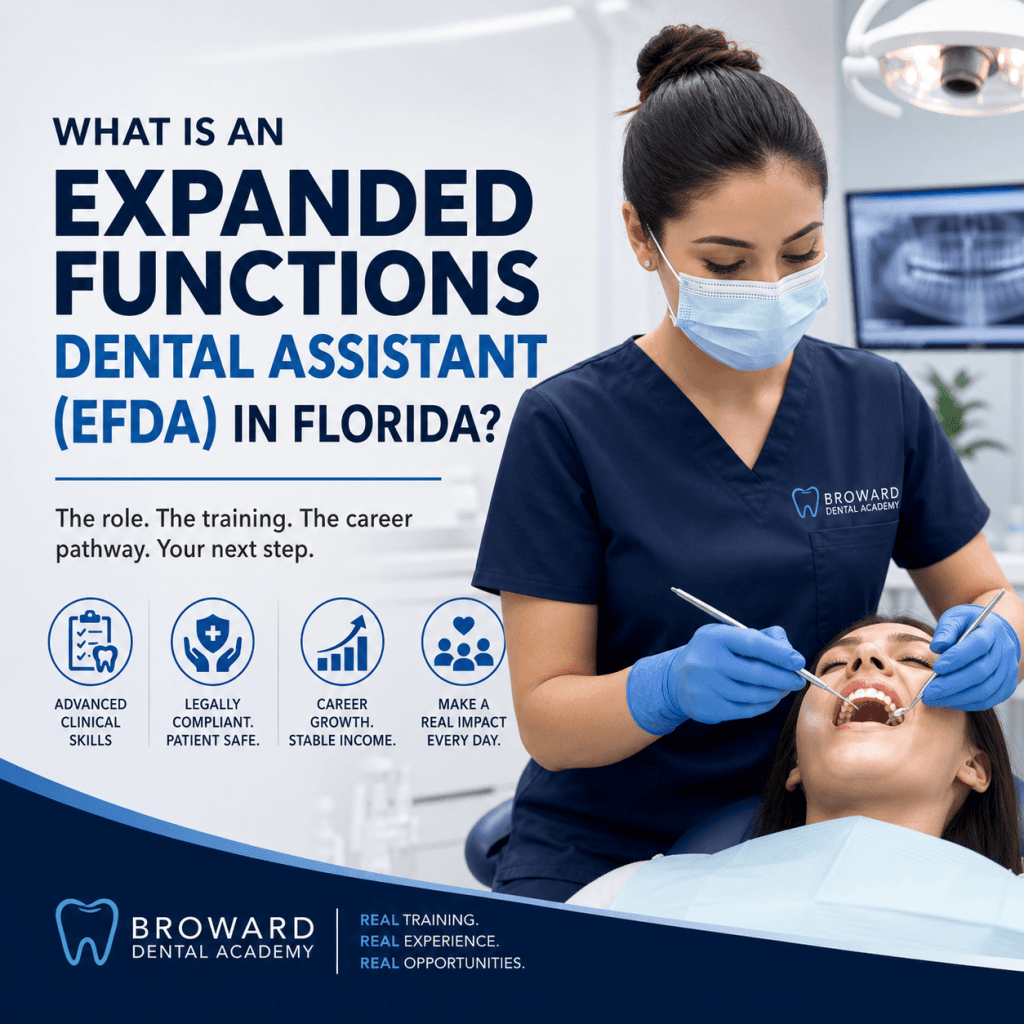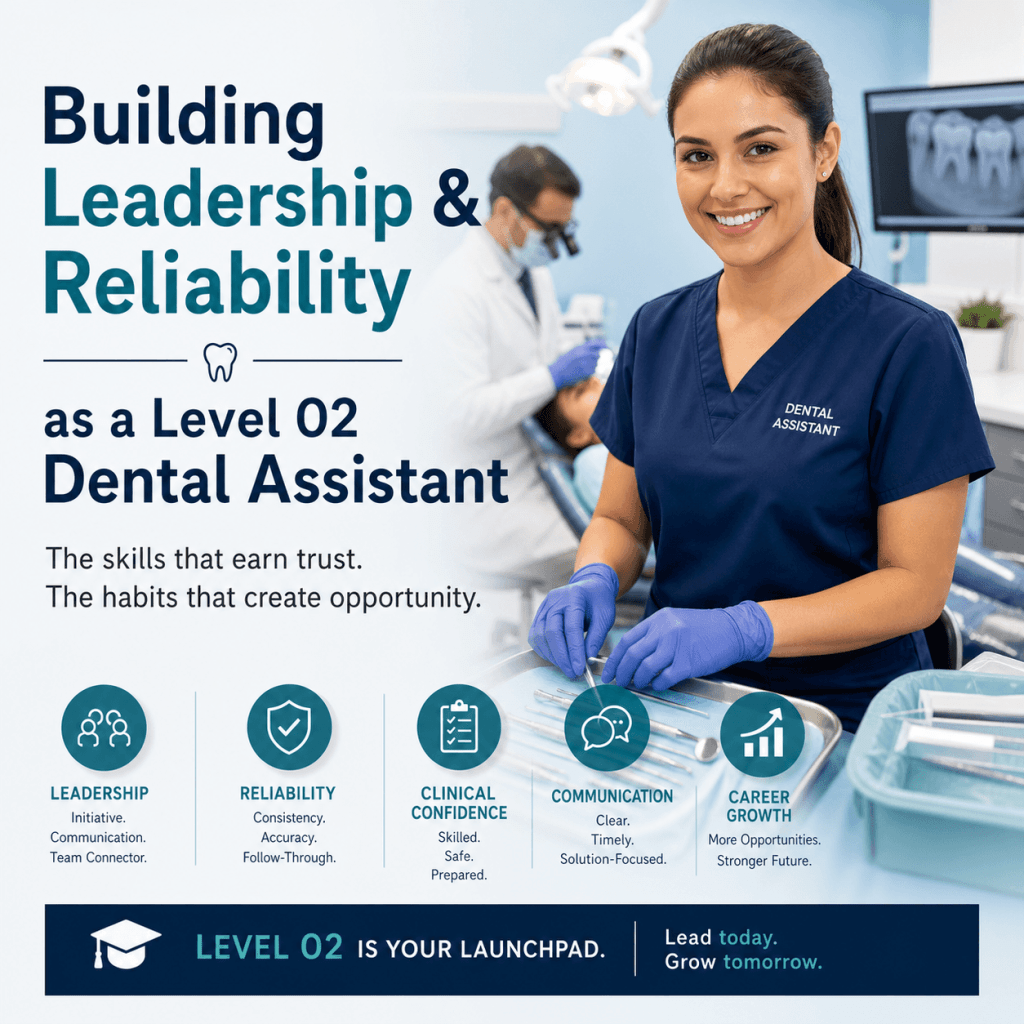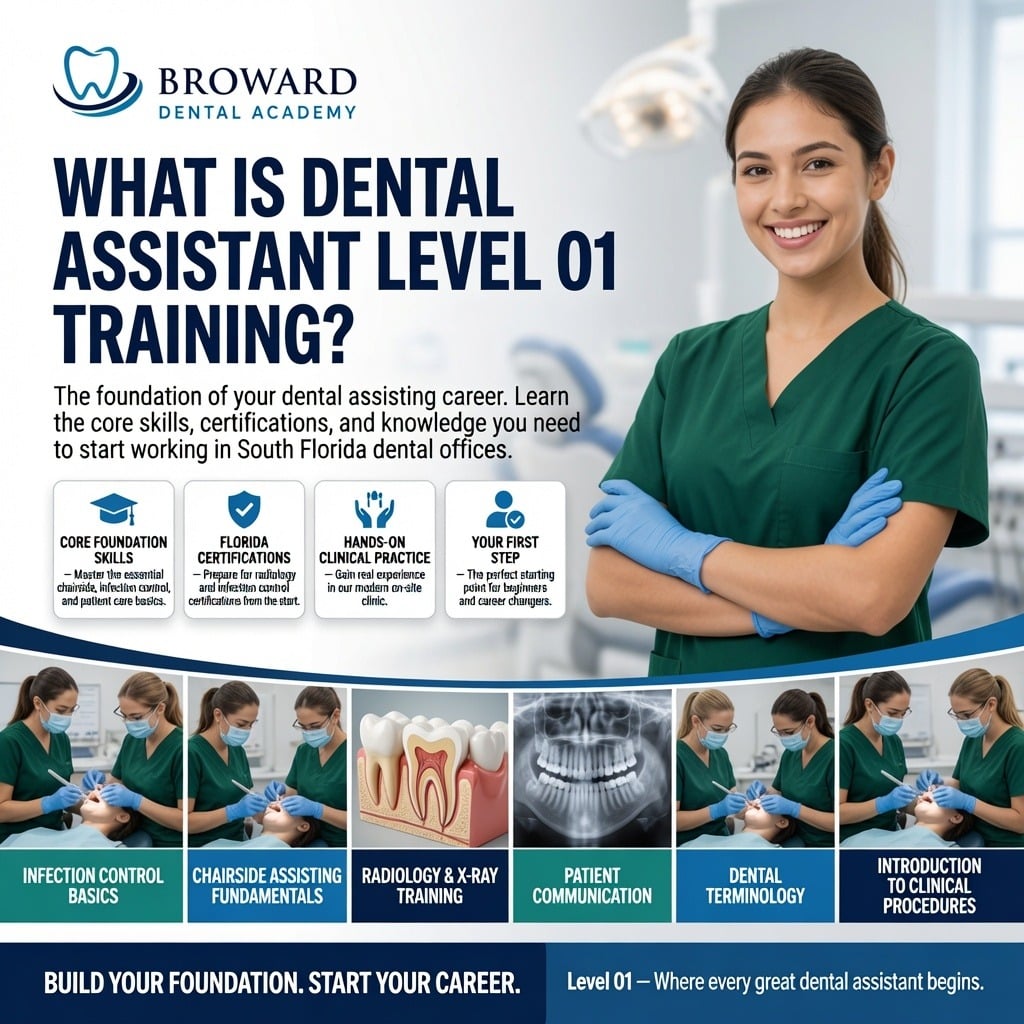
The Dental Assistant Level 01 training is an entry-level path into dentistry that focuses on the skills you need to support a dental team safely and confidently. If you are considering a healthcare career with minimal schooling, this is one of the most practical places to start in 2026.
Dental Assistant Level 01 Training (In Plain English)
Dental Assistant Level 01 is foundational training for chairside dental assisting. The goal is simple: help you become job-ready with the habits that matter most in a real dental office, especially patient safety, infection control, and efficient clinical workflow.
In many areas, “Level 01” signals to employers that you have the basics down, including:
- Solid infection control and sterilization habits
- Familiarity with dental instruments and operatory setup
- An understanding of how a dental day flows, from room turnover to procedure support
- Professional behavior in a healthcare environment
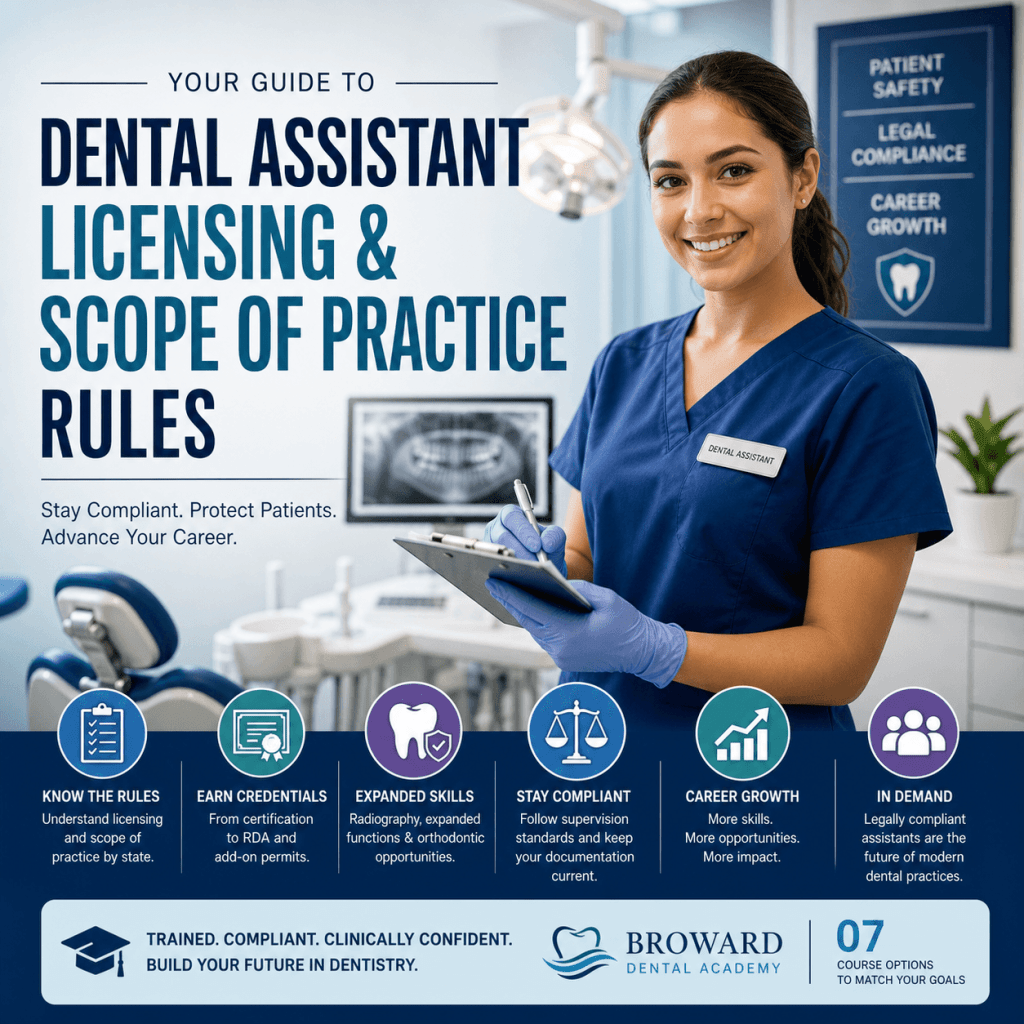
It is also important to set expectations clearly. Level 01 training prepares you to support dentists and hygienists. It does not train you to diagnose, treatment plan, or “practice dentistry.” Good programs emphasize legal compliance and scope of practice from day one, so you learn what you can do, what you cannot do, and what requires extra permits or supervision in your state.
Demand is growing because modern practices are busy, patient expectations are higher, and employers want assistants who can step in with safe, consistent habits. Offices are not just looking for extra hands. They want trained team members who protect patients, keep pace, and follow protocols without shortcuts.
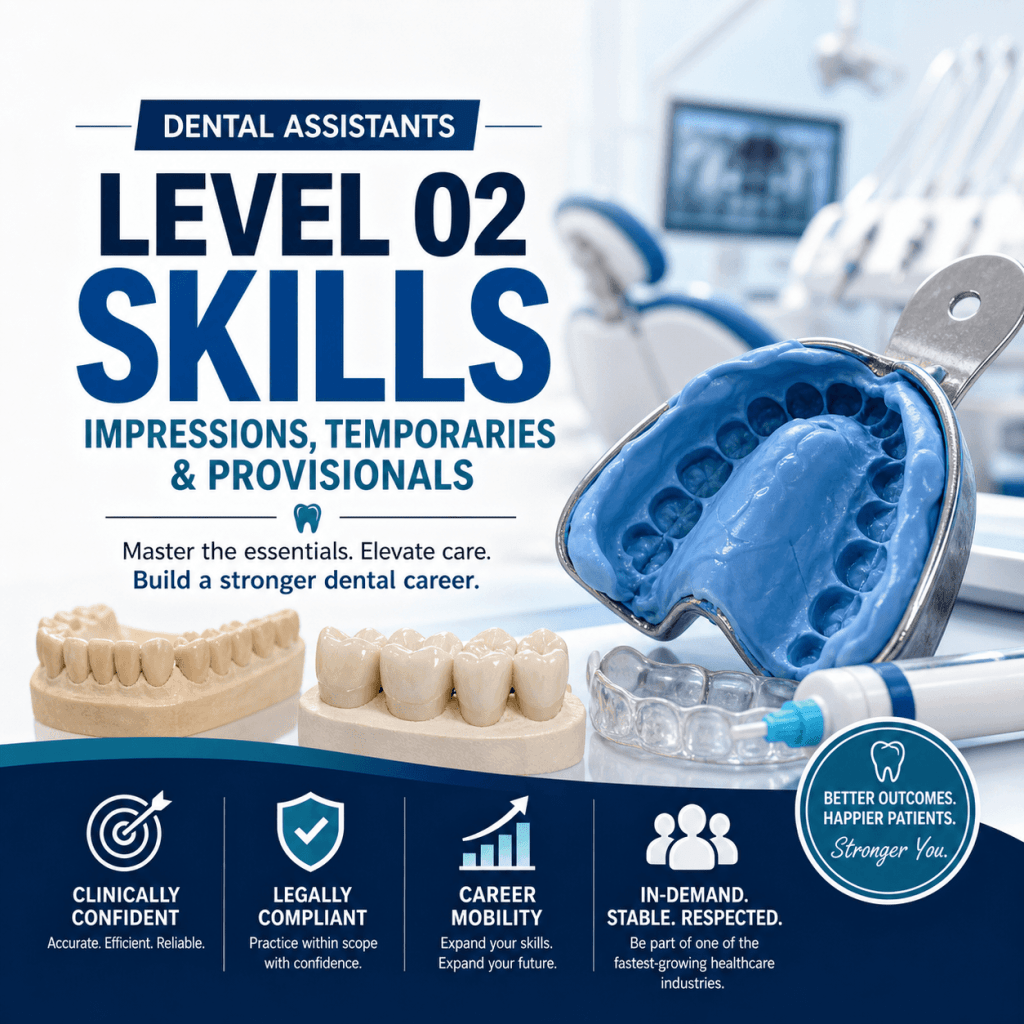
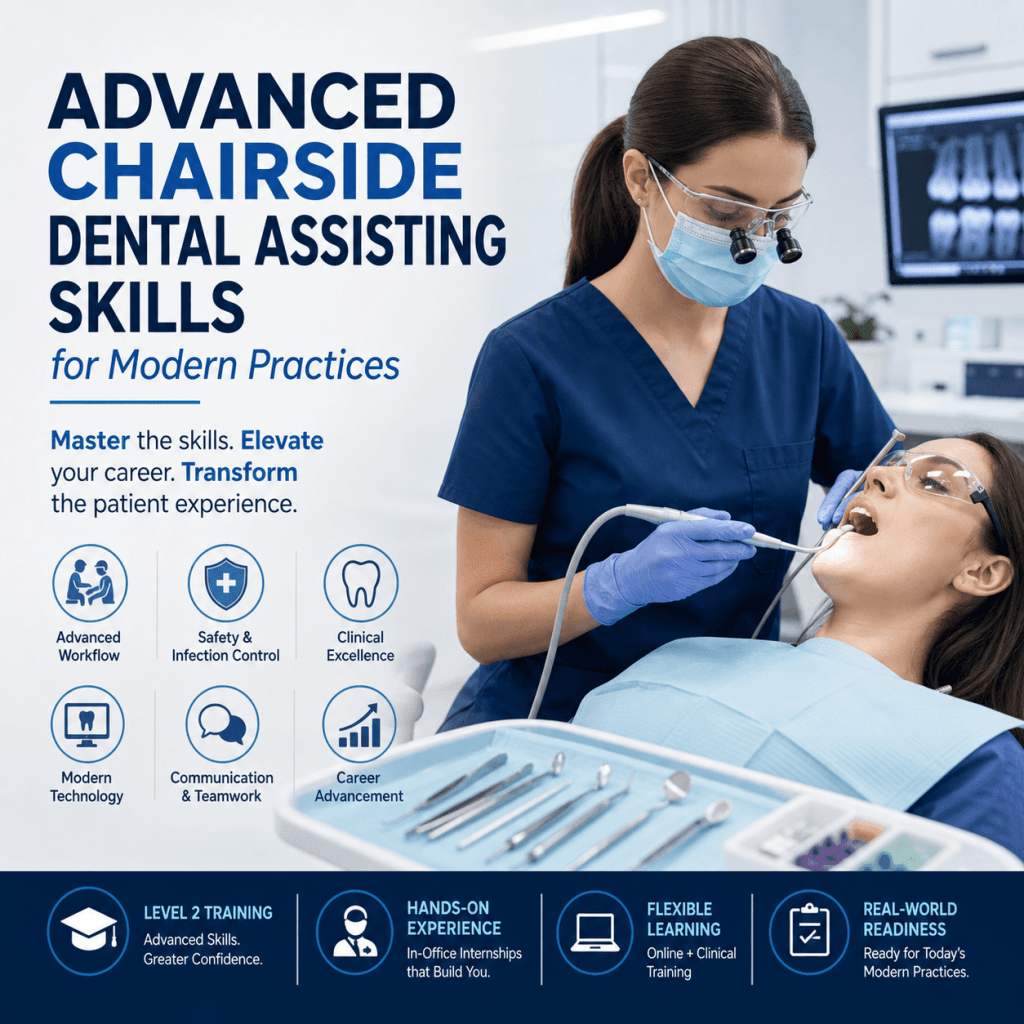
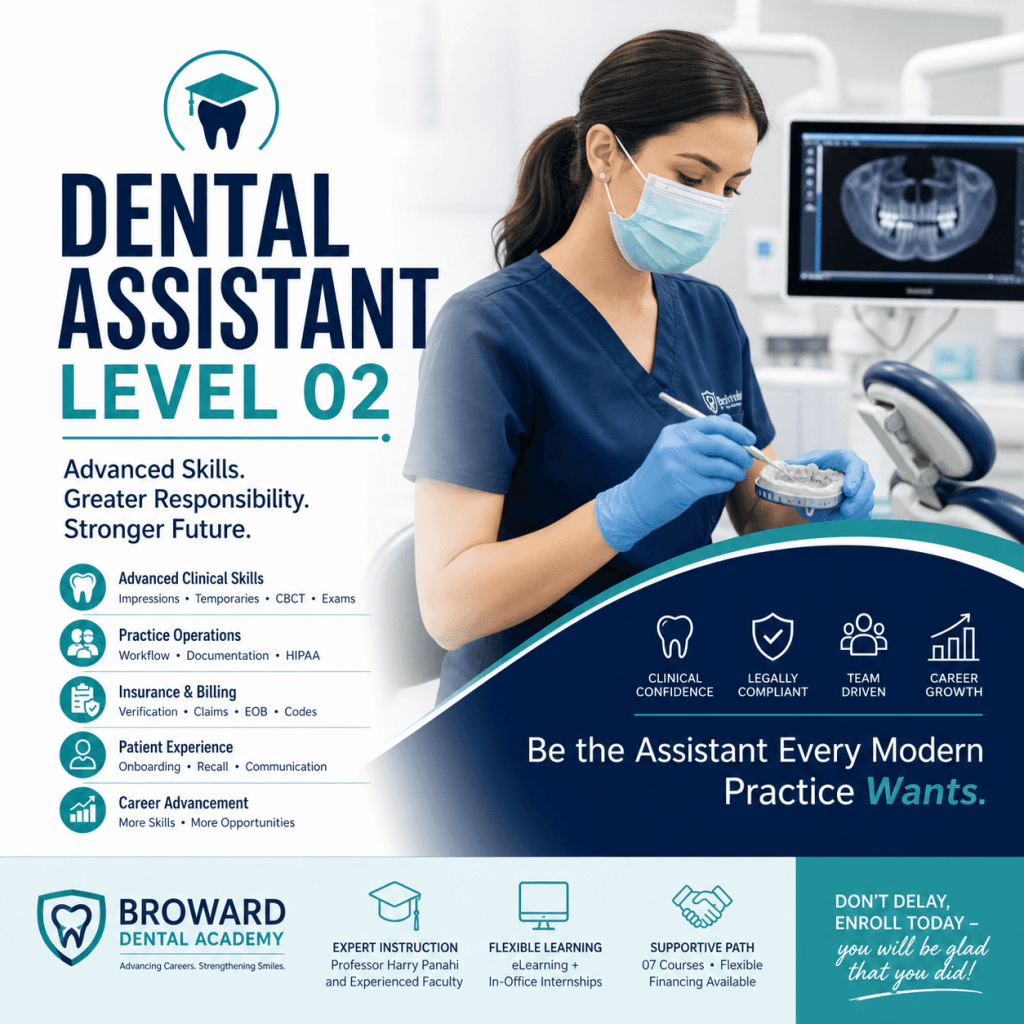
After completing the Level 01 training, there are opportunities to advance your career further by pursuing Dental Assistant Level 02 or even Hygienists Level 03.
Who Dental Assistant Level 01 Training Is For (And Who It’s Not)
Level 01 training can be a strong fit if you want a respected healthcare role without years of schooling.
It is often a great match for:
- Career changers who want stable, meaningful work
- Recent graduates who want a faster route into the workforce
- Parents returning to work who value flexible schedules
- People who enjoy hands on roles and being part of a clinical team
You will likely enjoy this career path if you like:
- Working with your hands and staying active
- Teamwork and clear roles
- Fast paced days with structure and routine
- Details, checklists, and doing things the right way
- Wearing PPE and following sterilization workflow consistently
It may not be a good fit if you:
- Dislike clinical settings, bodily fluids, or strict protocols
- Do not want direct patient interaction
- Prefer slow paced, independent work most of the day
Quick self check before you enroll:
- Are you motivated to learn a new skill quickly and practice it repeatedly?
- Do you have time for both coursework and clinical training?
- Are you comfortable learning in a blended format (online for theory plus in person for skills)?
- Are you ready for professionalism, punctuality, and patient privacy expectations?
If you have any questions about the Dental Assistant Level 01 Training, feel free to reach out. We have multiple locations where you can find the training convenient.
What You Learn: Core Curriculum and Skills You’ll Use Every Day
A strong Level 01 program is practical. You are learning what you will do daily in an office, not just vocabulary.
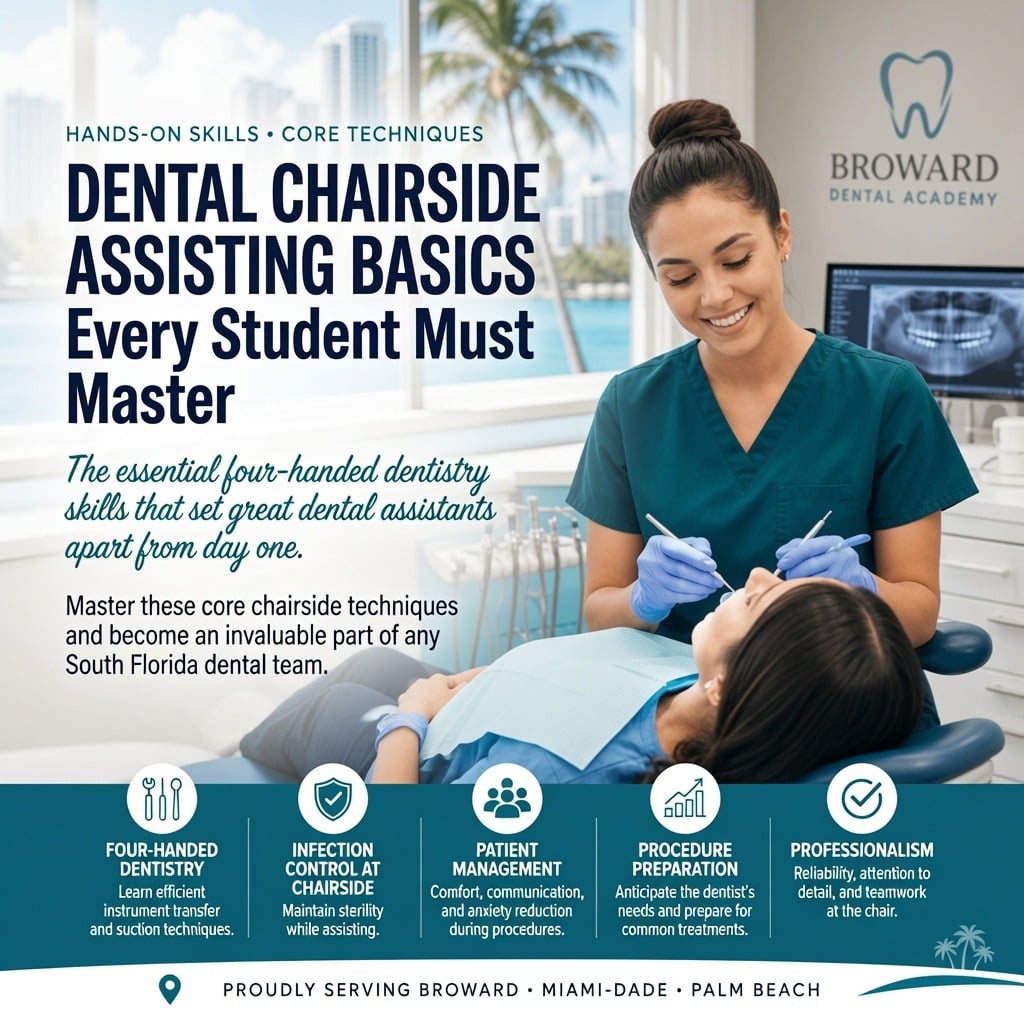
Chairside assisting fundamentals
This is the heart of entry level dental assisting, including:
- Operatory setup and breakdown (barriers, supplies, tray setup, room readiness)
- Four handed dentistry basics (efficient positioning and instrument transfer)
- Anticipation skills (knowing what the dentist is likely to need next)
- Patient positioning for comfort and access
- Suction and isolation basics to keep the field clear and the patient comfortable
Dental materials handling basics
Many Level 01 programs introduce commonly used materials so you understand safe handling and timing, such as:
- Impression materials basics
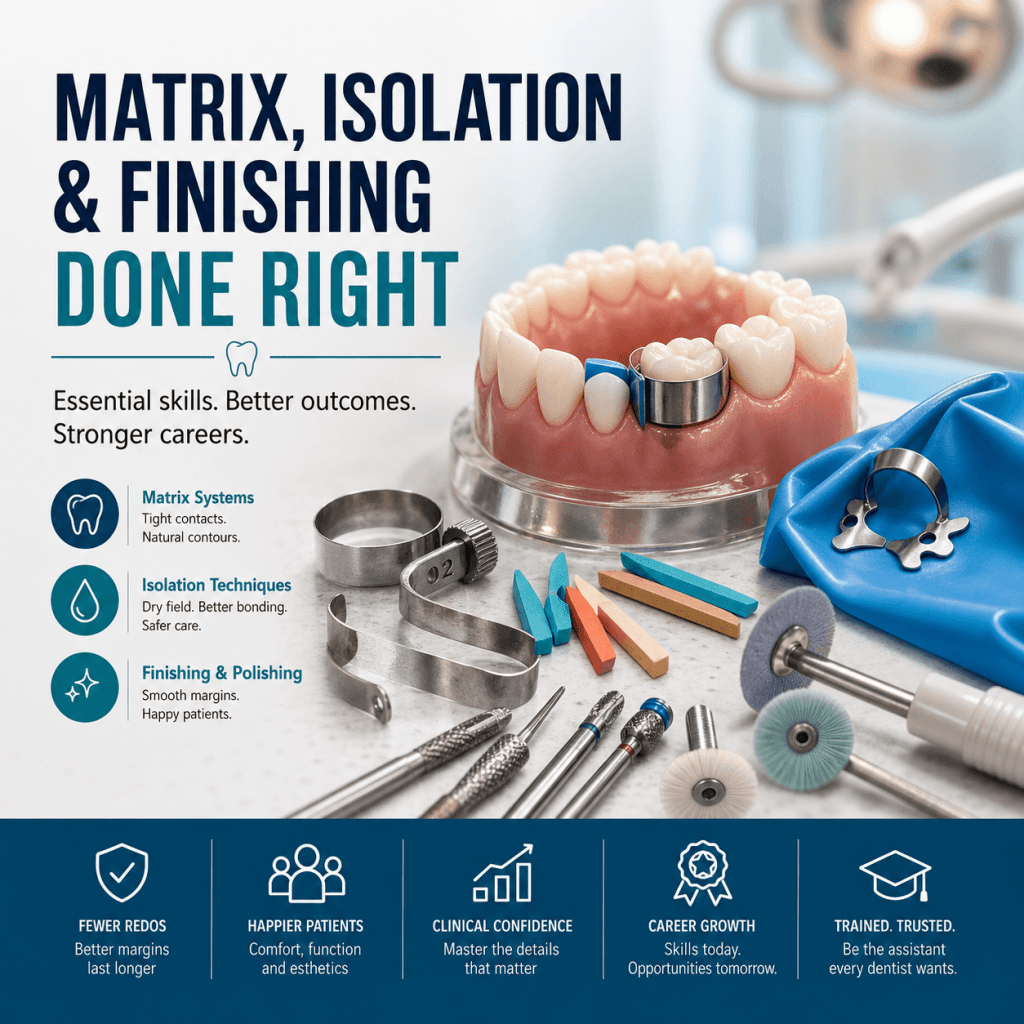
- Cements, composites, and dispensing basics
- Mixing or preparing materials (where applicable)
- Labeling, storage, and safety procedures
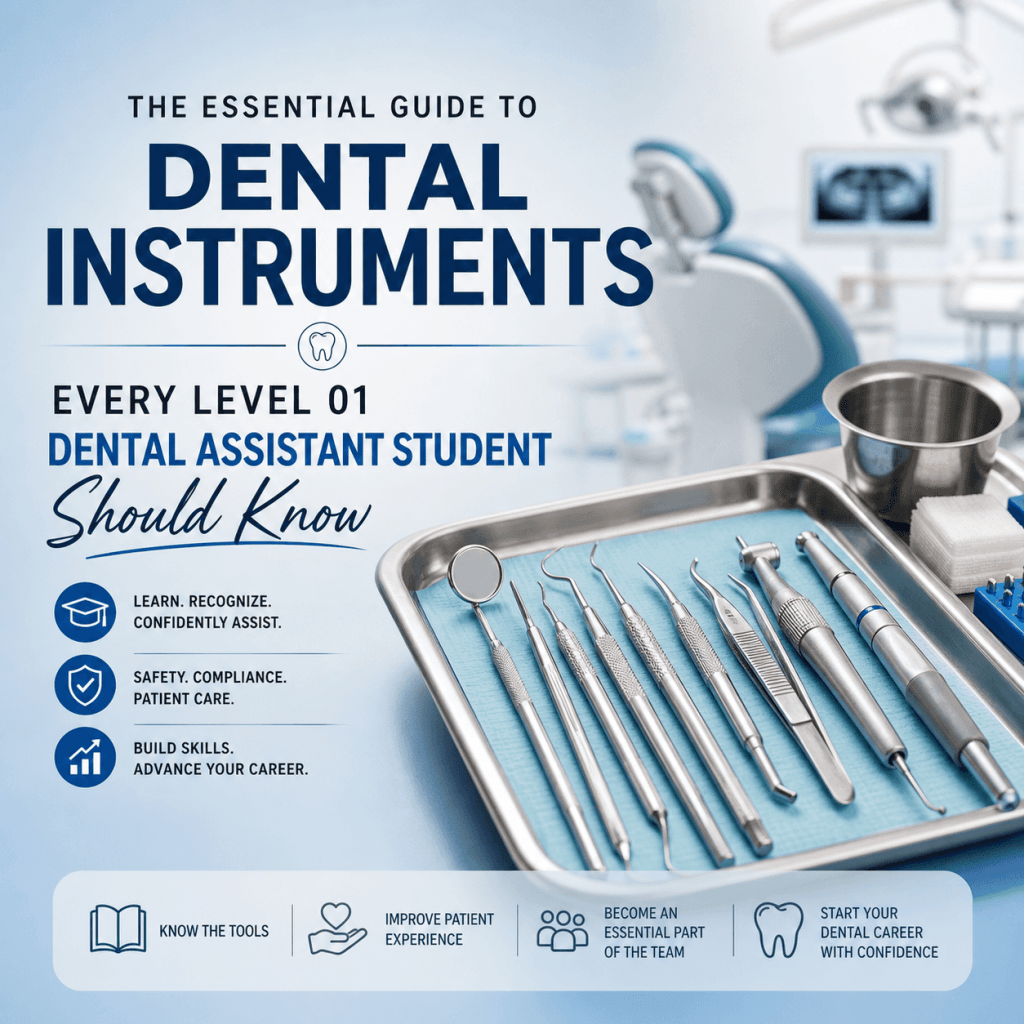
Instrument identification and passing
Speed matters in dentistry, but accuracy matters more. You typically learn:
- Common hand instruments and their purpose
- Burs, trays, and setup organization
- Safe, clean instrument passing to maintain an efficient flow
Communication basics
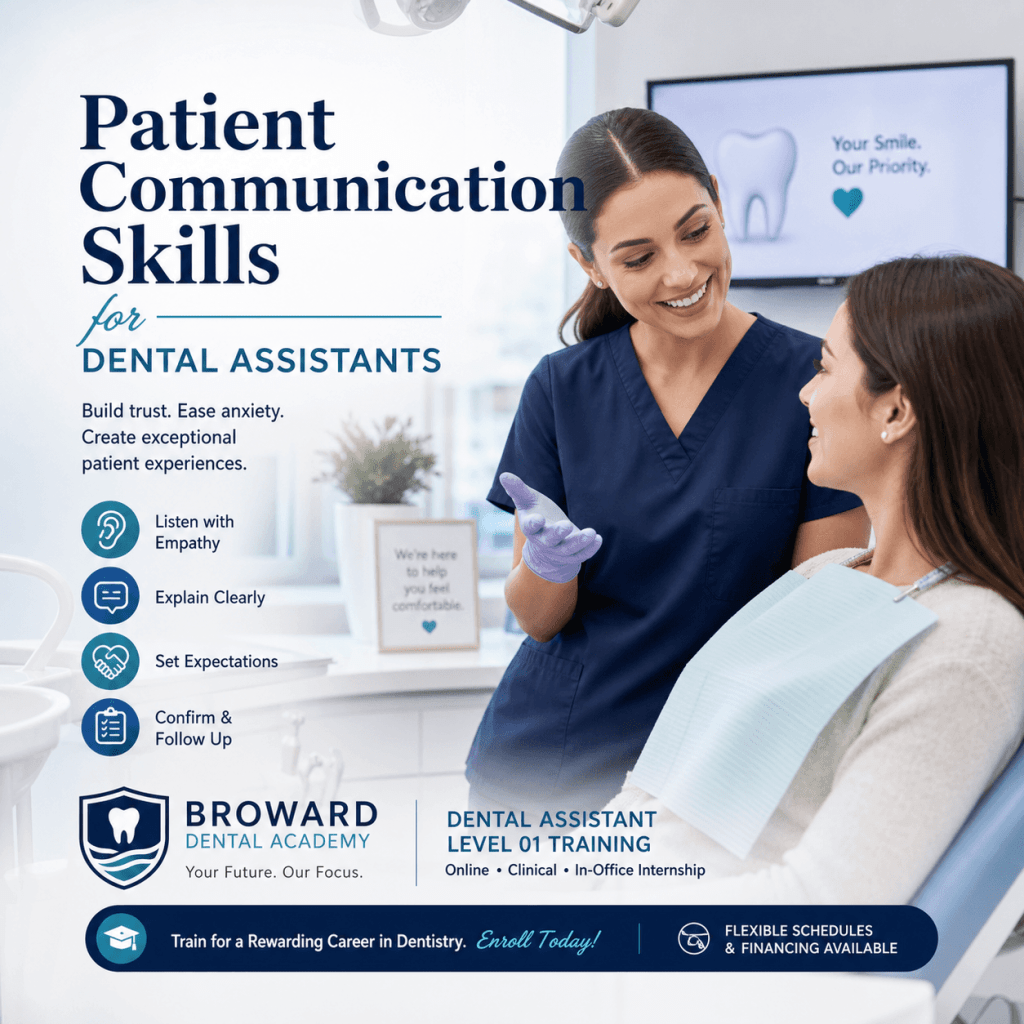
A calm, clear assistant can change a patient’s entire experience. Training often includes:
- Patient comfort and chairside communication
- Clear instructions before, during, and after procedures (as directed)
- Documenting observations and supporting clinical notes (as allowed)
- Smooth handoffs with the dentist, hygienist, and front office
Professional standards
Employers notice reliability fast. Level 01 training usually reinforces:
- Punctuality and readiness for the day
- Confidentiality and privacy
- Ethical conduct and boundaries
- Customer service in a clinical environment
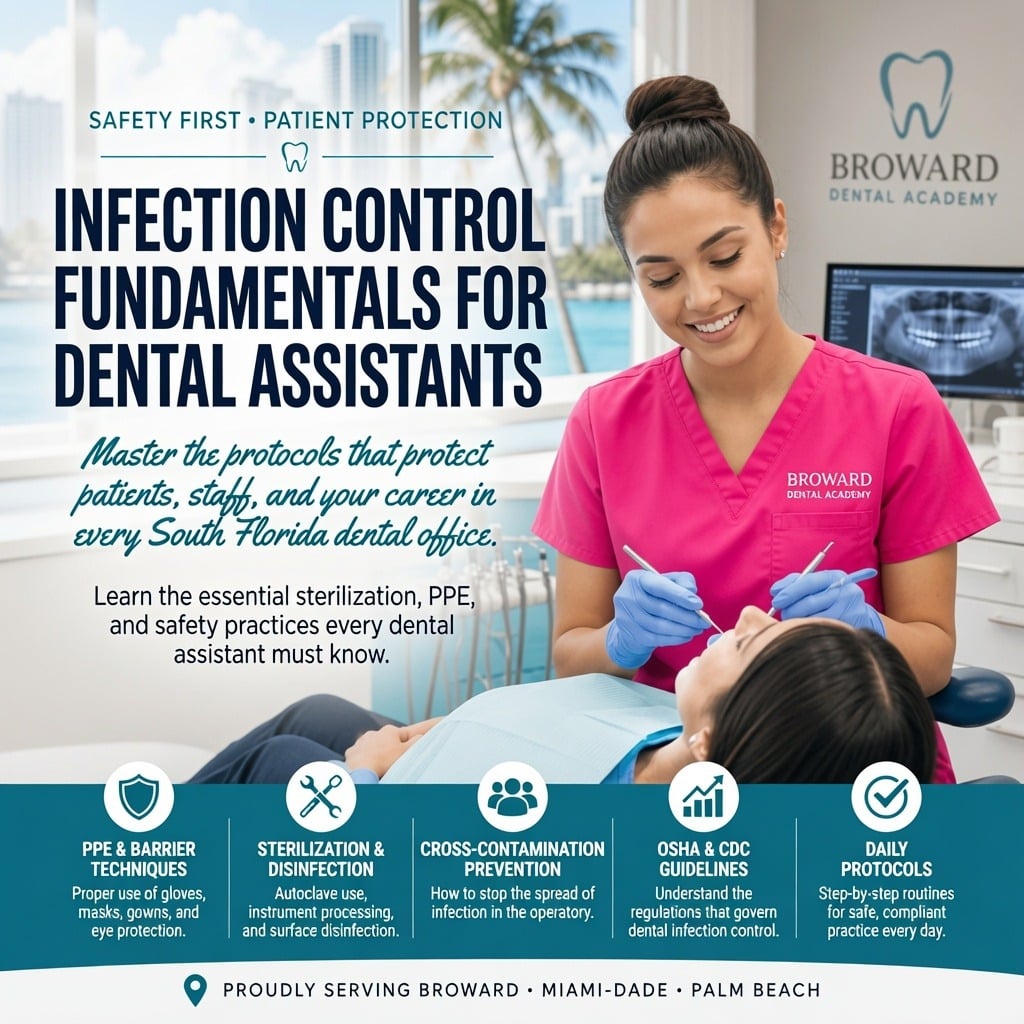
Infection Control Foundations (Where Good Assistants Stand Out)
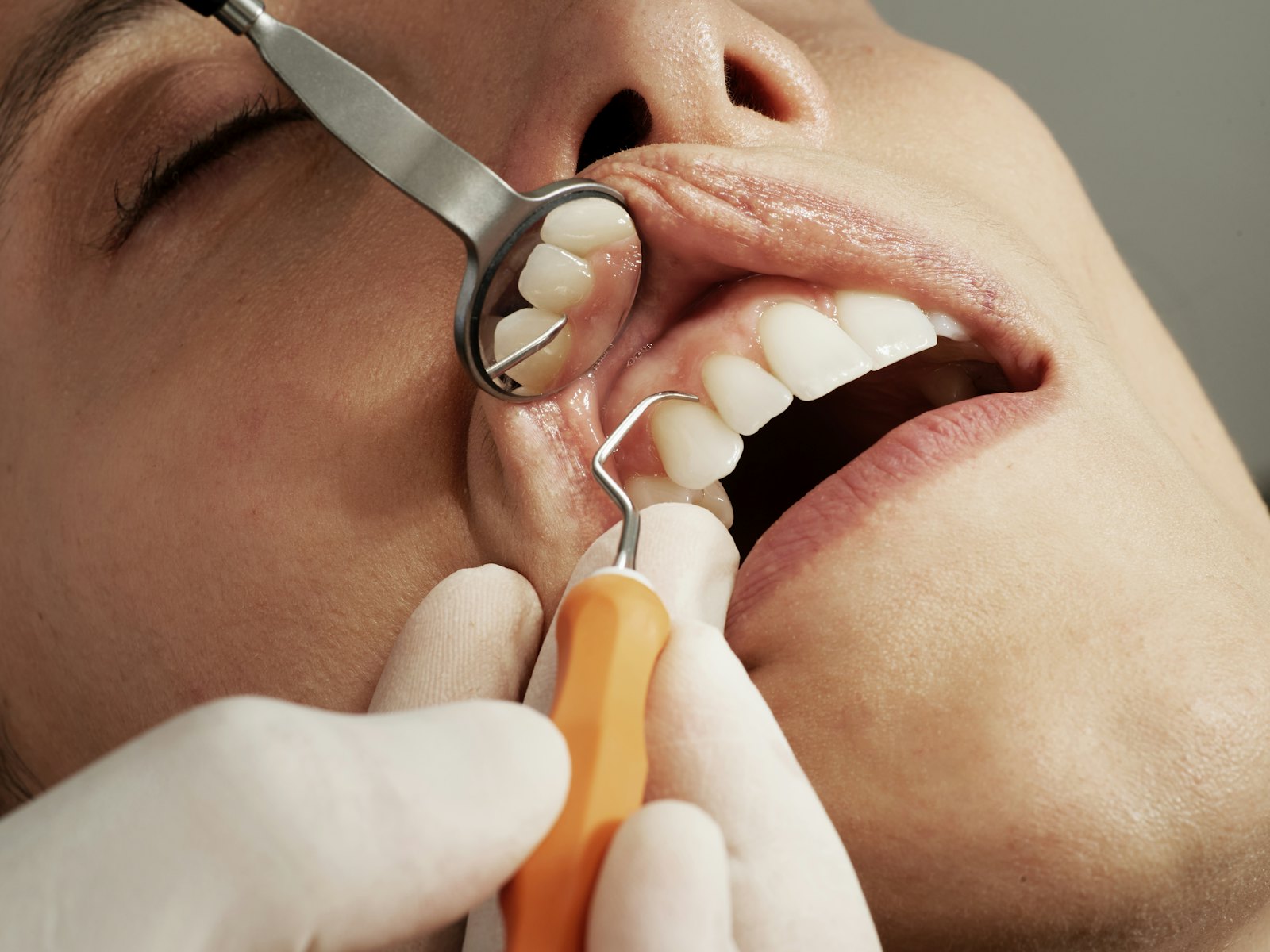
If you want to stand out as a Level 01 graduate, infection control is where you earn trust. It protects patients, protects you, and protects the practice’s reputation.
PPE (Personal Protective Equipment) typically includes:
- Gloves
- Masks
- Protective eyewear or face shields
- Gowns or protective jackets
Training should cover proper donning and doffing, plus how to avoid accidental contamination when moving quickly.
Sterilization workflow is a core daily responsibility in many offices. You should understand the sequence and the “why” behind it:
- Cleaning and preparing instruments
- Packaging and labeling
- Sterilizing and monitoring
- Storage and maintaining sterile integrity
- Separating clean and dirty zones to prevent cross contamination
Operatory disinfection and turnover is another major focus:
- Surface disinfection and barrier placement
- Correct contact times for disinfectants
- Turnover routines that reduce risk while keeping the schedule moving
Sharps safety and exposure protocols are essential at entry level:
- How to prevent injuries during procedures and cleanup
- Safe disposal habits
- What to do immediately if an exposure incident occurs, and who to report to
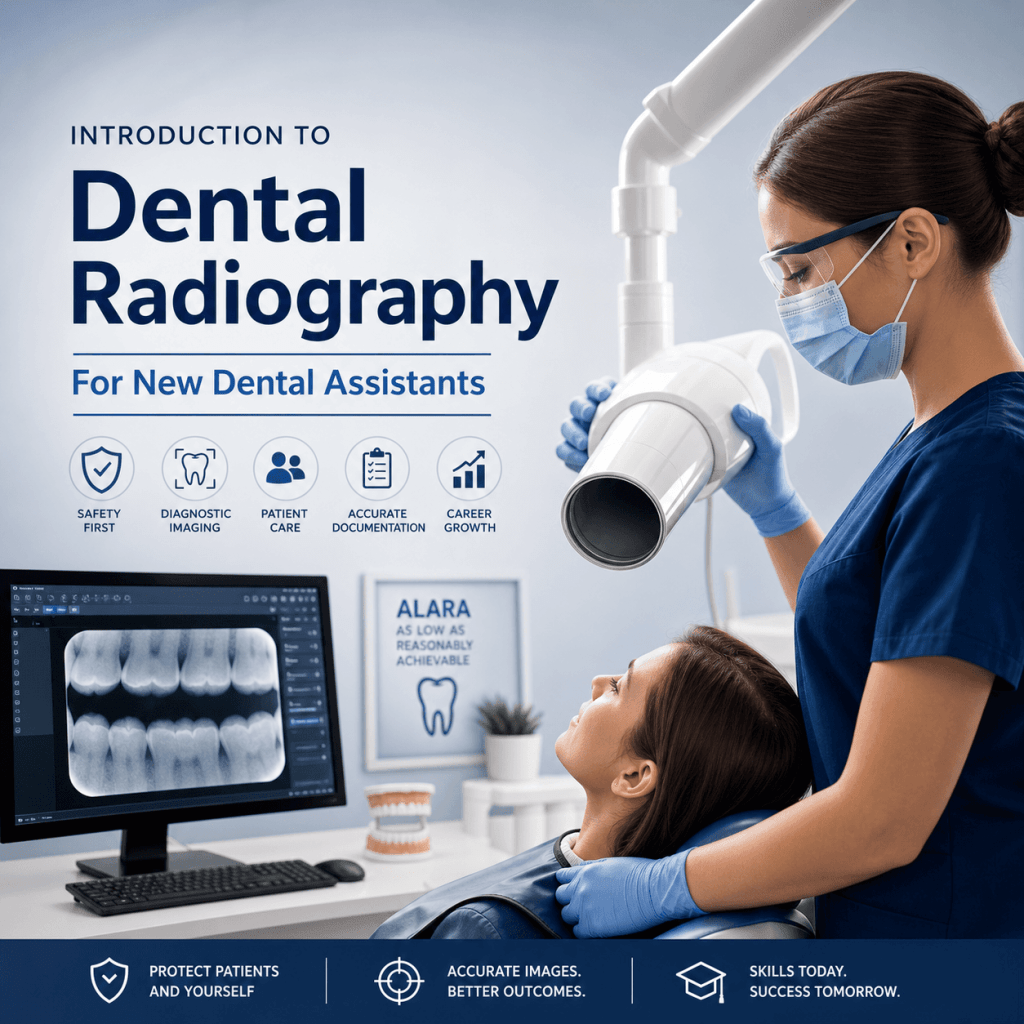
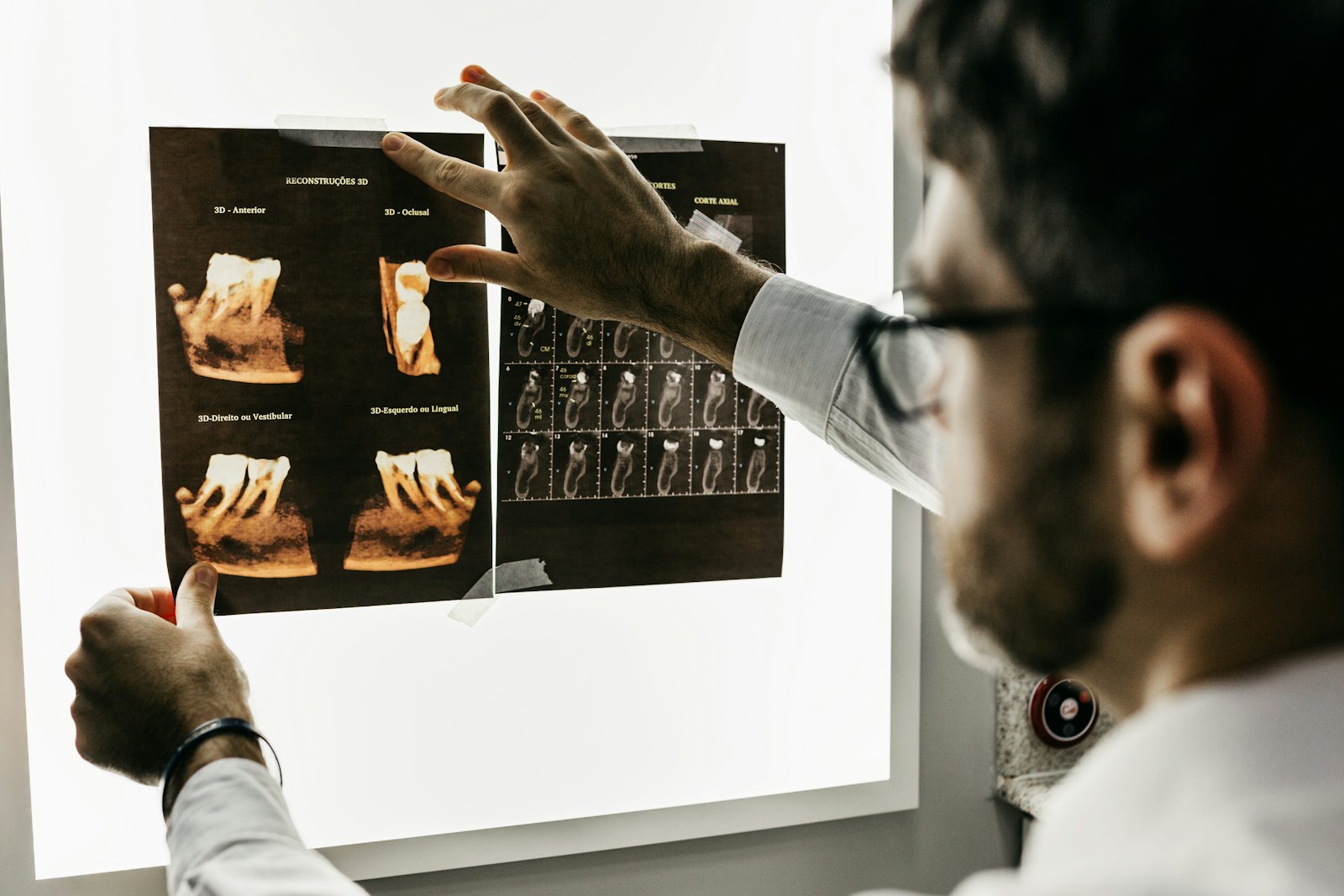
Radiography Basics (If Included/Allowed in Your Area)
Radiography is commonly included in many programs, but what you are allowed to do depends on your state rules and supervision requirements.
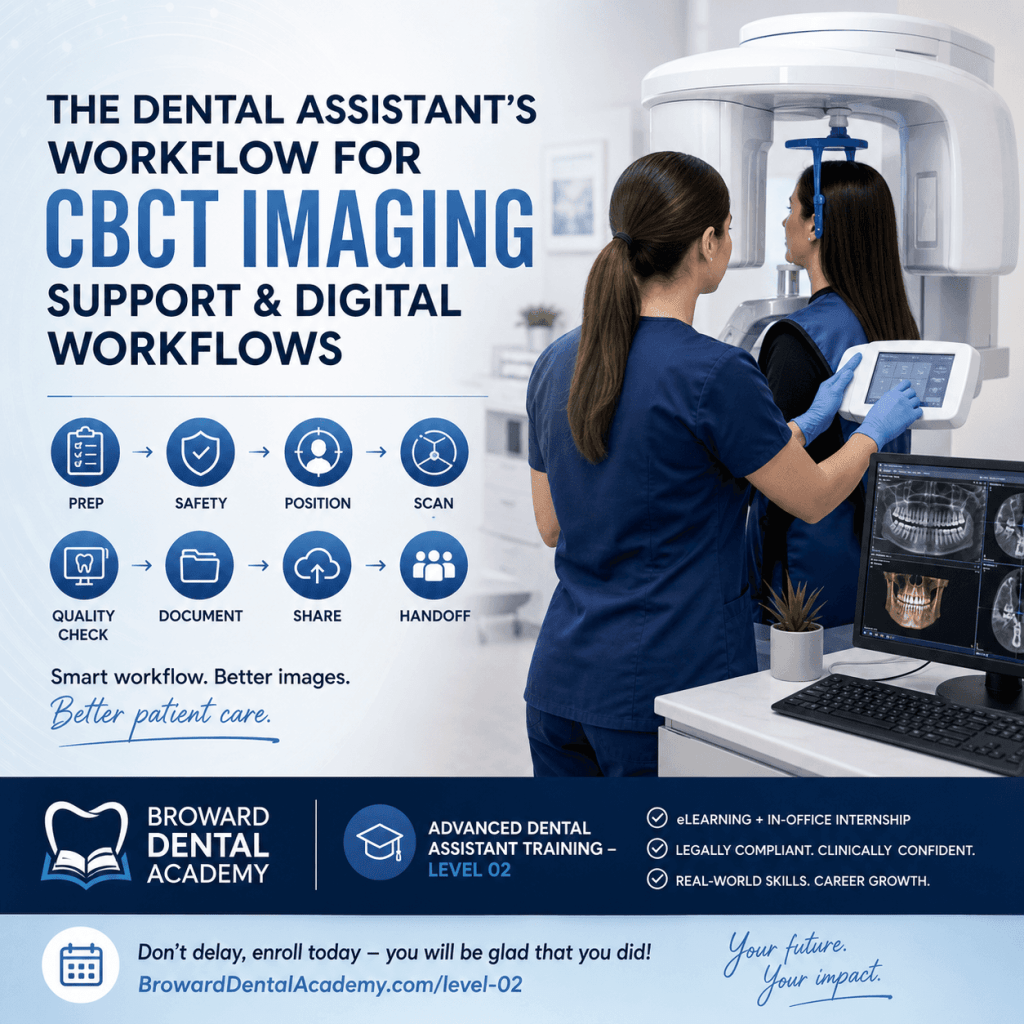
If radiography is part of your Level 01 training, you may learn:
- Patient positioning basics
- Sensor or film placement concepts and patient comfort tips to reduce retakes
- Radiation safety fundamentals and protective measures
- How radiographs fit into the dental workflow and patient education
Understanding the intersection of infection control and dental radiography can further enhance your role, even if your position does not include taking X-rays right away. This knowledge improves your chairside awareness and communication with the team.
What a Level 01 Dental Assistant Actually Does in a Modern Office
Level 01 assistants keep the day moving while keeping patients safe and supported.
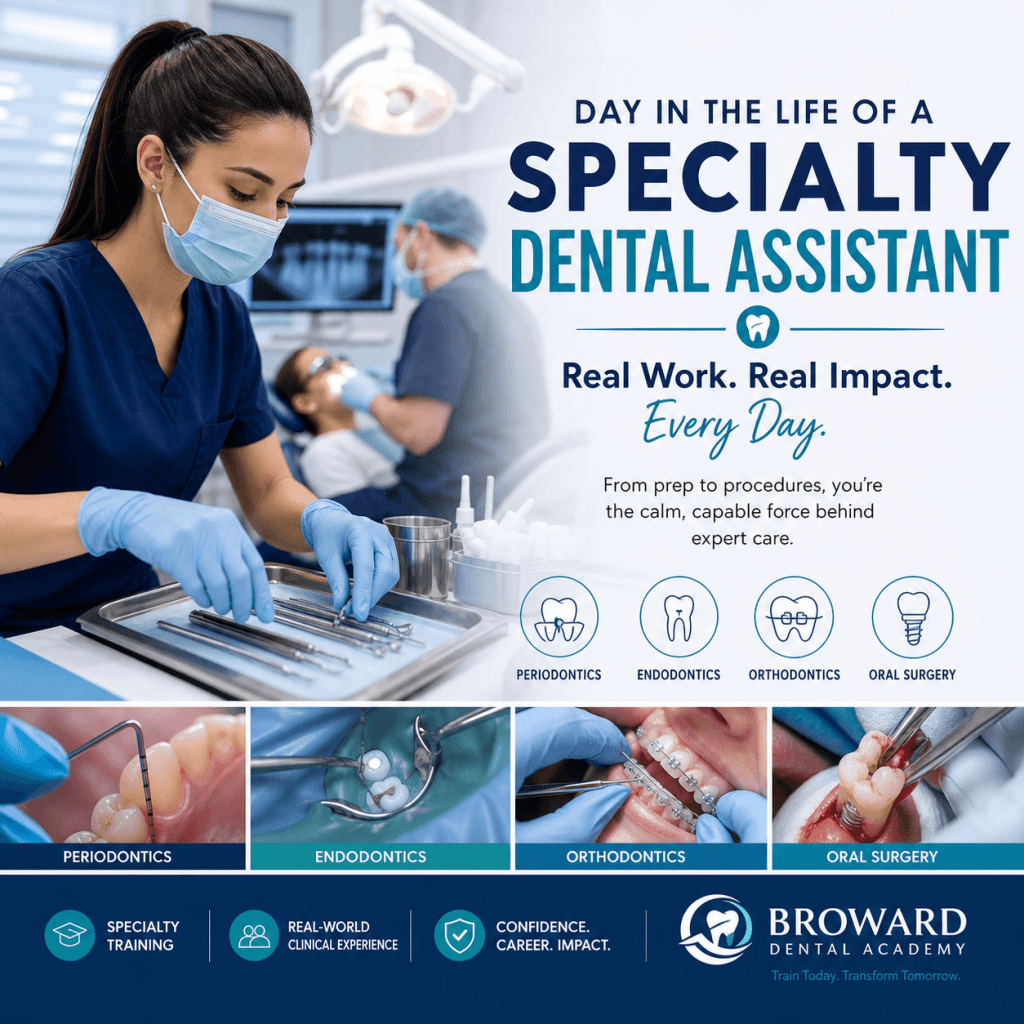
A typical day often looks like this:
- Morning setup: review the schedule, prepare operatories, confirm materials and instruments
- Chairside assisting: support procedures through suction, retraction, instrument passing, and tray management
- Room turnover: clean, disinfect, reset, restock, repeat
- Stocking and organization: keep rooms consistent so the team can move fast
- End of day sterilization: finish instrument processing and reset for tomorrow
Patient facing responsibilities often include:
- Greeting and seating patients
- Helping anxious patients feel calmer through simple explanations and steady tone
- Confirming comfort and communicating what will happen next (as directed)
Clinical support tasks commonly include:
- Maintaining visibility and a dry field for the dentist
- Mixing or preparing materials when appropriate
- Setting up procedure trays
- Supporting notes and documentation when allowed
Team coordination is constant. You work with the dentist, hygienist, other assistants, and the front office. When the team is coordinated, the schedule runs smoother and patients notice the difference.
Quality markers employers notice quickly:
- Speed with accuracy
- Clean habits without reminders
- Calm under pressure
- Professional communication
- Coachability and willingness to improve fast
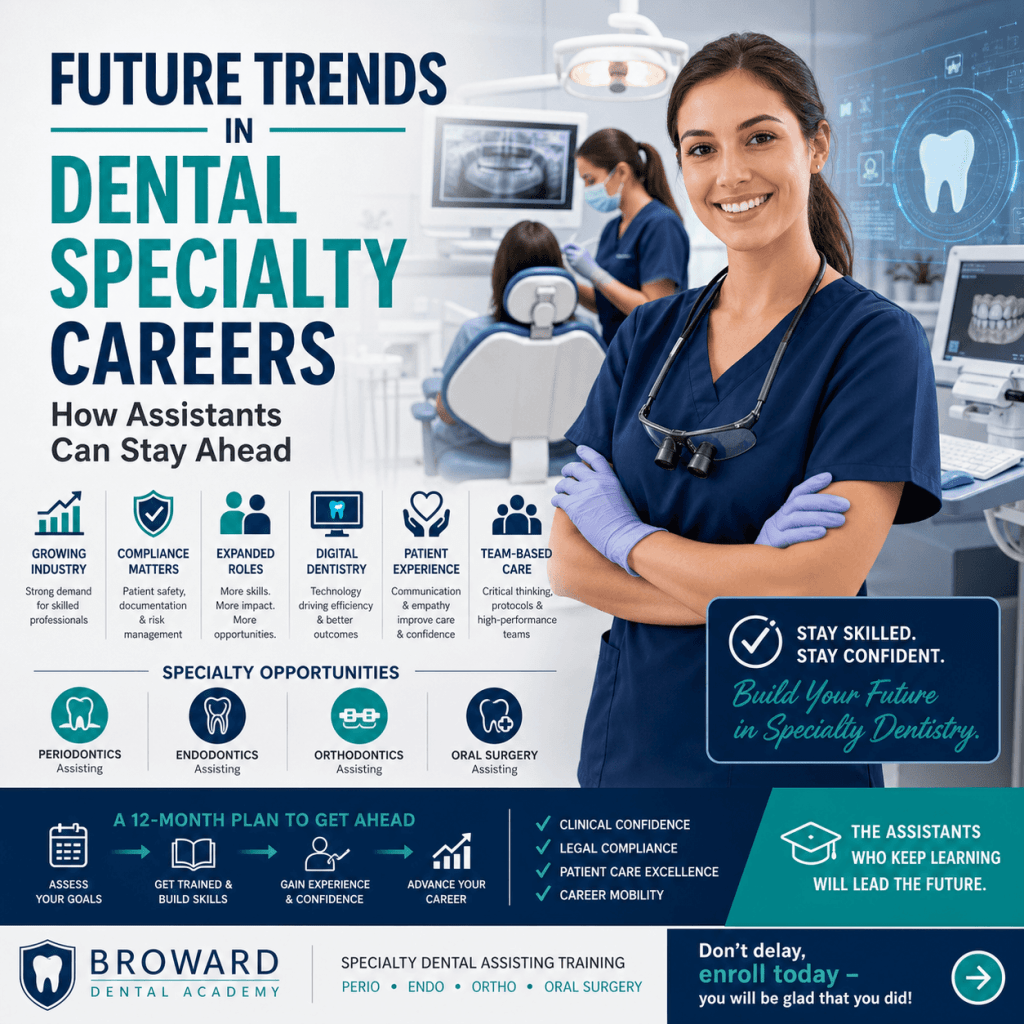
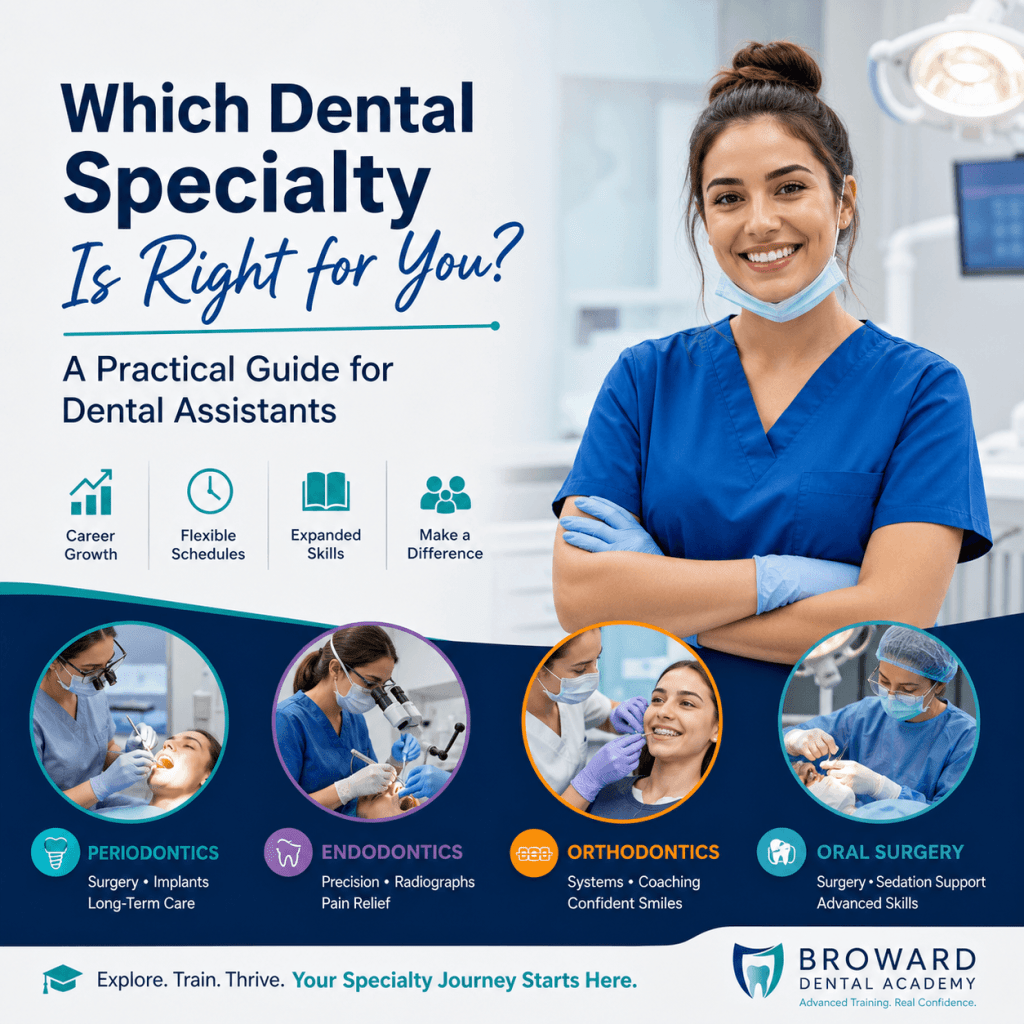
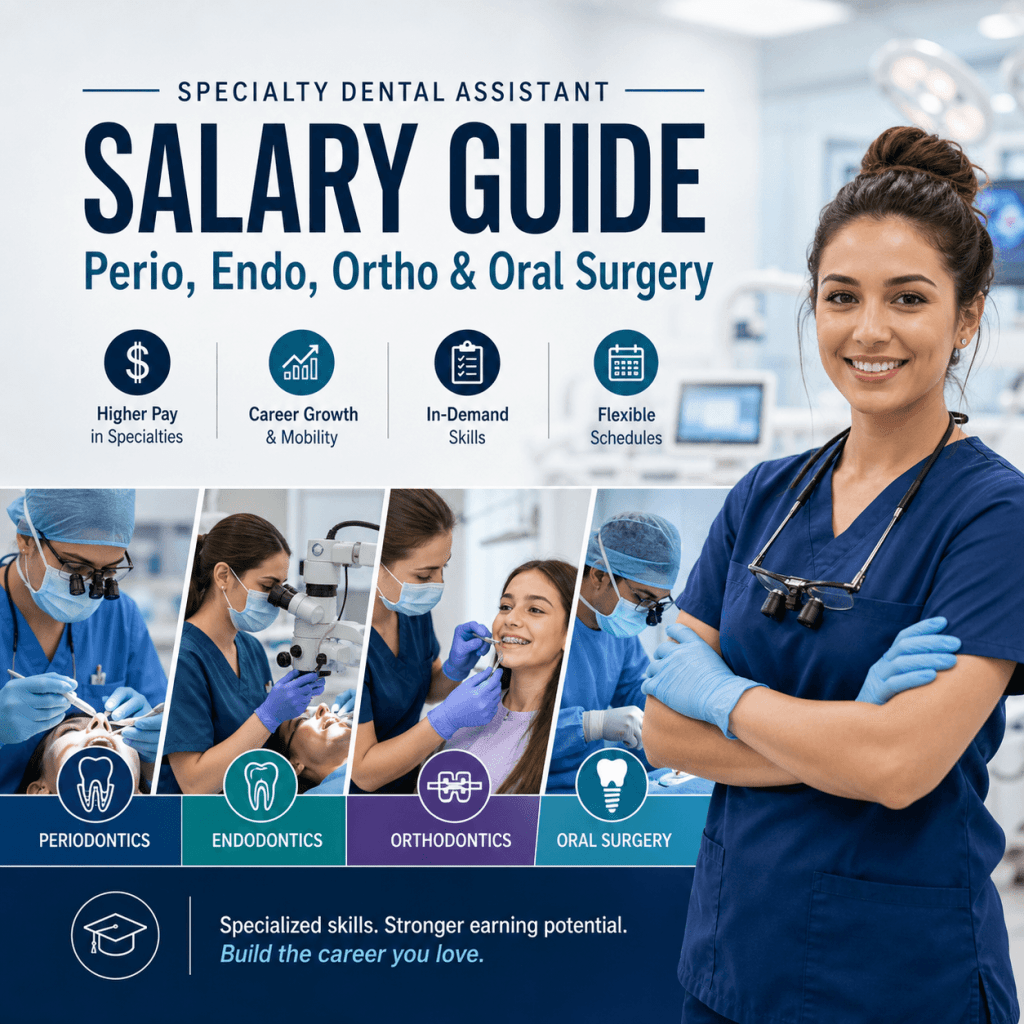
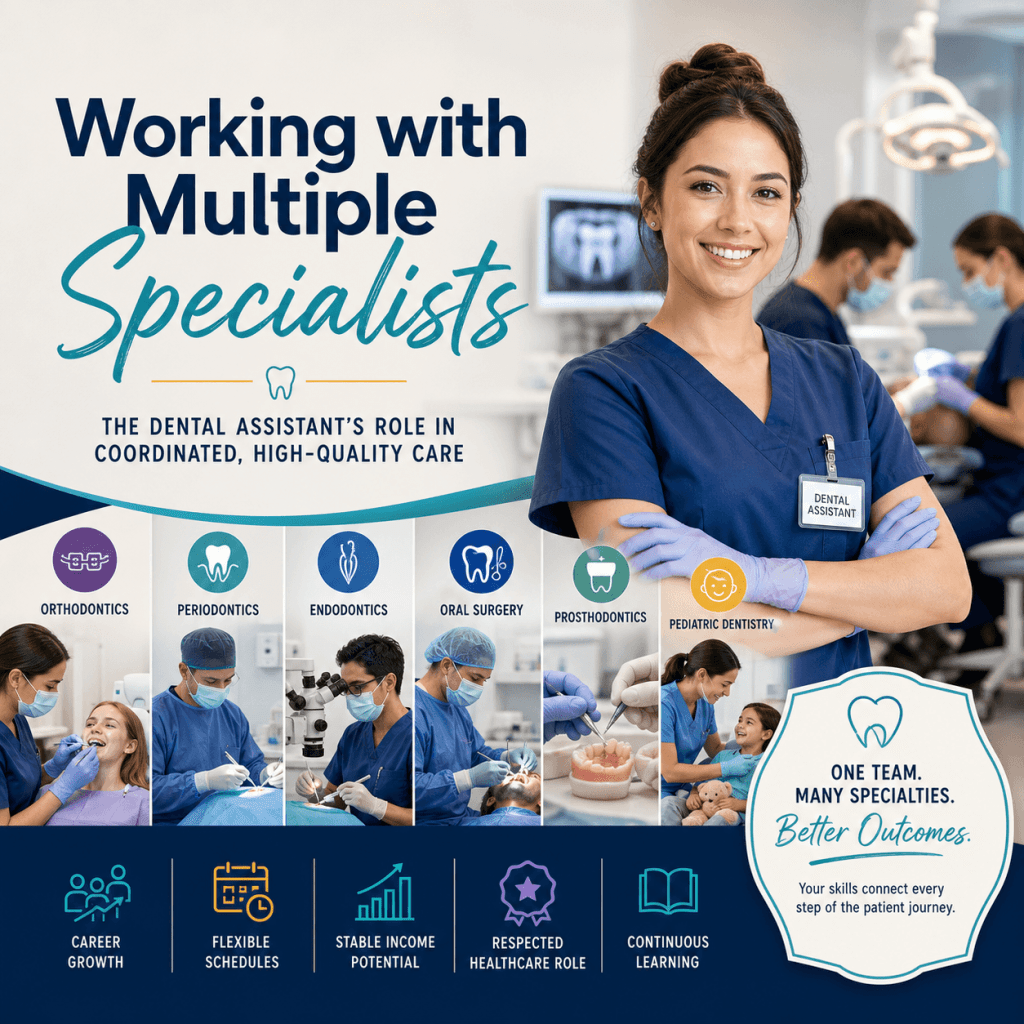
Specialty Exposure: Where Level 01 Skills Carry Over
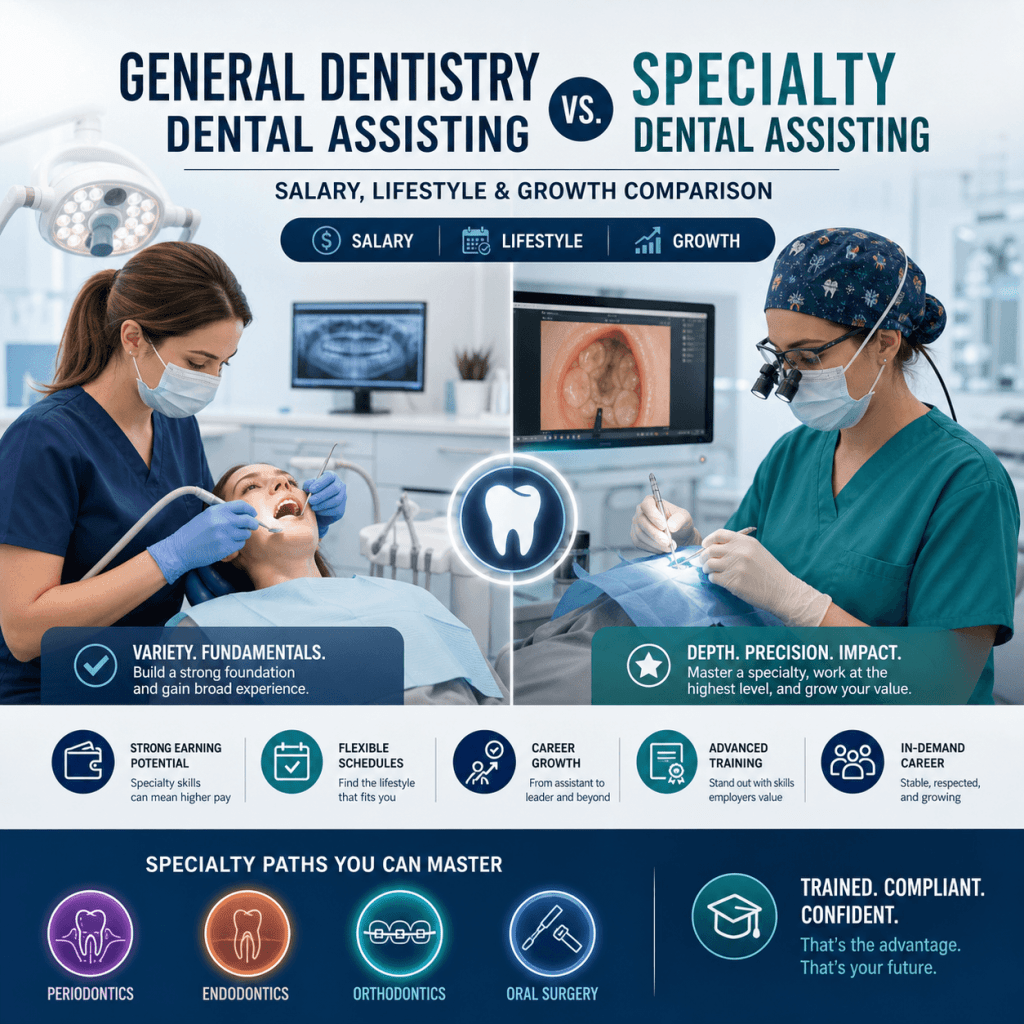
Level 01 training builds foundations that transfer across specialties. You might start in general dentistry, then move into a specialty office as you gain experience or complete additional training.
Here is how Level 01 skills commonly carry over:
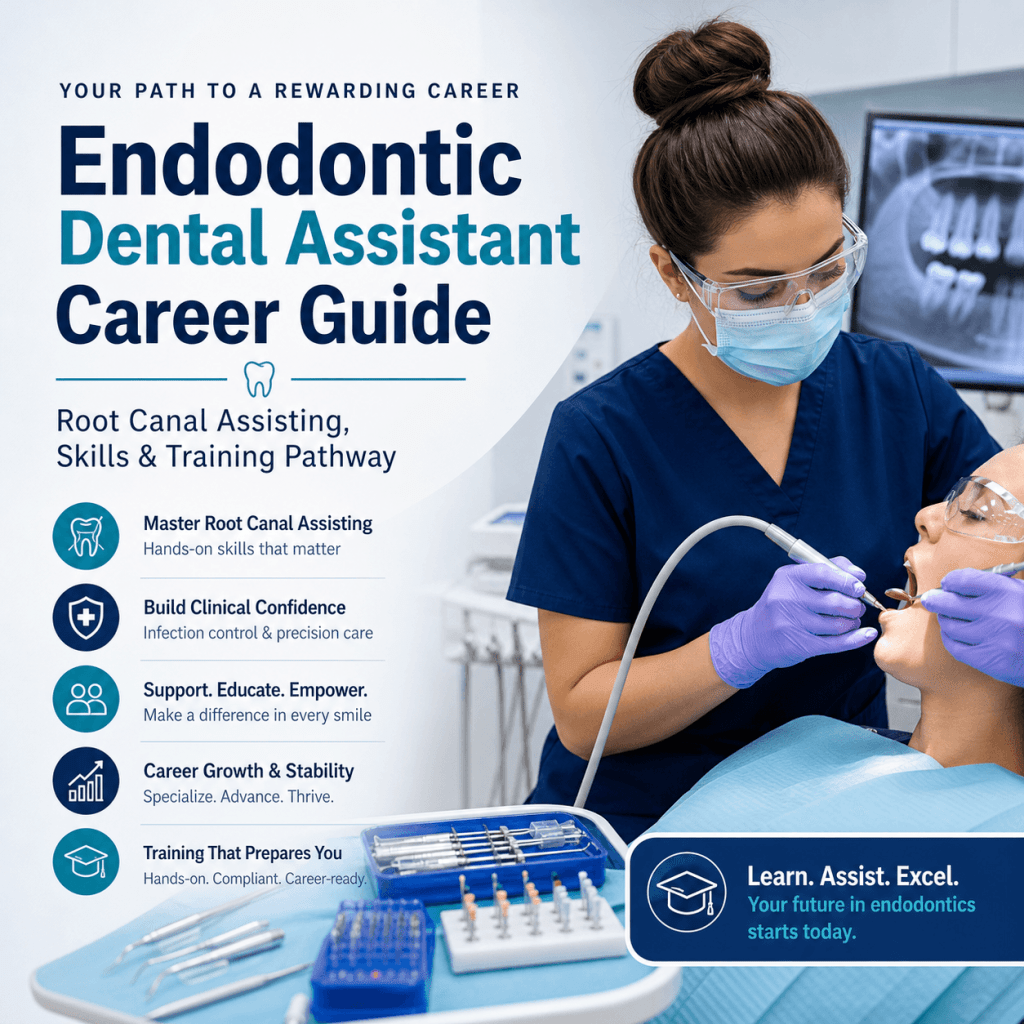
- Endodontics: isolation support, keeping the field dry, organizing materials, patient comfort. For more information on these specific skills in endodontics.
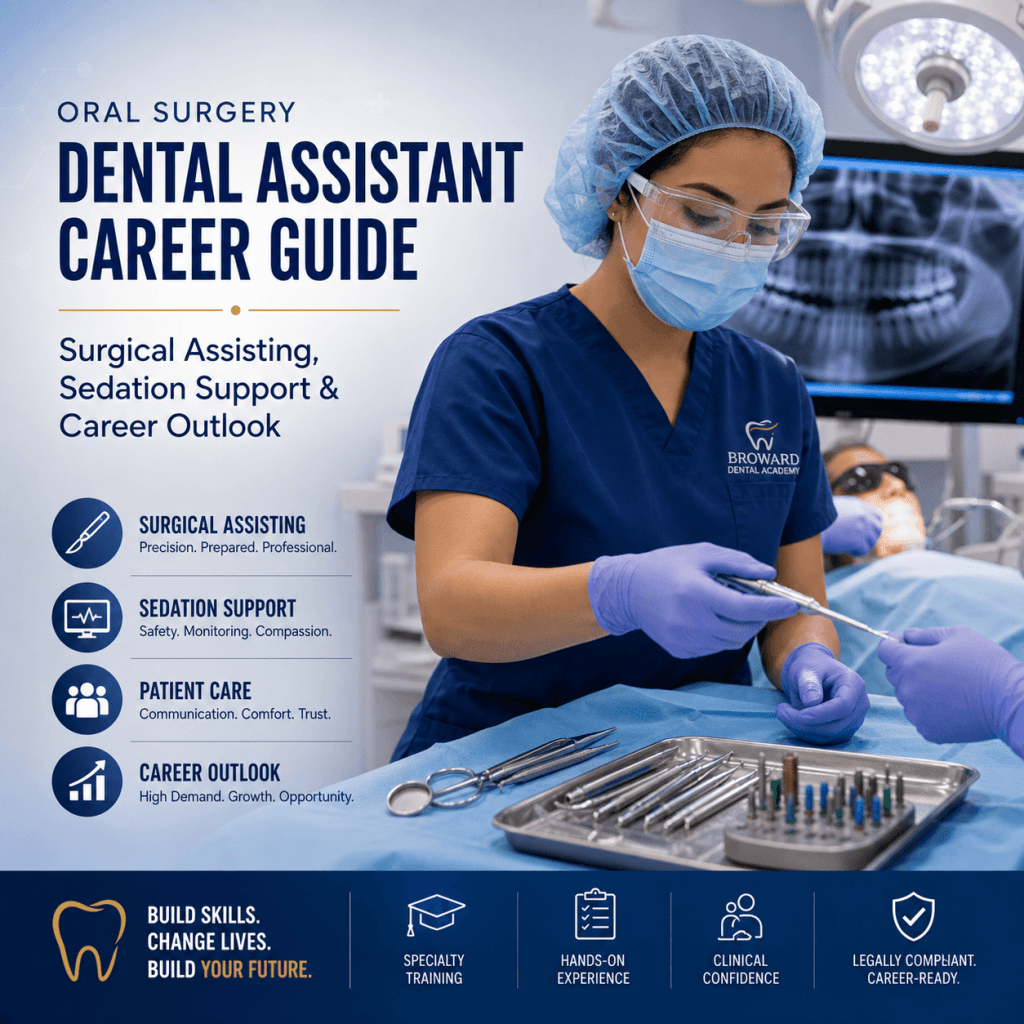
- Oral surgery: enhanced infection control, tray setup, strong suctioning, calm post op communication. Skills that are crucial in oral surgery.
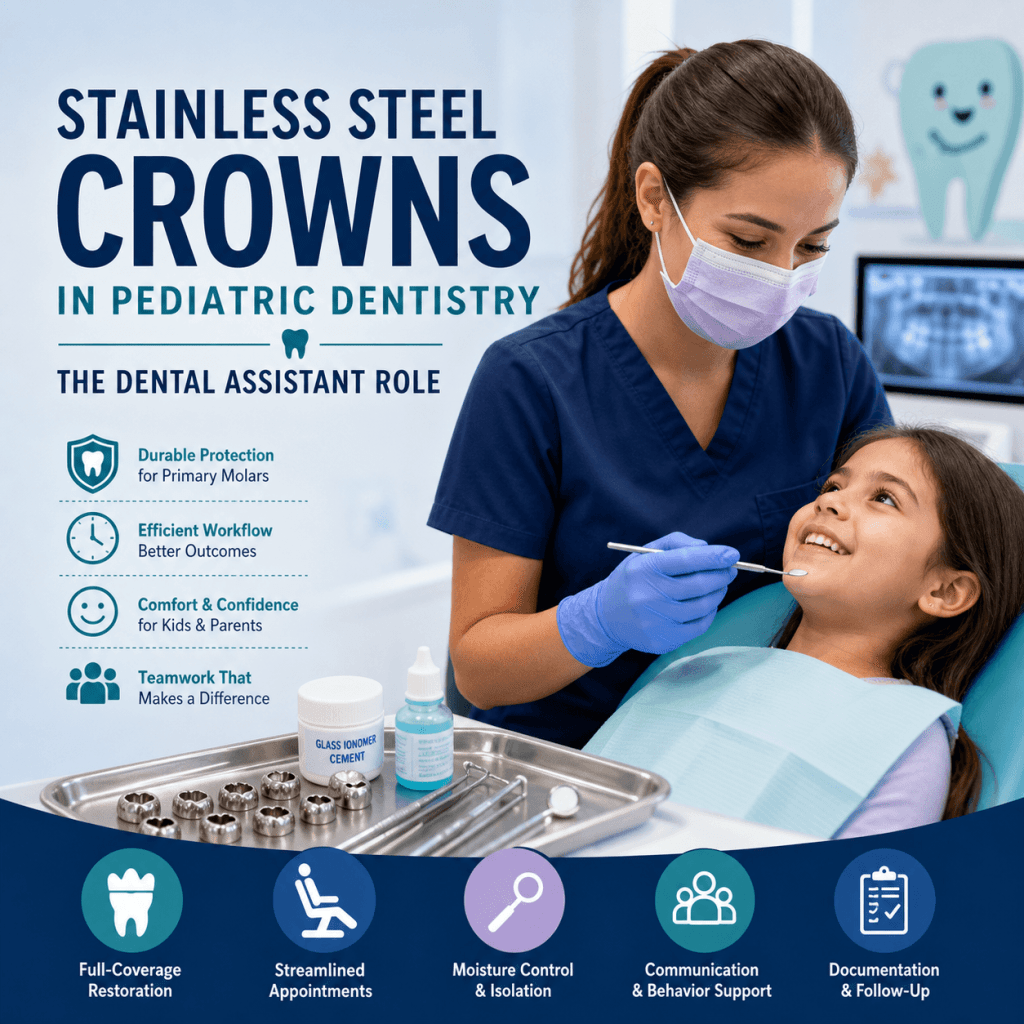
- Pediatric dentistry: quick turnover, patience, communication with parents, supporting behavior guidance
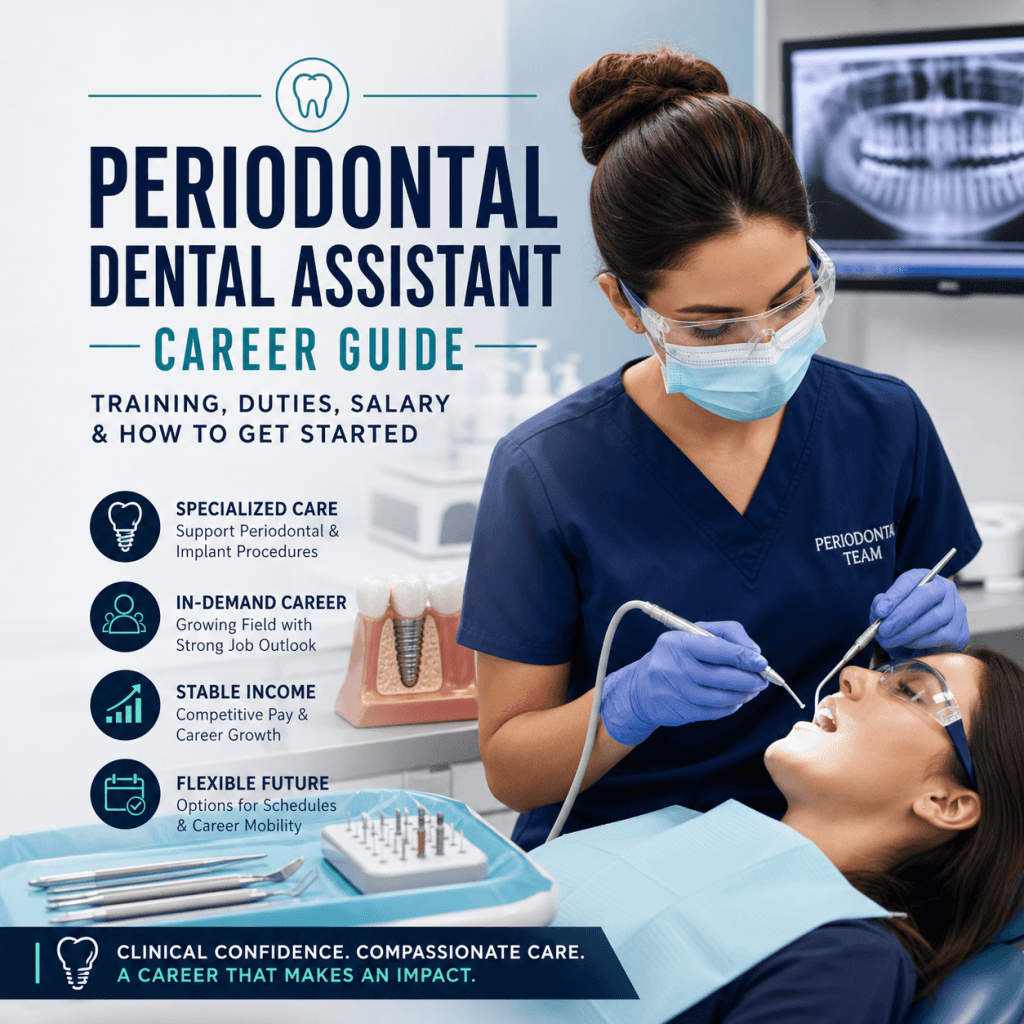
- Periodontics: instrument organization, moisture control, post procedure support and instruction reinforcement. Core habits from Level 01 are also essential in periodontics.
Specialties may require additional training for advanced duties, but the core habits from Level 01 are the base.
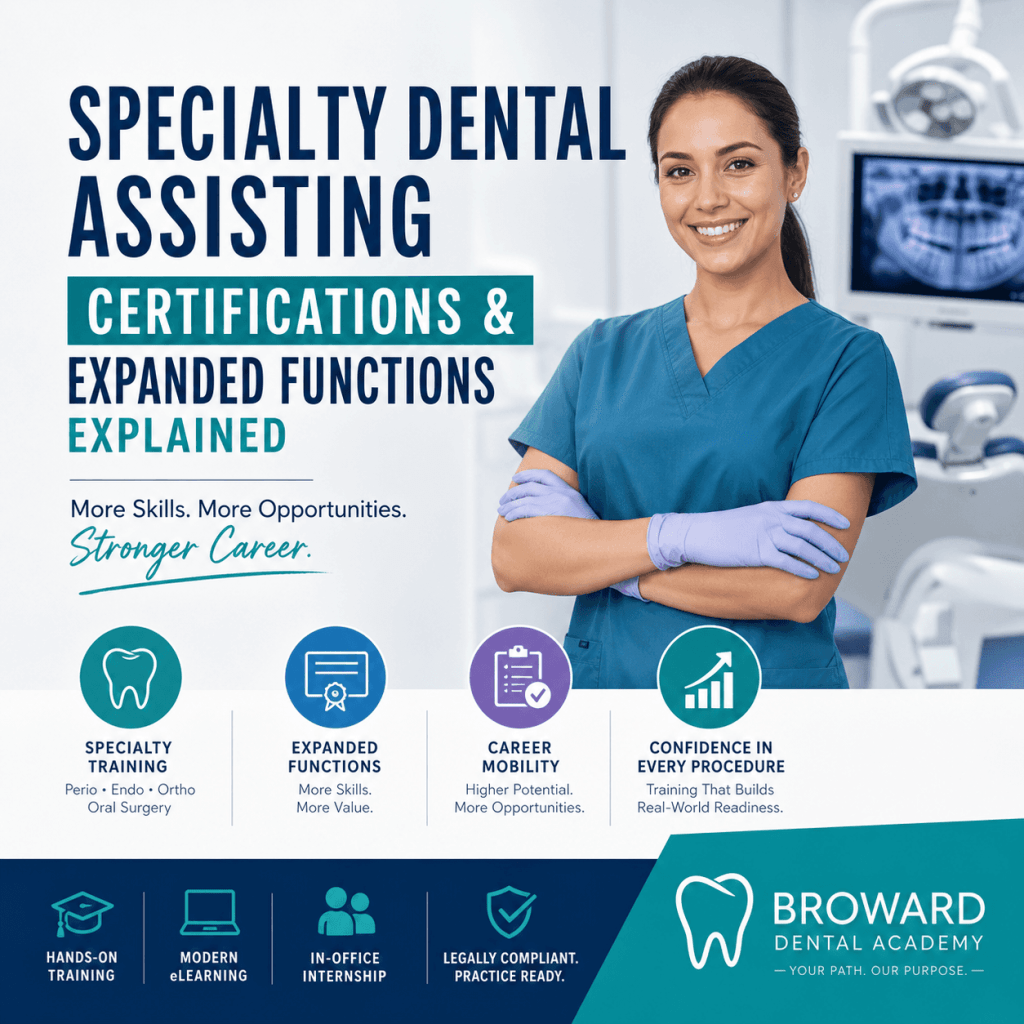
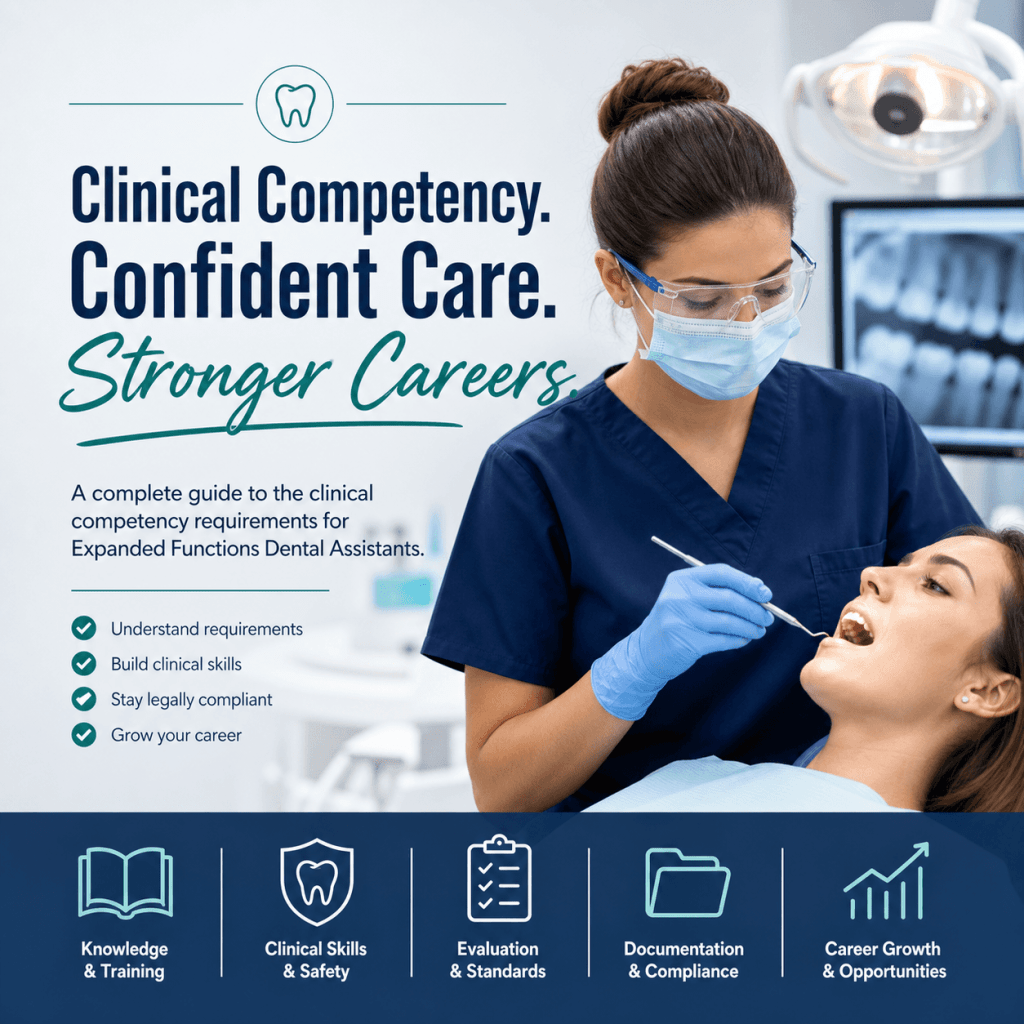
Scope of Practice and Legal Compliance: What You Can (and Can’t) Do
Scope of practice means the tasks you are legally allowed to perform based on your training, your credentials, and your state’s dental regulations. This matters for patient safety and for your long term career.
State regulations shape:
- Which tasks a Level 01 assistant may perform
- What requires direct supervision versus indirect supervision
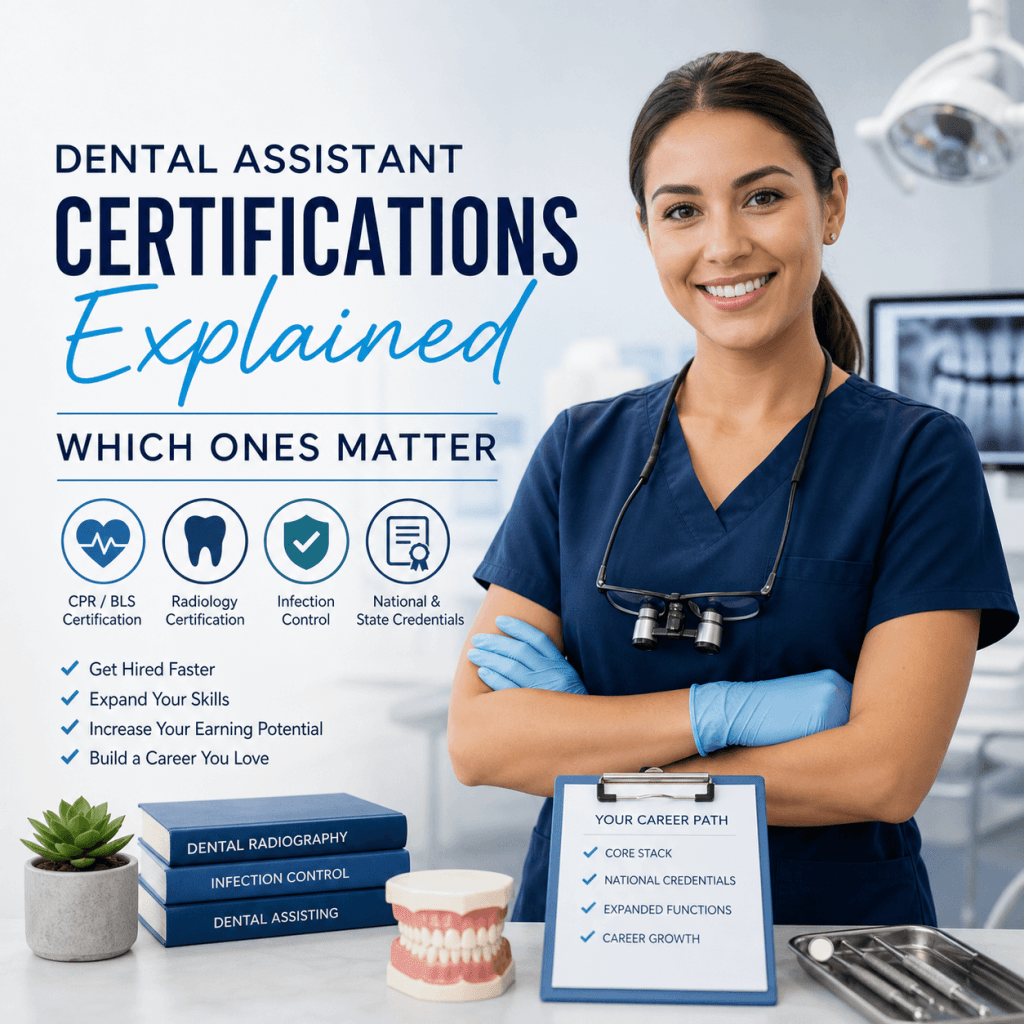
- What requires additional permits, certifications (like those offered by Broward Dental Academy), or expanded functions training
Examples of boundaries that typically apply:
- Assisting a procedure is different from diagnosing or treatment planning
- You may support documentation, but you are not the provider making clinical decisions
- Some clinical tasks may be restricted unless you complete additional training or credentials
Employers value assistants who understand and respect these boundaries. Legal compliance lowers risk, protects patients, and supports a high performance practice culture.
Because rules vary, it is smart to verify local requirements and choose a program that teaches compliance clearly, not vaguely.
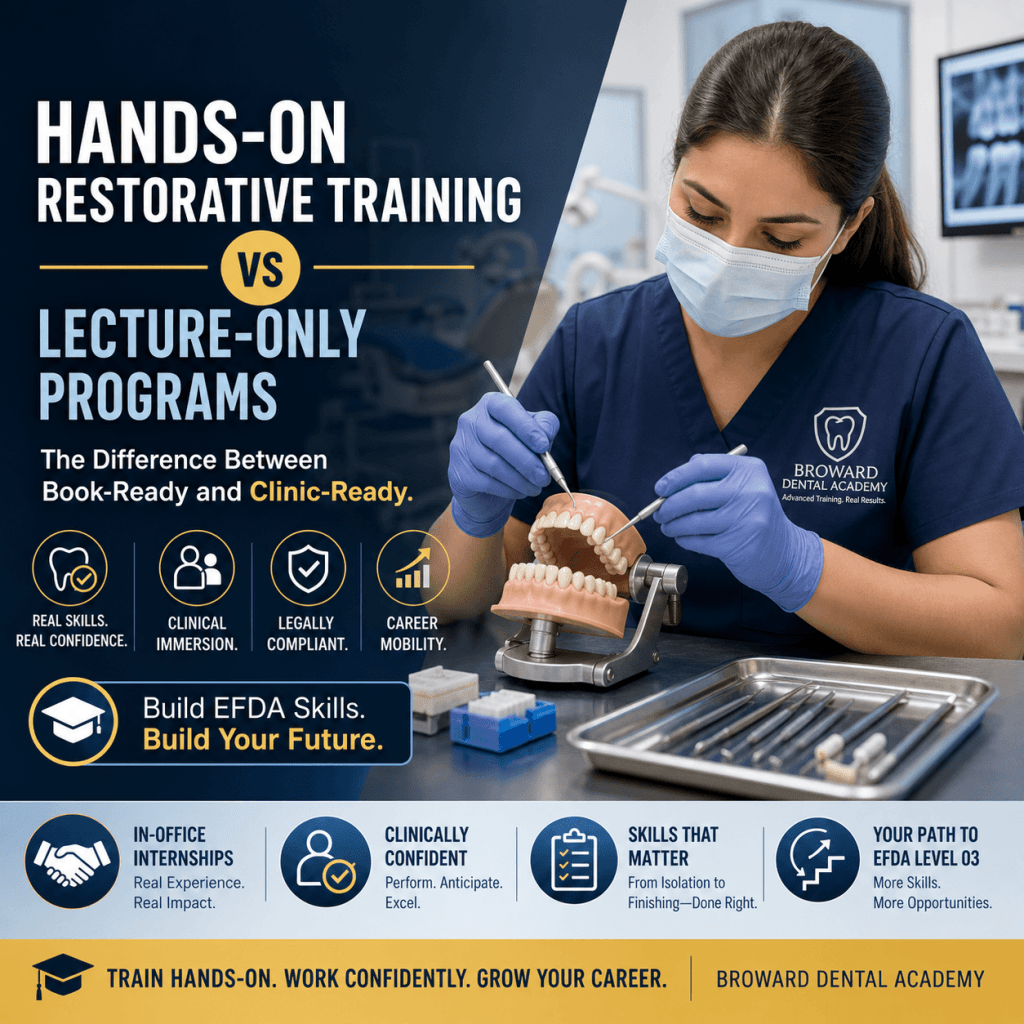
Hands On Training Matters: Lab Practice, Simulated Clinics, and Real Patients
Dental assisting is a performance skill. You can learn terminology online, but confidence comes from repetition, timing, and real feedback.
A strong Level 01 program typically includes hands on components such as:
- Mock operatories or simulated clinic setups
- Instrument processing stations
- Chairside drills for suction, isolation, and instrument transfer
- Infection control checkoffs with clear standards
Many programs also include a clinical internship, which is where your skills start to feel real.
Clinical Internship: The Bridge Between Training and Your First Job
A clinical internship is supervised experience in a real dental setting where you practice workflow, professionalism, and chairside support.
Students typically:
- Assist where appropriate for entry level
- Set up and break down rooms at real pace
- Follow sterilization workflow with a real schedule running
- Practice teamwork, communication, and professional standards
A good internship provides:
- Mentorship and correction in the moment
- Exposure to real scheduling pressure and patient needs
- Repetition that builds speed and calm confidence
To get the most out of it:
- Show up early and prepared
- Ask for feedback, then apply it immediately
- Track the skills you practiced each day
- Build professional references through reliability and attitude
Choosing the Right Dental Assistant Level 01 Program
Not all programs deliver the same results. If your goal is to feel confident on day one of your first job, choose training that reflects modern dentistry.
What to evaluate:
- Curriculum coverage: chairside assisting, infection control, and radiography basics if applicable
- Hands on hours: enough practice to build real timing and muscle memory
- Internship placement support: a clear path to real clinical exposure
- Student support: coaching, structured skills assessments, and feedback
Quality signals:
- Modern lesson plans and up to date protocols
- Checklists and consistent skills testing, not just written quizzes
- Clear scope of practice instruction and emphasis on ethical boundaries
- Training that teaches you how to think through workflow, not just memorize steps
Fit factors that matter in real life:
- Schedule flexibility
- Financing options
- Learning format (online plus clinical)
- Commute and start dates
Red flags:
- Vague curriculum descriptions
- Little or no clinical exposure
- Unclear compliance training
- No guidance for advancement or next steps after graduation
How Broward Dental Academy Prepares Level 01 Students to Thrive
Broward Dental Academy focuses on career-ready training, not just finishing a course. The goal is to help students thrive in a modern, high-performance dental practice with the confidence to support the team and protect patient safety from day one.
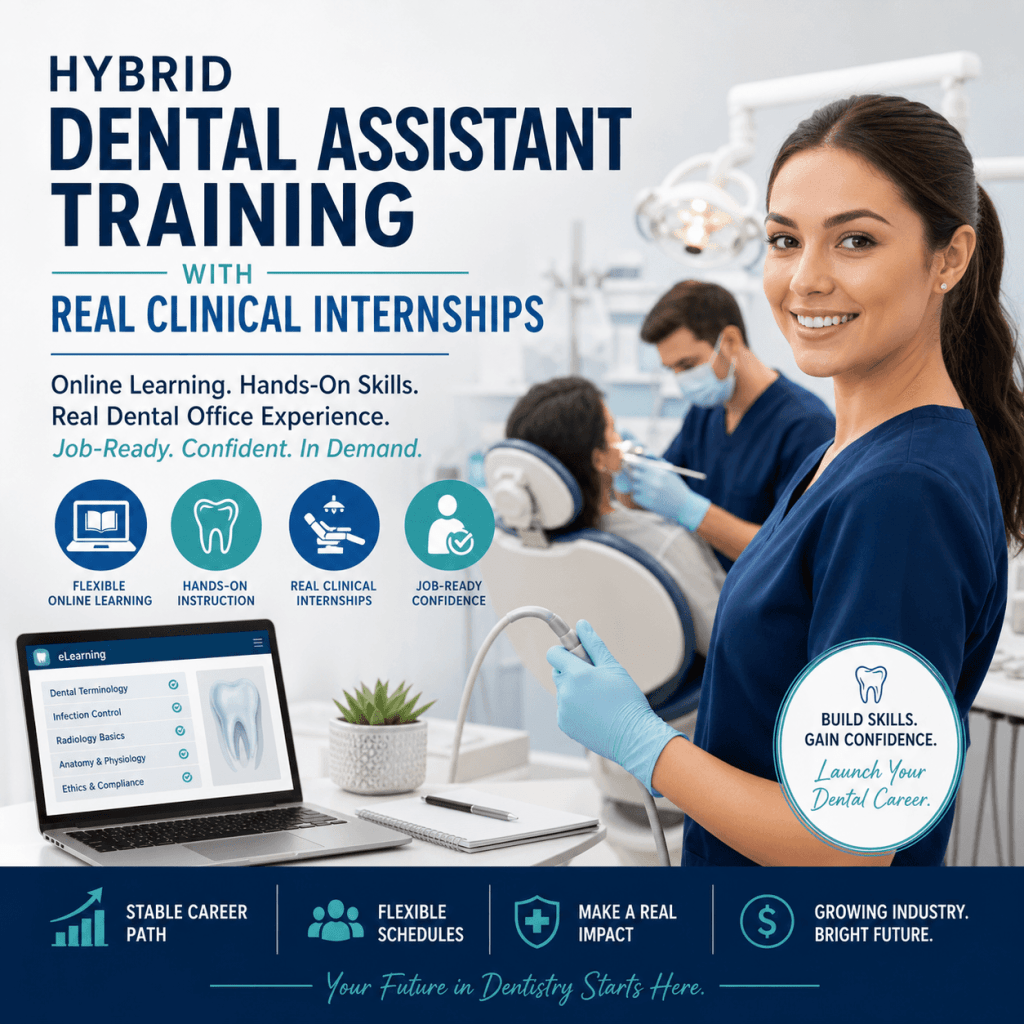
Students benefit from blended learning, combining online learning with hands-on clinical immersion using updated eLearning lesson plans for remote training. This approach helps you learn the terminology and concepts while still building real chairside performance through guided practice.
Another key differentiator is in-office internships, which provide real clinical exposure and help graduates build employability through actual workflow experience.
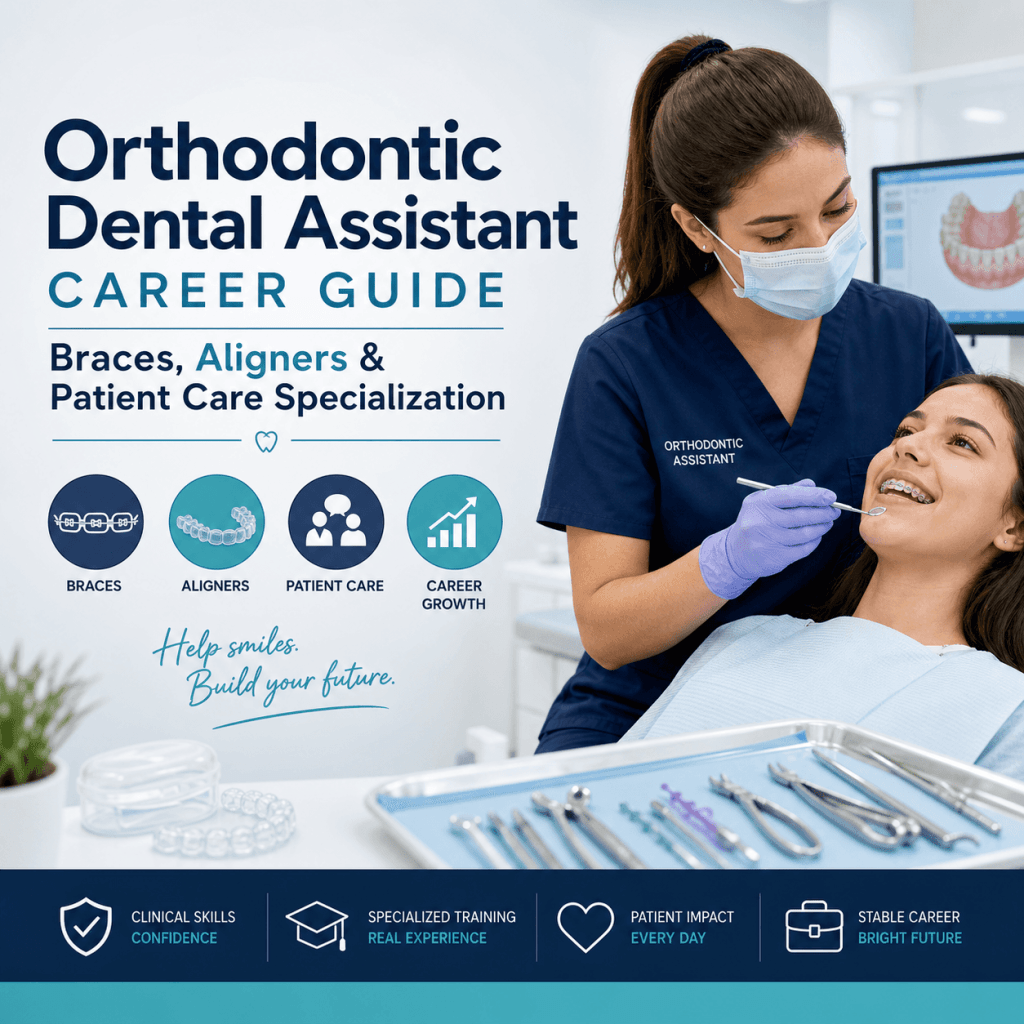
Broward Dental Academy also offers a wide range of dental courses and advanced dental training options, supporting long-term career mobility beyond Level 01. You can explore the courses offered at the academy, which include specialized training such as orthodontics, among others. Flexible financing can make it easier to start now and continue stacking skills over time.
If you are ready to stop waiting and start building a real healthcare career, enroll today. You will be glad that you did.
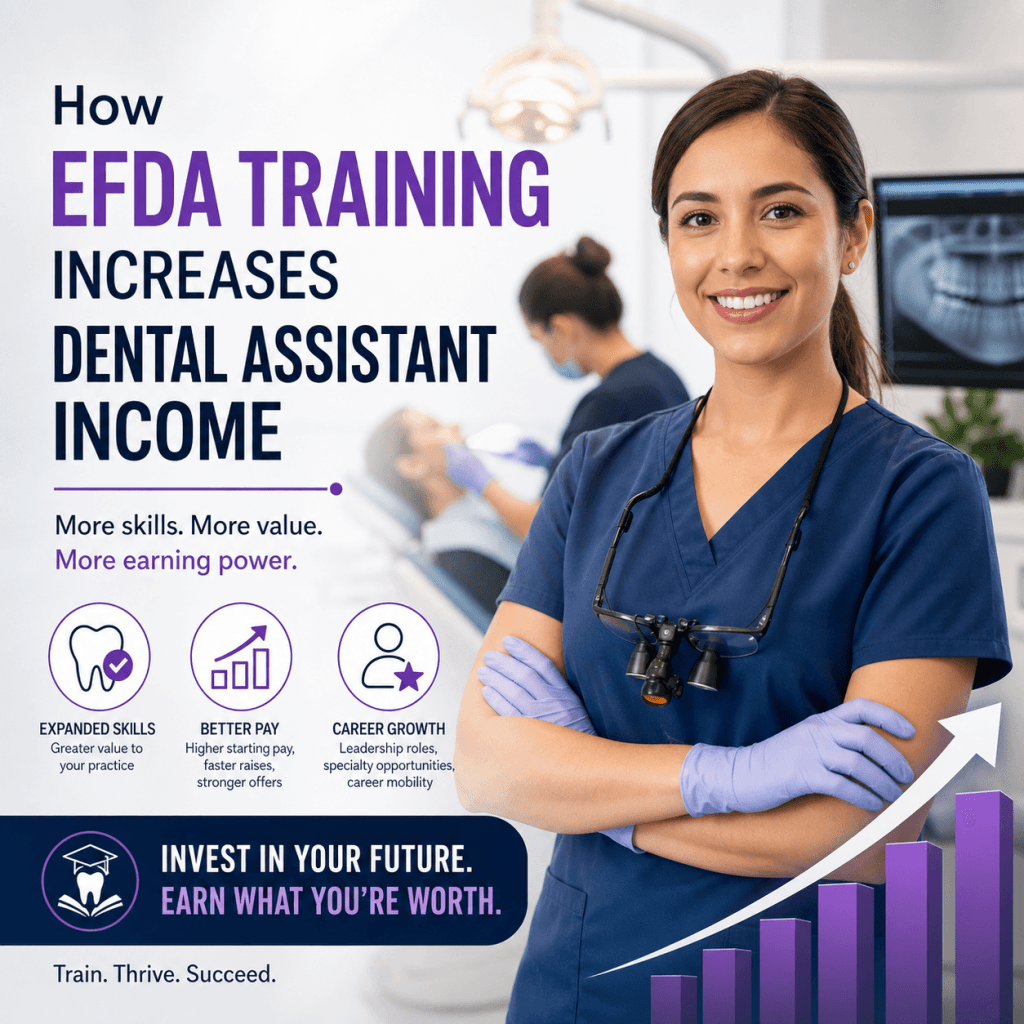
Career Outlook After Level 01: Jobs, Growth, and Next Steps
After Level 01 training, typical entry roles include chairside dental assistant positions in general dentistry. With experience and strong fundamentals, you may also find opportunities in specialty offices depending on local needs and your additional training.
What employers expect from new graduates:
- Strong infection control habits
- Reliable teamwork and communication
- Patient-centered chairside behavior
- Speed with accuracy
- Professionalism and coachability
Career advancement paths can include:
- Radiography credentials (where allowed)
- Expanded functions training (depending on state rules)
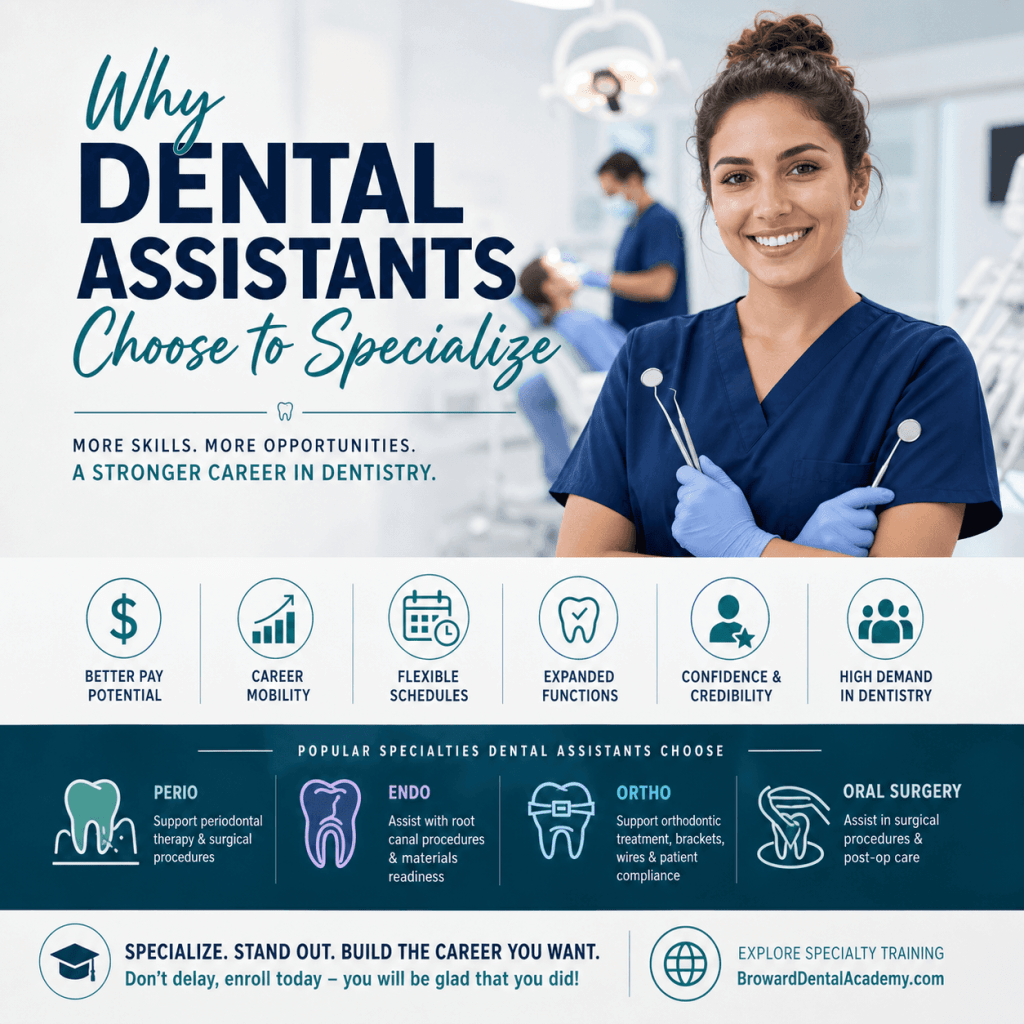
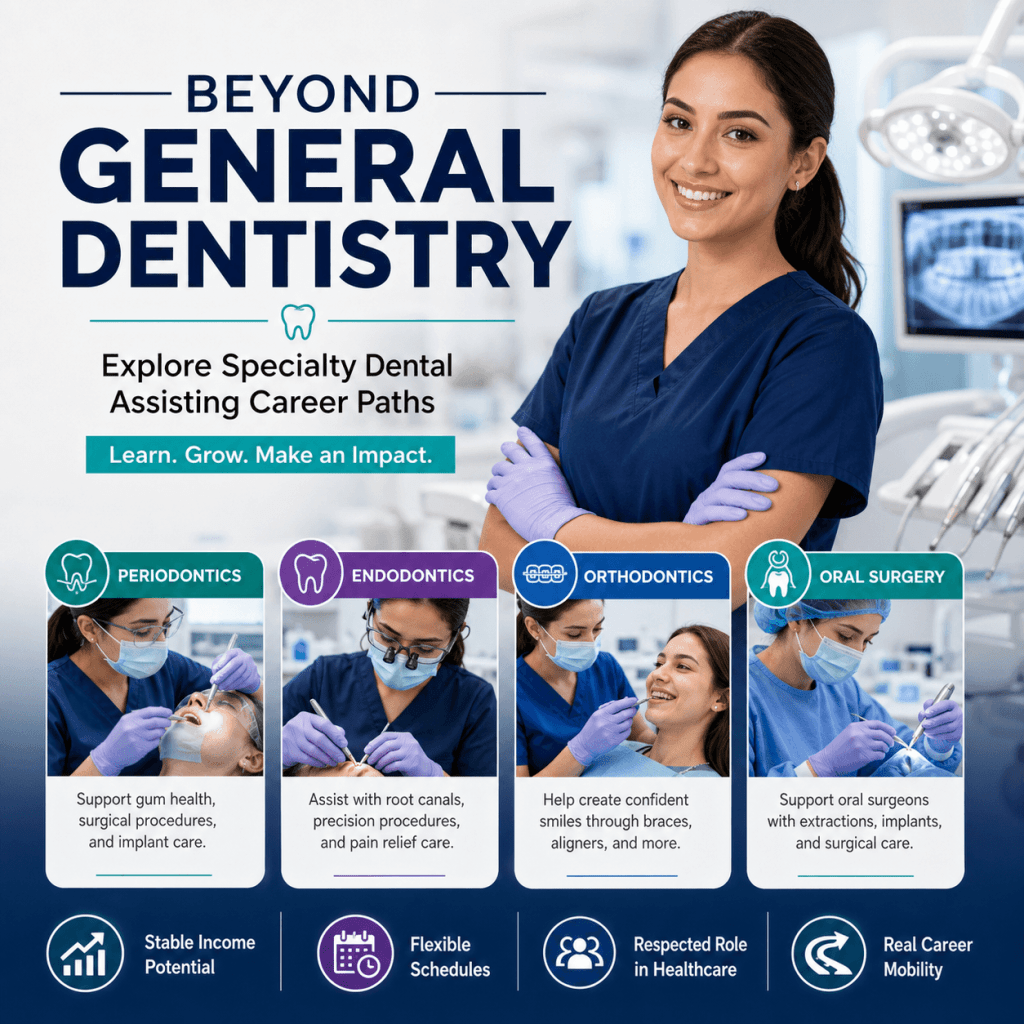
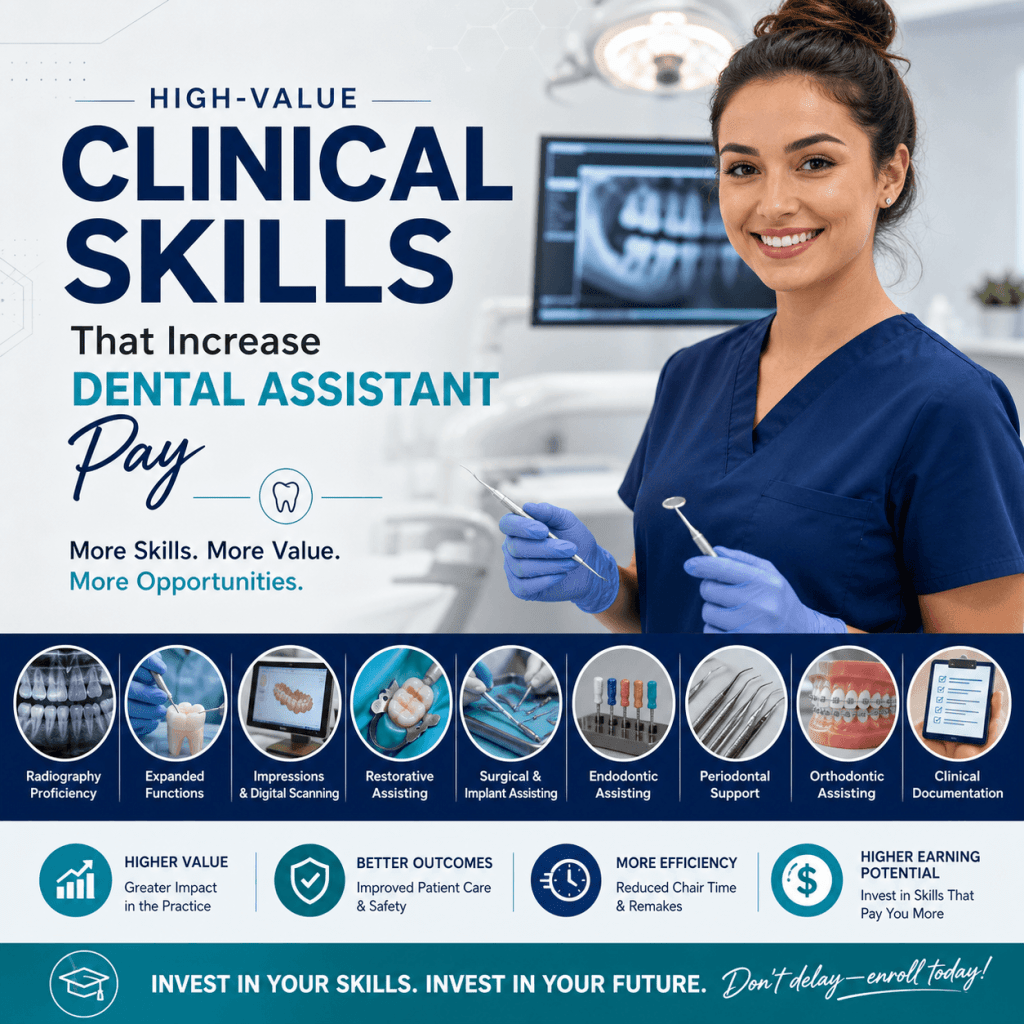
- Specialty assisting (pediatrics, oral surgery, endodontics, periodontics, orthodontics)
- Lead assistant roles and training responsibilities
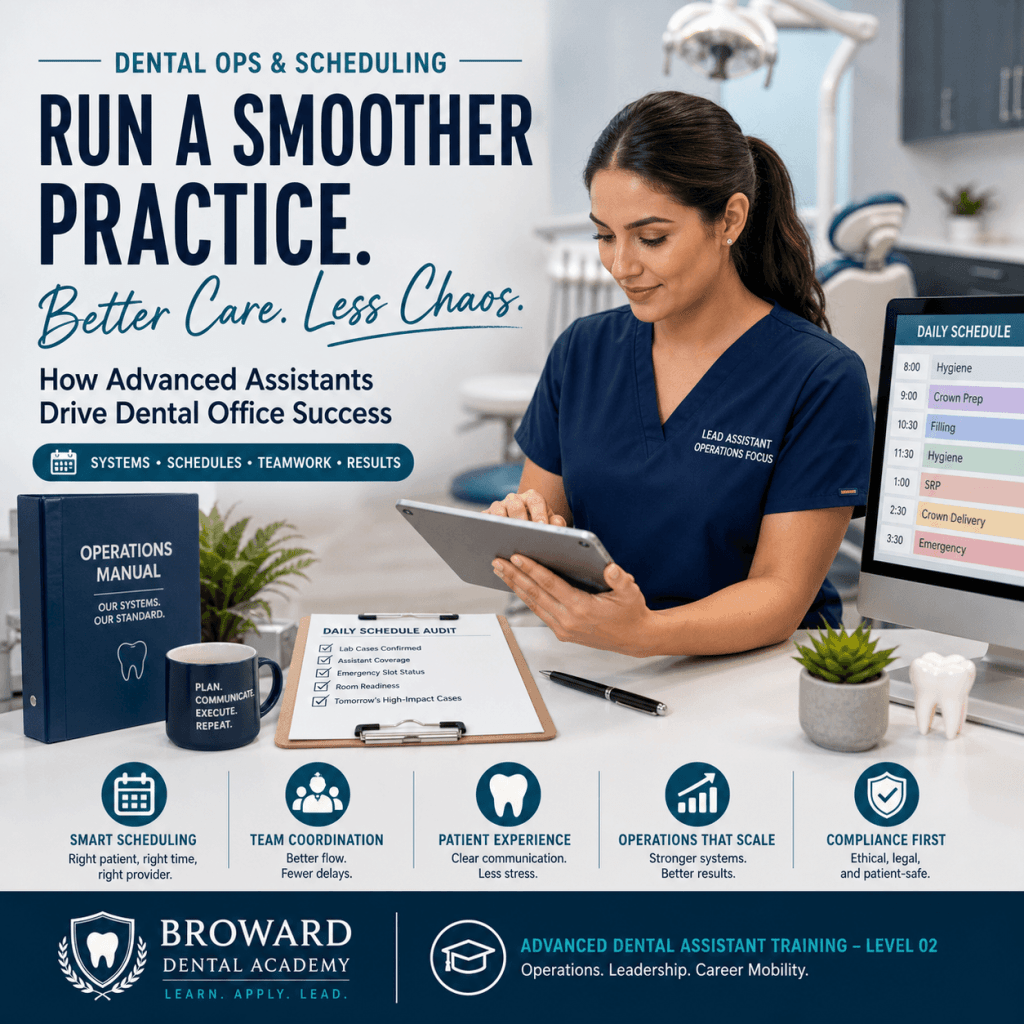
- Office coordination and leadership pathways over time
In 2026, dentistry remains opportunity-rich. Practices want dependable team members who can function in a real schedule without sacrificing safety. Level 01 is a smart starting point because it builds the habits that make assistants valuable quickly.
What to Do Next (If You’re Ready to Start)
If you are ready to move forward, compare programs with three priorities in mind: hands-on training, clear compliance instruction, and real internship opportunities.
Make a simple plan:
- Choose a start date that fits your timeline
- Review financing options
- Confirm how clinical training and internship placement work
- Align your program choice with your long-term goals for growth in dentistry
To take the next step, explore Broward Dental Academy’s offerings. They provide comprehensive programs such as the Dental Assistant Level 01 Training which can be a great starting point for your career in dentistry. The sooner you start training, the sooner you build job-ready skills and the opportunities that come with them.
FAQs (Frequently Asked Questions)
What is Dental Assistant Level 01 training and who is it designed for?
Dental Assistant Level 01 training is an entry-level program focused on foundational skills needed to support a dental team safely and confidently. It is ideal for individuals seeking a respected healthcare role with minimal schooling, including career changers, recent graduates, parents returning to work, and those who enjoy hands-on clinical teamwork.
What core skills are taught in Dental Assistant Level 01 training?
The training covers chairside assisting fundamentals such as operatory setup and breakdown, four-handed dentistry basics, patient positioning, suction and isolation techniques. It also includes dental materials handling, instrument identification and passing, communication basics for patient comfort, and professional standards like punctuality and confidentiality.
Does Dental Assistant Level 01 training prepare me to diagnose or treatment plan?
No. Level 01 training prepares you to support dentists and hygienists but does not train you to diagnose or treatment plan. The program emphasizes legal compliance and scope of practice so you understand what tasks you can perform safely and what requires extra permits or supervision.
What are the benefits of completing Dental Assistant Level 01 training?
Completing this training makes you job-ready with essential habits in infection control, efficient clinical workflow, and professional behavior. Employers value assistants who protect patients, maintain pace without shortcuts, and follow protocols consistently. It also opens opportunities for career advancement to higher levels like Dental Assistant Level 02 or Hygienists Level 03.
Is Dental Assistant Level 01 training suitable if I dislike clinical settings or direct patient interaction?
This career path may not be a good fit if you dislike clinical environments, bodily fluids, strict protocols, or prefer slow-paced independent work without direct patient interaction. The role involves active patient contact and adherence to detailed procedures.
How is the Dental Assistant Level 01 training delivered and what should I expect during the program?
The program typically uses a blended format with online theory coursework combined with in-person clinical skills training. You should be prepared for professionalism, punctuality, patient privacy expectations, and motivated to learn new skills quickly through repeated practice.