Why chairside assisting is the skill that makes (or breaks) a dental appointment
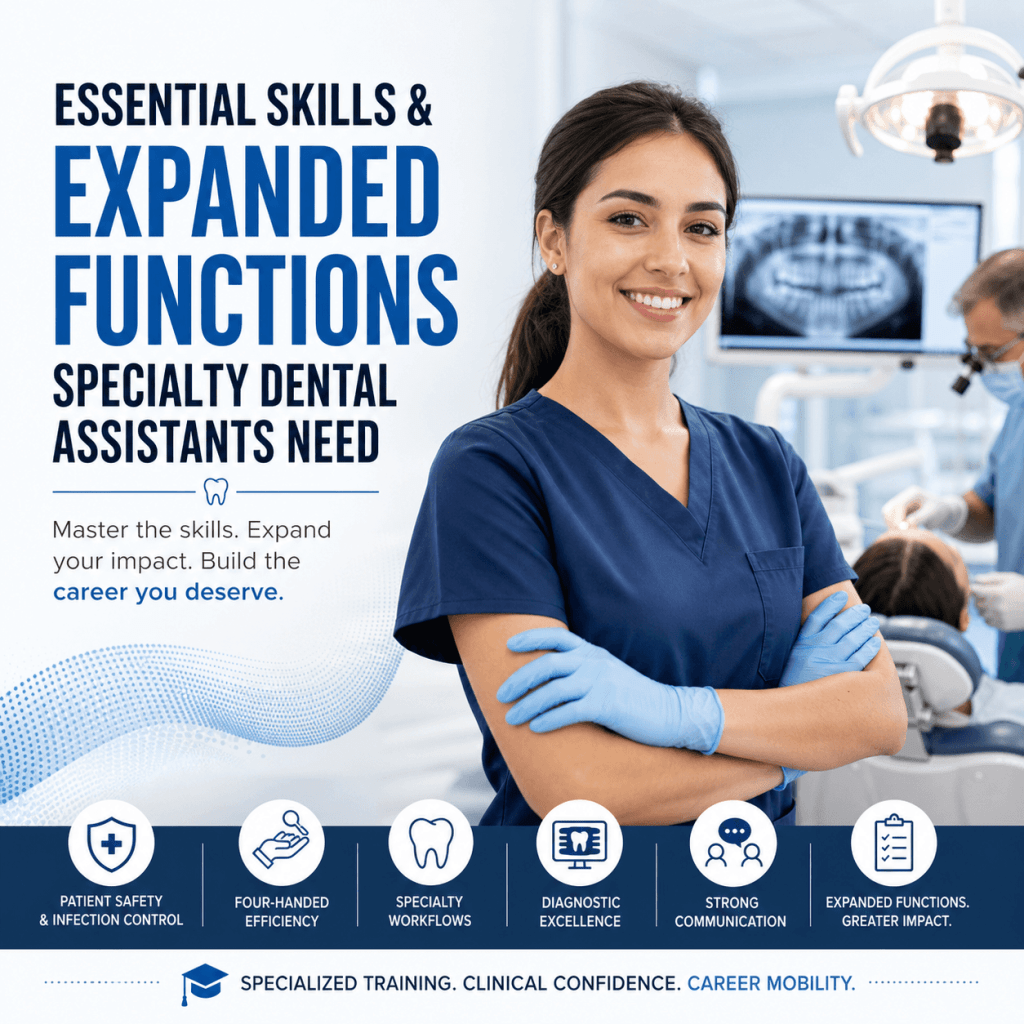
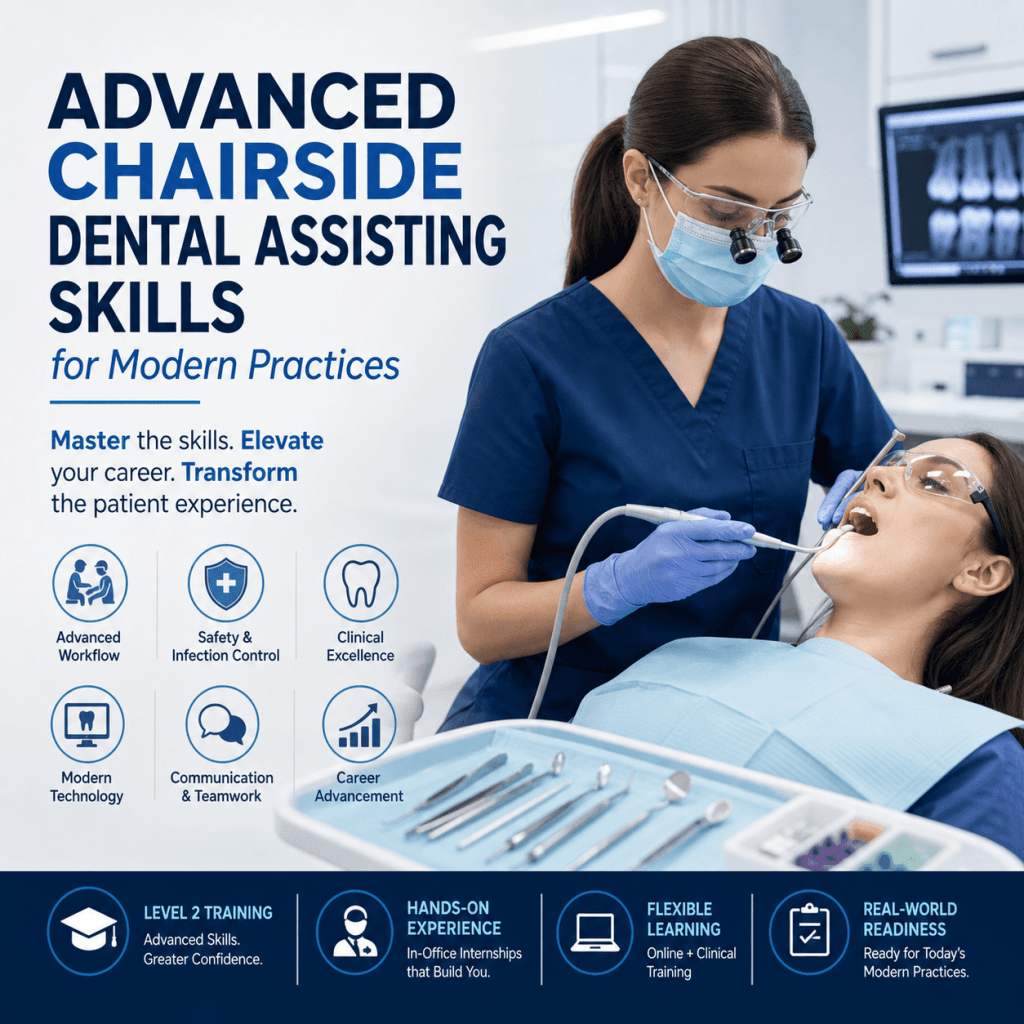
“Dental chairside assisting basics” simply means the everyday clinical, communication, and safety skills that let the dentist work efficiently while the patient stays comfortable and protected. It is how you set up the room, maintain infection control, pass instruments smoothly, control moisture, support materials, communicate clearly, and stay ready for anything unexpected.
Most students underestimate two things early on:
- Speed comes after safety and organization. If your setup is consistent and your infection control is solid, speed shows up naturally.
- Confidence comes after repetition. The assistants who look “naturally good” at chairside are usually the ones who have done the same fundamentals hundreds of times.
In the real world, hiring managers are not just looking for someone “nice” who can hold suction. Modern practices move fast, and they want assistants who are thoroughly trained, legally compliant, and clinically confident, especially when schedules are full and patients are anxious.
This guide walks through the core chairside fundamentals you will use every day in Dental Assistant Level 01 Training and during internships, with a focus on what actually matters when you are in the operatory.
The chairside mindset: think ahead, stay sterile, protect the patient
At chairside, everything you do should support three priorities:
- Infection control
- Patient safety and comfort
- Procedure efficiency
When those three are in order, the dentist can focus on the dentistry and the patient feels cared for.
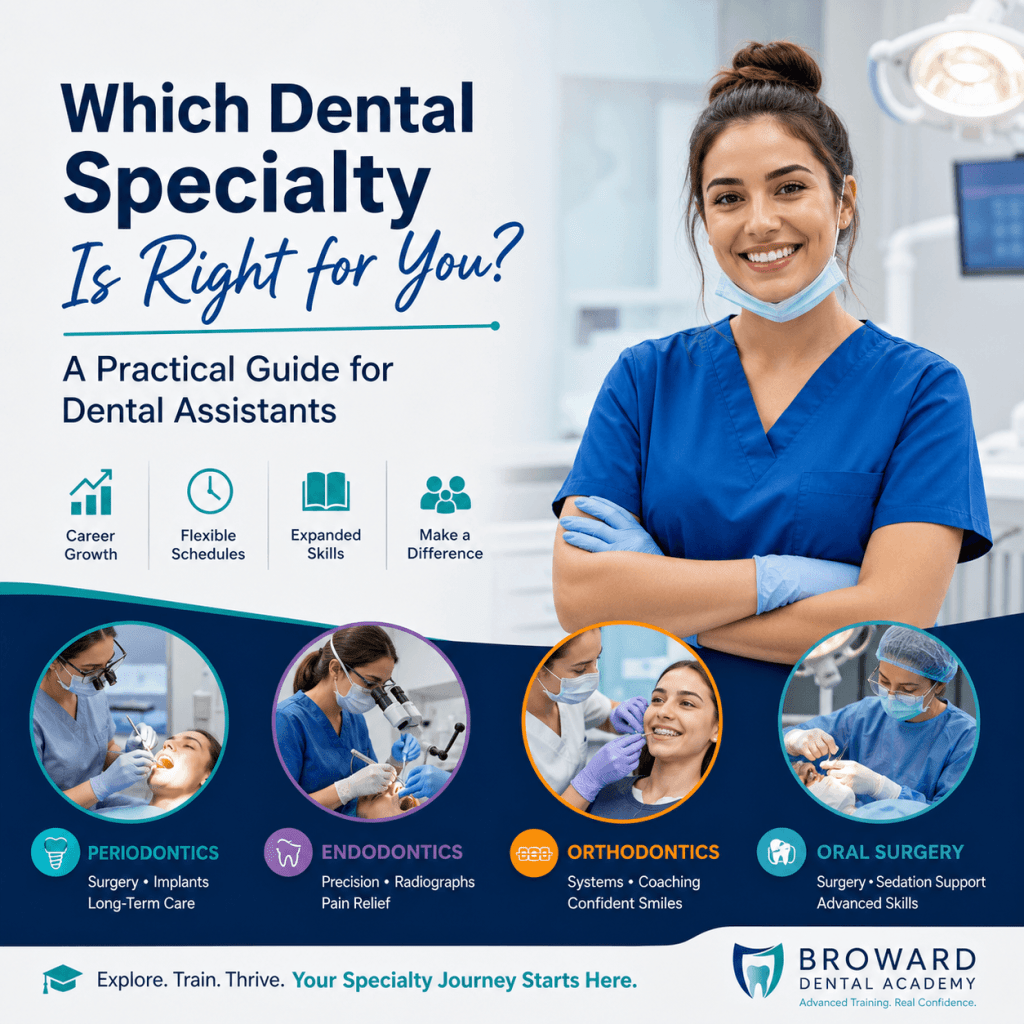
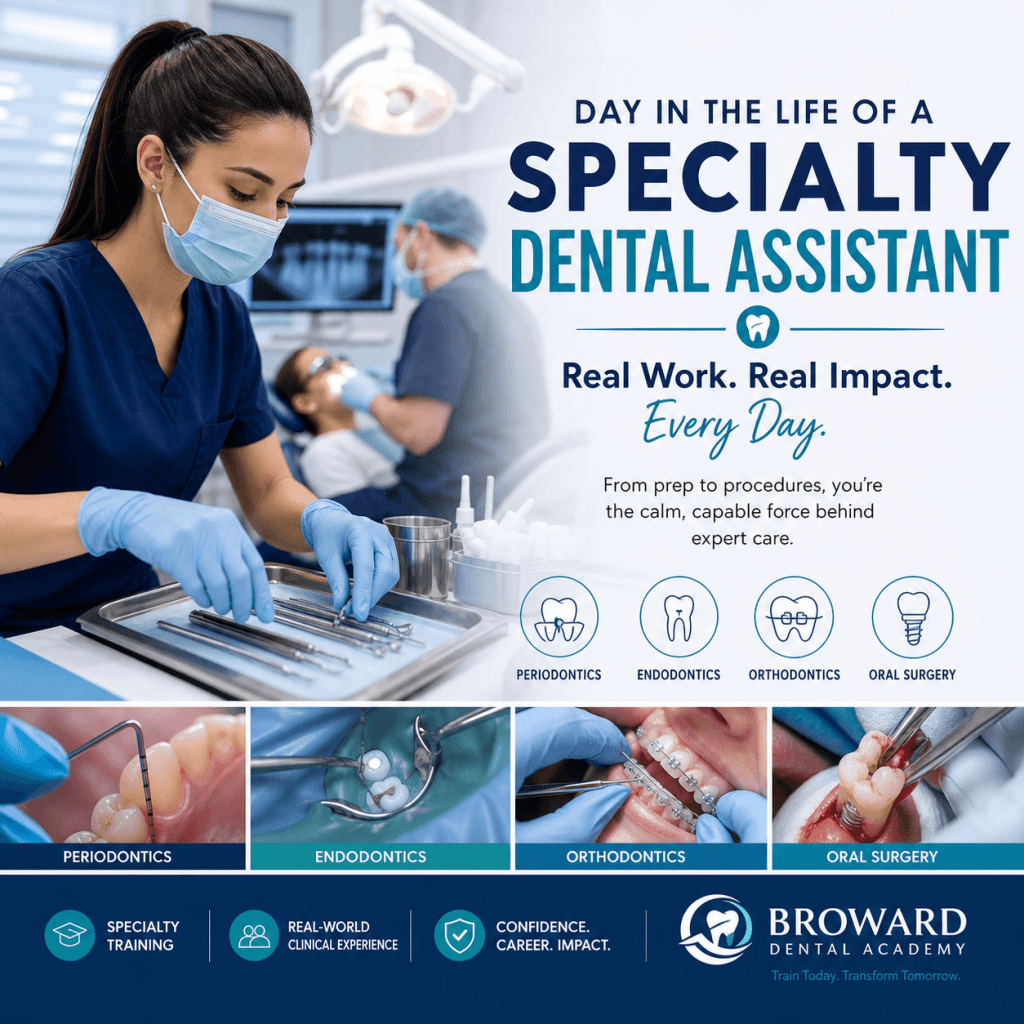
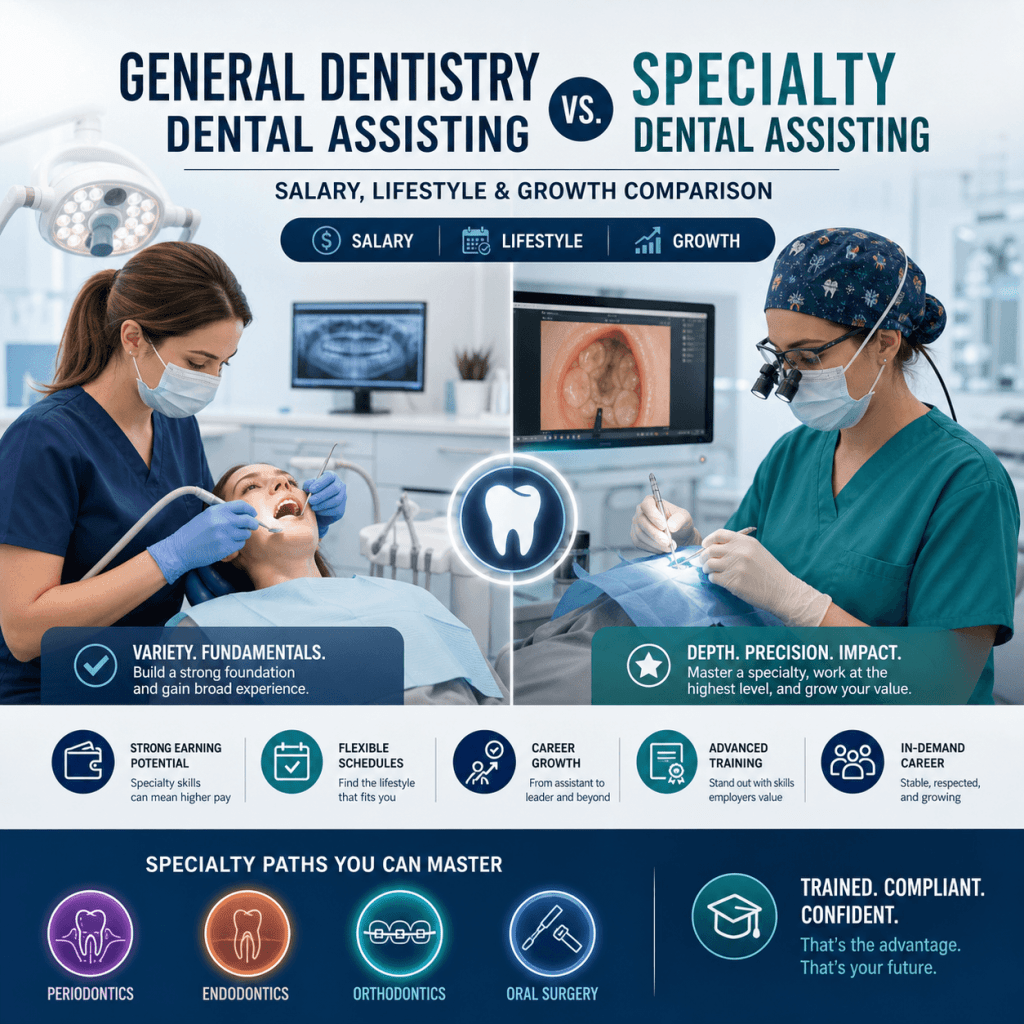
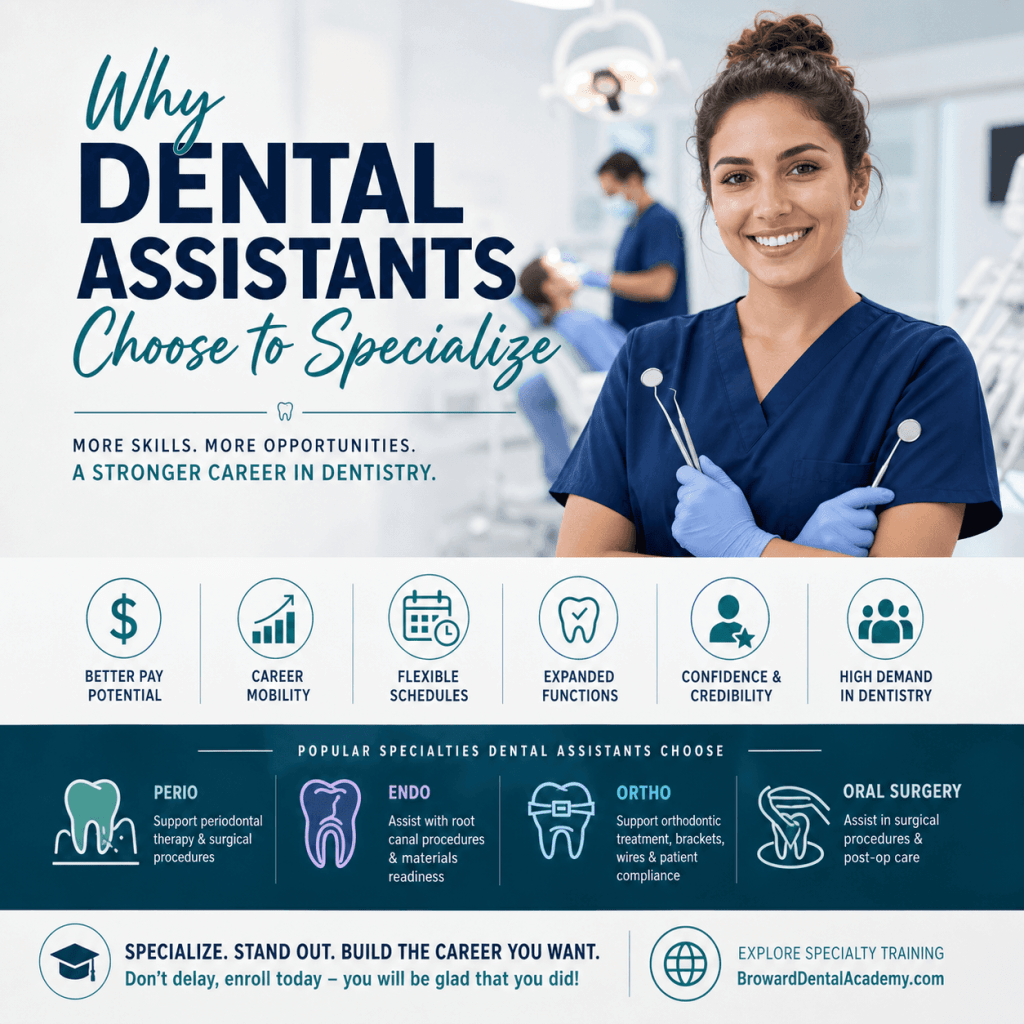
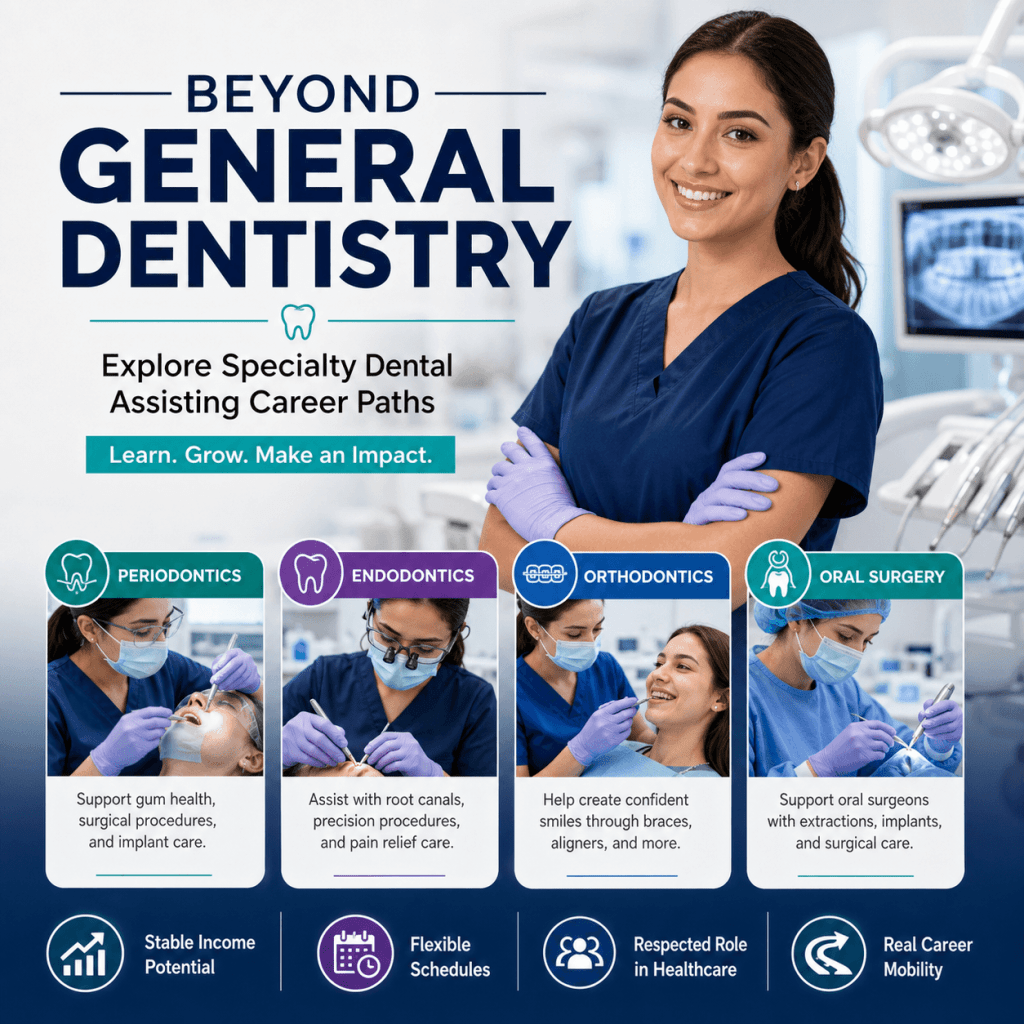
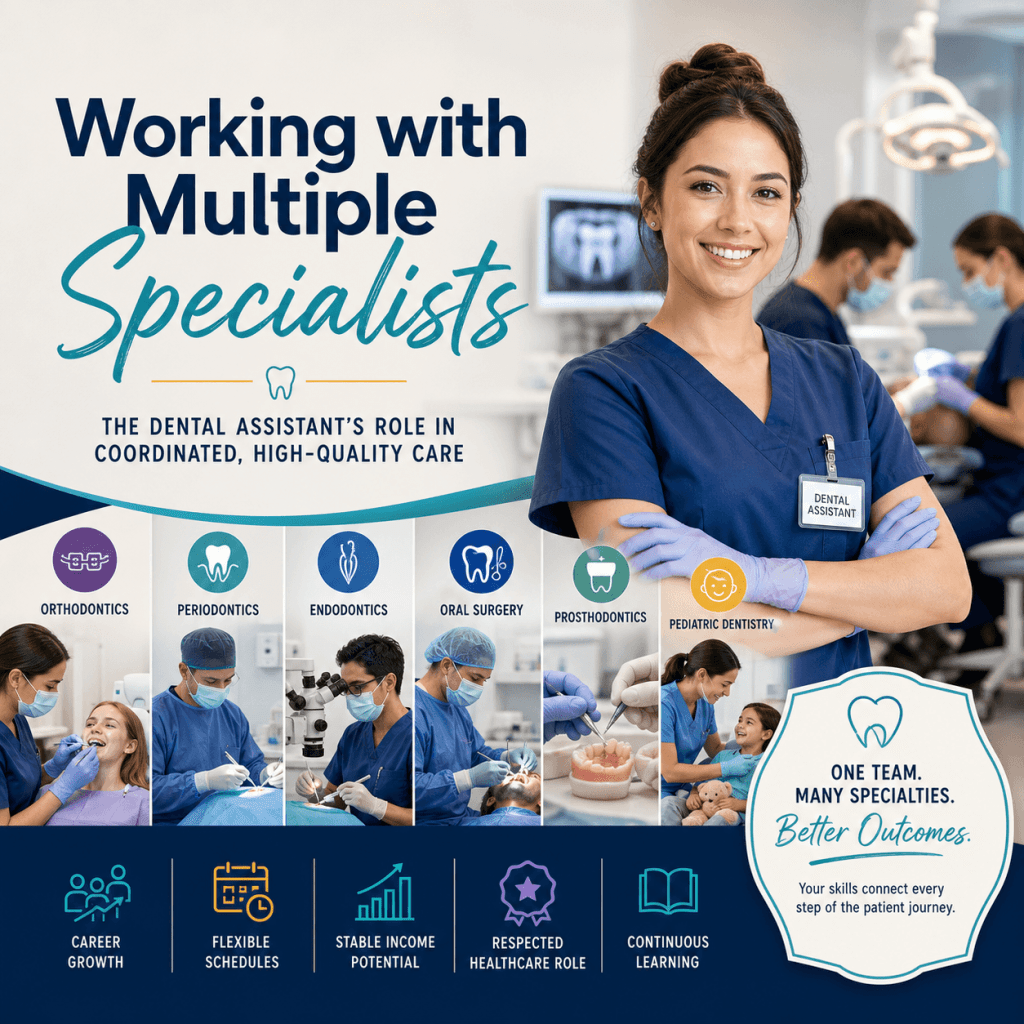
The role of a dental assistant extends beyond just supporting the dentist; it also includes understanding various dental specialties such as oral surgery, orthodontics, and periodontics. Each specialty has its own set of procedures that require specific knowledge and skills.
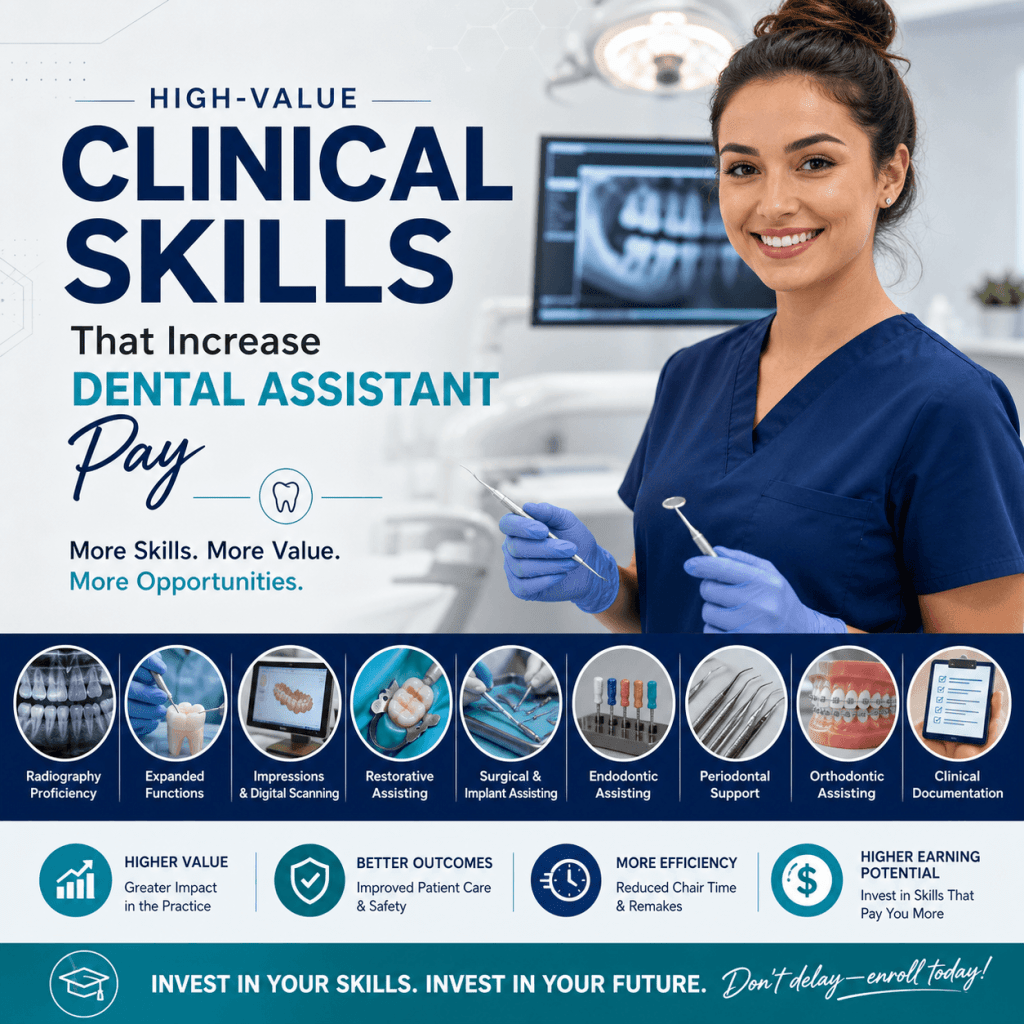
To be fully prepared for these diverse tasks, pursuing relevant certifications can be incredibly beneficial. These certifications not only enhance your skill set but also make you a more attractive candidate to potential employers.
Moreover, it’s essential to stay updated with the latest techniques and practices in dentistry. This can be achieved through enrolling in courses offered by reputable dental academies which provide comprehensive training in various aspects of dental assisting.
Anticipatory assisting (the skill that changes everything)
Anticipatory assisting means you learn to “read” the procedure and prepare the next step before the dentist asks. You do this by:
- Knowing the typical sequence for common procedures
- Watching the dentist’s hands, mirror, and bur selection
- Listening for cues (“Let’s etch,” “I need the cord,” “We’re ready to cure”)
- Keeping materials staged so you can deliver them quickly without contaminating anything
This is not mind-reading. It is pattern recognition built from practice and strong setup habits.
Professionalism under pressure
Busy offices reward assistants who stay steady:
- Use a calm, low voice.
- Keep the tray and bracket table uncluttered.
- Move with purpose, not panic.
- If something goes wrong, fix it quietly and safely.
Ethics and scope of practice
One of the fastest ways to lose trust in a clinical setting is working outside your training or legal scope. If you are unsure, ask early, ask privately, and ask professionally. Great assistants protect the patient and the practice by doing what they are trained and allowed to do.
Operatory setup basics: how to start every procedure organized
A smooth appointment starts before the patient sits down. Your goal is to make the room “procedure-ready,” not just “looks clean.”
Room readiness checklist (quick, practical)
Before seating the patient, confirm:
- Clinical contact surfaces cleaned and disinfected
- Barriers placed (as used by your office): light handles, chair controls, x-ray controls, computer touch points
- HVE and saliva ejector working properly
- Air/water syringe functioning
- Handpiece lines connected and ready
- Curing light charged and working (test briefly)
- Proper PPE available for the team
- Chart access ready (medical history, planned procedure, radiographs)
- Sharps container accessible and not overfilled
For those interested in advancing their skills in these areas or looking for comprehensive dental assistant training programs, Broward Dental Academy offers valuable resources. Additionally, if you’re seeking dental assistant education in specific locations, you might find useful information on their locations page.
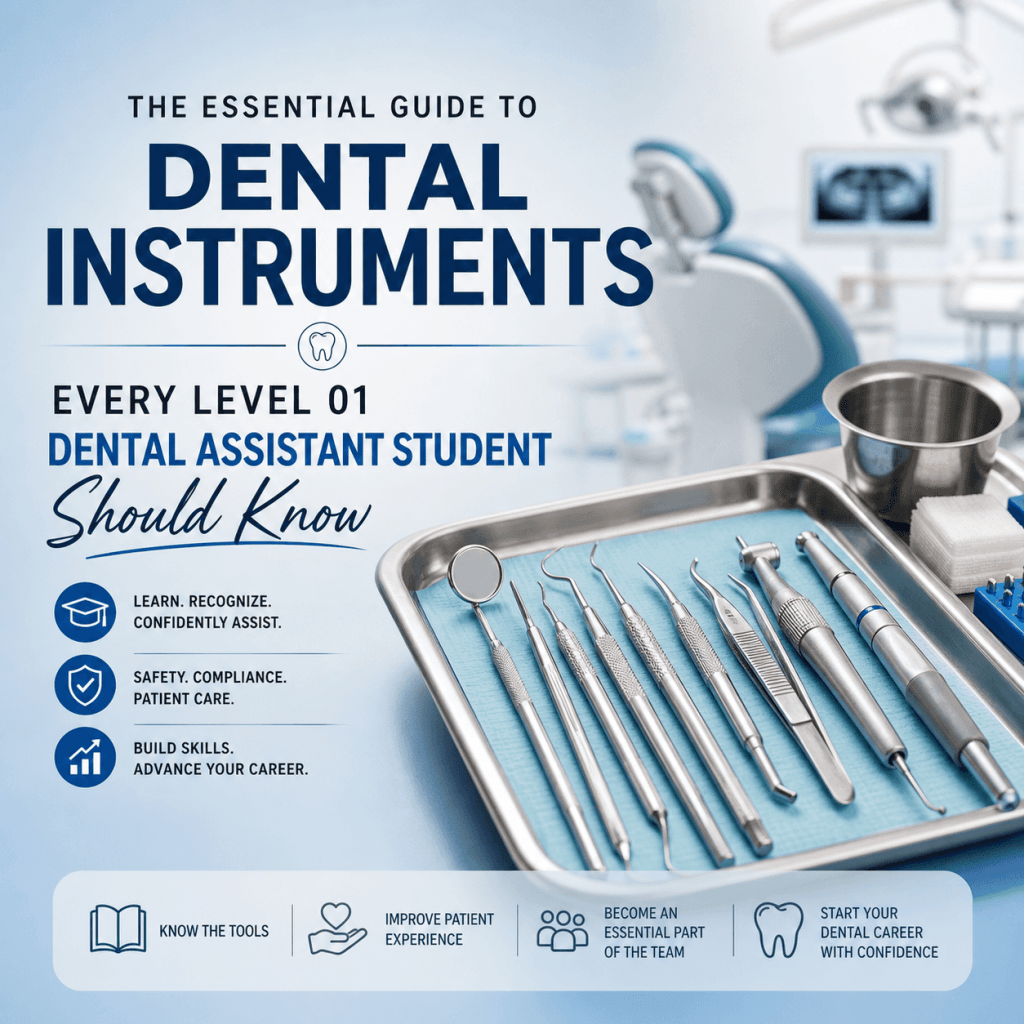
Tray setup principles that keep you efficient
- Set up in the order of use. Early items closest and easiest to reach.
- Group by phase. Exam items together, anesthesia support together, isolation together, finishing together.
- Protect sharps. Keep needles, blades, and burs secured and handled with intention.
- Avoid crossing fields. Place items so you can reach them without reaching across the patient’s face or over sterile items.
Restorative (fillings): what you should be ready to support
At a high level, your setup typically includes:
- Anesthetic support items per office protocol
- Isolation options (cotton rolls, dry angles, HVE tips; rubber dam materials if used)
- Composite/restorative basics staged (do not open everything immediately)
- Curing light check and protective eyewear if used by the office
- Finishing and polishing items available for the final phase
Crown and bridge prep: what changes in your setup
Crown appointments often require additional readiness:
- Retraction support (cord and instruments per dentist preference)
- Hemostatic awareness (follow office protocols and directions)
- Impression materials or scanner readiness (tips, sleeves, scanning strategy support)
- Temporary material awareness and finishing basics
Endodontic and extraction basics (Level 01 awareness)
Even at Level 01, you should understand how needs differ:
- Endodontics often demands strong isolation and consistent suction
- Extractions demand safety prep (visibility, suction, gauze readiness, sharps control, clear post-op support)
You are building foundational readiness and safe support habits, not trying to do advanced clinical steps outside training.
How to set up for the most common appointment types (high-level)
Prophy/exam (assistant-supported flow):
- Mirror, explorer, periodontal probe
- Suction tips (saliva ejector and/or HVE available)
- Bibs, patient eyewear if used
- Charting readiness and updated medical history prompt
Restorative (fillings):
- Anesthetic support items
- Isolation items staged
- Composite/adhesive workflow items staged
- Curing light tested
Crown/bridge prep:
- Retraction and hemostasis support items (per protocol)
- Impression/scan readiness
- Temporary material awareness
Endo and extraction basics:
- Emphasize suction, visibility, safety setup
- Keep operatory organized and uncluttered for quick response
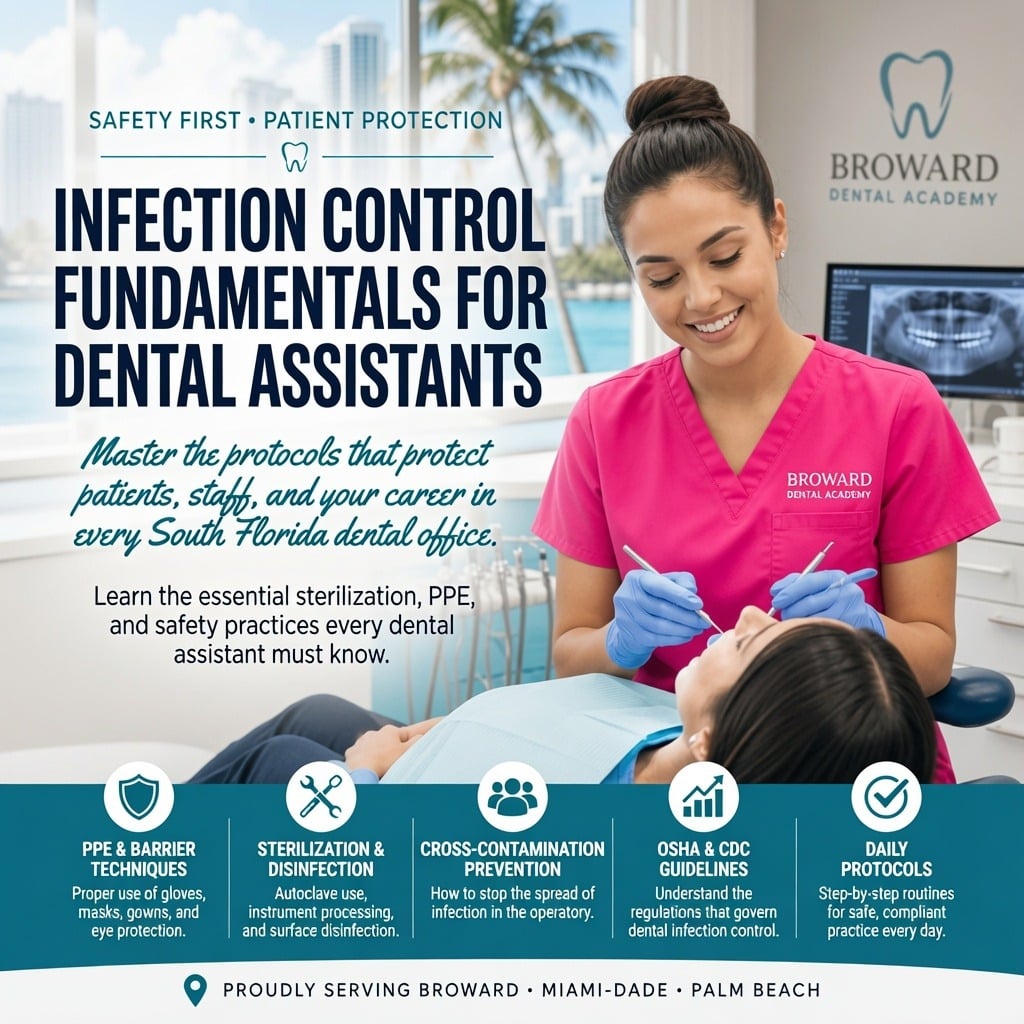
Infection control you must master before you try to “get fast”
Chairside assisting depends on clean technique. If infection control is inconsistent, speed does not help. It becomes risk.
Core principles to internalize
- Use standard precautions every time.
- Break the chain of infection through consistent hand hygiene, barriers, PPE, and safe instrument handling.
- Treat contamination as predictable. Your job is to prevent it from spreading.
Hand hygiene moments students miss
Common misses include:
- Touching a phone, pen, or keyboard with gloved hands
- Adjusting masks or eyewear with contaminated gloves
- Leaving the operatory and returning without restarting clean technique
If you touch something non-clinical with contaminated gloves, correct it by changing gloves and cleaning appropriately based on office protocol.
To avoid these common pitfalls in hand hygiene, it’s crucial to understand the key moments for effective hand hygiene that students often overlook.
What sterilization indicators mean (conceptually)
Sterilization indicators help confirm that the sterilization process met key conditions. They are part of safe, auditable instrument processing and quality control. As a student, you should understand what they represent, why they matter, and why consistency protects patients and the practice.
Sharps safety essentials
- Pass sharps safely and deliberately.
- Dispose of sharps immediately in an approved container.
- Know the office exposure protocol for injuries: report right away, follow the documented steps, and document consistently.
Why documentation and consistency matter
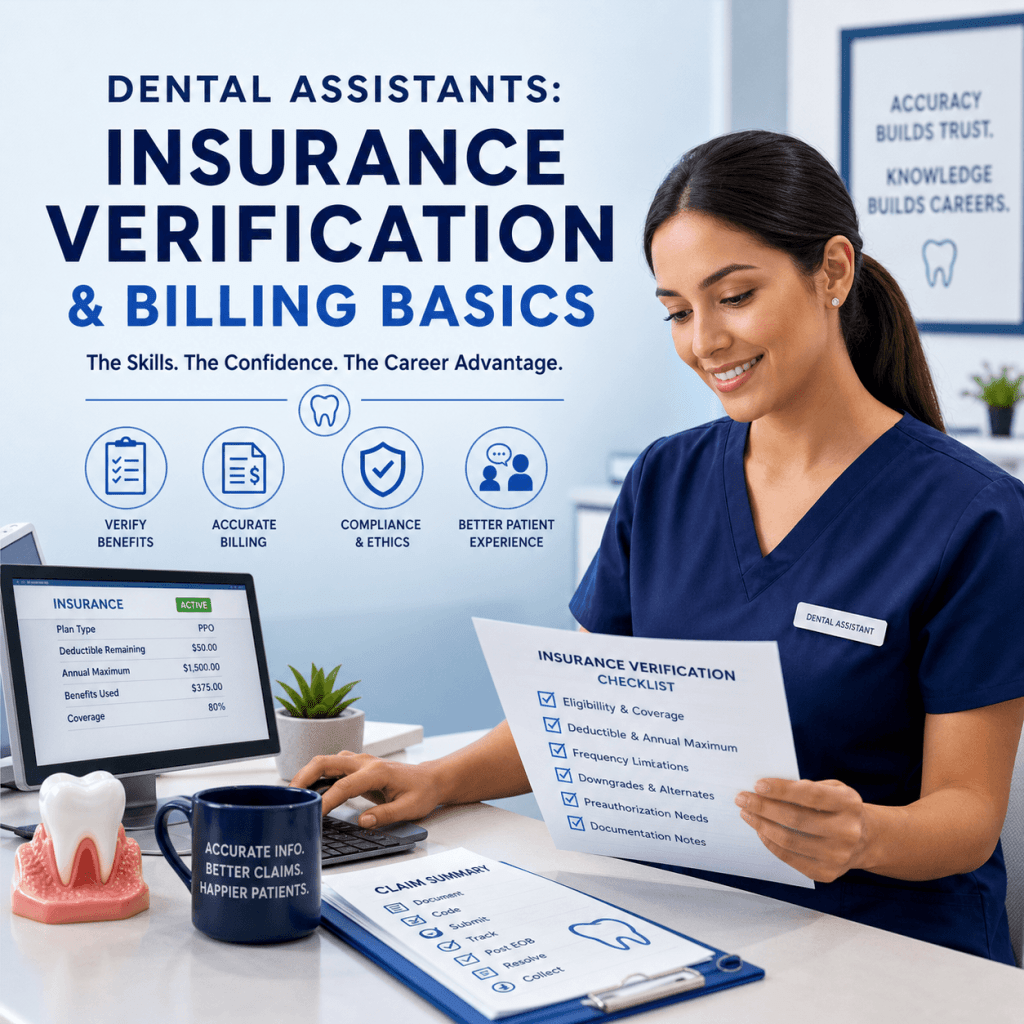
Dental offices are held to strict standards. When you practice consistent infection control and documentation habits, you help the practice stay legally compliant, audit-ready, and safe for every patient.
Instrument processing basics (what you’re expected to understand)
Instrument processing follows a clean workflow:
Transport → Cleaning → Packaging → Sterilization → Storage
As a student, focus on:
- Keeping dirty and clean areas separate
- Using appropriate PPE during processing
- Understanding why packaging matters for maintaining sterility
- Recognizing the role of indicators and logs in compliance
- Treating sharps as a top priority at every stage
Four-handed dentistry fundamentals: positioning, transfer, and efficiency
Four-handed dentistry is the teamwork system that reduces dentist fatigue, improves visibility, and keeps procedures smooth. It also makes the patient experience feel calmer because movements are controlled and predictable.
Clock positions (high-level)
Clock positioning varies by operator preference, procedure, and whether the dentist is right- or left-handed. At a high level:
- The dentist works in positions that maximize visibility and ergonomics.
- The assistant positions to maintain suction, retraction, and instrument transfer without leaning across the patient.
Your goal is simple: good access, minimal reaching, and patient comfort.
Transfer principles that make you look polished
- Keep transfers quiet, controlled, and close to the transfer zone
- Orient the working end correctly so the dentist can use it immediately
- Avoid reaching over the patient’s face
- Time transfers so the dentist keeps their eyes on the mouth
Common chairside transfers you should master
- Mirror, explorer, probe
- Cotton pliers
- Handpieces and burs (safely, within protocol)
- Evacuators (HVE and saliva ejector positioning changes)
Mistakes to avoid
- Clanging instruments on the tray
- Handing instruments without correct orientation
- Transferring over the patient’s face
- Breaking focus by forcing the dentist to look away
Instrument transfer basics every student should practice
Build a repeatable transfer habit:
- Single-handed transfer concept: quick, quiet, controlled
- Maintain orientation of the working end
- Keep movement small and purposeful
- Practice with mirrors and explorers first, then add handpieces and suction coordination
The goal is not flash. It is consistency.
Moisture control and isolation: the “invisible” skill patients notice immediately
Patients may not understand restorative materials, but they absolutely notice when they are drowning, gagging, or constantly needing breaks. Moisture control is one of the fastest ways to improve comfort and procedure time.
Why moisture control matters
- Improves visibility and access
- Helps restorative materials bond properly
- Reduces procedure interruptions
- Keeps the patient calmer and more comfortable
Incorporating four-handed dentistry principles into your practice can significantly enhance efficiency. This technique emphasizes collaboration between dentist and assistant during procedures, leading to smoother instrument transfers and better overall patient experience.
HVE vs. saliva ejector (when and how)
- HVE is used for aerosol control, heavy water spray, and high-volume needs (often during drilling).
- Saliva ejector supports low-volume suction and patient comfort, especially when the dentist needs a quieter field.
Positioning matters. A suction tip that is technically “on” but poorly placed wastes time and frustrates everyone.
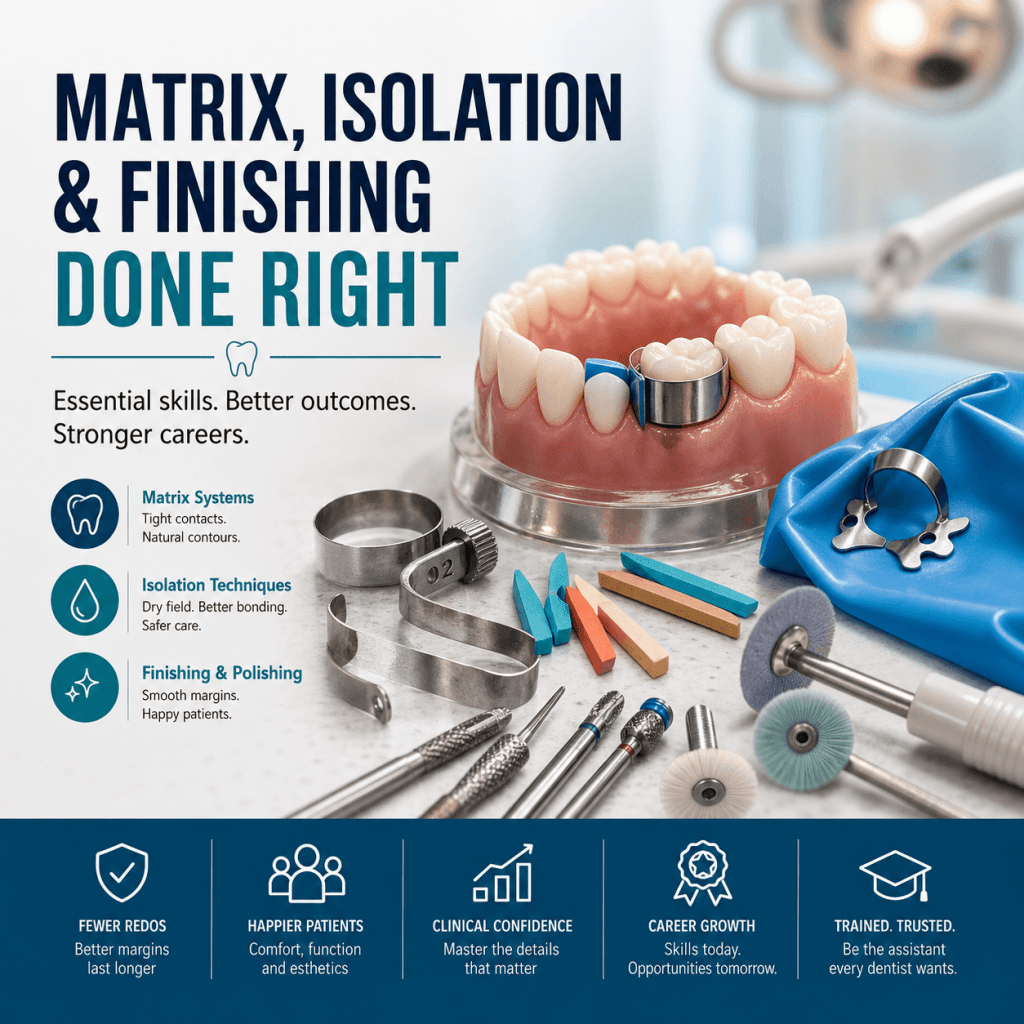
Rubber dam basics (what to know at Level 01)
A rubber dam supports:
- Isolation and moisture control
- Patient safety (reduces risk of aspiration)
- Better restorative outcomes
Basic components you should recognize:
- Dam sheet
- Frame
- Punch
- Clamp
- Clamp forceps
Assistant role at Level 01:
- Prepare and stage materials
- Pass items safely
- Maintain suction and patient comfort
- Support smooth workflow based on dentist direction
Rubber dam use varies by dentist and procedure, but your foundational knowledge should be solid so you can support it confidently when required.
Dental materials and handpiece basics (what you handle chairside)
A simple rule: what you touch and pass can affect outcomes. Follow manufacturer instructions, office protocols, and the dentist’s preferences.
Handpiece basics (high-level safety awareness)
- Know the difference between high-speed and low-speed use cases
- Handle burs with care and respect sharps safety
- Support safe swaps by anticipating what is next, not by rushing
Think in sequences, not random tasks
Many procedures follow a familiar order:
Anesthesia support → Isolation → Preparation → Restoration/impression → Finishing → Post-op
When you think this way, you naturally become anticipatory.
Stage materials so you do not contaminate or waste
Instead of opening everything at once:
- Keep packaging intact until the step is imminent
- Open only what you need for the next phase
- Protect items from splatter and cross-contamination
- Reduce waste, especially with materials that set or expire quickly once opened
Confirm preferences before the patient sits down
A quiet, professional pre-huddle question saves time:
- “Do you want rubber dam or cotton roll isolation today?”
- “Are we scanning or taking an impression?”
- “Do you prefer sectional matrix or Tofflemire for this MO?”
Tray-by-tray thinking: building the habit of procedure sequence
Train yourself to build trays by phases. Even when the dentist changes a step, your tray stays logical. This is one of the simplest ways to look organized, reduce stress, and avoid contamination.
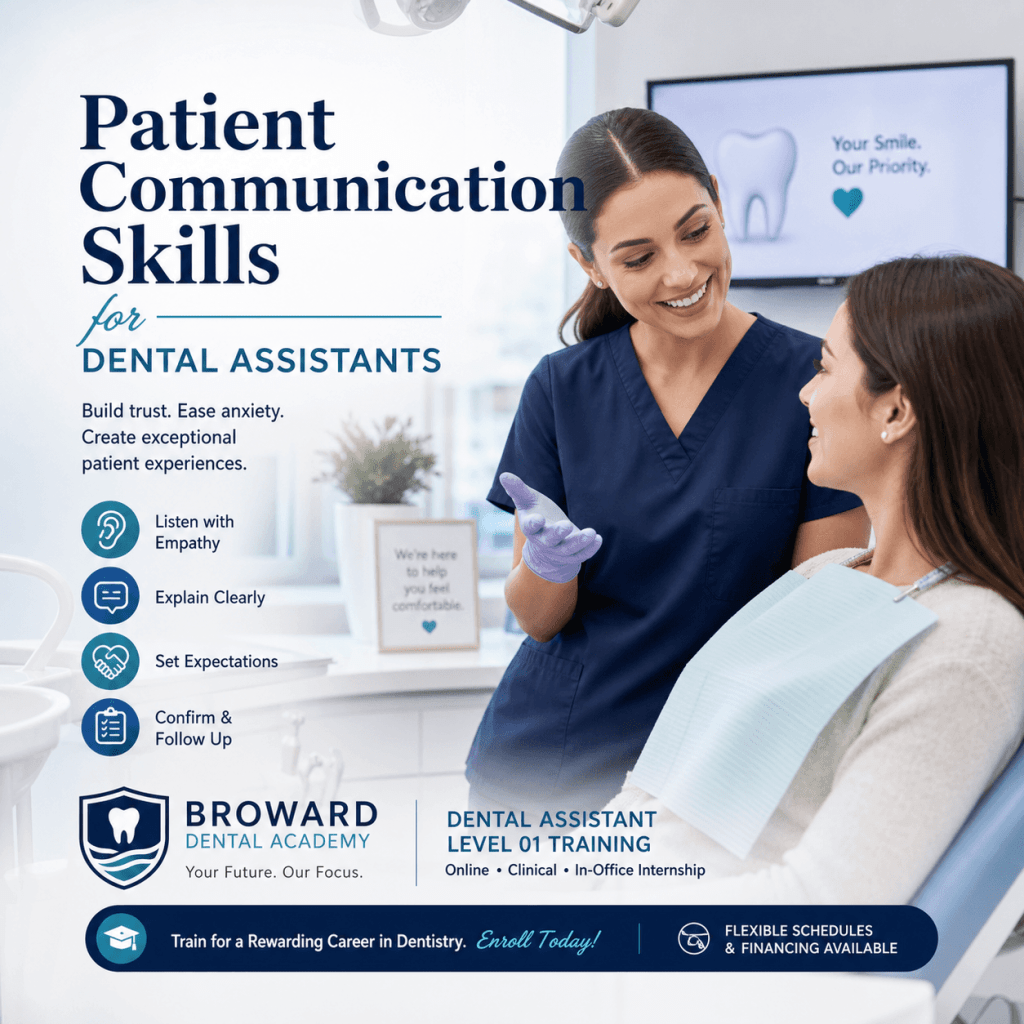
Patient communication at chairside: comfort, clarity, and trust
Your tone shapes the appointment. Patients often watch the assistant for cues on whether everything is okay.
First impressions that set the tone
- Greet the patient and confirm their preferred name.
- Verify comfort quickly: “Are you warm enough? Do you need a headrest adjustment?”
- Explain what you are doing in plain language, without over-explaining.
Chairside language that reduces anxiety
Use short, calm, specific reassurance:
- “You’ll feel some water and suction.”
- “If you need a break, raise your left hand.”
- “You’re doing great. We’re almost through this step.”
Confirm discomfort cues and relay quickly
Watch for:
- Tensing hands and shoulders
- Flinching or pulling away
- Changes in breathing
- Facial expressions that signal pain
If you see it, communicate it to the dentist promptly and professionally.
What not to do
- Do not argue in front of the patient.
- Do not blame equipment or complain.
- Avoid alarming words like “knife,” “drill,” or “this might hurt.”
During-procedure support: what to say (and what not to say)
Helpful phrases
- “Take a slow breath in through your nose.”
- “Swallow now, then we’ll continue.”
- “We can pause whenever you need.”
Phrases to avoid
- “This is the worst part.”
- “Don’t move.”
- “You’re fine” (when the patient clearly is not)
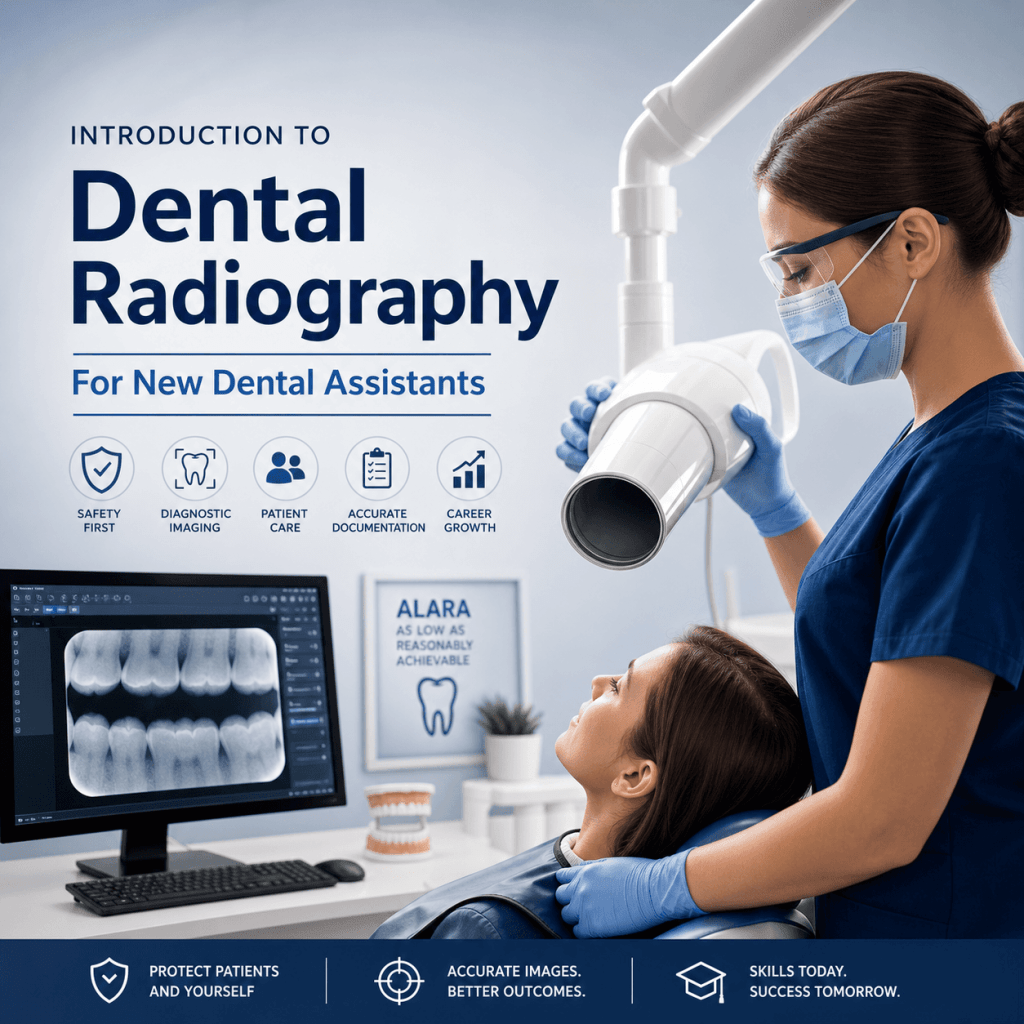
Radiography and documentation touchpoints (chairside reality)
Accurate radiographs and chart notes protect the patient and the practice. They also support better clinical decisions and smoother referrals.
Radiography responsibilities
- Prepare sensors or plates with barriers.
- Maintain infection control during positioning and removal.
- Communicate positioning calmly to reduce retakes.
Documentation responsibilities
- Update medical history per office protocol.
- Record patient concerns and symptoms.
- Contribute notes that support accurate charting.
Practices value assistants who are careful and consistent here because it directly impacts compliance and patient safety.
Medical emergencies and safety basics: be ready for the unexpected
Emergencies can happen even during routine dentistry. The assistant who recognizes early signs and responds calmly can make a major difference.
Common scenarios to recognize early:
- Vasovagal syncope (fainting): lightheadedness, sweating, pallor, nausea
- Allergic reaction: hives, swelling, itching, respiratory changes
- Hypoglycemia: shakiness, confusion, sweating, irritability
Assistant role (high-level):
- Stay calm and alert the dentist immediately
- Call for help per office protocol
- Retrieve oxygen and the emergency kit when directed
- Follow direction, support documentation, and help clear space
Prevention mindset:
- Review medical history flags
- Confirm meals and diabetes medication timing when appropriate
- Monitor anxiety and breathing patterns, especially for nervous patients
Common chairside mistakes students make (and how to fix them fast)
Rushing setup and forgetting basics
Fix: Use a consistent checklist. Always verify suction, barriers, and curing light readiness.
Touching drawers or computers with contaminated gloves
Fix: Pause, change gloves, disinfect as required, and re-enter clean technique.
Poor ergonomics leading to fatigue
Fix: Reset posture, adjust chair height, bring the patient up to you, and keep shoulders relaxed.
Not asking clarifying questions early
Fix: Confirm preferences before seating the patient. It prevents mid-procedure scrambling.
Over-talking
Fix: Keep communication purposeful, calm, and patient-centered.
How to build real chairside confidence: drills, repetition, and clinical immersion
Confidence is built, not wished for. The fastest path is structured repetition.
What works well for students:
- Dry runs: set up trays without a patient until the sequence becomes automatic
- Instrument transfer drills: practice until transfers are quiet and correctly oriented
- Suction and retraction practice: learn positioning that supports visibility and comfort
- Checklists: setup, turnover, infection control, end-of-day restock
- Feedback loop: after procedures, ask instructors or dentists what to improve next time
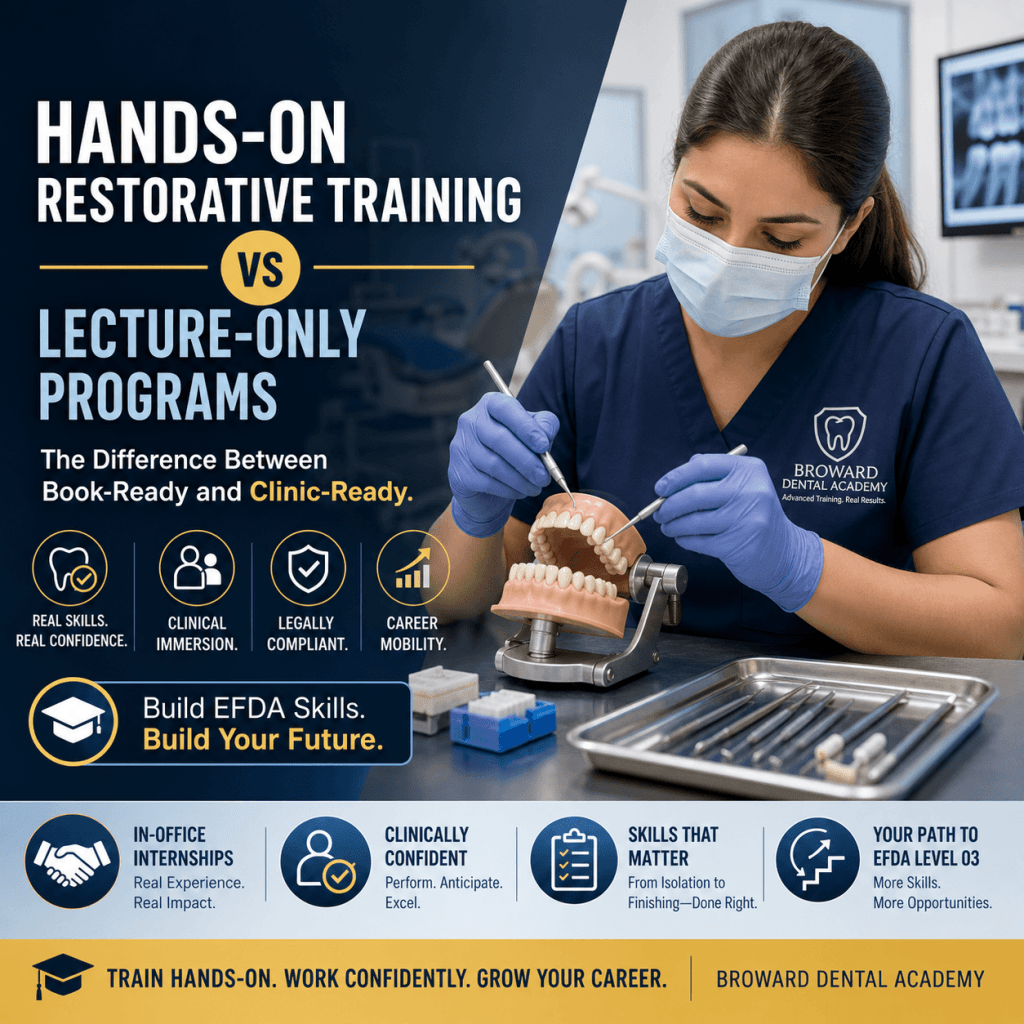
Broward Dental Academy’s training approach supports this progression through immediate immersion in online and clinical settings. Their frequently asked questions page provides insight into their modern eLearning lesson plans and in-office internships which help build speed and confidence the right way with real supervision and real expectations.
Where Broward Dental Academy fits in (and how Level 01 training supports these basics)
The dental field is one of the fastest-growing sectors in healthcare, offering students a wealth of opportunities such as stable income, flexible schedules, career mobility, and the potential for expanded functions within a respected clinical role. As demand for dental services rises, practices are increasingly seeking assistants who are thoroughly trained, legally compliant, and clinically confident.
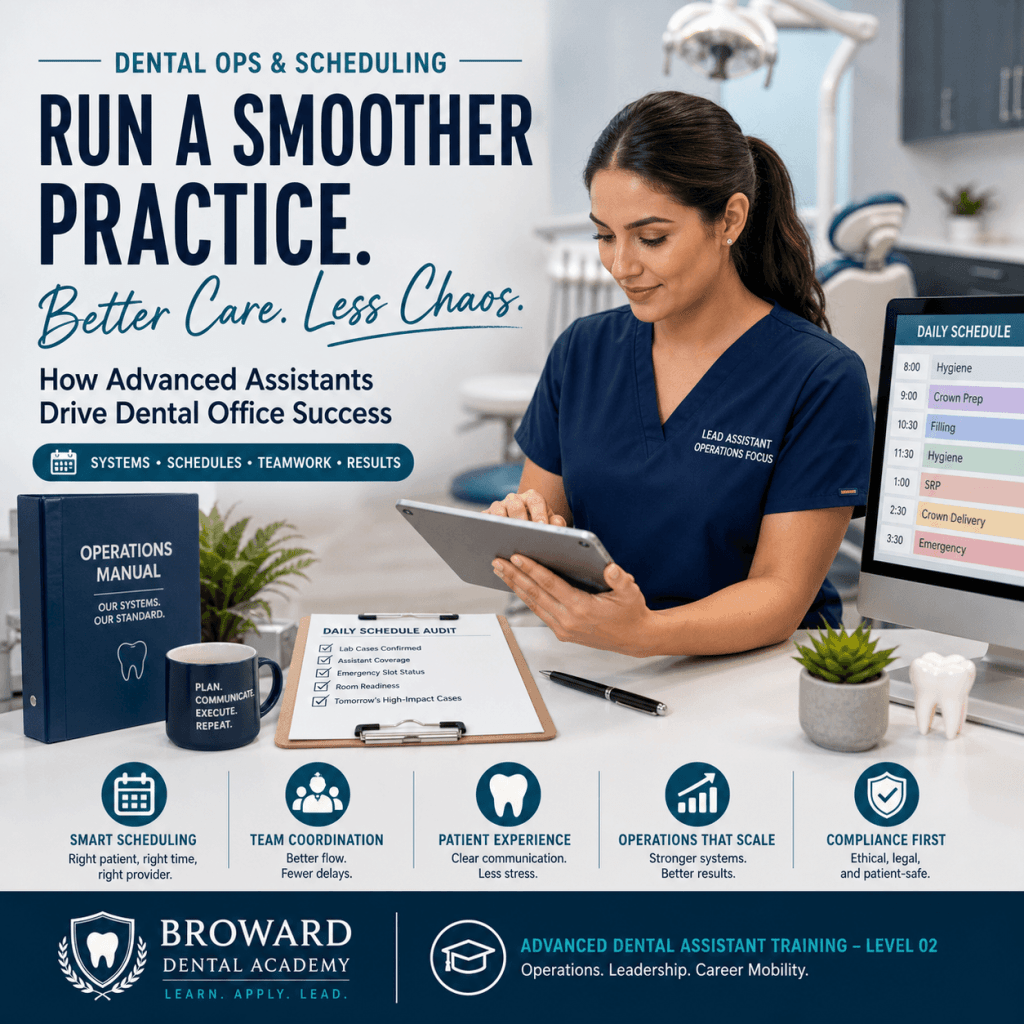
At the Broward Dental Academy, the focus extends beyond merely passing an exam. The objective is to equip students with the skills necessary to thrive in a modern, high-performance dental practice. This is achieved by fostering critical thinking, ethical action, and confident performance. Students undergo a comprehensive training experience that combines online learning with hands-on clinical immersion and internships that mirror real office pace and standards. The academy offers seven courses including Dental Assistant Level 01 Training, Dental Assistant Level 02 Training and Dental Assistant Hygienists Level 03 Training, along with flexible financing options. The commitment lies in developing well-rounded professionals for the dental community.
Wrap-up: the chairside basics that employers notice on day one
To quickly stand out in a real dental office, mastering the fundamentals that employers notice immediately is key:
- Operatory setup and procedure readiness
- Infection control and clean technique
- Four-handed dentistry and instrument transfers
- Moisture control and isolation support
- Materials awareness and staging by sequence
- Patient communication that builds comfort and trust
- Radiography and documentation consistency
- Emergency readiness and calm response
Achieving mastery in these areas comes from repetition and real clinical exposure. It’s important not to rush the process; instead, build your skills step by step, allowing your speed to follow naturally.
If you’re ready to receive structured training designed to make you the kind of assistant that practices trust, don’t delay. Enroll at Broward Dental Academy today. You will be glad that you did.
FAQs (Frequently Asked Questions)
What is chairside assisting and why is it crucial in dental appointments?
Chairside assisting refers to the everyday clinical, communication, and safety skills that enable the dentist to work efficiently while keeping the patient comfortable and protected. It involves setting up the room, maintaining infection control, passing instruments smoothly, controlling moisture, supporting materials, communicating clearly, and being prepared for unexpected situations. This skill is essential because it directly impacts procedure efficiency, patient safety, and overall appointment success.
How does one develop speed and confidence in chairside assisting?
Speed in chairside assisting comes after ensuring safety and organization through consistent setup and solid infection control practices. Confidence develops through repetition; assistants who have performed fundamental tasks hundreds of times tend to appear naturally proficient. Therefore, thorough training, practice, and adherence to protocols are key to gaining both speed and confidence.
What are the three main priorities a dental assistant should focus on during chairside assisting?
The three main priorities are: 1) Infection control to prevent contamination; 2) Patient safety and comfort to ensure a positive experience; and 3) Procedure efficiency to allow the dentist to focus on treatment. Maintaining these priorities supports smooth dental procedures and patient care.
What is anticipatory assisting and how does it improve dental procedures?
Anticipatory assisting is the skill of predicting the next steps in a dental procedure before the dentist requests them. This involves knowing typical procedure sequences, observing the dentist’s actions (hands, mirror, bur selection), listening for verbal cues like ‘Let’s etch’ or ‘We need the cord,’ and preparing materials accordingly without contamination. This proactive approach enhances efficiency and reduces delays during treatments.
Why is professionalism important under pressure in a busy dental office?
Professionalism ensures that assistants remain calm, clear-headed, and efficient even when schedules are tight or unexpected issues arise. Using a calm voice, keeping work areas organized, moving purposefully without panic, and quietly resolving problems helps maintain a safe environment for patients and supports seamless dental operations.
What are essential steps for operatory setup before starting a dental procedure?
Before seating a patient, confirm that clinical contact surfaces are cleaned and disinfected; barriers are placed on equipment as per office protocol; high-volume evacuator (HVE) and saliva ejector function properly; air/water syringe works correctly; handpiece lines are connected; curing light is charged and tested; appropriate personal protective equipment (PPE) is available; patient chart with medical history, planned procedures, and radiographs is accessible; sharps container is accessible but not overfilled. Proper tray setup following order of use and grouping by procedure phase also contributes to an efficient appointment.