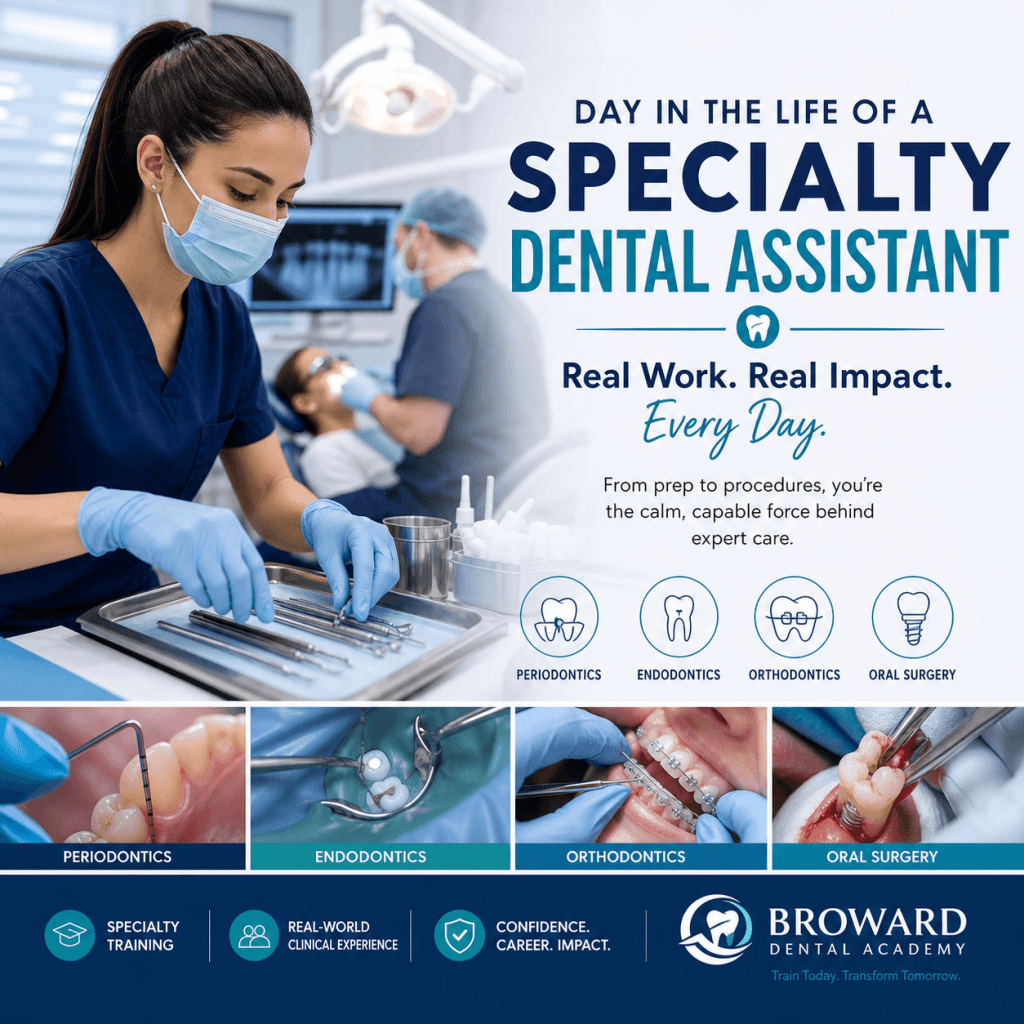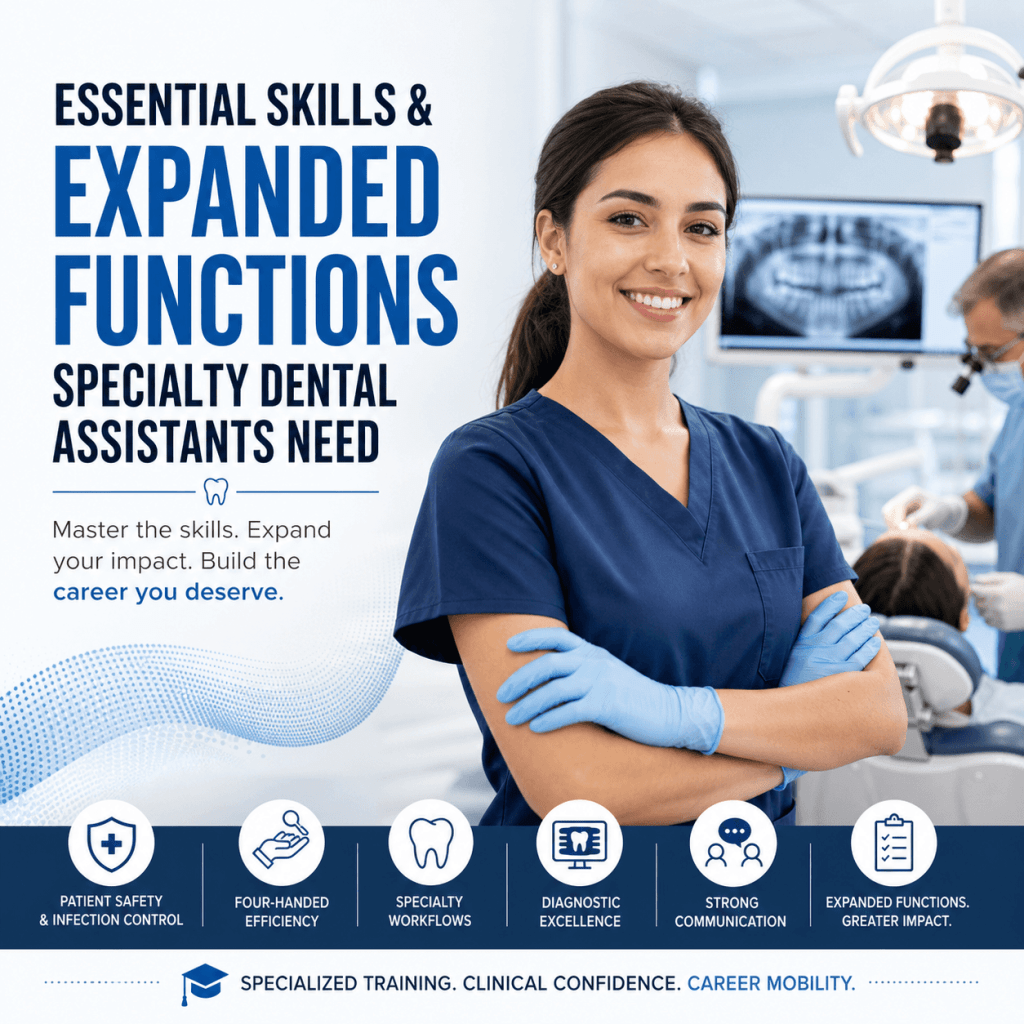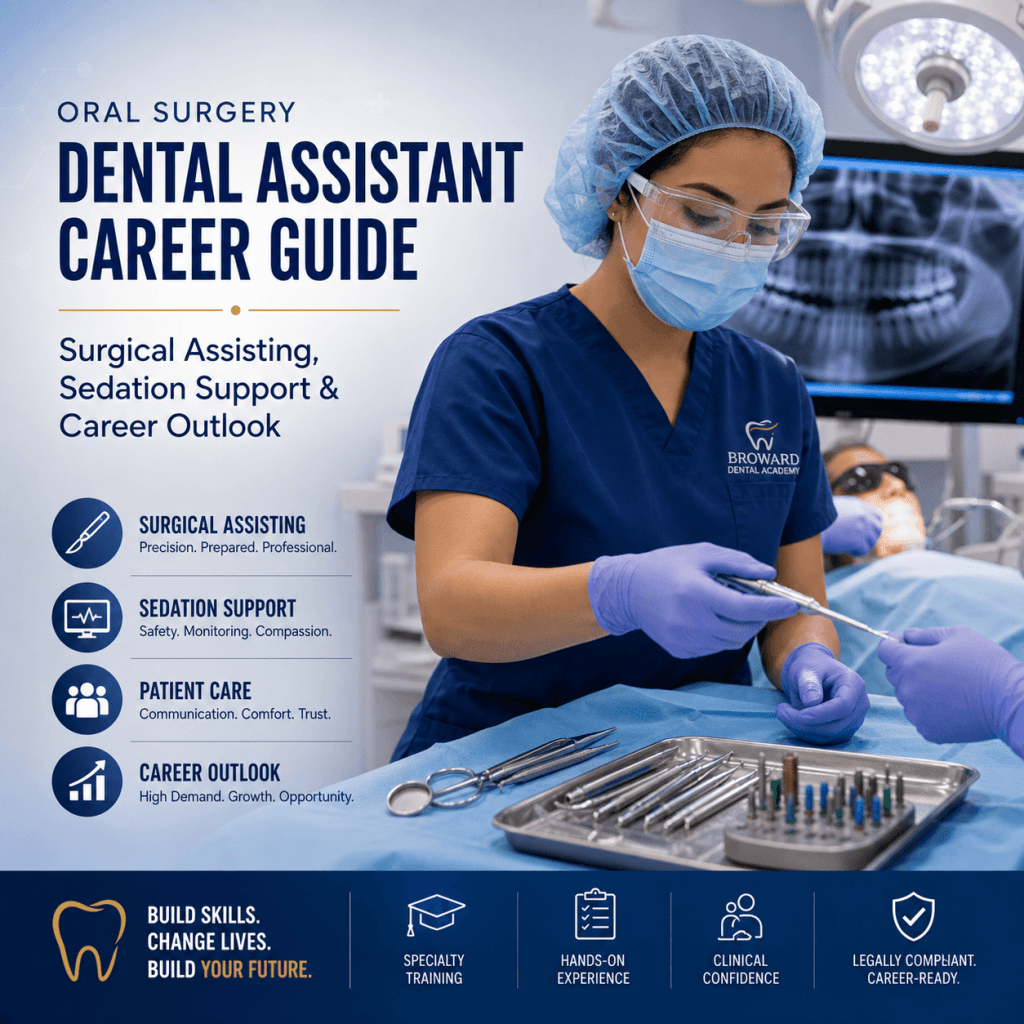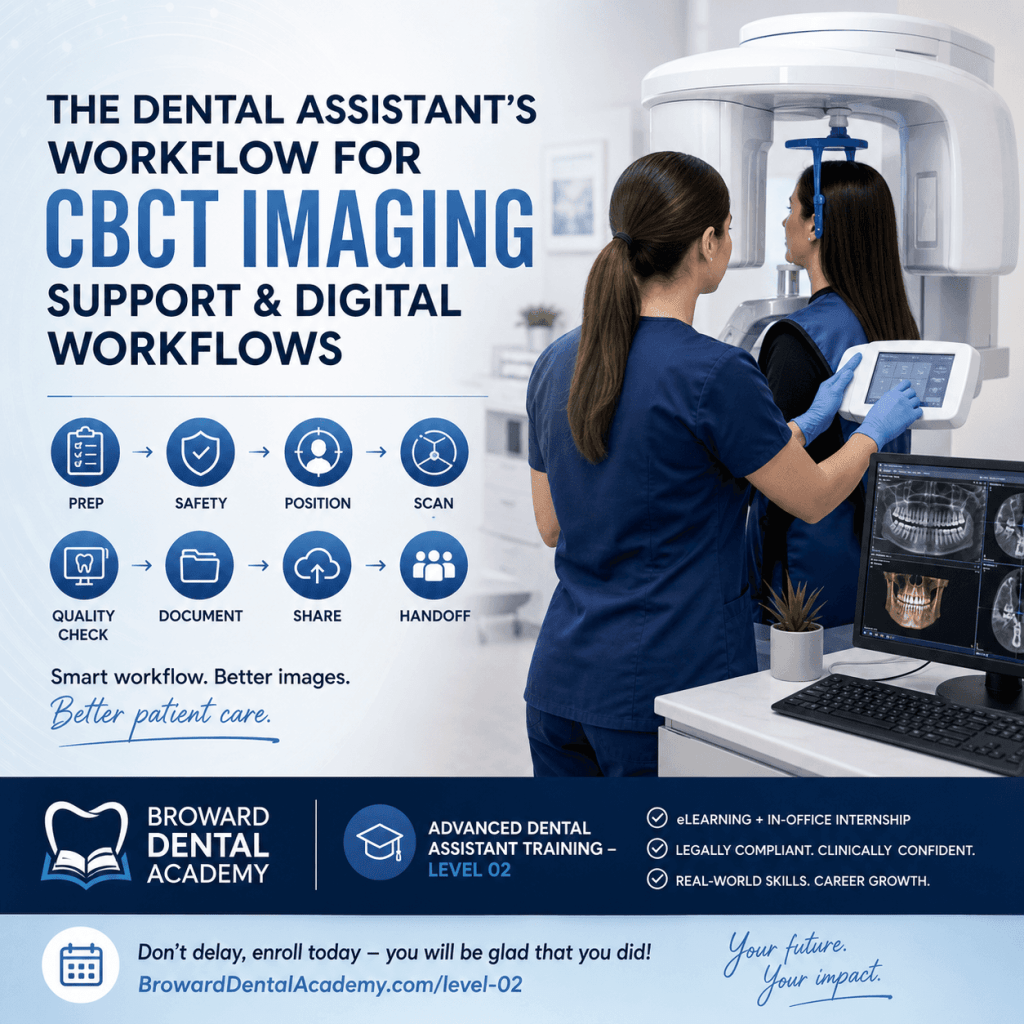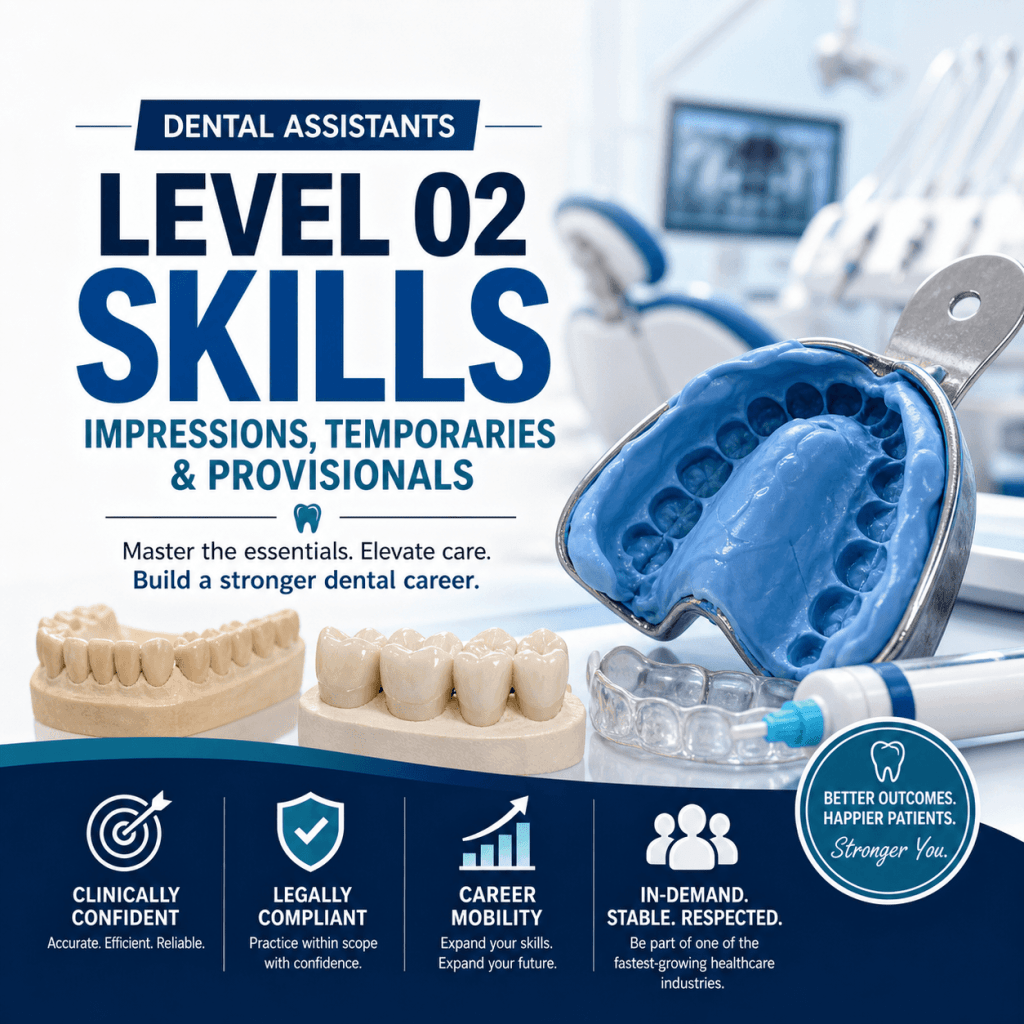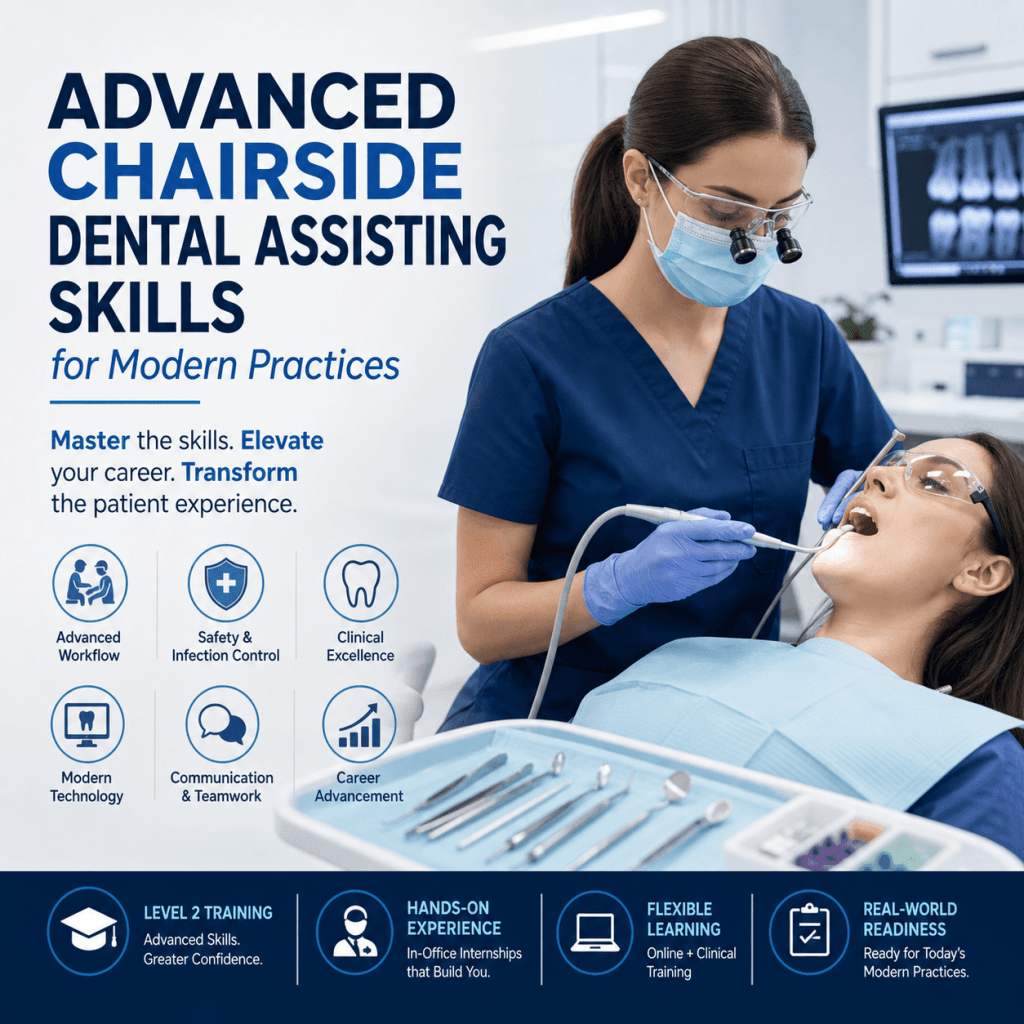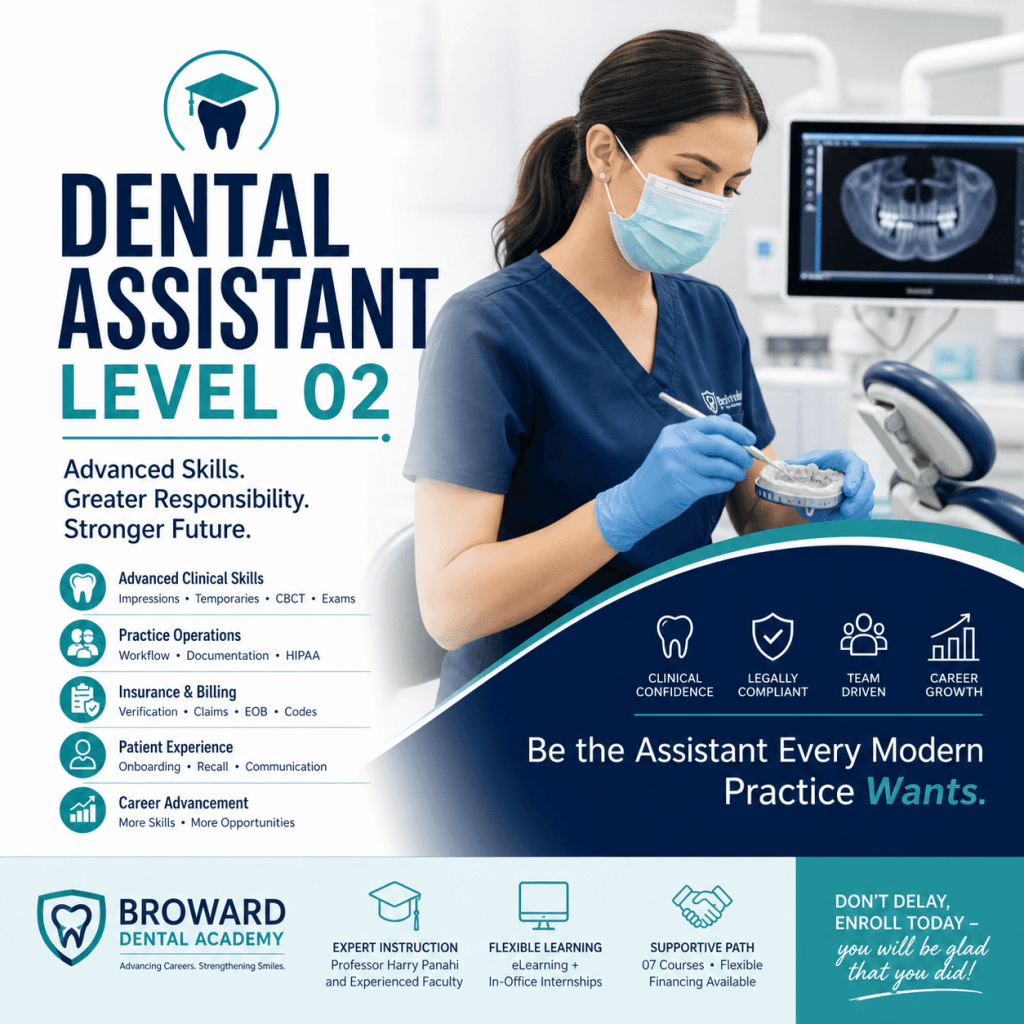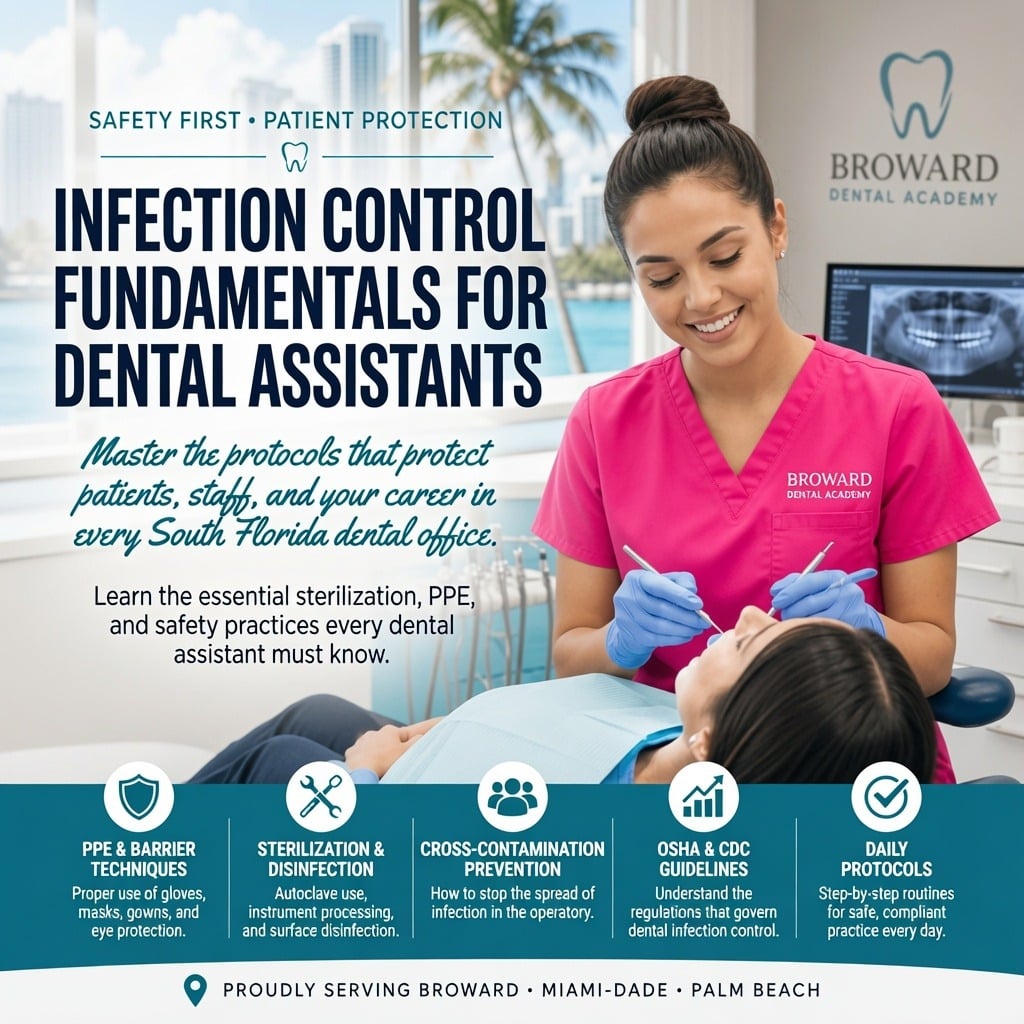
Infection control fundamentals for dental assistants is not a “nice to have” in dentistry. It is the foundation that keeps patients safe, protects your team, and keeps the practice running with confidence.
Dental assistants work closer than almost anyone to aerosols, saliva, blood, and sharps. That means small lapses can quickly become big risks. A missed hand hygiene moment, a rushed wipe-down, a wet sterilization pouch, or a poorly managed needle can affect patient safety, staff health, and the reputation of the entire office.
Strong infection control also builds trust. Patients may not know the technical names of products or protocols, but they notice clean rooms, sealed instruments, fresh barriers, and a team that looks organized and consistent. That trust matters for reviews, referrals, and long-term patient relationships.
In this guide, you will learn the fundamentals dental assistants use every day: standard precautions, PPE, hand hygiene, instrument processing, operatory disinfection, dental unit waterlines, waste handling, and documentation. You will also see how an “always compliant” routine makes you faster, not slower.
This guide on Infection Control Fundamentals for Dental Assistants will provide you with essential knowledge.
Why infection control is non‑negotiable in today’s dental office
Understanding Infection Control Fundamentals for Dental Assistants
Dentistry is a high-exposure environment. The work involves:
- Aerosols and splatter from handpieces, ultrasonic scalers, and air-water syringes
- Direct contact with saliva and blood
- Sharps and small instruments that can injure skin in a split second
- Fast room turnover, which can tempt teams to cut corners
That is why infection control is directly tied to:
- Patient trust and comfort
- Team safety and reduced workplace exposures
- Practice reputation and operational consistency
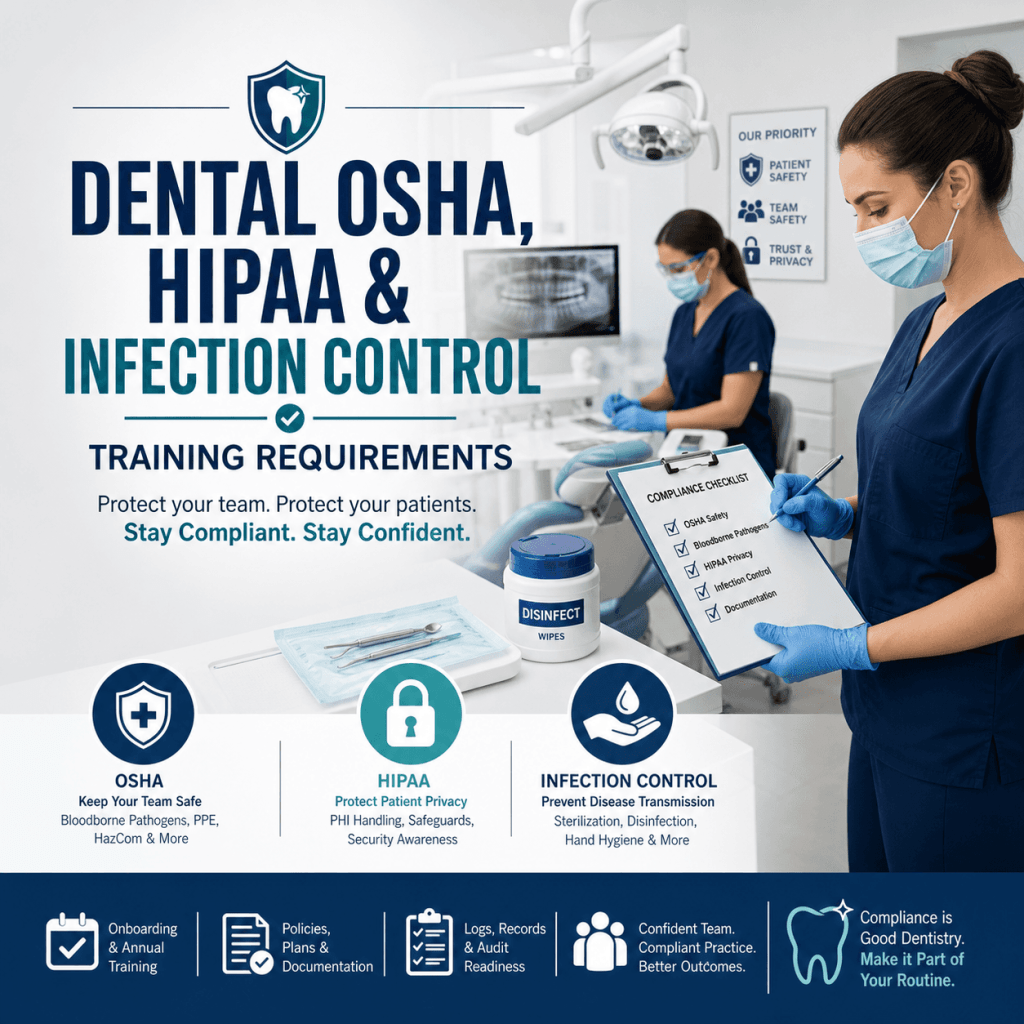
- Legal and regulatory compliance, including OSHA and CDC-aligned standards
- Career readiness, because practices want assistants who can step in and perform safely from day one
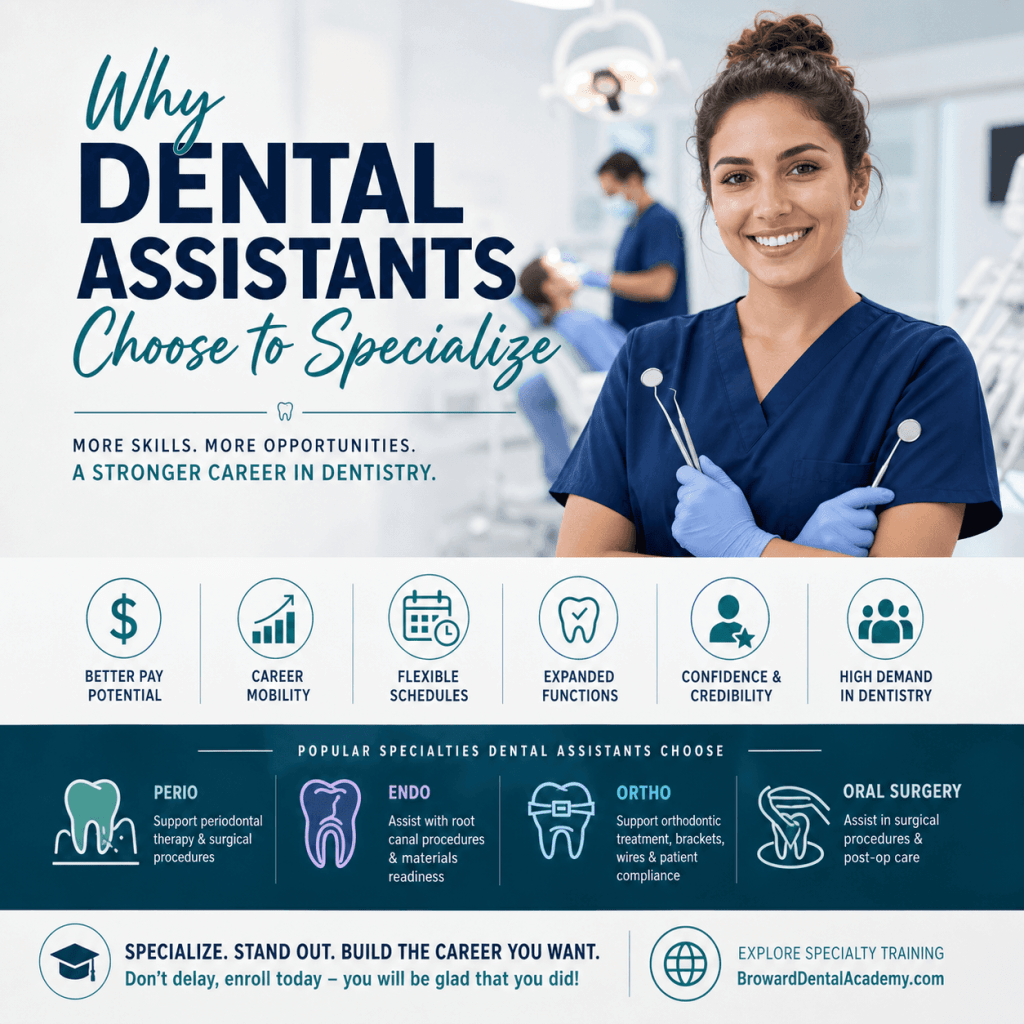
When you are known as the assistant who never skips steps, you become the person dentists rely on, especially during busy schedules and complex procedures like oral surgeries, orthodontics, or endodontics.
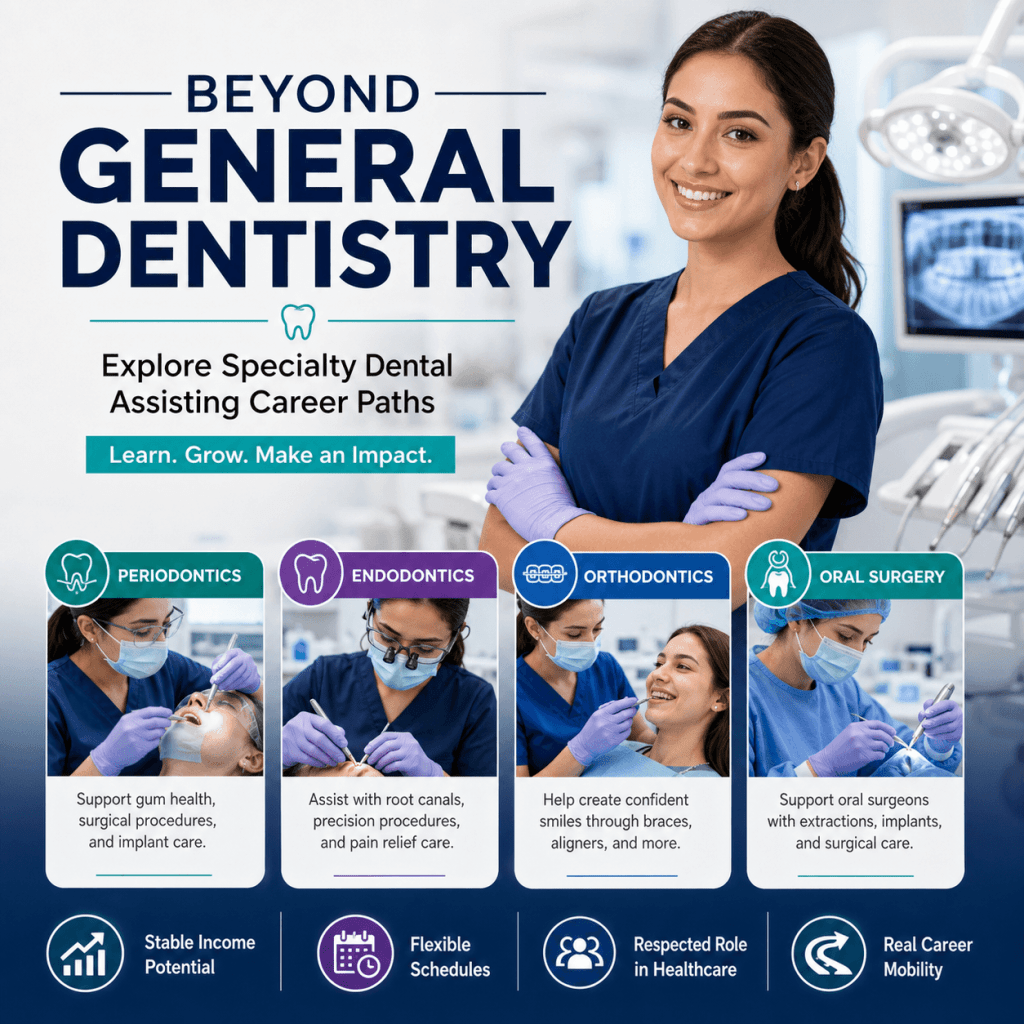
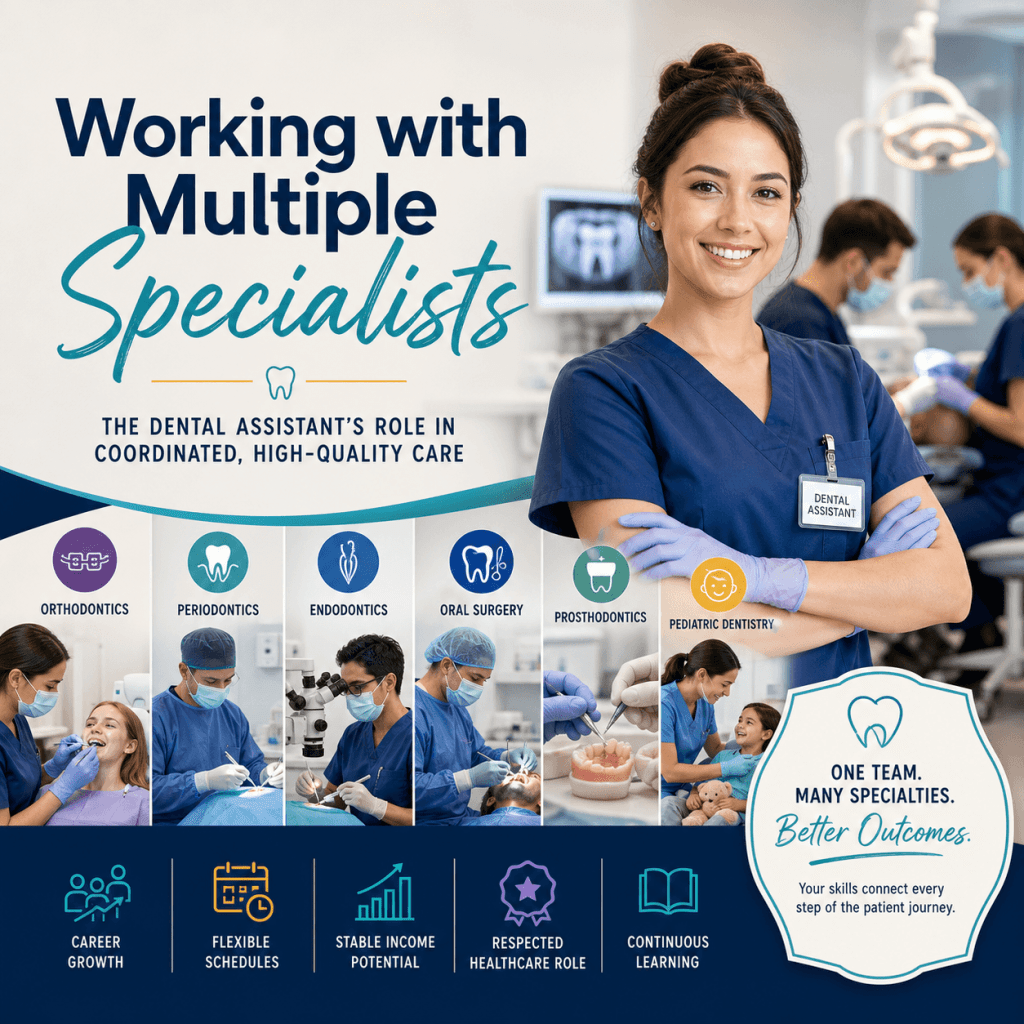
Moreover, strong infection control practices are essential across various dental specialties such as orthodontics or endodontics. These areas require precise procedures where any lapse in infection control could lead to serious consequences.
For those looking to enter this vital field of dentistry or enhance their skills further through formal training programs such as those offered at Broward Dental Academy which includes various courses tailored for different specializations.
What “infection control fundamentals” means for dental assistants
Infection control in dentistry is the daily process of breaking the chain of infection:
- Source (blood, saliva, contaminated instruments, surfaces)
- Transmission (hands, aerosols, sharps, equipment, surfaces)
- Susceptible host (patients and team members)
Dental assistants play a central role because you influence multiple links in that chain. Your responsibilities typically include:
- Consistent chairside behaviors that prevent cross-contamination
- Safe setup and cleanup of operatories
- Supporting or performing instrument processing steps, depending on office workflow
- Spotting breakdowns early, like expired disinfectant, torn barriers, wet packs, and missing indicators
Dentistry is unique because it combines aerosols, high-touch surfaces, rapid turnover, and many small instruments. The assistants who thrive are the ones who build a routine that never slips, supported by checklists, zoning, and repeatable workflows.
Core rules: Standard Precautions (and when Transmission-Based Precautions apply)
Standard Precautions are the baseline for every patient, every time. In practical terms: treat all blood and body fluids as potentially infectious, and act consistently regardless of a patient’s health history.
In a dental setting, Standard Precautions include:
- Hand hygiene
- Personal protective equipment (PPE)
- Respiratory hygiene and cough etiquette
- Safe injection practices
- Sharps safety
- Environmental cleaning and disinfection
- Instrument reprocessing and sterilization
- Proper waste management
Sometimes, Transmission-Based Precautions may be needed for certain respiratory illnesses or public health situations. In those cases, you follow office policy, current guidance, and direction from the dentist or infection control coordinator. If something feels off, your job is not to guess. Your job is to pause, escalate, and follow the protocol.
The importance of infection control extends beyond just immediate patient care; it’s a crucial aspect of periodontics as well. Furthermore, obtaining relevant certifications can significantly enhance a dental assistant’s ability to implement these infection control fundamentals effectively.
In addition to mastering these fundamental practices, it’s also essential to stay informed about common concerns related to infection control. For this reason, having access to a reliable source of information where you can find answers to your frequent-asked-questions can be incredibly beneficial.
Lastly, understanding the specific locations where these practices are implemented can provide valuable insights into the real-world application of infection control fundamentals in dentistry.
Hand hygiene: the simplest step that prevents the most problems
Hand hygiene is the most effective infection control habit, according to the CDC, and it is also the one that can break down under pressure.
When to perform hand hygiene
Use hand hygiene:
- Before patient contact
- Before aseptic tasks
- After body fluid exposure risk
- After patient contact
- After touching patient surroundings
- After glove removal
Soap and water vs alcohol-based hand rub
- Use soap and water when hands are visibly soiled and after certain exposures where washing is required by policy.
- Use an alcohol-based hand rub when hands are not visibly soiled and you need rapid, effective decontamination. It’s important to note that both soap and alcohol-based sanitizers have their specific uses.
Technique essentials that matter in real life
- Cover all surfaces, especially thumbs, fingertips, and between fingers
- Keep nails short and follow office policy on jewelry
- Protect your skin with approved moisturizers to prevent dermatitis and cracking, which increases infection risk
Common busy-day mistakes (and how to avoid them)
- “I wore gloves, so I’m fine.” You still need hand hygiene after glove removal.
- Touching cabinets or your phone with contaminated gloves. Create “clean hands only” moments and stick to them.
- Rushing the rub. Build workflow cues, such as hand hygiene immediately after removing your mask and eyewear at the end of care.
PPE fundamentals: choosing the right protection and using it correctly
PPE is not just about wearing it. It is about selecting the right protection for the task and removing it without contaminating yourself.
Common PPE in dentistry includes:
- Gloves for patient care and instrument handling
- Masks or respirators, depending on the procedure and office protocol
- Protective eyewear and face shields
- Gowns or jackets to protect skin and clothing
Practical donning and doffing sequence
A common, practical approach is:
- Donning: gown, mask or respirator, eyewear or face shield, gloves
- Doffing: gloves, gown, hand hygiene, eyewear or face shield, mask, hand hygiene
Follow your office protocol, especially if respirator programs or fit testing apply.
Eye protection details that are often missed
Eye protection is for both the patient and the clinician. Clean and disinfect reusable eyewear between patients according to office policy and product instructions.
Glove rules you should never bend
- Gloves are single-use
- Change gloves if torn, visibly contaminated, or when moving from a contaminated task to a clean task
- Never wash or sanitize gloves to “extend” use
Laundry and reusables
Handle reusable gowns or jackets carefully. Avoid carrying contaminated garments through clean supply areas, and follow the office’s laundry containment process.
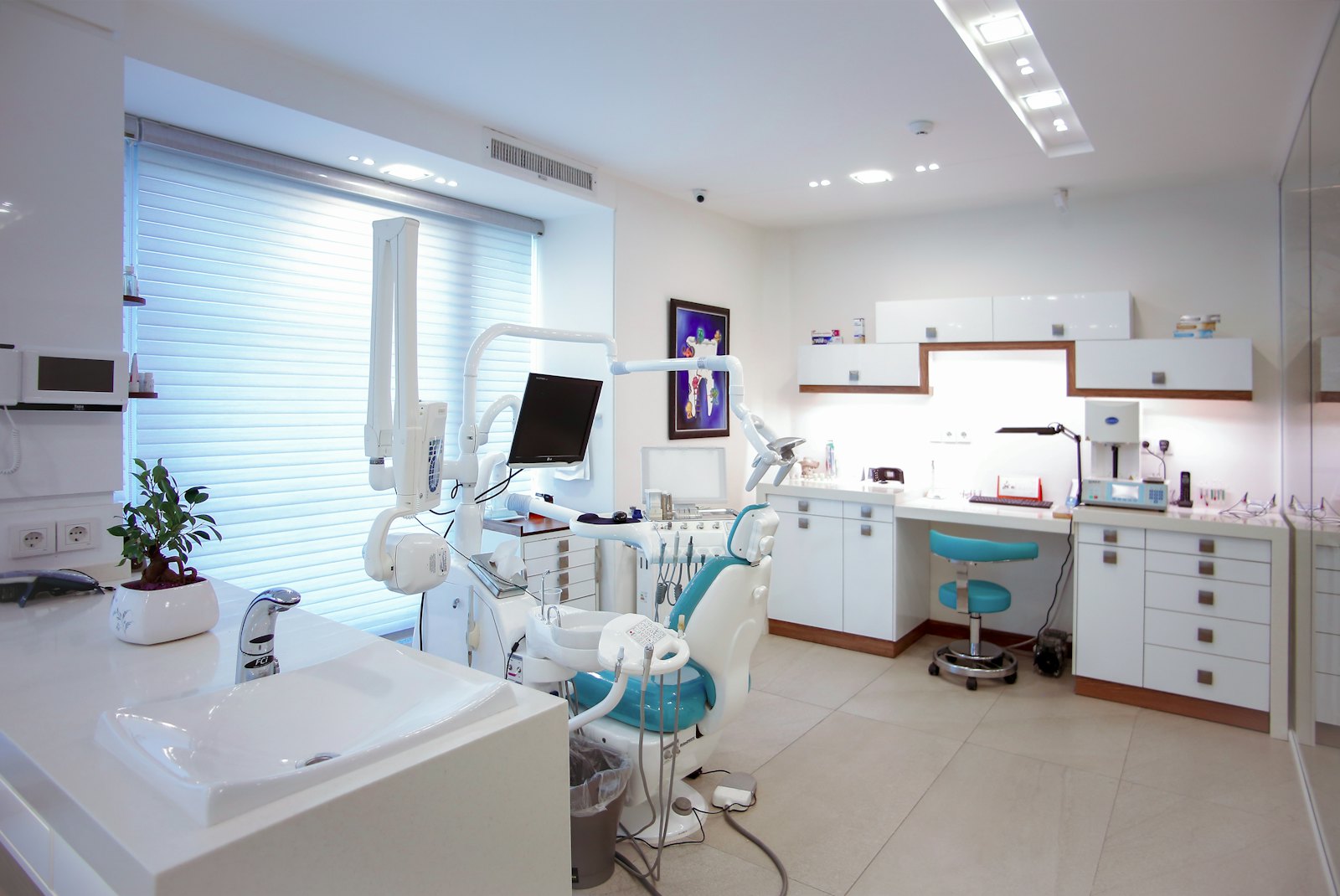
Operatory setup: clean-to-dirty zoning that prevents cross-contamination
A simple zoning mindset prevents many common mistakes:
- Clean zone: supplies, drawers, unopened packs
- Treatment zone: active patient care area
- Contaminated zone: used instruments, waste, transport containers
Barrier protection
Barriers are often best for surfaces that are hard to disinfect quickly or have crevices, such as:
- Light handles
- Chair controls
- Switches and touch pads
- X-ray unit controls
- Keyboard covers (when used in operatories)
Replace barriers between patients, and do not rely on barriers as a substitute for required cleaning in your office protocol.
Supply handling and tray setup
- Stock and open drawers before gloving whenever possible
- Avoid reaching into drawers with contaminated gloves
- Verify sterilized packs and indicators, then keep items packaged until needed
Chairside etiquette when contamination happens
If you touch a non-covered surface with contaminated gloves, stop and correct it. Typically that means changing gloves, performing hand hygiene, and disinfecting the contaminated surface as required.
Clinical contact surfaces: effective cleaning and disinfection (without shortcuts)
Cleaning and disinfecting are not the same thing:
- Cleaning removes debris and bioburden.
- Disinfecting kills microorganisms, but it works correctly only when the surface is properly cleaned first (or when using a product designed for one-step use as directed).
High-touch surfaces you should assume are at risk
- Light handles and chair controls
- Drawer pulls and cabinet handles
- X-ray controls
- Suction line exteriors
- Countertops and instrument cassettes
- Keyboards, tablets, and mouse devices used chairside
Choosing the right disinfectant
Use an EPA-registered product suitable for dental settings and follow label instructions. The most common reason disinfection fails is skipping or shortening contact time. The surface must stay wet for the required time.
Safe wiping pattern
- Work top-to-bottom and clean-to-dirty
- Use one-direction passes
- Do not re-contaminate clean areas with the same wipe surface
A practical turnover flow
- Remove and discard barriers
- Dispose waste appropriately
- Clean surfaces
- Disinfect surfaces, meeting contact time
- Re-barrier
- Restock for the next patient
- Document if required by office policy
Instrument processing 101: from chairside to sterilization to storage
Even when a dedicated sterilization tech runs the sterilizer, dental assistants must understand instrument flow because chairside handling sets the tone for safety.
Chairside transport
- Transport instruments in a closed, leak-proof container
- Avoid carrying loose instruments
- Keep sharps secured and visible
Packaging basics
- Use correct pouches or wraps
- Include indicators and label as required
- Do not overload pouches, and do not package wet instruments
Sterilization basics
Follow manufacturer instructions for the sterilizer and instruments. Pay attention to:
- Correct cycle selection
- Proper loading techniques for steam penetration
- Complete drying and cooling before storage
Storage rules that protect sterility
Store sterile packs in a clean, dry space. If packaging is wet, torn, or compromised, treat it as non-sterile and follow the office protocol to reprocess.
Sterilization monitoring and documentation: proving your process works
Sterilization is not assumed. It is verified.
Most offices use three monitoring layers:
- Mechanical monitoring: time, temperature, pressure
- Chemical indicators: external and internal indicator changes
- Biological indicators: spore tests on a set schedule
Monitoring matters because it protects patients and gives the practice defensible records.
How dental assistants support compliance:
- Check indicators and verify correct cycle parameters
- Record results in sterilization logs
- Report failures immediately, without trying to “fix it quietly”
If a sterilization failure is suspected, the practical mindset is: quarantine the load, notify the supervisor, and follow the written office protocol for recall or retreatment if needed.
Documentation is part of clinical care. If it is not documented, it is not provable.
Sharps safety and exposure prevention: needles, scalers, and the “one second” accidents
Common sharps in dentistry include:
- Needles and anesthetic syringes
- Scalers and curettes
- Burs
- Endodontic files
- Orthodontic wire
Safe handling rules
- Use a safe passing technique and consider a neutral zone approach when appropriate
- Keep tips visible and never reach into trays blindly
- Slow down at the moment of transfer, because that is where many injuries occur
Needle management
Follow office protocol, which typically includes a one-handed scoop technique or an approved safety device. Never recap with two hands.
Sharps container basics
- Place containers close to the point of use
- Dispose immediately after use
- Do not overfill beyond the indicated line
- Never force items into the container
If an exposure happens
Act immediately, without blame:
- Perform first aid right away (per protocol)
- Report through the correct chain of command
- Complete incident documentation
- Get medical evaluation promptly
Fast action protects the exposed team member and helps the office manage risk correctly.
Dental unit waterlines and suction lines: controlling hidden contamination risks
Dental unit waterlines matter because biofilm can form inside tubing over time, creating potential patient exposure if not properly managed.
At a high level, offices typically use:
- Flushing routines
- Approved waterline treatment products
- Scheduled maintenance aligned with manufacturer directions and office policy
Suction line maintenance is also critical. Use approved end-of-day products and follow steps that minimize splash and aerosolization during cleaning.
How to spot issues early:
- Odor
- Reduced flow
- Inconsistent or missing maintenance logs
Assistant habits make the difference here. When these tasks are assigned, scheduled, and documented, they do not “slip this week.”
Medical waste and laundry: handling, segregation, and disposal the right way
Dental offices manage multiple waste streams, commonly including:
- Regular trash
- Regulated medical waste (as defined by local rules and office policy)
- Sharps
- Hazardous chemicals, when applicable
Segregate waste at the point of use. Do not plan to sort later once it is contaminated.
Key habits that protect everyone:
- Use proper bagging, labeling, and secure closure per office policy
- Store waste only in designated areas
- Handle laundry with minimal agitation and proper containment
- Keep contaminated items away from clean supplies and sterilized instruments
Never overfill containers, compress waste with your hands, or carry uncontained contaminated items through the office.
Impressions, lab cases, and digital gear: the often-missed contamination points
Some of the easiest items to forget are the ones leaving the operatory.
Impressions and bite registrations
Rinse or clean, then disinfect according to material instructions and office protocol before bagging or sending to the lab. Communicate clearly that the case has been disinfected.
Digital sensors, cameras, and scanners
Use barriers when required and disinfect with products compatible with the equipment. Damaging a sensor with the wrong disinfectant is a costly mistake, and it can also create workflow pressure that leads to shortcuts.
Phones, keyboards, and tablets
These are high-risk items in operatories. Use a barrier strategy and create clear moments where only clean hands touch devices.
A simple rule works well: Anything leaving the operatory must be properly cleaned and disinfected, or bagged and contained correctly.
Building an “always compliant” routine: checklists, role clarity, and team communication
Consistency beats intensity. The offices with the strongest infection control are not perfect because they try harder. They are consistent because they use systems.
Helpful workflow checkpoints include:
- Start-of-day setup and verification
- Between-patient turnover checklist
- End-of-day closing tasks for waterlines, suction, and sterilization areas
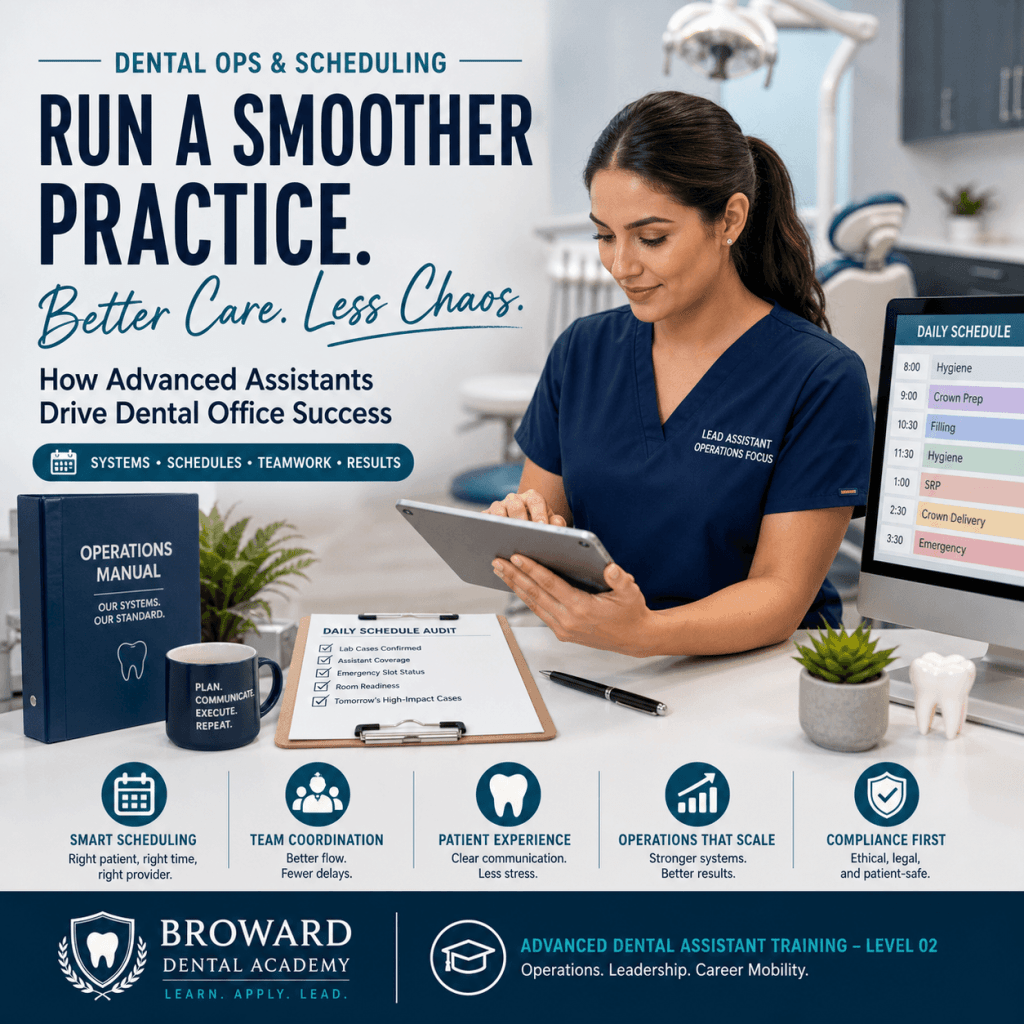
Role clarity prevents dropped tasks. Every team member should know who owns which steps, and how handoffs happen safely between clinical areas and sterilization.
Speaking up professionally is also part of infection control. If you see a wet pack, a missing indicator, or expired disinfectant, say it clearly, respectfully, and immediately.
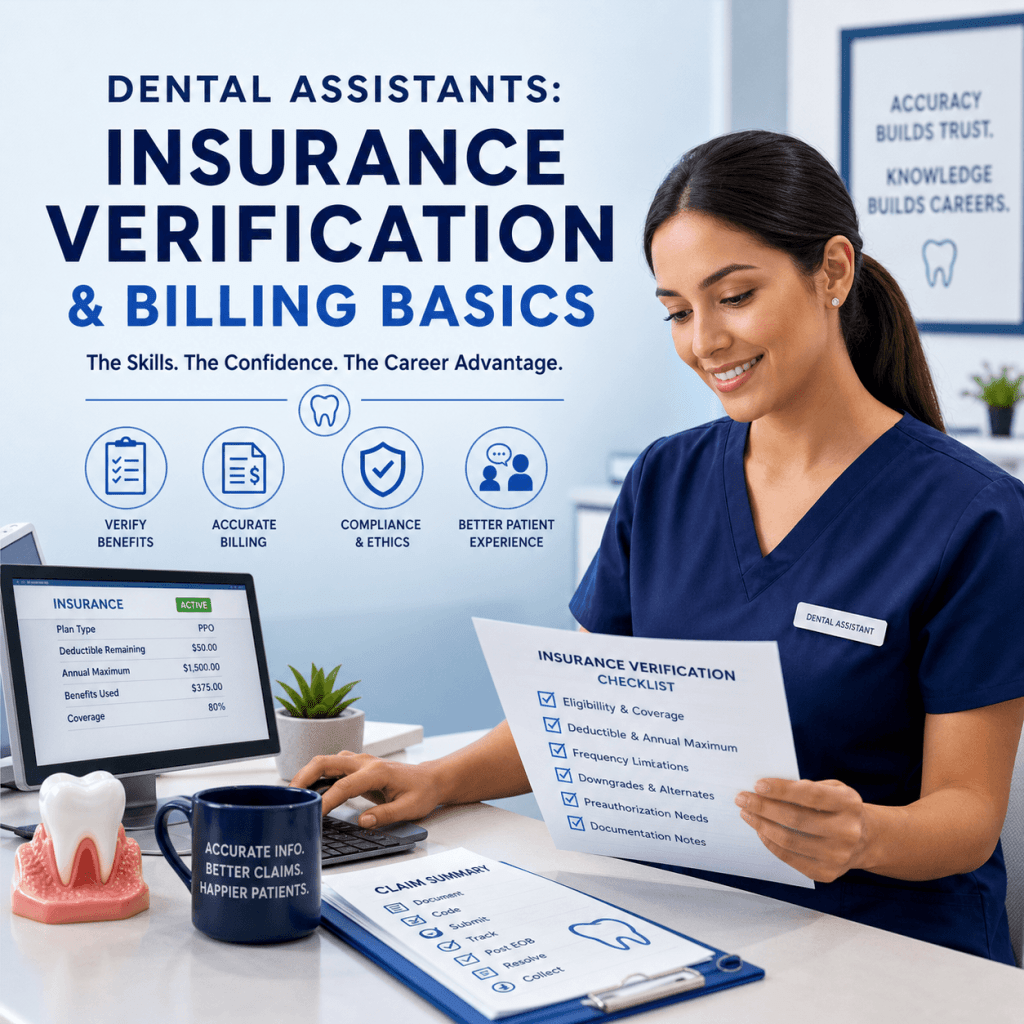
Documentation should feel like part of the routine, not an afterthought.
Training that makes infection control feel automatic (not stressful)
Infection control is not just a skill set; it is a critical aspect of dental practice that is taught, practiced, and coached through repetition.
Strong dental assistant training typically includes:
- Early immersion in clinical environments
- Modern lesson plans and eLearning that align with real practice expectations
- Supervised repetition of turnover, sterilization flow, and exposure response
- Real-world scenarios that build confidence under time pressure
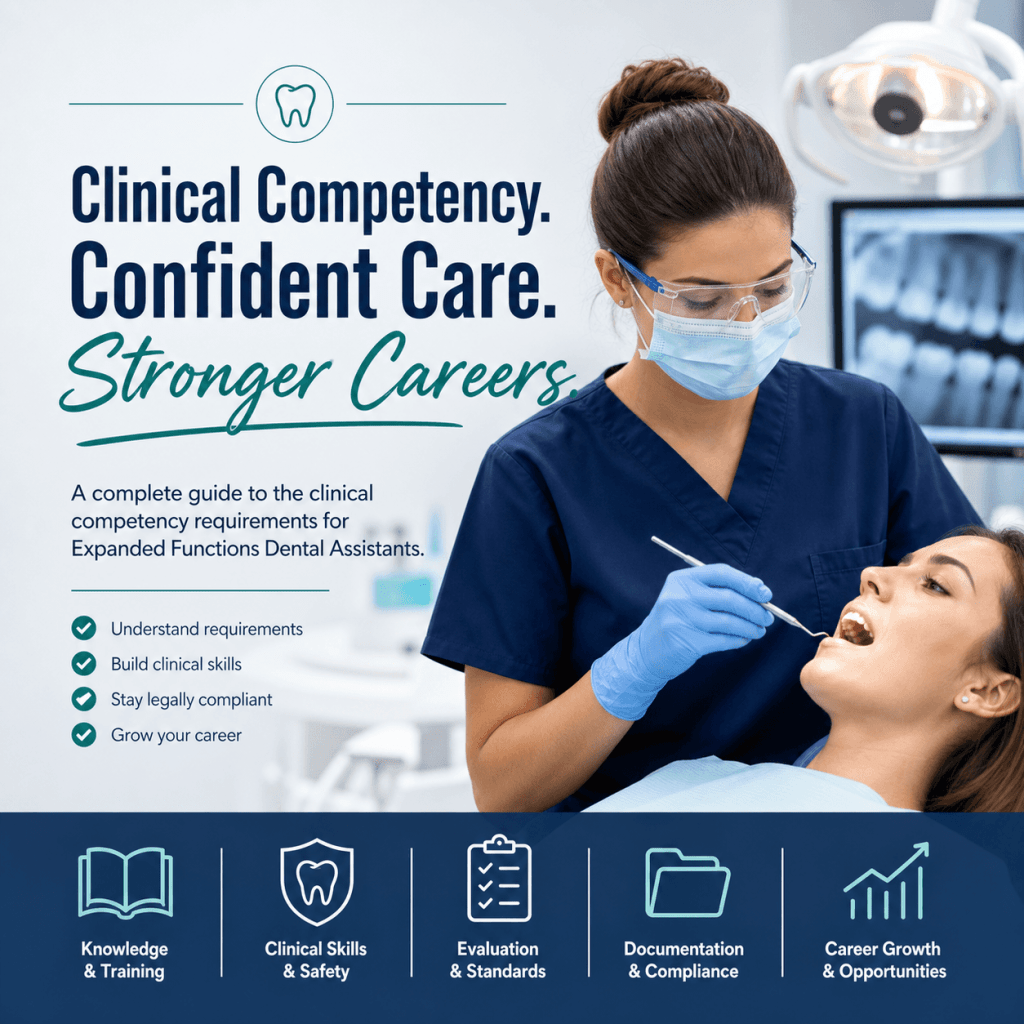
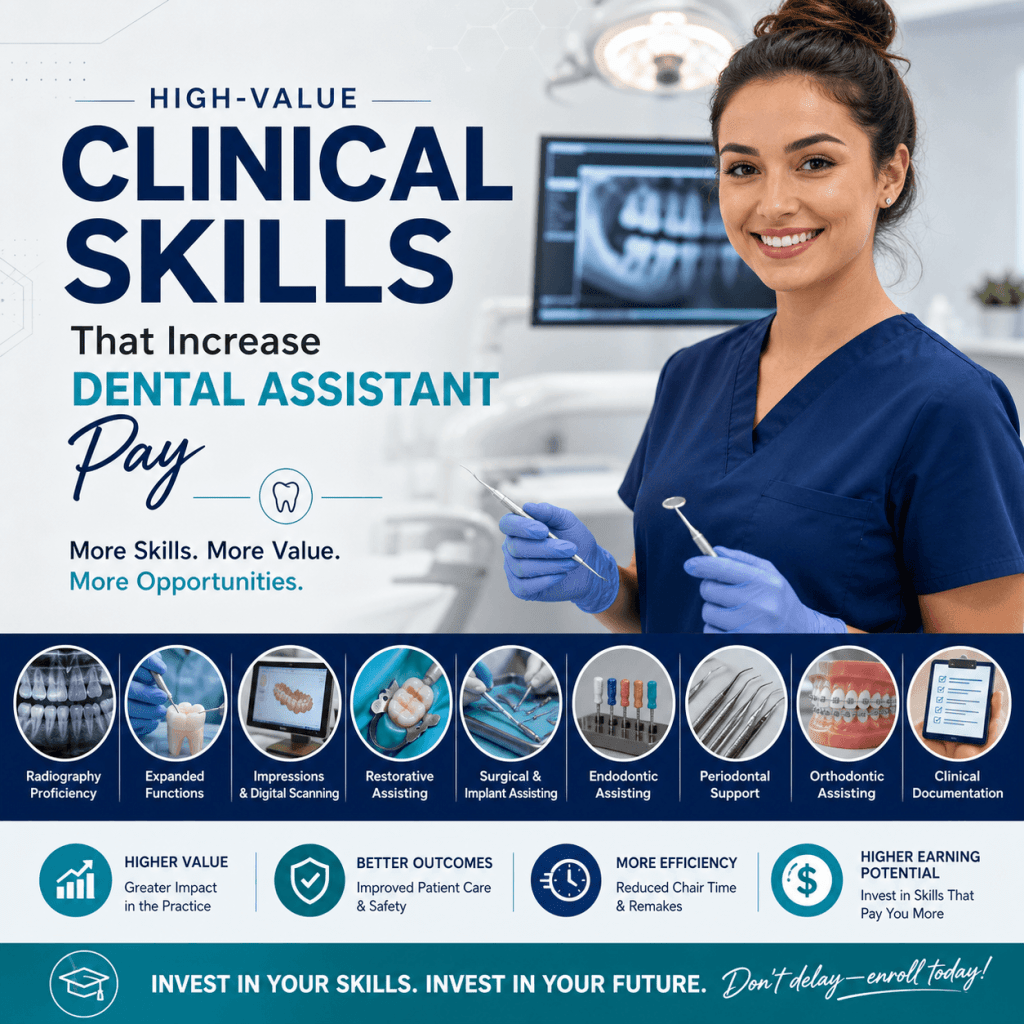
Employers are on the lookout for assistants who are thoroughly trained, legally compliant, and clinically confident. When infection control becomes automatic, you onboard faster, earn trust sooner, and position yourself for expanded functions as permitted.
How Broward Dental Academy supports Dental Assistant Level 01 students with real-world readiness
Broward Dental Academy is dedicated to providing career-focused education. The goal extends beyond just passing an exam. It aims at preparing students to thrive in a modern, high-performance dental practice where patient safety and compliance are non-negotiable.
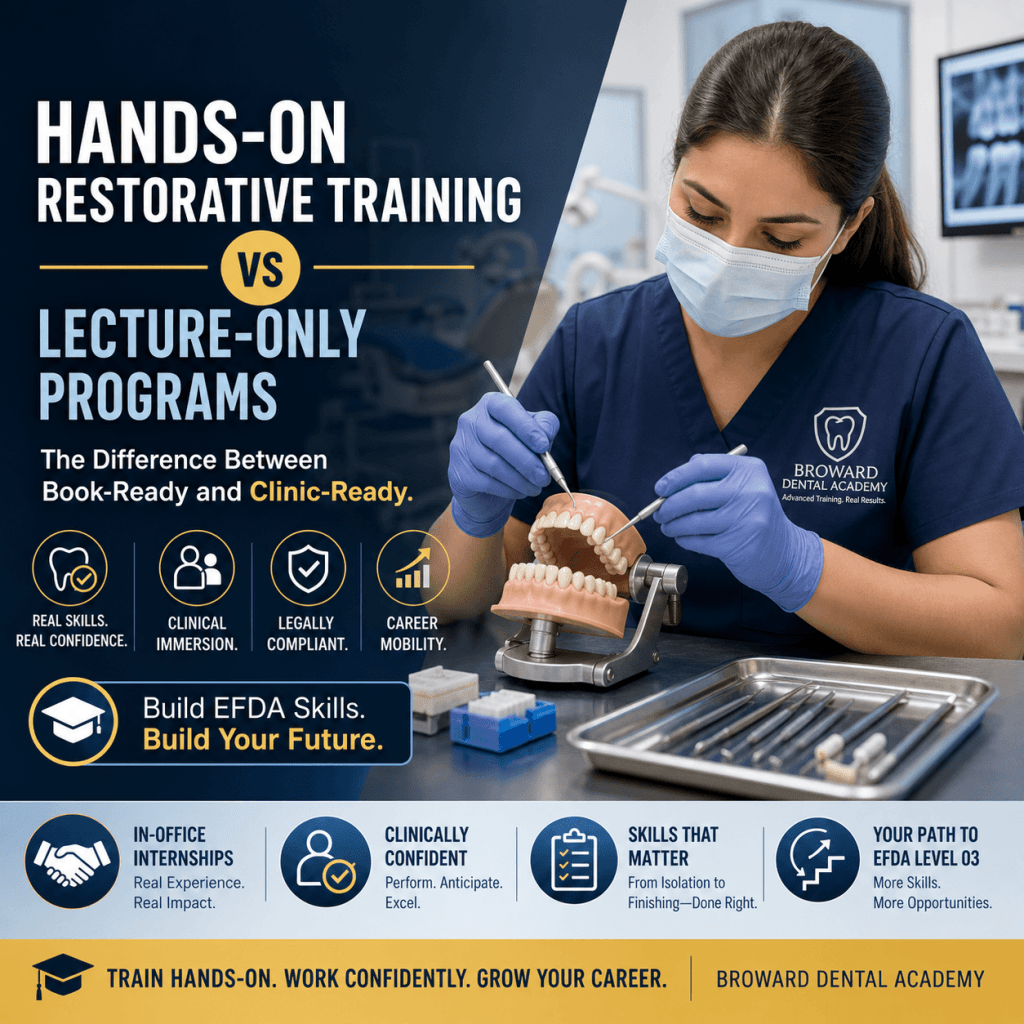
Students benefit from a blended experience that includes online learning and clinical immersion, supported by updated eLearning lesson plans and in-office internships. Infection control fundamentals are reinforced through repetition, real workflows, and accountability.
Broward Dental Academy is committed to serving the dental community by developing well-rounded professionals who think critically, act ethically, and perform confidently. With multiple dental courses available such as the Dental Assistant Level 01 Training, Dental Assistant Level 02 Training, and Dental Assistant Hygienists Level 03 Training, along with flexible financing options, the next step is clear if you are serious about entering a fast-growing industry with stable income, flexible schedules, and strong career mobility.
Wrap-up: the fundamentals that keep patients safe and your career moving forward
If you remember nothing else, remember the pillars that prevent most problems:
- Hand hygiene
- PPE selection and correct use
- Clean-to-dirty zoning and operatory turnover
- Instrument processing and safe storage
- Sterilization monitoring and documentation
- Sharps safety and fast exposure response
- Waterline and suction maintenance
- Proper waste handling and laundry control
Good infection control supports efficiency. When your routine is consistent, your care becomes smoother, your rooms turn over faster, and your team trusts your setup.
If you are ready to build these habits the right way from the start, explore Dental Assistant Level 01 Training at Broward Dental Academy and take the next step toward a confident clinical career.
Don’t delay, enroll today – you will be glad that you did!
FAQs (Frequently Asked Questions)
Why is infection control essential in dentistry?
Infection control is foundational in dentistry as it keeps patients safe, protects the dental team, and ensures smooth practice operations. Given the high exposure to aerosols, saliva, blood, and sharps, even minor lapses can lead to significant risks affecting patient safety, staff health, and office reputation.
What are the core components of Standard Precautions in dental infection control?
Standard Precautions treat all blood and body fluids as potentially infectious for every patient. They include hand hygiene, personal protective equipment (PPE), respiratory hygiene and cough etiquette, safe injection practices, sharps safety, environmental cleaning and disinfection, instrument reprocessing and sterilization, and proper waste management.
How do dental assistants contribute to breaking the chain of infection?
Dental assistants play a central role by maintaining consistent chairside behaviors to prevent cross-contamination, safely setting up and cleaning operatories, supporting or performing instrument processing steps, and spotting early breakdowns like expired disinfectants or torn barriers to interrupt infection transmission.
When are Transmission-Based Precautions necessary in a dental setting?
Transmission-Based Precautions apply during certain respiratory illnesses or public health situations requiring enhanced infection control measures. Dental teams follow office policies, current guidance, and directions from dentists or infection control coordinators. If uncertain about a situation, it’s crucial to pause procedures, escalate concerns, and adhere strictly to protocols.
How does strong infection control build patient trust in dental practices?
Patients may not know technical details but notice clean rooms, sealed instruments, fresh barriers, and an organized team consistently following protocols. This visible commitment builds trust that influences positive reviews, referrals, and fosters long-term patient relationships vital for practice reputation.
What training opportunities enhance a dental assistant’s infection control skills?
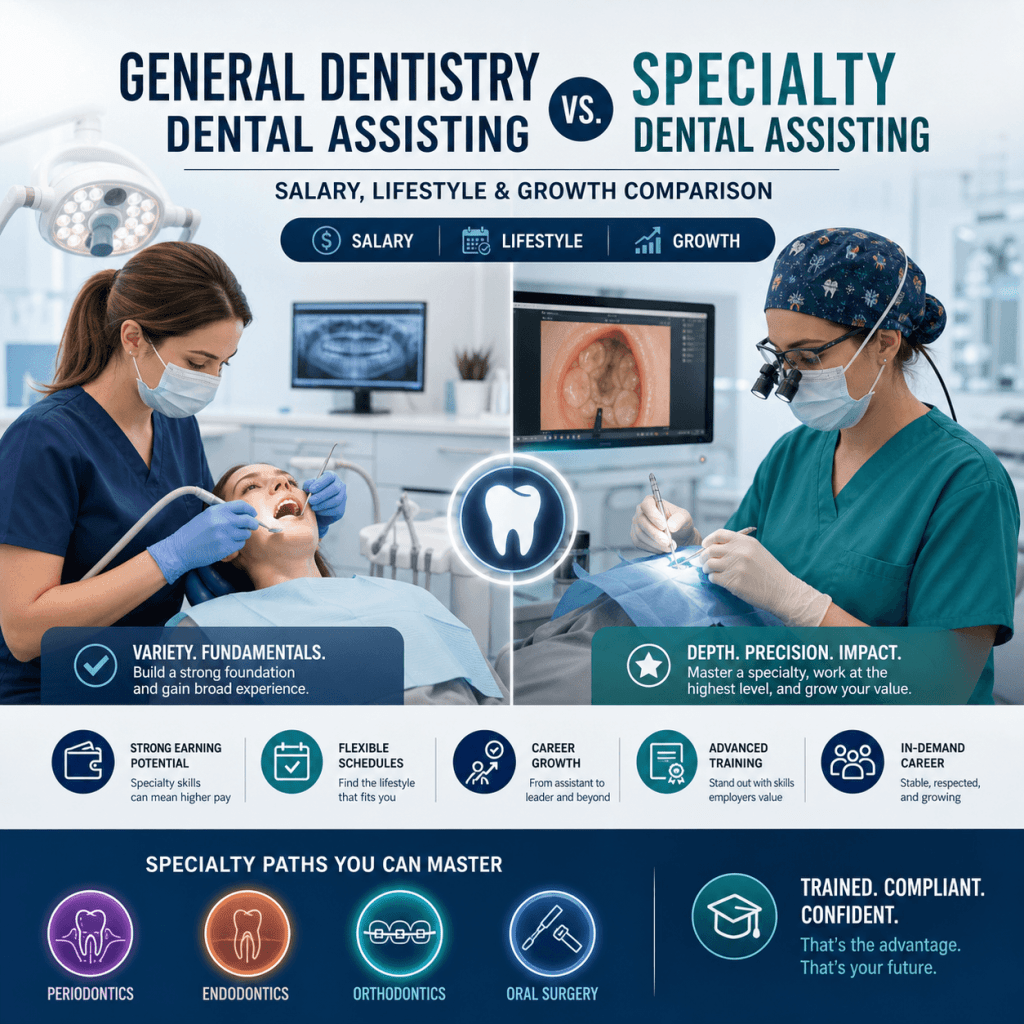
Formal training programs like those offered at Broward Dental Academy provide courses tailored to various dental specialties including oral surgery, orthodontics, endodontics, and periodontics. Obtaining relevant certifications enhances a dental assistant’s ability to implement effective infection control fundamentals confidently from day one.