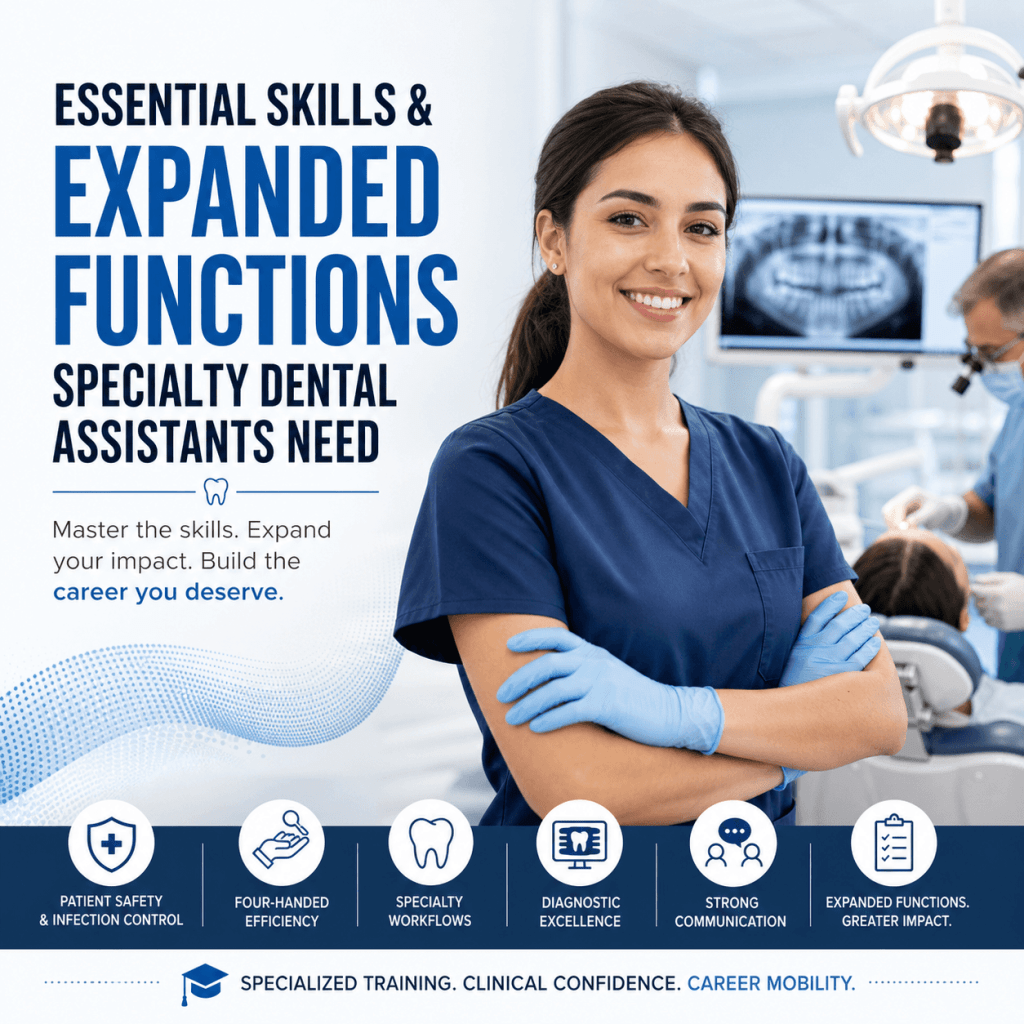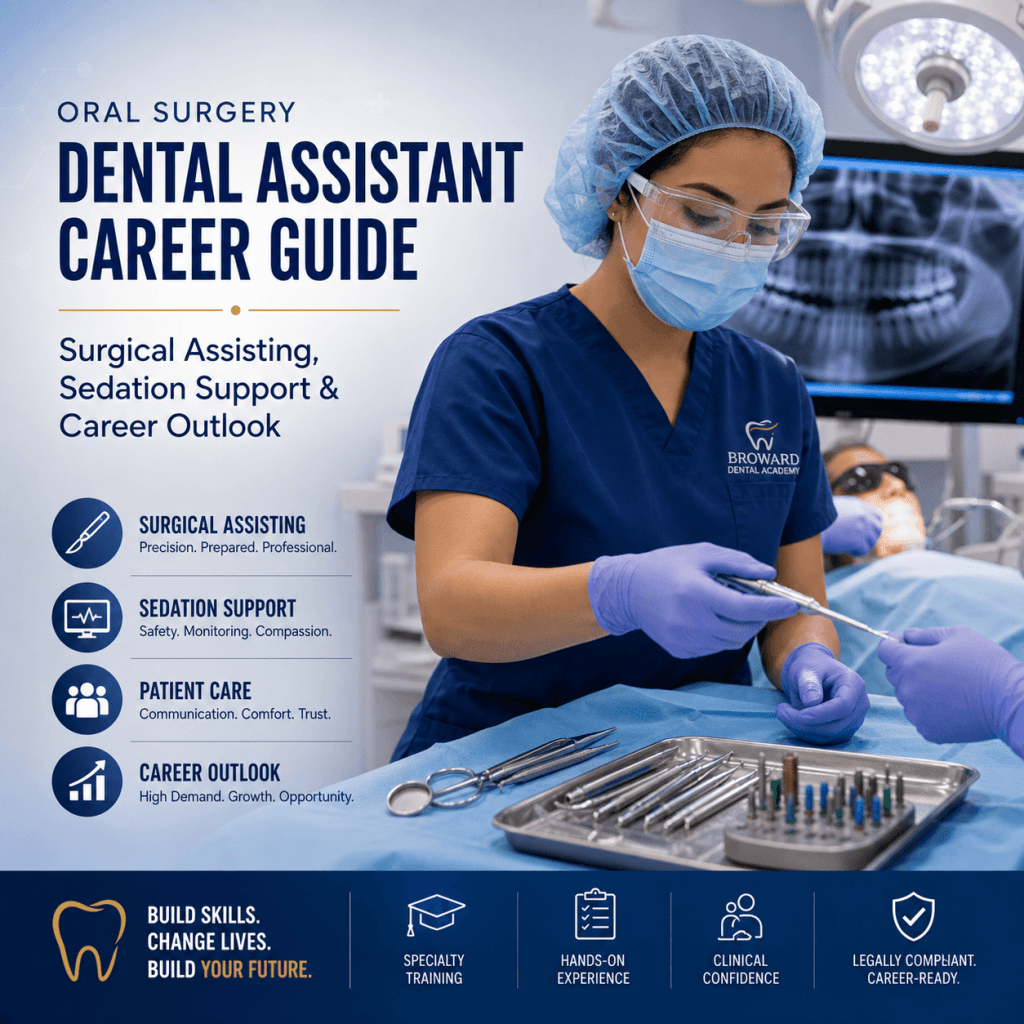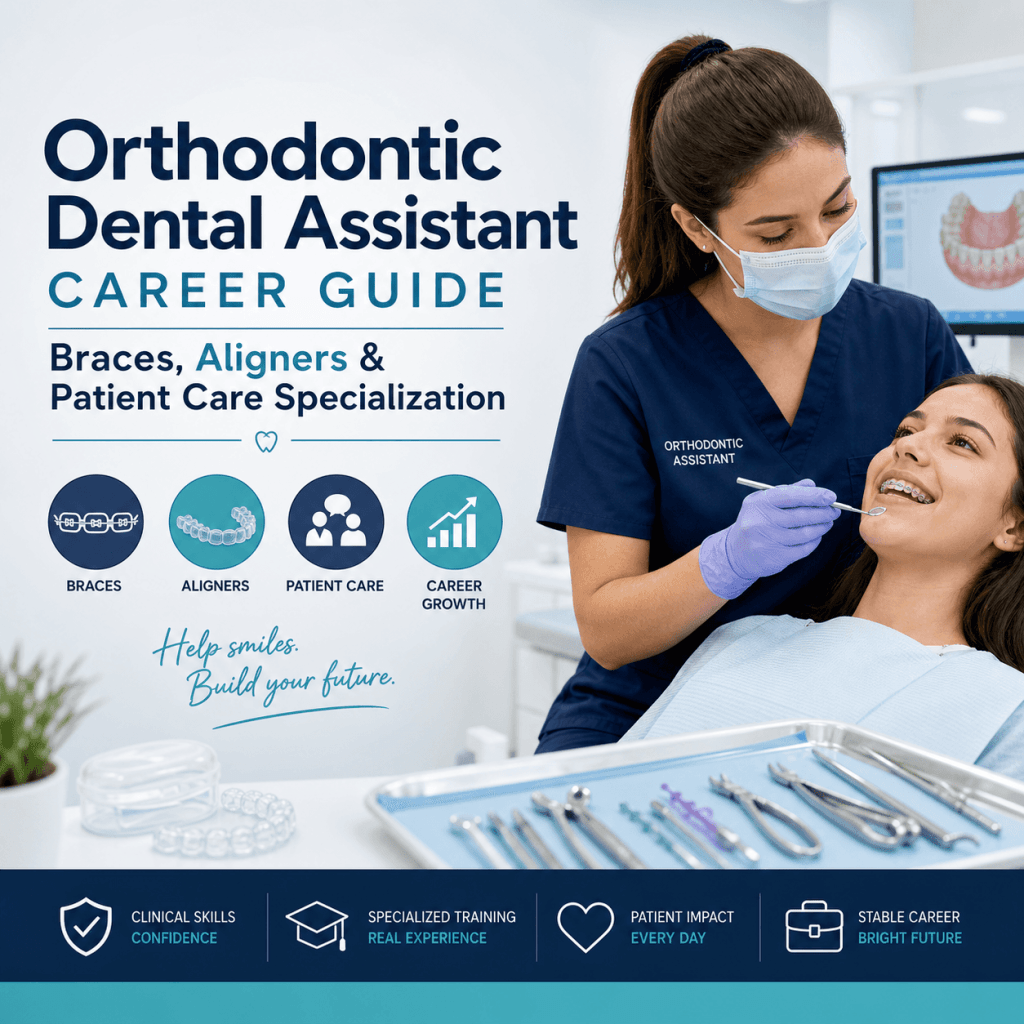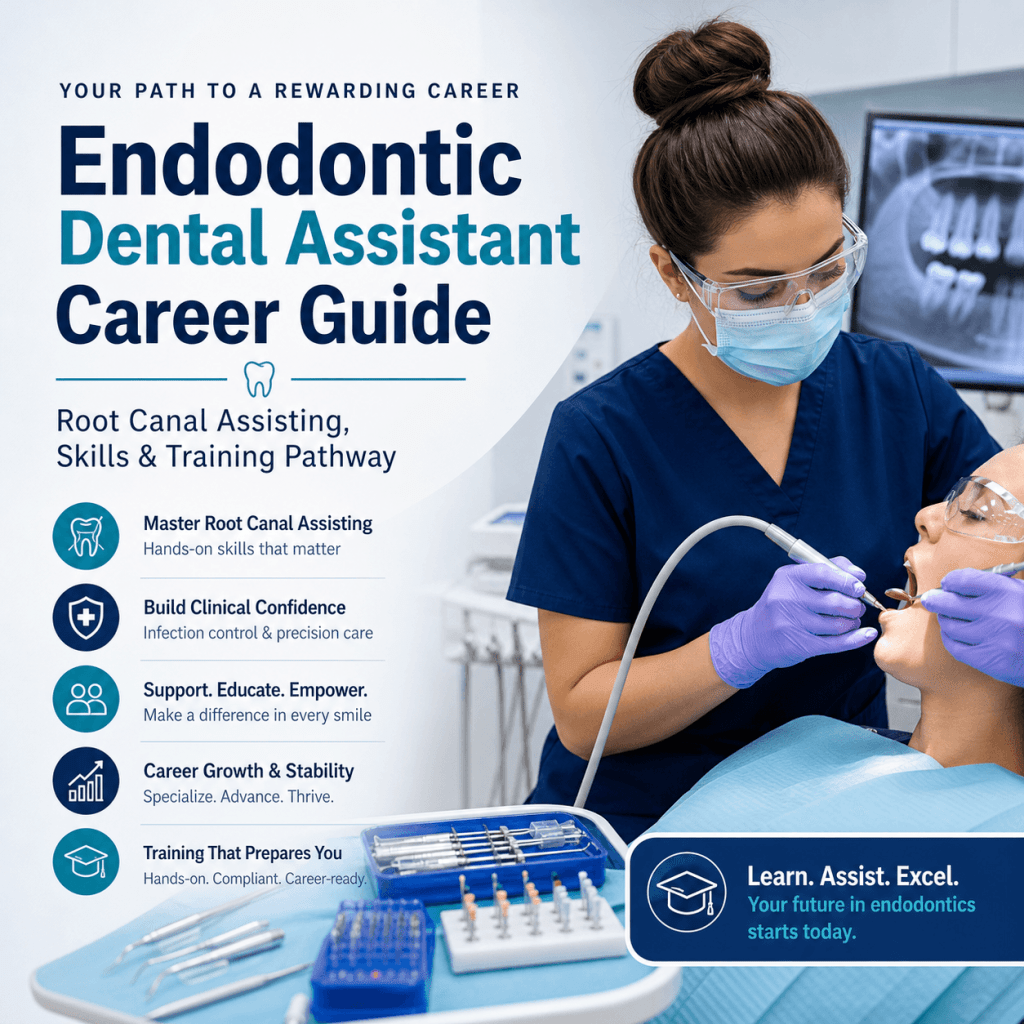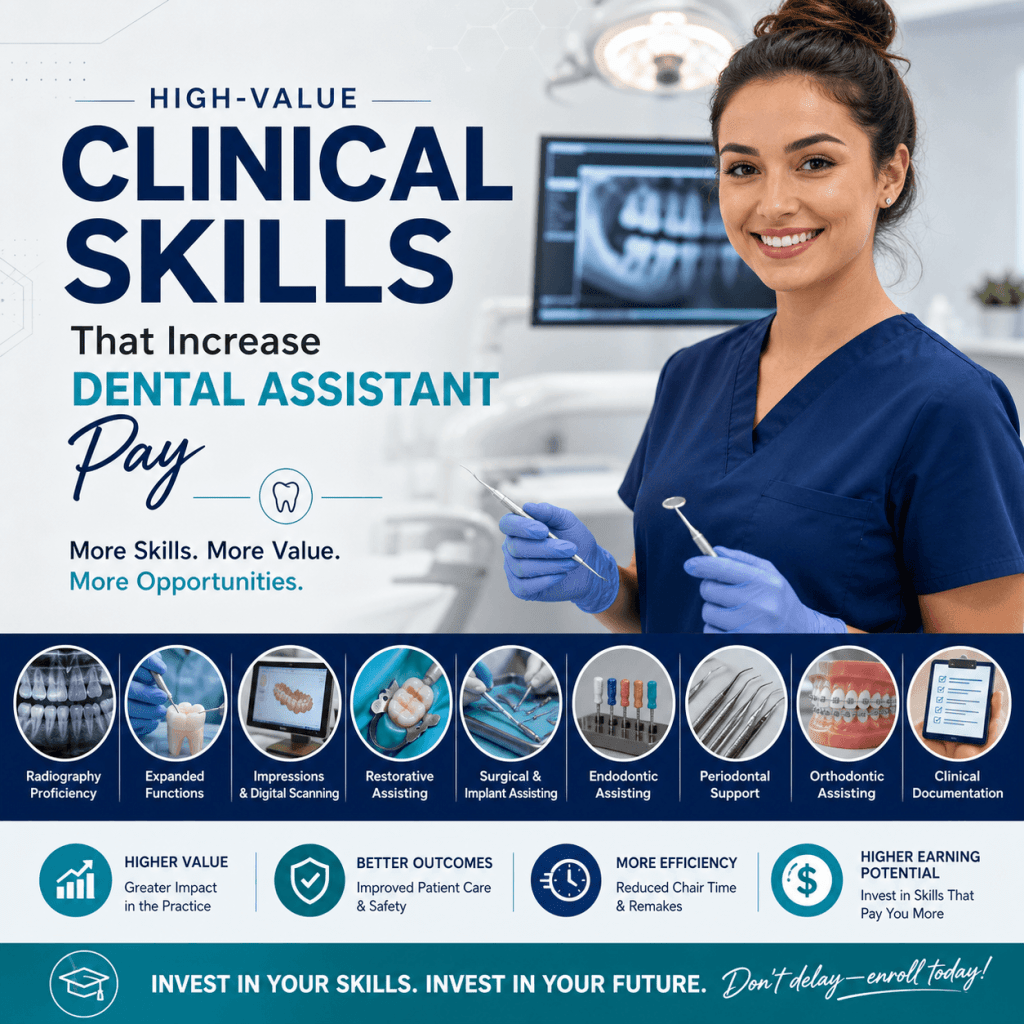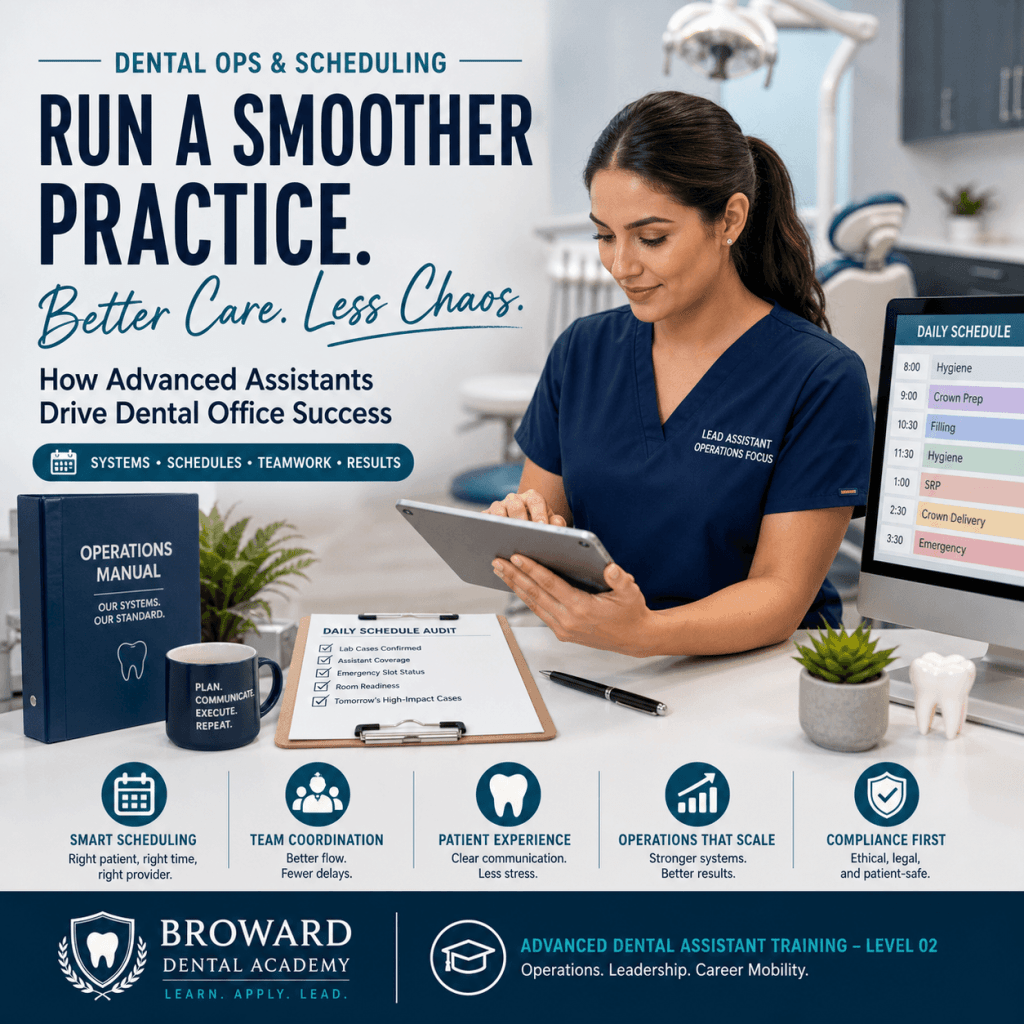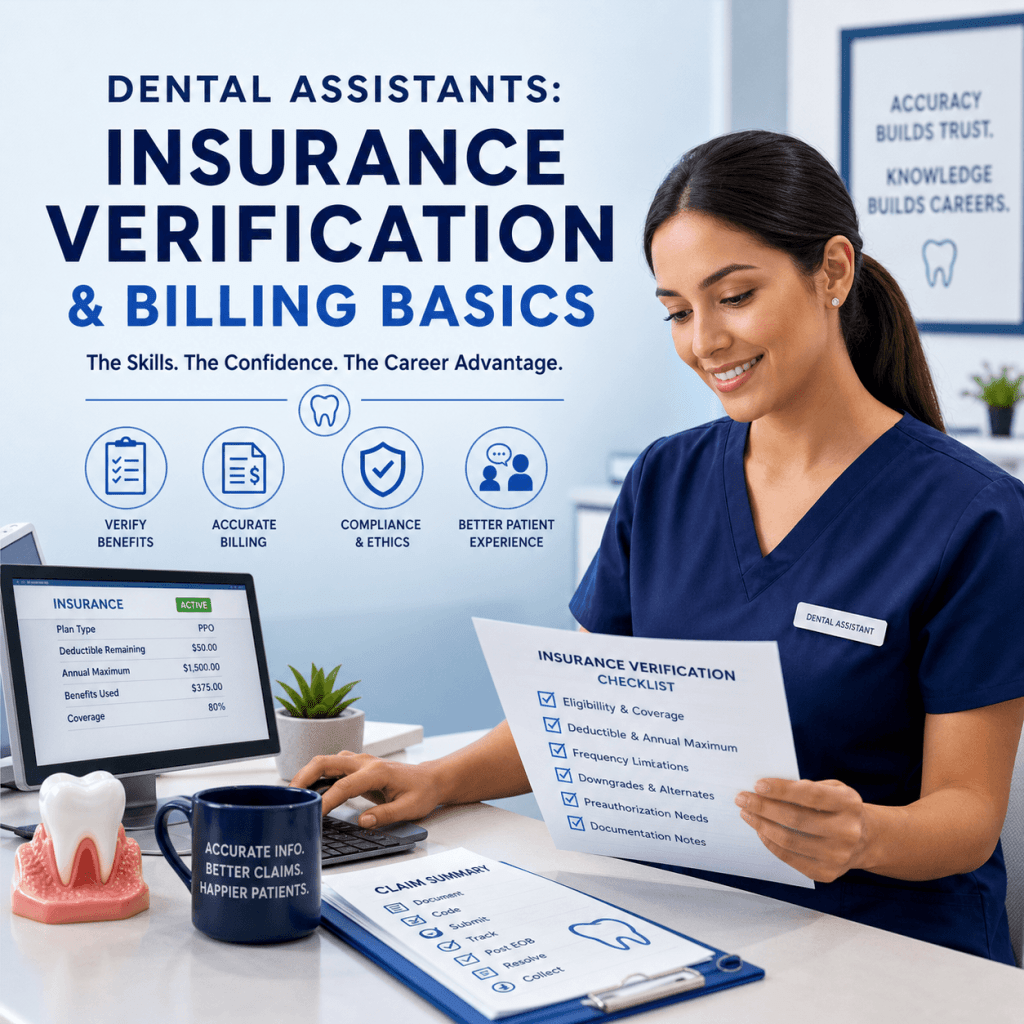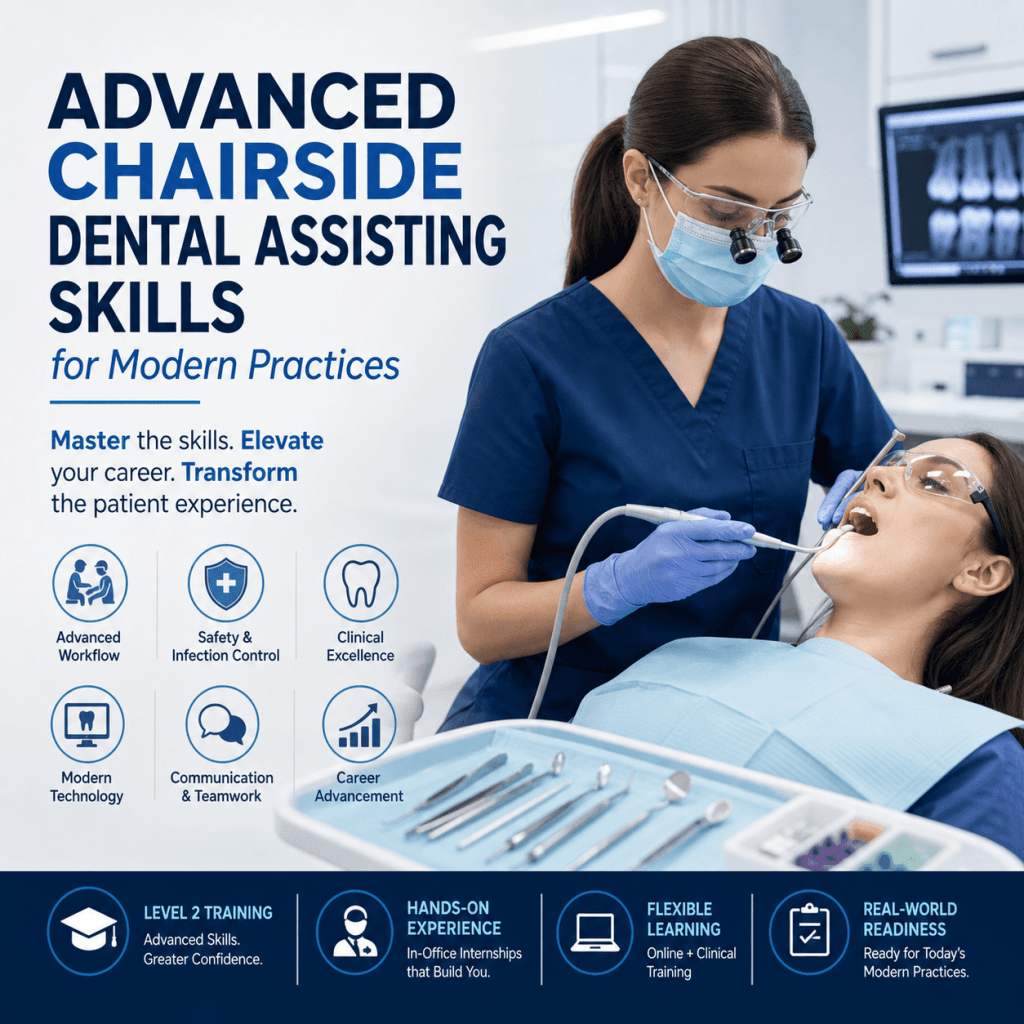
That shift is happening for a reason. Dentistry continues to grow as one of the fastest-moving areas in healthcare, and modern practices are built around efficiency, compliance, and a high-end patient experience. Dentists and patients now expect speed and safety, comfort and consistency. They also expect a team that can adapt quickly to new technology, tighter scheduling, and higher standards.
This guide breaks down what advanced chairside dental assisting looks like in real practices, including workflow mastery, infection control, procedure support, technology skills, communication, compliance, and how these advanced chairside dental assisting skills translate into career mobility.
What “advanced chairside dental assisting” means (and what it doesn’t)
Advanced chairside assisting means you can reliably support procedures at a high level by:
- Anticipating steps and materials before the dentist asks
- Protecting workflow by preventing delays, errors, and avoidable remakes
- Supporting expanded functions within your legal scope
- Keeping the patient calm, informed, and safe while the procedure moves efficiently
What it does not mean is “working faster at any cost,” skipping safety steps, or trying to perform duties you are not authorized to do.
A helpful way to think about it is this: entry-level assisting is about learning tasks. Advanced assisting is about learning systems. The benchmark is not just passing an exam. It is being legally compliant and clinically confident under real conditions, with real patients, in real time.
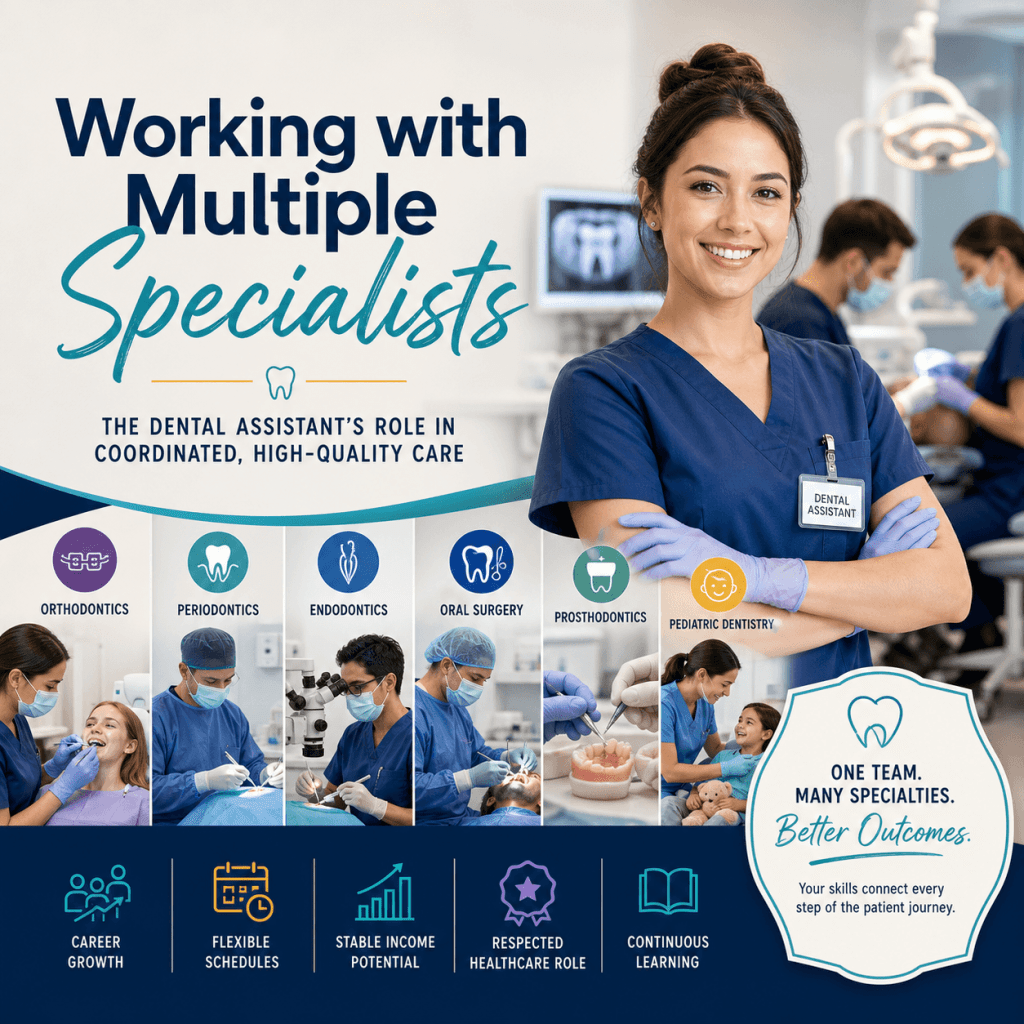
To achieve this level of proficiency in chairside dental assisting or even to explore other specialized fields such as orthodontics or periodontics, pursuing relevant certifications or enrolling in courses offered by reputable institutions like Broward Dental Academy can be immensely beneficial.
Advanced chairside workflow mastery: how top assistants keep procedures smooth
The fastest procedures usually start before the patient is seated. Advanced assistants protect the schedule by removing friction from the operatory and making the next step obvious.
Pre-op setup that prevents delays
Mastering advanced chairside dental assisting skills can significantly enhance your effectiveness in a dental practice.
Strong setups typically include:
- Operatory readiness (surfaces, barriers, suction, waterlines per office protocol)
- Materials staged by sequence (not just piled on a tray)
- Clear, repeatable checklists for common procedures
- Confirmed anesthesia setup, burs, handpieces, curing light, and isolation tools
A simple habit that makes a big difference is a final “room scan” before seating the patient: suction on, air/water functioning, handpieces ready, and the correct tray present.
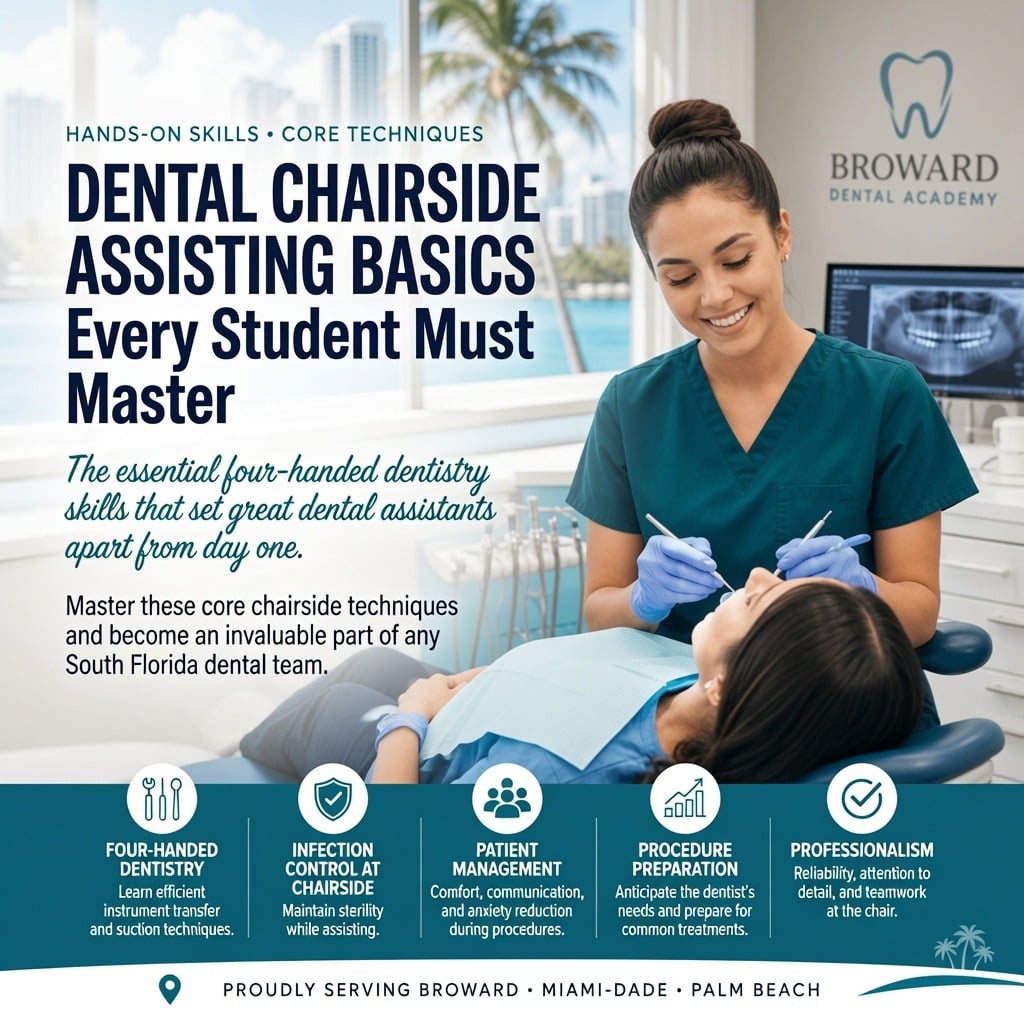
Four-handed dentistry at an advanced level
Four-handed dentistry is not only instrument transfer. At an advanced level, you manage:
- Positioning so the provider stays in neutral posture
- Visibility by controlling mirror fog, lighting, and retraction
- Moisture control using the right suction tip at the right time
- Transfer zones and a consistent exchange rhythm that does not interrupt focus
When you keep the field clear and your transfers predictable, the provider works faster with fewer interruptions. Patients also feel that confidence.
Procedure-based tray setups (systems that scale)
Standardized tray systems reduce errors, shorten appointments, and make training new team members easier.
Build standardized trays for procedures such as:
- Composite fillings
- Crown and bridge
- Endodontic assisting
- Extractions and simple surgical setups
- Impressions (traditional and digital workflow support)
Then add systems that reduce mistakes:
- Labeling and color coding for burs, hemostatic agents, and impression materials
- Restock par levels so the same items are available every time
- A “missing item” process so problems get fixed once, not rediscovered daily
When setups are consistent across providers, the entire practice becomes more predictable. That consistency is a key marker of an advanced assistant.
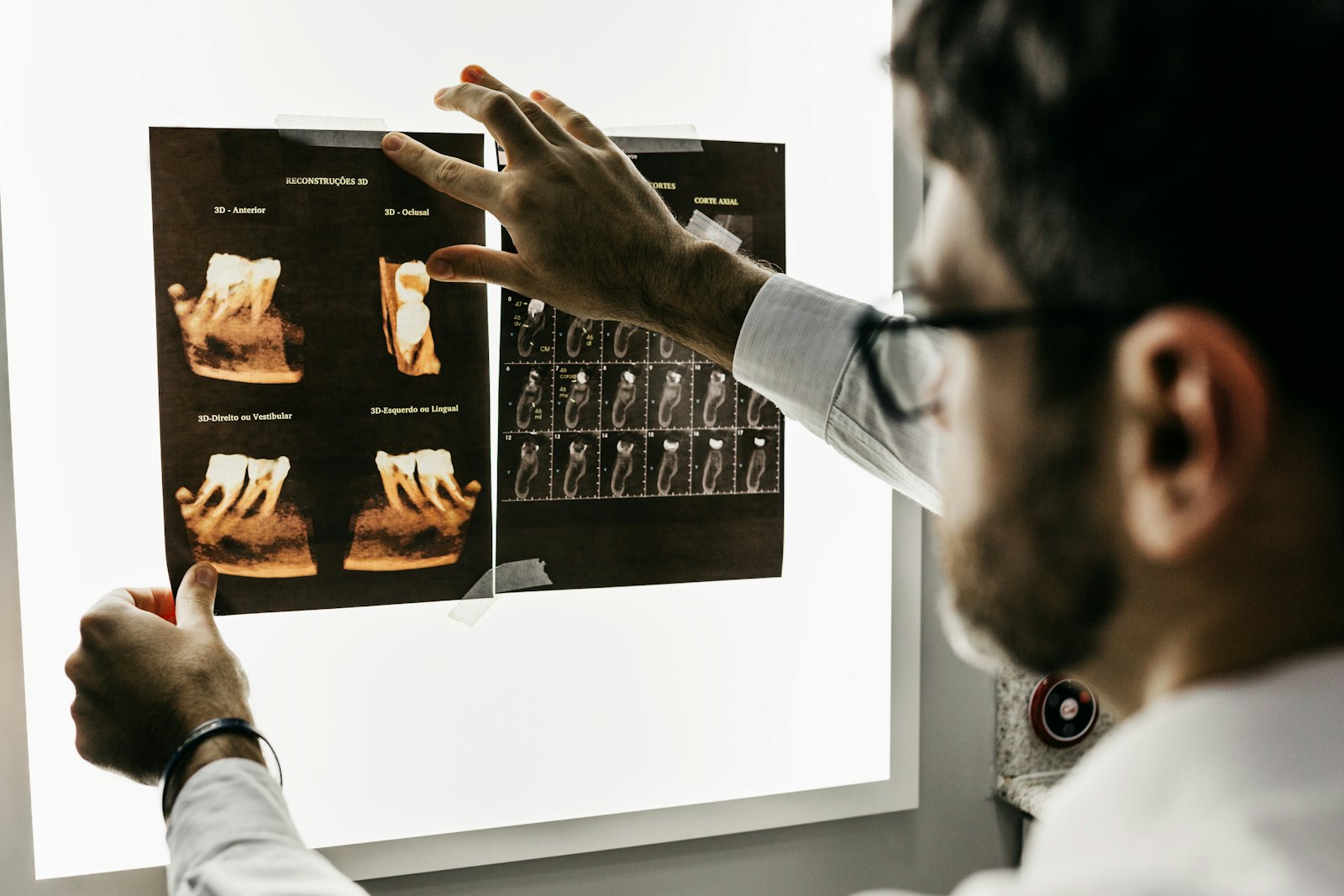
If you’re interested in learning more about advanced dental assistant techniques or seeking frequently asked questions regarding this field, resources are available. Additionally, if you’re looking for specific dental services or educational institutions in Florida, you can explore Broward Dental Academy’s locations for more information.
Advanced infection control and safety: being fast without being sloppy
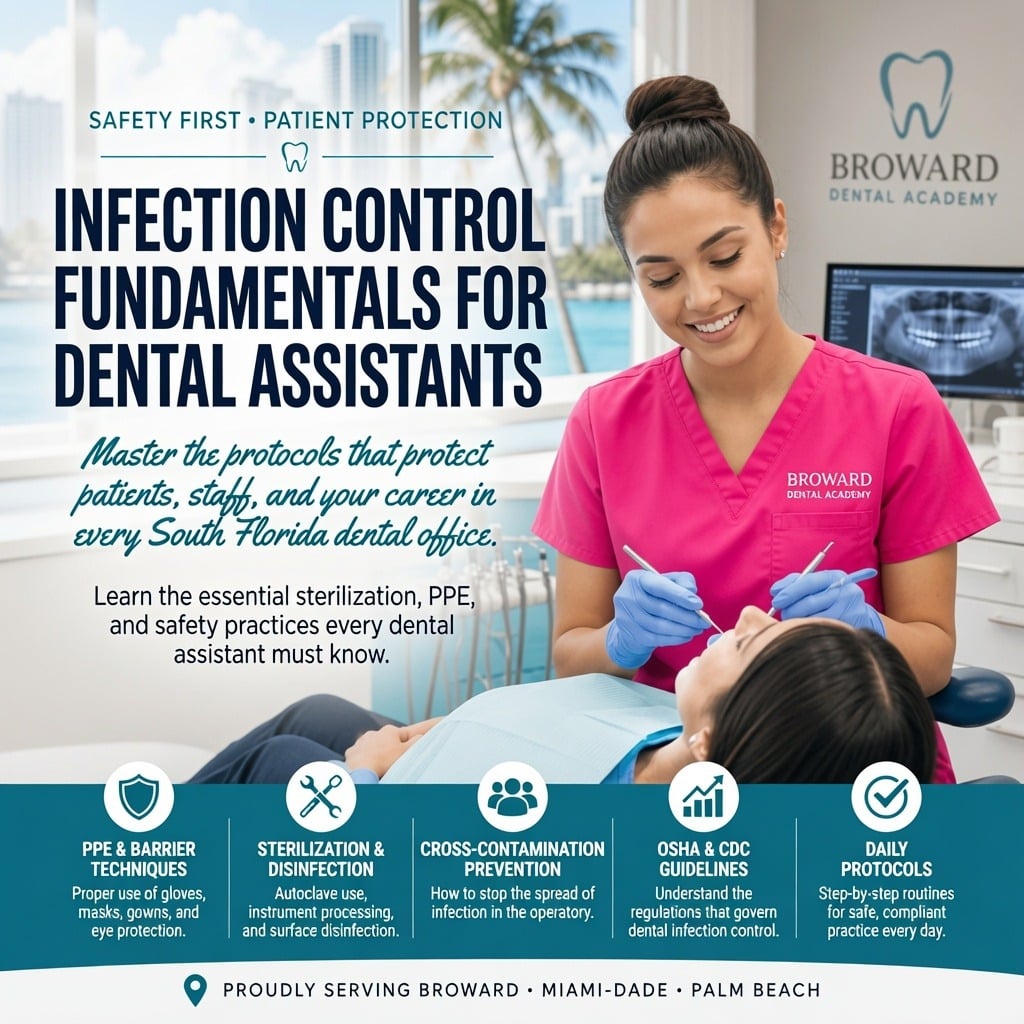
Modern practices cannot separate speed from safety. Infection control is not a separate task. It is the foundation that keeps patients safe and protects the practice.
Key chairside responsibilities include:
- Sharps safety and clean handling habits in real time
- Preventing cross-contamination during material handling, suctioning, and transfers
- Maintaining a clear boundary between clean and contaminated zones
- Recognizing and communicating potential sterility breaks immediately
Advanced assistants understand that “we were in a rush” is never an acceptable reason for a safety failure.
Sharps safety and cross-contamination prevention chairside
Practical chairside habits that protect everyone:
- Avoid hand-to-hand passing of exposed sharps when possible
- Use designated placement zones for needles and blades
- Keep contaminated instruments from drifting onto clean surfaces
- Change gloves when moving from contaminated tasks to clean tasks (for example, charting, drawer access, or retrieving additional supplies)
Sterilization and instrument processing: chairside habits that protect the whole practice
Even if you are not assigned to sterilization full time, advanced assistants understand the clean-to-sterile workflow and how their chairside choices affect it.
You should be familiar with:
- Packaging basics, indicator placement, and why it matters
- Sterility indicators and traceability concepts used in many offices
- How improperly handled instruments can compromise an entire load
If a sterility break is suspected, the priority is simple: pause, isolate, communicate. Tell the dentist and follow office protocol so the team can correct the issue without guessing.
Clinical assisting skills for restorative and prosthodontic procedures
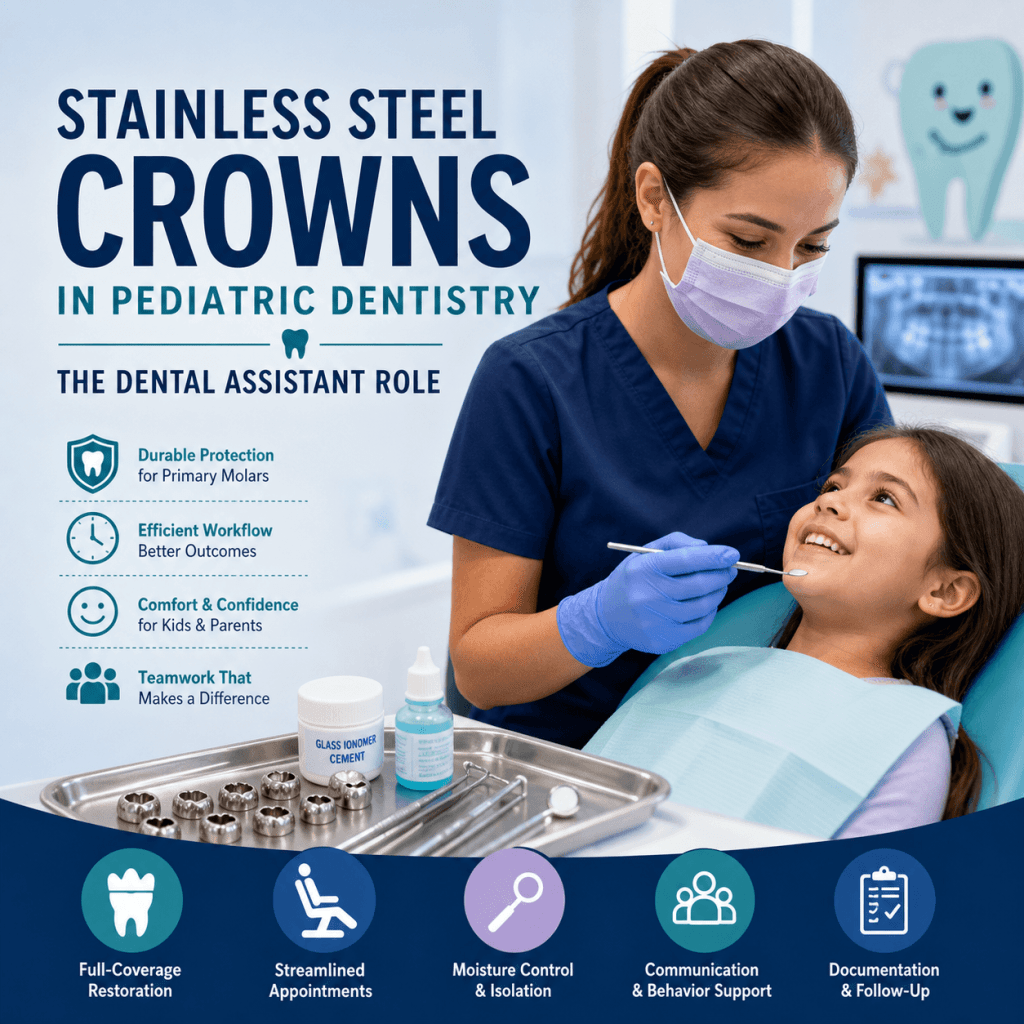
Restorative and prosthodontic procedures reward assistants who can manage isolation, materials, and timing. Small improvements at chairside can prevent remakes and shorten delivery time.
Restorative assisting essentials
Advanced chairside support often includes:
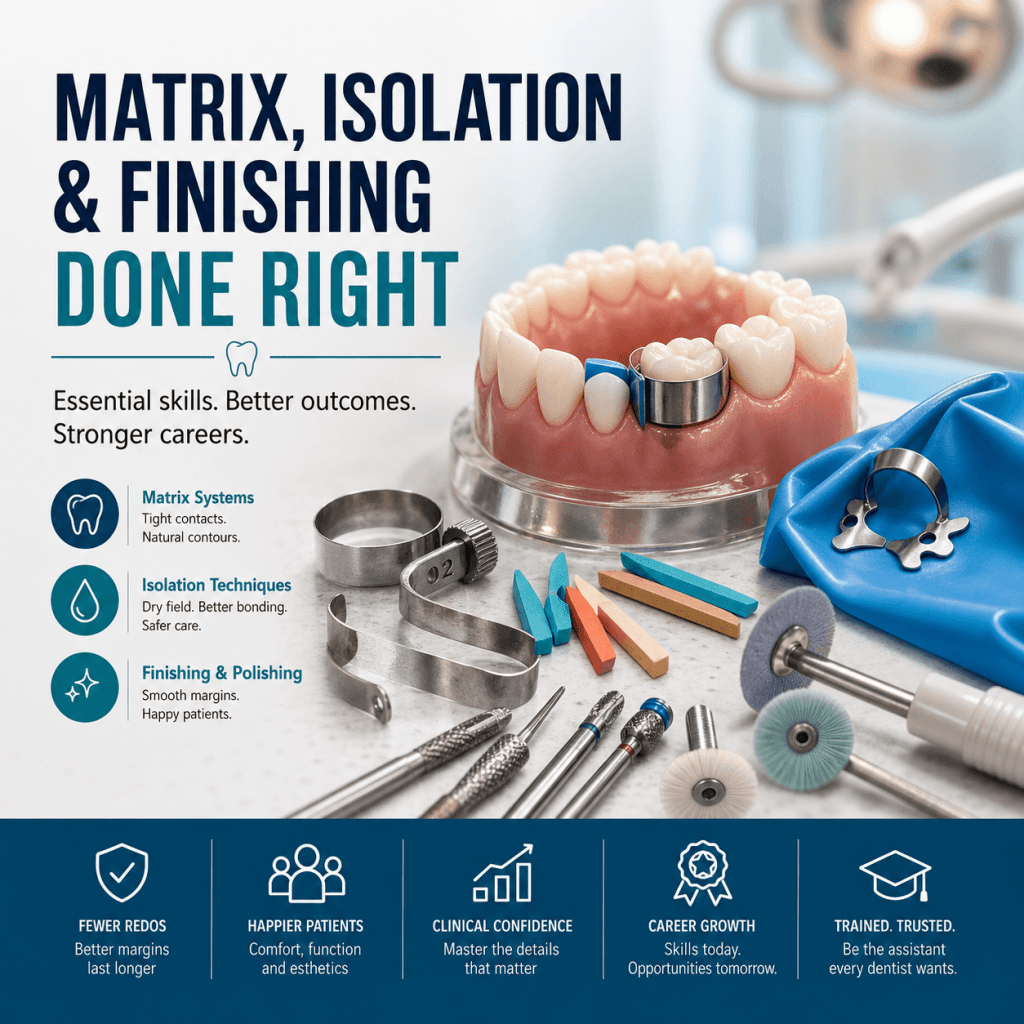
- Isolation strategies (cotton rolls, dry angles, rubber dam support when indicated)
- High-volume suction control that does not collapse tissue or obscure margins
- Moisture management during bonding steps
- Curing light readiness, positioning, and timing awareness
- Matrix and wedge support so contacts and contours are predictable
When isolation is solid, the dentist can focus on the prep and the restoration quality.
Crown and bridge assisting support
Crown and bridge workflows often involve multiple steps where delays are common. Strong assistants help by:
- Preparing retraction support tools and hemostatic options per provider preference
- Knowing impression or scanning readiness requirements
- Supporting temporization flow (materials, trimming tools, occlusion check readiness)
- Keeping cementation steps organized with clean timing and clear suction control
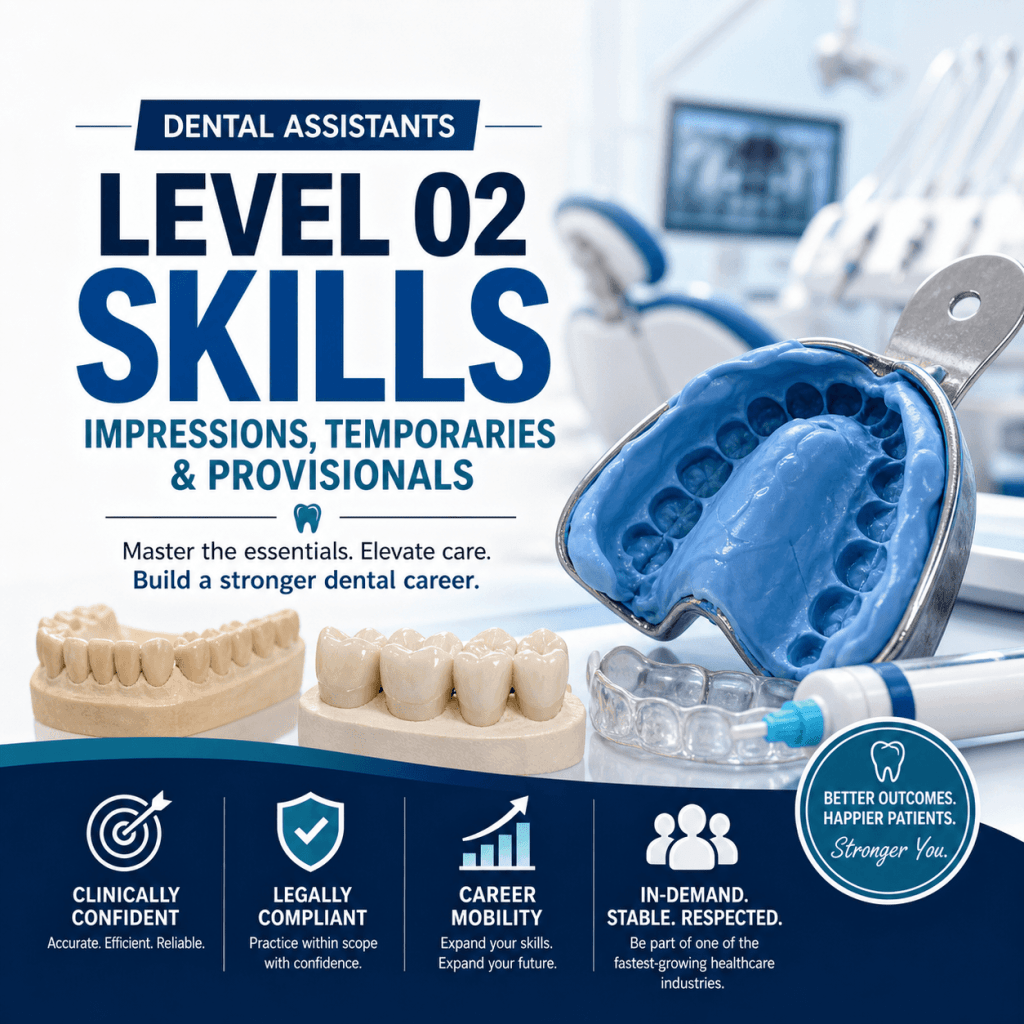
Impressions and digital scans: reducing remakes with better chairside technique
Remakes cost time, frustrate patients, and create avoidable stress between the office and the lab. Assistants play a major role in capture quality.
Traditional impressions: advanced support includes:
- Tray selection and fit check before loading
- Correct adhesive use and proper set time awareness
- Patient positioning and clear coaching during insertion
- Gag reflex strategies such as breathing cues, posture changes, and efficient timing
Digital scanning support: advanced support includes:
- Retraction and dry field control so margins are visible
- Helping the dentist maintain a clean scan path and avoid “missing data” zones
- Bite scan assistance and patient coaching for stable closure
- Recognizing when saliva, fogging, or tissue collapse is compromising the scan
The goal is not just “getting an impression.” The goal is delivering a capture that supports accurate fabrication with minimal back-and-forth.
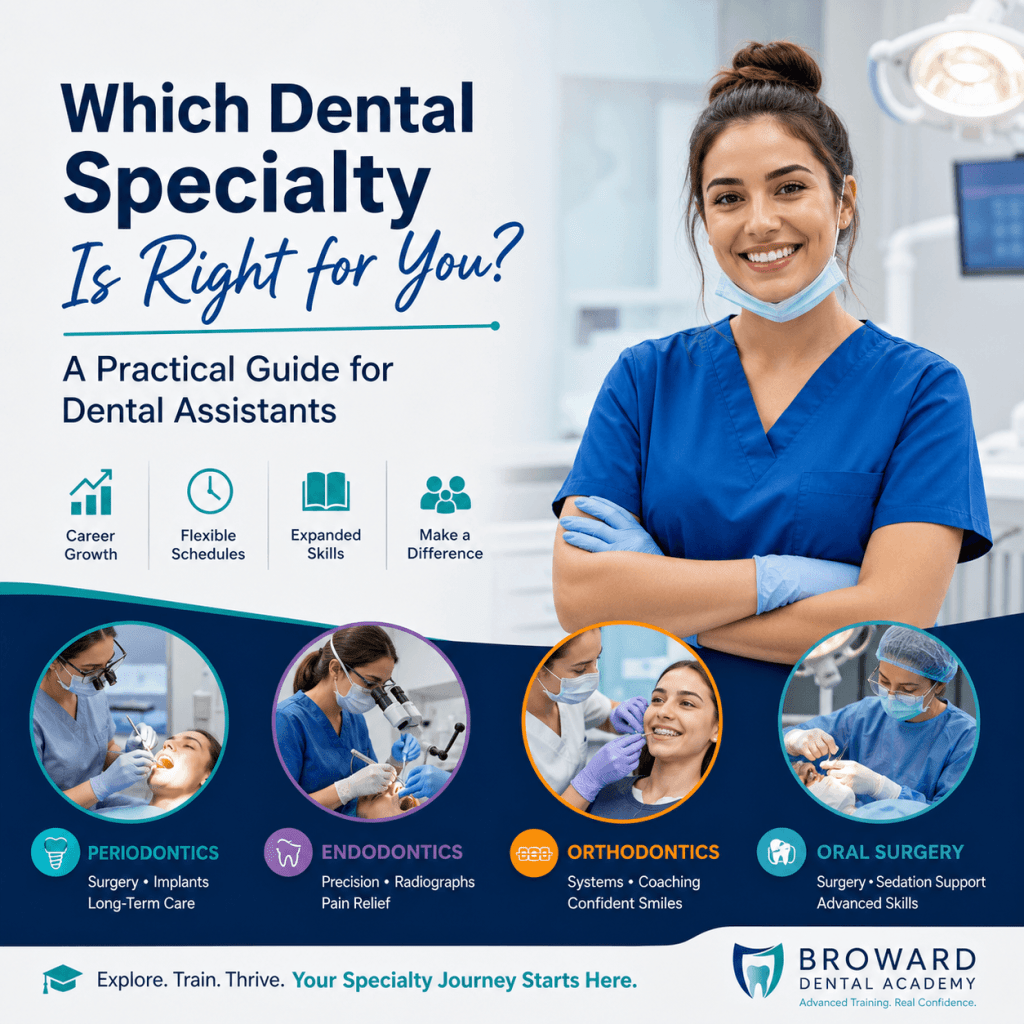
Chairside assisting for endodontics and oral surgery: calm, controlled, prepared
Endodontics and oral surgery require a steady assistant who can stay organized while keeping the patient calm.
Endodontic assisting essentials
High-value endo support includes:
- File and accessory organization support (so items are ready when needed)
- Irrigation readiness and safe suction positioning
- Rubber dam support and moisture control
- Awareness of procedure pacing to reduce disruptions
Oral surgery assisting essentials
For surgical procedures, advanced assistants focus on:
- Sterile field awareness and clean handling habits
- Suction and retraction that improves visibility without increasing trauma
- Instrument readiness and predictable handoffs
- Patient monitoring cues and timely check-ins
If something feels off, such as unexpected bleeding, unusual patient distress, or a sudden change in responsiveness, the assistant should escalate immediately to the dentist.
Patient management during high-anxiety procedures
A major part of advanced chairside work is emotional control and reassurance without overpromising. This aspect is crucial in managing patient anxiety during procedures. According to a study published by the National Center for Biotechnology Information, effective communication plays a vital role in alleviating patient anxiety.
What helps most:
- Calm, brief language that explains what the patient will feel next
- Nonverbal cues (slower pace, steady tone, confident movement)
- Efficient comfort measures like bite blocks, suction breaks, and brief repositioning
- Clear “pause points” where the patient knows they can signal you
You do not need a long speech. You need the right words, at the right time, delivered with consistency.
Technology skills modern practices expect from advanced assistants
Technology expectations have increased fast. Advanced assistants are often the glue between imaging, charting, procedure flow, and team handoffs. They must be adept at using various technologies to streamline processes and improve patient outcomes. A recent article from PMC highlights how technology is reshaping the landscape of dental assisting.
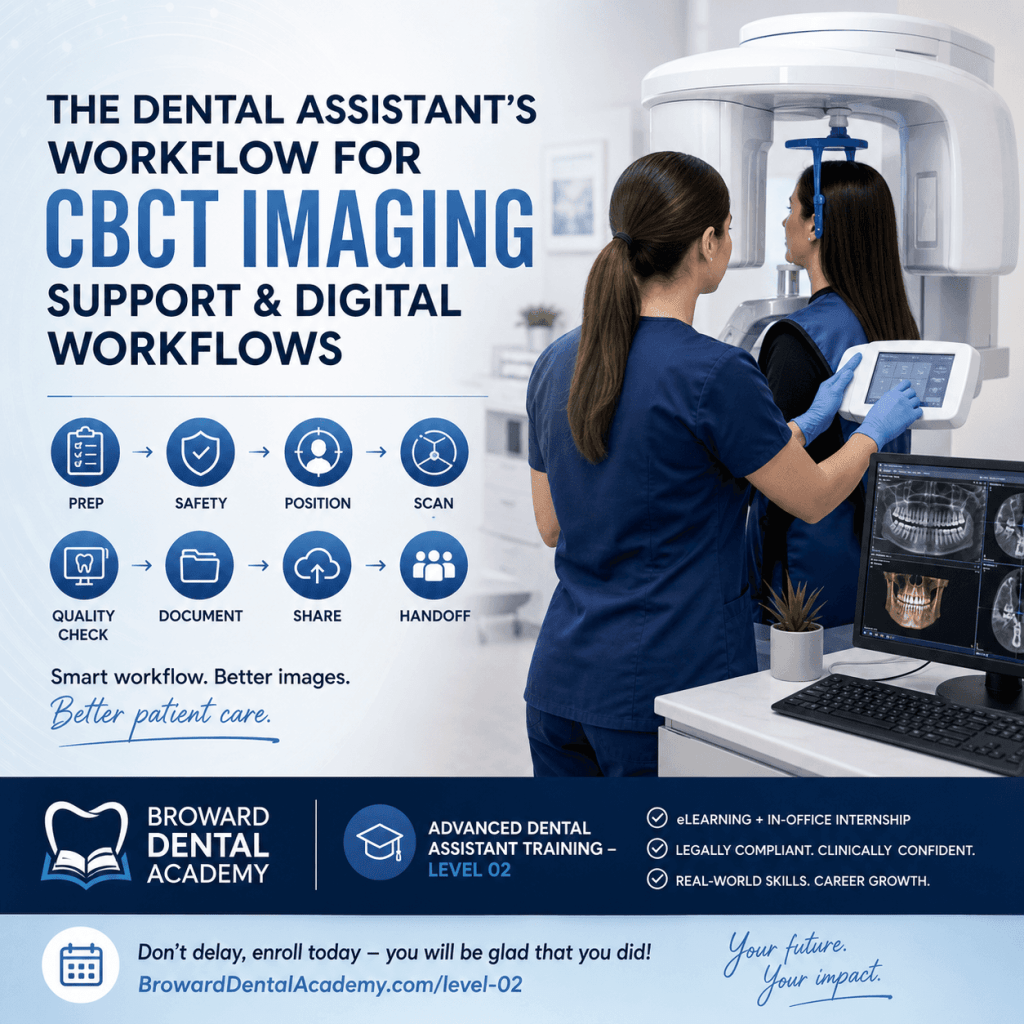
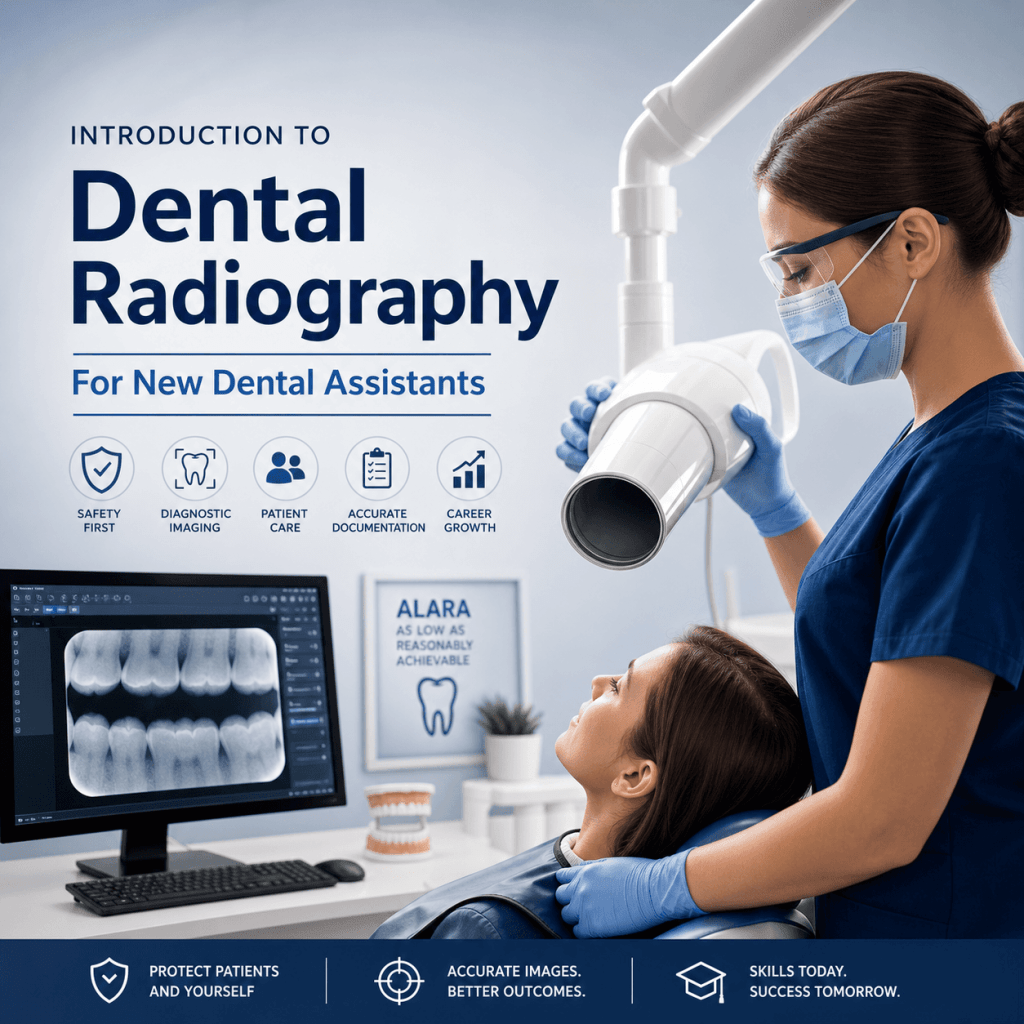
Digital radiography workflow
Advanced radiography support includes:
- Positioning consistency and patient coaching to reduce retakes
- Quick image quality checks before dismissing the patient
- Understanding common causes of errors (cut cones, motion, sensor placement)
- Safe handling and infection control during imaging
Charting and documentation
Clear documentation protects patients and protects the practice. Advanced assistants contribute by:
- Accurate notes with relevant timestamps when required
- Supporting procedure code accuracy as directed by the provider
- Maintaining clarity for audits and continuity of care
- Keeping chart entries objective and within policy
Reducing retakes and errors: small habits with big impact
A few small habits can dramatically reduce mistakes:
- Use a consistent patient instruction script for radiographs
- Verify right patient, right tooth, right side before irreversible steps
- Use clean handoffs between assistant, front desk, and clinical team so next steps are not lost
These habits are simple, but they separate average assistants from high performers.
Communication and teamwork: the “invisible” advanced chairside skill
Communication is a clinical skill. It affects procedure speed, safety, and the patient experience.
Provider-assistant communication
Advanced assistants use closed-loop communication, meaning:
- Confirm the request
- Execute it
- Confirm completion
This reduces misfires during critical moments, especially when timing matters.
Patient communication
Patients are more comfortable when they know what is happening next. Strong chairside communication includes:
- Brief procedure transitions (“Next you’ll feel water and suction, then we’ll take a quick bite.”)
- Post-op expectations and safety reminders
- Comfort check-ins without interrupting flow
Critical thinking at chairside: how great assistants prevent problems before they happen
Advanced assistants are trained to spot inconsistencies early, such as:
- Missing instruments before the procedure is underway
- Material timing issues that could compromise outcomes
- Unexpected bleeding or tissue behavior
- Patient discomfort cues that the provider may not see
Ethical judgment matters here. Staying within scope, documenting properly, and speaking up when something feels off builds trust with dentists and improves career mobility.
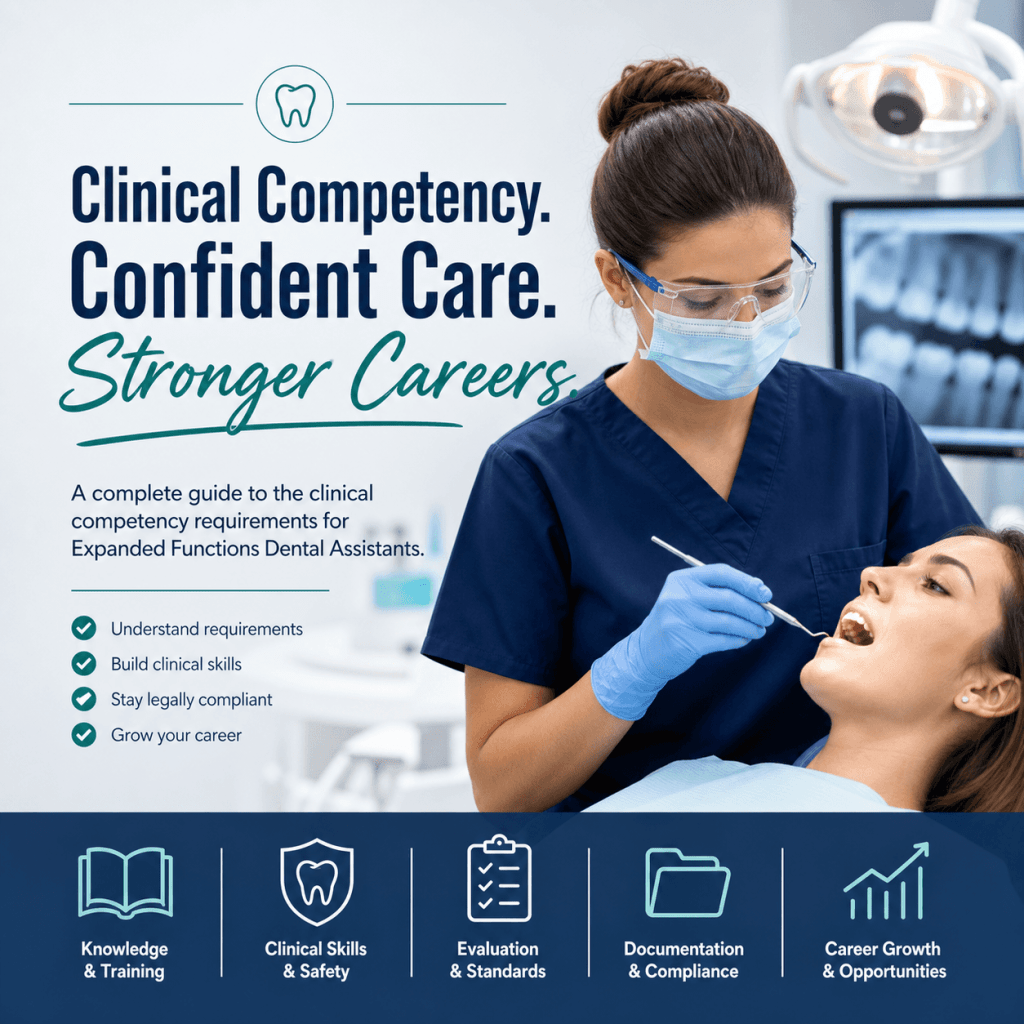
Expanded functions and legal compliance: advancing your role the right way
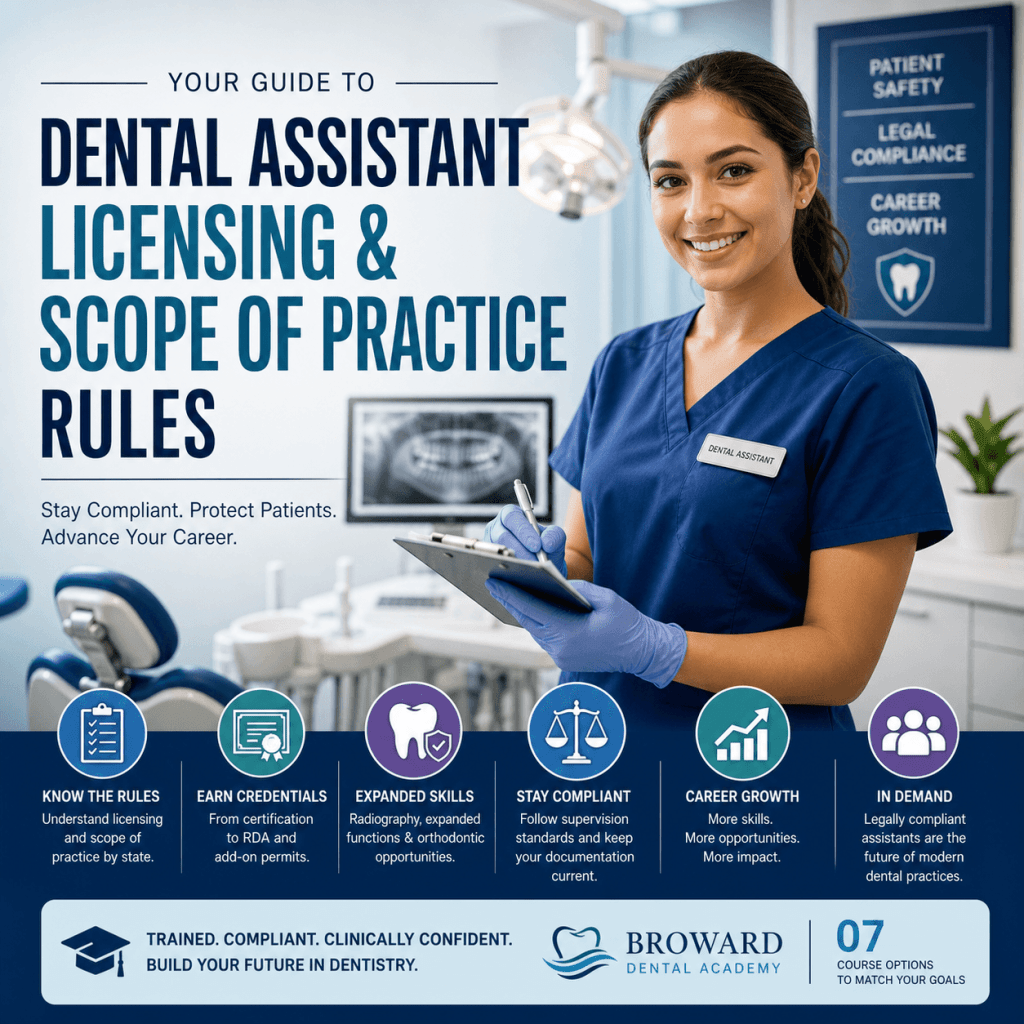
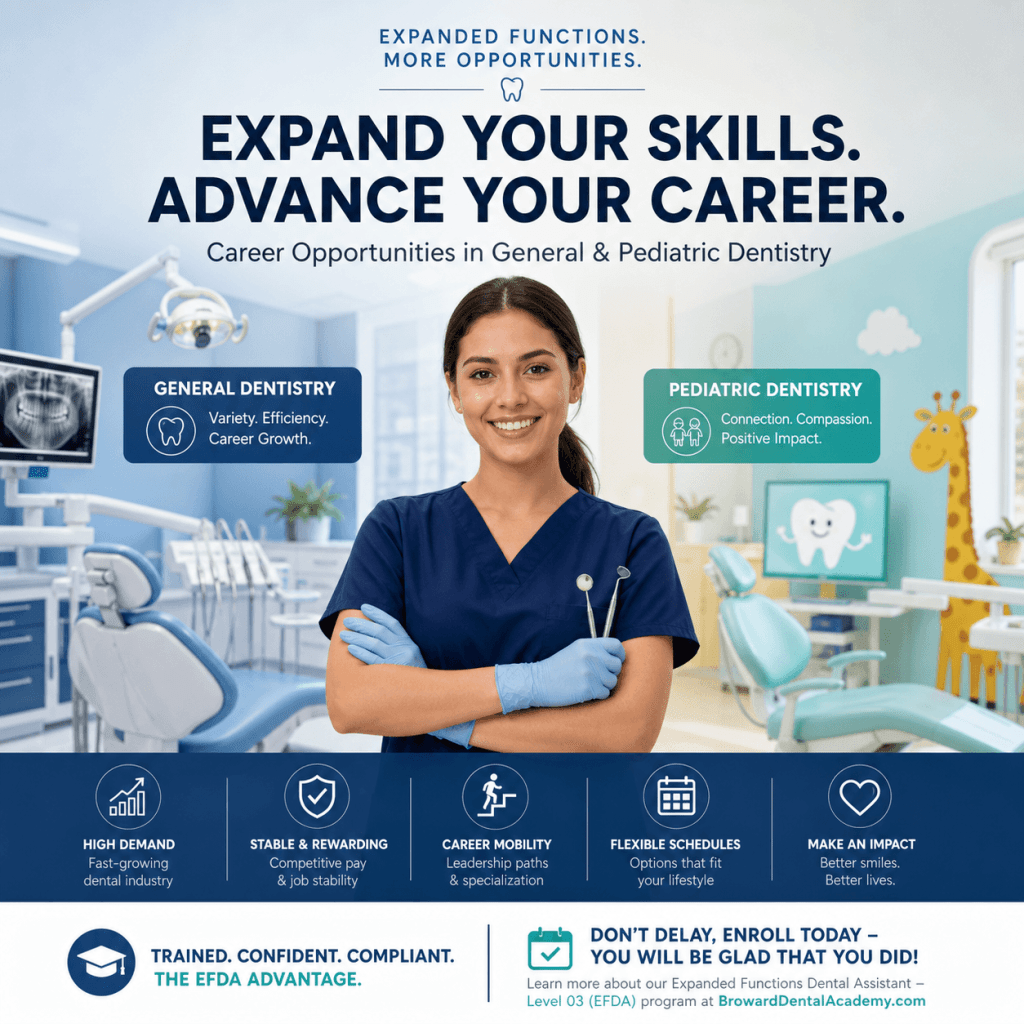
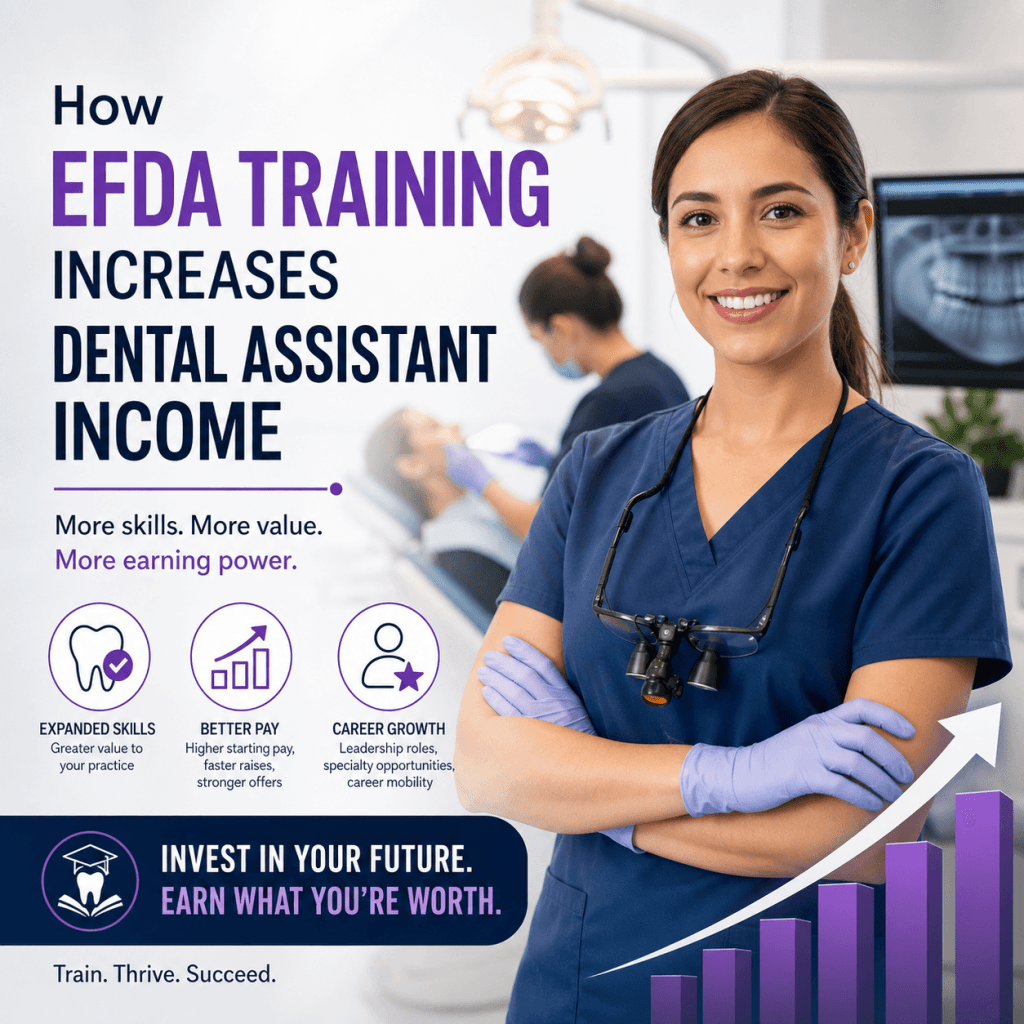
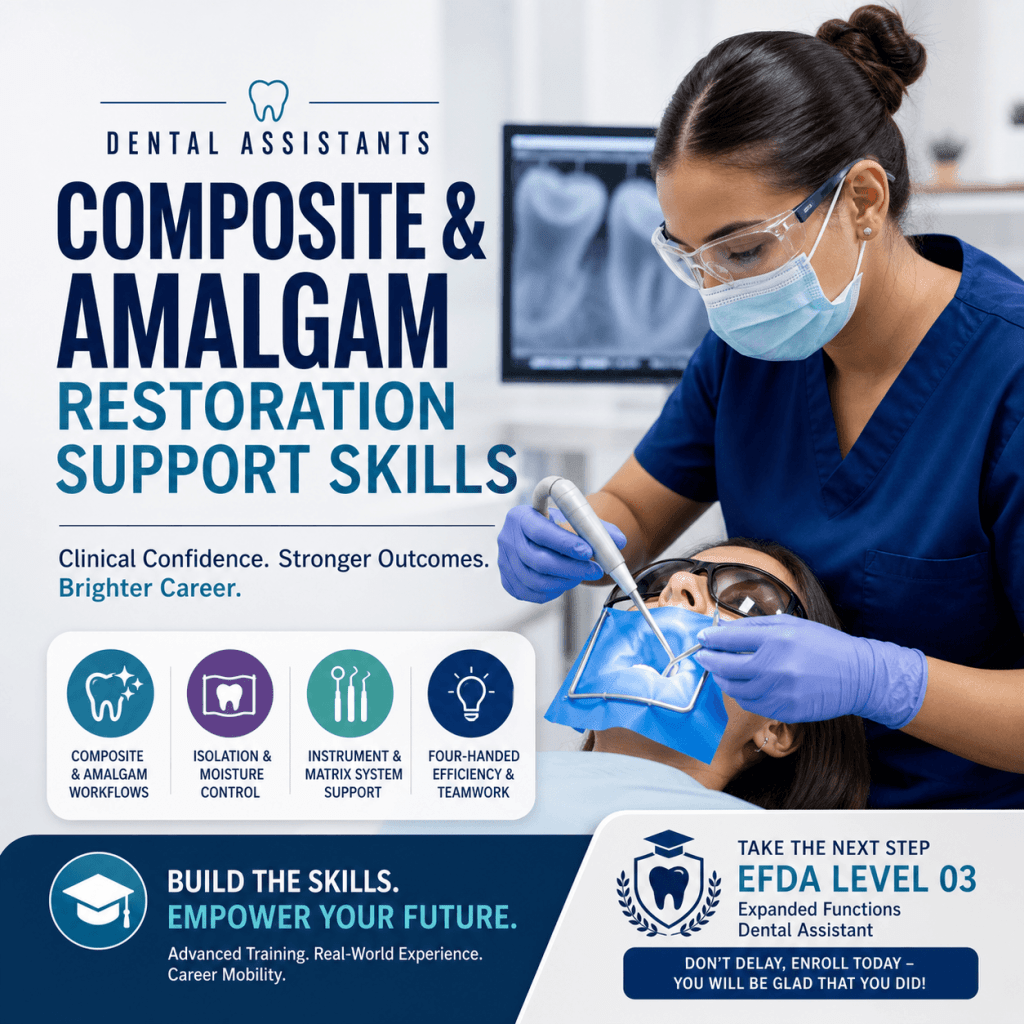
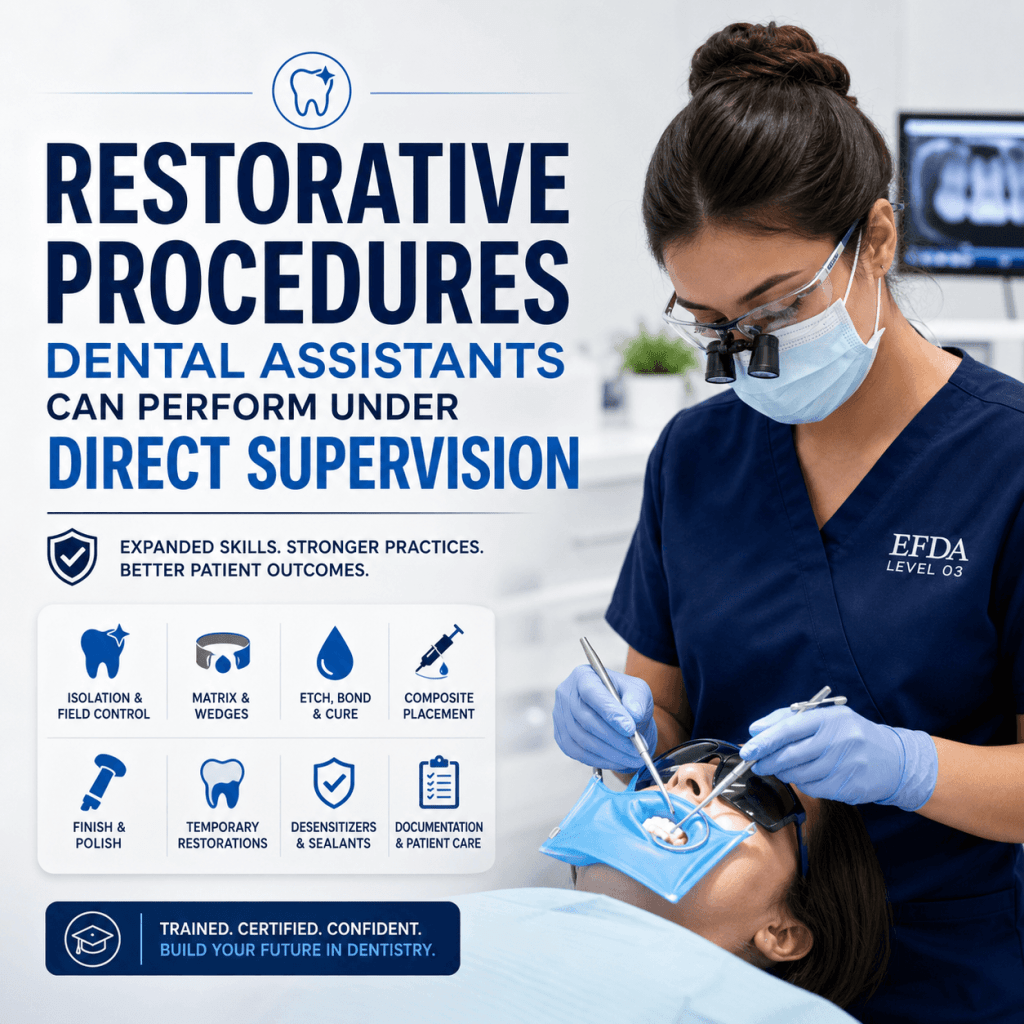
Expanded functions are valuable because they can increase responsibility and, in many practices, improve earning potential. But expanded functions are also highly dependent on state rules and supervision requirements.
The right approach is:
- Get the training that supports skill readiness
- Follow your state’s permitted duties and supervision levels
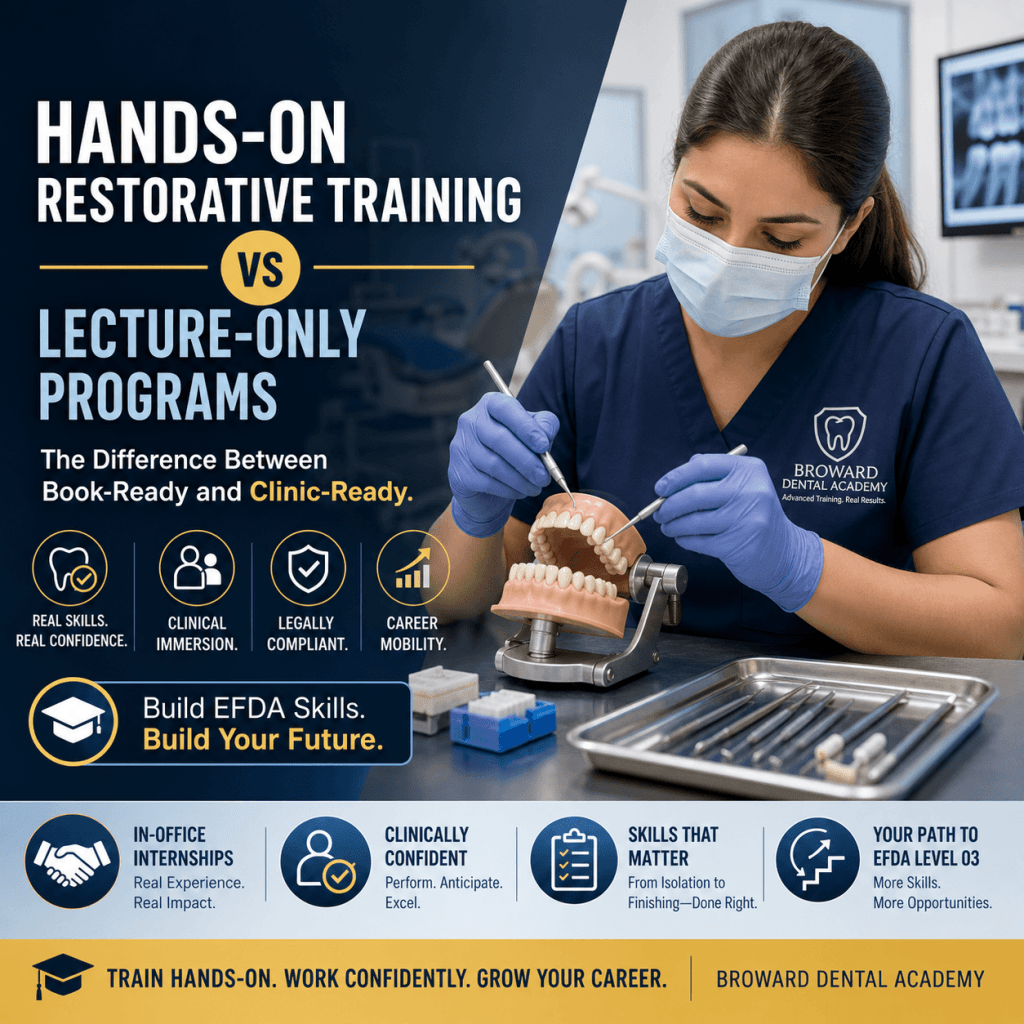
- Build confidence through repetition, feedback, and real clinical exposure
Practices are looking for assistants who can take on more while staying compliant. That combination is what makes an assistant truly “advanced.”
How advanced training translates into career benefits in dentistry
Advanced chairside skills connect directly to real outcomes:
- More stable income potential in a fast-growing healthcare industry
- Flexible schedules that fit many lifestyles
- A respected clinical role patients notice immediately
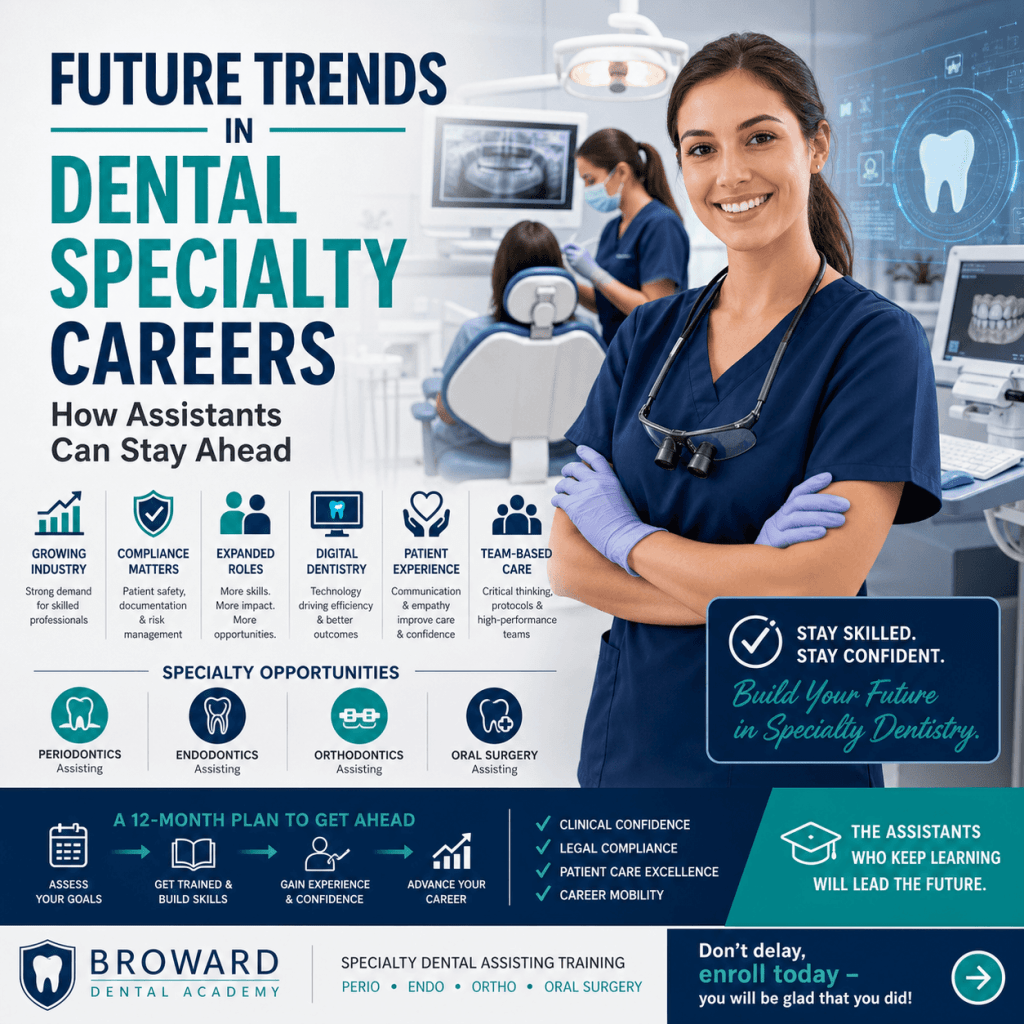
- Stronger career mobility into specialty practices and higher-responsibility roles
- Leadership pathways as you become a consistency driver for the team
Many practices hire for readiness because they need people who are thoroughly trained, legally compliant, and clinically confident from day one.
How Broward Dental Academy prepares assistants to thrive in modern practices
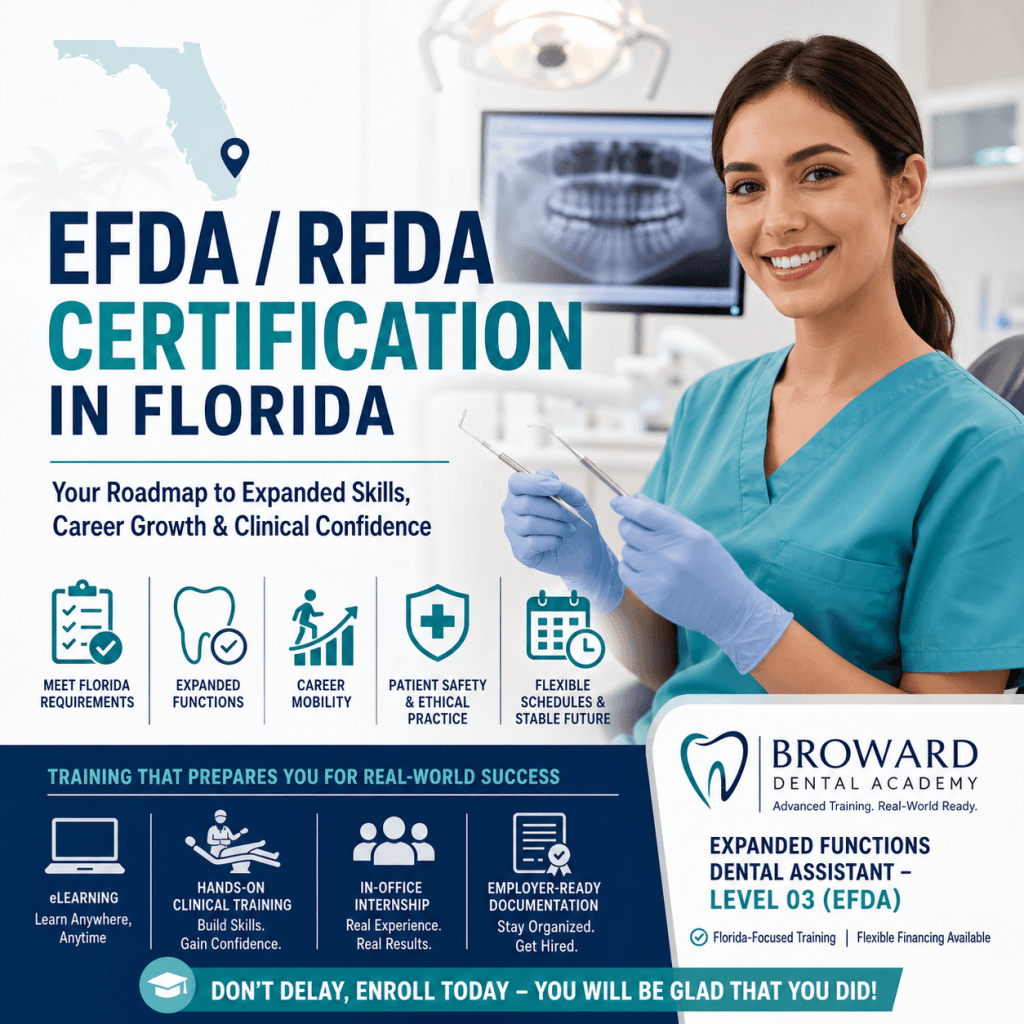
Broward Dental Academy is built around career-focused training, not just exam prep. The goal is to help students thrive in a modern, high-performance dental practice by developing well-rounded professionals who think critically, act ethically, and perform confidently.
Training is designed to reflect modern expectations, including:
- Immediate immersion in online and clinical settings
- Updated eLearning lesson plans for remote training
- In-office internships to build real chairside confidence
- A learning environment that supports polished, practice-ready performance
- Multiple program options and flexible financing
Broward Dental Academy is committed to serving the Dental Community by developing well-rounded professionals through a wide range of dental courses and advanced dental training.
Who this Level 2-style training is best for
This type of advanced chairside training is typically a strong fit for:
- Assistants who want to move from basic assisting to high-performance chairside support
- Career switchers seeking a stable healthcare path with growth potential
- People who want confidence in modern workflows, compliance, and technology expectations
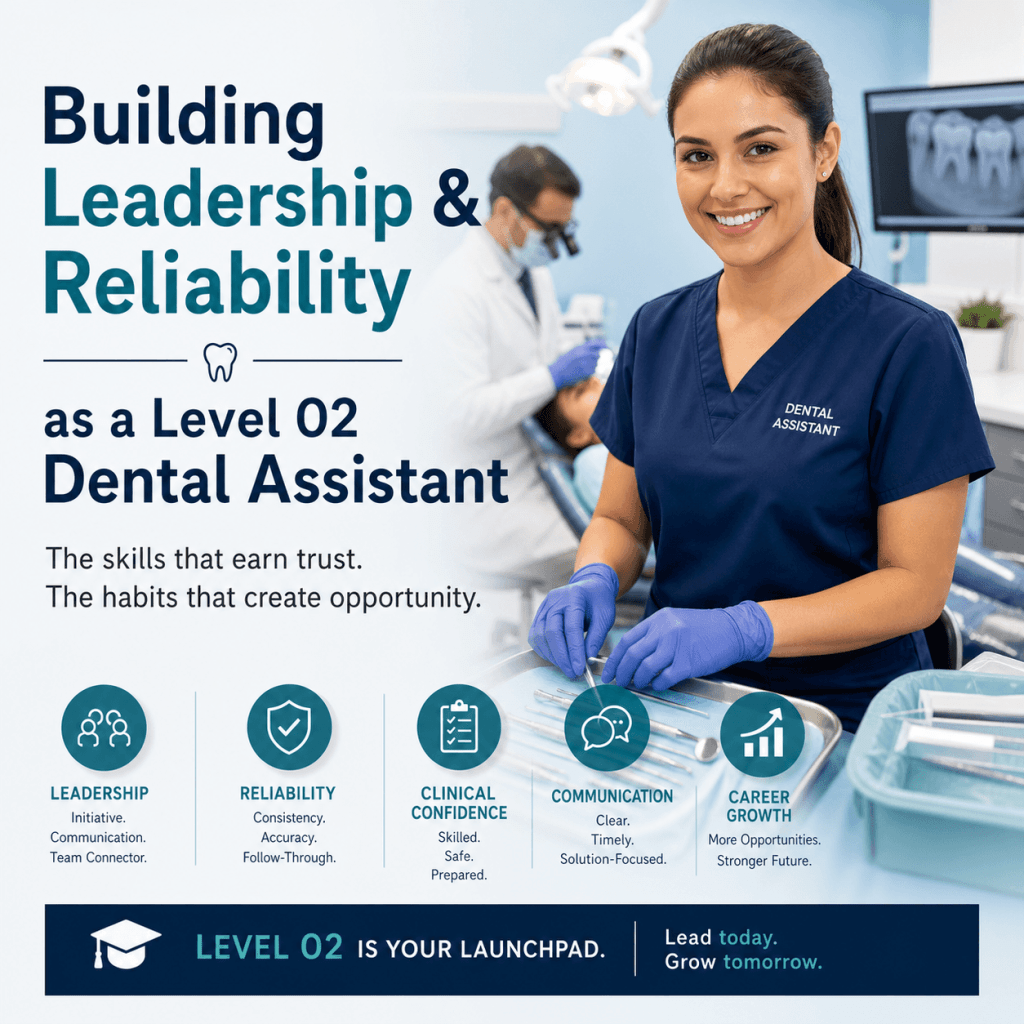
If you want to be the assistant who makes procedures smoother, keeps patients calmer, and helps the practice run on time, advanced training like the Advanced Dental Assistant Training – Level 02 is the direct path.
Putting it all together: a practical next step if you want advanced chairside skills
Advanced chairside dental assisting comes down to a few repeatable strengths:
- Workflow mastery that keeps procedures smooth
- Infection control and safety that never slips under pressure
- Procedure support that improves outcomes and reduces remakes
- Technology competence in imaging, scanning support, and documentation
- Communication and critical thinking that prevent problems early
- Legal compliance that protects your career and the practice
If you want to build these skills faster, look for structured training that includes real clinical immersion and internship opportunities.
A practical next step is to review Broward Dental Academy’s Advanced Dental Assistant Training – Level 02 program details.
For those looking at other levels of training, Broward Dental Academy also offers Dental Assistant Training – Level 01 which serves as a solid foundation before advancing further or Dental Assistant Hygienists Level 03 for those aiming for specialized roles.
Don’t delay, enroll today – you will be glad that you did!
FAQs (Frequently Asked Questions)
What does advanced chairside dental assisting entail?
Advanced chairside dental assisting involves reliably supporting dental procedures by anticipating steps and materials, protecting workflow from delays and errors, supporting expanded functions within the legal scope, and keeping patients calm, informed, and safe while ensuring efficient procedure flow.
How does advanced chairside assisting differ from entry-level assisting?
While entry-level assisting focuses on learning individual tasks, advanced chairside assisting is about mastering systems. It emphasizes being legally compliant and clinically confident under real conditions with real patients, rather than just passing exams or working faster at any cost.
What are key components of advanced chairside workflow mastery?
Key components include thorough pre-op setup to prevent delays (such as operatory readiness and materials staged by sequence), proficient four-handed dentistry involving positioning, visibility, moisture control, and transfer zones management, as well as standardized procedure-based tray setups that reduce errors and facilitate training.
Why is infection control critical in advanced chairside dental assisting?
Infection control is foundational to patient safety and practice protection. Advanced assistants integrate infection control seamlessly into their workflow by practicing sharps safety, preventing cross-contamination during material handling and suctioning, thereby ensuring speed without compromising safety.
How can dental assistants develop skills for advanced chairside assisting?
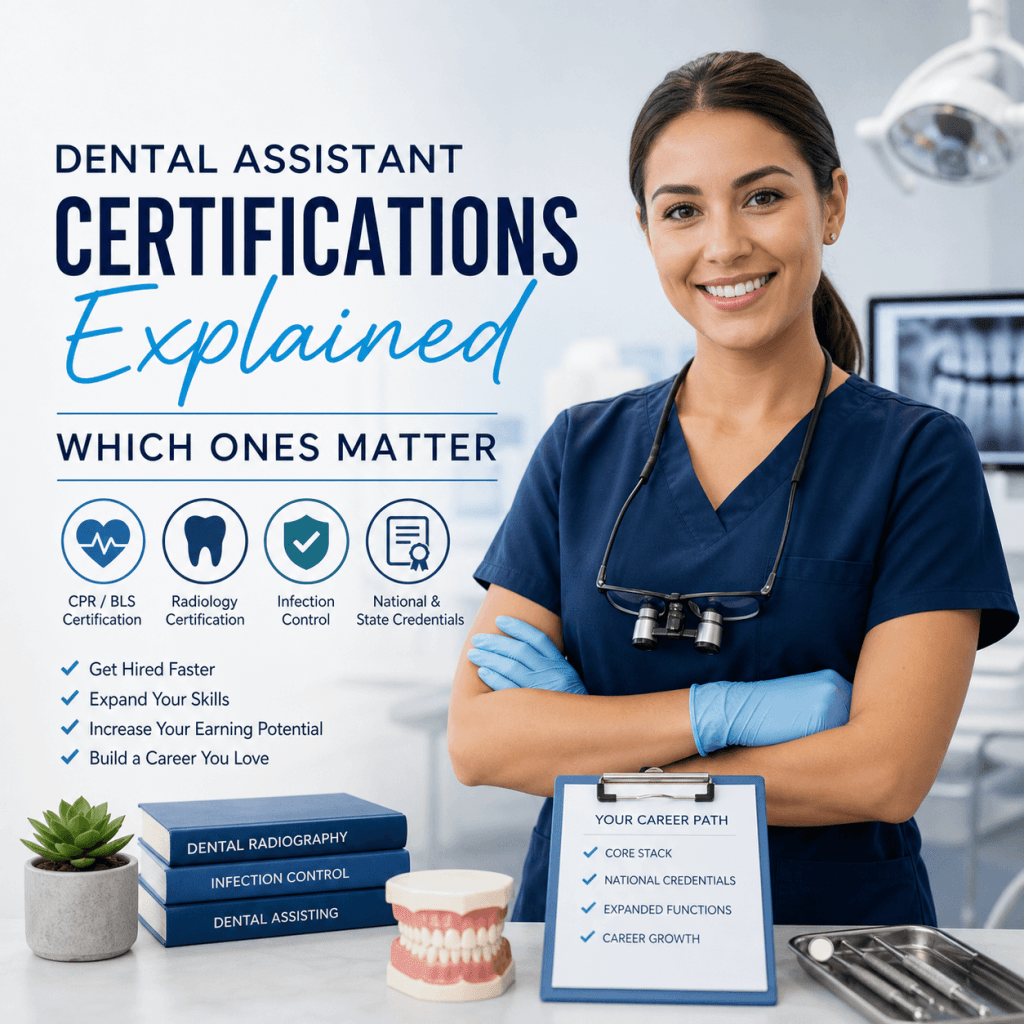
Dental assistants can enhance their proficiency by pursuing relevant certifications or enrolling in specialized courses offered by reputable institutions such as Broward Dental Academy. These educational paths cover essential topics like workflow mastery, infection control, technology skills, communication, and compliance.
What benefits do standardized tray setups provide in a dental practice?
Standardized tray setups decrease errors, shorten appointment times, simplify training for new team members, and create consistency across providers. Systems like labeling, color coding, restocking par levels, and missing item processes contribute to predictable workflows and improved overall practice efficiency.