In a modern Florida practice, those three phrases usually mean:
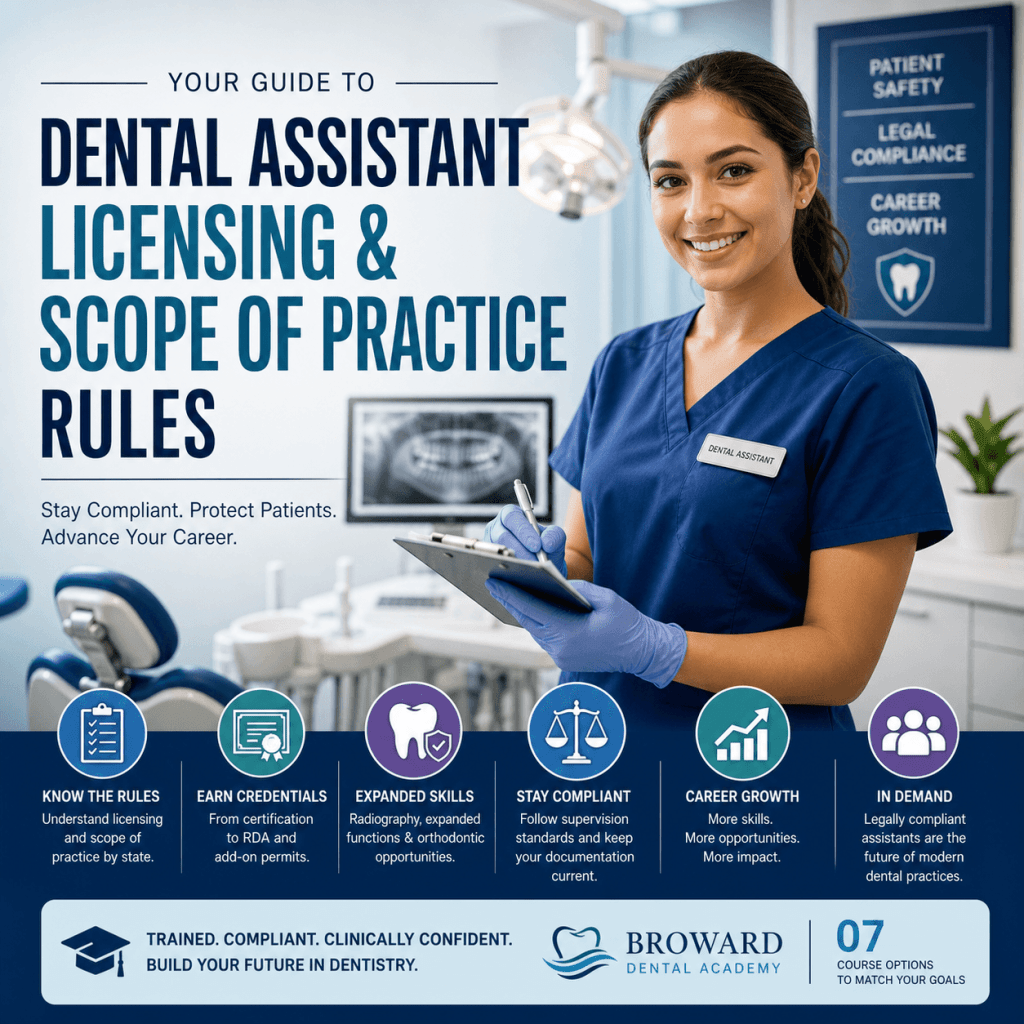
Understanding the dental efda & rfda requirements is essential for aspiring dental assistants in Florida.
Understanding the dental efda & rfda requirements is essential for aspiring dental assistants in Florida. Meeting these dental efda & rfda requirements can significantly enhance your employability and provide a solid foundation for your career.
- Thoroughly trained: you can perform skills correctly, repeatedly, and safely, not just once in a classroom.
- Legally compliant: you understand Florida rules, supervision levels, and what you can and cannot do in your role.
- Clinically confident: you can handle real workflow pressure, communicate calmly with patients, and support the provider without hesitation.
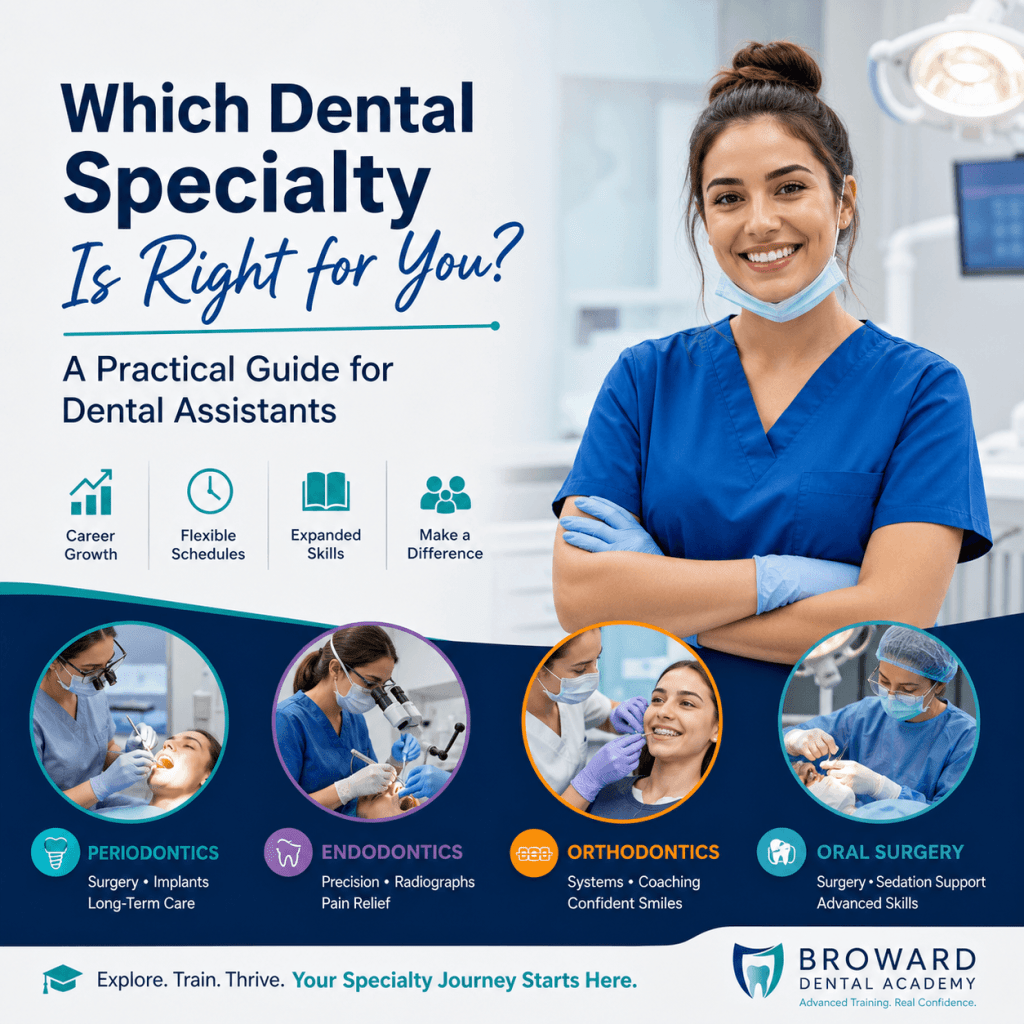
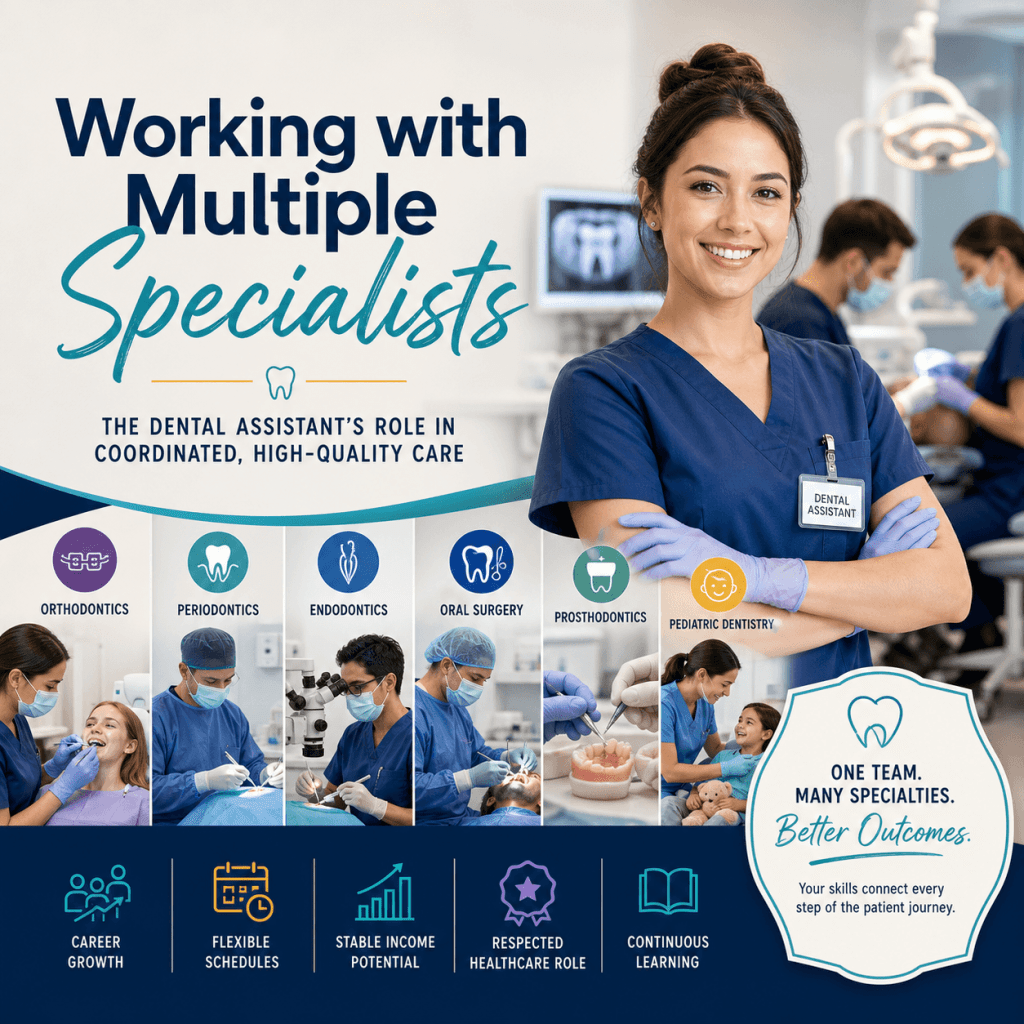
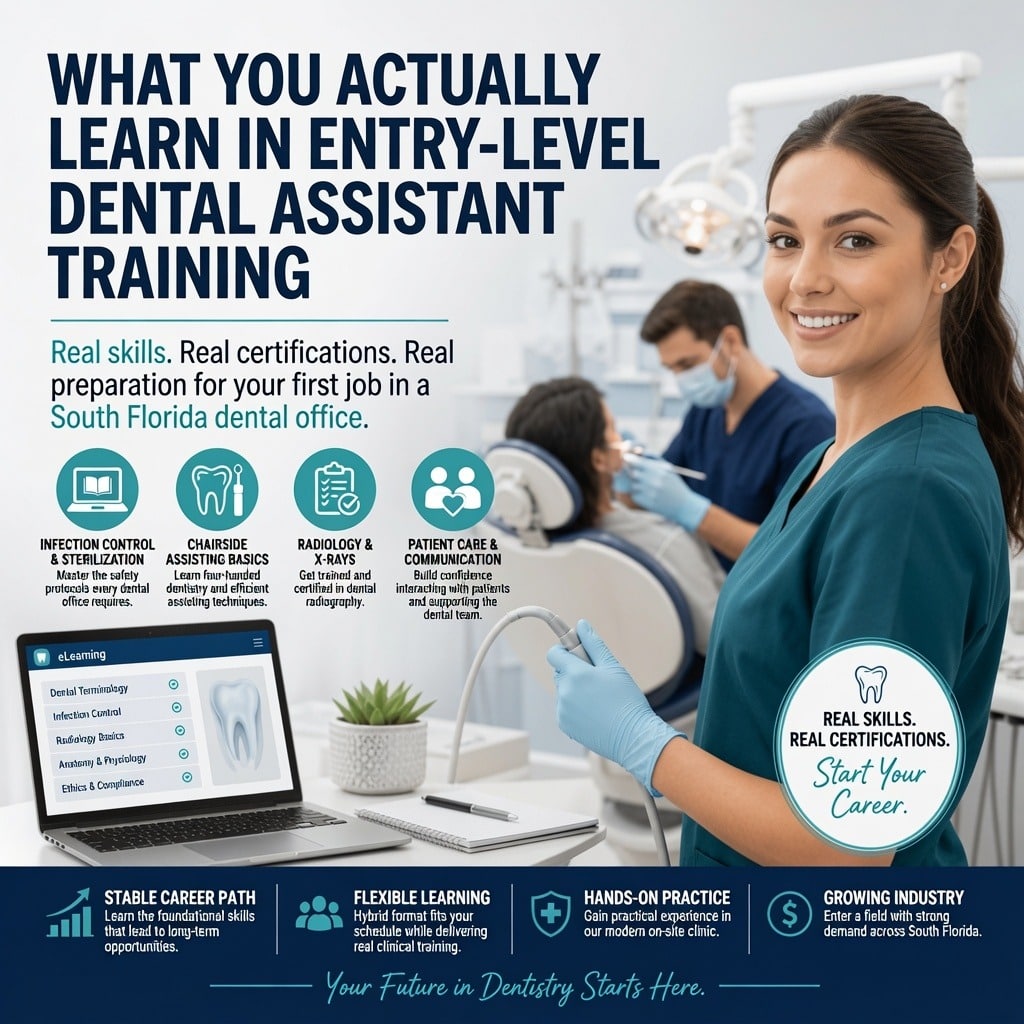
EFDA and RFDA-related training connects directly to outcomes employers care about: expanded duties in areas such as orthodontics, oral surgery, endodontics, and periodontics. This also aligns well with Florida’s dental industry reality. Dentistry remains one of the fastest-growing areas in healthcare, offering stable income potential, flexible schedules, career mobility, and rising demand for skilled team members.
By adhering to dental efda & rfda requirements, you enhance your credibility in the field.

Your understanding of dental efda & rfda requirements can significantly influence your career trajectory.
Why EFDA/RFDA certification matters in Florida dental practices
When a practice hires for an expanded functions capable assistant, they are not just hiring “help.” They are hiring someone who can protect patient safety, support production, and keep the day on schedule.
In practical terms, certification aligned to Florida expectations helps you:
Understanding dental efda & rfda requirements will enable you to stand out in competitive hiring markets.
- Earn trust faster in a working interview because your training is recognizable and documented.
- Support a more efficient schedule by taking on delegated tasks appropriately.
- Reduce bottlenecks during restorative and procedural appointments through better chairside flow.
- Stand out in competitive hiring markets where many applicants have basic assisting skills but fewer have validated expanded-function readiness.
It also helps offices reduce risk. Dentistry is regulated, and expanded duties are not something an office wants to “wing.” Training and documentation matter, both for patient outcomes and for compliance.
Additionally, knowledge of dental efda & rfda requirements can help you navigate the complexities of your role more effectively.
EFDA vs. RFDA in Florida: what these titles usually refer to
EFDA commonly stands for Expanded Functions Dental Assistant. In Florida, this generally refers to a dental assistant who has completed training and demonstrated competency for specific expanded functions allowed by Florida rules, performed under the appropriate level of supervision.
RFDA is a term many people use when searching for Florida “registered” dental assisting pathways. Florida’s dental assisting structure is more function and training specific than the word “registered” implies. So when someone searches “RFDA requirements in Florida,” they are usually trying to figure out what they must do to be recognized as qualified for expanded duties and other key tasks that employers commonly require.
That is why you often see EFDA and RFDA used together in searches and job conversations. Many offices want proof of training in areas like:
- Expanded functions (as permitted)
- Radiography qualification (if taking X-rays)
- Infection control and safety standards
- Competency-based clinical skills
The right pathway depends on two things:
- Which expanded functions you want to perform
- What a Florida employer expects for the position you want
When searching for the pathway to meet dental efda & rfda requirements, make sure to consider the training and evaluation necessary for success.
What expanded functions can lead to in your career (and why offices care)
Expanded functions can change how you fit into a practice. You become more than a chairside extra set of hands. You become a more versatile clinical professional who can help the practice operate at a higher level.
Becoming proficient in dental efda & rfda requirements allows you to take on expanded duties confidently.
Why practices value expanded functions
Fulfilling the dental efda & rfda requirements showcases your commitment to the profession and enhances your employability.
By completing the dental efda & rfda requirements, you will be prepared for a successful career in dental assisting.
Fulfilling the dental efda & rfda requirements allows for more responsibilities and professional growth.
Expanded functions support a high-performance office by improving:
Understanding dental efda & rfda requirements is essential for those pursuing a career in dental assisting in Florida.
Identifying the specific dental efda & rfda requirements relevant to your desired position can guide your educational journey.
- Efficiency: smoother procedures and less back-and-forth for the dentist.
- Delegation: appropriate task distribution so the provider stays focused on provider-only work.
- Consistency: predictable setup, turnover, and patient experience across the day.
- Team stability: stronger support reduces burnout and schedule chaos.
Awareness of dental efda & rfda requirements helps prepare you for diverse roles within the dental field.
Why it matters for your mobility
With expanded-function capability, you often gain:
- More responsibility
- A broader, more marketable skill set
- Increased value to the practice and greater long-term leverage in hiring
Many candidates also like dental assisting because it can offer schedule flexibility and stable employment in a healthcare setting.
Just as important, expanded functions increase ethical responsibility. Patient safety comes first. That means you must understand supervision, training requirements, and the boundaries of what you are allowed to do in Florida.
Florida EFDA requirements: the core pieces you’ll typically need
In Florida, requirements are often function-specific, meaning the pathway can depend on the specific expanded function you want to perform and the training documentation expected for that function.
Meeting dental efda & rfda requirements is not just beneficial; it’s essential for your success in the dental field.
By fulfilling dental efda & rfda requirements, you demonstrate your commitment to best practices and patient safety.
In general, readers expect EFDA requirements to fall into four core buckets:
Understanding the dental efda & rfda requirements is essential for those pursuing a career in dental assisting in Florida, as it directly impacts your responsibilities and roles.
- Prerequisites (education and foundational dental assisting readiness)
- Approved training (Florida-relevant education for the functions you plan to perform)
- Clinical competency validation (hands-on evaluation and verified skill performance)
- Documentation (proof you can show employers)
Completing the necessary dental efda & rfda requirements will solidify your role as a qualified professional.
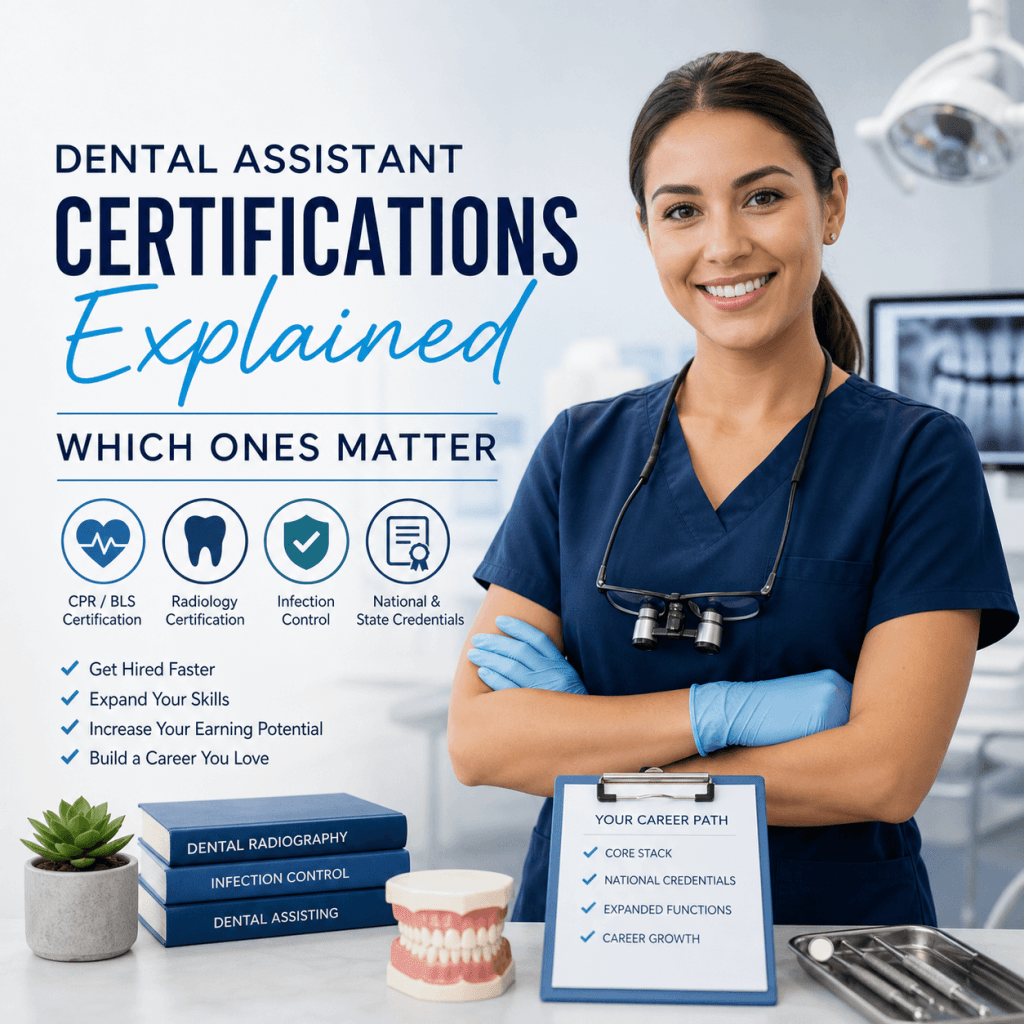
Most employers also expect baseline compliance basics such as:
- Infection control training and daily safety habits
- OSHA and HIPAA awareness in a clinical setting
- Current CPR/BLS (often required by clinical sites and employers)
- Radiography education/qualification if you will take X-rays
Florida rules and expectations can change. Before you enroll, verify the latest requirements through the Florida Board of Dentistry guidance and confirm what your target employer expects for the role you want.
As you navigate your career, understanding dental efda & rfda requirements will pave the way for future opportunities.
Common prerequisite checklist before you start EFDA training
Most Florida-focused EFDA-level programs and clinical sites will expect you to be ready for professional training. A typical prerequisite checklist includes:
- High school diploma or GED (often required for program admission)
- Current CPR/BLS (commonly required before clinical participation)
- Baseline assisting knowledge: terminology, chairside flow, instruments, safety, infection control basics
- Professional readiness: reliability, communication skills, and comfort in a fast-paced clinical environment
If you are new to dentistry, you may want to complete foundational dental assisting coursework first, then move into expanded functions training once your basics are strong.
Training format you’ll see most often: didactic + hands-on clinical
Most Florida-aligned expanded functions pathways are built around a blended structure:
- Didactic learning (often online or classroom-based): concepts, rules, safety, materials, and step-by-step procedure standards
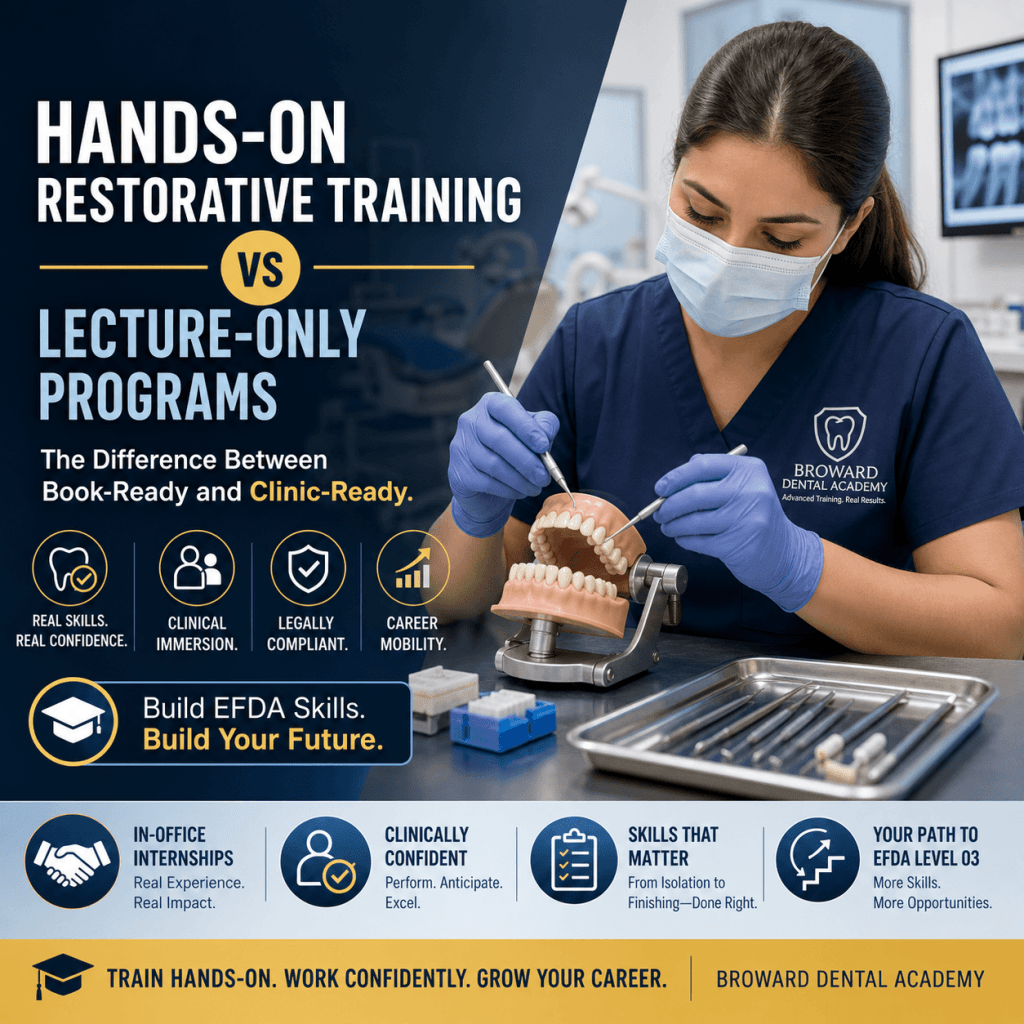
- In-person skills labs and clinical evaluation: repetition, feedback, and hands-on verification of competency
Ensure your training aligns with dental efda & rfda requirements to maximize your career potential.
This blend matters because confidence does not come from reading. It comes from doing, being corrected, and doing it again until your hands and decisions are reliable.
Internships and externships can also be a major advantage. They help you translate skills into real practice expectations: speed, communication, documentation habits, and teamwork under pressure.
Florida RFDA requirements: how to interpret what people are asking for
“RFDA requirements” is a common search phrase in Florida, but most people asking it are really trying to answer a practical question:
What do I need to complete so a Florida dental office will recognize me as qualified for expanded duties and key clinical tasks?
In real hiring conversations, the “registered/recognized” components employers look for often include:
- Proof of completed, Florida-relevant courses for the duties you will perform
- Radiography qualification documentation if the job includes taking X-rays
- Skills checklists, evaluations, or transcripts that show competency completion
- CPR/BLS and other standard compliance documentation
Aligning your skills with dental efda & rfda requirements ensures you meet industry standards and expectations.
To avoid confusion, focus on the exact procedure or expanded function you want to perform, then match your training to Florida allowances and the supervision requirements that apply.
A simple way to get clarity is to ask employers directly:
- Which expanded functions do you expect this role to perform?
- What certificates or documentation do you require to hire for that?
- Will you verify skills through a working interview or hands-on assessment?
Step-by-step: a practical roadmap to EFDA/RFDA certification in Florida
Ultimately, fulfilling dental efda & rfda requirements is a pathway to a fulfilling career.
If your goal is employability in a Florida practice, use a roadmap that keeps you focused on outcomes and documentation.
Step 1: Choose your target role
As you progress through your career, dental efda & rfda requirements will guide your professional development.
Decide which track you want to pursue first:
- Chairside dental assistant (foundational)
- Radiography-qualified dental assistant (if applicable)
- EFDA or expanded functions track (skills plus function-specific validation)
Step 2: Confirm which expanded functions you want
Different practices want different strengths. Confirm what you want to do and what the role typically includes.
Step 3: Match your plan to Florida rules and supervision expectations
Understanding dental efda & rfda requirements empowers you as a capable dental assistant.
Expanded functions must be performed within Florida allowances and required supervision levels. Your training should reflect that reality.
Step 4: Complete required coursework and hands-on skills validation
Look for structured skills labs, clinical evaluation, and any internship or externship component that forces you to perform under real workflow pressure.
Step 5: Compile documentation for employers
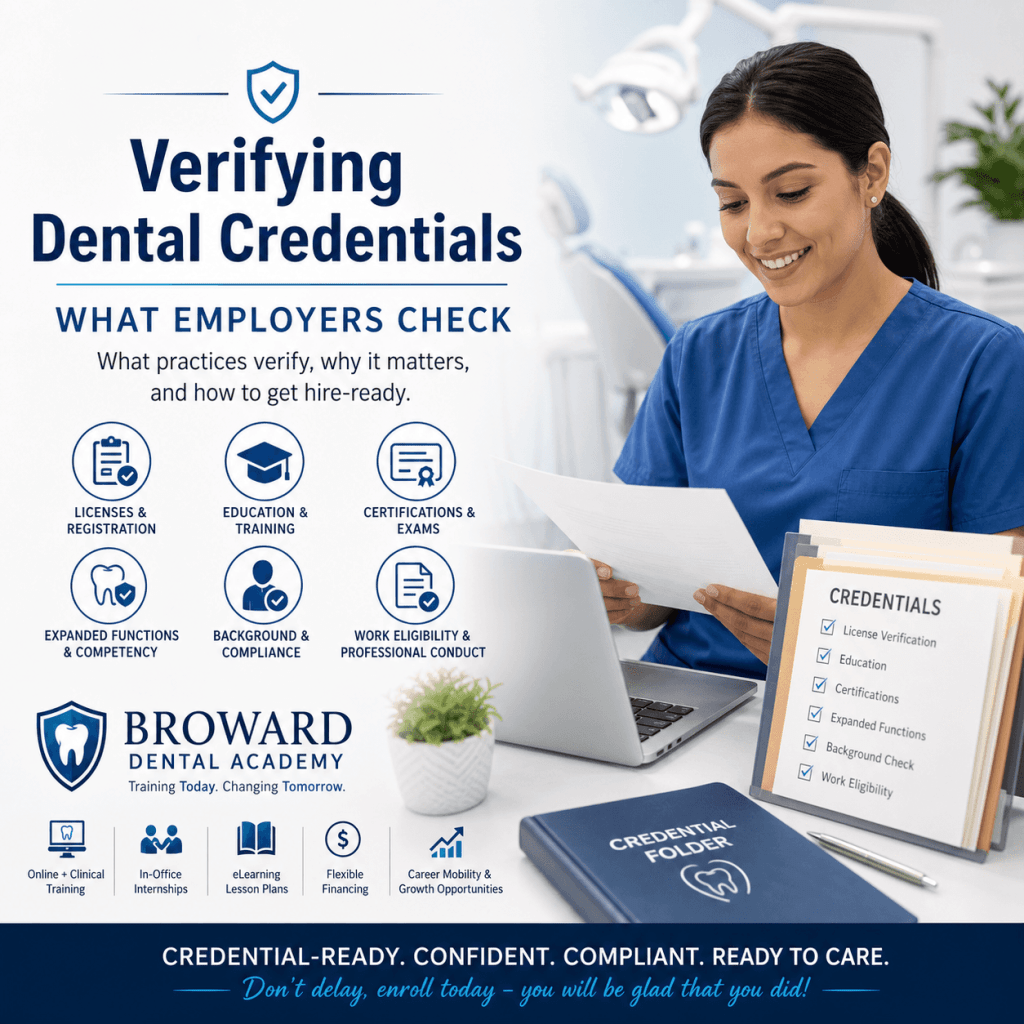
Create a clean, ready-to-share folder with:
- Certificates of completion
- Transcripts (if applicable)
- Skills checklists or clinical evaluations
- CPR/BLS card
- Radiography-related documentation (if applicable)
Step 6: Apply and prepare for a working interview
Ultimately, integrating dental efda & rfda requirements into your practice will enhance patient outcomes.
Comprehending dental efda & rfda requirements is essential for successful patient interactions.
Many offices will evaluate how you actually perform. Be ready to demonstrate:
By ensuring compliance with dental efda & rfda requirements, you will position yourself as a valuable asset in any dental practice.
- Infection control habits
- Setup and breakdown speed and organization
- Chairside anticipation and communication
- Documentation accuracy and calm patient interaction
What to look for in an EFDA/RFDA training program (so you don’t waste time)
Not all “EFDA” style courses are equally useful for Florida hiring. To protect your time and investment, look for programs that offer:
- Florida alignment: coursework and competencies mapped to Florida expectations for expanded functions
- Hands-on intensity: real repetition and feedback, not theory-only learning
- Modern learning design: updated eLearning paired with structured clinical sessions
- Real-office readiness: critical thinking, ethical decision-making, and speed with accuracy
- Career support signals: internship opportunities, clear documentation, and job-readiness guidance
A good program should graduate students who can walk into a practice and contribute safely, quickly, and confidently.
Meeting the dental efda & rfda requirements can improve your clinical skills and patient care.
Being well-versed in dental efda & rfda requirements will boost your confidence in the workplace.
How Broward Dental Academy supports EFDA-level career growth
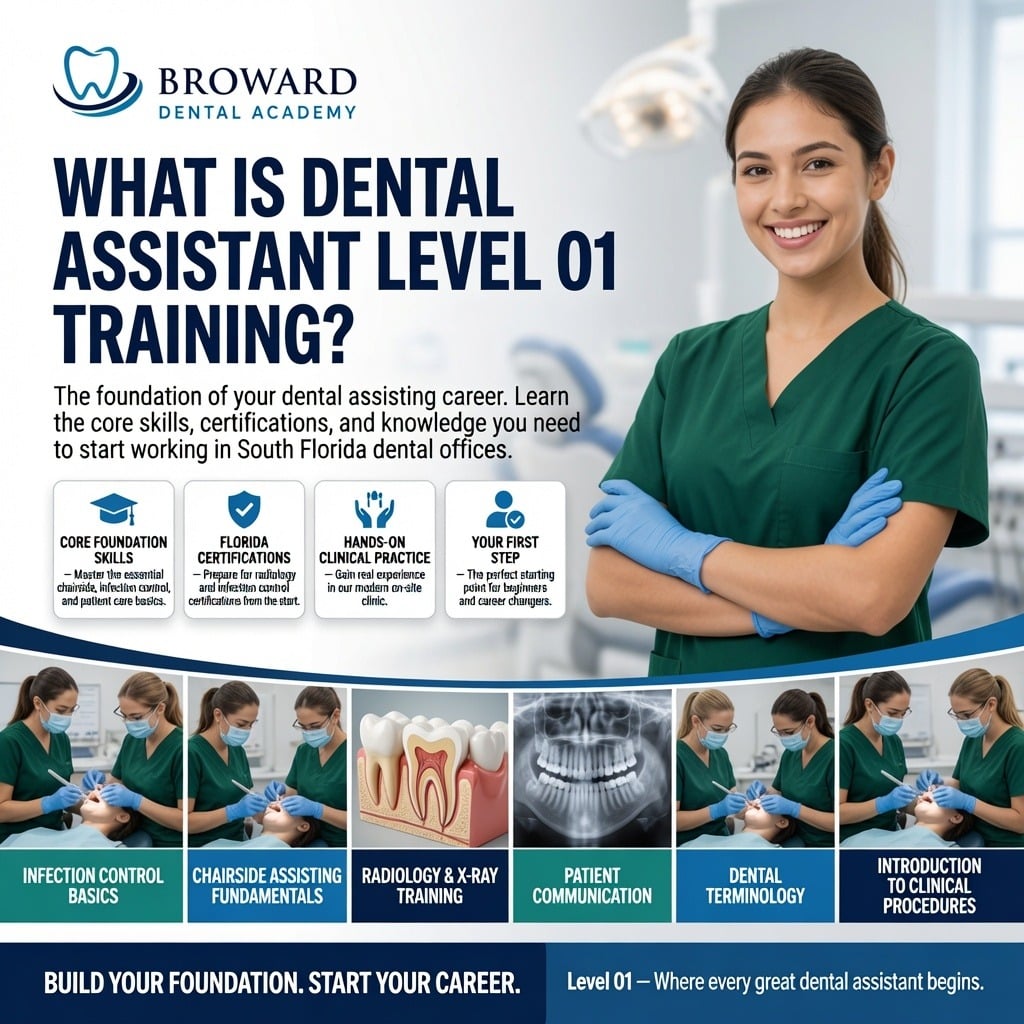
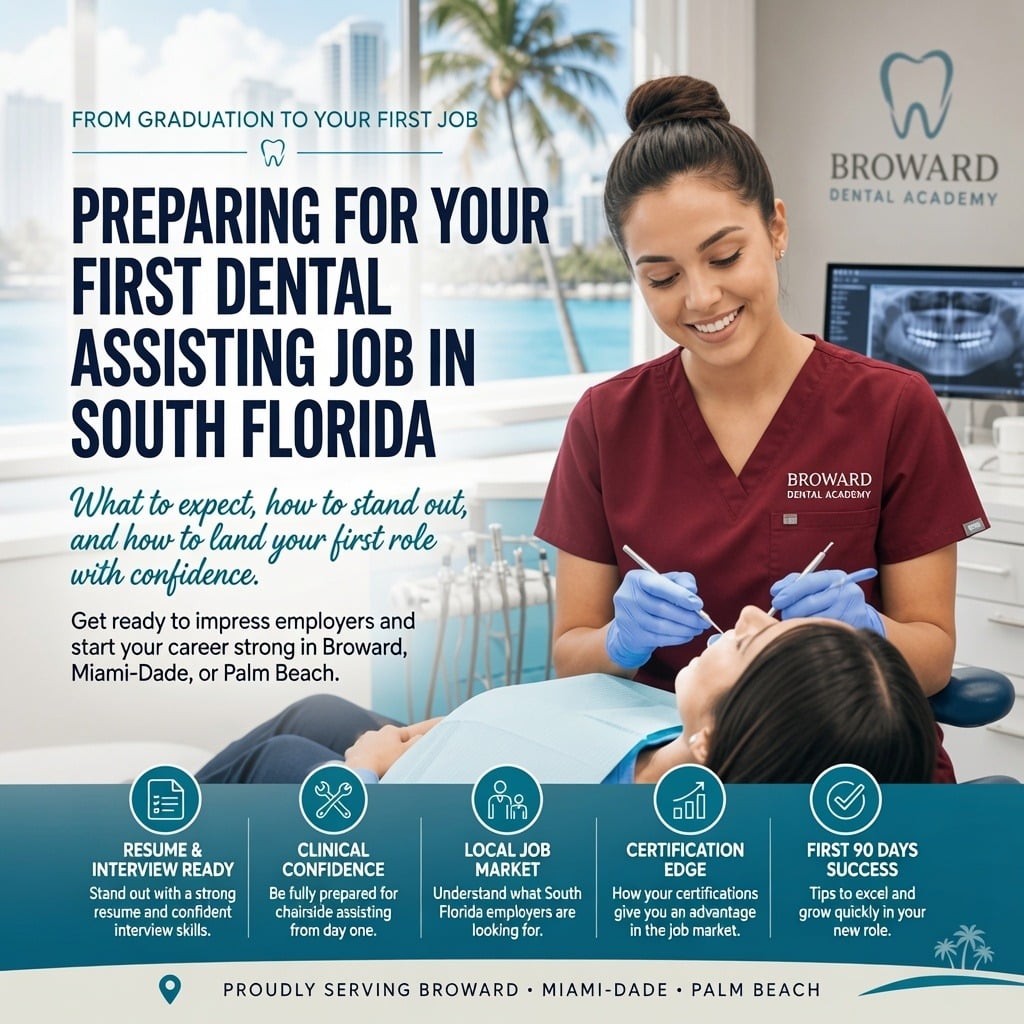
Broward Dental Academy is a Florida-focused option offering a wide range of dental courses including EFDA training, and advanced dental training. The goal is not to produce test-takers. The goal is to produce professionals who are thoroughly trained, legally compliant, and clinically confident in a modern, high-performance dental practice.
Knowledge of dental efda & rfda requirements prepares you for the challenges of the dental field.
Understanding your dental efda & rfda requirements is crucial for effective job applications and interviews.
Students are trained through immediate immersion in online and clinical settings, supported by updated eLearning lesson plans and in-office internship opportunities. This approach helps students build real workflow readiness, not just academic familiarity.
Broward Dental Academy offers multiple training options such as EFDA and flexible financing, allowing students to build skills in a structured, career-focused way.
Knowledge of dental efda & rfda requirements helps align your training with employer expectations.
What “clinically confident” looks like in a high-performance dental office
In conclusion, mastering dental efda & rfda requirements is a crucial step in your dental assisting journey.
Clinical confidence is observable. In a busy Florida practice, it often looks like:
- Consistent infection control habits without reminders
- Organized operatory setup and efficient breakdown and turnover
- Strong chairside anticipation: passing instruments smoothly, preparing materials on time, staying two steps ahead
- Accurate documentation and clear communication within the clinical team
- Calm, respectful patient communication, especially with anxious patients
- Knowing when to ask questions and when to stop because something is outside your allowed duties
Expanded functions add responsibility, so confidence must be built through repetition, feedback, and supervision-aware practice. Competence plus legal boundaries is what creates a professional your employer can trust.
Common mistakes that delay EFDA/RFDA progress in Florida
A few avoidable mistakes cause most delays.
Assuming any “EFDA” course is Florida-aligned
State relevance matters. Florida expectations can differ from other states, and employers want training that matches what they see in Florida practices. For more information on how to choose the right EFDA course in Florida, check out this frequently asked questions page.
Focusing only on passing instead of building repeatable clinical skill
A certificate helps, but performance gets you hired and keeps you employed. You need speed, accuracy, and consistency under real workflow pressure.
Skipping documentation organization until job-hunting time
Do not wait until you are applying to build your file. Keep certificates, CPR/BLS, transcripts, and skills checklists organized as you go.
Performing, or agreeing to perform, duties outside allowed scope
Your understanding of dental efda & rfda requirements can enhance your value in the job market.
This is a patient safety issue and a career risk. If you are unsure whether something is permitted, ask and verify before you act.
Not asking employers what they specifically require
Two offices may use the same job title but expect different duties. Always confirm what credentials and documentation they want for expanded functions roles.
How EFDA/RFDA credentials can impact pay, scheduling, and long-term stability
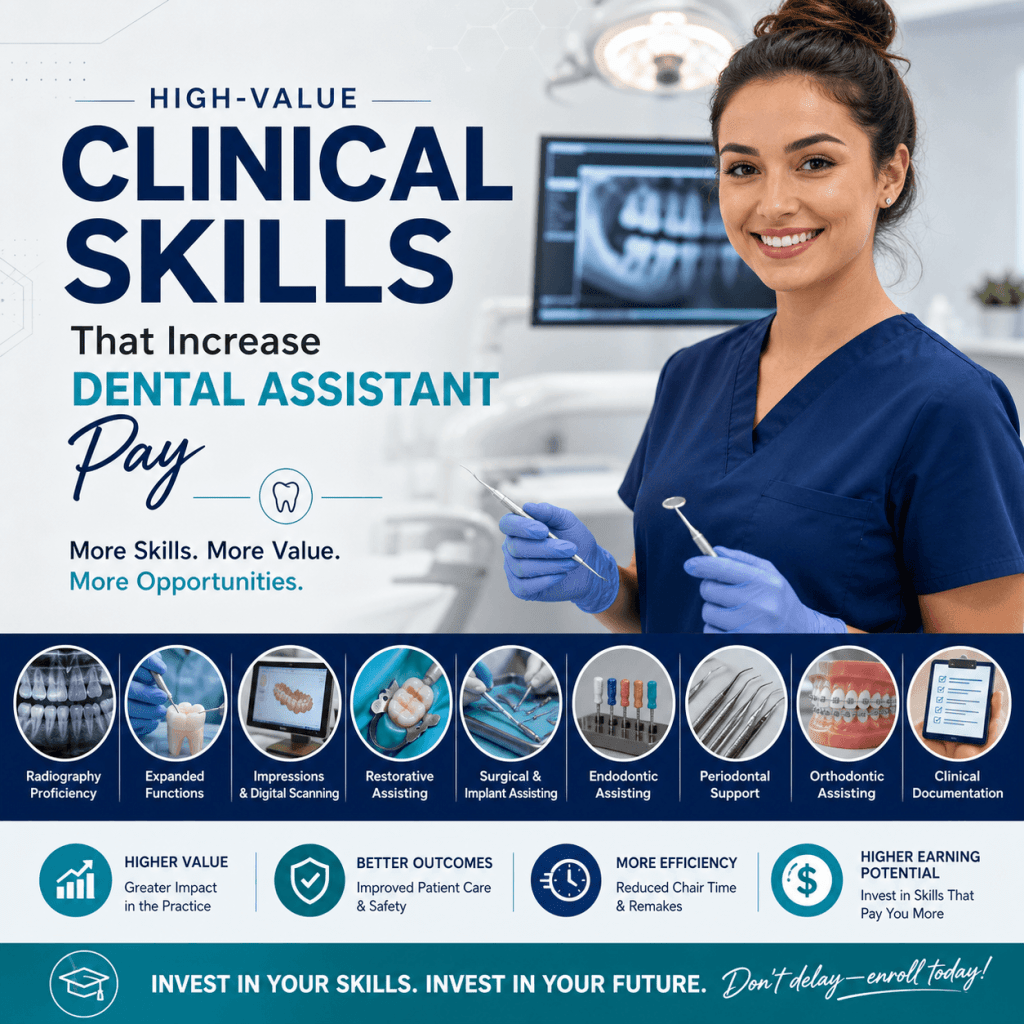
While pay varies by office, region, and role, the general relationship is straightforward: a broader, validated skill set can increase your value and open more opportunities.
Expanded-function capability can also improve your scheduling leverage because you are more versatile across procedures and providers. That versatility helps practices cover busy days, add production efficiently, and maintain consistent patient flow.
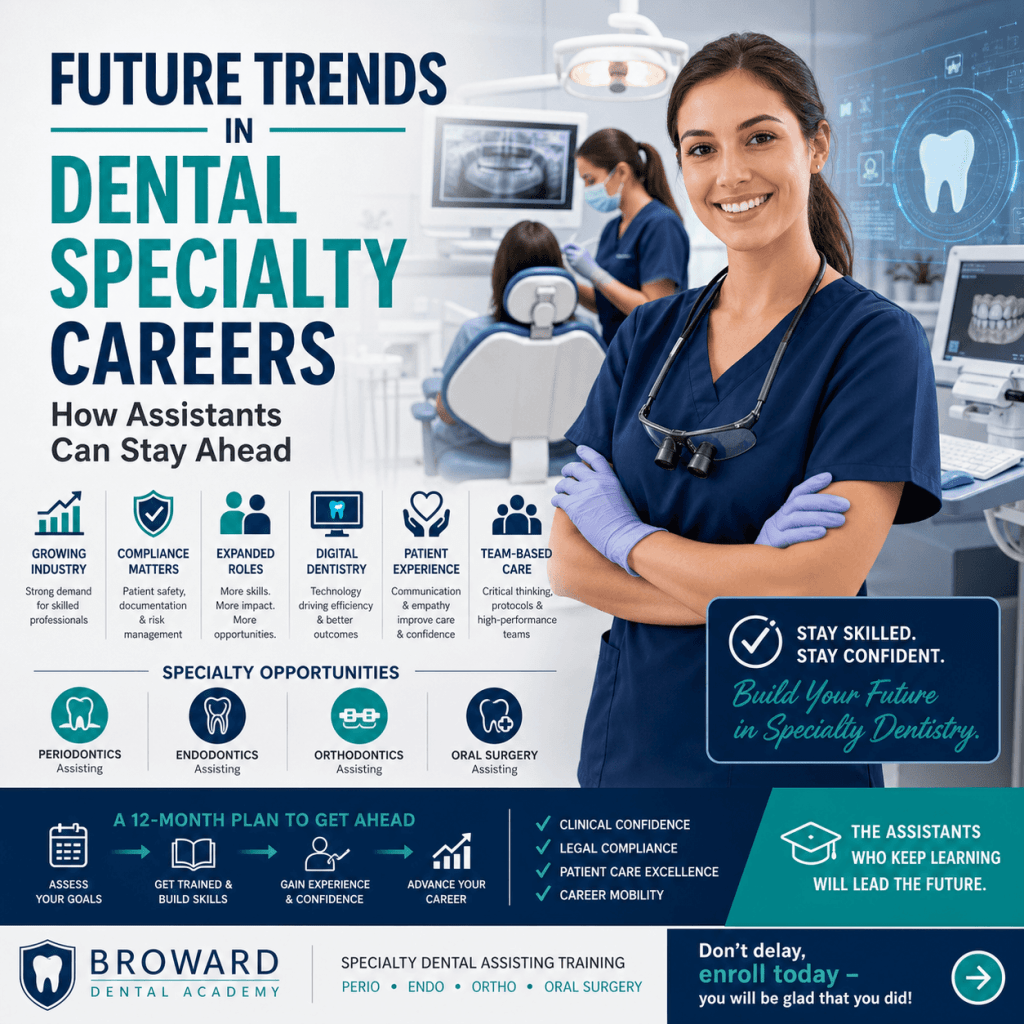
For long-term stability, dentistry remains a fast-growing healthcare field with ongoing demand for trained support staff. Expanded functions can also become a stepping stone into leadership responsibilities, mentoring newer assistants, or pursuing specialized pathways within dentistry.
Adhering to dental efda & rfda requirements ensures compliance and excellence in patient care.
Choosing your next step: EFDA training that’s Florida-ready
If you want a clean decision framework, keep it simple:
- Choose your target expanded functions
- Select Florida-aligned training that includes hands-on clinical validation
- Build a documentation package employers can easily review
- Aim for employability, compliance, and confidence in a modern practice
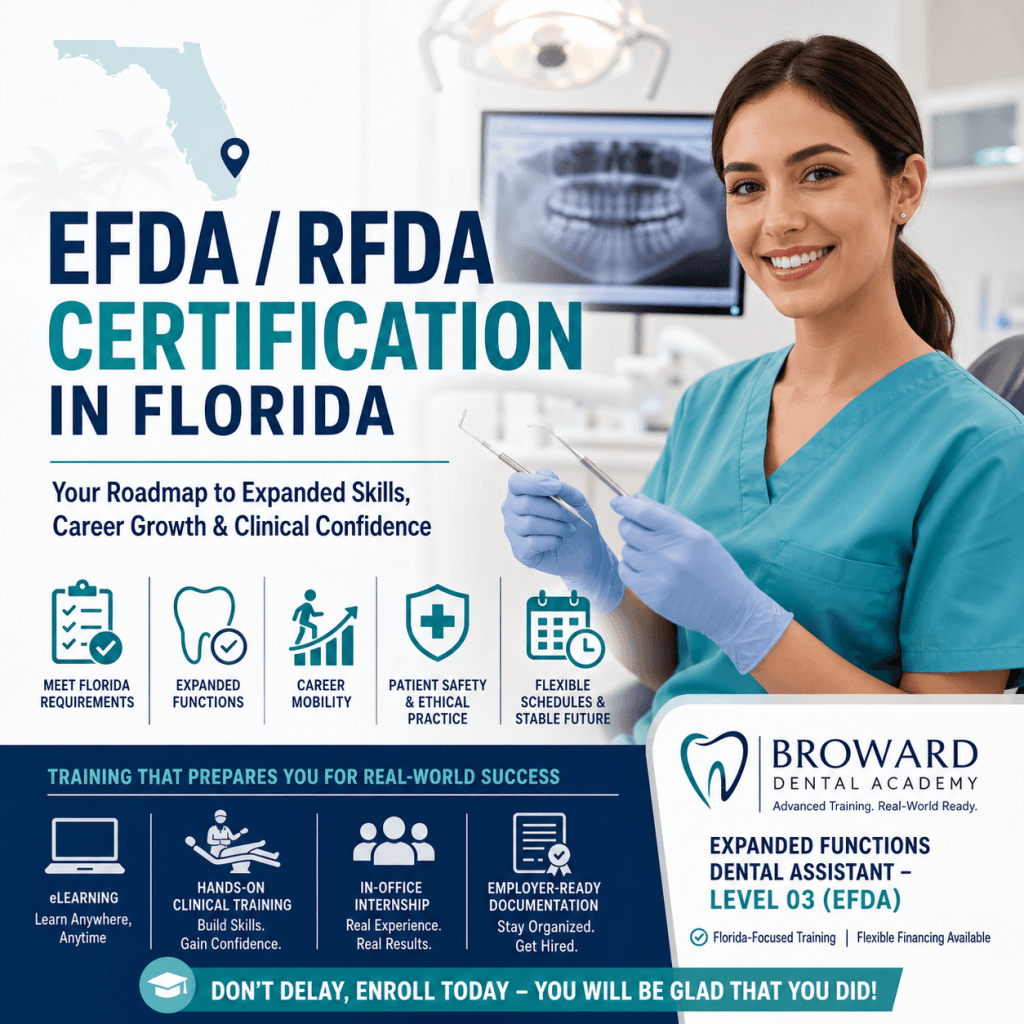
If you are ready to explore a Florida-focused pathway in dental assisting, you might want to consider Broward Dental Academy’s Expanded Functions Dental Assistant – Level 03 (EFDA) program. This program is designed to provide comprehensive training that aligns with the specific requirements of Florida employers.
Additionally, if you’re interested in pursuing a career as a Dental Assistant or Hygienist, Broward Dental Academy also offers specialized programs tailored to these roles.
Don’t delay, enroll today – you will be glad that you did!
FAQs (Frequently Asked Questions)
Why is EFDA/RFDA certification important for dental assistants in Florida?
EFDA/RFDA certification in Florida dental practices is crucial because it ensures that dental assistants are thoroughly trained, legally compliant, and clinically confident. This certification helps assistants earn trust faster, support efficient scheduling by taking on delegated tasks appropriately, reduce bottlenecks during restorative and procedural appointments, and stand out in competitive hiring markets. Additionally, it helps dental offices reduce risk by ensuring compliance with regulated expanded duties.
What do the terms EFDA and RFDA mean in the context of Florida dental assisting?
In Florida, EFDA stands for Expanded Functions Dental Assistant, referring to a dental assistant who has completed training and demonstrated competency for specific expanded functions allowed by Florida rules under appropriate supervision. RFDA commonly refers to Registered Dental Assistant pathways in Florida; however, Florida’s structure is more function and training-specific than the term ‘registered’ implies. Both terms are often used together when discussing qualifications for expanded duties.
What are the key qualities employers look for in dental assistants within Florida practices?
Florida dental employers consistently seek dental assistants who are thoroughly trained (able to perform skills correctly, repeatedly, and safely), legally compliant (understanding Florida rules and supervision levels), and clinically confident (capable of handling workflow pressure, communicating calmly with patients, and supporting providers without hesitation). These qualities ensure efficiency, comfort, and smooth appointments from check-in to checkout.
How do expanded functions impact a dental assistant’s role and career in Florida?
Expanded functions allow dental assistants to become versatile clinical professionals who contribute significantly to practice efficiency by improving procedure flow, enabling appropriate task delegation, ensuring consistency in patient experience, and supporting team stability. For the assistant’s career, this translates into more responsibility, a broader skill set, increased value to employers, greater job mobility, schedule flexibility, stable employment prospects, and enhanced ethical responsibility regarding patient safety.
What types of training or qualifications are typically required for EFDA certification in Florida?
EFDA certification requirements in Florida usually include prerequisites such as foundational education in dental assisting readiness; approved training specific to the expanded functions desired; radiography qualification if taking X-rays; infection control and safety standards knowledge; and competency-based clinical skills demonstration. The pathway depends on which expanded functions an assistant wants to perform and what the employer expects for the position.
How do expanded functions benefit the overall operation of a Florida dental practice?
Expanded functions benefit Florida dental practices by enhancing efficiency through smoother procedures with less back-and-forth for dentists; enabling appropriate delegation so providers can focus on provider-only work; promoting consistency in setup, turnover, and patient experience throughout the day; and fostering team stability by reducing burnout and schedule chaos. This leads to improved patient safety outcomes and better compliance with regulatory standards.
Training in line with dental efda & rfda requirements leads to greater job satisfaction.
Understanding dental efda & rfda requirements helps in developing critical thinking and decision-making skills.