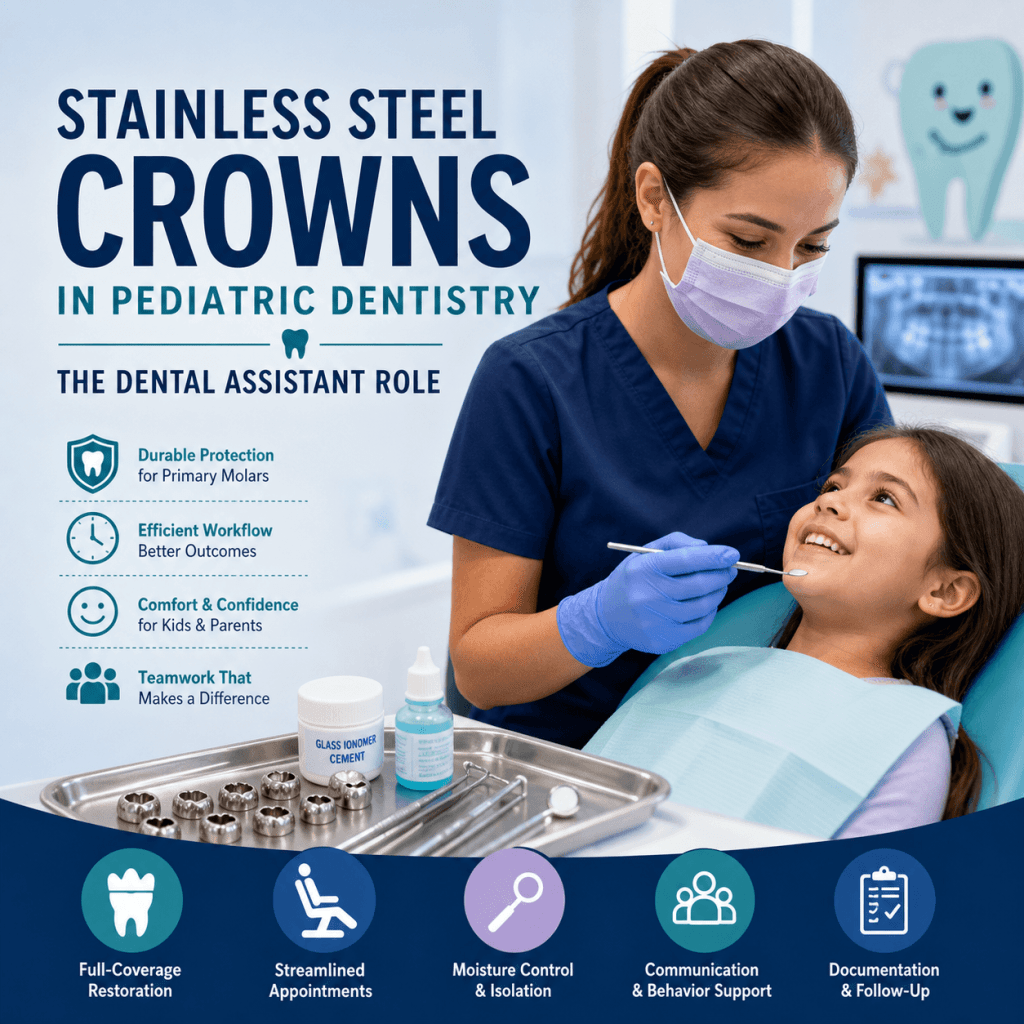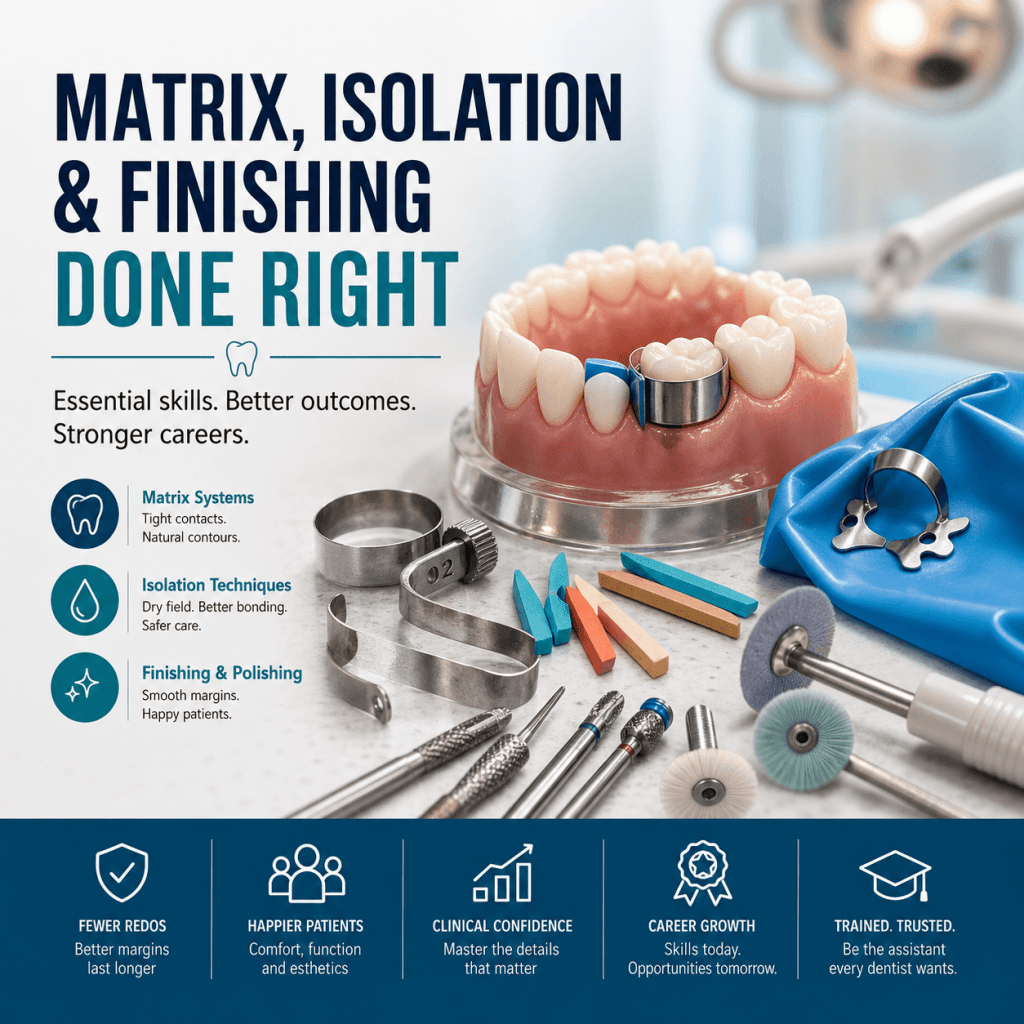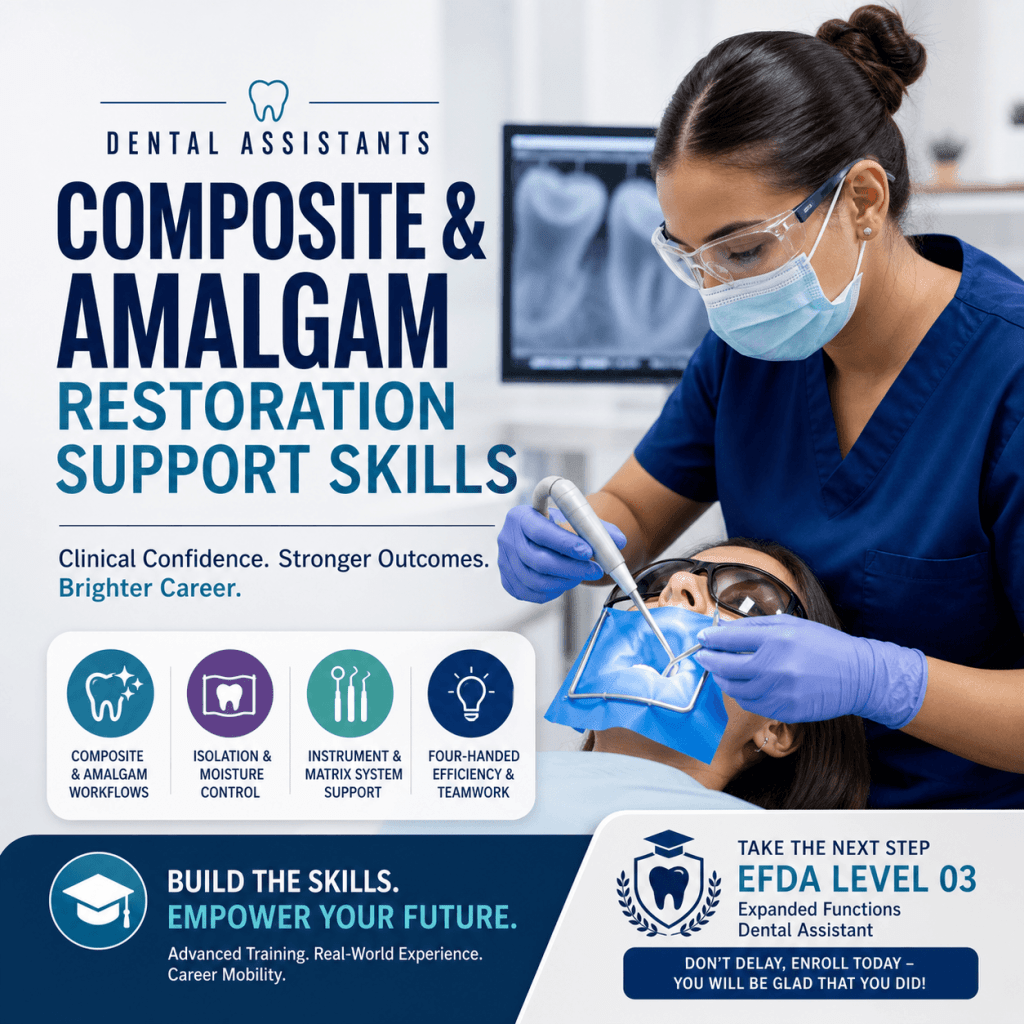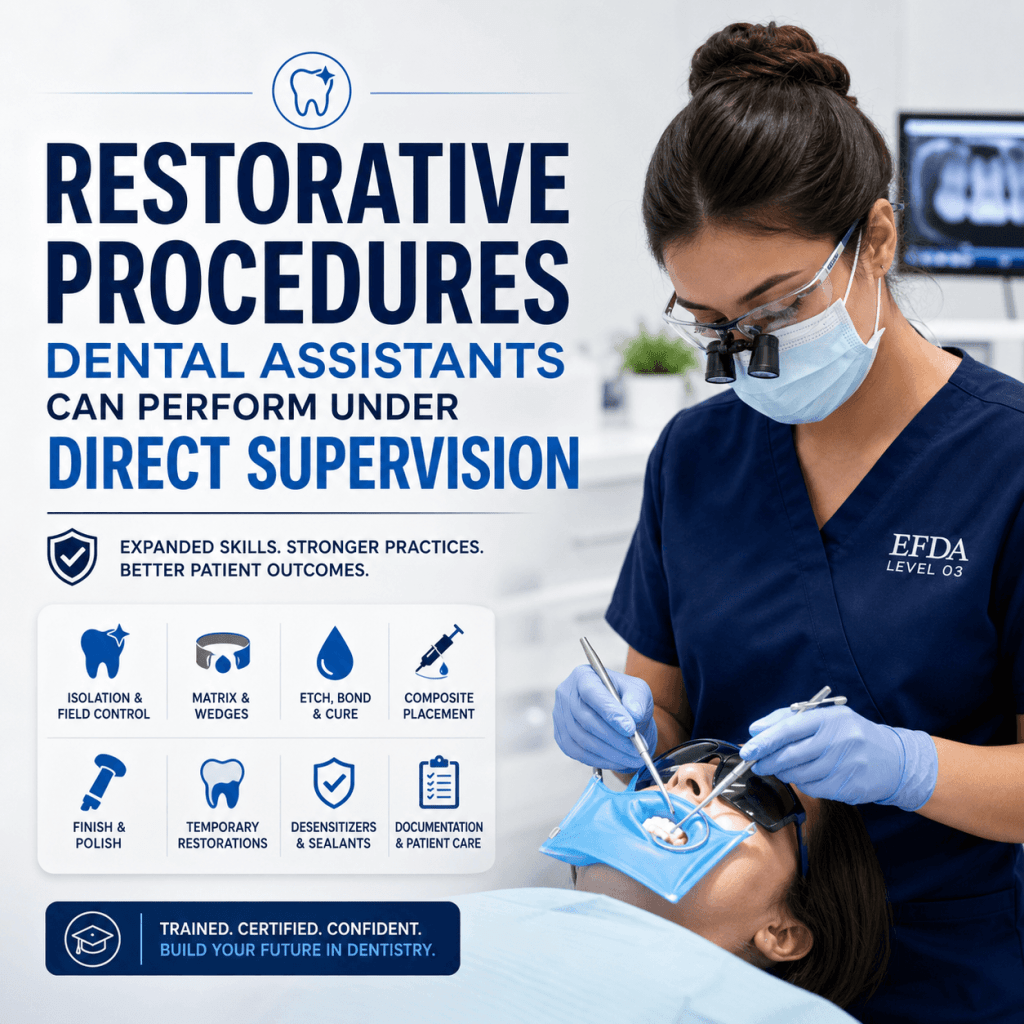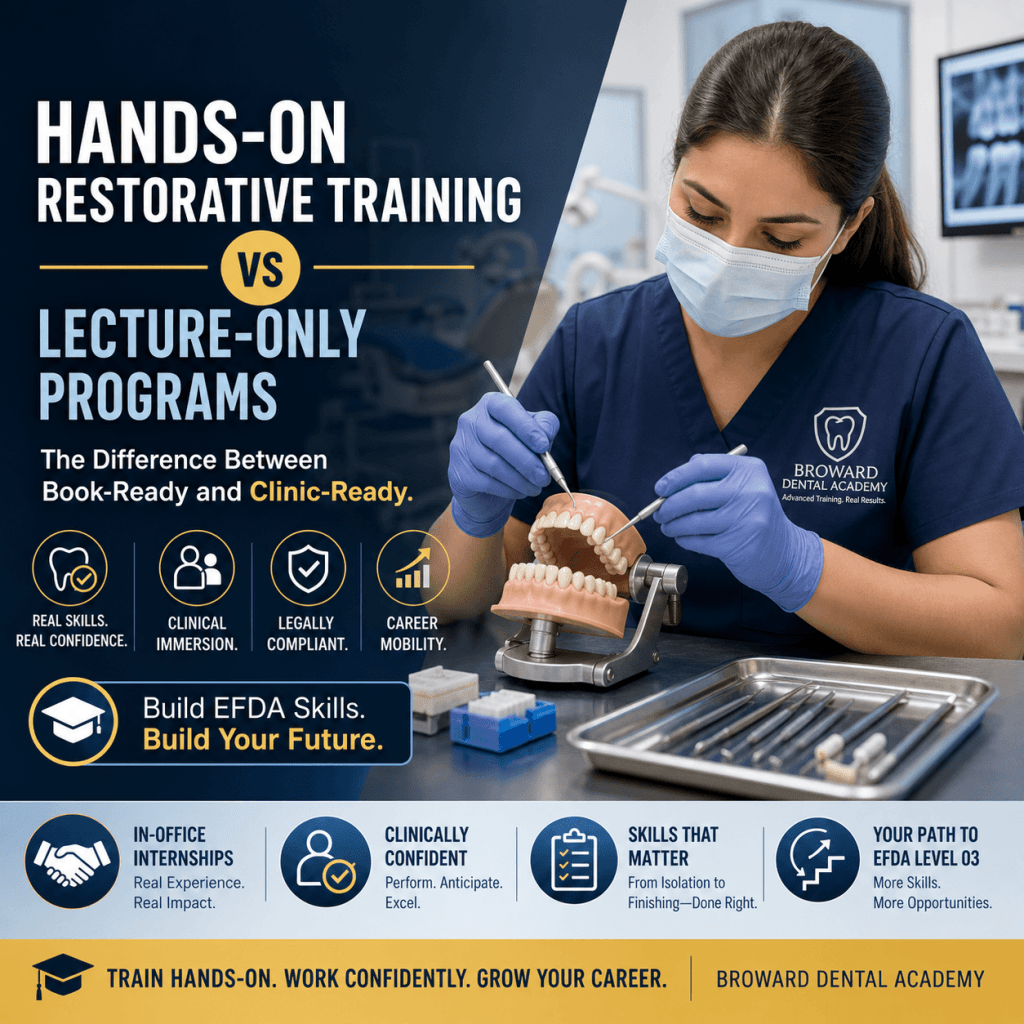
That is why the comparison matters: dental assistant hands-on restorative training vs lecture-only programs is often the difference between being book-ready and being clinic-ready.
Most students are trying to avoid one painful outcome: finishing a program, getting hired, and then realizing they still feel shaky chairside the moment composites, matrices, isolation, or finishing procedures show up on the schedule.
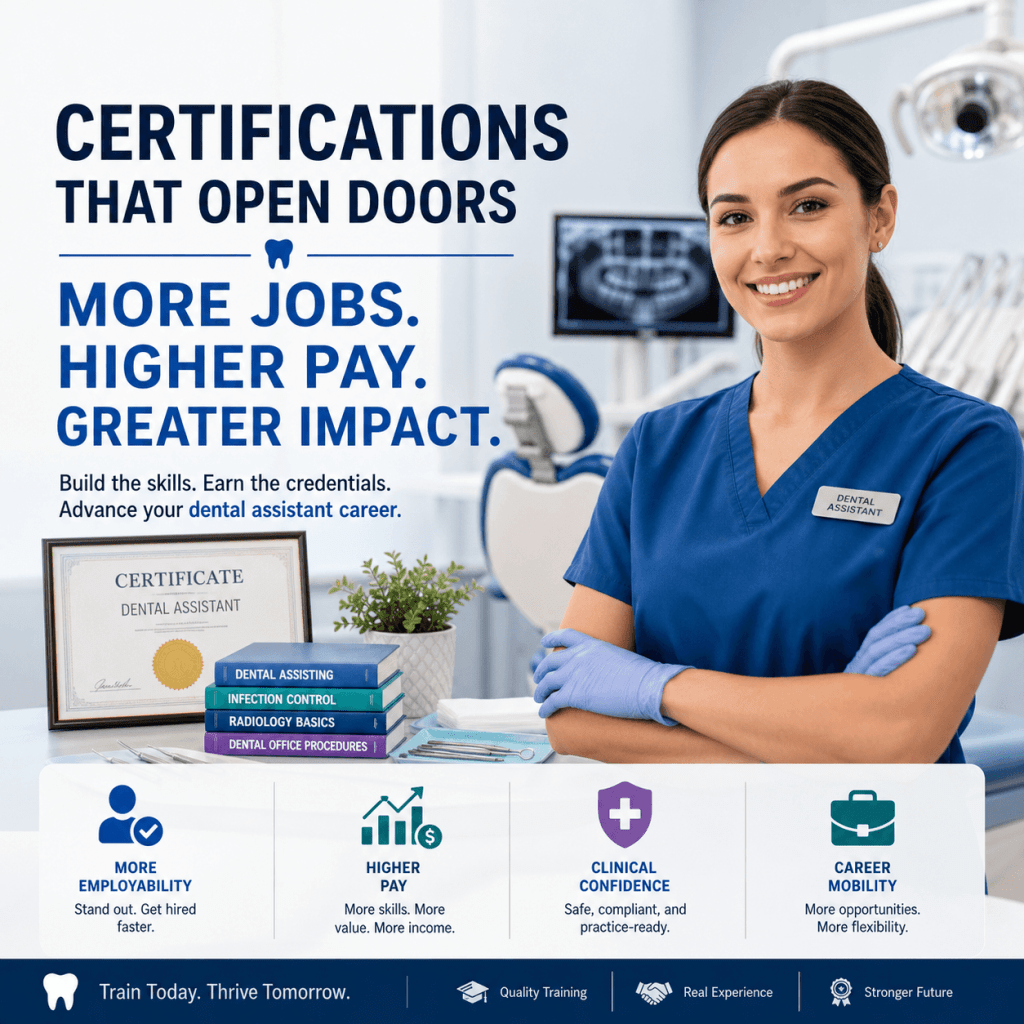
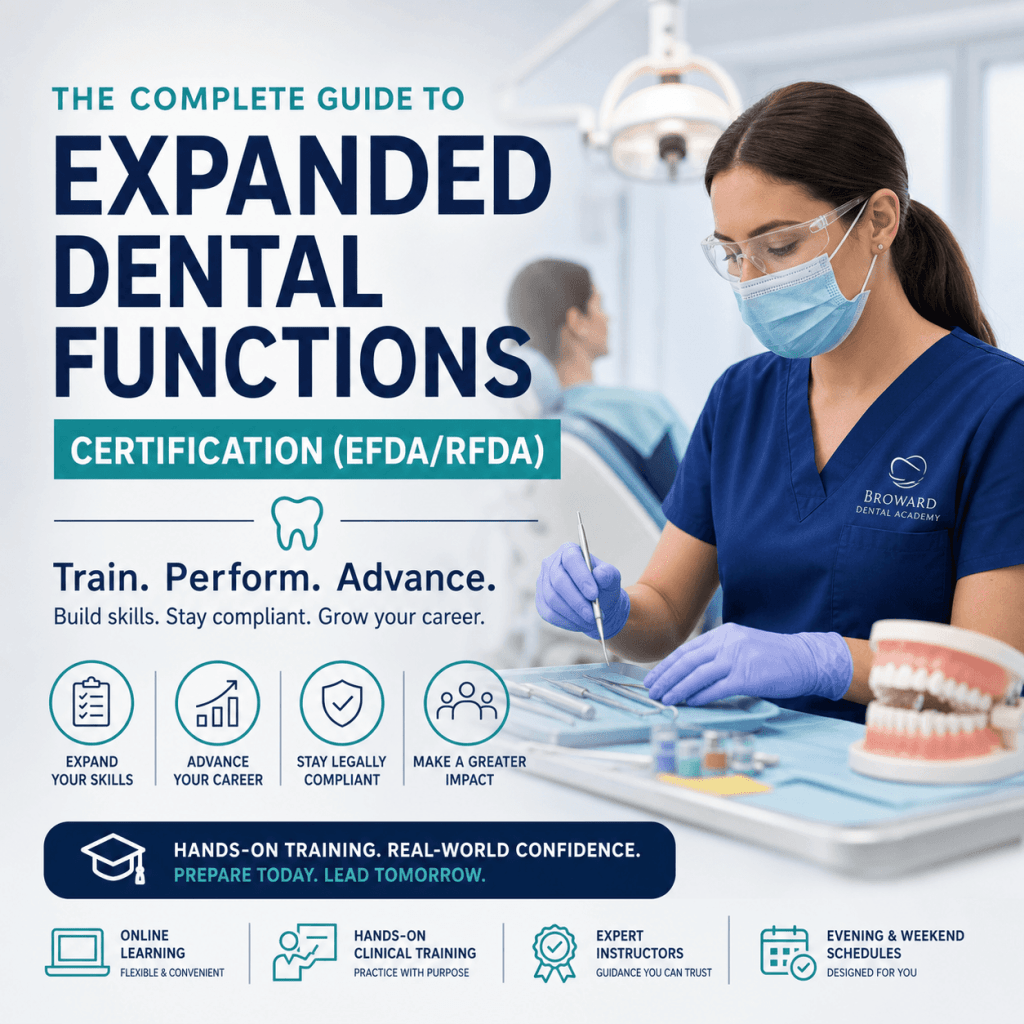
If your long-term goal includes expanded responsibilities, restorative competence is not optional. It is a foundation for career mobility and a key stepping stone toward the Expanded Functions Dental Assistant (EFDA) pathway.
Why this comparison matters (especially if you want EFDA-level skills)
A lecture-only program can teach you what a Class II restoration is. A hands-on program trains you to support that restoration in real time, under real constraints, with real consequences.
In a busy practice, the difference shows up quickly:
- Can you set up fast and correctly without second-guessing?
- Can you maintain moisture control when the patient keeps swallowing?
- Can you anticipate what the dentist needs next, instead of waiting to be told?
- Can you help prevent common restorative issues like contamination, overhangs, and open contacts?
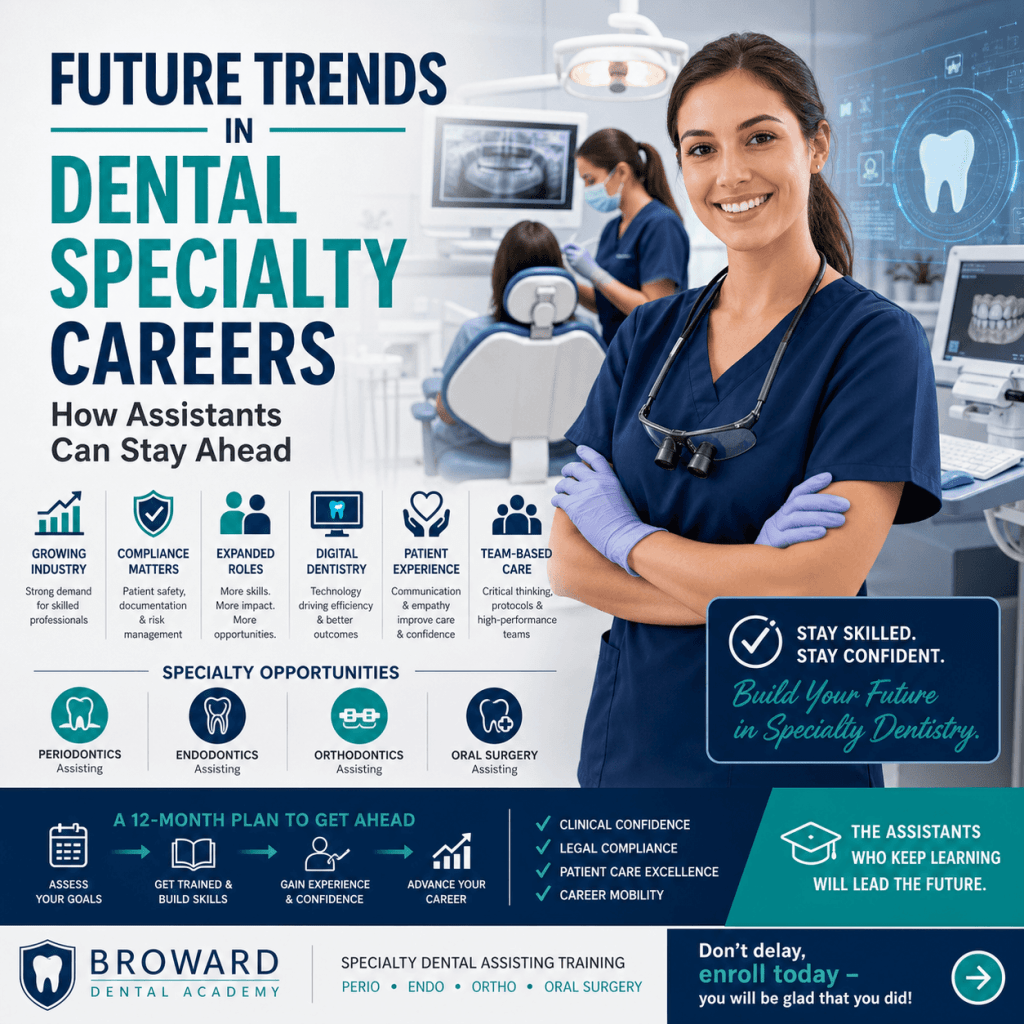
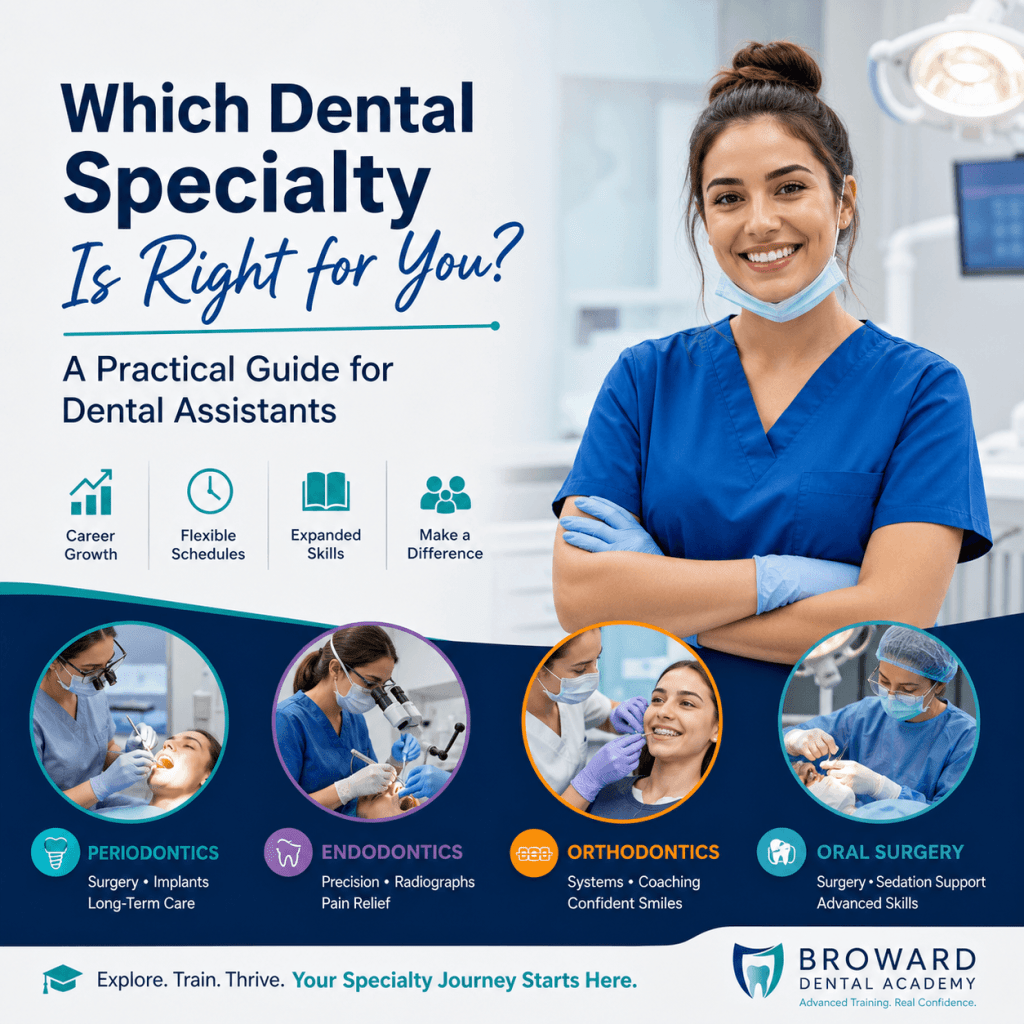
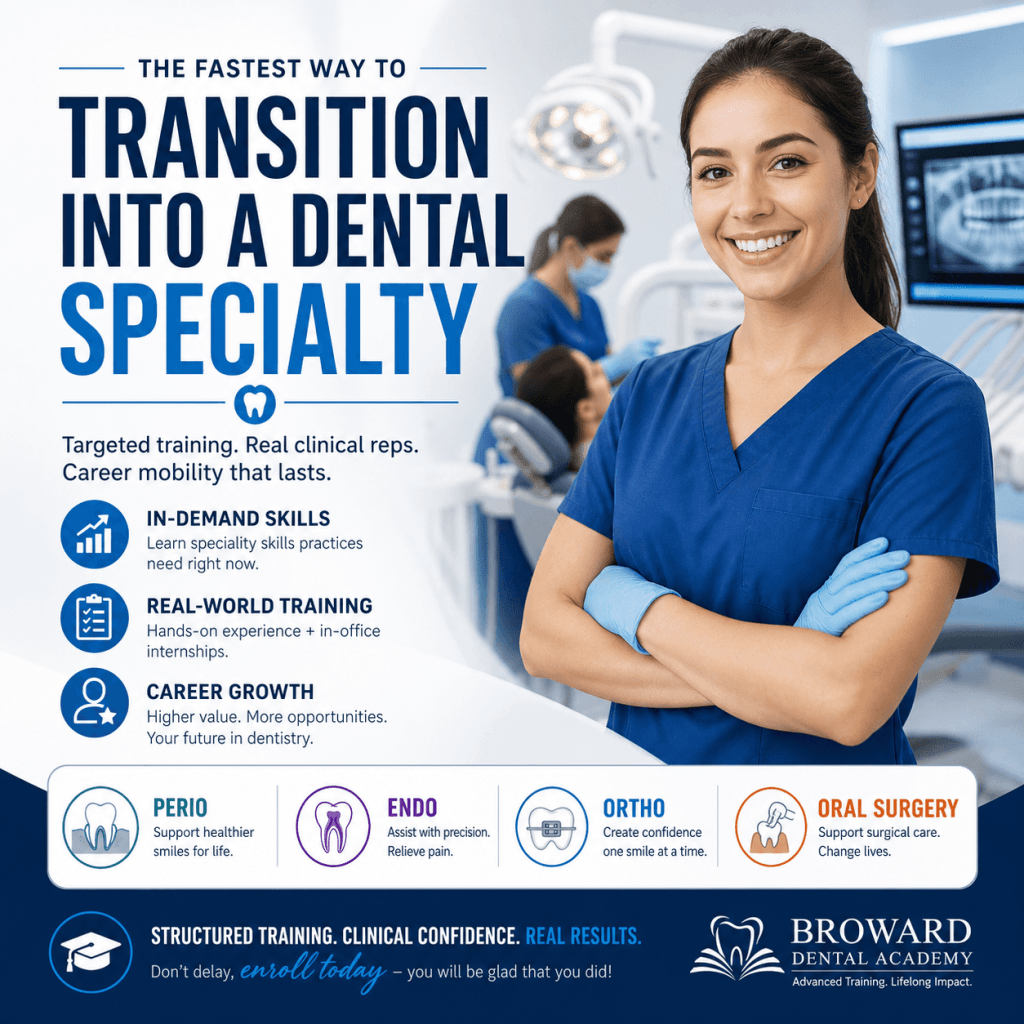
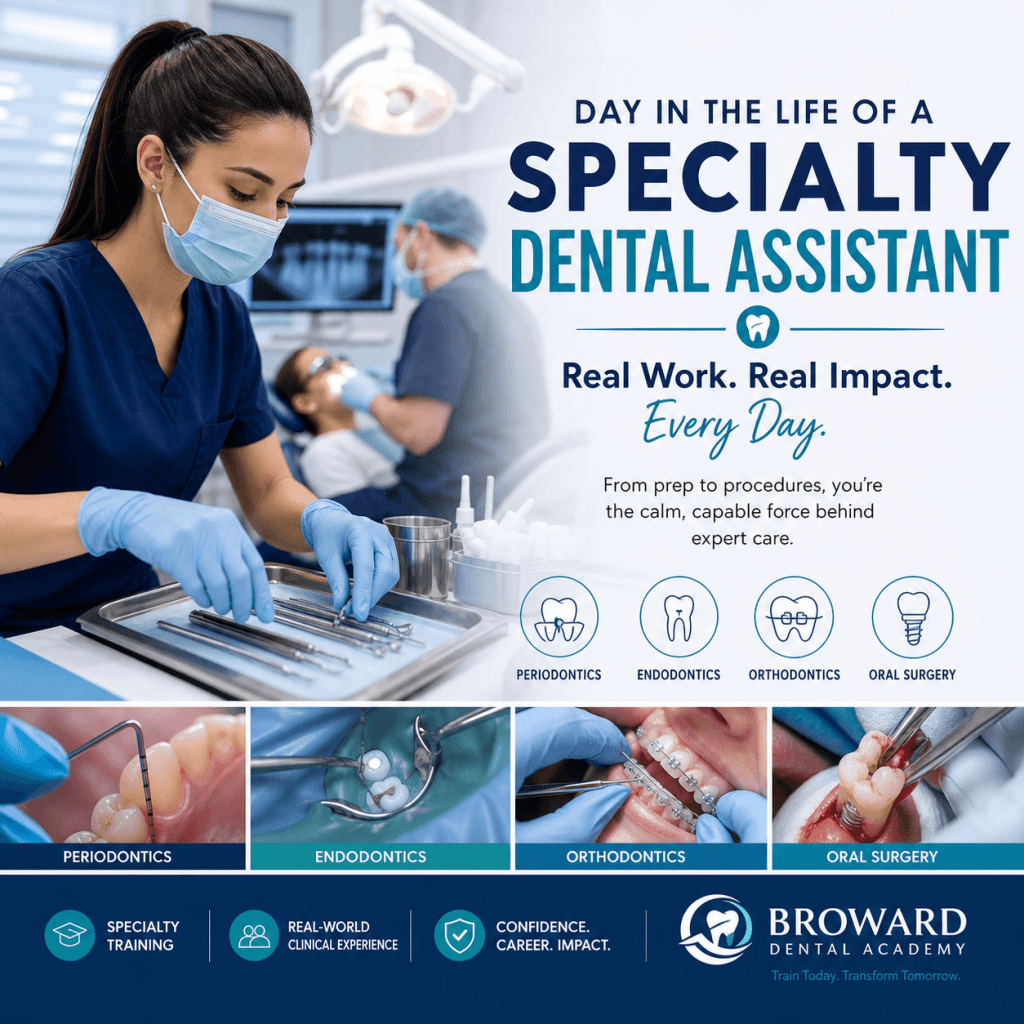
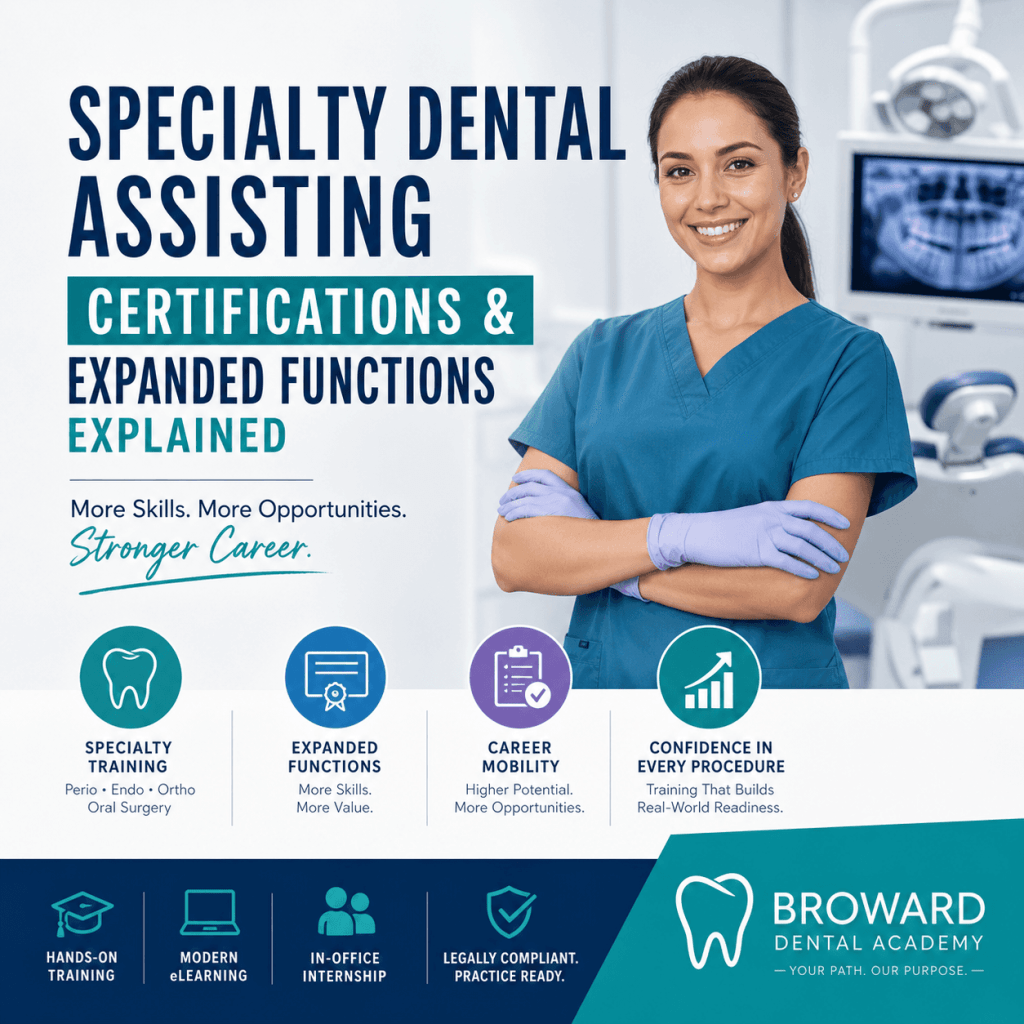
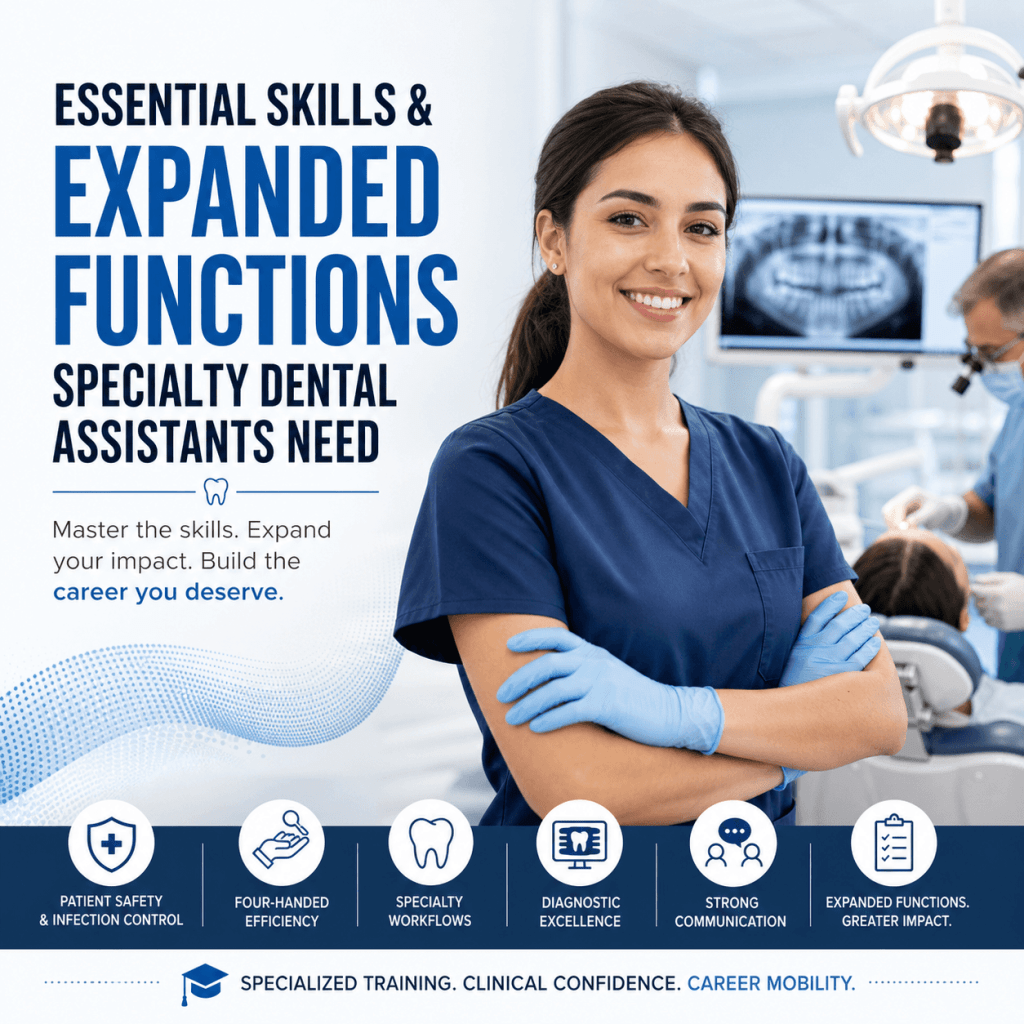
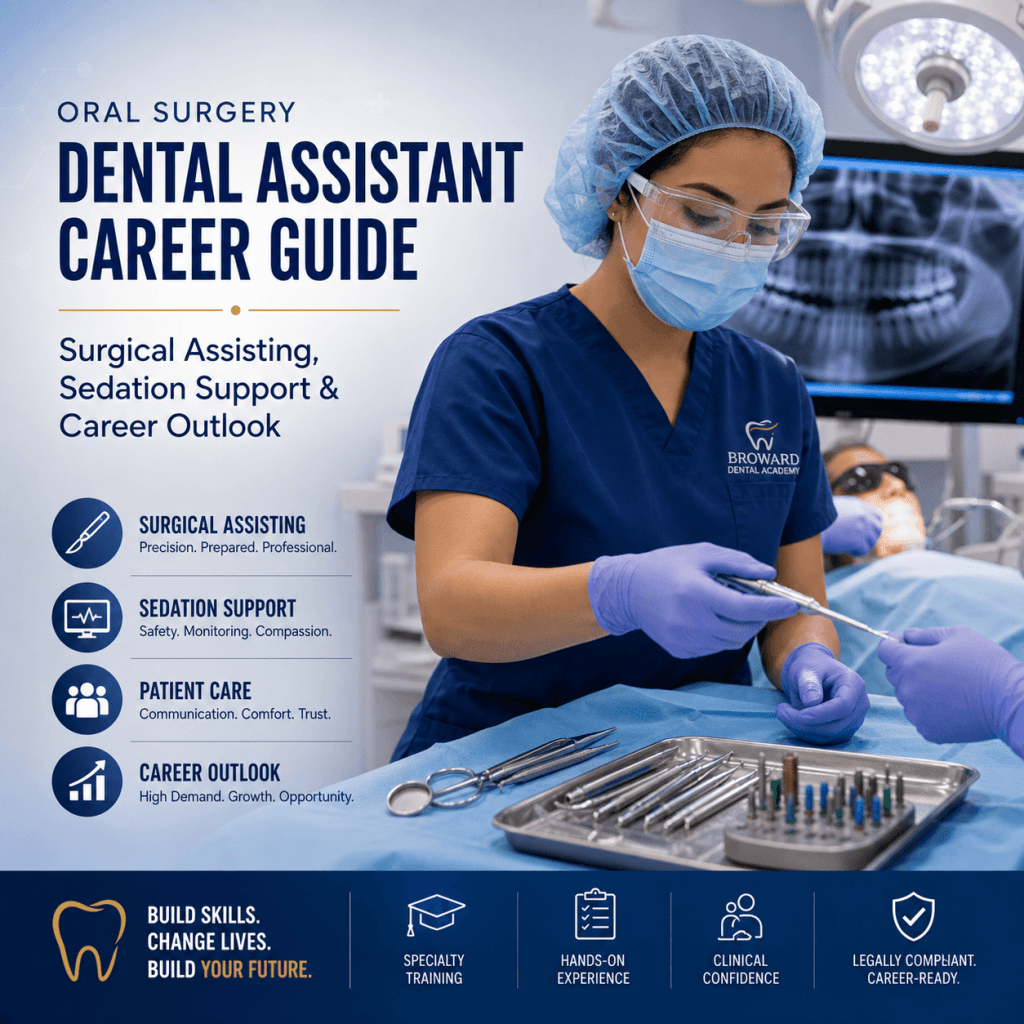
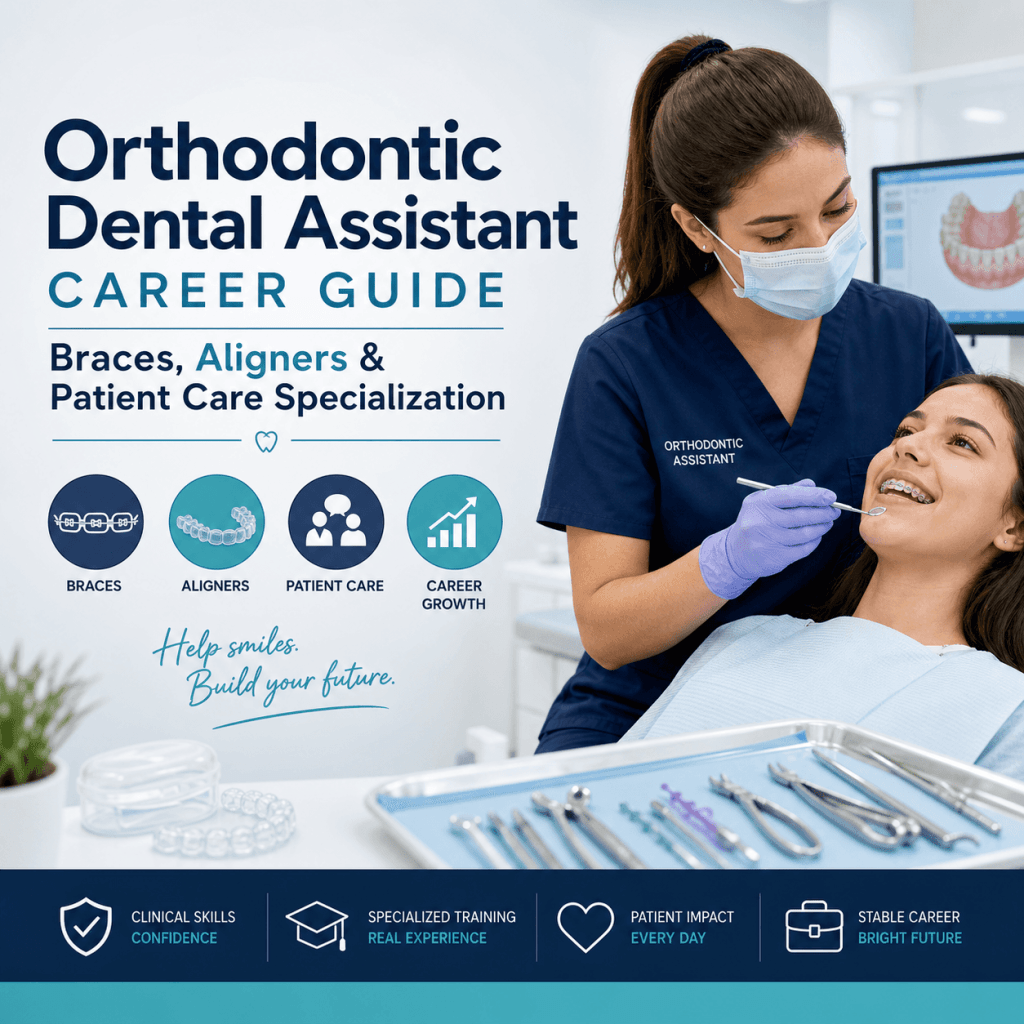
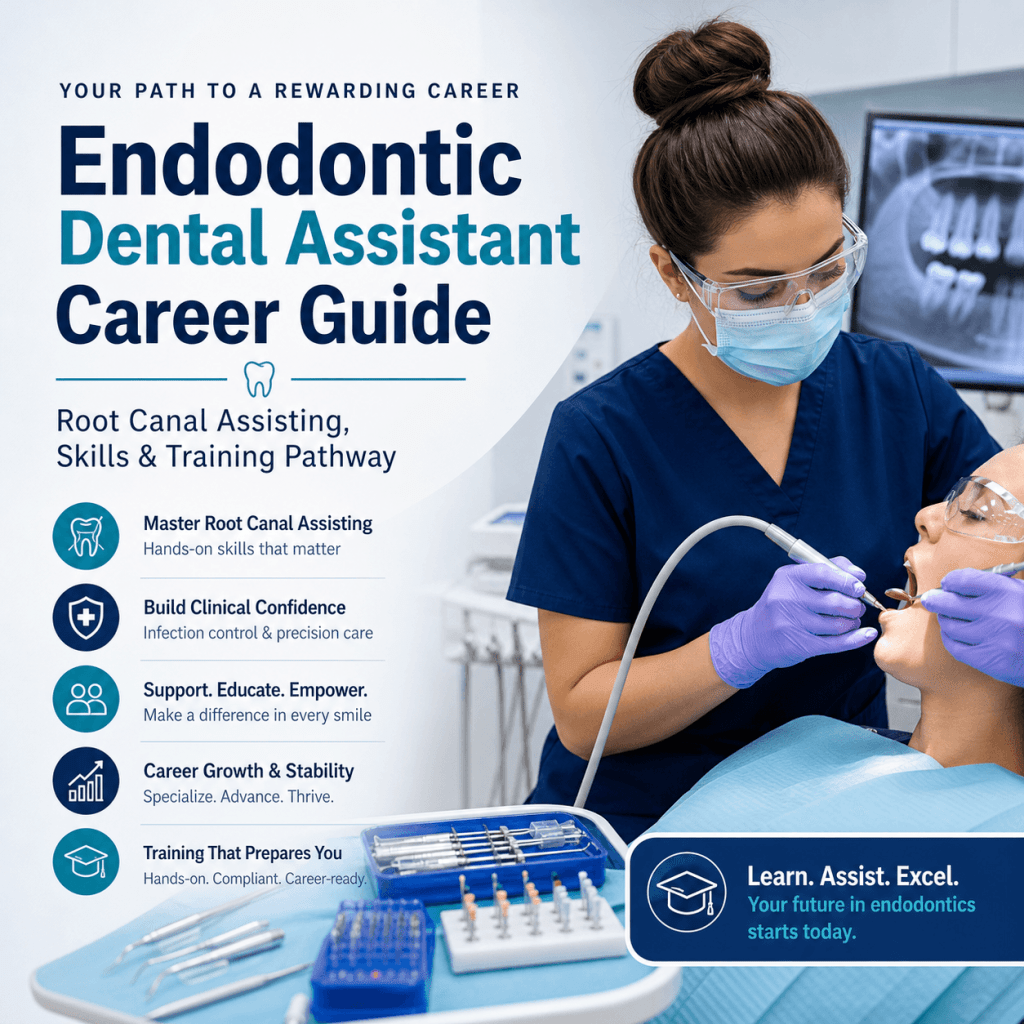
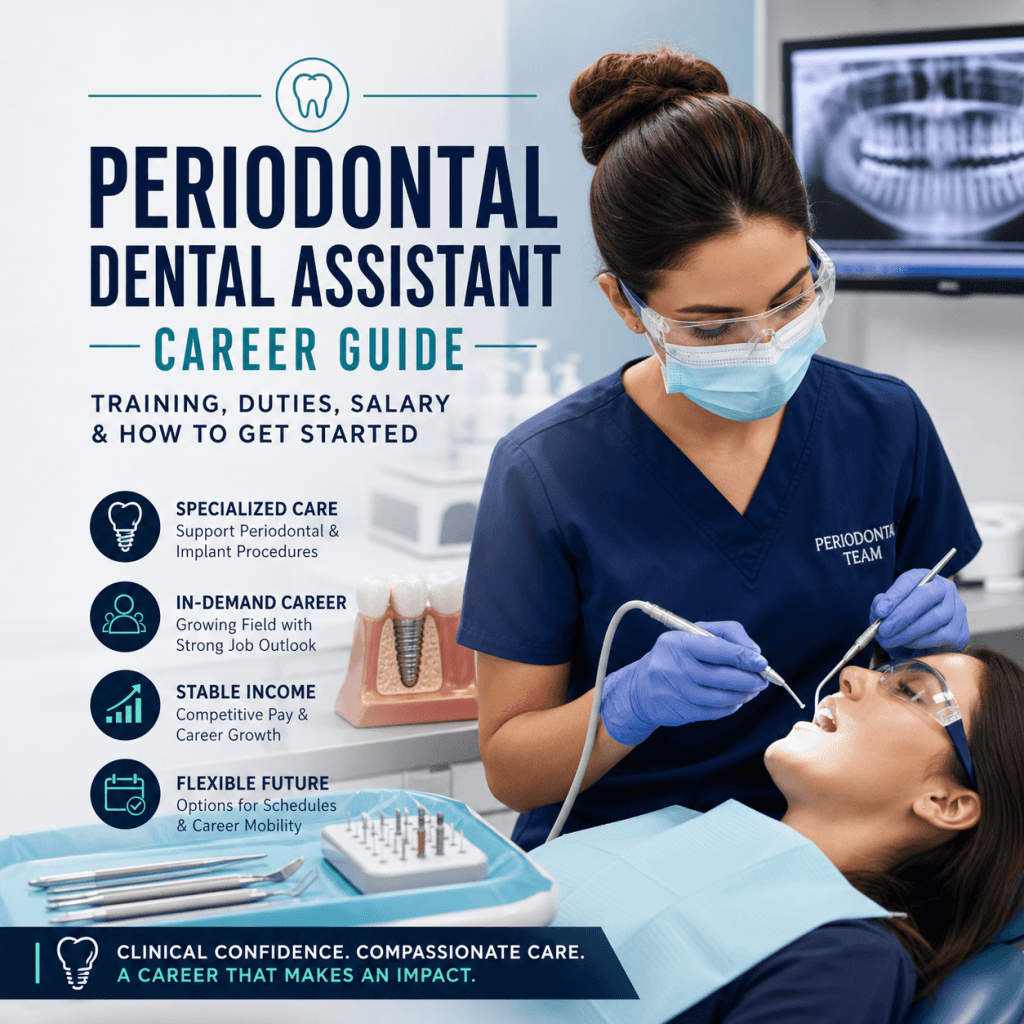
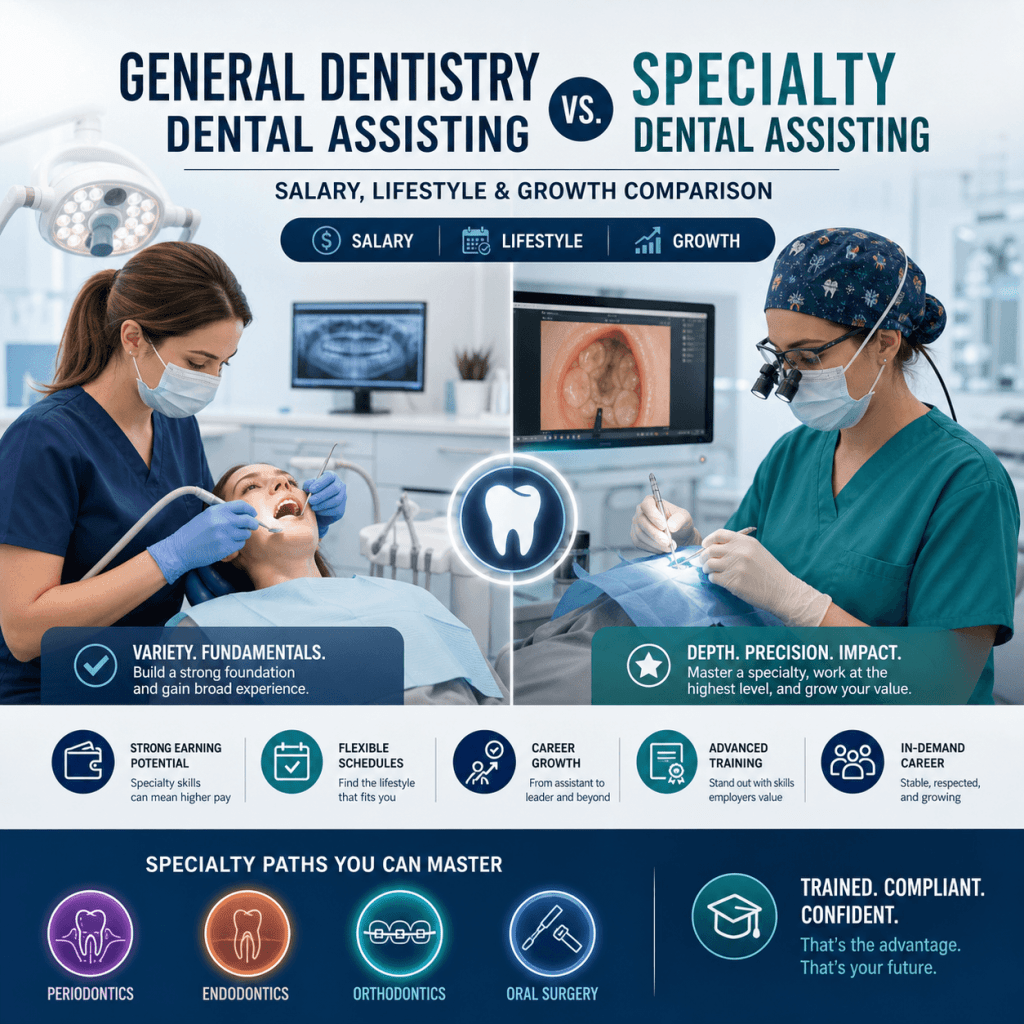
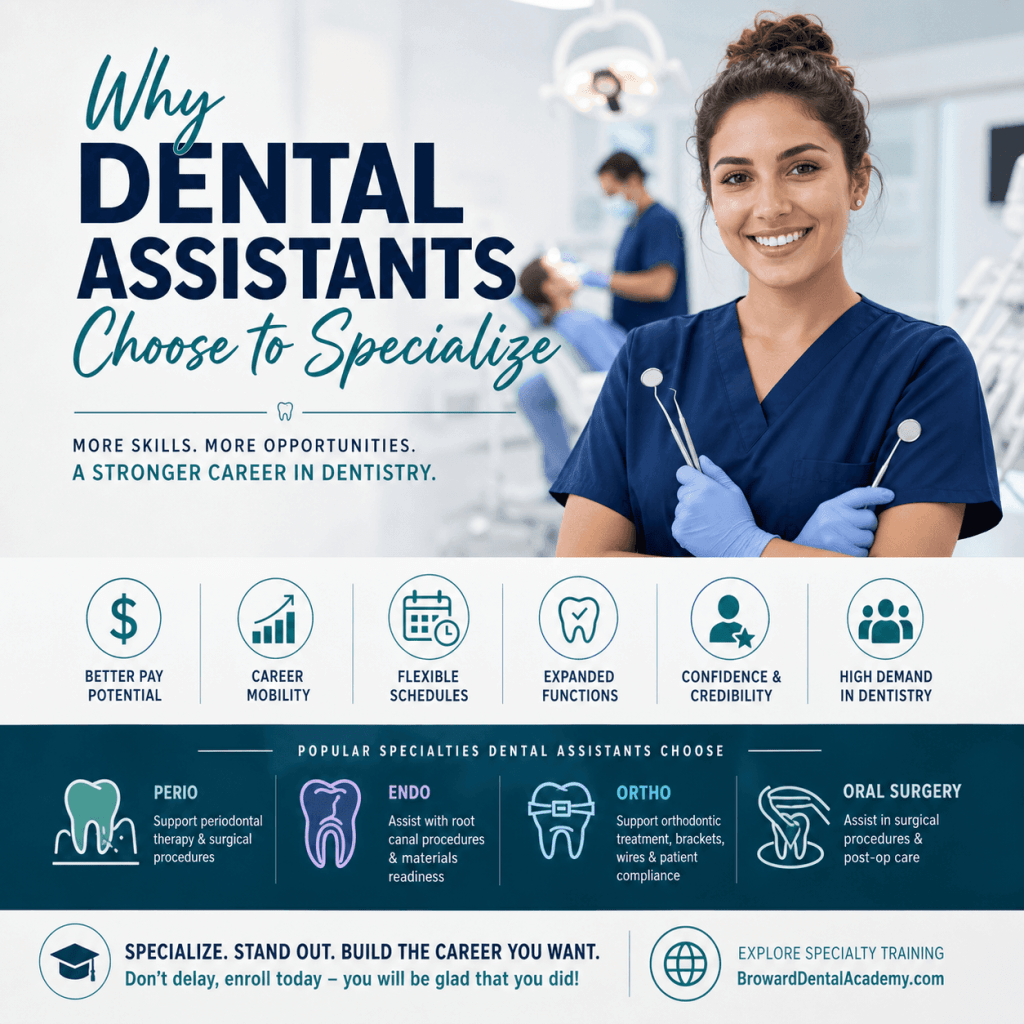
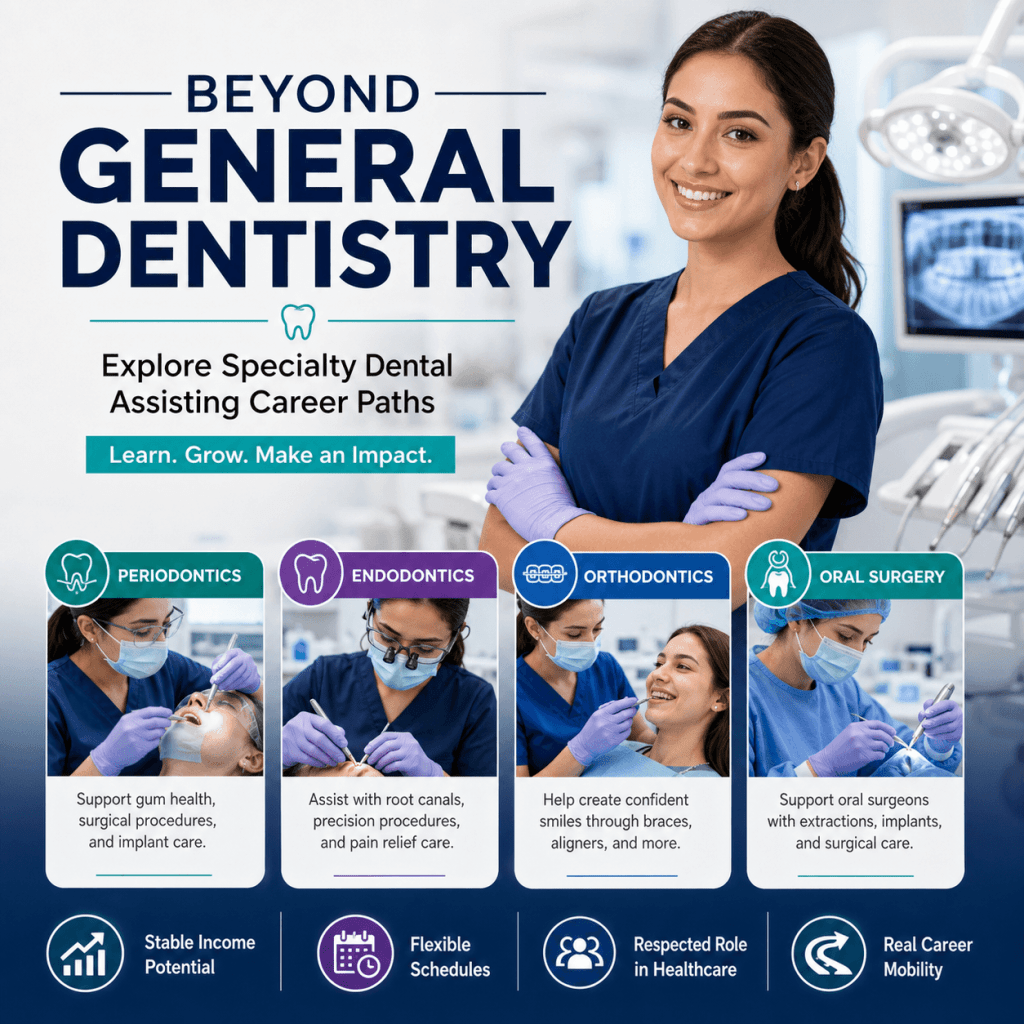
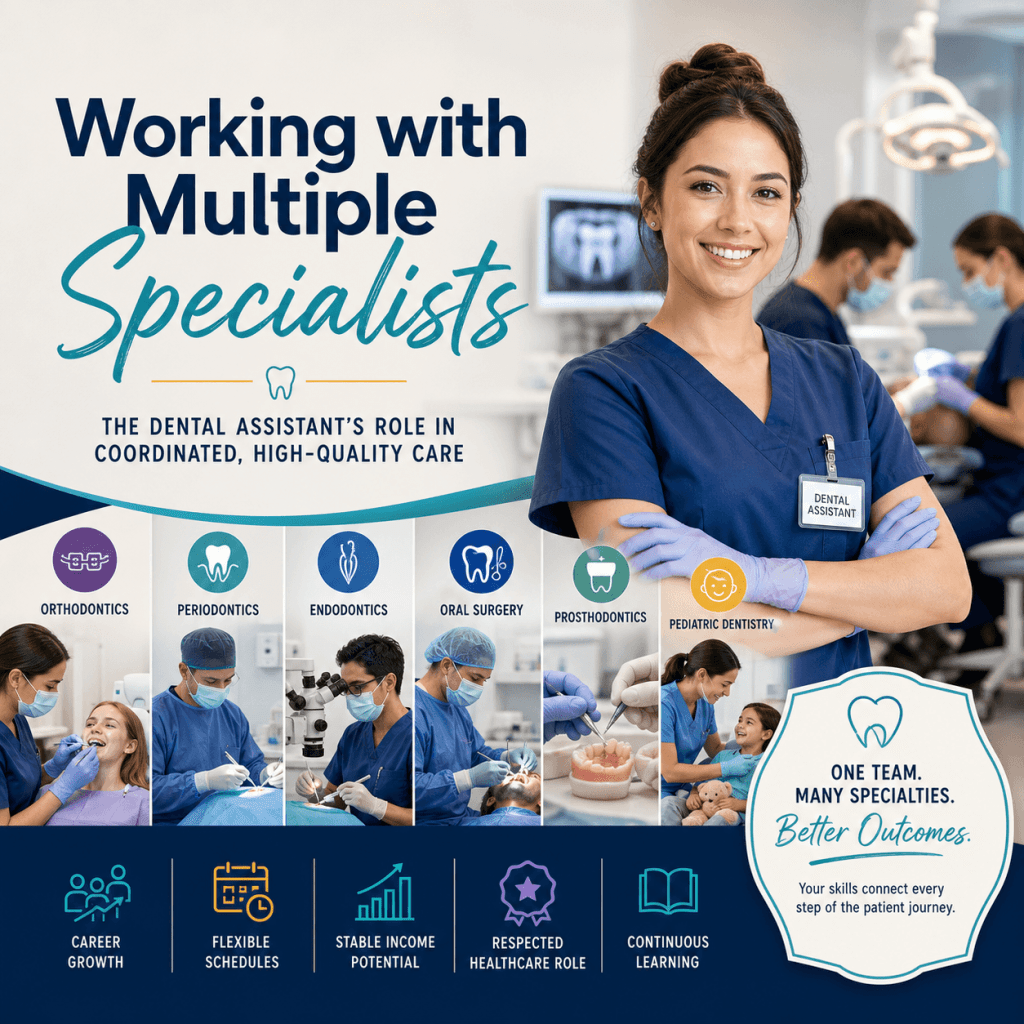
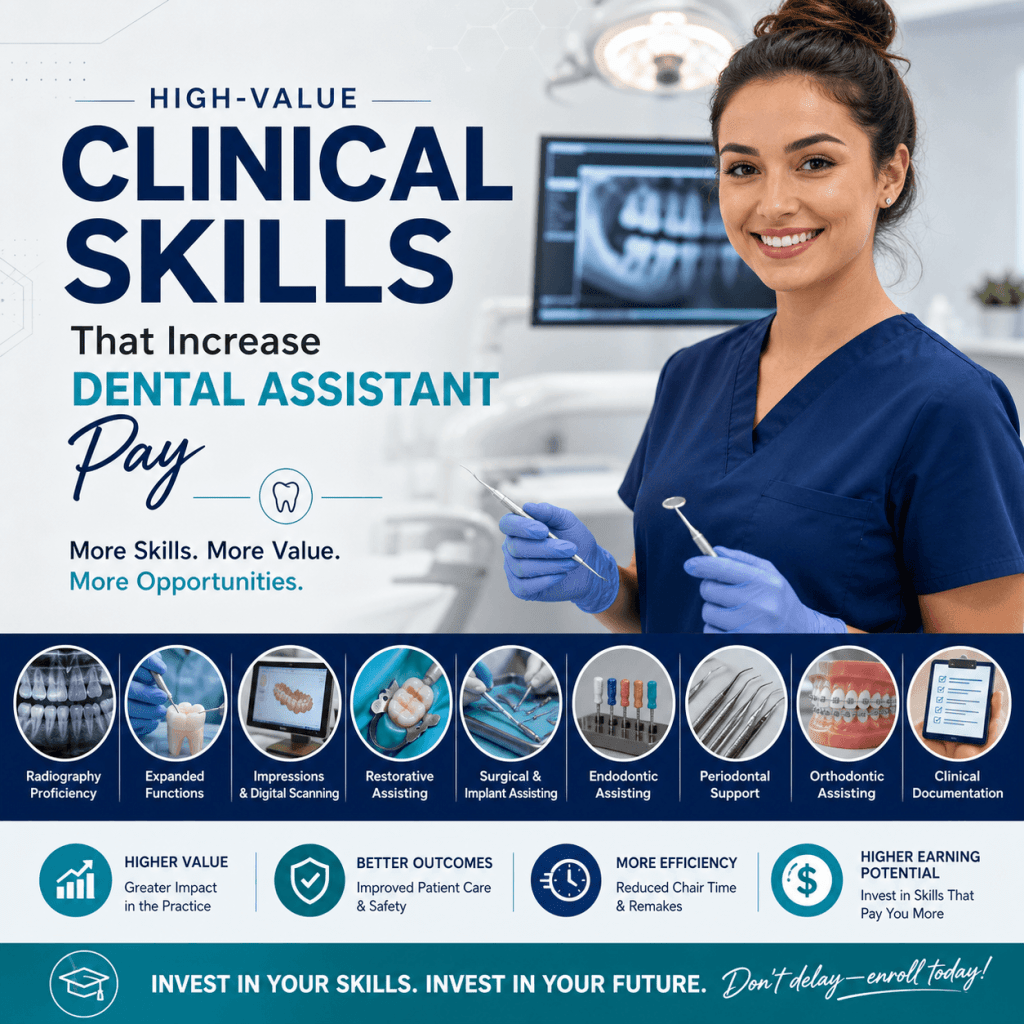
If you want EFDA-level growth, employers and instructors typically expect a solid restorative foundation first. The more comfortable you are with restorative workflows now, the more confidently you can build into expanded functions later. This includes areas like oral surgery, orthodontics, endodontics, and periodontics.
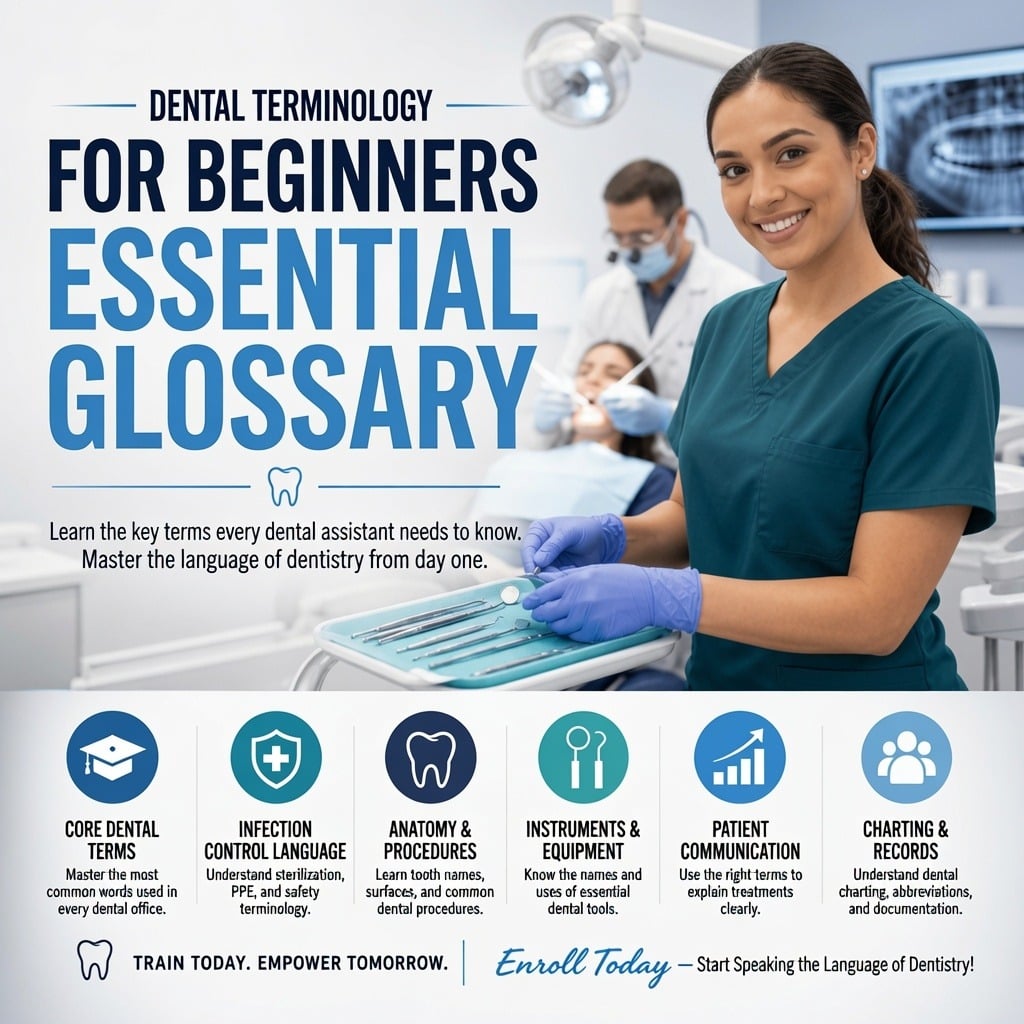
What “hands-on restorative training” actually includes (not just a buzzword)
Hands-on restorative training is not merely observing someone else perform dentistry. It is repeated skill practice with coaching, where technique is developed step-by-step and performance is assessed against clear standards.
In practical terms, strong hands-on restorative training often includes:
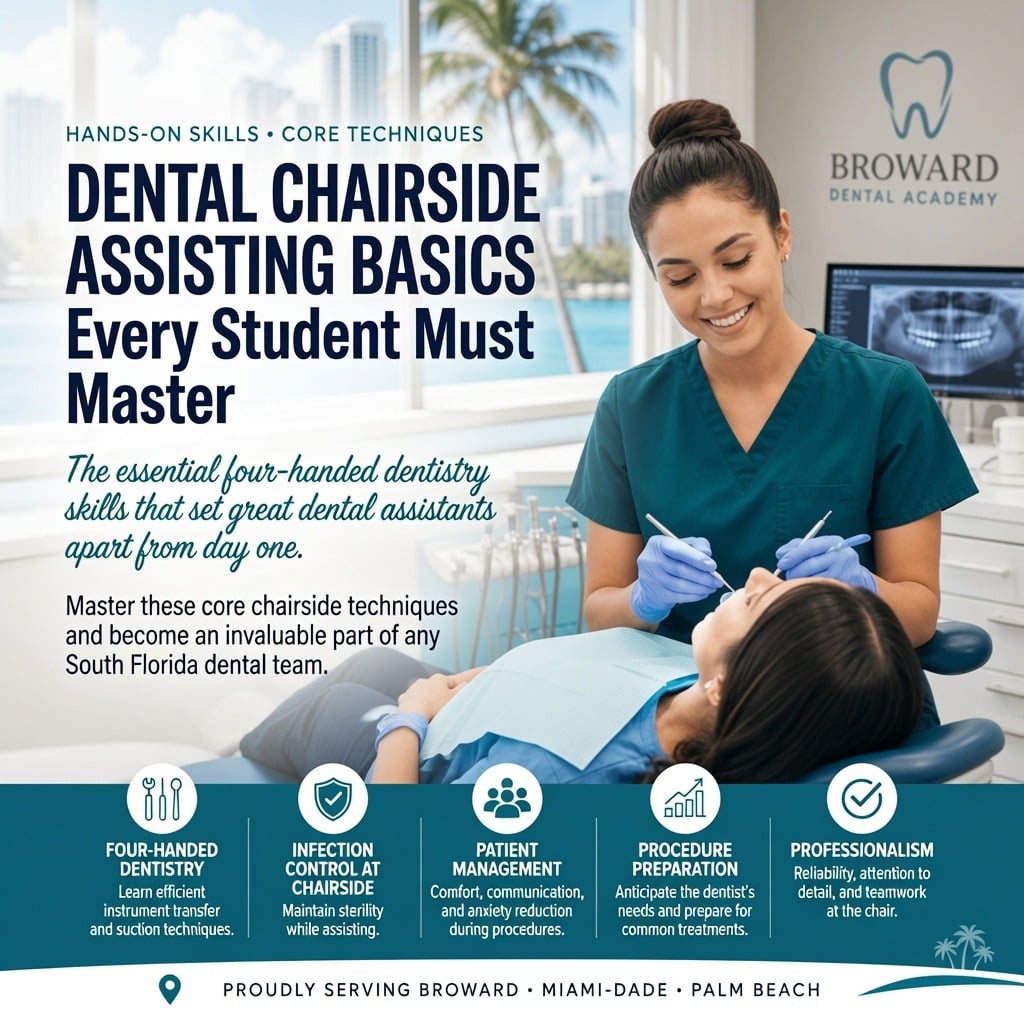
- Instrument transfer and four-handed dentistry basics
- Efficient passing, maintaining visibility, reducing fumbling, and keeping the procedure moving.
- Isolation and retraction
- Mastering cotton roll placement, suction positioning, cheek and tongue retraction, and contamination prevention.
- Matrix and wedge placement
- Learning how to support proper contours and contacts while avoiding overhangs.
- Materials handling and timing
- Gaining an understanding of working time and set time through practice rather than memorization. This also involves preventing contamination and keeping materials usable.
- Assisting with composites and amalgam (where applicable)
- Ensuring proper setup, sequence, and support throughout placement and curing.
- Finishing and polishing support
- Understanding the objective standards for smooth margins, anatomy, and occlusal harmony; then practicing the workflow that helps achieve these standards.
- Infection control inside restorative setups
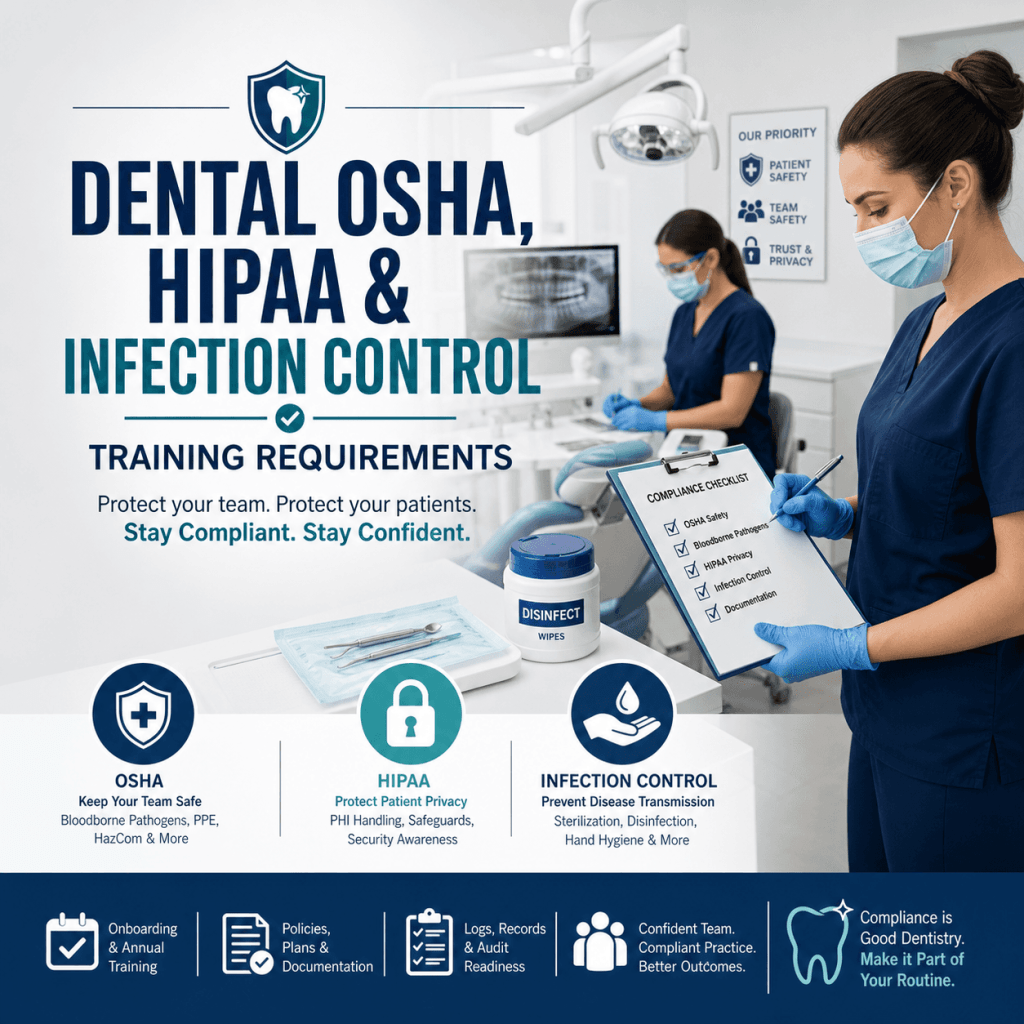
- Not just general infection control but cultivating the habit of staying clean and compliant while the procedure is progressing quickly. This includes implementing standard precautions to prevent infections.
The biggest difference in this training approach is the feedback received. While watching a demonstration can be helpful, performing the procedure repeatedly under supervision is where true competence develops. You learn to identify what went wrong and adjust the workflow for next time.
Hands-on training also fosters critical thinking skills, such as recognizing signs of:
- contamination and loss of bond
- open contacts and food traps
- overhangs and tissue irritation risks
- voids, poor adaptation, or improper curing workflow
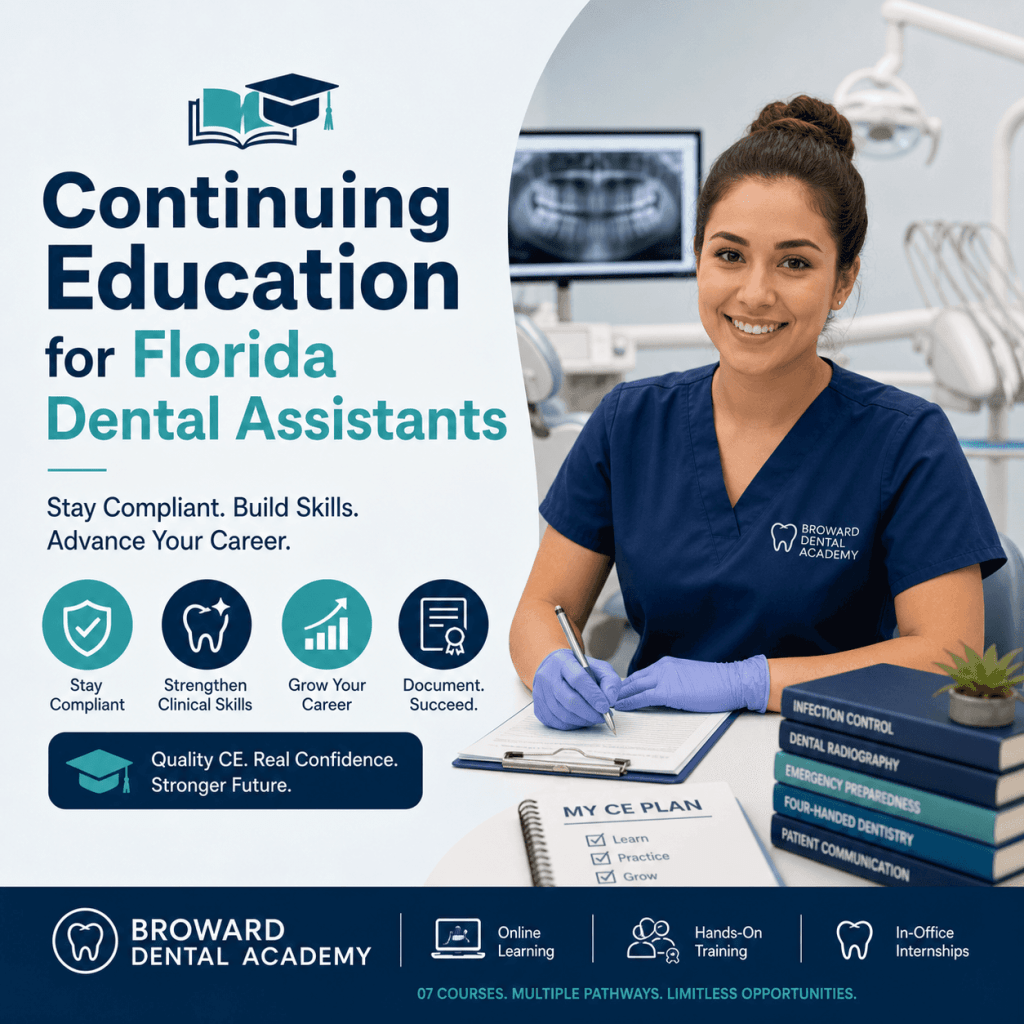
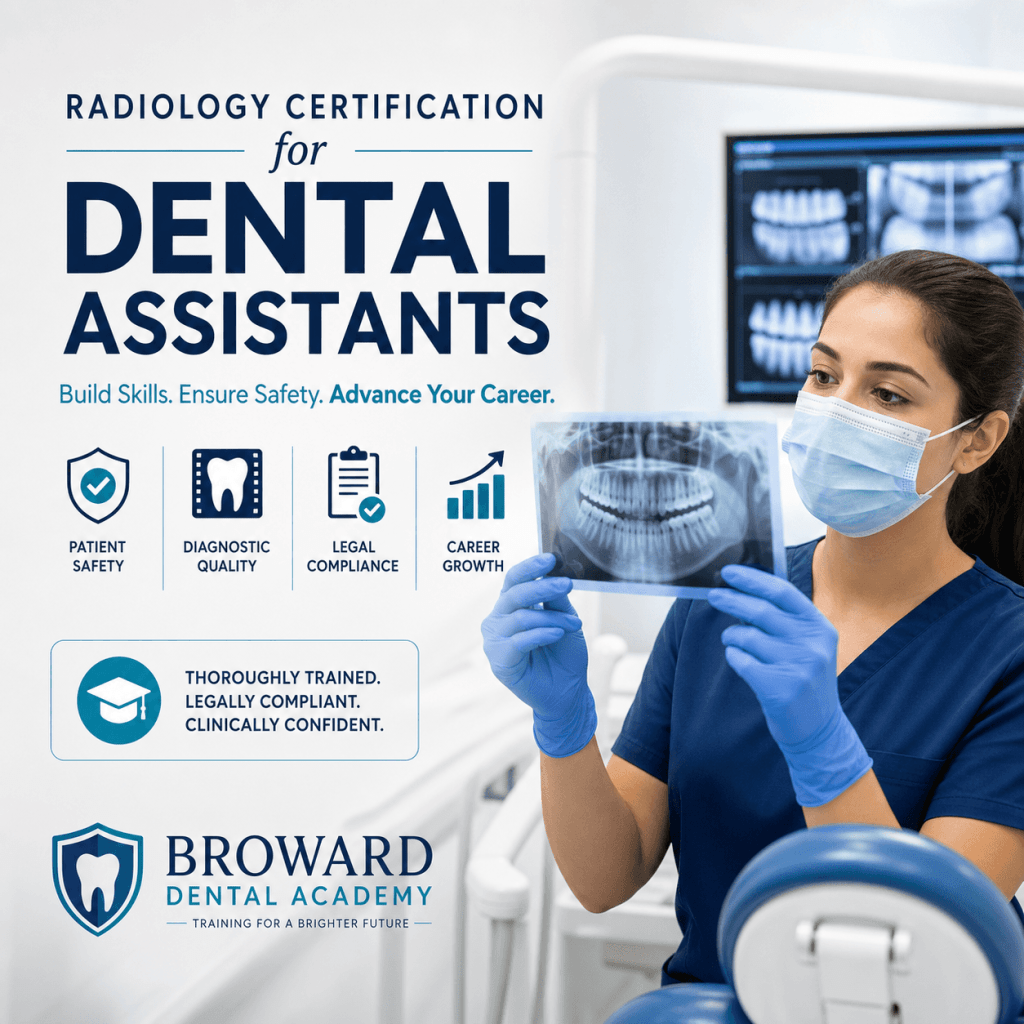
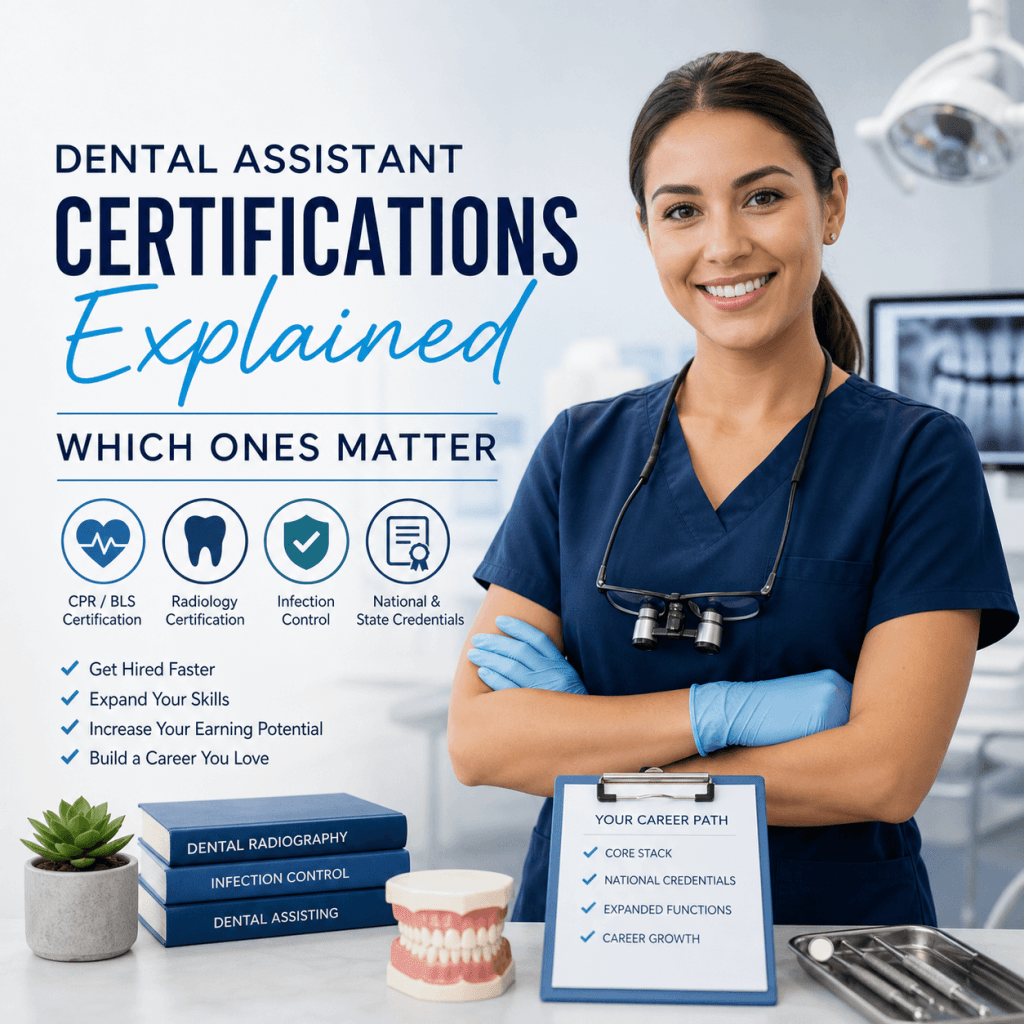
If you’re interested in pursuing such comprehensive training that includes these hands-on experiences, consider exploring some of the certifications offered by Broward Dental Academy. They provide extensive training that covers all aspects mentioned above.
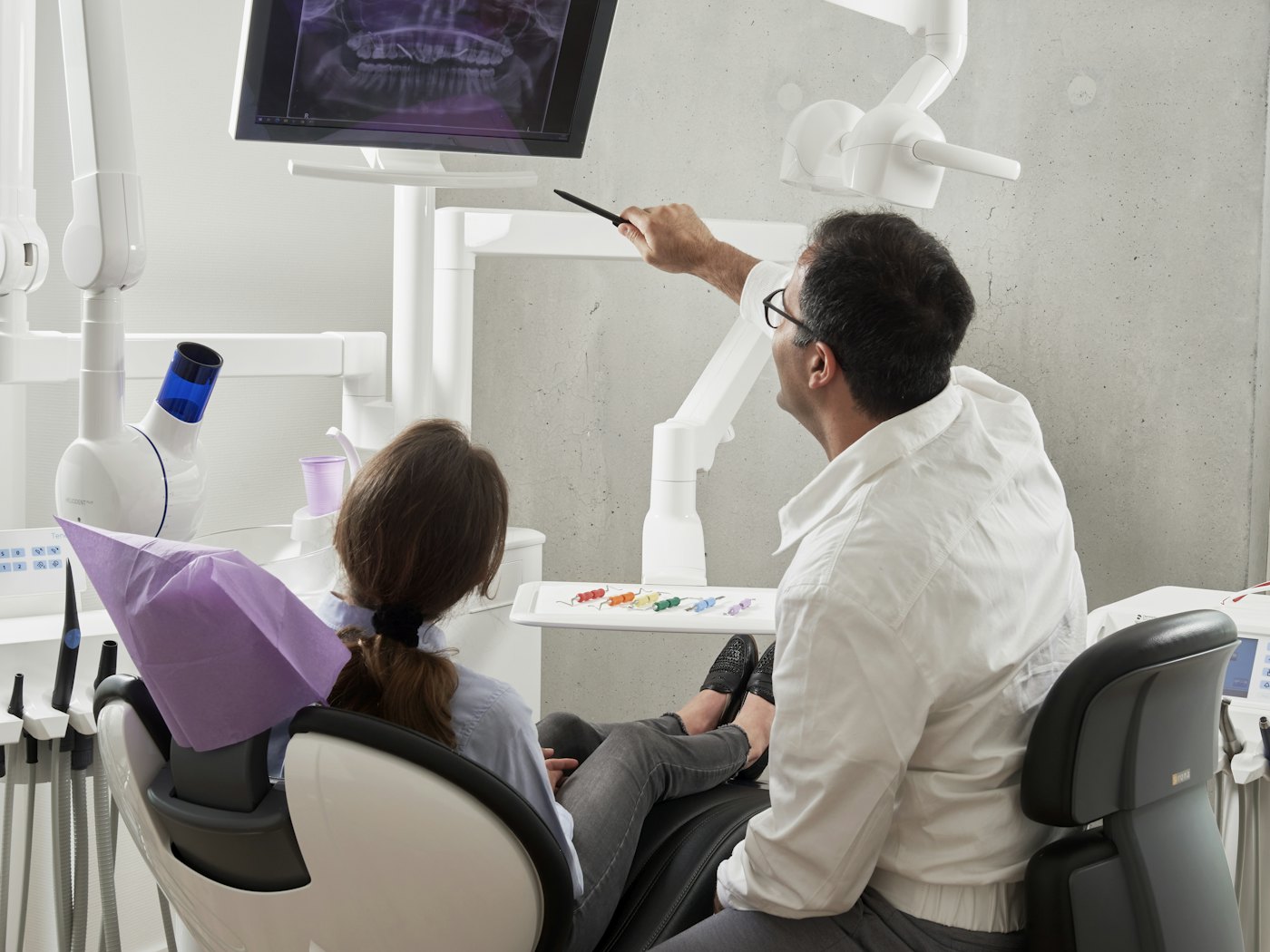
For those located in or around Florida, you might want to check out their locations to find a convenient training center near you.
What lecture-only programs usually look like (and what they often miss)
Lecture-heavy programs are typically built around:
- slide-based lessons and terminology
- theory of materials, anatomy, and procedure steps
- quizzes, written exams, and generalized workflow descriptions
- limited lab time, limited repetition, and minimal live coaching
To be clear, lecture-based learning can help with:
- foundational understanding of tooth anatomy and surfaces
- basic restorative concepts and terminology
- test preparation and recall-based knowledge
- a general overview of materials and indications
The common gap is simple: knowing what without being able to do the how when a patient is in the chair and the schedule is tight.
That gap often leads to retraining on the job. Many offices will still hire motivated graduates, but in a real restorative flow, employers may need to spend significant time correcting technique, rebuilding setup habits, and coaching basic chairside sequencing.
Hands-on vs lecture-only: the outcomes that matter in a real dental practice
When practices evaluate new assistants, they rarely evaluate you like a classroom does. They evaluate you on outcomes that affect time, quality, and patient experience.
Readiness in the operatory
Hands-on graduates tend to enter the operatory with stronger performance in:
- tray setup speed and accuracy
- anticipating steps and preparing materials on time
- confident instrument passing and positioning
- reliable isolation and moisture control support
Lecture-only graduates may understand the procedure sequence intellectually, but often need time before they can execute smoothly under pressure. This is where test preparation becomes crucial as it can bridge the gap between theoretical knowledge and practical application.
Error rates and patient experience
In restorative appointments, small breakdowns become big problems:
- contamination leads to compromised bonding and potential failures
- poor matrix placement contributes to overhangs or open contacts
- disorganized flow increases appointment length and patient stress
Hands-on training reduces preventable mistakes because students practice the full chain of steps, not just the concept.
Time-to-productivity
A practice wants to know: How quickly can you contribute without constant correction?
Hands-on training typically shortens that ramp-up period. When you have already practiced restorative workflows under supervision, you tend to need less day-to-day rescue coaching.
Confidence and professionalism
Clinical confidence is not attitude. It is competence plus repetition.
When you are trained hands-on, you are more likely to:
- communicate calmly chairside
- follow protocols consistently
- maintain professionalism when the pace is high
- stay within scope of practice while still being highly useful to the team
Safety, compliance, and expanded functions: why technique matters
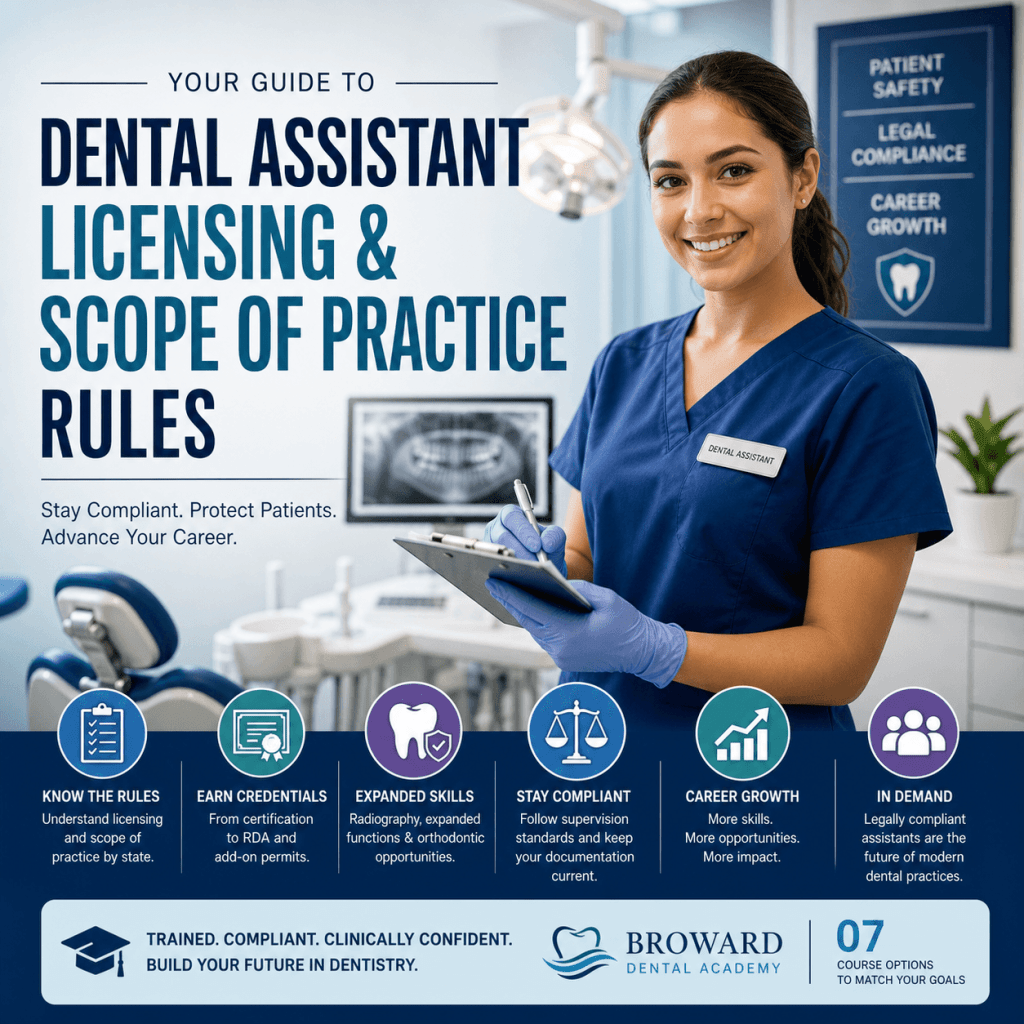
Restorative assisting is not just “helping the dentist.” It is technique, safety, infection control, documentation habits, and scope-of-practice awareness working together.
Hands-on training supports legal and ethical practice because it builds:
- correct clinical protocols through supervised repetition
- better awareness of what is permitted and what is not
- habits that reduce contamination, cross-contact, and procedural errors
- comfort with checklists and compliance standards in real setups
This matters even more for students interested in expanded functions. EFDA progression becomes far more manageable when restorative fundamentals are already solid. Instead of feeling overwhelmed, you can focus on higher-level skills, responsibility, and consistency.
Ethical practice also becomes clearer in hands-on settings: doing what is permitted, doing it correctly, and knowing when to pause and ask for help.
The skill-by-skill breakdown: where hands-on training changes everything
Some restorative skills cannot be mastered through lecture alone because they depend on touch, timing, and controlled repetition.
Isolation and moisture control
Isolation is one of the most important parts of restorative success, and it is best learned by doing:
- placing cotton isolation correctly for different arches and tooth positions
- positioning HVE and saliva ejector without blocking visibility
- managing retraction while maintaining patient comfort
- preventing contamination when the patient moves, swallows, or speaks
Rubber dam concepts can be taught in lecture, but real competence comes from repeated practice and troubleshooting.
Matrices and contacts
Matrix and wedge placement is a common weak spot for assistants who trained mostly in theory. Hands-on repetition builds the instincts that prevent:
- overhangs that irritate tissue and trap plaque
- open contacts that lead to food traps and complaints
- poor contours that compromise function and patient comfort
Learning how it should look is not the same as learning how to make it happen consistently.
Materials handling
Material timing is not forgiving. Hands-on training teaches:
- how consistency changes with small technique differences
- how to avoid contamination during mixing and placement support
- what to do when timing slips and how to recover without panic
This is especially important in high-paced restorative blocks where delays affect the entire schedule.
Finishing and polishing
Finishing and polishing is where “good enough” becomes visible. Anatomy and occlusion can be explained in lecture, but hand skills are developed through:
- controlled sequence and appropriate armamentarium
- margin evaluation standards
- recognizing when something is smooth versus simply “looks okay”
Operatory flow
Operatory flow is the hidden skill that offices value immediately:
- building trays that match the dentist’s preferences
- sequencing steps so the dentist is never waiting on materials
- anticipating the next instrument or step without being prompted
That rhythm is built through simulations and clinical repetition, not PowerPoint.
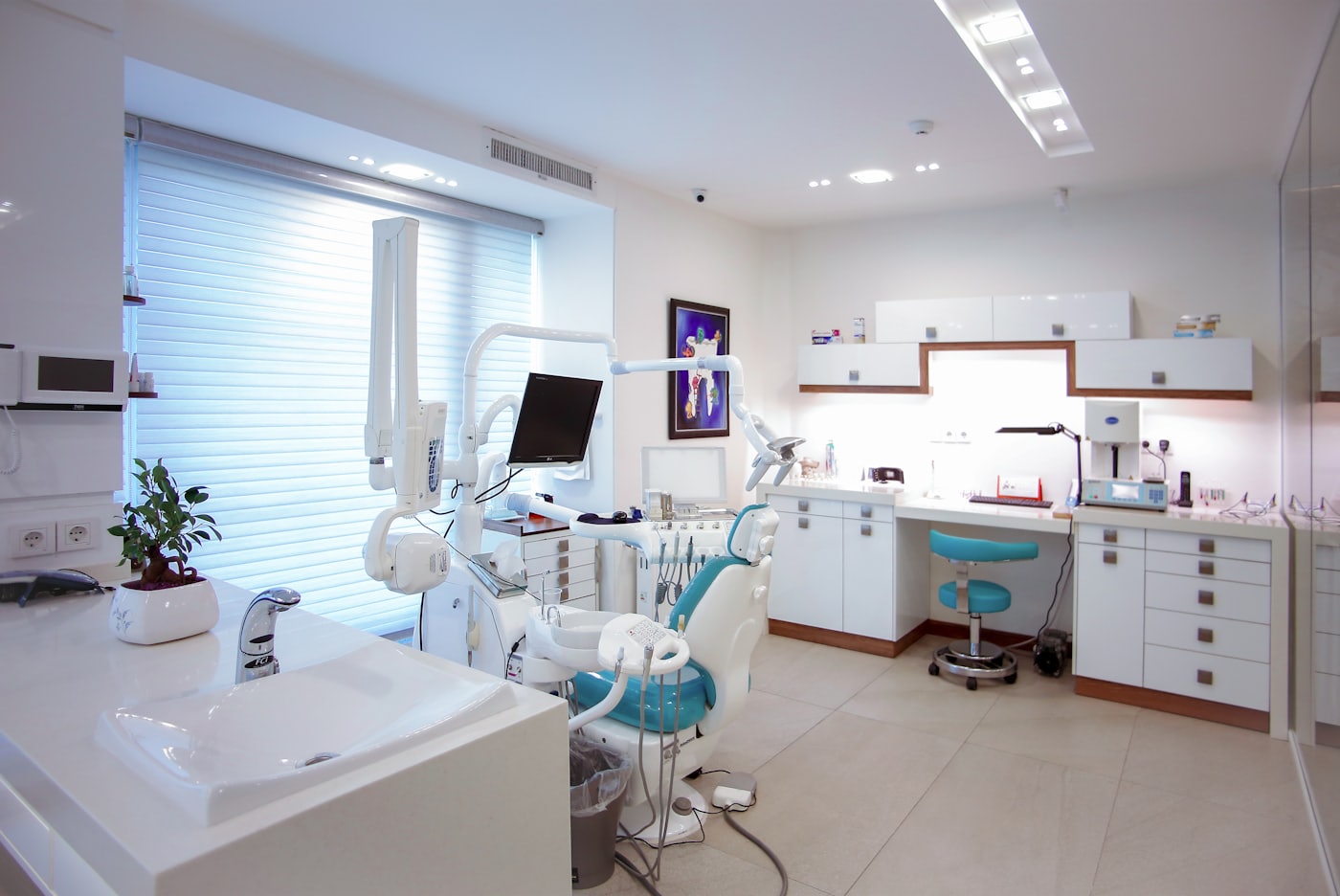
Internships and real-office exposure: the hidden advantage most students underestimate
Many students underestimate how much anxiety comes from the first weeks in a real office. The schedule moves faster, patients respond unpredictably, and team communication is constant.
In-office internships help bridge that gap because they expose you to:
- real pacing and real accountability
- real patient management and chairside communication
- team handoffs and workflow expectations
- the daily rhythm of restorative days
Internships also help translate lab skills into chairside performance. You stop thinking in “steps on a worksheet” and start thinking in workflows: what must be ready, what can go wrong, and how to keep the appointment smooth.
If you are evaluating programs, look for internships that include:
- supervised tasks with defined boundaries
- direct feedback from experienced clinical professionals
- consistent exposure to restorative procedures
- mentorship that helps you improve, not just observe
From an employability perspective, practices often prefer candidates who have already operated inside a clinical rhythm and can adapt quickly.
How to evaluate a restorative training program (a simple checklist)
Before you enroll, ask questions that reveal whether the program produces clinic-ready graduates.
1) How many hours are truly hands-on?
Ask for a clear breakdown of lab/clinical hours vs lecture hours, and what restorative skills are practiced repeatedly.
2) What skills are formally signed off?
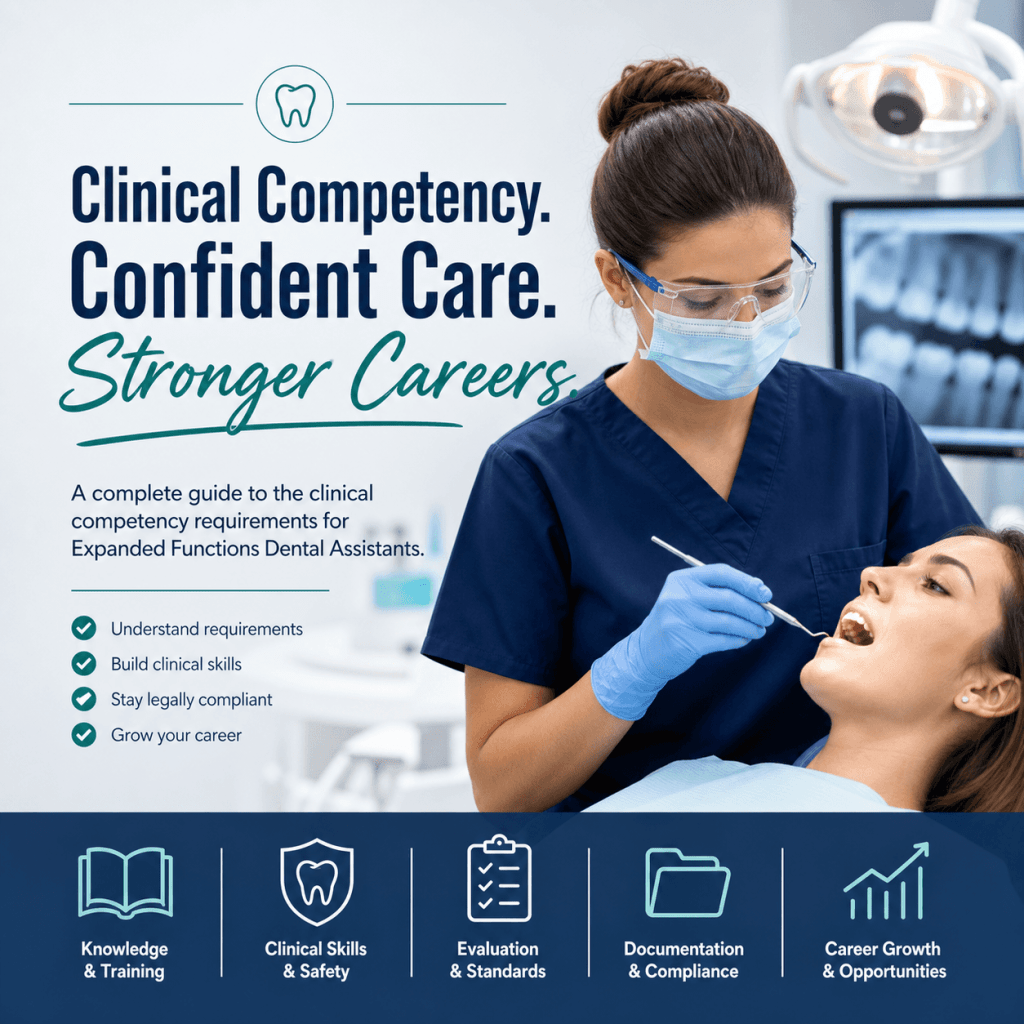
Look for structured competency checkoffs, not vague completion language. Ask what restorative competencies are required to pass.
3) How is competency measured?
Strong programs use:
- rubrics and performance standards
- instructor feedback during practice
- remediation opportunities if a student struggles
It’s essential to understand that the effectiveness of these evaluation methods can significantly influence the overall success of the training program. A study published in the National Institutes of Health emphasizes the importance of rigorous competency measurement in medical education, which can also be applied to dental training.
4) Who is coaching you and how available are they?
Ask about faculty clinical background and how much real-time guidance students receive. If available, ask about student-to-instructor ratios in hands-on settings.
5) Is the learning format modern and practical?
Blended learning can work well when it is paired with real clinical and lab immersion. Online learning should support preparation, but not replace skill development.
A paper in the Journal of Medical Internet Research discusses how blended learning has been effectively used in various educational settings, including healthcare, which could provide valuable insights into how this method could be optimized for dental training.
6) Does the program support expanded functions progression?
If EFDA is on your radar, choose a program that aligns training with real restorative competence and future growth.
Where Broward Dental Academy fits: training built for real practice performance
Broward Dental Academy is built around a simple idea: dental assistants should be trained to perform confidently in a modern practice, not just to pass an exam.
Students train in a career-focused environment designed to produce professionals who are:
- thoroughly trained
- legally compliant
- clinically confident
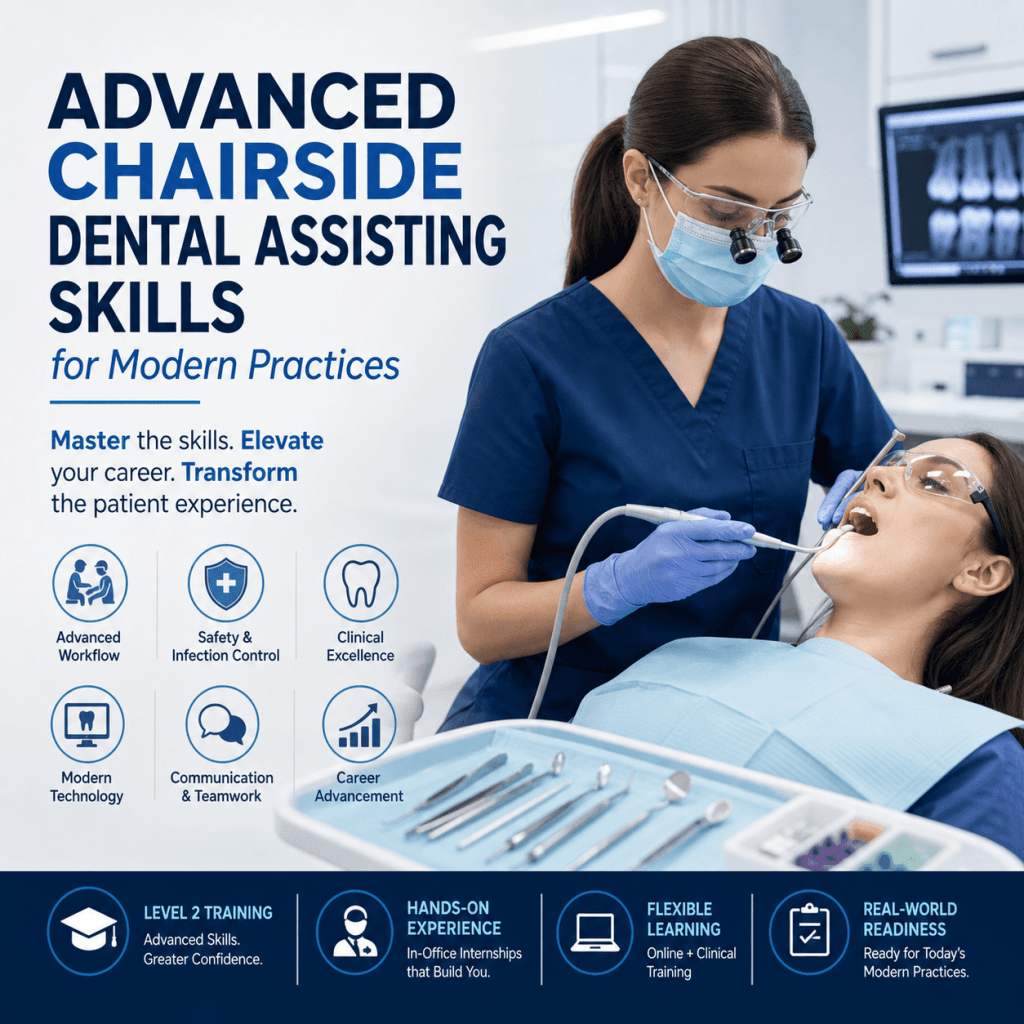
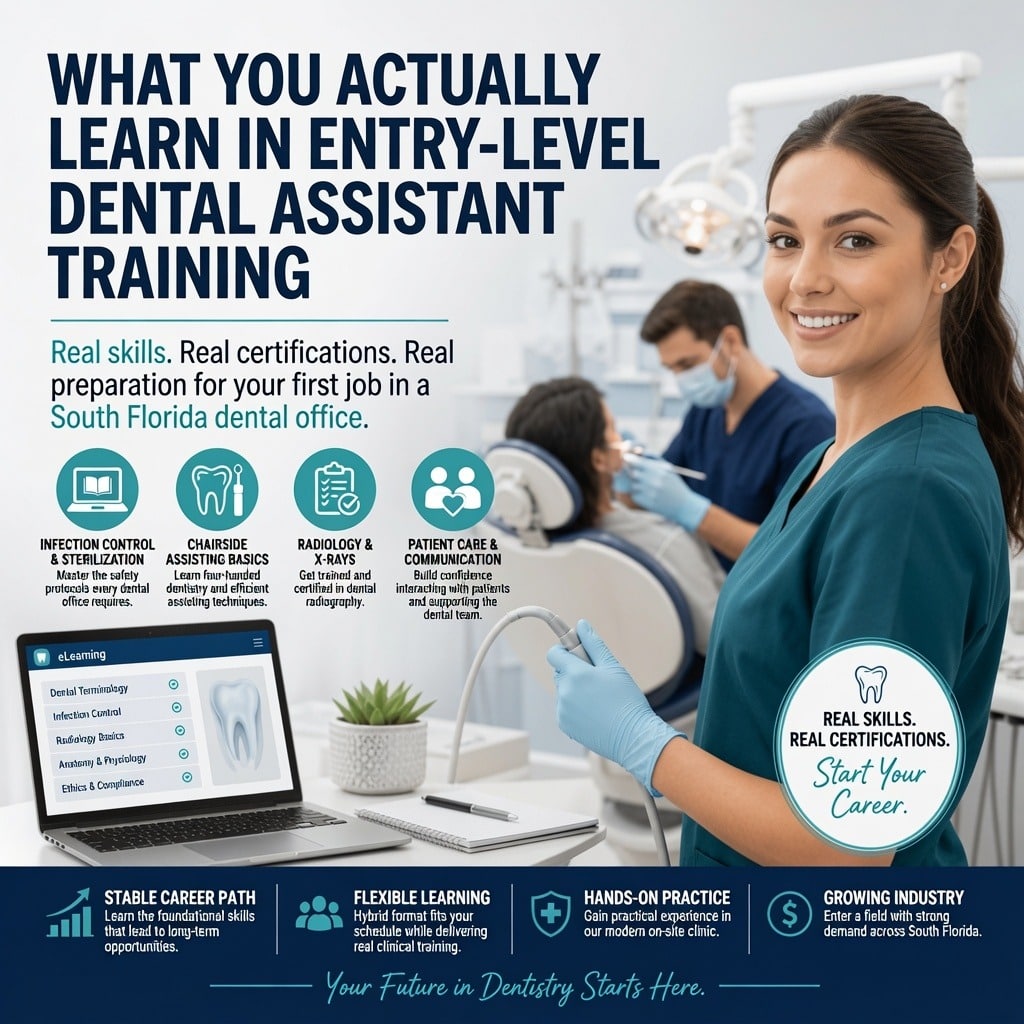
Broward Dental Academy offers a wide range of dental courses and advanced dental training, with programs designed for immediate immersion in online and clinical settings. The academy incorporates the latest eLearning lesson plans for remote training while pairing that learning with clinical practice so skills are built, not just discussed.
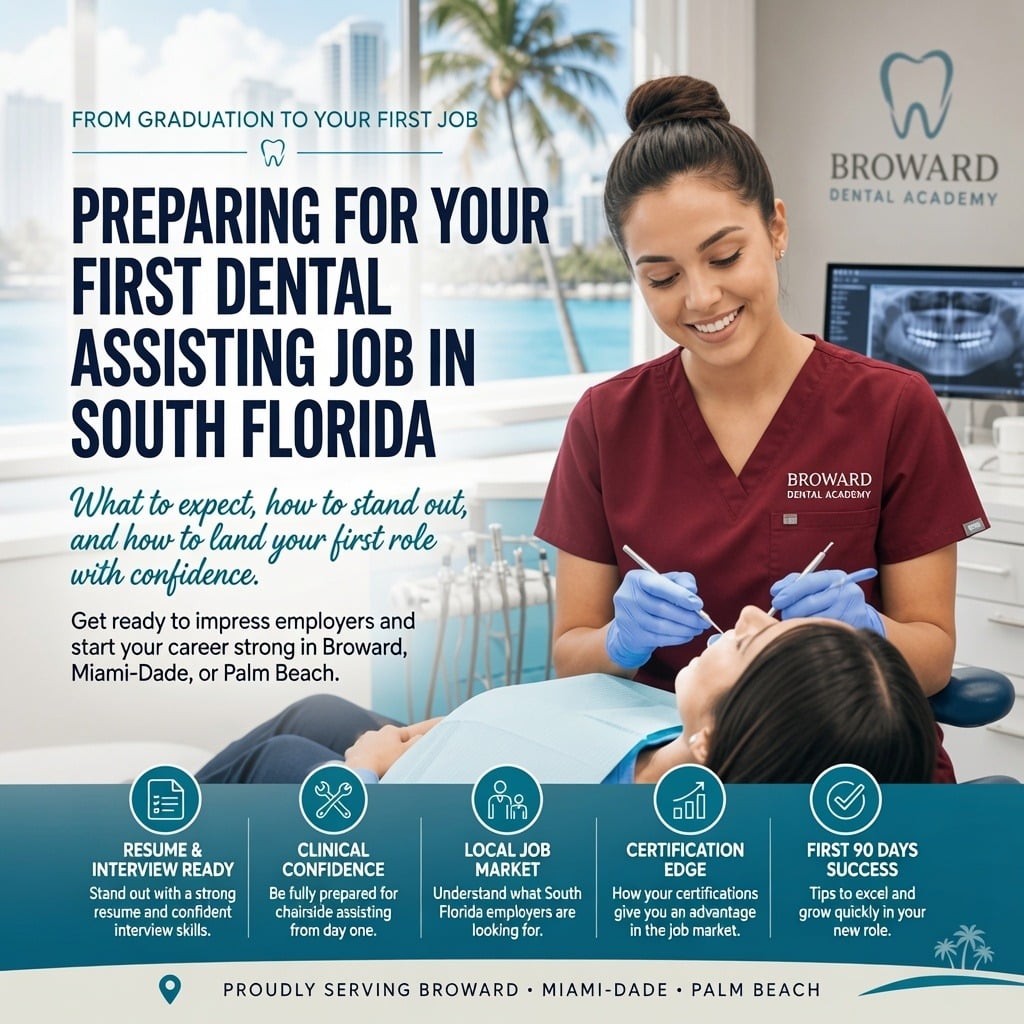
A major advantage is the practical bridge to employment: in-office internships, where students experience real restorative pacing, team communication, and chairside accountability.
The training environment is designed to keep students fully engaged and moving toward real competence, helping them graduate as accomplished, polished dental professionals who can contribute quickly in high-performance dental practices.

For more information about the training process or any other inquiries, you can refer to the frequently asked questions.
How this supports the EFDA Level 03 journey (and why it’s a smart career move)
Expanded functions is not a random leap. It is a progression.
When you build restorative foundations through hands-on training at institutions like Broward Dental Academy, you create a smoother path toward higher responsibility. You are not just learning new tasks. You are learning to execute them safely, confidently, and consistently.
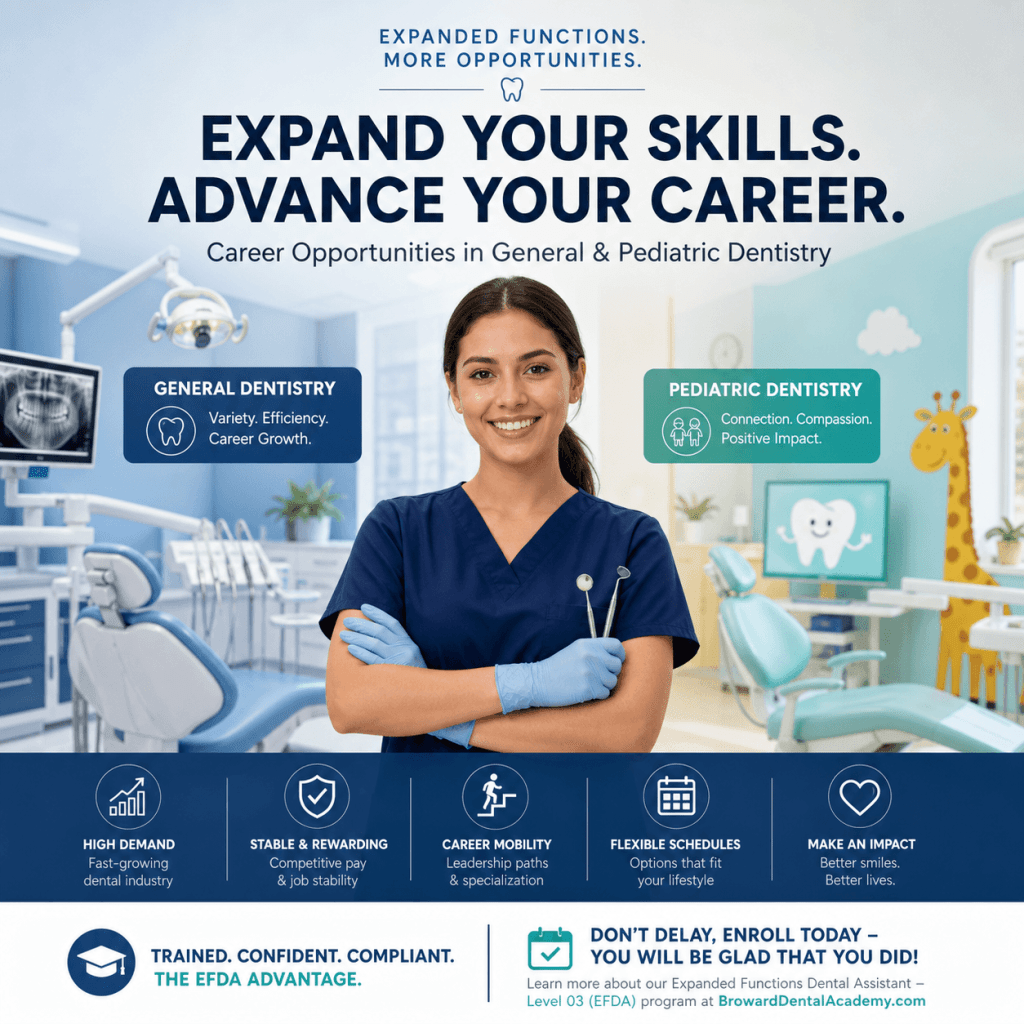
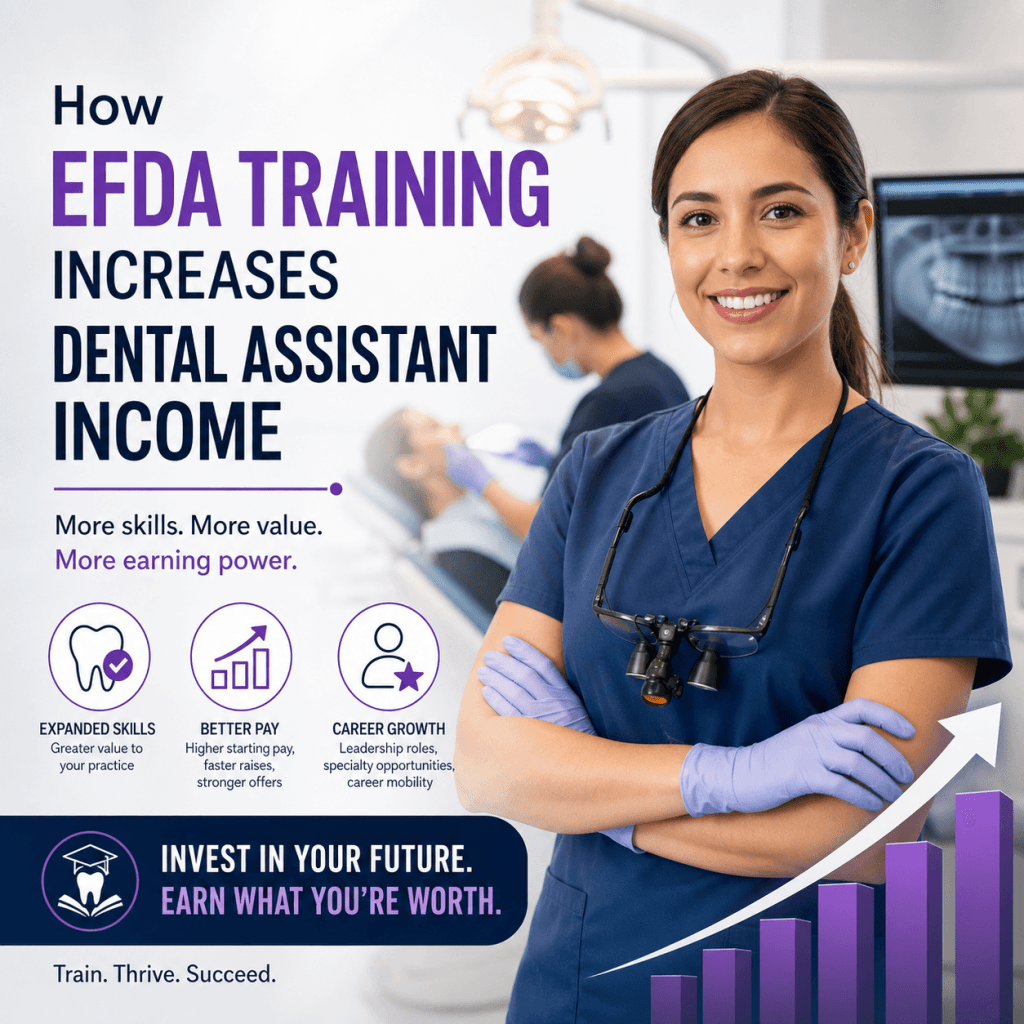
For many students, EFDA is appealing because the dental industry offers:
- stable income potential
- flexible schedules
- respected roles in healthcare
- career mobility and long-term growth
- opportunities to expand functions as demand increases
Demand for skilled dental professionals continues to rise, and practices increasingly want assistants who can contribute quickly and safely.
If EFDA Level 03 is your next step, start by understanding the pathway and expectations here: Expanded Functions Dental Assistant- Level 03 (EFDA).
Choosing your next step: match the program to your goals (and timeline)
Lecture-only programs can be a fit if you are strictly exploring basics and want a theory-first introduction before committing further. But if your goal is employment readiness, career change momentum, or EFDA-bound growth, hands-on restorative training is the smarter route.
At Broward Dental Academy, we offer comprehensive programs tailored to different levels of expertise:
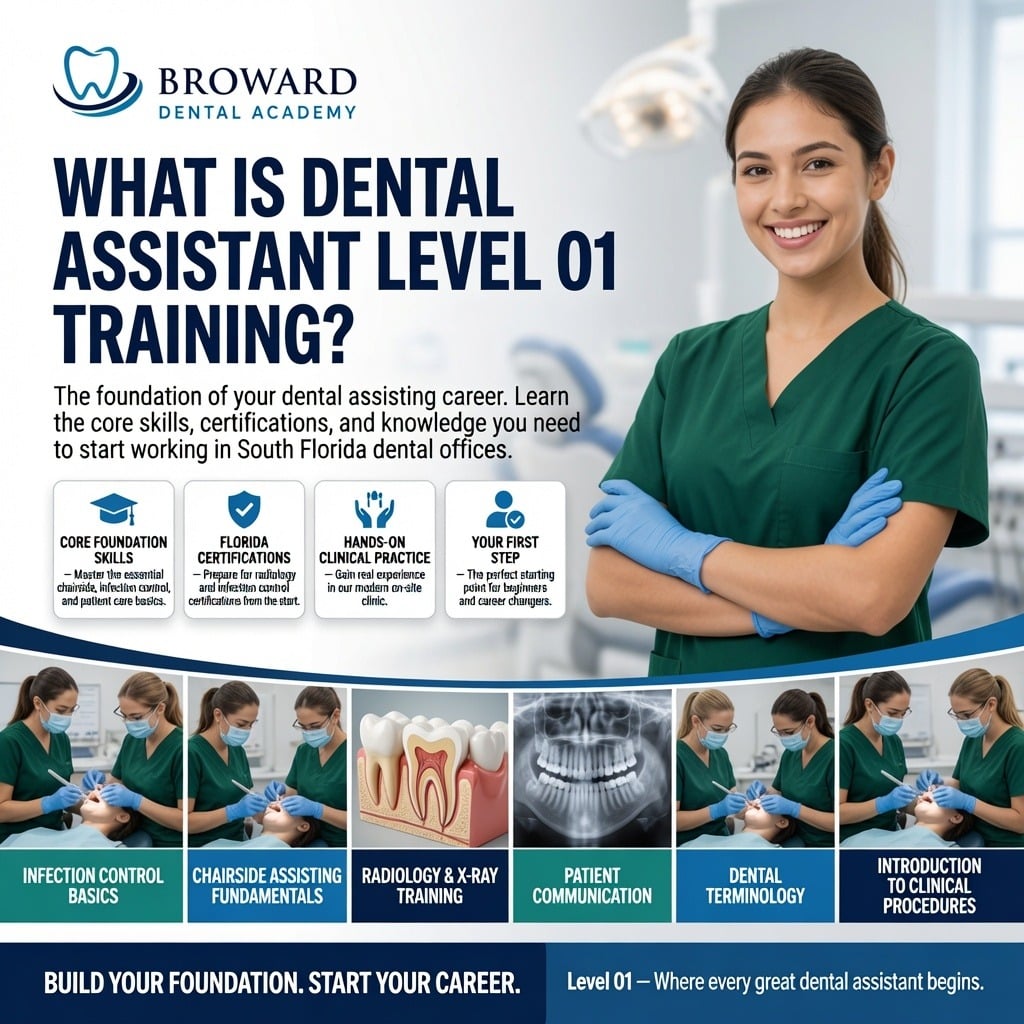
- Dental Assistant Level 01 – Ideal for beginners.
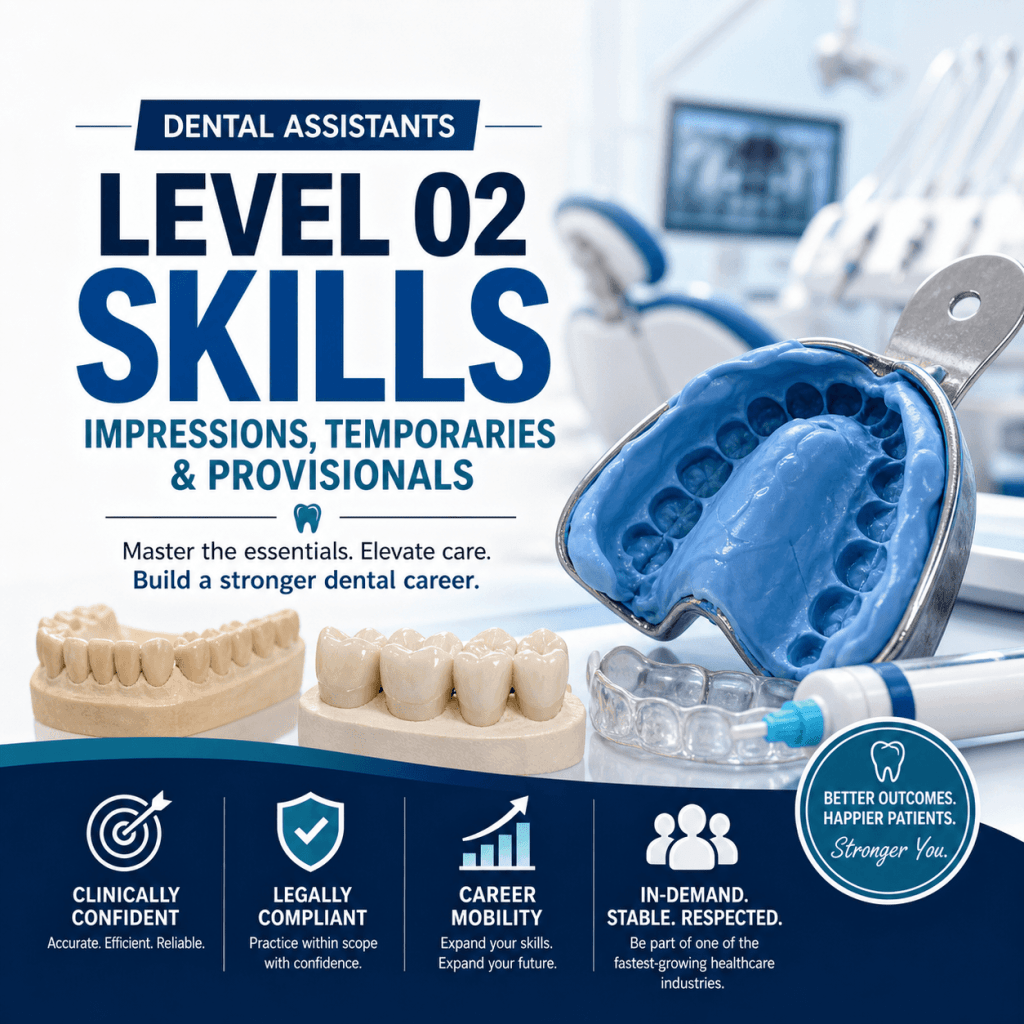
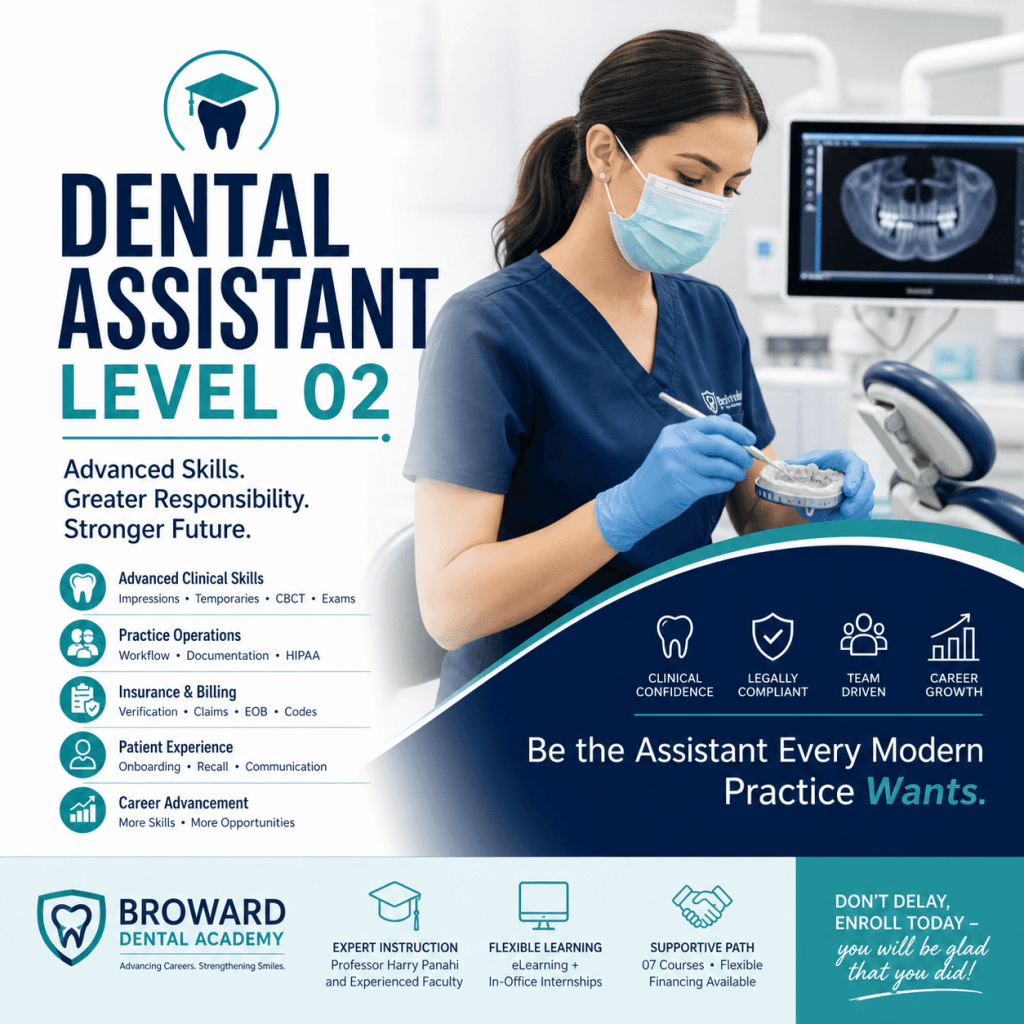
- Dental Assistant Level 02 – A step up for those seeking more advanced knowledge.
- Dental Assistant Hygienists Level 03 – Perfect for those aiming for a specialized role.
When deciding on the right program, prioritize the metrics that actually affect your future:
- Will you feel confident on a restorative day?
- Will you be productive quickly without constant correction?
- Will you be trained to stay compliant and work ethically under pressure?
- Will you have practice-based experience that reduces first-job anxiety?
Cost and speed matter, but confidence and employability matter more. We also offer flexible financing, which can make it easier to choose a program that supports long-term growth instead of settling for the quickest option.
If you are ready to train for real practice performance and build a foundation for expanded functions, don’t delay—enroll today—you will be glad that you did.
FAQs (Frequently Asked Questions)
Why is hands-on restorative training important for dental assistants compared to lecture-only programs?
Hands-on restorative training is crucial because it prepares dental assistants to support restorative procedures smoothly in real time, under real constraints, and with real consequences. Unlike lecture-only programs that teach theory, hands-on training develops practical skills like instrument transfer, moisture control, and anticipation of the dentist’s needs, making assistants clinic-ready rather than just book-ready.
What are the key skills developed through hands-on restorative training for dental assistants?
Hands-on restorative training develops essential skills such as efficient instrument transfer and four-handed dentistry basics, isolation and retraction techniques, matrix and wedge placement, materials handling with attention to working and set times, assisting with composites and amalgam procedures, finishing and polishing support, and strict infection control during restorative setups.
How does hands-on training prepare dental assistants for Expanded Functions Dental Assistant (EFDA) roles?
Hands-on restorative competence forms a foundation for EFDA-level growth by building confidence in restorative workflows. Employers and instructors expect a solid restorative foundation before expanding into areas like oral surgery, orthodontics, endodontics, and periodontics. Practical experience ensures dental assistants can handle expanded responsibilities effectively.
What common challenges do dental assistants face without hands-on restorative experience?
Without hands-on experience, dental assistants often feel shaky chairside when faced with composites, matrices, isolation, or finishing procedures. They may struggle with fast and correct setup, maintaining moisture control amid patient movements, anticipating the dentist’s needs, and preventing common restorative issues such as contamination, overhangs, and open contacts.
What does effective hands-on restorative training include beyond observation?
Effective hands-on restorative training involves repeated skill practice with coaching where technique is developed step-by-step. It includes performance assessment against clear standards and feedback to identify errors and adjust workflows. This approach fosters critical thinking skills like recognizing contamination risks, open contacts, overhangs, voids, poor adaptation, or improper curing workflows.
Where can aspiring dental assistants find comprehensive hands-on restorative training programs?
Aspiring dental assistants can explore certifications offered by institutions like Broward Dental Academy that provide extensive hands-on training covering all critical aspects of restorative dentistry. Those located in or around Florida can check their convenient training center locations to gain practical skills essential for clinic readiness and career advancement.