What is specialty dental assisting (and how it’s different from general dental assisting)?
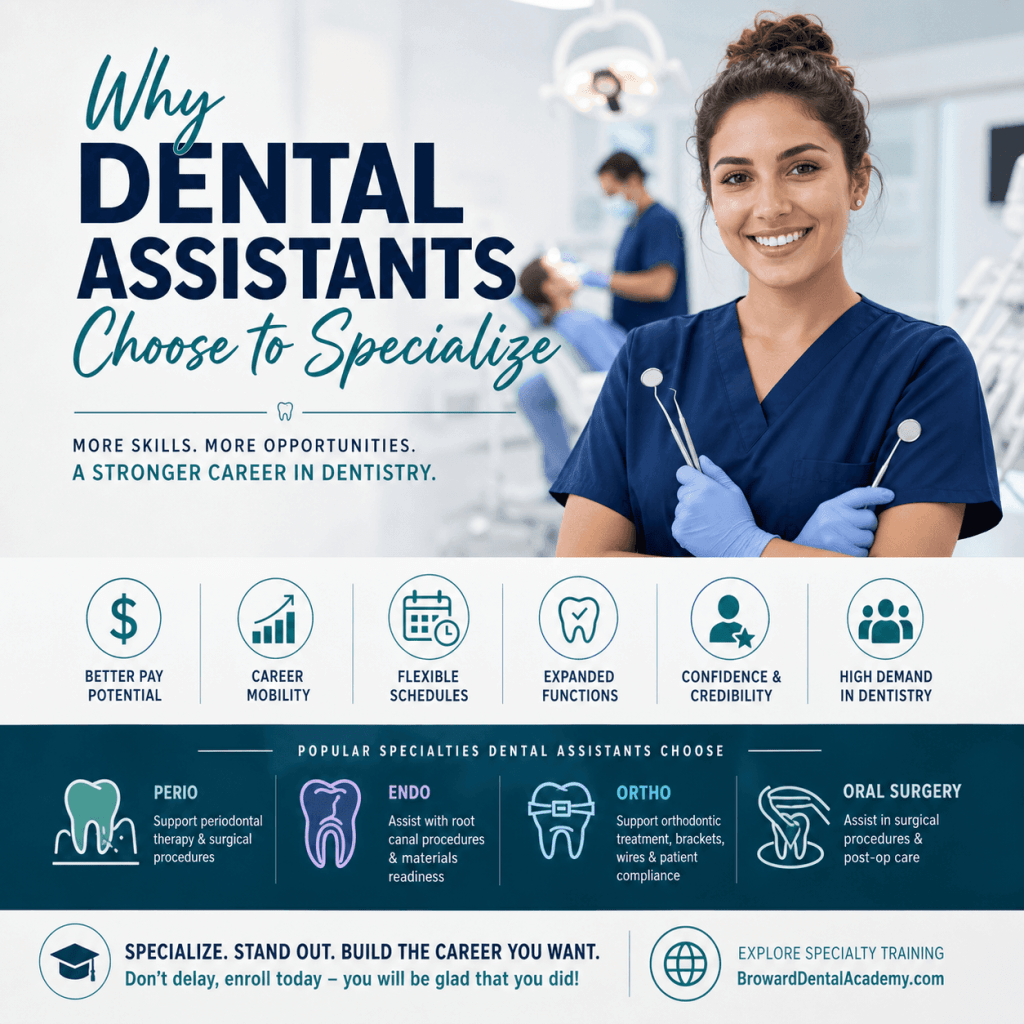
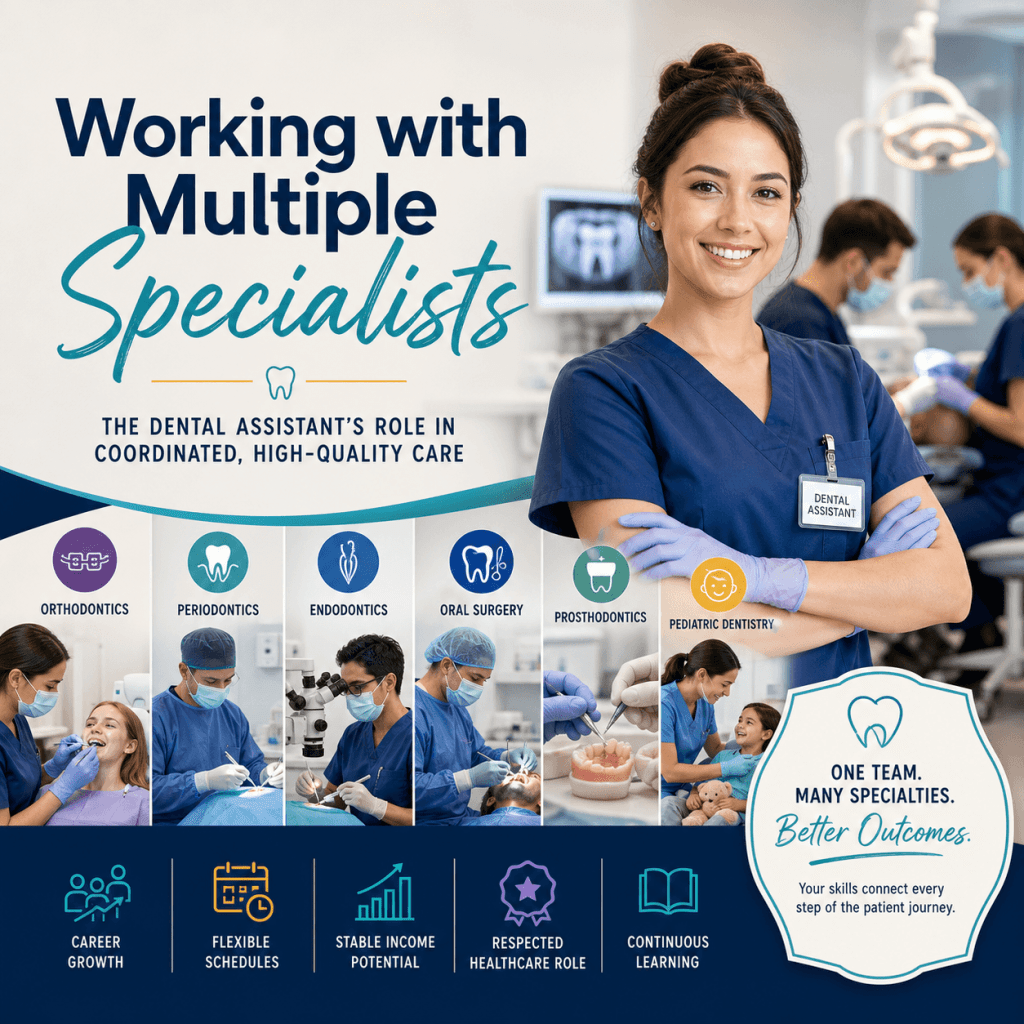
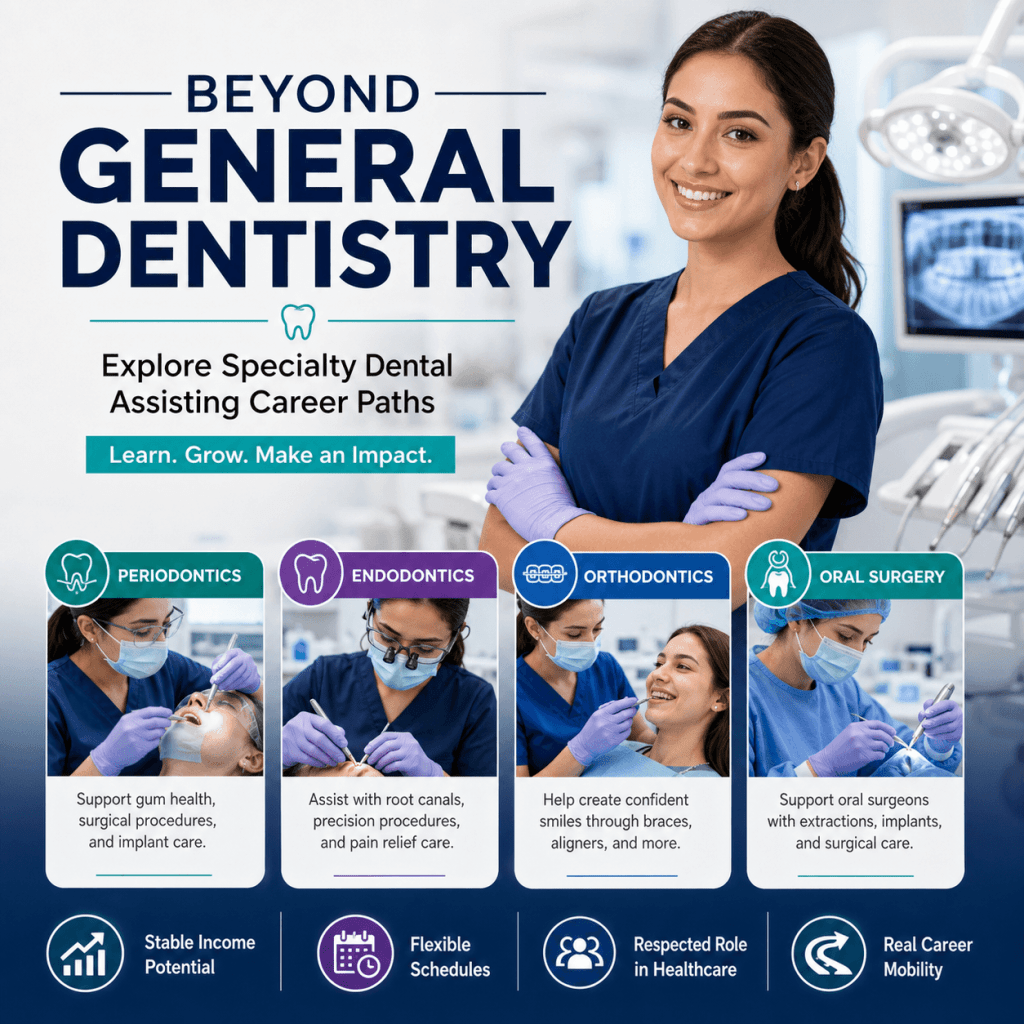
Specialty dental assisting means supporting dentists who work in a focused area of care, such as:
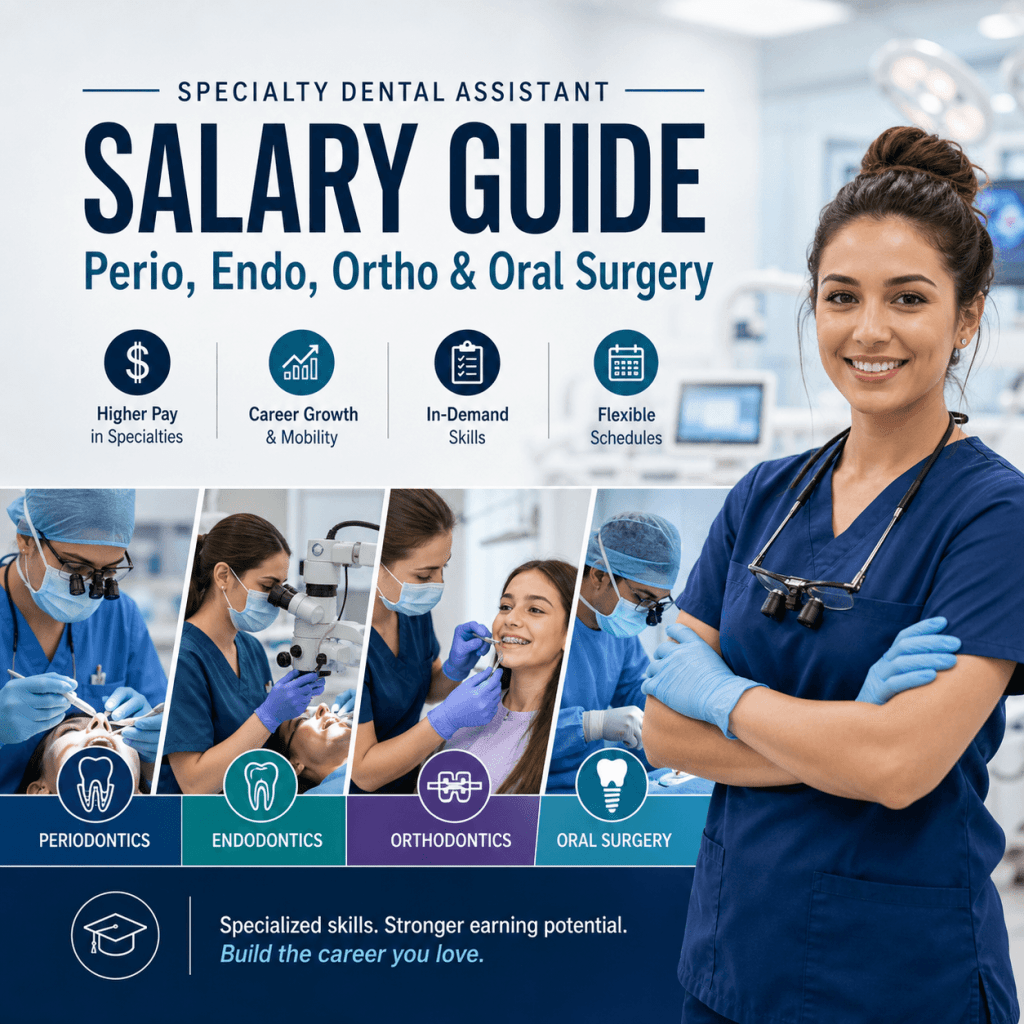
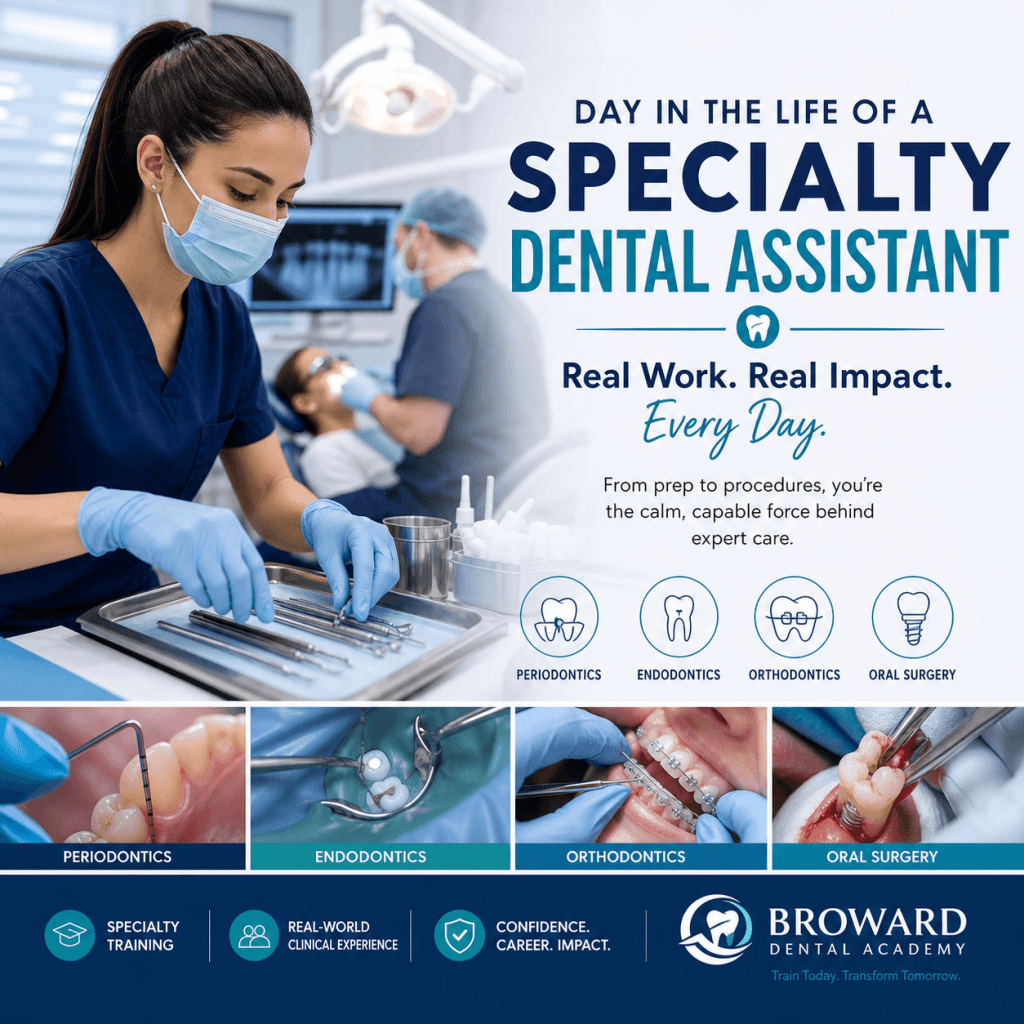
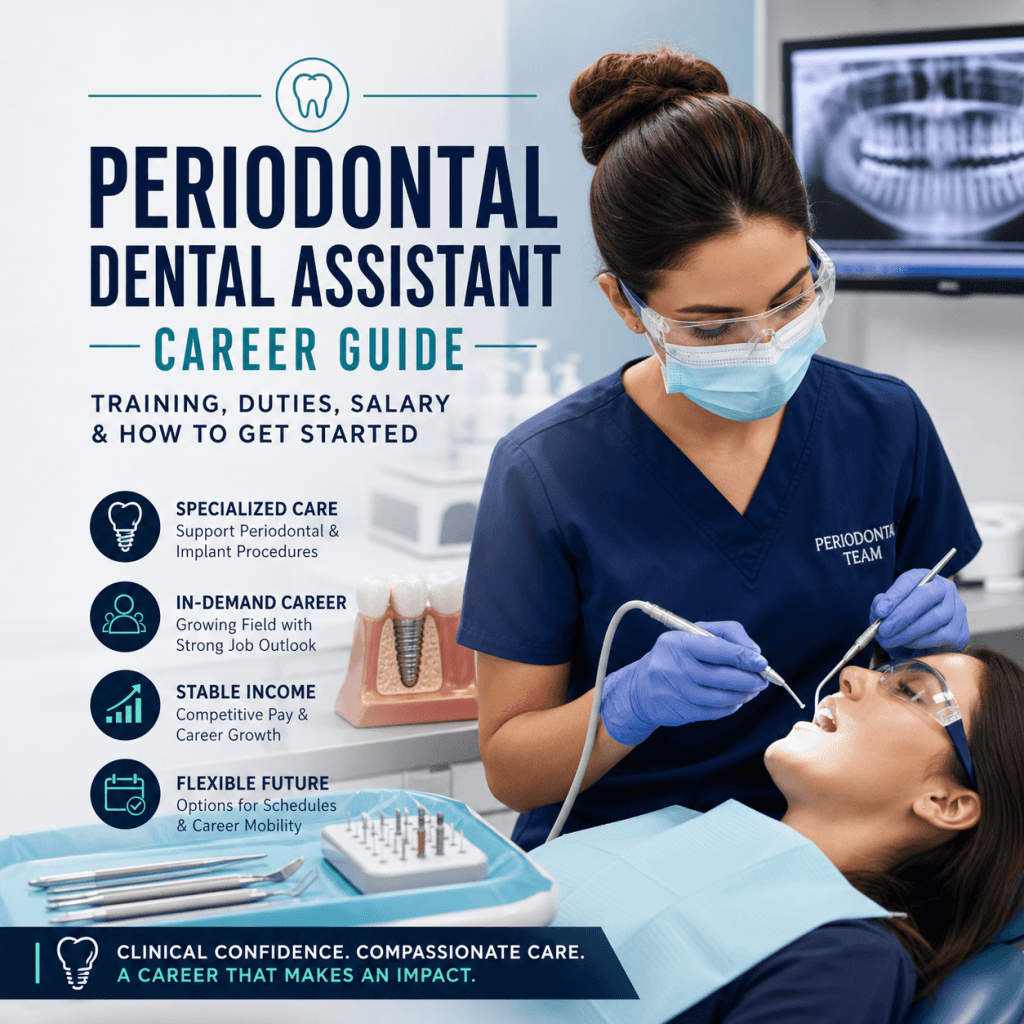
- Periodontics (gum health, bone support, implants)
- Endodontics (root canal therapy and emergency pain cases)
- Orthodontics (braces, aligners, retention)
- Oral surgery (extractions, implants, surgical procedures)
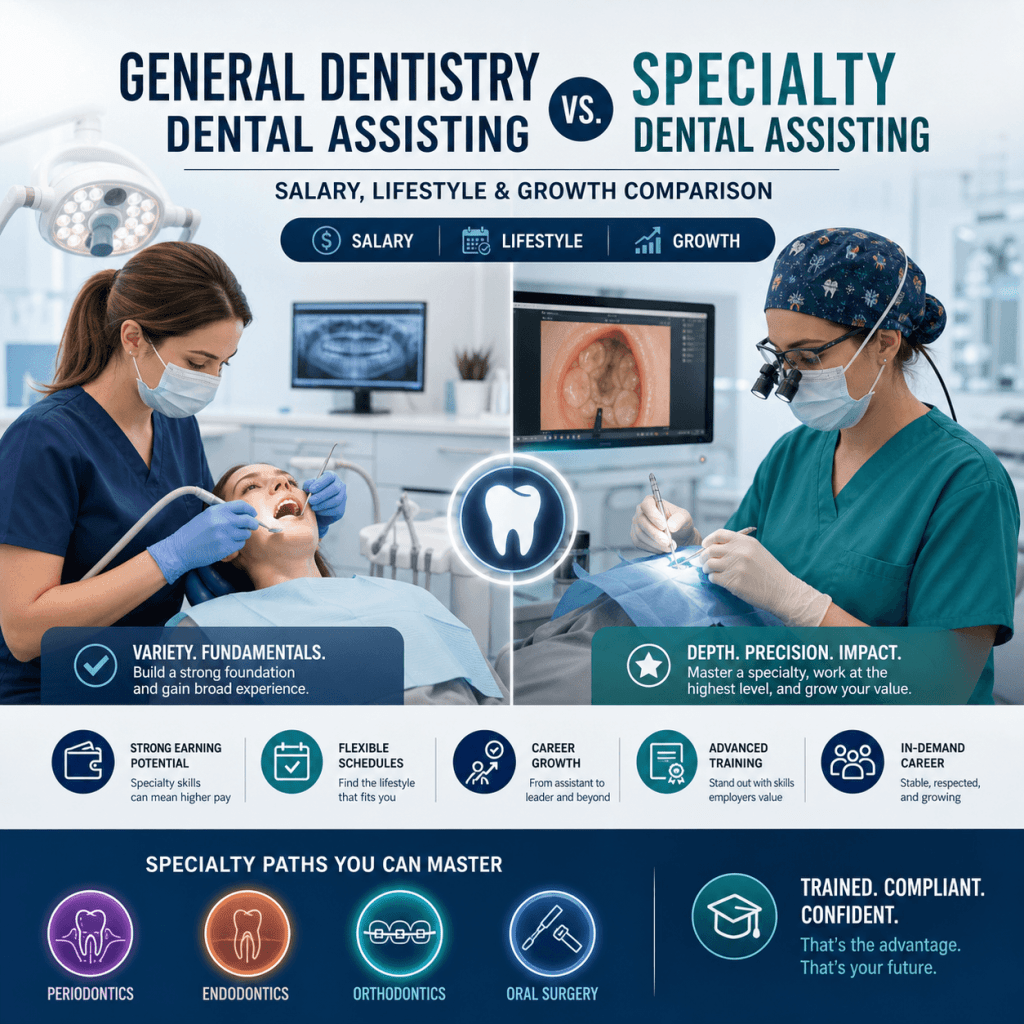
In a general dentistry office, assistants often help with a broad mix of preventive care, restorative procedures, and day-to-day patient flow. In a specialty practice, the work is narrower but deeper. You typically assist with more complex procedures, specialty instruments, and more detailed clinical workflows.
Here is what usually changes when you move into a specialty setting:
- Procedures are more advanced. Think surgical setups, complex isolation, or multi-step protocols that have to be followed in sequence.
- Instruments and materials are specialty-specific. Trays, handpieces, files, sutures, implant components, scanning systems, and surgical supplies may be part of the daily routine.
- Precision and compliance matter more. Specialty cases often come with higher clinical risk, stricter documentation, and less room for error.
- The pace can be different. Some specialties are fast and repetitive, while others are slower but more technique-heavy.
More practices want specialty-trained assistants because patient volume is rising, procedures are getting more advanced, and offices need teams that can run efficiently while reducing clinical and legal risk.
This article maps real dental assisting career paths beyond general dentistry and shows how to start moving into them.
Why specialty dental assisting is growing right now
Dentistry continues to be one of the fastest-growing healthcare industries, and demand for skilled dental professionals keeps climbing. In many communities, that growth shows up in very practical ways:
- More referrals to specialists
- More implant-related cases
- More orthodontic treatment, especially aligners and retention follow-ups
- Higher patient expectations around comfort, speed, and safety
For people researching dental assisting career paths, specialty roles often stand out because they can offer:
- Stable income potential
- Flexible schedules (many specialty offices run predictable clinic days)
- A respected role in healthcare
- Career mobility without needing to start over in a new field
The common thread is training. Modern practices want assistants who are thoroughly trained, legally compliant, and clinically confident, especially when procedures are advanced and time is tight.
What specialty dental assistants do in a high-performance practice
Specialty dental assistants still handle many familiar responsibilities, but the expectations are higher and the workflows are more exact.
Common responsibilities include:
- Advanced chairside assisting
- Strict sterile technique and infection control
- Specialty tray setups and operatory preparation
- Fast, accurate room turnover
- Clinical documentation support
- Patient education and clear post-op instructions
- Coordinating steps closely with the doctor and clinical team
Specialty workflows raise the bar because the steps are timed, the instruments and materials are more critical, and the assistant often drives the efficiency of the entire appointment.
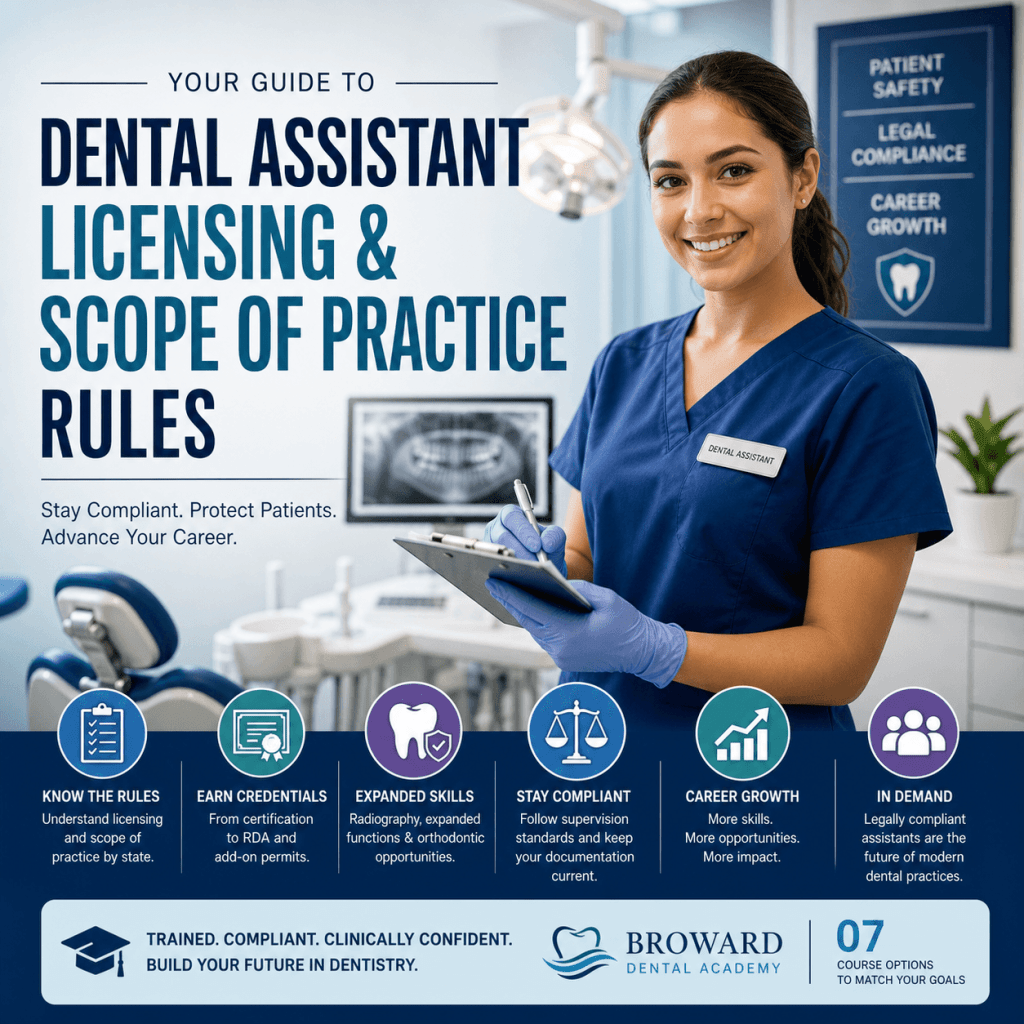
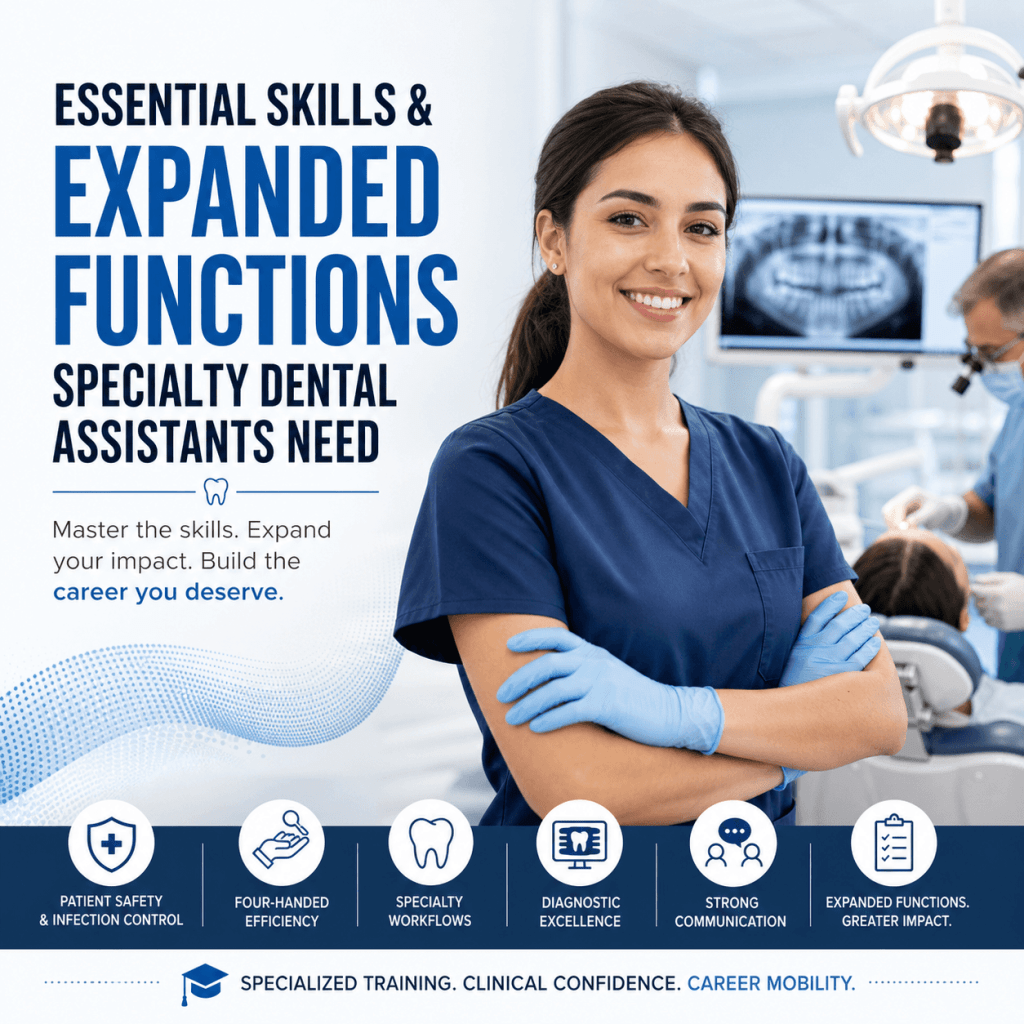
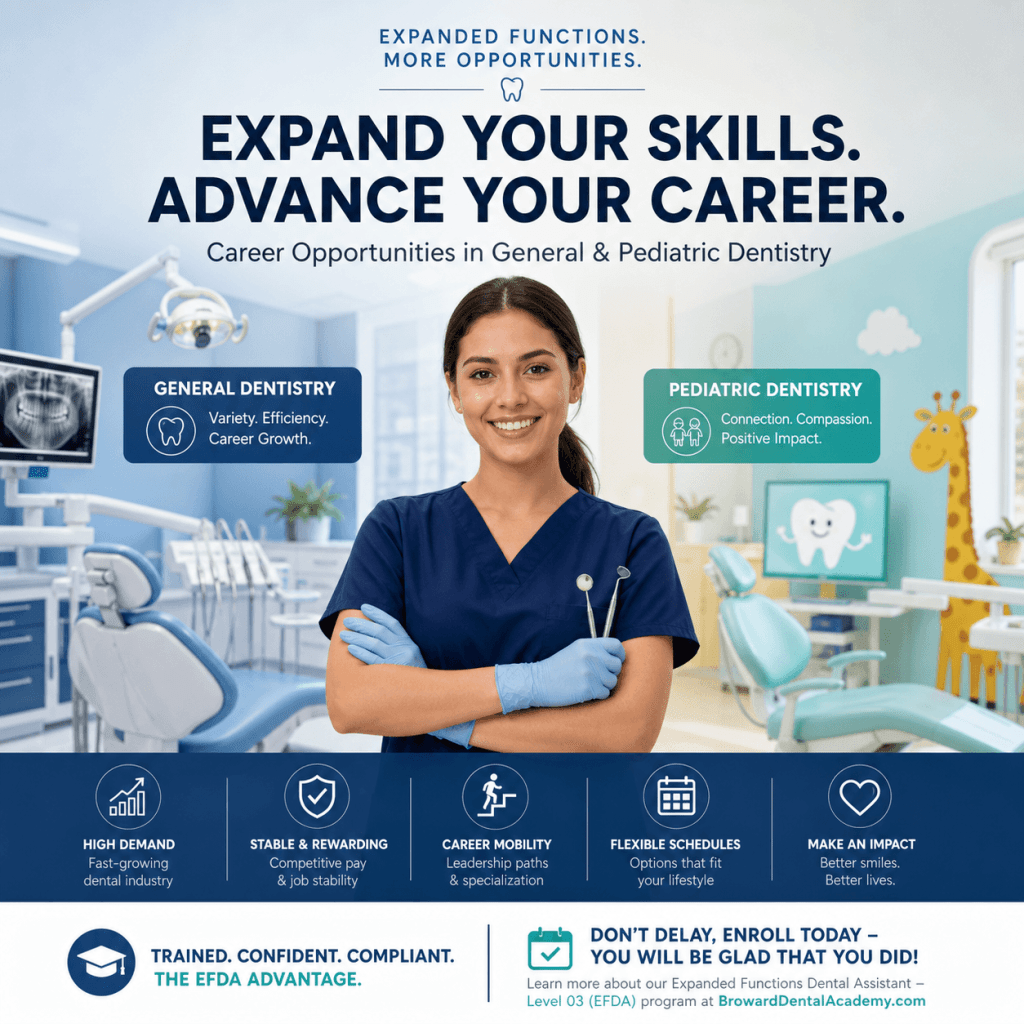
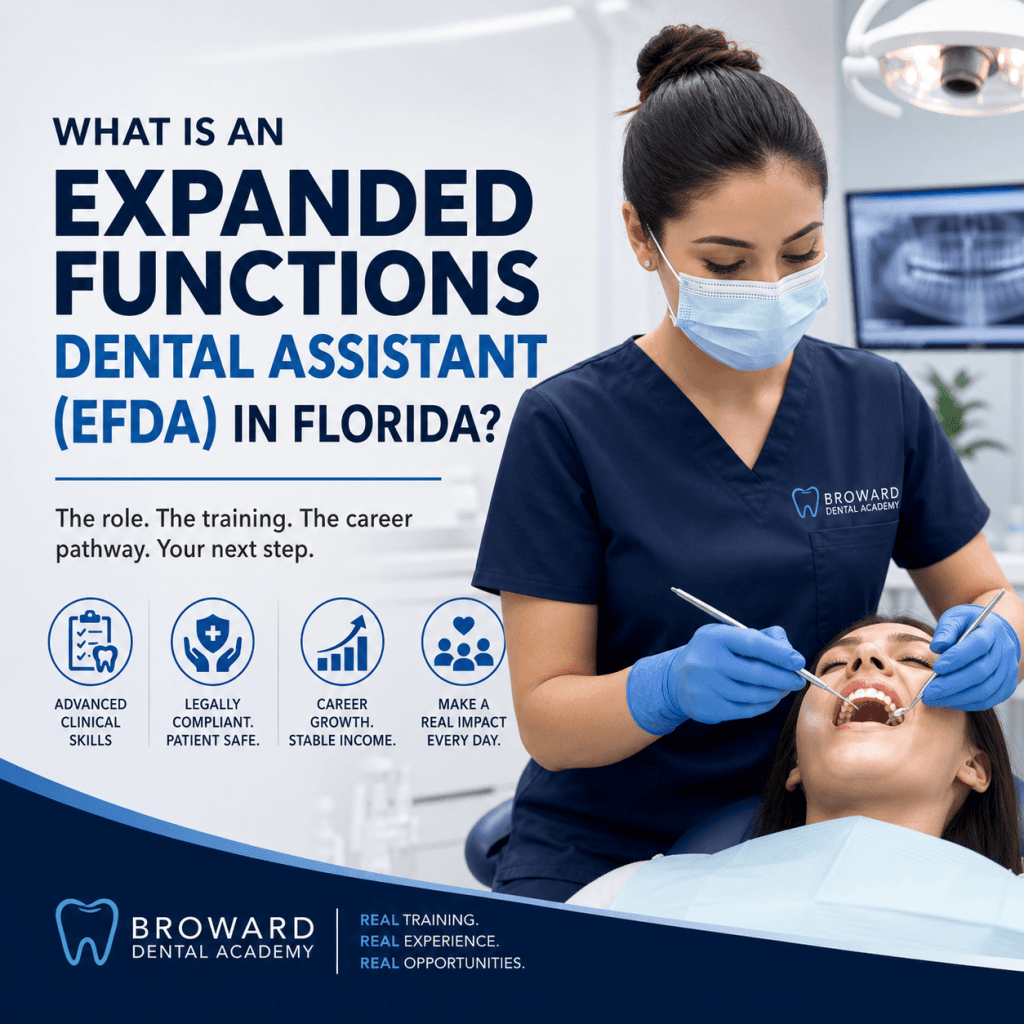
In some states and practices, assistants can also pursue expanded functions through formal courses such as those offered by institutions like Broward Dental Academy, which can open the door to more responsibility and, in many cases, stronger earning potential.
Above all, high-performance specialty practices look for professionalism: ethical judgment, critical thinking, attention to detail, and calm, patient-centered communication. This level of professionalism is often achieved through specialized training programs that provide extensive knowledge about various aspects of dentistry. For instance, understanding the role of dental assistants in different specialties can significantly enhance their effectiveness in high-performance practices.
Top specialty dental assisting career paths beyond general dentistry
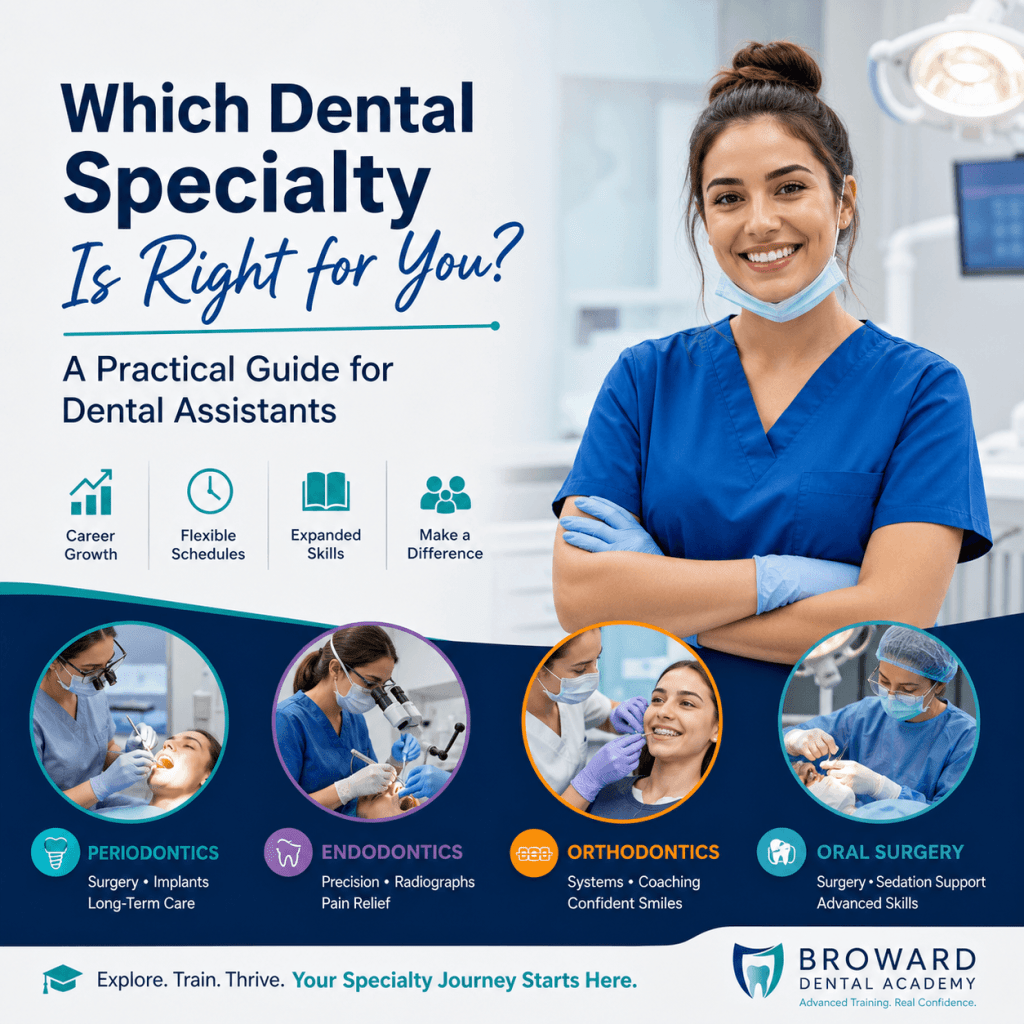
There are four major specialty tracks that many assistants pursue. Each one has its own rhythm, clinical focus, and personality fit. All of them reward assistants who stay calm, follow protocols, and communicate clearly with patients.
1) Periodontics (Perio) dental assisting
Periodontists focus on the health of the gums and supporting bone, including treatment for gum disease and implant-related care.
Common perio services include:
- Gum disease treatment and periodontal maintenance support
- Scaling and root planing support (in collaboration with the team)
- Soft tissue grafting support
- Implant-related periodontal care
- Bone-related procedures connected to periodontal disease
A typical scenario might involve a patient who has undergone a root canal treatment, which can sometimes lead to gum infections. In such cases, peri assists become crucial in managing the patient’s recovery and ensuring proper healing.
Typical perio assisting tasks:
- Surgical tray setups and sterile field maintenance
- Suction and retraction control for surgical visibility
- Irrigation assistance and material support
- Suture support and instrument exchange
- Periodontal charting support (as directed)
- Patient education on home care and healing instructions
Skills that matter most:
- Strong attention to sterile technique
- Patient reassurance during surgical visits
- Clear post-op communication and follow-up awareness
How it can advance a career: Perio experience often pairs well with roles like implant coordination, surgical assisting pathways, and other advanced clinical responsibilities as your training grows.
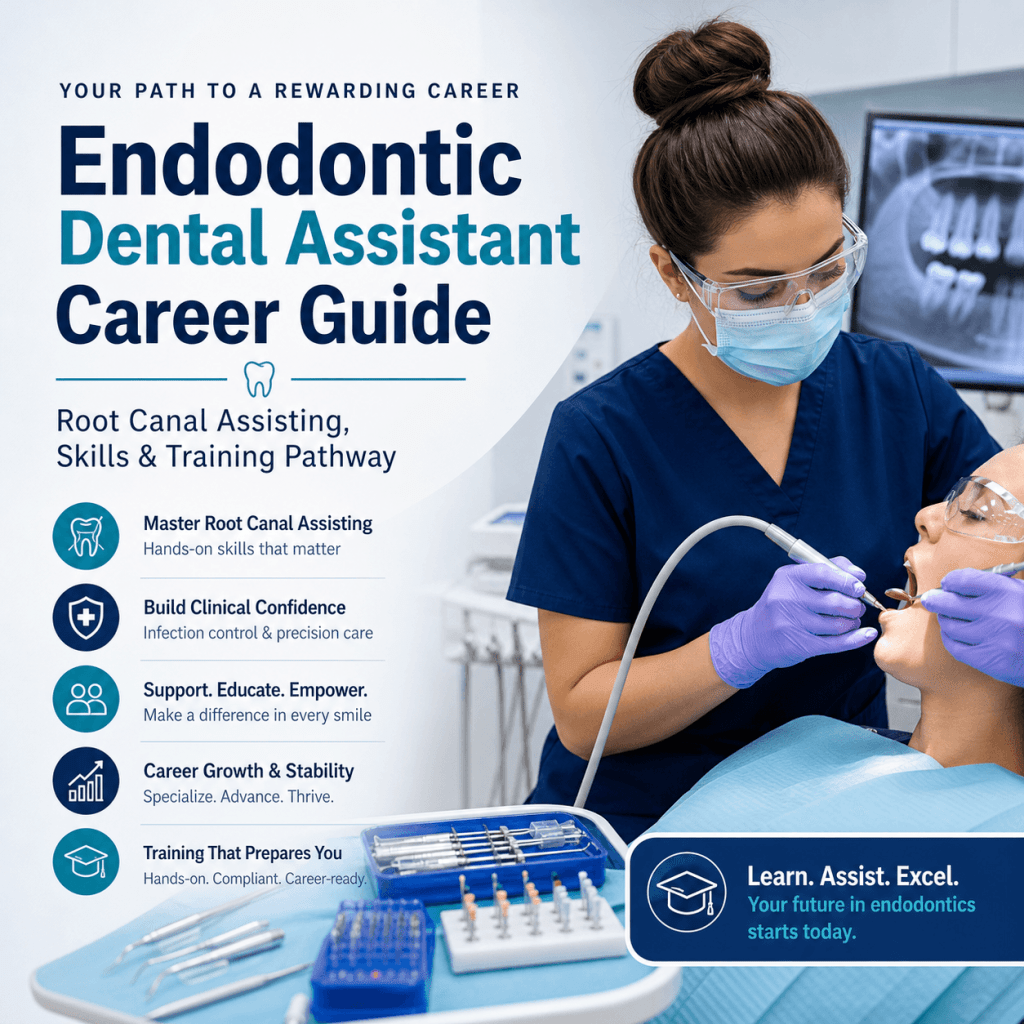
2) Endodontics (Endo) dental assisting
Endodontists are known for root canal therapy, retreatments, and urgent cases where patients are in pain and need relief quickly.
Common endo procedures include:
- Root canal therapy
- Retreatment of previous root canals
- Emergency diagnosis and pain-focused visits
Typical endo assisting tasks:
- Rubber dam setup support and isolation flow
- Efficient file and irrigation workflow assistance
- Radiograph coordination and positioning support
- Material prep and organized delivery of supplies
- Fast instrument exchange and operatory reset between cases
Skills that matter most:
- Speed with precision, especially during procedure sequences
- Calm communication for anxious or uncomfortable patients
- Clean, organized operatory flow that supports consistency
Career upside: Endo is highly procedure-driven and system-based. If you like repeatable workflows, clear steps, and measurable efficiency, it can be a strong fit.
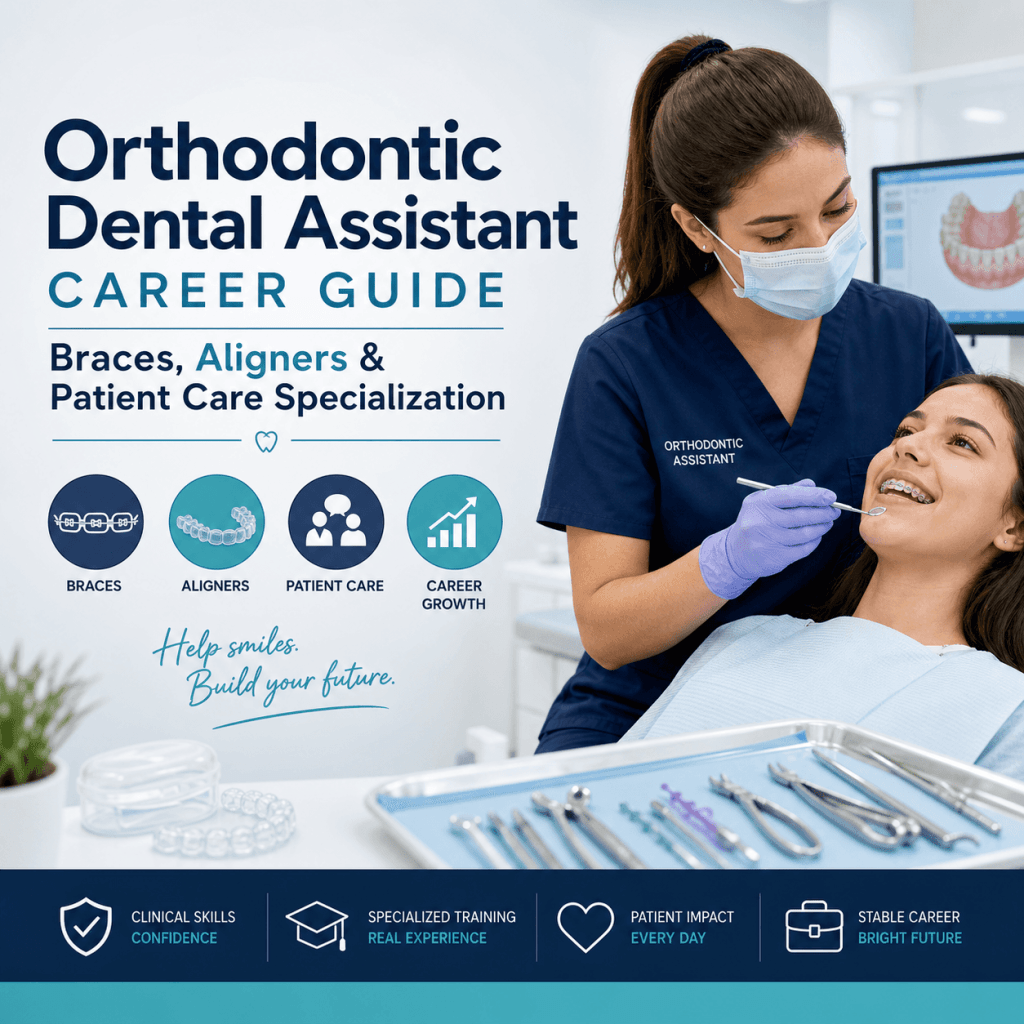
3) Orthodontics (Ortho) dental assisting
Orthodontic practices focus on correcting alignment and bite using braces, aligners, and long-term retention plans. Ortho is unique because patients come in repeatedly over time, so communication and relationship skills matter as much as clinical support.
Common ortho services include:
- Braces and bracket systems
- Clear aligner treatment support
- Retainers and post-treatment retention visits
- Ongoing adjustments and progress checks
Typical ortho assisting tasks:
- Bonding and debonding support
- Impression or intraoral scan assistance
- Wire, elastic, and attachment support (as allowed and trained)
- Patient instructions on hygiene, compliance, and appliance care
- Helping manage a high-volume schedule with many short appointments
Skills that matter most:
- Patient coaching, especially with teens and families
- Time management across a busy schedule
- Clear communication and a friendly, confident chairside presence
Career growth: Ortho assistants often grow into ortho-specific lead roles, treatment coordinator pathways, and other positions that use both clinical knowledge and patient communication skills.
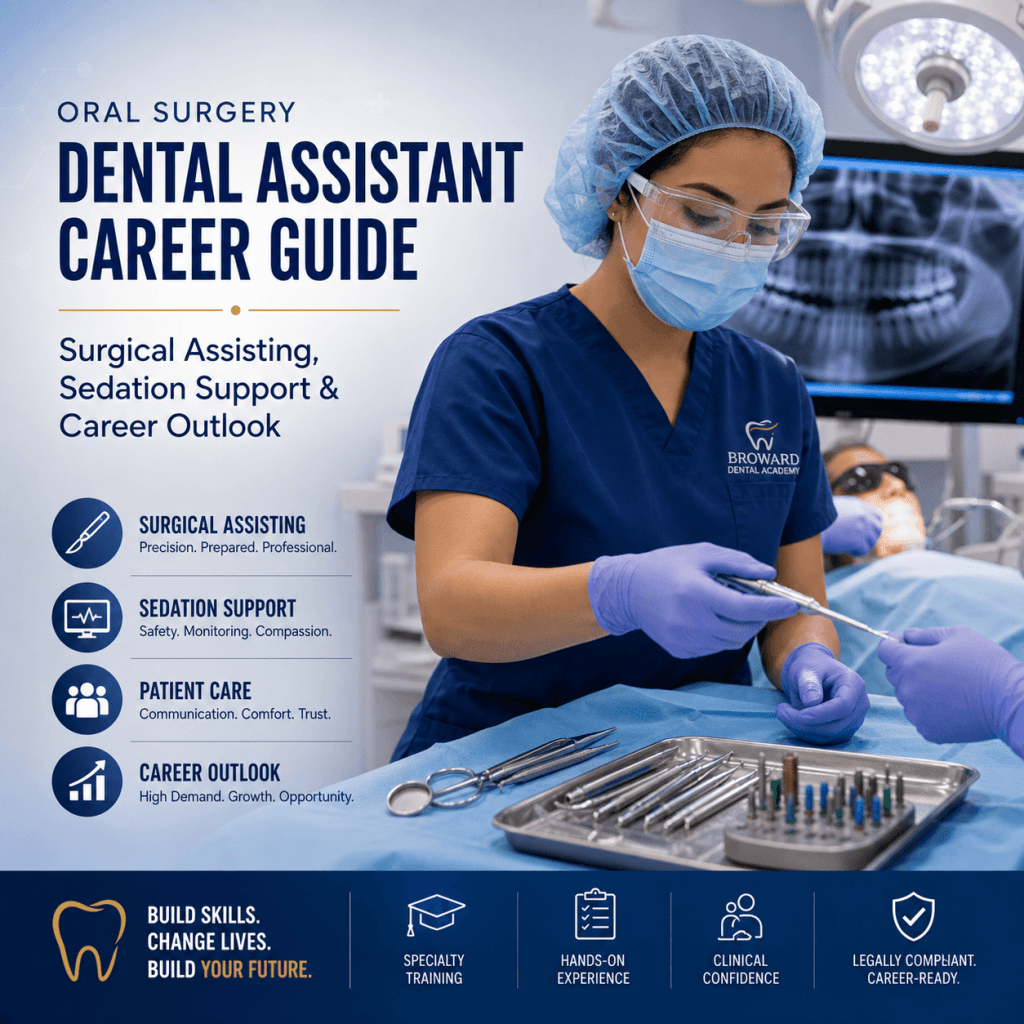
4) Oral surgery dental assisting
Oral surgery is one of the most clinically intense tracks. It often involves surgical procedures, faster room turnover, and a strong safety culture. Oral surgery commonly includes surgical extractions, implant surgery support, biopsies, and bone grafting support.
Typical oral surgery assisting tasks include:
- Surgical setups and sterile field maintenance
- High-volume suction and retraction for visibility and safety
- Supporting efficient turnaround between surgical cases
- Post-op instructions and patient discharge communication
- Documentation support and safety checks
Sedation awareness (high level): In some oral surgery environments, sedation may be part of patient care. Assistants must understand office protocols, documentation requirements, and the importance of a safety-first culture. The exact duties depend on training, certification, state rules, and the supervising doctor.
Who it fits best: Assistants who thrive under pressure, prioritize safety and precision, and stay composed in surgical environments often do well in oral surgery settings.
Skills and credentials that help you move into a specialty role faster
Specialty offices look for assistants who are reliable, consistent, and ready to learn. The clinical skills matter, but so does how you show up every day in a high-expectation environment.
What specialty practices often want:
- Professionalism and strong work ethic
- Excellent infection control and sterile technique
- Comfort with structured protocols and checklists
- The ability to learn specialty systems quickly (instruments, materials, software, documentation)
- Patient-centered communication and strong chairside manner
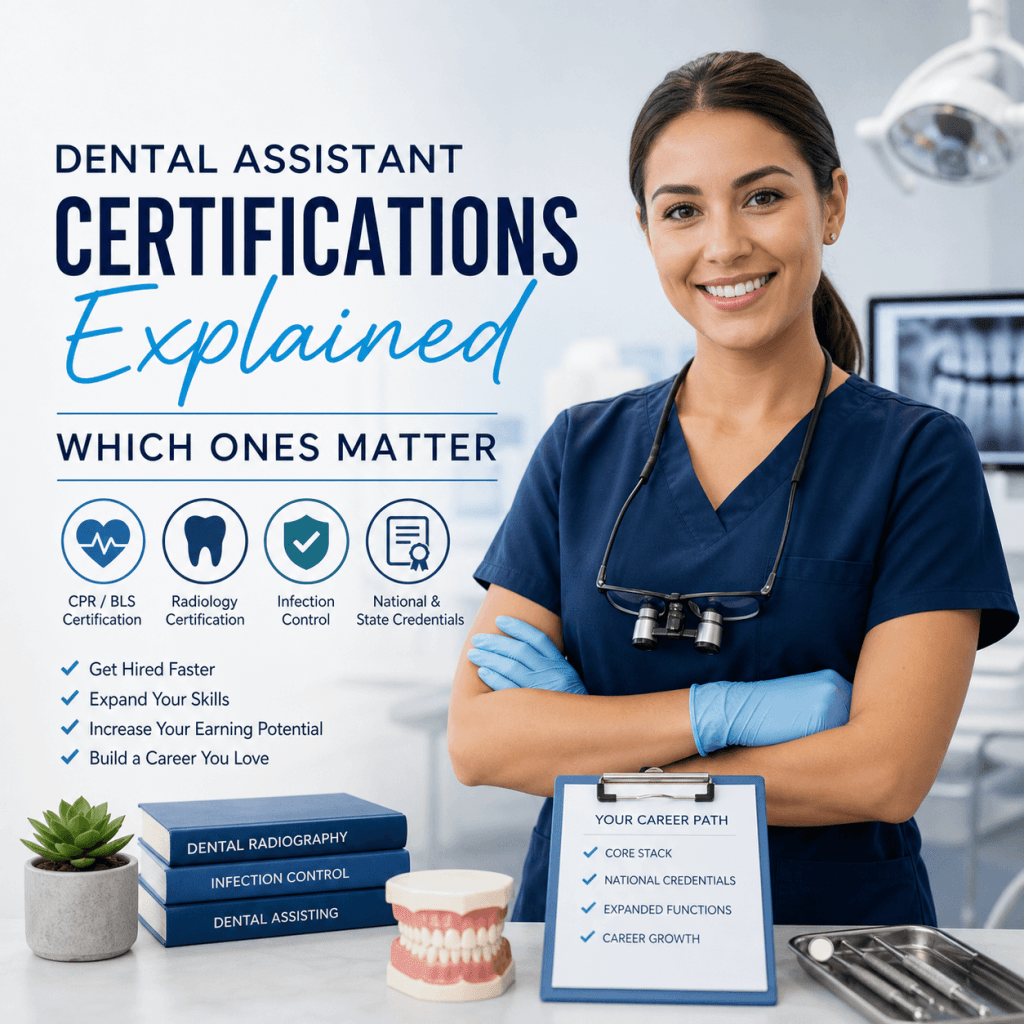
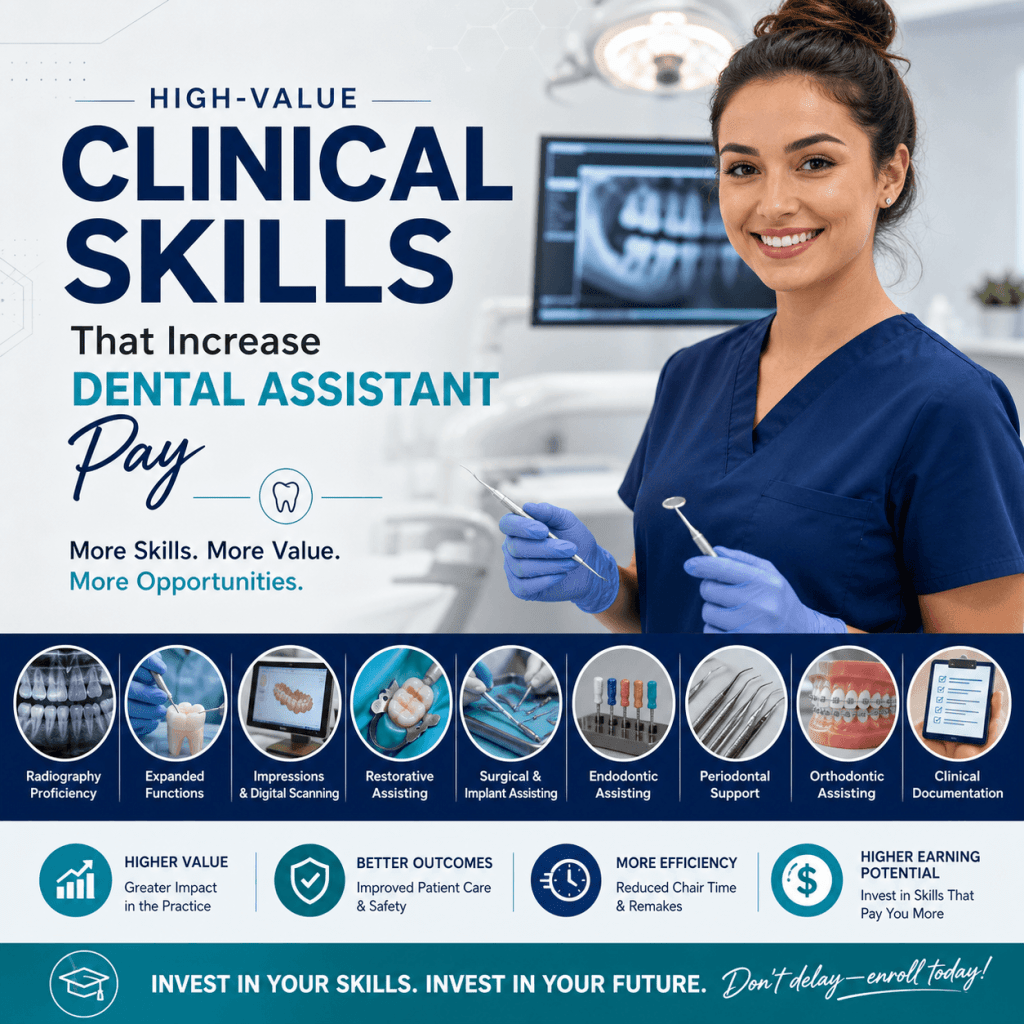
Expanded functions can be a major career accelerant where permitted. With advanced dental training and formal courses, some assistants take on additional clinical tasks that support the doctor and help the practice run more efficiently.
Soft skills that matter in specialties:
- Empathy and reassurance (many specialty patients are anxious)
- Clear, confident communication
- Critical thinking when the room gets busy
- Ethical decision-making and respect for patient privacy
- Teamwork and consistency under pressure
Requirements vary by state and by practice, so training should match your legal scope and the real clinical demands of the specialty you want.
How to choose the right specialty track for your personality and goals
A simple way to choose a specialty is to look at four factors:
- Pace: Do you want steady, predictable workflows or fast turnover?
- Comfort with surgery: Are you comfortable with blood and surgical procedures?
- Patient relationships: Do you prefer long-term relationships or shorter, procedure-focused visits?
- Technical detail: Do you enjoy highly structured steps and precise systems?
Personality matches often look like this:
- Systems-focused, consistency-driven: Endodontics
- Coaching and relationship-based: Orthodontics
- Surgical, detail-oriented: Periodontics or Oral Surgery
To gain insight into different specialties, consider exploring various dental specialties. If possible, talk to assistants currently working in the specialty you are considering, or ask about shadowing. Many people also switch specialties later, and that is normal. Career mobility in dental assisting is real, especially when your training is strong.
What training should look like (so you’re ready for real specialty cases)
“Job-ready” training goes beyond test prep. Specialty offices need assistants who can step into real procedures, real time constraints, and real patient expectations.
Strong training typically includes:
- Structured learning that explains the why behind procedures and protocols
- Hands-on clinical exposure that builds speed, confidence, and safe habits
- Real practice systems, including documentation habits, operatory flow, and patient communication
- In-office internships that teach you how a high-performance practice actually runs
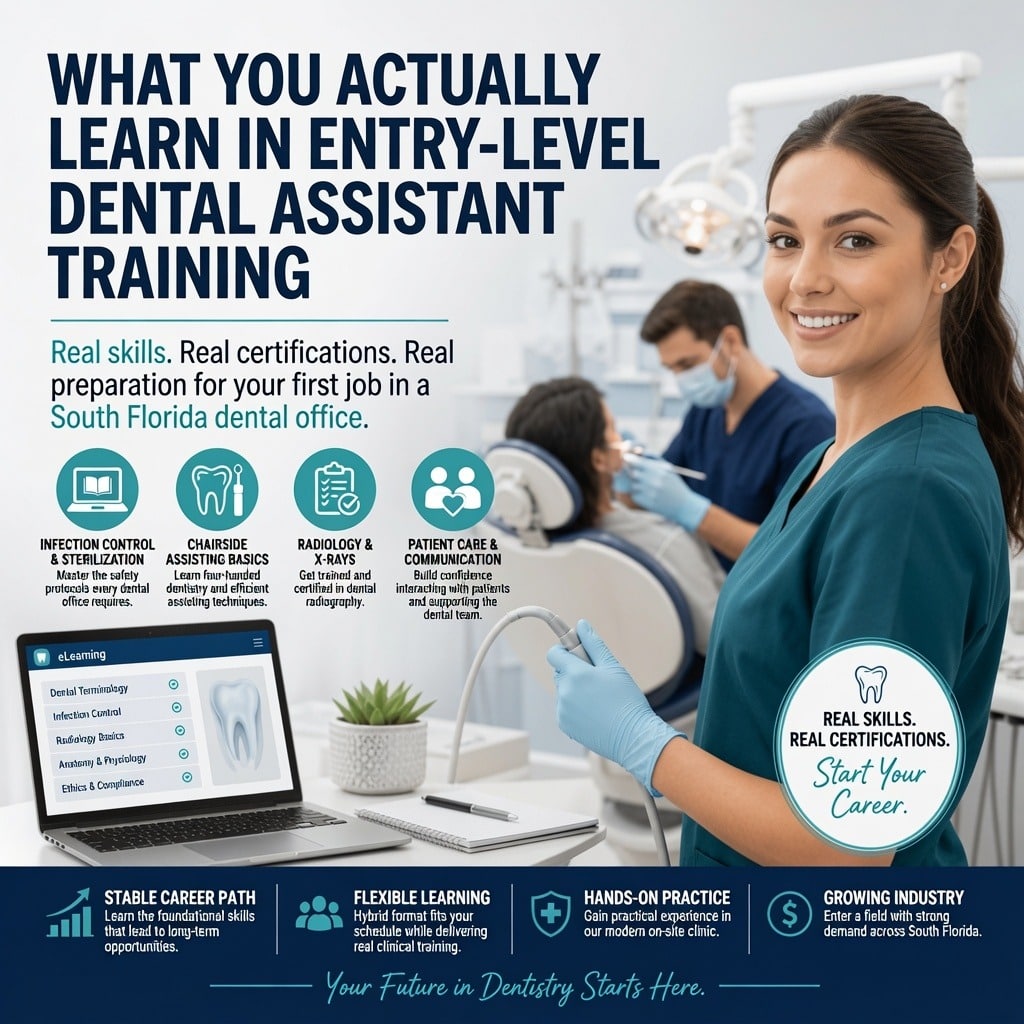
For adult learners balancing work and family, an ideal model often includes immediate immersion in online and clinical settings, so you can build knowledge while also developing practical chairside skills like those offered at Broward Dental Academy.
The outcome practices want is simple: thoroughly trained, legally compliant, clinically confident assistants who can contribute from day one.
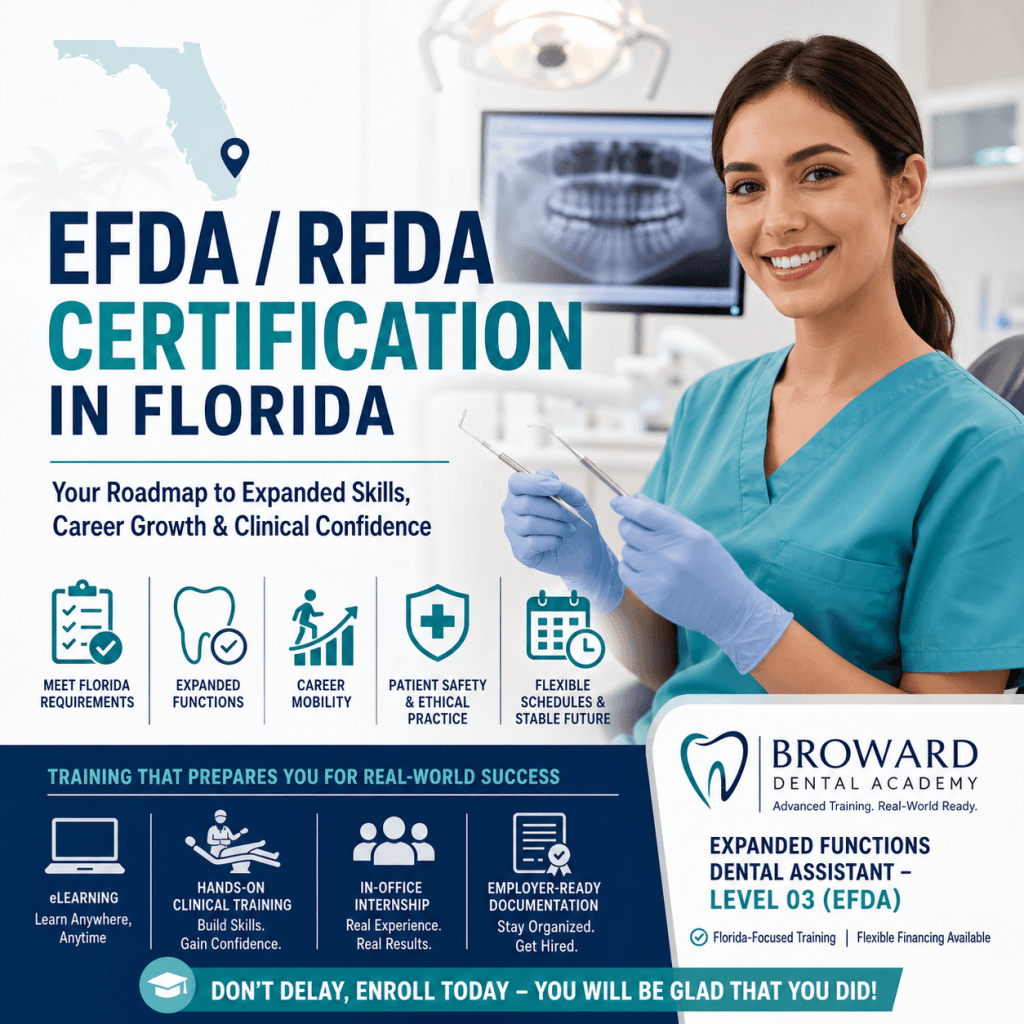
Specialty dental assisting training at Broward Dental Academy (built for modern practices)
Broward Dental Academy offers a wide range of dental courses and advanced dental training designed to help students become well-rounded professionals in today’s dental community.
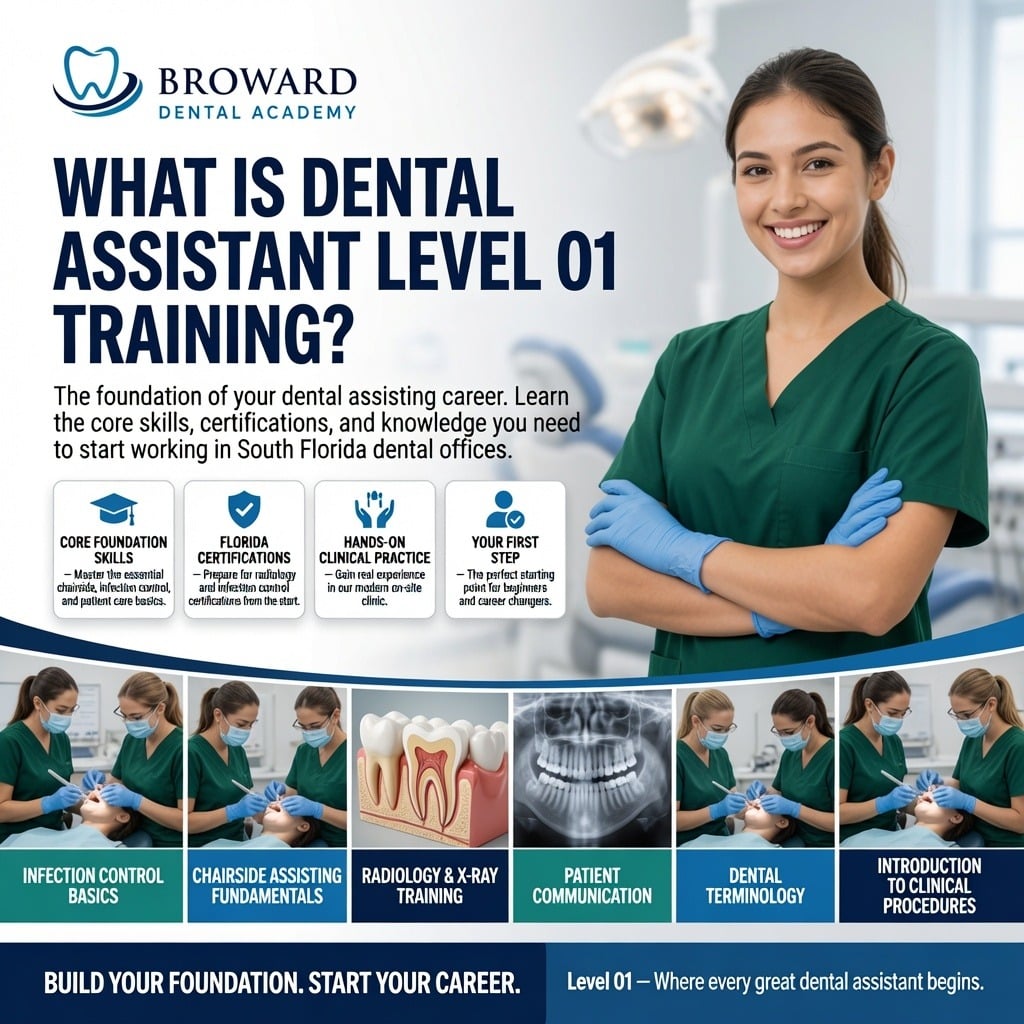
If your goal is to move beyond general dentistry, Broward Dental Academy’s Specialty Dental Assisting Training (Perio • Endo • Ortho • Oral Surgery) is built to support that next step. This program is ideal for those who have already completed the foundational courses such as the Dental Assistant Level 01, Dental Assistant Level 02, or Dental Assistant Hygienists Level 03.
The training approach is designed for modern practices and focuses on more than passing an exam:
- Latest eLearning lesson plans incorporated for remote training
- Clinical immersion that reflects real specialty workflows
- In-office internships that build speed, chairside flow, and professionalism
- A focus on critical thinking, ethical practice, and confident performance
Broward Dental Academy prepares students to become thoroughly trained, legally compliant, and clinically confident professionals, with a learning environment that helps students become accomplished and polished dental team members.
Practical benefits include flexible financing, a supportive environment, and clear next steps to enroll.
Putting it all together: your next step beyond general dentistry
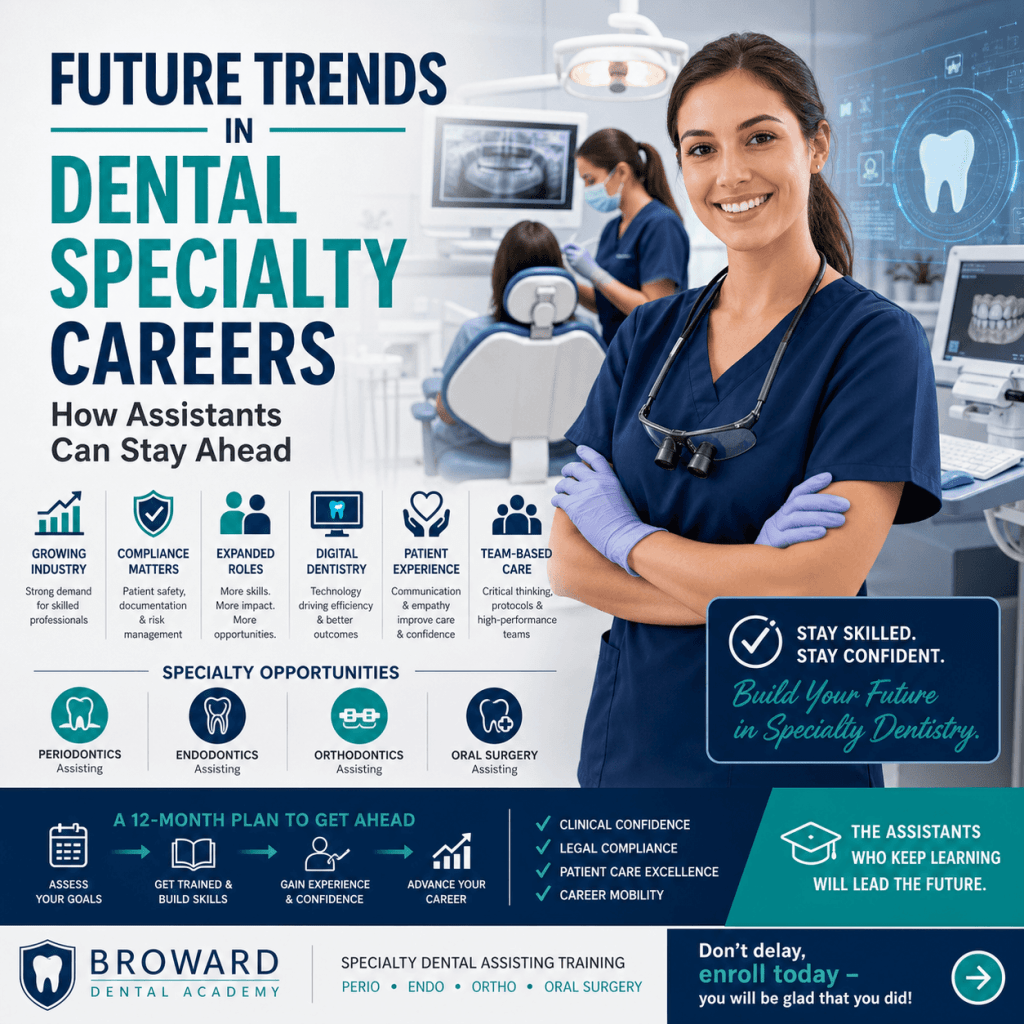
Specialty dental assisting is not a vague idea. It is a real career move with clear options: Perio, Endo, Ortho, and Oral Surgery. Each specialty offers a different day-to-day experience, and each can be a strong path for assistants who want stability, flexibility, a respected role in healthcare, and long-term mobility in dentistry.
Your next step is straightforward:
- Choose a specialty track that fits your personality and goals
- Get the right training for real specialty cases
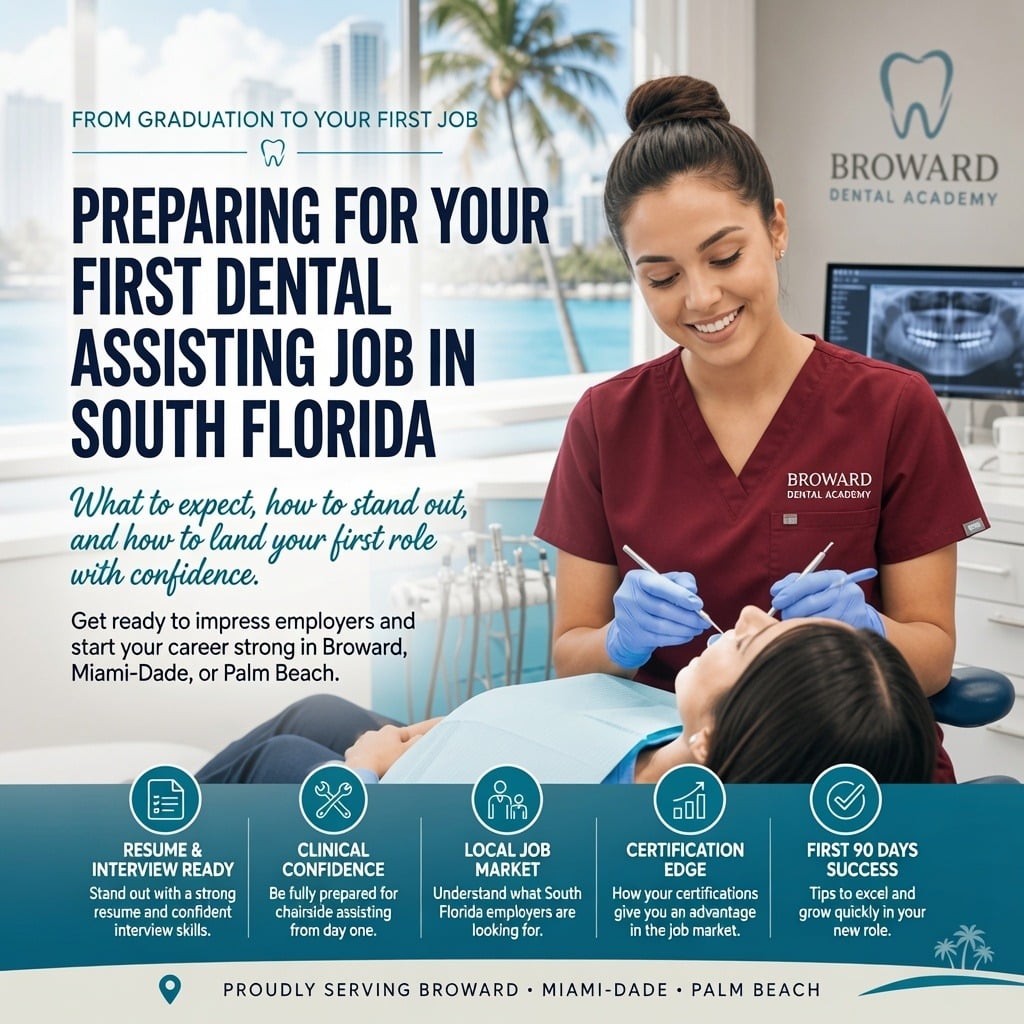
- Pursue roles where specialty skills are valued and rewarded
If you are ready to build specialty-ready skills through comprehensive training programs like Specialty Dental Assisting Training offered by Broward Dental Academy, don’t delay. Enroll today – you will be glad that you did!
FAQs (Frequently Asked Questions)
What is specialty dental assisting and how does it differ from general dental assisting?
Specialty dental assisting involves supporting dentists in focused areas of care such as periodontics, endodontics, orthodontics, and oral surgery. Unlike general dental assisting, which covers a broad mix of preventive care and routine procedures, specialty assisting focuses on more advanced procedures, specialized instruments, detailed workflows, and higher precision and compliance requirements.
Why is specialty dental assisting a growing career path in dentistry?
Specialty dental assisting is growing due to the rapid expansion of the dental industry, increased referrals to specialists, more implant-related cases, and rising patient expectations for comfort and safety. Specialty roles offer stable income potential, flexible schedules, respected healthcare positions, and clear career mobility without needing to change fields.
What are the common responsibilities of a specialty dental assistant in high-performance practices?
Specialty dental assistants handle advanced chairside assisting, strict sterile technique and infection control, specialty tray setups and operatory preparation, fast room turnover, clinical documentation support, patient education with post-op instructions, and close coordination with doctors and clinical teams to ensure efficient and precise appointments.
What types of specialties can dental assistants pursue beyond general dentistry?
Dental assistants can specialize in four major tracks: periodontics (gum health and implants), endodontics (root canals and emergency pain cases), orthodontics (braces and aligners), and oral surgery (extractions, implants, surgical procedures). Each specialty offers distinct clinical focuses and workflow rhythms.
How can dental assistants advance their careers within specialty fields?
Dental assistants can pursue formal training programs offering expanded functions that grant more responsibility and stronger earning potential. Specialized training enhances professionalism through ethical judgment, critical thinking, attention to detail, patient-centered communication, and thorough knowledge of dentistry aspects relevant to their specialty.
What skills are essential for success in specialty dental assisting roles?
Key skills include calmness under pressure, strict adherence to protocols, clear communication with patients and team members, precision in handling advanced instruments and materials, strong infection control practices, efficient workflow management, ethical judgment, critical thinking capabilities, and professionalism aligned with high-performance clinical settings.