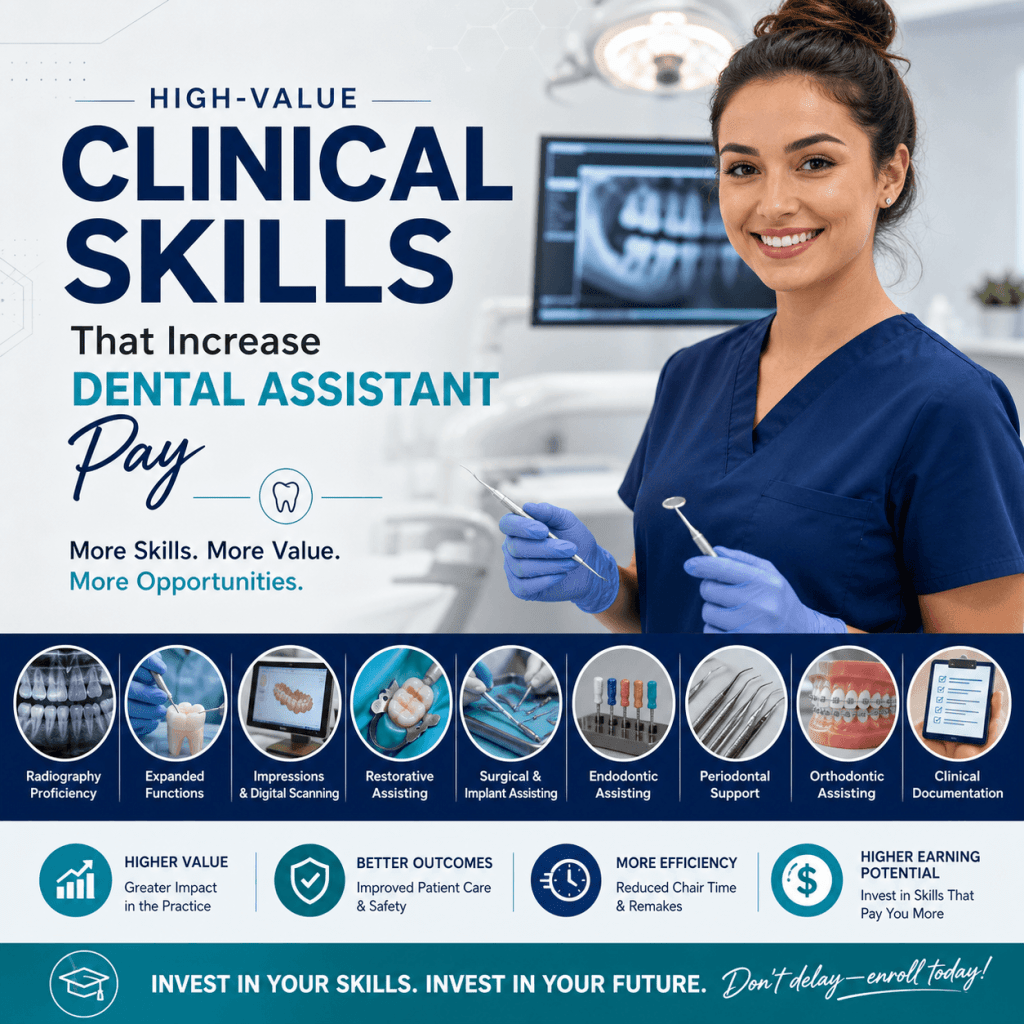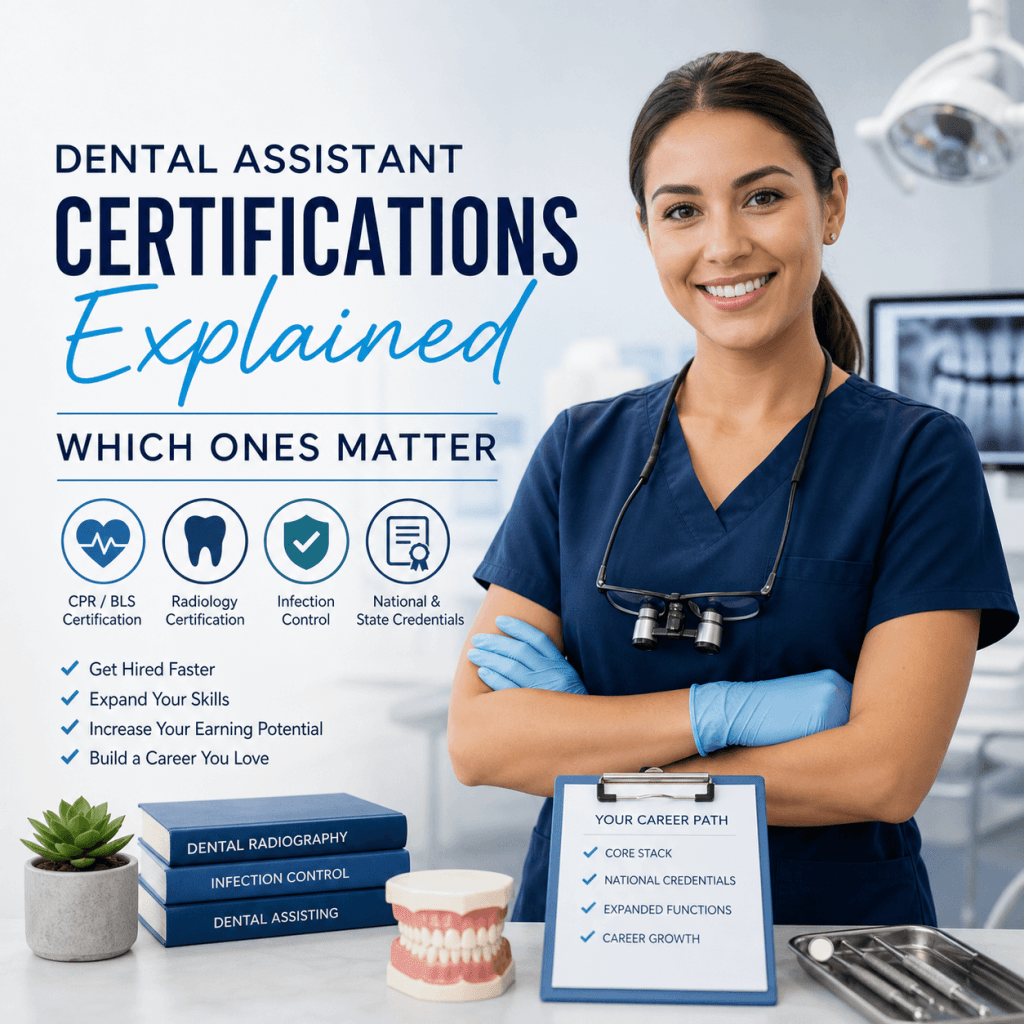
In many dental offices, certifications impact:
- Whether you get hired quickly
- What you get paid
- Which clinical duties you are legally allowed to perform
- How easily you can move into higher-responsibility roles over time
At the same time, not every credential is required for every job. Some practices hire entry-level dental assistants and train in-house for basic chairside support. Other practices, especially busy and modern offices, prefer candidates who are already trained, compliant, and confident on day one.
This guide breaks down the major dental assistant certifications, which ones matter most for employability, and how to choose training that actually aligns with your goals and your state’s rules.
Why dental assistant certifications matter (and when they don’t)
Here is the real-world trend: dental practices are looking for professionals who are thoroughly trained, legally compliant, and clinically confident. That usually means fewer onboarding surprises, fewer compliance gaps, and a smoother experience for both the dentist and the patient.
Certifications tend to matter most when:
- Your state restricts certain duties (radiology, expanded functions, polishing, sealants, nitrous monitoring, and more)
- You are competing for roles in a busy market where employers can be selective
- You want better pay or clearer advancement paths
- You want mobility, including the option to move to another state later
They matter less when:
- The job is strictly entry-level chairside support and the practice trains everything internally
- Your state has minimal formal requirements for the duties you will perform
- The office prioritizes attitude and reliability over credentials (this happens, but it is less common in regulated tasks)
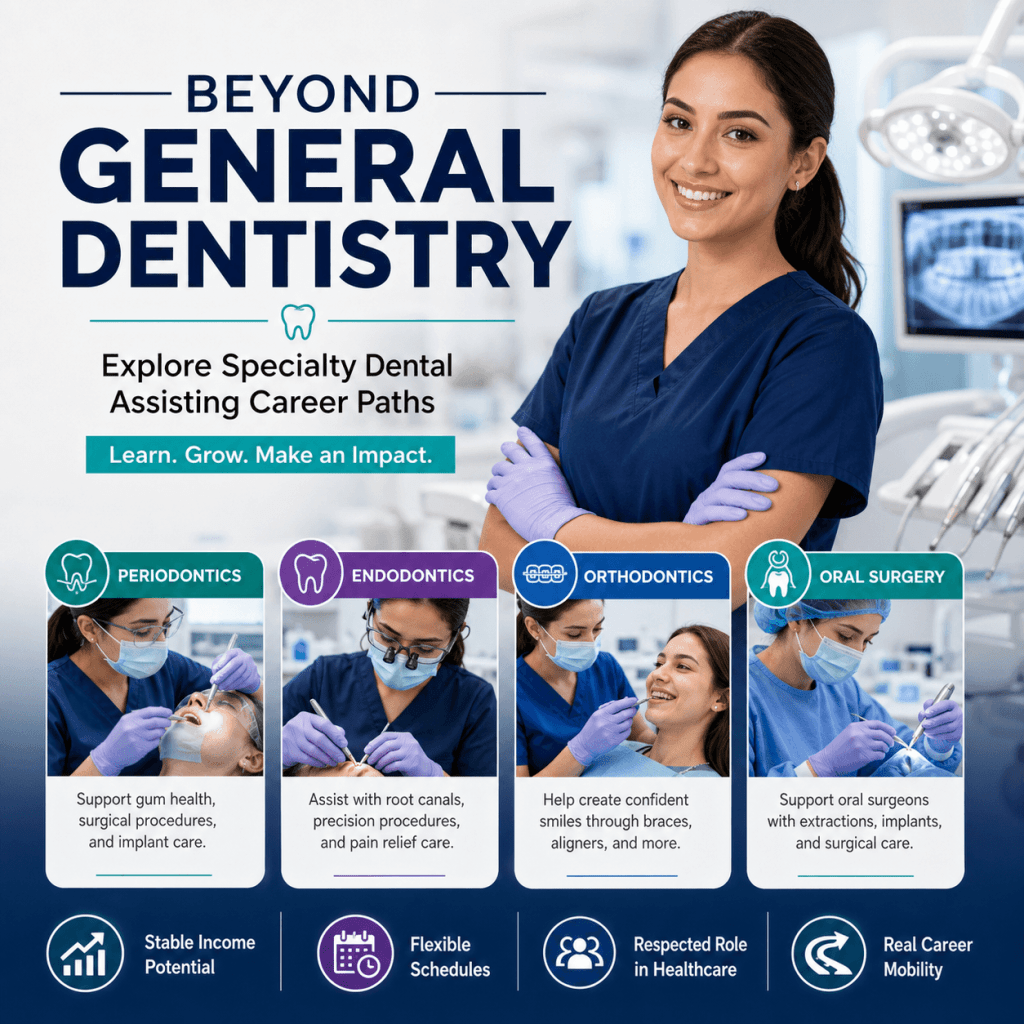
The key is to pursue credentials that unlock job duties such as [oral surgery](https://browarddentalacademy.com/oral-surgery/), [orthodontics](https://browarddentalacademy.com/orthodontics/), endodontics, or periodontics and prove readiness, not random badges that do not change what you can do in the operatory.
Start here: certification vs. certificate vs. licensure (quick definitions)
These terms get mixed up constantly in job posts and even in interviews. Knowing the difference helps you ask better questions and avoid enrolling in the wrong program.
Certification (credential):
A third-party credential, often exam-based, that verifies knowledge and skills. Example: national certifications that employers recognize across locations.
Program completion certificate:
A certificate you earn from a dental assisting school or course after completing required instruction and clinical components. This shows you finished training, but it is not always the same as a state credential.
Licensure, registration, or permits (state-required):
What your state may require for specific duties. Requirements can include proof of education, approved courses, background checks, CPR, radiology credentials, jurisprudence exams, and more.
Why this matters: employers may say “certified” when they really mean “completed a program,” or they may say “RDA required” when they mean a specific state registration step. When job hunting or enrolling at a dental school like Broward Dental Academy, ask:
- Which duties will I be expected to perform?
- Which credentials are required by the state for those duties?
- Which documents do you need on file before my first day?
The 3 big questions to decide “which certifications matter” for you
Before you spend time and money on courses offered by institutions such as Broward Dental Academy, answer these three questions.
1) What do you want to do in the office?
Basic chairside assisting is very different from taking X-rays or performing expanded functions. Your ideal role determines what credentials are worth prioritizing.
2) Where do you plan to work?
State rules vary widely. The right path in Florida can look different from the right path in Texas, California, or New York. If you may relocate, you should think about portability and national credentials earlier.
3) How fast do you want to get hired, and how competitive is your market?
In many areas, a baseline expectation is CPR/BLS + radiology eligibility + solid infection control training. In more competitive markets, employers may lean toward candidates who can prove competency immediately.
Practical takeaway: prioritize credentials that unlock duties and increase employer confidence. If it does not change what you can do, how safely you can do it, or how employable you are, it is probably not your next move.
Certifications most dental offices look for first (the “core stack”)
If you want the shortest path to “hireable,” start here. Think of these as the fundamentals many practices expect from a modern dental assistant.
CPR/BLS for Healthcare Providers
Most dental offices require current CPR/BLS because emergencies happen, even in routine appointments. Employers want reassurance that you can respond quickly and correctly as part of the clinical team.
Radiology / Dental X-Ray certification
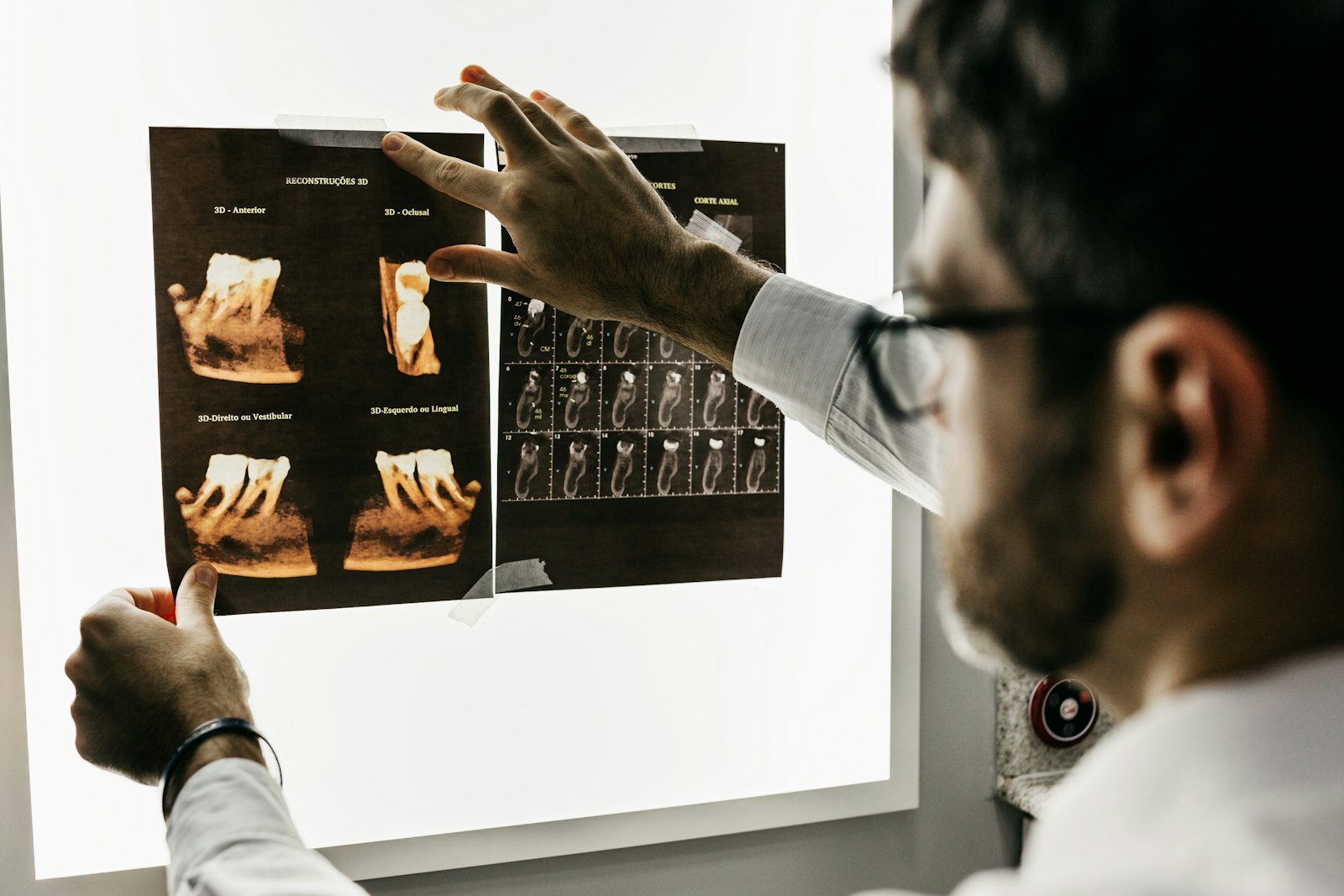
Radiology is one of the biggest hiring advantages for dental assistants because it is tied to compliance and productivity. If you are legally allowed to expose radiographs (under supervision, per state rules), you are immediately more useful in a fast-paced schedule.
Infection control training
Infection control is not optional. Employers expect OSHA and CDC-aligned behaviors: proper PPE, sterilization flow, surface disinfection, instrument processing, and documentation awareness.
Why the “core stack” matters: it signals that you can step into a real practice with fewer compliance risks and less basic retraining.
Important note: exact names, course requirements, and authorization levels vary. Always confirm with your state dental board and local employers.
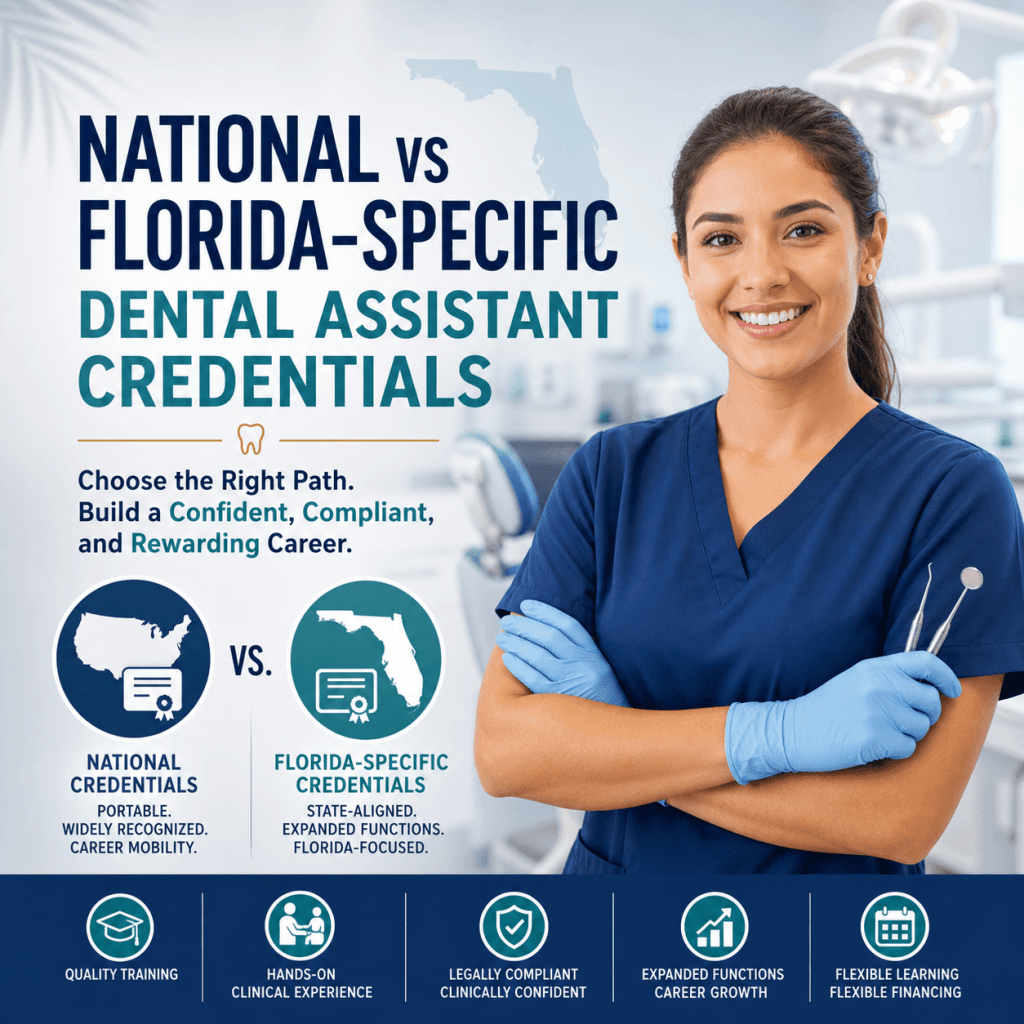
National dental assistant certifications (and what they signal to employers)
National credentials matter because they provide standardized proof that you meet a defined level of knowledge and competency. Employers like them for three reasons:
- Credibility: a third-party exam standard often carries weight.
- Portability: useful when changing employers or moving states.
- Career structure: clear milestones from entry-level toward advanced roles.
National certification tends to help most when you are:
- Competing for higher-paying positions
- Trying to stand out without years of experience
- Pursuing promotions
- Planning to relocate
CDA (Certified Dental Assistant): who it’s for and when it’s worth it
A CDA is widely recognized and generally signals broad competency across dental assisting topics. On a resume, it often reads as “this person took their training seriously and can be trusted with responsibility.”
Who benefits most from a CDA:
- New graduates who want an edge in hiring
- Dental assistants planning to relocate
- Assistants thinking long-term about growth, stability, and professional credibility
What to plan around:
- Prerequisites vary based on the pathway you qualify under (education and/or work experience)
- Exam prep takes commitment, especially if you are balancing work and family
Should you do it now or later?
- Prioritize it now if job postings in your area consistently ask for it or prefer it.
- Consider doing it later if your state has more urgent, duty-based requirements first (radiology permissions or registration steps), and you need income quickly.
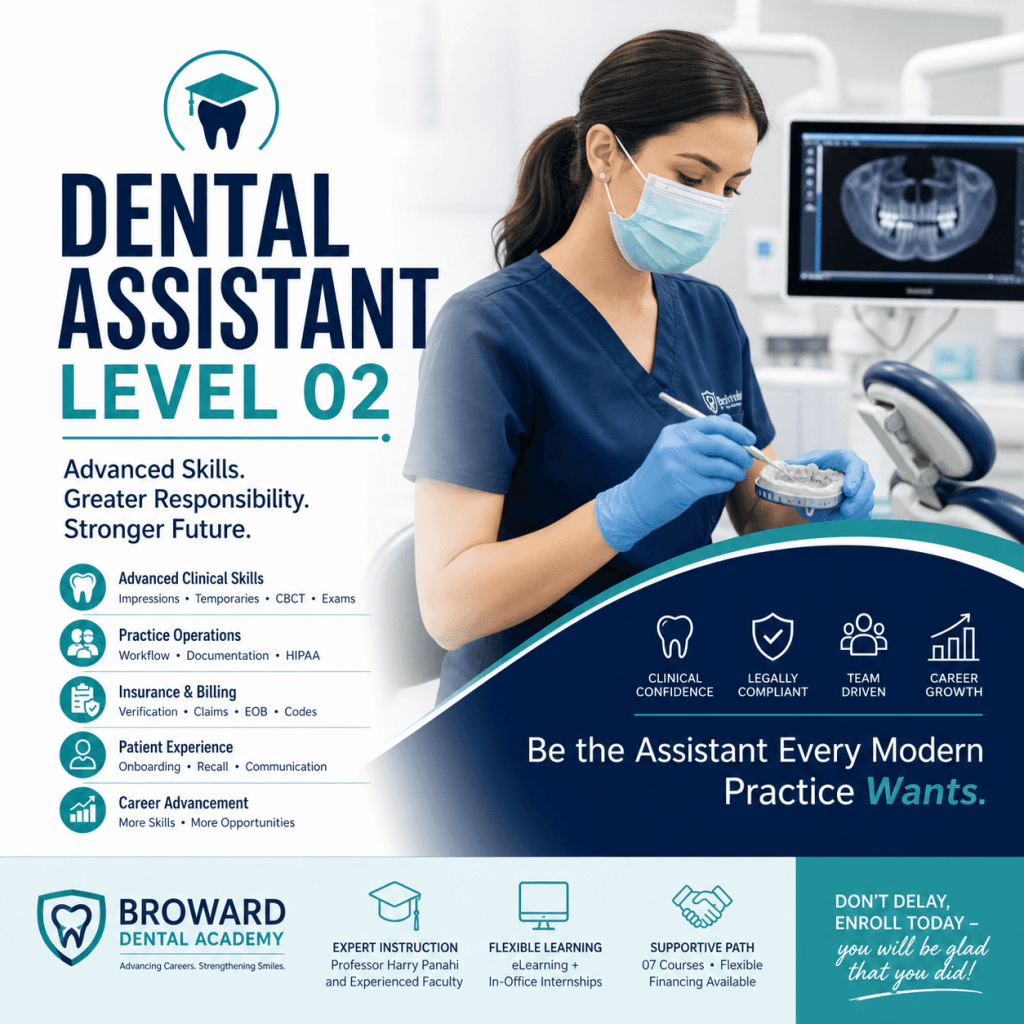
To enhance your qualifications, consider pursuing specialized programs such as those offered for Dental Assistant Level 01, Dental Assistant Level 02, or Dental Assistant Hygienists Level 03. These programs can provide additional skills and certifications that may be beneficial in your career.
RDA (Registered Dental Assistant): why it’s state-specific and high-impact
“RDA” is not one universal credential. It is state-specific, and in many states it is directly tied to what you are legally allowed to do.
Why employers value it: it signals you meet your state’s compliance expectations and can be scheduled for regulated tasks without putting the practice at risk.
How to research your state’s pathway:
- Start with your state dental board website
- Look for dental assisting requirements by duty category (radiology, expanded functions, supervision levels)
- Confirm whether your state requires approved programs, permits, exams, CPR, or background checks
Decision tip: if your state uses RDA status to unlock key duties, it often matters more than optional add-ons.
EFDA certification (Expanded Functions): when it matters most
Expanded Functions Dental Assistant (EFDA) credentials cover additional clinical duties beyond basic assisting. These duties are state-regulated and can include tasks that support restorative procedures and increase the efficiency of the dentist.
Why EFDA can change your career:
- More responsibility and more value to the practice
- Stronger earning potential in many markets
- Greater mobility into advanced assisting roles
Who should pursue EFDA:
- Assistants who enjoy hands-on clinical work
- People who want a clear advancement track beyond entry-level
- Assistants who want to be indispensable in a high-performance practice
Critical point: scope of practice varies by state, and training must align with what is legally permitted where you work.
Other certifications that can boost employability (depending on your goals)
Once the core stack and your state requirements are covered, there are additional role enhancers that can help you match specific job openings.
Examples may include (where permitted by your state):
- Coronal polishing
- Sealants
- Nitrous oxide monitoring
- Orthodontic assisting
- Dental impressions and digital scans
You can also strengthen your profile with administrative add-ons:
- Dental software proficiency
- Scheduling workflows
- Insurance and billing fundamentals
- Patient communication and case acceptance support
How to evaluate ROI: choose add-ons that match the kinds of offices you are applying to and the procedures they do every day. If you are interviewing at a practice that runs a lot of restorative and imaging-heavy appointments, radiology and strong clinical workflow skills will often beat niche credentials.
A simple “pick-your-path” guide: which certifications matter by career stage
Most dental assisting careers follow one of these three paths.
Path 1: Brand-new to dental assisting
Priority order:
- Solid foundational training (with hands-on clinical practice)
- CPR/BLS
- Radiology eligibility/credential (per state rules)
- Infection control training
Goal: get hired faster and onboard smoothly.
Path 2: Working assistant leveling up
Priority order:
- Fill any state compliance gaps (permits, registration, radiology upgrades)
- Add national recognition if it helps in your market (often CDA)
- Targeted add-ons that match your office or desired specialty
Goal: improve pay, increase responsibility, and become promotable.
Path 3: Expanded functions track
Priority order:
- Confirm your state’s EFDA pathway and permitted duties
- Complete required education and clinical requirements
- Complete any required exams or permits
- Keep CPR and required renewals current
Goal: Move into advanced clinical duties with clear career mobility.
Quick decision matrix
Your goal | What to prioritize first |
Get hired fast | Core stack (CPR/BLS, radiology, infection control) + strong hands-on training |
Earn more | State-required credentials + national credential value (often CDA) + high-demand clinical skills |
Expanded functions | State EFDA pathway + compliant training aligned to scope of practice |
How to choose a dental assisting course (so your certifications actually “count”)
A common frustration is completing a course and then realizing it does not meet your state requirements or does not prepare you for real clinical flow. You want training that builds both competence and confidence.
Look for programs that:
- Blend online learning with real, hands-on clinical training
- Align coursework with state requirements and the credentials you plan to pursue
- Include internships or in-office externships so you graduate with real practice exposure
- Emphasize job readiness, repetition of clinical skills, and professionalism, not just test-taking
When evaluating a program, ask:
- Which certifications or state permits does this training support?
- How much clinical time will I get and what skills will I practice repeatedly?
- Do you offer an internship or externship in a real dental office?
- How do you prepare students for workplace expectations, not just exams?
If you’re looking for a program that meets these criteria, consider exploring options like those offered by Broward Dental Academy, which are designed to ensure your certifications are valuable and applicable in real-world settings.
What dental practices actually want in 2026: confidence, compliance, and real skills
Demand for skilled dental professionals continues to rise, but hiring filters are getting sharper. Offices are busy, patients expect efficiency, and compliance requirements are not flexible.
What “legally compliant” looks like
- Correct documentation and up-to-date credentials on file
- Radiology permissions that match the duties you perform
- Strong infection control habits every day, not only during inspections
- Awareness of your scope of practice so the office stays protected
What “clinically confident” looks like
- Efficient chairside flow and operatory setup
- Anticipating the dentist’s needs during procedures
- Strong patient communication and professionalism
- Calm, safe responses under pressure
Certifications help open the door, but real hands-on performance is what keeps you employed, trusted, and promoted.
How Broward Dental Academy prepares you for the certifications that matter
Broward Dental Academy is built around real practice readiness, not just passing an exam. The focus is on developing dental assistants who are thoroughly trained, legally compliant, and clinically confident in a modern dental environment.
Students experience:
- Immediate immersion in online and clinical settings
- Modern eLearning lesson plans designed for remote training
- In-office internships that translate learning into real-world performance
The outcome students care about is simple: becoming well-rounded professionals who think critically, act ethically, and perform confidently in high-performance practices.
Broward Dental Academy offers a wide range of dental courses and advanced dental training, along with flexible financing designed to help working adults move forward without putting life on hold.
Common mistakes students make when chasing dental assistant certifications
A few avoidable mistakes can slow your progress or cost you money.
Collecting credentials without checking scope of practice
A credential is only valuable if your state recognizes it for the duties you want to perform and employers in your area care about it.
Skipping hands-on practice
Passing a test is not the same as functioning in a real operatory. Without clinical repetition, many new assistants struggle with speed, setup, and procedure flow.
Not planning for timelines
Prerequisites, externship hours, exam scheduling, renewals, and continuing education can add friction if you do not plan ahead.
Choosing the cheapest option over the most clinically immersive option
If training is too light on clinical work, you may end up needing retraining later. That delays income and confidence.
Final takeaway: focus on certifications that unlock duties and prove you’re job-ready
If you want a simple framework for “which dental assistant certifications matter,” use this order:
- Start with the core stack: CPR/BLS, radiology, infection control
- Add what your state requires: registration, permits, approved coursework
- Build toward your long-term track: national credibility (often CDA) and expanded functions (EFDA) if that fits your goals
Dental assisting is one of the fastest-growing healthcare career paths, offering stable income, flexible schedules, respected clinical work, and real career mobility as your skills grow.
Don’t delay, enroll today at Broward Dental Academy to train for real-world practice confidence and compliance. You will be glad that you did.
Related reading: Dental Certifications, Licensing & Compliance
FAQs (Frequently Asked Questions)
Why are dental assistant certifications important for my career?
Dental assistant certifications are crucial because they influence your chances of getting hired quickly, your pay scale, the clinical duties you can legally perform, and your ability to advance into higher-responsibility roles over time. Employers often prefer certified assistants who are trained, compliant, and confident from day one.
What is the difference between certification, certificate, and licensure in dental assisting?
Certification is a third-party credential that verifies your knowledge and skills, often through an exam. A certificate is proof of completing a training program but may not equate to state credentials. Licensure or registration is a state-required authorization that allows you to perform specific duties, which may include education proof, exams, and background checks.
How do I know which dental assistant certifications matter most for me?
Consider three key questions: 1) What clinical duties do you want to perform in the office? 2) In which state do you plan to work, since regulations vary? 3) How competitive is your job market and how fast do you want to get hired? Prioritize certifications that unlock desired duties and comply with your state’s rules.
When do dental assistant certifications matter less?
Certifications matter less when the role is strictly entry-level chairside support with in-house training, when your state has minimal formal requirements for your duties, or when an office prioritizes attitude and reliability over credentials—though this is less common for regulated tasks.
What are the essential certifications most dental offices look for first?
The foundational certifications include current CPR/BLS for Healthcare Providers due to emergency preparedness requirements. Additionally, eligibility or certification in radiology and solid infection control training are often baseline expectations in many markets.
Can dental assistant certifications help with job mobility across states?
Yes. Some states have different requirements for dental assistants. Obtaining nationally recognized certifications can enhance your ability to move between states by ensuring you meet broader standards and can legally perform various clinical duties wherever you work.