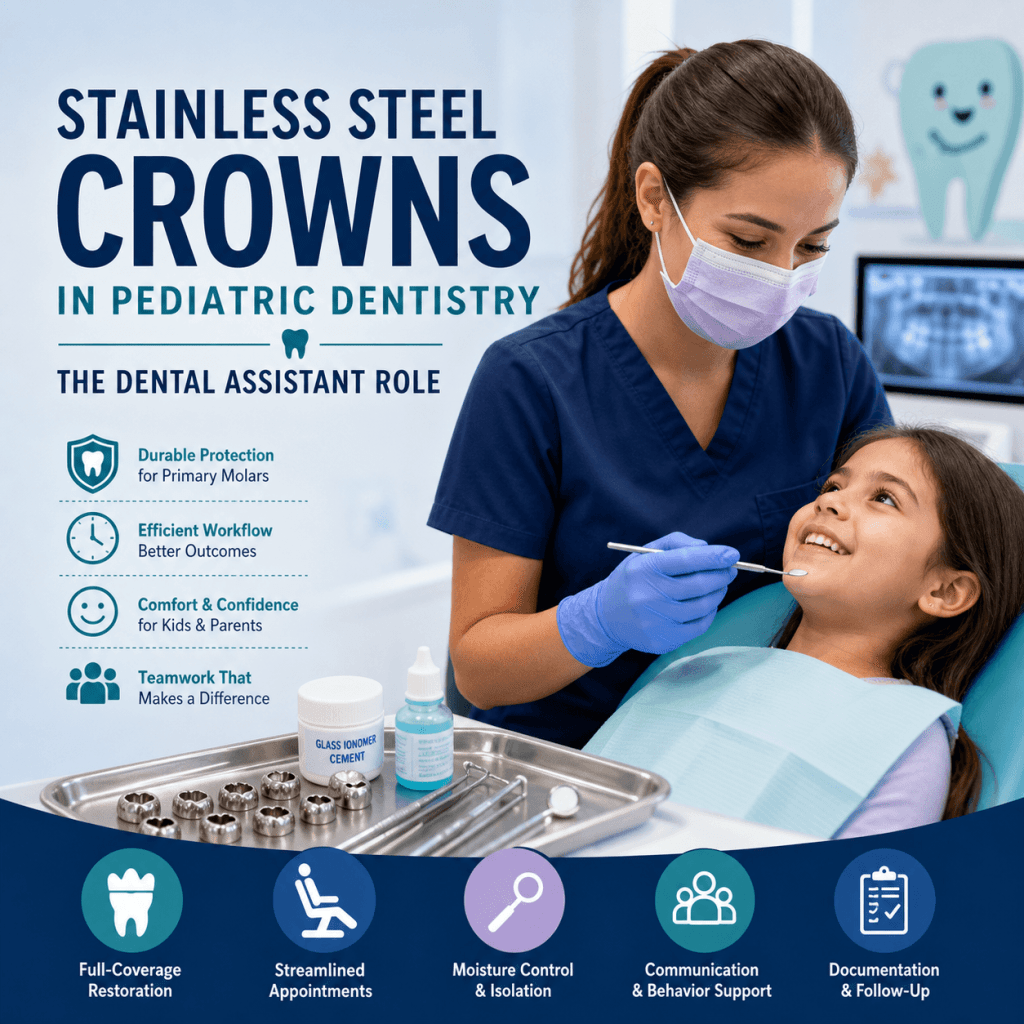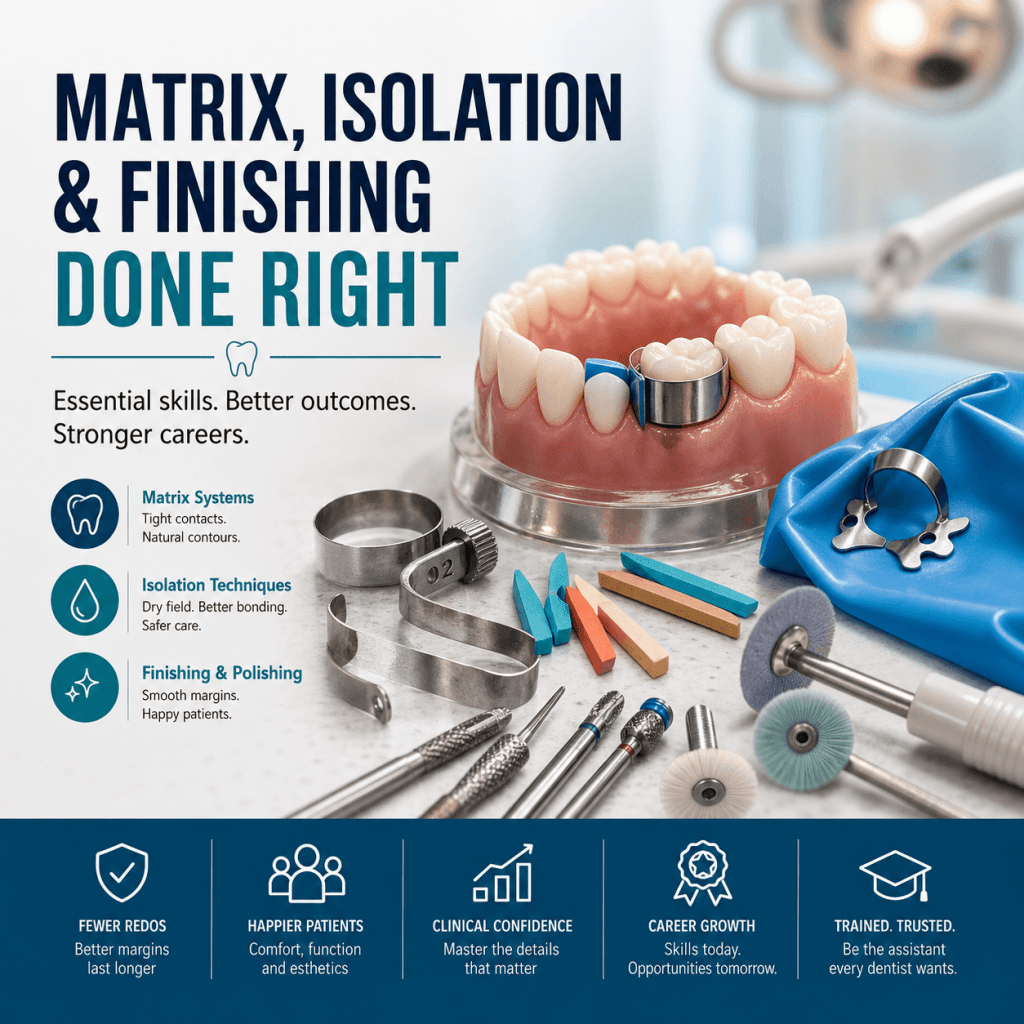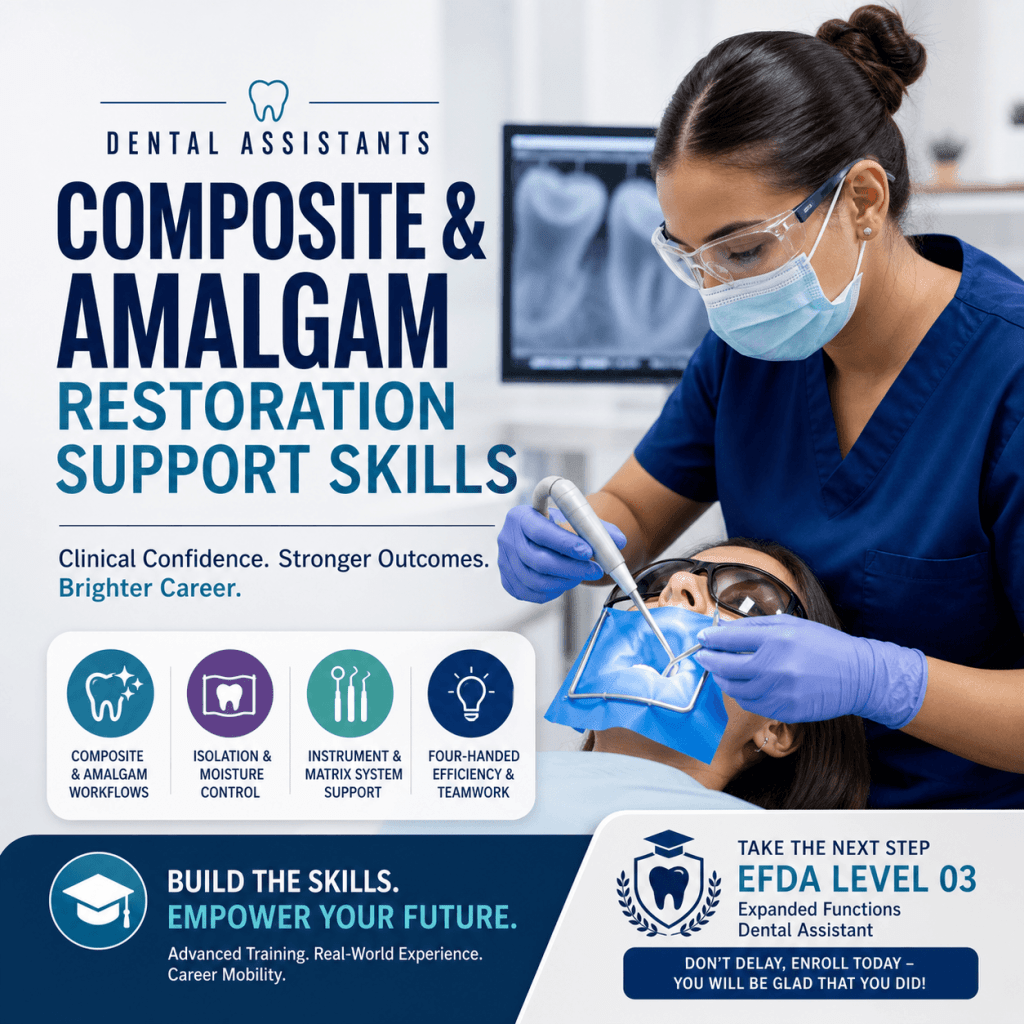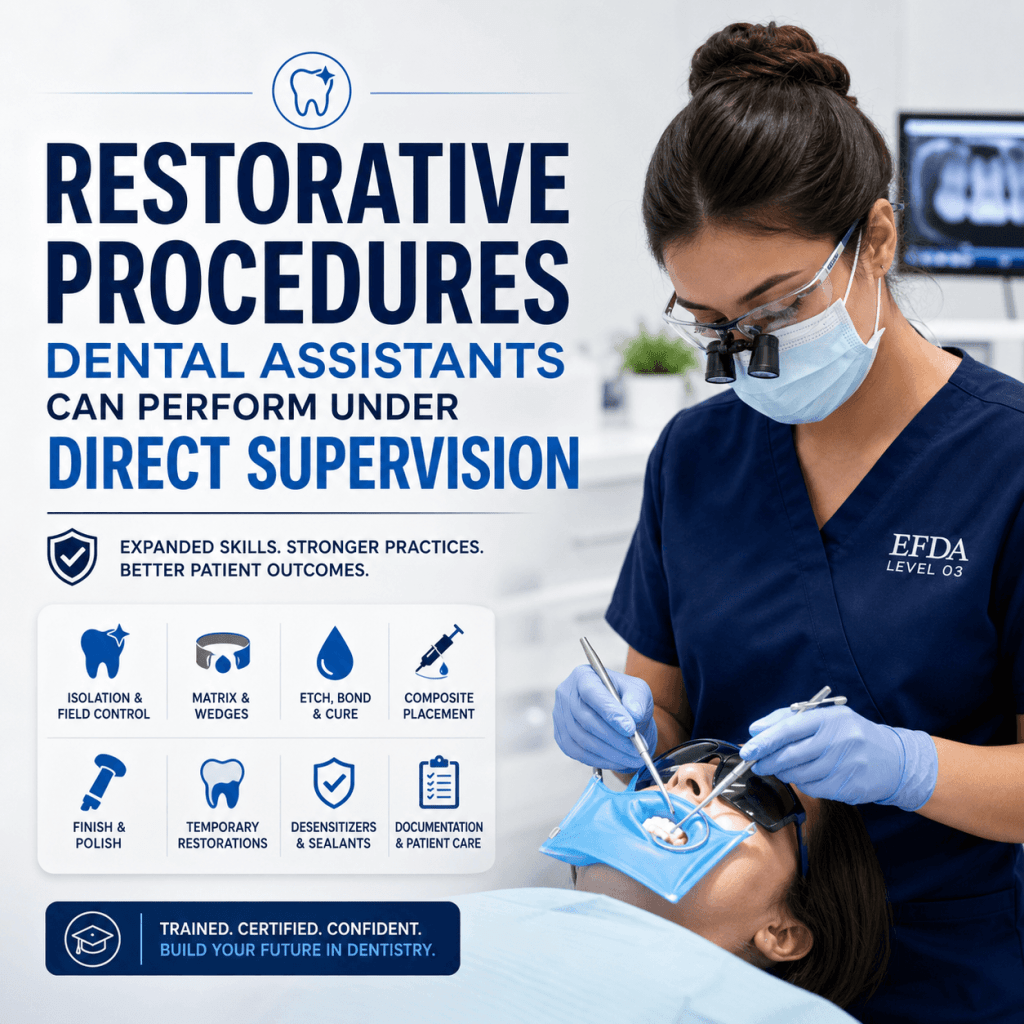
This guide breaks down what “counts” as CE, when it is required (and when it is not), how to choose a smart CE plan, and how to track your training without stress.
Why CE matters for Florida dental assistants (and why clinics care)
In dentistry, continuing education (CE) means ongoing training that helps dental team members stay current on safety, techniques, technology, and best practices. Dentistry changes quickly, and even small improvements in infection control, imaging, documentation, and chairside workflow can directly affect patient outcomes. Clinics care about CE for practical reasons:
- Patient safety and quality of care: Updated protocols reduce errors and improve consistency.
- Compliance culture: A well-trained team supports the office’s standards for infection control, privacy, and documentation.
- Operational confidence: Dentists and office managers want assistants who can handle their role with minimal supervision and strong judgment.
- Hiring expectations: Many practices prefer candidates who can prove training, especially for duties that require documented competency.
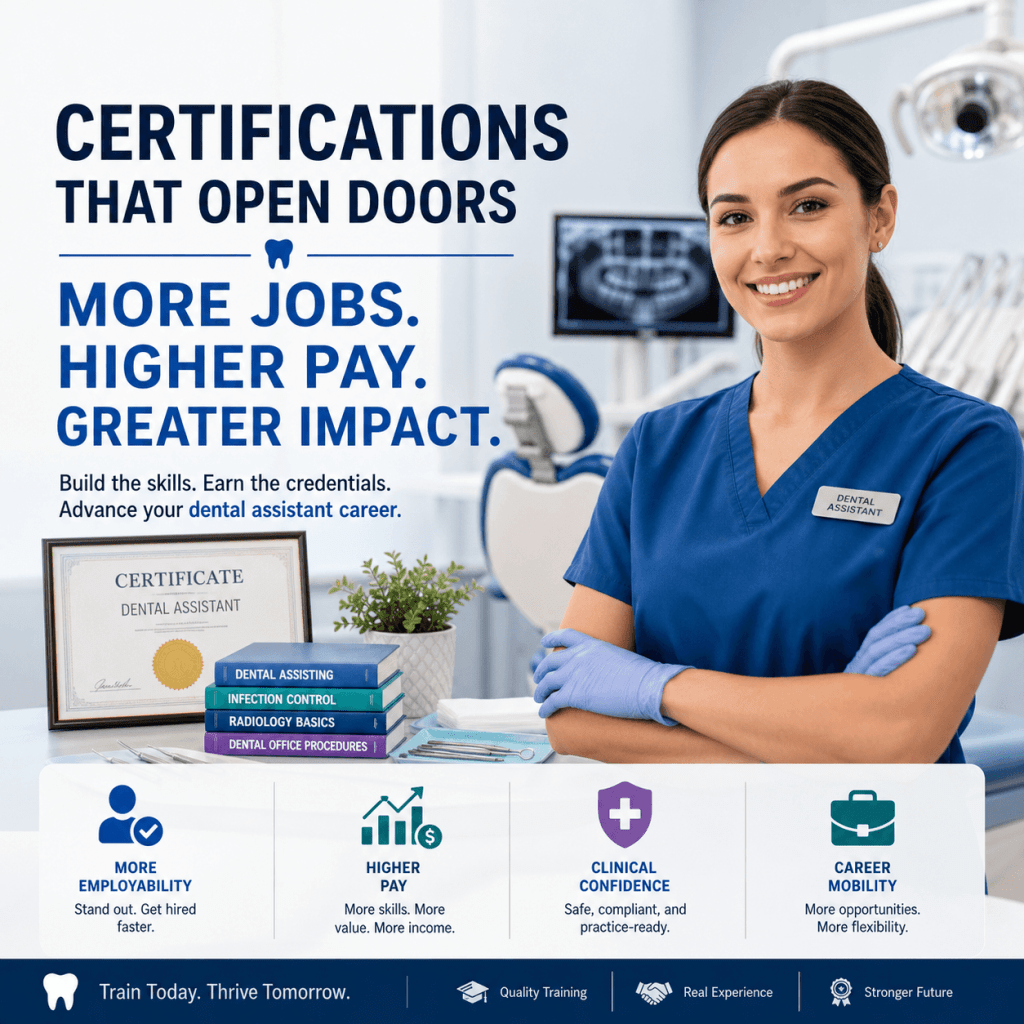
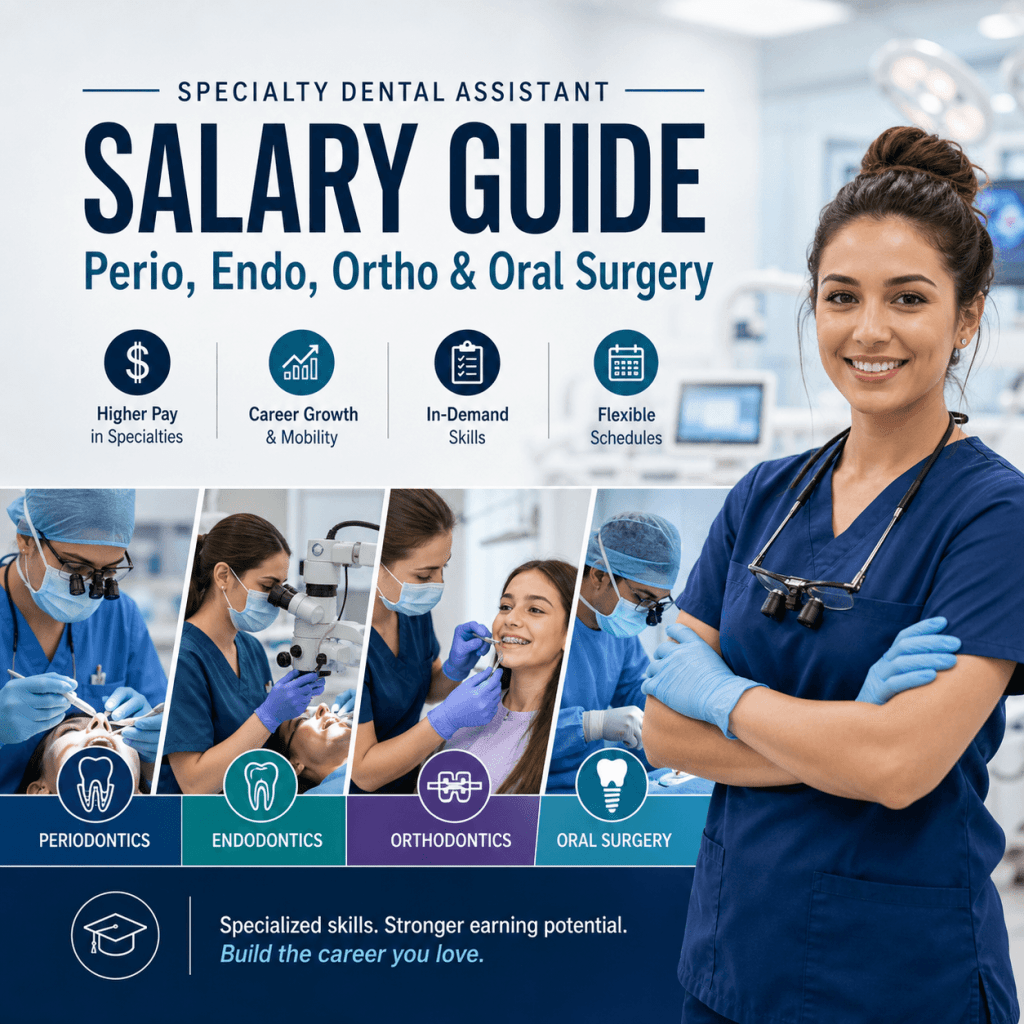
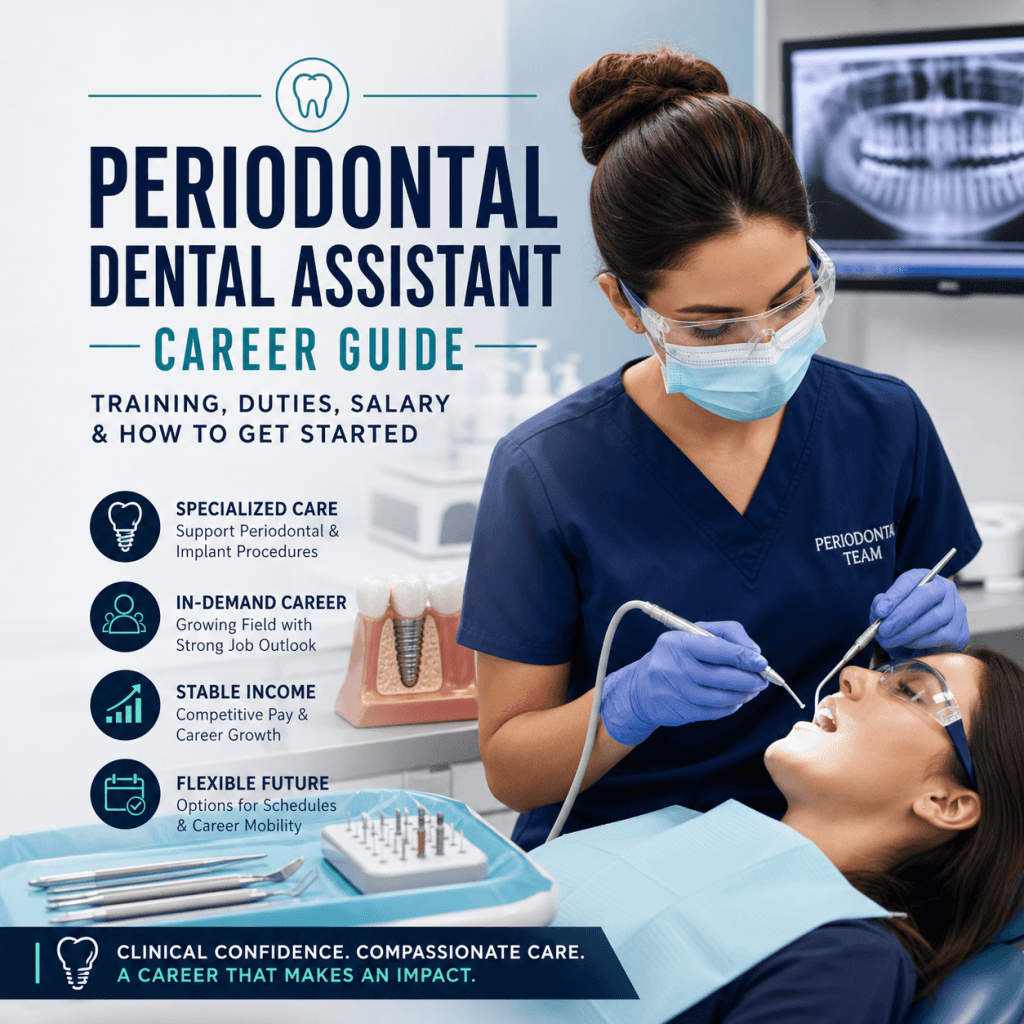
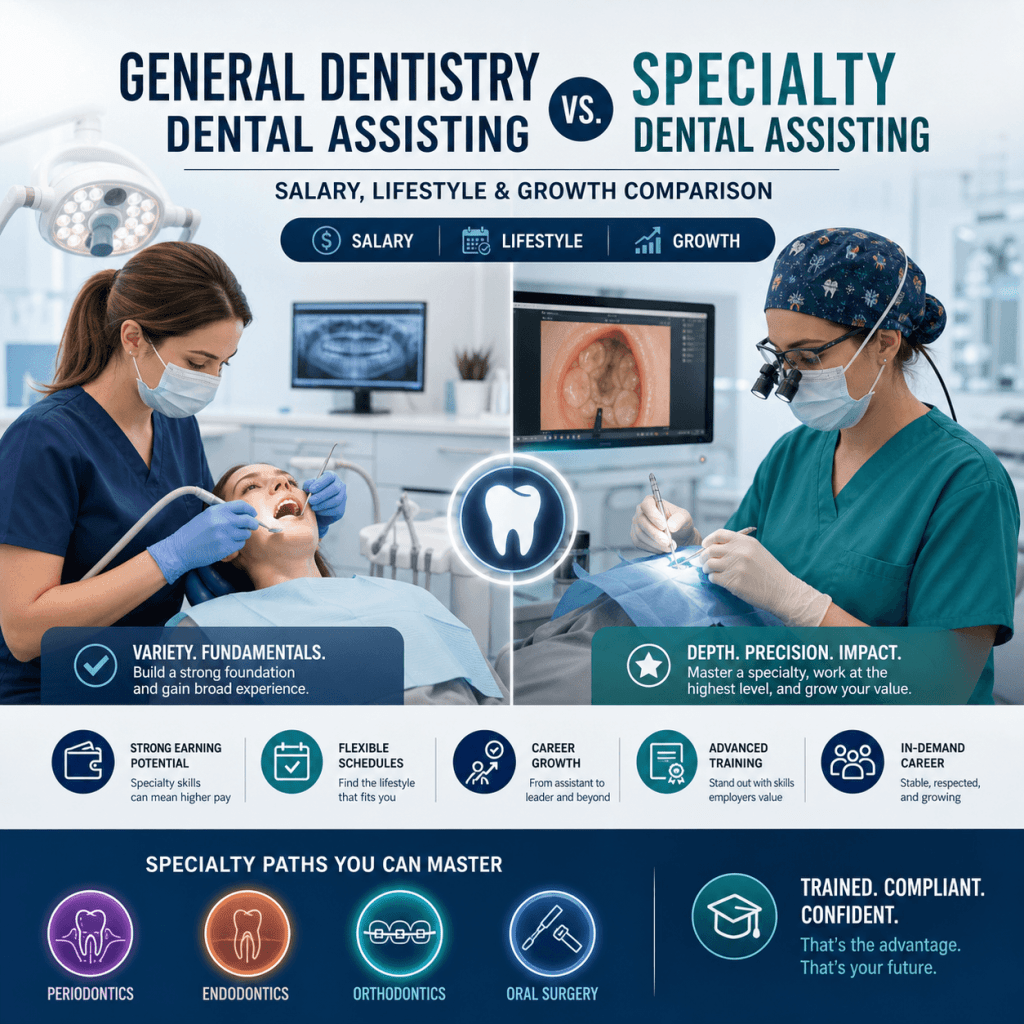
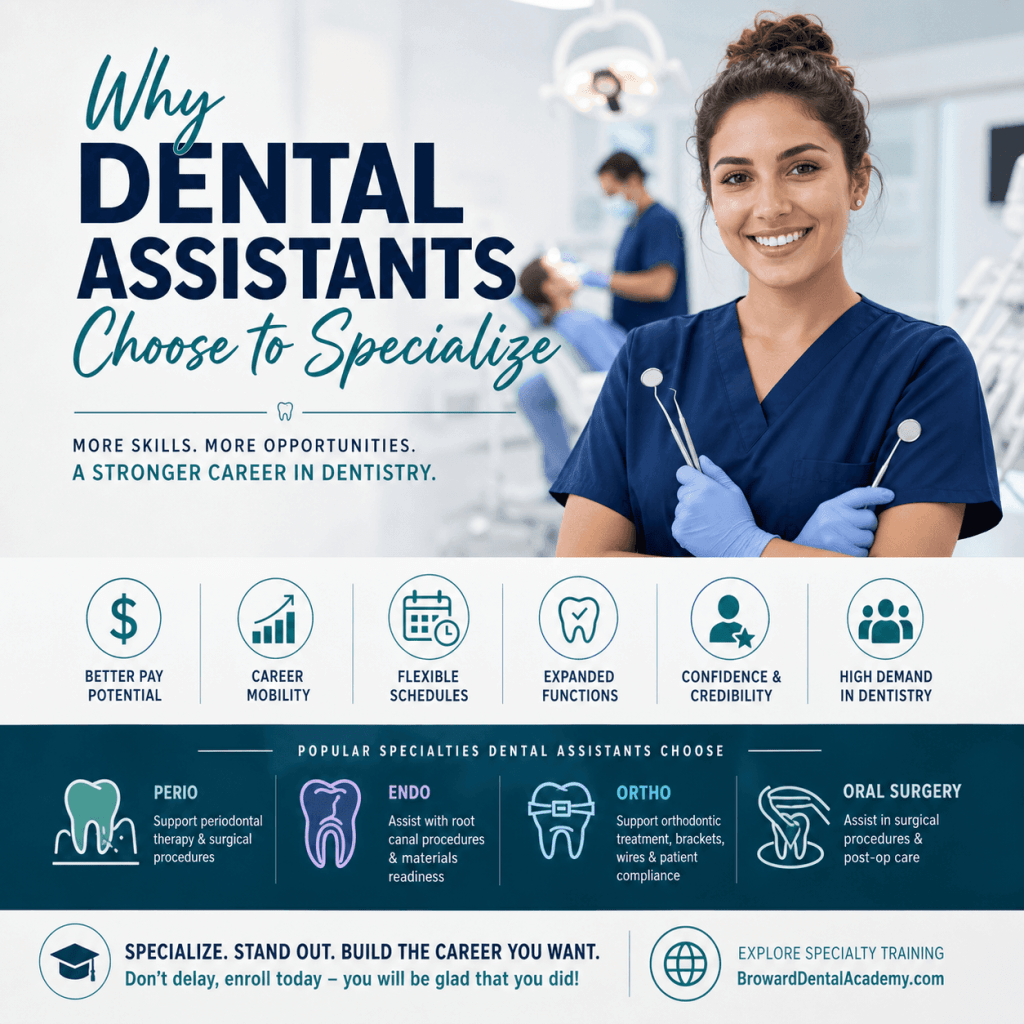
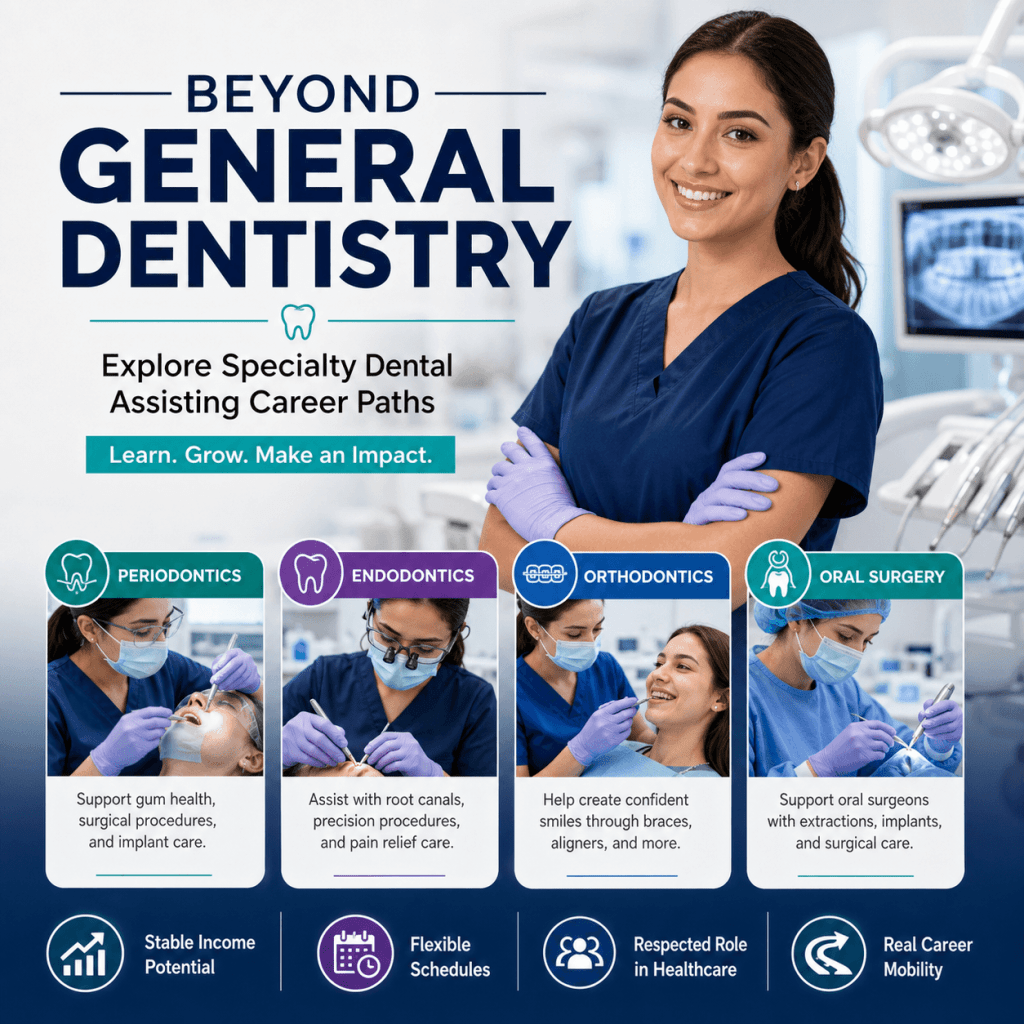
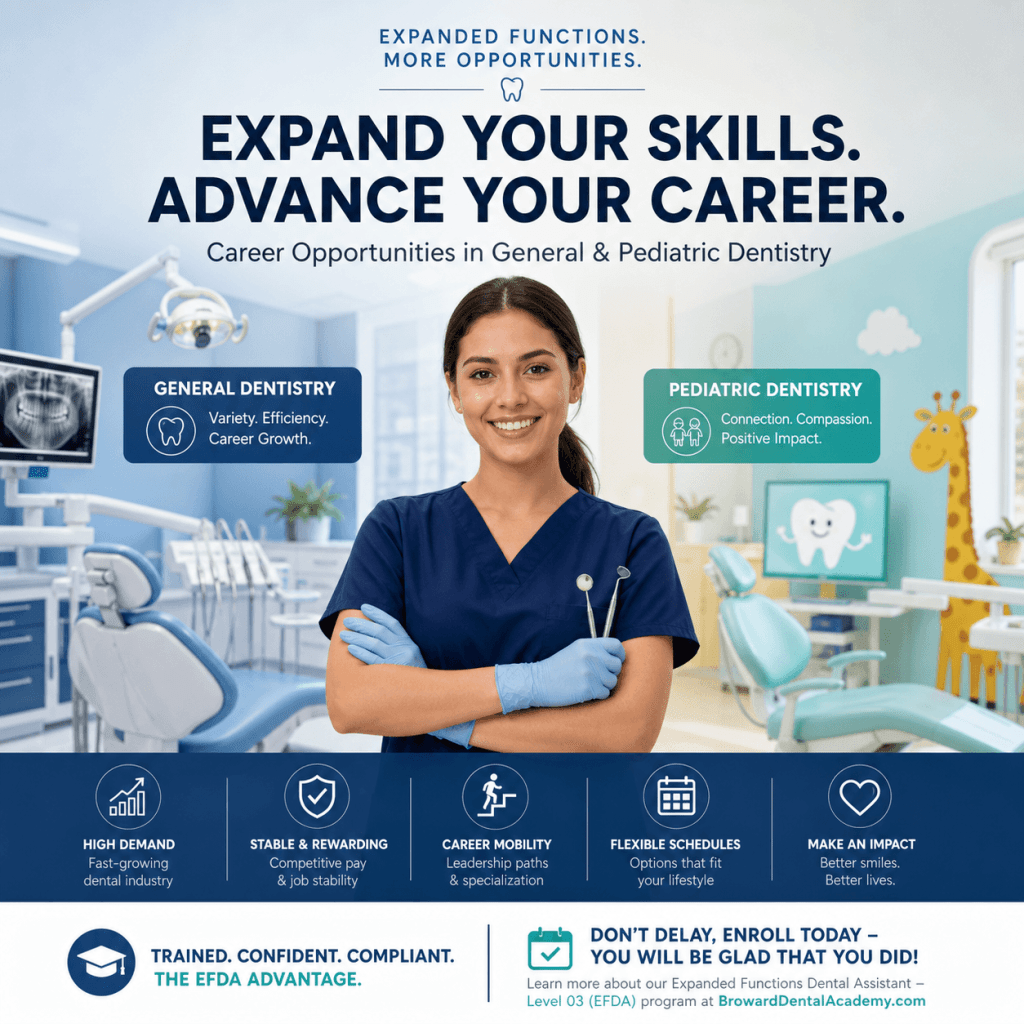
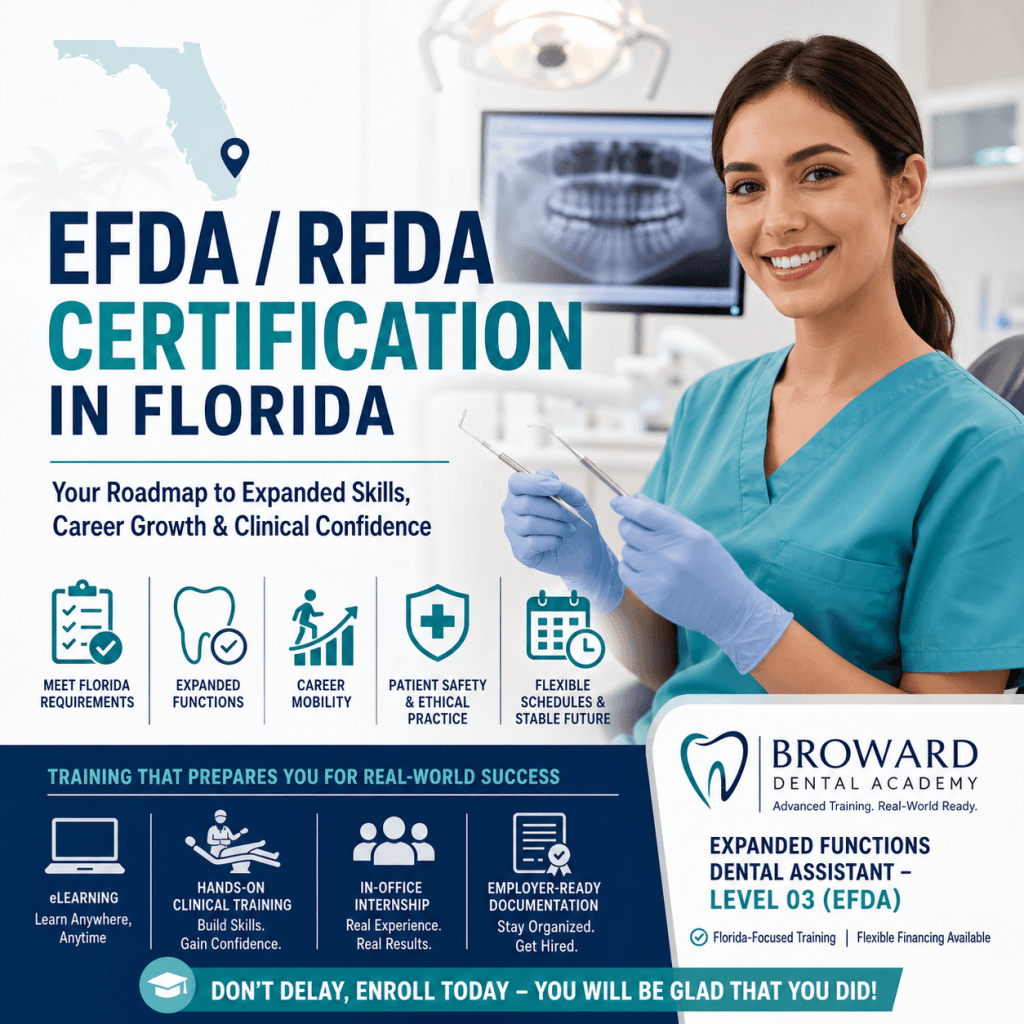
CE also has a clear career upside. The dental industry continues to grow and offers stable income, flexible schedules, and real upward mobility. The assistants who keep learning are usually the ones who move into higher-responsibility roles, specialty offices such as orthodontics or endodontics, and expanded function opportunities. Understanding the education requirements is essential for career advancement. By the end of this article, you will know how Florida dental assistant CE expectations typically work, what training is worth prioritizing (such as specialized courses offered by institutions like Broward Dental Academy), how to document it, and where to find reputable CE and advanced training options.
Quick clarity: Do Florida dental assistants have CE requirements?
This is where most confusion starts. In Florida, formal state CE renewal requirements primarily apply to licensed dental professionals, such as dentists and dental hygienists. Many dental assistants are not licensed in the same independent way, so there is not one universal CE hour requirement that applies to every dental assistant in Florida. That said, CE expectations for dental assistants often come from four places:
- Employer and practice policies (what your dentist or office requires you to complete and document)
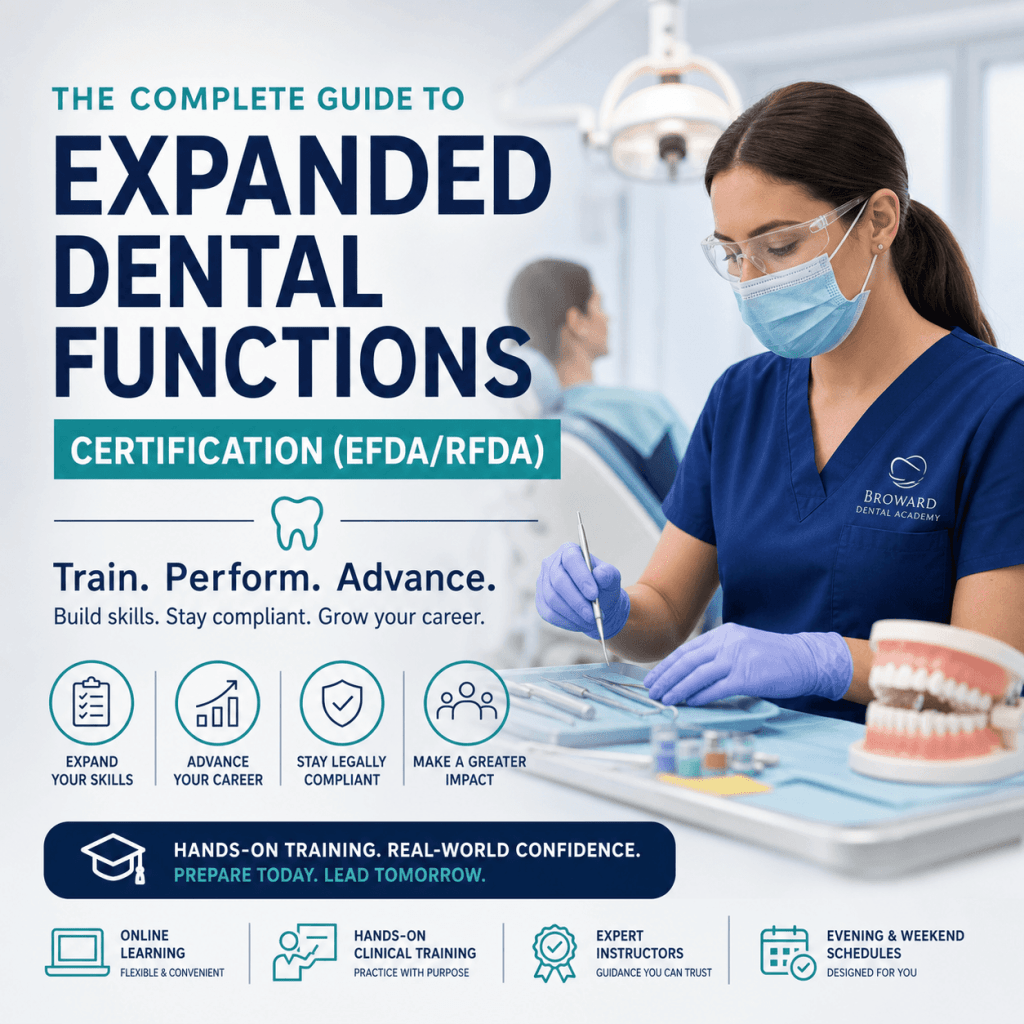
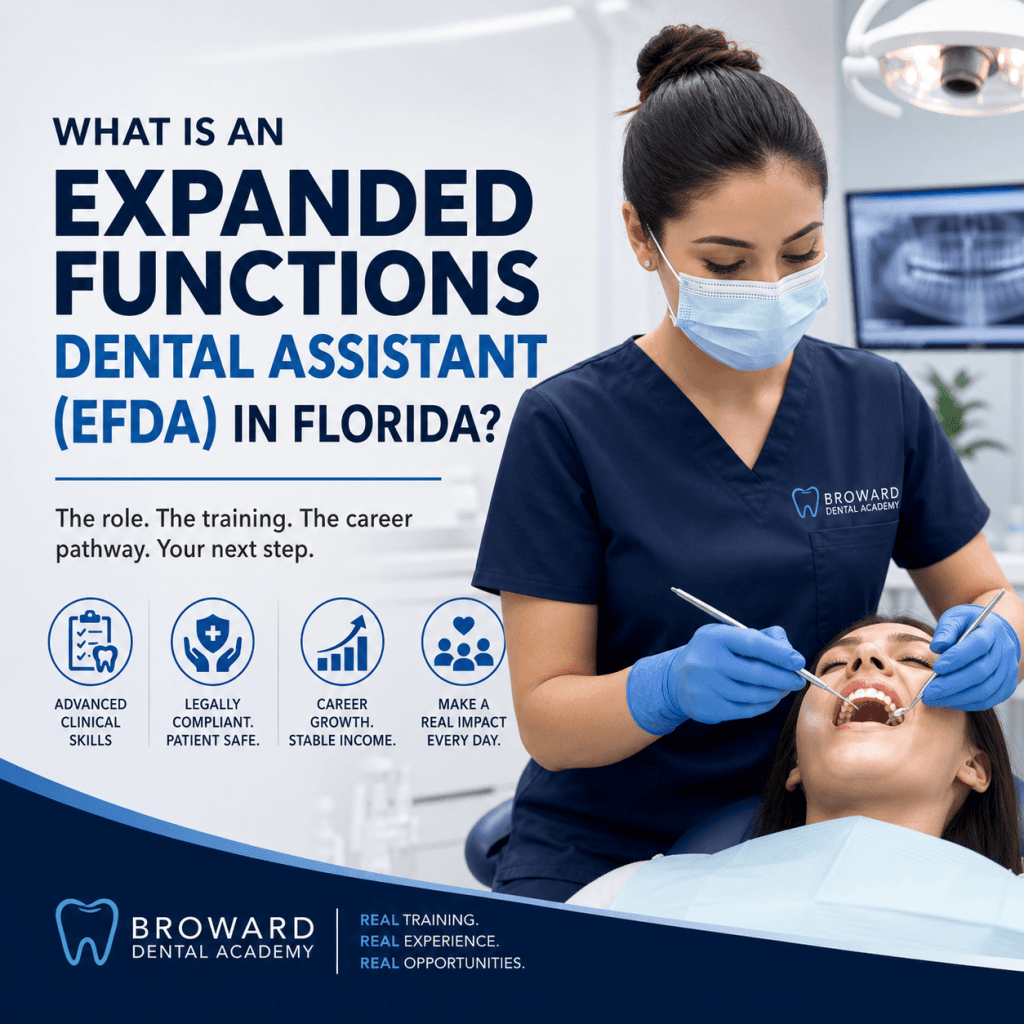
- Expanded function training pathways (coursework required before you can legally perform certain duties under supervision)
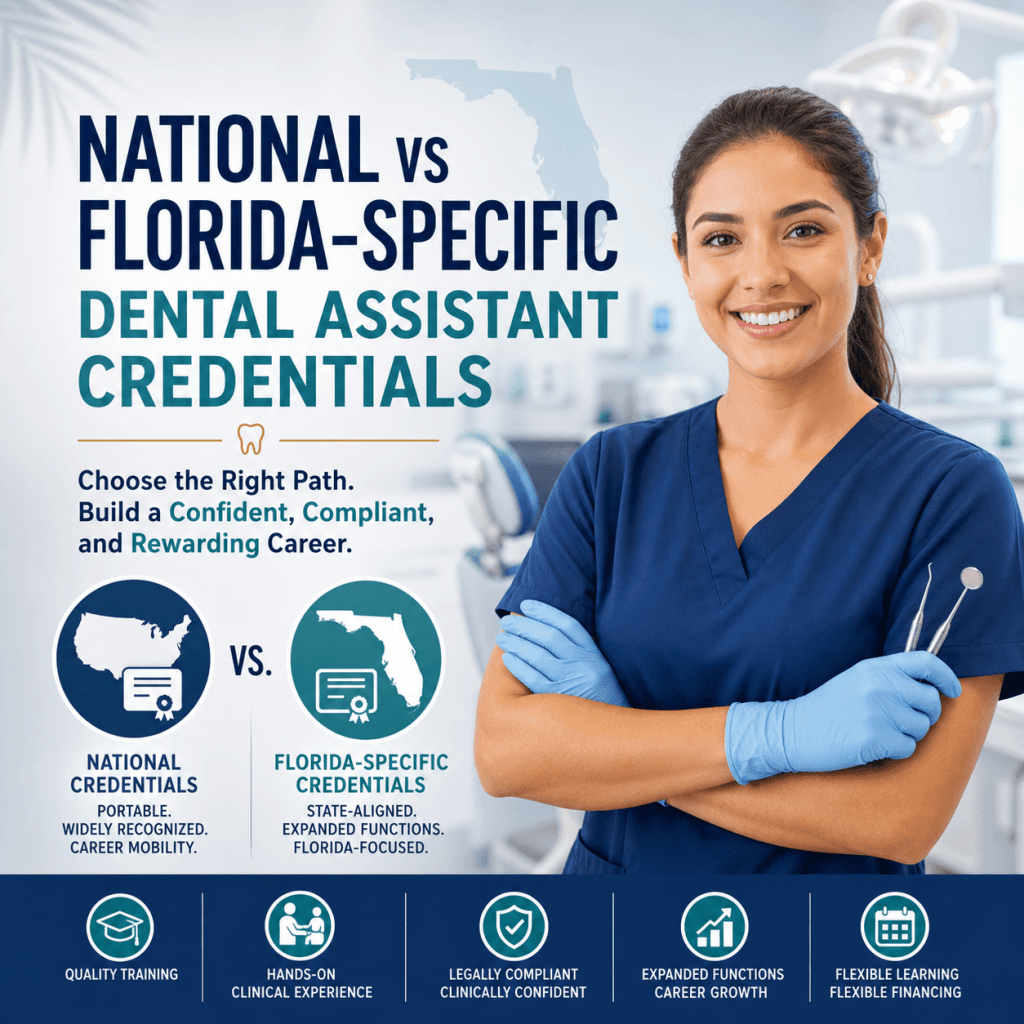
- Certification maintenance (if you hold a national credential that requires CE to renew)
- Role-specific training connected to permitted duties (for example, radiology-related training or safety training tied to what you do daily)
Even when CE is not universally mandated for every assistant, it still matters because it supports confidence, advancement, and credibility. In a competitive job market, documented training is a trust signal. Best next step: confirm your specific situation based on your role, your office expectations, and any permits or expanded function training connected to the duties you perform.
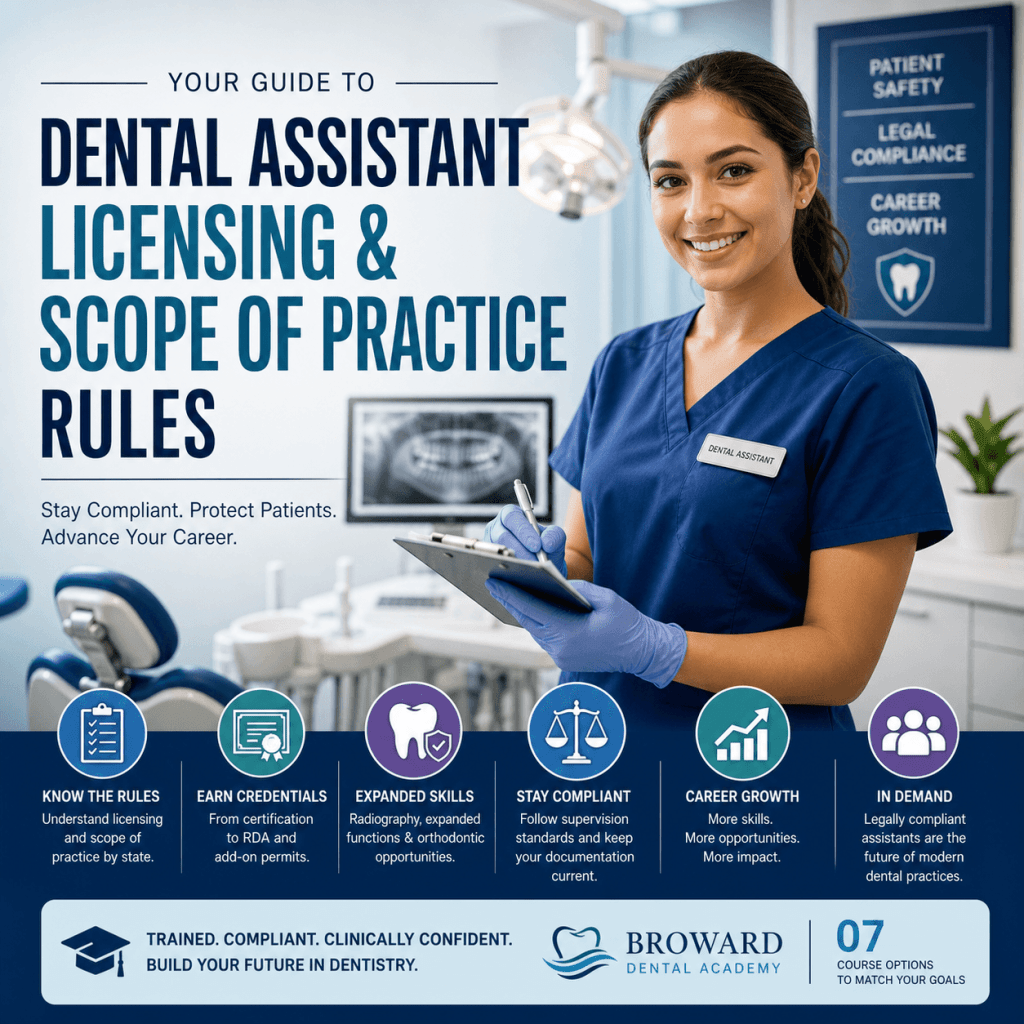
Know your role in Florida: what you’re allowed to do affects what training you’ll need
Florida dental assisting typically falls into a few practical “levels” inside real-world offices:
- General chairside support: sterilization support, room setup and breakdown, chairside assisting, patient flow, basic lab tasks, and administrative support depending on the office.
- Assistants trained for expanded functions under dentist supervision: duties may increase with additional training and documented competency.
The key point is simple: what you do should match what you have been trained and authorized to do. In many clinics, before an assistant is assigned certain tasks, the office will require proof of:
- completed coursework (certificate-based training)
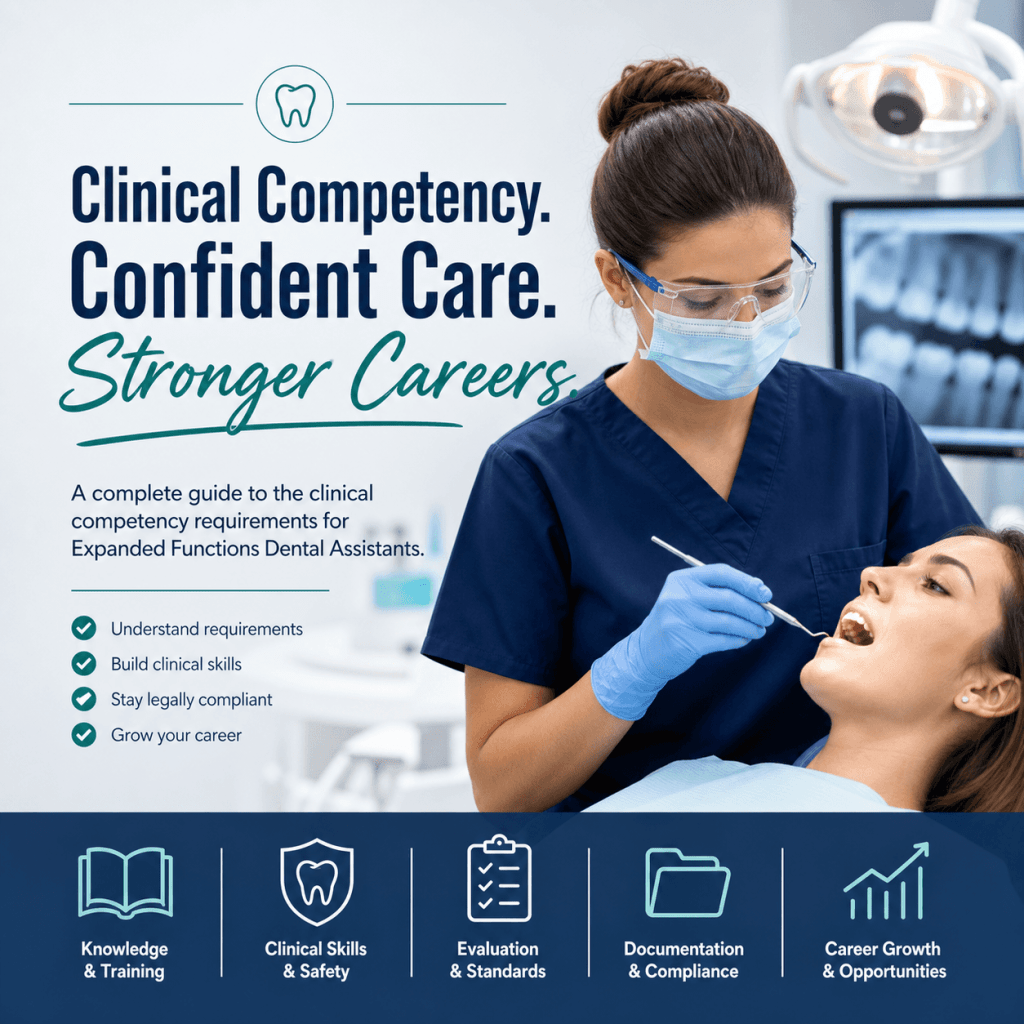
- documented clinical competencies
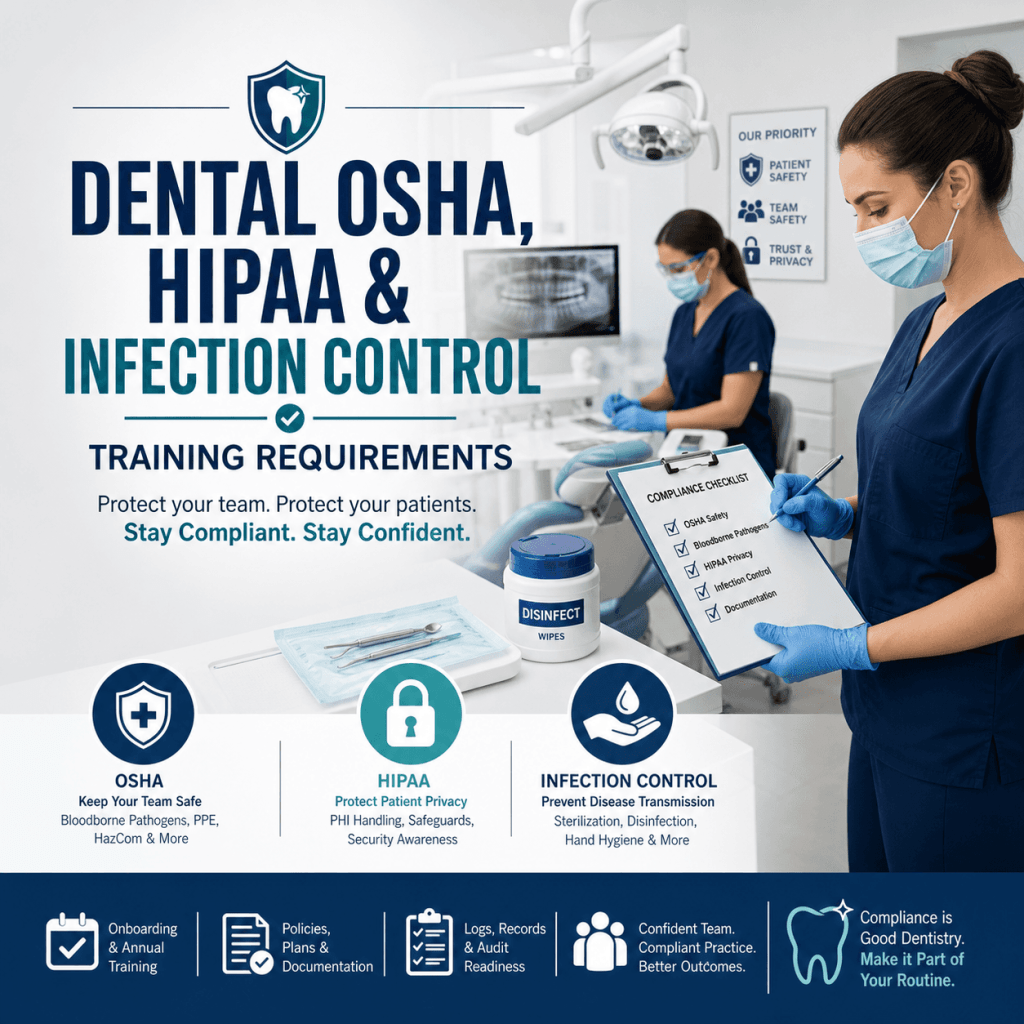
- safety training and protocols (infection control, HIPAA, emergency response)
- role-specific training (often tied to radiology, impressions, or specialty support)
A good mindset to keep throughout your career is: get trained first, then perform. Never the other way around. If you are unsure whether you are allowed to do something, ask your supervising dentist or office manager and get clarity in writing. Understanding these levels of dental assisting can help clarify the type of training needed for each role. For instance:
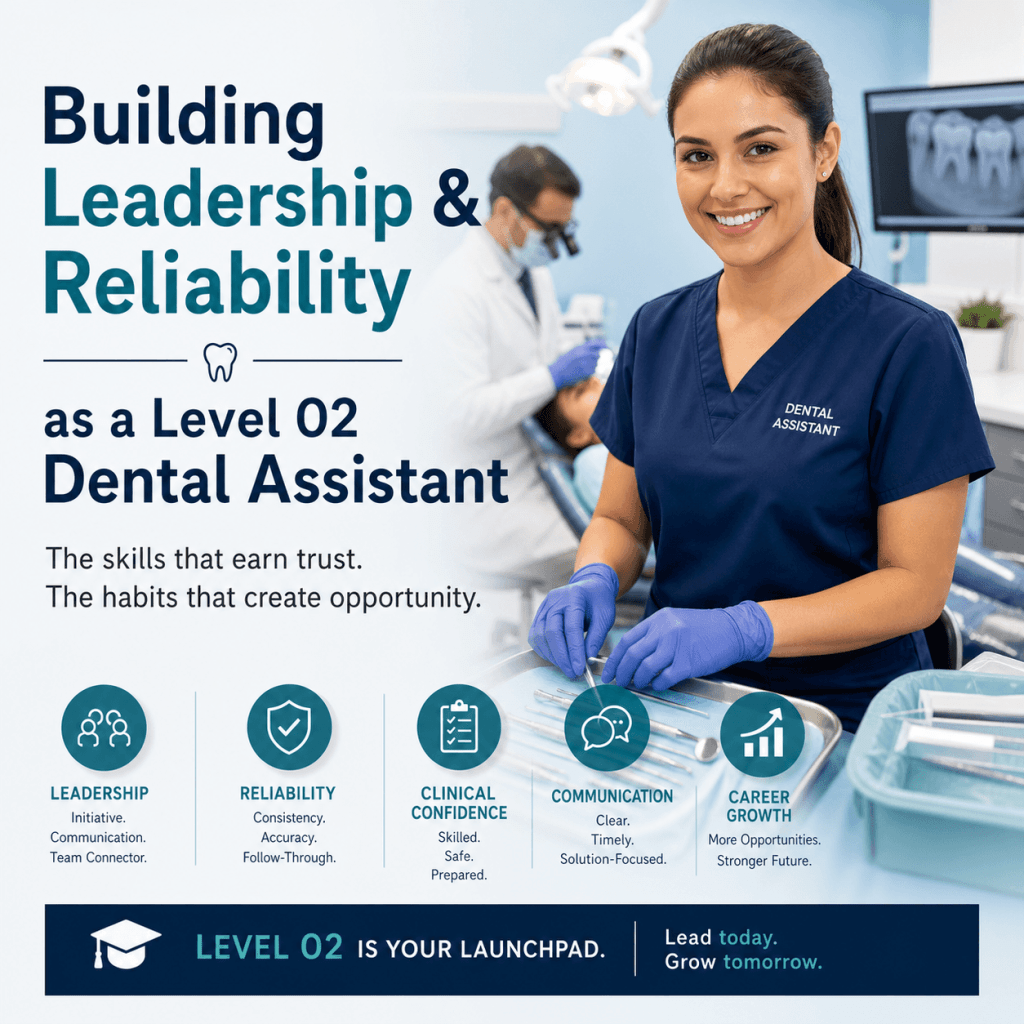
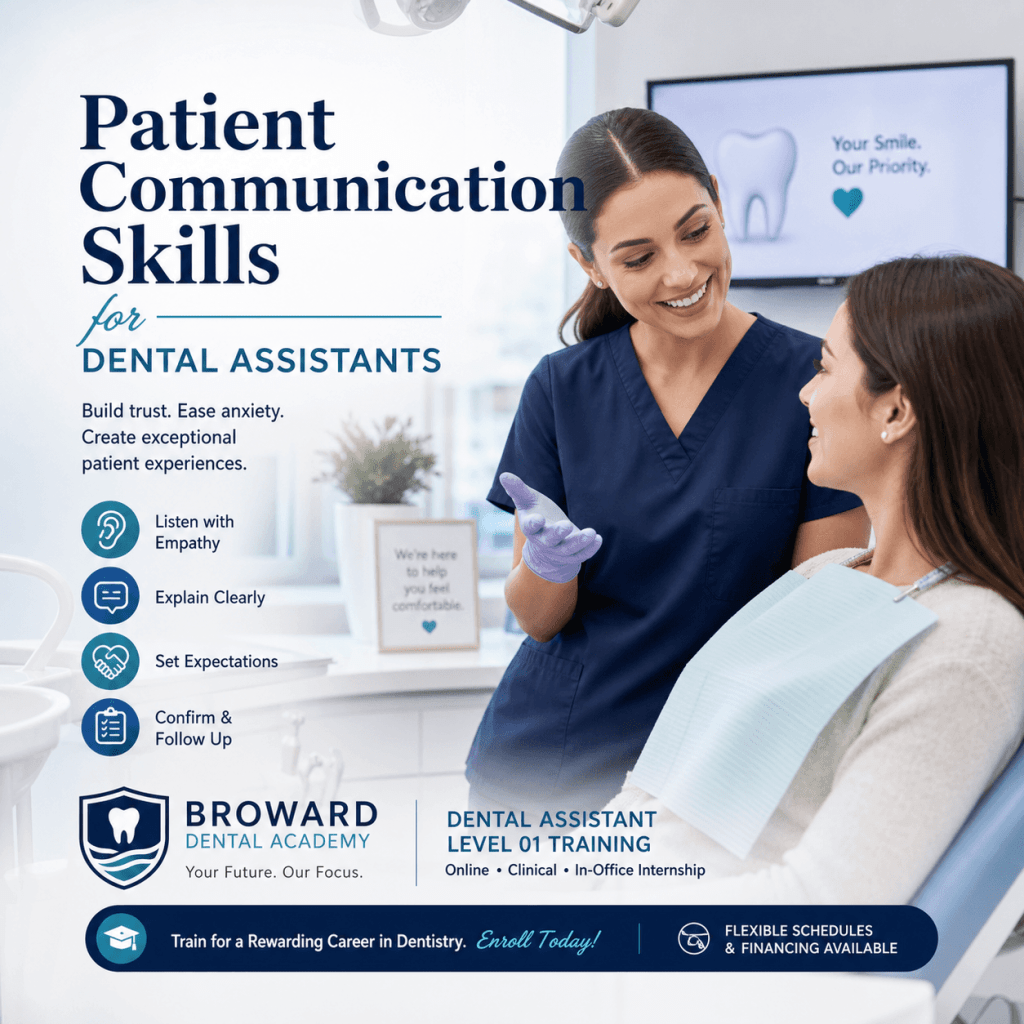
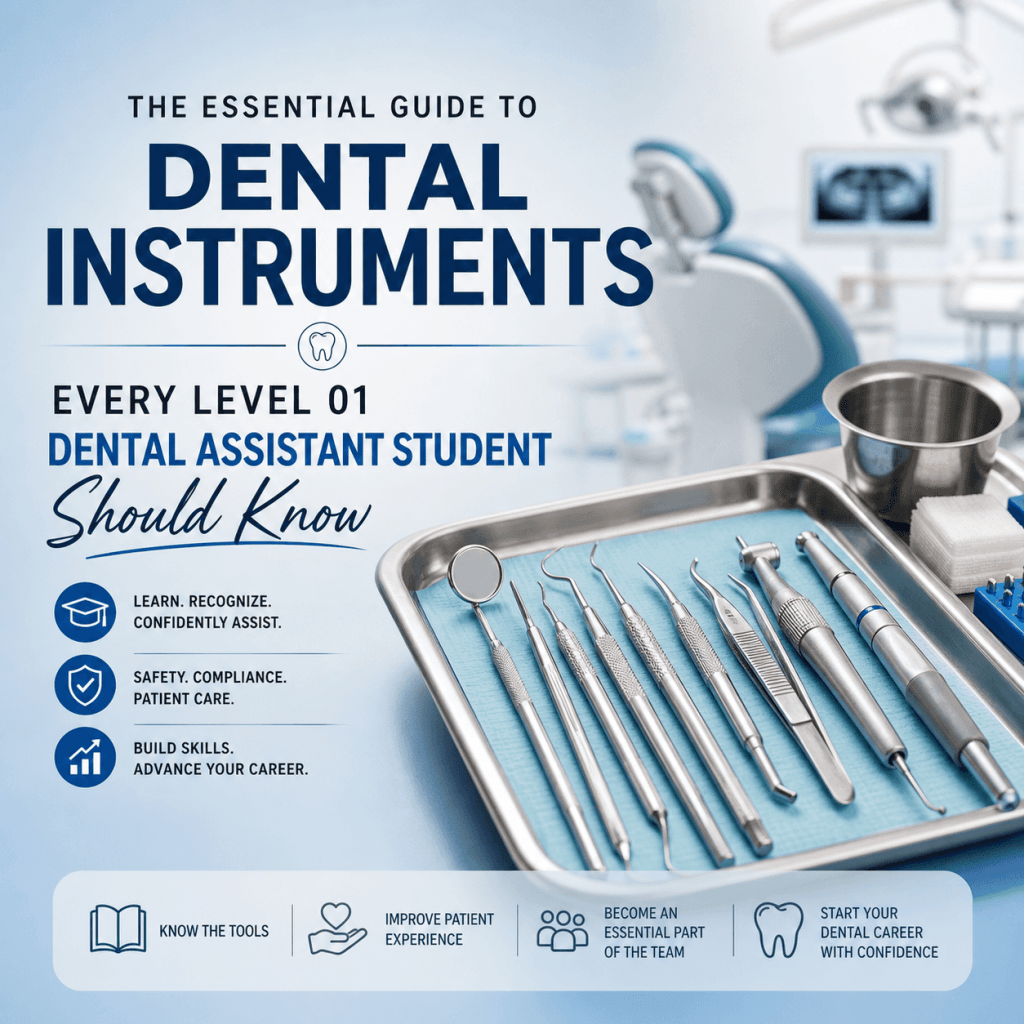
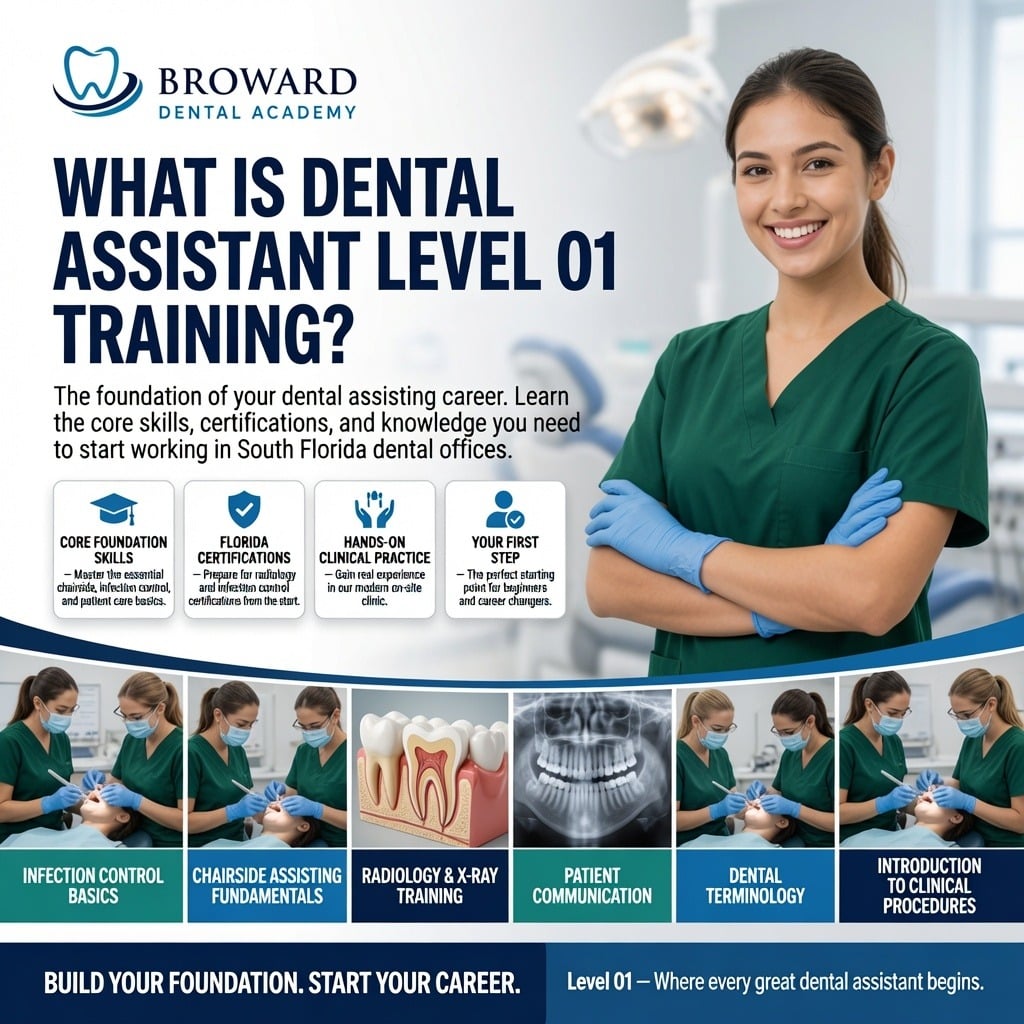
- For those starting out in Level 01, the focus will be on general chairside support tasks.
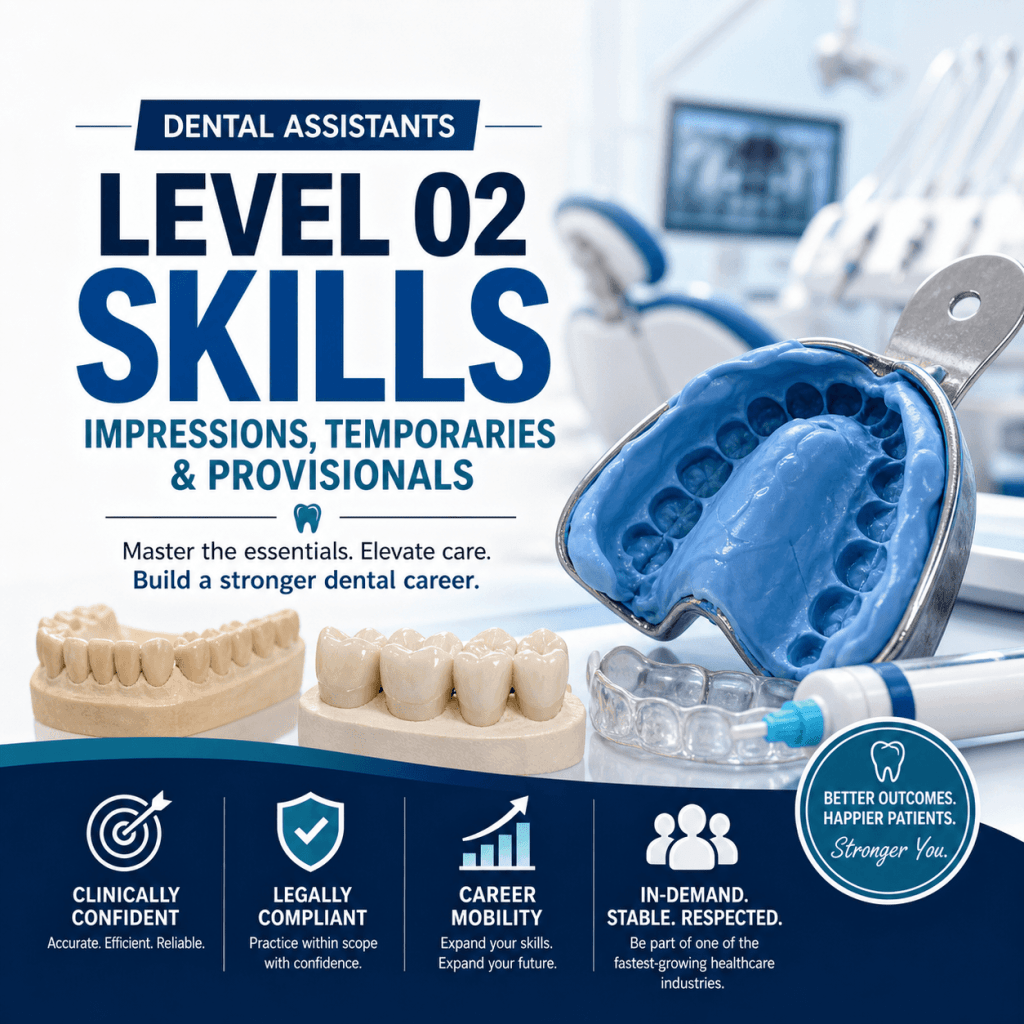
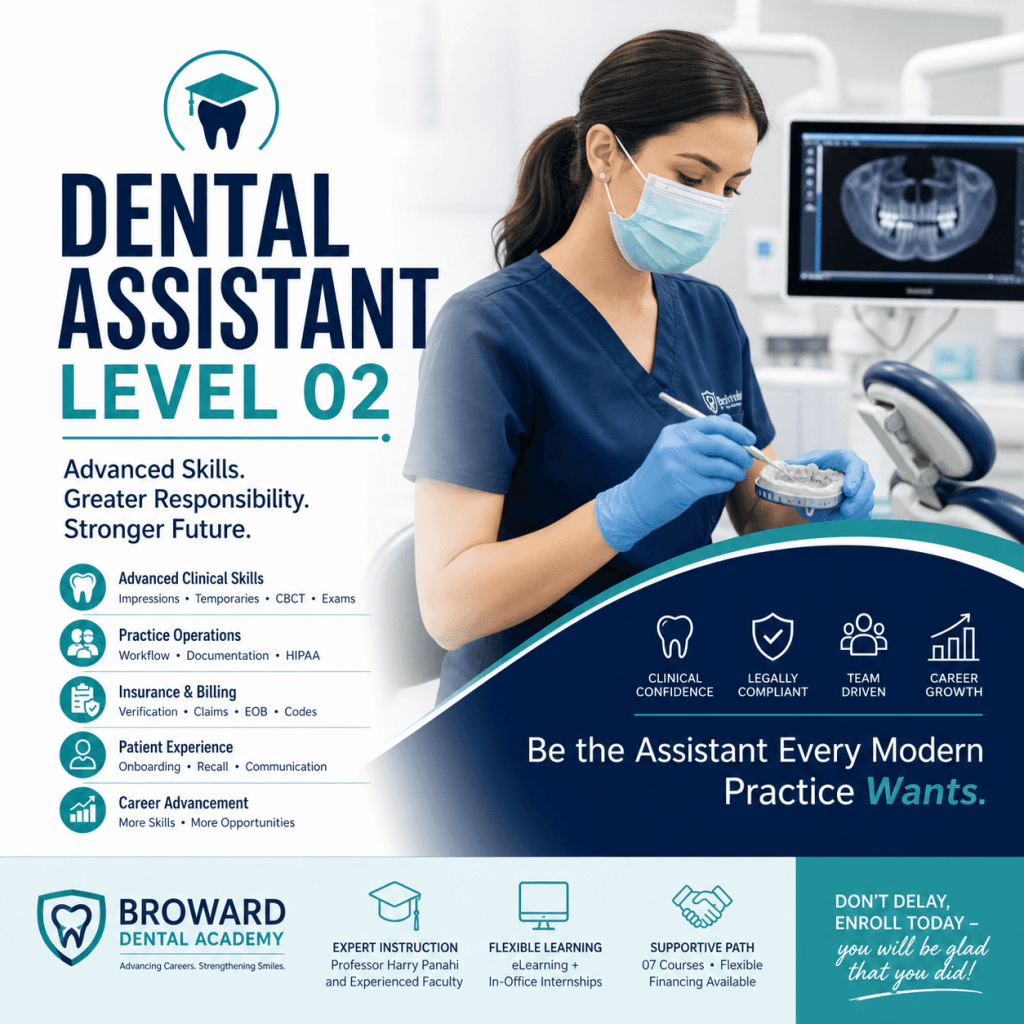
- Moving up to Level 02, additional responsibilities may be assigned.
What typically counts as CE for dental assistants (and what usually doesn’t)
When offices talk about CE for dental assistants, they usually mean training that is relevant, documented, and tied to patient care or safe operations.
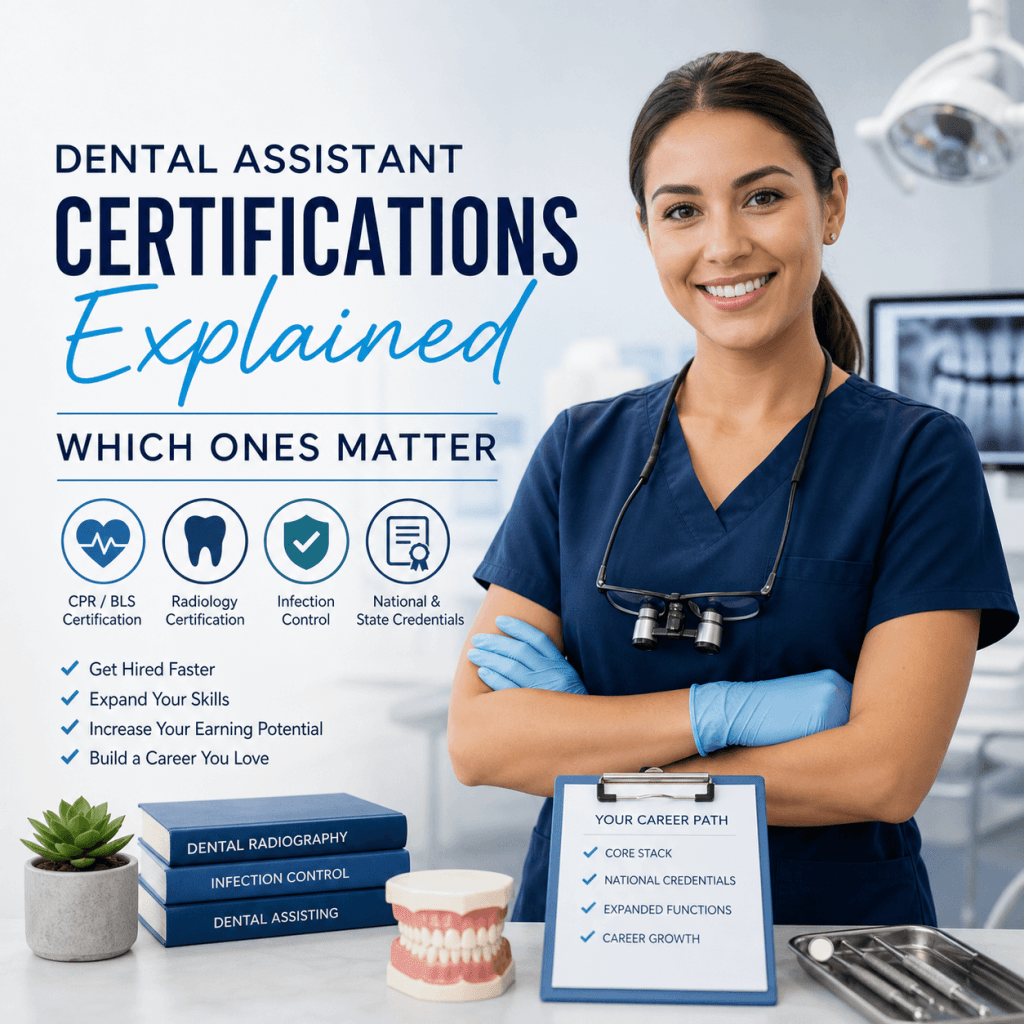
Common CE formats that are widely accepted
- In-person workshops and seminars
- Hands-on clinical labs
- Online CE modules
- Live webinars
- Dental conferences and local study events
- CPR/BLS training (when required by the office or role)
CE hours/CEUs vs. certificate courses: what’s the difference?
- CE hours (or CEUs) typically refer to time spent learning a topic (lecture, webinar, online module). These are great for refreshers and updates.
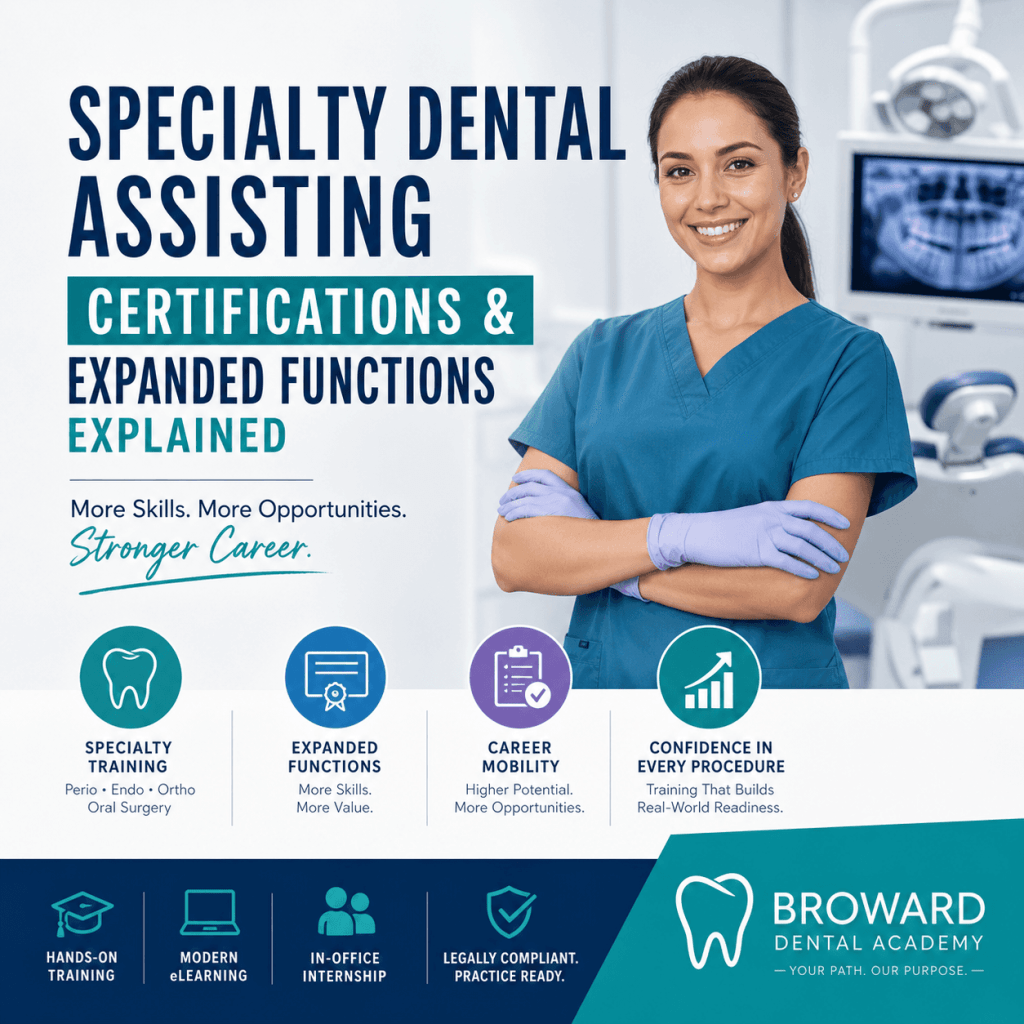
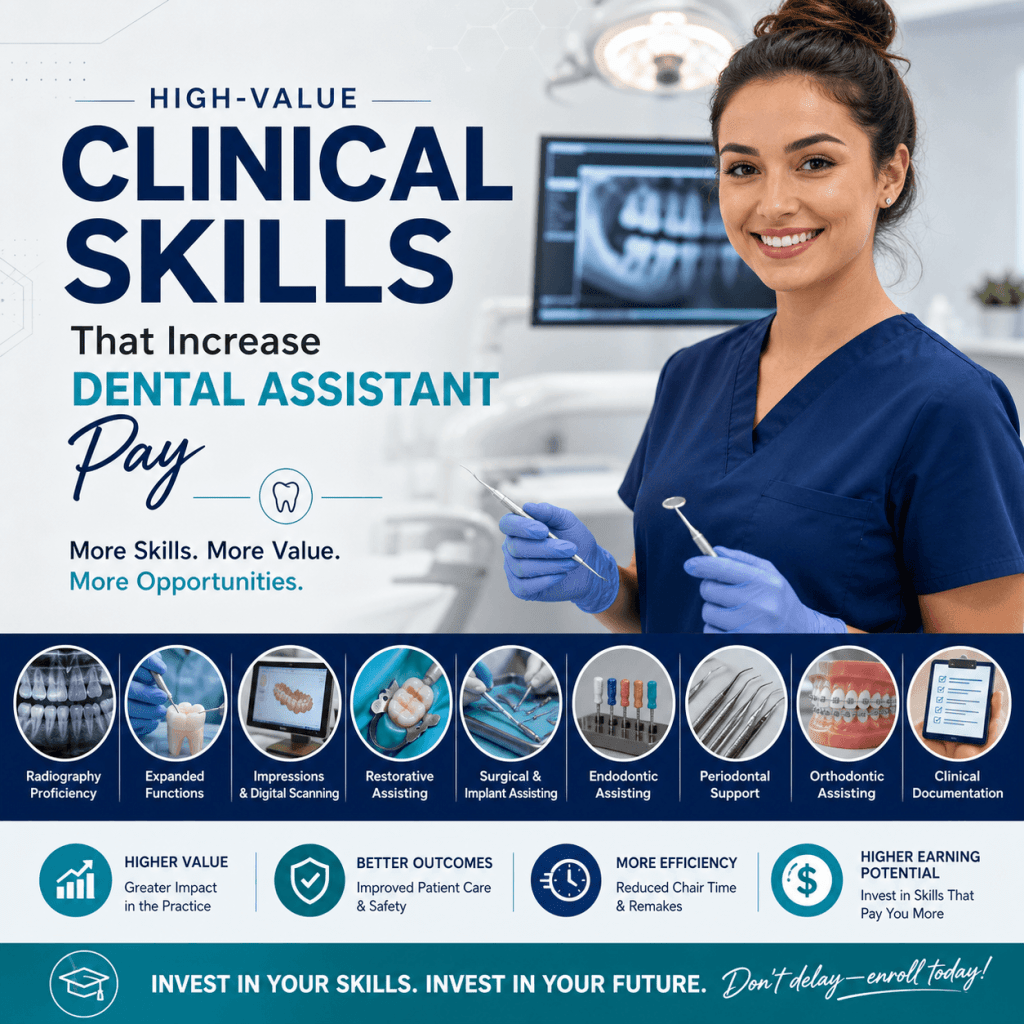
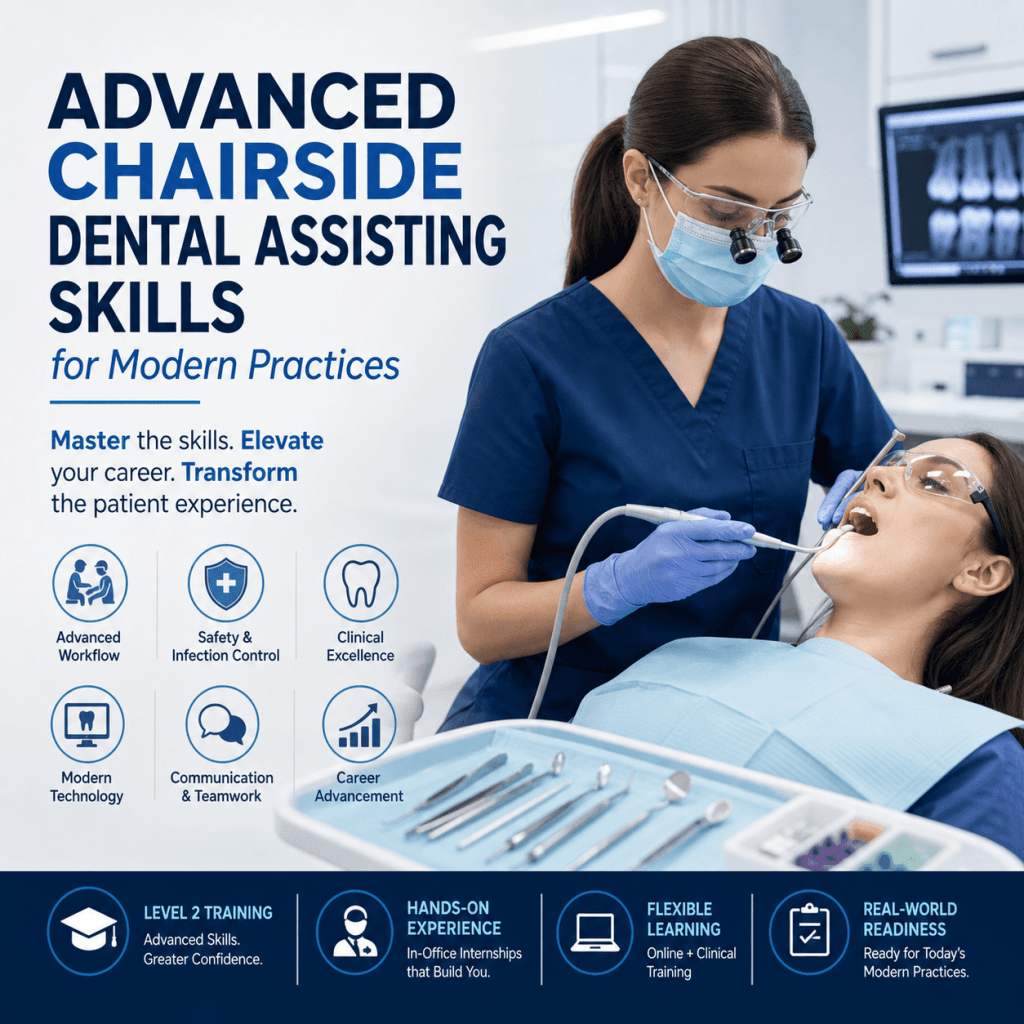
- Certificate courses and expanded function training, such as those offered at Broward Dental Academy, are usually more structured. They often include competency checks, clinical components, and documentation designed to qualify you for specific duties.
In other words, CE is often about staying current, while certificate-based training is often about expanding what you are prepared to do.
What usually does not count (or is less useful)
Even if something is “educational,” it may not help you professionally if it cannot be verified or is not relevant. Examples include:
- unverified videos without proof of completion
- informal shadowing without documentation
- non-dental courses unrelated to patient care or office safety
- marketing-only trainings that do not improve clinical performance or compliance
Documentation is the difference-maker
For any training you want an employer to respect, keep proof that includes:
- certificate of completion
- course title and topic
- provider name
- date completed
- number of hours or CEUs earned
It’s also essential to know where to find legitimate CE opportunities. For instance, if you’re located in Florida and looking for reputable dental assistant training programs, consider exploring the Broward Dental Academy which offers a variety of courses that meet the requirements for continuing education in this field. Additionally, they have a comprehensive FAQ section that can provide further insights into common queries regarding dental assistant training and continuing education.
Common CE topics Florida dental assistants use to stay compliant and clinically confident
If you are not sure where to start, focus on training that reduces risk and improves day-to-day performance.
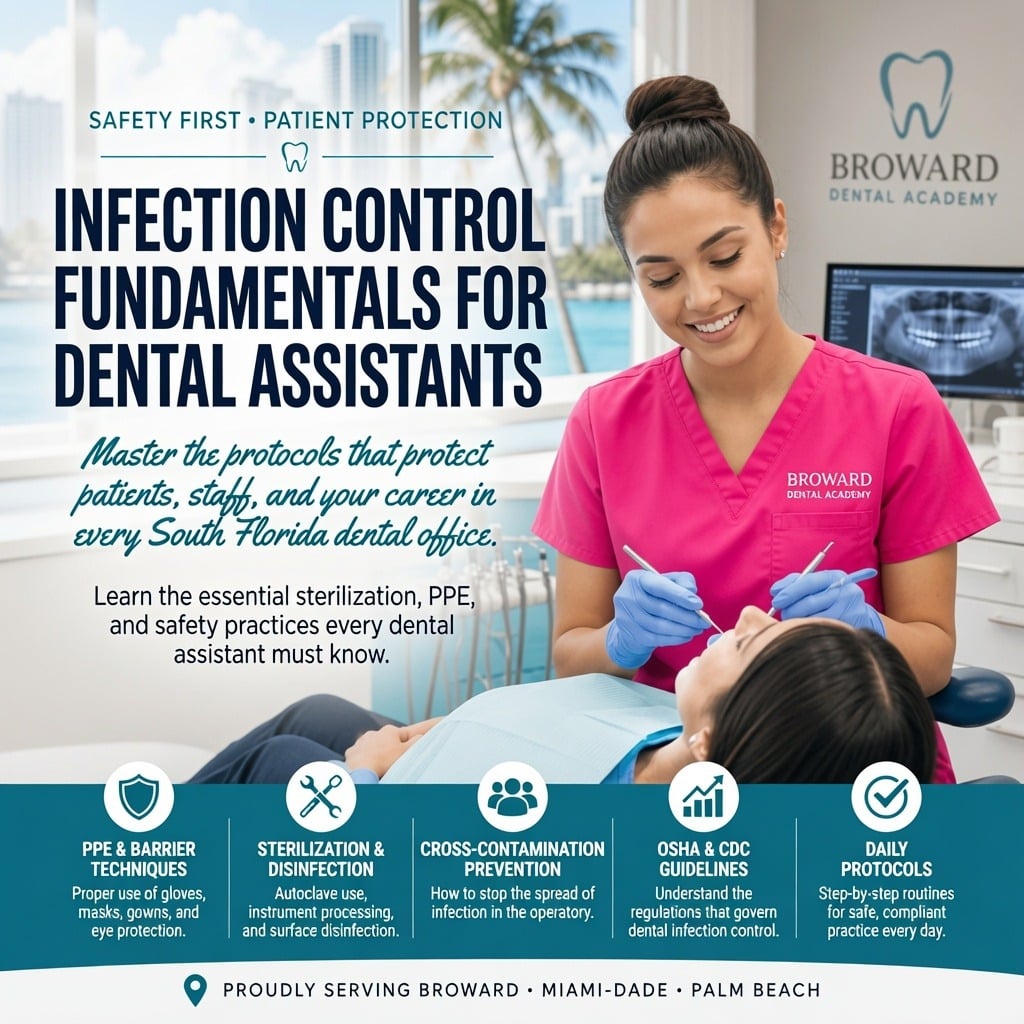
Infection control and sterilization updates
This is one of the most valuable areas to stay current. Topics may include:
- instrument processing and sterilization workflows
- operatory turnover and surface disinfection
- PPE practices and exposure response
- office protocols that align with OSHA-style best practices
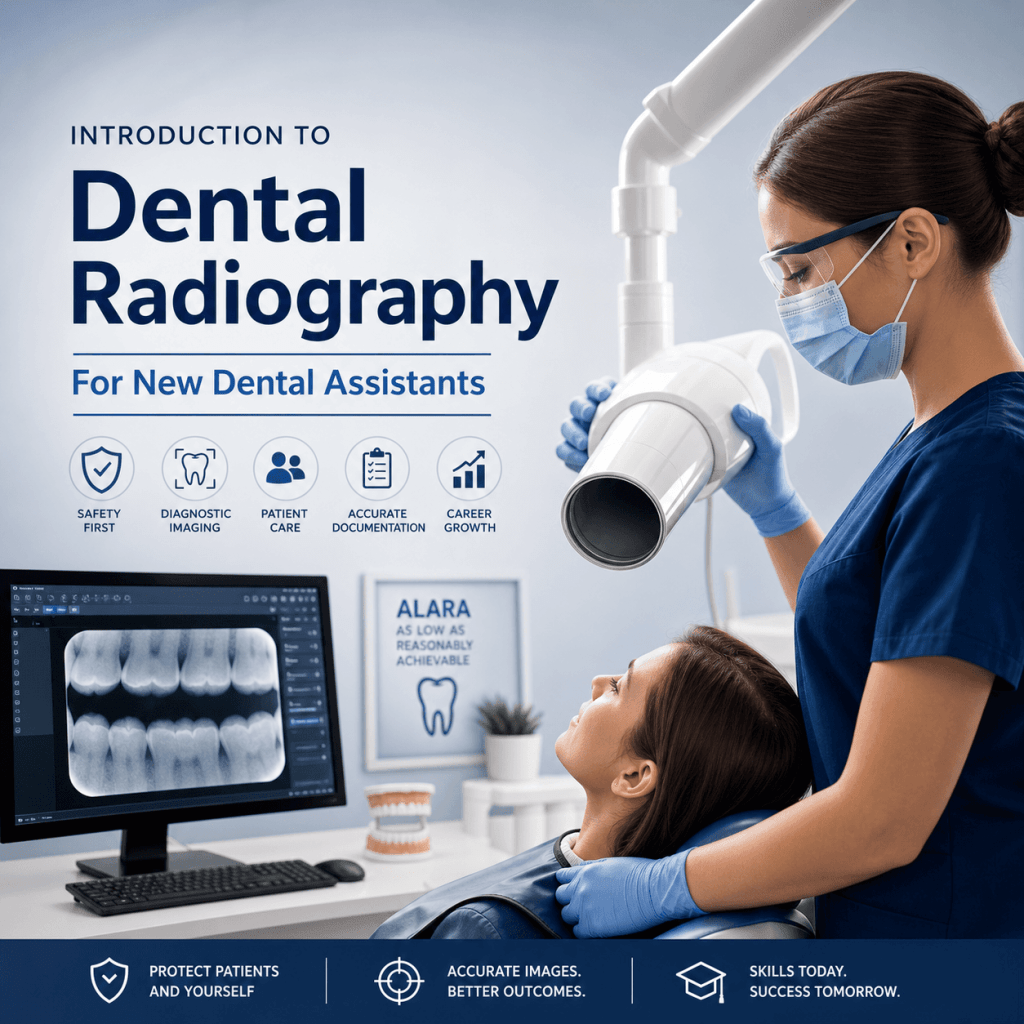
Radiation safety and dental imaging refreshers (when relevant)
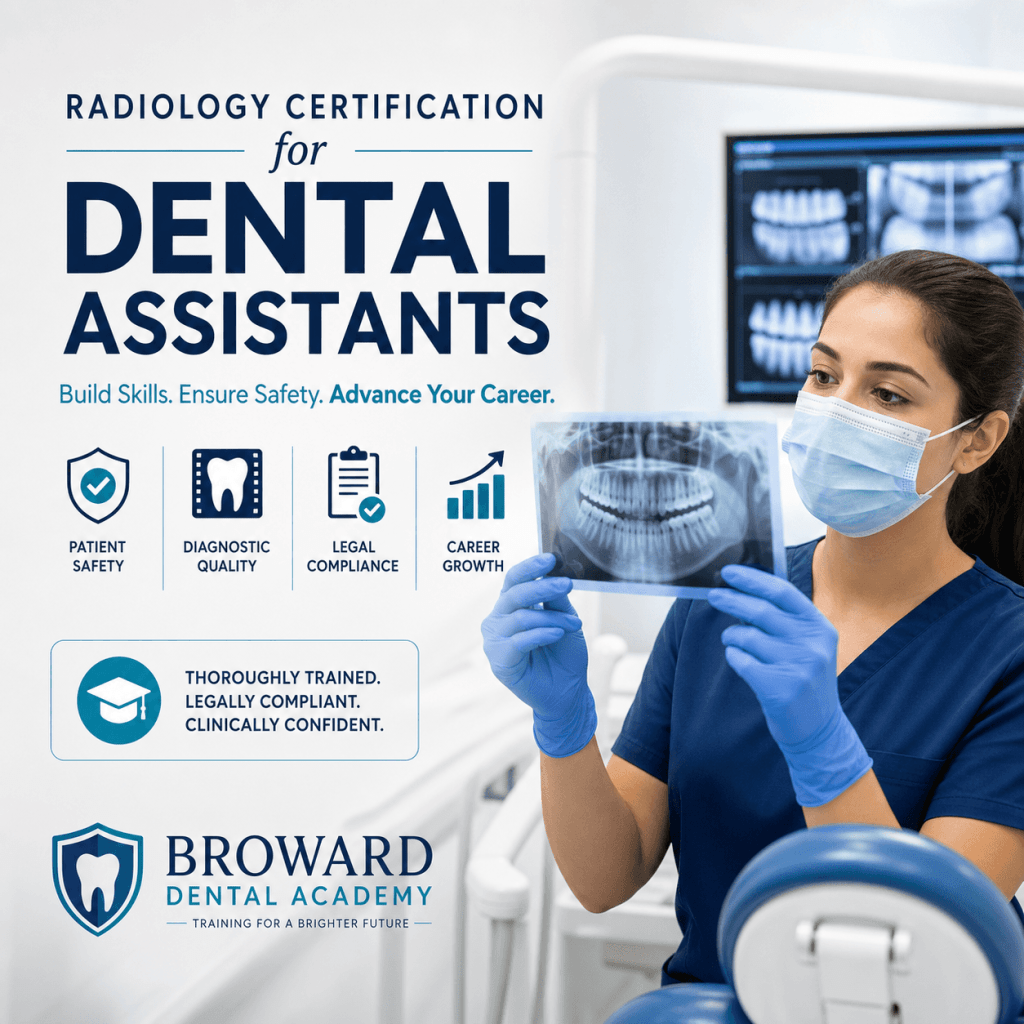
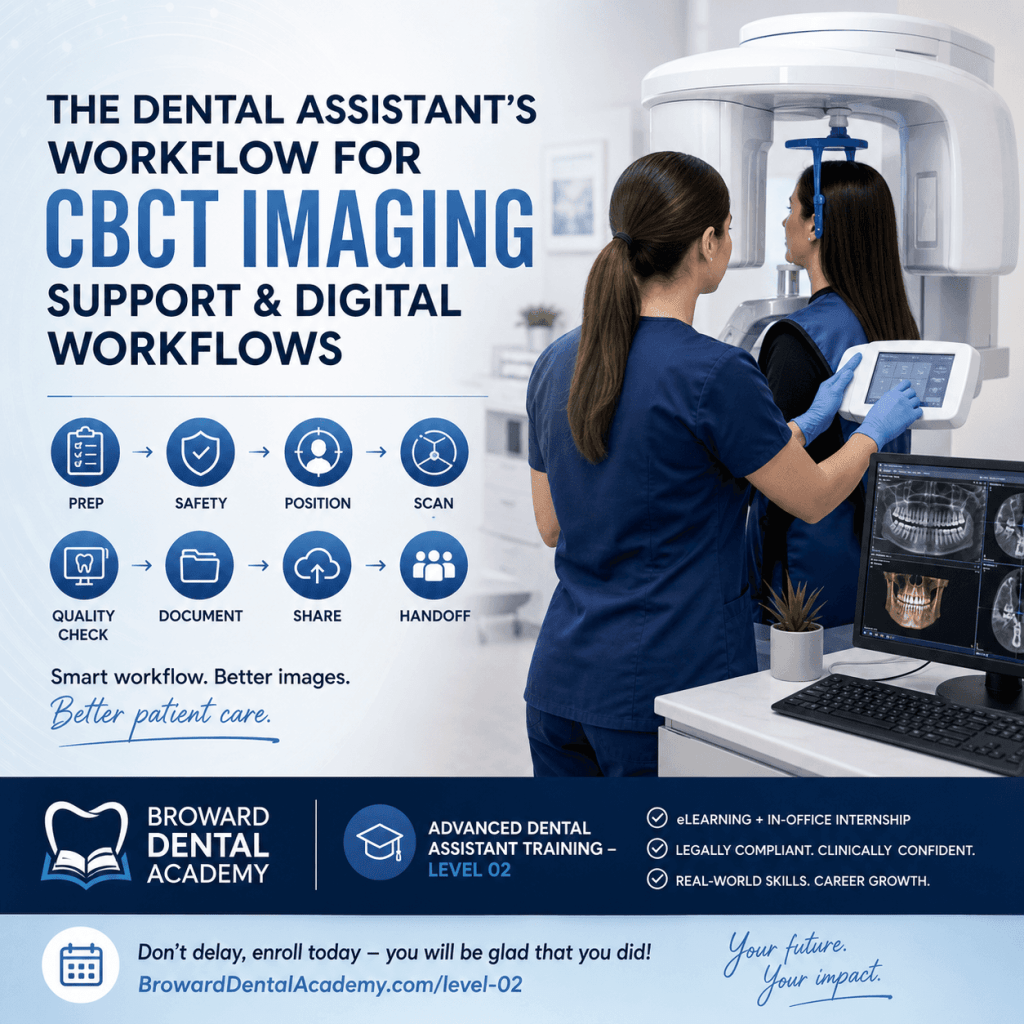
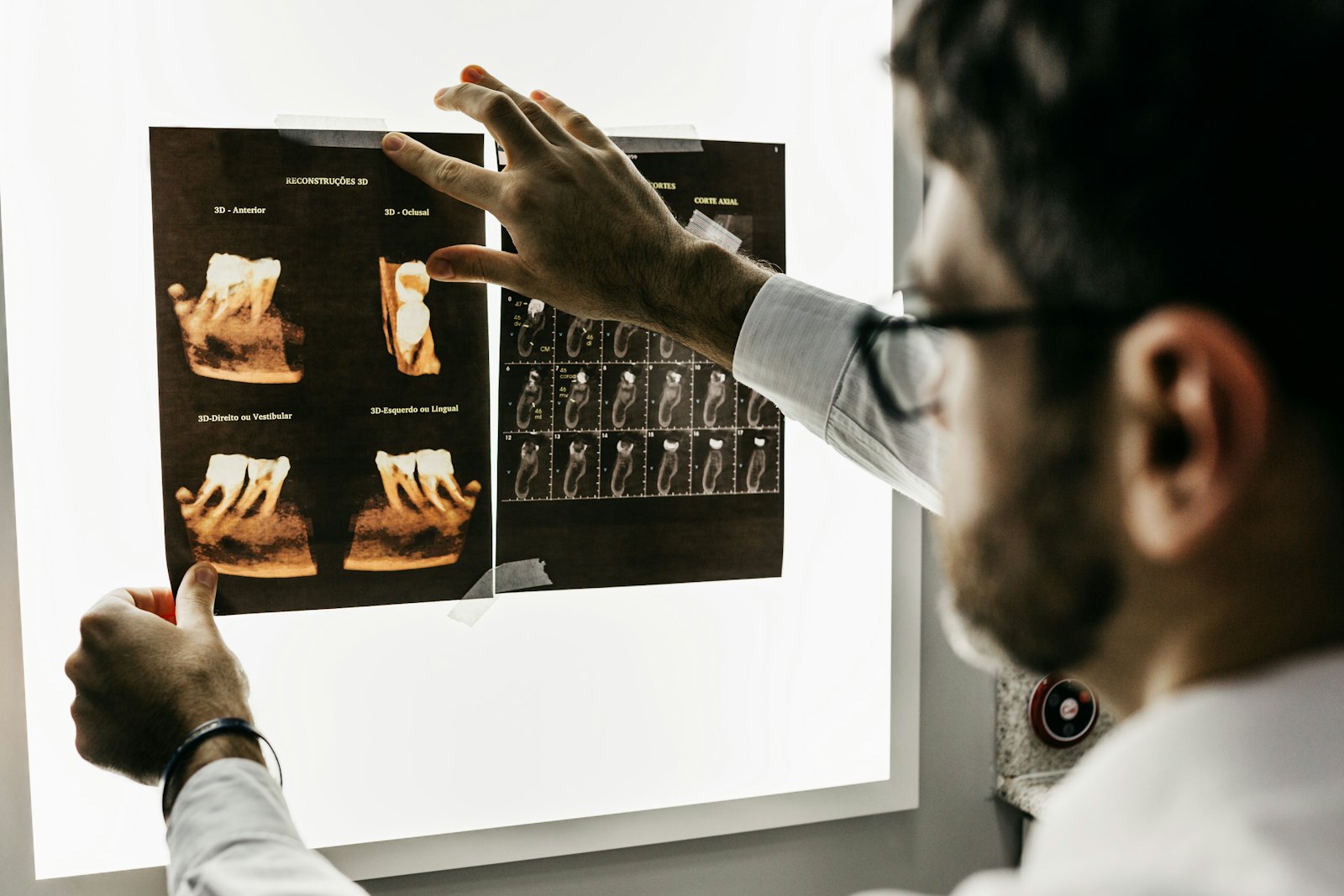
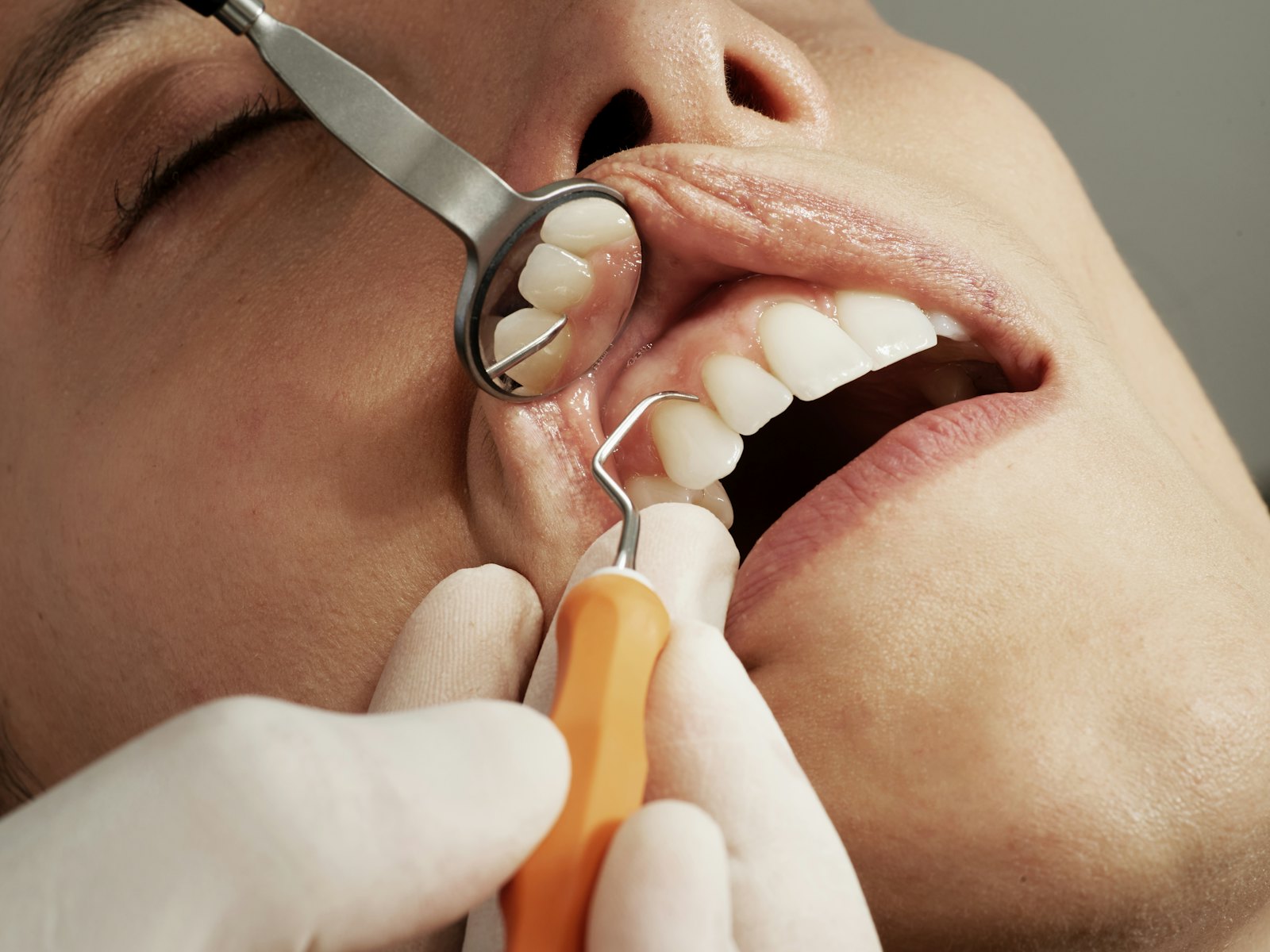
If your role touches imaging, staying current on radiation safety and proper technique protects patients and the team, and it supports smoother diagnostics.
Patient communication and ethics
These skills often separate a good assistant from a great one:
- professionalism and chairside communication
- HIPAA and patient privacy practices
- supporting informed consent workflows and documentation
- handling anxious patients with empathy and clarity
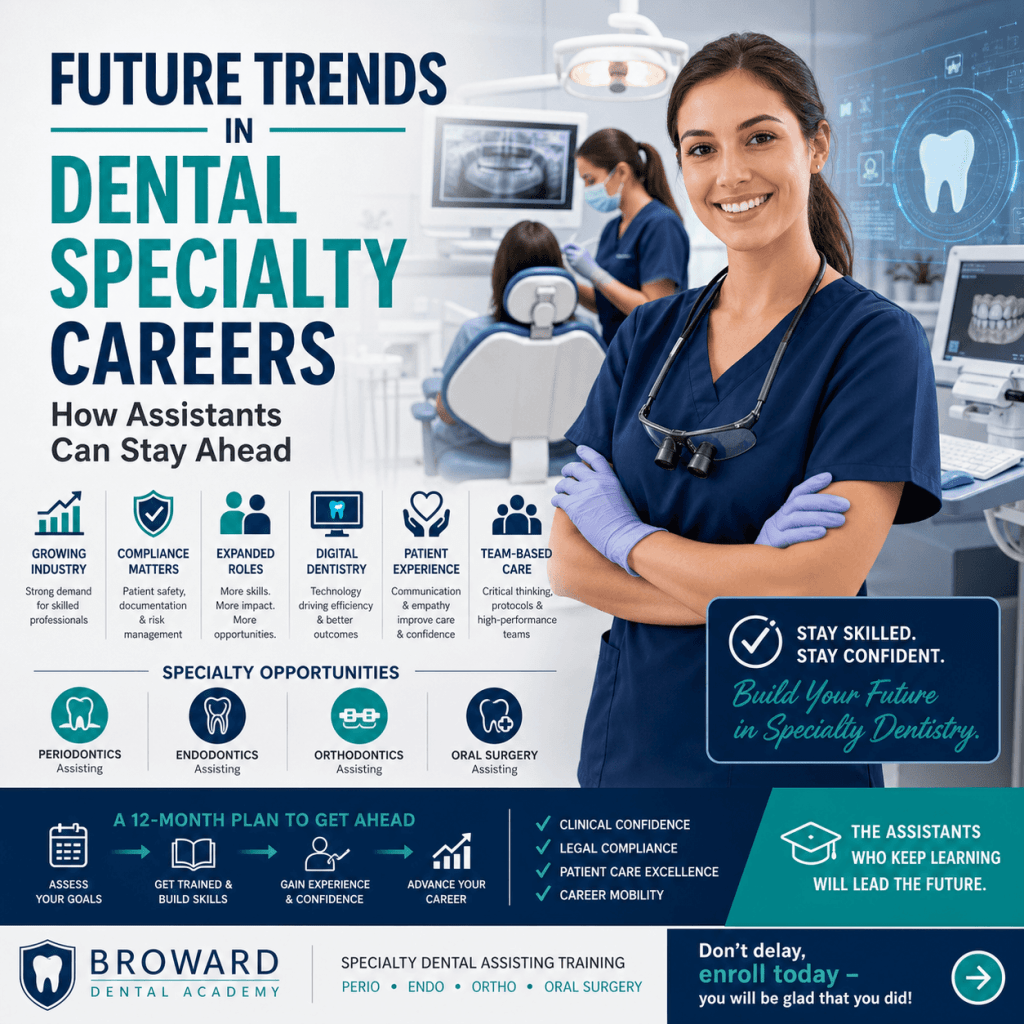
Specialty support skills
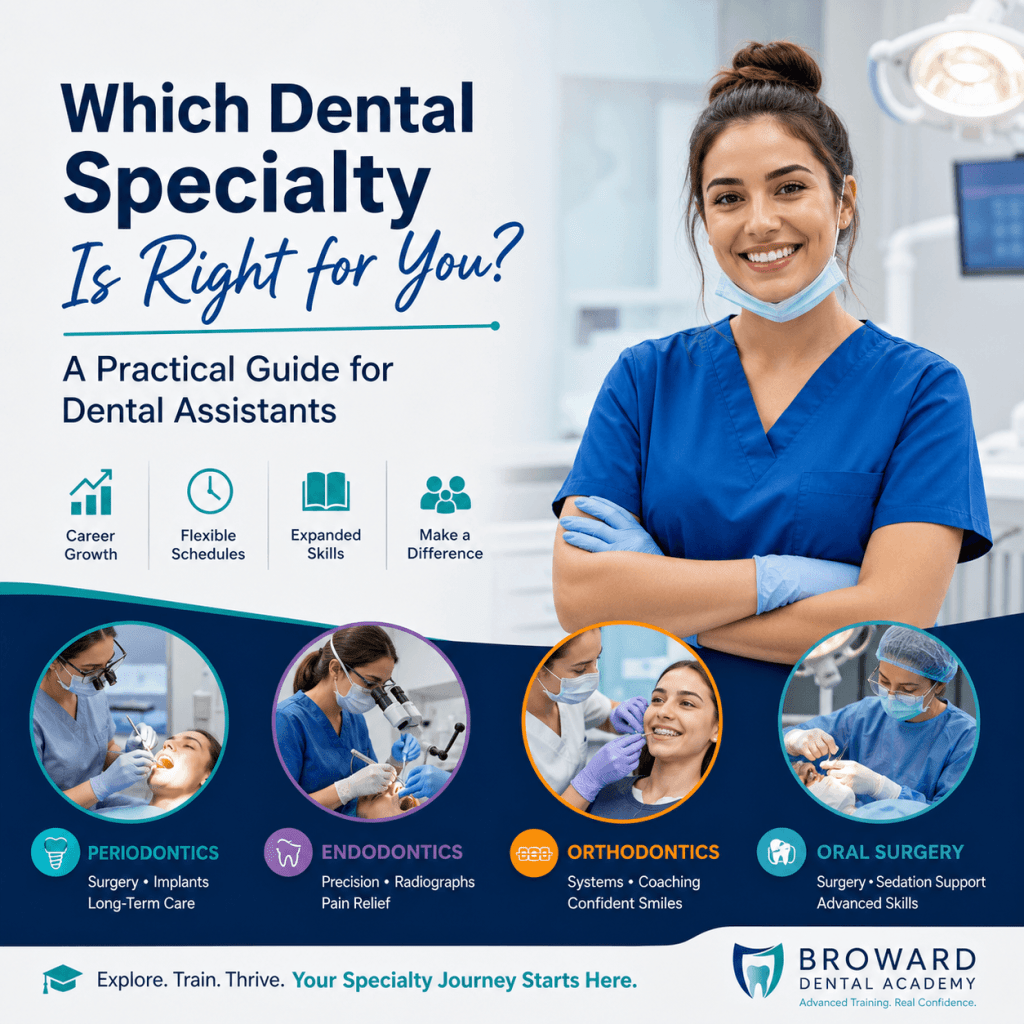
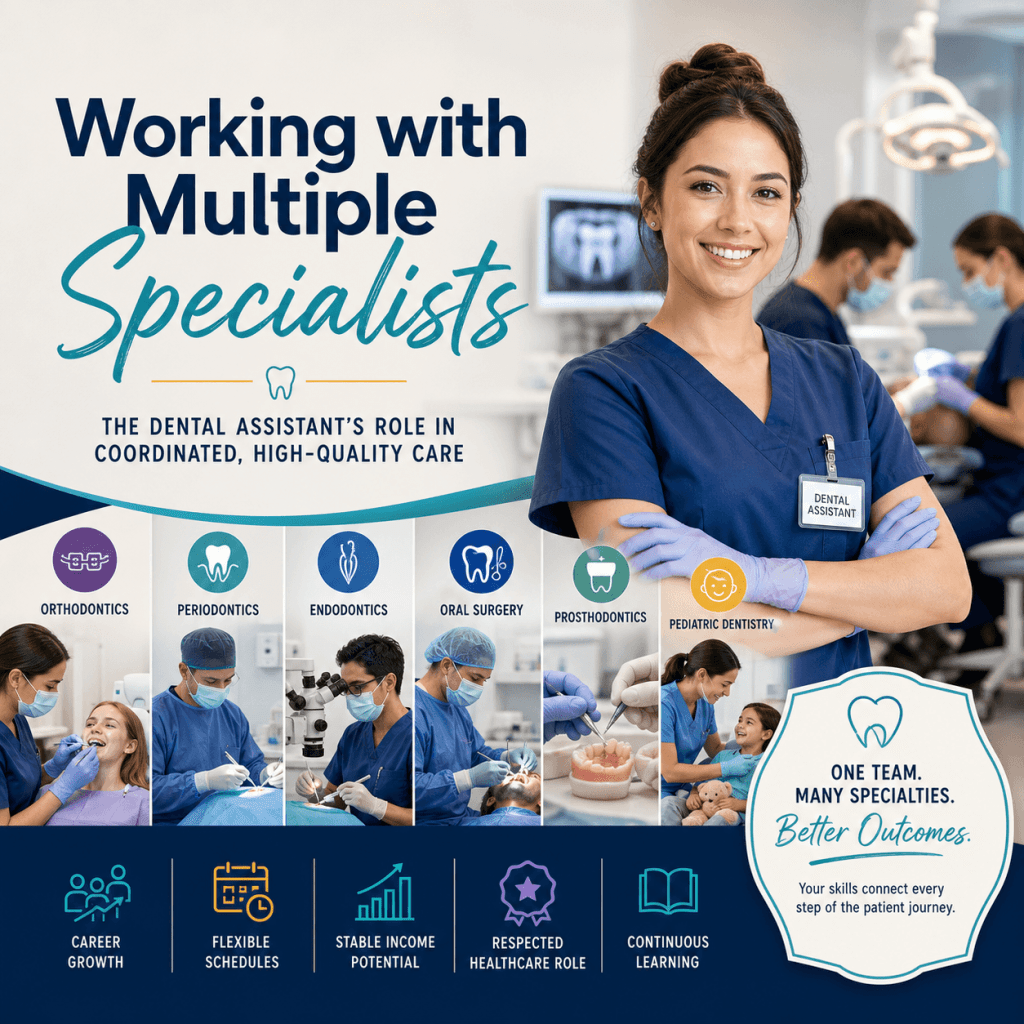
Choosing CE tied to your preferred work environment can create career mobility. For instance, if you’re interested in oral surgery assisting, pursuing relevant CE courses can be beneficial. Other specialty areas include:
- pediatric assisting fundamentals
- orthodontic assisting basics
- impressions and digital scanning exposure (when allowed and properly trained)
Strategic CE is not just about collecting hours. It is about building a reputation as someone who is safe, consistent, and prepared for more responsibility.
How to choose the right CE plan (based on your career goals)
A good CE plan should match where you are now and where you want to go next.
Start with your current role and next-step target
Ask yourself:
- Am I a new assistant still building fundamentals?
- Am I an experienced chairside assistant who wants more responsibility?
- Do I want expanded functions training?
- Am I aiming for a specialty office (ortho, pediatrics, surgery)?
Prioritize “high-signal” CE
High-signal CE is training that employers immediately respect because it reduces risk and improves performance:
- infection control updates
- medical emergency readiness
- radiation safety (if applicable)
- documentation and privacy (HIPAA)
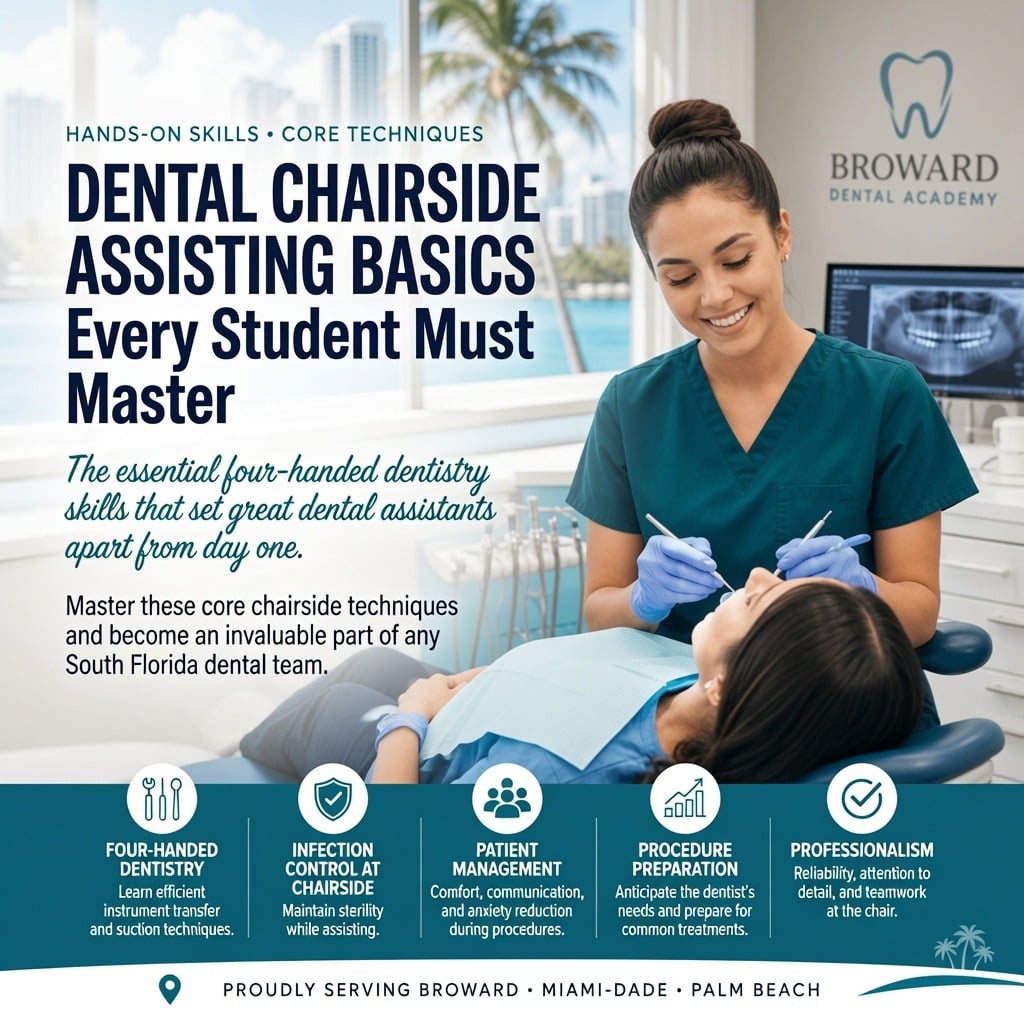
- hands-on chairside skills that improve efficiency
Balance online learning with clinical training
- Online CE is great for theory, refreshers, and updates.
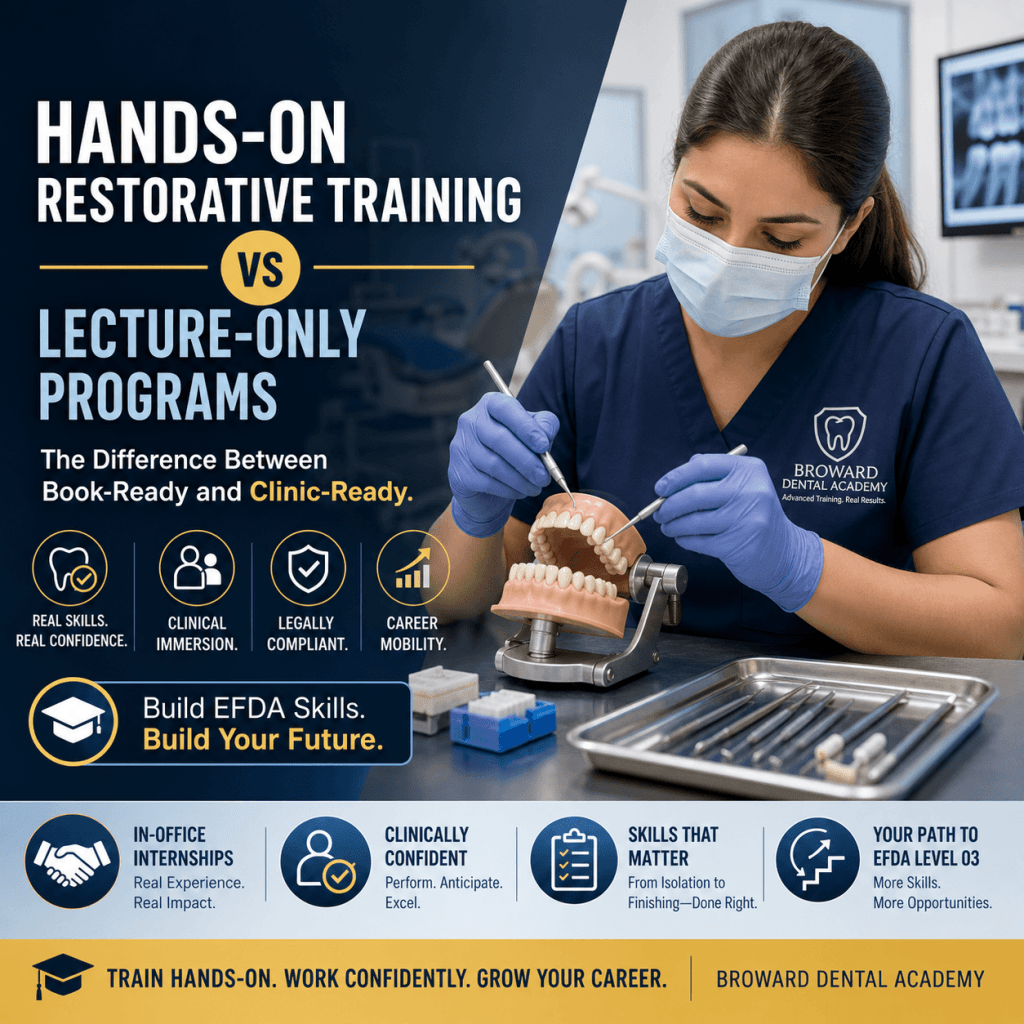
- Hands-on labs build muscle memory, speed, and confidence, especially for skills you need to perform consistently under pressure.
A simple 12-month CE roadmap (example)
You can keep this simple and still be very effective:
- 2–3 core topics: infection control, privacy/HIPAA, medical emergencies or safety refreshers
- 1–2 growth topics: specialty assisting basics, digital workflow exposure, advanced chairside efficiency
- 1 hands-on refresh per year: a clinical lab or structured skills course
How CE supports pay negotiations and job changes
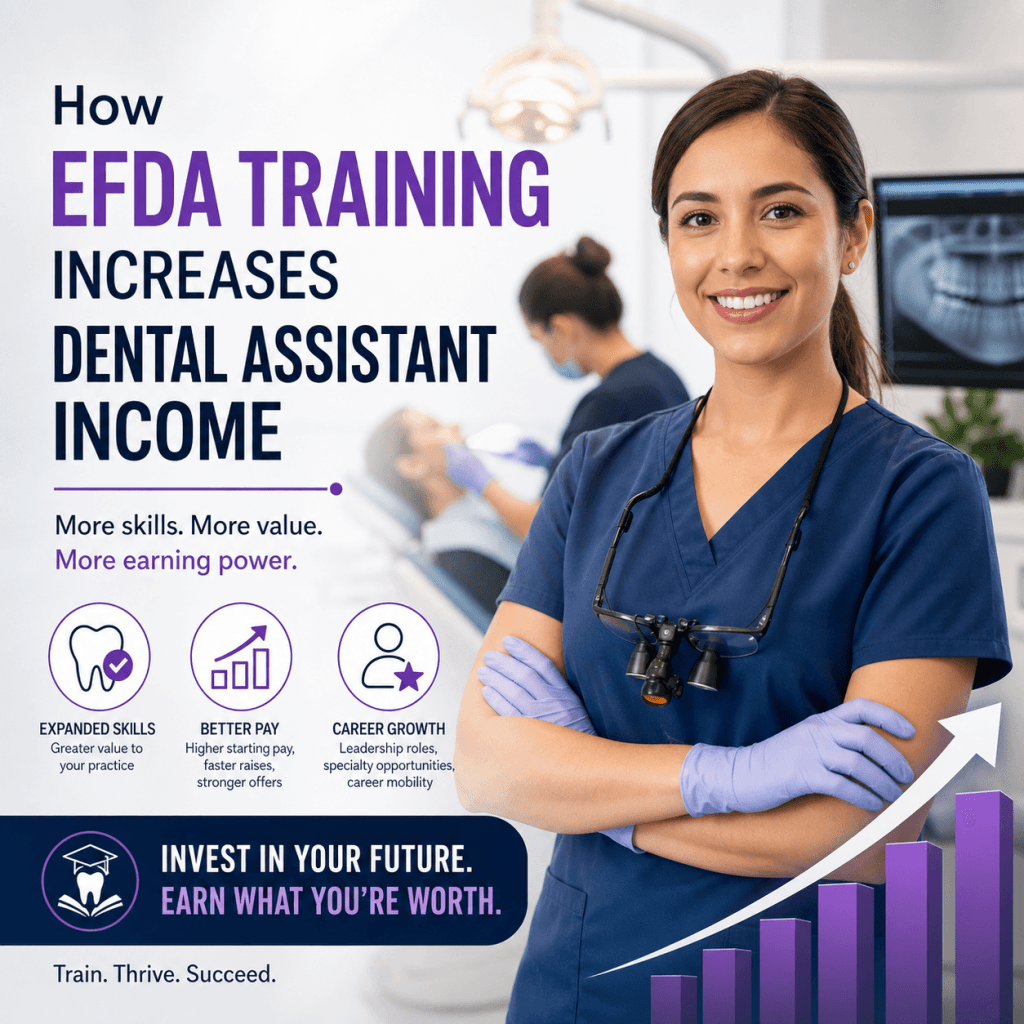
When you can show documented growth, you are not just asking for a raise. You are showing readiness. A folder of relevant, recent training makes it easier for employers to trust you with higher-responsibility duties, which often correlates with better pay and better schedules.
Tracking your CE: a simple system that prevents last-minute stress
If you only take one thing from this article, make it this: track your CE as you go.
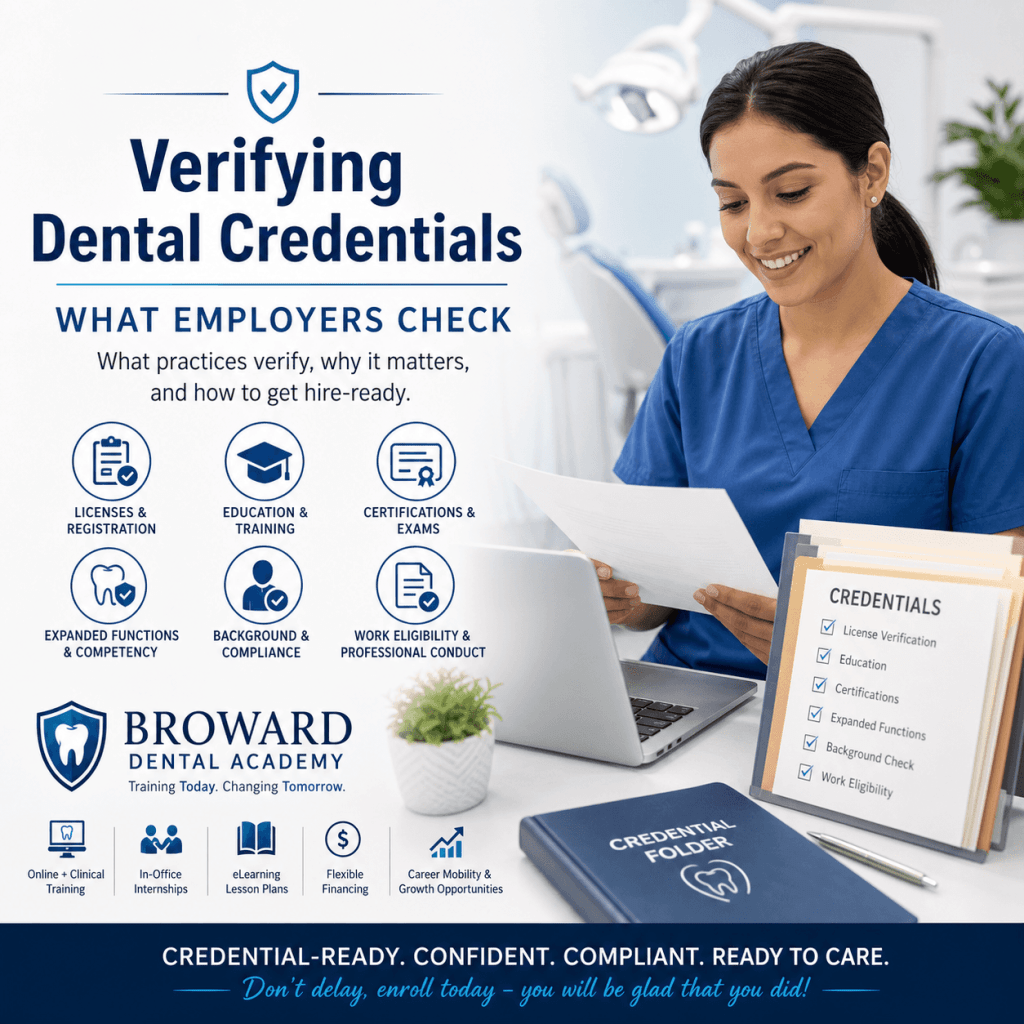
Build a CE folder (digital + printed)
Create:
- a digital folder (Google Drive, Dropbox, or a folder on your computer)
- a physical binder or envelope for backup
Save:
- certificates of completion
- course descriptions or outlines
- receipts (if you paid)
- provider contact info (helpful if an office verifies training later)
What to record for each course
A simple spreadsheet is enough. Track:
- date completed
- course title
- provider
- number of hours or CEUs
- short topic notes (what you learned)
- file name or link to the certificate
Do quarterly check-ins
Every three months, spend 10 minutes confirming:
- certificates are saved
- hours are logged correctly
- your next course is scheduled
Think “audit readiness,” even if you are not audited
Dental offices often need to produce training records quickly for internal compliance, inspections, or insurance-related documentation. When you are organized, you support the office and you stand out as a professional.
Where Florida dental assistants can earn quality CE and advanced training
Not all training is equal. If your goal is real career growth, choose reputable providers and formats that build usable skill. Common options dental assistants use include:
- Local hands-on training centers (best for skills that require practice and feedback)
- Dental conferences (great for exposure to new techniques and networking)
- Employer-provided training (efficient, often tailored to the office)
- Structured online learning (ideal for updates and theory)
A local option: Broward Dental Academy
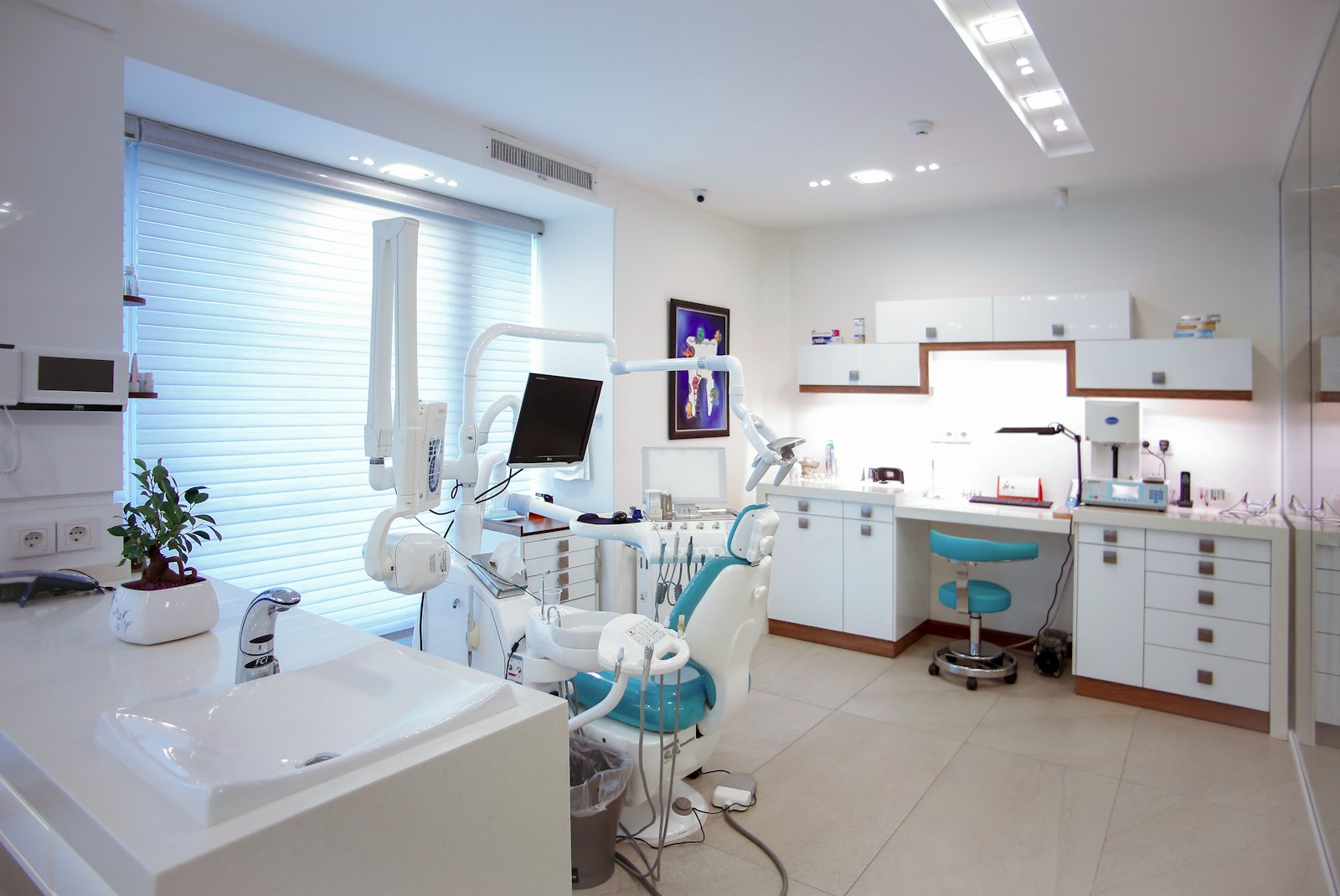
For dental assistants who want practical, career-focused training in Florida, Broward Dental Academy offers a wide range of dental courses and advanced dental training. What stands out is the delivery approach:
- immediate immersion in online and clinical settings
- modern eLearning lesson plans for remote training
- in-office internships that build real-world readiness
This is especially valuable if you are trying to move beyond “I watched a module” and toward “I can perform this skill confidently in a busy office.”
How Broward Dental Academy supports CE-minded dental assistants (without the fluff)
Dental practices are looking for professionals who are thoroughly trained, legally compliant, and clinically confident. That is exactly what structured training is designed to produce. Broward Dental Academy supports CE-minded assistants by focusing on outcomes that matter in real clinics:
- Skill repetition and feedback so you can improve quickly and avoid bad habits
- Clinical confidence built through real training environments, not just passive learning
- Professionalism and ethics so you can be trusted with patients, documentation, and teamwork
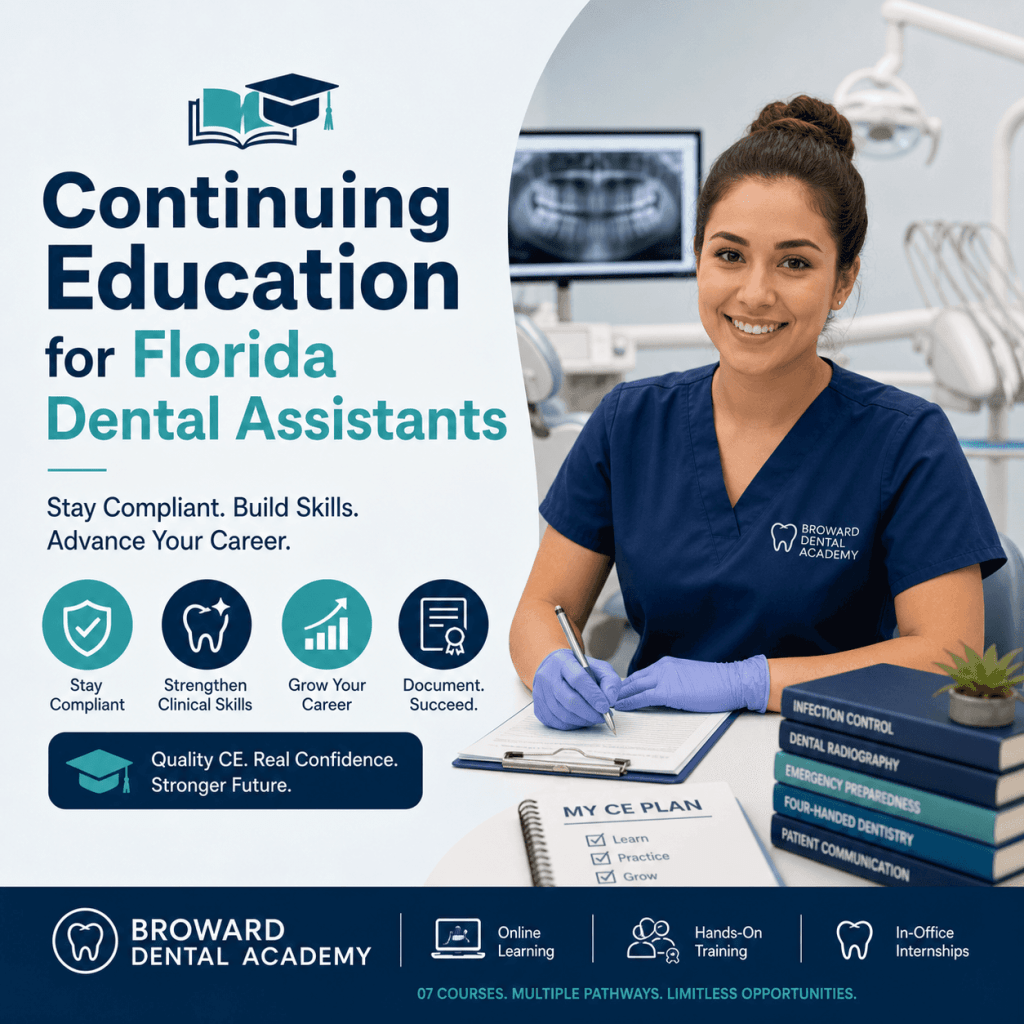
The importance of professionalism and ethics in dentistry cannot be overstated. Broward Dental Academy offers 07 courses, providing multiple pathways depending on where you are starting and where you want to go next. The goal is not just to pass an exam. It is to help you thrive in a modern, high-performance dental practice with the mindset to think critically, act ethically, and perform confidently. For working adults, flexible financing can make training realistic without putting your life on pause.
Common mistakes dental assistants make with CE (and how to avoid them)
Mistake 1: Taking random CE without a plan
Fix: Choose CE aligned to your current duties and your next role.
Mistake 2: Relying only on passive online content
Fix: Add hands-on clinical training when possible, especially for skills you must perform quickly and correctly.
Mistake 3: Not saving documentation
Fix: Keep a CE folder plus a simple spreadsheet. Do not trust your inbox as your filing system.
Mistake 4: Assuming “not required” means “not needed”
Fix: Treat CE as a career advantage and a trust signal, not just a checkbox.
Mistake 5: Waiting until job search time
Fix: Build a steady CE habit so you are always ready when a better opportunity shows up.
Putting it all together: a realistic CE game plan for the next 30 days
If you want momentum, here is a simple plan you can execute immediately.
Step 1: Confirm your role and expectations
Ask your dentist or office manager:
- What training do you want documented for my role?
- Are there specific courses you prefer for compliance topics?
- What duties do you want me prepared for next?
Step 2: Choose 1 compliance-focused course
Pick one based on your daily duties:
- infection control and sterilization updates
- radiation safety refreshers (if relevant)
- medical emergencies and safety readiness
Step 3: Choose 1 skills-focused course you can apply immediately
Examples:
- chairside efficiency and workflow
- impressions and digital workflow exposure (as allowed and trained)
- specialty assisting basics (peds, ortho, surgery fundamentals)
Step 4: Set up your tracking system today
Create:
- a CE folder (digital + printed)
- a spreadsheet with course name, date, hours, provider, and certificate link
- Schedule your first check-in on your calendar for 90 days from now.
If you are ready to take your training seriously and build real clinical confidence, Broward Dental Academy is a strong local option for Florida dental assistants who want to grow in a way that practices respect. Don’t delay, enroll today – you will be glad that you did!
FAQs (Frequently Asked Questions)
Do Florida dental assistants have mandatory continuing education (CE) requirements?
In Florida, formal state CE renewal requirements primarily apply to licensed dental professionals like dentists and dental hygienists. Many dental assistants are not licensed independently, so there is no universal CE hour requirement for every dental assistant. However, CE expectations often come from employer policies, expanded function training, certification maintenance, and role-specific training.
Why is continuing education important for Florida dental assistants and their clinics?
Continuing education helps dental assistants stay current on safety protocols, techniques, technology, and best practices. It improves patient safety and quality of care by reducing errors and enhancing consistency. Clinics value CE because it supports compliance culture, operational confidence, and hiring expectations by ensuring assistants are competent and can perform duties with minimal supervision.
What types of training count as continuing education for Florida dental assistants?
CE typically includes coursework related to infection control, radiology safety, documentation standards, emergency response, specialty support (like orthodontics or endodontics), and expanded function duties under dentist supervision. Formal certificates from reputable institutions and documented clinical competencies usually qualify as CE. Training unrelated to the assistant’s role or without proper documentation generally does not count.
How do the roles of Florida dental assistants affect their CE needs?
Florida dental assisting roles vary from general chairside support (Level 01) to expanded functions under dentist supervision (Level 02). The training required depends on the tasks performed; assistants must complete appropriate coursework, clinical competencies, and safety training before performing specific duties. The higher the responsibility level or specialization, the more targeted CE is necessary.
How can Florida dental assistants choose an effective continuing education plan?
Assistants should first clarify their specific role and office expectations. Then they can prioritize CE that aligns with their permitted duties and career goals—such as specialized courses from reputable institutions like Broward Dental Academy. Tracking completed training systematically helps avoid stress and ensures compliance with employer or certification requirements.
What steps should a Florida dental assistant take before performing new tasks requiring expanded functions?
Before performing expanded function duties, an assistant should obtain proof of completed coursework or certificate-based training, documented clinical competencies, safety protocol knowledge (infection control, HIPAA), and role-specific training related to those tasks. It’s essential to get clear authorization in writing from supervising dentists or office managers to ensure legal compliance and patient safety.