Why verifying dental credentials matters more than ever
The dental field is one of the fastest-growing areas in healthcare, and this growth creates significant hiring pressure. Practices need team members quickly, schedules are full, and patients expect a smooth, safe, professional experience every time they sit in the chair.
This is precisely why credential verification has become a non-negotiable part of hiring.
When a practice verifies credentials, it is protecting:
- Patients, by confirming the person providing care is legally allowed and properly trained to do so.
- The practice, by reducing exposure to compliance issues, insurance problems, and reputational damage.
- The candidate, by preventing role mismatch, reducing onboarding confusion, and making it easier to step into duties with confidence.
Credential verification is also directly tied to real-world practice risks, including:
- Patient safety and quality of care
- Legal and regulatory compliance (scope of practice, supervision rules, infection control requirements)
- Insurance participation and audits (many plans require license verification and good standing)
- Reputation management (one avoidable incident can follow a practice for years)
- Negligent hiring claims, when an employer fails to verify and a preventable event occurs
In this guide, you will learn what employers check, what documents you will likely be asked for, and how to avoid the common delays that can slow down onboarding.
Practices offering specialized services such as oral surgery or orthodontics may face even greater scrutiny during the hiring process. Therefore, understanding the importance of credential verification in these contexts becomes crucial.
If you’re considering a career in dentistry or looking to enhance your skills further in this rapidly evolving field, resources like those provided by Broward Dental Academy can be invaluable. They offer comprehensive training programs that not only equip you with necessary skills but also prepare you for the rigorous credential verification process that follows.
For prospective dental professionals or those seeking to broaden their expertise through advanced training programs such as the ones offered by Broward Dental Academy, understanding the significance of credential verification is vital.
What “dental credentials” includes (it’s more than a certificate)
A lot of candidates think “credentials” means one certificate from a program. Employers usually see it as a full stack of items that together prove you are trained, eligible, and legally permitted to perform specific duties.
Depending on your role and state, employers may review:
- Education and program completion (school, program type, graduation/completion date)
- Transcripts (often official)
- National or state exams (as applicable)
- State licensure or registration (dentist, dental hygienist, dental assistant permits/registrations)
- Radiology credentials/permits (where required)
- CPR/BLS certification (with current expiration dates)
- Expanded functions credentials (EFDA or state-specific permits)
- Continuing education compliance (especially for renewals and expanded duties)
- Work authorization (I-9 verification in the U.S.)
It also helps to understand three terms employers treat very differently:
- Training certificate: Proof you completed a course or program. Valuable, but it does not automatically grant legal permission to perform regulated duties.
- State-issued license or registration: Legal authorization to practice in a defined role and scope under that state’s dental board rules.
- Office-issued competency sign-off: Internal confirmation you can perform a task the way that specific practice wants it done. This is not a substitute for a license or permit.
Requirements vary by role (assistant vs. hygienist vs. dentist) and by state. Employers verify based on what the law requires for the position’s scope of practice, not simply what a candidate says they can do.
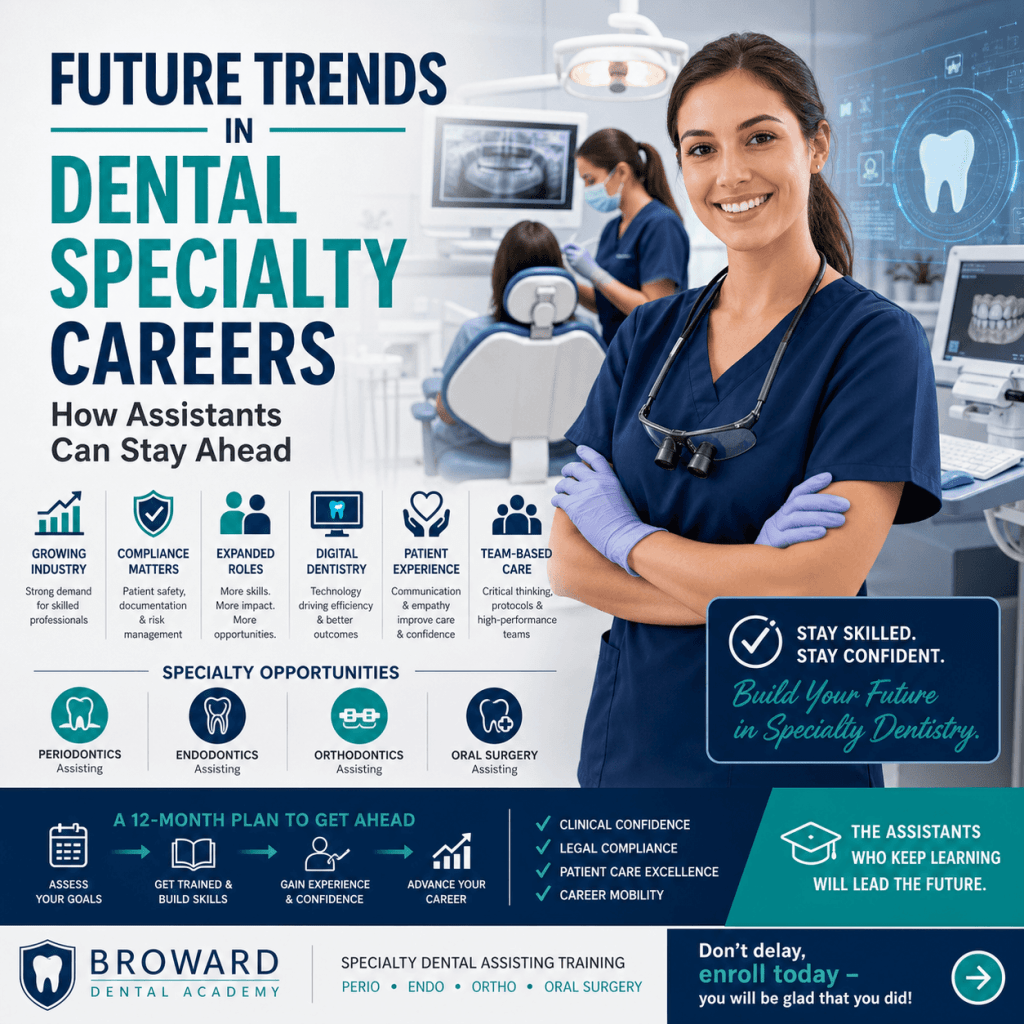
For instance, if you’re pursuing endodontics or periodontics, these specific roles will have their own set of credential requirements. It’s also worth noting that these requirements can vary significantly depending on the geographical location of the practice, as each state has its own regulations governing dental practices.
How employers verify dental credentials: the typical hiring workflow

Most dental practices follow a predictable sequence during the hiring process. The exact order varies, but the steps typically look like this:
- Application screening — Resume review, role fit, and basic requirements such as license level, experience, and schedule availability.
- Document collection — Copies of licenses, certifications, transcripts, and IDs.
- Primary-source verification — The employer checks directly with boards, schools, and certifying organizations.
- Background checks — Identity verification, criminal screening, references, and any other practice-specific policies.
- Final offer and onboarding — I-9 completion, payroll setup, policy training, and immunization or health documentation if required.
What “primary-source verification” means
Primary-source verification means the practice does not rely only on a photocopy or a screenshot. They verify the credential directly from the original source. For instance, they may conduct a state dental board license lookup or check with a school registrar for official transcripts. They might also consult a certifying organization database for CPR/BLS or expanded functions credentials.
This protects patients and employers alike; however, it can also safeguard you if a document is misread, outdated, or missing a key detail.
Common timeline factors
Credential verification can move quickly or it can drag on. The most common reasons it slows down include:
- Waiting on state boards to update status
- Name changes that are not documented consistently across records
- Incomplete or unofficial transcripts
- Expired CPR/BLS cards
- Out-of-state license transfers or pending endorsements
If you plan for these early in the process, you can often shorten the time between interview and start date.
Licensing and registration checks (state board verification)
The state board license check is often the first and most important step, because it determines whether a candidate can legally be scheduled and delegated duties.
Employers typically check for:
- Active status
- License number
- Issue and expiration dates
- Restrictions or conditions
- Disciplinary history or public actions
- Renewal compliance, including continuing education requirements where applicable
Role-based examples:
- Dentist: dental license verification, controlled substance registration requirements if applicable, and any restrictions
- Dental hygienist: hygienist license verification, supervision requirements, permitted duties
- Dental assistant: registration, permits, or radiology authorization where required by the state
Why “active and in good standing” matters
“Active and in good standing” is more than a formality. It impacts:
- Scheduling patients (a practice cannot safely or legally assign duties outside legal scope)
- Supervision rules (direct vs. general supervision may change what tasks you can perform)
- Insurance compliance (many payers expect validated licensing for credentialed roles)
If a license is expired or not in good standing, employers often pause onboarding until the issue is resolved.
Education and training verification (schools, transcripts, and program completion)
Education verification is where employers confirm you completed an appropriate program that matches the state’s requirements for the role.
Practices may verify:
- School or program name
- Program type and curriculum alignment (especially when state rules specify required topics)
- Completion date
- Transcripts (often official, sometimes sealed, depending on the role and state)
Many employers also pay attention to training quality signals that reduce onboarding time, such as:
- Hands-on clinical exposure
- Strong infection control training
- Radiology training aligned with state rules
- Familiarity with modern dental workflows, charting expectations, and patient communication
A candidate who can step in confidently helps the practice run on time, improves patient experience, and reduces the need for extensive retraining.
What a “job-ready” dental training program signals to employers
When employers see a program that consistently produces job-ready graduates, a few signals stand out:
- Immediate immersion in online and clinical settings, so learning is applied, not just memorized
- Structured skills checklists, making competency easier to understand and validate
- Supervised practice, which builds safe habits early
- In-office internships, which are a major credibility booster because they show you can function in a real practice environment
Internship experience often translates to faster onboarding because the candidate has already worked around real schedules, real patients, real operatory flow, and real expectations.
Certification and exam verification (national/state credentials)
Certifications are often tied to specific duties, and employers verify them to ensure the practice assigns tasks legally and safely. A comprehensive overview of potential certifications can be found here.
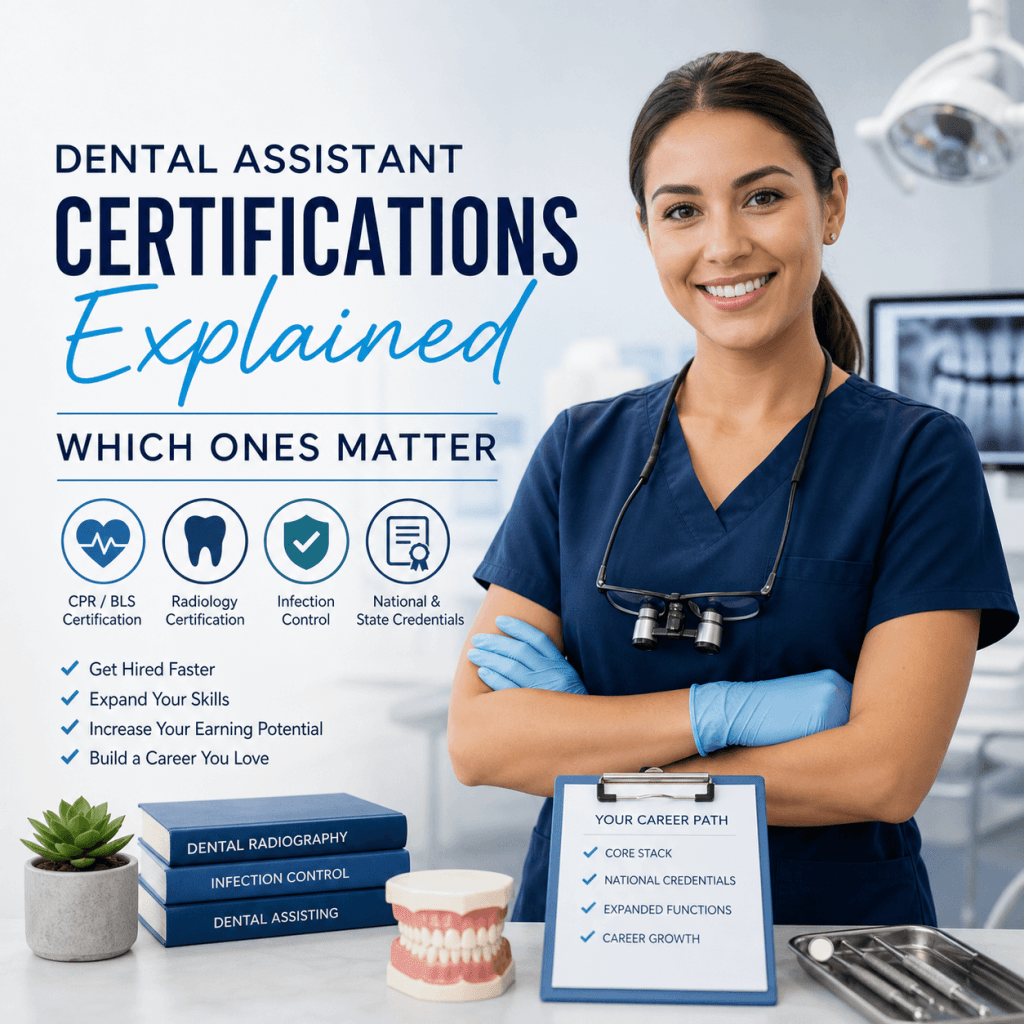
Common certifications employers may verify include:
- CPR/BLS (and expiration date)
- Radiology certification/permit (where required)
- Infection control training (state-specific, role-specific)
- Expanded functions certifications (depending on state rules and the office’s needs)
What employers typically check:
- Issuing organization
- Credential ID or certificate number
- Issue date and expiration date
- Whether renewal or continuing education is current (when required)
The key point is that certifications must match both the job description and the state’s scope of practice rules. A certificate is not useful if the role or state does not recognize it for delegation.
Expanded functions and clinical competency checks (what you can legally do)
Expanded functions are additional, regulated duties that go beyond basic assisting or baseline responsibilities. They vary by state, but the theme is consistent: if a function is expanded or delegated, the practice must confirm you are authorized and competent before you perform it on patients.
That is why employers confirm expanded functions before assigning chairside duties that carry higher risk.
How employers validate expanded function competency:
- Reviewing documentation, permits, or certificates
- Confirming status with the issuing body (when applicable)
- Skills assessments or check-offs
- A chairside working interview
- A probationary training plan with supervision
This is not about testing you for the sake of it. It is risk management. Improper delegation can create compliance violations, patient harm, and serious consequences for both the provider and the practice.
Background screening and compliance checks that often run alongside credentials
Most practices run background screening in parallel with credential verification to speed up hiring.
Common screenings include:
- Identity verification
- Criminal background check
- Drug screening (practice-dependent)
- Reference checks
Employers may also verify compliance-related items, depending on office policy and the role:
- Immunizations or health documentation, when required by policy
- HIPAA training awareness and confidentiality expectations
- OSHA and infection control awareness
- Fit-testing policies for respiratory protection (office-dependent)
If there is anything you may need to disclose, it is best to answer questions directly and honestly. Practices are usually more concerned with transparency, remediation, and current compliance than with perfection.
Work eligibility, professional conduct, and “soft credential” signals employers notice
Even when licenses and certificates are perfect, employers still verify whether you can legally work and whether you show the professionalism required in a patient-facing environment.
Work authorization (I-9)
In the U.S., employers complete the I-9 process to confirm identity and eligibility to work. A common delay happens when:
- Names do not match across documents
- Documents are expired
- A candidate uses a nickname on applications but a legal name on IDs
- There is a recent name change without supporting paperwork
Bringing the correct documents on day one prevents onboarding from stalling.
Professional conduct checks
Dental practices also evaluate professional conduct through:
- Communication style and clarity
- Ethical judgment and confidentiality awareness
- Attendance and reliability signals
- Patient-facing professionalism, including calmness under pressure
Top practices want people who are thoroughly trained, legally compliant, and clinically confident, but also steady and respectful with patients and teammates.
Common reasons dental credential verification gets delayed (and how to prevent it)
Most verification delays are preventable. The most frequent issues include:
- Expired CPR/BLS
- Missing transcripts or submitting unofficial documents when official copies are required
- Name changes that are not updated across school records, licenses, and certifications
- Out-of-state licensing gaps or slow transfer processes
- Inconsistent employment dates on resumes versus references
- Unclear certification IDs or missing issuer information
A simple prevention checklist that works:
- Keep a digital credential folder (PDF scans plus original files)
- Track expiration dates with calendar reminders 60 to 90 days ahead
- Request official transcripts early, especially if you are applying to multiple practices
- Keep a one-page record of credential numbers, issuers, and renewal dates
- Update your resume dates and job titles to match what references will confirm
Being organized does not just reduce delays. It also creates a strong first impression, especially with busy clinical managers who are hiring between patients. For more detailed information about common queries regarding dental credentials and their verification process, you might find this resource helpful.
What employers expect from candidates during verification (your “ready-to-hire” checklist)
To ensure a swift verification process, candidates should prepare as thoroughly as they would for an exam. Most employers anticipate that candidates will provide:
- Government-issued ID (and additional work authorization documents as needed)
- Current resume
- Copies of licenses, registrations, and permits
- CPR/BLS card with expiration date visible
- Transcripts or completion certificate (as requested)
- A short list of references with correct contact information
A practical tip that hiring managers appreciate is a one-page credential summary, including:
- Credential name (example: Dental Assistant Registration, Radiology Permit, CPR/BLS)
- Credential number or ID
- Issuing organization or board
- Issue date and expiration date
If you have restrictions, a past issue, or anything that might raise questions, disclose it early and clearly. If you have remediation steps, documentation of current good standing, or proof of compliance, include that as well.
How Broward Dental Academy supports credential-ready professionals
As demand for skilled dental professionals rises, screening tends to get stricter. Practices cannot afford compliance mistakes and prefer candidates who can seamlessly integrate into a modern workflow.
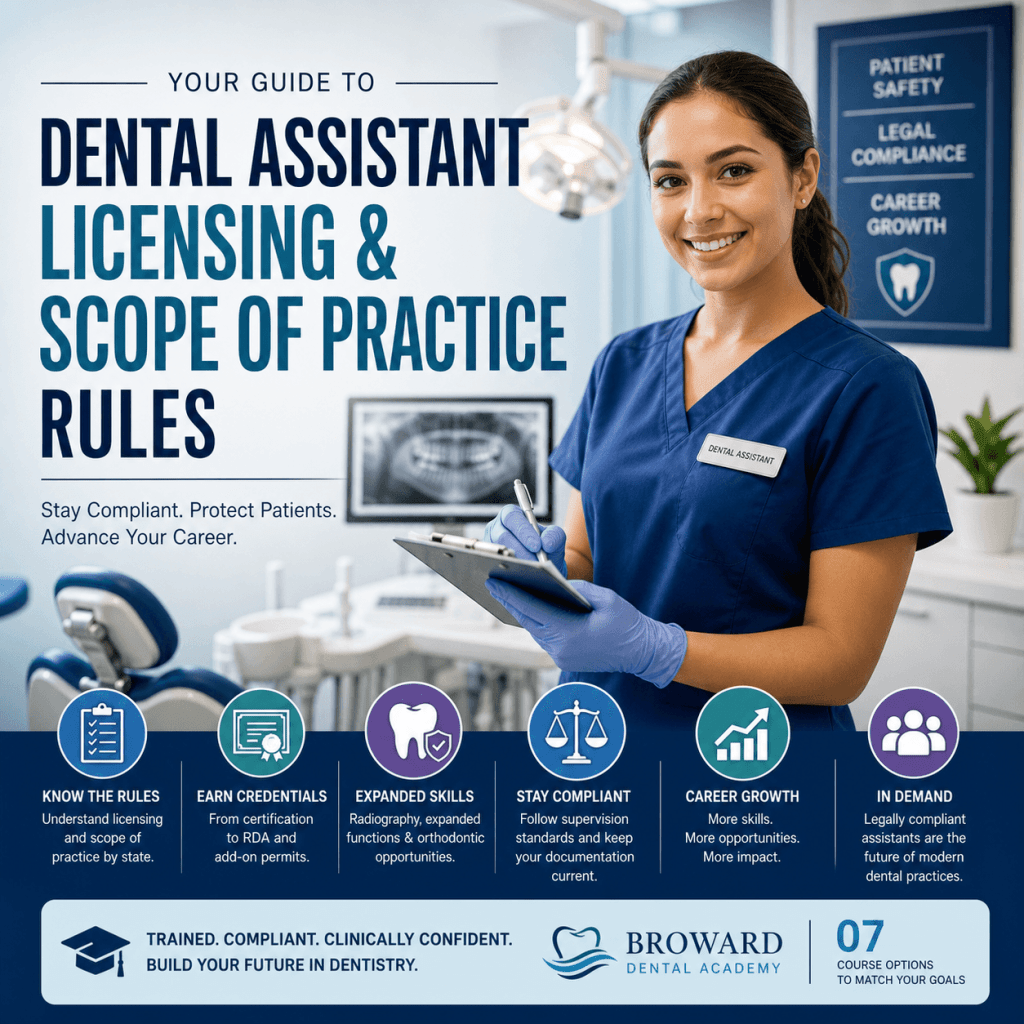
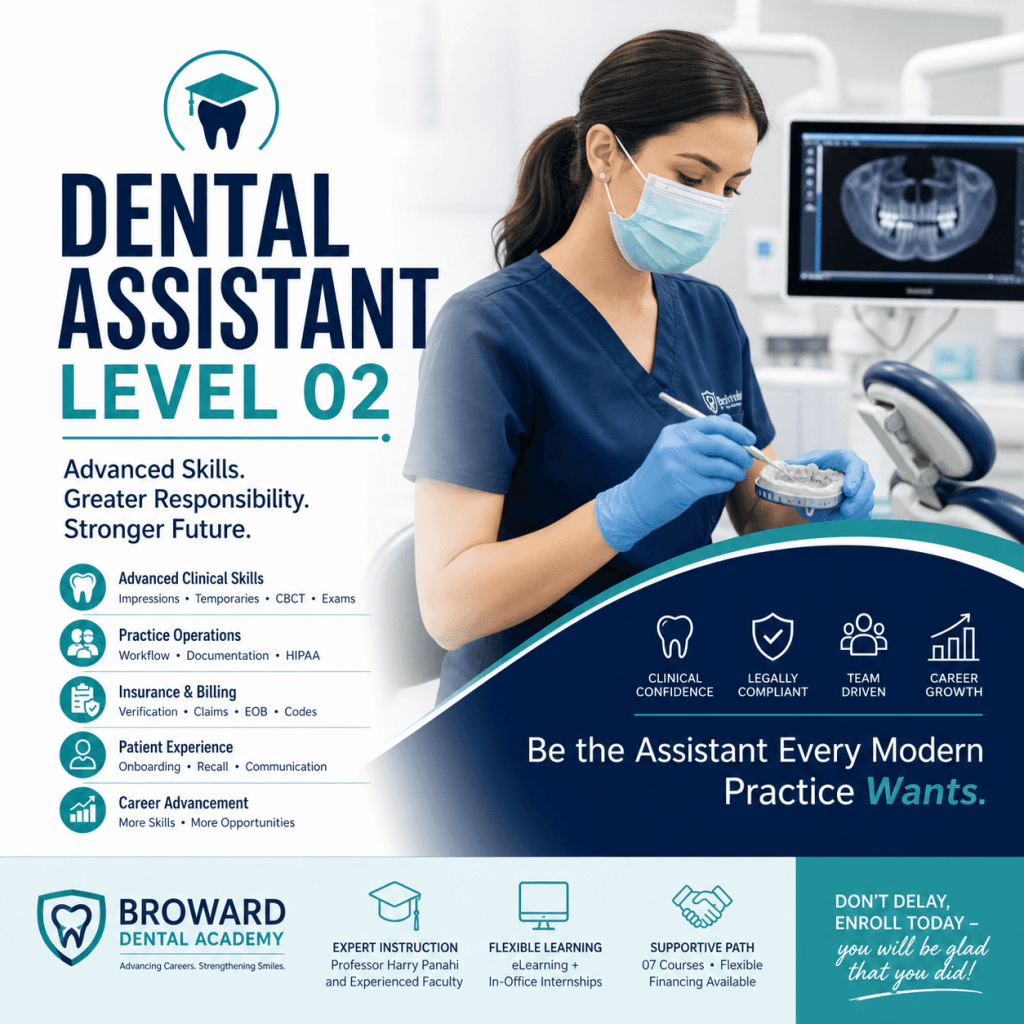
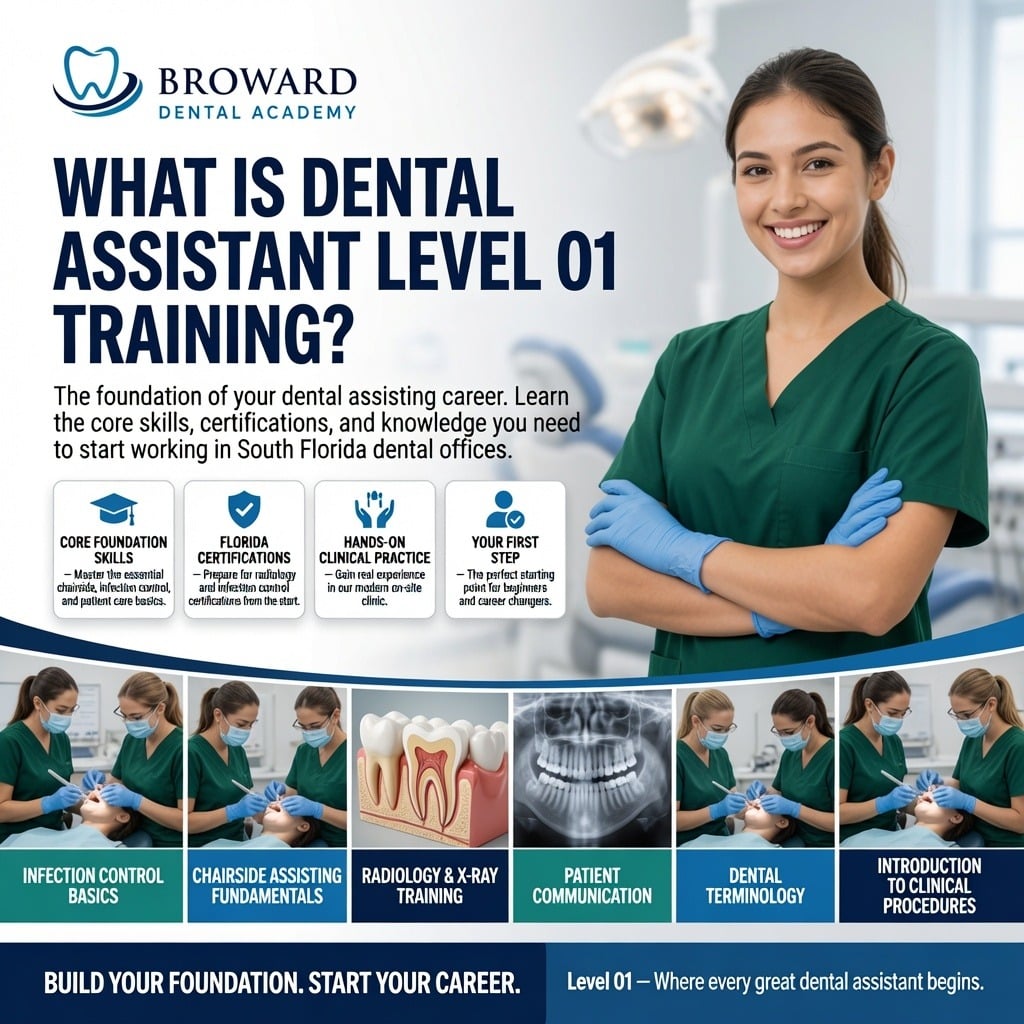
Broward Dental Academy plays a pivotal role in preparing students to meet these employer expectations by offering a range of comprehensive courses such as the Dental Assistant Level 01, Level 02, and Level 03 programs. These courses not only focus on passing exams but also on performing effectively in real practice environments.
Key differentiators that support credential readiness include:
- A wide range of dental courses and advanced dental training offered at the academy
- eLearning lesson plans incorporated for remote training
- Immediate immersion in online and clinical settings
- In-office internships that demonstrate real-practice readiness
- A training environment designed to develop accomplished, polished professionals
- Flexible financing options to help students get started without unnecessary delay
When training is structured and practical, onboarding friction drops. Candidates tend to get hired faster, trusted sooner, and considered earlier for expanded responsibilities.
Why this matters in a fast-growing dental job market
Dental careers are known for stability, flexible schedules, career mobility, and opportunities for expanded functions. That is exactly why competition can be strong for the best roles and why practices verify carefully.
Credential-ready candidates stand out because they reduce risk for the employer and reduce the time it takes to become productive on the schedule.
Closing: credential verification is a professional advantage (not a hurdle)
Credential verification can feel intense, but it is a sign you are interviewing with a high-performance practice that values safety, compliance, and patient trust.
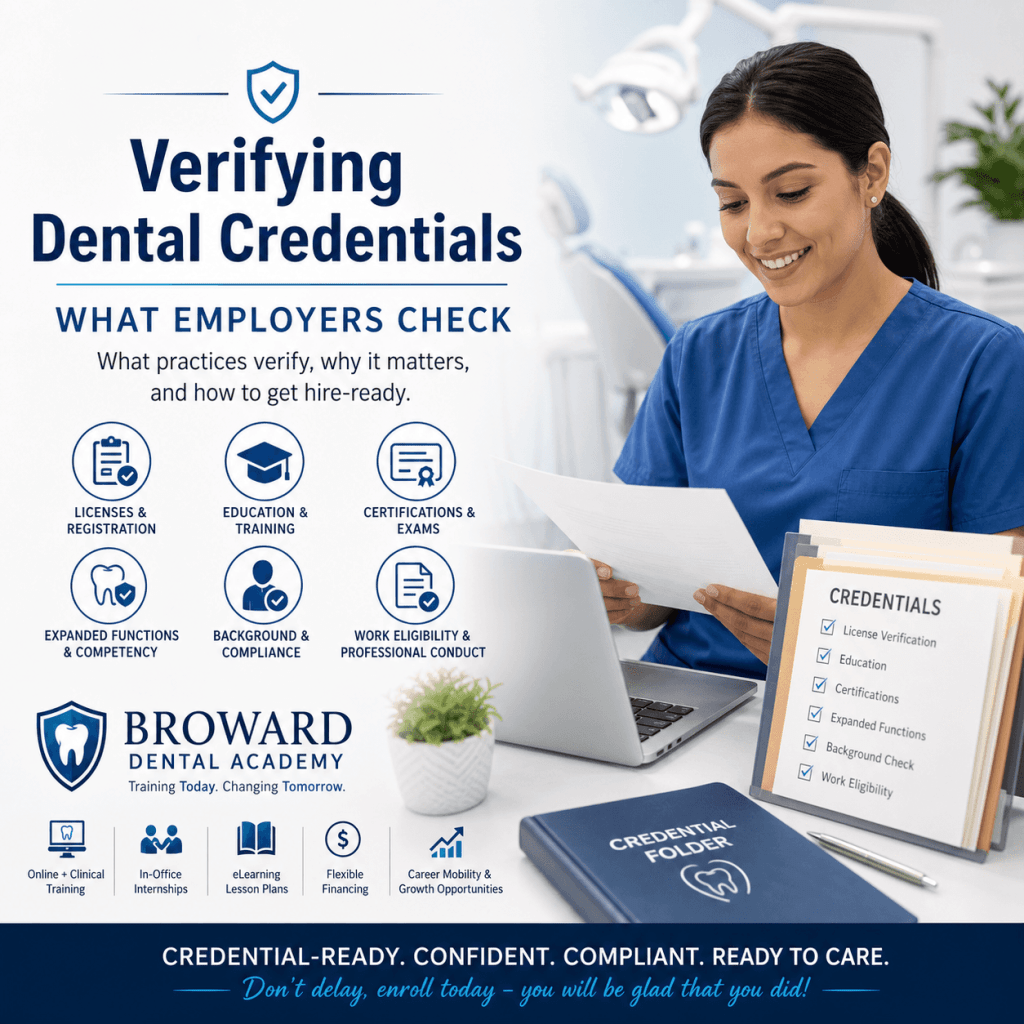
In most cases, employers will verify:
- License or registration status
- Education and program completion
- Certifications and exam credentials tied to your duties
- Expanded functions authorization and clinical competency
- Background and compliance items
- Work eligibility and professional conduct signals
If you want to build a dental career that moves forward with confidence, start with training that supports real-world readiness.
Explore Broward Dental Academy programs and take the next step toward becoming a credential-ready dental professional.
Don’t delay, enroll today – you will be glad that you did!
FAQs (Frequently Asked Questions)
Why is verifying dental credentials more important than ever in dental hiring?
Verifying dental credentials is crucial because it ensures patient safety by confirming that care providers are legally authorized and properly trained. It protects the practice from compliance issues, insurance problems, and reputational damage, while also helping candidates avoid role mismatches and onboarding confusion. This verification is tied directly to risks such as legal compliance, insurance audits, and negligent hiring claims.
What documents are typically included when verifying dental credentials?
Dental credentials encompass more than just a training certificate. Employers usually verify a combination of education records, official transcripts, national or state exam results, state licensure or registration, radiology permits if required, current CPR/BLS certifications, expanded functions credentials (like EFDA permits), continuing education compliance, and work authorization such as I-9 verification in the U.S.
How do employers differentiate between training certificates, licenses, and competency sign-offs?
Training certificates prove course or program completion but do not grant legal permission to perform regulated duties. State-issued licenses or registrations legally authorize the holder to practice within a defined scope under state dental board rules. Office-issued competency sign-offs confirm internal approval to perform specific tasks as per the practice’s standards but are not substitutes for licenses or permits.
What is the typical workflow employers follow to verify dental credentials during hiring?
Most dental practices follow these steps: 1) Application screening to assess resume fit and basic qualifications; 2) Document collection including licenses and IDs; 3) Primary-source verification where employers directly check with licensing boards, schools, and certifying bodies to confirm authenticity before proceeding further in the hiring process.
How do credential verification requirements vary for specialized dental roles like oral surgery or orthodontics?
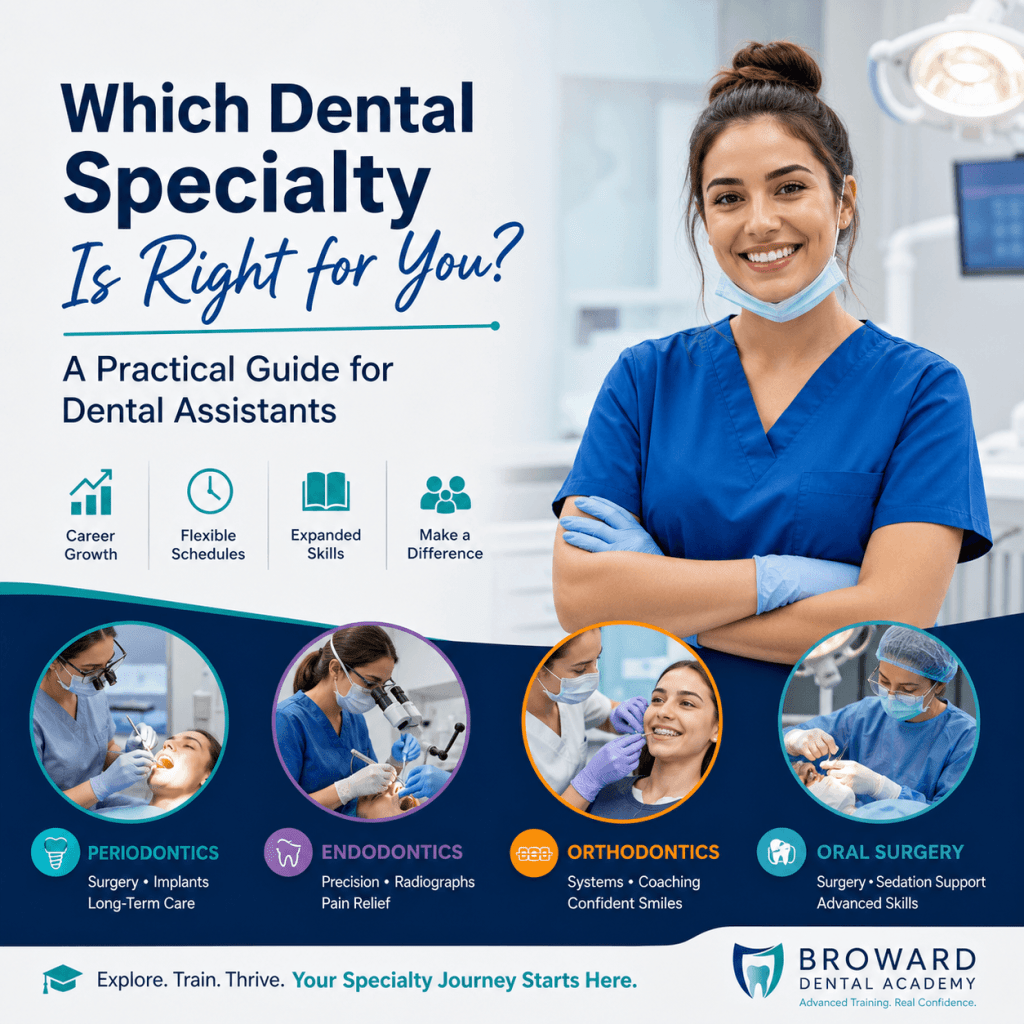
Specialized services such as oral surgery or orthodontics often face greater scrutiny during hiring due to their advanced scope of practice. These roles require specific credential sets that comply with state regulations and professional standards. Understanding these unique requirements is essential for both employers and candidates to ensure proper legal authorization and competence.
Why should prospective dental professionals consider training programs like those offered by Broward Dental Academy?
Programs like Broward Dental Academy provide comprehensive training that equips candidates with necessary skills while preparing them for rigorous credential verification processes. Such programs are valuable for those entering dentistry or seeking advanced specialties like endodontics or periodontics, ensuring they meet legal requirements and stand out during hiring in this rapidly evolving field.