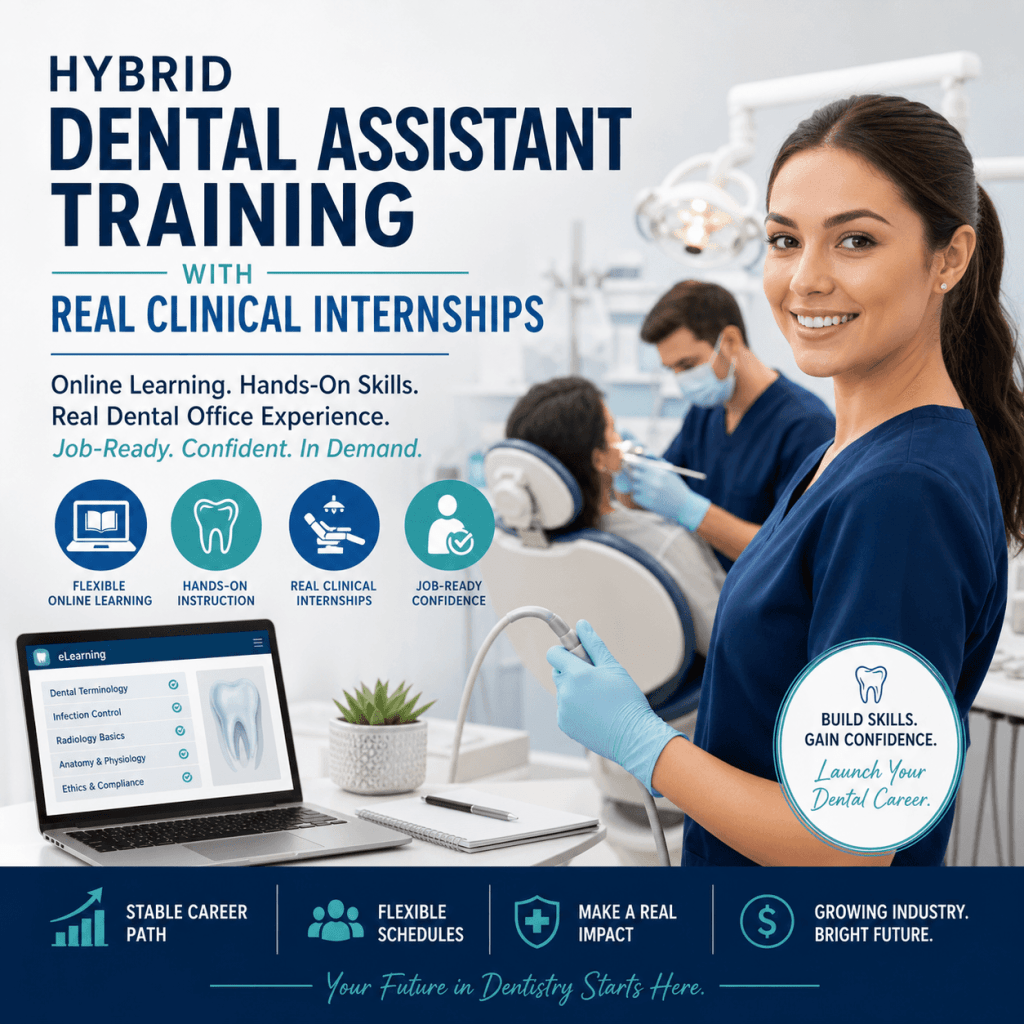
That is exactly why hybrid dental assistant training is becoming the new standard, especially for students comparing programs in South Florida and asking one simple question: Which format will actually get me job-ready?
Hybrid training blends three things:
- Online learning for core knowledge
- In-person skills labs for hands-on technique
- Real clinical internships inside working dental offices
The goal is bigger than passing a test. The goal is to build real clinical confidence, strong professional habits, and the ability to contribute from day one in a modern practice.
Why hybrid dental assistant training is becoming the new standard
A high-performing dental office does not have time for long on-the-job training. Practices want assistants who can step in, understand the flow, follow protocols, and help the day run smoother.
Hybrid programs match that reality because they train you the way you will work:
- You learn essential concepts online with structure and repetition.
- You practice hands-on skills in person with supervision and corrections.
- You build real-world readiness through an internship where the pace and expectations are real.
If you are deciding between programs in South Florida, the key difference is usually not the marketing or the price. It is whether the program prepares you for the actual job, including real patient interaction, real sterilization expectations, and real chairside rhythm.
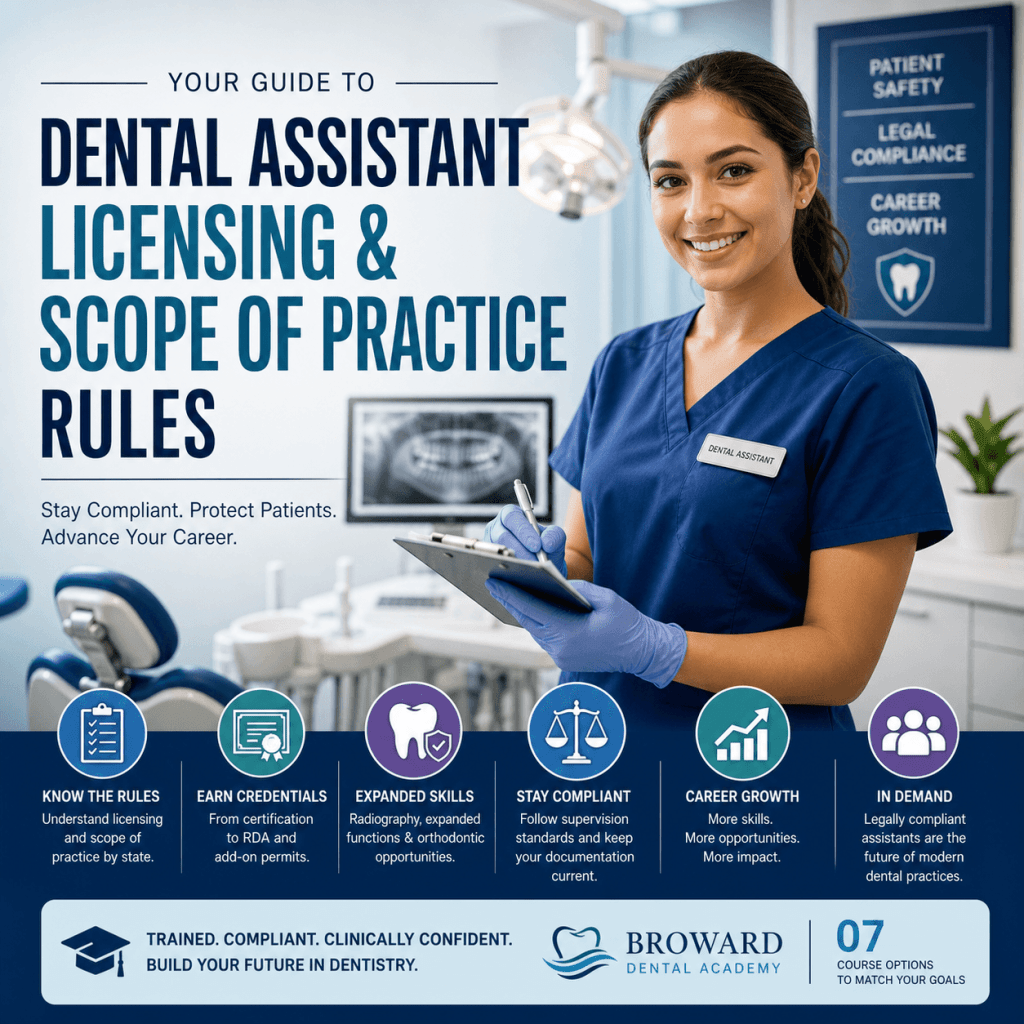
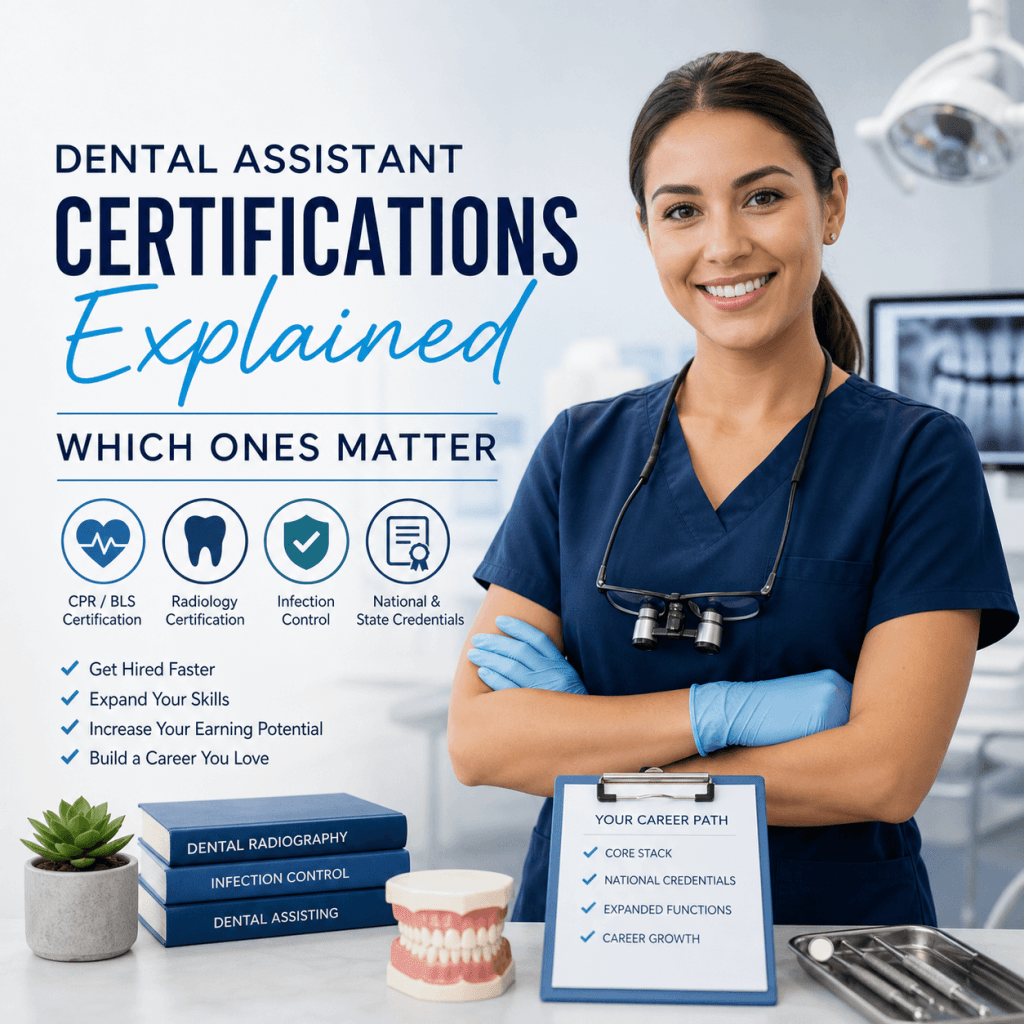
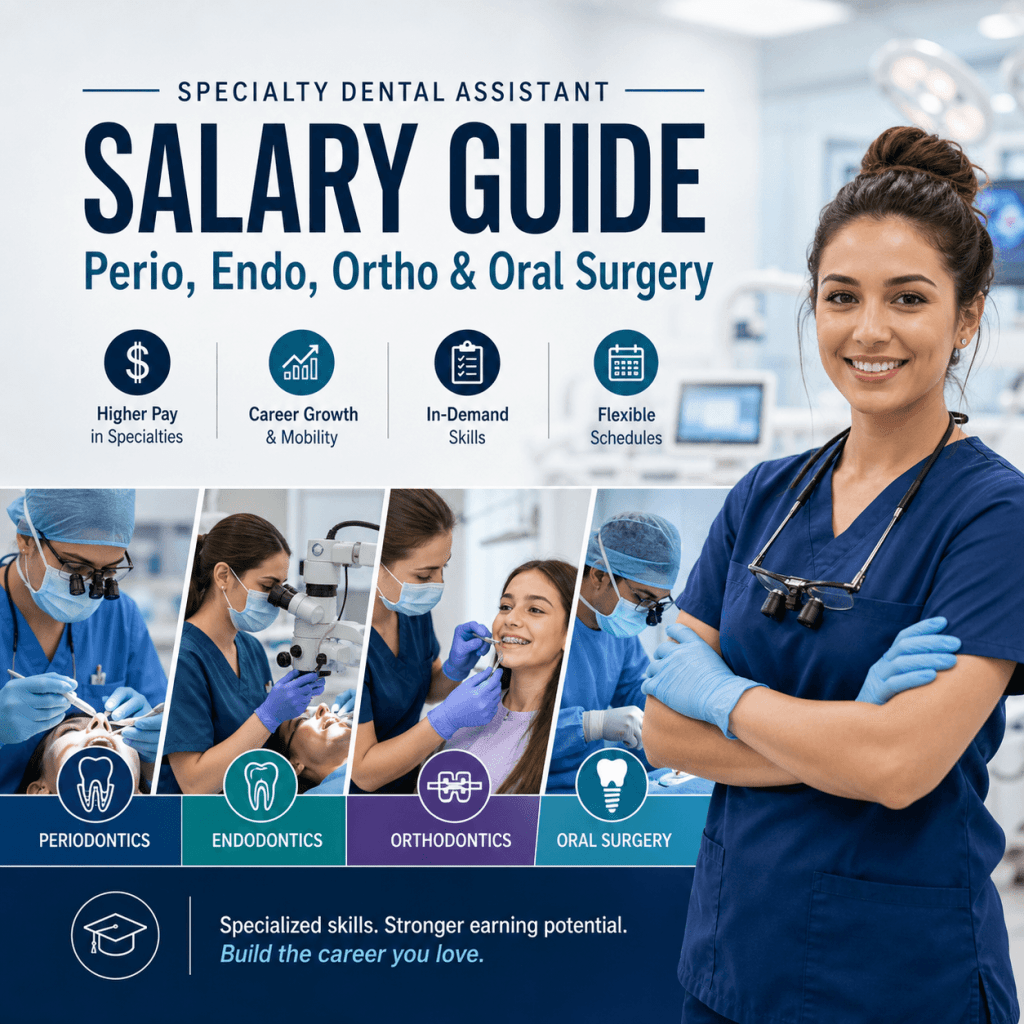
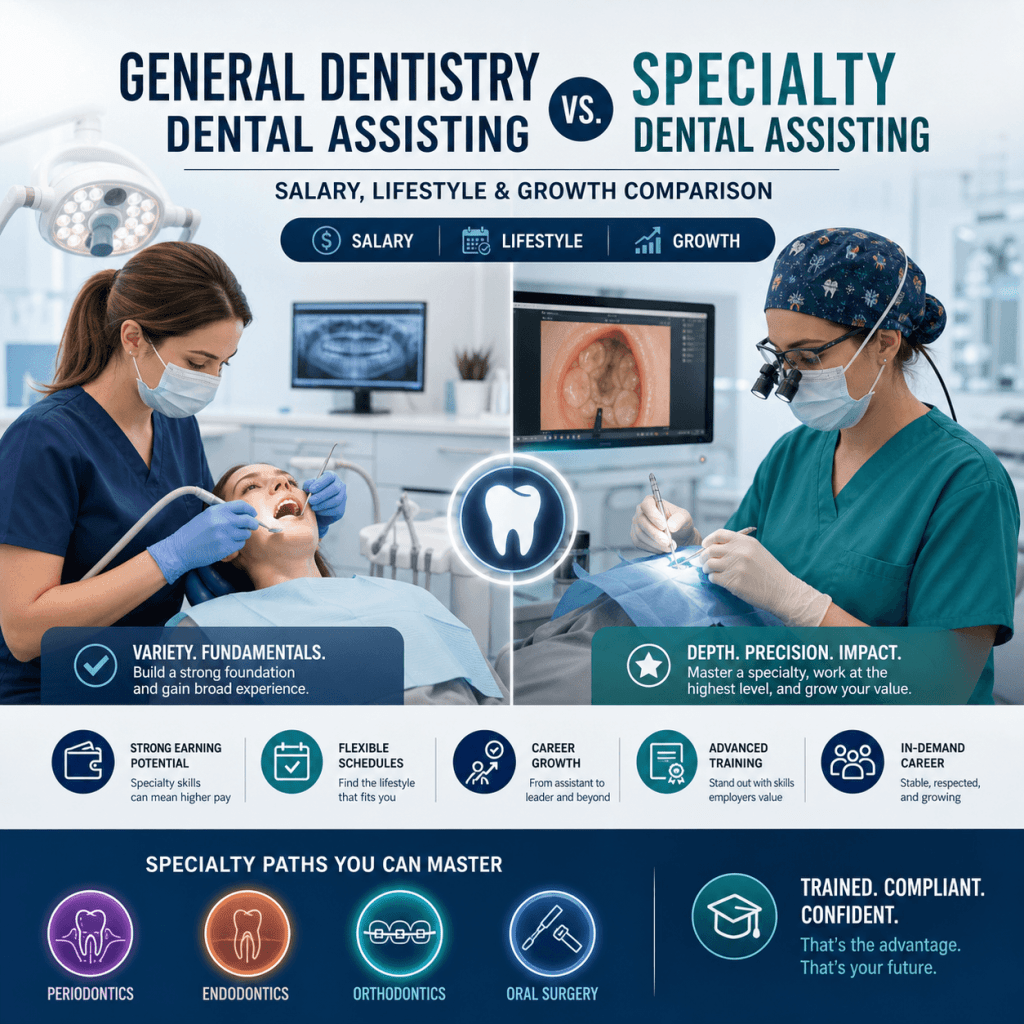
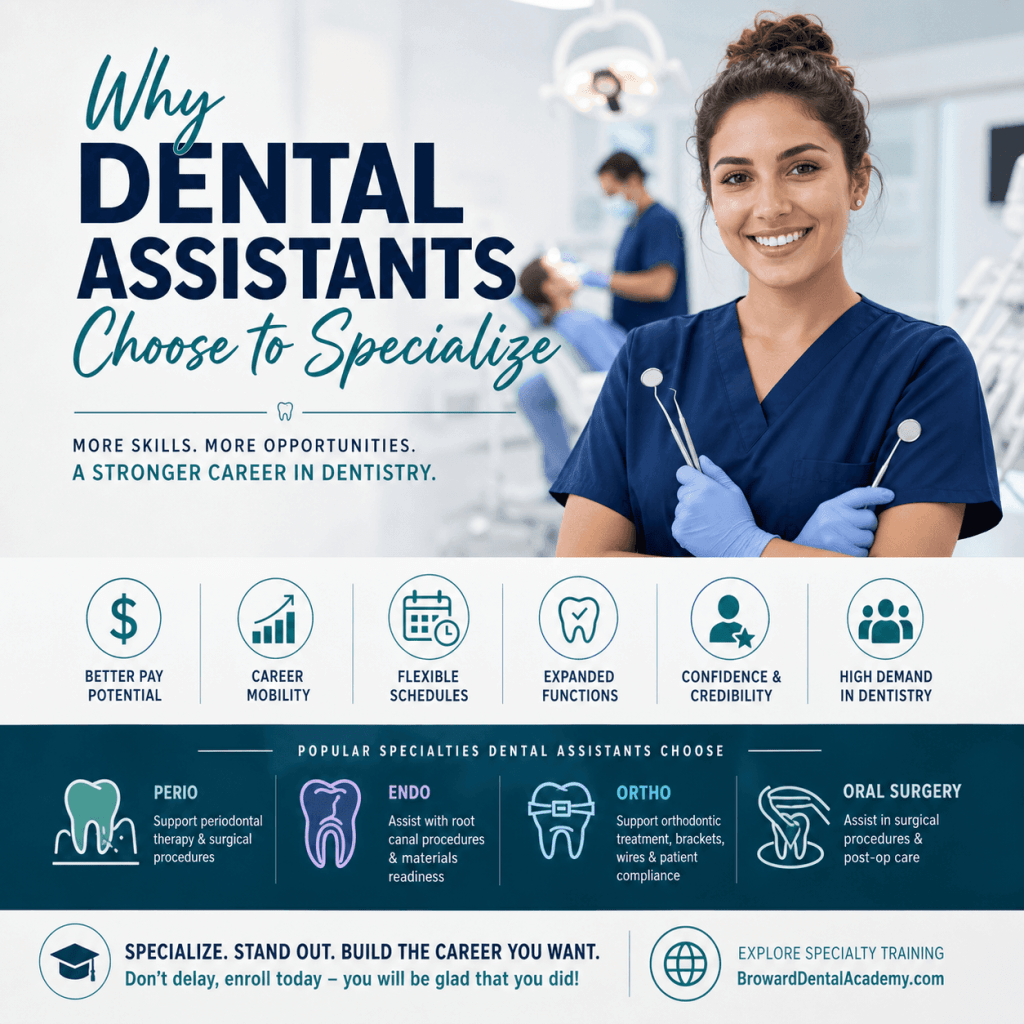
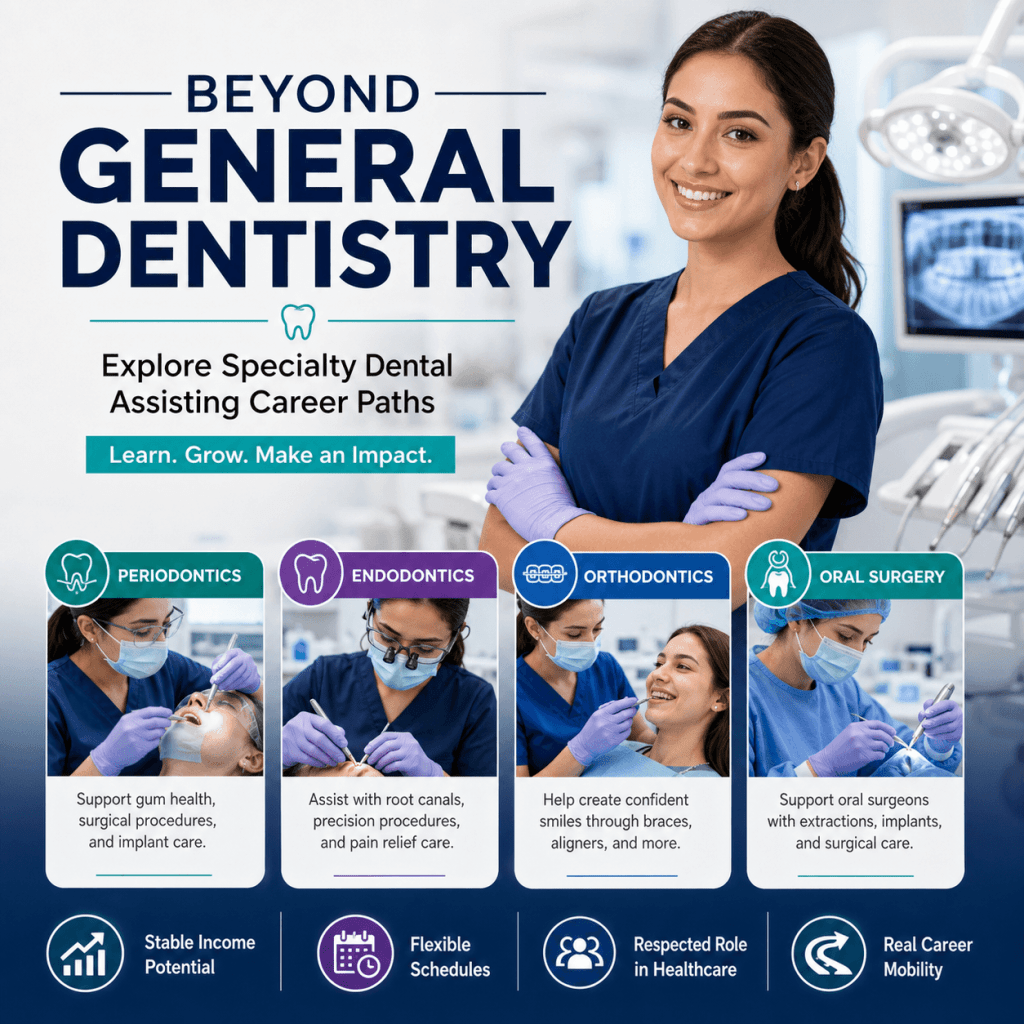
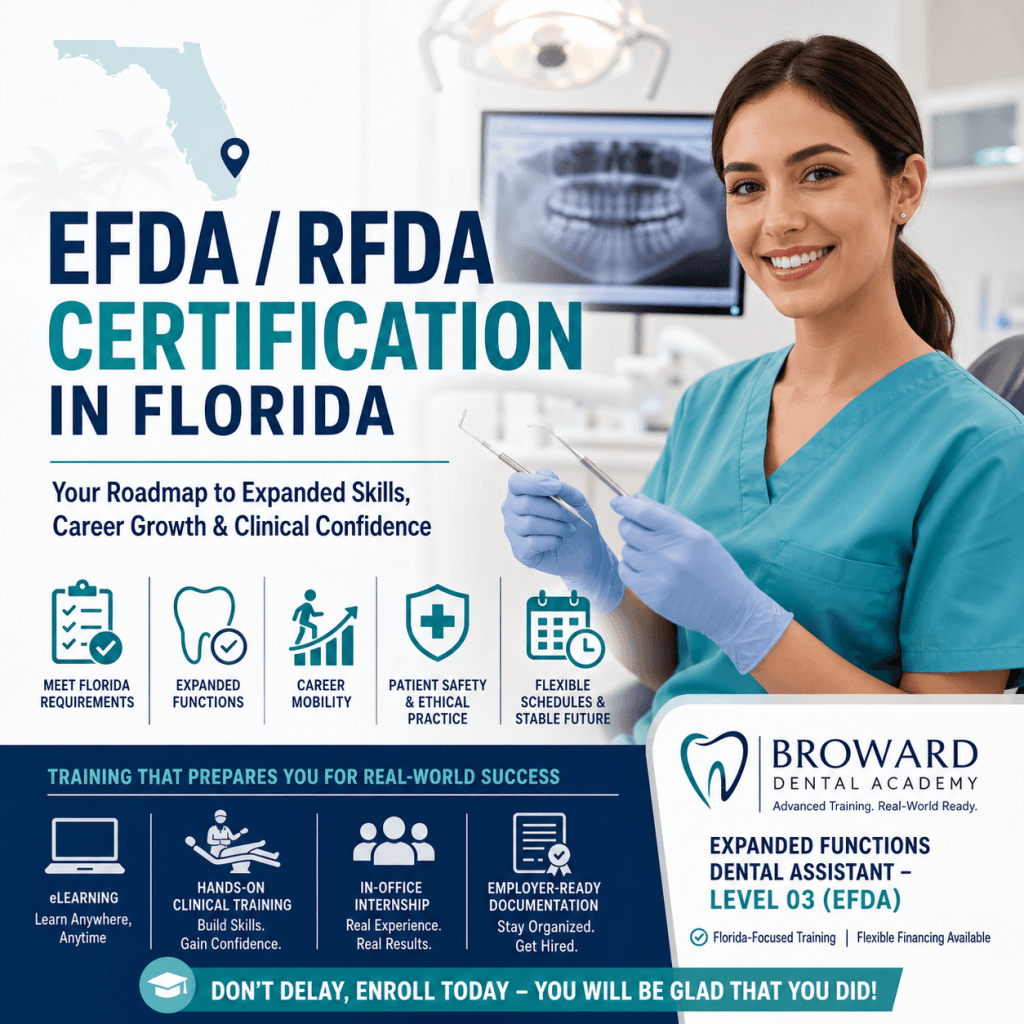
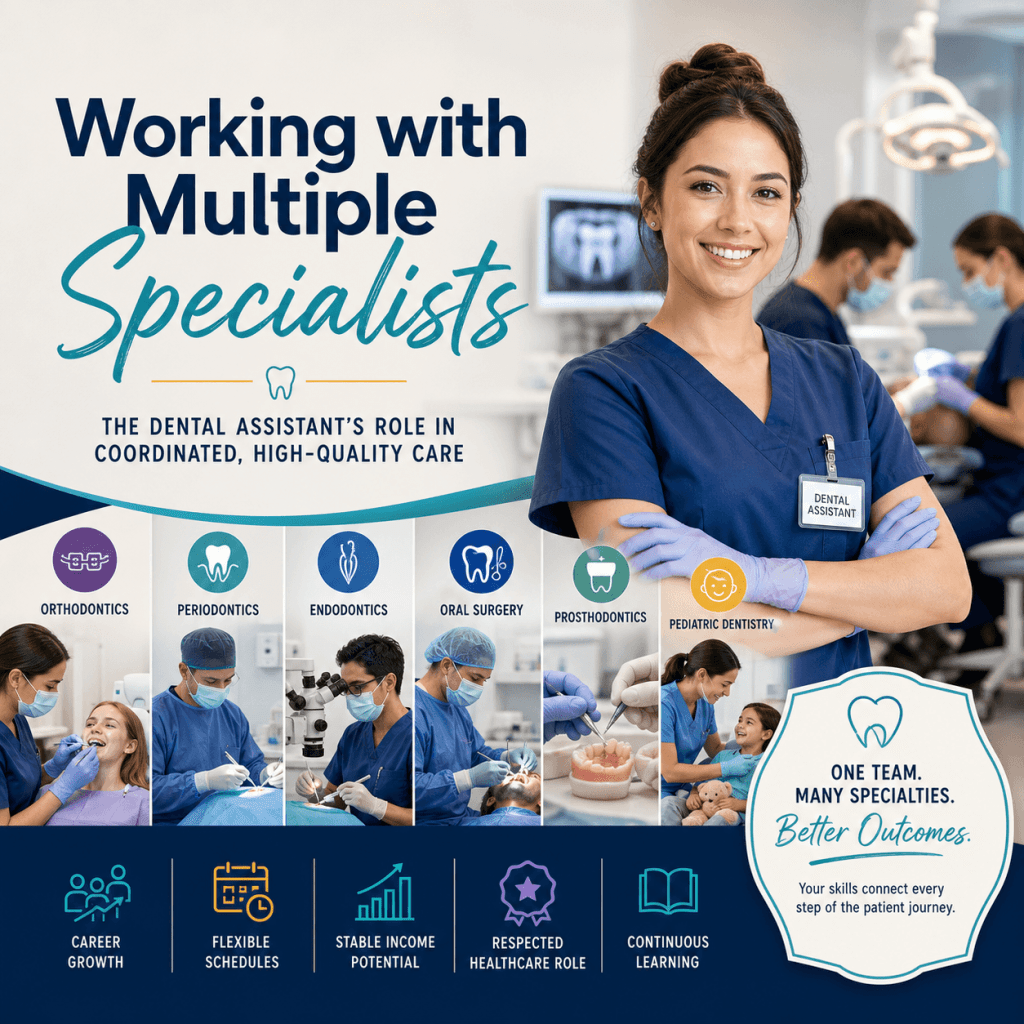
For those interested in pursuing a career as a dental assistant, Broward Dental Academy offers comprehensive hybrid training that equips students with necessary skills and knowledge. They provide various specialized courses such as orthodontics and endodontics, which can be beneficial for those looking to expand their expertise beyond general dentistry.
Explore their courses offered to find a program that suits your career goals.
What you should learn online vs. what you must learn in-person
One of the biggest benefits of a strong hybrid format is that it separates learning into the most effective environments. Not everything needs to be taught in a classroom, and not everything can be taught on a screen.
What online learning is best for
Online modules are ideal for content that benefits from rewatching, note-taking, quizzes, and self-paced review, including:
- Dental terminology and common abbreviations
- Anatomy basics and oral structures
- Infection control theory and safety principles
- Radiology principles and image fundamentals
- Ethics and professional standards
- HIPAA-style privacy expectations and patient confidentiality
- Charting concepts and documentation basics
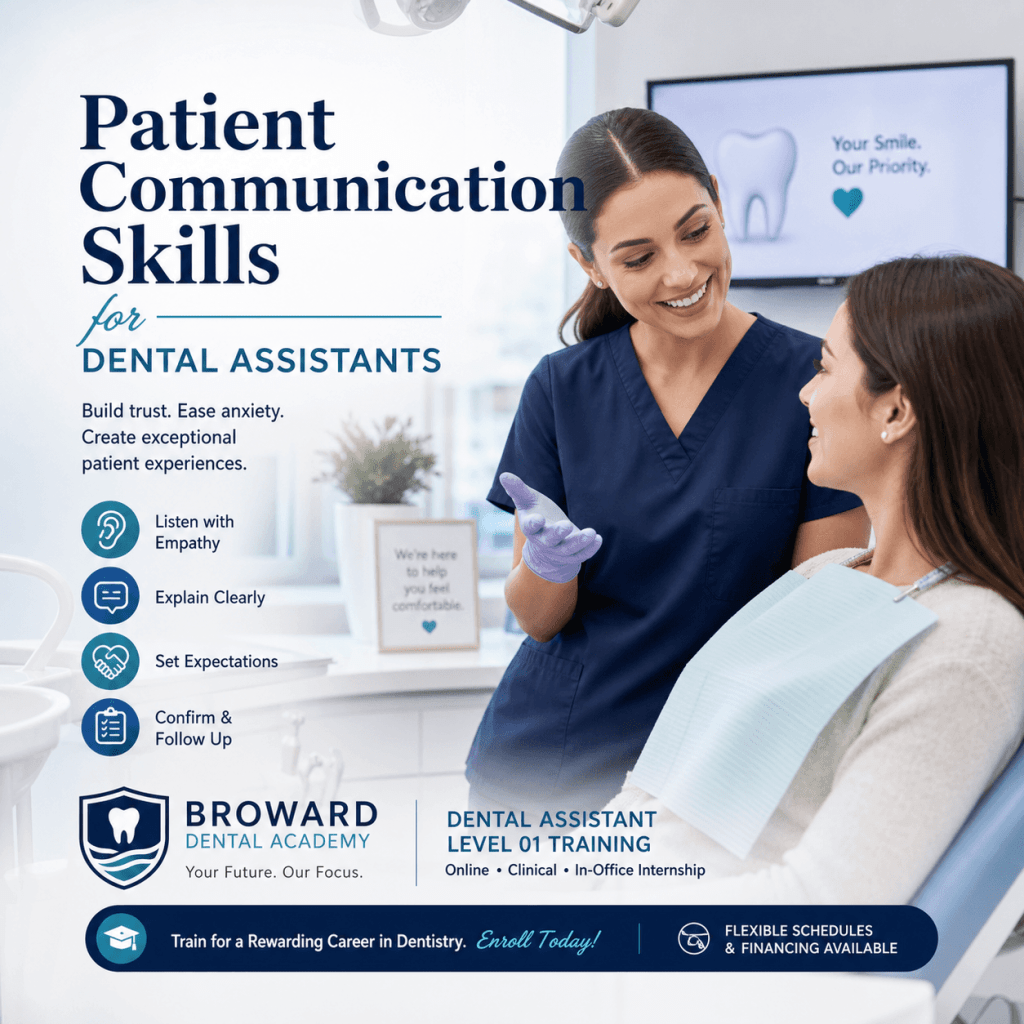
- Patient communication fundamentals and comfort language
This approach helps many students, especially working adults, because you can learn the knowledge portion on a flexible schedule while still being held accountable through deadlines, assessments, and instructor guidance.
What must be taught hands-on
Some skills require real instruments, real positioning, and real-time feedback. These are difficult to learn well without in-person practice:
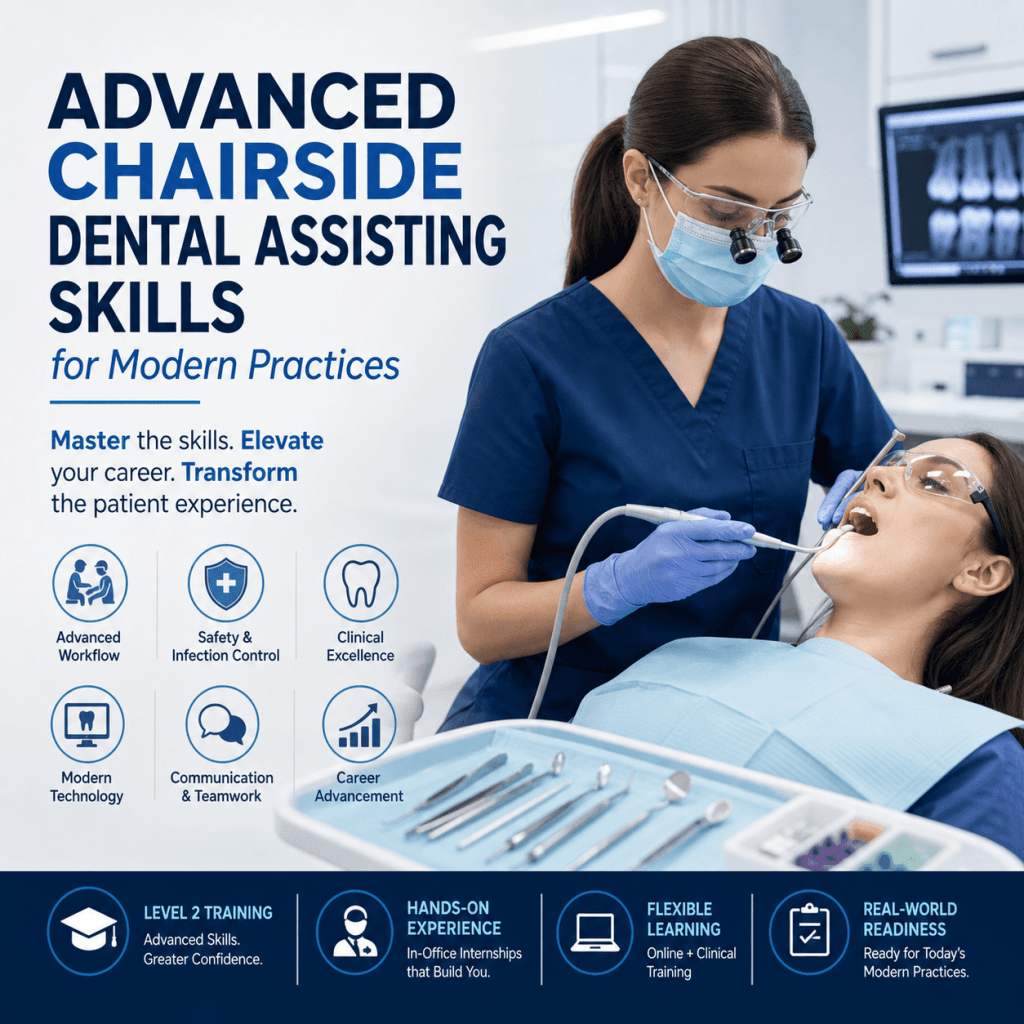
- Instrument transfer and four-handed assisting fundamentals
- Suctioning, retraction, and visibility control
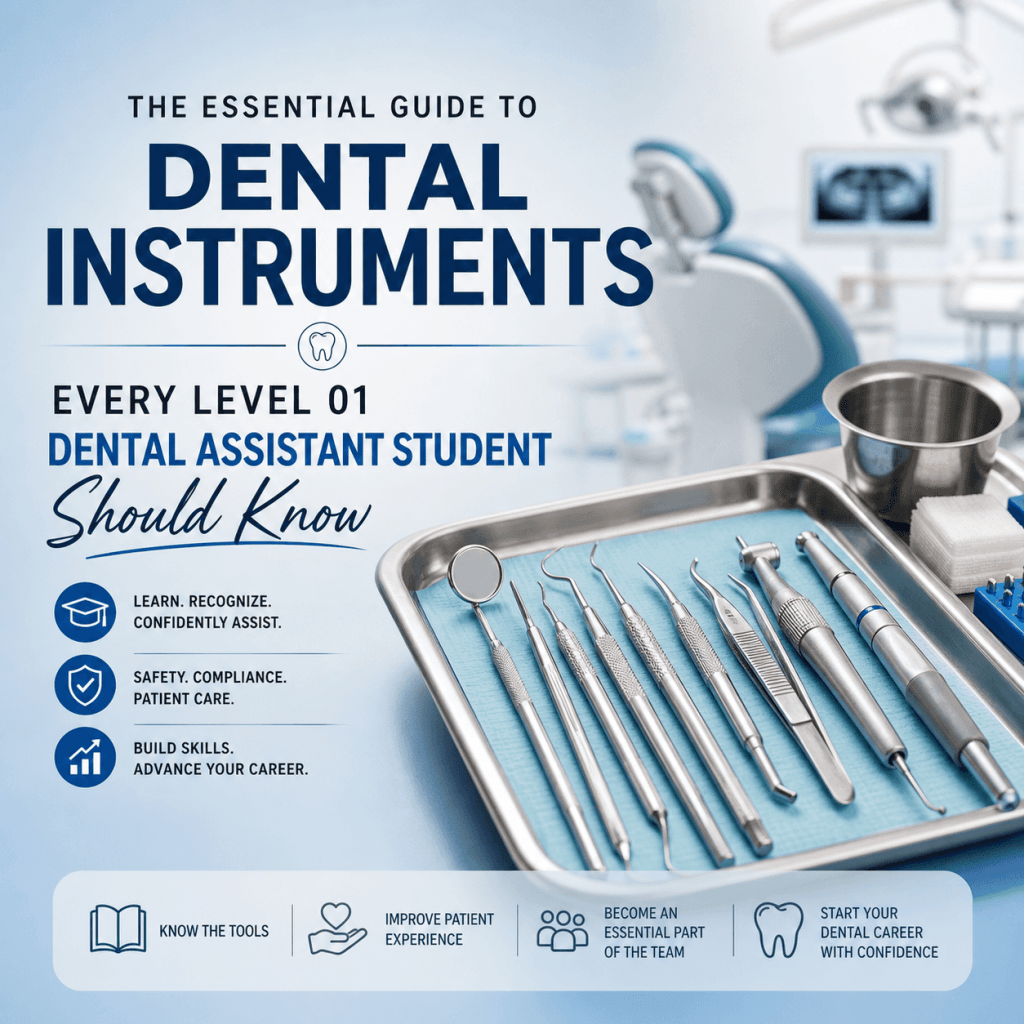
- Tray setup and procedure-based organization
- Assisting ergonomics and posture to avoid injury
- Operatory turnover and room reset routines
- Sterilization workflow and chain-of-custody habits
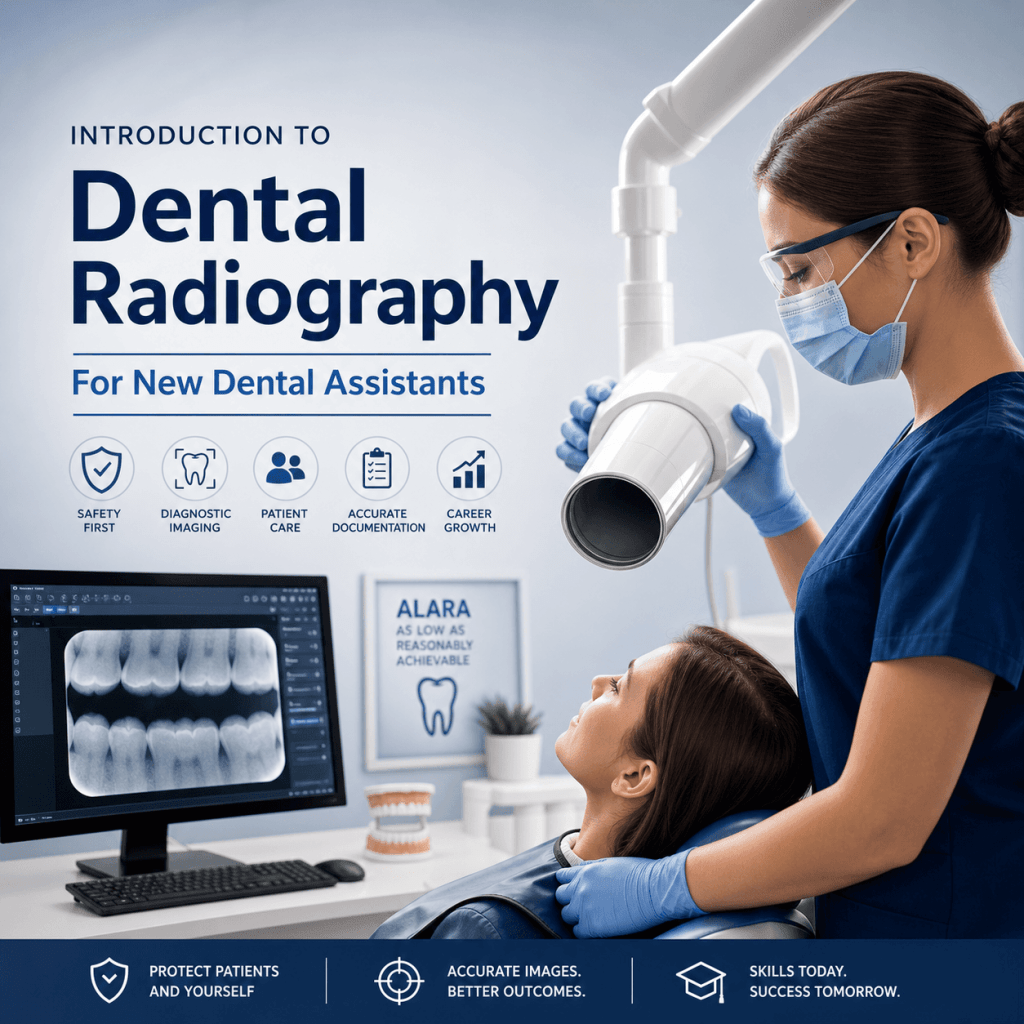
- Radiology positioning practice and patient setup
- Chairside assisting rhythms and anticipating next steps
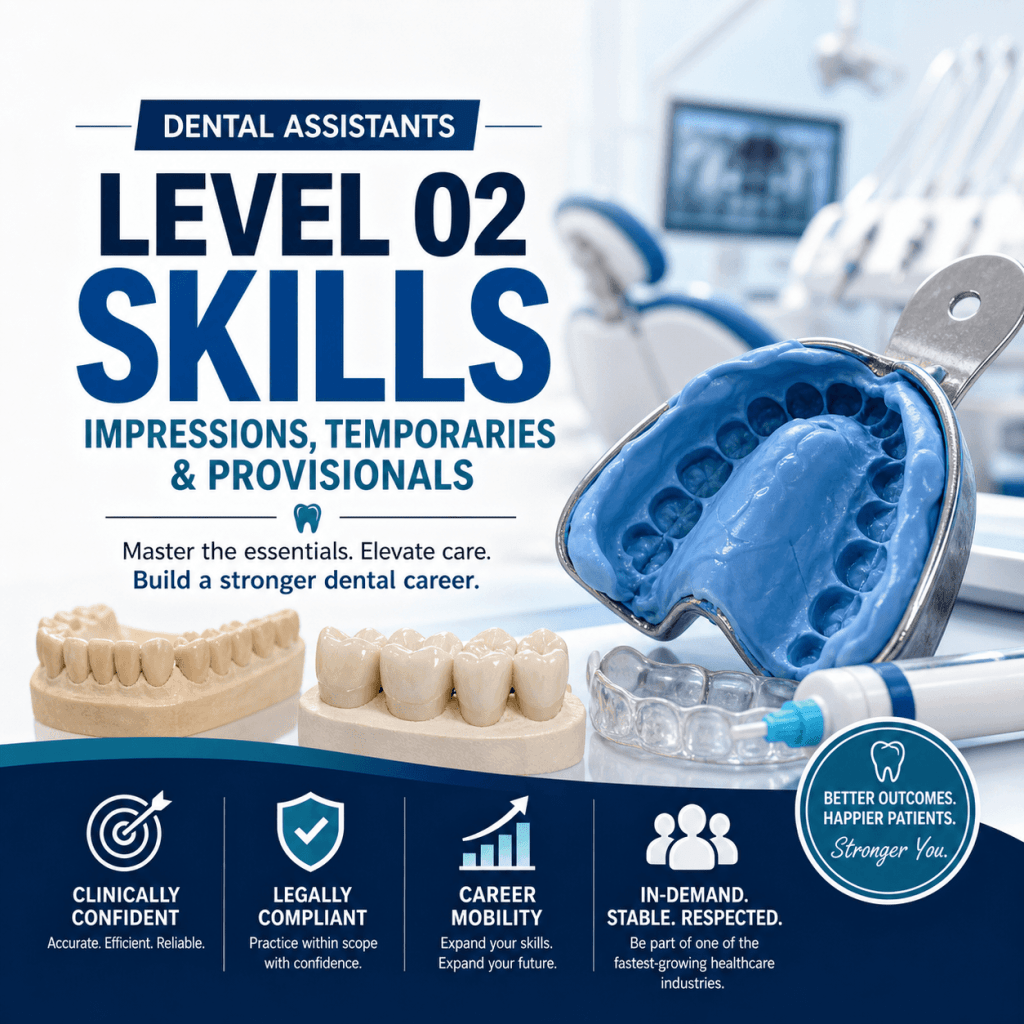
- Impressions or related tasks, if applicable to the program and role
When theory is learned first online, hands-on days move faster. Students walk into lab already understanding the “why,” so in-person time is used for technique, repetition, and correction. That tends to improve retention and confidence.
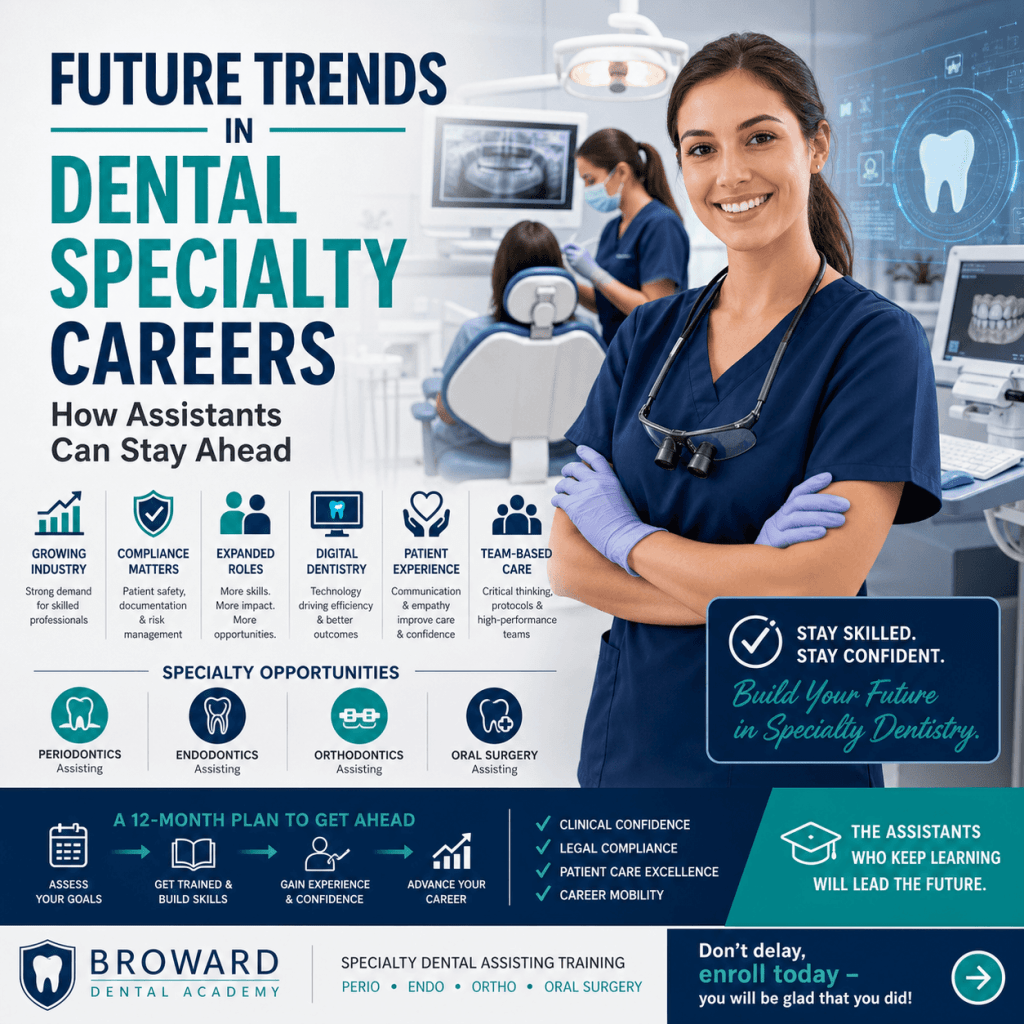
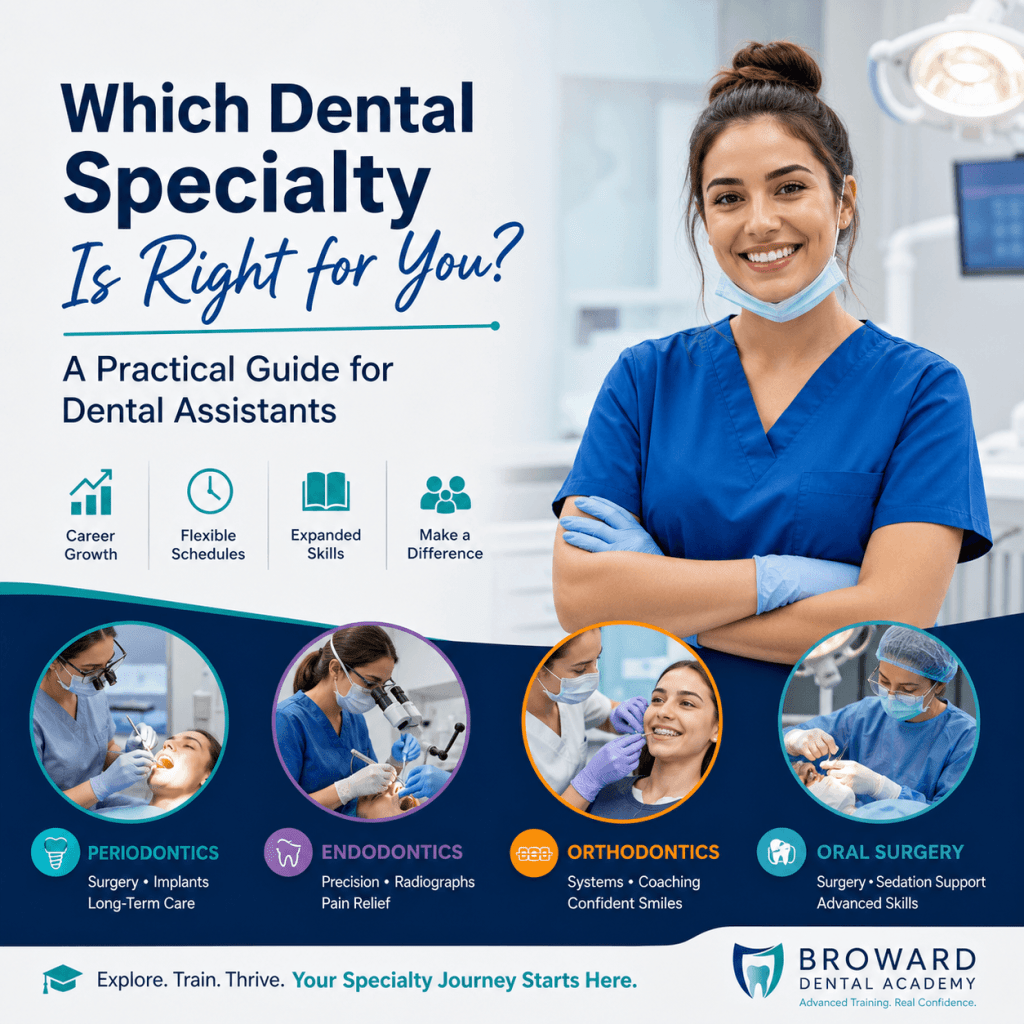
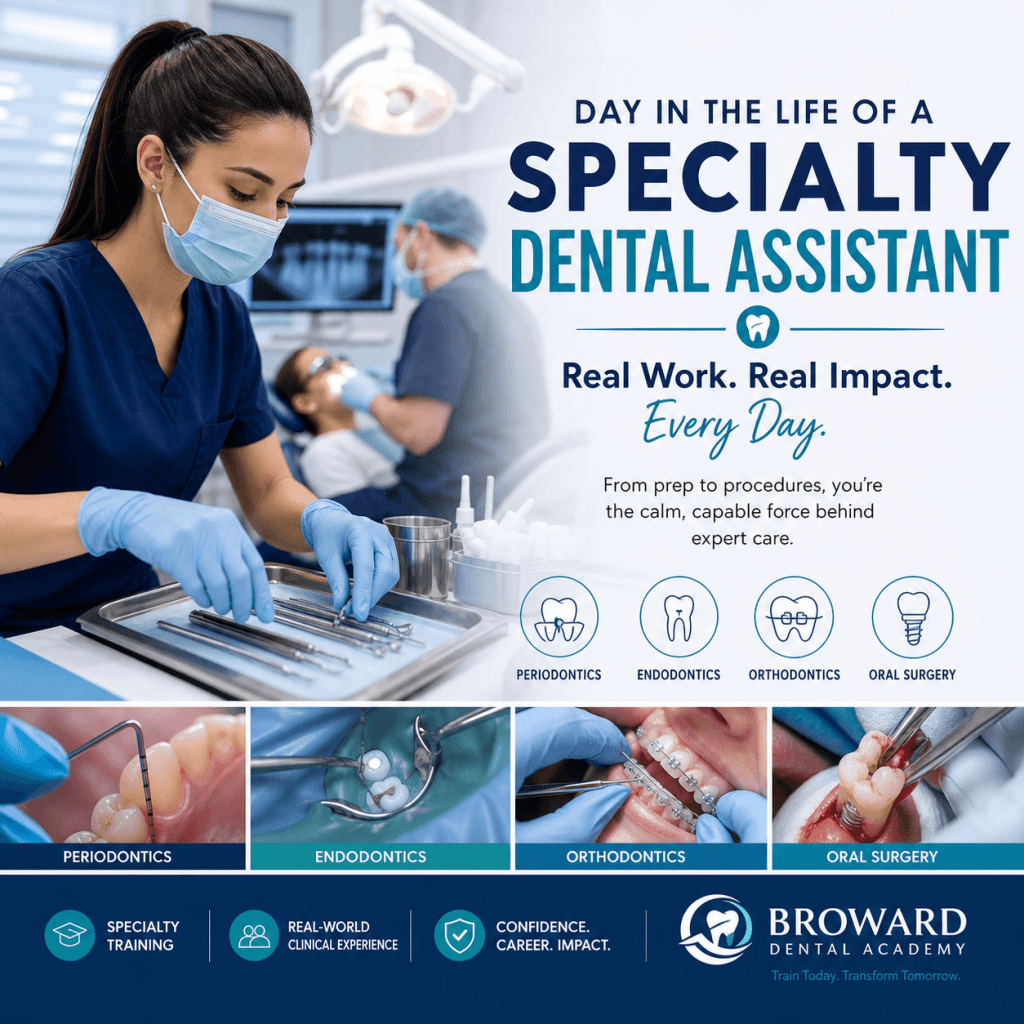
In addition to these foundational skills, students may also explore specialized fields such as oral surgery or periodontics. These areas often require additional training or certifications that can enhance a student’s expertise. Furthermore, with various locations available for practical training, students have the opportunity to gain hands-on experience in diverse settings which can significantly enrich their learning journey.
The real differentiator: clinical internships that feel like the job
If you compare dental assistant programs long enough, you will notice that many talk about hands-on practice, but not all offer real clinical internships that feel like an actual job.
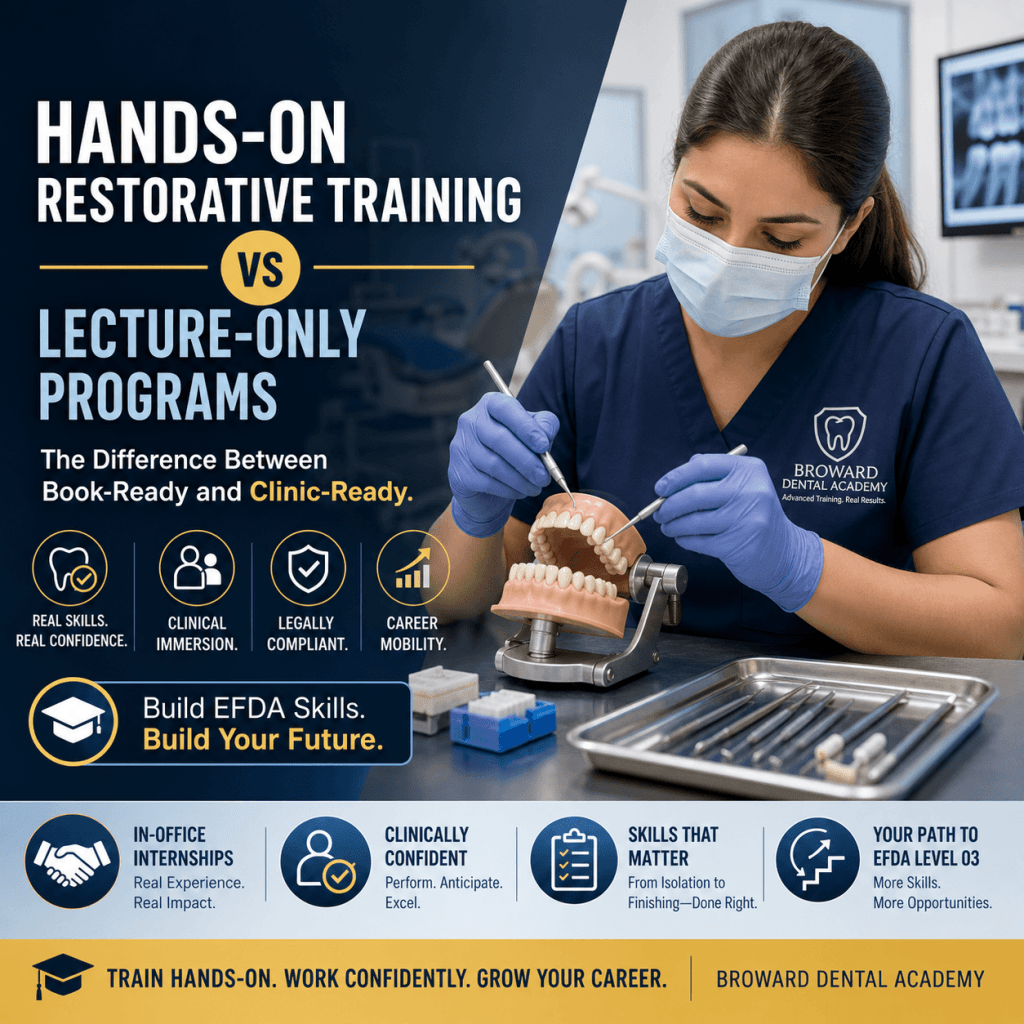
A real internship means you are placed in a working dental office where you are exposed to real patients, real schedules, real teamwork, and real expectations, under appropriate supervision.
Simulated practice is helpful. It is not the same as the day-to-day reality of a busy practice.
What students gain inside an actual dental office
A true in-office experience teaches things that are hard to fully simulate:
- The pace of back-to-back appointments
- How teams communicate quickly and professionally
- Patient flow, room readiness, and time awareness
- Real instrument handling and operatory standards
- What to do when things do not go perfectly
- How to stay calm, courteous, and efficient
You also get confidence-building moments that matter in interviews and trial days:
- Setting up for common procedures and turning rooms over efficiently
- Building consistent sterilization habits that protect patients and staff
- Learning what “good” looks like by watching experienced teams
- Developing the habit of anticipating the next step chairside
Employers notice this. Dental practices are looking for assistants who are thoroughly trained, legally compliant, and clinically confident, not assistants who need months of basic coaching before they can truly help.
How hybrid training supports busy schedules (without lowering standards)
A common fear is that hybrid means “easier” or “less serious.” In a strong program, the opposite is often true.
Hybrid training can create more accountability because you have:
- Scheduled online modules with deadlines and checks for understanding
- Set in-person lab days where you must perform skills, not just memorize them
- Internship blocks where you must show up professionally and function in a real workplace
It also supports real life. Many students in South Florida are balancing work, family, and commuting. A hybrid structure gives you flexibility where it makes sense, but it does not reduce standards where hands-on performance is required.
A typical hybrid rhythm looks like this:
- Online learning on flexible hours during the week
- In-person skills labs on set days for hands-on competencies
- Internship placement in a dental office to apply skills in real conditions
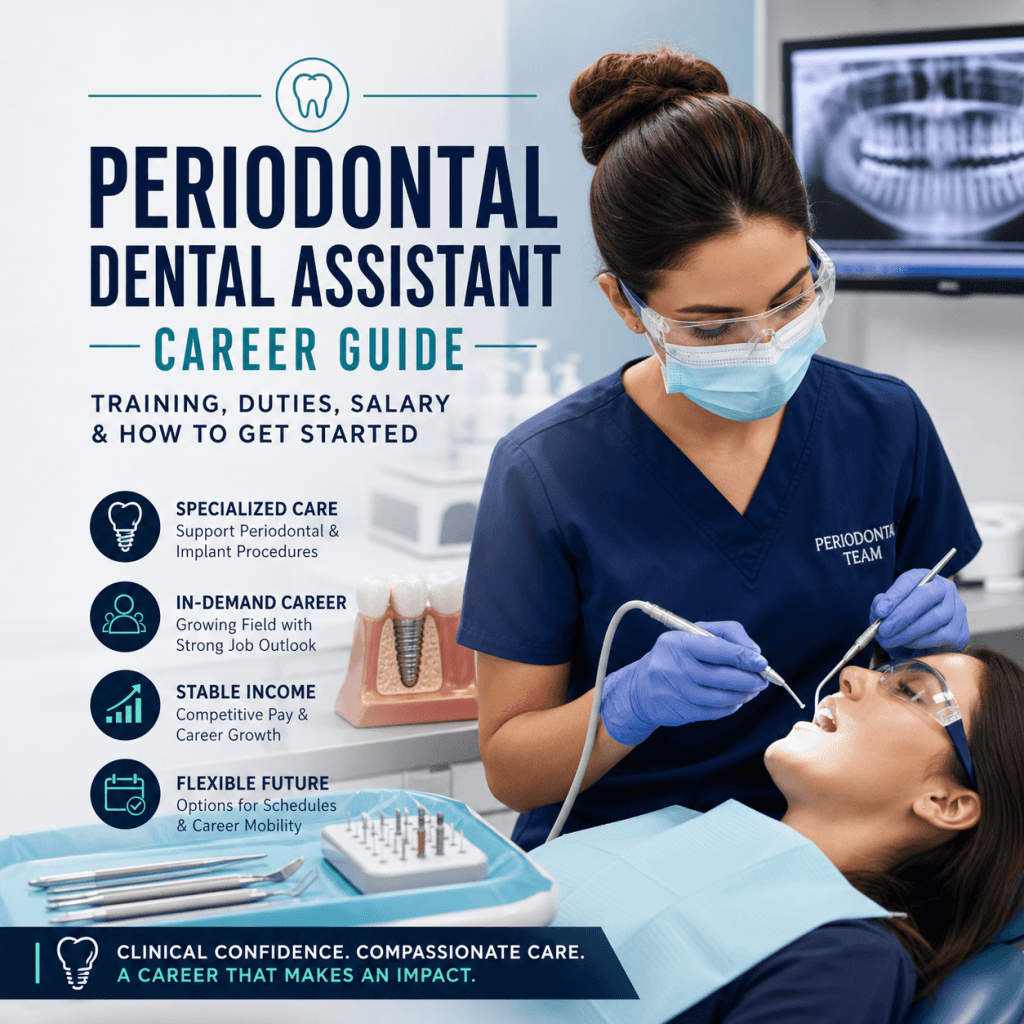
Dental assisting is also appealing because the field itself often offers stable income potential, flexible schedules, and a respected role in healthcare. A good training format should reflect that reality while still preparing you to perform at a high level.
Skills employers notice immediately after a strong hybrid program
When offices hire a new dental assistant, they are usually thinking about one thing: Will this person reduce friction or add friction?
A strong hybrid program with real internship exposure tends to produce job-ready skills that stand out quickly.
Practical skills that show up right away
Employers notice candidates who can:
- Set up an operatory efficiently and consistently
- Organize trays in a way that supports the dentist’s workflow
- Understand four-handed dentistry basics and proper positioning
- Use suction and retraction effectively without constant reminders
- Follow sterilization workflow steps without cutting corners
- Support basic charting and documentation habits
- Communicate patient comfort language clearly and professionally
“Legally compliant” in plain language
Being legally compliant is not about sounding official. It means you understand your role, follow protocols, and do not create risk for the practice.
That includes:
- Infection control habits that are consistent, not occasional
- Respecting privacy and confidentiality every time
- Scope awareness, knowing what you can do and what you cannot do
- Documentation habits that are accurate and timely
Soft skills matter just as much
Dentistry is hands-on, but it is also people-focused. Practices value assistants who bring:
- Professionalism and reliability
- Calm communication under pressure
- Critical thinking and situational awareness
- Ethical decision-making when something feels off
- Coachability and a team-first attitude
In short, practices want assistants who help the day run smoother, not assistants who require constant rescue.
What to look for when choosing a hybrid dental assistant training program in South Florida
If you are comparing programs, a checklist can help you avoid disappointment later.
A practical comparison checklist
When searching for a dental training program, consider the following essential features:
- Real internships that are built-in, not optional
- Clear and sufficient hands-on lab time
- Modern, structured eLearning lesson plans
- Instructors with real clinical experience
- Clear training on safety, scope, and compliance expectations
- A strong career-readiness focus, not just test prep
Warning signs to take seriously
Be cautious if you encounter:
- “All online” dental assistant training promises
- Vague language about externships or internships
- Little clarity on clinical hours or hands-on competencies
- No clear emphasis on ethics, infection control, or compliance habits
- Big guarantees without explaining the training process
Questions worth asking before you enroll
It’s crucial to ask direct questions and listen for clear answers:
- Where do internships happen, and how are sites selected?
- What procedures will I assist with during the internship?
- Who supervises me, and how is performance evaluated?
- How are hands-on competencies verified before I enter the internship?
- What support is available if I struggle with a specific skill?
The right program will answer confidently and specifically.
How Broward Dental Academy approaches hybrid training + real in-office internships
If you’re considering a South Florida option that emphasizes real readiness, the Broward Dental Academy offers a broad range of dental courses and advanced dental training aimed at developing well-rounded professionals.
The program philosophy is straightforward: not just teaching to pass an exam, but preparing students to thrive in a modern, high-performance dental practice.
This philosophy is reflected in the training experience:
- Immediate immersion in both online and clinical settings
- Latest eLearning lesson plans incorporated for remote training
- In-person skills development that builds real technique and consistency
- In-office internships that help students experience the pace and expectations of real dental teams
Students are trained to:
- Think critically
- Act ethically
- Perform confidently
The outcome is not just a certificate. It is becoming an accomplished, polished dental professional who can walk into an office and contribute.
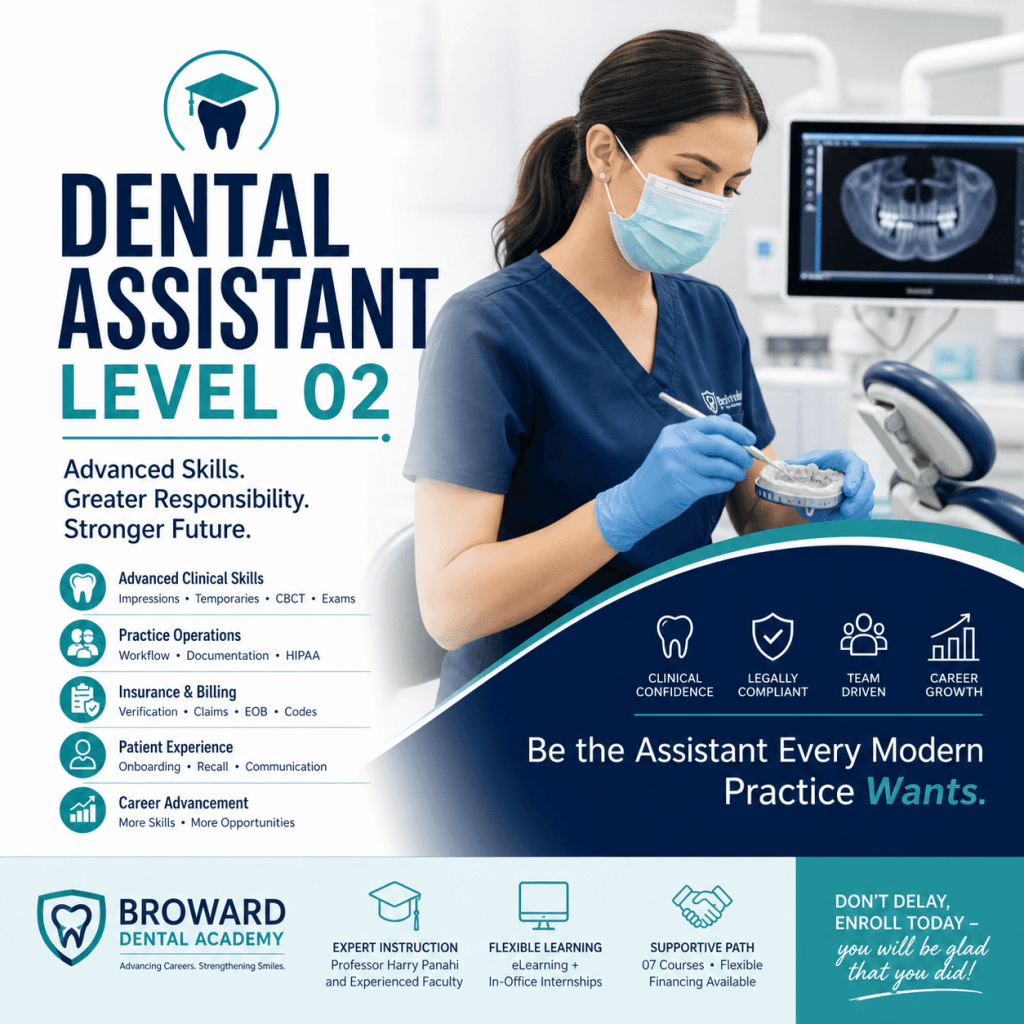
Broward Dental Academy also offers several specialized courses such as the Dental Assistant Level 01, Dental Assistant Level 02, and Dental Assistant Hygienists Level 03, positioning it as a growing training hub for the dental community.
For any queries regarding the programs offered or other concerns, you can refer to the frequently asked questions section on their website.
Career payoff: why dental assisting is a smart entry into a fast-growing industry
Dental assisting is one of the most practical ways to enter a fast-growing healthcare industry without spending years in school.
It is a role that can offer:
- Stable income potential
- Flexible schedules
- Career mobility
- Opportunities for expanded functions over time
- A respected position in healthcare
Internship experience can also speed up hiring confidence because it gives you something most applicants struggle to explain. Instead of saying, “I learned dental assisting,” you can speak in specifics:
- How you supported room setup and turnover
- How you followed sterilization workflow
- How you assisted chairside and communicated with patients
- What you learned about teamwork, pace, and professionalism
As patient volumes rise and expectations increase, demand for trained, compliant, confident assistants continues to grow.
Financing and next steps to enroll (without overcomplicating it)
Cost matters, and it is normal to think carefully about affordability. Broward Dental Academy offers flexible financing, and the easiest next step is simply to ask what options fit your situation.
A simple action path:
- Talk to admissions
- Review schedule options and training format
- Confirm the in-office internship component
- Choose a start date and plan your weeks
If you are still exploring, you may also want to review the pillar guide on Best Dental Assistant Training in South Florida to compare options with a clear framework.
Don’t delay, enroll today – you will be glad that you did!
FAQs (Frequently Asked Questions)
What is hybrid dental assistant training and why is it becoming the new standard?
Hybrid dental assistant training combines online learning for core knowledge, in-person skills labs for hands-on technique, and real clinical internships inside working dental offices. It is becoming the new standard because it prepares students to be job-ready with real clinical confidence, strong professional habits, and the ability to contribute from day one in a modern dental practice.
How does hybrid training prepare students for real dental office work?
Hybrid training mirrors the actual work environment by teaching essential concepts online with structure and repetition, providing supervised hands-on practice in skills labs, and offering real-world clinical internships where students experience the pace, patient interaction, sterilization protocols, and teamwork of a busy dental office.
What topics are best learned through online modules in hybrid dental assistant programs?
Online learning is ideal for foundational knowledge such as dental terminology and abbreviations, anatomy basics, infection control theory, radiology principles, ethics and professional standards, HIPAA privacy expectations, charting concepts, and patient communication fundamentals. This allows flexible self-paced study with assessments and instructor guidance.
Which skills require hands-on in-person training in a hybrid program?
Hands-on skills that need real instruments and live feedback include instrument transfer and four-handed assisting techniques, suctioning and retraction, tray setup and procedure organization, ergonomics to avoid injury, operatory turnover routines, sterilization workflow, radiology positioning practice, chairside assisting rhythms, and taking impressions when applicable.
Why are clinical internships crucial in hybrid dental assistant training?
Clinical internships place students in actual working dental offices where they engage with real patients under supervision. This experience teaches the fast-paced environment of back-to-back appointments, team communication, patient flow management, instrument handling standards, problem-solving during unexpected situations, and builds confidence essential for successful employment.
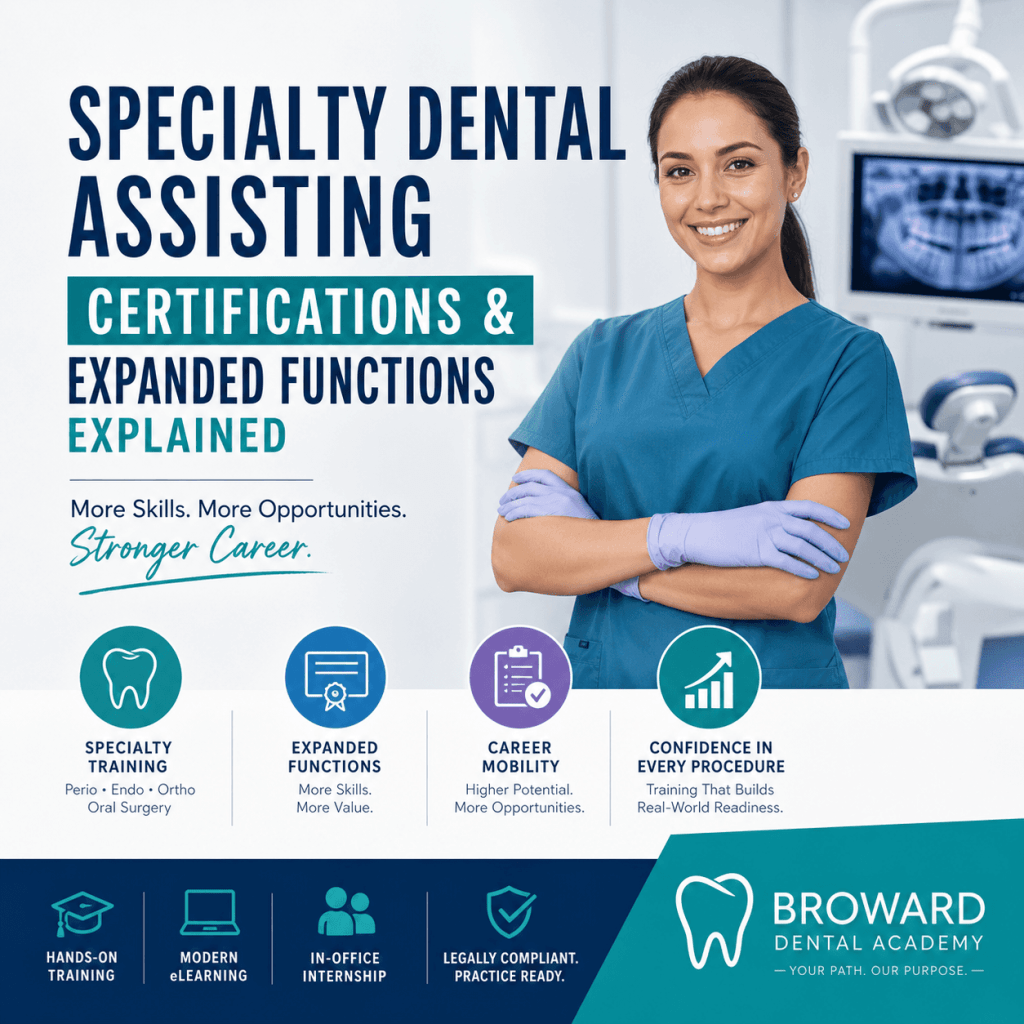
What specialized courses and certifications are available through programs like Broward Dental Academy?
Broward Dental Academy offers specialized hybrid courses such as orthodontics and endodontics to expand expertise beyond general dentistry. Additional training or certifications in areas like oral surgery or periodontics are also available. Multiple locations provide diverse practical experiences to enrich student learning and career readiness.