Dental assistant requirements are simpler than most people expect: no prior experience is required to start, entry-level training can happen in school or on the job, and only specific expanded duties, such as taking x-rays, require Board-approved courses in Florida.
Key takeaways
- Is experience required?
No. Entry-level roles and Level 01 training are built for people with no clinical background. - What does Florida require?
Task-based rules: radiography and expanded functions require documented training, while general chairside duties do not carry a state credential. - Is certification mandatory?
Not for every role. Employers often use certification loosely, so match the credential to the tasks you will actually perform. - How long is the runway?
Months for entry-level readiness, with expanded functions and specialty training layered on afterward.
Looking for the Florida pathway from start to finish? Follow our step by step guide to how to become a dental assistant in Florida.
What are the dental assistant requirements at a glance?
- No prior experience is required to start: entry-level roles train on the job
- Training: a structured dental assistant program or documented on-the-job training
- Advanced duties: expanded functions and x-ray duties require additional education in Florida
- Employer expectations: professionalism, clinical safety awareness, and reliable teamwork
This article is part of our pillar guide: How to Become a Dental Assistant in Florida.
Can you start with no experience?
Yes, you can become a dental assistant in Florida with no experience. Many dental offices hire entry-level candidates and train them on the job, especially for basic chairside support and daily clinic flow.
But here is the reality check most people miss. Even when a posting says “no experience required,” employers still expect you to show up with baseline professionalism, clinical safety awareness, and a clear understanding that dental offices operate under strict rules for infection control, privacy, and who is allowed to do what.
Florida dental assistant requirements also depend on the level of duties you want to perform:
- Entry-level, on-the-job trained support (limited duties, learning as you go) – Dental Assistant Level 01
- Formally trained dental assistant (stronger skills, faster readiness, better hiring signal) – Dental Assistant Level 02
- Expanded functions and advanced duties (additional training and documented competency) – Dental Assistant Hygienists Level 03
In this guide, you will learn the practical Florida requirements employers look for, what “certification” really means, the fastest legal path to get hired, and how training can replace experience in a way that makes offices feel confident bringing you onto the team.
Why is dental assisting a strong career move in Florida right now?
Dental assisting is one of the most accessible ways to enter healthcare without spending years in school. In Florida, demand stays strong because dental practices rely on dependable assistants to keep schedules running, patients comfortable, and clinical workflows safe.
For beginners, the benefits are straightforward:
- Stable income potential in a healthcare setting
- Flexible schedules (many offices offer full-time, part-time, or weekday hours)
- A respected clinical role where you are hands-on with patient care
- Long-term mobility into expanded functions or specialty offices
From an employer’s perspective, the priority is not “years of experience” as much as it is hiring someone who is thoroughly trained, legally compliant, and clinically confident. When you can demonstrate that through formal training like those offered at Broward Dental Academy, you become easier to hire and easier to trust in a fast-paced practice.
What can you do at each dental assistant level in Florida?
Before you choose a path, you need to understand the “scope of duties.” In dentistry, certain tasks are allowed at an entry level, while others require formal training, documented competency, or specific authorization.
Here are the common role tiers in plain language.
Entry-level chairside support (on-the-job trained)
This is where many people start with no experience. Duties often include:
- Preparing rooms and setting up trays
- Passing instruments and chairside assisting basics
- Suctioning and isolation support (as trained by the office)
- Cleaning and turning over operatories
- Basic charting support and note assistance (as directed)
- Stocking, organization, and operatory flow
Trained dental assistant (formal program or strong documented training)
A trained assistant typically performs the full rhythm of chairside care more confidently, often with clearer competency documentation from a school, externship, or structured training environment. For instance, Broward Dental Academy offers various certifications that can help in this regard.
Expect stronger expectations around:
- Infection control systems and sterilization flow
- Procedure setups (restorative, crown/bridge, endo, etc.)
- Patient communication, positioning, and comfort
- Efficient assistance during multiple procedure types
Expanded functions assistant (advanced duties)
Expanded functions vary by training pathway and the office’s needs. These duties often involve additional education and competency documentation.
Examples of tasks that may require additional training or authorization include:
- Dental radiography (X-rays)
- Coronal polishing
- Sealants
- Impressions
- Other expanded or advanced assisting functions used in higher-performance practices
Your goal should drive your choice. If you want to get hired quickly for an entry-level role, you can start with the basics. However, if you aim for better pay potential, broader duties, and more options, structured training such as those offered by Broward Dental Academy, which has multiple locations, and expanded skills usually shorten the time it takes to feel truly job-ready.
Which Florida requirements do employers look for?
Think of requirements in two categories: must-haves (to get through onboarding and function safely) and nice-to-haves (to stand out fast).
Must-haves (even with no experience)
- Professional basics: reliability, communication, calm under pressure, attention to detail, teamwork
- Patient-first mindset: comfort-focused, respectful language, ability to explain next steps clearly
- Safety basics: a strong infection control mindset, PPE awareness, clean-to-dirty flow, sterilization basics, and HIPAA awareness
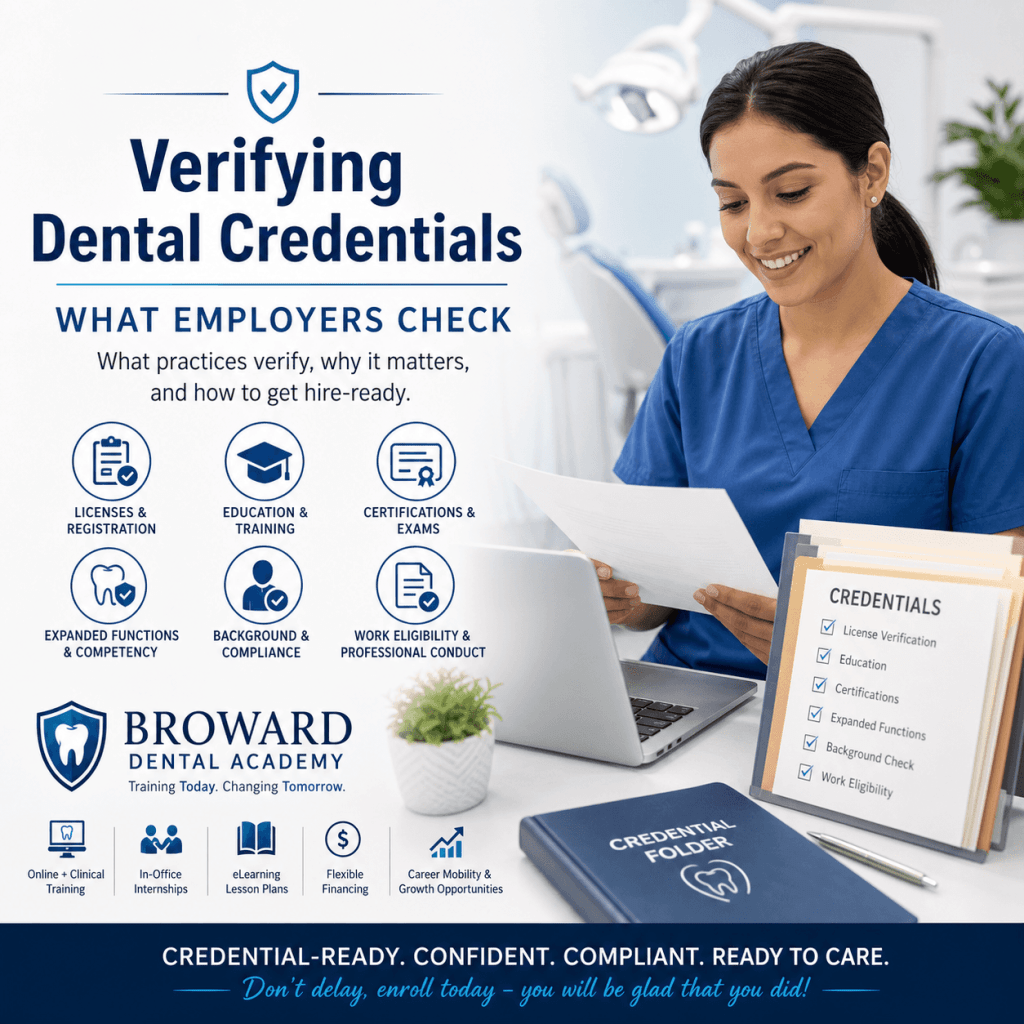
- Work eligibility and onboarding items: many employers require standard onboarding steps such as background checks, and may request immunizations and CPR/BLS depending on the office’s policies and role needs
Every office is different, and requirements can vary by employer and position. If you are unsure about what you personally need, ask the office directly during the hiring process.
Nice-to-haves that make hiring easier
- Documented training (program completion, skills checklists, externship hours)
- X-ray familiarity or eligibility (when the office wants it)
- Any healthcare, caregiving, hospitality, or customer service experience
- A clean, confident understanding of infection control systems
This is why training often replaces experience. A dental practice is a high-trust environment. When you show proof that you can function safely and professionally, you reduce risk for the office, and you become easier to bring on.
Do you need dental assistant certification in Florida?
This is one of the biggest points of confusion, because “certification” can mean different things.
What people mean when they say “certified”
- A school completion certificate (you completed a dental assisting program)
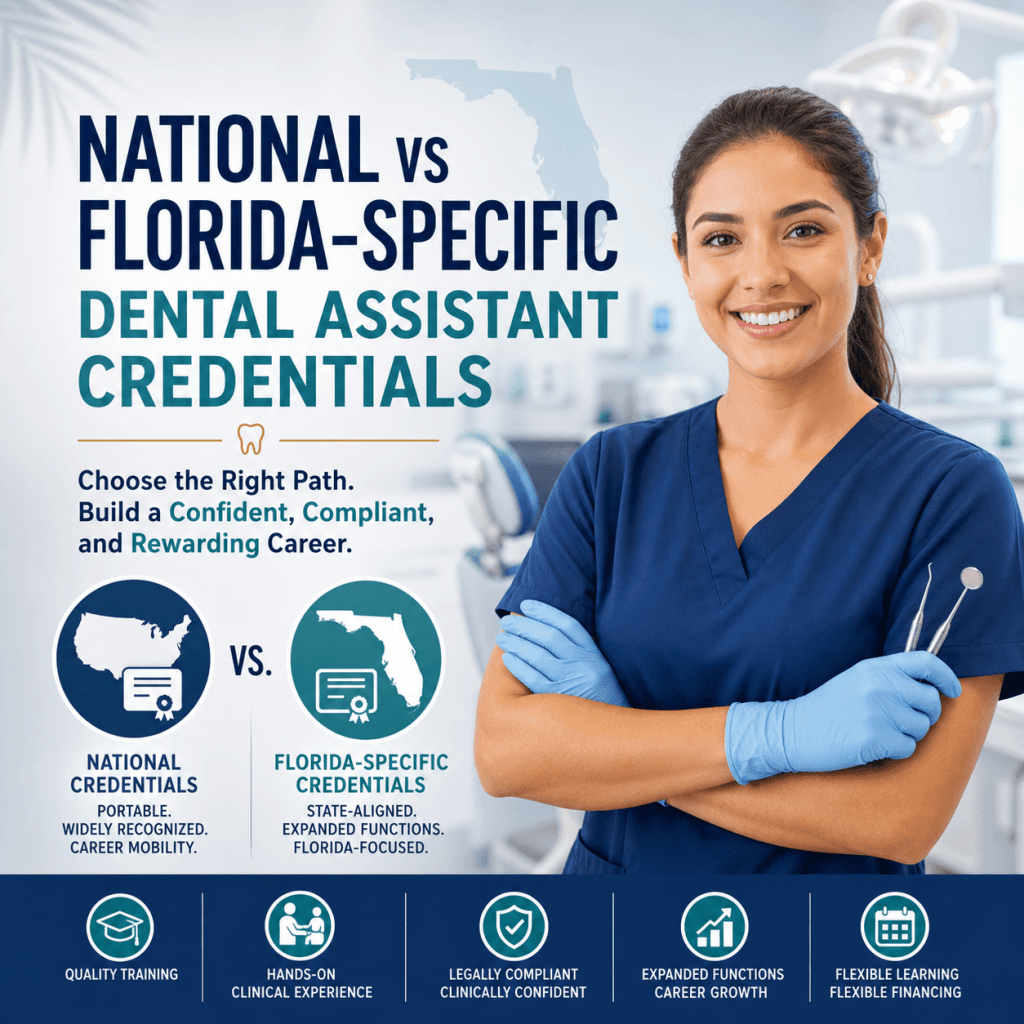
- A national certification (a credential that may be preferred by some employers)
- Expanded functions or radiography-related training (often tied to the duties the office needs)
What is typically required vs what boosts employability
Many entry-level roles in Florida do not require you to have a national credential to start. However, certification and formal training can matter more when:
- You are applying in a competitive area
- You want access to higher-paying offices or specialty practices
- The role includes radiography or expanded duties
- The employer wants faster ramp-up and less training burden
In real hiring decisions, offices often look for proof of hands-on skills, externship experience, and competency, not just a title on a resume. If you can demonstrate you have been trained in real workflows and can assist confidently, you are already ahead.
Which three paths work with no experience?
There is no single path for everyone. Your best route depends on your timeline, budget, and how you learn.
Path 1: On-the-job training
Best for: motivated beginners who can learn fast in a live practice environment
Pros
- You can earn while you learn
- No tuition upfront for a program
Cons
- Training quality depends on the office’s time and systems
- Skill-building can be slower and uneven
- Early responsibilities may be limited until trust is built
Path 2: Dental assistant program (structured training)
Best for: people who want to be job-ready faster and build confidence before day one
Pros
- Clear structure and skill progression
- Hands-on training that mirrors real offices
- Strong hiring signal, especially with an externship
Cons
- Requires tuition and scheduled training time
Path 3: Start in a dental front office role and cross-train
Best for: people who want to enter dentistry quickly, then move clinical
Pros
- Gets you into a practice and dental culture
- Builds patient communication and scheduling confidence
Cons
- Chairside exposure may be delayed
- Cross-training depends heavily on the office’s needs and bandwidth
If your goal is a faster, more predictable route to being hired as a chairside assistant, structured training plus an internship tends to be the most direct.
What should a good dental assistant program include?
Not all programs prepare you for real practice speed. A strong program should focus on clinical readiness, not just information.
Here is what to look for.
Hands-on clinical skills practice
You should practice real assisting skills, such as:
- Chairside assisting flow and instrument transfer
- Tray setups and procedure prep
- Suctioning, isolation, and patient positioning
- Impressions basics and material handling (when included in training)
Real infection control and sterilization workflows
A dental office runs on systems. You want training that matches how practices actually operate:
- Proper PPE use
- Sterilization workflow and monitoring basics
- Room turnover that supports speed without compromising safety
Professionalism training that matches the job
The best assistants are trusted because they think well under pressure. Look for training that includes:
- Patient communication and comfort skills
- Ethics, privacy, and professional boundaries
- Critical thinking in fast-paced clinical moments
Externship or internship experience
This is one of the biggest confidence multipliers. An externship helps you:
- Experience real procedure pacing
- Work with a team under real scheduling pressure
- Build references and credibility for interviews
A modern learning option for flexibility
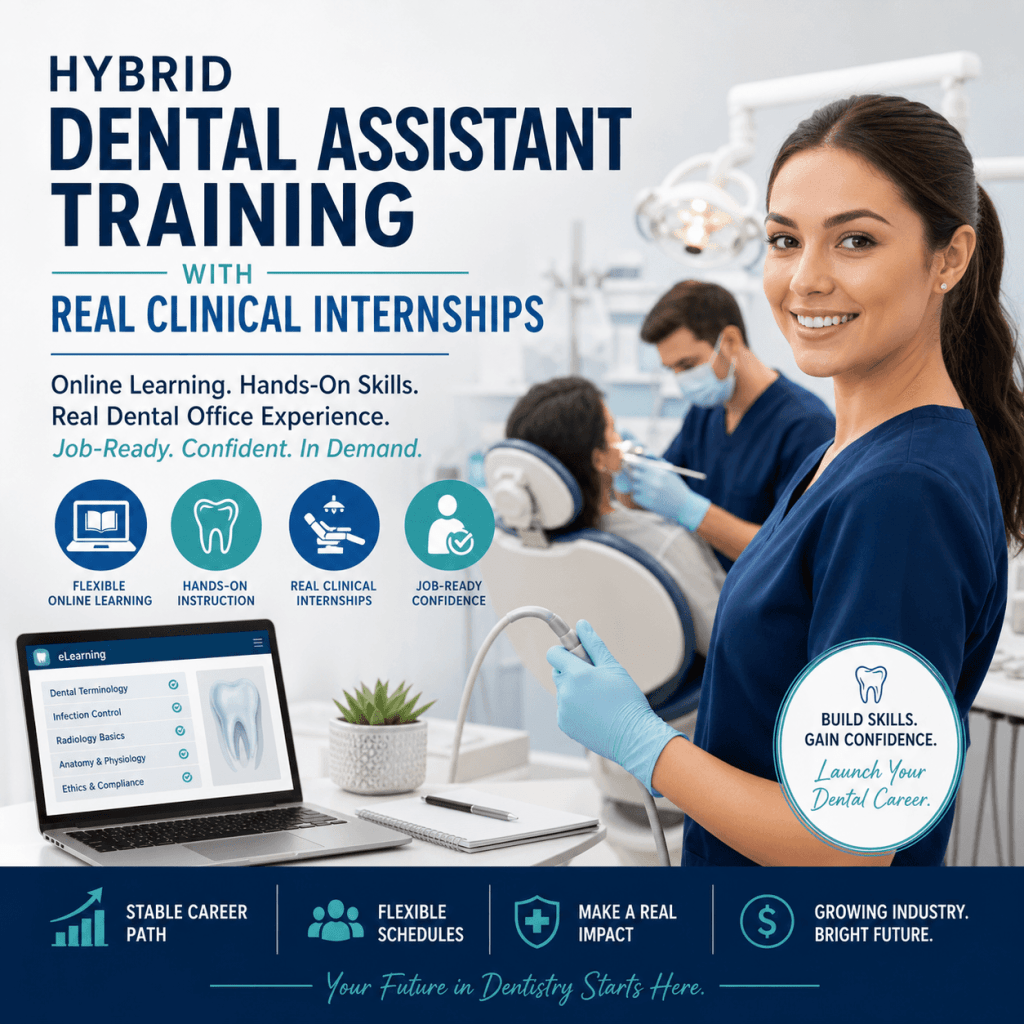
Many students need to keep working while training. Programs that blend online learning with in-person skill immersion can make training more accessible without losing the hands-on component.
How does Broward Dental Academy build a job-ready route?
Broward Dental Academy is built around what Florida dental offices actually want: assistants who are thoroughly trained, legally compliant, and clinically confident.
Instead of focusing only on “passing,” the training approach is designed to help students thrive inside modern, high-performance practices by learning how to:
- Think critically during real clinical situations
- Act ethically with patients and protected information
- Perform confidently in chairside workflows, sterilization systems, and daily practice rhythm
Students are immersed in learning through online and clinical settings, with updated eLearning lesson plans incorporated for remote training. Training also includes in-office internships, so students gain real experience in real dental environments.
Broward Dental Academy offers 07 courses and advanced dental training options for growth, making it a strong fit if you want to start entry-level and continue leveling up.
Flexible financing options are available, which can reduce barriers to entry for students who want to begin sooner without putting life on pause.
If you want to explore the fastest path to become a dental assistant in Florida, visit the program page here:
How to Become a Dental Assistant in Florida
Which job requirements appear in Florida postings, and how do you meet them?
You will see certain phrases repeatedly in job listings. Here is what they usually mean, and what to do next.
“No experience required” / “Willing to train”
What it means: the office may accept a beginner, but you must be teachable and professional.
Action steps
- Learn infection control basics and sterilization flow before interviewing
- Practice communication and chairside etiquette
- Be ready to describe how you stay organized and calm in a fast day
“Certification preferred”
What it means: not always required, but they want proof you are prepared.
Action steps
- Complete a reputable training program
- Document hands-on competencies and externship hours
- Bring your completion documents to interviews
“X-ray experience a plus”
What it means: they want flexibility in scheduling and procedures.
Action steps
- Choose training that supports radiography pathways when appropriate
- Be honest. If you are not there yet, show you are actively training
“Fast-paced office” / “Must multi-task”
What it means: they need someone who can move with the schedule.
Action steps
- Practice mental checklists and room turnover routines
- Learn procedure setups so you are not guessing chairside
What to include on a resume with zero experience
If you have no dental experience, do not try to “pad” your resume. Instead, make it easy for an employer to trust you:
- Training program details and completion (or in-progress status)
- Clinical competencies learned (sterilization, tray setups, suctioning, etc.)
- Internship or externship hours
- Soft skills that translate to dentistry (customer service, teamwork, reliability)
- Any healthcare exposure, even if it is indirect
Interview readiness checklist (simple, but powerful)
Be ready to explain, in your own words:
- The basic sterilization flow and why it matters
- How you protect patient privacy, including adherence to the HIPAA Privacy Rule
- How you would respond if you made a mistake or felt unsure
- How you help patients feel calm and respected
- How you function in a team when the schedule is full
What timeline and cost should you plan for?
Timelines vary based on the path you choose and your availability, so it is better to plan in ranges rather than promises.
What affects your timeline most
- Whether you train on the job or through a program
- How quickly you can get hands-on practice
- Externship timing and placement
- Your personal schedule (work, childcare, transportation)
Cost categories to plan for
Even when tuition is your main cost, it is not the only one. Consider:
- Tuition and registration (if enrolled in a program)
- Supplies, scrubs, and basic equipment
- Potential exam or credential fees (depending on your pathway)
- Transportation and scheduling adjustments
- Any time off work needed for clinical training or externship hours
Flexible schedules and financing can help many students start sooner, especially when the alternative is delaying entry into a stable healthcare role.
How do you level up after your first job?
Your first job is about building speed, confidence, and trust. After that, growth can happen quickly if you keep learning.
Early milestones that increase your value
- Faster chairside rhythm and anticipation
- Strong infection control and room turnover consistency
- Better patient communication and comfort skills
- Cleaner documentation support and smoother teamwork
Next-step skills that expand options
- Radiography proficiency
- Expanded functions (based on training and office needs)
- Specialty assisting in orthodontics, periodontics, oral surgery, endodontics, or pediatrics
Career mobility inside dentistry
With experience and continued education, many assistants move into roles such as:
- Lead dental assistant
- Clinical trainer within an office
- Office coordinator
- Practice management track (especially with strong systems thinking and leadership)
Advanced dental training helps you keep leveling up, and it keeps your career options open as the industry grows.
How do you choose your next step?
If you are trying to decide what to do next, use this quick guide.
- If you want the fastest route to being hire-ready: choose structured training plus an internship/externship.
- If you need maximum flexibility: look for blended learning that combines online education with in-person skills immersion.
- If you are budget-constrained: compare on-the-job training with the value of becoming job-ready sooner and earning sooner.
If your goal is to become a dental assistant in Florida without experience and start with real confidence, explore the program options here:
How to Become a Dental Assistant in Florida
Don’t delay, enroll today, you will be glad that you did.
FAQs (Frequently Asked Questions)
Can I become a dental assistant in Florida with no prior experience?
Yes, you can become a dental assistant in Florida with no prior experience. Many dental offices hire entry-level candidates and provide on-the-job training for basic chairside support and daily clinic operations. However, employers expect baseline professionalism, clinical safety awareness, and understanding of infection control and privacy regulations.
What are the different levels of dental assistant roles in Florida?
In Florida, dental assistant roles are categorized into three main levels: 1) Entry-level chairside support (Dental Assistant Level 01) involving basic duties and on-the-job training; 2) Formally trained dental assistants (Dental Assistant Level 02) who have completed structured training programs and possess stronger skills; and 3) Expanded functions assistants (Dental Assistant Hygienists Level 03) who perform advanced duties requiring additional training and competency documentation.
What duties can an entry-level dental assistant perform in Florida?
Entry-level dental assistants in Florida typically handle tasks such as preparing treatment rooms, setting up trays, passing instruments during procedures, suctioning and isolation support as trained by the office, cleaning operatories, assisting with basic charting, stocking supplies, and maintaining operatory flow.
How does formal training benefit a dental assistant seeking employment in Florida?
Formal training enhances a dental assistant’s skills, readiness, and employability by providing documented competency in infection control, procedure setups (such as restorative or endodontic procedures), patient communication, positioning, and efficient assistance during various procedures. Training programs like those offered by Broward Dental Academy help candidates demonstrate thorough preparation and legal compliance.
What advanced duties might require additional education for dental assistants in Florida?
Advanced duties for dental assistants often require expanded functions training and documented competency. These may include performing dental radiography (X-rays), coronal polishing, applying sealants, taking impressions, and other specialized assisting functions utilized in higher-performance dental practices.
Why is dental assisting considered a strong career choice in Florida currently?
Dental assisting is a strong career move in Florida due to its accessibility without lengthy schooling, stable income potential within healthcare settings, flexible scheduling options including full-time or part-time work, respected clinical role involving hands-on patient care, and opportunities for long-term advancement into expanded functions or specialty areas. Employers prioritize hiring thoroughly trained, legally compliant, and clinically confident assistants.