Key takeaways
- What does school add?
A structured curriculum, supervised hands-on practice and radiology training, so you arrive able to work rather than able to watch. - When does on-the-job work?
When a practice has the staff and patience to teach during production hours, which is less common in busy South Florida offices. - Which do employers prefer?
Most prefer documented training plus an internship, because it shortens the ramp and reduces the supervision cost of a new hire. - What decides it for you?
Timeline, budget and whether you already have an office willing to train you on the clock.
Florida is a great place to start a dental assisting career, but it is also a place where the “fastest” option is not always the smartest one.
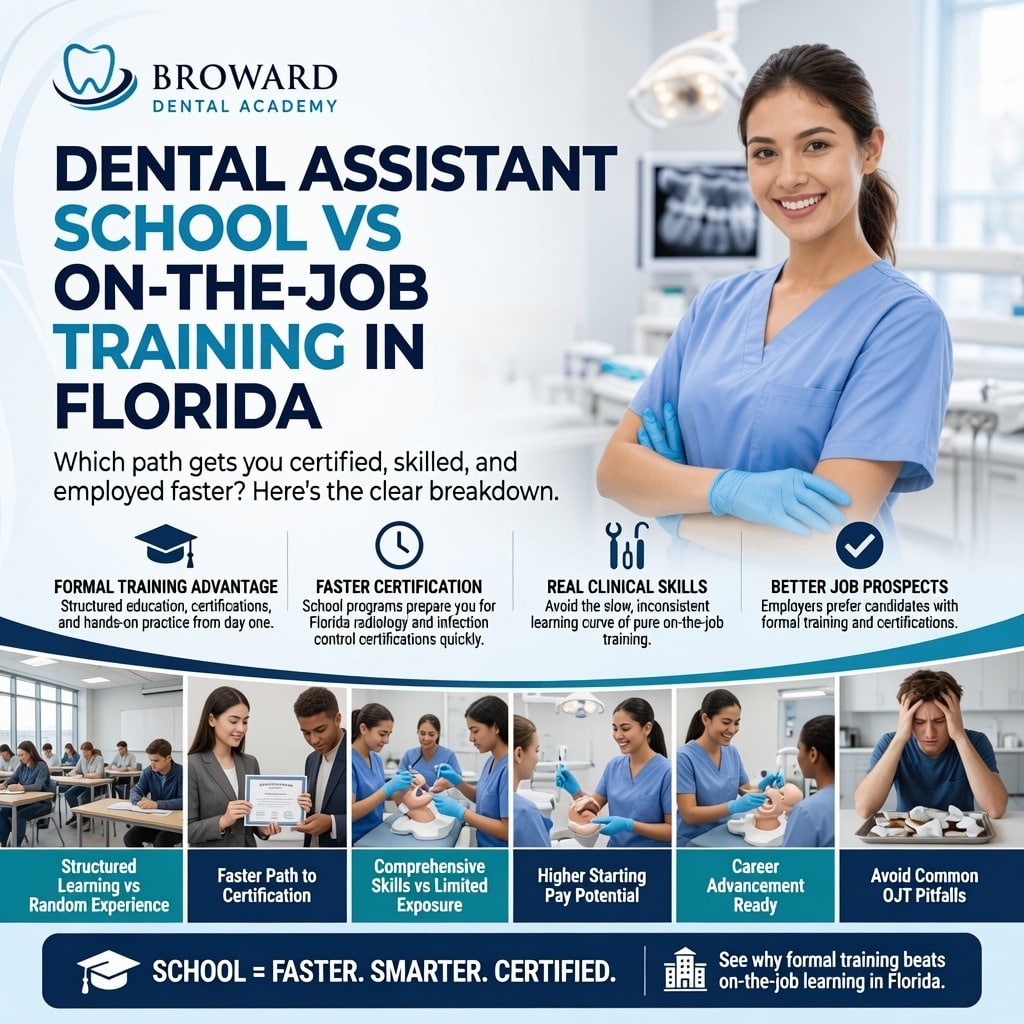
Attending a Dental Assistant School provides structured learning essential for a successful career.
Choosing a reputable Dental Assistant School can make all the difference in your education and career path.
Many people weighing their options consider the benefits of completing a Dental Assistant School program.
Dental offices here are busy. Patients expect smooth, professional care. And practices are increasingly selective about who they hire because training someone from scratch takes time, creates risk, and can slow the schedule down.
Attending a structured Dental Assistant School is often the most efficient pathway.
Many graduates from a Dental Assistant School find employment more quickly.
Choosing the right Dental Assistant School will set the foundation for your career.
That is why many new assistants face the same crossroads:
- Dental assistant school (a structured training program)
- On-the-job training (learning inside a dental office as you work)
Students at a Dental Assistant School receive hands-on training.
The investment in a Dental Assistant School can yield high returns in your career.
This is why many prospective students opt for a Dental Assistant School.
With a focus on practical skills, a Dental Assistant School curriculum is vital.
In this guide, you will get a clear, Florida-focused comparison of both paths, including what to expect for time, cost, legal compliance, confidence, hiring outcomes, and long-term growth. The goal is simple: help you choose the route that fits your life now, while also setting you up for a stable income, flexible schedules, a respected healthcare role, and real career mobility in a fast-growing industry.
Completing courses at a Dental Assistant School can lead to certification.
Many employers favor candidates with formal training from a Dental Assistant School.
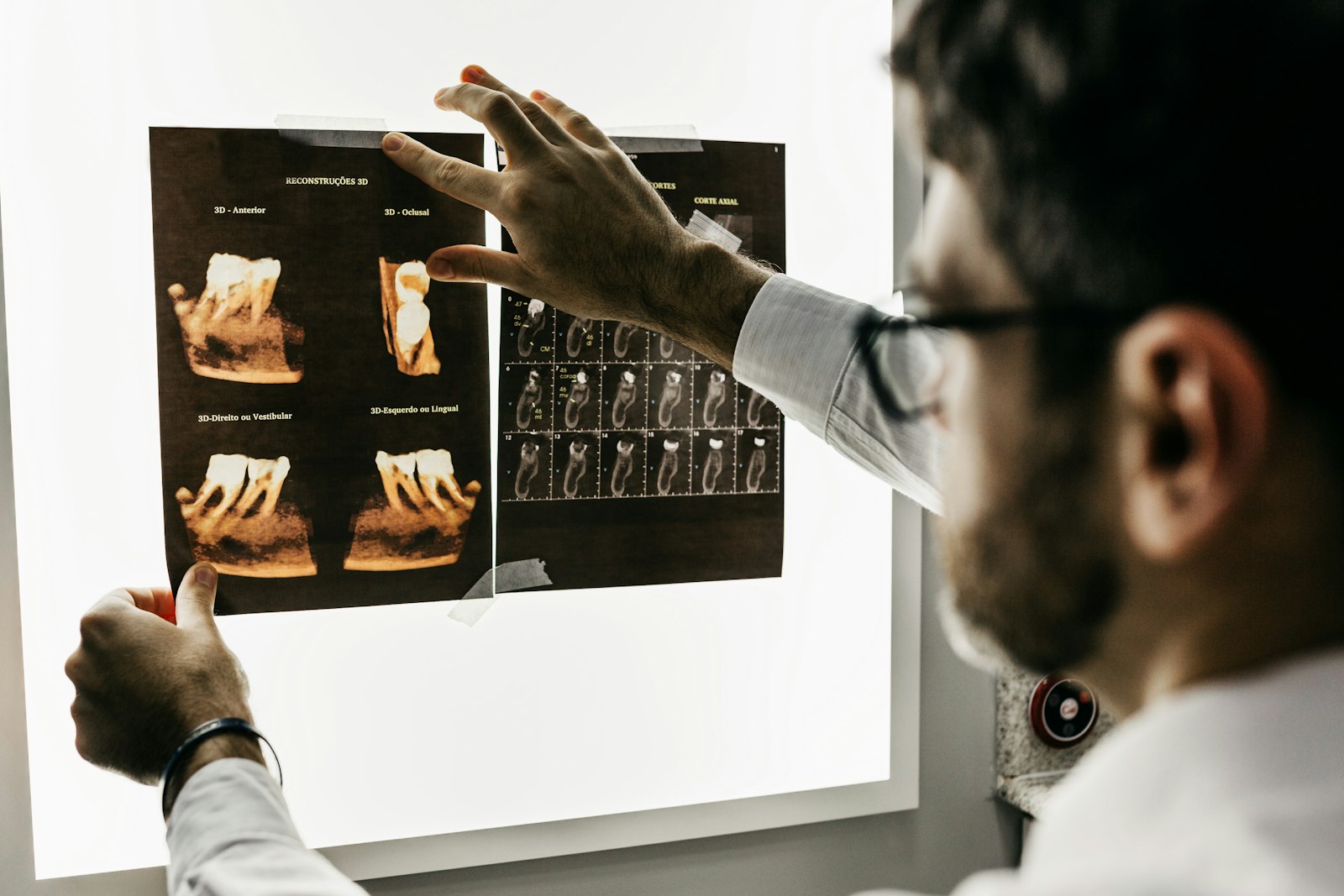
Why does the school-versus-on-the-job choice matter in Florida?
A Dental Assistant School typically covers all essential skills needed for the job.
Graduating from a Dental Assistant School enhances your resume significantly.
Success stories often begin with a choice to attend a Dental Assistant School.
A lot of people search “how to become a dental assistant in Florida” and immediately look for the quickest option. That makes sense. You want to start working, earning, and moving forward.
But in the real world, the decision is not only about how fast you can get into an office. It is about how fast you can become useful, confident, and trusted in one.
Florida dental practices often prefer assistants who can:
- Follow infection control protocols without reminders
- Understand the flow of common procedures
- Communicate well with patients
- Document and chart correctly
- Support the dentist efficiently under time pressure
If you can do those things early, you tend to earn more, feel less stressed, and keep more job options open. If you cannot, you may still get hired, but you can end up stuck in a cycle of slow growth, constant correction, and “starting over” at a new office.
This article will help you choose based on outcomes, not just speed.
Considering the diverse fields within dentistry such as oral surgery, orthodontics, endodontics, and periodontics, it becomes crucial to understand what each specialization entails. Pursuing specific training programs can significantly enhance your skill set and employability in these areas. For instance, enrolling in courses offered by reputable institutions like Broward Dental Academy could provide valuable knowledge about various aspects of dentistry including those mentioned above.
What can a Florida dental assistant do without formal training?
In Florida, the scope of a dental assistant’s responsibilities is influenced by two main factors:
- State rules and training requirements
- The dental office’s policies and risk tolerance
This means that two assistants with the same job title might have very different responsibilities depending on their documented training and what the employer is comfortable delegating.
Many practices prefer hiring assistants who already have a solid understanding of:
- Infection control and sterilization standards
- Clinical room setup and breakdown
- Dental materials and tray setups
- Radiography workflow (if permitted and trained)
- Patient safety, privacy, and professionalism
Legal compliance is crucial as it protects both patients and the office. A dentist who delegates tasks to an unprepared assistant risks creating unnecessary liability, especially if protocols are missed or documentation is incomplete.
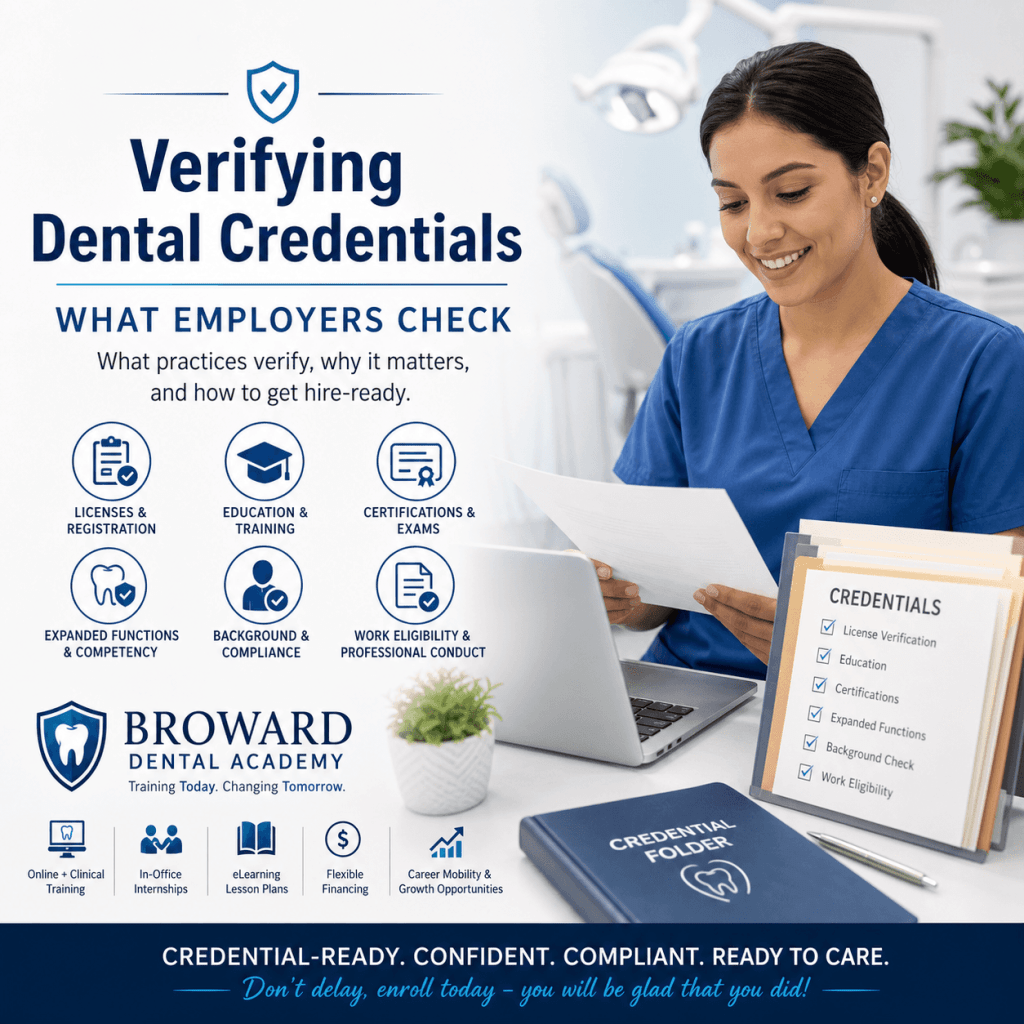
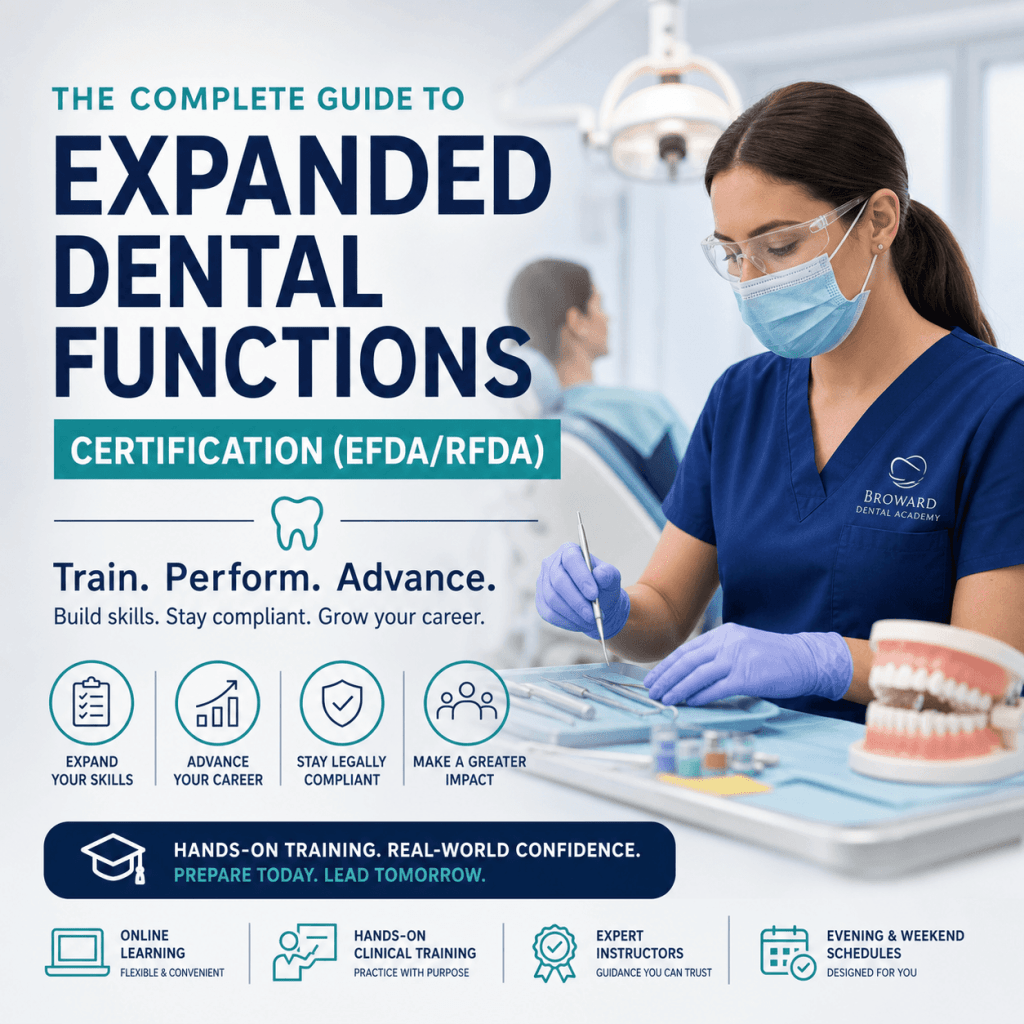
This is also where expanded functions become a significant career lever in Florida. Expanded functions can open the door to greater responsibility and stronger earning potential, but they typically require documented training and a solid clinical foundation.
It marks the difference between being “helpful around the office” and being clinically confident and practice-ready.
Enrolling in a Dental Assistant School is a great first step.
Many students share their positive experiences from a Dental Assistant School.
Opting for a Dental Assistant School can streamline your career path.
How does dental assistant school typically work?
The curriculum of a Dental Assistant School focuses on practical skills.
Hands-on practice at a Dental Assistant School is essential.
Students at a Dental Assistant School learn teamwork and communication.
A dental assistant training program is designed to provide a complete foundation instead of piecemeal learning.
Most dental assistant schools in Florida include:
Real-world experiences gained at a Dental Assistant School are invaluable.
- Foundational theory (terminology, anatomy basics, instruments, materials)
- Hands-on clinical skills (infection control, chairside assisting, impressions, suctioning, setup)
- Professionalism and ethics (patient communication, teamwork, privacy, standards of care)
- Skills practice with feedback (so you are not guessing if you are doing it right)
- Externship or internship opportunities to gain real office exposure
Choosing a Dental Assistant School with externship opportunities is beneficial.
Online learning at a Dental Assistant School complements hands-on skills.
Program formats vary. Many schools offer a mix of:
- In-person labs for clinical simulation
- Online learning components for flexibility
- Clinical externships or internships for real-world practice
A Dental Assistant School provides a comprehensive educational experience.
The key advantage is structure. Instead of learning only what today’s schedule allows, you acquire a full set of skills that makes you employable across various types of offices.
With support from a Dental Assistant School, students thrive.
What to look for in a strong dental assistant program
Completing a program at a Dental Assistant School enhances career prospects.
Preparation from a Dental Assistant School is vital for job success.
Networking through a Dental Assistant School aids in job searches.
Not all programs are equal. If you are comparing dental assistant schools in Florida, focus on what affects your readiness in the first 30 to 90 days on the job.
Hands-on time
- How quickly do you get into clinical simulation?
- How much time is spent practicing the skills you will actually use?
Instructors with real dental office experience
Many successful dental assistants credit their training at a Dental Assistant School.
Choosing to attend a Dental Assistant School is a smart investment.
- You want teachers who can translate “textbook” into real workflow.
Students from a Dental Assistant School often report higher job satisfaction.
A Dental Assistant School prepares you for a rewarding career.
Structured skill checkoffs
- You should be evaluated on specific competencies, not just attendance.
Externship or internship support
The training at a Dental Assistant School is hands-on and practical.
- A strong program helps you get placed and gives you meaningful exposure.
Scheduling and financing transparency
- Evening options, weekend options, clear tuition breakdown, and realistic timelines matter.
Dental assistant school is not just about information. It is about building a predictable skill set that makes you easier to hire and easier to train further.
How does on-the-job training typically work?
On-the-job training is exactly what it sounds like. You learn while working, guided by the dentist, office manager, lead assistant, or whoever has time to teach.
In some offices, on-the-job training is thoughtful and organized. In others, it is rushed, inconsistent, and heavily dependent on how busy the day is.
Common advantages of on-the-job training
The structure offered by a Dental Assistant School is advantageous.
- Earn while you learn (income starts sooner)
- Immediate exposure to real workflow
- Little to no tuition in some cases
- You build confidence with patients faster if you are thrown into interactions early
However, the quality of training can vary dramatically. The best results tend to happen when you have a mentor-style environment and enough repetition to actually master tasks, not just “help.”
When on-the-job training can be a good fit
On-the-job training can work well if:
- You already have healthcare experience or strong customer service skills
- You learn fast under pressure and like hands-on learning
- You have a mentor-style dentist or lead assistant who enjoys teaching
- You are starting in a smaller practice with consistent procedures and lower chaos
- You are using the role as a short-term trial before committing to school
The risk is that you may only learn what that specific office does, in that specific way. If you leave, you might discover gaps that make it harder to transition.
School or on-the-job training: how do they really compare?
Both paths can work. The better choice depends on your timeline, learning style, and what kind of office access you realistically have.
Below is the practical comparison most Florida job seekers actually care about.
1) Time: getting hired vs becoming truly practice-ready
School route
- You follow structured milestones that compress learning into a predictable timeline.
- You graduate with a defined skill set.
On-the-job route
- You may get hired sooner, but your growth depends on the office pace, patience for training, and how often you repeat each task.
In dentistry, “practice-ready” usually means you can:
- Set up rooms efficiently
- Anticipate procedure steps
- Maintain asepsis and infection control
- Communicate clearly with patients
- Chart and document correctly
- Support the dentist without slowing the schedule down
Many people can get hired quickly. Fewer become practice-ready quickly.
2) Cost: tuition vs hidden costs of learning on the job
School route costs
- Tuition, supplies, and time commitment
- Many programs offer financing options, which can make it more manageable
On-the-job costs
- Often lower upfront cost
- Slower wage growth if your skill set develops unevenly
- More job hopping to find an office that will actually train you
- Higher stress if you feel behind in a fast practice
A helpful way to think about cost is ROI. Strong competency often translates to better offers, more responsibilities, and better stability.
3) Skill depth: why standardized training often feels easier in the first 90 days
School route: You practice in a controlled setting before doing tasks under pressure. Mistakes become learning moments, not emergencies.
On-the-job route: You learn while the schedule is full. Feedback can be rushed, inconsistent, or based on personal habits rather than standards.
Core skill areas where standardized training helps early:
- Infection control and sterilization flow
- Tray setups and instrument transfer basics
- Materials and mixing protocols
- Radiography workflow (as permitted and trained)
- Charting and documentation habits
- Patient flow and operatory turnover
- Chairside assisting during common procedures
In many offices, the first 90 days determines whether you are seen as a long-term asset or a constant training project.
4) Confidence and professionalism: the “soft skills” that offices notice fast
School route
- Communication, ethics, teamwork, and patient comfort are coached.
- You learn how to handle uncomfortable moments professionally.
On-the-job route
- You may pick up habits quickly, including habits that are not ideal.
- If the office is stressed, “training” can become “just do it this way” with no explanation.
Practices value polish because it improves:
- Patient trust and acceptance
- Appointment flow
- Fewer remakes and errors
- Online reviews and referrals
Confidence is not just personality. It is what happens when your training matches the job.
5) Compliance and expanded functions: keeping doors open for advancement
Compliance training is not an extra. It is part of what keeps an office safe and operational.
Structured learning supports:
- Safer care through consistent protocols
- Better documentation habits
- Stronger awareness of clinical standards and boundaries
It also supports career mobility. Expanded functions opportunities can become more realistic when you have documented training and a strong foundation that an employer can trust.
In Florida, where practices are looking for assistants who are thoroughly trained, legally compliant, and clinically confident, that trust matters.
What do Florida employers usually prefer?
Most Florida dental offices are not hiring to “help someone learn.” They are hiring to solve problems:
- Too many patients
- Too little time
- Too much pressure on the dentist and lead assistant
- A need for consistency in infection control and room turnover
So they often prefer candidates who can contribute with minimal supervision.
Where school graduates often stand out:
- Documented training
- Consistent fundamentals
- Internship or externship exposure
- Faster onboarding in high-volume practices
Where on-the-job trainees can stand out (when trained well):
- Reliability and strong work ethic
- Speed with real workflow
- Great chairside instincts
- Strong patient communication
The hiring reality is that both can win. The difference is how quickly the practice believes you will become independent.
How do you decide which route fits your situation?
Here are decision questions that usually make the answer obvious.
- Do you need income immediately, or can you invest time upfront for faster competence later?
- Do you learn best with structure and feedback, or by doing the job in real time?
- Do you already have a mentor office that will train you consistently?
- Are you aiming for expanded functions and long-term growth?
- How quickly do you want to feel confident with patients and procedures?
Try to decide based on your next 12 months, not just your next paycheck.
If you want the fastest path to competence, choose dental assistant school
A strong dental assistant school can be the shortcut to real readiness because it combines:
- Structured curriculum
- Hands-on training
- Skill checkoffs and feedback
- Internship or externship exposure
The best programs do not just teach you to pass an exam. They prepare you to function in a modern, high-performance practice, including workflow, communication, and professionalism.
A big long-term advantage is mobility. When your fundamentals are solid, it is easier to move between offices without feeling like you are starting over.
If you’re considering this route, it’s important to choose a reputable institution. For example, Broward Dental Academy, known for its comprehensive dental assistant program that prepares students thoroughly for the job market.
If you have the right office and mentor, on-the-job training can work
On-the-job training can be a great route if you have the right setup. The must-haves are:
- Dedicated training time (not “when we are not busy”)
- Written protocols and clear expectations
- Gradual skill progression
- Safe permission to practice and improve
- Consistent feedback, not only correction
If you choose this route, it can help to supplement gaps with formal classes later, especially if you want to expand your responsibilities over time.
Where does Broward Dental Academy fit?
If you’re searching for a “dental assistant school near me” or a Florida dental assistant training program that emphasizes practical readiness, look no further than Broward Dental Academy. This institution is designed around the outcomes that dental offices prioritize.
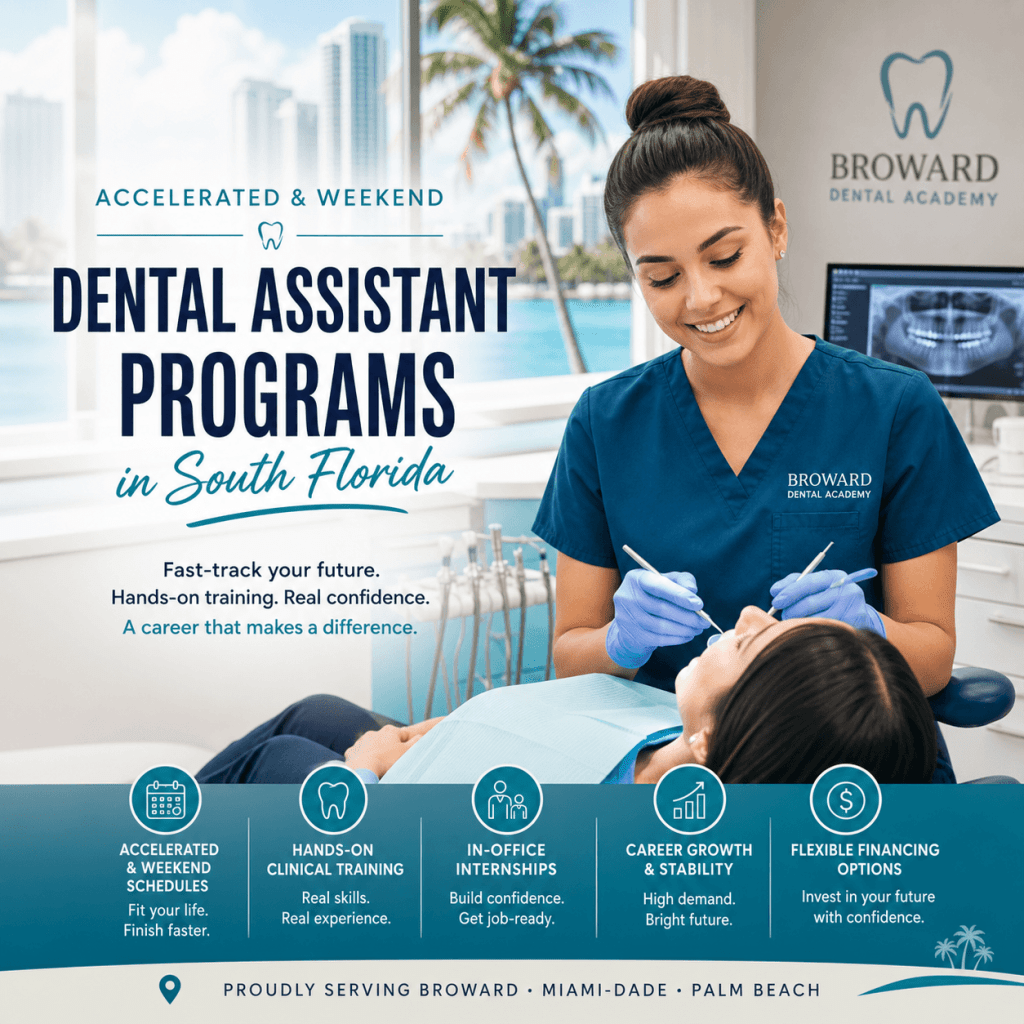
Broward Dental Academy offers a wide array of dental courses and advanced dental training across 7 programs, which include options like Dental Assistant Level 02 and Dental Assistant Hygienists Level 03, all supported by modern eLearning lesson plans. Students are immediately immersed in both online and clinical settings, gaining hands-on experience through in-office internships that effectively connect their training to real workflow. This is all within a learning environment specifically designed to cultivate polished dental professionals. Flexible financing options are also available.
However, the primary goal of Broward Dental Academy is not just to produce students who excel in tests. Instead, the academy prepares its students to become thoroughly trained, legally compliant, and clinically confident professionals who can flourish in a modern, high-performance dental practice.
Broward Dental Academy is an ideal fit for various types of students: career switchers seeking a respected healthcare role, beginners desiring structure and clear milestones, students aiming for expanded functions pathways, and anyone wanting to quickly gain confidence in a real Florida dental office.
How do you start your dental assistant path in Florida?
If you’re ready to take the next step, follow this simple plan:
- Choose your route: dental assistant school or on-the-job training.
- Make a shortlist of local programs or offices hiring trainees.
- Compare schedules and total cost, including supplies, time, and commute.
- Ask direct questions before committing to any program or position.
- Confirm what employers value in your area, and select the path that leads you there quicker.
Key questions to ask any program or employer
- What skills will I be able to perform confidently by the end?
- How much hands-on training is included?
- Is there an externship or internship?
- If on-the-job: who trains me, and what does training look like week by week?
For those seeking a structured program designed for real-world readiness, I highly recommend exploring Broward Dental Academy’s dental assisting programs and training options.
Don’t procrastinate, enroll today; it’s an investment in your future you’ll appreciate.
For a comprehensive step-by-step overview on becoming a dental assistant in Florida, refer to our main guide here: How to Become a Dental Assistant in Florida.
FAQs (Frequently Asked Questions)
What are the main career paths to becoming a dental assistant in Florida?
In Florida, aspiring dental assistants typically choose between two main paths: enrolling in a structured dental assistant school program or pursuing on-the-job training within a dental office. Each path offers different benefits regarding time, cost, legal compliance, confidence, hiring outcomes, and long-term career growth.
Why is formal dental assistant training important for working in Florida dental offices?
Formal training is crucial because Florida dental practices prefer assistants who can confidently follow infection control protocols, understand common procedures, communicate effectively with patients, document accurately, and support dentists efficiently under time pressure. Proper training reduces liability risks for dentists and helps assistants become clinically confident and practice-ready.
What skills and knowledge does a typical dental assistant school program in Florida provide?
Dental assistant schools in Florida offer comprehensive training including foundational theory (terminology, anatomy, instruments), hands-on clinical skills (infection control, chairside assisting), professionalism and ethics (patient communication, privacy), skills practice with feedback, and externship opportunities for real-world experience. Programs often combine in-person labs, online learning, and clinical internships.
Can dental assistants perform radiography or expanded functions without formal training in Florida?
No. While duties vary by office policies and risk tolerance, performing radiography or expanded functions generally requires documented formal training and certification. Expanded functions open doors to greater responsibility and earning potential but must comply with state regulations to ensure patient safety and legal compliance.
How does choosing dental assistant school versus on-the-job training affect job prospects in Florida?
Completing a structured dental assistant program equips candidates with a full skill set that makes them more employable and trusted by busy Florida practices. On-the-job training might be quicker but can limit confidence and growth opportunities. Employers often prefer trained assistants to reduce risks associated with incomplete knowledge or inconsistent performance.
What are the benefits of attending institutions like Broward Dental Academy for dental assisting careers in Florida?
Institutions like Broward Dental Academy provide specialized courses covering diverse dentistry fields such as oral surgery, orthodontics, endodontics, and periodontics. Their programs enhance skill sets and employability by offering comprehensive education aligned with industry standards, helping students gain clinical confidence and access expanded function certifications essential for career mobility.
Attending a Dental Assistant School can open doors for career advancement.
Many find that a Dental Assistant School is the best option for success.
The rigorous training of a Dental Assistant School prepares you for real-world challenges.
Graduates of a Dental Assistant School often feel more prepared than those with only on-the-job training.
The benefits of a strong Dental Assistant School program cannot be overstated.