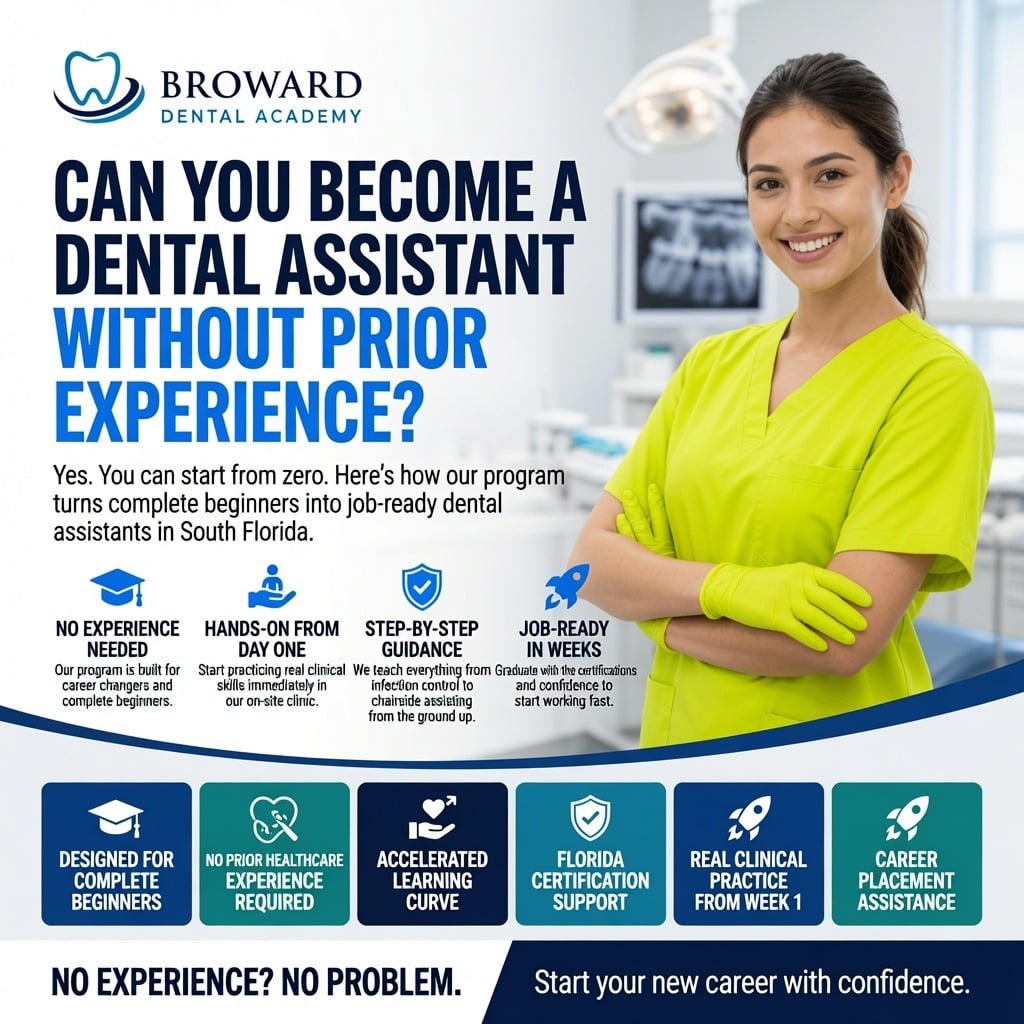
Key takeaways: Dental Assistant Without Prior Experience
- Can you work as a Dental Assistant Without Prior Experience?
Yes. Entry-level training exists for beginners, and Florida employers hire on demonstrated chairside skill, infection control discipline and an internship reference rather than on a previous job title. - Is no experience a problem?
No. Entry-level training exists precisely for beginners, and employers hire on demonstrated skill rather than prior job titles. - What convinces an employer?
Hands-on hours, infection control discipline, radiology support where trained, and an internship reference they can call. - How long does it take?
Months rather than years, with the exact runway set by the level you choose and how quickly the internship stage is completed. - What is the first mistake to avoid?
Choosing the cheapest or shortest option with little clinical practice, which delays hiring rather than speeding it up.
Can you become a dental assistant in Florida with no experience?
Yes, you can become a dental assistant with no prior experience, and people do it every day. The key is choosing a training path that helps you build hands-on skills quickly, so you can walk into a dental office ready to contribute.
When most people say “no experience,” they usually mean they have never worked in a dental office before. Employers understand that. What they are looking for is something slightly different: reliability, professionalism, and basic clinical readiness. In other words, they want to know you will show up on time, learn fast, follow instructions, and treat patients with care and confidence.
Some dental offices will hire and train on the job. But many practices prefer candidates who are already trained, legally compliant, and comfortable with chairside basics. That is why a clear plan matters.
If you are searching for “how do I become a dental assistant” or “how to become a dental assistant with no experience,” this guide breaks down the steps, timelines, and qualifications, with a specific focus on Florida.
If you are interested in becoming a Dental Assistant Without Prior Experience, this guide breaks down the steps, timelines, and qualifications, with a specific focus on Florida.
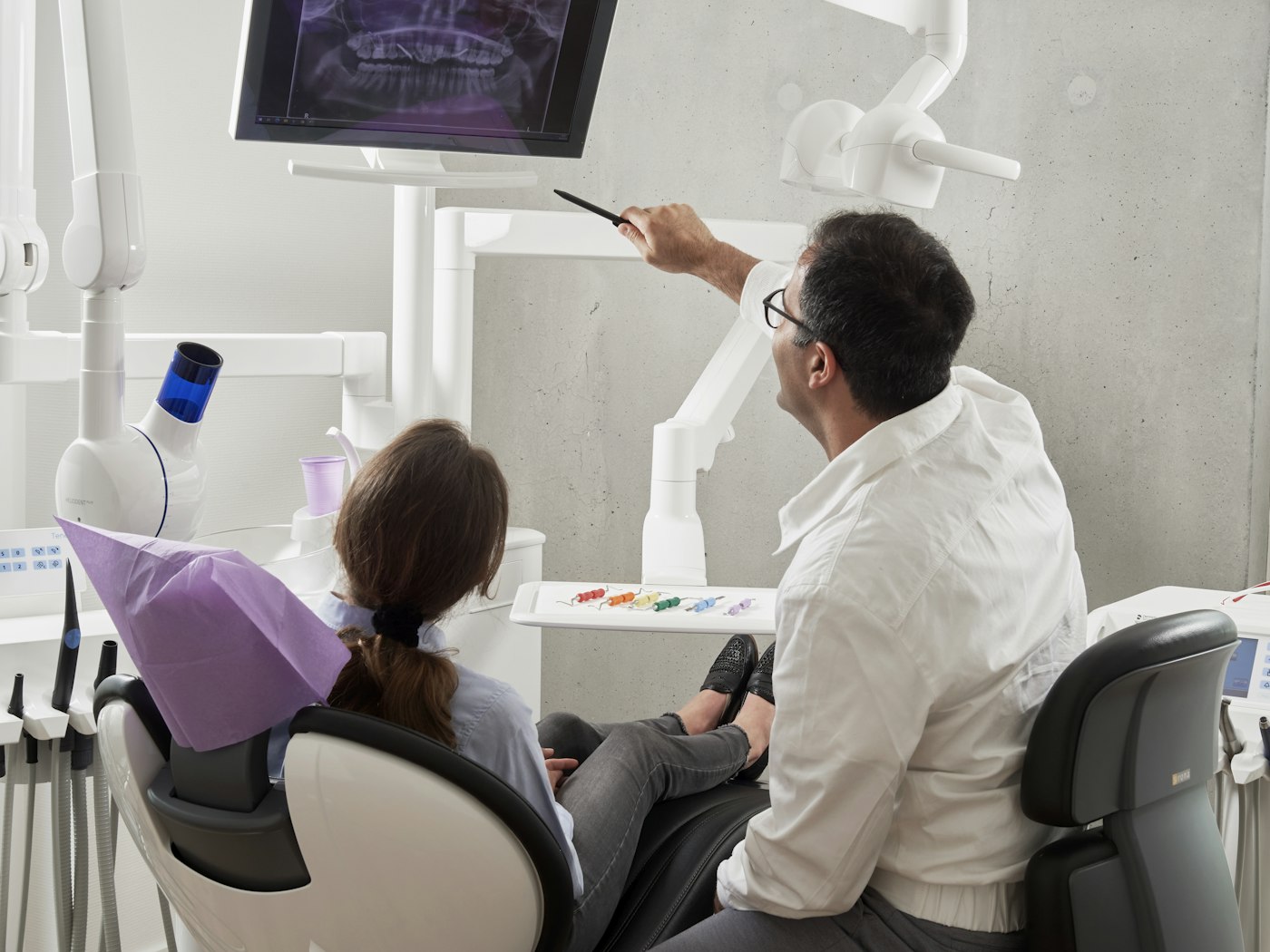
Why is dental assisting a smart career to start right now?
Dental assisting is one of those careers that makes sense for a lot of people making a practical move into healthcare. The dental industry continues to grow, and demand for skilled dental professionals is not slowing down.
Here is why many adults pivot into this role:
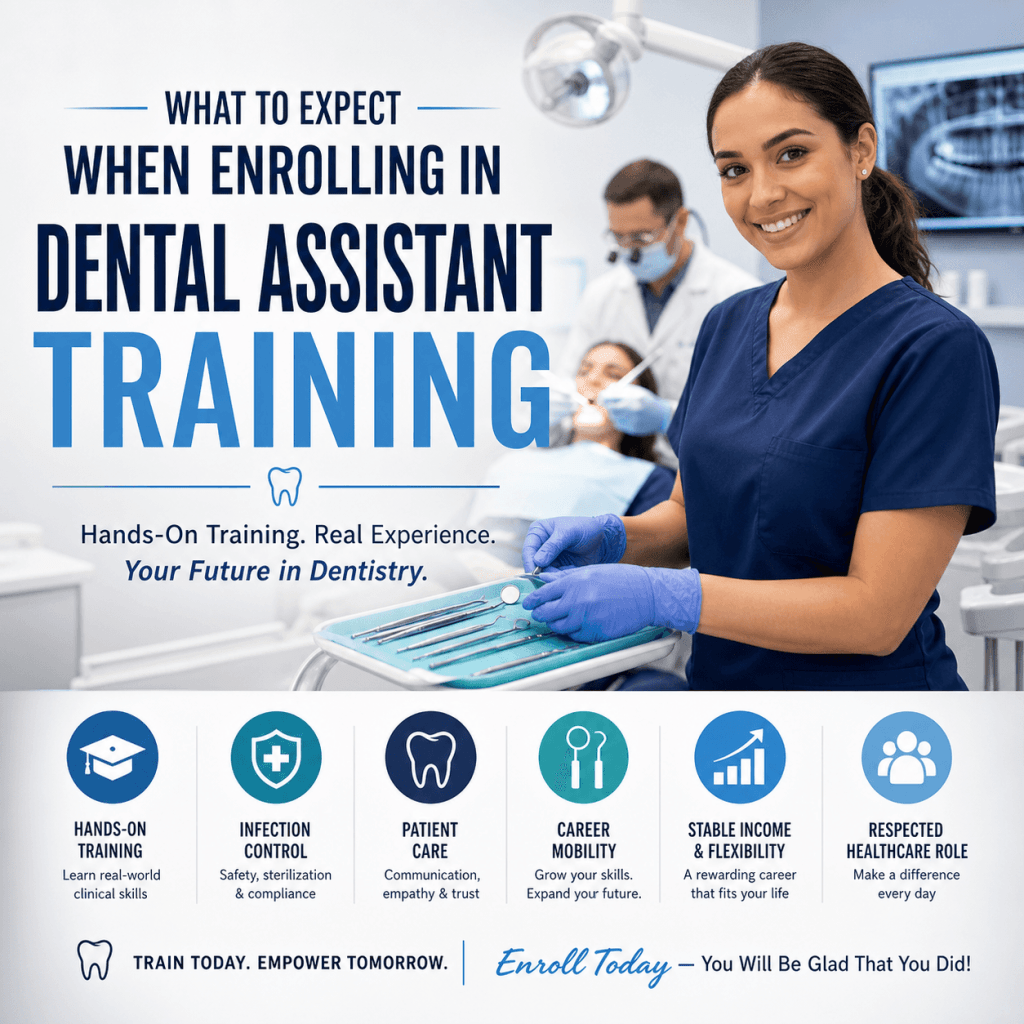
- Stable income potential in a healthcare setting
- Flexible schedules, with many offices offering full-time and part-time opportunities
- A respected role on a clinical team, with real patient impact
- Career mobility, including pathways into expanded functions like oral surgery, endodontics, office management, or additional dental roles
From an employer’s perspective, the best entry-level hire is someone who is trained, compliant, and confident. If you do not have experience yet, training such as the dental assistant hygienists level 03 course or other specialized programs offered by institutions like Broward Dental Academy could be what closes the gap.
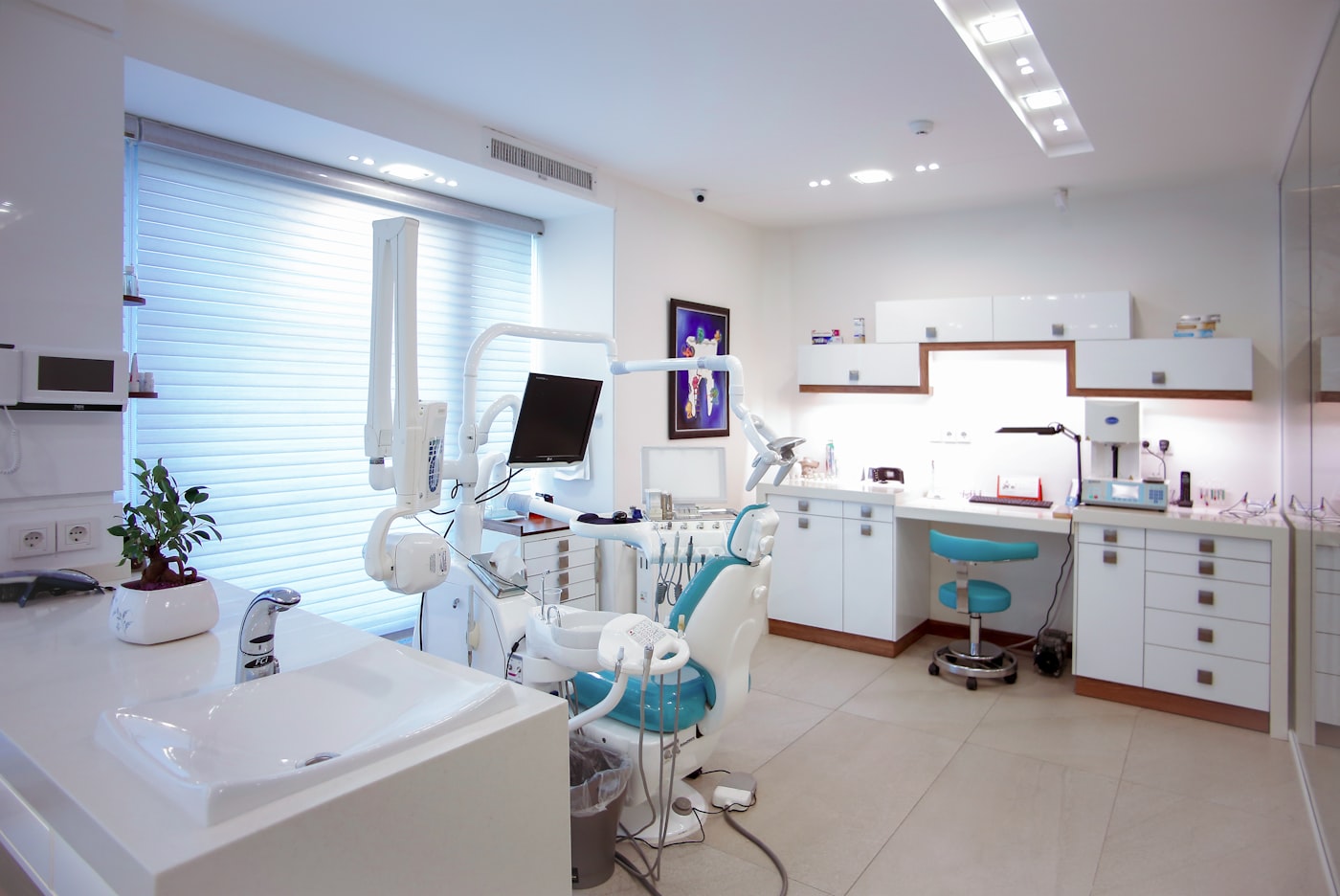
What does the job actually involve?
Dental assisting is not “just handing tools.” It is fast-paced clinical support that keeps procedures running smoothly and patients feeling safe.
Chairside duties you will see in real offices
Depending on the practice, dental assistants commonly help with:
- Assisting during procedures
- Instrument transfer
- Suctioning and maintaining a clear field
- Supporting patient comfort and communication
- Charting support and documenting chairside notes (as allowed by the office)
- Operatory turnover and setup
- Sterilization and infection control basics
Front-office crossover (in some practices)
In smaller or busier practices, assistants may also support:
- Scheduling
- Patient communication and follow-ups
- Basic insurance-related tasks (often handled by the admin team, but you may assist)
Soft skills that matter more than people think
Strong dental assistants are known for:
- Clear communication
- Staying calm under pressure
- Attention to detail
- Professionalism and teamwork
- Patient-first attitude, especially with anxious patients
If you like hands-on work, staying busy, and being part of a clinical team, dental assisting can be a great fit. You might want to consider obtaining some relevant certifications to increase your employability.
What do employers look for when you have no experience?
When you are new, most hiring managers are evaluating one big thing: trainability. Skills can be built, but attitude and professionalism are harder to teach.
The “trainability” checklist
Employers tend to look for:
- Punctuality and reliability
- Coachability and willingness to learn
- Professional communication
- Comfort speaking with patients
- Positive teamwork mindset
If you’re considering pursuing a career in dental assisting, it’s worth exploring various locations that offer such programs.
Baseline clinical readiness
Even for an entry-level role, many offices prefer that you already understand:
- Infection control expectations
- Common instruments and tray setups
- The basic workflow of procedures
- How to follow directions in a clinical setting
Proof you are serious
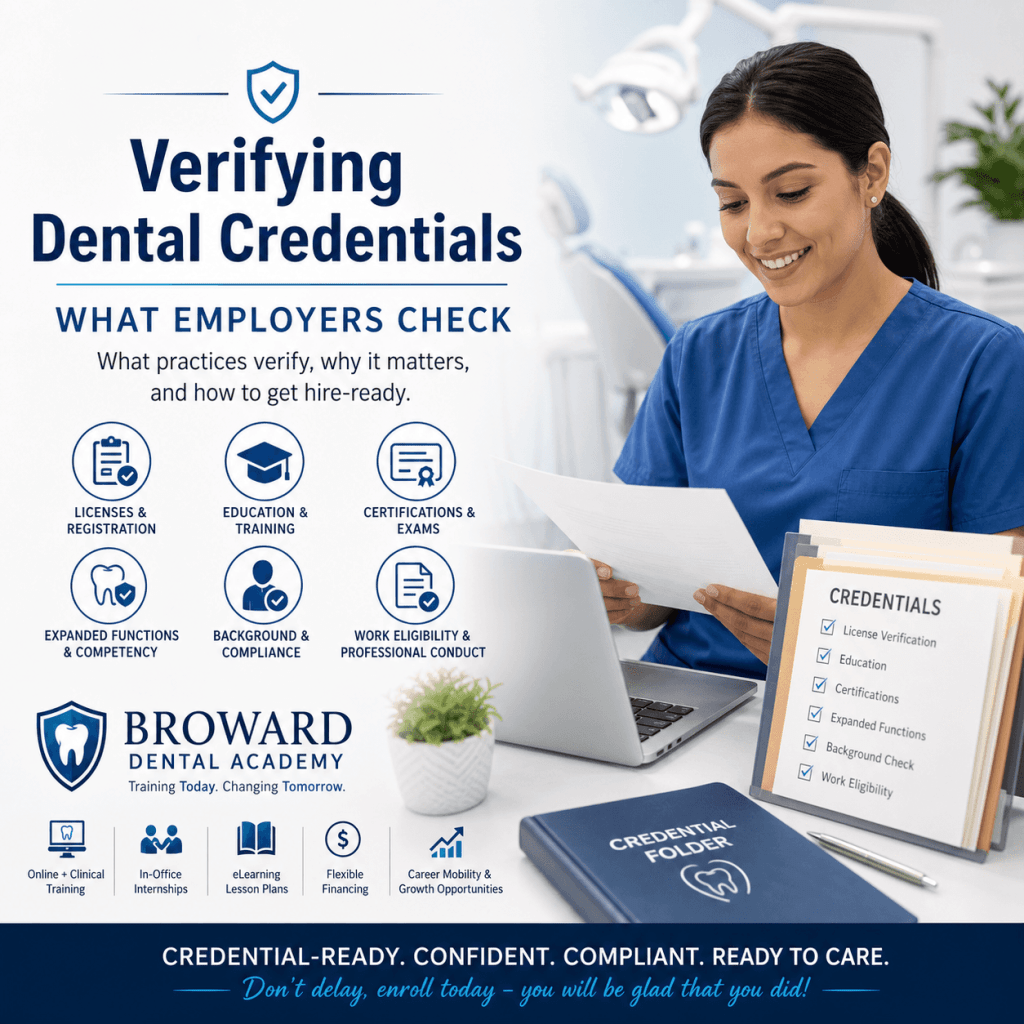
The quickest way to show commitment is having:
- Completion of a recognized training program
- Externship or internship hours
- Skills sign-offs and instructor references
How confidence shows up in interviews
Confidence does not mean pretending you know everything. It means being able to:
- Use basic dental terminology correctly
- Explain how you support a procedure (even at a high level)
- Communicate clearly and put patient safety first
Which paths into the field does Florida offer?
There is more than one way to start. The right option depends on your timeline, budget, and how quickly you want to become clinically confident.
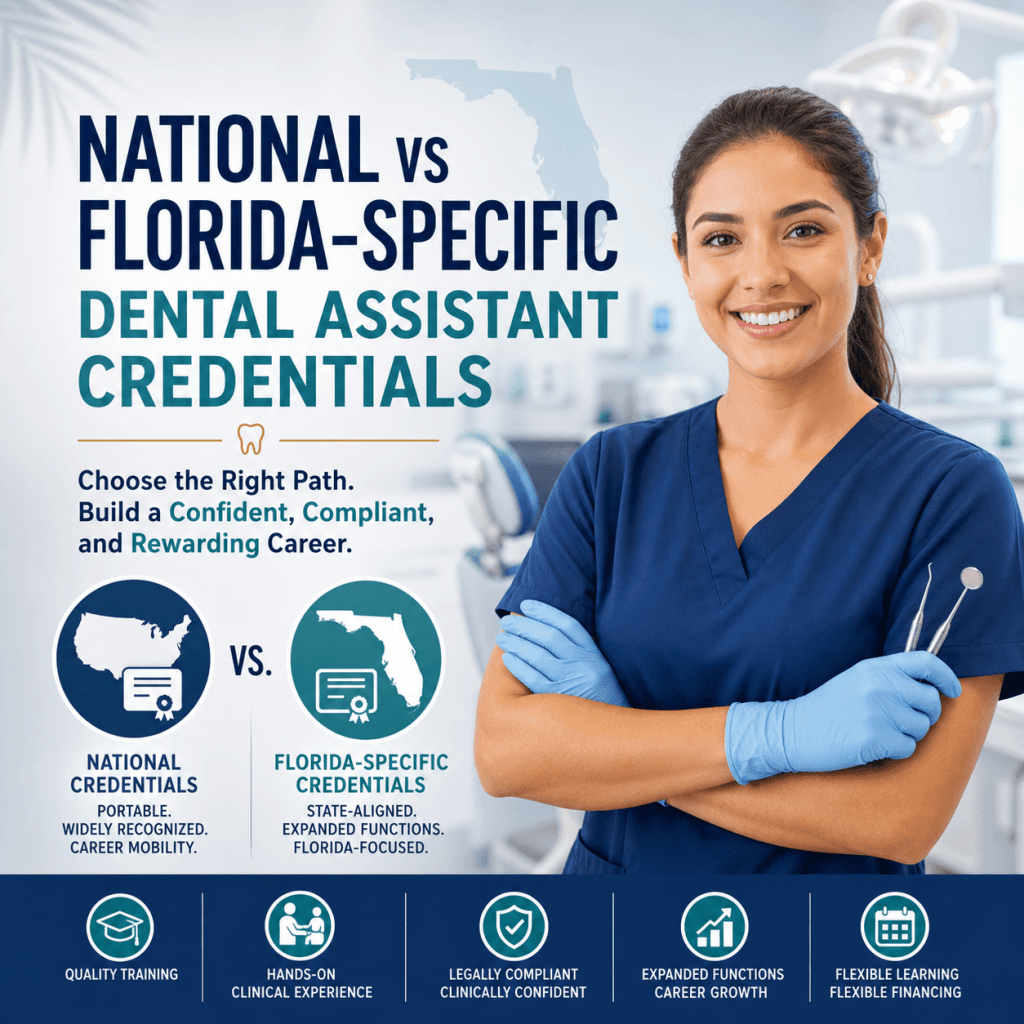
Path 1: Dental assistant training program (fastest route to job-ready)
A strong program typically combines:
- Classroom and online learning
- Hands-on clinical training
- Internship or externship exposure
This is often the most direct path for beginners because it builds confidence through structured practice, not guesswork.
Path 2: On-the-job training
Some offices are willing to train someone with no dental background. The downside is that this can be:
- Slower and less structured
- Dependent on how busy the practice is
- Limiting if you later apply to offices that prefer formal training
Path 3: Start adjacent, then move chairside
Some people start in roles like:
- Front desk
- Sterilization or lab support
This can help you learn the environment, but formal training usually helps you move chairside faster and more confidently.
How to decide: If you want the most predictable timeline and stronger employability, choose a path that includes hands-on training and real clinical exposure.
Which qualifications do you need, and which do you not?
Most people are surprised by how accessible this career is.
Typical baseline requirements
Many programs and offices look for:
- High school diploma or GED
- Background screening (varies by office)
- Basic health or immunization requirements (varies by program and clinic)
What you do not need to start
You do not need prior dental office experience to begin. Training is designed to take beginners from zero to job-ready.
Role variations matter
Dental assisting duties and requirements can vary by:
- State regulations
- The type of practice
- Whether you pursue additional education or credentials
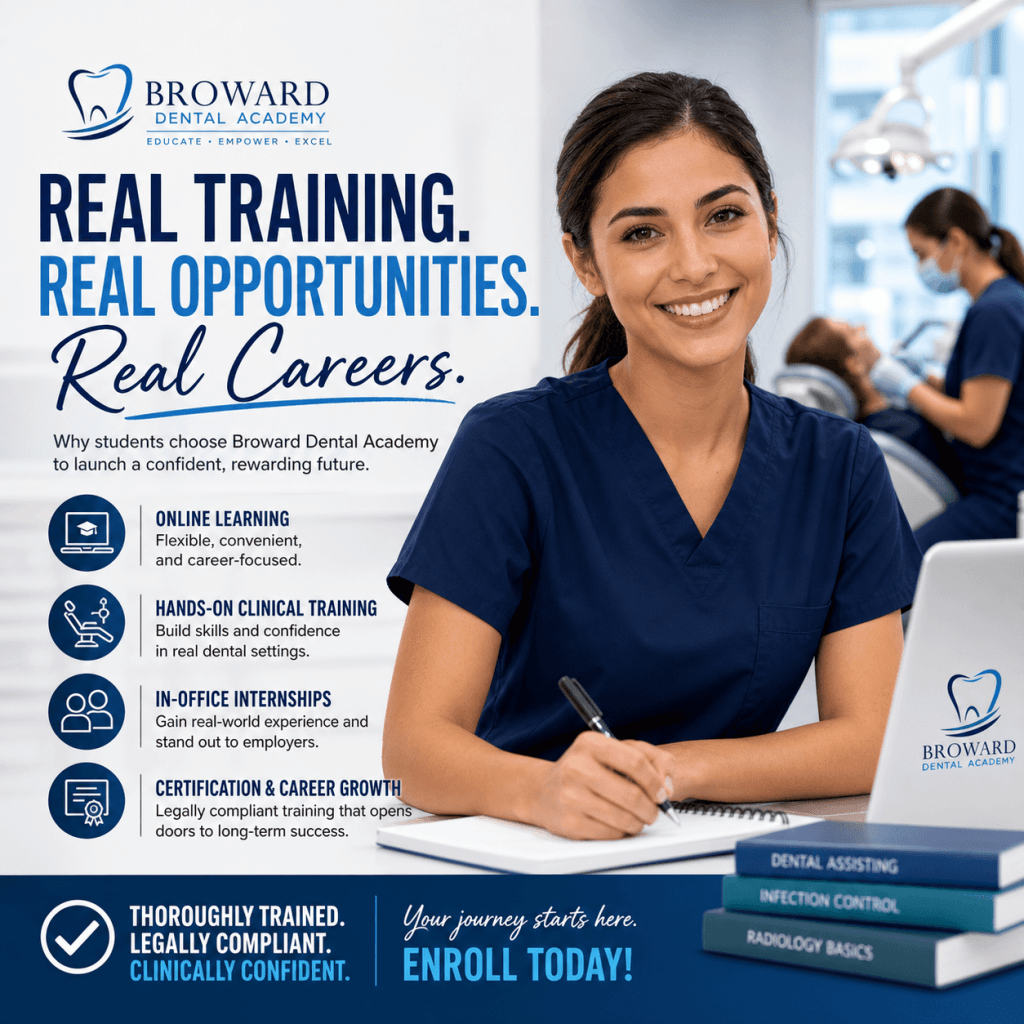
The real goal is simple: become thoroughly trained, legally compliant, and clinically confident so you can step into a modern practice ready to perform.
How long does it take?
Timelines vary, but program-based training is usually the most straightforward and predictable route.
What affects timing:
- Program length and schedule format
- Clinical requirements and skill checkoffs
- Internship or externship placement
- How quickly you complete required coursework
If you are asking, “how long is a dental assistant program,” the best answer is: it depends on the program structure and how much hands-on time is included.
One important expectation to set: job readiness is about competence, not just completing modules. You are ready when you can demonstrate skills in a clinical setting with confidence and professionalism.
What will you learn in a good program?
When starting with no experience, having a structured learning path is crucial. A well-designed curriculum helps you build skills progressively, so you’re not overwhelmed in a real dental office.
Core areas you should expect to learn
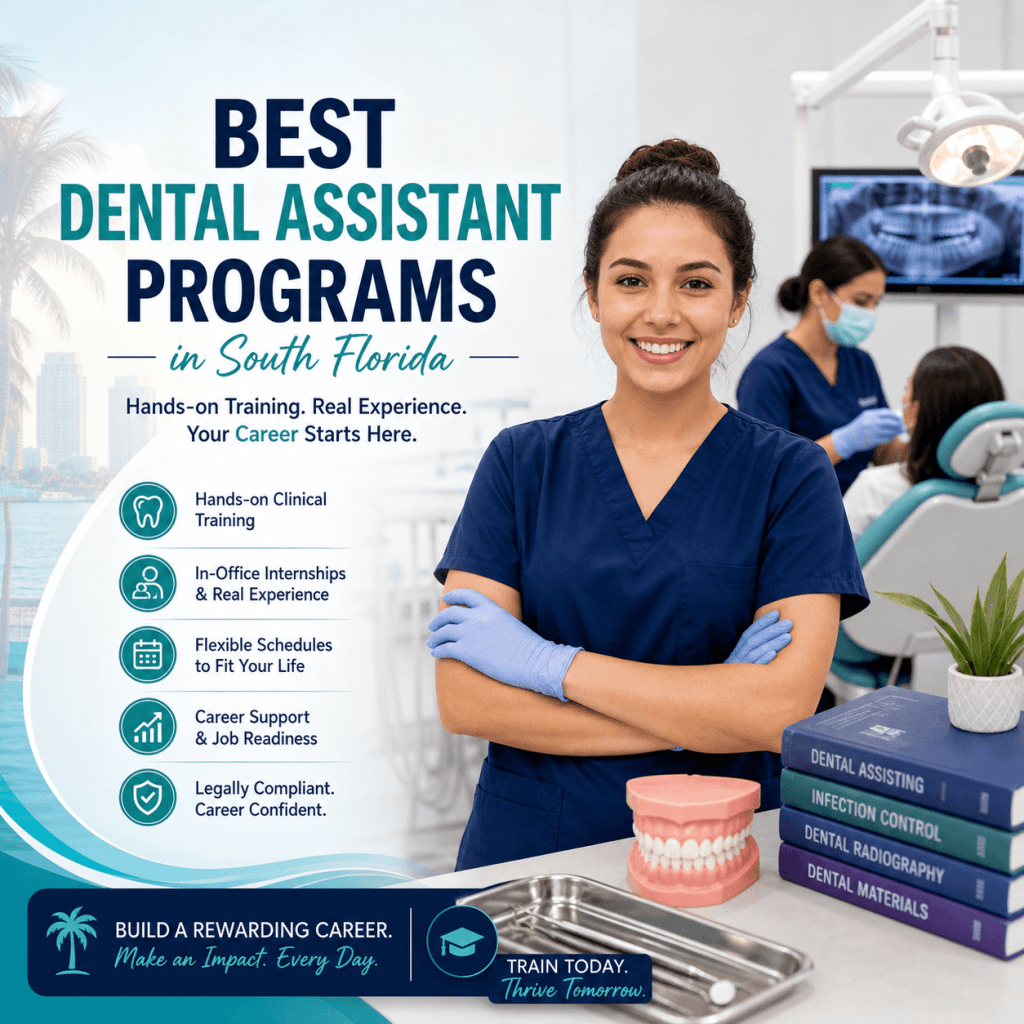
A strong program commonly covers:
- Dental terminology and basic anatomy
- Infection control and sterilization principles, including guidelines for disinfection
- Chairside assisting workflows
- Instrument identification and tray setups
- Materials basics (impressions and common dental materials)
- Patient communication and comfort techniques
- Radiography basics, where applicable and permitted
Why this structure matters for beginners
Without a structured path, new assistants often feel stuck because they do not know what “good” looks like. In contrast, real training builds:
- Repetition and muscle memory
- Clinical confidence
- Better patient communication
- Stronger performance in working interviews
Programs that focus on real clinical performance help you stand out compared to paper-only training.
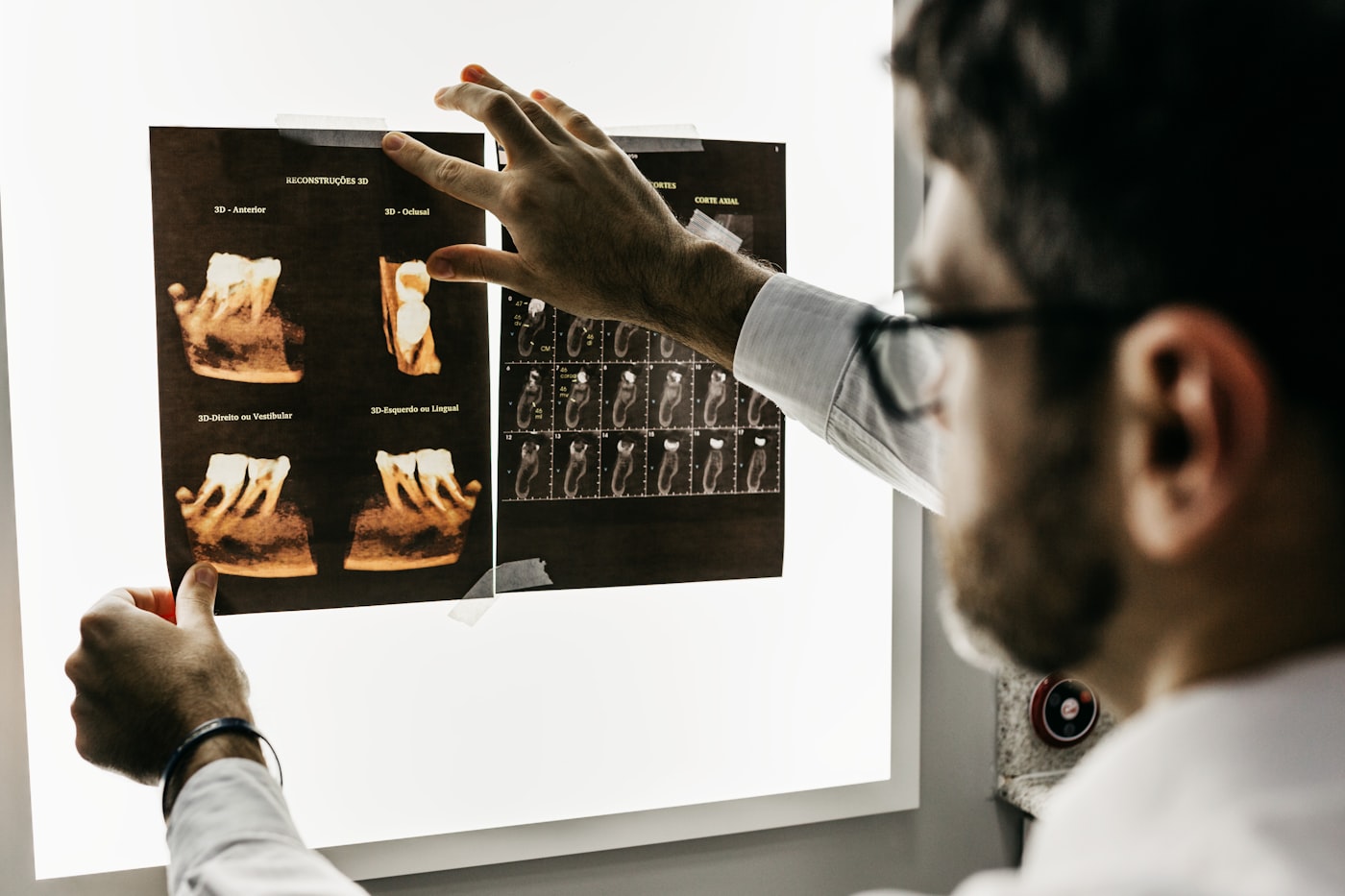
How does Broward Dental Academy help beginners become job-ready?
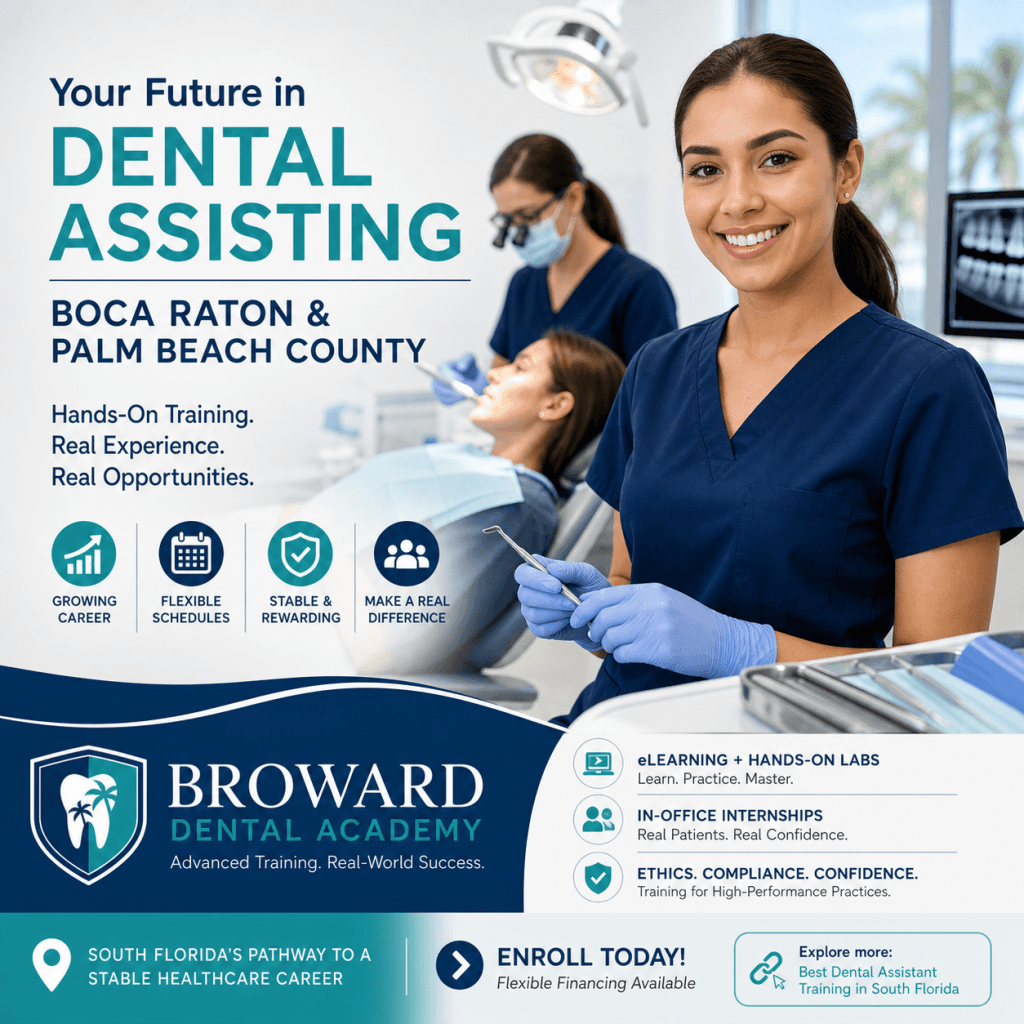
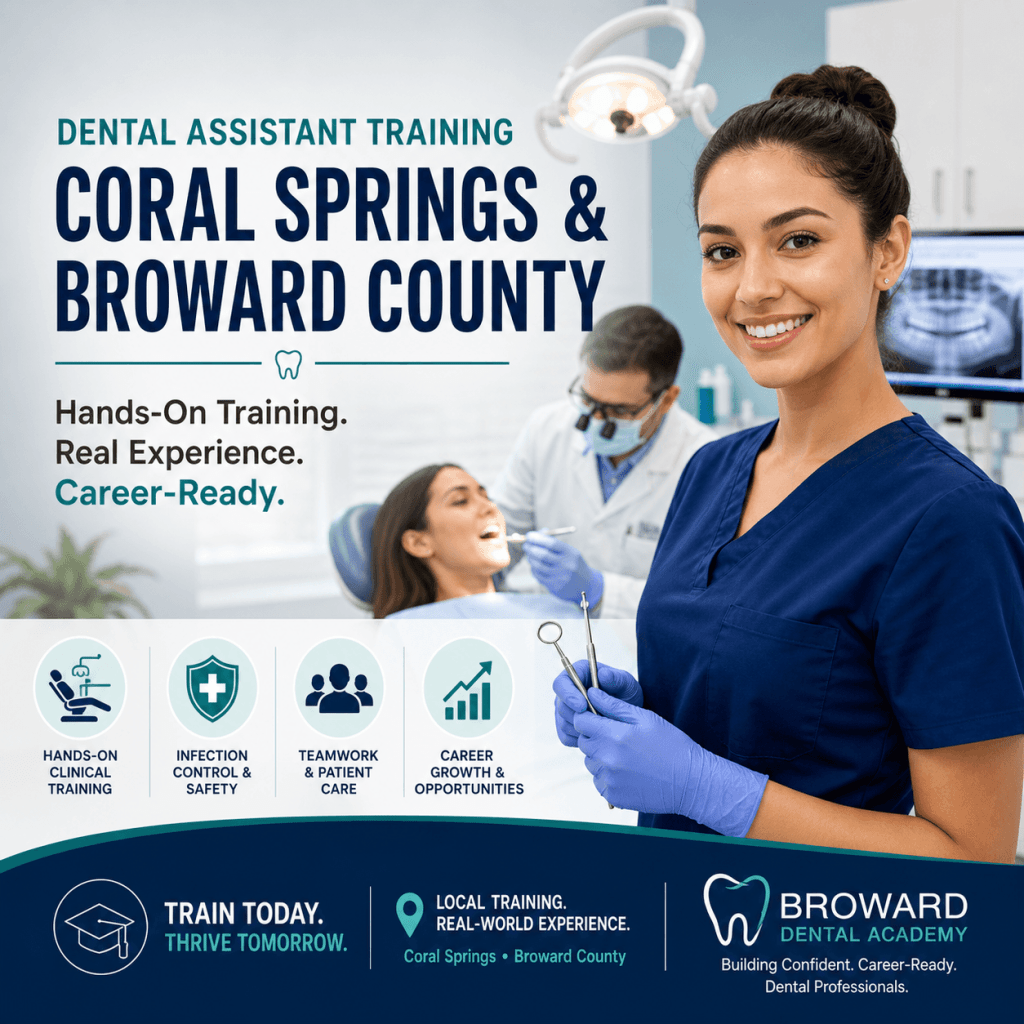
Broward Dental Academy offers a wide range of dental courses designed for real practice readiness. For instance, their Dental Assistant Level 01 program is perfect for students starting from scratch.
The focus is not just on helping students pass an exam. The goal is to prepare you to thrive in a modern, high-performance dental practice by building the habits that offices value most: competence, compliance, confidence, and professionalism.
For those looking to advance their skills further, the academy also offers an advanced Dental Assistant Level 02 program, along with various other courses tailored to specific needs in the dental field.
These programs not only equip students with essential skills but also provide valuable insights into areas such as oral biomechanics, further enhancing their understanding and capabilities in the dental field.
Learning format built for real life
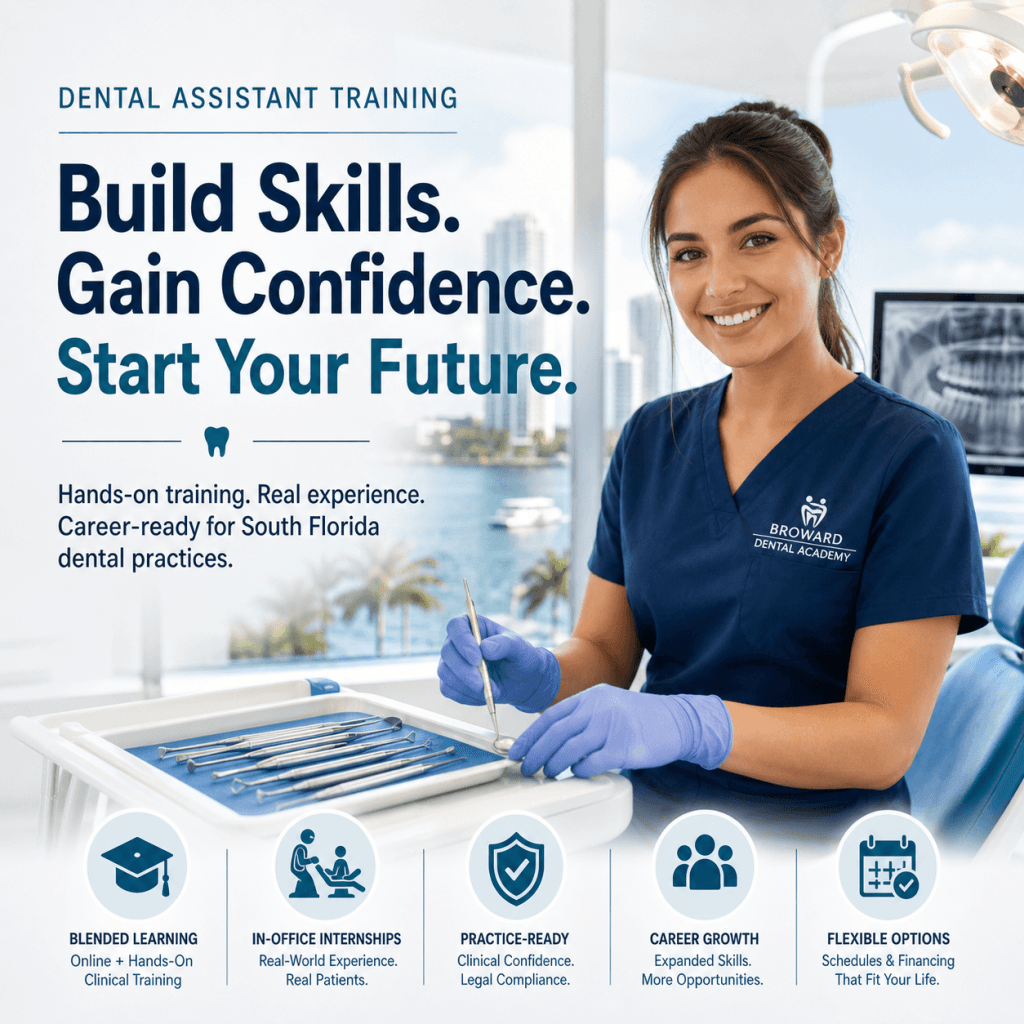
Students get a blended training experience through immediate immersion in online and clinical settings, supported by the latest eLearning lesson plans for remote training.
Hands-on experience that matters
Training includes in-office internships, so you can gain real-world experience even if you started with none. This is a major advantage when you are applying for your first job because you can speak to actual clinical exposure, not just coursework.
Options to match different goals
Broward Dental Academy offers 07 courses, supporting different starting points and growth paths as your goals evolve.
How do you get your first job with no experience?
Here is a practical plan that works for most beginners.
Step 1: Choose training that includes hands-on time and an internship
If your goal is to get hired, prioritize programs that build chairside ability, not just theory.
Step 2: Build a simple skills-based resume
Even with no prior job in a dental office, you can list:
- Clinical competencies learned
- Infection control training
- Instruments and tray setup familiarity
- Any software exposure (if applicable)
- Internship/externship details and hours
Step 3: Apply strategically
General dentistry offices and higher-volume practices often hire more entry-level candidates. When you apply, mention your internship readiness and any schedule flexibility you have.
Step 4: Prepare for the working interview
Many practices evaluate you hands-on. Be ready to demonstrate:
- Proper glove and mask etiquette
- Logical operatory setup
- Safe instrument handling basics
- Calm, patient-centered communication
Step 5: Follow up professionally
A short follow-up message and a request for feedback can make you memorable. Many first offers come from persistence and a strong attitude.
Which mistakes do beginners make?
Choosing the cheapest or fastest option with little clinical practice
If you do not get real hands-on reps, you may finish “certified” but still feel unprepared on day one.
Underestimating compliance expectations
Infection control is not optional, and offices take it seriously. Make sure your training treats compliance like a core skill, not a side topic.
Chasing certificates instead of competence
Credentials matter, but employers notice performance. Focus on repetition, workflow, and professionalism.
Treating internships casually
Internships often turn into job offers. Show up early, take notes, ask smart questions, and act like you are already on the team.
Applying without tailoring
Do not send the same resume everywhere. Highlight the skills and readiness that match that specific office.
What comes next after you get hired?
Dental assisting has a clear growth curve if you take your first year seriously.
Early growth (first 90 days)
Most new assistants improve quickly in:
- Speed and efficiency
- Anticipating the dentist’s needs
- Patient flow awareness
- Communication with patients and the team
Longer-term mobility
Over time, many assistants move into:
- Expanded functions (where permitted and with added training)
- Specialty practices like orthodontics, periodontics, or pediatrics
- Lead assistant roles
- Office management pathways
Why ongoing training matters
The best assistants keep learning. Dentistry evolves, and modern practices value assistants who stay sharp, ethical, and clinically confident.
What is a practical way to start in Florida?
If you want a structured route that helps you go from beginner to job-ready, Broward Dental Academy is committed to serving the Dental Community by developing well-rounded professionals through various dental training programs.
The outcome is not just course completion. It is thorough training, legal compliance, and clinical confidence for modern dental practices. Flexible financing options are also available to help students start sooner.
For program details and next steps, visit the main guide: How to Become a Dental Assistant in Florida.
Don’t delay, enroll today, you will be glad that you did!
FAQs (Frequently Asked Questions)
Can I become a dental assistant with no prior experience?
Yes, you can become a dental assistant even if you’ve never worked in a dental office before. Employers look for reliability, professionalism, and basic clinical readiness rather than extensive experience. Choosing a training path that builds hands-on skills quickly is key to entering the field confidently.
Why is dental assisting considered a smart career choice right now?
Dental assisting offers stable income potential, flexible schedules, and a respected role within healthcare teams. The dental industry is growing, creating strong demand for skilled professionals. Additionally, there are opportunities for career mobility into areas like oral surgery or office management.
What are the primary duties of a dental assistant?
Dental assistants perform fast-paced clinical support such as assisting during procedures, instrument transfer, suctioning, patient comfort support, charting notes, operatory setup, and sterilization. In some practices, they also help with scheduling and basic insurance tasks.
What soft skills do employers value most in dental assistants?
Strong communication skills, staying calm under pressure, attention to detail, professionalism, teamwork, and a patient-first attitude, especially towards anxious patients, are highly valued traits in dental assistants.
What do employers look for when hiring dental assistants with no experience?
Employers prioritize trainability, qualities like punctuality, coachability, professional communication, comfort interacting with patients, and a positive teamwork mindset. Having baseline clinical knowledge and completion of recognized training programs also helps demonstrate commitment.
What are the main pathways to becoming a dental assistant in Florida?
There are multiple paths depending on your goals and situation. Many choose specialized training programs that offer hands-on skills and externships to build clinical readiness. Completing recognized courses and certifications increases employability and prepares you for entry-level roles in Florida’s dental offices.