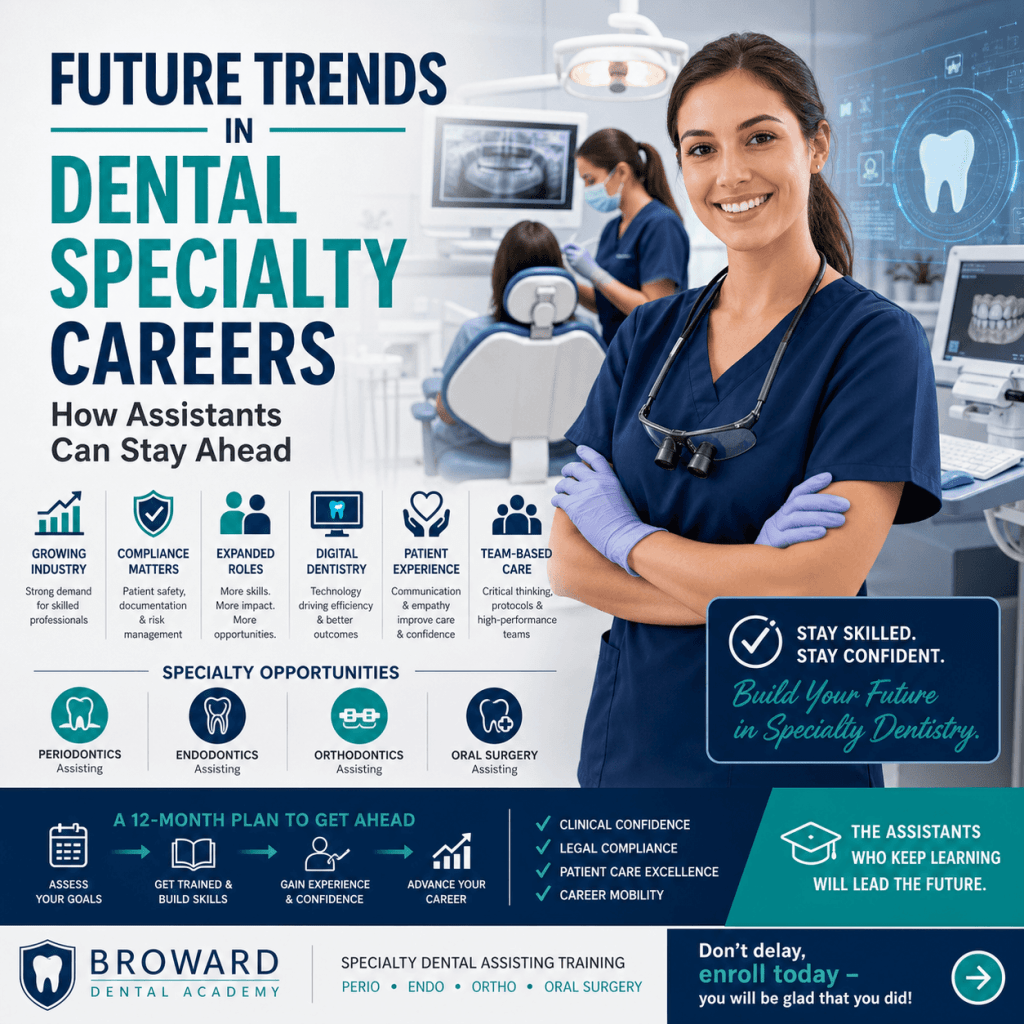
One week, a specialty office is updating its imaging system. The next, it is tightening documentation protocols, adding new infection control checks, or shifting how cases are coordinated between referring offices, labs, and surgical schedules. If you work in periodontics, endodontics, orthodontics, or oral surgery, you have probably noticed that expectations keep rising.
Key takeaways
- What is changing?
Hiring is shifting toward demonstrated skill, digital workflows and documented compliance rather than years served. - Which technology matters?
Digital imaging and scanning, CBCT support, and practice software that ties images and notes to the treatment plan. - What should you add first?
Expanded functions, then the imaging and digital skills your specialty relies on daily. - What stays constant?
Infection control, documentation and the patient experience, which remain the base every trend is built on.
The good news is that this change is not a threat. It is an opportunity.
Dentistry is one of the fastest-growing healthcare industries, and specialty practices are evolving fast because patients want efficient care, strong outcomes, and a smooth experience. For assistants, “future trends in dental specialty careers” translates into real day-to-day changes: new technology, new workflows, higher standards, and a bigger role on the clinical team.
At the same time, dentistry continues to offer what many people want from a healthcare career: stable income, flexible schedules, a respected role, and strong demand for skilled professionals.
This article is a practical roadmap to help you stay employable, compliant, and confident in modern perio, endo, ortho, and oral surgery settings.
Why are dental specialty careers changing so fast?
Specialty dentistry is being pulled forward by several forces at once:
- More patients seeking specialty care, including complex restorative cases, periodontal disease management such as those seen in periodontics, orthodontic treatment like in orthodontics, and surgical procedures.
- More competition among specialty practices, which pushes clinics to improve efficiency and patient experience.
- Stronger compliance expectations, including infection control scrutiny and documentation standards.
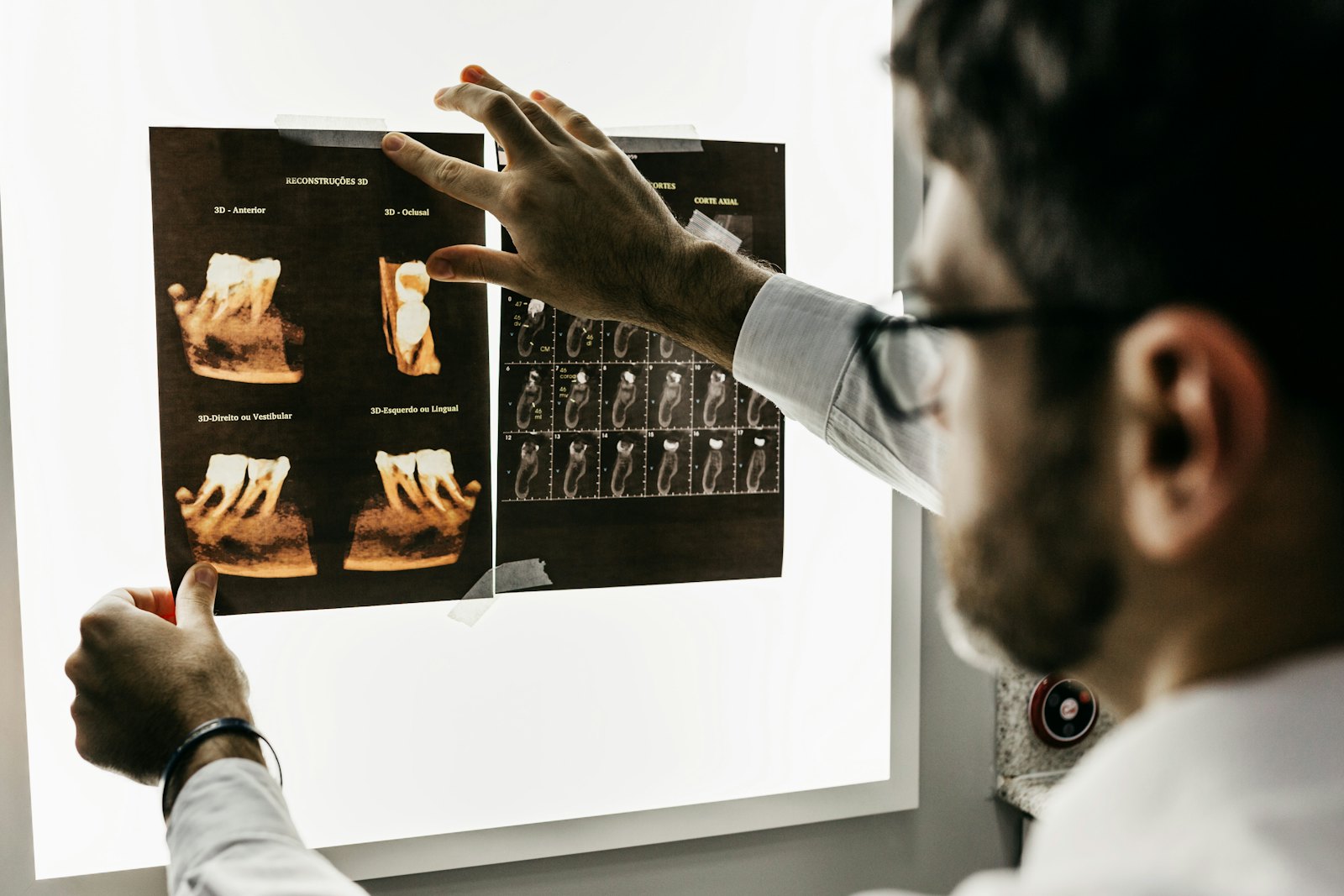
- Technology adoption, especially digital imaging, electronic records, and faster case coordination tools.
For assistants, that means the role is less about simply “helping” and more about being prepared, accurate, and proactive. The assistants who stay ahead are the ones who treat skill-building as part of the job, not something they will get to later.
If you’re looking to enhance your skills in these areas or explore other specialties such as endodontics or oral surgery, consider enrolling in specialized courses that offer comprehensive training.
Where are specialty careers headed?
Across specialties, a clear shift is happening: assistants are expected to operate as clinical teammates.
In a modern specialty practice, dentists and specialists rely on assistants to:
- Understand specialty-specific protocols and setups
- Anticipate steps in common procedures
- Keep strong sterile technique and clean transitions
- Document accurately in digital systems
- Support patient communication and postoperative compliance
Specialty clinics also compete on three things that assistants influence every day:
- Efficiency (smooth flow, fewer delays, clean handoffs)
- Outcomes (patient safety, fewer complications, better compliance)
- Patient experience (comfort, clarity, trust)
That higher bar creates real career mobility. Many assistants begin in general dentistry and move into specialty tracks over time, often adding expanded functions and cross-training that make them more valuable and better paid.
Will practices hire for skills rather than years?
Experience matters, but specialty employers increasingly hire based on proven ability.
In practical terms, specialty dentists look for assistants who can show:
- Chairside speed without rushing sterile technique
- Specialty setups (trays, materials, sequence awareness)
- Procedure-specific assisting habits
- Accurate documentation and consistency
- Professional communication with patients and team members
If you want to show readiness, build evidence you can bring to an interview or working interview:
- Skills checklists (what you can set up, break down, and support)
- Procedure logs (cases you helped on and how often)
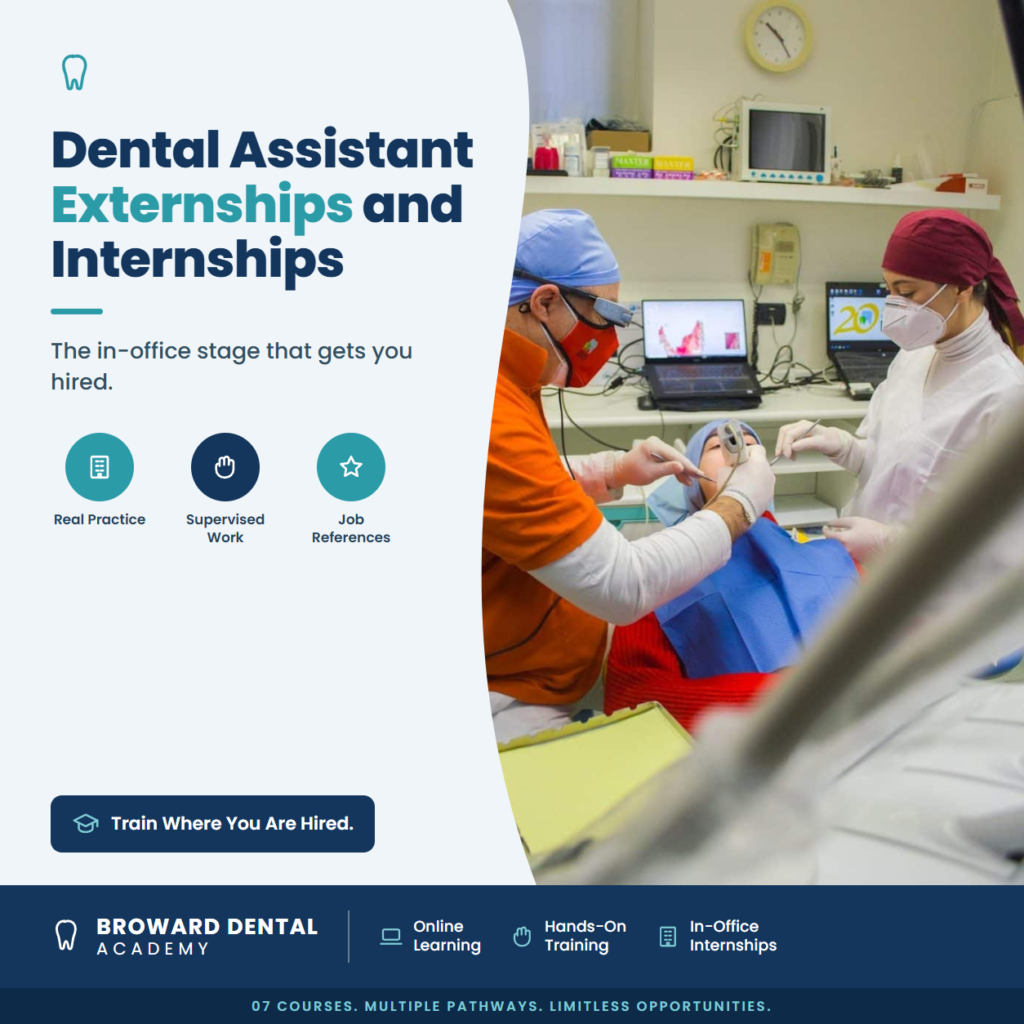
- Internship or externship exposure in specialty settings
- Strong references who can speak to your consistency and clinical habits
This trend is tied directly to patient safety and outcomes. The better the assisting, the smoother the visit flow, and the lower the risk of preventable complications caused by missed steps, poor documentation, or weak infection control habits.
To prepare for this shift towards advanced skill requirements in dental specialties, pursuing relevant certifications can significantly enhance your job prospects. Also, if you have any queries regarding this process or the specific skills needed for various roles in dental specialties, you might find the frequently asked questions section helpful. For those considering a career in this field but unsure about where to start or which locations offer suitable opportunities, it’s worth exploring various locations that give comprehensive training and placement assistance.
Why is compliance becoming non-negotiable?
Compliance pressure is rising in dentistry for a simple reason: the risks are real.
Specialty practices handle higher-acuity procedures and more complex documentation. They also face increasing scrutiny around:
- Infection control and sterilization workflows
- Documentation standards and audit readiness
- Delegation rules and scope of practice
- Radiography protocols and safety expectations
- Exposure incident response procedures
Assistants can become a major advantage to the practice when they know what is allowed under state rules, keep clean clinical habits, and help protect the office from avoidable mistakes.
Here are practical examples specialty offices notice immediately:
- Consent support: ensuring the correct forms are present, signed, and properly stored
- Instrument processing protocols: consistent sterilization steps, proper packaging, labeling, and spore testing routines
- Exposure incident steps: knowing what to do immediately, who to notify, and how to document it
- Documentation accuracy: correct tooth numbers, materials, lot numbers when needed, and clear procedure notes
In many modern specialty offices, “legally compliant” is a hiring filter. A practice can often teach a new software system. It is much harder to fix unsafe habits.
How will expanded functions and cross-training open doors?
Expanded functions can sound intimidating, but the idea is simple: added responsibilities that are legally allowed and properly trained.
In specialty practices, expanded functions matter because they support:
- Better delegation
- Higher productivity
- Smoother scheduling
- More consistent patient care
Cross-training is equally important. Assistants who can float between perio, endo, ortho, and oral surgery become indispensable when schedules shift, emergencies appear, or staffing changes.
To pursue added responsibilities responsibly:
- Seek formal training, not guesswork
- Practice under supervision as needed
- Request competency validation so you and the employer are confident in what you can do safely and legally
This is one of the most reliable ways to grow career mobility in dentistry without leaving the clinical track.
How is digital dentistry reshaping assistant workflows?
Digital dentistry is not just about new devices. It is about faster, more coordinated care.
In specialty settings, assistants commonly touch technology in areas like:
- Imaging workflows and radiography routines
- Digital records and procedure documentation
- Case coordination between offices and specialists
- Orthodontic imaging series and progress tracking
- Endodontic diagnostic support and efficient data capture
- Surgical documentation and postoperative instructions tracking
Assistants who stay ahead often become the “tech translator” for patients and the efficiency driver for the team. That means being able to explain what is happening, reduce confusion, and keep the appointment moving.
The key is to focus on adaptability over brand-specific tools. Learn the workflow, the sequence, and the purpose behind each step. Buttons change. Standards and patient needs do not.
Is patient experience becoming a measurable skill?
Specialty patients are often anxious for understandable reasons:
- Oral surgery can involve fear of pain, swelling, or sedation
- Endo visits are often pain-driven and urgent
- Periodontal procedures can feel intimidating and unfamiliar
- Orthodontics can involve long-term compliance, discomfort, and lifestyle changes
That anxiety changes what patients need from assistants, especially under time pressure.
High-impact behaviors in specialty care include:
- Pre-procedure coaching that reduces fear and surprises
- Calm, clear communication during procedures
- Reinforcing post-op instructions so patients actually follow them
- Empathy that remains professional, even in a busy schedule
Patient experience connects directly to outcomes. When patients feel informed and supported, you often see fewer cancellations, better compliance, and smoother recoveries. For assistants who want specialty roles, communication is not “extra.” It is a career accelerant.
Why will critical thinking be rewarded?
Top specialty offices run on systems. You will see:
- Protocols and checklists
- Clear role assignments
- Fast handoffs between front office and clinical
- Standardized setups for repeat procedures
In that environment, critical thinking is not abstract. For assistants, it looks like:
- Spotting missing instruments before the doctor walks in
- Anticipating complications and preparing alternatives
- Escalating concerns early instead of hoping they disappear
- Adapting to provider preferences without losing standards
Ethical decision-making is part of this trend, too. High-performance practices value assistants who chart honestly, protect patient safety, and keep standards even when the day gets behind.
What does staying ahead look like in each specialty?
Most specialty success is built on the same foundation: infection control, documentation, communication, and confidence under pressure. Then each specialty adds its own rhythm.
Periodontics (Perio)
Staying ahead in perio often means:
- Strong sterile setups for surgical and non-surgical workflows
- Confident assisting during grafting, flap procedures, and maintenance-focused visits
- Patient education for home care, especially long-term perio maintenance habits
- A “recall mindset” that supports ongoing periodontal stability
Endodontics (Endo)
In endo, efficiency and calm matter because many visits are pain-driven:
- Fast, consistent isolation support and instrument readiness
- Imaging coordination and clear documentation
- Patient reassurance during urgent visits, especially when anxiety is high
- Smooth room turnover without cutting corners
Orthodontics (Ortho)
In ortho, success is about flow and consistency over time:
- Efficient adjustment visit routines and clear documentation
- Appliance handling and patient coaching for compliance
- Motivating patients without sounding repetitive or dismissive
- Supporting long treatment plans with steady communication
Oral Surgery
Oral surgery raises the bar on sterile field discipline and patient safety:
- Surgical tray familiarity and predictable setups
- Strong sterile technique habits and clean handoffs
- Sedation-awareness support as allowed by state rules and office protocols
- Mastery of post-op instructions to reduce complications and callbacks
Across all four specialties, assistants who are calm, accurate, and consistent are the ones who become trusted and promoted.
What does a 12-month plan look like?
You do not need to overhaul your life to level up. You need a plan you can actually follow.
Month 1-2: Assess and choose a direction
- Decide which specialty fits your goals and personality
- Identify skill gaps (setups, documentation, imaging, communication)
- Build a learning schedule that fits your work and life
Month 3-6: Pursue structured specialty training
- Prioritize hands-on training and competency checks
- Focus on workflows you can repeat until they feel natural
- Strengthen compliance habits so they become automatic
Month 6-9: Gain real-world exposure
- Seek internships, in-office mentorship, or specialty shadowing
- Get repetition for speed and confidence
- Ask for feedback that is specific and measurable
Month 9-12: Package your growth
- Refresh your resume with specialty skills and concrete examples
- Build clear interview stories about your training, judgment, and readiness
- Target roles that offer advancement potential, not just a job title
To keep progress steady, use a simple weekly habit stack:
- 1 clinical skill
- 1 compliance refresh
- 1 communication improvement
Small consistency beats big bursts of motivation.
Why does training quality matter to specialty employers?
Specialty employers notice a gap quickly: assistants who can pass exams versus assistants who can thrive in a modern specialty practice.
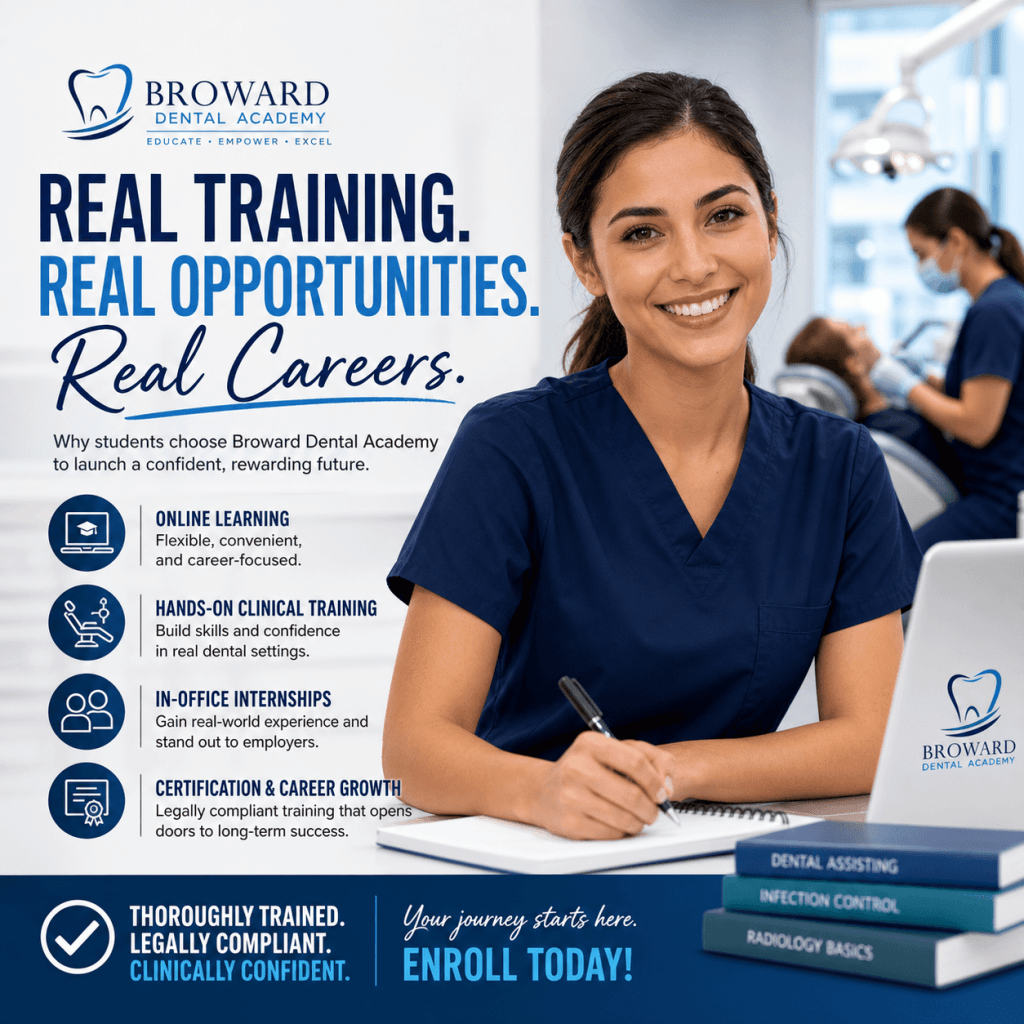
In interviews and working interviews, “thoroughly trained, legally compliant, and clinically confident” often looks like:
- You can set up efficiently and correctly without constant prompting
- You understand why protocols exist and you follow them under pressure
- Your charting is accurate and consistent
- You communicate clearly with patients and the team
- You respond to feedback professionally and improve quickly
Specialty practices value immediate immersion and hands-on readiness more than vague coursework. They want assistants who can integrate into a high-performance environment and contribute early.
To achieve this level of readiness, it’s essential to pursue structured specialty training that prioritizes hands-on experience. This aligns with the findings from a study which emphasizes the importance of practical training in developing clinical confidence.
Also, maintaining a balance between work and personal life during this journey is crucial. It’s beneficial to adopt strategies that help you stay physically fit while excelling at work.
How do you prepare for the future of specialty dentistry?
Broward Dental Academy is designed for assistants who aspire to achieve real specialty readiness, moving beyond mere theoretical knowledge.
With a diverse array of dental courses and advanced dental training, Broward Dental Academy is dedicated to serving the Dental Community by cultivating well-rounded professionals. These professionals are trained to think critically, act ethically, and perform confidently in modern practices.
Students benefit from a comprehensive educational experience that includes:
- Immediate immersion in online and clinical settings
- The latest eLearning lesson plans for remote training
- In-office internships that build real-world speed and confidence
Broward Dental Academy offers a variety of courses, including Dental Assistant Level 01, Dental Assistant Level 02, and Dental Assistant Hygienists Level 03. They also give flexible financing options and training designed to ensure students become thoroughly trained, legally compliant, and clinically confident. This is the combination specialty practices consistently seek as expectations rise.
If your ambition is to work in a specialty setting, delve into Broward Dental Academy’s pillar page on Specialty Dental Assisting Training (Perio • Endo • Ortho • Oral Surgery). This page details how their pathway aligns with the future direction of dentistry.
In addition to the training gave by Broward Dental Academy, it’s crucial for aspiring dental assistants to familiarize themselves with various dental procedures that they may encounter in their careers.
Who will do best in this market?
Future trends in dental specialty careers favor assistants who are specialty-trained, legally compliant, adaptable, and confident in fast-moving clinical environments.
This path continues to offer what makes dentistry so attractive: stable income, flexible schedules, a respected role in healthcare, and long-term career mobility. Demand for skilled dental professionals is rising, and specialty practices are looking for assistants who can contribute at a higher level.
If you are ready to take your next step towards a successful career in dentistry, explore Broward Dental Academy programs and choose the training that aligns with your specialty goals.
Don’t delay, enroll today, you will be glad that you did!
FAQs (Frequently Asked Questions)
Why are dental specialty careers changing faster than before?
Dental specialty careers are evolving rapidly due to increased patient demand for specialty care, heightened competition among specialty practices, stronger compliance and infection control standards, and the adoption of advanced technologies like digital imaging and electronic records. These factors push dental assistants to enhance their skills and adapt to new workflows and higher standards.
What new roles and expectations do dental assistants face in specialty practices?
Dental assistants in specialty practices are expected to function as clinical teammates who understand specialty-specific protocols, anticipate procedural steps, keep strict sterile techniques, document accurately in digital systems, and support patient communication and postoperative compliance. This expanded role emphasizes preparedness, accuracy, and proactivity beyond traditional assisting.
How can dental assistants show readiness for advanced roles in specialties like periodontics or orthodontics?
Assistants can showcase their readiness by providing skills checklists of procedures they can set up and support, maintaining procedure logs detailing cases helped on, gaining internship or externship experience in specialty settings, and securing strong professional references. These evidences highlight proven ability rather than just years of experience.
What benefits does pursuing specialized training or certifications offer to dental assistants?
Specialized training and certifications equip dental assistants with advanced skills needed in modern specialty practices, improve employability by demonstrating competence in chairside speed, sterile technique, procedure-specific assisting habits, accurate documentation, and professional communication. They also enhance career mobility and potential for better pay.
How do efficiency, outcomes, and patient experience relate to the role of dental assistants in specialties?
Dental assistants significantly influence practice efficiency by ensuring smooth workflow and clean handoffs. Patient outcomes through maintaining safety protocols and reducing complications. And patient experience by providing comfort, clear communication, and building trust. Their performance directly impacts these critical success factors for specialty clinics.
What trends should dental assistants be aware of to stay competitive in dental specialties like endodontics or oral surgery?
Assistants should focus on building advanced clinical skills specific to each specialty, embracing technology such as digital imaging and electronic records, adhering strictly to updated infection control protocols, enhancing documentation accuracy, improving communication abilities with patients and teams, and continuously engaging in skill-building opportunities including internships or certifications tailored to specialties like endodontics or oral surgery.